User login
Mental health courts: Is recidivism what counts?
In 2004, the federal government authorized $50 million for state initiatives to coordinate crime control efforts between the criminal justice and mental health systems. Some of that money was dedicated toward expansion of state mental health courts in an attempt to reduce the number of people with serious mental illness in jails and prisons.
Unlike traditional criminal courts, a mental health court is a nonadversarial problem-solving program that brings together all the stakeholders involved in a defendant’s criminal case and mental health care. A criminal defendant who agrees to participate in mental health court must participate in regular status hearings during which a judge reviews the defendant’s adherence to a court-imposed treatment plan and monitors his progress while on probation. The judge considers input from the prosecutor and the defense attorney, and also from the court’s social worker or case manager. A defendant who agrees to mental health court involvement is often placed on probation rather than sentenced to incarceration and is usually incarcerated for a shorter time pending trial.

Although mental health courts have been in existence for 20 years, data about program efficacy have been mixed. Outcome studies have been hampered by lack of truly blind subject assignment, inadequate controls, and selection bias because many mental health courts exclude defendants charged with serious violent crimes or sex offenses. Also, mental health courts are voluntary programs with significant dropout rates. Nevertheless, proponents of mental health courts believe that they prevent crime, reduce violent offending, and serve to stabilize people with serious mental illness in the community.
In a study published recently in Psychiatric Services (2017 Aug 15. doi: 10.1176/appi.ps.201700107), researchers from North Carolina University, Raleigh, addressed the effect of mental health court involvement on criminal recidivism. Lowder et al. looked at 17 outcome studies of mental health court participants published between 2004 and 2015. These studies included 16,129 participants followed for a minimum of 1 year.
Most of the included studies defined recidivism as a new arrest. For the purpose of the meta-analysis, researchers also included any incarceration, conviction, or new charge. Each study also included a comparison group of defendants processed through usual criminal procedures. Included studies generally looked at reoffending in the year after entry into the program or in the year following exit from the program.
The meta-analysis found a small but significant reduction in criminal recidivism, although the degree of this effect varied considerably between studies, and the effect disappeared completely when only moderate and high-quality studies were considered.
These results should not surprise anyone. Crime is a complex human behavior mediated by more than just psychiatric issues. Poverty, stressful life events, and substance abuse all play a role. And as an outcome variable, an arrest is not a sensitive measure because many crimes go unreported. Defendants with lower rates of reoffending may simply have more forgiving victims; for people with mental illness, that victim is often a family member.
Fortunately, crime prevention is not the sole justification for mental health programs. There are also the intangible social benefits that aren’t measured in these studies – benefits like improved quality of life, restored relationships, and the ability to participate more fully in all the joys that life has to offer. For people with serious mental illness who graduate from mental health court, that’s the outcome that counts.
Dr. Hanson is a forensic psychiatrist and coauthor of “Committed: The Battle over Involuntary Psychiatric Care” (Baltimore: Johns Hopkins University Press, 2016). The opinions expressed are those of the author only and do not represent those of any of Dr. Hanson’s employers or consultees, including the Maryland Department of Health and Mental Hygiene and the Maryland Division of Correction.
In 2004, the federal government authorized $50 million for state initiatives to coordinate crime control efforts between the criminal justice and mental health systems. Some of that money was dedicated toward expansion of state mental health courts in an attempt to reduce the number of people with serious mental illness in jails and prisons.
Unlike traditional criminal courts, a mental health court is a nonadversarial problem-solving program that brings together all the stakeholders involved in a defendant’s criminal case and mental health care. A criminal defendant who agrees to participate in mental health court must participate in regular status hearings during which a judge reviews the defendant’s adherence to a court-imposed treatment plan and monitors his progress while on probation. The judge considers input from the prosecutor and the defense attorney, and also from the court’s social worker or case manager. A defendant who agrees to mental health court involvement is often placed on probation rather than sentenced to incarceration and is usually incarcerated for a shorter time pending trial.
Although mental health courts have been in existence for 20 years, data about program efficacy have been mixed. Outcome studies have been hampered by lack of truly blind subject assignment, inadequate controls, and selection bias because many mental health courts exclude defendants charged with serious violent crimes or sex offenses. Also, mental health courts are voluntary programs with significant dropout rates. Nevertheless, proponents of mental health courts believe that they prevent crime, reduce violent offending, and serve to stabilize people with serious mental illness in the community.
In a study published recently in Psychiatric Services (2017 Aug 15. doi: 10.1176/appi.ps.201700107), researchers from North Carolina University, Raleigh, addressed the effect of mental health court involvement on criminal recidivism. Lowder et al. looked at 17 outcome studies of mental health court participants published between 2004 and 2015. These studies included 16,129 participants followed for a minimum of 1 year.
Most of the included studies defined recidivism as a new arrest. For the purpose of the meta-analysis, researchers also included any incarceration, conviction, or new charge. Each study also included a comparison group of defendants processed through usual criminal procedures. Included studies generally looked at reoffending in the year after entry into the program or in the year following exit from the program.
The meta-analysis found a small but significant reduction in criminal recidivism, although the degree of this effect varied considerably between studies, and the effect disappeared completely when only moderate and high-quality studies were considered.
These results should not surprise anyone. Crime is a complex human behavior mediated by more than just psychiatric issues. Poverty, stressful life events, and substance abuse all play a role. And as an outcome variable, an arrest is not a sensitive measure because many crimes go unreported. Defendants with lower rates of reoffending may simply have more forgiving victims; for people with mental illness, that victim is often a family member.
Fortunately, crime prevention is not the sole justification for mental health programs. There are also the intangible social benefits that aren’t measured in these studies – benefits like improved quality of life, restored relationships, and the ability to participate more fully in all the joys that life has to offer. For people with serious mental illness who graduate from mental health court, that’s the outcome that counts.
Dr. Hanson is a forensic psychiatrist and coauthor of “Committed: The Battle over Involuntary Psychiatric Care” (Baltimore: Johns Hopkins University Press, 2016). The opinions expressed are those of the author only and do not represent those of any of Dr. Hanson’s employers or consultees, including the Maryland Department of Health and Mental Hygiene and the Maryland Division of Correction.
In 2004, the federal government authorized $50 million for state initiatives to coordinate crime control efforts between the criminal justice and mental health systems. Some of that money was dedicated toward expansion of state mental health courts in an attempt to reduce the number of people with serious mental illness in jails and prisons.
Unlike traditional criminal courts, a mental health court is a nonadversarial problem-solving program that brings together all the stakeholders involved in a defendant’s criminal case and mental health care. A criminal defendant who agrees to participate in mental health court must participate in regular status hearings during which a judge reviews the defendant’s adherence to a court-imposed treatment plan and monitors his progress while on probation. The judge considers input from the prosecutor and the defense attorney, and also from the court’s social worker or case manager. A defendant who agrees to mental health court involvement is often placed on probation rather than sentenced to incarceration and is usually incarcerated for a shorter time pending trial.
Although mental health courts have been in existence for 20 years, data about program efficacy have been mixed. Outcome studies have been hampered by lack of truly blind subject assignment, inadequate controls, and selection bias because many mental health courts exclude defendants charged with serious violent crimes or sex offenses. Also, mental health courts are voluntary programs with significant dropout rates. Nevertheless, proponents of mental health courts believe that they prevent crime, reduce violent offending, and serve to stabilize people with serious mental illness in the community.
In a study published recently in Psychiatric Services (2017 Aug 15. doi: 10.1176/appi.ps.201700107), researchers from North Carolina University, Raleigh, addressed the effect of mental health court involvement on criminal recidivism. Lowder et al. looked at 17 outcome studies of mental health court participants published between 2004 and 2015. These studies included 16,129 participants followed for a minimum of 1 year.
Most of the included studies defined recidivism as a new arrest. For the purpose of the meta-analysis, researchers also included any incarceration, conviction, or new charge. Each study also included a comparison group of defendants processed through usual criminal procedures. Included studies generally looked at reoffending in the year after entry into the program or in the year following exit from the program.
The meta-analysis found a small but significant reduction in criminal recidivism, although the degree of this effect varied considerably between studies, and the effect disappeared completely when only moderate and high-quality studies were considered.
These results should not surprise anyone. Crime is a complex human behavior mediated by more than just psychiatric issues. Poverty, stressful life events, and substance abuse all play a role. And as an outcome variable, an arrest is not a sensitive measure because many crimes go unreported. Defendants with lower rates of reoffending may simply have more forgiving victims; for people with mental illness, that victim is often a family member.
Fortunately, crime prevention is not the sole justification for mental health programs. There are also the intangible social benefits that aren’t measured in these studies – benefits like improved quality of life, restored relationships, and the ability to participate more fully in all the joys that life has to offer. For people with serious mental illness who graduate from mental health court, that’s the outcome that counts.
Dr. Hanson is a forensic psychiatrist and coauthor of “Committed: The Battle over Involuntary Psychiatric Care” (Baltimore: Johns Hopkins University Press, 2016). The opinions expressed are those of the author only and do not represent those of any of Dr. Hanson’s employers or consultees, including the Maryland Department of Health and Mental Hygiene and the Maryland Division of Correction.
Practicing medicine for all, regardless of differences
I’m a doctor, specifically a neurologist.
I’m also a father with three kids.
I’m also a small business owner and part of the American economy. My practice is small, but provides jobs to two awesome women and in doing so allows them to have insurance, raise their families with job security, own homes, and contribute to the economy. I’m not required to by law, but I provide both with insurance coverage and a retirement plan. I pay my taxes on time and to the penny.
I’m a third-generation American, and a first-generation native Arizonan.
I’m a Phoenix Suns, ASU Sun Devils, and Creighton Bluejays basketball fan.
And, somewhere in all of the above, I’m Jewish.
I’ve never understood hate very well. To me, people are people. I’ve never treated patients differently based on race, religion, political beliefs, or pretty much any other factor. That’s part of my job, and I wouldn’t have it any other way.
For the same reason, I don’t understand anti-Semitism. I’ve never ripped anyone off and try very hard to practice ethical medicine, doing what’s right for patients and not for my pocketbook. Some could even argue that this approach has cost me financially over time.
My first direct experience with hate was in 1975, when my family moved from central Phoenix to the suburbs. When we were building our house and meeting future neighbors, one lady circulated a petition to keep Jews out of the neighborhood. A few weeks later, when the school year started, her kids looked me and my sister over and asked us where our horns were.
I don’t encounter it, at least not directly, as much anymore. Perhaps one to two times a year someone will call my office to make an appointment and will ask what my religion is. My secretary tells them that we don’t discuss this professionally here.
But it never goes away entirely. There are always those looking to blame anyone who is slightly different from them for economic and social changes, perhaps because it’s easier than actually working together to solve things. Or because they find it a welcome distraction from the real issues facing our society.
The recent events in Charlottesville are frightening to all of us, regardless of religion, who are trying to get along in everyday life. All I’ve ever wanted is to be able to work and raise my family in peace, yet we’re faced with a stark reminder of those who see this as a threat. Worse, their fires are stoked by seeming indifference (at best) and overt support (at worst) at the highest level of our government – one founded on freedom of religion.
Hate is hate, whether it’s ISIS, the Westboro Baptist Church, KKK, Kahane Chai, or the modern interpretations of Nazism lurking in Europe and America. Although they’ve always been there, today the Internet has given them a larger voice. People whom I’ve never done anything to consider me an enemy.
My kids’ school is a block from a mosque, so I drive by it all the time. It’s an attractive, well-maintained building. Sometimes I see younger kids running around out in the yard, or others playing basketball on a court between buildings. Its proximity has never bothered me. But, like myself, I know those inside are hated by others who don’t even know them. Like me, all they’ve done is raise kids, work, and pay taxes.
There have always been, and will always be, bad people in all religions, races, and ethnic groups. This is the nature of humans. But the association of hating all because of a few is very troubling. I believe the majority of people are good and that none are born hating others.
I try hard to run a blind practice: treating all patients as equal, and giving them the best care I can, regardless of who they are, what they believe, or where they’re from.
Unfortunately, too many people seem to find it easier to slap labels on anyone who doesn’t look or think like them, and decide that’s all they need to hate them and avoid looking at the person inside.
Dr. Block has a solo neurology practice in Scottsdale, Ariz.
I’m a doctor, specifically a neurologist.
I’m also a father with three kids.
I’m also a small business owner and part of the American economy. My practice is small, but provides jobs to two awesome women and in doing so allows them to have insurance, raise their families with job security, own homes, and contribute to the economy. I’m not required to by law, but I provide both with insurance coverage and a retirement plan. I pay my taxes on time and to the penny.
I’m a third-generation American, and a first-generation native Arizonan.
I’m a Phoenix Suns, ASU Sun Devils, and Creighton Bluejays basketball fan.
And, somewhere in all of the above, I’m Jewish.
I’ve never understood hate very well. To me, people are people. I’ve never treated patients differently based on race, religion, political beliefs, or pretty much any other factor. That’s part of my job, and I wouldn’t have it any other way.
For the same reason, I don’t understand anti-Semitism. I’ve never ripped anyone off and try very hard to practice ethical medicine, doing what’s right for patients and not for my pocketbook. Some could even argue that this approach has cost me financially over time.
My first direct experience with hate was in 1975, when my family moved from central Phoenix to the suburbs. When we were building our house and meeting future neighbors, one lady circulated a petition to keep Jews out of the neighborhood. A few weeks later, when the school year started, her kids looked me and my sister over and asked us where our horns were.
I don’t encounter it, at least not directly, as much anymore. Perhaps one to two times a year someone will call my office to make an appointment and will ask what my religion is. My secretary tells them that we don’t discuss this professionally here.
But it never goes away entirely. There are always those looking to blame anyone who is slightly different from them for economic and social changes, perhaps because it’s easier than actually working together to solve things. Or because they find it a welcome distraction from the real issues facing our society.
The recent events in Charlottesville are frightening to all of us, regardless of religion, who are trying to get along in everyday life. All I’ve ever wanted is to be able to work and raise my family in peace, yet we’re faced with a stark reminder of those who see this as a threat. Worse, their fires are stoked by seeming indifference (at best) and overt support (at worst) at the highest level of our government – one founded on freedom of religion.
Hate is hate, whether it’s ISIS, the Westboro Baptist Church, KKK, Kahane Chai, or the modern interpretations of Nazism lurking in Europe and America. Although they’ve always been there, today the Internet has given them a larger voice. People whom I’ve never done anything to consider me an enemy.
My kids’ school is a block from a mosque, so I drive by it all the time. It’s an attractive, well-maintained building. Sometimes I see younger kids running around out in the yard, or others playing basketball on a court between buildings. Its proximity has never bothered me. But, like myself, I know those inside are hated by others who don’t even know them. Like me, all they’ve done is raise kids, work, and pay taxes.
There have always been, and will always be, bad people in all religions, races, and ethnic groups. This is the nature of humans. But the association of hating all because of a few is very troubling. I believe the majority of people are good and that none are born hating others.
I try hard to run a blind practice: treating all patients as equal, and giving them the best care I can, regardless of who they are, what they believe, or where they’re from.
Unfortunately, too many people seem to find it easier to slap labels on anyone who doesn’t look or think like them, and decide that’s all they need to hate them and avoid looking at the person inside.
Dr. Block has a solo neurology practice in Scottsdale, Ariz.
I’m a doctor, specifically a neurologist.
I’m also a father with three kids.
I’m also a small business owner and part of the American economy. My practice is small, but provides jobs to two awesome women and in doing so allows them to have insurance, raise their families with job security, own homes, and contribute to the economy. I’m not required to by law, but I provide both with insurance coverage and a retirement plan. I pay my taxes on time and to the penny.
I’m a third-generation American, and a first-generation native Arizonan.
I’m a Phoenix Suns, ASU Sun Devils, and Creighton Bluejays basketball fan.
And, somewhere in all of the above, I’m Jewish.
I’ve never understood hate very well. To me, people are people. I’ve never treated patients differently based on race, religion, political beliefs, or pretty much any other factor. That’s part of my job, and I wouldn’t have it any other way.
For the same reason, I don’t understand anti-Semitism. I’ve never ripped anyone off and try very hard to practice ethical medicine, doing what’s right for patients and not for my pocketbook. Some could even argue that this approach has cost me financially over time.
My first direct experience with hate was in 1975, when my family moved from central Phoenix to the suburbs. When we were building our house and meeting future neighbors, one lady circulated a petition to keep Jews out of the neighborhood. A few weeks later, when the school year started, her kids looked me and my sister over and asked us where our horns were.
I don’t encounter it, at least not directly, as much anymore. Perhaps one to two times a year someone will call my office to make an appointment and will ask what my religion is. My secretary tells them that we don’t discuss this professionally here.
But it never goes away entirely. There are always those looking to blame anyone who is slightly different from them for economic and social changes, perhaps because it’s easier than actually working together to solve things. Or because they find it a welcome distraction from the real issues facing our society.
The recent events in Charlottesville are frightening to all of us, regardless of religion, who are trying to get along in everyday life. All I’ve ever wanted is to be able to work and raise my family in peace, yet we’re faced with a stark reminder of those who see this as a threat. Worse, their fires are stoked by seeming indifference (at best) and overt support (at worst) at the highest level of our government – one founded on freedom of religion.
Hate is hate, whether it’s ISIS, the Westboro Baptist Church, KKK, Kahane Chai, or the modern interpretations of Nazism lurking in Europe and America. Although they’ve always been there, today the Internet has given them a larger voice. People whom I’ve never done anything to consider me an enemy.
My kids’ school is a block from a mosque, so I drive by it all the time. It’s an attractive, well-maintained building. Sometimes I see younger kids running around out in the yard, or others playing basketball on a court between buildings. Its proximity has never bothered me. But, like myself, I know those inside are hated by others who don’t even know them. Like me, all they’ve done is raise kids, work, and pay taxes.
There have always been, and will always be, bad people in all religions, races, and ethnic groups. This is the nature of humans. But the association of hating all because of a few is very troubling. I believe the majority of people are good and that none are born hating others.
I try hard to run a blind practice: treating all patients as equal, and giving them the best care I can, regardless of who they are, what they believe, or where they’re from.
Unfortunately, too many people seem to find it easier to slap labels on anyone who doesn’t look or think like them, and decide that’s all they need to hate them and avoid looking at the person inside.
Dr. Block has a solo neurology practice in Scottsdale, Ariz.
Consulting for the dead
As the years roll on, it’s nice to be open to new experiences. Till now, for instance, every patient I’ve examined has been alive.
My local hospital called 2 weeks ago. Although I’m on staff, I haven’t consulted on an inpatient there in 20 years.
I ran their skin clinic years ago. Medical residents came to my office for an elective.
“Did you see the glucagonoma on Sefton 6?” a resident would ask.
“No, they didn’t call me for that. They called me for the seborrheic dermatitis on Sefton 4.”
I no longer visit hospitals; nowadays, the main function of my hospital affiliations is to be able to see patients insured on their referral circles. This year, my hospital made a new rule: All dermatologists must cover consults to stay on staff. I drew 3 weeks in June. For 2½ weeks, nobody called. And then, late one morning …
“Hello, doctor. I’m a nurse in the medical ICU. We need your help.”
“Yes?”
“A 25-year-old man died of a drug overdose. We need to harvest his organs. He has skin changes on his back and a blister in his groin, and we need to know that these pose no bar to transplants.”
“I’m stuck in the office,“ I said. “I could come tonight.”
“Can someone else come?” he asked. “Time is critical.”
I told him I would try.
My morning session ended on time. Patient callbacks and lunch could wait. I dashed over to the hospital, phoning the nurse en route. “On my way,” I said, “but I don’t know where the ICU is, and I don’t know your protocols – what forms to fill out and so on.”
He gave me the name of the building and told me to go to the fourth floor. “We’ll have the paperwork ready,” he said.
The parking garage had a free space near the entrance. Asking directions in the lobby, I blundered my way over to the ICU building, newly built and unfamiliar, where the nurse greeted me.
“We appreciate your coming,” he said. “I’ll ask the family at the bedside to leave.”
He introduced a resident, who told me dermatologists dropped by the ICU from time to time to assess issues of graft-versus-host rashes, that sort of thing.
The nurse gave me a yellow paper gown. The patient had his own room. Back in my day, ICUs had no quiet, private spaces.
A middle-aged woman stood by the bed rail – the stepmother of the deceased. What do you say to a newly bereaved family member in this circumstance? “I am your deceased stepson’s dermatology consultant. Pleased to meet you”?
Instead, I said I was sorry for her loss, which seemed pallid but apt. She withdrew.
In bed, was a young man attached to life support. “No track marks,” the nurse observed. “He must have snorted something.”
The nurse and the resident rolled the body over, and I noted the red marks on his back. “Those are from acne,” I said. “No infection.”
Laying him down, they showed me a 1-mm scab at the base of his scrotum. “Appears to be trauma,” I said, “perhaps a scratch. Not herpes or anything infectious.”
Finding nothing else on his integument, I turned to leave. His stepmother was sitting on a chair near the door, her head in her hands. As I passed, she looked up.
In most life settings, including doctors’ offices, there are protocols of behavior, guidelines for how to act, what to say: “We’re all done.” “This should take care of it.” “I will write up a report.” “Nice to have met you.” “Take care.”

I looked down at her tortured face and said, “There is nothing to say.”
At this, I lost my composure, and left.
“I’m not sure what we were concerned about,” said the nurse, “but we appreciate your coming over.” He handed me a sheet of blank paper. I scribbled my nonfindings. Now the transplant wheels could begin to turn.
I left the ICU to its normal goings-on and returned to my office, where the paths of clinical engagement are well worn – and the patients are still alive.
Dr. Rockoff practices dermatology in Brookline, Mass., and is a longtime contributor to Dermatology News. He serves on the clinical faculty at Tufts University, Boston, and has taught senior medical students and other trainees for 30 years. His second book, “Act Like a Doctor, Think Like a Patient,” is available at amazon.com and barnesandnoble.com. Write to him at dermnews@frontlinemedcom.com.
As the years roll on, it’s nice to be open to new experiences. Till now, for instance, every patient I’ve examined has been alive.
My local hospital called 2 weeks ago. Although I’m on staff, I haven’t consulted on an inpatient there in 20 years.
I ran their skin clinic years ago. Medical residents came to my office for an elective.
“Did you see the glucagonoma on Sefton 6?” a resident would ask.
“No, they didn’t call me for that. They called me for the seborrheic dermatitis on Sefton 4.”
I no longer visit hospitals; nowadays, the main function of my hospital affiliations is to be able to see patients insured on their referral circles. This year, my hospital made a new rule: All dermatologists must cover consults to stay on staff. I drew 3 weeks in June. For 2½ weeks, nobody called. And then, late one morning …
“Hello, doctor. I’m a nurse in the medical ICU. We need your help.”
“Yes?”
“A 25-year-old man died of a drug overdose. We need to harvest his organs. He has skin changes on his back and a blister in his groin, and we need to know that these pose no bar to transplants.”
“I’m stuck in the office,“ I said. “I could come tonight.”
“Can someone else come?” he asked. “Time is critical.”
I told him I would try.
My morning session ended on time. Patient callbacks and lunch could wait. I dashed over to the hospital, phoning the nurse en route. “On my way,” I said, “but I don’t know where the ICU is, and I don’t know your protocols – what forms to fill out and so on.”
He gave me the name of the building and told me to go to the fourth floor. “We’ll have the paperwork ready,” he said.
The parking garage had a free space near the entrance. Asking directions in the lobby, I blundered my way over to the ICU building, newly built and unfamiliar, where the nurse greeted me.
“We appreciate your coming,” he said. “I’ll ask the family at the bedside to leave.”
He introduced a resident, who told me dermatologists dropped by the ICU from time to time to assess issues of graft-versus-host rashes, that sort of thing.
The nurse gave me a yellow paper gown. The patient had his own room. Back in my day, ICUs had no quiet, private spaces.
A middle-aged woman stood by the bed rail – the stepmother of the deceased. What do you say to a newly bereaved family member in this circumstance? “I am your deceased stepson’s dermatology consultant. Pleased to meet you”?
Instead, I said I was sorry for her loss, which seemed pallid but apt. She withdrew.
In bed, was a young man attached to life support. “No track marks,” the nurse observed. “He must have snorted something.”
The nurse and the resident rolled the body over, and I noted the red marks on his back. “Those are from acne,” I said. “No infection.”
Laying him down, they showed me a 1-mm scab at the base of his scrotum. “Appears to be trauma,” I said, “perhaps a scratch. Not herpes or anything infectious.”
Finding nothing else on his integument, I turned to leave. His stepmother was sitting on a chair near the door, her head in her hands. As I passed, she looked up.
In most life settings, including doctors’ offices, there are protocols of behavior, guidelines for how to act, what to say: “We’re all done.” “This should take care of it.” “I will write up a report.” “Nice to have met you.” “Take care.”
I looked down at her tortured face and said, “There is nothing to say.”
At this, I lost my composure, and left.
“I’m not sure what we were concerned about,” said the nurse, “but we appreciate your coming over.” He handed me a sheet of blank paper. I scribbled my nonfindings. Now the transplant wheels could begin to turn.
I left the ICU to its normal goings-on and returned to my office, where the paths of clinical engagement are well worn – and the patients are still alive.
Dr. Rockoff practices dermatology in Brookline, Mass., and is a longtime contributor to Dermatology News. He serves on the clinical faculty at Tufts University, Boston, and has taught senior medical students and other trainees for 30 years. His second book, “Act Like a Doctor, Think Like a Patient,” is available at amazon.com and barnesandnoble.com. Write to him at dermnews@frontlinemedcom.com.
As the years roll on, it’s nice to be open to new experiences. Till now, for instance, every patient I’ve examined has been alive.
My local hospital called 2 weeks ago. Although I’m on staff, I haven’t consulted on an inpatient there in 20 years.
I ran their skin clinic years ago. Medical residents came to my office for an elective.
“Did you see the glucagonoma on Sefton 6?” a resident would ask.
“No, they didn’t call me for that. They called me for the seborrheic dermatitis on Sefton 4.”
I no longer visit hospitals; nowadays, the main function of my hospital affiliations is to be able to see patients insured on their referral circles. This year, my hospital made a new rule: All dermatologists must cover consults to stay on staff. I drew 3 weeks in June. For 2½ weeks, nobody called. And then, late one morning …
“Hello, doctor. I’m a nurse in the medical ICU. We need your help.”
“Yes?”
“A 25-year-old man died of a drug overdose. We need to harvest his organs. He has skin changes on his back and a blister in his groin, and we need to know that these pose no bar to transplants.”
“I’m stuck in the office,“ I said. “I could come tonight.”
“Can someone else come?” he asked. “Time is critical.”
I told him I would try.
My morning session ended on time. Patient callbacks and lunch could wait. I dashed over to the hospital, phoning the nurse en route. “On my way,” I said, “but I don’t know where the ICU is, and I don’t know your protocols – what forms to fill out and so on.”
He gave me the name of the building and told me to go to the fourth floor. “We’ll have the paperwork ready,” he said.
The parking garage had a free space near the entrance. Asking directions in the lobby, I blundered my way over to the ICU building, newly built and unfamiliar, where the nurse greeted me.
“We appreciate your coming,” he said. “I’ll ask the family at the bedside to leave.”
He introduced a resident, who told me dermatologists dropped by the ICU from time to time to assess issues of graft-versus-host rashes, that sort of thing.
The nurse gave me a yellow paper gown. The patient had his own room. Back in my day, ICUs had no quiet, private spaces.
A middle-aged woman stood by the bed rail – the stepmother of the deceased. What do you say to a newly bereaved family member in this circumstance? “I am your deceased stepson’s dermatology consultant. Pleased to meet you”?
Instead, I said I was sorry for her loss, which seemed pallid but apt. She withdrew.
In bed, was a young man attached to life support. “No track marks,” the nurse observed. “He must have snorted something.”
The nurse and the resident rolled the body over, and I noted the red marks on his back. “Those are from acne,” I said. “No infection.”
Laying him down, they showed me a 1-mm scab at the base of his scrotum. “Appears to be trauma,” I said, “perhaps a scratch. Not herpes or anything infectious.”
Finding nothing else on his integument, I turned to leave. His stepmother was sitting on a chair near the door, her head in her hands. As I passed, she looked up.
In most life settings, including doctors’ offices, there are protocols of behavior, guidelines for how to act, what to say: “We’re all done.” “This should take care of it.” “I will write up a report.” “Nice to have met you.” “Take care.”
I looked down at her tortured face and said, “There is nothing to say.”
At this, I lost my composure, and left.
“I’m not sure what we were concerned about,” said the nurse, “but we appreciate your coming over.” He handed me a sheet of blank paper. I scribbled my nonfindings. Now the transplant wheels could begin to turn.
I left the ICU to its normal goings-on and returned to my office, where the paths of clinical engagement are well worn – and the patients are still alive.
Dr. Rockoff practices dermatology in Brookline, Mass., and is a longtime contributor to Dermatology News. He serves on the clinical faculty at Tufts University, Boston, and has taught senior medical students and other trainees for 30 years. His second book, “Act Like a Doctor, Think Like a Patient,” is available at amazon.com and barnesandnoble.com. Write to him at dermnews@frontlinemedcom.com.
The cost of experimental medicine
It has been a remarkable summer of milestones and crises for high-technology medicine.
An FDA panel has unanimously approved a gene therapy: The patient’s own immune cells are taken from his or her body, genetically modified, and reinfused to attack cancer. While the treatment has some dangers, it can be worth trying when conventional therapy has failed, and it appears to be curative when it works. Final FDA approval is expected in September.
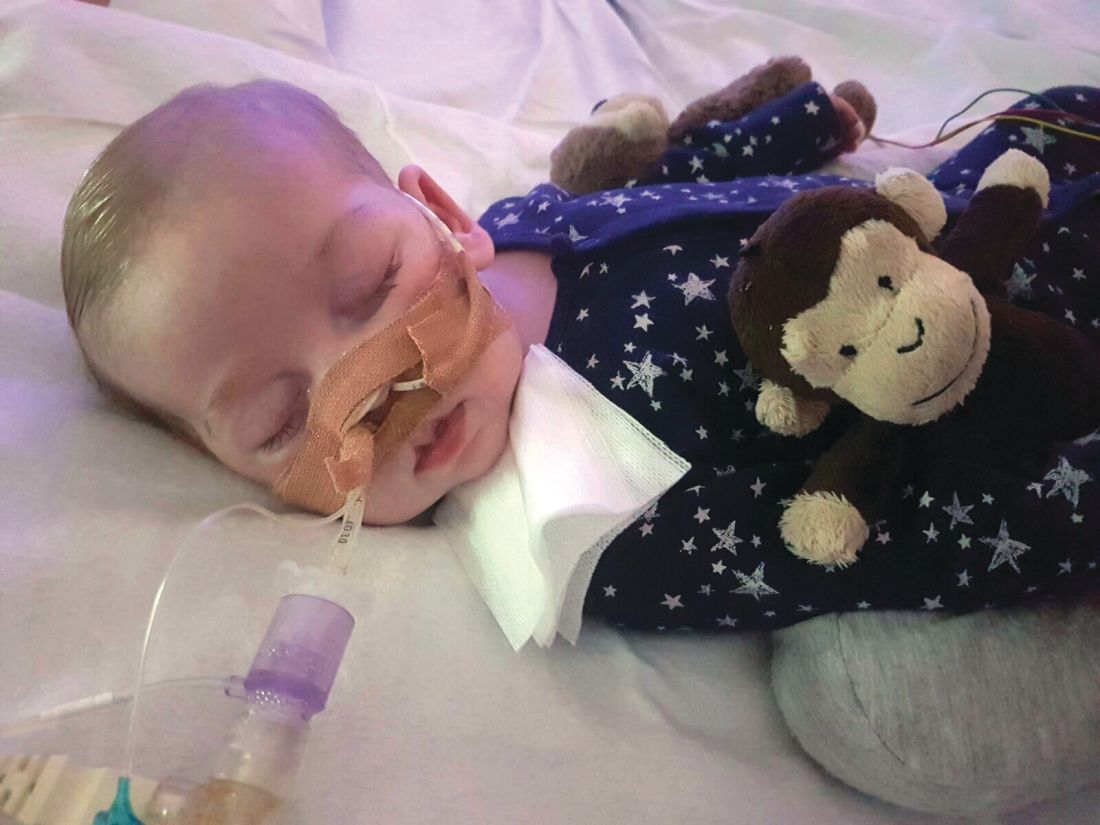
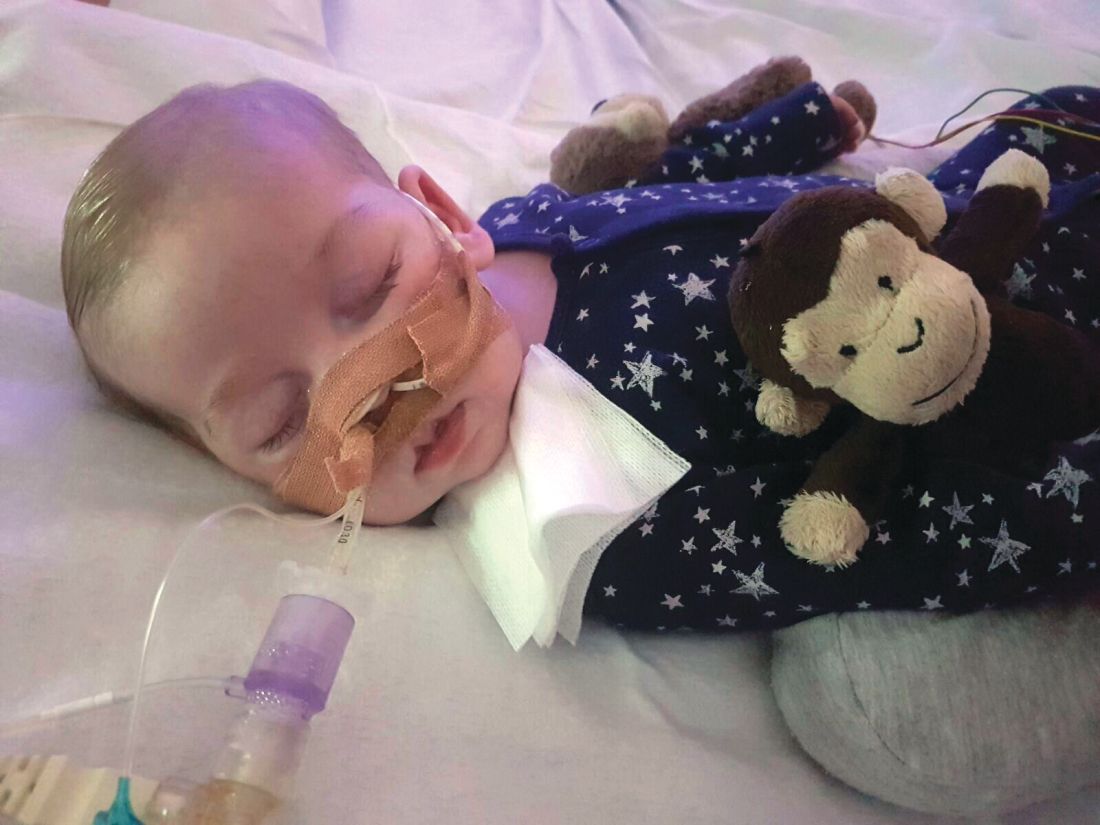
While those breakthroughs were occurring, the parents of Charlie Gard, an infant in England with a very rare and devastating mitochondrial disease, were seeking experimental therapy for their child. The medical staff disagreed with the parents: They recommended that the best thing for Charlie would be to stop the ventilator and allow him to die, rather than let him to continue to suffer. Three British courts reviewed Charlie’s case and concurred with the medical staff; on appeal, the European Court of Human Rights also denied the parents’ wishes.
End of life cases similar to Charlie’s are not rare. In modern medicine, parents sometimes must make the heart-wrenching decision to stop aggressive therapies and accept that death is imminent and unavoidable. Many factors go into making that decision. Both the courts and medical staff presume that parents are the best decision makers. Generally, medical staff provide emotional and spiritual support to the parents, along with a tincture of time. In the vast majority of cases, parents and physicians come to agree on the course of care, but sometimes, there are irreconcilable disagreements.
It is rare for courts to overrule parents. The government typically intervenes only when the harm from a parent’s choice exceeds some threshold. For instance, it is not in a child’s best interest to be put in a car during a blizzard and driven to the store to get cigarettes. But neither is it wise to have an intrusive government reviewing every choice a parent makes. The potential harm must be large enough, likely enough, and imminent enough before most judges will intervene. The law will insist the child be in a car seat at least.
In Charlie’s case, the medical staff and the judges all explicitly said that the cost of therapy did not factor into their decision making; they looked solely at what was best for Charlie. The focus was on whether the unproven potential benefits of experimental therapy outweighed the risk of suffering caused by the therapy and continued intensive medical care.
Even when a bedside decision ignores the financial impact, money often structures which therapeutic choices are available. There are also issues of equitable access to be raised and weighed. Expenditures impact other social choices.
Money influenced the actions of Martin Shkreli, who is best known as the pharmacy company executive who markedly increased the price of a drug. Mr. Shkreli was recently convicted on three of eight charges for securities fraud, and sentencing is pending; the convictions were not related to the price increase.

The United States has created some amazing technologies to save individual, identifiable lives, but they come at a high price that often costs lives in ways more subtle than the incident in India. At some point, the government and the public are responsible for either financing or rationing care, but that doesn’t absolve the scientists completely. The Russell-Einstein (Pugwash) Manifesto established that scientists have a moral accountability for the negative consequences of creating new technology, and that includes the financial aspects.
Dr. Powell is a pediatric hospitalist and clinical ethics consultant living in St. Louis. Email him at pdnews@frontlinemedcom.com
It has been a remarkable summer of milestones and crises for high-technology medicine.
An FDA panel has unanimously approved a gene therapy: The patient’s own immune cells are taken from his or her body, genetically modified, and reinfused to attack cancer. While the treatment has some dangers, it can be worth trying when conventional therapy has failed, and it appears to be curative when it works. Final FDA approval is expected in September.
While those breakthroughs were occurring, the parents of Charlie Gard, an infant in England with a very rare and devastating mitochondrial disease, were seeking experimental therapy for their child. The medical staff disagreed with the parents: They recommended that the best thing for Charlie would be to stop the ventilator and allow him to die, rather than let him to continue to suffer. Three British courts reviewed Charlie’s case and concurred with the medical staff; on appeal, the European Court of Human Rights also denied the parents’ wishes.
End of life cases similar to Charlie’s are not rare. In modern medicine, parents sometimes must make the heart-wrenching decision to stop aggressive therapies and accept that death is imminent and unavoidable. Many factors go into making that decision. Both the courts and medical staff presume that parents are the best decision makers. Generally, medical staff provide emotional and spiritual support to the parents, along with a tincture of time. In the vast majority of cases, parents and physicians come to agree on the course of care, but sometimes, there are irreconcilable disagreements.
It is rare for courts to overrule parents. The government typically intervenes only when the harm from a parent’s choice exceeds some threshold. For instance, it is not in a child’s best interest to be put in a car during a blizzard and driven to the store to get cigarettes. But neither is it wise to have an intrusive government reviewing every choice a parent makes. The potential harm must be large enough, likely enough, and imminent enough before most judges will intervene. The law will insist the child be in a car seat at least.
In Charlie’s case, the medical staff and the judges all explicitly said that the cost of therapy did not factor into their decision making; they looked solely at what was best for Charlie. The focus was on whether the unproven potential benefits of experimental therapy outweighed the risk of suffering caused by the therapy and continued intensive medical care.
Even when a bedside decision ignores the financial impact, money often structures which therapeutic choices are available. There are also issues of equitable access to be raised and weighed. Expenditures impact other social choices.
Money influenced the actions of Martin Shkreli, who is best known as the pharmacy company executive who markedly increased the price of a drug. Mr. Shkreli was recently convicted on three of eight charges for securities fraud, and sentencing is pending; the convictions were not related to the price increase.
The United States has created some amazing technologies to save individual, identifiable lives, but they come at a high price that often costs lives in ways more subtle than the incident in India. At some point, the government and the public are responsible for either financing or rationing care, but that doesn’t absolve the scientists completely. The Russell-Einstein (Pugwash) Manifesto established that scientists have a moral accountability for the negative consequences of creating new technology, and that includes the financial aspects.
Dr. Powell is a pediatric hospitalist and clinical ethics consultant living in St. Louis. Email him at pdnews@frontlinemedcom.com
It has been a remarkable summer of milestones and crises for high-technology medicine.
An FDA panel has unanimously approved a gene therapy: The patient’s own immune cells are taken from his or her body, genetically modified, and reinfused to attack cancer. While the treatment has some dangers, it can be worth trying when conventional therapy has failed, and it appears to be curative when it works. Final FDA approval is expected in September.
While those breakthroughs were occurring, the parents of Charlie Gard, an infant in England with a very rare and devastating mitochondrial disease, were seeking experimental therapy for their child. The medical staff disagreed with the parents: They recommended that the best thing for Charlie would be to stop the ventilator and allow him to die, rather than let him to continue to suffer. Three British courts reviewed Charlie’s case and concurred with the medical staff; on appeal, the European Court of Human Rights also denied the parents’ wishes.
End of life cases similar to Charlie’s are not rare. In modern medicine, parents sometimes must make the heart-wrenching decision to stop aggressive therapies and accept that death is imminent and unavoidable. Many factors go into making that decision. Both the courts and medical staff presume that parents are the best decision makers. Generally, medical staff provide emotional and spiritual support to the parents, along with a tincture of time. In the vast majority of cases, parents and physicians come to agree on the course of care, but sometimes, there are irreconcilable disagreements.
It is rare for courts to overrule parents. The government typically intervenes only when the harm from a parent’s choice exceeds some threshold. For instance, it is not in a child’s best interest to be put in a car during a blizzard and driven to the store to get cigarettes. But neither is it wise to have an intrusive government reviewing every choice a parent makes. The potential harm must be large enough, likely enough, and imminent enough before most judges will intervene. The law will insist the child be in a car seat at least.
In Charlie’s case, the medical staff and the judges all explicitly said that the cost of therapy did not factor into their decision making; they looked solely at what was best for Charlie. The focus was on whether the unproven potential benefits of experimental therapy outweighed the risk of suffering caused by the therapy and continued intensive medical care.
Even when a bedside decision ignores the financial impact, money often structures which therapeutic choices are available. There are also issues of equitable access to be raised and weighed. Expenditures impact other social choices.
Money influenced the actions of Martin Shkreli, who is best known as the pharmacy company executive who markedly increased the price of a drug. Mr. Shkreli was recently convicted on three of eight charges for securities fraud, and sentencing is pending; the convictions were not related to the price increase.
The United States has created some amazing technologies to save individual, identifiable lives, but they come at a high price that often costs lives in ways more subtle than the incident in India. At some point, the government and the public are responsible for either financing or rationing care, but that doesn’t absolve the scientists completely. The Russell-Einstein (Pugwash) Manifesto established that scientists have a moral accountability for the negative consequences of creating new technology, and that includes the financial aspects.
Dr. Powell is a pediatric hospitalist and clinical ethics consultant living in St. Louis. Email him at pdnews@frontlinemedcom.com
Navigating the complex landscape of IBD therapies
I provided an update on existing, new, and upcoming medical therapies for Crohn’s disease (CD) and ulcerative colitis (UC), with a focus on studies presented at Digestive Disease Week® 2017.
In one study of over 13,000 inflammatory bowel disease (IBD) patients in Medicare/Medicaid databases, it was found that among those treated with corticosteroids in the previous year, patients started on a tumor necrosis factor (TNF) inhibitor within the next year had mortality rates that were at least 22% lower than those of patients treated with prolonged corticosteroids over the next 12 months (Gastroenterology. 2017;152[5 Suppl 1]:S65-5). Initial results of the CALM study were presented, comparing a treat-to-target (T2T) algorithmic medical escalation approach in moderate to severe CD to a more conventional approach. Medical therapy was primarily adalimumab based and was escalated based on “success criteria,” which included not only symptomatic remission but also normalization of serum C-reactive protein and fecal calprotectin. At week 48, the rate of endoscopic remission was significantly higher (45.9%) in the T2T group than in conventionally managed patients (30.3%, P = .01), thus demonstrating the superiority of a T2T approach (Gastroenterology 2017;152[5 Suppl 1]:S155).

Ustekinumab is a monoclonal antibody to interleukins 12 and 23, and was approved for moderate to severe CD last year on the basis of the pivotal UNITI-1, UNITI-2, and IM-UNITI trials (N Engl J Med. 2016;375:1946-60). A weight-based intravenous loading dose was shown to be effective at inducing clinical response in both patients who had failed or were intolerant to anti-TNF therapy and those who had not. The responders in both induction trials were randomized to two subcutaneous doses of ustekinumab or placebo, and at the end of the 44-week trial, the drug met multiple efficacy endpoints, including clinical remission, clinical response, steroid-free remission, and sustained clinical remission. In another abstract, the rate of tuberculosis reactivation within the clinical development program of ustekinumab across all indications (6,581 patients, over 12,000 patient-years of follow-up) was significantly lower at 0.02 cases per 100 patient-years compared with the rates seen in the golimumab (0.24 per 100) and infliximab (0.39 per 100) development programs (Gastroenterology 2017;152[5 Suppl 1]:S596), illustrating that the safety profile of ustekinumab may be significantly different from that of anti-TNF agents.
Tofacitinib, which inhibits mainly JAK1 and JAK3 receptors, is an emergent oral small molecule drug for UC. Three phase 3 randomized placebo-controlled trials (OCTAVE-1, OCTAVE-2, and OCTAVE Sustain) of tofacitinib treatment in moderately to severely active UC patients have been recently published (N Engl J Med. 2017;376:1723-36). The rates of clinical remission at week 8 were significantly greater in patients who were treated with 10 mg tofacitinib than placebo in both induction trials, and results were similar regardless of anti-TNF exposure status. Clinical responders in the induction studies were randomized to placebo or two doses of tofacitinib. At week 52, remission rates were significantly higher in the patients treated with 10 mg tofacitinib twice daily and 5 mg tofacitinib twice daily than those receiving placebo. The percentages of tofacitinib-treated patients who achieved mucosal healing were significantly greater than those in the placebo group. Serious infections occurred significantly more frequently in the tofacitinib than placebo group during induction, but not during maintenance. However, rates of herpes zoster were higher with maintenance therapy at 10 mg twice daily (5.1%) than with placebo (0.5%). A recently published phase 2 study of filgotinib, a selective JAK1 inhibitor, reported that the remission rate at week 10 was significantly higher in active CD patients receiving 200 mg of filgotinib daily than in those receiving placebo (Lancet 2017;389:266-75). A phase 2 trial of another selective JAK1 inhibitor, upadacitinib (ABT-494), for induction therapy in CD patients with a history of failure or intolerance to TNF-antagonists, was presented at DDW (Gastroenterology 2017;152[5 Suppl 1]:S1308-9). Higher rates of clinical remission at week 16 were seen in patients on 6 mg upadacitinib twice daily than placebo, and several doses of upadacitinib were significantly better than placebo for inducing endoscopic remission at week 12 or 16. Serious adverse events were seen in 9%-15% of CD patients treated with these two agents (vs. 4%-5% in placebo-treated patients).
Smad7 regulates the signaling of transforming growth factor (TGF)-beta1, an anti-inflammatory cytokine. Mongersen is an orally delivered anti-sense oligonucleotide that inhibits Smad7 and restores TGF-beta1 signaling, and is being developed for CD. The efficacy of induction therapy for active CD patients with limited active disease (terminal ileum or proximal colon) was demonstrated in a phase 2 study (N Engl J Med. 2015;372:1104-13). Interestingly, this study showed significantly higher rates of clinical remission at day 15 with mongersen. However, there were no endoscopic data available in this trial, baseline serum C-reactive protein concentrations were low, and did not decrease significantly. This drug appears to be well tolerated, and serious adverse events were not significantly higher than for placebo. In a phase 1b study, correlations between clinical and endoscopic outcomes were explored, and among 52 CD patients, SES-CD reductions of at least 25% at week 12 were seen in 37% of mongersen-treated patients (Gastroenterology. 2017;152[5 Suppl 1]:S198).
In summary, the future of IBD medical therapy is bright due to the recent introduction of therapies with novel mechanisms of action and favorable safety profiles (e.g., vedolizumab and ustekinumab), potentially lower-cost biosimilars, and multiple compounds in the drug development pipeline.
Dr. Loftus is professor of medicine, Mayo Clinic College of Medicine, director of the Inflammatory Bowel Disease Interest Group, the division of gastroenterology and hepatology, Rochester, Minn. He made his comments during the AGA Institute Presidential Plenary at the Annual Digestive Disease Week.
I provided an update on existing, new, and upcoming medical therapies for Crohn’s disease (CD) and ulcerative colitis (UC), with a focus on studies presented at Digestive Disease Week® 2017.
In one study of over 13,000 inflammatory bowel disease (IBD) patients in Medicare/Medicaid databases, it was found that among those treated with corticosteroids in the previous year, patients started on a tumor necrosis factor (TNF) inhibitor within the next year had mortality rates that were at least 22% lower than those of patients treated with prolonged corticosteroids over the next 12 months (Gastroenterology. 2017;152[5 Suppl 1]:S65-5). Initial results of the CALM study were presented, comparing a treat-to-target (T2T) algorithmic medical escalation approach in moderate to severe CD to a more conventional approach. Medical therapy was primarily adalimumab based and was escalated based on “success criteria,” which included not only symptomatic remission but also normalization of serum C-reactive protein and fecal calprotectin. At week 48, the rate of endoscopic remission was significantly higher (45.9%) in the T2T group than in conventionally managed patients (30.3%, P = .01), thus demonstrating the superiority of a T2T approach (Gastroenterology 2017;152[5 Suppl 1]:S155).
Ustekinumab is a monoclonal antibody to interleukins 12 and 23, and was approved for moderate to severe CD last year on the basis of the pivotal UNITI-1, UNITI-2, and IM-UNITI trials (N Engl J Med. 2016;375:1946-60). A weight-based intravenous loading dose was shown to be effective at inducing clinical response in both patients who had failed or were intolerant to anti-TNF therapy and those who had not. The responders in both induction trials were randomized to two subcutaneous doses of ustekinumab or placebo, and at the end of the 44-week trial, the drug met multiple efficacy endpoints, including clinical remission, clinical response, steroid-free remission, and sustained clinical remission. In another abstract, the rate of tuberculosis reactivation within the clinical development program of ustekinumab across all indications (6,581 patients, over 12,000 patient-years of follow-up) was significantly lower at 0.02 cases per 100 patient-years compared with the rates seen in the golimumab (0.24 per 100) and infliximab (0.39 per 100) development programs (Gastroenterology 2017;152[5 Suppl 1]:S596), illustrating that the safety profile of ustekinumab may be significantly different from that of anti-TNF agents.
Tofacitinib, which inhibits mainly JAK1 and JAK3 receptors, is an emergent oral small molecule drug for UC. Three phase 3 randomized placebo-controlled trials (OCTAVE-1, OCTAVE-2, and OCTAVE Sustain) of tofacitinib treatment in moderately to severely active UC patients have been recently published (N Engl J Med. 2017;376:1723-36). The rates of clinical remission at week 8 were significantly greater in patients who were treated with 10 mg tofacitinib than placebo in both induction trials, and results were similar regardless of anti-TNF exposure status. Clinical responders in the induction studies were randomized to placebo or two doses of tofacitinib. At week 52, remission rates were significantly higher in the patients treated with 10 mg tofacitinib twice daily and 5 mg tofacitinib twice daily than those receiving placebo. The percentages of tofacitinib-treated patients who achieved mucosal healing were significantly greater than those in the placebo group. Serious infections occurred significantly more frequently in the tofacitinib than placebo group during induction, but not during maintenance. However, rates of herpes zoster were higher with maintenance therapy at 10 mg twice daily (5.1%) than with placebo (0.5%). A recently published phase 2 study of filgotinib, a selective JAK1 inhibitor, reported that the remission rate at week 10 was significantly higher in active CD patients receiving 200 mg of filgotinib daily than in those receiving placebo (Lancet 2017;389:266-75). A phase 2 trial of another selective JAK1 inhibitor, upadacitinib (ABT-494), for induction therapy in CD patients with a history of failure or intolerance to TNF-antagonists, was presented at DDW (Gastroenterology 2017;152[5 Suppl 1]:S1308-9). Higher rates of clinical remission at week 16 were seen in patients on 6 mg upadacitinib twice daily than placebo, and several doses of upadacitinib were significantly better than placebo for inducing endoscopic remission at week 12 or 16. Serious adverse events were seen in 9%-15% of CD patients treated with these two agents (vs. 4%-5% in placebo-treated patients).
Smad7 regulates the signaling of transforming growth factor (TGF)-beta1, an anti-inflammatory cytokine. Mongersen is an orally delivered anti-sense oligonucleotide that inhibits Smad7 and restores TGF-beta1 signaling, and is being developed for CD. The efficacy of induction therapy for active CD patients with limited active disease (terminal ileum or proximal colon) was demonstrated in a phase 2 study (N Engl J Med. 2015;372:1104-13). Interestingly, this study showed significantly higher rates of clinical remission at day 15 with mongersen. However, there were no endoscopic data available in this trial, baseline serum C-reactive protein concentrations were low, and did not decrease significantly. This drug appears to be well tolerated, and serious adverse events were not significantly higher than for placebo. In a phase 1b study, correlations between clinical and endoscopic outcomes were explored, and among 52 CD patients, SES-CD reductions of at least 25% at week 12 were seen in 37% of mongersen-treated patients (Gastroenterology. 2017;152[5 Suppl 1]:S198).
In summary, the future of IBD medical therapy is bright due to the recent introduction of therapies with novel mechanisms of action and favorable safety profiles (e.g., vedolizumab and ustekinumab), potentially lower-cost biosimilars, and multiple compounds in the drug development pipeline.
Dr. Loftus is professor of medicine, Mayo Clinic College of Medicine, director of the Inflammatory Bowel Disease Interest Group, the division of gastroenterology and hepatology, Rochester, Minn. He made his comments during the AGA Institute Presidential Plenary at the Annual Digestive Disease Week.
I provided an update on existing, new, and upcoming medical therapies for Crohn’s disease (CD) and ulcerative colitis (UC), with a focus on studies presented at Digestive Disease Week® 2017.
In one study of over 13,000 inflammatory bowel disease (IBD) patients in Medicare/Medicaid databases, it was found that among those treated with corticosteroids in the previous year, patients started on a tumor necrosis factor (TNF) inhibitor within the next year had mortality rates that were at least 22% lower than those of patients treated with prolonged corticosteroids over the next 12 months (Gastroenterology. 2017;152[5 Suppl 1]:S65-5). Initial results of the CALM study were presented, comparing a treat-to-target (T2T) algorithmic medical escalation approach in moderate to severe CD to a more conventional approach. Medical therapy was primarily adalimumab based and was escalated based on “success criteria,” which included not only symptomatic remission but also normalization of serum C-reactive protein and fecal calprotectin. At week 48, the rate of endoscopic remission was significantly higher (45.9%) in the T2T group than in conventionally managed patients (30.3%, P = .01), thus demonstrating the superiority of a T2T approach (Gastroenterology 2017;152[5 Suppl 1]:S155).
Ustekinumab is a monoclonal antibody to interleukins 12 and 23, and was approved for moderate to severe CD last year on the basis of the pivotal UNITI-1, UNITI-2, and IM-UNITI trials (N Engl J Med. 2016;375:1946-60). A weight-based intravenous loading dose was shown to be effective at inducing clinical response in both patients who had failed or were intolerant to anti-TNF therapy and those who had not. The responders in both induction trials were randomized to two subcutaneous doses of ustekinumab or placebo, and at the end of the 44-week trial, the drug met multiple efficacy endpoints, including clinical remission, clinical response, steroid-free remission, and sustained clinical remission. In another abstract, the rate of tuberculosis reactivation within the clinical development program of ustekinumab across all indications (6,581 patients, over 12,000 patient-years of follow-up) was significantly lower at 0.02 cases per 100 patient-years compared with the rates seen in the golimumab (0.24 per 100) and infliximab (0.39 per 100) development programs (Gastroenterology 2017;152[5 Suppl 1]:S596), illustrating that the safety profile of ustekinumab may be significantly different from that of anti-TNF agents.
Tofacitinib, which inhibits mainly JAK1 and JAK3 receptors, is an emergent oral small molecule drug for UC. Three phase 3 randomized placebo-controlled trials (OCTAVE-1, OCTAVE-2, and OCTAVE Sustain) of tofacitinib treatment in moderately to severely active UC patients have been recently published (N Engl J Med. 2017;376:1723-36). The rates of clinical remission at week 8 were significantly greater in patients who were treated with 10 mg tofacitinib than placebo in both induction trials, and results were similar regardless of anti-TNF exposure status. Clinical responders in the induction studies were randomized to placebo or two doses of tofacitinib. At week 52, remission rates were significantly higher in the patients treated with 10 mg tofacitinib twice daily and 5 mg tofacitinib twice daily than those receiving placebo. The percentages of tofacitinib-treated patients who achieved mucosal healing were significantly greater than those in the placebo group. Serious infections occurred significantly more frequently in the tofacitinib than placebo group during induction, but not during maintenance. However, rates of herpes zoster were higher with maintenance therapy at 10 mg twice daily (5.1%) than with placebo (0.5%). A recently published phase 2 study of filgotinib, a selective JAK1 inhibitor, reported that the remission rate at week 10 was significantly higher in active CD patients receiving 200 mg of filgotinib daily than in those receiving placebo (Lancet 2017;389:266-75). A phase 2 trial of another selective JAK1 inhibitor, upadacitinib (ABT-494), for induction therapy in CD patients with a history of failure or intolerance to TNF-antagonists, was presented at DDW (Gastroenterology 2017;152[5 Suppl 1]:S1308-9). Higher rates of clinical remission at week 16 were seen in patients on 6 mg upadacitinib twice daily than placebo, and several doses of upadacitinib were significantly better than placebo for inducing endoscopic remission at week 12 or 16. Serious adverse events were seen in 9%-15% of CD patients treated with these two agents (vs. 4%-5% in placebo-treated patients).
Smad7 regulates the signaling of transforming growth factor (TGF)-beta1, an anti-inflammatory cytokine. Mongersen is an orally delivered anti-sense oligonucleotide that inhibits Smad7 and restores TGF-beta1 signaling, and is being developed for CD. The efficacy of induction therapy for active CD patients with limited active disease (terminal ileum or proximal colon) was demonstrated in a phase 2 study (N Engl J Med. 2015;372:1104-13). Interestingly, this study showed significantly higher rates of clinical remission at day 15 with mongersen. However, there were no endoscopic data available in this trial, baseline serum C-reactive protein concentrations were low, and did not decrease significantly. This drug appears to be well tolerated, and serious adverse events were not significantly higher than for placebo. In a phase 1b study, correlations between clinical and endoscopic outcomes were explored, and among 52 CD patients, SES-CD reductions of at least 25% at week 12 were seen in 37% of mongersen-treated patients (Gastroenterology. 2017;152[5 Suppl 1]:S198).
In summary, the future of IBD medical therapy is bright due to the recent introduction of therapies with novel mechanisms of action and favorable safety profiles (e.g., vedolizumab and ustekinumab), potentially lower-cost biosimilars, and multiple compounds in the drug development pipeline.
Dr. Loftus is professor of medicine, Mayo Clinic College of Medicine, director of the Inflammatory Bowel Disease Interest Group, the division of gastroenterology and hepatology, Rochester, Minn. He made his comments during the AGA Institute Presidential Plenary at the Annual Digestive Disease Week.
Pediatric News welcomes Dr. Lenore Jarvis
Pediatric News welcomes Lenore Jarvis MD, MEd, to its editorial advisory board.
Dr. Jarvis is a pediatric emergency medicine physician at Children’s National Health System, and assistant professor of pediatrics at George Washington University, both in Washington.
Pediatric News welcomes Lenore Jarvis MD, MEd, to its editorial advisory board.
Dr. Jarvis is a pediatric emergency medicine physician at Children’s National Health System, and assistant professor of pediatrics at George Washington University, both in Washington.
Pediatric News welcomes Lenore Jarvis MD, MEd, to its editorial advisory board.
Dr. Jarvis is a pediatric emergency medicine physician at Children’s National Health System, and assistant professor of pediatrics at George Washington University, both in Washington.
Confronting hate and violence against the LGBT community
It may be unusual for an LGBT health columnist to mention the horrendous events that occurred in Charlottesville, Va., in August 2017. It clearly was a demonstration of hate and violence against racial and ethnic minorities. Unfortunately, the LGBT community – especially LGBT communities of color – are often a target of that kind of hate and violence. This has a detrimental effect on the health of the LGBT community, and I believe that health care providers have a responsibility to address this hate and violence to promote the well-being of this marginalized community.
It cannot be overstated that LGBT individuals frequently experience anti-gay and anti-trans violence. According to the 2015 Federal Bureau of Investigation Hate Crime Statistics, about a fifth of hate crimes reported were based on sexual orientation or gender identity.1 In addition, LGBT youth are eight times as likely to experience bullying at school because of their sexual orientation or gender identity.2 Furthermore, on many surveys on anti-LGBT violence, people of color comprise more than half of the victims.3 There is a strong association between exposure to this violence and the health outcomes of LGBT youth. A study by Russell et al. showed that LGBT youth who were victims of physical violence at school are more likely to be depressed and suicidal and more likely to be diagnosed with an STD,4 and another study showed that LGBT youth who experienced anti-LGBT violence are more likely to engage in substance use.5 The health outcomes from anti-LGBT violence are not limited to the adolescent period – adolescents who experienced this kind of violence are more likely to report higher levels of depression as adults.6 Although researchers still are trying to determine the exact mechanism for these relationships, the most cited (and sensible) explanation is that exposure to anti-LGBT stigma, discrimination, and violence leads to a toxic environment, which in turn increases the risk for mental health problems and maladaptive coping mechanisms (such as substance use) as a response to such an environment.7
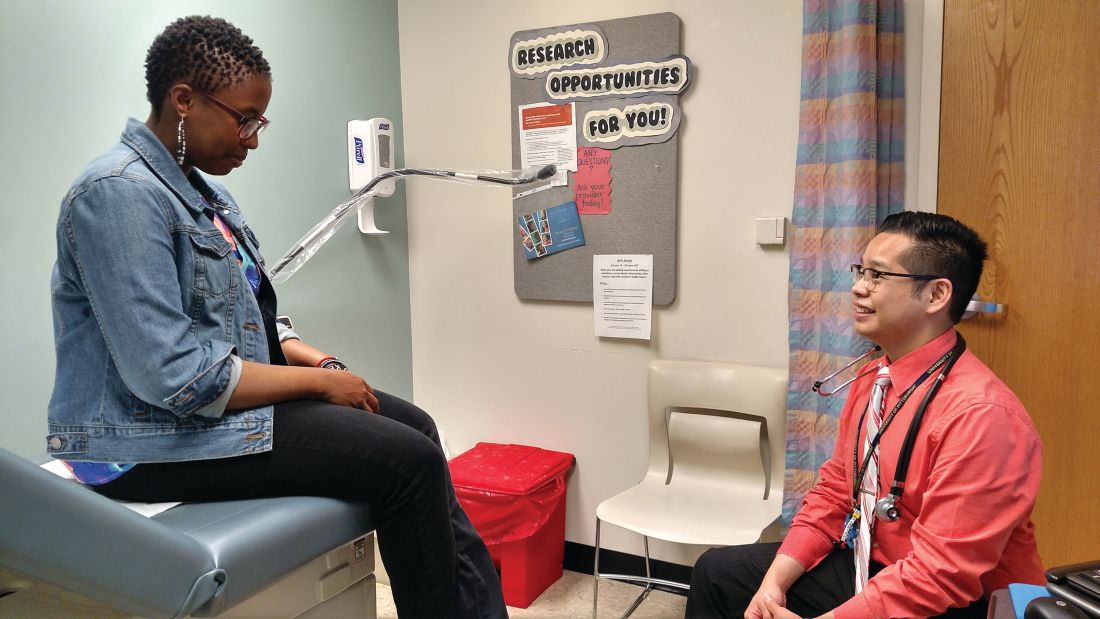
What can we do to stand up to the hate and violence against marginalized groups, such as the LGBT community? First, make your office a safe space. With the recent brazen display of hate and violence going around, members the LGBT community are desperate to feel protected. A good place to start is a guide by Advocates for Youth. Second, educate yourself and others. The title physician means “teacher,” and I feel it is your responsibility to teach your peers, colleagues, and the public about how anti-LGBT violence affects the health of LGBT individuals. To be an effective teacher, you need to be up to date on the research on how hatred and intolerance affects the health of the LGBT community. A good place to start is the Human Rights Campaign, which has accurate statistics on anti-LGBT violence and resources to address this problem. Finally, be an advocate. You don’t need to be in the streets with picket signs, nor do you necessarily need to lead the charge against anti-LGBT hate and violence – others will be at the front lines. What you can do is to call for your local, state, and federal government to institute policies that address anti-LGBT violence. Many medical organizations have resources that help health care providers engage with policy makers (check out the American Academy of Pediatrics advocacy page for these resources). Many of our elected officials take our professional opinions seriously.
Anti-gay and anti-trans violence is all too common in the LGBT community, especially violence against LGBT people of color, and this violence can adversely affect their health. Health care providers have a responsibility and the influence to confront these nexuses of hate and intolerance. You don’t need to do something heroic to accomplish this. You are members of a privileged and respected group of professionals, so small actions can coalesce into something that has a large impact on the health and well-being of the communities you serve.

Resources
• Advocates for Youth. Creating Safe Space for GLBTQ Youth: A Toolkit
• Human Rights Campaign. www.hrc.org/resources/
• American Academy of Pediatrics advocacy page: www.aap.org/en-us/advocacy-and-policy/
References
1. U.S. Department of Justice Federal Bureau of Investigation. Uniform Crime Report Hate Crime Statistics, 2015.
2. J Interpers Violence. 2017. doi: 10.1177/0886260517718830.
3. National Coalition of Anti-Violence Programs (NCAVP). Lesbian, Gay, Bisexual, Transgender, Queer and HIV-Affected Hate Violence in 2016.
4. J Sch Health. 2011 May;81(5):223-30.
5. Prev Sci. 2015 Jul;16(5):734-43.
6. Dev Psychol. 2010 Nov;46(6):1580-9.
7. Psychol Bull. 2003 Sep;129(5):674-97.
8. Gallup. Americans Rate Healthcare Providers High on Honesty, Ethics. 2016.
9. The Hippocratic Oath Today. 2001 or Do. No. Harm.
It may be unusual for an LGBT health columnist to mention the horrendous events that occurred in Charlottesville, Va., in August 2017. It clearly was a demonstration of hate and violence against racial and ethnic minorities. Unfortunately, the LGBT community – especially LGBT communities of color – are often a target of that kind of hate and violence. This has a detrimental effect on the health of the LGBT community, and I believe that health care providers have a responsibility to address this hate and violence to promote the well-being of this marginalized community.
It cannot be overstated that LGBT individuals frequently experience anti-gay and anti-trans violence. According to the 2015 Federal Bureau of Investigation Hate Crime Statistics, about a fifth of hate crimes reported were based on sexual orientation or gender identity.1 In addition, LGBT youth are eight times as likely to experience bullying at school because of their sexual orientation or gender identity.2 Furthermore, on many surveys on anti-LGBT violence, people of color comprise more than half of the victims.3 There is a strong association between exposure to this violence and the health outcomes of LGBT youth. A study by Russell et al. showed that LGBT youth who were victims of physical violence at school are more likely to be depressed and suicidal and more likely to be diagnosed with an STD,4 and another study showed that LGBT youth who experienced anti-LGBT violence are more likely to engage in substance use.5 The health outcomes from anti-LGBT violence are not limited to the adolescent period – adolescents who experienced this kind of violence are more likely to report higher levels of depression as adults.6 Although researchers still are trying to determine the exact mechanism for these relationships, the most cited (and sensible) explanation is that exposure to anti-LGBT stigma, discrimination, and violence leads to a toxic environment, which in turn increases the risk for mental health problems and maladaptive coping mechanisms (such as substance use) as a response to such an environment.7
What can we do to stand up to the hate and violence against marginalized groups, such as the LGBT community? First, make your office a safe space. With the recent brazen display of hate and violence going around, members the LGBT community are desperate to feel protected. A good place to start is a guide by Advocates for Youth. Second, educate yourself and others. The title physician means “teacher,” and I feel it is your responsibility to teach your peers, colleagues, and the public about how anti-LGBT violence affects the health of LGBT individuals. To be an effective teacher, you need to be up to date on the research on how hatred and intolerance affects the health of the LGBT community. A good place to start is the Human Rights Campaign, which has accurate statistics on anti-LGBT violence and resources to address this problem. Finally, be an advocate. You don’t need to be in the streets with picket signs, nor do you necessarily need to lead the charge against anti-LGBT hate and violence – others will be at the front lines. What you can do is to call for your local, state, and federal government to institute policies that address anti-LGBT violence. Many medical organizations have resources that help health care providers engage with policy makers (check out the American Academy of Pediatrics advocacy page for these resources). Many of our elected officials take our professional opinions seriously.
Anti-gay and anti-trans violence is all too common in the LGBT community, especially violence against LGBT people of color, and this violence can adversely affect their health. Health care providers have a responsibility and the influence to confront these nexuses of hate and intolerance. You don’t need to do something heroic to accomplish this. You are members of a privileged and respected group of professionals, so small actions can coalesce into something that has a large impact on the health and well-being of the communities you serve.
Resources
• Advocates for Youth. Creating Safe Space for GLBTQ Youth: A Toolkit
• Human Rights Campaign. www.hrc.org/resources/
• American Academy of Pediatrics advocacy page: www.aap.org/en-us/advocacy-and-policy/
References
1. U.S. Department of Justice Federal Bureau of Investigation. Uniform Crime Report Hate Crime Statistics, 2015.
2. J Interpers Violence. 2017. doi: 10.1177/0886260517718830.
3. National Coalition of Anti-Violence Programs (NCAVP). Lesbian, Gay, Bisexual, Transgender, Queer and HIV-Affected Hate Violence in 2016.
4. J Sch Health. 2011 May;81(5):223-30.
5. Prev Sci. 2015 Jul;16(5):734-43.
6. Dev Psychol. 2010 Nov;46(6):1580-9.
7. Psychol Bull. 2003 Sep;129(5):674-97.
8. Gallup. Americans Rate Healthcare Providers High on Honesty, Ethics. 2016.
9. The Hippocratic Oath Today. 2001 or Do. No. Harm.
It may be unusual for an LGBT health columnist to mention the horrendous events that occurred in Charlottesville, Va., in August 2017. It clearly was a demonstration of hate and violence against racial and ethnic minorities. Unfortunately, the LGBT community – especially LGBT communities of color – are often a target of that kind of hate and violence. This has a detrimental effect on the health of the LGBT community, and I believe that health care providers have a responsibility to address this hate and violence to promote the well-being of this marginalized community.
It cannot be overstated that LGBT individuals frequently experience anti-gay and anti-trans violence. According to the 2015 Federal Bureau of Investigation Hate Crime Statistics, about a fifth of hate crimes reported were based on sexual orientation or gender identity.1 In addition, LGBT youth are eight times as likely to experience bullying at school because of their sexual orientation or gender identity.2 Furthermore, on many surveys on anti-LGBT violence, people of color comprise more than half of the victims.3 There is a strong association between exposure to this violence and the health outcomes of LGBT youth. A study by Russell et al. showed that LGBT youth who were victims of physical violence at school are more likely to be depressed and suicidal and more likely to be diagnosed with an STD,4 and another study showed that LGBT youth who experienced anti-LGBT violence are more likely to engage in substance use.5 The health outcomes from anti-LGBT violence are not limited to the adolescent period – adolescents who experienced this kind of violence are more likely to report higher levels of depression as adults.6 Although researchers still are trying to determine the exact mechanism for these relationships, the most cited (and sensible) explanation is that exposure to anti-LGBT stigma, discrimination, and violence leads to a toxic environment, which in turn increases the risk for mental health problems and maladaptive coping mechanisms (such as substance use) as a response to such an environment.7
What can we do to stand up to the hate and violence against marginalized groups, such as the LGBT community? First, make your office a safe space. With the recent brazen display of hate and violence going around, members the LGBT community are desperate to feel protected. A good place to start is a guide by Advocates for Youth. Second, educate yourself and others. The title physician means “teacher,” and I feel it is your responsibility to teach your peers, colleagues, and the public about how anti-LGBT violence affects the health of LGBT individuals. To be an effective teacher, you need to be up to date on the research on how hatred and intolerance affects the health of the LGBT community. A good place to start is the Human Rights Campaign, which has accurate statistics on anti-LGBT violence and resources to address this problem. Finally, be an advocate. You don’t need to be in the streets with picket signs, nor do you necessarily need to lead the charge against anti-LGBT hate and violence – others will be at the front lines. What you can do is to call for your local, state, and federal government to institute policies that address anti-LGBT violence. Many medical organizations have resources that help health care providers engage with policy makers (check out the American Academy of Pediatrics advocacy page for these resources). Many of our elected officials take our professional opinions seriously.
Anti-gay and anti-trans violence is all too common in the LGBT community, especially violence against LGBT people of color, and this violence can adversely affect their health. Health care providers have a responsibility and the influence to confront these nexuses of hate and intolerance. You don’t need to do something heroic to accomplish this. You are members of a privileged and respected group of professionals, so small actions can coalesce into something that has a large impact on the health and well-being of the communities you serve.
Resources
• Advocates for Youth. Creating Safe Space for GLBTQ Youth: A Toolkit
• Human Rights Campaign. www.hrc.org/resources/
• American Academy of Pediatrics advocacy page: www.aap.org/en-us/advocacy-and-policy/
References
1. U.S. Department of Justice Federal Bureau of Investigation. Uniform Crime Report Hate Crime Statistics, 2015.
2. J Interpers Violence. 2017. doi: 10.1177/0886260517718830.
3. National Coalition of Anti-Violence Programs (NCAVP). Lesbian, Gay, Bisexual, Transgender, Queer and HIV-Affected Hate Violence in 2016.
4. J Sch Health. 2011 May;81(5):223-30.
5. Prev Sci. 2015 Jul;16(5):734-43.
6. Dev Psychol. 2010 Nov;46(6):1580-9.
7. Psychol Bull. 2003 Sep;129(5):674-97.
8. Gallup. Americans Rate Healthcare Providers High on Honesty, Ethics. 2016.
9. The Hippocratic Oath Today. 2001 or Do. No. Harm.
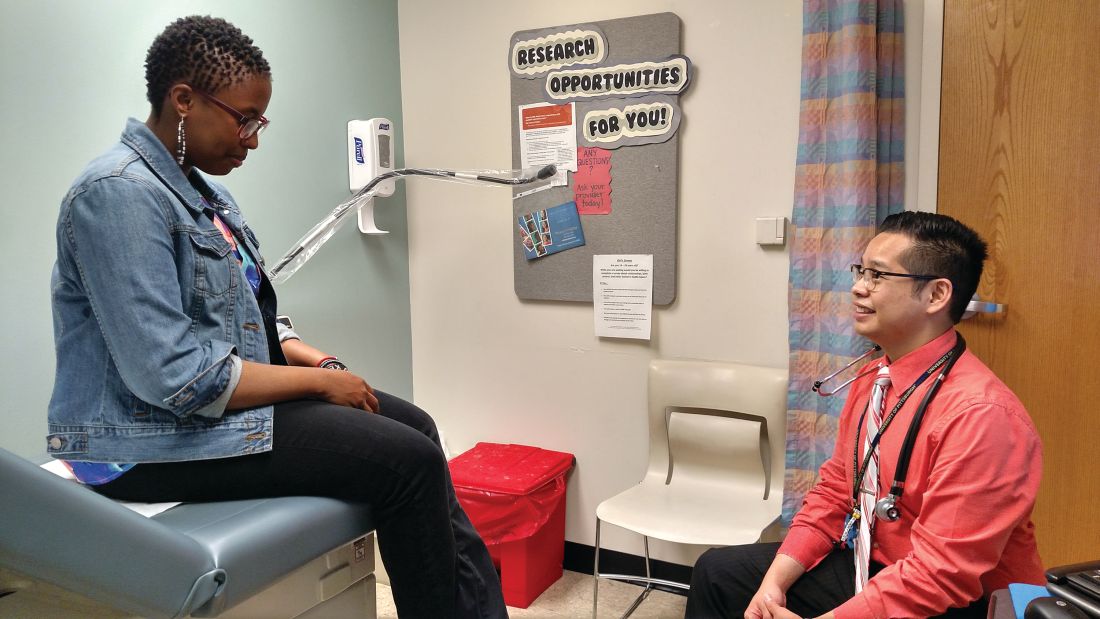
Key steps to preventing patient injury
Physicians often encounter a “black box” in terms of where to focus their patient safety efforts. Obstetricians care for two patients – mothers and babies – simultaneously, which presents significant challenges. Safe obstetric care requires a multidisciplinary team with good communication skills. At the same time, gynecologic procedures are becoming more complex, and caring for a patient with complications can be quite challenging.
Breakdowns in communication often lead to adverse outcomes. Using closed obstetric malpractice claims allows practicing clinicians to understand where to focus their improvement efforts. The Doctors Company recently performed an analysis of 944 closed obstetric-gynecologic claims using a lexicon that is common to many other insurers. The study found that across patient claims, communication-related issues were common to nearly all allegations of ob.gyn.-related patient injury. The claims data revealed that key communication failures were in two major areas: communications with our patients and communication among team members, including the physician.

Physician-patient communication
Consider this example: Dr. S. is caring for a patient at term. At delivery, the infant has no heart rate and no respiratory effort and undergoes a full code and has APGAR scores of 0,0, and 3. While the indication for cesarean delivery was a nonreassuring fetal status, this was a surprising outcome. The team sent the placenta to the pathologist and there was an unusual finding of an amniotic web and the umbilical cord showed venous necrosis. A family meeting was held with the pathologist to explain the findings and the relationship to the baby’s need for support. While the presentation of the information did not change the outcome for the infant, it helped the patients and family to understand how the neonatal outcome occurred and that it was remote from delivery.
Common factors contributing to communication issues between physicians and patients/families include inadequate consent for treatment options; poor patient rapport, including unsympathetic responses to the patient; and language barriers, according to The Doctors Company’s clinical guide to improving patient safety and managing risks.
A fundamental step to address these factors is early education for patients and families about the risks and benefits of treatment, which is essential to reinforce understanding of potential interventions. Informed consent is a critical element of early education, but is often done in a rush, in a busy office setting – making it a critical risk factor. Having the informed consent conversation when the decision is made to go to surgery is important, but encouraging patients to bring forward questions and allowing their loved ones to have a clear understanding of their recovery process is also very helpful. When an unexpected complication occurs, having had a complete discussion about risks can help to mitigate an otherwise difficult situation.
We are often busy and stressed when complications arise, and the reflex is to withdraw from the patient who has suffered the complication. Demonstrating genuine empathy toward these patients allows the human side of physician-patient interaction to become apparent, which not only can reduce the patient’s and the family’s anger and frustration at a complicated situation but also can reduce the legal risk for the physician.
Provider communication
Consider another example: Ms. G is a 36-year old G1P0 who presented to the labor and delivery unit with severe preeclampsia. Failure to communicate a clear plan of action for management of her severe hypertension to all team members led to undertreated hypertension, a major stroke, and maternal death.
Both obstetrics and gynecology are specialties that require multidisciplinary teams, including nursing, anesthesia colleagues, consultants, and if at a teaching hospital, residents and medical and nursing students. Teamwork training initiatives can encourage providers to move out of their individual silos, practice more collaboratively, and share information across disciplines in a succinct and timely fashion. Understanding patients’ plans of care and competing resource demands allows a team to manage risk together.
Having a shared mental model and situation awareness across the team also creates a safety net for patients. This type of shared information is something highly reliable teams train on and communicate across disciplines, as this is not often taught in medical or nursing schools. Having clear roles and responsibilities allows professionals to create and understand expectations, especially around sharing safety concerns.
In situ simulations of high-risk situations both in labor and delivery and in the operating rooms are wonderful and instructive ways to practice teamwork behaviors. This type of exercise allows staff to practice skills together while discovering system failures in a nonthreatening environment. Later debriefing these activities allows staff to reflect on their own behavior and learn from one another, as well as to identify systems that need additional work.
Addressing patient safety risks effectively means focusing our energy and efforts toward underlying vulnerabilities that place patients at risk and increase liability for doctors. Sharing the results of lessons learned, through the evaluation of malpractice claims, helps to identify areas of vulnerabilities. Working to improve our communication with patients, families, and other providers, we can systematically lower risk to the patient and lower the risk of litigation to physicians.
Dr. Mann, an ob.gyn., is an assistant professor, part-time, at Harvard Medical School in Boston, and is a national consultant in patient safety and quality improvement in the field of obstetrics. She is a member of the Obstetrics Advisory Board of The Doctors Company. She is also a consultant at Harvard’s Risk Management Foundation, Dana-Farber Cancer Institute, and many institutions across the United States.
Physicians often encounter a “black box” in terms of where to focus their patient safety efforts. Obstetricians care for two patients – mothers and babies – simultaneously, which presents significant challenges. Safe obstetric care requires a multidisciplinary team with good communication skills. At the same time, gynecologic procedures are becoming more complex, and caring for a patient with complications can be quite challenging.
Breakdowns in communication often lead to adverse outcomes. Using closed obstetric malpractice claims allows practicing clinicians to understand where to focus their improvement efforts. The Doctors Company recently performed an analysis of 944 closed obstetric-gynecologic claims using a lexicon that is common to many other insurers. The study found that across patient claims, communication-related issues were common to nearly all allegations of ob.gyn.-related patient injury. The claims data revealed that key communication failures were in two major areas: communications with our patients and communication among team members, including the physician.
Physician-patient communication
Consider this example: Dr. S. is caring for a patient at term. At delivery, the infant has no heart rate and no respiratory effort and undergoes a full code and has APGAR scores of 0,0, and 3. While the indication for cesarean delivery was a nonreassuring fetal status, this was a surprising outcome. The team sent the placenta to the pathologist and there was an unusual finding of an amniotic web and the umbilical cord showed venous necrosis. A family meeting was held with the pathologist to explain the findings and the relationship to the baby’s need for support. While the presentation of the information did not change the outcome for the infant, it helped the patients and family to understand how the neonatal outcome occurred and that it was remote from delivery.
Common factors contributing to communication issues between physicians and patients/families include inadequate consent for treatment options; poor patient rapport, including unsympathetic responses to the patient; and language barriers, according to The Doctors Company’s clinical guide to improving patient safety and managing risks.
A fundamental step to address these factors is early education for patients and families about the risks and benefits of treatment, which is essential to reinforce understanding of potential interventions. Informed consent is a critical element of early education, but is often done in a rush, in a busy office setting – making it a critical risk factor. Having the informed consent conversation when the decision is made to go to surgery is important, but encouraging patients to bring forward questions and allowing their loved ones to have a clear understanding of their recovery process is also very helpful. When an unexpected complication occurs, having had a complete discussion about risks can help to mitigate an otherwise difficult situation.
We are often busy and stressed when complications arise, and the reflex is to withdraw from the patient who has suffered the complication. Demonstrating genuine empathy toward these patients allows the human side of physician-patient interaction to become apparent, which not only can reduce the patient’s and the family’s anger and frustration at a complicated situation but also can reduce the legal risk for the physician.
Provider communication
Consider another example: Ms. G is a 36-year old G1P0 who presented to the labor and delivery unit with severe preeclampsia. Failure to communicate a clear plan of action for management of her severe hypertension to all team members led to undertreated hypertension, a major stroke, and maternal death.
Both obstetrics and gynecology are specialties that require multidisciplinary teams, including nursing, anesthesia colleagues, consultants, and if at a teaching hospital, residents and medical and nursing students. Teamwork training initiatives can encourage providers to move out of their individual silos, practice more collaboratively, and share information across disciplines in a succinct and timely fashion. Understanding patients’ plans of care and competing resource demands allows a team to manage risk together.
Having a shared mental model and situation awareness across the team also creates a safety net for patients. This type of shared information is something highly reliable teams train on and communicate across disciplines, as this is not often taught in medical or nursing schools. Having clear roles and responsibilities allows professionals to create and understand expectations, especially around sharing safety concerns.
In situ simulations of high-risk situations both in labor and delivery and in the operating rooms are wonderful and instructive ways to practice teamwork behaviors. This type of exercise allows staff to practice skills together while discovering system failures in a nonthreatening environment. Later debriefing these activities allows staff to reflect on their own behavior and learn from one another, as well as to identify systems that need additional work.
Addressing patient safety risks effectively means focusing our energy and efforts toward underlying vulnerabilities that place patients at risk and increase liability for doctors. Sharing the results of lessons learned, through the evaluation of malpractice claims, helps to identify areas of vulnerabilities. Working to improve our communication with patients, families, and other providers, we can systematically lower risk to the patient and lower the risk of litigation to physicians.
Dr. Mann, an ob.gyn., is an assistant professor, part-time, at Harvard Medical School in Boston, and is a national consultant in patient safety and quality improvement in the field of obstetrics. She is a member of the Obstetrics Advisory Board of The Doctors Company. She is also a consultant at Harvard’s Risk Management Foundation, Dana-Farber Cancer Institute, and many institutions across the United States.
Physicians often encounter a “black box” in terms of where to focus their patient safety efforts. Obstetricians care for two patients – mothers and babies – simultaneously, which presents significant challenges. Safe obstetric care requires a multidisciplinary team with good communication skills. At the same time, gynecologic procedures are becoming more complex, and caring for a patient with complications can be quite challenging.
Breakdowns in communication often lead to adverse outcomes. Using closed obstetric malpractice claims allows practicing clinicians to understand where to focus their improvement efforts. The Doctors Company recently performed an analysis of 944 closed obstetric-gynecologic claims using a lexicon that is common to many other insurers. The study found that across patient claims, communication-related issues were common to nearly all allegations of ob.gyn.-related patient injury. The claims data revealed that key communication failures were in two major areas: communications with our patients and communication among team members, including the physician.
Physician-patient communication
Consider this example: Dr. S. is caring for a patient at term. At delivery, the infant has no heart rate and no respiratory effort and undergoes a full code and has APGAR scores of 0,0, and 3. While the indication for cesarean delivery was a nonreassuring fetal status, this was a surprising outcome. The team sent the placenta to the pathologist and there was an unusual finding of an amniotic web and the umbilical cord showed venous necrosis. A family meeting was held with the pathologist to explain the findings and the relationship to the baby’s need for support. While the presentation of the information did not change the outcome for the infant, it helped the patients and family to understand how the neonatal outcome occurred and that it was remote from delivery.
Common factors contributing to communication issues between physicians and patients/families include inadequate consent for treatment options; poor patient rapport, including unsympathetic responses to the patient; and language barriers, according to The Doctors Company’s clinical guide to improving patient safety and managing risks.
A fundamental step to address these factors is early education for patients and families about the risks and benefits of treatment, which is essential to reinforce understanding of potential interventions. Informed consent is a critical element of early education, but is often done in a rush, in a busy office setting – making it a critical risk factor. Having the informed consent conversation when the decision is made to go to surgery is important, but encouraging patients to bring forward questions and allowing their loved ones to have a clear understanding of their recovery process is also very helpful. When an unexpected complication occurs, having had a complete discussion about risks can help to mitigate an otherwise difficult situation.
We are often busy and stressed when complications arise, and the reflex is to withdraw from the patient who has suffered the complication. Demonstrating genuine empathy toward these patients allows the human side of physician-patient interaction to become apparent, which not only can reduce the patient’s and the family’s anger and frustration at a complicated situation but also can reduce the legal risk for the physician.
Provider communication
Consider another example: Ms. G is a 36-year old G1P0 who presented to the labor and delivery unit with severe preeclampsia. Failure to communicate a clear plan of action for management of her severe hypertension to all team members led to undertreated hypertension, a major stroke, and maternal death.
Both obstetrics and gynecology are specialties that require multidisciplinary teams, including nursing, anesthesia colleagues, consultants, and if at a teaching hospital, residents and medical and nursing students. Teamwork training initiatives can encourage providers to move out of their individual silos, practice more collaboratively, and share information across disciplines in a succinct and timely fashion. Understanding patients’ plans of care and competing resource demands allows a team to manage risk together.
Having a shared mental model and situation awareness across the team also creates a safety net for patients. This type of shared information is something highly reliable teams train on and communicate across disciplines, as this is not often taught in medical or nursing schools. Having clear roles and responsibilities allows professionals to create and understand expectations, especially around sharing safety concerns.
In situ simulations of high-risk situations both in labor and delivery and in the operating rooms are wonderful and instructive ways to practice teamwork behaviors. This type of exercise allows staff to practice skills together while discovering system failures in a nonthreatening environment. Later debriefing these activities allows staff to reflect on their own behavior and learn from one another, as well as to identify systems that need additional work.
Addressing patient safety risks effectively means focusing our energy and efforts toward underlying vulnerabilities that place patients at risk and increase liability for doctors. Sharing the results of lessons learned, through the evaluation of malpractice claims, helps to identify areas of vulnerabilities. Working to improve our communication with patients, families, and other providers, we can systematically lower risk to the patient and lower the risk of litigation to physicians.
Dr. Mann, an ob.gyn., is an assistant professor, part-time, at Harvard Medical School in Boston, and is a national consultant in patient safety and quality improvement in the field of obstetrics. She is a member of the Obstetrics Advisory Board of The Doctors Company. She is also a consultant at Harvard’s Risk Management Foundation, Dana-Farber Cancer Institute, and many institutions across the United States.
Why you should use sunscreens indoors
It may be surprising that there are dermatologic risks of UV exposure from lamps and other indoor light sources that we use daily. Is long-term daily exposure to presumably low-irradiance lights of clinical significance to photodermatoses? Recent findings suggest that skin protection must be practiced indoors to adequately protect the skin against UV rays.
Photodermatoses, such as lupus, actinic prurigo, and xeroderma pigmentosum, are only a few of the skin diseases that are triggered by UV exposure; however, chronic low-dose exposures to UV light, such as those associated with indoor lighting, may also be triggers of such conditions. Melasma, for example, can be triggered by heat or UV light. Chronic exposure to ambient light may darken the skin, necessitating daily UV protection in both indoor and outdoor settings.
A study examining light sources in the environment of a child with xeroderma pigmentosum suggested that indoor lights emit unexpected amounts of UV light as measured by a spectral radiometer. This finding illustrated that cumulative, chronic doses of indoor lighting may be of clinical significance.
Interior lighting is also implicated in worsening of melasma and other photosensitive dermatoses. Incandescent bulbs have little to no UV irradiance. However, fluorescent lighting has been shown to increase lifetime UV exposure by 3% based on the distance the lamp is from the skin. If the lamp is close – particularly desk lamps, bed lamps, and overhead lamps – the light and heat emitted can worsen photoexacerbated dermatitidis. Avoiding close contact with the light or adding acrylic or plastic diffusers to the light can help reduce exposure.
Halogen bulbs are filled with an inert gas and a halogen, such as iodine. These bulbs are usually made of quartz because quartz is more resistant to the high heat emitted by these bulbs. But the quartz, however, does not block UV radiation, which is why manufacturers add UV-blocking agents and heat-resistant glass to block the UV; however, the amount blocked is usually unknown. As with fluorescent bulbs, the distance from the bulb is essential to protect against both the UV and heat emitted. Light-emitting diodes (LEDs) generate a light from a semiconductor material that converts blue light into white light with the use of phosphorus; LEDs do not emit UV rays and, therefore, are a safer light source for the skin.
In addition to the use of lamps, the light that passes through glass is easy to underestimate. Unlike UVB rays, UVA rays pass through glass and affect the skin. The percentage of UVA rays that pass through glass depends on the type of glass and the coating on the glass. There are three types of window glass: clear, reflective, and tinted. Clear glass allows 75% of UVA through,while reflective and tinted glass allow only 25%-50% of UVA rays to pass through. Low-emissivity glass (Low-E) is made to reduce heat transfer and is similar to clear glass. The most protective glass is laminated or UV-coated glass that filters out 95%-99% of all UVA rays. Unfortunately, most residential and commercial buildings do not have UVA protection. The use of blinds, shades, and tinted glass, and increasing the distance from windows and doors are the best methods of protection from chronic daily UVA exposures.
In most cars, windshield is made of laminated glass (two layers of glass with a layer of plastic in between), which blocks all UVB and approximately 50% of UVA rays. However, side and rear windows are often clear glass, which does not prevent UVA rays from penetrating through. Patients with photosensitive dermatoses and all melasma patients are encouraged to tint the side windows of their vehicles to reduce UVA exposures to 15%-30%. Tinting, however, must be in compliance with federally mandated standard of 70% minimum visible light transmittance. In my practice, daily UV protection is recommended for all patients, even within an automobile or in an office. Daily cumulative exposure can cause chronic skin damage and early signs of photoaging.
Other sources of indoor exposures include TV monitors, computers, tablets, and UV sterilization devices in the workplace. Older cathode ray tube screens emit UV radiation; however, newer liquid crystal display (LCD) or flat panel monitors most commonly on laptops, desktops, and mobile devices do not emit UV radiation. They do emit blue light – although a small fraction compared to that emitted by the sun. The amount of time spent in front of these screens and their proximity can pose a problem as blue light can increase reactive oxygen species, which is the most common contributor to premature aging. These devices also emit heat, which can exacerbate erythema ab igne and other heat-sensitive skin conditions.

The risks of indoor UV and blue light exposures are commonly overlooked. Skin protection with broad-spectrum sunscreen both inside and outside should be used daily for maximum protection. Care should also be taken to limit exposure times and increase distance of these objects from the skin and eyes.
Dr. Talakoub and Dr. Wesley are cocontributors to this column. Dr. Talakoub is in private practice in McLean, Va. Dr. Wesley practices dermatology in Beverly Hills, Calif. This month’s column is by Dr. Talakoub. Write to them at dermnews@frontlinemedcom.com. They had no relevant disclosures.
References
It may be surprising that there are dermatologic risks of UV exposure from lamps and other indoor light sources that we use daily. Is long-term daily exposure to presumably low-irradiance lights of clinical significance to photodermatoses? Recent findings suggest that skin protection must be practiced indoors to adequately protect the skin against UV rays.
Photodermatoses, such as lupus, actinic prurigo, and xeroderma pigmentosum, are only a few of the skin diseases that are triggered by UV exposure; however, chronic low-dose exposures to UV light, such as those associated with indoor lighting, may also be triggers of such conditions. Melasma, for example, can be triggered by heat or UV light. Chronic exposure to ambient light may darken the skin, necessitating daily UV protection in both indoor and outdoor settings.
A study examining light sources in the environment of a child with xeroderma pigmentosum suggested that indoor lights emit unexpected amounts of UV light as measured by a spectral radiometer. This finding illustrated that cumulative, chronic doses of indoor lighting may be of clinical significance.
Interior lighting is also implicated in worsening of melasma and other photosensitive dermatoses. Incandescent bulbs have little to no UV irradiance. However, fluorescent lighting has been shown to increase lifetime UV exposure by 3% based on the distance the lamp is from the skin. If the lamp is close – particularly desk lamps, bed lamps, and overhead lamps – the light and heat emitted can worsen photoexacerbated dermatitidis. Avoiding close contact with the light or adding acrylic or plastic diffusers to the light can help reduce exposure.
Halogen bulbs are filled with an inert gas and a halogen, such as iodine. These bulbs are usually made of quartz because quartz is more resistant to the high heat emitted by these bulbs. But the quartz, however, does not block UV radiation, which is why manufacturers add UV-blocking agents and heat-resistant glass to block the UV; however, the amount blocked is usually unknown. As with fluorescent bulbs, the distance from the bulb is essential to protect against both the UV and heat emitted. Light-emitting diodes (LEDs) generate a light from a semiconductor material that converts blue light into white light with the use of phosphorus; LEDs do not emit UV rays and, therefore, are a safer light source for the skin.
In addition to the use of lamps, the light that passes through glass is easy to underestimate. Unlike UVB rays, UVA rays pass through glass and affect the skin. The percentage of UVA rays that pass through glass depends on the type of glass and the coating on the glass. There are three types of window glass: clear, reflective, and tinted. Clear glass allows 75% of UVA through,while reflective and tinted glass allow only 25%-50% of UVA rays to pass through. Low-emissivity glass (Low-E) is made to reduce heat transfer and is similar to clear glass. The most protective glass is laminated or UV-coated glass that filters out 95%-99% of all UVA rays. Unfortunately, most residential and commercial buildings do not have UVA protection. The use of blinds, shades, and tinted glass, and increasing the distance from windows and doors are the best methods of protection from chronic daily UVA exposures.
In most cars, windshield is made of laminated glass (two layers of glass with a layer of plastic in between), which blocks all UVB and approximately 50% of UVA rays. However, side and rear windows are often clear glass, which does not prevent UVA rays from penetrating through. Patients with photosensitive dermatoses and all melasma patients are encouraged to tint the side windows of their vehicles to reduce UVA exposures to 15%-30%. Tinting, however, must be in compliance with federally mandated standard of 70% minimum visible light transmittance. In my practice, daily UV protection is recommended for all patients, even within an automobile or in an office. Daily cumulative exposure can cause chronic skin damage and early signs of photoaging.
Other sources of indoor exposures include TV monitors, computers, tablets, and UV sterilization devices in the workplace. Older cathode ray tube screens emit UV radiation; however, newer liquid crystal display (LCD) or flat panel monitors most commonly on laptops, desktops, and mobile devices do not emit UV radiation. They do emit blue light – although a small fraction compared to that emitted by the sun. The amount of time spent in front of these screens and their proximity can pose a problem as blue light can increase reactive oxygen species, which is the most common contributor to premature aging. These devices also emit heat, which can exacerbate erythema ab igne and other heat-sensitive skin conditions.
The risks of indoor UV and blue light exposures are commonly overlooked. Skin protection with broad-spectrum sunscreen both inside and outside should be used daily for maximum protection. Care should also be taken to limit exposure times and increase distance of these objects from the skin and eyes.
Dr. Talakoub and Dr. Wesley are cocontributors to this column. Dr. Talakoub is in private practice in McLean, Va. Dr. Wesley practices dermatology in Beverly Hills, Calif. This month’s column is by Dr. Talakoub. Write to them at dermnews@frontlinemedcom.com. They had no relevant disclosures.
References
It may be surprising that there are dermatologic risks of UV exposure from lamps and other indoor light sources that we use daily. Is long-term daily exposure to presumably low-irradiance lights of clinical significance to photodermatoses? Recent findings suggest that skin protection must be practiced indoors to adequately protect the skin against UV rays.
Photodermatoses, such as lupus, actinic prurigo, and xeroderma pigmentosum, are only a few of the skin diseases that are triggered by UV exposure; however, chronic low-dose exposures to UV light, such as those associated with indoor lighting, may also be triggers of such conditions. Melasma, for example, can be triggered by heat or UV light. Chronic exposure to ambient light may darken the skin, necessitating daily UV protection in both indoor and outdoor settings.
A study examining light sources in the environment of a child with xeroderma pigmentosum suggested that indoor lights emit unexpected amounts of UV light as measured by a spectral radiometer. This finding illustrated that cumulative, chronic doses of indoor lighting may be of clinical significance.
Interior lighting is also implicated in worsening of melasma and other photosensitive dermatoses. Incandescent bulbs have little to no UV irradiance. However, fluorescent lighting has been shown to increase lifetime UV exposure by 3% based on the distance the lamp is from the skin. If the lamp is close – particularly desk lamps, bed lamps, and overhead lamps – the light and heat emitted can worsen photoexacerbated dermatitidis. Avoiding close contact with the light or adding acrylic or plastic diffusers to the light can help reduce exposure.
Halogen bulbs are filled with an inert gas and a halogen, such as iodine. These bulbs are usually made of quartz because quartz is more resistant to the high heat emitted by these bulbs. But the quartz, however, does not block UV radiation, which is why manufacturers add UV-blocking agents and heat-resistant glass to block the UV; however, the amount blocked is usually unknown. As with fluorescent bulbs, the distance from the bulb is essential to protect against both the UV and heat emitted. Light-emitting diodes (LEDs) generate a light from a semiconductor material that converts blue light into white light with the use of phosphorus; LEDs do not emit UV rays and, therefore, are a safer light source for the skin.
In addition to the use of lamps, the light that passes through glass is easy to underestimate. Unlike UVB rays, UVA rays pass through glass and affect the skin. The percentage of UVA rays that pass through glass depends on the type of glass and the coating on the glass. There are three types of window glass: clear, reflective, and tinted. Clear glass allows 75% of UVA through,while reflective and tinted glass allow only 25%-50% of UVA rays to pass through. Low-emissivity glass (Low-E) is made to reduce heat transfer and is similar to clear glass. The most protective glass is laminated or UV-coated glass that filters out 95%-99% of all UVA rays. Unfortunately, most residential and commercial buildings do not have UVA protection. The use of blinds, shades, and tinted glass, and increasing the distance from windows and doors are the best methods of protection from chronic daily UVA exposures.
In most cars, windshield is made of laminated glass (two layers of glass with a layer of plastic in between), which blocks all UVB and approximately 50% of UVA rays. However, side and rear windows are often clear glass, which does not prevent UVA rays from penetrating through. Patients with photosensitive dermatoses and all melasma patients are encouraged to tint the side windows of their vehicles to reduce UVA exposures to 15%-30%. Tinting, however, must be in compliance with federally mandated standard of 70% minimum visible light transmittance. In my practice, daily UV protection is recommended for all patients, even within an automobile or in an office. Daily cumulative exposure can cause chronic skin damage and early signs of photoaging.
Other sources of indoor exposures include TV monitors, computers, tablets, and UV sterilization devices in the workplace. Older cathode ray tube screens emit UV radiation; however, newer liquid crystal display (LCD) or flat panel monitors most commonly on laptops, desktops, and mobile devices do not emit UV radiation. They do emit blue light – although a small fraction compared to that emitted by the sun. The amount of time spent in front of these screens and their proximity can pose a problem as blue light can increase reactive oxygen species, which is the most common contributor to premature aging. These devices also emit heat, which can exacerbate erythema ab igne and other heat-sensitive skin conditions.
The risks of indoor UV and blue light exposures are commonly overlooked. Skin protection with broad-spectrum sunscreen both inside and outside should be used daily for maximum protection. Care should also be taken to limit exposure times and increase distance of these objects from the skin and eyes.
Dr. Talakoub and Dr. Wesley are cocontributors to this column. Dr. Talakoub is in private practice in McLean, Va. Dr. Wesley practices dermatology in Beverly Hills, Calif. This month’s column is by Dr. Talakoub. Write to them at dermnews@frontlinemedcom.com. They had no relevant disclosures.
References
Potential pitfalls of social media
Cassandra presents to the office anxious because of social media posts her peers have made regarding current events that she feels are inflammatory.
Jenna expresses suicidal thoughts in response to comments made by peers from several schools in the area about the nature of her friendship with a boy.
Social media was developed to increase connections between people, even despite geographic distances. It has helped create communities of people with similar interests or beliefs, as well as to help reconnect us with people. It can provide educational opportunities and enhance technical skills. These are all potential benefits, but risks exist as well.
Cyberbullying and harassment
Cyberbullying is defined as “willful and repeated harm inflicted through the use of computers, cell phones, or other electronic devices,” and can include sending denigrating messages or images.3 Studies have shown varying rates of victimization from cyberbullying, ranging from 6% to 72%, and perpetration ranging from 3% to 44%.4 Bullying in general has been associated with increased school drop-out rates, suicidal ideation, bringing weapons to school, and aggression. The sizable audience that social media can reach can amplify bullying’s impact.
Privacy concerns
Determining the appropriate amount of information to share and knowing that it is truly being shared with the person identified on the other end also can be a challenge. In addition, the digital footprint left by navigating different social media sites may have unforeseen effects on youth regarding inappropriate posts. They also may be particularly vulnerable to other predatory individuals. Other privacy concerns involve what information parents, guardians, or other family members may share online.
Addiction
While social media has the possible benefit of creating a broader social network, particularly for someone who may be anxious in more traditional settings, it also can reinforce isolation from “real-world” experiences and the sense that no one else “gets” him or her. Without knowing who is on the other end of the keyboard, tablet, or smartphone, it can be difficult to ascertain if others in the community are reinforcing maladaptive behaviors and further withdrawal.
Self esteem
Images promulgated online often are highly idealized and edited, and are meant to exhibit a specific point of view. Exposure to these images can have a negative impact on self-esteem.
Another study of preteen girls (10- to 12-year-olds) indicated that increased time spent on social media sites such as MySpace and Facebook led to greater internalization of a thin ideal, increased body image concerns, and decreased self-esteem.5 Further data suggest that youth who are in need of more mental health support may engage in increased amounts of social media use. In a Canadian study, daily use of more than 2 hours per day was associated with increased reports of emotional distress as well as suicidal ideation.6
So, given all of this information, how to address this in an appointment?

Dr. Strange is an assistant professor in the department of psychiatry at the University of Vermont Medical Center and University of Vermont Robert Larner College of Medicine, both in Burlington. She works with children and adolescents. She has no relevant financial disclosures.
Resources:
1. The Kaiser Family Foundation: Generation M2: Media in the Lives of 8- to 18-Year-Olds
2. The Pew Research Center: Internet & Technology, “Teens, Social Media and Technology Overview 2015.”
3. The Cyberbullying Research Center. Cyberbullying Fact Sheet 2009.
4. Cyberbullying: An Update and Synthesis of the Research, in “Cyberbullying Prevention and Response: Expert Perspectives,” (New York: Routledge, 2012, pp. 13-35).
5. J. Early Adolesc. 2014. Vol 34(5) 606-20.
6. Cyberpsychol Behav Soc Netw. 2015 Jul;18(7):380-5.
Cassandra presents to the office anxious because of social media posts her peers have made regarding current events that she feels are inflammatory.
Jenna expresses suicidal thoughts in response to comments made by peers from several schools in the area about the nature of her friendship with a boy.
Social media was developed to increase connections between people, even despite geographic distances. It has helped create communities of people with similar interests or beliefs, as well as to help reconnect us with people. It can provide educational opportunities and enhance technical skills. These are all potential benefits, but risks exist as well.
Cyberbullying and harassment
Cyberbullying is defined as “willful and repeated harm inflicted through the use of computers, cell phones, or other electronic devices,” and can include sending denigrating messages or images.3 Studies have shown varying rates of victimization from cyberbullying, ranging from 6% to 72%, and perpetration ranging from 3% to 44%.4 Bullying in general has been associated with increased school drop-out rates, suicidal ideation, bringing weapons to school, and aggression. The sizable audience that social media can reach can amplify bullying’s impact.
Privacy concerns
Determining the appropriate amount of information to share and knowing that it is truly being shared with the person identified on the other end also can be a challenge. In addition, the digital footprint left by navigating different social media sites may have unforeseen effects on youth regarding inappropriate posts. They also may be particularly vulnerable to other predatory individuals. Other privacy concerns involve what information parents, guardians, or other family members may share online.
Addiction
While social media has the possible benefit of creating a broader social network, particularly for someone who may be anxious in more traditional settings, it also can reinforce isolation from “real-world” experiences and the sense that no one else “gets” him or her. Without knowing who is on the other end of the keyboard, tablet, or smartphone, it can be difficult to ascertain if others in the community are reinforcing maladaptive behaviors and further withdrawal.
Self esteem
Images promulgated online often are highly idealized and edited, and are meant to exhibit a specific point of view. Exposure to these images can have a negative impact on self-esteem.
Another study of preteen girls (10- to 12-year-olds) indicated that increased time spent on social media sites such as MySpace and Facebook led to greater internalization of a thin ideal, increased body image concerns, and decreased self-esteem.5 Further data suggest that youth who are in need of more mental health support may engage in increased amounts of social media use. In a Canadian study, daily use of more than 2 hours per day was associated with increased reports of emotional distress as well as suicidal ideation.6
So, given all of this information, how to address this in an appointment?
Dr. Strange is an assistant professor in the department of psychiatry at the University of Vermont Medical Center and University of Vermont Robert Larner College of Medicine, both in Burlington. She works with children and adolescents. She has no relevant financial disclosures.
Resources:
1. The Kaiser Family Foundation: Generation M2: Media in the Lives of 8- to 18-Year-Olds
2. The Pew Research Center: Internet & Technology, “Teens, Social Media and Technology Overview 2015.”
3. The Cyberbullying Research Center. Cyberbullying Fact Sheet 2009.
4. Cyberbullying: An Update and Synthesis of the Research, in “Cyberbullying Prevention and Response: Expert Perspectives,” (New York: Routledge, 2012, pp. 13-35).
5. J. Early Adolesc. 2014. Vol 34(5) 606-20.
6. Cyberpsychol Behav Soc Netw. 2015 Jul;18(7):380-5.
Cassandra presents to the office anxious because of social media posts her peers have made regarding current events that she feels are inflammatory.
Jenna expresses suicidal thoughts in response to comments made by peers from several schools in the area about the nature of her friendship with a boy.
Social media was developed to increase connections between people, even despite geographic distances. It has helped create communities of people with similar interests or beliefs, as well as to help reconnect us with people. It can provide educational opportunities and enhance technical skills. These are all potential benefits, but risks exist as well.
Cyberbullying and harassment
Cyberbullying is defined as “willful and repeated harm inflicted through the use of computers, cell phones, or other electronic devices,” and can include sending denigrating messages or images.3 Studies have shown varying rates of victimization from cyberbullying, ranging from 6% to 72%, and perpetration ranging from 3% to 44%.4 Bullying in general has been associated with increased school drop-out rates, suicidal ideation, bringing weapons to school, and aggression. The sizable audience that social media can reach can amplify bullying’s impact.
Privacy concerns
Determining the appropriate amount of information to share and knowing that it is truly being shared with the person identified on the other end also can be a challenge. In addition, the digital footprint left by navigating different social media sites may have unforeseen effects on youth regarding inappropriate posts. They also may be particularly vulnerable to other predatory individuals. Other privacy concerns involve what information parents, guardians, or other family members may share online.
Addiction
While social media has the possible benefit of creating a broader social network, particularly for someone who may be anxious in more traditional settings, it also can reinforce isolation from “real-world” experiences and the sense that no one else “gets” him or her. Without knowing who is on the other end of the keyboard, tablet, or smartphone, it can be difficult to ascertain if others in the community are reinforcing maladaptive behaviors and further withdrawal.
Self esteem
Images promulgated online often are highly idealized and edited, and are meant to exhibit a specific point of view. Exposure to these images can have a negative impact on self-esteem.
Another study of preteen girls (10- to 12-year-olds) indicated that increased time spent on social media sites such as MySpace and Facebook led to greater internalization of a thin ideal, increased body image concerns, and decreased self-esteem.5 Further data suggest that youth who are in need of more mental health support may engage in increased amounts of social media use. In a Canadian study, daily use of more than 2 hours per day was associated with increased reports of emotional distress as well as suicidal ideation.6
So, given all of this information, how to address this in an appointment?
Dr. Strange is an assistant professor in the department of psychiatry at the University of Vermont Medical Center and University of Vermont Robert Larner College of Medicine, both in Burlington. She works with children and adolescents. She has no relevant financial disclosures.
Resources:
1. The Kaiser Family Foundation: Generation M2: Media in the Lives of 8- to 18-Year-Olds
2. The Pew Research Center: Internet & Technology, “Teens, Social Media and Technology Overview 2015.”
3. The Cyberbullying Research Center. Cyberbullying Fact Sheet 2009.
4. Cyberbullying: An Update and Synthesis of the Research, in “Cyberbullying Prevention and Response: Expert Perspectives,” (New York: Routledge, 2012, pp. 13-35).
5. J. Early Adolesc. 2014. Vol 34(5) 606-20.
6. Cyberpsychol Behav Soc Netw. 2015 Jul;18(7):380-5.