User login
EULAR scientific program highlights spectrum of translational research
EULAR 2018’s scientific program in Amsterdam is packed with lectures, clinical and basic science symposia, workshops, and special interest sessions covering the full spectrum of rheumatic diseases, said Dr. Robert Landewé, chair of the Scientific Program Committee.
“More than 5,000 scientific abstracts were submitted, which is an absolute, all-time record,” Dr. Landewé said. Four experts scored each abstract, and only the top 7% were invited for oral presentation during abstract sessions or symposia, he explained in an interview.

Wednesday, June 13
A high point of the 2018 scientific program is Wednesday’s opening plenary session, which will feature abstracts that were handpicked by Dr. Landewé and Dr. Thomas Dörner, professor of rheumatology at Charite Universitätsmedizin, Berlin. “This session includes highly scored abstracts, including late-breakers, on current advances in therapeutics and disease classification,” said Dr. Dörner, who chaired this year’s Abstract Selection Committee.
The plenary abstract session will cover new findings on gout and cardiovascular disease from CANTOS (Canakinumab Anti-inflammatory Thrombosis Outcome Study), long-term mortality in patients with early RA from the COBRA (Combinatietherapie Bij Reumatoide Artritis) study, the use of zoledronic acid to treat knee osteoarthritis with bone lesions, and the relationship between bisphosphonate drug holidays and hip fracture risk. Researchers also will discuss baricitinib in systemic lupus erythematosus (SLE), the value of MRI when treating remitted RA to target, the validation of SLE classification criteria, and draft classification criteria for ANCA-associated vasculitides.
A notable clinical science session on Wednesday will cover cancer and inflammation, Dr. Landewé said. “This is a topic of increasing interest because cancer and inflammation share mutual pathways.”
Novel cancer therapies such as immune checkpoint inhibitors have improved outcomes across a range of tumor types, but also can induce rheumatic disease, he added. Accordingly, presenters will discuss inflammation as “friend” versus “foe” in cancer treatment, the role of tumor necrosis factor in cancer, and risk of malignancy among patients with RA.
Also on Wednesday, a session will tackle the relationship between psychological distress and pain in immune-mediated disease. “Pain is the major symptom of rheumatic diseases, and the role of the psyche remains poorly understood,” Dr. Landewé said. “But we know one thing for sure: There is an association, and speakers from outside the field of rheumatology will help explain.”
Attendees at this bench-to-bedside session will learn how distress appears to exacerbate arthritis pain and how managing psychological stress can help optimize outcomes in arthritis pain. Experts also will describe research on integrated brain pathways in pain and distress, as well as risk factors for cognitive impairment in RA.
Thursday, June 14

Topics in this session will include the use of estrogens and other hormonal therapies in patients with rheumatic disease, registry studies of rheumatologic conditions during pregnancy, and how clinicians can best discuss sexual concerns with their rheumatology patients.
Another clinical science session scheduled for Thursday afternoon will delve into structural damage progression in patients with axial spondyloarthritis, Dr. Landewé said. “Can we inhibit this structural progression? Can we show it? Does it make sense? And which drug company will win the battle to have the precedent?”
He hopes that Dr. Désirée van der Heijde of the Netherlands and Dr. Xenofon Baraliakos of Germany will help answer these questions when they discuss the latest evidence on identifying and treating clinically relevant structural progression. Also in this session, researchers will describe the combined effects of tumor necrosis factor inhibitors and NSAIDs on radiographic progression in ankylosing spondylitis, and MRI evidence supporting treating early axial spondyloarthritis to target with the goal of achieving sustained remission of inflammation.
Also on Thursday afternoon, a case-based session will take a deep dive into giant cell arteritis (GCA), Dr. Landewé noted. Attendees will learn about diagnosing and managing vision loss and stroke and the latest on corticosteroid therapy in GCA. The session also will cover biologics. “Giant cell arteritis has entered the field of biologicals!” said Dr. Landewé. “This has major implications for this disease and the clinical choices to be made.”
The past 5 decades have seen marked progress in the diagnosis and treatment of SLE, with corresponding improvements in survival and quality of life. “Still, lupus is awfully difficult,” Dr. Landewé said. “Therefore, we have planned a classical bench-to-bedside symposium to provide an all-inclusive look at current thinking and future developments.”
Talks during this Thursday afternoon session will cover the latest findings on the pathogenesis of SLE, the clinical significance of autoantibodies, distinguishing early SLE from mimics, and the role of blood-brain barrier permeability and neuropsychiatric manifestations of SLE and progressive systemic sclerosis.
Friday, June 15
For the first time, the scientific program also will include a clinical science session held jointly with the European Society of Musculoskeletal Radiology (ESSR). Dr. Joachim Sieper of Germany and ESSR President Dr. Monique Reijnierse of the Netherlands will cochair the Friday afternoon session on the role of MRI in rheumatology. Attendees from both organizations will learn when to use MRI in early and established RA and spondyloarthritis, and how to interpret the results, with abundant time built in for questions and answers. Dr. Landewé called the joint session “a test case” for exciting web-based interactions between EULAR and ESSR.
Another clinical science session on Friday afternoon will dive into the diagnosis of spondyloarthritis, which Dr. Landewé called “a matter of recognizing patterns, not ticking boxes on a list of criteria. This symposium leads you through the art of pattern recognition.”
Later on Friday afternoon, a session will explore advances in biologic therapy of small-vessel vasculitis, he added. “Biologic disease-modifying antirheumatic drugs [bDMARDs] are becoming more and more important in this area of expanding interest.” Experts will address complement inhibition in ANCA-associated vasculitis (AAV), the use of induction and maintenance rituximab in AAV, the evolving role of mepolizumab in eosinophilic granulomatosis with polyangiitis, survival in AAV, and the use of rituximab for treating children with granulomatosis with polyangiitis and microscopic polyangiitis.
Saturday, June 16
On Saturday, a bench-to-bedside session will cover gout and kidney function. “This is an area with important new insights,” Dr. Dörner said. Presenters will discuss the genetics of hyperuricemia, renal urate transporters, and the pros and cons of using xanthine oxidase inhibitors to treat chronic kidney disease. Researchers will also cover studies of impaired neutrophil chemotaxis in patients with chronic kidney disease and hyperuricemia, and the relationship between renal medullar hyperechogenicity and gout severity.
Also on Saturday, a clinical science session titled, “Rheumatoid arthritis: Is it all in your head?” will explore emerging data on the relationship between inflammation and depression. Patients with RA often face both clinical depression and social isolation, and these complex psychosocial conditions can worsen one another. “In addition to proper drug choice, treating RA effectively depends on how concomitant problems, such as nonspecific pain, depression, and social isolation, are coped with in a broad context,” Dr. Landewé said. “When it comes to optimal management, rheumatologists need to communicate and prescribe, not just prescribe.”
Christian Apfelbacher, PhD, of Germany will discuss prevention and treatment strategies and Dr. Jonathan Cavanagh of the United Kingdom will cover neuroimaging in RA. Researchers also will discuss new findings on pain, depression, and anxiety in patients recently diagnosed with RA.
Also on Saturday, a special session will cover EULAR’s initiatives to improve clinical approaches (ESSCA), Dr. Dörner noted. This effort has produced new or updated recommendations on topics such as vaccination, Sjögren’s syndrome, glucocorticoid therapy, and management of hand osteoarthritis, he said. “These recommendations follow a number of others and are expected to impact clinical science as well as clinical practice.”
EULAR 2018’s scientific program in Amsterdam is packed with lectures, clinical and basic science symposia, workshops, and special interest sessions covering the full spectrum of rheumatic diseases, said Dr. Robert Landewé, chair of the Scientific Program Committee.
“More than 5,000 scientific abstracts were submitted, which is an absolute, all-time record,” Dr. Landewé said. Four experts scored each abstract, and only the top 7% were invited for oral presentation during abstract sessions or symposia, he explained in an interview.
Wednesday, June 13
A high point of the 2018 scientific program is Wednesday’s opening plenary session, which will feature abstracts that were handpicked by Dr. Landewé and Dr. Thomas Dörner, professor of rheumatology at Charite Universitätsmedizin, Berlin. “This session includes highly scored abstracts, including late-breakers, on current advances in therapeutics and disease classification,” said Dr. Dörner, who chaired this year’s Abstract Selection Committee.
The plenary abstract session will cover new findings on gout and cardiovascular disease from CANTOS (Canakinumab Anti-inflammatory Thrombosis Outcome Study), long-term mortality in patients with early RA from the COBRA (Combinatietherapie Bij Reumatoide Artritis) study, the use of zoledronic acid to treat knee osteoarthritis with bone lesions, and the relationship between bisphosphonate drug holidays and hip fracture risk. Researchers also will discuss baricitinib in systemic lupus erythematosus (SLE), the value of MRI when treating remitted RA to target, the validation of SLE classification criteria, and draft classification criteria for ANCA-associated vasculitides.
A notable clinical science session on Wednesday will cover cancer and inflammation, Dr. Landewé said. “This is a topic of increasing interest because cancer and inflammation share mutual pathways.”
Novel cancer therapies such as immune checkpoint inhibitors have improved outcomes across a range of tumor types, but also can induce rheumatic disease, he added. Accordingly, presenters will discuss inflammation as “friend” versus “foe” in cancer treatment, the role of tumor necrosis factor in cancer, and risk of malignancy among patients with RA.
Also on Wednesday, a session will tackle the relationship between psychological distress and pain in immune-mediated disease. “Pain is the major symptom of rheumatic diseases, and the role of the psyche remains poorly understood,” Dr. Landewé said. “But we know one thing for sure: There is an association, and speakers from outside the field of rheumatology will help explain.”
Attendees at this bench-to-bedside session will learn how distress appears to exacerbate arthritis pain and how managing psychological stress can help optimize outcomes in arthritis pain. Experts also will describe research on integrated brain pathways in pain and distress, as well as risk factors for cognitive impairment in RA.
Thursday, June 14
Topics in this session will include the use of estrogens and other hormonal therapies in patients with rheumatic disease, registry studies of rheumatologic conditions during pregnancy, and how clinicians can best discuss sexual concerns with their rheumatology patients.
Another clinical science session scheduled for Thursday afternoon will delve into structural damage progression in patients with axial spondyloarthritis, Dr. Landewé said. “Can we inhibit this structural progression? Can we show it? Does it make sense? And which drug company will win the battle to have the precedent?”
He hopes that Dr. Désirée van der Heijde of the Netherlands and Dr. Xenofon Baraliakos of Germany will help answer these questions when they discuss the latest evidence on identifying and treating clinically relevant structural progression. Also in this session, researchers will describe the combined effects of tumor necrosis factor inhibitors and NSAIDs on radiographic progression in ankylosing spondylitis, and MRI evidence supporting treating early axial spondyloarthritis to target with the goal of achieving sustained remission of inflammation.
Also on Thursday afternoon, a case-based session will take a deep dive into giant cell arteritis (GCA), Dr. Landewé noted. Attendees will learn about diagnosing and managing vision loss and stroke and the latest on corticosteroid therapy in GCA. The session also will cover biologics. “Giant cell arteritis has entered the field of biologicals!” said Dr. Landewé. “This has major implications for this disease and the clinical choices to be made.”
The past 5 decades have seen marked progress in the diagnosis and treatment of SLE, with corresponding improvements in survival and quality of life. “Still, lupus is awfully difficult,” Dr. Landewé said. “Therefore, we have planned a classical bench-to-bedside symposium to provide an all-inclusive look at current thinking and future developments.”
Talks during this Thursday afternoon session will cover the latest findings on the pathogenesis of SLE, the clinical significance of autoantibodies, distinguishing early SLE from mimics, and the role of blood-brain barrier permeability and neuropsychiatric manifestations of SLE and progressive systemic sclerosis.
Friday, June 15
For the first time, the scientific program also will include a clinical science session held jointly with the European Society of Musculoskeletal Radiology (ESSR). Dr. Joachim Sieper of Germany and ESSR President Dr. Monique Reijnierse of the Netherlands will cochair the Friday afternoon session on the role of MRI in rheumatology. Attendees from both organizations will learn when to use MRI in early and established RA and spondyloarthritis, and how to interpret the results, with abundant time built in for questions and answers. Dr. Landewé called the joint session “a test case” for exciting web-based interactions between EULAR and ESSR.
Another clinical science session on Friday afternoon will dive into the diagnosis of spondyloarthritis, which Dr. Landewé called “a matter of recognizing patterns, not ticking boxes on a list of criteria. This symposium leads you through the art of pattern recognition.”
Later on Friday afternoon, a session will explore advances in biologic therapy of small-vessel vasculitis, he added. “Biologic disease-modifying antirheumatic drugs [bDMARDs] are becoming more and more important in this area of expanding interest.” Experts will address complement inhibition in ANCA-associated vasculitis (AAV), the use of induction and maintenance rituximab in AAV, the evolving role of mepolizumab in eosinophilic granulomatosis with polyangiitis, survival in AAV, and the use of rituximab for treating children with granulomatosis with polyangiitis and microscopic polyangiitis.
Saturday, June 16
On Saturday, a bench-to-bedside session will cover gout and kidney function. “This is an area with important new insights,” Dr. Dörner said. Presenters will discuss the genetics of hyperuricemia, renal urate transporters, and the pros and cons of using xanthine oxidase inhibitors to treat chronic kidney disease. Researchers will also cover studies of impaired neutrophil chemotaxis in patients with chronic kidney disease and hyperuricemia, and the relationship between renal medullar hyperechogenicity and gout severity.
Also on Saturday, a clinical science session titled, “Rheumatoid arthritis: Is it all in your head?” will explore emerging data on the relationship between inflammation and depression. Patients with RA often face both clinical depression and social isolation, and these complex psychosocial conditions can worsen one another. “In addition to proper drug choice, treating RA effectively depends on how concomitant problems, such as nonspecific pain, depression, and social isolation, are coped with in a broad context,” Dr. Landewé said. “When it comes to optimal management, rheumatologists need to communicate and prescribe, not just prescribe.”
Christian Apfelbacher, PhD, of Germany will discuss prevention and treatment strategies and Dr. Jonathan Cavanagh of the United Kingdom will cover neuroimaging in RA. Researchers also will discuss new findings on pain, depression, and anxiety in patients recently diagnosed with RA.
Also on Saturday, a special session will cover EULAR’s initiatives to improve clinical approaches (ESSCA), Dr. Dörner noted. This effort has produced new or updated recommendations on topics such as vaccination, Sjögren’s syndrome, glucocorticoid therapy, and management of hand osteoarthritis, he said. “These recommendations follow a number of others and are expected to impact clinical science as well as clinical practice.”
EULAR 2018’s scientific program in Amsterdam is packed with lectures, clinical and basic science symposia, workshops, and special interest sessions covering the full spectrum of rheumatic diseases, said Dr. Robert Landewé, chair of the Scientific Program Committee.
“More than 5,000 scientific abstracts were submitted, which is an absolute, all-time record,” Dr. Landewé said. Four experts scored each abstract, and only the top 7% were invited for oral presentation during abstract sessions or symposia, he explained in an interview.
Wednesday, June 13
A high point of the 2018 scientific program is Wednesday’s opening plenary session, which will feature abstracts that were handpicked by Dr. Landewé and Dr. Thomas Dörner, professor of rheumatology at Charite Universitätsmedizin, Berlin. “This session includes highly scored abstracts, including late-breakers, on current advances in therapeutics and disease classification,” said Dr. Dörner, who chaired this year’s Abstract Selection Committee.
The plenary abstract session will cover new findings on gout and cardiovascular disease from CANTOS (Canakinumab Anti-inflammatory Thrombosis Outcome Study), long-term mortality in patients with early RA from the COBRA (Combinatietherapie Bij Reumatoide Artritis) study, the use of zoledronic acid to treat knee osteoarthritis with bone lesions, and the relationship between bisphosphonate drug holidays and hip fracture risk. Researchers also will discuss baricitinib in systemic lupus erythematosus (SLE), the value of MRI when treating remitted RA to target, the validation of SLE classification criteria, and draft classification criteria for ANCA-associated vasculitides.
A notable clinical science session on Wednesday will cover cancer and inflammation, Dr. Landewé said. “This is a topic of increasing interest because cancer and inflammation share mutual pathways.”
Novel cancer therapies such as immune checkpoint inhibitors have improved outcomes across a range of tumor types, but also can induce rheumatic disease, he added. Accordingly, presenters will discuss inflammation as “friend” versus “foe” in cancer treatment, the role of tumor necrosis factor in cancer, and risk of malignancy among patients with RA.
Also on Wednesday, a session will tackle the relationship between psychological distress and pain in immune-mediated disease. “Pain is the major symptom of rheumatic diseases, and the role of the psyche remains poorly understood,” Dr. Landewé said. “But we know one thing for sure: There is an association, and speakers from outside the field of rheumatology will help explain.”
Attendees at this bench-to-bedside session will learn how distress appears to exacerbate arthritis pain and how managing psychological stress can help optimize outcomes in arthritis pain. Experts also will describe research on integrated brain pathways in pain and distress, as well as risk factors for cognitive impairment in RA.
Thursday, June 14
Topics in this session will include the use of estrogens and other hormonal therapies in patients with rheumatic disease, registry studies of rheumatologic conditions during pregnancy, and how clinicians can best discuss sexual concerns with their rheumatology patients.
Another clinical science session scheduled for Thursday afternoon will delve into structural damage progression in patients with axial spondyloarthritis, Dr. Landewé said. “Can we inhibit this structural progression? Can we show it? Does it make sense? And which drug company will win the battle to have the precedent?”
He hopes that Dr. Désirée van der Heijde of the Netherlands and Dr. Xenofon Baraliakos of Germany will help answer these questions when they discuss the latest evidence on identifying and treating clinically relevant structural progression. Also in this session, researchers will describe the combined effects of tumor necrosis factor inhibitors and NSAIDs on radiographic progression in ankylosing spondylitis, and MRI evidence supporting treating early axial spondyloarthritis to target with the goal of achieving sustained remission of inflammation.
Also on Thursday afternoon, a case-based session will take a deep dive into giant cell arteritis (GCA), Dr. Landewé noted. Attendees will learn about diagnosing and managing vision loss and stroke and the latest on corticosteroid therapy in GCA. The session also will cover biologics. “Giant cell arteritis has entered the field of biologicals!” said Dr. Landewé. “This has major implications for this disease and the clinical choices to be made.”
The past 5 decades have seen marked progress in the diagnosis and treatment of SLE, with corresponding improvements in survival and quality of life. “Still, lupus is awfully difficult,” Dr. Landewé said. “Therefore, we have planned a classical bench-to-bedside symposium to provide an all-inclusive look at current thinking and future developments.”
Talks during this Thursday afternoon session will cover the latest findings on the pathogenesis of SLE, the clinical significance of autoantibodies, distinguishing early SLE from mimics, and the role of blood-brain barrier permeability and neuropsychiatric manifestations of SLE and progressive systemic sclerosis.
Friday, June 15
For the first time, the scientific program also will include a clinical science session held jointly with the European Society of Musculoskeletal Radiology (ESSR). Dr. Joachim Sieper of Germany and ESSR President Dr. Monique Reijnierse of the Netherlands will cochair the Friday afternoon session on the role of MRI in rheumatology. Attendees from both organizations will learn when to use MRI in early and established RA and spondyloarthritis, and how to interpret the results, with abundant time built in for questions and answers. Dr. Landewé called the joint session “a test case” for exciting web-based interactions between EULAR and ESSR.
Another clinical science session on Friday afternoon will dive into the diagnosis of spondyloarthritis, which Dr. Landewé called “a matter of recognizing patterns, not ticking boxes on a list of criteria. This symposium leads you through the art of pattern recognition.”
Later on Friday afternoon, a session will explore advances in biologic therapy of small-vessel vasculitis, he added. “Biologic disease-modifying antirheumatic drugs [bDMARDs] are becoming more and more important in this area of expanding interest.” Experts will address complement inhibition in ANCA-associated vasculitis (AAV), the use of induction and maintenance rituximab in AAV, the evolving role of mepolizumab in eosinophilic granulomatosis with polyangiitis, survival in AAV, and the use of rituximab for treating children with granulomatosis with polyangiitis and microscopic polyangiitis.
Saturday, June 16
On Saturday, a bench-to-bedside session will cover gout and kidney function. “This is an area with important new insights,” Dr. Dörner said. Presenters will discuss the genetics of hyperuricemia, renal urate transporters, and the pros and cons of using xanthine oxidase inhibitors to treat chronic kidney disease. Researchers will also cover studies of impaired neutrophil chemotaxis in patients with chronic kidney disease and hyperuricemia, and the relationship between renal medullar hyperechogenicity and gout severity.
Also on Saturday, a clinical science session titled, “Rheumatoid arthritis: Is it all in your head?” will explore emerging data on the relationship between inflammation and depression. Patients with RA often face both clinical depression and social isolation, and these complex psychosocial conditions can worsen one another. “In addition to proper drug choice, treating RA effectively depends on how concomitant problems, such as nonspecific pain, depression, and social isolation, are coped with in a broad context,” Dr. Landewé said. “When it comes to optimal management, rheumatologists need to communicate and prescribe, not just prescribe.”
Christian Apfelbacher, PhD, of Germany will discuss prevention and treatment strategies and Dr. Jonathan Cavanagh of the United Kingdom will cover neuroimaging in RA. Researchers also will discuss new findings on pain, depression, and anxiety in patients recently diagnosed with RA.
Also on Saturday, a special session will cover EULAR’s initiatives to improve clinical approaches (ESSCA), Dr. Dörner noted. This effort has produced new or updated recommendations on topics such as vaccination, Sjögren’s syndrome, glucocorticoid therapy, and management of hand osteoarthritis, he said. “These recommendations follow a number of others and are expected to impact clinical science as well as clinical practice.”
Long-term follow-up most important for hydroxychloroquine retinal screening
LIVERPOOL, ENGLAND – , but long-term follow-up is much more important, according to data presented at the British Society for Rheumatology annual conference.
In just one specialist rheumatology center in England, which treats more than 8,000 patients annually, the cost of the first year’s optical coherence tomography (OCT) assessment would be more than $60,000. Additional costs would be incurred to screen those who had been on the drug for more than 5 years ,who were known to be at greater risk of hydroxychloroquine-induced retinopathy. This is within the National Health Service in England where the cost of a single OCT scan is around $70; in the private health sector, the cost of one test can be as high as $400.
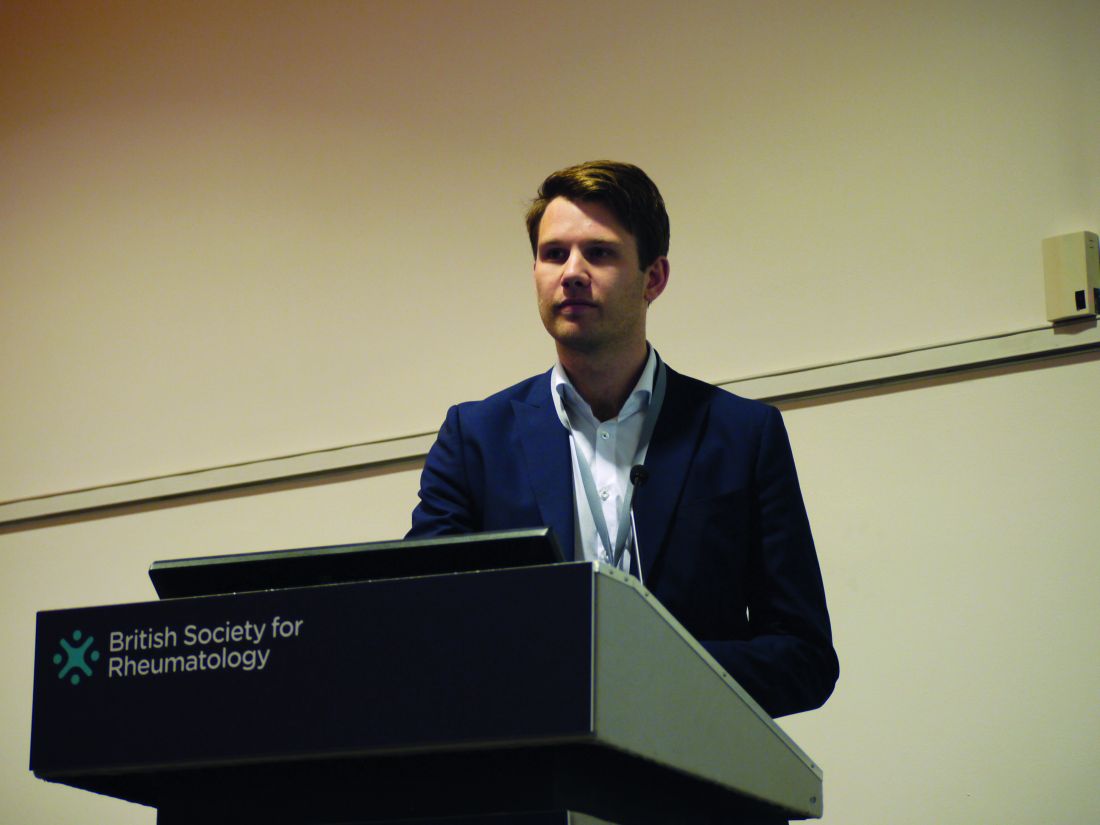
Indeed, of 887 hydroxychloroquine users identified, 44% had at least one risk factor for hydroxychloroquine-induced retinopathy. These included being older than 60 years of age (30% of all users), having renal (10%) or hepatic (2%) impairment, retinal disease at baseline (8%), or using high (more than 6.5 mg/kg) doses of the drug based on their actual (9%) or ideal (4%) body weight.
“The retinal toxicity of hydroxychloroquine is a bit of a hot topic at the moment,” Dr. Yates said at the conference. While the drug has been around for years and used successfully to treat many patients with rheumatoid arthritis and systemic lupus erythematosus (SLE), a known side effect is retinal toxicity.
Traditionally, retinopathy has been quoted as being a relatively rare side effect, affecting around 0.5%-2% of the treated population. Recent data (JAMA Ophthalmol. 2014;132[12]:1453-60) suggest, however, that is probably a vast underestimate, with 7.5% of patients taking hydroxychloroquine for more than 5 years likely to be affected, as are up to 20% of those taking the drug for up to 20 years of treatment.
Dr. Yates and associates wanted to assess the burden of hydroxychloroquine use at their center and look at the risk factors and impact of the recent screening guidelines issued by the British Society for Rheumatology (Rheumatology [Oxford]. 2017;56[6]:865-8) in 2017 and by the Royal College of Ophthalmologists in 2018. These state that patients should have a formal baseline ophthalmic examination, ideally including OCT, within 6-12 months of starting therapy and an annual eye assessment with repeat OCT thereafter for the following 5 years; the ophthalmology guidelines recommending annual screening for the duration of therapy.
One criticism of increased screening for retinal toxicity in routine practice is consultants saying that they see only a handful of cases during their career, Dr. Yates observed. However, if you consider that in an average rheumatology department there are five consultants and 900 patients on hydroxychloroquine, 500 patients take the drug for 5 years or longer, 2% are picked up with non-OCT screening, that amounts to around two cases per year over a 5- to 10-year period. “So that fits with the narrative of only having seen a handful of cases pre-OCT,” Dr. Yates reasoned.
“I believe that this is a real problem, but I’m afraid this is the tip of the iceberg,” commented Caroline Gordon, MD, after her presentation. “We’ve been screening our patients in Birmingham now for about 5 years and we are definitely finding a significant number of patients with hydroxychloroquine toxicity who can be picked up with OCT and visual fields screening.”
Dr. Gordon, professor of rheumatology at the University of Birmingham (England) and a consultant rheumatologist for the University Hospitals NHS Foundation Trust and the Sandwell & West Birmingham Hospitals NHS Trust, helps look after one of the largest cohorts of patients with SLE in the United Kingdom.
A baseline eye examination has always been recommended, Dr. Gordon said, but she suggested that this could remain in the realm of the opticians with further assessment and referral as needed.
“I’m not convinced, from the work we’ve done, that there is any value in the baseline OCT,” Dr. Gordon said, “because we never find anything on the baseline OCT that we didn’t already expect from the opticians’ assessment.”
It is the long-term (longer than10 years) follow-up that needs to be the focus, rather than the initial period, she stressed, as the highest risk appears to be in patients who have been taking the drug for 15 years or longer. Prior to this, different types of retinopathy can occur that are actually attributable to the underlying disease and are not related hydroxychloroquine. Of course, patients on higher doses of hydroxychloroquine may need closer monitoring early on, “as they are at risk,” she acknowledged.
Dr. Gordon suggested that the guidelines as they currently stand may not be that useful for real-life practice. Following them could result in a large amount of money being spent on early tests that are perhaps not necessary.
“What we do need to do is focus on the patients who’ve been on treatment long term,” she said.
SOURCE: Yates M et al. Rheumatology. 2018;57(Suppl. 3):key075.188.
LIVERPOOL, ENGLAND – , but long-term follow-up is much more important, according to data presented at the British Society for Rheumatology annual conference.
In just one specialist rheumatology center in England, which treats more than 8,000 patients annually, the cost of the first year’s optical coherence tomography (OCT) assessment would be more than $60,000. Additional costs would be incurred to screen those who had been on the drug for more than 5 years ,who were known to be at greater risk of hydroxychloroquine-induced retinopathy. This is within the National Health Service in England where the cost of a single OCT scan is around $70; in the private health sector, the cost of one test can be as high as $400.
Indeed, of 887 hydroxychloroquine users identified, 44% had at least one risk factor for hydroxychloroquine-induced retinopathy. These included being older than 60 years of age (30% of all users), having renal (10%) or hepatic (2%) impairment, retinal disease at baseline (8%), or using high (more than 6.5 mg/kg) doses of the drug based on their actual (9%) or ideal (4%) body weight.
“The retinal toxicity of hydroxychloroquine is a bit of a hot topic at the moment,” Dr. Yates said at the conference. While the drug has been around for years and used successfully to treat many patients with rheumatoid arthritis and systemic lupus erythematosus (SLE), a known side effect is retinal toxicity.
Traditionally, retinopathy has been quoted as being a relatively rare side effect, affecting around 0.5%-2% of the treated population. Recent data (JAMA Ophthalmol. 2014;132[12]:1453-60) suggest, however, that is probably a vast underestimate, with 7.5% of patients taking hydroxychloroquine for more than 5 years likely to be affected, as are up to 20% of those taking the drug for up to 20 years of treatment.
Dr. Yates and associates wanted to assess the burden of hydroxychloroquine use at their center and look at the risk factors and impact of the recent screening guidelines issued by the British Society for Rheumatology (Rheumatology [Oxford]. 2017;56[6]:865-8) in 2017 and by the Royal College of Ophthalmologists in 2018. These state that patients should have a formal baseline ophthalmic examination, ideally including OCT, within 6-12 months of starting therapy and an annual eye assessment with repeat OCT thereafter for the following 5 years; the ophthalmology guidelines recommending annual screening for the duration of therapy.
One criticism of increased screening for retinal toxicity in routine practice is consultants saying that they see only a handful of cases during their career, Dr. Yates observed. However, if you consider that in an average rheumatology department there are five consultants and 900 patients on hydroxychloroquine, 500 patients take the drug for 5 years or longer, 2% are picked up with non-OCT screening, that amounts to around two cases per year over a 5- to 10-year period. “So that fits with the narrative of only having seen a handful of cases pre-OCT,” Dr. Yates reasoned.
“I believe that this is a real problem, but I’m afraid this is the tip of the iceberg,” commented Caroline Gordon, MD, after her presentation. “We’ve been screening our patients in Birmingham now for about 5 years and we are definitely finding a significant number of patients with hydroxychloroquine toxicity who can be picked up with OCT and visual fields screening.”
Dr. Gordon, professor of rheumatology at the University of Birmingham (England) and a consultant rheumatologist for the University Hospitals NHS Foundation Trust and the Sandwell & West Birmingham Hospitals NHS Trust, helps look after one of the largest cohorts of patients with SLE in the United Kingdom.
A baseline eye examination has always been recommended, Dr. Gordon said, but she suggested that this could remain in the realm of the opticians with further assessment and referral as needed.
“I’m not convinced, from the work we’ve done, that there is any value in the baseline OCT,” Dr. Gordon said, “because we never find anything on the baseline OCT that we didn’t already expect from the opticians’ assessment.”
It is the long-term (longer than10 years) follow-up that needs to be the focus, rather than the initial period, she stressed, as the highest risk appears to be in patients who have been taking the drug for 15 years or longer. Prior to this, different types of retinopathy can occur that are actually attributable to the underlying disease and are not related hydroxychloroquine. Of course, patients on higher doses of hydroxychloroquine may need closer monitoring early on, “as they are at risk,” she acknowledged.
Dr. Gordon suggested that the guidelines as they currently stand may not be that useful for real-life practice. Following them could result in a large amount of money being spent on early tests that are perhaps not necessary.
“What we do need to do is focus on the patients who’ve been on treatment long term,” she said.
SOURCE: Yates M et al. Rheumatology. 2018;57(Suppl. 3):key075.188.
LIVERPOOL, ENGLAND – , but long-term follow-up is much more important, according to data presented at the British Society for Rheumatology annual conference.
In just one specialist rheumatology center in England, which treats more than 8,000 patients annually, the cost of the first year’s optical coherence tomography (OCT) assessment would be more than $60,000. Additional costs would be incurred to screen those who had been on the drug for more than 5 years ,who were known to be at greater risk of hydroxychloroquine-induced retinopathy. This is within the National Health Service in England where the cost of a single OCT scan is around $70; in the private health sector, the cost of one test can be as high as $400.
Indeed, of 887 hydroxychloroquine users identified, 44% had at least one risk factor for hydroxychloroquine-induced retinopathy. These included being older than 60 years of age (30% of all users), having renal (10%) or hepatic (2%) impairment, retinal disease at baseline (8%), or using high (more than 6.5 mg/kg) doses of the drug based on their actual (9%) or ideal (4%) body weight.
“The retinal toxicity of hydroxychloroquine is a bit of a hot topic at the moment,” Dr. Yates said at the conference. While the drug has been around for years and used successfully to treat many patients with rheumatoid arthritis and systemic lupus erythematosus (SLE), a known side effect is retinal toxicity.
Traditionally, retinopathy has been quoted as being a relatively rare side effect, affecting around 0.5%-2% of the treated population. Recent data (JAMA Ophthalmol. 2014;132[12]:1453-60) suggest, however, that is probably a vast underestimate, with 7.5% of patients taking hydroxychloroquine for more than 5 years likely to be affected, as are up to 20% of those taking the drug for up to 20 years of treatment.
Dr. Yates and associates wanted to assess the burden of hydroxychloroquine use at their center and look at the risk factors and impact of the recent screening guidelines issued by the British Society for Rheumatology (Rheumatology [Oxford]. 2017;56[6]:865-8) in 2017 and by the Royal College of Ophthalmologists in 2018. These state that patients should have a formal baseline ophthalmic examination, ideally including OCT, within 6-12 months of starting therapy and an annual eye assessment with repeat OCT thereafter for the following 5 years; the ophthalmology guidelines recommending annual screening for the duration of therapy.
One criticism of increased screening for retinal toxicity in routine practice is consultants saying that they see only a handful of cases during their career, Dr. Yates observed. However, if you consider that in an average rheumatology department there are five consultants and 900 patients on hydroxychloroquine, 500 patients take the drug for 5 years or longer, 2% are picked up with non-OCT screening, that amounts to around two cases per year over a 5- to 10-year period. “So that fits with the narrative of only having seen a handful of cases pre-OCT,” Dr. Yates reasoned.
“I believe that this is a real problem, but I’m afraid this is the tip of the iceberg,” commented Caroline Gordon, MD, after her presentation. “We’ve been screening our patients in Birmingham now for about 5 years and we are definitely finding a significant number of patients with hydroxychloroquine toxicity who can be picked up with OCT and visual fields screening.”
Dr. Gordon, professor of rheumatology at the University of Birmingham (England) and a consultant rheumatologist for the University Hospitals NHS Foundation Trust and the Sandwell & West Birmingham Hospitals NHS Trust, helps look after one of the largest cohorts of patients with SLE in the United Kingdom.
A baseline eye examination has always been recommended, Dr. Gordon said, but she suggested that this could remain in the realm of the opticians with further assessment and referral as needed.
“I’m not convinced, from the work we’ve done, that there is any value in the baseline OCT,” Dr. Gordon said, “because we never find anything on the baseline OCT that we didn’t already expect from the opticians’ assessment.”
It is the long-term (longer than10 years) follow-up that needs to be the focus, rather than the initial period, she stressed, as the highest risk appears to be in patients who have been taking the drug for 15 years or longer. Prior to this, different types of retinopathy can occur that are actually attributable to the underlying disease and are not related hydroxychloroquine. Of course, patients on higher doses of hydroxychloroquine may need closer monitoring early on, “as they are at risk,” she acknowledged.
Dr. Gordon suggested that the guidelines as they currently stand may not be that useful for real-life practice. Following them could result in a large amount of money being spent on early tests that are perhaps not necessary.
“What we do need to do is focus on the patients who’ve been on treatment long term,” she said.
SOURCE: Yates M et al. Rheumatology. 2018;57(Suppl. 3):key075.188.
REPORTING FROM BSR 2018
Key clinical point: Long-term follow up is important for assessing hydroxychloroquine toxicity.
Major finding: 44% of patients had at least one risk factor for hydroxychloroquine-induced retinopathy after more than 5 years of treatment.
Study details: Electronic record review of 887 patients treated with hydroxychloroquine for about 5 years in a large tertiary rheumatology service.
Disclosures: Dr. Yates had nothing to disclose.
Source: Yates M et al. Rheumatology. 2018;57(Suppl. 3):key075.312.
FDA approves Olumiant for treatment of rheumatoid arthritis
, an orally administered Janus kinase (JAK) inhibitor, to treat adults with moderate to severe rheumatoid arthritis (RA) who have responded inadequately or poorly to methotrexate, its manufacturer, Eli Lilly, announced June 1. The regulators voted against approval of the 4-mg dose because of concerns about the safety profile.

Olumiant is accompanied by a boxed warning about the risk of serious infections, malignancies, and thrombosis. Patients taking Olumiant also have experienced tuberculosis and opportunistic viral, fungal, and bacterial infections. These infections have led to hospitalization or death.
As part of the approval, Lilly and the original developer of baricitinib, Incyte, have agreed to conduct further randomized and controlled clinical trials to evaluate the long-term safety of Olumiant.
Lilly said in its announcement that it expects to launch Olumiant in the United States by the end of the second quarter of 2018 at a targeted price that is 60% less than “the leading TNF inhibitor.” Additionally, Lilly will offer patient support in the form of a patient support program called Olumiant Together. More information for the program can be obtained by calling 844-OLUMIANT.
, an orally administered Janus kinase (JAK) inhibitor, to treat adults with moderate to severe rheumatoid arthritis (RA) who have responded inadequately or poorly to methotrexate, its manufacturer, Eli Lilly, announced June 1. The regulators voted against approval of the 4-mg dose because of concerns about the safety profile.
Olumiant is accompanied by a boxed warning about the risk of serious infections, malignancies, and thrombosis. Patients taking Olumiant also have experienced tuberculosis and opportunistic viral, fungal, and bacterial infections. These infections have led to hospitalization or death.
As part of the approval, Lilly and the original developer of baricitinib, Incyte, have agreed to conduct further randomized and controlled clinical trials to evaluate the long-term safety of Olumiant.
Lilly said in its announcement that it expects to launch Olumiant in the United States by the end of the second quarter of 2018 at a targeted price that is 60% less than “the leading TNF inhibitor.” Additionally, Lilly will offer patient support in the form of a patient support program called Olumiant Together. More information for the program can be obtained by calling 844-OLUMIANT.
, an orally administered Janus kinase (JAK) inhibitor, to treat adults with moderate to severe rheumatoid arthritis (RA) who have responded inadequately or poorly to methotrexate, its manufacturer, Eli Lilly, announced June 1. The regulators voted against approval of the 4-mg dose because of concerns about the safety profile.
Olumiant is accompanied by a boxed warning about the risk of serious infections, malignancies, and thrombosis. Patients taking Olumiant also have experienced tuberculosis and opportunistic viral, fungal, and bacterial infections. These infections have led to hospitalization or death.
As part of the approval, Lilly and the original developer of baricitinib, Incyte, have agreed to conduct further randomized and controlled clinical trials to evaluate the long-term safety of Olumiant.
Lilly said in its announcement that it expects to launch Olumiant in the United States by the end of the second quarter of 2018 at a targeted price that is 60% less than “the leading TNF inhibitor.” Additionally, Lilly will offer patient support in the form of a patient support program called Olumiant Together. More information for the program can be obtained by calling 844-OLUMIANT.
Conservative early approach likely best, RA expert says
SANDESTIN, FLA. – A conservative approach to early rheumatoid arthritis treatment has carried the day in the practice of Gerd R. Burmester, MD.
In a talk at the annual Congress of Clinical Rheumatology, Dr. Burmester said that, although there is room to argue for a more aggressive approach, with more intense treatment early, a less aggressive philosophy has worked well in his clinic.

Dr. Burmester, director of rheumatology and clinical immunology at Charite-University in Berlin and a past president of the European League Against Rheumatism (EULAR), said he drew inspiration from the results of the 2015 study CARE-RA, in which patients were treated with initial therapy of methotrexate plus sulfasalazine and a fairly high dose of 60 mg of prednisolone; methotrexate plus leflunomide plus 30 mg of prednisolone; or just methotrexate plus 30 mg of prednisolone that is quickly tapered down (Ann Rheum Dis. 2015 Jan;74[1]:27-34).
“Everyone would say, ‘Okay, this is quite easy – the more intensive drug regimen should give you better results,’ ” Dr. Burmester said. “But if you look at the data, there’s no difference.” And after just 8 weeks, the patients’ corticosteroid dose was down to 5 mg.
This, he said, “has changed my daily typical practice, quite a bit.”
“I start with, usually, 15 mg of methotrexate subcutaneously,” because of better efficacy and less liver toxicity than oral administration, he said, or an oral dose if a patient resists the subcutaneous administration or there is another reason to avoid it. “And I add 30 mg of prednisone and taper it down – 30, 20, 12.5 mg, and then down to 5 and eventually discontinued altogether.”
“This is an interesting scheme,” he said. “And this is exactly what I do with my patients.”
His approach might be worth noting not only for his leadership roles, but because of his fastidious approach to being a clinician – he said he still, personally, takes every patient’s 28-joint Disease Activity Score and Simple Disease Activity Index at every visit.
In a recent paper, he argued, along with prominent Canadian rheumatologist Janet Pope, both sides of the debate, for and against more aggressive treatment – methotrexate combined with conventional synthetic or biologic DMARDs – very early in the disease course (Lancet. 2017 Jun 10;389[10086]:2338-48).
“If you use a combination treatment with a biologic right away, what might be the advantages?” he said. “More patients would achieve rapid remission. It might result in long-term benefits, less joint damage, higher chance of reducing therapy in the future.”
On the other hand, he said, there are disadvantages.
“This is, of course, more expensive, if you use a biologic up front in early RA,” he said. “Not all patients of course need it, and some have also side effects.” He added that little time is lost if a treat-to-target principle is followed. Plus, patients tend to be more accepting of monotherapy than combination therapy at the start of treatment, and combination therapy might require more time spent in the clinic.
Data from German databases, dating back to 1997, show that far more patients are reaching remission today after several years of treatment (Z Rheumatol. 2017 Feb;76[1]:50-7). But, he added, “It’s not yet perfect. ... We still have quite a few patients who are in moderate disease activity” despite the availability of so many treatment options.
“There’s still, of course, a huge unmet need in this devastating disease if you don’t treat it correctly.”
Dr. Burmester reports receiving clinical trial support and/or honoraria for lectures and consulting from AbbVie, Bristol-Myers Squibb, Lilly, Roche, MedImmune, Merck Sharpe & Dohme, Pfizer, Sanofi, and UCB.
SANDESTIN, FLA. – A conservative approach to early rheumatoid arthritis treatment has carried the day in the practice of Gerd R. Burmester, MD.
In a talk at the annual Congress of Clinical Rheumatology, Dr. Burmester said that, although there is room to argue for a more aggressive approach, with more intense treatment early, a less aggressive philosophy has worked well in his clinic.
Dr. Burmester, director of rheumatology and clinical immunology at Charite-University in Berlin and a past president of the European League Against Rheumatism (EULAR), said he drew inspiration from the results of the 2015 study CARE-RA, in which patients were treated with initial therapy of methotrexate plus sulfasalazine and a fairly high dose of 60 mg of prednisolone; methotrexate plus leflunomide plus 30 mg of prednisolone; or just methotrexate plus 30 mg of prednisolone that is quickly tapered down (Ann Rheum Dis. 2015 Jan;74[1]:27-34).
“Everyone would say, ‘Okay, this is quite easy – the more intensive drug regimen should give you better results,’ ” Dr. Burmester said. “But if you look at the data, there’s no difference.” And after just 8 weeks, the patients’ corticosteroid dose was down to 5 mg.
This, he said, “has changed my daily typical practice, quite a bit.”
“I start with, usually, 15 mg of methotrexate subcutaneously,” because of better efficacy and less liver toxicity than oral administration, he said, or an oral dose if a patient resists the subcutaneous administration or there is another reason to avoid it. “And I add 30 mg of prednisone and taper it down – 30, 20, 12.5 mg, and then down to 5 and eventually discontinued altogether.”
“This is an interesting scheme,” he said. “And this is exactly what I do with my patients.”
His approach might be worth noting not only for his leadership roles, but because of his fastidious approach to being a clinician – he said he still, personally, takes every patient’s 28-joint Disease Activity Score and Simple Disease Activity Index at every visit.
In a recent paper, he argued, along with prominent Canadian rheumatologist Janet Pope, both sides of the debate, for and against more aggressive treatment – methotrexate combined with conventional synthetic or biologic DMARDs – very early in the disease course (Lancet. 2017 Jun 10;389[10086]:2338-48).
“If you use a combination treatment with a biologic right away, what might be the advantages?” he said. “More patients would achieve rapid remission. It might result in long-term benefits, less joint damage, higher chance of reducing therapy in the future.”
On the other hand, he said, there are disadvantages.
“This is, of course, more expensive, if you use a biologic up front in early RA,” he said. “Not all patients of course need it, and some have also side effects.” He added that little time is lost if a treat-to-target principle is followed. Plus, patients tend to be more accepting of monotherapy than combination therapy at the start of treatment, and combination therapy might require more time spent in the clinic.
Data from German databases, dating back to 1997, show that far more patients are reaching remission today after several years of treatment (Z Rheumatol. 2017 Feb;76[1]:50-7). But, he added, “It’s not yet perfect. ... We still have quite a few patients who are in moderate disease activity” despite the availability of so many treatment options.
“There’s still, of course, a huge unmet need in this devastating disease if you don’t treat it correctly.”
Dr. Burmester reports receiving clinical trial support and/or honoraria for lectures and consulting from AbbVie, Bristol-Myers Squibb, Lilly, Roche, MedImmune, Merck Sharpe & Dohme, Pfizer, Sanofi, and UCB.
SANDESTIN, FLA. – A conservative approach to early rheumatoid arthritis treatment has carried the day in the practice of Gerd R. Burmester, MD.
In a talk at the annual Congress of Clinical Rheumatology, Dr. Burmester said that, although there is room to argue for a more aggressive approach, with more intense treatment early, a less aggressive philosophy has worked well in his clinic.
Dr. Burmester, director of rheumatology and clinical immunology at Charite-University in Berlin and a past president of the European League Against Rheumatism (EULAR), said he drew inspiration from the results of the 2015 study CARE-RA, in which patients were treated with initial therapy of methotrexate plus sulfasalazine and a fairly high dose of 60 mg of prednisolone; methotrexate plus leflunomide plus 30 mg of prednisolone; or just methotrexate plus 30 mg of prednisolone that is quickly tapered down (Ann Rheum Dis. 2015 Jan;74[1]:27-34).
“Everyone would say, ‘Okay, this is quite easy – the more intensive drug regimen should give you better results,’ ” Dr. Burmester said. “But if you look at the data, there’s no difference.” And after just 8 weeks, the patients’ corticosteroid dose was down to 5 mg.
This, he said, “has changed my daily typical practice, quite a bit.”
“I start with, usually, 15 mg of methotrexate subcutaneously,” because of better efficacy and less liver toxicity than oral administration, he said, or an oral dose if a patient resists the subcutaneous administration or there is another reason to avoid it. “And I add 30 mg of prednisone and taper it down – 30, 20, 12.5 mg, and then down to 5 and eventually discontinued altogether.”
“This is an interesting scheme,” he said. “And this is exactly what I do with my patients.”
His approach might be worth noting not only for his leadership roles, but because of his fastidious approach to being a clinician – he said he still, personally, takes every patient’s 28-joint Disease Activity Score and Simple Disease Activity Index at every visit.
In a recent paper, he argued, along with prominent Canadian rheumatologist Janet Pope, both sides of the debate, for and against more aggressive treatment – methotrexate combined with conventional synthetic or biologic DMARDs – very early in the disease course (Lancet. 2017 Jun 10;389[10086]:2338-48).
“If you use a combination treatment with a biologic right away, what might be the advantages?” he said. “More patients would achieve rapid remission. It might result in long-term benefits, less joint damage, higher chance of reducing therapy in the future.”
On the other hand, he said, there are disadvantages.
“This is, of course, more expensive, if you use a biologic up front in early RA,” he said. “Not all patients of course need it, and some have also side effects.” He added that little time is lost if a treat-to-target principle is followed. Plus, patients tend to be more accepting of monotherapy than combination therapy at the start of treatment, and combination therapy might require more time spent in the clinic.
Data from German databases, dating back to 1997, show that far more patients are reaching remission today after several years of treatment (Z Rheumatol. 2017 Feb;76[1]:50-7). But, he added, “It’s not yet perfect. ... We still have quite a few patients who are in moderate disease activity” despite the availability of so many treatment options.
“There’s still, of course, a huge unmet need in this devastating disease if you don’t treat it correctly.”
Dr. Burmester reports receiving clinical trial support and/or honoraria for lectures and consulting from AbbVie, Bristol-Myers Squibb, Lilly, Roche, MedImmune, Merck Sharpe & Dohme, Pfizer, Sanofi, and UCB.
EXPERT ANALYSIS FROM CCR 18
Disease burden higher in osteoarthritis than rheumatoid arthritis
LIVERPOOL, ENGLAND – Osteoarthritis is associated with a “considerably higher disease burden” than rheumatoid arthritis 6 months after initial presentation, according to one expert’s analysis at the World Congress on Osteoarthritis.
This may partly be because of the improved treatments now available for rheumatoid arthritis, whereas there remain few treatments, and no disease-modifying therapy as yet, for osteoarthritis, Theodore Pincus, MD, suggested at the congress sponsored by the Osteoarthritis Research Society International.

“The ‘conventional’ wisdom is that ‘osteoarthritis is the most common type of arthritis,’ and ‘rheumatoid arthritis is recognized as the most crippling or disabling type of arthritis,’ ” he said, citing text from a health website and a report of the World Health Organization.
“We all know there is a lot of information on the Internet that may not be as accurate as we would like,” he observed. “We characterize this as ‘eminence-based medicine,’ ” Dr. Pincus joked, “which is defined as making the same mistakes with increasing confidence over an impressive number of years!” The alternative is, of course, evidence-based medicine, which is “the best approach,” requiring data from both clinical observations and clinical trials.
Even seemingly credible sources of health information can relay incorrect, or out-of-date, messages, such as RA being associated with worse functional status than OA. Recent observational data (RMD Open. 2017;3[1]:e000391), suggest that actually the reverse may be true, and that the disease burden seen with OA in routine care is as great as, if not greater than, RA.
Indeed, patients with OA who completed the Multi-Dimensional Health Assessment Questionnaire (MDHAQ)/Routine Assessment of Patient Index Data (RAPID3) at diagnosis at four different sites were found to have similar or worse scores for physical function, pain, and patient global assessment when compared with RA.
The MDHAQ/RAPID3 is a simple assessment tool that consists of two pages and asks patients to rate items such as their physical function in activities of daily living and levels of pain in the past week. It also asks about levels of anxiety, depression, and quality of sleep, and it includes a self-reported joint count and a patient global assessment. Scores on RAPID3 range from 0 to 30, and comprise three 0-10 scores for physical function, pain, and patient global assessment subscales in which higher scores indicate greater disease burden.
“Using this tool, we’ve been able to obtain data on patients with OA and RA for at least 30 years,” Dr. Pincus said.
One of the issues with comparing the burden of the two diseases, he noted, is that there are few places that have used the same assessment tool.
Dr. Pincus and his associates at Rush University have also shown that the disease burden in OA remains high 6 months after first visit, while greater improvement is seen in RA over this period (Osteoarthritis Cartilage. 2018;26[1]:S260. Abstract 491).
In a study of 151 patients with OA and 202 with RA, they found the composite RAPID3 scores were equally high in patients with OA and RA at their first visit (16.0 vs. 15.5, respectively) but higher in OA patients at the 6-month reassessment (14.3 vs. 11.9; P less than .004).
“We can now say that at presentation, OA and RA are similar in MDHAQ/RAPID3 scores, which were adjusted for age and BMI,” Dr. Pincus said. “Both the OA and RA patients improved, but considerably greater improvement in RA versus OA resulted in significantly poorer status for OA versus RA at 6 months.”
However, that’s not to say that OA is a worse disease than RA in every patient, Dr. Pincus was keen to point out. “Some patients with each disease have mild, moderate, or severe disease,” he stated. RA is used as benchmark for a severe disease, so these data highlight that “OA is a severe disease as well.”
This sentiment was the focus of a 2016 white paper produced by OARSI and submitted to the Food and Drug Administration, which states the case for the need to take OA more seriously and for regulatory restrictions to be removed to enable new treatments to be developed.
The prevalence of OA is at least 10-20 times higher than RA, and it’s likely that a large percentage of OA patients never get to see a rheumatologist, Dr. Pincus said. Yet the resources that go into managing RA are far greater if one excludes joint replacement.
Dr. Pincus noted that RA was not always regarded as a severe disease: 30 years ago the textbooks were stating that it had a good prognosis in the majority of cases and that patients could, by and large, use conservative regimens to manage their disease. However, real-world evidence showed that RA was associated with severe declines in function, high levels of work disability, and increased mortality, Dr. Pincus observed.
“Is osteoarthritis in 2018 where rheumatoid arthritis was in 1988, 30 years ago?” he asked rhetorically.
“The risk of long-term mortality in RA, OA, and most rheumatic disease is similar to, or greater than, hypertension, diabetes, as well as many cardiovascular and neoplastic diseases,” Dr. Pincus continued. Whereas mechanisms exist to try to log all cancer cases and compile data on the number of deaths, a rheumatic disease often is not listed anywhere on the death certificate, even as contributing to mortality, as rheumatic diseases generally are not the acute cause of death.
Functional disability and socioeconomic status are more important predictors of work disability and mortality than “any biomarker or imaging data, except x-ray.” Perhaps, Dr. Pincus said, these could also be important indicators of poor prognosis in OA and all chronic diseases?
“Physical function is a big deal,” he said. Data from a study looking at adults over the age of 50 years in the general Finnish population showed 5-year survival was significantly reduced by poorer functional capacity and less frequent physical exercise, at levels higher than smoking. Perhaps, the musculoskeletal system is more important than the other organs of the body for maintaining health, Dr. Pincus suggested.
Assessing functional status with tools such as the MDHAQ/RAPID3 is “really useful” in daily practice, Dr. Pincus said. He concluded with the words of Rudolph Virchow, who observed more than 100 years ago, that “the improvement of medicine would eventually prolong human life, but improvement of social conditions could achieve this result now and more rapidly and successfully.”
Dr. Pincus is the president of Medical History Services, which receives royalties and license fees from copyright and trademark of MDHAQ, RAPID3, or both, all of which are used to support further development of quantitative clinical measurement by both patients and physicians. He holds stock in the company and has received research funding from the company. Dr. Pincus also disclosed having a consulting agreement with Lilly.
SOURCE: Pincus T et al. Osteoarthritis Cartilage. 2018:26(1):S4. Abstract I-11.
*This story was updated 5/24/2018.
LIVERPOOL, ENGLAND – Osteoarthritis is associated with a “considerably higher disease burden” than rheumatoid arthritis 6 months after initial presentation, according to one expert’s analysis at the World Congress on Osteoarthritis.
This may partly be because of the improved treatments now available for rheumatoid arthritis, whereas there remain few treatments, and no disease-modifying therapy as yet, for osteoarthritis, Theodore Pincus, MD, suggested at the congress sponsored by the Osteoarthritis Research Society International.
“The ‘conventional’ wisdom is that ‘osteoarthritis is the most common type of arthritis,’ and ‘rheumatoid arthritis is recognized as the most crippling or disabling type of arthritis,’ ” he said, citing text from a health website and a report of the World Health Organization.
“We all know there is a lot of information on the Internet that may not be as accurate as we would like,” he observed. “We characterize this as ‘eminence-based medicine,’ ” Dr. Pincus joked, “which is defined as making the same mistakes with increasing confidence over an impressive number of years!” The alternative is, of course, evidence-based medicine, which is “the best approach,” requiring data from both clinical observations and clinical trials.
Even seemingly credible sources of health information can relay incorrect, or out-of-date, messages, such as RA being associated with worse functional status than OA. Recent observational data (RMD Open. 2017;3[1]:e000391), suggest that actually the reverse may be true, and that the disease burden seen with OA in routine care is as great as, if not greater than, RA.
Indeed, patients with OA who completed the Multi-Dimensional Health Assessment Questionnaire (MDHAQ)/Routine Assessment of Patient Index Data (RAPID3) at diagnosis at four different sites were found to have similar or worse scores for physical function, pain, and patient global assessment when compared with RA.
The MDHAQ/RAPID3 is a simple assessment tool that consists of two pages and asks patients to rate items such as their physical function in activities of daily living and levels of pain in the past week. It also asks about levels of anxiety, depression, and quality of sleep, and it includes a self-reported joint count and a patient global assessment. Scores on RAPID3 range from 0 to 30, and comprise three 0-10 scores for physical function, pain, and patient global assessment subscales in which higher scores indicate greater disease burden.
“Using this tool, we’ve been able to obtain data on patients with OA and RA for at least 30 years,” Dr. Pincus said.
One of the issues with comparing the burden of the two diseases, he noted, is that there are few places that have used the same assessment tool.
Dr. Pincus and his associates at Rush University have also shown that the disease burden in OA remains high 6 months after first visit, while greater improvement is seen in RA over this period (Osteoarthritis Cartilage. 2018;26[1]:S260. Abstract 491).
In a study of 151 patients with OA and 202 with RA, they found the composite RAPID3 scores were equally high in patients with OA and RA at their first visit (16.0 vs. 15.5, respectively) but higher in OA patients at the 6-month reassessment (14.3 vs. 11.9; P less than .004).
“We can now say that at presentation, OA and RA are similar in MDHAQ/RAPID3 scores, which were adjusted for age and BMI,” Dr. Pincus said. “Both the OA and RA patients improved, but considerably greater improvement in RA versus OA resulted in significantly poorer status for OA versus RA at 6 months.”
However, that’s not to say that OA is a worse disease than RA in every patient, Dr. Pincus was keen to point out. “Some patients with each disease have mild, moderate, or severe disease,” he stated. RA is used as benchmark for a severe disease, so these data highlight that “OA is a severe disease as well.”
This sentiment was the focus of a 2016 white paper produced by OARSI and submitted to the Food and Drug Administration, which states the case for the need to take OA more seriously and for regulatory restrictions to be removed to enable new treatments to be developed.
The prevalence of OA is at least 10-20 times higher than RA, and it’s likely that a large percentage of OA patients never get to see a rheumatologist, Dr. Pincus said. Yet the resources that go into managing RA are far greater if one excludes joint replacement.
Dr. Pincus noted that RA was not always regarded as a severe disease: 30 years ago the textbooks were stating that it had a good prognosis in the majority of cases and that patients could, by and large, use conservative regimens to manage their disease. However, real-world evidence showed that RA was associated with severe declines in function, high levels of work disability, and increased mortality, Dr. Pincus observed.
“Is osteoarthritis in 2018 where rheumatoid arthritis was in 1988, 30 years ago?” he asked rhetorically.
“The risk of long-term mortality in RA, OA, and most rheumatic disease is similar to, or greater than, hypertension, diabetes, as well as many cardiovascular and neoplastic diseases,” Dr. Pincus continued. Whereas mechanisms exist to try to log all cancer cases and compile data on the number of deaths, a rheumatic disease often is not listed anywhere on the death certificate, even as contributing to mortality, as rheumatic diseases generally are not the acute cause of death.
Functional disability and socioeconomic status are more important predictors of work disability and mortality than “any biomarker or imaging data, except x-ray.” Perhaps, Dr. Pincus said, these could also be important indicators of poor prognosis in OA and all chronic diseases?
“Physical function is a big deal,” he said. Data from a study looking at adults over the age of 50 years in the general Finnish population showed 5-year survival was significantly reduced by poorer functional capacity and less frequent physical exercise, at levels higher than smoking. Perhaps, the musculoskeletal system is more important than the other organs of the body for maintaining health, Dr. Pincus suggested.
Assessing functional status with tools such as the MDHAQ/RAPID3 is “really useful” in daily practice, Dr. Pincus said. He concluded with the words of Rudolph Virchow, who observed more than 100 years ago, that “the improvement of medicine would eventually prolong human life, but improvement of social conditions could achieve this result now and more rapidly and successfully.”
Dr. Pincus is the president of Medical History Services, which receives royalties and license fees from copyright and trademark of MDHAQ, RAPID3, or both, all of which are used to support further development of quantitative clinical measurement by both patients and physicians. He holds stock in the company and has received research funding from the company. Dr. Pincus also disclosed having a consulting agreement with Lilly.
SOURCE: Pincus T et al. Osteoarthritis Cartilage. 2018:26(1):S4. Abstract I-11.
*This story was updated 5/24/2018.
LIVERPOOL, ENGLAND – Osteoarthritis is associated with a “considerably higher disease burden” than rheumatoid arthritis 6 months after initial presentation, according to one expert’s analysis at the World Congress on Osteoarthritis.
This may partly be because of the improved treatments now available for rheumatoid arthritis, whereas there remain few treatments, and no disease-modifying therapy as yet, for osteoarthritis, Theodore Pincus, MD, suggested at the congress sponsored by the Osteoarthritis Research Society International.
“The ‘conventional’ wisdom is that ‘osteoarthritis is the most common type of arthritis,’ and ‘rheumatoid arthritis is recognized as the most crippling or disabling type of arthritis,’ ” he said, citing text from a health website and a report of the World Health Organization.
“We all know there is a lot of information on the Internet that may not be as accurate as we would like,” he observed. “We characterize this as ‘eminence-based medicine,’ ” Dr. Pincus joked, “which is defined as making the same mistakes with increasing confidence over an impressive number of years!” The alternative is, of course, evidence-based medicine, which is “the best approach,” requiring data from both clinical observations and clinical trials.
Even seemingly credible sources of health information can relay incorrect, or out-of-date, messages, such as RA being associated with worse functional status than OA. Recent observational data (RMD Open. 2017;3[1]:e000391), suggest that actually the reverse may be true, and that the disease burden seen with OA in routine care is as great as, if not greater than, RA.
Indeed, patients with OA who completed the Multi-Dimensional Health Assessment Questionnaire (MDHAQ)/Routine Assessment of Patient Index Data (RAPID3) at diagnosis at four different sites were found to have similar or worse scores for physical function, pain, and patient global assessment when compared with RA.
The MDHAQ/RAPID3 is a simple assessment tool that consists of two pages and asks patients to rate items such as their physical function in activities of daily living and levels of pain in the past week. It also asks about levels of anxiety, depression, and quality of sleep, and it includes a self-reported joint count and a patient global assessment. Scores on RAPID3 range from 0 to 30, and comprise three 0-10 scores for physical function, pain, and patient global assessment subscales in which higher scores indicate greater disease burden.
“Using this tool, we’ve been able to obtain data on patients with OA and RA for at least 30 years,” Dr. Pincus said.
One of the issues with comparing the burden of the two diseases, he noted, is that there are few places that have used the same assessment tool.
Dr. Pincus and his associates at Rush University have also shown that the disease burden in OA remains high 6 months after first visit, while greater improvement is seen in RA over this period (Osteoarthritis Cartilage. 2018;26[1]:S260. Abstract 491).
In a study of 151 patients with OA and 202 with RA, they found the composite RAPID3 scores were equally high in patients with OA and RA at their first visit (16.0 vs. 15.5, respectively) but higher in OA patients at the 6-month reassessment (14.3 vs. 11.9; P less than .004).
“We can now say that at presentation, OA and RA are similar in MDHAQ/RAPID3 scores, which were adjusted for age and BMI,” Dr. Pincus said. “Both the OA and RA patients improved, but considerably greater improvement in RA versus OA resulted in significantly poorer status for OA versus RA at 6 months.”
However, that’s not to say that OA is a worse disease than RA in every patient, Dr. Pincus was keen to point out. “Some patients with each disease have mild, moderate, or severe disease,” he stated. RA is used as benchmark for a severe disease, so these data highlight that “OA is a severe disease as well.”
This sentiment was the focus of a 2016 white paper produced by OARSI and submitted to the Food and Drug Administration, which states the case for the need to take OA more seriously and for regulatory restrictions to be removed to enable new treatments to be developed.
The prevalence of OA is at least 10-20 times higher than RA, and it’s likely that a large percentage of OA patients never get to see a rheumatologist, Dr. Pincus said. Yet the resources that go into managing RA are far greater if one excludes joint replacement.
Dr. Pincus noted that RA was not always regarded as a severe disease: 30 years ago the textbooks were stating that it had a good prognosis in the majority of cases and that patients could, by and large, use conservative regimens to manage their disease. However, real-world evidence showed that RA was associated with severe declines in function, high levels of work disability, and increased mortality, Dr. Pincus observed.
“Is osteoarthritis in 2018 where rheumatoid arthritis was in 1988, 30 years ago?” he asked rhetorically.
“The risk of long-term mortality in RA, OA, and most rheumatic disease is similar to, or greater than, hypertension, diabetes, as well as many cardiovascular and neoplastic diseases,” Dr. Pincus continued. Whereas mechanisms exist to try to log all cancer cases and compile data on the number of deaths, a rheumatic disease often is not listed anywhere on the death certificate, even as contributing to mortality, as rheumatic diseases generally are not the acute cause of death.
Functional disability and socioeconomic status are more important predictors of work disability and mortality than “any biomarker or imaging data, except x-ray.” Perhaps, Dr. Pincus said, these could also be important indicators of poor prognosis in OA and all chronic diseases?
“Physical function is a big deal,” he said. Data from a study looking at adults over the age of 50 years in the general Finnish population showed 5-year survival was significantly reduced by poorer functional capacity and less frequent physical exercise, at levels higher than smoking. Perhaps, the musculoskeletal system is more important than the other organs of the body for maintaining health, Dr. Pincus suggested.
Assessing functional status with tools such as the MDHAQ/RAPID3 is “really useful” in daily practice, Dr. Pincus said. He concluded with the words of Rudolph Virchow, who observed more than 100 years ago, that “the improvement of medicine would eventually prolong human life, but improvement of social conditions could achieve this result now and more rapidly and successfully.”
Dr. Pincus is the president of Medical History Services, which receives royalties and license fees from copyright and trademark of MDHAQ, RAPID3, or both, all of which are used to support further development of quantitative clinical measurement by both patients and physicians. He holds stock in the company and has received research funding from the company. Dr. Pincus also disclosed having a consulting agreement with Lilly.
SOURCE: Pincus T et al. Osteoarthritis Cartilage. 2018:26(1):S4. Abstract I-11.
*This story was updated 5/24/2018.
REPORTING FROM OARSI 2018
VIDEO: Lyme disease spreading, but better testing may be coming
SANDESTIN, FLA. – Lyme disease is spreading in the United States, which makes it a high priority for rheumatologists, who will need to care for an increasing number of patients with posttreatment disorders affecting the joints, an expert said at the annual Congress of Clinical Rheumatology.
Sheila Arvikar, MD, an instructor in the rheumatology division at Harvard Medical School, Boston, said that the disease – the most common vector-borne illness in the United States – is no longer strictly confined to the U.S. Northeast and the upper Midwest, according to reports from the Centers for Disease Control and Prevention. Neighboring areas are increasingly affected, the reports have shown.
The video associated with this article is no longer available on this site. Please view all of our videos on the MDedge YouTube channel
That the disease may be spreading makes the need for awareness and better testing more acute, she said. Current testing is limited by a lack of sensitivity in early disease, and the standard two-tier combination of enzyme-linked immunosorbent assay and Western blot can be time consuming. But recent studies have found that whole cell sonicate ELISA combined with an ELISA for peptide C6 are equally or even more effective than the more cumbersome, two-tier version, Dr. Arvikar said.
A problem encountered by rheumatologists are patients who contracted Lyme disease but who continue to have joint pain and other symptoms despite treatment for the disease. This so-called posttreatment Lyme disease syndrome (PTLDS) can be similar to fibromyalgia or chronic fatigue syndrome, involving chronic symptoms but no chronic infection and no objective synovitis or inflammation.
There are no Food and Drug Administration–approved treatments for it, but options such as tricyclics, serotonin norepinephrine reuptake inhibitors, gabapentin, and pregabalin can be helpful, she said, along with exercise and cognitive-behavioral therapy. She also noted myriad alternative treatments marketed for PTLDS that have not been shown to be effective and can even be harmful, such as urine ingestion and treatment with bee venom.
“These patients are really desperate for anything to help with their symptoms, and there are lot of people out there who are preying on them with these therapies that aren’t really helpful. It’s important for us to be aware that these things are out there.”
Dr. Arvikar reported having no financial disclosures.
SOURCE: Arvikar S, CCR 2018.
SANDESTIN, FLA. – Lyme disease is spreading in the United States, which makes it a high priority for rheumatologists, who will need to care for an increasing number of patients with posttreatment disorders affecting the joints, an expert said at the annual Congress of Clinical Rheumatology.
Sheila Arvikar, MD, an instructor in the rheumatology division at Harvard Medical School, Boston, said that the disease – the most common vector-borne illness in the United States – is no longer strictly confined to the U.S. Northeast and the upper Midwest, according to reports from the Centers for Disease Control and Prevention. Neighboring areas are increasingly affected, the reports have shown.
The video associated with this article is no longer available on this site. Please view all of our videos on the MDedge YouTube channel
That the disease may be spreading makes the need for awareness and better testing more acute, she said. Current testing is limited by a lack of sensitivity in early disease, and the standard two-tier combination of enzyme-linked immunosorbent assay and Western blot can be time consuming. But recent studies have found that whole cell sonicate ELISA combined with an ELISA for peptide C6 are equally or even more effective than the more cumbersome, two-tier version, Dr. Arvikar said.
A problem encountered by rheumatologists are patients who contracted Lyme disease but who continue to have joint pain and other symptoms despite treatment for the disease. This so-called posttreatment Lyme disease syndrome (PTLDS) can be similar to fibromyalgia or chronic fatigue syndrome, involving chronic symptoms but no chronic infection and no objective synovitis or inflammation.
There are no Food and Drug Administration–approved treatments for it, but options such as tricyclics, serotonin norepinephrine reuptake inhibitors, gabapentin, and pregabalin can be helpful, she said, along with exercise and cognitive-behavioral therapy. She also noted myriad alternative treatments marketed for PTLDS that have not been shown to be effective and can even be harmful, such as urine ingestion and treatment with bee venom.
“These patients are really desperate for anything to help with their symptoms, and there are lot of people out there who are preying on them with these therapies that aren’t really helpful. It’s important for us to be aware that these things are out there.”
Dr. Arvikar reported having no financial disclosures.
SOURCE: Arvikar S, CCR 2018.
SANDESTIN, FLA. – Lyme disease is spreading in the United States, which makes it a high priority for rheumatologists, who will need to care for an increasing number of patients with posttreatment disorders affecting the joints, an expert said at the annual Congress of Clinical Rheumatology.
Sheila Arvikar, MD, an instructor in the rheumatology division at Harvard Medical School, Boston, said that the disease – the most common vector-borne illness in the United States – is no longer strictly confined to the U.S. Northeast and the upper Midwest, according to reports from the Centers for Disease Control and Prevention. Neighboring areas are increasingly affected, the reports have shown.
The video associated with this article is no longer available on this site. Please view all of our videos on the MDedge YouTube channel
That the disease may be spreading makes the need for awareness and better testing more acute, she said. Current testing is limited by a lack of sensitivity in early disease, and the standard two-tier combination of enzyme-linked immunosorbent assay and Western blot can be time consuming. But recent studies have found that whole cell sonicate ELISA combined with an ELISA for peptide C6 are equally or even more effective than the more cumbersome, two-tier version, Dr. Arvikar said.
A problem encountered by rheumatologists are patients who contracted Lyme disease but who continue to have joint pain and other symptoms despite treatment for the disease. This so-called posttreatment Lyme disease syndrome (PTLDS) can be similar to fibromyalgia or chronic fatigue syndrome, involving chronic symptoms but no chronic infection and no objective synovitis or inflammation.
There are no Food and Drug Administration–approved treatments for it, but options such as tricyclics, serotonin norepinephrine reuptake inhibitors, gabapentin, and pregabalin can be helpful, she said, along with exercise and cognitive-behavioral therapy. She also noted myriad alternative treatments marketed for PTLDS that have not been shown to be effective and can even be harmful, such as urine ingestion and treatment with bee venom.
“These patients are really desperate for anything to help with their symptoms, and there are lot of people out there who are preying on them with these therapies that aren’t really helpful. It’s important for us to be aware that these things are out there.”
Dr. Arvikar reported having no financial disclosures.
SOURCE: Arvikar S, CCR 2018.
EXPERT ANALYSIS AT CCR 18

VIDEO: Big Data, self-diagnosis to play role in future of RA, expert says
SANDESTIN, FLA. – Big data informing patient treatment, computer algorithms reading imaging instead of humans, and even accurate patient self-diagnosis could emerge over the next 10 years in the treatment of rheumatoid arthritis, an expert said at the annual Congress of Clinical Rheumatology.
The video associated with this article is no longer available on this site. Please view all of our videos on the MDedge YouTube channel
Gerd Burmester, MD, director of rheumatology and clinical immunology at Charité University in Berlin, trotted out staggering numbers on future medical data collection on patients. Data analytics companies project that more than 1,000 terabytes of data per lifetime is expected to be gathered, with just 10% expected to be clinical information and 30% in the form of “-omics,” such as proteomics and genomics, he said. The other 60% is expected to come from sensors and wearables that patients essentially collect themselves with their own devices, he said.
“We will have to use data in the interest of the patient,” he said. “This is the real secret. In order to do this, we need cognitive computing, which assesses structured and unstructured data and is self-learning.”
The days of images being read by human radiologists could be numbered, he said.
“There will be a revolution in imaging scoring,” he said, with computer algorithms generating scores, more quickly separating the normal scans from those that need clinical attention.
He described a possible scenario in which patients get genetic analyses, blood biomarker testing, and imaging performed at kiosks about town, producing a diagnosis without a single physician visit. It might seem fanciful, but when he asked the audience how many thought it was impossible over the next decade, no one raised a hand.
With advances such as the self-rheumatoid arthritis examination tool Rheuma-Check and the decline in cost for whole genome sequencing – along with wait times to see rheumatologists sometimes as long as 6 months – such a scenario might not be far fetched, Dr. Burmester said. It is possible, he said, because patient histories that used to sit in charts, images that used to be on film only, and genetic data that used to be unavailable, are all now in structured, digital form.
Referring to a recent commentary in the New England Journal of Medicine, Dr. Burmester said physicians have to accept the coming role of computer algorithms.
“If medicine wishes to stay in control of its own future,” he said, “physicians will not only have to embrace algorithms, they will also have to excel at developing and evaluating them, bringing machine-learning methods into the medical domain.”
SOURCE: Burmester, G. CCR 2018.
SANDESTIN, FLA. – Big data informing patient treatment, computer algorithms reading imaging instead of humans, and even accurate patient self-diagnosis could emerge over the next 10 years in the treatment of rheumatoid arthritis, an expert said at the annual Congress of Clinical Rheumatology.
The video associated with this article is no longer available on this site. Please view all of our videos on the MDedge YouTube channel
Gerd Burmester, MD, director of rheumatology and clinical immunology at Charité University in Berlin, trotted out staggering numbers on future medical data collection on patients. Data analytics companies project that more than 1,000 terabytes of data per lifetime is expected to be gathered, with just 10% expected to be clinical information and 30% in the form of “-omics,” such as proteomics and genomics, he said. The other 60% is expected to come from sensors and wearables that patients essentially collect themselves with their own devices, he said.
“We will have to use data in the interest of the patient,” he said. “This is the real secret. In order to do this, we need cognitive computing, which assesses structured and unstructured data and is self-learning.”
The days of images being read by human radiologists could be numbered, he said.
“There will be a revolution in imaging scoring,” he said, with computer algorithms generating scores, more quickly separating the normal scans from those that need clinical attention.
He described a possible scenario in which patients get genetic analyses, blood biomarker testing, and imaging performed at kiosks about town, producing a diagnosis without a single physician visit. It might seem fanciful, but when he asked the audience how many thought it was impossible over the next decade, no one raised a hand.
With advances such as the self-rheumatoid arthritis examination tool Rheuma-Check and the decline in cost for whole genome sequencing – along with wait times to see rheumatologists sometimes as long as 6 months – such a scenario might not be far fetched, Dr. Burmester said. It is possible, he said, because patient histories that used to sit in charts, images that used to be on film only, and genetic data that used to be unavailable, are all now in structured, digital form.
Referring to a recent commentary in the New England Journal of Medicine, Dr. Burmester said physicians have to accept the coming role of computer algorithms.
“If medicine wishes to stay in control of its own future,” he said, “physicians will not only have to embrace algorithms, they will also have to excel at developing and evaluating them, bringing machine-learning methods into the medical domain.”
SOURCE: Burmester, G. CCR 2018.
SANDESTIN, FLA. – Big data informing patient treatment, computer algorithms reading imaging instead of humans, and even accurate patient self-diagnosis could emerge over the next 10 years in the treatment of rheumatoid arthritis, an expert said at the annual Congress of Clinical Rheumatology.
The video associated with this article is no longer available on this site. Please view all of our videos on the MDedge YouTube channel
Gerd Burmester, MD, director of rheumatology and clinical immunology at Charité University in Berlin, trotted out staggering numbers on future medical data collection on patients. Data analytics companies project that more than 1,000 terabytes of data per lifetime is expected to be gathered, with just 10% expected to be clinical information and 30% in the form of “-omics,” such as proteomics and genomics, he said. The other 60% is expected to come from sensors and wearables that patients essentially collect themselves with their own devices, he said.
“We will have to use data in the interest of the patient,” he said. “This is the real secret. In order to do this, we need cognitive computing, which assesses structured and unstructured data and is self-learning.”
The days of images being read by human radiologists could be numbered, he said.
“There will be a revolution in imaging scoring,” he said, with computer algorithms generating scores, more quickly separating the normal scans from those that need clinical attention.
He described a possible scenario in which patients get genetic analyses, blood biomarker testing, and imaging performed at kiosks about town, producing a diagnosis without a single physician visit. It might seem fanciful, but when he asked the audience how many thought it was impossible over the next decade, no one raised a hand.
With advances such as the self-rheumatoid arthritis examination tool Rheuma-Check and the decline in cost for whole genome sequencing – along with wait times to see rheumatologists sometimes as long as 6 months – such a scenario might not be far fetched, Dr. Burmester said. It is possible, he said, because patient histories that used to sit in charts, images that used to be on film only, and genetic data that used to be unavailable, are all now in structured, digital form.
Referring to a recent commentary in the New England Journal of Medicine, Dr. Burmester said physicians have to accept the coming role of computer algorithms.
“If medicine wishes to stay in control of its own future,” he said, “physicians will not only have to embrace algorithms, they will also have to excel at developing and evaluating them, bringing machine-learning methods into the medical domain.”
SOURCE: Burmester, G. CCR 2018.
EXPERT ANALYSIS AT CCR 18

Methotrexate-induced pulmonary fibrosis risk examined in 10-year study
LIVERPOOL, ENGLAND – A 10-year follow up of patients with inflammatory arthritis has shown that methotrexate does not appear to increase the risk of pulmonary fibrosis.
“As rheumatologists, it’s a really important message that methotrexate does not cause chronic pulmonary fibrosis and it should not be stopped because of pulmonary fibrosis,” Julie Dawson, MD, said in an interview at the British Society for Rheumatology annual conference. “It’s the rheumatoid arthritis. It’s not the methotrexate.”
Dr. Dawson, of St. Helens and Knowsley Teaching Hospitals NHS Trust, St. Helens, England, added that the current findings were consistent with her team’s prior research looking at earlier time periods. There was also no correlation between the duration or dose of methotrexate used and the development of the lung disease, she said.
“If anything, the suggestion is you’d be more symptomatic if you delay using methotrexate,” Dr. Dawson observed. If patients are not doing well on methotrexate, then perhaps adjusting therapy or changing to another drug would of course be the next step, but if patients are well controlled then “stopping it is the worst thing to do” for their arthritis, she said.
“This is of great clinical interest, and we can be reassured now about this, I think. This is really good, long-term data,” said Devesh Mewar, MD, of Royal Liverpool and Broadgreen University Hospitals NHS Trust, Liverpool, England, who was not involved in the research.
“We know that methotrexate is associated with a pneumonitis reaction, but there is no high-quality evidence that methotrexate is associated with a chronic pulmonary fibrosis” Dr. Dawson said, explaining the rationale for the current study she presented during a poster session. Previous studies considered data for up to 5 years, she added, so the aim of the current study, therefore, was to look at the longer-term effect of methotrexate use on the incidence of pulmonary fibrosis.
Data on 129 patients who had started treatment with methotrexate from 2004 to 2007 were analyzed, of whom 63 (49%) had stayed on methotrexate for 10 or more years. Most (82%) had been given methotrexate to treat rheumatoid arthritis (RA), with other indications including inflammatory arthritis (5.4%) and psoriatic arthritis (4.7%).
“Practice was different 10 years ago, so just 56% of patients commenced methotrexate within the first year of the diagnosis of rheumatoid arthritis,” Dr. Dawson reported.
Only four cases of symptomatic pulmonary fibrosis were seen, all in the RA patients, and three of these were in patients who had started methotrexate over 1 year after their diagnosis. The incidence of 3.8% seen in the study matches the expected incidence of pulmonary fibrosis in RA and was actually “at the lower end of the expected incidence,” Dr. Dawson said. Previous studies have suggested an incidence rate of RA-associated interstitial lung disease of about 3%-7%.
All of the pulmonary fibrosis cases had occurred in men and 75% were seropositive for rheumatoid factor. The mean duration of RA at the time of onset of pulmonary fibrosis was 7.8 years and the usual interstitial pattern of fibrosis was seen. The 125 patients without pulmonary fibrosis had taken methotrexate for a mean of 8 years at a mean final weekly dose of 16.3 mg, compared with a mean of 6 years at a mean dose of 18.1 mg per week in the 4 patients with pulmonary fibrosis.
One of the next steps is to look at cases where methotrexate has been stopped and the effects of that on pulmonary fibrosis and disease activity. In Dr. Dawson’s experience, stopping methotrexate just affects the management of the arthritis and had no difference to the progression of pulmonary fibrosis.
If patients start to experience any lung symptoms while continuing methotrexate, such as shortness of breath, then they would need to be assessed and undergo lung function tests to monitor their condition. Treating the fibrosis using an antifibrotic drug, such as pirfenidone, is something that might be possible in the future, but this needs investigation in inflammatory arthritis as the drug is currently only licensed for use in idiopathic cases.
This is something the British Rheumatoid Interstitial Lung network plans to investigate in a placebo-controlled study of RA patients with fibrotic lung disease. “We’re looking to see if antifibrotic agents are going to slow the disease as it does in idiopathic pulmonary fibrosis, which is obviously quite exciting when it’s such a hard condition to treat,” said Dr. Dawson, who will be one of the study’s investigators.
Dr. Dawson had no conflicts of interest to disclose. Dr. Mewar was not involved in the study and had nothing to disclose.
SOURCE: Dawson J et al. Rheumatology. 2018;57[Suppl. 3]:key075.470.
The subject of this retrospective study is of great interest. The authors point out that pulmonary fibrosis (as opposed to acute allergic reaction, which is extremely rare) is also extremely uncommon in patients using methotrexate over the long haul. Over 10 years, their data points to a 3.1% incidence of symptomatic pulmonary fibrosis.
The issue here is its generalizability. There were 63 patients who used methotrexate for 10 years or more and 88 who used it for 5 years or more, according to the poster. This must represent a highly selected population. For example, what percent of the total RA/psoriatic arthritis/”inflammatory arthritis” population do these patients represent, i.e., what is the denominator here? The authors stated that the 63 patients who stayed on methotrexate for 10 or more years represent 49% of the 129 patients on methotrexate overall in the study. This is a highly unusual datum, as most of the literature indicates that only 40% or less of patients stay on methotrexate for even 5 years. And this completely ignores the issue of adherence over this long a period; these patients must represent a truly minuscule percentage of the total if they actually stayed on methotrexate with even moderate adherence for 10 years.
Importantly, the authors point out that they had only four cases of symptomatic pulmonary fibrosis. Once more, this points to the highly selective group of patients seen, as this study does not examine patients with asymptomatic pulmonary fibrosis, including those with fibrosis on high-resolution CT of the lungs or chest film or evidence of abnormalities on pulmonary function tests, but who do not have sufficient symptoms ascribed to methotrexate to bring them to medical attention.

Daniel E. Furst, MD, is professor of rheumatology at the University of Washington, Seattle, who also is affiliated with the University of California, Los Angeles, and the University of Florence, Italy. He was not involved with the study.
The subject of this retrospective study is of great interest. The authors point out that pulmonary fibrosis (as opposed to acute allergic reaction, which is extremely rare) is also extremely uncommon in patients using methotrexate over the long haul. Over 10 years, their data points to a 3.1% incidence of symptomatic pulmonary fibrosis.
The issue here is its generalizability. There were 63 patients who used methotrexate for 10 years or more and 88 who used it for 5 years or more, according to the poster. This must represent a highly selected population. For example, what percent of the total RA/psoriatic arthritis/”inflammatory arthritis” population do these patients represent, i.e., what is the denominator here? The authors stated that the 63 patients who stayed on methotrexate for 10 or more years represent 49% of the 129 patients on methotrexate overall in the study. This is a highly unusual datum, as most of the literature indicates that only 40% or less of patients stay on methotrexate for even 5 years. And this completely ignores the issue of adherence over this long a period; these patients must represent a truly minuscule percentage of the total if they actually stayed on methotrexate with even moderate adherence for 10 years.
Importantly, the authors point out that they had only four cases of symptomatic pulmonary fibrosis. Once more, this points to the highly selective group of patients seen, as this study does not examine patients with asymptomatic pulmonary fibrosis, including those with fibrosis on high-resolution CT of the lungs or chest film or evidence of abnormalities on pulmonary function tests, but who do not have sufficient symptoms ascribed to methotrexate to bring them to medical attention.
Daniel E. Furst, MD, is professor of rheumatology at the University of Washington, Seattle, who also is affiliated with the University of California, Los Angeles, and the University of Florence, Italy. He was not involved with the study.
The subject of this retrospective study is of great interest. The authors point out that pulmonary fibrosis (as opposed to acute allergic reaction, which is extremely rare) is also extremely uncommon in patients using methotrexate over the long haul. Over 10 years, their data points to a 3.1% incidence of symptomatic pulmonary fibrosis.
The issue here is its generalizability. There were 63 patients who used methotrexate for 10 years or more and 88 who used it for 5 years or more, according to the poster. This must represent a highly selected population. For example, what percent of the total RA/psoriatic arthritis/”inflammatory arthritis” population do these patients represent, i.e., what is the denominator here? The authors stated that the 63 patients who stayed on methotrexate for 10 or more years represent 49% of the 129 patients on methotrexate overall in the study. This is a highly unusual datum, as most of the literature indicates that only 40% or less of patients stay on methotrexate for even 5 years. And this completely ignores the issue of adherence over this long a period; these patients must represent a truly minuscule percentage of the total if they actually stayed on methotrexate with even moderate adherence for 10 years.
Importantly, the authors point out that they had only four cases of symptomatic pulmonary fibrosis. Once more, this points to the highly selective group of patients seen, as this study does not examine patients with asymptomatic pulmonary fibrosis, including those with fibrosis on high-resolution CT of the lungs or chest film or evidence of abnormalities on pulmonary function tests, but who do not have sufficient symptoms ascribed to methotrexate to bring them to medical attention.
Daniel E. Furst, MD, is professor of rheumatology at the University of Washington, Seattle, who also is affiliated with the University of California, Los Angeles, and the University of Florence, Italy. He was not involved with the study.
LIVERPOOL, ENGLAND – A 10-year follow up of patients with inflammatory arthritis has shown that methotrexate does not appear to increase the risk of pulmonary fibrosis.
“As rheumatologists, it’s a really important message that methotrexate does not cause chronic pulmonary fibrosis and it should not be stopped because of pulmonary fibrosis,” Julie Dawson, MD, said in an interview at the British Society for Rheumatology annual conference. “It’s the rheumatoid arthritis. It’s not the methotrexate.”
Dr. Dawson, of St. Helens and Knowsley Teaching Hospitals NHS Trust, St. Helens, England, added that the current findings were consistent with her team’s prior research looking at earlier time periods. There was also no correlation between the duration or dose of methotrexate used and the development of the lung disease, she said.
“If anything, the suggestion is you’d be more symptomatic if you delay using methotrexate,” Dr. Dawson observed. If patients are not doing well on methotrexate, then perhaps adjusting therapy or changing to another drug would of course be the next step, but if patients are well controlled then “stopping it is the worst thing to do” for their arthritis, she said.
“This is of great clinical interest, and we can be reassured now about this, I think. This is really good, long-term data,” said Devesh Mewar, MD, of Royal Liverpool and Broadgreen University Hospitals NHS Trust, Liverpool, England, who was not involved in the research.
“We know that methotrexate is associated with a pneumonitis reaction, but there is no high-quality evidence that methotrexate is associated with a chronic pulmonary fibrosis” Dr. Dawson said, explaining the rationale for the current study she presented during a poster session. Previous studies considered data for up to 5 years, she added, so the aim of the current study, therefore, was to look at the longer-term effect of methotrexate use on the incidence of pulmonary fibrosis.
Data on 129 patients who had started treatment with methotrexate from 2004 to 2007 were analyzed, of whom 63 (49%) had stayed on methotrexate for 10 or more years. Most (82%) had been given methotrexate to treat rheumatoid arthritis (RA), with other indications including inflammatory arthritis (5.4%) and psoriatic arthritis (4.7%).
“Practice was different 10 years ago, so just 56% of patients commenced methotrexate within the first year of the diagnosis of rheumatoid arthritis,” Dr. Dawson reported.
Only four cases of symptomatic pulmonary fibrosis were seen, all in the RA patients, and three of these were in patients who had started methotrexate over 1 year after their diagnosis. The incidence of 3.8% seen in the study matches the expected incidence of pulmonary fibrosis in RA and was actually “at the lower end of the expected incidence,” Dr. Dawson said. Previous studies have suggested an incidence rate of RA-associated interstitial lung disease of about 3%-7%.
All of the pulmonary fibrosis cases had occurred in men and 75% were seropositive for rheumatoid factor. The mean duration of RA at the time of onset of pulmonary fibrosis was 7.8 years and the usual interstitial pattern of fibrosis was seen. The 125 patients without pulmonary fibrosis had taken methotrexate for a mean of 8 years at a mean final weekly dose of 16.3 mg, compared with a mean of 6 years at a mean dose of 18.1 mg per week in the 4 patients with pulmonary fibrosis.
One of the next steps is to look at cases where methotrexate has been stopped and the effects of that on pulmonary fibrosis and disease activity. In Dr. Dawson’s experience, stopping methotrexate just affects the management of the arthritis and had no difference to the progression of pulmonary fibrosis.
If patients start to experience any lung symptoms while continuing methotrexate, such as shortness of breath, then they would need to be assessed and undergo lung function tests to monitor their condition. Treating the fibrosis using an antifibrotic drug, such as pirfenidone, is something that might be possible in the future, but this needs investigation in inflammatory arthritis as the drug is currently only licensed for use in idiopathic cases.
This is something the British Rheumatoid Interstitial Lung network plans to investigate in a placebo-controlled study of RA patients with fibrotic lung disease. “We’re looking to see if antifibrotic agents are going to slow the disease as it does in idiopathic pulmonary fibrosis, which is obviously quite exciting when it’s such a hard condition to treat,” said Dr. Dawson, who will be one of the study’s investigators.
Dr. Dawson had no conflicts of interest to disclose. Dr. Mewar was not involved in the study and had nothing to disclose.
SOURCE: Dawson J et al. Rheumatology. 2018;57[Suppl. 3]:key075.470.
LIVERPOOL, ENGLAND – A 10-year follow up of patients with inflammatory arthritis has shown that methotrexate does not appear to increase the risk of pulmonary fibrosis.
“As rheumatologists, it’s a really important message that methotrexate does not cause chronic pulmonary fibrosis and it should not be stopped because of pulmonary fibrosis,” Julie Dawson, MD, said in an interview at the British Society for Rheumatology annual conference. “It’s the rheumatoid arthritis. It’s not the methotrexate.”
Dr. Dawson, of St. Helens and Knowsley Teaching Hospitals NHS Trust, St. Helens, England, added that the current findings were consistent with her team’s prior research looking at earlier time periods. There was also no correlation between the duration or dose of methotrexate used and the development of the lung disease, she said.
“If anything, the suggestion is you’d be more symptomatic if you delay using methotrexate,” Dr. Dawson observed. If patients are not doing well on methotrexate, then perhaps adjusting therapy or changing to another drug would of course be the next step, but if patients are well controlled then “stopping it is the worst thing to do” for their arthritis, she said.
“This is of great clinical interest, and we can be reassured now about this, I think. This is really good, long-term data,” said Devesh Mewar, MD, of Royal Liverpool and Broadgreen University Hospitals NHS Trust, Liverpool, England, who was not involved in the research.
“We know that methotrexate is associated with a pneumonitis reaction, but there is no high-quality evidence that methotrexate is associated with a chronic pulmonary fibrosis” Dr. Dawson said, explaining the rationale for the current study she presented during a poster session. Previous studies considered data for up to 5 years, she added, so the aim of the current study, therefore, was to look at the longer-term effect of methotrexate use on the incidence of pulmonary fibrosis.
Data on 129 patients who had started treatment with methotrexate from 2004 to 2007 were analyzed, of whom 63 (49%) had stayed on methotrexate for 10 or more years. Most (82%) had been given methotrexate to treat rheumatoid arthritis (RA), with other indications including inflammatory arthritis (5.4%) and psoriatic arthritis (4.7%).
“Practice was different 10 years ago, so just 56% of patients commenced methotrexate within the first year of the diagnosis of rheumatoid arthritis,” Dr. Dawson reported.
Only four cases of symptomatic pulmonary fibrosis were seen, all in the RA patients, and three of these were in patients who had started methotrexate over 1 year after their diagnosis. The incidence of 3.8% seen in the study matches the expected incidence of pulmonary fibrosis in RA and was actually “at the lower end of the expected incidence,” Dr. Dawson said. Previous studies have suggested an incidence rate of RA-associated interstitial lung disease of about 3%-7%.
All of the pulmonary fibrosis cases had occurred in men and 75% were seropositive for rheumatoid factor. The mean duration of RA at the time of onset of pulmonary fibrosis was 7.8 years and the usual interstitial pattern of fibrosis was seen. The 125 patients without pulmonary fibrosis had taken methotrexate for a mean of 8 years at a mean final weekly dose of 16.3 mg, compared with a mean of 6 years at a mean dose of 18.1 mg per week in the 4 patients with pulmonary fibrosis.
One of the next steps is to look at cases where methotrexate has been stopped and the effects of that on pulmonary fibrosis and disease activity. In Dr. Dawson’s experience, stopping methotrexate just affects the management of the arthritis and had no difference to the progression of pulmonary fibrosis.
If patients start to experience any lung symptoms while continuing methotrexate, such as shortness of breath, then they would need to be assessed and undergo lung function tests to monitor their condition. Treating the fibrosis using an antifibrotic drug, such as pirfenidone, is something that might be possible in the future, but this needs investigation in inflammatory arthritis as the drug is currently only licensed for use in idiopathic cases.
This is something the British Rheumatoid Interstitial Lung network plans to investigate in a placebo-controlled study of RA patients with fibrotic lung disease. “We’re looking to see if antifibrotic agents are going to slow the disease as it does in idiopathic pulmonary fibrosis, which is obviously quite exciting when it’s such a hard condition to treat,” said Dr. Dawson, who will be one of the study’s investigators.
Dr. Dawson had no conflicts of interest to disclose. Dr. Mewar was not involved in the study and had nothing to disclose.
SOURCE: Dawson J et al. Rheumatology. 2018;57[Suppl. 3]:key075.470.
REPORTING FROM RHEUMATOLOGY 2018
Key clinical point:
Major finding: At 10 years’ follow-up, four patients (3.1%) developed pulmonary fibrosis.
Study details: Retrospective analysis of 129 patients with inflammatory arthritis treated with methotrexate for up to 10 years.
Disclosures: Dr. Dawson had no conflicts of interest to disclose. Dr. Mewar was not involved in the study and had nothing to disclose.
Source: Dawson J et al. Rheumatology. 2018;57[Suppl. 3]:key075.470.
Obesity and weight loss both linked to RA disability
Both obesity and weight loss are associated with worsening disability from rheumatoid arthritis, new research suggests.
An analysis of data from two long-term clinical registries involving a total of 25,020 patients with rheumatoid arthritis and 62,484 person-years of follow-up revealed that severely obese individuals with RA had significantly higher Health Assessment Questionnaire or Multi-Dimensional-HAQ scores at enrollment, compared with overweight participants, even after adjusting for confounders such as age, sex, race, smoking, disease duration, and comorbidity.

At the same time however, researchers saw a significantly larger increase in Health Assessment Questionnaire scores per year in individuals who had lost 5% or more of their weight since the age of 30. This association was evident after adjusting for body mass index at enrollment but was significantly more pronounced in individuals who were underweight. There was also a dose-dependent relationship between weight loss and subsequent worsening of disability.
Joshua F. Baker, MD, of the Philadelphia VA Medical Center and the University of Pennsylvania, and his coauthors wrote that while cross-sectional studies have shown greater disability among obese patients with RA, the longitudinal effects of obesity hadn’t been well characterized.
“Greater risks of worsening of disability in severely obese patients with RA are hypothesized to reflect the direct impact of adiposity and related comorbidities as opposed to more aggressive disease and higher disease activity,” the authors wrote. “Furthermore, in this study, adjustment for CRP [C-reactive protein] and swollen joint counts over time did not attenuate associations between severe obesity and worsening disability in the VARA [Veterans Affairs RA] registry, suggesting associations are not easily explained by more severe inflammatory disease among obese individuals.”
Commenting on the association between weight loss and worsening of disability, the authors said this may be a function of patients with more severe chronic illness experiencing weight loss.
“In RA, active inflammatory joint disease, chronic illness, comorbid disease, and worsening overall health can all contribute to weight loss,” the authors said, pointing out that while the reasons for the weight loss in the study were unknown, weight loss seen in similar observational studies was more commonly unintentional than intentional.
“Therefore, while intentional weight loss might be expected to have direct beneficial effects with regard to physical functioning and disability, these benefits are likely to be outweighed by the more common scenario of unintentional weight loss in association with greater severity of chronic illness,” they wrote. Indeed, one of the two registries used in the study had previously found a strong correlation between weight loss and early risk of death.
They argued that this therefore still supported – rather than refuted – the accepted view that intentional weight loss was an important way to limit disability in people with rheumatoid arthritis.
One limitation of the study was the use of BMI to measure adiposity, which the authors suggested may not have been an accurate surrogate in people with chronic disease. They also acknowledged that measures of disease activity may be different between obese and nonobese patients, and adjusting for this was challenging.
Three authors acknowledged receiving grand awards from the U.S. Department of Veterans Affairs. No conflicts of interest were declared.
SOURCE: Baker J et al. Arthritis Care Res. 2018 Apr 30. doi: 10.1002/acr.23579.
Both obesity and weight loss are associated with worsening disability from rheumatoid arthritis, new research suggests.
An analysis of data from two long-term clinical registries involving a total of 25,020 patients with rheumatoid arthritis and 62,484 person-years of follow-up revealed that severely obese individuals with RA had significantly higher Health Assessment Questionnaire or Multi-Dimensional-HAQ scores at enrollment, compared with overweight participants, even after adjusting for confounders such as age, sex, race, smoking, disease duration, and comorbidity.
At the same time however, researchers saw a significantly larger increase in Health Assessment Questionnaire scores per year in individuals who had lost 5% or more of their weight since the age of 30. This association was evident after adjusting for body mass index at enrollment but was significantly more pronounced in individuals who were underweight. There was also a dose-dependent relationship between weight loss and subsequent worsening of disability.
Joshua F. Baker, MD, of the Philadelphia VA Medical Center and the University of Pennsylvania, and his coauthors wrote that while cross-sectional studies have shown greater disability among obese patients with RA, the longitudinal effects of obesity hadn’t been well characterized.
“Greater risks of worsening of disability in severely obese patients with RA are hypothesized to reflect the direct impact of adiposity and related comorbidities as opposed to more aggressive disease and higher disease activity,” the authors wrote. “Furthermore, in this study, adjustment for CRP [C-reactive protein] and swollen joint counts over time did not attenuate associations between severe obesity and worsening disability in the VARA [Veterans Affairs RA] registry, suggesting associations are not easily explained by more severe inflammatory disease among obese individuals.”
Commenting on the association between weight loss and worsening of disability, the authors said this may be a function of patients with more severe chronic illness experiencing weight loss.
“In RA, active inflammatory joint disease, chronic illness, comorbid disease, and worsening overall health can all contribute to weight loss,” the authors said, pointing out that while the reasons for the weight loss in the study were unknown, weight loss seen in similar observational studies was more commonly unintentional than intentional.
“Therefore, while intentional weight loss might be expected to have direct beneficial effects with regard to physical functioning and disability, these benefits are likely to be outweighed by the more common scenario of unintentional weight loss in association with greater severity of chronic illness,” they wrote. Indeed, one of the two registries used in the study had previously found a strong correlation between weight loss and early risk of death.
They argued that this therefore still supported – rather than refuted – the accepted view that intentional weight loss was an important way to limit disability in people with rheumatoid arthritis.
One limitation of the study was the use of BMI to measure adiposity, which the authors suggested may not have been an accurate surrogate in people with chronic disease. They also acknowledged that measures of disease activity may be different between obese and nonobese patients, and adjusting for this was challenging.
Three authors acknowledged receiving grand awards from the U.S. Department of Veterans Affairs. No conflicts of interest were declared.
SOURCE: Baker J et al. Arthritis Care Res. 2018 Apr 30. doi: 10.1002/acr.23579.
Both obesity and weight loss are associated with worsening disability from rheumatoid arthritis, new research suggests.
An analysis of data from two long-term clinical registries involving a total of 25,020 patients with rheumatoid arthritis and 62,484 person-years of follow-up revealed that severely obese individuals with RA had significantly higher Health Assessment Questionnaire or Multi-Dimensional-HAQ scores at enrollment, compared with overweight participants, even after adjusting for confounders such as age, sex, race, smoking, disease duration, and comorbidity.
At the same time however, researchers saw a significantly larger increase in Health Assessment Questionnaire scores per year in individuals who had lost 5% or more of their weight since the age of 30. This association was evident after adjusting for body mass index at enrollment but was significantly more pronounced in individuals who were underweight. There was also a dose-dependent relationship between weight loss and subsequent worsening of disability.
Joshua F. Baker, MD, of the Philadelphia VA Medical Center and the University of Pennsylvania, and his coauthors wrote that while cross-sectional studies have shown greater disability among obese patients with RA, the longitudinal effects of obesity hadn’t been well characterized.
“Greater risks of worsening of disability in severely obese patients with RA are hypothesized to reflect the direct impact of adiposity and related comorbidities as opposed to more aggressive disease and higher disease activity,” the authors wrote. “Furthermore, in this study, adjustment for CRP [C-reactive protein] and swollen joint counts over time did not attenuate associations between severe obesity and worsening disability in the VARA [Veterans Affairs RA] registry, suggesting associations are not easily explained by more severe inflammatory disease among obese individuals.”
Commenting on the association between weight loss and worsening of disability, the authors said this may be a function of patients with more severe chronic illness experiencing weight loss.
“In RA, active inflammatory joint disease, chronic illness, comorbid disease, and worsening overall health can all contribute to weight loss,” the authors said, pointing out that while the reasons for the weight loss in the study were unknown, weight loss seen in similar observational studies was more commonly unintentional than intentional.
“Therefore, while intentional weight loss might be expected to have direct beneficial effects with regard to physical functioning and disability, these benefits are likely to be outweighed by the more common scenario of unintentional weight loss in association with greater severity of chronic illness,” they wrote. Indeed, one of the two registries used in the study had previously found a strong correlation between weight loss and early risk of death.
They argued that this therefore still supported – rather than refuted – the accepted view that intentional weight loss was an important way to limit disability in people with rheumatoid arthritis.
One limitation of the study was the use of BMI to measure adiposity, which the authors suggested may not have been an accurate surrogate in people with chronic disease. They also acknowledged that measures of disease activity may be different between obese and nonobese patients, and adjusting for this was challenging.
Three authors acknowledged receiving grand awards from the U.S. Department of Veterans Affairs. No conflicts of interest were declared.
SOURCE: Baker J et al. Arthritis Care Res. 2018 Apr 30. doi: 10.1002/acr.23579.
FROM ARTHRITIS CARE & RESEARCH
Key clinical point: Major finding: Individuals who have lost 5% of their body weight since age 30 show significantly increased rheumatoid arthritis disability.
Study details: Analysis of long-term registry data for 25,020 patients with rheumatoid arthritis.
Disclosures: Three authors acknowledged receiving grand awards from the U.S. Department of Veterans Affairs. No conflicts of interest were declared.
Source: Baker J et al. Arthritis Care Res. 2018 Apr 30. doi: 10.1002/acr.23579.
Aim for remission, not low disease activity, in rheumatoid arthritis
LIVERPOOL, ENGLAND – , according to the conclusion of a study presented at the British Society for Rheumatology annual conference.
The study showed clear differences in functional and quality of life outcomes over time when comparing patients who achieved remission with those who achieved low disease activity.

Indeed, from baseline assessments to 12 months follow-up, HAQ scores fell from an average of about 0.8 for those in remission and 0.9 for those with a low disease activity index to approximately 0.4 and 0.6, respectively.
The physical component score of the SF-36 also improved from around 35 and 30 at baseline in the remission and low disease activity groups to just above 40 and just under 35, respectively, at 12 months.
Baseline SF-36 mental component scores were around 51 and 49 in each group, respectively, at baseline but improved to around 55 with remission and remained steady in the low disease activity group at 12 months.
“This is something you often don’t see,” observed Sam Norton, PhD, who presented the findings on behalf of the lead author Elena Nikiphorou, MD. Dr. Norton is a senior lecturer in the department of health psychology at King’s College London whose research interests lie in studying the psychological well-being and illness outcomes in rheumatoid arthritis and other chronic physical illnesses.
“Of course, there could be a bit of reverse causality with people with good mental health being more likely to hit remission, which is why you can see there is a gap at baseline as well,” Dr. Norton suggested.
The researchers used data on 2,701 patients who were enrolled in the Early Rheumatoid Arthritis Network (ERAN) and Early Rheumatoid Arthritis Study (ERAS) cohorts. The research question was whether achieving low disease activity was an acceptable target in rheumatoid arthritis, and if disease outcomes made a difference to those who achieved remission.
The mean age of participants was 55 years in ERAS and 57 years in ERAN, with a similar percentage of female participants (67%), and slightly better baseline HAQ and Disease Activity Scale scores in the ERAN cohort, which is to be expected, Dr. Norton said, as this was a later-recruited population of patients (2002-2013 vs. 1986-2000 for ERAS).
Disease activity was categorized in three ways: firstly, remission or low disease activity over 1-5 years were defined as mean DAS28 score of less than 2.6 and a score of 2.6-3.2, respectively. Secondly, sustained low disease activity or remission was considered over 1-2 years, and thirdly, Boolean remission over 1-2 years, which are strict criteria of remission to meet.
Overall, 23.4% of patients achieved remission and 13.7% achieved low disease activity, and a respective 10.3% and 13.7% met criteria for sustained remission or sustained low disease activity. Just 3.4% met Boolean criteria for remission.
“The key messages are: There is a really important difference between remission and low disease activity score categories and that treating people to a remission target means they will do better in terms of quality of life outcomes over time compared to just stopping at a low disease activity,” Dr. Norton noted.
There was an important caveat to stating that remission should be the primary treat-to-target goal, in that there will likely be a relatively small proportion of patients that will achieve the strictest definition of remission, he added. Perhaps different targets need to be set for those with comorbidities or who are older.
“So, while remission should be a primary target there should be other targets considered alongside that,” he proposed.
Dr. Norton and his coauthors had nothing to disclose.
SOURCE: Nikiphorou E et al. Rheumatology. 2018;57[Suppl. 3]:key075.189.
LIVERPOOL, ENGLAND – , according to the conclusion of a study presented at the British Society for Rheumatology annual conference.
The study showed clear differences in functional and quality of life outcomes over time when comparing patients who achieved remission with those who achieved low disease activity.
Indeed, from baseline assessments to 12 months follow-up, HAQ scores fell from an average of about 0.8 for those in remission and 0.9 for those with a low disease activity index to approximately 0.4 and 0.6, respectively.
The physical component score of the SF-36 also improved from around 35 and 30 at baseline in the remission and low disease activity groups to just above 40 and just under 35, respectively, at 12 months.
Baseline SF-36 mental component scores were around 51 and 49 in each group, respectively, at baseline but improved to around 55 with remission and remained steady in the low disease activity group at 12 months.
“This is something you often don’t see,” observed Sam Norton, PhD, who presented the findings on behalf of the lead author Elena Nikiphorou, MD. Dr. Norton is a senior lecturer in the department of health psychology at King’s College London whose research interests lie in studying the psychological well-being and illness outcomes in rheumatoid arthritis and other chronic physical illnesses.
“Of course, there could be a bit of reverse causality with people with good mental health being more likely to hit remission, which is why you can see there is a gap at baseline as well,” Dr. Norton suggested.
The researchers used data on 2,701 patients who were enrolled in the Early Rheumatoid Arthritis Network (ERAN) and Early Rheumatoid Arthritis Study (ERAS) cohorts. The research question was whether achieving low disease activity was an acceptable target in rheumatoid arthritis, and if disease outcomes made a difference to those who achieved remission.
The mean age of participants was 55 years in ERAS and 57 years in ERAN, with a similar percentage of female participants (67%), and slightly better baseline HAQ and Disease Activity Scale scores in the ERAN cohort, which is to be expected, Dr. Norton said, as this was a later-recruited population of patients (2002-2013 vs. 1986-2000 for ERAS).
Disease activity was categorized in three ways: firstly, remission or low disease activity over 1-5 years were defined as mean DAS28 score of less than 2.6 and a score of 2.6-3.2, respectively. Secondly, sustained low disease activity or remission was considered over 1-2 years, and thirdly, Boolean remission over 1-2 years, which are strict criteria of remission to meet.
Overall, 23.4% of patients achieved remission and 13.7% achieved low disease activity, and a respective 10.3% and 13.7% met criteria for sustained remission or sustained low disease activity. Just 3.4% met Boolean criteria for remission.
“The key messages are: There is a really important difference between remission and low disease activity score categories and that treating people to a remission target means they will do better in terms of quality of life outcomes over time compared to just stopping at a low disease activity,” Dr. Norton noted.
There was an important caveat to stating that remission should be the primary treat-to-target goal, in that there will likely be a relatively small proportion of patients that will achieve the strictest definition of remission, he added. Perhaps different targets need to be set for those with comorbidities or who are older.
“So, while remission should be a primary target there should be other targets considered alongside that,” he proposed.
Dr. Norton and his coauthors had nothing to disclose.
SOURCE: Nikiphorou E et al. Rheumatology. 2018;57[Suppl. 3]:key075.189.
LIVERPOOL, ENGLAND – , according to the conclusion of a study presented at the British Society for Rheumatology annual conference.
The study showed clear differences in functional and quality of life outcomes over time when comparing patients who achieved remission with those who achieved low disease activity.
Indeed, from baseline assessments to 12 months follow-up, HAQ scores fell from an average of about 0.8 for those in remission and 0.9 for those with a low disease activity index to approximately 0.4 and 0.6, respectively.
The physical component score of the SF-36 also improved from around 35 and 30 at baseline in the remission and low disease activity groups to just above 40 and just under 35, respectively, at 12 months.
Baseline SF-36 mental component scores were around 51 and 49 in each group, respectively, at baseline but improved to around 55 with remission and remained steady in the low disease activity group at 12 months.
“This is something you often don’t see,” observed Sam Norton, PhD, who presented the findings on behalf of the lead author Elena Nikiphorou, MD. Dr. Norton is a senior lecturer in the department of health psychology at King’s College London whose research interests lie in studying the psychological well-being and illness outcomes in rheumatoid arthritis and other chronic physical illnesses.
“Of course, there could be a bit of reverse causality with people with good mental health being more likely to hit remission, which is why you can see there is a gap at baseline as well,” Dr. Norton suggested.
The researchers used data on 2,701 patients who were enrolled in the Early Rheumatoid Arthritis Network (ERAN) and Early Rheumatoid Arthritis Study (ERAS) cohorts. The research question was whether achieving low disease activity was an acceptable target in rheumatoid arthritis, and if disease outcomes made a difference to those who achieved remission.
The mean age of participants was 55 years in ERAS and 57 years in ERAN, with a similar percentage of female participants (67%), and slightly better baseline HAQ and Disease Activity Scale scores in the ERAN cohort, which is to be expected, Dr. Norton said, as this was a later-recruited population of patients (2002-2013 vs. 1986-2000 for ERAS).
Disease activity was categorized in three ways: firstly, remission or low disease activity over 1-5 years were defined as mean DAS28 score of less than 2.6 and a score of 2.6-3.2, respectively. Secondly, sustained low disease activity or remission was considered over 1-2 years, and thirdly, Boolean remission over 1-2 years, which are strict criteria of remission to meet.
Overall, 23.4% of patients achieved remission and 13.7% achieved low disease activity, and a respective 10.3% and 13.7% met criteria for sustained remission or sustained low disease activity. Just 3.4% met Boolean criteria for remission.
“The key messages are: There is a really important difference between remission and low disease activity score categories and that treating people to a remission target means they will do better in terms of quality of life outcomes over time compared to just stopping at a low disease activity,” Dr. Norton noted.
There was an important caveat to stating that remission should be the primary treat-to-target goal, in that there will likely be a relatively small proportion of patients that will achieve the strictest definition of remission, he added. Perhaps different targets need to be set for those with comorbidities or who are older.
“So, while remission should be a primary target there should be other targets considered alongside that,” he proposed.
Dr. Norton and his coauthors had nothing to disclose.
SOURCE: Nikiphorou E et al. Rheumatology. 2018;57[Suppl. 3]:key075.189.
REPORTING FROM RHEUMATOLOGY 2018
Key clinical point: Better outcomes were achieved if patients with rheumatoid arthritis met criteria for remission rather than low disease activity.
Major finding: The study showed clear differences in functional and quality of life outcomes over time when comparing patients who achieved remission with those who achieved low disease activity.
Study details: A prospective study of 2,701 patients enrolled in two early rheumatoid arthritis cohorts.
Disclosures: Dr. Norton and his coauthors had nothing to disclose.
Source: Nikiphorou E et al. Rheumatology. 2018;57[Suppl. 3]:key075.189.