User login
MDedge conference coverage features onsite reporting of the latest study results and expert perspectives from leading researchers.
Significant racial disparities persist in status epilepticus
NASHVILLE, Tenn. – Investigators found that among Black patients with status epilepticus, the hospitalization rate was twice that of their White counterparts. Other findings reveal age and income disparities.
“The results suggest that racial minorities, those with a lower income, and the elderly are an appropriate target to improve health outcomes and reduce health inequality,” said Gabriela Tantillo Sepúlveda, MD, assistant professor of neurology, Baylor College of Medicine, Houston.
The findings were presented at the annual meeting of the American Epilepsy Society.
An examination of outcomes
Status epilepticus is associated with high rates of morbidity and mortality. Disparities in epilepsy care have previously been described, but little attention has been paid to the contribution of disparities to status epilepticus care and associated outcomes.
Researchers used 2010-2019 data from the Nationwide Inpatient Sample, a database covering a cross-section of hospitalizations in 48 states and the District of Columbia. From relevant diagnostic codes, they calculated status epilepticus prevalence as the rate per 10,000 hospitalizations and stratified this by demographics.
Over the study period, investigators identified 486,861 status epilepticus hospitalizations, most (71.3%) at urban teaching hospitals.
Status epilepticus prevalence was highest for non-Hispanic Black patients, at 27.3, followed by non-Hispanic others, at 16.1, Hispanic patients, at 15.8, and non-Hispanic-White patients, at 13.7 (P < .01).
The finding that Black patients had double the rate as White patients was “definitely surprising,” said Dr. Tantillo Sepúlveda.
Research over the past 20 years revealed similar disparities related to status epilepticus, “so it’s upsetting that these disparities have persisted. Unfortunately, we still have a lot of work to do to reduce health inequalities,” she said.
The investigators found that the prevalence of status epilepticus was higher in the lowest-income quartile, compared with the highest (18.7 vs. 14; P < .01).
Need for physician advocacy
Unlike previous studies, this research assessed various interventions in different age groups and showed that the likelihood of intubation, tracheostomy, gastrostomy, and in-hospital mortality increased with age.
For example, compared with the reference group (patients aged 18-39 years), the odds of intubation were 1.22 (95% confidence interval, 1.16-1.27) for those aged 40-59 years and 1.48 (95% CI, 1.42-1.54) for those aged 60-79. Those aged 80 and older were most likely to be intubated, at an odds ratio of 1.5 (95% CI, 1.43-1.58).
Elderly patients were most likely to undergo tracheostomy (OR, 2.0; 95% CI, 1.75-2.27), gastrostomy (OR, 3.37; 95% CI, 2.97-3.83), and to experience in-hospital mortality (OR, 6.51; 95% CI, 5.95-7.13), compared with the youngest patients.
These intervention rates also varied by racial/ethnic groups. Minority populations, particularly Black people, had higher odds of tracheostomy and gastrostomy, compared with non-Hispanic White persons.
The odds of undergoing electroencephalography monitoring progressively rose as income level increased (OR, 1.47; 95% CI, 1.34-1.62) for the highest income quartile versus the lowest quartile. The odds of undergoing EEG monitoring were also higher at urban teaching hospitals than at rural hospitals.
Tackling these disparities in this patient population include increasing resources, personnel, and health education aimed at minorities, low-income patients, and the elderly, said Dr. Tantillo Sepúlveda. She added that more research is needed “to determine the most effective ways of accomplishing this goal.”
The medical community can help reduce disparities, said Dr. Tantillo Sepúlveda, by working to improve health literacy, to reduce stigma associated with seizures, and to increase awareness of seizure risk factors.
They can also work to expand access to outpatient neurology clinics, epilepsy monitoring units, and epilepsy surgery. “Ethnic and racial minorities are less likely to receive epilepsy surgery for temporal lobe epilepsy, which has been shown to improve quality of life and reduce seizure burden,” Dr. Tantillo Sepúlveda noted.
Across-the-board problem
Commenting on the research, Daniel Lowenstein, MD, professor of neurology, University of California, San Francisco, said the findings aren’t at all surprising. “It’s yet another piece of evidence on what has now become a rather voluminous literature that documents the very significant disparities that exist in our health care system,” said Dr. Lowenstein. “There’s just a huge literature on ‘name your disease and you’ll see the disparities.’ ”
Disparities exist, for example, in diagnosing breast cancer and prostate cancer, in the treatment of stroke and in related outcomes, and there is a well-documented “big disparity” in the approach to pain control among patients presenting at the emergency department, said Dr. Lowenstein.
However, he doesn’t know how disparities in epilepsy and specifically in status epilepticus, compared with disparities regarding other diseases and disorders. He noted that in the case of epilepsy, the situation is likely exacerbated by the stigma associated with that disease.
Dr. Lowenstein agreed that clinicians should play a role in reversing disparities. “We as physicians have a responsibility to be a voice for change in our health care system.”
The study was supported by the Center of Excellence for health equity, training, and research at the Baylor College of Medicine. Dr. Tantillo Sepúlveda and Dr. Lowenstein report no relevant financial relationships.
A version of this article first appeared on Medscape.com.
NASHVILLE, Tenn. – Investigators found that among Black patients with status epilepticus, the hospitalization rate was twice that of their White counterparts. Other findings reveal age and income disparities.
“The results suggest that racial minorities, those with a lower income, and the elderly are an appropriate target to improve health outcomes and reduce health inequality,” said Gabriela Tantillo Sepúlveda, MD, assistant professor of neurology, Baylor College of Medicine, Houston.
The findings were presented at the annual meeting of the American Epilepsy Society.
An examination of outcomes
Status epilepticus is associated with high rates of morbidity and mortality. Disparities in epilepsy care have previously been described, but little attention has been paid to the contribution of disparities to status epilepticus care and associated outcomes.
Researchers used 2010-2019 data from the Nationwide Inpatient Sample, a database covering a cross-section of hospitalizations in 48 states and the District of Columbia. From relevant diagnostic codes, they calculated status epilepticus prevalence as the rate per 10,000 hospitalizations and stratified this by demographics.
Over the study period, investigators identified 486,861 status epilepticus hospitalizations, most (71.3%) at urban teaching hospitals.
Status epilepticus prevalence was highest for non-Hispanic Black patients, at 27.3, followed by non-Hispanic others, at 16.1, Hispanic patients, at 15.8, and non-Hispanic-White patients, at 13.7 (P < .01).
The finding that Black patients had double the rate as White patients was “definitely surprising,” said Dr. Tantillo Sepúlveda.
Research over the past 20 years revealed similar disparities related to status epilepticus, “so it’s upsetting that these disparities have persisted. Unfortunately, we still have a lot of work to do to reduce health inequalities,” she said.
The investigators found that the prevalence of status epilepticus was higher in the lowest-income quartile, compared with the highest (18.7 vs. 14; P < .01).
Need for physician advocacy
Unlike previous studies, this research assessed various interventions in different age groups and showed that the likelihood of intubation, tracheostomy, gastrostomy, and in-hospital mortality increased with age.
For example, compared with the reference group (patients aged 18-39 years), the odds of intubation were 1.22 (95% confidence interval, 1.16-1.27) for those aged 40-59 years and 1.48 (95% CI, 1.42-1.54) for those aged 60-79. Those aged 80 and older were most likely to be intubated, at an odds ratio of 1.5 (95% CI, 1.43-1.58).
Elderly patients were most likely to undergo tracheostomy (OR, 2.0; 95% CI, 1.75-2.27), gastrostomy (OR, 3.37; 95% CI, 2.97-3.83), and to experience in-hospital mortality (OR, 6.51; 95% CI, 5.95-7.13), compared with the youngest patients.
These intervention rates also varied by racial/ethnic groups. Minority populations, particularly Black people, had higher odds of tracheostomy and gastrostomy, compared with non-Hispanic White persons.
The odds of undergoing electroencephalography monitoring progressively rose as income level increased (OR, 1.47; 95% CI, 1.34-1.62) for the highest income quartile versus the lowest quartile. The odds of undergoing EEG monitoring were also higher at urban teaching hospitals than at rural hospitals.
Tackling these disparities in this patient population include increasing resources, personnel, and health education aimed at minorities, low-income patients, and the elderly, said Dr. Tantillo Sepúlveda. She added that more research is needed “to determine the most effective ways of accomplishing this goal.”
The medical community can help reduce disparities, said Dr. Tantillo Sepúlveda, by working to improve health literacy, to reduce stigma associated with seizures, and to increase awareness of seizure risk factors.
They can also work to expand access to outpatient neurology clinics, epilepsy monitoring units, and epilepsy surgery. “Ethnic and racial minorities are less likely to receive epilepsy surgery for temporal lobe epilepsy, which has been shown to improve quality of life and reduce seizure burden,” Dr. Tantillo Sepúlveda noted.
Across-the-board problem
Commenting on the research, Daniel Lowenstein, MD, professor of neurology, University of California, San Francisco, said the findings aren’t at all surprising. “It’s yet another piece of evidence on what has now become a rather voluminous literature that documents the very significant disparities that exist in our health care system,” said Dr. Lowenstein. “There’s just a huge literature on ‘name your disease and you’ll see the disparities.’ ”
Disparities exist, for example, in diagnosing breast cancer and prostate cancer, in the treatment of stroke and in related outcomes, and there is a well-documented “big disparity” in the approach to pain control among patients presenting at the emergency department, said Dr. Lowenstein.
However, he doesn’t know how disparities in epilepsy and specifically in status epilepticus, compared with disparities regarding other diseases and disorders. He noted that in the case of epilepsy, the situation is likely exacerbated by the stigma associated with that disease.
Dr. Lowenstein agreed that clinicians should play a role in reversing disparities. “We as physicians have a responsibility to be a voice for change in our health care system.”
The study was supported by the Center of Excellence for health equity, training, and research at the Baylor College of Medicine. Dr. Tantillo Sepúlveda and Dr. Lowenstein report no relevant financial relationships.
A version of this article first appeared on Medscape.com.
NASHVILLE, Tenn. – Investigators found that among Black patients with status epilepticus, the hospitalization rate was twice that of their White counterparts. Other findings reveal age and income disparities.
“The results suggest that racial minorities, those with a lower income, and the elderly are an appropriate target to improve health outcomes and reduce health inequality,” said Gabriela Tantillo Sepúlveda, MD, assistant professor of neurology, Baylor College of Medicine, Houston.
The findings were presented at the annual meeting of the American Epilepsy Society.
An examination of outcomes
Status epilepticus is associated with high rates of morbidity and mortality. Disparities in epilepsy care have previously been described, but little attention has been paid to the contribution of disparities to status epilepticus care and associated outcomes.
Researchers used 2010-2019 data from the Nationwide Inpatient Sample, a database covering a cross-section of hospitalizations in 48 states and the District of Columbia. From relevant diagnostic codes, they calculated status epilepticus prevalence as the rate per 10,000 hospitalizations and stratified this by demographics.
Over the study period, investigators identified 486,861 status epilepticus hospitalizations, most (71.3%) at urban teaching hospitals.
Status epilepticus prevalence was highest for non-Hispanic Black patients, at 27.3, followed by non-Hispanic others, at 16.1, Hispanic patients, at 15.8, and non-Hispanic-White patients, at 13.7 (P < .01).
The finding that Black patients had double the rate as White patients was “definitely surprising,” said Dr. Tantillo Sepúlveda.
Research over the past 20 years revealed similar disparities related to status epilepticus, “so it’s upsetting that these disparities have persisted. Unfortunately, we still have a lot of work to do to reduce health inequalities,” she said.
The investigators found that the prevalence of status epilepticus was higher in the lowest-income quartile, compared with the highest (18.7 vs. 14; P < .01).
Need for physician advocacy
Unlike previous studies, this research assessed various interventions in different age groups and showed that the likelihood of intubation, tracheostomy, gastrostomy, and in-hospital mortality increased with age.
For example, compared with the reference group (patients aged 18-39 years), the odds of intubation were 1.22 (95% confidence interval, 1.16-1.27) for those aged 40-59 years and 1.48 (95% CI, 1.42-1.54) for those aged 60-79. Those aged 80 and older were most likely to be intubated, at an odds ratio of 1.5 (95% CI, 1.43-1.58).
Elderly patients were most likely to undergo tracheostomy (OR, 2.0; 95% CI, 1.75-2.27), gastrostomy (OR, 3.37; 95% CI, 2.97-3.83), and to experience in-hospital mortality (OR, 6.51; 95% CI, 5.95-7.13), compared with the youngest patients.
These intervention rates also varied by racial/ethnic groups. Minority populations, particularly Black people, had higher odds of tracheostomy and gastrostomy, compared with non-Hispanic White persons.
The odds of undergoing electroencephalography monitoring progressively rose as income level increased (OR, 1.47; 95% CI, 1.34-1.62) for the highest income quartile versus the lowest quartile. The odds of undergoing EEG monitoring were also higher at urban teaching hospitals than at rural hospitals.
Tackling these disparities in this patient population include increasing resources, personnel, and health education aimed at minorities, low-income patients, and the elderly, said Dr. Tantillo Sepúlveda. She added that more research is needed “to determine the most effective ways of accomplishing this goal.”
The medical community can help reduce disparities, said Dr. Tantillo Sepúlveda, by working to improve health literacy, to reduce stigma associated with seizures, and to increase awareness of seizure risk factors.
They can also work to expand access to outpatient neurology clinics, epilepsy monitoring units, and epilepsy surgery. “Ethnic and racial minorities are less likely to receive epilepsy surgery for temporal lobe epilepsy, which has been shown to improve quality of life and reduce seizure burden,” Dr. Tantillo Sepúlveda noted.
Across-the-board problem
Commenting on the research, Daniel Lowenstein, MD, professor of neurology, University of California, San Francisco, said the findings aren’t at all surprising. “It’s yet another piece of evidence on what has now become a rather voluminous literature that documents the very significant disparities that exist in our health care system,” said Dr. Lowenstein. “There’s just a huge literature on ‘name your disease and you’ll see the disparities.’ ”
Disparities exist, for example, in diagnosing breast cancer and prostate cancer, in the treatment of stroke and in related outcomes, and there is a well-documented “big disparity” in the approach to pain control among patients presenting at the emergency department, said Dr. Lowenstein.
However, he doesn’t know how disparities in epilepsy and specifically in status epilepticus, compared with disparities regarding other diseases and disorders. He noted that in the case of epilepsy, the situation is likely exacerbated by the stigma associated with that disease.
Dr. Lowenstein agreed that clinicians should play a role in reversing disparities. “We as physicians have a responsibility to be a voice for change in our health care system.”
The study was supported by the Center of Excellence for health equity, training, and research at the Baylor College of Medicine. Dr. Tantillo Sepúlveda and Dr. Lowenstein report no relevant financial relationships.
A version of this article first appeared on Medscape.com.
AT AES 2022
MCL: Ibrutinib could become the ‘new standard’
First-line patients fared well on ibrutinib, a Bruton’s tyrosine kinase inhibitor, according to the findings.

“Based on the results so far ... at least for the majority of patients, ibrutinib early will become the new standard,” said study lead author Martin Dreyling, MD, associate professor of medicine at Ludwig Maximilian University (LMU) Munich. Dr. Dreyling spoke in a news briefing and at a separate presentation at the annual meeting of the American Society of Hematology. “It might well be that specific subsets of patients may benefit from autologous transplant.”
MCL is a rare form of non-Hodgkin’s lymphoma that strikes cells in the mantle zone of lymph nodes. It is usually diagnosed in older men and often presents at an advanced stage. Multiple available treatments include rituximab/bendamustine, CAR-T cell therapy, stem cell transplants, and Bruton’s tyrosine kinase inhibitors. Ibrutinib is approved by the Food and Drug Administration only for refractory/relapsed cases, however.
Dr. Dreyling was a pioneer in confirming benefit from stem-cell transplants for MCL. “However,” he said, “no one likes autologous transplant because it also has side effects.”
For the new open-label study, Dr. Dreyling and colleagues in the European MCL Network in 2016 began recruiting patients with newly diagnosed, advanced stage II-IV MCL. The patients were younger than 65.
The subjects were randomly assigned to three trial arms: Standard treatment (high-dose cytarabine followed by autologous stem cell transplant and rituximab maintenance, n = 288), the standard treatment plus ibrutinib (n = 292), and ibrutinib without stem cell transplant (n = 290). The median age was 57, and 76% of patients were male.
The primary endpoint was failure-free survival at 31 months. Standard therapy was not superior to the ibrutinib without transplant group (72% vs. 86%, respectively, P = .9979). However, standard therapy with ibrutinib was superior to the standard therapy group (88% vs. 72%, respectively, P = .0008). The researchers haven’t finished their analysis of standard therapy with ibrutinib vs. ibrutinib without transplant.
Subjects in the standard therapy plus ibrutinib arm had more grade 3-5 adverse events than did the standard therapy and ibrutinib without transplant groups: Neutropenia, 44%, 17%, and 23%, respectively; leukopenia, 4%, 2%, and 2%; febrile neutropenia, 6%, 3%, and 3%; infections and infestations, 25%, 13%, and 19%; and cardiac disorders, 3%, 1%, 4%. P values were not provided.
In an interview, Ohio State University hematologist Narendranath Epperla, MD, MS, who was not involved in the study, said that this research reflects efforts to understand how novel agents such as ibrutinib and cellular therapies fit into MCL treatment. “We are trying to incorporate them in the frontline setting with either chemo backbone or with other targeted agents to improve outcomes and minimize toxicity. We are also trying to understand in whom auto-HCT can be precluded.”
The results of the new study appear promising, Dr. Epperla said, but he questioned the primary endpoint (failure-free survival instead of progress-free survival) and the short duration of the trial.
“I would like to see how the patients with high-risk features such as TP53 mutation, complex cytogenetics, and blastoid/pleomorphic variants did on the three arms,” Dr. Epperla said. “And I would like to see longer follow-up data before adapting this – [addition] of ibrutinib to the chemotherapy backbone without auto-HCT – into clinical practice.”
What’s next? Dr. Dreyling said that upcoming data will provide further insight into ibrutinib vs. stem-cell transplantation. And “within the next half year or so,” he said, “there will be a next generation of studies challenging chemotherapy overall in mantle cell lymphoma and substituting targeted treatment, hopefully achieving much better tolerability.”
Funding information was not provided. Dr. Dreyling disclosed ties with Lilly/Loxo, AstraZeneca, Novartis, Amgen, Roche, Janssen, Gilead/Kite, BMS/Celgene, Bayer, Abbvie, and Beigene. The other study authors reported various disclosures. Dr. Epperla disclosed a relationship with Pharmacyclics.
First-line patients fared well on ibrutinib, a Bruton’s tyrosine kinase inhibitor, according to the findings.
“Based on the results so far ... at least for the majority of patients, ibrutinib early will become the new standard,” said study lead author Martin Dreyling, MD, associate professor of medicine at Ludwig Maximilian University (LMU) Munich. Dr. Dreyling spoke in a news briefing and at a separate presentation at the annual meeting of the American Society of Hematology. “It might well be that specific subsets of patients may benefit from autologous transplant.”
MCL is a rare form of non-Hodgkin’s lymphoma that strikes cells in the mantle zone of lymph nodes. It is usually diagnosed in older men and often presents at an advanced stage. Multiple available treatments include rituximab/bendamustine, CAR-T cell therapy, stem cell transplants, and Bruton’s tyrosine kinase inhibitors. Ibrutinib is approved by the Food and Drug Administration only for refractory/relapsed cases, however.
Dr. Dreyling was a pioneer in confirming benefit from stem-cell transplants for MCL. “However,” he said, “no one likes autologous transplant because it also has side effects.”
For the new open-label study, Dr. Dreyling and colleagues in the European MCL Network in 2016 began recruiting patients with newly diagnosed, advanced stage II-IV MCL. The patients were younger than 65.
The subjects were randomly assigned to three trial arms: Standard treatment (high-dose cytarabine followed by autologous stem cell transplant and rituximab maintenance, n = 288), the standard treatment plus ibrutinib (n = 292), and ibrutinib without stem cell transplant (n = 290). The median age was 57, and 76% of patients were male.
The primary endpoint was failure-free survival at 31 months. Standard therapy was not superior to the ibrutinib without transplant group (72% vs. 86%, respectively, P = .9979). However, standard therapy with ibrutinib was superior to the standard therapy group (88% vs. 72%, respectively, P = .0008). The researchers haven’t finished their analysis of standard therapy with ibrutinib vs. ibrutinib without transplant.
Subjects in the standard therapy plus ibrutinib arm had more grade 3-5 adverse events than did the standard therapy and ibrutinib without transplant groups: Neutropenia, 44%, 17%, and 23%, respectively; leukopenia, 4%, 2%, and 2%; febrile neutropenia, 6%, 3%, and 3%; infections and infestations, 25%, 13%, and 19%; and cardiac disorders, 3%, 1%, 4%. P values were not provided.
In an interview, Ohio State University hematologist Narendranath Epperla, MD, MS, who was not involved in the study, said that this research reflects efforts to understand how novel agents such as ibrutinib and cellular therapies fit into MCL treatment. “We are trying to incorporate them in the frontline setting with either chemo backbone or with other targeted agents to improve outcomes and minimize toxicity. We are also trying to understand in whom auto-HCT can be precluded.”
The results of the new study appear promising, Dr. Epperla said, but he questioned the primary endpoint (failure-free survival instead of progress-free survival) and the short duration of the trial.
“I would like to see how the patients with high-risk features such as TP53 mutation, complex cytogenetics, and blastoid/pleomorphic variants did on the three arms,” Dr. Epperla said. “And I would like to see longer follow-up data before adapting this – [addition] of ibrutinib to the chemotherapy backbone without auto-HCT – into clinical practice.”
What’s next? Dr. Dreyling said that upcoming data will provide further insight into ibrutinib vs. stem-cell transplantation. And “within the next half year or so,” he said, “there will be a next generation of studies challenging chemotherapy overall in mantle cell lymphoma and substituting targeted treatment, hopefully achieving much better tolerability.”
Funding information was not provided. Dr. Dreyling disclosed ties with Lilly/Loxo, AstraZeneca, Novartis, Amgen, Roche, Janssen, Gilead/Kite, BMS/Celgene, Bayer, Abbvie, and Beigene. The other study authors reported various disclosures. Dr. Epperla disclosed a relationship with Pharmacyclics.
First-line patients fared well on ibrutinib, a Bruton’s tyrosine kinase inhibitor, according to the findings.
“Based on the results so far ... at least for the majority of patients, ibrutinib early will become the new standard,” said study lead author Martin Dreyling, MD, associate professor of medicine at Ludwig Maximilian University (LMU) Munich. Dr. Dreyling spoke in a news briefing and at a separate presentation at the annual meeting of the American Society of Hematology. “It might well be that specific subsets of patients may benefit from autologous transplant.”
MCL is a rare form of non-Hodgkin’s lymphoma that strikes cells in the mantle zone of lymph nodes. It is usually diagnosed in older men and often presents at an advanced stage. Multiple available treatments include rituximab/bendamustine, CAR-T cell therapy, stem cell transplants, and Bruton’s tyrosine kinase inhibitors. Ibrutinib is approved by the Food and Drug Administration only for refractory/relapsed cases, however.
Dr. Dreyling was a pioneer in confirming benefit from stem-cell transplants for MCL. “However,” he said, “no one likes autologous transplant because it also has side effects.”
For the new open-label study, Dr. Dreyling and colleagues in the European MCL Network in 2016 began recruiting patients with newly diagnosed, advanced stage II-IV MCL. The patients were younger than 65.
The subjects were randomly assigned to three trial arms: Standard treatment (high-dose cytarabine followed by autologous stem cell transplant and rituximab maintenance, n = 288), the standard treatment plus ibrutinib (n = 292), and ibrutinib without stem cell transplant (n = 290). The median age was 57, and 76% of patients were male.
The primary endpoint was failure-free survival at 31 months. Standard therapy was not superior to the ibrutinib without transplant group (72% vs. 86%, respectively, P = .9979). However, standard therapy with ibrutinib was superior to the standard therapy group (88% vs. 72%, respectively, P = .0008). The researchers haven’t finished their analysis of standard therapy with ibrutinib vs. ibrutinib without transplant.
Subjects in the standard therapy plus ibrutinib arm had more grade 3-5 adverse events than did the standard therapy and ibrutinib without transplant groups: Neutropenia, 44%, 17%, and 23%, respectively; leukopenia, 4%, 2%, and 2%; febrile neutropenia, 6%, 3%, and 3%; infections and infestations, 25%, 13%, and 19%; and cardiac disorders, 3%, 1%, 4%. P values were not provided.
In an interview, Ohio State University hematologist Narendranath Epperla, MD, MS, who was not involved in the study, said that this research reflects efforts to understand how novel agents such as ibrutinib and cellular therapies fit into MCL treatment. “We are trying to incorporate them in the frontline setting with either chemo backbone or with other targeted agents to improve outcomes and minimize toxicity. We are also trying to understand in whom auto-HCT can be precluded.”
The results of the new study appear promising, Dr. Epperla said, but he questioned the primary endpoint (failure-free survival instead of progress-free survival) and the short duration of the trial.
“I would like to see how the patients with high-risk features such as TP53 mutation, complex cytogenetics, and blastoid/pleomorphic variants did on the three arms,” Dr. Epperla said. “And I would like to see longer follow-up data before adapting this – [addition] of ibrutinib to the chemotherapy backbone without auto-HCT – into clinical practice.”
What’s next? Dr. Dreyling said that upcoming data will provide further insight into ibrutinib vs. stem-cell transplantation. And “within the next half year or so,” he said, “there will be a next generation of studies challenging chemotherapy overall in mantle cell lymphoma and substituting targeted treatment, hopefully achieving much better tolerability.”
Funding information was not provided. Dr. Dreyling disclosed ties with Lilly/Loxo, AstraZeneca, Novartis, Amgen, Roche, Janssen, Gilead/Kite, BMS/Celgene, Bayer, Abbvie, and Beigene. The other study authors reported various disclosures. Dr. Epperla disclosed a relationship with Pharmacyclics.
AT ASH 2022
A bold national plan to eliminate HCV by 2050
WASHINGTON – “We don’t get to use the ‘eliminate’ word all that often with a disease that’s taking thousands or tens of thousands – or worldwide, hundreds of thousands – of lives every year, but we have that opportunity with hepatitis C.”
So said Francis S. Collins, MD, PhD, special projects advisor to the Executive Office of the President of the United States, and former director of the National Institutes of Health, speaking at a special session outlining ambitious goals for a national plan to eliminate hepatitis C virus (HCV) infections by the year 2050.
The session was held at the annual meeting of the American Association for the Study of Liver Diseases.
A public health crisis
Dr. Collins labeled HCV a public health crisis, citing statistics from the Centers for Disease Control and Prevention that show that the rate of reported acute HCV infection cases increased 400% between 2010 and 2020, with the highest rates among young adults aged 20-39 years.
In addition, an estimated 2.4 million people in the United States are living with chronic HCV infections, but as many as 40% of these people are unaware of their infection, despite broad recommendations for the screening of all adults aged 18 years and older, he said.
“Our goal is to try to do something to change this,” Dr. Collins said. He noted that for the past 8 years we have had highly effective oral agents that don’t just treat the disease but cure it – 95%-97% of the time, with only 8-12 weeks of oral therapy and relatively few side effects.
“A wonderful story, one of the most exciting stories that’s come out of biomedical research in the last couple of decades,” he said.
Yet Dr. Collins also acknowledged that the task of developing a national plan is daunting, despite that pharmaceutical triumph.
National pharmacy claims data show that the number of persons treated for HCV with direct-acting antiviral agents (DAAs) in the United States declined from a high of 164,247 in 2015 to 83,740 in 2020.
Furthermore, CDC data from 2019 and 2020 show that, of persons with a diagnosis of HCV infection, only 23% of those on Medicaid, 28% of those on Medicare, and 35% of those with private insurance were treated for their infections.
“We have a huge gap here between the ability to know you have the disease and to get treatment, and we don’t see the numbers here for the uninsured, or people in prisons, but they’re probably much worse,” he said.
Obstacles abound, as do ways to overcome them
Current barriers to treatment include the aforementioned lack of awareness of infection, a “clunky” two-step diagnosis requiring an antibody test followed by an RNA or core antigen test necessitating three visits often separated by several weeks, and the high cost of treatment (around $90,000 per patient).
In addition, insurers commonly require proof that patients remain sober for extended periods, insist that treatment monitoring be performed by specialists only, and often approve treatment only for those patients who have documented evidence of liver damage.
“Does that make sense to you?” Dr. Collins asked. “You’ve got a cure for a liver disease, and you have to wait and show that the liver’s been damaged before you receive it? That just doesn’t fit,” he said.
Dr. Collins also pointed out that we’re dealing with hard-to-reach populations (underserved, uninsured, justice-involved), and people who are in tough times. “Anything that you put in the way as a barrier is going to make this worse in terms of its ability to be implemented,” he said.
To demonstrate how a coordinated HCV-elimination program could work, Dr. Collins pointed to a Medicaid cohort study in Louisiana conducted from July 2019 through December 2021, in which 8,867 patients started on therapy, 7,763 (88%) completed therapy, and 5,882 (66%) returned for testing. Of those tested, 5,285 (90%) had sustained virologic responses.
Another model of a hepatitis C elimination program was provided by the Veterans Health Administration. They received funding for an effort for all veterans, and in the space of 7 years were able to reach out even to some of their difficult-to-reach populations and achieve high diagnosis and treatment rates in a way that could be a model for what we would want to do across the nation, Dr. Collins noted.
Doing the math
Also at the session, Jagpreet Chhatwal, PhD, director of the Massachusetts General Hospital Institute for Technology Assessment and associate professor of radiology at Harvard Medical School, Boston, described outcomes projected by a mathematical simulation model of the HCV epidemic that he and his colleagues developed.
The HEP-SIM (Hepatitis C Disease Burden Simulation) model evaluates HCV prevalence trends, the number needed to screen and treat to eliminate HCV, HCV-associated clinical outcomes, the cost of an elimination program, and the cost savings that could be realized from preventing long-term complications.
The model seeks to determine whether the upfront costs of a national HCV elimination program could be offset by savings down the road. Specifically, it assumes that within the next 5 years 1.31 million individuals would be diagnosed with HCV and projects that within that time frame 1.52 million would need to be treated to meet HCV elimination goals.
The model shows that, compared with the status quo, a concerted campaign of screening and treatment would prevent more than 10,000 HCV-related deaths by 2030, and 91,000 deaths by 2050.
A coordinated screening program is also projected to prevent 17,000 cases of hepatocellular carcinoma by 2030 and 108,000 cases by 2050, as well as avert 29,000 cases of decompensated cirrhosis by 2030 and 93,000 such cases by 2050.
The cost savings associated with an HCV elimination plan would also be substantial, Dr. Chhatwal said.
According to the model, over the next decade the cumulative costs associated with HCV would decline by $14.2 billion, compared with the status quo. Nearly 80% of those savings ($11.2 billion) would be in Medicare and Medicaid.
The total projected savings from 2024 through 2050 – in disease management, testing, treatment, and pragmatic costs – are estimated at $59.3 billion, Dr. Chhatwal said.
“This is unprecedented,” he said.
Getting it done
Rachael L. Fleurence, PhD, MSc, a health economist currently serving as a senior advisor in the Executive Office of the President, summarized efforts to build a national HCV elimination program with input from federal health care agencies, state health leaders, patients, advocacy groups, drug manufacturers, and insurers.
She noted that a large component and focus of the program will be working on diagnostic test development but also accelerating bringing tests into the United States that are currently unavailable here. “These include point-of-care RNA diagnostic tests, as well as core antigen laboratory tests,” she said.
The program will be designed to offer broad access to curative anti-HCV drugs through a national subscription model that would make DAAs available to Medicaid recipients, justice-involved populations, the uninsured, and American Indians and Alaskan Natives who receive care through the Indian Health Service.
“On the Medicare and commercial insurance fronts, we’re still exploring different approaches, including potentially a co-pay assistance for Medicare beneficiaries, as well as working with commercial insurers to reduce barriers to access,” she said.
The program would also involve screening strategies extending to more settings, especially for high-risk populations, expanding the number of providers allowed to screen and treat HCV infections through telehealth, ensuring incentives for providers, and increasing the number of community health workers and case workers to improve linkage to care.
The next steps for the program would include funding to support the NIH’s RADx diagnostics program to accelerate access to testing, planning for the subscription model for DAA purchase, and launching pilot programs with the CDC, the Health Resources and Services Administration, the Substance Abuse and Mental Health Services Administration, and the Indian Health Service.
A call to action
Dr. Collins ended this portion of the program with an exhortation to AASLD members to do their part.
“We need your help,” Dr. Collins said. “This is a bold initiative, but it’s an opportunity. It’s even a responsibility. If we can actually succeed at this kind of outreach and save lives, and at the same time save money, how can we not do that?”
Dr. Collins, Dr. Chhatwal, and Dr. Fleurence each reported having no financial conflicts.
A version of this article first appeared on Medscape.com.
WASHINGTON – “We don’t get to use the ‘eliminate’ word all that often with a disease that’s taking thousands or tens of thousands – or worldwide, hundreds of thousands – of lives every year, but we have that opportunity with hepatitis C.”
So said Francis S. Collins, MD, PhD, special projects advisor to the Executive Office of the President of the United States, and former director of the National Institutes of Health, speaking at a special session outlining ambitious goals for a national plan to eliminate hepatitis C virus (HCV) infections by the year 2050.
The session was held at the annual meeting of the American Association for the Study of Liver Diseases.
A public health crisis
Dr. Collins labeled HCV a public health crisis, citing statistics from the Centers for Disease Control and Prevention that show that the rate of reported acute HCV infection cases increased 400% between 2010 and 2020, with the highest rates among young adults aged 20-39 years.
In addition, an estimated 2.4 million people in the United States are living with chronic HCV infections, but as many as 40% of these people are unaware of their infection, despite broad recommendations for the screening of all adults aged 18 years and older, he said.
“Our goal is to try to do something to change this,” Dr. Collins said. He noted that for the past 8 years we have had highly effective oral agents that don’t just treat the disease but cure it – 95%-97% of the time, with only 8-12 weeks of oral therapy and relatively few side effects.
“A wonderful story, one of the most exciting stories that’s come out of biomedical research in the last couple of decades,” he said.
Yet Dr. Collins also acknowledged that the task of developing a national plan is daunting, despite that pharmaceutical triumph.
National pharmacy claims data show that the number of persons treated for HCV with direct-acting antiviral agents (DAAs) in the United States declined from a high of 164,247 in 2015 to 83,740 in 2020.
Furthermore, CDC data from 2019 and 2020 show that, of persons with a diagnosis of HCV infection, only 23% of those on Medicaid, 28% of those on Medicare, and 35% of those with private insurance were treated for their infections.
“We have a huge gap here between the ability to know you have the disease and to get treatment, and we don’t see the numbers here for the uninsured, or people in prisons, but they’re probably much worse,” he said.
Obstacles abound, as do ways to overcome them
Current barriers to treatment include the aforementioned lack of awareness of infection, a “clunky” two-step diagnosis requiring an antibody test followed by an RNA or core antigen test necessitating three visits often separated by several weeks, and the high cost of treatment (around $90,000 per patient).
In addition, insurers commonly require proof that patients remain sober for extended periods, insist that treatment monitoring be performed by specialists only, and often approve treatment only for those patients who have documented evidence of liver damage.
“Does that make sense to you?” Dr. Collins asked. “You’ve got a cure for a liver disease, and you have to wait and show that the liver’s been damaged before you receive it? That just doesn’t fit,” he said.
Dr. Collins also pointed out that we’re dealing with hard-to-reach populations (underserved, uninsured, justice-involved), and people who are in tough times. “Anything that you put in the way as a barrier is going to make this worse in terms of its ability to be implemented,” he said.
To demonstrate how a coordinated HCV-elimination program could work, Dr. Collins pointed to a Medicaid cohort study in Louisiana conducted from July 2019 through December 2021, in which 8,867 patients started on therapy, 7,763 (88%) completed therapy, and 5,882 (66%) returned for testing. Of those tested, 5,285 (90%) had sustained virologic responses.
Another model of a hepatitis C elimination program was provided by the Veterans Health Administration. They received funding for an effort for all veterans, and in the space of 7 years were able to reach out even to some of their difficult-to-reach populations and achieve high diagnosis and treatment rates in a way that could be a model for what we would want to do across the nation, Dr. Collins noted.
Doing the math
Also at the session, Jagpreet Chhatwal, PhD, director of the Massachusetts General Hospital Institute for Technology Assessment and associate professor of radiology at Harvard Medical School, Boston, described outcomes projected by a mathematical simulation model of the HCV epidemic that he and his colleagues developed.
The HEP-SIM (Hepatitis C Disease Burden Simulation) model evaluates HCV prevalence trends, the number needed to screen and treat to eliminate HCV, HCV-associated clinical outcomes, the cost of an elimination program, and the cost savings that could be realized from preventing long-term complications.
The model seeks to determine whether the upfront costs of a national HCV elimination program could be offset by savings down the road. Specifically, it assumes that within the next 5 years 1.31 million individuals would be diagnosed with HCV and projects that within that time frame 1.52 million would need to be treated to meet HCV elimination goals.
The model shows that, compared with the status quo, a concerted campaign of screening and treatment would prevent more than 10,000 HCV-related deaths by 2030, and 91,000 deaths by 2050.
A coordinated screening program is also projected to prevent 17,000 cases of hepatocellular carcinoma by 2030 and 108,000 cases by 2050, as well as avert 29,000 cases of decompensated cirrhosis by 2030 and 93,000 such cases by 2050.
The cost savings associated with an HCV elimination plan would also be substantial, Dr. Chhatwal said.
According to the model, over the next decade the cumulative costs associated with HCV would decline by $14.2 billion, compared with the status quo. Nearly 80% of those savings ($11.2 billion) would be in Medicare and Medicaid.
The total projected savings from 2024 through 2050 – in disease management, testing, treatment, and pragmatic costs – are estimated at $59.3 billion, Dr. Chhatwal said.
“This is unprecedented,” he said.
Getting it done
Rachael L. Fleurence, PhD, MSc, a health economist currently serving as a senior advisor in the Executive Office of the President, summarized efforts to build a national HCV elimination program with input from federal health care agencies, state health leaders, patients, advocacy groups, drug manufacturers, and insurers.
She noted that a large component and focus of the program will be working on diagnostic test development but also accelerating bringing tests into the United States that are currently unavailable here. “These include point-of-care RNA diagnostic tests, as well as core antigen laboratory tests,” she said.
The program will be designed to offer broad access to curative anti-HCV drugs through a national subscription model that would make DAAs available to Medicaid recipients, justice-involved populations, the uninsured, and American Indians and Alaskan Natives who receive care through the Indian Health Service.
“On the Medicare and commercial insurance fronts, we’re still exploring different approaches, including potentially a co-pay assistance for Medicare beneficiaries, as well as working with commercial insurers to reduce barriers to access,” she said.
The program would also involve screening strategies extending to more settings, especially for high-risk populations, expanding the number of providers allowed to screen and treat HCV infections through telehealth, ensuring incentives for providers, and increasing the number of community health workers and case workers to improve linkage to care.
The next steps for the program would include funding to support the NIH’s RADx diagnostics program to accelerate access to testing, planning for the subscription model for DAA purchase, and launching pilot programs with the CDC, the Health Resources and Services Administration, the Substance Abuse and Mental Health Services Administration, and the Indian Health Service.
A call to action
Dr. Collins ended this portion of the program with an exhortation to AASLD members to do their part.
“We need your help,” Dr. Collins said. “This is a bold initiative, but it’s an opportunity. It’s even a responsibility. If we can actually succeed at this kind of outreach and save lives, and at the same time save money, how can we not do that?”
Dr. Collins, Dr. Chhatwal, and Dr. Fleurence each reported having no financial conflicts.
A version of this article first appeared on Medscape.com.
WASHINGTON – “We don’t get to use the ‘eliminate’ word all that often with a disease that’s taking thousands or tens of thousands – or worldwide, hundreds of thousands – of lives every year, but we have that opportunity with hepatitis C.”
So said Francis S. Collins, MD, PhD, special projects advisor to the Executive Office of the President of the United States, and former director of the National Institutes of Health, speaking at a special session outlining ambitious goals for a national plan to eliminate hepatitis C virus (HCV) infections by the year 2050.
The session was held at the annual meeting of the American Association for the Study of Liver Diseases.
A public health crisis
Dr. Collins labeled HCV a public health crisis, citing statistics from the Centers for Disease Control and Prevention that show that the rate of reported acute HCV infection cases increased 400% between 2010 and 2020, with the highest rates among young adults aged 20-39 years.
In addition, an estimated 2.4 million people in the United States are living with chronic HCV infections, but as many as 40% of these people are unaware of their infection, despite broad recommendations for the screening of all adults aged 18 years and older, he said.
“Our goal is to try to do something to change this,” Dr. Collins said. He noted that for the past 8 years we have had highly effective oral agents that don’t just treat the disease but cure it – 95%-97% of the time, with only 8-12 weeks of oral therapy and relatively few side effects.
“A wonderful story, one of the most exciting stories that’s come out of biomedical research in the last couple of decades,” he said.
Yet Dr. Collins also acknowledged that the task of developing a national plan is daunting, despite that pharmaceutical triumph.
National pharmacy claims data show that the number of persons treated for HCV with direct-acting antiviral agents (DAAs) in the United States declined from a high of 164,247 in 2015 to 83,740 in 2020.
Furthermore, CDC data from 2019 and 2020 show that, of persons with a diagnosis of HCV infection, only 23% of those on Medicaid, 28% of those on Medicare, and 35% of those with private insurance were treated for their infections.
“We have a huge gap here between the ability to know you have the disease and to get treatment, and we don’t see the numbers here for the uninsured, or people in prisons, but they’re probably much worse,” he said.
Obstacles abound, as do ways to overcome them
Current barriers to treatment include the aforementioned lack of awareness of infection, a “clunky” two-step diagnosis requiring an antibody test followed by an RNA or core antigen test necessitating three visits often separated by several weeks, and the high cost of treatment (around $90,000 per patient).
In addition, insurers commonly require proof that patients remain sober for extended periods, insist that treatment monitoring be performed by specialists only, and often approve treatment only for those patients who have documented evidence of liver damage.
“Does that make sense to you?” Dr. Collins asked. “You’ve got a cure for a liver disease, and you have to wait and show that the liver’s been damaged before you receive it? That just doesn’t fit,” he said.
Dr. Collins also pointed out that we’re dealing with hard-to-reach populations (underserved, uninsured, justice-involved), and people who are in tough times. “Anything that you put in the way as a barrier is going to make this worse in terms of its ability to be implemented,” he said.
To demonstrate how a coordinated HCV-elimination program could work, Dr. Collins pointed to a Medicaid cohort study in Louisiana conducted from July 2019 through December 2021, in which 8,867 patients started on therapy, 7,763 (88%) completed therapy, and 5,882 (66%) returned for testing. Of those tested, 5,285 (90%) had sustained virologic responses.
Another model of a hepatitis C elimination program was provided by the Veterans Health Administration. They received funding for an effort for all veterans, and in the space of 7 years were able to reach out even to some of their difficult-to-reach populations and achieve high diagnosis and treatment rates in a way that could be a model for what we would want to do across the nation, Dr. Collins noted.
Doing the math
Also at the session, Jagpreet Chhatwal, PhD, director of the Massachusetts General Hospital Institute for Technology Assessment and associate professor of radiology at Harvard Medical School, Boston, described outcomes projected by a mathematical simulation model of the HCV epidemic that he and his colleagues developed.
The HEP-SIM (Hepatitis C Disease Burden Simulation) model evaluates HCV prevalence trends, the number needed to screen and treat to eliminate HCV, HCV-associated clinical outcomes, the cost of an elimination program, and the cost savings that could be realized from preventing long-term complications.
The model seeks to determine whether the upfront costs of a national HCV elimination program could be offset by savings down the road. Specifically, it assumes that within the next 5 years 1.31 million individuals would be diagnosed with HCV and projects that within that time frame 1.52 million would need to be treated to meet HCV elimination goals.
The model shows that, compared with the status quo, a concerted campaign of screening and treatment would prevent more than 10,000 HCV-related deaths by 2030, and 91,000 deaths by 2050.
A coordinated screening program is also projected to prevent 17,000 cases of hepatocellular carcinoma by 2030 and 108,000 cases by 2050, as well as avert 29,000 cases of decompensated cirrhosis by 2030 and 93,000 such cases by 2050.
The cost savings associated with an HCV elimination plan would also be substantial, Dr. Chhatwal said.
According to the model, over the next decade the cumulative costs associated with HCV would decline by $14.2 billion, compared with the status quo. Nearly 80% of those savings ($11.2 billion) would be in Medicare and Medicaid.
The total projected savings from 2024 through 2050 – in disease management, testing, treatment, and pragmatic costs – are estimated at $59.3 billion, Dr. Chhatwal said.
“This is unprecedented,” he said.
Getting it done
Rachael L. Fleurence, PhD, MSc, a health economist currently serving as a senior advisor in the Executive Office of the President, summarized efforts to build a national HCV elimination program with input from federal health care agencies, state health leaders, patients, advocacy groups, drug manufacturers, and insurers.
She noted that a large component and focus of the program will be working on diagnostic test development but also accelerating bringing tests into the United States that are currently unavailable here. “These include point-of-care RNA diagnostic tests, as well as core antigen laboratory tests,” she said.
The program will be designed to offer broad access to curative anti-HCV drugs through a national subscription model that would make DAAs available to Medicaid recipients, justice-involved populations, the uninsured, and American Indians and Alaskan Natives who receive care through the Indian Health Service.
“On the Medicare and commercial insurance fronts, we’re still exploring different approaches, including potentially a co-pay assistance for Medicare beneficiaries, as well as working with commercial insurers to reduce barriers to access,” she said.
The program would also involve screening strategies extending to more settings, especially for high-risk populations, expanding the number of providers allowed to screen and treat HCV infections through telehealth, ensuring incentives for providers, and increasing the number of community health workers and case workers to improve linkage to care.
The next steps for the program would include funding to support the NIH’s RADx diagnostics program to accelerate access to testing, planning for the subscription model for DAA purchase, and launching pilot programs with the CDC, the Health Resources and Services Administration, the Substance Abuse and Mental Health Services Administration, and the Indian Health Service.
A call to action
Dr. Collins ended this portion of the program with an exhortation to AASLD members to do their part.
“We need your help,” Dr. Collins said. “This is a bold initiative, but it’s an opportunity. It’s even a responsibility. If we can actually succeed at this kind of outreach and save lives, and at the same time save money, how can we not do that?”
Dr. Collins, Dr. Chhatwal, and Dr. Fleurence each reported having no financial conflicts.
A version of this article first appeared on Medscape.com.
AT THE LIVER MEETING
SSRI tied to improved cognition in comorbid depression, dementia
The results of the 12-week open-label, single-group study are positive, study investigator Michael Cronquist Christensen, MPA, DrPH, a director with the Lundbeck pharmaceutical company, told this news organization before presenting the results in a poster at the 15th Clinical Trials on Alzheimer’s Disease conference.
“The study confirms earlier findings of improvement in both depressive symptoms and cognitive performance with vortioxetine in patients with depression and dementia and adds to this research that these clinical effects also extend to improvement in health-related quality of life and patients’ daily functioning,” Dr. Christensen said.
“It also demonstrates that patients with depression and comorbid dementia can be safely treated with 20 mg vortioxetine – starting dose of 5 mg for the first week and up-titration to 10 mg at day 8,” he added.
However, he reported that Lundbeck doesn’t plan to seek approval from the U.S. Food and Drug Administration for a new indication. Vortioxetine received FDA approval in 2013 to treat MDD, but 3 years later the agency rejected an expansion of its indication to include cognitive dysfunction.
“Vortioxetine is approved for MDD, but the product can be used in patients with MDD who have other diseases, including other mental illnesses,” Dr. Christensen said.
Potential neurotransmission modulator
Vortioxetine is a selective serotonin reuptake inhibitor and serotonin receptor modulator. According to Dr. Christensen, evidence suggests the drug’s receptor targets “have the potential to modulate neurotransmitter systems that are essential for regulation of cognitive function.”
The researchers recruited 83 individuals aged 55-85 with recurrent MDD that had started before the age of 55. All had MDD episodes within the previous 6 months and comorbid dementia for at least 6 months.
Of the participants, 65.9% were female. In addition, 42.7% had Alzheimer’s disease, 26.8% had mixed-type dementia, and the rest had other types of dementia.
The daily oral dose of vortioxetine started at 5 mg for up to week 1 and then was increased to 10 mg. It was then increased to 20 mg or decreased to 5 mg “based on investigator judgment and patient response.” The average daily dose was 12.3 mg.
In regard to the primary outcome, at week 12 (n = 70), scores on the Montgomery-Åsberg Depression Rating Scale (MADRS) fell by a mean of –12.4 (.78, P < .0001), which researchers deemed to be a significant reduction in severe symptoms.
“A significant and clinically meaningful effect was observed from week 1,” the researchers reported.
“As a basis for comparison, we typically see an improvement around 13-14 points during 8 weeks of antidepressant treatment in adults with MDD who do not have dementia,” Dr. Christensen added.
More than a third of patients (35.7%) saw a reduction in MADRS score by more than 50% at week 12, and 17.2% were considered to have reached MDD depression remission, defined as a MADRS score at or under 10.
For secondary outcomes, the total Digit Symbol Substitution test score grew by 0.65 (standardized effect size) by week 12, showing significant improvement (P < .0001). In addition, participants improved on some other cognitive measures, and Dr. Christensen noted that “significant improvement was also observed in the patients’ health-related quality of life and daily functioning.”
A third of patients had drug-related treatment-emergent adverse events.
Vortioxetine is one of the most expensive antidepressants: It has a list price of $444 a month, and no generic version is currently available.
Small trial, open-label design
In a comment, Claire Sexton, DPhil, senior director of scientific programs and outreach at the Alzheimer’s Association, said the study “reflects a valuable aspect of treatment research because of the close connection between depression and dementia. Depression is a known risk factor for dementia, including Alzheimer’s disease, and those who have dementia may experience depression.”

She cautioned, however, that the trial was small and had an open-label design instead of the “gold standard” of a double-blinded trial with a control group.
The study was funded by Lundbeck, where Dr. Christensen is an employee. Another author is a Lundbeck employee, and a third author reported various disclosures. Dr. Sexton reported no disclosures.
A version of this article first appeared on Medscape.com.
The results of the 12-week open-label, single-group study are positive, study investigator Michael Cronquist Christensen, MPA, DrPH, a director with the Lundbeck pharmaceutical company, told this news organization before presenting the results in a poster at the 15th Clinical Trials on Alzheimer’s Disease conference.
“The study confirms earlier findings of improvement in both depressive symptoms and cognitive performance with vortioxetine in patients with depression and dementia and adds to this research that these clinical effects also extend to improvement in health-related quality of life and patients’ daily functioning,” Dr. Christensen said.
“It also demonstrates that patients with depression and comorbid dementia can be safely treated with 20 mg vortioxetine – starting dose of 5 mg for the first week and up-titration to 10 mg at day 8,” he added.
However, he reported that Lundbeck doesn’t plan to seek approval from the U.S. Food and Drug Administration for a new indication. Vortioxetine received FDA approval in 2013 to treat MDD, but 3 years later the agency rejected an expansion of its indication to include cognitive dysfunction.
“Vortioxetine is approved for MDD, but the product can be used in patients with MDD who have other diseases, including other mental illnesses,” Dr. Christensen said.
Potential neurotransmission modulator
Vortioxetine is a selective serotonin reuptake inhibitor and serotonin receptor modulator. According to Dr. Christensen, evidence suggests the drug’s receptor targets “have the potential to modulate neurotransmitter systems that are essential for regulation of cognitive function.”
The researchers recruited 83 individuals aged 55-85 with recurrent MDD that had started before the age of 55. All had MDD episodes within the previous 6 months and comorbid dementia for at least 6 months.
Of the participants, 65.9% were female. In addition, 42.7% had Alzheimer’s disease, 26.8% had mixed-type dementia, and the rest had other types of dementia.
The daily oral dose of vortioxetine started at 5 mg for up to week 1 and then was increased to 10 mg. It was then increased to 20 mg or decreased to 5 mg “based on investigator judgment and patient response.” The average daily dose was 12.3 mg.
In regard to the primary outcome, at week 12 (n = 70), scores on the Montgomery-Åsberg Depression Rating Scale (MADRS) fell by a mean of –12.4 (.78, P < .0001), which researchers deemed to be a significant reduction in severe symptoms.
“A significant and clinically meaningful effect was observed from week 1,” the researchers reported.
“As a basis for comparison, we typically see an improvement around 13-14 points during 8 weeks of antidepressant treatment in adults with MDD who do not have dementia,” Dr. Christensen added.
More than a third of patients (35.7%) saw a reduction in MADRS score by more than 50% at week 12, and 17.2% were considered to have reached MDD depression remission, defined as a MADRS score at or under 10.
For secondary outcomes, the total Digit Symbol Substitution test score grew by 0.65 (standardized effect size) by week 12, showing significant improvement (P < .0001). In addition, participants improved on some other cognitive measures, and Dr. Christensen noted that “significant improvement was also observed in the patients’ health-related quality of life and daily functioning.”
A third of patients had drug-related treatment-emergent adverse events.
Vortioxetine is one of the most expensive antidepressants: It has a list price of $444 a month, and no generic version is currently available.
Small trial, open-label design
In a comment, Claire Sexton, DPhil, senior director of scientific programs and outreach at the Alzheimer’s Association, said the study “reflects a valuable aspect of treatment research because of the close connection between depression and dementia. Depression is a known risk factor for dementia, including Alzheimer’s disease, and those who have dementia may experience depression.”
She cautioned, however, that the trial was small and had an open-label design instead of the “gold standard” of a double-blinded trial with a control group.
The study was funded by Lundbeck, where Dr. Christensen is an employee. Another author is a Lundbeck employee, and a third author reported various disclosures. Dr. Sexton reported no disclosures.
A version of this article first appeared on Medscape.com.
The results of the 12-week open-label, single-group study are positive, study investigator Michael Cronquist Christensen, MPA, DrPH, a director with the Lundbeck pharmaceutical company, told this news organization before presenting the results in a poster at the 15th Clinical Trials on Alzheimer’s Disease conference.
“The study confirms earlier findings of improvement in both depressive symptoms and cognitive performance with vortioxetine in patients with depression and dementia and adds to this research that these clinical effects also extend to improvement in health-related quality of life and patients’ daily functioning,” Dr. Christensen said.
“It also demonstrates that patients with depression and comorbid dementia can be safely treated with 20 mg vortioxetine – starting dose of 5 mg for the first week and up-titration to 10 mg at day 8,” he added.
However, he reported that Lundbeck doesn’t plan to seek approval from the U.S. Food and Drug Administration for a new indication. Vortioxetine received FDA approval in 2013 to treat MDD, but 3 years later the agency rejected an expansion of its indication to include cognitive dysfunction.
“Vortioxetine is approved for MDD, but the product can be used in patients with MDD who have other diseases, including other mental illnesses,” Dr. Christensen said.
Potential neurotransmission modulator
Vortioxetine is a selective serotonin reuptake inhibitor and serotonin receptor modulator. According to Dr. Christensen, evidence suggests the drug’s receptor targets “have the potential to modulate neurotransmitter systems that are essential for regulation of cognitive function.”
The researchers recruited 83 individuals aged 55-85 with recurrent MDD that had started before the age of 55. All had MDD episodes within the previous 6 months and comorbid dementia for at least 6 months.
Of the participants, 65.9% were female. In addition, 42.7% had Alzheimer’s disease, 26.8% had mixed-type dementia, and the rest had other types of dementia.
The daily oral dose of vortioxetine started at 5 mg for up to week 1 and then was increased to 10 mg. It was then increased to 20 mg or decreased to 5 mg “based on investigator judgment and patient response.” The average daily dose was 12.3 mg.
In regard to the primary outcome, at week 12 (n = 70), scores on the Montgomery-Åsberg Depression Rating Scale (MADRS) fell by a mean of –12.4 (.78, P < .0001), which researchers deemed to be a significant reduction in severe symptoms.
“A significant and clinically meaningful effect was observed from week 1,” the researchers reported.
“As a basis for comparison, we typically see an improvement around 13-14 points during 8 weeks of antidepressant treatment in adults with MDD who do not have dementia,” Dr. Christensen added.
More than a third of patients (35.7%) saw a reduction in MADRS score by more than 50% at week 12, and 17.2% were considered to have reached MDD depression remission, defined as a MADRS score at or under 10.
For secondary outcomes, the total Digit Symbol Substitution test score grew by 0.65 (standardized effect size) by week 12, showing significant improvement (P < .0001). In addition, participants improved on some other cognitive measures, and Dr. Christensen noted that “significant improvement was also observed in the patients’ health-related quality of life and daily functioning.”
A third of patients had drug-related treatment-emergent adverse events.
Vortioxetine is one of the most expensive antidepressants: It has a list price of $444 a month, and no generic version is currently available.
Small trial, open-label design
In a comment, Claire Sexton, DPhil, senior director of scientific programs and outreach at the Alzheimer’s Association, said the study “reflects a valuable aspect of treatment research because of the close connection between depression and dementia. Depression is a known risk factor for dementia, including Alzheimer’s disease, and those who have dementia may experience depression.”
She cautioned, however, that the trial was small and had an open-label design instead of the “gold standard” of a double-blinded trial with a control group.
The study was funded by Lundbeck, where Dr. Christensen is an employee. Another author is a Lundbeck employee, and a third author reported various disclosures. Dr. Sexton reported no disclosures.
A version of this article first appeared on Medscape.com.
FROM CTAD 2022
Cognitive behavioral therapy app lowers A1c in type 2 diabetes
CHICAGO – A smartphone app that delivers nutritional cognitive behavioral therapy (CBT) to people with type 2 diabetes produced an average 0.29 percentage point drop in hemoglobin A1c during 180 days of use compared with controls, and an average 0.37 percentage point reduction in A1c compared with baseline values in a randomized, pivotal trial with 669 adults.
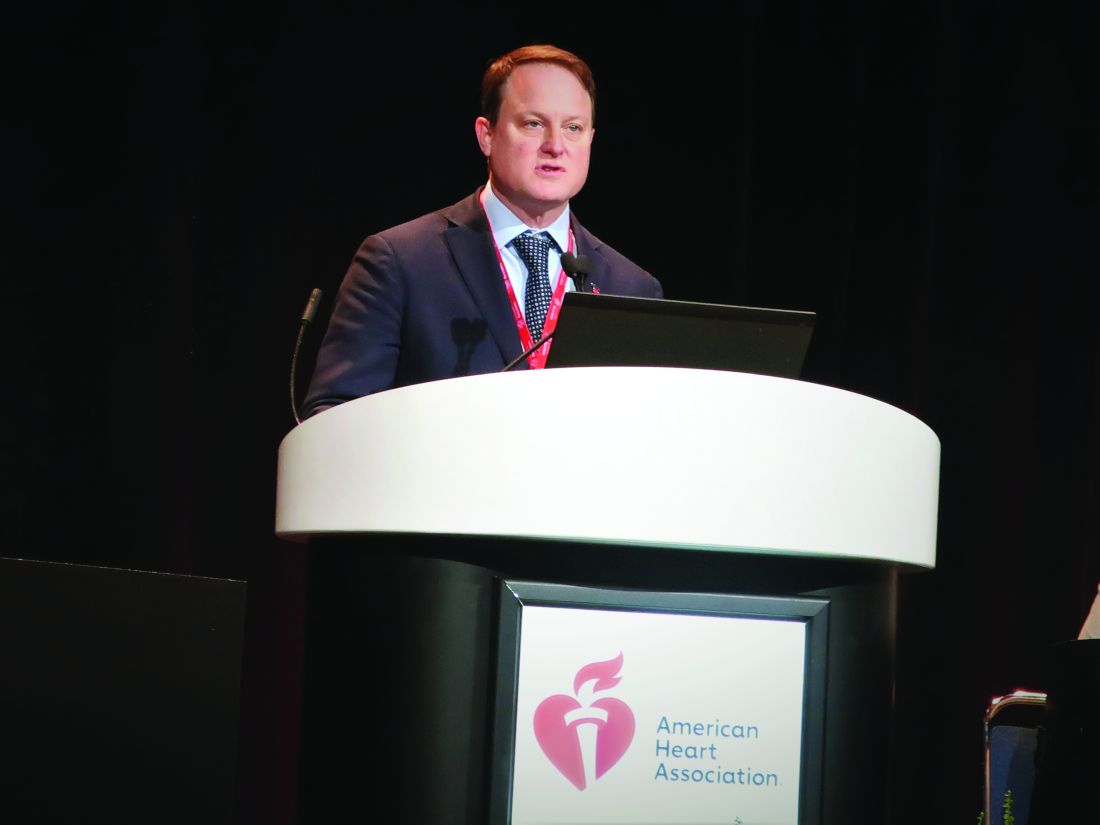
Use of the app for 180 days also significantly linked with a reduced need for additional medications, reduced weight and blood pressure, and improved patient-reported outcomes, and it led to fewer adverse effects than seen in control subjects, Marc P. Bonaca, MD, reported at the American Heart Association scientific sessions.
The findings also showed a clear dose-response relationship: The more CBT lessons a person completed with the app, the greater the A1c reduction.
The results suggest that the app, called BT-001, “potentially provides a scalable treatment option for patients with type 2 diabetes,” concluded Dr. Bonaca.
On the basis of the results from this trial, also called BT-001, the company developing the app, Better Therapeutics, announced in September 2022 that it had filed a classification request with the Food and Drug Administration that would allow marketing authorization for the BT-001 app. Better Therapeutics envisions that once authorized by the FDA, the app would be available to people with type 2 diabetes by prescriptions written by health care providers and that the cost for the app would be covered by health insurance, explained a company spokesperson.
A ‘modest positive impact’
“CBT is an empirically supported psychotherapy for a variety of emotional disorders, and it has been adapted to target specific emotional distress in the context of chronic illness,” said Amit Shapira, PhD, a clinical psychologist at the Joslin Diabetes Center in Boston who has not been involved in the BT-001 studies. A CBT protocol designed for diabetes, CBT for Adherence and Depression, “has been shown to have a positive impact on depression symptoms and glycemic control in adults with type 2 diabetes,” Dr. Shapira said in an interview.
Based on published results, the BT-001 app “seems to have a modest positive impact on glycemic control, especially among people who completed more than 10 [lesson] modules.” The evidence appears to suggest that the app “might be a good supplement to working with a behavioral health counselor.”
The BT-001 trial enrolled 669 adults with type 2 diabetes for an average of 11 years and an A1c of 7%-10.9% with an average level of 8.2%. Participants had to be on a stable medication regimen for at least 3 months but not using insulin, and their treatment regimens could undergo adjustment during the trial. At baseline, each subject was on an average of 2.1 antidiabetes medications, including 90% on metformin and 42% on a sulfonylurea. The researchers also highlighted that the enrolled cohort of people with type 2 diabetes had a demographic profile that was “generally representative” of U.S. adults with type 2 diabetes.
The researchers told the 326 people who were randomized to the active intervention group to use the app but subjects were free to determine their frequency of use. The app introduced a new lesson module weekly that took 10-20 minutes to complete, and each weekly lesson came with associated exercises aimed at practicing skills related to behavioral beliefs.
The study’s primary efficacy endpoint was the average change from baseline in A1c compared with the 343 control participants after 90 days of app use, and 610 of the 669 enrolled participants (91%) had paired baseline and 90-day measurements. At 90 days, people in the app group had an average 0.28 percentage point decrease in their A1c compared with an average 0.11 percentage point increase among the controls, a between-group difference of 0.39 percentage points. Both the reduction from baseline with app use and the reduction relative to the controls were significant. These results appeared in an article published online in in Diabetes Care.
At the scientific sessions, Dr. Bonaca presented additional outcome data after 180 days of app use. He reported an average 0.37 percentage point reduction from baseline in A1c among app users and a 0.08 percentage point decrease from baseline among the controls, for a net 0.29 percentage point incremental decline with the app, a significant difference. At 180 days, 50% of the people in the app group had an A1c decline from baseline of at least 0.4 percentage points compared with 34% of the controls, a significant difference.
A dose-response relationship
Notably, app use showed a clear dose-response pattern. During 180 days of app availability, people who used the app fewer than 10 times had an average reduction from baseline in their A1c of less than 0.1 percentage points. Among those who used the app 10-20 times (a subgroup with roughly one-third of the people randomized to app use) average A1c reduction increased to about 0.4 percentage points, and among those who used the app more than 20 times, also one-third of the intervention group, the average A1c reduction from baseline was about 0.6 percentage points.
“It would be interesting to learn more about the adults who engaged with the app” and had a higher use rate “to provide more targeted care” with the app to people who match the profiles of those who were more likely to use the app during the trial, said Dr. Shapira.
Dr. Bonaca, a cardiologist and vascular medicine specialist and executive director of CPC Clinical Research and CPC Community Health, an academic research organization created by and affiliated with the University of Colorado Anschutz Medical Campus in Aurora, Colo., reported several other 180-day outcomes in the BT-001 trial:
- A 33% relative decrease in the percentage of subjects who needed during the study an additional antidiabetes medication or increased dosages of their baseline medications, which occurred at a rate of 21% among the controls and 14% among those who used the app.
- An average weight loss from baseline of 5.5 pounds using the app compared with an average 1.9 pound decrease among controls, a significant difference.
- A decline in average systolic blood pressure of 4.7 mm Hg with app use compared with a 1.8 mm Hg average decline among the controls, a significant difference.
- Significant incremental average improvements in a self-reported Short Form-12 physical component score with the app compared with controls, and increased average improvement in the PHQ9 self-reported measure of depression in app users compared with controls.
- Significantly fewer treatment-emergent adverse effects, and significantly fewer serious treatment-emergent adverse effects among the app users compared with the controls.
‘Ready for clinical use’
Based on these findings, “in my view the app is ready for [routine] clinical use,” declared Judith Hsia, MD, a cardiologist and professor of medicine at the University of Colorado in Aurora, and with Dr. Bonaca a co-lead investigator for the study.
The BT-001 app can serve as “an addition to the toolkit of diabetes treatments,” Dr. Hsia said in an interview. One key advantage of the app is that, once approved, it could be available to many more people with type 2 diabetes than would be able to receive CBT directly from a therapist. Another potential plus for the CBT app is that “the effects should be durable in contrast to medications,” which must be taken on an ongoing basis to maintain effectiveness. In addition, the safety profile “is favorable compared with drug therapies, which should appeal to health care providers,” said Dr. Hsia, chief science officer for CPC Clinical Research.
However, Dr. Shapira cited the issue that therapeutic apps “raise privacy and licensing liability concerns.”
The BT-001 trial was sponsored by Better Therapeutics, the company developing the app. CPC Clinical Research receives research and consulting funding from numerous companies. Dr. Bonaca has been a consultant to Audentes, and is a stockholder of Medtronic and Pfizer. Dr. Shapira had no disclosures. Dr. Hsia is a stockholder of AstraZeneca.
CHICAGO – A smartphone app that delivers nutritional cognitive behavioral therapy (CBT) to people with type 2 diabetes produced an average 0.29 percentage point drop in hemoglobin A1c during 180 days of use compared with controls, and an average 0.37 percentage point reduction in A1c compared with baseline values in a randomized, pivotal trial with 669 adults.
Use of the app for 180 days also significantly linked with a reduced need for additional medications, reduced weight and blood pressure, and improved patient-reported outcomes, and it led to fewer adverse effects than seen in control subjects, Marc P. Bonaca, MD, reported at the American Heart Association scientific sessions.
The findings also showed a clear dose-response relationship: The more CBT lessons a person completed with the app, the greater the A1c reduction.
The results suggest that the app, called BT-001, “potentially provides a scalable treatment option for patients with type 2 diabetes,” concluded Dr. Bonaca.
On the basis of the results from this trial, also called BT-001, the company developing the app, Better Therapeutics, announced in September 2022 that it had filed a classification request with the Food and Drug Administration that would allow marketing authorization for the BT-001 app. Better Therapeutics envisions that once authorized by the FDA, the app would be available to people with type 2 diabetes by prescriptions written by health care providers and that the cost for the app would be covered by health insurance, explained a company spokesperson.
A ‘modest positive impact’
“CBT is an empirically supported psychotherapy for a variety of emotional disorders, and it has been adapted to target specific emotional distress in the context of chronic illness,” said Amit Shapira, PhD, a clinical psychologist at the Joslin Diabetes Center in Boston who has not been involved in the BT-001 studies. A CBT protocol designed for diabetes, CBT for Adherence and Depression, “has been shown to have a positive impact on depression symptoms and glycemic control in adults with type 2 diabetes,” Dr. Shapira said in an interview.
Based on published results, the BT-001 app “seems to have a modest positive impact on glycemic control, especially among people who completed more than 10 [lesson] modules.” The evidence appears to suggest that the app “might be a good supplement to working with a behavioral health counselor.”
The BT-001 trial enrolled 669 adults with type 2 diabetes for an average of 11 years and an A1c of 7%-10.9% with an average level of 8.2%. Participants had to be on a stable medication regimen for at least 3 months but not using insulin, and their treatment regimens could undergo adjustment during the trial. At baseline, each subject was on an average of 2.1 antidiabetes medications, including 90% on metformin and 42% on a sulfonylurea. The researchers also highlighted that the enrolled cohort of people with type 2 diabetes had a demographic profile that was “generally representative” of U.S. adults with type 2 diabetes.
The researchers told the 326 people who were randomized to the active intervention group to use the app but subjects were free to determine their frequency of use. The app introduced a new lesson module weekly that took 10-20 minutes to complete, and each weekly lesson came with associated exercises aimed at practicing skills related to behavioral beliefs.
The study’s primary efficacy endpoint was the average change from baseline in A1c compared with the 343 control participants after 90 days of app use, and 610 of the 669 enrolled participants (91%) had paired baseline and 90-day measurements. At 90 days, people in the app group had an average 0.28 percentage point decrease in their A1c compared with an average 0.11 percentage point increase among the controls, a between-group difference of 0.39 percentage points. Both the reduction from baseline with app use and the reduction relative to the controls were significant. These results appeared in an article published online in in Diabetes Care.
At the scientific sessions, Dr. Bonaca presented additional outcome data after 180 days of app use. He reported an average 0.37 percentage point reduction from baseline in A1c among app users and a 0.08 percentage point decrease from baseline among the controls, for a net 0.29 percentage point incremental decline with the app, a significant difference. At 180 days, 50% of the people in the app group had an A1c decline from baseline of at least 0.4 percentage points compared with 34% of the controls, a significant difference.
A dose-response relationship
Notably, app use showed a clear dose-response pattern. During 180 days of app availability, people who used the app fewer than 10 times had an average reduction from baseline in their A1c of less than 0.1 percentage points. Among those who used the app 10-20 times (a subgroup with roughly one-third of the people randomized to app use) average A1c reduction increased to about 0.4 percentage points, and among those who used the app more than 20 times, also one-third of the intervention group, the average A1c reduction from baseline was about 0.6 percentage points.
“It would be interesting to learn more about the adults who engaged with the app” and had a higher use rate “to provide more targeted care” with the app to people who match the profiles of those who were more likely to use the app during the trial, said Dr. Shapira.
Dr. Bonaca, a cardiologist and vascular medicine specialist and executive director of CPC Clinical Research and CPC Community Health, an academic research organization created by and affiliated with the University of Colorado Anschutz Medical Campus in Aurora, Colo., reported several other 180-day outcomes in the BT-001 trial:
- A 33% relative decrease in the percentage of subjects who needed during the study an additional antidiabetes medication or increased dosages of their baseline medications, which occurred at a rate of 21% among the controls and 14% among those who used the app.
- An average weight loss from baseline of 5.5 pounds using the app compared with an average 1.9 pound decrease among controls, a significant difference.
- A decline in average systolic blood pressure of 4.7 mm Hg with app use compared with a 1.8 mm Hg average decline among the controls, a significant difference.
- Significant incremental average improvements in a self-reported Short Form-12 physical component score with the app compared with controls, and increased average improvement in the PHQ9 self-reported measure of depression in app users compared with controls.
- Significantly fewer treatment-emergent adverse effects, and significantly fewer serious treatment-emergent adverse effects among the app users compared with the controls.
‘Ready for clinical use’
Based on these findings, “in my view the app is ready for [routine] clinical use,” declared Judith Hsia, MD, a cardiologist and professor of medicine at the University of Colorado in Aurora, and with Dr. Bonaca a co-lead investigator for the study.
The BT-001 app can serve as “an addition to the toolkit of diabetes treatments,” Dr. Hsia said in an interview. One key advantage of the app is that, once approved, it could be available to many more people with type 2 diabetes than would be able to receive CBT directly from a therapist. Another potential plus for the CBT app is that “the effects should be durable in contrast to medications,” which must be taken on an ongoing basis to maintain effectiveness. In addition, the safety profile “is favorable compared with drug therapies, which should appeal to health care providers,” said Dr. Hsia, chief science officer for CPC Clinical Research.
However, Dr. Shapira cited the issue that therapeutic apps “raise privacy and licensing liability concerns.”
The BT-001 trial was sponsored by Better Therapeutics, the company developing the app. CPC Clinical Research receives research and consulting funding from numerous companies. Dr. Bonaca has been a consultant to Audentes, and is a stockholder of Medtronic and Pfizer. Dr. Shapira had no disclosures. Dr. Hsia is a stockholder of AstraZeneca.
CHICAGO – A smartphone app that delivers nutritional cognitive behavioral therapy (CBT) to people with type 2 diabetes produced an average 0.29 percentage point drop in hemoglobin A1c during 180 days of use compared with controls, and an average 0.37 percentage point reduction in A1c compared with baseline values in a randomized, pivotal trial with 669 adults.
Use of the app for 180 days also significantly linked with a reduced need for additional medications, reduced weight and blood pressure, and improved patient-reported outcomes, and it led to fewer adverse effects than seen in control subjects, Marc P. Bonaca, MD, reported at the American Heart Association scientific sessions.
The findings also showed a clear dose-response relationship: The more CBT lessons a person completed with the app, the greater the A1c reduction.
The results suggest that the app, called BT-001, “potentially provides a scalable treatment option for patients with type 2 diabetes,” concluded Dr. Bonaca.
On the basis of the results from this trial, also called BT-001, the company developing the app, Better Therapeutics, announced in September 2022 that it had filed a classification request with the Food and Drug Administration that would allow marketing authorization for the BT-001 app. Better Therapeutics envisions that once authorized by the FDA, the app would be available to people with type 2 diabetes by prescriptions written by health care providers and that the cost for the app would be covered by health insurance, explained a company spokesperson.
A ‘modest positive impact’
“CBT is an empirically supported psychotherapy for a variety of emotional disorders, and it has been adapted to target specific emotional distress in the context of chronic illness,” said Amit Shapira, PhD, a clinical psychologist at the Joslin Diabetes Center in Boston who has not been involved in the BT-001 studies. A CBT protocol designed for diabetes, CBT for Adherence and Depression, “has been shown to have a positive impact on depression symptoms and glycemic control in adults with type 2 diabetes,” Dr. Shapira said in an interview.
Based on published results, the BT-001 app “seems to have a modest positive impact on glycemic control, especially among people who completed more than 10 [lesson] modules.” The evidence appears to suggest that the app “might be a good supplement to working with a behavioral health counselor.”
The BT-001 trial enrolled 669 adults with type 2 diabetes for an average of 11 years and an A1c of 7%-10.9% with an average level of 8.2%. Participants had to be on a stable medication regimen for at least 3 months but not using insulin, and their treatment regimens could undergo adjustment during the trial. At baseline, each subject was on an average of 2.1 antidiabetes medications, including 90% on metformin and 42% on a sulfonylurea. The researchers also highlighted that the enrolled cohort of people with type 2 diabetes had a demographic profile that was “generally representative” of U.S. adults with type 2 diabetes.
The researchers told the 326 people who were randomized to the active intervention group to use the app but subjects were free to determine their frequency of use. The app introduced a new lesson module weekly that took 10-20 minutes to complete, and each weekly lesson came with associated exercises aimed at practicing skills related to behavioral beliefs.
The study’s primary efficacy endpoint was the average change from baseline in A1c compared with the 343 control participants after 90 days of app use, and 610 of the 669 enrolled participants (91%) had paired baseline and 90-day measurements. At 90 days, people in the app group had an average 0.28 percentage point decrease in their A1c compared with an average 0.11 percentage point increase among the controls, a between-group difference of 0.39 percentage points. Both the reduction from baseline with app use and the reduction relative to the controls were significant. These results appeared in an article published online in in Diabetes Care.
At the scientific sessions, Dr. Bonaca presented additional outcome data after 180 days of app use. He reported an average 0.37 percentage point reduction from baseline in A1c among app users and a 0.08 percentage point decrease from baseline among the controls, for a net 0.29 percentage point incremental decline with the app, a significant difference. At 180 days, 50% of the people in the app group had an A1c decline from baseline of at least 0.4 percentage points compared with 34% of the controls, a significant difference.
A dose-response relationship
Notably, app use showed a clear dose-response pattern. During 180 days of app availability, people who used the app fewer than 10 times had an average reduction from baseline in their A1c of less than 0.1 percentage points. Among those who used the app 10-20 times (a subgroup with roughly one-third of the people randomized to app use) average A1c reduction increased to about 0.4 percentage points, and among those who used the app more than 20 times, also one-third of the intervention group, the average A1c reduction from baseline was about 0.6 percentage points.
“It would be interesting to learn more about the adults who engaged with the app” and had a higher use rate “to provide more targeted care” with the app to people who match the profiles of those who were more likely to use the app during the trial, said Dr. Shapira.
Dr. Bonaca, a cardiologist and vascular medicine specialist and executive director of CPC Clinical Research and CPC Community Health, an academic research organization created by and affiliated with the University of Colorado Anschutz Medical Campus in Aurora, Colo., reported several other 180-day outcomes in the BT-001 trial:
- A 33% relative decrease in the percentage of subjects who needed during the study an additional antidiabetes medication or increased dosages of their baseline medications, which occurred at a rate of 21% among the controls and 14% among those who used the app.
- An average weight loss from baseline of 5.5 pounds using the app compared with an average 1.9 pound decrease among controls, a significant difference.
- A decline in average systolic blood pressure of 4.7 mm Hg with app use compared with a 1.8 mm Hg average decline among the controls, a significant difference.
- Significant incremental average improvements in a self-reported Short Form-12 physical component score with the app compared with controls, and increased average improvement in the PHQ9 self-reported measure of depression in app users compared with controls.
- Significantly fewer treatment-emergent adverse effects, and significantly fewer serious treatment-emergent adverse effects among the app users compared with the controls.
‘Ready for clinical use’
Based on these findings, “in my view the app is ready for [routine] clinical use,” declared Judith Hsia, MD, a cardiologist and professor of medicine at the University of Colorado in Aurora, and with Dr. Bonaca a co-lead investigator for the study.
The BT-001 app can serve as “an addition to the toolkit of diabetes treatments,” Dr. Hsia said in an interview. One key advantage of the app is that, once approved, it could be available to many more people with type 2 diabetes than would be able to receive CBT directly from a therapist. Another potential plus for the CBT app is that “the effects should be durable in contrast to medications,” which must be taken on an ongoing basis to maintain effectiveness. In addition, the safety profile “is favorable compared with drug therapies, which should appeal to health care providers,” said Dr. Hsia, chief science officer for CPC Clinical Research.
However, Dr. Shapira cited the issue that therapeutic apps “raise privacy and licensing liability concerns.”
The BT-001 trial was sponsored by Better Therapeutics, the company developing the app. CPC Clinical Research receives research and consulting funding from numerous companies. Dr. Bonaca has been a consultant to Audentes, and is a stockholder of Medtronic and Pfizer. Dr. Shapira had no disclosures. Dr. Hsia is a stockholder of AstraZeneca.
AT AHA 2022
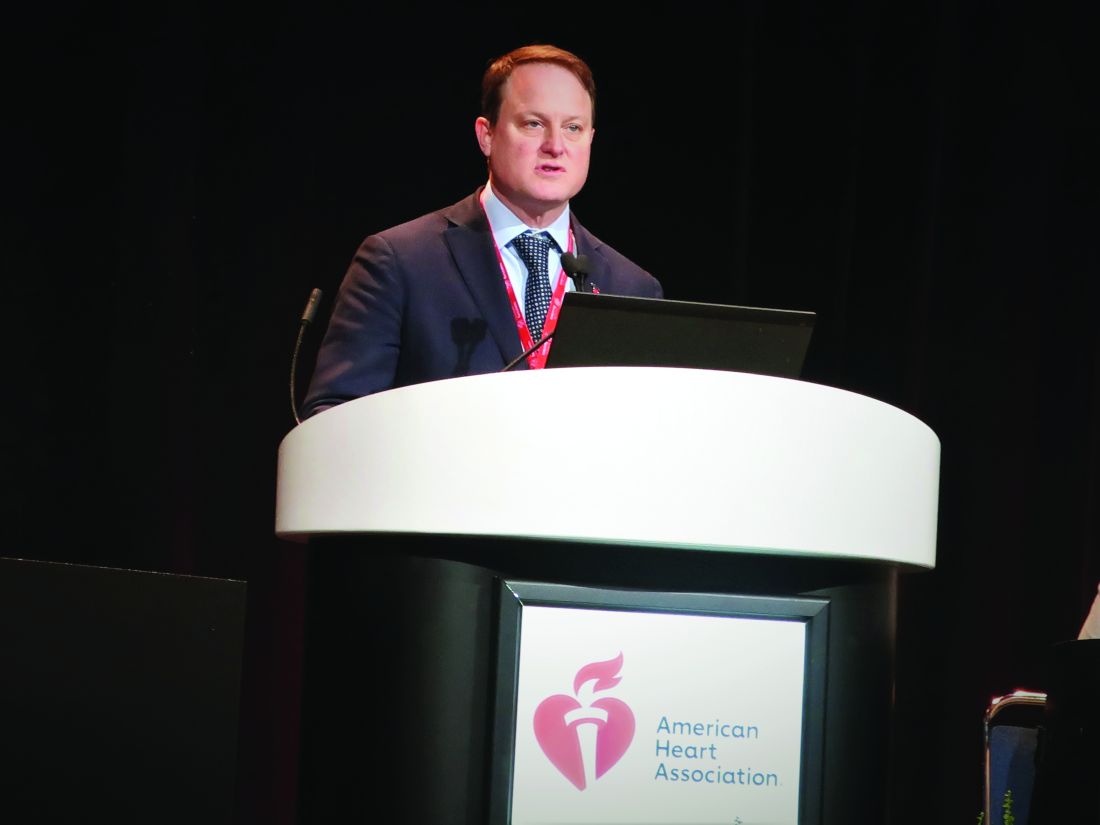
High response rates with T-DXd in early HER2-low breast cancer
SAN Antonio – How do you shoot at an invisible target? It seems counterintuitive, but

In the investigator-initiated TRIO-US B-12 TALENT study looking at neoadjuvant T-DXd either alone or in combination with the hormone therapy anastrazole, the objective response rate (ORR) with T-DXd alone was 68%, compared with 58% for T-DXd plus anastrazole, reported Aditya Bardia, MD, MPH, a medical oncologist with Massachusetts General Hospital Cancer Center in Boston. He recently presented the study findings at the 2022 San Antonio Breast Cancer Symposium.
“The study provides a rich platform for additional translational research to evaluate more sensitive methods of HER2 detection, develop predictive biomarkers, and understand mechanisms of resistance in residual disease which would guide subsequent therapeutic strategies, including combination therapy,” he said in an oral abstract session at the meeting.
Not-so-innocent bystander
In an interview, Dr. Bardia explained that the T-DXd may have efficacy in HER2-low cancers because of a bystander effect.
“With these antibody drug conjugates, if you have the antigen, the ADC binds to the antigen, gets internalized, and releases the payload, but the payload has a bystander effect ... it’s membrane permeable, so it can go outside and affect other cells that do not express the antigen. So for HER2-low tumors, even if there is HER2 heterogeneity or if there are some cells that do not express HER2, this would work because of the bystander effect,” he said.
Although neoadjuvant chemotherapy with an anthracycline and taxane is often used to treat patients with high-risk localized HR-positive breast cancer, the therapy is associated with low pathologic complete response (pCR) rates, radiological response rates of around 50%, and significant toxicities, including myelosuppression, neuropathy, cardiomyopathy, and leukemia risk, Dr. Bardia said.
At cross purposes
The trial included both a T-DXd monotherapy arm and a second arm containing the antibody drug conjugate (ADC) with endocrine therapy. The rationale for the latter is that there is documented “cross-talk” between the estrogen receptor (ER) and HER2.
“In tumors that become endocrine resistant, you see an increase in the HER2 pathway, and if you block ER, you see that HER2 goes up and vice versa. If you just block HER2 alone, the expression of ER can go up, and if you block the PI3 kinase alone, the expression of ER goes up,” he said.
Dual blockade can be effective with antibody-based therapy or with tyrosine kinase inhibitors, but with an ADC, the dual blockade strategy may be less effective, Dr. Bardia said, “because if you have an ADC, you need HER2, the ADC binds to HER2, then gives the payload to the cancer cells and essentially kills the cancer cells,” Dr. Bardia explained in a media briefing held prior to his presentation.
In fact, the T-DXd–anastrozole combination was associated with a lower overall response rate in the study than T-DXd alone, but Dr. Bardia cautioned about overinterpreting these results, as the study included only 39 patients.
Study details
The investigators enrolled 58 patients – 56 pre- and postmenopausal women and 2 men – with HR+/HER2-low tumors determined by local and/or central review, and operable stage II or III cancers.
After stratification by HER2 expression level and menopausal status, the patients were randomized to receive either T-DXd alone at a dose of 5.4 mg/kg, or with T-DXd at the same dose plus anastrozole, with men and premenopausal women also receiving a gonadotropin-releasing hormone analog.
The protocol originally called for six cycles of therapy, but was amended in February 2022 to increase the number to eight for newly enrolled participants and patients who were already on study treatment but had not yet had surgery.
The majority of patients in each arm had invasive ductal cancers, and most had HER2 expression on immunohistochemistry (IHC) of 1+, which is generally considered to be HER2-negative. However, there was only modest concordance between local and central review in determining HER2 expression levels, Dr. Bardia noted. Indeed, the entire question of HER2-low cancers, whether they compose a separate clinical entity from other cancers and how to standardize testing, was the subject of a special session at this year’s SABCS.
Results
Overall response rate, the primary endpoint, was 68% in the T-DXd arm and 58% in the T-DXd plus anastrazole arm.
Although the low response rate with the combination suggests that endocrine therapy may not be helpful in this patient population, it’s still too early to say so conclusively, Dr. Bardia said.
Looking at the change in HER2 expression by IHC from baseline to surgery, they found that 48.6% of patients had a change in HER2 IHC expression after T-DXd treatment, and that nearly 90% of these patients had a decrease in expression levels.
Among 42 patients with available data on residual cancer burden (RCB) at the time of data cutoff, one patient in the T-DXd alone arm with stage 3A disease had an RCB of 0, equivalent to a pathologic complete response (pCR). There were no other RCB 0 tumors after surgery in either study arm. The rate of combined RCB and RCB 1 (near pCR) was about 15% in each arm.
In all, 3 of the 58 patients in the study (5.2%) required dose reductions because of adverse events. There were no cases of grade 3 or greater pneumonitis, and no cases of either cardiomyopathy or neuropathy.
Way better than chemotherapy?
“It was very exciting when we got the DESTINY-Breast04 results showing this impressive activity of trastuzumab deruxtecan in this HER2-low entity, and now we know that hormone-positive [tumors], the majority of them are HER2-low. It was really encouraging, it was practice changing, but we were left wondering about this HER2-low entity, and can we act on it in the earlier setting,” commented Jason A. Mouabbi, MD, from the University of Texas MD Anderson Cancer Center in Houston.
“The beauty of the TRIO-US B-12 TALENT study is that it looked at the neoadjuvant setting where we know those patients who are hormone-positive usually do not respond well to chemotherapy,” he said in an interview.
He said that although the study didn’t compare T-DXd to chemotherapy, “it’s an excellent first start.”
An overall response rate near 70% “is something amazing. I’m really excited to see it against chemo. I think it’s going to do way better,” Dr. Mouabbi said.
The study was conducted by the Translational Research In Oncology (TRIO)-US network. Funding was provided by Daiichi Sankyo, the maker of trastuzumab deruxtecan (Enhertu). Dr. Bardia serves as a consultant or advisory board member for Pfizer, Novartis, Genentech, Merck, Radius Health, Immunomedics/Gilead Sciences, Sanofi, Daiichi Sankyo, AstraZeneca, and Eli Lilly, and has received research funding from Genentech, Novartis, Pfizer, Merck, Sanofi, Radius Health, Immunomedics/Gilead Sciences, Daiichi Sankyo, AstraZeneca, and Eli Lilly.
Dr. Mouabbi disclosed honoraria from BostonGene, Cardinal Health, Napo Pharmaceuticals, and Fresenius Kabi.
SAN Antonio – How do you shoot at an invisible target? It seems counterintuitive, but
In the investigator-initiated TRIO-US B-12 TALENT study looking at neoadjuvant T-DXd either alone or in combination with the hormone therapy anastrazole, the objective response rate (ORR) with T-DXd alone was 68%, compared with 58% for T-DXd plus anastrazole, reported Aditya Bardia, MD, MPH, a medical oncologist with Massachusetts General Hospital Cancer Center in Boston. He recently presented the study findings at the 2022 San Antonio Breast Cancer Symposium.
“The study provides a rich platform for additional translational research to evaluate more sensitive methods of HER2 detection, develop predictive biomarkers, and understand mechanisms of resistance in residual disease which would guide subsequent therapeutic strategies, including combination therapy,” he said in an oral abstract session at the meeting.
Not-so-innocent bystander
In an interview, Dr. Bardia explained that the T-DXd may have efficacy in HER2-low cancers because of a bystander effect.
“With these antibody drug conjugates, if you have the antigen, the ADC binds to the antigen, gets internalized, and releases the payload, but the payload has a bystander effect ... it’s membrane permeable, so it can go outside and affect other cells that do not express the antigen. So for HER2-low tumors, even if there is HER2 heterogeneity or if there are some cells that do not express HER2, this would work because of the bystander effect,” he said.
Although neoadjuvant chemotherapy with an anthracycline and taxane is often used to treat patients with high-risk localized HR-positive breast cancer, the therapy is associated with low pathologic complete response (pCR) rates, radiological response rates of around 50%, and significant toxicities, including myelosuppression, neuropathy, cardiomyopathy, and leukemia risk, Dr. Bardia said.
At cross purposes
The trial included both a T-DXd monotherapy arm and a second arm containing the antibody drug conjugate (ADC) with endocrine therapy. The rationale for the latter is that there is documented “cross-talk” between the estrogen receptor (ER) and HER2.
“In tumors that become endocrine resistant, you see an increase in the HER2 pathway, and if you block ER, you see that HER2 goes up and vice versa. If you just block HER2 alone, the expression of ER can go up, and if you block the PI3 kinase alone, the expression of ER goes up,” he said.
Dual blockade can be effective with antibody-based therapy or with tyrosine kinase inhibitors, but with an ADC, the dual blockade strategy may be less effective, Dr. Bardia said, “because if you have an ADC, you need HER2, the ADC binds to HER2, then gives the payload to the cancer cells and essentially kills the cancer cells,” Dr. Bardia explained in a media briefing held prior to his presentation.
In fact, the T-DXd–anastrozole combination was associated with a lower overall response rate in the study than T-DXd alone, but Dr. Bardia cautioned about overinterpreting these results, as the study included only 39 patients.
Study details
The investigators enrolled 58 patients – 56 pre- and postmenopausal women and 2 men – with HR+/HER2-low tumors determined by local and/or central review, and operable stage II or III cancers.
After stratification by HER2 expression level and menopausal status, the patients were randomized to receive either T-DXd alone at a dose of 5.4 mg/kg, or with T-DXd at the same dose plus anastrozole, with men and premenopausal women also receiving a gonadotropin-releasing hormone analog.
The protocol originally called for six cycles of therapy, but was amended in February 2022 to increase the number to eight for newly enrolled participants and patients who were already on study treatment but had not yet had surgery.
The majority of patients in each arm had invasive ductal cancers, and most had HER2 expression on immunohistochemistry (IHC) of 1+, which is generally considered to be HER2-negative. However, there was only modest concordance between local and central review in determining HER2 expression levels, Dr. Bardia noted. Indeed, the entire question of HER2-low cancers, whether they compose a separate clinical entity from other cancers and how to standardize testing, was the subject of a special session at this year’s SABCS.
Results
Overall response rate, the primary endpoint, was 68% in the T-DXd arm and 58% in the T-DXd plus anastrazole arm.
Although the low response rate with the combination suggests that endocrine therapy may not be helpful in this patient population, it’s still too early to say so conclusively, Dr. Bardia said.
Looking at the change in HER2 expression by IHC from baseline to surgery, they found that 48.6% of patients had a change in HER2 IHC expression after T-DXd treatment, and that nearly 90% of these patients had a decrease in expression levels.
Among 42 patients with available data on residual cancer burden (RCB) at the time of data cutoff, one patient in the T-DXd alone arm with stage 3A disease had an RCB of 0, equivalent to a pathologic complete response (pCR). There were no other RCB 0 tumors after surgery in either study arm. The rate of combined RCB and RCB 1 (near pCR) was about 15% in each arm.
In all, 3 of the 58 patients in the study (5.2%) required dose reductions because of adverse events. There were no cases of grade 3 or greater pneumonitis, and no cases of either cardiomyopathy or neuropathy.
Way better than chemotherapy?
“It was very exciting when we got the DESTINY-Breast04 results showing this impressive activity of trastuzumab deruxtecan in this HER2-low entity, and now we know that hormone-positive [tumors], the majority of them are HER2-low. It was really encouraging, it was practice changing, but we were left wondering about this HER2-low entity, and can we act on it in the earlier setting,” commented Jason A. Mouabbi, MD, from the University of Texas MD Anderson Cancer Center in Houston.
“The beauty of the TRIO-US B-12 TALENT study is that it looked at the neoadjuvant setting where we know those patients who are hormone-positive usually do not respond well to chemotherapy,” he said in an interview.
He said that although the study didn’t compare T-DXd to chemotherapy, “it’s an excellent first start.”
An overall response rate near 70% “is something amazing. I’m really excited to see it against chemo. I think it’s going to do way better,” Dr. Mouabbi said.
The study was conducted by the Translational Research In Oncology (TRIO)-US network. Funding was provided by Daiichi Sankyo, the maker of trastuzumab deruxtecan (Enhertu). Dr. Bardia serves as a consultant or advisory board member for Pfizer, Novartis, Genentech, Merck, Radius Health, Immunomedics/Gilead Sciences, Sanofi, Daiichi Sankyo, AstraZeneca, and Eli Lilly, and has received research funding from Genentech, Novartis, Pfizer, Merck, Sanofi, Radius Health, Immunomedics/Gilead Sciences, Daiichi Sankyo, AstraZeneca, and Eli Lilly.
Dr. Mouabbi disclosed honoraria from BostonGene, Cardinal Health, Napo Pharmaceuticals, and Fresenius Kabi.
SAN Antonio – How do you shoot at an invisible target? It seems counterintuitive, but
In the investigator-initiated TRIO-US B-12 TALENT study looking at neoadjuvant T-DXd either alone or in combination with the hormone therapy anastrazole, the objective response rate (ORR) with T-DXd alone was 68%, compared with 58% for T-DXd plus anastrazole, reported Aditya Bardia, MD, MPH, a medical oncologist with Massachusetts General Hospital Cancer Center in Boston. He recently presented the study findings at the 2022 San Antonio Breast Cancer Symposium.
“The study provides a rich platform for additional translational research to evaluate more sensitive methods of HER2 detection, develop predictive biomarkers, and understand mechanisms of resistance in residual disease which would guide subsequent therapeutic strategies, including combination therapy,” he said in an oral abstract session at the meeting.
Not-so-innocent bystander
In an interview, Dr. Bardia explained that the T-DXd may have efficacy in HER2-low cancers because of a bystander effect.
“With these antibody drug conjugates, if you have the antigen, the ADC binds to the antigen, gets internalized, and releases the payload, but the payload has a bystander effect ... it’s membrane permeable, so it can go outside and affect other cells that do not express the antigen. So for HER2-low tumors, even if there is HER2 heterogeneity or if there are some cells that do not express HER2, this would work because of the bystander effect,” he said.
Although neoadjuvant chemotherapy with an anthracycline and taxane is often used to treat patients with high-risk localized HR-positive breast cancer, the therapy is associated with low pathologic complete response (pCR) rates, radiological response rates of around 50%, and significant toxicities, including myelosuppression, neuropathy, cardiomyopathy, and leukemia risk, Dr. Bardia said.
At cross purposes
The trial included both a T-DXd monotherapy arm and a second arm containing the antibody drug conjugate (ADC) with endocrine therapy. The rationale for the latter is that there is documented “cross-talk” between the estrogen receptor (ER) and HER2.
“In tumors that become endocrine resistant, you see an increase in the HER2 pathway, and if you block ER, you see that HER2 goes up and vice versa. If you just block HER2 alone, the expression of ER can go up, and if you block the PI3 kinase alone, the expression of ER goes up,” he said.
Dual blockade can be effective with antibody-based therapy or with tyrosine kinase inhibitors, but with an ADC, the dual blockade strategy may be less effective, Dr. Bardia said, “because if you have an ADC, you need HER2, the ADC binds to HER2, then gives the payload to the cancer cells and essentially kills the cancer cells,” Dr. Bardia explained in a media briefing held prior to his presentation.
In fact, the T-DXd–anastrozole combination was associated with a lower overall response rate in the study than T-DXd alone, but Dr. Bardia cautioned about overinterpreting these results, as the study included only 39 patients.
Study details
The investigators enrolled 58 patients – 56 pre- and postmenopausal women and 2 men – with HR+/HER2-low tumors determined by local and/or central review, and operable stage II or III cancers.
After stratification by HER2 expression level and menopausal status, the patients were randomized to receive either T-DXd alone at a dose of 5.4 mg/kg, or with T-DXd at the same dose plus anastrozole, with men and premenopausal women also receiving a gonadotropin-releasing hormone analog.
The protocol originally called for six cycles of therapy, but was amended in February 2022 to increase the number to eight for newly enrolled participants and patients who were already on study treatment but had not yet had surgery.
The majority of patients in each arm had invasive ductal cancers, and most had HER2 expression on immunohistochemistry (IHC) of 1+, which is generally considered to be HER2-negative. However, there was only modest concordance between local and central review in determining HER2 expression levels, Dr. Bardia noted. Indeed, the entire question of HER2-low cancers, whether they compose a separate clinical entity from other cancers and how to standardize testing, was the subject of a special session at this year’s SABCS.
Results
Overall response rate, the primary endpoint, was 68% in the T-DXd arm and 58% in the T-DXd plus anastrazole arm.
Although the low response rate with the combination suggests that endocrine therapy may not be helpful in this patient population, it’s still too early to say so conclusively, Dr. Bardia said.
Looking at the change in HER2 expression by IHC from baseline to surgery, they found that 48.6% of patients had a change in HER2 IHC expression after T-DXd treatment, and that nearly 90% of these patients had a decrease in expression levels.
Among 42 patients with available data on residual cancer burden (RCB) at the time of data cutoff, one patient in the T-DXd alone arm with stage 3A disease had an RCB of 0, equivalent to a pathologic complete response (pCR). There were no other RCB 0 tumors after surgery in either study arm. The rate of combined RCB and RCB 1 (near pCR) was about 15% in each arm.
In all, 3 of the 58 patients in the study (5.2%) required dose reductions because of adverse events. There were no cases of grade 3 or greater pneumonitis, and no cases of either cardiomyopathy or neuropathy.
Way better than chemotherapy?
“It was very exciting when we got the DESTINY-Breast04 results showing this impressive activity of trastuzumab deruxtecan in this HER2-low entity, and now we know that hormone-positive [tumors], the majority of them are HER2-low. It was really encouraging, it was practice changing, but we were left wondering about this HER2-low entity, and can we act on it in the earlier setting,” commented Jason A. Mouabbi, MD, from the University of Texas MD Anderson Cancer Center in Houston.
“The beauty of the TRIO-US B-12 TALENT study is that it looked at the neoadjuvant setting where we know those patients who are hormone-positive usually do not respond well to chemotherapy,” he said in an interview.
He said that although the study didn’t compare T-DXd to chemotherapy, “it’s an excellent first start.”
An overall response rate near 70% “is something amazing. I’m really excited to see it against chemo. I think it’s going to do way better,” Dr. Mouabbi said.
The study was conducted by the Translational Research In Oncology (TRIO)-US network. Funding was provided by Daiichi Sankyo, the maker of trastuzumab deruxtecan (Enhertu). Dr. Bardia serves as a consultant or advisory board member for Pfizer, Novartis, Genentech, Merck, Radius Health, Immunomedics/Gilead Sciences, Sanofi, Daiichi Sankyo, AstraZeneca, and Eli Lilly, and has received research funding from Genentech, Novartis, Pfizer, Merck, Sanofi, Radius Health, Immunomedics/Gilead Sciences, Daiichi Sankyo, AstraZeneca, and Eli Lilly.
Dr. Mouabbi disclosed honoraria from BostonGene, Cardinal Health, Napo Pharmaceuticals, and Fresenius Kabi.
AT SABCS 2022

‘Clear answer’: ALL study defies conventional wisdom
The same study also addressed two other issues related to standard care for these patients: 1) the dosage of dexamethasone used during the first treatment phase (results of which had already been reported some years ago) and 2) the impact of omitting monthly pulses of dexamethasone and vincristine after initial treatment.
“The trial did not give us the answers we were looking for, but that’s why we do randomized trials, and at least we have one clear answer, which is that high-dose methotrexate does not seem to have benefit in reducing the risk of CNS relapse,” reported study investigator Ajay Vora, MSc, from Great Ormond Street Hospital, London.
Among 1,570 patients randomly assigned in one group of the UKALL2011 trial, 5-year rates of CNS relapse were identical at 5.6% for patients treated with either high-dose methotrexate or standard interim maintenance with oral mercaptopurine and oral and intrathecal methotrexate.
There was a hint, however, that high-dose methotrexate could have a beneficial effect by reducing relapses in bone marrow for some subgroups of patients with B-lineage disease after dexamethasone induction, Dr. Vora commented.
He was speaking at a press briefing at the annual meeting of the American Society of Hematology, prior to the presentation of the data by Amy A. Kirkwood, MSc, from the University College London Cancer Institute.
Reacting to the results, Cynthia E. Dunbar, MD, chief of the Translational Stem Cell Biology Branch at the National Heart, Lung, and Blood Institute in Bethesda, Md., emphasized that “in patients treated with the UKALL regimen, high doses of methotrexate did not reduce the rate of CNS relapse, contrary to our long-standing beliefs.”
“Going forward, patients can be spared the risk of high-dose methotrexate without increasing their risk of recurrence in the central nervous system,” she said.
“As researchers in hematology, we look at it as our duty to question the standard approaches that we use to treat patients, even those that we thought of as tried-and-true,” said briefing moderator Mikkael Sekeres, MD, of the Sylvester Comprehensive Cancer Center at the University of Miami. This is one of the abstracts that “challenge some of those standards and in fact reveal that in many cases, giving less therapy and being less restrictive is actually better for patients or at least no worse.”
Complex design
The UKALL2011 trial had a byzantine design, with the overarching goal of finding out which treatment and maintenance strategy best finds the sweet spot between efficacy and toxicity in children and young adults (up to age 25) with ALL and lymphoblastic lymphoma.
One question that was already answered, as investigators reported at the 2017 ASH annual meeting, came from the first randomization in the study, designed to see whether a shorter course of dexamethasone – 14 days versus the standard 28 days – could reduce induction toxicity. It did not.
Now, at ASH 2022, the investigators reported outcomes from the second phase of the trial, which included two randomizations: one comparing high-dose methotrexate with standard interim maintenance to reduce CNS relapse risk, and one to see whether forgoing pulses of vincristine/dexamethasone could reduce maintenance morbidity.
Patients were stratified by National Cancer Institute minimal residual disease (MRD) risk categories, cytogenetics, and end-of-induction MRD to receive one of three treatment regimens. Patients with MRD high risk, defined as MRD greater than 0.5% at the end of consolidation, were not eligible for second-phase randomization and instead received off-protocol therapies.The second randomization was factorial, stratified by NCI and MRD risk groups, resulting in four arms: high-dose methotrexate with or without pulses and standard interim maintenance with our without pulses.
Standard interim maintenance in this trial was 2 months of oral mercaptopurine/methotrexate monthly pulses and single intrathecal methotrexate in two of the regimens, as well as five doses of escalating intravenous methotrexate plus vincristine and two doses of pegylated asparaginase in the third.
High-dose methotrexate was given at a dose of 5 g/m2 for four doses 2 weeks apart, low dose 6-mercaptopurine, plus two doses of pegylated asparaginase in one regimen only.
Equivocal conclusions
As noted above, CNS relapse, the primary endpoint for the interim maintenance randomization, did not differ between the groups, with identical 5-year relapse rates. Similarly, 5-year event-free survival (EFS) rates were 90.3% in the high-dose group and 89.5% in the standard group, a difference that was not statistically significant (P = .68).
There was, however, an interaction between the first (short- vs. standard-course dexamethasone) and the interim maintenance randomizations, indicating significantly inferior EFS outcomes for patients who had received the short dose of dexamethasone followed by high-dose methotrexate, especially among patients who did not receive pulses (P = .006).
An analysis of patients treated with standard dexamethasone showed that those who received high-dose methotrexate had a lower risk for bone marrow relapse, with a hazard ratio of 0.62 (P = .029), and trends, albeit nonsignificant, toward better EFS and overall survival.
In addition, the overall results suggested that steroid pulses could be safely omitted without leading to an increase in bone marrow relapses: the 5-year rates of bone marrow relapse were 10.2% with pulses and 12.2% without, although omitting pulses was associated with a slight but significant decrease in EFS overall (P = .01). The effect was attenuated among patients who had received standard-course dexamethasone and high-dose methotrexate. Leaving out the pulses also reduced rates of grade 3 or 4 adverse events, including febrile neutropenia, Ms. Kirkwood noted in her presentation.
The investigators plan to analyze quality-of-life outcomes related to dexamethasone-vincristine pulses to see whether doing so could tip the balance in favor of leaving them out of therapy, and they will continue to follow patients to see whether their findings hold.
UKALL2011 was funded by Children with Cancer UK, Blood Cancer UK, and Cancer Research UK. Ms. Kirkwood disclosed consulting for and receiving honoraria from Kite. Dr. Vora reported no relevant financial relationships.
A version of this article first appeared on Medscape.com.
The same study also addressed two other issues related to standard care for these patients: 1) the dosage of dexamethasone used during the first treatment phase (results of which had already been reported some years ago) and 2) the impact of omitting monthly pulses of dexamethasone and vincristine after initial treatment.
“The trial did not give us the answers we were looking for, but that’s why we do randomized trials, and at least we have one clear answer, which is that high-dose methotrexate does not seem to have benefit in reducing the risk of CNS relapse,” reported study investigator Ajay Vora, MSc, from Great Ormond Street Hospital, London.
Among 1,570 patients randomly assigned in one group of the UKALL2011 trial, 5-year rates of CNS relapse were identical at 5.6% for patients treated with either high-dose methotrexate or standard interim maintenance with oral mercaptopurine and oral and intrathecal methotrexate.
There was a hint, however, that high-dose methotrexate could have a beneficial effect by reducing relapses in bone marrow for some subgroups of patients with B-lineage disease after dexamethasone induction, Dr. Vora commented.
He was speaking at a press briefing at the annual meeting of the American Society of Hematology, prior to the presentation of the data by Amy A. Kirkwood, MSc, from the University College London Cancer Institute.
Reacting to the results, Cynthia E. Dunbar, MD, chief of the Translational Stem Cell Biology Branch at the National Heart, Lung, and Blood Institute in Bethesda, Md., emphasized that “in patients treated with the UKALL regimen, high doses of methotrexate did not reduce the rate of CNS relapse, contrary to our long-standing beliefs.”
“Going forward, patients can be spared the risk of high-dose methotrexate without increasing their risk of recurrence in the central nervous system,” she said.
“As researchers in hematology, we look at it as our duty to question the standard approaches that we use to treat patients, even those that we thought of as tried-and-true,” said briefing moderator Mikkael Sekeres, MD, of the Sylvester Comprehensive Cancer Center at the University of Miami. This is one of the abstracts that “challenge some of those standards and in fact reveal that in many cases, giving less therapy and being less restrictive is actually better for patients or at least no worse.”
Complex design
The UKALL2011 trial had a byzantine design, with the overarching goal of finding out which treatment and maintenance strategy best finds the sweet spot between efficacy and toxicity in children and young adults (up to age 25) with ALL and lymphoblastic lymphoma.
One question that was already answered, as investigators reported at the 2017 ASH annual meeting, came from the first randomization in the study, designed to see whether a shorter course of dexamethasone – 14 days versus the standard 28 days – could reduce induction toxicity. It did not.
Now, at ASH 2022, the investigators reported outcomes from the second phase of the trial, which included two randomizations: one comparing high-dose methotrexate with standard interim maintenance to reduce CNS relapse risk, and one to see whether forgoing pulses of vincristine/dexamethasone could reduce maintenance morbidity.
Patients were stratified by National Cancer Institute minimal residual disease (MRD) risk categories, cytogenetics, and end-of-induction MRD to receive one of three treatment regimens. Patients with MRD high risk, defined as MRD greater than 0.5% at the end of consolidation, were not eligible for second-phase randomization and instead received off-protocol therapies.The second randomization was factorial, stratified by NCI and MRD risk groups, resulting in four arms: high-dose methotrexate with or without pulses and standard interim maintenance with our without pulses.
Standard interim maintenance in this trial was 2 months of oral mercaptopurine/methotrexate monthly pulses and single intrathecal methotrexate in two of the regimens, as well as five doses of escalating intravenous methotrexate plus vincristine and two doses of pegylated asparaginase in the third.
High-dose methotrexate was given at a dose of 5 g/m2 for four doses 2 weeks apart, low dose 6-mercaptopurine, plus two doses of pegylated asparaginase in one regimen only.
Equivocal conclusions
As noted above, CNS relapse, the primary endpoint for the interim maintenance randomization, did not differ between the groups, with identical 5-year relapse rates. Similarly, 5-year event-free survival (EFS) rates were 90.3% in the high-dose group and 89.5% in the standard group, a difference that was not statistically significant (P = .68).
There was, however, an interaction between the first (short- vs. standard-course dexamethasone) and the interim maintenance randomizations, indicating significantly inferior EFS outcomes for patients who had received the short dose of dexamethasone followed by high-dose methotrexate, especially among patients who did not receive pulses (P = .006).
An analysis of patients treated with standard dexamethasone showed that those who received high-dose methotrexate had a lower risk for bone marrow relapse, with a hazard ratio of 0.62 (P = .029), and trends, albeit nonsignificant, toward better EFS and overall survival.
In addition, the overall results suggested that steroid pulses could be safely omitted without leading to an increase in bone marrow relapses: the 5-year rates of bone marrow relapse were 10.2% with pulses and 12.2% without, although omitting pulses was associated with a slight but significant decrease in EFS overall (P = .01). The effect was attenuated among patients who had received standard-course dexamethasone and high-dose methotrexate. Leaving out the pulses also reduced rates of grade 3 or 4 adverse events, including febrile neutropenia, Ms. Kirkwood noted in her presentation.
The investigators plan to analyze quality-of-life outcomes related to dexamethasone-vincristine pulses to see whether doing so could tip the balance in favor of leaving them out of therapy, and they will continue to follow patients to see whether their findings hold.
UKALL2011 was funded by Children with Cancer UK, Blood Cancer UK, and Cancer Research UK. Ms. Kirkwood disclosed consulting for and receiving honoraria from Kite. Dr. Vora reported no relevant financial relationships.
A version of this article first appeared on Medscape.com.
The same study also addressed two other issues related to standard care for these patients: 1) the dosage of dexamethasone used during the first treatment phase (results of which had already been reported some years ago) and 2) the impact of omitting monthly pulses of dexamethasone and vincristine after initial treatment.
“The trial did not give us the answers we were looking for, but that’s why we do randomized trials, and at least we have one clear answer, which is that high-dose methotrexate does not seem to have benefit in reducing the risk of CNS relapse,” reported study investigator Ajay Vora, MSc, from Great Ormond Street Hospital, London.
Among 1,570 patients randomly assigned in one group of the UKALL2011 trial, 5-year rates of CNS relapse were identical at 5.6% for patients treated with either high-dose methotrexate or standard interim maintenance with oral mercaptopurine and oral and intrathecal methotrexate.
There was a hint, however, that high-dose methotrexate could have a beneficial effect by reducing relapses in bone marrow for some subgroups of patients with B-lineage disease after dexamethasone induction, Dr. Vora commented.
He was speaking at a press briefing at the annual meeting of the American Society of Hematology, prior to the presentation of the data by Amy A. Kirkwood, MSc, from the University College London Cancer Institute.
Reacting to the results, Cynthia E. Dunbar, MD, chief of the Translational Stem Cell Biology Branch at the National Heart, Lung, and Blood Institute in Bethesda, Md., emphasized that “in patients treated with the UKALL regimen, high doses of methotrexate did not reduce the rate of CNS relapse, contrary to our long-standing beliefs.”
“Going forward, patients can be spared the risk of high-dose methotrexate without increasing their risk of recurrence in the central nervous system,” she said.
“As researchers in hematology, we look at it as our duty to question the standard approaches that we use to treat patients, even those that we thought of as tried-and-true,” said briefing moderator Mikkael Sekeres, MD, of the Sylvester Comprehensive Cancer Center at the University of Miami. This is one of the abstracts that “challenge some of those standards and in fact reveal that in many cases, giving less therapy and being less restrictive is actually better for patients or at least no worse.”
Complex design
The UKALL2011 trial had a byzantine design, with the overarching goal of finding out which treatment and maintenance strategy best finds the sweet spot between efficacy and toxicity in children and young adults (up to age 25) with ALL and lymphoblastic lymphoma.
One question that was already answered, as investigators reported at the 2017 ASH annual meeting, came from the first randomization in the study, designed to see whether a shorter course of dexamethasone – 14 days versus the standard 28 days – could reduce induction toxicity. It did not.
Now, at ASH 2022, the investigators reported outcomes from the second phase of the trial, which included two randomizations: one comparing high-dose methotrexate with standard interim maintenance to reduce CNS relapse risk, and one to see whether forgoing pulses of vincristine/dexamethasone could reduce maintenance morbidity.
Patients were stratified by National Cancer Institute minimal residual disease (MRD) risk categories, cytogenetics, and end-of-induction MRD to receive one of three treatment regimens. Patients with MRD high risk, defined as MRD greater than 0.5% at the end of consolidation, were not eligible for second-phase randomization and instead received off-protocol therapies.The second randomization was factorial, stratified by NCI and MRD risk groups, resulting in four arms: high-dose methotrexate with or without pulses and standard interim maintenance with our without pulses.
Standard interim maintenance in this trial was 2 months of oral mercaptopurine/methotrexate monthly pulses and single intrathecal methotrexate in two of the regimens, as well as five doses of escalating intravenous methotrexate plus vincristine and two doses of pegylated asparaginase in the third.
High-dose methotrexate was given at a dose of 5 g/m2 for four doses 2 weeks apart, low dose 6-mercaptopurine, plus two doses of pegylated asparaginase in one regimen only.
Equivocal conclusions
As noted above, CNS relapse, the primary endpoint for the interim maintenance randomization, did not differ between the groups, with identical 5-year relapse rates. Similarly, 5-year event-free survival (EFS) rates were 90.3% in the high-dose group and 89.5% in the standard group, a difference that was not statistically significant (P = .68).
There was, however, an interaction between the first (short- vs. standard-course dexamethasone) and the interim maintenance randomizations, indicating significantly inferior EFS outcomes for patients who had received the short dose of dexamethasone followed by high-dose methotrexate, especially among patients who did not receive pulses (P = .006).
An analysis of patients treated with standard dexamethasone showed that those who received high-dose methotrexate had a lower risk for bone marrow relapse, with a hazard ratio of 0.62 (P = .029), and trends, albeit nonsignificant, toward better EFS and overall survival.
In addition, the overall results suggested that steroid pulses could be safely omitted without leading to an increase in bone marrow relapses: the 5-year rates of bone marrow relapse were 10.2% with pulses and 12.2% without, although omitting pulses was associated with a slight but significant decrease in EFS overall (P = .01). The effect was attenuated among patients who had received standard-course dexamethasone and high-dose methotrexate. Leaving out the pulses also reduced rates of grade 3 or 4 adverse events, including febrile neutropenia, Ms. Kirkwood noted in her presentation.
The investigators plan to analyze quality-of-life outcomes related to dexamethasone-vincristine pulses to see whether doing so could tip the balance in favor of leaving them out of therapy, and they will continue to follow patients to see whether their findings hold.
UKALL2011 was funded by Children with Cancer UK, Blood Cancer UK, and Cancer Research UK. Ms. Kirkwood disclosed consulting for and receiving honoraria from Kite. Dr. Vora reported no relevant financial relationships.
A version of this article first appeared on Medscape.com.
AT ASH 2022
‘Astonishing’ results: Skip salvage chemo, proceed to HSCT
NEW ORLEANS –
The results come from the phase 3 ASAP Trial and were presented at the annual meeting of the American Society of Hematology.
“We selected this to be in the plenary because it completely changes how we’ve traditionally thought about acute myeloid leukemia,” commented press briefing moderator Mikkael A. Sekeres, MD, from the University of Miami, who also serves as chair of the ASH Committee on Communications.
“When we have a patient who has relapsed or refractory AML, that person is in a very, very difficult situation, and the mortality among those sort of patients is incredibly high,” Dr. Sekeres commented. “So traditionally we’ve given them very high doses of chemotherapy to try to reduce the tumor burden – at least that’s been the theory – to then get them successfully to a transplant.”
This new finding “completely upends that, if these results hold,” he said. The clinical implication is that “we no longer have to hospitalize these patients and give them very aggressive chemotherapy ... [and] we don’t introduce all the morbidity from giving them very high dose chemotherapy, which can actually prevent a transplant from happening if they get sick enough, and we can get them to a transplant quicker.”
The ASAP trial was conducted in patients with an unfavorable risk AML who either had a poor response to first induction therapy or a relapse after first induction therapy.
They were randomly assigned to either a remission-induction strategy aiming for a better response prior to an allogeneic hematopoietic stem cell transplant (alloHCT), or a disease-control strategy consisting primarily of watchful waiting with low-dose cytarabine and single doses of mitoxantrone as needed, followed by sequential conditioning and alloHCT.
The results after 4 years of follow-up showed no differences in either leukemia-free survival or overall survival between patients who underwent additional chemotherapy with the remission-induction strategy and those who went straight to transplant, reported Johannes Schetelig, MD, MSc, from the Clinical Trials Unit at DKMS, Dresden, Germany.
“We expected non-inferiority – this was what we tested, and of course this was based on an assumption that we could get close or even somewhat better with respect to the primary endpoint, disease-free survival, after transplantation,” he said.
“What we did not expect is that the early success, [complete response] on day 56 after transplantation, also translates into equal long-term benefit, so this is what I was really astonished about,” Dr. Schetelig said at a press briefing prior to his presentation.
Less intensive approach
Dr. Schetelig explained that the rationale for the study was previous work by his group and others showing that alloHCT in patients with residual aplasia after first induction is feasible, with favorable outcomes, compared with standard of care. Additionally, the impetus for the research was evidence that sequential conditioning based on high-dose cytarabine or melphalan plus reduced-intensity conditioning and alloHCT resulted in long-term control for relapsed or refractory AML.
Dr. Schetelig also gave details of the two treatment arms of the ASAP trial. The remission-inducing arm consisted of cytarabine (3 g/m2 for younger patients or 1 g/m2 for patients over age 60) twice daily on days 1-3 plus 10 mitoxantrone mg/m2 on days 3-5 and subsequent alloHCT. In the other group – disease control prior to sequential conditioning and alloHCT – watchful waiting was recommended, but low-dose cytarabine (LDAC) and single doses of mitoxantrone were permitted for disease control.
Although, as Dr. Schetelig noted, the statistical goal of the study was to show non-inferiority of the disease control arm, this less intensive strategy exceeded expectations for meeting the primary endpoint of disease-free survival (DFS; a maintained complete response) by day 56 after alloHCT.
In an intention-to-treat and per-protocol analysis, the respective rates of DFS at 56 days in the disease control group were 83.5% and 84.1%. In comparison, the respective rates in the remission-induction group were 81% and 81.3%.
Further, after a median follow-up from randomization of 37 months, there were no differences in either leukemia-free survival or overall survival out to 4 years after DFS at day 56.
The disease-control strategy was also associated with significantly fewer adverse events grade 3 or greater (23% vs. 64%, P < .001), and fewer days in hospital prior to transplant (mean 19 vs. 42, P < .001). There were no significant differences between the trial arms in either deaths within 28 days of randomization or time to discharge from hospital (28 days in each arm).
“These data support sequential conditioning and alloHCT without prior remission-induction chemotherapy whenever a stem cell donor is readily available,” the researchers concluded.
“These results underline the importance of facilitating alloHCT as [the] most effective anti-leukemic therapy in patients with [relapsed or refractory] AML and stress the need for starting donor search at diagnosis,” they added.
The study was sponsored by DKMS gemeinnützige GmbH. Dr. Schetelig disclosed honoraria from BeiGene, BMS, Janssen, AstraZeneca, AbbVie, and DKMS. Dr. Sekkeres reported no relevant financial relationships.
A version of this article first appeared on Medscape.com.
NEW ORLEANS –
The results come from the phase 3 ASAP Trial and were presented at the annual meeting of the American Society of Hematology.
“We selected this to be in the plenary because it completely changes how we’ve traditionally thought about acute myeloid leukemia,” commented press briefing moderator Mikkael A. Sekeres, MD, from the University of Miami, who also serves as chair of the ASH Committee on Communications.
“When we have a patient who has relapsed or refractory AML, that person is in a very, very difficult situation, and the mortality among those sort of patients is incredibly high,” Dr. Sekeres commented. “So traditionally we’ve given them very high doses of chemotherapy to try to reduce the tumor burden – at least that’s been the theory – to then get them successfully to a transplant.”
This new finding “completely upends that, if these results hold,” he said. The clinical implication is that “we no longer have to hospitalize these patients and give them very aggressive chemotherapy ... [and] we don’t introduce all the morbidity from giving them very high dose chemotherapy, which can actually prevent a transplant from happening if they get sick enough, and we can get them to a transplant quicker.”
The ASAP trial was conducted in patients with an unfavorable risk AML who either had a poor response to first induction therapy or a relapse after first induction therapy.
They were randomly assigned to either a remission-induction strategy aiming for a better response prior to an allogeneic hematopoietic stem cell transplant (alloHCT), or a disease-control strategy consisting primarily of watchful waiting with low-dose cytarabine and single doses of mitoxantrone as needed, followed by sequential conditioning and alloHCT.
The results after 4 years of follow-up showed no differences in either leukemia-free survival or overall survival between patients who underwent additional chemotherapy with the remission-induction strategy and those who went straight to transplant, reported Johannes Schetelig, MD, MSc, from the Clinical Trials Unit at DKMS, Dresden, Germany.
“We expected non-inferiority – this was what we tested, and of course this was based on an assumption that we could get close or even somewhat better with respect to the primary endpoint, disease-free survival, after transplantation,” he said.
“What we did not expect is that the early success, [complete response] on day 56 after transplantation, also translates into equal long-term benefit, so this is what I was really astonished about,” Dr. Schetelig said at a press briefing prior to his presentation.
Less intensive approach
Dr. Schetelig explained that the rationale for the study was previous work by his group and others showing that alloHCT in patients with residual aplasia after first induction is feasible, with favorable outcomes, compared with standard of care. Additionally, the impetus for the research was evidence that sequential conditioning based on high-dose cytarabine or melphalan plus reduced-intensity conditioning and alloHCT resulted in long-term control for relapsed or refractory AML.
Dr. Schetelig also gave details of the two treatment arms of the ASAP trial. The remission-inducing arm consisted of cytarabine (3 g/m2 for younger patients or 1 g/m2 for patients over age 60) twice daily on days 1-3 plus 10 mitoxantrone mg/m2 on days 3-5 and subsequent alloHCT. In the other group – disease control prior to sequential conditioning and alloHCT – watchful waiting was recommended, but low-dose cytarabine (LDAC) and single doses of mitoxantrone were permitted for disease control.
Although, as Dr. Schetelig noted, the statistical goal of the study was to show non-inferiority of the disease control arm, this less intensive strategy exceeded expectations for meeting the primary endpoint of disease-free survival (DFS; a maintained complete response) by day 56 after alloHCT.
In an intention-to-treat and per-protocol analysis, the respective rates of DFS at 56 days in the disease control group were 83.5% and 84.1%. In comparison, the respective rates in the remission-induction group were 81% and 81.3%.
Further, after a median follow-up from randomization of 37 months, there were no differences in either leukemia-free survival or overall survival out to 4 years after DFS at day 56.
The disease-control strategy was also associated with significantly fewer adverse events grade 3 or greater (23% vs. 64%, P < .001), and fewer days in hospital prior to transplant (mean 19 vs. 42, P < .001). There were no significant differences between the trial arms in either deaths within 28 days of randomization or time to discharge from hospital (28 days in each arm).
“These data support sequential conditioning and alloHCT without prior remission-induction chemotherapy whenever a stem cell donor is readily available,” the researchers concluded.
“These results underline the importance of facilitating alloHCT as [the] most effective anti-leukemic therapy in patients with [relapsed or refractory] AML and stress the need for starting donor search at diagnosis,” they added.
The study was sponsored by DKMS gemeinnützige GmbH. Dr. Schetelig disclosed honoraria from BeiGene, BMS, Janssen, AstraZeneca, AbbVie, and DKMS. Dr. Sekkeres reported no relevant financial relationships.
A version of this article first appeared on Medscape.com.
NEW ORLEANS –
The results come from the phase 3 ASAP Trial and were presented at the annual meeting of the American Society of Hematology.
“We selected this to be in the plenary because it completely changes how we’ve traditionally thought about acute myeloid leukemia,” commented press briefing moderator Mikkael A. Sekeres, MD, from the University of Miami, who also serves as chair of the ASH Committee on Communications.
“When we have a patient who has relapsed or refractory AML, that person is in a very, very difficult situation, and the mortality among those sort of patients is incredibly high,” Dr. Sekeres commented. “So traditionally we’ve given them very high doses of chemotherapy to try to reduce the tumor burden – at least that’s been the theory – to then get them successfully to a transplant.”
This new finding “completely upends that, if these results hold,” he said. The clinical implication is that “we no longer have to hospitalize these patients and give them very aggressive chemotherapy ... [and] we don’t introduce all the morbidity from giving them very high dose chemotherapy, which can actually prevent a transplant from happening if they get sick enough, and we can get them to a transplant quicker.”
The ASAP trial was conducted in patients with an unfavorable risk AML who either had a poor response to first induction therapy or a relapse after first induction therapy.
They were randomly assigned to either a remission-induction strategy aiming for a better response prior to an allogeneic hematopoietic stem cell transplant (alloHCT), or a disease-control strategy consisting primarily of watchful waiting with low-dose cytarabine and single doses of mitoxantrone as needed, followed by sequential conditioning and alloHCT.
The results after 4 years of follow-up showed no differences in either leukemia-free survival or overall survival between patients who underwent additional chemotherapy with the remission-induction strategy and those who went straight to transplant, reported Johannes Schetelig, MD, MSc, from the Clinical Trials Unit at DKMS, Dresden, Germany.
“We expected non-inferiority – this was what we tested, and of course this was based on an assumption that we could get close or even somewhat better with respect to the primary endpoint, disease-free survival, after transplantation,” he said.
“What we did not expect is that the early success, [complete response] on day 56 after transplantation, also translates into equal long-term benefit, so this is what I was really astonished about,” Dr. Schetelig said at a press briefing prior to his presentation.
Less intensive approach
Dr. Schetelig explained that the rationale for the study was previous work by his group and others showing that alloHCT in patients with residual aplasia after first induction is feasible, with favorable outcomes, compared with standard of care. Additionally, the impetus for the research was evidence that sequential conditioning based on high-dose cytarabine or melphalan plus reduced-intensity conditioning and alloHCT resulted in long-term control for relapsed or refractory AML.
Dr. Schetelig also gave details of the two treatment arms of the ASAP trial. The remission-inducing arm consisted of cytarabine (3 g/m2 for younger patients or 1 g/m2 for patients over age 60) twice daily on days 1-3 plus 10 mitoxantrone mg/m2 on days 3-5 and subsequent alloHCT. In the other group – disease control prior to sequential conditioning and alloHCT – watchful waiting was recommended, but low-dose cytarabine (LDAC) and single doses of mitoxantrone were permitted for disease control.
Although, as Dr. Schetelig noted, the statistical goal of the study was to show non-inferiority of the disease control arm, this less intensive strategy exceeded expectations for meeting the primary endpoint of disease-free survival (DFS; a maintained complete response) by day 56 after alloHCT.
In an intention-to-treat and per-protocol analysis, the respective rates of DFS at 56 days in the disease control group were 83.5% and 84.1%. In comparison, the respective rates in the remission-induction group were 81% and 81.3%.
Further, after a median follow-up from randomization of 37 months, there were no differences in either leukemia-free survival or overall survival out to 4 years after DFS at day 56.
The disease-control strategy was also associated with significantly fewer adverse events grade 3 or greater (23% vs. 64%, P < .001), and fewer days in hospital prior to transplant (mean 19 vs. 42, P < .001). There were no significant differences between the trial arms in either deaths within 28 days of randomization or time to discharge from hospital (28 days in each arm).
“These data support sequential conditioning and alloHCT without prior remission-induction chemotherapy whenever a stem cell donor is readily available,” the researchers concluded.
“These results underline the importance of facilitating alloHCT as [the] most effective anti-leukemic therapy in patients with [relapsed or refractory] AML and stress the need for starting donor search at diagnosis,” they added.
The study was sponsored by DKMS gemeinnützige GmbH. Dr. Schetelig disclosed honoraria from BeiGene, BMS, Janssen, AstraZeneca, AbbVie, and DKMS. Dr. Sekkeres reported no relevant financial relationships.
A version of this article first appeared on Medscape.com.
AT ASH 2022
Post-transplant diet: Gruel no longer rules
NEW ORLEANS – A new Italian study yields more evidence that stem-cell transplant patients need not lose their appetites along with their immune systems. Low-bacterial, gruel-like diets, once the mainstay of immunity-lowering surgeries, don’t actually provide any protection against infections, researchers reported.
University of Miami hematologist Mikkael A. Sekeres, MD, MS, expressed delight to hear these findings.
“Around the world, we should eliminate these silly neutropenic diets, let people eat what they want, and give them a much better quality of life while they’re in the hospital,” said Dr. Sekeres, moderator of the news briefing where these research results were discussed at the annual meeting of the American Society of Hematology.
In recent decades, physicians and nutritionists have questioned the value of low-bacterial/neutropenic menus, designed to protect people with compromised immune systems from germs in food. These diets can be quite strict, outlawing food such as deli, processed, and cured meats; yogurt; hummus; strawberries and raspberries; lettuce; raw nuts; certain kinds of seafood; and herbs and spices such as pepper, unless they were cooked. Patients may be urged to avoid salad bars, buffets, and potlucks.
MD Anderson Cancer Center pediatrician Karen Moody, MD, MS, who has studied the diet, said in an interview that the diet has been around since the 1970s, despite a lack of evidence supporting it. “Cancer patients often suffer from treatment-related side effects that affect taste, appetite, and tolerance of food,” she said. “Further restricting food options in this population can be burdensome and reduce diet-related satisfaction.”
For the new multi-center, phase 3 study, researchers led by hematology resident Federico Stella, MD, of the University of Milan, randomly assigned consecutive adult patients undergoing hematopoietic stem cells transplantation or high-dose induction chemotherapy to either a low-bacterial diet (n = 224) or a non-restrictive diet (n = 224).

The low-bacterial diet emphasized food cooked to at least 176 degrees Fahrenheit and thick-skinned fruit. Raw fruits/vegetables, yogurt, honey, cold cuts and sausages, and raw fish and meat were forbidden.
The two groups were similar in age (median = 56 years), gender (about 57% male), and reason for admission (97% stem-cell transplants and 3% high-dose chemotherapy). The plan was to follow the patients for 100 days (stem-cell transplant recipients) or 30 days (high-dose chemotherapy patients).
No statistically significant differences between the group were found in the rates of infections of higher than Grade 2 (per CTCAE 4.0): These infections occurred in 38 (34%) of those on the low-bacterial diet and 44 (39%) of those on the non-restrictive diet (P = 0.5).
There were also no statistically significant differences in rates of fever of unknown origin (P = 0.2), sepsis (P = 0.5), and gastrointestinal infection (P = 0.7).
The findings show that the “use of a restrictive diet is an unnecessary burden for our patients’ quality of life,” said study lead author Dr. Stella at the news briefing.
Dr. Sekeres, the news briefing moderator, noted that the findings reflect his own suspicions about the worthlessness of the low-bacterial diet. “I’ve never seen a patient die of an infection that was foodborne. So years ago, when I was still in Cleveland, I eliminated the neutropenic diet on the leukemia floor. That did face a lot of resistance, as you can imagine. There were decades of people saying we should do this.”
Now, Dr. Sekeres said, he feels validated. “I love this study because it formalizes what I thought was true,” he said.
Dr. Moody said it’s difficult to evaluate the study since it’s in abstract form, and details are limited. “However,” she said, “the sample size, study design, and outcomes appear very appropriate, and I think most likely the full-length study will provide additional evidence to support abandonment of the low-microbial diet in transplant patients.”
Also, Dr. Moody said, the study “replicates the same findings of other prospective randomized trials of this diet that say it confers no protection from infection and has no identified health benefit whatsoever. Bottom line? This diet has burden without benefit.”
Moving forward, she said, “we need a lot more research on diet in general for cancer patients. Recently, there is a lot more interest in this topic. I think we are going to learn a lot in the next few decades about the relationship between diet, epigenetics, the microbiome, and various cancer-related health issues.”
No study funding was reported. Dr. Stella reports no disclosures, and other authors report various relationships with industry. Dr. Moody reports no disclosures, and disclosures for Dr. Sekeres were not available.
NEW ORLEANS – A new Italian study yields more evidence that stem-cell transplant patients need not lose their appetites along with their immune systems. Low-bacterial, gruel-like diets, once the mainstay of immunity-lowering surgeries, don’t actually provide any protection against infections, researchers reported.
University of Miami hematologist Mikkael A. Sekeres, MD, MS, expressed delight to hear these findings.
“Around the world, we should eliminate these silly neutropenic diets, let people eat what they want, and give them a much better quality of life while they’re in the hospital,” said Dr. Sekeres, moderator of the news briefing where these research results were discussed at the annual meeting of the American Society of Hematology.
In recent decades, physicians and nutritionists have questioned the value of low-bacterial/neutropenic menus, designed to protect people with compromised immune systems from germs in food. These diets can be quite strict, outlawing food such as deli, processed, and cured meats; yogurt; hummus; strawberries and raspberries; lettuce; raw nuts; certain kinds of seafood; and herbs and spices such as pepper, unless they were cooked. Patients may be urged to avoid salad bars, buffets, and potlucks.
MD Anderson Cancer Center pediatrician Karen Moody, MD, MS, who has studied the diet, said in an interview that the diet has been around since the 1970s, despite a lack of evidence supporting it. “Cancer patients often suffer from treatment-related side effects that affect taste, appetite, and tolerance of food,” she said. “Further restricting food options in this population can be burdensome and reduce diet-related satisfaction.”
For the new multi-center, phase 3 study, researchers led by hematology resident Federico Stella, MD, of the University of Milan, randomly assigned consecutive adult patients undergoing hematopoietic stem cells transplantation or high-dose induction chemotherapy to either a low-bacterial diet (n = 224) or a non-restrictive diet (n = 224).
The low-bacterial diet emphasized food cooked to at least 176 degrees Fahrenheit and thick-skinned fruit. Raw fruits/vegetables, yogurt, honey, cold cuts and sausages, and raw fish and meat were forbidden.
The two groups were similar in age (median = 56 years), gender (about 57% male), and reason for admission (97% stem-cell transplants and 3% high-dose chemotherapy). The plan was to follow the patients for 100 days (stem-cell transplant recipients) or 30 days (high-dose chemotherapy patients).
No statistically significant differences between the group were found in the rates of infections of higher than Grade 2 (per CTCAE 4.0): These infections occurred in 38 (34%) of those on the low-bacterial diet and 44 (39%) of those on the non-restrictive diet (P = 0.5).
There were also no statistically significant differences in rates of fever of unknown origin (P = 0.2), sepsis (P = 0.5), and gastrointestinal infection (P = 0.7).
The findings show that the “use of a restrictive diet is an unnecessary burden for our patients’ quality of life,” said study lead author Dr. Stella at the news briefing.
Dr. Sekeres, the news briefing moderator, noted that the findings reflect his own suspicions about the worthlessness of the low-bacterial diet. “I’ve never seen a patient die of an infection that was foodborne. So years ago, when I was still in Cleveland, I eliminated the neutropenic diet on the leukemia floor. That did face a lot of resistance, as you can imagine. There were decades of people saying we should do this.”
Now, Dr. Sekeres said, he feels validated. “I love this study because it formalizes what I thought was true,” he said.
Dr. Moody said it’s difficult to evaluate the study since it’s in abstract form, and details are limited. “However,” she said, “the sample size, study design, and outcomes appear very appropriate, and I think most likely the full-length study will provide additional evidence to support abandonment of the low-microbial diet in transplant patients.”
Also, Dr. Moody said, the study “replicates the same findings of other prospective randomized trials of this diet that say it confers no protection from infection and has no identified health benefit whatsoever. Bottom line? This diet has burden without benefit.”
Moving forward, she said, “we need a lot more research on diet in general for cancer patients. Recently, there is a lot more interest in this topic. I think we are going to learn a lot in the next few decades about the relationship between diet, epigenetics, the microbiome, and various cancer-related health issues.”
No study funding was reported. Dr. Stella reports no disclosures, and other authors report various relationships with industry. Dr. Moody reports no disclosures, and disclosures for Dr. Sekeres were not available.
NEW ORLEANS – A new Italian study yields more evidence that stem-cell transplant patients need not lose their appetites along with their immune systems. Low-bacterial, gruel-like diets, once the mainstay of immunity-lowering surgeries, don’t actually provide any protection against infections, researchers reported.
University of Miami hematologist Mikkael A. Sekeres, MD, MS, expressed delight to hear these findings.
“Around the world, we should eliminate these silly neutropenic diets, let people eat what they want, and give them a much better quality of life while they’re in the hospital,” said Dr. Sekeres, moderator of the news briefing where these research results were discussed at the annual meeting of the American Society of Hematology.
In recent decades, physicians and nutritionists have questioned the value of low-bacterial/neutropenic menus, designed to protect people with compromised immune systems from germs in food. These diets can be quite strict, outlawing food such as deli, processed, and cured meats; yogurt; hummus; strawberries and raspberries; lettuce; raw nuts; certain kinds of seafood; and herbs and spices such as pepper, unless they were cooked. Patients may be urged to avoid salad bars, buffets, and potlucks.
MD Anderson Cancer Center pediatrician Karen Moody, MD, MS, who has studied the diet, said in an interview that the diet has been around since the 1970s, despite a lack of evidence supporting it. “Cancer patients often suffer from treatment-related side effects that affect taste, appetite, and tolerance of food,” she said. “Further restricting food options in this population can be burdensome and reduce diet-related satisfaction.”
For the new multi-center, phase 3 study, researchers led by hematology resident Federico Stella, MD, of the University of Milan, randomly assigned consecutive adult patients undergoing hematopoietic stem cells transplantation or high-dose induction chemotherapy to either a low-bacterial diet (n = 224) or a non-restrictive diet (n = 224).
The low-bacterial diet emphasized food cooked to at least 176 degrees Fahrenheit and thick-skinned fruit. Raw fruits/vegetables, yogurt, honey, cold cuts and sausages, and raw fish and meat were forbidden.
The two groups were similar in age (median = 56 years), gender (about 57% male), and reason for admission (97% stem-cell transplants and 3% high-dose chemotherapy). The plan was to follow the patients for 100 days (stem-cell transplant recipients) or 30 days (high-dose chemotherapy patients).
No statistically significant differences between the group were found in the rates of infections of higher than Grade 2 (per CTCAE 4.0): These infections occurred in 38 (34%) of those on the low-bacterial diet and 44 (39%) of those on the non-restrictive diet (P = 0.5).
There were also no statistically significant differences in rates of fever of unknown origin (P = 0.2), sepsis (P = 0.5), and gastrointestinal infection (P = 0.7).
The findings show that the “use of a restrictive diet is an unnecessary burden for our patients’ quality of life,” said study lead author Dr. Stella at the news briefing.
Dr. Sekeres, the news briefing moderator, noted that the findings reflect his own suspicions about the worthlessness of the low-bacterial diet. “I’ve never seen a patient die of an infection that was foodborne. So years ago, when I was still in Cleveland, I eliminated the neutropenic diet on the leukemia floor. That did face a lot of resistance, as you can imagine. There were decades of people saying we should do this.”
Now, Dr. Sekeres said, he feels validated. “I love this study because it formalizes what I thought was true,” he said.
Dr. Moody said it’s difficult to evaluate the study since it’s in abstract form, and details are limited. “However,” she said, “the sample size, study design, and outcomes appear very appropriate, and I think most likely the full-length study will provide additional evidence to support abandonment of the low-microbial diet in transplant patients.”
Also, Dr. Moody said, the study “replicates the same findings of other prospective randomized trials of this diet that say it confers no protection from infection and has no identified health benefit whatsoever. Bottom line? This diet has burden without benefit.”
Moving forward, she said, “we need a lot more research on diet in general for cancer patients. Recently, there is a lot more interest in this topic. I think we are going to learn a lot in the next few decades about the relationship between diet, epigenetics, the microbiome, and various cancer-related health issues.”
No study funding was reported. Dr. Stella reports no disclosures, and other authors report various relationships with industry. Dr. Moody reports no disclosures, and disclosures for Dr. Sekeres were not available.
AT ASH 2022
Global effort needed to widen access to HSCT
The use of HSCT, the main curative option for AML, “remains unacceptably low,” commented Molly Tokaz, MD, a hematology/oncology fellow at the Fred Hutchinson Cancer Center, Seattle.
She was presenting the findings from a study of worldwide HSCT utilization at the annual meeting of the American Society of Hematology.
Globally, the incidence of AML has increased 16.2% – from 101,867 cases in 2009 to 118,404 in 2016, she noted. This in turn has led to a 54.9% increase in the worldwide use of HSCT for AML, from 9,659 to 14,965 transplants per year over the same period.
North America and Europe have the highest utilization rates of allogeneic HSCT for AML, but even so, fewer than 40% of patients have the procedure, raising a “question of how [well] we are prioritizing the use of HSCT, even in these resource-abundant health systems,” Dr. Tokaz said.
Meanwhile, in Africa, South America, and the Eastern Mediterranean, fewer than 5% of AML patients undergo transplant. Although “resource-constrained regions have the largest growth in HSCT use” in recent years, utilization rates remain abysmally low, “which has profound effects on the expected outcomes for patients in these regions,” she said.
Overall, “patients from lower- and middle-income countries face substantial barriers to accessing stem cell transplantation for AML,” commented Chancellor Donald, MD, a hematologist/oncologist at Tulane University, New Orleans, who moderated the session.
The “stark regional differences” illustrate “inequities in the delivery of stem cell transplants” but also opportunities “to improve access to this potentially curative treatment,” he said.
The goal of the study was to establish a global baseline of HSCT utilization to help focus future expansion efforts aimed at closing regional access gaps. It shows there is much work to be done, Dr. Tokaz said.
An international effort is needed to address the issue, including better data collection, implementation of regional HSCT programs, increased representation of ethnic and racial minorities in international donor registries, and other measures. In many cases, telemedicine can help with sharing cross-border expertise.
In short, what’s needed is a “comprehensive global effort to improve outcomes for patients with AML” worldwide, Dr. Tokaz said.
Timing of transplant is similar across regions, generally coming during the first complete remission, and there’s also been a global shift toward collecting stem cells from peripheral blood.
There has also been a marked shift away from autologous procedures and toward allogeneic transplants, she said.
A key difference between regions, however, is that while more than half of transplants are from unrelated donors in Europe and North America, almost all are from related donors in Africa and the Eastern Mediterranean, with an increasing proportion of haploidentical donors. In addition, the majority of transplants in Asia, the western Pacific, and South America are from related donors.
The use of related donors has implications for HSCT treatment algorithms and outcomes, Dr. Tokaz said.
The estimates of AML incidence were obtained from the 2019 Global Burden of Disease study. Data on HSCT utilization came from the Worldwide Network for Blood and Marrow Transplantation. No funding source was reported. Dr. Tokaz reports no relevant financial relationships, but some co-authors had numerous industry ties. Dr. Donald reported no relevant financial relationships.
A version of this article first appeared on Medscape.com.
The use of HSCT, the main curative option for AML, “remains unacceptably low,” commented Molly Tokaz, MD, a hematology/oncology fellow at the Fred Hutchinson Cancer Center, Seattle.
She was presenting the findings from a study of worldwide HSCT utilization at the annual meeting of the American Society of Hematology.
Globally, the incidence of AML has increased 16.2% – from 101,867 cases in 2009 to 118,404 in 2016, she noted. This in turn has led to a 54.9% increase in the worldwide use of HSCT for AML, from 9,659 to 14,965 transplants per year over the same period.
North America and Europe have the highest utilization rates of allogeneic HSCT for AML, but even so, fewer than 40% of patients have the procedure, raising a “question of how [well] we are prioritizing the use of HSCT, even in these resource-abundant health systems,” Dr. Tokaz said.
Meanwhile, in Africa, South America, and the Eastern Mediterranean, fewer than 5% of AML patients undergo transplant. Although “resource-constrained regions have the largest growth in HSCT use” in recent years, utilization rates remain abysmally low, “which has profound effects on the expected outcomes for patients in these regions,” she said.
Overall, “patients from lower- and middle-income countries face substantial barriers to accessing stem cell transplantation for AML,” commented Chancellor Donald, MD, a hematologist/oncologist at Tulane University, New Orleans, who moderated the session.
The “stark regional differences” illustrate “inequities in the delivery of stem cell transplants” but also opportunities “to improve access to this potentially curative treatment,” he said.
The goal of the study was to establish a global baseline of HSCT utilization to help focus future expansion efforts aimed at closing regional access gaps. It shows there is much work to be done, Dr. Tokaz said.
An international effort is needed to address the issue, including better data collection, implementation of regional HSCT programs, increased representation of ethnic and racial minorities in international donor registries, and other measures. In many cases, telemedicine can help with sharing cross-border expertise.
In short, what’s needed is a “comprehensive global effort to improve outcomes for patients with AML” worldwide, Dr. Tokaz said.
Timing of transplant is similar across regions, generally coming during the first complete remission, and there’s also been a global shift toward collecting stem cells from peripheral blood.
There has also been a marked shift away from autologous procedures and toward allogeneic transplants, she said.
A key difference between regions, however, is that while more than half of transplants are from unrelated donors in Europe and North America, almost all are from related donors in Africa and the Eastern Mediterranean, with an increasing proportion of haploidentical donors. In addition, the majority of transplants in Asia, the western Pacific, and South America are from related donors.
The use of related donors has implications for HSCT treatment algorithms and outcomes, Dr. Tokaz said.
The estimates of AML incidence were obtained from the 2019 Global Burden of Disease study. Data on HSCT utilization came from the Worldwide Network for Blood and Marrow Transplantation. No funding source was reported. Dr. Tokaz reports no relevant financial relationships, but some co-authors had numerous industry ties. Dr. Donald reported no relevant financial relationships.
A version of this article first appeared on Medscape.com.
The use of HSCT, the main curative option for AML, “remains unacceptably low,” commented Molly Tokaz, MD, a hematology/oncology fellow at the Fred Hutchinson Cancer Center, Seattle.
She was presenting the findings from a study of worldwide HSCT utilization at the annual meeting of the American Society of Hematology.
Globally, the incidence of AML has increased 16.2% – from 101,867 cases in 2009 to 118,404 in 2016, she noted. This in turn has led to a 54.9% increase in the worldwide use of HSCT for AML, from 9,659 to 14,965 transplants per year over the same period.
North America and Europe have the highest utilization rates of allogeneic HSCT for AML, but even so, fewer than 40% of patients have the procedure, raising a “question of how [well] we are prioritizing the use of HSCT, even in these resource-abundant health systems,” Dr. Tokaz said.
Meanwhile, in Africa, South America, and the Eastern Mediterranean, fewer than 5% of AML patients undergo transplant. Although “resource-constrained regions have the largest growth in HSCT use” in recent years, utilization rates remain abysmally low, “which has profound effects on the expected outcomes for patients in these regions,” she said.
Overall, “patients from lower- and middle-income countries face substantial barriers to accessing stem cell transplantation for AML,” commented Chancellor Donald, MD, a hematologist/oncologist at Tulane University, New Orleans, who moderated the session.
The “stark regional differences” illustrate “inequities in the delivery of stem cell transplants” but also opportunities “to improve access to this potentially curative treatment,” he said.
The goal of the study was to establish a global baseline of HSCT utilization to help focus future expansion efforts aimed at closing regional access gaps. It shows there is much work to be done, Dr. Tokaz said.
An international effort is needed to address the issue, including better data collection, implementation of regional HSCT programs, increased representation of ethnic and racial minorities in international donor registries, and other measures. In many cases, telemedicine can help with sharing cross-border expertise.
In short, what’s needed is a “comprehensive global effort to improve outcomes for patients with AML” worldwide, Dr. Tokaz said.
Timing of transplant is similar across regions, generally coming during the first complete remission, and there’s also been a global shift toward collecting stem cells from peripheral blood.
There has also been a marked shift away from autologous procedures and toward allogeneic transplants, she said.
A key difference between regions, however, is that while more than half of transplants are from unrelated donors in Europe and North America, almost all are from related donors in Africa and the Eastern Mediterranean, with an increasing proportion of haploidentical donors. In addition, the majority of transplants in Asia, the western Pacific, and South America are from related donors.
The use of related donors has implications for HSCT treatment algorithms and outcomes, Dr. Tokaz said.
The estimates of AML incidence were obtained from the 2019 Global Burden of Disease study. Data on HSCT utilization came from the Worldwide Network for Blood and Marrow Transplantation. No funding source was reported. Dr. Tokaz reports no relevant financial relationships, but some co-authors had numerous industry ties. Dr. Donald reported no relevant financial relationships.
A version of this article first appeared on Medscape.com.
FROM ASH 2022