User login
MDedge conference coverage features onsite reporting of the latest study results and expert perspectives from leading researchers.
Gut enzymes fingered in some 5-ASA treatment failures
AURORA, COLO. – The therapeutic action of 5-aminosalicylic acid (5-ASA), one of the most frequently prescribed drugs for inflammatory bowel disease (IBD), can be defeated by enzymes that reside in the very gut that the drug is designed to treat.
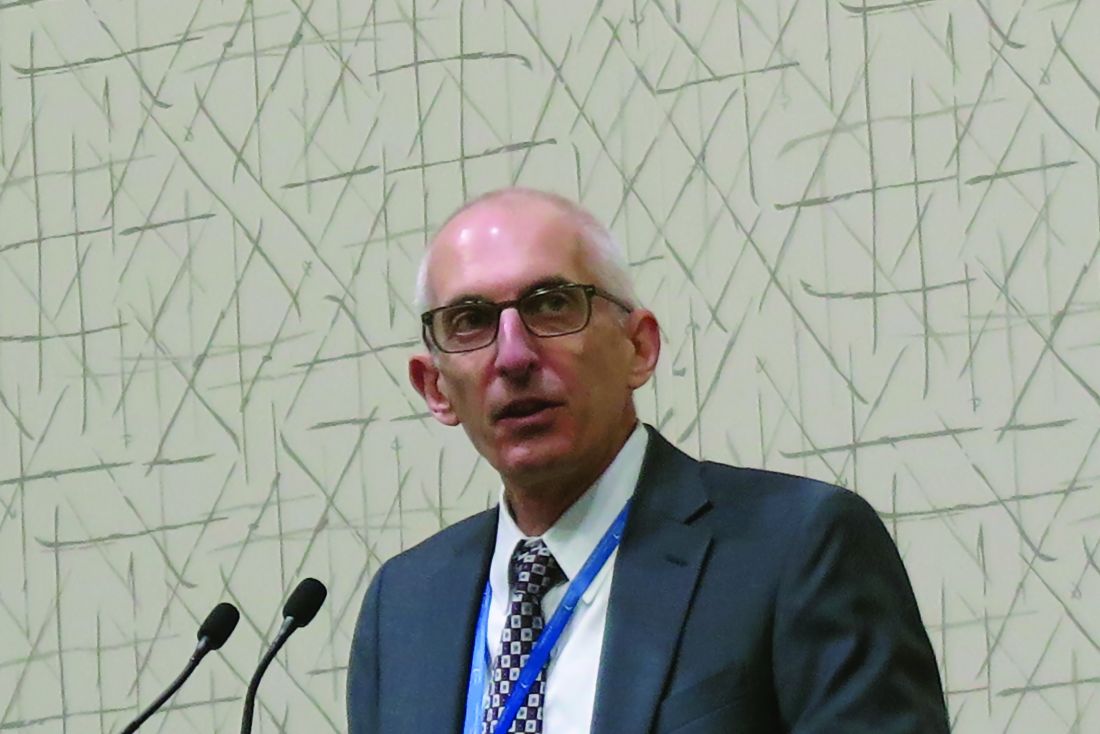
“What we found is two gut microbial acetyltransferase families that were previously unknown to be participating in drug metabolism that directly inactivate the drug 5-ASA. It seems that in turn, having a subset of these microbial acetyltransferases is prospectively linked with treatment failure, and could potentially explain why some of these patients of ours fail on the drug,” Raaj S. Mehta, MD, MPH, a postdoctoral fellow at Massachusetts General Hospital in Boston, said at the annual Crohn’s & Colitis Congress®, a partnership of the Crohn’s & Colitis Foundation and the American Gastroenterological Association.
More than half of all patients with IBD treated with 5-ASA either lose their response to the drug or never respond to it at all, including some of his own patients, Dr. Mehta said.
There is an urgent need for a way to predict which patients will be likely to respond to 5-ASA and other drugs to treat IBD, he said.
The same old story
In the early 1990s, investigators at St. Radboud Hospital, Nijmegen, the Netherlands, studied cultured feces from patients with IBD treated with 5-ASA, and found in some patients that the drug was metabolized into N-acetyl-5-ASA. In an earlier, double-blind comparison trial in patients with idiopathic proctitis, the same investigators found N-acetyl-5-ASA to be “no better than placebo.”
“But prior to our work, we didn’t know which specific bacteria or enzymes performed this conversion ... of the drug, and we didn’t know if having these enzymes in your intestines or colon could explain why people are at risk for failing on 5-ASA,” Dr. Mehta said.
New evidence
Dr. Mehta and his colleagues first turned to the Human Microbiome Project 2, a cohort of 132 persons with IBD followed for 1 year each, with the goal of generating molecular profiles of host and microbial activity over time.
The patients provided stool samples about every 2 weeks, as well as blood and biopsy specimens, and reported details on their use of medications.
The investigators generated metagenomic, metatranscriptomic, genomic, and metabolomic profiles from the data, and then narrowed their focus to 45 participants who used 5-ASA and 34 who did not.
They found that “5-ASA has a major impact on the fecal metabolome,” with significant increases in fecal drug levels of both 5-ASA and the inactive metabolites, as well as more than 2,000 other metabolites.
Looking at the gemomics of gut microbiota, the investigators identified gene clusters in two superfamilies of enzymes, thiolases and acyl CoA N-acyltransferases. They identified 12 candidates.
To bolster their findings, they then expressed one gene from each superfamily in Escherichia coli and purified the protein. When they cocultured it with acetylCoA and 5-ASA, there was a greater than 25% conversion of the drug within 1 hour.
They also found that microbial thiolases appear to step outside of their normal roles to inactivate 5-ASA in a manner similar to that of an N-acetyltrasferase not found in persons with IBD.
Clinical relevance
To see whether their findings had clinical implications, the investigators conducted a case-cohort study nested within the Human Microbiome Project 2 cohort. They saw that, after adjusting for age, sex, IBD type, smoking, and N-acetyltransferase (NAT2) phenotype, 4 of the 12 acetyltranfserase candidates were associated with a roughly threefold increase in steroid use, suggesting that 5-ASA treatment had failed the patients.
“So then to take it one step further, we turned to the SPARC IBD cohort,” Dr. Mehta said.
SPARC IBD is an ongoing prospective cohort of patients who provide stool samples and detailed medication and symptom data.
They identified 208 cohort members who were on 5-ASA, were free of steroids at baseline, and who had fecal metabolomic data available. In this group, there were 60 cases of new corticosteroid prescriptions after about 8 months of follow-up.
The authors found that having three or four of the suspect acetyltransferases in gut microbiota was associated with a an overall odds ratio for 5-ASA treatment failure of 3.12 (95% confidence interval, 1.41-6.89).
“Taken together, I think this advances the idea of using the microbiome for personalized medicine in IBD,” Dr. Mehta said.
“Right now it’s an ideal outcome for a patient with [ulcerative colitis] to retain a robust remission on 5-ASA alone,” commented session moderator Michael J. Rosen, MD, MSCI, a pediatric gastroenterologist at Stanford University Medical Center in Palo Alto, Calif., who was not involved in the study.
Asked in an interview whether the findings would be likely to change clinical practice, Dr. Rosen replied that “I think it’s fairly early stage, but I think it’s wonderful that they sort of rediscovered this older data and are modernizing it to understand why [5-ASA] may not work for some patients. It certainly seems like it might be a tractable approach to use the microbiome to personalize therapy and potentially increase the effectiveness of 5-ASA.”
The study was supported by grants from Pfizer, the National Institutes of Health, American College of Gastroenterology, and the Crohn’s & Colitis Foundation. Dr. Mehta disclosed that his team has filed a provisional patent application related to the work. Dr. Rosen reported no relevant conflict of interest.
AURORA, COLO. – The therapeutic action of 5-aminosalicylic acid (5-ASA), one of the most frequently prescribed drugs for inflammatory bowel disease (IBD), can be defeated by enzymes that reside in the very gut that the drug is designed to treat.
“What we found is two gut microbial acetyltransferase families that were previously unknown to be participating in drug metabolism that directly inactivate the drug 5-ASA. It seems that in turn, having a subset of these microbial acetyltransferases is prospectively linked with treatment failure, and could potentially explain why some of these patients of ours fail on the drug,” Raaj S. Mehta, MD, MPH, a postdoctoral fellow at Massachusetts General Hospital in Boston, said at the annual Crohn’s & Colitis Congress®, a partnership of the Crohn’s & Colitis Foundation and the American Gastroenterological Association.
More than half of all patients with IBD treated with 5-ASA either lose their response to the drug or never respond to it at all, including some of his own patients, Dr. Mehta said.
There is an urgent need for a way to predict which patients will be likely to respond to 5-ASA and other drugs to treat IBD, he said.
The same old story
In the early 1990s, investigators at St. Radboud Hospital, Nijmegen, the Netherlands, studied cultured feces from patients with IBD treated with 5-ASA, and found in some patients that the drug was metabolized into N-acetyl-5-ASA. In an earlier, double-blind comparison trial in patients with idiopathic proctitis, the same investigators found N-acetyl-5-ASA to be “no better than placebo.”
“But prior to our work, we didn’t know which specific bacteria or enzymes performed this conversion ... of the drug, and we didn’t know if having these enzymes in your intestines or colon could explain why people are at risk for failing on 5-ASA,” Dr. Mehta said.
New evidence
Dr. Mehta and his colleagues first turned to the Human Microbiome Project 2, a cohort of 132 persons with IBD followed for 1 year each, with the goal of generating molecular profiles of host and microbial activity over time.
The patients provided stool samples about every 2 weeks, as well as blood and biopsy specimens, and reported details on their use of medications.
The investigators generated metagenomic, metatranscriptomic, genomic, and metabolomic profiles from the data, and then narrowed their focus to 45 participants who used 5-ASA and 34 who did not.
They found that “5-ASA has a major impact on the fecal metabolome,” with significant increases in fecal drug levels of both 5-ASA and the inactive metabolites, as well as more than 2,000 other metabolites.
Looking at the gemomics of gut microbiota, the investigators identified gene clusters in two superfamilies of enzymes, thiolases and acyl CoA N-acyltransferases. They identified 12 candidates.
To bolster their findings, they then expressed one gene from each superfamily in Escherichia coli and purified the protein. When they cocultured it with acetylCoA and 5-ASA, there was a greater than 25% conversion of the drug within 1 hour.
They also found that microbial thiolases appear to step outside of their normal roles to inactivate 5-ASA in a manner similar to that of an N-acetyltrasferase not found in persons with IBD.
Clinical relevance
To see whether their findings had clinical implications, the investigators conducted a case-cohort study nested within the Human Microbiome Project 2 cohort. They saw that, after adjusting for age, sex, IBD type, smoking, and N-acetyltransferase (NAT2) phenotype, 4 of the 12 acetyltranfserase candidates were associated with a roughly threefold increase in steroid use, suggesting that 5-ASA treatment had failed the patients.
“So then to take it one step further, we turned to the SPARC IBD cohort,” Dr. Mehta said.
SPARC IBD is an ongoing prospective cohort of patients who provide stool samples and detailed medication and symptom data.
They identified 208 cohort members who were on 5-ASA, were free of steroids at baseline, and who had fecal metabolomic data available. In this group, there were 60 cases of new corticosteroid prescriptions after about 8 months of follow-up.
The authors found that having three or four of the suspect acetyltransferases in gut microbiota was associated with a an overall odds ratio for 5-ASA treatment failure of 3.12 (95% confidence interval, 1.41-6.89).
“Taken together, I think this advances the idea of using the microbiome for personalized medicine in IBD,” Dr. Mehta said.
“Right now it’s an ideal outcome for a patient with [ulcerative colitis] to retain a robust remission on 5-ASA alone,” commented session moderator Michael J. Rosen, MD, MSCI, a pediatric gastroenterologist at Stanford University Medical Center in Palo Alto, Calif., who was not involved in the study.
Asked in an interview whether the findings would be likely to change clinical practice, Dr. Rosen replied that “I think it’s fairly early stage, but I think it’s wonderful that they sort of rediscovered this older data and are modernizing it to understand why [5-ASA] may not work for some patients. It certainly seems like it might be a tractable approach to use the microbiome to personalize therapy and potentially increase the effectiveness of 5-ASA.”
The study was supported by grants from Pfizer, the National Institutes of Health, American College of Gastroenterology, and the Crohn’s & Colitis Foundation. Dr. Mehta disclosed that his team has filed a provisional patent application related to the work. Dr. Rosen reported no relevant conflict of interest.
AURORA, COLO. – The therapeutic action of 5-aminosalicylic acid (5-ASA), one of the most frequently prescribed drugs for inflammatory bowel disease (IBD), can be defeated by enzymes that reside in the very gut that the drug is designed to treat.
“What we found is two gut microbial acetyltransferase families that were previously unknown to be participating in drug metabolism that directly inactivate the drug 5-ASA. It seems that in turn, having a subset of these microbial acetyltransferases is prospectively linked with treatment failure, and could potentially explain why some of these patients of ours fail on the drug,” Raaj S. Mehta, MD, MPH, a postdoctoral fellow at Massachusetts General Hospital in Boston, said at the annual Crohn’s & Colitis Congress®, a partnership of the Crohn’s & Colitis Foundation and the American Gastroenterological Association.
More than half of all patients with IBD treated with 5-ASA either lose their response to the drug or never respond to it at all, including some of his own patients, Dr. Mehta said.
There is an urgent need for a way to predict which patients will be likely to respond to 5-ASA and other drugs to treat IBD, he said.
The same old story
In the early 1990s, investigators at St. Radboud Hospital, Nijmegen, the Netherlands, studied cultured feces from patients with IBD treated with 5-ASA, and found in some patients that the drug was metabolized into N-acetyl-5-ASA. In an earlier, double-blind comparison trial in patients with idiopathic proctitis, the same investigators found N-acetyl-5-ASA to be “no better than placebo.”
“But prior to our work, we didn’t know which specific bacteria or enzymes performed this conversion ... of the drug, and we didn’t know if having these enzymes in your intestines or colon could explain why people are at risk for failing on 5-ASA,” Dr. Mehta said.
New evidence
Dr. Mehta and his colleagues first turned to the Human Microbiome Project 2, a cohort of 132 persons with IBD followed for 1 year each, with the goal of generating molecular profiles of host and microbial activity over time.
The patients provided stool samples about every 2 weeks, as well as blood and biopsy specimens, and reported details on their use of medications.
The investigators generated metagenomic, metatranscriptomic, genomic, and metabolomic profiles from the data, and then narrowed their focus to 45 participants who used 5-ASA and 34 who did not.
They found that “5-ASA has a major impact on the fecal metabolome,” with significant increases in fecal drug levels of both 5-ASA and the inactive metabolites, as well as more than 2,000 other metabolites.
Looking at the gemomics of gut microbiota, the investigators identified gene clusters in two superfamilies of enzymes, thiolases and acyl CoA N-acyltransferases. They identified 12 candidates.
To bolster their findings, they then expressed one gene from each superfamily in Escherichia coli and purified the protein. When they cocultured it with acetylCoA and 5-ASA, there was a greater than 25% conversion of the drug within 1 hour.
They also found that microbial thiolases appear to step outside of their normal roles to inactivate 5-ASA in a manner similar to that of an N-acetyltrasferase not found in persons with IBD.
Clinical relevance
To see whether their findings had clinical implications, the investigators conducted a case-cohort study nested within the Human Microbiome Project 2 cohort. They saw that, after adjusting for age, sex, IBD type, smoking, and N-acetyltransferase (NAT2) phenotype, 4 of the 12 acetyltranfserase candidates were associated with a roughly threefold increase in steroid use, suggesting that 5-ASA treatment had failed the patients.
“So then to take it one step further, we turned to the SPARC IBD cohort,” Dr. Mehta said.
SPARC IBD is an ongoing prospective cohort of patients who provide stool samples and detailed medication and symptom data.
They identified 208 cohort members who were on 5-ASA, were free of steroids at baseline, and who had fecal metabolomic data available. In this group, there were 60 cases of new corticosteroid prescriptions after about 8 months of follow-up.
The authors found that having three or four of the suspect acetyltransferases in gut microbiota was associated with a an overall odds ratio for 5-ASA treatment failure of 3.12 (95% confidence interval, 1.41-6.89).
“Taken together, I think this advances the idea of using the microbiome for personalized medicine in IBD,” Dr. Mehta said.
“Right now it’s an ideal outcome for a patient with [ulcerative colitis] to retain a robust remission on 5-ASA alone,” commented session moderator Michael J. Rosen, MD, MSCI, a pediatric gastroenterologist at Stanford University Medical Center in Palo Alto, Calif., who was not involved in the study.
Asked in an interview whether the findings would be likely to change clinical practice, Dr. Rosen replied that “I think it’s fairly early stage, but I think it’s wonderful that they sort of rediscovered this older data and are modernizing it to understand why [5-ASA] may not work for some patients. It certainly seems like it might be a tractable approach to use the microbiome to personalize therapy and potentially increase the effectiveness of 5-ASA.”
The study was supported by grants from Pfizer, the National Institutes of Health, American College of Gastroenterology, and the Crohn’s & Colitis Foundation. Dr. Mehta disclosed that his team has filed a provisional patent application related to the work. Dr. Rosen reported no relevant conflict of interest.
AT CROHN’S & COLITIS CONGRESS
Adding SBRT to sorafenib boosts survival in liver cancer
SAN FRANCISCO – , according to new findings.
The use of SBRT in this setting improved both overall survival and progression-free survival (PFS). There was no increase in adverse events with the addition of SBRT, and results trended toward a quality-of-life benefit at 6 months.
“This adds to the body of evidence for the role of external-beam radiation, bringing SBRT to the armamentarium of treatment options for patients – particularly those with locally advanced HCC and macrovascular invasion, especially if they are treated with tyrosine kinase inhibitors [TKIs],” said lead study author Laura A. Dawson, MD, a clinician scientist at the Cancer Clinical Research Unit, Princess Margaret Cancer Centre, Toronto.
Dr. Dawson presented the findings at the ASCO Gastrointestinal Cancers Symposium 2023.
Approached for an outside comment, Mary Feng, MD, professor of radiation oncology at the University of California, San Francisco, said, “This study is really groundbreaking.”
She added that the investigators should be congratulated for executing this ambitious study with worldwide enrollment for a serious disease.
“There are very few studies demonstrating an overall survival benefit from radiation or any local control modality,” she told this news organization. She suggested that the survival benefit seen in this trial was “likely due to the high percentage of patients (74%) with macrovascular invasion, who stand to benefit the most from treatment.
“This study has established the standard of adding SBRT to patients who are treated with TKIs and raises the question of whether adding SBRT to immunotherapy would also result in a survival benefit. This next question must also be tested in a prospective clinical trial,” she said.
Study details
At the study’s inception, sorafenib was the standard of care for patients who were unable to undergo surgery, ablation, and/or transarterial chemoembolization (TACE). Dr. Dawson explained that sorafenib had been shown to improve median overall survival, although there was less benefit if macrovascular invasion was present.
“Integrating radiation strategies in HCC management has been a key question over the past few decades,” she said.
In the current study, Dr. Dawson and colleagues added SBRT to sorafenib. The cohort included 177 patients with new or recurrent HCC who were not candidates for surgery, ablation, or TACE. They were randomly assigned to receive either sorafenib 400 mg twice daily or to SBRT (27.5-50 Gy in five fractions) followed by sorafenib 200 mg twice daily; the dosage was then increased to 400 mg twice daily after 28 days.
SBRT improves outcomes
The original plan was to enroll 292 participants, but accrual closed early when the standard of care for systemic treatment of HCC changed following the results of the phase 3 IMbrave150 trial, which showed the superiority of atezolizumab plus bevacizumab as frontline therapy for locally advanced or metastatic HCC. The closure of accrual was agreed upon by the investigators and the data safety monitoring committee, and their statistical analysis plan was revised accordingly. The study became time driven rather than event driven, she noted. This resulted in a decrease from 80% power to 65% power.
The median age of participants was 66 years (range, 27-84 years); 41% had hepatitis C, and 19% had hepatitis B or B/C. Additionally, 82% had Barcelona Clinic Liver Cancer stage C disease, and 74% had macrovascular invasion.
The median follow-up was 13.2 months overall and 33.7 months for living patients.
Median overall survival improved from 12.3 months with sorafenib alone to 15.8 months with the addition of SBRT to the regimen (hazard ratio [HR] = 0.77; one-sided P = .0554). A prespecified multivariable analysis showed that the combination therapy resulted in a statistically significant improvement in overall survival after adjustment for confounders (HR, 0.72; P = .042).
Similarly, median PFS also improved from 5.5 months with sorafenib alone to 9.2 months with SBRT and sorafenib (HR = 0.55; two-sided P = .0001).
With regard to safety, gastrointestinal bleeds occurred in 4% of patients in the combination arm, vs. 6% of those in the monotherapy arm. Overall, rates of treatment-related grade 3+ adverse events did not significantly differ between study arms (42% vs. 47%; P = .52). There were three grade 5 events; two in the sorafenib-only group and one in the SBRT/sorafenib group.
The researchers also evaluated quality of life (QoL). “Our hypothesis was that patients treated with SBRT and sorafenib would have improved quality of life 6 months after the start of treatment compared to sorafenib alone,” said Dr. Dawson.
About half (47%) of participants agreed to fill out QoL assessments, but baseline and 6-month data were available for only about 21% of participants. Although the numbers were considered too small to analyze statistically, substantial improvement was seen in the group that received combination therapy. A total of 10% of patients who received sorafenib reported improvement on the FACT-Hep score, vs. 35% of patients who received SBRT/sorafenib.
“As compared to sorafenib, SBRT improved overall survival and progression-free survival, with no observed increase in adverse events in patients with advanced HCC,” concluded Dr. Dawson.
Where does radiation fit?
Invited discussant Laura Goff, MD, associate professor of medicine, Vanderbilt Ingram Cancer Center, Nashville, Tenn., reiterated that SBRT given prior to sorafenib improved outcomes compared to sorafenib alone, and while not definitive, Quality and Outcomes Framework scores appeared to improve at 6 months for the combination arm. “This reassures our concerns about toxicity,” she said.
Dr. Goff pointed out that since the study closed early, owing to changes in standard of care for HCC, the question arises – where does radiation fit in the array of options now available for HCC?
“For one, sorafenib plus SBRT represents an intriguing first-line option for patients who cannot be treated with immunotherapy, such as those who experience a posttransplant recurrence,” Dr. Goff said. “There is also renewed interest in radiation therapy in liver-dominant HCC, and there is active investigation ongoing for a variety of combinations.”
Dr. Dawson reported relationships with Merck and Raysearch. Dr. Goff reported relationships with Agios, ASLAN, AstraZeneca, Basilea, BeiGene, Boehringer Ingelheim, Bristol-Myers Squibb, Exelixis, Genentech, Merck, and QED Therapeutics.
A version of this article first appeared on Medscape.com.
SAN FRANCISCO – , according to new findings.
The use of SBRT in this setting improved both overall survival and progression-free survival (PFS). There was no increase in adverse events with the addition of SBRT, and results trended toward a quality-of-life benefit at 6 months.
“This adds to the body of evidence for the role of external-beam radiation, bringing SBRT to the armamentarium of treatment options for patients – particularly those with locally advanced HCC and macrovascular invasion, especially if they are treated with tyrosine kinase inhibitors [TKIs],” said lead study author Laura A. Dawson, MD, a clinician scientist at the Cancer Clinical Research Unit, Princess Margaret Cancer Centre, Toronto.
Dr. Dawson presented the findings at the ASCO Gastrointestinal Cancers Symposium 2023.
Approached for an outside comment, Mary Feng, MD, professor of radiation oncology at the University of California, San Francisco, said, “This study is really groundbreaking.”
She added that the investigators should be congratulated for executing this ambitious study with worldwide enrollment for a serious disease.
“There are very few studies demonstrating an overall survival benefit from radiation or any local control modality,” she told this news organization. She suggested that the survival benefit seen in this trial was “likely due to the high percentage of patients (74%) with macrovascular invasion, who stand to benefit the most from treatment.
“This study has established the standard of adding SBRT to patients who are treated with TKIs and raises the question of whether adding SBRT to immunotherapy would also result in a survival benefit. This next question must also be tested in a prospective clinical trial,” she said.
Study details
At the study’s inception, sorafenib was the standard of care for patients who were unable to undergo surgery, ablation, and/or transarterial chemoembolization (TACE). Dr. Dawson explained that sorafenib had been shown to improve median overall survival, although there was less benefit if macrovascular invasion was present.
“Integrating radiation strategies in HCC management has been a key question over the past few decades,” she said.
In the current study, Dr. Dawson and colleagues added SBRT to sorafenib. The cohort included 177 patients with new or recurrent HCC who were not candidates for surgery, ablation, or TACE. They were randomly assigned to receive either sorafenib 400 mg twice daily or to SBRT (27.5-50 Gy in five fractions) followed by sorafenib 200 mg twice daily; the dosage was then increased to 400 mg twice daily after 28 days.
SBRT improves outcomes
The original plan was to enroll 292 participants, but accrual closed early when the standard of care for systemic treatment of HCC changed following the results of the phase 3 IMbrave150 trial, which showed the superiority of atezolizumab plus bevacizumab as frontline therapy for locally advanced or metastatic HCC. The closure of accrual was agreed upon by the investigators and the data safety monitoring committee, and their statistical analysis plan was revised accordingly. The study became time driven rather than event driven, she noted. This resulted in a decrease from 80% power to 65% power.
The median age of participants was 66 years (range, 27-84 years); 41% had hepatitis C, and 19% had hepatitis B or B/C. Additionally, 82% had Barcelona Clinic Liver Cancer stage C disease, and 74% had macrovascular invasion.
The median follow-up was 13.2 months overall and 33.7 months for living patients.
Median overall survival improved from 12.3 months with sorafenib alone to 15.8 months with the addition of SBRT to the regimen (hazard ratio [HR] = 0.77; one-sided P = .0554). A prespecified multivariable analysis showed that the combination therapy resulted in a statistically significant improvement in overall survival after adjustment for confounders (HR, 0.72; P = .042).
Similarly, median PFS also improved from 5.5 months with sorafenib alone to 9.2 months with SBRT and sorafenib (HR = 0.55; two-sided P = .0001).
With regard to safety, gastrointestinal bleeds occurred in 4% of patients in the combination arm, vs. 6% of those in the monotherapy arm. Overall, rates of treatment-related grade 3+ adverse events did not significantly differ between study arms (42% vs. 47%; P = .52). There were three grade 5 events; two in the sorafenib-only group and one in the SBRT/sorafenib group.
The researchers also evaluated quality of life (QoL). “Our hypothesis was that patients treated with SBRT and sorafenib would have improved quality of life 6 months after the start of treatment compared to sorafenib alone,” said Dr. Dawson.
About half (47%) of participants agreed to fill out QoL assessments, but baseline and 6-month data were available for only about 21% of participants. Although the numbers were considered too small to analyze statistically, substantial improvement was seen in the group that received combination therapy. A total of 10% of patients who received sorafenib reported improvement on the FACT-Hep score, vs. 35% of patients who received SBRT/sorafenib.
“As compared to sorafenib, SBRT improved overall survival and progression-free survival, with no observed increase in adverse events in patients with advanced HCC,” concluded Dr. Dawson.
Where does radiation fit?
Invited discussant Laura Goff, MD, associate professor of medicine, Vanderbilt Ingram Cancer Center, Nashville, Tenn., reiterated that SBRT given prior to sorafenib improved outcomes compared to sorafenib alone, and while not definitive, Quality and Outcomes Framework scores appeared to improve at 6 months for the combination arm. “This reassures our concerns about toxicity,” she said.
Dr. Goff pointed out that since the study closed early, owing to changes in standard of care for HCC, the question arises – where does radiation fit in the array of options now available for HCC?
“For one, sorafenib plus SBRT represents an intriguing first-line option for patients who cannot be treated with immunotherapy, such as those who experience a posttransplant recurrence,” Dr. Goff said. “There is also renewed interest in radiation therapy in liver-dominant HCC, and there is active investigation ongoing for a variety of combinations.”
Dr. Dawson reported relationships with Merck and Raysearch. Dr. Goff reported relationships with Agios, ASLAN, AstraZeneca, Basilea, BeiGene, Boehringer Ingelheim, Bristol-Myers Squibb, Exelixis, Genentech, Merck, and QED Therapeutics.
A version of this article first appeared on Medscape.com.
SAN FRANCISCO – , according to new findings.
The use of SBRT in this setting improved both overall survival and progression-free survival (PFS). There was no increase in adverse events with the addition of SBRT, and results trended toward a quality-of-life benefit at 6 months.
“This adds to the body of evidence for the role of external-beam radiation, bringing SBRT to the armamentarium of treatment options for patients – particularly those with locally advanced HCC and macrovascular invasion, especially if they are treated with tyrosine kinase inhibitors [TKIs],” said lead study author Laura A. Dawson, MD, a clinician scientist at the Cancer Clinical Research Unit, Princess Margaret Cancer Centre, Toronto.
Dr. Dawson presented the findings at the ASCO Gastrointestinal Cancers Symposium 2023.
Approached for an outside comment, Mary Feng, MD, professor of radiation oncology at the University of California, San Francisco, said, “This study is really groundbreaking.”
She added that the investigators should be congratulated for executing this ambitious study with worldwide enrollment for a serious disease.
“There are very few studies demonstrating an overall survival benefit from radiation or any local control modality,” she told this news organization. She suggested that the survival benefit seen in this trial was “likely due to the high percentage of patients (74%) with macrovascular invasion, who stand to benefit the most from treatment.
“This study has established the standard of adding SBRT to patients who are treated with TKIs and raises the question of whether adding SBRT to immunotherapy would also result in a survival benefit. This next question must also be tested in a prospective clinical trial,” she said.
Study details
At the study’s inception, sorafenib was the standard of care for patients who were unable to undergo surgery, ablation, and/or transarterial chemoembolization (TACE). Dr. Dawson explained that sorafenib had been shown to improve median overall survival, although there was less benefit if macrovascular invasion was present.
“Integrating radiation strategies in HCC management has been a key question over the past few decades,” she said.
In the current study, Dr. Dawson and colleagues added SBRT to sorafenib. The cohort included 177 patients with new or recurrent HCC who were not candidates for surgery, ablation, or TACE. They were randomly assigned to receive either sorafenib 400 mg twice daily or to SBRT (27.5-50 Gy in five fractions) followed by sorafenib 200 mg twice daily; the dosage was then increased to 400 mg twice daily after 28 days.
SBRT improves outcomes
The original plan was to enroll 292 participants, but accrual closed early when the standard of care for systemic treatment of HCC changed following the results of the phase 3 IMbrave150 trial, which showed the superiority of atezolizumab plus bevacizumab as frontline therapy for locally advanced or metastatic HCC. The closure of accrual was agreed upon by the investigators and the data safety monitoring committee, and their statistical analysis plan was revised accordingly. The study became time driven rather than event driven, she noted. This resulted in a decrease from 80% power to 65% power.
The median age of participants was 66 years (range, 27-84 years); 41% had hepatitis C, and 19% had hepatitis B or B/C. Additionally, 82% had Barcelona Clinic Liver Cancer stage C disease, and 74% had macrovascular invasion.
The median follow-up was 13.2 months overall and 33.7 months for living patients.
Median overall survival improved from 12.3 months with sorafenib alone to 15.8 months with the addition of SBRT to the regimen (hazard ratio [HR] = 0.77; one-sided P = .0554). A prespecified multivariable analysis showed that the combination therapy resulted in a statistically significant improvement in overall survival after adjustment for confounders (HR, 0.72; P = .042).
Similarly, median PFS also improved from 5.5 months with sorafenib alone to 9.2 months with SBRT and sorafenib (HR = 0.55; two-sided P = .0001).
With regard to safety, gastrointestinal bleeds occurred in 4% of patients in the combination arm, vs. 6% of those in the monotherapy arm. Overall, rates of treatment-related grade 3+ adverse events did not significantly differ between study arms (42% vs. 47%; P = .52). There were three grade 5 events; two in the sorafenib-only group and one in the SBRT/sorafenib group.
The researchers also evaluated quality of life (QoL). “Our hypothesis was that patients treated with SBRT and sorafenib would have improved quality of life 6 months after the start of treatment compared to sorafenib alone,” said Dr. Dawson.
About half (47%) of participants agreed to fill out QoL assessments, but baseline and 6-month data were available for only about 21% of participants. Although the numbers were considered too small to analyze statistically, substantial improvement was seen in the group that received combination therapy. A total of 10% of patients who received sorafenib reported improvement on the FACT-Hep score, vs. 35% of patients who received SBRT/sorafenib.
“As compared to sorafenib, SBRT improved overall survival and progression-free survival, with no observed increase in adverse events in patients with advanced HCC,” concluded Dr. Dawson.
Where does radiation fit?
Invited discussant Laura Goff, MD, associate professor of medicine, Vanderbilt Ingram Cancer Center, Nashville, Tenn., reiterated that SBRT given prior to sorafenib improved outcomes compared to sorafenib alone, and while not definitive, Quality and Outcomes Framework scores appeared to improve at 6 months for the combination arm. “This reassures our concerns about toxicity,” she said.
Dr. Goff pointed out that since the study closed early, owing to changes in standard of care for HCC, the question arises – where does radiation fit in the array of options now available for HCC?
“For one, sorafenib plus SBRT represents an intriguing first-line option for patients who cannot be treated with immunotherapy, such as those who experience a posttransplant recurrence,” Dr. Goff said. “There is also renewed interest in radiation therapy in liver-dominant HCC, and there is active investigation ongoing for a variety of combinations.”
Dr. Dawson reported relationships with Merck and Raysearch. Dr. Goff reported relationships with Agios, ASLAN, AstraZeneca, Basilea, BeiGene, Boehringer Ingelheim, Bristol-Myers Squibb, Exelixis, Genentech, Merck, and QED Therapeutics.
A version of this article first appeared on Medscape.com.
AT ASCO GI 2023
Regorafenib: New option for advanced gastroesophageal cancer?
SAN FRANCISCO – New data showing improved survival suggest that regorafenib (Stivarga) may offer a new treatment option in these patients.
“Regorafenib significantly improves survival compared with placebo in patients with refractory AGOC, delaying deterioration in global quality of life,” said lead author Nick Pavlakis, PhD, MBBS, Royal North Shore Hospital, St. Leonards, Australia. “There were also no new toxicity signals.”
He emphasized that benefit was consistent in all preplanned subgroups. “This offers a new treatment option in this setting,” Dr. Pavlakis said.
He presented the findings at the ASCO Gastrointestinal Cancers Symposium 2023.
Regorafenib is an oral multikinase inhibitor targeting kinases involved in angiogenesis (VEGFR1-3, TIE-2), tumor microenvironment (PDGFR-beta, FGFR), and oncogenesis (RAF, RET, and KIT). It is already approved for several indications including metastatic colorectal cancer, gastrointestinal stromal tumors, and hepatocellular carcinoma.
AGOC could be a new indication for the drug. Use in this patient population was explored in an earlier trial, Dr. Pavlakis commented.
“We previously demonstrated the regorafenib prolonged progression-free survival in the INTEGRATE phase 2 trial,” he said. “Based on those results, we undertook the phase 3 INTEGRATE II study. The goal was to examine if regorafenib improves overall survival after failure of at least two lines of treatment.”
However, Dr. Pavlakis noted that during the conduct of this study, there was a change of practice in gastric cancer. “There was an evolution of new evidence in support of additional chemotherapy and immune checkpoint inhibitors such as nivolumab, and very interesting data on the combination of nivolumab and regorafenib from a study being conducted in Japan. So we amended the protocol and evolved the INTEGRATE II to INTEGRATE IIa, to continue evaluating regorafenib versus placebo, and then to evolve to the INTEGRATE IIb study to evaluate regorafenib plus nivolumab versus chemotherapy,” he explained.
The results he presented at the meeting came from the phase 3 INTEGRATE II part of this trial. The other part of the trial, INTEGRATE IIb, is still accruing.
A total of 251 patients were enrolled from five countries and stratified by tumor location, geographic location (Asia vs. “rest of the world”), and prior treatment with VEGF inhibitors.
The cohort was randomly assigned to receive 160 mg regorafenib and best supportive care or placebo plus BSC.
After 238 events, the overall survival hazard ratio was 0.68. “The survival benefit of regorafenib was best observed in the 12-month survival of 19% versus 6%,” said Pavlakis.
The median overall survival for regorafenib versus placebo was 4.5 versus 4.0 months (HR, 0.70; P = .011).
After preplanned adjustment for multiplicity, there were no statistically significant differences across regions (Asia vs. non-Asia) or other prespecified subgroups.
In the pooled analysis, which included study populations from both the INTEGRATE and INTEGRATE IIa populations, the median overall survival was 5.0 versus 4.1 (HR, 0.70; P = .001).
Regorafenib also improved progression-free survival (median PFS, 1.8 vs. 1.6 months; HR, 0.52; P < .0001) and it delayed deterioration in global quality of life as compared with placebo (P = .0043).
Toxicity was similar to that previously reported in other studies, and adverse events were mostly grade 1 and 2.
A building block?
In a comment, Pamela Kunz, MD, director of the Center for Gastrointestinal Cancers at Smilow Cancer Hospital and Yale Cancer Center, New Haven, Conn., said that she would consider the results with regorafenib in this setting as statistically significant, but with questionable clinical significance.
“The median overall survival difference 0.5 months or about 2 weeks is very modest, especially when taking into consideration the side effect profile,” she said. “I think that regorafenib as a building block for the additional phase 3 study is more interesting.”
“There is data that suggests synergy between VEGF inhibitors and immune checkpoint inhibitors, so I am eager to see the results of INEGRATE IIb [exploring regorafenib use with nivolumab],” Dr. Kunz added.
The study is sponsored by the Australasian Gastro-Intestinal Trials Group. Dr. Pavlakis reported relationships with Amgen, AstraZeneca, Bayer, Beigene, Boehringer Ingelheim, Bristol-Myers Squibb, Eisai, Merck, Merck Serono, Merck Sharp & Dohme, Novartis, Pfizer, Roche, and Takeda. Dr. Kunz reported relationships with Ipsen, Novartis (Advanced Accelerator Applications), Genentech/Roche, Amgen, Crinetics Pharmaceuticals, Natera, HUTCHMED, and Isotope Technologies Munich.
The Gastrointestinal Cancers Symposium is sponsored by the American Gastroenterological Association, the American Society for Clinical Oncology, the American Society for Radiation Oncology, and the Society of Surgical Oncology.
A version of this article first appeared on Medscape.com.
SAN FRANCISCO – New data showing improved survival suggest that regorafenib (Stivarga) may offer a new treatment option in these patients.
“Regorafenib significantly improves survival compared with placebo in patients with refractory AGOC, delaying deterioration in global quality of life,” said lead author Nick Pavlakis, PhD, MBBS, Royal North Shore Hospital, St. Leonards, Australia. “There were also no new toxicity signals.”
He emphasized that benefit was consistent in all preplanned subgroups. “This offers a new treatment option in this setting,” Dr. Pavlakis said.
He presented the findings at the ASCO Gastrointestinal Cancers Symposium 2023.
Regorafenib is an oral multikinase inhibitor targeting kinases involved in angiogenesis (VEGFR1-3, TIE-2), tumor microenvironment (PDGFR-beta, FGFR), and oncogenesis (RAF, RET, and KIT). It is already approved for several indications including metastatic colorectal cancer, gastrointestinal stromal tumors, and hepatocellular carcinoma.
AGOC could be a new indication for the drug. Use in this patient population was explored in an earlier trial, Dr. Pavlakis commented.
“We previously demonstrated the regorafenib prolonged progression-free survival in the INTEGRATE phase 2 trial,” he said. “Based on those results, we undertook the phase 3 INTEGRATE II study. The goal was to examine if regorafenib improves overall survival after failure of at least two lines of treatment.”
However, Dr. Pavlakis noted that during the conduct of this study, there was a change of practice in gastric cancer. “There was an evolution of new evidence in support of additional chemotherapy and immune checkpoint inhibitors such as nivolumab, and very interesting data on the combination of nivolumab and regorafenib from a study being conducted in Japan. So we amended the protocol and evolved the INTEGRATE II to INTEGRATE IIa, to continue evaluating regorafenib versus placebo, and then to evolve to the INTEGRATE IIb study to evaluate regorafenib plus nivolumab versus chemotherapy,” he explained.
The results he presented at the meeting came from the phase 3 INTEGRATE II part of this trial. The other part of the trial, INTEGRATE IIb, is still accruing.
A total of 251 patients were enrolled from five countries and stratified by tumor location, geographic location (Asia vs. “rest of the world”), and prior treatment with VEGF inhibitors.
The cohort was randomly assigned to receive 160 mg regorafenib and best supportive care or placebo plus BSC.
After 238 events, the overall survival hazard ratio was 0.68. “The survival benefit of regorafenib was best observed in the 12-month survival of 19% versus 6%,” said Pavlakis.
The median overall survival for regorafenib versus placebo was 4.5 versus 4.0 months (HR, 0.70; P = .011).
After preplanned adjustment for multiplicity, there were no statistically significant differences across regions (Asia vs. non-Asia) or other prespecified subgroups.
In the pooled analysis, which included study populations from both the INTEGRATE and INTEGRATE IIa populations, the median overall survival was 5.0 versus 4.1 (HR, 0.70; P = .001).
Regorafenib also improved progression-free survival (median PFS, 1.8 vs. 1.6 months; HR, 0.52; P < .0001) and it delayed deterioration in global quality of life as compared with placebo (P = .0043).
Toxicity was similar to that previously reported in other studies, and adverse events were mostly grade 1 and 2.
A building block?
In a comment, Pamela Kunz, MD, director of the Center for Gastrointestinal Cancers at Smilow Cancer Hospital and Yale Cancer Center, New Haven, Conn., said that she would consider the results with regorafenib in this setting as statistically significant, but with questionable clinical significance.
“The median overall survival difference 0.5 months or about 2 weeks is very modest, especially when taking into consideration the side effect profile,” she said. “I think that regorafenib as a building block for the additional phase 3 study is more interesting.”
“There is data that suggests synergy between VEGF inhibitors and immune checkpoint inhibitors, so I am eager to see the results of INEGRATE IIb [exploring regorafenib use with nivolumab],” Dr. Kunz added.
The study is sponsored by the Australasian Gastro-Intestinal Trials Group. Dr. Pavlakis reported relationships with Amgen, AstraZeneca, Bayer, Beigene, Boehringer Ingelheim, Bristol-Myers Squibb, Eisai, Merck, Merck Serono, Merck Sharp & Dohme, Novartis, Pfizer, Roche, and Takeda. Dr. Kunz reported relationships with Ipsen, Novartis (Advanced Accelerator Applications), Genentech/Roche, Amgen, Crinetics Pharmaceuticals, Natera, HUTCHMED, and Isotope Technologies Munich.
The Gastrointestinal Cancers Symposium is sponsored by the American Gastroenterological Association, the American Society for Clinical Oncology, the American Society for Radiation Oncology, and the Society of Surgical Oncology.
A version of this article first appeared on Medscape.com.
SAN FRANCISCO – New data showing improved survival suggest that regorafenib (Stivarga) may offer a new treatment option in these patients.
“Regorafenib significantly improves survival compared with placebo in patients with refractory AGOC, delaying deterioration in global quality of life,” said lead author Nick Pavlakis, PhD, MBBS, Royal North Shore Hospital, St. Leonards, Australia. “There were also no new toxicity signals.”
He emphasized that benefit was consistent in all preplanned subgroups. “This offers a new treatment option in this setting,” Dr. Pavlakis said.
He presented the findings at the ASCO Gastrointestinal Cancers Symposium 2023.
Regorafenib is an oral multikinase inhibitor targeting kinases involved in angiogenesis (VEGFR1-3, TIE-2), tumor microenvironment (PDGFR-beta, FGFR), and oncogenesis (RAF, RET, and KIT). It is already approved for several indications including metastatic colorectal cancer, gastrointestinal stromal tumors, and hepatocellular carcinoma.
AGOC could be a new indication for the drug. Use in this patient population was explored in an earlier trial, Dr. Pavlakis commented.
“We previously demonstrated the regorafenib prolonged progression-free survival in the INTEGRATE phase 2 trial,” he said. “Based on those results, we undertook the phase 3 INTEGRATE II study. The goal was to examine if regorafenib improves overall survival after failure of at least two lines of treatment.”
However, Dr. Pavlakis noted that during the conduct of this study, there was a change of practice in gastric cancer. “There was an evolution of new evidence in support of additional chemotherapy and immune checkpoint inhibitors such as nivolumab, and very interesting data on the combination of nivolumab and regorafenib from a study being conducted in Japan. So we amended the protocol and evolved the INTEGRATE II to INTEGRATE IIa, to continue evaluating regorafenib versus placebo, and then to evolve to the INTEGRATE IIb study to evaluate regorafenib plus nivolumab versus chemotherapy,” he explained.
The results he presented at the meeting came from the phase 3 INTEGRATE II part of this trial. The other part of the trial, INTEGRATE IIb, is still accruing.
A total of 251 patients were enrolled from five countries and stratified by tumor location, geographic location (Asia vs. “rest of the world”), and prior treatment with VEGF inhibitors.
The cohort was randomly assigned to receive 160 mg regorafenib and best supportive care or placebo plus BSC.
After 238 events, the overall survival hazard ratio was 0.68. “The survival benefit of regorafenib was best observed in the 12-month survival of 19% versus 6%,” said Pavlakis.
The median overall survival for regorafenib versus placebo was 4.5 versus 4.0 months (HR, 0.70; P = .011).
After preplanned adjustment for multiplicity, there were no statistically significant differences across regions (Asia vs. non-Asia) or other prespecified subgroups.
In the pooled analysis, which included study populations from both the INTEGRATE and INTEGRATE IIa populations, the median overall survival was 5.0 versus 4.1 (HR, 0.70; P = .001).
Regorafenib also improved progression-free survival (median PFS, 1.8 vs. 1.6 months; HR, 0.52; P < .0001) and it delayed deterioration in global quality of life as compared with placebo (P = .0043).
Toxicity was similar to that previously reported in other studies, and adverse events were mostly grade 1 and 2.
A building block?
In a comment, Pamela Kunz, MD, director of the Center for Gastrointestinal Cancers at Smilow Cancer Hospital and Yale Cancer Center, New Haven, Conn., said that she would consider the results with regorafenib in this setting as statistically significant, but with questionable clinical significance.
“The median overall survival difference 0.5 months or about 2 weeks is very modest, especially when taking into consideration the side effect profile,” she said. “I think that regorafenib as a building block for the additional phase 3 study is more interesting.”
“There is data that suggests synergy between VEGF inhibitors and immune checkpoint inhibitors, so I am eager to see the results of INEGRATE IIb [exploring regorafenib use with nivolumab],” Dr. Kunz added.
The study is sponsored by the Australasian Gastro-Intestinal Trials Group. Dr. Pavlakis reported relationships with Amgen, AstraZeneca, Bayer, Beigene, Boehringer Ingelheim, Bristol-Myers Squibb, Eisai, Merck, Merck Serono, Merck Sharp & Dohme, Novartis, Pfizer, Roche, and Takeda. Dr. Kunz reported relationships with Ipsen, Novartis (Advanced Accelerator Applications), Genentech/Roche, Amgen, Crinetics Pharmaceuticals, Natera, HUTCHMED, and Isotope Technologies Munich.
The Gastrointestinal Cancers Symposium is sponsored by the American Gastroenterological Association, the American Society for Clinical Oncology, the American Society for Radiation Oncology, and the Society of Surgical Oncology.
A version of this article first appeared on Medscape.com.
AT ASCO GI 2023
How should PRAME be used to evaluate melanocytic lesions?
SAN DIEGO – , according to Cora Humberson, MD.
“I’m a fan, but there are issues with it,” Dr. Humberson, dermatopathology coordinator in the department of pathology at Scripps MD Anderson Cancer Center, San Diego, said at the annual Cutaneous Malignancy Update. “It’s all in how you use it.”

PRAME is part of the cancer/testis (CT) antigens, of which more than 40 have now been identified. They are encoded by genes that are normally expressed only in the human germ line, but are also expressed in various tumor types, including melanoma and carcinomas of the bladder, lung, and liver. “The biological function of these antigens is not fully understood, but they may act as a repressor of retinoic acid, potentially inhibiting differentiation, inhibiting proliferation arrest – things that we associate with malignancy,” she said at the meeting, which was hosted by Scripps MD Anderson Cancer Center. “These immunogenic proteins are being pursued as targets for therapeutic cancer vaccines,” she noted.
CT antigens are also being evaluated for their role in oncogenesis, she added. Recapitulation of portions of the germline gene-expression might contribute characteristic features to the neoplastic phenotype, including immortality, invasiveness, immune evasion, and metastatic capacity.
According to Dr. Humberson, PRAME can be used to differentiate comingled nevus and melanoma, to distinguish between nevoid melanoma and nevus, and for melanoma margin assessment in sun-damaged skin. One potential pitfall is that sun-damaged melanocytes may express PRAME. “The older the person and the more sun damage [they have], the more likely you are to see this, but the melanocytes won’t be grouped, they’ll be scattered,” she said.
Another pitfall is that less than 15% of nevi may express PRAME. “PRAME can be expressed in scars, so if you’re looking at a spindle cell lesion, be aware that you might be looking at a scar if you’re seeing PRAME expression,” she added. She also noted that PRAME immunohistochemistry (IHC) expression is not a prognostic biomarker in thin melanomas.
If fewer than 25% of cells in a melanocytic lesion express PRAME, most published assessments of PRAME IHC favor nevi as the diagnosis. “If more than 75% are expressing it, it favors melanoma,” Dr. Humberson said. “There’s a big category in between. It’s not that 30% is more likely benign or that 60% is more likely malignant; you can’t really depend upon [PRAME] if you’re in this range.”
A diagnostic accuracy study found that when more than 75% of cells express PRAME, the marker has a sensitivity of 0.63 and a specificity of 0.97.
Selected PRAME-related published references she recommended include: J Cutan Pathol. 2021;48(9):1115-23; Diagnostics. 2022 Sep 9; 12(9):2197, and J Cutan Pathol. 2022;49(9):829-32.
Dr. Humberson reported having no relevant disclosures.
SAN DIEGO – , according to Cora Humberson, MD.
“I’m a fan, but there are issues with it,” Dr. Humberson, dermatopathology coordinator in the department of pathology at Scripps MD Anderson Cancer Center, San Diego, said at the annual Cutaneous Malignancy Update. “It’s all in how you use it.”
PRAME is part of the cancer/testis (CT) antigens, of which more than 40 have now been identified. They are encoded by genes that are normally expressed only in the human germ line, but are also expressed in various tumor types, including melanoma and carcinomas of the bladder, lung, and liver. “The biological function of these antigens is not fully understood, but they may act as a repressor of retinoic acid, potentially inhibiting differentiation, inhibiting proliferation arrest – things that we associate with malignancy,” she said at the meeting, which was hosted by Scripps MD Anderson Cancer Center. “These immunogenic proteins are being pursued as targets for therapeutic cancer vaccines,” she noted.
CT antigens are also being evaluated for their role in oncogenesis, she added. Recapitulation of portions of the germline gene-expression might contribute characteristic features to the neoplastic phenotype, including immortality, invasiveness, immune evasion, and metastatic capacity.
According to Dr. Humberson, PRAME can be used to differentiate comingled nevus and melanoma, to distinguish between nevoid melanoma and nevus, and for melanoma margin assessment in sun-damaged skin. One potential pitfall is that sun-damaged melanocytes may express PRAME. “The older the person and the more sun damage [they have], the more likely you are to see this, but the melanocytes won’t be grouped, they’ll be scattered,” she said.
Another pitfall is that less than 15% of nevi may express PRAME. “PRAME can be expressed in scars, so if you’re looking at a spindle cell lesion, be aware that you might be looking at a scar if you’re seeing PRAME expression,” she added. She also noted that PRAME immunohistochemistry (IHC) expression is not a prognostic biomarker in thin melanomas.
If fewer than 25% of cells in a melanocytic lesion express PRAME, most published assessments of PRAME IHC favor nevi as the diagnosis. “If more than 75% are expressing it, it favors melanoma,” Dr. Humberson said. “There’s a big category in between. It’s not that 30% is more likely benign or that 60% is more likely malignant; you can’t really depend upon [PRAME] if you’re in this range.”
A diagnostic accuracy study found that when more than 75% of cells express PRAME, the marker has a sensitivity of 0.63 and a specificity of 0.97.
Selected PRAME-related published references she recommended include: J Cutan Pathol. 2021;48(9):1115-23; Diagnostics. 2022 Sep 9; 12(9):2197, and J Cutan Pathol. 2022;49(9):829-32.
Dr. Humberson reported having no relevant disclosures.
SAN DIEGO – , according to Cora Humberson, MD.
“I’m a fan, but there are issues with it,” Dr. Humberson, dermatopathology coordinator in the department of pathology at Scripps MD Anderson Cancer Center, San Diego, said at the annual Cutaneous Malignancy Update. “It’s all in how you use it.”
PRAME is part of the cancer/testis (CT) antigens, of which more than 40 have now been identified. They are encoded by genes that are normally expressed only in the human germ line, but are also expressed in various tumor types, including melanoma and carcinomas of the bladder, lung, and liver. “The biological function of these antigens is not fully understood, but they may act as a repressor of retinoic acid, potentially inhibiting differentiation, inhibiting proliferation arrest – things that we associate with malignancy,” she said at the meeting, which was hosted by Scripps MD Anderson Cancer Center. “These immunogenic proteins are being pursued as targets for therapeutic cancer vaccines,” she noted.
CT antigens are also being evaluated for their role in oncogenesis, she added. Recapitulation of portions of the germline gene-expression might contribute characteristic features to the neoplastic phenotype, including immortality, invasiveness, immune evasion, and metastatic capacity.
According to Dr. Humberson, PRAME can be used to differentiate comingled nevus and melanoma, to distinguish between nevoid melanoma and nevus, and for melanoma margin assessment in sun-damaged skin. One potential pitfall is that sun-damaged melanocytes may express PRAME. “The older the person and the more sun damage [they have], the more likely you are to see this, but the melanocytes won’t be grouped, they’ll be scattered,” she said.
Another pitfall is that less than 15% of nevi may express PRAME. “PRAME can be expressed in scars, so if you’re looking at a spindle cell lesion, be aware that you might be looking at a scar if you’re seeing PRAME expression,” she added. She also noted that PRAME immunohistochemistry (IHC) expression is not a prognostic biomarker in thin melanomas.
If fewer than 25% of cells in a melanocytic lesion express PRAME, most published assessments of PRAME IHC favor nevi as the diagnosis. “If more than 75% are expressing it, it favors melanoma,” Dr. Humberson said. “There’s a big category in between. It’s not that 30% is more likely benign or that 60% is more likely malignant; you can’t really depend upon [PRAME] if you’re in this range.”
A diagnostic accuracy study found that when more than 75% of cells express PRAME, the marker has a sensitivity of 0.63 and a specificity of 0.97.
Selected PRAME-related published references she recommended include: J Cutan Pathol. 2021;48(9):1115-23; Diagnostics. 2022 Sep 9; 12(9):2197, and J Cutan Pathol. 2022;49(9):829-32.
Dr. Humberson reported having no relevant disclosures.
AT MELANOMA 2023
Food additives may exacerbate IBD
AURORA, COLO. – Dietary additives lurking in processed foods may contribute to the development or exacerbation of inflammatory bowel disease (IBD), a leading gastroenterologist contends.
At the annual Crohn’s & Colitis Congress®, a partnership of the Crohn’s & Colitis Foundation and the American Gastroenterological Association, James D. Lewis, MD, MSCE, AGAF, of the University of Pennsylvania in Philadelphia, highlighted research from both animal and human studies pointing to certain widely used food additives such as carboxymethycellulose (CMC), polysorbate 80, and carrageenan as potential instigators in gastrointestinal inflammation.
he said.
Some additives appear to have deleterious effects on intestinal microbiota, while others may exert their baleful influence through mechanisms such as endoplasmic stress.
“It looks like some people might be a little more sensitive to additives than others, and if you were going to use any of this [research] to try and give some advice, maybe we would say that patients or first-degree relatives of people with IBD may want to avoid foods that contain high levels of additives, and if for no other reason, mothers or people with a family history of IBD might be encouraged to breastfeed to avoid early exposure to additives that are in infant formulas,” he advised.
Processed foods defined
The typical American diet may include a large proportion of processed foods, defined as “foods that have undergone biological, chemical, or physical process to improve texture, taste, or shelf life.”
Processed foods tend to be higher in fats, added sugars, and salts, and lower in fiber and intrinsic vitamins than minimally processed foods.
There is also a category of “ultraprocessed” foods, which contain little or no whole foods but are high in energy density. Many of these super(bad) foods are staples of the American diet, such as chips, hot dogs, chicken nuggets, breakfast cereal, soda, candy, and margarine. These and similar foods contribute from 25% to 50% of daily energy intake in the United States and Canada, Dr. Lewis said.
And North America is not alone, he added, pointing to a 2015 study showing that the consumption of ultraprocessed foods in Sweden increased “dramatically” from 1960 through 2010, and that this increase mirrored an increase in obesity prevalence in that nation.
Emulsifiers and thickeners
Dr. Lewis focused on emulsifiers and thickeners that are commonly added to processed foods and are, according to the Food and Drug Administration, “generally recognized as safe.”
Emulsifiers are “detergent-like molecules that stabilize mixtures of immiscible [nonhomegenous] liquids.”
Thickeners are additives that increase the viscosity of liquids without otherwise substantially changing their other properties.
In addition to the aforementioned products, other common additives include xanthan gum (a polysaccharide used as an emulsifier in salad dressings, baked goods, ice cream, and gluten-free products), maltodextrin (a sugar substitute marketed as “Splenda”), and soy lecithin (a soy derivative used as an emulsifier, stabilizer, and wetting agent).
Evidence of harm
Dr. Lewis noted that in 2013, investigators at the University of Liverpool, England, published a hypothesis suggesting that consumption of emulsifiers in processed foods may promote Crohn’s disease by increasing bacterial translocation. Their hypothesis was based in part on evidence that “very small concentrations of the emulsifier polysorbate 80 enhance bacterial translocation across intestinal epithelia. Undigested emulsifiers may increase bacterial translocation, particularly in the small intestine where the mucus layer is discontinuous. “
The authors also suggested that their hypothesis could be tested in clinical trials comparing enteral feeding with and without emulsifiers.
Other suggestive if not definitive evidence of a potential link between additives and IBD are data showing that IBD is very rare in young children.
“In your early stages of your life, you’re not consuming a lot of ultraprocessed foods. Indeed, the rate of intake of at least fast foods, which you can think of almost as a surrogate for ultraprocessed foods, goes up dramatically when people get to their teens, and this is the same time as we see, really, the big uptick in the incidence of IBD,” Dr. Lewis said.
A link between ultraprocessed food consumption and later development of IBD, primarily Crohn’s disease, is also suggested by data from the Nurses Health Study I and II and Health Professionals Follow-Up study. Among 245,112 participants with about 5.5 million person-years of follow-up, the highest vs. lowest quartile of consumption of ultraprocessed foods was associated with a 70% increase in risk for developing Crohn’s (hazard ratio 1.70, P = .0008).
Animal studies
Evidence for a possible mechanism whereby emulsifiers and thickeners cause intestinal changes comes from a study published in Nature in 2015 showing that adding CMC and PS80 to the drinking water of mice resulted in major shifts in the gut microbiota in both wild-type and interleukin 10 knockout mice, a model for IBD.
When the additives were put into the water the mice had a thinning of the mucus layer, allowing bacteria in closer proximity to the epithelium.
“When you put these into the drinking water of IL-10 knockout mice that are already predisposed to developing colitis, they were far more likely to go on to develop colitis over the course of 3 months,” Dr. Lewis said.
From mouse to man
Dr. Lewis briefly summarized results of the FRESH study that he and colleagues recently published in Gastronterology. In this trial, 16 healthy adult volunteers who agreed to stay and eat all meals at the research center were randomized to receive either an emulsifier-free diet or the identical diet enriched with 15 g of CMC daily for 11 days.
“I will comment that that’s a lot of carboxymethycellulose,” Dr. Lewis said.
The volunteers fed the CMC-enriched diet had a slight increase in abdominal discomfort after eating and a reduction in species diversity in the gut microbiota. In addition, these participants had reductions in levels of short-chain fatty acids and free amino acids, both of which are signs of a health gut environment.
“Furthermore, we identified 2 subjects consuming CMC who exhibited increased microbiota encroachment into the normally sterile inner mucus layer, a central feature of gut inflammation, as well as stark alterations in microbiota composition,” the investigators wrote.
Dr. Lewis cited a separate small study by investigators at the University of Illinois at Chicago and the University of Chicago. These investigators randomized patients with UC in remission to take supplements containing carrageenan – a seaweed-derived food additive that has been shown to cause inflammation in both in vitro and animal models – or placebo . The amount of carrageenan in the capsules was less than that found in an average daily Western diet, the authors noted.
The participants were followed with telephone calls every 2 weeks or until relapse, which was defined as an increase of 2 or more points on the Simple Clinical Colitis Activity Index (SCCAI) and intensification of treatment for UC.
Of the 12 patients who completed the study, 3 in the carrageenan group experienced relapses, compared with none of the patients in the placebo group (P = .046). The relapse occurred at 5, 32, and 42 weeks of follow-up.
Exceptions to the rule
“It’s not clear that all additives are harmful,” Dr. Lewis said, pointing to a placebo-controlled study suggesting a beneficial effect of soy lecithin in patients with UC. The additive is composed of at least 30% of phosphatidycholine, a component of intestinal mucus.
He also noted that there is an ongoing randomized, placebo-controlled trial comparing a low-additive diet to a habitual diet in 154 patients with mildly active, stable Crohn’s disease.
Session moderator Michael J. Rosen, MD, MSCI, a pediatric gastroenterologist at Stanford University Medical Center in Palo Alto, Calif., told this news organization that dietary components do appear to have an influence on the disease course in patients with IBD.
“I do think there are patients with IBD who are maybe genetically predisposed to being sensitive to certain components of diet,” he said in an interview seeking objective commentary.
“Particularly in pediatrics there are lines of evidence of diets maybe having some efficacy in treatment. It needs further study, but one commonality about those diets is that they tend to eliminate processed foods and focus on whole foods,” he said.
Dr. Lewis’ work is supported by grants from the National Institutes of Health, and from AbbVie, Takeda, Janssen, and Nestlé Health Science. He has served as a consultant to and data safety monitoring board member for several entitities. Dr. Rosen reported no conflicts of interest to disclose.
AURORA, COLO. – Dietary additives lurking in processed foods may contribute to the development or exacerbation of inflammatory bowel disease (IBD), a leading gastroenterologist contends.
At the annual Crohn’s & Colitis Congress®, a partnership of the Crohn’s & Colitis Foundation and the American Gastroenterological Association, James D. Lewis, MD, MSCE, AGAF, of the University of Pennsylvania in Philadelphia, highlighted research from both animal and human studies pointing to certain widely used food additives such as carboxymethycellulose (CMC), polysorbate 80, and carrageenan as potential instigators in gastrointestinal inflammation.
he said.
Some additives appear to have deleterious effects on intestinal microbiota, while others may exert their baleful influence through mechanisms such as endoplasmic stress.
“It looks like some people might be a little more sensitive to additives than others, and if you were going to use any of this [research] to try and give some advice, maybe we would say that patients or first-degree relatives of people with IBD may want to avoid foods that contain high levels of additives, and if for no other reason, mothers or people with a family history of IBD might be encouraged to breastfeed to avoid early exposure to additives that are in infant formulas,” he advised.
Processed foods defined
The typical American diet may include a large proportion of processed foods, defined as “foods that have undergone biological, chemical, or physical process to improve texture, taste, or shelf life.”
Processed foods tend to be higher in fats, added sugars, and salts, and lower in fiber and intrinsic vitamins than minimally processed foods.
There is also a category of “ultraprocessed” foods, which contain little or no whole foods but are high in energy density. Many of these super(bad) foods are staples of the American diet, such as chips, hot dogs, chicken nuggets, breakfast cereal, soda, candy, and margarine. These and similar foods contribute from 25% to 50% of daily energy intake in the United States and Canada, Dr. Lewis said.
And North America is not alone, he added, pointing to a 2015 study showing that the consumption of ultraprocessed foods in Sweden increased “dramatically” from 1960 through 2010, and that this increase mirrored an increase in obesity prevalence in that nation.
Emulsifiers and thickeners
Dr. Lewis focused on emulsifiers and thickeners that are commonly added to processed foods and are, according to the Food and Drug Administration, “generally recognized as safe.”
Emulsifiers are “detergent-like molecules that stabilize mixtures of immiscible [nonhomegenous] liquids.”
Thickeners are additives that increase the viscosity of liquids without otherwise substantially changing their other properties.
In addition to the aforementioned products, other common additives include xanthan gum (a polysaccharide used as an emulsifier in salad dressings, baked goods, ice cream, and gluten-free products), maltodextrin (a sugar substitute marketed as “Splenda”), and soy lecithin (a soy derivative used as an emulsifier, stabilizer, and wetting agent).
Evidence of harm
Dr. Lewis noted that in 2013, investigators at the University of Liverpool, England, published a hypothesis suggesting that consumption of emulsifiers in processed foods may promote Crohn’s disease by increasing bacterial translocation. Their hypothesis was based in part on evidence that “very small concentrations of the emulsifier polysorbate 80 enhance bacterial translocation across intestinal epithelia. Undigested emulsifiers may increase bacterial translocation, particularly in the small intestine where the mucus layer is discontinuous. “
The authors also suggested that their hypothesis could be tested in clinical trials comparing enteral feeding with and without emulsifiers.
Other suggestive if not definitive evidence of a potential link between additives and IBD are data showing that IBD is very rare in young children.
“In your early stages of your life, you’re not consuming a lot of ultraprocessed foods. Indeed, the rate of intake of at least fast foods, which you can think of almost as a surrogate for ultraprocessed foods, goes up dramatically when people get to their teens, and this is the same time as we see, really, the big uptick in the incidence of IBD,” Dr. Lewis said.
A link between ultraprocessed food consumption and later development of IBD, primarily Crohn’s disease, is also suggested by data from the Nurses Health Study I and II and Health Professionals Follow-Up study. Among 245,112 participants with about 5.5 million person-years of follow-up, the highest vs. lowest quartile of consumption of ultraprocessed foods was associated with a 70% increase in risk for developing Crohn’s (hazard ratio 1.70, P = .0008).
Animal studies
Evidence for a possible mechanism whereby emulsifiers and thickeners cause intestinal changes comes from a study published in Nature in 2015 showing that adding CMC and PS80 to the drinking water of mice resulted in major shifts in the gut microbiota in both wild-type and interleukin 10 knockout mice, a model for IBD.
When the additives were put into the water the mice had a thinning of the mucus layer, allowing bacteria in closer proximity to the epithelium.
“When you put these into the drinking water of IL-10 knockout mice that are already predisposed to developing colitis, they were far more likely to go on to develop colitis over the course of 3 months,” Dr. Lewis said.
From mouse to man
Dr. Lewis briefly summarized results of the FRESH study that he and colleagues recently published in Gastronterology. In this trial, 16 healthy adult volunteers who agreed to stay and eat all meals at the research center were randomized to receive either an emulsifier-free diet or the identical diet enriched with 15 g of CMC daily for 11 days.
“I will comment that that’s a lot of carboxymethycellulose,” Dr. Lewis said.
The volunteers fed the CMC-enriched diet had a slight increase in abdominal discomfort after eating and a reduction in species diversity in the gut microbiota. In addition, these participants had reductions in levels of short-chain fatty acids and free amino acids, both of which are signs of a health gut environment.
“Furthermore, we identified 2 subjects consuming CMC who exhibited increased microbiota encroachment into the normally sterile inner mucus layer, a central feature of gut inflammation, as well as stark alterations in microbiota composition,” the investigators wrote.
Dr. Lewis cited a separate small study by investigators at the University of Illinois at Chicago and the University of Chicago. These investigators randomized patients with UC in remission to take supplements containing carrageenan – a seaweed-derived food additive that has been shown to cause inflammation in both in vitro and animal models – or placebo . The amount of carrageenan in the capsules was less than that found in an average daily Western diet, the authors noted.
The participants were followed with telephone calls every 2 weeks or until relapse, which was defined as an increase of 2 or more points on the Simple Clinical Colitis Activity Index (SCCAI) and intensification of treatment for UC.
Of the 12 patients who completed the study, 3 in the carrageenan group experienced relapses, compared with none of the patients in the placebo group (P = .046). The relapse occurred at 5, 32, and 42 weeks of follow-up.
Exceptions to the rule
“It’s not clear that all additives are harmful,” Dr. Lewis said, pointing to a placebo-controlled study suggesting a beneficial effect of soy lecithin in patients with UC. The additive is composed of at least 30% of phosphatidycholine, a component of intestinal mucus.
He also noted that there is an ongoing randomized, placebo-controlled trial comparing a low-additive diet to a habitual diet in 154 patients with mildly active, stable Crohn’s disease.
Session moderator Michael J. Rosen, MD, MSCI, a pediatric gastroenterologist at Stanford University Medical Center in Palo Alto, Calif., told this news organization that dietary components do appear to have an influence on the disease course in patients with IBD.
“I do think there are patients with IBD who are maybe genetically predisposed to being sensitive to certain components of diet,” he said in an interview seeking objective commentary.
“Particularly in pediatrics there are lines of evidence of diets maybe having some efficacy in treatment. It needs further study, but one commonality about those diets is that they tend to eliminate processed foods and focus on whole foods,” he said.
Dr. Lewis’ work is supported by grants from the National Institutes of Health, and from AbbVie, Takeda, Janssen, and Nestlé Health Science. He has served as a consultant to and data safety monitoring board member for several entitities. Dr. Rosen reported no conflicts of interest to disclose.
AURORA, COLO. – Dietary additives lurking in processed foods may contribute to the development or exacerbation of inflammatory bowel disease (IBD), a leading gastroenterologist contends.
At the annual Crohn’s & Colitis Congress®, a partnership of the Crohn’s & Colitis Foundation and the American Gastroenterological Association, James D. Lewis, MD, MSCE, AGAF, of the University of Pennsylvania in Philadelphia, highlighted research from both animal and human studies pointing to certain widely used food additives such as carboxymethycellulose (CMC), polysorbate 80, and carrageenan as potential instigators in gastrointestinal inflammation.
he said.
Some additives appear to have deleterious effects on intestinal microbiota, while others may exert their baleful influence through mechanisms such as endoplasmic stress.
“It looks like some people might be a little more sensitive to additives than others, and if you were going to use any of this [research] to try and give some advice, maybe we would say that patients or first-degree relatives of people with IBD may want to avoid foods that contain high levels of additives, and if for no other reason, mothers or people with a family history of IBD might be encouraged to breastfeed to avoid early exposure to additives that are in infant formulas,” he advised.
Processed foods defined
The typical American diet may include a large proportion of processed foods, defined as “foods that have undergone biological, chemical, or physical process to improve texture, taste, or shelf life.”
Processed foods tend to be higher in fats, added sugars, and salts, and lower in fiber and intrinsic vitamins than minimally processed foods.
There is also a category of “ultraprocessed” foods, which contain little or no whole foods but are high in energy density. Many of these super(bad) foods are staples of the American diet, such as chips, hot dogs, chicken nuggets, breakfast cereal, soda, candy, and margarine. These and similar foods contribute from 25% to 50% of daily energy intake in the United States and Canada, Dr. Lewis said.
And North America is not alone, he added, pointing to a 2015 study showing that the consumption of ultraprocessed foods in Sweden increased “dramatically” from 1960 through 2010, and that this increase mirrored an increase in obesity prevalence in that nation.
Emulsifiers and thickeners
Dr. Lewis focused on emulsifiers and thickeners that are commonly added to processed foods and are, according to the Food and Drug Administration, “generally recognized as safe.”
Emulsifiers are “detergent-like molecules that stabilize mixtures of immiscible [nonhomegenous] liquids.”
Thickeners are additives that increase the viscosity of liquids without otherwise substantially changing their other properties.
In addition to the aforementioned products, other common additives include xanthan gum (a polysaccharide used as an emulsifier in salad dressings, baked goods, ice cream, and gluten-free products), maltodextrin (a sugar substitute marketed as “Splenda”), and soy lecithin (a soy derivative used as an emulsifier, stabilizer, and wetting agent).
Evidence of harm
Dr. Lewis noted that in 2013, investigators at the University of Liverpool, England, published a hypothesis suggesting that consumption of emulsifiers in processed foods may promote Crohn’s disease by increasing bacterial translocation. Their hypothesis was based in part on evidence that “very small concentrations of the emulsifier polysorbate 80 enhance bacterial translocation across intestinal epithelia. Undigested emulsifiers may increase bacterial translocation, particularly in the small intestine where the mucus layer is discontinuous. “
The authors also suggested that their hypothesis could be tested in clinical trials comparing enteral feeding with and without emulsifiers.
Other suggestive if not definitive evidence of a potential link between additives and IBD are data showing that IBD is very rare in young children.
“In your early stages of your life, you’re not consuming a lot of ultraprocessed foods. Indeed, the rate of intake of at least fast foods, which you can think of almost as a surrogate for ultraprocessed foods, goes up dramatically when people get to their teens, and this is the same time as we see, really, the big uptick in the incidence of IBD,” Dr. Lewis said.
A link between ultraprocessed food consumption and later development of IBD, primarily Crohn’s disease, is also suggested by data from the Nurses Health Study I and II and Health Professionals Follow-Up study. Among 245,112 participants with about 5.5 million person-years of follow-up, the highest vs. lowest quartile of consumption of ultraprocessed foods was associated with a 70% increase in risk for developing Crohn’s (hazard ratio 1.70, P = .0008).
Animal studies
Evidence for a possible mechanism whereby emulsifiers and thickeners cause intestinal changes comes from a study published in Nature in 2015 showing that adding CMC and PS80 to the drinking water of mice resulted in major shifts in the gut microbiota in both wild-type and interleukin 10 knockout mice, a model for IBD.
When the additives were put into the water the mice had a thinning of the mucus layer, allowing bacteria in closer proximity to the epithelium.
“When you put these into the drinking water of IL-10 knockout mice that are already predisposed to developing colitis, they were far more likely to go on to develop colitis over the course of 3 months,” Dr. Lewis said.
From mouse to man
Dr. Lewis briefly summarized results of the FRESH study that he and colleagues recently published in Gastronterology. In this trial, 16 healthy adult volunteers who agreed to stay and eat all meals at the research center were randomized to receive either an emulsifier-free diet or the identical diet enriched with 15 g of CMC daily for 11 days.
“I will comment that that’s a lot of carboxymethycellulose,” Dr. Lewis said.
The volunteers fed the CMC-enriched diet had a slight increase in abdominal discomfort after eating and a reduction in species diversity in the gut microbiota. In addition, these participants had reductions in levels of short-chain fatty acids and free amino acids, both of which are signs of a health gut environment.
“Furthermore, we identified 2 subjects consuming CMC who exhibited increased microbiota encroachment into the normally sterile inner mucus layer, a central feature of gut inflammation, as well as stark alterations in microbiota composition,” the investigators wrote.
Dr. Lewis cited a separate small study by investigators at the University of Illinois at Chicago and the University of Chicago. These investigators randomized patients with UC in remission to take supplements containing carrageenan – a seaweed-derived food additive that has been shown to cause inflammation in both in vitro and animal models – or placebo . The amount of carrageenan in the capsules was less than that found in an average daily Western diet, the authors noted.
The participants were followed with telephone calls every 2 weeks or until relapse, which was defined as an increase of 2 or more points on the Simple Clinical Colitis Activity Index (SCCAI) and intensification of treatment for UC.
Of the 12 patients who completed the study, 3 in the carrageenan group experienced relapses, compared with none of the patients in the placebo group (P = .046). The relapse occurred at 5, 32, and 42 weeks of follow-up.
Exceptions to the rule
“It’s not clear that all additives are harmful,” Dr. Lewis said, pointing to a placebo-controlled study suggesting a beneficial effect of soy lecithin in patients with UC. The additive is composed of at least 30% of phosphatidycholine, a component of intestinal mucus.
He also noted that there is an ongoing randomized, placebo-controlled trial comparing a low-additive diet to a habitual diet in 154 patients with mildly active, stable Crohn’s disease.
Session moderator Michael J. Rosen, MD, MSCI, a pediatric gastroenterologist at Stanford University Medical Center in Palo Alto, Calif., told this news organization that dietary components do appear to have an influence on the disease course in patients with IBD.
“I do think there are patients with IBD who are maybe genetically predisposed to being sensitive to certain components of diet,” he said in an interview seeking objective commentary.
“Particularly in pediatrics there are lines of evidence of diets maybe having some efficacy in treatment. It needs further study, but one commonality about those diets is that they tend to eliminate processed foods and focus on whole foods,” he said.
Dr. Lewis’ work is supported by grants from the National Institutes of Health, and from AbbVie, Takeda, Janssen, and Nestlé Health Science. He has served as a consultant to and data safety monitoring board member for several entitities. Dr. Rosen reported no conflicts of interest to disclose.
AT THE CROHN’S & COLITIS CONGRESS
Proof lacking for dual-targeted therapy benefit in IBD
AURORA, COLO. – Only sparse evidence supports the use of dual-targeted therapy for patients with severe, refractory inflammatory bowel disease (IBD) -- and additional evidence will be hard to come by, according to a leading IBD researcher.
Dual-targeted therapy consists of either sequential or concomitant treatment with drugs from different classes of agents with distinct, specific mechanisms of action such as the use of a drug targeted against tumor necrosis factor (anti-TNFs) with an interleukin-12/23 inhibitor.
There have been only a handful of randomized clinical trials exploring such combinations, however. In addition, there are barriers to new trials, including the costs and risks of randomized trials, the need for cooperation rather than competition between pharmaceutical companies, and identifying patients who might optimally benefit from dual-targeted therapy, Laura Targownik, MD, said in a presentation at the annual Crohn’s & Colitis Congress®, a partnership of the Crohn’s & Colitis Foundation and the American Gastroenterological Association.
“In Canada we have absolutely no chance of getting coverage for this, and I imagine in hearing about the fights you have with insurers here in the [United] States, that you’re anticipating similar problems. So what do we do with this information? I think if we’re going to get answers on this question, it’s probably going to come from real-world evidence, from all of our experiences,” said Dr. Targownik of the Zane Cohen Centre for Digestive Diseases at Mount Sinai Hospital in Toronto.
Who might benefit?
Dual-targeted therapy has the potential to benefit patients with severe disease who may need intensive therapy upfront to prevent complications such as fistulas, strictures, or chronic abdominal pain. It may also benefit those who may require only short-term acute disease control; patients with meaningful yet incomplete responses to single-agent therapy who might have better outcomes with the addition of a second agent; and, patients with a unique phenotype that might be responsive to dual-targeted agents, Dr. Targownik said.
Another reason to consider dual-targeted therapy in IBD comes from applying data from recent clinical trials of upadacitinib (Rinvoq, Abbvie) for ulcerative colitis (UC) and risankizumab-rzaa (Skyrizi, Abbvie) for Crohn’s disease to hypothetical cohorts.
For example, of 1,000 persons with moderate to severe UC treated with upadacitinib, 736 would have a clinical response at the end of the induction, and at the end of the maintenance phase 191 would have endoscopic remissions, and 382 would remain in clinical remission.
Similarly, of 1,000 persons with moderate to severe Crohn’s disease treated with risankizumab, 434 would have a clinical response at the end of induction, and at the end of the maintenance phase, 172 would have endoscopic remissions, and 234 would remain in clinical remission.
“So, the vast majority of our patients are not achieving the targets that we want to hit,” she said.
Evidence from research clinical trials
Data from one of the few trials that have explored dual targeted therapy in IBD were presented at United European Gastroenterology Week in 2022.
The randomized double-blind phase 2a VEGA study looked at induction therapy with either a combination of the IL-23 inhibitor guselkumab (Tremfya, Janssen) and the anti-TNF monoclonal antibody golimumab (Simponi Aria, Janssen) followed by maintenance guselkumab, or each agent alone as induction monotherapy and maintenance.
The study population included 214 patients with moderate to severe UC with a modified Mayo Disease Activity Index scores of 6 or greater and endoscopy scores of 2 or 3 who had not received either anti-TNF or anti IL-23 agents.
At 12 weeks of follow-up, 36.6% of patients who started on combination therapy had clinical remissions, compared with 22.2% of patients on golimumab monotherapy and 22.1% of those on guselkumab alone, a clinically significant difference, Dr. Targownik said.
The combination also resulted in better endoscopic improvement over baseline (49.3% vs. 25% and 29.6%, respectively), although the study was not powered for this outcome.
At 38 weeks, 22.2% of patients who started on golimumab alone were in clinical remission, compared with 31% of those assigned to guselkumab monotherapy and 43.7% of those who started on the combination.
Endoscopic normalization at 38 weeks was seen in 6.9%, 15.5%, and 25.4% of patients, respectively.
“Even in the patients who went back on guselkumab monotherapy that were induced with dual therapy, there were statistically higher rates of clinical remission and endoscopic normalization at the end of the study,” Dr. Targownik said, although she noted that it’s unknown whether the benefit of the combination would be sustained over longer follow-up.
In the open-label EXPLORER Crohn’s disease trial, among 55 patients with high risk Crohn’s disease, within 24 months of diagnosis investigators looked at the triple combination therapy of the anti-integrin agent vedolizumab (Entyvio, Takeda), the anti-TNF agent adalimumab (Humira, Abbvie) and methotrexate. An interim analysis at week 26 of the 34-week trial showed clinical remissions in 54.5% of patients and endoscopic remissions in 34.5%, “which I would argue for an open-label study are not terribly high results,” she said.
Real-world experience
Dr. Targownik pointed to a systematic review and meta-analysis of the safety and effectiveness of combining biologic agents and small molecules in patients with IBD as evidence for how combinations work in the real world.
The analysis included data from 1 clinical trial and 12 observational studies on a total of 266 patients treated with one of seven different combinations. It showed estimates of clinical efficacy ranging from about 40% to 80%, albeit with wide and overlapping confidence intervals, making it difficult to come to any conclusions about the relatively superiority of one combination over another, Dr. Targownik said.
The authors of the meta-analysis did note, however, that the incidence of serious adverse events was relatively low, ranging from 9.6% for the combination of vedolizumab and anti-TNF, to just 1% for the JAK inhibitor tofacitinib (Xeljanz, Pfizer) plus vedolizumab.
Registry data may help
The use of registry data will shed more light on the potential benefits and drawbacks of dual-targeted therapy.
“If we can identify...the patient phenotypes that we want to evaluate dual therapy in, and try to catalog their experiences in a regimented way with defined outcomes and periods of follow-up, we may be able to get more meaningful information,” Dr. Targownik said.
Dr. Targownik disclosed fees, grant support, and/or scientific advisory board participation with multiple companies.
This article was updated 1/25/23.
AURORA, COLO. – Only sparse evidence supports the use of dual-targeted therapy for patients with severe, refractory inflammatory bowel disease (IBD) -- and additional evidence will be hard to come by, according to a leading IBD researcher.
Dual-targeted therapy consists of either sequential or concomitant treatment with drugs from different classes of agents with distinct, specific mechanisms of action such as the use of a drug targeted against tumor necrosis factor (anti-TNFs) with an interleukin-12/23 inhibitor.
There have been only a handful of randomized clinical trials exploring such combinations, however. In addition, there are barriers to new trials, including the costs and risks of randomized trials, the need for cooperation rather than competition between pharmaceutical companies, and identifying patients who might optimally benefit from dual-targeted therapy, Laura Targownik, MD, said in a presentation at the annual Crohn’s & Colitis Congress®, a partnership of the Crohn’s & Colitis Foundation and the American Gastroenterological Association.
“In Canada we have absolutely no chance of getting coverage for this, and I imagine in hearing about the fights you have with insurers here in the [United] States, that you’re anticipating similar problems. So what do we do with this information? I think if we’re going to get answers on this question, it’s probably going to come from real-world evidence, from all of our experiences,” said Dr. Targownik of the Zane Cohen Centre for Digestive Diseases at Mount Sinai Hospital in Toronto.
Who might benefit?
Dual-targeted therapy has the potential to benefit patients with severe disease who may need intensive therapy upfront to prevent complications such as fistulas, strictures, or chronic abdominal pain. It may also benefit those who may require only short-term acute disease control; patients with meaningful yet incomplete responses to single-agent therapy who might have better outcomes with the addition of a second agent; and, patients with a unique phenotype that might be responsive to dual-targeted agents, Dr. Targownik said.
Another reason to consider dual-targeted therapy in IBD comes from applying data from recent clinical trials of upadacitinib (Rinvoq, Abbvie) for ulcerative colitis (UC) and risankizumab-rzaa (Skyrizi, Abbvie) for Crohn’s disease to hypothetical cohorts.
For example, of 1,000 persons with moderate to severe UC treated with upadacitinib, 736 would have a clinical response at the end of the induction, and at the end of the maintenance phase 191 would have endoscopic remissions, and 382 would remain in clinical remission.
Similarly, of 1,000 persons with moderate to severe Crohn’s disease treated with risankizumab, 434 would have a clinical response at the end of induction, and at the end of the maintenance phase, 172 would have endoscopic remissions, and 234 would remain in clinical remission.
“So, the vast majority of our patients are not achieving the targets that we want to hit,” she said.
Evidence from research clinical trials
Data from one of the few trials that have explored dual targeted therapy in IBD were presented at United European Gastroenterology Week in 2022.
The randomized double-blind phase 2a VEGA study looked at induction therapy with either a combination of the IL-23 inhibitor guselkumab (Tremfya, Janssen) and the anti-TNF monoclonal antibody golimumab (Simponi Aria, Janssen) followed by maintenance guselkumab, or each agent alone as induction monotherapy and maintenance.
The study population included 214 patients with moderate to severe UC with a modified Mayo Disease Activity Index scores of 6 or greater and endoscopy scores of 2 or 3 who had not received either anti-TNF or anti IL-23 agents.
At 12 weeks of follow-up, 36.6% of patients who started on combination therapy had clinical remissions, compared with 22.2% of patients on golimumab monotherapy and 22.1% of those on guselkumab alone, a clinically significant difference, Dr. Targownik said.
The combination also resulted in better endoscopic improvement over baseline (49.3% vs. 25% and 29.6%, respectively), although the study was not powered for this outcome.
At 38 weeks, 22.2% of patients who started on golimumab alone were in clinical remission, compared with 31% of those assigned to guselkumab monotherapy and 43.7% of those who started on the combination.
Endoscopic normalization at 38 weeks was seen in 6.9%, 15.5%, and 25.4% of patients, respectively.
“Even in the patients who went back on guselkumab monotherapy that were induced with dual therapy, there were statistically higher rates of clinical remission and endoscopic normalization at the end of the study,” Dr. Targownik said, although she noted that it’s unknown whether the benefit of the combination would be sustained over longer follow-up.
In the open-label EXPLORER Crohn’s disease trial, among 55 patients with high risk Crohn’s disease, within 24 months of diagnosis investigators looked at the triple combination therapy of the anti-integrin agent vedolizumab (Entyvio, Takeda), the anti-TNF agent adalimumab (Humira, Abbvie) and methotrexate. An interim analysis at week 26 of the 34-week trial showed clinical remissions in 54.5% of patients and endoscopic remissions in 34.5%, “which I would argue for an open-label study are not terribly high results,” she said.
Real-world experience
Dr. Targownik pointed to a systematic review and meta-analysis of the safety and effectiveness of combining biologic agents and small molecules in patients with IBD as evidence for how combinations work in the real world.
The analysis included data from 1 clinical trial and 12 observational studies on a total of 266 patients treated with one of seven different combinations. It showed estimates of clinical efficacy ranging from about 40% to 80%, albeit with wide and overlapping confidence intervals, making it difficult to come to any conclusions about the relatively superiority of one combination over another, Dr. Targownik said.
The authors of the meta-analysis did note, however, that the incidence of serious adverse events was relatively low, ranging from 9.6% for the combination of vedolizumab and anti-TNF, to just 1% for the JAK inhibitor tofacitinib (Xeljanz, Pfizer) plus vedolizumab.
Registry data may help
The use of registry data will shed more light on the potential benefits and drawbacks of dual-targeted therapy.
“If we can identify...the patient phenotypes that we want to evaluate dual therapy in, and try to catalog their experiences in a regimented way with defined outcomes and periods of follow-up, we may be able to get more meaningful information,” Dr. Targownik said.
Dr. Targownik disclosed fees, grant support, and/or scientific advisory board participation with multiple companies.
This article was updated 1/25/23.
AURORA, COLO. – Only sparse evidence supports the use of dual-targeted therapy for patients with severe, refractory inflammatory bowel disease (IBD) -- and additional evidence will be hard to come by, according to a leading IBD researcher.
Dual-targeted therapy consists of either sequential or concomitant treatment with drugs from different classes of agents with distinct, specific mechanisms of action such as the use of a drug targeted against tumor necrosis factor (anti-TNFs) with an interleukin-12/23 inhibitor.
There have been only a handful of randomized clinical trials exploring such combinations, however. In addition, there are barriers to new trials, including the costs and risks of randomized trials, the need for cooperation rather than competition between pharmaceutical companies, and identifying patients who might optimally benefit from dual-targeted therapy, Laura Targownik, MD, said in a presentation at the annual Crohn’s & Colitis Congress®, a partnership of the Crohn’s & Colitis Foundation and the American Gastroenterological Association.
“In Canada we have absolutely no chance of getting coverage for this, and I imagine in hearing about the fights you have with insurers here in the [United] States, that you’re anticipating similar problems. So what do we do with this information? I think if we’re going to get answers on this question, it’s probably going to come from real-world evidence, from all of our experiences,” said Dr. Targownik of the Zane Cohen Centre for Digestive Diseases at Mount Sinai Hospital in Toronto.
Who might benefit?
Dual-targeted therapy has the potential to benefit patients with severe disease who may need intensive therapy upfront to prevent complications such as fistulas, strictures, or chronic abdominal pain. It may also benefit those who may require only short-term acute disease control; patients with meaningful yet incomplete responses to single-agent therapy who might have better outcomes with the addition of a second agent; and, patients with a unique phenotype that might be responsive to dual-targeted agents, Dr. Targownik said.
Another reason to consider dual-targeted therapy in IBD comes from applying data from recent clinical trials of upadacitinib (Rinvoq, Abbvie) for ulcerative colitis (UC) and risankizumab-rzaa (Skyrizi, Abbvie) for Crohn’s disease to hypothetical cohorts.
For example, of 1,000 persons with moderate to severe UC treated with upadacitinib, 736 would have a clinical response at the end of the induction, and at the end of the maintenance phase 191 would have endoscopic remissions, and 382 would remain in clinical remission.
Similarly, of 1,000 persons with moderate to severe Crohn’s disease treated with risankizumab, 434 would have a clinical response at the end of induction, and at the end of the maintenance phase, 172 would have endoscopic remissions, and 234 would remain in clinical remission.
“So, the vast majority of our patients are not achieving the targets that we want to hit,” she said.
Evidence from research clinical trials
Data from one of the few trials that have explored dual targeted therapy in IBD were presented at United European Gastroenterology Week in 2022.
The randomized double-blind phase 2a VEGA study looked at induction therapy with either a combination of the IL-23 inhibitor guselkumab (Tremfya, Janssen) and the anti-TNF monoclonal antibody golimumab (Simponi Aria, Janssen) followed by maintenance guselkumab, or each agent alone as induction monotherapy and maintenance.
The study population included 214 patients with moderate to severe UC with a modified Mayo Disease Activity Index scores of 6 or greater and endoscopy scores of 2 or 3 who had not received either anti-TNF or anti IL-23 agents.
At 12 weeks of follow-up, 36.6% of patients who started on combination therapy had clinical remissions, compared with 22.2% of patients on golimumab monotherapy and 22.1% of those on guselkumab alone, a clinically significant difference, Dr. Targownik said.
The combination also resulted in better endoscopic improvement over baseline (49.3% vs. 25% and 29.6%, respectively), although the study was not powered for this outcome.
At 38 weeks, 22.2% of patients who started on golimumab alone were in clinical remission, compared with 31% of those assigned to guselkumab monotherapy and 43.7% of those who started on the combination.
Endoscopic normalization at 38 weeks was seen in 6.9%, 15.5%, and 25.4% of patients, respectively.
“Even in the patients who went back on guselkumab monotherapy that were induced with dual therapy, there were statistically higher rates of clinical remission and endoscopic normalization at the end of the study,” Dr. Targownik said, although she noted that it’s unknown whether the benefit of the combination would be sustained over longer follow-up.
In the open-label EXPLORER Crohn’s disease trial, among 55 patients with high risk Crohn’s disease, within 24 months of diagnosis investigators looked at the triple combination therapy of the anti-integrin agent vedolizumab (Entyvio, Takeda), the anti-TNF agent adalimumab (Humira, Abbvie) and methotrexate. An interim analysis at week 26 of the 34-week trial showed clinical remissions in 54.5% of patients and endoscopic remissions in 34.5%, “which I would argue for an open-label study are not terribly high results,” she said.
Real-world experience
Dr. Targownik pointed to a systematic review and meta-analysis of the safety and effectiveness of combining biologic agents and small molecules in patients with IBD as evidence for how combinations work in the real world.
The analysis included data from 1 clinical trial and 12 observational studies on a total of 266 patients treated with one of seven different combinations. It showed estimates of clinical efficacy ranging from about 40% to 80%, albeit with wide and overlapping confidence intervals, making it difficult to come to any conclusions about the relatively superiority of one combination over another, Dr. Targownik said.
The authors of the meta-analysis did note, however, that the incidence of serious adverse events was relatively low, ranging from 9.6% for the combination of vedolizumab and anti-TNF, to just 1% for the JAK inhibitor tofacitinib (Xeljanz, Pfizer) plus vedolizumab.
Registry data may help
The use of registry data will shed more light on the potential benefits and drawbacks of dual-targeted therapy.
“If we can identify...the patient phenotypes that we want to evaluate dual therapy in, and try to catalog their experiences in a regimented way with defined outcomes and periods of follow-up, we may be able to get more meaningful information,” Dr. Targownik said.
Dr. Targownik disclosed fees, grant support, and/or scientific advisory board participation with multiple companies.
This article was updated 1/25/23.
AT THE CROHN’S & COLITIS CONGRESS
Pigmentary disorder experts welcome research explosion
ORLANDO – , a panel of experts said in a session on this topic at the ODAC Dermatology, Aesthetic & Surgical Conference.
The arrival of ruxolitinib cream, a topical JAK inhibitor – and oral JAK inhibitors, including ritlecitinib, a JAK3/TEC (tyrosine kinase expressed in hepatocellular carcinoma) inhibitor in clinical trials – is a welcome development for treatment of vitiligo, said John E. Harris, MD, PhD, chair of dermatology and director of the Vitiligo Clinic and Research Center at the University of Massachusetts, Worcester. Also in the pipeline is a kit for melanocyte-keratinocyte transplantation, which involves transplanting epidermal cells from one part of the body to another. This can be a challenging procedure but a kit would make it easier for a wider range of practitioners. (Topical ruxolitinib was approved by the Food and Drug Administration for treating nonsegmental vitiligo in July, 2022.)

“In the last 10 years, it’s just blown up and people care about vitiligo now,” Dr. Harris said, noting that vitiligo is more than a cosmetic issue, like gray hair or wrinkles. “Vitiligo is an autoimmune disease and now is being treated as such.”
Nada Elbuluk, MD, MSc, associate professor of dermatology at the University of Southern California, Los Angeles, said she’s pleased at the increasing availability of treatment options for hyperpigmentation, aside from hydroquinone, which is associated with an increased risk of adverse effects.

“We have more and more nonhydroquinone agents ... which is really nice because it expands our treatment armamentarium and what we can use to cycle people off of hydroquinone,” she said.
Some of these options include tranexamic acid and products containing azelaic acid or vitamin C.
Iltefat H. Hamzavi, MD, senior staff physician at Henry Ford Health System, Detroit, said that pigmentary disorders are receiving the recognition they deserve.

“I’m excited just about the intersection of society and science, the awareness that pigmentary abnormalities mean something, and they mean something across our society,” he said.
Dr. Elbuluk said that hyperpigmentation has “profound effects on quality of life” for patients.
“They are often more bothered by the darkening of the skin than the primary process that caused it,” she said. “It’s not uncommon that the chief complaint will say ‘dark spots’ and I walk in a room and it’s a patient who has acne. They don’t even say they’re here for acne. They just put ‘dark spots’ [down] because that’s what bothers them. That’s what lasts for so long after the acne is gone.”
The experts offered suggestions for managing these cases. Among her tips, Dr. Elbuluk said that for hyperpigmentation, physicians should not be afraid to biopsy the face – but suggested small, 2-millimeter specimens. In addition, “you can get common conditions in uncommon places,” she noted. “If you see something that looks like melasma off the face, it actually could be, so keep that in your differential.”
Dr. Hamzavi, who spoke about hypopigmentation disorders, said clinicians need to use an algorithm for diagnosis, considering features such as localized or diffuse, scale or no scale, as well as patient history, and other factors. For instance, a hypopigmented area that is localized and has a reddish central papule might lead a clinician to a diagnosis of hypopigmented sarcoidosis.
Using the algorithms, “you actually have to categorize these and then use your own experience. ... All of these elements can help you become a really good taxonomist – ultimately that’s what physicians are.”
He said it’s also important to know when it’s time to reconsider a diagnosis, such as when patients do not respond to traditional treatments. “If they don’t respond, re-categorize,” he said.
Speaking about vitiligo, Dr. Harris said it’s crucial to differentiate active vitiligo from inactive vitiligo and if it’s active, steps need to be taken to keep it from worsening..
Four signs of active vitiligo are a “confetti” pattern of clustered tiny macules of depigmentation, which will coalesce quickly into huge patches; tri-chrome vitiligo that includes a hypopigmented zone; linear areas of depigmentation (Koebner’s phenomenon) that look like scratches on the skin; and inflammatory vitiligo, with an erythematous ring around the edges of a depigmented area.
Dr. Harris disclosed ties with Incyte, Pfizer, Abbvie, Genzyme/Sanofi and other companies. Dr. Elbuluk disclosed ties with Avita, Incyte, Beiersdorf, and other companies. Dr. Hamzavi disclosed ties with AbbVie, Pfizer, Incyte, and other companies.
ORLANDO – , a panel of experts said in a session on this topic at the ODAC Dermatology, Aesthetic & Surgical Conference.
The arrival of ruxolitinib cream, a topical JAK inhibitor – and oral JAK inhibitors, including ritlecitinib, a JAK3/TEC (tyrosine kinase expressed in hepatocellular carcinoma) inhibitor in clinical trials – is a welcome development for treatment of vitiligo, said John E. Harris, MD, PhD, chair of dermatology and director of the Vitiligo Clinic and Research Center at the University of Massachusetts, Worcester. Also in the pipeline is a kit for melanocyte-keratinocyte transplantation, which involves transplanting epidermal cells from one part of the body to another. This can be a challenging procedure but a kit would make it easier for a wider range of practitioners. (Topical ruxolitinib was approved by the Food and Drug Administration for treating nonsegmental vitiligo in July, 2022.)
“In the last 10 years, it’s just blown up and people care about vitiligo now,” Dr. Harris said, noting that vitiligo is more than a cosmetic issue, like gray hair or wrinkles. “Vitiligo is an autoimmune disease and now is being treated as such.”
Nada Elbuluk, MD, MSc, associate professor of dermatology at the University of Southern California, Los Angeles, said she’s pleased at the increasing availability of treatment options for hyperpigmentation, aside from hydroquinone, which is associated with an increased risk of adverse effects.
“We have more and more nonhydroquinone agents ... which is really nice because it expands our treatment armamentarium and what we can use to cycle people off of hydroquinone,” she said.
Some of these options include tranexamic acid and products containing azelaic acid or vitamin C.
Iltefat H. Hamzavi, MD, senior staff physician at Henry Ford Health System, Detroit, said that pigmentary disorders are receiving the recognition they deserve.
“I’m excited just about the intersection of society and science, the awareness that pigmentary abnormalities mean something, and they mean something across our society,” he said.
Dr. Elbuluk said that hyperpigmentation has “profound effects on quality of life” for patients.
“They are often more bothered by the darkening of the skin than the primary process that caused it,” she said. “It’s not uncommon that the chief complaint will say ‘dark spots’ and I walk in a room and it’s a patient who has acne. They don’t even say they’re here for acne. They just put ‘dark spots’ [down] because that’s what bothers them. That’s what lasts for so long after the acne is gone.”
The experts offered suggestions for managing these cases. Among her tips, Dr. Elbuluk said that for hyperpigmentation, physicians should not be afraid to biopsy the face – but suggested small, 2-millimeter specimens. In addition, “you can get common conditions in uncommon places,” she noted. “If you see something that looks like melasma off the face, it actually could be, so keep that in your differential.”
Dr. Hamzavi, who spoke about hypopigmentation disorders, said clinicians need to use an algorithm for diagnosis, considering features such as localized or diffuse, scale or no scale, as well as patient history, and other factors. For instance, a hypopigmented area that is localized and has a reddish central papule might lead a clinician to a diagnosis of hypopigmented sarcoidosis.
Using the algorithms, “you actually have to categorize these and then use your own experience. ... All of these elements can help you become a really good taxonomist – ultimately that’s what physicians are.”
He said it’s also important to know when it’s time to reconsider a diagnosis, such as when patients do not respond to traditional treatments. “If they don’t respond, re-categorize,” he said.
Speaking about vitiligo, Dr. Harris said it’s crucial to differentiate active vitiligo from inactive vitiligo and if it’s active, steps need to be taken to keep it from worsening..
Four signs of active vitiligo are a “confetti” pattern of clustered tiny macules of depigmentation, which will coalesce quickly into huge patches; tri-chrome vitiligo that includes a hypopigmented zone; linear areas of depigmentation (Koebner’s phenomenon) that look like scratches on the skin; and inflammatory vitiligo, with an erythematous ring around the edges of a depigmented area.
Dr. Harris disclosed ties with Incyte, Pfizer, Abbvie, Genzyme/Sanofi and other companies. Dr. Elbuluk disclosed ties with Avita, Incyte, Beiersdorf, and other companies. Dr. Hamzavi disclosed ties with AbbVie, Pfizer, Incyte, and other companies.
ORLANDO – , a panel of experts said in a session on this topic at the ODAC Dermatology, Aesthetic & Surgical Conference.
The arrival of ruxolitinib cream, a topical JAK inhibitor – and oral JAK inhibitors, including ritlecitinib, a JAK3/TEC (tyrosine kinase expressed in hepatocellular carcinoma) inhibitor in clinical trials – is a welcome development for treatment of vitiligo, said John E. Harris, MD, PhD, chair of dermatology and director of the Vitiligo Clinic and Research Center at the University of Massachusetts, Worcester. Also in the pipeline is a kit for melanocyte-keratinocyte transplantation, which involves transplanting epidermal cells from one part of the body to another. This can be a challenging procedure but a kit would make it easier for a wider range of practitioners. (Topical ruxolitinib was approved by the Food and Drug Administration for treating nonsegmental vitiligo in July, 2022.)
“In the last 10 years, it’s just blown up and people care about vitiligo now,” Dr. Harris said, noting that vitiligo is more than a cosmetic issue, like gray hair or wrinkles. “Vitiligo is an autoimmune disease and now is being treated as such.”
Nada Elbuluk, MD, MSc, associate professor of dermatology at the University of Southern California, Los Angeles, said she’s pleased at the increasing availability of treatment options for hyperpigmentation, aside from hydroquinone, which is associated with an increased risk of adverse effects.
“We have more and more nonhydroquinone agents ... which is really nice because it expands our treatment armamentarium and what we can use to cycle people off of hydroquinone,” she said.
Some of these options include tranexamic acid and products containing azelaic acid or vitamin C.
Iltefat H. Hamzavi, MD, senior staff physician at Henry Ford Health System, Detroit, said that pigmentary disorders are receiving the recognition they deserve.
“I’m excited just about the intersection of society and science, the awareness that pigmentary abnormalities mean something, and they mean something across our society,” he said.
Dr. Elbuluk said that hyperpigmentation has “profound effects on quality of life” for patients.
“They are often more bothered by the darkening of the skin than the primary process that caused it,” she said. “It’s not uncommon that the chief complaint will say ‘dark spots’ and I walk in a room and it’s a patient who has acne. They don’t even say they’re here for acne. They just put ‘dark spots’ [down] because that’s what bothers them. That’s what lasts for so long after the acne is gone.”
The experts offered suggestions for managing these cases. Among her tips, Dr. Elbuluk said that for hyperpigmentation, physicians should not be afraid to biopsy the face – but suggested small, 2-millimeter specimens. In addition, “you can get common conditions in uncommon places,” she noted. “If you see something that looks like melasma off the face, it actually could be, so keep that in your differential.”
Dr. Hamzavi, who spoke about hypopigmentation disorders, said clinicians need to use an algorithm for diagnosis, considering features such as localized or diffuse, scale or no scale, as well as patient history, and other factors. For instance, a hypopigmented area that is localized and has a reddish central papule might lead a clinician to a diagnosis of hypopigmented sarcoidosis.
Using the algorithms, “you actually have to categorize these and then use your own experience. ... All of these elements can help you become a really good taxonomist – ultimately that’s what physicians are.”
He said it’s also important to know when it’s time to reconsider a diagnosis, such as when patients do not respond to traditional treatments. “If they don’t respond, re-categorize,” he said.
Speaking about vitiligo, Dr. Harris said it’s crucial to differentiate active vitiligo from inactive vitiligo and if it’s active, steps need to be taken to keep it from worsening..
Four signs of active vitiligo are a “confetti” pattern of clustered tiny macules of depigmentation, which will coalesce quickly into huge patches; tri-chrome vitiligo that includes a hypopigmented zone; linear areas of depigmentation (Koebner’s phenomenon) that look like scratches on the skin; and inflammatory vitiligo, with an erythematous ring around the edges of a depigmented area.
Dr. Harris disclosed ties with Incyte, Pfizer, Abbvie, Genzyme/Sanofi and other companies. Dr. Elbuluk disclosed ties with Avita, Incyte, Beiersdorf, and other companies. Dr. Hamzavi disclosed ties with AbbVie, Pfizer, Incyte, and other companies.
AT ODAC 2023
Palliative radiotherapy successfully reduces end-stage liver cancer pain
Most patients with end-stage hepatocellular carcinoma experience pain, but when it’s severe, how best to control the pain is debatable. A number of studies, including one recently presented at the ASCO Gastrointestinal Cancers Symposium 2023, shows that low-dose radiotherapy can improve pain, and in this case, even improve survival.
The study, conducted by Laura Dawson, MD, a radiation oncologist with the Princess Margaret Cancer Center, Toronto, was conducted in 66 patients with painful hepatocellular carcinoma or liver metastases. They were randomized to receive either palliative radiotherapy (single fraction 8 gray) or standard pain control. Sixty-three percent of patients treated with radiotherapy reported significant improvements in mild pain compared with 28% of patients who received standard pain control (P = .03).
Currently, palliative radiotherapy to control pain in late stage cancer may be an option for some patients with other types of advanced cancer, but in liver cancer, there is little data to support its routine use in patients with terminal hepatocellular carcinoma. “Several prior studies have shown radiation therapy may be delivered safely and that it may help patients with hepatic cancer pain,” Dr. Dawson said. But the previous studies have mostly been single-arm, she said, and many lacked patient-reported outcomes.
In liver cancer, existing therapies are largely inadequate for pain relief, especially for moderate to severe pain. Systemic therapy isn’t effective for rapid pain relief. And, for a subset of patients with end-stage liver cancer, standard pain control with acetaminophen, steroids, and narcotics either is not effective or cannot be tolerated because of underlying cirrhosis or poor liver function due to the cancer.
Although not clinically significant, palliative radiotherapy improved 3-month survival (51%) compared with patients who received best supportive care (33%, P = .07). “Interestingly, there was a trend for improved survival in those patients who received radiation with a 3-month survival of 51% versus 33% of those who received best supportive care. Clearly, the study was not powered for this, but it is very intriguing and hopefully sets the stage for future clinical trials.”
In this study, “simple radiotherapy was used and could consist of two beams, opposed or oblique parallel pair, or simple intensity modulated radiation. This is available with any medical linear accelerator or any cancer center,” Dr. Dawson said. “.”
New data reported at ASCO GI
The Dawson et al. study included 66 patients with liver cancer who had pain scores of at least 4. They had pain that was specific to the liver and they were unsuitable for or refractory to other therapies with no other planned therapies, such as immunotherapy. Their pain was refractory to standard treatments. Of the patients, 43 had liver metastasis from cancers that originated in the colon (12), breast (5), pancreas (4), lung (3), hepatocellular carcinoma (23), or other sites (19).
At 59%, more than half of patients had ECOG performance status of 2 or 3, suggesting the cancer had progressed to the extent that they were confined to a bed or chair for more than half of their waking hours (level 3) or they were capable of self-care but unable to work (level 2). Of the 66 patients, 42 patients completed 1-month assessments and of these, 67% of 24 patients receiving palliative radiotherapy (21% had no increase in opioids) and 22% of 18 patients receiving best supportive care (with no increase in opioids) reported improvements in their worst pain levels.
The primary endpoint – the proportion of patients with a clinically important improvement in pain 1 month after therapy – was met. “There was a significant improvement in all pain endpoints from baseline to one month, with more patients who received radiotherapy reporting clinically important reduction of pain (a reduction by 2 or more on the 0 to 10 scale). The primary endpoint was pain – worst pain, and 67% of those patients who had radiation reported an improvement in their pain at worst in the past 24 hours versus 22% treated with best supportive care, with a P value .004,” Dr. Dawson said.
Adverse events of at least grade 2 or higher occurred 30 days after radiotherapy, affecting 58% of patients compared with 33% of patients who did not receive the treatment. Adverse events at grade 3 or higher were uncommon.
Dr. Dawson reports institutional research funding from Merck.
The Gastrointestinal Cancers Symposium is sponsored by the American Gastroenterological Association, the American Society for Clinical Oncology, the American Society for Radiation Oncology, and the Society of Surgical Oncology.
Most patients with end-stage hepatocellular carcinoma experience pain, but when it’s severe, how best to control the pain is debatable. A number of studies, including one recently presented at the ASCO Gastrointestinal Cancers Symposium 2023, shows that low-dose radiotherapy can improve pain, and in this case, even improve survival.
The study, conducted by Laura Dawson, MD, a radiation oncologist with the Princess Margaret Cancer Center, Toronto, was conducted in 66 patients with painful hepatocellular carcinoma or liver metastases. They were randomized to receive either palliative radiotherapy (single fraction 8 gray) or standard pain control. Sixty-three percent of patients treated with radiotherapy reported significant improvements in mild pain compared with 28% of patients who received standard pain control (P = .03).
Currently, palliative radiotherapy to control pain in late stage cancer may be an option for some patients with other types of advanced cancer, but in liver cancer, there is little data to support its routine use in patients with terminal hepatocellular carcinoma. “Several prior studies have shown radiation therapy may be delivered safely and that it may help patients with hepatic cancer pain,” Dr. Dawson said. But the previous studies have mostly been single-arm, she said, and many lacked patient-reported outcomes.
In liver cancer, existing therapies are largely inadequate for pain relief, especially for moderate to severe pain. Systemic therapy isn’t effective for rapid pain relief. And, for a subset of patients with end-stage liver cancer, standard pain control with acetaminophen, steroids, and narcotics either is not effective or cannot be tolerated because of underlying cirrhosis or poor liver function due to the cancer.
Although not clinically significant, palliative radiotherapy improved 3-month survival (51%) compared with patients who received best supportive care (33%, P = .07). “Interestingly, there was a trend for improved survival in those patients who received radiation with a 3-month survival of 51% versus 33% of those who received best supportive care. Clearly, the study was not powered for this, but it is very intriguing and hopefully sets the stage for future clinical trials.”
In this study, “simple radiotherapy was used and could consist of two beams, opposed or oblique parallel pair, or simple intensity modulated radiation. This is available with any medical linear accelerator or any cancer center,” Dr. Dawson said. “.”
New data reported at ASCO GI
The Dawson et al. study included 66 patients with liver cancer who had pain scores of at least 4. They had pain that was specific to the liver and they were unsuitable for or refractory to other therapies with no other planned therapies, such as immunotherapy. Their pain was refractory to standard treatments. Of the patients, 43 had liver metastasis from cancers that originated in the colon (12), breast (5), pancreas (4), lung (3), hepatocellular carcinoma (23), or other sites (19).
At 59%, more than half of patients had ECOG performance status of 2 or 3, suggesting the cancer had progressed to the extent that they were confined to a bed or chair for more than half of their waking hours (level 3) or they were capable of self-care but unable to work (level 2). Of the 66 patients, 42 patients completed 1-month assessments and of these, 67% of 24 patients receiving palliative radiotherapy (21% had no increase in opioids) and 22% of 18 patients receiving best supportive care (with no increase in opioids) reported improvements in their worst pain levels.
The primary endpoint – the proportion of patients with a clinically important improvement in pain 1 month after therapy – was met. “There was a significant improvement in all pain endpoints from baseline to one month, with more patients who received radiotherapy reporting clinically important reduction of pain (a reduction by 2 or more on the 0 to 10 scale). The primary endpoint was pain – worst pain, and 67% of those patients who had radiation reported an improvement in their pain at worst in the past 24 hours versus 22% treated with best supportive care, with a P value .004,” Dr. Dawson said.
Adverse events of at least grade 2 or higher occurred 30 days after radiotherapy, affecting 58% of patients compared with 33% of patients who did not receive the treatment. Adverse events at grade 3 or higher were uncommon.
Dr. Dawson reports institutional research funding from Merck.
The Gastrointestinal Cancers Symposium is sponsored by the American Gastroenterological Association, the American Society for Clinical Oncology, the American Society for Radiation Oncology, and the Society of Surgical Oncology.
Most patients with end-stage hepatocellular carcinoma experience pain, but when it’s severe, how best to control the pain is debatable. A number of studies, including one recently presented at the ASCO Gastrointestinal Cancers Symposium 2023, shows that low-dose radiotherapy can improve pain, and in this case, even improve survival.
The study, conducted by Laura Dawson, MD, a radiation oncologist with the Princess Margaret Cancer Center, Toronto, was conducted in 66 patients with painful hepatocellular carcinoma or liver metastases. They were randomized to receive either palliative radiotherapy (single fraction 8 gray) or standard pain control. Sixty-three percent of patients treated with radiotherapy reported significant improvements in mild pain compared with 28% of patients who received standard pain control (P = .03).
Currently, palliative radiotherapy to control pain in late stage cancer may be an option for some patients with other types of advanced cancer, but in liver cancer, there is little data to support its routine use in patients with terminal hepatocellular carcinoma. “Several prior studies have shown radiation therapy may be delivered safely and that it may help patients with hepatic cancer pain,” Dr. Dawson said. But the previous studies have mostly been single-arm, she said, and many lacked patient-reported outcomes.
In liver cancer, existing therapies are largely inadequate for pain relief, especially for moderate to severe pain. Systemic therapy isn’t effective for rapid pain relief. And, for a subset of patients with end-stage liver cancer, standard pain control with acetaminophen, steroids, and narcotics either is not effective or cannot be tolerated because of underlying cirrhosis or poor liver function due to the cancer.
Although not clinically significant, palliative radiotherapy improved 3-month survival (51%) compared with patients who received best supportive care (33%, P = .07). “Interestingly, there was a trend for improved survival in those patients who received radiation with a 3-month survival of 51% versus 33% of those who received best supportive care. Clearly, the study was not powered for this, but it is very intriguing and hopefully sets the stage for future clinical trials.”
In this study, “simple radiotherapy was used and could consist of two beams, opposed or oblique parallel pair, or simple intensity modulated radiation. This is available with any medical linear accelerator or any cancer center,” Dr. Dawson said. “.”
New data reported at ASCO GI
The Dawson et al. study included 66 patients with liver cancer who had pain scores of at least 4. They had pain that was specific to the liver and they were unsuitable for or refractory to other therapies with no other planned therapies, such as immunotherapy. Their pain was refractory to standard treatments. Of the patients, 43 had liver metastasis from cancers that originated in the colon (12), breast (5), pancreas (4), lung (3), hepatocellular carcinoma (23), or other sites (19).
At 59%, more than half of patients had ECOG performance status of 2 or 3, suggesting the cancer had progressed to the extent that they were confined to a bed or chair for more than half of their waking hours (level 3) or they were capable of self-care but unable to work (level 2). Of the 66 patients, 42 patients completed 1-month assessments and of these, 67% of 24 patients receiving palliative radiotherapy (21% had no increase in opioids) and 22% of 18 patients receiving best supportive care (with no increase in opioids) reported improvements in their worst pain levels.
The primary endpoint – the proportion of patients with a clinically important improvement in pain 1 month after therapy – was met. “There was a significant improvement in all pain endpoints from baseline to one month, with more patients who received radiotherapy reporting clinically important reduction of pain (a reduction by 2 or more on the 0 to 10 scale). The primary endpoint was pain – worst pain, and 67% of those patients who had radiation reported an improvement in their pain at worst in the past 24 hours versus 22% treated with best supportive care, with a P value .004,” Dr. Dawson said.
Adverse events of at least grade 2 or higher occurred 30 days after radiotherapy, affecting 58% of patients compared with 33% of patients who did not receive the treatment. Adverse events at grade 3 or higher were uncommon.
Dr. Dawson reports institutional research funding from Merck.
The Gastrointestinal Cancers Symposium is sponsored by the American Gastroenterological Association, the American Society for Clinical Oncology, the American Society for Radiation Oncology, and the Society of Surgical Oncology.
FROM ASCO GI 2023
Long-pulsed 1,064 nm Nd:YAG for nonaggressive BCC ‘effective and easy’
SAN DIEGO – After Arisa E. Ortiz, MD, and colleagues published results of a multicenter study reporting that one treatment with the long-pulsed 1,064-nm Nd:YAG laser cleared nonaggressive basal cell carcinoma (BCC) on the trunk and extremities in 90% of patients, she heard from colleagues who were skeptical of the approach.
Maybe it’s just the biopsy alone that’s clearing these tumors, some told her. Others postulated that since the energy was delivered with a 5- to 6-mm spot size at a fluence of 125-140 J/cm2 and a 7- to 10-ms pulse duration, bulk heating likely disrupted the tumors. However, treatments were generally well tolerated, required no anesthesia, and caused no significant adverse events.
“It’s almost scarless,” Dr. Ortiz, director of laser and cosmetic dermatology at the University of California, San Diego, said at the annual Masters of Aesthetics Symposium. “Sometimes the treatment does leave a mark, but I think the scars are always acceptable. We do have good histologic evidence that we can penetrate 2.15 mm, which is a lot deeper than what the pulsed-dye laser or other superficial wavelengths are able to penetrate.”
Data is well powered to reject the null hypothesis that laser treatment does not have an effect on nodular and superficial BCC lesions, she continued, noting that it is at least comparable if not superior with clearance rates reported for methyl aminolevulinate–PDT (73%), imiquimod cream (83%), and fluorouracil cream (80%). “Maybe we’re not specifically targeting the vasculature [with this approach], but we did some optical coherence tomography imaging and saw that the blood vessels in the tumor were coagulated while the vasculature in the surrounding normal skin were spared,” said Dr. Ortiz, who is also vice president of the American Society for Laser Medicine and Surgery.
In a more recent analysis, she and her colleagues retrospectively analyzed long-term outcomes in 11 patients with BCC who had 16 lesions treated with the 1,064-nm Nd:YAG laser. At a mean of 9 months, 100% of lesions remained clear as determined by clinical observation.
In a subsequent, as yet unpublished study, she and her collaborators followed 34 patients with BCC one year following laser treatment. “Of these, 33 had no recurrence at 1-year follow-up,” Dr. Ortiz said, noting that the one patient with a recurrence was on a biologic agent for Crohn’s disease.
One key advantage of using the long-pulsed 1,064-nm Nd:YAG laser for nonaggressive BCC is the potential for one treatment visit. “They don’t have to come back for suture removal,” she said. “It’s a quick procedure, takes only about 5 minutes. There’s no limitation on activity and there’s minimal wound care, light ointment, and a band-aid; that’s it.”
In addition, she said, there is a lower risk of complications, infections, and bleeding, and there is minimal scarring. It is “also an alternative for treating patients with multiple tumors or those who are poor surgical candidates, such as the elderly and those with Gorlin syndrome.”
Dr. Ortiz avoids treating aggressive subtypes “because we don’t know what margin to treat,” she added. “Avoid the face. I do make some exceptions for patients if they’re elderly or if they’ve had multiple tumors. Monitor for recurrence like you would using any other modality.”
She uses lidocaine without epinephrine to avoid vasoconstriction and treats with the 1,064-nm Nd:YAG laser as follows: a 5-mm spot size, a fluence of 140 J/cm2, and a pulse duration of 8 ms, with no cooling, which are the settings for the Excel V Laser System, she noted. “If you’re using a different Nd:YAG laser, your pulse duration may vary. I do let the device cool in between pulses to avoid bulk heating.”
The immediate endpoint to strive for is slight greying and slight contraction, and the procedure is covered by insurance, billed as malignant destruction/EDC (CPT codes 17260-17266 trunk and 17280-17283 face). “I do biopsy prior to treatment,” she said. “I like the biopsy to be healed when I’m using the laser, so I’ll treat them about a month later.”
As for future directions, Dr. Ortiz and colleagues plan to evaluate the use of gold nanoparticles to more selectively target BCC during treatment with the 1,064-nm Nd:YAG laser. For now, she sees no downside of the procedure for proper candidates. “I do think that patients really like it,” she said. “It’s effective and easy.”
Dr. Ortiz disclosed having financial relationships with several pharmaceutical and device companies. She is also cochair of the MOAS.
SAN DIEGO – After Arisa E. Ortiz, MD, and colleagues published results of a multicenter study reporting that one treatment with the long-pulsed 1,064-nm Nd:YAG laser cleared nonaggressive basal cell carcinoma (BCC) on the trunk and extremities in 90% of patients, she heard from colleagues who were skeptical of the approach.
Maybe it’s just the biopsy alone that’s clearing these tumors, some told her. Others postulated that since the energy was delivered with a 5- to 6-mm spot size at a fluence of 125-140 J/cm2 and a 7- to 10-ms pulse duration, bulk heating likely disrupted the tumors. However, treatments were generally well tolerated, required no anesthesia, and caused no significant adverse events.
“It’s almost scarless,” Dr. Ortiz, director of laser and cosmetic dermatology at the University of California, San Diego, said at the annual Masters of Aesthetics Symposium. “Sometimes the treatment does leave a mark, but I think the scars are always acceptable. We do have good histologic evidence that we can penetrate 2.15 mm, which is a lot deeper than what the pulsed-dye laser or other superficial wavelengths are able to penetrate.”
Data is well powered to reject the null hypothesis that laser treatment does not have an effect on nodular and superficial BCC lesions, she continued, noting that it is at least comparable if not superior with clearance rates reported for methyl aminolevulinate–PDT (73%), imiquimod cream (83%), and fluorouracil cream (80%). “Maybe we’re not specifically targeting the vasculature [with this approach], but we did some optical coherence tomography imaging and saw that the blood vessels in the tumor were coagulated while the vasculature in the surrounding normal skin were spared,” said Dr. Ortiz, who is also vice president of the American Society for Laser Medicine and Surgery.
In a more recent analysis, she and her colleagues retrospectively analyzed long-term outcomes in 11 patients with BCC who had 16 lesions treated with the 1,064-nm Nd:YAG laser. At a mean of 9 months, 100% of lesions remained clear as determined by clinical observation.
In a subsequent, as yet unpublished study, she and her collaborators followed 34 patients with BCC one year following laser treatment. “Of these, 33 had no recurrence at 1-year follow-up,” Dr. Ortiz said, noting that the one patient with a recurrence was on a biologic agent for Crohn’s disease.
One key advantage of using the long-pulsed 1,064-nm Nd:YAG laser for nonaggressive BCC is the potential for one treatment visit. “They don’t have to come back for suture removal,” she said. “It’s a quick procedure, takes only about 5 minutes. There’s no limitation on activity and there’s minimal wound care, light ointment, and a band-aid; that’s it.”
In addition, she said, there is a lower risk of complications, infections, and bleeding, and there is minimal scarring. It is “also an alternative for treating patients with multiple tumors or those who are poor surgical candidates, such as the elderly and those with Gorlin syndrome.”
Dr. Ortiz avoids treating aggressive subtypes “because we don’t know what margin to treat,” she added. “Avoid the face. I do make some exceptions for patients if they’re elderly or if they’ve had multiple tumors. Monitor for recurrence like you would using any other modality.”
She uses lidocaine without epinephrine to avoid vasoconstriction and treats with the 1,064-nm Nd:YAG laser as follows: a 5-mm spot size, a fluence of 140 J/cm2, and a pulse duration of 8 ms, with no cooling, which are the settings for the Excel V Laser System, she noted. “If you’re using a different Nd:YAG laser, your pulse duration may vary. I do let the device cool in between pulses to avoid bulk heating.”
The immediate endpoint to strive for is slight greying and slight contraction, and the procedure is covered by insurance, billed as malignant destruction/EDC (CPT codes 17260-17266 trunk and 17280-17283 face). “I do biopsy prior to treatment,” she said. “I like the biopsy to be healed when I’m using the laser, so I’ll treat them about a month later.”
As for future directions, Dr. Ortiz and colleagues plan to evaluate the use of gold nanoparticles to more selectively target BCC during treatment with the 1,064-nm Nd:YAG laser. For now, she sees no downside of the procedure for proper candidates. “I do think that patients really like it,” she said. “It’s effective and easy.”
Dr. Ortiz disclosed having financial relationships with several pharmaceutical and device companies. She is also cochair of the MOAS.
SAN DIEGO – After Arisa E. Ortiz, MD, and colleagues published results of a multicenter study reporting that one treatment with the long-pulsed 1,064-nm Nd:YAG laser cleared nonaggressive basal cell carcinoma (BCC) on the trunk and extremities in 90% of patients, she heard from colleagues who were skeptical of the approach.
Maybe it’s just the biopsy alone that’s clearing these tumors, some told her. Others postulated that since the energy was delivered with a 5- to 6-mm spot size at a fluence of 125-140 J/cm2 and a 7- to 10-ms pulse duration, bulk heating likely disrupted the tumors. However, treatments were generally well tolerated, required no anesthesia, and caused no significant adverse events.
“It’s almost scarless,” Dr. Ortiz, director of laser and cosmetic dermatology at the University of California, San Diego, said at the annual Masters of Aesthetics Symposium. “Sometimes the treatment does leave a mark, but I think the scars are always acceptable. We do have good histologic evidence that we can penetrate 2.15 mm, which is a lot deeper than what the pulsed-dye laser or other superficial wavelengths are able to penetrate.”
Data is well powered to reject the null hypothesis that laser treatment does not have an effect on nodular and superficial BCC lesions, she continued, noting that it is at least comparable if not superior with clearance rates reported for methyl aminolevulinate–PDT (73%), imiquimod cream (83%), and fluorouracil cream (80%). “Maybe we’re not specifically targeting the vasculature [with this approach], but we did some optical coherence tomography imaging and saw that the blood vessels in the tumor were coagulated while the vasculature in the surrounding normal skin were spared,” said Dr. Ortiz, who is also vice president of the American Society for Laser Medicine and Surgery.
In a more recent analysis, she and her colleagues retrospectively analyzed long-term outcomes in 11 patients with BCC who had 16 lesions treated with the 1,064-nm Nd:YAG laser. At a mean of 9 months, 100% of lesions remained clear as determined by clinical observation.
In a subsequent, as yet unpublished study, she and her collaborators followed 34 patients with BCC one year following laser treatment. “Of these, 33 had no recurrence at 1-year follow-up,” Dr. Ortiz said, noting that the one patient with a recurrence was on a biologic agent for Crohn’s disease.
One key advantage of using the long-pulsed 1,064-nm Nd:YAG laser for nonaggressive BCC is the potential for one treatment visit. “They don’t have to come back for suture removal,” she said. “It’s a quick procedure, takes only about 5 minutes. There’s no limitation on activity and there’s minimal wound care, light ointment, and a band-aid; that’s it.”
In addition, she said, there is a lower risk of complications, infections, and bleeding, and there is minimal scarring. It is “also an alternative for treating patients with multiple tumors or those who are poor surgical candidates, such as the elderly and those with Gorlin syndrome.”
Dr. Ortiz avoids treating aggressive subtypes “because we don’t know what margin to treat,” she added. “Avoid the face. I do make some exceptions for patients if they’re elderly or if they’ve had multiple tumors. Monitor for recurrence like you would using any other modality.”
She uses lidocaine without epinephrine to avoid vasoconstriction and treats with the 1,064-nm Nd:YAG laser as follows: a 5-mm spot size, a fluence of 140 J/cm2, and a pulse duration of 8 ms, with no cooling, which are the settings for the Excel V Laser System, she noted. “If you’re using a different Nd:YAG laser, your pulse duration may vary. I do let the device cool in between pulses to avoid bulk heating.”
The immediate endpoint to strive for is slight greying and slight contraction, and the procedure is covered by insurance, billed as malignant destruction/EDC (CPT codes 17260-17266 trunk and 17280-17283 face). “I do biopsy prior to treatment,” she said. “I like the biopsy to be healed when I’m using the laser, so I’ll treat them about a month later.”
As for future directions, Dr. Ortiz and colleagues plan to evaluate the use of gold nanoparticles to more selectively target BCC during treatment with the 1,064-nm Nd:YAG laser. For now, she sees no downside of the procedure for proper candidates. “I do think that patients really like it,” she said. “It’s effective and easy.”
Dr. Ortiz disclosed having financial relationships with several pharmaceutical and device companies. She is also cochair of the MOAS.
AT MOAS 2022
Longest overall survival ever seen in advanced gastric cancer
SAN FRANCISCO – , say researchers in reporting a phase 3 trial.
Used in the frontline setting, zolbetuximab (under development by Ganymed Pharmaceuticals AG) combined with chemotherapy led to significantly longer progression-free survival and overall survival, compared with what was seen with chemotherapy alone.
The chemotherapy used was the mFOLFOX6 regimen, comprising folinic acid (leucovorin), fluorouracil (5-FU), and oxaliplatin (OX).
“Zolbetuximab plus mFOLFOX6 is a new potential standard treatment for these patients,” said lead study author Kohei Shitara, MD, department of gastrointestinal oncology, National Cancer Center Hospital East Kashiwa City, Chiba, Japan.
This is one of the longest median overall survival outcomes for patients with locally advanced mG/GEJ adenocarcinoma in phase 3 trials, Dr. Shitera emphasized. “Survival benefits were observed across most subgroups,” he said. “Zolbetuximab plus mFOLFOX6 demonstrated a tolerable and manageable safety profile, and it was consistent with prior studies of the combination.”
The findings were presented at the 2023 Gastrointestinal Cancers Symposium.
Zolbetuximab is a monoclonal antibody that targets the cell surface molecule CLDN18.2, which is expressed in normal gastric mucosa cells and is retained in mG/GEJ tumor cells. It represents a unique target in that it is restricted to differentiated stomach cells only, and LDN18.2 is absent from all other healthy tissues.
However, it is upregulated in various cancers, including about 80% of gastrointestinal adenocarcinomas, 60% of pancreatic tumors, and biliary, ovarian, and lung cancers.
In a discussion of the paper, David H. Wang, MD, PhD, an associate professor in the department of internal medicine at University of Texas Southwestern Medical Center, Dallas, pointed out that “zolbetuximab is the first molecularly targeted therapy, exclusive of immune checkpoint inhibitors, to demonstrate a statistically significant survival benefit in first-line treatment of advanced gastric cancer since trastuzumab.”
But he asked why the control arm did so well.
One reason may be that claudin 18 positivity may be associated with a better prognosis for patients with diffuse gastric cancer, he explained. “It may also be due to more limited or earlier disease – the majority had limited metastases, and one-third had a prior gastrectomy.”
Overall, Dr. Wang believes that these results validate claudin 18 as a new predictive biomarker for advanced gastric cancer, although he noted that widespread implementation for this indication may be limited, as the assay to determine claudin 18 levels is not widely available. “Standardization is also needed for interpretation,” he added.
Study details
First-line therapy for HER2− mG/GEJ adenocarcinoma generally consists of chemotherapy and immunotherapy, but among patients with advanced disease, the prognosis continues to be poor, and therapeutic options are limited.
Zolbetuximab improved survival in the phase 2 FAST trial, which was conducted in a similar patient cohort. Median overall survival was significantly longer for patients who received zolbetuximab in comparison with those who did not (13.2 vs. 8.4 months). For patients with the highest levels of CLDN18.2, median overall survival was even longer (16.7 vs. 9.0 months).
“There is a need for better therapies, as chemotherapy is still the primary treatment,” said Dr. Shitera. “Some patients may benefit from targeted therapies, but clearly, better therapies are needed.”
Significantly improved survival
In the current phase 3 trial, dubbed SPOTLIGHT, Dr. Shitera and colleagues randomly assigned 565 patients to receive either zolbetuximab IV 800 mg/m2 (cycle 1, day 1) followed by 600 mg/m2 (cycle 1, day 22, and every 3 weeks in later cycles) plus mFOLFOX6 IV for four 42-day cycles or placebo plus mFOLFOX6.
All patients were treatment naive with CLDN18.2/HER2− locally advanced unresectable or metastatic mG/GEJ adenocarcinoma. Treatment continued until disease progression or discontinuation criteria were met.
The primary endpoint of progression-free survival was statistically significantly improved among patients who received combination therapy with zolbetuximab, compared with patients who received placebo (median 10.61 vs. 8.67 months; hazard ratio, 0.751; P = .0066).
“This was highly significant, and the study met its primary endpoint,” said Dr. Shitera. “The subgroup analysis shows that there was also consistent benefit in the prespecified subgroups.”
In similar fashion, overall survival was also significantly improved (median, 18.23 vs. 15.54 months; HR, 0.750; P = .0053).
However, the overall response rate was similar between groups (60.7% vs. 62.1%).
Toxicity was higher in the zolbetuximab group. The most common treatment-related adverse events were nausea (82.4% vs. 60.8% in zolbetuximab vs. placebo arms), vomiting (67.4% vs. 35.6%), and decreased appetite (47.0% vs. 33.5%), although the incidence of serious events was similar between the groups (44.8% vs. 43.5%).
Most events occurred at first or second cycle and could be resolved, Dr. Shitera noted, and treatment-related events were consistent with those of previous studies.
The study was funded by Astellas Pharma. Dr. Shitara has relationships with numerous pharmaceutical companies, as listed in the abstract.
The Gastrointestinal Cancers Symposium is sponsored by the American Gastroenterological Association, the American Society for Clinical Oncology, the American Society for Radiation Oncology, and the Society of Surgical Oncology.
A version of this article first appeared on Medscape.com.
SAN FRANCISCO – , say researchers in reporting a phase 3 trial.
Used in the frontline setting, zolbetuximab (under development by Ganymed Pharmaceuticals AG) combined with chemotherapy led to significantly longer progression-free survival and overall survival, compared with what was seen with chemotherapy alone.
The chemotherapy used was the mFOLFOX6 regimen, comprising folinic acid (leucovorin), fluorouracil (5-FU), and oxaliplatin (OX).
“Zolbetuximab plus mFOLFOX6 is a new potential standard treatment for these patients,” said lead study author Kohei Shitara, MD, department of gastrointestinal oncology, National Cancer Center Hospital East Kashiwa City, Chiba, Japan.
This is one of the longest median overall survival outcomes for patients with locally advanced mG/GEJ adenocarcinoma in phase 3 trials, Dr. Shitera emphasized. “Survival benefits were observed across most subgroups,” he said. “Zolbetuximab plus mFOLFOX6 demonstrated a tolerable and manageable safety profile, and it was consistent with prior studies of the combination.”
The findings were presented at the 2023 Gastrointestinal Cancers Symposium.
Zolbetuximab is a monoclonal antibody that targets the cell surface molecule CLDN18.2, which is expressed in normal gastric mucosa cells and is retained in mG/GEJ tumor cells. It represents a unique target in that it is restricted to differentiated stomach cells only, and LDN18.2 is absent from all other healthy tissues.
However, it is upregulated in various cancers, including about 80% of gastrointestinal adenocarcinomas, 60% of pancreatic tumors, and biliary, ovarian, and lung cancers.
In a discussion of the paper, David H. Wang, MD, PhD, an associate professor in the department of internal medicine at University of Texas Southwestern Medical Center, Dallas, pointed out that “zolbetuximab is the first molecularly targeted therapy, exclusive of immune checkpoint inhibitors, to demonstrate a statistically significant survival benefit in first-line treatment of advanced gastric cancer since trastuzumab.”
But he asked why the control arm did so well.
One reason may be that claudin 18 positivity may be associated with a better prognosis for patients with diffuse gastric cancer, he explained. “It may also be due to more limited or earlier disease – the majority had limited metastases, and one-third had a prior gastrectomy.”
Overall, Dr. Wang believes that these results validate claudin 18 as a new predictive biomarker for advanced gastric cancer, although he noted that widespread implementation for this indication may be limited, as the assay to determine claudin 18 levels is not widely available. “Standardization is also needed for interpretation,” he added.
Study details
First-line therapy for HER2− mG/GEJ adenocarcinoma generally consists of chemotherapy and immunotherapy, but among patients with advanced disease, the prognosis continues to be poor, and therapeutic options are limited.
Zolbetuximab improved survival in the phase 2 FAST trial, which was conducted in a similar patient cohort. Median overall survival was significantly longer for patients who received zolbetuximab in comparison with those who did not (13.2 vs. 8.4 months). For patients with the highest levels of CLDN18.2, median overall survival was even longer (16.7 vs. 9.0 months).
“There is a need for better therapies, as chemotherapy is still the primary treatment,” said Dr. Shitera. “Some patients may benefit from targeted therapies, but clearly, better therapies are needed.”
Significantly improved survival
In the current phase 3 trial, dubbed SPOTLIGHT, Dr. Shitera and colleagues randomly assigned 565 patients to receive either zolbetuximab IV 800 mg/m2 (cycle 1, day 1) followed by 600 mg/m2 (cycle 1, day 22, and every 3 weeks in later cycles) plus mFOLFOX6 IV for four 42-day cycles or placebo plus mFOLFOX6.
All patients were treatment naive with CLDN18.2/HER2− locally advanced unresectable or metastatic mG/GEJ adenocarcinoma. Treatment continued until disease progression or discontinuation criteria were met.
The primary endpoint of progression-free survival was statistically significantly improved among patients who received combination therapy with zolbetuximab, compared with patients who received placebo (median 10.61 vs. 8.67 months; hazard ratio, 0.751; P = .0066).
“This was highly significant, and the study met its primary endpoint,” said Dr. Shitera. “The subgroup analysis shows that there was also consistent benefit in the prespecified subgroups.”
In similar fashion, overall survival was also significantly improved (median, 18.23 vs. 15.54 months; HR, 0.750; P = .0053).
However, the overall response rate was similar between groups (60.7% vs. 62.1%).
Toxicity was higher in the zolbetuximab group. The most common treatment-related adverse events were nausea (82.4% vs. 60.8% in zolbetuximab vs. placebo arms), vomiting (67.4% vs. 35.6%), and decreased appetite (47.0% vs. 33.5%), although the incidence of serious events was similar between the groups (44.8% vs. 43.5%).
Most events occurred at first or second cycle and could be resolved, Dr. Shitera noted, and treatment-related events were consistent with those of previous studies.
The study was funded by Astellas Pharma. Dr. Shitara has relationships with numerous pharmaceutical companies, as listed in the abstract.
The Gastrointestinal Cancers Symposium is sponsored by the American Gastroenterological Association, the American Society for Clinical Oncology, the American Society for Radiation Oncology, and the Society of Surgical Oncology.
A version of this article first appeared on Medscape.com.
SAN FRANCISCO – , say researchers in reporting a phase 3 trial.
Used in the frontline setting, zolbetuximab (under development by Ganymed Pharmaceuticals AG) combined with chemotherapy led to significantly longer progression-free survival and overall survival, compared with what was seen with chemotherapy alone.
The chemotherapy used was the mFOLFOX6 regimen, comprising folinic acid (leucovorin), fluorouracil (5-FU), and oxaliplatin (OX).
“Zolbetuximab plus mFOLFOX6 is a new potential standard treatment for these patients,” said lead study author Kohei Shitara, MD, department of gastrointestinal oncology, National Cancer Center Hospital East Kashiwa City, Chiba, Japan.
This is one of the longest median overall survival outcomes for patients with locally advanced mG/GEJ adenocarcinoma in phase 3 trials, Dr. Shitera emphasized. “Survival benefits were observed across most subgroups,” he said. “Zolbetuximab plus mFOLFOX6 demonstrated a tolerable and manageable safety profile, and it was consistent with prior studies of the combination.”
The findings were presented at the 2023 Gastrointestinal Cancers Symposium.
Zolbetuximab is a monoclonal antibody that targets the cell surface molecule CLDN18.2, which is expressed in normal gastric mucosa cells and is retained in mG/GEJ tumor cells. It represents a unique target in that it is restricted to differentiated stomach cells only, and LDN18.2 is absent from all other healthy tissues.
However, it is upregulated in various cancers, including about 80% of gastrointestinal adenocarcinomas, 60% of pancreatic tumors, and biliary, ovarian, and lung cancers.
In a discussion of the paper, David H. Wang, MD, PhD, an associate professor in the department of internal medicine at University of Texas Southwestern Medical Center, Dallas, pointed out that “zolbetuximab is the first molecularly targeted therapy, exclusive of immune checkpoint inhibitors, to demonstrate a statistically significant survival benefit in first-line treatment of advanced gastric cancer since trastuzumab.”
But he asked why the control arm did so well.
One reason may be that claudin 18 positivity may be associated with a better prognosis for patients with diffuse gastric cancer, he explained. “It may also be due to more limited or earlier disease – the majority had limited metastases, and one-third had a prior gastrectomy.”
Overall, Dr. Wang believes that these results validate claudin 18 as a new predictive biomarker for advanced gastric cancer, although he noted that widespread implementation for this indication may be limited, as the assay to determine claudin 18 levels is not widely available. “Standardization is also needed for interpretation,” he added.
Study details
First-line therapy for HER2− mG/GEJ adenocarcinoma generally consists of chemotherapy and immunotherapy, but among patients with advanced disease, the prognosis continues to be poor, and therapeutic options are limited.
Zolbetuximab improved survival in the phase 2 FAST trial, which was conducted in a similar patient cohort. Median overall survival was significantly longer for patients who received zolbetuximab in comparison with those who did not (13.2 vs. 8.4 months). For patients with the highest levels of CLDN18.2, median overall survival was even longer (16.7 vs. 9.0 months).
“There is a need for better therapies, as chemotherapy is still the primary treatment,” said Dr. Shitera. “Some patients may benefit from targeted therapies, but clearly, better therapies are needed.”
Significantly improved survival
In the current phase 3 trial, dubbed SPOTLIGHT, Dr. Shitera and colleagues randomly assigned 565 patients to receive either zolbetuximab IV 800 mg/m2 (cycle 1, day 1) followed by 600 mg/m2 (cycle 1, day 22, and every 3 weeks in later cycles) plus mFOLFOX6 IV for four 42-day cycles or placebo plus mFOLFOX6.
All patients were treatment naive with CLDN18.2/HER2− locally advanced unresectable or metastatic mG/GEJ adenocarcinoma. Treatment continued until disease progression or discontinuation criteria were met.
The primary endpoint of progression-free survival was statistically significantly improved among patients who received combination therapy with zolbetuximab, compared with patients who received placebo (median 10.61 vs. 8.67 months; hazard ratio, 0.751; P = .0066).
“This was highly significant, and the study met its primary endpoint,” said Dr. Shitera. “The subgroup analysis shows that there was also consistent benefit in the prespecified subgroups.”
In similar fashion, overall survival was also significantly improved (median, 18.23 vs. 15.54 months; HR, 0.750; P = .0053).
However, the overall response rate was similar between groups (60.7% vs. 62.1%).
Toxicity was higher in the zolbetuximab group. The most common treatment-related adverse events were nausea (82.4% vs. 60.8% in zolbetuximab vs. placebo arms), vomiting (67.4% vs. 35.6%), and decreased appetite (47.0% vs. 33.5%), although the incidence of serious events was similar between the groups (44.8% vs. 43.5%).
Most events occurred at first or second cycle and could be resolved, Dr. Shitera noted, and treatment-related events were consistent with those of previous studies.
The study was funded by Astellas Pharma. Dr. Shitara has relationships with numerous pharmaceutical companies, as listed in the abstract.
The Gastrointestinal Cancers Symposium is sponsored by the American Gastroenterological Association, the American Society for Clinical Oncology, the American Society for Radiation Oncology, and the Society of Surgical Oncology.
A version of this article first appeared on Medscape.com.
AT GI CANCERS SYMPOSIUM 2023