User login
Let’s talk about poor concordance between diagnosis and treatment!
I enjoy the intellectual insights in Dr. Nasrallah’s From the Editor essays in Current Psychiatry. For future editorials, I suggest a few topics for him to discuss:
• There is poor concordance between diagnosis and treatment by psychiatrists, compared with other medical specialties, because we do not have tests or measures to employ both before and after treatment. In other words, we have not standardized our evaluation or treatment. Despite my 4 videos on YouTube and an e-book, Standardizing psychiatric care, I have not received an enthusiastic response or discussion from the American Psychiatric Association (APA) or academic psychiatrists— knowing that this step is crucial to integration of care with primary care physicians (PCPs) and other physicians. We must be a leader in training PCPs and other clinicians about how we care for our patients.
• The practice of medicine is local. In this region of North Carolina, however, the private practice of psychiatry is disappearing. It is almost impossible to start a successful practice, primarily because of managed care.
• The goals of psychiatric treatment have not been adopted by all professionals. This includes returning patients to optimal functioning at no less than 80% to 90% of their capacity in self care and professional, school, social, and home settings, and to having at least 85% of psychiatric symptoms under control, with the least possible number of medication side effects.
• Treatment of psychiatric symptoms is highly individual, and therefore the dosage of each medication must be titrated carefully. This important aspect of treatment has not been well-emphasized in training or by the leadership of the APA.
• Treatment in psychiatry is a combination of the right medication and lowest effective dosage to minimize side effects. Therefore it is a polypharmacy, and we must accept it and educate patients accordingly.
I hope that Dr. Nasrallah’s influential editorials will shed light on these topics, and begin a national and international debate on these issues.
V. Sagar Sethi, MD, PhD
Carmel Psychiatric Associates, PA
Charlotte, North Carolina
I enjoy the intellectual insights in Dr. Nasrallah’s From the Editor essays in Current Psychiatry. For future editorials, I suggest a few topics for him to discuss:
• There is poor concordance between diagnosis and treatment by psychiatrists, compared with other medical specialties, because we do not have tests or measures to employ both before and after treatment. In other words, we have not standardized our evaluation or treatment. Despite my 4 videos on YouTube and an e-book, Standardizing psychiatric care, I have not received an enthusiastic response or discussion from the American Psychiatric Association (APA) or academic psychiatrists— knowing that this step is crucial to integration of care with primary care physicians (PCPs) and other physicians. We must be a leader in training PCPs and other clinicians about how we care for our patients.
• The practice of medicine is local. In this region of North Carolina, however, the private practice of psychiatry is disappearing. It is almost impossible to start a successful practice, primarily because of managed care.
• The goals of psychiatric treatment have not been adopted by all professionals. This includes returning patients to optimal functioning at no less than 80% to 90% of their capacity in self care and professional, school, social, and home settings, and to having at least 85% of psychiatric symptoms under control, with the least possible number of medication side effects.
• Treatment of psychiatric symptoms is highly individual, and therefore the dosage of each medication must be titrated carefully. This important aspect of treatment has not been well-emphasized in training or by the leadership of the APA.
• Treatment in psychiatry is a combination of the right medication and lowest effective dosage to minimize side effects. Therefore it is a polypharmacy, and we must accept it and educate patients accordingly.
I hope that Dr. Nasrallah’s influential editorials will shed light on these topics, and begin a national and international debate on these issues.
V. Sagar Sethi, MD, PhD
Carmel Psychiatric Associates, PA
Charlotte, North Carolina
I enjoy the intellectual insights in Dr. Nasrallah’s From the Editor essays in Current Psychiatry. For future editorials, I suggest a few topics for him to discuss:
• There is poor concordance between diagnosis and treatment by psychiatrists, compared with other medical specialties, because we do not have tests or measures to employ both before and after treatment. In other words, we have not standardized our evaluation or treatment. Despite my 4 videos on YouTube and an e-book, Standardizing psychiatric care, I have not received an enthusiastic response or discussion from the American Psychiatric Association (APA) or academic psychiatrists— knowing that this step is crucial to integration of care with primary care physicians (PCPs) and other physicians. We must be a leader in training PCPs and other clinicians about how we care for our patients.
• The practice of medicine is local. In this region of North Carolina, however, the private practice of psychiatry is disappearing. It is almost impossible to start a successful practice, primarily because of managed care.
• The goals of psychiatric treatment have not been adopted by all professionals. This includes returning patients to optimal functioning at no less than 80% to 90% of their capacity in self care and professional, school, social, and home settings, and to having at least 85% of psychiatric symptoms under control, with the least possible number of medication side effects.
• Treatment of psychiatric symptoms is highly individual, and therefore the dosage of each medication must be titrated carefully. This important aspect of treatment has not been well-emphasized in training or by the leadership of the APA.
• Treatment in psychiatry is a combination of the right medication and lowest effective dosage to minimize side effects. Therefore it is a polypharmacy, and we must accept it and educate patients accordingly.
I hope that Dr. Nasrallah’s influential editorials will shed light on these topics, and begin a national and international debate on these issues.
V. Sagar Sethi, MD, PhD
Carmel Psychiatric Associates, PA
Charlotte, North Carolina
Eating fish during pregnancy
In Dr. Nasrallah’s Editorial on reducing the risk of schizophrenia in a child (For couples seeking to conceive, offer advice on reducing the risk of schizophrenia, Current Psychiatry, From the Editor, August 2014, p. 11-12, 44; [http://bit.ly/1zAcnUq]), he advised a couple to “Get a good obstetrician well before conception; get the mother immunized against infections; eat a lot of fish (omega-3 fatty acids)…”
Some people are concerned about mercury levels in fish and suggest limiting fish consumption during pregnancy. I do not follow this literature and do not know which fish to recommend and avoid and the current status of the evidence. If people still believe this, should I suggest omega-3 fatty acid supplements instead of eating a lot of fish?
Oommen Mammen, MD
Western Psychiatric Institute and Clinic
Pittsburgh, Pennsylvania
Dr. Nasrallah responds
I recommend wild salmon as the best source of omega-3 fatty acids from fish. I avoid farmed salmon because that’s where some contamination has been reported. Absent the availability of wild salmon, I recommend omega-3 fatty acid supplements.
Henry A. Nasrallah, MD
Professor and Chair Department of Neurology & Psychiatry
Saint Louis University School of Medicine
St. Louis, Missouri
In Dr. Nasrallah’s Editorial on reducing the risk of schizophrenia in a child (For couples seeking to conceive, offer advice on reducing the risk of schizophrenia, Current Psychiatry, From the Editor, August 2014, p. 11-12, 44; [http://bit.ly/1zAcnUq]), he advised a couple to “Get a good obstetrician well before conception; get the mother immunized against infections; eat a lot of fish (omega-3 fatty acids)…”
Some people are concerned about mercury levels in fish and suggest limiting fish consumption during pregnancy. I do not follow this literature and do not know which fish to recommend and avoid and the current status of the evidence. If people still believe this, should I suggest omega-3 fatty acid supplements instead of eating a lot of fish?
Oommen Mammen, MD
Western Psychiatric Institute and Clinic
Pittsburgh, Pennsylvania
Dr. Nasrallah responds
I recommend wild salmon as the best source of omega-3 fatty acids from fish. I avoid farmed salmon because that’s where some contamination has been reported. Absent the availability of wild salmon, I recommend omega-3 fatty acid supplements.
Henry A. Nasrallah, MD
Professor and Chair Department of Neurology & Psychiatry
Saint Louis University School of Medicine
St. Louis, Missouri
In Dr. Nasrallah’s Editorial on reducing the risk of schizophrenia in a child (For couples seeking to conceive, offer advice on reducing the risk of schizophrenia, Current Psychiatry, From the Editor, August 2014, p. 11-12, 44; [http://bit.ly/1zAcnUq]), he advised a couple to “Get a good obstetrician well before conception; get the mother immunized against infections; eat a lot of fish (omega-3 fatty acids)…”
Some people are concerned about mercury levels in fish and suggest limiting fish consumption during pregnancy. I do not follow this literature and do not know which fish to recommend and avoid and the current status of the evidence. If people still believe this, should I suggest omega-3 fatty acid supplements instead of eating a lot of fish?
Oommen Mammen, MD
Western Psychiatric Institute and Clinic
Pittsburgh, Pennsylvania
Dr. Nasrallah responds
I recommend wild salmon as the best source of omega-3 fatty acids from fish. I avoid farmed salmon because that’s where some contamination has been reported. Absent the availability of wild salmon, I recommend omega-3 fatty acid supplements.
Henry A. Nasrallah, MD
Professor and Chair Department of Neurology & Psychiatry
Saint Louis University School of Medicine
St. Louis, Missouri
Most weight-loss apps are losers
Introducing overweight patients to one of the most popular weight-loss apps didn’t help them shed pounds in a prospective, randomized, controlled trial with 212 patients in primary care clinics.
The two-clinic study screened 633 patients with a body mass index of at least 25 kg/m2, most of whom did not own a smartphone (421) or were not interested in losing weight (135), with 86 patients declining the study for other reasons. The remaining 212 patients were randomized to 6 months of usual care or usual care plus the free MyFitnessPal app. Research assistants helped patients download the app during a regular clinic visit, showed them an instructional video developed by MyFitnessPal, and followed up a week later with a phone call to assist patients with any technical problems with the app.

Not much weight was lost in the following 6 months. The app group lost a mean of 0.03 kg and the control group gained a mean of 0.3 kg, a 0.3-kg difference between groups that was not statistically significant, Dr. Brian Y. Laing and his associates reported (Ann. Intern. Med. 2014 Nov. 18 [doi:10.7326/M13-3005]). Among the 158 patients with 6-month measurements, 13 of 71 in the app group lost 2.7 kg or more (18%), as did 14 of 87 in the control group (16%).
The groups also did not differ significantly in changes in systolic blood pressure, with the app group losing a mean of 0.3 mm Hg and the control group gaining a mean of 1.5 mm Hg, reported Dr. Laing, now of the Los Angeles County Department of Health Services.
Patients in the app group seldom bothered to open it after the first month, with open rates dropping from 94 patients in the first month (97%) to 34 patients in the sixth month (35%). The ones who stopped using it complained in a survey that the app was “tedious,” or said they were too busy or stressed to use it, or dropped it for other reasons.
There were a few hopeful signs, however, Dr. Laing said in an interview. A few patients continued using the app at least 30 times in month 6. The app group was more likely to report using a “personal calorie goal” significantly more often than the control group – a mean of 2 days per week, compared with a quarter-day per week, respectively. And perhaps outcomes might have been better if physicians instead of research assistants had introduced patients to the app and followed up, he speculated.
Success may depend more on the patient’s readiness for change than on the app itself. “There was a subset of patients who used the app a lot and appeared to lose more weight, but on average, there wasn’t a significant difference between the groups. I think what it tells us is the app still can be a very powerful tool for patients who are truly motivated to track calories, but not for everyone,” said Dr. Laing, who works on operational issues for the county and practices part-time as a family physician in a county clinic.
Dr. Laing still recommends MyFitnessPal to overweight patients if they answer his questions by saying they’re interested in losing weight and enjoy using a smartphone. But he adds a warning: If you want the app to work, “you’ll have to put some time into this” and spend 5 minutes or so entering calories at each meal.
“I’m a primary care physician. One thing we struggle with is the 10- to 15-minute visit. I think about how we can help patients lead healthy lives when they’re not in front of us except for 10 minutes twice a year,” he said. For the right patients, apps could help, he believes.
Dr. Laing was one of the investigators in a previous study that evaluated the quality of 23 of the top-rated free health and fitness apps. The apps seldom employed evidence-based theories of behavior change, they found. The mean behavioral theory score was 8 out of 100, and the mean persuasive technology score on the Fogg Behavioral Model was 2 out of a possible 6. The top-scoring app on both scales was Lose It! (Am. J. Prev. Med. 2013;45:583-9).
A separate study by other investigators rated 62 apps for the prevention of pediatric obesity and found that the apps were likely to incorporate expert-recommended behaviors such as eating five servings of fruit or vegetables per day (94%) but few adhered to expert-recommended strategies such as self-monitoring diet and physical activity (21%). Approximately half the apps addressed physical activity and consumption of fruit or vegetables and only 2% of apps addressed the child’s amount of screen time or the importance of family meals together, among other important behaviors (Child. Obes. 2014;10:132-44).
The company Weight Watchers funded a randomized study of 292 participants in the company’s programs that found they lost more weight by attending its in-person meetings than by using its app or online tools (Am. J. Med. 2013;126:1143e19-1143.324).
Dr. Laing reported having no financial disclosures. MyFitnessPal shared users’ log-on data with investigators for the study.
On Twitter @sherryboschert
Introducing overweight patients to one of the most popular weight-loss apps didn’t help them shed pounds in a prospective, randomized, controlled trial with 212 patients in primary care clinics.
The two-clinic study screened 633 patients with a body mass index of at least 25 kg/m2, most of whom did not own a smartphone (421) or were not interested in losing weight (135), with 86 patients declining the study for other reasons. The remaining 212 patients were randomized to 6 months of usual care or usual care plus the free MyFitnessPal app. Research assistants helped patients download the app during a regular clinic visit, showed them an instructional video developed by MyFitnessPal, and followed up a week later with a phone call to assist patients with any technical problems with the app.
Not much weight was lost in the following 6 months. The app group lost a mean of 0.03 kg and the control group gained a mean of 0.3 kg, a 0.3-kg difference between groups that was not statistically significant, Dr. Brian Y. Laing and his associates reported (Ann. Intern. Med. 2014 Nov. 18 [doi:10.7326/M13-3005]). Among the 158 patients with 6-month measurements, 13 of 71 in the app group lost 2.7 kg or more (18%), as did 14 of 87 in the control group (16%).
The groups also did not differ significantly in changes in systolic blood pressure, with the app group losing a mean of 0.3 mm Hg and the control group gaining a mean of 1.5 mm Hg, reported Dr. Laing, now of the Los Angeles County Department of Health Services.
Patients in the app group seldom bothered to open it after the first month, with open rates dropping from 94 patients in the first month (97%) to 34 patients in the sixth month (35%). The ones who stopped using it complained in a survey that the app was “tedious,” or said they were too busy or stressed to use it, or dropped it for other reasons.
There were a few hopeful signs, however, Dr. Laing said in an interview. A few patients continued using the app at least 30 times in month 6. The app group was more likely to report using a “personal calorie goal” significantly more often than the control group – a mean of 2 days per week, compared with a quarter-day per week, respectively. And perhaps outcomes might have been better if physicians instead of research assistants had introduced patients to the app and followed up, he speculated.
Success may depend more on the patient’s readiness for change than on the app itself. “There was a subset of patients who used the app a lot and appeared to lose more weight, but on average, there wasn’t a significant difference between the groups. I think what it tells us is the app still can be a very powerful tool for patients who are truly motivated to track calories, but not for everyone,” said Dr. Laing, who works on operational issues for the county and practices part-time as a family physician in a county clinic.
Dr. Laing still recommends MyFitnessPal to overweight patients if they answer his questions by saying they’re interested in losing weight and enjoy using a smartphone. But he adds a warning: If you want the app to work, “you’ll have to put some time into this” and spend 5 minutes or so entering calories at each meal.
“I’m a primary care physician. One thing we struggle with is the 10- to 15-minute visit. I think about how we can help patients lead healthy lives when they’re not in front of us except for 10 minutes twice a year,” he said. For the right patients, apps could help, he believes.
Dr. Laing was one of the investigators in a previous study that evaluated the quality of 23 of the top-rated free health and fitness apps. The apps seldom employed evidence-based theories of behavior change, they found. The mean behavioral theory score was 8 out of 100, and the mean persuasive technology score on the Fogg Behavioral Model was 2 out of a possible 6. The top-scoring app on both scales was Lose It! (Am. J. Prev. Med. 2013;45:583-9).
A separate study by other investigators rated 62 apps for the prevention of pediatric obesity and found that the apps were likely to incorporate expert-recommended behaviors such as eating five servings of fruit or vegetables per day (94%) but few adhered to expert-recommended strategies such as self-monitoring diet and physical activity (21%). Approximately half the apps addressed physical activity and consumption of fruit or vegetables and only 2% of apps addressed the child’s amount of screen time or the importance of family meals together, among other important behaviors (Child. Obes. 2014;10:132-44).
The company Weight Watchers funded a randomized study of 292 participants in the company’s programs that found they lost more weight by attending its in-person meetings than by using its app or online tools (Am. J. Med. 2013;126:1143e19-1143.324).
Dr. Laing reported having no financial disclosures. MyFitnessPal shared users’ log-on data with investigators for the study.
On Twitter @sherryboschert
Introducing overweight patients to one of the most popular weight-loss apps didn’t help them shed pounds in a prospective, randomized, controlled trial with 212 patients in primary care clinics.
The two-clinic study screened 633 patients with a body mass index of at least 25 kg/m2, most of whom did not own a smartphone (421) or were not interested in losing weight (135), with 86 patients declining the study for other reasons. The remaining 212 patients were randomized to 6 months of usual care or usual care plus the free MyFitnessPal app. Research assistants helped patients download the app during a regular clinic visit, showed them an instructional video developed by MyFitnessPal, and followed up a week later with a phone call to assist patients with any technical problems with the app.
Not much weight was lost in the following 6 months. The app group lost a mean of 0.03 kg and the control group gained a mean of 0.3 kg, a 0.3-kg difference between groups that was not statistically significant, Dr. Brian Y. Laing and his associates reported (Ann. Intern. Med. 2014 Nov. 18 [doi:10.7326/M13-3005]). Among the 158 patients with 6-month measurements, 13 of 71 in the app group lost 2.7 kg or more (18%), as did 14 of 87 in the control group (16%).
The groups also did not differ significantly in changes in systolic blood pressure, with the app group losing a mean of 0.3 mm Hg and the control group gaining a mean of 1.5 mm Hg, reported Dr. Laing, now of the Los Angeles County Department of Health Services.
Patients in the app group seldom bothered to open it after the first month, with open rates dropping from 94 patients in the first month (97%) to 34 patients in the sixth month (35%). The ones who stopped using it complained in a survey that the app was “tedious,” or said they were too busy or stressed to use it, or dropped it for other reasons.
There were a few hopeful signs, however, Dr. Laing said in an interview. A few patients continued using the app at least 30 times in month 6. The app group was more likely to report using a “personal calorie goal” significantly more often than the control group – a mean of 2 days per week, compared with a quarter-day per week, respectively. And perhaps outcomes might have been better if physicians instead of research assistants had introduced patients to the app and followed up, he speculated.
Success may depend more on the patient’s readiness for change than on the app itself. “There was a subset of patients who used the app a lot and appeared to lose more weight, but on average, there wasn’t a significant difference between the groups. I think what it tells us is the app still can be a very powerful tool for patients who are truly motivated to track calories, but not for everyone,” said Dr. Laing, who works on operational issues for the county and practices part-time as a family physician in a county clinic.
Dr. Laing still recommends MyFitnessPal to overweight patients if they answer his questions by saying they’re interested in losing weight and enjoy using a smartphone. But he adds a warning: If you want the app to work, “you’ll have to put some time into this” and spend 5 minutes or so entering calories at each meal.
“I’m a primary care physician. One thing we struggle with is the 10- to 15-minute visit. I think about how we can help patients lead healthy lives when they’re not in front of us except for 10 minutes twice a year,” he said. For the right patients, apps could help, he believes.
Dr. Laing was one of the investigators in a previous study that evaluated the quality of 23 of the top-rated free health and fitness apps. The apps seldom employed evidence-based theories of behavior change, they found. The mean behavioral theory score was 8 out of 100, and the mean persuasive technology score on the Fogg Behavioral Model was 2 out of a possible 6. The top-scoring app on both scales was Lose It! (Am. J. Prev. Med. 2013;45:583-9).
A separate study by other investigators rated 62 apps for the prevention of pediatric obesity and found that the apps were likely to incorporate expert-recommended behaviors such as eating five servings of fruit or vegetables per day (94%) but few adhered to expert-recommended strategies such as self-monitoring diet and physical activity (21%). Approximately half the apps addressed physical activity and consumption of fruit or vegetables and only 2% of apps addressed the child’s amount of screen time or the importance of family meals together, among other important behaviors (Child. Obes. 2014;10:132-44).
The company Weight Watchers funded a randomized study of 292 participants in the company’s programs that found they lost more weight by attending its in-person meetings than by using its app or online tools (Am. J. Med. 2013;126:1143e19-1143.324).
Dr. Laing reported having no financial disclosures. MyFitnessPal shared users’ log-on data with investigators for the study.
On Twitter @sherryboschert

5 ways to convey empathy via digital technology
The influence of technology on the patient-physician relationship has been the subject of many discussions and publications. While a physician facing a computer screen throughout much of the office encounter is a vision no one believes is in the best interest of either the patient or the relationship, empathy as an admired professional trait and a successful tool in medicine is gaining support among the medical establishment. The question as to whether physicians can learn empathy has been examined. The benefits (real or potential) of digital technology in revitalizing this human interaction and technology’s potential to convey empathy must be considered. I will attempt to place some of these tools in a bit of a new light.
1. Encourage patients to utilize the patient portal.
Stage 2 of meaningful use requires that 5% of Medicare patients receive information via a patient portal; this has resulted in little less than an exercise in compliance. True interaction via the portal is not taking place. The catch-22 is that the portals provided by electronic health record (EHR) vendors are the least costly, but also the least useful. Providers are not enthusiastic about portals for good reason. Clinicians are fearful that office workflow cannot accommodate the potential volume of digital interactions. They also do not have the digital tools necessary to make the portal experience as beneficial as it can be.
Notwithstanding these barriers, I believe that a physician who encourages the use of the portal with conversations focused on patients’ participation in their own care will be seen as empathetic. Stressing the fact that the patient is being given a tool that delivers information (even if it is only a lab result) portrays the provider as a partner in care. The patient portal is the starting point of introducing patients to digital health technology. If it is the portal which is closest to the patient’s care touch point, other technologies will seem less intimidating and more relevant.
2. Prescribe apps and websites.
The days of a physician’s rolling eyes at a patient’s mention of information garnered on the Internet should be over. More than 90% of physicians use reference apps to treat patients. The power of digital technology to educate patients cannot be minimized. According to the Pew Research Internet Project (2013), one in three American adults have gone online to self-diagnose. Physicians agreed with that diagnosis 41% of the time. Is this reason to tout the Internet as a clinical diagnostician? I would hope not. However, it does demonstrate that the Digital Age of health care has arrived. It cannot be ignored. In the United Kingdom, the National Health Service will begin accrediting apps to be prescribed in 2015. If one thinks of patient education and self-monitoring instructions as important for patient care, then the natural extension of digitally delivering these tools should not send shock waves across the landscape. IMS Health offers technology for the prescribing of health apps and analytics for apps. Clearly, obstacles remain for app prescribing to enter mainstream medicine, the most significant being quality assurance regarding clinical effectiveness and data privacy and security. However, there are some excellent apps from which patients can benefit. In the nutritional arena, GoMeals and Fooducate are useful, as is Alivecor ECG for symptomatic heart rhythm monitoring. There are also several good smoking cessation apps. Further, there are text messaging programs which have proved not only popular but effective, specifically the smoking cessation offering SmokefreeTXT and the prenatal care program text4baby.
3. Participate in social media.
In 2010, the American Medical Association adopted guidelines for professionalism in social media. Among 22 other interesting statistics on health care in social media, are these two: More than 40% of consumers say that information found via social media affects the way they deal with their health, and 60% of social media users are the most likely to trust social media posts and activity by doctors over any other group.
4. Have your hospital start online patient support groups.
There are relative benefits to both in-person support groups and online patient support groups. My mother was a patient at a major cancer center, and I tweeted asking whether they had an online support group, as my mother enjoyed the in-person meetings, which she could no longer attend. The hospital account, having realized the importance of such outreach, responded with the establishment of an online group the following week. This type of patient service creates a sense of health care community, which is invaluable to both patient satisfaction and provider-patient relationships.
5. Utilize mobile technologies to facilitate patient engagement via self-monitoring.
The mere suggestion of recommending an app to have a patient log their blood pressure or follow their glucose is a signal of the importance of shared management and decision making. Apps that allow a person to track their activity or food consumption are simple yet meaningful. Patients are longing for tools they can use themselves or utilize as caregivers.
Empathy can be conveyed directly as emotional support or indirectly with actions described above. It is ironic that technology, cold and inhumane in a solitary context, can be transformed and seen as empathetic if it is offered in a humanistic way.
Dr. Scher is an electrophysiologist with the Heart Group of Lancaster (Pa.) General Health. He is also director of DLS Healthcare Consulting, Harrisburg, Pa., and clinical associate professor of medicine at the Pennsylvania State University, Hershey.
The influence of technology on the patient-physician relationship has been the subject of many discussions and publications. While a physician facing a computer screen throughout much of the office encounter is a vision no one believes is in the best interest of either the patient or the relationship, empathy as an admired professional trait and a successful tool in medicine is gaining support among the medical establishment. The question as to whether physicians can learn empathy has been examined. The benefits (real or potential) of digital technology in revitalizing this human interaction and technology’s potential to convey empathy must be considered. I will attempt to place some of these tools in a bit of a new light.
1. Encourage patients to utilize the patient portal.
Stage 2 of meaningful use requires that 5% of Medicare patients receive information via a patient portal; this has resulted in little less than an exercise in compliance. True interaction via the portal is not taking place. The catch-22 is that the portals provided by electronic health record (EHR) vendors are the least costly, but also the least useful. Providers are not enthusiastic about portals for good reason. Clinicians are fearful that office workflow cannot accommodate the potential volume of digital interactions. They also do not have the digital tools necessary to make the portal experience as beneficial as it can be.
Notwithstanding these barriers, I believe that a physician who encourages the use of the portal with conversations focused on patients’ participation in their own care will be seen as empathetic. Stressing the fact that the patient is being given a tool that delivers information (even if it is only a lab result) portrays the provider as a partner in care. The patient portal is the starting point of introducing patients to digital health technology. If it is the portal which is closest to the patient’s care touch point, other technologies will seem less intimidating and more relevant.
2. Prescribe apps and websites.
The days of a physician’s rolling eyes at a patient’s mention of information garnered on the Internet should be over. More than 90% of physicians use reference apps to treat patients. The power of digital technology to educate patients cannot be minimized. According to the Pew Research Internet Project (2013), one in three American adults have gone online to self-diagnose. Physicians agreed with that diagnosis 41% of the time. Is this reason to tout the Internet as a clinical diagnostician? I would hope not. However, it does demonstrate that the Digital Age of health care has arrived. It cannot be ignored. In the United Kingdom, the National Health Service will begin accrediting apps to be prescribed in 2015. If one thinks of patient education and self-monitoring instructions as important for patient care, then the natural extension of digitally delivering these tools should not send shock waves across the landscape. IMS Health offers technology for the prescribing of health apps and analytics for apps. Clearly, obstacles remain for app prescribing to enter mainstream medicine, the most significant being quality assurance regarding clinical effectiveness and data privacy and security. However, there are some excellent apps from which patients can benefit. In the nutritional arena, GoMeals and Fooducate are useful, as is Alivecor ECG for symptomatic heart rhythm monitoring. There are also several good smoking cessation apps. Further, there are text messaging programs which have proved not only popular but effective, specifically the smoking cessation offering SmokefreeTXT and the prenatal care program text4baby.
3. Participate in social media.
In 2010, the American Medical Association adopted guidelines for professionalism in social media. Among 22 other interesting statistics on health care in social media, are these two: More than 40% of consumers say that information found via social media affects the way they deal with their health, and 60% of social media users are the most likely to trust social media posts and activity by doctors over any other group.
4. Have your hospital start online patient support groups.
There are relative benefits to both in-person support groups and online patient support groups. My mother was a patient at a major cancer center, and I tweeted asking whether they had an online support group, as my mother enjoyed the in-person meetings, which she could no longer attend. The hospital account, having realized the importance of such outreach, responded with the establishment of an online group the following week. This type of patient service creates a sense of health care community, which is invaluable to both patient satisfaction and provider-patient relationships.
5. Utilize mobile technologies to facilitate patient engagement via self-monitoring.
The mere suggestion of recommending an app to have a patient log their blood pressure or follow their glucose is a signal of the importance of shared management and decision making. Apps that allow a person to track their activity or food consumption are simple yet meaningful. Patients are longing for tools they can use themselves or utilize as caregivers.
Empathy can be conveyed directly as emotional support or indirectly with actions described above. It is ironic that technology, cold and inhumane in a solitary context, can be transformed and seen as empathetic if it is offered in a humanistic way.
Dr. Scher is an electrophysiologist with the Heart Group of Lancaster (Pa.) General Health. He is also director of DLS Healthcare Consulting, Harrisburg, Pa., and clinical associate professor of medicine at the Pennsylvania State University, Hershey.
The influence of technology on the patient-physician relationship has been the subject of many discussions and publications. While a physician facing a computer screen throughout much of the office encounter is a vision no one believes is in the best interest of either the patient or the relationship, empathy as an admired professional trait and a successful tool in medicine is gaining support among the medical establishment. The question as to whether physicians can learn empathy has been examined. The benefits (real or potential) of digital technology in revitalizing this human interaction and technology’s potential to convey empathy must be considered. I will attempt to place some of these tools in a bit of a new light.
1. Encourage patients to utilize the patient portal.
Stage 2 of meaningful use requires that 5% of Medicare patients receive information via a patient portal; this has resulted in little less than an exercise in compliance. True interaction via the portal is not taking place. The catch-22 is that the portals provided by electronic health record (EHR) vendors are the least costly, but also the least useful. Providers are not enthusiastic about portals for good reason. Clinicians are fearful that office workflow cannot accommodate the potential volume of digital interactions. They also do not have the digital tools necessary to make the portal experience as beneficial as it can be.
Notwithstanding these barriers, I believe that a physician who encourages the use of the portal with conversations focused on patients’ participation in their own care will be seen as empathetic. Stressing the fact that the patient is being given a tool that delivers information (even if it is only a lab result) portrays the provider as a partner in care. The patient portal is the starting point of introducing patients to digital health technology. If it is the portal which is closest to the patient’s care touch point, other technologies will seem less intimidating and more relevant.
2. Prescribe apps and websites.
The days of a physician’s rolling eyes at a patient’s mention of information garnered on the Internet should be over. More than 90% of physicians use reference apps to treat patients. The power of digital technology to educate patients cannot be minimized. According to the Pew Research Internet Project (2013), one in three American adults have gone online to self-diagnose. Physicians agreed with that diagnosis 41% of the time. Is this reason to tout the Internet as a clinical diagnostician? I would hope not. However, it does demonstrate that the Digital Age of health care has arrived. It cannot be ignored. In the United Kingdom, the National Health Service will begin accrediting apps to be prescribed in 2015. If one thinks of patient education and self-monitoring instructions as important for patient care, then the natural extension of digitally delivering these tools should not send shock waves across the landscape. IMS Health offers technology for the prescribing of health apps and analytics for apps. Clearly, obstacles remain for app prescribing to enter mainstream medicine, the most significant being quality assurance regarding clinical effectiveness and data privacy and security. However, there are some excellent apps from which patients can benefit. In the nutritional arena, GoMeals and Fooducate are useful, as is Alivecor ECG for symptomatic heart rhythm monitoring. There are also several good smoking cessation apps. Further, there are text messaging programs which have proved not only popular but effective, specifically the smoking cessation offering SmokefreeTXT and the prenatal care program text4baby.
3. Participate in social media.
In 2010, the American Medical Association adopted guidelines for professionalism in social media. Among 22 other interesting statistics on health care in social media, are these two: More than 40% of consumers say that information found via social media affects the way they deal with their health, and 60% of social media users are the most likely to trust social media posts and activity by doctors over any other group.
4. Have your hospital start online patient support groups.
There are relative benefits to both in-person support groups and online patient support groups. My mother was a patient at a major cancer center, and I tweeted asking whether they had an online support group, as my mother enjoyed the in-person meetings, which she could no longer attend. The hospital account, having realized the importance of such outreach, responded with the establishment of an online group the following week. This type of patient service creates a sense of health care community, which is invaluable to both patient satisfaction and provider-patient relationships.
5. Utilize mobile technologies to facilitate patient engagement via self-monitoring.
The mere suggestion of recommending an app to have a patient log their blood pressure or follow their glucose is a signal of the importance of shared management and decision making. Apps that allow a person to track their activity or food consumption are simple yet meaningful. Patients are longing for tools they can use themselves or utilize as caregivers.
Empathy can be conveyed directly as emotional support or indirectly with actions described above. It is ironic that technology, cold and inhumane in a solitary context, can be transformed and seen as empathetic if it is offered in a humanistic way.
Dr. Scher is an electrophysiologist with the Heart Group of Lancaster (Pa.) General Health. He is also director of DLS Healthcare Consulting, Harrisburg, Pa., and clinical associate professor of medicine at the Pennsylvania State University, Hershey.
Trusted sources developing apps
Every month sees new apps launched by established medical organizations. Although these apps don’t have data to confirm their usefulness, at least they come from known and trusted sources. Here’s a roundup of some of the latest. You decide whether or not they’re worth a try.
The Centers for Disease Control and Prevention (CDC) makes it easier for clinicians to find recommended immunization schedules for adults and children through its free CDC Vaccine Schedules app. Look up contraindications to vaccination or catch-up schedules for children and adolescents, or search recommendations for adults based on the presence of diabetes, HIV, pregnancy, or other conditions, among other features.
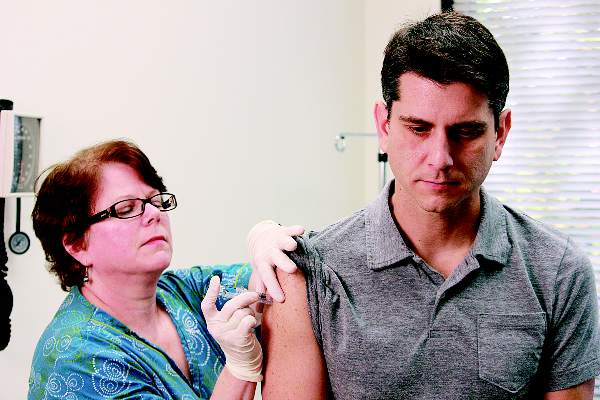
The free Spot a Stroke FAST app from the American Heart Association and American Stroke Association can help patients and family members identify the signs and symptoms of stroke in order to get timely help. Named after the mnemonic FAST (Face, Arm, Speech, Time), the app includes the ability to phone 911, with a time stamp showing when the call was made, features that may help clinicians in management decisions.
The American College of Cardiology’s free Guideline Clinical App includes three recently updated practice guidelines in its first iteration, on the management of heart failure, assessment of cardiovascular risk, and the treatment of blood cholesterol.
Clinical pearls for emergency medicine developed by the University of Maryland are available in the university’s free app UMEM Pearls.
The U.S. Substance Abuse and Mental Health Services Administration’s free KnowBullying app guides parents and educators on how to start easy, meaningful conversations with children about preventing or responding to bullying. Parents and caregivers who spend at least 15 minutes a day talking with a child can help build a strong relationship that can help prevent bullying, the group says.
The CDC’s free Heads Up app can help parents and caregivers spot the signs and symptoms of a concussion and learn what to do if you think a child or adolescent may have a concussion or other serious brain injury. Bonus: It also offers information on picking the right helmet for specific activities.
While we’re on the topic of pediatrics – the American Academy of Pediatrics (AAP) offers a slew of apps for physicians and parents. One of the most recent is the free AAP Journals app, which received an overall positive but mixed review on iMedicalApps.com.
Residents in the states of Washington or Minnesota can use Planned Parenthood’s free Planned Parenthood Care app in a pilot program that lets them connect with clinicians via video to get birth control methods sent through the mail – contraceptive pills, patches, or rings. The video visit costs $45.
Women who are pregnant or nursing and want to eat fish may like the free Fish4Health app from Purdue University that provides information on the benefits and safety of various fish species and helps them track their intake of healthy fats and mercury.
The European Society of Human Reproduction and Embryology offers its members a free app and/or web-based guidelines on the “Management of Women with Endometriosis.” The app summarizes the 83 recommendations in the guidelines and offers a decision-aid on six key issues in endometriosis.
Among a bevy of apps from the American Red Cross, the recent free Blood Donor app streamlines the process of donating blood, offers rewards to donors from participating retailers, and includes social media features that help promote giving blood.
Is there a new app that you think we should highlight? Let us know.
On Twitter @sherryboschert
Every month sees new apps launched by established medical organizations. Although these apps don’t have data to confirm their usefulness, at least they come from known and trusted sources. Here’s a roundup of some of the latest. You decide whether or not they’re worth a try.
The Centers for Disease Control and Prevention (CDC) makes it easier for clinicians to find recommended immunization schedules for adults and children through its free CDC Vaccine Schedules app. Look up contraindications to vaccination or catch-up schedules for children and adolescents, or search recommendations for adults based on the presence of diabetes, HIV, pregnancy, or other conditions, among other features.
The free Spot a Stroke FAST app from the American Heart Association and American Stroke Association can help patients and family members identify the signs and symptoms of stroke in order to get timely help. Named after the mnemonic FAST (Face, Arm, Speech, Time), the app includes the ability to phone 911, with a time stamp showing when the call was made, features that may help clinicians in management decisions.
The American College of Cardiology’s free Guideline Clinical App includes three recently updated practice guidelines in its first iteration, on the management of heart failure, assessment of cardiovascular risk, and the treatment of blood cholesterol.
Clinical pearls for emergency medicine developed by the University of Maryland are available in the university’s free app UMEM Pearls.
The U.S. Substance Abuse and Mental Health Services Administration’s free KnowBullying app guides parents and educators on how to start easy, meaningful conversations with children about preventing or responding to bullying. Parents and caregivers who spend at least 15 minutes a day talking with a child can help build a strong relationship that can help prevent bullying, the group says.
The CDC’s free Heads Up app can help parents and caregivers spot the signs and symptoms of a concussion and learn what to do if you think a child or adolescent may have a concussion or other serious brain injury. Bonus: It also offers information on picking the right helmet for specific activities.
While we’re on the topic of pediatrics – the American Academy of Pediatrics (AAP) offers a slew of apps for physicians and parents. One of the most recent is the free AAP Journals app, which received an overall positive but mixed review on iMedicalApps.com.
Residents in the states of Washington or Minnesota can use Planned Parenthood’s free Planned Parenthood Care app in a pilot program that lets them connect with clinicians via video to get birth control methods sent through the mail – contraceptive pills, patches, or rings. The video visit costs $45.
Women who are pregnant or nursing and want to eat fish may like the free Fish4Health app from Purdue University that provides information on the benefits and safety of various fish species and helps them track their intake of healthy fats and mercury.
The European Society of Human Reproduction and Embryology offers its members a free app and/or web-based guidelines on the “Management of Women with Endometriosis.” The app summarizes the 83 recommendations in the guidelines and offers a decision-aid on six key issues in endometriosis.
Among a bevy of apps from the American Red Cross, the recent free Blood Donor app streamlines the process of donating blood, offers rewards to donors from participating retailers, and includes social media features that help promote giving blood.
Is there a new app that you think we should highlight? Let us know.
On Twitter @sherryboschert
Every month sees new apps launched by established medical organizations. Although these apps don’t have data to confirm their usefulness, at least they come from known and trusted sources. Here’s a roundup of some of the latest. You decide whether or not they’re worth a try.
The Centers for Disease Control and Prevention (CDC) makes it easier for clinicians to find recommended immunization schedules for adults and children through its free CDC Vaccine Schedules app. Look up contraindications to vaccination or catch-up schedules for children and adolescents, or search recommendations for adults based on the presence of diabetes, HIV, pregnancy, or other conditions, among other features.
The free Spot a Stroke FAST app from the American Heart Association and American Stroke Association can help patients and family members identify the signs and symptoms of stroke in order to get timely help. Named after the mnemonic FAST (Face, Arm, Speech, Time), the app includes the ability to phone 911, with a time stamp showing when the call was made, features that may help clinicians in management decisions.
The American College of Cardiology’s free Guideline Clinical App includes three recently updated practice guidelines in its first iteration, on the management of heart failure, assessment of cardiovascular risk, and the treatment of blood cholesterol.
Clinical pearls for emergency medicine developed by the University of Maryland are available in the university’s free app UMEM Pearls.
The U.S. Substance Abuse and Mental Health Services Administration’s free KnowBullying app guides parents and educators on how to start easy, meaningful conversations with children about preventing or responding to bullying. Parents and caregivers who spend at least 15 minutes a day talking with a child can help build a strong relationship that can help prevent bullying, the group says.
The CDC’s free Heads Up app can help parents and caregivers spot the signs and symptoms of a concussion and learn what to do if you think a child or adolescent may have a concussion or other serious brain injury. Bonus: It also offers information on picking the right helmet for specific activities.
While we’re on the topic of pediatrics – the American Academy of Pediatrics (AAP) offers a slew of apps for physicians and parents. One of the most recent is the free AAP Journals app, which received an overall positive but mixed review on iMedicalApps.com.
Residents in the states of Washington or Minnesota can use Planned Parenthood’s free Planned Parenthood Care app in a pilot program that lets them connect with clinicians via video to get birth control methods sent through the mail – contraceptive pills, patches, or rings. The video visit costs $45.
Women who are pregnant or nursing and want to eat fish may like the free Fish4Health app from Purdue University that provides information on the benefits and safety of various fish species and helps them track their intake of healthy fats and mercury.
The European Society of Human Reproduction and Embryology offers its members a free app and/or web-based guidelines on the “Management of Women with Endometriosis.” The app summarizes the 83 recommendations in the guidelines and offers a decision-aid on six key issues in endometriosis.
Among a bevy of apps from the American Red Cross, the recent free Blood Donor app streamlines the process of donating blood, offers rewards to donors from participating retailers, and includes social media features that help promote giving blood.
Is there a new app that you think we should highlight? Let us know.
On Twitter @sherryboschert
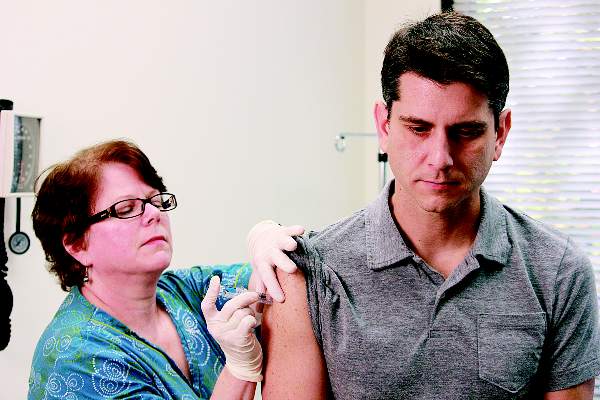
COMMENTARY: STARRS’ call for more intensive follow-up valuable
I would like to provide some perspective on the recent article on the Army STARRS study.
The article, “Predicting Suicides After Psychiatric Hospitalization in U.S. Army Soldiers: The Army Study to Assess Risk and Resilience in Servicemembers (Army STARRS)” (JAMA Psychiatry 2014 Nov. 12 [doi: 10.1001/jamapsychiatry.2014.1754]), is one of a series from this multicenter, multiyear study.

My observations focus on four areas: 1) the history behind this research effort, 2) what we learn from the results, 3) how can we change the way we treat service members based on the results? and 4) the change in accession standards.
This research effort was launched after the rate of suicides continued to rise. Then vice chief of staff, Lt. Gen. Peter Chiarelli was frustrated. He developed a contract with the National Institute of Mental Health to fund an ambitious research agenda that included examining all known suicides to find a way to reduce them.
At that time, I was the chief psychiatrist for the Army and was frankly cynical about the STARRS research. We already knew the risk factors for suicide: previous psychiatric or criminal history, relationship difficulties, problems at work, substance abuse, and access to firearms. But, being a good Army Soldier, I saluted and worked to make it happen. After all, maybe the research would bring some clinically useful revelations.
Lt. Gen. Chiarelli also wanted quick results, within a year. Fat chance, I would have muttered under my breath, had I not been a good Soldier.
So, what does the research tell us, 5 years after the inception? Frankly not much that a military psychiatrist does not already know about the risk factors for suicide in military members. However, the article in JAMA Psychiatry does quantify those risk factors mentioned above.
It also stresses the high risk for those recently psychiatrically hospitalized. Civilian as well as military psychiatrists already know that high-risk patients are the ones who get hospitalized. A caveat: Only 12% of Army suicides were post hospitalization.
However, for a military servicemember, the hospitalization may add to their stress, as it often contributes to an exit from the military. Exit may mean a loss of job, housing, health care, and identity.
What is the actionable intelligence from the article? By actionable intelligence, a military term, I mean here what can clinicians do differently as a result of the research? Do you hospitalize less? Probably not.
The authors suggest more posthospitalization interventions but are guarded in their recommendations. More intensive follow-up could lead to more stigmatization and contribute to an accelerated exit from the military.
Nevertheless, that recommendation is where the value of this article lies. The military system is highly stressed with many competing priorities. Many posts, but not all, have posthospitalization easy access to care. As the article recommends, and I concur, there should be more intensive follow-up. This can be done in many ways, including group settings; military members often prefer groups, as then they can help one another.
There is another subtext to the whole suicide discussion: In the early years of the wars in Iraq and Afghanistan, when the Army was desperate for recruits, it relaxed its accession standards. More came in with prior psychiatric diagnoses. Later, the standards were tightened again; those soldiers were disqualified.
The changes in accession standards often happen in times of conflict. It is not surprising that increases in behavioral health difficulties happen when recruiters are strapped for new recruits and take in marginal performers. Now that the military is drawing down, and it is harder to get into the military with a bad background, suicides in the active duty may taper, irrespective of all the research and suicide prevention programs.
So the article cements what we already knew: People with previous psychiatric problems are more likely to suicide. The question is what can we do about it?
Dr. Ritchie is former chief of psychiatry for the U.S. Army and the current chief clinical officer in the department of behavioral health for the District of Columbia.
I would like to provide some perspective on the recent article on the Army STARRS study.
The article, “Predicting Suicides After Psychiatric Hospitalization in U.S. Army Soldiers: The Army Study to Assess Risk and Resilience in Servicemembers (Army STARRS)” (JAMA Psychiatry 2014 Nov. 12 [doi: 10.1001/jamapsychiatry.2014.1754]), is one of a series from this multicenter, multiyear study.
My observations focus on four areas: 1) the history behind this research effort, 2) what we learn from the results, 3) how can we change the way we treat service members based on the results? and 4) the change in accession standards.
This research effort was launched after the rate of suicides continued to rise. Then vice chief of staff, Lt. Gen. Peter Chiarelli was frustrated. He developed a contract with the National Institute of Mental Health to fund an ambitious research agenda that included examining all known suicides to find a way to reduce them.
At that time, I was the chief psychiatrist for the Army and was frankly cynical about the STARRS research. We already knew the risk factors for suicide: previous psychiatric or criminal history, relationship difficulties, problems at work, substance abuse, and access to firearms. But, being a good Army Soldier, I saluted and worked to make it happen. After all, maybe the research would bring some clinically useful revelations.
Lt. Gen. Chiarelli also wanted quick results, within a year. Fat chance, I would have muttered under my breath, had I not been a good Soldier.
So, what does the research tell us, 5 years after the inception? Frankly not much that a military psychiatrist does not already know about the risk factors for suicide in military members. However, the article in JAMA Psychiatry does quantify those risk factors mentioned above.
It also stresses the high risk for those recently psychiatrically hospitalized. Civilian as well as military psychiatrists already know that high-risk patients are the ones who get hospitalized. A caveat: Only 12% of Army suicides were post hospitalization.
However, for a military servicemember, the hospitalization may add to their stress, as it often contributes to an exit from the military. Exit may mean a loss of job, housing, health care, and identity.
What is the actionable intelligence from the article? By actionable intelligence, a military term, I mean here what can clinicians do differently as a result of the research? Do you hospitalize less? Probably not.
The authors suggest more posthospitalization interventions but are guarded in their recommendations. More intensive follow-up could lead to more stigmatization and contribute to an accelerated exit from the military.
Nevertheless, that recommendation is where the value of this article lies. The military system is highly stressed with many competing priorities. Many posts, but not all, have posthospitalization easy access to care. As the article recommends, and I concur, there should be more intensive follow-up. This can be done in many ways, including group settings; military members often prefer groups, as then they can help one another.
There is another subtext to the whole suicide discussion: In the early years of the wars in Iraq and Afghanistan, when the Army was desperate for recruits, it relaxed its accession standards. More came in with prior psychiatric diagnoses. Later, the standards were tightened again; those soldiers were disqualified.
The changes in accession standards often happen in times of conflict. It is not surprising that increases in behavioral health difficulties happen when recruiters are strapped for new recruits and take in marginal performers. Now that the military is drawing down, and it is harder to get into the military with a bad background, suicides in the active duty may taper, irrespective of all the research and suicide prevention programs.
So the article cements what we already knew: People with previous psychiatric problems are more likely to suicide. The question is what can we do about it?
Dr. Ritchie is former chief of psychiatry for the U.S. Army and the current chief clinical officer in the department of behavioral health for the District of Columbia.
I would like to provide some perspective on the recent article on the Army STARRS study.
The article, “Predicting Suicides After Psychiatric Hospitalization in U.S. Army Soldiers: The Army Study to Assess Risk and Resilience in Servicemembers (Army STARRS)” (JAMA Psychiatry 2014 Nov. 12 [doi: 10.1001/jamapsychiatry.2014.1754]), is one of a series from this multicenter, multiyear study.
My observations focus on four areas: 1) the history behind this research effort, 2) what we learn from the results, 3) how can we change the way we treat service members based on the results? and 4) the change in accession standards.
This research effort was launched after the rate of suicides continued to rise. Then vice chief of staff, Lt. Gen. Peter Chiarelli was frustrated. He developed a contract with the National Institute of Mental Health to fund an ambitious research agenda that included examining all known suicides to find a way to reduce them.
At that time, I was the chief psychiatrist for the Army and was frankly cynical about the STARRS research. We already knew the risk factors for suicide: previous psychiatric or criminal history, relationship difficulties, problems at work, substance abuse, and access to firearms. But, being a good Army Soldier, I saluted and worked to make it happen. After all, maybe the research would bring some clinically useful revelations.
Lt. Gen. Chiarelli also wanted quick results, within a year. Fat chance, I would have muttered under my breath, had I not been a good Soldier.
So, what does the research tell us, 5 years after the inception? Frankly not much that a military psychiatrist does not already know about the risk factors for suicide in military members. However, the article in JAMA Psychiatry does quantify those risk factors mentioned above.
It also stresses the high risk for those recently psychiatrically hospitalized. Civilian as well as military psychiatrists already know that high-risk patients are the ones who get hospitalized. A caveat: Only 12% of Army suicides were post hospitalization.
However, for a military servicemember, the hospitalization may add to their stress, as it often contributes to an exit from the military. Exit may mean a loss of job, housing, health care, and identity.
What is the actionable intelligence from the article? By actionable intelligence, a military term, I mean here what can clinicians do differently as a result of the research? Do you hospitalize less? Probably not.
The authors suggest more posthospitalization interventions but are guarded in their recommendations. More intensive follow-up could lead to more stigmatization and contribute to an accelerated exit from the military.
Nevertheless, that recommendation is where the value of this article lies. The military system is highly stressed with many competing priorities. Many posts, but not all, have posthospitalization easy access to care. As the article recommends, and I concur, there should be more intensive follow-up. This can be done in many ways, including group settings; military members often prefer groups, as then they can help one another.
There is another subtext to the whole suicide discussion: In the early years of the wars in Iraq and Afghanistan, when the Army was desperate for recruits, it relaxed its accession standards. More came in with prior psychiatric diagnoses. Later, the standards were tightened again; those soldiers were disqualified.
The changes in accession standards often happen in times of conflict. It is not surprising that increases in behavioral health difficulties happen when recruiters are strapped for new recruits and take in marginal performers. Now that the military is drawing down, and it is harder to get into the military with a bad background, suicides in the active duty may taper, irrespective of all the research and suicide prevention programs.
So the article cements what we already knew: People with previous psychiatric problems are more likely to suicide. The question is what can we do about it?
Dr. Ritchie is former chief of psychiatry for the U.S. Army and the current chief clinical officer in the department of behavioral health for the District of Columbia.
Patient Safety: Innovation and Critical Thinking
Preventable medical errors rank as the third most common cause of death in the United States after heart disease and cancer.1 They are responsible for 400,000 deaths each year (over 1095 per day) and another 10,000 serious complications resulting from medical errors each day.1 That is the equivalent of two 747 airliner midair crashes per day. The economic cost to our nation is $1 trillion per year.1
On July 17, 2014, the US Senate Subcommittee on Primary Health and Aging met to address this crisis. Participants included senators and John James, PhD, Founder, Patient Safety America, Houston, Texas; Ashish Jha, MD, MPH, Professor of Health Policy and Management, Harvard School of Public Health, Boston, Massachusetts; Tejal Gandhi, MD, MPH, President, National Patient Safety Foundation, and Associate Professor of Medicine, Harvard Medical School, Boston, Massachusetts; Peter Pronovost, MD, PhD, Senior Vice President for Patient Safety and Quality, and Director of the Armstrong Institute for Patient Safety and Quality, Johns Hopkins Medicine, Baltimore, Maryland; Joanne Disch, PhD, RN, Professor ad Honorem, University of Minnesota School of Nursing, Minneapolis, Minnesota; and Lisa McGiffert, Director, Safe Patient Project, Consumers Union, Austin, Texas. While each speaker suggested various strategies for improving patient safety, they all agreed that information technology is not living up to our expectations for meeting this need. They also agreed that health care has become increasingly “high tech and low touch,” and, as a result, the medical community is leveraging neither technology nor the knowledge accrued from individual patient/physician interactions to improve patient safety and outcomes.1
Last year my mother had a spinal fusion. The surgery was a success by all measures. Two days after she was discharged home, she became weak and was unable to walk. She went to the emergency room, where it was noted that she was severely hyponatremic, weak, and experiencing severe back pain. For the next 36 hours she was not seen by a physician or physician assistant (PA), as the PA who admitted her to the hospital had not notified the “team” that she was admitted. My father, who is a vascular surgeon, notified her spine surgeon, who came to see her. Her hyponatremia was markedly worse, and she was transferred to the intensive care unit (ICU). She continued to decline and was started on hypertonic intravenous (IV) saline. Over the next several days her hyponatremia improved, and she was transferred out of the ICU but continued to have pain. The spine surgeon examined her several times, and imaging showed no evidence of epidural bleeding, infection, or misplaced hardware.
Over the next several days, I was informed by family members that the nurses were “keeping the pain in check” with IV narcotics and that my mom was heavily sedated most of the time. My dad later informed me that she had a foot drop on the left, and the next day another family member told me the foot drop was on the right. My dad and stepbrother each assured me that they were right. When my mom could talk, she told me how weak she was and that sometimes it was her right leg and other times her left. She was seen by a neurologist on 6 out of the next 10 days and underwent 3 computed tomography scans and magnetic resonance imaging, and the neurologist assured us that she had not had a stroke. On a Friday evening, I called my mom, who was progressively short of breath, and she told me that she felt weaker and weaker each day. The “foot drop,” which was now bilateral according to the neurologist, was from “not using it while she was in the ICU.”
My mom, who is an artist, commented that she was having trouble using her hands now and unable to hold a cup. I called the physician on call, who assured me that she was taking care of my mom’s blood pressure (which was labile for the first time ever; she had no history of hypertension) and her pain score was a 5. I explained that I knew that she was not “looking to play mystery diagnosis with an orthopedic surgeon 500 miles away, but I think my mom has Guillain-Barré syndrome.” Fortunately, the doctor said, “Oh my god, I think you’re right.” Monday morning, her diagnosis was confirmed and she has made a remarkable recovery. So how is it that she could be seen by a neurologist and a team of nurses, doctors, therapists, and resident staff and no one made a diagnosis? Certainly contributing factors include a system of multiple medical teams with frequent turnovers and a desire to consult others but no real “quarterback” who was looking at the overall care in a responsible and critical way. A thorough history and physical examination, rather than a multitude of expensive and unnecessary imaging studies, could certainly have led to a quicker diagnosis and avoidance of a protracted hospital stay and rehabilitation.
To be sure, there are many factors that lead to delays in diagnosis. The reliance on advanced imaging, the lack of a simple physical examination, and the lack of critical thinking played prominently in the failure to make a diagnosis in my mom’s case. Some would argue that we need information technology (IT) systems that will allow us to better diagnose and treat patients. They believe that with electronic medical records (EMRs) data points will be entered and a diagnosis will be made. Major corporations like IBM and GE are working to make this a reality. Although Watson (the artificially intelligent computer system created by IBM) may be able to win on Jeopardy and may move the needle forward to improving patient care, 2 things are certain: (1) Appropriate data will need to be input by people, and (2) without critical thinking, the appropriate data can’t be entered or interpreted correctly.
The fact remains that EMR has fallen short of expectations. We have more data at our fingertips but this has not translated into a significant improvement in patient safety. The human factor remains critical. Even though industry and health care workers strive to innovate and merge technological advances with improved patient outcomes, technology will continue to fall short of expectations without the input of critical thinking. There are things that computers and technological advances can do that people can’t, and there are things that people can do that computers can’t.
We cannot become a profession reliant on technology to substitute for critical thinking, and we cannot become a profession that doesn’t recognize what technology can bring to us and our patients. Like a railroad track that needs 2 parallel tracks to move trains, we must continue to build on 2 tracks: innovation and critical thinking. ◾
Reference
1. McCann E. Deaths by medical mistakes hit records. Healthcare IT News. http://www.healthcareitnews.com/news/deaths-by-medical-mistakes-hit-records. Published July 18, 2014. Accessed November 17, 2014.
Preventable medical errors rank as the third most common cause of death in the United States after heart disease and cancer.1 They are responsible for 400,000 deaths each year (over 1095 per day) and another 10,000 serious complications resulting from medical errors each day.1 That is the equivalent of two 747 airliner midair crashes per day. The economic cost to our nation is $1 trillion per year.1
On July 17, 2014, the US Senate Subcommittee on Primary Health and Aging met to address this crisis. Participants included senators and John James, PhD, Founder, Patient Safety America, Houston, Texas; Ashish Jha, MD, MPH, Professor of Health Policy and Management, Harvard School of Public Health, Boston, Massachusetts; Tejal Gandhi, MD, MPH, President, National Patient Safety Foundation, and Associate Professor of Medicine, Harvard Medical School, Boston, Massachusetts; Peter Pronovost, MD, PhD, Senior Vice President for Patient Safety and Quality, and Director of the Armstrong Institute for Patient Safety and Quality, Johns Hopkins Medicine, Baltimore, Maryland; Joanne Disch, PhD, RN, Professor ad Honorem, University of Minnesota School of Nursing, Minneapolis, Minnesota; and Lisa McGiffert, Director, Safe Patient Project, Consumers Union, Austin, Texas. While each speaker suggested various strategies for improving patient safety, they all agreed that information technology is not living up to our expectations for meeting this need. They also agreed that health care has become increasingly “high tech and low touch,” and, as a result, the medical community is leveraging neither technology nor the knowledge accrued from individual patient/physician interactions to improve patient safety and outcomes.1
Last year my mother had a spinal fusion. The surgery was a success by all measures. Two days after she was discharged home, she became weak and was unable to walk. She went to the emergency room, where it was noted that she was severely hyponatremic, weak, and experiencing severe back pain. For the next 36 hours she was not seen by a physician or physician assistant (PA), as the PA who admitted her to the hospital had not notified the “team” that she was admitted. My father, who is a vascular surgeon, notified her spine surgeon, who came to see her. Her hyponatremia was markedly worse, and she was transferred to the intensive care unit (ICU). She continued to decline and was started on hypertonic intravenous (IV) saline. Over the next several days her hyponatremia improved, and she was transferred out of the ICU but continued to have pain. The spine surgeon examined her several times, and imaging showed no evidence of epidural bleeding, infection, or misplaced hardware.
Over the next several days, I was informed by family members that the nurses were “keeping the pain in check” with IV narcotics and that my mom was heavily sedated most of the time. My dad later informed me that she had a foot drop on the left, and the next day another family member told me the foot drop was on the right. My dad and stepbrother each assured me that they were right. When my mom could talk, she told me how weak she was and that sometimes it was her right leg and other times her left. She was seen by a neurologist on 6 out of the next 10 days and underwent 3 computed tomography scans and magnetic resonance imaging, and the neurologist assured us that she had not had a stroke. On a Friday evening, I called my mom, who was progressively short of breath, and she told me that she felt weaker and weaker each day. The “foot drop,” which was now bilateral according to the neurologist, was from “not using it while she was in the ICU.”
My mom, who is an artist, commented that she was having trouble using her hands now and unable to hold a cup. I called the physician on call, who assured me that she was taking care of my mom’s blood pressure (which was labile for the first time ever; she had no history of hypertension) and her pain score was a 5. I explained that I knew that she was not “looking to play mystery diagnosis with an orthopedic surgeon 500 miles away, but I think my mom has Guillain-Barré syndrome.” Fortunately, the doctor said, “Oh my god, I think you’re right.” Monday morning, her diagnosis was confirmed and she has made a remarkable recovery. So how is it that she could be seen by a neurologist and a team of nurses, doctors, therapists, and resident staff and no one made a diagnosis? Certainly contributing factors include a system of multiple medical teams with frequent turnovers and a desire to consult others but no real “quarterback” who was looking at the overall care in a responsible and critical way. A thorough history and physical examination, rather than a multitude of expensive and unnecessary imaging studies, could certainly have led to a quicker diagnosis and avoidance of a protracted hospital stay and rehabilitation.
To be sure, there are many factors that lead to delays in diagnosis. The reliance on advanced imaging, the lack of a simple physical examination, and the lack of critical thinking played prominently in the failure to make a diagnosis in my mom’s case. Some would argue that we need information technology (IT) systems that will allow us to better diagnose and treat patients. They believe that with electronic medical records (EMRs) data points will be entered and a diagnosis will be made. Major corporations like IBM and GE are working to make this a reality. Although Watson (the artificially intelligent computer system created by IBM) may be able to win on Jeopardy and may move the needle forward to improving patient care, 2 things are certain: (1) Appropriate data will need to be input by people, and (2) without critical thinking, the appropriate data can’t be entered or interpreted correctly.
The fact remains that EMR has fallen short of expectations. We have more data at our fingertips but this has not translated into a significant improvement in patient safety. The human factor remains critical. Even though industry and health care workers strive to innovate and merge technological advances with improved patient outcomes, technology will continue to fall short of expectations without the input of critical thinking. There are things that computers and technological advances can do that people can’t, and there are things that people can do that computers can’t.
We cannot become a profession reliant on technology to substitute for critical thinking, and we cannot become a profession that doesn’t recognize what technology can bring to us and our patients. Like a railroad track that needs 2 parallel tracks to move trains, we must continue to build on 2 tracks: innovation and critical thinking. ◾
Preventable medical errors rank as the third most common cause of death in the United States after heart disease and cancer.1 They are responsible for 400,000 deaths each year (over 1095 per day) and another 10,000 serious complications resulting from medical errors each day.1 That is the equivalent of two 747 airliner midair crashes per day. The economic cost to our nation is $1 trillion per year.1
On July 17, 2014, the US Senate Subcommittee on Primary Health and Aging met to address this crisis. Participants included senators and John James, PhD, Founder, Patient Safety America, Houston, Texas; Ashish Jha, MD, MPH, Professor of Health Policy and Management, Harvard School of Public Health, Boston, Massachusetts; Tejal Gandhi, MD, MPH, President, National Patient Safety Foundation, and Associate Professor of Medicine, Harvard Medical School, Boston, Massachusetts; Peter Pronovost, MD, PhD, Senior Vice President for Patient Safety and Quality, and Director of the Armstrong Institute for Patient Safety and Quality, Johns Hopkins Medicine, Baltimore, Maryland; Joanne Disch, PhD, RN, Professor ad Honorem, University of Minnesota School of Nursing, Minneapolis, Minnesota; and Lisa McGiffert, Director, Safe Patient Project, Consumers Union, Austin, Texas. While each speaker suggested various strategies for improving patient safety, they all agreed that information technology is not living up to our expectations for meeting this need. They also agreed that health care has become increasingly “high tech and low touch,” and, as a result, the medical community is leveraging neither technology nor the knowledge accrued from individual patient/physician interactions to improve patient safety and outcomes.1
Last year my mother had a spinal fusion. The surgery was a success by all measures. Two days after she was discharged home, she became weak and was unable to walk. She went to the emergency room, where it was noted that she was severely hyponatremic, weak, and experiencing severe back pain. For the next 36 hours she was not seen by a physician or physician assistant (PA), as the PA who admitted her to the hospital had not notified the “team” that she was admitted. My father, who is a vascular surgeon, notified her spine surgeon, who came to see her. Her hyponatremia was markedly worse, and she was transferred to the intensive care unit (ICU). She continued to decline and was started on hypertonic intravenous (IV) saline. Over the next several days her hyponatremia improved, and she was transferred out of the ICU but continued to have pain. The spine surgeon examined her several times, and imaging showed no evidence of epidural bleeding, infection, or misplaced hardware.
Over the next several days, I was informed by family members that the nurses were “keeping the pain in check” with IV narcotics and that my mom was heavily sedated most of the time. My dad later informed me that she had a foot drop on the left, and the next day another family member told me the foot drop was on the right. My dad and stepbrother each assured me that they were right. When my mom could talk, she told me how weak she was and that sometimes it was her right leg and other times her left. She was seen by a neurologist on 6 out of the next 10 days and underwent 3 computed tomography scans and magnetic resonance imaging, and the neurologist assured us that she had not had a stroke. On a Friday evening, I called my mom, who was progressively short of breath, and she told me that she felt weaker and weaker each day. The “foot drop,” which was now bilateral according to the neurologist, was from “not using it while she was in the ICU.”
My mom, who is an artist, commented that she was having trouble using her hands now and unable to hold a cup. I called the physician on call, who assured me that she was taking care of my mom’s blood pressure (which was labile for the first time ever; she had no history of hypertension) and her pain score was a 5. I explained that I knew that she was not “looking to play mystery diagnosis with an orthopedic surgeon 500 miles away, but I think my mom has Guillain-Barré syndrome.” Fortunately, the doctor said, “Oh my god, I think you’re right.” Monday morning, her diagnosis was confirmed and she has made a remarkable recovery. So how is it that she could be seen by a neurologist and a team of nurses, doctors, therapists, and resident staff and no one made a diagnosis? Certainly contributing factors include a system of multiple medical teams with frequent turnovers and a desire to consult others but no real “quarterback” who was looking at the overall care in a responsible and critical way. A thorough history and physical examination, rather than a multitude of expensive and unnecessary imaging studies, could certainly have led to a quicker diagnosis and avoidance of a protracted hospital stay and rehabilitation.
To be sure, there are many factors that lead to delays in diagnosis. The reliance on advanced imaging, the lack of a simple physical examination, and the lack of critical thinking played prominently in the failure to make a diagnosis in my mom’s case. Some would argue that we need information technology (IT) systems that will allow us to better diagnose and treat patients. They believe that with electronic medical records (EMRs) data points will be entered and a diagnosis will be made. Major corporations like IBM and GE are working to make this a reality. Although Watson (the artificially intelligent computer system created by IBM) may be able to win on Jeopardy and may move the needle forward to improving patient care, 2 things are certain: (1) Appropriate data will need to be input by people, and (2) without critical thinking, the appropriate data can’t be entered or interpreted correctly.
The fact remains that EMR has fallen short of expectations. We have more data at our fingertips but this has not translated into a significant improvement in patient safety. The human factor remains critical. Even though industry and health care workers strive to innovate and merge technological advances with improved patient outcomes, technology will continue to fall short of expectations without the input of critical thinking. There are things that computers and technological advances can do that people can’t, and there are things that people can do that computers can’t.
We cannot become a profession reliant on technology to substitute for critical thinking, and we cannot become a profession that doesn’t recognize what technology can bring to us and our patients. Like a railroad track that needs 2 parallel tracks to move trains, we must continue to build on 2 tracks: innovation and critical thinking. ◾
Reference
1. McCann E. Deaths by medical mistakes hit records. Healthcare IT News. http://www.healthcareitnews.com/news/deaths-by-medical-mistakes-hit-records. Published July 18, 2014. Accessed November 17, 2014.
Reference
1. McCann E. Deaths by medical mistakes hit records. Healthcare IT News. http://www.healthcareitnews.com/news/deaths-by-medical-mistakes-hit-records. Published July 18, 2014. Accessed November 17, 2014.

Midurethral slings
Minimally invasive synthetic midurethral slings may be considered the standard of care for the surgical treatment of stress urinary incontinence – and a first-line treatment for severe cases of the condition – based on the publication of numerous level 1 randomized trials, high-quality reviews, and recent position statements from professional societies.
The current evidence base shows that midurethral sling operations are as effective as bladder neck slings and colposuspension, with less morbidity. Operating times are shorter, and local anesthesia is possible. Compared with pubovaginal slings, which are fixed at the bladder neck, midurethral slings are associated with less postoperative voiding dysfunction and fewer de novo urgency symptoms.

Midurethral slings (MUS) also have been shown to be more successful – and more cost-effective – than pelvic floor physiotherapy for stress urinary incontinence (SUI) overall, with the possible exception of mild SUI.
Physiotherapy involving pelvic floor muscle therapy has long been advocated as a first-line treatment for SUI, with MUS surgery often recommended when physiotherapy is unsuccessful. In recent years, however, with high success rates for MUS, the role of physiotherapy as a first-line treatment has become more debatable.
A multicenter randomized trial in 660 women published last year in the New England Journal of Medicine substantiated what many of us have seen in our practices and in other published studies: significantly lower rates of improvement and cure with initial physiotherapy than with primary surgery.
Initial MUS surgery resulted in higher rates of subjective improvement, compared with initial physiotherapy (91% vs. 64%), subjective cure (85% v. 53%), and objective cure (77% v. 59%) at 1 year. Moreover, a significant number of women – 49% – chose to abandon conservative therapy and have MUS surgery for their SUI during the study period (N. Engl. J. Med. 2013;369:1124-33).
A joint position statement published in early 2014 by the American Urogynecologic Society (AUGS) and the Society of Urodynamics, Female Pelvic Medicine and Urogenital Reconstruction (SUFU) calls MUS the most extensively studied anti-incontinence procedure and “probably the most important advancement in the treatment of SUI in the last 50 years.” More than 2,000 publications in the literature have described the procedure for SUI, and multiple randomized controlled trials have compared various types of MUS procedures as well as MUS to other nonmesh SUI procedures, the statement says.
My colleague and I recently modeled the cost-effectiveness of pelvic floor muscle therapy and continence pessaries vs. surgical treatment with MUS for initial treatment of SUI. Initial treatment with MUS was the best strategy, with an incremental cost-effectiveness ratio of $32,132 per quality-adjusted life-year, compared with initial treatment with pelvic floor muscle therapy. Under our model, treatment with a continence pessary would never be the preferred choice due to low subjective cure rates (Am. J. Obstet. Gynecol. 2014;211:565.e1-6).
I now tell patients who present with a history of severe stress incontinence, and who leak on a cough stress test, that a trial of pelvic floor physiotherapy is an option but one with a lower likelihood of success. I recommend an MUS as primary treatment for these patients, and the question then often becomes which sling to use.
Sling selection
There are two broad approaches to MUS surgery – retropubic and transobturator – and within each approach, there are different routes for the delivery of the polypropylene mesh sling.
Retropubic slings. Retropubic slings are passed transvaginally at the midurethral level through the retropubic space. Tension-free vaginal tape (TVT) has been used in millions of women worldwide, with good long-term outcomes, since it was introduced by Dr. Ulf Ulmsten in 1995. The TVT procedure utilizes a bottom-up approach, with curved needles being passed from a small vaginal incision up through the retropubic space to exit through two suprapubic incisions.
A second type of retropubic sling – the suprapubic urethral support sling (SPARC, American Medical Systems) – utilizes a downward-pass, or top-down, approach in which a metal trocar is passed through suprapubic incisions and down through the retropubic space to exit a vaginal incision.
The theoretical advantages of this modification to the TVT procedure have included more control over the needle introducer near the rectus fascia, and a lower risk of bowel and vascular injury. However, comparisons during the last decade of the two retropubic approaches have suggested slightly better outcomes – relating both to cure rates and to complication rates – with TVT compared with SPARC.
A Cochrane Review published in 2009, titled “Minimally invasive synthetic suburethral sling operations for stress urinary incontinence in women,” provided higher-level evidence in favor of bottom-up slings. A sub-meta-analysis of five randomized controlled trials – part of a broader intervention review – showed that a retropubic bottom-up approach was more effective than a top-down route (risk ratio, 1.10), with higher subjective and objective SUI cure rates (Cochrane Database Syst. Rev. 2009(4): CD006375). There also was significantly less bladder perforation, less mesh erosion, and less voiding dysfunction.
TVT slings, therefore, appear to be somewhat superior, with statistically significant differences in each of the domains of efficacy and morbidity. Still, surgeon experience and skill remain factors in sling selection; the surgeon who feels comfortable and skilled with a top-down approach and has little experience with a bottom-up approach should continue with SPARC. For surgeons who are skilled with both approaches, it might well be preferable to favor TVT.
Transobturator slings. The transobturator approach was developed to minimize the potential for bladder and bowel injuries by avoiding the pelvic organs in the retropubic space. The sling is introduced either through an inside-out technique, with the needle passed from a vaginal incision and out through the obturator foramen, or through an outside-in technique, with the needle passed through the thigh and then out through the vaginal incision.
A meta-analysis of trials of transobturator sling procedures – including four direct-comparison, randomized controlled trials of the inside-out technique vs. the outside-in technique – showed no significant differences between the two approaches in subjective and objective SUI cure rates in the short term. Rates of postoperative voiding difficulties and de novo urgency symptoms were similar (BJU Int. 2010;106:68-76).
Making a choice. Each of the currently available midurethral slings appears to work well, overall, with few clinically significant differences in outcomes. On the other hand, midurethral slings are not all the same. It is important to appreciate the more subtle differences, to be aware of the evidence, and to be appropriately trained. Often, sling selection involves weighing the risks and benefits for the individual.
On a broad scale, the most recent high-level comparison of the retropubic and transobturator slings appears to be a meta-analysis in which retropubic midurethral slings showed better objective and subjective cure rates than transobturator midurethral slings. Women treated with retropubic slings had a 35% higher odds of objective cure and a 24% higher odds of subjective cure. (The weighted average objective cure rates were 87% for retropubic slings vs. 83% for transobturator slings with a weighted average follow-up of approximately 17 months. The weighted average subjective cure rates were 76% and 73%, respectively.)
Operating times were longer with retropubic slings, but lengths of stay were equivalent between the two types of procedures. This was based on 17 studies of about 3,000 women (J. Urology 2014 [doi: 10.1016/j.juro.2014.09.104]).
The types of complications seen with each approach differed. Bladder perforation was significantly more common with retropubic slings (3.2% vs. 0.2%), as was bleeding (3.2% v. 1.1%). Transobturator slings were associated with more cases of neurologic symptoms (9.4% v. 3.5%) and vaginal perforation (3.6% v. 0.9%).
This new review provides updated information to the 2009 Cochrane Review mentioned above, which reported that women were less likely to be continent after operations performed via the obturator route, but also less likely to have encountered complications. More specifically, objective cure rates were slightly higher with retropubic slings than with transobturator slings (88% vs. 84%) in the 2009 review. There was no difference in subjective cure rates. With the obturator route, there was less voiding dysfunction, blood loss, and bladder perforation (0.3% v. 5.5%).
Other pivotal trials since the 2009 Cochrane Review include a multicenter randomized equivalence trial published in the New England Journal of Medicine in 2010. The trial randomized 597 women to transobturator or retropubic sling surgery, and found no significant differences in subjective success (56% vs. 62%) or in objective success (78% vs. 81%) at 12 months (N. Engl. J. Med. 2010;362:2066-76).
There is some level 1 evidence suggesting that for severe incontinence involving intrinsic sphincter deficiency (ISD), a retropubic TVT sling is the more effective procedure. A randomized trial of 164 women with urodynamic SUI and ISD, for instance, found that 21% of those in the TVT group and 45% of those in the transobturator group had urodynamic SUI 6 months postoperatively.
The risk ratio of repeat surgery was 2.6 times higher in the transobturator group than in the retropubic TVT group (Obstet. Gynecol. 2008;112:1253-61). TVT was more effective both with and without concurrent pelvic organ prolapse repair.
I tell my patients with severe SUI or ISD, therefore, that retropubic sling procedures appear to be preferable. (Exceptions include the patient who has a history of retropubic surgeries, in whom passing the sling through this route may not be the safest approach, as well as the patient who has had mesh erosion into the bladder.)
In patients whose SUI is less severe, I counsel that a transobturator sling confers satisfaction rates similar to those of a retropubic sling and has a lower risk of complications, such as postoperative voiding dysfunction and bladder perforations, but with the possible trade-off of more thigh discomfort. I also might recommend a transobturator sling to patients with more pronounced initial complaints of urinary urgency and frequency, and to patients who have minor voiding dysfunction or a low level of incomplete bladder emptying.
While often short-lived, the small risk of thigh pain with a transobturator sling makes me less likely to recommend this type of sling for a woman who is a marathon runner or competitive athlete. In her case, an analysis of possible complications includes the consideration that bladder perforation can be addressed relatively quickly in the operating room, while persistent thigh discomfort, though relatively rare, could be a debilitating problem.
Single-incision slings
There appears to be emerging evidence suggesting that some of the fixed and adjustable single-incision slings currently available may have efficacy similar to that of the slings that are now widely used.
A Cochrane Review presented at the 2014 AUGS-IUGA scientific meeting and published this summer concludes that there is not enough evidence on single-incision slings compared with retropubic or transobturator slings to allow reliable comparisons, and that additional, adequately powered, high-quality trials with longer-term follow-up are needed (Cochrane Database Sys. Rev. 2014;6:CD008709). However, research completed since the review offers additional data.
For instance, at the 2014 AUGS-IUGA scientific meeting this summer, an oral paper presentation highlighted findings of a randomized controlled trial that showed similar cure rates after surgery with the MiniArc, a fixed single-incision sling, and the Monarc transobturator sling (both by American Medical Systems) at 24 months. The study randomized 234 women to either sling and found no significant differences in subjective outcomes, objective outcomes, or results on various quality-of-life questionnaires.
As such studies are published and more evidence emerges, we will gain a clearer picture of how the newer single-incision slings compare to the well-tested retropubic and transobturator slings with respect to efficacy and safety.
Single-incision slings require only a small vaginal incision and no exit points. Without abdominal or thigh incisions, these new procedures – intended for less severe SUI (no ISD) – may offer improved perioperative and postoperative patient comfort and a potentially decreased risk of surgical injury to the adductor muscles, as well as a decreased risk of vascular and nerve injury. Candidates for these slings may include those who are very athletic, those who are obese, and those with a history of prior retropubic or pelvic surgery.
Research appears to be progressing, but at this time we do not yet have level 1 evidence to support their routine use.
Dr. Sokol reported that he owns stock in Pelvalon, and is a clinical adviser to that company. He also is a national principal investigator for American Medical Systems, and the recipient of research grants from Acell and several other companies.
Minimally invasive synthetic midurethral slings may be considered the standard of care for the surgical treatment of stress urinary incontinence – and a first-line treatment for severe cases of the condition – based on the publication of numerous level 1 randomized trials, high-quality reviews, and recent position statements from professional societies.
The current evidence base shows that midurethral sling operations are as effective as bladder neck slings and colposuspension, with less morbidity. Operating times are shorter, and local anesthesia is possible. Compared with pubovaginal slings, which are fixed at the bladder neck, midurethral slings are associated with less postoperative voiding dysfunction and fewer de novo urgency symptoms.
Midurethral slings (MUS) also have been shown to be more successful – and more cost-effective – than pelvic floor physiotherapy for stress urinary incontinence (SUI) overall, with the possible exception of mild SUI.
Physiotherapy involving pelvic floor muscle therapy has long been advocated as a first-line treatment for SUI, with MUS surgery often recommended when physiotherapy is unsuccessful. In recent years, however, with high success rates for MUS, the role of physiotherapy as a first-line treatment has become more debatable.
A multicenter randomized trial in 660 women published last year in the New England Journal of Medicine substantiated what many of us have seen in our practices and in other published studies: significantly lower rates of improvement and cure with initial physiotherapy than with primary surgery.
Initial MUS surgery resulted in higher rates of subjective improvement, compared with initial physiotherapy (91% vs. 64%), subjective cure (85% v. 53%), and objective cure (77% v. 59%) at 1 year. Moreover, a significant number of women – 49% – chose to abandon conservative therapy and have MUS surgery for their SUI during the study period (N. Engl. J. Med. 2013;369:1124-33).
A joint position statement published in early 2014 by the American Urogynecologic Society (AUGS) and the Society of Urodynamics, Female Pelvic Medicine and Urogenital Reconstruction (SUFU) calls MUS the most extensively studied anti-incontinence procedure and “probably the most important advancement in the treatment of SUI in the last 50 years.” More than 2,000 publications in the literature have described the procedure for SUI, and multiple randomized controlled trials have compared various types of MUS procedures as well as MUS to other nonmesh SUI procedures, the statement says.
My colleague and I recently modeled the cost-effectiveness of pelvic floor muscle therapy and continence pessaries vs. surgical treatment with MUS for initial treatment of SUI. Initial treatment with MUS was the best strategy, with an incremental cost-effectiveness ratio of $32,132 per quality-adjusted life-year, compared with initial treatment with pelvic floor muscle therapy. Under our model, treatment with a continence pessary would never be the preferred choice due to low subjective cure rates (Am. J. Obstet. Gynecol. 2014;211:565.e1-6).
I now tell patients who present with a history of severe stress incontinence, and who leak on a cough stress test, that a trial of pelvic floor physiotherapy is an option but one with a lower likelihood of success. I recommend an MUS as primary treatment for these patients, and the question then often becomes which sling to use.
Sling selection
There are two broad approaches to MUS surgery – retropubic and transobturator – and within each approach, there are different routes for the delivery of the polypropylene mesh sling.
Retropubic slings. Retropubic slings are passed transvaginally at the midurethral level through the retropubic space. Tension-free vaginal tape (TVT) has been used in millions of women worldwide, with good long-term outcomes, since it was introduced by Dr. Ulf Ulmsten in 1995. The TVT procedure utilizes a bottom-up approach, with curved needles being passed from a small vaginal incision up through the retropubic space to exit through two suprapubic incisions.
A second type of retropubic sling – the suprapubic urethral support sling (SPARC, American Medical Systems) – utilizes a downward-pass, or top-down, approach in which a metal trocar is passed through suprapubic incisions and down through the retropubic space to exit a vaginal incision.
The theoretical advantages of this modification to the TVT procedure have included more control over the needle introducer near the rectus fascia, and a lower risk of bowel and vascular injury. However, comparisons during the last decade of the two retropubic approaches have suggested slightly better outcomes – relating both to cure rates and to complication rates – with TVT compared with SPARC.
A Cochrane Review published in 2009, titled “Minimally invasive synthetic suburethral sling operations for stress urinary incontinence in women,” provided higher-level evidence in favor of bottom-up slings. A sub-meta-analysis of five randomized controlled trials – part of a broader intervention review – showed that a retropubic bottom-up approach was more effective than a top-down route (risk ratio, 1.10), with higher subjective and objective SUI cure rates (Cochrane Database Syst. Rev. 2009(4): CD006375). There also was significantly less bladder perforation, less mesh erosion, and less voiding dysfunction.
TVT slings, therefore, appear to be somewhat superior, with statistically significant differences in each of the domains of efficacy and morbidity. Still, surgeon experience and skill remain factors in sling selection; the surgeon who feels comfortable and skilled with a top-down approach and has little experience with a bottom-up approach should continue with SPARC. For surgeons who are skilled with both approaches, it might well be preferable to favor TVT.
Transobturator slings. The transobturator approach was developed to minimize the potential for bladder and bowel injuries by avoiding the pelvic organs in the retropubic space. The sling is introduced either through an inside-out technique, with the needle passed from a vaginal incision and out through the obturator foramen, or through an outside-in technique, with the needle passed through the thigh and then out through the vaginal incision.
A meta-analysis of trials of transobturator sling procedures – including four direct-comparison, randomized controlled trials of the inside-out technique vs. the outside-in technique – showed no significant differences between the two approaches in subjective and objective SUI cure rates in the short term. Rates of postoperative voiding difficulties and de novo urgency symptoms were similar (BJU Int. 2010;106:68-76).
Making a choice. Each of the currently available midurethral slings appears to work well, overall, with few clinically significant differences in outcomes. On the other hand, midurethral slings are not all the same. It is important to appreciate the more subtle differences, to be aware of the evidence, and to be appropriately trained. Often, sling selection involves weighing the risks and benefits for the individual.
On a broad scale, the most recent high-level comparison of the retropubic and transobturator slings appears to be a meta-analysis in which retropubic midurethral slings showed better objective and subjective cure rates than transobturator midurethral slings. Women treated with retropubic slings had a 35% higher odds of objective cure and a 24% higher odds of subjective cure. (The weighted average objective cure rates were 87% for retropubic slings vs. 83% for transobturator slings with a weighted average follow-up of approximately 17 months. The weighted average subjective cure rates were 76% and 73%, respectively.)
Operating times were longer with retropubic slings, but lengths of stay were equivalent between the two types of procedures. This was based on 17 studies of about 3,000 women (J. Urology 2014 [doi: 10.1016/j.juro.2014.09.104]).
The types of complications seen with each approach differed. Bladder perforation was significantly more common with retropubic slings (3.2% vs. 0.2%), as was bleeding (3.2% v. 1.1%). Transobturator slings were associated with more cases of neurologic symptoms (9.4% v. 3.5%) and vaginal perforation (3.6% v. 0.9%).
This new review provides updated information to the 2009 Cochrane Review mentioned above, which reported that women were less likely to be continent after operations performed via the obturator route, but also less likely to have encountered complications. More specifically, objective cure rates were slightly higher with retropubic slings than with transobturator slings (88% vs. 84%) in the 2009 review. There was no difference in subjective cure rates. With the obturator route, there was less voiding dysfunction, blood loss, and bladder perforation (0.3% v. 5.5%).
Other pivotal trials since the 2009 Cochrane Review include a multicenter randomized equivalence trial published in the New England Journal of Medicine in 2010. The trial randomized 597 women to transobturator or retropubic sling surgery, and found no significant differences in subjective success (56% vs. 62%) or in objective success (78% vs. 81%) at 12 months (N. Engl. J. Med. 2010;362:2066-76).
There is some level 1 evidence suggesting that for severe incontinence involving intrinsic sphincter deficiency (ISD), a retropubic TVT sling is the more effective procedure. A randomized trial of 164 women with urodynamic SUI and ISD, for instance, found that 21% of those in the TVT group and 45% of those in the transobturator group had urodynamic SUI 6 months postoperatively.
The risk ratio of repeat surgery was 2.6 times higher in the transobturator group than in the retropubic TVT group (Obstet. Gynecol. 2008;112:1253-61). TVT was more effective both with and without concurrent pelvic organ prolapse repair.
I tell my patients with severe SUI or ISD, therefore, that retropubic sling procedures appear to be preferable. (Exceptions include the patient who has a history of retropubic surgeries, in whom passing the sling through this route may not be the safest approach, as well as the patient who has had mesh erosion into the bladder.)
In patients whose SUI is less severe, I counsel that a transobturator sling confers satisfaction rates similar to those of a retropubic sling and has a lower risk of complications, such as postoperative voiding dysfunction and bladder perforations, but with the possible trade-off of more thigh discomfort. I also might recommend a transobturator sling to patients with more pronounced initial complaints of urinary urgency and frequency, and to patients who have minor voiding dysfunction or a low level of incomplete bladder emptying.
While often short-lived, the small risk of thigh pain with a transobturator sling makes me less likely to recommend this type of sling for a woman who is a marathon runner or competitive athlete. In her case, an analysis of possible complications includes the consideration that bladder perforation can be addressed relatively quickly in the operating room, while persistent thigh discomfort, though relatively rare, could be a debilitating problem.
Single-incision slings
There appears to be emerging evidence suggesting that some of the fixed and adjustable single-incision slings currently available may have efficacy similar to that of the slings that are now widely used.
A Cochrane Review presented at the 2014 AUGS-IUGA scientific meeting and published this summer concludes that there is not enough evidence on single-incision slings compared with retropubic or transobturator slings to allow reliable comparisons, and that additional, adequately powered, high-quality trials with longer-term follow-up are needed (Cochrane Database Sys. Rev. 2014;6:CD008709). However, research completed since the review offers additional data.
For instance, at the 2014 AUGS-IUGA scientific meeting this summer, an oral paper presentation highlighted findings of a randomized controlled trial that showed similar cure rates after surgery with the MiniArc, a fixed single-incision sling, and the Monarc transobturator sling (both by American Medical Systems) at 24 months. The study randomized 234 women to either sling and found no significant differences in subjective outcomes, objective outcomes, or results on various quality-of-life questionnaires.
As such studies are published and more evidence emerges, we will gain a clearer picture of how the newer single-incision slings compare to the well-tested retropubic and transobturator slings with respect to efficacy and safety.
Single-incision slings require only a small vaginal incision and no exit points. Without abdominal or thigh incisions, these new procedures – intended for less severe SUI (no ISD) – may offer improved perioperative and postoperative patient comfort and a potentially decreased risk of surgical injury to the adductor muscles, as well as a decreased risk of vascular and nerve injury. Candidates for these slings may include those who are very athletic, those who are obese, and those with a history of prior retropubic or pelvic surgery.
Research appears to be progressing, but at this time we do not yet have level 1 evidence to support their routine use.
Dr. Sokol reported that he owns stock in Pelvalon, and is a clinical adviser to that company. He also is a national principal investigator for American Medical Systems, and the recipient of research grants from Acell and several other companies.
Minimally invasive synthetic midurethral slings may be considered the standard of care for the surgical treatment of stress urinary incontinence – and a first-line treatment for severe cases of the condition – based on the publication of numerous level 1 randomized trials, high-quality reviews, and recent position statements from professional societies.
The current evidence base shows that midurethral sling operations are as effective as bladder neck slings and colposuspension, with less morbidity. Operating times are shorter, and local anesthesia is possible. Compared with pubovaginal slings, which are fixed at the bladder neck, midurethral slings are associated with less postoperative voiding dysfunction and fewer de novo urgency symptoms.
Midurethral slings (MUS) also have been shown to be more successful – and more cost-effective – than pelvic floor physiotherapy for stress urinary incontinence (SUI) overall, with the possible exception of mild SUI.
Physiotherapy involving pelvic floor muscle therapy has long been advocated as a first-line treatment for SUI, with MUS surgery often recommended when physiotherapy is unsuccessful. In recent years, however, with high success rates for MUS, the role of physiotherapy as a first-line treatment has become more debatable.
A multicenter randomized trial in 660 women published last year in the New England Journal of Medicine substantiated what many of us have seen in our practices and in other published studies: significantly lower rates of improvement and cure with initial physiotherapy than with primary surgery.
Initial MUS surgery resulted in higher rates of subjective improvement, compared with initial physiotherapy (91% vs. 64%), subjective cure (85% v. 53%), and objective cure (77% v. 59%) at 1 year. Moreover, a significant number of women – 49% – chose to abandon conservative therapy and have MUS surgery for their SUI during the study period (N. Engl. J. Med. 2013;369:1124-33).
A joint position statement published in early 2014 by the American Urogynecologic Society (AUGS) and the Society of Urodynamics, Female Pelvic Medicine and Urogenital Reconstruction (SUFU) calls MUS the most extensively studied anti-incontinence procedure and “probably the most important advancement in the treatment of SUI in the last 50 years.” More than 2,000 publications in the literature have described the procedure for SUI, and multiple randomized controlled trials have compared various types of MUS procedures as well as MUS to other nonmesh SUI procedures, the statement says.
My colleague and I recently modeled the cost-effectiveness of pelvic floor muscle therapy and continence pessaries vs. surgical treatment with MUS for initial treatment of SUI. Initial treatment with MUS was the best strategy, with an incremental cost-effectiveness ratio of $32,132 per quality-adjusted life-year, compared with initial treatment with pelvic floor muscle therapy. Under our model, treatment with a continence pessary would never be the preferred choice due to low subjective cure rates (Am. J. Obstet. Gynecol. 2014;211:565.e1-6).
I now tell patients who present with a history of severe stress incontinence, and who leak on a cough stress test, that a trial of pelvic floor physiotherapy is an option but one with a lower likelihood of success. I recommend an MUS as primary treatment for these patients, and the question then often becomes which sling to use.
Sling selection
There are two broad approaches to MUS surgery – retropubic and transobturator – and within each approach, there are different routes for the delivery of the polypropylene mesh sling.
Retropubic slings. Retropubic slings are passed transvaginally at the midurethral level through the retropubic space. Tension-free vaginal tape (TVT) has been used in millions of women worldwide, with good long-term outcomes, since it was introduced by Dr. Ulf Ulmsten in 1995. The TVT procedure utilizes a bottom-up approach, with curved needles being passed from a small vaginal incision up through the retropubic space to exit through two suprapubic incisions.
A second type of retropubic sling – the suprapubic urethral support sling (SPARC, American Medical Systems) – utilizes a downward-pass, or top-down, approach in which a metal trocar is passed through suprapubic incisions and down through the retropubic space to exit a vaginal incision.
The theoretical advantages of this modification to the TVT procedure have included more control over the needle introducer near the rectus fascia, and a lower risk of bowel and vascular injury. However, comparisons during the last decade of the two retropubic approaches have suggested slightly better outcomes – relating both to cure rates and to complication rates – with TVT compared with SPARC.
A Cochrane Review published in 2009, titled “Minimally invasive synthetic suburethral sling operations for stress urinary incontinence in women,” provided higher-level evidence in favor of bottom-up slings. A sub-meta-analysis of five randomized controlled trials – part of a broader intervention review – showed that a retropubic bottom-up approach was more effective than a top-down route (risk ratio, 1.10), with higher subjective and objective SUI cure rates (Cochrane Database Syst. Rev. 2009(4): CD006375). There also was significantly less bladder perforation, less mesh erosion, and less voiding dysfunction.
TVT slings, therefore, appear to be somewhat superior, with statistically significant differences in each of the domains of efficacy and morbidity. Still, surgeon experience and skill remain factors in sling selection; the surgeon who feels comfortable and skilled with a top-down approach and has little experience with a bottom-up approach should continue with SPARC. For surgeons who are skilled with both approaches, it might well be preferable to favor TVT.
Transobturator slings. The transobturator approach was developed to minimize the potential for bladder and bowel injuries by avoiding the pelvic organs in the retropubic space. The sling is introduced either through an inside-out technique, with the needle passed from a vaginal incision and out through the obturator foramen, or through an outside-in technique, with the needle passed through the thigh and then out through the vaginal incision.
A meta-analysis of trials of transobturator sling procedures – including four direct-comparison, randomized controlled trials of the inside-out technique vs. the outside-in technique – showed no significant differences between the two approaches in subjective and objective SUI cure rates in the short term. Rates of postoperative voiding difficulties and de novo urgency symptoms were similar (BJU Int. 2010;106:68-76).
Making a choice. Each of the currently available midurethral slings appears to work well, overall, with few clinically significant differences in outcomes. On the other hand, midurethral slings are not all the same. It is important to appreciate the more subtle differences, to be aware of the evidence, and to be appropriately trained. Often, sling selection involves weighing the risks and benefits for the individual.
On a broad scale, the most recent high-level comparison of the retropubic and transobturator slings appears to be a meta-analysis in which retropubic midurethral slings showed better objective and subjective cure rates than transobturator midurethral slings. Women treated with retropubic slings had a 35% higher odds of objective cure and a 24% higher odds of subjective cure. (The weighted average objective cure rates were 87% for retropubic slings vs. 83% for transobturator slings with a weighted average follow-up of approximately 17 months. The weighted average subjective cure rates were 76% and 73%, respectively.)
Operating times were longer with retropubic slings, but lengths of stay were equivalent between the two types of procedures. This was based on 17 studies of about 3,000 women (J. Urology 2014 [doi: 10.1016/j.juro.2014.09.104]).
The types of complications seen with each approach differed. Bladder perforation was significantly more common with retropubic slings (3.2% vs. 0.2%), as was bleeding (3.2% v. 1.1%). Transobturator slings were associated with more cases of neurologic symptoms (9.4% v. 3.5%) and vaginal perforation (3.6% v. 0.9%).
This new review provides updated information to the 2009 Cochrane Review mentioned above, which reported that women were less likely to be continent after operations performed via the obturator route, but also less likely to have encountered complications. More specifically, objective cure rates were slightly higher with retropubic slings than with transobturator slings (88% vs. 84%) in the 2009 review. There was no difference in subjective cure rates. With the obturator route, there was less voiding dysfunction, blood loss, and bladder perforation (0.3% v. 5.5%).
Other pivotal trials since the 2009 Cochrane Review include a multicenter randomized equivalence trial published in the New England Journal of Medicine in 2010. The trial randomized 597 women to transobturator or retropubic sling surgery, and found no significant differences in subjective success (56% vs. 62%) or in objective success (78% vs. 81%) at 12 months (N. Engl. J. Med. 2010;362:2066-76).
There is some level 1 evidence suggesting that for severe incontinence involving intrinsic sphincter deficiency (ISD), a retropubic TVT sling is the more effective procedure. A randomized trial of 164 women with urodynamic SUI and ISD, for instance, found that 21% of those in the TVT group and 45% of those in the transobturator group had urodynamic SUI 6 months postoperatively.
The risk ratio of repeat surgery was 2.6 times higher in the transobturator group than in the retropubic TVT group (Obstet. Gynecol. 2008;112:1253-61). TVT was more effective both with and without concurrent pelvic organ prolapse repair.
I tell my patients with severe SUI or ISD, therefore, that retropubic sling procedures appear to be preferable. (Exceptions include the patient who has a history of retropubic surgeries, in whom passing the sling through this route may not be the safest approach, as well as the patient who has had mesh erosion into the bladder.)
In patients whose SUI is less severe, I counsel that a transobturator sling confers satisfaction rates similar to those of a retropubic sling and has a lower risk of complications, such as postoperative voiding dysfunction and bladder perforations, but with the possible trade-off of more thigh discomfort. I also might recommend a transobturator sling to patients with more pronounced initial complaints of urinary urgency and frequency, and to patients who have minor voiding dysfunction or a low level of incomplete bladder emptying.
While often short-lived, the small risk of thigh pain with a transobturator sling makes me less likely to recommend this type of sling for a woman who is a marathon runner or competitive athlete. In her case, an analysis of possible complications includes the consideration that bladder perforation can be addressed relatively quickly in the operating room, while persistent thigh discomfort, though relatively rare, could be a debilitating problem.
Single-incision slings
There appears to be emerging evidence suggesting that some of the fixed and adjustable single-incision slings currently available may have efficacy similar to that of the slings that are now widely used.
A Cochrane Review presented at the 2014 AUGS-IUGA scientific meeting and published this summer concludes that there is not enough evidence on single-incision slings compared with retropubic or transobturator slings to allow reliable comparisons, and that additional, adequately powered, high-quality trials with longer-term follow-up are needed (Cochrane Database Sys. Rev. 2014;6:CD008709). However, research completed since the review offers additional data.
For instance, at the 2014 AUGS-IUGA scientific meeting this summer, an oral paper presentation highlighted findings of a randomized controlled trial that showed similar cure rates after surgery with the MiniArc, a fixed single-incision sling, and the Monarc transobturator sling (both by American Medical Systems) at 24 months. The study randomized 234 women to either sling and found no significant differences in subjective outcomes, objective outcomes, or results on various quality-of-life questionnaires.
As such studies are published and more evidence emerges, we will gain a clearer picture of how the newer single-incision slings compare to the well-tested retropubic and transobturator slings with respect to efficacy and safety.
Single-incision slings require only a small vaginal incision and no exit points. Without abdominal or thigh incisions, these new procedures – intended for less severe SUI (no ISD) – may offer improved perioperative and postoperative patient comfort and a potentially decreased risk of surgical injury to the adductor muscles, as well as a decreased risk of vascular and nerve injury. Candidates for these slings may include those who are very athletic, those who are obese, and those with a history of prior retropubic or pelvic surgery.
Research appears to be progressing, but at this time we do not yet have level 1 evidence to support their routine use.
Dr. Sokol reported that he owns stock in Pelvalon, and is a clinical adviser to that company. He also is a national principal investigator for American Medical Systems, and the recipient of research grants from Acell and several other companies.

Treatment of stress urinary incontinence
According to a 2004 article by Dr. Eric S. Rovner and Dr. Alan J. Wein, 200 different surgical procedures have been described to treat stress urinary incontinence (Rev. Urol. 2004;6(Suppl 3):S29-47). Two goals exist in such surgical procedures:
1. Urethra repositioning or stabilization of the urethra and bladder neck through creation of retropubic support that is impervious to intraabdominal pressure changes.
2. Augmentation of the ureteral resistance provided by the intrinsic sphincter unit, with or without impacting urethra and bladder neck support (sling vs. periurethral injectables, or a combination of the two).

Sling procedures were initially introduced almost a century ago and have recently become increasingly popular – in part, secondary to a decrease in associated morbidity. Unlike transabdominal or transvaginal urethropexy, a sling not only provides support to the vesicourethral junction, but also may create some aspect of urethral coaptation or compression.
Midurethral slings were introduced nearly 20 years ago. These procedures can be performed with a local anesthetic or with minimal regional anesthesia – thus, in an outpatient setting. In addition, midurethral slings are associated with decreased pain and postoperative convalescence.
I have asked Dr. Eric Russell Sokol to lead this state-of-the-art discussion on midurethral slings. Dr. Sokol is an associate professor of obstetrics and gynecology, associate professor of urology (by courtesy), and cochief of the division of urogynecology and pelvic reconstructive surgery at Stanford (Calif.) University. He has published many articles regarding urogynecology and minimally invasive surgery. Dr. Sokol has been awarded numerous teaching awards, and he is a reviewer for multiple prestigious, peer-reviewed journals. It is a pleasure and an honor to welcome Dr. Sokol to this edition of Master Class in Gynecologic Surgery, the second installment on urinary incontinence.
Dr. Miller is clinical associate professor at the University of Illinois at Chicago, immediate past president of the International Society for Gynecologic Endoscopy (ISGE), and a past president of the AAGL. He is a reproductive endocrinologist and minimally invasive gynecologic surgeon in private practice in Naperville, Ill., and Schaumburg, Ill.; the director of minimally invasive gynecologic surgery and the director of the AAGL/SRS fellowship in minimally invasive gynecologic surgery at Advocate Lutheran General Hospital, Park Ridge, Ill.; and the medical editor of this column, Master Class. Dr. Miller is a consultant and on the speaker’s bureau for Ethicon.
According to a 2004 article by Dr. Eric S. Rovner and Dr. Alan J. Wein, 200 different surgical procedures have been described to treat stress urinary incontinence (Rev. Urol. 2004;6(Suppl 3):S29-47). Two goals exist in such surgical procedures:
1. Urethra repositioning or stabilization of the urethra and bladder neck through creation of retropubic support that is impervious to intraabdominal pressure changes.
2. Augmentation of the ureteral resistance provided by the intrinsic sphincter unit, with or without impacting urethra and bladder neck support (sling vs. periurethral injectables, or a combination of the two).
Sling procedures were initially introduced almost a century ago and have recently become increasingly popular – in part, secondary to a decrease in associated morbidity. Unlike transabdominal or transvaginal urethropexy, a sling not only provides support to the vesicourethral junction, but also may create some aspect of urethral coaptation or compression.
Midurethral slings were introduced nearly 20 years ago. These procedures can be performed with a local anesthetic or with minimal regional anesthesia – thus, in an outpatient setting. In addition, midurethral slings are associated with decreased pain and postoperative convalescence.
I have asked Dr. Eric Russell Sokol to lead this state-of-the-art discussion on midurethral slings. Dr. Sokol is an associate professor of obstetrics and gynecology, associate professor of urology (by courtesy), and cochief of the division of urogynecology and pelvic reconstructive surgery at Stanford (Calif.) University. He has published many articles regarding urogynecology and minimally invasive surgery. Dr. Sokol has been awarded numerous teaching awards, and he is a reviewer for multiple prestigious, peer-reviewed journals. It is a pleasure and an honor to welcome Dr. Sokol to this edition of Master Class in Gynecologic Surgery, the second installment on urinary incontinence.
Dr. Miller is clinical associate professor at the University of Illinois at Chicago, immediate past president of the International Society for Gynecologic Endoscopy (ISGE), and a past president of the AAGL. He is a reproductive endocrinologist and minimally invasive gynecologic surgeon in private practice in Naperville, Ill., and Schaumburg, Ill.; the director of minimally invasive gynecologic surgery and the director of the AAGL/SRS fellowship in minimally invasive gynecologic surgery at Advocate Lutheran General Hospital, Park Ridge, Ill.; and the medical editor of this column, Master Class. Dr. Miller is a consultant and on the speaker’s bureau for Ethicon.
According to a 2004 article by Dr. Eric S. Rovner and Dr. Alan J. Wein, 200 different surgical procedures have been described to treat stress urinary incontinence (Rev. Urol. 2004;6(Suppl 3):S29-47). Two goals exist in such surgical procedures:
1. Urethra repositioning or stabilization of the urethra and bladder neck through creation of retropubic support that is impervious to intraabdominal pressure changes.
2. Augmentation of the ureteral resistance provided by the intrinsic sphincter unit, with or without impacting urethra and bladder neck support (sling vs. periurethral injectables, or a combination of the two).
Sling procedures were initially introduced almost a century ago and have recently become increasingly popular – in part, secondary to a decrease in associated morbidity. Unlike transabdominal or transvaginal urethropexy, a sling not only provides support to the vesicourethral junction, but also may create some aspect of urethral coaptation or compression.
Midurethral slings were introduced nearly 20 years ago. These procedures can be performed with a local anesthetic or with minimal regional anesthesia – thus, in an outpatient setting. In addition, midurethral slings are associated with decreased pain and postoperative convalescence.
I have asked Dr. Eric Russell Sokol to lead this state-of-the-art discussion on midurethral slings. Dr. Sokol is an associate professor of obstetrics and gynecology, associate professor of urology (by courtesy), and cochief of the division of urogynecology and pelvic reconstructive surgery at Stanford (Calif.) University. He has published many articles regarding urogynecology and minimally invasive surgery. Dr. Sokol has been awarded numerous teaching awards, and he is a reviewer for multiple prestigious, peer-reviewed journals. It is a pleasure and an honor to welcome Dr. Sokol to this edition of Master Class in Gynecologic Surgery, the second installment on urinary incontinence.
Dr. Miller is clinical associate professor at the University of Illinois at Chicago, immediate past president of the International Society for Gynecologic Endoscopy (ISGE), and a past president of the AAGL. He is a reproductive endocrinologist and minimally invasive gynecologic surgeon in private practice in Naperville, Ill., and Schaumburg, Ill.; the director of minimally invasive gynecologic surgery and the director of the AAGL/SRS fellowship in minimally invasive gynecologic surgery at Advocate Lutheran General Hospital, Park Ridge, Ill.; and the medical editor of this column, Master Class. Dr. Miller is a consultant and on the speaker’s bureau for Ethicon.

Commentary: Depressive realism and Ferguson
At some point in medical school, you might have come across the psychological theory of depressive realism, developed by Lauren Alloy, Ph.D., and Lyn Yvonne Abramson, Ph.D. The theory challenges traditional views of depression and suggests that an individual can become so entrenched in the reality of his status that it becomes overwhelmingly sad-depressive. This theory overturns the traditional view that nondepressed individuals are normal.
What happens when a large mass of individuals stops the delusion of their safe reality and dares to face, head on, their actual reality? Denying themselves rose-colored glasses? The answer is the birth of an entire community of people who dare to change the structure that ensures their depression is real. The product of this new birth are warriors, brave, intellectual, fearless activists who stand with mirrors to our societal made-up face with one hand, while snatching away the rose-tinted glasses with the other. Activists have made some uncomfortable because of the seed planted in the belly of their consciousness: an undeniable urge to do something. It makes us uncomfortable because we know that a national tragedy of this magnitude makes the need for psychiatric and psychological services undeniable and begs us each to answer the question: “What am I doing?”

As the current president for the St. Louis Association of Black Psychologists (STL ABPsi), I have seen face-to-face the devastation of what happens to a region plagued by depression, trauma, and generalized anxiety for 100 days with little to no focus on mental health. Regardless of your opinion of what occurred Aug. 9 between Michael “Mike Mike” Brown and Officer Darren Wilson of Ferguson, Mo., what we each should have an opinion of is the need to address the mental health of a community that has been forever changed following the interaction of those two individuals.
As of this writing, St. Louis County prosecuting attorney Robert McCullough has announced that the grand jury tasked with looking at all of the evidence in the case has decided not to indict Officer Wilson, and we are awaiting the results of the U.S. Justice Department investigation. The community is responding to the no indictment announcement in ways described by the St. Louis Post-Dispatch as "much worse than August."
As mental health providers, we must not wait for what happens next. We must be concerned right now that children are having nightmares; some parents are so hypervigilant that any dropped objects are striking a startle response; and many of our young boys and girls are walking in fear of seeing militarized police officers jump out of bushes.
When STL ABPsi entered the Canfield Apartment Complex, now referred to (by residents) as “ground zero,” we were unsure of what to expect. We simply understood that a community was grieving, and entire families were devastated by witnessing one of their community members lying in the street, face down, in his own blood, littered with bullets for more than 4 hours. Detailed visions of what they saw were at the start of every conversation for weeks and months to come.
As we provided crisis intervention services, we listened to parents with concern about their potty-trained children wetting the bed. Fathers disclosed feeling a sense of numbness. Mothers discussed their frustration with poor concentration, their own nightmares, and numbness. This might sound like a description of a war zone in a third-world country, but I am sad to report these are the symptoms suffered by American citizens not only in Ferguson but in other parts of the St. Louis metropolitan area.
It is my hope that behavioral health providers across the country also will be moved to do something to address the pain that plagues our region. Psychiatrists nationwide can choose to stand on the right side of history by supporting a local organization, volunteering medical services, or making a donation to organizations focused on supporting the mental health needs of St. Louis. It is my hope that the profession I have chosen to make my career is not left out of the recorded history of this historic moment. While many will agree, the time for justice is always right now. I urge my psychiatric community to boldly stand in our truth, that the movement for healing our children and families is certainly right now. What will you do?
Dr. Robinson is a licensed clinical psychologist in private practice in St. Louis.
At some point in medical school, you might have come across the psychological theory of depressive realism, developed by Lauren Alloy, Ph.D., and Lyn Yvonne Abramson, Ph.D. The theory challenges traditional views of depression and suggests that an individual can become so entrenched in the reality of his status that it becomes overwhelmingly sad-depressive. This theory overturns the traditional view that nondepressed individuals are normal.
What happens when a large mass of individuals stops the delusion of their safe reality and dares to face, head on, their actual reality? Denying themselves rose-colored glasses? The answer is the birth of an entire community of people who dare to change the structure that ensures their depression is real. The product of this new birth are warriors, brave, intellectual, fearless activists who stand with mirrors to our societal made-up face with one hand, while snatching away the rose-tinted glasses with the other. Activists have made some uncomfortable because of the seed planted in the belly of their consciousness: an undeniable urge to do something. It makes us uncomfortable because we know that a national tragedy of this magnitude makes the need for psychiatric and psychological services undeniable and begs us each to answer the question: “What am I doing?”
As the current president for the St. Louis Association of Black Psychologists (STL ABPsi), I have seen face-to-face the devastation of what happens to a region plagued by depression, trauma, and generalized anxiety for 100 days with little to no focus on mental health. Regardless of your opinion of what occurred Aug. 9 between Michael “Mike Mike” Brown and Officer Darren Wilson of Ferguson, Mo., what we each should have an opinion of is the need to address the mental health of a community that has been forever changed following the interaction of those two individuals.
As of this writing, St. Louis County prosecuting attorney Robert McCullough has announced that the grand jury tasked with looking at all of the evidence in the case has decided not to indict Officer Wilson, and we are awaiting the results of the U.S. Justice Department investigation. The community is responding to the no indictment announcement in ways described by the St. Louis Post-Dispatch as "much worse than August."
As mental health providers, we must not wait for what happens next. We must be concerned right now that children are having nightmares; some parents are so hypervigilant that any dropped objects are striking a startle response; and many of our young boys and girls are walking in fear of seeing militarized police officers jump out of bushes.
When STL ABPsi entered the Canfield Apartment Complex, now referred to (by residents) as “ground zero,” we were unsure of what to expect. We simply understood that a community was grieving, and entire families were devastated by witnessing one of their community members lying in the street, face down, in his own blood, littered with bullets for more than 4 hours. Detailed visions of what they saw were at the start of every conversation for weeks and months to come.
As we provided crisis intervention services, we listened to parents with concern about their potty-trained children wetting the bed. Fathers disclosed feeling a sense of numbness. Mothers discussed their frustration with poor concentration, their own nightmares, and numbness. This might sound like a description of a war zone in a third-world country, but I am sad to report these are the symptoms suffered by American citizens not only in Ferguson but in other parts of the St. Louis metropolitan area.
It is my hope that behavioral health providers across the country also will be moved to do something to address the pain that plagues our region. Psychiatrists nationwide can choose to stand on the right side of history by supporting a local organization, volunteering medical services, or making a donation to organizations focused on supporting the mental health needs of St. Louis. It is my hope that the profession I have chosen to make my career is not left out of the recorded history of this historic moment. While many will agree, the time for justice is always right now. I urge my psychiatric community to boldly stand in our truth, that the movement for healing our children and families is certainly right now. What will you do?
Dr. Robinson is a licensed clinical psychologist in private practice in St. Louis.
At some point in medical school, you might have come across the psychological theory of depressive realism, developed by Lauren Alloy, Ph.D., and Lyn Yvonne Abramson, Ph.D. The theory challenges traditional views of depression and suggests that an individual can become so entrenched in the reality of his status that it becomes overwhelmingly sad-depressive. This theory overturns the traditional view that nondepressed individuals are normal.
What happens when a large mass of individuals stops the delusion of their safe reality and dares to face, head on, their actual reality? Denying themselves rose-colored glasses? The answer is the birth of an entire community of people who dare to change the structure that ensures their depression is real. The product of this new birth are warriors, brave, intellectual, fearless activists who stand with mirrors to our societal made-up face with one hand, while snatching away the rose-tinted glasses with the other. Activists have made some uncomfortable because of the seed planted in the belly of their consciousness: an undeniable urge to do something. It makes us uncomfortable because we know that a national tragedy of this magnitude makes the need for psychiatric and psychological services undeniable and begs us each to answer the question: “What am I doing?”
As the current president for the St. Louis Association of Black Psychologists (STL ABPsi), I have seen face-to-face the devastation of what happens to a region plagued by depression, trauma, and generalized anxiety for 100 days with little to no focus on mental health. Regardless of your opinion of what occurred Aug. 9 between Michael “Mike Mike” Brown and Officer Darren Wilson of Ferguson, Mo., what we each should have an opinion of is the need to address the mental health of a community that has been forever changed following the interaction of those two individuals.
As of this writing, St. Louis County prosecuting attorney Robert McCullough has announced that the grand jury tasked with looking at all of the evidence in the case has decided not to indict Officer Wilson, and we are awaiting the results of the U.S. Justice Department investigation. The community is responding to the no indictment announcement in ways described by the St. Louis Post-Dispatch as "much worse than August."
As mental health providers, we must not wait for what happens next. We must be concerned right now that children are having nightmares; some parents are so hypervigilant that any dropped objects are striking a startle response; and many of our young boys and girls are walking in fear of seeing militarized police officers jump out of bushes.
When STL ABPsi entered the Canfield Apartment Complex, now referred to (by residents) as “ground zero,” we were unsure of what to expect. We simply understood that a community was grieving, and entire families were devastated by witnessing one of their community members lying in the street, face down, in his own blood, littered with bullets for more than 4 hours. Detailed visions of what they saw were at the start of every conversation for weeks and months to come.
As we provided crisis intervention services, we listened to parents with concern about their potty-trained children wetting the bed. Fathers disclosed feeling a sense of numbness. Mothers discussed their frustration with poor concentration, their own nightmares, and numbness. This might sound like a description of a war zone in a third-world country, but I am sad to report these are the symptoms suffered by American citizens not only in Ferguson but in other parts of the St. Louis metropolitan area.
It is my hope that behavioral health providers across the country also will be moved to do something to address the pain that plagues our region. Psychiatrists nationwide can choose to stand on the right side of history by supporting a local organization, volunteering medical services, or making a donation to organizations focused on supporting the mental health needs of St. Louis. It is my hope that the profession I have chosen to make my career is not left out of the recorded history of this historic moment. While many will agree, the time for justice is always right now. I urge my psychiatric community to boldly stand in our truth, that the movement for healing our children and families is certainly right now. What will you do?
Dr. Robinson is a licensed clinical psychologist in private practice in St. Louis.