User login
Anti-CD45 conditioning looks safe, feasible in relapsed AML
HOUSTON – A novel anti-CD45 targeted conditioning regimen is feasible for use in older patients with relapsed or refractory acute myeloid leukemia undergoing transplant, according to preliminary results of a randomized, phase 3 trial.
Treatment with iodine-131 apamistamab (Iomab-B) has thus far has resulted in successful engraftment for all patients who have received it and gone on to transplant, despite active disease and high bone marrow blast burden prior to transplantation, according to Sergio A. Giralt, MD, of Memorial Sloan Kettering Cancer Center, New York.
There has been no nonrelapse mortality related to the novel regimen in the ongoing trial, which compares Iomab-B as targeted conditioning prior to allogeneic hematopoietic stem cell transplant (HCT) with standard of care regimens, Dr. Giralt said in an update on the trial, known as SIERRA.
SIERRA is the only ongoing, randomized, phase 3 clinical trial to offer a transplant option in patients aged 55 years or older with active relapsed or refractory acute myeloid leukemia (AML), Dr. Giralt said at the Transplantation & Cellular Therapy Meetings.
“This is an underserved population in which traditional transplant techniques have very poor results, and there are limited options for patients with active disease,” Dr. Giralt said. “Of note, many transplant centers today do not consider these patients eligible for transplant.”
A total of 150 patients are to be enrolled in SIERRA and randomized either to investigator’s choice of salvage induction chemotherapy including approved targeted agents or to the experimental arm, which consists of an individualized dose of Iomab-B 12 days prior to HCT with fludarabine and total body irradiation as transplant conditioning.
Dr. Giralt presented an update on the first 38 patients in SIERRA, representing 25% of the total enrollment target.
Of 18 patients randomized to Iomab-B and transplanted, the median number of days to absolute neutrophil count engraftment was 13, Dr. Giralt said.
In the control arm, 15 of 19 (79%) failed to achieve complete remission, and of those 10 crossed over to receive Iomab-B and transplant. Days to engraftment, full donor chimerism, and dose delivered to the bone marrow were all similar in the crossover group, compared with those initially randomized to the novel therapy.
Nonhematologic grade 3 or 4 toxicities were similar between the Iomab-B arm and the conventional care arm, and included febrile neutropenia, stomatitis, and other side effects typical for these patients.
There were no grade 3 or 4 Iomab-B infusion-related reactions, and four mild cases of chronic graft-versus-host disease occurred in Iomab-B treated patients.
Nonrelapse mortality was “extremely low” with no cases in the 100 days post transplant in those initially randomized to Iomab-B, and only one case in a crossover patient, Dr. Giralt said.
“These results are encouraging, and can broaden transplant eligibility and improve outcomes,” he added.
The meeting is held by the American Society for Blood and Marrow Transplantation and the Center for International Blood and Marrow Transplant Research. At its meeting, the American Society for Blood and Marrow Transplantation announced a new name for the society: American Society for Transplantation and Cellular Therapy (ASTCT).
The SIERRA study is supported by Actinium Pharmaceuticals. Dr. Giralt reported disclosures related to Actinium and several other companies.
SOURCE: Giralt SA et al. TCT 2019, Abstract LBA3.
HOUSTON – A novel anti-CD45 targeted conditioning regimen is feasible for use in older patients with relapsed or refractory acute myeloid leukemia undergoing transplant, according to preliminary results of a randomized, phase 3 trial.
Treatment with iodine-131 apamistamab (Iomab-B) has thus far has resulted in successful engraftment for all patients who have received it and gone on to transplant, despite active disease and high bone marrow blast burden prior to transplantation, according to Sergio A. Giralt, MD, of Memorial Sloan Kettering Cancer Center, New York.
There has been no nonrelapse mortality related to the novel regimen in the ongoing trial, which compares Iomab-B as targeted conditioning prior to allogeneic hematopoietic stem cell transplant (HCT) with standard of care regimens, Dr. Giralt said in an update on the trial, known as SIERRA.
SIERRA is the only ongoing, randomized, phase 3 clinical trial to offer a transplant option in patients aged 55 years or older with active relapsed or refractory acute myeloid leukemia (AML), Dr. Giralt said at the Transplantation & Cellular Therapy Meetings.
“This is an underserved population in which traditional transplant techniques have very poor results, and there are limited options for patients with active disease,” Dr. Giralt said. “Of note, many transplant centers today do not consider these patients eligible for transplant.”
A total of 150 patients are to be enrolled in SIERRA and randomized either to investigator’s choice of salvage induction chemotherapy including approved targeted agents or to the experimental arm, which consists of an individualized dose of Iomab-B 12 days prior to HCT with fludarabine and total body irradiation as transplant conditioning.
Dr. Giralt presented an update on the first 38 patients in SIERRA, representing 25% of the total enrollment target.
Of 18 patients randomized to Iomab-B and transplanted, the median number of days to absolute neutrophil count engraftment was 13, Dr. Giralt said.
In the control arm, 15 of 19 (79%) failed to achieve complete remission, and of those 10 crossed over to receive Iomab-B and transplant. Days to engraftment, full donor chimerism, and dose delivered to the bone marrow were all similar in the crossover group, compared with those initially randomized to the novel therapy.
Nonhematologic grade 3 or 4 toxicities were similar between the Iomab-B arm and the conventional care arm, and included febrile neutropenia, stomatitis, and other side effects typical for these patients.
There were no grade 3 or 4 Iomab-B infusion-related reactions, and four mild cases of chronic graft-versus-host disease occurred in Iomab-B treated patients.
Nonrelapse mortality was “extremely low” with no cases in the 100 days post transplant in those initially randomized to Iomab-B, and only one case in a crossover patient, Dr. Giralt said.
“These results are encouraging, and can broaden transplant eligibility and improve outcomes,” he added.
The meeting is held by the American Society for Blood and Marrow Transplantation and the Center for International Blood and Marrow Transplant Research. At its meeting, the American Society for Blood and Marrow Transplantation announced a new name for the society: American Society for Transplantation and Cellular Therapy (ASTCT).
The SIERRA study is supported by Actinium Pharmaceuticals. Dr. Giralt reported disclosures related to Actinium and several other companies.
SOURCE: Giralt SA et al. TCT 2019, Abstract LBA3.
HOUSTON – A novel anti-CD45 targeted conditioning regimen is feasible for use in older patients with relapsed or refractory acute myeloid leukemia undergoing transplant, according to preliminary results of a randomized, phase 3 trial.
Treatment with iodine-131 apamistamab (Iomab-B) has thus far has resulted in successful engraftment for all patients who have received it and gone on to transplant, despite active disease and high bone marrow blast burden prior to transplantation, according to Sergio A. Giralt, MD, of Memorial Sloan Kettering Cancer Center, New York.
There has been no nonrelapse mortality related to the novel regimen in the ongoing trial, which compares Iomab-B as targeted conditioning prior to allogeneic hematopoietic stem cell transplant (HCT) with standard of care regimens, Dr. Giralt said in an update on the trial, known as SIERRA.
SIERRA is the only ongoing, randomized, phase 3 clinical trial to offer a transplant option in patients aged 55 years or older with active relapsed or refractory acute myeloid leukemia (AML), Dr. Giralt said at the Transplantation & Cellular Therapy Meetings.
“This is an underserved population in which traditional transplant techniques have very poor results, and there are limited options for patients with active disease,” Dr. Giralt said. “Of note, many transplant centers today do not consider these patients eligible for transplant.”
A total of 150 patients are to be enrolled in SIERRA and randomized either to investigator’s choice of salvage induction chemotherapy including approved targeted agents or to the experimental arm, which consists of an individualized dose of Iomab-B 12 days prior to HCT with fludarabine and total body irradiation as transplant conditioning.
Dr. Giralt presented an update on the first 38 patients in SIERRA, representing 25% of the total enrollment target.
Of 18 patients randomized to Iomab-B and transplanted, the median number of days to absolute neutrophil count engraftment was 13, Dr. Giralt said.
In the control arm, 15 of 19 (79%) failed to achieve complete remission, and of those 10 crossed over to receive Iomab-B and transplant. Days to engraftment, full donor chimerism, and dose delivered to the bone marrow were all similar in the crossover group, compared with those initially randomized to the novel therapy.
Nonhematologic grade 3 or 4 toxicities were similar between the Iomab-B arm and the conventional care arm, and included febrile neutropenia, stomatitis, and other side effects typical for these patients.
There were no grade 3 or 4 Iomab-B infusion-related reactions, and four mild cases of chronic graft-versus-host disease occurred in Iomab-B treated patients.
Nonrelapse mortality was “extremely low” with no cases in the 100 days post transplant in those initially randomized to Iomab-B, and only one case in a crossover patient, Dr. Giralt said.
“These results are encouraging, and can broaden transplant eligibility and improve outcomes,” he added.
The meeting is held by the American Society for Blood and Marrow Transplantation and the Center for International Blood and Marrow Transplant Research. At its meeting, the American Society for Blood and Marrow Transplantation announced a new name for the society: American Society for Transplantation and Cellular Therapy (ASTCT).
The SIERRA study is supported by Actinium Pharmaceuticals. Dr. Giralt reported disclosures related to Actinium and several other companies.
SOURCE: Giralt SA et al. TCT 2019, Abstract LBA3.
REPORTING FROM TCT 2019
Opioid overdose risk greater among HIV patients
SEATTLE – People with HIV are more likely to die from an opioid overdose than the general public, according to investigators from the Centers for Disease Control and Prevention.

“We looked into this because we know persons with HIV are more likely to have chronic pain and more likely to receive opioid analgesic treatments, and receive higher doses. In addition, they are more likely to have substance use disorders and mental illness than the U.S. general populations,” CDC epidemiologist Karin A. Bosh, PhD, said at the Conference on Retroviruses and Opportunistic Infections.
To see how that played out in terms of unintentional opioid overdose deaths, they turned to the National HIV Surveillance System and focused on overdose deaths during 2011-2015, the latest data available at the time of the work.
There were 1,363 overdose deaths among persons with HIV during that period, with the rate increasing 42.7% – from 23.2/100,000 HIV patients in 2011 to 33.1/100,000 in 2015.
Although the rate of increase was comparable to the general population, the crude rate was “actually substantially higher among persons with HIV,” Dr. Bosh said. Deaths were highest among persons aged 50-59 years (41.9/100,000), whites (49.1/100,000), injection drug users (137.4/100,000), and people who live in the Northeast (60.6/100,000).
Surprisingly, there was no increase in the rate of overdose deaths among HIV patients on the West Coast, possibly because heroin there was less likely to be cut with fentanyl.
Also, the rate of opioid overdose deaths was higher among women with HIV (35.2/100,000) than among men, perhaps because women are more likely to contract HIV by injection drug use, so they are more likely to be injection drug users at baseline, while the vast majority of men are infected through male-male sex, the investigators said.
The findings underscore the importance of intensifying overdose prevention in the HIV community, and better integrating HIV and substance use disorder treatment, they concluded.
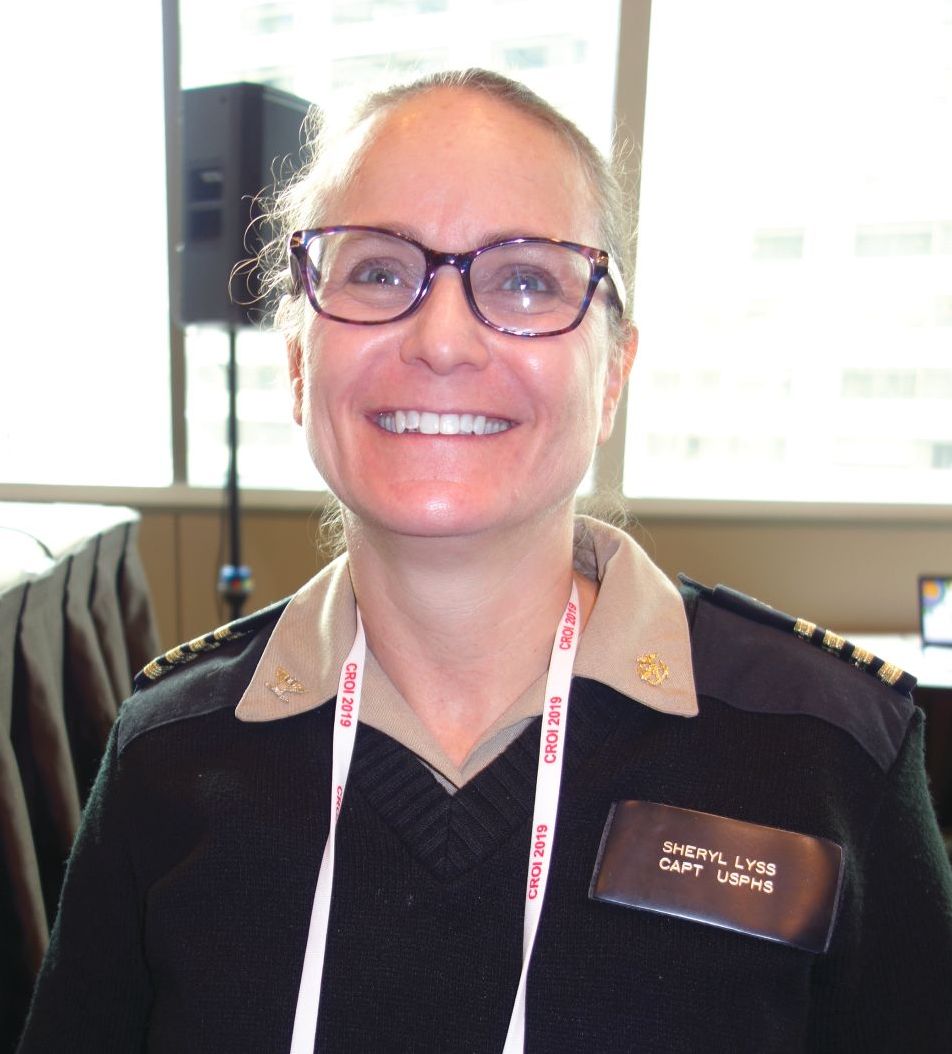
That comes down to screening people for problems, especially in the subgroups identified in the study, and connecting them to drug treatment services. If HIV and substance disorder services were in the same clinic it would help, as would an increase in the number of buprenorphine providers, according to Sheryl B. Lyss, PhD, a coinvestigator and CDC epidemiologist.
“Obviously, when substance use is addressed, people can be much more adherent with their [HIV] medications,” she noted.
The work was funded by the Centers for Disease Control and Prevention. The investigators had no relevant disclosures.
SOURCE: Bosh KA et al. CROI 2019, Abstract 147.
SEATTLE – People with HIV are more likely to die from an opioid overdose than the general public, according to investigators from the Centers for Disease Control and Prevention.
“We looked into this because we know persons with HIV are more likely to have chronic pain and more likely to receive opioid analgesic treatments, and receive higher doses. In addition, they are more likely to have substance use disorders and mental illness than the U.S. general populations,” CDC epidemiologist Karin A. Bosh, PhD, said at the Conference on Retroviruses and Opportunistic Infections.
To see how that played out in terms of unintentional opioid overdose deaths, they turned to the National HIV Surveillance System and focused on overdose deaths during 2011-2015, the latest data available at the time of the work.
There were 1,363 overdose deaths among persons with HIV during that period, with the rate increasing 42.7% – from 23.2/100,000 HIV patients in 2011 to 33.1/100,000 in 2015.
Although the rate of increase was comparable to the general population, the crude rate was “actually substantially higher among persons with HIV,” Dr. Bosh said. Deaths were highest among persons aged 50-59 years (41.9/100,000), whites (49.1/100,000), injection drug users (137.4/100,000), and people who live in the Northeast (60.6/100,000).
Surprisingly, there was no increase in the rate of overdose deaths among HIV patients on the West Coast, possibly because heroin there was less likely to be cut with fentanyl.
Also, the rate of opioid overdose deaths was higher among women with HIV (35.2/100,000) than among men, perhaps because women are more likely to contract HIV by injection drug use, so they are more likely to be injection drug users at baseline, while the vast majority of men are infected through male-male sex, the investigators said.
The findings underscore the importance of intensifying overdose prevention in the HIV community, and better integrating HIV and substance use disorder treatment, they concluded.
That comes down to screening people for problems, especially in the subgroups identified in the study, and connecting them to drug treatment services. If HIV and substance disorder services were in the same clinic it would help, as would an increase in the number of buprenorphine providers, according to Sheryl B. Lyss, PhD, a coinvestigator and CDC epidemiologist.
“Obviously, when substance use is addressed, people can be much more adherent with their [HIV] medications,” she noted.
The work was funded by the Centers for Disease Control and Prevention. The investigators had no relevant disclosures.
SOURCE: Bosh KA et al. CROI 2019, Abstract 147.
SEATTLE – People with HIV are more likely to die from an opioid overdose than the general public, according to investigators from the Centers for Disease Control and Prevention.
“We looked into this because we know persons with HIV are more likely to have chronic pain and more likely to receive opioid analgesic treatments, and receive higher doses. In addition, they are more likely to have substance use disorders and mental illness than the U.S. general populations,” CDC epidemiologist Karin A. Bosh, PhD, said at the Conference on Retroviruses and Opportunistic Infections.
To see how that played out in terms of unintentional opioid overdose deaths, they turned to the National HIV Surveillance System and focused on overdose deaths during 2011-2015, the latest data available at the time of the work.
There were 1,363 overdose deaths among persons with HIV during that period, with the rate increasing 42.7% – from 23.2/100,000 HIV patients in 2011 to 33.1/100,000 in 2015.
Although the rate of increase was comparable to the general population, the crude rate was “actually substantially higher among persons with HIV,” Dr. Bosh said. Deaths were highest among persons aged 50-59 years (41.9/100,000), whites (49.1/100,000), injection drug users (137.4/100,000), and people who live in the Northeast (60.6/100,000).
Surprisingly, there was no increase in the rate of overdose deaths among HIV patients on the West Coast, possibly because heroin there was less likely to be cut with fentanyl.
Also, the rate of opioid overdose deaths was higher among women with HIV (35.2/100,000) than among men, perhaps because women are more likely to contract HIV by injection drug use, so they are more likely to be injection drug users at baseline, while the vast majority of men are infected through male-male sex, the investigators said.
The findings underscore the importance of intensifying overdose prevention in the HIV community, and better integrating HIV and substance use disorder treatment, they concluded.
That comes down to screening people for problems, especially in the subgroups identified in the study, and connecting them to drug treatment services. If HIV and substance disorder services were in the same clinic it would help, as would an increase in the number of buprenorphine providers, according to Sheryl B. Lyss, PhD, a coinvestigator and CDC epidemiologist.
“Obviously, when substance use is addressed, people can be much more adherent with their [HIV] medications,” she noted.
The work was funded by the Centers for Disease Control and Prevention. The investigators had no relevant disclosures.
SOURCE: Bosh KA et al. CROI 2019, Abstract 147.
REPORTING FROM CROI 2019
HDACi, HMA combo improves survival for older AML patients
For patients older than 65 years with newly diagnosed acute myeloid leukemia (AML) who were ineligible for standard induction therapy, adding the investigational pan-histone deacetylase (pan-HDAC) inhibitor pracinostat to azacitidine resulted in better complete remission and overall survival rates than azacitidine alone, results of a multicenter phase 2 trial showed.
Among 50 patients treated with the combination, 26 (52%) achieved the primary endpoint of either a complete remission (CR), CR with incomplete recovery of blood counts (CRi), or morphologic leukemia-free state (MLFS).
The median overall survival (OS) was 19.1 months, which compares favorably with historical data on similar patients treated with single-agent azacitidine, reported Guillermo Garcia-Manero, MD, from the University of Texas MD Anderson Cancer Center in Houston and his colleagues.
“[T]his study shows that pracinostat in combination with azacitidine has the potential to be a safe and effective regimen in the frontline treatment of older patients with AML unfit for [induction chemotherapy],” they wrote in Blood Advances.
Pracinostat is an oral pan-HDAC inhibitor that has been shown to have modest activity against AML as a single agent, but synergistic activity when combined with hypomethylating agent azacitidine, a standard of care for older patients with AML in the trial.
The investigators enrolled 50 patients with a median age of 75 years (range, 66-84 years). The cohort included 33 patients with de novo AML, 12 with AML secondary to myelodysplasia syndrome or myleoproliferative neoplasia, and five with therapy-related AML.
The patients were treated with pracinostat 60 mg daily for 3 days each week for 3 consecutive weeks in addition to azacitidine 75 mg/m2 daily for 7 days in a 28-day cycle.
As noted, 26 patients reached the clinical endpoint, including 21 with a CR, 2 with a CRi, and 3 with MLFS. Additionally, two patients had a partial response (PR) and four had a PR with incomplete recovery of blood counts.
The median OS was 19.1 months, and the median progression-free survival (PFS) was 12.6 months. The 1-year OS rate was 62%. The 60-day mortality rate was 10%.
The authors noted that the survival data were superior to those seen in the phase 3 AZA-AML-001 study, which compared azacitidine therapy with conventional regimens in patients older than 65 years with newly diagnosed AML who were not eligible for stem cell transplants. In that trial, median OS was 10.4 months, the CR rate was 19.5% (vs. 49% in the present study), the 1-year OS rate was 46.5%, and the 60-day mortality rate was 16.2%.
They acknowledged, however, that the validity of the comparison is limited by their study’s small sample size, potential differences between the study populations, and lack of a control group in the present study. The investigators also found that clearance rates of baseline somatic mutations correlated with response to treatment.
Grade 3 or greater treatment-emergent adverse events occurred in 43 of the 50 patients, including infections, thrombocytopenias, and febrile neutropenias.
“On the basis of these encouraging results, a phase 3, multicenter, double-blind, randomized study of pracinostat vs. placebo with azacitidine (NCT03151408) is currently ongoing to confirm superiority of the combination in this difficult-to-treat AML population,” the investigators wrote.
The study was supported by research funding from MEI Pharma, which helped develop pracinostat. Dr. Garcia-Manero reported having no disclosures. Multiple coauthors reported financial relationships with MEI and others. One coauthor is an MEI employee.
SOURCE: Garcia-Manero G et al. Blood Adv. 2019 Feb 26;3(4):508-18.
For patients older than 65 years with newly diagnosed acute myeloid leukemia (AML) who were ineligible for standard induction therapy, adding the investigational pan-histone deacetylase (pan-HDAC) inhibitor pracinostat to azacitidine resulted in better complete remission and overall survival rates than azacitidine alone, results of a multicenter phase 2 trial showed.
Among 50 patients treated with the combination, 26 (52%) achieved the primary endpoint of either a complete remission (CR), CR with incomplete recovery of blood counts (CRi), or morphologic leukemia-free state (MLFS).
The median overall survival (OS) was 19.1 months, which compares favorably with historical data on similar patients treated with single-agent azacitidine, reported Guillermo Garcia-Manero, MD, from the University of Texas MD Anderson Cancer Center in Houston and his colleagues.
“[T]his study shows that pracinostat in combination with azacitidine has the potential to be a safe and effective regimen in the frontline treatment of older patients with AML unfit for [induction chemotherapy],” they wrote in Blood Advances.
Pracinostat is an oral pan-HDAC inhibitor that has been shown to have modest activity against AML as a single agent, but synergistic activity when combined with hypomethylating agent azacitidine, a standard of care for older patients with AML in the trial.
The investigators enrolled 50 patients with a median age of 75 years (range, 66-84 years). The cohort included 33 patients with de novo AML, 12 with AML secondary to myelodysplasia syndrome or myleoproliferative neoplasia, and five with therapy-related AML.
The patients were treated with pracinostat 60 mg daily for 3 days each week for 3 consecutive weeks in addition to azacitidine 75 mg/m2 daily for 7 days in a 28-day cycle.
As noted, 26 patients reached the clinical endpoint, including 21 with a CR, 2 with a CRi, and 3 with MLFS. Additionally, two patients had a partial response (PR) and four had a PR with incomplete recovery of blood counts.
The median OS was 19.1 months, and the median progression-free survival (PFS) was 12.6 months. The 1-year OS rate was 62%. The 60-day mortality rate was 10%.
The authors noted that the survival data were superior to those seen in the phase 3 AZA-AML-001 study, which compared azacitidine therapy with conventional regimens in patients older than 65 years with newly diagnosed AML who were not eligible for stem cell transplants. In that trial, median OS was 10.4 months, the CR rate was 19.5% (vs. 49% in the present study), the 1-year OS rate was 46.5%, and the 60-day mortality rate was 16.2%.
They acknowledged, however, that the validity of the comparison is limited by their study’s small sample size, potential differences between the study populations, and lack of a control group in the present study. The investigators also found that clearance rates of baseline somatic mutations correlated with response to treatment.
Grade 3 or greater treatment-emergent adverse events occurred in 43 of the 50 patients, including infections, thrombocytopenias, and febrile neutropenias.
“On the basis of these encouraging results, a phase 3, multicenter, double-blind, randomized study of pracinostat vs. placebo with azacitidine (NCT03151408) is currently ongoing to confirm superiority of the combination in this difficult-to-treat AML population,” the investigators wrote.
The study was supported by research funding from MEI Pharma, which helped develop pracinostat. Dr. Garcia-Manero reported having no disclosures. Multiple coauthors reported financial relationships with MEI and others. One coauthor is an MEI employee.
SOURCE: Garcia-Manero G et al. Blood Adv. 2019 Feb 26;3(4):508-18.
For patients older than 65 years with newly diagnosed acute myeloid leukemia (AML) who were ineligible for standard induction therapy, adding the investigational pan-histone deacetylase (pan-HDAC) inhibitor pracinostat to azacitidine resulted in better complete remission and overall survival rates than azacitidine alone, results of a multicenter phase 2 trial showed.
Among 50 patients treated with the combination, 26 (52%) achieved the primary endpoint of either a complete remission (CR), CR with incomplete recovery of blood counts (CRi), or morphologic leukemia-free state (MLFS).
The median overall survival (OS) was 19.1 months, which compares favorably with historical data on similar patients treated with single-agent azacitidine, reported Guillermo Garcia-Manero, MD, from the University of Texas MD Anderson Cancer Center in Houston and his colleagues.
“[T]his study shows that pracinostat in combination with azacitidine has the potential to be a safe and effective regimen in the frontline treatment of older patients with AML unfit for [induction chemotherapy],” they wrote in Blood Advances.
Pracinostat is an oral pan-HDAC inhibitor that has been shown to have modest activity against AML as a single agent, but synergistic activity when combined with hypomethylating agent azacitidine, a standard of care for older patients with AML in the trial.
The investigators enrolled 50 patients with a median age of 75 years (range, 66-84 years). The cohort included 33 patients with de novo AML, 12 with AML secondary to myelodysplasia syndrome or myleoproliferative neoplasia, and five with therapy-related AML.
The patients were treated with pracinostat 60 mg daily for 3 days each week for 3 consecutive weeks in addition to azacitidine 75 mg/m2 daily for 7 days in a 28-day cycle.
As noted, 26 patients reached the clinical endpoint, including 21 with a CR, 2 with a CRi, and 3 with MLFS. Additionally, two patients had a partial response (PR) and four had a PR with incomplete recovery of blood counts.
The median OS was 19.1 months, and the median progression-free survival (PFS) was 12.6 months. The 1-year OS rate was 62%. The 60-day mortality rate was 10%.
The authors noted that the survival data were superior to those seen in the phase 3 AZA-AML-001 study, which compared azacitidine therapy with conventional regimens in patients older than 65 years with newly diagnosed AML who were not eligible for stem cell transplants. In that trial, median OS was 10.4 months, the CR rate was 19.5% (vs. 49% in the present study), the 1-year OS rate was 46.5%, and the 60-day mortality rate was 16.2%.
They acknowledged, however, that the validity of the comparison is limited by their study’s small sample size, potential differences between the study populations, and lack of a control group in the present study. The investigators also found that clearance rates of baseline somatic mutations correlated with response to treatment.
Grade 3 or greater treatment-emergent adverse events occurred in 43 of the 50 patients, including infections, thrombocytopenias, and febrile neutropenias.
“On the basis of these encouraging results, a phase 3, multicenter, double-blind, randomized study of pracinostat vs. placebo with azacitidine (NCT03151408) is currently ongoing to confirm superiority of the combination in this difficult-to-treat AML population,” the investigators wrote.
The study was supported by research funding from MEI Pharma, which helped develop pracinostat. Dr. Garcia-Manero reported having no disclosures. Multiple coauthors reported financial relationships with MEI and others. One coauthor is an MEI employee.
SOURCE: Garcia-Manero G et al. Blood Adv. 2019 Feb 26;3(4):508-18.
FROM BLOOD ADVANCES
Alzheimer’s update: George Grossberg
Dr. Grossberg is the Samuel W. Fordyce professor and director of geriatric psychiatry at Saint Louis University.
And later, Dr. RK talks MDQ.
You can find more from Dr. Grossberg, including videos and articles, by clicking here.
Amazon
Apple Podcasts
Google Podcasts
Spotify
Dr. Grossberg is the Samuel W. Fordyce professor and director of geriatric psychiatry at Saint Louis University.
And later, Dr. RK talks MDQ.
You can find more from Dr. Grossberg, including videos and articles, by clicking here.
Amazon
Apple Podcasts
Google Podcasts
Spotify
Dr. Grossberg is the Samuel W. Fordyce professor and director of geriatric psychiatry at Saint Louis University.
And later, Dr. RK talks MDQ.
You can find more from Dr. Grossberg, including videos and articles, by clicking here.
Amazon
Apple Podcasts
Google Podcasts
Spotify

Aspirin and lower risk of COPD flare-up
Also today, how to handle patients who won’t believe negative drug-allergy results, which complications to watch for in black patients who undergo bariatric surgery, and the measles outbreak now affects a dozen U.S. states.
Amazon Alexa
Apple Podcasts
Google Podcasts
Spotify
Also today, how to handle patients who won’t believe negative drug-allergy results, which complications to watch for in black patients who undergo bariatric surgery, and the measles outbreak now affects a dozen U.S. states.
Amazon Alexa
Apple Podcasts
Google Podcasts
Spotify
Also today, how to handle patients who won’t believe negative drug-allergy results, which complications to watch for in black patients who undergo bariatric surgery, and the measles outbreak now affects a dozen U.S. states.
Amazon Alexa
Apple Podcasts
Google Podcasts
Spotify

Funduscopy: Critical to the Right Diagnosis
It is always good to look the patient in the eye, say researchers from Texas Tech University in Odessa, Texas, and Centro Policlinico Valencia in Venezuela. They report on the case of a patient with atheroembolism, a “rare but feared complication of arteriography.” Most commonly, it affects small-diameter vessels in the skin and kidneys.
The patient, a 69-year-old man, had a history of hypertension, type 2 diabetes, and unstable angina; he had a drug-eluting stent placed in the left anterior descending coronary artery 10 days before he was admitted to the hospital. He arrived at the emergency department with intense abdominal pain, nausea, vomiting, oliguria, and pain in his legs and feet.
Physical examination revealed livedo reticularis (which is caused by small blood clots) in his left foot, and a tender abdomen. His creatinine and blood urea nitrogen levels were increased. Funduscopy showed a Hollenhorst crystal in the right inferotemporal quadrant.
He was treated with methylprednisolone, which improved the abdominal symptoms, renal function, and skin findings; then prednisone. His initial symptoms resolved over the next year.
The clinicians say the usual treatment for atheroembolism is supportive and depends on the affected organ. To their knowledge, they say, no formal studies have evaluated the use of anti-inflammatory therapies for this complication.
Funduscopy was an essential part of their examination, the researchers note, and spared the patient from invasive diagnostic studies such as biopsies. They also say that contrast-induced renal failure might have been the cause of the majority of his symptoms, but the combination of physical exam and differential diagnosis led them to the appropriate cause, as well as allowing for opportune treatment.
It is always good to look the patient in the eye, say researchers from Texas Tech University in Odessa, Texas, and Centro Policlinico Valencia in Venezuela. They report on the case of a patient with atheroembolism, a “rare but feared complication of arteriography.” Most commonly, it affects small-diameter vessels in the skin and kidneys.
The patient, a 69-year-old man, had a history of hypertension, type 2 diabetes, and unstable angina; he had a drug-eluting stent placed in the left anterior descending coronary artery 10 days before he was admitted to the hospital. He arrived at the emergency department with intense abdominal pain, nausea, vomiting, oliguria, and pain in his legs and feet.
Physical examination revealed livedo reticularis (which is caused by small blood clots) in his left foot, and a tender abdomen. His creatinine and blood urea nitrogen levels were increased. Funduscopy showed a Hollenhorst crystal in the right inferotemporal quadrant.
He was treated with methylprednisolone, which improved the abdominal symptoms, renal function, and skin findings; then prednisone. His initial symptoms resolved over the next year.
The clinicians say the usual treatment for atheroembolism is supportive and depends on the affected organ. To their knowledge, they say, no formal studies have evaluated the use of anti-inflammatory therapies for this complication.
Funduscopy was an essential part of their examination, the researchers note, and spared the patient from invasive diagnostic studies such as biopsies. They also say that contrast-induced renal failure might have been the cause of the majority of his symptoms, but the combination of physical exam and differential diagnosis led them to the appropriate cause, as well as allowing for opportune treatment.
It is always good to look the patient in the eye, say researchers from Texas Tech University in Odessa, Texas, and Centro Policlinico Valencia in Venezuela. They report on the case of a patient with atheroembolism, a “rare but feared complication of arteriography.” Most commonly, it affects small-diameter vessels in the skin and kidneys.
The patient, a 69-year-old man, had a history of hypertension, type 2 diabetes, and unstable angina; he had a drug-eluting stent placed in the left anterior descending coronary artery 10 days before he was admitted to the hospital. He arrived at the emergency department with intense abdominal pain, nausea, vomiting, oliguria, and pain in his legs and feet.
Physical examination revealed livedo reticularis (which is caused by small blood clots) in his left foot, and a tender abdomen. His creatinine and blood urea nitrogen levels were increased. Funduscopy showed a Hollenhorst crystal in the right inferotemporal quadrant.
He was treated with methylprednisolone, which improved the abdominal symptoms, renal function, and skin findings; then prednisone. His initial symptoms resolved over the next year.
The clinicians say the usual treatment for atheroembolism is supportive and depends on the affected organ. To their knowledge, they say, no formal studies have evaluated the use of anti-inflammatory therapies for this complication.
Funduscopy was an essential part of their examination, the researchers note, and spared the patient from invasive diagnostic studies such as biopsies. They also say that contrast-induced renal failure might have been the cause of the majority of his symptoms, but the combination of physical exam and differential diagnosis led them to the appropriate cause, as well as allowing for opportune treatment.
HHS Updates Decontamination Guidance With New Research
With help from researchers from the University of Hertfordshire in the United Kingdom, The US Department of Health and Human Services (HHS) has updated guidance on how best to decontaminate after mass chemical exposure. This second edition of Primary Response Incident Scene Management (PRISM) incorporates new scientific evidence on emergency self-decontamination, hair decontamination, and the interactions of chemicals with hair.
The goal of working with the University of Hertfordshire was to help emergency managers and first responders make “fundamental and fast decisions on how to save the greatest number of lives in chemical emergencies,” says Rick Bright, PhD, director of the Biomedical Advanced Research and Development Authority (BARDA).
The study included a large-scale exercise in which > 80 volunteers were dosed with a chemical warfare agent simulant to quantify the efficacy of different forms of decontamination.
Notably, the research demonstrates that immediate “dry” decontamination—wiping down the victim with any absorbent material (eg, toilet paper, paper towels, wound dressings) can be highly effective on its own and can be done by affected individuals themselves under the instruction of first responders. The dry decontamination step removes up to 99% of contamination and minimizes the accumulation of hazardous material in the subsequent steps.
The new guidance also expands on the effects of the “triple protocol,” a combined decontamination strategy. The 3 steps of that protocol—dry decontamination, wet decontamination using water deluges from fire trucks, and technical decontamination—have been shown to remove 99.9% of chemical contamination. Moreover, the latest clinical evidence indicates that the 3-step approach is faster and more effective than traditional methods for treating chemically contaminated patients.
The guideline also addresses how communities can prepare for chemical emergencies and what to do after the event, such as providing washcloths, towels, blankets, and temporary clothing.
Federal experts and the researchers devised the Algorithm Suggesting Proportionate Incident Response Engagement (ASPIRE), a decision-support tool to help emergency management planners and responders decide which decontamination approach suits a given situation. Using the algorithm, they can tailor plans and responses based on the chemical and type of exposure, how quickly the chemical evaporates, and the amount of time passed since exposure.
ASPIRE and the guidance are integrated into the Chemical Hazards Emergency Medical Management (CHEMM), a web-based resource and suite of preparedness and emergency response tools. The developers also plan to incorporate them into a mobile app.
PRISM is available at www.medicalcountermeasures.gov.
With help from researchers from the University of Hertfordshire in the United Kingdom, The US Department of Health and Human Services (HHS) has updated guidance on how best to decontaminate after mass chemical exposure. This second edition of Primary Response Incident Scene Management (PRISM) incorporates new scientific evidence on emergency self-decontamination, hair decontamination, and the interactions of chemicals with hair.
The goal of working with the University of Hertfordshire was to help emergency managers and first responders make “fundamental and fast decisions on how to save the greatest number of lives in chemical emergencies,” says Rick Bright, PhD, director of the Biomedical Advanced Research and Development Authority (BARDA).
The study included a large-scale exercise in which > 80 volunteers were dosed with a chemical warfare agent simulant to quantify the efficacy of different forms of decontamination.
Notably, the research demonstrates that immediate “dry” decontamination—wiping down the victim with any absorbent material (eg, toilet paper, paper towels, wound dressings) can be highly effective on its own and can be done by affected individuals themselves under the instruction of first responders. The dry decontamination step removes up to 99% of contamination and minimizes the accumulation of hazardous material in the subsequent steps.
The new guidance also expands on the effects of the “triple protocol,” a combined decontamination strategy. The 3 steps of that protocol—dry decontamination, wet decontamination using water deluges from fire trucks, and technical decontamination—have been shown to remove 99.9% of chemical contamination. Moreover, the latest clinical evidence indicates that the 3-step approach is faster and more effective than traditional methods for treating chemically contaminated patients.
The guideline also addresses how communities can prepare for chemical emergencies and what to do after the event, such as providing washcloths, towels, blankets, and temporary clothing.
Federal experts and the researchers devised the Algorithm Suggesting Proportionate Incident Response Engagement (ASPIRE), a decision-support tool to help emergency management planners and responders decide which decontamination approach suits a given situation. Using the algorithm, they can tailor plans and responses based on the chemical and type of exposure, how quickly the chemical evaporates, and the amount of time passed since exposure.
ASPIRE and the guidance are integrated into the Chemical Hazards Emergency Medical Management (CHEMM), a web-based resource and suite of preparedness and emergency response tools. The developers also plan to incorporate them into a mobile app.
PRISM is available at www.medicalcountermeasures.gov.
With help from researchers from the University of Hertfordshire in the United Kingdom, The US Department of Health and Human Services (HHS) has updated guidance on how best to decontaminate after mass chemical exposure. This second edition of Primary Response Incident Scene Management (PRISM) incorporates new scientific evidence on emergency self-decontamination, hair decontamination, and the interactions of chemicals with hair.
The goal of working with the University of Hertfordshire was to help emergency managers and first responders make “fundamental and fast decisions on how to save the greatest number of lives in chemical emergencies,” says Rick Bright, PhD, director of the Biomedical Advanced Research and Development Authority (BARDA).
The study included a large-scale exercise in which > 80 volunteers were dosed with a chemical warfare agent simulant to quantify the efficacy of different forms of decontamination.
Notably, the research demonstrates that immediate “dry” decontamination—wiping down the victim with any absorbent material (eg, toilet paper, paper towels, wound dressings) can be highly effective on its own and can be done by affected individuals themselves under the instruction of first responders. The dry decontamination step removes up to 99% of contamination and minimizes the accumulation of hazardous material in the subsequent steps.
The new guidance also expands on the effects of the “triple protocol,” a combined decontamination strategy. The 3 steps of that protocol—dry decontamination, wet decontamination using water deluges from fire trucks, and technical decontamination—have been shown to remove 99.9% of chemical contamination. Moreover, the latest clinical evidence indicates that the 3-step approach is faster and more effective than traditional methods for treating chemically contaminated patients.
The guideline also addresses how communities can prepare for chemical emergencies and what to do after the event, such as providing washcloths, towels, blankets, and temporary clothing.
Federal experts and the researchers devised the Algorithm Suggesting Proportionate Incident Response Engagement (ASPIRE), a decision-support tool to help emergency management planners and responders decide which decontamination approach suits a given situation. Using the algorithm, they can tailor plans and responses based on the chemical and type of exposure, how quickly the chemical evaporates, and the amount of time passed since exposure.
ASPIRE and the guidance are integrated into the Chemical Hazards Emergency Medical Management (CHEMM), a web-based resource and suite of preparedness and emergency response tools. The developers also plan to incorporate them into a mobile app.
PRISM is available at www.medicalcountermeasures.gov.
Military Doctors In Crosshairs of a Budget Battle
The move inside the military coincides with efforts by the Trump administration to privatize care for veterans. The Department of Veterans Affairs in February proposed rules that would allow veterans to use private hospitals and clinics if government primary care facilities are not nearby or if they have to wait too long for an appointment.
Shrinking the medical corps within the armed forces is proving more contentious and complex. In 2017, a Republican-controlled Congress mandated changes in what a Senate Armed Services Committee report described as “an under-performing, disjointed health system” with “bloated medical headquarters staffs” and “inevitable turf wars.” The directive sought a greater emphasis for military doctors on combat-related needs while transferring other care to civilian providers.
Details of reductions have yet to be finalized, a military spokeswoman said. But within the system and among alumni, trepidation has increased since Military.com, an online military and veterans organization, reported in January that the Department of Defense had drafted proposals to convert more than 17,000 medical positions into fighting and support positions – a 13 percent reduction in medical personnel.
“That would be a drastic first cut,” said Dr. David Lane, a retired rear admiral and former director of the Walter Reed National Military Medical Center in Bethesda, Md.
At most risk in the current planning are positions that aren’t considered essential to troops overseas, such as training spots for new doctors and jobs that can be outsourced to private physicians and hospitals – obstetricians and primary care doctors, for example. The reductions may also limit the military’s medical humanitarian assistance and relief for foreign natural disasters and disease outbreaks.
Even in war zones, Lane warned, it would be a mistake to downplay the importance of contributions by doctors who do not specialize in trauma. In the 1991 invasion of Kuwait, for instance, cases of diseases and non-battle injuries rather than combat injuries created the most medical work, he said.
Doctors who train in the military’s highly regarded medical school – who have committed to serve in the armed forces after training – and those who do military residencies account for much of the staff serving troops overseas. A major deployment could leave the military flatfooted, said Dr. John Prescott, a former Army physician.
“The majority of folks in the military don’t stay in for their whole career, they stay in for a few years,” Prescott said. “I’m concerned there will be a very small cohort that will be available for deployment in the future.”
The military health system is responsible for more than 1.4 million active-duty and 331,000 reserve personnel, with 54 hospitals and 377 military clinics around the world. Split among the Navy, Army and Air Force, each with its own doctors and hospitals, the service has been targeted for years for overhaul to reduce redundancies and save costs.
The department has already started moving administrative functions under one bureaucracy, called the Defense Health Agency, which is slated to take over the service branch hospitals in 2021.
The budget for the next fiscal year is still being developed and final decisions have not yet been made, a Department of Defense spokeswoman, Lt. Col. Carla Gleason, said in an email. “Any reforms that do result will be driven by the Department’s efforts to ensure our medical personnel are ready to provide battlefield care in support of our forces, and to provide the outstanding medical benefits that Service members, retirees and their families deserve,” she said.
For years, critics of the broad role of the military health services have argued that many medical corps services – such as maternity care and pediatrics on bases – could be provided more effectively by civilian doctors and hospitals.
But Lane said there is too much focus on the high-profile trauma cases on the battlefield “that at the end of the day are a small portion” of medical care. “When we’re trying to put things back together that got broken during a war,” he said, “that’s what you need the most of – pediatricians, public health doctors, primary care doctors.”
Some studies commissioned by the department have concluded private hospitals could deliver less costly care, in part because doctors at hospitals take care of more patients. But the Congressional Budget Office said savings were not at all certain and that military hospitals might be less expensive if the government arranged for greater use of them.
Brad Carson and Morgan Plummer, who held senior jobs in the Department of Defense during President Barack Obama’s administration, argued in a 2016 essay that the military isn’t the best training for surgeons because it doesn’t provide them with a sufficient number of cases to develop expertise.
The military health system “has too much infrastructure, the wrong mix of providers, and predominantly serves the needs of beneficiaries who could easily have their health care needs satisfied by civilian providers at far less cost and with equal or better quality,” they wrote.
The government this year is spending $50 billion on the military health system, including Tricare insurance for more than 9 million active-duty service members, veterans, families and survivors, according to Congress’ budget office. That is roughly a tenth of the military budget. The CBO projected costs are on track to increase to $63 billion in 2033.
Defenders of the system reject the idea that non-wartime jobs can be eliminated without it hurting that core mission.
“Military health care providers between deployments maintain their clinical skills by treating service members and millions of beneficiaries,” Dr. Arthur Kellermann, dean of the school of medicine at the Uniformed Services University in Bethesda, wrote in a 2017 Health Affairs article. “Military hospitals provide valuable platforms for teaching the next generation of uniformed health care professionals and standby capacity for combat casualties.”
Prescott, the former Army doctor, said that the military may have trouble turning to civilian doctors in some regions given physician shortages, which he said the military cuts would exacerbate.
“Most hospitals are already pretty full, most health care providers are pretty busy,” said Prescott, now chief academic officer at the Association of American Medical Colleges.
Doctor shortages would increase if the military cut the slots it now has to train doctors, because there wouldn’t be new civilian residencies created to compensate. “Those positions basically disappear,” he said.
Kathryn Beasley, a retired Navy captain who is director of government relations for health affairs at the Military Officers Association of America, said she was also concerned with unforeseen consequences of dramatic cuts.
“Everything’s tied together, there’s a lot of interdependencies in these things,” she said. “You pull a string on one and you might feel it in an area you don’t expect.”
Kaiser Health News is a nonprofit national health policy news service. It is an editorially independent program of the Henry J. Kaiser Family Foundation that is not affiliated with Kaiser Permanente.
The move inside the military coincides with efforts by the Trump administration to privatize care for veterans. The Department of Veterans Affairs in February proposed rules that would allow veterans to use private hospitals and clinics if government primary care facilities are not nearby or if they have to wait too long for an appointment.
Shrinking the medical corps within the armed forces is proving more contentious and complex. In 2017, a Republican-controlled Congress mandated changes in what a Senate Armed Services Committee report described as “an under-performing, disjointed health system” with “bloated medical headquarters staffs” and “inevitable turf wars.” The directive sought a greater emphasis for military doctors on combat-related needs while transferring other care to civilian providers.
Details of reductions have yet to be finalized, a military spokeswoman said. But within the system and among alumni, trepidation has increased since Military.com, an online military and veterans organization, reported in January that the Department of Defense had drafted proposals to convert more than 17,000 medical positions into fighting and support positions – a 13 percent reduction in medical personnel.
“That would be a drastic first cut,” said Dr. David Lane, a retired rear admiral and former director of the Walter Reed National Military Medical Center in Bethesda, Md.
At most risk in the current planning are positions that aren’t considered essential to troops overseas, such as training spots for new doctors and jobs that can be outsourced to private physicians and hospitals – obstetricians and primary care doctors, for example. The reductions may also limit the military’s medical humanitarian assistance and relief for foreign natural disasters and disease outbreaks.
Even in war zones, Lane warned, it would be a mistake to downplay the importance of contributions by doctors who do not specialize in trauma. In the 1991 invasion of Kuwait, for instance, cases of diseases and non-battle injuries rather than combat injuries created the most medical work, he said.
Doctors who train in the military’s highly regarded medical school – who have committed to serve in the armed forces after training – and those who do military residencies account for much of the staff serving troops overseas. A major deployment could leave the military flatfooted, said Dr. John Prescott, a former Army physician.
“The majority of folks in the military don’t stay in for their whole career, they stay in for a few years,” Prescott said. “I’m concerned there will be a very small cohort that will be available for deployment in the future.”
The military health system is responsible for more than 1.4 million active-duty and 331,000 reserve personnel, with 54 hospitals and 377 military clinics around the world. Split among the Navy, Army and Air Force, each with its own doctors and hospitals, the service has been targeted for years for overhaul to reduce redundancies and save costs.
The department has already started moving administrative functions under one bureaucracy, called the Defense Health Agency, which is slated to take over the service branch hospitals in 2021.
The budget for the next fiscal year is still being developed and final decisions have not yet been made, a Department of Defense spokeswoman, Lt. Col. Carla Gleason, said in an email. “Any reforms that do result will be driven by the Department’s efforts to ensure our medical personnel are ready to provide battlefield care in support of our forces, and to provide the outstanding medical benefits that Service members, retirees and their families deserve,” she said.
For years, critics of the broad role of the military health services have argued that many medical corps services – such as maternity care and pediatrics on bases – could be provided more effectively by civilian doctors and hospitals.
But Lane said there is too much focus on the high-profile trauma cases on the battlefield “that at the end of the day are a small portion” of medical care. “When we’re trying to put things back together that got broken during a war,” he said, “that’s what you need the most of – pediatricians, public health doctors, primary care doctors.”
Some studies commissioned by the department have concluded private hospitals could deliver less costly care, in part because doctors at hospitals take care of more patients. But the Congressional Budget Office said savings were not at all certain and that military hospitals might be less expensive if the government arranged for greater use of them.
Brad Carson and Morgan Plummer, who held senior jobs in the Department of Defense during President Barack Obama’s administration, argued in a 2016 essay that the military isn’t the best training for surgeons because it doesn’t provide them with a sufficient number of cases to develop expertise.
The military health system “has too much infrastructure, the wrong mix of providers, and predominantly serves the needs of beneficiaries who could easily have their health care needs satisfied by civilian providers at far less cost and with equal or better quality,” they wrote.
The government this year is spending $50 billion on the military health system, including Tricare insurance for more than 9 million active-duty service members, veterans, families and survivors, according to Congress’ budget office. That is roughly a tenth of the military budget. The CBO projected costs are on track to increase to $63 billion in 2033.
Defenders of the system reject the idea that non-wartime jobs can be eliminated without it hurting that core mission.
“Military health care providers between deployments maintain their clinical skills by treating service members and millions of beneficiaries,” Dr. Arthur Kellermann, dean of the school of medicine at the Uniformed Services University in Bethesda, wrote in a 2017 Health Affairs article. “Military hospitals provide valuable platforms for teaching the next generation of uniformed health care professionals and standby capacity for combat casualties.”
Prescott, the former Army doctor, said that the military may have trouble turning to civilian doctors in some regions given physician shortages, which he said the military cuts would exacerbate.
“Most hospitals are already pretty full, most health care providers are pretty busy,” said Prescott, now chief academic officer at the Association of American Medical Colleges.
Doctor shortages would increase if the military cut the slots it now has to train doctors, because there wouldn’t be new civilian residencies created to compensate. “Those positions basically disappear,” he said.
Kathryn Beasley, a retired Navy captain who is director of government relations for health affairs at the Military Officers Association of America, said she was also concerned with unforeseen consequences of dramatic cuts.
“Everything’s tied together, there’s a lot of interdependencies in these things,” she said. “You pull a string on one and you might feel it in an area you don’t expect.”
Kaiser Health News is a nonprofit national health policy news service. It is an editorially independent program of the Henry J. Kaiser Family Foundation that is not affiliated with Kaiser Permanente.
The move inside the military coincides with efforts by the Trump administration to privatize care for veterans. The Department of Veterans Affairs in February proposed rules that would allow veterans to use private hospitals and clinics if government primary care facilities are not nearby or if they have to wait too long for an appointment.
Shrinking the medical corps within the armed forces is proving more contentious and complex. In 2017, a Republican-controlled Congress mandated changes in what a Senate Armed Services Committee report described as “an under-performing, disjointed health system” with “bloated medical headquarters staffs” and “inevitable turf wars.” The directive sought a greater emphasis for military doctors on combat-related needs while transferring other care to civilian providers.
Details of reductions have yet to be finalized, a military spokeswoman said. But within the system and among alumni, trepidation has increased since Military.com, an online military and veterans organization, reported in January that the Department of Defense had drafted proposals to convert more than 17,000 medical positions into fighting and support positions – a 13 percent reduction in medical personnel.
“That would be a drastic first cut,” said Dr. David Lane, a retired rear admiral and former director of the Walter Reed National Military Medical Center in Bethesda, Md.
At most risk in the current planning are positions that aren’t considered essential to troops overseas, such as training spots for new doctors and jobs that can be outsourced to private physicians and hospitals – obstetricians and primary care doctors, for example. The reductions may also limit the military’s medical humanitarian assistance and relief for foreign natural disasters and disease outbreaks.
Even in war zones, Lane warned, it would be a mistake to downplay the importance of contributions by doctors who do not specialize in trauma. In the 1991 invasion of Kuwait, for instance, cases of diseases and non-battle injuries rather than combat injuries created the most medical work, he said.
Doctors who train in the military’s highly regarded medical school – who have committed to serve in the armed forces after training – and those who do military residencies account for much of the staff serving troops overseas. A major deployment could leave the military flatfooted, said Dr. John Prescott, a former Army physician.
“The majority of folks in the military don’t stay in for their whole career, they stay in for a few years,” Prescott said. “I’m concerned there will be a very small cohort that will be available for deployment in the future.”
The military health system is responsible for more than 1.4 million active-duty and 331,000 reserve personnel, with 54 hospitals and 377 military clinics around the world. Split among the Navy, Army and Air Force, each with its own doctors and hospitals, the service has been targeted for years for overhaul to reduce redundancies and save costs.
The department has already started moving administrative functions under one bureaucracy, called the Defense Health Agency, which is slated to take over the service branch hospitals in 2021.
The budget for the next fiscal year is still being developed and final decisions have not yet been made, a Department of Defense spokeswoman, Lt. Col. Carla Gleason, said in an email. “Any reforms that do result will be driven by the Department’s efforts to ensure our medical personnel are ready to provide battlefield care in support of our forces, and to provide the outstanding medical benefits that Service members, retirees and their families deserve,” she said.
For years, critics of the broad role of the military health services have argued that many medical corps services – such as maternity care and pediatrics on bases – could be provided more effectively by civilian doctors and hospitals.
But Lane said there is too much focus on the high-profile trauma cases on the battlefield “that at the end of the day are a small portion” of medical care. “When we’re trying to put things back together that got broken during a war,” he said, “that’s what you need the most of – pediatricians, public health doctors, primary care doctors.”
Some studies commissioned by the department have concluded private hospitals could deliver less costly care, in part because doctors at hospitals take care of more patients. But the Congressional Budget Office said savings were not at all certain and that military hospitals might be less expensive if the government arranged for greater use of them.
Brad Carson and Morgan Plummer, who held senior jobs in the Department of Defense during President Barack Obama’s administration, argued in a 2016 essay that the military isn’t the best training for surgeons because it doesn’t provide them with a sufficient number of cases to develop expertise.
The military health system “has too much infrastructure, the wrong mix of providers, and predominantly serves the needs of beneficiaries who could easily have their health care needs satisfied by civilian providers at far less cost and with equal or better quality,” they wrote.
The government this year is spending $50 billion on the military health system, including Tricare insurance for more than 9 million active-duty service members, veterans, families and survivors, according to Congress’ budget office. That is roughly a tenth of the military budget. The CBO projected costs are on track to increase to $63 billion in 2033.
Defenders of the system reject the idea that non-wartime jobs can be eliminated without it hurting that core mission.
“Military health care providers between deployments maintain their clinical skills by treating service members and millions of beneficiaries,” Dr. Arthur Kellermann, dean of the school of medicine at the Uniformed Services University in Bethesda, wrote in a 2017 Health Affairs article. “Military hospitals provide valuable platforms for teaching the next generation of uniformed health care professionals and standby capacity for combat casualties.”
Prescott, the former Army doctor, said that the military may have trouble turning to civilian doctors in some regions given physician shortages, which he said the military cuts would exacerbate.
“Most hospitals are already pretty full, most health care providers are pretty busy,” said Prescott, now chief academic officer at the Association of American Medical Colleges.
Doctor shortages would increase if the military cut the slots it now has to train doctors, because there wouldn’t be new civilian residencies created to compensate. “Those positions basically disappear,” he said.
Kathryn Beasley, a retired Navy captain who is director of government relations for health affairs at the Military Officers Association of America, said she was also concerned with unforeseen consequences of dramatic cuts.
“Everything’s tied together, there’s a lot of interdependencies in these things,” she said. “You pull a string on one and you might feel it in an area you don’t expect.”
Kaiser Health News is a nonprofit national health policy news service. It is an editorially independent program of the Henry J. Kaiser Family Foundation that is not affiliated with Kaiser Permanente.
HM19 Satellite symposia schedule, information
Hepatology News Tonight: Managing complications of cirrhosis
Sunday, March 24
5:30 - 7:30 p.m., National Harbor 4-5
Registration starts at 5:30 p.m. Dinner Symposium 6:00 - 7:30 p.m.
Presenters:Robert S. Brown Jr., MD, MPH (Chair), Gladys and Roland Harriman professor of medicine, vice chair for mentorship and academic development, clinical chief of the division of gastroenterology & hepatology, Weill Cornell Medicine, New York; Kimberly Brown, MD, FAST, FAASLD, AGAF, professor of medicine at Wayne State University and chief of gastroenterology and hepatology and associate medical director, Henry Ford Hospital Transplant Institute, Henry Ford Hospital, both in Detroit; Steven Flamm, MD, FAASLD, FACG, chief, liver transplantation program, and professor of medicine and surgery, Northwestern University, Chicago.
Target Audience: This activity has been designed to meet the educational needs of physicians, advanced practice providers, and allied health professionals who provide care for hospitalized patients with liver disease.
Learning Objectives: After completing this program, participants should be better able to:
- Understand the complications and the consequences of cirrhosis.
- Describe the economic, patient, and caregiver burdens associated with cirrhosis.
- Demonstrate the ability to properly treat the complications of cirrhosis and prevent recurrence.
Accredited by: Rehoboth McKinley Christian Health Care Services
Provided by: Chronic Liver Disease Foundation. Supported by educational grants from Mallinckrodt Pharmaceuticals and Salix Pharmaceuticals.
Accreditation Statement: This activity has been planned and implemented in accordance with the accreditation requirements and policies of the New Mexico Medical Society (NMMS) through the joint providership of Rehoboth McKinley Christian Health Care Services (RMCHCS), the Chronic Liver Disease Foundation, and the Texas Gulf Coast Gastroenterological Society. RMCHCS is accredited by the NMMS to provide continuing medical education for physicians. RMCHCS designates this live activity for a maximum of 1.5 AMA PRA Category 1 Credit(s)™. Physicians should claim only the credit commensurate with the extent of their participation in the activity.
Americans with Disabilities Act: The event staff will be glad to assist you with any special needs (such as physical or dietary).
Registration: www.ChronicLiverDisease.org. On-site registration is available. Space is limited, so please arrive by 5:00 p.m. Seating is on a first-come, first-served basis.
An evidence-based approach to reducing stroke risk in nonvalvular atrial fibrillation
Sunday, March 24
5:30 - 7:30 p.m., Woodrow Wilson BC
Presenter:
Dharmesh Patel, MD, MBBS (London), FACC, FACP, FASPC, FNLA, Stern Cardiovascular Foundation; president of Alliance for Patient Access; past president American Heart Association; past chairman of medicine, Baptist Desoto Hospital, Southaven, Miss.; board member, AHA Southeast America, Memphis, Tenn.
Learning Objectives: This lecture will present options for reducing the risk of stroke in patients with nonvalvular atrial fibrillation.
Sponsored by: Janssen Pharmaceuticals.
Understanding your legal tools: The keys to lawsuit prevention, license protection and tax reduction
Monday, March 25
Noon - 1:00 p.m., National Harbor 2-3
Lunch provided at noon.
Objectives:
- Learn how to protect your license from negative reports to the NPDB following a settlement from your insurance company. If there is no NPD report, it’s unlikely that a board investigation into legal matters will materialize, preventing any sanctions from the state licensing board.
- Learn the best business structure for income tax reduction. Learn about the new tax laws passed in 2018 and how they can benefit you.
- Learn the use of legal tools that will protect your professional and personal assets from lawsuits. (Statistically, not even one in 100,000 are using these tools in the right way.)
- Learn how to protect business, property and personal assets in the event of a judgment in excess of liability insurance.
- Shows how to structure: C-corps, S-corps, FLPs, LLCs, etc.
Faculty: Art McOmber
Sponsored by: Legally Mine.
Evidence-based approach to COPD management: Exploring new guidelines and treatment options for managing COPD exacerbations
Monday, March 257:00 - 9:30 p.m.,
Cherry Blossom Ballroom
Dinner provided at 7:00 p.m.
Learning Objectives: After completing this program, participants should be better able to do the following:
- Discuss considerations for reducing the risk of exacerbations in the inpatient and ambulatory setting.
- Raise awareness of strategies to improve COPD standardization of care across sites of care.
- Evaluate the role of long-acting bronchodilators to treat underlying pathophysiology of exacerbations.
- Understand the importance of inhaler selection when initiating maintenance therapy or reassessing treatment based on disease progression.
Faculty: Haley M. Hoy, PhD, ACNP, FAANP, The University of Alabama Huntsville, Vanderbilt Medical Center.
Sponsored by: Boehringer Ingelheim.
C. difficile infection: A hospitalist’s roadmap to treatment and prevention of recurrence
Monday, March 25
7:00 - 9:00 p.m., National Harbor 2-3
Dinner provided at 7:00 p.m.
Program Overview: Clostridium difficile infection (CDI) places a significant clinical and economic burden on the health care system. The rising incidence of CDI is attributed to the emergence of a previously rare and hypervirulent strain of C. difficile. Increased toxin production and high-level antimicrobial resistance have allowed this strain to thrive in health care settings. Furthermore, populations previously thought to be at low risk of infection are now being identified as having severe CDI, including those without any exposure to health care facilities.
Fortunately, new diagnostic techniques have been developed to assist clinicians in the accurate and rapid detection of these infections. Additionally, new treatment options are available to clinicians for the management of initial and recurrent episodes of CDI. The prevention and management of CDI involve multiple disciplines responsible for the care of at-risk patients. As a key patient advocate in the hospital, the hospitalist can play a major role in ensuring that appropriate measures are in place for their patients at high risk for CDI. Hospitalists also can ensure that timely and appropriate diagnostic tests are performed at the early signs of CDI and that appropriate treatment selection is based on patient factors.
Faculty: William Ford, MD, SFHM, regional director hospital medicine and clinical associate professor of medicine, Abington (Penn.) Jefferson Health; Jason C. Gallagher, PharmD, FCCP, FIDP, FIDSA, BCPS, clinical professor and clinical specialist, infectious diseases, and director, PGY2 Residency in Infectious Diseases Pharmacy, Temple University, Philadelphia; Ciaran P. Kelly, MD, professor of medicine, Harvard Medical School, and director, gastroenterology fellowship training and director, Celiac Center, Beth Israel Deaconess Medical Center, both in Boston.
Registration: www.vemcomeded.com/livemeetings.asp or call 908-704-2400.
Accreditation statement: This activity has been planned and implemented in accordance with the accreditation requirements and policies of the Accreditation Council for Continuing Medical Education through the joint providership of the Center for Independent Healthcare Education (Center) and Vemco MedEd. Center is accredited by the Accreditation Council for Continuing Medical Education to provide continuing medical education for physicians.
Credit designation: Center designates this live activity for a maximum of 1.5 AMA PRA Category 1 Credit(s)™. Physicians should claim only the credit commensurate with the extent of their participation in the activity.
Supported by an educational grant from Merck & Co. Jointly provided by Center for Independent Healthcare Education and Vemco MedEd.
Hepatology News Tonight: Managing complications of cirrhosis
Sunday, March 24
5:30 - 7:30 p.m., National Harbor 4-5
Registration starts at 5:30 p.m. Dinner Symposium 6:00 - 7:30 p.m.
Presenters:Robert S. Brown Jr., MD, MPH (Chair), Gladys and Roland Harriman professor of medicine, vice chair for mentorship and academic development, clinical chief of the division of gastroenterology & hepatology, Weill Cornell Medicine, New York; Kimberly Brown, MD, FAST, FAASLD, AGAF, professor of medicine at Wayne State University and chief of gastroenterology and hepatology and associate medical director, Henry Ford Hospital Transplant Institute, Henry Ford Hospital, both in Detroit; Steven Flamm, MD, FAASLD, FACG, chief, liver transplantation program, and professor of medicine and surgery, Northwestern University, Chicago.
Target Audience: This activity has been designed to meet the educational needs of physicians, advanced practice providers, and allied health professionals who provide care for hospitalized patients with liver disease.
Learning Objectives: After completing this program, participants should be better able to:
- Understand the complications and the consequences of cirrhosis.
- Describe the economic, patient, and caregiver burdens associated with cirrhosis.
- Demonstrate the ability to properly treat the complications of cirrhosis and prevent recurrence.
Accredited by: Rehoboth McKinley Christian Health Care Services
Provided by: Chronic Liver Disease Foundation. Supported by educational grants from Mallinckrodt Pharmaceuticals and Salix Pharmaceuticals.
Accreditation Statement: This activity has been planned and implemented in accordance with the accreditation requirements and policies of the New Mexico Medical Society (NMMS) through the joint providership of Rehoboth McKinley Christian Health Care Services (RMCHCS), the Chronic Liver Disease Foundation, and the Texas Gulf Coast Gastroenterological Society. RMCHCS is accredited by the NMMS to provide continuing medical education for physicians. RMCHCS designates this live activity for a maximum of 1.5 AMA PRA Category 1 Credit(s)™. Physicians should claim only the credit commensurate with the extent of their participation in the activity.
Americans with Disabilities Act: The event staff will be glad to assist you with any special needs (such as physical or dietary).
Registration: www.ChronicLiverDisease.org. On-site registration is available. Space is limited, so please arrive by 5:00 p.m. Seating is on a first-come, first-served basis.
An evidence-based approach to reducing stroke risk in nonvalvular atrial fibrillation
Sunday, March 24
5:30 - 7:30 p.m., Woodrow Wilson BC
Presenter:
Dharmesh Patel, MD, MBBS (London), FACC, FACP, FASPC, FNLA, Stern Cardiovascular Foundation; president of Alliance for Patient Access; past president American Heart Association; past chairman of medicine, Baptist Desoto Hospital, Southaven, Miss.; board member, AHA Southeast America, Memphis, Tenn.
Learning Objectives: This lecture will present options for reducing the risk of stroke in patients with nonvalvular atrial fibrillation.
Sponsored by: Janssen Pharmaceuticals.
Understanding your legal tools: The keys to lawsuit prevention, license protection and tax reduction
Monday, March 25
Noon - 1:00 p.m., National Harbor 2-3
Lunch provided at noon.
Objectives:
- Learn how to protect your license from negative reports to the NPDB following a settlement from your insurance company. If there is no NPD report, it’s unlikely that a board investigation into legal matters will materialize, preventing any sanctions from the state licensing board.
- Learn the best business structure for income tax reduction. Learn about the new tax laws passed in 2018 and how they can benefit you.
- Learn the use of legal tools that will protect your professional and personal assets from lawsuits. (Statistically, not even one in 100,000 are using these tools in the right way.)
- Learn how to protect business, property and personal assets in the event of a judgment in excess of liability insurance.
- Shows how to structure: C-corps, S-corps, FLPs, LLCs, etc.
Faculty: Art McOmber
Sponsored by: Legally Mine.
Evidence-based approach to COPD management: Exploring new guidelines and treatment options for managing COPD exacerbations
Monday, March 257:00 - 9:30 p.m.,
Cherry Blossom Ballroom
Dinner provided at 7:00 p.m.
Learning Objectives: After completing this program, participants should be better able to do the following:
- Discuss considerations for reducing the risk of exacerbations in the inpatient and ambulatory setting.
- Raise awareness of strategies to improve COPD standardization of care across sites of care.
- Evaluate the role of long-acting bronchodilators to treat underlying pathophysiology of exacerbations.
- Understand the importance of inhaler selection when initiating maintenance therapy or reassessing treatment based on disease progression.
Faculty: Haley M. Hoy, PhD, ACNP, FAANP, The University of Alabama Huntsville, Vanderbilt Medical Center.
Sponsored by: Boehringer Ingelheim.
C. difficile infection: A hospitalist’s roadmap to treatment and prevention of recurrence
Monday, March 25
7:00 - 9:00 p.m., National Harbor 2-3
Dinner provided at 7:00 p.m.
Program Overview: Clostridium difficile infection (CDI) places a significant clinical and economic burden on the health care system. The rising incidence of CDI is attributed to the emergence of a previously rare and hypervirulent strain of C. difficile. Increased toxin production and high-level antimicrobial resistance have allowed this strain to thrive in health care settings. Furthermore, populations previously thought to be at low risk of infection are now being identified as having severe CDI, including those without any exposure to health care facilities.
Fortunately, new diagnostic techniques have been developed to assist clinicians in the accurate and rapid detection of these infections. Additionally, new treatment options are available to clinicians for the management of initial and recurrent episodes of CDI. The prevention and management of CDI involve multiple disciplines responsible for the care of at-risk patients. As a key patient advocate in the hospital, the hospitalist can play a major role in ensuring that appropriate measures are in place for their patients at high risk for CDI. Hospitalists also can ensure that timely and appropriate diagnostic tests are performed at the early signs of CDI and that appropriate treatment selection is based on patient factors.
Faculty: William Ford, MD, SFHM, regional director hospital medicine and clinical associate professor of medicine, Abington (Penn.) Jefferson Health; Jason C. Gallagher, PharmD, FCCP, FIDP, FIDSA, BCPS, clinical professor and clinical specialist, infectious diseases, and director, PGY2 Residency in Infectious Diseases Pharmacy, Temple University, Philadelphia; Ciaran P. Kelly, MD, professor of medicine, Harvard Medical School, and director, gastroenterology fellowship training and director, Celiac Center, Beth Israel Deaconess Medical Center, both in Boston.
Registration: www.vemcomeded.com/livemeetings.asp or call 908-704-2400.
Accreditation statement: This activity has been planned and implemented in accordance with the accreditation requirements and policies of the Accreditation Council for Continuing Medical Education through the joint providership of the Center for Independent Healthcare Education (Center) and Vemco MedEd. Center is accredited by the Accreditation Council for Continuing Medical Education to provide continuing medical education for physicians.
Credit designation: Center designates this live activity for a maximum of 1.5 AMA PRA Category 1 Credit(s)™. Physicians should claim only the credit commensurate with the extent of their participation in the activity.
Supported by an educational grant from Merck & Co. Jointly provided by Center for Independent Healthcare Education and Vemco MedEd.
Hepatology News Tonight: Managing complications of cirrhosis
Sunday, March 24
5:30 - 7:30 p.m., National Harbor 4-5
Registration starts at 5:30 p.m. Dinner Symposium 6:00 - 7:30 p.m.
Presenters:Robert S. Brown Jr., MD, MPH (Chair), Gladys and Roland Harriman professor of medicine, vice chair for mentorship and academic development, clinical chief of the division of gastroenterology & hepatology, Weill Cornell Medicine, New York; Kimberly Brown, MD, FAST, FAASLD, AGAF, professor of medicine at Wayne State University and chief of gastroenterology and hepatology and associate medical director, Henry Ford Hospital Transplant Institute, Henry Ford Hospital, both in Detroit; Steven Flamm, MD, FAASLD, FACG, chief, liver transplantation program, and professor of medicine and surgery, Northwestern University, Chicago.
Target Audience: This activity has been designed to meet the educational needs of physicians, advanced practice providers, and allied health professionals who provide care for hospitalized patients with liver disease.
Learning Objectives: After completing this program, participants should be better able to:
- Understand the complications and the consequences of cirrhosis.
- Describe the economic, patient, and caregiver burdens associated with cirrhosis.
- Demonstrate the ability to properly treat the complications of cirrhosis and prevent recurrence.
Accredited by: Rehoboth McKinley Christian Health Care Services
Provided by: Chronic Liver Disease Foundation. Supported by educational grants from Mallinckrodt Pharmaceuticals and Salix Pharmaceuticals.
Accreditation Statement: This activity has been planned and implemented in accordance with the accreditation requirements and policies of the New Mexico Medical Society (NMMS) through the joint providership of Rehoboth McKinley Christian Health Care Services (RMCHCS), the Chronic Liver Disease Foundation, and the Texas Gulf Coast Gastroenterological Society. RMCHCS is accredited by the NMMS to provide continuing medical education for physicians. RMCHCS designates this live activity for a maximum of 1.5 AMA PRA Category 1 Credit(s)™. Physicians should claim only the credit commensurate with the extent of their participation in the activity.
Americans with Disabilities Act: The event staff will be glad to assist you with any special needs (such as physical or dietary).
Registration: www.ChronicLiverDisease.org. On-site registration is available. Space is limited, so please arrive by 5:00 p.m. Seating is on a first-come, first-served basis.
An evidence-based approach to reducing stroke risk in nonvalvular atrial fibrillation
Sunday, March 24
5:30 - 7:30 p.m., Woodrow Wilson BC
Presenter:
Dharmesh Patel, MD, MBBS (London), FACC, FACP, FASPC, FNLA, Stern Cardiovascular Foundation; president of Alliance for Patient Access; past president American Heart Association; past chairman of medicine, Baptist Desoto Hospital, Southaven, Miss.; board member, AHA Southeast America, Memphis, Tenn.
Learning Objectives: This lecture will present options for reducing the risk of stroke in patients with nonvalvular atrial fibrillation.
Sponsored by: Janssen Pharmaceuticals.
Understanding your legal tools: The keys to lawsuit prevention, license protection and tax reduction
Monday, March 25
Noon - 1:00 p.m., National Harbor 2-3
Lunch provided at noon.
Objectives:
- Learn how to protect your license from negative reports to the NPDB following a settlement from your insurance company. If there is no NPD report, it’s unlikely that a board investigation into legal matters will materialize, preventing any sanctions from the state licensing board.
- Learn the best business structure for income tax reduction. Learn about the new tax laws passed in 2018 and how they can benefit you.
- Learn the use of legal tools that will protect your professional and personal assets from lawsuits. (Statistically, not even one in 100,000 are using these tools in the right way.)
- Learn how to protect business, property and personal assets in the event of a judgment in excess of liability insurance.
- Shows how to structure: C-corps, S-corps, FLPs, LLCs, etc.
Faculty: Art McOmber
Sponsored by: Legally Mine.
Evidence-based approach to COPD management: Exploring new guidelines and treatment options for managing COPD exacerbations
Monday, March 257:00 - 9:30 p.m.,
Cherry Blossom Ballroom
Dinner provided at 7:00 p.m.
Learning Objectives: After completing this program, participants should be better able to do the following:
- Discuss considerations for reducing the risk of exacerbations in the inpatient and ambulatory setting.
- Raise awareness of strategies to improve COPD standardization of care across sites of care.
- Evaluate the role of long-acting bronchodilators to treat underlying pathophysiology of exacerbations.
- Understand the importance of inhaler selection when initiating maintenance therapy or reassessing treatment based on disease progression.
Faculty: Haley M. Hoy, PhD, ACNP, FAANP, The University of Alabama Huntsville, Vanderbilt Medical Center.
Sponsored by: Boehringer Ingelheim.
C. difficile infection: A hospitalist’s roadmap to treatment and prevention of recurrence
Monday, March 25
7:00 - 9:00 p.m., National Harbor 2-3
Dinner provided at 7:00 p.m.
Program Overview: Clostridium difficile infection (CDI) places a significant clinical and economic burden on the health care system. The rising incidence of CDI is attributed to the emergence of a previously rare and hypervirulent strain of C. difficile. Increased toxin production and high-level antimicrobial resistance have allowed this strain to thrive in health care settings. Furthermore, populations previously thought to be at low risk of infection are now being identified as having severe CDI, including those without any exposure to health care facilities.
Fortunately, new diagnostic techniques have been developed to assist clinicians in the accurate and rapid detection of these infections. Additionally, new treatment options are available to clinicians for the management of initial and recurrent episodes of CDI. The prevention and management of CDI involve multiple disciplines responsible for the care of at-risk patients. As a key patient advocate in the hospital, the hospitalist can play a major role in ensuring that appropriate measures are in place for their patients at high risk for CDI. Hospitalists also can ensure that timely and appropriate diagnostic tests are performed at the early signs of CDI and that appropriate treatment selection is based on patient factors.
Faculty: William Ford, MD, SFHM, regional director hospital medicine and clinical associate professor of medicine, Abington (Penn.) Jefferson Health; Jason C. Gallagher, PharmD, FCCP, FIDP, FIDSA, BCPS, clinical professor and clinical specialist, infectious diseases, and director, PGY2 Residency in Infectious Diseases Pharmacy, Temple University, Philadelphia; Ciaran P. Kelly, MD, professor of medicine, Harvard Medical School, and director, gastroenterology fellowship training and director, Celiac Center, Beth Israel Deaconess Medical Center, both in Boston.
Registration: www.vemcomeded.com/livemeetings.asp or call 908-704-2400.
Accreditation statement: This activity has been planned and implemented in accordance with the accreditation requirements and policies of the Accreditation Council for Continuing Medical Education through the joint providership of the Center for Independent Healthcare Education (Center) and Vemco MedEd. Center is accredited by the Accreditation Council for Continuing Medical Education to provide continuing medical education for physicians.
Credit designation: Center designates this live activity for a maximum of 1.5 AMA PRA Category 1 Credit(s)™. Physicians should claim only the credit commensurate with the extent of their participation in the activity.
Supported by an educational grant from Merck & Co. Jointly provided by Center for Independent Healthcare Education and Vemco MedEd.
The power of health policy
Mini-track features CMS insights
Due to the steadily growing interest of Annual Conference attendees in health care policy and advocacy issues, HM19 will include a mini-track dedicated to policy issues.
Held on Monday, the health policy mini-track will update conference attendees on some of the Washington developments that affect hospitalists, said Josh Boswell, director of government relations at SHM.
“Many of the policy developments in D.C. are directly impacting our members’ practices,” he said. “A couple of years ago, it was decided to add a specific track at the annual conference to cover some of these policy issues, and we’ve generally had positive feedback.”
At HM19, the policy mini-track will consist of two separate sessions, held back to back. “Both sessions are designed to give attendees an entrée into health policy and explain developments that are happening right now in Washington that impact their practice,” said Joshua Lapps, government relations manager at SHM.
The first session – “CMS Policy Update: An Overview of Meaningful Measures and the Quality Payment Program” – will take place from 2:00 to 3:30 p.m., and will feature Reena Duseja, MD, MS, the acting director for Quality Measurement and Value-Based Incentives Group in the Centers for Clinical Standards and Quality at the Centers for Medicare & Medicaid Services. Dr. Duseja oversees the development of measures and analyses for a variety of CMS quality reporting and value-based purchasing programs. She is an emergency medicine physician and was an associate professor at the University of California, San Francisco, in the department of emergency medicine, where she led quality improvement activities.
“The session with Dr. Duseja will be an inside look into the approach that CMS is taking for quality measurement and pay-for-performance programs, specifically looking at the quality payment program that came out of the Medicare Access and Chip Reauthorization Act,” Mr. Lapps said. “It will be a high-level discussion about how the programs affect hospitalists, and how hospitalists participate in the programs. It’s also a chance for attendees to hear some of the thinking inside CMS.”
Dr. Duseja is hoping to get feedback from HM19 attendees. “She wants the session to be educational for our members, as well as an opportunity for her to learn from hospitalists,” Mr. Lapps said.
According to Dr. Duseja, her presentation will provide attendees with an overview of the Quality Payment Program under the Medicare Access and CHIP Reauthorization Act of 2015 (MACRA), specifically highlighting policy changes from 2018 to 2019 to the Merit-based Incentive Payment System (MIPS) and Meaningful Measures Initiative. Attendees will learn more about CMS’s approach to quality and quality measurement, as well as the future of quality reporting programs.
Following Dr. Duseja’s presentation, the second mini-track session will take place from 3:40 to 4:25 p.m. It will focus more intently on the processes around health care policy making.
“We heard from our members who attended this mini-track at the past two annual conferences that they would like us to explain how policy making works,” Mr. Boswell said.
The second session will feature a presentation by Jennifer Bell, founding partner at Chamber Hill Strategies, who represents SHM in Washington. “Jennifer will be discussing how Washington works, the policy process and the pressure points at which SHM and its members can exert influence,” Mr. Lapps said.
Attendees can expect to learn a lot from either session, Mr. Lapps said. “Attendees will learn about the basic contours of the Quality Payment Program that Medicare oversees, and some of the specific new elements of that program this year that were designed with hospitalists in mind. For example, Dr. Duseja will be talking about a facility-based reporting option under MIPS. I think our members should gain a concrete understanding of the new directions that CMS is heading this year. Overall, they’ll have a better sense of the vision behind quality measurement. This is an opportunity to hear from someone who is both a clinician and works on policy at CMS.”
The policy mini-track offers hospitalists a chance to get a look “behind the curtain” at policy making from someone who is helping to write the rules.
“Attendees will gain insight on where they fit in these programs – and also have the opportunity to tell Dr. Duseja if they don’t feel these programs are a good fit for them,” Mr. Boswell said. “Oftentimes these programs are not structured ideally for hospitalists. So, hearing directly from hospitalists who are experiencing problems would be extraordinarily helpful to a CMS official. I think attendees should view the policy track not only as an opportunity to learn from CMS, but also as an opportunity to educate CMS about our issues.”
CMS Policy Update: An Overview of Meaningful Measures and the Quality Payment Program
Monday, 2:00 – 3:30 p.m.
Annapolis
Mini-track features CMS insights
Mini-track features CMS insights
Due to the steadily growing interest of Annual Conference attendees in health care policy and advocacy issues, HM19 will include a mini-track dedicated to policy issues.
Held on Monday, the health policy mini-track will update conference attendees on some of the Washington developments that affect hospitalists, said Josh Boswell, director of government relations at SHM.
“Many of the policy developments in D.C. are directly impacting our members’ practices,” he said. “A couple of years ago, it was decided to add a specific track at the annual conference to cover some of these policy issues, and we’ve generally had positive feedback.”
At HM19, the policy mini-track will consist of two separate sessions, held back to back. “Both sessions are designed to give attendees an entrée into health policy and explain developments that are happening right now in Washington that impact their practice,” said Joshua Lapps, government relations manager at SHM.
The first session – “CMS Policy Update: An Overview of Meaningful Measures and the Quality Payment Program” – will take place from 2:00 to 3:30 p.m., and will feature Reena Duseja, MD, MS, the acting director for Quality Measurement and Value-Based Incentives Group in the Centers for Clinical Standards and Quality at the Centers for Medicare & Medicaid Services. Dr. Duseja oversees the development of measures and analyses for a variety of CMS quality reporting and value-based purchasing programs. She is an emergency medicine physician and was an associate professor at the University of California, San Francisco, in the department of emergency medicine, where she led quality improvement activities.
“The session with Dr. Duseja will be an inside look into the approach that CMS is taking for quality measurement and pay-for-performance programs, specifically looking at the quality payment program that came out of the Medicare Access and Chip Reauthorization Act,” Mr. Lapps said. “It will be a high-level discussion about how the programs affect hospitalists, and how hospitalists participate in the programs. It’s also a chance for attendees to hear some of the thinking inside CMS.”
Dr. Duseja is hoping to get feedback from HM19 attendees. “She wants the session to be educational for our members, as well as an opportunity for her to learn from hospitalists,” Mr. Lapps said.
According to Dr. Duseja, her presentation will provide attendees with an overview of the Quality Payment Program under the Medicare Access and CHIP Reauthorization Act of 2015 (MACRA), specifically highlighting policy changes from 2018 to 2019 to the Merit-based Incentive Payment System (MIPS) and Meaningful Measures Initiative. Attendees will learn more about CMS’s approach to quality and quality measurement, as well as the future of quality reporting programs.
Following Dr. Duseja’s presentation, the second mini-track session will take place from 3:40 to 4:25 p.m. It will focus more intently on the processes around health care policy making.
“We heard from our members who attended this mini-track at the past two annual conferences that they would like us to explain how policy making works,” Mr. Boswell said.
The second session will feature a presentation by Jennifer Bell, founding partner at Chamber Hill Strategies, who represents SHM in Washington. “Jennifer will be discussing how Washington works, the policy process and the pressure points at which SHM and its members can exert influence,” Mr. Lapps said.
Attendees can expect to learn a lot from either session, Mr. Lapps said. “Attendees will learn about the basic contours of the Quality Payment Program that Medicare oversees, and some of the specific new elements of that program this year that were designed with hospitalists in mind. For example, Dr. Duseja will be talking about a facility-based reporting option under MIPS. I think our members should gain a concrete understanding of the new directions that CMS is heading this year. Overall, they’ll have a better sense of the vision behind quality measurement. This is an opportunity to hear from someone who is both a clinician and works on policy at CMS.”
The policy mini-track offers hospitalists a chance to get a look “behind the curtain” at policy making from someone who is helping to write the rules.
“Attendees will gain insight on where they fit in these programs – and also have the opportunity to tell Dr. Duseja if they don’t feel these programs are a good fit for them,” Mr. Boswell said. “Oftentimes these programs are not structured ideally for hospitalists. So, hearing directly from hospitalists who are experiencing problems would be extraordinarily helpful to a CMS official. I think attendees should view the policy track not only as an opportunity to learn from CMS, but also as an opportunity to educate CMS about our issues.”
CMS Policy Update: An Overview of Meaningful Measures and the Quality Payment Program
Monday, 2:00 – 3:30 p.m.
Annapolis
Due to the steadily growing interest of Annual Conference attendees in health care policy and advocacy issues, HM19 will include a mini-track dedicated to policy issues.
Held on Monday, the health policy mini-track will update conference attendees on some of the Washington developments that affect hospitalists, said Josh Boswell, director of government relations at SHM.
“Many of the policy developments in D.C. are directly impacting our members’ practices,” he said. “A couple of years ago, it was decided to add a specific track at the annual conference to cover some of these policy issues, and we’ve generally had positive feedback.”
At HM19, the policy mini-track will consist of two separate sessions, held back to back. “Both sessions are designed to give attendees an entrée into health policy and explain developments that are happening right now in Washington that impact their practice,” said Joshua Lapps, government relations manager at SHM.
The first session – “CMS Policy Update: An Overview of Meaningful Measures and the Quality Payment Program” – will take place from 2:00 to 3:30 p.m., and will feature Reena Duseja, MD, MS, the acting director for Quality Measurement and Value-Based Incentives Group in the Centers for Clinical Standards and Quality at the Centers for Medicare & Medicaid Services. Dr. Duseja oversees the development of measures and analyses for a variety of CMS quality reporting and value-based purchasing programs. She is an emergency medicine physician and was an associate professor at the University of California, San Francisco, in the department of emergency medicine, where she led quality improvement activities.
“The session with Dr. Duseja will be an inside look into the approach that CMS is taking for quality measurement and pay-for-performance programs, specifically looking at the quality payment program that came out of the Medicare Access and Chip Reauthorization Act,” Mr. Lapps said. “It will be a high-level discussion about how the programs affect hospitalists, and how hospitalists participate in the programs. It’s also a chance for attendees to hear some of the thinking inside CMS.”
Dr. Duseja is hoping to get feedback from HM19 attendees. “She wants the session to be educational for our members, as well as an opportunity for her to learn from hospitalists,” Mr. Lapps said.
According to Dr. Duseja, her presentation will provide attendees with an overview of the Quality Payment Program under the Medicare Access and CHIP Reauthorization Act of 2015 (MACRA), specifically highlighting policy changes from 2018 to 2019 to the Merit-based Incentive Payment System (MIPS) and Meaningful Measures Initiative. Attendees will learn more about CMS’s approach to quality and quality measurement, as well as the future of quality reporting programs.
Following Dr. Duseja’s presentation, the second mini-track session will take place from 3:40 to 4:25 p.m. It will focus more intently on the processes around health care policy making.
“We heard from our members who attended this mini-track at the past two annual conferences that they would like us to explain how policy making works,” Mr. Boswell said.
The second session will feature a presentation by Jennifer Bell, founding partner at Chamber Hill Strategies, who represents SHM in Washington. “Jennifer will be discussing how Washington works, the policy process and the pressure points at which SHM and its members can exert influence,” Mr. Lapps said.
Attendees can expect to learn a lot from either session, Mr. Lapps said. “Attendees will learn about the basic contours of the Quality Payment Program that Medicare oversees, and some of the specific new elements of that program this year that were designed with hospitalists in mind. For example, Dr. Duseja will be talking about a facility-based reporting option under MIPS. I think our members should gain a concrete understanding of the new directions that CMS is heading this year. Overall, they’ll have a better sense of the vision behind quality measurement. This is an opportunity to hear from someone who is both a clinician and works on policy at CMS.”
The policy mini-track offers hospitalists a chance to get a look “behind the curtain” at policy making from someone who is helping to write the rules.
“Attendees will gain insight on where they fit in these programs – and also have the opportunity to tell Dr. Duseja if they don’t feel these programs are a good fit for them,” Mr. Boswell said. “Oftentimes these programs are not structured ideally for hospitalists. So, hearing directly from hospitalists who are experiencing problems would be extraordinarily helpful to a CMS official. I think attendees should view the policy track not only as an opportunity to learn from CMS, but also as an opportunity to educate CMS about our issues.”
CMS Policy Update: An Overview of Meaningful Measures and the Quality Payment Program
Monday, 2:00 – 3:30 p.m.
Annapolis