User login
Pfizer can’t supply additional vaccines to U.S. until June
Pfizer won’t be able to provide more COVID-19 vaccine doses to the United States until late June or July because other countries have bought up the available supply, according to The Washington Post.
The U.S. government signed a deal with the giant pharmaceutical company earlier this year to provide 100 million doses for $1.95 billion – enough for 50 million Americans to receive the two-dose vaccine. At that time, Pfizer officials encouraged Operation Warp Speed officials to purchase an additional 100 million doses, The New York Times first reported Dec. 7, but the federal officials declined.
Since then, other countries have signed vaccine deals with Pfizer, so the U.S. may not be able to receive a second major allotment until the summer of 2021, The Washington Post reported. Without a substantial number of additional doses, the U.S. may not be able to follow its schedule of vaccinating the majority of Americans against COVID-19 by April or May.
However, Trump administration officials told the newspaper that there won’t be issues, citing other vaccine companies such as Moderna.
“I’m not concerned about our ability to buy vaccines to offer to all of the American public,” Gen. Paul Ostrowski, who oversees logistics for Operation Warp Speed, told The Washington Post.
“It’s clear that Pfizer made plans with other countries. Many have been announced. We understand those pieces,” he said.
With Pfizer’s COVID-19 vaccine on the verge of FDA approval, federal officials contacted the company last weekend to buy another 100 million doses, but the company said its current supply is already committed, the newspaper reported.
The vaccine from Pfizer and BioNTech is expected to win emergency approval within days and has been shown to be effective against COVID-19.
Pfizer added that it may be able to provide 50 million doses at the end of the second quarter and another 50 million doses during the third quarter. However, the company can’t offer anything “substantial” until next summer.
Beyond the initial 100 million doses that the U.S. has already secured, Pfizer and federal officials would need to negotiate a new, “separate and mutually acceptable agreement,” Amy Rose, a spokeswoman for Pfizer, told the newspaper.
On Dec. 8, President Donald Trump was expected to sign an executive order prioritizing vaccination for Americans first before providing doses to other countries, according to Fox News.
The order will provide guidelines to the Department of Health and Human Services, the U.S. Agency for International Development and the U.S. International Development Finance Corporation for foreign assistance with vaccines, the news outlet reported.
It’s unclear whether the executive order is related to the Pfizer issue, whether the president can prevent a private company from fulfilling contracts with other countries, and whether President-elect Joe Biden will create his own policy, according to CNBC. The order may prove to be mostly symbolic.
The FDA could issue an emergency use authorization for Pfizer’s coronavirus vaccine this week and will likely approve Moderna’s vaccine next week. The U.S. has signed a contract with Moderna for 100 million doses.
During a call with reporters on Dec. 7, a spokeswoman for the Department of Health and Human Services said, “We are confident that we will have 100 million doses of Pfizer’s vaccine as agreed to in our contract, and beyond that, we have five other vaccine candidates, including 100 million doses on the way from Moderna.”
Federal officials are counting on vaccine candidates from AstraZeneca and Johnson & Johnson to seek FDA approval in January and be ready for shipment in February.
“We could have all of them,” Moncef Slaoui, the chief science adviser for Operation Warp Speed, told The Washington Post on Dec. 7.
“And for this reason, we feel confident we could cover the needs without a specific cliff,” he said. “We have planned things in such a way as we would indeed avoid a cliff.”
This article first appeared on WebMD.com.
Pfizer won’t be able to provide more COVID-19 vaccine doses to the United States until late June or July because other countries have bought up the available supply, according to The Washington Post.
The U.S. government signed a deal with the giant pharmaceutical company earlier this year to provide 100 million doses for $1.95 billion – enough for 50 million Americans to receive the two-dose vaccine. At that time, Pfizer officials encouraged Operation Warp Speed officials to purchase an additional 100 million doses, The New York Times first reported Dec. 7, but the federal officials declined.
Since then, other countries have signed vaccine deals with Pfizer, so the U.S. may not be able to receive a second major allotment until the summer of 2021, The Washington Post reported. Without a substantial number of additional doses, the U.S. may not be able to follow its schedule of vaccinating the majority of Americans against COVID-19 by April or May.
However, Trump administration officials told the newspaper that there won’t be issues, citing other vaccine companies such as Moderna.
“I’m not concerned about our ability to buy vaccines to offer to all of the American public,” Gen. Paul Ostrowski, who oversees logistics for Operation Warp Speed, told The Washington Post.
“It’s clear that Pfizer made plans with other countries. Many have been announced. We understand those pieces,” he said.
With Pfizer’s COVID-19 vaccine on the verge of FDA approval, federal officials contacted the company last weekend to buy another 100 million doses, but the company said its current supply is already committed, the newspaper reported.
The vaccine from Pfizer and BioNTech is expected to win emergency approval within days and has been shown to be effective against COVID-19.
Pfizer added that it may be able to provide 50 million doses at the end of the second quarter and another 50 million doses during the third quarter. However, the company can’t offer anything “substantial” until next summer.
Beyond the initial 100 million doses that the U.S. has already secured, Pfizer and federal officials would need to negotiate a new, “separate and mutually acceptable agreement,” Amy Rose, a spokeswoman for Pfizer, told the newspaper.
On Dec. 8, President Donald Trump was expected to sign an executive order prioritizing vaccination for Americans first before providing doses to other countries, according to Fox News.
The order will provide guidelines to the Department of Health and Human Services, the U.S. Agency for International Development and the U.S. International Development Finance Corporation for foreign assistance with vaccines, the news outlet reported.
It’s unclear whether the executive order is related to the Pfizer issue, whether the president can prevent a private company from fulfilling contracts with other countries, and whether President-elect Joe Biden will create his own policy, according to CNBC. The order may prove to be mostly symbolic.
The FDA could issue an emergency use authorization for Pfizer’s coronavirus vaccine this week and will likely approve Moderna’s vaccine next week. The U.S. has signed a contract with Moderna for 100 million doses.
During a call with reporters on Dec. 7, a spokeswoman for the Department of Health and Human Services said, “We are confident that we will have 100 million doses of Pfizer’s vaccine as agreed to in our contract, and beyond that, we have five other vaccine candidates, including 100 million doses on the way from Moderna.”
Federal officials are counting on vaccine candidates from AstraZeneca and Johnson & Johnson to seek FDA approval in January and be ready for shipment in February.
“We could have all of them,” Moncef Slaoui, the chief science adviser for Operation Warp Speed, told The Washington Post on Dec. 7.
“And for this reason, we feel confident we could cover the needs without a specific cliff,” he said. “We have planned things in such a way as we would indeed avoid a cliff.”
This article first appeared on WebMD.com.
Pfizer won’t be able to provide more COVID-19 vaccine doses to the United States until late June or July because other countries have bought up the available supply, according to The Washington Post.
The U.S. government signed a deal with the giant pharmaceutical company earlier this year to provide 100 million doses for $1.95 billion – enough for 50 million Americans to receive the two-dose vaccine. At that time, Pfizer officials encouraged Operation Warp Speed officials to purchase an additional 100 million doses, The New York Times first reported Dec. 7, but the federal officials declined.
Since then, other countries have signed vaccine deals with Pfizer, so the U.S. may not be able to receive a second major allotment until the summer of 2021, The Washington Post reported. Without a substantial number of additional doses, the U.S. may not be able to follow its schedule of vaccinating the majority of Americans against COVID-19 by April or May.
However, Trump administration officials told the newspaper that there won’t be issues, citing other vaccine companies such as Moderna.
“I’m not concerned about our ability to buy vaccines to offer to all of the American public,” Gen. Paul Ostrowski, who oversees logistics for Operation Warp Speed, told The Washington Post.
“It’s clear that Pfizer made plans with other countries. Many have been announced. We understand those pieces,” he said.
With Pfizer’s COVID-19 vaccine on the verge of FDA approval, federal officials contacted the company last weekend to buy another 100 million doses, but the company said its current supply is already committed, the newspaper reported.
The vaccine from Pfizer and BioNTech is expected to win emergency approval within days and has been shown to be effective against COVID-19.
Pfizer added that it may be able to provide 50 million doses at the end of the second quarter and another 50 million doses during the third quarter. However, the company can’t offer anything “substantial” until next summer.
Beyond the initial 100 million doses that the U.S. has already secured, Pfizer and federal officials would need to negotiate a new, “separate and mutually acceptable agreement,” Amy Rose, a spokeswoman for Pfizer, told the newspaper.
On Dec. 8, President Donald Trump was expected to sign an executive order prioritizing vaccination for Americans first before providing doses to other countries, according to Fox News.
The order will provide guidelines to the Department of Health and Human Services, the U.S. Agency for International Development and the U.S. International Development Finance Corporation for foreign assistance with vaccines, the news outlet reported.
It’s unclear whether the executive order is related to the Pfizer issue, whether the president can prevent a private company from fulfilling contracts with other countries, and whether President-elect Joe Biden will create his own policy, according to CNBC. The order may prove to be mostly symbolic.
The FDA could issue an emergency use authorization for Pfizer’s coronavirus vaccine this week and will likely approve Moderna’s vaccine next week. The U.S. has signed a contract with Moderna for 100 million doses.
During a call with reporters on Dec. 7, a spokeswoman for the Department of Health and Human Services said, “We are confident that we will have 100 million doses of Pfizer’s vaccine as agreed to in our contract, and beyond that, we have five other vaccine candidates, including 100 million doses on the way from Moderna.”
Federal officials are counting on vaccine candidates from AstraZeneca and Johnson & Johnson to seek FDA approval in January and be ready for shipment in February.
“We could have all of them,” Moncef Slaoui, the chief science adviser for Operation Warp Speed, told The Washington Post on Dec. 7.
“And for this reason, we feel confident we could cover the needs without a specific cliff,” he said. “We have planned things in such a way as we would indeed avoid a cliff.”
This article first appeared on WebMD.com.
Tattoo removal techniques continue to be refined
According to a 2016 Harris Poll, 29% of Americans have at least one tattoo, up from 21% in 2012. At the same time, 23% of Americans polled in 2016 regret having their tattoo, which means big business for dermatologists who practice laser tattoo removal.

Prior to the theory of selective photothermolysis, tattoo removal mostly consisted of chemical or mechanical abrasion, surgical removal, or using some sort of caustic chemical or thermal destruction of the tattoo, Omar A. Ibrahimi, MD, PhD, said during a virtual course on laser and aesthetic skin therapy. “The earliest lasers prior to refinement by the theory of selective photothermolysis also fell into these categories: just basically crudely removing the skin and trying to get under to where the tattoo is,” said Dr. Ibrahimi, a dermatologist with the Connecticut Skin Institute in Stamford. “These would often heal with horrible scarring.”
Today, clinicians use Q-switched nanosecond and picosecond lasers for tattoo removal, though appropriate wavelengths need to be selected based on the tattoo ink color. Tattoo ink particles average about 0.1 mcm in size, and the thermal relaxation size works out to be about 10 nanoseconds. Black is the most common color dermatologists will treat. “For that, you can typically use a 1064, which has the highest absorption, but you can also use many of the other wavelengths,” he said. “The other colors are less common, followed by red, for which you would use a 532-nm wavelength.”
The clinical endpoint to strive for during tattoo removal is a whitening of the ink. That typically fades after about 20 minutes. “This whitening corresponds to cavitation [the production of gas vacuoles in the cells that were holding the ink],” Dr. Ibrahimi explained during the meeting, which was sponsored by Harvard Medical School, Massachusetts General Hospital, and the Wellman Center for Photomedicine. “These vacuoles are what lead to the whitening when using a high-gigawatt laser in a very short pulse. This causes highly localized heating, cavitation, and cell rupture. We don’t fully understand how tattoos are removed today, but the working models include some of the residual ink coming out through transepidermal elimination, some of it being removed via lymphatics, and some of it being removed by rephagocytosis.”
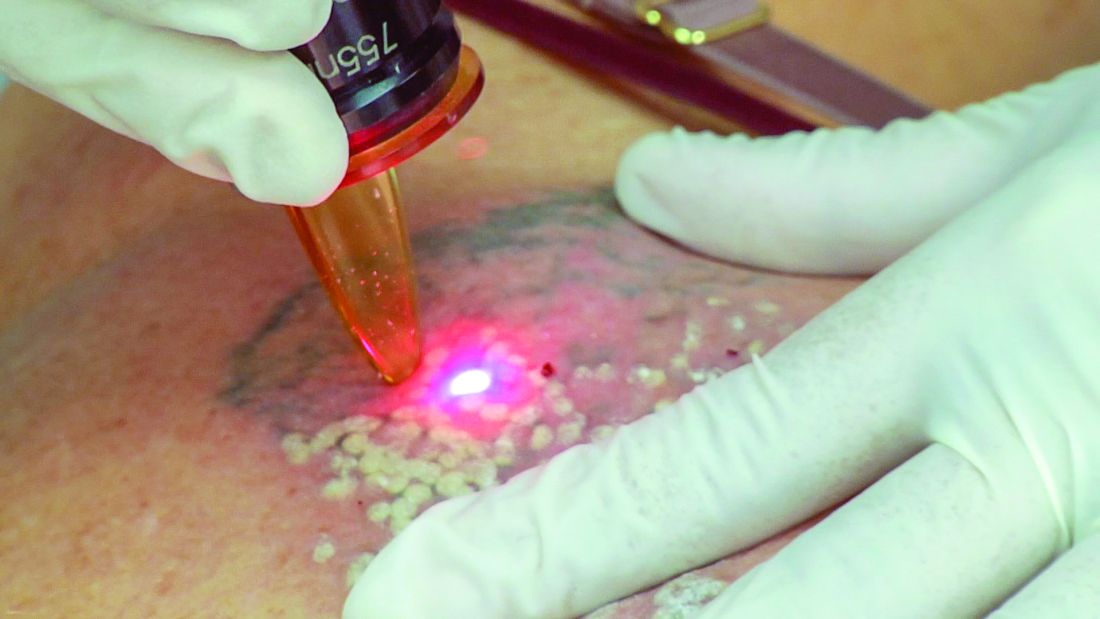
For optimal results, determine if the tattoo is professional, amateur, traumatic, or cosmetic. “That’s going to give you some insight as to what kind of expectations to set for the patient,” he said. “Black ink is often the easiest to remove, while certain colors like white are more challenging. Certain colors are more prone to paradoxical ink darkening, like red or orange, or pink. These can undergo a chemical reaction where they darken. This is something important to discuss with patients in advance.”
Older tattoos “tend to be less hearty” and usually respond better to laser, he continued. Location of the tattoo also plays a role. “I find that tattoos below the knee are very slow to respond. Smaller tattoos will respond faster.”
During the focused medical exam, ask patients about any history of keloid scarring, vitiligo or any dermatologic conditions with a Koebner phenomenon, and rule out a history of parental gold salt administration for arthritis. “During your informed consent you want to make sure you address the expected healing time and the risks such as hyper- and hypopigmentation, blistering, and scarring,” Dr. Ibrahimi said. “You also want to set the expectation that this is not going to be a one and done procedure. Laser tattoo removal takes a series of treatments, often more than what we think – sometimes in the range of 15-20. And you may not get complete clearance. I liken it to breaking it up enough so that if somebody sees it, they won’t be able to recognize what the tattoo is. But you won’t be able to erase it 100%.”
Black, dark blue, and red tattoo colors respond best to laser light. Light blue, green, and purple colors are slower to respond, while yellow and orange colors respond poorly. “Now that we have picosecond lasers, we’re a little better at treating these tougher colors, but I think we still have a lot of room for improvement,” Dr. Ibrahimi said.
Melanin is a competing chromophore, which complicates treatment of tanned individuals and those with darker skin types. “The Q-switched 1064-nm laser is the safest device to use for these patients but it’s not effective for many ink colors,” he said.
Options to keep patients comfortable during the procedure include application of ice or forced chilled air. “You can also use topical anesthetics such as EMLA or liposomal lidocaine cream under occlusion,” he said. “You can also use injectable lidocaine. If you go that route, I recommend a ring block. If you inject right into the tattoo sometimes the ink can get leeched out after treatment. As for spot size, a larger spot size will penetrate deeper, so I try to treat tattoos with the biggest spot size. It also results in less bleeding, less splatter, less side effects, and you get better results.”
Common adverse events from tattoo removal include prolonged erythema, blistering, hyperpigmentation, hypopigmentation, and scarring. Less frequent complications include ink darkening, chrysiasis, and transient immunoreactivity. “We don’t really know what’s in a lot of these ink residues,” Dr. Ibrahimi said. “We know they’re getting mobilized and some of it’s going into the lymphatics. What’s happening with these ink particles? We don’t fully know.”
He also warned against using hair-removal devices to treat a tattoo. “It is the wrong pulse duration,” he said. “You need a picosecond or nanosecond device. You cannot use any other pulse durations, or you will horribly scar your patient.”
In 2012, R. Rox Anderson, MD, director of the Wellman Center for Photomedicine at Massachusetts General Hospital, and colleagues published results of a study that compared a single Q-switched laser treatment pass with four treatment passes separated by 20 minutes. After treating 18 tattoos in 12 adults, they found that the technique, known as the R20 method, was more effective than a single-pass treatment (P < .01). “Subsequent papers have shown that this result isn’t as impressive as initially reported, but I think it’s a method that persists,” Dr. Ibrahimi said.
Another recent advance is use of a topical square silicone patch infused with perfluorodecalin patch during tattoo removal, which has been shown to reduce epidermal whitening. “So, instead of waiting 20 minutes you wait 0 minutes,” he said. “This is called the R0 method,” he added, noting that there are also some secondary benefits to using this patch, including possibly helping as an optical clearing agent for deeper penetration of the laser. “Often after treatment you can see ink on the underside of the patch, which speaks to the transdermal elimination mechanism of action for removal of tattoos.”
As for future directions, Dr. Ibrahimi predicted that there will be better picosecond lasers coming down the pike. He also anticipates that Soliton’s Rapid Acoustic Pulse (RAP) device will make a significant impact in the field. The device was cleared for tattoo removal in 2019 and is being investigated as an option to improve the appearance of cellulite. The manufacturer anticipates that an upgraded RAP device will be cleared for use by the end of the first quarter of 2021.
Dr. Ibrahimi disclosed that he has received research funding and speaker honorarium from Cutera, Lumenis, Lutronic, and Syneron-Candela. He also holds stock in Soliton.
According to a 2016 Harris Poll, 29% of Americans have at least one tattoo, up from 21% in 2012. At the same time, 23% of Americans polled in 2016 regret having their tattoo, which means big business for dermatologists who practice laser tattoo removal.
Prior to the theory of selective photothermolysis, tattoo removal mostly consisted of chemical or mechanical abrasion, surgical removal, or using some sort of caustic chemical or thermal destruction of the tattoo, Omar A. Ibrahimi, MD, PhD, said during a virtual course on laser and aesthetic skin therapy. “The earliest lasers prior to refinement by the theory of selective photothermolysis also fell into these categories: just basically crudely removing the skin and trying to get under to where the tattoo is,” said Dr. Ibrahimi, a dermatologist with the Connecticut Skin Institute in Stamford. “These would often heal with horrible scarring.”
Today, clinicians use Q-switched nanosecond and picosecond lasers for tattoo removal, though appropriate wavelengths need to be selected based on the tattoo ink color. Tattoo ink particles average about 0.1 mcm in size, and the thermal relaxation size works out to be about 10 nanoseconds. Black is the most common color dermatologists will treat. “For that, you can typically use a 1064, which has the highest absorption, but you can also use many of the other wavelengths,” he said. “The other colors are less common, followed by red, for which you would use a 532-nm wavelength.”
The clinical endpoint to strive for during tattoo removal is a whitening of the ink. That typically fades after about 20 minutes. “This whitening corresponds to cavitation [the production of gas vacuoles in the cells that were holding the ink],” Dr. Ibrahimi explained during the meeting, which was sponsored by Harvard Medical School, Massachusetts General Hospital, and the Wellman Center for Photomedicine. “These vacuoles are what lead to the whitening when using a high-gigawatt laser in a very short pulse. This causes highly localized heating, cavitation, and cell rupture. We don’t fully understand how tattoos are removed today, but the working models include some of the residual ink coming out through transepidermal elimination, some of it being removed via lymphatics, and some of it being removed by rephagocytosis.”
For optimal results, determine if the tattoo is professional, amateur, traumatic, or cosmetic. “That’s going to give you some insight as to what kind of expectations to set for the patient,” he said. “Black ink is often the easiest to remove, while certain colors like white are more challenging. Certain colors are more prone to paradoxical ink darkening, like red or orange, or pink. These can undergo a chemical reaction where they darken. This is something important to discuss with patients in advance.”
Older tattoos “tend to be less hearty” and usually respond better to laser, he continued. Location of the tattoo also plays a role. “I find that tattoos below the knee are very slow to respond. Smaller tattoos will respond faster.”
During the focused medical exam, ask patients about any history of keloid scarring, vitiligo or any dermatologic conditions with a Koebner phenomenon, and rule out a history of parental gold salt administration for arthritis. “During your informed consent you want to make sure you address the expected healing time and the risks such as hyper- and hypopigmentation, blistering, and scarring,” Dr. Ibrahimi said. “You also want to set the expectation that this is not going to be a one and done procedure. Laser tattoo removal takes a series of treatments, often more than what we think – sometimes in the range of 15-20. And you may not get complete clearance. I liken it to breaking it up enough so that if somebody sees it, they won’t be able to recognize what the tattoo is. But you won’t be able to erase it 100%.”
Black, dark blue, and red tattoo colors respond best to laser light. Light blue, green, and purple colors are slower to respond, while yellow and orange colors respond poorly. “Now that we have picosecond lasers, we’re a little better at treating these tougher colors, but I think we still have a lot of room for improvement,” Dr. Ibrahimi said.
Melanin is a competing chromophore, which complicates treatment of tanned individuals and those with darker skin types. “The Q-switched 1064-nm laser is the safest device to use for these patients but it’s not effective for many ink colors,” he said.
Options to keep patients comfortable during the procedure include application of ice or forced chilled air. “You can also use topical anesthetics such as EMLA or liposomal lidocaine cream under occlusion,” he said. “You can also use injectable lidocaine. If you go that route, I recommend a ring block. If you inject right into the tattoo sometimes the ink can get leeched out after treatment. As for spot size, a larger spot size will penetrate deeper, so I try to treat tattoos with the biggest spot size. It also results in less bleeding, less splatter, less side effects, and you get better results.”
Common adverse events from tattoo removal include prolonged erythema, blistering, hyperpigmentation, hypopigmentation, and scarring. Less frequent complications include ink darkening, chrysiasis, and transient immunoreactivity. “We don’t really know what’s in a lot of these ink residues,” Dr. Ibrahimi said. “We know they’re getting mobilized and some of it’s going into the lymphatics. What’s happening with these ink particles? We don’t fully know.”
He also warned against using hair-removal devices to treat a tattoo. “It is the wrong pulse duration,” he said. “You need a picosecond or nanosecond device. You cannot use any other pulse durations, or you will horribly scar your patient.”
In 2012, R. Rox Anderson, MD, director of the Wellman Center for Photomedicine at Massachusetts General Hospital, and colleagues published results of a study that compared a single Q-switched laser treatment pass with four treatment passes separated by 20 minutes. After treating 18 tattoos in 12 adults, they found that the technique, known as the R20 method, was more effective than a single-pass treatment (P < .01). “Subsequent papers have shown that this result isn’t as impressive as initially reported, but I think it’s a method that persists,” Dr. Ibrahimi said.
Another recent advance is use of a topical square silicone patch infused with perfluorodecalin patch during tattoo removal, which has been shown to reduce epidermal whitening. “So, instead of waiting 20 minutes you wait 0 minutes,” he said. “This is called the R0 method,” he added, noting that there are also some secondary benefits to using this patch, including possibly helping as an optical clearing agent for deeper penetration of the laser. “Often after treatment you can see ink on the underside of the patch, which speaks to the transdermal elimination mechanism of action for removal of tattoos.”
As for future directions, Dr. Ibrahimi predicted that there will be better picosecond lasers coming down the pike. He also anticipates that Soliton’s Rapid Acoustic Pulse (RAP) device will make a significant impact in the field. The device was cleared for tattoo removal in 2019 and is being investigated as an option to improve the appearance of cellulite. The manufacturer anticipates that an upgraded RAP device will be cleared for use by the end of the first quarter of 2021.
Dr. Ibrahimi disclosed that he has received research funding and speaker honorarium from Cutera, Lumenis, Lutronic, and Syneron-Candela. He also holds stock in Soliton.
According to a 2016 Harris Poll, 29% of Americans have at least one tattoo, up from 21% in 2012. At the same time, 23% of Americans polled in 2016 regret having their tattoo, which means big business for dermatologists who practice laser tattoo removal.
Prior to the theory of selective photothermolysis, tattoo removal mostly consisted of chemical or mechanical abrasion, surgical removal, or using some sort of caustic chemical or thermal destruction of the tattoo, Omar A. Ibrahimi, MD, PhD, said during a virtual course on laser and aesthetic skin therapy. “The earliest lasers prior to refinement by the theory of selective photothermolysis also fell into these categories: just basically crudely removing the skin and trying to get under to where the tattoo is,” said Dr. Ibrahimi, a dermatologist with the Connecticut Skin Institute in Stamford. “These would often heal with horrible scarring.”
Today, clinicians use Q-switched nanosecond and picosecond lasers for tattoo removal, though appropriate wavelengths need to be selected based on the tattoo ink color. Tattoo ink particles average about 0.1 mcm in size, and the thermal relaxation size works out to be about 10 nanoseconds. Black is the most common color dermatologists will treat. “For that, you can typically use a 1064, which has the highest absorption, but you can also use many of the other wavelengths,” he said. “The other colors are less common, followed by red, for which you would use a 532-nm wavelength.”
The clinical endpoint to strive for during tattoo removal is a whitening of the ink. That typically fades after about 20 minutes. “This whitening corresponds to cavitation [the production of gas vacuoles in the cells that were holding the ink],” Dr. Ibrahimi explained during the meeting, which was sponsored by Harvard Medical School, Massachusetts General Hospital, and the Wellman Center for Photomedicine. “These vacuoles are what lead to the whitening when using a high-gigawatt laser in a very short pulse. This causes highly localized heating, cavitation, and cell rupture. We don’t fully understand how tattoos are removed today, but the working models include some of the residual ink coming out through transepidermal elimination, some of it being removed via lymphatics, and some of it being removed by rephagocytosis.”
For optimal results, determine if the tattoo is professional, amateur, traumatic, or cosmetic. “That’s going to give you some insight as to what kind of expectations to set for the patient,” he said. “Black ink is often the easiest to remove, while certain colors like white are more challenging. Certain colors are more prone to paradoxical ink darkening, like red or orange, or pink. These can undergo a chemical reaction where they darken. This is something important to discuss with patients in advance.”
Older tattoos “tend to be less hearty” and usually respond better to laser, he continued. Location of the tattoo also plays a role. “I find that tattoos below the knee are very slow to respond. Smaller tattoos will respond faster.”
During the focused medical exam, ask patients about any history of keloid scarring, vitiligo or any dermatologic conditions with a Koebner phenomenon, and rule out a history of parental gold salt administration for arthritis. “During your informed consent you want to make sure you address the expected healing time and the risks such as hyper- and hypopigmentation, blistering, and scarring,” Dr. Ibrahimi said. “You also want to set the expectation that this is not going to be a one and done procedure. Laser tattoo removal takes a series of treatments, often more than what we think – sometimes in the range of 15-20. And you may not get complete clearance. I liken it to breaking it up enough so that if somebody sees it, they won’t be able to recognize what the tattoo is. But you won’t be able to erase it 100%.”
Black, dark blue, and red tattoo colors respond best to laser light. Light blue, green, and purple colors are slower to respond, while yellow and orange colors respond poorly. “Now that we have picosecond lasers, we’re a little better at treating these tougher colors, but I think we still have a lot of room for improvement,” Dr. Ibrahimi said.
Melanin is a competing chromophore, which complicates treatment of tanned individuals and those with darker skin types. “The Q-switched 1064-nm laser is the safest device to use for these patients but it’s not effective for many ink colors,” he said.
Options to keep patients comfortable during the procedure include application of ice or forced chilled air. “You can also use topical anesthetics such as EMLA or liposomal lidocaine cream under occlusion,” he said. “You can also use injectable lidocaine. If you go that route, I recommend a ring block. If you inject right into the tattoo sometimes the ink can get leeched out after treatment. As for spot size, a larger spot size will penetrate deeper, so I try to treat tattoos with the biggest spot size. It also results in less bleeding, less splatter, less side effects, and you get better results.”
Common adverse events from tattoo removal include prolonged erythema, blistering, hyperpigmentation, hypopigmentation, and scarring. Less frequent complications include ink darkening, chrysiasis, and transient immunoreactivity. “We don’t really know what’s in a lot of these ink residues,” Dr. Ibrahimi said. “We know they’re getting mobilized and some of it’s going into the lymphatics. What’s happening with these ink particles? We don’t fully know.”
He also warned against using hair-removal devices to treat a tattoo. “It is the wrong pulse duration,” he said. “You need a picosecond or nanosecond device. You cannot use any other pulse durations, or you will horribly scar your patient.”
In 2012, R. Rox Anderson, MD, director of the Wellman Center for Photomedicine at Massachusetts General Hospital, and colleagues published results of a study that compared a single Q-switched laser treatment pass with four treatment passes separated by 20 minutes. After treating 18 tattoos in 12 adults, they found that the technique, known as the R20 method, was more effective than a single-pass treatment (P < .01). “Subsequent papers have shown that this result isn’t as impressive as initially reported, but I think it’s a method that persists,” Dr. Ibrahimi said.
Another recent advance is use of a topical square silicone patch infused with perfluorodecalin patch during tattoo removal, which has been shown to reduce epidermal whitening. “So, instead of waiting 20 minutes you wait 0 minutes,” he said. “This is called the R0 method,” he added, noting that there are also some secondary benefits to using this patch, including possibly helping as an optical clearing agent for deeper penetration of the laser. “Often after treatment you can see ink on the underside of the patch, which speaks to the transdermal elimination mechanism of action for removal of tattoos.”
As for future directions, Dr. Ibrahimi predicted that there will be better picosecond lasers coming down the pike. He also anticipates that Soliton’s Rapid Acoustic Pulse (RAP) device will make a significant impact in the field. The device was cleared for tattoo removal in 2019 and is being investigated as an option to improve the appearance of cellulite. The manufacturer anticipates that an upgraded RAP device will be cleared for use by the end of the first quarter of 2021.
Dr. Ibrahimi disclosed that he has received research funding and speaker honorarium from Cutera, Lumenis, Lutronic, and Syneron-Candela. He also holds stock in Soliton.
FROM A LASER & AESTHETIC SKIN THERAPY COURSE

Diabetes prevention diet may lower mortality risk in breast cancer
Women who more closely followed a diabetes risk-reduction diet both before and after a diagnosis of breast cancer had lower risks for breast cancer–specific and all-cause mortality when compared with women with less healthy diets or those who did not substantially modify what they ate following diagnosis, according to pooled data from two prospective cohort studies.
Among more than 8,000 participants in the Nurses’ Health Study and NHS II, those who most closely adhered to a dietary pattern associated with lower risk for type 2 diabetes had a 13% lower risk for breast cancer–specific mortality and a 31% lower risk for death from any cause, compared with those at the bottom of the diabetes risk-reduction diet chart, reported Tengteng Wang, PhD, of the Harvard School of Public Health, Boston, and colleagues.
“Promoting dietary changes consistent with prevention of type 2 diabetes may be very important for breast cancer survivors,” Dr. Wang said in an oral abstract presentation at the 2020 San Antonio Breast Cancer Symposium.
Poor outcomes
Type 2 diabetes has been shown to be associated with poor outcomes for women with breast cancer, prompting the investigators to see whether diet modification could play a role in improving prognosis.
They looked at self-reported dietary data from 8,320 women diagnosed with stage I-III breast cancer who were participants in NHS, with data from 1980 to 2014, and NHS II, with data from 1991 to 2015.
Every 2-4 years, participants filled out validated follow-up questionnaires, including information on diet.
The investigators calculated a diabetes risk-reduction diet (DRRD) adherence score based on nine components, including higher intakes of cereal fiber, coffee, nuts, and whole fruits, as well as a higher polyunsatured to saturated fat ratio, and lower glycemic index, plus lower intakes of trans fats, sugar-sweetened beverages and/or fruit juices, and red meat.
The investigators calculated cumulative average DRRD scores based on repeated measures of diet after breast cancer diagnosis. They obtained data on deaths from family reports or the National Death Index, and they determined causes of death from either death certificates or medical records.
At a median follow-up of 13 years, 2,146 participants had died, with 948 of the deaths attributed to breast cancer.
After adjusting for socioeconomic factors, postdiagnosis time-varying covariates, and key breast cancer clinical factors, there was a nonsignificant trend toward a lower risk for breast cancer–specific deaths in the women in the highest versus lowest quintiles of DRRD score (hazard ratio, 0.87; P = .13), but significantly lower risk for all-cause mortality risk (HR, 0.69; P < .0001).
Looking at participants who changed their diet following breast cancer diagnosis, those who went from a low DRRD score prediagnosis to a high score post diagnosis had a 20% reduction in risk for breast cancer–specific mortality and a 14% reduction in risk for all-cause mortality, the investigators found (P values for this analysis were not shown).
There were no differences in results by either tumor estrogen receptor status or stage.
Dr. Wang acknowledged that the study was limited by the population (which was predominantly composed of educated, non-Hispanic White women), errors in dietary measurement, and limited power for estrogen receptor–negative tumor analysis.
Will patients do what’s good for them?
While this study adds to the body of evidence linking diet and cancer, putting the information into action is another story, according to Halle Moore, MD, of the Cleveland Clinic, who was not involved in this study.
“We have had supportive data for the role of diet in general health outcomes, including cancer-related outcomes, for a long time. But getting the public to implement these dietary changes is a challenge, so certainly the more convincing data that we have and the more specific we can be with specific types of dietary interventions, it does make it more helpful to counsel patients,” Dr. Moore said in an interview.
She said the finding that dietary change post diagnosis can have a significant effect on lowering both all-cause and breast cancer–specific mortality is compelling evidence for a role of diet in breast cancer outcomes.
In the question-and-answer session following Dr. Wang’s presentation, Hans-Christian Kolberg, MD, from Marienhospital Bottrop at the University of Duisburg-Essen (Germany), echoed the sentiment when he commented, “you have an important result that you did not mention in the conclusion: It is not too late to change diet after breast cancer diagnosis!”
This study was supported, in part, by grants from the National Cancer Institute, Breast Cancer Research Foundations, and Susan G. Komen Breast Cancer Foundations. Dr. Wang, Dr. Moore, and Dr. Kolberg reported no relevant conflicts of interest.
SOURCE: Wang T et al. SABCS 2020, Abstract GS2-09.
Women who more closely followed a diabetes risk-reduction diet both before and after a diagnosis of breast cancer had lower risks for breast cancer–specific and all-cause mortality when compared with women with less healthy diets or those who did not substantially modify what they ate following diagnosis, according to pooled data from two prospective cohort studies.
Among more than 8,000 participants in the Nurses’ Health Study and NHS II, those who most closely adhered to a dietary pattern associated with lower risk for type 2 diabetes had a 13% lower risk for breast cancer–specific mortality and a 31% lower risk for death from any cause, compared with those at the bottom of the diabetes risk-reduction diet chart, reported Tengteng Wang, PhD, of the Harvard School of Public Health, Boston, and colleagues.
“Promoting dietary changes consistent with prevention of type 2 diabetes may be very important for breast cancer survivors,” Dr. Wang said in an oral abstract presentation at the 2020 San Antonio Breast Cancer Symposium.
Poor outcomes
Type 2 diabetes has been shown to be associated with poor outcomes for women with breast cancer, prompting the investigators to see whether diet modification could play a role in improving prognosis.
They looked at self-reported dietary data from 8,320 women diagnosed with stage I-III breast cancer who were participants in NHS, with data from 1980 to 2014, and NHS II, with data from 1991 to 2015.
Every 2-4 years, participants filled out validated follow-up questionnaires, including information on diet.
The investigators calculated a diabetes risk-reduction diet (DRRD) adherence score based on nine components, including higher intakes of cereal fiber, coffee, nuts, and whole fruits, as well as a higher polyunsatured to saturated fat ratio, and lower glycemic index, plus lower intakes of trans fats, sugar-sweetened beverages and/or fruit juices, and red meat.
The investigators calculated cumulative average DRRD scores based on repeated measures of diet after breast cancer diagnosis. They obtained data on deaths from family reports or the National Death Index, and they determined causes of death from either death certificates or medical records.
At a median follow-up of 13 years, 2,146 participants had died, with 948 of the deaths attributed to breast cancer.
After adjusting for socioeconomic factors, postdiagnosis time-varying covariates, and key breast cancer clinical factors, there was a nonsignificant trend toward a lower risk for breast cancer–specific deaths in the women in the highest versus lowest quintiles of DRRD score (hazard ratio, 0.87; P = .13), but significantly lower risk for all-cause mortality risk (HR, 0.69; P < .0001).
Looking at participants who changed their diet following breast cancer diagnosis, those who went from a low DRRD score prediagnosis to a high score post diagnosis had a 20% reduction in risk for breast cancer–specific mortality and a 14% reduction in risk for all-cause mortality, the investigators found (P values for this analysis were not shown).
There were no differences in results by either tumor estrogen receptor status or stage.
Dr. Wang acknowledged that the study was limited by the population (which was predominantly composed of educated, non-Hispanic White women), errors in dietary measurement, and limited power for estrogen receptor–negative tumor analysis.
Will patients do what’s good for them?
While this study adds to the body of evidence linking diet and cancer, putting the information into action is another story, according to Halle Moore, MD, of the Cleveland Clinic, who was not involved in this study.
“We have had supportive data for the role of diet in general health outcomes, including cancer-related outcomes, for a long time. But getting the public to implement these dietary changes is a challenge, so certainly the more convincing data that we have and the more specific we can be with specific types of dietary interventions, it does make it more helpful to counsel patients,” Dr. Moore said in an interview.
She said the finding that dietary change post diagnosis can have a significant effect on lowering both all-cause and breast cancer–specific mortality is compelling evidence for a role of diet in breast cancer outcomes.
In the question-and-answer session following Dr. Wang’s presentation, Hans-Christian Kolberg, MD, from Marienhospital Bottrop at the University of Duisburg-Essen (Germany), echoed the sentiment when he commented, “you have an important result that you did not mention in the conclusion: It is not too late to change diet after breast cancer diagnosis!”
This study was supported, in part, by grants from the National Cancer Institute, Breast Cancer Research Foundations, and Susan G. Komen Breast Cancer Foundations. Dr. Wang, Dr. Moore, and Dr. Kolberg reported no relevant conflicts of interest.
SOURCE: Wang T et al. SABCS 2020, Abstract GS2-09.
Women who more closely followed a diabetes risk-reduction diet both before and after a diagnosis of breast cancer had lower risks for breast cancer–specific and all-cause mortality when compared with women with less healthy diets or those who did not substantially modify what they ate following diagnosis, according to pooled data from two prospective cohort studies.
Among more than 8,000 participants in the Nurses’ Health Study and NHS II, those who most closely adhered to a dietary pattern associated with lower risk for type 2 diabetes had a 13% lower risk for breast cancer–specific mortality and a 31% lower risk for death from any cause, compared with those at the bottom of the diabetes risk-reduction diet chart, reported Tengteng Wang, PhD, of the Harvard School of Public Health, Boston, and colleagues.
“Promoting dietary changes consistent with prevention of type 2 diabetes may be very important for breast cancer survivors,” Dr. Wang said in an oral abstract presentation at the 2020 San Antonio Breast Cancer Symposium.
Poor outcomes
Type 2 diabetes has been shown to be associated with poor outcomes for women with breast cancer, prompting the investigators to see whether diet modification could play a role in improving prognosis.
They looked at self-reported dietary data from 8,320 women diagnosed with stage I-III breast cancer who were participants in NHS, with data from 1980 to 2014, and NHS II, with data from 1991 to 2015.
Every 2-4 years, participants filled out validated follow-up questionnaires, including information on diet.
The investigators calculated a diabetes risk-reduction diet (DRRD) adherence score based on nine components, including higher intakes of cereal fiber, coffee, nuts, and whole fruits, as well as a higher polyunsatured to saturated fat ratio, and lower glycemic index, plus lower intakes of trans fats, sugar-sweetened beverages and/or fruit juices, and red meat.
The investigators calculated cumulative average DRRD scores based on repeated measures of diet after breast cancer diagnosis. They obtained data on deaths from family reports or the National Death Index, and they determined causes of death from either death certificates or medical records.
At a median follow-up of 13 years, 2,146 participants had died, with 948 of the deaths attributed to breast cancer.
After adjusting for socioeconomic factors, postdiagnosis time-varying covariates, and key breast cancer clinical factors, there was a nonsignificant trend toward a lower risk for breast cancer–specific deaths in the women in the highest versus lowest quintiles of DRRD score (hazard ratio, 0.87; P = .13), but significantly lower risk for all-cause mortality risk (HR, 0.69; P < .0001).
Looking at participants who changed their diet following breast cancer diagnosis, those who went from a low DRRD score prediagnosis to a high score post diagnosis had a 20% reduction in risk for breast cancer–specific mortality and a 14% reduction in risk for all-cause mortality, the investigators found (P values for this analysis were not shown).
There were no differences in results by either tumor estrogen receptor status or stage.
Dr. Wang acknowledged that the study was limited by the population (which was predominantly composed of educated, non-Hispanic White women), errors in dietary measurement, and limited power for estrogen receptor–negative tumor analysis.
Will patients do what’s good for them?
While this study adds to the body of evidence linking diet and cancer, putting the information into action is another story, according to Halle Moore, MD, of the Cleveland Clinic, who was not involved in this study.
“We have had supportive data for the role of diet in general health outcomes, including cancer-related outcomes, for a long time. But getting the public to implement these dietary changes is a challenge, so certainly the more convincing data that we have and the more specific we can be with specific types of dietary interventions, it does make it more helpful to counsel patients,” Dr. Moore said in an interview.
She said the finding that dietary change post diagnosis can have a significant effect on lowering both all-cause and breast cancer–specific mortality is compelling evidence for a role of diet in breast cancer outcomes.
In the question-and-answer session following Dr. Wang’s presentation, Hans-Christian Kolberg, MD, from Marienhospital Bottrop at the University of Duisburg-Essen (Germany), echoed the sentiment when he commented, “you have an important result that you did not mention in the conclusion: It is not too late to change diet after breast cancer diagnosis!”
This study was supported, in part, by grants from the National Cancer Institute, Breast Cancer Research Foundations, and Susan G. Komen Breast Cancer Foundations. Dr. Wang, Dr. Moore, and Dr. Kolberg reported no relevant conflicts of interest.
SOURCE: Wang T et al. SABCS 2020, Abstract GS2-09.
FROM SABCS 2020
Can a health care worker refuse the COVID-19 vaccine?
As hospitals across the country develop their plans to vaccinate their health care employees against COVID-19, a key question has come to the fore: What if an employee – whether nurse, physician, or other health care worker – refuses to receive the vaccine? Can hospitals require their employees to be vaccinated against COVID-19? And what consequences could an employee face for refusing the vaccine?
My answer needs to be based, in part, on the law related to previous vaccines – influenza, for example – because at the time of this writing (early December 2020), no vaccine for COVID-19 has been approved, although approval of at least one vaccine is expected within a week. So there have been no offers of vaccine and refusals yet, nor are there any cases to date involving an employee who refused a COVID-19 vaccine. As of December 2020, there are no state or federal laws that either require an employee to be vaccinated against COVID-19 or that protect an employee who refuses vaccination against COVID-19. It will take a while after the vaccine is approved and distributed before refusals, reactions, policies, cases, and laws begin to emerge.
If we look at the law related to health care workers refusing to be vaccinated against the closest relative to COVID-19 – influenza – then the answer would be yes, employers can require employees to be vaccinated.
An employer can fire an employee who refuses influenza vaccination. If an employee who refused and was fired sues the employer for wrongful termination, the employee has more or less chance of success depending on the reason for refusal. Some courts and the Equal Employment Opportunity Commission have held that a refusal on religious grounds is protected by the U.S. Constitution, as in this recent case. The Constitution protects freedom to practice one’s religion. Specific religions may have a range of tenets that support refusal to be vaccinated.
A refusal on medical grounds has been successful if the medical grounds fall under the protections of the Americans with Disabilities Act but may fail when the medical grounds for the claim are not covered by the ADA.
Refusal for secular, nonmedical reasons, such as a health care worker’s policy of treating their body as their temple, has not gone over well with employers or courts. However, in at least one case, a nurse who refused vaccination on secular, nonmedical grounds won her case against her employer, on appeal. The appeals court found that the hospital violated her First Amendment rights.
Employees who refuse vaccination for religious or medical reasons still will need to take measures to protect patients and other employees from infection. An employer such as a hospital can, rather than fire the employee, offer the employee an accommodation, such as requiring that the employee wear a mask or quarantine. There are no cases that have upheld an employee’s right to refuse to wear a mask or quarantine.
The situation with the COVID-19 vaccine is different from the situation surrounding influenza vaccines. There are plenty of data on effectiveness and side effects of influenza vaccines, but there is very little evidence of short- or long-term effects of the COVID-19 vaccines currently being tested and/or considered for approval. One could argue that the process of vaccine development is the same for all virus vaccines. However, public confidence in the vaccine vetting process is not what it once was. It has been widely publicized that the COVID-19 vaccine trials have been rushed. As of December 2020, only 60% of the general population say they would take the vaccine, although researchers say confidence is increasing.
The Centers for Disease Control and Prevention has designated health care workers as first in line to get the vaccine, but some health care workers may not want to be the first to try it. A CDC survey found that 63% of health care workers polled in recent months said they would get a COVID-19 vaccine.
Unions have entered the conversation. A coalition of unions that represent health care workers said, “we need a transparent, evidence-based federal vaccine strategy based on principles of equity, safety, and priority, as well as robust efforts to address a high degree of skepticism about safety of an authorized vaccine.” The organization declined to promote a vaccine until more is known.
As of publication date, the EEOC guidance for employers responding to COVID-19 does not address vaccines.
The CDC’s Interim Guidance for Businesses and Employers Responding to Coronavirus Disease 2019, May 2020, updated Dec. 4, 2020, does not address vaccines. The CDC’s page on COVID-19 vaccination for health care workers does not address a health care worker’s refusal. The site does assure health care workers that the vaccine development process is sound: “The current vaccine safety system is strong and robust, with the capacity to effectively monitor COVID-19 vaccine safety. Existing data systems have validated analytic methods that can rapidly detect statistical signals for possible vaccine safety problems. These systems are being scaled up to fully meet the needs of the nation. Additional systems and data sources are also being developed to further enhance safety monitoring capabilities. CDC is committed to ensuring that COVID-19 vaccines are safe.”
In the coming months, government officials and vaccine manufacturers will be working to reassure the public of the safety of the vaccine and the rigor of the vaccine development process. In November 2020, National Institute of Allergy and Infectious Diseases Director Anthony Fauci, MD, told Kaiser Health News: “The company looks at the data. I look at the data. Then the company puts the data to the FDA. The FDA will make the decision to do an emergency-use authorization or a license application approval. And they have career scientists who are really independent. They’re not beholden to anybody. Then there’s another independent group, the Vaccines and Related Biological Products Advisory Committee. The FDA commissioner has vowed publicly that he will go according to the opinion of the career scientists and the advisory board.” President-elect Joe Biden said he would get a vaccine when Dr. Fauci thinks it is safe.
An employee who, after researching the vaccine and the process, still wants to refuse when offered the vaccine is not likely to be fired for that reason right away, as long as the employee takes other precautions, such as wearing a mask. If the employer does fire the employee and the employee sues the employer, it is impossible to predict how a court would decide the case.
Related legal questions may arise in the coming months. For example:
- Is an employer exempt from paying workers’ compensation to an employee who refuses to be vaccinated and then contracts the virus while on the job?
- Can a prospective employer require COVID-19 vaccination as a precondition of employment?
- Is it within a patient’s rights to receive an answer to the question: Has my health care worker been vaccinated against COVID-19?
- If a hospital allows employees to refuse vaccination and keep working, and an outbreak occurs, and it is suggested through contact tracing that unvaccinated workers infected patients, will a court hold the hospital liable for patients’ damages?
Answers to these questions are yet to be determined.
Carolyn Buppert (www.buppert.com) is an attorney and former nurse practitioner who focuses on the legal issues affecting nurse practitioners.
A version of this article originally appeared on Medscape.com.
As hospitals across the country develop their plans to vaccinate their health care employees against COVID-19, a key question has come to the fore: What if an employee – whether nurse, physician, or other health care worker – refuses to receive the vaccine? Can hospitals require their employees to be vaccinated against COVID-19? And what consequences could an employee face for refusing the vaccine?
My answer needs to be based, in part, on the law related to previous vaccines – influenza, for example – because at the time of this writing (early December 2020), no vaccine for COVID-19 has been approved, although approval of at least one vaccine is expected within a week. So there have been no offers of vaccine and refusals yet, nor are there any cases to date involving an employee who refused a COVID-19 vaccine. As of December 2020, there are no state or federal laws that either require an employee to be vaccinated against COVID-19 or that protect an employee who refuses vaccination against COVID-19. It will take a while after the vaccine is approved and distributed before refusals, reactions, policies, cases, and laws begin to emerge.
If we look at the law related to health care workers refusing to be vaccinated against the closest relative to COVID-19 – influenza – then the answer would be yes, employers can require employees to be vaccinated.
An employer can fire an employee who refuses influenza vaccination. If an employee who refused and was fired sues the employer for wrongful termination, the employee has more or less chance of success depending on the reason for refusal. Some courts and the Equal Employment Opportunity Commission have held that a refusal on religious grounds is protected by the U.S. Constitution, as in this recent case. The Constitution protects freedom to practice one’s religion. Specific religions may have a range of tenets that support refusal to be vaccinated.
A refusal on medical grounds has been successful if the medical grounds fall under the protections of the Americans with Disabilities Act but may fail when the medical grounds for the claim are not covered by the ADA.
Refusal for secular, nonmedical reasons, such as a health care worker’s policy of treating their body as their temple, has not gone over well with employers or courts. However, in at least one case, a nurse who refused vaccination on secular, nonmedical grounds won her case against her employer, on appeal. The appeals court found that the hospital violated her First Amendment rights.
Employees who refuse vaccination for religious or medical reasons still will need to take measures to protect patients and other employees from infection. An employer such as a hospital can, rather than fire the employee, offer the employee an accommodation, such as requiring that the employee wear a mask or quarantine. There are no cases that have upheld an employee’s right to refuse to wear a mask or quarantine.
The situation with the COVID-19 vaccine is different from the situation surrounding influenza vaccines. There are plenty of data on effectiveness and side effects of influenza vaccines, but there is very little evidence of short- or long-term effects of the COVID-19 vaccines currently being tested and/or considered for approval. One could argue that the process of vaccine development is the same for all virus vaccines. However, public confidence in the vaccine vetting process is not what it once was. It has been widely publicized that the COVID-19 vaccine trials have been rushed. As of December 2020, only 60% of the general population say they would take the vaccine, although researchers say confidence is increasing.
The Centers for Disease Control and Prevention has designated health care workers as first in line to get the vaccine, but some health care workers may not want to be the first to try it. A CDC survey found that 63% of health care workers polled in recent months said they would get a COVID-19 vaccine.
Unions have entered the conversation. A coalition of unions that represent health care workers said, “we need a transparent, evidence-based federal vaccine strategy based on principles of equity, safety, and priority, as well as robust efforts to address a high degree of skepticism about safety of an authorized vaccine.” The organization declined to promote a vaccine until more is known.
As of publication date, the EEOC guidance for employers responding to COVID-19 does not address vaccines.
The CDC’s Interim Guidance for Businesses and Employers Responding to Coronavirus Disease 2019, May 2020, updated Dec. 4, 2020, does not address vaccines. The CDC’s page on COVID-19 vaccination for health care workers does not address a health care worker’s refusal. The site does assure health care workers that the vaccine development process is sound: “The current vaccine safety system is strong and robust, with the capacity to effectively monitor COVID-19 vaccine safety. Existing data systems have validated analytic methods that can rapidly detect statistical signals for possible vaccine safety problems. These systems are being scaled up to fully meet the needs of the nation. Additional systems and data sources are also being developed to further enhance safety monitoring capabilities. CDC is committed to ensuring that COVID-19 vaccines are safe.”
In the coming months, government officials and vaccine manufacturers will be working to reassure the public of the safety of the vaccine and the rigor of the vaccine development process. In November 2020, National Institute of Allergy and Infectious Diseases Director Anthony Fauci, MD, told Kaiser Health News: “The company looks at the data. I look at the data. Then the company puts the data to the FDA. The FDA will make the decision to do an emergency-use authorization or a license application approval. And they have career scientists who are really independent. They’re not beholden to anybody. Then there’s another independent group, the Vaccines and Related Biological Products Advisory Committee. The FDA commissioner has vowed publicly that he will go according to the opinion of the career scientists and the advisory board.” President-elect Joe Biden said he would get a vaccine when Dr. Fauci thinks it is safe.
An employee who, after researching the vaccine and the process, still wants to refuse when offered the vaccine is not likely to be fired for that reason right away, as long as the employee takes other precautions, such as wearing a mask. If the employer does fire the employee and the employee sues the employer, it is impossible to predict how a court would decide the case.
Related legal questions may arise in the coming months. For example:
- Is an employer exempt from paying workers’ compensation to an employee who refuses to be vaccinated and then contracts the virus while on the job?
- Can a prospective employer require COVID-19 vaccination as a precondition of employment?
- Is it within a patient’s rights to receive an answer to the question: Has my health care worker been vaccinated against COVID-19?
- If a hospital allows employees to refuse vaccination and keep working, and an outbreak occurs, and it is suggested through contact tracing that unvaccinated workers infected patients, will a court hold the hospital liable for patients’ damages?
Answers to these questions are yet to be determined.
Carolyn Buppert (www.buppert.com) is an attorney and former nurse practitioner who focuses on the legal issues affecting nurse practitioners.
A version of this article originally appeared on Medscape.com.
As hospitals across the country develop their plans to vaccinate their health care employees against COVID-19, a key question has come to the fore: What if an employee – whether nurse, physician, or other health care worker – refuses to receive the vaccine? Can hospitals require their employees to be vaccinated against COVID-19? And what consequences could an employee face for refusing the vaccine?
My answer needs to be based, in part, on the law related to previous vaccines – influenza, for example – because at the time of this writing (early December 2020), no vaccine for COVID-19 has been approved, although approval of at least one vaccine is expected within a week. So there have been no offers of vaccine and refusals yet, nor are there any cases to date involving an employee who refused a COVID-19 vaccine. As of December 2020, there are no state or federal laws that either require an employee to be vaccinated against COVID-19 or that protect an employee who refuses vaccination against COVID-19. It will take a while after the vaccine is approved and distributed before refusals, reactions, policies, cases, and laws begin to emerge.
If we look at the law related to health care workers refusing to be vaccinated against the closest relative to COVID-19 – influenza – then the answer would be yes, employers can require employees to be vaccinated.
An employer can fire an employee who refuses influenza vaccination. If an employee who refused and was fired sues the employer for wrongful termination, the employee has more or less chance of success depending on the reason for refusal. Some courts and the Equal Employment Opportunity Commission have held that a refusal on religious grounds is protected by the U.S. Constitution, as in this recent case. The Constitution protects freedom to practice one’s religion. Specific religions may have a range of tenets that support refusal to be vaccinated.
A refusal on medical grounds has been successful if the medical grounds fall under the protections of the Americans with Disabilities Act but may fail when the medical grounds for the claim are not covered by the ADA.
Refusal for secular, nonmedical reasons, such as a health care worker’s policy of treating their body as their temple, has not gone over well with employers or courts. However, in at least one case, a nurse who refused vaccination on secular, nonmedical grounds won her case against her employer, on appeal. The appeals court found that the hospital violated her First Amendment rights.
Employees who refuse vaccination for religious or medical reasons still will need to take measures to protect patients and other employees from infection. An employer such as a hospital can, rather than fire the employee, offer the employee an accommodation, such as requiring that the employee wear a mask or quarantine. There are no cases that have upheld an employee’s right to refuse to wear a mask or quarantine.
The situation with the COVID-19 vaccine is different from the situation surrounding influenza vaccines. There are plenty of data on effectiveness and side effects of influenza vaccines, but there is very little evidence of short- or long-term effects of the COVID-19 vaccines currently being tested and/or considered for approval. One could argue that the process of vaccine development is the same for all virus vaccines. However, public confidence in the vaccine vetting process is not what it once was. It has been widely publicized that the COVID-19 vaccine trials have been rushed. As of December 2020, only 60% of the general population say they would take the vaccine, although researchers say confidence is increasing.
The Centers for Disease Control and Prevention has designated health care workers as first in line to get the vaccine, but some health care workers may not want to be the first to try it. A CDC survey found that 63% of health care workers polled in recent months said they would get a COVID-19 vaccine.
Unions have entered the conversation. A coalition of unions that represent health care workers said, “we need a transparent, evidence-based federal vaccine strategy based on principles of equity, safety, and priority, as well as robust efforts to address a high degree of skepticism about safety of an authorized vaccine.” The organization declined to promote a vaccine until more is known.
As of publication date, the EEOC guidance for employers responding to COVID-19 does not address vaccines.
The CDC’s Interim Guidance for Businesses and Employers Responding to Coronavirus Disease 2019, May 2020, updated Dec. 4, 2020, does not address vaccines. The CDC’s page on COVID-19 vaccination for health care workers does not address a health care worker’s refusal. The site does assure health care workers that the vaccine development process is sound: “The current vaccine safety system is strong and robust, with the capacity to effectively monitor COVID-19 vaccine safety. Existing data systems have validated analytic methods that can rapidly detect statistical signals for possible vaccine safety problems. These systems are being scaled up to fully meet the needs of the nation. Additional systems and data sources are also being developed to further enhance safety monitoring capabilities. CDC is committed to ensuring that COVID-19 vaccines are safe.”
In the coming months, government officials and vaccine manufacturers will be working to reassure the public of the safety of the vaccine and the rigor of the vaccine development process. In November 2020, National Institute of Allergy and Infectious Diseases Director Anthony Fauci, MD, told Kaiser Health News: “The company looks at the data. I look at the data. Then the company puts the data to the FDA. The FDA will make the decision to do an emergency-use authorization or a license application approval. And they have career scientists who are really independent. They’re not beholden to anybody. Then there’s another independent group, the Vaccines and Related Biological Products Advisory Committee. The FDA commissioner has vowed publicly that he will go according to the opinion of the career scientists and the advisory board.” President-elect Joe Biden said he would get a vaccine when Dr. Fauci thinks it is safe.
An employee who, after researching the vaccine and the process, still wants to refuse when offered the vaccine is not likely to be fired for that reason right away, as long as the employee takes other precautions, such as wearing a mask. If the employer does fire the employee and the employee sues the employer, it is impossible to predict how a court would decide the case.
Related legal questions may arise in the coming months. For example:
- Is an employer exempt from paying workers’ compensation to an employee who refuses to be vaccinated and then contracts the virus while on the job?
- Can a prospective employer require COVID-19 vaccination as a precondition of employment?
- Is it within a patient’s rights to receive an answer to the question: Has my health care worker been vaccinated against COVID-19?
- If a hospital allows employees to refuse vaccination and keep working, and an outbreak occurs, and it is suggested through contact tracing that unvaccinated workers infected patients, will a court hold the hospital liable for patients’ damages?
Answers to these questions are yet to be determined.
Carolyn Buppert (www.buppert.com) is an attorney and former nurse practitioner who focuses on the legal issues affecting nurse practitioners.
A version of this article originally appeared on Medscape.com.
Natural history of adrenal incidentalomas with and without mild autonomous cortisol excess
Background: Studies have suggested that adrenal incidentalomas may increase risk of cardiometabolic disease in patients. Guidelines for repeat imaging and hormonal assessment of adrenal incidentalomas are inconsistent because of inadequate studies.

Study design: Systematic review and meta-analysis.
Setting: MEDLINE, EMBASE, Cochrane Central Register of Controlled Trials, Cochrane Database of Systematic Reviews, and Scopus were searched.
Synopsis: Of 1,139 studies screened; 32 met inclusion criteria: adult patients with adrenal adenoma who had 12 or more months of follow-up and outcomes of interest. Larger adrenal adenomas were less likely to have significant change in size on repeat imaging than did smaller tumors. There was no malignant transformation observed. Development of Cushing syndrome was seen in 6 of 2,745 patients. Cardiometabolic comorbid conditions were common in both MACE and NFAT patients with hypertension being the most frequently reported (64% and 58.2% respectively). Worsening of dyslipidemia was observed in both groups. Weight gain and the development of type 2 diabetes occurred more frequently in MACE than in NFAT patients (21.0% vs. 8.7%). In 1,356 patients, all-cause mortality was 11.2% (95% confidence interval, 9.5%-13.0%) for both groups over a mean follow-up of 56.3 months. Cardiovascular events accounted for 43.2% deaths. Limitations included the small number of patients in the studies assessed and the inconsistent definition of outcomes.
Bottom line: Patients with adrenal adenomas should be counseled on modifying cardiovascular risk factors whereas tumor growth, change in hormone production, and malignant transformation are less concerning based on the studies included.
Citation: Elhassan YS et al. Natural history of adrenal incidentalomas with and without mild autonomous cortisol excess: A systematic review and meta-analysis. Ann Intern Med. 2019 Jun 25;121:107-16.
Dr. Thompson is a hospitalist and assistant professor of medicine in the division of general internal medicine at Saint Louis University School of Medicine.
Background: Studies have suggested that adrenal incidentalomas may increase risk of cardiometabolic disease in patients. Guidelines for repeat imaging and hormonal assessment of adrenal incidentalomas are inconsistent because of inadequate studies.
Study design: Systematic review and meta-analysis.
Setting: MEDLINE, EMBASE, Cochrane Central Register of Controlled Trials, Cochrane Database of Systematic Reviews, and Scopus were searched.
Synopsis: Of 1,139 studies screened; 32 met inclusion criteria: adult patients with adrenal adenoma who had 12 or more months of follow-up and outcomes of interest. Larger adrenal adenomas were less likely to have significant change in size on repeat imaging than did smaller tumors. There was no malignant transformation observed. Development of Cushing syndrome was seen in 6 of 2,745 patients. Cardiometabolic comorbid conditions were common in both MACE and NFAT patients with hypertension being the most frequently reported (64% and 58.2% respectively). Worsening of dyslipidemia was observed in both groups. Weight gain and the development of type 2 diabetes occurred more frequently in MACE than in NFAT patients (21.0% vs. 8.7%). In 1,356 patients, all-cause mortality was 11.2% (95% confidence interval, 9.5%-13.0%) for both groups over a mean follow-up of 56.3 months. Cardiovascular events accounted for 43.2% deaths. Limitations included the small number of patients in the studies assessed and the inconsistent definition of outcomes.
Bottom line: Patients with adrenal adenomas should be counseled on modifying cardiovascular risk factors whereas tumor growth, change in hormone production, and malignant transformation are less concerning based on the studies included.
Citation: Elhassan YS et al. Natural history of adrenal incidentalomas with and without mild autonomous cortisol excess: A systematic review and meta-analysis. Ann Intern Med. 2019 Jun 25;121:107-16.
Dr. Thompson is a hospitalist and assistant professor of medicine in the division of general internal medicine at Saint Louis University School of Medicine.
Background: Studies have suggested that adrenal incidentalomas may increase risk of cardiometabolic disease in patients. Guidelines for repeat imaging and hormonal assessment of adrenal incidentalomas are inconsistent because of inadequate studies.
Study design: Systematic review and meta-analysis.
Setting: MEDLINE, EMBASE, Cochrane Central Register of Controlled Trials, Cochrane Database of Systematic Reviews, and Scopus were searched.
Synopsis: Of 1,139 studies screened; 32 met inclusion criteria: adult patients with adrenal adenoma who had 12 or more months of follow-up and outcomes of interest. Larger adrenal adenomas were less likely to have significant change in size on repeat imaging than did smaller tumors. There was no malignant transformation observed. Development of Cushing syndrome was seen in 6 of 2,745 patients. Cardiometabolic comorbid conditions were common in both MACE and NFAT patients with hypertension being the most frequently reported (64% and 58.2% respectively). Worsening of dyslipidemia was observed in both groups. Weight gain and the development of type 2 diabetes occurred more frequently in MACE than in NFAT patients (21.0% vs. 8.7%). In 1,356 patients, all-cause mortality was 11.2% (95% confidence interval, 9.5%-13.0%) for both groups over a mean follow-up of 56.3 months. Cardiovascular events accounted for 43.2% deaths. Limitations included the small number of patients in the studies assessed and the inconsistent definition of outcomes.
Bottom line: Patients with adrenal adenomas should be counseled on modifying cardiovascular risk factors whereas tumor growth, change in hormone production, and malignant transformation are less concerning based on the studies included.
Citation: Elhassan YS et al. Natural history of adrenal incidentalomas with and without mild autonomous cortisol excess: A systematic review and meta-analysis. Ann Intern Med. 2019 Jun 25;121:107-16.
Dr. Thompson is a hospitalist and assistant professor of medicine in the division of general internal medicine at Saint Louis University School of Medicine.

A 70-year-old presented with a 3-week history of asymptomatic violaceous papules on his feet
and named the condition multiple benign pigmented hemorrhagic sarcoma. The disease emerged again at the onset of the AIDS epidemic among homosexual men. There are five variants: HIV/AIDS–related KS, classic KS, African cutaneous KS, African lymphadenopathic KS, and immunosuppression-associated KS (from immunosuppressive therapy or malignancies such as lymphoma).
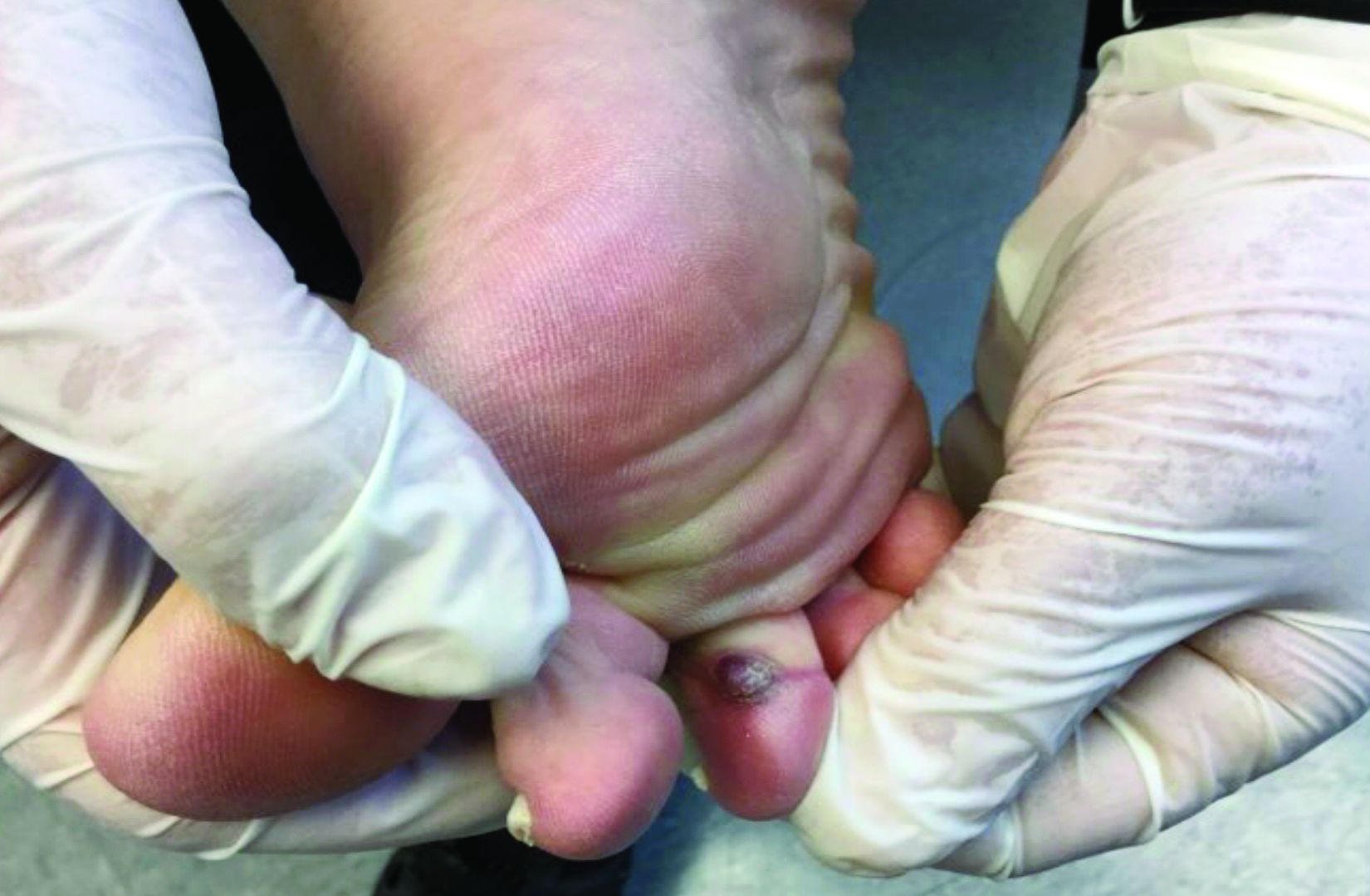
KS is caused by human herpes virus type 8 (HHV-8). Patients with KS have an increased risk of developing other malignancies such as lymphomas, leukemia, and myeloma. This patient exhibited classic KS.
The various forms of KS may appear different clinically. The lesions may appear as erythematous macules, small violaceous papules, large plaques, or ulcerated nodules. In classic KS, violaceous to bluish-black macules evolve to papules or plaques. Lesions are generally asymptomatic. The most common locations are the toes and soles, although other areas may be affected. Any mucocutaneous surface can be involved. The most common areas of internal involvement are the gastrointestinal system and lymphatics.
Histology reveals angular vessels lined by atypical cells. An associated inflammatory infiltrate containing plasma cells may be present in the upper dermis and perivascular areas. Nodules and plaques reveal a spindle cell neoplasm pattern. Lesions will stain positive for HHV-8.
In patients with HIV/AIDS–related KS, highly active antiretroviral therapy is the most important and beneficial treatment. Since the introduction of HAART, the incidence of KS has greatly decreased. However, there are a proportion of HIV/AIDS–associated Kaposi’s sarcoma patients with well-controlled HIV and undetectable viral loads who require further treatment.
Lesions may spontaneously resolve on their own. Other treatment methods include: cryotherapy, topical alitretinoin (9-cis-retinoic acid), intralesional interferon-alpha or vinblastine, superficial radiotherapy, liposomal doxorubicin, daunorubicin or paclitaxel. Small lesions that are asymptomatic may be monitored.
This patient had no internal involvement and responded well to cryotherapy.
This case and photo were provided by Dr. Bilu Martin.

Dr. Bilu Martin is a board-certified dermatologist in private practice at Premier Dermatology, MD, in Aventura, Fla. More diagnostic cases are available at mdedge.com/dermatology. To submit a case for possible publication, send an email to dermnews@mdedge.com.
and named the condition multiple benign pigmented hemorrhagic sarcoma. The disease emerged again at the onset of the AIDS epidemic among homosexual men. There are five variants: HIV/AIDS–related KS, classic KS, African cutaneous KS, African lymphadenopathic KS, and immunosuppression-associated KS (from immunosuppressive therapy or malignancies such as lymphoma).
KS is caused by human herpes virus type 8 (HHV-8). Patients with KS have an increased risk of developing other malignancies such as lymphomas, leukemia, and myeloma. This patient exhibited classic KS.
The various forms of KS may appear different clinically. The lesions may appear as erythematous macules, small violaceous papules, large plaques, or ulcerated nodules. In classic KS, violaceous to bluish-black macules evolve to papules or plaques. Lesions are generally asymptomatic. The most common locations are the toes and soles, although other areas may be affected. Any mucocutaneous surface can be involved. The most common areas of internal involvement are the gastrointestinal system and lymphatics.
Histology reveals angular vessels lined by atypical cells. An associated inflammatory infiltrate containing plasma cells may be present in the upper dermis and perivascular areas. Nodules and plaques reveal a spindle cell neoplasm pattern. Lesions will stain positive for HHV-8.
In patients with HIV/AIDS–related KS, highly active antiretroviral therapy is the most important and beneficial treatment. Since the introduction of HAART, the incidence of KS has greatly decreased. However, there are a proportion of HIV/AIDS–associated Kaposi’s sarcoma patients with well-controlled HIV and undetectable viral loads who require further treatment.
Lesions may spontaneously resolve on their own. Other treatment methods include: cryotherapy, topical alitretinoin (9-cis-retinoic acid), intralesional interferon-alpha or vinblastine, superficial radiotherapy, liposomal doxorubicin, daunorubicin or paclitaxel. Small lesions that are asymptomatic may be monitored.
This patient had no internal involvement and responded well to cryotherapy.
This case and photo were provided by Dr. Bilu Martin.
Dr. Bilu Martin is a board-certified dermatologist in private practice at Premier Dermatology, MD, in Aventura, Fla. More diagnostic cases are available at mdedge.com/dermatology. To submit a case for possible publication, send an email to dermnews@mdedge.com.
and named the condition multiple benign pigmented hemorrhagic sarcoma. The disease emerged again at the onset of the AIDS epidemic among homosexual men. There are five variants: HIV/AIDS–related KS, classic KS, African cutaneous KS, African lymphadenopathic KS, and immunosuppression-associated KS (from immunosuppressive therapy or malignancies such as lymphoma).
KS is caused by human herpes virus type 8 (HHV-8). Patients with KS have an increased risk of developing other malignancies such as lymphomas, leukemia, and myeloma. This patient exhibited classic KS.
The various forms of KS may appear different clinically. The lesions may appear as erythematous macules, small violaceous papules, large plaques, or ulcerated nodules. In classic KS, violaceous to bluish-black macules evolve to papules or plaques. Lesions are generally asymptomatic. The most common locations are the toes and soles, although other areas may be affected. Any mucocutaneous surface can be involved. The most common areas of internal involvement are the gastrointestinal system and lymphatics.
Histology reveals angular vessels lined by atypical cells. An associated inflammatory infiltrate containing plasma cells may be present in the upper dermis and perivascular areas. Nodules and plaques reveal a spindle cell neoplasm pattern. Lesions will stain positive for HHV-8.
In patients with HIV/AIDS–related KS, highly active antiretroviral therapy is the most important and beneficial treatment. Since the introduction of HAART, the incidence of KS has greatly decreased. However, there are a proportion of HIV/AIDS–associated Kaposi’s sarcoma patients with well-controlled HIV and undetectable viral loads who require further treatment.
Lesions may spontaneously resolve on their own. Other treatment methods include: cryotherapy, topical alitretinoin (9-cis-retinoic acid), intralesional interferon-alpha or vinblastine, superficial radiotherapy, liposomal doxorubicin, daunorubicin or paclitaxel. Small lesions that are asymptomatic may be monitored.
This patient had no internal involvement and responded well to cryotherapy.
This case and photo were provided by Dr. Bilu Martin.
Dr. Bilu Martin is a board-certified dermatologist in private practice at Premier Dermatology, MD, in Aventura, Fla. More diagnostic cases are available at mdedge.com/dermatology. To submit a case for possible publication, send an email to dermnews@mdedge.com.
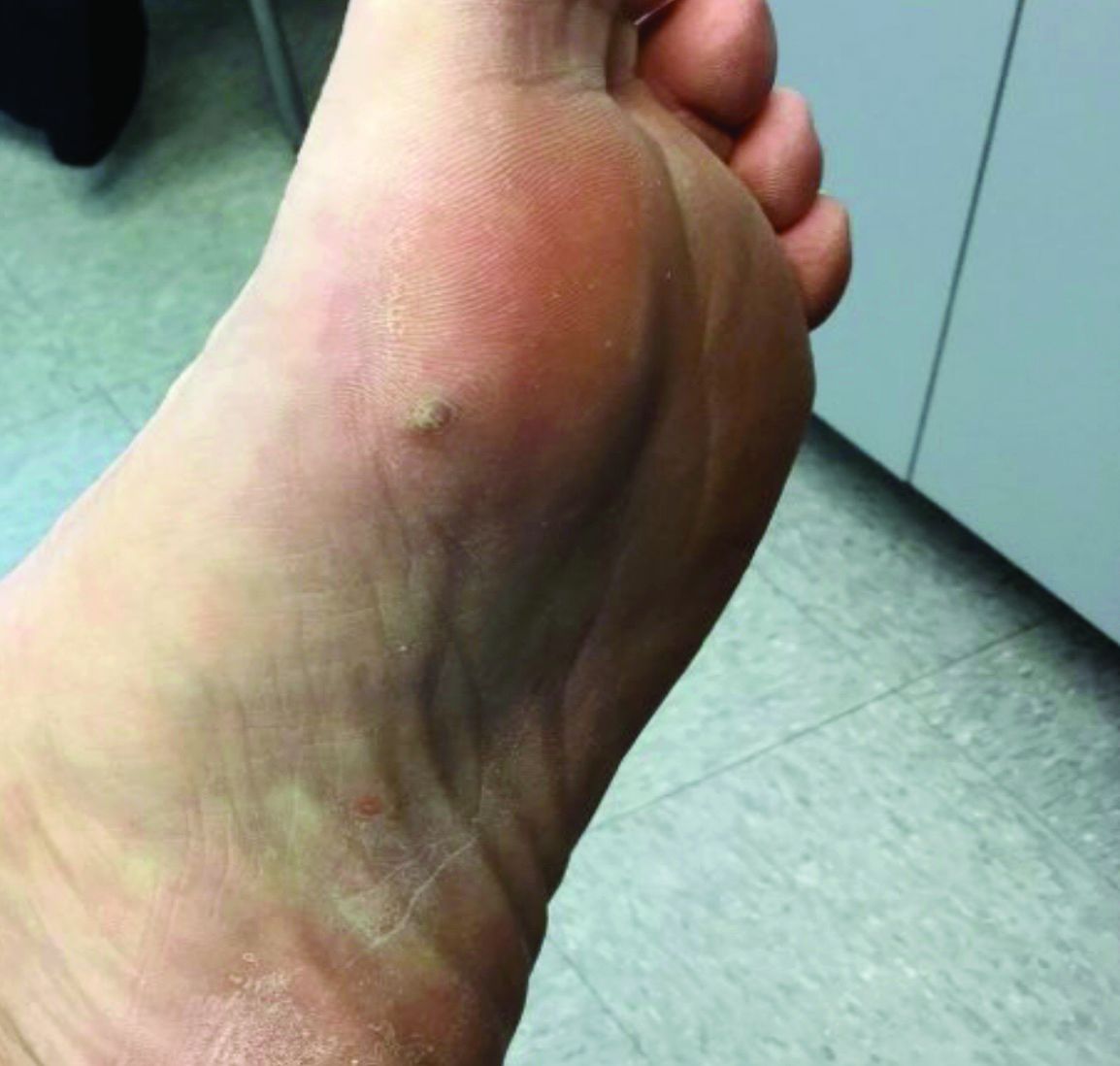
Peripheral neuropathy tied to mortality in adults without diabetes
researchers reported in Annals of Internal Medicine.

The findings do not necessarily mean that doctors should implement broader screening for peripheral neuropathy at this time, however, the investigators said.
“Doctors don’t typically screen for peripheral neuropathy in persons without diabetes,” senior author Elizabeth Selvin, PhD, MPH, professor of epidemiology at the Johns Hopkins Bloomberg School of Public Health, Baltimore, said in an interview.
“Our study shows that peripheral neuropathy – as assessed by decreased sensation in the feet – is common, even in people without diabetes,” Dr. Selvin explained. “It is not yet clear whether we should be screening people without diabetes since we don’t have clear treatments, but our study does suggest that this condition is an underrecognized condition that is associated with poor outcomes.”
Patients with diabetes typically undergo annual foot examinations that include screening for peripheral neuropathy, but that’s not the case for most adults in the absence of diabetes.
“I don’t know if we can make the jump that we should be screening people without diabetes,” said first author Caitlin W. Hicks, MD, assistant professor of surgery, division of vascular surgery and endovascular therapy, Johns Hopkins University, Baltimore. “Right now, we do not exactly know what it means in the people without diabetes, and we definitely do not know how to treat it. So, screening for it will tell us that this person has this and is at higher risk of mortality than someone who doesn’t, but we do not know what to do with that information yet.”
Nevertheless, the study raises the question of whether physicians should pay more attention to peripheral neuropathy in people without diabetes, said Dr. Hicks, director of research at the university’s diabetic foot and wound service.
Heightened risk
To examine associations between peripheral neuropathy and all-cause and cardiovascular mortality in U.S. adults, Dr. Hicks and colleagues analyzed data from 7,116 adults aged 40 years or older who participated in the National Health and Nutrition Examination Survey (NHANES) between 1999 and 2004.
The study included participants who underwent monofilament testing for peripheral neuropathy. During testing, technicians used a standard 5.07 Semmes-Weinstein nylon monofilament to apply slight pressure to the bottom of each foot at three sites. If participants could not correctly identify where pressure was applied, the test was repeated. After participants gave two incorrect or undeterminable responses for a site, the site was defined as insensate. The researchers defined peripheral neuropathy as at least one insensate site on either foot.
The researchers determined deaths and causes of death using death certificate records from the National Death Index through 2015.
In all, 13.5% of the participants had peripheral neuropathy, including 27% of adults with diabetes and 11.6% of adults without diabetes. Those with peripheral neuropathy were older, were more likely to be male, and had lower levels of education, compared with participants without peripheral neuropathy. They also had higher body mass index, were more often former or current smokers, and had a higher prevalence of hypertension, hypercholesterolemia, and cardiovascular disease.
During a median follow-up of 13 years, 2,128 participants died, including 488 who died of cardiovascular causes.
The incidence rate of all-cause mortality per 1,000 person-years was 57.6 in adults with diabetes and peripheral neuropathy, 34.3 in adults with peripheral neuropathy but no diabetes, 27.1 in adults with diabetes but no peripheral neuropathy, and 13.0 in adults without diabetes or peripheral neuropathy.
Among participants with diabetes, the leading cause of death was cardiovascular disease (31% of deaths), whereas among participants without diabetes, the leading cause of death was malignant neoplasms (27% of deaths).
After adjustment for age, sex, race, or ethnicity, and risk factors such as cardiovascular disease, peripheral neuropathy was significantly associated with all-cause mortality (hazard ratio [HR], 1.49) and cardiovascular mortality (HR, 1.66) in participants with diabetes. In participants without diabetes, peripheral neuropathy was significantly associated with all-cause mortality (HR, 1.31), but its association with cardiovascular mortality was not statistically significant.
The association between peripheral neuropathy and all-cause mortality persisted in a sensitivity analysis that focused on adults with normoglycemia.
Related conditions
The study confirms findings from prior studies that examined the prevalence of loss of peripheral sensation in populations of older adults with and without diabetes, said Elsa S. Strotmeyer, PhD, MPH, associate professor of epidemiology at the University of Pittsburgh. “The clinical significance of the loss of peripheral sensation in older adults without diabetes is not fully appreciated,” she said.
A limitation of the study is that peripheral neuropathy was not a clinical diagnosis. “Monofilament testing at the foot is a quick clinical screen for decreased lower-extremity sensation that likely is a result of sensory peripheral nerve decline,” Dr. Strotmeyer said.
Another limitation is that death certificates are less accurate than medical records for determining cause of death.
“Past studies have indicated that peripheral nerve decline is related to common conditions in aging such as the metabolic syndrome and cardiovascular disease, cancer treatment, and physical function loss,” Dr. Strotmeyer said. “Therefore it is not surprising that is related to mortality as these conditions in aging are associated with increased mortality. Loss of peripheral sensation at the foot may also be related to fall injuries, and mortality from fall injuries has increased dramatically in older adults over the past several decades.”
Prior research has suggested that monofilament testing may play a role in screening for fall risk in older adults without diabetes, Dr. Strotmeyer added.
“For older adults both with and without diabetes, past studies have recommended monofilament testing be incorporated in geriatric screening for fall risk. Therefore, this article expands implications of clinical importance to understanding the pathology and consequences of loss of sensation at the foot in older patients,” she said.
The study was funded by the National Institute of Diabetes and Digestive and Kidney Diseases and the National Heart, Lung, and Blood Institute. Dr. Hicks, Dr. Selvin, and a coauthor, Kunihiro Matsushita, MD, PhD, disclosed NIH grants. In addition, Dr. Selvin disclosed personal fees from Novo Nordisk and grants from the Foundation for the National Institutes of Health outside the submitted work, and Dr. Matsushita disclosed grants and personal fees from Fukuda Denshi outside the submitted work. Dr. Strotmeyer receives funding from the National Institute on Aging and the National Institute of Arthritis and Musculoskeletal and Skin Diseases and is chair of the health sciences section of the Gerontological Society of America.
A version of this article originally appeared on Medscape.com.
researchers reported in Annals of Internal Medicine.
The findings do not necessarily mean that doctors should implement broader screening for peripheral neuropathy at this time, however, the investigators said.
“Doctors don’t typically screen for peripheral neuropathy in persons without diabetes,” senior author Elizabeth Selvin, PhD, MPH, professor of epidemiology at the Johns Hopkins Bloomberg School of Public Health, Baltimore, said in an interview.
“Our study shows that peripheral neuropathy – as assessed by decreased sensation in the feet – is common, even in people without diabetes,” Dr. Selvin explained. “It is not yet clear whether we should be screening people without diabetes since we don’t have clear treatments, but our study does suggest that this condition is an underrecognized condition that is associated with poor outcomes.”
Patients with diabetes typically undergo annual foot examinations that include screening for peripheral neuropathy, but that’s not the case for most adults in the absence of diabetes.
“I don’t know if we can make the jump that we should be screening people without diabetes,” said first author Caitlin W. Hicks, MD, assistant professor of surgery, division of vascular surgery and endovascular therapy, Johns Hopkins University, Baltimore. “Right now, we do not exactly know what it means in the people without diabetes, and we definitely do not know how to treat it. So, screening for it will tell us that this person has this and is at higher risk of mortality than someone who doesn’t, but we do not know what to do with that information yet.”
Nevertheless, the study raises the question of whether physicians should pay more attention to peripheral neuropathy in people without diabetes, said Dr. Hicks, director of research at the university’s diabetic foot and wound service.
Heightened risk
To examine associations between peripheral neuropathy and all-cause and cardiovascular mortality in U.S. adults, Dr. Hicks and colleagues analyzed data from 7,116 adults aged 40 years or older who participated in the National Health and Nutrition Examination Survey (NHANES) between 1999 and 2004.
The study included participants who underwent monofilament testing for peripheral neuropathy. During testing, technicians used a standard 5.07 Semmes-Weinstein nylon monofilament to apply slight pressure to the bottom of each foot at three sites. If participants could not correctly identify where pressure was applied, the test was repeated. After participants gave two incorrect or undeterminable responses for a site, the site was defined as insensate. The researchers defined peripheral neuropathy as at least one insensate site on either foot.
The researchers determined deaths and causes of death using death certificate records from the National Death Index through 2015.
In all, 13.5% of the participants had peripheral neuropathy, including 27% of adults with diabetes and 11.6% of adults without diabetes. Those with peripheral neuropathy were older, were more likely to be male, and had lower levels of education, compared with participants without peripheral neuropathy. They also had higher body mass index, were more often former or current smokers, and had a higher prevalence of hypertension, hypercholesterolemia, and cardiovascular disease.
During a median follow-up of 13 years, 2,128 participants died, including 488 who died of cardiovascular causes.
The incidence rate of all-cause mortality per 1,000 person-years was 57.6 in adults with diabetes and peripheral neuropathy, 34.3 in adults with peripheral neuropathy but no diabetes, 27.1 in adults with diabetes but no peripheral neuropathy, and 13.0 in adults without diabetes or peripheral neuropathy.
Among participants with diabetes, the leading cause of death was cardiovascular disease (31% of deaths), whereas among participants without diabetes, the leading cause of death was malignant neoplasms (27% of deaths).
After adjustment for age, sex, race, or ethnicity, and risk factors such as cardiovascular disease, peripheral neuropathy was significantly associated with all-cause mortality (hazard ratio [HR], 1.49) and cardiovascular mortality (HR, 1.66) in participants with diabetes. In participants without diabetes, peripheral neuropathy was significantly associated with all-cause mortality (HR, 1.31), but its association with cardiovascular mortality was not statistically significant.
The association between peripheral neuropathy and all-cause mortality persisted in a sensitivity analysis that focused on adults with normoglycemia.
Related conditions
The study confirms findings from prior studies that examined the prevalence of loss of peripheral sensation in populations of older adults with and without diabetes, said Elsa S. Strotmeyer, PhD, MPH, associate professor of epidemiology at the University of Pittsburgh. “The clinical significance of the loss of peripheral sensation in older adults without diabetes is not fully appreciated,” she said.
A limitation of the study is that peripheral neuropathy was not a clinical diagnosis. “Monofilament testing at the foot is a quick clinical screen for decreased lower-extremity sensation that likely is a result of sensory peripheral nerve decline,” Dr. Strotmeyer said.
Another limitation is that death certificates are less accurate than medical records for determining cause of death.
“Past studies have indicated that peripheral nerve decline is related to common conditions in aging such as the metabolic syndrome and cardiovascular disease, cancer treatment, and physical function loss,” Dr. Strotmeyer said. “Therefore it is not surprising that is related to mortality as these conditions in aging are associated with increased mortality. Loss of peripheral sensation at the foot may also be related to fall injuries, and mortality from fall injuries has increased dramatically in older adults over the past several decades.”
Prior research has suggested that monofilament testing may play a role in screening for fall risk in older adults without diabetes, Dr. Strotmeyer added.
“For older adults both with and without diabetes, past studies have recommended monofilament testing be incorporated in geriatric screening for fall risk. Therefore, this article expands implications of clinical importance to understanding the pathology and consequences of loss of sensation at the foot in older patients,” she said.
The study was funded by the National Institute of Diabetes and Digestive and Kidney Diseases and the National Heart, Lung, and Blood Institute. Dr. Hicks, Dr. Selvin, and a coauthor, Kunihiro Matsushita, MD, PhD, disclosed NIH grants. In addition, Dr. Selvin disclosed personal fees from Novo Nordisk and grants from the Foundation for the National Institutes of Health outside the submitted work, and Dr. Matsushita disclosed grants and personal fees from Fukuda Denshi outside the submitted work. Dr. Strotmeyer receives funding from the National Institute on Aging and the National Institute of Arthritis and Musculoskeletal and Skin Diseases and is chair of the health sciences section of the Gerontological Society of America.
A version of this article originally appeared on Medscape.com.
researchers reported in Annals of Internal Medicine.
The findings do not necessarily mean that doctors should implement broader screening for peripheral neuropathy at this time, however, the investigators said.
“Doctors don’t typically screen for peripheral neuropathy in persons without diabetes,” senior author Elizabeth Selvin, PhD, MPH, professor of epidemiology at the Johns Hopkins Bloomberg School of Public Health, Baltimore, said in an interview.
“Our study shows that peripheral neuropathy – as assessed by decreased sensation in the feet – is common, even in people without diabetes,” Dr. Selvin explained. “It is not yet clear whether we should be screening people without diabetes since we don’t have clear treatments, but our study does suggest that this condition is an underrecognized condition that is associated with poor outcomes.”
Patients with diabetes typically undergo annual foot examinations that include screening for peripheral neuropathy, but that’s not the case for most adults in the absence of diabetes.
“I don’t know if we can make the jump that we should be screening people without diabetes,” said first author Caitlin W. Hicks, MD, assistant professor of surgery, division of vascular surgery and endovascular therapy, Johns Hopkins University, Baltimore. “Right now, we do not exactly know what it means in the people without diabetes, and we definitely do not know how to treat it. So, screening for it will tell us that this person has this and is at higher risk of mortality than someone who doesn’t, but we do not know what to do with that information yet.”
Nevertheless, the study raises the question of whether physicians should pay more attention to peripheral neuropathy in people without diabetes, said Dr. Hicks, director of research at the university’s diabetic foot and wound service.
Heightened risk
To examine associations between peripheral neuropathy and all-cause and cardiovascular mortality in U.S. adults, Dr. Hicks and colleagues analyzed data from 7,116 adults aged 40 years or older who participated in the National Health and Nutrition Examination Survey (NHANES) between 1999 and 2004.
The study included participants who underwent monofilament testing for peripheral neuropathy. During testing, technicians used a standard 5.07 Semmes-Weinstein nylon monofilament to apply slight pressure to the bottom of each foot at three sites. If participants could not correctly identify where pressure was applied, the test was repeated. After participants gave two incorrect or undeterminable responses for a site, the site was defined as insensate. The researchers defined peripheral neuropathy as at least one insensate site on either foot.
The researchers determined deaths and causes of death using death certificate records from the National Death Index through 2015.
In all, 13.5% of the participants had peripheral neuropathy, including 27% of adults with diabetes and 11.6% of adults without diabetes. Those with peripheral neuropathy were older, were more likely to be male, and had lower levels of education, compared with participants without peripheral neuropathy. They also had higher body mass index, were more often former or current smokers, and had a higher prevalence of hypertension, hypercholesterolemia, and cardiovascular disease.
During a median follow-up of 13 years, 2,128 participants died, including 488 who died of cardiovascular causes.
The incidence rate of all-cause mortality per 1,000 person-years was 57.6 in adults with diabetes and peripheral neuropathy, 34.3 in adults with peripheral neuropathy but no diabetes, 27.1 in adults with diabetes but no peripheral neuropathy, and 13.0 in adults without diabetes or peripheral neuropathy.
Among participants with diabetes, the leading cause of death was cardiovascular disease (31% of deaths), whereas among participants without diabetes, the leading cause of death was malignant neoplasms (27% of deaths).
After adjustment for age, sex, race, or ethnicity, and risk factors such as cardiovascular disease, peripheral neuropathy was significantly associated with all-cause mortality (hazard ratio [HR], 1.49) and cardiovascular mortality (HR, 1.66) in participants with diabetes. In participants without diabetes, peripheral neuropathy was significantly associated with all-cause mortality (HR, 1.31), but its association with cardiovascular mortality was not statistically significant.
The association between peripheral neuropathy and all-cause mortality persisted in a sensitivity analysis that focused on adults with normoglycemia.
Related conditions
The study confirms findings from prior studies that examined the prevalence of loss of peripheral sensation in populations of older adults with and without diabetes, said Elsa S. Strotmeyer, PhD, MPH, associate professor of epidemiology at the University of Pittsburgh. “The clinical significance of the loss of peripheral sensation in older adults without diabetes is not fully appreciated,” she said.
A limitation of the study is that peripheral neuropathy was not a clinical diagnosis. “Monofilament testing at the foot is a quick clinical screen for decreased lower-extremity sensation that likely is a result of sensory peripheral nerve decline,” Dr. Strotmeyer said.
Another limitation is that death certificates are less accurate than medical records for determining cause of death.
“Past studies have indicated that peripheral nerve decline is related to common conditions in aging such as the metabolic syndrome and cardiovascular disease, cancer treatment, and physical function loss,” Dr. Strotmeyer said. “Therefore it is not surprising that is related to mortality as these conditions in aging are associated with increased mortality. Loss of peripheral sensation at the foot may also be related to fall injuries, and mortality from fall injuries has increased dramatically in older adults over the past several decades.”
Prior research has suggested that monofilament testing may play a role in screening for fall risk in older adults without diabetes, Dr. Strotmeyer added.
“For older adults both with and without diabetes, past studies have recommended monofilament testing be incorporated in geriatric screening for fall risk. Therefore, this article expands implications of clinical importance to understanding the pathology and consequences of loss of sensation at the foot in older patients,” she said.
The study was funded by the National Institute of Diabetes and Digestive and Kidney Diseases and the National Heart, Lung, and Blood Institute. Dr. Hicks, Dr. Selvin, and a coauthor, Kunihiro Matsushita, MD, PhD, disclosed NIH grants. In addition, Dr. Selvin disclosed personal fees from Novo Nordisk and grants from the Foundation for the National Institutes of Health outside the submitted work, and Dr. Matsushita disclosed grants and personal fees from Fukuda Denshi outside the submitted work. Dr. Strotmeyer receives funding from the National Institute on Aging and the National Institute of Arthritis and Musculoskeletal and Skin Diseases and is chair of the health sciences section of the Gerontological Society of America.
A version of this article originally appeared on Medscape.com.

monarchE: Abemaciclib reigns on in high-risk breast cancer
The addition of the CDK4/6 inhibitor abemaciclib (Verzenio) to endocrine therapy continues to offer improved event-free survival in women with high-risk hormone receptor-positive (HR+), HER2-negative breast cancer, indicate updated results, which now extend to about a year and a half, from the landmark monarchE trial.
However, experts warned that longer follow-up – at least to 5 years – will be required to understand the impact of the combination treatment on survival, particularly as HR+ breast cancer is associated with a high rate of late recurrences.
The research was presented Dec. 9 at the 2020 San Antonio Breast Cancer Symposium, being held online this year because of the pandemic.
An earlier preplanned interim analysis the phase 3 trial of over 5600 patients was presented at the ESMO Virtual Congress 2020, and simultaneously published in the Journal of Clinical Oncology.
As previously reported by Medscape Medical News, this showed that, after a median follow-up of 15.5 months, abemaciclib plus endocrine therapy was associated with a 25% relative risk reduction in the primary endpoint of invasive disease-free survival (IDFS) vs endocrine therapy alone.
At the time, the findings were hailed as practice changing and, once approved for high-risk HR+ HER2-negative early breast cancer, as the “new standard of care” by one expert.
Now, with median follow-up extended to 19.1 months, Priya Rastogi, MD, associate professor at the University of Pittsburgh Department of Medicine, Pittsburgh, Pennsylvania, presented new study data, including additional results on patients with a Ki-67 index ≥20%, which is indicative of fast tumor growth.
Abemaciclib plus endocrine therapy was associated with a significant 28.7% reduction in the relative risk of developing an IDFS event vs endocrine therapy alone across the whole patient population, and with a 30.9% risk reduction in those with a Ki-67 index ≥20%.
Moreover, patients taking the drug combination had a significant 31.3% reduction in the relative risk of a distant relapse-free survival (DRFS) event.
Crucially, these improvements, which were deemed clinically meaningful, were not gained at the expense of additional safety concerns, although high rates of any grade diarrhea, fatigue, and neutropenia were noted.
Rastogi said the findings underline that abemaciclib combined with standard endocrine therapy “is the first CDK4/6 inhibitor to demonstrate efficacy and tolerability for patients with HR+ HER2-negative, node-positive, high-risk early breast cancer.”
Longer follow-up is ‘reassuring’ but still ‘quite short’
George W. Sledge Jr, MD, professor of medicine at Stanford University Medical Center, Palo Alto, California, was the study discussant for the earlier interim analysis presented at ESMO 2020.
At the time, he said that the study had “very, very short follow-up,” and it was consequently unclear whether the improvements will “lead to what we really care about: improved overall survival.”
Approached to comment on the current analysis, Sledge told Medscape Medical News the data “appear quite consistent” with those presented earlier this year, “which is certainly reassuring.”
Referring to the analysis in patients with a Ki-67 index ≥20%, he added the results “show a higher absolute benefit in patients with more rapidly proliferating tumors, as might be expected for a drug affecting cell-cycle division.”
However, Sledge underlined that the median follow-up time “is still quite short for a study of ER-positive adjuvant therapy, where the majority of recurrences and deaths occur after 5 years in many studies”.
Consequently, “we still have a long way to go to understand the ultimate effects of CDK4/6 inhibition on early-stage, ER-positive breast cancer, particularly on late recurrences.”
Agreed, said C. Kent Osborne, MD, codirector of SABCS and founding director of the Duncan Cancer Center at Baylor College of Medicine, Houston, Texas.
Commenting in a press conference, he said the results are “very encouraging, especially in the subgroup of tumors with high proliferation.”
However, Osborne also urged “caution” in the interpretation of the results “given the still rather short follow-up [and] given that ER+ disease is known for its persistent recurrence rate, even past 10 years.”
He also noted “this class of inhibitors is likely cytostatic, rather than cytocidal, meaning that it blocks cell proliferation rather than killing the cells.” Questions therefore remain over whether the survival curves for combination therapy will come together with those for endocrine therapy alone once the drug is stopped.
Osborne nevertheless said that, “with these caveats in mind, this is still an extremely important trial that could be practice changing in this very high-risk patient population…if the results continue to be positive and show improved overall survival with longer follow-up.”
During the press conference, Rastogi confirmed that the study will indeed to continue out to 10 years until the final assessment of overall survival.
More study details
The 5637 women who were enrolled in monarchE were divided into two cohorts:
Cohort 1, which included patients with four or more positive nodes, or those with up to three positive nodes and a tumor size ≥5 cm or grade 3 disease
Cohort 2, which included women with up to three positive nodes and a Ki-67 index ≥20% based on a standard assay
“Cohort 2 opened one year after Cohort 1 and enrolled 517 patients,” Rastogi said.
Regardless of cohort, the patients were randomly assigned in a 1:1 fashion to abemaciclib for 2 years plus endocrine therapy for 5 to 10 years, as clinically indicated, or endocrine therapy alone.
At the primary efficacy outcome analysis, 395 IDFS events had occurred in the intention-to-treat analysis. The median follow-up was 19.1 months, and 25.5% of patients had completed the 2-year treatment period. A further 58.2% were still on treatment.
The results showed 163 IDFS events had occurred with abemaciclib plus endocrine therapy vs 232 with endocrine therapy alone, to give a 2-year IDFS rate of 92.3% vs 89.3%, at a hazard ratio of 0.713 (P = .0009).
Moving on to the subgroup analysis, Rastogi added that there were “no statistically significant interactions observed, indicating a consistent treatment benefit across all groups.”
The researchers also looked at IDFS rates in patients from both cohorts with Ki-67 index ≥20%, again finding that abemaciclib plus endocrine therapy was associated with significantly fewer events than endocrine therapy alone.
There were 82 events with the combination treatment vs 115 with endocrine therapy, at a 2-year IDFS rate of 91.6% vs 87.1% and a hazard ratio of 0.691 (P = .0111).
DRFS also significantly improved with abemaciclib plus endocrine therapy vs endocrine therapy alone, at a 2-year DRFS rate of 93.8% vs 90% or a hazard ratio of 0.687 (P = .0009).
“Safety remained consistent with the known profile of abemaciclib,” Rastogi said, “and what was observed at the second interim analysis, [with] minimal increases in any grade and grade ≥3 treatment-related adverse events.”
The most common adverse events were diarrhea, fatigue, and neutropenia, which were largely grades 1 and 2.
Notably, 2.4% of combination therapy patients experienced a venous thromboembolic event of any grade vs 0.6% of endocrine therapy patients, while 2.9% and 1.2%, respectively, had any grade interstitial lung disease.
At least one dose hold because of an adverse event was reported by 59.5% of patients on abemaciclib plus endocrine therapy, while 42.5% had at least one dose reduction because of an adverse event. In both cases, the primary reason was diarrhea.
Finally, Rastogi said that “over half of the discontinuations of abemaciclib due to adverse events occurred during the first 5 months of treatment, with the highest number…in the first month.”
Ki-67 issues
During the press conference, Virginia Kaklamani, MD, codirector of SABCS and leader of the Breast Cancer Program at the UT Health San Antonio Cancer Center, Texas, asked about the practicalities of the Ki-67 index.
She said that testing is “great when it’s centrally done, but what do we expect physicians to do when some institutions do it, some don’t, and obviously it’s not really validated in most institutions around the world?”
Rastogi replied that is a “great question,” adding “this is something that is going to have to be sorted as we continue to have discussions and get more granularity of what to do when abemaciclib is administered in that patient population.”
Carlos L. Arteaga, MD, codirector of SABCS and director of the Simmons Comprehensive Cancer Center at UT Southwestern Medical Center, Dallas, Texas, added that “most of us think of 10% as a cutoff between high and low” for the Ki-67 index, rather than ≥20%.
He said that he knows it is “arbitrary” but he thinks of 20% as “extremely high” and asked whether the researchers would be able to conduct a retrospective analysis to look at Ki-67 as a gradient to determine “at what point it stops predicting.”
Rastogi replied that, at the time monarchE was developed, some of the international guidelines used a Ki-67 index ≥20% as the cutoff.
She also noted that, although Ki-67 index ≥20% was an entry criterion for cohort 2, cohort 1 patients also provided tissue after randomization, “and so we’ll be able to look at these types of questions with our translational research committee.”
This study was sponsored by Eli Lilly. Rastogi has financial ties to AstraZeneca, Genentech/Roche, and the study sponsor, Eli Lilly. Regan has ties to Lilly and multiple other pharmaceutical companies. Sledge has ties to Lilly and other companies. Osborne has ties to Lilly and other companies.
This article first appeared on Medscape.com.
The addition of the CDK4/6 inhibitor abemaciclib (Verzenio) to endocrine therapy continues to offer improved event-free survival in women with high-risk hormone receptor-positive (HR+), HER2-negative breast cancer, indicate updated results, which now extend to about a year and a half, from the landmark monarchE trial.
However, experts warned that longer follow-up – at least to 5 years – will be required to understand the impact of the combination treatment on survival, particularly as HR+ breast cancer is associated with a high rate of late recurrences.
The research was presented Dec. 9 at the 2020 San Antonio Breast Cancer Symposium, being held online this year because of the pandemic.
An earlier preplanned interim analysis the phase 3 trial of over 5600 patients was presented at the ESMO Virtual Congress 2020, and simultaneously published in the Journal of Clinical Oncology.
As previously reported by Medscape Medical News, this showed that, after a median follow-up of 15.5 months, abemaciclib plus endocrine therapy was associated with a 25% relative risk reduction in the primary endpoint of invasive disease-free survival (IDFS) vs endocrine therapy alone.
At the time, the findings were hailed as practice changing and, once approved for high-risk HR+ HER2-negative early breast cancer, as the “new standard of care” by one expert.
Now, with median follow-up extended to 19.1 months, Priya Rastogi, MD, associate professor at the University of Pittsburgh Department of Medicine, Pittsburgh, Pennsylvania, presented new study data, including additional results on patients with a Ki-67 index ≥20%, which is indicative of fast tumor growth.
Abemaciclib plus endocrine therapy was associated with a significant 28.7% reduction in the relative risk of developing an IDFS event vs endocrine therapy alone across the whole patient population, and with a 30.9% risk reduction in those with a Ki-67 index ≥20%.
Moreover, patients taking the drug combination had a significant 31.3% reduction in the relative risk of a distant relapse-free survival (DRFS) event.
Crucially, these improvements, which were deemed clinically meaningful, were not gained at the expense of additional safety concerns, although high rates of any grade diarrhea, fatigue, and neutropenia were noted.
Rastogi said the findings underline that abemaciclib combined with standard endocrine therapy “is the first CDK4/6 inhibitor to demonstrate efficacy and tolerability for patients with HR+ HER2-negative, node-positive, high-risk early breast cancer.”
Longer follow-up is ‘reassuring’ but still ‘quite short’
George W. Sledge Jr, MD, professor of medicine at Stanford University Medical Center, Palo Alto, California, was the study discussant for the earlier interim analysis presented at ESMO 2020.
At the time, he said that the study had “very, very short follow-up,” and it was consequently unclear whether the improvements will “lead to what we really care about: improved overall survival.”
Approached to comment on the current analysis, Sledge told Medscape Medical News the data “appear quite consistent” with those presented earlier this year, “which is certainly reassuring.”
Referring to the analysis in patients with a Ki-67 index ≥20%, he added the results “show a higher absolute benefit in patients with more rapidly proliferating tumors, as might be expected for a drug affecting cell-cycle division.”
However, Sledge underlined that the median follow-up time “is still quite short for a study of ER-positive adjuvant therapy, where the majority of recurrences and deaths occur after 5 years in many studies”.
Consequently, “we still have a long way to go to understand the ultimate effects of CDK4/6 inhibition on early-stage, ER-positive breast cancer, particularly on late recurrences.”
Agreed, said C. Kent Osborne, MD, codirector of SABCS and founding director of the Duncan Cancer Center at Baylor College of Medicine, Houston, Texas.
Commenting in a press conference, he said the results are “very encouraging, especially in the subgroup of tumors with high proliferation.”
However, Osborne also urged “caution” in the interpretation of the results “given the still rather short follow-up [and] given that ER+ disease is known for its persistent recurrence rate, even past 10 years.”
He also noted “this class of inhibitors is likely cytostatic, rather than cytocidal, meaning that it blocks cell proliferation rather than killing the cells.” Questions therefore remain over whether the survival curves for combination therapy will come together with those for endocrine therapy alone once the drug is stopped.
Osborne nevertheless said that, “with these caveats in mind, this is still an extremely important trial that could be practice changing in this very high-risk patient population…if the results continue to be positive and show improved overall survival with longer follow-up.”
During the press conference, Rastogi confirmed that the study will indeed to continue out to 10 years until the final assessment of overall survival.
More study details
The 5637 women who were enrolled in monarchE were divided into two cohorts:
Cohort 1, which included patients with four or more positive nodes, or those with up to three positive nodes and a tumor size ≥5 cm or grade 3 disease
Cohort 2, which included women with up to three positive nodes and a Ki-67 index ≥20% based on a standard assay
“Cohort 2 opened one year after Cohort 1 and enrolled 517 patients,” Rastogi said.
Regardless of cohort, the patients were randomly assigned in a 1:1 fashion to abemaciclib for 2 years plus endocrine therapy for 5 to 10 years, as clinically indicated, or endocrine therapy alone.
At the primary efficacy outcome analysis, 395 IDFS events had occurred in the intention-to-treat analysis. The median follow-up was 19.1 months, and 25.5% of patients had completed the 2-year treatment period. A further 58.2% were still on treatment.
The results showed 163 IDFS events had occurred with abemaciclib plus endocrine therapy vs 232 with endocrine therapy alone, to give a 2-year IDFS rate of 92.3% vs 89.3%, at a hazard ratio of 0.713 (P = .0009).
Moving on to the subgroup analysis, Rastogi added that there were “no statistically significant interactions observed, indicating a consistent treatment benefit across all groups.”
The researchers also looked at IDFS rates in patients from both cohorts with Ki-67 index ≥20%, again finding that abemaciclib plus endocrine therapy was associated with significantly fewer events than endocrine therapy alone.
There were 82 events with the combination treatment vs 115 with endocrine therapy, at a 2-year IDFS rate of 91.6% vs 87.1% and a hazard ratio of 0.691 (P = .0111).
DRFS also significantly improved with abemaciclib plus endocrine therapy vs endocrine therapy alone, at a 2-year DRFS rate of 93.8% vs 90% or a hazard ratio of 0.687 (P = .0009).
“Safety remained consistent with the known profile of abemaciclib,” Rastogi said, “and what was observed at the second interim analysis, [with] minimal increases in any grade and grade ≥3 treatment-related adverse events.”
The most common adverse events were diarrhea, fatigue, and neutropenia, which were largely grades 1 and 2.
Notably, 2.4% of combination therapy patients experienced a venous thromboembolic event of any grade vs 0.6% of endocrine therapy patients, while 2.9% and 1.2%, respectively, had any grade interstitial lung disease.
At least one dose hold because of an adverse event was reported by 59.5% of patients on abemaciclib plus endocrine therapy, while 42.5% had at least one dose reduction because of an adverse event. In both cases, the primary reason was diarrhea.
Finally, Rastogi said that “over half of the discontinuations of abemaciclib due to adverse events occurred during the first 5 months of treatment, with the highest number…in the first month.”
Ki-67 issues
During the press conference, Virginia Kaklamani, MD, codirector of SABCS and leader of the Breast Cancer Program at the UT Health San Antonio Cancer Center, Texas, asked about the practicalities of the Ki-67 index.
She said that testing is “great when it’s centrally done, but what do we expect physicians to do when some institutions do it, some don’t, and obviously it’s not really validated in most institutions around the world?”
Rastogi replied that is a “great question,” adding “this is something that is going to have to be sorted as we continue to have discussions and get more granularity of what to do when abemaciclib is administered in that patient population.”
Carlos L. Arteaga, MD, codirector of SABCS and director of the Simmons Comprehensive Cancer Center at UT Southwestern Medical Center, Dallas, Texas, added that “most of us think of 10% as a cutoff between high and low” for the Ki-67 index, rather than ≥20%.
He said that he knows it is “arbitrary” but he thinks of 20% as “extremely high” and asked whether the researchers would be able to conduct a retrospective analysis to look at Ki-67 as a gradient to determine “at what point it stops predicting.”
Rastogi replied that, at the time monarchE was developed, some of the international guidelines used a Ki-67 index ≥20% as the cutoff.
She also noted that, although Ki-67 index ≥20% was an entry criterion for cohort 2, cohort 1 patients also provided tissue after randomization, “and so we’ll be able to look at these types of questions with our translational research committee.”
This study was sponsored by Eli Lilly. Rastogi has financial ties to AstraZeneca, Genentech/Roche, and the study sponsor, Eli Lilly. Regan has ties to Lilly and multiple other pharmaceutical companies. Sledge has ties to Lilly and other companies. Osborne has ties to Lilly and other companies.
This article first appeared on Medscape.com.
The addition of the CDK4/6 inhibitor abemaciclib (Verzenio) to endocrine therapy continues to offer improved event-free survival in women with high-risk hormone receptor-positive (HR+), HER2-negative breast cancer, indicate updated results, which now extend to about a year and a half, from the landmark monarchE trial.
However, experts warned that longer follow-up – at least to 5 years – will be required to understand the impact of the combination treatment on survival, particularly as HR+ breast cancer is associated with a high rate of late recurrences.
The research was presented Dec. 9 at the 2020 San Antonio Breast Cancer Symposium, being held online this year because of the pandemic.
An earlier preplanned interim analysis the phase 3 trial of over 5600 patients was presented at the ESMO Virtual Congress 2020, and simultaneously published in the Journal of Clinical Oncology.
As previously reported by Medscape Medical News, this showed that, after a median follow-up of 15.5 months, abemaciclib plus endocrine therapy was associated with a 25% relative risk reduction in the primary endpoint of invasive disease-free survival (IDFS) vs endocrine therapy alone.
At the time, the findings were hailed as practice changing and, once approved for high-risk HR+ HER2-negative early breast cancer, as the “new standard of care” by one expert.
Now, with median follow-up extended to 19.1 months, Priya Rastogi, MD, associate professor at the University of Pittsburgh Department of Medicine, Pittsburgh, Pennsylvania, presented new study data, including additional results on patients with a Ki-67 index ≥20%, which is indicative of fast tumor growth.
Abemaciclib plus endocrine therapy was associated with a significant 28.7% reduction in the relative risk of developing an IDFS event vs endocrine therapy alone across the whole patient population, and with a 30.9% risk reduction in those with a Ki-67 index ≥20%.
Moreover, patients taking the drug combination had a significant 31.3% reduction in the relative risk of a distant relapse-free survival (DRFS) event.
Crucially, these improvements, which were deemed clinically meaningful, were not gained at the expense of additional safety concerns, although high rates of any grade diarrhea, fatigue, and neutropenia were noted.
Rastogi said the findings underline that abemaciclib combined with standard endocrine therapy “is the first CDK4/6 inhibitor to demonstrate efficacy and tolerability for patients with HR+ HER2-negative, node-positive, high-risk early breast cancer.”
Longer follow-up is ‘reassuring’ but still ‘quite short’
George W. Sledge Jr, MD, professor of medicine at Stanford University Medical Center, Palo Alto, California, was the study discussant for the earlier interim analysis presented at ESMO 2020.
At the time, he said that the study had “very, very short follow-up,” and it was consequently unclear whether the improvements will “lead to what we really care about: improved overall survival.”
Approached to comment on the current analysis, Sledge told Medscape Medical News the data “appear quite consistent” with those presented earlier this year, “which is certainly reassuring.”
Referring to the analysis in patients with a Ki-67 index ≥20%, he added the results “show a higher absolute benefit in patients with more rapidly proliferating tumors, as might be expected for a drug affecting cell-cycle division.”
However, Sledge underlined that the median follow-up time “is still quite short for a study of ER-positive adjuvant therapy, where the majority of recurrences and deaths occur after 5 years in many studies”.
Consequently, “we still have a long way to go to understand the ultimate effects of CDK4/6 inhibition on early-stage, ER-positive breast cancer, particularly on late recurrences.”
Agreed, said C. Kent Osborne, MD, codirector of SABCS and founding director of the Duncan Cancer Center at Baylor College of Medicine, Houston, Texas.
Commenting in a press conference, he said the results are “very encouraging, especially in the subgroup of tumors with high proliferation.”
However, Osborne also urged “caution” in the interpretation of the results “given the still rather short follow-up [and] given that ER+ disease is known for its persistent recurrence rate, even past 10 years.”
He also noted “this class of inhibitors is likely cytostatic, rather than cytocidal, meaning that it blocks cell proliferation rather than killing the cells.” Questions therefore remain over whether the survival curves for combination therapy will come together with those for endocrine therapy alone once the drug is stopped.
Osborne nevertheless said that, “with these caveats in mind, this is still an extremely important trial that could be practice changing in this very high-risk patient population…if the results continue to be positive and show improved overall survival with longer follow-up.”
During the press conference, Rastogi confirmed that the study will indeed to continue out to 10 years until the final assessment of overall survival.
More study details
The 5637 women who were enrolled in monarchE were divided into two cohorts:
Cohort 1, which included patients with four or more positive nodes, or those with up to three positive nodes and a tumor size ≥5 cm or grade 3 disease
Cohort 2, which included women with up to three positive nodes and a Ki-67 index ≥20% based on a standard assay
“Cohort 2 opened one year after Cohort 1 and enrolled 517 patients,” Rastogi said.
Regardless of cohort, the patients were randomly assigned in a 1:1 fashion to abemaciclib for 2 years plus endocrine therapy for 5 to 10 years, as clinically indicated, or endocrine therapy alone.
At the primary efficacy outcome analysis, 395 IDFS events had occurred in the intention-to-treat analysis. The median follow-up was 19.1 months, and 25.5% of patients had completed the 2-year treatment period. A further 58.2% were still on treatment.
The results showed 163 IDFS events had occurred with abemaciclib plus endocrine therapy vs 232 with endocrine therapy alone, to give a 2-year IDFS rate of 92.3% vs 89.3%, at a hazard ratio of 0.713 (P = .0009).
Moving on to the subgroup analysis, Rastogi added that there were “no statistically significant interactions observed, indicating a consistent treatment benefit across all groups.”
The researchers also looked at IDFS rates in patients from both cohorts with Ki-67 index ≥20%, again finding that abemaciclib plus endocrine therapy was associated with significantly fewer events than endocrine therapy alone.
There were 82 events with the combination treatment vs 115 with endocrine therapy, at a 2-year IDFS rate of 91.6% vs 87.1% and a hazard ratio of 0.691 (P = .0111).
DRFS also significantly improved with abemaciclib plus endocrine therapy vs endocrine therapy alone, at a 2-year DRFS rate of 93.8% vs 90% or a hazard ratio of 0.687 (P = .0009).
“Safety remained consistent with the known profile of abemaciclib,” Rastogi said, “and what was observed at the second interim analysis, [with] minimal increases in any grade and grade ≥3 treatment-related adverse events.”
The most common adverse events were diarrhea, fatigue, and neutropenia, which were largely grades 1 and 2.
Notably, 2.4% of combination therapy patients experienced a venous thromboembolic event of any grade vs 0.6% of endocrine therapy patients, while 2.9% and 1.2%, respectively, had any grade interstitial lung disease.
At least one dose hold because of an adverse event was reported by 59.5% of patients on abemaciclib plus endocrine therapy, while 42.5% had at least one dose reduction because of an adverse event. In both cases, the primary reason was diarrhea.
Finally, Rastogi said that “over half of the discontinuations of abemaciclib due to adverse events occurred during the first 5 months of treatment, with the highest number…in the first month.”
Ki-67 issues
During the press conference, Virginia Kaklamani, MD, codirector of SABCS and leader of the Breast Cancer Program at the UT Health San Antonio Cancer Center, Texas, asked about the practicalities of the Ki-67 index.
She said that testing is “great when it’s centrally done, but what do we expect physicians to do when some institutions do it, some don’t, and obviously it’s not really validated in most institutions around the world?”
Rastogi replied that is a “great question,” adding “this is something that is going to have to be sorted as we continue to have discussions and get more granularity of what to do when abemaciclib is administered in that patient population.”
Carlos L. Arteaga, MD, codirector of SABCS and director of the Simmons Comprehensive Cancer Center at UT Southwestern Medical Center, Dallas, Texas, added that “most of us think of 10% as a cutoff between high and low” for the Ki-67 index, rather than ≥20%.
He said that he knows it is “arbitrary” but he thinks of 20% as “extremely high” and asked whether the researchers would be able to conduct a retrospective analysis to look at Ki-67 as a gradient to determine “at what point it stops predicting.”
Rastogi replied that, at the time monarchE was developed, some of the international guidelines used a Ki-67 index ≥20% as the cutoff.
She also noted that, although Ki-67 index ≥20% was an entry criterion for cohort 2, cohort 1 patients also provided tissue after randomization, “and so we’ll be able to look at these types of questions with our translational research committee.”
This study was sponsored by Eli Lilly. Rastogi has financial ties to AstraZeneca, Genentech/Roche, and the study sponsor, Eli Lilly. Regan has ties to Lilly and multiple other pharmaceutical companies. Sledge has ties to Lilly and other companies. Osborne has ties to Lilly and other companies.
This article first appeared on Medscape.com.
FROM SABCS 2020
PENELOPE-B: Palbociclib disappoints in HR+, HER2– breast cancer
The CDK4/6 inhibitor palbociclib provides no significant benefit in patients with hormone receptor–positive (HR+), HER2-negative primary breast cancer, according to first results from the PENELOPE-B trial.
In this phase 3 trial, adding palbociclib to standard endocrine therapy did not improve invasive disease-free survival (iDFS) in patients who were at high risk of relapse following neoadjuvant chemotherapy (NACT).
There was no significant difference in iDFS rates with palbociclib or placebo at 2 years (88.3% vs. 84%), 3 years (81.2% vs. 77.7%), or even 4 years (73% vs. 72.4%), with a stratified hazard ratio of 0.93 (P = .525).
“This, unfortunately, was a negative trial,” said Ruth M. O’Regan, MD, of the University of Wisconsin–Madison, who independently commented after the trial’s virtual presentation at the 2020 San Antonio Breast Cancer Symposium.
Discussing the iDFS curves for palbociclib and placebo over time, Dr. O’Regan observed that there was a slight benefit for palbociclib in the range of 4.3%, compared with placebo at 2 years and 3.5% at 3 years. The benefit was small but “still meaningful,” she added. However, “at 4 years, you can see the curves have completely come together.”
“This begs the question of whether this trial was just treating patients with occult metastatic disease because I think these curves kind of mirror what we might see in the first-line metastatic setting,” Dr. O’Regan suggested.
Study details
The PENELOPE-B trial was designed to see if palbociclib could improve iDFS in women with HR+, HER2-negative primary breast cancer who were at high risk of relapse following NACT.
The clinical-pathologic stage plus estrogen receptor and grade (CPS-EG) staging system was used to identify patients at high risk for relapse. A CPS-EG score of 3 or higher or 2 or higher with nodal involvement was used as an entry criterion. This has been associated with a 3-year disease-free survival rate of 77%, noted Sibylle Loibl, MD, PhD, head of the German Breast Group in Neu-Isenburg, who presented PENELOPE-B data at the meeting.
The trial enrolled 1,250 women who did not have a pathological complete response after NACT. After surgery, with or without radiotherapy, patients were randomized to receive 13 cycles of either palbociclib or placebo (125 mg once daily; 21 days on and 7 days off treatment). All patients received concomitant endocrine therapy according to local standards.
“Although the compliance was lower in the palbociclib arm than the placebo arm, it was still satisfactory, and the relative dose intensity was over 80%,” Dr. Loibl noted.
The primary endpoint was iDFS rate. As noted previously, there were no significant between-arm differences in 2-, 3-, or 4-year iDFS rates.
Likewise, there were no significant differences between palbociclib and placebo in terms of the secondary endpoints, which included the type of iDFS event (distant recurrences, invasive locoregional recurrences, contralateral breast cancer, second primary invasive nonbreast cancer, and death without previous event).
Subgroup iDFS analyses showed no differences between the study arms. “No group could be identified with a higher benefit from palbociclib,” Dr. Loibl reported.
An interim overall survival (OS) analysis showed no significant differences between palbociclib and placebo. The 2-year OS rate was 96.3% with palbociclib and 94.5% with placebo. The 3-year OS rates were 93.6% and 90.5%, respectively. The 4-year OS rates were 90.4% and 87.3%, respectively.
“Today, the results of the PENELOPE-B study do not support the addition of 1 year of palbociclib to endocrine therapy. Long-term follow up from all neoadjuvant CDK4/6 inhibitor studies should continue and must be awaited,” Dr. Loibl concluded.
Findings in context
PENELOPE-B is the second phase 3 trial to show no benefit for palbociclib in the treatment of early high-risk breast cancer. The first was the PALLAS trial, which was reported only a few months ago at the European Society for Medical Oncology Virtual Congress 2020.
In PALLAS, palbociclib plus endocrine therapy was compared with endocrine therapy alone in the treatment of women with HR+, HER2-negative early breast cancer, but there was no additional benefit seen.
The results of both PENELOPE-B and PALLAS contrast those recently seen with another CDK4/6 inhibitor, abemaciclib, in HR+/HER2-negative early breast cancer.
Results of the phase 3 monarchE trial showed that, when abemaciclib was added to endocrine treatment, there was a significant (P = .0096) 25% relative risk reduction (HR, 0.75; 95% confidence interval, 0.60-0.93) in iDFS, compared with endocrine therapy alone. These results were also presented at the ESMO Virtual Congress 2020 and published in the Journal of Clinical Oncology.
While it’s not clear why one CDK4/6 inhibitor may be of benefit in HR+/HER2-negative early breast cancer while the other is not, “PENELOPE-B is clearly quite a different trial to the other two adjuvant CDK inhibitor trials,” Dr. O’Regan observed.
For one thing, PENELOPE-B participants were only eligible for the trial if they did not have a pathological complete response after NACT. In addition, PENELOPE-B is a smaller trial, enrolling well under a third of the number of patients who participated in the PALLAS and monarchE trials. Furthermore, the CPS-EG score, rather than anatomic staging, was used to determine eligibility.
“Abemaciclib could be a more effective CDK inhibitor; that’s most certainly a possibility,” Dr. O’Regan suggested. “However, it’s not supported by the metastatic first-line trials, which have remarkably similar hazard ratios and favor CDK inhibitors.”
Perhaps the shorter duration of palbociclib treatment in the PENELOPE-B trial (12 months vs. 24 months) had an effect.
“Clearly, we need to await the results of NATALEE that uses 3 years of ribociclib,” Dr. O’Regan said. It also remains to be seen if the results of the monarchE trial hold up with longer follow-up.
The PENELOPE-B trial was sponsored by the German Breast Group in collaboration with Pfizer, the AGO Study Group, NSABP Foundation, and the Breast International Group. Dr. Loibl disclosed grant and other support from Pfizer during the conduct of the study and relationships with other companies outside the submitted work. She also disclosed intellectual property rights and being a pending patent holder (EP14153692.0) for a method to predict response to anti-HER2–containing therapy and/or chemotherapy in patients with breast cancer, and she disclosed a relationship with Medscape, which is owned by the same company as MDedge. Dr. O’Regan disclosed relationships with Novartis, Eli Lilly, Genentech, PUMA, Macrogenics, Immunomedics, Biotheranostics, and Eisai.
SOURCE: Loibl S et al. SABCS 2020, Abstract GS1-02.
The CDK4/6 inhibitor palbociclib provides no significant benefit in patients with hormone receptor–positive (HR+), HER2-negative primary breast cancer, according to first results from the PENELOPE-B trial.
In this phase 3 trial, adding palbociclib to standard endocrine therapy did not improve invasive disease-free survival (iDFS) in patients who were at high risk of relapse following neoadjuvant chemotherapy (NACT).
There was no significant difference in iDFS rates with palbociclib or placebo at 2 years (88.3% vs. 84%), 3 years (81.2% vs. 77.7%), or even 4 years (73% vs. 72.4%), with a stratified hazard ratio of 0.93 (P = .525).
“This, unfortunately, was a negative trial,” said Ruth M. O’Regan, MD, of the University of Wisconsin–Madison, who independently commented after the trial’s virtual presentation at the 2020 San Antonio Breast Cancer Symposium.
Discussing the iDFS curves for palbociclib and placebo over time, Dr. O’Regan observed that there was a slight benefit for palbociclib in the range of 4.3%, compared with placebo at 2 years and 3.5% at 3 years. The benefit was small but “still meaningful,” she added. However, “at 4 years, you can see the curves have completely come together.”
“This begs the question of whether this trial was just treating patients with occult metastatic disease because I think these curves kind of mirror what we might see in the first-line metastatic setting,” Dr. O’Regan suggested.
Study details
The PENELOPE-B trial was designed to see if palbociclib could improve iDFS in women with HR+, HER2-negative primary breast cancer who were at high risk of relapse following NACT.
The clinical-pathologic stage plus estrogen receptor and grade (CPS-EG) staging system was used to identify patients at high risk for relapse. A CPS-EG score of 3 or higher or 2 or higher with nodal involvement was used as an entry criterion. This has been associated with a 3-year disease-free survival rate of 77%, noted Sibylle Loibl, MD, PhD, head of the German Breast Group in Neu-Isenburg, who presented PENELOPE-B data at the meeting.
The trial enrolled 1,250 women who did not have a pathological complete response after NACT. After surgery, with or without radiotherapy, patients were randomized to receive 13 cycles of either palbociclib or placebo (125 mg once daily; 21 days on and 7 days off treatment). All patients received concomitant endocrine therapy according to local standards.
“Although the compliance was lower in the palbociclib arm than the placebo arm, it was still satisfactory, and the relative dose intensity was over 80%,” Dr. Loibl noted.
The primary endpoint was iDFS rate. As noted previously, there were no significant between-arm differences in 2-, 3-, or 4-year iDFS rates.
Likewise, there were no significant differences between palbociclib and placebo in terms of the secondary endpoints, which included the type of iDFS event (distant recurrences, invasive locoregional recurrences, contralateral breast cancer, second primary invasive nonbreast cancer, and death without previous event).
Subgroup iDFS analyses showed no differences between the study arms. “No group could be identified with a higher benefit from palbociclib,” Dr. Loibl reported.
An interim overall survival (OS) analysis showed no significant differences between palbociclib and placebo. The 2-year OS rate was 96.3% with palbociclib and 94.5% with placebo. The 3-year OS rates were 93.6% and 90.5%, respectively. The 4-year OS rates were 90.4% and 87.3%, respectively.
“Today, the results of the PENELOPE-B study do not support the addition of 1 year of palbociclib to endocrine therapy. Long-term follow up from all neoadjuvant CDK4/6 inhibitor studies should continue and must be awaited,” Dr. Loibl concluded.
Findings in context
PENELOPE-B is the second phase 3 trial to show no benefit for palbociclib in the treatment of early high-risk breast cancer. The first was the PALLAS trial, which was reported only a few months ago at the European Society for Medical Oncology Virtual Congress 2020.
In PALLAS, palbociclib plus endocrine therapy was compared with endocrine therapy alone in the treatment of women with HR+, HER2-negative early breast cancer, but there was no additional benefit seen.
The results of both PENELOPE-B and PALLAS contrast those recently seen with another CDK4/6 inhibitor, abemaciclib, in HR+/HER2-negative early breast cancer.
Results of the phase 3 monarchE trial showed that, when abemaciclib was added to endocrine treatment, there was a significant (P = .0096) 25% relative risk reduction (HR, 0.75; 95% confidence interval, 0.60-0.93) in iDFS, compared with endocrine therapy alone. These results were also presented at the ESMO Virtual Congress 2020 and published in the Journal of Clinical Oncology.
While it’s not clear why one CDK4/6 inhibitor may be of benefit in HR+/HER2-negative early breast cancer while the other is not, “PENELOPE-B is clearly quite a different trial to the other two adjuvant CDK inhibitor trials,” Dr. O’Regan observed.
For one thing, PENELOPE-B participants were only eligible for the trial if they did not have a pathological complete response after NACT. In addition, PENELOPE-B is a smaller trial, enrolling well under a third of the number of patients who participated in the PALLAS and monarchE trials. Furthermore, the CPS-EG score, rather than anatomic staging, was used to determine eligibility.
“Abemaciclib could be a more effective CDK inhibitor; that’s most certainly a possibility,” Dr. O’Regan suggested. “However, it’s not supported by the metastatic first-line trials, which have remarkably similar hazard ratios and favor CDK inhibitors.”
Perhaps the shorter duration of palbociclib treatment in the PENELOPE-B trial (12 months vs. 24 months) had an effect.
“Clearly, we need to await the results of NATALEE that uses 3 years of ribociclib,” Dr. O’Regan said. It also remains to be seen if the results of the monarchE trial hold up with longer follow-up.
The PENELOPE-B trial was sponsored by the German Breast Group in collaboration with Pfizer, the AGO Study Group, NSABP Foundation, and the Breast International Group. Dr. Loibl disclosed grant and other support from Pfizer during the conduct of the study and relationships with other companies outside the submitted work. She also disclosed intellectual property rights and being a pending patent holder (EP14153692.0) for a method to predict response to anti-HER2–containing therapy and/or chemotherapy in patients with breast cancer, and she disclosed a relationship with Medscape, which is owned by the same company as MDedge. Dr. O’Regan disclosed relationships with Novartis, Eli Lilly, Genentech, PUMA, Macrogenics, Immunomedics, Biotheranostics, and Eisai.
SOURCE: Loibl S et al. SABCS 2020, Abstract GS1-02.
The CDK4/6 inhibitor palbociclib provides no significant benefit in patients with hormone receptor–positive (HR+), HER2-negative primary breast cancer, according to first results from the PENELOPE-B trial.
In this phase 3 trial, adding palbociclib to standard endocrine therapy did not improve invasive disease-free survival (iDFS) in patients who were at high risk of relapse following neoadjuvant chemotherapy (NACT).
There was no significant difference in iDFS rates with palbociclib or placebo at 2 years (88.3% vs. 84%), 3 years (81.2% vs. 77.7%), or even 4 years (73% vs. 72.4%), with a stratified hazard ratio of 0.93 (P = .525).
“This, unfortunately, was a negative trial,” said Ruth M. O’Regan, MD, of the University of Wisconsin–Madison, who independently commented after the trial’s virtual presentation at the 2020 San Antonio Breast Cancer Symposium.
Discussing the iDFS curves for palbociclib and placebo over time, Dr. O’Regan observed that there was a slight benefit for palbociclib in the range of 4.3%, compared with placebo at 2 years and 3.5% at 3 years. The benefit was small but “still meaningful,” she added. However, “at 4 years, you can see the curves have completely come together.”
“This begs the question of whether this trial was just treating patients with occult metastatic disease because I think these curves kind of mirror what we might see in the first-line metastatic setting,” Dr. O’Regan suggested.
Study details
The PENELOPE-B trial was designed to see if palbociclib could improve iDFS in women with HR+, HER2-negative primary breast cancer who were at high risk of relapse following NACT.
The clinical-pathologic stage plus estrogen receptor and grade (CPS-EG) staging system was used to identify patients at high risk for relapse. A CPS-EG score of 3 or higher or 2 or higher with nodal involvement was used as an entry criterion. This has been associated with a 3-year disease-free survival rate of 77%, noted Sibylle Loibl, MD, PhD, head of the German Breast Group in Neu-Isenburg, who presented PENELOPE-B data at the meeting.
The trial enrolled 1,250 women who did not have a pathological complete response after NACT. After surgery, with or without radiotherapy, patients were randomized to receive 13 cycles of either palbociclib or placebo (125 mg once daily; 21 days on and 7 days off treatment). All patients received concomitant endocrine therapy according to local standards.
“Although the compliance was lower in the palbociclib arm than the placebo arm, it was still satisfactory, and the relative dose intensity was over 80%,” Dr. Loibl noted.
The primary endpoint was iDFS rate. As noted previously, there were no significant between-arm differences in 2-, 3-, or 4-year iDFS rates.
Likewise, there were no significant differences between palbociclib and placebo in terms of the secondary endpoints, which included the type of iDFS event (distant recurrences, invasive locoregional recurrences, contralateral breast cancer, second primary invasive nonbreast cancer, and death without previous event).
Subgroup iDFS analyses showed no differences between the study arms. “No group could be identified with a higher benefit from palbociclib,” Dr. Loibl reported.
An interim overall survival (OS) analysis showed no significant differences between palbociclib and placebo. The 2-year OS rate was 96.3% with palbociclib and 94.5% with placebo. The 3-year OS rates were 93.6% and 90.5%, respectively. The 4-year OS rates were 90.4% and 87.3%, respectively.
“Today, the results of the PENELOPE-B study do not support the addition of 1 year of palbociclib to endocrine therapy. Long-term follow up from all neoadjuvant CDK4/6 inhibitor studies should continue and must be awaited,” Dr. Loibl concluded.
Findings in context
PENELOPE-B is the second phase 3 trial to show no benefit for palbociclib in the treatment of early high-risk breast cancer. The first was the PALLAS trial, which was reported only a few months ago at the European Society for Medical Oncology Virtual Congress 2020.
In PALLAS, palbociclib plus endocrine therapy was compared with endocrine therapy alone in the treatment of women with HR+, HER2-negative early breast cancer, but there was no additional benefit seen.
The results of both PENELOPE-B and PALLAS contrast those recently seen with another CDK4/6 inhibitor, abemaciclib, in HR+/HER2-negative early breast cancer.
Results of the phase 3 monarchE trial showed that, when abemaciclib was added to endocrine treatment, there was a significant (P = .0096) 25% relative risk reduction (HR, 0.75; 95% confidence interval, 0.60-0.93) in iDFS, compared with endocrine therapy alone. These results were also presented at the ESMO Virtual Congress 2020 and published in the Journal of Clinical Oncology.
While it’s not clear why one CDK4/6 inhibitor may be of benefit in HR+/HER2-negative early breast cancer while the other is not, “PENELOPE-B is clearly quite a different trial to the other two adjuvant CDK inhibitor trials,” Dr. O’Regan observed.
For one thing, PENELOPE-B participants were only eligible for the trial if they did not have a pathological complete response after NACT. In addition, PENELOPE-B is a smaller trial, enrolling well under a third of the number of patients who participated in the PALLAS and monarchE trials. Furthermore, the CPS-EG score, rather than anatomic staging, was used to determine eligibility.
“Abemaciclib could be a more effective CDK inhibitor; that’s most certainly a possibility,” Dr. O’Regan suggested. “However, it’s not supported by the metastatic first-line trials, which have remarkably similar hazard ratios and favor CDK inhibitors.”
Perhaps the shorter duration of palbociclib treatment in the PENELOPE-B trial (12 months vs. 24 months) had an effect.
“Clearly, we need to await the results of NATALEE that uses 3 years of ribociclib,” Dr. O’Regan said. It also remains to be seen if the results of the monarchE trial hold up with longer follow-up.
The PENELOPE-B trial was sponsored by the German Breast Group in collaboration with Pfizer, the AGO Study Group, NSABP Foundation, and the Breast International Group. Dr. Loibl disclosed grant and other support from Pfizer during the conduct of the study and relationships with other companies outside the submitted work. She also disclosed intellectual property rights and being a pending patent holder (EP14153692.0) for a method to predict response to anti-HER2–containing therapy and/or chemotherapy in patients with breast cancer, and she disclosed a relationship with Medscape, which is owned by the same company as MDedge. Dr. O’Regan disclosed relationships with Novartis, Eli Lilly, Genentech, PUMA, Macrogenics, Immunomedics, Biotheranostics, and Eisai.
SOURCE: Loibl S et al. SABCS 2020, Abstract GS1-02.
FROM SABCS 2020
New laser therapy shows promise in children with treatment-resistant epilepsy
A new type of laser therapy is safe and effective for children with drug-resistant epilepsy, new research suggests.
Results show that this “is a new and promising therapy” for children for whom drug therapy has failed, said study investigator Elysa Widjaja, MD, a pediatric neuroradiologist at the Hospital for Sick Children and professor in the department of medical imaging, University of Toronto.
In addition, the procedure is less invasive and requires a shorter hospital stay than does open epilepsy surgery, Dr. Widjaja said.
The findings were presented at the annual meeting of the American Epilepsy Society, which was held online this year because of the COVID-19 pandemic.
Registry study
To date, most published studies on the laser procedure have had a small number of participants from only a few centers, Dr. Widjaja noted. “The aim of our registry is to collect data from multiple centers in both Canada and the U.S. to try to get a better understanding of the outcomes following laser therapy and the complications associated with this treatment,” she said.
In the procedure, a surgeon drills a tiny hole through the skull and, guided by MRI, inserts a very thin laser fiber into the center of the lesion. Heat then ablates the affected brain region.
From the dedicated registry, researchers recruited 182 children who were treated with MRgLITT at seven pediatric centers in the United States and two centers in Canada. The youngest patient was aged 14 months, and the oldest was aged 21 years (mean age, 11.2 years). Some pediatric hospitals treat patients up to age 21, Dr. Widjaja noted.
All of the study participants had focal epilepsy, “so the seizures are coming from a defined area of the brain,” she added. In addition, study participants’ conditions were drug-resistant, defined as conditions in which two antiseizure medications had previously failed.
The mean age at seizure onset was 5.4 years, and the mean number of antiepileptic drugs that were taken was 2.3.
Before receiving the therapy, children typically undergo extensive analyses, including MRI and video electroencephalography, to pinpoint where in the brain the seizures originate. Dr. Widjaja noted that the specific area of the brain that is affected varies widely from child to child.
The investigators collected baseline clinical characteristic and procedural data, including ablation site, type of lesion, length of stay, complications, number of MRgLITT procedures, and seizure outcome. To gather this information, they used a secure electronic platform designed to collect and store research data.
Seizure freedom
Among 137 patients for whom 1-year seizure outcomes were available, seizure freedom was reported for 74 patients (54%). In a recent meta-analysis conducted by the investigators, the rate of seizure-free outcomes following epilepsy surgery was about 65%. Although this rate is higher than with the laser therapy, Dr. Widjaja pointed out that the laser intervention is less invasive and the hospital stay of a mean of 3.3 days is shorter than the week or so needed after surgery. This, she said, makes the procedure cost-effective.
Unlike surgery, laser therapy is also “particularly good” at reaching lesions deep in the brain without damaging surrounding tissue, Dr. Widjaja said.
Although the researchers have not evaluated seizure outcomes with respect to age, Dr. Widjaja believes age is not a major factor in outcomes. “I suspect it’s the type of lesion and how big the lesion is that mainly influences the outcome, rather than actual age,” she said.
Complications related to the laser therapy, including infections and bleeding, occurred in 15% of patients. Neurologic deficits affected about 8% of patients; however, these tended to be transient, Dr. Widjaja noted. There were two cases (1%) of permanent neurologic deficits, both of which involved weakness of arms or legs. This, said Dr. Widjaja, is less than the 5% rate of permanent neurologic deficits that occur following surgery, as reported in the literature.
There were no cases of major intracranial hemorrhage among the participants. At 30 days, there was one reported death.
Laser therapy is limited to relatively small lesions of no more than about 2 cm on average, Dr. Widjaja said. “We normally can’t treat huge lesions using laser therapy; they would need surgery.” However, it is possible to treat the same area twice. In the current study, 20 patients (11%) underwent laser therapy on one region on two occasions. Of these participants, 12 (60%) achieved freedom from seizures.
Dr. Widjaja noted that two additional epilepsy centers will soon be providing laser therapy and will expand the registry. In addition, the investigators are building a surgery registry that will enable them to compare outcomes of laser treatment with surgery.
Currently, laser therapy is available only at specialized epilepsy centers that perform surgery.
‘Very important’ research
Commenting on the study, Daniel Goldenholz, MD, PhD, division of epilepsy, department of neurology, Beth Israel Deaconess Medical Center, Boston, called this is “a very important study.”
Laser therapy “offers the opportunity for very rapid recovery from a minimally invasive, targeted technique while simultaneously offering promising outcomes,” said Dr. Goldenholz, who was not involved with the research.
He noted the importance of the investigators’ choosing freedom from seizures as the outcome of interest. In addition, the 54% seizure-freedom rate in the study is “substantially better” than rates from other interventions, he said.
“To put the results into perspective, other work has found that these same patients would have a less than 10% chance of seizure freedom if many different drug combinations were tried,” said Dr. Goldenholz.
He noted that the 1-year outcomes “are a good first time point” but that it is very important to assess longer-term outcomes. “Often, postsurgical outcomes are worse when looking at 2 or 5 years postoperatively,” he added. These longer-term data will be important “to fully inform our patients about long-term prognosis,” Dr. Goldenholz said.
Still, given the overall favorable results so far, “I think more centers will be likely to explore this newer technology,” he said.
The study was funded by the Pediatric Epilepsy Research Foundation. The study authors and Dr. Goldenholz report no relevant financial relationships.
A version of this article originally appeared on Medscape.com.
A new type of laser therapy is safe and effective for children with drug-resistant epilepsy, new research suggests.
Results show that this “is a new and promising therapy” for children for whom drug therapy has failed, said study investigator Elysa Widjaja, MD, a pediatric neuroradiologist at the Hospital for Sick Children and professor in the department of medical imaging, University of Toronto.
In addition, the procedure is less invasive and requires a shorter hospital stay than does open epilepsy surgery, Dr. Widjaja said.
The findings were presented at the annual meeting of the American Epilepsy Society, which was held online this year because of the COVID-19 pandemic.
Registry study
To date, most published studies on the laser procedure have had a small number of participants from only a few centers, Dr. Widjaja noted. “The aim of our registry is to collect data from multiple centers in both Canada and the U.S. to try to get a better understanding of the outcomes following laser therapy and the complications associated with this treatment,” she said.
In the procedure, a surgeon drills a tiny hole through the skull and, guided by MRI, inserts a very thin laser fiber into the center of the lesion. Heat then ablates the affected brain region.
From the dedicated registry, researchers recruited 182 children who were treated with MRgLITT at seven pediatric centers in the United States and two centers in Canada. The youngest patient was aged 14 months, and the oldest was aged 21 years (mean age, 11.2 years). Some pediatric hospitals treat patients up to age 21, Dr. Widjaja noted.
All of the study participants had focal epilepsy, “so the seizures are coming from a defined area of the brain,” she added. In addition, study participants’ conditions were drug-resistant, defined as conditions in which two antiseizure medications had previously failed.
The mean age at seizure onset was 5.4 years, and the mean number of antiepileptic drugs that were taken was 2.3.
Before receiving the therapy, children typically undergo extensive analyses, including MRI and video electroencephalography, to pinpoint where in the brain the seizures originate. Dr. Widjaja noted that the specific area of the brain that is affected varies widely from child to child.
The investigators collected baseline clinical characteristic and procedural data, including ablation site, type of lesion, length of stay, complications, number of MRgLITT procedures, and seizure outcome. To gather this information, they used a secure electronic platform designed to collect and store research data.
Seizure freedom
Among 137 patients for whom 1-year seizure outcomes were available, seizure freedom was reported for 74 patients (54%). In a recent meta-analysis conducted by the investigators, the rate of seizure-free outcomes following epilepsy surgery was about 65%. Although this rate is higher than with the laser therapy, Dr. Widjaja pointed out that the laser intervention is less invasive and the hospital stay of a mean of 3.3 days is shorter than the week or so needed after surgery. This, she said, makes the procedure cost-effective.
Unlike surgery, laser therapy is also “particularly good” at reaching lesions deep in the brain without damaging surrounding tissue, Dr. Widjaja said.
Although the researchers have not evaluated seizure outcomes with respect to age, Dr. Widjaja believes age is not a major factor in outcomes. “I suspect it’s the type of lesion and how big the lesion is that mainly influences the outcome, rather than actual age,” she said.
Complications related to the laser therapy, including infections and bleeding, occurred in 15% of patients. Neurologic deficits affected about 8% of patients; however, these tended to be transient, Dr. Widjaja noted. There were two cases (1%) of permanent neurologic deficits, both of which involved weakness of arms or legs. This, said Dr. Widjaja, is less than the 5% rate of permanent neurologic deficits that occur following surgery, as reported in the literature.
There were no cases of major intracranial hemorrhage among the participants. At 30 days, there was one reported death.
Laser therapy is limited to relatively small lesions of no more than about 2 cm on average, Dr. Widjaja said. “We normally can’t treat huge lesions using laser therapy; they would need surgery.” However, it is possible to treat the same area twice. In the current study, 20 patients (11%) underwent laser therapy on one region on two occasions. Of these participants, 12 (60%) achieved freedom from seizures.
Dr. Widjaja noted that two additional epilepsy centers will soon be providing laser therapy and will expand the registry. In addition, the investigators are building a surgery registry that will enable them to compare outcomes of laser treatment with surgery.
Currently, laser therapy is available only at specialized epilepsy centers that perform surgery.
‘Very important’ research
Commenting on the study, Daniel Goldenholz, MD, PhD, division of epilepsy, department of neurology, Beth Israel Deaconess Medical Center, Boston, called this is “a very important study.”
Laser therapy “offers the opportunity for very rapid recovery from a minimally invasive, targeted technique while simultaneously offering promising outcomes,” said Dr. Goldenholz, who was not involved with the research.
He noted the importance of the investigators’ choosing freedom from seizures as the outcome of interest. In addition, the 54% seizure-freedom rate in the study is “substantially better” than rates from other interventions, he said.
“To put the results into perspective, other work has found that these same patients would have a less than 10% chance of seizure freedom if many different drug combinations were tried,” said Dr. Goldenholz.
He noted that the 1-year outcomes “are a good first time point” but that it is very important to assess longer-term outcomes. “Often, postsurgical outcomes are worse when looking at 2 or 5 years postoperatively,” he added. These longer-term data will be important “to fully inform our patients about long-term prognosis,” Dr. Goldenholz said.
Still, given the overall favorable results so far, “I think more centers will be likely to explore this newer technology,” he said.
The study was funded by the Pediatric Epilepsy Research Foundation. The study authors and Dr. Goldenholz report no relevant financial relationships.
A version of this article originally appeared on Medscape.com.
A new type of laser therapy is safe and effective for children with drug-resistant epilepsy, new research suggests.
Results show that this “is a new and promising therapy” for children for whom drug therapy has failed, said study investigator Elysa Widjaja, MD, a pediatric neuroradiologist at the Hospital for Sick Children and professor in the department of medical imaging, University of Toronto.
In addition, the procedure is less invasive and requires a shorter hospital stay than does open epilepsy surgery, Dr. Widjaja said.
The findings were presented at the annual meeting of the American Epilepsy Society, which was held online this year because of the COVID-19 pandemic.
Registry study
To date, most published studies on the laser procedure have had a small number of participants from only a few centers, Dr. Widjaja noted. “The aim of our registry is to collect data from multiple centers in both Canada and the U.S. to try to get a better understanding of the outcomes following laser therapy and the complications associated with this treatment,” she said.
In the procedure, a surgeon drills a tiny hole through the skull and, guided by MRI, inserts a very thin laser fiber into the center of the lesion. Heat then ablates the affected brain region.
From the dedicated registry, researchers recruited 182 children who were treated with MRgLITT at seven pediatric centers in the United States and two centers in Canada. The youngest patient was aged 14 months, and the oldest was aged 21 years (mean age, 11.2 years). Some pediatric hospitals treat patients up to age 21, Dr. Widjaja noted.
All of the study participants had focal epilepsy, “so the seizures are coming from a defined area of the brain,” she added. In addition, study participants’ conditions were drug-resistant, defined as conditions in which two antiseizure medications had previously failed.
The mean age at seizure onset was 5.4 years, and the mean number of antiepileptic drugs that were taken was 2.3.
Before receiving the therapy, children typically undergo extensive analyses, including MRI and video electroencephalography, to pinpoint where in the brain the seizures originate. Dr. Widjaja noted that the specific area of the brain that is affected varies widely from child to child.
The investigators collected baseline clinical characteristic and procedural data, including ablation site, type of lesion, length of stay, complications, number of MRgLITT procedures, and seizure outcome. To gather this information, they used a secure electronic platform designed to collect and store research data.
Seizure freedom
Among 137 patients for whom 1-year seizure outcomes were available, seizure freedom was reported for 74 patients (54%). In a recent meta-analysis conducted by the investigators, the rate of seizure-free outcomes following epilepsy surgery was about 65%. Although this rate is higher than with the laser therapy, Dr. Widjaja pointed out that the laser intervention is less invasive and the hospital stay of a mean of 3.3 days is shorter than the week or so needed after surgery. This, she said, makes the procedure cost-effective.
Unlike surgery, laser therapy is also “particularly good” at reaching lesions deep in the brain without damaging surrounding tissue, Dr. Widjaja said.
Although the researchers have not evaluated seizure outcomes with respect to age, Dr. Widjaja believes age is not a major factor in outcomes. “I suspect it’s the type of lesion and how big the lesion is that mainly influences the outcome, rather than actual age,” she said.
Complications related to the laser therapy, including infections and bleeding, occurred in 15% of patients. Neurologic deficits affected about 8% of patients; however, these tended to be transient, Dr. Widjaja noted. There were two cases (1%) of permanent neurologic deficits, both of which involved weakness of arms or legs. This, said Dr. Widjaja, is less than the 5% rate of permanent neurologic deficits that occur following surgery, as reported in the literature.
There were no cases of major intracranial hemorrhage among the participants. At 30 days, there was one reported death.
Laser therapy is limited to relatively small lesions of no more than about 2 cm on average, Dr. Widjaja said. “We normally can’t treat huge lesions using laser therapy; they would need surgery.” However, it is possible to treat the same area twice. In the current study, 20 patients (11%) underwent laser therapy on one region on two occasions. Of these participants, 12 (60%) achieved freedom from seizures.
Dr. Widjaja noted that two additional epilepsy centers will soon be providing laser therapy and will expand the registry. In addition, the investigators are building a surgery registry that will enable them to compare outcomes of laser treatment with surgery.
Currently, laser therapy is available only at specialized epilepsy centers that perform surgery.
‘Very important’ research
Commenting on the study, Daniel Goldenholz, MD, PhD, division of epilepsy, department of neurology, Beth Israel Deaconess Medical Center, Boston, called this is “a very important study.”
Laser therapy “offers the opportunity for very rapid recovery from a minimally invasive, targeted technique while simultaneously offering promising outcomes,” said Dr. Goldenholz, who was not involved with the research.
He noted the importance of the investigators’ choosing freedom from seizures as the outcome of interest. In addition, the 54% seizure-freedom rate in the study is “substantially better” than rates from other interventions, he said.
“To put the results into perspective, other work has found that these same patients would have a less than 10% chance of seizure freedom if many different drug combinations were tried,” said Dr. Goldenholz.
He noted that the 1-year outcomes “are a good first time point” but that it is very important to assess longer-term outcomes. “Often, postsurgical outcomes are worse when looking at 2 or 5 years postoperatively,” he added. These longer-term data will be important “to fully inform our patients about long-term prognosis,” Dr. Goldenholz said.
Still, given the overall favorable results so far, “I think more centers will be likely to explore this newer technology,” he said.
The study was funded by the Pediatric Epilepsy Research Foundation. The study authors and Dr. Goldenholz report no relevant financial relationships.
A version of this article originally appeared on Medscape.com.
From AES 2020