User login
Bringing you the latest news, research and reviews, exclusive interviews, podcasts, quizzes, and more.
Powered by CHEST Physician, Clinician Reviews, MDedge Family Medicine, Internal Medicine News, and The Journal of Clinical Outcomes Management.
Statins don’t help, may harm in COPD, sepsis-associated ARDS
SAN DIEGO – Two separate prospective, multicenter trials of statins stopped early when interim results showed they did not help – and potentially harmed – patients with moderate to severe chronic obstructive pulmonary disease or sepsis-associated acute respiratory distress syndrome.
The findings contradict previous observational data suggesting that the potential anti-inflammatory effects of statins (3-hydroxy-3-methylglutaryl coenzyme A reductase inhibitors (HMG-CoA) might benefit patients with these two diseases.

Statins did not significantly reduce rates of exacerbation of chronic obstructive pulmonary disease (COPD) or the time to first exacerbation in a study of 885 patients with moderate-to-severe COPD who were at high risk for exacerbations and who did not require statins for other indications. Patients in the STATCOPE trial (Prospective Randomized Placebo-Controlled Trial of Simvastatin in the Prevention of COPD) received a daily oral dose of either 40 mg simvastatin or placebo for 12-36 months.
The simvastatin group had a mean of 1.36 exacerbations/person-year, compared with 1.39/person-year in the placebo group. The median number of days to the first exacerbation was 223 on simvastatin and 231 on placebo, differences that were not significant, Dr. Gerard J. Criner and his associates reported at an international conference of the American Thoracic Society.
The results were published online by the New England Journal of Medicine (2014 May 18 [doi:10.1056/NEJMoa1403086]).
Among the 885 patients for whom follow-up information was available, 1,982 acute COPD exacerbations occurred, 965 in 430 patients on simvastatin and 1,017 exacerbations in 447 patients on placebo, said Dr. Criner, professor of medicine and director of the medical intensive care unit and the ventilator rehabilitation unit at Temple University, Philadelphia.
Overall, 34% of patients had three or more exacerbations of COPD, with similar numbers in each group – 141 in the simvastatin group and 155 in the placebo groups. The proportions of patients who received glucocorticoid therapy or antibiotics for exacerbations did not differ significantly between groups.
The simvastatin group had a significantly higher rate of nonfatal serious adverse events involving the GI tract (mainly nausea and bloating from simvastatin) in 30 patients (0.05 events/person-year), compared with events in 17 patients on placebo (0.02 events/person-year). Rates of other nonfatal adverse events were similar between groups, with pneumonia and other respiratory and cardiovascular events most common. Twenty-eight patients on simvastatin and 30 on placebo died.
Asked why he thinks the STATCOPE trial’s negative results didn’t confirm previous positive findings from observational studies including thousands of patients, Dr. Criner speculated that excluding patients with indications for statins may have removed patients with cardiovascular risks who were included in other studies. "I think a lot of the problems we’re seeing for exacerbations in COPD might be related to cardiovascular events in patients who aren’t appropriately treated with statins, who should be," he said.
Rosuvastatin sags in SAILS trial
In the separate double-blind SAILS trial (Statins for Acutely Injured Lungs [ARDS] From Sepsis), enteral rosuvastatin did not decrease mortality, compared with placebo, in 745 patients with sepsis-associated acute respiratory distress syndrome (ARDS). Dr. Jonathon D. Truwit and his associates are scheduled to report the results at the meeting on Tuesday. The findings also appeared online in the New England Journal of Medicine (2014 May 18 [doi:10.1056/NEJMoa1401520]).
Researchers found that 28.5% of patients on rosuvastatin and 25% on placebo died before hospital discharge or within 60 days if the patient was still in a health care facility, reported Dr. Truwit, professor of medicine at the Medical College of Wisconsin, Madison.
Patients in the rosuvastatin group received a loading dose of 40 mg followed by daily maintenance doses of 20 mg (or 10 mg for patients with a morning serum creatinine level of 2.8 mg/dL or more who were not receiving renal replacement therapy. Treatment continued until the third day of discharge from the ICU, hospital discharge, or death, whichever came first.
Both the rosuvastatin and placebo groups had a mean of 15 ventilator-free days.
Results also did not differ significantly between groups for the 339 patients who were in shock at the start of the study or for 109 patients who had used statins before the study and who underwent a 48-hour washout period before randomization.
Patients on rosuvastatin had a mean of 10.1 days free of renal failure and 10.8 days free of hepatic failure within the first 14 days, both significantly fewer compared with patients on placebo (11 and 11.8 days, respectively). "These differences in organ-failure-free days were small, and their significance may be spurious owing to the number of secondary endpoints analyzed. However, we cannot rule out a detrimental effect of rosuvastatin," the investigators wrote.
The results, combined with previous smaller randomized trials of other statins, suggest no benefits from starting or continuing statin therapy for sepsis-associated ARDS, Dr. Truwit said.
"The finding in observational studies that previous statin use provides a benefit may reflect better access to health care among patients who use statins than among those who do not, with a shorter time to the initiation of antibiotic therapy at the onset of symptoms of infection in statin users," according to the journal article.
The National Heart, Lung, and Blood Institute and the Canadian Institutes of Health Research funded the STATCOPE trial. The investigators reported financial associations with dozens of companies, including five of Dr. Criner’s coinvestigators who had financial associations with Merck, which makes simvastatin. The SAILS trial was sponsored by the NHLBI and by AstraZeneca, which makes rosuvastatin. Dr. Truwit reported having no financial disclosures. Three of his coinvestigators reported financial ties to AstraZeneca, and four reported associations with a total of 14 other companies.
On Twitter @sherryboschert
Dr. Jeffrey M. Drazen and Annetine C. Gelijns, Ph.D., comment:
Finding out that statins did not help in these two trials may be
disappointing, but not knowing that – if the studies had not been done –
would have been worse, Dr. Drazen and Dr. Gelijns wrote in an
accompanying editorial in the New England Journal of Medicine.
"The cynic would say that the public’s money had been wasted – we had struck out swinging," they wrote (N. Engl. J. Med. 2014 May 18 [doi: 10.1056/NEJMe1405032]).
Treatment
with statins seemed reasonable and, on the face of it, valid for both
moderate to severe chronic obstructive pulmonary disease (COPD) and
sepsis-associated acute respiratory distress syndrome (ARDS), conditions
in which inflammatory events are thought to drive disease pathobiology.
The known pleomorphic anti-inflammatory properties of statins made them
candidates, and previous observational data suggested that they helped
patients with these conditions. Because of meager therapeutic options
for these diseases, the studies of statins had to be done, Dr. Drazen
and Dr. Gelijns argued.
"It would have been a big mistake" to
accept the observational findings without a test, they wrote. "Had we
accepted the observational data at face value, we might have spent the
cost of the trials many times over in useless treatments before
recognizing our errors."
Dr. Jeffrey M. Drazen is editor in
chief of the Journal. He reported having no disclosures. Dr. Gelijns is a
professor and chair of Health Evidence and Policy at Mount Sinai School
of Medicine, New York. She reported a financial association with MERS
International, which developed a medical event reporting system.
Dr. Jeffrey M. Drazen and Annetine C. Gelijns, Ph.D., comment:
Finding out that statins did not help in these two trials may be
disappointing, but not knowing that – if the studies had not been done –
would have been worse, Dr. Drazen and Dr. Gelijns wrote in an
accompanying editorial in the New England Journal of Medicine.
"The cynic would say that the public’s money had been wasted – we had struck out swinging," they wrote (N. Engl. J. Med. 2014 May 18 [doi: 10.1056/NEJMe1405032]).
Treatment
with statins seemed reasonable and, on the face of it, valid for both
moderate to severe chronic obstructive pulmonary disease (COPD) and
sepsis-associated acute respiratory distress syndrome (ARDS), conditions
in which inflammatory events are thought to drive disease pathobiology.
The known pleomorphic anti-inflammatory properties of statins made them
candidates, and previous observational data suggested that they helped
patients with these conditions. Because of meager therapeutic options
for these diseases, the studies of statins had to be done, Dr. Drazen
and Dr. Gelijns argued.
"It would have been a big mistake" to
accept the observational findings without a test, they wrote. "Had we
accepted the observational data at face value, we might have spent the
cost of the trials many times over in useless treatments before
recognizing our errors."
Dr. Jeffrey M. Drazen is editor in
chief of the Journal. He reported having no disclosures. Dr. Gelijns is a
professor and chair of Health Evidence and Policy at Mount Sinai School
of Medicine, New York. She reported a financial association with MERS
International, which developed a medical event reporting system.
Dr. Jeffrey M. Drazen and Annetine C. Gelijns, Ph.D., comment:
Finding out that statins did not help in these two trials may be
disappointing, but not knowing that – if the studies had not been done –
would have been worse, Dr. Drazen and Dr. Gelijns wrote in an
accompanying editorial in the New England Journal of Medicine.
"The cynic would say that the public’s money had been wasted – we had struck out swinging," they wrote (N. Engl. J. Med. 2014 May 18 [doi: 10.1056/NEJMe1405032]).
Treatment
with statins seemed reasonable and, on the face of it, valid for both
moderate to severe chronic obstructive pulmonary disease (COPD) and
sepsis-associated acute respiratory distress syndrome (ARDS), conditions
in which inflammatory events are thought to drive disease pathobiology.
The known pleomorphic anti-inflammatory properties of statins made them
candidates, and previous observational data suggested that they helped
patients with these conditions. Because of meager therapeutic options
for these diseases, the studies of statins had to be done, Dr. Drazen
and Dr. Gelijns argued.
"It would have been a big mistake" to
accept the observational findings without a test, they wrote. "Had we
accepted the observational data at face value, we might have spent the
cost of the trials many times over in useless treatments before
recognizing our errors."
Dr. Jeffrey M. Drazen is editor in
chief of the Journal. He reported having no disclosures. Dr. Gelijns is a
professor and chair of Health Evidence and Policy at Mount Sinai School
of Medicine, New York. She reported a financial association with MERS
International, which developed a medical event reporting system.
SAN DIEGO – Two separate prospective, multicenter trials of statins stopped early when interim results showed they did not help – and potentially harmed – patients with moderate to severe chronic obstructive pulmonary disease or sepsis-associated acute respiratory distress syndrome.
The findings contradict previous observational data suggesting that the potential anti-inflammatory effects of statins (3-hydroxy-3-methylglutaryl coenzyme A reductase inhibitors (HMG-CoA) might benefit patients with these two diseases.
Statins did not significantly reduce rates of exacerbation of chronic obstructive pulmonary disease (COPD) or the time to first exacerbation in a study of 885 patients with moderate-to-severe COPD who were at high risk for exacerbations and who did not require statins for other indications. Patients in the STATCOPE trial (Prospective Randomized Placebo-Controlled Trial of Simvastatin in the Prevention of COPD) received a daily oral dose of either 40 mg simvastatin or placebo for 12-36 months.
The simvastatin group had a mean of 1.36 exacerbations/person-year, compared with 1.39/person-year in the placebo group. The median number of days to the first exacerbation was 223 on simvastatin and 231 on placebo, differences that were not significant, Dr. Gerard J. Criner and his associates reported at an international conference of the American Thoracic Society.
The results were published online by the New England Journal of Medicine (2014 May 18 [doi:10.1056/NEJMoa1403086]).
Among the 885 patients for whom follow-up information was available, 1,982 acute COPD exacerbations occurred, 965 in 430 patients on simvastatin and 1,017 exacerbations in 447 patients on placebo, said Dr. Criner, professor of medicine and director of the medical intensive care unit and the ventilator rehabilitation unit at Temple University, Philadelphia.
Overall, 34% of patients had three or more exacerbations of COPD, with similar numbers in each group – 141 in the simvastatin group and 155 in the placebo groups. The proportions of patients who received glucocorticoid therapy or antibiotics for exacerbations did not differ significantly between groups.
The simvastatin group had a significantly higher rate of nonfatal serious adverse events involving the GI tract (mainly nausea and bloating from simvastatin) in 30 patients (0.05 events/person-year), compared with events in 17 patients on placebo (0.02 events/person-year). Rates of other nonfatal adverse events were similar between groups, with pneumonia and other respiratory and cardiovascular events most common. Twenty-eight patients on simvastatin and 30 on placebo died.
Asked why he thinks the STATCOPE trial’s negative results didn’t confirm previous positive findings from observational studies including thousands of patients, Dr. Criner speculated that excluding patients with indications for statins may have removed patients with cardiovascular risks who were included in other studies. "I think a lot of the problems we’re seeing for exacerbations in COPD might be related to cardiovascular events in patients who aren’t appropriately treated with statins, who should be," he said.
Rosuvastatin sags in SAILS trial
In the separate double-blind SAILS trial (Statins for Acutely Injured Lungs [ARDS] From Sepsis), enteral rosuvastatin did not decrease mortality, compared with placebo, in 745 patients with sepsis-associated acute respiratory distress syndrome (ARDS). Dr. Jonathon D. Truwit and his associates are scheduled to report the results at the meeting on Tuesday. The findings also appeared online in the New England Journal of Medicine (2014 May 18 [doi:10.1056/NEJMoa1401520]).
Researchers found that 28.5% of patients on rosuvastatin and 25% on placebo died before hospital discharge or within 60 days if the patient was still in a health care facility, reported Dr. Truwit, professor of medicine at the Medical College of Wisconsin, Madison.
Patients in the rosuvastatin group received a loading dose of 40 mg followed by daily maintenance doses of 20 mg (or 10 mg for patients with a morning serum creatinine level of 2.8 mg/dL or more who were not receiving renal replacement therapy. Treatment continued until the third day of discharge from the ICU, hospital discharge, or death, whichever came first.
Both the rosuvastatin and placebo groups had a mean of 15 ventilator-free days.
Results also did not differ significantly between groups for the 339 patients who were in shock at the start of the study or for 109 patients who had used statins before the study and who underwent a 48-hour washout period before randomization.
Patients on rosuvastatin had a mean of 10.1 days free of renal failure and 10.8 days free of hepatic failure within the first 14 days, both significantly fewer compared with patients on placebo (11 and 11.8 days, respectively). "These differences in organ-failure-free days were small, and their significance may be spurious owing to the number of secondary endpoints analyzed. However, we cannot rule out a detrimental effect of rosuvastatin," the investigators wrote.
The results, combined with previous smaller randomized trials of other statins, suggest no benefits from starting or continuing statin therapy for sepsis-associated ARDS, Dr. Truwit said.
"The finding in observational studies that previous statin use provides a benefit may reflect better access to health care among patients who use statins than among those who do not, with a shorter time to the initiation of antibiotic therapy at the onset of symptoms of infection in statin users," according to the journal article.
The National Heart, Lung, and Blood Institute and the Canadian Institutes of Health Research funded the STATCOPE trial. The investigators reported financial associations with dozens of companies, including five of Dr. Criner’s coinvestigators who had financial associations with Merck, which makes simvastatin. The SAILS trial was sponsored by the NHLBI and by AstraZeneca, which makes rosuvastatin. Dr. Truwit reported having no financial disclosures. Three of his coinvestigators reported financial ties to AstraZeneca, and four reported associations with a total of 14 other companies.
On Twitter @sherryboschert
SAN DIEGO – Two separate prospective, multicenter trials of statins stopped early when interim results showed they did not help – and potentially harmed – patients with moderate to severe chronic obstructive pulmonary disease or sepsis-associated acute respiratory distress syndrome.
The findings contradict previous observational data suggesting that the potential anti-inflammatory effects of statins (3-hydroxy-3-methylglutaryl coenzyme A reductase inhibitors (HMG-CoA) might benefit patients with these two diseases.
Statins did not significantly reduce rates of exacerbation of chronic obstructive pulmonary disease (COPD) or the time to first exacerbation in a study of 885 patients with moderate-to-severe COPD who were at high risk for exacerbations and who did not require statins for other indications. Patients in the STATCOPE trial (Prospective Randomized Placebo-Controlled Trial of Simvastatin in the Prevention of COPD) received a daily oral dose of either 40 mg simvastatin or placebo for 12-36 months.
The simvastatin group had a mean of 1.36 exacerbations/person-year, compared with 1.39/person-year in the placebo group. The median number of days to the first exacerbation was 223 on simvastatin and 231 on placebo, differences that were not significant, Dr. Gerard J. Criner and his associates reported at an international conference of the American Thoracic Society.
The results were published online by the New England Journal of Medicine (2014 May 18 [doi:10.1056/NEJMoa1403086]).
Among the 885 patients for whom follow-up information was available, 1,982 acute COPD exacerbations occurred, 965 in 430 patients on simvastatin and 1,017 exacerbations in 447 patients on placebo, said Dr. Criner, professor of medicine and director of the medical intensive care unit and the ventilator rehabilitation unit at Temple University, Philadelphia.
Overall, 34% of patients had three or more exacerbations of COPD, with similar numbers in each group – 141 in the simvastatin group and 155 in the placebo groups. The proportions of patients who received glucocorticoid therapy or antibiotics for exacerbations did not differ significantly between groups.
The simvastatin group had a significantly higher rate of nonfatal serious adverse events involving the GI tract (mainly nausea and bloating from simvastatin) in 30 patients (0.05 events/person-year), compared with events in 17 patients on placebo (0.02 events/person-year). Rates of other nonfatal adverse events were similar between groups, with pneumonia and other respiratory and cardiovascular events most common. Twenty-eight patients on simvastatin and 30 on placebo died.
Asked why he thinks the STATCOPE trial’s negative results didn’t confirm previous positive findings from observational studies including thousands of patients, Dr. Criner speculated that excluding patients with indications for statins may have removed patients with cardiovascular risks who were included in other studies. "I think a lot of the problems we’re seeing for exacerbations in COPD might be related to cardiovascular events in patients who aren’t appropriately treated with statins, who should be," he said.
Rosuvastatin sags in SAILS trial
In the separate double-blind SAILS trial (Statins for Acutely Injured Lungs [ARDS] From Sepsis), enteral rosuvastatin did not decrease mortality, compared with placebo, in 745 patients with sepsis-associated acute respiratory distress syndrome (ARDS). Dr. Jonathon D. Truwit and his associates are scheduled to report the results at the meeting on Tuesday. The findings also appeared online in the New England Journal of Medicine (2014 May 18 [doi:10.1056/NEJMoa1401520]).
Researchers found that 28.5% of patients on rosuvastatin and 25% on placebo died before hospital discharge or within 60 days if the patient was still in a health care facility, reported Dr. Truwit, professor of medicine at the Medical College of Wisconsin, Madison.
Patients in the rosuvastatin group received a loading dose of 40 mg followed by daily maintenance doses of 20 mg (or 10 mg for patients with a morning serum creatinine level of 2.8 mg/dL or more who were not receiving renal replacement therapy. Treatment continued until the third day of discharge from the ICU, hospital discharge, or death, whichever came first.
Both the rosuvastatin and placebo groups had a mean of 15 ventilator-free days.
Results also did not differ significantly between groups for the 339 patients who were in shock at the start of the study or for 109 patients who had used statins before the study and who underwent a 48-hour washout period before randomization.
Patients on rosuvastatin had a mean of 10.1 days free of renal failure and 10.8 days free of hepatic failure within the first 14 days, both significantly fewer compared with patients on placebo (11 and 11.8 days, respectively). "These differences in organ-failure-free days were small, and their significance may be spurious owing to the number of secondary endpoints analyzed. However, we cannot rule out a detrimental effect of rosuvastatin," the investigators wrote.
The results, combined with previous smaller randomized trials of other statins, suggest no benefits from starting or continuing statin therapy for sepsis-associated ARDS, Dr. Truwit said.
"The finding in observational studies that previous statin use provides a benefit may reflect better access to health care among patients who use statins than among those who do not, with a shorter time to the initiation of antibiotic therapy at the onset of symptoms of infection in statin users," according to the journal article.
The National Heart, Lung, and Blood Institute and the Canadian Institutes of Health Research funded the STATCOPE trial. The investigators reported financial associations with dozens of companies, including five of Dr. Criner’s coinvestigators who had financial associations with Merck, which makes simvastatin. The SAILS trial was sponsored by the NHLBI and by AstraZeneca, which makes rosuvastatin. Dr. Truwit reported having no financial disclosures. Three of his coinvestigators reported financial ties to AstraZeneca, and four reported associations with a total of 14 other companies.
On Twitter @sherryboschert
AT ATS 2014
Key clinical point: Statins did not help, and possibly harmed, patients with moderate to severe COPD or sepsis-associated acute respiratory distress syndrome who did not require statins for other indications.
Major finding: The mean rate of COPD exacerbations was 1.36 in the simvastatin group and 1.39 in the placebo group, not significantly different.
Data source: STATCOPE, a multicenter prospective randomized, placebo-controlled trial of daily oral simvastatin 40 mg or placebo in 885 patients with COPD at high risk for exacerbations.
Disclosures: The National Heart, Lung, and Blood Institute and the Canadian Institutes of Health Research funded the STATCOPE trial. Several coinvestigators reported financial associations with dozens of companies, including with Merck, which makes simvastatin.

In chronic sinusitis, Pneumovax screen may fuel IVIG overuse
SAN DIEGO – Using chronic sinusitis patients’ response to Pneumovax to screen them for specific antibody deficiency may lead to overtreatment with intravenous immunoglobulin, a study showed.
In addition to its traditional use to prevent pneumonia and other infections, Pneumovax (pneumococcal vaccine polyvalent) has found a new role recently: as a screening tool in chronic rhinosinusitis (CRS) patients for specific antibody deficiency (SAD), a type of immune deficiency. If patients have a poor antibody response to the Pneumovax shot, they are thought to have SAD and are placed on intravenous immunoglobulin (IVIG) – sometimes without much regard for their clinical history. The practice has been fueled by the growing suspicion that chronic rhinosinusitis might be driven by a faulty immune system.

However, the severity of SAD does not correlate neatly with the response to Pneumovax, Northwestern University investigators found in a study of 595 adult CRS patients. So, treating patients with IVIG based primarily on how they respond to the vaccine might be overkill. To prevent overuse of IVIG, it’s probably best to limit Pneumovax screening to patients with clinically worse disease, according to lead investigator Dr. Anjeni Keswani, formerly of Northwestern University in Chicago but now an allergist/immunologist at Duke University in Durham, N.C.
Overall, the proper role of Pneumovax screening still needs to be worked out. At least for now, SAD "just can’t be a laboratory diagnosis. It should include clinical history before you make a decision on IVIG therapy," Dr. Keswani said.
In the Lund-MacKay staging system for CRS, higher scores mean worse disease. The 95 patients in the study who had mild SAD (defined as 7-9 protective Streptococcus pneumoniae antibody titers after vaccination, out of 14 serotypes measured) and the 120 patients with moderate SAD (3-6 protective titers after vaccination) had significantly higher Lund-MacKay scores than the 24 patients with severe SAD. Severe SAD was defined as 2 or fewer protective titers following the vaccine.
Mild and moderate SAD patients also had significantly higher rates of asthma and higher, although not significantly higher, rates of allergic rhinitis and nasal polyps, Dr. Keswani said at the annual meeting of the American Academy of Allergy, Asthma, and Immunology.
Meanwhile, patients with more severe SAD were significantly more likely than mild SAD patients to have pneumonia histories and, when present, more severe asthma. And they used significantly more antibiotics in the 2 years following vaccination.
Asthma severity, antibiotic use, and pneumonia history in mild SAD patients were, in fact, similar to rates in CRS patients without immune deficiency. That raises the possibility that what’s now considered mild SAD might not even be an immunodeficiency, hence the notion of limiting Pneumovax screening to patients who are worse off.
As it all gets sorted out, "we don’t want patients diagnosed with SAD to automatically be placed on immunoglobulin replacement," Dr. Keswani said. "I don’t think that’s useful for the majority of patients. There is a proportion who mount a good response to infection; they may have an impaired response to the vaccine, but we can manage them with antibiotic prophylaxis and early assessment.
"We are trying to come up with guidelines to better help determine who should be screened," she added. "If they don’t have evidence of infection, I don’t think we can actually call them SAD."
Dr. Keswani said she had no relevant disclosures, and there was no outside funding involved in the project.
SAN DIEGO – Using chronic sinusitis patients’ response to Pneumovax to screen them for specific antibody deficiency may lead to overtreatment with intravenous immunoglobulin, a study showed.
In addition to its traditional use to prevent pneumonia and other infections, Pneumovax (pneumococcal vaccine polyvalent) has found a new role recently: as a screening tool in chronic rhinosinusitis (CRS) patients for specific antibody deficiency (SAD), a type of immune deficiency. If patients have a poor antibody response to the Pneumovax shot, they are thought to have SAD and are placed on intravenous immunoglobulin (IVIG) – sometimes without much regard for their clinical history. The practice has been fueled by the growing suspicion that chronic rhinosinusitis might be driven by a faulty immune system.
However, the severity of SAD does not correlate neatly with the response to Pneumovax, Northwestern University investigators found in a study of 595 adult CRS patients. So, treating patients with IVIG based primarily on how they respond to the vaccine might be overkill. To prevent overuse of IVIG, it’s probably best to limit Pneumovax screening to patients with clinically worse disease, according to lead investigator Dr. Anjeni Keswani, formerly of Northwestern University in Chicago but now an allergist/immunologist at Duke University in Durham, N.C.
Overall, the proper role of Pneumovax screening still needs to be worked out. At least for now, SAD "just can’t be a laboratory diagnosis. It should include clinical history before you make a decision on IVIG therapy," Dr. Keswani said.
In the Lund-MacKay staging system for CRS, higher scores mean worse disease. The 95 patients in the study who had mild SAD (defined as 7-9 protective Streptococcus pneumoniae antibody titers after vaccination, out of 14 serotypes measured) and the 120 patients with moderate SAD (3-6 protective titers after vaccination) had significantly higher Lund-MacKay scores than the 24 patients with severe SAD. Severe SAD was defined as 2 or fewer protective titers following the vaccine.
Mild and moderate SAD patients also had significantly higher rates of asthma and higher, although not significantly higher, rates of allergic rhinitis and nasal polyps, Dr. Keswani said at the annual meeting of the American Academy of Allergy, Asthma, and Immunology.
Meanwhile, patients with more severe SAD were significantly more likely than mild SAD patients to have pneumonia histories and, when present, more severe asthma. And they used significantly more antibiotics in the 2 years following vaccination.
Asthma severity, antibiotic use, and pneumonia history in mild SAD patients were, in fact, similar to rates in CRS patients without immune deficiency. That raises the possibility that what’s now considered mild SAD might not even be an immunodeficiency, hence the notion of limiting Pneumovax screening to patients who are worse off.
As it all gets sorted out, "we don’t want patients diagnosed with SAD to automatically be placed on immunoglobulin replacement," Dr. Keswani said. "I don’t think that’s useful for the majority of patients. There is a proportion who mount a good response to infection; they may have an impaired response to the vaccine, but we can manage them with antibiotic prophylaxis and early assessment.
"We are trying to come up with guidelines to better help determine who should be screened," she added. "If they don’t have evidence of infection, I don’t think we can actually call them SAD."
Dr. Keswani said she had no relevant disclosures, and there was no outside funding involved in the project.
SAN DIEGO – Using chronic sinusitis patients’ response to Pneumovax to screen them for specific antibody deficiency may lead to overtreatment with intravenous immunoglobulin, a study showed.
In addition to its traditional use to prevent pneumonia and other infections, Pneumovax (pneumococcal vaccine polyvalent) has found a new role recently: as a screening tool in chronic rhinosinusitis (CRS) patients for specific antibody deficiency (SAD), a type of immune deficiency. If patients have a poor antibody response to the Pneumovax shot, they are thought to have SAD and are placed on intravenous immunoglobulin (IVIG) – sometimes without much regard for their clinical history. The practice has been fueled by the growing suspicion that chronic rhinosinusitis might be driven by a faulty immune system.
However, the severity of SAD does not correlate neatly with the response to Pneumovax, Northwestern University investigators found in a study of 595 adult CRS patients. So, treating patients with IVIG based primarily on how they respond to the vaccine might be overkill. To prevent overuse of IVIG, it’s probably best to limit Pneumovax screening to patients with clinically worse disease, according to lead investigator Dr. Anjeni Keswani, formerly of Northwestern University in Chicago but now an allergist/immunologist at Duke University in Durham, N.C.
Overall, the proper role of Pneumovax screening still needs to be worked out. At least for now, SAD "just can’t be a laboratory diagnosis. It should include clinical history before you make a decision on IVIG therapy," Dr. Keswani said.
In the Lund-MacKay staging system for CRS, higher scores mean worse disease. The 95 patients in the study who had mild SAD (defined as 7-9 protective Streptococcus pneumoniae antibody titers after vaccination, out of 14 serotypes measured) and the 120 patients with moderate SAD (3-6 protective titers after vaccination) had significantly higher Lund-MacKay scores than the 24 patients with severe SAD. Severe SAD was defined as 2 or fewer protective titers following the vaccine.
Mild and moderate SAD patients also had significantly higher rates of asthma and higher, although not significantly higher, rates of allergic rhinitis and nasal polyps, Dr. Keswani said at the annual meeting of the American Academy of Allergy, Asthma, and Immunology.
Meanwhile, patients with more severe SAD were significantly more likely than mild SAD patients to have pneumonia histories and, when present, more severe asthma. And they used significantly more antibiotics in the 2 years following vaccination.
Asthma severity, antibiotic use, and pneumonia history in mild SAD patients were, in fact, similar to rates in CRS patients without immune deficiency. That raises the possibility that what’s now considered mild SAD might not even be an immunodeficiency, hence the notion of limiting Pneumovax screening to patients who are worse off.
As it all gets sorted out, "we don’t want patients diagnosed with SAD to automatically be placed on immunoglobulin replacement," Dr. Keswani said. "I don’t think that’s useful for the majority of patients. There is a proportion who mount a good response to infection; they may have an impaired response to the vaccine, but we can manage them with antibiotic prophylaxis and early assessment.
"We are trying to come up with guidelines to better help determine who should be screened," she added. "If they don’t have evidence of infection, I don’t think we can actually call them SAD."
Dr. Keswani said she had no relevant disclosures, and there was no outside funding involved in the project.
AT THE 2014 AAAAI ANNUAL MEETING
Major finding: In patients with chronic rhinosinusitis, the severity of specific antibody deficiency did not correlate neatly with patients’ response to Pneumovax vaccination.
Data Source: Retrospective, electronic medical record review of 595 patients.
Disclosures: Dr. Anjeni Keswani said she had no disclosures, and the study received no outside funding.

Bariatric surgery sliced asthma inhaler use
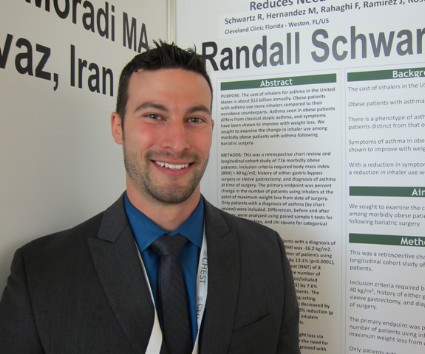
MADRID – Morbidly obese asthmatics may require less inhaler therapy after bariatric surgery, a retrospective chart review and longitudinal cohort study suggests.
Among patients who used any form of inhaler therapy prior to surgery, one or more classes of inhalers were discontinued in 30% (P less than .05), Dr. Randall Schwartz reported at the world congress of the American College of Chest Physicians.
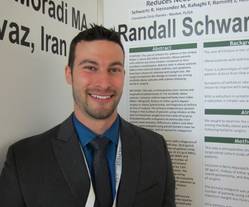
Specifically, short-acting beta agonist (SABA) use decreased significantly by 13.1% from baseline (64.5% to 51.4%; P less than .0001) and long-acting beta agonist/inhaled corticosteroid (LABA/ICS) combinations by 8.1% (40.2% to 32.1%; P = .0034). Fewer patients were on short- or long-acting muscarinic antagonists (SAMA/LAMA), which declined 1.6% (9.4% to 7.8%; P = .305).
The corresponding number need to treat was 8 patients for SABA, 12 for LABA/ICS combinations, and 7 for SAMA/LAMA.
Prior studies have shown a decrease in asthma severity after gastric surgery but haven’t specifically looked at inhaler usage.
Though there was a 30% reduction among those using inhalers, 10% of patients actually required more inhaler therapy after surgery, said Dr. Schwartz, chief internal medicine resident, Cleveland Clinic Florida, Weston.
"Our supposition is that the overwhelming majority of these patients have obesity-related asthma – neutrophilic mediated inflammation; whereas some of those who ended up having to go up in their inhaler therapy might have had classic atopic eosinophilic-mediated asthma," he explained in an interview.
Unfortunately, only 203 of the 505 patients had formal pulmonary function tests (PFT) and only 9 had fractional exhaled nitric oxide measured. "I think nitric oxide would be a really non-invasive and simple thing we could do to follow-up with these patients because PFTs represent a bit of a challenge in this population because of body mechanics," Dr. Schwartz said. "I would bet we’re going to see a disproportionate amount of elevated phenotypes in those who actually had to increase their inhaler usage and probably not significant eosinophilic inflammation in the majority of patients, particularly those who decreased their inhaler usage."
Of those who started a LABA/ICS for the first time after surgery, 72% had already been on a SAMA/LAMA prior to surgery.
Of those starting a SAMA/LAMA for the first time after surgery, 100% were on a SABA or LABA/ICS prior to surgery.
Overall, there was a 20% reduction in postoperative inhaler use, with a number needed to treat of only seven patients, according to the poster presentation (Chest 2014;145:15A [doi:10.1378/chest.1824454]).
Because of the retrospective nature of the study, it was not possible to determine whether type of gastric surgery or amount of weight loss influenced postoperative inhaler use, he said. Other possible factors could be improved body mechanics and decreased inflammation from less adipose tissue.
The mean change in body mass index was –16.2 kg/m2, which occurred at an average of 19 months after surgery.
The review included 716 patients who underwent gastric bypass surgery or sleeve gastrectomy with an accompanying diagnosis of asthma. A total of 211 patients were excluded because of concomitant or suspected chronic obstructive pulmonary disease.
At baseline, the average BMI was 50.7 kg/m2, average forced expiratory volume in 1 second was 79%, and average FEV1/forced vital capacity was 91%.
Going forward, the investigators reported that they hope to perform follow-up testing in the existing cohort and prospectively study post–gastric bypass inhaler use, including asthma severity, fractional exhaled nitric oxide testing, and a cost-benefit analysis.
"Gastric surgery costs about $20,000 and it can cost $3,000-$6,000 a year depending on whether patients are using one or two inhalers to control their asthma," Dr. Schwartz said. "So over the course of a few years, you make up that difference with asthma alone, not to mention the cardiovascular benefits."
The investigators reported having nothing to disclose.
MADRID – Morbidly obese asthmatics may require less inhaler therapy after bariatric surgery, a retrospective chart review and longitudinal cohort study suggests.
Among patients who used any form of inhaler therapy prior to surgery, one or more classes of inhalers were discontinued in 30% (P less than .05), Dr. Randall Schwartz reported at the world congress of the American College of Chest Physicians.
Specifically, short-acting beta agonist (SABA) use decreased significantly by 13.1% from baseline (64.5% to 51.4%; P less than .0001) and long-acting beta agonist/inhaled corticosteroid (LABA/ICS) combinations by 8.1% (40.2% to 32.1%; P = .0034). Fewer patients were on short- or long-acting muscarinic antagonists (SAMA/LAMA), which declined 1.6% (9.4% to 7.8%; P = .305).
The corresponding number need to treat was 8 patients for SABA, 12 for LABA/ICS combinations, and 7 for SAMA/LAMA.
Prior studies have shown a decrease in asthma severity after gastric surgery but haven’t specifically looked at inhaler usage.
Though there was a 30% reduction among those using inhalers, 10% of patients actually required more inhaler therapy after surgery, said Dr. Schwartz, chief internal medicine resident, Cleveland Clinic Florida, Weston.
"Our supposition is that the overwhelming majority of these patients have obesity-related asthma – neutrophilic mediated inflammation; whereas some of those who ended up having to go up in their inhaler therapy might have had classic atopic eosinophilic-mediated asthma," he explained in an interview.
Unfortunately, only 203 of the 505 patients had formal pulmonary function tests (PFT) and only 9 had fractional exhaled nitric oxide measured. "I think nitric oxide would be a really non-invasive and simple thing we could do to follow-up with these patients because PFTs represent a bit of a challenge in this population because of body mechanics," Dr. Schwartz said. "I would bet we’re going to see a disproportionate amount of elevated phenotypes in those who actually had to increase their inhaler usage and probably not significant eosinophilic inflammation in the majority of patients, particularly those who decreased their inhaler usage."
Of those who started a LABA/ICS for the first time after surgery, 72% had already been on a SAMA/LAMA prior to surgery.
Of those starting a SAMA/LAMA for the first time after surgery, 100% were on a SABA or LABA/ICS prior to surgery.
Overall, there was a 20% reduction in postoperative inhaler use, with a number needed to treat of only seven patients, according to the poster presentation (Chest 2014;145:15A [doi:10.1378/chest.1824454]).
Because of the retrospective nature of the study, it was not possible to determine whether type of gastric surgery or amount of weight loss influenced postoperative inhaler use, he said. Other possible factors could be improved body mechanics and decreased inflammation from less adipose tissue.
The mean change in body mass index was –16.2 kg/m2, which occurred at an average of 19 months after surgery.
The review included 716 patients who underwent gastric bypass surgery or sleeve gastrectomy with an accompanying diagnosis of asthma. A total of 211 patients were excluded because of concomitant or suspected chronic obstructive pulmonary disease.
At baseline, the average BMI was 50.7 kg/m2, average forced expiratory volume in 1 second was 79%, and average FEV1/forced vital capacity was 91%.
Going forward, the investigators reported that they hope to perform follow-up testing in the existing cohort and prospectively study post–gastric bypass inhaler use, including asthma severity, fractional exhaled nitric oxide testing, and a cost-benefit analysis.
"Gastric surgery costs about $20,000 and it can cost $3,000-$6,000 a year depending on whether patients are using one or two inhalers to control their asthma," Dr. Schwartz said. "So over the course of a few years, you make up that difference with asthma alone, not to mention the cardiovascular benefits."
The investigators reported having nothing to disclose.
MADRID – Morbidly obese asthmatics may require less inhaler therapy after bariatric surgery, a retrospective chart review and longitudinal cohort study suggests.
Among patients who used any form of inhaler therapy prior to surgery, one or more classes of inhalers were discontinued in 30% (P less than .05), Dr. Randall Schwartz reported at the world congress of the American College of Chest Physicians.
Specifically, short-acting beta agonist (SABA) use decreased significantly by 13.1% from baseline (64.5% to 51.4%; P less than .0001) and long-acting beta agonist/inhaled corticosteroid (LABA/ICS) combinations by 8.1% (40.2% to 32.1%; P = .0034). Fewer patients were on short- or long-acting muscarinic antagonists (SAMA/LAMA), which declined 1.6% (9.4% to 7.8%; P = .305).
The corresponding number need to treat was 8 patients for SABA, 12 for LABA/ICS combinations, and 7 for SAMA/LAMA.
Prior studies have shown a decrease in asthma severity after gastric surgery but haven’t specifically looked at inhaler usage.
Though there was a 30% reduction among those using inhalers, 10% of patients actually required more inhaler therapy after surgery, said Dr. Schwartz, chief internal medicine resident, Cleveland Clinic Florida, Weston.
"Our supposition is that the overwhelming majority of these patients have obesity-related asthma – neutrophilic mediated inflammation; whereas some of those who ended up having to go up in their inhaler therapy might have had classic atopic eosinophilic-mediated asthma," he explained in an interview.
Unfortunately, only 203 of the 505 patients had formal pulmonary function tests (PFT) and only 9 had fractional exhaled nitric oxide measured. "I think nitric oxide would be a really non-invasive and simple thing we could do to follow-up with these patients because PFTs represent a bit of a challenge in this population because of body mechanics," Dr. Schwartz said. "I would bet we’re going to see a disproportionate amount of elevated phenotypes in those who actually had to increase their inhaler usage and probably not significant eosinophilic inflammation in the majority of patients, particularly those who decreased their inhaler usage."
Of those who started a LABA/ICS for the first time after surgery, 72% had already been on a SAMA/LAMA prior to surgery.
Of those starting a SAMA/LAMA for the first time after surgery, 100% were on a SABA or LABA/ICS prior to surgery.
Overall, there was a 20% reduction in postoperative inhaler use, with a number needed to treat of only seven patients, according to the poster presentation (Chest 2014;145:15A [doi:10.1378/chest.1824454]).
Because of the retrospective nature of the study, it was not possible to determine whether type of gastric surgery or amount of weight loss influenced postoperative inhaler use, he said. Other possible factors could be improved body mechanics and decreased inflammation from less adipose tissue.
The mean change in body mass index was –16.2 kg/m2, which occurred at an average of 19 months after surgery.
The review included 716 patients who underwent gastric bypass surgery or sleeve gastrectomy with an accompanying diagnosis of asthma. A total of 211 patients were excluded because of concomitant or suspected chronic obstructive pulmonary disease.
At baseline, the average BMI was 50.7 kg/m2, average forced expiratory volume in 1 second was 79%, and average FEV1/forced vital capacity was 91%.
Going forward, the investigators reported that they hope to perform follow-up testing in the existing cohort and prospectively study post–gastric bypass inhaler use, including asthma severity, fractional exhaled nitric oxide testing, and a cost-benefit analysis.
"Gastric surgery costs about $20,000 and it can cost $3,000-$6,000 a year depending on whether patients are using one or two inhalers to control their asthma," Dr. Schwartz said. "So over the course of a few years, you make up that difference with asthma alone, not to mention the cardiovascular benefits."
The investigators reported having nothing to disclose.
AT CHEST WORLD CONGRESS 2014
Major finding: Bariatric surgery cut use of SABA by 13.1% (P less than .0001), (LABA/ICS) by 8.1% (P = .0034), and SAMA/LAMA antagonists by 1.6% (P = .305).
Data source: A retrospective chart review and longitudinal cohort study of 505 asthmatics.
Disclosures: The investigators reported having nothing to disclose.
Peanut reactivity returned if exposure delayed after immunotherapy
SAN DIEGO – Waiting 3 months after successful oral immunotherapy for peanut allergy before exposure to peanuts significantly increased the odds of reactivity returning in a prospective study of 20 children.
All 20 patients became desensitized to peanuts while on daily oral immunotherapy and successfully passed double-blind, placebo-controlled food challenges at the end of immunotherapy. All 16 patients who then avoided peanuts for 1 month passed a second food challenge, but only 1 of 4 patients who avoided peanuts for 3 months after immunotherapy passed a second one.

"If you wait long enough, the desensitization effect may well wear off," Dr. Brian P. Vickery said at the annual meeting of the American Academy of Allergy, Asthma, and Immunology.
He and his associates looked at levels of basophil activation and conducted skin prick tests to peanut to get a better sense of why this was happening. Basophil activation to peanut antigen and anti-IgE stimulation increased significantly between the times of the first and second food challenges in the patients who avoided peanuts for 3 months but not in those who avoided the nuts for only 1 month.
The basophil activation levels had been similar between groups at the end of immunotherapy, suggesting that desensitization succeeded in all patients, but the length of peanut avoidance affected basophil responses, leading to revival of clinical reactivity.
Skin prick test results returned to baseline levels in three of the four patients who avoided peanuts for 3 months after the end of immunotherapy.
The amount of time on oral immunotherapy did not seem to be a key factor in the likelihood of sustained suppression of allergic disease, reported Dr. Vickery of the department of pediatrics at the University of North Carolina at Chapel Hill. Patients who waited 1 month before exposure to peanut had been on approximately 20-50 months of oral immunotherapy, and patients who waited 3 months before exposure had been on approximately 60 months of immunotherapy.
The lead author of the study was Michael D. Kulis Jr., Ph.D., also of the university.
Prolonged avoidance of peanut after peanut oral immunotherapy appears to be detrimental and may reverse the effects of the treatment, Dr. A. Wesley Burks said at a press briefing.

The findings may be applicable to other food allergies, but "we don’t know that because there have not been enough studies that long with other foods," said Dr. Burks, a coinvestigator in the study and chairman of the department of pediatrics at the university. "I wouldn’t anticipate that it would be different."
The average age of children in the study was 6 years.
This exploratory study was not controlled and was limited by its small size. The Peanut Oral Immunotherapy in Children (IMPACT) study is underway and should answer the question of how long the clinical effects of oral immunotherapy last, Dr. Vickery said. The study is being sponsored by the Immune Tolerance Network and the National Institute of Allergy and Infectious Diseases.
Dr. Vickery, Dr. Kulis, and Dr. Burks reported having no financial disclosures. The National Institutes of Health funded the study.
On Twitter @sherryboschert
SAN DIEGO – Waiting 3 months after successful oral immunotherapy for peanut allergy before exposure to peanuts significantly increased the odds of reactivity returning in a prospective study of 20 children.
All 20 patients became desensitized to peanuts while on daily oral immunotherapy and successfully passed double-blind, placebo-controlled food challenges at the end of immunotherapy. All 16 patients who then avoided peanuts for 1 month passed a second food challenge, but only 1 of 4 patients who avoided peanuts for 3 months after immunotherapy passed a second one.
"If you wait long enough, the desensitization effect may well wear off," Dr. Brian P. Vickery said at the annual meeting of the American Academy of Allergy, Asthma, and Immunology.
He and his associates looked at levels of basophil activation and conducted skin prick tests to peanut to get a better sense of why this was happening. Basophil activation to peanut antigen and anti-IgE stimulation increased significantly between the times of the first and second food challenges in the patients who avoided peanuts for 3 months but not in those who avoided the nuts for only 1 month.
The basophil activation levels had been similar between groups at the end of immunotherapy, suggesting that desensitization succeeded in all patients, but the length of peanut avoidance affected basophil responses, leading to revival of clinical reactivity.
Skin prick test results returned to baseline levels in three of the four patients who avoided peanuts for 3 months after the end of immunotherapy.
The amount of time on oral immunotherapy did not seem to be a key factor in the likelihood of sustained suppression of allergic disease, reported Dr. Vickery of the department of pediatrics at the University of North Carolina at Chapel Hill. Patients who waited 1 month before exposure to peanut had been on approximately 20-50 months of oral immunotherapy, and patients who waited 3 months before exposure had been on approximately 60 months of immunotherapy.
The lead author of the study was Michael D. Kulis Jr., Ph.D., also of the university.
Prolonged avoidance of peanut after peanut oral immunotherapy appears to be detrimental and may reverse the effects of the treatment, Dr. A. Wesley Burks said at a press briefing.
The findings may be applicable to other food allergies, but "we don’t know that because there have not been enough studies that long with other foods," said Dr. Burks, a coinvestigator in the study and chairman of the department of pediatrics at the university. "I wouldn’t anticipate that it would be different."
The average age of children in the study was 6 years.
This exploratory study was not controlled and was limited by its small size. The Peanut Oral Immunotherapy in Children (IMPACT) study is underway and should answer the question of how long the clinical effects of oral immunotherapy last, Dr. Vickery said. The study is being sponsored by the Immune Tolerance Network and the National Institute of Allergy and Infectious Diseases.
Dr. Vickery, Dr. Kulis, and Dr. Burks reported having no financial disclosures. The National Institutes of Health funded the study.
On Twitter @sherryboschert
SAN DIEGO – Waiting 3 months after successful oral immunotherapy for peanut allergy before exposure to peanuts significantly increased the odds of reactivity returning in a prospective study of 20 children.
All 20 patients became desensitized to peanuts while on daily oral immunotherapy and successfully passed double-blind, placebo-controlled food challenges at the end of immunotherapy. All 16 patients who then avoided peanuts for 1 month passed a second food challenge, but only 1 of 4 patients who avoided peanuts for 3 months after immunotherapy passed a second one.
"If you wait long enough, the desensitization effect may well wear off," Dr. Brian P. Vickery said at the annual meeting of the American Academy of Allergy, Asthma, and Immunology.
He and his associates looked at levels of basophil activation and conducted skin prick tests to peanut to get a better sense of why this was happening. Basophil activation to peanut antigen and anti-IgE stimulation increased significantly between the times of the first and second food challenges in the patients who avoided peanuts for 3 months but not in those who avoided the nuts for only 1 month.
The basophil activation levels had been similar between groups at the end of immunotherapy, suggesting that desensitization succeeded in all patients, but the length of peanut avoidance affected basophil responses, leading to revival of clinical reactivity.
Skin prick test results returned to baseline levels in three of the four patients who avoided peanuts for 3 months after the end of immunotherapy.
The amount of time on oral immunotherapy did not seem to be a key factor in the likelihood of sustained suppression of allergic disease, reported Dr. Vickery of the department of pediatrics at the University of North Carolina at Chapel Hill. Patients who waited 1 month before exposure to peanut had been on approximately 20-50 months of oral immunotherapy, and patients who waited 3 months before exposure had been on approximately 60 months of immunotherapy.
The lead author of the study was Michael D. Kulis Jr., Ph.D., also of the university.
Prolonged avoidance of peanut after peanut oral immunotherapy appears to be detrimental and may reverse the effects of the treatment, Dr. A. Wesley Burks said at a press briefing.
The findings may be applicable to other food allergies, but "we don’t know that because there have not been enough studies that long with other foods," said Dr. Burks, a coinvestigator in the study and chairman of the department of pediatrics at the university. "I wouldn’t anticipate that it would be different."
The average age of children in the study was 6 years.
This exploratory study was not controlled and was limited by its small size. The Peanut Oral Immunotherapy in Children (IMPACT) study is underway and should answer the question of how long the clinical effects of oral immunotherapy last, Dr. Vickery said. The study is being sponsored by the Immune Tolerance Network and the National Institute of Allergy and Infectious Diseases.
Dr. Vickery, Dr. Kulis, and Dr. Burks reported having no financial disclosures. The National Institutes of Health funded the study.
On Twitter @sherryboschert
AT 2014 AAAAI ANNUAL MEETING
Major finding: Reactivity to peanuts returned in none of the 16 patients who avoided peanuts for 1 month after oral immunotherapy and in three of four patients who avoided peanuts for 3 months.
Data source: A prospective study of 20 children who underwent food challenges after oral immunotherapy treatment for peanut allergy.
Disclosures: Dr. Vickery, Dr. Kulis, and Dr. Burks reported having no financial disclosures.

Tracking top research in the ATS late-breakers session
On Sunday morning at the American Thoracic Society 2014 International Conference in San Diego, the focus will be on late-breaking clinical trials with presentations of the latest research from basic studies to the best contemporary patient care in disciplines ranging from pulmonary to critical care to sleep medicine and beyond. This emphasis on basic, translational, and clinical science distinguishes the ATS International Conference from other meetings.
The complete listing of this year’s presentations and their abstracts is available online. Here are highlights of five of the exceptional presentations scheduled for Sunday morning’s Late Breaking Abstracts in Clinical Trials, which will be moderated by Dr. R. Graham Barr of Columbia University, New York; Dr. Klaus F. Rabe of the University of Kiel and Clinic Grosshansdorf, Germany; and Dr. Y. Michael Shim of the University of Virginia, Charlottesville.
ASPIRE trial results
Dr. George R. Washko Jr. of Brigham and Women’s Hospital, Boston, will discuss the results of the ASPIRE trial, a multicenter, randomized, controlled study evaluating AeriSeal System endoscopic lung volume reduction therapy for chronic obstructive pulmonary disease (COPD) with advanced emphysema. The study was initiated in September 2012, and was terminated prematurely on Nov. 13, 2013, after enrollment and randomization of less than one-third of the planned patients, for nonmedical and nonregulatory reasons. Although interim results from ASPIRE confirm prior findings that hydrogel-based lung volume reduction therapy can produce improvements in advanced emphysema patient outcomes, compared with optimized medical treatment, the treatment is associated with an increased risk of adverse events requiring hospitalization, according to the researchers.
The study compared AeriSeal Lung Sealant therapy plus medical treatment to medical treatment alone. At 90-day follow-up for available patients, there was a significant improvement in forced expiratory volume in 1 second (FEV1) in the treatment group vs. the control group.
Dr. Washko will discuss how, at the time of study termination, significantly more adverse events requiring hospitalizations occurred in patients in the treatment group (43%), as compared with the control patients (15%). The majority of these events were respiratory (39% treatment vs. 15% control). There were two deaths in the treatment group (one treatment-related) and none in the control group, according to Dr. Washko and his colleagues.
RODEO trial findings
Short-term treatment with rosuvastatin in stable COPD patients without known cardiovascular disease was associated with reduced systemic inflammation, but did not improve endothelial or pulmonary function, according to the results of the RODEO (Effect of Rosuvastatin Treatment in Stable COPD) trial, which will be presented by Dr. Anke Neukamm of Akershus University Hospital, Lørenskog, Norway.
Dr. Neukamm and her colleagues tested the hypotheses that statin therapy is associated with improved endothelial and pulmonary function and reduced systemic inflammation in patients with stable COPD. In their randomized, placebo-controlled, double-blind, parallel trial, stable COPD patients (n = 99) from two hospital outpatient clinics were assigned to receive rosuvastatin 10 mg or matching placebo once daily for 12 weeks.
She will present their data showing that rosuvastatin therapy was associated with a highly significant decrease in serum LDL cholesterol, but that in the intention-to-treat analysis, no significant between-group difference in change in endothelial or pulmonary function was observed.
ACROSS trial results
In adults with severe sepsis and detectable levels of plasma cell–free hemoglobin, treatment with acetaminophen reduced oxidative injury and improved renal function, according to the results of the randomized ACROSS (Acetaminophen for the Reduction of Oxidative Injury in Patients with Severe Sepsis) trial, which will be presented by Dr. David R. Janz, a clinical fellow at Vanderbilt University, Nashville, Tenn.
Dr. Janz will report on the phase II, randomized, double-blind, placebo-controlled trial that he and his colleagues performed, comparing acetaminophen 1 g by mouth every 6 hours for 3 days versus placebo in adults with severe sepsis admitted to the intensive care unit for less than 24 hours and who had detectable plasma cell–free hemoglobin, a potent oxidant.
They found that the acetaminophen group had significantly lower levels of plasma F2-isoprostanes on study day 2 and significantly lower levels of creatinine on study day 3, although there was no statistically significant difference in hospital mortality or adverse events between the acetaminophen and placebo groups.
Beta-blocker therapy in patients with i-PAH
Dr. J.S.J.A. Van Campen, of the Institute for Cardiovascular Research, VU Medical Center, Amsterdam, and colleagues performed a randomized, controlled clinical trial of beta-blocker therapy in patients with idiopathic pulmonary arterial hypertension (i-PAH) to specifically assess the clinical effectiveness of bisoprolol.
Dr. Van Campen will present their results showing that in patients with i-PAH, beta-blocker therapy is safe and is tolerated equally as in patients with left heart failure. A significant reduction of heart rate was achieved with the tolerated dose, and right ventricular ejection fraction and quality of life improved without a significant drop in exercise capacity
They studied 18 patients with optimally treated, stable i-PAH (9/9 New York Heart Association II/III ) who received bisoprolol in an escalating dose up to a maximum of 10 mg or four tablets of placebo. A physical examination and physiological evaluation were performed every 2 weeks; and an ECG, a 6-minute walking distance test, and a Minnesota quality of life questionnaire were administered every month. MRI and echocardiography of the heart, heart rate variability measurements, cardiopulmonary exercise testing, and PET scans were performed at baseline, at crossover, and at the end of the study.
Dr. Van Campen will discuss how there were no reported cases of syncope during the entire study period. One patient developed fluid retention after the start of bisoprolol despite oral diuretics and had to be treated with intravenous diuretics. Four other significant adverse events were reported but not associated with the study medication. Only 2 of 18 patients did not tolerate bisoprolol due to hypotension, bradycardia, or tiredness.
CPAP managed with web-messaging program
Dr. Dominic Munafo, a pulmonologist in San Diego, and his colleagues performed an unblinded, multicenter, prospective trial of patients with newly diagnosed obstructive sleep apnea to determine whether a web-based, automated messaging program for continuous positive airway pressure (CPAP) improved adherence of patients to the treatment regimen, compared with standard coaching care.
Dr. Munafo will discuss how there was no statistically significant difference between the web-messaging sleep group and the standard coaching group in Medicare adherence, mean hours of CPAP usage, CPAP efficacy, or improvement in score on the Epworth Sleepiness Scale. However, they did find that the use of the automated web-based follow-up program utilizing text messaging and e-mail was widely accepted and yielded excellent adherence at a substantially reduced coaching labor requirement when compared to the standard coaching group.
On Sunday morning at the American Thoracic Society 2014 International Conference in San Diego, the focus will be on late-breaking clinical trials with presentations of the latest research from basic studies to the best contemporary patient care in disciplines ranging from pulmonary to critical care to sleep medicine and beyond. This emphasis on basic, translational, and clinical science distinguishes the ATS International Conference from other meetings.
The complete listing of this year’s presentations and their abstracts is available online. Here are highlights of five of the exceptional presentations scheduled for Sunday morning’s Late Breaking Abstracts in Clinical Trials, which will be moderated by Dr. R. Graham Barr of Columbia University, New York; Dr. Klaus F. Rabe of the University of Kiel and Clinic Grosshansdorf, Germany; and Dr. Y. Michael Shim of the University of Virginia, Charlottesville.
ASPIRE trial results
Dr. George R. Washko Jr. of Brigham and Women’s Hospital, Boston, will discuss the results of the ASPIRE trial, a multicenter, randomized, controlled study evaluating AeriSeal System endoscopic lung volume reduction therapy for chronic obstructive pulmonary disease (COPD) with advanced emphysema. The study was initiated in September 2012, and was terminated prematurely on Nov. 13, 2013, after enrollment and randomization of less than one-third of the planned patients, for nonmedical and nonregulatory reasons. Although interim results from ASPIRE confirm prior findings that hydrogel-based lung volume reduction therapy can produce improvements in advanced emphysema patient outcomes, compared with optimized medical treatment, the treatment is associated with an increased risk of adverse events requiring hospitalization, according to the researchers.
The study compared AeriSeal Lung Sealant therapy plus medical treatment to medical treatment alone. At 90-day follow-up for available patients, there was a significant improvement in forced expiratory volume in 1 second (FEV1) in the treatment group vs. the control group.
Dr. Washko will discuss how, at the time of study termination, significantly more adverse events requiring hospitalizations occurred in patients in the treatment group (43%), as compared with the control patients (15%). The majority of these events were respiratory (39% treatment vs. 15% control). There were two deaths in the treatment group (one treatment-related) and none in the control group, according to Dr. Washko and his colleagues.
RODEO trial findings
Short-term treatment with rosuvastatin in stable COPD patients without known cardiovascular disease was associated with reduced systemic inflammation, but did not improve endothelial or pulmonary function, according to the results of the RODEO (Effect of Rosuvastatin Treatment in Stable COPD) trial, which will be presented by Dr. Anke Neukamm of Akershus University Hospital, Lørenskog, Norway.
Dr. Neukamm and her colleagues tested the hypotheses that statin therapy is associated with improved endothelial and pulmonary function and reduced systemic inflammation in patients with stable COPD. In their randomized, placebo-controlled, double-blind, parallel trial, stable COPD patients (n = 99) from two hospital outpatient clinics were assigned to receive rosuvastatin 10 mg or matching placebo once daily for 12 weeks.
She will present their data showing that rosuvastatin therapy was associated with a highly significant decrease in serum LDL cholesterol, but that in the intention-to-treat analysis, no significant between-group difference in change in endothelial or pulmonary function was observed.
ACROSS trial results
In adults with severe sepsis and detectable levels of plasma cell–free hemoglobin, treatment with acetaminophen reduced oxidative injury and improved renal function, according to the results of the randomized ACROSS (Acetaminophen for the Reduction of Oxidative Injury in Patients with Severe Sepsis) trial, which will be presented by Dr. David R. Janz, a clinical fellow at Vanderbilt University, Nashville, Tenn.
Dr. Janz will report on the phase II, randomized, double-blind, placebo-controlled trial that he and his colleagues performed, comparing acetaminophen 1 g by mouth every 6 hours for 3 days versus placebo in adults with severe sepsis admitted to the intensive care unit for less than 24 hours and who had detectable plasma cell–free hemoglobin, a potent oxidant.
They found that the acetaminophen group had significantly lower levels of plasma F2-isoprostanes on study day 2 and significantly lower levels of creatinine on study day 3, although there was no statistically significant difference in hospital mortality or adverse events between the acetaminophen and placebo groups.
Beta-blocker therapy in patients with i-PAH
Dr. J.S.J.A. Van Campen, of the Institute for Cardiovascular Research, VU Medical Center, Amsterdam, and colleagues performed a randomized, controlled clinical trial of beta-blocker therapy in patients with idiopathic pulmonary arterial hypertension (i-PAH) to specifically assess the clinical effectiveness of bisoprolol.
Dr. Van Campen will present their results showing that in patients with i-PAH, beta-blocker therapy is safe and is tolerated equally as in patients with left heart failure. A significant reduction of heart rate was achieved with the tolerated dose, and right ventricular ejection fraction and quality of life improved without a significant drop in exercise capacity
They studied 18 patients with optimally treated, stable i-PAH (9/9 New York Heart Association II/III ) who received bisoprolol in an escalating dose up to a maximum of 10 mg or four tablets of placebo. A physical examination and physiological evaluation were performed every 2 weeks; and an ECG, a 6-minute walking distance test, and a Minnesota quality of life questionnaire were administered every month. MRI and echocardiography of the heart, heart rate variability measurements, cardiopulmonary exercise testing, and PET scans were performed at baseline, at crossover, and at the end of the study.
Dr. Van Campen will discuss how there were no reported cases of syncope during the entire study period. One patient developed fluid retention after the start of bisoprolol despite oral diuretics and had to be treated with intravenous diuretics. Four other significant adverse events were reported but not associated with the study medication. Only 2 of 18 patients did not tolerate bisoprolol due to hypotension, bradycardia, or tiredness.
CPAP managed with web-messaging program
Dr. Dominic Munafo, a pulmonologist in San Diego, and his colleagues performed an unblinded, multicenter, prospective trial of patients with newly diagnosed obstructive sleep apnea to determine whether a web-based, automated messaging program for continuous positive airway pressure (CPAP) improved adherence of patients to the treatment regimen, compared with standard coaching care.
Dr. Munafo will discuss how there was no statistically significant difference between the web-messaging sleep group and the standard coaching group in Medicare adherence, mean hours of CPAP usage, CPAP efficacy, or improvement in score on the Epworth Sleepiness Scale. However, they did find that the use of the automated web-based follow-up program utilizing text messaging and e-mail was widely accepted and yielded excellent adherence at a substantially reduced coaching labor requirement when compared to the standard coaching group.
On Sunday morning at the American Thoracic Society 2014 International Conference in San Diego, the focus will be on late-breaking clinical trials with presentations of the latest research from basic studies to the best contemporary patient care in disciplines ranging from pulmonary to critical care to sleep medicine and beyond. This emphasis on basic, translational, and clinical science distinguishes the ATS International Conference from other meetings.
The complete listing of this year’s presentations and their abstracts is available online. Here are highlights of five of the exceptional presentations scheduled for Sunday morning’s Late Breaking Abstracts in Clinical Trials, which will be moderated by Dr. R. Graham Barr of Columbia University, New York; Dr. Klaus F. Rabe of the University of Kiel and Clinic Grosshansdorf, Germany; and Dr. Y. Michael Shim of the University of Virginia, Charlottesville.
ASPIRE trial results
Dr. George R. Washko Jr. of Brigham and Women’s Hospital, Boston, will discuss the results of the ASPIRE trial, a multicenter, randomized, controlled study evaluating AeriSeal System endoscopic lung volume reduction therapy for chronic obstructive pulmonary disease (COPD) with advanced emphysema. The study was initiated in September 2012, and was terminated prematurely on Nov. 13, 2013, after enrollment and randomization of less than one-third of the planned patients, for nonmedical and nonregulatory reasons. Although interim results from ASPIRE confirm prior findings that hydrogel-based lung volume reduction therapy can produce improvements in advanced emphysema patient outcomes, compared with optimized medical treatment, the treatment is associated with an increased risk of adverse events requiring hospitalization, according to the researchers.
The study compared AeriSeal Lung Sealant therapy plus medical treatment to medical treatment alone. At 90-day follow-up for available patients, there was a significant improvement in forced expiratory volume in 1 second (FEV1) in the treatment group vs. the control group.
Dr. Washko will discuss how, at the time of study termination, significantly more adverse events requiring hospitalizations occurred in patients in the treatment group (43%), as compared with the control patients (15%). The majority of these events were respiratory (39% treatment vs. 15% control). There were two deaths in the treatment group (one treatment-related) and none in the control group, according to Dr. Washko and his colleagues.
RODEO trial findings
Short-term treatment with rosuvastatin in stable COPD patients without known cardiovascular disease was associated with reduced systemic inflammation, but did not improve endothelial or pulmonary function, according to the results of the RODEO (Effect of Rosuvastatin Treatment in Stable COPD) trial, which will be presented by Dr. Anke Neukamm of Akershus University Hospital, Lørenskog, Norway.
Dr. Neukamm and her colleagues tested the hypotheses that statin therapy is associated with improved endothelial and pulmonary function and reduced systemic inflammation in patients with stable COPD. In their randomized, placebo-controlled, double-blind, parallel trial, stable COPD patients (n = 99) from two hospital outpatient clinics were assigned to receive rosuvastatin 10 mg or matching placebo once daily for 12 weeks.
She will present their data showing that rosuvastatin therapy was associated with a highly significant decrease in serum LDL cholesterol, but that in the intention-to-treat analysis, no significant between-group difference in change in endothelial or pulmonary function was observed.
ACROSS trial results
In adults with severe sepsis and detectable levels of plasma cell–free hemoglobin, treatment with acetaminophen reduced oxidative injury and improved renal function, according to the results of the randomized ACROSS (Acetaminophen for the Reduction of Oxidative Injury in Patients with Severe Sepsis) trial, which will be presented by Dr. David R. Janz, a clinical fellow at Vanderbilt University, Nashville, Tenn.
Dr. Janz will report on the phase II, randomized, double-blind, placebo-controlled trial that he and his colleagues performed, comparing acetaminophen 1 g by mouth every 6 hours for 3 days versus placebo in adults with severe sepsis admitted to the intensive care unit for less than 24 hours and who had detectable plasma cell–free hemoglobin, a potent oxidant.
They found that the acetaminophen group had significantly lower levels of plasma F2-isoprostanes on study day 2 and significantly lower levels of creatinine on study day 3, although there was no statistically significant difference in hospital mortality or adverse events between the acetaminophen and placebo groups.
Beta-blocker therapy in patients with i-PAH
Dr. J.S.J.A. Van Campen, of the Institute for Cardiovascular Research, VU Medical Center, Amsterdam, and colleagues performed a randomized, controlled clinical trial of beta-blocker therapy in patients with idiopathic pulmonary arterial hypertension (i-PAH) to specifically assess the clinical effectiveness of bisoprolol.
Dr. Van Campen will present their results showing that in patients with i-PAH, beta-blocker therapy is safe and is tolerated equally as in patients with left heart failure. A significant reduction of heart rate was achieved with the tolerated dose, and right ventricular ejection fraction and quality of life improved without a significant drop in exercise capacity
They studied 18 patients with optimally treated, stable i-PAH (9/9 New York Heart Association II/III ) who received bisoprolol in an escalating dose up to a maximum of 10 mg or four tablets of placebo. A physical examination and physiological evaluation were performed every 2 weeks; and an ECG, a 6-minute walking distance test, and a Minnesota quality of life questionnaire were administered every month. MRI and echocardiography of the heart, heart rate variability measurements, cardiopulmonary exercise testing, and PET scans were performed at baseline, at crossover, and at the end of the study.
Dr. Van Campen will discuss how there were no reported cases of syncope during the entire study period. One patient developed fluid retention after the start of bisoprolol despite oral diuretics and had to be treated with intravenous diuretics. Four other significant adverse events were reported but not associated with the study medication. Only 2 of 18 patients did not tolerate bisoprolol due to hypotension, bradycardia, or tiredness.
CPAP managed with web-messaging program
Dr. Dominic Munafo, a pulmonologist in San Diego, and his colleagues performed an unblinded, multicenter, prospective trial of patients with newly diagnosed obstructive sleep apnea to determine whether a web-based, automated messaging program for continuous positive airway pressure (CPAP) improved adherence of patients to the treatment regimen, compared with standard coaching care.
Dr. Munafo will discuss how there was no statistically significant difference between the web-messaging sleep group and the standard coaching group in Medicare adherence, mean hours of CPAP usage, CPAP efficacy, or improvement in score on the Epworth Sleepiness Scale. However, they did find that the use of the automated web-based follow-up program utilizing text messaging and e-mail was widely accepted and yielded excellent adherence at a substantially reduced coaching labor requirement when compared to the standard coaching group.
Don’t miss these features of dermatomyositis
DESTIN, FLA. – Dermatomyositis doesn’t always present with the violaceous upper eyelid erythema and associated edema seen in textbook cases.
Rather, it often presents without muscle disease and with pink eyelid erythema, mid-facial erythema that hugs the nasolabial folds and extends onto the forehead, and subtle scaly pink plaques on the knuckles, Dr. Ruth Ann Vleugels said at the annual Congress of Clinical Rheumatology.
Dr. Vleugels described an unfortunate case involving a patient with this type of amyopathic presentation who presented to the emergency department with shortness of breath and what was thought to be a pulmonary infection. The patient was admitted to the intensive care unit, and dermatology was not consulted until the third day.
Unfortunately, the patient died in the ICU, said Dr. Vleugels of the department of dermatology at Harvard Medical School and director of the Autoimmune Skin Diseases Program at Brigham & Women’s Hospital, Boston.

The patient had skin-limited dermatomyositis; his family reported that his rash had been present for more than a year, she said.
Even Gottron’s papules, which are pathognomonic for dermatomyositis, don’t always present as pink to violaceous papules on the knuckles as expected. In some cases they can be very subtle – especially in darker skin types – and sometimes there is involvement between the knuckles as well, Dr. Vleugels said.
She described another patient who had been misdiagnosed with flat warts on the back of her hands before being diagnosed with dermatomyositis. In some cases, the papules are very scaly and can be mistaken for psoriasis, she noted.
"We have to recognize these clinical features," she said.
One helpful tip: Examine the nail folds. Nearly all dermatomyositis patients with active disease "have nice-looking nail folds," explained Dr. Vleugels.
"So the feature we will be looking for is cuticular hypertrophy," she said, noting that women tend to be acutely aware of this symptom and may want to push their cuticles back.
Dilated capillary loops, dropout capillaries, and hemosiderin deposition of the nail fold are also common.
"Really look at those nail folds. Lupus patients do not have nail folds like this," Dr. Vleugels emphasized.
Another clue to diagnosing dermatomyositis is poikiloderma in sun-exposed areas, characterized by redness, dispigmentation, and atrophy or thinning of the skin.
Poikiloderma becomes permanent, which is one reason why photoprotection is critical in these patients, said Dr. Vleugels. It can also involve the scalp (sometimes in addition to scaling), and in fact is "probably an underrecognized feature in our dermatomyositis patients," she said.
The condition is very pruritic and detrimental to quality of life, and hair loss can occur in association with the disease activity on the scalp.
"We treat this as a component of the rash, so if we don’t get their scalp better we increase or change their immunosuppressive therapy," Dr. Vleugels noted.
Keep in mind that poikiloderma can also occur on the lateral thighs (the "holster sign"), even though this is not typically a sun-exposed area, she added.
A recent study found that the MDA5 autoantibody, in particular, is associated with certain cutaneous findings in dermatomyositis. The most common was ulcerations in Gottron’s papules, and this is representative of vasculopathy (J. Am. Acad. Dermatol. 2011; 25-34).
Such ulcerations are not a sign of infection, but a sign that the disease is active and required more aggressive treatment.
Calcinosis is another concern, and occurs more often in children than adults.
However, "good data from the pediatric literature say if we treat these patients early and aggressively, they get less calcinosis," Dr. Vleugels said.
In an adult who is developing calcinosis, consider changing their overall treatment regimen, as this is a sign of active disease, she added.
"Mechanic’s hands" can be another sign of dermatomyositis, particularly if there is scaling and fissures on the lateral and palmar aspects of the fingers (as opposed to scaly Gottron’s papules elsewhere on the hands); this cutaneous phenotype is associated with high risk of antisynthetase syndrome or lung involvement, she said.
Recognizing these signs and symptoms of dermatomyositis can help prevent outcomes such as the death of the patient in the ICU after presenting with unrecognized fulminant lung disease associated with dermatomyositis, Dr. Vleugels emphasized.
"Our skin-limited patients are the ones who are often missed, and these are the ones who have approximately equal risk of lung disease and malignancy," she said.
Data suggest these conditions occur in about 25% of patients with skin-limited dermatomyositis
"So even the patients with amyopathic disease need to have regular screening with pulmonary function tests with diffusion capacity," she said.
Data from the Mayo Clinic, Rochester, Minn., suggest that about 20% of dermatomyositis patients have clinically amyopathic disease, and most (76%) of these cases are in women (Arch. Dermatol. 2010;146:26-30).
"The take-home point here is that these skin-limited patients are much harder to diagnose than the ones who come in with the classic muscle weakness, because the rash can be subtle," Dr. Vleugels said, noting that the diagnosis must be made clinically, because there is no confirmatory test.
She described a dermatomyositis patient who had experienced a rash for more than 2 years, and who was referred for lupus – even a biopsy was read as lupus.
"We need to say, ‘Oh, that could also be dermatomyositis,’" she said, adding: "If you see a patient with skin-limited disease, you’re still going to screen them for pulmonary disease, and you’re still going to screen them for cancer."
DESTIN, FLA. – Dermatomyositis doesn’t always present with the violaceous upper eyelid erythema and associated edema seen in textbook cases.
Rather, it often presents without muscle disease and with pink eyelid erythema, mid-facial erythema that hugs the nasolabial folds and extends onto the forehead, and subtle scaly pink plaques on the knuckles, Dr. Ruth Ann Vleugels said at the annual Congress of Clinical Rheumatology.
Dr. Vleugels described an unfortunate case involving a patient with this type of amyopathic presentation who presented to the emergency department with shortness of breath and what was thought to be a pulmonary infection. The patient was admitted to the intensive care unit, and dermatology was not consulted until the third day.
Unfortunately, the patient died in the ICU, said Dr. Vleugels of the department of dermatology at Harvard Medical School and director of the Autoimmune Skin Diseases Program at Brigham & Women’s Hospital, Boston.
The patient had skin-limited dermatomyositis; his family reported that his rash had been present for more than a year, she said.
Even Gottron’s papules, which are pathognomonic for dermatomyositis, don’t always present as pink to violaceous papules on the knuckles as expected. In some cases they can be very subtle – especially in darker skin types – and sometimes there is involvement between the knuckles as well, Dr. Vleugels said.
She described another patient who had been misdiagnosed with flat warts on the back of her hands before being diagnosed with dermatomyositis. In some cases, the papules are very scaly and can be mistaken for psoriasis, she noted.
"We have to recognize these clinical features," she said.
One helpful tip: Examine the nail folds. Nearly all dermatomyositis patients with active disease "have nice-looking nail folds," explained Dr. Vleugels.
"So the feature we will be looking for is cuticular hypertrophy," she said, noting that women tend to be acutely aware of this symptom and may want to push their cuticles back.
Dilated capillary loops, dropout capillaries, and hemosiderin deposition of the nail fold are also common.
"Really look at those nail folds. Lupus patients do not have nail folds like this," Dr. Vleugels emphasized.
Another clue to diagnosing dermatomyositis is poikiloderma in sun-exposed areas, characterized by redness, dispigmentation, and atrophy or thinning of the skin.
Poikiloderma becomes permanent, which is one reason why photoprotection is critical in these patients, said Dr. Vleugels. It can also involve the scalp (sometimes in addition to scaling), and in fact is "probably an underrecognized feature in our dermatomyositis patients," she said.
The condition is very pruritic and detrimental to quality of life, and hair loss can occur in association with the disease activity on the scalp.
"We treat this as a component of the rash, so if we don’t get their scalp better we increase or change their immunosuppressive therapy," Dr. Vleugels noted.
Keep in mind that poikiloderma can also occur on the lateral thighs (the "holster sign"), even though this is not typically a sun-exposed area, she added.
A recent study found that the MDA5 autoantibody, in particular, is associated with certain cutaneous findings in dermatomyositis. The most common was ulcerations in Gottron’s papules, and this is representative of vasculopathy (J. Am. Acad. Dermatol. 2011; 25-34).
Such ulcerations are not a sign of infection, but a sign that the disease is active and required more aggressive treatment.
Calcinosis is another concern, and occurs more often in children than adults.
However, "good data from the pediatric literature say if we treat these patients early and aggressively, they get less calcinosis," Dr. Vleugels said.
In an adult who is developing calcinosis, consider changing their overall treatment regimen, as this is a sign of active disease, she added.
"Mechanic’s hands" can be another sign of dermatomyositis, particularly if there is scaling and fissures on the lateral and palmar aspects of the fingers (as opposed to scaly Gottron’s papules elsewhere on the hands); this cutaneous phenotype is associated with high risk of antisynthetase syndrome or lung involvement, she said.
Recognizing these signs and symptoms of dermatomyositis can help prevent outcomes such as the death of the patient in the ICU after presenting with unrecognized fulminant lung disease associated with dermatomyositis, Dr. Vleugels emphasized.
"Our skin-limited patients are the ones who are often missed, and these are the ones who have approximately equal risk of lung disease and malignancy," she said.
Data suggest these conditions occur in about 25% of patients with skin-limited dermatomyositis
"So even the patients with amyopathic disease need to have regular screening with pulmonary function tests with diffusion capacity," she said.
Data from the Mayo Clinic, Rochester, Minn., suggest that about 20% of dermatomyositis patients have clinically amyopathic disease, and most (76%) of these cases are in women (Arch. Dermatol. 2010;146:26-30).
"The take-home point here is that these skin-limited patients are much harder to diagnose than the ones who come in with the classic muscle weakness, because the rash can be subtle," Dr. Vleugels said, noting that the diagnosis must be made clinically, because there is no confirmatory test.
She described a dermatomyositis patient who had experienced a rash for more than 2 years, and who was referred for lupus – even a biopsy was read as lupus.
"We need to say, ‘Oh, that could also be dermatomyositis,’" she said, adding: "If you see a patient with skin-limited disease, you’re still going to screen them for pulmonary disease, and you’re still going to screen them for cancer."
DESTIN, FLA. – Dermatomyositis doesn’t always present with the violaceous upper eyelid erythema and associated edema seen in textbook cases.
Rather, it often presents without muscle disease and with pink eyelid erythema, mid-facial erythema that hugs the nasolabial folds and extends onto the forehead, and subtle scaly pink plaques on the knuckles, Dr. Ruth Ann Vleugels said at the annual Congress of Clinical Rheumatology.
Dr. Vleugels described an unfortunate case involving a patient with this type of amyopathic presentation who presented to the emergency department with shortness of breath and what was thought to be a pulmonary infection. The patient was admitted to the intensive care unit, and dermatology was not consulted until the third day.
Unfortunately, the patient died in the ICU, said Dr. Vleugels of the department of dermatology at Harvard Medical School and director of the Autoimmune Skin Diseases Program at Brigham & Women’s Hospital, Boston.
The patient had skin-limited dermatomyositis; his family reported that his rash had been present for more than a year, she said.
Even Gottron’s papules, which are pathognomonic for dermatomyositis, don’t always present as pink to violaceous papules on the knuckles as expected. In some cases they can be very subtle – especially in darker skin types – and sometimes there is involvement between the knuckles as well, Dr. Vleugels said.
She described another patient who had been misdiagnosed with flat warts on the back of her hands before being diagnosed with dermatomyositis. In some cases, the papules are very scaly and can be mistaken for psoriasis, she noted.
"We have to recognize these clinical features," she said.
One helpful tip: Examine the nail folds. Nearly all dermatomyositis patients with active disease "have nice-looking nail folds," explained Dr. Vleugels.
"So the feature we will be looking for is cuticular hypertrophy," she said, noting that women tend to be acutely aware of this symptom and may want to push their cuticles back.
Dilated capillary loops, dropout capillaries, and hemosiderin deposition of the nail fold are also common.
"Really look at those nail folds. Lupus patients do not have nail folds like this," Dr. Vleugels emphasized.
Another clue to diagnosing dermatomyositis is poikiloderma in sun-exposed areas, characterized by redness, dispigmentation, and atrophy or thinning of the skin.
Poikiloderma becomes permanent, which is one reason why photoprotection is critical in these patients, said Dr. Vleugels. It can also involve the scalp (sometimes in addition to scaling), and in fact is "probably an underrecognized feature in our dermatomyositis patients," she said.
The condition is very pruritic and detrimental to quality of life, and hair loss can occur in association with the disease activity on the scalp.
"We treat this as a component of the rash, so if we don’t get their scalp better we increase or change their immunosuppressive therapy," Dr. Vleugels noted.
Keep in mind that poikiloderma can also occur on the lateral thighs (the "holster sign"), even though this is not typically a sun-exposed area, she added.
A recent study found that the MDA5 autoantibody, in particular, is associated with certain cutaneous findings in dermatomyositis. The most common was ulcerations in Gottron’s papules, and this is representative of vasculopathy (J. Am. Acad. Dermatol. 2011; 25-34).
Such ulcerations are not a sign of infection, but a sign that the disease is active and required more aggressive treatment.
Calcinosis is another concern, and occurs more often in children than adults.
However, "good data from the pediatric literature say if we treat these patients early and aggressively, they get less calcinosis," Dr. Vleugels said.
In an adult who is developing calcinosis, consider changing their overall treatment regimen, as this is a sign of active disease, she added.
"Mechanic’s hands" can be another sign of dermatomyositis, particularly if there is scaling and fissures on the lateral and palmar aspects of the fingers (as opposed to scaly Gottron’s papules elsewhere on the hands); this cutaneous phenotype is associated with high risk of antisynthetase syndrome or lung involvement, she said.
Recognizing these signs and symptoms of dermatomyositis can help prevent outcomes such as the death of the patient in the ICU after presenting with unrecognized fulminant lung disease associated with dermatomyositis, Dr. Vleugels emphasized.
"Our skin-limited patients are the ones who are often missed, and these are the ones who have approximately equal risk of lung disease and malignancy," she said.
Data suggest these conditions occur in about 25% of patients with skin-limited dermatomyositis
"So even the patients with amyopathic disease need to have regular screening with pulmonary function tests with diffusion capacity," she said.
Data from the Mayo Clinic, Rochester, Minn., suggest that about 20% of dermatomyositis patients have clinically amyopathic disease, and most (76%) of these cases are in women (Arch. Dermatol. 2010;146:26-30).
"The take-home point here is that these skin-limited patients are much harder to diagnose than the ones who come in with the classic muscle weakness, because the rash can be subtle," Dr. Vleugels said, noting that the diagnosis must be made clinically, because there is no confirmatory test.
She described a dermatomyositis patient who had experienced a rash for more than 2 years, and who was referred for lupus – even a biopsy was read as lupus.
"We need to say, ‘Oh, that could also be dermatomyositis,’" she said, adding: "If you see a patient with skin-limited disease, you’re still going to screen them for pulmonary disease, and you’re still going to screen them for cancer."
AT CCR 14

Text reminders boost receipt, timeliness of flu vaccination in kids
VANCOUVER, B.C. – Text message reminders are an effective strategy for increasing receipt and timeliness of influenza vaccination in children, and they work even better when they contain brief educational information, a randomized trial showed.
Historically, only about half of children needing a second dose actually get it, according to first author Dr. Melissa Stockwell of the department of pediatrics at Columbia University Medical Center, New York.

The average time at which that dose is received is twice the recommended 28 days. "So we clearly have a problem," she said at the annual meeting of the Pediatric Academic Societies.
Common reasons for failing to return for the second vaccine doses include forgetting to do so, and lack of knowledge that a second dose is needed or why.
The trial, called Flu2Text, was conducted among 660 low-income, urban children aged 6 months to 8 years who received the first of two doses of flu vaccine at community clinics affiliated with an academic medical center and whose parents had a cell phone that could receive text messages. In the groups randomized to messages, the messages were sent three times before the second dose was due, once on the due date, and once 2 weeks thereafter.
The results showed that the rate of receipt of the second dose of vaccine was 57% among children whose parents were given only usual care, consisting of a written reminder of the due date for the second dose. But it was 67% in a group sent conventional text messages, which reminded them to bring their child on the due date and gave clinic walk-in hours, and 73% in a group sent educational text messages, which included the same reminder, brief information, and the option to ask for more information about why timing was important, why two doses are needed, and the nature of adverse effects (P = .003).
The rate of timely receipt (defined in the trial as receipt of the second dose within 42 days of the first dose) was 27% with usual care, compared with 34% with conventional text messages and 44% with educational text messages (P = .001).
"Among young, low-income urban children, the addition of text message reminders was associated with increased receipt and timeliness of a second dose of flu vaccine," Dr. Stockwell said. "Embedding educational information did seem to impact its effectiveness, particularly in getting vaccines in a more timely fashion."
A session attendee wondered, "Did you ask in the postsurvey why some parents did not get the second dose despite the reminders?"
"Yes," Dr. Stockwell replied. "Some of it was a reaction. A lot of our population is convinced that the flu shot causes the flu. So some said, ‘My kid was really sick after the first dose, so I decided not to come back.’ That was the most common."
Another attendee commented, "The dose response is really quite striking. But even with the conventional texting, it looks like it is a little more effective than in past studies. ...The whole thing just seems to be a little better. What’s going on?"
"I think it’s because our previous studies looked at first dose, and this was looking at second dose. So these are families who have gotten past the sort of vaccine hesitancy and misperceptions about the flu vaccine – not everybody, but most of them. So you sort of take that whole part out, so now you are just sort of dealing more with not knowing they need a second dose or the effectiveness. That’s my guess as to why."
In additional study findings, none of the text messages was undeliverable, and only 0.5% of parents randomized to text messages opted to stop receiving them. In the educational text message group, 16% of parents responded to the interactive messages to get more information.
Overall, 98% of parents in the text message groups were very satisfied. The aspects they most commonly liked were the inclusion of a reminder, the provision of information, the quick nature of texting, and the perception that the messages demonstrated that the clinic cared about them.
Also, the majority credited the text message with having an impact on their child getting the second dose of vaccine (61%) and getting it sooner than they would have without the reminder (70%).
Study limitations included the inability to enroll 12% of otherwise eligible children whose families did not have a cell phone and the potential lack of generalizability to other settings, said Dr. Stockwell.
He disclosed an affiliation with the Pfizer Medical Education Group.
VANCOUVER, B.C. – Text message reminders are an effective strategy for increasing receipt and timeliness of influenza vaccination in children, and they work even better when they contain brief educational information, a randomized trial showed.
Historically, only about half of children needing a second dose actually get it, according to first author Dr. Melissa Stockwell of the department of pediatrics at Columbia University Medical Center, New York.
The average time at which that dose is received is twice the recommended 28 days. "So we clearly have a problem," she said at the annual meeting of the Pediatric Academic Societies.
Common reasons for failing to return for the second vaccine doses include forgetting to do so, and lack of knowledge that a second dose is needed or why.
The trial, called Flu2Text, was conducted among 660 low-income, urban children aged 6 months to 8 years who received the first of two doses of flu vaccine at community clinics affiliated with an academic medical center and whose parents had a cell phone that could receive text messages. In the groups randomized to messages, the messages were sent three times before the second dose was due, once on the due date, and once 2 weeks thereafter.
The results showed that the rate of receipt of the second dose of vaccine was 57% among children whose parents were given only usual care, consisting of a written reminder of the due date for the second dose. But it was 67% in a group sent conventional text messages, which reminded them to bring their child on the due date and gave clinic walk-in hours, and 73% in a group sent educational text messages, which included the same reminder, brief information, and the option to ask for more information about why timing was important, why two doses are needed, and the nature of adverse effects (P = .003).
The rate of timely receipt (defined in the trial as receipt of the second dose within 42 days of the first dose) was 27% with usual care, compared with 34% with conventional text messages and 44% with educational text messages (P = .001).
"Among young, low-income urban children, the addition of text message reminders was associated with increased receipt and timeliness of a second dose of flu vaccine," Dr. Stockwell said. "Embedding educational information did seem to impact its effectiveness, particularly in getting vaccines in a more timely fashion."
A session attendee wondered, "Did you ask in the postsurvey why some parents did not get the second dose despite the reminders?"
"Yes," Dr. Stockwell replied. "Some of it was a reaction. A lot of our population is convinced that the flu shot causes the flu. So some said, ‘My kid was really sick after the first dose, so I decided not to come back.’ That was the most common."
Another attendee commented, "The dose response is really quite striking. But even with the conventional texting, it looks like it is a little more effective than in past studies. ...The whole thing just seems to be a little better. What’s going on?"
"I think it’s because our previous studies looked at first dose, and this was looking at second dose. So these are families who have gotten past the sort of vaccine hesitancy and misperceptions about the flu vaccine – not everybody, but most of them. So you sort of take that whole part out, so now you are just sort of dealing more with not knowing they need a second dose or the effectiveness. That’s my guess as to why."
In additional study findings, none of the text messages was undeliverable, and only 0.5% of parents randomized to text messages opted to stop receiving them. In the educational text message group, 16% of parents responded to the interactive messages to get more information.
Overall, 98% of parents in the text message groups were very satisfied. The aspects they most commonly liked were the inclusion of a reminder, the provision of information, the quick nature of texting, and the perception that the messages demonstrated that the clinic cared about them.
Also, the majority credited the text message with having an impact on their child getting the second dose of vaccine (61%) and getting it sooner than they would have without the reminder (70%).
Study limitations included the inability to enroll 12% of otherwise eligible children whose families did not have a cell phone and the potential lack of generalizability to other settings, said Dr. Stockwell.
He disclosed an affiliation with the Pfizer Medical Education Group.
VANCOUVER, B.C. – Text message reminders are an effective strategy for increasing receipt and timeliness of influenza vaccination in children, and they work even better when they contain brief educational information, a randomized trial showed.
Historically, only about half of children needing a second dose actually get it, according to first author Dr. Melissa Stockwell of the department of pediatrics at Columbia University Medical Center, New York.
The average time at which that dose is received is twice the recommended 28 days. "So we clearly have a problem," she said at the annual meeting of the Pediatric Academic Societies.
Common reasons for failing to return for the second vaccine doses include forgetting to do so, and lack of knowledge that a second dose is needed or why.
The trial, called Flu2Text, was conducted among 660 low-income, urban children aged 6 months to 8 years who received the first of two doses of flu vaccine at community clinics affiliated with an academic medical center and whose parents had a cell phone that could receive text messages. In the groups randomized to messages, the messages were sent three times before the second dose was due, once on the due date, and once 2 weeks thereafter.
The results showed that the rate of receipt of the second dose of vaccine was 57% among children whose parents were given only usual care, consisting of a written reminder of the due date for the second dose. But it was 67% in a group sent conventional text messages, which reminded them to bring their child on the due date and gave clinic walk-in hours, and 73% in a group sent educational text messages, which included the same reminder, brief information, and the option to ask for more information about why timing was important, why two doses are needed, and the nature of adverse effects (P = .003).
The rate of timely receipt (defined in the trial as receipt of the second dose within 42 days of the first dose) was 27% with usual care, compared with 34% with conventional text messages and 44% with educational text messages (P = .001).
"Among young, low-income urban children, the addition of text message reminders was associated with increased receipt and timeliness of a second dose of flu vaccine," Dr. Stockwell said. "Embedding educational information did seem to impact its effectiveness, particularly in getting vaccines in a more timely fashion."
A session attendee wondered, "Did you ask in the postsurvey why some parents did not get the second dose despite the reminders?"
"Yes," Dr. Stockwell replied. "Some of it was a reaction. A lot of our population is convinced that the flu shot causes the flu. So some said, ‘My kid was really sick after the first dose, so I decided not to come back.’ That was the most common."
Another attendee commented, "The dose response is really quite striking. But even with the conventional texting, it looks like it is a little more effective than in past studies. ...The whole thing just seems to be a little better. What’s going on?"
"I think it’s because our previous studies looked at first dose, and this was looking at second dose. So these are families who have gotten past the sort of vaccine hesitancy and misperceptions about the flu vaccine – not everybody, but most of them. So you sort of take that whole part out, so now you are just sort of dealing more with not knowing they need a second dose or the effectiveness. That’s my guess as to why."
In additional study findings, none of the text messages was undeliverable, and only 0.5% of parents randomized to text messages opted to stop receiving them. In the educational text message group, 16% of parents responded to the interactive messages to get more information.
Overall, 98% of parents in the text message groups were very satisfied. The aspects they most commonly liked were the inclusion of a reminder, the provision of information, the quick nature of texting, and the perception that the messages demonstrated that the clinic cared about them.
Also, the majority credited the text message with having an impact on their child getting the second dose of vaccine (61%) and getting it sooner than they would have without the reminder (70%).
Study limitations included the inability to enroll 12% of otherwise eligible children whose families did not have a cell phone and the potential lack of generalizability to other settings, said Dr. Stockwell.
He disclosed an affiliation with the Pfizer Medical Education Group.
AT THE PAS ANNUAL MEETING
Key clinical point: Adding educational information to text messages boosted the response to flu vaccine reminders.
Major finding: Children whose parents were sent text message reminders were more likely to receive the second dose of flu vaccine and to receive it on time.
Data source: A randomized trial among 660 young, low-income urban children and their parents.
Disclosures: Dr. Stockwell disclosed an affiliation with the Pfizer Medical Education Group.

Expert: Choose your sinus surgeon carefully
KEYSTONE, COLO. – Surgical treatment of chronic rhinosinusitis has come a long way from the earlier "grab and tear" days, but referring physicians need to understand that not all otolaryngologists are providing state-of-the-art care.
"I am critical of some of my colleagues," Dr. Todd T. Kingdom said at a meeting on allergy and respiratory diseases sponsored by National Jewish Health.
"If I leave you with one message, it’s to set high expectations of your consultants in otolaryngology. You should find colleagues who are interested in sinus disease, who are committed to it, and who are excellent," added Dr. Kingdom, professor and vice chairman of the department of otolaryngology, head and neck surgery, at the University of Colorado, Denver, and immediate past president of the American Rhinologic Society.

One fine source is the pool of graduates of U.S. subspecialty surgical rhinology fellowship programs. Each year, 30 surgeons complete one of these fellowships, he said.
Technical innovations over the past 15 years have driven major advances in endoscopic sinus surgery. Powered microdebriders are used to precisely and efficiently remove hyperplastic mucosal disease and restore mucociliary clearance. Mucosal preservation is now a central tenet. Forward-thinking surgeons place a priority on creating exposure for delivery of topical medications. The procedures are routinely done on an outpatient basis, and they are less invasive than in former times. The outcomes are better, too, with this modern patient-centered, symptom-based approach.
"We have efficient ways now to take care of very severe disease atraumatically," Dr. Kingdom explained.
He emphasized that postoperative care is critical to successful sinus surgery outcomes. "My biggest criticism of my colleagues in otolaryngology is that many of them cut and go. There isn’t an emphasis on postoperative care," he said. "That’s a clear, clear deficiency in our approach.
"My postop schedule is to see patients at 1, 3, and 6 weeks and 3 and 6 months after surgery – and that’s if they’re doing perfectly. My point is you should have your otolaryngologist really fussing over these people. It’s not, ‘Well, it’s been a couple of weeks, you look fine, you can go back to your allergist now, I’ll see you later.’ It shouldn’t be that way," Dr. Kingdom said.
He reported having no financial conflicts of interest.
Dr. Todd T. Kingdom, allergy and respiratory diseases, National Jewish Health, sinus disease, American Rhinologic Society, U.S. subspecialty surgical rhinology fellowship programs, endoscopic sinus surgery, Powered microdebriders, hyperplastic mucosal disease, restore mucociliary clearance, Mucosal preservation,
KEYSTONE, COLO. – Surgical treatment of chronic rhinosinusitis has come a long way from the earlier "grab and tear" days, but referring physicians need to understand that not all otolaryngologists are providing state-of-the-art care.
"I am critical of some of my colleagues," Dr. Todd T. Kingdom said at a meeting on allergy and respiratory diseases sponsored by National Jewish Health.
"If I leave you with one message, it’s to set high expectations of your consultants in otolaryngology. You should find colleagues who are interested in sinus disease, who are committed to it, and who are excellent," added Dr. Kingdom, professor and vice chairman of the department of otolaryngology, head and neck surgery, at the University of Colorado, Denver, and immediate past president of the American Rhinologic Society.
One fine source is the pool of graduates of U.S. subspecialty surgical rhinology fellowship programs. Each year, 30 surgeons complete one of these fellowships, he said.
Technical innovations over the past 15 years have driven major advances in endoscopic sinus surgery. Powered microdebriders are used to precisely and efficiently remove hyperplastic mucosal disease and restore mucociliary clearance. Mucosal preservation is now a central tenet. Forward-thinking surgeons place a priority on creating exposure for delivery of topical medications. The procedures are routinely done on an outpatient basis, and they are less invasive than in former times. The outcomes are better, too, with this modern patient-centered, symptom-based approach.
"We have efficient ways now to take care of very severe disease atraumatically," Dr. Kingdom explained.
He emphasized that postoperative care is critical to successful sinus surgery outcomes. "My biggest criticism of my colleagues in otolaryngology is that many of them cut and go. There isn’t an emphasis on postoperative care," he said. "That’s a clear, clear deficiency in our approach.
"My postop schedule is to see patients at 1, 3, and 6 weeks and 3 and 6 months after surgery – and that’s if they’re doing perfectly. My point is you should have your otolaryngologist really fussing over these people. It’s not, ‘Well, it’s been a couple of weeks, you look fine, you can go back to your allergist now, I’ll see you later.’ It shouldn’t be that way," Dr. Kingdom said.
He reported having no financial conflicts of interest.
KEYSTONE, COLO. – Surgical treatment of chronic rhinosinusitis has come a long way from the earlier "grab and tear" days, but referring physicians need to understand that not all otolaryngologists are providing state-of-the-art care.
"I am critical of some of my colleagues," Dr. Todd T. Kingdom said at a meeting on allergy and respiratory diseases sponsored by National Jewish Health.
"If I leave you with one message, it’s to set high expectations of your consultants in otolaryngology. You should find colleagues who are interested in sinus disease, who are committed to it, and who are excellent," added Dr. Kingdom, professor and vice chairman of the department of otolaryngology, head and neck surgery, at the University of Colorado, Denver, and immediate past president of the American Rhinologic Society.
One fine source is the pool of graduates of U.S. subspecialty surgical rhinology fellowship programs. Each year, 30 surgeons complete one of these fellowships, he said.
Technical innovations over the past 15 years have driven major advances in endoscopic sinus surgery. Powered microdebriders are used to precisely and efficiently remove hyperplastic mucosal disease and restore mucociliary clearance. Mucosal preservation is now a central tenet. Forward-thinking surgeons place a priority on creating exposure for delivery of topical medications. The procedures are routinely done on an outpatient basis, and they are less invasive than in former times. The outcomes are better, too, with this modern patient-centered, symptom-based approach.
"We have efficient ways now to take care of very severe disease atraumatically," Dr. Kingdom explained.
He emphasized that postoperative care is critical to successful sinus surgery outcomes. "My biggest criticism of my colleagues in otolaryngology is that many of them cut and go. There isn’t an emphasis on postoperative care," he said. "That’s a clear, clear deficiency in our approach.
"My postop schedule is to see patients at 1, 3, and 6 weeks and 3 and 6 months after surgery – and that’s if they’re doing perfectly. My point is you should have your otolaryngologist really fussing over these people. It’s not, ‘Well, it’s been a couple of weeks, you look fine, you can go back to your allergist now, I’ll see you later.’ It shouldn’t be that way," Dr. Kingdom said.
He reported having no financial conflicts of interest.
Dr. Todd T. Kingdom, allergy and respiratory diseases, National Jewish Health, sinus disease, American Rhinologic Society, U.S. subspecialty surgical rhinology fellowship programs, endoscopic sinus surgery, Powered microdebriders, hyperplastic mucosal disease, restore mucociliary clearance, Mucosal preservation,
Dr. Todd T. Kingdom, allergy and respiratory diseases, National Jewish Health, sinus disease, American Rhinologic Society, U.S. subspecialty surgical rhinology fellowship programs, endoscopic sinus surgery, Powered microdebriders, hyperplastic mucosal disease, restore mucociliary clearance, Mucosal preservation,
EXPERT ANALYSIS FROM THE PULMONARY AND ALLERGY UPDATE
Misery, thy name is chronic rhinosinusitis
KEYSTONE, COLO. – Just how lousy do patients with medically refractory chronic rhinosinusitis feel in daily life? A lot worse than you might guess.
Patients who elected to undergo endoscopic sinus surgery after failing medical therapy for chronic rhinosinusitis (CRS) rated their own baseline health state on standardized measures as being well below U.S. population norms. Their degree of impairment was similar to the self-rated scores among age- and gender-matched individuals with end-stage renal disease or Parkinson’s disease, according to Dr. Todd T. Kingdom, professor and vice chairman of the department of otolaryngology, head and neck surgery, at the University of Colorado, Denver, and immediate past president of the American Rhinologic Society.

He cited a 5-year study that prospectively followed 232 adults with CRS who elected to undergo endoscopic sinus surgery (ESS) after failing to improve on medical therapy (Laryngoscope 2011;121:2672-8). Their mean presurgical health state utility value – derived using the Short Form 6D via methods routinely employed by health economists – was 0.65, on a scale in which 0 is death and 1.0 is perfect health.
That was worse than the self-rated scores among patients with heart failure or moderate COPD, as reported in other studies, and only slightly better than the self-rated health of patients awaiting hip replacement or liver transplantation. The U.S. population norm was a score of 0.81, Dr. Kingdom noted at a meeting on allergy and respiratory diseases sponsored by National Jewish Health.
When self-rated health status scores were determined again 6 months or longer after ESS, patients who underwent a revision procedure had a statistically and clinically significant 0.06-point improvement on the 0-1 scale, while those with no prior sinus surgery showed an even more robust 0.09-point gain.
Those are markedly larger improvements than documented in other studies following initiation of drug therapy for Parkinson’s disease, for example, or tumor necrosis factor–inhibitor therapy for psoriasis. Of the specific interventions assessed, only total hip replacement and bariatric surgery resulted in greater self-rated gains in health status than ESS.
In this and other studies, a patient’s baseline clinical phenotype didn’t predict the degree of improvement on quality of life measures following ESS, and gender, age, comorbid asthma, or aspirin-exacerbated respiratory disease did not influence how much benefit a patient would receive from ESS.
Patients with baseline self-reported depression, however, were slightly, albeit statistically significantly, less likely than nondepressed patients to experience significant improvement. And patients who presented without nasal polyps showed significantly more improvement in self-reported health status after ESS than did those with polyps.
Dr. Kingdom reported having no financial conflicts of interest.
KEYSTONE, COLO. – Just how lousy do patients with medically refractory chronic rhinosinusitis feel in daily life? A lot worse than you might guess.
Patients who elected to undergo endoscopic sinus surgery after failing medical therapy for chronic rhinosinusitis (CRS) rated their own baseline health state on standardized measures as being well below U.S. population norms. Their degree of impairment was similar to the self-rated scores among age- and gender-matched individuals with end-stage renal disease or Parkinson’s disease, according to Dr. Todd T. Kingdom, professor and vice chairman of the department of otolaryngology, head and neck surgery, at the University of Colorado, Denver, and immediate past president of the American Rhinologic Society.
He cited a 5-year study that prospectively followed 232 adults with CRS who elected to undergo endoscopic sinus surgery (ESS) after failing to improve on medical therapy (Laryngoscope 2011;121:2672-8). Their mean presurgical health state utility value – derived using the Short Form 6D via methods routinely employed by health economists – was 0.65, on a scale in which 0 is death and 1.0 is perfect health.
That was worse than the self-rated scores among patients with heart failure or moderate COPD, as reported in other studies, and only slightly better than the self-rated health of patients awaiting hip replacement or liver transplantation. The U.S. population norm was a score of 0.81, Dr. Kingdom noted at a meeting on allergy and respiratory diseases sponsored by National Jewish Health.
When self-rated health status scores were determined again 6 months or longer after ESS, patients who underwent a revision procedure had a statistically and clinically significant 0.06-point improvement on the 0-1 scale, while those with no prior sinus surgery showed an even more robust 0.09-point gain.
Those are markedly larger improvements than documented in other studies following initiation of drug therapy for Parkinson’s disease, for example, or tumor necrosis factor–inhibitor therapy for psoriasis. Of the specific interventions assessed, only total hip replacement and bariatric surgery resulted in greater self-rated gains in health status than ESS.
In this and other studies, a patient’s baseline clinical phenotype didn’t predict the degree of improvement on quality of life measures following ESS, and gender, age, comorbid asthma, or aspirin-exacerbated respiratory disease did not influence how much benefit a patient would receive from ESS.
Patients with baseline self-reported depression, however, were slightly, albeit statistically significantly, less likely than nondepressed patients to experience significant improvement. And patients who presented without nasal polyps showed significantly more improvement in self-reported health status after ESS than did those with polyps.
Dr. Kingdom reported having no financial conflicts of interest.
KEYSTONE, COLO. – Just how lousy do patients with medically refractory chronic rhinosinusitis feel in daily life? A lot worse than you might guess.
Patients who elected to undergo endoscopic sinus surgery after failing medical therapy for chronic rhinosinusitis (CRS) rated their own baseline health state on standardized measures as being well below U.S. population norms. Their degree of impairment was similar to the self-rated scores among age- and gender-matched individuals with end-stage renal disease or Parkinson’s disease, according to Dr. Todd T. Kingdom, professor and vice chairman of the department of otolaryngology, head and neck surgery, at the University of Colorado, Denver, and immediate past president of the American Rhinologic Society.
He cited a 5-year study that prospectively followed 232 adults with CRS who elected to undergo endoscopic sinus surgery (ESS) after failing to improve on medical therapy (Laryngoscope 2011;121:2672-8). Their mean presurgical health state utility value – derived using the Short Form 6D via methods routinely employed by health economists – was 0.65, on a scale in which 0 is death and 1.0 is perfect health.
That was worse than the self-rated scores among patients with heart failure or moderate COPD, as reported in other studies, and only slightly better than the self-rated health of patients awaiting hip replacement or liver transplantation. The U.S. population norm was a score of 0.81, Dr. Kingdom noted at a meeting on allergy and respiratory diseases sponsored by National Jewish Health.
When self-rated health status scores were determined again 6 months or longer after ESS, patients who underwent a revision procedure had a statistically and clinically significant 0.06-point improvement on the 0-1 scale, while those with no prior sinus surgery showed an even more robust 0.09-point gain.
Those are markedly larger improvements than documented in other studies following initiation of drug therapy for Parkinson’s disease, for example, or tumor necrosis factor–inhibitor therapy for psoriasis. Of the specific interventions assessed, only total hip replacement and bariatric surgery resulted in greater self-rated gains in health status than ESS.
In this and other studies, a patient’s baseline clinical phenotype didn’t predict the degree of improvement on quality of life measures following ESS, and gender, age, comorbid asthma, or aspirin-exacerbated respiratory disease did not influence how much benefit a patient would receive from ESS.
Patients with baseline self-reported depression, however, were slightly, albeit statistically significantly, less likely than nondepressed patients to experience significant improvement. And patients who presented without nasal polyps showed significantly more improvement in self-reported health status after ESS than did those with polyps.
Dr. Kingdom reported having no financial conflicts of interest.
EXPERT ANALYSIS FROM THE PULMONARY AND ALLERGY UPDATE
Know the urban myths that compromise allergy care
SAN DIEGO – There’s no such thing as a hypoallergenic dog. Blood tests for sale on the Internet won’t identify a child’s allergies. And parents don’t have to wait until a child is 1, 2 or 3 years of age to introduce dietary milk, eggs, or nuts.
These are some of the facts that physicians need to know in order to counter common myths about allergy, Dr. David R. Stukus said at the annual meeting of the American Academy of Allergy, Asthma, and Immunology.

Patients aren’t the only ones who need enlightening. Too many physicians still believe some of the myths listed below, said Dr. Stukus of the department of pediatrics at Nationwide Children’s Hospital and Ohio State University, Columbus:
• Hypoallergenic pets: "There’s a lot of false advertising" by companies marketing supposedly hypoallergenic pets, some selling cats for $7,000-$28,000 or dogs for $16,000, he said. While some of these animals have been bred to produce fewer major allergens from their saliva, sebaceous glands, or perianal glands, they still produce minor allergens that cause clinical symptoms in sensitized people.
• Blood testing: Allergen-specific serum IgE testing is not a reliable screen for allergy, and often leads to misinterpretation and false-positive results – which in turn lead to diagnostic confusion and unnecessarily eliminating foods from a diet. Patients can purchase kits on the Internet for $49.95 that purport to test blood for 10 food, animal, environmental, and inhalant allergens, the results of which are sent back to patients for them to interpret or to ask their doctors to interpret.
Other blood-test kits selling for $450 on the Internet claim to test for IgG antibodies toward foods and additives, even thought IgG antibodies indicate exposure to products, not allergy, and may be a marker for food tolerance, not intolerance, Dr. Stukus said. A physician in the audience said that some allergists in his community are doing these IgG antibody tests, "so we have to watch ourselves, too," he said.
• No milk, eggs, or nuts for babies: Changes in recommendations over the years have contributed to the myth that highly allergenic food such as milk, eggs, or nuts should be avoided by infants until ages 1, 2, or 3 years. The most current recommendations from the American Academy of Pediatrics say that there’s no evidence to support avoiding highly allergenic foods past 4-6 months of age (Pediatrics 2008;121:183-91).
Some evidence is emerging from recent trials that early introduction of highly allergenic foods may promote tolerance, but "if they have a sibling with a peanut allergy, it makes sense to do IgE testing before peanut introduction," he said.
• Artificial dye: Despite controversy around artificial food coloring since the 1950s and around food additives in the 1970s, there is no scientific evidence to support a link between exposure to artificial dye or coloring and IgE-mediated allergic reactions, and there are no skin test extracts or serum-specific IgE tests to test for artificial dye allergy. On the contrary, many studies have found no associations.
There is some evidence, however, that an additive-free diet may improve symptoms of attention-deficit/hyperactivity disorder in a small subset of children (Clin. Pediatr. 2011;50:279-93) And rare cases of anaphylaxis have been reported in reaction to carmine, a natural red coloring derived from dried insects that is commonly used in cosmetics, but not in reaction to artificial dye.
• Egg in vaccines: Dr. Stukus handled a recent consultation in which "they were refusing to give MMR vaccine to someone with egg allergy. So, there is still a lot of confusion over this," he said.
MMR vaccine is safe for anyone with a history of egg allergy, with no testing or allergy referral required, he said. Influenza vaccine also can be given safely to egg-allergic patients, dozens of trials and guidelines conclude, with some differences in recommendations, he said. The Joint Council of Allergy, Asthma, and Immunology says there’s no need for a waiting period or referral to an allergy specialist, while the Centers for Disease Control and Prevention and the American Academy of Pediatrics recommend 30 minutes of observation for egg-allergic patients who receive influenza vaccine and referral to an allergist if there’s a history of anaphylaxis to egg. Egg-free influenza vaccine is a relatively new alternative.
Vaccine for yellow fever or rabies is contraindicated in patients with allergy to egg, but there are tests and procedures that may allow these vaccinations in a graded manner in some patients. Egg-free alternatives to rabies vaccine also are an alternative. Gelatin in both of these vaccines can cause allergic reactions, so evaluate gelatin-hypersensitive patients before vaccinating.
• Shellfish, iodine, and radiocontrast media: Surveys suggest that a majority of radiologists and cardiologists routinely ask patients about shellfish allergy before administering iodinated contrast media, even though iodine is not an allergen, Dr. Stukus said. This myth seems to have originated from a 1975 study in which patients with any kind of reported allergy were twice as likely to react to contrast media (Am. J. Roentgenol. Radium. Ther. Nucl. Med. 1975;124:145-52). Reports of seafood allergy in 15% of patients were associated with reaction to contrast media, but so were reported egg, milk, or chocolate allergy, each in 15% of patients. "Have any of you ever asked patients if they have a chocolate allergy before irradiating them?" Dr. Stukus asked.
Reactions to radiocontrast media with high osmolality agents are common, however, affecting 5%-12% of patients, with elevated risk in patients with atopy. Premedication regimens for patients with a previous reaction to radiocontrast media can lower the risk to less than 1%.
• Skin testing: The idea that skin testing is unreliable until 2, 3, or 5 years of age is sheer myth, but an ongoing one. "I had one of my colleagues say this to me 2 weeks ago," Dr. Stukus said. Skin testing is reliable at any age and can accurately assess for the presence of specific IgE, he said.
• Penicillin allergy: Adverse reactions to antibiotics are very common, but true allergic reactions are uncommon. Approximately 10% of people in general say they are allergic to penicillin, but fewer than 10% of those will have a positive skin test or symptoms if challenged. "If patients get labeled allergic" to penicillin "on their chart, that follows them forever" and makes them more likely to use less-effective, more-toxic, costlier antibiotic alternatives, Dr. Stukus said. "We can improve their lives by proving they don’t have it and taking this label off their chart."
• Gluten: Eating gluten "is currently being blamed for the ails of humanity," largely driven by companies with products to sell – so be prepared to talk about this with patients with self-diagnosed gluten allergy, Dr. Stukus said. IgE-mediated hypersensitivity reactions can occur toward wheat, rye, or barley, but not to gluten. Celiac disease is an autoimmune condition (not IgE-mediated hypersensitivity) that improves with a gluten-free diet. IgE-mediated hypersensitivity to gluten is very uncommon, but patients more commonly report having "gluten sensitivity" and GI symptoms after eating foods with gluten. That’s a poorly defined condition that’s hard to prove. A double-blind, placebo-controlled challenge is the only available method of diagnosing gluten sensitivity.
• Mold: Mold is everywhere and can cause real disease in susceptible persons, but mycotoxins rarely cause disease unless ingested in large quantities. Most health problems attributed to mold exposure are exaggerated, with no scientific basis or supportive evidence, Dr. Stukus said. But "hysteria" around mold has been a boon to some lawyers and companies that sell air purifiers and other detoxification equipment. Know your approach to identifying mold allergy, and be straightforward with patients, he advised.
Dr. Stukus reported having no financial disclosures.
On Twitter @sherryboschert
SAN DIEGO – There’s no such thing as a hypoallergenic dog. Blood tests for sale on the Internet won’t identify a child’s allergies. And parents don’t have to wait until a child is 1, 2 or 3 years of age to introduce dietary milk, eggs, or nuts.
These are some of the facts that physicians need to know in order to counter common myths about allergy, Dr. David R. Stukus said at the annual meeting of the American Academy of Allergy, Asthma, and Immunology.
Patients aren’t the only ones who need enlightening. Too many physicians still believe some of the myths listed below, said Dr. Stukus of the department of pediatrics at Nationwide Children’s Hospital and Ohio State University, Columbus:
• Hypoallergenic pets: "There’s a lot of false advertising" by companies marketing supposedly hypoallergenic pets, some selling cats for $7,000-$28,000 or dogs for $16,000, he said. While some of these animals have been bred to produce fewer major allergens from their saliva, sebaceous glands, or perianal glands, they still produce minor allergens that cause clinical symptoms in sensitized people.
• Blood testing: Allergen-specific serum IgE testing is not a reliable screen for allergy, and often leads to misinterpretation and false-positive results – which in turn lead to diagnostic confusion and unnecessarily eliminating foods from a diet. Patients can purchase kits on the Internet for $49.95 that purport to test blood for 10 food, animal, environmental, and inhalant allergens, the results of which are sent back to patients for them to interpret or to ask their doctors to interpret.
Other blood-test kits selling for $450 on the Internet claim to test for IgG antibodies toward foods and additives, even thought IgG antibodies indicate exposure to products, not allergy, and may be a marker for food tolerance, not intolerance, Dr. Stukus said. A physician in the audience said that some allergists in his community are doing these IgG antibody tests, "so we have to watch ourselves, too," he said.
• No milk, eggs, or nuts for babies: Changes in recommendations over the years have contributed to the myth that highly allergenic food such as milk, eggs, or nuts should be avoided by infants until ages 1, 2, or 3 years. The most current recommendations from the American Academy of Pediatrics say that there’s no evidence to support avoiding highly allergenic foods past 4-6 months of age (Pediatrics 2008;121:183-91).
Some evidence is emerging from recent trials that early introduction of highly allergenic foods may promote tolerance, but "if they have a sibling with a peanut allergy, it makes sense to do IgE testing before peanut introduction," he said.
• Artificial dye: Despite controversy around artificial food coloring since the 1950s and around food additives in the 1970s, there is no scientific evidence to support a link between exposure to artificial dye or coloring and IgE-mediated allergic reactions, and there are no skin test extracts or serum-specific IgE tests to test for artificial dye allergy. On the contrary, many studies have found no associations.
There is some evidence, however, that an additive-free diet may improve symptoms of attention-deficit/hyperactivity disorder in a small subset of children (Clin. Pediatr. 2011;50:279-93) And rare cases of anaphylaxis have been reported in reaction to carmine, a natural red coloring derived from dried insects that is commonly used in cosmetics, but not in reaction to artificial dye.
• Egg in vaccines: Dr. Stukus handled a recent consultation in which "they were refusing to give MMR vaccine to someone with egg allergy. So, there is still a lot of confusion over this," he said.
MMR vaccine is safe for anyone with a history of egg allergy, with no testing or allergy referral required, he said. Influenza vaccine also can be given safely to egg-allergic patients, dozens of trials and guidelines conclude, with some differences in recommendations, he said. The Joint Council of Allergy, Asthma, and Immunology says there’s no need for a waiting period or referral to an allergy specialist, while the Centers for Disease Control and Prevention and the American Academy of Pediatrics recommend 30 minutes of observation for egg-allergic patients who receive influenza vaccine and referral to an allergist if there’s a history of anaphylaxis to egg. Egg-free influenza vaccine is a relatively new alternative.
Vaccine for yellow fever or rabies is contraindicated in patients with allergy to egg, but there are tests and procedures that may allow these vaccinations in a graded manner in some patients. Egg-free alternatives to rabies vaccine also are an alternative. Gelatin in both of these vaccines can cause allergic reactions, so evaluate gelatin-hypersensitive patients before vaccinating.
• Shellfish, iodine, and radiocontrast media: Surveys suggest that a majority of radiologists and cardiologists routinely ask patients about shellfish allergy before administering iodinated contrast media, even though iodine is not an allergen, Dr. Stukus said. This myth seems to have originated from a 1975 study in which patients with any kind of reported allergy were twice as likely to react to contrast media (Am. J. Roentgenol. Radium. Ther. Nucl. Med. 1975;124:145-52). Reports of seafood allergy in 15% of patients were associated with reaction to contrast media, but so were reported egg, milk, or chocolate allergy, each in 15% of patients. "Have any of you ever asked patients if they have a chocolate allergy before irradiating them?" Dr. Stukus asked.
Reactions to radiocontrast media with high osmolality agents are common, however, affecting 5%-12% of patients, with elevated risk in patients with atopy. Premedication regimens for patients with a previous reaction to radiocontrast media can lower the risk to less than 1%.
• Skin testing: The idea that skin testing is unreliable until 2, 3, or 5 years of age is sheer myth, but an ongoing one. "I had one of my colleagues say this to me 2 weeks ago," Dr. Stukus said. Skin testing is reliable at any age and can accurately assess for the presence of specific IgE, he said.
• Penicillin allergy: Adverse reactions to antibiotics are very common, but true allergic reactions are uncommon. Approximately 10% of people in general say they are allergic to penicillin, but fewer than 10% of those will have a positive skin test or symptoms if challenged. "If patients get labeled allergic" to penicillin "on their chart, that follows them forever" and makes them more likely to use less-effective, more-toxic, costlier antibiotic alternatives, Dr. Stukus said. "We can improve their lives by proving they don’t have it and taking this label off their chart."
• Gluten: Eating gluten "is currently being blamed for the ails of humanity," largely driven by companies with products to sell – so be prepared to talk about this with patients with self-diagnosed gluten allergy, Dr. Stukus said. IgE-mediated hypersensitivity reactions can occur toward wheat, rye, or barley, but not to gluten. Celiac disease is an autoimmune condition (not IgE-mediated hypersensitivity) that improves with a gluten-free diet. IgE-mediated hypersensitivity to gluten is very uncommon, but patients more commonly report having "gluten sensitivity" and GI symptoms after eating foods with gluten. That’s a poorly defined condition that’s hard to prove. A double-blind, placebo-controlled challenge is the only available method of diagnosing gluten sensitivity.
• Mold: Mold is everywhere and can cause real disease in susceptible persons, but mycotoxins rarely cause disease unless ingested in large quantities. Most health problems attributed to mold exposure are exaggerated, with no scientific basis or supportive evidence, Dr. Stukus said. But "hysteria" around mold has been a boon to some lawyers and companies that sell air purifiers and other detoxification equipment. Know your approach to identifying mold allergy, and be straightforward with patients, he advised.
Dr. Stukus reported having no financial disclosures.
On Twitter @sherryboschert
SAN DIEGO – There’s no such thing as a hypoallergenic dog. Blood tests for sale on the Internet won’t identify a child’s allergies. And parents don’t have to wait until a child is 1, 2 or 3 years of age to introduce dietary milk, eggs, or nuts.
These are some of the facts that physicians need to know in order to counter common myths about allergy, Dr. David R. Stukus said at the annual meeting of the American Academy of Allergy, Asthma, and Immunology.
Patients aren’t the only ones who need enlightening. Too many physicians still believe some of the myths listed below, said Dr. Stukus of the department of pediatrics at Nationwide Children’s Hospital and Ohio State University, Columbus:
• Hypoallergenic pets: "There’s a lot of false advertising" by companies marketing supposedly hypoallergenic pets, some selling cats for $7,000-$28,000 or dogs for $16,000, he said. While some of these animals have been bred to produce fewer major allergens from their saliva, sebaceous glands, or perianal glands, they still produce minor allergens that cause clinical symptoms in sensitized people.
• Blood testing: Allergen-specific serum IgE testing is not a reliable screen for allergy, and often leads to misinterpretation and false-positive results – which in turn lead to diagnostic confusion and unnecessarily eliminating foods from a diet. Patients can purchase kits on the Internet for $49.95 that purport to test blood for 10 food, animal, environmental, and inhalant allergens, the results of which are sent back to patients for them to interpret or to ask their doctors to interpret.
Other blood-test kits selling for $450 on the Internet claim to test for IgG antibodies toward foods and additives, even thought IgG antibodies indicate exposure to products, not allergy, and may be a marker for food tolerance, not intolerance, Dr. Stukus said. A physician in the audience said that some allergists in his community are doing these IgG antibody tests, "so we have to watch ourselves, too," he said.
• No milk, eggs, or nuts for babies: Changes in recommendations over the years have contributed to the myth that highly allergenic food such as milk, eggs, or nuts should be avoided by infants until ages 1, 2, or 3 years. The most current recommendations from the American Academy of Pediatrics say that there’s no evidence to support avoiding highly allergenic foods past 4-6 months of age (Pediatrics 2008;121:183-91).
Some evidence is emerging from recent trials that early introduction of highly allergenic foods may promote tolerance, but "if they have a sibling with a peanut allergy, it makes sense to do IgE testing before peanut introduction," he said.
• Artificial dye: Despite controversy around artificial food coloring since the 1950s and around food additives in the 1970s, there is no scientific evidence to support a link between exposure to artificial dye or coloring and IgE-mediated allergic reactions, and there are no skin test extracts or serum-specific IgE tests to test for artificial dye allergy. On the contrary, many studies have found no associations.
There is some evidence, however, that an additive-free diet may improve symptoms of attention-deficit/hyperactivity disorder in a small subset of children (Clin. Pediatr. 2011;50:279-93) And rare cases of anaphylaxis have been reported in reaction to carmine, a natural red coloring derived from dried insects that is commonly used in cosmetics, but not in reaction to artificial dye.
• Egg in vaccines: Dr. Stukus handled a recent consultation in which "they were refusing to give MMR vaccine to someone with egg allergy. So, there is still a lot of confusion over this," he said.
MMR vaccine is safe for anyone with a history of egg allergy, with no testing or allergy referral required, he said. Influenza vaccine also can be given safely to egg-allergic patients, dozens of trials and guidelines conclude, with some differences in recommendations, he said. The Joint Council of Allergy, Asthma, and Immunology says there’s no need for a waiting period or referral to an allergy specialist, while the Centers for Disease Control and Prevention and the American Academy of Pediatrics recommend 30 minutes of observation for egg-allergic patients who receive influenza vaccine and referral to an allergist if there’s a history of anaphylaxis to egg. Egg-free influenza vaccine is a relatively new alternative.
Vaccine for yellow fever or rabies is contraindicated in patients with allergy to egg, but there are tests and procedures that may allow these vaccinations in a graded manner in some patients. Egg-free alternatives to rabies vaccine also are an alternative. Gelatin in both of these vaccines can cause allergic reactions, so evaluate gelatin-hypersensitive patients before vaccinating.
• Shellfish, iodine, and radiocontrast media: Surveys suggest that a majority of radiologists and cardiologists routinely ask patients about shellfish allergy before administering iodinated contrast media, even though iodine is not an allergen, Dr. Stukus said. This myth seems to have originated from a 1975 study in which patients with any kind of reported allergy were twice as likely to react to contrast media (Am. J. Roentgenol. Radium. Ther. Nucl. Med. 1975;124:145-52). Reports of seafood allergy in 15% of patients were associated with reaction to contrast media, but so were reported egg, milk, or chocolate allergy, each in 15% of patients. "Have any of you ever asked patients if they have a chocolate allergy before irradiating them?" Dr. Stukus asked.
Reactions to radiocontrast media with high osmolality agents are common, however, affecting 5%-12% of patients, with elevated risk in patients with atopy. Premedication regimens for patients with a previous reaction to radiocontrast media can lower the risk to less than 1%.
• Skin testing: The idea that skin testing is unreliable until 2, 3, or 5 years of age is sheer myth, but an ongoing one. "I had one of my colleagues say this to me 2 weeks ago," Dr. Stukus said. Skin testing is reliable at any age and can accurately assess for the presence of specific IgE, he said.
• Penicillin allergy: Adverse reactions to antibiotics are very common, but true allergic reactions are uncommon. Approximately 10% of people in general say they are allergic to penicillin, but fewer than 10% of those will have a positive skin test or symptoms if challenged. "If patients get labeled allergic" to penicillin "on their chart, that follows them forever" and makes them more likely to use less-effective, more-toxic, costlier antibiotic alternatives, Dr. Stukus said. "We can improve their lives by proving they don’t have it and taking this label off their chart."
• Gluten: Eating gluten "is currently being blamed for the ails of humanity," largely driven by companies with products to sell – so be prepared to talk about this with patients with self-diagnosed gluten allergy, Dr. Stukus said. IgE-mediated hypersensitivity reactions can occur toward wheat, rye, or barley, but not to gluten. Celiac disease is an autoimmune condition (not IgE-mediated hypersensitivity) that improves with a gluten-free diet. IgE-mediated hypersensitivity to gluten is very uncommon, but patients more commonly report having "gluten sensitivity" and GI symptoms after eating foods with gluten. That’s a poorly defined condition that’s hard to prove. A double-blind, placebo-controlled challenge is the only available method of diagnosing gluten sensitivity.
• Mold: Mold is everywhere and can cause real disease in susceptible persons, but mycotoxins rarely cause disease unless ingested in large quantities. Most health problems attributed to mold exposure are exaggerated, with no scientific basis or supportive evidence, Dr. Stukus said. But "hysteria" around mold has been a boon to some lawyers and companies that sell air purifiers and other detoxification equipment. Know your approach to identifying mold allergy, and be straightforward with patients, he advised.
Dr. Stukus reported having no financial disclosures.
On Twitter @sherryboschert
AT 2014 AAAAI ANNUAL MEETING