User login
Summit to Somewhere
Whether pure political theater or a real attempt at bipartisanship, the Feb. 25 healthcare summit was a milestone on the way to March’s riveting Congressional vote in favor of healtcare reform.
Both parties arrived with some newly dusted off—or slightly tweaked—ideas to throw into the mix, in part to give voters the impression that they knew best how to move forward with healthcare reform. In the end, the legislation that narrowly prevailed March 20 incorporated some of those ideas while dumping or reshaping others (items in the reconciliation bill weren’t finalized at press time).
The fight isn’t over, however, and we are likely to hear the same dueling themes again: more federal government intervention versus more market-driven solutions for addressing access and cost. Most of the ideas influence hospital care, frequently cited as one of the most expensive sectors of healthcare. Here’s a look at key proposals that rose to the top of their parties’ wish lists in February, and how they fared in March.
Idea: Allow People to Buy Health Insurance across State Lines
Although not new, Republican legislators revived the idea bandied about during the Bush administration, and made it a key element of their alternative to the Democratic plan. Ultimately, it would hold insurance companies accountable through robust competition, but without a “federal bureaucracy,” Rep. Marsha Blackburn (R-Tenn.) said at the summit. With competition fueling reduced insurance premiums for consumers, the argument goes, the number of insured increases.
Michael Cousineau, an associate professor of research at the University of Southern California and a specialist in health policy and health services, isn’t having it. “I think that it’s a stupid proposal,” he says. First, he argues, it’s not practical for someone in California to buy a policy from Mississippi. If a consumer has a problem with an out-of-state health plan refusing to cover care, he asks, “who are you going to complain to?”
If insurance companies set up shop in the states with the lowest level of regulation, he says, younger and healthier adults would migrate to those cheaper plans, leaving the older and sicker adults who really need healthcare in plans with the strongest consumer protections. “So you’ll end up with this massive problem of sick people in some plans and well people in the other plans, and it’s just going to create havoc. I don’t think it’s a sustainable mechanism,” he says. Doctors, hospitals, and even insurers themselves would hate it, he says, because of the massive influx of out-of-state insurance companies.
Democrats, including Oregon Sen. Ron Wyden, introduced their own version of the proposal, but on a more regional level and with more rigorous oversight. Currently, insurance plans must meet the requirements of the states in which they’re sold. But states have incredibly varied mandates about what kind of healthcare must be covered. “If you permit the interstate sales of insurance under the current plans, then more or less all of those state rules go out the door,” says Leighton Ku, a health policy analyst at George Washington University. Although sidestepping state-specific regulations would permit people to buy insurance from the state with the cheapest plan, he says, “in many cases, that would be because the state has the fewest restrictions on it.”
And therein lies another big concern, he says: “That it essentially begins to create a race to the bottom.”
At the summit, President Obama supported selling insurance across state lines, but through a national exchange with at least “minimal standards” through which any insurer could participate.
Ultimately, the new legislation will allow states to form exchanges, but with an option for regional exchanges as well.
Idea: Create a Health Insurance Rate Authority
Championed by Obama, this proposal arrived on the heels of several high-profile rate increases that have generated considerable public angst. Not coincidentally, the House Energy and Commerce Committee held a hearing about soaring premiums the day before the summit.
At the hearing, legislators questioned Wellpoint president and CEO Angela Braly about the company’s Anthem Blue Cross unit and its plans to raise insurance premiums by as much as 39% for some Californians (overall, premium increases average 25%). Braly, in turn, blamed the surge on rising and “unsustainable” pharmacy and hospital care costs, the latter driven primarily by hospital reimbursement rates.
Although the general concept of federal oversight is useful, Ku says, the big question is one of authority. Regulating insurers has traditionally fallen to state governments, which likely will be reluctant to give up jurisdictional power but might accept federal assistance.
“I think in general it would help, but I don’t think it’s going to have as much of an impact unless we control the cost-of-care downlink,” Cousineau adds. Including a mandate for individuals to buy health insurance reduces the need for the authority, though he concedes that some cynics doubt whether health insurers will voluntarily lower rates even if more young, healthy people buy policies. Republicans oppose the idea of an individual mandate and a new federal regulatory entity.
In the March bill, the individual mandate prevailed while the idea of a new insurance watchdog fell by the wayside.
Idea: Provide State Grants to Expand High-Risk Pools for Uninsured
The idea, proposed by Republicans in several iterations, including Sen. John McCain (R-Ariz.) when he ran for president, was offered as a potential alternative to banning insurance companies from denying coverage to patients with pre-existing conditions. Many states already offer high-risk patient pools for patients who have been excluded from the private market, but some have long waiting lists. The Health Insurance Plan of California (HPIC), for example, has a two-year wait, according to Cousineau.
“It’s not a bad idea,” he says of a federal subsidy, but because the pools only include high-risk patients, he says they won’t solve the problem of expensive premiums. Cousineau prefers state-based exchanges that aren’t segregated by risk and spread the cost over a wider range of people, which is included in the March bill. “Otherwise, it’s too expensive, and you’re asking the states to pay for part of it,” he says.
Ku believes high-risk pools could deliver some relief to patients currently priced out of the market. “It’s not going to help the neediest of the needy, but could help some,” he says. As a temporary fix, the new legislation sets up high-risk pools in states that lack them, with $5 billion from the federal coffers. The mechanism will be phased out in 2014, however; by then, all insurers will be banned from denying coverage to anyone.
Idea: Gradually Close the “Doughnut Hole”
An idea popular with senior citizens, closing the gap in Medicare’s Part D prescription drug coverage gained further traction under Obama’s healthcare plan and was included in the healthcare reconciliation bill. The doughnut-hole closure is paid for with savings from cuts to the Medicare Advantage program.
Experts question whether it will affect as many patients as has been widely assumed. “I think it’s an important thing to do,” Cousineau says, “but I’m not as worried as much about the costs there as I am in other parts of the program.”
Uncertainties aside, closing Medicare’s doughnut hole could help ease at least one headache cited by hospitalists: struggling to sort through hospitalized patients’ formularies to insure they can afford the drugs they need upon discharge—so they won’t end up back in the hospital. TH
Bryn Nelson is a freelance medical writer based in Seattle.
Whether pure political theater or a real attempt at bipartisanship, the Feb. 25 healthcare summit was a milestone on the way to March’s riveting Congressional vote in favor of healtcare reform.
Both parties arrived with some newly dusted off—or slightly tweaked—ideas to throw into the mix, in part to give voters the impression that they knew best how to move forward with healthcare reform. In the end, the legislation that narrowly prevailed March 20 incorporated some of those ideas while dumping or reshaping others (items in the reconciliation bill weren’t finalized at press time).
The fight isn’t over, however, and we are likely to hear the same dueling themes again: more federal government intervention versus more market-driven solutions for addressing access and cost. Most of the ideas influence hospital care, frequently cited as one of the most expensive sectors of healthcare. Here’s a look at key proposals that rose to the top of their parties’ wish lists in February, and how they fared in March.
Idea: Allow People to Buy Health Insurance across State Lines
Although not new, Republican legislators revived the idea bandied about during the Bush administration, and made it a key element of their alternative to the Democratic plan. Ultimately, it would hold insurance companies accountable through robust competition, but without a “federal bureaucracy,” Rep. Marsha Blackburn (R-Tenn.) said at the summit. With competition fueling reduced insurance premiums for consumers, the argument goes, the number of insured increases.
Michael Cousineau, an associate professor of research at the University of Southern California and a specialist in health policy and health services, isn’t having it. “I think that it’s a stupid proposal,” he says. First, he argues, it’s not practical for someone in California to buy a policy from Mississippi. If a consumer has a problem with an out-of-state health plan refusing to cover care, he asks, “who are you going to complain to?”
If insurance companies set up shop in the states with the lowest level of regulation, he says, younger and healthier adults would migrate to those cheaper plans, leaving the older and sicker adults who really need healthcare in plans with the strongest consumer protections. “So you’ll end up with this massive problem of sick people in some plans and well people in the other plans, and it’s just going to create havoc. I don’t think it’s a sustainable mechanism,” he says. Doctors, hospitals, and even insurers themselves would hate it, he says, because of the massive influx of out-of-state insurance companies.
Democrats, including Oregon Sen. Ron Wyden, introduced their own version of the proposal, but on a more regional level and with more rigorous oversight. Currently, insurance plans must meet the requirements of the states in which they’re sold. But states have incredibly varied mandates about what kind of healthcare must be covered. “If you permit the interstate sales of insurance under the current plans, then more or less all of those state rules go out the door,” says Leighton Ku, a health policy analyst at George Washington University. Although sidestepping state-specific regulations would permit people to buy insurance from the state with the cheapest plan, he says, “in many cases, that would be because the state has the fewest restrictions on it.”
And therein lies another big concern, he says: “That it essentially begins to create a race to the bottom.”
At the summit, President Obama supported selling insurance across state lines, but through a national exchange with at least “minimal standards” through which any insurer could participate.
Ultimately, the new legislation will allow states to form exchanges, but with an option for regional exchanges as well.
Idea: Create a Health Insurance Rate Authority
Championed by Obama, this proposal arrived on the heels of several high-profile rate increases that have generated considerable public angst. Not coincidentally, the House Energy and Commerce Committee held a hearing about soaring premiums the day before the summit.
At the hearing, legislators questioned Wellpoint president and CEO Angela Braly about the company’s Anthem Blue Cross unit and its plans to raise insurance premiums by as much as 39% for some Californians (overall, premium increases average 25%). Braly, in turn, blamed the surge on rising and “unsustainable” pharmacy and hospital care costs, the latter driven primarily by hospital reimbursement rates.
Although the general concept of federal oversight is useful, Ku says, the big question is one of authority. Regulating insurers has traditionally fallen to state governments, which likely will be reluctant to give up jurisdictional power but might accept federal assistance.
“I think in general it would help, but I don’t think it’s going to have as much of an impact unless we control the cost-of-care downlink,” Cousineau adds. Including a mandate for individuals to buy health insurance reduces the need for the authority, though he concedes that some cynics doubt whether health insurers will voluntarily lower rates even if more young, healthy people buy policies. Republicans oppose the idea of an individual mandate and a new federal regulatory entity.
In the March bill, the individual mandate prevailed while the idea of a new insurance watchdog fell by the wayside.
Idea: Provide State Grants to Expand High-Risk Pools for Uninsured
The idea, proposed by Republicans in several iterations, including Sen. John McCain (R-Ariz.) when he ran for president, was offered as a potential alternative to banning insurance companies from denying coverage to patients with pre-existing conditions. Many states already offer high-risk patient pools for patients who have been excluded from the private market, but some have long waiting lists. The Health Insurance Plan of California (HPIC), for example, has a two-year wait, according to Cousineau.
“It’s not a bad idea,” he says of a federal subsidy, but because the pools only include high-risk patients, he says they won’t solve the problem of expensive premiums. Cousineau prefers state-based exchanges that aren’t segregated by risk and spread the cost over a wider range of people, which is included in the March bill. “Otherwise, it’s too expensive, and you’re asking the states to pay for part of it,” he says.
Ku believes high-risk pools could deliver some relief to patients currently priced out of the market. “It’s not going to help the neediest of the needy, but could help some,” he says. As a temporary fix, the new legislation sets up high-risk pools in states that lack them, with $5 billion from the federal coffers. The mechanism will be phased out in 2014, however; by then, all insurers will be banned from denying coverage to anyone.
Idea: Gradually Close the “Doughnut Hole”
An idea popular with senior citizens, closing the gap in Medicare’s Part D prescription drug coverage gained further traction under Obama’s healthcare plan and was included in the healthcare reconciliation bill. The doughnut-hole closure is paid for with savings from cuts to the Medicare Advantage program.
Experts question whether it will affect as many patients as has been widely assumed. “I think it’s an important thing to do,” Cousineau says, “but I’m not as worried as much about the costs there as I am in other parts of the program.”
Uncertainties aside, closing Medicare’s doughnut hole could help ease at least one headache cited by hospitalists: struggling to sort through hospitalized patients’ formularies to insure they can afford the drugs they need upon discharge—so they won’t end up back in the hospital. TH
Bryn Nelson is a freelance medical writer based in Seattle.
Whether pure political theater or a real attempt at bipartisanship, the Feb. 25 healthcare summit was a milestone on the way to March’s riveting Congressional vote in favor of healtcare reform.
Both parties arrived with some newly dusted off—or slightly tweaked—ideas to throw into the mix, in part to give voters the impression that they knew best how to move forward with healthcare reform. In the end, the legislation that narrowly prevailed March 20 incorporated some of those ideas while dumping or reshaping others (items in the reconciliation bill weren’t finalized at press time).
The fight isn’t over, however, and we are likely to hear the same dueling themes again: more federal government intervention versus more market-driven solutions for addressing access and cost. Most of the ideas influence hospital care, frequently cited as one of the most expensive sectors of healthcare. Here’s a look at key proposals that rose to the top of their parties’ wish lists in February, and how they fared in March.
Idea: Allow People to Buy Health Insurance across State Lines
Although not new, Republican legislators revived the idea bandied about during the Bush administration, and made it a key element of their alternative to the Democratic plan. Ultimately, it would hold insurance companies accountable through robust competition, but without a “federal bureaucracy,” Rep. Marsha Blackburn (R-Tenn.) said at the summit. With competition fueling reduced insurance premiums for consumers, the argument goes, the number of insured increases.
Michael Cousineau, an associate professor of research at the University of Southern California and a specialist in health policy and health services, isn’t having it. “I think that it’s a stupid proposal,” he says. First, he argues, it’s not practical for someone in California to buy a policy from Mississippi. If a consumer has a problem with an out-of-state health plan refusing to cover care, he asks, “who are you going to complain to?”
If insurance companies set up shop in the states with the lowest level of regulation, he says, younger and healthier adults would migrate to those cheaper plans, leaving the older and sicker adults who really need healthcare in plans with the strongest consumer protections. “So you’ll end up with this massive problem of sick people in some plans and well people in the other plans, and it’s just going to create havoc. I don’t think it’s a sustainable mechanism,” he says. Doctors, hospitals, and even insurers themselves would hate it, he says, because of the massive influx of out-of-state insurance companies.
Democrats, including Oregon Sen. Ron Wyden, introduced their own version of the proposal, but on a more regional level and with more rigorous oversight. Currently, insurance plans must meet the requirements of the states in which they’re sold. But states have incredibly varied mandates about what kind of healthcare must be covered. “If you permit the interstate sales of insurance under the current plans, then more or less all of those state rules go out the door,” says Leighton Ku, a health policy analyst at George Washington University. Although sidestepping state-specific regulations would permit people to buy insurance from the state with the cheapest plan, he says, “in many cases, that would be because the state has the fewest restrictions on it.”
And therein lies another big concern, he says: “That it essentially begins to create a race to the bottom.”
At the summit, President Obama supported selling insurance across state lines, but through a national exchange with at least “minimal standards” through which any insurer could participate.
Ultimately, the new legislation will allow states to form exchanges, but with an option for regional exchanges as well.
Idea: Create a Health Insurance Rate Authority
Championed by Obama, this proposal arrived on the heels of several high-profile rate increases that have generated considerable public angst. Not coincidentally, the House Energy and Commerce Committee held a hearing about soaring premiums the day before the summit.
At the hearing, legislators questioned Wellpoint president and CEO Angela Braly about the company’s Anthem Blue Cross unit and its plans to raise insurance premiums by as much as 39% for some Californians (overall, premium increases average 25%). Braly, in turn, blamed the surge on rising and “unsustainable” pharmacy and hospital care costs, the latter driven primarily by hospital reimbursement rates.
Although the general concept of federal oversight is useful, Ku says, the big question is one of authority. Regulating insurers has traditionally fallen to state governments, which likely will be reluctant to give up jurisdictional power but might accept federal assistance.
“I think in general it would help, but I don’t think it’s going to have as much of an impact unless we control the cost-of-care downlink,” Cousineau adds. Including a mandate for individuals to buy health insurance reduces the need for the authority, though he concedes that some cynics doubt whether health insurers will voluntarily lower rates even if more young, healthy people buy policies. Republicans oppose the idea of an individual mandate and a new federal regulatory entity.
In the March bill, the individual mandate prevailed while the idea of a new insurance watchdog fell by the wayside.
Idea: Provide State Grants to Expand High-Risk Pools for Uninsured
The idea, proposed by Republicans in several iterations, including Sen. John McCain (R-Ariz.) when he ran for president, was offered as a potential alternative to banning insurance companies from denying coverage to patients with pre-existing conditions. Many states already offer high-risk patient pools for patients who have been excluded from the private market, but some have long waiting lists. The Health Insurance Plan of California (HPIC), for example, has a two-year wait, according to Cousineau.
“It’s not a bad idea,” he says of a federal subsidy, but because the pools only include high-risk patients, he says they won’t solve the problem of expensive premiums. Cousineau prefers state-based exchanges that aren’t segregated by risk and spread the cost over a wider range of people, which is included in the March bill. “Otherwise, it’s too expensive, and you’re asking the states to pay for part of it,” he says.
Ku believes high-risk pools could deliver some relief to patients currently priced out of the market. “It’s not going to help the neediest of the needy, but could help some,” he says. As a temporary fix, the new legislation sets up high-risk pools in states that lack them, with $5 billion from the federal coffers. The mechanism will be phased out in 2014, however; by then, all insurers will be banned from denying coverage to anyone.
Idea: Gradually Close the “Doughnut Hole”
An idea popular with senior citizens, closing the gap in Medicare’s Part D prescription drug coverage gained further traction under Obama’s healthcare plan and was included in the healthcare reconciliation bill. The doughnut-hole closure is paid for with savings from cuts to the Medicare Advantage program.
Experts question whether it will affect as many patients as has been widely assumed. “I think it’s an important thing to do,” Cousineau says, “but I’m not as worried as much about the costs there as I am in other parts of the program.”
Uncertainties aside, closing Medicare’s doughnut hole could help ease at least one headache cited by hospitalists: struggling to sort through hospitalized patients’ formularies to insure they can afford the drugs they need upon discharge—so they won’t end up back in the hospital. TH
Bryn Nelson is a freelance medical writer based in Seattle.
What Is the Best Therapy for Acute Hepatic Encephalopathy?
Case
A 56-year-old man with a history of cirrhosis, complicated by esophageal varices and ongoing alcohol abuse, is admitted after his wife found him lethargic and disoriented in bed. His wife said he’d been increasingly irritable and agitated, with slurred speech, the past two days. On exam, he is somnolent but arousable; spider telangiectasias and asterixis are noted. Laboratory studies are consistent with chronic liver disease.
What is the best therapy for his acute hepatic encephalopathy?
Overview
Hepatic encephalopathy (HE) describes the spectrum of potentially reversible neuropsychiatric abnormalities seen in patients with liver dysfunction. The wide range of neuropsychiatric presentations led to the development of consensus HE classification terminology by the World Congress of Gastroenterology in 2002.
The primary tenet of all HE pathogenesis theories is firmly established: Nitrogenous substances derived from the gut adversely affect brain function. These compounds access the systemic circulation via decreased hepatic function or portal-systemic shunts. In the brain, they alter neurotransmission, which affects consciousness and behavior.
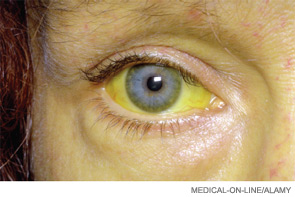
HE patients usually have advanced cirrhosis and, hence, many of the physical findings associated with severe hepatic dysfunction: muscle-wasting, jaundice, ascites, palmar erythema, edema, spider telangiectasias, and fetor hepaticus. Encephalopathy progresses from reversal of the sleep-wake cycle and mild mental status changes to irritability, confusion, and slurred speech.
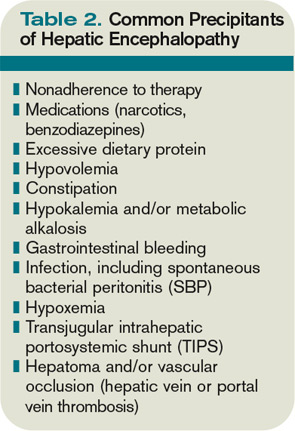
Advanced neurologic features include asterixis or tongue fasciculations, bradykinesia, hyperreflexia, and ultimately coma. History and laboratory data can reveal a precipitating cause (see Table 2, p. 19). Measurement of ammonia concentration remains controversial. The value may be useful for monitoring the efficacy of ammonia-lowering therapy, but elevated levels are not required to make the diagnosis.
Multiple treatments have been used to manage HE, yet few well-designed randomized trials have assessed efficacy due to challenges inherent in measuring the wide range of neuropsychiatric presentations. Nonetheless, a critical appraisal of available data delineates a rational approach to therapy.
Review of the Data
In addition to supportive care and the reversal of any precipitating factors, the treatment of acute HE is aimed at reducing or inhibiting intestinal ammonia production or increasing its removal (see Table 1, left).
Nonabsorbable disaccharides (NAD): Lactulose (beta-galactosidofructose) and lactitol (beta-galactosidosorbitol) are used as first-line agents for the treatment of HE and lead to symptomatic improvement in 67% to 87% of patients.1 They reduce the concentration of ammoniogenic substrates in the colonic lumen in two ways—first, by facilitating bacterial fermentation and secondary organic acid production (lowering colonic pH) and, second, by direct osmotic catharsis.
NAD are administered orally or via nasogastric tube at an initial dose of 45 ml, followed by repeated hourly doses until the patient has a bowel movement. For patients at risk of aspiration, NAD can be administered via enema (300 ml in 700 ml of water) every two hours as needed until mental function improves. Once the risk of aspiration is minimized, NAD can be administered orally and titrated to achieve two to three soft bowel movements daily (the usual oral dosage is 15 ml to 45 ml every eight to 12 hours).
Common side effects of NAD include an excessively sweet taste, flatulence, abdominal cramping, and electrolyte imbalance, particularly hypernatremia, which may further deteriorate mental status.
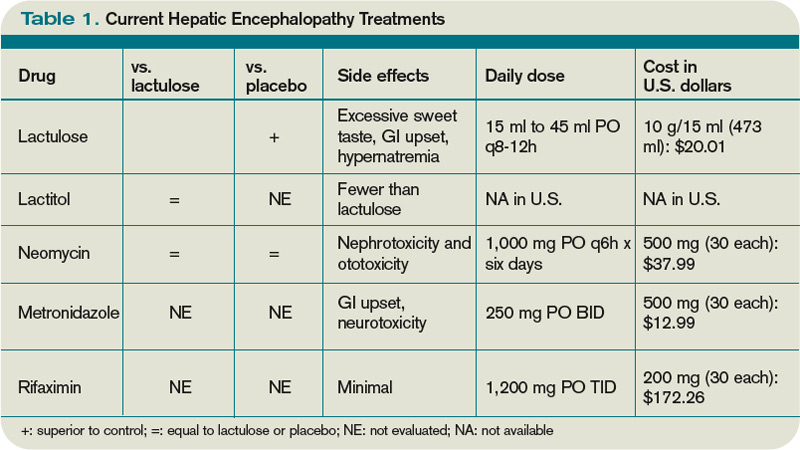
Als-Nielsen et al demonstrated in a systematic review that NAD were more effective than placebo in improving HE, but NAD had no significant benefit on mortality.1 However, the effect on HE no longer reached statistical significance when the analysis was confined to studies with the highest methodological quality. In a randomized, double-blind comparison, Morgan et al showed that lactitol was more tolerable than lactulose and produced fewer side effects.2 Lactitol is not currently available for use in the U.S.
Antibiotics: Certain oral antibiotics (e.g., neomycin, rifaximin, and metronidazole) reduce urease-producing intestinal bacteria, which results in decreased ammonia production and absorption through the gastrointestinal tract. Antibiotics generally are used in patients who do not tolerate NAD or who remain symptomatic despite NAD. The combined use of NAD and antibiotics is a subject of significant clinical relevance, though data are limited.
Neomycin is approved by the FDA for treatment of acute HE. It can be administered orally at a dose of 1,000 mg every six hours for up to six days. A randomized, controlled trial of neomycin versus placebo in 39 patients with acute HE demonstrated no significant difference in time to symptom improvement.3 Another study of 80 patients receiving neomycin and lactulose demonstrated no benefit against placebo, though some data suggest that the combination of lactulose and neomycin therapy might be more effective than either agent alone against placebo.4
Rifaximin was granted an orphan drug designation by the FDA for use in HE cases and has been compared with NAD. The recommended dose is 1,200 mg three times per day. It has minimal side effects and no reported drug interactions. A study of rifaximin versus lactitol administered for five to 10 days showed approximately 80% symptomatic improvement in both groups.5 Another trial demonstrated significantly greater improvement in blood ammonia concentrations, electroencephalographic (EEG) abnormalities, and mental status with rifaximin compared with lactulose.6 Studies comparing rifaximin and lactulose, either alone or in combination, have demonstrated that rifaximin is at least similar to lactulose, and in some cases superior in reversing encephalopathy, with better tolerability reported in the antibiotic group.7
Metronidazole is not approved by the FDA for the treatment of HE but has been evaluated. The recommended oral dose of metronidazole for chronic use is 250 mg twice per day. Prolonged administration of metronidazole can be associated with gastrointestinal disturbance and neurotoxicity. In a report of 11 HE patients with mild to moderate symptoms and seven chronically affected HE cirrhotic patients treated with metronidazole for one week, Morgan and colleagues showed metronidazole to be as effective as neomycin.8
Diet: Historically, patients with HE were placed on protein-restricted diets to reduce the production of intestinal ammonia. Recent evidence suggests that excessive restriction can raise serum ammonia levels as a result of reduced muscular ammonia metabolism. Furthermore, restricting protein intake worsens nutritional status and does not improve the outcome.9
In patients with established cirrhosis, the minimal daily dietary protein intake required to maintain nitrogen balance is 0.8 g/kg to 1.0 g/kg. At this time, a normoprotein diet for HE patients is considered the standard of care.
Other agents: L-ornithine L-aspartate (LOLA), a stable salt of ornithine and aspartic acid, provides crucial substrates for glutamine and urea synthesis—key pathways in deammonation. In patients with cirrhosis and HE, oral LOLA reduces serum ammonia and improves clinical manifestations of HE, including EEG abnormalities.10 LOLA, however, is not available in the U.S.
Sodium benzoate might be beneficial in the treatment of acute HE; it increases urinary excretion of ammonia. A prospective, randomized, double-blind study of 74 patients with acute HE found that treatment with sodium benzoate 5 g twice daily, compared with lactulose, resulted in equivalent improvements in encephalopathy. There was no placebo group.11 Routine use has been limited due to concerns regarding sodium load and increased frequency of adverse gastrointestinal symptoms, particularly nausea.
Flumazenil, a short-acting benzodiazepine receptor antagonist, has been utilized on the basis of observed increases in benzodiazepine receptor activation among cirrhotic HE patients. In a systematic review of 12 controlled trials (765 patients), Als-Nielsen and colleagues found flumazenil to be associated with significant improvement.12 Flumazenil is not used routinely as an HE therapy because of significant side effects, namely seizures, nausea, vomiting, dizziness, and agitation.
Such therapies as L-carnitine, branched amino acids (BCAA), probiotics, bromocriptine, acarbose, and zinc are among the many experimental agents currently under evaluation. Few have been tested in clinical trials.
Back to the Case
Our patient has severe HE manifested by worsening somnolence. It is postulated that ongoing alcohol abuse led to medication nonadherence, precipitating his HE, but as HE has many causes, a complete workup for infection and metabolic derangement is performed. However, it is unrevealing.
The best initial action is the prescription of lactulose, the mainstay of HE therapy. Given concern for aspiration in patients with somnolence, a feeding tube is placed for administration. The lactulose dosage will be titrated to achieve two to three soft stools per day. If the patient remains symptomatic or develops significant side effects on lactulose, the addition of an antibiotic is recommended. Neomycin, a low-cost medicine approved by the FDA for HE treatment, is a good choice. The patient will be maintained on a normal protein diet.
Bottom Line
The first-line agents used to treat episodes of acute HE are the nonabsorbable disaccharides, lactulose or lactitol. TH
Dr. Shoeb is a resident in the Department of Medicine at the University of Washington in Seattle. Dr. Best is assistant professor of medicine in the Division of General Internal Medicine at the University of Washington.
References
- Als-Nielsen B, Gluud L, Gluud C. Nonabsorbable disaccharides for hepatic encephalopathy. Cochrane Database Syst Rev. 2004;2:CD003044.
- Morgan MY, Hawley KE. Lactitol v. lactulose in the treatment of acute hepatic encephalopathy in cirrhotic patients: a double-blind, randomized trial. Hepatology. 1987; 7(6):1278-1284.
- Blanc P, Daurès JP, Liautard J, et al. Lactulose-neomycin combination versus placebo in the treatment of acute hepatic encephalopathy. Results of a randomized controlled trial. Gastroenterol Clin Biol. 1994;18(12):1063-1068.
- Mas A, Rodés J, Sunyer L, et al. Comparison of rifaximin and lactitol in the treatment of acute hepatic encephalopathy: results of a randomized, double-blind, double-dummy, controlled clinical trial. J Hepatol. 2003;38(1):51-58.
- Paik YH, Lee KS, Han KH, et al. Comparison of rifaximin and lactulose for the treatment of hepatic encephalopathy: a prospective randomized study. Yonsei Med J. 2005;46(3):399-407.
- Massa P, Vallerino E, Dodero M. Treatment of hepatic encephalopathy with rifaximin: double blind, double dummy study versus lactulose. Eur J Clin Res. 1993;4:7-18.
- Williams R, James OF, Warnes TW, Morgan MY. Evaluation of the efficacy and safety of rifaximin in the treatment of hepatic encephalopathy: a double-blind, randomized, dose-finding multi-centre study. Eur J Gastroenterol Hepatol. 2000;12(2):203-208.
- Morgan MH, Read AE, Speller DC. Treatment of hepatic encephalopathy with metronidazole. Gut. 1982;23(1):1-7.
- Córdoba J, López-Hellín J, Planas M, et al. Normal protein diet for episodic hepatic encephalopathy: results of a randomized study. J Hepatol. 2004;41(1):38-43.
- Poo JL, Gongora J, Sánchez-Avila F, et al. Efficacy of oral L-ornithine-L-aspartate in cirrhotic patients with hyperammonemic hepatic encephalopathy. Results of a randomized, lactulose-controlled study. Ann Hepatol. 2006;5(4):281-288.
- Sushma S, Dasarathy S, Tandon RK, Jain S, Gupta S, Bhist MS. Sodium benzoate in the treatment of acute hepatic encephalopathy: a double-blind randomized trial. Hepatology. 1992;16(16):138-144.
- Als-Nielsen B, Kjaergard LL, Gluud C. Benzodiazepine receptor antagonists for acute and chronic hepatic encephalopathy. Cochrane Database Syst Rev. 2001;4:CD002798.
Case
A 56-year-old man with a history of cirrhosis, complicated by esophageal varices and ongoing alcohol abuse, is admitted after his wife found him lethargic and disoriented in bed. His wife said he’d been increasingly irritable and agitated, with slurred speech, the past two days. On exam, he is somnolent but arousable; spider telangiectasias and asterixis are noted. Laboratory studies are consistent with chronic liver disease.
What is the best therapy for his acute hepatic encephalopathy?
Overview
Hepatic encephalopathy (HE) describes the spectrum of potentially reversible neuropsychiatric abnormalities seen in patients with liver dysfunction. The wide range of neuropsychiatric presentations led to the development of consensus HE classification terminology by the World Congress of Gastroenterology in 2002.
The primary tenet of all HE pathogenesis theories is firmly established: Nitrogenous substances derived from the gut adversely affect brain function. These compounds access the systemic circulation via decreased hepatic function or portal-systemic shunts. In the brain, they alter neurotransmission, which affects consciousness and behavior.
HE patients usually have advanced cirrhosis and, hence, many of the physical findings associated with severe hepatic dysfunction: muscle-wasting, jaundice, ascites, palmar erythema, edema, spider telangiectasias, and fetor hepaticus. Encephalopathy progresses from reversal of the sleep-wake cycle and mild mental status changes to irritability, confusion, and slurred speech.
Advanced neurologic features include asterixis or tongue fasciculations, bradykinesia, hyperreflexia, and ultimately coma. History and laboratory data can reveal a precipitating cause (see Table 2, p. 19). Measurement of ammonia concentration remains controversial. The value may be useful for monitoring the efficacy of ammonia-lowering therapy, but elevated levels are not required to make the diagnosis.
Multiple treatments have been used to manage HE, yet few well-designed randomized trials have assessed efficacy due to challenges inherent in measuring the wide range of neuropsychiatric presentations. Nonetheless, a critical appraisal of available data delineates a rational approach to therapy.
Review of the Data
In addition to supportive care and the reversal of any precipitating factors, the treatment of acute HE is aimed at reducing or inhibiting intestinal ammonia production or increasing its removal (see Table 1, left).
Nonabsorbable disaccharides (NAD): Lactulose (beta-galactosidofructose) and lactitol (beta-galactosidosorbitol) are used as first-line agents for the treatment of HE and lead to symptomatic improvement in 67% to 87% of patients.1 They reduce the concentration of ammoniogenic substrates in the colonic lumen in two ways—first, by facilitating bacterial fermentation and secondary organic acid production (lowering colonic pH) and, second, by direct osmotic catharsis.
NAD are administered orally or via nasogastric tube at an initial dose of 45 ml, followed by repeated hourly doses until the patient has a bowel movement. For patients at risk of aspiration, NAD can be administered via enema (300 ml in 700 ml of water) every two hours as needed until mental function improves. Once the risk of aspiration is minimized, NAD can be administered orally and titrated to achieve two to three soft bowel movements daily (the usual oral dosage is 15 ml to 45 ml every eight to 12 hours).
Common side effects of NAD include an excessively sweet taste, flatulence, abdominal cramping, and electrolyte imbalance, particularly hypernatremia, which may further deteriorate mental status.
Als-Nielsen et al demonstrated in a systematic review that NAD were more effective than placebo in improving HE, but NAD had no significant benefit on mortality.1 However, the effect on HE no longer reached statistical significance when the analysis was confined to studies with the highest methodological quality. In a randomized, double-blind comparison, Morgan et al showed that lactitol was more tolerable than lactulose and produced fewer side effects.2 Lactitol is not currently available for use in the U.S.
Antibiotics: Certain oral antibiotics (e.g., neomycin, rifaximin, and metronidazole) reduce urease-producing intestinal bacteria, which results in decreased ammonia production and absorption through the gastrointestinal tract. Antibiotics generally are used in patients who do not tolerate NAD or who remain symptomatic despite NAD. The combined use of NAD and antibiotics is a subject of significant clinical relevance, though data are limited.
Neomycin is approved by the FDA for treatment of acute HE. It can be administered orally at a dose of 1,000 mg every six hours for up to six days. A randomized, controlled trial of neomycin versus placebo in 39 patients with acute HE demonstrated no significant difference in time to symptom improvement.3 Another study of 80 patients receiving neomycin and lactulose demonstrated no benefit against placebo, though some data suggest that the combination of lactulose and neomycin therapy might be more effective than either agent alone against placebo.4
Rifaximin was granted an orphan drug designation by the FDA for use in HE cases and has been compared with NAD. The recommended dose is 1,200 mg three times per day. It has minimal side effects and no reported drug interactions. A study of rifaximin versus lactitol administered for five to 10 days showed approximately 80% symptomatic improvement in both groups.5 Another trial demonstrated significantly greater improvement in blood ammonia concentrations, electroencephalographic (EEG) abnormalities, and mental status with rifaximin compared with lactulose.6 Studies comparing rifaximin and lactulose, either alone or in combination, have demonstrated that rifaximin is at least similar to lactulose, and in some cases superior in reversing encephalopathy, with better tolerability reported in the antibiotic group.7
Metronidazole is not approved by the FDA for the treatment of HE but has been evaluated. The recommended oral dose of metronidazole for chronic use is 250 mg twice per day. Prolonged administration of metronidazole can be associated with gastrointestinal disturbance and neurotoxicity. In a report of 11 HE patients with mild to moderate symptoms and seven chronically affected HE cirrhotic patients treated with metronidazole for one week, Morgan and colleagues showed metronidazole to be as effective as neomycin.8
Diet: Historically, patients with HE were placed on protein-restricted diets to reduce the production of intestinal ammonia. Recent evidence suggests that excessive restriction can raise serum ammonia levels as a result of reduced muscular ammonia metabolism. Furthermore, restricting protein intake worsens nutritional status and does not improve the outcome.9
In patients with established cirrhosis, the minimal daily dietary protein intake required to maintain nitrogen balance is 0.8 g/kg to 1.0 g/kg. At this time, a normoprotein diet for HE patients is considered the standard of care.
Other agents: L-ornithine L-aspartate (LOLA), a stable salt of ornithine and aspartic acid, provides crucial substrates for glutamine and urea synthesis—key pathways in deammonation. In patients with cirrhosis and HE, oral LOLA reduces serum ammonia and improves clinical manifestations of HE, including EEG abnormalities.10 LOLA, however, is not available in the U.S.
Sodium benzoate might be beneficial in the treatment of acute HE; it increases urinary excretion of ammonia. A prospective, randomized, double-blind study of 74 patients with acute HE found that treatment with sodium benzoate 5 g twice daily, compared with lactulose, resulted in equivalent improvements in encephalopathy. There was no placebo group.11 Routine use has been limited due to concerns regarding sodium load and increased frequency of adverse gastrointestinal symptoms, particularly nausea.
Flumazenil, a short-acting benzodiazepine receptor antagonist, has been utilized on the basis of observed increases in benzodiazepine receptor activation among cirrhotic HE patients. In a systematic review of 12 controlled trials (765 patients), Als-Nielsen and colleagues found flumazenil to be associated with significant improvement.12 Flumazenil is not used routinely as an HE therapy because of significant side effects, namely seizures, nausea, vomiting, dizziness, and agitation.
Such therapies as L-carnitine, branched amino acids (BCAA), probiotics, bromocriptine, acarbose, and zinc are among the many experimental agents currently under evaluation. Few have been tested in clinical trials.
Back to the Case
Our patient has severe HE manifested by worsening somnolence. It is postulated that ongoing alcohol abuse led to medication nonadherence, precipitating his HE, but as HE has many causes, a complete workup for infection and metabolic derangement is performed. However, it is unrevealing.
The best initial action is the prescription of lactulose, the mainstay of HE therapy. Given concern for aspiration in patients with somnolence, a feeding tube is placed for administration. The lactulose dosage will be titrated to achieve two to three soft stools per day. If the patient remains symptomatic or develops significant side effects on lactulose, the addition of an antibiotic is recommended. Neomycin, a low-cost medicine approved by the FDA for HE treatment, is a good choice. The patient will be maintained on a normal protein diet.
Bottom Line
The first-line agents used to treat episodes of acute HE are the nonabsorbable disaccharides, lactulose or lactitol. TH
Dr. Shoeb is a resident in the Department of Medicine at the University of Washington in Seattle. Dr. Best is assistant professor of medicine in the Division of General Internal Medicine at the University of Washington.
References
- Als-Nielsen B, Gluud L, Gluud C. Nonabsorbable disaccharides for hepatic encephalopathy. Cochrane Database Syst Rev. 2004;2:CD003044.
- Morgan MY, Hawley KE. Lactitol v. lactulose in the treatment of acute hepatic encephalopathy in cirrhotic patients: a double-blind, randomized trial. Hepatology. 1987; 7(6):1278-1284.
- Blanc P, Daurès JP, Liautard J, et al. Lactulose-neomycin combination versus placebo in the treatment of acute hepatic encephalopathy. Results of a randomized controlled trial. Gastroenterol Clin Biol. 1994;18(12):1063-1068.
- Mas A, Rodés J, Sunyer L, et al. Comparison of rifaximin and lactitol in the treatment of acute hepatic encephalopathy: results of a randomized, double-blind, double-dummy, controlled clinical trial. J Hepatol. 2003;38(1):51-58.
- Paik YH, Lee KS, Han KH, et al. Comparison of rifaximin and lactulose for the treatment of hepatic encephalopathy: a prospective randomized study. Yonsei Med J. 2005;46(3):399-407.
- Massa P, Vallerino E, Dodero M. Treatment of hepatic encephalopathy with rifaximin: double blind, double dummy study versus lactulose. Eur J Clin Res. 1993;4:7-18.
- Williams R, James OF, Warnes TW, Morgan MY. Evaluation of the efficacy and safety of rifaximin in the treatment of hepatic encephalopathy: a double-blind, randomized, dose-finding multi-centre study. Eur J Gastroenterol Hepatol. 2000;12(2):203-208.
- Morgan MH, Read AE, Speller DC. Treatment of hepatic encephalopathy with metronidazole. Gut. 1982;23(1):1-7.
- Córdoba J, López-Hellín J, Planas M, et al. Normal protein diet for episodic hepatic encephalopathy: results of a randomized study. J Hepatol. 2004;41(1):38-43.
- Poo JL, Gongora J, Sánchez-Avila F, et al. Efficacy of oral L-ornithine-L-aspartate in cirrhotic patients with hyperammonemic hepatic encephalopathy. Results of a randomized, lactulose-controlled study. Ann Hepatol. 2006;5(4):281-288.
- Sushma S, Dasarathy S, Tandon RK, Jain S, Gupta S, Bhist MS. Sodium benzoate in the treatment of acute hepatic encephalopathy: a double-blind randomized trial. Hepatology. 1992;16(16):138-144.
- Als-Nielsen B, Kjaergard LL, Gluud C. Benzodiazepine receptor antagonists for acute and chronic hepatic encephalopathy. Cochrane Database Syst Rev. 2001;4:CD002798.
Case
A 56-year-old man with a history of cirrhosis, complicated by esophageal varices and ongoing alcohol abuse, is admitted after his wife found him lethargic and disoriented in bed. His wife said he’d been increasingly irritable and agitated, with slurred speech, the past two days. On exam, he is somnolent but arousable; spider telangiectasias and asterixis are noted. Laboratory studies are consistent with chronic liver disease.
What is the best therapy for his acute hepatic encephalopathy?
Overview
Hepatic encephalopathy (HE) describes the spectrum of potentially reversible neuropsychiatric abnormalities seen in patients with liver dysfunction. The wide range of neuropsychiatric presentations led to the development of consensus HE classification terminology by the World Congress of Gastroenterology in 2002.
The primary tenet of all HE pathogenesis theories is firmly established: Nitrogenous substances derived from the gut adversely affect brain function. These compounds access the systemic circulation via decreased hepatic function or portal-systemic shunts. In the brain, they alter neurotransmission, which affects consciousness and behavior.
HE patients usually have advanced cirrhosis and, hence, many of the physical findings associated with severe hepatic dysfunction: muscle-wasting, jaundice, ascites, palmar erythema, edema, spider telangiectasias, and fetor hepaticus. Encephalopathy progresses from reversal of the sleep-wake cycle and mild mental status changes to irritability, confusion, and slurred speech.
Advanced neurologic features include asterixis or tongue fasciculations, bradykinesia, hyperreflexia, and ultimately coma. History and laboratory data can reveal a precipitating cause (see Table 2, p. 19). Measurement of ammonia concentration remains controversial. The value may be useful for monitoring the efficacy of ammonia-lowering therapy, but elevated levels are not required to make the diagnosis.
Multiple treatments have been used to manage HE, yet few well-designed randomized trials have assessed efficacy due to challenges inherent in measuring the wide range of neuropsychiatric presentations. Nonetheless, a critical appraisal of available data delineates a rational approach to therapy.
Review of the Data
In addition to supportive care and the reversal of any precipitating factors, the treatment of acute HE is aimed at reducing or inhibiting intestinal ammonia production or increasing its removal (see Table 1, left).
Nonabsorbable disaccharides (NAD): Lactulose (beta-galactosidofructose) and lactitol (beta-galactosidosorbitol) are used as first-line agents for the treatment of HE and lead to symptomatic improvement in 67% to 87% of patients.1 They reduce the concentration of ammoniogenic substrates in the colonic lumen in two ways—first, by facilitating bacterial fermentation and secondary organic acid production (lowering colonic pH) and, second, by direct osmotic catharsis.
NAD are administered orally or via nasogastric tube at an initial dose of 45 ml, followed by repeated hourly doses until the patient has a bowel movement. For patients at risk of aspiration, NAD can be administered via enema (300 ml in 700 ml of water) every two hours as needed until mental function improves. Once the risk of aspiration is minimized, NAD can be administered orally and titrated to achieve two to three soft bowel movements daily (the usual oral dosage is 15 ml to 45 ml every eight to 12 hours).
Common side effects of NAD include an excessively sweet taste, flatulence, abdominal cramping, and electrolyte imbalance, particularly hypernatremia, which may further deteriorate mental status.
Als-Nielsen et al demonstrated in a systematic review that NAD were more effective than placebo in improving HE, but NAD had no significant benefit on mortality.1 However, the effect on HE no longer reached statistical significance when the analysis was confined to studies with the highest methodological quality. In a randomized, double-blind comparison, Morgan et al showed that lactitol was more tolerable than lactulose and produced fewer side effects.2 Lactitol is not currently available for use in the U.S.
Antibiotics: Certain oral antibiotics (e.g., neomycin, rifaximin, and metronidazole) reduce urease-producing intestinal bacteria, which results in decreased ammonia production and absorption through the gastrointestinal tract. Antibiotics generally are used in patients who do not tolerate NAD or who remain symptomatic despite NAD. The combined use of NAD and antibiotics is a subject of significant clinical relevance, though data are limited.
Neomycin is approved by the FDA for treatment of acute HE. It can be administered orally at a dose of 1,000 mg every six hours for up to six days. A randomized, controlled trial of neomycin versus placebo in 39 patients with acute HE demonstrated no significant difference in time to symptom improvement.3 Another study of 80 patients receiving neomycin and lactulose demonstrated no benefit against placebo, though some data suggest that the combination of lactulose and neomycin therapy might be more effective than either agent alone against placebo.4
Rifaximin was granted an orphan drug designation by the FDA for use in HE cases and has been compared with NAD. The recommended dose is 1,200 mg three times per day. It has minimal side effects and no reported drug interactions. A study of rifaximin versus lactitol administered for five to 10 days showed approximately 80% symptomatic improvement in both groups.5 Another trial demonstrated significantly greater improvement in blood ammonia concentrations, electroencephalographic (EEG) abnormalities, and mental status with rifaximin compared with lactulose.6 Studies comparing rifaximin and lactulose, either alone or in combination, have demonstrated that rifaximin is at least similar to lactulose, and in some cases superior in reversing encephalopathy, with better tolerability reported in the antibiotic group.7
Metronidazole is not approved by the FDA for the treatment of HE but has been evaluated. The recommended oral dose of metronidazole for chronic use is 250 mg twice per day. Prolonged administration of metronidazole can be associated with gastrointestinal disturbance and neurotoxicity. In a report of 11 HE patients with mild to moderate symptoms and seven chronically affected HE cirrhotic patients treated with metronidazole for one week, Morgan and colleagues showed metronidazole to be as effective as neomycin.8
Diet: Historically, patients with HE were placed on protein-restricted diets to reduce the production of intestinal ammonia. Recent evidence suggests that excessive restriction can raise serum ammonia levels as a result of reduced muscular ammonia metabolism. Furthermore, restricting protein intake worsens nutritional status and does not improve the outcome.9
In patients with established cirrhosis, the minimal daily dietary protein intake required to maintain nitrogen balance is 0.8 g/kg to 1.0 g/kg. At this time, a normoprotein diet for HE patients is considered the standard of care.
Other agents: L-ornithine L-aspartate (LOLA), a stable salt of ornithine and aspartic acid, provides crucial substrates for glutamine and urea synthesis—key pathways in deammonation. In patients with cirrhosis and HE, oral LOLA reduces serum ammonia and improves clinical manifestations of HE, including EEG abnormalities.10 LOLA, however, is not available in the U.S.
Sodium benzoate might be beneficial in the treatment of acute HE; it increases urinary excretion of ammonia. A prospective, randomized, double-blind study of 74 patients with acute HE found that treatment with sodium benzoate 5 g twice daily, compared with lactulose, resulted in equivalent improvements in encephalopathy. There was no placebo group.11 Routine use has been limited due to concerns regarding sodium load and increased frequency of adverse gastrointestinal symptoms, particularly nausea.
Flumazenil, a short-acting benzodiazepine receptor antagonist, has been utilized on the basis of observed increases in benzodiazepine receptor activation among cirrhotic HE patients. In a systematic review of 12 controlled trials (765 patients), Als-Nielsen and colleagues found flumazenil to be associated with significant improvement.12 Flumazenil is not used routinely as an HE therapy because of significant side effects, namely seizures, nausea, vomiting, dizziness, and agitation.
Such therapies as L-carnitine, branched amino acids (BCAA), probiotics, bromocriptine, acarbose, and zinc are among the many experimental agents currently under evaluation. Few have been tested in clinical trials.
Back to the Case
Our patient has severe HE manifested by worsening somnolence. It is postulated that ongoing alcohol abuse led to medication nonadherence, precipitating his HE, but as HE has many causes, a complete workup for infection and metabolic derangement is performed. However, it is unrevealing.
The best initial action is the prescription of lactulose, the mainstay of HE therapy. Given concern for aspiration in patients with somnolence, a feeding tube is placed for administration. The lactulose dosage will be titrated to achieve two to three soft stools per day. If the patient remains symptomatic or develops significant side effects on lactulose, the addition of an antibiotic is recommended. Neomycin, a low-cost medicine approved by the FDA for HE treatment, is a good choice. The patient will be maintained on a normal protein diet.
Bottom Line
The first-line agents used to treat episodes of acute HE are the nonabsorbable disaccharides, lactulose or lactitol. TH
Dr. Shoeb is a resident in the Department of Medicine at the University of Washington in Seattle. Dr. Best is assistant professor of medicine in the Division of General Internal Medicine at the University of Washington.
References
- Als-Nielsen B, Gluud L, Gluud C. Nonabsorbable disaccharides for hepatic encephalopathy. Cochrane Database Syst Rev. 2004;2:CD003044.
- Morgan MY, Hawley KE. Lactitol v. lactulose in the treatment of acute hepatic encephalopathy in cirrhotic patients: a double-blind, randomized trial. Hepatology. 1987; 7(6):1278-1284.
- Blanc P, Daurès JP, Liautard J, et al. Lactulose-neomycin combination versus placebo in the treatment of acute hepatic encephalopathy. Results of a randomized controlled trial. Gastroenterol Clin Biol. 1994;18(12):1063-1068.
- Mas A, Rodés J, Sunyer L, et al. Comparison of rifaximin and lactitol in the treatment of acute hepatic encephalopathy: results of a randomized, double-blind, double-dummy, controlled clinical trial. J Hepatol. 2003;38(1):51-58.
- Paik YH, Lee KS, Han KH, et al. Comparison of rifaximin and lactulose for the treatment of hepatic encephalopathy: a prospective randomized study. Yonsei Med J. 2005;46(3):399-407.
- Massa P, Vallerino E, Dodero M. Treatment of hepatic encephalopathy with rifaximin: double blind, double dummy study versus lactulose. Eur J Clin Res. 1993;4:7-18.
- Williams R, James OF, Warnes TW, Morgan MY. Evaluation of the efficacy and safety of rifaximin in the treatment of hepatic encephalopathy: a double-blind, randomized, dose-finding multi-centre study. Eur J Gastroenterol Hepatol. 2000;12(2):203-208.
- Morgan MH, Read AE, Speller DC. Treatment of hepatic encephalopathy with metronidazole. Gut. 1982;23(1):1-7.
- Córdoba J, López-Hellín J, Planas M, et al. Normal protein diet for episodic hepatic encephalopathy: results of a randomized study. J Hepatol. 2004;41(1):38-43.
- Poo JL, Gongora J, Sánchez-Avila F, et al. Efficacy of oral L-ornithine-L-aspartate in cirrhotic patients with hyperammonemic hepatic encephalopathy. Results of a randomized, lactulose-controlled study. Ann Hepatol. 2006;5(4):281-288.
- Sushma S, Dasarathy S, Tandon RK, Jain S, Gupta S, Bhist MS. Sodium benzoate in the treatment of acute hepatic encephalopathy: a double-blind randomized trial. Hepatology. 1992;16(16):138-144.
- Als-Nielsen B, Kjaergard LL, Gluud C. Benzodiazepine receptor antagonists for acute and chronic hepatic encephalopathy. Cochrane Database Syst Rev. 2001;4:CD002798.
Market Watch
Pipeline Drugs
- Phentermine/topiramate (Qnexa) is an investigational drug for the treatment of obesity. This includes weight loss and weight-loss maintenance in patients who are obese or overweight with such comorbidities as hypertension, Type 2 diabetes, dyslipidemia, or central adiposity. A new drug application (NDA) was filed with the FDA for this agent late in 2009.1 Qnexa is a once-daily, oral, controlled-release formulation comprised of low-dose phentermine and topiramate, which works on both patient satiety and appetite. Clinical trials show the drug has led to significant weight loss, glycemic control, and improved cardiovascular risk factors. Common side effects in clinical trials were dry mouth, tingling, and constipation.
- Pirfenidone, a potential treatment for idiopathic pulmonary fibrosis (IPF), has been granted a priority review by the FDA.2 Idiopathic pulmonary fibrosis is a disabling and fatal disease characterized by lung inflammation and scarring. The median survival time from diagnosis is two to five years, with an approximate five-year survival rate of 20%. Patients usually are diagnosed between the ages of 20 and 70, with a median of 63 years. It affects slightly more men than women. There are no medications approved to treat this fatal disease. Pirfenidone has been shown to have both antifibrotic and anti-inflammatory properties. The most common side effects are photosensitivity rash and gastrointestinal symptoms.3 The FDA’s action date is expected to be May 4.
- FDA approval was requested for retigabine, a potential new adjunctive epilepsy treatment, on Dec. 30, 2009.4 Retigabine is a neuronal potassium channel opener for use in adults with partial-onset seizures. In Phase 3 clinical trials, common adverse effects (occurring in more than 5% of patients) were dizziness, fatigue, confused state, vertigo, tremor, abnormal coordination, diplopia, attention disturbance, asthenia, and visual blurring.
Safety Information
- Desipramine (Norpramin), a tricyclic antidepressant approved by the FDA for treating major depression in adults, has undergone a label change to reflect new safety information. The “Warnings” and “Overdosage” sections of the product label now include information stating that extreme caution needs to be used when desipramine is administered to patients with a family history of sudden death, cardiac dysrhythmias, and cardiac conduction disturbances. The information also states that seizures might precede cardiac dysrhythmias and death in some patients.5 In a related “Dear Healthcare Professional” letter, information related to this warning was included with regard to identifying patients who present with a desipramine overdose, managing gastrointestinal decontamination with activated charcoal, managing cardiovascular effects, and deletion of measuring plasma-concentration desipramine as a guide to patient monitoring.5
- Diclofenac gel (Voltaren gel), a topical NSAID indicated for the relief of osteoarthritis pain of joints amenable to topical treatment (e.g., knees and hands), has undergone a label change related to its hepatic effects section. The label has revised warnings and precautions about the potential for liver function test elevations while receiving treatment with all diclofenac-containing products.6 There have been post-marketing reports of drug-induced hepatotoxicity within the first month of treatment with this topical agent. However, this reaction can occur at any time during diclofenac treatment. Severe hepatic reactions have been reported, including liver necrosis, jaundice, fulminant hepatitis with and without jaundice, and liver failure. Some of these cases resulted in fatalities or liver transplantation. Oral diclofenac also is hepatotoxic; it’s one of the most hepatotoxic NSAIDs available. To monitor patients receiving topical diclofenac, you should, after obtaining baseline transaminases, periodically measure transaminases in patients receiving long-term therapy. The optimum times for measurement are unknown. Based on available data from clinical trials and other cases, transaminases should be monitored within four to eight weeks after initiating diclofenac treatment.
- Fosamprenavir (Lexiva) has undergone a label change in the “Warnings” and “Precautions” sections, which is related to a potential association between the agent and the occurrence of myocardial infarction and dyslipidemia in adults with HIV.7 The updated label notes that patient cholesterol levels might increase if treated with fosamprenavir, and that lipid monitoring prior to and after initiating the agent should occur.
- Valproate sodium, valproic acid, and divalproex sodium have been associated with an increased risk of neural tube defects and other major birth defects (e.g., craniofacial defects and cardiovascular malformations) in babies exposed to these agents during pregnancy.8 Healthcare providers need to inform women of childbearing potential about these risks and consider alternative therapies, especially if the use of valproate is considered to treat migraines or other conditions that are not considered life-threatening. Women who are not actively planning a pregnancy and require use of valproate for medical conditions should use contraception, as birth-defect risks are high during the first trimester of pregnancy. Pregnant women using valproate should be encouraged to enroll in the North American Antiepileptic Drug Pregnancy Registry (888-233-2334 or www.aedpregnancyregistry.org). A medication guide explaining the risk and benefits of such treatment is required to be distributed with each dispensed valproate prescription.9 TH
Michele B. Kaufman, PharmD, BSc, RPh, is a freelance medical writer based in New York City and a clinical pharmacist at New York Downtown Hospital.
References
- NDA submitted for Qnexa. Drugs.com Web site. Available at: http://www.drugs.com/nda/qnexa_091229.html. Accessed Jan. 7, 2010.
- Todoruk M. InterMune’s pulmonary drug pirfenidone granted priority review by FDA. FirstWord Web site. Available at: http://www.firstwordplus.com/Fws.do?articleid=5C01296C0574469B9A67F3574353FB1E&logRowId=343385. Accessed Jan. 7, 2010.
- FDA grants priority review of pirfenidone NDA for the treatment of patients with IPF. InterMune Web site. Available at: http://phx.corporate-ir.net/phoenix.zhtml?c=100067&p=irol-newsArticle&ID=1370133&highlight=. Accessed Jan. 7, 2010.
- FDA accepts NDA filing for retigabine. Drugs.com Web site. Available at: http://www.drugs.com/nda/retigabine_091230.html. Accessed Jan. 7, 2010.
- Norpramin (desipramine hydrochloride)—Dear Healthcare Professional letter. Food and Drug Administration Web site. Available at: http://www.fda.gov/Safety/MedWatch/SafetyInformation/SafetyAlertsforHumanMedicalProducts/ucm192655.htm. Accessed Jan. 7, 2010.
- Voltaren gel (diclofenac sodium topical gel) 1%—hepatic effects labeling changes. Food and Drug Administration Web site. Available at: http://www.fda.gov/Safety/MedWatch/SafetyInformation/SafetyAlertsforHumanMedicalProducts/ucm193047.htm. Accessed Jan. 7, 2009.
- Lexiva (fosamprenavir calcium)—Dear Healthcare Professional letter. Food and Drug Administration Web site. Available at http://www.fda.gov/Safety/MedWatch/SafetyInformation/SafetyAlertsforHumanMedicalProducts/ucm192699.htm. Accessed Jan. 7, 2010.
- FDA warns of birth defects with valproate sodium, valproic acid, and divalproex sodium. Monthly Prescribing Reference Web site. Available at: http://www.empr.com/fda-warns-of-birth-defects-with-valproate-sodium-valproic-acid-and-divalproex-sodium/article/159034/. Accessed Jan. 7, 2010.
- Valproate sodium and related products (valproic acid and divalproex sodium): risk of birth defects. Food and Drug Administration Web site. Available at: http://www.fda.gov/Safety/MedWatch/SafetyInformation/SafetyAlertsforHumanMedicalProducts/ucm192788.htm. Accessed Jan. 7, 2009.
Pipeline Drugs
- Phentermine/topiramate (Qnexa) is an investigational drug for the treatment of obesity. This includes weight loss and weight-loss maintenance in patients who are obese or overweight with such comorbidities as hypertension, Type 2 diabetes, dyslipidemia, or central adiposity. A new drug application (NDA) was filed with the FDA for this agent late in 2009.1 Qnexa is a once-daily, oral, controlled-release formulation comprised of low-dose phentermine and topiramate, which works on both patient satiety and appetite. Clinical trials show the drug has led to significant weight loss, glycemic control, and improved cardiovascular risk factors. Common side effects in clinical trials were dry mouth, tingling, and constipation.
- Pirfenidone, a potential treatment for idiopathic pulmonary fibrosis (IPF), has been granted a priority review by the FDA.2 Idiopathic pulmonary fibrosis is a disabling and fatal disease characterized by lung inflammation and scarring. The median survival time from diagnosis is two to five years, with an approximate five-year survival rate of 20%. Patients usually are diagnosed between the ages of 20 and 70, with a median of 63 years. It affects slightly more men than women. There are no medications approved to treat this fatal disease. Pirfenidone has been shown to have both antifibrotic and anti-inflammatory properties. The most common side effects are photosensitivity rash and gastrointestinal symptoms.3 The FDA’s action date is expected to be May 4.
- FDA approval was requested for retigabine, a potential new adjunctive epilepsy treatment, on Dec. 30, 2009.4 Retigabine is a neuronal potassium channel opener for use in adults with partial-onset seizures. In Phase 3 clinical trials, common adverse effects (occurring in more than 5% of patients) were dizziness, fatigue, confused state, vertigo, tremor, abnormal coordination, diplopia, attention disturbance, asthenia, and visual blurring.
Safety Information
- Desipramine (Norpramin), a tricyclic antidepressant approved by the FDA for treating major depression in adults, has undergone a label change to reflect new safety information. The “Warnings” and “Overdosage” sections of the product label now include information stating that extreme caution needs to be used when desipramine is administered to patients with a family history of sudden death, cardiac dysrhythmias, and cardiac conduction disturbances. The information also states that seizures might precede cardiac dysrhythmias and death in some patients.5 In a related “Dear Healthcare Professional” letter, information related to this warning was included with regard to identifying patients who present with a desipramine overdose, managing gastrointestinal decontamination with activated charcoal, managing cardiovascular effects, and deletion of measuring plasma-concentration desipramine as a guide to patient monitoring.5
- Diclofenac gel (Voltaren gel), a topical NSAID indicated for the relief of osteoarthritis pain of joints amenable to topical treatment (e.g., knees and hands), has undergone a label change related to its hepatic effects section. The label has revised warnings and precautions about the potential for liver function test elevations while receiving treatment with all diclofenac-containing products.6 There have been post-marketing reports of drug-induced hepatotoxicity within the first month of treatment with this topical agent. However, this reaction can occur at any time during diclofenac treatment. Severe hepatic reactions have been reported, including liver necrosis, jaundice, fulminant hepatitis with and without jaundice, and liver failure. Some of these cases resulted in fatalities or liver transplantation. Oral diclofenac also is hepatotoxic; it’s one of the most hepatotoxic NSAIDs available. To monitor patients receiving topical diclofenac, you should, after obtaining baseline transaminases, periodically measure transaminases in patients receiving long-term therapy. The optimum times for measurement are unknown. Based on available data from clinical trials and other cases, transaminases should be monitored within four to eight weeks after initiating diclofenac treatment.
- Fosamprenavir (Lexiva) has undergone a label change in the “Warnings” and “Precautions” sections, which is related to a potential association between the agent and the occurrence of myocardial infarction and dyslipidemia in adults with HIV.7 The updated label notes that patient cholesterol levels might increase if treated with fosamprenavir, and that lipid monitoring prior to and after initiating the agent should occur.
- Valproate sodium, valproic acid, and divalproex sodium have been associated with an increased risk of neural tube defects and other major birth defects (e.g., craniofacial defects and cardiovascular malformations) in babies exposed to these agents during pregnancy.8 Healthcare providers need to inform women of childbearing potential about these risks and consider alternative therapies, especially if the use of valproate is considered to treat migraines or other conditions that are not considered life-threatening. Women who are not actively planning a pregnancy and require use of valproate for medical conditions should use contraception, as birth-defect risks are high during the first trimester of pregnancy. Pregnant women using valproate should be encouraged to enroll in the North American Antiepileptic Drug Pregnancy Registry (888-233-2334 or www.aedpregnancyregistry.org). A medication guide explaining the risk and benefits of such treatment is required to be distributed with each dispensed valproate prescription.9 TH
Michele B. Kaufman, PharmD, BSc, RPh, is a freelance medical writer based in New York City and a clinical pharmacist at New York Downtown Hospital.
References
- NDA submitted for Qnexa. Drugs.com Web site. Available at: http://www.drugs.com/nda/qnexa_091229.html. Accessed Jan. 7, 2010.
- Todoruk M. InterMune’s pulmonary drug pirfenidone granted priority review by FDA. FirstWord Web site. Available at: http://www.firstwordplus.com/Fws.do?articleid=5C01296C0574469B9A67F3574353FB1E&logRowId=343385. Accessed Jan. 7, 2010.
- FDA grants priority review of pirfenidone NDA for the treatment of patients with IPF. InterMune Web site. Available at: http://phx.corporate-ir.net/phoenix.zhtml?c=100067&p=irol-newsArticle&ID=1370133&highlight=. Accessed Jan. 7, 2010.
- FDA accepts NDA filing for retigabine. Drugs.com Web site. Available at: http://www.drugs.com/nda/retigabine_091230.html. Accessed Jan. 7, 2010.
- Norpramin (desipramine hydrochloride)—Dear Healthcare Professional letter. Food and Drug Administration Web site. Available at: http://www.fda.gov/Safety/MedWatch/SafetyInformation/SafetyAlertsforHumanMedicalProducts/ucm192655.htm. Accessed Jan. 7, 2010.
- Voltaren gel (diclofenac sodium topical gel) 1%—hepatic effects labeling changes. Food and Drug Administration Web site. Available at: http://www.fda.gov/Safety/MedWatch/SafetyInformation/SafetyAlertsforHumanMedicalProducts/ucm193047.htm. Accessed Jan. 7, 2009.
- Lexiva (fosamprenavir calcium)—Dear Healthcare Professional letter. Food and Drug Administration Web site. Available at http://www.fda.gov/Safety/MedWatch/SafetyInformation/SafetyAlertsforHumanMedicalProducts/ucm192699.htm. Accessed Jan. 7, 2010.
- FDA warns of birth defects with valproate sodium, valproic acid, and divalproex sodium. Monthly Prescribing Reference Web site. Available at: http://www.empr.com/fda-warns-of-birth-defects-with-valproate-sodium-valproic-acid-and-divalproex-sodium/article/159034/. Accessed Jan. 7, 2010.
- Valproate sodium and related products (valproic acid and divalproex sodium): risk of birth defects. Food and Drug Administration Web site. Available at: http://www.fda.gov/Safety/MedWatch/SafetyInformation/SafetyAlertsforHumanMedicalProducts/ucm192788.htm. Accessed Jan. 7, 2009.
Pipeline Drugs
- Phentermine/topiramate (Qnexa) is an investigational drug for the treatment of obesity. This includes weight loss and weight-loss maintenance in patients who are obese or overweight with such comorbidities as hypertension, Type 2 diabetes, dyslipidemia, or central adiposity. A new drug application (NDA) was filed with the FDA for this agent late in 2009.1 Qnexa is a once-daily, oral, controlled-release formulation comprised of low-dose phentermine and topiramate, which works on both patient satiety and appetite. Clinical trials show the drug has led to significant weight loss, glycemic control, and improved cardiovascular risk factors. Common side effects in clinical trials were dry mouth, tingling, and constipation.
- Pirfenidone, a potential treatment for idiopathic pulmonary fibrosis (IPF), has been granted a priority review by the FDA.2 Idiopathic pulmonary fibrosis is a disabling and fatal disease characterized by lung inflammation and scarring. The median survival time from diagnosis is two to five years, with an approximate five-year survival rate of 20%. Patients usually are diagnosed between the ages of 20 and 70, with a median of 63 years. It affects slightly more men than women. There are no medications approved to treat this fatal disease. Pirfenidone has been shown to have both antifibrotic and anti-inflammatory properties. The most common side effects are photosensitivity rash and gastrointestinal symptoms.3 The FDA’s action date is expected to be May 4.
- FDA approval was requested for retigabine, a potential new adjunctive epilepsy treatment, on Dec. 30, 2009.4 Retigabine is a neuronal potassium channel opener for use in adults with partial-onset seizures. In Phase 3 clinical trials, common adverse effects (occurring in more than 5% of patients) were dizziness, fatigue, confused state, vertigo, tremor, abnormal coordination, diplopia, attention disturbance, asthenia, and visual blurring.
Safety Information
- Desipramine (Norpramin), a tricyclic antidepressant approved by the FDA for treating major depression in adults, has undergone a label change to reflect new safety information. The “Warnings” and “Overdosage” sections of the product label now include information stating that extreme caution needs to be used when desipramine is administered to patients with a family history of sudden death, cardiac dysrhythmias, and cardiac conduction disturbances. The information also states that seizures might precede cardiac dysrhythmias and death in some patients.5 In a related “Dear Healthcare Professional” letter, information related to this warning was included with regard to identifying patients who present with a desipramine overdose, managing gastrointestinal decontamination with activated charcoal, managing cardiovascular effects, and deletion of measuring plasma-concentration desipramine as a guide to patient monitoring.5
- Diclofenac gel (Voltaren gel), a topical NSAID indicated for the relief of osteoarthritis pain of joints amenable to topical treatment (e.g., knees and hands), has undergone a label change related to its hepatic effects section. The label has revised warnings and precautions about the potential for liver function test elevations while receiving treatment with all diclofenac-containing products.6 There have been post-marketing reports of drug-induced hepatotoxicity within the first month of treatment with this topical agent. However, this reaction can occur at any time during diclofenac treatment. Severe hepatic reactions have been reported, including liver necrosis, jaundice, fulminant hepatitis with and without jaundice, and liver failure. Some of these cases resulted in fatalities or liver transplantation. Oral diclofenac also is hepatotoxic; it’s one of the most hepatotoxic NSAIDs available. To monitor patients receiving topical diclofenac, you should, after obtaining baseline transaminases, periodically measure transaminases in patients receiving long-term therapy. The optimum times for measurement are unknown. Based on available data from clinical trials and other cases, transaminases should be monitored within four to eight weeks after initiating diclofenac treatment.
- Fosamprenavir (Lexiva) has undergone a label change in the “Warnings” and “Precautions” sections, which is related to a potential association between the agent and the occurrence of myocardial infarction and dyslipidemia in adults with HIV.7 The updated label notes that patient cholesterol levels might increase if treated with fosamprenavir, and that lipid monitoring prior to and after initiating the agent should occur.
- Valproate sodium, valproic acid, and divalproex sodium have been associated with an increased risk of neural tube defects and other major birth defects (e.g., craniofacial defects and cardiovascular malformations) in babies exposed to these agents during pregnancy.8 Healthcare providers need to inform women of childbearing potential about these risks and consider alternative therapies, especially if the use of valproate is considered to treat migraines or other conditions that are not considered life-threatening. Women who are not actively planning a pregnancy and require use of valproate for medical conditions should use contraception, as birth-defect risks are high during the first trimester of pregnancy. Pregnant women using valproate should be encouraged to enroll in the North American Antiepileptic Drug Pregnancy Registry (888-233-2334 or www.aedpregnancyregistry.org). A medication guide explaining the risk and benefits of such treatment is required to be distributed with each dispensed valproate prescription.9 TH
Michele B. Kaufman, PharmD, BSc, RPh, is a freelance medical writer based in New York City and a clinical pharmacist at New York Downtown Hospital.
References
- NDA submitted for Qnexa. Drugs.com Web site. Available at: http://www.drugs.com/nda/qnexa_091229.html. Accessed Jan. 7, 2010.
- Todoruk M. InterMune’s pulmonary drug pirfenidone granted priority review by FDA. FirstWord Web site. Available at: http://www.firstwordplus.com/Fws.do?articleid=5C01296C0574469B9A67F3574353FB1E&logRowId=343385. Accessed Jan. 7, 2010.
- FDA grants priority review of pirfenidone NDA for the treatment of patients with IPF. InterMune Web site. Available at: http://phx.corporate-ir.net/phoenix.zhtml?c=100067&p=irol-newsArticle&ID=1370133&highlight=. Accessed Jan. 7, 2010.
- FDA accepts NDA filing for retigabine. Drugs.com Web site. Available at: http://www.drugs.com/nda/retigabine_091230.html. Accessed Jan. 7, 2010.
- Norpramin (desipramine hydrochloride)—Dear Healthcare Professional letter. Food and Drug Administration Web site. Available at: http://www.fda.gov/Safety/MedWatch/SafetyInformation/SafetyAlertsforHumanMedicalProducts/ucm192655.htm. Accessed Jan. 7, 2010.
- Voltaren gel (diclofenac sodium topical gel) 1%—hepatic effects labeling changes. Food and Drug Administration Web site. Available at: http://www.fda.gov/Safety/MedWatch/SafetyInformation/SafetyAlertsforHumanMedicalProducts/ucm193047.htm. Accessed Jan. 7, 2009.
- Lexiva (fosamprenavir calcium)—Dear Healthcare Professional letter. Food and Drug Administration Web site. Available at http://www.fda.gov/Safety/MedWatch/SafetyInformation/SafetyAlertsforHumanMedicalProducts/ucm192699.htm. Accessed Jan. 7, 2010.
- FDA warns of birth defects with valproate sodium, valproic acid, and divalproex sodium. Monthly Prescribing Reference Web site. Available at: http://www.empr.com/fda-warns-of-birth-defects-with-valproate-sodium-valproic-acid-and-divalproex-sodium/article/159034/. Accessed Jan. 7, 2010.
- Valproate sodium and related products (valproic acid and divalproex sodium): risk of birth defects. Food and Drug Administration Web site. Available at: http://www.fda.gov/Safety/MedWatch/SafetyInformation/SafetyAlertsforHumanMedicalProducts/ucm192788.htm. Accessed Jan. 7, 2009.
Pediatric In the Literature

Clinical question: What is the incidence of apnea in infants hospitalized with respiratory syncytial virus (RSV) bronchiolitis?
Background: Apnea is a known and reported complication of RSV infection in infants. In clinical practice, this relationship could be the basis for admission despite a lack of symptoms that would otherwise necessitate hospitalization. The exact nature of this association remains unclear, specifically with respect to incidence and risk factors for apnea.
Study design: Systematic chart review.
Synopsis: A literature search was conducted using a combination of the terms “apnea” (or “apnoea”), “bronchiolitis,” “respiratory syncytial virus” and/or “lower respiratory tract infection.” Studies were included if they reported apnea rates for a consecutive cohort of hospitalized infants. Thirteen studies involving 5,575 patients were reviewed.
Rates of apnea ranged from 1.2% to 23.8%. Infants of younger, postconceptional age (≤44 weeks) and pre-term infants were at greater risk for apnea. Term infants without serious underlying illness appeared to have a <1% risk of apnea, based on the most recent studies.
A consistent finding of this review was the heterogeneity of the data in the included studies. Definitions of apnea varied, were broad, and included subjective criteria. Age stratification was infrequent. Inclusion and exclusion criteria were variable with respect to age cutoffs and relevant comorbidities. Future research will need to carefully delineate all of these potential confounding variables.
Bottom line: While rates of apnea in RSV bronchiolitis are difficult to quantify, there appears to be an association with younger, postconceptional age and pre-term birth.
Citation: Ralston S, Hill V. Incidence of apnea in infants hospitalized with respiratory syncytial virus bronchiolitis: a systematic review. J Pediatr. 2009;155(5):728-733.
Reviewed by Pediatric Editor Mark Shen, MD, medical director of hospital medicine at Dell Children’s Medical Center, Austin, Texas.
Clinical question: What is the incidence of apnea in infants hospitalized with respiratory syncytial virus (RSV) bronchiolitis?
Background: Apnea is a known and reported complication of RSV infection in infants. In clinical practice, this relationship could be the basis for admission despite a lack of symptoms that would otherwise necessitate hospitalization. The exact nature of this association remains unclear, specifically with respect to incidence and risk factors for apnea.
Study design: Systematic chart review.
Synopsis: A literature search was conducted using a combination of the terms “apnea” (or “apnoea”), “bronchiolitis,” “respiratory syncytial virus” and/or “lower respiratory tract infection.” Studies were included if they reported apnea rates for a consecutive cohort of hospitalized infants. Thirteen studies involving 5,575 patients were reviewed.
Rates of apnea ranged from 1.2% to 23.8%. Infants of younger, postconceptional age (≤44 weeks) and pre-term infants were at greater risk for apnea. Term infants without serious underlying illness appeared to have a <1% risk of apnea, based on the most recent studies.
A consistent finding of this review was the heterogeneity of the data in the included studies. Definitions of apnea varied, were broad, and included subjective criteria. Age stratification was infrequent. Inclusion and exclusion criteria were variable with respect to age cutoffs and relevant comorbidities. Future research will need to carefully delineate all of these potential confounding variables.
Bottom line: While rates of apnea in RSV bronchiolitis are difficult to quantify, there appears to be an association with younger, postconceptional age and pre-term birth.
Citation: Ralston S, Hill V. Incidence of apnea in infants hospitalized with respiratory syncytial virus bronchiolitis: a systematic review. J Pediatr. 2009;155(5):728-733.
Reviewed by Pediatric Editor Mark Shen, MD, medical director of hospital medicine at Dell Children’s Medical Center, Austin, Texas.
Clinical question: What is the incidence of apnea in infants hospitalized with respiratory syncytial virus (RSV) bronchiolitis?
Background: Apnea is a known and reported complication of RSV infection in infants. In clinical practice, this relationship could be the basis for admission despite a lack of symptoms that would otherwise necessitate hospitalization. The exact nature of this association remains unclear, specifically with respect to incidence and risk factors for apnea.
Study design: Systematic chart review.
Synopsis: A literature search was conducted using a combination of the terms “apnea” (or “apnoea”), “bronchiolitis,” “respiratory syncytial virus” and/or “lower respiratory tract infection.” Studies were included if they reported apnea rates for a consecutive cohort of hospitalized infants. Thirteen studies involving 5,575 patients were reviewed.
Rates of apnea ranged from 1.2% to 23.8%. Infants of younger, postconceptional age (≤44 weeks) and pre-term infants were at greater risk for apnea. Term infants without serious underlying illness appeared to have a <1% risk of apnea, based on the most recent studies.
A consistent finding of this review was the heterogeneity of the data in the included studies. Definitions of apnea varied, were broad, and included subjective criteria. Age stratification was infrequent. Inclusion and exclusion criteria were variable with respect to age cutoffs and relevant comorbidities. Future research will need to carefully delineate all of these potential confounding variables.
Bottom line: While rates of apnea in RSV bronchiolitis are difficult to quantify, there appears to be an association with younger, postconceptional age and pre-term birth.
Citation: Ralston S, Hill V. Incidence of apnea in infants hospitalized with respiratory syncytial virus bronchiolitis: a systematic review. J Pediatr. 2009;155(5):728-733.
Reviewed by Pediatric Editor Mark Shen, MD, medical director of hospital medicine at Dell Children’s Medical Center, Austin, Texas.
In the Literature
In This Edition
Literature at a Glance
A guide to this month’s studies
- Predictors of readmission for patients with CAP.
- High-dose statins vs. lipid-lowering therapy combinations
- Catheter retention and risks of reinfection in patients with coagulase-negative staph
- Stenting vs. medical management of renal-artery stenosis
- Dabigatran for VTE
- Surgical mask vs. N95 respirator for influenza prevention
- Hospitalization and the risk of long-term cognitive decline
- Maturation of rapid-response teams and outcomes
Commonly Available Clinical Variables Predict 30-Day Readmissions for Community-Acquired Pneumonia
Clinical question: What are the risk factors for 30-day readmission in patients hospitalized for community-acquired pneumonia (CAP)?
Background: CAP is a common admission diagnosis associated with significant morbidity, mortality, and resource utilization. While prior data suggested that patients who survive a hospitalization for CAP are particularly vulnerable to readmission, few studies have examined the risk factors for readmission in this population.
Study design: Prospective, observational study.
Setting: A 400-bed teaching hospital in northern Spain.
Synopsis: From 2003 to 2005, this study consecutively enrolled 1,117 patients who were discharged after hospitalization for CAP. Eighty-one patients (7.2%) were readmitted within 30 days of discharge; 29 (35.8%) of these patients were rehospitalized for pneumonia-related causes.
Variables associated with pneumonia-related rehospitalization were treatment failure (HR 2.9; 95% CI, 1.2-6.8) and one or more instability factors at hospital discharge—for example, vital-sign abnormalities or inability to take food or medications by mouth (HR 2.8; 95% CI, 1.3-6.2). Variables associated with readmission unrelated to pneumonia were age greater than 65 years (HR 4.5; 95% CI, 1.4-14.7), Charlson comorbidity index greater than 2 (HR 1.9; 95% CI, 1.0-3.4), and decompensated comorbidities during index hospitalization.
Patients with at least two of the above risk factors were at a significantly higher risk for 30-day hospital readmission (HR 3.37; 95% CI, 2.08-5.46).
Bottom line: The risk factors for readmission after hospitalization for CAP differed between the groups with readmissions related to pneumonia versus other causes. Patients at high risk for readmission can be identified using easily available clinical variables.
Citation: Capelastegui A, España Yandiola PP, Quintana JM, et al. Predictors of short-term rehospitalization following discharge of patients hospitalized with community-acquired pneumonia. Chest. 2009;136(4): 1079-1085.
Combinations of Lipid-Lowering Agents No More Effective than High-Dose Statin Monotherapy
Clinical question: Is high-dose statin monotherapy better than combinations of lipid-lowering agents for dyslipidemia in adults at high risk for coronary artery disease?
Background: While current guidelines support the benefits of aggressive lipid targets, there is little to guide physicians as to the optimal strategy for attaining target lipid levels.
Study design: Systematic review.
Setting: North America, Europe, and Asia.
Synopsis: Very-low-strength evidence showed that statin-ezetimibe (two trials; N=439) and statin-fibrate (one trial; N=166) combinations did not reduce mortality more than high-dose statin monotherapy. No trial data were found comparing the effect of these two strategies on secondary endpoints, including myocardial infarction, stroke, or revascularization.
Two trials (N=295) suggested lower-target lipid levels were more often achieved with statin-ezetimibe combination therapy than with high-dose statin monotherapy (OR 7.21; 95% CI, 4.30-12.08).
Limitations of this systematic review include the small number of studies directly comparing the two strategies, the short duration of most of the studies included, the focus on surrogate outcomes, and the heterogeneity of the study populations’ risk for coronary artery disease. Few studies were available comparing combination therapies other than statin-ezetimibe.
Bottom line: Limited evidence suggests that the combination of a statin with another lipid-lowering agent does not improve clinical outcomes when compared with high-dose statin monotherapy. Low-quality evidence suggests that lower-target lipid levels were more often reached with statin-ezetimibe combination therapy than with high-dose statin monotherapy.
Citation: Sharma M, Ansari MT, Abou-Setta AM, et al. Systematic review: comparative effectiveness and harms of combination therapy and monotherapy for dyslipidemia. Ann Intern Med. 2009;151(9):622-630.
Catheter Retention in Catheter-Related Coagulase-Negative Staphylococcal Bacteremia Is a Significant Risk Factor for Recurrent Infection
Clinical question: Should central venous catheters (CVC) be removed in patients with coagulase-negative staphylococcal catheter-related bloodstream infections (CRBSI)?
Background: Current guidelines for the management of coagulase-negative staphylococcal CRBSI do not recommend routine removal of the CVC, but are based on studies that did not use a strict definition of coagulase-negative staphylococcal CRBSI. Additionally, the studies did not look explicitly at the risk of recurrent infection.
Study design: Retrospective chart review.
Setting: Single academic medical center.
Synopsis: The study retrospectively evaluated 188 patients with coagulase-negative staphylococcal CRBSI. Immediate resolution of the infection was not influenced by the management of the CVC (retention vs. removal or exchange). However, using the multiple logistic regression technique, patients with catheter retention were found to be 6.6 times (95% CI, 1.8-23.9 times) more likely to have recurrence compared with those patients whose catheter was removed or exchanged.
Bottom line: While CVC management does not appear to have an impact on the acute resolution of infection, catheter retention is a significant risk factor for recurrent bacteremia.
Citation: Raad I, Kassar R, Ghannam D, Chaftari AM, Hachem R, Jiang Y. Management of the catheter in documented catheter-related coagulase-negative staphylococcal bacteremia: remove or retain? Clin Infect Dis. 2009;49(8):1187-1194.
Revascularization Offers No Benefit over Medical Therapy for Renal-Artery Stenosis
Clinical question: Does revascularization plus medical therapy compared with medical therapy alone improve outcomes in patients with renal-artery stenosis?
Background: Renal-artery stenosis is associated with significant hypertension and renal dysfunction. Revascularization for atherosclerotic renal-artery stenosis can improve artery patency, but it remains unclear if it provides clinical benefit in terms of preserving renal function or reducing overall mortality.
Study design: Randomized, controlled trial.
Setting: Fifty-seven outpatient sites in the United Kingdom, Australia, and New Zealand.
Synopsis: The study randomized 806 patients with renal-artery stenosis to receive either medical therapy alone (N=403) or medical management plus endovascular revascularization (N=403).
The majority of the patients who underwent revascularization (95%) received a stent.
The data show no significant difference between the two groups in the rate of progression of renal dysfunction, systolic blood pressure, rates of adverse renal and cardiovascular events, and overall survival. Of the 359 patients who underwent revascularization, 23 (6%) experienced serious complications from the procedure, including two deaths and three cases of amputated toes or limbs.
The primary limitation of this trial is the population studied. The trial only included subjects for whom revascularization offered uncertain clinical benefits, according to their doctor. Those subjects for whom revascularization offered certain clinical benefits, as noted by their primary-care physician (PCP), were excluded from the study. Examples include patients presenting with rapidly progressive renal dysfunction or pulmonary edema thought to be a result of renal-artery stenosis.
Bottom line: Revascularization provides no benefit to most patients with renal-artery stenosis, and is associated with some risk.
Citation: ASTRAL investigators, Wheatley K, Ives N, et al. Revascularization versus medical therapy for renal-artery stenosis. N Eng J Med. 2009;361(20):1953-1962.
Dabigatran as Effective as Warfarin in Treatment of Acute VTE
Clinical question: Is dabigatran a safe and effective alternative to warfarin for treatment of acute VTE?
Background: Parenteral anticoagulation followed by warfarin is the standard of care for acute VTE. Warfarin requires frequent monitoring and has numerous drug and food interactions. Dabigatran, which the FDA has yet to approve for use in the U.S., is an oral direct thrombin inhibitor that does not require laboratory monitoring. The role of dabigatran in acute VTE has not been evaluated.
Study design: Randomized, double-blind, noninferiority trial.
Setting: Two hundred twenty-two clinical centers in 29 countries.
Synopsis: This study randomized 2,564 patients with documented VTE (either DVT or pulmonary embolism [PE]) to receive dabigatran 150mg twice daily or warfarin after at least five days of a parenteral anticoagulant. Warfarin was dose-adjusted to an INR goal of 2.0-3.0. The primary outcome was incidence of recurrent VTE and related deaths at six months.
A total of 2.4% of patients assigned to dabigatran and 2.1% of patients assigned to warfarin had recurrent VTE (HR 1.10; 95% CI, 0.8-1.5), which met criteria for noninferiority. Major bleeding occurred in 1.6% of patients assigned to dabigatran and 1.9% assigned to warfarin (HR 0.82; 95% CI, 0.45-1.48). There was no difference between groups in overall adverse effects. Discontinuation due to adverse events was 9% with dabigatran compared with 6.8% with warfarin (P=0.05). Dyspepsia was more common with dabigatran (P<0.001).
Bottom line: Following parenteral anticoagulation, dabigatran is a safe and effective alternative to warfarin for the treatment of acute VTE and does not require therapeutic monitoring.
Citation: Schulman S, Kearon C, Kakkar AK, et al. Dabigatran versus warfarin in the treatment of acute venous thromboembolism. N Engl J Med. 2009;361(24):2342-2352.
Surgical Masks as Effective as N95 Respirators for Preventing Influenza
Clinical question: How effective are surgical masks compared with N95 respirators in protecting healthcare workers against influenza?
Background: Evidence surrounding the effectiveness of the surgical mask compared with the N95 respirator for protecting healthcare workers against influenza is sparse.
Study design: Randomized, controlled trial.
Setting: Eight hospitals in Ontario.
Synopsis: The study looked at 446 nurses working in EDs, medical units, and pediatric units randomized to use either a fit-tested N95 respirator or a surgical mask when caring for patients with febrile respiratory illness during the 2008-2009 flu season. The primary outcome measured was laboratory-confirmed influenza. Only a minority of the study participants (30% in the surgical mask group; 28% in the respirator group) received the influenza vaccine during the study year.
Influenza infection occurred with similar incidence in both the surgical-mask and N95 respirator groups (23.6% vs. 22.9%). A two-week audit period demonstrated solid adherence to the assigned respiratory protection device in both groups (11 out of 11 nurses were compliant in the surgical-mask group; six out of seven nurses were compliant in the respirator group).
The major limitation of this study is that it cannot be extrapolated to other settings where there is a high risk for aerosolization, such as intubation or bronchoscopy, where N95 respirators may be more effective than surgical masks.
Bottom line: Surgical masks are as effective as fit-tested N95 respirators in protecting healthcare workers against influenza in most settings.
Citation: Loeb M, Dafoe N, Mahony J, et al. Surgical mask vs. N95 respirator for preventing influenza among health care workers: a randomized trial. JAMA. 2009;302 (17):1865-1871.
Neither Major Illness Nor Noncardiac Surgery Associated with Long-Term Cognitive Decline in Older Patients
Clinical question: Is there a measurable and lasting cognitive decline in older adults following noncardiac surgery or major illness?
Background: Despite limited evidence, there is some concern that elderly patients are susceptible to significant, long-term deterioration in mental function following surgery or a major illness. Prior studies often have been limited by lack of information about the trajectory of surgical patients’ cognitive status before surgery and lack of relevant control groups.
Study design: Retrospective, cohort study.
Setting: Single outpatient research center.
Synopsis: The Alzheimer’s Disease Research Center (ADRC) at the University of Washington in St. Louis continually enrolls research subjects without regard to their baseline cognitive function and provides annual assessment of cognitive functioning.
From the ADRC database, 575 eligible research participants were identified. Of these, 361 had very mild or mild dementia at enrollment, and 214 had no dementia. Participants were then categorized into three groups: those who had undergone noncardiac surgery (N=180); those who had been admitted to the hospital with a major illness (N=119); and those who had experienced neither surgery nor major illness (N=276).
Cognitive trajectory did not differ between the three groups, although participants with baseline dementia declined more rapidly than participants without dementia. Although 23% of patients without dementia developed detectable evidence of dementia during the study period, this outcome was not more common following surgery or major illness.
As participants were assessed annually, this study does not address the issue of post-operative delirium or early cognitive impairment following surgery.
Bottom line: There is no evidence for a long-term effect on cognitive function independently attributable to noncardiac surgery or major illness.
Citation: Avidan MS, Searleman AC, Storandt M, et al. Long-term cognitive decline in older subjects was not attributable to noncardiac surgery or major illness. Anesthesiology. 2009;111(5):964-970.
Rapid-Response System Maturation Decreases Delays in Emergency Team Activation
Clinical question: Does the maturation of a rapid-response system (RRS) improve performance by decreasing delays in medical emergency team (MET) activation?
Background: RRSs have been widely embraced as a possible means to reduce inpatient cardiopulmonary arrests and unplanned ICU admissions. Assessment of RRSs early in their implementation might underestimate their long-term efficacy. Whether the use and performance of RRSs improve as they mature is currently unknown.
Study design: Observational, cohort study.
Setting: Single tertiary-care hospital.
Synopsis: A recent cohort of 200 patients receiving MET review was prospectively compared with a control cohort of 400 patients receiving an MET review five years earlier, at the start of RRS implementation. Information obtained on the two cohorts included demographics, timing of MET activation in relation to the first documented MET review criterion (activation delay), and patient outcomes.
Fewer patients in the recent cohort had delayed MET activation (22.0% vs. 40.3%). The recent cohort also was independently associated with a decreased risk of delayed activation (OR 0.45; 95% C.I., 0.30-0.67) and ICU admission (OR 0.5; 95% C.I., 0.32-0.78). Delayed MET activation independently was associated with greater risk of unplanned ICU admission (OR 1.79; 95% C.I., 1.33-2.93) and hospital mortality (OR 2.18; 95% C.I., 1.42-3.33).
The study is limited by its observational nature, and thus the association between greater delay and unfavorable outcomes should not infer causality.
Bottom line: The maturation of a RRS decreases delays in MET activation. RRSs might need to mature before their full impact is felt.
Citation: Calzavacca P, Licari E, Tee A, et al. The impact of Rapid Response System on delayed emergency team activation patient characteristics and outcomes—a follow-up study. Resuscitation. 2010;81(1):31-35. TH
In This Edition
Literature at a Glance
A guide to this month’s studies
- Predictors of readmission for patients with CAP.
- High-dose statins vs. lipid-lowering therapy combinations
- Catheter retention and risks of reinfection in patients with coagulase-negative staph
- Stenting vs. medical management of renal-artery stenosis
- Dabigatran for VTE
- Surgical mask vs. N95 respirator for influenza prevention
- Hospitalization and the risk of long-term cognitive decline
- Maturation of rapid-response teams and outcomes
Commonly Available Clinical Variables Predict 30-Day Readmissions for Community-Acquired Pneumonia
Clinical question: What are the risk factors for 30-day readmission in patients hospitalized for community-acquired pneumonia (CAP)?
Background: CAP is a common admission diagnosis associated with significant morbidity, mortality, and resource utilization. While prior data suggested that patients who survive a hospitalization for CAP are particularly vulnerable to readmission, few studies have examined the risk factors for readmission in this population.
Study design: Prospective, observational study.
Setting: A 400-bed teaching hospital in northern Spain.
Synopsis: From 2003 to 2005, this study consecutively enrolled 1,117 patients who were discharged after hospitalization for CAP. Eighty-one patients (7.2%) were readmitted within 30 days of discharge; 29 (35.8%) of these patients were rehospitalized for pneumonia-related causes.
Variables associated with pneumonia-related rehospitalization were treatment failure (HR 2.9; 95% CI, 1.2-6.8) and one or more instability factors at hospital discharge—for example, vital-sign abnormalities or inability to take food or medications by mouth (HR 2.8; 95% CI, 1.3-6.2). Variables associated with readmission unrelated to pneumonia were age greater than 65 years (HR 4.5; 95% CI, 1.4-14.7), Charlson comorbidity index greater than 2 (HR 1.9; 95% CI, 1.0-3.4), and decompensated comorbidities during index hospitalization.
Patients with at least two of the above risk factors were at a significantly higher risk for 30-day hospital readmission (HR 3.37; 95% CI, 2.08-5.46).
Bottom line: The risk factors for readmission after hospitalization for CAP differed between the groups with readmissions related to pneumonia versus other causes. Patients at high risk for readmission can be identified using easily available clinical variables.
Citation: Capelastegui A, España Yandiola PP, Quintana JM, et al. Predictors of short-term rehospitalization following discharge of patients hospitalized with community-acquired pneumonia. Chest. 2009;136(4): 1079-1085.
Combinations of Lipid-Lowering Agents No More Effective than High-Dose Statin Monotherapy
Clinical question: Is high-dose statin monotherapy better than combinations of lipid-lowering agents for dyslipidemia in adults at high risk for coronary artery disease?
Background: While current guidelines support the benefits of aggressive lipid targets, there is little to guide physicians as to the optimal strategy for attaining target lipid levels.
Study design: Systematic review.
Setting: North America, Europe, and Asia.
Synopsis: Very-low-strength evidence showed that statin-ezetimibe (two trials; N=439) and statin-fibrate (one trial; N=166) combinations did not reduce mortality more than high-dose statin monotherapy. No trial data were found comparing the effect of these two strategies on secondary endpoints, including myocardial infarction, stroke, or revascularization.
Two trials (N=295) suggested lower-target lipid levels were more often achieved with statin-ezetimibe combination therapy than with high-dose statin monotherapy (OR 7.21; 95% CI, 4.30-12.08).
Limitations of this systematic review include the small number of studies directly comparing the two strategies, the short duration of most of the studies included, the focus on surrogate outcomes, and the heterogeneity of the study populations’ risk for coronary artery disease. Few studies were available comparing combination therapies other than statin-ezetimibe.
Bottom line: Limited evidence suggests that the combination of a statin with another lipid-lowering agent does not improve clinical outcomes when compared with high-dose statin monotherapy. Low-quality evidence suggests that lower-target lipid levels were more often reached with statin-ezetimibe combination therapy than with high-dose statin monotherapy.
Citation: Sharma M, Ansari MT, Abou-Setta AM, et al. Systematic review: comparative effectiveness and harms of combination therapy and monotherapy for dyslipidemia. Ann Intern Med. 2009;151(9):622-630.
Catheter Retention in Catheter-Related Coagulase-Negative Staphylococcal Bacteremia Is a Significant Risk Factor for Recurrent Infection
Clinical question: Should central venous catheters (CVC) be removed in patients with coagulase-negative staphylococcal catheter-related bloodstream infections (CRBSI)?
Background: Current guidelines for the management of coagulase-negative staphylococcal CRBSI do not recommend routine removal of the CVC, but are based on studies that did not use a strict definition of coagulase-negative staphylococcal CRBSI. Additionally, the studies did not look explicitly at the risk of recurrent infection.
Study design: Retrospective chart review.
Setting: Single academic medical center.
Synopsis: The study retrospectively evaluated 188 patients with coagulase-negative staphylococcal CRBSI. Immediate resolution of the infection was not influenced by the management of the CVC (retention vs. removal or exchange). However, using the multiple logistic regression technique, patients with catheter retention were found to be 6.6 times (95% CI, 1.8-23.9 times) more likely to have recurrence compared with those patients whose catheter was removed or exchanged.
Bottom line: While CVC management does not appear to have an impact on the acute resolution of infection, catheter retention is a significant risk factor for recurrent bacteremia.
Citation: Raad I, Kassar R, Ghannam D, Chaftari AM, Hachem R, Jiang Y. Management of the catheter in documented catheter-related coagulase-negative staphylococcal bacteremia: remove or retain? Clin Infect Dis. 2009;49(8):1187-1194.
Revascularization Offers No Benefit over Medical Therapy for Renal-Artery Stenosis
Clinical question: Does revascularization plus medical therapy compared with medical therapy alone improve outcomes in patients with renal-artery stenosis?
Background: Renal-artery stenosis is associated with significant hypertension and renal dysfunction. Revascularization for atherosclerotic renal-artery stenosis can improve artery patency, but it remains unclear if it provides clinical benefit in terms of preserving renal function or reducing overall mortality.
Study design: Randomized, controlled trial.
Setting: Fifty-seven outpatient sites in the United Kingdom, Australia, and New Zealand.
Synopsis: The study randomized 806 patients with renal-artery stenosis to receive either medical therapy alone (N=403) or medical management plus endovascular revascularization (N=403).
The majority of the patients who underwent revascularization (95%) received a stent.
The data show no significant difference between the two groups in the rate of progression of renal dysfunction, systolic blood pressure, rates of adverse renal and cardiovascular events, and overall survival. Of the 359 patients who underwent revascularization, 23 (6%) experienced serious complications from the procedure, including two deaths and three cases of amputated toes or limbs.
The primary limitation of this trial is the population studied. The trial only included subjects for whom revascularization offered uncertain clinical benefits, according to their doctor. Those subjects for whom revascularization offered certain clinical benefits, as noted by their primary-care physician (PCP), were excluded from the study. Examples include patients presenting with rapidly progressive renal dysfunction or pulmonary edema thought to be a result of renal-artery stenosis.
Bottom line: Revascularization provides no benefit to most patients with renal-artery stenosis, and is associated with some risk.
Citation: ASTRAL investigators, Wheatley K, Ives N, et al. Revascularization versus medical therapy for renal-artery stenosis. N Eng J Med. 2009;361(20):1953-1962.
Dabigatran as Effective as Warfarin in Treatment of Acute VTE
Clinical question: Is dabigatran a safe and effective alternative to warfarin for treatment of acute VTE?
Background: Parenteral anticoagulation followed by warfarin is the standard of care for acute VTE. Warfarin requires frequent monitoring and has numerous drug and food interactions. Dabigatran, which the FDA has yet to approve for use in the U.S., is an oral direct thrombin inhibitor that does not require laboratory monitoring. The role of dabigatran in acute VTE has not been evaluated.
Study design: Randomized, double-blind, noninferiority trial.
Setting: Two hundred twenty-two clinical centers in 29 countries.
Synopsis: This study randomized 2,564 patients with documented VTE (either DVT or pulmonary embolism [PE]) to receive dabigatran 150mg twice daily or warfarin after at least five days of a parenteral anticoagulant. Warfarin was dose-adjusted to an INR goal of 2.0-3.0. The primary outcome was incidence of recurrent VTE and related deaths at six months.
A total of 2.4% of patients assigned to dabigatran and 2.1% of patients assigned to warfarin had recurrent VTE (HR 1.10; 95% CI, 0.8-1.5), which met criteria for noninferiority. Major bleeding occurred in 1.6% of patients assigned to dabigatran and 1.9% assigned to warfarin (HR 0.82; 95% CI, 0.45-1.48). There was no difference between groups in overall adverse effects. Discontinuation due to adverse events was 9% with dabigatran compared with 6.8% with warfarin (P=0.05). Dyspepsia was more common with dabigatran (P<0.001).
Bottom line: Following parenteral anticoagulation, dabigatran is a safe and effective alternative to warfarin for the treatment of acute VTE and does not require therapeutic monitoring.
Citation: Schulman S, Kearon C, Kakkar AK, et al. Dabigatran versus warfarin in the treatment of acute venous thromboembolism. N Engl J Med. 2009;361(24):2342-2352.
Surgical Masks as Effective as N95 Respirators for Preventing Influenza
Clinical question: How effective are surgical masks compared with N95 respirators in protecting healthcare workers against influenza?
Background: Evidence surrounding the effectiveness of the surgical mask compared with the N95 respirator for protecting healthcare workers against influenza is sparse.
Study design: Randomized, controlled trial.
Setting: Eight hospitals in Ontario.
Synopsis: The study looked at 446 nurses working in EDs, medical units, and pediatric units randomized to use either a fit-tested N95 respirator or a surgical mask when caring for patients with febrile respiratory illness during the 2008-2009 flu season. The primary outcome measured was laboratory-confirmed influenza. Only a minority of the study participants (30% in the surgical mask group; 28% in the respirator group) received the influenza vaccine during the study year.
Influenza infection occurred with similar incidence in both the surgical-mask and N95 respirator groups (23.6% vs. 22.9%). A two-week audit period demonstrated solid adherence to the assigned respiratory protection device in both groups (11 out of 11 nurses were compliant in the surgical-mask group; six out of seven nurses were compliant in the respirator group).
The major limitation of this study is that it cannot be extrapolated to other settings where there is a high risk for aerosolization, such as intubation or bronchoscopy, where N95 respirators may be more effective than surgical masks.
Bottom line: Surgical masks are as effective as fit-tested N95 respirators in protecting healthcare workers against influenza in most settings.
Citation: Loeb M, Dafoe N, Mahony J, et al. Surgical mask vs. N95 respirator for preventing influenza among health care workers: a randomized trial. JAMA. 2009;302 (17):1865-1871.
Neither Major Illness Nor Noncardiac Surgery Associated with Long-Term Cognitive Decline in Older Patients
Clinical question: Is there a measurable and lasting cognitive decline in older adults following noncardiac surgery or major illness?
Background: Despite limited evidence, there is some concern that elderly patients are susceptible to significant, long-term deterioration in mental function following surgery or a major illness. Prior studies often have been limited by lack of information about the trajectory of surgical patients’ cognitive status before surgery and lack of relevant control groups.
Study design: Retrospective, cohort study.
Setting: Single outpatient research center.
Synopsis: The Alzheimer’s Disease Research Center (ADRC) at the University of Washington in St. Louis continually enrolls research subjects without regard to their baseline cognitive function and provides annual assessment of cognitive functioning.
From the ADRC database, 575 eligible research participants were identified. Of these, 361 had very mild or mild dementia at enrollment, and 214 had no dementia. Participants were then categorized into three groups: those who had undergone noncardiac surgery (N=180); those who had been admitted to the hospital with a major illness (N=119); and those who had experienced neither surgery nor major illness (N=276).
Cognitive trajectory did not differ between the three groups, although participants with baseline dementia declined more rapidly than participants without dementia. Although 23% of patients without dementia developed detectable evidence of dementia during the study period, this outcome was not more common following surgery or major illness.
As participants were assessed annually, this study does not address the issue of post-operative delirium or early cognitive impairment following surgery.
Bottom line: There is no evidence for a long-term effect on cognitive function independently attributable to noncardiac surgery or major illness.
Citation: Avidan MS, Searleman AC, Storandt M, et al. Long-term cognitive decline in older subjects was not attributable to noncardiac surgery or major illness. Anesthesiology. 2009;111(5):964-970.
Rapid-Response System Maturation Decreases Delays in Emergency Team Activation
Clinical question: Does the maturation of a rapid-response system (RRS) improve performance by decreasing delays in medical emergency team (MET) activation?
Background: RRSs have been widely embraced as a possible means to reduce inpatient cardiopulmonary arrests and unplanned ICU admissions. Assessment of RRSs early in their implementation might underestimate their long-term efficacy. Whether the use and performance of RRSs improve as they mature is currently unknown.
Study design: Observational, cohort study.
Setting: Single tertiary-care hospital.
Synopsis: A recent cohort of 200 patients receiving MET review was prospectively compared with a control cohort of 400 patients receiving an MET review five years earlier, at the start of RRS implementation. Information obtained on the two cohorts included demographics, timing of MET activation in relation to the first documented MET review criterion (activation delay), and patient outcomes.
Fewer patients in the recent cohort had delayed MET activation (22.0% vs. 40.3%). The recent cohort also was independently associated with a decreased risk of delayed activation (OR 0.45; 95% C.I., 0.30-0.67) and ICU admission (OR 0.5; 95% C.I., 0.32-0.78). Delayed MET activation independently was associated with greater risk of unplanned ICU admission (OR 1.79; 95% C.I., 1.33-2.93) and hospital mortality (OR 2.18; 95% C.I., 1.42-3.33).
The study is limited by its observational nature, and thus the association between greater delay and unfavorable outcomes should not infer causality.
Bottom line: The maturation of a RRS decreases delays in MET activation. RRSs might need to mature before their full impact is felt.
Citation: Calzavacca P, Licari E, Tee A, et al. The impact of Rapid Response System on delayed emergency team activation patient characteristics and outcomes—a follow-up study. Resuscitation. 2010;81(1):31-35. TH
In This Edition
Literature at a Glance
A guide to this month’s studies
- Predictors of readmission for patients with CAP.
- High-dose statins vs. lipid-lowering therapy combinations
- Catheter retention and risks of reinfection in patients with coagulase-negative staph
- Stenting vs. medical management of renal-artery stenosis
- Dabigatran for VTE
- Surgical mask vs. N95 respirator for influenza prevention
- Hospitalization and the risk of long-term cognitive decline
- Maturation of rapid-response teams and outcomes
Commonly Available Clinical Variables Predict 30-Day Readmissions for Community-Acquired Pneumonia
Clinical question: What are the risk factors for 30-day readmission in patients hospitalized for community-acquired pneumonia (CAP)?
Background: CAP is a common admission diagnosis associated with significant morbidity, mortality, and resource utilization. While prior data suggested that patients who survive a hospitalization for CAP are particularly vulnerable to readmission, few studies have examined the risk factors for readmission in this population.
Study design: Prospective, observational study.
Setting: A 400-bed teaching hospital in northern Spain.
Synopsis: From 2003 to 2005, this study consecutively enrolled 1,117 patients who were discharged after hospitalization for CAP. Eighty-one patients (7.2%) were readmitted within 30 days of discharge; 29 (35.8%) of these patients were rehospitalized for pneumonia-related causes.
Variables associated with pneumonia-related rehospitalization were treatment failure (HR 2.9; 95% CI, 1.2-6.8) and one or more instability factors at hospital discharge—for example, vital-sign abnormalities or inability to take food or medications by mouth (HR 2.8; 95% CI, 1.3-6.2). Variables associated with readmission unrelated to pneumonia were age greater than 65 years (HR 4.5; 95% CI, 1.4-14.7), Charlson comorbidity index greater than 2 (HR 1.9; 95% CI, 1.0-3.4), and decompensated comorbidities during index hospitalization.
Patients with at least two of the above risk factors were at a significantly higher risk for 30-day hospital readmission (HR 3.37; 95% CI, 2.08-5.46).
Bottom line: The risk factors for readmission after hospitalization for CAP differed between the groups with readmissions related to pneumonia versus other causes. Patients at high risk for readmission can be identified using easily available clinical variables.
Citation: Capelastegui A, España Yandiola PP, Quintana JM, et al. Predictors of short-term rehospitalization following discharge of patients hospitalized with community-acquired pneumonia. Chest. 2009;136(4): 1079-1085.
Combinations of Lipid-Lowering Agents No More Effective than High-Dose Statin Monotherapy
Clinical question: Is high-dose statin monotherapy better than combinations of lipid-lowering agents for dyslipidemia in adults at high risk for coronary artery disease?
Background: While current guidelines support the benefits of aggressive lipid targets, there is little to guide physicians as to the optimal strategy for attaining target lipid levels.
Study design: Systematic review.
Setting: North America, Europe, and Asia.
Synopsis: Very-low-strength evidence showed that statin-ezetimibe (two trials; N=439) and statin-fibrate (one trial; N=166) combinations did not reduce mortality more than high-dose statin monotherapy. No trial data were found comparing the effect of these two strategies on secondary endpoints, including myocardial infarction, stroke, or revascularization.
Two trials (N=295) suggested lower-target lipid levels were more often achieved with statin-ezetimibe combination therapy than with high-dose statin monotherapy (OR 7.21; 95% CI, 4.30-12.08).
Limitations of this systematic review include the small number of studies directly comparing the two strategies, the short duration of most of the studies included, the focus on surrogate outcomes, and the heterogeneity of the study populations’ risk for coronary artery disease. Few studies were available comparing combination therapies other than statin-ezetimibe.
Bottom line: Limited evidence suggests that the combination of a statin with another lipid-lowering agent does not improve clinical outcomes when compared with high-dose statin monotherapy. Low-quality evidence suggests that lower-target lipid levels were more often reached with statin-ezetimibe combination therapy than with high-dose statin monotherapy.
Citation: Sharma M, Ansari MT, Abou-Setta AM, et al. Systematic review: comparative effectiveness and harms of combination therapy and monotherapy for dyslipidemia. Ann Intern Med. 2009;151(9):622-630.
Catheter Retention in Catheter-Related Coagulase-Negative Staphylococcal Bacteremia Is a Significant Risk Factor for Recurrent Infection
Clinical question: Should central venous catheters (CVC) be removed in patients with coagulase-negative staphylococcal catheter-related bloodstream infections (CRBSI)?
Background: Current guidelines for the management of coagulase-negative staphylococcal CRBSI do not recommend routine removal of the CVC, but are based on studies that did not use a strict definition of coagulase-negative staphylococcal CRBSI. Additionally, the studies did not look explicitly at the risk of recurrent infection.
Study design: Retrospective chart review.
Setting: Single academic medical center.
Synopsis: The study retrospectively evaluated 188 patients with coagulase-negative staphylococcal CRBSI. Immediate resolution of the infection was not influenced by the management of the CVC (retention vs. removal or exchange). However, using the multiple logistic regression technique, patients with catheter retention were found to be 6.6 times (95% CI, 1.8-23.9 times) more likely to have recurrence compared with those patients whose catheter was removed or exchanged.
Bottom line: While CVC management does not appear to have an impact on the acute resolution of infection, catheter retention is a significant risk factor for recurrent bacteremia.
Citation: Raad I, Kassar R, Ghannam D, Chaftari AM, Hachem R, Jiang Y. Management of the catheter in documented catheter-related coagulase-negative staphylococcal bacteremia: remove or retain? Clin Infect Dis. 2009;49(8):1187-1194.
Revascularization Offers No Benefit over Medical Therapy for Renal-Artery Stenosis
Clinical question: Does revascularization plus medical therapy compared with medical therapy alone improve outcomes in patients with renal-artery stenosis?
Background: Renal-artery stenosis is associated with significant hypertension and renal dysfunction. Revascularization for atherosclerotic renal-artery stenosis can improve artery patency, but it remains unclear if it provides clinical benefit in terms of preserving renal function or reducing overall mortality.
Study design: Randomized, controlled trial.
Setting: Fifty-seven outpatient sites in the United Kingdom, Australia, and New Zealand.
Synopsis: The study randomized 806 patients with renal-artery stenosis to receive either medical therapy alone (N=403) or medical management plus endovascular revascularization (N=403).
The majority of the patients who underwent revascularization (95%) received a stent.
The data show no significant difference between the two groups in the rate of progression of renal dysfunction, systolic blood pressure, rates of adverse renal and cardiovascular events, and overall survival. Of the 359 patients who underwent revascularization, 23 (6%) experienced serious complications from the procedure, including two deaths and three cases of amputated toes or limbs.
The primary limitation of this trial is the population studied. The trial only included subjects for whom revascularization offered uncertain clinical benefits, according to their doctor. Those subjects for whom revascularization offered certain clinical benefits, as noted by their primary-care physician (PCP), were excluded from the study. Examples include patients presenting with rapidly progressive renal dysfunction or pulmonary edema thought to be a result of renal-artery stenosis.
Bottom line: Revascularization provides no benefit to most patients with renal-artery stenosis, and is associated with some risk.
Citation: ASTRAL investigators, Wheatley K, Ives N, et al. Revascularization versus medical therapy for renal-artery stenosis. N Eng J Med. 2009;361(20):1953-1962.
Dabigatran as Effective as Warfarin in Treatment of Acute VTE
Clinical question: Is dabigatran a safe and effective alternative to warfarin for treatment of acute VTE?
Background: Parenteral anticoagulation followed by warfarin is the standard of care for acute VTE. Warfarin requires frequent monitoring and has numerous drug and food interactions. Dabigatran, which the FDA has yet to approve for use in the U.S., is an oral direct thrombin inhibitor that does not require laboratory monitoring. The role of dabigatran in acute VTE has not been evaluated.
Study design: Randomized, double-blind, noninferiority trial.
Setting: Two hundred twenty-two clinical centers in 29 countries.
Synopsis: This study randomized 2,564 patients with documented VTE (either DVT or pulmonary embolism [PE]) to receive dabigatran 150mg twice daily or warfarin after at least five days of a parenteral anticoagulant. Warfarin was dose-adjusted to an INR goal of 2.0-3.0. The primary outcome was incidence of recurrent VTE and related deaths at six months.
A total of 2.4% of patients assigned to dabigatran and 2.1% of patients assigned to warfarin had recurrent VTE (HR 1.10; 95% CI, 0.8-1.5), which met criteria for noninferiority. Major bleeding occurred in 1.6% of patients assigned to dabigatran and 1.9% assigned to warfarin (HR 0.82; 95% CI, 0.45-1.48). There was no difference between groups in overall adverse effects. Discontinuation due to adverse events was 9% with dabigatran compared with 6.8% with warfarin (P=0.05). Dyspepsia was more common with dabigatran (P<0.001).
Bottom line: Following parenteral anticoagulation, dabigatran is a safe and effective alternative to warfarin for the treatment of acute VTE and does not require therapeutic monitoring.
Citation: Schulman S, Kearon C, Kakkar AK, et al. Dabigatran versus warfarin in the treatment of acute venous thromboembolism. N Engl J Med. 2009;361(24):2342-2352.
Surgical Masks as Effective as N95 Respirators for Preventing Influenza
Clinical question: How effective are surgical masks compared with N95 respirators in protecting healthcare workers against influenza?
Background: Evidence surrounding the effectiveness of the surgical mask compared with the N95 respirator for protecting healthcare workers against influenza is sparse.
Study design: Randomized, controlled trial.
Setting: Eight hospitals in Ontario.
Synopsis: The study looked at 446 nurses working in EDs, medical units, and pediatric units randomized to use either a fit-tested N95 respirator or a surgical mask when caring for patients with febrile respiratory illness during the 2008-2009 flu season. The primary outcome measured was laboratory-confirmed influenza. Only a minority of the study participants (30% in the surgical mask group; 28% in the respirator group) received the influenza vaccine during the study year.
Influenza infection occurred with similar incidence in both the surgical-mask and N95 respirator groups (23.6% vs. 22.9%). A two-week audit period demonstrated solid adherence to the assigned respiratory protection device in both groups (11 out of 11 nurses were compliant in the surgical-mask group; six out of seven nurses were compliant in the respirator group).
The major limitation of this study is that it cannot be extrapolated to other settings where there is a high risk for aerosolization, such as intubation or bronchoscopy, where N95 respirators may be more effective than surgical masks.
Bottom line: Surgical masks are as effective as fit-tested N95 respirators in protecting healthcare workers against influenza in most settings.
Citation: Loeb M, Dafoe N, Mahony J, et al. Surgical mask vs. N95 respirator for preventing influenza among health care workers: a randomized trial. JAMA. 2009;302 (17):1865-1871.
Neither Major Illness Nor Noncardiac Surgery Associated with Long-Term Cognitive Decline in Older Patients
Clinical question: Is there a measurable and lasting cognitive decline in older adults following noncardiac surgery or major illness?
Background: Despite limited evidence, there is some concern that elderly patients are susceptible to significant, long-term deterioration in mental function following surgery or a major illness. Prior studies often have been limited by lack of information about the trajectory of surgical patients’ cognitive status before surgery and lack of relevant control groups.
Study design: Retrospective, cohort study.
Setting: Single outpatient research center.
Synopsis: The Alzheimer’s Disease Research Center (ADRC) at the University of Washington in St. Louis continually enrolls research subjects without regard to their baseline cognitive function and provides annual assessment of cognitive functioning.
From the ADRC database, 575 eligible research participants were identified. Of these, 361 had very mild or mild dementia at enrollment, and 214 had no dementia. Participants were then categorized into three groups: those who had undergone noncardiac surgery (N=180); those who had been admitted to the hospital with a major illness (N=119); and those who had experienced neither surgery nor major illness (N=276).
Cognitive trajectory did not differ between the three groups, although participants with baseline dementia declined more rapidly than participants without dementia. Although 23% of patients without dementia developed detectable evidence of dementia during the study period, this outcome was not more common following surgery or major illness.
As participants were assessed annually, this study does not address the issue of post-operative delirium or early cognitive impairment following surgery.
Bottom line: There is no evidence for a long-term effect on cognitive function independently attributable to noncardiac surgery or major illness.
Citation: Avidan MS, Searleman AC, Storandt M, et al. Long-term cognitive decline in older subjects was not attributable to noncardiac surgery or major illness. Anesthesiology. 2009;111(5):964-970.
Rapid-Response System Maturation Decreases Delays in Emergency Team Activation
Clinical question: Does the maturation of a rapid-response system (RRS) improve performance by decreasing delays in medical emergency team (MET) activation?
Background: RRSs have been widely embraced as a possible means to reduce inpatient cardiopulmonary arrests and unplanned ICU admissions. Assessment of RRSs early in their implementation might underestimate their long-term efficacy. Whether the use and performance of RRSs improve as they mature is currently unknown.
Study design: Observational, cohort study.
Setting: Single tertiary-care hospital.
Synopsis: A recent cohort of 200 patients receiving MET review was prospectively compared with a control cohort of 400 patients receiving an MET review five years earlier, at the start of RRS implementation. Information obtained on the two cohorts included demographics, timing of MET activation in relation to the first documented MET review criterion (activation delay), and patient outcomes.
Fewer patients in the recent cohort had delayed MET activation (22.0% vs. 40.3%). The recent cohort also was independently associated with a decreased risk of delayed activation (OR 0.45; 95% C.I., 0.30-0.67) and ICU admission (OR 0.5; 95% C.I., 0.32-0.78). Delayed MET activation independently was associated with greater risk of unplanned ICU admission (OR 1.79; 95% C.I., 1.33-2.93) and hospital mortality (OR 2.18; 95% C.I., 1.42-3.33).
The study is limited by its observational nature, and thus the association between greater delay and unfavorable outcomes should not infer causality.
Bottom line: The maturation of a RRS decreases delays in MET activation. RRSs might need to mature before their full impact is felt.
Citation: Calzavacca P, Licari E, Tee A, et al. The impact of Rapid Response System on delayed emergency team activation patient characteristics and outcomes—a follow-up study. Resuscitation. 2010;81(1):31-35. TH
Transition Expansion
Thousands of Michigan residents will have a better chance of avoiding readmission to the hospital thanks to a groundbreaking new collaboration between three of the state’s healthcare leaders.
Based on SHM’s Project BOOST (Better Outcomes for Older Adults through Safe Transitions) model, the collaborative program will be managed by the University of Michigan in collaboration with Blue Cross Blue Shield of Michigan. The Michigan Blues provide and administer health benefits to 4.7 million Michigan residents.
Project BOOST helps hospitals reduce readmission rates by providing them with proven resources and expert mentoring to optimize the discharge transition process, enhance patient and family education practices, and improve the flow of information between inpatient and outpatient providers. Project BOOST was developed through a grant from the John A. Hartford Foundation. Earlier in the year, the program recruited 15 Michigan sites to participate. Training begins in May.
Each improvement team will be assigned a mentor to coach them through the process of planning, implementing, and evaluating Project BOOST at their site. Program participants will receive face-to-face training, monthly coaching sessions with their mentors, and a comprehensive toolkit to implement Project BOOST. Sites also participate in an online peer learning and collaboration network.
“This kind of innovative, targeted program benefits both the patient and the healthcare provider by establishing better communication between all parties,” says Scott Flanders, MD, FHM, associate professor and director of hospital medicine at the University of Michigan in Ann Arbor, and SHM president.
To Flanders, it’s no coincidence that hospitalists are taking the lead in improving hospital discharges. “Readmissions are a pervasive but preventable problem,” he says. “Hospitalists are uniquely positioned to provide leadership within the hospital, to promote positive, system-based changes that improve patient satisfaction, and promote collaboration between hospitalists and primary-care physicians.”
In addition to being preventable, readmissions are costly, draining the resources, time, and energy of the patient, PCPs, and hospitals. Research in the April 2009 New England Journal of Medicine indicates that 20% of hospitalized patients are readmitted to the hospital within a month of their discharge.1 Nationally, readmissions cost Medicare $17.4 billion each year.1
Collaborative Partnerships
Prior to the program’s launch in Michigan, SHM recruited and mentored Project BOOST sites independently. However, like many productive relationships in a hospital, Project BOOST in Michigan depends on collaboration between experts.
“Blue Cross Blue Shield of Michigan is confident that this project, like our other Value Partnership programs that focus on robust, statewide, data-driven quality-improvement (QI) partnerships, will have a positive impact on thousands of Michigan lives,” says David Share, MD, MPH, BCBS Michigan’s senior associate medical director of Healthcare Quality. “We look forward to helping hospitals, physicians, and patients work together to assure smooth transitions between inpatient and outpatient care, and to reduce readmissions and improve the patient experience.”
For University of Michigan hospitalist Christopher Kim, MD, MBA, FHM, Project BOOST is a chance to work with a diverse set of groups. “We are grateful for the opportunity to work with not just Blue Cross Blue Shield of Michigan, but also with the other physician organizations across our state to implement and share best-practice ideas in transitions of care,” says Kim, director of the statewide collaborative program on transitions of care.
Results and Reports
Having launched six pilot sites just two years ago, adding 24 additional sites in 2009, Project BOOST is still a relatively young QI program, which makes reliable quantitative data about its effectiveness tough to come by. The expansion into Michigan gives SHM and others the prospect of programwide measurement of how Project BOOST affects discharge and reduces readmissions.
“This is a tremendous opportunity to improve patient safety, reduce readmissions, and study the impact of Project BOOST interventions through patient-level data,” says Mark Williams, MD, FHM, Journal of Hospital Medicine editor, principal investigator for Project BOOST, and former SHM president. “We’re thrilled to be working with the state’s healthcare leaders to implement this critical program.”
Nonetheless, in the absence of comprehensive data, the early reports from Project BOOST sites are promising. At Piedmont Hospital in the Atlanta area, the rate of readmission among patients under the age of 70 participating in BOOST is 8.5%, compared with 25.5% among nonparticipants. The readmission rate among BOOST participants at Piedmont over the age of 70 was 22%, compared with 26% of nonparticipants. When SSM St. Mary’s Medical Center in St. Louis implemented BOOST at its 33-bed hospitalist unit, 30-day readmissions dropped to 7% from 12% within three months.
Patient satisfaction rates also increased markedly, to 68% from 52%. And in 2009, the University of Pennsylvania Health System awarded its annual Operational Quality and Safety Award to the Project BOOST implementation team at the hospital.
BOOST’s Reach Expands
Project BOOST leaders are planning an aggressive expansion in the near future. In addition to the potential for new program sites, SHM has made materials available to hospitalists through the Project BOOST Resource Room at SHM’s newly redesigned Web site (see “The New Face of HospitalMedicine.org,” p. 12), www.hospitalmedicine.org/boost.
In addition to free resources, new BOOST materials are for sale through SHM’s online store. The Project BOOST Implementation Guide—available electronically for free through the resource room—is now available for sale as a hard copy. The online store also features a new Project BOOST instructional DVD for hospitalists, “Using Teach Back to Improve Communication with Patients.” TH
Brendon Shank is a freelance writer based in Philadelphia.
Reference
- Rehospitalizations among patients in the Medicare fee-for-service program. N Engl J Med. 2009;360(14): 1418-1428.
Chapter Updates

Memphis
The Memphis chapter held its quarterly meeting Feb. 4 at Erling Jensen in Memphis, Tenn. Dr. William Edmonson of the North Mississippi Medical Center in Tupelo, Miss., discussed “Updates on COPD.” Boehringer Engelheim sponsored the dinner meeting, which was attended by hospitalists and physicians in the area as well as hospital nurses and administration.
Milwaukee/Southeast Wisconsin
The Milwaukee/Southeast Wisconsin chapter’s Feb. 27 meeting in the Columbia Hospital Auditorium brought together hospitalists, nurse practitioners, pharmacists, and others from the Milwaukee area. Attendees were able to obtain CME credit on topics including acute coronary syndrome, hyponatremia, and sepsis. The meeting highlight was a presentation from Dr. Alpesh Amin, interim chair of the Department of Medicine at the University of California at Irvine. Dr. Amin discussed how to start up a local SHM chapter. Sponsorship from CME University helped make the chapter’s first HM symposium a success.
Nebraska Area
Lincoln HM group Bryan LGH hosted the Nebraska Area chapter quarterly meeting Feb. 23. Dr. Tamer Mahrous gave an overview of coding issues for hospitalists. A copy of the presentation will be sent to all of the chapter members.
The chapter elected officers to serve terms through 2012. They include: Dr. Eric Rice, president; Russ Cowles, vice president; Alissa Clough, secretary; and Jay Snow, officer at large.
Several additional items were discussed, including topics for upcoming meetings, how the chapter can best take advantage of opportunities at HM10, the possibility of launching a chapter newsletter, and organizational issues.
Thousands of Michigan residents will have a better chance of avoiding readmission to the hospital thanks to a groundbreaking new collaboration between three of the state’s healthcare leaders.
Based on SHM’s Project BOOST (Better Outcomes for Older Adults through Safe Transitions) model, the collaborative program will be managed by the University of Michigan in collaboration with Blue Cross Blue Shield of Michigan. The Michigan Blues provide and administer health benefits to 4.7 million Michigan residents.
Project BOOST helps hospitals reduce readmission rates by providing them with proven resources and expert mentoring to optimize the discharge transition process, enhance patient and family education practices, and improve the flow of information between inpatient and outpatient providers. Project BOOST was developed through a grant from the John A. Hartford Foundation. Earlier in the year, the program recruited 15 Michigan sites to participate. Training begins in May.
Each improvement team will be assigned a mentor to coach them through the process of planning, implementing, and evaluating Project BOOST at their site. Program participants will receive face-to-face training, monthly coaching sessions with their mentors, and a comprehensive toolkit to implement Project BOOST. Sites also participate in an online peer learning and collaboration network.
“This kind of innovative, targeted program benefits both the patient and the healthcare provider by establishing better communication between all parties,” says Scott Flanders, MD, FHM, associate professor and director of hospital medicine at the University of Michigan in Ann Arbor, and SHM president.
To Flanders, it’s no coincidence that hospitalists are taking the lead in improving hospital discharges. “Readmissions are a pervasive but preventable problem,” he says. “Hospitalists are uniquely positioned to provide leadership within the hospital, to promote positive, system-based changes that improve patient satisfaction, and promote collaboration between hospitalists and primary-care physicians.”
In addition to being preventable, readmissions are costly, draining the resources, time, and energy of the patient, PCPs, and hospitals. Research in the April 2009 New England Journal of Medicine indicates that 20% of hospitalized patients are readmitted to the hospital within a month of their discharge.1 Nationally, readmissions cost Medicare $17.4 billion each year.1
Collaborative Partnerships
Prior to the program’s launch in Michigan, SHM recruited and mentored Project BOOST sites independently. However, like many productive relationships in a hospital, Project BOOST in Michigan depends on collaboration between experts.
“Blue Cross Blue Shield of Michigan is confident that this project, like our other Value Partnership programs that focus on robust, statewide, data-driven quality-improvement (QI) partnerships, will have a positive impact on thousands of Michigan lives,” says David Share, MD, MPH, BCBS Michigan’s senior associate medical director of Healthcare Quality. “We look forward to helping hospitals, physicians, and patients work together to assure smooth transitions between inpatient and outpatient care, and to reduce readmissions and improve the patient experience.”
For University of Michigan hospitalist Christopher Kim, MD, MBA, FHM, Project BOOST is a chance to work with a diverse set of groups. “We are grateful for the opportunity to work with not just Blue Cross Blue Shield of Michigan, but also with the other physician organizations across our state to implement and share best-practice ideas in transitions of care,” says Kim, director of the statewide collaborative program on transitions of care.
Results and Reports
Having launched six pilot sites just two years ago, adding 24 additional sites in 2009, Project BOOST is still a relatively young QI program, which makes reliable quantitative data about its effectiveness tough to come by. The expansion into Michigan gives SHM and others the prospect of programwide measurement of how Project BOOST affects discharge and reduces readmissions.
“This is a tremendous opportunity to improve patient safety, reduce readmissions, and study the impact of Project BOOST interventions through patient-level data,” says Mark Williams, MD, FHM, Journal of Hospital Medicine editor, principal investigator for Project BOOST, and former SHM president. “We’re thrilled to be working with the state’s healthcare leaders to implement this critical program.”
Nonetheless, in the absence of comprehensive data, the early reports from Project BOOST sites are promising. At Piedmont Hospital in the Atlanta area, the rate of readmission among patients under the age of 70 participating in BOOST is 8.5%, compared with 25.5% among nonparticipants. The readmission rate among BOOST participants at Piedmont over the age of 70 was 22%, compared with 26% of nonparticipants. When SSM St. Mary’s Medical Center in St. Louis implemented BOOST at its 33-bed hospitalist unit, 30-day readmissions dropped to 7% from 12% within three months.
Patient satisfaction rates also increased markedly, to 68% from 52%. And in 2009, the University of Pennsylvania Health System awarded its annual Operational Quality and Safety Award to the Project BOOST implementation team at the hospital.
BOOST’s Reach Expands
Project BOOST leaders are planning an aggressive expansion in the near future. In addition to the potential for new program sites, SHM has made materials available to hospitalists through the Project BOOST Resource Room at SHM’s newly redesigned Web site (see “The New Face of HospitalMedicine.org,” p. 12), www.hospitalmedicine.org/boost.
In addition to free resources, new BOOST materials are for sale through SHM’s online store. The Project BOOST Implementation Guide—available electronically for free through the resource room—is now available for sale as a hard copy. The online store also features a new Project BOOST instructional DVD for hospitalists, “Using Teach Back to Improve Communication with Patients.” TH
Brendon Shank is a freelance writer based in Philadelphia.
Reference
- Rehospitalizations among patients in the Medicare fee-for-service program. N Engl J Med. 2009;360(14): 1418-1428.
Chapter Updates
Memphis
The Memphis chapter held its quarterly meeting Feb. 4 at Erling Jensen in Memphis, Tenn. Dr. William Edmonson of the North Mississippi Medical Center in Tupelo, Miss., discussed “Updates on COPD.” Boehringer Engelheim sponsored the dinner meeting, which was attended by hospitalists and physicians in the area as well as hospital nurses and administration.
Milwaukee/Southeast Wisconsin
The Milwaukee/Southeast Wisconsin chapter’s Feb. 27 meeting in the Columbia Hospital Auditorium brought together hospitalists, nurse practitioners, pharmacists, and others from the Milwaukee area. Attendees were able to obtain CME credit on topics including acute coronary syndrome, hyponatremia, and sepsis. The meeting highlight was a presentation from Dr. Alpesh Amin, interim chair of the Department of Medicine at the University of California at Irvine. Dr. Amin discussed how to start up a local SHM chapter. Sponsorship from CME University helped make the chapter’s first HM symposium a success.
Nebraska Area
Lincoln HM group Bryan LGH hosted the Nebraska Area chapter quarterly meeting Feb. 23. Dr. Tamer Mahrous gave an overview of coding issues for hospitalists. A copy of the presentation will be sent to all of the chapter members.
The chapter elected officers to serve terms through 2012. They include: Dr. Eric Rice, president; Russ Cowles, vice president; Alissa Clough, secretary; and Jay Snow, officer at large.
Several additional items were discussed, including topics for upcoming meetings, how the chapter can best take advantage of opportunities at HM10, the possibility of launching a chapter newsletter, and organizational issues.
Thousands of Michigan residents will have a better chance of avoiding readmission to the hospital thanks to a groundbreaking new collaboration between three of the state’s healthcare leaders.
Based on SHM’s Project BOOST (Better Outcomes for Older Adults through Safe Transitions) model, the collaborative program will be managed by the University of Michigan in collaboration with Blue Cross Blue Shield of Michigan. The Michigan Blues provide and administer health benefits to 4.7 million Michigan residents.
Project BOOST helps hospitals reduce readmission rates by providing them with proven resources and expert mentoring to optimize the discharge transition process, enhance patient and family education practices, and improve the flow of information between inpatient and outpatient providers. Project BOOST was developed through a grant from the John A. Hartford Foundation. Earlier in the year, the program recruited 15 Michigan sites to participate. Training begins in May.
Each improvement team will be assigned a mentor to coach them through the process of planning, implementing, and evaluating Project BOOST at their site. Program participants will receive face-to-face training, monthly coaching sessions with their mentors, and a comprehensive toolkit to implement Project BOOST. Sites also participate in an online peer learning and collaboration network.
“This kind of innovative, targeted program benefits both the patient and the healthcare provider by establishing better communication between all parties,” says Scott Flanders, MD, FHM, associate professor and director of hospital medicine at the University of Michigan in Ann Arbor, and SHM president.
To Flanders, it’s no coincidence that hospitalists are taking the lead in improving hospital discharges. “Readmissions are a pervasive but preventable problem,” he says. “Hospitalists are uniquely positioned to provide leadership within the hospital, to promote positive, system-based changes that improve patient satisfaction, and promote collaboration between hospitalists and primary-care physicians.”
In addition to being preventable, readmissions are costly, draining the resources, time, and energy of the patient, PCPs, and hospitals. Research in the April 2009 New England Journal of Medicine indicates that 20% of hospitalized patients are readmitted to the hospital within a month of their discharge.1 Nationally, readmissions cost Medicare $17.4 billion each year.1
Collaborative Partnerships
Prior to the program’s launch in Michigan, SHM recruited and mentored Project BOOST sites independently. However, like many productive relationships in a hospital, Project BOOST in Michigan depends on collaboration between experts.
“Blue Cross Blue Shield of Michigan is confident that this project, like our other Value Partnership programs that focus on robust, statewide, data-driven quality-improvement (QI) partnerships, will have a positive impact on thousands of Michigan lives,” says David Share, MD, MPH, BCBS Michigan’s senior associate medical director of Healthcare Quality. “We look forward to helping hospitals, physicians, and patients work together to assure smooth transitions between inpatient and outpatient care, and to reduce readmissions and improve the patient experience.”
For University of Michigan hospitalist Christopher Kim, MD, MBA, FHM, Project BOOST is a chance to work with a diverse set of groups. “We are grateful for the opportunity to work with not just Blue Cross Blue Shield of Michigan, but also with the other physician organizations across our state to implement and share best-practice ideas in transitions of care,” says Kim, director of the statewide collaborative program on transitions of care.
Results and Reports
Having launched six pilot sites just two years ago, adding 24 additional sites in 2009, Project BOOST is still a relatively young QI program, which makes reliable quantitative data about its effectiveness tough to come by. The expansion into Michigan gives SHM and others the prospect of programwide measurement of how Project BOOST affects discharge and reduces readmissions.
“This is a tremendous opportunity to improve patient safety, reduce readmissions, and study the impact of Project BOOST interventions through patient-level data,” says Mark Williams, MD, FHM, Journal of Hospital Medicine editor, principal investigator for Project BOOST, and former SHM president. “We’re thrilled to be working with the state’s healthcare leaders to implement this critical program.”
Nonetheless, in the absence of comprehensive data, the early reports from Project BOOST sites are promising. At Piedmont Hospital in the Atlanta area, the rate of readmission among patients under the age of 70 participating in BOOST is 8.5%, compared with 25.5% among nonparticipants. The readmission rate among BOOST participants at Piedmont over the age of 70 was 22%, compared with 26% of nonparticipants. When SSM St. Mary’s Medical Center in St. Louis implemented BOOST at its 33-bed hospitalist unit, 30-day readmissions dropped to 7% from 12% within three months.
Patient satisfaction rates also increased markedly, to 68% from 52%. And in 2009, the University of Pennsylvania Health System awarded its annual Operational Quality and Safety Award to the Project BOOST implementation team at the hospital.
BOOST’s Reach Expands
Project BOOST leaders are planning an aggressive expansion in the near future. In addition to the potential for new program sites, SHM has made materials available to hospitalists through the Project BOOST Resource Room at SHM’s newly redesigned Web site (see “The New Face of HospitalMedicine.org,” p. 12), www.hospitalmedicine.org/boost.
In addition to free resources, new BOOST materials are for sale through SHM’s online store. The Project BOOST Implementation Guide—available electronically for free through the resource room—is now available for sale as a hard copy. The online store also features a new Project BOOST instructional DVD for hospitalists, “Using Teach Back to Improve Communication with Patients.” TH
Brendon Shank is a freelance writer based in Philadelphia.
Reference
- Rehospitalizations among patients in the Medicare fee-for-service program. N Engl J Med. 2009;360(14): 1418-1428.
Chapter Updates
Memphis
The Memphis chapter held its quarterly meeting Feb. 4 at Erling Jensen in Memphis, Tenn. Dr. William Edmonson of the North Mississippi Medical Center in Tupelo, Miss., discussed “Updates on COPD.” Boehringer Engelheim sponsored the dinner meeting, which was attended by hospitalists and physicians in the area as well as hospital nurses and administration.
Milwaukee/Southeast Wisconsin
The Milwaukee/Southeast Wisconsin chapter’s Feb. 27 meeting in the Columbia Hospital Auditorium brought together hospitalists, nurse practitioners, pharmacists, and others from the Milwaukee area. Attendees were able to obtain CME credit on topics including acute coronary syndrome, hyponatremia, and sepsis. The meeting highlight was a presentation from Dr. Alpesh Amin, interim chair of the Department of Medicine at the University of California at Irvine. Dr. Amin discussed how to start up a local SHM chapter. Sponsorship from CME University helped make the chapter’s first HM symposium a success.
Nebraska Area
Lincoln HM group Bryan LGH hosted the Nebraska Area chapter quarterly meeting Feb. 23. Dr. Tamer Mahrous gave an overview of coding issues for hospitalists. A copy of the presentation will be sent to all of the chapter members.
The chapter elected officers to serve terms through 2012. They include: Dr. Eric Rice, president; Russ Cowles, vice president; Alissa Clough, secretary; and Jay Snow, officer at large.
Several additional items were discussed, including topics for upcoming meetings, how the chapter can best take advantage of opportunities at HM10, the possibility of launching a chapter newsletter, and organizational issues.
Attention to Detail
Hospitalists will be essential players in helping their institutions prepare for the Recovery Audit Contractor (RAC) program, now being rolled out nationwide by the Centers for Medicare & Medicaid Services (CMS). The program is part of CMS’ arsenal to ferret out improper payments and prevent fraud, waste, and abuse in the Medicare system.
All providers who bill Medicare fee-for-service are fair game for an RAC audit, which scrutinizes medical records to validate diagnosis-related groups (DRGs), coding, and the necessity of care provided by hospitals. Hospitalists are being asked to document their diagnosis and treatment decisions more precisely and thoroughly than ever, ensuring that DRG coding is appropriate, medical necessity is watertight, and hospitals are defended from costly overpayment recovery.
Specificity of documentation is the hospitalist’s most potent weapon against this new layer of federal audits.
In a three-year demonstration of the RAC program that ended in March 2008, one-third of all medical records audited resulted in an overpayment finding and collection. RACs collected more than $900 million in overpayments and returned nearly $38 million in underpayments. One-third of provider appeals (physician, hospital, and other providers) were successful during the demo program, according to a June 2008 CMS evaluation report. (Download a copy of the report at www.cms.hhs.gov/RAC/Downloads/RAC_Demonstration_Evaluation_Report.pdf.)
How the Audits Work

Listen to an interview with Dr. Pinson
Out of concern that the Medicare Trust Fund might not be adequately protected against improper payments by existing error detection and prevention efforts, Congress directed CMS to use RACs to identify and recoup Medicare overpayments under Section 306 of the Medicare Modernization Act of 2003, and directed CMS to make the program permanent by 2010 under Section 302 of the Tax Relief and Health Care Act of 2006. According to CMS, RACs were implemented so that physicians and other providers could avoid submitting claims that do not comply with Medicare rules, CMS could lower its error rate, and taxpayers and future Medicare beneficiaries would be protected.1
CMS has contracted with four regional RACs for the national program, and each will use proprietary auditing software to review paid claims from Medicare Part A and Part B providers to ensure that they meet Medicare’s statutory, regulatory, and policy requirements and regulations.
The RACs use automated review for claims that clearly contain errors that resulted in improper payments (e.g., claims for duplicate or uncovered services, claims that violate a written Medicare policy or sanctioned coding guideline), in which case the RAC notifies the provider of the overpayment. For cases in which there is a high probability—but not certainty—that the claim contains an overpayment, the RAC requests medical records from the provider (including imaged medical records on CD or DVD) to conduct a complex review and make a determination as to whether payment of the claim was correct, or whether there was an over- or underpayment.
CMS uses a Web-based data warehouse to ensure that RACs do not review claims that have previously been reviewed by another entity, such as a Medicare carrier, fiscal intermediary, the Office of Inspector General, or a quality-improvement organization (QIO).

The four regional RACs are ramping up their claim review activities in all states, says Connie Leonard, director of CMS’ Division of Recovery Audit Operations. When overpayments are confirmed, the RACs issue letters demanding providers to repay their Medicare carrier or intermediary within 30 days. For confirmed underpayments, RACs inform the provider’s Medicare contractor or fiscal intermediary, which then forwards the additional payment, Leonard says.
Providers can repay an overpayment by check or installment plan on or before 30 days after receiving the RAC demand letter. The Medicare contractors use recoupment—reducing present or future Medicare payments—on day 41. Providers who wish to dispute overpayment charges can take their case through the usual Medicare claims appeal process. RACs also offer a “discussion period”—from the date the provider gets a “Detailed Review Results” letter until the date of recoupment—to discuss with the RAC an improper payment determination outside the normal appeal process, Leonard says.

—Kathy DeVault, RHIA, CCS, CCS-P, manager, Professional Practice Resources, American Health Information Management Association, Chicago
If providers disagree with the RAC’s determination, Leonard says, they should either 1) pay by check by day 30 and file for appeal by day 120 of the demand letter; 2) allow recoupment on day 41 and file for appeal by day 120; 3) stop the recoupment by filing an appeal by day 30; or 4) request an extended payment plan and appeal by day 120.
Some physicians in the demonstration project regarded the third-party RAC companies as “bounty hunters” operating without sufficient CMS oversight, imposing undue administrative burdens on physician practices, and lacking the clinical expertise to adjudicate claims appropriately, according to Michael Schweitz, MD, a rheumatologist from West Palm Beach, Fla., who testified before a Congressional committee in 2008 about RAC activities.
In response, CMS has modified the program (see “Refinements in Permanent RAC Program,” p. 8) in several ways to address those flaws and ensure a fair and smooth auditing process, Leonard says. (Listen to an audio interview with Ms. Leonard)

All About the Details
Because RACs focus on coding and documentation that fails to support DRG designations, hospitalists who focus on accurate and precise documentation that can be coded properly will greatly help their hospitals defend against RAC audits, as well as yield better payment and improved quality scores, says Richard D. Pinson, MD, FACP, CCS, principal of HCQ Consulting in Nashville, Tenn. Pinson will present “Documentation Tips Your Hospital Will Love You For” at HM10 in Washington, D.C., this month. A video/audio download of the presentation will be available on SHM’s Web site in May.
“Coding rules and terminology often don’t match what we’re used to writing in the record, so hospitalists need to learn what these connections are and use them in their medical record documentation,” Pinson says. “This is a core skill for hospitalists: being able to translate clinical terminology into the correct coding terminology for hospitals and coders.”
For example, if a hospitalist sees that a pre-operative patient has severe congestive heart failure, that condition cannot be coded as a complication of the patient’s care or considered as such in the DRG assignment, Pinson explains. If the hospitalist says the patient has an acute exacerbation of systolic heart failure, then that is a major comorbidity and ought to be documented as such. The average value of a major comorbidity in a surgical case could be as much as $20,000 per case, Pinson notes. If the DRG assignment included acute exacerbation but the medical chart only said severe congestive heart failure, the hospital would face recoupment of payment from an RAC audit.
“If we’re inconsistent or ambiguous in how we apply our terms, we can end up inadvertently upcoding. The key is: Learn to use the right terms that correspond to the right codes, based on what your patient actually has, and then be consistent throughout the record in your use of those terms,” Pinson says. For example, “we may admit a patient and say at the very beginning that the patient probably has aspiration pneumonia. We then treat the patient for aspiration pneumonia but leave it out of the discharge summary. The coder may code aspiration pneumonia, but the RAC auditor may point out that it was only mentioned in the patient’s record once, as possible, and may recoup any payment for treatment beyond simple pneumonia.”
Level of care and symptom-based DRG designations are red flags for RAC recovery, Pinson says. When the auditor sees a DRG based on symptoms rather than diagnoses (e.g., chest pain, syncope, transient ischemic attack, dehydration) and it is billed as inpatient status instead of observation status, that’s a target. Those symptoms, he says, often don’t meet the medical necessity criteria for inpatient status.
Pinson advises hospitalists to ask their institution’s case-management department, or hire an external consultant, to abstract key criteria for patient status designation, and to consider starting a patient as observation status until a precise diagnosis can be made that warrants hospital admission. Hospitalists should then describe the patient’s situation more precisely in the medical record as a diagnosis, not just as symptoms—e.g., syncope suspected due to cardiac arrhythmia, or chest pain suspected to be angina.
“For inpatient billing, those uncertain diagnoses, described that way, count as if they were established conditions. They don’t go into symptom DRGs,” Pinson says. “If you’re doing these things to protect the validity of you hospital’s billing, you’ll be protecting yourself at the same time, and it’s unlikely that RACs will single you out at all for auditing.”
Hospitalists can be valuable participants on their institutions’ RAC response team, providing clinical clarification on cases and helping to draft appeal letters.
There are several other red flags that RACs zero in on and hospitalists should watch out for, says Kathy DeVault, RHIA, CCS, CCS-P, manager of Professional Practice Resources for the American Health Information Management Association (AHIMA). Specificity in the medical record makes all the difference. For example, by identifying incorrect coding for excisional debridement (removal of infected tissue), RACs collected nearly $18 million in overpayments in fiscal-year 2006 because medical record documentation omitted such details as the word “excisional” (e.g., sharp debridement coded as excisional debridement), whether it was performed in the operating room or not, instruments used, the extent and depth of the procedure, and if the cutting of tissue was outside or beyond the wound margin.
DeVault warns that “RACs are targeting confusion between septicemia and urosepsis.” According to CMS, if the hospital reports a patient’s principal diagnosis as septicemia (03.89) but the medical record indicates the diagnosis of urosepsis, the RAC will bump the diagnosis code down to urinary tract infection (599.0), a lower-payment DRG, and demand recoupment.1
Urosepsis does not have a specific ICD-9-CM diagnosis code, and defaults to a simple UTI code, as referenced in ICD-9-CM. Unless the physician states in his or her documentation that the patient’s condition was systemic sepsis or septicemia, urosepsis would be coded as a UTI. RACS also denied some respiratory-failure claims for incorrect sequencing of principal diagnosis (e.g., respiratory failure vs. sepsis). The American Hospital Association has issued a regulatory advisory about these issues (web.mhanet.com/userdocs/articles/RAC/AHA_RAC_Coding Advisory_071608.pdf).
DeVault highlights three additional RAC targets that might impact HM:
- Documentation for transbronchial biopsy (a surgical DRG) in which the medical record only shows pathology of bronchus tissue (which RACs regard as nonsurgical);
- Failure to document the severity of a patient’s anemia as such to meet the medical necessity requirement of a blood transfusion (e.g., a chronic blood loss anemia or a pernicious anemia); and
- Documentation of treatments performed by intensivists in an ICU. By the time a patient’s attending physician sees their patient out of the ICU, DeVault says, their acute renal failure could be turned around but the attending might not document what happened in the ICU. The intensivist must see to it that the documentation allows the appropriate DRG assignment for the level of care the patient received.
AHIMA has published a 65-page RAC Audit Toolkit that describes the audit process, outlines preparations and procedures, and offers concrete guidance for appeals. Download a copy at www.ahima.org/infocenter/documents/RACToolkitFINAL.pdf. TH
Chris Guadagnino is a freelance medical writer based in Philadelphia.
Reference
- The Medicare Recovery Audit Contractor (RAC) program: an evaluation of the 3-year demonstration. CMS Web site. Available at: www.cms.hhs.gov/RAC/Downloads/RACEvaluationReport.pdf. Accessed March 3, 2010.
Refinements in CMS’ Permanent RAC Program

Based on lessons learned from demonstration programs, CMS has made a number of changes to the permanent Recovery Audit Contractor (RAC) program.
Among the changes are:
- RACs cannot audit claims earlier than three years from the start of the program, with a maximum look-back date of October 1, 2007;
- For physicians, RACs are limited to requesting 10 medical records per 45 days from a single physician, 20 medical records from a small practice of two to five physicians, 30 from a group of six to 15, and 50 from a large group of more than 16 physicians;
- For hospitals, RACs are limited to requesting 1% of all claims submitted for the previous calendar year, divided into eight periods (45 days). Although the RACs may go more than 45 days between record requests, in no case shall they make requests more frequently than every 45 days;
- RACs must send a “Detailed Review Results” letter within 60 calendar days of receipt of the medical records they request for review;
- Each RAC must hire a physician medical director and certified coders, and providers may request the credentials of their auditor and request to speak to their RAC’s medical director regarding a claim denial;
- All new issues that an RAC wishes to pursue for overpayments must be validated by CMS or an independent RAC validation contractor, and posted to the RAC’s Web site before widespread review;
- RACS must have a Web-based “Claim Status” platform that will allow providers to track the status of medical record submissions to RACs;
- RACs must pay back contingency fees when an improper payment determination is overturned at any level in the appeals process (demo RACs were allowed to retain them on determinations overturned on second- and third-level appeal); and
- RAC validation contractors will conduct a third-party review of RAC claims determinations and provide annual accuracy scores for each RAC.—CG
Hospitalists will be essential players in helping their institutions prepare for the Recovery Audit Contractor (RAC) program, now being rolled out nationwide by the Centers for Medicare & Medicaid Services (CMS). The program is part of CMS’ arsenal to ferret out improper payments and prevent fraud, waste, and abuse in the Medicare system.
All providers who bill Medicare fee-for-service are fair game for an RAC audit, which scrutinizes medical records to validate diagnosis-related groups (DRGs), coding, and the necessity of care provided by hospitals. Hospitalists are being asked to document their diagnosis and treatment decisions more precisely and thoroughly than ever, ensuring that DRG coding is appropriate, medical necessity is watertight, and hospitals are defended from costly overpayment recovery.
Specificity of documentation is the hospitalist’s most potent weapon against this new layer of federal audits.
In a three-year demonstration of the RAC program that ended in March 2008, one-third of all medical records audited resulted in an overpayment finding and collection. RACs collected more than $900 million in overpayments and returned nearly $38 million in underpayments. One-third of provider appeals (physician, hospital, and other providers) were successful during the demo program, according to a June 2008 CMS evaluation report. (Download a copy of the report at www.cms.hhs.gov/RAC/Downloads/RAC_Demonstration_Evaluation_Report.pdf.)
How the Audits Work
Listen to an interview with Dr. Pinson
Out of concern that the Medicare Trust Fund might not be adequately protected against improper payments by existing error detection and prevention efforts, Congress directed CMS to use RACs to identify and recoup Medicare overpayments under Section 306 of the Medicare Modernization Act of 2003, and directed CMS to make the program permanent by 2010 under Section 302 of the Tax Relief and Health Care Act of 2006. According to CMS, RACs were implemented so that physicians and other providers could avoid submitting claims that do not comply with Medicare rules, CMS could lower its error rate, and taxpayers and future Medicare beneficiaries would be protected.1
CMS has contracted with four regional RACs for the national program, and each will use proprietary auditing software to review paid claims from Medicare Part A and Part B providers to ensure that they meet Medicare’s statutory, regulatory, and policy requirements and regulations.
The RACs use automated review for claims that clearly contain errors that resulted in improper payments (e.g., claims for duplicate or uncovered services, claims that violate a written Medicare policy or sanctioned coding guideline), in which case the RAC notifies the provider of the overpayment. For cases in which there is a high probability—but not certainty—that the claim contains an overpayment, the RAC requests medical records from the provider (including imaged medical records on CD or DVD) to conduct a complex review and make a determination as to whether payment of the claim was correct, or whether there was an over- or underpayment.
CMS uses a Web-based data warehouse to ensure that RACs do not review claims that have previously been reviewed by another entity, such as a Medicare carrier, fiscal intermediary, the Office of Inspector General, or a quality-improvement organization (QIO).
The four regional RACs are ramping up their claim review activities in all states, says Connie Leonard, director of CMS’ Division of Recovery Audit Operations. When overpayments are confirmed, the RACs issue letters demanding providers to repay their Medicare carrier or intermediary within 30 days. For confirmed underpayments, RACs inform the provider’s Medicare contractor or fiscal intermediary, which then forwards the additional payment, Leonard says.
Providers can repay an overpayment by check or installment plan on or before 30 days after receiving the RAC demand letter. The Medicare contractors use recoupment—reducing present or future Medicare payments—on day 41. Providers who wish to dispute overpayment charges can take their case through the usual Medicare claims appeal process. RACs also offer a “discussion period”—from the date the provider gets a “Detailed Review Results” letter until the date of recoupment—to discuss with the RAC an improper payment determination outside the normal appeal process, Leonard says.
—Kathy DeVault, RHIA, CCS, CCS-P, manager, Professional Practice Resources, American Health Information Management Association, Chicago
If providers disagree with the RAC’s determination, Leonard says, they should either 1) pay by check by day 30 and file for appeal by day 120 of the demand letter; 2) allow recoupment on day 41 and file for appeal by day 120; 3) stop the recoupment by filing an appeal by day 30; or 4) request an extended payment plan and appeal by day 120.
Some physicians in the demonstration project regarded the third-party RAC companies as “bounty hunters” operating without sufficient CMS oversight, imposing undue administrative burdens on physician practices, and lacking the clinical expertise to adjudicate claims appropriately, according to Michael Schweitz, MD, a rheumatologist from West Palm Beach, Fla., who testified before a Congressional committee in 2008 about RAC activities.
In response, CMS has modified the program (see “Refinements in Permanent RAC Program,” p. 8) in several ways to address those flaws and ensure a fair and smooth auditing process, Leonard says. (Listen to an audio interview with Ms. Leonard)
All About the Details
Because RACs focus on coding and documentation that fails to support DRG designations, hospitalists who focus on accurate and precise documentation that can be coded properly will greatly help their hospitals defend against RAC audits, as well as yield better payment and improved quality scores, says Richard D. Pinson, MD, FACP, CCS, principal of HCQ Consulting in Nashville, Tenn. Pinson will present “Documentation Tips Your Hospital Will Love You For” at HM10 in Washington, D.C., this month. A video/audio download of the presentation will be available on SHM’s Web site in May.
“Coding rules and terminology often don’t match what we’re used to writing in the record, so hospitalists need to learn what these connections are and use them in their medical record documentation,” Pinson says. “This is a core skill for hospitalists: being able to translate clinical terminology into the correct coding terminology for hospitals and coders.”
For example, if a hospitalist sees that a pre-operative patient has severe congestive heart failure, that condition cannot be coded as a complication of the patient’s care or considered as such in the DRG assignment, Pinson explains. If the hospitalist says the patient has an acute exacerbation of systolic heart failure, then that is a major comorbidity and ought to be documented as such. The average value of a major comorbidity in a surgical case could be as much as $20,000 per case, Pinson notes. If the DRG assignment included acute exacerbation but the medical chart only said severe congestive heart failure, the hospital would face recoupment of payment from an RAC audit.
“If we’re inconsistent or ambiguous in how we apply our terms, we can end up inadvertently upcoding. The key is: Learn to use the right terms that correspond to the right codes, based on what your patient actually has, and then be consistent throughout the record in your use of those terms,” Pinson says. For example, “we may admit a patient and say at the very beginning that the patient probably has aspiration pneumonia. We then treat the patient for aspiration pneumonia but leave it out of the discharge summary. The coder may code aspiration pneumonia, but the RAC auditor may point out that it was only mentioned in the patient’s record once, as possible, and may recoup any payment for treatment beyond simple pneumonia.”
Level of care and symptom-based DRG designations are red flags for RAC recovery, Pinson says. When the auditor sees a DRG based on symptoms rather than diagnoses (e.g., chest pain, syncope, transient ischemic attack, dehydration) and it is billed as inpatient status instead of observation status, that’s a target. Those symptoms, he says, often don’t meet the medical necessity criteria for inpatient status.
Pinson advises hospitalists to ask their institution’s case-management department, or hire an external consultant, to abstract key criteria for patient status designation, and to consider starting a patient as observation status until a precise diagnosis can be made that warrants hospital admission. Hospitalists should then describe the patient’s situation more precisely in the medical record as a diagnosis, not just as symptoms—e.g., syncope suspected due to cardiac arrhythmia, or chest pain suspected to be angina.
“For inpatient billing, those uncertain diagnoses, described that way, count as if they were established conditions. They don’t go into symptom DRGs,” Pinson says. “If you’re doing these things to protect the validity of you hospital’s billing, you’ll be protecting yourself at the same time, and it’s unlikely that RACs will single you out at all for auditing.”
Hospitalists can be valuable participants on their institutions’ RAC response team, providing clinical clarification on cases and helping to draft appeal letters.
There are several other red flags that RACs zero in on and hospitalists should watch out for, says Kathy DeVault, RHIA, CCS, CCS-P, manager of Professional Practice Resources for the American Health Information Management Association (AHIMA). Specificity in the medical record makes all the difference. For example, by identifying incorrect coding for excisional debridement (removal of infected tissue), RACs collected nearly $18 million in overpayments in fiscal-year 2006 because medical record documentation omitted such details as the word “excisional” (e.g., sharp debridement coded as excisional debridement), whether it was performed in the operating room or not, instruments used, the extent and depth of the procedure, and if the cutting of tissue was outside or beyond the wound margin.
DeVault warns that “RACs are targeting confusion between septicemia and urosepsis.” According to CMS, if the hospital reports a patient’s principal diagnosis as septicemia (03.89) but the medical record indicates the diagnosis of urosepsis, the RAC will bump the diagnosis code down to urinary tract infection (599.0), a lower-payment DRG, and demand recoupment.1
Urosepsis does not have a specific ICD-9-CM diagnosis code, and defaults to a simple UTI code, as referenced in ICD-9-CM. Unless the physician states in his or her documentation that the patient’s condition was systemic sepsis or septicemia, urosepsis would be coded as a UTI. RACS also denied some respiratory-failure claims for incorrect sequencing of principal diagnosis (e.g., respiratory failure vs. sepsis). The American Hospital Association has issued a regulatory advisory about these issues (web.mhanet.com/userdocs/articles/RAC/AHA_RAC_Coding Advisory_071608.pdf).
DeVault highlights three additional RAC targets that might impact HM:
- Documentation for transbronchial biopsy (a surgical DRG) in which the medical record only shows pathology of bronchus tissue (which RACs regard as nonsurgical);
- Failure to document the severity of a patient’s anemia as such to meet the medical necessity requirement of a blood transfusion (e.g., a chronic blood loss anemia or a pernicious anemia); and
- Documentation of treatments performed by intensivists in an ICU. By the time a patient’s attending physician sees their patient out of the ICU, DeVault says, their acute renal failure could be turned around but the attending might not document what happened in the ICU. The intensivist must see to it that the documentation allows the appropriate DRG assignment for the level of care the patient received.
AHIMA has published a 65-page RAC Audit Toolkit that describes the audit process, outlines preparations and procedures, and offers concrete guidance for appeals. Download a copy at www.ahima.org/infocenter/documents/RACToolkitFINAL.pdf. TH
Chris Guadagnino is a freelance medical writer based in Philadelphia.
Reference
- The Medicare Recovery Audit Contractor (RAC) program: an evaluation of the 3-year demonstration. CMS Web site. Available at: www.cms.hhs.gov/RAC/Downloads/RACEvaluationReport.pdf. Accessed March 3, 2010.
Refinements in CMS’ Permanent RAC Program
Based on lessons learned from demonstration programs, CMS has made a number of changes to the permanent Recovery Audit Contractor (RAC) program.
Among the changes are:
- RACs cannot audit claims earlier than three years from the start of the program, with a maximum look-back date of October 1, 2007;
- For physicians, RACs are limited to requesting 10 medical records per 45 days from a single physician, 20 medical records from a small practice of two to five physicians, 30 from a group of six to 15, and 50 from a large group of more than 16 physicians;
- For hospitals, RACs are limited to requesting 1% of all claims submitted for the previous calendar year, divided into eight periods (45 days). Although the RACs may go more than 45 days between record requests, in no case shall they make requests more frequently than every 45 days;
- RACs must send a “Detailed Review Results” letter within 60 calendar days of receipt of the medical records they request for review;
- Each RAC must hire a physician medical director and certified coders, and providers may request the credentials of their auditor and request to speak to their RAC’s medical director regarding a claim denial;
- All new issues that an RAC wishes to pursue for overpayments must be validated by CMS or an independent RAC validation contractor, and posted to the RAC’s Web site before widespread review;
- RACS must have a Web-based “Claim Status” platform that will allow providers to track the status of medical record submissions to RACs;
- RACs must pay back contingency fees when an improper payment determination is overturned at any level in the appeals process (demo RACs were allowed to retain them on determinations overturned on second- and third-level appeal); and
- RAC validation contractors will conduct a third-party review of RAC claims determinations and provide annual accuracy scores for each RAC.—CG
Hospitalists will be essential players in helping their institutions prepare for the Recovery Audit Contractor (RAC) program, now being rolled out nationwide by the Centers for Medicare & Medicaid Services (CMS). The program is part of CMS’ arsenal to ferret out improper payments and prevent fraud, waste, and abuse in the Medicare system.
All providers who bill Medicare fee-for-service are fair game for an RAC audit, which scrutinizes medical records to validate diagnosis-related groups (DRGs), coding, and the necessity of care provided by hospitals. Hospitalists are being asked to document their diagnosis and treatment decisions more precisely and thoroughly than ever, ensuring that DRG coding is appropriate, medical necessity is watertight, and hospitals are defended from costly overpayment recovery.
Specificity of documentation is the hospitalist’s most potent weapon against this new layer of federal audits.
In a three-year demonstration of the RAC program that ended in March 2008, one-third of all medical records audited resulted in an overpayment finding and collection. RACs collected more than $900 million in overpayments and returned nearly $38 million in underpayments. One-third of provider appeals (physician, hospital, and other providers) were successful during the demo program, according to a June 2008 CMS evaluation report. (Download a copy of the report at www.cms.hhs.gov/RAC/Downloads/RAC_Demonstration_Evaluation_Report.pdf.)
How the Audits Work
Listen to an interview with Dr. Pinson
Out of concern that the Medicare Trust Fund might not be adequately protected against improper payments by existing error detection and prevention efforts, Congress directed CMS to use RACs to identify and recoup Medicare overpayments under Section 306 of the Medicare Modernization Act of 2003, and directed CMS to make the program permanent by 2010 under Section 302 of the Tax Relief and Health Care Act of 2006. According to CMS, RACs were implemented so that physicians and other providers could avoid submitting claims that do not comply with Medicare rules, CMS could lower its error rate, and taxpayers and future Medicare beneficiaries would be protected.1
CMS has contracted with four regional RACs for the national program, and each will use proprietary auditing software to review paid claims from Medicare Part A and Part B providers to ensure that they meet Medicare’s statutory, regulatory, and policy requirements and regulations.
The RACs use automated review for claims that clearly contain errors that resulted in improper payments (e.g., claims for duplicate or uncovered services, claims that violate a written Medicare policy or sanctioned coding guideline), in which case the RAC notifies the provider of the overpayment. For cases in which there is a high probability—but not certainty—that the claim contains an overpayment, the RAC requests medical records from the provider (including imaged medical records on CD or DVD) to conduct a complex review and make a determination as to whether payment of the claim was correct, or whether there was an over- or underpayment.
CMS uses a Web-based data warehouse to ensure that RACs do not review claims that have previously been reviewed by another entity, such as a Medicare carrier, fiscal intermediary, the Office of Inspector General, or a quality-improvement organization (QIO).
The four regional RACs are ramping up their claim review activities in all states, says Connie Leonard, director of CMS’ Division of Recovery Audit Operations. When overpayments are confirmed, the RACs issue letters demanding providers to repay their Medicare carrier or intermediary within 30 days. For confirmed underpayments, RACs inform the provider’s Medicare contractor or fiscal intermediary, which then forwards the additional payment, Leonard says.
Providers can repay an overpayment by check or installment plan on or before 30 days after receiving the RAC demand letter. The Medicare contractors use recoupment—reducing present or future Medicare payments—on day 41. Providers who wish to dispute overpayment charges can take their case through the usual Medicare claims appeal process. RACs also offer a “discussion period”—from the date the provider gets a “Detailed Review Results” letter until the date of recoupment—to discuss with the RAC an improper payment determination outside the normal appeal process, Leonard says.
—Kathy DeVault, RHIA, CCS, CCS-P, manager, Professional Practice Resources, American Health Information Management Association, Chicago
If providers disagree with the RAC’s determination, Leonard says, they should either 1) pay by check by day 30 and file for appeal by day 120 of the demand letter; 2) allow recoupment on day 41 and file for appeal by day 120; 3) stop the recoupment by filing an appeal by day 30; or 4) request an extended payment plan and appeal by day 120.
Some physicians in the demonstration project regarded the third-party RAC companies as “bounty hunters” operating without sufficient CMS oversight, imposing undue administrative burdens on physician practices, and lacking the clinical expertise to adjudicate claims appropriately, according to Michael Schweitz, MD, a rheumatologist from West Palm Beach, Fla., who testified before a Congressional committee in 2008 about RAC activities.
In response, CMS has modified the program (see “Refinements in Permanent RAC Program,” p. 8) in several ways to address those flaws and ensure a fair and smooth auditing process, Leonard says. (Listen to an audio interview with Ms. Leonard)
All About the Details
Because RACs focus on coding and documentation that fails to support DRG designations, hospitalists who focus on accurate and precise documentation that can be coded properly will greatly help their hospitals defend against RAC audits, as well as yield better payment and improved quality scores, says Richard D. Pinson, MD, FACP, CCS, principal of HCQ Consulting in Nashville, Tenn. Pinson will present “Documentation Tips Your Hospital Will Love You For” at HM10 in Washington, D.C., this month. A video/audio download of the presentation will be available on SHM’s Web site in May.
“Coding rules and terminology often don’t match what we’re used to writing in the record, so hospitalists need to learn what these connections are and use them in their medical record documentation,” Pinson says. “This is a core skill for hospitalists: being able to translate clinical terminology into the correct coding terminology for hospitals and coders.”
For example, if a hospitalist sees that a pre-operative patient has severe congestive heart failure, that condition cannot be coded as a complication of the patient’s care or considered as such in the DRG assignment, Pinson explains. If the hospitalist says the patient has an acute exacerbation of systolic heart failure, then that is a major comorbidity and ought to be documented as such. The average value of a major comorbidity in a surgical case could be as much as $20,000 per case, Pinson notes. If the DRG assignment included acute exacerbation but the medical chart only said severe congestive heart failure, the hospital would face recoupment of payment from an RAC audit.
“If we’re inconsistent or ambiguous in how we apply our terms, we can end up inadvertently upcoding. The key is: Learn to use the right terms that correspond to the right codes, based on what your patient actually has, and then be consistent throughout the record in your use of those terms,” Pinson says. For example, “we may admit a patient and say at the very beginning that the patient probably has aspiration pneumonia. We then treat the patient for aspiration pneumonia but leave it out of the discharge summary. The coder may code aspiration pneumonia, but the RAC auditor may point out that it was only mentioned in the patient’s record once, as possible, and may recoup any payment for treatment beyond simple pneumonia.”
Level of care and symptom-based DRG designations are red flags for RAC recovery, Pinson says. When the auditor sees a DRG based on symptoms rather than diagnoses (e.g., chest pain, syncope, transient ischemic attack, dehydration) and it is billed as inpatient status instead of observation status, that’s a target. Those symptoms, he says, often don’t meet the medical necessity criteria for inpatient status.
Pinson advises hospitalists to ask their institution’s case-management department, or hire an external consultant, to abstract key criteria for patient status designation, and to consider starting a patient as observation status until a precise diagnosis can be made that warrants hospital admission. Hospitalists should then describe the patient’s situation more precisely in the medical record as a diagnosis, not just as symptoms—e.g., syncope suspected due to cardiac arrhythmia, or chest pain suspected to be angina.
“For inpatient billing, those uncertain diagnoses, described that way, count as if they were established conditions. They don’t go into symptom DRGs,” Pinson says. “If you’re doing these things to protect the validity of you hospital’s billing, you’ll be protecting yourself at the same time, and it’s unlikely that RACs will single you out at all for auditing.”
Hospitalists can be valuable participants on their institutions’ RAC response team, providing clinical clarification on cases and helping to draft appeal letters.
There are several other red flags that RACs zero in on and hospitalists should watch out for, says Kathy DeVault, RHIA, CCS, CCS-P, manager of Professional Practice Resources for the American Health Information Management Association (AHIMA). Specificity in the medical record makes all the difference. For example, by identifying incorrect coding for excisional debridement (removal of infected tissue), RACs collected nearly $18 million in overpayments in fiscal-year 2006 because medical record documentation omitted such details as the word “excisional” (e.g., sharp debridement coded as excisional debridement), whether it was performed in the operating room or not, instruments used, the extent and depth of the procedure, and if the cutting of tissue was outside or beyond the wound margin.
DeVault warns that “RACs are targeting confusion between septicemia and urosepsis.” According to CMS, if the hospital reports a patient’s principal diagnosis as septicemia (03.89) but the medical record indicates the diagnosis of urosepsis, the RAC will bump the diagnosis code down to urinary tract infection (599.0), a lower-payment DRG, and demand recoupment.1
Urosepsis does not have a specific ICD-9-CM diagnosis code, and defaults to a simple UTI code, as referenced in ICD-9-CM. Unless the physician states in his or her documentation that the patient’s condition was systemic sepsis or septicemia, urosepsis would be coded as a UTI. RACS also denied some respiratory-failure claims for incorrect sequencing of principal diagnosis (e.g., respiratory failure vs. sepsis). The American Hospital Association has issued a regulatory advisory about these issues (web.mhanet.com/userdocs/articles/RAC/AHA_RAC_Coding Advisory_071608.pdf).
DeVault highlights three additional RAC targets that might impact HM:
- Documentation for transbronchial biopsy (a surgical DRG) in which the medical record only shows pathology of bronchus tissue (which RACs regard as nonsurgical);
- Failure to document the severity of a patient’s anemia as such to meet the medical necessity requirement of a blood transfusion (e.g., a chronic blood loss anemia or a pernicious anemia); and
- Documentation of treatments performed by intensivists in an ICU. By the time a patient’s attending physician sees their patient out of the ICU, DeVault says, their acute renal failure could be turned around but the attending might not document what happened in the ICU. The intensivist must see to it that the documentation allows the appropriate DRG assignment for the level of care the patient received.
AHIMA has published a 65-page RAC Audit Toolkit that describes the audit process, outlines preparations and procedures, and offers concrete guidance for appeals. Download a copy at www.ahima.org/infocenter/documents/RACToolkitFINAL.pdf. TH
Chris Guadagnino is a freelance medical writer based in Philadelphia.
Reference
- The Medicare Recovery Audit Contractor (RAC) program: an evaluation of the 3-year demonstration. CMS Web site. Available at: www.cms.hhs.gov/RAC/Downloads/RACEvaluationReport.pdf. Accessed March 3, 2010.
Refinements in CMS’ Permanent RAC Program
Based on lessons learned from demonstration programs, CMS has made a number of changes to the permanent Recovery Audit Contractor (RAC) program.
Among the changes are:
- RACs cannot audit claims earlier than three years from the start of the program, with a maximum look-back date of October 1, 2007;
- For physicians, RACs are limited to requesting 10 medical records per 45 days from a single physician, 20 medical records from a small practice of two to five physicians, 30 from a group of six to 15, and 50 from a large group of more than 16 physicians;
- For hospitals, RACs are limited to requesting 1% of all claims submitted for the previous calendar year, divided into eight periods (45 days). Although the RACs may go more than 45 days between record requests, in no case shall they make requests more frequently than every 45 days;
- RACs must send a “Detailed Review Results” letter within 60 calendar days of receipt of the medical records they request for review;
- Each RAC must hire a physician medical director and certified coders, and providers may request the credentials of their auditor and request to speak to their RAC’s medical director regarding a claim denial;
- All new issues that an RAC wishes to pursue for overpayments must be validated by CMS or an independent RAC validation contractor, and posted to the RAC’s Web site before widespread review;
- RACS must have a Web-based “Claim Status” platform that will allow providers to track the status of medical record submissions to RACs;
- RACs must pay back contingency fees when an improper payment determination is overturned at any level in the appeals process (demo RACs were allowed to retain them on determinations overturned on second- and third-level appeal); and
- RAC validation contractors will conduct a third-party review of RAC claims determinations and provide annual accuracy scores for each RAC.—CG
Hospitalists in Haiti
The patient had a number of wounds to her battered body, but her most pressing question was how to stanch the flow of milk from her breasts, recalls Lisa Luly-Rivera, MD. The woman was in an endless line of people Dr. Luly-Rivera, a hospitalist at the University of Miami (Fla.) Hospital, cared for during a five-day medical volunteer mission to Haiti in the aftermath of the January earthquake that devastated much of the country.
“She had lost everything, including her seven-month-old baby, who she watched die in the earthquake. She was still lactating and wanted to know how to get the milk to stop,” Dr. Luly-Rivera says. “I heard story after story after story like this. For me, it was emotionally jarring.”
A Haitian-American who has extended-family members in Haiti who survived the Jan. 12 earthquake, Dr. Luly-Rivera leaped at the chance to participate in the medical relief effort organized by the university’s Miller School of Medicine in conjunction with Project Medishare and Jackson Memorial Hospital in Miami. But soon after arriving in the Haitian capital of Port-au-Prince on Jan. 20 and witnessing the magnitude of human suffering there, she second-guessed her decision, wondering if she was emotionally strong enough to deal with such tragedy.
She wasn’t the only one with reservations. Some at the University of Miami Hospital were skeptical that hospitalists could help the situation in Haiti. They questioned why she and her colleagues were included on the volunteer team, Dr. Luly-Rivera says. Ultimately, she proved herself—and the doubters—wrong.
“As internists, we were very valuable there,” says Dr. Luly-Rivera, who logged long hours treating patients and listening to their stories.
Determined to do their part to help survivors of the earthquake, hospitalists across the country joined a surge of American medical personnel in Haiti. Once there, they faced a severely traumatized populace (the Haitian government estimates more than 215,000 were killed and 300,000 injured in the quake), a crippled hospital infrastructure, and a debilitated public health system that had failed even before the earthquake to provide adequate sanitation, vaccinations, infectious-disease control, and basic primary care.
“If Haiti wasn’t chronically poor, if it hadn’t suffered for so long outside of the eye of the world community, then the devastation would have never been so great,” says Sriram Shamasunder, MD, a hospitalist and assistant clinical professor at the University of California at San Francisco’s Department of Medicine who volunteered in the relief effort with the Boston-based nonprofit group Partners in Health. “The house that crumbled is the one chronic poverty built.”




Worthy Cause, Unimaginable Conditions
Mario A. Reyes, MD, FHM, director of the Division of Pediatric Hospital Medicine at Miami Children’s Hospital, shakes his head when he thinks of the conditions in Haiti, one of the poorest nations in the Western Hemisphere. “This is how unfair the world is, that you can fly one and a half hours from a country of such plenty to a country with so much poverty,” says Dr. Reyes, who made his third trip to the island nation in as many years. “Once you go the first time, you feel a connection to the country and the people. It’s a sense of duty to help a very poor neighbor.”
This time, Dr. Reyes and colleague Andrea Maggioni, MD, organized the 75-cot pediatric unit of a 250-bed tent hospital that the University of Miami opened Jan. 21 at the airport in Port-au-Prince in collaboration with Jackson Memorial Hospital and Miami-based Project Medishare, a nonprofit organization founded by doctors from the University of Miami’s medical school in an effort to bring quality healthcare and development services to Haiti.
“There were a few general pediatricians there. They relied on us to lead the way,” Dr. Reyes says. “When I got to the pediatric tent, I saw so many kids screaming at the same time, some with bones sticking out of their body. There’s nothing more gut-wrenching than that. I spent the first night giving morphine and antibiotics like lollipops.”
Before the tent hospital—four tents in all, one for supplies, one for volunteers to sleep in, and two for patients—was set up at the airport, doctors from the University of Miami and its partnering organizations treated adult and pediatric patients at a facility in the United Nations compound in Port-au-Prince. It was utter chaos, according to Amir Jaffer, MD, FHM, chief of the Division of Hospital Medicine and an associate professor of medicine at the Miller School of Medicine. He described earthquake survivors walking around in a daze amidst the rubble, and huge numbers of people searching for food and water.
Same Work, Makeshift Surroundings
Drawing on his HM experience, Dr. Jaffer helped orchestrate the transfer of approximately 140 patients from the makeshift U.N. hospital to the university’s tent hospital a couple of miles away. He also helped lead the effort to organize patients once they arrived at the new facility, which featured a supply tent, staff sleeping tent, medical tent, and surgical tent with four operating rooms. Each patient received a medical wristband and medical record number, and had their medical care charted.
An ICU was set up for those patients who were in more serious condition, and severely ill and injured patients were airlifted to medical centers in Florida and the USNS Comfort, a U.S. Navy ship dispatched to Haiti to provide full hospital service to earthquake survivors. The tent hospital had nearly 250 patients by the end of his five-day trip, Dr. Jaffer says.
Hospitalists administered IV fluids, prescribed antibiotics and pain medication, treated infected wounds, managed patients with dehydration, gastroenteritis, and tetanus, and triaged patients. “Many patients had splints placed in the field, and we would do X-rays to confirm the diagnosis. Patients were being casted right after diagnosis,” Dr. Jaffer says.
Outside the Capital
Hospitalists volunteering with Partners in Health (PIH) were tasked with maximizing the time the surgical team could spend in the OR by assessing incoming patients, triaging cases, providing post-op care, monitoring for development of medical issues related to trauma, and ensuring that every patient was seen daily, says Jonathan Crocker, MD, a hospitalist at Beth Israel Deaconess Medical Center in Boston.
Dr. Crocker arrived in Haiti four days after the earthquake and was sent to Clinique Bon Saveur, a hospital in Cange, a town located two hours outside the capital on the country’s Central Plateau. The hospital is one of 10 health facilities run by Zamni Lasante, PIH’s sister organization in Haiti. Dr. Shamasunder, of UC San Francisco, arrived in the country a few days later and was stationed at St. Marc Hospital, on the west coast of the island, about 60 miles from Port-au-Prince.
At St. Marc’s, conditions were “chaotic but functioning, bare-bones but a work in progress,” as Haitian doctors began returning to work and Creole-speaking nurses from the U.S. reached the hospital, Dr. Shamasunder explains. PIH volunteers coordinated with teams from Canada and Nepal to provide the best possible medical care to patients dealing with sepsis, serious wounds, and heart failure.
Hundreds of patients, many with multiple injuries, had been streaming into Clinique Bon Saveur since the day the earthquake struck. When Dr. Crocker arrived, the hospital was overcrowded, spilling into makeshift wards that had been set up in a church and a nearby school.

“As a hospitalist, my first concern upon arrival was anticipating the likely medical complications we would encounter with a large population of patients having experienced physical trauma,” Dr. Crocker says. “These complications included, namely, DVT and PE events, compartment syndrome, rhabdomyolysis with renal failure, hyperkalemia, wound infection, and sepsis.”
After speaking with their Haitian colleagues, PIH volunteers placed all adult patients at Clinique Bon Saveur on heparin prophylaxis. They also instituted a standard antibiotic regimen for all patients with open fractures, ensured patients received tetanus shots, and made it a priority to see every patient daily in an effort to prevent compartment syndrome and complications from rhabdomyolysis.
“As we identified more patients with acute renal failure, we moved into active screening with ‘creatinine rounds,’ where we performed BUN/Cr checks on any patient suspected of having suffered major crush injuries,” says Dr. Crocker, who used a portable ultrasound to assess patients for suspected lower-extremity DVTs. “As a team, we made a daily A, B, and C priority list for patients in need of surgeries available at the hospital, and a list of patients with injuries too complex for our surgical teams requiring transfer.”
Resume Expansion
Back at the University of Miami’s tent facility, hospitalists were chipping in wherever help was needed. “I cleaned rooms, I took out the trash, I swept floors, I dispensed medicine from the pharmacy. I just did everything,” Dr. Luly-Rivera says. “You have to go with an open mind and be prepared to do things outside your own discipline.”
Volunteers must be prepared to deal with difficult patients who are under considerable stress over their present and future situations, Dr. Luly-Rivera explains. She worries about what is to come for a country that’s ill-equipped to handle so many physically disabled people. For years, there will be a pressing need for orthopedic surgeons and physical and occupational therapists, she says.
Earthquake survivors also will need help in coping with the psychological trauma they’ve endured, says Dr. Reyes, who frequently played the role of hospital clown in the tent facility’s pediatric ward—just to help the children to laugh a bit.
“These kids are fully traumatized. They don’t want to go inside buildings because they’re afraid they will collapse,” he says. “There’s a high percentage of them who lost at least one parent in the disaster. When you go to discharge them, many don’t have a home to go to. You just feel tremendous sadness.”
Emotional Connection
The sorrow intensified when Dr. Reyes returned to work after returning from his trip to Haiti. “You can barely eat because you have a knot in your throat,” he says.
Upon her return to Miami, Dr. Luly-Rivera spent almost every spare minute watching news coverage on television and reading about the relief effort online. It was difficult for her to concentrate when working, she admits.
“It wasn’t that I felt the patients here didn’t need me,” she says. “It’s just that my mind was still in Haiti and thinking about my patients there. I had to let it go.”
Feelings of sadness and grief are common reactions to witnessing acute injuries and loss of life, says Dr. Jaffer. Some people react by refusing to leave until the work is done, or returning to the relief effort before they are ready.

—Mario Reyes, MD, FHM, director, Division of Pediatric Hospital Medicine, Miami Children’s Hospital
“Medical volunteerism shows you there is life beyond what you do in your workplace. It allows you to bridge the gap between your job and people who are less fortunate. The experience can be invigorating, but it can also be stress-inducing and lead to depression,” Dr. Jaffer says. “It’s always good to have someone you pair up with to monitor your stress level.”
After taking time to decompress, Drs. Luly-Rivera and Reyes plan to return to Haiti. They hope healthcare workers from all parts of the U.S. will continue to volunteer in the months ahead. Haiti’s weighty issues demand that non-governmental organizations (NGOs) working in the country stay and better coordinate their efforts, Dr. Reyes says.
“Ultimately, it is going to be important for any group present in Haiti to work to support the Haitian medical community,” Dr. Crocker adds. “The long-term recovery and rehabilitation of so many thousands of patients will be possible only through a robust, functional, public healthcare delivery system.”
It remains to be seen how many NGOs and volunteers will still be in Haiti a few months from now, the hospitalists said.
It’s always a concern that the attention of the global community may shift away from Haiti when the next calamity strikes in another part of the world, Dr. Jaffer notes. If the focus stays on Haiti as it rebuilds, then possibly some good will come out of the earthquake, Dr. Luly-Rivera says. But if NGOs begin to leave in the short term, the quake would only be the latest setback for one of the world’s poorest and most underdeveloped countries.
Even if the latter were to happen, Dr. Luly-Rivera still says she and other volunteers make a difference. “I’m still glad I went,” she says. “The people were so thankful.”
“You see the best of the American people there,” Dr. Reyes adds. “It’s encouraging and uplifting. It brings back faith in the medical profession and faith in people.” TH
Lisa Ryan is a freelance writer based in New Jersey.
The patient had a number of wounds to her battered body, but her most pressing question was how to stanch the flow of milk from her breasts, recalls Lisa Luly-Rivera, MD. The woman was in an endless line of people Dr. Luly-Rivera, a hospitalist at the University of Miami (Fla.) Hospital, cared for during a five-day medical volunteer mission to Haiti in the aftermath of the January earthquake that devastated much of the country.
“She had lost everything, including her seven-month-old baby, who she watched die in the earthquake. She was still lactating and wanted to know how to get the milk to stop,” Dr. Luly-Rivera says. “I heard story after story after story like this. For me, it was emotionally jarring.”
A Haitian-American who has extended-family members in Haiti who survived the Jan. 12 earthquake, Dr. Luly-Rivera leaped at the chance to participate in the medical relief effort organized by the university’s Miller School of Medicine in conjunction with Project Medishare and Jackson Memorial Hospital in Miami. But soon after arriving in the Haitian capital of Port-au-Prince on Jan. 20 and witnessing the magnitude of human suffering there, she second-guessed her decision, wondering if she was emotionally strong enough to deal with such tragedy.
She wasn’t the only one with reservations. Some at the University of Miami Hospital were skeptical that hospitalists could help the situation in Haiti. They questioned why she and her colleagues were included on the volunteer team, Dr. Luly-Rivera says. Ultimately, she proved herself—and the doubters—wrong.
“As internists, we were very valuable there,” says Dr. Luly-Rivera, who logged long hours treating patients and listening to their stories.
Determined to do their part to help survivors of the earthquake, hospitalists across the country joined a surge of American medical personnel in Haiti. Once there, they faced a severely traumatized populace (the Haitian government estimates more than 215,000 were killed and 300,000 injured in the quake), a crippled hospital infrastructure, and a debilitated public health system that had failed even before the earthquake to provide adequate sanitation, vaccinations, infectious-disease control, and basic primary care.
“If Haiti wasn’t chronically poor, if it hadn’t suffered for so long outside of the eye of the world community, then the devastation would have never been so great,” says Sriram Shamasunder, MD, a hospitalist and assistant clinical professor at the University of California at San Francisco’s Department of Medicine who volunteered in the relief effort with the Boston-based nonprofit group Partners in Health. “The house that crumbled is the one chronic poverty built.”
Worthy Cause, Unimaginable Conditions
Mario A. Reyes, MD, FHM, director of the Division of Pediatric Hospital Medicine at Miami Children’s Hospital, shakes his head when he thinks of the conditions in Haiti, one of the poorest nations in the Western Hemisphere. “This is how unfair the world is, that you can fly one and a half hours from a country of such plenty to a country with so much poverty,” says Dr. Reyes, who made his third trip to the island nation in as many years. “Once you go the first time, you feel a connection to the country and the people. It’s a sense of duty to help a very poor neighbor.”
This time, Dr. Reyes and colleague Andrea Maggioni, MD, organized the 75-cot pediatric unit of a 250-bed tent hospital that the University of Miami opened Jan. 21 at the airport in Port-au-Prince in collaboration with Jackson Memorial Hospital and Miami-based Project Medishare, a nonprofit organization founded by doctors from the University of Miami’s medical school in an effort to bring quality healthcare and development services to Haiti.
“There were a few general pediatricians there. They relied on us to lead the way,” Dr. Reyes says. “When I got to the pediatric tent, I saw so many kids screaming at the same time, some with bones sticking out of their body. There’s nothing more gut-wrenching than that. I spent the first night giving morphine and antibiotics like lollipops.”
Before the tent hospital—four tents in all, one for supplies, one for volunteers to sleep in, and two for patients—was set up at the airport, doctors from the University of Miami and its partnering organizations treated adult and pediatric patients at a facility in the United Nations compound in Port-au-Prince. It was utter chaos, according to Amir Jaffer, MD, FHM, chief of the Division of Hospital Medicine and an associate professor of medicine at the Miller School of Medicine. He described earthquake survivors walking around in a daze amidst the rubble, and huge numbers of people searching for food and water.
Same Work, Makeshift Surroundings
Drawing on his HM experience, Dr. Jaffer helped orchestrate the transfer of approximately 140 patients from the makeshift U.N. hospital to the university’s tent hospital a couple of miles away. He also helped lead the effort to organize patients once they arrived at the new facility, which featured a supply tent, staff sleeping tent, medical tent, and surgical tent with four operating rooms. Each patient received a medical wristband and medical record number, and had their medical care charted.
An ICU was set up for those patients who were in more serious condition, and severely ill and injured patients were airlifted to medical centers in Florida and the USNS Comfort, a U.S. Navy ship dispatched to Haiti to provide full hospital service to earthquake survivors. The tent hospital had nearly 250 patients by the end of his five-day trip, Dr. Jaffer says.
Hospitalists administered IV fluids, prescribed antibiotics and pain medication, treated infected wounds, managed patients with dehydration, gastroenteritis, and tetanus, and triaged patients. “Many patients had splints placed in the field, and we would do X-rays to confirm the diagnosis. Patients were being casted right after diagnosis,” Dr. Jaffer says.
Outside the Capital
Hospitalists volunteering with Partners in Health (PIH) were tasked with maximizing the time the surgical team could spend in the OR by assessing incoming patients, triaging cases, providing post-op care, monitoring for development of medical issues related to trauma, and ensuring that every patient was seen daily, says Jonathan Crocker, MD, a hospitalist at Beth Israel Deaconess Medical Center in Boston.
Dr. Crocker arrived in Haiti four days after the earthquake and was sent to Clinique Bon Saveur, a hospital in Cange, a town located two hours outside the capital on the country’s Central Plateau. The hospital is one of 10 health facilities run by Zamni Lasante, PIH’s sister organization in Haiti. Dr. Shamasunder, of UC San Francisco, arrived in the country a few days later and was stationed at St. Marc Hospital, on the west coast of the island, about 60 miles from Port-au-Prince.
At St. Marc’s, conditions were “chaotic but functioning, bare-bones but a work in progress,” as Haitian doctors began returning to work and Creole-speaking nurses from the U.S. reached the hospital, Dr. Shamasunder explains. PIH volunteers coordinated with teams from Canada and Nepal to provide the best possible medical care to patients dealing with sepsis, serious wounds, and heart failure.
Hundreds of patients, many with multiple injuries, had been streaming into Clinique Bon Saveur since the day the earthquake struck. When Dr. Crocker arrived, the hospital was overcrowded, spilling into makeshift wards that had been set up in a church and a nearby school.
“As a hospitalist, my first concern upon arrival was anticipating the likely medical complications we would encounter with a large population of patients having experienced physical trauma,” Dr. Crocker says. “These complications included, namely, DVT and PE events, compartment syndrome, rhabdomyolysis with renal failure, hyperkalemia, wound infection, and sepsis.”
After speaking with their Haitian colleagues, PIH volunteers placed all adult patients at Clinique Bon Saveur on heparin prophylaxis. They also instituted a standard antibiotic regimen for all patients with open fractures, ensured patients received tetanus shots, and made it a priority to see every patient daily in an effort to prevent compartment syndrome and complications from rhabdomyolysis.
“As we identified more patients with acute renal failure, we moved into active screening with ‘creatinine rounds,’ where we performed BUN/Cr checks on any patient suspected of having suffered major crush injuries,” says Dr. Crocker, who used a portable ultrasound to assess patients for suspected lower-extremity DVTs. “As a team, we made a daily A, B, and C priority list for patients in need of surgeries available at the hospital, and a list of patients with injuries too complex for our surgical teams requiring transfer.”
Resume Expansion
Back at the University of Miami’s tent facility, hospitalists were chipping in wherever help was needed. “I cleaned rooms, I took out the trash, I swept floors, I dispensed medicine from the pharmacy. I just did everything,” Dr. Luly-Rivera says. “You have to go with an open mind and be prepared to do things outside your own discipline.”
Volunteers must be prepared to deal with difficult patients who are under considerable stress over their present and future situations, Dr. Luly-Rivera explains. She worries about what is to come for a country that’s ill-equipped to handle so many physically disabled people. For years, there will be a pressing need for orthopedic surgeons and physical and occupational therapists, she says.
Earthquake survivors also will need help in coping with the psychological trauma they’ve endured, says Dr. Reyes, who frequently played the role of hospital clown in the tent facility’s pediatric ward—just to help the children to laugh a bit.
“These kids are fully traumatized. They don’t want to go inside buildings because they’re afraid they will collapse,” he says. “There’s a high percentage of them who lost at least one parent in the disaster. When you go to discharge them, many don’t have a home to go to. You just feel tremendous sadness.”
Emotional Connection
The sorrow intensified when Dr. Reyes returned to work after returning from his trip to Haiti. “You can barely eat because you have a knot in your throat,” he says.
Upon her return to Miami, Dr. Luly-Rivera spent almost every spare minute watching news coverage on television and reading about the relief effort online. It was difficult for her to concentrate when working, she admits.
“It wasn’t that I felt the patients here didn’t need me,” she says. “It’s just that my mind was still in Haiti and thinking about my patients there. I had to let it go.”
Feelings of sadness and grief are common reactions to witnessing acute injuries and loss of life, says Dr. Jaffer. Some people react by refusing to leave until the work is done, or returning to the relief effort before they are ready.
—Mario Reyes, MD, FHM, director, Division of Pediatric Hospital Medicine, Miami Children’s Hospital
“Medical volunteerism shows you there is life beyond what you do in your workplace. It allows you to bridge the gap between your job and people who are less fortunate. The experience can be invigorating, but it can also be stress-inducing and lead to depression,” Dr. Jaffer says. “It’s always good to have someone you pair up with to monitor your stress level.”
After taking time to decompress, Drs. Luly-Rivera and Reyes plan to return to Haiti. They hope healthcare workers from all parts of the U.S. will continue to volunteer in the months ahead. Haiti’s weighty issues demand that non-governmental organizations (NGOs) working in the country stay and better coordinate their efforts, Dr. Reyes says.
“Ultimately, it is going to be important for any group present in Haiti to work to support the Haitian medical community,” Dr. Crocker adds. “The long-term recovery and rehabilitation of so many thousands of patients will be possible only through a robust, functional, public healthcare delivery system.”
It remains to be seen how many NGOs and volunteers will still be in Haiti a few months from now, the hospitalists said.
It’s always a concern that the attention of the global community may shift away from Haiti when the next calamity strikes in another part of the world, Dr. Jaffer notes. If the focus stays on Haiti as it rebuilds, then possibly some good will come out of the earthquake, Dr. Luly-Rivera says. But if NGOs begin to leave in the short term, the quake would only be the latest setback for one of the world’s poorest and most underdeveloped countries.
Even if the latter were to happen, Dr. Luly-Rivera still says she and other volunteers make a difference. “I’m still glad I went,” she says. “The people were so thankful.”
“You see the best of the American people there,” Dr. Reyes adds. “It’s encouraging and uplifting. It brings back faith in the medical profession and faith in people.” TH
Lisa Ryan is a freelance writer based in New Jersey.
The patient had a number of wounds to her battered body, but her most pressing question was how to stanch the flow of milk from her breasts, recalls Lisa Luly-Rivera, MD. The woman was in an endless line of people Dr. Luly-Rivera, a hospitalist at the University of Miami (Fla.) Hospital, cared for during a five-day medical volunteer mission to Haiti in the aftermath of the January earthquake that devastated much of the country.
“She had lost everything, including her seven-month-old baby, who she watched die in the earthquake. She was still lactating and wanted to know how to get the milk to stop,” Dr. Luly-Rivera says. “I heard story after story after story like this. For me, it was emotionally jarring.”
A Haitian-American who has extended-family members in Haiti who survived the Jan. 12 earthquake, Dr. Luly-Rivera leaped at the chance to participate in the medical relief effort organized by the university’s Miller School of Medicine in conjunction with Project Medishare and Jackson Memorial Hospital in Miami. But soon after arriving in the Haitian capital of Port-au-Prince on Jan. 20 and witnessing the magnitude of human suffering there, she second-guessed her decision, wondering if she was emotionally strong enough to deal with such tragedy.
She wasn’t the only one with reservations. Some at the University of Miami Hospital were skeptical that hospitalists could help the situation in Haiti. They questioned why she and her colleagues were included on the volunteer team, Dr. Luly-Rivera says. Ultimately, she proved herself—and the doubters—wrong.
“As internists, we were very valuable there,” says Dr. Luly-Rivera, who logged long hours treating patients and listening to their stories.
Determined to do their part to help survivors of the earthquake, hospitalists across the country joined a surge of American medical personnel in Haiti. Once there, they faced a severely traumatized populace (the Haitian government estimates more than 215,000 were killed and 300,000 injured in the quake), a crippled hospital infrastructure, and a debilitated public health system that had failed even before the earthquake to provide adequate sanitation, vaccinations, infectious-disease control, and basic primary care.
“If Haiti wasn’t chronically poor, if it hadn’t suffered for so long outside of the eye of the world community, then the devastation would have never been so great,” says Sriram Shamasunder, MD, a hospitalist and assistant clinical professor at the University of California at San Francisco’s Department of Medicine who volunteered in the relief effort with the Boston-based nonprofit group Partners in Health. “The house that crumbled is the one chronic poverty built.”
Worthy Cause, Unimaginable Conditions
Mario A. Reyes, MD, FHM, director of the Division of Pediatric Hospital Medicine at Miami Children’s Hospital, shakes his head when he thinks of the conditions in Haiti, one of the poorest nations in the Western Hemisphere. “This is how unfair the world is, that you can fly one and a half hours from a country of such plenty to a country with so much poverty,” says Dr. Reyes, who made his third trip to the island nation in as many years. “Once you go the first time, you feel a connection to the country and the people. It’s a sense of duty to help a very poor neighbor.”
This time, Dr. Reyes and colleague Andrea Maggioni, MD, organized the 75-cot pediatric unit of a 250-bed tent hospital that the University of Miami opened Jan. 21 at the airport in Port-au-Prince in collaboration with Jackson Memorial Hospital and Miami-based Project Medishare, a nonprofit organization founded by doctors from the University of Miami’s medical school in an effort to bring quality healthcare and development services to Haiti.
“There were a few general pediatricians there. They relied on us to lead the way,” Dr. Reyes says. “When I got to the pediatric tent, I saw so many kids screaming at the same time, some with bones sticking out of their body. There’s nothing more gut-wrenching than that. I spent the first night giving morphine and antibiotics like lollipops.”
Before the tent hospital—four tents in all, one for supplies, one for volunteers to sleep in, and two for patients—was set up at the airport, doctors from the University of Miami and its partnering organizations treated adult and pediatric patients at a facility in the United Nations compound in Port-au-Prince. It was utter chaos, according to Amir Jaffer, MD, FHM, chief of the Division of Hospital Medicine and an associate professor of medicine at the Miller School of Medicine. He described earthquake survivors walking around in a daze amidst the rubble, and huge numbers of people searching for food and water.
Same Work, Makeshift Surroundings
Drawing on his HM experience, Dr. Jaffer helped orchestrate the transfer of approximately 140 patients from the makeshift U.N. hospital to the university’s tent hospital a couple of miles away. He also helped lead the effort to organize patients once they arrived at the new facility, which featured a supply tent, staff sleeping tent, medical tent, and surgical tent with four operating rooms. Each patient received a medical wristband and medical record number, and had their medical care charted.
An ICU was set up for those patients who were in more serious condition, and severely ill and injured patients were airlifted to medical centers in Florida and the USNS Comfort, a U.S. Navy ship dispatched to Haiti to provide full hospital service to earthquake survivors. The tent hospital had nearly 250 patients by the end of his five-day trip, Dr. Jaffer says.
Hospitalists administered IV fluids, prescribed antibiotics and pain medication, treated infected wounds, managed patients with dehydration, gastroenteritis, and tetanus, and triaged patients. “Many patients had splints placed in the field, and we would do X-rays to confirm the diagnosis. Patients were being casted right after diagnosis,” Dr. Jaffer says.
Outside the Capital
Hospitalists volunteering with Partners in Health (PIH) were tasked with maximizing the time the surgical team could spend in the OR by assessing incoming patients, triaging cases, providing post-op care, monitoring for development of medical issues related to trauma, and ensuring that every patient was seen daily, says Jonathan Crocker, MD, a hospitalist at Beth Israel Deaconess Medical Center in Boston.
Dr. Crocker arrived in Haiti four days after the earthquake and was sent to Clinique Bon Saveur, a hospital in Cange, a town located two hours outside the capital on the country’s Central Plateau. The hospital is one of 10 health facilities run by Zamni Lasante, PIH’s sister organization in Haiti. Dr. Shamasunder, of UC San Francisco, arrived in the country a few days later and was stationed at St. Marc Hospital, on the west coast of the island, about 60 miles from Port-au-Prince.
At St. Marc’s, conditions were “chaotic but functioning, bare-bones but a work in progress,” as Haitian doctors began returning to work and Creole-speaking nurses from the U.S. reached the hospital, Dr. Shamasunder explains. PIH volunteers coordinated with teams from Canada and Nepal to provide the best possible medical care to patients dealing with sepsis, serious wounds, and heart failure.
Hundreds of patients, many with multiple injuries, had been streaming into Clinique Bon Saveur since the day the earthquake struck. When Dr. Crocker arrived, the hospital was overcrowded, spilling into makeshift wards that had been set up in a church and a nearby school.
“As a hospitalist, my first concern upon arrival was anticipating the likely medical complications we would encounter with a large population of patients having experienced physical trauma,” Dr. Crocker says. “These complications included, namely, DVT and PE events, compartment syndrome, rhabdomyolysis with renal failure, hyperkalemia, wound infection, and sepsis.”
After speaking with their Haitian colleagues, PIH volunteers placed all adult patients at Clinique Bon Saveur on heparin prophylaxis. They also instituted a standard antibiotic regimen for all patients with open fractures, ensured patients received tetanus shots, and made it a priority to see every patient daily in an effort to prevent compartment syndrome and complications from rhabdomyolysis.
“As we identified more patients with acute renal failure, we moved into active screening with ‘creatinine rounds,’ where we performed BUN/Cr checks on any patient suspected of having suffered major crush injuries,” says Dr. Crocker, who used a portable ultrasound to assess patients for suspected lower-extremity DVTs. “As a team, we made a daily A, B, and C priority list for patients in need of surgeries available at the hospital, and a list of patients with injuries too complex for our surgical teams requiring transfer.”
Resume Expansion
Back at the University of Miami’s tent facility, hospitalists were chipping in wherever help was needed. “I cleaned rooms, I took out the trash, I swept floors, I dispensed medicine from the pharmacy. I just did everything,” Dr. Luly-Rivera says. “You have to go with an open mind and be prepared to do things outside your own discipline.”
Volunteers must be prepared to deal with difficult patients who are under considerable stress over their present and future situations, Dr. Luly-Rivera explains. She worries about what is to come for a country that’s ill-equipped to handle so many physically disabled people. For years, there will be a pressing need for orthopedic surgeons and physical and occupational therapists, she says.
Earthquake survivors also will need help in coping with the psychological trauma they’ve endured, says Dr. Reyes, who frequently played the role of hospital clown in the tent facility’s pediatric ward—just to help the children to laugh a bit.
“These kids are fully traumatized. They don’t want to go inside buildings because they’re afraid they will collapse,” he says. “There’s a high percentage of them who lost at least one parent in the disaster. When you go to discharge them, many don’t have a home to go to. You just feel tremendous sadness.”
Emotional Connection
The sorrow intensified when Dr. Reyes returned to work after returning from his trip to Haiti. “You can barely eat because you have a knot in your throat,” he says.
Upon her return to Miami, Dr. Luly-Rivera spent almost every spare minute watching news coverage on television and reading about the relief effort online. It was difficult for her to concentrate when working, she admits.
“It wasn’t that I felt the patients here didn’t need me,” she says. “It’s just that my mind was still in Haiti and thinking about my patients there. I had to let it go.”
Feelings of sadness and grief are common reactions to witnessing acute injuries and loss of life, says Dr. Jaffer. Some people react by refusing to leave until the work is done, or returning to the relief effort before they are ready.
—Mario Reyes, MD, FHM, director, Division of Pediatric Hospital Medicine, Miami Children’s Hospital
“Medical volunteerism shows you there is life beyond what you do in your workplace. It allows you to bridge the gap between your job and people who are less fortunate. The experience can be invigorating, but it can also be stress-inducing and lead to depression,” Dr. Jaffer says. “It’s always good to have someone you pair up with to monitor your stress level.”
After taking time to decompress, Drs. Luly-Rivera and Reyes plan to return to Haiti. They hope healthcare workers from all parts of the U.S. will continue to volunteer in the months ahead. Haiti’s weighty issues demand that non-governmental organizations (NGOs) working in the country stay and better coordinate their efforts, Dr. Reyes says.
“Ultimately, it is going to be important for any group present in Haiti to work to support the Haitian medical community,” Dr. Crocker adds. “The long-term recovery and rehabilitation of so many thousands of patients will be possible only through a robust, functional, public healthcare delivery system.”
It remains to be seen how many NGOs and volunteers will still be in Haiti a few months from now, the hospitalists said.
It’s always a concern that the attention of the global community may shift away from Haiti when the next calamity strikes in another part of the world, Dr. Jaffer notes. If the focus stays on Haiti as it rebuilds, then possibly some good will come out of the earthquake, Dr. Luly-Rivera says. But if NGOs begin to leave in the short term, the quake would only be the latest setback for one of the world’s poorest and most underdeveloped countries.
Even if the latter were to happen, Dr. Luly-Rivera still says she and other volunteers make a difference. “I’m still glad I went,” she says. “The people were so thankful.”
“You see the best of the American people there,” Dr. Reyes adds. “It’s encouraging and uplifting. It brings back faith in the medical profession and faith in people.” TH
Lisa Ryan is a freelance writer based in New Jersey.
Denileukin diftitox has significant, durable responses in CTCL
The recombinant fusion protein denileukin diftitox (DD) produced a significant and durable overall response rate at 2 dose levels as compared to placebo in patients with cutaneous T-cell lymphoma (CTCL).
These phase 3 results confirm the efficacy, safety, and clinical benefit of DD in CD25-positive, stage IA to III CTCL. An earlier trial included more heavily pretreated late-stage patients.
Andres Negro-Vilar, MD, PhD, and colleagues reported the current results March 8 ahead of print in the Journal of Clinical Oncology.
The investigators randomized 144 patients—44 to placebo, 45 to 9 mg/kg/day DD, and 55 to 18 m/kg/day DD. Patients received the treatment on days 1 through 5 of each 21-day course for up to 8 courses.
Patients were a median age of 59 years, two thirds had disease stage IIA or earlier, and 94% had received 3 or fewer prior therapies. Prior therapies included phototherapy (48%), interferon alfa (20%), electron beam readiotherapy (48%), system cytotoxic chemotherapy (26%), topical chemotherapy (25%), and other therapies (30%).
Most patients (85%) had mycosis fungoides, 6.3% had Sézary syndrome, and 8.3% had other cutaneous lymphomas.
After a median of 6 treatment courses, patients receiving either dose of DD had a statistically significant overall response rate (ORR) compared to placebo.
Patients in the 18 µg DD group had a 49% ORR, including 9% complete response (CR) or clinical complete response (CCR). This compared to an ORR of 16% for placebo patients (P=0.0015).
Patients in the 9 µg group had a 37.8% ORR, including 11% CR/CCR. This ORR was also significantly better compared to placebo (P=0.0297).
About half of the placebo patients experienced progressive disease compared with 21% of the DD-treated patients.
Progression-free survival (PFS) was significantly longer in the DD-treated patients. The 18 µg-arm had a median PFS of 971 days, the 9 µg-arm had a median PFS of 794 days, and the placebo patients had a median PFS of 124 days.
DD-treated patients in both dose groups experienced significantly superior duration of response, time to response, and time to treatment failure compared to the placebo patients.
DD-treated patients reported more adverse events and serious adverse events than the placebo patients. The investigators observed that the AEs occurred most frequently during the first 2 or 3 treatment courses and then declined to placebo levels.
DD combines the diphtheria toxin with human interleukin-2 (IL-2). DD binds to and is internalized by the IL-2 receptor. Therefore, it is most efficient at killing cells that express the intermediate- or high-affinity IL-2 receptor.
The investigators suggest that the 18 µg/kg/day dose may improve the response rate without increasing toxicity. The higher dose “provides more benefit, such as a higher ORR and statistically significant improvements in several supportive end points . . . DD may represent an important treatment option for many patients with these challenging diseases,” they said. 
The recombinant fusion protein denileukin diftitox (DD) produced a significant and durable overall response rate at 2 dose levels as compared to placebo in patients with cutaneous T-cell lymphoma (CTCL).
These phase 3 results confirm the efficacy, safety, and clinical benefit of DD in CD25-positive, stage IA to III CTCL. An earlier trial included more heavily pretreated late-stage patients.
Andres Negro-Vilar, MD, PhD, and colleagues reported the current results March 8 ahead of print in the Journal of Clinical Oncology.
The investigators randomized 144 patients—44 to placebo, 45 to 9 mg/kg/day DD, and 55 to 18 m/kg/day DD. Patients received the treatment on days 1 through 5 of each 21-day course for up to 8 courses.
Patients were a median age of 59 years, two thirds had disease stage IIA or earlier, and 94% had received 3 or fewer prior therapies. Prior therapies included phototherapy (48%), interferon alfa (20%), electron beam readiotherapy (48%), system cytotoxic chemotherapy (26%), topical chemotherapy (25%), and other therapies (30%).
Most patients (85%) had mycosis fungoides, 6.3% had Sézary syndrome, and 8.3% had other cutaneous lymphomas.
After a median of 6 treatment courses, patients receiving either dose of DD had a statistically significant overall response rate (ORR) compared to placebo.
Patients in the 18 µg DD group had a 49% ORR, including 9% complete response (CR) or clinical complete response (CCR). This compared to an ORR of 16% for placebo patients (P=0.0015).
Patients in the 9 µg group had a 37.8% ORR, including 11% CR/CCR. This ORR was also significantly better compared to placebo (P=0.0297).
About half of the placebo patients experienced progressive disease compared with 21% of the DD-treated patients.
Progression-free survival (PFS) was significantly longer in the DD-treated patients. The 18 µg-arm had a median PFS of 971 days, the 9 µg-arm had a median PFS of 794 days, and the placebo patients had a median PFS of 124 days.
DD-treated patients in both dose groups experienced significantly superior duration of response, time to response, and time to treatment failure compared to the placebo patients.
DD-treated patients reported more adverse events and serious adverse events than the placebo patients. The investigators observed that the AEs occurred most frequently during the first 2 or 3 treatment courses and then declined to placebo levels.
DD combines the diphtheria toxin with human interleukin-2 (IL-2). DD binds to and is internalized by the IL-2 receptor. Therefore, it is most efficient at killing cells that express the intermediate- or high-affinity IL-2 receptor.
The investigators suggest that the 18 µg/kg/day dose may improve the response rate without increasing toxicity. The higher dose “provides more benefit, such as a higher ORR and statistically significant improvements in several supportive end points . . . DD may represent an important treatment option for many patients with these challenging diseases,” they said.
The recombinant fusion protein denileukin diftitox (DD) produced a significant and durable overall response rate at 2 dose levels as compared to placebo in patients with cutaneous T-cell lymphoma (CTCL).
These phase 3 results confirm the efficacy, safety, and clinical benefit of DD in CD25-positive, stage IA to III CTCL. An earlier trial included more heavily pretreated late-stage patients.
Andres Negro-Vilar, MD, PhD, and colleagues reported the current results March 8 ahead of print in the Journal of Clinical Oncology.
The investigators randomized 144 patients—44 to placebo, 45 to 9 mg/kg/day DD, and 55 to 18 m/kg/day DD. Patients received the treatment on days 1 through 5 of each 21-day course for up to 8 courses.
Patients were a median age of 59 years, two thirds had disease stage IIA or earlier, and 94% had received 3 or fewer prior therapies. Prior therapies included phototherapy (48%), interferon alfa (20%), electron beam readiotherapy (48%), system cytotoxic chemotherapy (26%), topical chemotherapy (25%), and other therapies (30%).
Most patients (85%) had mycosis fungoides, 6.3% had Sézary syndrome, and 8.3% had other cutaneous lymphomas.
After a median of 6 treatment courses, patients receiving either dose of DD had a statistically significant overall response rate (ORR) compared to placebo.
Patients in the 18 µg DD group had a 49% ORR, including 9% complete response (CR) or clinical complete response (CCR). This compared to an ORR of 16% for placebo patients (P=0.0015).
Patients in the 9 µg group had a 37.8% ORR, including 11% CR/CCR. This ORR was also significantly better compared to placebo (P=0.0297).
About half of the placebo patients experienced progressive disease compared with 21% of the DD-treated patients.
Progression-free survival (PFS) was significantly longer in the DD-treated patients. The 18 µg-arm had a median PFS of 971 days, the 9 µg-arm had a median PFS of 794 days, and the placebo patients had a median PFS of 124 days.
DD-treated patients in both dose groups experienced significantly superior duration of response, time to response, and time to treatment failure compared to the placebo patients.
DD-treated patients reported more adverse events and serious adverse events than the placebo patients. The investigators observed that the AEs occurred most frequently during the first 2 or 3 treatment courses and then declined to placebo levels.
DD combines the diphtheria toxin with human interleukin-2 (IL-2). DD binds to and is internalized by the IL-2 receptor. Therefore, it is most efficient at killing cells that express the intermediate- or high-affinity IL-2 receptor.
The investigators suggest that the 18 µg/kg/day dose may improve the response rate without increasing toxicity. The higher dose “provides more benefit, such as a higher ORR and statistically significant improvements in several supportive end points . . . DD may represent an important treatment option for many patients with these challenging diseases,” they said.