User login
Antipsychotics in Hospitalized Elders
Antipsychotic (AP) medications are often used in the hospitalized geriatric population for the treatment of delirium.[1] Because of adverse events associated with APs, efforts have been made to reduce their use in hospitalized elders,[2] but it is not clear if these recommendations have been widely adopted. We studied the use of APs in a cohort of hospitalized elders to better understand why APs are started and how often they are continued on discharge.
METHODS
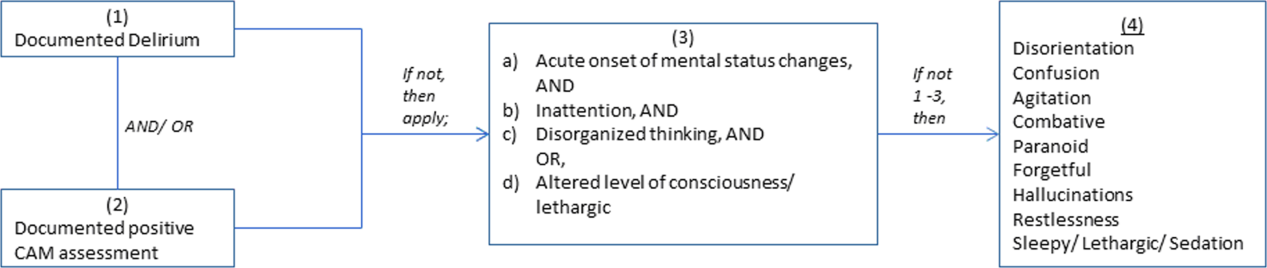
We conducted a retrospective cohort study of patients aged 65 years or older admitted to a tertiary care hospital between October 1, 2012 and September 31, 2013. Using Stata's (StataCorp., College Station, TX) sample command,[3] we included a subset of randomly selected inpatients who received more than 1 dose of oral APs (determined using the electronic medication administration summary). We excluded patients admitted under observation status or to the psychiatric service, those who were on APs prior to admission, and those who only received prochloperazine for nausea. Using prior literature to identify terms frequently used to describe delirium (Figure 1), we created an algorithm and a chart abstraction form (see Supporting Information, Appendix 1, in the online version of this article).[4] We tested these instruments in a preliminary chart review involving 30 patients. Disagreements were discussed with coauthors and resolved through consensus, resulting in some algorithm changes (eg, excluding a large number of patients who received only 1 dose of haloperidol postoperatively, because we hypothesized that this use could be a prophylactic measure).[5] Two investigators extracted the remaining charts independently. We used descriptive statistics and performed cross‐tabulations on the selected variables.
RESULTS
Of 12,817 geriatric hospitalizations during the study period, 1120 (9%) were treated with antipsychotics. We randomly selected 300 of these for extraction: 54% were male, and 67% were admitted to the medical service (Table 1). The inpatient mortality rate was 10% (30/300). The most frequent indication for AP use was delirium (83%, 249/300). Only 35% of delirious patients received a formal assessment with the Confusion Assessment Method (CAM). The most commonly used atypical antipsychotic was quetiapine (86%); 55% received more than 1 antipsychotic medication during hospitalization, and 48% (143/297) of patients were continued on APs at discharge (excluding 3 patients transferred to other acute care hospitals).
| Variable | N (%), Total=300 |
|---|---|
| |
| Gender | |
| Male | 161 (54) |
| Female | 139 (46) |
| Inpatient mortality rate | 30 (10) |
| Services | |
| Medicine | 202 (67) |
| Surgery | 98 (33) |
| Indication for APs use | |
| Delirium | 249 (83) |
| Hallucinations | 19 (6) |
| Anxiety | 20 (7) |
| Other | 38 (13) |
| Atypical APs | |
| Quetiapine | 257 (86) |
| Olanzapine | 29 (10) |
| Risperidone | 26 (9) |
| Typical APs | |
| Haloperidol | 166 (55) |
| Thorazine | 4 (1) |
| Use of CAM | 79 (32)a |
| Physical restraints | 89 (30) |
| Documented or suspected dementia | 134 (45) |
| Geriatrics consults | 120 (40) |
| Psychiatric consults | 29 (10) |
| ECG | |
| Prior to APs administration | 265 (88) |
| After APs administration | 157 (52) |
| QTc prolongation >500 ms | |
| Prior to APs administration | 41 (15)b |
| After APs administration | 39 (25)c |
| Admitted from SNF | 36 (12) |
| Discharge destination | |
| Home | 68 (23) |
| SNFs, short and long‐term rehabilitations | 199 (66) |
| Transfer to other acute care hospitals | 3 (1) |
| Continuation of APs at discharge | 143 (48)d |
Approximately 45% (134/300) had documented or suspected dementia, and 30% (89/300) were physically restrained during the hospital stay. Consultations with geriatrics were obtained in 40% (120/300) of the cases and with psychiatry in 10% (29/300) of the cases. Neurology is rarely consulted for delirium in our institution; thus, we did not collect data on those referrals. Electrocardiography (ECG) (recommended for patients at high cardiac risk[6]) was performed in 88% (265/300) of patients prior to AP administration and 52% (157/300) after. The corrected QT interval exceeded 500 ms in 15% (41/265) of patients prior to AP administration and 25% (39/157) after. Although few patients (12%) were admitted from nursing facilities, 66% (199/300) were eventually discharged to skilled nursing facilities (SNFs) or rehabilitation facilities; most of these patients (117/199, 59%) received AP treatment, compared to 38% of patients discharged to home (26/68).
DISCUSSION
In a cohort of hospitalized elders, we found that 9% were treated with APs. Most received APs for perceived delirium; in‐hospital ECG monitoring was suboptimal. Half of the patients started on APs remained on them at discharge; those discharged to SNFs were more likely to receive ongoing AP treatment.
Our study is limited by its retrospective, single‐center design, a lack of inter‐rater reliability measurement (although our training process was designed to standardize extraction methods), and the infrequent use of formal CAM assessment. Additionally, we were unable to determine how frequently APs were initiated in the intensive care unit. Any retrospective study is limited by the difficulty of distinguishing delirium from the behavioral and psychiatric symptoms of dementia, but we identified delirium using standard terms described in previous literature.
Our study also has a number of important implications. Because of a reported association between the use of APs and risk of death in the postacute setting,[7] national provider organizations have called for a reduction in AP initiation in hospitalized elders.[2] However, this study indicates that APs continue to be prescribed for delirium, which may be attributed to the lack of behavioral modification options in most hospitals, such as acute care for elders (ACE) units and hospital elder life programs (HELP).[8, 9] Our findings suggest that this problem would be further amplified in hospitals that lack access to geriatrics expertise.
Without alternative behavioral options, patients are at risk for prolonged delirium, which is associated with significant suffering and subsequent risk of further cognitive impairment and death.[10] Although evidence for the efficacy of APs in the treatment of delirium is limited and inconclusive, no better pharmacologic options exist. Hospitals that wish to reduce use of APs should therefore consider investing in environmental interventions (eg, ACE units, HELP), which lower the incidence of delirium and could, in turn, decrease the prescription and continuation of antipsychotics.[8, 9]
Acknowledgements
The authors acknowledge Mihaela Stefan, MD, FACP, for her comments on an earlier draft of this manuscript.
Disclosures: Drs. Lagu and Loh had full access to all of the data in the study. They take responsibility for the integrity of the data and the accuracy of the analysis. Drs. Loh, Brennan, Lindenauer, and Lagu conceived of the study. Drs. Loh and Ramdass acquired the data. Ms. Garb analyzed and interpreted the data. Dr. Loh drafted the manuscript. Drs Brennan, Lindenauer, and Lagu, and Ms. Garb critically reviewed the manuscript for important intellectual content. Dr. Lagu is supported by the National Heart, Lung, and Blood Institute of the National Institutes of Health under award number K01HL114745. The authors report no conflicts of interest.
- , , , , , . Delirium in elderly patients and the risk of postdischarge mortality, institutionalization, and dementia: a meta‐analysis. JAMA. 2010;304(4):443–451.
- . Off‐label use of antipsychotics for dementia patients discouraged. The Hospitalist. November 2012\http://www.the‐hospitalist.org/details/article/2785121/Off‐Label_Use_of_Antipsychotics_for_Dementia_Patients_Discouraged.html. Accessed June 29, 2014.
- STATA/MP [computer program]. Version 13.1 for Windows. College Station, TX: StataCorp; 2013.
- , , , , , . Association between sedating medications and delirium in older inpatients. J Am Geriatr Soc. 2013;61(6):923–930.
- , , , et al. Haloperidol prophylaxis decreases delirium incidence in elderly patients after noncardiac surgery: a randomized controlled trial. Crit Care Med. 2012;40(3):731–739.
- , , . QTc prolongation with antipsychotics: is routine ECG monitoring recommended? J Psychiatr Pract. 2014;20(3):196–206.
- , , , , . Risk of death associated with the use of conventional versus atypical antipsychotic drugs among elderly patients. CMAJ. 2007;176(5):627–632.
- , , , et al. Effectiveness of acute geriatric unit care using acute care for elders components: a systematic review and meta‐analysis. J Am Geriatr Soc. 2012;60(12):2237–2245.
- , , , , . The Hospital Elder Life Program: a model of care to prevent cognitive and functional decline in older hospitalized patients. J Am Geriatr Soc. 2000;48(12):1697–1706.
- , , , . Persistent delirium in older hospital patients: a systematic review of frequency and prognosis. Age Ageing. 2009;38(1):19–26.
Antipsychotic (AP) medications are often used in the hospitalized geriatric population for the treatment of delirium.[1] Because of adverse events associated with APs, efforts have been made to reduce their use in hospitalized elders,[2] but it is not clear if these recommendations have been widely adopted. We studied the use of APs in a cohort of hospitalized elders to better understand why APs are started and how often they are continued on discharge.
METHODS
We conducted a retrospective cohort study of patients aged 65 years or older admitted to a tertiary care hospital between October 1, 2012 and September 31, 2013. Using Stata's (StataCorp., College Station, TX) sample command,[3] we included a subset of randomly selected inpatients who received more than 1 dose of oral APs (determined using the electronic medication administration summary). We excluded patients admitted under observation status or to the psychiatric service, those who were on APs prior to admission, and those who only received prochloperazine for nausea. Using prior literature to identify terms frequently used to describe delirium (Figure 1), we created an algorithm and a chart abstraction form (see Supporting Information, Appendix 1, in the online version of this article).[4] We tested these instruments in a preliminary chart review involving 30 patients. Disagreements were discussed with coauthors and resolved through consensus, resulting in some algorithm changes (eg, excluding a large number of patients who received only 1 dose of haloperidol postoperatively, because we hypothesized that this use could be a prophylactic measure).[5] Two investigators extracted the remaining charts independently. We used descriptive statistics and performed cross‐tabulations on the selected variables.
RESULTS
Of 12,817 geriatric hospitalizations during the study period, 1120 (9%) were treated with antipsychotics. We randomly selected 300 of these for extraction: 54% were male, and 67% were admitted to the medical service (Table 1). The inpatient mortality rate was 10% (30/300). The most frequent indication for AP use was delirium (83%, 249/300). Only 35% of delirious patients received a formal assessment with the Confusion Assessment Method (CAM). The most commonly used atypical antipsychotic was quetiapine (86%); 55% received more than 1 antipsychotic medication during hospitalization, and 48% (143/297) of patients were continued on APs at discharge (excluding 3 patients transferred to other acute care hospitals).
| Variable | N (%), Total=300 |
|---|---|
| |
| Gender | |
| Male | 161 (54) |
| Female | 139 (46) |
| Inpatient mortality rate | 30 (10) |
| Services | |
| Medicine | 202 (67) |
| Surgery | 98 (33) |
| Indication for APs use | |
| Delirium | 249 (83) |
| Hallucinations | 19 (6) |
| Anxiety | 20 (7) |
| Other | 38 (13) |
| Atypical APs | |
| Quetiapine | 257 (86) |
| Olanzapine | 29 (10) |
| Risperidone | 26 (9) |
| Typical APs | |
| Haloperidol | 166 (55) |
| Thorazine | 4 (1) |
| Use of CAM | 79 (32)a |
| Physical restraints | 89 (30) |
| Documented or suspected dementia | 134 (45) |
| Geriatrics consults | 120 (40) |
| Psychiatric consults | 29 (10) |
| ECG | |
| Prior to APs administration | 265 (88) |
| After APs administration | 157 (52) |
| QTc prolongation >500 ms | |
| Prior to APs administration | 41 (15)b |
| After APs administration | 39 (25)c |
| Admitted from SNF | 36 (12) |
| Discharge destination | |
| Home | 68 (23) |
| SNFs, short and long‐term rehabilitations | 199 (66) |
| Transfer to other acute care hospitals | 3 (1) |
| Continuation of APs at discharge | 143 (48)d |
Approximately 45% (134/300) had documented or suspected dementia, and 30% (89/300) were physically restrained during the hospital stay. Consultations with geriatrics were obtained in 40% (120/300) of the cases and with psychiatry in 10% (29/300) of the cases. Neurology is rarely consulted for delirium in our institution; thus, we did not collect data on those referrals. Electrocardiography (ECG) (recommended for patients at high cardiac risk[6]) was performed in 88% (265/300) of patients prior to AP administration and 52% (157/300) after. The corrected QT interval exceeded 500 ms in 15% (41/265) of patients prior to AP administration and 25% (39/157) after. Although few patients (12%) were admitted from nursing facilities, 66% (199/300) were eventually discharged to skilled nursing facilities (SNFs) or rehabilitation facilities; most of these patients (117/199, 59%) received AP treatment, compared to 38% of patients discharged to home (26/68).
DISCUSSION
In a cohort of hospitalized elders, we found that 9% were treated with APs. Most received APs for perceived delirium; in‐hospital ECG monitoring was suboptimal. Half of the patients started on APs remained on them at discharge; those discharged to SNFs were more likely to receive ongoing AP treatment.
Our study is limited by its retrospective, single‐center design, a lack of inter‐rater reliability measurement (although our training process was designed to standardize extraction methods), and the infrequent use of formal CAM assessment. Additionally, we were unable to determine how frequently APs were initiated in the intensive care unit. Any retrospective study is limited by the difficulty of distinguishing delirium from the behavioral and psychiatric symptoms of dementia, but we identified delirium using standard terms described in previous literature.
Our study also has a number of important implications. Because of a reported association between the use of APs and risk of death in the postacute setting,[7] national provider organizations have called for a reduction in AP initiation in hospitalized elders.[2] However, this study indicates that APs continue to be prescribed for delirium, which may be attributed to the lack of behavioral modification options in most hospitals, such as acute care for elders (ACE) units and hospital elder life programs (HELP).[8, 9] Our findings suggest that this problem would be further amplified in hospitals that lack access to geriatrics expertise.
Without alternative behavioral options, patients are at risk for prolonged delirium, which is associated with significant suffering and subsequent risk of further cognitive impairment and death.[10] Although evidence for the efficacy of APs in the treatment of delirium is limited and inconclusive, no better pharmacologic options exist. Hospitals that wish to reduce use of APs should therefore consider investing in environmental interventions (eg, ACE units, HELP), which lower the incidence of delirium and could, in turn, decrease the prescription and continuation of antipsychotics.[8, 9]
Acknowledgements
The authors acknowledge Mihaela Stefan, MD, FACP, for her comments on an earlier draft of this manuscript.
Disclosures: Drs. Lagu and Loh had full access to all of the data in the study. They take responsibility for the integrity of the data and the accuracy of the analysis. Drs. Loh, Brennan, Lindenauer, and Lagu conceived of the study. Drs. Loh and Ramdass acquired the data. Ms. Garb analyzed and interpreted the data. Dr. Loh drafted the manuscript. Drs Brennan, Lindenauer, and Lagu, and Ms. Garb critically reviewed the manuscript for important intellectual content. Dr. Lagu is supported by the National Heart, Lung, and Blood Institute of the National Institutes of Health under award number K01HL114745. The authors report no conflicts of interest.
Antipsychotic (AP) medications are often used in the hospitalized geriatric population for the treatment of delirium.[1] Because of adverse events associated with APs, efforts have been made to reduce their use in hospitalized elders,[2] but it is not clear if these recommendations have been widely adopted. We studied the use of APs in a cohort of hospitalized elders to better understand why APs are started and how often they are continued on discharge.
METHODS
We conducted a retrospective cohort study of patients aged 65 years or older admitted to a tertiary care hospital between October 1, 2012 and September 31, 2013. Using Stata's (StataCorp., College Station, TX) sample command,[3] we included a subset of randomly selected inpatients who received more than 1 dose of oral APs (determined using the electronic medication administration summary). We excluded patients admitted under observation status or to the psychiatric service, those who were on APs prior to admission, and those who only received prochloperazine for nausea. Using prior literature to identify terms frequently used to describe delirium (Figure 1), we created an algorithm and a chart abstraction form (see Supporting Information, Appendix 1, in the online version of this article).[4] We tested these instruments in a preliminary chart review involving 30 patients. Disagreements were discussed with coauthors and resolved through consensus, resulting in some algorithm changes (eg, excluding a large number of patients who received only 1 dose of haloperidol postoperatively, because we hypothesized that this use could be a prophylactic measure).[5] Two investigators extracted the remaining charts independently. We used descriptive statistics and performed cross‐tabulations on the selected variables.
RESULTS
Of 12,817 geriatric hospitalizations during the study period, 1120 (9%) were treated with antipsychotics. We randomly selected 300 of these for extraction: 54% were male, and 67% were admitted to the medical service (Table 1). The inpatient mortality rate was 10% (30/300). The most frequent indication for AP use was delirium (83%, 249/300). Only 35% of delirious patients received a formal assessment with the Confusion Assessment Method (CAM). The most commonly used atypical antipsychotic was quetiapine (86%); 55% received more than 1 antipsychotic medication during hospitalization, and 48% (143/297) of patients were continued on APs at discharge (excluding 3 patients transferred to other acute care hospitals).
| Variable | N (%), Total=300 |
|---|---|
| |
| Gender | |
| Male | 161 (54) |
| Female | 139 (46) |
| Inpatient mortality rate | 30 (10) |
| Services | |
| Medicine | 202 (67) |
| Surgery | 98 (33) |
| Indication for APs use | |
| Delirium | 249 (83) |
| Hallucinations | 19 (6) |
| Anxiety | 20 (7) |
| Other | 38 (13) |
| Atypical APs | |
| Quetiapine | 257 (86) |
| Olanzapine | 29 (10) |
| Risperidone | 26 (9) |
| Typical APs | |
| Haloperidol | 166 (55) |
| Thorazine | 4 (1) |
| Use of CAM | 79 (32)a |
| Physical restraints | 89 (30) |
| Documented or suspected dementia | 134 (45) |
| Geriatrics consults | 120 (40) |
| Psychiatric consults | 29 (10) |
| ECG | |
| Prior to APs administration | 265 (88) |
| After APs administration | 157 (52) |
| QTc prolongation >500 ms | |
| Prior to APs administration | 41 (15)b |
| After APs administration | 39 (25)c |
| Admitted from SNF | 36 (12) |
| Discharge destination | |
| Home | 68 (23) |
| SNFs, short and long‐term rehabilitations | 199 (66) |
| Transfer to other acute care hospitals | 3 (1) |
| Continuation of APs at discharge | 143 (48)d |
Approximately 45% (134/300) had documented or suspected dementia, and 30% (89/300) were physically restrained during the hospital stay. Consultations with geriatrics were obtained in 40% (120/300) of the cases and with psychiatry in 10% (29/300) of the cases. Neurology is rarely consulted for delirium in our institution; thus, we did not collect data on those referrals. Electrocardiography (ECG) (recommended for patients at high cardiac risk[6]) was performed in 88% (265/300) of patients prior to AP administration and 52% (157/300) after. The corrected QT interval exceeded 500 ms in 15% (41/265) of patients prior to AP administration and 25% (39/157) after. Although few patients (12%) were admitted from nursing facilities, 66% (199/300) were eventually discharged to skilled nursing facilities (SNFs) or rehabilitation facilities; most of these patients (117/199, 59%) received AP treatment, compared to 38% of patients discharged to home (26/68).
DISCUSSION
In a cohort of hospitalized elders, we found that 9% were treated with APs. Most received APs for perceived delirium; in‐hospital ECG monitoring was suboptimal. Half of the patients started on APs remained on them at discharge; those discharged to SNFs were more likely to receive ongoing AP treatment.
Our study is limited by its retrospective, single‐center design, a lack of inter‐rater reliability measurement (although our training process was designed to standardize extraction methods), and the infrequent use of formal CAM assessment. Additionally, we were unable to determine how frequently APs were initiated in the intensive care unit. Any retrospective study is limited by the difficulty of distinguishing delirium from the behavioral and psychiatric symptoms of dementia, but we identified delirium using standard terms described in previous literature.
Our study also has a number of important implications. Because of a reported association between the use of APs and risk of death in the postacute setting,[7] national provider organizations have called for a reduction in AP initiation in hospitalized elders.[2] However, this study indicates that APs continue to be prescribed for delirium, which may be attributed to the lack of behavioral modification options in most hospitals, such as acute care for elders (ACE) units and hospital elder life programs (HELP).[8, 9] Our findings suggest that this problem would be further amplified in hospitals that lack access to geriatrics expertise.
Without alternative behavioral options, patients are at risk for prolonged delirium, which is associated with significant suffering and subsequent risk of further cognitive impairment and death.[10] Although evidence for the efficacy of APs in the treatment of delirium is limited and inconclusive, no better pharmacologic options exist. Hospitals that wish to reduce use of APs should therefore consider investing in environmental interventions (eg, ACE units, HELP), which lower the incidence of delirium and could, in turn, decrease the prescription and continuation of antipsychotics.[8, 9]
Acknowledgements
The authors acknowledge Mihaela Stefan, MD, FACP, for her comments on an earlier draft of this manuscript.
Disclosures: Drs. Lagu and Loh had full access to all of the data in the study. They take responsibility for the integrity of the data and the accuracy of the analysis. Drs. Loh, Brennan, Lindenauer, and Lagu conceived of the study. Drs. Loh and Ramdass acquired the data. Ms. Garb analyzed and interpreted the data. Dr. Loh drafted the manuscript. Drs Brennan, Lindenauer, and Lagu, and Ms. Garb critically reviewed the manuscript for important intellectual content. Dr. Lagu is supported by the National Heart, Lung, and Blood Institute of the National Institutes of Health under award number K01HL114745. The authors report no conflicts of interest.
- , , , , , . Delirium in elderly patients and the risk of postdischarge mortality, institutionalization, and dementia: a meta‐analysis. JAMA. 2010;304(4):443–451.
- . Off‐label use of antipsychotics for dementia patients discouraged. The Hospitalist. November 2012\http://www.the‐hospitalist.org/details/article/2785121/Off‐Label_Use_of_Antipsychotics_for_Dementia_Patients_Discouraged.html. Accessed June 29, 2014.
- STATA/MP [computer program]. Version 13.1 for Windows. College Station, TX: StataCorp; 2013.
- , , , , , . Association between sedating medications and delirium in older inpatients. J Am Geriatr Soc. 2013;61(6):923–930.
- , , , et al. Haloperidol prophylaxis decreases delirium incidence in elderly patients after noncardiac surgery: a randomized controlled trial. Crit Care Med. 2012;40(3):731–739.
- , , . QTc prolongation with antipsychotics: is routine ECG monitoring recommended? J Psychiatr Pract. 2014;20(3):196–206.
- , , , , . Risk of death associated with the use of conventional versus atypical antipsychotic drugs among elderly patients. CMAJ. 2007;176(5):627–632.
- , , , et al. Effectiveness of acute geriatric unit care using acute care for elders components: a systematic review and meta‐analysis. J Am Geriatr Soc. 2012;60(12):2237–2245.
- , , , , . The Hospital Elder Life Program: a model of care to prevent cognitive and functional decline in older hospitalized patients. J Am Geriatr Soc. 2000;48(12):1697–1706.
- , , , . Persistent delirium in older hospital patients: a systematic review of frequency and prognosis. Age Ageing. 2009;38(1):19–26.
- , , , , , . Delirium in elderly patients and the risk of postdischarge mortality, institutionalization, and dementia: a meta‐analysis. JAMA. 2010;304(4):443–451.
- . Off‐label use of antipsychotics for dementia patients discouraged. The Hospitalist. November 2012\http://www.the‐hospitalist.org/details/article/2785121/Off‐Label_Use_of_Antipsychotics_for_Dementia_Patients_Discouraged.html. Accessed June 29, 2014.
- STATA/MP [computer program]. Version 13.1 for Windows. College Station, TX: StataCorp; 2013.
- , , , , , . Association between sedating medications and delirium in older inpatients. J Am Geriatr Soc. 2013;61(6):923–930.
- , , , et al. Haloperidol prophylaxis decreases delirium incidence in elderly patients after noncardiac surgery: a randomized controlled trial. Crit Care Med. 2012;40(3):731–739.
- , , . QTc prolongation with antipsychotics: is routine ECG monitoring recommended? J Psychiatr Pract. 2014;20(3):196–206.
- , , , , . Risk of death associated with the use of conventional versus atypical antipsychotic drugs among elderly patients. CMAJ. 2007;176(5):627–632.
- , , , et al. Effectiveness of acute geriatric unit care using acute care for elders components: a systematic review and meta‐analysis. J Am Geriatr Soc. 2012;60(12):2237–2245.
- , , , , . The Hospital Elder Life Program: a model of care to prevent cognitive and functional decline in older hospitalized patients. J Am Geriatr Soc. 2000;48(12):1697–1706.
- , , , . Persistent delirium in older hospital patients: a systematic review of frequency and prognosis. Age Ageing. 2009;38(1):19–26.
Shrink Rap News: Helping patients access outpatient psychiatric care
How often does someone ask you for help in getting an appointment with a psychiatrist? With the “double expansion” in access to mental health care – because of the Mental Health Parity and Addiction Equity Act, and the Affordable Care Act (ACA) – many more people are seeking help for mental health and substance use problems. But without more practitioners being produced, the waiting lists are getting longer.
A recent study found that 40% (146 of 360) of psychiatrists listed on insurance plans in three states could not be reached. Of the 214 who were reachable, 43% were unavailable, either because the psychiatrists were not accepting new patients or because they did not treat adult outpatients (e.g., inpatient only). Of the 123 psychiatrists left, the callers were able to schedule appointments with 93 (76%) of them. These results are similar to a 2007 study, where 44% of mental health professionals from seven health plans were unreachable.
Problems with access to psychiatric care is not a new problem. Mental health carve-outs are used by managed care organizations (MCOs) to manage the mental health benefits, but create inefficiency in claims management and clinical care coordination. While this model seems to be losing popularity, these managed behavioral health organizations (MBHOs) often do not integrate well with the MCO, may not share the same standards for network adequacy, and often have different provider directories from those of the MCO, making it more complex for patients to access providers.
While the Parity Act has somewhat improved the problem of rate disparities, the historically low rates paid to psychiatrists by MBHOs have led to high levels of insurance nonparticipation, as much as 50%. Compounding this problem is the fact that plan members often find it hard to access those practitioners who do participate with their insurance.
The Maryland Psychological Association conducted in 2007 with Open Minds a “secret shopper” survey of more than 900 behavioral health providers from seven different online carrier directories in Maryland. Their goal was to assess the extent to which problems with access to care were related to inadequate insurance provider directories.
They found that 44% of the listed providers were unreachable based on the contact information in the directories, and only a small proportion was actually able to see the new “patient” in an appropriate time frame. The average wait time for a psychiatrist was 20 days, for a psychologist was 15 days, and for other mental health professionals was 11 days.
The study, published (Psychiatric Serv. 2014 Oct. 15 [doi:10.1176/appi.ps.2014000051]), illustrates how hard it can be to get an appointment with a psychiatrist, regardless of who the payer is. The authors called 360 psychiatrists who were listed in the Blue Cross Blue Shield (BCBS) online directories in Boston, Chicago, and Houston. Callers posed as people with depressive symptoms seeking initial appointments. In each city, a third of the psychiatrists received a call from a caller saying they were either Medicare, BCBS, or self-pay. Voicemails were left when possible that included the type of payer. Callers followed up for a second round of calls if they did not hear back.
“Obtaining an outpatient appointment with a psychiatrist was difficult in the three cities we surveyed, and the appointments given were an average of 1 month away,” the authors wrote. Between 20%-27% of the phone numbers in the insurance company directories were wrong numbers, which led, instead, to places like McDonald’s and retail stores. In fact, they were able to reach only one-third of the psychiatrists.
The ACA requires Health Insurance Exchanges to have network provider directories that distinguish those providers who are currently accepting new outpatients. Unfortunately, the act left it up to the states to define network adequacy. For example, in Maryland, the definition of what constitutes an adequate network is left to each qualified health plan to define.

The problem with the health plans’ provider directories is that they are inaccurate, making it look like they have more available providers than they actually do. The plans have no incentive to expose the inadequacy of their network directories, while the regulators lack the staff to police them sufficiently. Meanwhile, provider groups benefit from being included on more lists, and plan members fail to effectively complain to the plans, employers, and regulators.
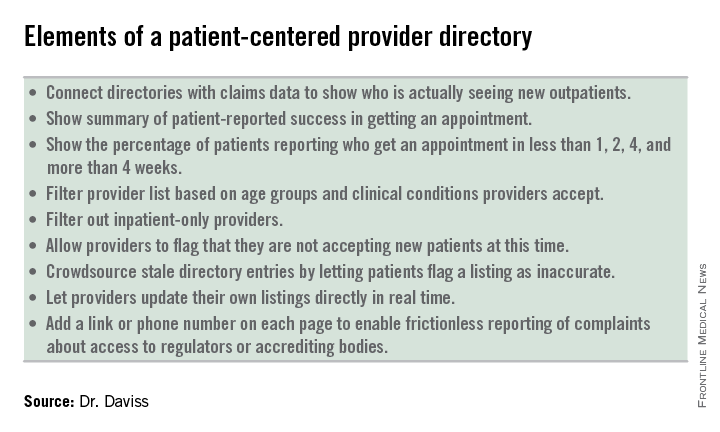
What the industry needs is to move away from these misleading, payer-centered provider directories and move toward transparent, patient-centered provider directories that include elements of crowdsourcing, provider control, and frictionless reporting. Making these changes will give consumers, employers, and regulators more information on provider availability, wait times, and true access to care.
Dr. Daviss is chair of the department of psychiatry at the University of Maryland’s Baltimore Washington Medical Center, chair of the APA Committee on Electronic Health Records, cochair of the CCHIT Behavioral Health Work Group, and coauthor of Shrink Rap: Three Psychiatrists Explain Their Work, published by Johns Hopkins University Press. He is found on Twitter @HITshrink, at drdaviss@gmail.com, and on the Shrink Rap blog.
How often does someone ask you for help in getting an appointment with a psychiatrist? With the “double expansion” in access to mental health care – because of the Mental Health Parity and Addiction Equity Act, and the Affordable Care Act (ACA) – many more people are seeking help for mental health and substance use problems. But without more practitioners being produced, the waiting lists are getting longer.
A recent study found that 40% (146 of 360) of psychiatrists listed on insurance plans in three states could not be reached. Of the 214 who were reachable, 43% were unavailable, either because the psychiatrists were not accepting new patients or because they did not treat adult outpatients (e.g., inpatient only). Of the 123 psychiatrists left, the callers were able to schedule appointments with 93 (76%) of them. These results are similar to a 2007 study, where 44% of mental health professionals from seven health plans were unreachable.
Problems with access to psychiatric care is not a new problem. Mental health carve-outs are used by managed care organizations (MCOs) to manage the mental health benefits, but create inefficiency in claims management and clinical care coordination. While this model seems to be losing popularity, these managed behavioral health organizations (MBHOs) often do not integrate well with the MCO, may not share the same standards for network adequacy, and often have different provider directories from those of the MCO, making it more complex for patients to access providers.
While the Parity Act has somewhat improved the problem of rate disparities, the historically low rates paid to psychiatrists by MBHOs have led to high levels of insurance nonparticipation, as much as 50%. Compounding this problem is the fact that plan members often find it hard to access those practitioners who do participate with their insurance.
The Maryland Psychological Association conducted in 2007 with Open Minds a “secret shopper” survey of more than 900 behavioral health providers from seven different online carrier directories in Maryland. Their goal was to assess the extent to which problems with access to care were related to inadequate insurance provider directories.
They found that 44% of the listed providers were unreachable based on the contact information in the directories, and only a small proportion was actually able to see the new “patient” in an appropriate time frame. The average wait time for a psychiatrist was 20 days, for a psychologist was 15 days, and for other mental health professionals was 11 days.
The study, published (Psychiatric Serv. 2014 Oct. 15 [doi:10.1176/appi.ps.2014000051]), illustrates how hard it can be to get an appointment with a psychiatrist, regardless of who the payer is. The authors called 360 psychiatrists who were listed in the Blue Cross Blue Shield (BCBS) online directories in Boston, Chicago, and Houston. Callers posed as people with depressive symptoms seeking initial appointments. In each city, a third of the psychiatrists received a call from a caller saying they were either Medicare, BCBS, or self-pay. Voicemails were left when possible that included the type of payer. Callers followed up for a second round of calls if they did not hear back.
“Obtaining an outpatient appointment with a psychiatrist was difficult in the three cities we surveyed, and the appointments given were an average of 1 month away,” the authors wrote. Between 20%-27% of the phone numbers in the insurance company directories were wrong numbers, which led, instead, to places like McDonald’s and retail stores. In fact, they were able to reach only one-third of the psychiatrists.
The ACA requires Health Insurance Exchanges to have network provider directories that distinguish those providers who are currently accepting new outpatients. Unfortunately, the act left it up to the states to define network adequacy. For example, in Maryland, the definition of what constitutes an adequate network is left to each qualified health plan to define.
The problem with the health plans’ provider directories is that they are inaccurate, making it look like they have more available providers than they actually do. The plans have no incentive to expose the inadequacy of their network directories, while the regulators lack the staff to police them sufficiently. Meanwhile, provider groups benefit from being included on more lists, and plan members fail to effectively complain to the plans, employers, and regulators.
What the industry needs is to move away from these misleading, payer-centered provider directories and move toward transparent, patient-centered provider directories that include elements of crowdsourcing, provider control, and frictionless reporting. Making these changes will give consumers, employers, and regulators more information on provider availability, wait times, and true access to care.
Dr. Daviss is chair of the department of psychiatry at the University of Maryland’s Baltimore Washington Medical Center, chair of the APA Committee on Electronic Health Records, cochair of the CCHIT Behavioral Health Work Group, and coauthor of Shrink Rap: Three Psychiatrists Explain Their Work, published by Johns Hopkins University Press. He is found on Twitter @HITshrink, at drdaviss@gmail.com, and on the Shrink Rap blog.
How often does someone ask you for help in getting an appointment with a psychiatrist? With the “double expansion” in access to mental health care – because of the Mental Health Parity and Addiction Equity Act, and the Affordable Care Act (ACA) – many more people are seeking help for mental health and substance use problems. But without more practitioners being produced, the waiting lists are getting longer.
A recent study found that 40% (146 of 360) of psychiatrists listed on insurance plans in three states could not be reached. Of the 214 who were reachable, 43% were unavailable, either because the psychiatrists were not accepting new patients or because they did not treat adult outpatients (e.g., inpatient only). Of the 123 psychiatrists left, the callers were able to schedule appointments with 93 (76%) of them. These results are similar to a 2007 study, where 44% of mental health professionals from seven health plans were unreachable.
Problems with access to psychiatric care is not a new problem. Mental health carve-outs are used by managed care organizations (MCOs) to manage the mental health benefits, but create inefficiency in claims management and clinical care coordination. While this model seems to be losing popularity, these managed behavioral health organizations (MBHOs) often do not integrate well with the MCO, may not share the same standards for network adequacy, and often have different provider directories from those of the MCO, making it more complex for patients to access providers.
While the Parity Act has somewhat improved the problem of rate disparities, the historically low rates paid to psychiatrists by MBHOs have led to high levels of insurance nonparticipation, as much as 50%. Compounding this problem is the fact that plan members often find it hard to access those practitioners who do participate with their insurance.
The Maryland Psychological Association conducted in 2007 with Open Minds a “secret shopper” survey of more than 900 behavioral health providers from seven different online carrier directories in Maryland. Their goal was to assess the extent to which problems with access to care were related to inadequate insurance provider directories.
They found that 44% of the listed providers were unreachable based on the contact information in the directories, and only a small proportion was actually able to see the new “patient” in an appropriate time frame. The average wait time for a psychiatrist was 20 days, for a psychologist was 15 days, and for other mental health professionals was 11 days.
The study, published (Psychiatric Serv. 2014 Oct. 15 [doi:10.1176/appi.ps.2014000051]), illustrates how hard it can be to get an appointment with a psychiatrist, regardless of who the payer is. The authors called 360 psychiatrists who were listed in the Blue Cross Blue Shield (BCBS) online directories in Boston, Chicago, and Houston. Callers posed as people with depressive symptoms seeking initial appointments. In each city, a third of the psychiatrists received a call from a caller saying they were either Medicare, BCBS, or self-pay. Voicemails were left when possible that included the type of payer. Callers followed up for a second round of calls if they did not hear back.
“Obtaining an outpatient appointment with a psychiatrist was difficult in the three cities we surveyed, and the appointments given were an average of 1 month away,” the authors wrote. Between 20%-27% of the phone numbers in the insurance company directories were wrong numbers, which led, instead, to places like McDonald’s and retail stores. In fact, they were able to reach only one-third of the psychiatrists.
The ACA requires Health Insurance Exchanges to have network provider directories that distinguish those providers who are currently accepting new outpatients. Unfortunately, the act left it up to the states to define network adequacy. For example, in Maryland, the definition of what constitutes an adequate network is left to each qualified health plan to define.
The problem with the health plans’ provider directories is that they are inaccurate, making it look like they have more available providers than they actually do. The plans have no incentive to expose the inadequacy of their network directories, while the regulators lack the staff to police them sufficiently. Meanwhile, provider groups benefit from being included on more lists, and plan members fail to effectively complain to the plans, employers, and regulators.
What the industry needs is to move away from these misleading, payer-centered provider directories and move toward transparent, patient-centered provider directories that include elements of crowdsourcing, provider control, and frictionless reporting. Making these changes will give consumers, employers, and regulators more information on provider availability, wait times, and true access to care.
Dr. Daviss is chair of the department of psychiatry at the University of Maryland’s Baltimore Washington Medical Center, chair of the APA Committee on Electronic Health Records, cochair of the CCHIT Behavioral Health Work Group, and coauthor of Shrink Rap: Three Psychiatrists Explain Their Work, published by Johns Hopkins University Press. He is found on Twitter @HITshrink, at drdaviss@gmail.com, and on the Shrink Rap blog.

Delivering on the promise of cancer biomarkers in the clinic
Click on the PDF icon at the top of this introduction to read the full article.
Click on the PDF icon at the top of this introduction to read the full article.
Click on the PDF icon at the top of this introduction to read the full article.
JCSO 2014;12:381-388
Novel anticoagulants increase GI bleeds in elderly
PHILADELPHIA – Dabigatran and rivaroxaban, which are rapidly replacing warfarin for anticoagulation in patients with atrial fibrillation, appear to be associated with a greater risk of GI bleeding than the long-time standard in patients over the age of 65 years, according to an analysis presented at the American College of Gastroenterology (ACG).
The pattern of an increased GI bleeding risk with the newer oral anticoagulants relative to warfarin was consistent in older patients whether used for AF or for out-of-labeling indications, which were assessed separately, reported Dr. Neena S. Abraham, professor of medicine at Mayo Clinic, Scottsdale, Ariz.

“In all four cases, once patients were over the age of 65, the risk of GI bleeding increased significantly on the novel agents when compared to warfarin,” Dr. Abraham reported.
The propensity matches, based on such characteristics as GI bleeding risk factors, age, race, and concomitant medications, were drawn from 92,816 patients in a large database starting a new prescription of dabigatran, rivaroxaban, or warfarin over a recent 3-year period. With this matching, 9,860 new users of dabigatran and 20,619 new users of rivaroxaban were compared with equal number of new users of warfarin.
In the full dataset, before age stratification, the risk of total GI bleeding, particularly lower GI bleeding, appeared to be nonsignificantly lower for both dabigatran and rivaroxaban, relative to warfarin in patients with AF. In patients without AF receiving these drugs, the risk remained slightly lower on rivaroxaban but appeared to be slightly increased on dabigatran.
However, the hypothesis that bleeding risk was greater for newer agents in older patients was substantiated when the data were stratified by age. In the analysis, risk of bleeding started climbing more steeply with the newer agents as patients aged than with warfarin, with differences observed at about age 65 years.
By age 75, the hazard ratio for a GI bleed in dabigatran patients relative to warfarin in AF patients was 2.4 (95% confidence interval 1.5-3.8). In the rivaroxaban group, the HR for this risk at age 75 in AF patients was 4.0 (95% CI 2.1-7.4). In non-AF patients, the rates of GI bleeding were also significantly increased at a similar magnitude.
These data were anticipated by the initial trials that found dabigatran and rivaroxaban noninferior to warfarin for the prevention of stroke and systemic embolism, according to Dr. Abraham. Although there was heterogeneity in reported risk differences, she reported that GI bleeding was as much as 25% higher on the newer anticoagulants when compared to warfarin in older patients. These new data substantiate those findings.
“Our study is the first to evaluate GI safety in novel oral anticoagulants compared to warfarin in a real-world, multiage setting,” Dr. Abraham noted. She said these data “facilitate risk-benefit considerations” of these drugs. She further noted that the data on non-AF patients may be particularly pertinent “because this is the fastest-growing emerging market” for agents in this class.
Asked for a comment, Dr. Brian E. Lacy, chief of gastroenterology and hepatology at Dartmouth-Hitchcock Medical Center, Lebanon, N.H., said that the information about relative risk is potentially important, but he was particularly impressed by the substantial use of novel anticoagulants in non-AF patients.
“This tells me that we as gastroenterologists need to be asking more questions about exposure to anticoagulants,” Dr. Lacy said in an interview. “These data suggest that these newer drugs are being used frequently outside of labeling. We need to be aware of these changing patterns of use when trying to assess the risk of our patients for GI bleeds.”
Dr. Abraham had no financial disclosures.
PHILADELPHIA – Dabigatran and rivaroxaban, which are rapidly replacing warfarin for anticoagulation in patients with atrial fibrillation, appear to be associated with a greater risk of GI bleeding than the long-time standard in patients over the age of 65 years, according to an analysis presented at the American College of Gastroenterology (ACG).
The pattern of an increased GI bleeding risk with the newer oral anticoagulants relative to warfarin was consistent in older patients whether used for AF or for out-of-labeling indications, which were assessed separately, reported Dr. Neena S. Abraham, professor of medicine at Mayo Clinic, Scottsdale, Ariz.
“In all four cases, once patients were over the age of 65, the risk of GI bleeding increased significantly on the novel agents when compared to warfarin,” Dr. Abraham reported.
The propensity matches, based on such characteristics as GI bleeding risk factors, age, race, and concomitant medications, were drawn from 92,816 patients in a large database starting a new prescription of dabigatran, rivaroxaban, or warfarin over a recent 3-year period. With this matching, 9,860 new users of dabigatran and 20,619 new users of rivaroxaban were compared with equal number of new users of warfarin.
In the full dataset, before age stratification, the risk of total GI bleeding, particularly lower GI bleeding, appeared to be nonsignificantly lower for both dabigatran and rivaroxaban, relative to warfarin in patients with AF. In patients without AF receiving these drugs, the risk remained slightly lower on rivaroxaban but appeared to be slightly increased on dabigatran.
However, the hypothesis that bleeding risk was greater for newer agents in older patients was substantiated when the data were stratified by age. In the analysis, risk of bleeding started climbing more steeply with the newer agents as patients aged than with warfarin, with differences observed at about age 65 years.
By age 75, the hazard ratio for a GI bleed in dabigatran patients relative to warfarin in AF patients was 2.4 (95% confidence interval 1.5-3.8). In the rivaroxaban group, the HR for this risk at age 75 in AF patients was 4.0 (95% CI 2.1-7.4). In non-AF patients, the rates of GI bleeding were also significantly increased at a similar magnitude.
These data were anticipated by the initial trials that found dabigatran and rivaroxaban noninferior to warfarin for the prevention of stroke and systemic embolism, according to Dr. Abraham. Although there was heterogeneity in reported risk differences, she reported that GI bleeding was as much as 25% higher on the newer anticoagulants when compared to warfarin in older patients. These new data substantiate those findings.
“Our study is the first to evaluate GI safety in novel oral anticoagulants compared to warfarin in a real-world, multiage setting,” Dr. Abraham noted. She said these data “facilitate risk-benefit considerations” of these drugs. She further noted that the data on non-AF patients may be particularly pertinent “because this is the fastest-growing emerging market” for agents in this class.
Asked for a comment, Dr. Brian E. Lacy, chief of gastroenterology and hepatology at Dartmouth-Hitchcock Medical Center, Lebanon, N.H., said that the information about relative risk is potentially important, but he was particularly impressed by the substantial use of novel anticoagulants in non-AF patients.
“This tells me that we as gastroenterologists need to be asking more questions about exposure to anticoagulants,” Dr. Lacy said in an interview. “These data suggest that these newer drugs are being used frequently outside of labeling. We need to be aware of these changing patterns of use when trying to assess the risk of our patients for GI bleeds.”
Dr. Abraham had no financial disclosures.
PHILADELPHIA – Dabigatran and rivaroxaban, which are rapidly replacing warfarin for anticoagulation in patients with atrial fibrillation, appear to be associated with a greater risk of GI bleeding than the long-time standard in patients over the age of 65 years, according to an analysis presented at the American College of Gastroenterology (ACG).
The pattern of an increased GI bleeding risk with the newer oral anticoagulants relative to warfarin was consistent in older patients whether used for AF or for out-of-labeling indications, which were assessed separately, reported Dr. Neena S. Abraham, professor of medicine at Mayo Clinic, Scottsdale, Ariz.
“In all four cases, once patients were over the age of 65, the risk of GI bleeding increased significantly on the novel agents when compared to warfarin,” Dr. Abraham reported.
The propensity matches, based on such characteristics as GI bleeding risk factors, age, race, and concomitant medications, were drawn from 92,816 patients in a large database starting a new prescription of dabigatran, rivaroxaban, or warfarin over a recent 3-year period. With this matching, 9,860 new users of dabigatran and 20,619 new users of rivaroxaban were compared with equal number of new users of warfarin.
In the full dataset, before age stratification, the risk of total GI bleeding, particularly lower GI bleeding, appeared to be nonsignificantly lower for both dabigatran and rivaroxaban, relative to warfarin in patients with AF. In patients without AF receiving these drugs, the risk remained slightly lower on rivaroxaban but appeared to be slightly increased on dabigatran.
However, the hypothesis that bleeding risk was greater for newer agents in older patients was substantiated when the data were stratified by age. In the analysis, risk of bleeding started climbing more steeply with the newer agents as patients aged than with warfarin, with differences observed at about age 65 years.
By age 75, the hazard ratio for a GI bleed in dabigatran patients relative to warfarin in AF patients was 2.4 (95% confidence interval 1.5-3.8). In the rivaroxaban group, the HR for this risk at age 75 in AF patients was 4.0 (95% CI 2.1-7.4). In non-AF patients, the rates of GI bleeding were also significantly increased at a similar magnitude.
These data were anticipated by the initial trials that found dabigatran and rivaroxaban noninferior to warfarin for the prevention of stroke and systemic embolism, according to Dr. Abraham. Although there was heterogeneity in reported risk differences, she reported that GI bleeding was as much as 25% higher on the newer anticoagulants when compared to warfarin in older patients. These new data substantiate those findings.
“Our study is the first to evaluate GI safety in novel oral anticoagulants compared to warfarin in a real-world, multiage setting,” Dr. Abraham noted. She said these data “facilitate risk-benefit considerations” of these drugs. She further noted that the data on non-AF patients may be particularly pertinent “because this is the fastest-growing emerging market” for agents in this class.
Asked for a comment, Dr. Brian E. Lacy, chief of gastroenterology and hepatology at Dartmouth-Hitchcock Medical Center, Lebanon, N.H., said that the information about relative risk is potentially important, but he was particularly impressed by the substantial use of novel anticoagulants in non-AF patients.
“This tells me that we as gastroenterologists need to be asking more questions about exposure to anticoagulants,” Dr. Lacy said in an interview. “These data suggest that these newer drugs are being used frequently outside of labeling. We need to be aware of these changing patterns of use when trying to assess the risk of our patients for GI bleeds.”
Dr. Abraham had no financial disclosures.
AT THE ANNUAL SCIENTIFIC MEETING AND POSTGRADUATE COURSE OF THE AMERICAN COLLEGE OF GASTROENTEROLOGY
Key clinical point: The novel oral anticoagulants dabigatran and rivaroxaban were associated with an increased risk of GI bleeding in elderly patients, compared with warfarin, in data drawn from a real-world setting.
Major finding: When compared with warfarin in atrial fibrillation, the risk of upper and lower GI bleeding is nearly 2.5 times greater on dabigatran and 3 times greater on rivaroxaban at age 75 years.
Data source: A retrospective, propensity-matched study.
Disclosures: Dr. Abraham had no financial disclosures.

Drugs, Pregnancy, and Lactation: Herbs
Herbs are commonly consumed by pregnant and breast-feeding women, possibly because they believe that “natural products” are safer than drugs. However, even though some have been available for hundreds or thousands of years, little is known about their effects on the embryo, fetus, newborn, or nursing infant. Moreover, as unregulated products, the concentration, contents, and presence of contaminants cannot be easily determined. Detailed reviews of the 22 most commonly used herbs discussed here can be found in “Drugs in Pregnancy and Lactation,” Briggs GG, Freeman RK, 10th ed., Philadelphia: Wolters Kluwer Health, 2014).
In the following discussions, dose, one of the two key factors that determine the risk of developmental toxicity (abnormal growth, structural anomalies, functional and/or neurobehavioral deficits, or death), is rarely reported. In addition, all herbs contain multiple chemical compounds, few of which have been studied during pregnancy or lactation. Thus, with few exceptions, a woman who takes an herb in pregnancy should be informed that the risk to her developing baby is unknown.
Six herbs are considered contraindicated in pregnancy: arnica, black seed /kalanji, blue cohosh, feverfew, salvia divinorum, and valerian.
• Arnica. The dried flowers, and sometimes the roots and rhizomes, are the parts of this perennial plant that are used topically for their anti-inflammatory and analgesic effects. There is no clinical evidence to support this use. Occasional topical use probably represents a low risk, but absorption may occur when it is applied to broken skin. The Food and Drug Administration has classified arnica as an unsafe herb and, when used orally, it is considered a poison. It is a uterine stimulant and an abortifacient. Nevertheless, in homeopathic formulations, it has been promoted for use before and during labor for internal and external bruising of the mother and newborn. In Italy, it is one of the top 10 herbs taken by women (Pharmacoepidemiol. Drug Saf. 2006;15:354-9).
• Black seed/kalanji. This herb has been used for thousands of year as a medicine, food, or spice. Because of this, it is unlikely that it causes teratogenesis. Nevertheless, its use to stimulate menstruation and its potential contraceptive properties suggest that it is contraindicated in pregnancy.

• Blue cohosh. Some of the components of this herb have been shown to be teratogenic and toxic in various animal species, so it should be avoided in the first trimester. The herb has uterine stimulant properties that are used by nurse-midwives to stimulate labor. Blue cohosh was the most frequently used herbal preparation for this purpose. However, some sources believe that the potential fetal and newborn toxicity may outweigh any medical benefit (“PDR for Herbal Medicine,” 2nd ed., Montvale, N.J.: Medical Economics, 2000:109-10; “The Review of Natural Products,” St. Louis, MO: Facts and Comparisons, 2000).
• Feverfew. This herb has been used for labor, menstrual disorders, potential miscarriage, and morning sickness; as an abortifacient; and for several other indications. Because of its antipyretic properties, it has been known as “medieval aspirin.” The doses used for these indications have not been quantified. Because of its emmenagogic (capable of provoking menstruation) activity, the herb should not be used in pregnancy.
• Salvia divinorum. This herb has hallucinogenic effects and is used in certain regions of Mexico for healing and divinatory rituals. It is also thought to have antidiarrheal properties. The herb is either smoked or chewed, or its juices are ingested. When taken orally, systemic effects are dependent upon absorption across the oral mucosa as the active ingredient is destroyed in the GI tract. Persistent psychosis has been observed in people who smoked the herb, so it is contraindicated in pregnancy.
• Valerian. A large number of preparations containing valerian are available. It has been used as a sedative and hypnotic for anxiety, restlessness, and sleep disturbances, as well as several other pharmacologic claims. Because of the risk of cytotoxicity in the fetus and hepatotoxicity in the mother, the herb should be avoided during gestation.

For the remaining 16 herbs, small, infrequent doses probably cause no harm to the mother, embryo, fetus, or newborn. Nevertheless, as noted below, some of these herbs are best avoided during pregnancy.
• Chamomile. Excessive use of this herb should be avoided because it is thought to have uterine stimulant, emmenagogic, and abortifacient properties. Although controversial, some nurse-midwives prescribe chamomile teas for the treatment of morning sickness. Because the plant sources of the herb contain coumarin compounds, ingesting chamomile by pregnant women with coagulation disorders is a concern. However, the herb has been used for thousands of years, so the risk of harm, at least from occasional use, must be very rare.
• Echinacea. This herb is used topically to enhance wound healing and systemically as an immunostimulant. An IV formulation is used in Germany but is not available in the United States. It also has been recommended to assist in the prevention or treatment of viral upper respiratory tract infections. Its use in pregnancy is limited to one small study.
• Evening primrose oil. The oil contains two essential fatty acids: cis-linoleic and gamma-linolenic acid. In a national survey of nurse-midwives, it was the most frequently used herbal preparation for the induction of labor. No adverse effects have been reported in the fetus or newborn from this use. The doses used varied widely and included both oral and vaginal routes of administration. In addition, the oil has been used for rheumatoid arthritis and diabetic neuropathy, but there are no reports of these uses in pregnancy.
• Garlic. Garlic has been used for food flavoring since ancient times and appears to be safe during pregnancy. Some components cross the placenta, as shown by garlic odor in the amniotic fluid and on the newborn’s breath. Very high doses have the potential to induce menstruation or uterine contractions, but apparently these effects have not been reported.
• Ginger. No reports of ginger-induced developmental toxicity have been located. Ginger has been used as antiemetic for nausea and vomiting of pregnancy.

• Ginseng. The root is the most important part of this plant that is found throughout the world and has been used in medicine for more than 2,000 years. The herb has been promoted for multiple pharmacologic effects, including adaptogenic, CNS, cardiovascular, endocrine, ergogenic, antineoplastic, and immunomodulatory effects.
Hypertension and hypoglycemia have been reported in nonpregnant patients, but not in the limited human pregnancy data. A brief 1991 study compared 88 women who took the herb during pregnancy with 88 controls. No differences between the groups were found with regard to the mode of delivery, birth weight, low birth weight (< 2,500 ), preterm delivery (< 37 weeks), low Apgar score (< 7), stillbirths, neonatal deaths, or maternal complications (Asia Oceania J. Obstet. Gynaecol. 1991;17:379-80).
• Ginkgo biloba. The limited animal reproduction data suggest low risk, but there is no reported human pregnancy experience. Nevertheless, it is an ancient herbal preparation that is commonly used for organic brain syndrome, circulatory disorders, asthma, vertigo, and tinnitus. Because of its widespread use, it is doubtful that a major teratogenic effect would have escaped notice, but more subtle or low-incidence toxic effects may not have been detected.
• Kudzu. No human or animal data regarding pregnancy have been located. The herb has been used for more than 2,500 years for the treatment of alcohol hangover, drunkenness, alcoholism, muscle pain, and measles. Many of its chemical constituents can be found in foods. Nevertheless, high, frequent doses should be avoided.
• Nutmeg. This is a commonly used spice but, as with any herb, high doses can produce toxicity. The toxicity is caused by a chemical in the seeds, myristicin, which has anticholinergic properties. A woman at 30 weeks’ gestation misread a recipe and used a whole grated nutmeg rather than 1/8 teaspoon when making cookies. When she ate a cookie, she experienced sinus tachycardia, hypertension, and a sensation of impending doom. The fetus had tachycardia, and atropine-like poisoning was diagnosed. After about 12 hours, both mother and fetus made an uneventful recovery and a healthy infant was born at term.

• Passion flower. The name of this herb may refer to about 400 species of the genus Passiflora. It is available in both oral and topical forms and is used for nervousness, neuralgia, insomnia, pain, asthma, seizures, burns, hemorrhoids, and menopausal complaints. As with many herbs, it contains a large number of chemicals, none of which have undergone reproductive testing. No reports describing the use of this herb in human pregnancy have been located. However, because it has uterine stimulant properties, the oral formulation is best avoided in pregnancy.
• Peppermint. This popular flavoring appears to be harmless for the mother and developing baby when low, recommended doses are ingested. Peppermint oil is available in numerous topical and oral formulations. High oral doses, however, can cause significant toxicity, including death. During pregnancy, ingestion of more than the recommended doses is unsafe because of possible emmenagogic and abortifacient properties.
• Pumpkin seed. This herb, when used as a food, appears to be harmless for the mother and embryo-fetus, but no reports describing its use in pregnancy have been located. High doses, such as those used in traditional medicine or in eating disorders, should be avoided because of the potential for toxic effects from the many chemicals these seeds contain.
• Raspberry leaf. Raspberry leaf tea is commonly used by pregnant women. Nurse-midwives often prescribe the tea to treat nausea and vomiting and as a uterine tonic to shorten labor. A double-blind, randomized, placebo-controlled study evaluated the effect of raspberry leaf tablets (2 tablets/day) on pregnancy outcomes. Compared with controls, no differences were found for length of labor or stages of labor, mode of delivery, admission to the neonatal intensive care unit, Apgar score, and birth weight (J. Midwifery Womens Health 2001;46:51-9).
• Safflower. Safflower oil is commonly used in cooking and has been given for its laxative action. There are no reports describing the use of the herb in pregnancy. It is doubtful if such use would have any adverse effect on a pregnancy. Although abortifacient and emmenagogic effects have been suggested, there is no evidence supporting these effects when used as a food.
• St. John’s wort. No toxicity in pregnant humans has been reported. The use of the herb is widespread and dates back thousands of years. Thus, it is doubtful that the herb is a major teratogen or causes other elements of developmental toxicity. The herb has been used for the management of anxiety, depression, insomnia, inflammation, and gastritis. It is also used as a diuretic and, topically, for the treatment of hemorrhoids and enhanced wound healing.

• Yohimbine. The use of this herb in human pregnancies has not been reported. It has been used as an aphrodisiac and for weight loss, sexual dysfunction, and the treatment of orthostatic hypotension. Although it has no Food and Drug Administration–sanctioned indications, it is also available by prescription for male erectile dysfunction. Due to the lack of data regarding pregnancy, the herb is best avoided during pregnancy.
There are few data regarding the effects of the above herbs on a breast-feeding infant. Depending upon the herb, nursing infants will be exposed to many chemical compounds. For those herbs used as food, nursing is probably safe. The safety of the other herbs during lactation is unknown. However, toxicity has been reported in a 9-day-old term infant whose mother was taking arnica (Clin. Toxicol. 2009;47:726, abstract 120). The infant presented with lethargy, decreased milk intake, anemia, and jaundice but recovered with treatment. After the mother stopped the herb and resumed nursing, no further problems were noted in the infant.
Mr. Briggs is a pharmacist clinical specialist at the outpatient clinics of Memorial Care Center for Women at Miller Children’s Hospital in Long Beach, Calif.; clinical professor of pharmacy at the University of California, San Francisco; and adjunct professor of pharmacy at the University of Southern California, Los Angeles, and Washington State University, Spokane. He also is coauthor of “Drugs in Pregnancy and Lactation,” and coeditor of “Diseases, Complications, and Drug Therapy in Obstetrics.” He had no relevant financial disclosures. Contact him at obnews@frontlinemedcom.com.
Herbs are commonly consumed by pregnant and breast-feeding women, possibly because they believe that “natural products” are safer than drugs. However, even though some have been available for hundreds or thousands of years, little is known about their effects on the embryo, fetus, newborn, or nursing infant. Moreover, as unregulated products, the concentration, contents, and presence of contaminants cannot be easily determined. Detailed reviews of the 22 most commonly used herbs discussed here can be found in “Drugs in Pregnancy and Lactation,” Briggs GG, Freeman RK, 10th ed., Philadelphia: Wolters Kluwer Health, 2014).
In the following discussions, dose, one of the two key factors that determine the risk of developmental toxicity (abnormal growth, structural anomalies, functional and/or neurobehavioral deficits, or death), is rarely reported. In addition, all herbs contain multiple chemical compounds, few of which have been studied during pregnancy or lactation. Thus, with few exceptions, a woman who takes an herb in pregnancy should be informed that the risk to her developing baby is unknown.
Six herbs are considered contraindicated in pregnancy: arnica, black seed /kalanji, blue cohosh, feverfew, salvia divinorum, and valerian.
• Arnica. The dried flowers, and sometimes the roots and rhizomes, are the parts of this perennial plant that are used topically for their anti-inflammatory and analgesic effects. There is no clinical evidence to support this use. Occasional topical use probably represents a low risk, but absorption may occur when it is applied to broken skin. The Food and Drug Administration has classified arnica as an unsafe herb and, when used orally, it is considered a poison. It is a uterine stimulant and an abortifacient. Nevertheless, in homeopathic formulations, it has been promoted for use before and during labor for internal and external bruising of the mother and newborn. In Italy, it is one of the top 10 herbs taken by women (Pharmacoepidemiol. Drug Saf. 2006;15:354-9).
• Black seed/kalanji. This herb has been used for thousands of year as a medicine, food, or spice. Because of this, it is unlikely that it causes teratogenesis. Nevertheless, its use to stimulate menstruation and its potential contraceptive properties suggest that it is contraindicated in pregnancy.
• Blue cohosh. Some of the components of this herb have been shown to be teratogenic and toxic in various animal species, so it should be avoided in the first trimester. The herb has uterine stimulant properties that are used by nurse-midwives to stimulate labor. Blue cohosh was the most frequently used herbal preparation for this purpose. However, some sources believe that the potential fetal and newborn toxicity may outweigh any medical benefit (“PDR for Herbal Medicine,” 2nd ed., Montvale, N.J.: Medical Economics, 2000:109-10; “The Review of Natural Products,” St. Louis, MO: Facts and Comparisons, 2000).
• Feverfew. This herb has been used for labor, menstrual disorders, potential miscarriage, and morning sickness; as an abortifacient; and for several other indications. Because of its antipyretic properties, it has been known as “medieval aspirin.” The doses used for these indications have not been quantified. Because of its emmenagogic (capable of provoking menstruation) activity, the herb should not be used in pregnancy.
• Salvia divinorum. This herb has hallucinogenic effects and is used in certain regions of Mexico for healing and divinatory rituals. It is also thought to have antidiarrheal properties. The herb is either smoked or chewed, or its juices are ingested. When taken orally, systemic effects are dependent upon absorption across the oral mucosa as the active ingredient is destroyed in the GI tract. Persistent psychosis has been observed in people who smoked the herb, so it is contraindicated in pregnancy.
• Valerian. A large number of preparations containing valerian are available. It has been used as a sedative and hypnotic for anxiety, restlessness, and sleep disturbances, as well as several other pharmacologic claims. Because of the risk of cytotoxicity in the fetus and hepatotoxicity in the mother, the herb should be avoided during gestation.
For the remaining 16 herbs, small, infrequent doses probably cause no harm to the mother, embryo, fetus, or newborn. Nevertheless, as noted below, some of these herbs are best avoided during pregnancy.
• Chamomile. Excessive use of this herb should be avoided because it is thought to have uterine stimulant, emmenagogic, and abortifacient properties. Although controversial, some nurse-midwives prescribe chamomile teas for the treatment of morning sickness. Because the plant sources of the herb contain coumarin compounds, ingesting chamomile by pregnant women with coagulation disorders is a concern. However, the herb has been used for thousands of years, so the risk of harm, at least from occasional use, must be very rare.
• Echinacea. This herb is used topically to enhance wound healing and systemically as an immunostimulant. An IV formulation is used in Germany but is not available in the United States. It also has been recommended to assist in the prevention or treatment of viral upper respiratory tract infections. Its use in pregnancy is limited to one small study.
• Evening primrose oil. The oil contains two essential fatty acids: cis-linoleic and gamma-linolenic acid. In a national survey of nurse-midwives, it was the most frequently used herbal preparation for the induction of labor. No adverse effects have been reported in the fetus or newborn from this use. The doses used varied widely and included both oral and vaginal routes of administration. In addition, the oil has been used for rheumatoid arthritis and diabetic neuropathy, but there are no reports of these uses in pregnancy.
• Garlic. Garlic has been used for food flavoring since ancient times and appears to be safe during pregnancy. Some components cross the placenta, as shown by garlic odor in the amniotic fluid and on the newborn’s breath. Very high doses have the potential to induce menstruation or uterine contractions, but apparently these effects have not been reported.
• Ginger. No reports of ginger-induced developmental toxicity have been located. Ginger has been used as antiemetic for nausea and vomiting of pregnancy.
• Ginseng. The root is the most important part of this plant that is found throughout the world and has been used in medicine for more than 2,000 years. The herb has been promoted for multiple pharmacologic effects, including adaptogenic, CNS, cardiovascular, endocrine, ergogenic, antineoplastic, and immunomodulatory effects.
Hypertension and hypoglycemia have been reported in nonpregnant patients, but not in the limited human pregnancy data. A brief 1991 study compared 88 women who took the herb during pregnancy with 88 controls. No differences between the groups were found with regard to the mode of delivery, birth weight, low birth weight (< 2,500 ), preterm delivery (< 37 weeks), low Apgar score (< 7), stillbirths, neonatal deaths, or maternal complications (Asia Oceania J. Obstet. Gynaecol. 1991;17:379-80).
• Ginkgo biloba. The limited animal reproduction data suggest low risk, but there is no reported human pregnancy experience. Nevertheless, it is an ancient herbal preparation that is commonly used for organic brain syndrome, circulatory disorders, asthma, vertigo, and tinnitus. Because of its widespread use, it is doubtful that a major teratogenic effect would have escaped notice, but more subtle or low-incidence toxic effects may not have been detected.
• Kudzu. No human or animal data regarding pregnancy have been located. The herb has been used for more than 2,500 years for the treatment of alcohol hangover, drunkenness, alcoholism, muscle pain, and measles. Many of its chemical constituents can be found in foods. Nevertheless, high, frequent doses should be avoided.
• Nutmeg. This is a commonly used spice but, as with any herb, high doses can produce toxicity. The toxicity is caused by a chemical in the seeds, myristicin, which has anticholinergic properties. A woman at 30 weeks’ gestation misread a recipe and used a whole grated nutmeg rather than 1/8 teaspoon when making cookies. When she ate a cookie, she experienced sinus tachycardia, hypertension, and a sensation of impending doom. The fetus had tachycardia, and atropine-like poisoning was diagnosed. After about 12 hours, both mother and fetus made an uneventful recovery and a healthy infant was born at term.
• Passion flower. The name of this herb may refer to about 400 species of the genus Passiflora. It is available in both oral and topical forms and is used for nervousness, neuralgia, insomnia, pain, asthma, seizures, burns, hemorrhoids, and menopausal complaints. As with many herbs, it contains a large number of chemicals, none of which have undergone reproductive testing. No reports describing the use of this herb in human pregnancy have been located. However, because it has uterine stimulant properties, the oral formulation is best avoided in pregnancy.
• Peppermint. This popular flavoring appears to be harmless for the mother and developing baby when low, recommended doses are ingested. Peppermint oil is available in numerous topical and oral formulations. High oral doses, however, can cause significant toxicity, including death. During pregnancy, ingestion of more than the recommended doses is unsafe because of possible emmenagogic and abortifacient properties.
• Pumpkin seed. This herb, when used as a food, appears to be harmless for the mother and embryo-fetus, but no reports describing its use in pregnancy have been located. High doses, such as those used in traditional medicine or in eating disorders, should be avoided because of the potential for toxic effects from the many chemicals these seeds contain.
• Raspberry leaf. Raspberry leaf tea is commonly used by pregnant women. Nurse-midwives often prescribe the tea to treat nausea and vomiting and as a uterine tonic to shorten labor. A double-blind, randomized, placebo-controlled study evaluated the effect of raspberry leaf tablets (2 tablets/day) on pregnancy outcomes. Compared with controls, no differences were found for length of labor or stages of labor, mode of delivery, admission to the neonatal intensive care unit, Apgar score, and birth weight (J. Midwifery Womens Health 2001;46:51-9).
• Safflower. Safflower oil is commonly used in cooking and has been given for its laxative action. There are no reports describing the use of the herb in pregnancy. It is doubtful if such use would have any adverse effect on a pregnancy. Although abortifacient and emmenagogic effects have been suggested, there is no evidence supporting these effects when used as a food.
• St. John’s wort. No toxicity in pregnant humans has been reported. The use of the herb is widespread and dates back thousands of years. Thus, it is doubtful that the herb is a major teratogen or causes other elements of developmental toxicity. The herb has been used for the management of anxiety, depression, insomnia, inflammation, and gastritis. It is also used as a diuretic and, topically, for the treatment of hemorrhoids and enhanced wound healing.
• Yohimbine. The use of this herb in human pregnancies has not been reported. It has been used as an aphrodisiac and for weight loss, sexual dysfunction, and the treatment of orthostatic hypotension. Although it has no Food and Drug Administration–sanctioned indications, it is also available by prescription for male erectile dysfunction. Due to the lack of data regarding pregnancy, the herb is best avoided during pregnancy.
There are few data regarding the effects of the above herbs on a breast-feeding infant. Depending upon the herb, nursing infants will be exposed to many chemical compounds. For those herbs used as food, nursing is probably safe. The safety of the other herbs during lactation is unknown. However, toxicity has been reported in a 9-day-old term infant whose mother was taking arnica (Clin. Toxicol. 2009;47:726, abstract 120). The infant presented with lethargy, decreased milk intake, anemia, and jaundice but recovered with treatment. After the mother stopped the herb and resumed nursing, no further problems were noted in the infant.
Mr. Briggs is a pharmacist clinical specialist at the outpatient clinics of Memorial Care Center for Women at Miller Children’s Hospital in Long Beach, Calif.; clinical professor of pharmacy at the University of California, San Francisco; and adjunct professor of pharmacy at the University of Southern California, Los Angeles, and Washington State University, Spokane. He also is coauthor of “Drugs in Pregnancy and Lactation,” and coeditor of “Diseases, Complications, and Drug Therapy in Obstetrics.” He had no relevant financial disclosures. Contact him at obnews@frontlinemedcom.com.
Herbs are commonly consumed by pregnant and breast-feeding women, possibly because they believe that “natural products” are safer than drugs. However, even though some have been available for hundreds or thousands of years, little is known about their effects on the embryo, fetus, newborn, or nursing infant. Moreover, as unregulated products, the concentration, contents, and presence of contaminants cannot be easily determined. Detailed reviews of the 22 most commonly used herbs discussed here can be found in “Drugs in Pregnancy and Lactation,” Briggs GG, Freeman RK, 10th ed., Philadelphia: Wolters Kluwer Health, 2014).
In the following discussions, dose, one of the two key factors that determine the risk of developmental toxicity (abnormal growth, structural anomalies, functional and/or neurobehavioral deficits, or death), is rarely reported. In addition, all herbs contain multiple chemical compounds, few of which have been studied during pregnancy or lactation. Thus, with few exceptions, a woman who takes an herb in pregnancy should be informed that the risk to her developing baby is unknown.
Six herbs are considered contraindicated in pregnancy: arnica, black seed /kalanji, blue cohosh, feverfew, salvia divinorum, and valerian.
• Arnica. The dried flowers, and sometimes the roots and rhizomes, are the parts of this perennial plant that are used topically for their anti-inflammatory and analgesic effects. There is no clinical evidence to support this use. Occasional topical use probably represents a low risk, but absorption may occur when it is applied to broken skin. The Food and Drug Administration has classified arnica as an unsafe herb and, when used orally, it is considered a poison. It is a uterine stimulant and an abortifacient. Nevertheless, in homeopathic formulations, it has been promoted for use before and during labor for internal and external bruising of the mother and newborn. In Italy, it is one of the top 10 herbs taken by women (Pharmacoepidemiol. Drug Saf. 2006;15:354-9).
• Black seed/kalanji. This herb has been used for thousands of year as a medicine, food, or spice. Because of this, it is unlikely that it causes teratogenesis. Nevertheless, its use to stimulate menstruation and its potential contraceptive properties suggest that it is contraindicated in pregnancy.
• Blue cohosh. Some of the components of this herb have been shown to be teratogenic and toxic in various animal species, so it should be avoided in the first trimester. The herb has uterine stimulant properties that are used by nurse-midwives to stimulate labor. Blue cohosh was the most frequently used herbal preparation for this purpose. However, some sources believe that the potential fetal and newborn toxicity may outweigh any medical benefit (“PDR for Herbal Medicine,” 2nd ed., Montvale, N.J.: Medical Economics, 2000:109-10; “The Review of Natural Products,” St. Louis, MO: Facts and Comparisons, 2000).
• Feverfew. This herb has been used for labor, menstrual disorders, potential miscarriage, and morning sickness; as an abortifacient; and for several other indications. Because of its antipyretic properties, it has been known as “medieval aspirin.” The doses used for these indications have not been quantified. Because of its emmenagogic (capable of provoking menstruation) activity, the herb should not be used in pregnancy.
• Salvia divinorum. This herb has hallucinogenic effects and is used in certain regions of Mexico for healing and divinatory rituals. It is also thought to have antidiarrheal properties. The herb is either smoked or chewed, or its juices are ingested. When taken orally, systemic effects are dependent upon absorption across the oral mucosa as the active ingredient is destroyed in the GI tract. Persistent psychosis has been observed in people who smoked the herb, so it is contraindicated in pregnancy.
• Valerian. A large number of preparations containing valerian are available. It has been used as a sedative and hypnotic for anxiety, restlessness, and sleep disturbances, as well as several other pharmacologic claims. Because of the risk of cytotoxicity in the fetus and hepatotoxicity in the mother, the herb should be avoided during gestation.
For the remaining 16 herbs, small, infrequent doses probably cause no harm to the mother, embryo, fetus, or newborn. Nevertheless, as noted below, some of these herbs are best avoided during pregnancy.
• Chamomile. Excessive use of this herb should be avoided because it is thought to have uterine stimulant, emmenagogic, and abortifacient properties. Although controversial, some nurse-midwives prescribe chamomile teas for the treatment of morning sickness. Because the plant sources of the herb contain coumarin compounds, ingesting chamomile by pregnant women with coagulation disorders is a concern. However, the herb has been used for thousands of years, so the risk of harm, at least from occasional use, must be very rare.
• Echinacea. This herb is used topically to enhance wound healing and systemically as an immunostimulant. An IV formulation is used in Germany but is not available in the United States. It also has been recommended to assist in the prevention or treatment of viral upper respiratory tract infections. Its use in pregnancy is limited to one small study.
• Evening primrose oil. The oil contains two essential fatty acids: cis-linoleic and gamma-linolenic acid. In a national survey of nurse-midwives, it was the most frequently used herbal preparation for the induction of labor. No adverse effects have been reported in the fetus or newborn from this use. The doses used varied widely and included both oral and vaginal routes of administration. In addition, the oil has been used for rheumatoid arthritis and diabetic neuropathy, but there are no reports of these uses in pregnancy.
• Garlic. Garlic has been used for food flavoring since ancient times and appears to be safe during pregnancy. Some components cross the placenta, as shown by garlic odor in the amniotic fluid and on the newborn’s breath. Very high doses have the potential to induce menstruation or uterine contractions, but apparently these effects have not been reported.
• Ginger. No reports of ginger-induced developmental toxicity have been located. Ginger has been used as antiemetic for nausea and vomiting of pregnancy.
• Ginseng. The root is the most important part of this plant that is found throughout the world and has been used in medicine for more than 2,000 years. The herb has been promoted for multiple pharmacologic effects, including adaptogenic, CNS, cardiovascular, endocrine, ergogenic, antineoplastic, and immunomodulatory effects.
Hypertension and hypoglycemia have been reported in nonpregnant patients, but not in the limited human pregnancy data. A brief 1991 study compared 88 women who took the herb during pregnancy with 88 controls. No differences between the groups were found with regard to the mode of delivery, birth weight, low birth weight (< 2,500 ), preterm delivery (< 37 weeks), low Apgar score (< 7), stillbirths, neonatal deaths, or maternal complications (Asia Oceania J. Obstet. Gynaecol. 1991;17:379-80).
• Ginkgo biloba. The limited animal reproduction data suggest low risk, but there is no reported human pregnancy experience. Nevertheless, it is an ancient herbal preparation that is commonly used for organic brain syndrome, circulatory disorders, asthma, vertigo, and tinnitus. Because of its widespread use, it is doubtful that a major teratogenic effect would have escaped notice, but more subtle or low-incidence toxic effects may not have been detected.
• Kudzu. No human or animal data regarding pregnancy have been located. The herb has been used for more than 2,500 years for the treatment of alcohol hangover, drunkenness, alcoholism, muscle pain, and measles. Many of its chemical constituents can be found in foods. Nevertheless, high, frequent doses should be avoided.
• Nutmeg. This is a commonly used spice but, as with any herb, high doses can produce toxicity. The toxicity is caused by a chemical in the seeds, myristicin, which has anticholinergic properties. A woman at 30 weeks’ gestation misread a recipe and used a whole grated nutmeg rather than 1/8 teaspoon when making cookies. When she ate a cookie, she experienced sinus tachycardia, hypertension, and a sensation of impending doom. The fetus had tachycardia, and atropine-like poisoning was diagnosed. After about 12 hours, both mother and fetus made an uneventful recovery and a healthy infant was born at term.
• Passion flower. The name of this herb may refer to about 400 species of the genus Passiflora. It is available in both oral and topical forms and is used for nervousness, neuralgia, insomnia, pain, asthma, seizures, burns, hemorrhoids, and menopausal complaints. As with many herbs, it contains a large number of chemicals, none of which have undergone reproductive testing. No reports describing the use of this herb in human pregnancy have been located. However, because it has uterine stimulant properties, the oral formulation is best avoided in pregnancy.
• Peppermint. This popular flavoring appears to be harmless for the mother and developing baby when low, recommended doses are ingested. Peppermint oil is available in numerous topical and oral formulations. High oral doses, however, can cause significant toxicity, including death. During pregnancy, ingestion of more than the recommended doses is unsafe because of possible emmenagogic and abortifacient properties.
• Pumpkin seed. This herb, when used as a food, appears to be harmless for the mother and embryo-fetus, but no reports describing its use in pregnancy have been located. High doses, such as those used in traditional medicine or in eating disorders, should be avoided because of the potential for toxic effects from the many chemicals these seeds contain.
• Raspberry leaf. Raspberry leaf tea is commonly used by pregnant women. Nurse-midwives often prescribe the tea to treat nausea and vomiting and as a uterine tonic to shorten labor. A double-blind, randomized, placebo-controlled study evaluated the effect of raspberry leaf tablets (2 tablets/day) on pregnancy outcomes. Compared with controls, no differences were found for length of labor or stages of labor, mode of delivery, admission to the neonatal intensive care unit, Apgar score, and birth weight (J. Midwifery Womens Health 2001;46:51-9).
• Safflower. Safflower oil is commonly used in cooking and has been given for its laxative action. There are no reports describing the use of the herb in pregnancy. It is doubtful if such use would have any adverse effect on a pregnancy. Although abortifacient and emmenagogic effects have been suggested, there is no evidence supporting these effects when used as a food.
• St. John’s wort. No toxicity in pregnant humans has been reported. The use of the herb is widespread and dates back thousands of years. Thus, it is doubtful that the herb is a major teratogen or causes other elements of developmental toxicity. The herb has been used for the management of anxiety, depression, insomnia, inflammation, and gastritis. It is also used as a diuretic and, topically, for the treatment of hemorrhoids and enhanced wound healing.
• Yohimbine. The use of this herb in human pregnancies has not been reported. It has been used as an aphrodisiac and for weight loss, sexual dysfunction, and the treatment of orthostatic hypotension. Although it has no Food and Drug Administration–sanctioned indications, it is also available by prescription for male erectile dysfunction. Due to the lack of data regarding pregnancy, the herb is best avoided during pregnancy.
There are few data regarding the effects of the above herbs on a breast-feeding infant. Depending upon the herb, nursing infants will be exposed to many chemical compounds. For those herbs used as food, nursing is probably safe. The safety of the other herbs during lactation is unknown. However, toxicity has been reported in a 9-day-old term infant whose mother was taking arnica (Clin. Toxicol. 2009;47:726, abstract 120). The infant presented with lethargy, decreased milk intake, anemia, and jaundice but recovered with treatment. After the mother stopped the herb and resumed nursing, no further problems were noted in the infant.
Mr. Briggs is a pharmacist clinical specialist at the outpatient clinics of Memorial Care Center for Women at Miller Children’s Hospital in Long Beach, Calif.; clinical professor of pharmacy at the University of California, San Francisco; and adjunct professor of pharmacy at the University of Southern California, Los Angeles, and Washington State University, Spokane. He also is coauthor of “Drugs in Pregnancy and Lactation,” and coeditor of “Diseases, Complications, and Drug Therapy in Obstetrics.” He had no relevant financial disclosures. Contact him at obnews@frontlinemedcom.com.
Extended telepsychiatry outperformed primary care follow-up for ADHD
SAN DIEGO– Six telepsychiatry sessions cut symptoms by at least half for 46% of children with attention-deficit/hyperactivity disorder, compared with 13.6% of those who received one telepsychiatry session plus follow-up care by primary care providers, according to a randomized clinical trial.
The extended telepsychiatry intervention consistently outperformed primary care for attention-deficit/hyperactivity disorder (ADHD), including in subgroups of children with ADHD alone, comorbid anxiety disorders, oppositional defiant disorder, or both, said Dr. Carol M. Rockhill of Seattle Children’s Hospital. “We do think the results of this study justify a more extended consultation model. A single visit is not enough for a child to be stabilized,” she said at the annual meeting of the American Academy of Child and Adolescent Psychiatry.
Attention-deficit hyperactivity is one of the most common disorders of childhood, and children in rural areas often lack access to appropriate care. The Children’s ADHD Telemental Health Treatment Study (CATTS) included 223 children with ADHD and their primary caregivers at seven underserved sites in Washington and Oregon. The primary outcome was a 50% reduction in ADHD symptoms, “an ambitious goal,” Dr. Rockhill said. Average age of the patients was 9 years, and they did not have serious comorbid diagnoses such as autism, bipolar disorder, or conduct disorder, she said. In all, 18% of children had a diagnosis of ADHD alone, while the rest also had at least one comorbid psychiatric disorder, she said.
For the study, the intervention arm received a total of six telepsychiatry sessions provided by interactive televideo with psychiatrists at Seattle Children’s Hospital. All sites had high bandwidth connectivity, and equipment that could pan, tilt, and zoom, Dr. Rockhill said. “It was nice to really be able to see the parents and caregivers well,” she added. Children received medication management, and caregivers were trained on managing behaviors of ADHD.
The control arm received a single telepsychiatry session and follow-up care by primary care providers. Parents in both groups used the Vanderbilt Assessment Scale to rate children’s behavior throughout the study, Dr. Rockhill said.
The researchers also compared telepsychiatry strategies to those from the Texas Children’s Medication Algorithm Project, which provides consensus guidelines for children with ADHD alone or with comorbid anxiety, depression, tics, or aggression, Dr. Rockhill said. Telepsychiatrists most often used the first algorithm, suggesting that they focused on ADHD symptoms even if children had comorbidities, she reported. In more than 98% of cases, telepsychiatrists chose the same initial algorithm as did study reviewers. Psychiatrists most commonly prescribed methylphenidate alone, followed by amphetamine alone. Among 574 telepsychiatry sessions, there were 29 protocol violations, which most often consisted of changing the algorithm order or combining medications, she added.
Children with comorbidities were more likely to have their medications changed, but this did not translate to greater clinical improvement, Dr. Rockhill said. “The kids who did achieve a 50% reduction in symptoms and had two comorbidities had an average of 2.4 medication changes, compared with 3.2 changes for children who did not meet the treatment target,” she said. “Comorbidity makes achievement of a 50% improvement in symptoms more challenging, and is associated with more complex medication strategies, including more changes in medication and more use of polypharmacy.”
In fact, the rate of polypharmacy more than tripled during the course of the study, Dr. Rockhill said. At the beginning of the trial, 13% of children had been prescribed more than one medication, compared with 41.5% at the end. In most cases, polypharmacy consisted of prescribing one stimulant and one nonstimulant.
The National Institute of Mental Health funded the study. Dr. Rockhill did not report financial conflicts of interest.
SAN DIEGO– Six telepsychiatry sessions cut symptoms by at least half for 46% of children with attention-deficit/hyperactivity disorder, compared with 13.6% of those who received one telepsychiatry session plus follow-up care by primary care providers, according to a randomized clinical trial.
The extended telepsychiatry intervention consistently outperformed primary care for attention-deficit/hyperactivity disorder (ADHD), including in subgroups of children with ADHD alone, comorbid anxiety disorders, oppositional defiant disorder, or both, said Dr. Carol M. Rockhill of Seattle Children’s Hospital. “We do think the results of this study justify a more extended consultation model. A single visit is not enough for a child to be stabilized,” she said at the annual meeting of the American Academy of Child and Adolescent Psychiatry.
Attention-deficit hyperactivity is one of the most common disorders of childhood, and children in rural areas often lack access to appropriate care. The Children’s ADHD Telemental Health Treatment Study (CATTS) included 223 children with ADHD and their primary caregivers at seven underserved sites in Washington and Oregon. The primary outcome was a 50% reduction in ADHD symptoms, “an ambitious goal,” Dr. Rockhill said. Average age of the patients was 9 years, and they did not have serious comorbid diagnoses such as autism, bipolar disorder, or conduct disorder, she said. In all, 18% of children had a diagnosis of ADHD alone, while the rest also had at least one comorbid psychiatric disorder, she said.
For the study, the intervention arm received a total of six telepsychiatry sessions provided by interactive televideo with psychiatrists at Seattle Children’s Hospital. All sites had high bandwidth connectivity, and equipment that could pan, tilt, and zoom, Dr. Rockhill said. “It was nice to really be able to see the parents and caregivers well,” she added. Children received medication management, and caregivers were trained on managing behaviors of ADHD.
The control arm received a single telepsychiatry session and follow-up care by primary care providers. Parents in both groups used the Vanderbilt Assessment Scale to rate children’s behavior throughout the study, Dr. Rockhill said.
The researchers also compared telepsychiatry strategies to those from the Texas Children’s Medication Algorithm Project, which provides consensus guidelines for children with ADHD alone or with comorbid anxiety, depression, tics, or aggression, Dr. Rockhill said. Telepsychiatrists most often used the first algorithm, suggesting that they focused on ADHD symptoms even if children had comorbidities, she reported. In more than 98% of cases, telepsychiatrists chose the same initial algorithm as did study reviewers. Psychiatrists most commonly prescribed methylphenidate alone, followed by amphetamine alone. Among 574 telepsychiatry sessions, there were 29 protocol violations, which most often consisted of changing the algorithm order or combining medications, she added.
Children with comorbidities were more likely to have their medications changed, but this did not translate to greater clinical improvement, Dr. Rockhill said. “The kids who did achieve a 50% reduction in symptoms and had two comorbidities had an average of 2.4 medication changes, compared with 3.2 changes for children who did not meet the treatment target,” she said. “Comorbidity makes achievement of a 50% improvement in symptoms more challenging, and is associated with more complex medication strategies, including more changes in medication and more use of polypharmacy.”
In fact, the rate of polypharmacy more than tripled during the course of the study, Dr. Rockhill said. At the beginning of the trial, 13% of children had been prescribed more than one medication, compared with 41.5% at the end. In most cases, polypharmacy consisted of prescribing one stimulant and one nonstimulant.
The National Institute of Mental Health funded the study. Dr. Rockhill did not report financial conflicts of interest.
SAN DIEGO– Six telepsychiatry sessions cut symptoms by at least half for 46% of children with attention-deficit/hyperactivity disorder, compared with 13.6% of those who received one telepsychiatry session plus follow-up care by primary care providers, according to a randomized clinical trial.
The extended telepsychiatry intervention consistently outperformed primary care for attention-deficit/hyperactivity disorder (ADHD), including in subgroups of children with ADHD alone, comorbid anxiety disorders, oppositional defiant disorder, or both, said Dr. Carol M. Rockhill of Seattle Children’s Hospital. “We do think the results of this study justify a more extended consultation model. A single visit is not enough for a child to be stabilized,” she said at the annual meeting of the American Academy of Child and Adolescent Psychiatry.
Attention-deficit hyperactivity is one of the most common disorders of childhood, and children in rural areas often lack access to appropriate care. The Children’s ADHD Telemental Health Treatment Study (CATTS) included 223 children with ADHD and their primary caregivers at seven underserved sites in Washington and Oregon. The primary outcome was a 50% reduction in ADHD symptoms, “an ambitious goal,” Dr. Rockhill said. Average age of the patients was 9 years, and they did not have serious comorbid diagnoses such as autism, bipolar disorder, or conduct disorder, she said. In all, 18% of children had a diagnosis of ADHD alone, while the rest also had at least one comorbid psychiatric disorder, she said.
For the study, the intervention arm received a total of six telepsychiatry sessions provided by interactive televideo with psychiatrists at Seattle Children’s Hospital. All sites had high bandwidth connectivity, and equipment that could pan, tilt, and zoom, Dr. Rockhill said. “It was nice to really be able to see the parents and caregivers well,” she added. Children received medication management, and caregivers were trained on managing behaviors of ADHD.
The control arm received a single telepsychiatry session and follow-up care by primary care providers. Parents in both groups used the Vanderbilt Assessment Scale to rate children’s behavior throughout the study, Dr. Rockhill said.
The researchers also compared telepsychiatry strategies to those from the Texas Children’s Medication Algorithm Project, which provides consensus guidelines for children with ADHD alone or with comorbid anxiety, depression, tics, or aggression, Dr. Rockhill said. Telepsychiatrists most often used the first algorithm, suggesting that they focused on ADHD symptoms even if children had comorbidities, she reported. In more than 98% of cases, telepsychiatrists chose the same initial algorithm as did study reviewers. Psychiatrists most commonly prescribed methylphenidate alone, followed by amphetamine alone. Among 574 telepsychiatry sessions, there were 29 protocol violations, which most often consisted of changing the algorithm order or combining medications, she added.
Children with comorbidities were more likely to have their medications changed, but this did not translate to greater clinical improvement, Dr. Rockhill said. “The kids who did achieve a 50% reduction in symptoms and had two comorbidities had an average of 2.4 medication changes, compared with 3.2 changes for children who did not meet the treatment target,” she said. “Comorbidity makes achievement of a 50% improvement in symptoms more challenging, and is associated with more complex medication strategies, including more changes in medication and more use of polypharmacy.”
In fact, the rate of polypharmacy more than tripled during the course of the study, Dr. Rockhill said. At the beginning of the trial, 13% of children had been prescribed more than one medication, compared with 41.5% at the end. In most cases, polypharmacy consisted of prescribing one stimulant and one nonstimulant.
The National Institute of Mental Health funded the study. Dr. Rockhill did not report financial conflicts of interest.
Key clinical point: Six telepsychiatry sessions are far superior to a single session plus primary care follow-up in children with attention-deficit/hyperactivity disorder.
Major finding: The six-session intervention led to at least a 50% symptom reduction in 46% of children, compared with 13.6% of the control group (P < .001).
Data source: Randomized controlled trial of 223 children with ADHD and their primary caregivers in rural Washington and Oregon.
Disclosures: The National Institute of Mental Health funded the trial. Dr. Rockhill reported no conflicts of interest.
Cancer survivors face financial, work-related issues

chemotherapy
Credit: Rhoda Baer
Many US cancer survivors may be experiencing financial or work-related hardship, a new survey suggests.
Twenty-seven percent of the nearly 1600 survivors surveyed reported at least one financial problem, such as debt or bankruptcy.
And 37% reported having to modify work plans, such as taking extended time off or delaying retirement.
Women, younger survivors, racial/ethnic minorities, and uninsured survivors were all disproportionally burdened by these challenges.
This research (abstract 238*) was presented in a presscast prior to the 2014 Palliative Care in Oncology Symposium, which is scheduled to take place October 24-25 at the Westin Boston Waterfront in Boston.
“We found that many cancer survivors, particularly those who are younger or from underserved populations, experience financial or work-related hardship—even when insured and years out from treatment,” said lead study author Robin Whitney, RN, a cancer survivor and PhD student at the Betty Irene Moore School of Nursing at the University of California, Davis.
“Addressing these challenges is an important aspect of providing quality cancer care, because they can substantially impact quality of life and health outcomes.”
Whitney and her colleagues focused this study on a subset of individuals surveyed in a larger study (2011 Medical Expenditures Panel Survey Experiences with Cancer Survivorship Supplement).
Among the 1592 survivors surveyed, 47% were younger than 65 years of age, 56% were female, 88% were white, and 4% were uninsured. Fourteen percent were in active treatment, 46% were less than 5 years post-treatment, and 39% were 5 years or more post-treatment.
Overall, 27% of those surveyed reported at least one financial difficulty, such as debt, bankruptcy, and worrying about medical bills. Patients in active treatment reported 120% more financial difficulties than survivors who were less than 5 years post-treatment.
Individuals younger than 65 reported 130% more financial difficulties than older survivors. Survivors without insurance had 67% more difficulties than those with insurance. And minorities had 42% more financial difficulties than whites.
In all, 37% of survivors reported making at least one work modification due to their cancer diagnosis, such as changing to a flexible schedule or less demanding job, early or delayed retirement, and extended or unpaid time off.
Women were significantly more likely than men to make at least one work modification. Patients in active treatment made 120% more work modifications than survivors who were less than 5 years post-treatment. And minorities made 57% more modifications than whites.
According to the researchers, these findings are generalizable to the US population and point to the urgent need for screening and support for financial and work challenges across the cancer survivorship trajectory, from diagnosis to long-term survivorship. 
*Information presented differs from that in the abstract.
chemotherapy
Credit: Rhoda Baer
Many US cancer survivors may be experiencing financial or work-related hardship, a new survey suggests.
Twenty-seven percent of the nearly 1600 survivors surveyed reported at least one financial problem, such as debt or bankruptcy.
And 37% reported having to modify work plans, such as taking extended time off or delaying retirement.
Women, younger survivors, racial/ethnic minorities, and uninsured survivors were all disproportionally burdened by these challenges.
This research (abstract 238*) was presented in a presscast prior to the 2014 Palliative Care in Oncology Symposium, which is scheduled to take place October 24-25 at the Westin Boston Waterfront in Boston.
“We found that many cancer survivors, particularly those who are younger or from underserved populations, experience financial or work-related hardship—even when insured and years out from treatment,” said lead study author Robin Whitney, RN, a cancer survivor and PhD student at the Betty Irene Moore School of Nursing at the University of California, Davis.
“Addressing these challenges is an important aspect of providing quality cancer care, because they can substantially impact quality of life and health outcomes.”
Whitney and her colleagues focused this study on a subset of individuals surveyed in a larger study (2011 Medical Expenditures Panel Survey Experiences with Cancer Survivorship Supplement).
Among the 1592 survivors surveyed, 47% were younger than 65 years of age, 56% were female, 88% were white, and 4% were uninsured. Fourteen percent were in active treatment, 46% were less than 5 years post-treatment, and 39% were 5 years or more post-treatment.
Overall, 27% of those surveyed reported at least one financial difficulty, such as debt, bankruptcy, and worrying about medical bills. Patients in active treatment reported 120% more financial difficulties than survivors who were less than 5 years post-treatment.
Individuals younger than 65 reported 130% more financial difficulties than older survivors. Survivors without insurance had 67% more difficulties than those with insurance. And minorities had 42% more financial difficulties than whites.
In all, 37% of survivors reported making at least one work modification due to their cancer diagnosis, such as changing to a flexible schedule or less demanding job, early or delayed retirement, and extended or unpaid time off.
Women were significantly more likely than men to make at least one work modification. Patients in active treatment made 120% more work modifications than survivors who were less than 5 years post-treatment. And minorities made 57% more modifications than whites.
According to the researchers, these findings are generalizable to the US population and point to the urgent need for screening and support for financial and work challenges across the cancer survivorship trajectory, from diagnosis to long-term survivorship.
*Information presented differs from that in the abstract.
chemotherapy
Credit: Rhoda Baer
Many US cancer survivors may be experiencing financial or work-related hardship, a new survey suggests.
Twenty-seven percent of the nearly 1600 survivors surveyed reported at least one financial problem, such as debt or bankruptcy.
And 37% reported having to modify work plans, such as taking extended time off or delaying retirement.
Women, younger survivors, racial/ethnic minorities, and uninsured survivors were all disproportionally burdened by these challenges.
This research (abstract 238*) was presented in a presscast prior to the 2014 Palliative Care in Oncology Symposium, which is scheduled to take place October 24-25 at the Westin Boston Waterfront in Boston.
“We found that many cancer survivors, particularly those who are younger or from underserved populations, experience financial or work-related hardship—even when insured and years out from treatment,” said lead study author Robin Whitney, RN, a cancer survivor and PhD student at the Betty Irene Moore School of Nursing at the University of California, Davis.
“Addressing these challenges is an important aspect of providing quality cancer care, because they can substantially impact quality of life and health outcomes.”
Whitney and her colleagues focused this study on a subset of individuals surveyed in a larger study (2011 Medical Expenditures Panel Survey Experiences with Cancer Survivorship Supplement).
Among the 1592 survivors surveyed, 47% were younger than 65 years of age, 56% were female, 88% were white, and 4% were uninsured. Fourteen percent were in active treatment, 46% were less than 5 years post-treatment, and 39% were 5 years or more post-treatment.
Overall, 27% of those surveyed reported at least one financial difficulty, such as debt, bankruptcy, and worrying about medical bills. Patients in active treatment reported 120% more financial difficulties than survivors who were less than 5 years post-treatment.
Individuals younger than 65 reported 130% more financial difficulties than older survivors. Survivors without insurance had 67% more difficulties than those with insurance. And minorities had 42% more financial difficulties than whites.
In all, 37% of survivors reported making at least one work modification due to their cancer diagnosis, such as changing to a flexible schedule or less demanding job, early or delayed retirement, and extended or unpaid time off.
Women were significantly more likely than men to make at least one work modification. Patients in active treatment made 120% more work modifications than survivors who were less than 5 years post-treatment. And minorities made 57% more modifications than whites.
According to the researchers, these findings are generalizable to the US population and point to the urgent need for screening and support for financial and work challenges across the cancer survivorship trajectory, from diagnosis to long-term survivorship.
*Information presented differs from that in the abstract.
Healthcare pricing transparency may have pros and cons

Credit: Rhoda Baer
Searching a health service pricing website prior to receiving medical care can reduce patients’ payments, but it may have negative effects as well, researchers have reported in JAMA.
Their study showed that searching the website allowed patients to pay lower prices for clinical services such as advanced imaging and lab tests.
However, the researchers suggested that knowing the price of services ahead of time may prompt some patients to forgo care.
And although cost savings from price shopping might lead to improved treatment adherence, it might also lead to overuse of services.
Neeraj Sood, PhD, of the University of Southern California in Los Angeles, and his colleagues examined the association between price availability and the total claims payments (the total amount paid by patient and insurer) for lab tests, advanced imaging services, and clinician office visits.
The researchers compared payments made by patients who searched a pricing website before using a service to patients who had not researched pricing. The team analyzed medical claims data from 2010 to 2013. This included 502,949 patients who were insured in the US by 18 employers who provided a price transparency platform to their employees.
Patients with access to the pricing website 14 days before receiving care had lower claim payments than those who did not. Adjusted payments were approximately 14% lower for lab tests, 13% lower for advanced imaging, and 1% lower for clinician office visits.
The relative differences translated into lower absolute dollar payments of $3.45 for lab tests, $124.74 for advanced imaging, and $1.18 for clinician office visits.
In the period before either group had access to the pricing website, payments for searchers were about 4% higher for lab tests and 6% higher for advanced imaging but 0.26% lower for office visits than for nonsearchers.
The researchers said future studies should evaluate services beyond those examined in this study. They should also examine how the use of care is affected to better understand the broader effect of price transparency on healthcare spending and population health.
This study was published alongside a related editorial.
Credit: Rhoda Baer
Searching a health service pricing website prior to receiving medical care can reduce patients’ payments, but it may have negative effects as well, researchers have reported in JAMA.
Their study showed that searching the website allowed patients to pay lower prices for clinical services such as advanced imaging and lab tests.
However, the researchers suggested that knowing the price of services ahead of time may prompt some patients to forgo care.
And although cost savings from price shopping might lead to improved treatment adherence, it might also lead to overuse of services.
Neeraj Sood, PhD, of the University of Southern California in Los Angeles, and his colleagues examined the association between price availability and the total claims payments (the total amount paid by patient and insurer) for lab tests, advanced imaging services, and clinician office visits.
The researchers compared payments made by patients who searched a pricing website before using a service to patients who had not researched pricing. The team analyzed medical claims data from 2010 to 2013. This included 502,949 patients who were insured in the US by 18 employers who provided a price transparency platform to their employees.
Patients with access to the pricing website 14 days before receiving care had lower claim payments than those who did not. Adjusted payments were approximately 14% lower for lab tests, 13% lower for advanced imaging, and 1% lower for clinician office visits.
The relative differences translated into lower absolute dollar payments of $3.45 for lab tests, $124.74 for advanced imaging, and $1.18 for clinician office visits.
In the period before either group had access to the pricing website, payments for searchers were about 4% higher for lab tests and 6% higher for advanced imaging but 0.26% lower for office visits than for nonsearchers.
The researchers said future studies should evaluate services beyond those examined in this study. They should also examine how the use of care is affected to better understand the broader effect of price transparency on healthcare spending and population health.
This study was published alongside a related editorial.
Credit: Rhoda Baer
Searching a health service pricing website prior to receiving medical care can reduce patients’ payments, but it may have negative effects as well, researchers have reported in JAMA.
Their study showed that searching the website allowed patients to pay lower prices for clinical services such as advanced imaging and lab tests.
However, the researchers suggested that knowing the price of services ahead of time may prompt some patients to forgo care.
And although cost savings from price shopping might lead to improved treatment adherence, it might also lead to overuse of services.
Neeraj Sood, PhD, of the University of Southern California in Los Angeles, and his colleagues examined the association between price availability and the total claims payments (the total amount paid by patient and insurer) for lab tests, advanced imaging services, and clinician office visits.
The researchers compared payments made by patients who searched a pricing website before using a service to patients who had not researched pricing. The team analyzed medical claims data from 2010 to 2013. This included 502,949 patients who were insured in the US by 18 employers who provided a price transparency platform to their employees.
Patients with access to the pricing website 14 days before receiving care had lower claim payments than those who did not. Adjusted payments were approximately 14% lower for lab tests, 13% lower for advanced imaging, and 1% lower for clinician office visits.
The relative differences translated into lower absolute dollar payments of $3.45 for lab tests, $124.74 for advanced imaging, and $1.18 for clinician office visits.
In the period before either group had access to the pricing website, payments for searchers were about 4% higher for lab tests and 6% higher for advanced imaging but 0.26% lower for office visits than for nonsearchers.
The researchers said future studies should evaluate services beyond those examined in this study. They should also examine how the use of care is affected to better understand the broader effect of price transparency on healthcare spending and population health.
This study was published alongside a related editorial.
Supercomputers can predict drugs’ side effects

Credit: FDA
Scientists have found they can use supercomputers to identify proteins that cause adverse drug reactions.
The team noted that, during the drug development process, researchers often miss side effects that kill at least 100,000 patients a year.
In PLOS ONE, Montiago LaBute, PhD, of Lawrence Livermore National Laboratory in California, and his colleagues explained how we might use high-performance computers to solve this problem.
Side effects go undetected during drug development
A typical drug discovery process begins with identifying which proteins are associated with a specific disease. Candidate drug compounds are combined with target proteins to determine the drug’s efficacy and toxicity.
While this method allows researchers to identify side effects with many target proteins, there are myriad unknown, off-target proteins that may bind to the candidate drug and could cause unanticipated side effects.
Because it is cost-prohibitive to experimentally test a drug candidate against a potentially large set of proteins—and the list of possible off-targets is not known ahead of time—pharmaceutical companies usually only test a minimal set of off-target proteins during the early stages of drug discovery.
So certain adverse drug reactions remain undetected through the later stages of drug development, and the drugs may make it to the marketplace before these reactions are detected.
There have been several highly publicized medications with off-target protein side effects that have reached the marketplace. For example, Avandia, an anti-diabetic drug, caused heart attacks in some patients.
And Vioxx, an anti-inflammatory medication, caused heart attacks and strokes in certain patient populations. Both drugs were recalled because of their side effects.
“There were no indications of side effects of these medications in early testing or clinical trials,” Dr LaBute said. “We need a way to determine the safety of such therapeutics before they reach patients. Our work can help direct such drugs to patients who will benefit the most from them with the least amount of side effects.”
Supercomputers predict adverse drug reactions
Dr LaBute and colleagues tackled the problem by using supercomputers and information from public databases of drug compounds and proteins.
The databases included DrugBank, UniProt, and Protein Data Bank (PDB), as well as drug databases from the US Food and Drug Administration (FDA) and SIDER, which contain FDA-approved drugs with adverse drug reactions.
The team examined 4020 off-target proteins from DrugBank and UniProt. Those proteins were indexed against the PDB, which whittled the number down to 409 off-proteins that have high-quality 3D crystallographic X-ray diffraction structures essential for analysis in a computational setting.
The researchers fed the 409 off-target proteins into high-performance computer software known as VinaLC, along with 906 FDA-approved drug compounds. VinaLC used a molecular docking matrix that bound the drugs to the proteins. A score was given to each combination to assess whether effective binding occurred.
The team fed binding scores into another computer program and combined them with 560 FDA-approved drugs with known side effects. They used an algorithm to determine which proteins were associated with certain side effects.
In two categories of disorders—vascular disorders and neoplasms—the researchers’ computational model of predicting side effects was more predictive than current statistical methods that do not include binding scores.
In addition, the team’s calculations predicted new potential side effects. For example, they predicted a connection between a protein normally associated with cancer metastasis to vascular disorders like aneurysms.
“We have discovered a very viable way to find off-target proteins that are important for side effects,” Dr LaBute said. “This approach using [high-powered computers] and molecular docking to find [adverse drug reactions] never really existed before.”
The team’s findings provide drug companies with a cost-effective and reliable method to screen for side effects, according to Dr LaBute. Now, his group’s goal is to expand their computational pharmaceutical research to include more off-target proteins for testing and eventually screen every protein in the body.
“If we can do that, the drugs of tomorrow will have less side effects that can potentially lead to fatalities,” Dr Labute said. “Optimistically, we could be a decade away from our ultimate goal. However, we need help from pharmaceutical companies, healthcare providers, and the FDA to provide us with patient and therapeutic data.”
Credit: FDA
Scientists have found they can use supercomputers to identify proteins that cause adverse drug reactions.
The team noted that, during the drug development process, researchers often miss side effects that kill at least 100,000 patients a year.
In PLOS ONE, Montiago LaBute, PhD, of Lawrence Livermore National Laboratory in California, and his colleagues explained how we might use high-performance computers to solve this problem.
Side effects go undetected during drug development
A typical drug discovery process begins with identifying which proteins are associated with a specific disease. Candidate drug compounds are combined with target proteins to determine the drug’s efficacy and toxicity.
While this method allows researchers to identify side effects with many target proteins, there are myriad unknown, off-target proteins that may bind to the candidate drug and could cause unanticipated side effects.
Because it is cost-prohibitive to experimentally test a drug candidate against a potentially large set of proteins—and the list of possible off-targets is not known ahead of time—pharmaceutical companies usually only test a minimal set of off-target proteins during the early stages of drug discovery.
So certain adverse drug reactions remain undetected through the later stages of drug development, and the drugs may make it to the marketplace before these reactions are detected.
There have been several highly publicized medications with off-target protein side effects that have reached the marketplace. For example, Avandia, an anti-diabetic drug, caused heart attacks in some patients.
And Vioxx, an anti-inflammatory medication, caused heart attacks and strokes in certain patient populations. Both drugs were recalled because of their side effects.
“There were no indications of side effects of these medications in early testing or clinical trials,” Dr LaBute said. “We need a way to determine the safety of such therapeutics before they reach patients. Our work can help direct such drugs to patients who will benefit the most from them with the least amount of side effects.”
Supercomputers predict adverse drug reactions
Dr LaBute and colleagues tackled the problem by using supercomputers and information from public databases of drug compounds and proteins.
The databases included DrugBank, UniProt, and Protein Data Bank (PDB), as well as drug databases from the US Food and Drug Administration (FDA) and SIDER, which contain FDA-approved drugs with adverse drug reactions.
The team examined 4020 off-target proteins from DrugBank and UniProt. Those proteins were indexed against the PDB, which whittled the number down to 409 off-proteins that have high-quality 3D crystallographic X-ray diffraction structures essential for analysis in a computational setting.
The researchers fed the 409 off-target proteins into high-performance computer software known as VinaLC, along with 906 FDA-approved drug compounds. VinaLC used a molecular docking matrix that bound the drugs to the proteins. A score was given to each combination to assess whether effective binding occurred.
The team fed binding scores into another computer program and combined them with 560 FDA-approved drugs with known side effects. They used an algorithm to determine which proteins were associated with certain side effects.
In two categories of disorders—vascular disorders and neoplasms—the researchers’ computational model of predicting side effects was more predictive than current statistical methods that do not include binding scores.
In addition, the team’s calculations predicted new potential side effects. For example, they predicted a connection between a protein normally associated with cancer metastasis to vascular disorders like aneurysms.
“We have discovered a very viable way to find off-target proteins that are important for side effects,” Dr LaBute said. “This approach using [high-powered computers] and molecular docking to find [adverse drug reactions] never really existed before.”
The team’s findings provide drug companies with a cost-effective and reliable method to screen for side effects, according to Dr LaBute. Now, his group’s goal is to expand their computational pharmaceutical research to include more off-target proteins for testing and eventually screen every protein in the body.
“If we can do that, the drugs of tomorrow will have less side effects that can potentially lead to fatalities,” Dr Labute said. “Optimistically, we could be a decade away from our ultimate goal. However, we need help from pharmaceutical companies, healthcare providers, and the FDA to provide us with patient and therapeutic data.”
Credit: FDA
Scientists have found they can use supercomputers to identify proteins that cause adverse drug reactions.
The team noted that, during the drug development process, researchers often miss side effects that kill at least 100,000 patients a year.
In PLOS ONE, Montiago LaBute, PhD, of Lawrence Livermore National Laboratory in California, and his colleagues explained how we might use high-performance computers to solve this problem.
Side effects go undetected during drug development
A typical drug discovery process begins with identifying which proteins are associated with a specific disease. Candidate drug compounds are combined with target proteins to determine the drug’s efficacy and toxicity.
While this method allows researchers to identify side effects with many target proteins, there are myriad unknown, off-target proteins that may bind to the candidate drug and could cause unanticipated side effects.
Because it is cost-prohibitive to experimentally test a drug candidate against a potentially large set of proteins—and the list of possible off-targets is not known ahead of time—pharmaceutical companies usually only test a minimal set of off-target proteins during the early stages of drug discovery.
So certain adverse drug reactions remain undetected through the later stages of drug development, and the drugs may make it to the marketplace before these reactions are detected.
There have been several highly publicized medications with off-target protein side effects that have reached the marketplace. For example, Avandia, an anti-diabetic drug, caused heart attacks in some patients.
And Vioxx, an anti-inflammatory medication, caused heart attacks and strokes in certain patient populations. Both drugs were recalled because of their side effects.
“There were no indications of side effects of these medications in early testing or clinical trials,” Dr LaBute said. “We need a way to determine the safety of such therapeutics before they reach patients. Our work can help direct such drugs to patients who will benefit the most from them with the least amount of side effects.”
Supercomputers predict adverse drug reactions
Dr LaBute and colleagues tackled the problem by using supercomputers and information from public databases of drug compounds and proteins.
The databases included DrugBank, UniProt, and Protein Data Bank (PDB), as well as drug databases from the US Food and Drug Administration (FDA) and SIDER, which contain FDA-approved drugs with adverse drug reactions.
The team examined 4020 off-target proteins from DrugBank and UniProt. Those proteins were indexed against the PDB, which whittled the number down to 409 off-proteins that have high-quality 3D crystallographic X-ray diffraction structures essential for analysis in a computational setting.
The researchers fed the 409 off-target proteins into high-performance computer software known as VinaLC, along with 906 FDA-approved drug compounds. VinaLC used a molecular docking matrix that bound the drugs to the proteins. A score was given to each combination to assess whether effective binding occurred.
The team fed binding scores into another computer program and combined them with 560 FDA-approved drugs with known side effects. They used an algorithm to determine which proteins were associated with certain side effects.
In two categories of disorders—vascular disorders and neoplasms—the researchers’ computational model of predicting side effects was more predictive than current statistical methods that do not include binding scores.
In addition, the team’s calculations predicted new potential side effects. For example, they predicted a connection between a protein normally associated with cancer metastasis to vascular disorders like aneurysms.
“We have discovered a very viable way to find off-target proteins that are important for side effects,” Dr LaBute said. “This approach using [high-powered computers] and molecular docking to find [adverse drug reactions] never really existed before.”
The team’s findings provide drug companies with a cost-effective and reliable method to screen for side effects, according to Dr LaBute. Now, his group’s goal is to expand their computational pharmaceutical research to include more off-target proteins for testing and eventually screen every protein in the body.
“If we can do that, the drugs of tomorrow will have less side effects that can potentially lead to fatalities,” Dr Labute said. “Optimistically, we could be a decade away from our ultimate goal. However, we need help from pharmaceutical companies, healthcare providers, and the FDA to provide us with patient and therapeutic data.”
Collaborative cancer care cuts readmission rates

while another looks on
Credit: NCI
A “co-rounding” partnership between medical oncologists and palliative care specialists has shown improvements in health-system and patient-related outcomes.
The first year of the partnership, which was tested in Duke University Hospital’s solid tumor oncology unit, brought significant decreases in the average length of hospital stay and in readmission rates, compared to a previous year in which the partnership did not exist.
There was a decrease in intensive care unit transfers and a trend toward increased hospice referrals as well, although these differences were not significant.
“The integration of palliative care, as a necessary and essential component of cancer care, is one that has been increasingly endorsed," said Richard Riedel, MD, of Duke University Hospital in Durham, North Carolina.
“The benefits of palliative care have been shown in the outpatient and consultative settings, but we didn’t know its impact on daily inpatient care. Now, we have successfully partnered with our palliative care colleagues to bring their unique skill sets and expertise directly to our admitted patients, and have shown it to be beneficial.”
Dr Riedel described this research (abstract 3*) in a presscast prior to the 2014 Palliative Care in Oncology Symposium, which is scheduled to take place October 24-25 at the Westin Boston Waterfront in Boston.
The co-rounding partnership involves 3 formal meetings each day in which members of the team, including both the attending medical oncologist and the attending palliative care physician, discuss all patients in the solid tumor unit.
The team decides which attending physician oversees direct care for a patient depending on his or her needs. For example, patients with higher symptom burden are typically assigned to the palliative care specialists.
The hospital support staff (eg, internal medicine house staff, physician assistants, and pharmacists) round with both attending physicians, and this care model allows for both formal and informal consultation between specialties.
To evaluate the effects of this model, the researchers assessed outcomes among the 731 patients admitted before the intervention began and 783 admitted in the first year of the intervention. About three-quarters of patients in both groups had metastatic cancer.
The team found a significant decrease in the average length of hospital stay from the pre-intervention period to the post-intervention period—4.51 days and 4.16 days, respectively (P=0.02).
Likewise, there was a significant decrease in readmission rates. There was 23% relative reduction in 7-day readmission rates (P<0.0001) and a 12% relative reduction in 30-day readmission rates (P=0.048).
Patient transfers to the intensive care unit decreased by 15% post-intervention, and hospice referrals increased by 17%, but these effects were not statistically significant (P=0.64 and 0.09, respectively).
The researchers said these results emphasize the value of implementing palliative medicine soon after a cancer diagnosis, rather than waiting until later in the disease’s progression.
Due to positive results with the co-rounding partnership, Duke University Hospital has established new outpatient palliative care clinics in oncology and general medicine.
The researchers are planning future studies to assess longer-term effects of the intervention on both patient and health-system outcomes, evaluate patient satisfaction, and explore potential cost savings associated with this intervention.
*Data presented differ from data in the abstract.
while another looks on
Credit: NCI
A “co-rounding” partnership between medical oncologists and palliative care specialists has shown improvements in health-system and patient-related outcomes.
The first year of the partnership, which was tested in Duke University Hospital’s solid tumor oncology unit, brought significant decreases in the average length of hospital stay and in readmission rates, compared to a previous year in which the partnership did not exist.
There was a decrease in intensive care unit transfers and a trend toward increased hospice referrals as well, although these differences were not significant.
“The integration of palliative care, as a necessary and essential component of cancer care, is one that has been increasingly endorsed," said Richard Riedel, MD, of Duke University Hospital in Durham, North Carolina.
“The benefits of palliative care have been shown in the outpatient and consultative settings, but we didn’t know its impact on daily inpatient care. Now, we have successfully partnered with our palliative care colleagues to bring their unique skill sets and expertise directly to our admitted patients, and have shown it to be beneficial.”
Dr Riedel described this research (abstract 3*) in a presscast prior to the 2014 Palliative Care in Oncology Symposium, which is scheduled to take place October 24-25 at the Westin Boston Waterfront in Boston.
The co-rounding partnership involves 3 formal meetings each day in which members of the team, including both the attending medical oncologist and the attending palliative care physician, discuss all patients in the solid tumor unit.
The team decides which attending physician oversees direct care for a patient depending on his or her needs. For example, patients with higher symptom burden are typically assigned to the palliative care specialists.
The hospital support staff (eg, internal medicine house staff, physician assistants, and pharmacists) round with both attending physicians, and this care model allows for both formal and informal consultation between specialties.
To evaluate the effects of this model, the researchers assessed outcomes among the 731 patients admitted before the intervention began and 783 admitted in the first year of the intervention. About three-quarters of patients in both groups had metastatic cancer.
The team found a significant decrease in the average length of hospital stay from the pre-intervention period to the post-intervention period—4.51 days and 4.16 days, respectively (P=0.02).
Likewise, there was a significant decrease in readmission rates. There was 23% relative reduction in 7-day readmission rates (P<0.0001) and a 12% relative reduction in 30-day readmission rates (P=0.048).
Patient transfers to the intensive care unit decreased by 15% post-intervention, and hospice referrals increased by 17%, but these effects were not statistically significant (P=0.64 and 0.09, respectively).
The researchers said these results emphasize the value of implementing palliative medicine soon after a cancer diagnosis, rather than waiting until later in the disease’s progression.
Due to positive results with the co-rounding partnership, Duke University Hospital has established new outpatient palliative care clinics in oncology and general medicine.
The researchers are planning future studies to assess longer-term effects of the intervention on both patient and health-system outcomes, evaluate patient satisfaction, and explore potential cost savings associated with this intervention.
*Data presented differ from data in the abstract.
while another looks on
Credit: NCI
A “co-rounding” partnership between medical oncologists and palliative care specialists has shown improvements in health-system and patient-related outcomes.
The first year of the partnership, which was tested in Duke University Hospital’s solid tumor oncology unit, brought significant decreases in the average length of hospital stay and in readmission rates, compared to a previous year in which the partnership did not exist.
There was a decrease in intensive care unit transfers and a trend toward increased hospice referrals as well, although these differences were not significant.
“The integration of palliative care, as a necessary and essential component of cancer care, is one that has been increasingly endorsed," said Richard Riedel, MD, of Duke University Hospital in Durham, North Carolina.
“The benefits of palliative care have been shown in the outpatient and consultative settings, but we didn’t know its impact on daily inpatient care. Now, we have successfully partnered with our palliative care colleagues to bring their unique skill sets and expertise directly to our admitted patients, and have shown it to be beneficial.”
Dr Riedel described this research (abstract 3*) in a presscast prior to the 2014 Palliative Care in Oncology Symposium, which is scheduled to take place October 24-25 at the Westin Boston Waterfront in Boston.
The co-rounding partnership involves 3 formal meetings each day in which members of the team, including both the attending medical oncologist and the attending palliative care physician, discuss all patients in the solid tumor unit.
The team decides which attending physician oversees direct care for a patient depending on his or her needs. For example, patients with higher symptom burden are typically assigned to the palliative care specialists.
The hospital support staff (eg, internal medicine house staff, physician assistants, and pharmacists) round with both attending physicians, and this care model allows for both formal and informal consultation between specialties.
To evaluate the effects of this model, the researchers assessed outcomes among the 731 patients admitted before the intervention began and 783 admitted in the first year of the intervention. About three-quarters of patients in both groups had metastatic cancer.
The team found a significant decrease in the average length of hospital stay from the pre-intervention period to the post-intervention period—4.51 days and 4.16 days, respectively (P=0.02).
Likewise, there was a significant decrease in readmission rates. There was 23% relative reduction in 7-day readmission rates (P<0.0001) and a 12% relative reduction in 30-day readmission rates (P=0.048).
Patient transfers to the intensive care unit decreased by 15% post-intervention, and hospice referrals increased by 17%, but these effects were not statistically significant (P=0.64 and 0.09, respectively).
The researchers said these results emphasize the value of implementing palliative medicine soon after a cancer diagnosis, rather than waiting until later in the disease’s progression.
Due to positive results with the co-rounding partnership, Duke University Hospital has established new outpatient palliative care clinics in oncology and general medicine.
The researchers are planning future studies to assess longer-term effects of the intervention on both patient and health-system outcomes, evaluate patient satisfaction, and explore potential cost savings associated with this intervention.
*Data presented differ from data in the abstract.