User login
How CLL evades the immune system

Photo courtesy of
Monash University
A study published in Leukemia has revealed a mechanism by which chronic lymphocytic leukemia (CLL) evades the immune system.
“It turns out that cancer cells are very good at sabotaging the immune system, using various tricks that confuse immune cells and ‘smoke screens’ preventing immune cells from recognizing the cancer,” said study author Fabienne Mackay, PhD, of Monash University in Melbourne, Victoria, Australia.
She and her colleagues believe they have determined exactly how CLL confuses the immune system and devised a way to stop it without destroying the patient’s immune system.
The team noted that B cells rely on the protein BAFF to survive. And each B cell has 3 different kinds of receptors that detect the presence of BAFF in the blood—TACI, BAFF-R, and BCMA.
The researchers discovered that, in CLL patients, the TACI receptors of cancerous B cells over-produce interleukin-10 (IL-10), which tricks the immune system into thinking nothing is wrong, allowing CLL to thrive undetected.
“We found that, when the receptor called TACI was blocked, it prevented the secretion of IL-10 without eliminating normal B cells,” Dr Mackay said. “Without IL-10, the tumor can no longer keep the immune system at bay, which means the patient’s immune system can be ‘kick-started’ again to fight infections and cancers.”
“This is very exciting because it means that B cells stay alive and well to do their job in the immune system fighting other infections. It also means the over-production of IL-10 is stopped, and the CLL cells are now exposed to immune cells specialized in fighting cancers.”
Dr Mackay said her team’s discovery may be relevant for cancers other than CLL and could change the way they are treated.
“The best weapon we have for fighting cancer is the immune system itself,” Dr Mackay noted. “It can sense the presence of an infection but also the emergence of a cancer.” 
Photo courtesy of
Monash University
A study published in Leukemia has revealed a mechanism by which chronic lymphocytic leukemia (CLL) evades the immune system.
“It turns out that cancer cells are very good at sabotaging the immune system, using various tricks that confuse immune cells and ‘smoke screens’ preventing immune cells from recognizing the cancer,” said study author Fabienne Mackay, PhD, of Monash University in Melbourne, Victoria, Australia.
She and her colleagues believe they have determined exactly how CLL confuses the immune system and devised a way to stop it without destroying the patient’s immune system.
The team noted that B cells rely on the protein BAFF to survive. And each B cell has 3 different kinds of receptors that detect the presence of BAFF in the blood—TACI, BAFF-R, and BCMA.
The researchers discovered that, in CLL patients, the TACI receptors of cancerous B cells over-produce interleukin-10 (IL-10), which tricks the immune system into thinking nothing is wrong, allowing CLL to thrive undetected.
“We found that, when the receptor called TACI was blocked, it prevented the secretion of IL-10 without eliminating normal B cells,” Dr Mackay said. “Without IL-10, the tumor can no longer keep the immune system at bay, which means the patient’s immune system can be ‘kick-started’ again to fight infections and cancers.”
“This is very exciting because it means that B cells stay alive and well to do their job in the immune system fighting other infections. It also means the over-production of IL-10 is stopped, and the CLL cells are now exposed to immune cells specialized in fighting cancers.”
Dr Mackay said her team’s discovery may be relevant for cancers other than CLL and could change the way they are treated.
“The best weapon we have for fighting cancer is the immune system itself,” Dr Mackay noted. “It can sense the presence of an infection but also the emergence of a cancer.”
Photo courtesy of
Monash University
A study published in Leukemia has revealed a mechanism by which chronic lymphocytic leukemia (CLL) evades the immune system.
“It turns out that cancer cells are very good at sabotaging the immune system, using various tricks that confuse immune cells and ‘smoke screens’ preventing immune cells from recognizing the cancer,” said study author Fabienne Mackay, PhD, of Monash University in Melbourne, Victoria, Australia.
She and her colleagues believe they have determined exactly how CLL confuses the immune system and devised a way to stop it without destroying the patient’s immune system.
The team noted that B cells rely on the protein BAFF to survive. And each B cell has 3 different kinds of receptors that detect the presence of BAFF in the blood—TACI, BAFF-R, and BCMA.
The researchers discovered that, in CLL patients, the TACI receptors of cancerous B cells over-produce interleukin-10 (IL-10), which tricks the immune system into thinking nothing is wrong, allowing CLL to thrive undetected.
“We found that, when the receptor called TACI was blocked, it prevented the secretion of IL-10 without eliminating normal B cells,” Dr Mackay said. “Without IL-10, the tumor can no longer keep the immune system at bay, which means the patient’s immune system can be ‘kick-started’ again to fight infections and cancers.”
“This is very exciting because it means that B cells stay alive and well to do their job in the immune system fighting other infections. It also means the over-production of IL-10 is stopped, and the CLL cells are now exposed to immune cells specialized in fighting cancers.”
Dr Mackay said her team’s discovery may be relevant for cancers other than CLL and could change the way they are treated.
“The best weapon we have for fighting cancer is the immune system itself,” Dr Mackay noted. “It can sense the presence of an infection but also the emergence of a cancer.”
FDA extends storage of platelets in plasma
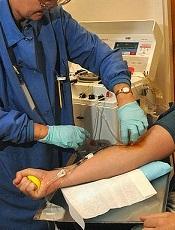
Photo by Charles Haymond
The US Food and Drug Administration (FDA) has cleared a labeling change for the Terumo BCT Trima Accel Automated Blood Collection System.
The change means platelets in plasma that are collected via this system can now be stored for 7 days instead of 5, but the blood products must be tested for bacterial contamination.
The label change also allows for use of a wireless feature designed to enhance the mobility and flexibility of the system.
The Trima Accel system includes the Trima Accel device, a tubing set, and Trima Accel software. The system uses a centrifuge to separate whole blood into platelets, plasma, and red blood cells. It then collects the components based on customer-configured priorities and the donor’s physiology and blood count.
Platelet storage
The FDA is now allowing platelets in 100% plasma that are collected via the Trima Accel system to be stored for up to 7 days post-collection. But platelets in isoplate solution can only be stored for up to 5 days.
For platelet storage up to 7 days, the FDA requires that every product be tested with a bacterial detection device cleared by the FDA and labeled as a “safety measure.”
Wireless feature
The newly cleared wireless feature connects the Trima Accel system to software applications such as the Cadence Data Collection System or the Vista Information System through the blood center’s or hospital’s existing wireless network.
This enables access to electronic donor information and reporting capabilities, with the goals of streamlining collections, simplifying data management, and allowing operators to focus on donor care, even when a wired connection is unavailable.
The wireless feature enables blood centers to either purchase a compatible wireless appliance from Terumo BCT or choose an appliance of their own for attachment to the Trima Accel system using a mounting bracket on the back of the system.
Photo by Charles Haymond
The US Food and Drug Administration (FDA) has cleared a labeling change for the Terumo BCT Trima Accel Automated Blood Collection System.
The change means platelets in plasma that are collected via this system can now be stored for 7 days instead of 5, but the blood products must be tested for bacterial contamination.
The label change also allows for use of a wireless feature designed to enhance the mobility and flexibility of the system.
The Trima Accel system includes the Trima Accel device, a tubing set, and Trima Accel software. The system uses a centrifuge to separate whole blood into platelets, plasma, and red blood cells. It then collects the components based on customer-configured priorities and the donor’s physiology and blood count.
Platelet storage
The FDA is now allowing platelets in 100% plasma that are collected via the Trima Accel system to be stored for up to 7 days post-collection. But platelets in isoplate solution can only be stored for up to 5 days.
For platelet storage up to 7 days, the FDA requires that every product be tested with a bacterial detection device cleared by the FDA and labeled as a “safety measure.”
Wireless feature
The newly cleared wireless feature connects the Trima Accel system to software applications such as the Cadence Data Collection System or the Vista Information System through the blood center’s or hospital’s existing wireless network.
This enables access to electronic donor information and reporting capabilities, with the goals of streamlining collections, simplifying data management, and allowing operators to focus on donor care, even when a wired connection is unavailable.
The wireless feature enables blood centers to either purchase a compatible wireless appliance from Terumo BCT or choose an appliance of their own for attachment to the Trima Accel system using a mounting bracket on the back of the system.
Photo by Charles Haymond
The US Food and Drug Administration (FDA) has cleared a labeling change for the Terumo BCT Trima Accel Automated Blood Collection System.
The change means platelets in plasma that are collected via this system can now be stored for 7 days instead of 5, but the blood products must be tested for bacterial contamination.
The label change also allows for use of a wireless feature designed to enhance the mobility and flexibility of the system.
The Trima Accel system includes the Trima Accel device, a tubing set, and Trima Accel software. The system uses a centrifuge to separate whole blood into platelets, plasma, and red blood cells. It then collects the components based on customer-configured priorities and the donor’s physiology and blood count.
Platelet storage
The FDA is now allowing platelets in 100% plasma that are collected via the Trima Accel system to be stored for up to 7 days post-collection. But platelets in isoplate solution can only be stored for up to 5 days.
For platelet storage up to 7 days, the FDA requires that every product be tested with a bacterial detection device cleared by the FDA and labeled as a “safety measure.”
Wireless feature
The newly cleared wireless feature connects the Trima Accel system to software applications such as the Cadence Data Collection System or the Vista Information System through the blood center’s or hospital’s existing wireless network.
This enables access to electronic donor information and reporting capabilities, with the goals of streamlining collections, simplifying data management, and allowing operators to focus on donor care, even when a wired connection is unavailable.
The wireless feature enables blood centers to either purchase a compatible wireless appliance from Terumo BCT or choose an appliance of their own for attachment to the Trima Accel system using a mounting bracket on the back of the system.
NICE recommends edoxaban for NVAF

Photo courtesy of the CDC
The UK’s National Institute for Health and Care Excellence (NICE) has issued a draft guidance recommending the oral anticoagulant edoxaban tosylate (Lixiana) as an option for preventing stroke and systemic embolism in adults with non-valvular atrial fibrillation (NVAF).
The patients must have 1 or more risk factors for stroke, including congestive heart failure, hypertension, diabetes, prior stroke or transient ischemic attack, and age of 75 years or older.
Such patients are generally treated with warfarin or the newer oral anticoagulants dabigatran, rivaroxaban, and apixaban.
NICE said it wants to add edoxaban to that list because the drug is a clinically and cost-effective treatment option for these patients.
NICE’s draft guidance says the decision about whether to start treatment with edoxaban should be made after an informed discussion between the clinician and the patient about the risks and benefits of edoxaban compared with warfarin, apixaban, dabigatran, and rivaroxaban.
For patients considering switching from warfarin, edoxaban’s potential benefits should be weighed against its potential risks, taking into account the patient’s level of international normalized ratio control.
Clinical effectiveness
NICE’s conclusion that edoxaban is clinically effective was based primarily on results of the ENGAGE AF-TIMI 48 trial. In this trial, researchers compared edoxaban and warfarin as prophylaxis for stroke or systemic embolism in patients with NVAF.
Results suggested edoxaban was at least non-inferior to warfarin with regard to efficacy, and edoxaban was associated with a significantly lower rate of major and fatal bleeding.
A committee advising NICE also reviewed a meta-analysis prepared by Daiichi Sankyo Co., Ltd., the company developing edoxaban.
The goal of the meta-analysis was to compare edoxaban with rivaroxaban, apixaban, and dabigatran. The analysis included 4 trials: ENGAGE AF-TIMI 48, ARISTOTLE (apixaban), RE-LY (dabigatran), and ROCKET-AF (rivaroxaban). All 4 trials had a warfarin comparator arm.
The results of the meta-analysis indicated that, for the composite endpoint of stroke and systemic embolism, efficacy was similar for high-dose edoxaban and the other newer oral anticoagulants.
However, edoxaban significantly reduced major bleeding risk by 24% compared to rivaroxaban, 28% compared to dabigatran at 150 mg, and 17% compared to dabigatran at 110 mg. Major bleeding rates were similar for high-dose edoxaban and apixaban.
The committee advising NICE said these results should be interpreted with caution, but edoxaban is unlikely to be different from rivaroxaban, apixaban, and dabigatran in clinical practice.
Cost-effectiveness
Edoxaban costs £58.80 for a 28-tablet pack (60 mg or 30 mg), and the daily cost of treatment is £2.10 (excluding value-added tax). However, costs may vary in different settings because of negotiated procurement discounts.
The committee advising NICE analyzed cost information and concluded that edoxaban is cost-effective compared with warfarin, but there is insufficient evidence to distinguish between the clinical and cost-effectiveness of edoxaban and the newer oral anticoagulants.
Nevertheless, the committee recommended edoxaban as a cost-effective treatment for patients with NVAF who have 1 or more risk factors for stroke.
NICE’s draft guidance is now with consultees, who have the opportunity to appeal against it. Once NICE issues its final guidance on a technology, it replaces local recommendations.
Photo courtesy of the CDC
The UK’s National Institute for Health and Care Excellence (NICE) has issued a draft guidance recommending the oral anticoagulant edoxaban tosylate (Lixiana) as an option for preventing stroke and systemic embolism in adults with non-valvular atrial fibrillation (NVAF).
The patients must have 1 or more risk factors for stroke, including congestive heart failure, hypertension, diabetes, prior stroke or transient ischemic attack, and age of 75 years or older.
Such patients are generally treated with warfarin or the newer oral anticoagulants dabigatran, rivaroxaban, and apixaban.
NICE said it wants to add edoxaban to that list because the drug is a clinically and cost-effective treatment option for these patients.
NICE’s draft guidance says the decision about whether to start treatment with edoxaban should be made after an informed discussion between the clinician and the patient about the risks and benefits of edoxaban compared with warfarin, apixaban, dabigatran, and rivaroxaban.
For patients considering switching from warfarin, edoxaban’s potential benefits should be weighed against its potential risks, taking into account the patient’s level of international normalized ratio control.
Clinical effectiveness
NICE’s conclusion that edoxaban is clinically effective was based primarily on results of the ENGAGE AF-TIMI 48 trial. In this trial, researchers compared edoxaban and warfarin as prophylaxis for stroke or systemic embolism in patients with NVAF.
Results suggested edoxaban was at least non-inferior to warfarin with regard to efficacy, and edoxaban was associated with a significantly lower rate of major and fatal bleeding.
A committee advising NICE also reviewed a meta-analysis prepared by Daiichi Sankyo Co., Ltd., the company developing edoxaban.
The goal of the meta-analysis was to compare edoxaban with rivaroxaban, apixaban, and dabigatran. The analysis included 4 trials: ENGAGE AF-TIMI 48, ARISTOTLE (apixaban), RE-LY (dabigatran), and ROCKET-AF (rivaroxaban). All 4 trials had a warfarin comparator arm.
The results of the meta-analysis indicated that, for the composite endpoint of stroke and systemic embolism, efficacy was similar for high-dose edoxaban and the other newer oral anticoagulants.
However, edoxaban significantly reduced major bleeding risk by 24% compared to rivaroxaban, 28% compared to dabigatran at 150 mg, and 17% compared to dabigatran at 110 mg. Major bleeding rates were similar for high-dose edoxaban and apixaban.
The committee advising NICE said these results should be interpreted with caution, but edoxaban is unlikely to be different from rivaroxaban, apixaban, and dabigatran in clinical practice.
Cost-effectiveness
Edoxaban costs £58.80 for a 28-tablet pack (60 mg or 30 mg), and the daily cost of treatment is £2.10 (excluding value-added tax). However, costs may vary in different settings because of negotiated procurement discounts.
The committee advising NICE analyzed cost information and concluded that edoxaban is cost-effective compared with warfarin, but there is insufficient evidence to distinguish between the clinical and cost-effectiveness of edoxaban and the newer oral anticoagulants.
Nevertheless, the committee recommended edoxaban as a cost-effective treatment for patients with NVAF who have 1 or more risk factors for stroke.
NICE’s draft guidance is now with consultees, who have the opportunity to appeal against it. Once NICE issues its final guidance on a technology, it replaces local recommendations.
Photo courtesy of the CDC
The UK’s National Institute for Health and Care Excellence (NICE) has issued a draft guidance recommending the oral anticoagulant edoxaban tosylate (Lixiana) as an option for preventing stroke and systemic embolism in adults with non-valvular atrial fibrillation (NVAF).
The patients must have 1 or more risk factors for stroke, including congestive heart failure, hypertension, diabetes, prior stroke or transient ischemic attack, and age of 75 years or older.
Such patients are generally treated with warfarin or the newer oral anticoagulants dabigatran, rivaroxaban, and apixaban.
NICE said it wants to add edoxaban to that list because the drug is a clinically and cost-effective treatment option for these patients.
NICE’s draft guidance says the decision about whether to start treatment with edoxaban should be made after an informed discussion between the clinician and the patient about the risks and benefits of edoxaban compared with warfarin, apixaban, dabigatran, and rivaroxaban.
For patients considering switching from warfarin, edoxaban’s potential benefits should be weighed against its potential risks, taking into account the patient’s level of international normalized ratio control.
Clinical effectiveness
NICE’s conclusion that edoxaban is clinically effective was based primarily on results of the ENGAGE AF-TIMI 48 trial. In this trial, researchers compared edoxaban and warfarin as prophylaxis for stroke or systemic embolism in patients with NVAF.
Results suggested edoxaban was at least non-inferior to warfarin with regard to efficacy, and edoxaban was associated with a significantly lower rate of major and fatal bleeding.
A committee advising NICE also reviewed a meta-analysis prepared by Daiichi Sankyo Co., Ltd., the company developing edoxaban.
The goal of the meta-analysis was to compare edoxaban with rivaroxaban, apixaban, and dabigatran. The analysis included 4 trials: ENGAGE AF-TIMI 48, ARISTOTLE (apixaban), RE-LY (dabigatran), and ROCKET-AF (rivaroxaban). All 4 trials had a warfarin comparator arm.
The results of the meta-analysis indicated that, for the composite endpoint of stroke and systemic embolism, efficacy was similar for high-dose edoxaban and the other newer oral anticoagulants.
However, edoxaban significantly reduced major bleeding risk by 24% compared to rivaroxaban, 28% compared to dabigatran at 150 mg, and 17% compared to dabigatran at 110 mg. Major bleeding rates were similar for high-dose edoxaban and apixaban.
The committee advising NICE said these results should be interpreted with caution, but edoxaban is unlikely to be different from rivaroxaban, apixaban, and dabigatran in clinical practice.
Cost-effectiveness
Edoxaban costs £58.80 for a 28-tablet pack (60 mg or 30 mg), and the daily cost of treatment is £2.10 (excluding value-added tax). However, costs may vary in different settings because of negotiated procurement discounts.
The committee advising NICE analyzed cost information and concluded that edoxaban is cost-effective compared with warfarin, but there is insufficient evidence to distinguish between the clinical and cost-effectiveness of edoxaban and the newer oral anticoagulants.
Nevertheless, the committee recommended edoxaban as a cost-effective treatment for patients with NVAF who have 1 or more risk factors for stroke.
NICE’s draft guidance is now with consultees, who have the opportunity to appeal against it. Once NICE issues its final guidance on a technology, it replaces local recommendations.
Method can predict genes likely to cause diseases

Photo by Darren Baker
A new computational method improves the detection of genes linked to complex diseases and biological traits, according to researchers.
The method, PrediXcan, estimates gene expression levels across the whole genome and integrates this data with genome-wide association study (GWAS) data.
Researchers say PrediXcan has the potential to identify gene targets for therapeutic applications faster and with greater accuracy than traditional methods.
“PrediXcan tells us which genes are more likely to affect a disease or trait by learning the relationship between genotype, gene expression levels from large-scale transcriptome studies, and disease associations from GWAS studies,” said Hae Kyung Im, PhD, of the University of Chicago in Illinois.
“This is the first method that accounts for the mechanisms of gene regulation and can be applied to any heritable disease or phenotype.”
Dr Im and her colleagues described the method in Nature Genetics.
They said PrediXcan uses computational algorithms to learn how genome sequence influences gene expression, based on large-scale transcriptome datasets. This can then be used to create computational estimates of gene expression levels from any whole-genome sequence or chip dataset.
Genomes that have been sequenced as part of a GWAS can be run through PrediXcan to generate a gene expression level profile, which is then analyzed to determine the association between gene expression levels and the disease states or the trait of interest being studied.
The researchers said this method can reveal potentially causal genes and determine directionality—whether high or low levels of expression might cause the disease or trait.
As calculations are based on DNA sequence data and not physical measurements, PrediXcan can tease apart the genetically determined component of gene expression from the effects of the trait itself (avoiding reverse causality) and other factors such as environment.
The researchers said that, with PrediXcan, validation studies need to test a few thousand genes, instead of millions of potential single mutations. In addition, the method can be used to re-analyze existing genomic datasets, with a focus on mechanism, in a high-throughput manner.
“This integrates what we know about consequences of genetic variation in the transcriptome in order to discover genes, instead of just looking at mutations,” Dr Im said. “In a way, we’re modeling one mechanism through which genes affect disease or traits, which is the regulation of gene expression level.”
Dr Im noted that, because PrediXcan creates estimates based on genome sequence data, it is most accurate for strongly heritable traits. However, almost every complex trait or disease has a genetic component. The method can be used to predict the influence of that component, reducing the complexity of follow-up studies.
Dr Im is now working to improve the prediction of PrediXcan and applying it to mental health disorders. In addition, she is working to expand it beyond gene expression levels, to predict the links between diseases or traits and protein levels, epigenetics, and other measurements that can be estimated based on genomic data.
“GWAS studies have been incredibly successful at finding genetic links to disease, but they have been unable to account for mechanism,” Dr Im said. “We now have a computational method that allows us to understand the consequences of GWAS studies.”
Photo by Darren Baker
A new computational method improves the detection of genes linked to complex diseases and biological traits, according to researchers.
The method, PrediXcan, estimates gene expression levels across the whole genome and integrates this data with genome-wide association study (GWAS) data.
Researchers say PrediXcan has the potential to identify gene targets for therapeutic applications faster and with greater accuracy than traditional methods.
“PrediXcan tells us which genes are more likely to affect a disease or trait by learning the relationship between genotype, gene expression levels from large-scale transcriptome studies, and disease associations from GWAS studies,” said Hae Kyung Im, PhD, of the University of Chicago in Illinois.
“This is the first method that accounts for the mechanisms of gene regulation and can be applied to any heritable disease or phenotype.”
Dr Im and her colleagues described the method in Nature Genetics.
They said PrediXcan uses computational algorithms to learn how genome sequence influences gene expression, based on large-scale transcriptome datasets. This can then be used to create computational estimates of gene expression levels from any whole-genome sequence or chip dataset.
Genomes that have been sequenced as part of a GWAS can be run through PrediXcan to generate a gene expression level profile, which is then analyzed to determine the association between gene expression levels and the disease states or the trait of interest being studied.
The researchers said this method can reveal potentially causal genes and determine directionality—whether high or low levels of expression might cause the disease or trait.
As calculations are based on DNA sequence data and not physical measurements, PrediXcan can tease apart the genetically determined component of gene expression from the effects of the trait itself (avoiding reverse causality) and other factors such as environment.
The researchers said that, with PrediXcan, validation studies need to test a few thousand genes, instead of millions of potential single mutations. In addition, the method can be used to re-analyze existing genomic datasets, with a focus on mechanism, in a high-throughput manner.
“This integrates what we know about consequences of genetic variation in the transcriptome in order to discover genes, instead of just looking at mutations,” Dr Im said. “In a way, we’re modeling one mechanism through which genes affect disease or traits, which is the regulation of gene expression level.”
Dr Im noted that, because PrediXcan creates estimates based on genome sequence data, it is most accurate for strongly heritable traits. However, almost every complex trait or disease has a genetic component. The method can be used to predict the influence of that component, reducing the complexity of follow-up studies.
Dr Im is now working to improve the prediction of PrediXcan and applying it to mental health disorders. In addition, she is working to expand it beyond gene expression levels, to predict the links between diseases or traits and protein levels, epigenetics, and other measurements that can be estimated based on genomic data.
“GWAS studies have been incredibly successful at finding genetic links to disease, but they have been unable to account for mechanism,” Dr Im said. “We now have a computational method that allows us to understand the consequences of GWAS studies.”
Photo by Darren Baker
A new computational method improves the detection of genes linked to complex diseases and biological traits, according to researchers.
The method, PrediXcan, estimates gene expression levels across the whole genome and integrates this data with genome-wide association study (GWAS) data.
Researchers say PrediXcan has the potential to identify gene targets for therapeutic applications faster and with greater accuracy than traditional methods.
“PrediXcan tells us which genes are more likely to affect a disease or trait by learning the relationship between genotype, gene expression levels from large-scale transcriptome studies, and disease associations from GWAS studies,” said Hae Kyung Im, PhD, of the University of Chicago in Illinois.
“This is the first method that accounts for the mechanisms of gene regulation and can be applied to any heritable disease or phenotype.”
Dr Im and her colleagues described the method in Nature Genetics.
They said PrediXcan uses computational algorithms to learn how genome sequence influences gene expression, based on large-scale transcriptome datasets. This can then be used to create computational estimates of gene expression levels from any whole-genome sequence or chip dataset.
Genomes that have been sequenced as part of a GWAS can be run through PrediXcan to generate a gene expression level profile, which is then analyzed to determine the association between gene expression levels and the disease states or the trait of interest being studied.
The researchers said this method can reveal potentially causal genes and determine directionality—whether high or low levels of expression might cause the disease or trait.
As calculations are based on DNA sequence data and not physical measurements, PrediXcan can tease apart the genetically determined component of gene expression from the effects of the trait itself (avoiding reverse causality) and other factors such as environment.
The researchers said that, with PrediXcan, validation studies need to test a few thousand genes, instead of millions of potential single mutations. In addition, the method can be used to re-analyze existing genomic datasets, with a focus on mechanism, in a high-throughput manner.
“This integrates what we know about consequences of genetic variation in the transcriptome in order to discover genes, instead of just looking at mutations,” Dr Im said. “In a way, we’re modeling one mechanism through which genes affect disease or traits, which is the regulation of gene expression level.”
Dr Im noted that, because PrediXcan creates estimates based on genome sequence data, it is most accurate for strongly heritable traits. However, almost every complex trait or disease has a genetic component. The method can be used to predict the influence of that component, reducing the complexity of follow-up studies.
Dr Im is now working to improve the prediction of PrediXcan and applying it to mental health disorders. In addition, she is working to expand it beyond gene expression levels, to predict the links between diseases or traits and protein levels, epigenetics, and other measurements that can be estimated based on genomic data.
“GWAS studies have been incredibly successful at finding genetic links to disease, but they have been unable to account for mechanism,” Dr Im said. “We now have a computational method that allows us to understand the consequences of GWAS studies.”
The Skin Cancer Vitamin?

Martin et al recently presented a study at the 2015 American Society of Clinical Oncology Annual Meeting (J Clin Oncol. 2015;33[suppl]:9000) that reported on a phase 3 double-blind randomized trial to assess the use of oral nicotinamide to reduce actinic skin cancers, namely basal cell carcinoma (BCC) and squamous cell carcinoma (SCC).
This study was conducted in 2 tertiary treatment centers in Sydney, Australia, from 2012 to 2014, and it included 386 immunocompetent participants with 2 or more histologically confirmed nonmelanoma skin cancers (NMSCs) in the last 5 years. Two groups were randomized (1:1 ratio) to either receive oral nicotinamide 500 mg twice daily or matched placebo for 12 months. The primary end point measured was the number of new NMSCs to 12 months. Other secondary end points included number of SCCs, BCCs, and actinic keratoses to 12 months. Dermatologists performed skin checks every 3 months on the participants.
The results of the study showed that the average NMSC rate was significantly lower for the oral nicotinamide group (1.77) compared to the placebo group (2.42). The estimated relative rate reduction (RRR) was 0.23 (95% confidence interval [CI], 0.04-0.38; P=.02) adjusting for center and NMSC history, and 0.27 (95% CI, 0.05-0.44; P=.02) with no adjustment. The effects for BCC were comparable to SCC: BCC (RRR, 0.20; 95% CI, -0.06 to 0.39; P=.1) and SCC (RRR, 0.30; 95% CI, 0-0.51; P=.05). Additionally, actinic keratosis counts were reduced by 11% at 3 months (P=.01), 14% at 6 months (P<.001), 20% at 9 months (P<.0001), and 13% at 12 months (P<.005) for the oral nicotinamide group compared to the placebo group. There was no difference in the adverse event rates between the 2 groups.
What’s the issue?
This study reported the results of a double-blind randomized study of nicotinamide (vitamin B3) to reduce actinic cancer, called the ONTRAC (Oral Nicotinamide to Reduce Actinic Cancer) study, with favorable results for the use of oral nicotinamide, an inexpensive vitamin. There was a 20% reduction in BCC and a 30% reduction in SCC in the nicotinamide group compared to the group taking a placebo with no active ingredients. This study was conducted in a heavily sun-damaged group and it is postulated that nicotinamide helps cells repair DNA damage.
The thought of using a vitamin to reduce skin cancer rates is exciting; however, this study is singular, and while it did show promising results, the number of participants is not very large. There also was no evidence that nicotinamide prevents melanoma formation. Also, there was no protective effect seen once the vitamin B3 treatment was stopped. One must be cognizant that nicotinamide is not interchangeable with other forms of vitamin B3 such as niacin.
Although this study is promising, more research is needed to determine nicotinamide’s preventative effects. Of course, strict sun protection and skin checks are the first line in the prevention of skin cancer. Will you be prescribing oral nicotinamide to your patients to prevent NMSC?
Martin et al recently presented a study at the 2015 American Society of Clinical Oncology Annual Meeting (J Clin Oncol. 2015;33[suppl]:9000) that reported on a phase 3 double-blind randomized trial to assess the use of oral nicotinamide to reduce actinic skin cancers, namely basal cell carcinoma (BCC) and squamous cell carcinoma (SCC).
This study was conducted in 2 tertiary treatment centers in Sydney, Australia, from 2012 to 2014, and it included 386 immunocompetent participants with 2 or more histologically confirmed nonmelanoma skin cancers (NMSCs) in the last 5 years. Two groups were randomized (1:1 ratio) to either receive oral nicotinamide 500 mg twice daily or matched placebo for 12 months. The primary end point measured was the number of new NMSCs to 12 months. Other secondary end points included number of SCCs, BCCs, and actinic keratoses to 12 months. Dermatologists performed skin checks every 3 months on the participants.
The results of the study showed that the average NMSC rate was significantly lower for the oral nicotinamide group (1.77) compared to the placebo group (2.42). The estimated relative rate reduction (RRR) was 0.23 (95% confidence interval [CI], 0.04-0.38; P=.02) adjusting for center and NMSC history, and 0.27 (95% CI, 0.05-0.44; P=.02) with no adjustment. The effects for BCC were comparable to SCC: BCC (RRR, 0.20; 95% CI, -0.06 to 0.39; P=.1) and SCC (RRR, 0.30; 95% CI, 0-0.51; P=.05). Additionally, actinic keratosis counts were reduced by 11% at 3 months (P=.01), 14% at 6 months (P<.001), 20% at 9 months (P<.0001), and 13% at 12 months (P<.005) for the oral nicotinamide group compared to the placebo group. There was no difference in the adverse event rates between the 2 groups.
What’s the issue?
This study reported the results of a double-blind randomized study of nicotinamide (vitamin B3) to reduce actinic cancer, called the ONTRAC (Oral Nicotinamide to Reduce Actinic Cancer) study, with favorable results for the use of oral nicotinamide, an inexpensive vitamin. There was a 20% reduction in BCC and a 30% reduction in SCC in the nicotinamide group compared to the group taking a placebo with no active ingredients. This study was conducted in a heavily sun-damaged group and it is postulated that nicotinamide helps cells repair DNA damage.
The thought of using a vitamin to reduce skin cancer rates is exciting; however, this study is singular, and while it did show promising results, the number of participants is not very large. There also was no evidence that nicotinamide prevents melanoma formation. Also, there was no protective effect seen once the vitamin B3 treatment was stopped. One must be cognizant that nicotinamide is not interchangeable with other forms of vitamin B3 such as niacin.
Although this study is promising, more research is needed to determine nicotinamide’s preventative effects. Of course, strict sun protection and skin checks are the first line in the prevention of skin cancer. Will you be prescribing oral nicotinamide to your patients to prevent NMSC?
Martin et al recently presented a study at the 2015 American Society of Clinical Oncology Annual Meeting (J Clin Oncol. 2015;33[suppl]:9000) that reported on a phase 3 double-blind randomized trial to assess the use of oral nicotinamide to reduce actinic skin cancers, namely basal cell carcinoma (BCC) and squamous cell carcinoma (SCC).
This study was conducted in 2 tertiary treatment centers in Sydney, Australia, from 2012 to 2014, and it included 386 immunocompetent participants with 2 or more histologically confirmed nonmelanoma skin cancers (NMSCs) in the last 5 years. Two groups were randomized (1:1 ratio) to either receive oral nicotinamide 500 mg twice daily or matched placebo for 12 months. The primary end point measured was the number of new NMSCs to 12 months. Other secondary end points included number of SCCs, BCCs, and actinic keratoses to 12 months. Dermatologists performed skin checks every 3 months on the participants.
The results of the study showed that the average NMSC rate was significantly lower for the oral nicotinamide group (1.77) compared to the placebo group (2.42). The estimated relative rate reduction (RRR) was 0.23 (95% confidence interval [CI], 0.04-0.38; P=.02) adjusting for center and NMSC history, and 0.27 (95% CI, 0.05-0.44; P=.02) with no adjustment. The effects for BCC were comparable to SCC: BCC (RRR, 0.20; 95% CI, -0.06 to 0.39; P=.1) and SCC (RRR, 0.30; 95% CI, 0-0.51; P=.05). Additionally, actinic keratosis counts were reduced by 11% at 3 months (P=.01), 14% at 6 months (P<.001), 20% at 9 months (P<.0001), and 13% at 12 months (P<.005) for the oral nicotinamide group compared to the placebo group. There was no difference in the adverse event rates between the 2 groups.
What’s the issue?
This study reported the results of a double-blind randomized study of nicotinamide (vitamin B3) to reduce actinic cancer, called the ONTRAC (Oral Nicotinamide to Reduce Actinic Cancer) study, with favorable results for the use of oral nicotinamide, an inexpensive vitamin. There was a 20% reduction in BCC and a 30% reduction in SCC in the nicotinamide group compared to the group taking a placebo with no active ingredients. This study was conducted in a heavily sun-damaged group and it is postulated that nicotinamide helps cells repair DNA damage.
The thought of using a vitamin to reduce skin cancer rates is exciting; however, this study is singular, and while it did show promising results, the number of participants is not very large. There also was no evidence that nicotinamide prevents melanoma formation. Also, there was no protective effect seen once the vitamin B3 treatment was stopped. One must be cognizant that nicotinamide is not interchangeable with other forms of vitamin B3 such as niacin.
Although this study is promising, more research is needed to determine nicotinamide’s preventative effects. Of course, strict sun protection and skin checks are the first line in the prevention of skin cancer. Will you be prescribing oral nicotinamide to your patients to prevent NMSC?

Poor Inpatient Memory Can Undermine Teachable Moments
Memory loss is prevalent among adult hospitalized patients and can complicate hospitalists' job of teaching them about their conditions and home care, recent research suggests. But just what is behind patients’ memory impairment is not clear.
In a recent study published in the Journal of Hospital Medicine, researchers assessed the memory and in-hospital sleep habits of older adult patients to determine whether the two are linked.
"Since the hospital is considered a 'teachable moment,' and hospitalized patients have to learn about their care but also face sleep loss due to a disruptive environment and their own illness, we thought it would be interesting to see if there was an association," says study co-author Vineet M. Arora, MD, MAPP, a hospitalist and associate professor of medicine at the University of Chicago.
Nearly half of hospitalized patients in the study showed poor memory, based on their recall of word lists and medical vignettes. The results led Dr. Arora to conclude that hospitalists need to rethink the idea of hospitalization as a teachable moment and try reinforcing techniques when teaching patients.
"When trying to teach something that hospitalized patients need to remember, consider adopting strategies that use reminders or tools that people can take home, such as written instructions or video," Dr. Arora says. She also suggests hospitalists consider involving a patient's caregiver during the teaching, to have someone who can serve as a backup for the patient later.
The study also found that patients averaged 5.4 hours of in-hospital sleep per night and below-normal sleep efficiency, with 44% of patients' sleep-quality scores measured in the insomniac range. But they saw no statistically significant association between sleep loss and memory impairment in this study, Dr. Arora says.
"Our study was observational; it may be that everyone was too sleep deprived," she adds. "We may not have enough variation in sleep to detect difference in memory."
In future studies, having some well-rested subjects might make it possible to detect the association between sleep loss and memory impairment, Dr. Arora notes.
"If we did an intervention and tried to improve sleep in half our patients," she says, "then it would be worth seeing if memory was improved because we would have two groups: one that had better sleep and one that had worse sleep." TH
Visit our website for more information on inpatients and memory loss.
Memory loss is prevalent among adult hospitalized patients and can complicate hospitalists' job of teaching them about their conditions and home care, recent research suggests. But just what is behind patients’ memory impairment is not clear.
In a recent study published in the Journal of Hospital Medicine, researchers assessed the memory and in-hospital sleep habits of older adult patients to determine whether the two are linked.
"Since the hospital is considered a 'teachable moment,' and hospitalized patients have to learn about their care but also face sleep loss due to a disruptive environment and their own illness, we thought it would be interesting to see if there was an association," says study co-author Vineet M. Arora, MD, MAPP, a hospitalist and associate professor of medicine at the University of Chicago.
Nearly half of hospitalized patients in the study showed poor memory, based on their recall of word lists and medical vignettes. The results led Dr. Arora to conclude that hospitalists need to rethink the idea of hospitalization as a teachable moment and try reinforcing techniques when teaching patients.
"When trying to teach something that hospitalized patients need to remember, consider adopting strategies that use reminders or tools that people can take home, such as written instructions or video," Dr. Arora says. She also suggests hospitalists consider involving a patient's caregiver during the teaching, to have someone who can serve as a backup for the patient later.
The study also found that patients averaged 5.4 hours of in-hospital sleep per night and below-normal sleep efficiency, with 44% of patients' sleep-quality scores measured in the insomniac range. But they saw no statistically significant association between sleep loss and memory impairment in this study, Dr. Arora says.
"Our study was observational; it may be that everyone was too sleep deprived," she adds. "We may not have enough variation in sleep to detect difference in memory."
In future studies, having some well-rested subjects might make it possible to detect the association between sleep loss and memory impairment, Dr. Arora notes.
"If we did an intervention and tried to improve sleep in half our patients," she says, "then it would be worth seeing if memory was improved because we would have two groups: one that had better sleep and one that had worse sleep." TH
Visit our website for more information on inpatients and memory loss.
Memory loss is prevalent among adult hospitalized patients and can complicate hospitalists' job of teaching them about their conditions and home care, recent research suggests. But just what is behind patients’ memory impairment is not clear.
In a recent study published in the Journal of Hospital Medicine, researchers assessed the memory and in-hospital sleep habits of older adult patients to determine whether the two are linked.
"Since the hospital is considered a 'teachable moment,' and hospitalized patients have to learn about their care but also face sleep loss due to a disruptive environment and their own illness, we thought it would be interesting to see if there was an association," says study co-author Vineet M. Arora, MD, MAPP, a hospitalist and associate professor of medicine at the University of Chicago.
Nearly half of hospitalized patients in the study showed poor memory, based on their recall of word lists and medical vignettes. The results led Dr. Arora to conclude that hospitalists need to rethink the idea of hospitalization as a teachable moment and try reinforcing techniques when teaching patients.
"When trying to teach something that hospitalized patients need to remember, consider adopting strategies that use reminders or tools that people can take home, such as written instructions or video," Dr. Arora says. She also suggests hospitalists consider involving a patient's caregiver during the teaching, to have someone who can serve as a backup for the patient later.
The study also found that patients averaged 5.4 hours of in-hospital sleep per night and below-normal sleep efficiency, with 44% of patients' sleep-quality scores measured in the insomniac range. But they saw no statistically significant association between sleep loss and memory impairment in this study, Dr. Arora says.
"Our study was observational; it may be that everyone was too sleep deprived," she adds. "We may not have enough variation in sleep to detect difference in memory."
In future studies, having some well-rested subjects might make it possible to detect the association between sleep loss and memory impairment, Dr. Arora notes.
"If we did an intervention and tried to improve sleep in half our patients," she says, "then it would be worth seeing if memory was improved because we would have two groups: one that had better sleep and one that had worse sleep." TH
Visit our website for more information on inpatients and memory loss.
Stat! has lost its meaning
STAT. It’s often capitalized, I guess to convey urgency. It shouldn’t be, though, since it’s not an acronym. It’s a shortening of the Latin word “statim” meaning “immediately.”
Everyone in health care says it at one time or another, but I find it unsettling how many have no idea, or simply don’t care, what that really means.
To me, it’s that the test you’re ordering is urgent. You need to make a decision based on its results – STAT – to save life and/or limb. The results may make a significant difference in your treatment plan.
I find a lot of people don’t use this as the meaning anymore. They think STAT means “because I’m trying to get the patient out of here before Monday” or “a family is breathing down my neck” or “this is a VIP hospital board donor and I need to be extra nice.”
I’ve had my share of debates with other docs about those meanings, but I still stand by mine. To me, this is like pulling a fire alarm. When you do it, you want people to know you’re serious, and there’s a problem that needs to be addressed urgently.
Medicine, regrettably, has become a field of immediate gratification. Patients want results NOW. I’ve had people call me for results within 10 minutes of leaving an MRI facility or lab, even though I’d told them in advance that turnaround time would be days. Rather than accepting this, many ask that I call the radiologist or otherwise have their results rushed to make it more convenient for them. Of course, if you refuse, they may threaten to give you a bad review on Yelp or other rate-a-doc sites.
Some doctors are the same way. A syncope patient is stable, but needs to have a STAT EEG over the weekend so they can be sent home within the 24-hour observation window. It might be possible to send the patient out and get the study as an outpatient, but then they might not have it done, or another neurologist might get the billing. So better to pay the EEG tech overtime and have it done STAT.
Like the boy who cried wolf, STAT has become so commonplace at some hospitals as to be meaningless. Which only hurts the patients who legitimately need urgent studies.
Dr. Block has a solo neurology practice in Scottsdale, Ariz.
STAT. It’s often capitalized, I guess to convey urgency. It shouldn’t be, though, since it’s not an acronym. It’s a shortening of the Latin word “statim” meaning “immediately.”
Everyone in health care says it at one time or another, but I find it unsettling how many have no idea, or simply don’t care, what that really means.
To me, it’s that the test you’re ordering is urgent. You need to make a decision based on its results – STAT – to save life and/or limb. The results may make a significant difference in your treatment plan.
I find a lot of people don’t use this as the meaning anymore. They think STAT means “because I’m trying to get the patient out of here before Monday” or “a family is breathing down my neck” or “this is a VIP hospital board donor and I need to be extra nice.”
I’ve had my share of debates with other docs about those meanings, but I still stand by mine. To me, this is like pulling a fire alarm. When you do it, you want people to know you’re serious, and there’s a problem that needs to be addressed urgently.
Medicine, regrettably, has become a field of immediate gratification. Patients want results NOW. I’ve had people call me for results within 10 minutes of leaving an MRI facility or lab, even though I’d told them in advance that turnaround time would be days. Rather than accepting this, many ask that I call the radiologist or otherwise have their results rushed to make it more convenient for them. Of course, if you refuse, they may threaten to give you a bad review on Yelp or other rate-a-doc sites.
Some doctors are the same way. A syncope patient is stable, but needs to have a STAT EEG over the weekend so they can be sent home within the 24-hour observation window. It might be possible to send the patient out and get the study as an outpatient, but then they might not have it done, or another neurologist might get the billing. So better to pay the EEG tech overtime and have it done STAT.
Like the boy who cried wolf, STAT has become so commonplace at some hospitals as to be meaningless. Which only hurts the patients who legitimately need urgent studies.
Dr. Block has a solo neurology practice in Scottsdale, Ariz.
STAT. It’s often capitalized, I guess to convey urgency. It shouldn’t be, though, since it’s not an acronym. It’s a shortening of the Latin word “statim” meaning “immediately.”
Everyone in health care says it at one time or another, but I find it unsettling how many have no idea, or simply don’t care, what that really means.
To me, it’s that the test you’re ordering is urgent. You need to make a decision based on its results – STAT – to save life and/or limb. The results may make a significant difference in your treatment plan.
I find a lot of people don’t use this as the meaning anymore. They think STAT means “because I’m trying to get the patient out of here before Monday” or “a family is breathing down my neck” or “this is a VIP hospital board donor and I need to be extra nice.”
I’ve had my share of debates with other docs about those meanings, but I still stand by mine. To me, this is like pulling a fire alarm. When you do it, you want people to know you’re serious, and there’s a problem that needs to be addressed urgently.
Medicine, regrettably, has become a field of immediate gratification. Patients want results NOW. I’ve had people call me for results within 10 minutes of leaving an MRI facility or lab, even though I’d told them in advance that turnaround time would be days. Rather than accepting this, many ask that I call the radiologist or otherwise have their results rushed to make it more convenient for them. Of course, if you refuse, they may threaten to give you a bad review on Yelp or other rate-a-doc sites.
Some doctors are the same way. A syncope patient is stable, but needs to have a STAT EEG over the weekend so they can be sent home within the 24-hour observation window. It might be possible to send the patient out and get the study as an outpatient, but then they might not have it done, or another neurologist might get the billing. So better to pay the EEG tech overtime and have it done STAT.
Like the boy who cried wolf, STAT has become so commonplace at some hospitals as to be meaningless. Which only hurts the patients who legitimately need urgent studies.
Dr. Block has a solo neurology practice in Scottsdale, Ariz.
Manage Your Dermatology Practice: Answering Patient Questions About Diet
Patients often inquire if their diet has caused a dermatologic condition or if their diet makes it worse. Dr. Gary Goldenberg addresses how diet may impact acne, psoriasis, and urticaria. Ultimately, patient education by the dermatologist is needed to ensure patients are not relying on misinformation on the Internet regarding diets they should consider for their particular condition.
Patients often inquire if their diet has caused a dermatologic condition or if their diet makes it worse. Dr. Gary Goldenberg addresses how diet may impact acne, psoriasis, and urticaria. Ultimately, patient education by the dermatologist is needed to ensure patients are not relying on misinformation on the Internet regarding diets they should consider for their particular condition.
Patients often inquire if their diet has caused a dermatologic condition or if their diet makes it worse. Dr. Gary Goldenberg addresses how diet may impact acne, psoriasis, and urticaria. Ultimately, patient education by the dermatologist is needed to ensure patients are not relying on misinformation on the Internet regarding diets they should consider for their particular condition.

TeamHealth-IPC Deal Latest in Consolidation Trend
Two deals involving hospitalist management firms were announced in the past week, further consolidating the ranks of staffing companies in the specialty.
In the bigger deal, TeamHealth Holdings, Inc., last week agreed to acquire IPC Healthcare Inc. of North Hollywood, Calif., for $1.6 billion. The deal announcement highlighted IPC's stake in both hospital and post-acute care settings as a motivational factor for the acquisition.
"Combining emergency department staffing with hospitalist presence creates the opportunity to effectively manage patients from the emergency department through the inpatient discharge and beyond," the deal announcement notes. "This will allow TeamHealth to lower costs and increase quality, and, as a result, drive better patient experiences."
TeamHealth’s acquisition of IPC Healthcare is the latest deal to combine large hospital management groups, perpetuating a consolidation trend among companies seeking cost efficiencies.
Also last week, private equity firm Onex Corporation announced an agreement to acquire Hospital Physician Partners (HPP) of Hollywood, Fla., which bills itself as the fourth-largest provider of emergency and hospitalist clinical staffing services. Financial terms were not released.
Both deals are expected to close by year's end. They follow 2014's acquisition by Sound Physicians of Cogent Healthcare. The combined entity, which retained the Sound name, created the largest hospital management group in the country.
John Nelson, MD, MHM, a principal in Nelson Flores Hospital Medicine Consultants and regular practice management columnist for The Hospitalist, says consolidation is a double-edged sword.
"They may have the scale to come up with new valuable ways to organize care that can be adopted … by others," Dr. Nelson writes in an email to The Hospitalist. "But a marketplace that moves from multiple competing companies to a few very large ones faces the usual negatives of fewer competitors in the marketplace."
Dr. Nelson compares such deals to the airline industry, where consolidation has shrunk the playing field to a handful of major carriers. While larger HM firms may carry more weight in contract negotiations with institutions, individual practitioners need not worry that consolidation as a trend will negatively impact their daily rounds, he notes.
"Any efficiencies large companies have will likely have little effect on the work life of rank-and-file hospitalists, at least for foreseeable future," he adds. TH
Visit our website for more information on consolidation in hospital medicine.
Two deals involving hospitalist management firms were announced in the past week, further consolidating the ranks of staffing companies in the specialty.
In the bigger deal, TeamHealth Holdings, Inc., last week agreed to acquire IPC Healthcare Inc. of North Hollywood, Calif., for $1.6 billion. The deal announcement highlighted IPC's stake in both hospital and post-acute care settings as a motivational factor for the acquisition.
"Combining emergency department staffing with hospitalist presence creates the opportunity to effectively manage patients from the emergency department through the inpatient discharge and beyond," the deal announcement notes. "This will allow TeamHealth to lower costs and increase quality, and, as a result, drive better patient experiences."
TeamHealth’s acquisition of IPC Healthcare is the latest deal to combine large hospital management groups, perpetuating a consolidation trend among companies seeking cost efficiencies.
Also last week, private equity firm Onex Corporation announced an agreement to acquire Hospital Physician Partners (HPP) of Hollywood, Fla., which bills itself as the fourth-largest provider of emergency and hospitalist clinical staffing services. Financial terms were not released.
Both deals are expected to close by year's end. They follow 2014's acquisition by Sound Physicians of Cogent Healthcare. The combined entity, which retained the Sound name, created the largest hospital management group in the country.
John Nelson, MD, MHM, a principal in Nelson Flores Hospital Medicine Consultants and regular practice management columnist for The Hospitalist, says consolidation is a double-edged sword.
"They may have the scale to come up with new valuable ways to organize care that can be adopted … by others," Dr. Nelson writes in an email to The Hospitalist. "But a marketplace that moves from multiple competing companies to a few very large ones faces the usual negatives of fewer competitors in the marketplace."
Dr. Nelson compares such deals to the airline industry, where consolidation has shrunk the playing field to a handful of major carriers. While larger HM firms may carry more weight in contract negotiations with institutions, individual practitioners need not worry that consolidation as a trend will negatively impact their daily rounds, he notes.
"Any efficiencies large companies have will likely have little effect on the work life of rank-and-file hospitalists, at least for foreseeable future," he adds. TH
Visit our website for more information on consolidation in hospital medicine.
Two deals involving hospitalist management firms were announced in the past week, further consolidating the ranks of staffing companies in the specialty.
In the bigger deal, TeamHealth Holdings, Inc., last week agreed to acquire IPC Healthcare Inc. of North Hollywood, Calif., for $1.6 billion. The deal announcement highlighted IPC's stake in both hospital and post-acute care settings as a motivational factor for the acquisition.
"Combining emergency department staffing with hospitalist presence creates the opportunity to effectively manage patients from the emergency department through the inpatient discharge and beyond," the deal announcement notes. "This will allow TeamHealth to lower costs and increase quality, and, as a result, drive better patient experiences."
TeamHealth’s acquisition of IPC Healthcare is the latest deal to combine large hospital management groups, perpetuating a consolidation trend among companies seeking cost efficiencies.
Also last week, private equity firm Onex Corporation announced an agreement to acquire Hospital Physician Partners (HPP) of Hollywood, Fla., which bills itself as the fourth-largest provider of emergency and hospitalist clinical staffing services. Financial terms were not released.
Both deals are expected to close by year's end. They follow 2014's acquisition by Sound Physicians of Cogent Healthcare. The combined entity, which retained the Sound name, created the largest hospital management group in the country.
John Nelson, MD, MHM, a principal in Nelson Flores Hospital Medicine Consultants and regular practice management columnist for The Hospitalist, says consolidation is a double-edged sword.
"They may have the scale to come up with new valuable ways to organize care that can be adopted … by others," Dr. Nelson writes in an email to The Hospitalist. "But a marketplace that moves from multiple competing companies to a few very large ones faces the usual negatives of fewer competitors in the marketplace."
Dr. Nelson compares such deals to the airline industry, where consolidation has shrunk the playing field to a handful of major carriers. While larger HM firms may carry more weight in contract negotiations with institutions, individual practitioners need not worry that consolidation as a trend will negatively impact their daily rounds, he notes.
"Any efficiencies large companies have will likely have little effect on the work life of rank-and-file hospitalists, at least for foreseeable future," he adds. TH
Visit our website for more information on consolidation in hospital medicine.
Maintaining Board Certification Has High Hidden Cost
NEW YORK (Reuters Health) - The American Board of Internal Medicine (ABIM) maintenance-of-certification (MOC) program could cost $5.7 billion in physicians' time and fees over the next decade, according to a new model study.
"We estimate that physicians will spend 33 million hours over 10 years to fulfill MOC requirements," Dr. Dhruv S. Kazi from the University of California, San Francisco, told Reuters Health by email.
"This is approximately equivalent to the total clinical work load of 1785 physicians over 10 years," Dr. Kazi said. "This demand on physician time comes during a period of expanding insurance coverage and anticipated physician workforce shortfalls; it may therefore adversely affect access to care, particularly elective care."
The ABIM's substantial expansion in 2014 of its MOC requirements for the more than 250,000 board-certified internists, hospitalists and internal medicine subspecialists ignited an intense debate about the societal value of the program, resulting in temporary suspension of some of the new requirements.
Dr. Kazi's team sought to quantify the costs of the 2015 version of the MOC program and compare them with the costs that would have been incurred had the 2013 version remained unchanged.
The new MOC requirements would cost board-certified internal medicine physicians an average of $23,607 over 10 years, including $2,349 in fees to the ABIM and $21,259 in time costs, the researchers report in Annals of Internal Medicine, online July 28.
Average costs would range from $16,725 for general internists to $40,495 for hematologists-oncologists.
The overall program would cost $5.7 billion ($561 million in fees to ABIM and $5.1 billion in time costs) over the next 10 years, an increase of $1.2 billion over the previous MOC program.
"The ABIM has previously suggested that participation in MOC will cost $200 to $400 per year," the researchers note. "This is a substantial underestimate precisely because it overlooks time costs."
"While we had anticipated that physician time would be an important driver of costs of the program, we were surprised to see that 9 out of every 10 dollars in MOC costs were related to the program's demands on physician time," Dr. Kazi said. "In fact, every additional hour spent by physicians on MOC increased the costs of the program by approximately 13 million dollars."
"The internal medicine community has embraced the principle of evidence-based medicine in clinical practice; expensive policy interventions such as MOC should be held to the same evidentiary standards," Dr. Kazi concluded.
"Instead of piecemeal evaluations, the entire MOC program should be compared head-to-head with other policy interventions or health systems interventions that improve healthcare quality, thus providing an empirical basis for choosing MOC over alternative strategies for quality improvement," Dr. Kazi said.
"We hope that the high costs of MOC catalyze future studies examining the impact of MOC on the quality and economics of care delivered by board-certified physicians in the United States," Dr. Kazi added.
Dr. Robert B. Baron from the American Board of Internal Medicine told Reuters Health by email, "Their analysis is less about time and cost of doing MOC than it is about the time physicians take staying up-to-date. They estimate that it is about an hour a month, and about 40 hours to prepare for the exam every decade. While the researchers attribute that time to MOC, I suspect most physicians would be spending this time staying abreast of the latest developments in their field, with or without MOC. What MOC offers them is a structured framework to keep up and a marker for the public that they are."
"Our MOC program already recognizes so much of what physicians are doing in practice to stay up to date," said Dr. Baron, also of the University of California, San Francisco. "We can and should do more in that area. We are getting a lot of feedback from physicians about how we can improve MOC, and this feedback will help us shape what we know will be an evolving program."
"In conversations we have already had with the community, one thing physicians have shared loud and clear is that they deeply value staying current in their field," he added. "They believe they should spend time staying abreast of the latest updates in their discipline. We are talking with the community to assure that MOC gives them a structured way to stay current, and we all agree it is an important marker for patients that they have done so."
"The researchers make some claims about overall costs to the health care system," Dr. Baron said. "If you accept their methodology, which is a stretch, other research that appeared in JAMA in December showed greater overall savings - 30 times as much as the costs reported here - just in Medicare costs for physicians who participated in MOC. So maybe all those hours spent keeping up are worth it, not just for the physicians and the patients we take care of but for our entire health care system."
NEW YORK (Reuters Health) - The American Board of Internal Medicine (ABIM) maintenance-of-certification (MOC) program could cost $5.7 billion in physicians' time and fees over the next decade, according to a new model study.
"We estimate that physicians will spend 33 million hours over 10 years to fulfill MOC requirements," Dr. Dhruv S. Kazi from the University of California, San Francisco, told Reuters Health by email.
"This is approximately equivalent to the total clinical work load of 1785 physicians over 10 years," Dr. Kazi said. "This demand on physician time comes during a period of expanding insurance coverage and anticipated physician workforce shortfalls; it may therefore adversely affect access to care, particularly elective care."
The ABIM's substantial expansion in 2014 of its MOC requirements for the more than 250,000 board-certified internists, hospitalists and internal medicine subspecialists ignited an intense debate about the societal value of the program, resulting in temporary suspension of some of the new requirements.
Dr. Kazi's team sought to quantify the costs of the 2015 version of the MOC program and compare them with the costs that would have been incurred had the 2013 version remained unchanged.
The new MOC requirements would cost board-certified internal medicine physicians an average of $23,607 over 10 years, including $2,349 in fees to the ABIM and $21,259 in time costs, the researchers report in Annals of Internal Medicine, online July 28.
Average costs would range from $16,725 for general internists to $40,495 for hematologists-oncologists.
The overall program would cost $5.7 billion ($561 million in fees to ABIM and $5.1 billion in time costs) over the next 10 years, an increase of $1.2 billion over the previous MOC program.
"The ABIM has previously suggested that participation in MOC will cost $200 to $400 per year," the researchers note. "This is a substantial underestimate precisely because it overlooks time costs."
"While we had anticipated that physician time would be an important driver of costs of the program, we were surprised to see that 9 out of every 10 dollars in MOC costs were related to the program's demands on physician time," Dr. Kazi said. "In fact, every additional hour spent by physicians on MOC increased the costs of the program by approximately 13 million dollars."
"The internal medicine community has embraced the principle of evidence-based medicine in clinical practice; expensive policy interventions such as MOC should be held to the same evidentiary standards," Dr. Kazi concluded.
"Instead of piecemeal evaluations, the entire MOC program should be compared head-to-head with other policy interventions or health systems interventions that improve healthcare quality, thus providing an empirical basis for choosing MOC over alternative strategies for quality improvement," Dr. Kazi said.
"We hope that the high costs of MOC catalyze future studies examining the impact of MOC on the quality and economics of care delivered by board-certified physicians in the United States," Dr. Kazi added.
Dr. Robert B. Baron from the American Board of Internal Medicine told Reuters Health by email, "Their analysis is less about time and cost of doing MOC than it is about the time physicians take staying up-to-date. They estimate that it is about an hour a month, and about 40 hours to prepare for the exam every decade. While the researchers attribute that time to MOC, I suspect most physicians would be spending this time staying abreast of the latest developments in their field, with or without MOC. What MOC offers them is a structured framework to keep up and a marker for the public that they are."
"Our MOC program already recognizes so much of what physicians are doing in practice to stay up to date," said Dr. Baron, also of the University of California, San Francisco. "We can and should do more in that area. We are getting a lot of feedback from physicians about how we can improve MOC, and this feedback will help us shape what we know will be an evolving program."
"In conversations we have already had with the community, one thing physicians have shared loud and clear is that they deeply value staying current in their field," he added. "They believe they should spend time staying abreast of the latest updates in their discipline. We are talking with the community to assure that MOC gives them a structured way to stay current, and we all agree it is an important marker for patients that they have done so."
"The researchers make some claims about overall costs to the health care system," Dr. Baron said. "If you accept their methodology, which is a stretch, other research that appeared in JAMA in December showed greater overall savings - 30 times as much as the costs reported here - just in Medicare costs for physicians who participated in MOC. So maybe all those hours spent keeping up are worth it, not just for the physicians and the patients we take care of but for our entire health care system."
NEW YORK (Reuters Health) - The American Board of Internal Medicine (ABIM) maintenance-of-certification (MOC) program could cost $5.7 billion in physicians' time and fees over the next decade, according to a new model study.
"We estimate that physicians will spend 33 million hours over 10 years to fulfill MOC requirements," Dr. Dhruv S. Kazi from the University of California, San Francisco, told Reuters Health by email.
"This is approximately equivalent to the total clinical work load of 1785 physicians over 10 years," Dr. Kazi said. "This demand on physician time comes during a period of expanding insurance coverage and anticipated physician workforce shortfalls; it may therefore adversely affect access to care, particularly elective care."
The ABIM's substantial expansion in 2014 of its MOC requirements for the more than 250,000 board-certified internists, hospitalists and internal medicine subspecialists ignited an intense debate about the societal value of the program, resulting in temporary suspension of some of the new requirements.
Dr. Kazi's team sought to quantify the costs of the 2015 version of the MOC program and compare them with the costs that would have been incurred had the 2013 version remained unchanged.
The new MOC requirements would cost board-certified internal medicine physicians an average of $23,607 over 10 years, including $2,349 in fees to the ABIM and $21,259 in time costs, the researchers report in Annals of Internal Medicine, online July 28.
Average costs would range from $16,725 for general internists to $40,495 for hematologists-oncologists.
The overall program would cost $5.7 billion ($561 million in fees to ABIM and $5.1 billion in time costs) over the next 10 years, an increase of $1.2 billion over the previous MOC program.
"The ABIM has previously suggested that participation in MOC will cost $200 to $400 per year," the researchers note. "This is a substantial underestimate precisely because it overlooks time costs."
"While we had anticipated that physician time would be an important driver of costs of the program, we were surprised to see that 9 out of every 10 dollars in MOC costs were related to the program's demands on physician time," Dr. Kazi said. "In fact, every additional hour spent by physicians on MOC increased the costs of the program by approximately 13 million dollars."
"The internal medicine community has embraced the principle of evidence-based medicine in clinical practice; expensive policy interventions such as MOC should be held to the same evidentiary standards," Dr. Kazi concluded.
"Instead of piecemeal evaluations, the entire MOC program should be compared head-to-head with other policy interventions or health systems interventions that improve healthcare quality, thus providing an empirical basis for choosing MOC over alternative strategies for quality improvement," Dr. Kazi said.
"We hope that the high costs of MOC catalyze future studies examining the impact of MOC on the quality and economics of care delivered by board-certified physicians in the United States," Dr. Kazi added.
Dr. Robert B. Baron from the American Board of Internal Medicine told Reuters Health by email, "Their analysis is less about time and cost of doing MOC than it is about the time physicians take staying up-to-date. They estimate that it is about an hour a month, and about 40 hours to prepare for the exam every decade. While the researchers attribute that time to MOC, I suspect most physicians would be spending this time staying abreast of the latest developments in their field, with or without MOC. What MOC offers them is a structured framework to keep up and a marker for the public that they are."
"Our MOC program already recognizes so much of what physicians are doing in practice to stay up to date," said Dr. Baron, also of the University of California, San Francisco. "We can and should do more in that area. We are getting a lot of feedback from physicians about how we can improve MOC, and this feedback will help us shape what we know will be an evolving program."
"In conversations we have already had with the community, one thing physicians have shared loud and clear is that they deeply value staying current in their field," he added. "They believe they should spend time staying abreast of the latest updates in their discipline. We are talking with the community to assure that MOC gives them a structured way to stay current, and we all agree it is an important marker for patients that they have done so."
"The researchers make some claims about overall costs to the health care system," Dr. Baron said. "If you accept their methodology, which is a stretch, other research that appeared in JAMA in December showed greater overall savings - 30 times as much as the costs reported here - just in Medicare costs for physicians who participated in MOC. So maybe all those hours spent keeping up are worth it, not just for the physicians and the patients we take care of but for our entire health care system."