User login
Inflammation, depression, slow gait define high-risk phenotype in seniors
SAN FRANCISCO – Patients with unchecked inflammation, depression, and slow gait make up a “depressed frail phenotype at grave risk of death,” Patrick J. Brown, PhD, said at the 2016 congress of the International Psychogeriatric Association..
“There are multiple pathways into this phenotypic cycle. Depression and slow gait share a bidirectional relationship, and inflammation may indirectly lead to depression because of its impact on mobility,” said Dr. Brown, a clinical psychologist in the department of psychiatry at Columbia University, New York. Clinicians should consider aggressive interventions for older patients with depression and frailty, recognizing that exercise and dietary changes may be “much more relevant” than switching or augmenting antidepressants and other psychotropic medications, which can be especially risky for seniors, he said.
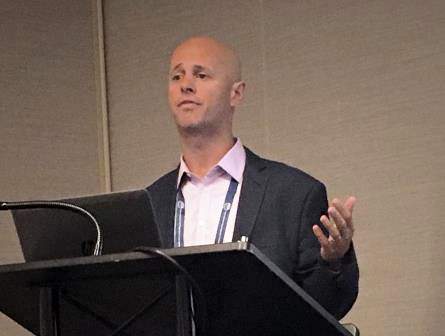
Models of psychiatric illness, particularly depression, come from studies of younger adults “and have failed us in geriatric medicine,” Dr. Brown emphasized. About 3%-7% of adults above age 65 years meet criteria for major depressive disorder, and another 15% have “significant but subthreshold” depressive symptoms, but less than half of depressed seniors have responded to antidepressants in controlled trials. High rates of treatment failure in late-life depression suggest that it has diverse etiologies that have to be identified and targeted to improve outcomes, Dr. Brown said. Frailty, characterized by slowed gait, weak grip, and decreased physical activity and energy, resembles and often co-occurs with late-life depression, giving rise to the concept of a “depressed-frail” phenotype at potentially greater risk of imminent death, he added.
To test that idea, Dr. Brown and his associates analyzed 10-year longitudinal data for 3,075 white and African American adults aged 68-80 years who were free from significant disabilities or functional limitations at baseline. These participants were from the Dynamics of Health, Aging, and Body Composition study, which annually measured body composition, gait, grip strength, comorbidities, and other clinical data. Using a method called latent class analysis, the researchers examined trajectories of depression (defined as a score of at least 10 on the Center for Epidemiologic Studies Depression Scale, slow gait (walking speed less than 1.02 meters per second), and inflammation (serum interleukin-6 [IL-6] levels above 3.24 pg/mL) over time. They also used multivariable regression to understand how each of those features correlated with mortality.
The latent class analysis showed that 22% of participants had either rising or consistently high probabilities of inflammation, slow gait, and depression. Slow gait was associated with inflammation (r = 0.40; P less than .001) and depression (r = 0.49; P less than .001). Inflammation was independently associated with mortality (P less than .001), while slow gait was linked to mortality only in participants with depression that worsened over time (P less than .01). Among the 247 patients with a high level of inflammation and slow gait with increasing or a consistently high level of depression, the 10-year mortality was 85%, the highest of any group of patients in the study, Dr. Brown said.
The study also confirmed the overlap between depression and frailty. Depression and inflammation each independently predicted slow gait, with odds ratios of 1.37 (95% confidence interval, 1.17-1.60) and 1.22 (1.05-1.41), respectively. Slow gait also was a significant predictor of depression (OR, 1.27; 1.08-1.50), even after the investigators accounted for age, sex, body mass index, comorbidities, use of anti-inflammatories, and scores on the Modified Mini-Mental State Examination.
These and other recent findings highlight frailty as a physical manifestation of greater biologic aging, Dr. Brown said. Accordingly, researchers are studying whether combatting age-related deterioration can improve outcomes in late-life depression. Specific protocols under study include anaerobic exercise to reverse mitochondrial dysfunction, anti-inflammatories targeting acute phase proteins (C-reactive protein) and cytokines (IL-6 and tumor necrosis factor–alpha), and treatments that augment dopaminergic neurotransmission, he said.
The National Institutes of Health provided funding. Dr. Brown had no relevant financial disclosures.
SAN FRANCISCO – Patients with unchecked inflammation, depression, and slow gait make up a “depressed frail phenotype at grave risk of death,” Patrick J. Brown, PhD, said at the 2016 congress of the International Psychogeriatric Association..
“There are multiple pathways into this phenotypic cycle. Depression and slow gait share a bidirectional relationship, and inflammation may indirectly lead to depression because of its impact on mobility,” said Dr. Brown, a clinical psychologist in the department of psychiatry at Columbia University, New York. Clinicians should consider aggressive interventions for older patients with depression and frailty, recognizing that exercise and dietary changes may be “much more relevant” than switching or augmenting antidepressants and other psychotropic medications, which can be especially risky for seniors, he said.
Models of psychiatric illness, particularly depression, come from studies of younger adults “and have failed us in geriatric medicine,” Dr. Brown emphasized. About 3%-7% of adults above age 65 years meet criteria for major depressive disorder, and another 15% have “significant but subthreshold” depressive symptoms, but less than half of depressed seniors have responded to antidepressants in controlled trials. High rates of treatment failure in late-life depression suggest that it has diverse etiologies that have to be identified and targeted to improve outcomes, Dr. Brown said. Frailty, characterized by slowed gait, weak grip, and decreased physical activity and energy, resembles and often co-occurs with late-life depression, giving rise to the concept of a “depressed-frail” phenotype at potentially greater risk of imminent death, he added.
To test that idea, Dr. Brown and his associates analyzed 10-year longitudinal data for 3,075 white and African American adults aged 68-80 years who were free from significant disabilities or functional limitations at baseline. These participants were from the Dynamics of Health, Aging, and Body Composition study, which annually measured body composition, gait, grip strength, comorbidities, and other clinical data. Using a method called latent class analysis, the researchers examined trajectories of depression (defined as a score of at least 10 on the Center for Epidemiologic Studies Depression Scale, slow gait (walking speed less than 1.02 meters per second), and inflammation (serum interleukin-6 [IL-6] levels above 3.24 pg/mL) over time. They also used multivariable regression to understand how each of those features correlated with mortality.
The latent class analysis showed that 22% of participants had either rising or consistently high probabilities of inflammation, slow gait, and depression. Slow gait was associated with inflammation (r = 0.40; P less than .001) and depression (r = 0.49; P less than .001). Inflammation was independently associated with mortality (P less than .001), while slow gait was linked to mortality only in participants with depression that worsened over time (P less than .01). Among the 247 patients with a high level of inflammation and slow gait with increasing or a consistently high level of depression, the 10-year mortality was 85%, the highest of any group of patients in the study, Dr. Brown said.
The study also confirmed the overlap between depression and frailty. Depression and inflammation each independently predicted slow gait, with odds ratios of 1.37 (95% confidence interval, 1.17-1.60) and 1.22 (1.05-1.41), respectively. Slow gait also was a significant predictor of depression (OR, 1.27; 1.08-1.50), even after the investigators accounted for age, sex, body mass index, comorbidities, use of anti-inflammatories, and scores on the Modified Mini-Mental State Examination.
These and other recent findings highlight frailty as a physical manifestation of greater biologic aging, Dr. Brown said. Accordingly, researchers are studying whether combatting age-related deterioration can improve outcomes in late-life depression. Specific protocols under study include anaerobic exercise to reverse mitochondrial dysfunction, anti-inflammatories targeting acute phase proteins (C-reactive protein) and cytokines (IL-6 and tumor necrosis factor–alpha), and treatments that augment dopaminergic neurotransmission, he said.
The National Institutes of Health provided funding. Dr. Brown had no relevant financial disclosures.
SAN FRANCISCO – Patients with unchecked inflammation, depression, and slow gait make up a “depressed frail phenotype at grave risk of death,” Patrick J. Brown, PhD, said at the 2016 congress of the International Psychogeriatric Association..
“There are multiple pathways into this phenotypic cycle. Depression and slow gait share a bidirectional relationship, and inflammation may indirectly lead to depression because of its impact on mobility,” said Dr. Brown, a clinical psychologist in the department of psychiatry at Columbia University, New York. Clinicians should consider aggressive interventions for older patients with depression and frailty, recognizing that exercise and dietary changes may be “much more relevant” than switching or augmenting antidepressants and other psychotropic medications, which can be especially risky for seniors, he said.
Models of psychiatric illness, particularly depression, come from studies of younger adults “and have failed us in geriatric medicine,” Dr. Brown emphasized. About 3%-7% of adults above age 65 years meet criteria for major depressive disorder, and another 15% have “significant but subthreshold” depressive symptoms, but less than half of depressed seniors have responded to antidepressants in controlled trials. High rates of treatment failure in late-life depression suggest that it has diverse etiologies that have to be identified and targeted to improve outcomes, Dr. Brown said. Frailty, characterized by slowed gait, weak grip, and decreased physical activity and energy, resembles and often co-occurs with late-life depression, giving rise to the concept of a “depressed-frail” phenotype at potentially greater risk of imminent death, he added.
To test that idea, Dr. Brown and his associates analyzed 10-year longitudinal data for 3,075 white and African American adults aged 68-80 years who were free from significant disabilities or functional limitations at baseline. These participants were from the Dynamics of Health, Aging, and Body Composition study, which annually measured body composition, gait, grip strength, comorbidities, and other clinical data. Using a method called latent class analysis, the researchers examined trajectories of depression (defined as a score of at least 10 on the Center for Epidemiologic Studies Depression Scale, slow gait (walking speed less than 1.02 meters per second), and inflammation (serum interleukin-6 [IL-6] levels above 3.24 pg/mL) over time. They also used multivariable regression to understand how each of those features correlated with mortality.
The latent class analysis showed that 22% of participants had either rising or consistently high probabilities of inflammation, slow gait, and depression. Slow gait was associated with inflammation (r = 0.40; P less than .001) and depression (r = 0.49; P less than .001). Inflammation was independently associated with mortality (P less than .001), while slow gait was linked to mortality only in participants with depression that worsened over time (P less than .01). Among the 247 patients with a high level of inflammation and slow gait with increasing or a consistently high level of depression, the 10-year mortality was 85%, the highest of any group of patients in the study, Dr. Brown said.
The study also confirmed the overlap between depression and frailty. Depression and inflammation each independently predicted slow gait, with odds ratios of 1.37 (95% confidence interval, 1.17-1.60) and 1.22 (1.05-1.41), respectively. Slow gait also was a significant predictor of depression (OR, 1.27; 1.08-1.50), even after the investigators accounted for age, sex, body mass index, comorbidities, use of anti-inflammatories, and scores on the Modified Mini-Mental State Examination.
These and other recent findings highlight frailty as a physical manifestation of greater biologic aging, Dr. Brown said. Accordingly, researchers are studying whether combatting age-related deterioration can improve outcomes in late-life depression. Specific protocols under study include anaerobic exercise to reverse mitochondrial dysfunction, anti-inflammatories targeting acute phase proteins (C-reactive protein) and cytokines (IL-6 and tumor necrosis factor–alpha), and treatments that augment dopaminergic neurotransmission, he said.
The National Institutes of Health provided funding. Dr. Brown had no relevant financial disclosures.
AT IPA 2016
Key clinical point: Older adults with unchecked inflammation, depression, and slow gait are at high risk of death.
Major finding: The 10-year mortality was 85% among participants with increasing or consistently high levels of depression, and consistently high levels of inflammation and a slow gait.
Data source: A longitudinal analysis of 3,075 adults aged 68-80 years who were functioning well at initial evaluation.
Disclosures: The National Institutes of Health provided funding. Dr. Brown had no relevant financial disclosures.

GAD tied to twice the risk of cancer mortality in men
VIENNA – Generalized anxiety disorder in men over age 40 was independently associated with a greater than twofold increased risk of death due to cancer during 15 years of follow-up, compared with men without the psychiatric disorder, in a large longitudinal population-based study, Olivia Remes reported at the annual congress of the European College of Neuropsychopharmacology.
In contrast, women with generalized anxiety disorder (GAD) were at no increased risk for cancer mortality, according to Ms. Remes, a PhD candidate in the department of public health and primary care at the University of Cambridge, England.

“I think an important message of this study is that anxiety is not just a personality trait,” she said in an interview. “In some cases, it may be more than worries and stress; it can represent a possible marker for future ill physical health that general practitioners and psychiatrists ought to be aware of.”
This creates a dilemma, because individuals with GAD typically are high users of health care resources. They frequently present in physicians’ offices and emergency departments with a wide range of physical complaints, including stomach pain, breathing difficulty, fatigue, nausea, or peripheral numbness.
Ms. Remes presented an analysis of 7,139 men and 8,799 women over age 40 at enrollment in the European Prospective Investigation of Cancer–Norfolk Study from the period of 1996-2000. At entry, the patients underwent a physical examination and completed numerous health-related questionnaires. Among these was the Health and Life Experiences Questionnaire (HLEQ), the responses to which enabled investigators to identify 1.8% of the men and 2.4% of women as meeting DSM-IV diagnostic criteria for GAD.
During 15 years of follow-up, 796 men and 648 women died of cancer. In multivariate analysis, men with GAD were at a 2.14-fold increased risk of death due to cancer. This analysis was extensively adjusted for potential confounders, including age, marital status, education level, socioeconomic status, major chronic physical illnesses, smoking, alcohol intake, major depressive disorder, body mass index, physical activity level, and the use of antidepressants or antihypnotic agents.
This was the first large, long-term study to examine the relationship between GAD and cancer mortality. Prior studies yielded conflicting results but were limited by small sample size and/or short follow-up, Ms. Remes said.
Even with more than 1,400 cancer deaths in the study, the sample size is too small to say whether GAD in men is preferentially associated with death due to any specific type of cancer.
Severe chronic anxiety has been linked to increased systemic inflammation, an observation that points to a possible mechanism by which GAD might increase affected individuals’ risk of fatal cancer as well as cardiovascular disease, chronic lung disease, and other conditions where inflammation figures prominently. But that doesn’t explain the gender difference in cancer mortality risk, the source of which remains speculative. It’s not the result of men being more likely to be smokers or to abuse alcohol, since those carcinogenic lifestyle factors were controlled for in the multivariate analysis, she observed.
One hypothetical possibility is that men with GAD who develop a malignancy might be more likely to delay seeking medical attention for it than might men without the anxiety disorder. Ms. Remes and her coinvestigators plan to explore this possibility in a roundabout way by analyzing the Norfolk study database looking for differences between men with and without GAD in the time from cancer diagnosis to death.
To eliminate the possibility that GAD in men might be triggered by an occult and ultimately fatal cancer, the investigators reanalyzed the Norfolk study data after excluding deaths that occurred during the first 5 years of follow-up. The results remained unchanged, according to Ms. Remes.
She reported having no financial conflicts regarding this study, which was sponsored by the U.K. Medical Research Council and Cancer Research UK.
VIENNA – Generalized anxiety disorder in men over age 40 was independently associated with a greater than twofold increased risk of death due to cancer during 15 years of follow-up, compared with men without the psychiatric disorder, in a large longitudinal population-based study, Olivia Remes reported at the annual congress of the European College of Neuropsychopharmacology.
In contrast, women with generalized anxiety disorder (GAD) were at no increased risk for cancer mortality, according to Ms. Remes, a PhD candidate in the department of public health and primary care at the University of Cambridge, England.
“I think an important message of this study is that anxiety is not just a personality trait,” she said in an interview. “In some cases, it may be more than worries and stress; it can represent a possible marker for future ill physical health that general practitioners and psychiatrists ought to be aware of.”
This creates a dilemma, because individuals with GAD typically are high users of health care resources. They frequently present in physicians’ offices and emergency departments with a wide range of physical complaints, including stomach pain, breathing difficulty, fatigue, nausea, or peripheral numbness.
Ms. Remes presented an analysis of 7,139 men and 8,799 women over age 40 at enrollment in the European Prospective Investigation of Cancer–Norfolk Study from the period of 1996-2000. At entry, the patients underwent a physical examination and completed numerous health-related questionnaires. Among these was the Health and Life Experiences Questionnaire (HLEQ), the responses to which enabled investigators to identify 1.8% of the men and 2.4% of women as meeting DSM-IV diagnostic criteria for GAD.
During 15 years of follow-up, 796 men and 648 women died of cancer. In multivariate analysis, men with GAD were at a 2.14-fold increased risk of death due to cancer. This analysis was extensively adjusted for potential confounders, including age, marital status, education level, socioeconomic status, major chronic physical illnesses, smoking, alcohol intake, major depressive disorder, body mass index, physical activity level, and the use of antidepressants or antihypnotic agents.
This was the first large, long-term study to examine the relationship between GAD and cancer mortality. Prior studies yielded conflicting results but were limited by small sample size and/or short follow-up, Ms. Remes said.
Even with more than 1,400 cancer deaths in the study, the sample size is too small to say whether GAD in men is preferentially associated with death due to any specific type of cancer.
Severe chronic anxiety has been linked to increased systemic inflammation, an observation that points to a possible mechanism by which GAD might increase affected individuals’ risk of fatal cancer as well as cardiovascular disease, chronic lung disease, and other conditions where inflammation figures prominently. But that doesn’t explain the gender difference in cancer mortality risk, the source of which remains speculative. It’s not the result of men being more likely to be smokers or to abuse alcohol, since those carcinogenic lifestyle factors were controlled for in the multivariate analysis, she observed.
One hypothetical possibility is that men with GAD who develop a malignancy might be more likely to delay seeking medical attention for it than might men without the anxiety disorder. Ms. Remes and her coinvestigators plan to explore this possibility in a roundabout way by analyzing the Norfolk study database looking for differences between men with and without GAD in the time from cancer diagnosis to death.
To eliminate the possibility that GAD in men might be triggered by an occult and ultimately fatal cancer, the investigators reanalyzed the Norfolk study data after excluding deaths that occurred during the first 5 years of follow-up. The results remained unchanged, according to Ms. Remes.
She reported having no financial conflicts regarding this study, which was sponsored by the U.K. Medical Research Council and Cancer Research UK.
VIENNA – Generalized anxiety disorder in men over age 40 was independently associated with a greater than twofold increased risk of death due to cancer during 15 years of follow-up, compared with men without the psychiatric disorder, in a large longitudinal population-based study, Olivia Remes reported at the annual congress of the European College of Neuropsychopharmacology.
In contrast, women with generalized anxiety disorder (GAD) were at no increased risk for cancer mortality, according to Ms. Remes, a PhD candidate in the department of public health and primary care at the University of Cambridge, England.
“I think an important message of this study is that anxiety is not just a personality trait,” she said in an interview. “In some cases, it may be more than worries and stress; it can represent a possible marker for future ill physical health that general practitioners and psychiatrists ought to be aware of.”
This creates a dilemma, because individuals with GAD typically are high users of health care resources. They frequently present in physicians’ offices and emergency departments with a wide range of physical complaints, including stomach pain, breathing difficulty, fatigue, nausea, or peripheral numbness.
Ms. Remes presented an analysis of 7,139 men and 8,799 women over age 40 at enrollment in the European Prospective Investigation of Cancer–Norfolk Study from the period of 1996-2000. At entry, the patients underwent a physical examination and completed numerous health-related questionnaires. Among these was the Health and Life Experiences Questionnaire (HLEQ), the responses to which enabled investigators to identify 1.8% of the men and 2.4% of women as meeting DSM-IV diagnostic criteria for GAD.
During 15 years of follow-up, 796 men and 648 women died of cancer. In multivariate analysis, men with GAD were at a 2.14-fold increased risk of death due to cancer. This analysis was extensively adjusted for potential confounders, including age, marital status, education level, socioeconomic status, major chronic physical illnesses, smoking, alcohol intake, major depressive disorder, body mass index, physical activity level, and the use of antidepressants or antihypnotic agents.
This was the first large, long-term study to examine the relationship between GAD and cancer mortality. Prior studies yielded conflicting results but were limited by small sample size and/or short follow-up, Ms. Remes said.
Even with more than 1,400 cancer deaths in the study, the sample size is too small to say whether GAD in men is preferentially associated with death due to any specific type of cancer.
Severe chronic anxiety has been linked to increased systemic inflammation, an observation that points to a possible mechanism by which GAD might increase affected individuals’ risk of fatal cancer as well as cardiovascular disease, chronic lung disease, and other conditions where inflammation figures prominently. But that doesn’t explain the gender difference in cancer mortality risk, the source of which remains speculative. It’s not the result of men being more likely to be smokers or to abuse alcohol, since those carcinogenic lifestyle factors were controlled for in the multivariate analysis, she observed.
One hypothetical possibility is that men with GAD who develop a malignancy might be more likely to delay seeking medical attention for it than might men without the anxiety disorder. Ms. Remes and her coinvestigators plan to explore this possibility in a roundabout way by analyzing the Norfolk study database looking for differences between men with and without GAD in the time from cancer diagnosis to death.
To eliminate the possibility that GAD in men might be triggered by an occult and ultimately fatal cancer, the investigators reanalyzed the Norfolk study data after excluding deaths that occurred during the first 5 years of follow-up. The results remained unchanged, according to Ms. Remes.
She reported having no financial conflicts regarding this study, which was sponsored by the U.K. Medical Research Council and Cancer Research UK.
AT THE ECNP CONGRESS
Key clinical point: Men with generalized anxiety disorder are more than twice as likely to die from cancer, compared with men without the disorder.
Major finding: Men over age 40 with generalized anxiety disorder were 2.14 times more likely to die of cancer within 15 years than were those without the disorder.
Data source: A longitudinal, population-based study of nearly 16,000 Norfolk, England–area adults aged 40 or older who were followed for 15 years.
Disclosures: The U.K. Medical Research Council and Cancer Research UK sponsored the study. The presenter reported having no financial conflicts of interest.

Gonorrhea cluster shows increased antibiotic resistance
ATLANTA – A cluster of gonorrhea cases from the state of Hawaii has been identified as the first in the United States to show decreased susceptibility to ceftriaxone and azithromycin, the two most commonly prescribed drugs used to treat the infection.
“We’re seeing new, troubling signs that our current gonorrhea treatment is losing its effectiveness [but] we’ve not seen a treatment failure in the U.S.,” explained Jonathan Mermin, MD, director of the National Center for HIV/AIDS, Viral Hepatitis, STD, and TB Prevention, during a conference on STD prevention sponsored by the Centers for Disease Control and Prevention.

Isolates were collected from seven individuals in Hawaii during April and May of this year, all of which showed “dramatically higher levels” of resistance to azithromycin in laboratory testing than has normally been seen in the U.S. While large-scale resistance to azithromycin is something the CDC has watched for several months, four of these seven isolates also demonstrated less vulnerability to ceftriaxone, the first time that has occurred. Since 2010, the recommended treatment for gonorrhea has consisted of a single ceftriaxone shot and an oral dose of azithromycin; having a cluster with increased resistance to both is problematic on several levels, infectious disease experts say.
According to Alan Katz, MD, of the University of Hawaii in Honolulu, “the state of Hawaii has been a seminal site for monitoring Neisseria gonorrhoeae resistance, and the Hawaii state Department of Health has been one of the original CDC gonococcal isolate surveillance program surveillance sites since its inception in 1986.” Hawaii typically sees more gonorrhea cases than the rest of the country, partially due its location between the U.S. and Asia, the latter of which Dr. Katz explained is “where we believe many [drug]-resistant strains originate.”
Currently, trials are underway to identify a new treatment that can replace the current regimen, with promising early results. The drug in question, known as ETX0914, is a single-dose oral therapy that would substitute for ceftriaxone in the currently recommended treatment protocol. Stephanie N. Taylor, MD, of Louisiana State University in New Orleans, shared results of a randomized controlled trial, in which 179 subjects – 167 males and 12 females – received either 2g or 3g doses of only ETX0914, or only ceftriaxone.
A total of 47 subjects received the 3g ETX0914 dose, while 49 subjects received the 2g dose, and the rest received ceftriaxone. All patients (47/47) receiving the 3g dose were cured, and 98% (48/49) in the 2g dose were cured, with only 21 subjects (12%) in the entire study population reporting mild side effects.
“We are very pleased with these results and look forward to seeing ETX0914 advance through additional clinical trials,” Dr. Taylor said in a statement.
For now, health care providers are encouraged to continue with the currently recommended drug therapy, which is still effective. In a statement, Gail Bolan, MD, director of the Division of STD Prevention at the CDC, reminded providers that infections should be treated immediately in order for the drugs to have their full impact.
“All health care providers should also promptly report any suspected treatment failure to local health officials and CDC to ensure rapid response to cases or clusters of concern,” she added.
ATLANTA – A cluster of gonorrhea cases from the state of Hawaii has been identified as the first in the United States to show decreased susceptibility to ceftriaxone and azithromycin, the two most commonly prescribed drugs used to treat the infection.
“We’re seeing new, troubling signs that our current gonorrhea treatment is losing its effectiveness [but] we’ve not seen a treatment failure in the U.S.,” explained Jonathan Mermin, MD, director of the National Center for HIV/AIDS, Viral Hepatitis, STD, and TB Prevention, during a conference on STD prevention sponsored by the Centers for Disease Control and Prevention.
Isolates were collected from seven individuals in Hawaii during April and May of this year, all of which showed “dramatically higher levels” of resistance to azithromycin in laboratory testing than has normally been seen in the U.S. While large-scale resistance to azithromycin is something the CDC has watched for several months, four of these seven isolates also demonstrated less vulnerability to ceftriaxone, the first time that has occurred. Since 2010, the recommended treatment for gonorrhea has consisted of a single ceftriaxone shot and an oral dose of azithromycin; having a cluster with increased resistance to both is problematic on several levels, infectious disease experts say.
According to Alan Katz, MD, of the University of Hawaii in Honolulu, “the state of Hawaii has been a seminal site for monitoring Neisseria gonorrhoeae resistance, and the Hawaii state Department of Health has been one of the original CDC gonococcal isolate surveillance program surveillance sites since its inception in 1986.” Hawaii typically sees more gonorrhea cases than the rest of the country, partially due its location between the U.S. and Asia, the latter of which Dr. Katz explained is “where we believe many [drug]-resistant strains originate.”
Currently, trials are underway to identify a new treatment that can replace the current regimen, with promising early results. The drug in question, known as ETX0914, is a single-dose oral therapy that would substitute for ceftriaxone in the currently recommended treatment protocol. Stephanie N. Taylor, MD, of Louisiana State University in New Orleans, shared results of a randomized controlled trial, in which 179 subjects – 167 males and 12 females – received either 2g or 3g doses of only ETX0914, or only ceftriaxone.
A total of 47 subjects received the 3g ETX0914 dose, while 49 subjects received the 2g dose, and the rest received ceftriaxone. All patients (47/47) receiving the 3g dose were cured, and 98% (48/49) in the 2g dose were cured, with only 21 subjects (12%) in the entire study population reporting mild side effects.
“We are very pleased with these results and look forward to seeing ETX0914 advance through additional clinical trials,” Dr. Taylor said in a statement.
For now, health care providers are encouraged to continue with the currently recommended drug therapy, which is still effective. In a statement, Gail Bolan, MD, director of the Division of STD Prevention at the CDC, reminded providers that infections should be treated immediately in order for the drugs to have their full impact.
“All health care providers should also promptly report any suspected treatment failure to local health officials and CDC to ensure rapid response to cases or clusters of concern,” she added.
ATLANTA – A cluster of gonorrhea cases from the state of Hawaii has been identified as the first in the United States to show decreased susceptibility to ceftriaxone and azithromycin, the two most commonly prescribed drugs used to treat the infection.
“We’re seeing new, troubling signs that our current gonorrhea treatment is losing its effectiveness [but] we’ve not seen a treatment failure in the U.S.,” explained Jonathan Mermin, MD, director of the National Center for HIV/AIDS, Viral Hepatitis, STD, and TB Prevention, during a conference on STD prevention sponsored by the Centers for Disease Control and Prevention.
Isolates were collected from seven individuals in Hawaii during April and May of this year, all of which showed “dramatically higher levels” of resistance to azithromycin in laboratory testing than has normally been seen in the U.S. While large-scale resistance to azithromycin is something the CDC has watched for several months, four of these seven isolates also demonstrated less vulnerability to ceftriaxone, the first time that has occurred. Since 2010, the recommended treatment for gonorrhea has consisted of a single ceftriaxone shot and an oral dose of azithromycin; having a cluster with increased resistance to both is problematic on several levels, infectious disease experts say.
According to Alan Katz, MD, of the University of Hawaii in Honolulu, “the state of Hawaii has been a seminal site for monitoring Neisseria gonorrhoeae resistance, and the Hawaii state Department of Health has been one of the original CDC gonococcal isolate surveillance program surveillance sites since its inception in 1986.” Hawaii typically sees more gonorrhea cases than the rest of the country, partially due its location between the U.S. and Asia, the latter of which Dr. Katz explained is “where we believe many [drug]-resistant strains originate.”
Currently, trials are underway to identify a new treatment that can replace the current regimen, with promising early results. The drug in question, known as ETX0914, is a single-dose oral therapy that would substitute for ceftriaxone in the currently recommended treatment protocol. Stephanie N. Taylor, MD, of Louisiana State University in New Orleans, shared results of a randomized controlled trial, in which 179 subjects – 167 males and 12 females – received either 2g or 3g doses of only ETX0914, or only ceftriaxone.
A total of 47 subjects received the 3g ETX0914 dose, while 49 subjects received the 2g dose, and the rest received ceftriaxone. All patients (47/47) receiving the 3g dose were cured, and 98% (48/49) in the 2g dose were cured, with only 21 subjects (12%) in the entire study population reporting mild side effects.
“We are very pleased with these results and look forward to seeing ETX0914 advance through additional clinical trials,” Dr. Taylor said in a statement.
For now, health care providers are encouraged to continue with the currently recommended drug therapy, which is still effective. In a statement, Gail Bolan, MD, director of the Division of STD Prevention at the CDC, reminded providers that infections should be treated immediately in order for the drugs to have their full impact.
“All health care providers should also promptly report any suspected treatment failure to local health officials and CDC to ensure rapid response to cases or clusters of concern,” she added.
AT THE 2016 STD PREVENTION CONFERENCE

Back pain: Let’s get it straight!
Back pain is a common complaint among adolescents. But there are several misconceptions about back pain that lead to excessive referrals and unnecessary imaging.
One of the most common of these misconceptions is that back pain in adolescents is caused by their carrying a heavy backpack. When this was researched, carrying a heavy backpack had a weak association with back pain,1,2 but because so many relate the two, the American Academy of Pediatrics came out with recommendations limiting the weight to 20% of the child’s body weight.3

Another misconception regarding back pain in children is that the cause is likely serious and needs a prompt work-up. A study followed 560 children who were diagnosed with low back pain and idiopathic scoliosis. In only 9% of cases was an underlying pathologic condition found: 29 patients had spondylolysis or spondylolisthesis, 9 had Scheuermann’s kyphosis, 5 had a syrinx, 2 had a herniated disk, 1 had hydromyelia, 1 had a tethered cord, and 1 had an intraspinal tumor.4
As with all diagnoses, a detailed history is very important. Is the pain acute or chronic? Does the pain radiate? Is there nighttime pain? Where exactly is the pain? Commonly, with acute onset there is an association of new activity or trauma. A good social history is also important because complaints of back pain are high on the list with psychosomatic issues as well.
The physical exam should include inspection of the back with the patient standing, bent forward, and in a hyperextended position. Identifying curvatures of the spine and pinpointing what increases the pain are helpful in getting the correct diagnosis. Middle back pain associated with an excessively rounded back, or kyphosis of the thoracic spine, is known as Scheuermann’s kyphosis. This is due to the vertebrae becoming wedged.5
Body habitus also is important to note. Adolescents with large breasts may complain of upper back pain especially, if they are not wearing a supportive bra. Weak abdominal muscles can also give rise to back pain, most commonly in the lower back. Tight hamstrings can cause posterior rotation of the pelvis, which can result in lumbosacral pain.
More worrisome causes of back pain are spondylosis or stress fractures; these are usually caused by a sports trauma such as gymnastics or diving, but also can be caused by a rapid growth spurt.1 Pain is usually mild initially. Spondylolisthesis is the forward movement of one vertebra on another. This causes pain in the lumbosacral area, with radiation into the lower extremities and weakness.4
Infection and tumor are rare causes of low back pain. Both can cause nighttime pain. Infection in the intervertebral disk space, or diskitis, is more common in younger children. Pain can be described in the back or the abdominal area.1 Limping or refusal to walk are also noted.
Tumors, although rare, are what parents worry the most about. Osteoid osteoma is the most common form, and should be considered whenever a scoliosis is of new onset or advances quickly.6
A work-up for acute low back pain associated with minor trauma and no radiation or limitation to movement can be done conservatively. If the physical exam reveals muscle imbalances or tightness and abdominal weakness, referral to physical therapy is warranted.
If low back pain is associated with abnormal findings, then an x-ray should be done. Anteroposterior and lateral views are usually sufficient. Oblique views should be added if there is suspicion of a stress fracture.
Referral to an orthopedist is warranted if there are any bowel or bladder changes, significant weakness, and/or sensory changes. A bone scan, CT scan and MRI are more definitive tests. The bone scan is not very sensitive (61%) but has a high specificity (80%). CT scans show soft tissue, but no marrow elements are seen, so it is not as helpful with a herniated disk.7
In this ever-changing medical arena, taking a detailed history and doing a good exam will not only save a lot of time but also decrease the number of unnecessary referrals, which is the name of the game!
References
1. J Pediatr Orthop. 2006 May-Jun;26(3):358-63.
2. Pediatrics. 2003 Apr;111(4 Pt 1):822-8.
3. American Academy of Pediatrics. Backpack safety.
4. J Bone Joint Surg Am. 1997 Mar;79(3):364-8.
6. J Paediatr Child Health. 2000 Jun;36(3):208-12.
7. Skeletal Radiol. 2005 Feb;34(2):63-73.
Dr. Pearce is a pediatrician in Frankfort, Ill.
Back pain is a common complaint among adolescents. But there are several misconceptions about back pain that lead to excessive referrals and unnecessary imaging.
One of the most common of these misconceptions is that back pain in adolescents is caused by their carrying a heavy backpack. When this was researched, carrying a heavy backpack had a weak association with back pain,1,2 but because so many relate the two, the American Academy of Pediatrics came out with recommendations limiting the weight to 20% of the child’s body weight.3
Another misconception regarding back pain in children is that the cause is likely serious and needs a prompt work-up. A study followed 560 children who were diagnosed with low back pain and idiopathic scoliosis. In only 9% of cases was an underlying pathologic condition found: 29 patients had spondylolysis or spondylolisthesis, 9 had Scheuermann’s kyphosis, 5 had a syrinx, 2 had a herniated disk, 1 had hydromyelia, 1 had a tethered cord, and 1 had an intraspinal tumor.4
As with all diagnoses, a detailed history is very important. Is the pain acute or chronic? Does the pain radiate? Is there nighttime pain? Where exactly is the pain? Commonly, with acute onset there is an association of new activity or trauma. A good social history is also important because complaints of back pain are high on the list with psychosomatic issues as well.
The physical exam should include inspection of the back with the patient standing, bent forward, and in a hyperextended position. Identifying curvatures of the spine and pinpointing what increases the pain are helpful in getting the correct diagnosis. Middle back pain associated with an excessively rounded back, or kyphosis of the thoracic spine, is known as Scheuermann’s kyphosis. This is due to the vertebrae becoming wedged.5
Body habitus also is important to note. Adolescents with large breasts may complain of upper back pain especially, if they are not wearing a supportive bra. Weak abdominal muscles can also give rise to back pain, most commonly in the lower back. Tight hamstrings can cause posterior rotation of the pelvis, which can result in lumbosacral pain.
More worrisome causes of back pain are spondylosis or stress fractures; these are usually caused by a sports trauma such as gymnastics or diving, but also can be caused by a rapid growth spurt.1 Pain is usually mild initially. Spondylolisthesis is the forward movement of one vertebra on another. This causes pain in the lumbosacral area, with radiation into the lower extremities and weakness.4
Infection and tumor are rare causes of low back pain. Both can cause nighttime pain. Infection in the intervertebral disk space, or diskitis, is more common in younger children. Pain can be described in the back or the abdominal area.1 Limping or refusal to walk are also noted.
Tumors, although rare, are what parents worry the most about. Osteoid osteoma is the most common form, and should be considered whenever a scoliosis is of new onset or advances quickly.6
A work-up for acute low back pain associated with minor trauma and no radiation or limitation to movement can be done conservatively. If the physical exam reveals muscle imbalances or tightness and abdominal weakness, referral to physical therapy is warranted.
If low back pain is associated with abnormal findings, then an x-ray should be done. Anteroposterior and lateral views are usually sufficient. Oblique views should be added if there is suspicion of a stress fracture.
Referral to an orthopedist is warranted if there are any bowel or bladder changes, significant weakness, and/or sensory changes. A bone scan, CT scan and MRI are more definitive tests. The bone scan is not very sensitive (61%) but has a high specificity (80%). CT scans show soft tissue, but no marrow elements are seen, so it is not as helpful with a herniated disk.7
In this ever-changing medical arena, taking a detailed history and doing a good exam will not only save a lot of time but also decrease the number of unnecessary referrals, which is the name of the game!
References
1. J Pediatr Orthop. 2006 May-Jun;26(3):358-63.
2. Pediatrics. 2003 Apr;111(4 Pt 1):822-8.
3. American Academy of Pediatrics. Backpack safety.
4. J Bone Joint Surg Am. 1997 Mar;79(3):364-8.
6. J Paediatr Child Health. 2000 Jun;36(3):208-12.
7. Skeletal Radiol. 2005 Feb;34(2):63-73.
Dr. Pearce is a pediatrician in Frankfort, Ill.
Back pain is a common complaint among adolescents. But there are several misconceptions about back pain that lead to excessive referrals and unnecessary imaging.
One of the most common of these misconceptions is that back pain in adolescents is caused by their carrying a heavy backpack. When this was researched, carrying a heavy backpack had a weak association with back pain,1,2 but because so many relate the two, the American Academy of Pediatrics came out with recommendations limiting the weight to 20% of the child’s body weight.3
Another misconception regarding back pain in children is that the cause is likely serious and needs a prompt work-up. A study followed 560 children who were diagnosed with low back pain and idiopathic scoliosis. In only 9% of cases was an underlying pathologic condition found: 29 patients had spondylolysis or spondylolisthesis, 9 had Scheuermann’s kyphosis, 5 had a syrinx, 2 had a herniated disk, 1 had hydromyelia, 1 had a tethered cord, and 1 had an intraspinal tumor.4
As with all diagnoses, a detailed history is very important. Is the pain acute or chronic? Does the pain radiate? Is there nighttime pain? Where exactly is the pain? Commonly, with acute onset there is an association of new activity or trauma. A good social history is also important because complaints of back pain are high on the list with psychosomatic issues as well.
The physical exam should include inspection of the back with the patient standing, bent forward, and in a hyperextended position. Identifying curvatures of the spine and pinpointing what increases the pain are helpful in getting the correct diagnosis. Middle back pain associated with an excessively rounded back, or kyphosis of the thoracic spine, is known as Scheuermann’s kyphosis. This is due to the vertebrae becoming wedged.5
Body habitus also is important to note. Adolescents with large breasts may complain of upper back pain especially, if they are not wearing a supportive bra. Weak abdominal muscles can also give rise to back pain, most commonly in the lower back. Tight hamstrings can cause posterior rotation of the pelvis, which can result in lumbosacral pain.
More worrisome causes of back pain are spondylosis or stress fractures; these are usually caused by a sports trauma such as gymnastics or diving, but also can be caused by a rapid growth spurt.1 Pain is usually mild initially. Spondylolisthesis is the forward movement of one vertebra on another. This causes pain in the lumbosacral area, with radiation into the lower extremities and weakness.4
Infection and tumor are rare causes of low back pain. Both can cause nighttime pain. Infection in the intervertebral disk space, or diskitis, is more common in younger children. Pain can be described in the back or the abdominal area.1 Limping or refusal to walk are also noted.
Tumors, although rare, are what parents worry the most about. Osteoid osteoma is the most common form, and should be considered whenever a scoliosis is of new onset or advances quickly.6
A work-up for acute low back pain associated with minor trauma and no radiation or limitation to movement can be done conservatively. If the physical exam reveals muscle imbalances or tightness and abdominal weakness, referral to physical therapy is warranted.
If low back pain is associated with abnormal findings, then an x-ray should be done. Anteroposterior and lateral views are usually sufficient. Oblique views should be added if there is suspicion of a stress fracture.
Referral to an orthopedist is warranted if there are any bowel or bladder changes, significant weakness, and/or sensory changes. A bone scan, CT scan and MRI are more definitive tests. The bone scan is not very sensitive (61%) but has a high specificity (80%). CT scans show soft tissue, but no marrow elements are seen, so it is not as helpful with a herniated disk.7
In this ever-changing medical arena, taking a detailed history and doing a good exam will not only save a lot of time but also decrease the number of unnecessary referrals, which is the name of the game!
References
1. J Pediatr Orthop. 2006 May-Jun;26(3):358-63.
2. Pediatrics. 2003 Apr;111(4 Pt 1):822-8.
3. American Academy of Pediatrics. Backpack safety.
4. J Bone Joint Surg Am. 1997 Mar;79(3):364-8.
6. J Paediatr Child Health. 2000 Jun;36(3):208-12.
7. Skeletal Radiol. 2005 Feb;34(2):63-73.
Dr. Pearce is a pediatrician in Frankfort, Ill.

CMS: Bundled payment initiative shows savings
The majority of clinical episode groups participating in the Bundled Payments for Care Improvement initiative are generating Medicare savings, according to a CMS analysis.
The study showed that orthopedic surgery under Model 2 generated savings of $864 per episode, while improving postdischarge outcomes. Cardiovascular surgery episodes under Model 2 did not show any savings, but quality of care was preserved, according to the analysis. In total, 11 out of the 15 clinical episode groups analyzed showed potential savings to Medicare.

“While there is more work to be done, CMS continues to move forward to achieving the administration’s goal to have 50% of traditional Medicare payments tied to alternative payment models by 2018,” Patrick Conway, MD, CMS acting principal deputy administrator and chief medical officer wrote in a blog post. “Bundled payments continue to be an integral part of transforming our health care system by creating innovative care delivery models that support hospitals, doctors, and other providers in their efforts to deliver better care for patients while spending taxpayer dollars more wisely.”
The Bundled Payments for Care Improvement (BPCI) initiative was designed to test whether linking payments for all providers involved in an episode of care reduces Medicare costs, while maintaining or improving quality of care. To participate, BPCI awardees – which include hospitals, physician groups, post-acute care (PAC) providers, and other entities – enter into agreements with the CMS that hold them accountable for total Medicare episode payments. Such agreements specify choices among four payment models, 48 clinical episodes, three episode lengths, and waiver options.
From October 2013 through September 2014, the first full year of the initiative, 94 awardees, including hospitals, physician groups, and post–acute care providers, entered into agreements with the CMS to be held accountable for total Medicare episode payments. Under the initiative, nearly 60,000 episodes of care were initiated, according to the CMS. BPCI-participating providers tended to be larger, operate in more affluent urban areas, and have higher episode costs than providers who did not participate.
An analysis of Model 2 showed that:
• Average standardized Medicare payments for hospitalization and 90 days post discharge were estimated to have declined by $864 per orthopedic surgery episode at BPCI-participating hospitals, compared with nonparticipating hospitals.
• For cardiovascular surgery, there was no statistically significant difference in Medicare payments for the index hospitalization and the 90-day post discharge period between the BPCI and comparison episodes.
• For cardiovascular surgery, there were no statistically significant changes in hospital readmissions within the 30 or 90 days post discharge, or any of the assessment-based quality measures between the BPCI and comparison populations.
For most clinical episode groups in Model 3, there were no statistically significant differences between BPCI and comparison episodes from the baseline to the intervention period in total Medicare standardized allowed payments during the qualifying inpatient stay and 90-day postdischarge period or in quality measures, the analysis found.
Over the next year, the CMS plans to have significantly more data available on the initiative, enabling the agency to better estimate effects on costs and quality, according to Dr. Conway. Future evaluation reports are expected to have greater ability to detect changes in payment and quality because of larger sample sizes and the recent growth in participation in the initiative.
On Twitter @legal_med
The majority of clinical episode groups participating in the Bundled Payments for Care Improvement initiative are generating Medicare savings, according to a CMS analysis.
The study showed that orthopedic surgery under Model 2 generated savings of $864 per episode, while improving postdischarge outcomes. Cardiovascular surgery episodes under Model 2 did not show any savings, but quality of care was preserved, according to the analysis. In total, 11 out of the 15 clinical episode groups analyzed showed potential savings to Medicare.
“While there is more work to be done, CMS continues to move forward to achieving the administration’s goal to have 50% of traditional Medicare payments tied to alternative payment models by 2018,” Patrick Conway, MD, CMS acting principal deputy administrator and chief medical officer wrote in a blog post. “Bundled payments continue to be an integral part of transforming our health care system by creating innovative care delivery models that support hospitals, doctors, and other providers in their efforts to deliver better care for patients while spending taxpayer dollars more wisely.”
The Bundled Payments for Care Improvement (BPCI) initiative was designed to test whether linking payments for all providers involved in an episode of care reduces Medicare costs, while maintaining or improving quality of care. To participate, BPCI awardees – which include hospitals, physician groups, post-acute care (PAC) providers, and other entities – enter into agreements with the CMS that hold them accountable for total Medicare episode payments. Such agreements specify choices among four payment models, 48 clinical episodes, three episode lengths, and waiver options.
From October 2013 through September 2014, the first full year of the initiative, 94 awardees, including hospitals, physician groups, and post–acute care providers, entered into agreements with the CMS to be held accountable for total Medicare episode payments. Under the initiative, nearly 60,000 episodes of care were initiated, according to the CMS. BPCI-participating providers tended to be larger, operate in more affluent urban areas, and have higher episode costs than providers who did not participate.
An analysis of Model 2 showed that:
• Average standardized Medicare payments for hospitalization and 90 days post discharge were estimated to have declined by $864 per orthopedic surgery episode at BPCI-participating hospitals, compared with nonparticipating hospitals.
• For cardiovascular surgery, there was no statistically significant difference in Medicare payments for the index hospitalization and the 90-day post discharge period between the BPCI and comparison episodes.
• For cardiovascular surgery, there were no statistically significant changes in hospital readmissions within the 30 or 90 days post discharge, or any of the assessment-based quality measures between the BPCI and comparison populations.
For most clinical episode groups in Model 3, there were no statistically significant differences between BPCI and comparison episodes from the baseline to the intervention period in total Medicare standardized allowed payments during the qualifying inpatient stay and 90-day postdischarge period or in quality measures, the analysis found.
Over the next year, the CMS plans to have significantly more data available on the initiative, enabling the agency to better estimate effects on costs and quality, according to Dr. Conway. Future evaluation reports are expected to have greater ability to detect changes in payment and quality because of larger sample sizes and the recent growth in participation in the initiative.
On Twitter @legal_med
The majority of clinical episode groups participating in the Bundled Payments for Care Improvement initiative are generating Medicare savings, according to a CMS analysis.
The study showed that orthopedic surgery under Model 2 generated savings of $864 per episode, while improving postdischarge outcomes. Cardiovascular surgery episodes under Model 2 did not show any savings, but quality of care was preserved, according to the analysis. In total, 11 out of the 15 clinical episode groups analyzed showed potential savings to Medicare.
“While there is more work to be done, CMS continues to move forward to achieving the administration’s goal to have 50% of traditional Medicare payments tied to alternative payment models by 2018,” Patrick Conway, MD, CMS acting principal deputy administrator and chief medical officer wrote in a blog post. “Bundled payments continue to be an integral part of transforming our health care system by creating innovative care delivery models that support hospitals, doctors, and other providers in their efforts to deliver better care for patients while spending taxpayer dollars more wisely.”
The Bundled Payments for Care Improvement (BPCI) initiative was designed to test whether linking payments for all providers involved in an episode of care reduces Medicare costs, while maintaining or improving quality of care. To participate, BPCI awardees – which include hospitals, physician groups, post-acute care (PAC) providers, and other entities – enter into agreements with the CMS that hold them accountable for total Medicare episode payments. Such agreements specify choices among four payment models, 48 clinical episodes, three episode lengths, and waiver options.
From October 2013 through September 2014, the first full year of the initiative, 94 awardees, including hospitals, physician groups, and post–acute care providers, entered into agreements with the CMS to be held accountable for total Medicare episode payments. Under the initiative, nearly 60,000 episodes of care were initiated, according to the CMS. BPCI-participating providers tended to be larger, operate in more affluent urban areas, and have higher episode costs than providers who did not participate.
An analysis of Model 2 showed that:
• Average standardized Medicare payments for hospitalization and 90 days post discharge were estimated to have declined by $864 per orthopedic surgery episode at BPCI-participating hospitals, compared with nonparticipating hospitals.
• For cardiovascular surgery, there was no statistically significant difference in Medicare payments for the index hospitalization and the 90-day post discharge period between the BPCI and comparison episodes.
• For cardiovascular surgery, there were no statistically significant changes in hospital readmissions within the 30 or 90 days post discharge, or any of the assessment-based quality measures between the BPCI and comparison populations.
For most clinical episode groups in Model 3, there were no statistically significant differences between BPCI and comparison episodes from the baseline to the intervention period in total Medicare standardized allowed payments during the qualifying inpatient stay and 90-day postdischarge period or in quality measures, the analysis found.
Over the next year, the CMS plans to have significantly more data available on the initiative, enabling the agency to better estimate effects on costs and quality, according to Dr. Conway. Future evaluation reports are expected to have greater ability to detect changes in payment and quality because of larger sample sizes and the recent growth in participation in the initiative.
On Twitter @legal_med

DEA licenses: Is it time for a graduated approach?
I sometimes think about giving up my DEA certificate. I can’t be the only one.
It’s not strictly about the money. $731 every 3 years is small change, compared with my rent, staff salaries, and malpractice insurance, although the savings would be nice.
Part of it is the desire to unfetter myself from prescribing controlled substances. I wouldn’t have to worry about drug seekers hitting me up, or dealing with the paperwork and pharmacy calls, or doing background checks on the state monitoring site.

But, realistically, I can’t do that. Even though I try to limit my narcotic scripts, the DEA number covers many other things, such as Lyrica, Vimpat, and Klonopin for epilepsy patients; Provigil for MS fatigue; and Valium to help someone get through an MRI scan.
There are, of course, the occasional narcotics. I don’t have many patients on chronic narcotics any more, but I’m sure all of us have a few migraine patients who keep an emergency supply of some narcotic (say, 5-10 pills) on hand to be used in lieu of an ER trip. They may only get it filled once a year, which doesn’t seem unreasonable.
I think it would be unfair to make patients, many of whom I’ve seen for many years, have to find a new neurologist over such things.
But what if there were a graduated DEA license? Say, one that limited me to schedules III-V or even just level IV and V substances? That would probably make life easier. The latter would still allow tramadol and Stadol-NS for breakthrough migraines, while adding level III would still allow Tylenol with codeine No. 3. Either way, it would take oxycodone, hydrocodone, morphine, amphetamines, and other drugs of greater abuse potential out of my hands. A few less things to worry about.
There are pros and cons of this. From one view, it would limit the number of docs prescribing higher level substances, making them easier to track and control. On the other hand, patients who need them, many of whom are legitimately in pain, would be forced to change to a dwindling number of narcotic prescribers. Many of these doctors would likely start to work on a cash-only basis knowing the demand they’d be in. Who knows where that would lead? Like so many things in medicine, there are always going to be unintended consequences.
For the time being I have no plans to drop my DEA license, but it would be nice to have options besides all or nothing.
Dr. Block has a solo neurology practice in Scottsdale, Ariz.
I sometimes think about giving up my DEA certificate. I can’t be the only one.
It’s not strictly about the money. $731 every 3 years is small change, compared with my rent, staff salaries, and malpractice insurance, although the savings would be nice.
Part of it is the desire to unfetter myself from prescribing controlled substances. I wouldn’t have to worry about drug seekers hitting me up, or dealing with the paperwork and pharmacy calls, or doing background checks on the state monitoring site.
But, realistically, I can’t do that. Even though I try to limit my narcotic scripts, the DEA number covers many other things, such as Lyrica, Vimpat, and Klonopin for epilepsy patients; Provigil for MS fatigue; and Valium to help someone get through an MRI scan.
There are, of course, the occasional narcotics. I don’t have many patients on chronic narcotics any more, but I’m sure all of us have a few migraine patients who keep an emergency supply of some narcotic (say, 5-10 pills) on hand to be used in lieu of an ER trip. They may only get it filled once a year, which doesn’t seem unreasonable.
I think it would be unfair to make patients, many of whom I’ve seen for many years, have to find a new neurologist over such things.
But what if there were a graduated DEA license? Say, one that limited me to schedules III-V or even just level IV and V substances? That would probably make life easier. The latter would still allow tramadol and Stadol-NS for breakthrough migraines, while adding level III would still allow Tylenol with codeine No. 3. Either way, it would take oxycodone, hydrocodone, morphine, amphetamines, and other drugs of greater abuse potential out of my hands. A few less things to worry about.
There are pros and cons of this. From one view, it would limit the number of docs prescribing higher level substances, making them easier to track and control. On the other hand, patients who need them, many of whom are legitimately in pain, would be forced to change to a dwindling number of narcotic prescribers. Many of these doctors would likely start to work on a cash-only basis knowing the demand they’d be in. Who knows where that would lead? Like so many things in medicine, there are always going to be unintended consequences.
For the time being I have no plans to drop my DEA license, but it would be nice to have options besides all or nothing.
Dr. Block has a solo neurology practice in Scottsdale, Ariz.
I sometimes think about giving up my DEA certificate. I can’t be the only one.
It’s not strictly about the money. $731 every 3 years is small change, compared with my rent, staff salaries, and malpractice insurance, although the savings would be nice.
Part of it is the desire to unfetter myself from prescribing controlled substances. I wouldn’t have to worry about drug seekers hitting me up, or dealing with the paperwork and pharmacy calls, or doing background checks on the state monitoring site.
But, realistically, I can’t do that. Even though I try to limit my narcotic scripts, the DEA number covers many other things, such as Lyrica, Vimpat, and Klonopin for epilepsy patients; Provigil for MS fatigue; and Valium to help someone get through an MRI scan.
There are, of course, the occasional narcotics. I don’t have many patients on chronic narcotics any more, but I’m sure all of us have a few migraine patients who keep an emergency supply of some narcotic (say, 5-10 pills) on hand to be used in lieu of an ER trip. They may only get it filled once a year, which doesn’t seem unreasonable.
I think it would be unfair to make patients, many of whom I’ve seen for many years, have to find a new neurologist over such things.
But what if there were a graduated DEA license? Say, one that limited me to schedules III-V or even just level IV and V substances? That would probably make life easier. The latter would still allow tramadol and Stadol-NS for breakthrough migraines, while adding level III would still allow Tylenol with codeine No. 3. Either way, it would take oxycodone, hydrocodone, morphine, amphetamines, and other drugs of greater abuse potential out of my hands. A few less things to worry about.
There are pros and cons of this. From one view, it would limit the number of docs prescribing higher level substances, making them easier to track and control. On the other hand, patients who need them, many of whom are legitimately in pain, would be forced to change to a dwindling number of narcotic prescribers. Many of these doctors would likely start to work on a cash-only basis knowing the demand they’d be in. Who knows where that would lead? Like so many things in medicine, there are always going to be unintended consequences.
For the time being I have no plans to drop my DEA license, but it would be nice to have options besides all or nothing.
Dr. Block has a solo neurology practice in Scottsdale, Ariz.

OCD undertreatment: Is Internet-based CBT the answer?
VIENNA – Christian Rück, MD, believes he has seen the future of treatment for obsessive-compulsive disorder, and it’s Internet-based cognitive-behavioral therapy.
The numbers tell the tale. Obsessive-compulsive disorder (OCD) affects 2% of the general population. It’s an often disabling condition marked by shame and stigma. Major practice guidelines recommend cognitive-behavioral therapy (CBT) as the evidence-based first-line nonpharmacologic therapy. Yet only 5%-10% of OCD patients ever receive conventional face-to-face CBT because of the severe shortage and geographic maldistribution of therapists trained in its use, the psychiatrist observed at the annual congress of the European College of Neuropsychopharmacology.

Thus, a huge unmet need exists for treatment access. And persuasive evidence now exists that Internet-based CBT (I-CBT) for OCD can be provided effectively, safely, and in an extremely cost-effective fashion. Indeed, it takes up very little therapist time – an average of 6-10 minutes per patient per week devoted to reading and answering participants’ emails. And since the therapist’s main role in this treatment approach is simply to encourage patient engagement in the structured online program, I-CBT readily lends itself to use by primary care physicians and other nonspecialists, according to Dr. Rück, a psychiatrist at the Karolinska Institute in Stockholm.
“The vast majority of OCD patients have access to nothing. To me, I-CBT provides us with a unique opportunity to sustain quality of care but still make it very widely available. It’s sort of like serving a top-notch lobster meal at McDonald’s prices,” he said.
Over the past 15 years, I-CBT programs have been developed and proven effective in more than 150 randomized controlled trials for a wide range of psychiatric and medical conditions, including depression, panic disorder, social phobia, severe health anxiety and other anxiety disorders, erectile dysfunction, atrial fibrillation, fibromyalgia, irritable bowel syndrome, and insomnia.
More recently, Dr. Rück and his coinvestigators have pioneered the development of I-CBT as an evidence-based treatment for OCD. They now are in the process of doing the same for body dysmorphic disorder, a related condition that’s often particularly challenging to treat successfully.
The investigators’ first large randomized controlled trial of I-CBT for OCD included 101 patients with a mean 18-year history of the disorder. They were assigned to 10 weeks of the online therapy or to an online supportive care control arm. Mean scores on the Yale-Brown Obsessive-Compulsive Scale (Y-BOCS) improved from 21.4 at baseline to 12.9 upon completion of the I-CBT program and 12.6 at follow-up 4 months post treatment. Sixty percent of the I-CBT group demonstrated clinically significant improvement, compared with 6% of controls (Psychol Med. 2012 Oct;42[10]:2193-203).
The benefit proved durable, as demonstrated in an extension study with periodic follow-up out to 24 months post completion of the I-CBT program. The incorporation of an Internet-based booster program in one arm of the follow-up protocol protected against relapses (Psychol Med. 2014 Oct;44[13]2877-87).
Dr. Rück and his coinvestigators also have shown in a 128-patient, double-blind trial that d-cycloserine, a partial N-methyl-d-aspartate agonist that promotes fear extinction, augmented the response to I-CBT for OCD, but only in the subgroup not on concomitant antidepressant therapy. The remission rate was 60% at 3 months follow-up post I-CBT in antidepressant-free patients on d-cycloserine, compared with just 24% in d-cycloserine recipients taking antidepressants during I-CBT. Apparently, antidepressants blunt d-cycloserine’s fear-extinction effect (JAMA Psychiatry. 2015 Jul;72[7]:659-67).
The program content of I-CBT is the same as in conventional manualized CBT, but without the face-to-face contact. The I-CBT program consists of 10-15 weekly chapters or modules. There is homework, worksheets, and titrated exposures to fear-eliciting situations. Progress to the next module is contingent upon completion of the previous one, with the patient being required to successfully answer questions that show mastery of the material.
Most patients rate the program favorably. They like not having to show up in the therapist’s office week after week.
“One of the advantages of I-CBT is you can interact every day. If your exposure goes wrong you don’t have to wait 6 days until your next face-to-face appointment with your therapist; you can actually get treatment right away and in that way increase the speed of progress,” Dr. Rück observed.
Also, if the patient forgets a basic concept, he or she can go back and reread.
“Everything is saved. This makes it very easy to supervise. There’s nothing going on that can’t be seen. Isaac M. Marks, MD, an early OCD researcher at Imperial College London, once said that one of the greatest advantages of I-CBT is that the therapist can’t sleep with the patient,” Dr. Rück recalled.
His research group is now in the midst of a clinical trial designed to answer two key questions: Is I-CBT for OCD as effective as face-to-face CBT? And is the therapist really necessary in order to achieve optimal outcomes in I-CBT?
“It would be a kind of shock to us if all our therapist impact is for nothing, but we’ll find out soon,” he promised.
Dr. Rück and his coinvestigators recently developed a program for therapist-supervised I-CBT for patients with body dysmorphic disorder (BDD). In a single-blind pilot clinical trial involving 94 adults with BDD, the clinical response rate at 6 months of follow-up as defined by at least a 30% reduction from baseline in scores on the BDD–Y-BOCS was 56% in the I-CBT arm and 13% in controls assigned to online supportive care. The number needed to treat was impressively low, at 2.3. And those results were achieved by clinical psychology students having no prior experience with BDD, although they were closely supervised by an experienced clinician (BMJ. 2016 Feb 2;352:i241.
Dr. Rück has been disappointed to find that physicians, psychotherapists, and health care systems have been slow to embrace I-CBT for the conditions where there is solid supportive randomized trial evidence. I-CBT has been implemented within health care systems only in Australia and Stockholm County, the places where most of the research has been conducted.
“The literature has been around for about 15 years now, and we are noticing that the rollout of this is terribly slow. I’m starting to think that the health care system itself is one of the most problematic roadblocks, especially with regard to reimbursement issues. Maybe I-CBT should be offered outside of the health care system. Sometimes I think Google would do this better than a nationalized health care system,” the psychiatrist mused.
He reported having no financial conflicts of interest regarding his presentation.
VIENNA – Christian Rück, MD, believes he has seen the future of treatment for obsessive-compulsive disorder, and it’s Internet-based cognitive-behavioral therapy.
The numbers tell the tale. Obsessive-compulsive disorder (OCD) affects 2% of the general population. It’s an often disabling condition marked by shame and stigma. Major practice guidelines recommend cognitive-behavioral therapy (CBT) as the evidence-based first-line nonpharmacologic therapy. Yet only 5%-10% of OCD patients ever receive conventional face-to-face CBT because of the severe shortage and geographic maldistribution of therapists trained in its use, the psychiatrist observed at the annual congress of the European College of Neuropsychopharmacology.
Thus, a huge unmet need exists for treatment access. And persuasive evidence now exists that Internet-based CBT (I-CBT) for OCD can be provided effectively, safely, and in an extremely cost-effective fashion. Indeed, it takes up very little therapist time – an average of 6-10 minutes per patient per week devoted to reading and answering participants’ emails. And since the therapist’s main role in this treatment approach is simply to encourage patient engagement in the structured online program, I-CBT readily lends itself to use by primary care physicians and other nonspecialists, according to Dr. Rück, a psychiatrist at the Karolinska Institute in Stockholm.
“The vast majority of OCD patients have access to nothing. To me, I-CBT provides us with a unique opportunity to sustain quality of care but still make it very widely available. It’s sort of like serving a top-notch lobster meal at McDonald’s prices,” he said.
Over the past 15 years, I-CBT programs have been developed and proven effective in more than 150 randomized controlled trials for a wide range of psychiatric and medical conditions, including depression, panic disorder, social phobia, severe health anxiety and other anxiety disorders, erectile dysfunction, atrial fibrillation, fibromyalgia, irritable bowel syndrome, and insomnia.
More recently, Dr. Rück and his coinvestigators have pioneered the development of I-CBT as an evidence-based treatment for OCD. They now are in the process of doing the same for body dysmorphic disorder, a related condition that’s often particularly challenging to treat successfully.
The investigators’ first large randomized controlled trial of I-CBT for OCD included 101 patients with a mean 18-year history of the disorder. They were assigned to 10 weeks of the online therapy or to an online supportive care control arm. Mean scores on the Yale-Brown Obsessive-Compulsive Scale (Y-BOCS) improved from 21.4 at baseline to 12.9 upon completion of the I-CBT program and 12.6 at follow-up 4 months post treatment. Sixty percent of the I-CBT group demonstrated clinically significant improvement, compared with 6% of controls (Psychol Med. 2012 Oct;42[10]:2193-203).
The benefit proved durable, as demonstrated in an extension study with periodic follow-up out to 24 months post completion of the I-CBT program. The incorporation of an Internet-based booster program in one arm of the follow-up protocol protected against relapses (Psychol Med. 2014 Oct;44[13]2877-87).
Dr. Rück and his coinvestigators also have shown in a 128-patient, double-blind trial that d-cycloserine, a partial N-methyl-d-aspartate agonist that promotes fear extinction, augmented the response to I-CBT for OCD, but only in the subgroup not on concomitant antidepressant therapy. The remission rate was 60% at 3 months follow-up post I-CBT in antidepressant-free patients on d-cycloserine, compared with just 24% in d-cycloserine recipients taking antidepressants during I-CBT. Apparently, antidepressants blunt d-cycloserine’s fear-extinction effect (JAMA Psychiatry. 2015 Jul;72[7]:659-67).
The program content of I-CBT is the same as in conventional manualized CBT, but without the face-to-face contact. The I-CBT program consists of 10-15 weekly chapters or modules. There is homework, worksheets, and titrated exposures to fear-eliciting situations. Progress to the next module is contingent upon completion of the previous one, with the patient being required to successfully answer questions that show mastery of the material.
Most patients rate the program favorably. They like not having to show up in the therapist’s office week after week.
“One of the advantages of I-CBT is you can interact every day. If your exposure goes wrong you don’t have to wait 6 days until your next face-to-face appointment with your therapist; you can actually get treatment right away and in that way increase the speed of progress,” Dr. Rück observed.
Also, if the patient forgets a basic concept, he or she can go back and reread.
“Everything is saved. This makes it very easy to supervise. There’s nothing going on that can’t be seen. Isaac M. Marks, MD, an early OCD researcher at Imperial College London, once said that one of the greatest advantages of I-CBT is that the therapist can’t sleep with the patient,” Dr. Rück recalled.
His research group is now in the midst of a clinical trial designed to answer two key questions: Is I-CBT for OCD as effective as face-to-face CBT? And is the therapist really necessary in order to achieve optimal outcomes in I-CBT?
“It would be a kind of shock to us if all our therapist impact is for nothing, but we’ll find out soon,” he promised.
Dr. Rück and his coinvestigators recently developed a program for therapist-supervised I-CBT for patients with body dysmorphic disorder (BDD). In a single-blind pilot clinical trial involving 94 adults with BDD, the clinical response rate at 6 months of follow-up as defined by at least a 30% reduction from baseline in scores on the BDD–Y-BOCS was 56% in the I-CBT arm and 13% in controls assigned to online supportive care. The number needed to treat was impressively low, at 2.3. And those results were achieved by clinical psychology students having no prior experience with BDD, although they were closely supervised by an experienced clinician (BMJ. 2016 Feb 2;352:i241.
Dr. Rück has been disappointed to find that physicians, psychotherapists, and health care systems have been slow to embrace I-CBT for the conditions where there is solid supportive randomized trial evidence. I-CBT has been implemented within health care systems only in Australia and Stockholm County, the places where most of the research has been conducted.
“The literature has been around for about 15 years now, and we are noticing that the rollout of this is terribly slow. I’m starting to think that the health care system itself is one of the most problematic roadblocks, especially with regard to reimbursement issues. Maybe I-CBT should be offered outside of the health care system. Sometimes I think Google would do this better than a nationalized health care system,” the psychiatrist mused.
He reported having no financial conflicts of interest regarding his presentation.
VIENNA – Christian Rück, MD, believes he has seen the future of treatment for obsessive-compulsive disorder, and it’s Internet-based cognitive-behavioral therapy.
The numbers tell the tale. Obsessive-compulsive disorder (OCD) affects 2% of the general population. It’s an often disabling condition marked by shame and stigma. Major practice guidelines recommend cognitive-behavioral therapy (CBT) as the evidence-based first-line nonpharmacologic therapy. Yet only 5%-10% of OCD patients ever receive conventional face-to-face CBT because of the severe shortage and geographic maldistribution of therapists trained in its use, the psychiatrist observed at the annual congress of the European College of Neuropsychopharmacology.
Thus, a huge unmet need exists for treatment access. And persuasive evidence now exists that Internet-based CBT (I-CBT) for OCD can be provided effectively, safely, and in an extremely cost-effective fashion. Indeed, it takes up very little therapist time – an average of 6-10 minutes per patient per week devoted to reading and answering participants’ emails. And since the therapist’s main role in this treatment approach is simply to encourage patient engagement in the structured online program, I-CBT readily lends itself to use by primary care physicians and other nonspecialists, according to Dr. Rück, a psychiatrist at the Karolinska Institute in Stockholm.
“The vast majority of OCD patients have access to nothing. To me, I-CBT provides us with a unique opportunity to sustain quality of care but still make it very widely available. It’s sort of like serving a top-notch lobster meal at McDonald’s prices,” he said.
Over the past 15 years, I-CBT programs have been developed and proven effective in more than 150 randomized controlled trials for a wide range of psychiatric and medical conditions, including depression, panic disorder, social phobia, severe health anxiety and other anxiety disorders, erectile dysfunction, atrial fibrillation, fibromyalgia, irritable bowel syndrome, and insomnia.
More recently, Dr. Rück and his coinvestigators have pioneered the development of I-CBT as an evidence-based treatment for OCD. They now are in the process of doing the same for body dysmorphic disorder, a related condition that’s often particularly challenging to treat successfully.
The investigators’ first large randomized controlled trial of I-CBT for OCD included 101 patients with a mean 18-year history of the disorder. They were assigned to 10 weeks of the online therapy or to an online supportive care control arm. Mean scores on the Yale-Brown Obsessive-Compulsive Scale (Y-BOCS) improved from 21.4 at baseline to 12.9 upon completion of the I-CBT program and 12.6 at follow-up 4 months post treatment. Sixty percent of the I-CBT group demonstrated clinically significant improvement, compared with 6% of controls (Psychol Med. 2012 Oct;42[10]:2193-203).
The benefit proved durable, as demonstrated in an extension study with periodic follow-up out to 24 months post completion of the I-CBT program. The incorporation of an Internet-based booster program in one arm of the follow-up protocol protected against relapses (Psychol Med. 2014 Oct;44[13]2877-87).
Dr. Rück and his coinvestigators also have shown in a 128-patient, double-blind trial that d-cycloserine, a partial N-methyl-d-aspartate agonist that promotes fear extinction, augmented the response to I-CBT for OCD, but only in the subgroup not on concomitant antidepressant therapy. The remission rate was 60% at 3 months follow-up post I-CBT in antidepressant-free patients on d-cycloserine, compared with just 24% in d-cycloserine recipients taking antidepressants during I-CBT. Apparently, antidepressants blunt d-cycloserine’s fear-extinction effect (JAMA Psychiatry. 2015 Jul;72[7]:659-67).
The program content of I-CBT is the same as in conventional manualized CBT, but without the face-to-face contact. The I-CBT program consists of 10-15 weekly chapters or modules. There is homework, worksheets, and titrated exposures to fear-eliciting situations. Progress to the next module is contingent upon completion of the previous one, with the patient being required to successfully answer questions that show mastery of the material.
Most patients rate the program favorably. They like not having to show up in the therapist’s office week after week.
“One of the advantages of I-CBT is you can interact every day. If your exposure goes wrong you don’t have to wait 6 days until your next face-to-face appointment with your therapist; you can actually get treatment right away and in that way increase the speed of progress,” Dr. Rück observed.
Also, if the patient forgets a basic concept, he or she can go back and reread.
“Everything is saved. This makes it very easy to supervise. There’s nothing going on that can’t be seen. Isaac M. Marks, MD, an early OCD researcher at Imperial College London, once said that one of the greatest advantages of I-CBT is that the therapist can’t sleep with the patient,” Dr. Rück recalled.
His research group is now in the midst of a clinical trial designed to answer two key questions: Is I-CBT for OCD as effective as face-to-face CBT? And is the therapist really necessary in order to achieve optimal outcomes in I-CBT?
“It would be a kind of shock to us if all our therapist impact is for nothing, but we’ll find out soon,” he promised.
Dr. Rück and his coinvestigators recently developed a program for therapist-supervised I-CBT for patients with body dysmorphic disorder (BDD). In a single-blind pilot clinical trial involving 94 adults with BDD, the clinical response rate at 6 months of follow-up as defined by at least a 30% reduction from baseline in scores on the BDD–Y-BOCS was 56% in the I-CBT arm and 13% in controls assigned to online supportive care. The number needed to treat was impressively low, at 2.3. And those results were achieved by clinical psychology students having no prior experience with BDD, although they were closely supervised by an experienced clinician (BMJ. 2016 Feb 2;352:i241.
Dr. Rück has been disappointed to find that physicians, psychotherapists, and health care systems have been slow to embrace I-CBT for the conditions where there is solid supportive randomized trial evidence. I-CBT has been implemented within health care systems only in Australia and Stockholm County, the places where most of the research has been conducted.
“The literature has been around for about 15 years now, and we are noticing that the rollout of this is terribly slow. I’m starting to think that the health care system itself is one of the most problematic roadblocks, especially with regard to reimbursement issues. Maybe I-CBT should be offered outside of the health care system. Sometimes I think Google would do this better than a nationalized health care system,” the psychiatrist mused.
He reported having no financial conflicts of interest regarding his presentation.
EXPERT ANALYSIS At THE ECNP CONGRESS

Metabolic dysregulation may predict remission failure in late-life depression
SAN FRANCISCO – Metabolic dysregulation and particularly abdominal obesity lead to failure to remit in late-life depression, according to a multicenter, prospective cohort study.
The finding highlights the need for comprehensive interventions for comorbid late-life depression and metabolic syndrome, Radboud M. Marijnissen, MD, said during an oral presentation at the 2016 congress of the International Psychogeriatric Association..

Late-life depression is notoriously refractory to antidepressant monotherapy, he said. Metabolic syndrome becomes more common with age and is reciprocally related to depression, but few studies have examined links between these two conditions, said Dr. Marijnissen of the department of old age psychiatry at the Pro Persona Medical Center in Wolfheze, the Netherlands. Therefore, he and his associates examined Inventory of Depressive Symptomatology (IDS) scores and metabolic data from 285 patients aged 60 years and older who met DSM-IV criteria for depressive disorders. The patients were participants in the observational, prospective multicenter Netherlands study of depression in older persons (NESDO), which assessed patients every 6 months for 2 years. The researchers defined metabolic syndrome based on National Cholesterol Education Program (NCEP-ATP III) criteria, which include measures for central obesity, hypertension, and elevated blood levels of glucose, triglycerides, and high-density lipoprotein cholesterol, Dr. Marijnissen said. In his study, most patients were receiving regular mental health care, including antidepressants and psychotherapy.
At 2 years, patients were significantly less likely to have achieved complete remission from depression when they had components of metabolic syndrome than otherwise (42% vs. 58%; P = .01). Furthermore, each additional component of metabolic syndrome increased the odds of failure to remit by 27% (odds ratio, 1.27; 95% confidence interval, 1.03-1.58; P = .028), even after the investigators controlled for multiple potential confounders, including age, sex, marital status, tobacco and alcohol use, level of education, physical activity, comorbidities, the presence of cognitive impairment, and the use of psychotropic and anti-inflammatory drugs.
Interestingly, specific components of metabolic syndrome seemed to exert different effects on the likelihood of remission, Dr. Marijnissen said. Increased waist circumference and HDL cholesterol each independently predicted failure to achieve remission, with odds ratios of 1.96 (95% CI, 1.15-3.32; P = .013) and 2.35 (1.21-4.53; P = .011), respectively. In contrast, elevated triglycerides predicted remission failure, but the link did not reach statistical significance, and hypertension and elevated fasting blood glucose levels showed no trend in either direction.
Further analyses of scores on the three subscales of the IDS again linked abdominal obesity, as well as elevated fasting blood glucose, with persistent somatic features of depression (P = .046 and .02, respectively). In contrast, neither the total number of metabolic syndrome components nor the presence or absence of any individual component predicted persistently elevated scores on the mood or motivation subscales of the IDS (P greater than .4 for each association). In addition, neither metabolic syndrome nor its individual components predicted depression severity.
These findings suggest that metabolic dysregulation leads to remission failure with persistent somatic symptoms in late-life depression, and that central obesity drives this relationship, Dr. Marijnissen concluded. “Metabolic depression calls for specific interventions,” he added. “People who are suffering from this subtype of depression may benefit from vascular disease management, healthy nutrition, and programs that emphasize exercise, including resistance training to help turn white fat into brown fat, which lowers metabolic risk as well as depressive symptoms.”
Dr. Marijnissen reported no funding sources or conflicts of interest.
SAN FRANCISCO – Metabolic dysregulation and particularly abdominal obesity lead to failure to remit in late-life depression, according to a multicenter, prospective cohort study.
The finding highlights the need for comprehensive interventions for comorbid late-life depression and metabolic syndrome, Radboud M. Marijnissen, MD, said during an oral presentation at the 2016 congress of the International Psychogeriatric Association..
Late-life depression is notoriously refractory to antidepressant monotherapy, he said. Metabolic syndrome becomes more common with age and is reciprocally related to depression, but few studies have examined links between these two conditions, said Dr. Marijnissen of the department of old age psychiatry at the Pro Persona Medical Center in Wolfheze, the Netherlands. Therefore, he and his associates examined Inventory of Depressive Symptomatology (IDS) scores and metabolic data from 285 patients aged 60 years and older who met DSM-IV criteria for depressive disorders. The patients were participants in the observational, prospective multicenter Netherlands study of depression in older persons (NESDO), which assessed patients every 6 months for 2 years. The researchers defined metabolic syndrome based on National Cholesterol Education Program (NCEP-ATP III) criteria, which include measures for central obesity, hypertension, and elevated blood levels of glucose, triglycerides, and high-density lipoprotein cholesterol, Dr. Marijnissen said. In his study, most patients were receiving regular mental health care, including antidepressants and psychotherapy.
At 2 years, patients were significantly less likely to have achieved complete remission from depression when they had components of metabolic syndrome than otherwise (42% vs. 58%; P = .01). Furthermore, each additional component of metabolic syndrome increased the odds of failure to remit by 27% (odds ratio, 1.27; 95% confidence interval, 1.03-1.58; P = .028), even after the investigators controlled for multiple potential confounders, including age, sex, marital status, tobacco and alcohol use, level of education, physical activity, comorbidities, the presence of cognitive impairment, and the use of psychotropic and anti-inflammatory drugs.
Interestingly, specific components of metabolic syndrome seemed to exert different effects on the likelihood of remission, Dr. Marijnissen said. Increased waist circumference and HDL cholesterol each independently predicted failure to achieve remission, with odds ratios of 1.96 (95% CI, 1.15-3.32; P = .013) and 2.35 (1.21-4.53; P = .011), respectively. In contrast, elevated triglycerides predicted remission failure, but the link did not reach statistical significance, and hypertension and elevated fasting blood glucose levels showed no trend in either direction.
Further analyses of scores on the three subscales of the IDS again linked abdominal obesity, as well as elevated fasting blood glucose, with persistent somatic features of depression (P = .046 and .02, respectively). In contrast, neither the total number of metabolic syndrome components nor the presence or absence of any individual component predicted persistently elevated scores on the mood or motivation subscales of the IDS (P greater than .4 for each association). In addition, neither metabolic syndrome nor its individual components predicted depression severity.
These findings suggest that metabolic dysregulation leads to remission failure with persistent somatic symptoms in late-life depression, and that central obesity drives this relationship, Dr. Marijnissen concluded. “Metabolic depression calls for specific interventions,” he added. “People who are suffering from this subtype of depression may benefit from vascular disease management, healthy nutrition, and programs that emphasize exercise, including resistance training to help turn white fat into brown fat, which lowers metabolic risk as well as depressive symptoms.”
Dr. Marijnissen reported no funding sources or conflicts of interest.
SAN FRANCISCO – Metabolic dysregulation and particularly abdominal obesity lead to failure to remit in late-life depression, according to a multicenter, prospective cohort study.
The finding highlights the need for comprehensive interventions for comorbid late-life depression and metabolic syndrome, Radboud M. Marijnissen, MD, said during an oral presentation at the 2016 congress of the International Psychogeriatric Association..
Late-life depression is notoriously refractory to antidepressant monotherapy, he said. Metabolic syndrome becomes more common with age and is reciprocally related to depression, but few studies have examined links between these two conditions, said Dr. Marijnissen of the department of old age psychiatry at the Pro Persona Medical Center in Wolfheze, the Netherlands. Therefore, he and his associates examined Inventory of Depressive Symptomatology (IDS) scores and metabolic data from 285 patients aged 60 years and older who met DSM-IV criteria for depressive disorders. The patients were participants in the observational, prospective multicenter Netherlands study of depression in older persons (NESDO), which assessed patients every 6 months for 2 years. The researchers defined metabolic syndrome based on National Cholesterol Education Program (NCEP-ATP III) criteria, which include measures for central obesity, hypertension, and elevated blood levels of glucose, triglycerides, and high-density lipoprotein cholesterol, Dr. Marijnissen said. In his study, most patients were receiving regular mental health care, including antidepressants and psychotherapy.
At 2 years, patients were significantly less likely to have achieved complete remission from depression when they had components of metabolic syndrome than otherwise (42% vs. 58%; P = .01). Furthermore, each additional component of metabolic syndrome increased the odds of failure to remit by 27% (odds ratio, 1.27; 95% confidence interval, 1.03-1.58; P = .028), even after the investigators controlled for multiple potential confounders, including age, sex, marital status, tobacco and alcohol use, level of education, physical activity, comorbidities, the presence of cognitive impairment, and the use of psychotropic and anti-inflammatory drugs.
Interestingly, specific components of metabolic syndrome seemed to exert different effects on the likelihood of remission, Dr. Marijnissen said. Increased waist circumference and HDL cholesterol each independently predicted failure to achieve remission, with odds ratios of 1.96 (95% CI, 1.15-3.32; P = .013) and 2.35 (1.21-4.53; P = .011), respectively. In contrast, elevated triglycerides predicted remission failure, but the link did not reach statistical significance, and hypertension and elevated fasting blood glucose levels showed no trend in either direction.
Further analyses of scores on the three subscales of the IDS again linked abdominal obesity, as well as elevated fasting blood glucose, with persistent somatic features of depression (P = .046 and .02, respectively). In contrast, neither the total number of metabolic syndrome components nor the presence or absence of any individual component predicted persistently elevated scores on the mood or motivation subscales of the IDS (P greater than .4 for each association). In addition, neither metabolic syndrome nor its individual components predicted depression severity.
These findings suggest that metabolic dysregulation leads to remission failure with persistent somatic symptoms in late-life depression, and that central obesity drives this relationship, Dr. Marijnissen concluded. “Metabolic depression calls for specific interventions,” he added. “People who are suffering from this subtype of depression may benefit from vascular disease management, healthy nutrition, and programs that emphasize exercise, including resistance training to help turn white fat into brown fat, which lowers metabolic risk as well as depressive symptoms.”
Dr. Marijnissen reported no funding sources or conflicts of interest.
AT IPA 2016
Key clinical point: Patients with late-life depression are less likely to achieve complete remission if they have components of metabolic syndrome.
Major finding: Higher waist circumference and cholesterol levels both predicted failure to remit at 2-year follow-up, with statistically significant odds ratios of 1.96 and 2.35, respectively.
Data source: A prospective, multicenter cohort study of 285 adults aged 60 years and up who met DSM-IV criteria for depressive disorders.
Disclosures: Dr. Marijnissen reported no funding sources or conflicts of interest.

Artificial intelligence beats standard algorithms for diagnosing lung disease
LONDON – In a proof-of-principle study, artificial intelligence (AI) led more frequently to the correct diagnosis of underlying lung disease than did physicians’ use of standard algorithms, such as those recommended by the American Thoracic Society and the European Respiratory Society, according to late-breaker data presented at the annual congress of the European Respiratory Society.
“The beauty of this approach is that artificial intelligence can simulate the complex reasoning that clinicians use to reach their diagnosis but in a more standardized and objective fashion, so it removes any bias,” reported Wim Janssens, MD, PhD, of the division of medicine and respiratory rehabilitation at University of Leuven (Belgium).
The AI employed in this study was based on a subfield of computer science that relies on patterns within statistics to build decision trees. Often called machine learning, this type of AI grows smarter as it learns from the patterns it finds in the data provided.
In this case, the AI was designed to provide diagnoses for lung diseases based on patterns drawn from clinical and lung function data. The computer-based choices were compared to diagnoses reached by clinicians. The final diagnoses were validated by a consensus of expert clinicians.
“The computer-based choices were in almost all cases better than the choices made by standard diagnostic algorithms,” reported Marko Topalovic, PhD, a researcher in AI who is affiliated with the University of Leuven. Dr. Topalovic presented the data at the ERS.
The study involved 968 patients presenting with lung symptoms to a pulmonary clinic for the first time. Standard clinical data, such as smoking history, body mass index, and age, were collected. Lung function studies conducted in all patients included spirometry, body plethysmography, and airway diffusion, although participating clinicians were permitted to order additional tests at their own discretion. Clinical diagnoses were separated into 10 predefined disease groups.
The average accuracy of clinicians’ diagnoses was 38%. The clinicians were best at identifying chronic obstructive pulmonary disease (COPD), having accurately diagnosed 74% of the cases of this disease. For other disease groups, the clinician’s accuracy rarely exceeded 50%.
The diagnoses made by AI, on the other hand, on average, were 68% accurate. For diagnosing COPD, the AI achieved a positive predictive value of 83% and a sensitivity of 78%. The positive predictive value and sensitivity of AI for asthma (66% and 82%, respectively) and interstitial lung disease (52% and 59%) were both significantly greater than those achieved by the clinicians.
When findings are ambiguous or there are anomalies in the clinical picture, a final clinical diagnosis can be challenging, according to Dr. Janssens. He suggested that automation eliminates the potential for bias, which often occurs when clinicians inadvertently give more weight to one clinical variable relative to another.
The decision-making system tested in this study was characterized as “a first step to automated interpretation of lung function,” Dr. Topalovic said. He added that he expects the AI to improve as it receives more data.
“Not only do we think this system can help nonexperienced clinicians, but it will help experts reach a diagnosis more quickly,” Dr. Topalovic said. Noting that this same approach is being pursued in other fields of medicine, he said he thinks adding AI to respiratory medicine will reduce the number of redundant tests and, in other ways, introduce opportunities for efficiencies and reduced costs.
Dr. Topalovic and Dr. Janssens reported no relevant financial relationships.
LONDON – In a proof-of-principle study, artificial intelligence (AI) led more frequently to the correct diagnosis of underlying lung disease than did physicians’ use of standard algorithms, such as those recommended by the American Thoracic Society and the European Respiratory Society, according to late-breaker data presented at the annual congress of the European Respiratory Society.
“The beauty of this approach is that artificial intelligence can simulate the complex reasoning that clinicians use to reach their diagnosis but in a more standardized and objective fashion, so it removes any bias,” reported Wim Janssens, MD, PhD, of the division of medicine and respiratory rehabilitation at University of Leuven (Belgium).
The AI employed in this study was based on a subfield of computer science that relies on patterns within statistics to build decision trees. Often called machine learning, this type of AI grows smarter as it learns from the patterns it finds in the data provided.
In this case, the AI was designed to provide diagnoses for lung diseases based on patterns drawn from clinical and lung function data. The computer-based choices were compared to diagnoses reached by clinicians. The final diagnoses were validated by a consensus of expert clinicians.
“The computer-based choices were in almost all cases better than the choices made by standard diagnostic algorithms,” reported Marko Topalovic, PhD, a researcher in AI who is affiliated with the University of Leuven. Dr. Topalovic presented the data at the ERS.
The study involved 968 patients presenting with lung symptoms to a pulmonary clinic for the first time. Standard clinical data, such as smoking history, body mass index, and age, were collected. Lung function studies conducted in all patients included spirometry, body plethysmography, and airway diffusion, although participating clinicians were permitted to order additional tests at their own discretion. Clinical diagnoses were separated into 10 predefined disease groups.
The average accuracy of clinicians’ diagnoses was 38%. The clinicians were best at identifying chronic obstructive pulmonary disease (COPD), having accurately diagnosed 74% of the cases of this disease. For other disease groups, the clinician’s accuracy rarely exceeded 50%.
The diagnoses made by AI, on the other hand, on average, were 68% accurate. For diagnosing COPD, the AI achieved a positive predictive value of 83% and a sensitivity of 78%. The positive predictive value and sensitivity of AI for asthma (66% and 82%, respectively) and interstitial lung disease (52% and 59%) were both significantly greater than those achieved by the clinicians.
When findings are ambiguous or there are anomalies in the clinical picture, a final clinical diagnosis can be challenging, according to Dr. Janssens. He suggested that automation eliminates the potential for bias, which often occurs when clinicians inadvertently give more weight to one clinical variable relative to another.
The decision-making system tested in this study was characterized as “a first step to automated interpretation of lung function,” Dr. Topalovic said. He added that he expects the AI to improve as it receives more data.
“Not only do we think this system can help nonexperienced clinicians, but it will help experts reach a diagnosis more quickly,” Dr. Topalovic said. Noting that this same approach is being pursued in other fields of medicine, he said he thinks adding AI to respiratory medicine will reduce the number of redundant tests and, in other ways, introduce opportunities for efficiencies and reduced costs.
Dr. Topalovic and Dr. Janssens reported no relevant financial relationships.
LONDON – In a proof-of-principle study, artificial intelligence (AI) led more frequently to the correct diagnosis of underlying lung disease than did physicians’ use of standard algorithms, such as those recommended by the American Thoracic Society and the European Respiratory Society, according to late-breaker data presented at the annual congress of the European Respiratory Society.
“The beauty of this approach is that artificial intelligence can simulate the complex reasoning that clinicians use to reach their diagnosis but in a more standardized and objective fashion, so it removes any bias,” reported Wim Janssens, MD, PhD, of the division of medicine and respiratory rehabilitation at University of Leuven (Belgium).
The AI employed in this study was based on a subfield of computer science that relies on patterns within statistics to build decision trees. Often called machine learning, this type of AI grows smarter as it learns from the patterns it finds in the data provided.
In this case, the AI was designed to provide diagnoses for lung diseases based on patterns drawn from clinical and lung function data. The computer-based choices were compared to diagnoses reached by clinicians. The final diagnoses were validated by a consensus of expert clinicians.
“The computer-based choices were in almost all cases better than the choices made by standard diagnostic algorithms,” reported Marko Topalovic, PhD, a researcher in AI who is affiliated with the University of Leuven. Dr. Topalovic presented the data at the ERS.
The study involved 968 patients presenting with lung symptoms to a pulmonary clinic for the first time. Standard clinical data, such as smoking history, body mass index, and age, were collected. Lung function studies conducted in all patients included spirometry, body plethysmography, and airway diffusion, although participating clinicians were permitted to order additional tests at their own discretion. Clinical diagnoses were separated into 10 predefined disease groups.
The average accuracy of clinicians’ diagnoses was 38%. The clinicians were best at identifying chronic obstructive pulmonary disease (COPD), having accurately diagnosed 74% of the cases of this disease. For other disease groups, the clinician’s accuracy rarely exceeded 50%.
The diagnoses made by AI, on the other hand, on average, were 68% accurate. For diagnosing COPD, the AI achieved a positive predictive value of 83% and a sensitivity of 78%. The positive predictive value and sensitivity of AI for asthma (66% and 82%, respectively) and interstitial lung disease (52% and 59%) were both significantly greater than those achieved by the clinicians.
When findings are ambiguous or there are anomalies in the clinical picture, a final clinical diagnosis can be challenging, according to Dr. Janssens. He suggested that automation eliminates the potential for bias, which often occurs when clinicians inadvertently give more weight to one clinical variable relative to another.
The decision-making system tested in this study was characterized as “a first step to automated interpretation of lung function,” Dr. Topalovic said. He added that he expects the AI to improve as it receives more data.
“Not only do we think this system can help nonexperienced clinicians, but it will help experts reach a diagnosis more quickly,” Dr. Topalovic said. Noting that this same approach is being pursued in other fields of medicine, he said he thinks adding AI to respiratory medicine will reduce the number of redundant tests and, in other ways, introduce opportunities for efficiencies and reduced costs.
Dr. Topalovic and Dr. Janssens reported no relevant financial relationships.
AT THE ERS CONGRESS 2016
Key clinical point: When given the same clinical information, artificial intelligence is more likely than are clinicians to diagnose lung diseases correctly.
Major finding: The diagnostic label was correct in 38% of cases with standard algorithms, versus 68% with artificial intelligence.
Data source: Prospective study.
Disclosures: Dr. Marko Topalovic and Dr. Wim Janssens reported no relevant financial relationships.
Baseline extrapyramidal signs predicted non-Alzheimer’s dementia in patients with MCI
SAN FRANCISCO – Among patients with mild cognitive impairment, those with extrapyramidal signs were about six times more likely to develop non-Alzheimer’s forms of dementia than those without baseline extrapyramidal signs, according to a prospective multicenter analysis.
The study is among the first to examine the link between extrapyramidal signs and dementia other than Alzheimer’s disease, said Woojae Myung, MD, of Sungkyunkwan University School of Medicine in Seoul, South Korea, and his associates. “Our results suggest that careful assessment of extrapyramidal signs in patients with incident mild cognitive impairment (MCI) can yield important clinical information for prognosis,” the researchers wrote in a poster presented at the 2016 congress of the International Psychogeriatric Association.

The study included 882 adults who were enrolled in the Clinical Research Center for Dementia of Korea (CREDOS) registry between 2006 and 2012. All participants met criteria for mild cognitive impairment based on the Korean version of the Mini-Mental State Examination (K-MMSE) and also underwent standardized neurologic examinations, magnetic resonance imaging, and the 15-item Geriatric Depression Scale (GDS-15) at baseline, Dr. Myung and his coinvestigators reported.
In all, 234 patients (26%) converted to dementia over a median follow-up time of 1.44 years (interquartile range, 1.02-2.24 years). Most (92%, or 216) patients who developed dementia had probable Alzheimer’s disease, while 9 had vascular dementia, 4 had Lewy body dementia, 3 had frontotemporal dementia, 1 had progressive supranuclear palsy, and 1 had dementia associated with normal pressure hydrocephalus.
Baseline extrapyramidal signs were the only significant factor associated with progression to non-Alzheimer’s forms of dementia (hazard ratio, 6.33; 95% confidence interval, 2.30-13.39; P less than .001) after controlling for age, gender, educational level, diabetes, hypertension, MRI evidence of matter hyperintensity, GDS-15 score, and level of cognitive impairment at baseline, the researchers reported. Furthermore, patients with baseline extrapyramidal signs were about 30% less likely to develop Alzheimer’s disease than were patients who did not have extrapyramidal signs at baseline.
Significant predictors of Alzheimer’s disease included older age, higher educational level, absence of hypertension, and a lower K-MMSE score, as well as the presence of amnestic mild cognitive impairment, the investigators noted.
They disclosed no funding sources or conflicts of interest.
SAN FRANCISCO – Among patients with mild cognitive impairment, those with extrapyramidal signs were about six times more likely to develop non-Alzheimer’s forms of dementia than those without baseline extrapyramidal signs, according to a prospective multicenter analysis.
The study is among the first to examine the link between extrapyramidal signs and dementia other than Alzheimer’s disease, said Woojae Myung, MD, of Sungkyunkwan University School of Medicine in Seoul, South Korea, and his associates. “Our results suggest that careful assessment of extrapyramidal signs in patients with incident mild cognitive impairment (MCI) can yield important clinical information for prognosis,” the researchers wrote in a poster presented at the 2016 congress of the International Psychogeriatric Association.
The study included 882 adults who were enrolled in the Clinical Research Center for Dementia of Korea (CREDOS) registry between 2006 and 2012. All participants met criteria for mild cognitive impairment based on the Korean version of the Mini-Mental State Examination (K-MMSE) and also underwent standardized neurologic examinations, magnetic resonance imaging, and the 15-item Geriatric Depression Scale (GDS-15) at baseline, Dr. Myung and his coinvestigators reported.
In all, 234 patients (26%) converted to dementia over a median follow-up time of 1.44 years (interquartile range, 1.02-2.24 years). Most (92%, or 216) patients who developed dementia had probable Alzheimer’s disease, while 9 had vascular dementia, 4 had Lewy body dementia, 3 had frontotemporal dementia, 1 had progressive supranuclear palsy, and 1 had dementia associated with normal pressure hydrocephalus.
Baseline extrapyramidal signs were the only significant factor associated with progression to non-Alzheimer’s forms of dementia (hazard ratio, 6.33; 95% confidence interval, 2.30-13.39; P less than .001) after controlling for age, gender, educational level, diabetes, hypertension, MRI evidence of matter hyperintensity, GDS-15 score, and level of cognitive impairment at baseline, the researchers reported. Furthermore, patients with baseline extrapyramidal signs were about 30% less likely to develop Alzheimer’s disease than were patients who did not have extrapyramidal signs at baseline.
Significant predictors of Alzheimer’s disease included older age, higher educational level, absence of hypertension, and a lower K-MMSE score, as well as the presence of amnestic mild cognitive impairment, the investigators noted.
They disclosed no funding sources or conflicts of interest.
SAN FRANCISCO – Among patients with mild cognitive impairment, those with extrapyramidal signs were about six times more likely to develop non-Alzheimer’s forms of dementia than those without baseline extrapyramidal signs, according to a prospective multicenter analysis.
The study is among the first to examine the link between extrapyramidal signs and dementia other than Alzheimer’s disease, said Woojae Myung, MD, of Sungkyunkwan University School of Medicine in Seoul, South Korea, and his associates. “Our results suggest that careful assessment of extrapyramidal signs in patients with incident mild cognitive impairment (MCI) can yield important clinical information for prognosis,” the researchers wrote in a poster presented at the 2016 congress of the International Psychogeriatric Association.
The study included 882 adults who were enrolled in the Clinical Research Center for Dementia of Korea (CREDOS) registry between 2006 and 2012. All participants met criteria for mild cognitive impairment based on the Korean version of the Mini-Mental State Examination (K-MMSE) and also underwent standardized neurologic examinations, magnetic resonance imaging, and the 15-item Geriatric Depression Scale (GDS-15) at baseline, Dr. Myung and his coinvestigators reported.
In all, 234 patients (26%) converted to dementia over a median follow-up time of 1.44 years (interquartile range, 1.02-2.24 years). Most (92%, or 216) patients who developed dementia had probable Alzheimer’s disease, while 9 had vascular dementia, 4 had Lewy body dementia, 3 had frontotemporal dementia, 1 had progressive supranuclear palsy, and 1 had dementia associated with normal pressure hydrocephalus.
Baseline extrapyramidal signs were the only significant factor associated with progression to non-Alzheimer’s forms of dementia (hazard ratio, 6.33; 95% confidence interval, 2.30-13.39; P less than .001) after controlling for age, gender, educational level, diabetes, hypertension, MRI evidence of matter hyperintensity, GDS-15 score, and level of cognitive impairment at baseline, the researchers reported. Furthermore, patients with baseline extrapyramidal signs were about 30% less likely to develop Alzheimer’s disease than were patients who did not have extrapyramidal signs at baseline.
Significant predictors of Alzheimer’s disease included older age, higher educational level, absence of hypertension, and a lower K-MMSE score, as well as the presence of amnestic mild cognitive impairment, the investigators noted.
They disclosed no funding sources or conflicts of interest.
AT IPA 2016
Key clinical point: In patients with mild cognitive impairment, extrapyramidal signs predicted progression to non-Alzheimer’s dementia.
Major finding: Over a median of 1.4 years, patients with baseline extrapyramidal signs were about 30% less likely to develop Alzheimer’s disease but six times more likely to develop other forms of dementia, compared with patients without such signs.
Data source: A prospective multicenter study of 882 adults with mild cognitive impairment.
Disclosures: The researchers disclosed no funding sources or conflicts of interest.