User login
Official Newspaper of the American College of Surgeons
Lawsuits against skilled nursing facilities
Question: Grandma finally checked into a skilled nursing facility (SNF), a member of a national chain of for-profit SNFs, after her progressive dementia prevented her from performing the basic activities of daily living. Unfortunately, the staffing was inadequate, and there were lapses in attention toward her nutrition, medications, and body hygiene. She even fell from her bed on a couple of occasions. Other residents have registered similar complaints. Which of the following legal recourses is available?
A. A lawsuit against the SNF, alleging neglect and abuse.
B. A class action suit against the SNF and its corporate owners.
C. A lawsuit against the attending physician and/or the medical director.
D. A, B, and C.
E. Only A and B.
Answer: D. According to the Wall Street Journal, more than 1.4 million people live in U.S. nursing homes, 69% of which are run by for-profit entities.1 In contrast to a malpractice complaint, lawsuits against nursing homes and SNFs typically involve allegations of a pattern of neglect and abuse rather than any single incident of negligence. The terms nursing home and SNF are often used interchangeably, but do differ somewhat in that the former deals with non-Medicare regulated custodial care, whereas Medicare regulates and certifies all SNFs, which provide both custodial and medical care. Federal and state statutes, e.g., 42 CFR §483 and Centers for Medicare and Medicaid Services guidelines in the State Operations Manual, prescribe the requisite standards. Collectively referred to as the OBRA standards, their violations are frequently at the heart of a plaintiff’s allegations. These may include short staffing, inattention to body hygiene, skin infections, pressure ulcers, improper use of restraints, poor nutrition and hydration, and failure to monitor or supervise, including failure to administer prescription medications and prevention of falls and violent acts from other residents.

In the past 2 decades, nursing homes and SNFs have experienced soaring numbers of lawsuits, with Texas and Florida being especially vulnerable.2 Runaway jury verdicts can result even where the elderly victim has incurred little or no economic loss. Noneconomic losses such as pain and suffering as well as punitive damages explain these huge awards. A recent widely publicized case is illustrative: On Sept. 4, 2009, 87-year-old Dorothy Douglas, an Alzheimer’s patient, was admitted to Heartland Nursing Home in Charleston, W.Va. Still cognitive, she was able to ambulate with an assistive device and was well nourished. However, within 19 days of admission, she became barely responsive, dehydrated, and bedridden, and had fallen numerous times, injuring her head. She died shortly thereafter. Her son sued the owner of Heartland and those responsible for its operations, claiming, among other things, medical and corporate negligence. A jury found in his favor, awarding $11.5 million in compensatory damages and $80 million in punitive damages. On appeal, the West Virginia Supreme Court affirmed in part the trial court’s order, although it reduced the punitive damages from $80 million to $32 million (termed a remittitur).3
There are other sizable verdicts, such as a $29 million lawsuit against a Rocklin, Calif., facility in 2010. Another, possibly the largest on record, was a 2013 Florida jury award of $110 million in compensatory damages and $1.0 billion in punitive damages against Auburndale Oaks Healthcare Center. However, this may not have been the final negotiated amount. Increasingly popular is the use of class action lawsuits, where representative plaintiffs assert claims on behalf of a large class of similarly injured members. Typically, they allege grossly substandard care and understaffing in violation of Medicare and/or other statutory rules. New York’s first nursing home class action suit,4 which dragged on for some 9 years, ended up with a settlement sum of only $950,000 for its 22 class members. The suit alleged, among other things, inedible food, inadequate heat, and squalid conditions. A more recent example: In 2010, a Humboldt County, Calif., jury returned a $677 million verdict (Lavender v. Skilled Healthcare Group Inc.) against one of the nation’s largest nursing home chains for violating California’s Health and Safety Code in its 22 statewide facilities. The case later settled for $62.8 million on behalf of the 32,000 residents.
What about physician liability? Many doctors attend to SNF patients and a number act as medical directors. Liability exists in both roles. The first is governed by the usual tort action of malpractice. The latter is infinitely trickier. Medicare mandates all SNFs to have a medical director, and federal law [42 CFR 483.75 (i)] requires the medical director to be responsible for implementation of resident care policies and the coordination of medical care in the facility. Although their duties are administrative in nature, medical directors are not infrequently named as codefendants in SNF lawsuits. Allegations against the medical director may include negligent supervision of staff, and/or the failure to set standards, policies, and procedures, especially if they have been made aware of citations by auditing agencies. Because a doctor’s professional liability policy typically excludes coverage for such work, it behooves all medical directors to insist on being a named insured in the institution’s general liability policy (to include tail coverage), and to be informed in a timely fashion should there be a relevant change or cancellation of coverage. Their contract should stipulate that the facility would indemnify them for all lawsuits arising out of their work. More and more nursing homes are dropping their insurance to bypass legal exposure, leaving the attending physician and/or medical director at increased risk. To avoid a serious gap in coverage, medical directors should consider purchasing a specific medical director policy.5 Medical directors should also be aware of potential Stark Law violations, such as treating private patients without paying fair rent or receiving compensation in exchange for referrals.
Importantly, elder abuse judgments, as opposed to malpractice awards, may negate restrictions on attorney fees and noneconomic damages such as California’s $250,000 cap. The jury may also levy punitive damages, which are not covered by professional insurance. The plaintiff will need to prove, by clear and convincing evidence, something more than simple or gross negligence such as malice, fraud, oppression, or recklessness.6 Under California’s elder abuse and dependent Adult Civil Protection Act, an appellate court has held that a plaintiff may mount an elder abuse claim directed at physicians and not just facilities with “custodial” duties.7This important issue is currently under appeal before the California Supreme Court.
References
1. The Wall Street Journal, Oct. 3, 2014.
2. Stevenson, DG and DM Studdert, The Rise Of Nursing Home Litigation: Findings From A National Survey Of Attorneys. Health Affairs 2003; 22:219-29.
3. Manor Care Inc. v. Douglas, 763 N.E.2d 73 (W. Va. 2014).
4. Fleming v. Barnwell Nursing Hone and Health Facilities Inc., 309 A.D.2d 1132 (N.Y. App. Div. 2003).
5. See the American Medical Directors Association’s (AMDA) offering at http://locktonmedicalliabilityinsurance.com/amda/.
6. Delaney v. Baker, 20 Cal. 4th 23 (1999).
7. Winn v. Pioneer Medical Group Inc., 216 Cal. App. 4th 875 (2013).
Dr. Tan is emeritus professor of medicine and former adjunct professor of law at the University of Hawaii. He currently directs The St. Francis International Center for Healthcare Ethics in Honolulu. This article is meant to be educational and does not constitute medical, ethical, or legal advice. For additional information, readers may contact the author at siang@hawaii.edu.
Question: Grandma finally checked into a skilled nursing facility (SNF), a member of a national chain of for-profit SNFs, after her progressive dementia prevented her from performing the basic activities of daily living. Unfortunately, the staffing was inadequate, and there were lapses in attention toward her nutrition, medications, and body hygiene. She even fell from her bed on a couple of occasions. Other residents have registered similar complaints. Which of the following legal recourses is available?
A. A lawsuit against the SNF, alleging neglect and abuse.
B. A class action suit against the SNF and its corporate owners.
C. A lawsuit against the attending physician and/or the medical director.
D. A, B, and C.
E. Only A and B.
Answer: D. According to the Wall Street Journal, more than 1.4 million people live in U.S. nursing homes, 69% of which are run by for-profit entities.1 In contrast to a malpractice complaint, lawsuits against nursing homes and SNFs typically involve allegations of a pattern of neglect and abuse rather than any single incident of negligence. The terms nursing home and SNF are often used interchangeably, but do differ somewhat in that the former deals with non-Medicare regulated custodial care, whereas Medicare regulates and certifies all SNFs, which provide both custodial and medical care. Federal and state statutes, e.g., 42 CFR §483 and Centers for Medicare and Medicaid Services guidelines in the State Operations Manual, prescribe the requisite standards. Collectively referred to as the OBRA standards, their violations are frequently at the heart of a plaintiff’s allegations. These may include short staffing, inattention to body hygiene, skin infections, pressure ulcers, improper use of restraints, poor nutrition and hydration, and failure to monitor or supervise, including failure to administer prescription medications and prevention of falls and violent acts from other residents.
In the past 2 decades, nursing homes and SNFs have experienced soaring numbers of lawsuits, with Texas and Florida being especially vulnerable.2 Runaway jury verdicts can result even where the elderly victim has incurred little or no economic loss. Noneconomic losses such as pain and suffering as well as punitive damages explain these huge awards. A recent widely publicized case is illustrative: On Sept. 4, 2009, 87-year-old Dorothy Douglas, an Alzheimer’s patient, was admitted to Heartland Nursing Home in Charleston, W.Va. Still cognitive, she was able to ambulate with an assistive device and was well nourished. However, within 19 days of admission, she became barely responsive, dehydrated, and bedridden, and had fallen numerous times, injuring her head. She died shortly thereafter. Her son sued the owner of Heartland and those responsible for its operations, claiming, among other things, medical and corporate negligence. A jury found in his favor, awarding $11.5 million in compensatory damages and $80 million in punitive damages. On appeal, the West Virginia Supreme Court affirmed in part the trial court’s order, although it reduced the punitive damages from $80 million to $32 million (termed a remittitur).3
There are other sizable verdicts, such as a $29 million lawsuit against a Rocklin, Calif., facility in 2010. Another, possibly the largest on record, was a 2013 Florida jury award of $110 million in compensatory damages and $1.0 billion in punitive damages against Auburndale Oaks Healthcare Center. However, this may not have been the final negotiated amount. Increasingly popular is the use of class action lawsuits, where representative plaintiffs assert claims on behalf of a large class of similarly injured members. Typically, they allege grossly substandard care and understaffing in violation of Medicare and/or other statutory rules. New York’s first nursing home class action suit,4 which dragged on for some 9 years, ended up with a settlement sum of only $950,000 for its 22 class members. The suit alleged, among other things, inedible food, inadequate heat, and squalid conditions. A more recent example: In 2010, a Humboldt County, Calif., jury returned a $677 million verdict (Lavender v. Skilled Healthcare Group Inc.) against one of the nation’s largest nursing home chains for violating California’s Health and Safety Code in its 22 statewide facilities. The case later settled for $62.8 million on behalf of the 32,000 residents.
What about physician liability? Many doctors attend to SNF patients and a number act as medical directors. Liability exists in both roles. The first is governed by the usual tort action of malpractice. The latter is infinitely trickier. Medicare mandates all SNFs to have a medical director, and federal law [42 CFR 483.75 (i)] requires the medical director to be responsible for implementation of resident care policies and the coordination of medical care in the facility. Although their duties are administrative in nature, medical directors are not infrequently named as codefendants in SNF lawsuits. Allegations against the medical director may include negligent supervision of staff, and/or the failure to set standards, policies, and procedures, especially if they have been made aware of citations by auditing agencies. Because a doctor’s professional liability policy typically excludes coverage for such work, it behooves all medical directors to insist on being a named insured in the institution’s general liability policy (to include tail coverage), and to be informed in a timely fashion should there be a relevant change or cancellation of coverage. Their contract should stipulate that the facility would indemnify them for all lawsuits arising out of their work. More and more nursing homes are dropping their insurance to bypass legal exposure, leaving the attending physician and/or medical director at increased risk. To avoid a serious gap in coverage, medical directors should consider purchasing a specific medical director policy.5 Medical directors should also be aware of potential Stark Law violations, such as treating private patients without paying fair rent or receiving compensation in exchange for referrals.
Importantly, elder abuse judgments, as opposed to malpractice awards, may negate restrictions on attorney fees and noneconomic damages such as California’s $250,000 cap. The jury may also levy punitive damages, which are not covered by professional insurance. The plaintiff will need to prove, by clear and convincing evidence, something more than simple or gross negligence such as malice, fraud, oppression, or recklessness.6 Under California’s elder abuse and dependent Adult Civil Protection Act, an appellate court has held that a plaintiff may mount an elder abuse claim directed at physicians and not just facilities with “custodial” duties.7This important issue is currently under appeal before the California Supreme Court.
References
1. The Wall Street Journal, Oct. 3, 2014.
2. Stevenson, DG and DM Studdert, The Rise Of Nursing Home Litigation: Findings From A National Survey Of Attorneys. Health Affairs 2003; 22:219-29.
3. Manor Care Inc. v. Douglas, 763 N.E.2d 73 (W. Va. 2014).
4. Fleming v. Barnwell Nursing Hone and Health Facilities Inc., 309 A.D.2d 1132 (N.Y. App. Div. 2003).
5. See the American Medical Directors Association’s (AMDA) offering at http://locktonmedicalliabilityinsurance.com/amda/.
6. Delaney v. Baker, 20 Cal. 4th 23 (1999).
7. Winn v. Pioneer Medical Group Inc., 216 Cal. App. 4th 875 (2013).
Dr. Tan is emeritus professor of medicine and former adjunct professor of law at the University of Hawaii. He currently directs The St. Francis International Center for Healthcare Ethics in Honolulu. This article is meant to be educational and does not constitute medical, ethical, or legal advice. For additional information, readers may contact the author at siang@hawaii.edu.
Question: Grandma finally checked into a skilled nursing facility (SNF), a member of a national chain of for-profit SNFs, after her progressive dementia prevented her from performing the basic activities of daily living. Unfortunately, the staffing was inadequate, and there were lapses in attention toward her nutrition, medications, and body hygiene. She even fell from her bed on a couple of occasions. Other residents have registered similar complaints. Which of the following legal recourses is available?
A. A lawsuit against the SNF, alleging neglect and abuse.
B. A class action suit against the SNF and its corporate owners.
C. A lawsuit against the attending physician and/or the medical director.
D. A, B, and C.
E. Only A and B.
Answer: D. According to the Wall Street Journal, more than 1.4 million people live in U.S. nursing homes, 69% of which are run by for-profit entities.1 In contrast to a malpractice complaint, lawsuits against nursing homes and SNFs typically involve allegations of a pattern of neglect and abuse rather than any single incident of negligence. The terms nursing home and SNF are often used interchangeably, but do differ somewhat in that the former deals with non-Medicare regulated custodial care, whereas Medicare regulates and certifies all SNFs, which provide both custodial and medical care. Federal and state statutes, e.g., 42 CFR §483 and Centers for Medicare and Medicaid Services guidelines in the State Operations Manual, prescribe the requisite standards. Collectively referred to as the OBRA standards, their violations are frequently at the heart of a plaintiff’s allegations. These may include short staffing, inattention to body hygiene, skin infections, pressure ulcers, improper use of restraints, poor nutrition and hydration, and failure to monitor or supervise, including failure to administer prescription medications and prevention of falls and violent acts from other residents.
In the past 2 decades, nursing homes and SNFs have experienced soaring numbers of lawsuits, with Texas and Florida being especially vulnerable.2 Runaway jury verdicts can result even where the elderly victim has incurred little or no economic loss. Noneconomic losses such as pain and suffering as well as punitive damages explain these huge awards. A recent widely publicized case is illustrative: On Sept. 4, 2009, 87-year-old Dorothy Douglas, an Alzheimer’s patient, was admitted to Heartland Nursing Home in Charleston, W.Va. Still cognitive, she was able to ambulate with an assistive device and was well nourished. However, within 19 days of admission, she became barely responsive, dehydrated, and bedridden, and had fallen numerous times, injuring her head. She died shortly thereafter. Her son sued the owner of Heartland and those responsible for its operations, claiming, among other things, medical and corporate negligence. A jury found in his favor, awarding $11.5 million in compensatory damages and $80 million in punitive damages. On appeal, the West Virginia Supreme Court affirmed in part the trial court’s order, although it reduced the punitive damages from $80 million to $32 million (termed a remittitur).3
There are other sizable verdicts, such as a $29 million lawsuit against a Rocklin, Calif., facility in 2010. Another, possibly the largest on record, was a 2013 Florida jury award of $110 million in compensatory damages and $1.0 billion in punitive damages against Auburndale Oaks Healthcare Center. However, this may not have been the final negotiated amount. Increasingly popular is the use of class action lawsuits, where representative plaintiffs assert claims on behalf of a large class of similarly injured members. Typically, they allege grossly substandard care and understaffing in violation of Medicare and/or other statutory rules. New York’s first nursing home class action suit,4 which dragged on for some 9 years, ended up with a settlement sum of only $950,000 for its 22 class members. The suit alleged, among other things, inedible food, inadequate heat, and squalid conditions. A more recent example: In 2010, a Humboldt County, Calif., jury returned a $677 million verdict (Lavender v. Skilled Healthcare Group Inc.) against one of the nation’s largest nursing home chains for violating California’s Health and Safety Code in its 22 statewide facilities. The case later settled for $62.8 million on behalf of the 32,000 residents.
What about physician liability? Many doctors attend to SNF patients and a number act as medical directors. Liability exists in both roles. The first is governed by the usual tort action of malpractice. The latter is infinitely trickier. Medicare mandates all SNFs to have a medical director, and federal law [42 CFR 483.75 (i)] requires the medical director to be responsible for implementation of resident care policies and the coordination of medical care in the facility. Although their duties are administrative in nature, medical directors are not infrequently named as codefendants in SNF lawsuits. Allegations against the medical director may include negligent supervision of staff, and/or the failure to set standards, policies, and procedures, especially if they have been made aware of citations by auditing agencies. Because a doctor’s professional liability policy typically excludes coverage for such work, it behooves all medical directors to insist on being a named insured in the institution’s general liability policy (to include tail coverage), and to be informed in a timely fashion should there be a relevant change or cancellation of coverage. Their contract should stipulate that the facility would indemnify them for all lawsuits arising out of their work. More and more nursing homes are dropping their insurance to bypass legal exposure, leaving the attending physician and/or medical director at increased risk. To avoid a serious gap in coverage, medical directors should consider purchasing a specific medical director policy.5 Medical directors should also be aware of potential Stark Law violations, such as treating private patients without paying fair rent or receiving compensation in exchange for referrals.
Importantly, elder abuse judgments, as opposed to malpractice awards, may negate restrictions on attorney fees and noneconomic damages such as California’s $250,000 cap. The jury may also levy punitive damages, which are not covered by professional insurance. The plaintiff will need to prove, by clear and convincing evidence, something more than simple or gross negligence such as malice, fraud, oppression, or recklessness.6 Under California’s elder abuse and dependent Adult Civil Protection Act, an appellate court has held that a plaintiff may mount an elder abuse claim directed at physicians and not just facilities with “custodial” duties.7This important issue is currently under appeal before the California Supreme Court.
References
1. The Wall Street Journal, Oct. 3, 2014.
2. Stevenson, DG and DM Studdert, The Rise Of Nursing Home Litigation: Findings From A National Survey Of Attorneys. Health Affairs 2003; 22:219-29.
3. Manor Care Inc. v. Douglas, 763 N.E.2d 73 (W. Va. 2014).
4. Fleming v. Barnwell Nursing Hone and Health Facilities Inc., 309 A.D.2d 1132 (N.Y. App. Div. 2003).
5. See the American Medical Directors Association’s (AMDA) offering at http://locktonmedicalliabilityinsurance.com/amda/.
6. Delaney v. Baker, 20 Cal. 4th 23 (1999).
7. Winn v. Pioneer Medical Group Inc., 216 Cal. App. 4th 875 (2013).
Dr. Tan is emeritus professor of medicine and former adjunct professor of law at the University of Hawaii. He currently directs The St. Francis International Center for Healthcare Ethics in Honolulu. This article is meant to be educational and does not constitute medical, ethical, or legal advice. For additional information, readers may contact the author at siang@hawaii.edu.

ASA: Electroporation shows promise for locally advanced pancreatic cancer
SAN DIEGO – A surgical technique for ablating pancreatic tumors improved overall survival for individuals with locally advanced pancreatic cancer when combined with optimized chemotherapy and radiation therapy.
Pancreatic cancer is the fourth-leading cause of cancer death in the United States. It often is not detected until disease is advanced, with a 5-year survival rate of less than 6%. Further, the pancreas has tight anatomic association with such major vessels as the superior mesenteric artery and the celiac trunk, meaning that the primary tumor of advanced pancreatic cancer is difficult to resect with conventional surgical techniques.

Irreversible electroporation (IRE) is an Food and Drug Administration–approved surgical technique that delivers multiple targeted high-voltage charges of short duration – 70-90 microseconds – to tumor tissue. Cell death occurs slowly by apoptosis over 6-8 weeks, thus avoiding a large inflammatory response and allowing macrophages to help clear cell debris, Dr. Robert Martin of the University of Louisville (Ky.) said at the annual meeting of the American Surgical Association.
Previous work by Dr. Martin and others showed IRE to be safe for appropriately selected patients with locally advanced pancreatic cancers. For this study, Dr. Martin and his colleagues maintained an approved, prospective soft-tissue ablation registry for patients (n = 200; median age, 62 years) with locally advanced pancreatic cancer treated in participating centers from 2010 to 2014.
Participating patients received chemotherapy, radiation, or both as initial treatment according to the protocol of individual institutions. At 4-6 weeks after completing initial treatment, patients were assessed using a triple-phase CT scan and tumor markers. Those who showed no metastatic disease and whose tumors were stable were considered for IRE. Patients were generally well nourished and without multiple comorbidities.
The IRE procedure was performed with (n = 50) or without (n = 150) conventional tumor resection, depending on surgeon judgment. Complete tumor ablation occurred in all 50 patients who received resection and marginal IRE and in 148 of 150 who received IRE alone. Of the patients who had surgery, 20 experienced a total of 49 complications; of those who had IRE alone, 54 had a total of 100 complications. The overall grade of complications was 2, and mean length of stay was 6 days.
The disease progressed in 29% of the 200 patients, with a median overall survival of 28.3 months for those who had resection and IRE and 23.2 months for those receiving IRE alone. Patients receiving standard care survived a median of 13 months (P = .01).
IRE had a reasonable level of safety and demonstrated excellent local control of tumor growth, noted discussant Dr. Jeffrey Drebin, chair of the department of surgery at Penn Medicine, Philadelphia. He asked, however, whether the study would have benefited from an intention-to-treat analysis, since not all patients with locally advanced disease will be candidates for optimized chemotherapy.
Dr. Martin noted that, as better neoadjuvant treatments have come along, “we are taking far more patients to the operating room … because we are rewarded by being able to resect their tumors.”
He called for “cautious optimism” regarding the role of IRE. The next step should include validation of the study results in the United States, first through a single-arm study and then in a randomized controlled trial comparing IRE to radiation therapy. Full assessment of efficacy also will hinge on identifying appropriate imaging techniques for precise documentation of tumor response.
An attitude of “persistent nihilism” in treating pancreatic cancer can pose a barrier to the willingness of patients and providers to try multimodality, aggressive treatment, he said. “Precise management of locally advanced pancreatic cancer with trimodality treatment can lead to improvement.”
Dr. Martin reported compensation from Angiodynamics. The other authors reported no disclosures.
The complete manuscript of this study and its presentation at the American Surgical Association’s 135th Annual Meeting, April 2015, in San Diego, California, are anticipated to be published in the Annals of Surgery pending editorial review.
SAN DIEGO – A surgical technique for ablating pancreatic tumors improved overall survival for individuals with locally advanced pancreatic cancer when combined with optimized chemotherapy and radiation therapy.
Pancreatic cancer is the fourth-leading cause of cancer death in the United States. It often is not detected until disease is advanced, with a 5-year survival rate of less than 6%. Further, the pancreas has tight anatomic association with such major vessels as the superior mesenteric artery and the celiac trunk, meaning that the primary tumor of advanced pancreatic cancer is difficult to resect with conventional surgical techniques.
Irreversible electroporation (IRE) is an Food and Drug Administration–approved surgical technique that delivers multiple targeted high-voltage charges of short duration – 70-90 microseconds – to tumor tissue. Cell death occurs slowly by apoptosis over 6-8 weeks, thus avoiding a large inflammatory response and allowing macrophages to help clear cell debris, Dr. Robert Martin of the University of Louisville (Ky.) said at the annual meeting of the American Surgical Association.
Previous work by Dr. Martin and others showed IRE to be safe for appropriately selected patients with locally advanced pancreatic cancers. For this study, Dr. Martin and his colleagues maintained an approved, prospective soft-tissue ablation registry for patients (n = 200; median age, 62 years) with locally advanced pancreatic cancer treated in participating centers from 2010 to 2014.
Participating patients received chemotherapy, radiation, or both as initial treatment according to the protocol of individual institutions. At 4-6 weeks after completing initial treatment, patients were assessed using a triple-phase CT scan and tumor markers. Those who showed no metastatic disease and whose tumors were stable were considered for IRE. Patients were generally well nourished and without multiple comorbidities.
The IRE procedure was performed with (n = 50) or without (n = 150) conventional tumor resection, depending on surgeon judgment. Complete tumor ablation occurred in all 50 patients who received resection and marginal IRE and in 148 of 150 who received IRE alone. Of the patients who had surgery, 20 experienced a total of 49 complications; of those who had IRE alone, 54 had a total of 100 complications. The overall grade of complications was 2, and mean length of stay was 6 days.
The disease progressed in 29% of the 200 patients, with a median overall survival of 28.3 months for those who had resection and IRE and 23.2 months for those receiving IRE alone. Patients receiving standard care survived a median of 13 months (P = .01).
IRE had a reasonable level of safety and demonstrated excellent local control of tumor growth, noted discussant Dr. Jeffrey Drebin, chair of the department of surgery at Penn Medicine, Philadelphia. He asked, however, whether the study would have benefited from an intention-to-treat analysis, since not all patients with locally advanced disease will be candidates for optimized chemotherapy.
Dr. Martin noted that, as better neoadjuvant treatments have come along, “we are taking far more patients to the operating room … because we are rewarded by being able to resect their tumors.”
He called for “cautious optimism” regarding the role of IRE. The next step should include validation of the study results in the United States, first through a single-arm study and then in a randomized controlled trial comparing IRE to radiation therapy. Full assessment of efficacy also will hinge on identifying appropriate imaging techniques for precise documentation of tumor response.
An attitude of “persistent nihilism” in treating pancreatic cancer can pose a barrier to the willingness of patients and providers to try multimodality, aggressive treatment, he said. “Precise management of locally advanced pancreatic cancer with trimodality treatment can lead to improvement.”
Dr. Martin reported compensation from Angiodynamics. The other authors reported no disclosures.
The complete manuscript of this study and its presentation at the American Surgical Association’s 135th Annual Meeting, April 2015, in San Diego, California, are anticipated to be published in the Annals of Surgery pending editorial review.
SAN DIEGO – A surgical technique for ablating pancreatic tumors improved overall survival for individuals with locally advanced pancreatic cancer when combined with optimized chemotherapy and radiation therapy.
Pancreatic cancer is the fourth-leading cause of cancer death in the United States. It often is not detected until disease is advanced, with a 5-year survival rate of less than 6%. Further, the pancreas has tight anatomic association with such major vessels as the superior mesenteric artery and the celiac trunk, meaning that the primary tumor of advanced pancreatic cancer is difficult to resect with conventional surgical techniques.
Irreversible electroporation (IRE) is an Food and Drug Administration–approved surgical technique that delivers multiple targeted high-voltage charges of short duration – 70-90 microseconds – to tumor tissue. Cell death occurs slowly by apoptosis over 6-8 weeks, thus avoiding a large inflammatory response and allowing macrophages to help clear cell debris, Dr. Robert Martin of the University of Louisville (Ky.) said at the annual meeting of the American Surgical Association.
Previous work by Dr. Martin and others showed IRE to be safe for appropriately selected patients with locally advanced pancreatic cancers. For this study, Dr. Martin and his colleagues maintained an approved, prospective soft-tissue ablation registry for patients (n = 200; median age, 62 years) with locally advanced pancreatic cancer treated in participating centers from 2010 to 2014.
Participating patients received chemotherapy, radiation, or both as initial treatment according to the protocol of individual institutions. At 4-6 weeks after completing initial treatment, patients were assessed using a triple-phase CT scan and tumor markers. Those who showed no metastatic disease and whose tumors were stable were considered for IRE. Patients were generally well nourished and without multiple comorbidities.
The IRE procedure was performed with (n = 50) or without (n = 150) conventional tumor resection, depending on surgeon judgment. Complete tumor ablation occurred in all 50 patients who received resection and marginal IRE and in 148 of 150 who received IRE alone. Of the patients who had surgery, 20 experienced a total of 49 complications; of those who had IRE alone, 54 had a total of 100 complications. The overall grade of complications was 2, and mean length of stay was 6 days.
The disease progressed in 29% of the 200 patients, with a median overall survival of 28.3 months for those who had resection and IRE and 23.2 months for those receiving IRE alone. Patients receiving standard care survived a median of 13 months (P = .01).
IRE had a reasonable level of safety and demonstrated excellent local control of tumor growth, noted discussant Dr. Jeffrey Drebin, chair of the department of surgery at Penn Medicine, Philadelphia. He asked, however, whether the study would have benefited from an intention-to-treat analysis, since not all patients with locally advanced disease will be candidates for optimized chemotherapy.
Dr. Martin noted that, as better neoadjuvant treatments have come along, “we are taking far more patients to the operating room … because we are rewarded by being able to resect their tumors.”
He called for “cautious optimism” regarding the role of IRE. The next step should include validation of the study results in the United States, first through a single-arm study and then in a randomized controlled trial comparing IRE to radiation therapy. Full assessment of efficacy also will hinge on identifying appropriate imaging techniques for precise documentation of tumor response.
An attitude of “persistent nihilism” in treating pancreatic cancer can pose a barrier to the willingness of patients and providers to try multimodality, aggressive treatment, he said. “Precise management of locally advanced pancreatic cancer with trimodality treatment can lead to improvement.”
Dr. Martin reported compensation from Angiodynamics. The other authors reported no disclosures.
The complete manuscript of this study and its presentation at the American Surgical Association’s 135th Annual Meeting, April 2015, in San Diego, California, are anticipated to be published in the Annals of Surgery pending editorial review.
AT THE ASA ANNUAL MEETING
Key clinical point: Irreversible electroporation was associated with a survival advantage, compared with standard care, for those with stage III pancreatic cancer.
Major findings: Median overall survival was 28.3 months for those who had resection and IRE and 23.2 months for those receiving IRE alone. Patients receiving standard care survived a median of 13 months (P = .01).
Data source: Prospective multicenter registry of 200 patients with stage III locally advanced pancreatic adenocarcinoma.
Disclosures: Dr. Martin reported compensation from Angiodynamics. The other authors reported no disclosures.

Frozen RBCs match fresh in safety, effectiveness
SAN DIEGO – Though blood products have unique, lifesaving qualities, they are often in limited supply, and fresh red blood cells have a short shelf life. Frozen red blood cells can stabilize and extend the supply provided by fresh products, and were found safe and effective when used in trauma patients.
“Frozen red blood cells can be stored in massive quantities and represent a flexible blood supply that can be used interchangeably with fresh blood,” Dr. Martin Schreiber, professor of surgery at Oregon Health & Science University, Portland, said at the American Surgical Association’s annual meeting. Frozen red blood cells have a favorable biochemical profile when compared to fresh red blood cells, added Dr. Schreiber.

Of the 14 million units of blood transfused annually, 10%-15% are used for trauma patients. Fresh refrigerated red blood cells must be used within 42 days, meaning that $80 million worth of red blood cells (RBCs) are wasted every year because they can’t be used before expiration. Further, there are seasonally increased needs for red blood cells and seasonal troughs in donation patterns. Particularly for those with rare blood types or in case of natural disasters or civil emergencies, blood supply issues can create a critical missing link in the chain of trauma and surgery care, he said.
Cryopreserved red blood cells (CRBCs) offer the potential for a more predictable and secure blood supply. However, concerns about the safety and efficacy of routine use of CRBCs have persisted, although cryopreservation has been in use since the 1950s, when it was pioneered by the U.S. military. Military use of frozen blood red blood cells occurred through the Vietnam War and continues into the present day in conflict arenas. The American Red Cross also maintains frozen red blood cells as part of its rare donor registry program, as does the New York Blood Center for its rare phenotype program.
Red blood cells are frozen to –80 degrees Celsius within 6 days after donation, and may be kept frozen for up to 10 years. Glycerol is used to protect the cells during freezing and must be washed from the cells on thawing. The thawing process takes about 90 minutes; the blood may then be refrigerated and must be used within 14 days of thawing.
In a multisite prospective, randomized, double blind study conducted at five level-I trauma centers in the United States, Dr. Schreiber and his colleagues compared the safety and efficacy of new RBCs (14 days old or younger) and old RBCs (older than 14 days) to CRBCs for stable adult trauma patients requiring transfusion. Patients were included if they had an injury severity score of greater than 4, were considered stable, and if transfusion was an anticipated component of their care. Excluded were pregnant trauma patients and those requiring emergent or massive transfusion.
Patients, whose demographics and hospital length of stay were similar among groups, were randomized by the blood bank to receive young RBCs (n = 82), old RBCs (n = 86), or CRBCs (n = 86). The researchers used near infrared spectroscopy (NIRS) to measure tissue oxygenation as one of two primary outcome measures; the second primary outcome measure was clinical outcomes, including acute renal failure, infection, pulmonary complications, pulmonary embolus or deep venous clots, and death.
Secondary outcome measures assessed how the three types of blood products affected blood biochemistry. Among the measures included were measurement of blood proteins, including hemoglobin and C-reactive protein; inflammatory cytokines, including interleukins, tumor necrosis factor–alpha, and granulocyte-macrophage colony stimulating factor (GM-CSF); and coagulation measures, including PT, PTT, D-dimer, and fibrinogen. There were no significant differences among the three treatment groups in tissue oxygenation from baseline to 3 hours after transfusion, and all clinical outcomes were similar among groups as well.
Overall, CRBCs exhibited “a superior biochemical profile,” according to Dr. Schreiber: Those receiving CRBCs had significantly lower levels of interleukins 2 and 4, as well as lower levels of GM-CSF, another cytokine associated with systemic inflammation. Coagulation and hemoglobin measures were similar among groups.
This study had a relatively small sample size and was not powered for equivalence, noted Dr. Schreiber, nor did it assess the long-term effects of receiving CRBCs. Also, the study examined only stable trauma patients who received an average of two units of RBCs, though trauma patients have received massive amounts of CRBCs in battlefront situations and further studies will include massively transfused patients.
Even so, the “quality of this study and the completeness of the biochemistry are truly noteworthy,” said discussant Dr. Ronald Maier of the University of Washington, Seattle.
With the caveats Dr. Schreiber noted about the study’s limitations, this study affirms that CRBCs are a flexible way to augment the existing blood supply, and may be thought of as a safe and interchangeable equivalent to fresh RBCs. A storage cache of CRBCs would help ensure adequate blood supplies in austere conditions, for rural locations, and in disaster scenarios, he said.
The authors reported no disclosures.
The complete manuscript of this study and its presentation at the American Surgical Association’s 135th Annual Meeting, April 2015, in San Diego, California, are anticipated to be published in the Annals of Surgery pending editorial review.
SAN DIEGO – Though blood products have unique, lifesaving qualities, they are often in limited supply, and fresh red blood cells have a short shelf life. Frozen red blood cells can stabilize and extend the supply provided by fresh products, and were found safe and effective when used in trauma patients.
“Frozen red blood cells can be stored in massive quantities and represent a flexible blood supply that can be used interchangeably with fresh blood,” Dr. Martin Schreiber, professor of surgery at Oregon Health & Science University, Portland, said at the American Surgical Association’s annual meeting. Frozen red blood cells have a favorable biochemical profile when compared to fresh red blood cells, added Dr. Schreiber.
Of the 14 million units of blood transfused annually, 10%-15% are used for trauma patients. Fresh refrigerated red blood cells must be used within 42 days, meaning that $80 million worth of red blood cells (RBCs) are wasted every year because they can’t be used before expiration. Further, there are seasonally increased needs for red blood cells and seasonal troughs in donation patterns. Particularly for those with rare blood types or in case of natural disasters or civil emergencies, blood supply issues can create a critical missing link in the chain of trauma and surgery care, he said.
Cryopreserved red blood cells (CRBCs) offer the potential for a more predictable and secure blood supply. However, concerns about the safety and efficacy of routine use of CRBCs have persisted, although cryopreservation has been in use since the 1950s, when it was pioneered by the U.S. military. Military use of frozen blood red blood cells occurred through the Vietnam War and continues into the present day in conflict arenas. The American Red Cross also maintains frozen red blood cells as part of its rare donor registry program, as does the New York Blood Center for its rare phenotype program.
Red blood cells are frozen to –80 degrees Celsius within 6 days after donation, and may be kept frozen for up to 10 years. Glycerol is used to protect the cells during freezing and must be washed from the cells on thawing. The thawing process takes about 90 minutes; the blood may then be refrigerated and must be used within 14 days of thawing.
In a multisite prospective, randomized, double blind study conducted at five level-I trauma centers in the United States, Dr. Schreiber and his colleagues compared the safety and efficacy of new RBCs (14 days old or younger) and old RBCs (older than 14 days) to CRBCs for stable adult trauma patients requiring transfusion. Patients were included if they had an injury severity score of greater than 4, were considered stable, and if transfusion was an anticipated component of their care. Excluded were pregnant trauma patients and those requiring emergent or massive transfusion.
Patients, whose demographics and hospital length of stay were similar among groups, were randomized by the blood bank to receive young RBCs (n = 82), old RBCs (n = 86), or CRBCs (n = 86). The researchers used near infrared spectroscopy (NIRS) to measure tissue oxygenation as one of two primary outcome measures; the second primary outcome measure was clinical outcomes, including acute renal failure, infection, pulmonary complications, pulmonary embolus or deep venous clots, and death.
Secondary outcome measures assessed how the three types of blood products affected blood biochemistry. Among the measures included were measurement of blood proteins, including hemoglobin and C-reactive protein; inflammatory cytokines, including interleukins, tumor necrosis factor–alpha, and granulocyte-macrophage colony stimulating factor (GM-CSF); and coagulation measures, including PT, PTT, D-dimer, and fibrinogen. There were no significant differences among the three treatment groups in tissue oxygenation from baseline to 3 hours after transfusion, and all clinical outcomes were similar among groups as well.
Overall, CRBCs exhibited “a superior biochemical profile,” according to Dr. Schreiber: Those receiving CRBCs had significantly lower levels of interleukins 2 and 4, as well as lower levels of GM-CSF, another cytokine associated with systemic inflammation. Coagulation and hemoglobin measures were similar among groups.
This study had a relatively small sample size and was not powered for equivalence, noted Dr. Schreiber, nor did it assess the long-term effects of receiving CRBCs. Also, the study examined only stable trauma patients who received an average of two units of RBCs, though trauma patients have received massive amounts of CRBCs in battlefront situations and further studies will include massively transfused patients.
Even so, the “quality of this study and the completeness of the biochemistry are truly noteworthy,” said discussant Dr. Ronald Maier of the University of Washington, Seattle.
With the caveats Dr. Schreiber noted about the study’s limitations, this study affirms that CRBCs are a flexible way to augment the existing blood supply, and may be thought of as a safe and interchangeable equivalent to fresh RBCs. A storage cache of CRBCs would help ensure adequate blood supplies in austere conditions, for rural locations, and in disaster scenarios, he said.
The authors reported no disclosures.
The complete manuscript of this study and its presentation at the American Surgical Association’s 135th Annual Meeting, April 2015, in San Diego, California, are anticipated to be published in the Annals of Surgery pending editorial review.
SAN DIEGO – Though blood products have unique, lifesaving qualities, they are often in limited supply, and fresh red blood cells have a short shelf life. Frozen red blood cells can stabilize and extend the supply provided by fresh products, and were found safe and effective when used in trauma patients.
“Frozen red blood cells can be stored in massive quantities and represent a flexible blood supply that can be used interchangeably with fresh blood,” Dr. Martin Schreiber, professor of surgery at Oregon Health & Science University, Portland, said at the American Surgical Association’s annual meeting. Frozen red blood cells have a favorable biochemical profile when compared to fresh red blood cells, added Dr. Schreiber.
Of the 14 million units of blood transfused annually, 10%-15% are used for trauma patients. Fresh refrigerated red blood cells must be used within 42 days, meaning that $80 million worth of red blood cells (RBCs) are wasted every year because they can’t be used before expiration. Further, there are seasonally increased needs for red blood cells and seasonal troughs in donation patterns. Particularly for those with rare blood types or in case of natural disasters or civil emergencies, blood supply issues can create a critical missing link in the chain of trauma and surgery care, he said.
Cryopreserved red blood cells (CRBCs) offer the potential for a more predictable and secure blood supply. However, concerns about the safety and efficacy of routine use of CRBCs have persisted, although cryopreservation has been in use since the 1950s, when it was pioneered by the U.S. military. Military use of frozen blood red blood cells occurred through the Vietnam War and continues into the present day in conflict arenas. The American Red Cross also maintains frozen red blood cells as part of its rare donor registry program, as does the New York Blood Center for its rare phenotype program.
Red blood cells are frozen to –80 degrees Celsius within 6 days after donation, and may be kept frozen for up to 10 years. Glycerol is used to protect the cells during freezing and must be washed from the cells on thawing. The thawing process takes about 90 minutes; the blood may then be refrigerated and must be used within 14 days of thawing.
In a multisite prospective, randomized, double blind study conducted at five level-I trauma centers in the United States, Dr. Schreiber and his colleagues compared the safety and efficacy of new RBCs (14 days old or younger) and old RBCs (older than 14 days) to CRBCs for stable adult trauma patients requiring transfusion. Patients were included if they had an injury severity score of greater than 4, were considered stable, and if transfusion was an anticipated component of their care. Excluded were pregnant trauma patients and those requiring emergent or massive transfusion.
Patients, whose demographics and hospital length of stay were similar among groups, were randomized by the blood bank to receive young RBCs (n = 82), old RBCs (n = 86), or CRBCs (n = 86). The researchers used near infrared spectroscopy (NIRS) to measure tissue oxygenation as one of two primary outcome measures; the second primary outcome measure was clinical outcomes, including acute renal failure, infection, pulmonary complications, pulmonary embolus or deep venous clots, and death.
Secondary outcome measures assessed how the three types of blood products affected blood biochemistry. Among the measures included were measurement of blood proteins, including hemoglobin and C-reactive protein; inflammatory cytokines, including interleukins, tumor necrosis factor–alpha, and granulocyte-macrophage colony stimulating factor (GM-CSF); and coagulation measures, including PT, PTT, D-dimer, and fibrinogen. There were no significant differences among the three treatment groups in tissue oxygenation from baseline to 3 hours after transfusion, and all clinical outcomes were similar among groups as well.
Overall, CRBCs exhibited “a superior biochemical profile,” according to Dr. Schreiber: Those receiving CRBCs had significantly lower levels of interleukins 2 and 4, as well as lower levels of GM-CSF, another cytokine associated with systemic inflammation. Coagulation and hemoglobin measures were similar among groups.
This study had a relatively small sample size and was not powered for equivalence, noted Dr. Schreiber, nor did it assess the long-term effects of receiving CRBCs. Also, the study examined only stable trauma patients who received an average of two units of RBCs, though trauma patients have received massive amounts of CRBCs in battlefront situations and further studies will include massively transfused patients.
Even so, the “quality of this study and the completeness of the biochemistry are truly noteworthy,” said discussant Dr. Ronald Maier of the University of Washington, Seattle.
With the caveats Dr. Schreiber noted about the study’s limitations, this study affirms that CRBCs are a flexible way to augment the existing blood supply, and may be thought of as a safe and interchangeable equivalent to fresh RBCs. A storage cache of CRBCs would help ensure adequate blood supplies in austere conditions, for rural locations, and in disaster scenarios, he said.
The authors reported no disclosures.
The complete manuscript of this study and its presentation at the American Surgical Association’s 135th Annual Meeting, April 2015, in San Diego, California, are anticipated to be published in the Annals of Surgery pending editorial review.
AT THE ASA ANNUAL MEETING
Key clinical point: Cryopreserved red blood cells were as safe and effective to use for trauma transfusions as were fresh red blood cells.
Major findings: No difference was seen in oxygenation, transfusion needs, sepsis, or mortality among 256 patients randomized to receive cryopreserved, young, or old red blood cells.
Data source: Prospective, randomized, double blind study at five level-I trauma centers.
Disclosures: The authors reported no disclosures.

VIDEO: What you need to know about MACRA, Medicare pay
BOSTON – When the Medicare Access and CHIP Reauthorization Act goes into effect in 2019, will you be ready?
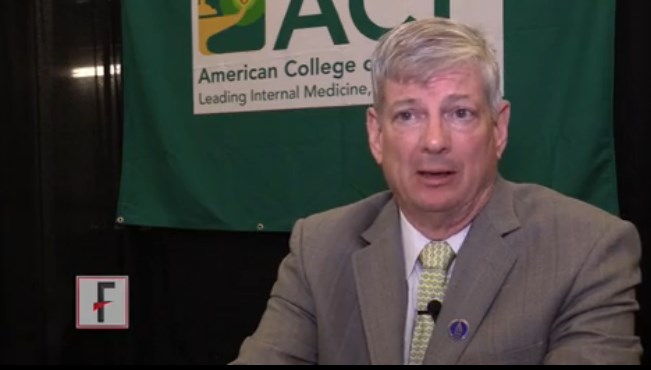
In a video interview at the annual meeting of the American College of Physicians, Robert B. Doherty, senior vice president of governmental affairs and public policy for the ACP, outlined what physicians need to know about Medicare’s post–Sustainable Growth Rate payment structures, including the difference between MIPS and ACMs.
He also explained how these new Medicare payment structures give physicians more control over their reimbursements while also requiring physicians to endure greater risk.
The video associated with this article is no longer available on this site. Please view all of our videos on the MDedge YouTube channel
On Twitter @whitneymcknight
BOSTON – When the Medicare Access and CHIP Reauthorization Act goes into effect in 2019, will you be ready?
In a video interview at the annual meeting of the American College of Physicians, Robert B. Doherty, senior vice president of governmental affairs and public policy for the ACP, outlined what physicians need to know about Medicare’s post–Sustainable Growth Rate payment structures, including the difference between MIPS and ACMs.
He also explained how these new Medicare payment structures give physicians more control over their reimbursements while also requiring physicians to endure greater risk.
The video associated with this article is no longer available on this site. Please view all of our videos on the MDedge YouTube channel
On Twitter @whitneymcknight
BOSTON – When the Medicare Access and CHIP Reauthorization Act goes into effect in 2019, will you be ready?
In a video interview at the annual meeting of the American College of Physicians, Robert B. Doherty, senior vice president of governmental affairs and public policy for the ACP, outlined what physicians need to know about Medicare’s post–Sustainable Growth Rate payment structures, including the difference between MIPS and ACMs.
He also explained how these new Medicare payment structures give physicians more control over their reimbursements while also requiring physicians to endure greater risk.
The video associated with this article is no longer available on this site. Please view all of our videos on the MDedge YouTube channel
On Twitter @whitneymcknight
AT ACP INTERNAL MEDICINE 2015
Professionalism, self-governance addressed in themed JAMA issue
The U.S. medical system is changing, and the traditional self-governing of the medical profession and physician professionalism is being challenged, according to a series of viewpoints published in a themed issue of JAMA.
The importance of the patient’s well-being in physician professionalism and how medical training encourages this in medical students is one of the major themes addressed in the issue. Also addressed is the topic of ensuring physician competency and professionalism through licensing, maintenance of certification, and accreditation processes.
“The aim of each physician clearly should be to care for and protect the interests and well-being of patients to the best of that physician’s abilities, while making sure her or his abilities are maintained as new discoveries are made,” Dr. Catherine D. DeAngelis, editor in chief emerita of JAMA, wrote in an editorial (JAMA 2015;313:1837-8 [doi:10.1001/jama.2015.3597]). “Characterizing the qualities that determine professionalism in physicians is more difficult. Terms used to define the qualities of medical professionalism include sound knowledge and skills (clinical competence), excellence, accountability, sound work ethic, good communication, wise application of legal understanding, ethical conduct, humanism, altruism, and self-regulation with accountability.”
Learn more in the May 12 issue of JAMA.
The U.S. medical system is changing, and the traditional self-governing of the medical profession and physician professionalism is being challenged, according to a series of viewpoints published in a themed issue of JAMA.
The importance of the patient’s well-being in physician professionalism and how medical training encourages this in medical students is one of the major themes addressed in the issue. Also addressed is the topic of ensuring physician competency and professionalism through licensing, maintenance of certification, and accreditation processes.
“The aim of each physician clearly should be to care for and protect the interests and well-being of patients to the best of that physician’s abilities, while making sure her or his abilities are maintained as new discoveries are made,” Dr. Catherine D. DeAngelis, editor in chief emerita of JAMA, wrote in an editorial (JAMA 2015;313:1837-8 [doi:10.1001/jama.2015.3597]). “Characterizing the qualities that determine professionalism in physicians is more difficult. Terms used to define the qualities of medical professionalism include sound knowledge and skills (clinical competence), excellence, accountability, sound work ethic, good communication, wise application of legal understanding, ethical conduct, humanism, altruism, and self-regulation with accountability.”
Learn more in the May 12 issue of JAMA.
The U.S. medical system is changing, and the traditional self-governing of the medical profession and physician professionalism is being challenged, according to a series of viewpoints published in a themed issue of JAMA.
The importance of the patient’s well-being in physician professionalism and how medical training encourages this in medical students is one of the major themes addressed in the issue. Also addressed is the topic of ensuring physician competency and professionalism through licensing, maintenance of certification, and accreditation processes.
“The aim of each physician clearly should be to care for and protect the interests and well-being of patients to the best of that physician’s abilities, while making sure her or his abilities are maintained as new discoveries are made,” Dr. Catherine D. DeAngelis, editor in chief emerita of JAMA, wrote in an editorial (JAMA 2015;313:1837-8 [doi:10.1001/jama.2015.3597]). “Characterizing the qualities that determine professionalism in physicians is more difficult. Terms used to define the qualities of medical professionalism include sound knowledge and skills (clinical competence), excellence, accountability, sound work ethic, good communication, wise application of legal understanding, ethical conduct, humanism, altruism, and self-regulation with accountability.”
Learn more in the May 12 issue of JAMA.
Ultrasound accurately predicts trauma thoracotomy survival
SAN DIEGO – The few trauma patients who will survive a high-risk thoracotomy procedure for cardiac arrest can be predicted by the presence of cardiac motion as detected by a quick and inexpensive bedside ultrasound, a prospective study conducted at a level I trauma center showed.
Focused assessment with sonography in trauma (FAST) was 100% sensitive and 62% specific in predicting those who would survive or be eligible for organ donation after receiving a resuscitative thoracotomy for traumatic cardiac arrest, said Dr. Kenji Inaba of the department of surgery at the University of Southern California Medical Center in Los Angeles.

Resuscitative thoracotomy, said Dr. Inaba, is a salvage procedure performed after cardiac arrest. It is a “high-risk, resource-intensive procedure, with a low quantitative yield. And yet, patients do survive.” Previous retrospective studies found that of those receiving resuscitative thoracotomy for traumatic arrest, 7.4% survived, with more than 90% of survivors retaining neurologic function; an additional 4.2% of recipients were potentially eligible for organ donation. Thus, a tool to identify potential survivors among those who present in post-traumatic cardiac arrest would help avoid unnecessary use of a procedure with such risks and resource burdens.
FAST, an inexpensive procedure that is standard for other indications in trauma, has been effective in identifying potential survivors in thoracotomy for nontrauma cardiac arrests, Dr. Inaba said at the annual meeting of the American Surgical Association.
The technique “has near-universal availability, can be performed immediately at the bedside without moving the patient, and yields real-time results with no radiation involved,” he said.
For the current prospective study, the specific aim was to examine the ability of FAST to differentiate survivors and potential organ donors from those who would not survive resuscitative thoracotomy among those presenting in traumatic cardiac arrest. Dr. Inaba and his associates examined the predictive value of cardiac motion and the presence of pericardial fluid for survival, as well as the adequacy of the FAST study for each patient.
The single-center study, conducted from 2010 to 2014, enrolled 187 patients (mean age, 31; 84.5% male) presenting in traumatic arrest who received resuscitative thoracotomy in the emergency department and also received a FAST. The scans were performed by emergency medicine residents under direct faculty supervision. Of the 187 patients studied, 6 (3.2%) survived, 3 (1.6%) became organ donors, and 178 (95.2%) died but were not organ donor eligible.
Cardiac motion was detected by FAST in 54 (28.9%) individuals in the total study population; among these were all nine of the survivors and donors, yielding a sensitivity of 100% and a specificity of 73.7% for survival (P < .001). All 16 of the patients with pericardial fluid detected by FAST died, as did all 7 patients in whom the study was deemed inadequate. Put simply, Dr. Inaba said, “no cardiac motion equals no survival.”
If thoracotomies had been performed only on patients in the study group who had cardiac motion on FAST, more than half of the unsuccessful resuscitative thoracotomies would have been avoided, Dr. Inaba noted. The study, he said, has particular application for lower-volume trauma centers, which must carefully weigh the prolonged use of limited resources required in a resuscitative thoracotomy.
Dr. David Spain, chief of trauma and critical care surgery at Stanford (Calif.) University, asked whether the study captured the mechanism of injury. Though the study did not do so, said Dr. Inaba, he and his colleagues realized that a subset of patients who went immediately to the operating room were not included in the study, a potential limitation. This group of patients included those with a penetrating cardiac injury – a possible reason, he said, why no patients among the survivors had a cardiac injury.
The authors reported no relevant financial disclosures.
SAN DIEGO – The few trauma patients who will survive a high-risk thoracotomy procedure for cardiac arrest can be predicted by the presence of cardiac motion as detected by a quick and inexpensive bedside ultrasound, a prospective study conducted at a level I trauma center showed.
Focused assessment with sonography in trauma (FAST) was 100% sensitive and 62% specific in predicting those who would survive or be eligible for organ donation after receiving a resuscitative thoracotomy for traumatic cardiac arrest, said Dr. Kenji Inaba of the department of surgery at the University of Southern California Medical Center in Los Angeles.
Resuscitative thoracotomy, said Dr. Inaba, is a salvage procedure performed after cardiac arrest. It is a “high-risk, resource-intensive procedure, with a low quantitative yield. And yet, patients do survive.” Previous retrospective studies found that of those receiving resuscitative thoracotomy for traumatic arrest, 7.4% survived, with more than 90% of survivors retaining neurologic function; an additional 4.2% of recipients were potentially eligible for organ donation. Thus, a tool to identify potential survivors among those who present in post-traumatic cardiac arrest would help avoid unnecessary use of a procedure with such risks and resource burdens.
FAST, an inexpensive procedure that is standard for other indications in trauma, has been effective in identifying potential survivors in thoracotomy for nontrauma cardiac arrests, Dr. Inaba said at the annual meeting of the American Surgical Association.
The technique “has near-universal availability, can be performed immediately at the bedside without moving the patient, and yields real-time results with no radiation involved,” he said.
For the current prospective study, the specific aim was to examine the ability of FAST to differentiate survivors and potential organ donors from those who would not survive resuscitative thoracotomy among those presenting in traumatic cardiac arrest. Dr. Inaba and his associates examined the predictive value of cardiac motion and the presence of pericardial fluid for survival, as well as the adequacy of the FAST study for each patient.
The single-center study, conducted from 2010 to 2014, enrolled 187 patients (mean age, 31; 84.5% male) presenting in traumatic arrest who received resuscitative thoracotomy in the emergency department and also received a FAST. The scans were performed by emergency medicine residents under direct faculty supervision. Of the 187 patients studied, 6 (3.2%) survived, 3 (1.6%) became organ donors, and 178 (95.2%) died but were not organ donor eligible.
Cardiac motion was detected by FAST in 54 (28.9%) individuals in the total study population; among these were all nine of the survivors and donors, yielding a sensitivity of 100% and a specificity of 73.7% for survival (P < .001). All 16 of the patients with pericardial fluid detected by FAST died, as did all 7 patients in whom the study was deemed inadequate. Put simply, Dr. Inaba said, “no cardiac motion equals no survival.”
If thoracotomies had been performed only on patients in the study group who had cardiac motion on FAST, more than half of the unsuccessful resuscitative thoracotomies would have been avoided, Dr. Inaba noted. The study, he said, has particular application for lower-volume trauma centers, which must carefully weigh the prolonged use of limited resources required in a resuscitative thoracotomy.
Dr. David Spain, chief of trauma and critical care surgery at Stanford (Calif.) University, asked whether the study captured the mechanism of injury. Though the study did not do so, said Dr. Inaba, he and his colleagues realized that a subset of patients who went immediately to the operating room were not included in the study, a potential limitation. This group of patients included those with a penetrating cardiac injury – a possible reason, he said, why no patients among the survivors had a cardiac injury.
The authors reported no relevant financial disclosures.
SAN DIEGO – The few trauma patients who will survive a high-risk thoracotomy procedure for cardiac arrest can be predicted by the presence of cardiac motion as detected by a quick and inexpensive bedside ultrasound, a prospective study conducted at a level I trauma center showed.
Focused assessment with sonography in trauma (FAST) was 100% sensitive and 62% specific in predicting those who would survive or be eligible for organ donation after receiving a resuscitative thoracotomy for traumatic cardiac arrest, said Dr. Kenji Inaba of the department of surgery at the University of Southern California Medical Center in Los Angeles.
Resuscitative thoracotomy, said Dr. Inaba, is a salvage procedure performed after cardiac arrest. It is a “high-risk, resource-intensive procedure, with a low quantitative yield. And yet, patients do survive.” Previous retrospective studies found that of those receiving resuscitative thoracotomy for traumatic arrest, 7.4% survived, with more than 90% of survivors retaining neurologic function; an additional 4.2% of recipients were potentially eligible for organ donation. Thus, a tool to identify potential survivors among those who present in post-traumatic cardiac arrest would help avoid unnecessary use of a procedure with such risks and resource burdens.
FAST, an inexpensive procedure that is standard for other indications in trauma, has been effective in identifying potential survivors in thoracotomy for nontrauma cardiac arrests, Dr. Inaba said at the annual meeting of the American Surgical Association.
The technique “has near-universal availability, can be performed immediately at the bedside without moving the patient, and yields real-time results with no radiation involved,” he said.
For the current prospective study, the specific aim was to examine the ability of FAST to differentiate survivors and potential organ donors from those who would not survive resuscitative thoracotomy among those presenting in traumatic cardiac arrest. Dr. Inaba and his associates examined the predictive value of cardiac motion and the presence of pericardial fluid for survival, as well as the adequacy of the FAST study for each patient.
The single-center study, conducted from 2010 to 2014, enrolled 187 patients (mean age, 31; 84.5% male) presenting in traumatic arrest who received resuscitative thoracotomy in the emergency department and also received a FAST. The scans were performed by emergency medicine residents under direct faculty supervision. Of the 187 patients studied, 6 (3.2%) survived, 3 (1.6%) became organ donors, and 178 (95.2%) died but were not organ donor eligible.
Cardiac motion was detected by FAST in 54 (28.9%) individuals in the total study population; among these were all nine of the survivors and donors, yielding a sensitivity of 100% and a specificity of 73.7% for survival (P < .001). All 16 of the patients with pericardial fluid detected by FAST died, as did all 7 patients in whom the study was deemed inadequate. Put simply, Dr. Inaba said, “no cardiac motion equals no survival.”
If thoracotomies had been performed only on patients in the study group who had cardiac motion on FAST, more than half of the unsuccessful resuscitative thoracotomies would have been avoided, Dr. Inaba noted. The study, he said, has particular application for lower-volume trauma centers, which must carefully weigh the prolonged use of limited resources required in a resuscitative thoracotomy.
Dr. David Spain, chief of trauma and critical care surgery at Stanford (Calif.) University, asked whether the study captured the mechanism of injury. Though the study did not do so, said Dr. Inaba, he and his colleagues realized that a subset of patients who went immediately to the operating room were not included in the study, a potential limitation. This group of patients included those with a penetrating cardiac injury – a possible reason, he said, why no patients among the survivors had a cardiac injury.
The authors reported no relevant financial disclosures.
AT THE ASA ANNUAL MEETING
Key clinical point: Trauma arrest victims who will survive resuscitative thoracotomy can be predicted using focused assessment with sonography in trauma.
Major findings: FAST was 100% sensitive for detecting survivors after resuscitative thoracotomy for traumatic cardiac arrest.
Data source: A prospective series of 187 trauma patients in cardiac arrest undergoing resuscitative thoracotomy from 2010 to 2014 at a level I trauma center.
Disclosures: The authors reported no relevant financial disclosures.

General surgeons have high confidence after training
SAN DIEGO – Graduates of U.S. surgical residency training are generally very satisfied with their postgraduate choices, whether they opt for fellowships or not.
However, the 20% who opt to practice as general surgeons rather than pursuing subspecialty and fellowship training are more confident of their skills as they emerge from residency. “Specialty training does not result in greater confidence,” said Dr. Mary Klingensmith, professor of surgery and vice chair for education at Washington University, St. Louis. She discussed these results and other insights drawn from a nationwide survey of surgical residency graduates at the annual meeting of the American Surgical Association.

Dr. Klingensmith noted that there is a growing deficit of general surgeons, with a 25% decline in practicing general surgeons over the last 2 decades and an additional 18% decline projected over the next 20 years. A need existed, she said, for a systematic survey of recent graduates to identify the factors that play into the decision to pursue postgraduate training rather than enter directly into practice as a general surgeon.
A survey developed by American Board of Surgery (ABS) directors and executive staff was sent to all allopathic general surgery (GS) graduates from 2009 to 2013. Of 5,512 graduates, 3,354 (61%) responded. About three-quarters of respondents were specialist surgeons (SS).
The analysis of survey results conducted by Dr. Klingensmith and her colleagues compared the general to the specialist surgeons’ responses, and linked the surveys to the ABS database, which provided demographic characteristics that included residency program type, performance on board exams, and the postgraduate fellowship pursued, if any.
Surgeons were surveyed about their level of confidence in the independent practice of 16 common general procedures, including such “bread and butter” procedures as laparoscopic appendectomy and cholecystectomy, herniorrhaphy, and screening colonoscopies. Respondents were also asked to indicate how confident they were performing less common procedures, including tracheostomies, arterioveneous (AV) fistulas for dialysis, laparoscopic Nissen fundoplications, thyroidectomies, and laparoscopic colon resections.
Responses on a five-point Likert scale were sorted by type of subspecialty training, if any. After the most confident group – pediatric surgeons – general surgeons were significantly more likely to feel confident in their surgical skills than were the other specialist surgeons (P < .0001). Essentially all general surgery respondents were “very” or “mostly” confident of their ability to perform such common procedures as laparoscopic appendectomies and cholecystectomies, as well as ventral herniorrhaphies. Confidence decreased for specialists and nonspecialists alike for the more complex and less common surgeries. Overall, 94% of general surgeons and 90% of specialist surgeons were very or mostly confident of their abilities.
For general surgeons, factors influencing their choices included the opportunity for a broad scope of practice (63%), the influence of a mentor (56%), readiness to be done with training (26%), and being confident with the amount of training received (26%). For the specialists, the most influential factors included high degree of interest in the chosen specialty (57%), interest in improving specific skills (35%), and the opportunity to increase confidence and experience (35%). Both groups felt they’d made the right decision overall: 94% of general surgery graduates and 90% of those pursuing fellowships were very or somewhat satisfied with their career choices.
Study limitations included the risk of nonresponder bias, and the fact that only the most common procedures were included in the survey. Also, no outcome data were available to validate self-perceptions of competence, said Dr. Klingensmith.
The survey and its analysis “have implications that are enormous for the workforce needs of the country, and it’s clear that lack of confidence is an issue for a small but likely significant number of trainees,” said discussant Dr. J. David Richardson of the University of Louisville (Ky.). Greater opportunities for general surgery rotations, as well as stronger general surgery mentorship during residency, may help increase the number of general surgeons entering practice in the future, said Dr. Klingensmith.
The complete manuscript of this study and its presentation at the American Surgical Association’s 135th Annual Meeting, April 2015, in San Diego, California, are anticipated to be published in the Annals of Surgery pending editorial review.
SAN DIEGO – Graduates of U.S. surgical residency training are generally very satisfied with their postgraduate choices, whether they opt for fellowships or not.
However, the 20% who opt to practice as general surgeons rather than pursuing subspecialty and fellowship training are more confident of their skills as they emerge from residency. “Specialty training does not result in greater confidence,” said Dr. Mary Klingensmith, professor of surgery and vice chair for education at Washington University, St. Louis. She discussed these results and other insights drawn from a nationwide survey of surgical residency graduates at the annual meeting of the American Surgical Association.
Dr. Klingensmith noted that there is a growing deficit of general surgeons, with a 25% decline in practicing general surgeons over the last 2 decades and an additional 18% decline projected over the next 20 years. A need existed, she said, for a systematic survey of recent graduates to identify the factors that play into the decision to pursue postgraduate training rather than enter directly into practice as a general surgeon.
A survey developed by American Board of Surgery (ABS) directors and executive staff was sent to all allopathic general surgery (GS) graduates from 2009 to 2013. Of 5,512 graduates, 3,354 (61%) responded. About three-quarters of respondents were specialist surgeons (SS).
The analysis of survey results conducted by Dr. Klingensmith and her colleagues compared the general to the specialist surgeons’ responses, and linked the surveys to the ABS database, which provided demographic characteristics that included residency program type, performance on board exams, and the postgraduate fellowship pursued, if any.
Surgeons were surveyed about their level of confidence in the independent practice of 16 common general procedures, including such “bread and butter” procedures as laparoscopic appendectomy and cholecystectomy, herniorrhaphy, and screening colonoscopies. Respondents were also asked to indicate how confident they were performing less common procedures, including tracheostomies, arterioveneous (AV) fistulas for dialysis, laparoscopic Nissen fundoplications, thyroidectomies, and laparoscopic colon resections.
Responses on a five-point Likert scale were sorted by type of subspecialty training, if any. After the most confident group – pediatric surgeons – general surgeons were significantly more likely to feel confident in their surgical skills than were the other specialist surgeons (P < .0001). Essentially all general surgery respondents were “very” or “mostly” confident of their ability to perform such common procedures as laparoscopic appendectomies and cholecystectomies, as well as ventral herniorrhaphies. Confidence decreased for specialists and nonspecialists alike for the more complex and less common surgeries. Overall, 94% of general surgeons and 90% of specialist surgeons were very or mostly confident of their abilities.
For general surgeons, factors influencing their choices included the opportunity for a broad scope of practice (63%), the influence of a mentor (56%), readiness to be done with training (26%), and being confident with the amount of training received (26%). For the specialists, the most influential factors included high degree of interest in the chosen specialty (57%), interest in improving specific skills (35%), and the opportunity to increase confidence and experience (35%). Both groups felt they’d made the right decision overall: 94% of general surgery graduates and 90% of those pursuing fellowships were very or somewhat satisfied with their career choices.
Study limitations included the risk of nonresponder bias, and the fact that only the most common procedures were included in the survey. Also, no outcome data were available to validate self-perceptions of competence, said Dr. Klingensmith.
The survey and its analysis “have implications that are enormous for the workforce needs of the country, and it’s clear that lack of confidence is an issue for a small but likely significant number of trainees,” said discussant Dr. J. David Richardson of the University of Louisville (Ky.). Greater opportunities for general surgery rotations, as well as stronger general surgery mentorship during residency, may help increase the number of general surgeons entering practice in the future, said Dr. Klingensmith.
The complete manuscript of this study and its presentation at the American Surgical Association’s 135th Annual Meeting, April 2015, in San Diego, California, are anticipated to be published in the Annals of Surgery pending editorial review.
SAN DIEGO – Graduates of U.S. surgical residency training are generally very satisfied with their postgraduate choices, whether they opt for fellowships or not.
However, the 20% who opt to practice as general surgeons rather than pursuing subspecialty and fellowship training are more confident of their skills as they emerge from residency. “Specialty training does not result in greater confidence,” said Dr. Mary Klingensmith, professor of surgery and vice chair for education at Washington University, St. Louis. She discussed these results and other insights drawn from a nationwide survey of surgical residency graduates at the annual meeting of the American Surgical Association.
Dr. Klingensmith noted that there is a growing deficit of general surgeons, with a 25% decline in practicing general surgeons over the last 2 decades and an additional 18% decline projected over the next 20 years. A need existed, she said, for a systematic survey of recent graduates to identify the factors that play into the decision to pursue postgraduate training rather than enter directly into practice as a general surgeon.
A survey developed by American Board of Surgery (ABS) directors and executive staff was sent to all allopathic general surgery (GS) graduates from 2009 to 2013. Of 5,512 graduates, 3,354 (61%) responded. About three-quarters of respondents were specialist surgeons (SS).
The analysis of survey results conducted by Dr. Klingensmith and her colleagues compared the general to the specialist surgeons’ responses, and linked the surveys to the ABS database, which provided demographic characteristics that included residency program type, performance on board exams, and the postgraduate fellowship pursued, if any.
Surgeons were surveyed about their level of confidence in the independent practice of 16 common general procedures, including such “bread and butter” procedures as laparoscopic appendectomy and cholecystectomy, herniorrhaphy, and screening colonoscopies. Respondents were also asked to indicate how confident they were performing less common procedures, including tracheostomies, arterioveneous (AV) fistulas for dialysis, laparoscopic Nissen fundoplications, thyroidectomies, and laparoscopic colon resections.
Responses on a five-point Likert scale were sorted by type of subspecialty training, if any. After the most confident group – pediatric surgeons – general surgeons were significantly more likely to feel confident in their surgical skills than were the other specialist surgeons (P < .0001). Essentially all general surgery respondents were “very” or “mostly” confident of their ability to perform such common procedures as laparoscopic appendectomies and cholecystectomies, as well as ventral herniorrhaphies. Confidence decreased for specialists and nonspecialists alike for the more complex and less common surgeries. Overall, 94% of general surgeons and 90% of specialist surgeons were very or mostly confident of their abilities.
For general surgeons, factors influencing their choices included the opportunity for a broad scope of practice (63%), the influence of a mentor (56%), readiness to be done with training (26%), and being confident with the amount of training received (26%). For the specialists, the most influential factors included high degree of interest in the chosen specialty (57%), interest in improving specific skills (35%), and the opportunity to increase confidence and experience (35%). Both groups felt they’d made the right decision overall: 94% of general surgery graduates and 90% of those pursuing fellowships were very or somewhat satisfied with their career choices.
Study limitations included the risk of nonresponder bias, and the fact that only the most common procedures were included in the survey. Also, no outcome data were available to validate self-perceptions of competence, said Dr. Klingensmith.
The survey and its analysis “have implications that are enormous for the workforce needs of the country, and it’s clear that lack of confidence is an issue for a small but likely significant number of trainees,” said discussant Dr. J. David Richardson of the University of Louisville (Ky.). Greater opportunities for general surgery rotations, as well as stronger general surgery mentorship during residency, may help increase the number of general surgeons entering practice in the future, said Dr. Klingensmith.
The complete manuscript of this study and its presentation at the American Surgical Association’s 135th Annual Meeting, April 2015, in San Diego, California, are anticipated to be published in the Annals of Surgery pending editorial review.
AT THE ASA Annual Meeting
Key clinical point: U.S. surgical residency graduates who opt for general surgery are generally more confident than are those choosing fellowships; both groups are satisfied with their choices.
Major findings: General surgery graduates were more confident than were those who chose fellowships, but 94% of general surgery graduates and 90% of those pursuing fellowships were satisfied with their career choices.
Data source: American Board of Surgery survey of all U.S. allopathic surgery residency graduates from 2009 to 2013 to ascertain levels of confidence, perceptions of autonomy, and reasons for opting in or out of postgraduate fellowship training.
Disclosures: The authors reported no conflicts of interest. The ABS provided data to study authors, but the presentation does not necessarily reflect the opinions or policies of the ABS.

Malpractice settlement details often hidden, safety effects unsure
The majority of malpractice settlement agreements made by a Texas health system included clauses that prevented details about the case from being released, but there was little standardization or consistency in such provisions, according to a study published online May 11 in JAMA Internal Medicine.
Such nondisclosure provisions, while common in settlements across the United States, run contrary to greater promotion of health care transparency and improved patient safety, the study’s authors said.
Dr. William M. Sage of the University of Texas at Austin, and his colleagues, analyzed settlement agreements made by the University of Texas System from 2001 to 2002, from 2006 to 2007, and from 2009 to 2012 (JAMA Intern. Med. 2015 May 11 [doi:10.1001/jamainternmed.2015.1035]). They chose the time frames to study the differences in settlements before, during, and after the enactment of tort reform in Texas.

In 2003, Texas amended its constitution and enacted legislation that capped noneconomic damages against physicians in medical malpractice cases at $250,000 and imposed limitations on personal-injury lawsuits.
During the study periods, the University of Texas System closed 715 malpractice claims and made 150 settlement payments. The median compensation paid by the university was $100,000, and the mean compensation was $185,372.
Excluding 20 cases involving non–University of Texas defendants and 6 minor dental injury cases, 89% of settlements (110 of 124) included nondisclosure provisions. All the nondisclosure clauses prohibited disclosure of the settlement terms and amount. The nondisclosure clauses ranged in length from 23 to 385 words. Ten of the nondisclosure clauses applied to all parties to the agreement, including the physicians and hospitals.
Of the nondisclosure provisions, 55.5% prohibited disclosure that the settlement had been reached, 46.4% prohibited disclosure of the facts of the claim, and 9.1% prohibited disclosure by the settling physicians and hospitals, as well as the plaintiff.
In addition, 2.7% of nondisclosure provisions specifically prohibited disparagement of the physicians or hospital by the claimant. Complaints to the Texas Medical Board or other regulatory bodies were prohibited in 26.4% of nondisclosure provision cases.
Researchers found that the 50 settlement agreements signed after tort reform took full effect in Texas (2009-2012) had stricter nondisclosure provisions than did the 60 signed in earlier years. Settlements made after tort reform were more likely to prohibit disclosure of the event of settlement, to prohibit disclosure of the facts of the claims, and to prohibit reporting to regulatory bodies.
The study authors noted that in response to the findings of their study, as of 2014, the University of Texas no longer restricts regulatory reporting in settlement agreements.
Nondisclosure clauses that go beyond nondisparagement, as well as restrictions on disclosing the payment amount, appear inconsistent with respect to patients and current approaches to improving the safety of medical care, noted Dr. Sage and his coauthors.
“In situations where the harm is more general or might occur again, confidential settlement of private litigation can be contrary to the public interest,” the authors wrote. “There is increasing consensus, even among early proponents of protected peer review, that greater transparency to patients and the public is necessary for safety to improve.”
The use of nondisclosure agreements should be reviewed elsewhere, the researchers suggested, including at institutions with communication-and-resolution programs.
The authors reported no conflicts of interest.
On Twitter @legal_med
The study by Dr. Sage and colleagues offers a rare glimpse into the world of medical malpractice settlements, and raises serious questions about why many case details are hidden from the public.
In malpractice settlements, some types of nondisclosure provisions can never be justified, and others should remain subject to negotiation. Because patients should not be forced to choose between compensation and acting on a perceived ethical obligation to try to prevent harm to others, settlement agreements should not restrict reporting to regulatory bodies. In addition, adopting state statutes that prohibit these provisions involves less burden and uncertainty for plaintiffs than requiring plaintiffs to challenge them in court.
Michelle M. Mello, Ph.D., J.D., of Stanford Law School and Stanford School of Medicine, and Jeffrey N. Catalano, a Boston attorney, made these comments in an editorial (JAMA Intern. Med. 2015 May 11 [doi:10.1001/jamainternmed.2015.1038]). Mr. Catalano reported that he is a practicing attorney who represents medical malpractice plaintiffs. No other disclosures were reported.
The study by Dr. Sage and colleagues offers a rare glimpse into the world of medical malpractice settlements, and raises serious questions about why many case details are hidden from the public.
In malpractice settlements, some types of nondisclosure provisions can never be justified, and others should remain subject to negotiation. Because patients should not be forced to choose between compensation and acting on a perceived ethical obligation to try to prevent harm to others, settlement agreements should not restrict reporting to regulatory bodies. In addition, adopting state statutes that prohibit these provisions involves less burden and uncertainty for plaintiffs than requiring plaintiffs to challenge them in court.
Michelle M. Mello, Ph.D., J.D., of Stanford Law School and Stanford School of Medicine, and Jeffrey N. Catalano, a Boston attorney, made these comments in an editorial (JAMA Intern. Med. 2015 May 11 [doi:10.1001/jamainternmed.2015.1038]). Mr. Catalano reported that he is a practicing attorney who represents medical malpractice plaintiffs. No other disclosures were reported.
The study by Dr. Sage and colleagues offers a rare glimpse into the world of medical malpractice settlements, and raises serious questions about why many case details are hidden from the public.
In malpractice settlements, some types of nondisclosure provisions can never be justified, and others should remain subject to negotiation. Because patients should not be forced to choose between compensation and acting on a perceived ethical obligation to try to prevent harm to others, settlement agreements should not restrict reporting to regulatory bodies. In addition, adopting state statutes that prohibit these provisions involves less burden and uncertainty for plaintiffs than requiring plaintiffs to challenge them in court.
Michelle M. Mello, Ph.D., J.D., of Stanford Law School and Stanford School of Medicine, and Jeffrey N. Catalano, a Boston attorney, made these comments in an editorial (JAMA Intern. Med. 2015 May 11 [doi:10.1001/jamainternmed.2015.1038]). Mr. Catalano reported that he is a practicing attorney who represents medical malpractice plaintiffs. No other disclosures were reported.
The majority of malpractice settlement agreements made by a Texas health system included clauses that prevented details about the case from being released, but there was little standardization or consistency in such provisions, according to a study published online May 11 in JAMA Internal Medicine.
Such nondisclosure provisions, while common in settlements across the United States, run contrary to greater promotion of health care transparency and improved patient safety, the study’s authors said.
Dr. William M. Sage of the University of Texas at Austin, and his colleagues, analyzed settlement agreements made by the University of Texas System from 2001 to 2002, from 2006 to 2007, and from 2009 to 2012 (JAMA Intern. Med. 2015 May 11 [doi:10.1001/jamainternmed.2015.1035]). They chose the time frames to study the differences in settlements before, during, and after the enactment of tort reform in Texas.
In 2003, Texas amended its constitution and enacted legislation that capped noneconomic damages against physicians in medical malpractice cases at $250,000 and imposed limitations on personal-injury lawsuits.
During the study periods, the University of Texas System closed 715 malpractice claims and made 150 settlement payments. The median compensation paid by the university was $100,000, and the mean compensation was $185,372.
Excluding 20 cases involving non–University of Texas defendants and 6 minor dental injury cases, 89% of settlements (110 of 124) included nondisclosure provisions. All the nondisclosure clauses prohibited disclosure of the settlement terms and amount. The nondisclosure clauses ranged in length from 23 to 385 words. Ten of the nondisclosure clauses applied to all parties to the agreement, including the physicians and hospitals.
Of the nondisclosure provisions, 55.5% prohibited disclosure that the settlement had been reached, 46.4% prohibited disclosure of the facts of the claim, and 9.1% prohibited disclosure by the settling physicians and hospitals, as well as the plaintiff.
In addition, 2.7% of nondisclosure provisions specifically prohibited disparagement of the physicians or hospital by the claimant. Complaints to the Texas Medical Board or other regulatory bodies were prohibited in 26.4% of nondisclosure provision cases.
Researchers found that the 50 settlement agreements signed after tort reform took full effect in Texas (2009-2012) had stricter nondisclosure provisions than did the 60 signed in earlier years. Settlements made after tort reform were more likely to prohibit disclosure of the event of settlement, to prohibit disclosure of the facts of the claims, and to prohibit reporting to regulatory bodies.
The study authors noted that in response to the findings of their study, as of 2014, the University of Texas no longer restricts regulatory reporting in settlement agreements.
Nondisclosure clauses that go beyond nondisparagement, as well as restrictions on disclosing the payment amount, appear inconsistent with respect to patients and current approaches to improving the safety of medical care, noted Dr. Sage and his coauthors.
“In situations where the harm is more general or might occur again, confidential settlement of private litigation can be contrary to the public interest,” the authors wrote. “There is increasing consensus, even among early proponents of protected peer review, that greater transparency to patients and the public is necessary for safety to improve.”
The use of nondisclosure agreements should be reviewed elsewhere, the researchers suggested, including at institutions with communication-and-resolution programs.
The authors reported no conflicts of interest.
On Twitter @legal_med
The majority of malpractice settlement agreements made by a Texas health system included clauses that prevented details about the case from being released, but there was little standardization or consistency in such provisions, according to a study published online May 11 in JAMA Internal Medicine.
Such nondisclosure provisions, while common in settlements across the United States, run contrary to greater promotion of health care transparency and improved patient safety, the study’s authors said.
Dr. William M. Sage of the University of Texas at Austin, and his colleagues, analyzed settlement agreements made by the University of Texas System from 2001 to 2002, from 2006 to 2007, and from 2009 to 2012 (JAMA Intern. Med. 2015 May 11 [doi:10.1001/jamainternmed.2015.1035]). They chose the time frames to study the differences in settlements before, during, and after the enactment of tort reform in Texas.
In 2003, Texas amended its constitution and enacted legislation that capped noneconomic damages against physicians in medical malpractice cases at $250,000 and imposed limitations on personal-injury lawsuits.
During the study periods, the University of Texas System closed 715 malpractice claims and made 150 settlement payments. The median compensation paid by the university was $100,000, and the mean compensation was $185,372.
Excluding 20 cases involving non–University of Texas defendants and 6 minor dental injury cases, 89% of settlements (110 of 124) included nondisclosure provisions. All the nondisclosure clauses prohibited disclosure of the settlement terms and amount. The nondisclosure clauses ranged in length from 23 to 385 words. Ten of the nondisclosure clauses applied to all parties to the agreement, including the physicians and hospitals.
Of the nondisclosure provisions, 55.5% prohibited disclosure that the settlement had been reached, 46.4% prohibited disclosure of the facts of the claim, and 9.1% prohibited disclosure by the settling physicians and hospitals, as well as the plaintiff.
In addition, 2.7% of nondisclosure provisions specifically prohibited disparagement of the physicians or hospital by the claimant. Complaints to the Texas Medical Board or other regulatory bodies were prohibited in 26.4% of nondisclosure provision cases.
Researchers found that the 50 settlement agreements signed after tort reform took full effect in Texas (2009-2012) had stricter nondisclosure provisions than did the 60 signed in earlier years. Settlements made after tort reform were more likely to prohibit disclosure of the event of settlement, to prohibit disclosure of the facts of the claims, and to prohibit reporting to regulatory bodies.
The study authors noted that in response to the findings of their study, as of 2014, the University of Texas no longer restricts regulatory reporting in settlement agreements.
Nondisclosure clauses that go beyond nondisparagement, as well as restrictions on disclosing the payment amount, appear inconsistent with respect to patients and current approaches to improving the safety of medical care, noted Dr. Sage and his coauthors.
“In situations where the harm is more general or might occur again, confidential settlement of private litigation can be contrary to the public interest,” the authors wrote. “There is increasing consensus, even among early proponents of protected peer review, that greater transparency to patients and the public is necessary for safety to improve.”
The use of nondisclosure agreements should be reviewed elsewhere, the researchers suggested, including at institutions with communication-and-resolution programs.
The authors reported no conflicts of interest.
On Twitter @legal_med
Key clinical point: Most malpractice settlements include nondisclosure provisions, but the clauses are inconsistent and lack standardization.
Major finding: Of 124 malpractice settlements made by the University of Texas System, 89% (110 settlements) included nondisclosure provisions. All the nondisclosure clauses prohibited disclosure of the settlement terms and amount, but the provisions varied in length and scope.
Data source: Review of 150 medical malpractice settlements made by the University of Texas System from 2001 to 2002, from 2006 to 2007, and from 2009 to 2012.
Disclosures: The authors reported no conflicts of interest.

ACOG: Practice and referral patterns may affect occult uterine sarcoma risk post hysterectomy
SAN FRANCISCO – Occult uterine sarcoma occurred in less than 0.1% of more than 10,000 hysterectomies performed at a large hospital system between 2000 and 2014 for presumed benign gynecologic indications.
Of 10,083 patients who underwent such hysterectomies at University of Texas Southwestern Medical Center hospitals during the study period, 9 were found to have uterine sarcoma (overall rate of 8.9 per 10,000), including 5 with leiomyosarcoma (rate of 4.96 per 10,000) and 2 each with endometrial stromal sarcoma and uterine adenosarcoma (rate of 1.98 per 10,000 for each) Dr. Ken Yu Lin reported at the annual meeting of the American College of Obstetricians and Gynecologists.
The patients’ median age at diagnosis was 39 years, and their median body mass index was 27 kg/m2. Six had prior hormonal therapy, and three reported responding to leuprolide, including two who experienced decreased bleeding, and one who experienced uterine mass size reduction. None had a history of tamoxifen use or pelvic radiation exposure, and one had rapid uterine enlargement and was found to have leiomyosarcoma.
At a median follow-up of 48 months, one had died, one had a recurrence of endometrial stromal sarcoma, and seven were alive with no evidence of disease, Dr. Lin said.
Leiomyomas were associated with significantly larger uterine size (mean weight of 3,500 g), compared with endometrial stromal sarcoma and adenosarcoma, he noted.
Four of five patients with leiomyoma underwent a biopsy prior to surgery, and the results were normal. One underwent manual morcellation during abdominal hysterectomy because of large mass size, but power morcellation was not used in any patient.
The 0.1% frequency of uterine sarcoma in patients undergoing hysterectomy for a benign condition was lower than the frequency in previously reported studies and pooled analyses, Dr. Lin said.
The patients were women who underwent hysterectomy for benign conditions – abnormal bleeding in 78% of cases and leiomyoma in 56% of cases. Five underwent total abdominal hysterectomy, three had a total vaginal hysterectomy, and one had a supracervical hysterectomy.
Occult uterine sarcoma was defined as uterine sarcoma on pathology postoperatively in those with no preoperative suspicion of malignancy, Dr. Lin said.
Hysterectomy is one of the most common surgical procedures in the United States, and outcomes have improved thanks to minimally invasive procedures that require only small incisions.
However, small incisions lead to challenges with respect to the removal of large specimens, Dr. Lin said, adding that morcellation, which has been used to facilitate the removal of tissue in cases involving minimally invasive surgery, has come under scrutiny because of concerns about its role in the dissemination of occult gynecologic malignancies, and particularly uterine sarcoma.
Central to this discussion is the question of the prevalence of occult sarcoma in the setting of hysterectomy for benign indications, he said, noting that the prevalence of occult sarcoma in women undergoing surgery for presumed uterine fibroids has been reported to be as high as 1 in 350 by some authors.
The findings suggest that “clinical practices and regional referral patterns may impact local rates of occult uterine sarcoma and should be considered during patient counseling and when developing clinical recommendations,” Dr Lin concluded.
Dr. Lin reported having no relevant disclosures.
SAN FRANCISCO – Occult uterine sarcoma occurred in less than 0.1% of more than 10,000 hysterectomies performed at a large hospital system between 2000 and 2014 for presumed benign gynecologic indications.
Of 10,083 patients who underwent such hysterectomies at University of Texas Southwestern Medical Center hospitals during the study period, 9 were found to have uterine sarcoma (overall rate of 8.9 per 10,000), including 5 with leiomyosarcoma (rate of 4.96 per 10,000) and 2 each with endometrial stromal sarcoma and uterine adenosarcoma (rate of 1.98 per 10,000 for each) Dr. Ken Yu Lin reported at the annual meeting of the American College of Obstetricians and Gynecologists.
The patients’ median age at diagnosis was 39 years, and their median body mass index was 27 kg/m2. Six had prior hormonal therapy, and three reported responding to leuprolide, including two who experienced decreased bleeding, and one who experienced uterine mass size reduction. None had a history of tamoxifen use or pelvic radiation exposure, and one had rapid uterine enlargement and was found to have leiomyosarcoma.
At a median follow-up of 48 months, one had died, one had a recurrence of endometrial stromal sarcoma, and seven were alive with no evidence of disease, Dr. Lin said.
Leiomyomas were associated with significantly larger uterine size (mean weight of 3,500 g), compared with endometrial stromal sarcoma and adenosarcoma, he noted.
Four of five patients with leiomyoma underwent a biopsy prior to surgery, and the results were normal. One underwent manual morcellation during abdominal hysterectomy because of large mass size, but power morcellation was not used in any patient.
The 0.1% frequency of uterine sarcoma in patients undergoing hysterectomy for a benign condition was lower than the frequency in previously reported studies and pooled analyses, Dr. Lin said.
The patients were women who underwent hysterectomy for benign conditions – abnormal bleeding in 78% of cases and leiomyoma in 56% of cases. Five underwent total abdominal hysterectomy, three had a total vaginal hysterectomy, and one had a supracervical hysterectomy.
Occult uterine sarcoma was defined as uterine sarcoma on pathology postoperatively in those with no preoperative suspicion of malignancy, Dr. Lin said.
Hysterectomy is one of the most common surgical procedures in the United States, and outcomes have improved thanks to minimally invasive procedures that require only small incisions.
However, small incisions lead to challenges with respect to the removal of large specimens, Dr. Lin said, adding that morcellation, which has been used to facilitate the removal of tissue in cases involving minimally invasive surgery, has come under scrutiny because of concerns about its role in the dissemination of occult gynecologic malignancies, and particularly uterine sarcoma.
Central to this discussion is the question of the prevalence of occult sarcoma in the setting of hysterectomy for benign indications, he said, noting that the prevalence of occult sarcoma in women undergoing surgery for presumed uterine fibroids has been reported to be as high as 1 in 350 by some authors.
The findings suggest that “clinical practices and regional referral patterns may impact local rates of occult uterine sarcoma and should be considered during patient counseling and when developing clinical recommendations,” Dr Lin concluded.
Dr. Lin reported having no relevant disclosures.
SAN FRANCISCO – Occult uterine sarcoma occurred in less than 0.1% of more than 10,000 hysterectomies performed at a large hospital system between 2000 and 2014 for presumed benign gynecologic indications.
Of 10,083 patients who underwent such hysterectomies at University of Texas Southwestern Medical Center hospitals during the study period, 9 were found to have uterine sarcoma (overall rate of 8.9 per 10,000), including 5 with leiomyosarcoma (rate of 4.96 per 10,000) and 2 each with endometrial stromal sarcoma and uterine adenosarcoma (rate of 1.98 per 10,000 for each) Dr. Ken Yu Lin reported at the annual meeting of the American College of Obstetricians and Gynecologists.
The patients’ median age at diagnosis was 39 years, and their median body mass index was 27 kg/m2. Six had prior hormonal therapy, and three reported responding to leuprolide, including two who experienced decreased bleeding, and one who experienced uterine mass size reduction. None had a history of tamoxifen use or pelvic radiation exposure, and one had rapid uterine enlargement and was found to have leiomyosarcoma.
At a median follow-up of 48 months, one had died, one had a recurrence of endometrial stromal sarcoma, and seven were alive with no evidence of disease, Dr. Lin said.
Leiomyomas were associated with significantly larger uterine size (mean weight of 3,500 g), compared with endometrial stromal sarcoma and adenosarcoma, he noted.
Four of five patients with leiomyoma underwent a biopsy prior to surgery, and the results were normal. One underwent manual morcellation during abdominal hysterectomy because of large mass size, but power morcellation was not used in any patient.
The 0.1% frequency of uterine sarcoma in patients undergoing hysterectomy for a benign condition was lower than the frequency in previously reported studies and pooled analyses, Dr. Lin said.
The patients were women who underwent hysterectomy for benign conditions – abnormal bleeding in 78% of cases and leiomyoma in 56% of cases. Five underwent total abdominal hysterectomy, three had a total vaginal hysterectomy, and one had a supracervical hysterectomy.
Occult uterine sarcoma was defined as uterine sarcoma on pathology postoperatively in those with no preoperative suspicion of malignancy, Dr. Lin said.
Hysterectomy is one of the most common surgical procedures in the United States, and outcomes have improved thanks to minimally invasive procedures that require only small incisions.
However, small incisions lead to challenges with respect to the removal of large specimens, Dr. Lin said, adding that morcellation, which has been used to facilitate the removal of tissue in cases involving minimally invasive surgery, has come under scrutiny because of concerns about its role in the dissemination of occult gynecologic malignancies, and particularly uterine sarcoma.
Central to this discussion is the question of the prevalence of occult sarcoma in the setting of hysterectomy for benign indications, he said, noting that the prevalence of occult sarcoma in women undergoing surgery for presumed uterine fibroids has been reported to be as high as 1 in 350 by some authors.
The findings suggest that “clinical practices and regional referral patterns may impact local rates of occult uterine sarcoma and should be considered during patient counseling and when developing clinical recommendations,” Dr Lin concluded.
Dr. Lin reported having no relevant disclosures.
AT THE ACOG ANNUAL CLINICAL MEETING
Key clinical point: Consider local clinical practice and referral patterns when counseling patients about occult uterine sarcoma risk.
Major finding: Occult uterine sarcoma occurred in 0.1% of women undergoing hysterectomy for benign conditions.
Data source: A retrospective review of 10,083 hysterectomies.
Disclosures: Dr. Lin reported having no relevant disclosures.
AATS: Simplified mitral valve repair effective in children with Marfan’s
NEW YORK – A simplified surgical approach that uses an adult-sized, basic ring annuloplasty with a complete edge-to-edge leaflet repair has been found to yield good outcomes in a group of children with connective tissue disorders like Marfan syndrome and Loeys-Dietz syndrome and mitral regurgitation, based on an evaluation of the technique at four centers.
Cardiac surgeons employed the simplified operation in 18 patients under age 18 (median age 8.2 years) and found that after 2.4 years of follow-up, no patients required another operation for mitral regurgitation, reported Dr. Luca Vricella, pediatrics director, pediatric cardiac surgery and heart transplantation, John Hopkins University, Baltimore.

The patients underwent the simplified mitral valve repair at Johns Hopkins Pediatric Cardiac Surgery in Baltimore and Orlando; Duke University School of Medicine in Durham, N.C.; and University of Pavia Medical School in Italy.
These young patients can be challenging to operate on because of skeletal abnormalities and marginal pulmonary reserve, Dr. Vricella said at the meeting sponsored by the American Association for Thoracic Surgery. Of the 18 children in the study, 15 had Marfan syndrome, a genetic disorder that commonly affects the heart valves and aorta. “The most common mode of early presentation of mitral valve pathology, from a morphological standpoint, is that mitral regurgitation is often characterized as severe bileaflet prolapse and annular and left ventricular dilation,” Dr. Vricella said.
The simplified technique involves an approach through an atriotomy and placing an adult-sized annuloplasty ring in the valve. The next step is to place an Alfieri stitch, named for the Italian cardiac surgeon Dr. Ottavio Alfieri, with a braided suture in the middle of the valve, which opposes the leaflet “very effectively,” Dr. Vricella said.
In the study group, all 18 patients had severe bileaflet prolapse and severe mitral regurgitation of grade 4 or higher, but all patients also had normal ejection fraction, Dr. Vricella said. One infant was being considered for a heart transplant.
The operation was achieved in isolation in less than an hour. Five patients underwent simultaneous valve-sparing aortic root replacement, one of whom died (one of two deaths in a larger 300-plus group of both adults and children who had valve-sparing aortic root repair). No other complications were reported among the 18-patient group. Median length of stay in the hospital was 9 days.
After the operation, all patients had significant reductions in mitral regurgitation. After 2.4 years, 94% of survivors maintained mild regurgitation or better without stenosis. Entering the study, the median left ventricular end-diastolic diameter (LVEDD) score of all patients was 4.9 (range 2.1-11.9), but at 2.4 years after the operation the median LVEDD score had regressed to 1.3 (range –0.51-4.3).
“In pediatric patients with severe mitral regurgitation and connective tissue disorders, a simplified repair can result in intermediate-term competency without systolic anterior motion and with no mitral stenosis,” Dr. Vricella said. “We’ve been pleasantly surprised in seeing this reduction in left ventricular enlargement, and particularly in this group of patients in which you may need to have a longer plant time, simplifying things so you don’t have to intervene on the subvalvular annuloplasty.”
NEW YORK – A simplified surgical approach that uses an adult-sized, basic ring annuloplasty with a complete edge-to-edge leaflet repair has been found to yield good outcomes in a group of children with connective tissue disorders like Marfan syndrome and Loeys-Dietz syndrome and mitral regurgitation, based on an evaluation of the technique at four centers.
Cardiac surgeons employed the simplified operation in 18 patients under age 18 (median age 8.2 years) and found that after 2.4 years of follow-up, no patients required another operation for mitral regurgitation, reported Dr. Luca Vricella, pediatrics director, pediatric cardiac surgery and heart transplantation, John Hopkins University, Baltimore.
The patients underwent the simplified mitral valve repair at Johns Hopkins Pediatric Cardiac Surgery in Baltimore and Orlando; Duke University School of Medicine in Durham, N.C.; and University of Pavia Medical School in Italy.
These young patients can be challenging to operate on because of skeletal abnormalities and marginal pulmonary reserve, Dr. Vricella said at the meeting sponsored by the American Association for Thoracic Surgery. Of the 18 children in the study, 15 had Marfan syndrome, a genetic disorder that commonly affects the heart valves and aorta. “The most common mode of early presentation of mitral valve pathology, from a morphological standpoint, is that mitral regurgitation is often characterized as severe bileaflet prolapse and annular and left ventricular dilation,” Dr. Vricella said.
The simplified technique involves an approach through an atriotomy and placing an adult-sized annuloplasty ring in the valve. The next step is to place an Alfieri stitch, named for the Italian cardiac surgeon Dr. Ottavio Alfieri, with a braided suture in the middle of the valve, which opposes the leaflet “very effectively,” Dr. Vricella said.
In the study group, all 18 patients had severe bileaflet prolapse and severe mitral regurgitation of grade 4 or higher, but all patients also had normal ejection fraction, Dr. Vricella said. One infant was being considered for a heart transplant.
The operation was achieved in isolation in less than an hour. Five patients underwent simultaneous valve-sparing aortic root replacement, one of whom died (one of two deaths in a larger 300-plus group of both adults and children who had valve-sparing aortic root repair). No other complications were reported among the 18-patient group. Median length of stay in the hospital was 9 days.
After the operation, all patients had significant reductions in mitral regurgitation. After 2.4 years, 94% of survivors maintained mild regurgitation or better without stenosis. Entering the study, the median left ventricular end-diastolic diameter (LVEDD) score of all patients was 4.9 (range 2.1-11.9), but at 2.4 years after the operation the median LVEDD score had regressed to 1.3 (range –0.51-4.3).
“In pediatric patients with severe mitral regurgitation and connective tissue disorders, a simplified repair can result in intermediate-term competency without systolic anterior motion and with no mitral stenosis,” Dr. Vricella said. “We’ve been pleasantly surprised in seeing this reduction in left ventricular enlargement, and particularly in this group of patients in which you may need to have a longer plant time, simplifying things so you don’t have to intervene on the subvalvular annuloplasty.”
NEW YORK – A simplified surgical approach that uses an adult-sized, basic ring annuloplasty with a complete edge-to-edge leaflet repair has been found to yield good outcomes in a group of children with connective tissue disorders like Marfan syndrome and Loeys-Dietz syndrome and mitral regurgitation, based on an evaluation of the technique at four centers.
Cardiac surgeons employed the simplified operation in 18 patients under age 18 (median age 8.2 years) and found that after 2.4 years of follow-up, no patients required another operation for mitral regurgitation, reported Dr. Luca Vricella, pediatrics director, pediatric cardiac surgery and heart transplantation, John Hopkins University, Baltimore.
The patients underwent the simplified mitral valve repair at Johns Hopkins Pediatric Cardiac Surgery in Baltimore and Orlando; Duke University School of Medicine in Durham, N.C.; and University of Pavia Medical School in Italy.
These young patients can be challenging to operate on because of skeletal abnormalities and marginal pulmonary reserve, Dr. Vricella said at the meeting sponsored by the American Association for Thoracic Surgery. Of the 18 children in the study, 15 had Marfan syndrome, a genetic disorder that commonly affects the heart valves and aorta. “The most common mode of early presentation of mitral valve pathology, from a morphological standpoint, is that mitral regurgitation is often characterized as severe bileaflet prolapse and annular and left ventricular dilation,” Dr. Vricella said.
The simplified technique involves an approach through an atriotomy and placing an adult-sized annuloplasty ring in the valve. The next step is to place an Alfieri stitch, named for the Italian cardiac surgeon Dr. Ottavio Alfieri, with a braided suture in the middle of the valve, which opposes the leaflet “very effectively,” Dr. Vricella said.
In the study group, all 18 patients had severe bileaflet prolapse and severe mitral regurgitation of grade 4 or higher, but all patients also had normal ejection fraction, Dr. Vricella said. One infant was being considered for a heart transplant.
The operation was achieved in isolation in less than an hour. Five patients underwent simultaneous valve-sparing aortic root replacement, one of whom died (one of two deaths in a larger 300-plus group of both adults and children who had valve-sparing aortic root repair). No other complications were reported among the 18-patient group. Median length of stay in the hospital was 9 days.
After the operation, all patients had significant reductions in mitral regurgitation. After 2.4 years, 94% of survivors maintained mild regurgitation or better without stenosis. Entering the study, the median left ventricular end-diastolic diameter (LVEDD) score of all patients was 4.9 (range 2.1-11.9), but at 2.4 years after the operation the median LVEDD score had regressed to 1.3 (range –0.51-4.3).
“In pediatric patients with severe mitral regurgitation and connective tissue disorders, a simplified repair can result in intermediate-term competency without systolic anterior motion and with no mitral stenosis,” Dr. Vricella said. “We’ve been pleasantly surprised in seeing this reduction in left ventricular enlargement, and particularly in this group of patients in which you may need to have a longer plant time, simplifying things so you don’t have to intervene on the subvalvular annuloplasty.”
AT THE 2015 MITRAL VALVE CONCLAVE
Key clinical point: A simplified approach for mitral valve repair resulted in good outcomes in a group of children with connective tissue disorders.
Major finding: All 18 children in the study avoided reoperation after mitral valve repair.
Data source: A small trial involving 18 patients at four hospitals.
Disclosures: Dr. Vricella had no relevant relationships to disclose.