User login
Official Newspaper of the American College of Surgeons
OARSI: Model helps predict readmission after joint replacement
SEATTLE – Adding clinical factors to a commonly used risk model improves by about 20% the prediction of which patients will be readmitted after undergoing total joint replacement surgery, new data show.
The new, combined model employs diagnostic codes and a variety of clinical factors, such as preoperative patient-reported measures – emotional status assessed with the mental component score of the 12-item Short Form Health Survey, moderate to severe pain in other weight-bearing joints (the contralateral joint, the hips or knees, and low back), and history of smoking – and the Charlson comorbidity index.
Investigators led by Dr. Patricia D. Franklin, a professor in the department of orthopedics and physical rehabilitation, University of Massachusetts, Worcester, set out to improve on the Centers for Medicare & Medicaid (CMS) risk prediction model for 30-day readmission. Rates of readmission using the model are publicly reported as an indicator of the quality of care at hospitals.

“Analyses are described as risk adjusted, implying that the remaining outcome variation is due to variation in quality of care,” she told attendees of the World Congress on Osteoarthritis. “The CMS risk adjustment model, while expertly developed, was limited to the billing and diagnosis data that were available to them and for patients over 65 years of age.”
The researchers tested the model using data from FORCE-TJR (Function and Outcomes Research for Comparative Effectiveness in Total Joint Replacement and Quality Improvement), the first national total joint replacement registry. Analyses were based on 2,560 patients aged 65 years or older who underwent total knee or hip replacement during 2011 and 2012.
Overall, 4.7% of the patients were readmitted within 30 days. About one-third of the readmissions were for implant-related issues, while the rest were due to complications of a major surgery in older patients with comorbidities, according to Dr. Franklin, who disclosed that she has received investigator-initiated research awards from Zimmer and Biomet.
In multivariate analysis, discrimination of patients having a readmission with the combined model was superior to that with the model based on diagnostic codes alone (c-statistic, 0.75 vs. 0.64), she reported at the meeting sponsored by the Osteoarthritis Research Society International.
“We believe that in the combined risk-adjustment model … the key predictors were indeed older age and gender and that list of ICD codes. However, the addition of medical and musculoskeletal comorbidities – in particular, moderate and severe pain in other weight-bearing joints – was important to the success,” Dr. Franklin commented, noting that the findings will be validated using 2013 registry data.
“We have been advising total joint replacement surgeons to collect these musculoskeletal factors in a systematic way so that they can be included in these future analyses. We believe it would be wise to integrate clinician-defined and -reported risk factors before public reporting,” she concluded.
Session attendee Dr. Jeffrey N. Katz, a professor at Harvard Medical School and codirector of the Brigham Spine Center at Brigham and Women’s Hospital, Boston, wondered whether pain in the other knee is a proxy for the severity and systemic nature of the osteoarthritis in these patients.

Identifying the real risk factors at play will be important, Dr. Katz said, adding, “I think we see this a lot in risk models. ... and addressing the proxy may not address the underlying issue.”
“I’m just very afraid of the law of unintended consequences” of risk models potentially being used to deny some patients surgery, commented session comoderator Dr. Nigel Arden, professor of rheumatology at the University of Oxford, England.
“A lot of the risk factors you identified were not obviously reversible,” Dr. Arden commented. “So are these people going to get prehab, or would you operate but do lots of extensive postoperative rehab? Or is this going to be a patient decision aid?”

The main aims of the research were to better ensure that the model was truly reflecting surgical care and to provide surgeons with information for planning and counseling patients, according to Dr. Franklin.
“I think patients should be informed what their risk is. … Average readmission rates or mortality rates don’t inform individuals,” she added. “So our goal actually is to begin to have some strategies to parse out subgroups of patients at greater or lesser risk for complications, and for benefits from the surgery.”
SEATTLE – Adding clinical factors to a commonly used risk model improves by about 20% the prediction of which patients will be readmitted after undergoing total joint replacement surgery, new data show.
The new, combined model employs diagnostic codes and a variety of clinical factors, such as preoperative patient-reported measures – emotional status assessed with the mental component score of the 12-item Short Form Health Survey, moderate to severe pain in other weight-bearing joints (the contralateral joint, the hips or knees, and low back), and history of smoking – and the Charlson comorbidity index.
Investigators led by Dr. Patricia D. Franklin, a professor in the department of orthopedics and physical rehabilitation, University of Massachusetts, Worcester, set out to improve on the Centers for Medicare & Medicaid (CMS) risk prediction model for 30-day readmission. Rates of readmission using the model are publicly reported as an indicator of the quality of care at hospitals.
“Analyses are described as risk adjusted, implying that the remaining outcome variation is due to variation in quality of care,” she told attendees of the World Congress on Osteoarthritis. “The CMS risk adjustment model, while expertly developed, was limited to the billing and diagnosis data that were available to them and for patients over 65 years of age.”
The researchers tested the model using data from FORCE-TJR (Function and Outcomes Research for Comparative Effectiveness in Total Joint Replacement and Quality Improvement), the first national total joint replacement registry. Analyses were based on 2,560 patients aged 65 years or older who underwent total knee or hip replacement during 2011 and 2012.
Overall, 4.7% of the patients were readmitted within 30 days. About one-third of the readmissions were for implant-related issues, while the rest were due to complications of a major surgery in older patients with comorbidities, according to Dr. Franklin, who disclosed that she has received investigator-initiated research awards from Zimmer and Biomet.
In multivariate analysis, discrimination of patients having a readmission with the combined model was superior to that with the model based on diagnostic codes alone (c-statistic, 0.75 vs. 0.64), she reported at the meeting sponsored by the Osteoarthritis Research Society International.
“We believe that in the combined risk-adjustment model … the key predictors were indeed older age and gender and that list of ICD codes. However, the addition of medical and musculoskeletal comorbidities – in particular, moderate and severe pain in other weight-bearing joints – was important to the success,” Dr. Franklin commented, noting that the findings will be validated using 2013 registry data.
“We have been advising total joint replacement surgeons to collect these musculoskeletal factors in a systematic way so that they can be included in these future analyses. We believe it would be wise to integrate clinician-defined and -reported risk factors before public reporting,” she concluded.
Session attendee Dr. Jeffrey N. Katz, a professor at Harvard Medical School and codirector of the Brigham Spine Center at Brigham and Women’s Hospital, Boston, wondered whether pain in the other knee is a proxy for the severity and systemic nature of the osteoarthritis in these patients.
Identifying the real risk factors at play will be important, Dr. Katz said, adding, “I think we see this a lot in risk models. ... and addressing the proxy may not address the underlying issue.”
“I’m just very afraid of the law of unintended consequences” of risk models potentially being used to deny some patients surgery, commented session comoderator Dr. Nigel Arden, professor of rheumatology at the University of Oxford, England.
“A lot of the risk factors you identified were not obviously reversible,” Dr. Arden commented. “So are these people going to get prehab, or would you operate but do lots of extensive postoperative rehab? Or is this going to be a patient decision aid?”
The main aims of the research were to better ensure that the model was truly reflecting surgical care and to provide surgeons with information for planning and counseling patients, according to Dr. Franklin.
“I think patients should be informed what their risk is. … Average readmission rates or mortality rates don’t inform individuals,” she added. “So our goal actually is to begin to have some strategies to parse out subgroups of patients at greater or lesser risk for complications, and for benefits from the surgery.”
SEATTLE – Adding clinical factors to a commonly used risk model improves by about 20% the prediction of which patients will be readmitted after undergoing total joint replacement surgery, new data show.
The new, combined model employs diagnostic codes and a variety of clinical factors, such as preoperative patient-reported measures – emotional status assessed with the mental component score of the 12-item Short Form Health Survey, moderate to severe pain in other weight-bearing joints (the contralateral joint, the hips or knees, and low back), and history of smoking – and the Charlson comorbidity index.
Investigators led by Dr. Patricia D. Franklin, a professor in the department of orthopedics and physical rehabilitation, University of Massachusetts, Worcester, set out to improve on the Centers for Medicare & Medicaid (CMS) risk prediction model for 30-day readmission. Rates of readmission using the model are publicly reported as an indicator of the quality of care at hospitals.
“Analyses are described as risk adjusted, implying that the remaining outcome variation is due to variation in quality of care,” she told attendees of the World Congress on Osteoarthritis. “The CMS risk adjustment model, while expertly developed, was limited to the billing and diagnosis data that were available to them and for patients over 65 years of age.”
The researchers tested the model using data from FORCE-TJR (Function and Outcomes Research for Comparative Effectiveness in Total Joint Replacement and Quality Improvement), the first national total joint replacement registry. Analyses were based on 2,560 patients aged 65 years or older who underwent total knee or hip replacement during 2011 and 2012.
Overall, 4.7% of the patients were readmitted within 30 days. About one-third of the readmissions were for implant-related issues, while the rest were due to complications of a major surgery in older patients with comorbidities, according to Dr. Franklin, who disclosed that she has received investigator-initiated research awards from Zimmer and Biomet.
In multivariate analysis, discrimination of patients having a readmission with the combined model was superior to that with the model based on diagnostic codes alone (c-statistic, 0.75 vs. 0.64), she reported at the meeting sponsored by the Osteoarthritis Research Society International.
“We believe that in the combined risk-adjustment model … the key predictors were indeed older age and gender and that list of ICD codes. However, the addition of medical and musculoskeletal comorbidities – in particular, moderate and severe pain in other weight-bearing joints – was important to the success,” Dr. Franklin commented, noting that the findings will be validated using 2013 registry data.
“We have been advising total joint replacement surgeons to collect these musculoskeletal factors in a systematic way so that they can be included in these future analyses. We believe it would be wise to integrate clinician-defined and -reported risk factors before public reporting,” she concluded.
Session attendee Dr. Jeffrey N. Katz, a professor at Harvard Medical School and codirector of the Brigham Spine Center at Brigham and Women’s Hospital, Boston, wondered whether pain in the other knee is a proxy for the severity and systemic nature of the osteoarthritis in these patients.
Identifying the real risk factors at play will be important, Dr. Katz said, adding, “I think we see this a lot in risk models. ... and addressing the proxy may not address the underlying issue.”
“I’m just very afraid of the law of unintended consequences” of risk models potentially being used to deny some patients surgery, commented session comoderator Dr. Nigel Arden, professor of rheumatology at the University of Oxford, England.
“A lot of the risk factors you identified were not obviously reversible,” Dr. Arden commented. “So are these people going to get prehab, or would you operate but do lots of extensive postoperative rehab? Or is this going to be a patient decision aid?”
The main aims of the research were to better ensure that the model was truly reflecting surgical care and to provide surgeons with information for planning and counseling patients, according to Dr. Franklin.
“I think patients should be informed what their risk is. … Average readmission rates or mortality rates don’t inform individuals,” she added. “So our goal actually is to begin to have some strategies to parse out subgroups of patients at greater or lesser risk for complications, and for benefits from the surgery.”
AT OARSI 2015
Key clinical point: Adding clinical factors to diagnostic codes improves prediction of 30-day readmission after total joint replacement surgery.
Major finding: The c-statistic increased from 0.64 without the clinical factors to 0.75 with the clinical factors.
Data source: A cohort study of 2,560 older adults undergoing total knee or hip replacement.
Disclosures: Dr. Franklin disclosed that she has received investigator-initiated research awards from Zimmer and Biomet.

ASA: Radiation lowers local recurrence risk for DCIS patients with close or positive margins
SAN DIEGO – Radiation may benefit women with ductal carcinoma in situ (DCIS) who have breast-conserving surgery if their tumor margins are close or positive; however, wide tumor margins alone also may convey the same protection from local recurrence, Dr. Kimberly Van Zee reported at the annual meeting of the American Surgical Association.
Dr. Van Zee and her colleagues on the breast surgery service at New York’s Sloan Kettering Cancer Center examined the data from a large institutional database of DCIS patients to assess the relative benefit of radiation for various margin widths. They discovered that after adjusting for the other variables, patients with the widest tumor margins saw very little reduction in risk of 10-year recurrence when radiation was added – only 6%. However, this was still a significant difference and represented a hazard ratio of 0.54. Radiation gave patients with positive margins an absolute 18% risk reduction, for a hazard ratio of 0.10.
“We know that radiation reduces risk in all subsets of women with DCIS undergoing breast-conserving surgery,” she said. “But we really wanted to evaluate the relationship between margin width and recurrence and find the best margin width for DCIS with breast-conserving surgery.”

Over 20% of breast cancers are DCIS, and though overall mortality is low, as many as one in three patients will have local recurrence of their cancer. Radiation reduces the risk of local recurrence by about 50%, but it does not reduce the already low mortality associated with DCIS, she said.
Since radiation for DCIS may be associated with an increased risk for cardiovascular disease and certain rare malignancies, Dr. Van Zee said she and her colleagues were interested in identifying those women who were already at low risk for recurrence and would see little increased benefit from radiation.
Dr. Van Zee and her associates conducted a retrospective review of a prospectively collected database of women with DCIS who received treatment at Sloan Kettering Cancer Center between 1978 and 2010. The database contained multiple patient- and procedure-specific variables that were also factored into multivariable analysis in order to evaluate the relationships between margin width and recurrence, and to account for the contribution of radiation to reducing the risk of recurrence in women who received breast-conserving surgery for DCIS.
Overall, the database contained data for nearly 3,000 patients. Of the 2,996 studied, 72% were over the age of 50 and about 67% were postmenopausal. In 87% of cases, the diagnosis was made radiologically rather than clinically, and 60% of the patients had low or intermediate nuclear grade disease.
Dr. Van Zee and her colleagues assessed the 10-year recurrence rate for the 2,788 women whose excision margin width was known. Only 3% of these women had positive margins, and 75% had margin widths greater than 2 mm.
On multivariable analysis, wider margin width was associated with a significantly decreased 10-year risk of recurrence, but only for individuals who had not received radiation (P less than .0001). The hazard ratios for recurrence became progressively lower as margins widened, dropping to 0.31 for a margin of 10 mm or more.
Dr. Van Zee noted that the study was limited by its retrospective nature and the relatively small number of cases with positive margins. Also, cases with positive or close margins usually had more limited or focal disease at the margins, so recurrence rate estimates for this group may have underestimated risk of recurrence for those who had more significant disease.
During the discussion following her presentation, Dr. Van Zee noted that multiple factors are related to the risk of local recurrence, and that nomograms exist to help calculate risk and guide the decision to recommend radiation in women with close margins.
Dr. Patrick Borgen, chairman of the department of surgery at Maimonides Medical Center, New York, remarked that “biology beats technique. A growing wealth of information exists that there is a reservoir of DCIS that will progress so slowly as not to be significant. Is the next step in refining our approach better class prediction using genomic profiling?”
Dr. Van Zee agreed that genomic profiling will play a role, but noted that a study comparing DCIS score and multiple clinical variables would be expensive and archival pathology specimens would be difficult to obtain. Studies will mostly have to be prospective, she said.
The complete manuscript of this study and its presentation at the American Surgical Association’s 135th Annual Meeting, April 2015, in San Diego, California, are anticipated to be published in the Annals of Surgery pending editorial review.
This article was updated May 11, 2015.
SAN DIEGO – Radiation may benefit women with ductal carcinoma in situ (DCIS) who have breast-conserving surgery if their tumor margins are close or positive; however, wide tumor margins alone also may convey the same protection from local recurrence, Dr. Kimberly Van Zee reported at the annual meeting of the American Surgical Association.
Dr. Van Zee and her colleagues on the breast surgery service at New York’s Sloan Kettering Cancer Center examined the data from a large institutional database of DCIS patients to assess the relative benefit of radiation for various margin widths. They discovered that after adjusting for the other variables, patients with the widest tumor margins saw very little reduction in risk of 10-year recurrence when radiation was added – only 6%. However, this was still a significant difference and represented a hazard ratio of 0.54. Radiation gave patients with positive margins an absolute 18% risk reduction, for a hazard ratio of 0.10.
“We know that radiation reduces risk in all subsets of women with DCIS undergoing breast-conserving surgery,” she said. “But we really wanted to evaluate the relationship between margin width and recurrence and find the best margin width for DCIS with breast-conserving surgery.”
Over 20% of breast cancers are DCIS, and though overall mortality is low, as many as one in three patients will have local recurrence of their cancer. Radiation reduces the risk of local recurrence by about 50%, but it does not reduce the already low mortality associated with DCIS, she said.
Since radiation for DCIS may be associated with an increased risk for cardiovascular disease and certain rare malignancies, Dr. Van Zee said she and her colleagues were interested in identifying those women who were already at low risk for recurrence and would see little increased benefit from radiation.
Dr. Van Zee and her associates conducted a retrospective review of a prospectively collected database of women with DCIS who received treatment at Sloan Kettering Cancer Center between 1978 and 2010. The database contained multiple patient- and procedure-specific variables that were also factored into multivariable analysis in order to evaluate the relationships between margin width and recurrence, and to account for the contribution of radiation to reducing the risk of recurrence in women who received breast-conserving surgery for DCIS.
Overall, the database contained data for nearly 3,000 patients. Of the 2,996 studied, 72% were over the age of 50 and about 67% were postmenopausal. In 87% of cases, the diagnosis was made radiologically rather than clinically, and 60% of the patients had low or intermediate nuclear grade disease.
Dr. Van Zee and her colleagues assessed the 10-year recurrence rate for the 2,788 women whose excision margin width was known. Only 3% of these women had positive margins, and 75% had margin widths greater than 2 mm.
On multivariable analysis, wider margin width was associated with a significantly decreased 10-year risk of recurrence, but only for individuals who had not received radiation (P less than .0001). The hazard ratios for recurrence became progressively lower as margins widened, dropping to 0.31 for a margin of 10 mm or more.
Dr. Van Zee noted that the study was limited by its retrospective nature and the relatively small number of cases with positive margins. Also, cases with positive or close margins usually had more limited or focal disease at the margins, so recurrence rate estimates for this group may have underestimated risk of recurrence for those who had more significant disease.
During the discussion following her presentation, Dr. Van Zee noted that multiple factors are related to the risk of local recurrence, and that nomograms exist to help calculate risk and guide the decision to recommend radiation in women with close margins.
Dr. Patrick Borgen, chairman of the department of surgery at Maimonides Medical Center, New York, remarked that “biology beats technique. A growing wealth of information exists that there is a reservoir of DCIS that will progress so slowly as not to be significant. Is the next step in refining our approach better class prediction using genomic profiling?”
Dr. Van Zee agreed that genomic profiling will play a role, but noted that a study comparing DCIS score and multiple clinical variables would be expensive and archival pathology specimens would be difficult to obtain. Studies will mostly have to be prospective, she said.
The complete manuscript of this study and its presentation at the American Surgical Association’s 135th Annual Meeting, April 2015, in San Diego, California, are anticipated to be published in the Annals of Surgery pending editorial review.
This article was updated May 11, 2015.
SAN DIEGO – Radiation may benefit women with ductal carcinoma in situ (DCIS) who have breast-conserving surgery if their tumor margins are close or positive; however, wide tumor margins alone also may convey the same protection from local recurrence, Dr. Kimberly Van Zee reported at the annual meeting of the American Surgical Association.
Dr. Van Zee and her colleagues on the breast surgery service at New York’s Sloan Kettering Cancer Center examined the data from a large institutional database of DCIS patients to assess the relative benefit of radiation for various margin widths. They discovered that after adjusting for the other variables, patients with the widest tumor margins saw very little reduction in risk of 10-year recurrence when radiation was added – only 6%. However, this was still a significant difference and represented a hazard ratio of 0.54. Radiation gave patients with positive margins an absolute 18% risk reduction, for a hazard ratio of 0.10.
“We know that radiation reduces risk in all subsets of women with DCIS undergoing breast-conserving surgery,” she said. “But we really wanted to evaluate the relationship between margin width and recurrence and find the best margin width for DCIS with breast-conserving surgery.”
Over 20% of breast cancers are DCIS, and though overall mortality is low, as many as one in three patients will have local recurrence of their cancer. Radiation reduces the risk of local recurrence by about 50%, but it does not reduce the already low mortality associated with DCIS, she said.
Since radiation for DCIS may be associated with an increased risk for cardiovascular disease and certain rare malignancies, Dr. Van Zee said she and her colleagues were interested in identifying those women who were already at low risk for recurrence and would see little increased benefit from radiation.
Dr. Van Zee and her associates conducted a retrospective review of a prospectively collected database of women with DCIS who received treatment at Sloan Kettering Cancer Center between 1978 and 2010. The database contained multiple patient- and procedure-specific variables that were also factored into multivariable analysis in order to evaluate the relationships between margin width and recurrence, and to account for the contribution of radiation to reducing the risk of recurrence in women who received breast-conserving surgery for DCIS.
Overall, the database contained data for nearly 3,000 patients. Of the 2,996 studied, 72% were over the age of 50 and about 67% were postmenopausal. In 87% of cases, the diagnosis was made radiologically rather than clinically, and 60% of the patients had low or intermediate nuclear grade disease.
Dr. Van Zee and her colleagues assessed the 10-year recurrence rate for the 2,788 women whose excision margin width was known. Only 3% of these women had positive margins, and 75% had margin widths greater than 2 mm.
On multivariable analysis, wider margin width was associated with a significantly decreased 10-year risk of recurrence, but only for individuals who had not received radiation (P less than .0001). The hazard ratios for recurrence became progressively lower as margins widened, dropping to 0.31 for a margin of 10 mm or more.
Dr. Van Zee noted that the study was limited by its retrospective nature and the relatively small number of cases with positive margins. Also, cases with positive or close margins usually had more limited or focal disease at the margins, so recurrence rate estimates for this group may have underestimated risk of recurrence for those who had more significant disease.
During the discussion following her presentation, Dr. Van Zee noted that multiple factors are related to the risk of local recurrence, and that nomograms exist to help calculate risk and guide the decision to recommend radiation in women with close margins.
Dr. Patrick Borgen, chairman of the department of surgery at Maimonides Medical Center, New York, remarked that “biology beats technique. A growing wealth of information exists that there is a reservoir of DCIS that will progress so slowly as not to be significant. Is the next step in refining our approach better class prediction using genomic profiling?”
Dr. Van Zee agreed that genomic profiling will play a role, but noted that a study comparing DCIS score and multiple clinical variables would be expensive and archival pathology specimens would be difficult to obtain. Studies will mostly have to be prospective, she said.
The complete manuscript of this study and its presentation at the American Surgical Association’s 135th Annual Meeting, April 2015, in San Diego, California, are anticipated to be published in the Annals of Surgery pending editorial review.
This article was updated May 11, 2015.
AT THE ASA ANNUAL MEETING
Key clinical point: Ductal carcinoma in situ patients with close or positive tumor margins may benefit more from radiation.
Major finding: Radiation gave patients with positive margins an absolute 18% risk reduction, for a hazard ratio of 0.10.
Data source: Retrospective review of a prospective database of DCIS patients undergoing breast-conserving surgery from 1978 to 2010.
Disclosures: The authors reported no disclosures.

ABA: Rehab time linked to outcomes in all burn patients
CHICAGO – Rehabilitation time is directly associated with a reduced rate of contracture and a better range of motion, irrespective of the extent of burn injury, results from the prospective ACT study showed.
The Acuity, Contractures, Time (ACT) study examined outcomes and rehabilitation time in patients with burns involving 10% or less of their total body surface area (n = 177) and in those with burns involving more than 10% of total body surface area (n = 130). Joint range of motion was recorded based on cutaneous functional units at the time of discharge for all 307 patients enrolled from September 2010 through December 2013 at five verified burn centers across the United States. Most patients were men (71%).
Overall, 79% of the patients had burn scar contracture. Based on range of motion for 8,068 joints analyzed, 66% had burn scar contracture.
For patients with burns affecting 10% or less of their bodies, only rehabilitation time per cutaneous functional unit significantly differed between those with and without burn scar contracture (4.6 minutes vs. 2.4 minutes; P<i/>= .002). The same was true for patients with burns affecting more than 10% of their bodies (3.3 minutes vs. 1.4 minutes; P<i/> < .0001).
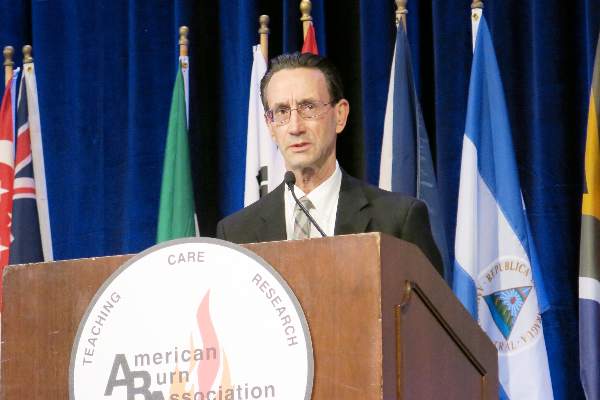
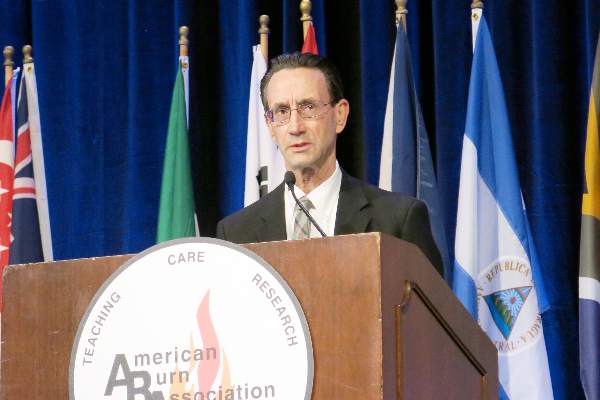
“One of the impetuses to do this study in this manner was the realization of what most therapists say all the time: They don’t have enough time to treat their patients in the hospital,” Reg Richard, P.T., said at the annual meeting of the American Burn Association.
During a discussion of the study at the meeting, Mr. Richard said he hoped the results would be used to improve rehabilitation services for burn patients and called on the ABA to lead the charge.
ABA President David Ahrenholz of Regions Hospital Burn Center, St. Paul, Minn., said in an interview that coverage of rehabilitation services varies from insurer to insurer, and physicians can’t point to an absolute number to say this is the minimum number of rehabilitation days needed to obtain a good outcome in a specific patient.
“This is the first pass of an unbelievably large data set,” Dr. Ahrenholz said “I think it will be transformative ... to help the insurers to understand that it isn’t just a number of sessions, but that we’re looking for an outcome and that the therapy should continue until we get the desired outcome.”
In the ACT study, a univariate analysis found patients with no contracture were significantly more likely than those with contracture to have shorter hospital stays (12 days vs. 14 days; P value = .02), burns with a lower percentage of body surface area involvement (5% vs. nearly 10%; P<i/> < .0001), fewer skin grafts (2.3% vs. 4%; P<i/> = .001), more rehabilitation time per total body surface area involvement (6.1 minutes vs. 4.5 minutes; P<i/> = .003 ), and more rehabilitation time per cutaneous functional unit (4.4 minutes vs. 2 minutes; P<i/> < .0001), Mr. Richard from the U.S. Army Institute of Surgical Research, JBSA Fort Sam Houston, Texas, reported.
In multivariate regression analysis, rehabilitation time per cutaneous functional unit was the only significant predictor of preventing burn scar contracture and lost range of motion for patients with small burns (Odds ratio, 1.07; 95% confidence interval, 1.02-1.12) and for those with larger burns (OR, 1.36; 95% CI, 1.18-1.74).
Further analyses are warranted, as the results were based on the variables used and present analysis methods, he said.
On Twitter @pwendl
CHICAGO – Rehabilitation time is directly associated with a reduced rate of contracture and a better range of motion, irrespective of the extent of burn injury, results from the prospective ACT study showed.
The Acuity, Contractures, Time (ACT) study examined outcomes and rehabilitation time in patients with burns involving 10% or less of their total body surface area (n = 177) and in those with burns involving more than 10% of total body surface area (n = 130). Joint range of motion was recorded based on cutaneous functional units at the time of discharge for all 307 patients enrolled from September 2010 through December 2013 at five verified burn centers across the United States. Most patients were men (71%).
Overall, 79% of the patients had burn scar contracture. Based on range of motion for 8,068 joints analyzed, 66% had burn scar contracture.
For patients with burns affecting 10% or less of their bodies, only rehabilitation time per cutaneous functional unit significantly differed between those with and without burn scar contracture (4.6 minutes vs. 2.4 minutes; P<i/>= .002). The same was true for patients with burns affecting more than 10% of their bodies (3.3 minutes vs. 1.4 minutes; P<i/> < .0001).
“One of the impetuses to do this study in this manner was the realization of what most therapists say all the time: They don’t have enough time to treat their patients in the hospital,” Reg Richard, P.T., said at the annual meeting of the American Burn Association.
During a discussion of the study at the meeting, Mr. Richard said he hoped the results would be used to improve rehabilitation services for burn patients and called on the ABA to lead the charge.
ABA President David Ahrenholz of Regions Hospital Burn Center, St. Paul, Minn., said in an interview that coverage of rehabilitation services varies from insurer to insurer, and physicians can’t point to an absolute number to say this is the minimum number of rehabilitation days needed to obtain a good outcome in a specific patient.
“This is the first pass of an unbelievably large data set,” Dr. Ahrenholz said “I think it will be transformative ... to help the insurers to understand that it isn’t just a number of sessions, but that we’re looking for an outcome and that the therapy should continue until we get the desired outcome.”
In the ACT study, a univariate analysis found patients with no contracture were significantly more likely than those with contracture to have shorter hospital stays (12 days vs. 14 days; P value = .02), burns with a lower percentage of body surface area involvement (5% vs. nearly 10%; P<i/> < .0001), fewer skin grafts (2.3% vs. 4%; P<i/> = .001), more rehabilitation time per total body surface area involvement (6.1 minutes vs. 4.5 minutes; P<i/> = .003 ), and more rehabilitation time per cutaneous functional unit (4.4 minutes vs. 2 minutes; P<i/> < .0001), Mr. Richard from the U.S. Army Institute of Surgical Research, JBSA Fort Sam Houston, Texas, reported.
In multivariate regression analysis, rehabilitation time per cutaneous functional unit was the only significant predictor of preventing burn scar contracture and lost range of motion for patients with small burns (Odds ratio, 1.07; 95% confidence interval, 1.02-1.12) and for those with larger burns (OR, 1.36; 95% CI, 1.18-1.74).
Further analyses are warranted, as the results were based on the variables used and present analysis methods, he said.
On Twitter @pwendl
CHICAGO – Rehabilitation time is directly associated with a reduced rate of contracture and a better range of motion, irrespective of the extent of burn injury, results from the prospective ACT study showed.
The Acuity, Contractures, Time (ACT) study examined outcomes and rehabilitation time in patients with burns involving 10% or less of their total body surface area (n = 177) and in those with burns involving more than 10% of total body surface area (n = 130). Joint range of motion was recorded based on cutaneous functional units at the time of discharge for all 307 patients enrolled from September 2010 through December 2013 at five verified burn centers across the United States. Most patients were men (71%).
Overall, 79% of the patients had burn scar contracture. Based on range of motion for 8,068 joints analyzed, 66% had burn scar contracture.
For patients with burns affecting 10% or less of their bodies, only rehabilitation time per cutaneous functional unit significantly differed between those with and without burn scar contracture (4.6 minutes vs. 2.4 minutes; P<i/>= .002). The same was true for patients with burns affecting more than 10% of their bodies (3.3 minutes vs. 1.4 minutes; P<i/> < .0001).
“One of the impetuses to do this study in this manner was the realization of what most therapists say all the time: They don’t have enough time to treat their patients in the hospital,” Reg Richard, P.T., said at the annual meeting of the American Burn Association.
During a discussion of the study at the meeting, Mr. Richard said he hoped the results would be used to improve rehabilitation services for burn patients and called on the ABA to lead the charge.
ABA President David Ahrenholz of Regions Hospital Burn Center, St. Paul, Minn., said in an interview that coverage of rehabilitation services varies from insurer to insurer, and physicians can’t point to an absolute number to say this is the minimum number of rehabilitation days needed to obtain a good outcome in a specific patient.
“This is the first pass of an unbelievably large data set,” Dr. Ahrenholz said “I think it will be transformative ... to help the insurers to understand that it isn’t just a number of sessions, but that we’re looking for an outcome and that the therapy should continue until we get the desired outcome.”
In the ACT study, a univariate analysis found patients with no contracture were significantly more likely than those with contracture to have shorter hospital stays (12 days vs. 14 days; P value = .02), burns with a lower percentage of body surface area involvement (5% vs. nearly 10%; P<i/> < .0001), fewer skin grafts (2.3% vs. 4%; P<i/> = .001), more rehabilitation time per total body surface area involvement (6.1 minutes vs. 4.5 minutes; P<i/> = .003 ), and more rehabilitation time per cutaneous functional unit (4.4 minutes vs. 2 minutes; P<i/> < .0001), Mr. Richard from the U.S. Army Institute of Surgical Research, JBSA Fort Sam Houston, Texas, reported.
In multivariate regression analysis, rehabilitation time per cutaneous functional unit was the only significant predictor of preventing burn scar contracture and lost range of motion for patients with small burns (Odds ratio, 1.07; 95% confidence interval, 1.02-1.12) and for those with larger burns (OR, 1.36; 95% CI, 1.18-1.74).
Further analyses are warranted, as the results were based on the variables used and present analysis methods, he said.
On Twitter @pwendl
AT THE ABA ANNUAL MEETING
Key clinical point: Rehabilitation time was associated with reduced risk of scar contracture and lost range of motion in burn patients.
Major finding: For patients with burns affecting 10% or less of their bodies, only rehabilitation time per cutaneous functional unit significantly differed between those with and without burn scar contracture (4.6 minutes vs. 2.4 minutes; P = .002). The same was true for patients with burns affecting more than 10% of their bodies (3.3 minutes vs. 1.4 minutes; P < .0001).
Data source: Prospective, observational study in 307 burn patients.
Disclosures: The study was funded by a U.S. Department of Defense grant.
Trauma center verification
Despite the many changes in medicine over the past century, traumatic injury remains a surgical disease.
Trauma injury is a major public health concern in rural areas, where death rates from unintentional injuries are higher than in metropolitan areas (Am. J. Public Health 2004;10:1689-93). The rural surgeon sees more than his or her fair share of victims of automobile accidents, falls, unintentional firearms injuries, and occupational accidents (think tractor accidents and injuries involving machinery and animals).

Another reality of the rural areas of the United States is that the number of broadly trained general surgeons who can treat a wide variety of trauma injuries is shrinking. Aging and retirements of the “old school rural surgeons” are accelerating and precipitating a lack of surgical coverage crisis, including trauma, in rural areas (Arch. Surg. 2005;140:74-9).
These well-documented developments have combined to reduce the availability of rural surgeons to manage injured patients in planned and consistent ways. Because of the current training paradigm of increasing subspecialization, injured rural patients may be cared for at rural hospitals with reduced capabilities and by rural surgeons with limited trauma training and experience.
What is the action plan to help counteract these developments and to provide the highest-quality patient care at facilities staffed by surgeons who have sworn to “serve all with skill and fidelity”?
The most straightforward and well-established action plan to achieve those goals is the verification process developed by the ACS Verification, Review, and Consultation Program (VRC) in 1987 to help hospitals improve trauma care. The process involves a pre-review questionnaire, a site visit, and report of findings. Verification as a trauma center guarantees that the facility has the required resources listed in the current, evidence-based guide, Resources for Optimal Care of the Injured Patient (2014). If successful, the trauma center receives a certificate of verification that is valid for 3 years.
Most rural hospitals are designated as Level III and IV verified trauma centers on the basis of their available resources. ACS verification confirms that these centers have the commitments and capabilities to manage the initial care of injured patients by providing stabilization and instituting life-saving maneuvers. In addition, verification confirms that protocols and agreements with higher-level trauma centers within a system enable the safe and efficient transfer of injured patients.
During many years of practice in the rural hospitals verified as trauma centers, including being the medical director of a Level II and Level III facility, I provided care to injured patients who presented to the emergency departments (EDs). My experiences confirmed the unequivocal value of practicing in those facilities, and I can attest to the benefits of verification within a system, like Iowa’s state program.
The following case report validates such assertions. A helicopter, unable to complete the transfer to a Level I center for a deteriorating patient with a left chest gunshot wound, landed at my Level III hospital. There was a “Hot Off Load,” which was followed by a full trauma alert for the patient in profound shock. After placing a chest tube during a 20-minute ED stay, the patient transferred to the OR for further resuscitation, and stabilization with required operative treatment. With the patient stabilized and fully resuscitated, according to established agreements, I contacted the Level I center from the OR. After 3 hours, the patient returned to the helicopter and completed the transfer to the Level I trauma center. The patient survived because of the local trauma team’s commitment, organization, and skill brought about by the trauma center verification.
Most research to date has focused on higher-level trauma centers, but recent studies have shown that ACS verification was an independent predictor of survival of trauma patients at Level II centers (J. Trauma Acute Care Surg. 2013;75:44-9; J. Trauma Acute Care Surg. 2010;69:1362-6).
I have firsthand experience with the verification process. Following my involvement with the ACS Committee on Trauma, I became a national site surveyor for the ACSVRC. I became an Advanced Trauma Life Support (ATLS) instructor and then worked as a course director. ATLS is an essential component for trauma center verification. It supports the rural surgeon by giving the local trauma team a format for consistent, life-saving care for the most severely injured patients. I subsequently completed the ACS Advanced Trauma Operative Management course and elected to become an instructor.
I have made site visits to many rural hospitals as a part of the ACSVRC process and have met with a wide range of reactions from “Let’s show off how good we are” to “We really don’t know why we’re doing this” to “Just give us the merit badge and then get out of our hair.” I am gratified to note that ACS Fellows are uniformly supportive. They understand the need for organization, standards, and performance improvement.
Opposition to the ACSVRC process by hospitals and staff is no doubt rooted in cost concerns and general resistance to change. But, as most of us know, demonstrated benefits for patient care can be highly persuasive to most medical professionals.
It is also worth noting that in an effort to decrease stress, the ACSVRC takes significant steps to support facilities that seek verification by eliminating ambiguity from application to on-site visit, by defining criteria deficiencies, and by providing evidence for the entire verification process. The complete VRC program along with an FAQ is available on the ACS website (facs.org/quality-programs/trauma/vrc).
For me, trauma care has always been about what is best for the injured patient. I often ask colleagues this question: “What care do you want for an injured member of your family?” I then answer my own question: “I want the best care possible. That means organized, efficient, and life-saving [care] if needed.” Fortunately, I experienced these benefits at my verified trauma center hospital when my second son was in a rollover motor vehicle crash. He survived.
Verified rural trauma centers do indeed offer the best opportunities for high-quality patient care and for support of the rural surgeons who render that care to “serve all with skill and fidelity.” I know. I have been there.
Dr. Caropreso is a general surgeon at Keokuk (Iowa) Area Hospital and clinical professor of surgery at the University of Iowa Carver College of Medicine, Iowa City. He has practiced surgery in the rural communities of Mason City, Iowa; Keokuk, Iowa; and Carthage, Ill., for 37 years.
Despite the many changes in medicine over the past century, traumatic injury remains a surgical disease.
Trauma injury is a major public health concern in rural areas, where death rates from unintentional injuries are higher than in metropolitan areas (Am. J. Public Health 2004;10:1689-93). The rural surgeon sees more than his or her fair share of victims of automobile accidents, falls, unintentional firearms injuries, and occupational accidents (think tractor accidents and injuries involving machinery and animals).
Another reality of the rural areas of the United States is that the number of broadly trained general surgeons who can treat a wide variety of trauma injuries is shrinking. Aging and retirements of the “old school rural surgeons” are accelerating and precipitating a lack of surgical coverage crisis, including trauma, in rural areas (Arch. Surg. 2005;140:74-9).
These well-documented developments have combined to reduce the availability of rural surgeons to manage injured patients in planned and consistent ways. Because of the current training paradigm of increasing subspecialization, injured rural patients may be cared for at rural hospitals with reduced capabilities and by rural surgeons with limited trauma training and experience.
What is the action plan to help counteract these developments and to provide the highest-quality patient care at facilities staffed by surgeons who have sworn to “serve all with skill and fidelity”?
The most straightforward and well-established action plan to achieve those goals is the verification process developed by the ACS Verification, Review, and Consultation Program (VRC) in 1987 to help hospitals improve trauma care. The process involves a pre-review questionnaire, a site visit, and report of findings. Verification as a trauma center guarantees that the facility has the required resources listed in the current, evidence-based guide, Resources for Optimal Care of the Injured Patient (2014). If successful, the trauma center receives a certificate of verification that is valid for 3 years.
Most rural hospitals are designated as Level III and IV verified trauma centers on the basis of their available resources. ACS verification confirms that these centers have the commitments and capabilities to manage the initial care of injured patients by providing stabilization and instituting life-saving maneuvers. In addition, verification confirms that protocols and agreements with higher-level trauma centers within a system enable the safe and efficient transfer of injured patients.
During many years of practice in the rural hospitals verified as trauma centers, including being the medical director of a Level II and Level III facility, I provided care to injured patients who presented to the emergency departments (EDs). My experiences confirmed the unequivocal value of practicing in those facilities, and I can attest to the benefits of verification within a system, like Iowa’s state program.
The following case report validates such assertions. A helicopter, unable to complete the transfer to a Level I center for a deteriorating patient with a left chest gunshot wound, landed at my Level III hospital. There was a “Hot Off Load,” which was followed by a full trauma alert for the patient in profound shock. After placing a chest tube during a 20-minute ED stay, the patient transferred to the OR for further resuscitation, and stabilization with required operative treatment. With the patient stabilized and fully resuscitated, according to established agreements, I contacted the Level I center from the OR. After 3 hours, the patient returned to the helicopter and completed the transfer to the Level I trauma center. The patient survived because of the local trauma team’s commitment, organization, and skill brought about by the trauma center verification.
Most research to date has focused on higher-level trauma centers, but recent studies have shown that ACS verification was an independent predictor of survival of trauma patients at Level II centers (J. Trauma Acute Care Surg. 2013;75:44-9; J. Trauma Acute Care Surg. 2010;69:1362-6).
I have firsthand experience with the verification process. Following my involvement with the ACS Committee on Trauma, I became a national site surveyor for the ACSVRC. I became an Advanced Trauma Life Support (ATLS) instructor and then worked as a course director. ATLS is an essential component for trauma center verification. It supports the rural surgeon by giving the local trauma team a format for consistent, life-saving care for the most severely injured patients. I subsequently completed the ACS Advanced Trauma Operative Management course and elected to become an instructor.
I have made site visits to many rural hospitals as a part of the ACSVRC process and have met with a wide range of reactions from “Let’s show off how good we are” to “We really don’t know why we’re doing this” to “Just give us the merit badge and then get out of our hair.” I am gratified to note that ACS Fellows are uniformly supportive. They understand the need for organization, standards, and performance improvement.
Opposition to the ACSVRC process by hospitals and staff is no doubt rooted in cost concerns and general resistance to change. But, as most of us know, demonstrated benefits for patient care can be highly persuasive to most medical professionals.
It is also worth noting that in an effort to decrease stress, the ACSVRC takes significant steps to support facilities that seek verification by eliminating ambiguity from application to on-site visit, by defining criteria deficiencies, and by providing evidence for the entire verification process. The complete VRC program along with an FAQ is available on the ACS website (facs.org/quality-programs/trauma/vrc).
For me, trauma care has always been about what is best for the injured patient. I often ask colleagues this question: “What care do you want for an injured member of your family?” I then answer my own question: “I want the best care possible. That means organized, efficient, and life-saving [care] if needed.” Fortunately, I experienced these benefits at my verified trauma center hospital when my second son was in a rollover motor vehicle crash. He survived.
Verified rural trauma centers do indeed offer the best opportunities for high-quality patient care and for support of the rural surgeons who render that care to “serve all with skill and fidelity.” I know. I have been there.
Dr. Caropreso is a general surgeon at Keokuk (Iowa) Area Hospital and clinical professor of surgery at the University of Iowa Carver College of Medicine, Iowa City. He has practiced surgery in the rural communities of Mason City, Iowa; Keokuk, Iowa; and Carthage, Ill., for 37 years.
Despite the many changes in medicine over the past century, traumatic injury remains a surgical disease.
Trauma injury is a major public health concern in rural areas, where death rates from unintentional injuries are higher than in metropolitan areas (Am. J. Public Health 2004;10:1689-93). The rural surgeon sees more than his or her fair share of victims of automobile accidents, falls, unintentional firearms injuries, and occupational accidents (think tractor accidents and injuries involving machinery and animals).
Another reality of the rural areas of the United States is that the number of broadly trained general surgeons who can treat a wide variety of trauma injuries is shrinking. Aging and retirements of the “old school rural surgeons” are accelerating and precipitating a lack of surgical coverage crisis, including trauma, in rural areas (Arch. Surg. 2005;140:74-9).
These well-documented developments have combined to reduce the availability of rural surgeons to manage injured patients in planned and consistent ways. Because of the current training paradigm of increasing subspecialization, injured rural patients may be cared for at rural hospitals with reduced capabilities and by rural surgeons with limited trauma training and experience.
What is the action plan to help counteract these developments and to provide the highest-quality patient care at facilities staffed by surgeons who have sworn to “serve all with skill and fidelity”?
The most straightforward and well-established action plan to achieve those goals is the verification process developed by the ACS Verification, Review, and Consultation Program (VRC) in 1987 to help hospitals improve trauma care. The process involves a pre-review questionnaire, a site visit, and report of findings. Verification as a trauma center guarantees that the facility has the required resources listed in the current, evidence-based guide, Resources for Optimal Care of the Injured Patient (2014). If successful, the trauma center receives a certificate of verification that is valid for 3 years.
Most rural hospitals are designated as Level III and IV verified trauma centers on the basis of their available resources. ACS verification confirms that these centers have the commitments and capabilities to manage the initial care of injured patients by providing stabilization and instituting life-saving maneuvers. In addition, verification confirms that protocols and agreements with higher-level trauma centers within a system enable the safe and efficient transfer of injured patients.
During many years of practice in the rural hospitals verified as trauma centers, including being the medical director of a Level II and Level III facility, I provided care to injured patients who presented to the emergency departments (EDs). My experiences confirmed the unequivocal value of practicing in those facilities, and I can attest to the benefits of verification within a system, like Iowa’s state program.
The following case report validates such assertions. A helicopter, unable to complete the transfer to a Level I center for a deteriorating patient with a left chest gunshot wound, landed at my Level III hospital. There was a “Hot Off Load,” which was followed by a full trauma alert for the patient in profound shock. After placing a chest tube during a 20-minute ED stay, the patient transferred to the OR for further resuscitation, and stabilization with required operative treatment. With the patient stabilized and fully resuscitated, according to established agreements, I contacted the Level I center from the OR. After 3 hours, the patient returned to the helicopter and completed the transfer to the Level I trauma center. The patient survived because of the local trauma team’s commitment, organization, and skill brought about by the trauma center verification.
Most research to date has focused on higher-level trauma centers, but recent studies have shown that ACS verification was an independent predictor of survival of trauma patients at Level II centers (J. Trauma Acute Care Surg. 2013;75:44-9; J. Trauma Acute Care Surg. 2010;69:1362-6).
I have firsthand experience with the verification process. Following my involvement with the ACS Committee on Trauma, I became a national site surveyor for the ACSVRC. I became an Advanced Trauma Life Support (ATLS) instructor and then worked as a course director. ATLS is an essential component for trauma center verification. It supports the rural surgeon by giving the local trauma team a format for consistent, life-saving care for the most severely injured patients. I subsequently completed the ACS Advanced Trauma Operative Management course and elected to become an instructor.
I have made site visits to many rural hospitals as a part of the ACSVRC process and have met with a wide range of reactions from “Let’s show off how good we are” to “We really don’t know why we’re doing this” to “Just give us the merit badge and then get out of our hair.” I am gratified to note that ACS Fellows are uniformly supportive. They understand the need for organization, standards, and performance improvement.
Opposition to the ACSVRC process by hospitals and staff is no doubt rooted in cost concerns and general resistance to change. But, as most of us know, demonstrated benefits for patient care can be highly persuasive to most medical professionals.
It is also worth noting that in an effort to decrease stress, the ACSVRC takes significant steps to support facilities that seek verification by eliminating ambiguity from application to on-site visit, by defining criteria deficiencies, and by providing evidence for the entire verification process. The complete VRC program along with an FAQ is available on the ACS website (facs.org/quality-programs/trauma/vrc).
For me, trauma care has always been about what is best for the injured patient. I often ask colleagues this question: “What care do you want for an injured member of your family?” I then answer my own question: “I want the best care possible. That means organized, efficient, and life-saving [care] if needed.” Fortunately, I experienced these benefits at my verified trauma center hospital when my second son was in a rollover motor vehicle crash. He survived.
Verified rural trauma centers do indeed offer the best opportunities for high-quality patient care and for support of the rural surgeons who render that care to “serve all with skill and fidelity.” I know. I have been there.
Dr. Caropreso is a general surgeon at Keokuk (Iowa) Area Hospital and clinical professor of surgery at the University of Iowa Carver College of Medicine, Iowa City. He has practiced surgery in the rural communities of Mason City, Iowa; Keokuk, Iowa; and Carthage, Ill., for 37 years.

From the Washington Office
S…G…R (continued) – It is much to all of our collective delight and relief that the SGR has finally been relegated to the ash heap of history.
In the late evening of April 14, in an act of historic bipartisanship, the Senate voted 92-8 in favor of H.R. 2 thus completing legislative action about which I wrote last month. President Obama signed the bill into law on April 16. As I write, Dave Hoyt, ACS Executive Director, is attending an event at the White House, along with other leaders of the physician community, to celebrate the full and permanent repeal of the SGR.

In the coming months, I will use this column to inform surgeons about various components of the legislation and its attendant policy. To start this process, I would first like to cover the key provisions of what is now known as MACRA – the Medicare Access and CHIP Reauthorization Act.
For starters, MACRA fully and permanently repeals the sustainable growth rate (SGR), thus providing stability to the Medicare physician fee schedule. Such repeal averts a 21% SGR-induced cut scheduled for April 1, 2015. MACRA also provides modest but stable positive updates of 0.5%/year for 5 years. When the legislative template that ultimately became MACRA was negotiated in late 2013 and early 2014, no provision was initially made for a positive update to physician payment. However, as a direct result of objections made by the leadership of the ACS, the legislation was subsequently revised to include the 0.5%/year update.
In addition, MACRA provides for the elimination, in 2018, of the current-law penalties associated with the existing quality programs, namely the Physician Quality Reporting System (PQRS), the Value-Based Modifier (VBM) program, and the Electronic Health Record-Meaningful Use (EHR-MU) program. The monies expected from those penalties will be returned to the pool, thus increasing the amount of funds available for incentive updates.
Beginning in 2019, these three programs will be combined into a single program known as the Merit-Based Incentive Payment System (MIPS). The MIPS makes it possible for all surgeons to receive an annual positive update based on their individual performance in four categories of Quality, Resource Use, Meaningful use of the electronic health record, and Clinical practice improvement activities. Surgeons will receive an annual, individual, single composite score based on their performance in these four categories. This score will be compared to a threshold score, defined as either the mean or median of composite scores from a prior performance period. Those with a score above the threshold will receive a positive adjustment and those with a score below the threshold will receive a negative adjustment.The legislation also provides the opportunity to receive a 5% bonus beginning in 2019 for participation in an Alternative Payment Model (APM). Surgeons who meet the full APM criteria will also be excluded from the MIPS assessment and most EHR-MU requirements. Those who participate in an APM at lower levels will receive credit toward their MIPS score. The bonus payment encourages the development of, testing of, and participation in an alternative payment model.
The passage of MACRA also represents a major victory relative to the College’s efforts to rescind the CMS policy transitioning 10- and 90-day global codes to zero-day global codes. ACS leadership and staff of the D.C. office had direct input into the specific language included in the legislation through multiple exchanges with congressional committee staff. In short, MACRA prohibits CMS from implementing its flawed plan relative to the transitioning of the global codes. Instead, beginning no later than 2017, CMS will collect samples of data on the number and level of postoperative visits furnished during the global period. Beginning in 2019, CMS will use this data to improve the accuracy of the valuation of surgical services. CMS is allowed to withhold 5% of the surgical payment until the sample information is reported at the end of the global period.
While MACRA does not implement broad medical liability reforms, it does include a provision which assures that MIPS participation cannot be used in a medical liability action. Specifically, the legislation specifies that the development, recognition or implementation of any guideline or other standard under any federal health care provision, including Medicare, cannot be construed as to establish the standard of care or duty of care owed by a surgeon to a patient in any medical malpractice claim.
Finally, and of particular interest to pediatric surgeons and other surgeons who care for children, MACRA includes two years of additional funding for the Children’s Health Insurance Program (CHIP) at the level provided under the Affordable Care Act.
Unfortunately, surgeons will need to become familiar with an entire new lexicon of acronyms associated with this new law and its policy. While this may initially seem daunting and confusing, it can be mastered with relative ease. It is my hope to continue to facilitate such with the content provided herein with the June edition of this column.
Until next month …
Dr. Bailey is a pediatric surgeon and Medical Director, Advocacy for the Division of Advocacy and Health Policy in the ACS offices in Washington, DC.
S…G…R (continued) – It is much to all of our collective delight and relief that the SGR has finally been relegated to the ash heap of history.
In the late evening of April 14, in an act of historic bipartisanship, the Senate voted 92-8 in favor of H.R. 2 thus completing legislative action about which I wrote last month. President Obama signed the bill into law on April 16. As I write, Dave Hoyt, ACS Executive Director, is attending an event at the White House, along with other leaders of the physician community, to celebrate the full and permanent repeal of the SGR.
In the coming months, I will use this column to inform surgeons about various components of the legislation and its attendant policy. To start this process, I would first like to cover the key provisions of what is now known as MACRA – the Medicare Access and CHIP Reauthorization Act.
For starters, MACRA fully and permanently repeals the sustainable growth rate (SGR), thus providing stability to the Medicare physician fee schedule. Such repeal averts a 21% SGR-induced cut scheduled for April 1, 2015. MACRA also provides modest but stable positive updates of 0.5%/year for 5 years. When the legislative template that ultimately became MACRA was negotiated in late 2013 and early 2014, no provision was initially made for a positive update to physician payment. However, as a direct result of objections made by the leadership of the ACS, the legislation was subsequently revised to include the 0.5%/year update.
In addition, MACRA provides for the elimination, in 2018, of the current-law penalties associated with the existing quality programs, namely the Physician Quality Reporting System (PQRS), the Value-Based Modifier (VBM) program, and the Electronic Health Record-Meaningful Use (EHR-MU) program. The monies expected from those penalties will be returned to the pool, thus increasing the amount of funds available for incentive updates.
Beginning in 2019, these three programs will be combined into a single program known as the Merit-Based Incentive Payment System (MIPS). The MIPS makes it possible for all surgeons to receive an annual positive update based on their individual performance in four categories of Quality, Resource Use, Meaningful use of the electronic health record, and Clinical practice improvement activities. Surgeons will receive an annual, individual, single composite score based on their performance in these four categories. This score will be compared to a threshold score, defined as either the mean or median of composite scores from a prior performance period. Those with a score above the threshold will receive a positive adjustment and those with a score below the threshold will receive a negative adjustment.The legislation also provides the opportunity to receive a 5% bonus beginning in 2019 for participation in an Alternative Payment Model (APM). Surgeons who meet the full APM criteria will also be excluded from the MIPS assessment and most EHR-MU requirements. Those who participate in an APM at lower levels will receive credit toward their MIPS score. The bonus payment encourages the development of, testing of, and participation in an alternative payment model.
The passage of MACRA also represents a major victory relative to the College’s efforts to rescind the CMS policy transitioning 10- and 90-day global codes to zero-day global codes. ACS leadership and staff of the D.C. office had direct input into the specific language included in the legislation through multiple exchanges with congressional committee staff. In short, MACRA prohibits CMS from implementing its flawed plan relative to the transitioning of the global codes. Instead, beginning no later than 2017, CMS will collect samples of data on the number and level of postoperative visits furnished during the global period. Beginning in 2019, CMS will use this data to improve the accuracy of the valuation of surgical services. CMS is allowed to withhold 5% of the surgical payment until the sample information is reported at the end of the global period.
While MACRA does not implement broad medical liability reforms, it does include a provision which assures that MIPS participation cannot be used in a medical liability action. Specifically, the legislation specifies that the development, recognition or implementation of any guideline or other standard under any federal health care provision, including Medicare, cannot be construed as to establish the standard of care or duty of care owed by a surgeon to a patient in any medical malpractice claim.
Finally, and of particular interest to pediatric surgeons and other surgeons who care for children, MACRA includes two years of additional funding for the Children’s Health Insurance Program (CHIP) at the level provided under the Affordable Care Act.
Unfortunately, surgeons will need to become familiar with an entire new lexicon of acronyms associated with this new law and its policy. While this may initially seem daunting and confusing, it can be mastered with relative ease. It is my hope to continue to facilitate such with the content provided herein with the June edition of this column.
Until next month …
Dr. Bailey is a pediatric surgeon and Medical Director, Advocacy for the Division of Advocacy and Health Policy in the ACS offices in Washington, DC.
S…G…R (continued) – It is much to all of our collective delight and relief that the SGR has finally been relegated to the ash heap of history.
In the late evening of April 14, in an act of historic bipartisanship, the Senate voted 92-8 in favor of H.R. 2 thus completing legislative action about which I wrote last month. President Obama signed the bill into law on April 16. As I write, Dave Hoyt, ACS Executive Director, is attending an event at the White House, along with other leaders of the physician community, to celebrate the full and permanent repeal of the SGR.
In the coming months, I will use this column to inform surgeons about various components of the legislation and its attendant policy. To start this process, I would first like to cover the key provisions of what is now known as MACRA – the Medicare Access and CHIP Reauthorization Act.
For starters, MACRA fully and permanently repeals the sustainable growth rate (SGR), thus providing stability to the Medicare physician fee schedule. Such repeal averts a 21% SGR-induced cut scheduled for April 1, 2015. MACRA also provides modest but stable positive updates of 0.5%/year for 5 years. When the legislative template that ultimately became MACRA was negotiated in late 2013 and early 2014, no provision was initially made for a positive update to physician payment. However, as a direct result of objections made by the leadership of the ACS, the legislation was subsequently revised to include the 0.5%/year update.
In addition, MACRA provides for the elimination, in 2018, of the current-law penalties associated with the existing quality programs, namely the Physician Quality Reporting System (PQRS), the Value-Based Modifier (VBM) program, and the Electronic Health Record-Meaningful Use (EHR-MU) program. The monies expected from those penalties will be returned to the pool, thus increasing the amount of funds available for incentive updates.
Beginning in 2019, these three programs will be combined into a single program known as the Merit-Based Incentive Payment System (MIPS). The MIPS makes it possible for all surgeons to receive an annual positive update based on their individual performance in four categories of Quality, Resource Use, Meaningful use of the electronic health record, and Clinical practice improvement activities. Surgeons will receive an annual, individual, single composite score based on their performance in these four categories. This score will be compared to a threshold score, defined as either the mean or median of composite scores from a prior performance period. Those with a score above the threshold will receive a positive adjustment and those with a score below the threshold will receive a negative adjustment.The legislation also provides the opportunity to receive a 5% bonus beginning in 2019 for participation in an Alternative Payment Model (APM). Surgeons who meet the full APM criteria will also be excluded from the MIPS assessment and most EHR-MU requirements. Those who participate in an APM at lower levels will receive credit toward their MIPS score. The bonus payment encourages the development of, testing of, and participation in an alternative payment model.
The passage of MACRA also represents a major victory relative to the College’s efforts to rescind the CMS policy transitioning 10- and 90-day global codes to zero-day global codes. ACS leadership and staff of the D.C. office had direct input into the specific language included in the legislation through multiple exchanges with congressional committee staff. In short, MACRA prohibits CMS from implementing its flawed plan relative to the transitioning of the global codes. Instead, beginning no later than 2017, CMS will collect samples of data on the number and level of postoperative visits furnished during the global period. Beginning in 2019, CMS will use this data to improve the accuracy of the valuation of surgical services. CMS is allowed to withhold 5% of the surgical payment until the sample information is reported at the end of the global period.
While MACRA does not implement broad medical liability reforms, it does include a provision which assures that MIPS participation cannot be used in a medical liability action. Specifically, the legislation specifies that the development, recognition or implementation of any guideline or other standard under any federal health care provision, including Medicare, cannot be construed as to establish the standard of care or duty of care owed by a surgeon to a patient in any medical malpractice claim.
Finally, and of particular interest to pediatric surgeons and other surgeons who care for children, MACRA includes two years of additional funding for the Children’s Health Insurance Program (CHIP) at the level provided under the Affordable Care Act.
Unfortunately, surgeons will need to become familiar with an entire new lexicon of acronyms associated with this new law and its policy. While this may initially seem daunting and confusing, it can be mastered with relative ease. It is my hope to continue to facilitate such with the content provided herein with the June edition of this column.
Until next month …
Dr. Bailey is a pediatric surgeon and Medical Director, Advocacy for the Division of Advocacy and Health Policy in the ACS offices in Washington, DC.
Lessons from our dying patients
Dying patients teach us to think more carefully about whether or not our surgical interventions will be beneficial.
I work in palliative care, and my surgical colleagues, especially the residents, are often surprised when I call them and ask them to consult on my patients who are very ill and have a “Do Not Resuscitate” order in their charts. I’m also an anesthesiologist working in interventional pain management, and I regularly do procedures on patients who have prognoses that are extremely limited. For other patients, I recommend against any interventions at all.
How do we know when to intervene on patients who are dying? Perhaps more importantly, how do we know when NOT to intervene? Two recent cases of almost identical fractures illustrated for me the need to think beyond the anatomic problem when evaluating options for care.
Last year, I admitted a woman, “Donna,” with widely metastatic breast cancer to our inpatient palliative care service. She had fallen at home and hurt her arm about 2 months prior to admission. She had been confined to her bed for about 6 weeks. She was brought to the hospital because she was becoming delirious. She had many sources of pain that were relatively well controlled when she was lying down, but her worst pain was in her left arm. We found a fracture of her humerus. When her family learned that the fracture would not heal on its own because of the large metastasis there, they demanded surgery to fix it. Shortly thereafter, I re-admitted a patient, “Cindy,” with a very similar story. She also had widely metastatic breast cancer, and her pain had been very difficult to control. We had found a pain regimen that worked well for her on her previous admission, but she had fallen over her walker and broke her humerus after we had discharged her to a rehab facility. When I saw her back in the hospital, I told her that I thought she would need surgery to fix her arm. She was depressed by this setback, she was in pain again, and she told me that she would prefer not to have any intervention because she feared the additional pain that it would cause.
With Donna, we sat down with her and her family to hear what their hopes were for her care. They understood that she did not have further chemotherapy or radiation options for her cancer, but they thought if she got the surgery that at least she would be able to get out of bed and walk again. My colleague carefully explained that yes, he could fix the fracture and that this could mean that the pain in her left arm would improve. He went on to say, however, that he did not think that the surgery would allow her to walk again as she had not been able to walk for a few weeks after the injury. When the family heard that the surgery probably wouldn’t restore her mobility, they decided against the procedure. With Cindy, we had a very different conversation. She was not inclined to have the procedure, but I expressed my concern that she wouldn’t be able to walk again unless she had the procedure because she needed her arms to use her walker. Although she did not have any further chemotherapy or radiation options, her oncologist had told us that her prognosis could be several months. In this case, my surgical colleague explained that he could perform surgery for the fracture and that he thought that it would both help her pain and allow her to use her walker again. We recommended that she have the surgery given her hope to continue to live independently, as she had been, for as long as possible. She ultimately agreed to do so and was able to return home.
These two patients reminded me again of how important it is for us to understand what our patients’ hopes and expectations are for a procedure. It is very distressing for clinicians when desperate families want treatments that likely have little benefit. When patients have limited prognoses, aligning patient goals and procedure goals is especially important as the outcome of the procedure can define the patient’s remaining days.
Donna’s family demanded a surgery expecting a result that was very unlikely, and Cindy initially declined the same surgery that ultimately benefitted her greatly. Our job is to make and execute the medical recommendations that best fit with our patients’ goals and understanding. Sometimes this will mean performing procedures on patients who are extremely ill and have “Do Not Resuscitate” orders, and at other times, it will mean not doing procedures, even if a patient and family want them to be done.
Dr. Rickerson is an anesthesiologist at the Dana-Farber Cancer Institute and Brigham and Women’s Hospital, Boston.
Dying patients teach us to think more carefully about whether or not our surgical interventions will be beneficial.
I work in palliative care, and my surgical colleagues, especially the residents, are often surprised when I call them and ask them to consult on my patients who are very ill and have a “Do Not Resuscitate” order in their charts. I’m also an anesthesiologist working in interventional pain management, and I regularly do procedures on patients who have prognoses that are extremely limited. For other patients, I recommend against any interventions at all.
How do we know when to intervene on patients who are dying? Perhaps more importantly, how do we know when NOT to intervene? Two recent cases of almost identical fractures illustrated for me the need to think beyond the anatomic problem when evaluating options for care.
Last year, I admitted a woman, “Donna,” with widely metastatic breast cancer to our inpatient palliative care service. She had fallen at home and hurt her arm about 2 months prior to admission. She had been confined to her bed for about 6 weeks. She was brought to the hospital because she was becoming delirious. She had many sources of pain that were relatively well controlled when she was lying down, but her worst pain was in her left arm. We found a fracture of her humerus. When her family learned that the fracture would not heal on its own because of the large metastasis there, they demanded surgery to fix it. Shortly thereafter, I re-admitted a patient, “Cindy,” with a very similar story. She also had widely metastatic breast cancer, and her pain had been very difficult to control. We had found a pain regimen that worked well for her on her previous admission, but she had fallen over her walker and broke her humerus after we had discharged her to a rehab facility. When I saw her back in the hospital, I told her that I thought she would need surgery to fix her arm. She was depressed by this setback, she was in pain again, and she told me that she would prefer not to have any intervention because she feared the additional pain that it would cause.
With Donna, we sat down with her and her family to hear what their hopes were for her care. They understood that she did not have further chemotherapy or radiation options for her cancer, but they thought if she got the surgery that at least she would be able to get out of bed and walk again. My colleague carefully explained that yes, he could fix the fracture and that this could mean that the pain in her left arm would improve. He went on to say, however, that he did not think that the surgery would allow her to walk again as she had not been able to walk for a few weeks after the injury. When the family heard that the surgery probably wouldn’t restore her mobility, they decided against the procedure. With Cindy, we had a very different conversation. She was not inclined to have the procedure, but I expressed my concern that she wouldn’t be able to walk again unless she had the procedure because she needed her arms to use her walker. Although she did not have any further chemotherapy or radiation options, her oncologist had told us that her prognosis could be several months. In this case, my surgical colleague explained that he could perform surgery for the fracture and that he thought that it would both help her pain and allow her to use her walker again. We recommended that she have the surgery given her hope to continue to live independently, as she had been, for as long as possible. She ultimately agreed to do so and was able to return home.
These two patients reminded me again of how important it is for us to understand what our patients’ hopes and expectations are for a procedure. It is very distressing for clinicians when desperate families want treatments that likely have little benefit. When patients have limited prognoses, aligning patient goals and procedure goals is especially important as the outcome of the procedure can define the patient’s remaining days.
Donna’s family demanded a surgery expecting a result that was very unlikely, and Cindy initially declined the same surgery that ultimately benefitted her greatly. Our job is to make and execute the medical recommendations that best fit with our patients’ goals and understanding. Sometimes this will mean performing procedures on patients who are extremely ill and have “Do Not Resuscitate” orders, and at other times, it will mean not doing procedures, even if a patient and family want them to be done.
Dr. Rickerson is an anesthesiologist at the Dana-Farber Cancer Institute and Brigham and Women’s Hospital, Boston.
Dying patients teach us to think more carefully about whether or not our surgical interventions will be beneficial.
I work in palliative care, and my surgical colleagues, especially the residents, are often surprised when I call them and ask them to consult on my patients who are very ill and have a “Do Not Resuscitate” order in their charts. I’m also an anesthesiologist working in interventional pain management, and I regularly do procedures on patients who have prognoses that are extremely limited. For other patients, I recommend against any interventions at all.
How do we know when to intervene on patients who are dying? Perhaps more importantly, how do we know when NOT to intervene? Two recent cases of almost identical fractures illustrated for me the need to think beyond the anatomic problem when evaluating options for care.
Last year, I admitted a woman, “Donna,” with widely metastatic breast cancer to our inpatient palliative care service. She had fallen at home and hurt her arm about 2 months prior to admission. She had been confined to her bed for about 6 weeks. She was brought to the hospital because she was becoming delirious. She had many sources of pain that were relatively well controlled when she was lying down, but her worst pain was in her left arm. We found a fracture of her humerus. When her family learned that the fracture would not heal on its own because of the large metastasis there, they demanded surgery to fix it. Shortly thereafter, I re-admitted a patient, “Cindy,” with a very similar story. She also had widely metastatic breast cancer, and her pain had been very difficult to control. We had found a pain regimen that worked well for her on her previous admission, but she had fallen over her walker and broke her humerus after we had discharged her to a rehab facility. When I saw her back in the hospital, I told her that I thought she would need surgery to fix her arm. She was depressed by this setback, she was in pain again, and she told me that she would prefer not to have any intervention because she feared the additional pain that it would cause.
With Donna, we sat down with her and her family to hear what their hopes were for her care. They understood that she did not have further chemotherapy or radiation options for her cancer, but they thought if she got the surgery that at least she would be able to get out of bed and walk again. My colleague carefully explained that yes, he could fix the fracture and that this could mean that the pain in her left arm would improve. He went on to say, however, that he did not think that the surgery would allow her to walk again as she had not been able to walk for a few weeks after the injury. When the family heard that the surgery probably wouldn’t restore her mobility, they decided against the procedure. With Cindy, we had a very different conversation. She was not inclined to have the procedure, but I expressed my concern that she wouldn’t be able to walk again unless she had the procedure because she needed her arms to use her walker. Although she did not have any further chemotherapy or radiation options, her oncologist had told us that her prognosis could be several months. In this case, my surgical colleague explained that he could perform surgery for the fracture and that he thought that it would both help her pain and allow her to use her walker again. We recommended that she have the surgery given her hope to continue to live independently, as she had been, for as long as possible. She ultimately agreed to do so and was able to return home.
These two patients reminded me again of how important it is for us to understand what our patients’ hopes and expectations are for a procedure. It is very distressing for clinicians when desperate families want treatments that likely have little benefit. When patients have limited prognoses, aligning patient goals and procedure goals is especially important as the outcome of the procedure can define the patient’s remaining days.
Donna’s family demanded a surgery expecting a result that was very unlikely, and Cindy initially declined the same surgery that ultimately benefitted her greatly. Our job is to make and execute the medical recommendations that best fit with our patients’ goals and understanding. Sometimes this will mean performing procedures on patients who are extremely ill and have “Do Not Resuscitate” orders, and at other times, it will mean not doing procedures, even if a patient and family want them to be done.
Dr. Rickerson is an anesthesiologist at the Dana-Farber Cancer Institute and Brigham and Women’s Hospital, Boston.
ACS NSQIP hospitals significantly improve outcomes over time
Most hospitals participating in the American College of Surgeons National Surgical Quality Improvement Program (ACS NSQIP®) improve surgical outcomes over time, and improvement continues with each year that hospitals participate in the program, according to a study recently published online in Annals of Surgery.*
The study by the American College of Surgeons (ACS) research team found that among hospitals currently participating in the program for at least three years, 69 percent reduced their mortality rate, 79 percent reduced their complications rate, and 71 percent reduced their surgical site infection (SSI) rate. It was estimated that, on average, these hospitals reduced their death rate by 0.8 percent per year, their complications rate by 3.1 percent per year, and their SSI rate by 2.6 percent per year, based on comparisons with rates from the previous year.
The study is based on ACS NSQIP data collected between 2006 and 2013. Complications included in morbidity were superficial, deep, or organ space SSI; failure to wean; pneumonia; renal complications; urinary tract infection; cardiac complications; and vein thrombosis/pulmonary embolism.
Annual reductions allow hospitals committed to participation in the program to see significant improvements accumulate over time, according to the study authors. For example, by year five of participation, an average-size hospital is likely to prevent at least seven deaths, 150 complications, and 66 SSIs per 10,000 surgical procedures. A large hospital with 800 to 1,000 beds could prevent twice as many instances of patient harm, study authors noted. The estimates likely underrate the actual benefits of the program, as some complications were excluded from the study because they could not be counted consistently over time and because multiple complications in the same patient were omitted.
“These results show that hospitals committed to measuring and acting on their clinical data, implementing steps to improve, and establishing a culture for continuous quality improvement can achieve significant reductions in patient harm,” said Clifford Y. Ko, MD, MS, MSHS, FACS, Director, ACS NSQIP and ACS Division of Research and Optimal Patient Care.
“Studies have consistently shown that reliance on clinical data is necessary for hospitals to get an accurate picture of their outcomes and to identify areas for improvement. Because of inaccuracies, it is often inappropriate to use administrative data to make quality improvement assessments,” Dr. Ko added. “We now have enough evidence to know that the best approach to quality improvement requires clinical outcomes data. Then, once hospitals have an accurate measure of their quality, they must act on that data to improve.”
At press time, the study was scheduled to be published later this year in the print edition of Annals of Surgery.
*Cohen ME, Liu Y, Ko CY, Hall BL. Improved surgical outcomes for ACS NSQIP hospitals over time: Evaluation of hospital cohorts with up to 8 years of participation. Ann. Surg. 2015; Feb. 26 (e-pub ahead of print).
Most hospitals participating in the American College of Surgeons National Surgical Quality Improvement Program (ACS NSQIP®) improve surgical outcomes over time, and improvement continues with each year that hospitals participate in the program, according to a study recently published online in Annals of Surgery.*
The study by the American College of Surgeons (ACS) research team found that among hospitals currently participating in the program for at least three years, 69 percent reduced their mortality rate, 79 percent reduced their complications rate, and 71 percent reduced their surgical site infection (SSI) rate. It was estimated that, on average, these hospitals reduced their death rate by 0.8 percent per year, their complications rate by 3.1 percent per year, and their SSI rate by 2.6 percent per year, based on comparisons with rates from the previous year.
The study is based on ACS NSQIP data collected between 2006 and 2013. Complications included in morbidity were superficial, deep, or organ space SSI; failure to wean; pneumonia; renal complications; urinary tract infection; cardiac complications; and vein thrombosis/pulmonary embolism.
Annual reductions allow hospitals committed to participation in the program to see significant improvements accumulate over time, according to the study authors. For example, by year five of participation, an average-size hospital is likely to prevent at least seven deaths, 150 complications, and 66 SSIs per 10,000 surgical procedures. A large hospital with 800 to 1,000 beds could prevent twice as many instances of patient harm, study authors noted. The estimates likely underrate the actual benefits of the program, as some complications were excluded from the study because they could not be counted consistently over time and because multiple complications in the same patient were omitted.
“These results show that hospitals committed to measuring and acting on their clinical data, implementing steps to improve, and establishing a culture for continuous quality improvement can achieve significant reductions in patient harm,” said Clifford Y. Ko, MD, MS, MSHS, FACS, Director, ACS NSQIP and ACS Division of Research and Optimal Patient Care.
“Studies have consistently shown that reliance on clinical data is necessary for hospitals to get an accurate picture of their outcomes and to identify areas for improvement. Because of inaccuracies, it is often inappropriate to use administrative data to make quality improvement assessments,” Dr. Ko added. “We now have enough evidence to know that the best approach to quality improvement requires clinical outcomes data. Then, once hospitals have an accurate measure of their quality, they must act on that data to improve.”
At press time, the study was scheduled to be published later this year in the print edition of Annals of Surgery.
*Cohen ME, Liu Y, Ko CY, Hall BL. Improved surgical outcomes for ACS NSQIP hospitals over time: Evaluation of hospital cohorts with up to 8 years of participation. Ann. Surg. 2015; Feb. 26 (e-pub ahead of print).
Most hospitals participating in the American College of Surgeons National Surgical Quality Improvement Program (ACS NSQIP®) improve surgical outcomes over time, and improvement continues with each year that hospitals participate in the program, according to a study recently published online in Annals of Surgery.*
The study by the American College of Surgeons (ACS) research team found that among hospitals currently participating in the program for at least three years, 69 percent reduced their mortality rate, 79 percent reduced their complications rate, and 71 percent reduced their surgical site infection (SSI) rate. It was estimated that, on average, these hospitals reduced their death rate by 0.8 percent per year, their complications rate by 3.1 percent per year, and their SSI rate by 2.6 percent per year, based on comparisons with rates from the previous year.
The study is based on ACS NSQIP data collected between 2006 and 2013. Complications included in morbidity were superficial, deep, or organ space SSI; failure to wean; pneumonia; renal complications; urinary tract infection; cardiac complications; and vein thrombosis/pulmonary embolism.
Annual reductions allow hospitals committed to participation in the program to see significant improvements accumulate over time, according to the study authors. For example, by year five of participation, an average-size hospital is likely to prevent at least seven deaths, 150 complications, and 66 SSIs per 10,000 surgical procedures. A large hospital with 800 to 1,000 beds could prevent twice as many instances of patient harm, study authors noted. The estimates likely underrate the actual benefits of the program, as some complications were excluded from the study because they could not be counted consistently over time and because multiple complications in the same patient were omitted.
“These results show that hospitals committed to measuring and acting on their clinical data, implementing steps to improve, and establishing a culture for continuous quality improvement can achieve significant reductions in patient harm,” said Clifford Y. Ko, MD, MS, MSHS, FACS, Director, ACS NSQIP and ACS Division of Research and Optimal Patient Care.
“Studies have consistently shown that reliance on clinical data is necessary for hospitals to get an accurate picture of their outcomes and to identify areas for improvement. Because of inaccuracies, it is often inappropriate to use administrative data to make quality improvement assessments,” Dr. Ko added. “We now have enough evidence to know that the best approach to quality improvement requires clinical outcomes data. Then, once hospitals have an accurate measure of their quality, they must act on that data to improve.”
At press time, the study was scheduled to be published later this year in the print edition of Annals of Surgery.
*Cohen ME, Liu Y, Ko CY, Hall BL. Improved surgical outcomes for ACS NSQIP hospitals over time: Evaluation of hospital cohorts with up to 8 years of participation. Ann. Surg. 2015; Feb. 26 (e-pub ahead of print).
Dr. Michelassi honored with National Physician of the Year Award
Fabrizio Michelassi, MD, FACS, Chair of the American College of Surgeons (ACS) Board of Governors, was awarded the Castle Connolly 2015 National Physician of the Year Award for Clinical Excellence on March 23 in New York, NY, at the 10th annual National Physician of the Year Awards, sponsored by Castle Connolly Medical Ltd. Dr. Michelassi is the Lewis Atterbury Stimson Professor and Chairman, department of surgery, Weill Cornell Medical College, and surgeon-in-chief at New York-Presbyterian/Weill Cornell Medical Center, New York.

Dr. Michelassi is a renowned gastrointestinal surgeon and an expert in the surgical treatment of gastrointestinal and pancreatic cancers, as well as inflammatory bowel disease. A prolific author of more than 270 papers, book chapters, and abstracts, Dr. Michelassi has made significant contributions to surgical treatment of pancreatic and colorectal cancers, ulcerative colitis, and Crohn’s disease. He has pioneered the development of techniques that improve the quality of life for patients with rectal cancer and ulcerative colitis. His experience and expertise in treating Crohn’s disease led him to develop a novel bowel-sparing procedure, now known as the Michelassi strictureplasty, which obviates chronic intestinal obstruction in extensive Crohn’s disease without sacrificing the intestine.
“I am truly humbled to receive this award,” Dr. Michelassi said. “It is amazing to me that someone could receive an award like this just for doing something that has been such a pleasure to do: taking care of patients in a compassionate, expert, professional way.”
Dr. Michelassi is a clinician, researcher, and teacher who has served as a visiting professor at nearly 50 national and international institutions. He has delivered more than 40 named lectures and keynote addresses. He is associate editor of the Annals of Surgical Oncology and serves on the editorial board of five prestigious medical journals: Journal of Gastrointestinal Surgery, Surgery, British Journal of Surgery, Annals of Surgery, and the World Journal of Surgery. He has been the recipient of many awards, including the Andrew W. Mellon Foundation Award, the American Cancer Society Cancer Development Award, and the Distinguished Leadership Award from the Crohn’s and Colitis Foundation of America.
John B. Mulliken, MD, FACS, professor of surgery, Harvard Medical School and co-director, Vascular Anomalies Center and director, Cranofacial Centre, Boston Children’s Hospital, received a Lifetime Achievement Award at the 2015 Castle Connolly National Physician of the Year Awards. In addition, Henry Brem, MD, FACS, Harvey Cushing Professor of Neurosurgery, ophthalmology, oncology, and biomedical engineering, and director, department of neurosurgery, Johns Hopkins University School of Medicine, Baltimore, MD, was recognized for Clinical Excellence.
Find more information regarding the Castle Connolly awards and a list of all 2015 honorees at www.castlecconnollyawards.com.
Fabrizio Michelassi, MD, FACS, Chair of the American College of Surgeons (ACS) Board of Governors, was awarded the Castle Connolly 2015 National Physician of the Year Award for Clinical Excellence on March 23 in New York, NY, at the 10th annual National Physician of the Year Awards, sponsored by Castle Connolly Medical Ltd. Dr. Michelassi is the Lewis Atterbury Stimson Professor and Chairman, department of surgery, Weill Cornell Medical College, and surgeon-in-chief at New York-Presbyterian/Weill Cornell Medical Center, New York.
Dr. Michelassi is a renowned gastrointestinal surgeon and an expert in the surgical treatment of gastrointestinal and pancreatic cancers, as well as inflammatory bowel disease. A prolific author of more than 270 papers, book chapters, and abstracts, Dr. Michelassi has made significant contributions to surgical treatment of pancreatic and colorectal cancers, ulcerative colitis, and Crohn’s disease. He has pioneered the development of techniques that improve the quality of life for patients with rectal cancer and ulcerative colitis. His experience and expertise in treating Crohn’s disease led him to develop a novel bowel-sparing procedure, now known as the Michelassi strictureplasty, which obviates chronic intestinal obstruction in extensive Crohn’s disease without sacrificing the intestine.
“I am truly humbled to receive this award,” Dr. Michelassi said. “It is amazing to me that someone could receive an award like this just for doing something that has been such a pleasure to do: taking care of patients in a compassionate, expert, professional way.”
Dr. Michelassi is a clinician, researcher, and teacher who has served as a visiting professor at nearly 50 national and international institutions. He has delivered more than 40 named lectures and keynote addresses. He is associate editor of the Annals of Surgical Oncology and serves on the editorial board of five prestigious medical journals: Journal of Gastrointestinal Surgery, Surgery, British Journal of Surgery, Annals of Surgery, and the World Journal of Surgery. He has been the recipient of many awards, including the Andrew W. Mellon Foundation Award, the American Cancer Society Cancer Development Award, and the Distinguished Leadership Award from the Crohn’s and Colitis Foundation of America.
John B. Mulliken, MD, FACS, professor of surgery, Harvard Medical School and co-director, Vascular Anomalies Center and director, Cranofacial Centre, Boston Children’s Hospital, received a Lifetime Achievement Award at the 2015 Castle Connolly National Physician of the Year Awards. In addition, Henry Brem, MD, FACS, Harvey Cushing Professor of Neurosurgery, ophthalmology, oncology, and biomedical engineering, and director, department of neurosurgery, Johns Hopkins University School of Medicine, Baltimore, MD, was recognized for Clinical Excellence.
Find more information regarding the Castle Connolly awards and a list of all 2015 honorees at www.castlecconnollyawards.com.
Fabrizio Michelassi, MD, FACS, Chair of the American College of Surgeons (ACS) Board of Governors, was awarded the Castle Connolly 2015 National Physician of the Year Award for Clinical Excellence on March 23 in New York, NY, at the 10th annual National Physician of the Year Awards, sponsored by Castle Connolly Medical Ltd. Dr. Michelassi is the Lewis Atterbury Stimson Professor and Chairman, department of surgery, Weill Cornell Medical College, and surgeon-in-chief at New York-Presbyterian/Weill Cornell Medical Center, New York.
Dr. Michelassi is a renowned gastrointestinal surgeon and an expert in the surgical treatment of gastrointestinal and pancreatic cancers, as well as inflammatory bowel disease. A prolific author of more than 270 papers, book chapters, and abstracts, Dr. Michelassi has made significant contributions to surgical treatment of pancreatic and colorectal cancers, ulcerative colitis, and Crohn’s disease. He has pioneered the development of techniques that improve the quality of life for patients with rectal cancer and ulcerative colitis. His experience and expertise in treating Crohn’s disease led him to develop a novel bowel-sparing procedure, now known as the Michelassi strictureplasty, which obviates chronic intestinal obstruction in extensive Crohn’s disease without sacrificing the intestine.
“I am truly humbled to receive this award,” Dr. Michelassi said. “It is amazing to me that someone could receive an award like this just for doing something that has been such a pleasure to do: taking care of patients in a compassionate, expert, professional way.”
Dr. Michelassi is a clinician, researcher, and teacher who has served as a visiting professor at nearly 50 national and international institutions. He has delivered more than 40 named lectures and keynote addresses. He is associate editor of the Annals of Surgical Oncology and serves on the editorial board of five prestigious medical journals: Journal of Gastrointestinal Surgery, Surgery, British Journal of Surgery, Annals of Surgery, and the World Journal of Surgery. He has been the recipient of many awards, including the Andrew W. Mellon Foundation Award, the American Cancer Society Cancer Development Award, and the Distinguished Leadership Award from the Crohn’s and Colitis Foundation of America.
John B. Mulliken, MD, FACS, professor of surgery, Harvard Medical School and co-director, Vascular Anomalies Center and director, Cranofacial Centre, Boston Children’s Hospital, received a Lifetime Achievement Award at the 2015 Castle Connolly National Physician of the Year Awards. In addition, Henry Brem, MD, FACS, Harvey Cushing Professor of Neurosurgery, ophthalmology, oncology, and biomedical engineering, and director, department of neurosurgery, Johns Hopkins University School of Medicine, Baltimore, MD, was recognized for Clinical Excellence.
Find more information regarding the Castle Connolly awards and a list of all 2015 honorees at www.castlecconnollyawards.com.

MHSSPACS Leadership Group holds inaugural meeting in Chicago
The Leadership Group of the newly formed Military Health System Strategic Partnership American College of Surgeons (MHSSPACS) held its inaugural meeting March 31 at the College’s headquarters in Chicago, IL. ACS Executive Director David B. Hoyt, MD, FACS, and Captain Eric Elster, MD, FACS, chair, department of surgery, Uniformed Services University of the Health Services, and U.S. Navy staff transplant surgeon, Walter Reed National Military Medical Center, Bethesda, MD, co-chaired the meeting.

M. Margaret Knudson, MD, FACS, Medical Director for the MHSSPACS, organized the meeting, which was attended by leaders from the U.S. Army, Navy, and Air Force, as well as representatives of key divisions of the ACS that are involved in this new partnership. The group considered four major topics that will be jointly addressed by the partnership, including quality of care in the military health system, education and training in combat care for military surgeons, trauma and combat casualty research, and the military’s Joint Trauma System.
In addition, the group discussed plans for a new military surgical society, called the Excelsior Society, which will meet for the first time at the ACS Clinical Congress in 2015.
MHSSPACS Leadership Group
Sameera Ali, Administrative Director, Continuous Quality Improvement, ACS Division of Research and Optimal Patient Care
Jeffrey Bailey, MD, FACS, Director, Institute for Surgical Research, U.S. Air Force, San Antonio, TX
Patrick Bailey, MD, FACS, Medical Director, ACS Division of Advocacy and Health Policy
Patrice Gabler Blair, MPH, Associate Director, ACS Division of Education
Admiral Raquel Bono, MD, FACS, ACS Governor, U.S. Navy
Connie Bura, Associate Director, ACS Division of Member Services
Jean Clemency, Administrative Director, ACS Trauma Programs
Paul Cordts, MD, FACS, Department of Defense, Health Affairs
Captain Eric Elster, MD, FACS, Chair, Department of Surgery, Uniformed Services University of the Health Services, and U.S. Navy staff transplant surgeon, Walter Reed National Military Medical Center, Bethesda, MD
Colonel Kirby Gross, MD, FACS, U.S. Army, Director, Military Joint Trauma System
David B. Hoyt, MD, FACS, ACS Executive Director
Donald Jenkins, MD, FACS, Executive Committee, ACS Committee on Trauma
Garrett Kirk, MPH, Program Administrator, MHSSPACS
M. Margaret Knudson, MD, FACS, ACS Medical Director, MHSSPACS
Colonel Matthew Martin, MD, FACS, Trauma Medical Director and Chief, Surgical Critical Care, Madigan Army Medical Center, Joint Base Lewis-McChord, WA
Colonel Todd Rasmussen, MD, FACS, Director, U.S. Combat Casualty Research Program, U.S. Air Force
Michael Rotondo, MD, FACS, Director, ACS Trauma Programs
Ajit Sachdeva, MD, FACS, FRCSC, Director, ACS Division of Education
C. William Schwab, MD, FACS, Captain (Retired), U.S. Navy
Lieutenant Colonel Thomas Stamp, MD, FACS, ACS Governor, U.S. Air Force Academy, CO
Girma Tefera, MD, FACS, Medical Director, ACS Operation Giving Back
Patricia L. Turner, MD, FACS, Director, ACS Division of Member Services
David P. Winchester, MD, FACS, Medical Director, ACS Cancer Programs
The Leadership Group of the newly formed Military Health System Strategic Partnership American College of Surgeons (MHSSPACS) held its inaugural meeting March 31 at the College’s headquarters in Chicago, IL. ACS Executive Director David B. Hoyt, MD, FACS, and Captain Eric Elster, MD, FACS, chair, department of surgery, Uniformed Services University of the Health Services, and U.S. Navy staff transplant surgeon, Walter Reed National Military Medical Center, Bethesda, MD, co-chaired the meeting.
M. Margaret Knudson, MD, FACS, Medical Director for the MHSSPACS, organized the meeting, which was attended by leaders from the U.S. Army, Navy, and Air Force, as well as representatives of key divisions of the ACS that are involved in this new partnership. The group considered four major topics that will be jointly addressed by the partnership, including quality of care in the military health system, education and training in combat care for military surgeons, trauma and combat casualty research, and the military’s Joint Trauma System.
In addition, the group discussed plans for a new military surgical society, called the Excelsior Society, which will meet for the first time at the ACS Clinical Congress in 2015.
MHSSPACS Leadership Group
Sameera Ali, Administrative Director, Continuous Quality Improvement, ACS Division of Research and Optimal Patient Care
Jeffrey Bailey, MD, FACS, Director, Institute for Surgical Research, U.S. Air Force, San Antonio, TX
Patrick Bailey, MD, FACS, Medical Director, ACS Division of Advocacy and Health Policy
Patrice Gabler Blair, MPH, Associate Director, ACS Division of Education
Admiral Raquel Bono, MD, FACS, ACS Governor, U.S. Navy
Connie Bura, Associate Director, ACS Division of Member Services
Jean Clemency, Administrative Director, ACS Trauma Programs
Paul Cordts, MD, FACS, Department of Defense, Health Affairs
Captain Eric Elster, MD, FACS, Chair, Department of Surgery, Uniformed Services University of the Health Services, and U.S. Navy staff transplant surgeon, Walter Reed National Military Medical Center, Bethesda, MD
Colonel Kirby Gross, MD, FACS, U.S. Army, Director, Military Joint Trauma System
David B. Hoyt, MD, FACS, ACS Executive Director
Donald Jenkins, MD, FACS, Executive Committee, ACS Committee on Trauma
Garrett Kirk, MPH, Program Administrator, MHSSPACS
M. Margaret Knudson, MD, FACS, ACS Medical Director, MHSSPACS
Colonel Matthew Martin, MD, FACS, Trauma Medical Director and Chief, Surgical Critical Care, Madigan Army Medical Center, Joint Base Lewis-McChord, WA
Colonel Todd Rasmussen, MD, FACS, Director, U.S. Combat Casualty Research Program, U.S. Air Force
Michael Rotondo, MD, FACS, Director, ACS Trauma Programs
Ajit Sachdeva, MD, FACS, FRCSC, Director, ACS Division of Education
C. William Schwab, MD, FACS, Captain (Retired), U.S. Navy
Lieutenant Colonel Thomas Stamp, MD, FACS, ACS Governor, U.S. Air Force Academy, CO
Girma Tefera, MD, FACS, Medical Director, ACS Operation Giving Back
Patricia L. Turner, MD, FACS, Director, ACS Division of Member Services
David P. Winchester, MD, FACS, Medical Director, ACS Cancer Programs
The Leadership Group of the newly formed Military Health System Strategic Partnership American College of Surgeons (MHSSPACS) held its inaugural meeting March 31 at the College’s headquarters in Chicago, IL. ACS Executive Director David B. Hoyt, MD, FACS, and Captain Eric Elster, MD, FACS, chair, department of surgery, Uniformed Services University of the Health Services, and U.S. Navy staff transplant surgeon, Walter Reed National Military Medical Center, Bethesda, MD, co-chaired the meeting.
M. Margaret Knudson, MD, FACS, Medical Director for the MHSSPACS, organized the meeting, which was attended by leaders from the U.S. Army, Navy, and Air Force, as well as representatives of key divisions of the ACS that are involved in this new partnership. The group considered four major topics that will be jointly addressed by the partnership, including quality of care in the military health system, education and training in combat care for military surgeons, trauma and combat casualty research, and the military’s Joint Trauma System.
In addition, the group discussed plans for a new military surgical society, called the Excelsior Society, which will meet for the first time at the ACS Clinical Congress in 2015.
MHSSPACS Leadership Group
Sameera Ali, Administrative Director, Continuous Quality Improvement, ACS Division of Research and Optimal Patient Care
Jeffrey Bailey, MD, FACS, Director, Institute for Surgical Research, U.S. Air Force, San Antonio, TX
Patrick Bailey, MD, FACS, Medical Director, ACS Division of Advocacy and Health Policy
Patrice Gabler Blair, MPH, Associate Director, ACS Division of Education
Admiral Raquel Bono, MD, FACS, ACS Governor, U.S. Navy
Connie Bura, Associate Director, ACS Division of Member Services
Jean Clemency, Administrative Director, ACS Trauma Programs
Paul Cordts, MD, FACS, Department of Defense, Health Affairs
Captain Eric Elster, MD, FACS, Chair, Department of Surgery, Uniformed Services University of the Health Services, and U.S. Navy staff transplant surgeon, Walter Reed National Military Medical Center, Bethesda, MD
Colonel Kirby Gross, MD, FACS, U.S. Army, Director, Military Joint Trauma System
David B. Hoyt, MD, FACS, ACS Executive Director
Donald Jenkins, MD, FACS, Executive Committee, ACS Committee on Trauma
Garrett Kirk, MPH, Program Administrator, MHSSPACS
M. Margaret Knudson, MD, FACS, ACS Medical Director, MHSSPACS
Colonel Matthew Martin, MD, FACS, Trauma Medical Director and Chief, Surgical Critical Care, Madigan Army Medical Center, Joint Base Lewis-McChord, WA
Colonel Todd Rasmussen, MD, FACS, Director, U.S. Combat Casualty Research Program, U.S. Air Force
Michael Rotondo, MD, FACS, Director, ACS Trauma Programs
Ajit Sachdeva, MD, FACS, FRCSC, Director, ACS Division of Education
C. William Schwab, MD, FACS, Captain (Retired), U.S. Navy
Lieutenant Colonel Thomas Stamp, MD, FACS, ACS Governor, U.S. Air Force Academy, CO
Girma Tefera, MD, FACS, Medical Director, ACS Operation Giving Back
Patricia L. Turner, MD, FACS, Director, ACS Division of Member Services
David P. Winchester, MD, FACS, Medical Director, ACS Cancer Programs

Dr. Patricia L. Turner first female SBAS president-elect
Patricia L. Turner, MD, FACS, Director, Division of Member Services, American College of Surgeons (ACS), recently was elected the first female president-elect of the Society of Black Academic Surgeons (SBAS). The election took place at the SBAS Annual Scientific Assembly, in Chapel Hill, NC, cohosted by the University of North Carolina Chapel Hill department of surgery, and chaired by Anthony A. Meyer, MD, PhD, FACS, FRCS, Governor of the ACS North Carolina Chapter.

Dr. Turner’s one-year term as president will begin at next year’s annual meeting, which will be cohosted with The Ohio State University and chaired by Robert S. D. Higgins, MD, MSHA, FACS, Columbus.
Dr. Turner will preside at the 2017 SBAS annual meeting in Chicago, IL, cohosted by the University of Chicago and chaired by Jeffrey B. Matthews, MD, FACS. Dr. Turner is an adjunct associate professor in surgery at Northwestern University Feinberg School of Medicine, Chicago, and a clinical associate professor of surgery at the University of Chicago. SBAS nurtures the involvement and development of academic surgeons, providing a robust and research-oriented annual scientific forum for academic surgeons. View the SBAS website at http://www.sbas.net/.
Patricia L. Turner, MD, FACS, Director, Division of Member Services, American College of Surgeons (ACS), recently was elected the first female president-elect of the Society of Black Academic Surgeons (SBAS). The election took place at the SBAS Annual Scientific Assembly, in Chapel Hill, NC, cohosted by the University of North Carolina Chapel Hill department of surgery, and chaired by Anthony A. Meyer, MD, PhD, FACS, FRCS, Governor of the ACS North Carolina Chapter.
Dr. Turner’s one-year term as president will begin at next year’s annual meeting, which will be cohosted with The Ohio State University and chaired by Robert S. D. Higgins, MD, MSHA, FACS, Columbus.
Dr. Turner will preside at the 2017 SBAS annual meeting in Chicago, IL, cohosted by the University of Chicago and chaired by Jeffrey B. Matthews, MD, FACS. Dr. Turner is an adjunct associate professor in surgery at Northwestern University Feinberg School of Medicine, Chicago, and a clinical associate professor of surgery at the University of Chicago. SBAS nurtures the involvement and development of academic surgeons, providing a robust and research-oriented annual scientific forum for academic surgeons. View the SBAS website at http://www.sbas.net/.
Patricia L. Turner, MD, FACS, Director, Division of Member Services, American College of Surgeons (ACS), recently was elected the first female president-elect of the Society of Black Academic Surgeons (SBAS). The election took place at the SBAS Annual Scientific Assembly, in Chapel Hill, NC, cohosted by the University of North Carolina Chapel Hill department of surgery, and chaired by Anthony A. Meyer, MD, PhD, FACS, FRCS, Governor of the ACS North Carolina Chapter.
Dr. Turner’s one-year term as president will begin at next year’s annual meeting, which will be cohosted with The Ohio State University and chaired by Robert S. D. Higgins, MD, MSHA, FACS, Columbus.
Dr. Turner will preside at the 2017 SBAS annual meeting in Chicago, IL, cohosted by the University of Chicago and chaired by Jeffrey B. Matthews, MD, FACS. Dr. Turner is an adjunct associate professor in surgery at Northwestern University Feinberg School of Medicine, Chicago, and a clinical associate professor of surgery at the University of Chicago. SBAS nurtures the involvement and development of academic surgeons, providing a robust and research-oriented annual scientific forum for academic surgeons. View the SBAS website at http://www.sbas.net/.