User login
Official Newspaper of the American College of Surgeons
Ablation may raise risk for later myectomy
How patients with hypertrophic obstructive cardiomyopathy who have already undergone alcohol septal ablation fare after going on to have surgical septal myectomy has been a matter of speculation and conjecture among cardiac surgeons for years, so a team of investigators set out to evaluate the outcomes among those patients.
What they found was that patients with a history of alcohol septal ablation may have an increased risk of cardiac death and complications after they have transaortic septal myectomy later on instead of just having septal myectomy as the primary procedure. In the Journal of Thoracic and Cardiovascular Surgery, Dr. Eduard Quintana of the University of Barcelona and the Mayo Clinic in Rochester, Minn., and coauthors reported that their findings support the use of surgical septal myectomy as the preferred treatment for septal reduction therapy for hypertrophic obstructive cardiomyopathy (HOCM) (J. Thorac. Cardiovasc. Surg. 2014 [doi:10.1016/j.jtcvs.2015.03.044]).
This small study evaluated 31 patients who had a failed alcohol septal ablation and then underwent septal myectomy and compared them to a group of 62 patients who had a septal myectomy only for HOCM. A total of 28 of the failed septal ablation patients had one such previous procedure and three had two or more percutaneous procedures before undergoing surgical septal myectomy. Study outcomes were cardiac death, advanced heart failure, and placement of an implantable cardioverter defibrillator (ICD). The study was conducted at the Mayo Clinic.
Percutaneous alcohol septal ablation utilizes injection of ethanol to correct left ventricular outflow tract obstruction (LVOT) in hypertrophic cardiomyopathy. Dr. Quintana and his coauthors reported that despite the percutaneous nature of alcohol septal ablation, its incidence of death and morbidity are not lower than surgical myectomy. They also reported that some countries are using alcohol ablation exclusively for septal reduction in HOCM. The rate of recurrence of severe symptoms after septal ablation is 20%, Dr. Quintana and his colleagues pointed out. “Thus, a sizeable proportion of patients having alcohol septal ablation may require transaortic septal myectomy for relief of LVOT, and outcome of such patients may be impaired,” they reported.
The 31 prior-ablation patients had a three times higher rate of implanted ICDs (32% vs. 11%), more arrhythmias (43% vs. 13% based on preoperative Holter monitoring), and a 12 times higher rate of postoperative complete heart block (19.4% vs. 1.6%). The prior–septal ablation group progressed to advanced heart failure at twice the rate, 22.5% at an average follow-up of 3.2 years, compared with about 10% in the primary septal myectomy group.
The authors also reported the 31 prior-ablation patients had significantly higher rates of interstitial and endocardial fibrosis – 70% vs. 26% and 87% vs. 67%, respectively.
“Our data contributes to accumulating evidence that the infarction induced by alcohol septal ablation may have adverse and unexpected consequences,” Dr. Quintana and his colleagues said.
However, the authors also acknowledged that one limit of their study was that it could not identify the overall failure rate of alcohol septal ablation among the larger patient population that underwent the procedure – “the inability to clearly define the denominator.” Nineteen of the 31 prior-ablation subjects had been referred from other institutions.
Coauthor Dr. Anna Sabata-Rotes received funding from Fundacia La Caxia, Barcelona. The other authors had no relationships to disclose.
Surgeons have a bias toward always seeing surgery as the better alternative, and that may explain the conclusion Dr. Eduard Quintana and his colleagues stated in this study – that the accumulating evidence suggests that the myocardial infarction induced during percutaneous alcohol septal ablation may have harmful effects, Dr. Richard Lee said in his commentary. (J. Thorac. Cardiovasc. Surg. 2014 [doi:10.1016/j.jtcvs.2015.05.019]) “I am not sure this is true,” he wrote.
He noted that the authors’ acknowledged limitation that the denominator is not known is a “critical shortcoming.” Dr. Lee asked, “What happens to the ablations that DON’T fail? And, more importantly, how many succeed? Without that information, the merits or limitations of alcohol ablation are unknown as well.” As for study participants from outside institutions, the study did not quantify if those institutions perform a large number of alcohol ablations and their success rates.
Dr. Lee also noted that the study included “only” 31 patients who failed alcohol ablation. “If the number of surgical procedures is 1,500, this is very low, even if many surgeries occurred before the development of ablation,” he said.
A larger, head-to-head, randomized comparison that evaluates quality of life and recovery time would answer questions about the risks facing patients who had previous alcohol septal ablation, Dr. Lee said. In the meantime, in an institution with less surgical experience, percutaneous alcohol septal ablation may be the wise choice, he said. And patients will always gravitate to the least invasive option. “The fact is,” Dr. Lee concluded, “they might be right.”
Dr. Lee is a professor of surgery at St. Louis University, Center for Comprehensive Cardiovascular Care.
Surgeons have a bias toward always seeing surgery as the better alternative, and that may explain the conclusion Dr. Eduard Quintana and his colleagues stated in this study – that the accumulating evidence suggests that the myocardial infarction induced during percutaneous alcohol septal ablation may have harmful effects, Dr. Richard Lee said in his commentary. (J. Thorac. Cardiovasc. Surg. 2014 [doi:10.1016/j.jtcvs.2015.05.019]) “I am not sure this is true,” he wrote.
He noted that the authors’ acknowledged limitation that the denominator is not known is a “critical shortcoming.” Dr. Lee asked, “What happens to the ablations that DON’T fail? And, more importantly, how many succeed? Without that information, the merits or limitations of alcohol ablation are unknown as well.” As for study participants from outside institutions, the study did not quantify if those institutions perform a large number of alcohol ablations and their success rates.
Dr. Lee also noted that the study included “only” 31 patients who failed alcohol ablation. “If the number of surgical procedures is 1,500, this is very low, even if many surgeries occurred before the development of ablation,” he said.
A larger, head-to-head, randomized comparison that evaluates quality of life and recovery time would answer questions about the risks facing patients who had previous alcohol septal ablation, Dr. Lee said. In the meantime, in an institution with less surgical experience, percutaneous alcohol septal ablation may be the wise choice, he said. And patients will always gravitate to the least invasive option. “The fact is,” Dr. Lee concluded, “they might be right.”
Dr. Lee is a professor of surgery at St. Louis University, Center for Comprehensive Cardiovascular Care.
Surgeons have a bias toward always seeing surgery as the better alternative, and that may explain the conclusion Dr. Eduard Quintana and his colleagues stated in this study – that the accumulating evidence suggests that the myocardial infarction induced during percutaneous alcohol septal ablation may have harmful effects, Dr. Richard Lee said in his commentary. (J. Thorac. Cardiovasc. Surg. 2014 [doi:10.1016/j.jtcvs.2015.05.019]) “I am not sure this is true,” he wrote.
He noted that the authors’ acknowledged limitation that the denominator is not known is a “critical shortcoming.” Dr. Lee asked, “What happens to the ablations that DON’T fail? And, more importantly, how many succeed? Without that information, the merits or limitations of alcohol ablation are unknown as well.” As for study participants from outside institutions, the study did not quantify if those institutions perform a large number of alcohol ablations and their success rates.
Dr. Lee also noted that the study included “only” 31 patients who failed alcohol ablation. “If the number of surgical procedures is 1,500, this is very low, even if many surgeries occurred before the development of ablation,” he said.
A larger, head-to-head, randomized comparison that evaluates quality of life and recovery time would answer questions about the risks facing patients who had previous alcohol septal ablation, Dr. Lee said. In the meantime, in an institution with less surgical experience, percutaneous alcohol septal ablation may be the wise choice, he said. And patients will always gravitate to the least invasive option. “The fact is,” Dr. Lee concluded, “they might be right.”
Dr. Lee is a professor of surgery at St. Louis University, Center for Comprehensive Cardiovascular Care.
How patients with hypertrophic obstructive cardiomyopathy who have already undergone alcohol septal ablation fare after going on to have surgical septal myectomy has been a matter of speculation and conjecture among cardiac surgeons for years, so a team of investigators set out to evaluate the outcomes among those patients.
What they found was that patients with a history of alcohol septal ablation may have an increased risk of cardiac death and complications after they have transaortic septal myectomy later on instead of just having septal myectomy as the primary procedure. In the Journal of Thoracic and Cardiovascular Surgery, Dr. Eduard Quintana of the University of Barcelona and the Mayo Clinic in Rochester, Minn., and coauthors reported that their findings support the use of surgical septal myectomy as the preferred treatment for septal reduction therapy for hypertrophic obstructive cardiomyopathy (HOCM) (J. Thorac. Cardiovasc. Surg. 2014 [doi:10.1016/j.jtcvs.2015.03.044]).
This small study evaluated 31 patients who had a failed alcohol septal ablation and then underwent septal myectomy and compared them to a group of 62 patients who had a septal myectomy only for HOCM. A total of 28 of the failed septal ablation patients had one such previous procedure and three had two or more percutaneous procedures before undergoing surgical septal myectomy. Study outcomes were cardiac death, advanced heart failure, and placement of an implantable cardioverter defibrillator (ICD). The study was conducted at the Mayo Clinic.
Percutaneous alcohol septal ablation utilizes injection of ethanol to correct left ventricular outflow tract obstruction (LVOT) in hypertrophic cardiomyopathy. Dr. Quintana and his coauthors reported that despite the percutaneous nature of alcohol septal ablation, its incidence of death and morbidity are not lower than surgical myectomy. They also reported that some countries are using alcohol ablation exclusively for septal reduction in HOCM. The rate of recurrence of severe symptoms after septal ablation is 20%, Dr. Quintana and his colleagues pointed out. “Thus, a sizeable proportion of patients having alcohol septal ablation may require transaortic septal myectomy for relief of LVOT, and outcome of such patients may be impaired,” they reported.
The 31 prior-ablation patients had a three times higher rate of implanted ICDs (32% vs. 11%), more arrhythmias (43% vs. 13% based on preoperative Holter monitoring), and a 12 times higher rate of postoperative complete heart block (19.4% vs. 1.6%). The prior–septal ablation group progressed to advanced heart failure at twice the rate, 22.5% at an average follow-up of 3.2 years, compared with about 10% in the primary septal myectomy group.
The authors also reported the 31 prior-ablation patients had significantly higher rates of interstitial and endocardial fibrosis – 70% vs. 26% and 87% vs. 67%, respectively.
“Our data contributes to accumulating evidence that the infarction induced by alcohol septal ablation may have adverse and unexpected consequences,” Dr. Quintana and his colleagues said.
However, the authors also acknowledged that one limit of their study was that it could not identify the overall failure rate of alcohol septal ablation among the larger patient population that underwent the procedure – “the inability to clearly define the denominator.” Nineteen of the 31 prior-ablation subjects had been referred from other institutions.
Coauthor Dr. Anna Sabata-Rotes received funding from Fundacia La Caxia, Barcelona. The other authors had no relationships to disclose.
How patients with hypertrophic obstructive cardiomyopathy who have already undergone alcohol septal ablation fare after going on to have surgical septal myectomy has been a matter of speculation and conjecture among cardiac surgeons for years, so a team of investigators set out to evaluate the outcomes among those patients.
What they found was that patients with a history of alcohol septal ablation may have an increased risk of cardiac death and complications after they have transaortic septal myectomy later on instead of just having septal myectomy as the primary procedure. In the Journal of Thoracic and Cardiovascular Surgery, Dr. Eduard Quintana of the University of Barcelona and the Mayo Clinic in Rochester, Minn., and coauthors reported that their findings support the use of surgical septal myectomy as the preferred treatment for septal reduction therapy for hypertrophic obstructive cardiomyopathy (HOCM) (J. Thorac. Cardiovasc. Surg. 2014 [doi:10.1016/j.jtcvs.2015.03.044]).
This small study evaluated 31 patients who had a failed alcohol septal ablation and then underwent septal myectomy and compared them to a group of 62 patients who had a septal myectomy only for HOCM. A total of 28 of the failed septal ablation patients had one such previous procedure and three had two or more percutaneous procedures before undergoing surgical septal myectomy. Study outcomes were cardiac death, advanced heart failure, and placement of an implantable cardioverter defibrillator (ICD). The study was conducted at the Mayo Clinic.
Percutaneous alcohol septal ablation utilizes injection of ethanol to correct left ventricular outflow tract obstruction (LVOT) in hypertrophic cardiomyopathy. Dr. Quintana and his coauthors reported that despite the percutaneous nature of alcohol septal ablation, its incidence of death and morbidity are not lower than surgical myectomy. They also reported that some countries are using alcohol ablation exclusively for septal reduction in HOCM. The rate of recurrence of severe symptoms after septal ablation is 20%, Dr. Quintana and his colleagues pointed out. “Thus, a sizeable proportion of patients having alcohol septal ablation may require transaortic septal myectomy for relief of LVOT, and outcome of such patients may be impaired,” they reported.
The 31 prior-ablation patients had a three times higher rate of implanted ICDs (32% vs. 11%), more arrhythmias (43% vs. 13% based on preoperative Holter monitoring), and a 12 times higher rate of postoperative complete heart block (19.4% vs. 1.6%). The prior–septal ablation group progressed to advanced heart failure at twice the rate, 22.5% at an average follow-up of 3.2 years, compared with about 10% in the primary septal myectomy group.
The authors also reported the 31 prior-ablation patients had significantly higher rates of interstitial and endocardial fibrosis – 70% vs. 26% and 87% vs. 67%, respectively.
“Our data contributes to accumulating evidence that the infarction induced by alcohol septal ablation may have adverse and unexpected consequences,” Dr. Quintana and his colleagues said.
However, the authors also acknowledged that one limit of their study was that it could not identify the overall failure rate of alcohol septal ablation among the larger patient population that underwent the procedure – “the inability to clearly define the denominator.” Nineteen of the 31 prior-ablation subjects had been referred from other institutions.
Coauthor Dr. Anna Sabata-Rotes received funding from Fundacia La Caxia, Barcelona. The other authors had no relationships to disclose.
Key clinical point: Patients who had a failed alcohol septal ablation for hypertrophic obstructive cardiomyopathy may be at greater risk for cardiac events if they need surgical septal myectomy later on.
Major finding: Prior-ablation patients had higher rates of ICD implantation, more arrhythmias, and a 12 times higher rate of postoperative complete heart block after having a subsequent surgical septal myectomy.
Data source: A single-center study of 31 patients who had prior alcohol septal ablation and later surgical septal myectomy, compared with 62 subjects who had surgical septal myectomy as the primary procedure for hypertrophic obstructive cardiomyopathy.
Disclosures: The authors had no relevant relationships with industry to disclose, although coauthor Dr. Anna Sabata-Rotes received funding from Fundacia La Caxia, Barcelona.
Hemodynamics after MVR better than annuloplasty's
Individuals with chronic ischemic mitral regurgitation who undergo mitral valve replacement show significantly superior exercise performance up to almost 3½ years after the operation when compared with those who have restrictive mitral valve annuloplasty, according to a study in the June issue of the Journal of Cardiovascular Surgery. (J. Thorac. Cardiovasc. Surg. 2015 [doi:10.1016/j.jtcvs.2015.03.003]).
Doctors at three institutions in France, Italy, and the United Kingdom set out to predict what factors determined long-term functional capacity in patients with chronic ischemic mitral regurgitation (CIMR) who had either mitral valve replacement (MVR) or annuloplasty. They performed a retrospective analysis of 121 patients with significant chronic mitral regurgitation, 62 of whom had restrictive mitral valve annuloplasty and 59 of whom underwent MVR between 2005 and 2011. All the subjects had a resting echocardiography and a 6-minute treadmill test before their procedures and again at an average of 41 months afterwards. The MVR group walked an average of 37 meters farther at the postoperative stress test, whereas the annuloplasty patients walked on average 24 meters less than their preoperative test.
“The most important finding of this study is that, in patients with CIMR who underwent mitral valve surgery, the improvement in functional capacity at long-term follow-up is mainly related to the type of treatment and to the mitral valve hemodynamic performance, as expressed by changes in IEOA [indexed effective orifice area] during exercise,” reported lead author Dr. Carlo Fino of the Bristol (England) Heart Institute and Pope John XXIII Hospital in Bergamo, Italy, and his colleagues. Investigators from Hospital Dupuytren in Limoges, France, also participated.
The study noted inconclusive results of previous reports of patients treated for mitral regurgitation: the Cardiothoracic Surgical Trials Network study that showed similar 1-year outcomes among patients who had either MVR or annuloplasty (N. Engl. J. Med. 2014;370:23-32) ; an earlier study that showed annuloplasty patients may develop functional mitral stenosis with decreasing functional capacity (J. Am. Coll. Cardiol. 2008;51:1692-1701); and Dr. Fino and colleagues’ previous work that showed worse hemodynamics in annuloplasty patients, compared with MVR counterparts (J. Thorac. Cardiovasc. Surg. 2014;148:447-53).
Other comparative measures the latest study evaluated were: change in exercise indexed effective orifice area, increasing from 1.3 to 1.5 cm2/m2 in the MVR group vs. 1.1 to 1.2 cm2/m2 in the annuloplasty group; change in mean mitral gradients from rest to exercise, which increased significantly in both groups – from 4.3 to 9 mm Hg in the replacement group and 4.4 to 11 mm Hg in the annuloplasty group; postoperative cardiovascular events – 8% in the MVR group and 21% in the annuloplasty population; and follow-up survival – 88% for MVR vs. 83% for annuloplasty.
The annuloplasty patients received either a Carpentier-Edwards Physio ring (71%) or Carpentier-Edwards Classic ring (29%); Edwards Lifesciences. The MVR group received either a biological or mechanical prosthesis, although the study did not report how many of each. All patients had associated coronary bypass grafting surgery and all achieved complete revascularization. The MVR and annuloplasty groups were similar in terms of demographics and cardiac function, although a higher percentage of patients in the annuloplasty group had severe mitral regurgitation preoperatively – 41% vs. 32% in the MVR group.
Procedures like annuloplasty that aim to restore ventricular geometry or target the subvalvular mechanism “seem to be promising but they require further scientific evidence,” Dr. Fino and his coauthors said. They suggested that until 24-month results from the Cardiothoracic Surgical Trials Network are available, MVR with chordal sparing might be a “reliable option” for patients with chronic ischemic mitral regurgitation.
The authors had no disclosures.
Although mitral valve annuloplasty is the most common procedure for treatment of ischemic mitral regurgitation, surgeons had only been concerned that this procedure resulted in significant rates of recurrence of mitral regurgitation (MR), Dr. Ehud Raanani said in his invited commentary (J. Thorac. Cardiovasc. Surg. 2015 [doi:10.1016/j.jtcvs.2015.03.038) . He noted that the study by Dr. Carlo Fino and colleagues elaborates on a body of evidence that suggests concerns about restrictive annuloplasty are going beyond MR recurrence.
The idea that annuloplasty is always superior to mitral valve replacement (MVR) “was no more than conjecture based on weak evidence from several retrospective, nonrandomized studies that reported lower early and late mortality in patients who had undergone [annuloplasty] rather than MVR,” Dr. Raanani said. In those nonrandomized studies, the MVR patients were older with and sicker – “factors that are difficult to adjust or control.”
Dr. Fino and colleagues’ findings are “in accord” with other recent studies that question the universal superiority of annuloplasty over MVR in terms of hemodynamics and outcome, Dr. Raanani noted. Their study and the recent report on the Cardiothoracic Surgical Trials Network study (N. Engl. J. Med. 2014 Jan. 2 370:23-32) raise questions about the belief that annuloplasty is the optimal treatment for all types of patients with ischemic mitral regurgitation.
“The answer is probably no,” Dr. Raanani said. “For now, there is no one single procedure that is suitable for all.” Not all patients with ischemic mitral regurgitation are the same, and each must be treated individually. “We are close to the point where there is sufficient accumulated data to provide comprehensive imaging, stratify patients, and cater to individual surgical treatment,” Dr. Raanani said.
Dr. Raanani is a surgeon in the department of cardiac surgery at the Sheba Medical Center, Ramat-Gan, Israel.
Although mitral valve annuloplasty is the most common procedure for treatment of ischemic mitral regurgitation, surgeons had only been concerned that this procedure resulted in significant rates of recurrence of mitral regurgitation (MR), Dr. Ehud Raanani said in his invited commentary (J. Thorac. Cardiovasc. Surg. 2015 [doi:10.1016/j.jtcvs.2015.03.038) . He noted that the study by Dr. Carlo Fino and colleagues elaborates on a body of evidence that suggests concerns about restrictive annuloplasty are going beyond MR recurrence.
The idea that annuloplasty is always superior to mitral valve replacement (MVR) “was no more than conjecture based on weak evidence from several retrospective, nonrandomized studies that reported lower early and late mortality in patients who had undergone [annuloplasty] rather than MVR,” Dr. Raanani said. In those nonrandomized studies, the MVR patients were older with and sicker – “factors that are difficult to adjust or control.”
Dr. Fino and colleagues’ findings are “in accord” with other recent studies that question the universal superiority of annuloplasty over MVR in terms of hemodynamics and outcome, Dr. Raanani noted. Their study and the recent report on the Cardiothoracic Surgical Trials Network study (N. Engl. J. Med. 2014 Jan. 2 370:23-32) raise questions about the belief that annuloplasty is the optimal treatment for all types of patients with ischemic mitral regurgitation.
“The answer is probably no,” Dr. Raanani said. “For now, there is no one single procedure that is suitable for all.” Not all patients with ischemic mitral regurgitation are the same, and each must be treated individually. “We are close to the point where there is sufficient accumulated data to provide comprehensive imaging, stratify patients, and cater to individual surgical treatment,” Dr. Raanani said.
Dr. Raanani is a surgeon in the department of cardiac surgery at the Sheba Medical Center, Ramat-Gan, Israel.
Although mitral valve annuloplasty is the most common procedure for treatment of ischemic mitral regurgitation, surgeons had only been concerned that this procedure resulted in significant rates of recurrence of mitral regurgitation (MR), Dr. Ehud Raanani said in his invited commentary (J. Thorac. Cardiovasc. Surg. 2015 [doi:10.1016/j.jtcvs.2015.03.038) . He noted that the study by Dr. Carlo Fino and colleagues elaborates on a body of evidence that suggests concerns about restrictive annuloplasty are going beyond MR recurrence.
The idea that annuloplasty is always superior to mitral valve replacement (MVR) “was no more than conjecture based on weak evidence from several retrospective, nonrandomized studies that reported lower early and late mortality in patients who had undergone [annuloplasty] rather than MVR,” Dr. Raanani said. In those nonrandomized studies, the MVR patients were older with and sicker – “factors that are difficult to adjust or control.”
Dr. Fino and colleagues’ findings are “in accord” with other recent studies that question the universal superiority of annuloplasty over MVR in terms of hemodynamics and outcome, Dr. Raanani noted. Their study and the recent report on the Cardiothoracic Surgical Trials Network study (N. Engl. J. Med. 2014 Jan. 2 370:23-32) raise questions about the belief that annuloplasty is the optimal treatment for all types of patients with ischemic mitral regurgitation.
“The answer is probably no,” Dr. Raanani said. “For now, there is no one single procedure that is suitable for all.” Not all patients with ischemic mitral regurgitation are the same, and each must be treated individually. “We are close to the point where there is sufficient accumulated data to provide comprehensive imaging, stratify patients, and cater to individual surgical treatment,” Dr. Raanani said.
Dr. Raanani is a surgeon in the department of cardiac surgery at the Sheba Medical Center, Ramat-Gan, Israel.
Individuals with chronic ischemic mitral regurgitation who undergo mitral valve replacement show significantly superior exercise performance up to almost 3½ years after the operation when compared with those who have restrictive mitral valve annuloplasty, according to a study in the June issue of the Journal of Cardiovascular Surgery. (J. Thorac. Cardiovasc. Surg. 2015 [doi:10.1016/j.jtcvs.2015.03.003]).
Doctors at three institutions in France, Italy, and the United Kingdom set out to predict what factors determined long-term functional capacity in patients with chronic ischemic mitral regurgitation (CIMR) who had either mitral valve replacement (MVR) or annuloplasty. They performed a retrospective analysis of 121 patients with significant chronic mitral regurgitation, 62 of whom had restrictive mitral valve annuloplasty and 59 of whom underwent MVR between 2005 and 2011. All the subjects had a resting echocardiography and a 6-minute treadmill test before their procedures and again at an average of 41 months afterwards. The MVR group walked an average of 37 meters farther at the postoperative stress test, whereas the annuloplasty patients walked on average 24 meters less than their preoperative test.
“The most important finding of this study is that, in patients with CIMR who underwent mitral valve surgery, the improvement in functional capacity at long-term follow-up is mainly related to the type of treatment and to the mitral valve hemodynamic performance, as expressed by changes in IEOA [indexed effective orifice area] during exercise,” reported lead author Dr. Carlo Fino of the Bristol (England) Heart Institute and Pope John XXIII Hospital in Bergamo, Italy, and his colleagues. Investigators from Hospital Dupuytren in Limoges, France, also participated.
The study noted inconclusive results of previous reports of patients treated for mitral regurgitation: the Cardiothoracic Surgical Trials Network study that showed similar 1-year outcomes among patients who had either MVR or annuloplasty (N. Engl. J. Med. 2014;370:23-32) ; an earlier study that showed annuloplasty patients may develop functional mitral stenosis with decreasing functional capacity (J. Am. Coll. Cardiol. 2008;51:1692-1701); and Dr. Fino and colleagues’ previous work that showed worse hemodynamics in annuloplasty patients, compared with MVR counterparts (J. Thorac. Cardiovasc. Surg. 2014;148:447-53).
Other comparative measures the latest study evaluated were: change in exercise indexed effective orifice area, increasing from 1.3 to 1.5 cm2/m2 in the MVR group vs. 1.1 to 1.2 cm2/m2 in the annuloplasty group; change in mean mitral gradients from rest to exercise, which increased significantly in both groups – from 4.3 to 9 mm Hg in the replacement group and 4.4 to 11 mm Hg in the annuloplasty group; postoperative cardiovascular events – 8% in the MVR group and 21% in the annuloplasty population; and follow-up survival – 88% for MVR vs. 83% for annuloplasty.
The annuloplasty patients received either a Carpentier-Edwards Physio ring (71%) or Carpentier-Edwards Classic ring (29%); Edwards Lifesciences. The MVR group received either a biological or mechanical prosthesis, although the study did not report how many of each. All patients had associated coronary bypass grafting surgery and all achieved complete revascularization. The MVR and annuloplasty groups were similar in terms of demographics and cardiac function, although a higher percentage of patients in the annuloplasty group had severe mitral regurgitation preoperatively – 41% vs. 32% in the MVR group.
Procedures like annuloplasty that aim to restore ventricular geometry or target the subvalvular mechanism “seem to be promising but they require further scientific evidence,” Dr. Fino and his coauthors said. They suggested that until 24-month results from the Cardiothoracic Surgical Trials Network are available, MVR with chordal sparing might be a “reliable option” for patients with chronic ischemic mitral regurgitation.
The authors had no disclosures.
Individuals with chronic ischemic mitral regurgitation who undergo mitral valve replacement show significantly superior exercise performance up to almost 3½ years after the operation when compared with those who have restrictive mitral valve annuloplasty, according to a study in the June issue of the Journal of Cardiovascular Surgery. (J. Thorac. Cardiovasc. Surg. 2015 [doi:10.1016/j.jtcvs.2015.03.003]).
Doctors at three institutions in France, Italy, and the United Kingdom set out to predict what factors determined long-term functional capacity in patients with chronic ischemic mitral regurgitation (CIMR) who had either mitral valve replacement (MVR) or annuloplasty. They performed a retrospective analysis of 121 patients with significant chronic mitral regurgitation, 62 of whom had restrictive mitral valve annuloplasty and 59 of whom underwent MVR between 2005 and 2011. All the subjects had a resting echocardiography and a 6-minute treadmill test before their procedures and again at an average of 41 months afterwards. The MVR group walked an average of 37 meters farther at the postoperative stress test, whereas the annuloplasty patients walked on average 24 meters less than their preoperative test.
“The most important finding of this study is that, in patients with CIMR who underwent mitral valve surgery, the improvement in functional capacity at long-term follow-up is mainly related to the type of treatment and to the mitral valve hemodynamic performance, as expressed by changes in IEOA [indexed effective orifice area] during exercise,” reported lead author Dr. Carlo Fino of the Bristol (England) Heart Institute and Pope John XXIII Hospital in Bergamo, Italy, and his colleagues. Investigators from Hospital Dupuytren in Limoges, France, also participated.
The study noted inconclusive results of previous reports of patients treated for mitral regurgitation: the Cardiothoracic Surgical Trials Network study that showed similar 1-year outcomes among patients who had either MVR or annuloplasty (N. Engl. J. Med. 2014;370:23-32) ; an earlier study that showed annuloplasty patients may develop functional mitral stenosis with decreasing functional capacity (J. Am. Coll. Cardiol. 2008;51:1692-1701); and Dr. Fino and colleagues’ previous work that showed worse hemodynamics in annuloplasty patients, compared with MVR counterparts (J. Thorac. Cardiovasc. Surg. 2014;148:447-53).
Other comparative measures the latest study evaluated were: change in exercise indexed effective orifice area, increasing from 1.3 to 1.5 cm2/m2 in the MVR group vs. 1.1 to 1.2 cm2/m2 in the annuloplasty group; change in mean mitral gradients from rest to exercise, which increased significantly in both groups – from 4.3 to 9 mm Hg in the replacement group and 4.4 to 11 mm Hg in the annuloplasty group; postoperative cardiovascular events – 8% in the MVR group and 21% in the annuloplasty population; and follow-up survival – 88% for MVR vs. 83% for annuloplasty.
The annuloplasty patients received either a Carpentier-Edwards Physio ring (71%) or Carpentier-Edwards Classic ring (29%); Edwards Lifesciences. The MVR group received either a biological or mechanical prosthesis, although the study did not report how many of each. All patients had associated coronary bypass grafting surgery and all achieved complete revascularization. The MVR and annuloplasty groups were similar in terms of demographics and cardiac function, although a higher percentage of patients in the annuloplasty group had severe mitral regurgitation preoperatively – 41% vs. 32% in the MVR group.
Procedures like annuloplasty that aim to restore ventricular geometry or target the subvalvular mechanism “seem to be promising but they require further scientific evidence,” Dr. Fino and his coauthors said. They suggested that until 24-month results from the Cardiothoracic Surgical Trials Network are available, MVR with chordal sparing might be a “reliable option” for patients with chronic ischemic mitral regurgitation.
The authors had no disclosures.
Key clinical point: Mitral valve replacement seems to be associated with better exercise hemodynamics than restrictive annuloplasty in patients with preoperative chronic ischemic mitral regurgitation.
Major finding: Individuals who underwent mitral valve replacement improved their performance on the walking stress test 3 years after surgery while those in the annuloplasty group actually did worse.
Data source: Retrospective analysis of 121 patients with significant chronic ischemic mitral regurgitation who underwent either mitral valve replacement (n=59) or restrictive mitral valve annuloplasty (n=62).
Disclosures: The study authors had no conflicts to disclose.
Point/Counterpoint: Mechanical vs. biological mitral valve for 50-year-old with rheumatic disease
Mechanical valve is the best choice
BY THORALF M. SUNDT III, M.D.
It’s not very sexy to talk about mechanical valves, but the reasons for placing a mechanical valve in a 50-year-old patient with rheumatic disease are obvious: Mechanical valves provide outstanding hemodynamics, they are beautifully engineered devices, their durability is beyond question, and, importantly, there’s no survival advantage to a biological prosthesis although one incurs the penalty of reoperation, which in a 50-year-old is going to be inevitable.
While this patient will have to continue on anticoagulation therapy with a mechanical valve, many patients who receive a biological valve, especially those with rheumatic disease, need anticoagulation for atrial fibrillation anyway. One can argue that a maze procedure might convert them to sinus rhythm, but this is least reproducible in the subset of patients with rheumatic disease. What’s more, the American Heart Association/American College of Cardiology Guideline for the Management of Patients With Valvular Heart Disease states that a mechanical prosthesis is reasonable for aortic or mitral valve replacement in patients aged 60 and younger with no contraindication to anticoagulation.

The fact that you have to use Coumadin (warfarin, Bristol-Myers Squibb), is not a condemnation of the mechanical valve; it just means we need to get smarter and better about how we manage anticoagulation in people with these prostheses.
While neither option is desirable, surprisingly morbidity with mechanical and biological valves is not demonstrably different. Stroke, embolic events, and bleeding complications have been found to be similar in numerous studies including a recent one authored by Dr. Vinay Badhwar and colleagues. Among 469 patients aged 65 years or younger who received a bileaflet mechanical prostheses or tissue valves, researchers found nearly identical rates of bleeding and thromboembolic complications when the anticoagulation was closely monitored (Ann. Thorac. Surg. 2012;93:748-53) Indeed, they even identified a mortality benefit among those with mechanical valves.
It’s also worth noting that the risk of anticoagulation-related complications is higher when the patient’s INR (international normalized ratio) is poorly controlled; up to 60% of INR values are outside the therapeutic range when thromboembolic complications occur. One can anticipate home INR testing and home management as ways to help patients stay within therapeutic range and reduce these risks. If the issue is anticoagulation, let’s improve it.
In summary, if you implant a biological valve in a 50-year-old patient, I guarantee that patient is going to be back for a reoperation and the prosthesis is going to deteriorate. For the surgeon, a biological valve can be an annuity of sorts. The mechanical valve has a clear advantage in durability, especially in younger patients.
Neither one is perfect, but there is no difference in morbidity between the two. A tissue prosthesis just buys you a reoperation – maybe valve-in-valve transcatheter valve. Maybe.
Dr. Sundt is chief of the division of cardiac surgery, Massachusetts General Hospital, Harvard Medical School, Boston. He is an adviser to Thrasos Innovation, but has no relevant relationships to disclose.
Why biological valve is the better choice
BY ANELECHI C. ANYANWU, M.D.
The reality is that whether you implant a mechanical or biological valve for mitral regurgitation, neither is good. The survival is poor. The half-life or median survival of a patient after either valve is about 15-20 years. The death rates are about 3% per year. The morbidity is high whether you have mechanical or biological valve, and none of them are good mitral substitutes.

Yet the biological valve is often a reasonable choice for a 50-year-old patient, despite studies that have shown a higher reoperation rate and decreased survival rate after biological mitral valve repair when compared to mechanical valve implantation in patients aged 65 and younger. But those study results may be skewed.
Dr. Tsuyoshi Kaneko and colleagues at Brigham and Women’s Hospital, Boston, showed that survival at about 20 years was much better with the mechanical valve. (J. Thorac. Cardiovasc. Surg. 2014;147:117-26). However, the difference in survival is greatest immediately after surgery. By 1 year the survival difference between mechanical valve and a tissue valve was more than 10%.
Why is this? I would argue this is a function of patient selection. We know in the United States that a patient with no insurance or low socioeconomic status does poorly compared to one who does have insurance. With a mechanical valve, they can thrombose; but with a biological valve, if they don’t take care of their health, of course they can die early. The reality is surgeons tend to use biological valves in patients of lower socioeconomic status and those with questionable compliance. None of these factors were considered in the propensity matching used in this study.
Dr. Joanna Chikwe and colleagues at Mount Sinai recently compared outcomes in several thousand patients who underwent biological or mechanical mitral valve replacement in New York State (JAMA 2015:323:1435-42). They found no survival difference in the first 30 or 90 days after surgery, or even at 15 years among patients aged 50-69 years. Indeed, a critical review of any study that has shown a survival advantage of the mechanical valve would find that the advantage occurred within the first few months after surgery, making it likely that such differences are due to patient selection, or other systematic bias, rather than a prostheses effect.
Mayo Clinic investigators, including Dr. Thoralf M. Sundt III, reported that among a cohort that received a mechanical valve, with an average age of 65 years, 16% had had a stroke at 5 years, compared with 8% of the biological valve group (J. Am. Coll. Cardiol. 2008;51:1203-11). You can only imagine what would happen at 10 or 20 years. They followed the data out to 10 years for thromboembolic events; that rate was 30% in the mechanical valve group. They concluded, “the mechanical valve is the least desirable correction of mitral regurgitation.”
As for managing anticoagulation, the literature provides no evidence that self-testing is superior to clinic testing. A trial published in the New England Journal of Medicine involving more than 2,000 patients, 700 of whom had a mechanical valve, showed a higher rate of stroke in patients who were randomized to home-INR monitoring compared with INR in the clinic. (N. Engl. J. Med. 2010;363:1608-20). Self-testing did not delay the time to first stroke, bleeding, or death.
Anticoagulation can be problematic if the patient needs to undergo another operation or medical procedure later, especially on an emergent basis. If the patient with a mechanical valve stops anticoagulation for even a short period of time, the risk of valve thrombosis is great. A patient with a biological valve can stop anticoagulation for a week or more without any consequence.
Finally, I relate the story of a man who could not bear the clicking sound of his mechanical valve. He asked for a new valve, but the surgeon would not take his request seriously. The man was taking drugs and started treatment for posttraumatic stress disorder. After 3 years, he killed himself. How many times have we sat down and talked to patients about what the clicking sound can do to them? Why don’t we make more of this? The patient should be given more choice.
Dr. Anyanwu is with the department of cardiac surgery, Mount Sinai Medical Center, New York. He has no relationships to disclose.
Mechanical valve is the best choice
BY THORALF M. SUNDT III, M.D.
It’s not very sexy to talk about mechanical valves, but the reasons for placing a mechanical valve in a 50-year-old patient with rheumatic disease are obvious: Mechanical valves provide outstanding hemodynamics, they are beautifully engineered devices, their durability is beyond question, and, importantly, there’s no survival advantage to a biological prosthesis although one incurs the penalty of reoperation, which in a 50-year-old is going to be inevitable.
While this patient will have to continue on anticoagulation therapy with a mechanical valve, many patients who receive a biological valve, especially those with rheumatic disease, need anticoagulation for atrial fibrillation anyway. One can argue that a maze procedure might convert them to sinus rhythm, but this is least reproducible in the subset of patients with rheumatic disease. What’s more, the American Heart Association/American College of Cardiology Guideline for the Management of Patients With Valvular Heart Disease states that a mechanical prosthesis is reasonable for aortic or mitral valve replacement in patients aged 60 and younger with no contraindication to anticoagulation.
The fact that you have to use Coumadin (warfarin, Bristol-Myers Squibb), is not a condemnation of the mechanical valve; it just means we need to get smarter and better about how we manage anticoagulation in people with these prostheses.
While neither option is desirable, surprisingly morbidity with mechanical and biological valves is not demonstrably different. Stroke, embolic events, and bleeding complications have been found to be similar in numerous studies including a recent one authored by Dr. Vinay Badhwar and colleagues. Among 469 patients aged 65 years or younger who received a bileaflet mechanical prostheses or tissue valves, researchers found nearly identical rates of bleeding and thromboembolic complications when the anticoagulation was closely monitored (Ann. Thorac. Surg. 2012;93:748-53) Indeed, they even identified a mortality benefit among those with mechanical valves.
It’s also worth noting that the risk of anticoagulation-related complications is higher when the patient’s INR (international normalized ratio) is poorly controlled; up to 60% of INR values are outside the therapeutic range when thromboembolic complications occur. One can anticipate home INR testing and home management as ways to help patients stay within therapeutic range and reduce these risks. If the issue is anticoagulation, let’s improve it.
In summary, if you implant a biological valve in a 50-year-old patient, I guarantee that patient is going to be back for a reoperation and the prosthesis is going to deteriorate. For the surgeon, a biological valve can be an annuity of sorts. The mechanical valve has a clear advantage in durability, especially in younger patients.
Neither one is perfect, but there is no difference in morbidity between the two. A tissue prosthesis just buys you a reoperation – maybe valve-in-valve transcatheter valve. Maybe.
Dr. Sundt is chief of the division of cardiac surgery, Massachusetts General Hospital, Harvard Medical School, Boston. He is an adviser to Thrasos Innovation, but has no relevant relationships to disclose.
Why biological valve is the better choice
BY ANELECHI C. ANYANWU, M.D.
The reality is that whether you implant a mechanical or biological valve for mitral regurgitation, neither is good. The survival is poor. The half-life or median survival of a patient after either valve is about 15-20 years. The death rates are about 3% per year. The morbidity is high whether you have mechanical or biological valve, and none of them are good mitral substitutes.
Yet the biological valve is often a reasonable choice for a 50-year-old patient, despite studies that have shown a higher reoperation rate and decreased survival rate after biological mitral valve repair when compared to mechanical valve implantation in patients aged 65 and younger. But those study results may be skewed.
Dr. Tsuyoshi Kaneko and colleagues at Brigham and Women’s Hospital, Boston, showed that survival at about 20 years was much better with the mechanical valve. (J. Thorac. Cardiovasc. Surg. 2014;147:117-26). However, the difference in survival is greatest immediately after surgery. By 1 year the survival difference between mechanical valve and a tissue valve was more than 10%.
Why is this? I would argue this is a function of patient selection. We know in the United States that a patient with no insurance or low socioeconomic status does poorly compared to one who does have insurance. With a mechanical valve, they can thrombose; but with a biological valve, if they don’t take care of their health, of course they can die early. The reality is surgeons tend to use biological valves in patients of lower socioeconomic status and those with questionable compliance. None of these factors were considered in the propensity matching used in this study.
Dr. Joanna Chikwe and colleagues at Mount Sinai recently compared outcomes in several thousand patients who underwent biological or mechanical mitral valve replacement in New York State (JAMA 2015:323:1435-42). They found no survival difference in the first 30 or 90 days after surgery, or even at 15 years among patients aged 50-69 years. Indeed, a critical review of any study that has shown a survival advantage of the mechanical valve would find that the advantage occurred within the first few months after surgery, making it likely that such differences are due to patient selection, or other systematic bias, rather than a prostheses effect.
Mayo Clinic investigators, including Dr. Thoralf M. Sundt III, reported that among a cohort that received a mechanical valve, with an average age of 65 years, 16% had had a stroke at 5 years, compared with 8% of the biological valve group (J. Am. Coll. Cardiol. 2008;51:1203-11). You can only imagine what would happen at 10 or 20 years. They followed the data out to 10 years for thromboembolic events; that rate was 30% in the mechanical valve group. They concluded, “the mechanical valve is the least desirable correction of mitral regurgitation.”
As for managing anticoagulation, the literature provides no evidence that self-testing is superior to clinic testing. A trial published in the New England Journal of Medicine involving more than 2,000 patients, 700 of whom had a mechanical valve, showed a higher rate of stroke in patients who were randomized to home-INR monitoring compared with INR in the clinic. (N. Engl. J. Med. 2010;363:1608-20). Self-testing did not delay the time to first stroke, bleeding, or death.
Anticoagulation can be problematic if the patient needs to undergo another operation or medical procedure later, especially on an emergent basis. If the patient with a mechanical valve stops anticoagulation for even a short period of time, the risk of valve thrombosis is great. A patient with a biological valve can stop anticoagulation for a week or more without any consequence.
Finally, I relate the story of a man who could not bear the clicking sound of his mechanical valve. He asked for a new valve, but the surgeon would not take his request seriously. The man was taking drugs and started treatment for posttraumatic stress disorder. After 3 years, he killed himself. How many times have we sat down and talked to patients about what the clicking sound can do to them? Why don’t we make more of this? The patient should be given more choice.
Dr. Anyanwu is with the department of cardiac surgery, Mount Sinai Medical Center, New York. He has no relationships to disclose.
Mechanical valve is the best choice
BY THORALF M. SUNDT III, M.D.
It’s not very sexy to talk about mechanical valves, but the reasons for placing a mechanical valve in a 50-year-old patient with rheumatic disease are obvious: Mechanical valves provide outstanding hemodynamics, they are beautifully engineered devices, their durability is beyond question, and, importantly, there’s no survival advantage to a biological prosthesis although one incurs the penalty of reoperation, which in a 50-year-old is going to be inevitable.
While this patient will have to continue on anticoagulation therapy with a mechanical valve, many patients who receive a biological valve, especially those with rheumatic disease, need anticoagulation for atrial fibrillation anyway. One can argue that a maze procedure might convert them to sinus rhythm, but this is least reproducible in the subset of patients with rheumatic disease. What’s more, the American Heart Association/American College of Cardiology Guideline for the Management of Patients With Valvular Heart Disease states that a mechanical prosthesis is reasonable for aortic or mitral valve replacement in patients aged 60 and younger with no contraindication to anticoagulation.
The fact that you have to use Coumadin (warfarin, Bristol-Myers Squibb), is not a condemnation of the mechanical valve; it just means we need to get smarter and better about how we manage anticoagulation in people with these prostheses.
While neither option is desirable, surprisingly morbidity with mechanical and biological valves is not demonstrably different. Stroke, embolic events, and bleeding complications have been found to be similar in numerous studies including a recent one authored by Dr. Vinay Badhwar and colleagues. Among 469 patients aged 65 years or younger who received a bileaflet mechanical prostheses or tissue valves, researchers found nearly identical rates of bleeding and thromboembolic complications when the anticoagulation was closely monitored (Ann. Thorac. Surg. 2012;93:748-53) Indeed, they even identified a mortality benefit among those with mechanical valves.
It’s also worth noting that the risk of anticoagulation-related complications is higher when the patient’s INR (international normalized ratio) is poorly controlled; up to 60% of INR values are outside the therapeutic range when thromboembolic complications occur. One can anticipate home INR testing and home management as ways to help patients stay within therapeutic range and reduce these risks. If the issue is anticoagulation, let’s improve it.
In summary, if you implant a biological valve in a 50-year-old patient, I guarantee that patient is going to be back for a reoperation and the prosthesis is going to deteriorate. For the surgeon, a biological valve can be an annuity of sorts. The mechanical valve has a clear advantage in durability, especially in younger patients.
Neither one is perfect, but there is no difference in morbidity between the two. A tissue prosthesis just buys you a reoperation – maybe valve-in-valve transcatheter valve. Maybe.
Dr. Sundt is chief of the division of cardiac surgery, Massachusetts General Hospital, Harvard Medical School, Boston. He is an adviser to Thrasos Innovation, but has no relevant relationships to disclose.
Why biological valve is the better choice
BY ANELECHI C. ANYANWU, M.D.
The reality is that whether you implant a mechanical or biological valve for mitral regurgitation, neither is good. The survival is poor. The half-life or median survival of a patient after either valve is about 15-20 years. The death rates are about 3% per year. The morbidity is high whether you have mechanical or biological valve, and none of them are good mitral substitutes.
Yet the biological valve is often a reasonable choice for a 50-year-old patient, despite studies that have shown a higher reoperation rate and decreased survival rate after biological mitral valve repair when compared to mechanical valve implantation in patients aged 65 and younger. But those study results may be skewed.
Dr. Tsuyoshi Kaneko and colleagues at Brigham and Women’s Hospital, Boston, showed that survival at about 20 years was much better with the mechanical valve. (J. Thorac. Cardiovasc. Surg. 2014;147:117-26). However, the difference in survival is greatest immediately after surgery. By 1 year the survival difference between mechanical valve and a tissue valve was more than 10%.
Why is this? I would argue this is a function of patient selection. We know in the United States that a patient with no insurance or low socioeconomic status does poorly compared to one who does have insurance. With a mechanical valve, they can thrombose; but with a biological valve, if they don’t take care of their health, of course they can die early. The reality is surgeons tend to use biological valves in patients of lower socioeconomic status and those with questionable compliance. None of these factors were considered in the propensity matching used in this study.
Dr. Joanna Chikwe and colleagues at Mount Sinai recently compared outcomes in several thousand patients who underwent biological or mechanical mitral valve replacement in New York State (JAMA 2015:323:1435-42). They found no survival difference in the first 30 or 90 days after surgery, or even at 15 years among patients aged 50-69 years. Indeed, a critical review of any study that has shown a survival advantage of the mechanical valve would find that the advantage occurred within the first few months after surgery, making it likely that such differences are due to patient selection, or other systematic bias, rather than a prostheses effect.
Mayo Clinic investigators, including Dr. Thoralf M. Sundt III, reported that among a cohort that received a mechanical valve, with an average age of 65 years, 16% had had a stroke at 5 years, compared with 8% of the biological valve group (J. Am. Coll. Cardiol. 2008;51:1203-11). You can only imagine what would happen at 10 or 20 years. They followed the data out to 10 years for thromboembolic events; that rate was 30% in the mechanical valve group. They concluded, “the mechanical valve is the least desirable correction of mitral regurgitation.”
As for managing anticoagulation, the literature provides no evidence that self-testing is superior to clinic testing. A trial published in the New England Journal of Medicine involving more than 2,000 patients, 700 of whom had a mechanical valve, showed a higher rate of stroke in patients who were randomized to home-INR monitoring compared with INR in the clinic. (N. Engl. J. Med. 2010;363:1608-20). Self-testing did not delay the time to first stroke, bleeding, or death.
Anticoagulation can be problematic if the patient needs to undergo another operation or medical procedure later, especially on an emergent basis. If the patient with a mechanical valve stops anticoagulation for even a short period of time, the risk of valve thrombosis is great. A patient with a biological valve can stop anticoagulation for a week or more without any consequence.
Finally, I relate the story of a man who could not bear the clicking sound of his mechanical valve. He asked for a new valve, but the surgeon would not take his request seriously. The man was taking drugs and started treatment for posttraumatic stress disorder. After 3 years, he killed himself. How many times have we sat down and talked to patients about what the clicking sound can do to them? Why don’t we make more of this? The patient should be given more choice.
Dr. Anyanwu is with the department of cardiac surgery, Mount Sinai Medical Center, New York. He has no relationships to disclose.

The ‘threats and obstacles’ facing TMVR
NEW YORK – What if correcting secondary mitral regurgitation doesn’t improve patients’ lives or helps them live longer? What if results of the COAPT trial of the MitraClip (Abbott Vascular) repair for mitral regurgitation are negative or inconclusive? What if transcatheter mitral valve repair works too well?
The answers to these questions could determine the future landscape of transcatheter mitral valve replacement (TMVR) for mitral regurgitation (MR) and the prosthetics in various stages of clinical and preclinical investigation, Dr. Michael Mack of Baylor University said at the 2015 Mitral Valve Conclave, which was sponsored by the American Association for Thoracic Surgery.

Dr. Mack reviewed the first four transcatheter mitral valve replacement devices approved for early feasibility studies in the United States, noting that “it has become a very crowded field very quickly,” especially when one considers that only between 20 and 50 TMVR procedures have been done worldwide up until now.
For the makers of the devices, it is becoming a potentially perilous field as well. Replacement, Dr. Mack said, does meet a “large clinical unmet need” in that it can completely correct mitral regurgitation better than valve repair.
“But what are the challenges for transcatheter mitral valve replacement and why isn’t this going to be the same as TAVR (transcatheter aortic valve replacement) all over again?” he said. “Unlike aortic stenosis, there is not a single cause of mitral regurgitation. In addition, it has never even been definitively proven that correcting MR helps prolong survival and improve quality of life.”
Another obstacle for TMVR is that delivery of the device into the mitral valve is more complex than doing so in the aortic valve. “The seating and the anchoring of the valve is more complex,” Dr. Mack said. “Based on the profile of the device, left ventricular outflow tract obstruction can be an issue, and perivalvular leak may carry more import here because mitral perivalvular leaks have the potential to cause hemololysis.”
He reviewed the four systems cleared for early feasibility studies.
CardiAQ (CardiAQ Valve Technologies), a porcine pericardial valve, has been implanted in eight patients worldwide and last month received Food and Drug Administration (FDA) approval for early feasibility study in 20 U.S. patients: 10 by a transfemoral approach and 10 by a transapical approach.
Tendyne Bioprosthetic Mitral Valve (Tendyne Holdings), a trileaflet porcine pericardium, also has been implanted in eight patients worldwide and was used for the first time in the United States last month by Dr. Wes Pederson and colleagues at the Minneapolis Heart Institute.
FORTIS (Edwards Lifesciences), a bovine pericardium valve, has been implanted in early feasibility trials in Europe and has been approved for an early feasibility trial of 15 patients in the United States.
Tiara (Neovasc), a D-shaped bovine pericardium valve, received FDA approval last year for the TIARA-I early feasibility trial in the United States (NCT02276547). The trial will enroll up to 30 patients worldwide.
At least five other TMVR devices are in preclinical studies, Dr. Mack said. These emerging devices face “threats and obstacles” as they move through the pipeline – a number of “what ifs,” Dr. Mack said.
“What if you can’t prove that correcting secondary mitral regurgitation makes a difference? What are the repercussions of the COAPT Trial (NCT01626079) of the MitraClip if it is positive and shows that correcting mitral regurgitation does make a difference? Does completely correcting mitral regurgitation then really make a difference? What if transcatheter mitral valve repair works too well?” (COAPT stands for Cardiovascular Outcomes Assessment of the MitraClip Percutaneous Therapy for Heart Failure Patients with Functional Mitral Regurgitation). “With the excellent safety profile of MitraClip, it may be hard to justify TMVR,” he said.
Dr. Mack noted that MitraClip for mitral valve repair has “a superb safety profile.” He added, “How do you choose what patients should be treated by a mitral valve replacement vs. a MitraClip by a transfemoral venous approach that enables them to go home the next day?”
The early feasibility trials of TMVR devices may point a way to answers.
Dr. Mack has received research grants from Edwards Lifesciences. He is a principal investigator in the ongoing COAPT Trial, which is sponsored by EVALVE with the collaboration of Abbott Vascular.
NEW YORK – What if correcting secondary mitral regurgitation doesn’t improve patients’ lives or helps them live longer? What if results of the COAPT trial of the MitraClip (Abbott Vascular) repair for mitral regurgitation are negative or inconclusive? What if transcatheter mitral valve repair works too well?
The answers to these questions could determine the future landscape of transcatheter mitral valve replacement (TMVR) for mitral regurgitation (MR) and the prosthetics in various stages of clinical and preclinical investigation, Dr. Michael Mack of Baylor University said at the 2015 Mitral Valve Conclave, which was sponsored by the American Association for Thoracic Surgery.
Dr. Mack reviewed the first four transcatheter mitral valve replacement devices approved for early feasibility studies in the United States, noting that “it has become a very crowded field very quickly,” especially when one considers that only between 20 and 50 TMVR procedures have been done worldwide up until now.
For the makers of the devices, it is becoming a potentially perilous field as well. Replacement, Dr. Mack said, does meet a “large clinical unmet need” in that it can completely correct mitral regurgitation better than valve repair.
“But what are the challenges for transcatheter mitral valve replacement and why isn’t this going to be the same as TAVR (transcatheter aortic valve replacement) all over again?” he said. “Unlike aortic stenosis, there is not a single cause of mitral regurgitation. In addition, it has never even been definitively proven that correcting MR helps prolong survival and improve quality of life.”
Another obstacle for TMVR is that delivery of the device into the mitral valve is more complex than doing so in the aortic valve. “The seating and the anchoring of the valve is more complex,” Dr. Mack said. “Based on the profile of the device, left ventricular outflow tract obstruction can be an issue, and perivalvular leak may carry more import here because mitral perivalvular leaks have the potential to cause hemololysis.”
He reviewed the four systems cleared for early feasibility studies.
CardiAQ (CardiAQ Valve Technologies), a porcine pericardial valve, has been implanted in eight patients worldwide and last month received Food and Drug Administration (FDA) approval for early feasibility study in 20 U.S. patients: 10 by a transfemoral approach and 10 by a transapical approach.
Tendyne Bioprosthetic Mitral Valve (Tendyne Holdings), a trileaflet porcine pericardium, also has been implanted in eight patients worldwide and was used for the first time in the United States last month by Dr. Wes Pederson and colleagues at the Minneapolis Heart Institute.
FORTIS (Edwards Lifesciences), a bovine pericardium valve, has been implanted in early feasibility trials in Europe and has been approved for an early feasibility trial of 15 patients in the United States.
Tiara (Neovasc), a D-shaped bovine pericardium valve, received FDA approval last year for the TIARA-I early feasibility trial in the United States (NCT02276547). The trial will enroll up to 30 patients worldwide.
At least five other TMVR devices are in preclinical studies, Dr. Mack said. These emerging devices face “threats and obstacles” as they move through the pipeline – a number of “what ifs,” Dr. Mack said.
“What if you can’t prove that correcting secondary mitral regurgitation makes a difference? What are the repercussions of the COAPT Trial (NCT01626079) of the MitraClip if it is positive and shows that correcting mitral regurgitation does make a difference? Does completely correcting mitral regurgitation then really make a difference? What if transcatheter mitral valve repair works too well?” (COAPT stands for Cardiovascular Outcomes Assessment of the MitraClip Percutaneous Therapy for Heart Failure Patients with Functional Mitral Regurgitation). “With the excellent safety profile of MitraClip, it may be hard to justify TMVR,” he said.
Dr. Mack noted that MitraClip for mitral valve repair has “a superb safety profile.” He added, “How do you choose what patients should be treated by a mitral valve replacement vs. a MitraClip by a transfemoral venous approach that enables them to go home the next day?”
The early feasibility trials of TMVR devices may point a way to answers.
Dr. Mack has received research grants from Edwards Lifesciences. He is a principal investigator in the ongoing COAPT Trial, which is sponsored by EVALVE with the collaboration of Abbott Vascular.
NEW YORK – What if correcting secondary mitral regurgitation doesn’t improve patients’ lives or helps them live longer? What if results of the COAPT trial of the MitraClip (Abbott Vascular) repair for mitral regurgitation are negative or inconclusive? What if transcatheter mitral valve repair works too well?
The answers to these questions could determine the future landscape of transcatheter mitral valve replacement (TMVR) for mitral regurgitation (MR) and the prosthetics in various stages of clinical and preclinical investigation, Dr. Michael Mack of Baylor University said at the 2015 Mitral Valve Conclave, which was sponsored by the American Association for Thoracic Surgery.
Dr. Mack reviewed the first four transcatheter mitral valve replacement devices approved for early feasibility studies in the United States, noting that “it has become a very crowded field very quickly,” especially when one considers that only between 20 and 50 TMVR procedures have been done worldwide up until now.
For the makers of the devices, it is becoming a potentially perilous field as well. Replacement, Dr. Mack said, does meet a “large clinical unmet need” in that it can completely correct mitral regurgitation better than valve repair.
“But what are the challenges for transcatheter mitral valve replacement and why isn’t this going to be the same as TAVR (transcatheter aortic valve replacement) all over again?” he said. “Unlike aortic stenosis, there is not a single cause of mitral regurgitation. In addition, it has never even been definitively proven that correcting MR helps prolong survival and improve quality of life.”
Another obstacle for TMVR is that delivery of the device into the mitral valve is more complex than doing so in the aortic valve. “The seating and the anchoring of the valve is more complex,” Dr. Mack said. “Based on the profile of the device, left ventricular outflow tract obstruction can be an issue, and perivalvular leak may carry more import here because mitral perivalvular leaks have the potential to cause hemololysis.”
He reviewed the four systems cleared for early feasibility studies.
CardiAQ (CardiAQ Valve Technologies), a porcine pericardial valve, has been implanted in eight patients worldwide and last month received Food and Drug Administration (FDA) approval for early feasibility study in 20 U.S. patients: 10 by a transfemoral approach and 10 by a transapical approach.
Tendyne Bioprosthetic Mitral Valve (Tendyne Holdings), a trileaflet porcine pericardium, also has been implanted in eight patients worldwide and was used for the first time in the United States last month by Dr. Wes Pederson and colleagues at the Minneapolis Heart Institute.
FORTIS (Edwards Lifesciences), a bovine pericardium valve, has been implanted in early feasibility trials in Europe and has been approved for an early feasibility trial of 15 patients in the United States.
Tiara (Neovasc), a D-shaped bovine pericardium valve, received FDA approval last year for the TIARA-I early feasibility trial in the United States (NCT02276547). The trial will enroll up to 30 patients worldwide.
At least five other TMVR devices are in preclinical studies, Dr. Mack said. These emerging devices face “threats and obstacles” as they move through the pipeline – a number of “what ifs,” Dr. Mack said.
“What if you can’t prove that correcting secondary mitral regurgitation makes a difference? What are the repercussions of the COAPT Trial (NCT01626079) of the MitraClip if it is positive and shows that correcting mitral regurgitation does make a difference? Does completely correcting mitral regurgitation then really make a difference? What if transcatheter mitral valve repair works too well?” (COAPT stands for Cardiovascular Outcomes Assessment of the MitraClip Percutaneous Therapy for Heart Failure Patients with Functional Mitral Regurgitation). “With the excellent safety profile of MitraClip, it may be hard to justify TMVR,” he said.
Dr. Mack noted that MitraClip for mitral valve repair has “a superb safety profile.” He added, “How do you choose what patients should be treated by a mitral valve replacement vs. a MitraClip by a transfemoral venous approach that enables them to go home the next day?”
The early feasibility trials of TMVR devices may point a way to answers.
Dr. Mack has received research grants from Edwards Lifesciences. He is a principal investigator in the ongoing COAPT Trial, which is sponsored by EVALVE with the collaboration of Abbott Vascular.
EXPERT ANALYSIS FROM THE 2015 MITRAL VALVE CONCLAVE

ASA: Mutation testing aids decision making in thyroid cancer
SAN DIEGO – Routine preoperative use of genetic testing to detect mutations implicated in thyroid carcinogenesis can help guide perioperative decision making, though risks associated with mutations are not always clear-cut.
For individuals with thyroid cancer (TC), the presence of certain mutations was associated with higher risk of early recurrence of cancer as well as distant metastases, according to a recent study presented by Dr. Linwah Yip at the annual meeting of the American Surgical Association. She and her colleagues at the University of Pittsburgh built on their previous work to characterize how thyroid cancer genotype relates both to cancer histology and to disease-related outcomes.

Using data from the electronic medical record of a single institution, Dr. Yip and her colleagues examined data from consecutive patients who had initial surgery for histologically confirmed TC. Of the 1,510 patients in the study cohort, 77% were women, and patients had a mean age of 49 years. All of the cancers in the study were tested for mutations in seven genes known to be associated with thyroid carcinogenesis. Mutation testing was a routine part of preoperative care for thyroid cancer patients, often performed on preoperative fine needle aspiration (FNA) biopsy.
Outcomes tracked in the study, Dr. Yip said, included the type and stage of thyroid cancer identified and whether the cancer recurred.
Mutations were found in 1,039 patients (69%), and no more than one mutation was found in any one tumor. No tumor genotype was specifically associated with tumor size or whether the tumor was multifocal.
Overall, BRAF V600E was the most common mutation associated with TC, and patients with this mutation were the ones most likely to have a recurrence (P = .001). However, Dr. Yip noted that there is phenotypic heterogeneity in how the recurrences present. More distant metastatic disease and lateral lymph node metastases were most likely with RET/PTC1 and three mutations (P = .02).
By contrast, about 25% of thyroid cancers in the study showed mutations in RAS, PAX8/PPARG, or BRAF K601E. These mutations were associated with a more indolent disease course, with more encapsulated tumors and an overall disease-free survival of nearly 100% at 5 years after diagnosis. Dr. Yip said, “However, RAS variations can be associated with any histologic type of thyroid cancer, including anaplastic.”
Dr. Yip said that clinicians should consider conducting perioperative neck ultrasound with lymph node mapping if BRAF V600E or RET/PTC mutations are found. Her recommendation for these patients was a total thyroidectomy, with consideration of a central compartment neck dissection performed prophylactically, in light of the > 50% chance for lymph node involvement. Additionally, surveillance for distant metastases in the form of a chest CT should be considered when tumors are REC/PTC positive.
Study limitations include its retrospective nature and the fact that the treating physicians were not blinded to mutation testing results. Additionally, Dr. Yip noted, in patients with multifocal disease, only the most aggressive tumor was included.
Dr. Chris McHenry of Case Western Reserve University, Cleveland, noted in discussion that disease-specific survival was not related to mutation testing in this study. For patients with advanced thyroid cancer who have limited treatment options, however, mutation testing may help direct specific adjuvant therapies based on risk.
Dr. Nikiforov is a consultant for Quest Diagnostics. The others reported no disclosures.
The complete manuscript of this study and its presentation at the American Surgical Association’s 135th Annual Meeting, April 2015, in San Diego, California, are anticipated to be published in the Annals of Surgery pending editorial review.
SAN DIEGO – Routine preoperative use of genetic testing to detect mutations implicated in thyroid carcinogenesis can help guide perioperative decision making, though risks associated with mutations are not always clear-cut.
For individuals with thyroid cancer (TC), the presence of certain mutations was associated with higher risk of early recurrence of cancer as well as distant metastases, according to a recent study presented by Dr. Linwah Yip at the annual meeting of the American Surgical Association. She and her colleagues at the University of Pittsburgh built on their previous work to characterize how thyroid cancer genotype relates both to cancer histology and to disease-related outcomes.
Using data from the electronic medical record of a single institution, Dr. Yip and her colleagues examined data from consecutive patients who had initial surgery for histologically confirmed TC. Of the 1,510 patients in the study cohort, 77% were women, and patients had a mean age of 49 years. All of the cancers in the study were tested for mutations in seven genes known to be associated with thyroid carcinogenesis. Mutation testing was a routine part of preoperative care for thyroid cancer patients, often performed on preoperative fine needle aspiration (FNA) biopsy.
Outcomes tracked in the study, Dr. Yip said, included the type and stage of thyroid cancer identified and whether the cancer recurred.
Mutations were found in 1,039 patients (69%), and no more than one mutation was found in any one tumor. No tumor genotype was specifically associated with tumor size or whether the tumor was multifocal.
Overall, BRAF V600E was the most common mutation associated with TC, and patients with this mutation were the ones most likely to have a recurrence (P = .001). However, Dr. Yip noted that there is phenotypic heterogeneity in how the recurrences present. More distant metastatic disease and lateral lymph node metastases were most likely with RET/PTC1 and three mutations (P = .02).
By contrast, about 25% of thyroid cancers in the study showed mutations in RAS, PAX8/PPARG, or BRAF K601E. These mutations were associated with a more indolent disease course, with more encapsulated tumors and an overall disease-free survival of nearly 100% at 5 years after diagnosis. Dr. Yip said, “However, RAS variations can be associated with any histologic type of thyroid cancer, including anaplastic.”
Dr. Yip said that clinicians should consider conducting perioperative neck ultrasound with lymph node mapping if BRAF V600E or RET/PTC mutations are found. Her recommendation for these patients was a total thyroidectomy, with consideration of a central compartment neck dissection performed prophylactically, in light of the > 50% chance for lymph node involvement. Additionally, surveillance for distant metastases in the form of a chest CT should be considered when tumors are REC/PTC positive.
Study limitations include its retrospective nature and the fact that the treating physicians were not blinded to mutation testing results. Additionally, Dr. Yip noted, in patients with multifocal disease, only the most aggressive tumor was included.
Dr. Chris McHenry of Case Western Reserve University, Cleveland, noted in discussion that disease-specific survival was not related to mutation testing in this study. For patients with advanced thyroid cancer who have limited treatment options, however, mutation testing may help direct specific adjuvant therapies based on risk.
Dr. Nikiforov is a consultant for Quest Diagnostics. The others reported no disclosures.
The complete manuscript of this study and its presentation at the American Surgical Association’s 135th Annual Meeting, April 2015, in San Diego, California, are anticipated to be published in the Annals of Surgery pending editorial review.
SAN DIEGO – Routine preoperative use of genetic testing to detect mutations implicated in thyroid carcinogenesis can help guide perioperative decision making, though risks associated with mutations are not always clear-cut.
For individuals with thyroid cancer (TC), the presence of certain mutations was associated with higher risk of early recurrence of cancer as well as distant metastases, according to a recent study presented by Dr. Linwah Yip at the annual meeting of the American Surgical Association. She and her colleagues at the University of Pittsburgh built on their previous work to characterize how thyroid cancer genotype relates both to cancer histology and to disease-related outcomes.
Using data from the electronic medical record of a single institution, Dr. Yip and her colleagues examined data from consecutive patients who had initial surgery for histologically confirmed TC. Of the 1,510 patients in the study cohort, 77% were women, and patients had a mean age of 49 years. All of the cancers in the study were tested for mutations in seven genes known to be associated with thyroid carcinogenesis. Mutation testing was a routine part of preoperative care for thyroid cancer patients, often performed on preoperative fine needle aspiration (FNA) biopsy.
Outcomes tracked in the study, Dr. Yip said, included the type and stage of thyroid cancer identified and whether the cancer recurred.
Mutations were found in 1,039 patients (69%), and no more than one mutation was found in any one tumor. No tumor genotype was specifically associated with tumor size or whether the tumor was multifocal.
Overall, BRAF V600E was the most common mutation associated with TC, and patients with this mutation were the ones most likely to have a recurrence (P = .001). However, Dr. Yip noted that there is phenotypic heterogeneity in how the recurrences present. More distant metastatic disease and lateral lymph node metastases were most likely with RET/PTC1 and three mutations (P = .02).
By contrast, about 25% of thyroid cancers in the study showed mutations in RAS, PAX8/PPARG, or BRAF K601E. These mutations were associated with a more indolent disease course, with more encapsulated tumors and an overall disease-free survival of nearly 100% at 5 years after diagnosis. Dr. Yip said, “However, RAS variations can be associated with any histologic type of thyroid cancer, including anaplastic.”
Dr. Yip said that clinicians should consider conducting perioperative neck ultrasound with lymph node mapping if BRAF V600E or RET/PTC mutations are found. Her recommendation for these patients was a total thyroidectomy, with consideration of a central compartment neck dissection performed prophylactically, in light of the > 50% chance for lymph node involvement. Additionally, surveillance for distant metastases in the form of a chest CT should be considered when tumors are REC/PTC positive.
Study limitations include its retrospective nature and the fact that the treating physicians were not blinded to mutation testing results. Additionally, Dr. Yip noted, in patients with multifocal disease, only the most aggressive tumor was included.
Dr. Chris McHenry of Case Western Reserve University, Cleveland, noted in discussion that disease-specific survival was not related to mutation testing in this study. For patients with advanced thyroid cancer who have limited treatment options, however, mutation testing may help direct specific adjuvant therapies based on risk.
Dr. Nikiforov is a consultant for Quest Diagnostics. The others reported no disclosures.
The complete manuscript of this study and its presentation at the American Surgical Association’s 135th Annual Meeting, April 2015, in San Diego, California, are anticipated to be published in the Annals of Surgery pending editorial review.
AT THE ASA ANNUAL MEETING
Key clinical point: Genetic testing in those with thyroid cancer may aid perioperative decision making.
Major finding: Distant metastases were more common in thyroid cancer patients who were positive for the RET/PTC mutation (P = .02), while thyroid cancer expressing BRAF V600E or RET/PTC was associated with higher-grade cancer on presentation (P < .001) and early recurrence (P < .001).
Data source: Retrospective review of a consecutive series of 1,510 patients with thyroidectomy for thyroid cancer and testing for thyroid cancer-specific genetic alterations.
Disclosures: One of the researchers is a consultant for Quest Diagnostics. The others reported no disclosures.

VIDEO: Can women physicians have it all? Absolutely, says AMWA past president
CHICAGO – Can women physicians succeed professionally while also meeting their personal goals?
Absolutely, says Dr. Farzanna Haffizulla, immediate past president of the American Medical Women’s Association and founder of a concierge practice in Davie, Fla.
While women physicians face challenges during every stage of their training and career, they should never give up personal goals for professional ambitions, or vice versa, Dr. Haffizulla said at the annual meeting of the American Medical Women’s Association.
Women doctors can meet dual objectives through strong organization, dedicated support systems, and steady determination, said Dr. Haffizulla, a nationally recognized speaker on work/life balance who has authored two books on the subject and runs the work/life balance website www.BusyMomMD.com.
In this video, Dr. Haffizulla shares her personal story of raising a family while also meeting her professional aspirations. She offers guidance and wisdom for other women physicians about how they can achieve a healthy work/life balance and remain fulfilled in all arenas.
CHICAGO – Can women physicians succeed professionally while also meeting their personal goals?
Absolutely, says Dr. Farzanna Haffizulla, immediate past president of the American Medical Women’s Association and founder of a concierge practice in Davie, Fla.
While women physicians face challenges during every stage of their training and career, they should never give up personal goals for professional ambitions, or vice versa, Dr. Haffizulla said at the annual meeting of the American Medical Women’s Association.
Women doctors can meet dual objectives through strong organization, dedicated support systems, and steady determination, said Dr. Haffizulla, a nationally recognized speaker on work/life balance who has authored two books on the subject and runs the work/life balance website www.BusyMomMD.com.
In this video, Dr. Haffizulla shares her personal story of raising a family while also meeting her professional aspirations. She offers guidance and wisdom for other women physicians about how they can achieve a healthy work/life balance and remain fulfilled in all arenas.
CHICAGO – Can women physicians succeed professionally while also meeting their personal goals?
Absolutely, says Dr. Farzanna Haffizulla, immediate past president of the American Medical Women’s Association and founder of a concierge practice in Davie, Fla.
While women physicians face challenges during every stage of their training and career, they should never give up personal goals for professional ambitions, or vice versa, Dr. Haffizulla said at the annual meeting of the American Medical Women’s Association.
Women doctors can meet dual objectives through strong organization, dedicated support systems, and steady determination, said Dr. Haffizulla, a nationally recognized speaker on work/life balance who has authored two books on the subject and runs the work/life balance website www.BusyMomMD.com.
In this video, Dr. Haffizulla shares her personal story of raising a family while also meeting her professional aspirations. She offers guidance and wisdom for other women physicians about how they can achieve a healthy work/life balance and remain fulfilled in all arenas.
EXPERT ANALYSIS FROM THE AMWA ANNUAL MEETING

Data will drive evolution to value-based care, CMS chief says
WASHINGTON – Data are so integral to the transition to value-based care that the health care industry must begin to think of itself as an information industry, according to Centers for Medicare & Medicaid Services Acting Administrator Andy Slavitt.
“Health care will either remain a series of best guesses or it will turn into an information industry,” Mr. Slavitt said during his keynote address at an annual conference on health data transparency. This “requires an enormous amount of change and it is our job to help everyone adapt and succeed. The implication for us at CMS is that we need to be more modern, more strategic, and culturally a fast-moving, responsive, and transparent agency that leads and enables change.”
Mr. Slavitt identified four key areas for focus: privacy and security, real consumer benefit, learning and productivity, and connectivity. To improve his agency’s connectivity to providers, Mr. Slavitt said that it has recently created a new email box – noinformationblocking@cms.hhs.gov – to allow doctors and others who are experiencing information blocking issues to help the agency address concerns.
“Data blocking will not be tolerated,” Mr. Slavitt said. “We don’t experience care in silos and our data can’t live in silos.”
To spur the transition to a more information-based health care industry, Mr. Slavitt announced a number of data-sharing initiatives aimed at spurring on further data transparency.
First, the agency will be releasing its data to commercial entities. “We are aiming directly at shaking up health care innovation and setting a new standard for data transparency,” Mr. Slavitt said.
Innovators will have access to granular CMS program data, including de-identified Medicare fee-for-service claims data, with the hopes that they will be able to create care management and predictive modeling tools.
“While this is a big departure, we do this with a clear expectation that you will create a new stream of tools that will improve care and personalized decision-making and we are allowing companies to combine CMS data with other data so even what were small silos of data can have enough credibility to have meaning,” he said, challenging other organizations to open up their proprietary databases and match CMS’ move to open its data to commercial interests.
Mr. Slavitt also announced that data updates will be available on a quarterly basis. “In an information age, it is just not acceptable that the most recent Medicare data available to researchers is from 2013.”
He called on innovators to build products not for just the healthiest and wealthiest, but for the sickest in the population.
WASHINGTON – Data are so integral to the transition to value-based care that the health care industry must begin to think of itself as an information industry, according to Centers for Medicare & Medicaid Services Acting Administrator Andy Slavitt.
“Health care will either remain a series of best guesses or it will turn into an information industry,” Mr. Slavitt said during his keynote address at an annual conference on health data transparency. This “requires an enormous amount of change and it is our job to help everyone adapt and succeed. The implication for us at CMS is that we need to be more modern, more strategic, and culturally a fast-moving, responsive, and transparent agency that leads and enables change.”
Mr. Slavitt identified four key areas for focus: privacy and security, real consumer benefit, learning and productivity, and connectivity. To improve his agency’s connectivity to providers, Mr. Slavitt said that it has recently created a new email box – noinformationblocking@cms.hhs.gov – to allow doctors and others who are experiencing information blocking issues to help the agency address concerns.
“Data blocking will not be tolerated,” Mr. Slavitt said. “We don’t experience care in silos and our data can’t live in silos.”
To spur the transition to a more information-based health care industry, Mr. Slavitt announced a number of data-sharing initiatives aimed at spurring on further data transparency.
First, the agency will be releasing its data to commercial entities. “We are aiming directly at shaking up health care innovation and setting a new standard for data transparency,” Mr. Slavitt said.
Innovators will have access to granular CMS program data, including de-identified Medicare fee-for-service claims data, with the hopes that they will be able to create care management and predictive modeling tools.
“While this is a big departure, we do this with a clear expectation that you will create a new stream of tools that will improve care and personalized decision-making and we are allowing companies to combine CMS data with other data so even what were small silos of data can have enough credibility to have meaning,” he said, challenging other organizations to open up their proprietary databases and match CMS’ move to open its data to commercial interests.
Mr. Slavitt also announced that data updates will be available on a quarterly basis. “In an information age, it is just not acceptable that the most recent Medicare data available to researchers is from 2013.”
He called on innovators to build products not for just the healthiest and wealthiest, but for the sickest in the population.
WASHINGTON – Data are so integral to the transition to value-based care that the health care industry must begin to think of itself as an information industry, according to Centers for Medicare & Medicaid Services Acting Administrator Andy Slavitt.
“Health care will either remain a series of best guesses or it will turn into an information industry,” Mr. Slavitt said during his keynote address at an annual conference on health data transparency. This “requires an enormous amount of change and it is our job to help everyone adapt and succeed. The implication for us at CMS is that we need to be more modern, more strategic, and culturally a fast-moving, responsive, and transparent agency that leads and enables change.”
Mr. Slavitt identified four key areas for focus: privacy and security, real consumer benefit, learning and productivity, and connectivity. To improve his agency’s connectivity to providers, Mr. Slavitt said that it has recently created a new email box – noinformationblocking@cms.hhs.gov – to allow doctors and others who are experiencing information blocking issues to help the agency address concerns.
“Data blocking will not be tolerated,” Mr. Slavitt said. “We don’t experience care in silos and our data can’t live in silos.”
To spur the transition to a more information-based health care industry, Mr. Slavitt announced a number of data-sharing initiatives aimed at spurring on further data transparency.
First, the agency will be releasing its data to commercial entities. “We are aiming directly at shaking up health care innovation and setting a new standard for data transparency,” Mr. Slavitt said.
Innovators will have access to granular CMS program data, including de-identified Medicare fee-for-service claims data, with the hopes that they will be able to create care management and predictive modeling tools.
“While this is a big departure, we do this with a clear expectation that you will create a new stream of tools that will improve care and personalized decision-making and we are allowing companies to combine CMS data with other data so even what were small silos of data can have enough credibility to have meaning,” he said, challenging other organizations to open up their proprietary databases and match CMS’ move to open its data to commercial interests.
Mr. Slavitt also announced that data updates will be available on a quarterly basis. “In an information age, it is just not acceptable that the most recent Medicare data available to researchers is from 2013.”
He called on innovators to build products not for just the healthiest and wealthiest, but for the sickest in the population.
AT HEALTH DATAPALOOZA 2015
AACE: How to safely skip radioactive iodine for low-grade thyroid cancer
NASHVILLE, TENN. – Patients with stage I or II differentiated thyroid cancers do not need radioactive iodine treatment if their nonsuppressed thyroglobulin level is less than 2 ng/mL 2 weeks after surgery, according to Dr. Kathleen Hands.
When that’s the case, “I know the patient had an excellent surgery and will have an excellent prognosis with an extremely low likelihood of recurrence over the next 10 years without radioactive iodine. These patients can be managed safely and effectively without radioactive iodine in a community setting,” said Dr. Hands, a thyroidologist who practices in San Antonio.

It’s common for patients in the United States to receive iodine-131 (I-131) after surgery for low-risk thyroid cancers “despite the abundance of evidence” showing that it does them no good and may cause harm and despite guidelines calling for conservative use of I-131, she said (World. J. Surg. 2002;26:879-85).
“It’s a habit,” a holdover from decades ago “when we didn’t actually have good surgical technique. We need to [heed recent data] and step away from what we did in the 60s, 70s, and 80s and get into the 21st century. We should stop using radioactive iodine in these low-risk patients,” Dr. Hands said at the American Association of Clinical Endocrinologists annual meeting.
Among radioactive iodine’s drawbacks are its expense and sometimes salivary and lacrimal problems associated with its use. Earlier in her career, “I personally had two of my cases” – 19 and 22 years old – “develop acute myelogenous leukemia [shortly] after I-131, one of whom succumbed. I took that very seriously. I’ve become very conservative in the use of this drug. Ablation should be restricted to patients with incomplete surgical excision or poor prognostic factors for recurrence or death,” she said.
This advice is backed up by findings from her review of 378 patients who underwent surgery for differentiated thyroid cancer, with MACIS (metastasis, age, completeness of resection, invasion, and size) scores below 7, meaning low-intermediate-risk disease. Patients ranged from 18 to 79 years old. The majority were women, and about a third had multifocal disease. Tumor sizes ranged from 0.8 mm to 4.0 cm. Twenty-one patients under 45 years old had lymph node metastases of less than 5 mm.
The patients had nonsuppressed thyroglobulin levels below 2 ng/mL 2 weeks after surgery. They opted against I-131, and were started on levothyroxine. There’s been no recurrence of disease in the group after 8 years’ follow-up; thyroglobulin was undetectable in 72% by 2 years. Those in whom thyroglobulin remained detectable had thyroglobulin velocities below 10% over a period of 5 years.
“Nonsuppressed thyroglobulin” means that the patients were not put on thyroxine right after surgery, so that Dr. Hands could get an idea if any tumor was left 2 weeks later. They also weren’t put on low-iodine diets in the interim, she said, because she had no intention of giving them I-131.
To get the most out of the approach, patients need excellent and complete surgeries. That means that endocrinologists should learn to perform preoperative neck ultrasounds – or refer to someone who can – to give surgeons a heads-up about tumor location, size, shape, and invasiveness, as well as lymph node involvement, calcifications, and other issues. “This is the kind of information your surgeon needs” to do a good job, Dr. Hands said.
She said she doesn’t worry about hypothyroidism when patients don’t get thyroxine right after surgery. Manipulation of the thyroid during surgery releases hormone into the system, and “I think that tides them over; It’s a long-acting hormone. Patients tolerate not having replacement immediately [after surgery],” Dr. Hands said.
There was no funding for the project, and Dr. Hands said she had no relevant financial disclosures.
NASHVILLE, TENN. – Patients with stage I or II differentiated thyroid cancers do not need radioactive iodine treatment if their nonsuppressed thyroglobulin level is less than 2 ng/mL 2 weeks after surgery, according to Dr. Kathleen Hands.
When that’s the case, “I know the patient had an excellent surgery and will have an excellent prognosis with an extremely low likelihood of recurrence over the next 10 years without radioactive iodine. These patients can be managed safely and effectively without radioactive iodine in a community setting,” said Dr. Hands, a thyroidologist who practices in San Antonio.
It’s common for patients in the United States to receive iodine-131 (I-131) after surgery for low-risk thyroid cancers “despite the abundance of evidence” showing that it does them no good and may cause harm and despite guidelines calling for conservative use of I-131, she said (World. J. Surg. 2002;26:879-85).
“It’s a habit,” a holdover from decades ago “when we didn’t actually have good surgical technique. We need to [heed recent data] and step away from what we did in the 60s, 70s, and 80s and get into the 21st century. We should stop using radioactive iodine in these low-risk patients,” Dr. Hands said at the American Association of Clinical Endocrinologists annual meeting.
Among radioactive iodine’s drawbacks are its expense and sometimes salivary and lacrimal problems associated with its use. Earlier in her career, “I personally had two of my cases” – 19 and 22 years old – “develop acute myelogenous leukemia [shortly] after I-131, one of whom succumbed. I took that very seriously. I’ve become very conservative in the use of this drug. Ablation should be restricted to patients with incomplete surgical excision or poor prognostic factors for recurrence or death,” she said.
This advice is backed up by findings from her review of 378 patients who underwent surgery for differentiated thyroid cancer, with MACIS (metastasis, age, completeness of resection, invasion, and size) scores below 7, meaning low-intermediate-risk disease. Patients ranged from 18 to 79 years old. The majority were women, and about a third had multifocal disease. Tumor sizes ranged from 0.8 mm to 4.0 cm. Twenty-one patients under 45 years old had lymph node metastases of less than 5 mm.
The patients had nonsuppressed thyroglobulin levels below 2 ng/mL 2 weeks after surgery. They opted against I-131, and were started on levothyroxine. There’s been no recurrence of disease in the group after 8 years’ follow-up; thyroglobulin was undetectable in 72% by 2 years. Those in whom thyroglobulin remained detectable had thyroglobulin velocities below 10% over a period of 5 years.
“Nonsuppressed thyroglobulin” means that the patients were not put on thyroxine right after surgery, so that Dr. Hands could get an idea if any tumor was left 2 weeks later. They also weren’t put on low-iodine diets in the interim, she said, because she had no intention of giving them I-131.
To get the most out of the approach, patients need excellent and complete surgeries. That means that endocrinologists should learn to perform preoperative neck ultrasounds – or refer to someone who can – to give surgeons a heads-up about tumor location, size, shape, and invasiveness, as well as lymph node involvement, calcifications, and other issues. “This is the kind of information your surgeon needs” to do a good job, Dr. Hands said.
She said she doesn’t worry about hypothyroidism when patients don’t get thyroxine right after surgery. Manipulation of the thyroid during surgery releases hormone into the system, and “I think that tides them over; It’s a long-acting hormone. Patients tolerate not having replacement immediately [after surgery],” Dr. Hands said.
There was no funding for the project, and Dr. Hands said she had no relevant financial disclosures.
NASHVILLE, TENN. – Patients with stage I or II differentiated thyroid cancers do not need radioactive iodine treatment if their nonsuppressed thyroglobulin level is less than 2 ng/mL 2 weeks after surgery, according to Dr. Kathleen Hands.
When that’s the case, “I know the patient had an excellent surgery and will have an excellent prognosis with an extremely low likelihood of recurrence over the next 10 years without radioactive iodine. These patients can be managed safely and effectively without radioactive iodine in a community setting,” said Dr. Hands, a thyroidologist who practices in San Antonio.
It’s common for patients in the United States to receive iodine-131 (I-131) after surgery for low-risk thyroid cancers “despite the abundance of evidence” showing that it does them no good and may cause harm and despite guidelines calling for conservative use of I-131, she said (World. J. Surg. 2002;26:879-85).
“It’s a habit,” a holdover from decades ago “when we didn’t actually have good surgical technique. We need to [heed recent data] and step away from what we did in the 60s, 70s, and 80s and get into the 21st century. We should stop using radioactive iodine in these low-risk patients,” Dr. Hands said at the American Association of Clinical Endocrinologists annual meeting.
Among radioactive iodine’s drawbacks are its expense and sometimes salivary and lacrimal problems associated with its use. Earlier in her career, “I personally had two of my cases” – 19 and 22 years old – “develop acute myelogenous leukemia [shortly] after I-131, one of whom succumbed. I took that very seriously. I’ve become very conservative in the use of this drug. Ablation should be restricted to patients with incomplete surgical excision or poor prognostic factors for recurrence or death,” she said.
This advice is backed up by findings from her review of 378 patients who underwent surgery for differentiated thyroid cancer, with MACIS (metastasis, age, completeness of resection, invasion, and size) scores below 7, meaning low-intermediate-risk disease. Patients ranged from 18 to 79 years old. The majority were women, and about a third had multifocal disease. Tumor sizes ranged from 0.8 mm to 4.0 cm. Twenty-one patients under 45 years old had lymph node metastases of less than 5 mm.
The patients had nonsuppressed thyroglobulin levels below 2 ng/mL 2 weeks after surgery. They opted against I-131, and were started on levothyroxine. There’s been no recurrence of disease in the group after 8 years’ follow-up; thyroglobulin was undetectable in 72% by 2 years. Those in whom thyroglobulin remained detectable had thyroglobulin velocities below 10% over a period of 5 years.
“Nonsuppressed thyroglobulin” means that the patients were not put on thyroxine right after surgery, so that Dr. Hands could get an idea if any tumor was left 2 weeks later. They also weren’t put on low-iodine diets in the interim, she said, because she had no intention of giving them I-131.
To get the most out of the approach, patients need excellent and complete surgeries. That means that endocrinologists should learn to perform preoperative neck ultrasounds – or refer to someone who can – to give surgeons a heads-up about tumor location, size, shape, and invasiveness, as well as lymph node involvement, calcifications, and other issues. “This is the kind of information your surgeon needs” to do a good job, Dr. Hands said.
She said she doesn’t worry about hypothyroidism when patients don’t get thyroxine right after surgery. Manipulation of the thyroid during surgery releases hormone into the system, and “I think that tides them over; It’s a long-acting hormone. Patients tolerate not having replacement immediately [after surgery],” Dr. Hands said.
There was no funding for the project, and Dr. Hands said she had no relevant financial disclosures.
AT AACE 2015
Key clinical point: Thyroid cancer patients do not need radioactive iodine treatment if their nonsuppressed thyroglobulin is less than 2 ng/mL 2 weeks after surgery.
Major finding: Among 378 patients whose nonsuppressed thyroglobulin levels were below 2 ng/mL 2 weeks after removal of low-risk differentiated thyroid cancers, there were zero recurrences over 8 years of follow-up.
Data source: A single-center, retrospective study.
Disclosures: The investigator said she had no relevant financial disclosures and no outside funding.
ASCO: Precision medicine initiatives take wing
CHICAGO – It’s getting very personal in oncology, and that’s a very good thing.
At the annual meeting of the American Society of Clinical Oncology, major cancer organizations announced new precision medicine initiatives that will attempt to match patients who have advanced cancers with the best available therapies based not on the location or histologic subtypes of their tumors, but on specific molecular abnormalities.
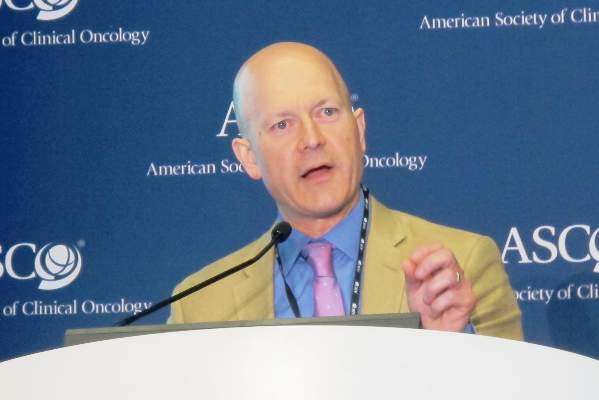
The National Cancer Institute’s Molecular Analysis for Therapy Choice (NCI-MATCH) trial will begin enrolling patients in July 2015. The study’s objective is “to understand the relative efficacy of the same therapy applied to oncogene-defined subsets across the entire cancer population as defined by site of origin or tumor histology,” said co–principal investigator Dr. Keith T. Flaherty of Harvard Medical School, Boston.
“This is the beginning, not the end, in terms of how we think about applying these therapies,” he said at a briefing that was held to announce the start of trial enrollment and a second initiative – the Targeted Agent and Profiling Utilization Registry (TAPUR) Study – by ASCO in cooperation with major pharmaceutical companies.
NCI-MATCH
NCI-MATCH is a phase II trial that will be operated through the National Clinical Trials Network. Oncologists at participating centers throughout the United States can enroll patients aged 18 years and older who have solid tumors or lymphomas that have relapsed or are refractory to conventional therapy, or who have a type of cancer for which no effective, consensus-based therapy is available.
Investigators plan to screen 3,000 patients initially, with the goal of enrolling 1,000 patients distributed among several substudies that will be evaluating specific drugs against specific molecular targets.

Patients will undergo biopsy at study entry, and their tumors will be subjected to genomic analysis to detect specific, targetable molecular abnormalities.
If a patient has a specific abnormality that is being explored in a current substudy, that patient will be further evaluated to determine whether he or she meets the eligibility criteria for that trial arm. Once enrolled, patients can remain on therapy until disease progression. The therapies will include both currently marketed agents and investigational therapies contributed by drug companies. Most of the trial arms will explore monotherapy with a targeted agent, but a few may investigate combinations which have accumulated enough safety and efficacy data to suggest that they might work against a specific molecular target.
The primary endpoint will be overall response rate, with a secondary endpoint of 6-month progression-free survival (PFS).
“This holds promise to bring faster cures to millions of Americans who so desperately need them,” ASCO past president Dr. Clifford A. Hudis said at the briefing.
TAPUR Trial
In cooperation with major pharmaceutical manufacturers (currently five, with more expected to sign on), ASCO has initiated a study designed to help answer the question, “I’ve got the tumor genome – now what do I do with it?”

The goal of the TAPUR trial, says ASCO Chief Medical Officer Dr. Richard Schilsky, is “to learn from the real world practice of prescribing targeted therapies to patients with advanced cancer whose tumor harbors a genomic variant known to be a drug target.”
The primary objectives are to describe the antitumor activity and toxicity profiles of targeted therapies, and to help patients get access to Food and Drug Administration–approved agents from which they may be able to benefit.
The trial will enroll patients with advanced solid tumors, B-cell non-Hodgkin’s lymphomas, and multiple myelomas for which there are no standard therapies. The patients must have adequate organ function and good performance status (0-2).
Patients will be matched by their personal physicians to specific therapies, if such a match exists; otherwise, they will be treated at the physician’s discretion.
The primary endpoint of the study will be overall response rates by Response Evaluation Criteria in Solid Tumors (RECIST). Secondary endpoints will be PFS, OS, time on treatment, grade 3 or greater adverse events, and serious adverse event. The investigators plan to begin patient enrollment in the fourth quarter of 2015.
Current industry partners include AstraZeneca, Bristol Myers Squibb, Eli Lilly, Genentech, and Pfizer.
The NCI-MATCH study is funded by the National Institutes of Health. Dr. Flaherty has received NIH research grants. Dr. Hudis disclosed ties to AstraZeneca, Sanofi-Aventis, Amgen, Bristol-Myers Squibb, Genentech, Eli Lilly, Novartis, Ortho Biotech, Pfizer, and Roche. Dr. Schilsky disclosed no relevant conflicts of interest.
CHICAGO – It’s getting very personal in oncology, and that’s a very good thing.
At the annual meeting of the American Society of Clinical Oncology, major cancer organizations announced new precision medicine initiatives that will attempt to match patients who have advanced cancers with the best available therapies based not on the location or histologic subtypes of their tumors, but on specific molecular abnormalities.
The National Cancer Institute’s Molecular Analysis for Therapy Choice (NCI-MATCH) trial will begin enrolling patients in July 2015. The study’s objective is “to understand the relative efficacy of the same therapy applied to oncogene-defined subsets across the entire cancer population as defined by site of origin or tumor histology,” said co–principal investigator Dr. Keith T. Flaherty of Harvard Medical School, Boston.
“This is the beginning, not the end, in terms of how we think about applying these therapies,” he said at a briefing that was held to announce the start of trial enrollment and a second initiative – the Targeted Agent and Profiling Utilization Registry (TAPUR) Study – by ASCO in cooperation with major pharmaceutical companies.
NCI-MATCH
NCI-MATCH is a phase II trial that will be operated through the National Clinical Trials Network. Oncologists at participating centers throughout the United States can enroll patients aged 18 years and older who have solid tumors or lymphomas that have relapsed or are refractory to conventional therapy, or who have a type of cancer for which no effective, consensus-based therapy is available.
Investigators plan to screen 3,000 patients initially, with the goal of enrolling 1,000 patients distributed among several substudies that will be evaluating specific drugs against specific molecular targets.
Patients will undergo biopsy at study entry, and their tumors will be subjected to genomic analysis to detect specific, targetable molecular abnormalities.
If a patient has a specific abnormality that is being explored in a current substudy, that patient will be further evaluated to determine whether he or she meets the eligibility criteria for that trial arm. Once enrolled, patients can remain on therapy until disease progression. The therapies will include both currently marketed agents and investigational therapies contributed by drug companies. Most of the trial arms will explore monotherapy with a targeted agent, but a few may investigate combinations which have accumulated enough safety and efficacy data to suggest that they might work against a specific molecular target.
The primary endpoint will be overall response rate, with a secondary endpoint of 6-month progression-free survival (PFS).
“This holds promise to bring faster cures to millions of Americans who so desperately need them,” ASCO past president Dr. Clifford A. Hudis said at the briefing.
TAPUR Trial
In cooperation with major pharmaceutical manufacturers (currently five, with more expected to sign on), ASCO has initiated a study designed to help answer the question, “I’ve got the tumor genome – now what do I do with it?”
The goal of the TAPUR trial, says ASCO Chief Medical Officer Dr. Richard Schilsky, is “to learn from the real world practice of prescribing targeted therapies to patients with advanced cancer whose tumor harbors a genomic variant known to be a drug target.”
The primary objectives are to describe the antitumor activity and toxicity profiles of targeted therapies, and to help patients get access to Food and Drug Administration–approved agents from which they may be able to benefit.
The trial will enroll patients with advanced solid tumors, B-cell non-Hodgkin’s lymphomas, and multiple myelomas for which there are no standard therapies. The patients must have adequate organ function and good performance status (0-2).
Patients will be matched by their personal physicians to specific therapies, if such a match exists; otherwise, they will be treated at the physician’s discretion.
The primary endpoint of the study will be overall response rates by Response Evaluation Criteria in Solid Tumors (RECIST). Secondary endpoints will be PFS, OS, time on treatment, grade 3 or greater adverse events, and serious adverse event. The investigators plan to begin patient enrollment in the fourth quarter of 2015.
Current industry partners include AstraZeneca, Bristol Myers Squibb, Eli Lilly, Genentech, and Pfizer.
The NCI-MATCH study is funded by the National Institutes of Health. Dr. Flaherty has received NIH research grants. Dr. Hudis disclosed ties to AstraZeneca, Sanofi-Aventis, Amgen, Bristol-Myers Squibb, Genentech, Eli Lilly, Novartis, Ortho Biotech, Pfizer, and Roche. Dr. Schilsky disclosed no relevant conflicts of interest.
CHICAGO – It’s getting very personal in oncology, and that’s a very good thing.
At the annual meeting of the American Society of Clinical Oncology, major cancer organizations announced new precision medicine initiatives that will attempt to match patients who have advanced cancers with the best available therapies based not on the location or histologic subtypes of their tumors, but on specific molecular abnormalities.
The National Cancer Institute’s Molecular Analysis for Therapy Choice (NCI-MATCH) trial will begin enrolling patients in July 2015. The study’s objective is “to understand the relative efficacy of the same therapy applied to oncogene-defined subsets across the entire cancer population as defined by site of origin or tumor histology,” said co–principal investigator Dr. Keith T. Flaherty of Harvard Medical School, Boston.
“This is the beginning, not the end, in terms of how we think about applying these therapies,” he said at a briefing that was held to announce the start of trial enrollment and a second initiative – the Targeted Agent and Profiling Utilization Registry (TAPUR) Study – by ASCO in cooperation with major pharmaceutical companies.
NCI-MATCH
NCI-MATCH is a phase II trial that will be operated through the National Clinical Trials Network. Oncologists at participating centers throughout the United States can enroll patients aged 18 years and older who have solid tumors or lymphomas that have relapsed or are refractory to conventional therapy, or who have a type of cancer for which no effective, consensus-based therapy is available.
Investigators plan to screen 3,000 patients initially, with the goal of enrolling 1,000 patients distributed among several substudies that will be evaluating specific drugs against specific molecular targets.
Patients will undergo biopsy at study entry, and their tumors will be subjected to genomic analysis to detect specific, targetable molecular abnormalities.
If a patient has a specific abnormality that is being explored in a current substudy, that patient will be further evaluated to determine whether he or she meets the eligibility criteria for that trial arm. Once enrolled, patients can remain on therapy until disease progression. The therapies will include both currently marketed agents and investigational therapies contributed by drug companies. Most of the trial arms will explore monotherapy with a targeted agent, but a few may investigate combinations which have accumulated enough safety and efficacy data to suggest that they might work against a specific molecular target.
The primary endpoint will be overall response rate, with a secondary endpoint of 6-month progression-free survival (PFS).
“This holds promise to bring faster cures to millions of Americans who so desperately need them,” ASCO past president Dr. Clifford A. Hudis said at the briefing.
TAPUR Trial
In cooperation with major pharmaceutical manufacturers (currently five, with more expected to sign on), ASCO has initiated a study designed to help answer the question, “I’ve got the tumor genome – now what do I do with it?”
The goal of the TAPUR trial, says ASCO Chief Medical Officer Dr. Richard Schilsky, is “to learn from the real world practice of prescribing targeted therapies to patients with advanced cancer whose tumor harbors a genomic variant known to be a drug target.”
The primary objectives are to describe the antitumor activity and toxicity profiles of targeted therapies, and to help patients get access to Food and Drug Administration–approved agents from which they may be able to benefit.
The trial will enroll patients with advanced solid tumors, B-cell non-Hodgkin’s lymphomas, and multiple myelomas for which there are no standard therapies. The patients must have adequate organ function and good performance status (0-2).
Patients will be matched by their personal physicians to specific therapies, if such a match exists; otherwise, they will be treated at the physician’s discretion.
The primary endpoint of the study will be overall response rates by Response Evaluation Criteria in Solid Tumors (RECIST). Secondary endpoints will be PFS, OS, time on treatment, grade 3 or greater adverse events, and serious adverse event. The investigators plan to begin patient enrollment in the fourth quarter of 2015.
Current industry partners include AstraZeneca, Bristol Myers Squibb, Eli Lilly, Genentech, and Pfizer.
The NCI-MATCH study is funded by the National Institutes of Health. Dr. Flaherty has received NIH research grants. Dr. Hudis disclosed ties to AstraZeneca, Sanofi-Aventis, Amgen, Bristol-Myers Squibb, Genentech, Eli Lilly, Novartis, Ortho Biotech, Pfizer, and Roche. Dr. Schilsky disclosed no relevant conflicts of interest.
AT THE 2015 ASCO ANNUAL MEETING
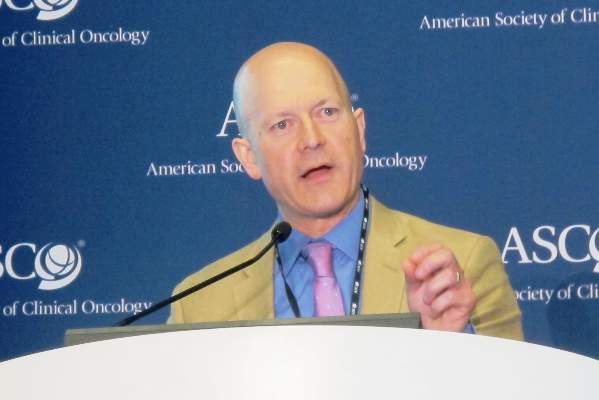
AACE: Try medical management before surgery for hyperinsulinemic hypoglycemia after gastric bypass
NASHVILLE, TENN. – Postprandial hyperinsulinemic hypoglycemia after gastric bypass surgery can be managed or even corrected by medical management with calcium channel blockers or acarbose.
First described in 2005, it is a rare complication distinct from dumping syndrome, which is common after bypass. For unknown reasons, the pancreas starts to oversecrete insulin in response to even small meals a few months to a few decades after gastric bypass surgery. Until now, treatment has often meant partial or even total pancreatectomy (N. Engl. J. Med. 2005;353:249-54).
“The message from me is very simple: There’s a medical alternative to surgery. Before you take these people to surgery, try medical management,” said Dr. John Mordes, an endocrinologist and professor of medicine at the University of Massachusetts Medical School in Worcester.
The study involved five patients, who were seen there after suddenly developing severe, sometimes daily, postprandial hypoglycemic attacks from 1 to 26 years after Roux-en-Y bypass; several had passed out after meals. On 75-g fasting-glucose challenges, their insulin levels were at or above 17 microU/mL, despite glucose concentrations at or below 54 mg/dL. None of the patients had evidence of insulinomas, and none was on exogenous insulin or diabetes drugs. Their hemoglobin A1c levels were below 6% (Endocr. Pract. 2015;21:237-46).
The first patient refused surgery, “so we researched the literature” and found that nifedipine helped infants with congenital nesidioblastosis in a study from India. The drug worked at a dose of 30 mg extended release once daily; 30 mg t.i.d. worked in the second patient. Calcium channel blockers blunt insulin secretion, which probably explains why nifedipine helped, Dr. Mordes said at the annual meeting of the American Association of Clinical Endocrinologists.
Both patients stopped taking the pills on their own after about 3 years; their symptoms hadn’t returned after a year or more of follow-up.
The third and fourth patients couldn’t tolerate nifedipine, so Dr. Mordes tried acarbose to slow absorption of glucose from the gut; it also worked. One patient has had only two mild attacks on 50 mg t.i.d for 15 months; the fourth was symptom free while on 25 mg t.i.d for 2 months. That patient stopped the drug at that point, and remained symptom free for 9 more months, but since then has had about one attack a month. The fifth patient has been symptom free for about 6 months on a combination of nifedipine 20 mg t.i.d. and acarbose 50 mg t.i.d, and has no intention of stopping either.
The subjects gained from a few to almost 50 pounds while on the drugs, which might also have contributed to their recovery. Overall, they “are fine now. None of them have needed surgery,” and they’re happy to have avoided it, Dr. Mordes said.
All that’s needed to diagnose the problem is a history of exclusively postprandial symptoms of hypoglycemia with no vasomotor or bowel symptoms suggestive of dumping, plus confirmatory blood work. Invasive tests aren’t necessary, he said.
A sixth patient didn’t respond to nifedipine, acarbose, or the insulinoma drug diazoxide, but she was atypical in that she had a decades-long history of nocturnal hypoglycemic events following a gastric bypass in Mexico at age 13 years for pyloric stenosis. “Something is very different about her,” Dr. Mordes said.
He said he had no relevant financial disclosures, and no outside funding for his work.
NASHVILLE, TENN. – Postprandial hyperinsulinemic hypoglycemia after gastric bypass surgery can be managed or even corrected by medical management with calcium channel blockers or acarbose.
First described in 2005, it is a rare complication distinct from dumping syndrome, which is common after bypass. For unknown reasons, the pancreas starts to oversecrete insulin in response to even small meals a few months to a few decades after gastric bypass surgery. Until now, treatment has often meant partial or even total pancreatectomy (N. Engl. J. Med. 2005;353:249-54).
“The message from me is very simple: There’s a medical alternative to surgery. Before you take these people to surgery, try medical management,” said Dr. John Mordes, an endocrinologist and professor of medicine at the University of Massachusetts Medical School in Worcester.
The study involved five patients, who were seen there after suddenly developing severe, sometimes daily, postprandial hypoglycemic attacks from 1 to 26 years after Roux-en-Y bypass; several had passed out after meals. On 75-g fasting-glucose challenges, their insulin levels were at or above 17 microU/mL, despite glucose concentrations at or below 54 mg/dL. None of the patients had evidence of insulinomas, and none was on exogenous insulin or diabetes drugs. Their hemoglobin A1c levels were below 6% (Endocr. Pract. 2015;21:237-46).
The first patient refused surgery, “so we researched the literature” and found that nifedipine helped infants with congenital nesidioblastosis in a study from India. The drug worked at a dose of 30 mg extended release once daily; 30 mg t.i.d. worked in the second patient. Calcium channel blockers blunt insulin secretion, which probably explains why nifedipine helped, Dr. Mordes said at the annual meeting of the American Association of Clinical Endocrinologists.
Both patients stopped taking the pills on their own after about 3 years; their symptoms hadn’t returned after a year or more of follow-up.
The third and fourth patients couldn’t tolerate nifedipine, so Dr. Mordes tried acarbose to slow absorption of glucose from the gut; it also worked. One patient has had only two mild attacks on 50 mg t.i.d for 15 months; the fourth was symptom free while on 25 mg t.i.d for 2 months. That patient stopped the drug at that point, and remained symptom free for 9 more months, but since then has had about one attack a month. The fifth patient has been symptom free for about 6 months on a combination of nifedipine 20 mg t.i.d. and acarbose 50 mg t.i.d, and has no intention of stopping either.
The subjects gained from a few to almost 50 pounds while on the drugs, which might also have contributed to their recovery. Overall, they “are fine now. None of them have needed surgery,” and they’re happy to have avoided it, Dr. Mordes said.
All that’s needed to diagnose the problem is a history of exclusively postprandial symptoms of hypoglycemia with no vasomotor or bowel symptoms suggestive of dumping, plus confirmatory blood work. Invasive tests aren’t necessary, he said.
A sixth patient didn’t respond to nifedipine, acarbose, or the insulinoma drug diazoxide, but she was atypical in that she had a decades-long history of nocturnal hypoglycemic events following a gastric bypass in Mexico at age 13 years for pyloric stenosis. “Something is very different about her,” Dr. Mordes said.
He said he had no relevant financial disclosures, and no outside funding for his work.
NASHVILLE, TENN. – Postprandial hyperinsulinemic hypoglycemia after gastric bypass surgery can be managed or even corrected by medical management with calcium channel blockers or acarbose.
First described in 2005, it is a rare complication distinct from dumping syndrome, which is common after bypass. For unknown reasons, the pancreas starts to oversecrete insulin in response to even small meals a few months to a few decades after gastric bypass surgery. Until now, treatment has often meant partial or even total pancreatectomy (N. Engl. J. Med. 2005;353:249-54).
“The message from me is very simple: There’s a medical alternative to surgery. Before you take these people to surgery, try medical management,” said Dr. John Mordes, an endocrinologist and professor of medicine at the University of Massachusetts Medical School in Worcester.
The study involved five patients, who were seen there after suddenly developing severe, sometimes daily, postprandial hypoglycemic attacks from 1 to 26 years after Roux-en-Y bypass; several had passed out after meals. On 75-g fasting-glucose challenges, their insulin levels were at or above 17 microU/mL, despite glucose concentrations at or below 54 mg/dL. None of the patients had evidence of insulinomas, and none was on exogenous insulin or diabetes drugs. Their hemoglobin A1c levels were below 6% (Endocr. Pract. 2015;21:237-46).
The first patient refused surgery, “so we researched the literature” and found that nifedipine helped infants with congenital nesidioblastosis in a study from India. The drug worked at a dose of 30 mg extended release once daily; 30 mg t.i.d. worked in the second patient. Calcium channel blockers blunt insulin secretion, which probably explains why nifedipine helped, Dr. Mordes said at the annual meeting of the American Association of Clinical Endocrinologists.
Both patients stopped taking the pills on their own after about 3 years; their symptoms hadn’t returned after a year or more of follow-up.
The third and fourth patients couldn’t tolerate nifedipine, so Dr. Mordes tried acarbose to slow absorption of glucose from the gut; it also worked. One patient has had only two mild attacks on 50 mg t.i.d for 15 months; the fourth was symptom free while on 25 mg t.i.d for 2 months. That patient stopped the drug at that point, and remained symptom free for 9 more months, but since then has had about one attack a month. The fifth patient has been symptom free for about 6 months on a combination of nifedipine 20 mg t.i.d. and acarbose 50 mg t.i.d, and has no intention of stopping either.
The subjects gained from a few to almost 50 pounds while on the drugs, which might also have contributed to their recovery. Overall, they “are fine now. None of them have needed surgery,” and they’re happy to have avoided it, Dr. Mordes said.
All that’s needed to diagnose the problem is a history of exclusively postprandial symptoms of hypoglycemia with no vasomotor or bowel symptoms suggestive of dumping, plus confirmatory blood work. Invasive tests aren’t necessary, he said.
A sixth patient didn’t respond to nifedipine, acarbose, or the insulinoma drug diazoxide, but she was atypical in that she had a decades-long history of nocturnal hypoglycemic events following a gastric bypass in Mexico at age 13 years for pyloric stenosis. “Something is very different about her,” Dr. Mordes said.
He said he had no relevant financial disclosures, and no outside funding for his work.
AT AACE 2015
Key clinical point: Hyperinsulinemic hypoglycemia after gastric bypass doesn’t require surgery.
Major finding: Hypoglycemic attacks were reduced or eliminated by nifedipine, acarbose, or both in five patients with hyperinsulinemic hypoglycemia after gastric bypass.
Data source: A case series at the University of Massachusetts Medical School.
Disclosures: The investigator said he had no relevant financial disclosures, and no outside funding for his work.