User login
Critics dub JNC-8 as 'JNC-Late'
SNOWMASS, COLO. – It has been a full decade since publication of the Seventh Report of the Joint National Committee on Prevention, Detection, Evaluation, and Treatment of High Blood Pressure (JNC-7), and the beleaguered authors of the still unreleased JNC-8 are taking heat over the delay.
"They’re calling JNC-8 ‘JNC-Late’ now. We hope it’ll be out in the next several months," Dr. Sidney C. Smith, a member of the JNC-8 expert panel, said at the Annual Cardiovascular Conference at Snowmass, sponsored by the American College of Cardiology.

The preliminary version of the guidelines is done. The delay has been due in large part to an unprecedented degree of prerelease review by numerous government agencies at a multitude of levels. This extensive and time-consuming advance scrutiny was instituted mainly because many health officials felt blindsided by the publication of the U.S. Preventive Health Services Task Force controversial mammography guidelines, which kicked up a hornet’s nest of criticism in the breast cancer and public health communities. Government officials don’t ever want to be caught by surprise like that again, explained Dr. Smith, professor of medicine at the University of North Carolina, Chapel Hill.
Although the prominent cardiologist wasn’t about to spill the beans regarding the recommendations contained in JNC-8, he did share the key issues the expert panel wrestled with and the general concepts that emerged. It seems clear that JNC-8 will differ in important ways from the first seven reports.
The overarching principle followed in developing JNC-8 was reliance almost exclusively upon randomized clinical trial data in fashioning solidly evidence-based guidelines. The large body of observational and epidemiologic studies suggesting lower is better when it comes to blood pressure was relegated to the backseat.
The JNC-8 panelists took as their charge the 2001 Institute of Medicine report that scathingly described a "quality chasm" in health care due to overreliance upon individual training and experience rather than scientific evidence in medical decision-making.
"They fired a shot across our bow," recalled Dr. Smith. He took the message to heart, later serving as senior author of an influential analysis of all ACC/American Heart Association guidelines published during 1984-2008. Of the 7,196 recommendations involving 22 cardiology topics, the investigators categorized only 11% as level of evidence A, while 48% were level C, meaning "based upon expert opinion" (JAMA 2009;301:831-41).
"Physicians are evaluated based on their adherence to guidelines, so it’s important to know the basis for recommendations," Dr. Smith observed at the Snowmass conference.
The JNC-8 panel, in examining the evidence for various blood pressure treatment goals in patients with hypertension, found solid, consistent clinical trial evidence for benefit with a target systolic blood pressure below 150 mm Hg. But as was highlighted in an influential review by a European Society of Hypertension task force, there are no compelling data from randomized trials to show that all patients with high blood pressure should be treated to a target of less than 140/90 mm Hg (J. Hypertens. 2009;27:2121-58).
Specifically, the European task force noted there has never been a randomized outcome trial showing clinical benefit for treating elderly patients to a target systolic BP of less than 140 mm Hg. Moreover, no clinical trials have ever enrolled elderly patients with grade 1 hypertension – that is, a systolic BP of 140-159 mm Hg; all trials in the elderly required an entry-level SBP of at least 160 mm Hg.
Similarly, the European analysis showed there is no compelling clinical trial evidence to support recommendations to lower blood pressure to less than 130/80 mm Hg in diabetic patients or those with a history of cardiovascular disease.
More recently, and consistent with that conclusion, the very large ACCORD trial showed no reduction in major adverse cardiovascular events when patients with type 2 diabetes at high risk for cardiovascular disease were treated to a systolic BP target of less than 120 mm Hg as compared to less than 140 mm Hg (N. Engl. J. Med. 2010;362:1575-85). And a subgroup analysis involving 6,400 diabetic patients with coronary artery disease in the INVEST trial showed no additional reduction in cardiovascular events with maintenance of systolic BP below 130 mm Hg as compared to below 140 mm Hg (JAMA 2010;304:61-8), Dr. Smith noted.
He outlined multiple reasons why it’s important not to intensify antihypertensive drug therapy to reduce blood pressure below the level proved beneficial in clinical trials. For one thing, growing evidence of late suggests the long-debated J-curve phenomenon does exist, and that drug regimens that reduce blood pressure to 120-125/70-75 mm Hg or below may be accompanied by an increase in coronary events. And even if intensifying antihypertensive drug therapy to below the level proved in trials isn’t harmful, then it’s not beneficial, and it’s a waste of money, a source of unnecessary exposure to the risk of side effects, and a possible contributor to reduced adherence to other medications.
One emerging concept in hypertension that is likely to find expression in JNC-8 is that combining drugs from different classes is a more effective means of lowering blood pressure than is maximizing the dose of a single drug. Another is that visit-to-visit variability in systolic BP is an important predictor of stroke risk independent of mean systolic BP, and calcium channel blockers produce less visit-to-visit variation than do other drug classes (Lancet 2010;375:895-915).
So, will JNC-8 back away from the time-honored recommendation to treat all patients with high blood pressure, including those who are elderly, to less than 140/90 mm Hg? Dr. Smith wouldn’t say.
"We have a dilemma here," he observed. "Do we do what makes sense intuitively in extrapolating from very strong, solid, observational data, or do we need to mount large randomized controlled trials, like the Institute of Medicine would say?"
He did note that an SBP goal of less than 140 mm Hg has been an important public health goal for several decades. "We’ve seen good things happen – we’ve seen a decline in stroke – during that time, even though we don’t have the supporting randomized controlled trials," Dr. Smith said.
JNC-8 is one of five major sets of National Heart, Lung, and Blood Institute–sponsored cardiovascular guidelines in the works. Dr. Smith predicted the obesity report, like JNC-8, will probably be released in the spring. Meanwhile, the Adult Treatment Panel 4 (ATP 4) cholesterol report, the risk assessment guidelines, and the lifestyle report are nearing completion.
"I would expect them to be out by summer," he said.
Dr. Smith reported having no financial conflicts.
SNOWMASS, COLO. – It has been a full decade since publication of the Seventh Report of the Joint National Committee on Prevention, Detection, Evaluation, and Treatment of High Blood Pressure (JNC-7), and the beleaguered authors of the still unreleased JNC-8 are taking heat over the delay.
"They’re calling JNC-8 ‘JNC-Late’ now. We hope it’ll be out in the next several months," Dr. Sidney C. Smith, a member of the JNC-8 expert panel, said at the Annual Cardiovascular Conference at Snowmass, sponsored by the American College of Cardiology.
The preliminary version of the guidelines is done. The delay has been due in large part to an unprecedented degree of prerelease review by numerous government agencies at a multitude of levels. This extensive and time-consuming advance scrutiny was instituted mainly because many health officials felt blindsided by the publication of the U.S. Preventive Health Services Task Force controversial mammography guidelines, which kicked up a hornet’s nest of criticism in the breast cancer and public health communities. Government officials don’t ever want to be caught by surprise like that again, explained Dr. Smith, professor of medicine at the University of North Carolina, Chapel Hill.
Although the prominent cardiologist wasn’t about to spill the beans regarding the recommendations contained in JNC-8, he did share the key issues the expert panel wrestled with and the general concepts that emerged. It seems clear that JNC-8 will differ in important ways from the first seven reports.
The overarching principle followed in developing JNC-8 was reliance almost exclusively upon randomized clinical trial data in fashioning solidly evidence-based guidelines. The large body of observational and epidemiologic studies suggesting lower is better when it comes to blood pressure was relegated to the backseat.
The JNC-8 panelists took as their charge the 2001 Institute of Medicine report that scathingly described a "quality chasm" in health care due to overreliance upon individual training and experience rather than scientific evidence in medical decision-making.
"They fired a shot across our bow," recalled Dr. Smith. He took the message to heart, later serving as senior author of an influential analysis of all ACC/American Heart Association guidelines published during 1984-2008. Of the 7,196 recommendations involving 22 cardiology topics, the investigators categorized only 11% as level of evidence A, while 48% were level C, meaning "based upon expert opinion" (JAMA 2009;301:831-41).
"Physicians are evaluated based on their adherence to guidelines, so it’s important to know the basis for recommendations," Dr. Smith observed at the Snowmass conference.
The JNC-8 panel, in examining the evidence for various blood pressure treatment goals in patients with hypertension, found solid, consistent clinical trial evidence for benefit with a target systolic blood pressure below 150 mm Hg. But as was highlighted in an influential review by a European Society of Hypertension task force, there are no compelling data from randomized trials to show that all patients with high blood pressure should be treated to a target of less than 140/90 mm Hg (J. Hypertens. 2009;27:2121-58).
Specifically, the European task force noted there has never been a randomized outcome trial showing clinical benefit for treating elderly patients to a target systolic BP of less than 140 mm Hg. Moreover, no clinical trials have ever enrolled elderly patients with grade 1 hypertension – that is, a systolic BP of 140-159 mm Hg; all trials in the elderly required an entry-level SBP of at least 160 mm Hg.
Similarly, the European analysis showed there is no compelling clinical trial evidence to support recommendations to lower blood pressure to less than 130/80 mm Hg in diabetic patients or those with a history of cardiovascular disease.
More recently, and consistent with that conclusion, the very large ACCORD trial showed no reduction in major adverse cardiovascular events when patients with type 2 diabetes at high risk for cardiovascular disease were treated to a systolic BP target of less than 120 mm Hg as compared to less than 140 mm Hg (N. Engl. J. Med. 2010;362:1575-85). And a subgroup analysis involving 6,400 diabetic patients with coronary artery disease in the INVEST trial showed no additional reduction in cardiovascular events with maintenance of systolic BP below 130 mm Hg as compared to below 140 mm Hg (JAMA 2010;304:61-8), Dr. Smith noted.
He outlined multiple reasons why it’s important not to intensify antihypertensive drug therapy to reduce blood pressure below the level proved beneficial in clinical trials. For one thing, growing evidence of late suggests the long-debated J-curve phenomenon does exist, and that drug regimens that reduce blood pressure to 120-125/70-75 mm Hg or below may be accompanied by an increase in coronary events. And even if intensifying antihypertensive drug therapy to below the level proved in trials isn’t harmful, then it’s not beneficial, and it’s a waste of money, a source of unnecessary exposure to the risk of side effects, and a possible contributor to reduced adherence to other medications.
One emerging concept in hypertension that is likely to find expression in JNC-8 is that combining drugs from different classes is a more effective means of lowering blood pressure than is maximizing the dose of a single drug. Another is that visit-to-visit variability in systolic BP is an important predictor of stroke risk independent of mean systolic BP, and calcium channel blockers produce less visit-to-visit variation than do other drug classes (Lancet 2010;375:895-915).
So, will JNC-8 back away from the time-honored recommendation to treat all patients with high blood pressure, including those who are elderly, to less than 140/90 mm Hg? Dr. Smith wouldn’t say.
"We have a dilemma here," he observed. "Do we do what makes sense intuitively in extrapolating from very strong, solid, observational data, or do we need to mount large randomized controlled trials, like the Institute of Medicine would say?"
He did note that an SBP goal of less than 140 mm Hg has been an important public health goal for several decades. "We’ve seen good things happen – we’ve seen a decline in stroke – during that time, even though we don’t have the supporting randomized controlled trials," Dr. Smith said.
JNC-8 is one of five major sets of National Heart, Lung, and Blood Institute–sponsored cardiovascular guidelines in the works. Dr. Smith predicted the obesity report, like JNC-8, will probably be released in the spring. Meanwhile, the Adult Treatment Panel 4 (ATP 4) cholesterol report, the risk assessment guidelines, and the lifestyle report are nearing completion.
"I would expect them to be out by summer," he said.
Dr. Smith reported having no financial conflicts.
SNOWMASS, COLO. – It has been a full decade since publication of the Seventh Report of the Joint National Committee on Prevention, Detection, Evaluation, and Treatment of High Blood Pressure (JNC-7), and the beleaguered authors of the still unreleased JNC-8 are taking heat over the delay.
"They’re calling JNC-8 ‘JNC-Late’ now. We hope it’ll be out in the next several months," Dr. Sidney C. Smith, a member of the JNC-8 expert panel, said at the Annual Cardiovascular Conference at Snowmass, sponsored by the American College of Cardiology.
The preliminary version of the guidelines is done. The delay has been due in large part to an unprecedented degree of prerelease review by numerous government agencies at a multitude of levels. This extensive and time-consuming advance scrutiny was instituted mainly because many health officials felt blindsided by the publication of the U.S. Preventive Health Services Task Force controversial mammography guidelines, which kicked up a hornet’s nest of criticism in the breast cancer and public health communities. Government officials don’t ever want to be caught by surprise like that again, explained Dr. Smith, professor of medicine at the University of North Carolina, Chapel Hill.
Although the prominent cardiologist wasn’t about to spill the beans regarding the recommendations contained in JNC-8, he did share the key issues the expert panel wrestled with and the general concepts that emerged. It seems clear that JNC-8 will differ in important ways from the first seven reports.
The overarching principle followed in developing JNC-8 was reliance almost exclusively upon randomized clinical trial data in fashioning solidly evidence-based guidelines. The large body of observational and epidemiologic studies suggesting lower is better when it comes to blood pressure was relegated to the backseat.
The JNC-8 panelists took as their charge the 2001 Institute of Medicine report that scathingly described a "quality chasm" in health care due to overreliance upon individual training and experience rather than scientific evidence in medical decision-making.
"They fired a shot across our bow," recalled Dr. Smith. He took the message to heart, later serving as senior author of an influential analysis of all ACC/American Heart Association guidelines published during 1984-2008. Of the 7,196 recommendations involving 22 cardiology topics, the investigators categorized only 11% as level of evidence A, while 48% were level C, meaning "based upon expert opinion" (JAMA 2009;301:831-41).
"Physicians are evaluated based on their adherence to guidelines, so it’s important to know the basis for recommendations," Dr. Smith observed at the Snowmass conference.
The JNC-8 panel, in examining the evidence for various blood pressure treatment goals in patients with hypertension, found solid, consistent clinical trial evidence for benefit with a target systolic blood pressure below 150 mm Hg. But as was highlighted in an influential review by a European Society of Hypertension task force, there are no compelling data from randomized trials to show that all patients with high blood pressure should be treated to a target of less than 140/90 mm Hg (J. Hypertens. 2009;27:2121-58).
Specifically, the European task force noted there has never been a randomized outcome trial showing clinical benefit for treating elderly patients to a target systolic BP of less than 140 mm Hg. Moreover, no clinical trials have ever enrolled elderly patients with grade 1 hypertension – that is, a systolic BP of 140-159 mm Hg; all trials in the elderly required an entry-level SBP of at least 160 mm Hg.
Similarly, the European analysis showed there is no compelling clinical trial evidence to support recommendations to lower blood pressure to less than 130/80 mm Hg in diabetic patients or those with a history of cardiovascular disease.
More recently, and consistent with that conclusion, the very large ACCORD trial showed no reduction in major adverse cardiovascular events when patients with type 2 diabetes at high risk for cardiovascular disease were treated to a systolic BP target of less than 120 mm Hg as compared to less than 140 mm Hg (N. Engl. J. Med. 2010;362:1575-85). And a subgroup analysis involving 6,400 diabetic patients with coronary artery disease in the INVEST trial showed no additional reduction in cardiovascular events with maintenance of systolic BP below 130 mm Hg as compared to below 140 mm Hg (JAMA 2010;304:61-8), Dr. Smith noted.
He outlined multiple reasons why it’s important not to intensify antihypertensive drug therapy to reduce blood pressure below the level proved beneficial in clinical trials. For one thing, growing evidence of late suggests the long-debated J-curve phenomenon does exist, and that drug regimens that reduce blood pressure to 120-125/70-75 mm Hg or below may be accompanied by an increase in coronary events. And even if intensifying antihypertensive drug therapy to below the level proved in trials isn’t harmful, then it’s not beneficial, and it’s a waste of money, a source of unnecessary exposure to the risk of side effects, and a possible contributor to reduced adherence to other medications.
One emerging concept in hypertension that is likely to find expression in JNC-8 is that combining drugs from different classes is a more effective means of lowering blood pressure than is maximizing the dose of a single drug. Another is that visit-to-visit variability in systolic BP is an important predictor of stroke risk independent of mean systolic BP, and calcium channel blockers produce less visit-to-visit variation than do other drug classes (Lancet 2010;375:895-915).
So, will JNC-8 back away from the time-honored recommendation to treat all patients with high blood pressure, including those who are elderly, to less than 140/90 mm Hg? Dr. Smith wouldn’t say.
"We have a dilemma here," he observed. "Do we do what makes sense intuitively in extrapolating from very strong, solid, observational data, or do we need to mount large randomized controlled trials, like the Institute of Medicine would say?"
He did note that an SBP goal of less than 140 mm Hg has been an important public health goal for several decades. "We’ve seen good things happen – we’ve seen a decline in stroke – during that time, even though we don’t have the supporting randomized controlled trials," Dr. Smith said.
JNC-8 is one of five major sets of National Heart, Lung, and Blood Institute–sponsored cardiovascular guidelines in the works. Dr. Smith predicted the obesity report, like JNC-8, will probably be released in the spring. Meanwhile, the Adult Treatment Panel 4 (ATP 4) cholesterol report, the risk assessment guidelines, and the lifestyle report are nearing completion.
"I would expect them to be out by summer," he said.
Dr. Smith reported having no financial conflicts.
EXPERT ANALYSIS FROM THE CARDIOVASCULAR CONFERENCE AT SNOWMASS

Valve-sparing root replacement carries the day
SNOWMASS, COLO. – Valve-sparing root replacement has emerged as the procedure of choice in patients with isolated aortic root disease and a normally functioning aortic valve, according to Dr. Thoralf M. Sundt III.
"The valve-sparing root operations, in contrast to some of the other things we surgeons have come up with over the last decade or so, are increasing in popularity. They’re more and more commonly done, and that’s a good sign. I think the marketplace has spoken and this is clearly a good operation. It’s an operation that can be learned, and surgeons can do it with good results," he said at the Annual Cardiovascular Conference at Snowmass.
Valve-sparing root replacement (VSRR) spares a patient from the complications associated with lifelong anticoagulation for a mechanical valve, and the durability of VSRR appears to be superior to that of third-generation bioprostheses, the surgeon added.
"They’re holding up pretty well. The outcomes approach those with mechanical valves," said Dr. Sundt, chief of cardiac surgery at Massachusetts General Hospital and professor of surgery at Harvard Medical School, Boston.
Moreover, he continued, VSRR has another big advantage over bioprosthetic valves: "If you have to re-operate, it’s a whole lot more fun to do so on someone who’s had a VSRR and put a new biologic valve inside a native annulus than it is to try to take out that old bioprosthesis and put a new bioprosthesis in."
A meta-analysis of 11 studies comparing VSRR with total root replacement in patients with Marfan syndrome concluded that composite valve-related event rates for the two surgical strategies were not significantly different. The thromboembolic event rate was 0.3% per year in VSRR-treated patients, significantly lower than the still-quite-reasonable 0.7% per year rate after total root replacement (Heart 2011;97:955-8).
A recent study by surgeons at Stanford (Calif.) University gave VSRR a thumbs up regarding mid-term durability of outcomes through 6 years of follow-up, with a mean 2.9-year and maximum 6-year follow-up. The series included 75 patients with bicuspid aortic valve disease treated by VSRR.
Six-year actuarial survival was 99%, with 90% freedom from reoperation and no strokes. Thirty-one percent of patients had 2+ aortic regurgitation preoperatively; at echocardiographic follow-up a mean of 2.9 years post surgery, only a couple of patients had 2+ aortic regurgitation and no one was more severely affected. The Stanford investigators plan to update their results when follow-up reaches 10 years or more (J. Thorac. Cardiovasc. Surg. Dec. 20, 2012 [doi:10.1016/j.jtcvs.2012.11.043]).
The VSRR was developed by Dr. Tirone David of the University of Toronto. The procedure involves skeletonizing the root while preserving the leaflets and their attachments to the aortic wall. The aortic valve is then reimplanted inside a tubular Dacron graft, and then the coronary arteries are reimplanted.
"It’s probably the neatest development in terms of surgical options for the aortic valve in a long time," Dr. Sundt said.
He reported having no financial conflicts.
SNOWMASS, COLO. – Valve-sparing root replacement has emerged as the procedure of choice in patients with isolated aortic root disease and a normally functioning aortic valve, according to Dr. Thoralf M. Sundt III.
"The valve-sparing root operations, in contrast to some of the other things we surgeons have come up with over the last decade or so, are increasing in popularity. They’re more and more commonly done, and that’s a good sign. I think the marketplace has spoken and this is clearly a good operation. It’s an operation that can be learned, and surgeons can do it with good results," he said at the Annual Cardiovascular Conference at Snowmass.
Valve-sparing root replacement (VSRR) spares a patient from the complications associated with lifelong anticoagulation for a mechanical valve, and the durability of VSRR appears to be superior to that of third-generation bioprostheses, the surgeon added.
"They’re holding up pretty well. The outcomes approach those with mechanical valves," said Dr. Sundt, chief of cardiac surgery at Massachusetts General Hospital and professor of surgery at Harvard Medical School, Boston.
Moreover, he continued, VSRR has another big advantage over bioprosthetic valves: "If you have to re-operate, it’s a whole lot more fun to do so on someone who’s had a VSRR and put a new biologic valve inside a native annulus than it is to try to take out that old bioprosthesis and put a new bioprosthesis in."
A meta-analysis of 11 studies comparing VSRR with total root replacement in patients with Marfan syndrome concluded that composite valve-related event rates for the two surgical strategies were not significantly different. The thromboembolic event rate was 0.3% per year in VSRR-treated patients, significantly lower than the still-quite-reasonable 0.7% per year rate after total root replacement (Heart 2011;97:955-8).
A recent study by surgeons at Stanford (Calif.) University gave VSRR a thumbs up regarding mid-term durability of outcomes through 6 years of follow-up, with a mean 2.9-year and maximum 6-year follow-up. The series included 75 patients with bicuspid aortic valve disease treated by VSRR.
Six-year actuarial survival was 99%, with 90% freedom from reoperation and no strokes. Thirty-one percent of patients had 2+ aortic regurgitation preoperatively; at echocardiographic follow-up a mean of 2.9 years post surgery, only a couple of patients had 2+ aortic regurgitation and no one was more severely affected. The Stanford investigators plan to update their results when follow-up reaches 10 years or more (J. Thorac. Cardiovasc. Surg. Dec. 20, 2012 [doi:10.1016/j.jtcvs.2012.11.043]).
The VSRR was developed by Dr. Tirone David of the University of Toronto. The procedure involves skeletonizing the root while preserving the leaflets and their attachments to the aortic wall. The aortic valve is then reimplanted inside a tubular Dacron graft, and then the coronary arteries are reimplanted.
"It’s probably the neatest development in terms of surgical options for the aortic valve in a long time," Dr. Sundt said.
He reported having no financial conflicts.
SNOWMASS, COLO. – Valve-sparing root replacement has emerged as the procedure of choice in patients with isolated aortic root disease and a normally functioning aortic valve, according to Dr. Thoralf M. Sundt III.
"The valve-sparing root operations, in contrast to some of the other things we surgeons have come up with over the last decade or so, are increasing in popularity. They’re more and more commonly done, and that’s a good sign. I think the marketplace has spoken and this is clearly a good operation. It’s an operation that can be learned, and surgeons can do it with good results," he said at the Annual Cardiovascular Conference at Snowmass.
Valve-sparing root replacement (VSRR) spares a patient from the complications associated with lifelong anticoagulation for a mechanical valve, and the durability of VSRR appears to be superior to that of third-generation bioprostheses, the surgeon added.
"They’re holding up pretty well. The outcomes approach those with mechanical valves," said Dr. Sundt, chief of cardiac surgery at Massachusetts General Hospital and professor of surgery at Harvard Medical School, Boston.
Moreover, he continued, VSRR has another big advantage over bioprosthetic valves: "If you have to re-operate, it’s a whole lot more fun to do so on someone who’s had a VSRR and put a new biologic valve inside a native annulus than it is to try to take out that old bioprosthesis and put a new bioprosthesis in."
A meta-analysis of 11 studies comparing VSRR with total root replacement in patients with Marfan syndrome concluded that composite valve-related event rates for the two surgical strategies were not significantly different. The thromboembolic event rate was 0.3% per year in VSRR-treated patients, significantly lower than the still-quite-reasonable 0.7% per year rate after total root replacement (Heart 2011;97:955-8).
A recent study by surgeons at Stanford (Calif.) University gave VSRR a thumbs up regarding mid-term durability of outcomes through 6 years of follow-up, with a mean 2.9-year and maximum 6-year follow-up. The series included 75 patients with bicuspid aortic valve disease treated by VSRR.
Six-year actuarial survival was 99%, with 90% freedom from reoperation and no strokes. Thirty-one percent of patients had 2+ aortic regurgitation preoperatively; at echocardiographic follow-up a mean of 2.9 years post surgery, only a couple of patients had 2+ aortic regurgitation and no one was more severely affected. The Stanford investigators plan to update their results when follow-up reaches 10 years or more (J. Thorac. Cardiovasc. Surg. Dec. 20, 2012 [doi:10.1016/j.jtcvs.2012.11.043]).
The VSRR was developed by Dr. Tirone David of the University of Toronto. The procedure involves skeletonizing the root while preserving the leaflets and their attachments to the aortic wall. The aortic valve is then reimplanted inside a tubular Dacron graft, and then the coronary arteries are reimplanted.
"It’s probably the neatest development in terms of surgical options for the aortic valve in a long time," Dr. Sundt said.
He reported having no financial conflicts.
EXPERT ANALYSIS FROM THE CARDIOVASCULAR CONFERENCE AT SNOWMASS
Triple-combination for severe acne avoids isotretinoin
MAUI, HAWAII – Combination therapy for severe acne, with a trio of familiar, well tolerated agents, knocked down the skin disease severity in a phase IV study such that 80% of patients deemed candidates for isotretinoin at baseline no longer qualified for the powerful oral retinoid 12 weeks later, Dr. Guy F. Webster reported at the Hawaii Dermatology Seminar sponsored by Global Academy for Medical Education/Skin Disease Education Foundation.
These data provide welcome news for patients who can’t take isotretinoin or don’t want to, as well as for the many physicians reluctant to prescribe the drug because of the considerable regulatory hassles and potentially serious side effects, including teratogenicity.
The treatment regimen in this open-label multicenter study consisted of an oral antibiotic, a topical antibiotic/retinoid agent, and benzoyl peroxide. More specifically, the 97 study participants aged 12-29 years, all with grade 3-4 moderate to severe facial acne by Investigator’s Global Assessment (IGA), were placed on once-daily minocycline HCL extended release at about 1 mg/kg, clindamycin phosphate 1.2%/tretinoin 0.025% gel, and 6% benzoyl peroxide foaming cloths. Patients were evaluated at weeks 0, 2, 4, 8, and 12.

At week 2, 44% of subjects already had at least a 1-grade improvement in IGA; by week 12, 89% did. Moreover, 56% of patients had at least a 2-grade improvement in IGA.
At least a 1-grade improvement on the Global Aesthetic Improvement Scale was documented in 83% of subjects at week 2 and 96% at week 12.
"With this therapy, you can get patients with really bad acne from bad to really mild without resorting to big-time drugs," observed Dr. Webster, professor of dermatology and internal medicine at Thomas Jefferson University, Philadelphia.
Week 12 mean facial inflammatory lesion counts fell by 62%, and noninflammatory lesion counts decreased by 49% from baselines of 33 and 44 lesions, respectively.
At baseline, 69 patients were judged by three blinded assessors of clinical photos to have acne sufficiently severe for them to be candidates for isotretinoin therapy. By week 12, this number had dwindled to 14 patients. In other words, 80% of patients were no longer deemed to be candidates for isotretinoin.
Eight patients experienced treatment-related adverse events consisting of transient mild to moderate irritation and/or redness, burning, stinging, and dry skin.
The results of this Phase-4 study are consistent with studies of other multidrug regimens for acne, albeit mostly conducted in less severely affected patients.
"The general paradigm is that mixed therapies are useful because other than isotretinoin and maybe spironolactone, no one drug is strong enough to stop acne effectively. If you just hit the [Propionibacterium acnes] hard, you can’t get it down to where there’s no P. acnes. If you blunt the immune response, you’re still just blunting it, not turning it off. And if you’re addressing the plug in the follicle, it’s not a complete or rapid response," the dermatologist explained.
In clinical practice, Dr. Webster said he typically stops the oral antibiotic cold at about 12 weeks to avoid pigmentary changes and other side effects of long-term antibiotic therapy. At least 75% of patients can maintain their gains with topical therapy alone.
Compliance is often an issue with combination therapy. Patients need to understand that if they don’t use all of the medications consistently from day 1 they won’t get better.
"It’s tough with kids because kids expect to get better overnight. They see it on the Proactiv commercials and wonder why in the world they’re not better in 2 days," the dermatologist observed.
In this phase IV study, however, patient compliance was consistently excellent, perhaps because of the high disease severity. The treatment compliance rate was 91% at week 2 and 86% at week 12.
Dr. Webster is a consultant for several pharmaceutical companies, including Valeant, whose subsidiary Medicis sponsored the phase IV study.
SDEF and this news organization are owned by the same parent company.
*This story was updated March 1, 2013.
MAUI, HAWAII – Combination therapy for severe acne, with a trio of familiar, well tolerated agents, knocked down the skin disease severity in a phase IV study such that 80% of patients deemed candidates for isotretinoin at baseline no longer qualified for the powerful oral retinoid 12 weeks later, Dr. Guy F. Webster reported at the Hawaii Dermatology Seminar sponsored by Global Academy for Medical Education/Skin Disease Education Foundation.
These data provide welcome news for patients who can’t take isotretinoin or don’t want to, as well as for the many physicians reluctant to prescribe the drug because of the considerable regulatory hassles and potentially serious side effects, including teratogenicity.
The treatment regimen in this open-label multicenter study consisted of an oral antibiotic, a topical antibiotic/retinoid agent, and benzoyl peroxide. More specifically, the 97 study participants aged 12-29 years, all with grade 3-4 moderate to severe facial acne by Investigator’s Global Assessment (IGA), were placed on once-daily minocycline HCL extended release at about 1 mg/kg, clindamycin phosphate 1.2%/tretinoin 0.025% gel, and 6% benzoyl peroxide foaming cloths. Patients were evaluated at weeks 0, 2, 4, 8, and 12.
At week 2, 44% of subjects already had at least a 1-grade improvement in IGA; by week 12, 89% did. Moreover, 56% of patients had at least a 2-grade improvement in IGA.
At least a 1-grade improvement on the Global Aesthetic Improvement Scale was documented in 83% of subjects at week 2 and 96% at week 12.
"With this therapy, you can get patients with really bad acne from bad to really mild without resorting to big-time drugs," observed Dr. Webster, professor of dermatology and internal medicine at Thomas Jefferson University, Philadelphia.
Week 12 mean facial inflammatory lesion counts fell by 62%, and noninflammatory lesion counts decreased by 49% from baselines of 33 and 44 lesions, respectively.
At baseline, 69 patients were judged by three blinded assessors of clinical photos to have acne sufficiently severe for them to be candidates for isotretinoin therapy. By week 12, this number had dwindled to 14 patients. In other words, 80% of patients were no longer deemed to be candidates for isotretinoin.
Eight patients experienced treatment-related adverse events consisting of transient mild to moderate irritation and/or redness, burning, stinging, and dry skin.
The results of this Phase-4 study are consistent with studies of other multidrug regimens for acne, albeit mostly conducted in less severely affected patients.
"The general paradigm is that mixed therapies are useful because other than isotretinoin and maybe spironolactone, no one drug is strong enough to stop acne effectively. If you just hit the [Propionibacterium acnes] hard, you can’t get it down to where there’s no P. acnes. If you blunt the immune response, you’re still just blunting it, not turning it off. And if you’re addressing the plug in the follicle, it’s not a complete or rapid response," the dermatologist explained.
In clinical practice, Dr. Webster said he typically stops the oral antibiotic cold at about 12 weeks to avoid pigmentary changes and other side effects of long-term antibiotic therapy. At least 75% of patients can maintain their gains with topical therapy alone.
Compliance is often an issue with combination therapy. Patients need to understand that if they don’t use all of the medications consistently from day 1 they won’t get better.
"It’s tough with kids because kids expect to get better overnight. They see it on the Proactiv commercials and wonder why in the world they’re not better in 2 days," the dermatologist observed.
In this phase IV study, however, patient compliance was consistently excellent, perhaps because of the high disease severity. The treatment compliance rate was 91% at week 2 and 86% at week 12.
Dr. Webster is a consultant for several pharmaceutical companies, including Valeant, whose subsidiary Medicis sponsored the phase IV study.
SDEF and this news organization are owned by the same parent company.
*This story was updated March 1, 2013.
MAUI, HAWAII – Combination therapy for severe acne, with a trio of familiar, well tolerated agents, knocked down the skin disease severity in a phase IV study such that 80% of patients deemed candidates for isotretinoin at baseline no longer qualified for the powerful oral retinoid 12 weeks later, Dr. Guy F. Webster reported at the Hawaii Dermatology Seminar sponsored by Global Academy for Medical Education/Skin Disease Education Foundation.
These data provide welcome news for patients who can’t take isotretinoin or don’t want to, as well as for the many physicians reluctant to prescribe the drug because of the considerable regulatory hassles and potentially serious side effects, including teratogenicity.
The treatment regimen in this open-label multicenter study consisted of an oral antibiotic, a topical antibiotic/retinoid agent, and benzoyl peroxide. More specifically, the 97 study participants aged 12-29 years, all with grade 3-4 moderate to severe facial acne by Investigator’s Global Assessment (IGA), were placed on once-daily minocycline HCL extended release at about 1 mg/kg, clindamycin phosphate 1.2%/tretinoin 0.025% gel, and 6% benzoyl peroxide foaming cloths. Patients were evaluated at weeks 0, 2, 4, 8, and 12.
At week 2, 44% of subjects already had at least a 1-grade improvement in IGA; by week 12, 89% did. Moreover, 56% of patients had at least a 2-grade improvement in IGA.
At least a 1-grade improvement on the Global Aesthetic Improvement Scale was documented in 83% of subjects at week 2 and 96% at week 12.
"With this therapy, you can get patients with really bad acne from bad to really mild without resorting to big-time drugs," observed Dr. Webster, professor of dermatology and internal medicine at Thomas Jefferson University, Philadelphia.
Week 12 mean facial inflammatory lesion counts fell by 62%, and noninflammatory lesion counts decreased by 49% from baselines of 33 and 44 lesions, respectively.
At baseline, 69 patients were judged by three blinded assessors of clinical photos to have acne sufficiently severe for them to be candidates for isotretinoin therapy. By week 12, this number had dwindled to 14 patients. In other words, 80% of patients were no longer deemed to be candidates for isotretinoin.
Eight patients experienced treatment-related adverse events consisting of transient mild to moderate irritation and/or redness, burning, stinging, and dry skin.
The results of this Phase-4 study are consistent with studies of other multidrug regimens for acne, albeit mostly conducted in less severely affected patients.
"The general paradigm is that mixed therapies are useful because other than isotretinoin and maybe spironolactone, no one drug is strong enough to stop acne effectively. If you just hit the [Propionibacterium acnes] hard, you can’t get it down to where there’s no P. acnes. If you blunt the immune response, you’re still just blunting it, not turning it off. And if you’re addressing the plug in the follicle, it’s not a complete or rapid response," the dermatologist explained.
In clinical practice, Dr. Webster said he typically stops the oral antibiotic cold at about 12 weeks to avoid pigmentary changes and other side effects of long-term antibiotic therapy. At least 75% of patients can maintain their gains with topical therapy alone.
Compliance is often an issue with combination therapy. Patients need to understand that if they don’t use all of the medications consistently from day 1 they won’t get better.
"It’s tough with kids because kids expect to get better overnight. They see it on the Proactiv commercials and wonder why in the world they’re not better in 2 days," the dermatologist observed.
In this phase IV study, however, patient compliance was consistently excellent, perhaps because of the high disease severity. The treatment compliance rate was 91% at week 2 and 86% at week 12.
Dr. Webster is a consultant for several pharmaceutical companies, including Valeant, whose subsidiary Medicis sponsored the phase IV study.
SDEF and this news organization are owned by the same parent company.
*This story was updated March 1, 2013.
AT THE HAWAII DERMATOLOGY SEMINAR SPONSORED BY SKIN DISEASE EDUCATION FOUNDATION (SDEF)
Major Finding: Eighty percent of patients with acne sufficiently severe that blinded evaluators judged them to be candidates for isotretinoin at baseline no longer qualified for the potent oral retinoid after 12 weeks on triple therapy with an oral antibiotic, benzoyl peroxide, and a topical antibiotic/retinoid.
Data Source: An open-label, multicenter, phase IV study involving 97 patients with moderate to severe acne.
Disclosures: The study was sponsored by Medicis. The presenter is a consultant to the company.

Comparing imaging technologies for chest pain in ED
Coronary computed tomographic angiography for rule-out of acute coronary syndrome in the emergency department may have moved ahead of SPECT myocardial perfusion imaging – its main noninvasive imaging rival – on the strength of recent evidence of advantages in time-to-discharge and radiation exposure, according to Dr. Christopher M. Kramer.
Myocardial perfusion imaging (MPI) has for roughly a decade been seen as the standard of care for imaging assistance in ED triage of patients presenting with chest pain and a nondiagnostic ECG.
It attained this status based upon the favorable results of the very large randomized ERASE (ER Assessment of Sestamibi for Evaluation of Chest Pain) trial (JAMA 2002;288:2693-700) and other studies in which MPI was compared to usual ED care.
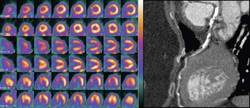
But in more recent randomized trials comparing computed tomographic angiography (CTA) to standard ED evaluation protocols, which now often include MPI, CTA has carried the day, Dr. Kramer said at the annual cardiovascular conference at Snowmass sponsored by the American College of Cardiology.
For example, the multicenter ACRIN-PA trial randomized 1,370 low- to intermediate-risk patients presenting with possible ACS to EDs to either early CTA or standard care, which in most cases included MPI. The CTA group had a higher rate of discharge from the ED: 50%, compared with 23%. They also had a median 18.0-hour length of stay, significantly shorter than the 24.8 hours in the control group (N. Engl. J. Med. 2012;366:1393-403).
Moreover, the CTA group had a higher rate of detection of CAD – 9.0% compared to 3.5% because CTA can detect nonobstructive as well as obstructive plaque, added Dr. Kramer, professor of cardiology and of radiology and director of the cardiovascular imaging center at the University of Virginia, Charlottesville.
The ROMICAT II (Rule Out Myocardial Ischemia/Infarction by Computer-Assisted Tomography) trial was a similar story. ROMICAT II was a multicenter trial in which 1,000 patients who presented to an ED with symptoms suggestive of ACS but a nondiagnostic ECG were randomized to CTA or a standard ED evaluation, most often including MPI. A total of 47% of patients in the CTA group were discharged directly from the ED, compared with just 12% in the control arm. Most notably, the median length of stay in the ED was 8.6 hours with CTA vs. 26.7 hours with a standard evaluation, and the mean length of stay in the hospital was reduced from 30.8 hours with standard evaluation to 23.2 hours, a 7.6-hour reduction (N. Engl. J. Med. 2012;367:299-308).
Follow-up demonstrated no cases of undetected ACS occurred in either group.
The average radiation dose to patients in the CTA arm was 14.3 mSv, compared with about 10 mSv for those patients in the standard evaluation group who got MPI. However, ROMICAT II didn’t use the latest CTA equipment.

"With the modern CTA units, the radiation doses have come down quite a lot. With our flash 256 detector in the ED, we can do a study in a patient with a controlled heart rate and a reasonable BMI [body mass index] with about 1 mSv of radiation now," Dr. Kramer recalled.
Costs in the ED were significantly lower in the CTA group than in controls in ROMICAT II because of the faster patient throughput. However, this savings was neutralized by higher in-hospital costs because the CTA group had more cardiac catheterizations and revascularization procedures because more cases of CAD were detected, as in ACRIN-PA.
"The real advantage to CTA is the rapid discharge from the ED. That’s what patients appreciate. They get their CT angiogram and they can go home within an hour or 2. It really improves their experience in the ED, rather than spending all night waiting for their SPECT MPI results. I don’t think you’re saving costs by doing CTA, though, because of this catch-up phenomenon," Dr. Kramer said.
Aside from the fact that MPI takes 3-5 hours, its other main limitations are that it has difficulty in differentiating acute ischemia from acute infarction or an old infarct, according to Dr. Kramer.
The ability of CTA to detect more cases of CAD by identifying nonobstructive plaque may prove to be of clinical import. That’s the underlying hypothesis of the ongoing National Heart, Lung, and Blood Institute–funded PROMISE (Prospective Multicenter Imaging Study for Evaluation of Chest Pain) study, in which 10,000 patients with symptoms suggestive of CAD are being randomized to an initial CTA or to usual care with a functional test, either MPI, stress echocardiography, or exercise ECG.
This study is being conducted in the offices of primary care physicians and cardiologists rather than in EDs. PROMISE has clinical endpoints as its primary outcomes. The study hypothesis is that intervening in patients identified as having nonobstructive CAD will yield improved outcomes. Results remain several years off, Dr. Kramer said.
ED physicians are eager for high-tech help in quickly and reliably ruling out ACS. Acute chest pain accounts for more than 8 million ED visits annually, but in only 1.19 million admissions for ACS.
Besides MPI and CTA, the other two noninvasive imaging technologies available for use in the ED are cardiac magnetic resonance (CMR) and contrast echocardiography. Neither utilizes radiation – a big plus. Yet neither is as widely used as MPI or CTA. That’s because magnetic resonance takes longer than CTA does, and the scanner may not be available at a moment’s notice, as it really needs to be, when a patient presents with chest pain to the ED. Also, expertise in CMR is not widely available. This is also an issue for contrast echo in the ED.
"The problem with contrast echo is that there are really very few centers around the world that can do it well. It really hasn’t caught on in terms of utilization in the ED," according to the cardiologist.
He reported that he serves as a consultant to Synarc and receives research support from Siemens Medical Solutions.
Coronary computed tomographic angiography for rule-out of acute coronary syndrome in the emergency department may have moved ahead of SPECT myocardial perfusion imaging – its main noninvasive imaging rival – on the strength of recent evidence of advantages in time-to-discharge and radiation exposure, according to Dr. Christopher M. Kramer.
Myocardial perfusion imaging (MPI) has for roughly a decade been seen as the standard of care for imaging assistance in ED triage of patients presenting with chest pain and a nondiagnostic ECG.
It attained this status based upon the favorable results of the very large randomized ERASE (ER Assessment of Sestamibi for Evaluation of Chest Pain) trial (JAMA 2002;288:2693-700) and other studies in which MPI was compared to usual ED care.
But in more recent randomized trials comparing computed tomographic angiography (CTA) to standard ED evaluation protocols, which now often include MPI, CTA has carried the day, Dr. Kramer said at the annual cardiovascular conference at Snowmass sponsored by the American College of Cardiology.
For example, the multicenter ACRIN-PA trial randomized 1,370 low- to intermediate-risk patients presenting with possible ACS to EDs to either early CTA or standard care, which in most cases included MPI. The CTA group had a higher rate of discharge from the ED: 50%, compared with 23%. They also had a median 18.0-hour length of stay, significantly shorter than the 24.8 hours in the control group (N. Engl. J. Med. 2012;366:1393-403).
Moreover, the CTA group had a higher rate of detection of CAD – 9.0% compared to 3.5% because CTA can detect nonobstructive as well as obstructive plaque, added Dr. Kramer, professor of cardiology and of radiology and director of the cardiovascular imaging center at the University of Virginia, Charlottesville.
The ROMICAT II (Rule Out Myocardial Ischemia/Infarction by Computer-Assisted Tomography) trial was a similar story. ROMICAT II was a multicenter trial in which 1,000 patients who presented to an ED with symptoms suggestive of ACS but a nondiagnostic ECG were randomized to CTA or a standard ED evaluation, most often including MPI. A total of 47% of patients in the CTA group were discharged directly from the ED, compared with just 12% in the control arm. Most notably, the median length of stay in the ED was 8.6 hours with CTA vs. 26.7 hours with a standard evaluation, and the mean length of stay in the hospital was reduced from 30.8 hours with standard evaluation to 23.2 hours, a 7.6-hour reduction (N. Engl. J. Med. 2012;367:299-308).
Follow-up demonstrated no cases of undetected ACS occurred in either group.
The average radiation dose to patients in the CTA arm was 14.3 mSv, compared with about 10 mSv for those patients in the standard evaluation group who got MPI. However, ROMICAT II didn’t use the latest CTA equipment.
"With the modern CTA units, the radiation doses have come down quite a lot. With our flash 256 detector in the ED, we can do a study in a patient with a controlled heart rate and a reasonable BMI [body mass index] with about 1 mSv of radiation now," Dr. Kramer recalled.
Costs in the ED were significantly lower in the CTA group than in controls in ROMICAT II because of the faster patient throughput. However, this savings was neutralized by higher in-hospital costs because the CTA group had more cardiac catheterizations and revascularization procedures because more cases of CAD were detected, as in ACRIN-PA.
"The real advantage to CTA is the rapid discharge from the ED. That’s what patients appreciate. They get their CT angiogram and they can go home within an hour or 2. It really improves their experience in the ED, rather than spending all night waiting for their SPECT MPI results. I don’t think you’re saving costs by doing CTA, though, because of this catch-up phenomenon," Dr. Kramer said.
Aside from the fact that MPI takes 3-5 hours, its other main limitations are that it has difficulty in differentiating acute ischemia from acute infarction or an old infarct, according to Dr. Kramer.
The ability of CTA to detect more cases of CAD by identifying nonobstructive plaque may prove to be of clinical import. That’s the underlying hypothesis of the ongoing National Heart, Lung, and Blood Institute–funded PROMISE (Prospective Multicenter Imaging Study for Evaluation of Chest Pain) study, in which 10,000 patients with symptoms suggestive of CAD are being randomized to an initial CTA or to usual care with a functional test, either MPI, stress echocardiography, or exercise ECG.
This study is being conducted in the offices of primary care physicians and cardiologists rather than in EDs. PROMISE has clinical endpoints as its primary outcomes. The study hypothesis is that intervening in patients identified as having nonobstructive CAD will yield improved outcomes. Results remain several years off, Dr. Kramer said.
ED physicians are eager for high-tech help in quickly and reliably ruling out ACS. Acute chest pain accounts for more than 8 million ED visits annually, but in only 1.19 million admissions for ACS.
Besides MPI and CTA, the other two noninvasive imaging technologies available for use in the ED are cardiac magnetic resonance (CMR) and contrast echocardiography. Neither utilizes radiation – a big plus. Yet neither is as widely used as MPI or CTA. That’s because magnetic resonance takes longer than CTA does, and the scanner may not be available at a moment’s notice, as it really needs to be, when a patient presents with chest pain to the ED. Also, expertise in CMR is not widely available. This is also an issue for contrast echo in the ED.
"The problem with contrast echo is that there are really very few centers around the world that can do it well. It really hasn’t caught on in terms of utilization in the ED," according to the cardiologist.
He reported that he serves as a consultant to Synarc and receives research support from Siemens Medical Solutions.
Coronary computed tomographic angiography for rule-out of acute coronary syndrome in the emergency department may have moved ahead of SPECT myocardial perfusion imaging – its main noninvasive imaging rival – on the strength of recent evidence of advantages in time-to-discharge and radiation exposure, according to Dr. Christopher M. Kramer.
Myocardial perfusion imaging (MPI) has for roughly a decade been seen as the standard of care for imaging assistance in ED triage of patients presenting with chest pain and a nondiagnostic ECG.
It attained this status based upon the favorable results of the very large randomized ERASE (ER Assessment of Sestamibi for Evaluation of Chest Pain) trial (JAMA 2002;288:2693-700) and other studies in which MPI was compared to usual ED care.
But in more recent randomized trials comparing computed tomographic angiography (CTA) to standard ED evaluation protocols, which now often include MPI, CTA has carried the day, Dr. Kramer said at the annual cardiovascular conference at Snowmass sponsored by the American College of Cardiology.
For example, the multicenter ACRIN-PA trial randomized 1,370 low- to intermediate-risk patients presenting with possible ACS to EDs to either early CTA or standard care, which in most cases included MPI. The CTA group had a higher rate of discharge from the ED: 50%, compared with 23%. They also had a median 18.0-hour length of stay, significantly shorter than the 24.8 hours in the control group (N. Engl. J. Med. 2012;366:1393-403).
Moreover, the CTA group had a higher rate of detection of CAD – 9.0% compared to 3.5% because CTA can detect nonobstructive as well as obstructive plaque, added Dr. Kramer, professor of cardiology and of radiology and director of the cardiovascular imaging center at the University of Virginia, Charlottesville.
The ROMICAT II (Rule Out Myocardial Ischemia/Infarction by Computer-Assisted Tomography) trial was a similar story. ROMICAT II was a multicenter trial in which 1,000 patients who presented to an ED with symptoms suggestive of ACS but a nondiagnostic ECG were randomized to CTA or a standard ED evaluation, most often including MPI. A total of 47% of patients in the CTA group were discharged directly from the ED, compared with just 12% in the control arm. Most notably, the median length of stay in the ED was 8.6 hours with CTA vs. 26.7 hours with a standard evaluation, and the mean length of stay in the hospital was reduced from 30.8 hours with standard evaluation to 23.2 hours, a 7.6-hour reduction (N. Engl. J. Med. 2012;367:299-308).
Follow-up demonstrated no cases of undetected ACS occurred in either group.
The average radiation dose to patients in the CTA arm was 14.3 mSv, compared with about 10 mSv for those patients in the standard evaluation group who got MPI. However, ROMICAT II didn’t use the latest CTA equipment.
"With the modern CTA units, the radiation doses have come down quite a lot. With our flash 256 detector in the ED, we can do a study in a patient with a controlled heart rate and a reasonable BMI [body mass index] with about 1 mSv of radiation now," Dr. Kramer recalled.
Costs in the ED were significantly lower in the CTA group than in controls in ROMICAT II because of the faster patient throughput. However, this savings was neutralized by higher in-hospital costs because the CTA group had more cardiac catheterizations and revascularization procedures because more cases of CAD were detected, as in ACRIN-PA.
"The real advantage to CTA is the rapid discharge from the ED. That’s what patients appreciate. They get their CT angiogram and they can go home within an hour or 2. It really improves their experience in the ED, rather than spending all night waiting for their SPECT MPI results. I don’t think you’re saving costs by doing CTA, though, because of this catch-up phenomenon," Dr. Kramer said.
Aside from the fact that MPI takes 3-5 hours, its other main limitations are that it has difficulty in differentiating acute ischemia from acute infarction or an old infarct, according to Dr. Kramer.
The ability of CTA to detect more cases of CAD by identifying nonobstructive plaque may prove to be of clinical import. That’s the underlying hypothesis of the ongoing National Heart, Lung, and Blood Institute–funded PROMISE (Prospective Multicenter Imaging Study for Evaluation of Chest Pain) study, in which 10,000 patients with symptoms suggestive of CAD are being randomized to an initial CTA or to usual care with a functional test, either MPI, stress echocardiography, or exercise ECG.
This study is being conducted in the offices of primary care physicians and cardiologists rather than in EDs. PROMISE has clinical endpoints as its primary outcomes. The study hypothesis is that intervening in patients identified as having nonobstructive CAD will yield improved outcomes. Results remain several years off, Dr. Kramer said.
ED physicians are eager for high-tech help in quickly and reliably ruling out ACS. Acute chest pain accounts for more than 8 million ED visits annually, but in only 1.19 million admissions for ACS.
Besides MPI and CTA, the other two noninvasive imaging technologies available for use in the ED are cardiac magnetic resonance (CMR) and contrast echocardiography. Neither utilizes radiation – a big plus. Yet neither is as widely used as MPI or CTA. That’s because magnetic resonance takes longer than CTA does, and the scanner may not be available at a moment’s notice, as it really needs to be, when a patient presents with chest pain to the ED. Also, expertise in CMR is not widely available. This is also an issue for contrast echo in the ED.
"The problem with contrast echo is that there are really very few centers around the world that can do it well. It really hasn’t caught on in terms of utilization in the ED," according to the cardiologist.
He reported that he serves as a consultant to Synarc and receives research support from Siemens Medical Solutions.
EXPERT ANALYSIS FROM THE ANNUAL CARDIOVASCULAR CONFERENCE AT SNOWMASS

Post-stent regimen leaves out aspirin in AF
SNOWMASS, COLO. – A patient on chronic warfarin for atrial fibrillation experiences an acute coronary syndrome and gets a coronary stent. What antiplatelet regimen will you prescribe to protect against potentially catastrophic stent thrombosis?
The first-ever randomized trial-based guidance regarding this common and vexing clinical scenario has been provided by the European WOEST (What Is the Optimal Antiplatelet and Anticoagulant Therapy in Patients With Oral Anticoagulation and Coronary Stenting?) trial. The study demonstrated that warfarin plus clopidogrel was superior to warfarin and dual antiplatelet therapy (DAPT) with clopidogrel plus low-dose aspirin, both in terms of bleeding events and 1-year all-cause mortality, Dr. Spencer B. King III observed at the annual cardiovascular conference at Snowmass sponsored by the American College of Cardiology.

"This trial was very impressive. It will be interesting to see how this is handled here in this country. We’ll see how this evolves as guidelines continue to reflect new evidence," said Dr. King, president of the Saint Joseph’s Heart and Vascular Institute and professor of medicine emeritus at Emory University, Atlanta. The trial results were presented at last year’s European Society of Cardiology meeting.
Current ACC/American Heart Association guidelines covering this scenario recommend warfarin at a target INR of 2.0-2.5, 1 year of a potent antiplatelet agent such as clopidogrel, and low-dose aspirin indefinitely. But that’s based upon expert opinion established in the pre-WOEST days, noted Dr. King, who was not involved in WOEST.
In the multicenter WOEST trial, 573 Dutch or Belgian coronary stent recipients on chronic warfarin remained on the anticoagulant and were randomized to DAPT with 75 mg/day of clopidogrel and 80 mg/day of aspirin or to clopidogrel only.
The primary study endpoint, consisting of the cumulative 1-year incidence of all TIMI bleeding events, occurred in 44.9% of patients on triple therapy (warfarin plus DAPT), compared with 19.5% on double therapy with warfarin and clopidogrel. This translated to a highly significant 64% relative risk reduction (P less than .001).

All-cause mortality, one of two secondary endpoints, occurred in 6.4% of patients on triple therapy, significantly more than the 2.6% rate in patients on double therapy. The composite secondary endpoint, comprising death, MI, stroke, stent thrombosis, or target vessel revascularization, occurred in 24% of patients on triple therapy compared to 15.8% on double therapy without aspirin. Of note, the stent thrombosis rate was 1.5% on double therapy versus 3.2% with triple therapy, Dr. King continued.
He added that the current standard recommendation for 12 months of DAPT following stent implantation, a consistent feature in the European Society of Cardiology, American College of Chest Physicians, and ACC/AHA guidelines, is open to question. That’s because the risk of stent thrombosis is greatest in the month or so following stent placement, then drops off sharply. Yet the bleeding risk associated with DAPT remains elevated so long as the patient remains on the regimen.
Incoming ACC President Dr. Patrick T. O’Gara, lead author of the 2013 ACC/AHA Guidelines for the Management of ST-Elevation Myocardial Infarction, confirmed that the recommendation for 12 months of DAPT in stent recipients is based upon expert consensus rather than data from prospective randomized trials, which were nonexistent at the time. This consensus opinion went well beyond the recommended 6 months of clopidogrel advised by the drug’s manufacturer at the time the potent antiplatelet agent won Food and Drug Administration marketing approval.
"I think it’s interesting that we have adopted this recommendation for 12 months of dual antiplatelet therapy, but now we’re reexamining the efficacy beyond 6 months in multiple trials," said Dr. O’Gara, executive medical director of the cardiovascular center at Brigham and Women’s Hospital and professor of medicine at Harvard Medical School, Boston.
Neither Dr. O’Gara nor Dr. King reported having any relevant financial interests.
WOEST, Spencer B. King, American College of Cardiology
SNOWMASS, COLO. – A patient on chronic warfarin for atrial fibrillation experiences an acute coronary syndrome and gets a coronary stent. What antiplatelet regimen will you prescribe to protect against potentially catastrophic stent thrombosis?
The first-ever randomized trial-based guidance regarding this common and vexing clinical scenario has been provided by the European WOEST (What Is the Optimal Antiplatelet and Anticoagulant Therapy in Patients With Oral Anticoagulation and Coronary Stenting?) trial. The study demonstrated that warfarin plus clopidogrel was superior to warfarin and dual antiplatelet therapy (DAPT) with clopidogrel plus low-dose aspirin, both in terms of bleeding events and 1-year all-cause mortality, Dr. Spencer B. King III observed at the annual cardiovascular conference at Snowmass sponsored by the American College of Cardiology.
"This trial was very impressive. It will be interesting to see how this is handled here in this country. We’ll see how this evolves as guidelines continue to reflect new evidence," said Dr. King, president of the Saint Joseph’s Heart and Vascular Institute and professor of medicine emeritus at Emory University, Atlanta. The trial results were presented at last year’s European Society of Cardiology meeting.
Current ACC/American Heart Association guidelines covering this scenario recommend warfarin at a target INR of 2.0-2.5, 1 year of a potent antiplatelet agent such as clopidogrel, and low-dose aspirin indefinitely. But that’s based upon expert opinion established in the pre-WOEST days, noted Dr. King, who was not involved in WOEST.
In the multicenter WOEST trial, 573 Dutch or Belgian coronary stent recipients on chronic warfarin remained on the anticoagulant and were randomized to DAPT with 75 mg/day of clopidogrel and 80 mg/day of aspirin or to clopidogrel only.
The primary study endpoint, consisting of the cumulative 1-year incidence of all TIMI bleeding events, occurred in 44.9% of patients on triple therapy (warfarin plus DAPT), compared with 19.5% on double therapy with warfarin and clopidogrel. This translated to a highly significant 64% relative risk reduction (P less than .001).
All-cause mortality, one of two secondary endpoints, occurred in 6.4% of patients on triple therapy, significantly more than the 2.6% rate in patients on double therapy. The composite secondary endpoint, comprising death, MI, stroke, stent thrombosis, or target vessel revascularization, occurred in 24% of patients on triple therapy compared to 15.8% on double therapy without aspirin. Of note, the stent thrombosis rate was 1.5% on double therapy versus 3.2% with triple therapy, Dr. King continued.
He added that the current standard recommendation for 12 months of DAPT following stent implantation, a consistent feature in the European Society of Cardiology, American College of Chest Physicians, and ACC/AHA guidelines, is open to question. That’s because the risk of stent thrombosis is greatest in the month or so following stent placement, then drops off sharply. Yet the bleeding risk associated with DAPT remains elevated so long as the patient remains on the regimen.
Incoming ACC President Dr. Patrick T. O’Gara, lead author of the 2013 ACC/AHA Guidelines for the Management of ST-Elevation Myocardial Infarction, confirmed that the recommendation for 12 months of DAPT in stent recipients is based upon expert consensus rather than data from prospective randomized trials, which were nonexistent at the time. This consensus opinion went well beyond the recommended 6 months of clopidogrel advised by the drug’s manufacturer at the time the potent antiplatelet agent won Food and Drug Administration marketing approval.
"I think it’s interesting that we have adopted this recommendation for 12 months of dual antiplatelet therapy, but now we’re reexamining the efficacy beyond 6 months in multiple trials," said Dr. O’Gara, executive medical director of the cardiovascular center at Brigham and Women’s Hospital and professor of medicine at Harvard Medical School, Boston.
Neither Dr. O’Gara nor Dr. King reported having any relevant financial interests.
SNOWMASS, COLO. – A patient on chronic warfarin for atrial fibrillation experiences an acute coronary syndrome and gets a coronary stent. What antiplatelet regimen will you prescribe to protect against potentially catastrophic stent thrombosis?
The first-ever randomized trial-based guidance regarding this common and vexing clinical scenario has been provided by the European WOEST (What Is the Optimal Antiplatelet and Anticoagulant Therapy in Patients With Oral Anticoagulation and Coronary Stenting?) trial. The study demonstrated that warfarin plus clopidogrel was superior to warfarin and dual antiplatelet therapy (DAPT) with clopidogrel plus low-dose aspirin, both in terms of bleeding events and 1-year all-cause mortality, Dr. Spencer B. King III observed at the annual cardiovascular conference at Snowmass sponsored by the American College of Cardiology.
"This trial was very impressive. It will be interesting to see how this is handled here in this country. We’ll see how this evolves as guidelines continue to reflect new evidence," said Dr. King, president of the Saint Joseph’s Heart and Vascular Institute and professor of medicine emeritus at Emory University, Atlanta. The trial results were presented at last year’s European Society of Cardiology meeting.
Current ACC/American Heart Association guidelines covering this scenario recommend warfarin at a target INR of 2.0-2.5, 1 year of a potent antiplatelet agent such as clopidogrel, and low-dose aspirin indefinitely. But that’s based upon expert opinion established in the pre-WOEST days, noted Dr. King, who was not involved in WOEST.
In the multicenter WOEST trial, 573 Dutch or Belgian coronary stent recipients on chronic warfarin remained on the anticoagulant and were randomized to DAPT with 75 mg/day of clopidogrel and 80 mg/day of aspirin or to clopidogrel only.
The primary study endpoint, consisting of the cumulative 1-year incidence of all TIMI bleeding events, occurred in 44.9% of patients on triple therapy (warfarin plus DAPT), compared with 19.5% on double therapy with warfarin and clopidogrel. This translated to a highly significant 64% relative risk reduction (P less than .001).
All-cause mortality, one of two secondary endpoints, occurred in 6.4% of patients on triple therapy, significantly more than the 2.6% rate in patients on double therapy. The composite secondary endpoint, comprising death, MI, stroke, stent thrombosis, or target vessel revascularization, occurred in 24% of patients on triple therapy compared to 15.8% on double therapy without aspirin. Of note, the stent thrombosis rate was 1.5% on double therapy versus 3.2% with triple therapy, Dr. King continued.
He added that the current standard recommendation for 12 months of DAPT following stent implantation, a consistent feature in the European Society of Cardiology, American College of Chest Physicians, and ACC/AHA guidelines, is open to question. That’s because the risk of stent thrombosis is greatest in the month or so following stent placement, then drops off sharply. Yet the bleeding risk associated with DAPT remains elevated so long as the patient remains on the regimen.
Incoming ACC President Dr. Patrick T. O’Gara, lead author of the 2013 ACC/AHA Guidelines for the Management of ST-Elevation Myocardial Infarction, confirmed that the recommendation for 12 months of DAPT in stent recipients is based upon expert consensus rather than data from prospective randomized trials, which were nonexistent at the time. This consensus opinion went well beyond the recommended 6 months of clopidogrel advised by the drug’s manufacturer at the time the potent antiplatelet agent won Food and Drug Administration marketing approval.
"I think it’s interesting that we have adopted this recommendation for 12 months of dual antiplatelet therapy, but now we’re reexamining the efficacy beyond 6 months in multiple trials," said Dr. O’Gara, executive medical director of the cardiovascular center at Brigham and Women’s Hospital and professor of medicine at Harvard Medical School, Boston.
Neither Dr. O’Gara nor Dr. King reported having any relevant financial interests.
WOEST, Spencer B. King, American College of Cardiology
WOEST, Spencer B. King, American College of Cardiology
EXPERT ANALYSIS FROM THE ANNUAL CARDIOVASCULAR CONFERENCE AT SNOWMASS

Watch for postpartum exacerbation of psoriasis
The postpartum period is often a time when women with moderate to severe psoriasis experience a significant disease flare – and if they’re breastfeeding, treatment options are limited, according to Dr. Alan Menter.
This postpartum major flare of psoriasis is an underappreciated phenomenon that catches many dermatologists and most ob.gyns. off guard, he said.
"Fifty to 60% of psoriasis patients have genital involvement. A woman with genital psoriasis in the postpartum period or during delivery really needs help, and I think we in dermatology should be addressing these issues because most of the obstetricians are not sure how to treat these patients," said Dr. Menter, chief of the division of dermatology at Baylor University Medical Center, Dallas, and chair of the American Academy of Dermatology psoriasis guidelines committee.
Psoriasis is equally common in men and women, and two-thirds of affected individuals present before age 40 – for women, the childbearing years. Thorny psoriasis management issues in pregnancy and postpartum are common.
Psoriasis slowly improves during pregnancy in roughly two-thirds of patients, as is true for other immune-mediated diseases. But for that other third, many of the mainstay therapies for tough psoriasis are off limits during pregnancy and/or post partum. UVB is a good, safe option, albeit inconvenient. Retinoids and cyclosporine are out because of teratogenicity.
Cyclosporine probably should be considered the go-to drug for significant disease during pregnancy. Its strengths are its fast onset of action and the safety reassurance provided by vast patient registries started back in the 1980s when the drug was first used in transplant recipients.
"We’re all comfortable using cyclosporine," Dr. Menter said. "Our AAD guidelines state it is appropriate for 1 year of continuous use. The European guidelines say, ‘2 years of continuous use.’ But I think most of us use it as an interventional therapy for 3-6 months. I actually think we should be using it a little more frequently as an interventional therapy."
Cyclosporine must be stopped in month 8 of pregnancy to allow the drug to clear from the patient’s system before delivery, since it is secreted in breast milk.
For the breastfeeding woman experiencing a major disease flare, the options are basically potent topical steroids, which physicians should feel comfortable in prescribing according to the standard dosing schedule used in nonpregnant patients, or – when topical therapy won’t get the job done – the biologic agents, listed by the Food and Drug Administration as category B.
The most forward-thinking approach to take with young women who require systemic therapy for psoriasis is to discuss pregnancy-related issues before pregnancy occurs. In particular, a prospective case-control study from the Organization of Teratology Information Specialists Autoimmune Diseases in Pregnancy Project concluded that women with psoriasis were significantly more likely to smoke, carry a diagnosis of depression, and be overweight or obese before pregnancy – factors that increase their risk for adverse pregnancy outcomes (Br. J. Dermatol. 2010;163:334-9).
Moreover, other studies have shown that psoriasis patients, men as well as women, have an increased prevalence of the metabolic syndrome, which increases their long-term risk of cardiovascular disease. Women with an adverse cardiovascular risk profile who are considering pregnancy and parenthood may be in a teachable moment where they are more amenable to lifestyle changes that reduce the risks both to their baby and themselves, Dr. Menter said at the Hawaii Dermatology Seminar sponsored by Global Academy for Medical Education/Skin Disease Education Foundation.
Of course, half of pregnancies in the United States are unplanned, so the potential for unintended first-trimester fetal exposure to a teratogenic drug is substantial. While methotrexate is rated by the FDA as category X in pregnancy, dermatologists can derive some comfort from a well-executed review of 101 methotrexate-exposed pregnancies in rheumatology patients (Clin. Exp. Rheumatol. 2009;27:678-84). The 23% miscarriage rate wasn’t significantly different from that seen in pregnant psoriasis patients not on systemic agents. The live birth rate was 66%, with a 5% rate of neonatal malformations, all minor.
"The outcomes were actually better than any of us would have anticipated," Dr. Menter commented.
Psoriasis appears to have an inherent adverse impact upon pregnancy, he continued, pointing to an Israeli study of 68 deliveries in 35 women with moderate to severe psoriasis and 237 deliveries in 236 controls without psoriasis matched for age, parity, and gestational age.
"I think this is something we have to very gently discuss with our female patients who are considering pregnancy. We should tell them to be cautious in pregnancy because of this link between psoriasis and a slightly increased risk of spontaneous abortions. And I also discuss it with our ob.gyn. colleagues, who really are not aware of this link," the dermatologist said.
Dr. Menter reported receiving research support and/or consultant or lecture fees from roughly 20 pharmaceutical companies. SDEF and this news organization are owned by the same parent company.
*This story was updated March 1, 2013.
The postpartum period is often a time when women with moderate to severe psoriasis experience a significant disease flare – and if they’re breastfeeding, treatment options are limited, according to Dr. Alan Menter.
This postpartum major flare of psoriasis is an underappreciated phenomenon that catches many dermatologists and most ob.gyns. off guard, he said.
"Fifty to 60% of psoriasis patients have genital involvement. A woman with genital psoriasis in the postpartum period or during delivery really needs help, and I think we in dermatology should be addressing these issues because most of the obstetricians are not sure how to treat these patients," said Dr. Menter, chief of the division of dermatology at Baylor University Medical Center, Dallas, and chair of the American Academy of Dermatology psoriasis guidelines committee.
Psoriasis is equally common in men and women, and two-thirds of affected individuals present before age 40 – for women, the childbearing years. Thorny psoriasis management issues in pregnancy and postpartum are common.
Psoriasis slowly improves during pregnancy in roughly two-thirds of patients, as is true for other immune-mediated diseases. But for that other third, many of the mainstay therapies for tough psoriasis are off limits during pregnancy and/or post partum. UVB is a good, safe option, albeit inconvenient. Retinoids and cyclosporine are out because of teratogenicity.
Cyclosporine probably should be considered the go-to drug for significant disease during pregnancy. Its strengths are its fast onset of action and the safety reassurance provided by vast patient registries started back in the 1980s when the drug was first used in transplant recipients.
"We’re all comfortable using cyclosporine," Dr. Menter said. "Our AAD guidelines state it is appropriate for 1 year of continuous use. The European guidelines say, ‘2 years of continuous use.’ But I think most of us use it as an interventional therapy for 3-6 months. I actually think we should be using it a little more frequently as an interventional therapy."
Cyclosporine must be stopped in month 8 of pregnancy to allow the drug to clear from the patient’s system before delivery, since it is secreted in breast milk.
For the breastfeeding woman experiencing a major disease flare, the options are basically potent topical steroids, which physicians should feel comfortable in prescribing according to the standard dosing schedule used in nonpregnant patients, or – when topical therapy won’t get the job done – the biologic agents, listed by the Food and Drug Administration as category B.
The most forward-thinking approach to take with young women who require systemic therapy for psoriasis is to discuss pregnancy-related issues before pregnancy occurs. In particular, a prospective case-control study from the Organization of Teratology Information Specialists Autoimmune Diseases in Pregnancy Project concluded that women with psoriasis were significantly more likely to smoke, carry a diagnosis of depression, and be overweight or obese before pregnancy – factors that increase their risk for adverse pregnancy outcomes (Br. J. Dermatol. 2010;163:334-9).
Moreover, other studies have shown that psoriasis patients, men as well as women, have an increased prevalence of the metabolic syndrome, which increases their long-term risk of cardiovascular disease. Women with an adverse cardiovascular risk profile who are considering pregnancy and parenthood may be in a teachable moment where they are more amenable to lifestyle changes that reduce the risks both to their baby and themselves, Dr. Menter said at the Hawaii Dermatology Seminar sponsored by Global Academy for Medical Education/Skin Disease Education Foundation.
Of course, half of pregnancies in the United States are unplanned, so the potential for unintended first-trimester fetal exposure to a teratogenic drug is substantial. While methotrexate is rated by the FDA as category X in pregnancy, dermatologists can derive some comfort from a well-executed review of 101 methotrexate-exposed pregnancies in rheumatology patients (Clin. Exp. Rheumatol. 2009;27:678-84). The 23% miscarriage rate wasn’t significantly different from that seen in pregnant psoriasis patients not on systemic agents. The live birth rate was 66%, with a 5% rate of neonatal malformations, all minor.
"The outcomes were actually better than any of us would have anticipated," Dr. Menter commented.
Psoriasis appears to have an inherent adverse impact upon pregnancy, he continued, pointing to an Israeli study of 68 deliveries in 35 women with moderate to severe psoriasis and 237 deliveries in 236 controls without psoriasis matched for age, parity, and gestational age.
"I think this is something we have to very gently discuss with our female patients who are considering pregnancy. We should tell them to be cautious in pregnancy because of this link between psoriasis and a slightly increased risk of spontaneous abortions. And I also discuss it with our ob.gyn. colleagues, who really are not aware of this link," the dermatologist said.
Dr. Menter reported receiving research support and/or consultant or lecture fees from roughly 20 pharmaceutical companies. SDEF and this news organization are owned by the same parent company.
*This story was updated March 1, 2013.
The postpartum period is often a time when women with moderate to severe psoriasis experience a significant disease flare – and if they’re breastfeeding, treatment options are limited, according to Dr. Alan Menter.
This postpartum major flare of psoriasis is an underappreciated phenomenon that catches many dermatologists and most ob.gyns. off guard, he said.
"Fifty to 60% of psoriasis patients have genital involvement. A woman with genital psoriasis in the postpartum period or during delivery really needs help, and I think we in dermatology should be addressing these issues because most of the obstetricians are not sure how to treat these patients," said Dr. Menter, chief of the division of dermatology at Baylor University Medical Center, Dallas, and chair of the American Academy of Dermatology psoriasis guidelines committee.
Psoriasis is equally common in men and women, and two-thirds of affected individuals present before age 40 – for women, the childbearing years. Thorny psoriasis management issues in pregnancy and postpartum are common.
Psoriasis slowly improves during pregnancy in roughly two-thirds of patients, as is true for other immune-mediated diseases. But for that other third, many of the mainstay therapies for tough psoriasis are off limits during pregnancy and/or post partum. UVB is a good, safe option, albeit inconvenient. Retinoids and cyclosporine are out because of teratogenicity.
Cyclosporine probably should be considered the go-to drug for significant disease during pregnancy. Its strengths are its fast onset of action and the safety reassurance provided by vast patient registries started back in the 1980s when the drug was first used in transplant recipients.
"We’re all comfortable using cyclosporine," Dr. Menter said. "Our AAD guidelines state it is appropriate for 1 year of continuous use. The European guidelines say, ‘2 years of continuous use.’ But I think most of us use it as an interventional therapy for 3-6 months. I actually think we should be using it a little more frequently as an interventional therapy."
Cyclosporine must be stopped in month 8 of pregnancy to allow the drug to clear from the patient’s system before delivery, since it is secreted in breast milk.
For the breastfeeding woman experiencing a major disease flare, the options are basically potent topical steroids, which physicians should feel comfortable in prescribing according to the standard dosing schedule used in nonpregnant patients, or – when topical therapy won’t get the job done – the biologic agents, listed by the Food and Drug Administration as category B.
The most forward-thinking approach to take with young women who require systemic therapy for psoriasis is to discuss pregnancy-related issues before pregnancy occurs. In particular, a prospective case-control study from the Organization of Teratology Information Specialists Autoimmune Diseases in Pregnancy Project concluded that women with psoriasis were significantly more likely to smoke, carry a diagnosis of depression, and be overweight or obese before pregnancy – factors that increase their risk for adverse pregnancy outcomes (Br. J. Dermatol. 2010;163:334-9).
Moreover, other studies have shown that psoriasis patients, men as well as women, have an increased prevalence of the metabolic syndrome, which increases their long-term risk of cardiovascular disease. Women with an adverse cardiovascular risk profile who are considering pregnancy and parenthood may be in a teachable moment where they are more amenable to lifestyle changes that reduce the risks both to their baby and themselves, Dr. Menter said at the Hawaii Dermatology Seminar sponsored by Global Academy for Medical Education/Skin Disease Education Foundation.
Of course, half of pregnancies in the United States are unplanned, so the potential for unintended first-trimester fetal exposure to a teratogenic drug is substantial. While methotrexate is rated by the FDA as category X in pregnancy, dermatologists can derive some comfort from a well-executed review of 101 methotrexate-exposed pregnancies in rheumatology patients (Clin. Exp. Rheumatol. 2009;27:678-84). The 23% miscarriage rate wasn’t significantly different from that seen in pregnant psoriasis patients not on systemic agents. The live birth rate was 66%, with a 5% rate of neonatal malformations, all minor.
"The outcomes were actually better than any of us would have anticipated," Dr. Menter commented.
Psoriasis appears to have an inherent adverse impact upon pregnancy, he continued, pointing to an Israeli study of 68 deliveries in 35 women with moderate to severe psoriasis and 237 deliveries in 236 controls without psoriasis matched for age, parity, and gestational age.
"I think this is something we have to very gently discuss with our female patients who are considering pregnancy. We should tell them to be cautious in pregnancy because of this link between psoriasis and a slightly increased risk of spontaneous abortions. And I also discuss it with our ob.gyn. colleagues, who really are not aware of this link," the dermatologist said.
Dr. Menter reported receiving research support and/or consultant or lecture fees from roughly 20 pharmaceutical companies. SDEF and this news organization are owned by the same parent company.
*This story was updated March 1, 2013.
EXPERT ANALYSIS FROM THE SDEF HAWAII DERMATOLOGY SEMINAR

The TIAs you need to worry about
HONOLULU – A patient comes to your office because of what sounds very much like a recent TIA. As a busy primary care physician on the health care front lines, you need to be able to quickly assess this individual’s near-term risk of a full-blown stroke. The ABCD2 score is the right tool for this task, according to Dr. S. Claiborne Johnston.
The ABCD2 score is a simple tool for predicting the risk of stroke within 2 days after a TIA. It requires no special training and takes just seconds to calculate based upon patient history. With a score of 3 or more on the 0-7 scale, tell the patient to go straight to the emergency department. No referral to the neurologist for a consultation is necessary, he said at the International Stroke Conference sponsored by the American Stroke Association.

"If you’re talking to the patient on the phone, she doesn’t need to come into the office at all. Have her go straight to the ED. With a score of 3 or more, her stroke risk in the next 2 days is pretty high – and, really, what are you going to do in the clinic to reduce that risk?" said Dr. Johnston, professor of neurology and epidemiology and director of the stroke center at the University of California, San Francisco.
In the emergency department, physicians can obtain a brain scan to further define the short-term risk. And it’s likely they will admit the patient for observation during that very high-risk 2-day period.
"If you look at the cost effectiveness of observing these people in the hospital, the cost of hospitalization is justified by the opportunity to treat promptly with IV TPA [tissue plasminogen activator] should a stroke occur," Dr. Johnston added.
He and his coworkers developed the ABCD2 score through analysis of large patient data sets (Lancet 2007;369:283-92). The score has since been validated in numerous studies in varied populations. And it is endorsed in various stroke guidelines. For example, the American Heart Association/American Stroke Association guidelines state: "It is reasonable to hospitalize patients with an ABCD2 score of 3 or more presenting within 72 hours of symptoms, or with lower scores if work-up cannot be done as an outpatient within 2 days or if there is other evidence for focused ischemia."
The ABCD2 score assesses five parameters: age, blood pressure, clinical features, duration, and diabetes. Each has been shown to be an independent risk factor for stroke within 2 days after a TIA, with an associated roughly twofold increased risk. A patient gets 1 point for being age 60 or more, 1 point for having a blood pressure above 140/90 mm Hg in the office at the time of the TIA evaluation, 2 points if focal weakness was a clinical feature of the TIA, 1 point for speech impairment without weakness, 1 point for a TIA duration of 10-59 minutes, and 2 points for a duration of 60 minutes or more.
Multiple studies by Dr. Johnston and others have established that roughly 34% of TIA patients have an ABCD2 score of 0-3, putting them in a low short-term risk category, with an associated 1% risk of stroke within the first 2 days after their TIA. Another 45% of patients will have a score of 4-5, with an associated 4% 2-day stroke risk. And 21% of TIA patients are very high risk, with a score of 6-7 and an 8% incidence of stroke within 2 days.
How does the ABCD2 score predict stroke risk? Most likely in part by identifying people who’ve had a true TIA rather than migraine or another TIA mimic. Neurologist-confirmed TIAs have been shown to have higher ABCD2 scores.
"We think ABCD2 scores are just a simple way of doing the complex work that neurologists try to do when they’re diagnosing a specific event," Dr. Johnston explained.
He presented the case of a 72-year-old diabetic woman who phones the office because she has just had a 90-minute episode of difficulty in speaking and arm weakness. She stresses that she feels completely normal now. But even without knowing her current blood pressure, her ABCD2 score is still 6, giving her an 8% risk of stroke within the next 2 days. She needs to go to the ED immediately.
"Some day there’s going to be a blood test for this risk assessment, and I hope it’s soon. It will be sort of a troponin for the brain, but even more sensitive so we can look at transient ischemia as opposed to infarction. There are groups working on this, and there are a couple of leads. It would be wonderful if we got that. Until then we have this – and it works. It’s not perfect. It’s not great. But it’s better than the other things we have now," the neurologist said.
He was quick to add, however, that the ABCD2 score is no substitute for clinical judgment. Certain patients with a TIA should be sent straightaway to the ED regardless of their ABCD2 score. They include individuals with a hypercoagulable state, endocarditis, a crescendo event, known ipsilateral large-vessel stenosis or occlusion, or CT or MRI evidence of recent infarction.
"The ABCD2 score is not magic. A young person who is an IV drug user and has a 1-minute spell of diplopia is someone you’d worry about, and yet that person probably has an ABCD2 score of 0," Dr. Johnston noted.
He reported having no relevant financial conflicts.
predicting the risk of stroke, International Stroke Conference, American Stroke Association, neurology,
HONOLULU – A patient comes to your office because of what sounds very much like a recent TIA. As a busy primary care physician on the health care front lines, you need to be able to quickly assess this individual’s near-term risk of a full-blown stroke. The ABCD2 score is the right tool for this task, according to Dr. S. Claiborne Johnston.
The ABCD2 score is a simple tool for predicting the risk of stroke within 2 days after a TIA. It requires no special training and takes just seconds to calculate based upon patient history. With a score of 3 or more on the 0-7 scale, tell the patient to go straight to the emergency department. No referral to the neurologist for a consultation is necessary, he said at the International Stroke Conference sponsored by the American Stroke Association.
"If you’re talking to the patient on the phone, she doesn’t need to come into the office at all. Have her go straight to the ED. With a score of 3 or more, her stroke risk in the next 2 days is pretty high – and, really, what are you going to do in the clinic to reduce that risk?" said Dr. Johnston, professor of neurology and epidemiology and director of the stroke center at the University of California, San Francisco.
In the emergency department, physicians can obtain a brain scan to further define the short-term risk. And it’s likely they will admit the patient for observation during that very high-risk 2-day period.
"If you look at the cost effectiveness of observing these people in the hospital, the cost of hospitalization is justified by the opportunity to treat promptly with IV TPA [tissue plasminogen activator] should a stroke occur," Dr. Johnston added.
He and his coworkers developed the ABCD2 score through analysis of large patient data sets (Lancet 2007;369:283-92). The score has since been validated in numerous studies in varied populations. And it is endorsed in various stroke guidelines. For example, the American Heart Association/American Stroke Association guidelines state: "It is reasonable to hospitalize patients with an ABCD2 score of 3 or more presenting within 72 hours of symptoms, or with lower scores if work-up cannot be done as an outpatient within 2 days or if there is other evidence for focused ischemia."
The ABCD2 score assesses five parameters: age, blood pressure, clinical features, duration, and diabetes. Each has been shown to be an independent risk factor for stroke within 2 days after a TIA, with an associated roughly twofold increased risk. A patient gets 1 point for being age 60 or more, 1 point for having a blood pressure above 140/90 mm Hg in the office at the time of the TIA evaluation, 2 points if focal weakness was a clinical feature of the TIA, 1 point for speech impairment without weakness, 1 point for a TIA duration of 10-59 minutes, and 2 points for a duration of 60 minutes or more.
Multiple studies by Dr. Johnston and others have established that roughly 34% of TIA patients have an ABCD2 score of 0-3, putting them in a low short-term risk category, with an associated 1% risk of stroke within the first 2 days after their TIA. Another 45% of patients will have a score of 4-5, with an associated 4% 2-day stroke risk. And 21% of TIA patients are very high risk, with a score of 6-7 and an 8% incidence of stroke within 2 days.
How does the ABCD2 score predict stroke risk? Most likely in part by identifying people who’ve had a true TIA rather than migraine or another TIA mimic. Neurologist-confirmed TIAs have been shown to have higher ABCD2 scores.
"We think ABCD2 scores are just a simple way of doing the complex work that neurologists try to do when they’re diagnosing a specific event," Dr. Johnston explained.
He presented the case of a 72-year-old diabetic woman who phones the office because she has just had a 90-minute episode of difficulty in speaking and arm weakness. She stresses that she feels completely normal now. But even without knowing her current blood pressure, her ABCD2 score is still 6, giving her an 8% risk of stroke within the next 2 days. She needs to go to the ED immediately.
"Some day there’s going to be a blood test for this risk assessment, and I hope it’s soon. It will be sort of a troponin for the brain, but even more sensitive so we can look at transient ischemia as opposed to infarction. There are groups working on this, and there are a couple of leads. It would be wonderful if we got that. Until then we have this – and it works. It’s not perfect. It’s not great. But it’s better than the other things we have now," the neurologist said.
He was quick to add, however, that the ABCD2 score is no substitute for clinical judgment. Certain patients with a TIA should be sent straightaway to the ED regardless of their ABCD2 score. They include individuals with a hypercoagulable state, endocarditis, a crescendo event, known ipsilateral large-vessel stenosis or occlusion, or CT or MRI evidence of recent infarction.
"The ABCD2 score is not magic. A young person who is an IV drug user and has a 1-minute spell of diplopia is someone you’d worry about, and yet that person probably has an ABCD2 score of 0," Dr. Johnston noted.
He reported having no relevant financial conflicts.
HONOLULU – A patient comes to your office because of what sounds very much like a recent TIA. As a busy primary care physician on the health care front lines, you need to be able to quickly assess this individual’s near-term risk of a full-blown stroke. The ABCD2 score is the right tool for this task, according to Dr. S. Claiborne Johnston.
The ABCD2 score is a simple tool for predicting the risk of stroke within 2 days after a TIA. It requires no special training and takes just seconds to calculate based upon patient history. With a score of 3 or more on the 0-7 scale, tell the patient to go straight to the emergency department. No referral to the neurologist for a consultation is necessary, he said at the International Stroke Conference sponsored by the American Stroke Association.
"If you’re talking to the patient on the phone, she doesn’t need to come into the office at all. Have her go straight to the ED. With a score of 3 or more, her stroke risk in the next 2 days is pretty high – and, really, what are you going to do in the clinic to reduce that risk?" said Dr. Johnston, professor of neurology and epidemiology and director of the stroke center at the University of California, San Francisco.
In the emergency department, physicians can obtain a brain scan to further define the short-term risk. And it’s likely they will admit the patient for observation during that very high-risk 2-day period.
"If you look at the cost effectiveness of observing these people in the hospital, the cost of hospitalization is justified by the opportunity to treat promptly with IV TPA [tissue plasminogen activator] should a stroke occur," Dr. Johnston added.
He and his coworkers developed the ABCD2 score through analysis of large patient data sets (Lancet 2007;369:283-92). The score has since been validated in numerous studies in varied populations. And it is endorsed in various stroke guidelines. For example, the American Heart Association/American Stroke Association guidelines state: "It is reasonable to hospitalize patients with an ABCD2 score of 3 or more presenting within 72 hours of symptoms, or with lower scores if work-up cannot be done as an outpatient within 2 days or if there is other evidence for focused ischemia."
The ABCD2 score assesses five parameters: age, blood pressure, clinical features, duration, and diabetes. Each has been shown to be an independent risk factor for stroke within 2 days after a TIA, with an associated roughly twofold increased risk. A patient gets 1 point for being age 60 or more, 1 point for having a blood pressure above 140/90 mm Hg in the office at the time of the TIA evaluation, 2 points if focal weakness was a clinical feature of the TIA, 1 point for speech impairment without weakness, 1 point for a TIA duration of 10-59 minutes, and 2 points for a duration of 60 minutes or more.
Multiple studies by Dr. Johnston and others have established that roughly 34% of TIA patients have an ABCD2 score of 0-3, putting them in a low short-term risk category, with an associated 1% risk of stroke within the first 2 days after their TIA. Another 45% of patients will have a score of 4-5, with an associated 4% 2-day stroke risk. And 21% of TIA patients are very high risk, with a score of 6-7 and an 8% incidence of stroke within 2 days.
How does the ABCD2 score predict stroke risk? Most likely in part by identifying people who’ve had a true TIA rather than migraine or another TIA mimic. Neurologist-confirmed TIAs have been shown to have higher ABCD2 scores.
"We think ABCD2 scores are just a simple way of doing the complex work that neurologists try to do when they’re diagnosing a specific event," Dr. Johnston explained.
He presented the case of a 72-year-old diabetic woman who phones the office because she has just had a 90-minute episode of difficulty in speaking and arm weakness. She stresses that she feels completely normal now. But even without knowing her current blood pressure, her ABCD2 score is still 6, giving her an 8% risk of stroke within the next 2 days. She needs to go to the ED immediately.
"Some day there’s going to be a blood test for this risk assessment, and I hope it’s soon. It will be sort of a troponin for the brain, but even more sensitive so we can look at transient ischemia as opposed to infarction. There are groups working on this, and there are a couple of leads. It would be wonderful if we got that. Until then we have this – and it works. It’s not perfect. It’s not great. But it’s better than the other things we have now," the neurologist said.
He was quick to add, however, that the ABCD2 score is no substitute for clinical judgment. Certain patients with a TIA should be sent straightaway to the ED regardless of their ABCD2 score. They include individuals with a hypercoagulable state, endocarditis, a crescendo event, known ipsilateral large-vessel stenosis or occlusion, or CT or MRI evidence of recent infarction.
"The ABCD2 score is not magic. A young person who is an IV drug user and has a 1-minute spell of diplopia is someone you’d worry about, and yet that person probably has an ABCD2 score of 0," Dr. Johnston noted.
He reported having no relevant financial conflicts.
predicting the risk of stroke, International Stroke Conference, American Stroke Association, neurology,
predicting the risk of stroke, International Stroke Conference, American Stroke Association, neurology,
EXPERT OPINION FROM THE INTERNATIONAL STROKE CONFERENCE

Novel hemorrhagic stroke therapy bests medical management
A minimally invasive surgical procedure that enables direct local delivery of tissue plasminogen activator to the blood clot in patients with intracerebral hemorrhage safely resulted in markedly improved functional ability, greater independence, and dramatically lower costs than conventional medical management at 1 year of follow-up, in the randomized multicenter MISTIE trial.
"The procedure is simple, rapid, and easy to generalize. There is now real hope we have a treatment for the last form of stroke that doesn’t have a treatment: brain hemorrhage," Dr. Daniel F. Hanley said at the International Stroke Conference sponsored by the American Stroke Association.

That being said, MISTIE (Minimally Invasive Surgery plus rTPA for Intracerebral Hemorrhage Evacuation) was a modestly sized, phase II proof-of-concept study, the concept being that reducing clot size should improve outcomes in patients with intracerebral hemorrhage (ICH). Based on the encouraging 1-year MISTIE results, the plan is to ramp up to a 500-patient definitive phase III trial, said Dr. Hanley, professor of neurology and director of the brain injury outcomes division at Johns Hopkins University, Baltimore.
The trial involved 96 patients with ICH at 26 hospitals who were randomized to the minimally invasive surgical procedure or medical management. The "most startling" finding to emerge from the trial, in Dr. Hanley’s view, was that the benefits of the surgical intervention documented at 6 months’ follow-up and reported at last year’s International Stroke Conference are even greater at 1 year.
"The benefits of surgery are expanding over time," the neurologist observed. "It takes a long time to resolve brain injury, even though we’re getting the majority of the clot out in the first 3 days."
The procedure entails cutting a dime-sized hole in the patient’s skull, snaking a catheter through it and into the bulk of the clot, then delivering a dose of tissue plasminogen activator (TPA) every 8 hours for 2-3 days. As TPA dissolves the clot, the material is evacuated through the catheter. The surgical procedure took an average of 42 minutes compared with 3 hours, typically, for a craniotomy.
Among the key findings from the MISTIE 1-year update:
• Non-ICU hospital length of stay averaged 38 days less in the surgically managed group.
• The cost of acute care averaged $44,000 less per patient, a 35% reduction, compared with medical management.
• At 1 year, 21% of patients in the medically managed group were in a nursing home, compared with just 8% of the surgically managed group.
• The average Stroke Impact Scale mobility score in the surgical group doubled from 40 at 6 months to 80 at 1 year while plateauing at about 20 between days 80 and 90 in the medically managed patients. A score of 80 on this scale means a patient can do what he wants most of the time; a score of 20 means he seldom can
• The average Stroke Impact Scale activities of daily living score similarly showed progressive, roughly linear improvement in the surgical group between 6 months and 1 year while plateauing at a low performance level at 90-180 days in the medically managed group.
• The proportion of patients with functional independence as defined by a modified Rankin score of 0-2 was an absolute 14% greater in surgically managed compared with medically managed patients at 1 year.
The average baseline clot volume was 46 mL. The surgical goal was to remove 60% of the clot volume; this was achieved in 72% of treated patients. On average 28 mL of clot were removed over a period of 3 days.
"The surgeons are consistently able to achieve 20- to 40-mL reductions in clot volume. Twenty-nine surgeons have done the procedure, and we don’t see a learning curve. That’s good. It means this is a pretty simple procedure to do. In point of fact, the training consisted of a single 1-hour conference with the lead neurosurgeon and a short self-learning computer program," according to Dr. Hanley.
Roughly 60% of patients whose clot volume was reduced to less than 10 mL had functional independence as reflected in a modified Rankin score of 0-2 at 180 days, compared with a 10% rate in those with a residual clot volume in excess of 35 mL.
Outcomes were similar regardless of whether the surgery was done within 36 hours after stroke onset or later.
"To me it looks like the time consideration for this surgery is going to be permissive. That’s very important for the 1 million people in the world each year who have an ICH," the neurologist noted.
The MISTIE trial was funded by the National Institute of Neurological Disorders and Stroke. Dr. Hanley reported having no relevant financial conflicts.
A minimally invasive surgical procedure that enables direct local delivery of tissue plasminogen activator to the blood clot in patients with intracerebral hemorrhage safely resulted in markedly improved functional ability, greater independence, and dramatically lower costs than conventional medical management at 1 year of follow-up, in the randomized multicenter MISTIE trial.
"The procedure is simple, rapid, and easy to generalize. There is now real hope we have a treatment for the last form of stroke that doesn’t have a treatment: brain hemorrhage," Dr. Daniel F. Hanley said at the International Stroke Conference sponsored by the American Stroke Association.
That being said, MISTIE (Minimally Invasive Surgery plus rTPA for Intracerebral Hemorrhage Evacuation) was a modestly sized, phase II proof-of-concept study, the concept being that reducing clot size should improve outcomes in patients with intracerebral hemorrhage (ICH). Based on the encouraging 1-year MISTIE results, the plan is to ramp up to a 500-patient definitive phase III trial, said Dr. Hanley, professor of neurology and director of the brain injury outcomes division at Johns Hopkins University, Baltimore.
The trial involved 96 patients with ICH at 26 hospitals who were randomized to the minimally invasive surgical procedure or medical management. The "most startling" finding to emerge from the trial, in Dr. Hanley’s view, was that the benefits of the surgical intervention documented at 6 months’ follow-up and reported at last year’s International Stroke Conference are even greater at 1 year.
"The benefits of surgery are expanding over time," the neurologist observed. "It takes a long time to resolve brain injury, even though we’re getting the majority of the clot out in the first 3 days."
The procedure entails cutting a dime-sized hole in the patient’s skull, snaking a catheter through it and into the bulk of the clot, then delivering a dose of tissue plasminogen activator (TPA) every 8 hours for 2-3 days. As TPA dissolves the clot, the material is evacuated through the catheter. The surgical procedure took an average of 42 minutes compared with 3 hours, typically, for a craniotomy.
Among the key findings from the MISTIE 1-year update:
• Non-ICU hospital length of stay averaged 38 days less in the surgically managed group.
• The cost of acute care averaged $44,000 less per patient, a 35% reduction, compared with medical management.
• At 1 year, 21% of patients in the medically managed group were in a nursing home, compared with just 8% of the surgically managed group.
• The average Stroke Impact Scale mobility score in the surgical group doubled from 40 at 6 months to 80 at 1 year while plateauing at about 20 between days 80 and 90 in the medically managed patients. A score of 80 on this scale means a patient can do what he wants most of the time; a score of 20 means he seldom can
• The average Stroke Impact Scale activities of daily living score similarly showed progressive, roughly linear improvement in the surgical group between 6 months and 1 year while plateauing at a low performance level at 90-180 days in the medically managed group.
• The proportion of patients with functional independence as defined by a modified Rankin score of 0-2 was an absolute 14% greater in surgically managed compared with medically managed patients at 1 year.
The average baseline clot volume was 46 mL. The surgical goal was to remove 60% of the clot volume; this was achieved in 72% of treated patients. On average 28 mL of clot were removed over a period of 3 days.
"The surgeons are consistently able to achieve 20- to 40-mL reductions in clot volume. Twenty-nine surgeons have done the procedure, and we don’t see a learning curve. That’s good. It means this is a pretty simple procedure to do. In point of fact, the training consisted of a single 1-hour conference with the lead neurosurgeon and a short self-learning computer program," according to Dr. Hanley.
Roughly 60% of patients whose clot volume was reduced to less than 10 mL had functional independence as reflected in a modified Rankin score of 0-2 at 180 days, compared with a 10% rate in those with a residual clot volume in excess of 35 mL.
Outcomes were similar regardless of whether the surgery was done within 36 hours after stroke onset or later.
"To me it looks like the time consideration for this surgery is going to be permissive. That’s very important for the 1 million people in the world each year who have an ICH," the neurologist noted.
The MISTIE trial was funded by the National Institute of Neurological Disorders and Stroke. Dr. Hanley reported having no relevant financial conflicts.
A minimally invasive surgical procedure that enables direct local delivery of tissue plasminogen activator to the blood clot in patients with intracerebral hemorrhage safely resulted in markedly improved functional ability, greater independence, and dramatically lower costs than conventional medical management at 1 year of follow-up, in the randomized multicenter MISTIE trial.
"The procedure is simple, rapid, and easy to generalize. There is now real hope we have a treatment for the last form of stroke that doesn’t have a treatment: brain hemorrhage," Dr. Daniel F. Hanley said at the International Stroke Conference sponsored by the American Stroke Association.
That being said, MISTIE (Minimally Invasive Surgery plus rTPA for Intracerebral Hemorrhage Evacuation) was a modestly sized, phase II proof-of-concept study, the concept being that reducing clot size should improve outcomes in patients with intracerebral hemorrhage (ICH). Based on the encouraging 1-year MISTIE results, the plan is to ramp up to a 500-patient definitive phase III trial, said Dr. Hanley, professor of neurology and director of the brain injury outcomes division at Johns Hopkins University, Baltimore.
The trial involved 96 patients with ICH at 26 hospitals who were randomized to the minimally invasive surgical procedure or medical management. The "most startling" finding to emerge from the trial, in Dr. Hanley’s view, was that the benefits of the surgical intervention documented at 6 months’ follow-up and reported at last year’s International Stroke Conference are even greater at 1 year.
"The benefits of surgery are expanding over time," the neurologist observed. "It takes a long time to resolve brain injury, even though we’re getting the majority of the clot out in the first 3 days."
The procedure entails cutting a dime-sized hole in the patient’s skull, snaking a catheter through it and into the bulk of the clot, then delivering a dose of tissue plasminogen activator (TPA) every 8 hours for 2-3 days. As TPA dissolves the clot, the material is evacuated through the catheter. The surgical procedure took an average of 42 minutes compared with 3 hours, typically, for a craniotomy.
Among the key findings from the MISTIE 1-year update:
• Non-ICU hospital length of stay averaged 38 days less in the surgically managed group.
• The cost of acute care averaged $44,000 less per patient, a 35% reduction, compared with medical management.
• At 1 year, 21% of patients in the medically managed group were in a nursing home, compared with just 8% of the surgically managed group.
• The average Stroke Impact Scale mobility score in the surgical group doubled from 40 at 6 months to 80 at 1 year while plateauing at about 20 between days 80 and 90 in the medically managed patients. A score of 80 on this scale means a patient can do what he wants most of the time; a score of 20 means he seldom can
• The average Stroke Impact Scale activities of daily living score similarly showed progressive, roughly linear improvement in the surgical group between 6 months and 1 year while plateauing at a low performance level at 90-180 days in the medically managed group.
• The proportion of patients with functional independence as defined by a modified Rankin score of 0-2 was an absolute 14% greater in surgically managed compared with medically managed patients at 1 year.
The average baseline clot volume was 46 mL. The surgical goal was to remove 60% of the clot volume; this was achieved in 72% of treated patients. On average 28 mL of clot were removed over a period of 3 days.
"The surgeons are consistently able to achieve 20- to 40-mL reductions in clot volume. Twenty-nine surgeons have done the procedure, and we don’t see a learning curve. That’s good. It means this is a pretty simple procedure to do. In point of fact, the training consisted of a single 1-hour conference with the lead neurosurgeon and a short self-learning computer program," according to Dr. Hanley.
Roughly 60% of patients whose clot volume was reduced to less than 10 mL had functional independence as reflected in a modified Rankin score of 0-2 at 180 days, compared with a 10% rate in those with a residual clot volume in excess of 35 mL.
Outcomes were similar regardless of whether the surgery was done within 36 hours after stroke onset or later.
"To me it looks like the time consideration for this surgery is going to be permissive. That’s very important for the 1 million people in the world each year who have an ICH," the neurologist noted.
The MISTIE trial was funded by the National Institute of Neurological Disorders and Stroke. Dr. Hanley reported having no relevant financial conflicts.
AT THE INTERNATIONAL STROKE CONFERENCE
Major Finding: One year after undergoing a novel minimally invasive surgical procedure for treatment of intracerebral hemorrhage, patients had significantly better outcomes than those randomized to medical management – and the disparity in outcomes was significantly greater than at 6 months’ follow-up.
Data Source: MISTIE, a randomized multicenter trial in which 96 patients with intracerebral hemorrhage were randomized to standard medical management or to a novel surgical procedure.
Disclosures: MISTIE was sponsored by the National Institute of Neurological Disorders and Stroke. The study presenter said he had no relevant financial conflicts.

Investigational JAK inhibitor reduced PASI scores
PRAGUE – The major role that the Janus kinases play in the pathogenesis of psoriasis is confirmed, based on the results of a phase II study of the investigational oral agent ASP015K, according to Dr. Bernhardt Zeiher.
ASP015K inhibits Janus kinase (JAK) 1 and 3, with relative sparing of JAK 2. In a 6-week dose-ranging study of 124 patients with moderate to severe psoriasis, all tested doses – 10, 25, 60, and 100 mg twice daily as well as 50 mg once daily – significantly outperformed placebo in terms of improvement in Psoriasis Area and Severity Index (PASI) scores.
Moreover, immunohistochemistry of skin biopsies gathered at baseline and at days 14 and 42 after initiation of ASP015K showed the drug reduced epidermal thickness, epidermal proliferation as measured by Ki67, and infiltration of CD3 T cells and CD11c dendritic cells. The greatest changes at the cellular level were seen at the highest dose, 100 mg twice daily.
"Although treatment was only for 6 weeks, the defining pathology of psoriasis was reversed in 62% of patients in the 100-mg b.i.d. cohort. In these patients, epidermal thickness was normalized and was comparable with nonlesional skin after treatment, parakeratosis was eliminated, and a granular layer was restored. Keratinocyte proliferation, judged by Ki67 staining, was reversed to levels of nonlesional skin. Major reductions in the number of T cells and inflammatory CD11c-positive dendritic cells were also measured in day 42 biopsies, along with elimination of organized lymphoid structures," according to Dr. Zeiher of Astellas Pharma, Deerfield, Ill., which is developing the JAK 1/3 inhibitor.
Improvements in cellular findings and PASI scores were largely dose-dependent.
Mean PASI scores fell by 12 points over a 6-week period in patients assigned to ASP015K at 100 mg b.i.d.; a 4-point drop in mean PASI scores was seen in placebo-treated controls.
Yet histologic improvements associated with the 50-mg once-daily dose were second in magnitude only to those seen with the 100-mg b.i.d. dose.
"When you look at the kinetics of the drug, you have more JAK inhibition holiday with once-a-day dosing," Dr. Zeiher explained. The notion that a daily JAK inhibition holiday provides added therapeutic benefit is both interesting and readily testable. A planned phase IIb study will evaluate once-daily oral dosing of ASP015K at a range of doses, with 150 mg as the maximum.
The JAK 1/3 inhibitor was well tolerated overall. Three subjects dropped out of the study because of drug-related side effects: two with decreased neutrophil counts but not frank neutropenia on doses of 60 and 100 mg b.i.d., and one as a result of GI upset while on 100 mg b.i.d.
skin biopsies, epidermal thickness, epidermal proliferation, Ki67, CD3 T cells, CD11c dendritic cells,
PRAGUE – The major role that the Janus kinases play in the pathogenesis of psoriasis is confirmed, based on the results of a phase II study of the investigational oral agent ASP015K, according to Dr. Bernhardt Zeiher.
ASP015K inhibits Janus kinase (JAK) 1 and 3, with relative sparing of JAK 2. In a 6-week dose-ranging study of 124 patients with moderate to severe psoriasis, all tested doses – 10, 25, 60, and 100 mg twice daily as well as 50 mg once daily – significantly outperformed placebo in terms of improvement in Psoriasis Area and Severity Index (PASI) scores.
Moreover, immunohistochemistry of skin biopsies gathered at baseline and at days 14 and 42 after initiation of ASP015K showed the drug reduced epidermal thickness, epidermal proliferation as measured by Ki67, and infiltration of CD3 T cells and CD11c dendritic cells. The greatest changes at the cellular level were seen at the highest dose, 100 mg twice daily.
"Although treatment was only for 6 weeks, the defining pathology of psoriasis was reversed in 62% of patients in the 100-mg b.i.d. cohort. In these patients, epidermal thickness was normalized and was comparable with nonlesional skin after treatment, parakeratosis was eliminated, and a granular layer was restored. Keratinocyte proliferation, judged by Ki67 staining, was reversed to levels of nonlesional skin. Major reductions in the number of T cells and inflammatory CD11c-positive dendritic cells were also measured in day 42 biopsies, along with elimination of organized lymphoid structures," according to Dr. Zeiher of Astellas Pharma, Deerfield, Ill., which is developing the JAK 1/3 inhibitor.
Improvements in cellular findings and PASI scores were largely dose-dependent.
Mean PASI scores fell by 12 points over a 6-week period in patients assigned to ASP015K at 100 mg b.i.d.; a 4-point drop in mean PASI scores was seen in placebo-treated controls.
Yet histologic improvements associated with the 50-mg once-daily dose were second in magnitude only to those seen with the 100-mg b.i.d. dose.
"When you look at the kinetics of the drug, you have more JAK inhibition holiday with once-a-day dosing," Dr. Zeiher explained. The notion that a daily JAK inhibition holiday provides added therapeutic benefit is both interesting and readily testable. A planned phase IIb study will evaluate once-daily oral dosing of ASP015K at a range of doses, with 150 mg as the maximum.
The JAK 1/3 inhibitor was well tolerated overall. Three subjects dropped out of the study because of drug-related side effects: two with decreased neutrophil counts but not frank neutropenia on doses of 60 and 100 mg b.i.d., and one as a result of GI upset while on 100 mg b.i.d.
PRAGUE – The major role that the Janus kinases play in the pathogenesis of psoriasis is confirmed, based on the results of a phase II study of the investigational oral agent ASP015K, according to Dr. Bernhardt Zeiher.
ASP015K inhibits Janus kinase (JAK) 1 and 3, with relative sparing of JAK 2. In a 6-week dose-ranging study of 124 patients with moderate to severe psoriasis, all tested doses – 10, 25, 60, and 100 mg twice daily as well as 50 mg once daily – significantly outperformed placebo in terms of improvement in Psoriasis Area and Severity Index (PASI) scores.
Moreover, immunohistochemistry of skin biopsies gathered at baseline and at days 14 and 42 after initiation of ASP015K showed the drug reduced epidermal thickness, epidermal proliferation as measured by Ki67, and infiltration of CD3 T cells and CD11c dendritic cells. The greatest changes at the cellular level were seen at the highest dose, 100 mg twice daily.
"Although treatment was only for 6 weeks, the defining pathology of psoriasis was reversed in 62% of patients in the 100-mg b.i.d. cohort. In these patients, epidermal thickness was normalized and was comparable with nonlesional skin after treatment, parakeratosis was eliminated, and a granular layer was restored. Keratinocyte proliferation, judged by Ki67 staining, was reversed to levels of nonlesional skin. Major reductions in the number of T cells and inflammatory CD11c-positive dendritic cells were also measured in day 42 biopsies, along with elimination of organized lymphoid structures," according to Dr. Zeiher of Astellas Pharma, Deerfield, Ill., which is developing the JAK 1/3 inhibitor.
Improvements in cellular findings and PASI scores were largely dose-dependent.
Mean PASI scores fell by 12 points over a 6-week period in patients assigned to ASP015K at 100 mg b.i.d.; a 4-point drop in mean PASI scores was seen in placebo-treated controls.
Yet histologic improvements associated with the 50-mg once-daily dose were second in magnitude only to those seen with the 100-mg b.i.d. dose.
"When you look at the kinetics of the drug, you have more JAK inhibition holiday with once-a-day dosing," Dr. Zeiher explained. The notion that a daily JAK inhibition holiday provides added therapeutic benefit is both interesting and readily testable. A planned phase IIb study will evaluate once-daily oral dosing of ASP015K at a range of doses, with 150 mg as the maximum.
The JAK 1/3 inhibitor was well tolerated overall. Three subjects dropped out of the study because of drug-related side effects: two with decreased neutrophil counts but not frank neutropenia on doses of 60 and 100 mg b.i.d., and one as a result of GI upset while on 100 mg b.i.d.
skin biopsies, epidermal thickness, epidermal proliferation, Ki67, CD3 T cells, CD11c dendritic cells,
skin biopsies, epidermal thickness, epidermal proliferation, Ki67, CD3 T cells, CD11c dendritic cells,
AT THE ANNUAL CONGRESS OF THE EUROPEAN ACADEMY OF DERMATOLOGY AND VENEREOLOGY
Major Finding: Mean PASI scores fell by 12 points over a 6-week period in patients assigned to ASP015K at 100 mg b.i.d.; a 4-point drop in mean PASI scores was seen in placebo-treated controls.
Data Source: A phase II dose-ranging study involving 124 patients with moderate to severe psoriasis.
Disclosures: The study was sponsored by Astellas Pharma, and the results were presented by a company employee.
Pregnancy and Marfan: New insight into risks
SNOWMASS, COLO–Pregnancy increases the long-term risk of aortic complications in women with Marfan syndrome, according to a recent prospective study causing a stir among adult congenital heart disease specialists.
"This is the first study that says, ‘Even if the aortic root size is okay before pregnancy, the aorta is going to get bigger during pregnancy and it’s not going to go back to baseline. And if your aorta is bigger at the outset, there is a risk for long-term adverse outcomes,’ " Dr. Carole A. Warnes explained at the annual cardiovascular conference at Snowmass sponsored by the American College of Cardiology (ACC).
This study on pregnancy’s impact on aortic growth rate and complications in patients with Marfan syndrome sheds much needed light on an area where there has been a paucity of data. The deficiency of data is reflected in discordant recommendations in the current U.S., European, and Canadian guidelines, said Dr. Warnes, professor of medicine at the Mayo Clinic, Rochester, Minn.
The U.S. guidelines put forth jointly by the ACC, American Heart Association, American Association for Thoracic Surgery, and other groups advocate that Marfan syndrome patients avoid pregnancy if their aortic root diameter exceeds 40 mm and recommend prophylactic aortic replacement in those interested in pregnancy (J. Am. Coll. Cardiol. 2010;55:e27-129).
In contrast, the European guidelines (Eur. Heart J. 2010;31:2915-57) consider an aortic root diameter of 45 mm or less to be generally safe, while strongly discouraging pregnancy in Marfan syndrome patients with a measurement above that threshold because of the associated increased dissection risk. The Canadian guidelines take a similar stance, albeit with a safety threshold of 44 mm rather than 45 mm (Can. J. Cardiol. 2010;26:e80-e97).

The Europeans qualify their position by noting that patients with a prepregnancy aortic root diameter of 40-45 mm who have a rapid aortic root growth rate or a family history of dissection ought to be considered high risk for pregnancy. The European and Canadian guidelines characterize dissection as a rare problem in patients with an aortic root diameter of less than 40 mm.
The recent Utah study included 98 women with Marfan syndrome, 69 of whom collectively had 199 pregnancies, with 170 live births, 26 spontaneous abortions, and 2 ectopic pregnancies.
Serial echocardiograms demonstrated that the aortic growth rate was significantly greater during pregnancy than beforehand, and after pregnancy it didn’t return to baseline. Obstetric complications occurred in 10% of pregnancies. Adverse fetal outcomes occurred in 13%.
Reassuringly, there were no catastrophic peripartum complications. No one required cardiac surgery or experienced aortic dissection during pregnancy. However, women with a prior pregnancy had a greater prevalence of both aortic dissection and elective aortic surgery during long-term follow-up, compared with matched childless women with Marfan syndrome. Thus, it’s important during prepregnancy counseling of women with Marfan syndrome to let them know they’ll need to have elective aortic root surgery at a younger age than if they remain childless, Dr. Warnes noted.
A larger initial root diameter and a faster increase in diameter were independent predictors of long-term adverse cardiovascular events in the Utah study.
Besides the recent Utah study, only two other prospective studies of pregnancy’s impact on aortic growth and complications have been done. Both were much smaller. In an editorial accompanying the Utah study, Dutch physicians combined the three studies to get a fuller picture. No type A dissections occurred during 145 pregnancies in 78 nonoperated women with Marfan syndrome. Of 25 women with an aortic root diameter of 40-51 mm during 29 pregnancies, one experienced a type B dissection, two had carotid artery dissections, and one developed accelerated aortic regurgitation, which went from mild to severe during pregnancy.
Five women underwent aortic root replacement (three electively), prior to six pregnancies. Two of them developed a type B dissection during pregnancy. Both women who underwent a valve-sparing elective aortic root replacement prior to pregnancy had pregnancies complicated by a worsening of aortic regurgitation, which went from trivial to moderate. These findings raise a red flag for Dr. Warnes.
"Even if they’ve had a successful root replacement, it doesn’t mean they’re out of the woods in terms of pregnancy. I think we have to question the role of prophylactic root replacement [as recommended in the U.S. guidelines] because these women will still have type B dissections, and trying to look for a type B dissection during pregnancy is a real difficult issue," the cardiologist observed.
The authors of the editorial concluded that Marfan syndrome patients without previous cardiac complications and who have a baseline aortic root diameter not in excess of 45 mm seem to tolerate pregnancy well as long as they receive good clinical care before, during, and after pregnancy. In contrast, pregnancy should be discouraged in patients with a history of aortic dissection because they are at elevated risk for aortic complications (J. Am. Coll. Cardiol. 2012;60:230-1).
Marfan syndrome is a genetic connective tissue disorder with an incidence of roughly 1 in 5,000 and autosomal dominant inheritance, so the fetus of an affected mom has a 50% chance of having the disorder. Dr. Warnes said that because the diagnostic criteria were overhauled in 2010, patients believed to have Marfan syndrome really ought to be referred to a specialized center in order to confirm or refute the diagnosis according to the contemporary Ghent criteria.
Dr. Warnes reported having no relevant financial interests.
SNOWMASS, COLO–Pregnancy increases the long-term risk of aortic complications in women with Marfan syndrome, according to a recent prospective study causing a stir among adult congenital heart disease specialists.
"This is the first study that says, ‘Even if the aortic root size is okay before pregnancy, the aorta is going to get bigger during pregnancy and it’s not going to go back to baseline. And if your aorta is bigger at the outset, there is a risk for long-term adverse outcomes,’ " Dr. Carole A. Warnes explained at the annual cardiovascular conference at Snowmass sponsored by the American College of Cardiology (ACC).
This study on pregnancy’s impact on aortic growth rate and complications in patients with Marfan syndrome sheds much needed light on an area where there has been a paucity of data. The deficiency of data is reflected in discordant recommendations in the current U.S., European, and Canadian guidelines, said Dr. Warnes, professor of medicine at the Mayo Clinic, Rochester, Minn.
The U.S. guidelines put forth jointly by the ACC, American Heart Association, American Association for Thoracic Surgery, and other groups advocate that Marfan syndrome patients avoid pregnancy if their aortic root diameter exceeds 40 mm and recommend prophylactic aortic replacement in those interested in pregnancy (J. Am. Coll. Cardiol. 2010;55:e27-129).
In contrast, the European guidelines (Eur. Heart J. 2010;31:2915-57) consider an aortic root diameter of 45 mm or less to be generally safe, while strongly discouraging pregnancy in Marfan syndrome patients with a measurement above that threshold because of the associated increased dissection risk. The Canadian guidelines take a similar stance, albeit with a safety threshold of 44 mm rather than 45 mm (Can. J. Cardiol. 2010;26:e80-e97).
The Europeans qualify their position by noting that patients with a prepregnancy aortic root diameter of 40-45 mm who have a rapid aortic root growth rate or a family history of dissection ought to be considered high risk for pregnancy. The European and Canadian guidelines characterize dissection as a rare problem in patients with an aortic root diameter of less than 40 mm.
The recent Utah study included 98 women with Marfan syndrome, 69 of whom collectively had 199 pregnancies, with 170 live births, 26 spontaneous abortions, and 2 ectopic pregnancies.
Serial echocardiograms demonstrated that the aortic growth rate was significantly greater during pregnancy than beforehand, and after pregnancy it didn’t return to baseline. Obstetric complications occurred in 10% of pregnancies. Adverse fetal outcomes occurred in 13%.
Reassuringly, there were no catastrophic peripartum complications. No one required cardiac surgery or experienced aortic dissection during pregnancy. However, women with a prior pregnancy had a greater prevalence of both aortic dissection and elective aortic surgery during long-term follow-up, compared with matched childless women with Marfan syndrome. Thus, it’s important during prepregnancy counseling of women with Marfan syndrome to let them know they’ll need to have elective aortic root surgery at a younger age than if they remain childless, Dr. Warnes noted.
A larger initial root diameter and a faster increase in diameter were independent predictors of long-term adverse cardiovascular events in the Utah study.
Besides the recent Utah study, only two other prospective studies of pregnancy’s impact on aortic growth and complications have been done. Both were much smaller. In an editorial accompanying the Utah study, Dutch physicians combined the three studies to get a fuller picture. No type A dissections occurred during 145 pregnancies in 78 nonoperated women with Marfan syndrome. Of 25 women with an aortic root diameter of 40-51 mm during 29 pregnancies, one experienced a type B dissection, two had carotid artery dissections, and one developed accelerated aortic regurgitation, which went from mild to severe during pregnancy.
Five women underwent aortic root replacement (three electively), prior to six pregnancies. Two of them developed a type B dissection during pregnancy. Both women who underwent a valve-sparing elective aortic root replacement prior to pregnancy had pregnancies complicated by a worsening of aortic regurgitation, which went from trivial to moderate. These findings raise a red flag for Dr. Warnes.
"Even if they’ve had a successful root replacement, it doesn’t mean they’re out of the woods in terms of pregnancy. I think we have to question the role of prophylactic root replacement [as recommended in the U.S. guidelines] because these women will still have type B dissections, and trying to look for a type B dissection during pregnancy is a real difficult issue," the cardiologist observed.
The authors of the editorial concluded that Marfan syndrome patients without previous cardiac complications and who have a baseline aortic root diameter not in excess of 45 mm seem to tolerate pregnancy well as long as they receive good clinical care before, during, and after pregnancy. In contrast, pregnancy should be discouraged in patients with a history of aortic dissection because they are at elevated risk for aortic complications (J. Am. Coll. Cardiol. 2012;60:230-1).
Marfan syndrome is a genetic connective tissue disorder with an incidence of roughly 1 in 5,000 and autosomal dominant inheritance, so the fetus of an affected mom has a 50% chance of having the disorder. Dr. Warnes said that because the diagnostic criteria were overhauled in 2010, patients believed to have Marfan syndrome really ought to be referred to a specialized center in order to confirm or refute the diagnosis according to the contemporary Ghent criteria.
Dr. Warnes reported having no relevant financial interests.
SNOWMASS, COLO–Pregnancy increases the long-term risk of aortic complications in women with Marfan syndrome, according to a recent prospective study causing a stir among adult congenital heart disease specialists.
"This is the first study that says, ‘Even if the aortic root size is okay before pregnancy, the aorta is going to get bigger during pregnancy and it’s not going to go back to baseline. And if your aorta is bigger at the outset, there is a risk for long-term adverse outcomes,’ " Dr. Carole A. Warnes explained at the annual cardiovascular conference at Snowmass sponsored by the American College of Cardiology (ACC).
This study on pregnancy’s impact on aortic growth rate and complications in patients with Marfan syndrome sheds much needed light on an area where there has been a paucity of data. The deficiency of data is reflected in discordant recommendations in the current U.S., European, and Canadian guidelines, said Dr. Warnes, professor of medicine at the Mayo Clinic, Rochester, Minn.
The U.S. guidelines put forth jointly by the ACC, American Heart Association, American Association for Thoracic Surgery, and other groups advocate that Marfan syndrome patients avoid pregnancy if their aortic root diameter exceeds 40 mm and recommend prophylactic aortic replacement in those interested in pregnancy (J. Am. Coll. Cardiol. 2010;55:e27-129).
In contrast, the European guidelines (Eur. Heart J. 2010;31:2915-57) consider an aortic root diameter of 45 mm or less to be generally safe, while strongly discouraging pregnancy in Marfan syndrome patients with a measurement above that threshold because of the associated increased dissection risk. The Canadian guidelines take a similar stance, albeit with a safety threshold of 44 mm rather than 45 mm (Can. J. Cardiol. 2010;26:e80-e97).
The Europeans qualify their position by noting that patients with a prepregnancy aortic root diameter of 40-45 mm who have a rapid aortic root growth rate or a family history of dissection ought to be considered high risk for pregnancy. The European and Canadian guidelines characterize dissection as a rare problem in patients with an aortic root diameter of less than 40 mm.
The recent Utah study included 98 women with Marfan syndrome, 69 of whom collectively had 199 pregnancies, with 170 live births, 26 spontaneous abortions, and 2 ectopic pregnancies.
Serial echocardiograms demonstrated that the aortic growth rate was significantly greater during pregnancy than beforehand, and after pregnancy it didn’t return to baseline. Obstetric complications occurred in 10% of pregnancies. Adverse fetal outcomes occurred in 13%.
Reassuringly, there were no catastrophic peripartum complications. No one required cardiac surgery or experienced aortic dissection during pregnancy. However, women with a prior pregnancy had a greater prevalence of both aortic dissection and elective aortic surgery during long-term follow-up, compared with matched childless women with Marfan syndrome. Thus, it’s important during prepregnancy counseling of women with Marfan syndrome to let them know they’ll need to have elective aortic root surgery at a younger age than if they remain childless, Dr. Warnes noted.
A larger initial root diameter and a faster increase in diameter were independent predictors of long-term adverse cardiovascular events in the Utah study.
Besides the recent Utah study, only two other prospective studies of pregnancy’s impact on aortic growth and complications have been done. Both were much smaller. In an editorial accompanying the Utah study, Dutch physicians combined the three studies to get a fuller picture. No type A dissections occurred during 145 pregnancies in 78 nonoperated women with Marfan syndrome. Of 25 women with an aortic root diameter of 40-51 mm during 29 pregnancies, one experienced a type B dissection, two had carotid artery dissections, and one developed accelerated aortic regurgitation, which went from mild to severe during pregnancy.
Five women underwent aortic root replacement (three electively), prior to six pregnancies. Two of them developed a type B dissection during pregnancy. Both women who underwent a valve-sparing elective aortic root replacement prior to pregnancy had pregnancies complicated by a worsening of aortic regurgitation, which went from trivial to moderate. These findings raise a red flag for Dr. Warnes.
"Even if they’ve had a successful root replacement, it doesn’t mean they’re out of the woods in terms of pregnancy. I think we have to question the role of prophylactic root replacement [as recommended in the U.S. guidelines] because these women will still have type B dissections, and trying to look for a type B dissection during pregnancy is a real difficult issue," the cardiologist observed.
The authors of the editorial concluded that Marfan syndrome patients without previous cardiac complications and who have a baseline aortic root diameter not in excess of 45 mm seem to tolerate pregnancy well as long as they receive good clinical care before, during, and after pregnancy. In contrast, pregnancy should be discouraged in patients with a history of aortic dissection because they are at elevated risk for aortic complications (J. Am. Coll. Cardiol. 2012;60:230-1).
Marfan syndrome is a genetic connective tissue disorder with an incidence of roughly 1 in 5,000 and autosomal dominant inheritance, so the fetus of an affected mom has a 50% chance of having the disorder. Dr. Warnes said that because the diagnostic criteria were overhauled in 2010, patients believed to have Marfan syndrome really ought to be referred to a specialized center in order to confirm or refute the diagnosis according to the contemporary Ghent criteria.
Dr. Warnes reported having no relevant financial interests.
EXPERT ANALYSIS FROM THE ANNUAL CARDIOVASCULAR CONFERENCE AT SNOWMASS
