User login
Can aspirin prevent breast cancer?
SAN ANTONIO – A large randomized controlled trial of aspirin for breast cancer prevention is warranted in light of new evidence that aspirin use shows a strong independent inverse relationship with mammographic breast density, Dr. Marie E. Wood declared at the San Antonio Breast Cancer Symposium.
Breast density, she noted, is well accepted as a modifiable risk factor for both estrogen receptor–negative (ER–) and estrogren receptor–positive (ER+) breast cancer.

“Aspirin could be a promising breast cancer prevention therapy. It is cheap, safe, well tolerated, and there is strong biologic and epidemiologic evidence for a prevention effect for both ER– and ER+ breast cancers,” said Dr. Wood, professor of medicine and director of the familial cancer program at the University of Vermont in Burlington.
There is an unmet need for better chemoprevention agents for breast cancer. The current ones, such as tamoxifen and raloxifene (Evista), don’t prevent ER– breast cancer. Plus, they have substantial side effects leading to low utilization for primary prevention, she continued.
Dr. Wood presented a retrospective study of 26,000 women that demonstrated a dose-response relationship between aspirin use and lower mammographic breast density. The relationship was stronger in women under age 60 years and in African Americans. That’s an important finding because those two groups are at increased risk for developing ER– breast cancer.
She and her coinvestigators reviewed the electronic medical records of 26,000 women in 36 primary care and ob.gyn. practices. All had undergone routine screening mammography during 2012-2013 and had an office visit in the prior year that included gathering a confirmed list of medications.
The study group included 5,111 aspirin users and 20,889 nonusers. After performing logistic regression analysis to adjust for differences between the two groups in terms of age, ethnicity, and body mass index, the investigators examined the association between aspirin use and BI-RADS (Breast Imaging Reporting and Data System) breast density. The prevalence of low-risk, entirely fatty breasts was 9.6% in aspirin nonusers, compared with 16.9% in aspirin users, while extremely dense breasts were present in 5.1% of nonusers versus just 1.6% of aspirin users, Dr. Wood reported.
Women taking aspirin at 300 mg/day or less were 16% less likely to have mammographically dense breasts – that is, BIRADS 3 or 4 – than were aspirin nonusers. Women on more than 300 mg/day were 38% less likely to have dense breasts than nonusers.
Previous clinical trials looking at aspirin for breast cancer prevention have had design flaws that compromised the findings. Moreover, the several prior studies examining a link between aspirin use and mammographic breast density either lumped all NSAIDs together or were limited by small sample size, according to the oncologist.
As a next step in this project, Dr. Wood and her coinvestigators plan to examine duration of aspirin use and its relationship to mammographic breast density in this study population.
SAN ANTONIO – A large randomized controlled trial of aspirin for breast cancer prevention is warranted in light of new evidence that aspirin use shows a strong independent inverse relationship with mammographic breast density, Dr. Marie E. Wood declared at the San Antonio Breast Cancer Symposium.
Breast density, she noted, is well accepted as a modifiable risk factor for both estrogen receptor–negative (ER–) and estrogren receptor–positive (ER+) breast cancer.
“Aspirin could be a promising breast cancer prevention therapy. It is cheap, safe, well tolerated, and there is strong biologic and epidemiologic evidence for a prevention effect for both ER– and ER+ breast cancers,” said Dr. Wood, professor of medicine and director of the familial cancer program at the University of Vermont in Burlington.
There is an unmet need for better chemoprevention agents for breast cancer. The current ones, such as tamoxifen and raloxifene (Evista), don’t prevent ER– breast cancer. Plus, they have substantial side effects leading to low utilization for primary prevention, she continued.
Dr. Wood presented a retrospective study of 26,000 women that demonstrated a dose-response relationship between aspirin use and lower mammographic breast density. The relationship was stronger in women under age 60 years and in African Americans. That’s an important finding because those two groups are at increased risk for developing ER– breast cancer.
She and her coinvestigators reviewed the electronic medical records of 26,000 women in 36 primary care and ob.gyn. practices. All had undergone routine screening mammography during 2012-2013 and had an office visit in the prior year that included gathering a confirmed list of medications.
The study group included 5,111 aspirin users and 20,889 nonusers. After performing logistic regression analysis to adjust for differences between the two groups in terms of age, ethnicity, and body mass index, the investigators examined the association between aspirin use and BI-RADS (Breast Imaging Reporting and Data System) breast density. The prevalence of low-risk, entirely fatty breasts was 9.6% in aspirin nonusers, compared with 16.9% in aspirin users, while extremely dense breasts were present in 5.1% of nonusers versus just 1.6% of aspirin users, Dr. Wood reported.
Women taking aspirin at 300 mg/day or less were 16% less likely to have mammographically dense breasts – that is, BIRADS 3 or 4 – than were aspirin nonusers. Women on more than 300 mg/day were 38% less likely to have dense breasts than nonusers.
Previous clinical trials looking at aspirin for breast cancer prevention have had design flaws that compromised the findings. Moreover, the several prior studies examining a link between aspirin use and mammographic breast density either lumped all NSAIDs together or were limited by small sample size, according to the oncologist.
As a next step in this project, Dr. Wood and her coinvestigators plan to examine duration of aspirin use and its relationship to mammographic breast density in this study population.
SAN ANTONIO – A large randomized controlled trial of aspirin for breast cancer prevention is warranted in light of new evidence that aspirin use shows a strong independent inverse relationship with mammographic breast density, Dr. Marie E. Wood declared at the San Antonio Breast Cancer Symposium.
Breast density, she noted, is well accepted as a modifiable risk factor for both estrogen receptor–negative (ER–) and estrogren receptor–positive (ER+) breast cancer.
“Aspirin could be a promising breast cancer prevention therapy. It is cheap, safe, well tolerated, and there is strong biologic and epidemiologic evidence for a prevention effect for both ER– and ER+ breast cancers,” said Dr. Wood, professor of medicine and director of the familial cancer program at the University of Vermont in Burlington.
There is an unmet need for better chemoprevention agents for breast cancer. The current ones, such as tamoxifen and raloxifene (Evista), don’t prevent ER– breast cancer. Plus, they have substantial side effects leading to low utilization for primary prevention, she continued.
Dr. Wood presented a retrospective study of 26,000 women that demonstrated a dose-response relationship between aspirin use and lower mammographic breast density. The relationship was stronger in women under age 60 years and in African Americans. That’s an important finding because those two groups are at increased risk for developing ER– breast cancer.
She and her coinvestigators reviewed the electronic medical records of 26,000 women in 36 primary care and ob.gyn. practices. All had undergone routine screening mammography during 2012-2013 and had an office visit in the prior year that included gathering a confirmed list of medications.
The study group included 5,111 aspirin users and 20,889 nonusers. After performing logistic regression analysis to adjust for differences between the two groups in terms of age, ethnicity, and body mass index, the investigators examined the association between aspirin use and BI-RADS (Breast Imaging Reporting and Data System) breast density. The prevalence of low-risk, entirely fatty breasts was 9.6% in aspirin nonusers, compared with 16.9% in aspirin users, while extremely dense breasts were present in 5.1% of nonusers versus just 1.6% of aspirin users, Dr. Wood reported.
Women taking aspirin at 300 mg/day or less were 16% less likely to have mammographically dense breasts – that is, BIRADS 3 or 4 – than were aspirin nonusers. Women on more than 300 mg/day were 38% less likely to have dense breasts than nonusers.
Previous clinical trials looking at aspirin for breast cancer prevention have had design flaws that compromised the findings. Moreover, the several prior studies examining a link between aspirin use and mammographic breast density either lumped all NSAIDs together or were limited by small sample size, according to the oncologist.
As a next step in this project, Dr. Wood and her coinvestigators plan to examine duration of aspirin use and its relationship to mammographic breast density in this study population.
AT SABCS 2015
Key clinical point: Aspirin use protects against a known intermediate biomarker of breast cancer risk in dose-dependent fashion.
Major finding: Women with entirely fatty breasts on screening mammography were 73% more likely to be aspirin users than women with extremely dense breasts.
Data source: This retrospective study examined the electronic medical records of 26,000 women in primary care practices who underwent routine screening mammography and had a current medications list.
Disclosures: Dr. Wood reported having no financial conflicts of interest regarding this study.

T-DM1 trial points way to de-escalation of breast cancer therapy
SAN ANTONIO – Twelve weeks of trastuzumab emtasine as single-agent neoadjuvant therapy in HER2-positive/hormone receptor–positive early-stage breast cancer achieved a pathologic complete response rate of 41%, underscoring the feasibility of therapeutic de-escalation in that patient subgroup, according to Dr. Nadia Harbeck.
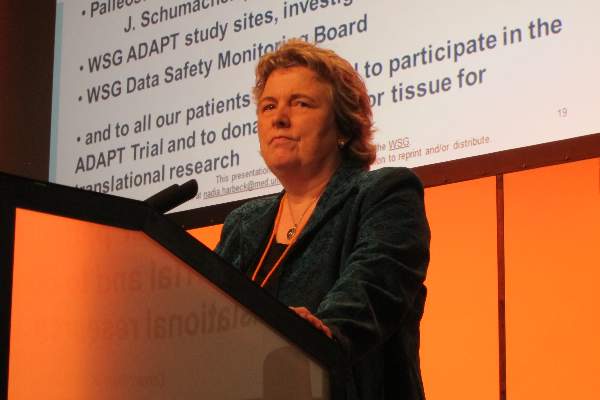
Dr. Harbeck, head of the breast center at the Technical University of Munich, presented the final analysis of the phase II, 376-patient WSG-ADAPT HER2+/HR+ (Women’s Healthcare Study Group–Adjuvant Dynamic Marker–Adjusted Personalized Therapy HER2+/HR+ trial). The primary finding: The pathologic complete response (pCR) rate in the breast and lymph nodes after 12 weeks of neoadjuvant therapy with no systemic chemotherapy in this three-armed trial was 41% with trastuzumab emtasine (T-DM1) alone at 3.6 mg/kg every 3 weeks, 41.5% with T-DM1 plus endocrine therapy, and just 15.1% with tamoxifen plus endocrine therapy.
Adding in those patients with a near-pCR – that is, patients who were ypT1a, with very little remaining tumor burden of dubious clinical significance – the results looked even stronger: a pCR/near-pCR rate of 53% with neoadjuvant T-DM1 alone and 52.9% with T-DM1 and endocrine therapy, versus 19.3% with trastuzumab plus endocrine therapy, Dr. Harbeck said at the San Antonio Breast Cancer Symposium.
Thus, adding endocrine therapy to T-DM1 (Kadcyla) didn’t improve upon the effectiveness of T-DM1 alone in this updated and final WSG-ADAPT analysis. That’s an important difference from an earlier 130-patient prespecified interim analysis Dr. Harbeck presented at the 2015 ASCO meeting. At that point it seemed – incorrectly, as it turned out – that concurrent endocrine therapy and T-DM1 provided added benefit in premenopausal but not postmenopausal women.
“Single-agent T-DM1 therapy warrants further evaluation in early breast cancer, not just because of the efficacy, which I think is very impressive, but also because of the favorable safety profile,” she said.
Mild to moderate constipation, thrombocytopenia, dry mouth, fatigue, arthralgia, headache, and hot flushes were roughly twice as common in the combined T-DMI and T-DMI plus endocrine therapy arms, compared with the trastuzumab plus endocrine therapy arm. But the only grade 3 adverse event that was more frequent in the two T-DMI study arms was an elevation in liver enzymes, which occurred in 4.1% of those patients and none on trastuzumab and endocrine therapy.
WSG-ADAPT is actually an umbrella trial that to date has enrolled about 4,000 patients. An important goal of ADAPT is to identify and validate useful early biomarkers of clinical response. WSG-ADAPT HER2+/HR+ assessed two: a drop in Ki67 of 30% or greater or low cellularity as defined by fewer than 500 tumor cells in the biopsy taken at the 3-week point in neoadjuvant therapy, after one cycle of treatment had been completed. Patients with either marker of early response proved to be 2.2-fold more likely to have a pCR than women in whom the early biomarkers were absent.
Dr. Harbeck argued that the ADAPT findings make a cogent case for changing the current standard of care in treating HER2+ early breast cancer, which is chemotherapy plus anti-HER2 therapy regardless of the malignancy’s hormone receptor status.
“We don’t adjust for hormone receptor status in our standard treatment today, even though we know hormone receptor–positive disease is a distinct entity,” she said.
The study was sponsored by Roche. The presenter serves as a consultant to Roche, Celgene, and Genomic Health.
SAN ANTONIO – Twelve weeks of trastuzumab emtasine as single-agent neoadjuvant therapy in HER2-positive/hormone receptor–positive early-stage breast cancer achieved a pathologic complete response rate of 41%, underscoring the feasibility of therapeutic de-escalation in that patient subgroup, according to Dr. Nadia Harbeck.
Dr. Harbeck, head of the breast center at the Technical University of Munich, presented the final analysis of the phase II, 376-patient WSG-ADAPT HER2+/HR+ (Women’s Healthcare Study Group–Adjuvant Dynamic Marker–Adjusted Personalized Therapy HER2+/HR+ trial). The primary finding: The pathologic complete response (pCR) rate in the breast and lymph nodes after 12 weeks of neoadjuvant therapy with no systemic chemotherapy in this three-armed trial was 41% with trastuzumab emtasine (T-DM1) alone at 3.6 mg/kg every 3 weeks, 41.5% with T-DM1 plus endocrine therapy, and just 15.1% with tamoxifen plus endocrine therapy.
Adding in those patients with a near-pCR – that is, patients who were ypT1a, with very little remaining tumor burden of dubious clinical significance – the results looked even stronger: a pCR/near-pCR rate of 53% with neoadjuvant T-DM1 alone and 52.9% with T-DM1 and endocrine therapy, versus 19.3% with trastuzumab plus endocrine therapy, Dr. Harbeck said at the San Antonio Breast Cancer Symposium.
Thus, adding endocrine therapy to T-DM1 (Kadcyla) didn’t improve upon the effectiveness of T-DM1 alone in this updated and final WSG-ADAPT analysis. That’s an important difference from an earlier 130-patient prespecified interim analysis Dr. Harbeck presented at the 2015 ASCO meeting. At that point it seemed – incorrectly, as it turned out – that concurrent endocrine therapy and T-DM1 provided added benefit in premenopausal but not postmenopausal women.
“Single-agent T-DM1 therapy warrants further evaluation in early breast cancer, not just because of the efficacy, which I think is very impressive, but also because of the favorable safety profile,” she said.
Mild to moderate constipation, thrombocytopenia, dry mouth, fatigue, arthralgia, headache, and hot flushes were roughly twice as common in the combined T-DMI and T-DMI plus endocrine therapy arms, compared with the trastuzumab plus endocrine therapy arm. But the only grade 3 adverse event that was more frequent in the two T-DMI study arms was an elevation in liver enzymes, which occurred in 4.1% of those patients and none on trastuzumab and endocrine therapy.
WSG-ADAPT is actually an umbrella trial that to date has enrolled about 4,000 patients. An important goal of ADAPT is to identify and validate useful early biomarkers of clinical response. WSG-ADAPT HER2+/HR+ assessed two: a drop in Ki67 of 30% or greater or low cellularity as defined by fewer than 500 tumor cells in the biopsy taken at the 3-week point in neoadjuvant therapy, after one cycle of treatment had been completed. Patients with either marker of early response proved to be 2.2-fold more likely to have a pCR than women in whom the early biomarkers were absent.
Dr. Harbeck argued that the ADAPT findings make a cogent case for changing the current standard of care in treating HER2+ early breast cancer, which is chemotherapy plus anti-HER2 therapy regardless of the malignancy’s hormone receptor status.
“We don’t adjust for hormone receptor status in our standard treatment today, even though we know hormone receptor–positive disease is a distinct entity,” she said.
The study was sponsored by Roche. The presenter serves as a consultant to Roche, Celgene, and Genomic Health.
SAN ANTONIO – Twelve weeks of trastuzumab emtasine as single-agent neoadjuvant therapy in HER2-positive/hormone receptor–positive early-stage breast cancer achieved a pathologic complete response rate of 41%, underscoring the feasibility of therapeutic de-escalation in that patient subgroup, according to Dr. Nadia Harbeck.
Dr. Harbeck, head of the breast center at the Technical University of Munich, presented the final analysis of the phase II, 376-patient WSG-ADAPT HER2+/HR+ (Women’s Healthcare Study Group–Adjuvant Dynamic Marker–Adjusted Personalized Therapy HER2+/HR+ trial). The primary finding: The pathologic complete response (pCR) rate in the breast and lymph nodes after 12 weeks of neoadjuvant therapy with no systemic chemotherapy in this three-armed trial was 41% with trastuzumab emtasine (T-DM1) alone at 3.6 mg/kg every 3 weeks, 41.5% with T-DM1 plus endocrine therapy, and just 15.1% with tamoxifen plus endocrine therapy.
Adding in those patients with a near-pCR – that is, patients who were ypT1a, with very little remaining tumor burden of dubious clinical significance – the results looked even stronger: a pCR/near-pCR rate of 53% with neoadjuvant T-DM1 alone and 52.9% with T-DM1 and endocrine therapy, versus 19.3% with trastuzumab plus endocrine therapy, Dr. Harbeck said at the San Antonio Breast Cancer Symposium.
Thus, adding endocrine therapy to T-DM1 (Kadcyla) didn’t improve upon the effectiveness of T-DM1 alone in this updated and final WSG-ADAPT analysis. That’s an important difference from an earlier 130-patient prespecified interim analysis Dr. Harbeck presented at the 2015 ASCO meeting. At that point it seemed – incorrectly, as it turned out – that concurrent endocrine therapy and T-DM1 provided added benefit in premenopausal but not postmenopausal women.
“Single-agent T-DM1 therapy warrants further evaluation in early breast cancer, not just because of the efficacy, which I think is very impressive, but also because of the favorable safety profile,” she said.
Mild to moderate constipation, thrombocytopenia, dry mouth, fatigue, arthralgia, headache, and hot flushes were roughly twice as common in the combined T-DMI and T-DMI plus endocrine therapy arms, compared with the trastuzumab plus endocrine therapy arm. But the only grade 3 adverse event that was more frequent in the two T-DMI study arms was an elevation in liver enzymes, which occurred in 4.1% of those patients and none on trastuzumab and endocrine therapy.
WSG-ADAPT is actually an umbrella trial that to date has enrolled about 4,000 patients. An important goal of ADAPT is to identify and validate useful early biomarkers of clinical response. WSG-ADAPT HER2+/HR+ assessed two: a drop in Ki67 of 30% or greater or low cellularity as defined by fewer than 500 tumor cells in the biopsy taken at the 3-week point in neoadjuvant therapy, after one cycle of treatment had been completed. Patients with either marker of early response proved to be 2.2-fold more likely to have a pCR than women in whom the early biomarkers were absent.
Dr. Harbeck argued that the ADAPT findings make a cogent case for changing the current standard of care in treating HER2+ early breast cancer, which is chemotherapy plus anti-HER2 therapy regardless of the malignancy’s hormone receptor status.
“We don’t adjust for hormone receptor status in our standard treatment today, even though we know hormone receptor–positive disease is a distinct entity,” she said.
The study was sponsored by Roche. The presenter serves as a consultant to Roche, Celgene, and Genomic Health.
AT SABCS 2015
Key clinical point: T-DM1 as neoadjuvant monotherapy enables selected breast cancer patients to avoid neoadjuvant chemotherapy and/or endocrine therapy.
Major finding: Twelve weeks of single-agent neoadjuvant therapy with T-DM1 in women with HER2-positive/hormone receptor–positive early breast cancer resulted in a 41% pathologic complete response rate; adding concomitant endocrine therapy provided no further benefit.
Data source: The WSG-ADAPT HER2+/HR+ trial involving 376 patients with early breast cancer who were randomized to 12 weeks of chemotherapy-free neoadjuvant therapy with single-agent T-DM1, TDM-1 plus endocrine therapy, or trastuzumab plus endocrine therapy.
Disclosures: The study was sponsored by Roche. The presenter serves as a consultant to Roche, Celgene, and Genomic Health.
Neratinib shows consistent breast cancer benefit at 3 years
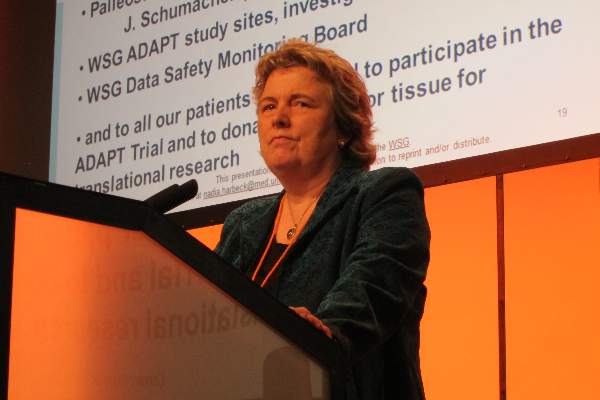
SAN ANTONIO – The investigational oral tyrosine kinase inhibitor neratinib showed continued benefit in terms of reduced invasive disease-free survival at 3 years of follow-up in women with early-stage HER2-positive breast cancer in the randomized, double-blind ExteNET trial, Dr. Arlene Chan reported at the San Antonio Breast Cancer Symposium.
The 3-year analysis was not prespecified. It was performed because she and her coinvestigators were concerned that the previously reported benefit seen at 2 years might be lost with longer follow-up, as has occurred with trastuzumab (Herceptin) in the landmark HERA (HERceptin Adjuvant) trial. Reassuringly, however, the absolute 2.3% benefit for neratinib compared to placebo seen at 2 years in ExteNET was maintained at 3 years in the updated analysis, where the absolute difference remained essentially unchanged at 2.1%, according to Dr. Chan, vice chair of the Breast Cancer Research Center of Western Australia in Perth.

Moreover, most patients have reached the 4-year mark in follow-up, where the invasive disease-free survival benefit has remained significant in favor of neratinib at 90.5% versus 88.6% with placebo, she added.
ExteNET was a large international trial of 2,840 women with stage II-IIIc HER2-positive breast cancer with node-positive disease who were randomized to oral neratinib at 240 mg/day or placebo for 1 year beginning an average of 4.4 months after completing adjuvant chemotherapy and 1 year of trastuzumab.
The impetus for ExteNET was the well-established observation that relapse occurs in up to 26% of trastuzumab-treated patients at 8-plus years of follow-up. The study hypothesis is that neratinib, a tyrosine kinase inhibitor of HER1, –2, and –4, will prevent or delay disease recurrence because it attacks the cancer through a mechanism of action different from that of trastuzumab.
At 2 years of follow-up post neratinib, the invasive disease-free survival rate was 93.9% with active therapy and 91.6% with placebo, as previously reported by Dr. Chan. At 3 years in the roughly 85% of patients who remained in the study, which changed sponsors in the interim, the rates were 92% and 89.9%.
The 3-year outcomes were most robust in patients who began neratinib less than 1 year after completing trastuzumab and who were hormone receptor positive. In this subgroup, the 3-year invasive disease-free survival rate was 93.3% with neratinib versus 88.6% with placebo. That, Dr. Chan said, is the scenario where delayed adjuvant neratinib might prove beneficial in clinical practice.
Patients with hormone receptor–negative disease didn’t benefit from neratinib.
Forty percent of patients on neratinib developed grade 3 diarrhea, the agent’s major side effect and one that is a class effect with the tyrosine kinase inhibitors. Most cases occurred within the first 30 days of treatment and lasted for a median of 5 days, with 1.4% of neratinib-treated patients being hospitalized for this complication.
Dr. Chan noted that the study protocol precluded prophylaxis with loperamide during the first month of neratinib, which has been shown by other investigators to markedly reduce the frequency and severity of diarrhea.
Another ExteNET follow-up is planned at the 5-year mark.
Audience members asked how the Food and Drug Administration’s approval of pertuzumab (Perjeta) with indications for neoadjuvant treatment of HER2-positive breast cancer as well as for metastatic disease will change the prospects for neratinib.
Dr. Chan replied that, like other medical oncologists, she’s eagerly awaiting the results of the APHINITY trial, which is testing adjuvant pertuzumab versus placebo on top of chemotherapy plus trastuzumab in women with HER2-positive disease.
“I would suspect that even if APHINITY is positive, there will be patients who will still have a risk of relapse, so we still won’t be curing all HER2-positive patients,” she said, adding that a new clinical trial would be required in order to establish that neratinib is of benefit in such individuals.
SAN ANTONIO – The investigational oral tyrosine kinase inhibitor neratinib showed continued benefit in terms of reduced invasive disease-free survival at 3 years of follow-up in women with early-stage HER2-positive breast cancer in the randomized, double-blind ExteNET trial, Dr. Arlene Chan reported at the San Antonio Breast Cancer Symposium.
The 3-year analysis was not prespecified. It was performed because she and her coinvestigators were concerned that the previously reported benefit seen at 2 years might be lost with longer follow-up, as has occurred with trastuzumab (Herceptin) in the landmark HERA (HERceptin Adjuvant) trial. Reassuringly, however, the absolute 2.3% benefit for neratinib compared to placebo seen at 2 years in ExteNET was maintained at 3 years in the updated analysis, where the absolute difference remained essentially unchanged at 2.1%, according to Dr. Chan, vice chair of the Breast Cancer Research Center of Western Australia in Perth.
Moreover, most patients have reached the 4-year mark in follow-up, where the invasive disease-free survival benefit has remained significant in favor of neratinib at 90.5% versus 88.6% with placebo, she added.
ExteNET was a large international trial of 2,840 women with stage II-IIIc HER2-positive breast cancer with node-positive disease who were randomized to oral neratinib at 240 mg/day or placebo for 1 year beginning an average of 4.4 months after completing adjuvant chemotherapy and 1 year of trastuzumab.
The impetus for ExteNET was the well-established observation that relapse occurs in up to 26% of trastuzumab-treated patients at 8-plus years of follow-up. The study hypothesis is that neratinib, a tyrosine kinase inhibitor of HER1, –2, and –4, will prevent or delay disease recurrence because it attacks the cancer through a mechanism of action different from that of trastuzumab.
At 2 years of follow-up post neratinib, the invasive disease-free survival rate was 93.9% with active therapy and 91.6% with placebo, as previously reported by Dr. Chan. At 3 years in the roughly 85% of patients who remained in the study, which changed sponsors in the interim, the rates were 92% and 89.9%.
The 3-year outcomes were most robust in patients who began neratinib less than 1 year after completing trastuzumab and who were hormone receptor positive. In this subgroup, the 3-year invasive disease-free survival rate was 93.3% with neratinib versus 88.6% with placebo. That, Dr. Chan said, is the scenario where delayed adjuvant neratinib might prove beneficial in clinical practice.
Patients with hormone receptor–negative disease didn’t benefit from neratinib.
Forty percent of patients on neratinib developed grade 3 diarrhea, the agent’s major side effect and one that is a class effect with the tyrosine kinase inhibitors. Most cases occurred within the first 30 days of treatment and lasted for a median of 5 days, with 1.4% of neratinib-treated patients being hospitalized for this complication.
Dr. Chan noted that the study protocol precluded prophylaxis with loperamide during the first month of neratinib, which has been shown by other investigators to markedly reduce the frequency and severity of diarrhea.
Another ExteNET follow-up is planned at the 5-year mark.
Audience members asked how the Food and Drug Administration’s approval of pertuzumab (Perjeta) with indications for neoadjuvant treatment of HER2-positive breast cancer as well as for metastatic disease will change the prospects for neratinib.
Dr. Chan replied that, like other medical oncologists, she’s eagerly awaiting the results of the APHINITY trial, which is testing adjuvant pertuzumab versus placebo on top of chemotherapy plus trastuzumab in women with HER2-positive disease.
“I would suspect that even if APHINITY is positive, there will be patients who will still have a risk of relapse, so we still won’t be curing all HER2-positive patients,” she said, adding that a new clinical trial would be required in order to establish that neratinib is of benefit in such individuals.
SAN ANTONIO – The investigational oral tyrosine kinase inhibitor neratinib showed continued benefit in terms of reduced invasive disease-free survival at 3 years of follow-up in women with early-stage HER2-positive breast cancer in the randomized, double-blind ExteNET trial, Dr. Arlene Chan reported at the San Antonio Breast Cancer Symposium.
The 3-year analysis was not prespecified. It was performed because she and her coinvestigators were concerned that the previously reported benefit seen at 2 years might be lost with longer follow-up, as has occurred with trastuzumab (Herceptin) in the landmark HERA (HERceptin Adjuvant) trial. Reassuringly, however, the absolute 2.3% benefit for neratinib compared to placebo seen at 2 years in ExteNET was maintained at 3 years in the updated analysis, where the absolute difference remained essentially unchanged at 2.1%, according to Dr. Chan, vice chair of the Breast Cancer Research Center of Western Australia in Perth.
Moreover, most patients have reached the 4-year mark in follow-up, where the invasive disease-free survival benefit has remained significant in favor of neratinib at 90.5% versus 88.6% with placebo, she added.
ExteNET was a large international trial of 2,840 women with stage II-IIIc HER2-positive breast cancer with node-positive disease who were randomized to oral neratinib at 240 mg/day or placebo for 1 year beginning an average of 4.4 months after completing adjuvant chemotherapy and 1 year of trastuzumab.
The impetus for ExteNET was the well-established observation that relapse occurs in up to 26% of trastuzumab-treated patients at 8-plus years of follow-up. The study hypothesis is that neratinib, a tyrosine kinase inhibitor of HER1, –2, and –4, will prevent or delay disease recurrence because it attacks the cancer through a mechanism of action different from that of trastuzumab.
At 2 years of follow-up post neratinib, the invasive disease-free survival rate was 93.9% with active therapy and 91.6% with placebo, as previously reported by Dr. Chan. At 3 years in the roughly 85% of patients who remained in the study, which changed sponsors in the interim, the rates were 92% and 89.9%.
The 3-year outcomes were most robust in patients who began neratinib less than 1 year after completing trastuzumab and who were hormone receptor positive. In this subgroup, the 3-year invasive disease-free survival rate was 93.3% with neratinib versus 88.6% with placebo. That, Dr. Chan said, is the scenario where delayed adjuvant neratinib might prove beneficial in clinical practice.
Patients with hormone receptor–negative disease didn’t benefit from neratinib.
Forty percent of patients on neratinib developed grade 3 diarrhea, the agent’s major side effect and one that is a class effect with the tyrosine kinase inhibitors. Most cases occurred within the first 30 days of treatment and lasted for a median of 5 days, with 1.4% of neratinib-treated patients being hospitalized for this complication.
Dr. Chan noted that the study protocol precluded prophylaxis with loperamide during the first month of neratinib, which has been shown by other investigators to markedly reduce the frequency and severity of diarrhea.
Another ExteNET follow-up is planned at the 5-year mark.
Audience members asked how the Food and Drug Administration’s approval of pertuzumab (Perjeta) with indications for neoadjuvant treatment of HER2-positive breast cancer as well as for metastatic disease will change the prospects for neratinib.
Dr. Chan replied that, like other medical oncologists, she’s eagerly awaiting the results of the APHINITY trial, which is testing adjuvant pertuzumab versus placebo on top of chemotherapy plus trastuzumab in women with HER2-positive disease.
“I would suspect that even if APHINITY is positive, there will be patients who will still have a risk of relapse, so we still won’t be curing all HER2-positive patients,” she said, adding that a new clinical trial would be required in order to establish that neratinib is of benefit in such individuals.
AT SABCS 2015
Key clinical point: The significant benefit of delayed adjuvant neratinib following chemotherapy and trastuzumab remains unabated at 3 years’ follow-up in women with HER2-positive breast cancer.
Major finding: At 3 years of follow-up in a large randomized trial in women with HER2-positive breast cancer, the invasive disease-free survival rate remained significantly higher with delayed adjuvant neratinib than with placebo by a margin of 92% versus 89.1%.
Data source: ExteNET, a double-blind clinical trial of 2,840 women with stage II-IIIc HER2-positive breast cancer with node-positive disease who were randomized to oral neratinib at 240 mg/day or placebo for 1 year following completion of adjuvant chemotherapy and 1 year of trastuzumab.
Disclosures: Puma Biotechnology sponsored the trial. The presenter reported serving as a consultant to Pfizer, Amgen, and Eisai.

Beta-blocker prevents trastuzumab-related LVEF drop
SAN ANTONIO – Prophylactic beta-blockade with bisoprolol during adjuvant trastuzumab therapy for HER2-positive breast cancer prevented trastuzumab-induced decline in left ventricular ejection fraction in MANTICORE, a randomized trial presented at the San Antonio Breast Cancer Symposium.
“MANTICORE provides the first intervention proven in a randomized, double-blind, placebo-controlled, multicenter way to be an effective means of preventing trastuzumab-associated left ventricular dysfunction,” said Edith Pituskin, Ph.D., of the University of Alberta, Edmonton.

MANTICORE (Multidisciplinary Approach to Novel Therapies in Cardio-Oncology Research) randomized 99 patients with HER2-positive early breast cancer and a normal-range left ventricular ejection fraction (LVEF) at baseline to bisoprolol (Zebeta), the ACE inhibitor perindopril (Aceon), or placebo shortly before starting a planned 1-year course of adjuvant trastuzumab (Herceptin). The patients had low background levels of cardiovascular risk factors. Roughly three-quarters of subjects were able to titrate up to the target dose of 10 mg once daily for bisoprolol or 8 mg once daily for perindopril.
Cardiac MRI assessments at baseline, 3, and 12 months – the point when trastuzumab and the cardioprotective medications were stopped – showed that neither bisoprolol nor perindopril prevented trastuzumab-related left ventricular remodeling, which was a disappointment, given that this was the prespecified primary endpoint.
“Our results hint that, potentially, trastuzumab exposure–related left ventricular remodeling is not reversible,” Dr. Pituskin said.
The average reduction from baseline in LVEF over the course of a year of adjuvant trastuzumab therapy was 5% with placebo, 3% with perindopril, and 1% with bisoprolol, with the differences between bisoprolol and the other two study arms being highly statistically significant.
On the plus side, both of the once-daily cardiac medications displayed an important side benefit in MANTICORE: an eightfold reduction in the number of interruptions of trastuzumab therapy mandated by a significant drop in LVEF. There were eight such interruptions in the control group versus one each in the bisoprolol and perindopril arms. That’s of practical value in terms of patient convenience, cost of care, and possibly even the efficacy of the adjuvant cancer regimen, she noted.
Audience members raised several questions: what’s the clinical significance of the asymptomatic reduction in LVEF seen in the control group in MANTICORE? Does it place affected patients at risk for overt heart failure as time passes? And since LVEF is just one aspect of cardiac function, isn’t it possible that the cardiac medications were simply propping up LVEF while the underlying cardiotoxic effects of trastuzumab remained unchecked, such that the LVEF will drop once patients are off therapy?
Dr. Pituskin replied that these are good questions, the answers to which may be forthcoming at the planned follow-up cardiac MRI to be conducted at 24 months, a full year after discontinuation of the therapies.
Asked to compare the MANTICORE findings with those of the PRADA trial presented at this year’s annual meeting of the American Heart Association, in which an LVEF drop in breast cancer patients on adjuvant anthracycline and trastuzumab was prevented by prophylactic use of the angiotensin receptor blocker candesartan (Atacand) but not the beta-blocker metoprolol, Dr. Pituskin said she can’t make a definitive comparison until PRADA is published, but that it’s her understanding PRADA was a single-center trial without serial cardiac MRIs, and it included many more participants on an anthracycline-containing regimen, long recognized as a major hazard in terms of cardiotoxicity, and one thought to have a different cardiotoxic mechanism than trastuzumab.
By way of background, she noted that roughly 20% of women with breast cancer have HER2 receptor–overexpressing tumors. In such patients it’s well established that trastuzumab reduces mortality by one-third. However, it’s also well established that one in five patients on trastuzumab experience left ventricular dysfunction, and 1%-5% of patients develop heart failure, an “extremely devastating” complication carrying a 50% 5-year mortality. Beta-blockers and ACE inhibitors or angiotensin receptor blockers are standard, guideline-recommended treatments for patients with established heart failure.
SAN ANTONIO – Prophylactic beta-blockade with bisoprolol during adjuvant trastuzumab therapy for HER2-positive breast cancer prevented trastuzumab-induced decline in left ventricular ejection fraction in MANTICORE, a randomized trial presented at the San Antonio Breast Cancer Symposium.
“MANTICORE provides the first intervention proven in a randomized, double-blind, placebo-controlled, multicenter way to be an effective means of preventing trastuzumab-associated left ventricular dysfunction,” said Edith Pituskin, Ph.D., of the University of Alberta, Edmonton.
MANTICORE (Multidisciplinary Approach to Novel Therapies in Cardio-Oncology Research) randomized 99 patients with HER2-positive early breast cancer and a normal-range left ventricular ejection fraction (LVEF) at baseline to bisoprolol (Zebeta), the ACE inhibitor perindopril (Aceon), or placebo shortly before starting a planned 1-year course of adjuvant trastuzumab (Herceptin). The patients had low background levels of cardiovascular risk factors. Roughly three-quarters of subjects were able to titrate up to the target dose of 10 mg once daily for bisoprolol or 8 mg once daily for perindopril.
Cardiac MRI assessments at baseline, 3, and 12 months – the point when trastuzumab and the cardioprotective medications were stopped – showed that neither bisoprolol nor perindopril prevented trastuzumab-related left ventricular remodeling, which was a disappointment, given that this was the prespecified primary endpoint.
“Our results hint that, potentially, trastuzumab exposure–related left ventricular remodeling is not reversible,” Dr. Pituskin said.
The average reduction from baseline in LVEF over the course of a year of adjuvant trastuzumab therapy was 5% with placebo, 3% with perindopril, and 1% with bisoprolol, with the differences between bisoprolol and the other two study arms being highly statistically significant.
On the plus side, both of the once-daily cardiac medications displayed an important side benefit in MANTICORE: an eightfold reduction in the number of interruptions of trastuzumab therapy mandated by a significant drop in LVEF. There were eight such interruptions in the control group versus one each in the bisoprolol and perindopril arms. That’s of practical value in terms of patient convenience, cost of care, and possibly even the efficacy of the adjuvant cancer regimen, she noted.
Audience members raised several questions: what’s the clinical significance of the asymptomatic reduction in LVEF seen in the control group in MANTICORE? Does it place affected patients at risk for overt heart failure as time passes? And since LVEF is just one aspect of cardiac function, isn’t it possible that the cardiac medications were simply propping up LVEF while the underlying cardiotoxic effects of trastuzumab remained unchecked, such that the LVEF will drop once patients are off therapy?
Dr. Pituskin replied that these are good questions, the answers to which may be forthcoming at the planned follow-up cardiac MRI to be conducted at 24 months, a full year after discontinuation of the therapies.
Asked to compare the MANTICORE findings with those of the PRADA trial presented at this year’s annual meeting of the American Heart Association, in which an LVEF drop in breast cancer patients on adjuvant anthracycline and trastuzumab was prevented by prophylactic use of the angiotensin receptor blocker candesartan (Atacand) but not the beta-blocker metoprolol, Dr. Pituskin said she can’t make a definitive comparison until PRADA is published, but that it’s her understanding PRADA was a single-center trial without serial cardiac MRIs, and it included many more participants on an anthracycline-containing regimen, long recognized as a major hazard in terms of cardiotoxicity, and one thought to have a different cardiotoxic mechanism than trastuzumab.
By way of background, she noted that roughly 20% of women with breast cancer have HER2 receptor–overexpressing tumors. In such patients it’s well established that trastuzumab reduces mortality by one-third. However, it’s also well established that one in five patients on trastuzumab experience left ventricular dysfunction, and 1%-5% of patients develop heart failure, an “extremely devastating” complication carrying a 50% 5-year mortality. Beta-blockers and ACE inhibitors or angiotensin receptor blockers are standard, guideline-recommended treatments for patients with established heart failure.
SAN ANTONIO – Prophylactic beta-blockade with bisoprolol during adjuvant trastuzumab therapy for HER2-positive breast cancer prevented trastuzumab-induced decline in left ventricular ejection fraction in MANTICORE, a randomized trial presented at the San Antonio Breast Cancer Symposium.
“MANTICORE provides the first intervention proven in a randomized, double-blind, placebo-controlled, multicenter way to be an effective means of preventing trastuzumab-associated left ventricular dysfunction,” said Edith Pituskin, Ph.D., of the University of Alberta, Edmonton.
MANTICORE (Multidisciplinary Approach to Novel Therapies in Cardio-Oncology Research) randomized 99 patients with HER2-positive early breast cancer and a normal-range left ventricular ejection fraction (LVEF) at baseline to bisoprolol (Zebeta), the ACE inhibitor perindopril (Aceon), or placebo shortly before starting a planned 1-year course of adjuvant trastuzumab (Herceptin). The patients had low background levels of cardiovascular risk factors. Roughly three-quarters of subjects were able to titrate up to the target dose of 10 mg once daily for bisoprolol or 8 mg once daily for perindopril.
Cardiac MRI assessments at baseline, 3, and 12 months – the point when trastuzumab and the cardioprotective medications were stopped – showed that neither bisoprolol nor perindopril prevented trastuzumab-related left ventricular remodeling, which was a disappointment, given that this was the prespecified primary endpoint.
“Our results hint that, potentially, trastuzumab exposure–related left ventricular remodeling is not reversible,” Dr. Pituskin said.
The average reduction from baseline in LVEF over the course of a year of adjuvant trastuzumab therapy was 5% with placebo, 3% with perindopril, and 1% with bisoprolol, with the differences between bisoprolol and the other two study arms being highly statistically significant.
On the plus side, both of the once-daily cardiac medications displayed an important side benefit in MANTICORE: an eightfold reduction in the number of interruptions of trastuzumab therapy mandated by a significant drop in LVEF. There were eight such interruptions in the control group versus one each in the bisoprolol and perindopril arms. That’s of practical value in terms of patient convenience, cost of care, and possibly even the efficacy of the adjuvant cancer regimen, she noted.
Audience members raised several questions: what’s the clinical significance of the asymptomatic reduction in LVEF seen in the control group in MANTICORE? Does it place affected patients at risk for overt heart failure as time passes? And since LVEF is just one aspect of cardiac function, isn’t it possible that the cardiac medications were simply propping up LVEF while the underlying cardiotoxic effects of trastuzumab remained unchecked, such that the LVEF will drop once patients are off therapy?
Dr. Pituskin replied that these are good questions, the answers to which may be forthcoming at the planned follow-up cardiac MRI to be conducted at 24 months, a full year after discontinuation of the therapies.
Asked to compare the MANTICORE findings with those of the PRADA trial presented at this year’s annual meeting of the American Heart Association, in which an LVEF drop in breast cancer patients on adjuvant anthracycline and trastuzumab was prevented by prophylactic use of the angiotensin receptor blocker candesartan (Atacand) but not the beta-blocker metoprolol, Dr. Pituskin said she can’t make a definitive comparison until PRADA is published, but that it’s her understanding PRADA was a single-center trial without serial cardiac MRIs, and it included many more participants on an anthracycline-containing regimen, long recognized as a major hazard in terms of cardiotoxicity, and one thought to have a different cardiotoxic mechanism than trastuzumab.
By way of background, she noted that roughly 20% of women with breast cancer have HER2 receptor–overexpressing tumors. In such patients it’s well established that trastuzumab reduces mortality by one-third. However, it’s also well established that one in five patients on trastuzumab experience left ventricular dysfunction, and 1%-5% of patients develop heart failure, an “extremely devastating” complication carrying a 50% 5-year mortality. Beta-blockers and ACE inhibitors or angiotensin receptor blockers are standard, guideline-recommended treatments for patients with established heart failure.
AT SABCS 2015
Key clinical point: Bisoprolol prevents the trastuzumab-related decline in left ventricular ejection fraction in breast cancer patients.
Major finding: The average reduction from baseline in LVEF over the course of a year of adjuvant trastuzumab therapy was 5% with placebo, 3% with perindopril, and 1% with bisoprolol, with the differences between bisoprolol and the other two study arms being highly statistically significant. .
Data source: MANTICORE was a randomized, double-blind, multicenter study in which 99 patients with HER2-positive breast cancer were placed on prophylactic bisoprolol, perindopril, or placebo before starting adjuvant trastuzumab.
Disclosures: MANTICORE was funded by the Canadian Institutes for Health Research and the Alberta Cancer Foundation. The study presenter reported having no financial conflicts of interest.

‘Clinical equipoise’ surrounds neoadjuvant carboplatin for TNBC
SAN ANTONIO – Should carboplatin be considered a routine part of neoadjuvant therapy in early stage triple negative breast cancer?
Not yet, Dr. Angela M. DeMichele declared at the San Antonio Breast Cancer Symposium.

“I would say it’s still an individualized decision. The hazard ratios suggest benefit, but currently there’s not enough data to be conclusive,” according to Dr. DeMichele, who served as discussant for two clinical trials with discordant results – GeparSixto and CALGB/Alliance 40603 – presented at the symposium.
She also addressed a second issue raised by the two studies: is a pathologic complete response a valid surrogate for event-free survival?
“I would say a qualified yes,” commented Dr. DeMichele, professor of medicine and epidemiology at the University of Pennsylvania, Philadelphia.
In GeparSixto, the addition of weekly carboplatin to a neoadjuvant chemotherapy backbone comprised of an anthracycline, taxane, and bevacizumab in patients with triple negative breast cancer (TNBC) boosted the 3-year disease-free survival rate significantly, from 76.1% to 85.5%. This result prompted GeparSixto presenter Dr. Gunter von Minckwitz, president of the German Breast Group, to declare that the study supports incorporation of carboplatin as part of standard neoadjuvant therapy in TNBC.
In contrast, in CALGB/Alliance 40603, adding carboplatin to neoadjuvant chemotherapy didn’t result in a significant improvement in 3-year event-free or overall survival.
Dr. DeMichele noted that with just 3 years of followup to date in these trials, there isn’t any information yet about carboplatin’s added potential long-term bone marrow toxicity. That’s an important unanswered question. Nor is any quality of life data available from the two trials. These issues need clarification before broader use of carboplatin.
One possible explanation for the disparate results in the two studies lies in differences in the chemotherapy and carboplatin doses and treatment schedules used. Patients in GeparSixto received greater cumulative amounts of anthracycline and taxane, given over a longer time period. And if patients were randomized to receive carboplatin, they got it at area under the curve 1.5 or 2 weekly for the duration of chemotherapy, as compared to carboplatin dosed just four times at area under the curve 6 every 3 weeks in CALGB/Alliance 40603.
“Could the weekly carboplatin in GeparSixto have provided less time for DNA repair in the tumor?,” she speculated.

Dr. William M. Sikov, who presented the CALGB/Alliance 40603 findings, found this quite plausible.
“We know treatment schedule and dose are important with anthracyclines, they’re important with taxanes, and it’s certainly not far fetched to propose that they may be important for carboplatin as well. Might that have made a difference? Can’t say,” observed Dr. Sikov of Women and Infants Hospital of Rhode Island in Providence.
In any case, Dr. DeMichele said neither GeparSixto, with its 315 patients with TNBC, nor CALGB/Alliance 40603, with 443, was adequately powered to prove or disprove a therapeutic advantage for the addition of neoadjuvant carboplatin.
“This is the 50th anniversary of the discovery of carboplatin. Yet despite all of our advancements in breast cancer, we’re still trying to figure out the role of platinum-containing agents in our armamentarium for breast cancer,” she observed.
During this period of what she termed clinical equipoise regarding carboplatin, she said it’s reasonable to consider using the agent outside of a clinical trial in selected circumstances: namely, when it’s important to gain rapid control of locoregional disease in order to improve operability or reduce morbidity, or in patients at the highest risk of relapse, mainly those who are very young or have stage III disease.
The issue of the validity of pathologic complete response (pCR) as a surrogate endpoint for event-free survival was raised by the GeparSixto and CALGB/Alliance 40603 investigators. In CALGB/Alliance 40603 only 9% of patients who had a pCR developed a distant recurrence and 3-year mortality was just 6%, compared with a 27% distant recurrence rate and 25% mortality in those without a pCR. Patients with a pCR had a 70% improvement in event-free survival and an 80% improvement in overall survival compared to those without a pCR, Dr. Sikov reported.
Similarly, in GeparSixto disease relapse occurred in only 5 of 129 TNBC patients with a pCR, compared with 50 of 162 without a pCR.
Dr. DeMichele said that while these are encouraging results, neither trial was designed to evaluate pCR as a predictor of improved event-free survival in accord with the Food and Drug Administration’s formal written guidance for attaining recognition of pCR as a surrogate endpoint. The studies were underpowered for this purpose. And a pooled analysis of 12 international trials totaling nearly 12,000 patients that was led by FDA investigators concluded that the data couldn’t validate pCR as a surrogate endpoint for event-free and overall survival (Lancet. 2014 Jul 12;384[9938]:164-72).
However, four studies adequately powered to detect improvement in event-free survival in conjunction with a carboplatin-induced benefit in terms of pCR are underway, including the NRG-BR-003 trial in the U.S. and the BrighTNess study in China.
In addition, a study with an innovative post-neoadjuvant design for platinum-based therapy is underway. The ECOG-ACRIN 1131 study is a Phase III randomized postoperative trial of four rounds of carboplatin or cisplatin versus observation in patients with residual TNBC following an anthracycline-based neoadjuvant regimen. This strategy limits exposure to the toxicities of platinum-based compounds to those patients in need of additional therapy. The planned 558-patient trial is powered to detect a 33% improvement in event-free survival.
SAN ANTONIO – Should carboplatin be considered a routine part of neoadjuvant therapy in early stage triple negative breast cancer?
Not yet, Dr. Angela M. DeMichele declared at the San Antonio Breast Cancer Symposium.
“I would say it’s still an individualized decision. The hazard ratios suggest benefit, but currently there’s not enough data to be conclusive,” according to Dr. DeMichele, who served as discussant for two clinical trials with discordant results – GeparSixto and CALGB/Alliance 40603 – presented at the symposium.
She also addressed a second issue raised by the two studies: is a pathologic complete response a valid surrogate for event-free survival?
“I would say a qualified yes,” commented Dr. DeMichele, professor of medicine and epidemiology at the University of Pennsylvania, Philadelphia.
In GeparSixto, the addition of weekly carboplatin to a neoadjuvant chemotherapy backbone comprised of an anthracycline, taxane, and bevacizumab in patients with triple negative breast cancer (TNBC) boosted the 3-year disease-free survival rate significantly, from 76.1% to 85.5%. This result prompted GeparSixto presenter Dr. Gunter von Minckwitz, president of the German Breast Group, to declare that the study supports incorporation of carboplatin as part of standard neoadjuvant therapy in TNBC.
In contrast, in CALGB/Alliance 40603, adding carboplatin to neoadjuvant chemotherapy didn’t result in a significant improvement in 3-year event-free or overall survival.
Dr. DeMichele noted that with just 3 years of followup to date in these trials, there isn’t any information yet about carboplatin’s added potential long-term bone marrow toxicity. That’s an important unanswered question. Nor is any quality of life data available from the two trials. These issues need clarification before broader use of carboplatin.
One possible explanation for the disparate results in the two studies lies in differences in the chemotherapy and carboplatin doses and treatment schedules used. Patients in GeparSixto received greater cumulative amounts of anthracycline and taxane, given over a longer time period. And if patients were randomized to receive carboplatin, they got it at area under the curve 1.5 or 2 weekly for the duration of chemotherapy, as compared to carboplatin dosed just four times at area under the curve 6 every 3 weeks in CALGB/Alliance 40603.
“Could the weekly carboplatin in GeparSixto have provided less time for DNA repair in the tumor?,” she speculated.
Dr. William M. Sikov, who presented the CALGB/Alliance 40603 findings, found this quite plausible.
“We know treatment schedule and dose are important with anthracyclines, they’re important with taxanes, and it’s certainly not far fetched to propose that they may be important for carboplatin as well. Might that have made a difference? Can’t say,” observed Dr. Sikov of Women and Infants Hospital of Rhode Island in Providence.
In any case, Dr. DeMichele said neither GeparSixto, with its 315 patients with TNBC, nor CALGB/Alliance 40603, with 443, was adequately powered to prove or disprove a therapeutic advantage for the addition of neoadjuvant carboplatin.
“This is the 50th anniversary of the discovery of carboplatin. Yet despite all of our advancements in breast cancer, we’re still trying to figure out the role of platinum-containing agents in our armamentarium for breast cancer,” she observed.
During this period of what she termed clinical equipoise regarding carboplatin, she said it’s reasonable to consider using the agent outside of a clinical trial in selected circumstances: namely, when it’s important to gain rapid control of locoregional disease in order to improve operability or reduce morbidity, or in patients at the highest risk of relapse, mainly those who are very young or have stage III disease.
The issue of the validity of pathologic complete response (pCR) as a surrogate endpoint for event-free survival was raised by the GeparSixto and CALGB/Alliance 40603 investigators. In CALGB/Alliance 40603 only 9% of patients who had a pCR developed a distant recurrence and 3-year mortality was just 6%, compared with a 27% distant recurrence rate and 25% mortality in those without a pCR. Patients with a pCR had a 70% improvement in event-free survival and an 80% improvement in overall survival compared to those without a pCR, Dr. Sikov reported.
Similarly, in GeparSixto disease relapse occurred in only 5 of 129 TNBC patients with a pCR, compared with 50 of 162 without a pCR.
Dr. DeMichele said that while these are encouraging results, neither trial was designed to evaluate pCR as a predictor of improved event-free survival in accord with the Food and Drug Administration’s formal written guidance for attaining recognition of pCR as a surrogate endpoint. The studies were underpowered for this purpose. And a pooled analysis of 12 international trials totaling nearly 12,000 patients that was led by FDA investigators concluded that the data couldn’t validate pCR as a surrogate endpoint for event-free and overall survival (Lancet. 2014 Jul 12;384[9938]:164-72).
However, four studies adequately powered to detect improvement in event-free survival in conjunction with a carboplatin-induced benefit in terms of pCR are underway, including the NRG-BR-003 trial in the U.S. and the BrighTNess study in China.
In addition, a study with an innovative post-neoadjuvant design for platinum-based therapy is underway. The ECOG-ACRIN 1131 study is a Phase III randomized postoperative trial of four rounds of carboplatin or cisplatin versus observation in patients with residual TNBC following an anthracycline-based neoadjuvant regimen. This strategy limits exposure to the toxicities of platinum-based compounds to those patients in need of additional therapy. The planned 558-patient trial is powered to detect a 33% improvement in event-free survival.
SAN ANTONIO – Should carboplatin be considered a routine part of neoadjuvant therapy in early stage triple negative breast cancer?
Not yet, Dr. Angela M. DeMichele declared at the San Antonio Breast Cancer Symposium.
“I would say it’s still an individualized decision. The hazard ratios suggest benefit, but currently there’s not enough data to be conclusive,” according to Dr. DeMichele, who served as discussant for two clinical trials with discordant results – GeparSixto and CALGB/Alliance 40603 – presented at the symposium.
She also addressed a second issue raised by the two studies: is a pathologic complete response a valid surrogate for event-free survival?
“I would say a qualified yes,” commented Dr. DeMichele, professor of medicine and epidemiology at the University of Pennsylvania, Philadelphia.
In GeparSixto, the addition of weekly carboplatin to a neoadjuvant chemotherapy backbone comprised of an anthracycline, taxane, and bevacizumab in patients with triple negative breast cancer (TNBC) boosted the 3-year disease-free survival rate significantly, from 76.1% to 85.5%. This result prompted GeparSixto presenter Dr. Gunter von Minckwitz, president of the German Breast Group, to declare that the study supports incorporation of carboplatin as part of standard neoadjuvant therapy in TNBC.
In contrast, in CALGB/Alliance 40603, adding carboplatin to neoadjuvant chemotherapy didn’t result in a significant improvement in 3-year event-free or overall survival.
Dr. DeMichele noted that with just 3 years of followup to date in these trials, there isn’t any information yet about carboplatin’s added potential long-term bone marrow toxicity. That’s an important unanswered question. Nor is any quality of life data available from the two trials. These issues need clarification before broader use of carboplatin.
One possible explanation for the disparate results in the two studies lies in differences in the chemotherapy and carboplatin doses and treatment schedules used. Patients in GeparSixto received greater cumulative amounts of anthracycline and taxane, given over a longer time period. And if patients were randomized to receive carboplatin, they got it at area under the curve 1.5 or 2 weekly for the duration of chemotherapy, as compared to carboplatin dosed just four times at area under the curve 6 every 3 weeks in CALGB/Alliance 40603.
“Could the weekly carboplatin in GeparSixto have provided less time for DNA repair in the tumor?,” she speculated.
Dr. William M. Sikov, who presented the CALGB/Alliance 40603 findings, found this quite plausible.
“We know treatment schedule and dose are important with anthracyclines, they’re important with taxanes, and it’s certainly not far fetched to propose that they may be important for carboplatin as well. Might that have made a difference? Can’t say,” observed Dr. Sikov of Women and Infants Hospital of Rhode Island in Providence.
In any case, Dr. DeMichele said neither GeparSixto, with its 315 patients with TNBC, nor CALGB/Alliance 40603, with 443, was adequately powered to prove or disprove a therapeutic advantage for the addition of neoadjuvant carboplatin.
“This is the 50th anniversary of the discovery of carboplatin. Yet despite all of our advancements in breast cancer, we’re still trying to figure out the role of platinum-containing agents in our armamentarium for breast cancer,” she observed.
During this period of what she termed clinical equipoise regarding carboplatin, she said it’s reasonable to consider using the agent outside of a clinical trial in selected circumstances: namely, when it’s important to gain rapid control of locoregional disease in order to improve operability or reduce morbidity, or in patients at the highest risk of relapse, mainly those who are very young or have stage III disease.
The issue of the validity of pathologic complete response (pCR) as a surrogate endpoint for event-free survival was raised by the GeparSixto and CALGB/Alliance 40603 investigators. In CALGB/Alliance 40603 only 9% of patients who had a pCR developed a distant recurrence and 3-year mortality was just 6%, compared with a 27% distant recurrence rate and 25% mortality in those without a pCR. Patients with a pCR had a 70% improvement in event-free survival and an 80% improvement in overall survival compared to those without a pCR, Dr. Sikov reported.
Similarly, in GeparSixto disease relapse occurred in only 5 of 129 TNBC patients with a pCR, compared with 50 of 162 without a pCR.
Dr. DeMichele said that while these are encouraging results, neither trial was designed to evaluate pCR as a predictor of improved event-free survival in accord with the Food and Drug Administration’s formal written guidance for attaining recognition of pCR as a surrogate endpoint. The studies were underpowered for this purpose. And a pooled analysis of 12 international trials totaling nearly 12,000 patients that was led by FDA investigators concluded that the data couldn’t validate pCR as a surrogate endpoint for event-free and overall survival (Lancet. 2014 Jul 12;384[9938]:164-72).
However, four studies adequately powered to detect improvement in event-free survival in conjunction with a carboplatin-induced benefit in terms of pCR are underway, including the NRG-BR-003 trial in the U.S. and the BrighTNess study in China.
In addition, a study with an innovative post-neoadjuvant design for platinum-based therapy is underway. The ECOG-ACRIN 1131 study is a Phase III randomized postoperative trial of four rounds of carboplatin or cisplatin versus observation in patients with residual TNBC following an anthracycline-based neoadjuvant regimen. This strategy limits exposure to the toxicities of platinum-based compounds to those patients in need of additional therapy. The planned 558-patient trial is powered to detect a 33% improvement in event-free survival.
EXPERT ANALYSIS FROM SABCS 2015

Bystander CPR rising in children with cardiac arrest
ORLANDO – Bystander CPR was provided in 49% of U.S. cases of pediatric out-of-hospital cardiac arrest during 2013-2014, a major improvement over the 35% rate in a prior study 15 years ago, Dr. Maryam Y. Naim reported at the American Heart Association scientific sessions.
She presented an analysis of 2,176 out-of-hospital cardiac arrests (OHCA) in patients up to age 18 years who were included in the Cardiac Arrest Registry to Enhance Survival (CARES), the nation’s largest OHCA registry. Patients with traumatic OHCA and those whose bystander CPR (BCPR) was provided by a health care professional weren’t included.

Overall, the rate of neurologically favorable survival in pediatric recipients of BCPR was 11%, compared with 7% when BCPR wasn’t provided. But the results were far more impressive in the 14% of cardiac arrests that occurred outside the home, where the rate of neurologically favorable survival in BCPR recipients was 34%, more than twice the 15% figure for nonrecipients, according to Dr. Naim, a pediatrician and cardiac intensivist at Children’s Hospital of Philadelphia and the University of Pennsylvania.
Infants accounted for 47% of all pediatric OHCA, and in these youngest patients BCPR was of no benefit.
“The most common etiology of cardiac arrest in infants is sudden infant death syndrome. These are children who are found unresponsive in their cribs, and sometimes they’ve been dead a long time. We need to find something different for this population: perhaps developing a monitor to signal when an infant stops breathing or the heart rate goes down,” she said.
The fact that the BCPR rate in pediatric OHCA has climbed to 49% speaks well for public health efforts to improve education and awareness. Of those who received BCPR during 2013 and 2014, half got compression-only CPR, suggesting increasing adherence to the 2010 AHA guidelines for CPR and emergency cardiovascular care, which emphasized compression-only CPR as a viable alternative to conventional CPR, Dr. Naim added.
Her study highlighted a racial disparity in the application of BCPR in children and adolescents: Sixty percent of white youths with OHCA received BCPR, compared with 42% of blacks and 48% of Hispanics.
“About 70% of all bystander CPR was provided by a family member at home. So there’s really an opportunity there, especially in minority communities, to further increase education and awareness about bystander CPR, teaching family members to do it and also how to call 911 to start the chain of response,” she said.
Dr. Naim reported having no financial conflicts regarding her study.
ORLANDO – Bystander CPR was provided in 49% of U.S. cases of pediatric out-of-hospital cardiac arrest during 2013-2014, a major improvement over the 35% rate in a prior study 15 years ago, Dr. Maryam Y. Naim reported at the American Heart Association scientific sessions.
She presented an analysis of 2,176 out-of-hospital cardiac arrests (OHCA) in patients up to age 18 years who were included in the Cardiac Arrest Registry to Enhance Survival (CARES), the nation’s largest OHCA registry. Patients with traumatic OHCA and those whose bystander CPR (BCPR) was provided by a health care professional weren’t included.
Overall, the rate of neurologically favorable survival in pediatric recipients of BCPR was 11%, compared with 7% when BCPR wasn’t provided. But the results were far more impressive in the 14% of cardiac arrests that occurred outside the home, where the rate of neurologically favorable survival in BCPR recipients was 34%, more than twice the 15% figure for nonrecipients, according to Dr. Naim, a pediatrician and cardiac intensivist at Children’s Hospital of Philadelphia and the University of Pennsylvania.
Infants accounted for 47% of all pediatric OHCA, and in these youngest patients BCPR was of no benefit.
“The most common etiology of cardiac arrest in infants is sudden infant death syndrome. These are children who are found unresponsive in their cribs, and sometimes they’ve been dead a long time. We need to find something different for this population: perhaps developing a monitor to signal when an infant stops breathing or the heart rate goes down,” she said.
The fact that the BCPR rate in pediatric OHCA has climbed to 49% speaks well for public health efforts to improve education and awareness. Of those who received BCPR during 2013 and 2014, half got compression-only CPR, suggesting increasing adherence to the 2010 AHA guidelines for CPR and emergency cardiovascular care, which emphasized compression-only CPR as a viable alternative to conventional CPR, Dr. Naim added.
Her study highlighted a racial disparity in the application of BCPR in children and adolescents: Sixty percent of white youths with OHCA received BCPR, compared with 42% of blacks and 48% of Hispanics.
“About 70% of all bystander CPR was provided by a family member at home. So there’s really an opportunity there, especially in minority communities, to further increase education and awareness about bystander CPR, teaching family members to do it and also how to call 911 to start the chain of response,” she said.
Dr. Naim reported having no financial conflicts regarding her study.
ORLANDO – Bystander CPR was provided in 49% of U.S. cases of pediatric out-of-hospital cardiac arrest during 2013-2014, a major improvement over the 35% rate in a prior study 15 years ago, Dr. Maryam Y. Naim reported at the American Heart Association scientific sessions.
She presented an analysis of 2,176 out-of-hospital cardiac arrests (OHCA) in patients up to age 18 years who were included in the Cardiac Arrest Registry to Enhance Survival (CARES), the nation’s largest OHCA registry. Patients with traumatic OHCA and those whose bystander CPR (BCPR) was provided by a health care professional weren’t included.
Overall, the rate of neurologically favorable survival in pediatric recipients of BCPR was 11%, compared with 7% when BCPR wasn’t provided. But the results were far more impressive in the 14% of cardiac arrests that occurred outside the home, where the rate of neurologically favorable survival in BCPR recipients was 34%, more than twice the 15% figure for nonrecipients, according to Dr. Naim, a pediatrician and cardiac intensivist at Children’s Hospital of Philadelphia and the University of Pennsylvania.
Infants accounted for 47% of all pediatric OHCA, and in these youngest patients BCPR was of no benefit.
“The most common etiology of cardiac arrest in infants is sudden infant death syndrome. These are children who are found unresponsive in their cribs, and sometimes they’ve been dead a long time. We need to find something different for this population: perhaps developing a monitor to signal when an infant stops breathing or the heart rate goes down,” she said.
The fact that the BCPR rate in pediatric OHCA has climbed to 49% speaks well for public health efforts to improve education and awareness. Of those who received BCPR during 2013 and 2014, half got compression-only CPR, suggesting increasing adherence to the 2010 AHA guidelines for CPR and emergency cardiovascular care, which emphasized compression-only CPR as a viable alternative to conventional CPR, Dr. Naim added.
Her study highlighted a racial disparity in the application of BCPR in children and adolescents: Sixty percent of white youths with OHCA received BCPR, compared with 42% of blacks and 48% of Hispanics.
“About 70% of all bystander CPR was provided by a family member at home. So there’s really an opportunity there, especially in minority communities, to further increase education and awareness about bystander CPR, teaching family members to do it and also how to call 911 to start the chain of response,” she said.
Dr. Naim reported having no financial conflicts regarding her study.
AT THE AHA SCIENTIFIC SESSIONS
Key clinical point: Nearly half of all children and adolescents with out-of-hospital cardiac arrest in 2013-2014 got bystander CPR.
Major finding: The rate of neurologically favorable survival in pediatric patients with out-of-hospital cardiac arrest who receive bystander CPR is 34%, compared with 15% in those who don’t get the intervention.
Data source: An analysis of 2,176 out-of-hospital cardiac arrests in the Cardiac Arrest Registry to Enhance Survival during 2013 and 2014.
Disclosures: The presenter reported having no financial conflicts regarding her study.

Avelumab shows selective efficacy in metastatic breast cancer
SAN ANTONIO – The immunologic checkpoint inhibitor avelumab showed only modest single-digit efficacy in an unselected group of metastatic breast cancer patients, but the results were sevenfold better in the subset of JAVELIN trial participants with strong expression of PD-L1 by immune cells within the tumor, Dr. Luc Y. Dirix reported at the San Antonio Breast Cancer Symposium.
Avelumab is an investigational fully human IgG1 monoclonal antibody that selectively binds to PD-L1 (programmed death–ligand 1). In addition, it’s believed that avelumab elicits antibody-dependent cellular cytotoxicity as a secondary mechanism for its antitumor activity, according to Dr. Dirix of the University of Antwerp, Belgium.
JAVELIN is a multipronged phase Ib clinical trial which to date has enrolled more than 1,000 participants with various types of advanced cancer. Avelumab has shown antitumor activity in patients with lung, gastric, bladder, ovarian, and other cancers. Phase III randomized trials are underway evaluating avelumab in patients with advanced non–small cell lung cancer and gastric cancer.
Dr. Dirix reported on the 168 JAVELIN participants with locally advanced or metastatic breast cancer refractory to standard therapy, including anthracycline and a taxane. Their median time since diagnosis of metastatic disease was 21.6 weeks at the time they went on avelumab at 10 mg/kg every 2 weeks until disease progression occurred. Roughly half of participants had already undergone three or more regimens for their advanced malignancy.
At a median duration of 10 months follow-up, 1 of the 168 patients had shown a complete response and 7 others had a partial response, for an overall response rate of 4.8%. Of note, 5 of the 8 responders were among the 58 women with triple-negative breast cancer (TNBC). Median time to response was 11.4 weeks, with a relatively long 28.7-week median duration of response. The response was ongoing in 5 of 8 patients at the time of Dr. Dirix’s presentation.
Of the 136 patients for whom data on PD-L1 expression level was available, 4 of the 12 with PD-L1 expression by at least 10% of immune cells within the tumor had a clinical response, for a 33% rate. Nine patients with TNBC had a PD-L1 response which rose to this level, and 4 of these 9 (44%) had a clinical response.
In contrast, patients whose immune cells within the tumor were PD-L1–negative had a clinical response rate of less than 3%. But expression of PD-L1 by tumor cells was not predictive of benefit from avelumab; indeed, even when 25% or more of a patient’s tumor cells expressed PD-L1, the clinical response rate was in the single digits.
Ten of 58 patients with TNBC (17%) experienced tumor shrinkage by 30% or more during the course of treatment.
Dr. Dirix characterized avelumab’s safety profile as acceptable for patients with metastatic breast cancer. Only 8 patients (4.8%) discontinued participation because of treatment-related adverse events. Potentially treatment-related immune toxicity occurred in 8 patients who became hypothyroid, 3 with autoimmune hepatitis, 3 with pneumonia, and 2 with thrombocytopenia. Three-quarters of these complications were Grade 1/2.
Far more common treatment-related adverse events included Grade 1/2 fatigue, which occurred in 19% of patients, nausea in 13%, and diarrhea in 9%. Infusion reactions occurred in 14% of patients; however, the incidence was halved after mandatory pretreatment with an antihistamine and antipyretic was instituted.
Session moderator Dr. Nicholas Turner of Royal Marsden Hospital in London observed that in lung cancer and other malignancies included in the JAVELIN program, PD-L1 expression by tumor cells predicted benefit with avelumab. “Why not in metastatic breast cancer?” he asked.
Dr. Dirix replied that he and his coinvestigators are looking into that question but don’t have an answer yet.
SAN ANTONIO – The immunologic checkpoint inhibitor avelumab showed only modest single-digit efficacy in an unselected group of metastatic breast cancer patients, but the results were sevenfold better in the subset of JAVELIN trial participants with strong expression of PD-L1 by immune cells within the tumor, Dr. Luc Y. Dirix reported at the San Antonio Breast Cancer Symposium.
Avelumab is an investigational fully human IgG1 monoclonal antibody that selectively binds to PD-L1 (programmed death–ligand 1). In addition, it’s believed that avelumab elicits antibody-dependent cellular cytotoxicity as a secondary mechanism for its antitumor activity, according to Dr. Dirix of the University of Antwerp, Belgium.
JAVELIN is a multipronged phase Ib clinical trial which to date has enrolled more than 1,000 participants with various types of advanced cancer. Avelumab has shown antitumor activity in patients with lung, gastric, bladder, ovarian, and other cancers. Phase III randomized trials are underway evaluating avelumab in patients with advanced non–small cell lung cancer and gastric cancer.
Dr. Dirix reported on the 168 JAVELIN participants with locally advanced or metastatic breast cancer refractory to standard therapy, including anthracycline and a taxane. Their median time since diagnosis of metastatic disease was 21.6 weeks at the time they went on avelumab at 10 mg/kg every 2 weeks until disease progression occurred. Roughly half of participants had already undergone three or more regimens for their advanced malignancy.
At a median duration of 10 months follow-up, 1 of the 168 patients had shown a complete response and 7 others had a partial response, for an overall response rate of 4.8%. Of note, 5 of the 8 responders were among the 58 women with triple-negative breast cancer (TNBC). Median time to response was 11.4 weeks, with a relatively long 28.7-week median duration of response. The response was ongoing in 5 of 8 patients at the time of Dr. Dirix’s presentation.
Of the 136 patients for whom data on PD-L1 expression level was available, 4 of the 12 with PD-L1 expression by at least 10% of immune cells within the tumor had a clinical response, for a 33% rate. Nine patients with TNBC had a PD-L1 response which rose to this level, and 4 of these 9 (44%) had a clinical response.
In contrast, patients whose immune cells within the tumor were PD-L1–negative had a clinical response rate of less than 3%. But expression of PD-L1 by tumor cells was not predictive of benefit from avelumab; indeed, even when 25% or more of a patient’s tumor cells expressed PD-L1, the clinical response rate was in the single digits.
Ten of 58 patients with TNBC (17%) experienced tumor shrinkage by 30% or more during the course of treatment.
Dr. Dirix characterized avelumab’s safety profile as acceptable for patients with metastatic breast cancer. Only 8 patients (4.8%) discontinued participation because of treatment-related adverse events. Potentially treatment-related immune toxicity occurred in 8 patients who became hypothyroid, 3 with autoimmune hepatitis, 3 with pneumonia, and 2 with thrombocytopenia. Three-quarters of these complications were Grade 1/2.
Far more common treatment-related adverse events included Grade 1/2 fatigue, which occurred in 19% of patients, nausea in 13%, and diarrhea in 9%. Infusion reactions occurred in 14% of patients; however, the incidence was halved after mandatory pretreatment with an antihistamine and antipyretic was instituted.
Session moderator Dr. Nicholas Turner of Royal Marsden Hospital in London observed that in lung cancer and other malignancies included in the JAVELIN program, PD-L1 expression by tumor cells predicted benefit with avelumab. “Why not in metastatic breast cancer?” he asked.
Dr. Dirix replied that he and his coinvestigators are looking into that question but don’t have an answer yet.
SAN ANTONIO – The immunologic checkpoint inhibitor avelumab showed only modest single-digit efficacy in an unselected group of metastatic breast cancer patients, but the results were sevenfold better in the subset of JAVELIN trial participants with strong expression of PD-L1 by immune cells within the tumor, Dr. Luc Y. Dirix reported at the San Antonio Breast Cancer Symposium.
Avelumab is an investigational fully human IgG1 monoclonal antibody that selectively binds to PD-L1 (programmed death–ligand 1). In addition, it’s believed that avelumab elicits antibody-dependent cellular cytotoxicity as a secondary mechanism for its antitumor activity, according to Dr. Dirix of the University of Antwerp, Belgium.
JAVELIN is a multipronged phase Ib clinical trial which to date has enrolled more than 1,000 participants with various types of advanced cancer. Avelumab has shown antitumor activity in patients with lung, gastric, bladder, ovarian, and other cancers. Phase III randomized trials are underway evaluating avelumab in patients with advanced non–small cell lung cancer and gastric cancer.
Dr. Dirix reported on the 168 JAVELIN participants with locally advanced or metastatic breast cancer refractory to standard therapy, including anthracycline and a taxane. Their median time since diagnosis of metastatic disease was 21.6 weeks at the time they went on avelumab at 10 mg/kg every 2 weeks until disease progression occurred. Roughly half of participants had already undergone three or more regimens for their advanced malignancy.
At a median duration of 10 months follow-up, 1 of the 168 patients had shown a complete response and 7 others had a partial response, for an overall response rate of 4.8%. Of note, 5 of the 8 responders were among the 58 women with triple-negative breast cancer (TNBC). Median time to response was 11.4 weeks, with a relatively long 28.7-week median duration of response. The response was ongoing in 5 of 8 patients at the time of Dr. Dirix’s presentation.
Of the 136 patients for whom data on PD-L1 expression level was available, 4 of the 12 with PD-L1 expression by at least 10% of immune cells within the tumor had a clinical response, for a 33% rate. Nine patients with TNBC had a PD-L1 response which rose to this level, and 4 of these 9 (44%) had a clinical response.
In contrast, patients whose immune cells within the tumor were PD-L1–negative had a clinical response rate of less than 3%. But expression of PD-L1 by tumor cells was not predictive of benefit from avelumab; indeed, even when 25% or more of a patient’s tumor cells expressed PD-L1, the clinical response rate was in the single digits.
Ten of 58 patients with TNBC (17%) experienced tumor shrinkage by 30% or more during the course of treatment.
Dr. Dirix characterized avelumab’s safety profile as acceptable for patients with metastatic breast cancer. Only 8 patients (4.8%) discontinued participation because of treatment-related adverse events. Potentially treatment-related immune toxicity occurred in 8 patients who became hypothyroid, 3 with autoimmune hepatitis, 3 with pneumonia, and 2 with thrombocytopenia. Three-quarters of these complications were Grade 1/2.
Far more common treatment-related adverse events included Grade 1/2 fatigue, which occurred in 19% of patients, nausea in 13%, and diarrhea in 9%. Infusion reactions occurred in 14% of patients; however, the incidence was halved after mandatory pretreatment with an antihistamine and antipyretic was instituted.
Session moderator Dr. Nicholas Turner of Royal Marsden Hospital in London observed that in lung cancer and other malignancies included in the JAVELIN program, PD-L1 expression by tumor cells predicted benefit with avelumab. “Why not in metastatic breast cancer?” he asked.
Dr. Dirix replied that he and his coinvestigators are looking into that question but don’t have an answer yet.
AT SABCS 2015
Key clinical point: The investigational PD-L1 inhibitor avelumab showed clinical efficacy in specific subsets of metastatic breast cancer patients.
Major finding: The clinical response rate with avelumab for locally advanced or metastatic breast cancer was 33% in women with strong expression of programmed death–ligand 1 by immune cells within their tumor, compared with single-digit response rates in those with lesser or no expression.
Data source: This was an open-label phase Ib trial in which 168 women with locally advanced or metastatic breast cancer received avelumab at 10 mg/kg every 2 weeks until disease progression.
Disclosures: The presenter reported having no financial conflicts regarding the study, sponsored by a joint Merck/Pfizer commercial alliance.
Statins don’t increase breast cancer risk
SAN ANTONIO – Statin therapy had no effect on the incidence of breast cancer during 823,086 person-years of prospective follow-up in the Nurses’ Health Study, Thomas P. Ahern, Ph.D., reported at the San Antonio Breast Cancer Symposium.
“Our results indicate that cholesterol-lowering statin therapy neither increases nor decreases breast cancer incidence rate in postmenopausal women. Considering the latest report indicated an increased breast cancer risk among statin users, our neutral findings should reassure physicians that statin therapy for the prevention of cardiovascular disease is safe with respect to breast cancer risk,” declared Dr. Ahern of the University of Vermont, Burlington.

The new Nurses’ Health Study analysis included 79,518 postmenopausal women followed prospectively during 2000-2012. During that period 3,055 study participants were diagnosed with invasive breast cancer.
Statin users were older, had a higher mean body mass index, were more likely to have diabetes, were far more likely to undergo regular mammographic screening, and had greater usage of nonstatin cardiopreventive medications than never-users of statins. In a multivariate regression analysis adjusted for these potential confounding factors as well as for family history of breast cancer, menopausal hormone therapy, alcohol intake, physical activity, history of benign breast disease, and reproductive history, the incidence of breast cancer did not differ between current, never-, and ever-users of statins.
Nor was the risk of breast cancer affected by longer duration of statin use, as women on the lipid-lowering medication for 8 years or more had the same null risk as those who’d been on statin therapy for a shorter time.
In drilling down to examine the separate risks of invasive ductal or lobular breast cancer, estrogen receptor–positive or –negative cancer, and in situ breast cancer, the incidence of none of these histologic types differed according to whether a patient had been on a statin. Nor did it matter whether a woman had been on a hydrophilic statin, such as rosuvastatin or pravastatin, or a lipophilic one, Dr. Ahern continued.
The Nurses’ Health Study analysis was prompted by a case-control study reported 2 years ago by investigators at Fred Hutchinson Cancer Research Center in Seattle. They found an association between 10 years or more of statin therapy and increased risk of developing ductal and lobular breast cancer (Cancer Epidemiol Biomarkers Prev. 2013 Sep;22[9]:1529-37). That report received wide publicity and caused considerable concern among women taking statins to reduce cardiovascular risk.
However, the Seattle study was much smaller than the Nurses’ Health Study. Moreover, the Seattle findings were at odds with numerous other studies as evidenced by the results of an earlier meta-analysis of seven randomized controlled trials and nine observational statin studies which showed no increased in breast cancer incidence associated with statin therapy (J Clin Oncol. 2005 Dec 1;23[34]:8606-12).
In contrast to statin therapy’s neutral effect on primary breast cancer incidence, multiple studies have shown “a very consistent and robust protective association” between statin use and breast cancer recurrence, Dr. Ahern noted. These clinical studies are supported by laboratory evidence that statins interrupt growth of many different cancers, including breast cancer, he added.
Discussant Melissa L. Bondy, Ph.D., said, “We epidemiologists always think of the Nurses’ Health Study as the end-all and be-all, the gold standard for providing insight into an exposure that would have occurred before disease onset. I believe that we get really good information from these women who have been committed to participating in this study for many years.”
“The Nurses’ Health Study population is really well characterized and is in a strong position to answer this question about statins and breast cancer risk. So I think that we can put this question to rest. We can now say that this is the end-all study and it does not look like statins increase the risk of breast cancer. It’s an important finding,” observed Dr. Bondy, professor of cancer prevention and population sciences at Baylor Medical College, Houston.
Dr. Ahern and Dr. Bondy declared having no financial conflicts of interest regarding the federally funded Nurses’ Health Study.
SAN ANTONIO – Statin therapy had no effect on the incidence of breast cancer during 823,086 person-years of prospective follow-up in the Nurses’ Health Study, Thomas P. Ahern, Ph.D., reported at the San Antonio Breast Cancer Symposium.
“Our results indicate that cholesterol-lowering statin therapy neither increases nor decreases breast cancer incidence rate in postmenopausal women. Considering the latest report indicated an increased breast cancer risk among statin users, our neutral findings should reassure physicians that statin therapy for the prevention of cardiovascular disease is safe with respect to breast cancer risk,” declared Dr. Ahern of the University of Vermont, Burlington.
The new Nurses’ Health Study analysis included 79,518 postmenopausal women followed prospectively during 2000-2012. During that period 3,055 study participants were diagnosed with invasive breast cancer.
Statin users were older, had a higher mean body mass index, were more likely to have diabetes, were far more likely to undergo regular mammographic screening, and had greater usage of nonstatin cardiopreventive medications than never-users of statins. In a multivariate regression analysis adjusted for these potential confounding factors as well as for family history of breast cancer, menopausal hormone therapy, alcohol intake, physical activity, history of benign breast disease, and reproductive history, the incidence of breast cancer did not differ between current, never-, and ever-users of statins.
Nor was the risk of breast cancer affected by longer duration of statin use, as women on the lipid-lowering medication for 8 years or more had the same null risk as those who’d been on statin therapy for a shorter time.
In drilling down to examine the separate risks of invasive ductal or lobular breast cancer, estrogen receptor–positive or –negative cancer, and in situ breast cancer, the incidence of none of these histologic types differed according to whether a patient had been on a statin. Nor did it matter whether a woman had been on a hydrophilic statin, such as rosuvastatin or pravastatin, or a lipophilic one, Dr. Ahern continued.
The Nurses’ Health Study analysis was prompted by a case-control study reported 2 years ago by investigators at Fred Hutchinson Cancer Research Center in Seattle. They found an association between 10 years or more of statin therapy and increased risk of developing ductal and lobular breast cancer (Cancer Epidemiol Biomarkers Prev. 2013 Sep;22[9]:1529-37). That report received wide publicity and caused considerable concern among women taking statins to reduce cardiovascular risk.
However, the Seattle study was much smaller than the Nurses’ Health Study. Moreover, the Seattle findings were at odds with numerous other studies as evidenced by the results of an earlier meta-analysis of seven randomized controlled trials and nine observational statin studies which showed no increased in breast cancer incidence associated with statin therapy (J Clin Oncol. 2005 Dec 1;23[34]:8606-12).
In contrast to statin therapy’s neutral effect on primary breast cancer incidence, multiple studies have shown “a very consistent and robust protective association” between statin use and breast cancer recurrence, Dr. Ahern noted. These clinical studies are supported by laboratory evidence that statins interrupt growth of many different cancers, including breast cancer, he added.
Discussant Melissa L. Bondy, Ph.D., said, “We epidemiologists always think of the Nurses’ Health Study as the end-all and be-all, the gold standard for providing insight into an exposure that would have occurred before disease onset. I believe that we get really good information from these women who have been committed to participating in this study for many years.”
“The Nurses’ Health Study population is really well characterized and is in a strong position to answer this question about statins and breast cancer risk. So I think that we can put this question to rest. We can now say that this is the end-all study and it does not look like statins increase the risk of breast cancer. It’s an important finding,” observed Dr. Bondy, professor of cancer prevention and population sciences at Baylor Medical College, Houston.
Dr. Ahern and Dr. Bondy declared having no financial conflicts of interest regarding the federally funded Nurses’ Health Study.
SAN ANTONIO – Statin therapy had no effect on the incidence of breast cancer during 823,086 person-years of prospective follow-up in the Nurses’ Health Study, Thomas P. Ahern, Ph.D., reported at the San Antonio Breast Cancer Symposium.
“Our results indicate that cholesterol-lowering statin therapy neither increases nor decreases breast cancer incidence rate in postmenopausal women. Considering the latest report indicated an increased breast cancer risk among statin users, our neutral findings should reassure physicians that statin therapy for the prevention of cardiovascular disease is safe with respect to breast cancer risk,” declared Dr. Ahern of the University of Vermont, Burlington.
The new Nurses’ Health Study analysis included 79,518 postmenopausal women followed prospectively during 2000-2012. During that period 3,055 study participants were diagnosed with invasive breast cancer.
Statin users were older, had a higher mean body mass index, were more likely to have diabetes, were far more likely to undergo regular mammographic screening, and had greater usage of nonstatin cardiopreventive medications than never-users of statins. In a multivariate regression analysis adjusted for these potential confounding factors as well as for family history of breast cancer, menopausal hormone therapy, alcohol intake, physical activity, history of benign breast disease, and reproductive history, the incidence of breast cancer did not differ between current, never-, and ever-users of statins.
Nor was the risk of breast cancer affected by longer duration of statin use, as women on the lipid-lowering medication for 8 years or more had the same null risk as those who’d been on statin therapy for a shorter time.
In drilling down to examine the separate risks of invasive ductal or lobular breast cancer, estrogen receptor–positive or –negative cancer, and in situ breast cancer, the incidence of none of these histologic types differed according to whether a patient had been on a statin. Nor did it matter whether a woman had been on a hydrophilic statin, such as rosuvastatin or pravastatin, or a lipophilic one, Dr. Ahern continued.
The Nurses’ Health Study analysis was prompted by a case-control study reported 2 years ago by investigators at Fred Hutchinson Cancer Research Center in Seattle. They found an association between 10 years or more of statin therapy and increased risk of developing ductal and lobular breast cancer (Cancer Epidemiol Biomarkers Prev. 2013 Sep;22[9]:1529-37). That report received wide publicity and caused considerable concern among women taking statins to reduce cardiovascular risk.
However, the Seattle study was much smaller than the Nurses’ Health Study. Moreover, the Seattle findings were at odds with numerous other studies as evidenced by the results of an earlier meta-analysis of seven randomized controlled trials and nine observational statin studies which showed no increased in breast cancer incidence associated with statin therapy (J Clin Oncol. 2005 Dec 1;23[34]:8606-12).
In contrast to statin therapy’s neutral effect on primary breast cancer incidence, multiple studies have shown “a very consistent and robust protective association” between statin use and breast cancer recurrence, Dr. Ahern noted. These clinical studies are supported by laboratory evidence that statins interrupt growth of many different cancers, including breast cancer, he added.
Discussant Melissa L. Bondy, Ph.D., said, “We epidemiologists always think of the Nurses’ Health Study as the end-all and be-all, the gold standard for providing insight into an exposure that would have occurred before disease onset. I believe that we get really good information from these women who have been committed to participating in this study for many years.”
“The Nurses’ Health Study population is really well characterized and is in a strong position to answer this question about statins and breast cancer risk. So I think that we can put this question to rest. We can now say that this is the end-all study and it does not look like statins increase the risk of breast cancer. It’s an important finding,” observed Dr. Bondy, professor of cancer prevention and population sciences at Baylor Medical College, Houston.
Dr. Ahern and Dr. Bondy declared having no financial conflicts of interest regarding the federally funded Nurses’ Health Study.
AT SABCS 2015
Key clinical point: A large analysis shows statin therapy doesn’t affect incidence of breast cancer.
Major finding: Statin users, including those on the lipid-lowering medication for 8 years or longer, displayed no increase in the risk of breast cancer, compared with never-users.
Data source: This analysis included 79,518 postmenopausal women followed prospectively for 823,086 person-years in the Nurses’ Health Study.
Disclosures: The National Institutes of Health sponsored the study. The presenter reported having no financial conflicts of interest.

Early infection-related hospitalization portends poor breast cancer prognosis
SAN ANTONIO – Hospitalization for an infection within the first year following diagnosis of primary nonmetastatic breast cancer is a red flag for increased risk of subsequent development of distant metastases or breast cancer–related death, Judith S. Brand, Ph.D., reported at the San Antonio Breast Cancer Symposium.

This increased risk for future adverse breast cancer outcomes was statistically significant and clinically meaningful for women hospitalized for respiratory tract or skin infections or sepsis. Those are the patients for whom particularly close monitoring for recurrence of breast cancer is warranted in the next 5 years, said Dr. Brand of the Karolinska Institute, Stockholm.
In contrast, hospitalization for a gastrointestinal or urinary tract infection didn’t achieve significance as an independent predictor of increased risk of adverse breast cancer outcomes.
Dr. Brand presented a prospective population-based study of 8,338 women diagnosed with stage I-III breast cancer in the Stockholm area during 2001-2008. During a median 4.9 years of follow-up after diagnosis, 720 women had an infection-related hospitalization, with the great majority of these events occurring during the first year.
The incidence of hospitalization for sepsis among breast cancer patients in their first year post diagnosis was 14-fold greater than in the general Swedish female population matched for age and year. Respiratory infections resulting in hospitalization were fourfold more frequent than in the general population, skin infections were eightfold more common, and GI infections were twice as common.
Infection-related hospitalizations had a strong and independent association with breast cancer mortality during follow-up, as seen in a multivariate analysis adjusted for age at diagnosis, comorbid conditions, infectious disease history, type of breast cancer therapy, and tumor characteristics including size, grade, hormone receptor status, and lymph node involvement.
Moreover, the risk of developing distant metastases was 50%-78% greater in breast cancer patients hospitalized for respiratory infection, sepsis, or skin infection, compared with breast cancer patients who didn’t have an infection-related hospitalization.
“We think the sepsis results are the most interesting findings,” Dr. Brand said in an interview. “Sepsis could be an expression of an immunosuppressed state. And sepsis itself can induce immunosuppression for a long time, which could trigger tumor growth. Animal studies have shown that in postseptic mice, tumor grows faster.”
Infection-related hospitalizations didn’t increase the future risk of locoregional recurrences.
Independent predictors of infection-related hospitalization included older age, comorbidities, markers indicative of greater tumor aggressiveness, and treatment with chemotherapy or axillary radiotherapy.
“This shows that the risk of infection-related hospitalizations is not only due to immunosuppression caused by chemotherapy, but that the characteristics of the tumor itself play a role, as do patient characteristics. This is the first epidemiologic study to show with very extensive data that all three elements contribute to the risk,” Dr. Brand said.
SAN ANTONIO – Hospitalization for an infection within the first year following diagnosis of primary nonmetastatic breast cancer is a red flag for increased risk of subsequent development of distant metastases or breast cancer–related death, Judith S. Brand, Ph.D., reported at the San Antonio Breast Cancer Symposium.
This increased risk for future adverse breast cancer outcomes was statistically significant and clinically meaningful for women hospitalized for respiratory tract or skin infections or sepsis. Those are the patients for whom particularly close monitoring for recurrence of breast cancer is warranted in the next 5 years, said Dr. Brand of the Karolinska Institute, Stockholm.
In contrast, hospitalization for a gastrointestinal or urinary tract infection didn’t achieve significance as an independent predictor of increased risk of adverse breast cancer outcomes.
Dr. Brand presented a prospective population-based study of 8,338 women diagnosed with stage I-III breast cancer in the Stockholm area during 2001-2008. During a median 4.9 years of follow-up after diagnosis, 720 women had an infection-related hospitalization, with the great majority of these events occurring during the first year.
The incidence of hospitalization for sepsis among breast cancer patients in their first year post diagnosis was 14-fold greater than in the general Swedish female population matched for age and year. Respiratory infections resulting in hospitalization were fourfold more frequent than in the general population, skin infections were eightfold more common, and GI infections were twice as common.
Infection-related hospitalizations had a strong and independent association with breast cancer mortality during follow-up, as seen in a multivariate analysis adjusted for age at diagnosis, comorbid conditions, infectious disease history, type of breast cancer therapy, and tumor characteristics including size, grade, hormone receptor status, and lymph node involvement.
Moreover, the risk of developing distant metastases was 50%-78% greater in breast cancer patients hospitalized for respiratory infection, sepsis, or skin infection, compared with breast cancer patients who didn’t have an infection-related hospitalization.
“We think the sepsis results are the most interesting findings,” Dr. Brand said in an interview. “Sepsis could be an expression of an immunosuppressed state. And sepsis itself can induce immunosuppression for a long time, which could trigger tumor growth. Animal studies have shown that in postseptic mice, tumor grows faster.”
Infection-related hospitalizations didn’t increase the future risk of locoregional recurrences.
Independent predictors of infection-related hospitalization included older age, comorbidities, markers indicative of greater tumor aggressiveness, and treatment with chemotherapy or axillary radiotherapy.
“This shows that the risk of infection-related hospitalizations is not only due to immunosuppression caused by chemotherapy, but that the characteristics of the tumor itself play a role, as do patient characteristics. This is the first epidemiologic study to show with very extensive data that all three elements contribute to the risk,” Dr. Brand said.
SAN ANTONIO – Hospitalization for an infection within the first year following diagnosis of primary nonmetastatic breast cancer is a red flag for increased risk of subsequent development of distant metastases or breast cancer–related death, Judith S. Brand, Ph.D., reported at the San Antonio Breast Cancer Symposium.
This increased risk for future adverse breast cancer outcomes was statistically significant and clinically meaningful for women hospitalized for respiratory tract or skin infections or sepsis. Those are the patients for whom particularly close monitoring for recurrence of breast cancer is warranted in the next 5 years, said Dr. Brand of the Karolinska Institute, Stockholm.
In contrast, hospitalization for a gastrointestinal or urinary tract infection didn’t achieve significance as an independent predictor of increased risk of adverse breast cancer outcomes.
Dr. Brand presented a prospective population-based study of 8,338 women diagnosed with stage I-III breast cancer in the Stockholm area during 2001-2008. During a median 4.9 years of follow-up after diagnosis, 720 women had an infection-related hospitalization, with the great majority of these events occurring during the first year.
The incidence of hospitalization for sepsis among breast cancer patients in their first year post diagnosis was 14-fold greater than in the general Swedish female population matched for age and year. Respiratory infections resulting in hospitalization were fourfold more frequent than in the general population, skin infections were eightfold more common, and GI infections were twice as common.
Infection-related hospitalizations had a strong and independent association with breast cancer mortality during follow-up, as seen in a multivariate analysis adjusted for age at diagnosis, comorbid conditions, infectious disease history, type of breast cancer therapy, and tumor characteristics including size, grade, hormone receptor status, and lymph node involvement.
Moreover, the risk of developing distant metastases was 50%-78% greater in breast cancer patients hospitalized for respiratory infection, sepsis, or skin infection, compared with breast cancer patients who didn’t have an infection-related hospitalization.
“We think the sepsis results are the most interesting findings,” Dr. Brand said in an interview. “Sepsis could be an expression of an immunosuppressed state. And sepsis itself can induce immunosuppression for a long time, which could trigger tumor growth. Animal studies have shown that in postseptic mice, tumor grows faster.”
Infection-related hospitalizations didn’t increase the future risk of locoregional recurrences.
Independent predictors of infection-related hospitalization included older age, comorbidities, markers indicative of greater tumor aggressiveness, and treatment with chemotherapy or axillary radiotherapy.
“This shows that the risk of infection-related hospitalizations is not only due to immunosuppression caused by chemotherapy, but that the characteristics of the tumor itself play a role, as do patient characteristics. This is the first epidemiologic study to show with very extensive data that all three elements contribute to the risk,” Dr. Brand said.
AT SABCS 2015
Key clinical point: Particularly close monitoring for adverse breast cancer outcomes is warranted for women with an infection-related hospitalization during the first year after breast cancer diagnosis.
Major finding: Women hospitalized for sepsis or a respiratory or skin infection during the first year after being diagnosed with stage I-III breast cancer were up to 4.8 times more likely to subsequently die of breast cancer than those without an infection-related hospitalization.
Data source: This was a prospective observational study of 8,338 Stockholm-area breast cancer patients followed for a median of 4.9 years post diagnosis.
Disclosures: The study presenter reported having no financial conflicts regarding this university-funded study.

VIDEO: Patient-reported outcomes differ by age with anastrozole versus tamoxifen for DCIS
SAN ANTONIO – A highlight of this year’s San Antonio Breast Cancer Symposium was presentation of two large phase III trials comparing anastrozole to tamoxifen for prevention of recurrent disease in women with ductal carcinoma in situ.
In an interview, Dr. Patricia A. Ganz of the University of California, Los Angeles, breaks down the efficacy and quality of life differences between the two secondary prevention agents studied in NSABP B-35 and IBIS-II-DCIS.
The video associated with this article is no longer available on this site. Please view all of our videos on the MDedge YouTube channel
SAN ANTONIO – A highlight of this year’s San Antonio Breast Cancer Symposium was presentation of two large phase III trials comparing anastrozole to tamoxifen for prevention of recurrent disease in women with ductal carcinoma in situ.
In an interview, Dr. Patricia A. Ganz of the University of California, Los Angeles, breaks down the efficacy and quality of life differences between the two secondary prevention agents studied in NSABP B-35 and IBIS-II-DCIS.
The video associated with this article is no longer available on this site. Please view all of our videos on the MDedge YouTube channel
SAN ANTONIO – A highlight of this year’s San Antonio Breast Cancer Symposium was presentation of two large phase III trials comparing anastrozole to tamoxifen for prevention of recurrent disease in women with ductal carcinoma in situ.
In an interview, Dr. Patricia A. Ganz of the University of California, Los Angeles, breaks down the efficacy and quality of life differences between the two secondary prevention agents studied in NSABP B-35 and IBIS-II-DCIS.
The video associated with this article is no longer available on this site. Please view all of our videos on the MDedge YouTube channel
AT SABCS 2015