User login
Prasugrel beats clopidogrel for complex PCI in ACS
PARIS – Patients undergoing complex percutaneous intervention for acute coronary syndrome fared significantly better with prasugrel than clopidogrel as antiplatelet therapy in the large, real-world PROMETHEUS registry, Dr. Jaya Chandrasekhar reported at the annual congress of the European Association of Percutaneous Cardiovascular Interventions.
Cumulative 1-year all-cause mortality was 8% with clopidogrel (Plavix), compared with 2% with prasugrel (Effient), for an adjusted 42% relative risk reduction favoring the more potent oral thienopyridine.

Moreover, the 1-year composite MACE (major adverse cardiac events) outcome comprising death, MI, stroke, or unplanned revascularization occurred in 24.3% of the clopidogrel group, compared with 13.3% of the prasugrel group. That translates to an adjusted 22% relative risk reduction, noted Dr. Chandrasekhar of Mount Sinai Medical Center in New York.
Bleeding rates were similar in the prasugrel and clopidogrel groups, she added.
She stressed that these findings must be viewed as hypothesis-generating rather than definitive, since PROMETHEUS was not a randomized clinical trial. Rather, it was a retrospective observational study of 19,914 patients who underwent PCI for ACS at eight major U.S. medical centers, 20% of whom got prasugrel, 80% clopidogrel. Half of the patients had a complex PCI, defined by Dr. Chandrasekhar and coinvestigators as one targeting the left main coronary artery, any bifurcation lesion, any moderate or severely calcified lesion, or an intervention resulting in a total stent length of 30 mm or longer.
The complex PCI patients were significantly older, by just under 2 years. They had higher rates of diabetes, unstable angina, and multivessel disease, and were more likely to receive at least one second-generation drug-eluting stent.
In a multivariate analysis adjusted for these potential confounders as well as race, body mass index, kidney function, hypertension, hemoglobin, previous PCI, and concomitant use of bivalirudin, the benefits of prasugrel over clopidogrel at 1 year remained significant in patients who underwent complex PCI. In contrast, among the 10,179 ACS patients who underwent noncomplex PCI, the trends favoring lower mortality and MACE in the prasugrel group no longer attained statistical significance upon multivariate adjustment, she said.
Discussant Dr. Pascal Meier said that registry data on prasugrel are inevitably biased because physicians don’t give the drug to patients older than 75 or patients who have had a prior stroke, are low weight, or low risk.
“Do you think there’s any way we can adjust for this bias?” asked Dr. Meier of University Hospital, Geneva.
Dr. Chandrasekhar conceded the possibility of unrecognized confounders.
“I think no matter what statistical methods you use, there will be that potential for bias. This is a real-world study. We understand that physicians and operators select their patients very carefully and the healthier ones get prasugrel rather than clopidogrel.”
She reported having no financial conflicts regarding this study. PROMETHEUS was sponsored and funded by Daiichi Sankyo and Eli Lilly.
PARIS – Patients undergoing complex percutaneous intervention for acute coronary syndrome fared significantly better with prasugrel than clopidogrel as antiplatelet therapy in the large, real-world PROMETHEUS registry, Dr. Jaya Chandrasekhar reported at the annual congress of the European Association of Percutaneous Cardiovascular Interventions.
Cumulative 1-year all-cause mortality was 8% with clopidogrel (Plavix), compared with 2% with prasugrel (Effient), for an adjusted 42% relative risk reduction favoring the more potent oral thienopyridine.
Moreover, the 1-year composite MACE (major adverse cardiac events) outcome comprising death, MI, stroke, or unplanned revascularization occurred in 24.3% of the clopidogrel group, compared with 13.3% of the prasugrel group. That translates to an adjusted 22% relative risk reduction, noted Dr. Chandrasekhar of Mount Sinai Medical Center in New York.
Bleeding rates were similar in the prasugrel and clopidogrel groups, she added.
She stressed that these findings must be viewed as hypothesis-generating rather than definitive, since PROMETHEUS was not a randomized clinical trial. Rather, it was a retrospective observational study of 19,914 patients who underwent PCI for ACS at eight major U.S. medical centers, 20% of whom got prasugrel, 80% clopidogrel. Half of the patients had a complex PCI, defined by Dr. Chandrasekhar and coinvestigators as one targeting the left main coronary artery, any bifurcation lesion, any moderate or severely calcified lesion, or an intervention resulting in a total stent length of 30 mm or longer.
The complex PCI patients were significantly older, by just under 2 years. They had higher rates of diabetes, unstable angina, and multivessel disease, and were more likely to receive at least one second-generation drug-eluting stent.
In a multivariate analysis adjusted for these potential confounders as well as race, body mass index, kidney function, hypertension, hemoglobin, previous PCI, and concomitant use of bivalirudin, the benefits of prasugrel over clopidogrel at 1 year remained significant in patients who underwent complex PCI. In contrast, among the 10,179 ACS patients who underwent noncomplex PCI, the trends favoring lower mortality and MACE in the prasugrel group no longer attained statistical significance upon multivariate adjustment, she said.
Discussant Dr. Pascal Meier said that registry data on prasugrel are inevitably biased because physicians don’t give the drug to patients older than 75 or patients who have had a prior stroke, are low weight, or low risk.
“Do you think there’s any way we can adjust for this bias?” asked Dr. Meier of University Hospital, Geneva.
Dr. Chandrasekhar conceded the possibility of unrecognized confounders.
“I think no matter what statistical methods you use, there will be that potential for bias. This is a real-world study. We understand that physicians and operators select their patients very carefully and the healthier ones get prasugrel rather than clopidogrel.”
She reported having no financial conflicts regarding this study. PROMETHEUS was sponsored and funded by Daiichi Sankyo and Eli Lilly.
PARIS – Patients undergoing complex percutaneous intervention for acute coronary syndrome fared significantly better with prasugrel than clopidogrel as antiplatelet therapy in the large, real-world PROMETHEUS registry, Dr. Jaya Chandrasekhar reported at the annual congress of the European Association of Percutaneous Cardiovascular Interventions.
Cumulative 1-year all-cause mortality was 8% with clopidogrel (Plavix), compared with 2% with prasugrel (Effient), for an adjusted 42% relative risk reduction favoring the more potent oral thienopyridine.
Moreover, the 1-year composite MACE (major adverse cardiac events) outcome comprising death, MI, stroke, or unplanned revascularization occurred in 24.3% of the clopidogrel group, compared with 13.3% of the prasugrel group. That translates to an adjusted 22% relative risk reduction, noted Dr. Chandrasekhar of Mount Sinai Medical Center in New York.
Bleeding rates were similar in the prasugrel and clopidogrel groups, she added.
She stressed that these findings must be viewed as hypothesis-generating rather than definitive, since PROMETHEUS was not a randomized clinical trial. Rather, it was a retrospective observational study of 19,914 patients who underwent PCI for ACS at eight major U.S. medical centers, 20% of whom got prasugrel, 80% clopidogrel. Half of the patients had a complex PCI, defined by Dr. Chandrasekhar and coinvestigators as one targeting the left main coronary artery, any bifurcation lesion, any moderate or severely calcified lesion, or an intervention resulting in a total stent length of 30 mm or longer.
The complex PCI patients were significantly older, by just under 2 years. They had higher rates of diabetes, unstable angina, and multivessel disease, and were more likely to receive at least one second-generation drug-eluting stent.
In a multivariate analysis adjusted for these potential confounders as well as race, body mass index, kidney function, hypertension, hemoglobin, previous PCI, and concomitant use of bivalirudin, the benefits of prasugrel over clopidogrel at 1 year remained significant in patients who underwent complex PCI. In contrast, among the 10,179 ACS patients who underwent noncomplex PCI, the trends favoring lower mortality and MACE in the prasugrel group no longer attained statistical significance upon multivariate adjustment, she said.
Discussant Dr. Pascal Meier said that registry data on prasugrel are inevitably biased because physicians don’t give the drug to patients older than 75 or patients who have had a prior stroke, are low weight, or low risk.
“Do you think there’s any way we can adjust for this bias?” asked Dr. Meier of University Hospital, Geneva.
Dr. Chandrasekhar conceded the possibility of unrecognized confounders.
“I think no matter what statistical methods you use, there will be that potential for bias. This is a real-world study. We understand that physicians and operators select their patients very carefully and the healthier ones get prasugrel rather than clopidogrel.”
She reported having no financial conflicts regarding this study. PROMETHEUS was sponsored and funded by Daiichi Sankyo and Eli Lilly.
AT EUROPCR 2016
Key clinical point: One-year outcomes were significantly better following complex PCI for acute coronary syndrome in prasugrel rather than in clopidogrel recipients.
Major finding: The composite rate of mortality, MI, stroke, or unplanned revascularization 1 year after patients underwent complex PCI for ACS was 13.3% in those who received prasugrel, compared with 24.3% in patients given clopidogrel.
Data source: PROMETHEUS, a retrospective observational study of 19,914 patients who underwent PCI for ACS at eight major U.S. medical centers.
Disclosures: Daiichi Sankyo and Eli Lilly sponsored and funded the study. The presenter reported having no conflicts of interest.

Watchman registry provides reassuring answers on device safety
PARIS – Results of the real-world EWOLUTION registry of recipients of the Watchman device for stroke prevention provide reassuring answers to several key questions which have slowed physician uptake of the left atrial appendage closure device, Dr. Martin W. Bergmann said at the annual congress of the European Association of Percutaneous Cardiovascular Interventions.
“EWOLUTION, with more than 1,000 patients, is I think the study that we’ve needed to make this intervention happen in routine practice as a procedure for stroke prevention in atrial fibrillation,” declared Dr. Bergmann of Cardiologicum Hamburg, a large German group practice.

EWOLUTION is a prospective, single-arm, multicenter registry including 1,025 recipients of the first-generation version of the Watchman, a transcatheter device for left atrial appendage closure as a means of stroke prevention in patients with atrial fibrillation (AF). These were high-risk patients: 50% of them had a CHA2DS2-VASc score of 5 or higher, and 72% of participants were deemed unsuitable for warfarin. EWOLUTION was conducted at 47 sites in Europe, the Middle East, and Russia. Dr. Bergmann presented the 3-month outcomes, a key period for device-related complications because protective epithelialization of the device isn’t yet complete. Follow-up will continue at the 1- and 2-year marks.
Among the key findings in the domain of procedural success: The rate of successful device implantation was 98.5%. A complete seal or an echocardiographic color jet of 5 mm or less at the time of implantation was achieved in 99.7% of cases, and this remained the case in 98.9% at 3 months.
With regard to safety, the stroke rate was 0.4%, device embolization occurred in 0.4%, and the pericardial effusion/tamponade rate was 0.7%, all of which are lower rates than in earlier clinical trials.
Just over 4% of patients experienced device-related adverse events with full recovery at the 3-month follow-up. These were mostly bleeding events at the groin access site. More importantly, only 0.5% of patients had device-related serious adverse events that weren’t resolved at 3 months.
“This 0.5% is a major step forward,” Dr. Bergmann said. “This includes all pericardial effusions, all device embolizations, all periprocedural strokes – everything involving the procedure that puts a patient at risk. In fact, that 0.5% risk for left atrial appendage closure with the Watchman is pretty much the same risk as if you refer your patient with AF to an electrophysiologist for pulmonary vein isolation.”
One key question answered by EWOLUTION is, do you need to be an expert in the procedure in order to get excellent results? The answer, Dr. Bergmann said, is emphatically “no.” Interventionalists at the 47 participating sites varied widely in their experience with left atrial appendage occlusion, so investigators divided the sites into quartiles based upon experience and patient volumes contributed to the registry. While cardiologists in the most experienced centers had a significantly higher rate of successful device release on the first try, the most- and least-experienced centers did equally well on the endpoint that really counts: a complete or near-complete seal of the left atrial appendage at follow-up. Complication rates didn’t differ by site experience, either.
Another important practical question that’s been holding up wider adoption of the Watchman concerns how best to handle postimplantation antithrombotic therapy. Here the EWOLUTION registry provides a partial answer: 607 patients were on dual antiplatelet therapy, 113 were on a novel anticoagulant (NOAC), 159 were on warfarin, 67 were on nothing at all, and the rest were on a single antiplatelet agent. And there was no significant difference between any of these groups in the 3-month rates of thrombus on the device, bleeding events, stroke, or other adverse events.
“The main message is there is no difference in serious adverse events between any of the drug regimens. So if you’re in a situation where you can’t give any medication to reduce stroke risk because the bleeding risk is so high, you can go for left atrial appendage closure technology and give them nothing post implant,” according to Dr. Bergmann.
He added that he’d personally try to avoid that strategy: “You want to have some coverage.”
Also noteworthy is that 113 Watchman recipients did well with 3 months of NOAC monotherapy. The appeal of that approach is the short half-life of those agents in the event of a bleeding problem.
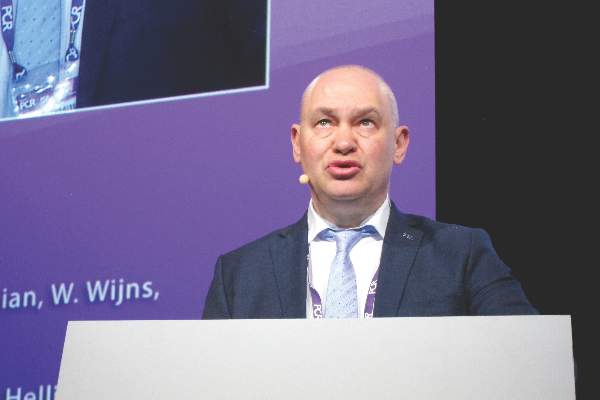
Discussant Dr. Farrel Hellig commented that EWOLUTION demonstrates that the Watchman procedure is predictable and safe, with an impressively low complication rate even in inexperienced centers. For that, he added, kudos goes to Boston Scientific, which markets the Watchman, for rolling out an effective physician training program.
“The most important topic to discuss is bleeding, because a bleeding rate of 4.1% at 3 months is certainly not insignificant,” he continued. “It appears, firstly, from EWOLUTION that it’s safe to omit warfarin. I think the most important thing we’d like to know now is could a postprocedure NOAC be the best option, and can aspirin be eliminated in the long term?”
“Is it too early to recommend a NOAC-only for a period of time post procedure? Perhaps. But I think this would be an important next clinical trial: a NOAC-only for a period post procedure with no aspirin to follow. This is the next piece of information we need to complete the puzzle and for left atrial appendage closure to reach its full potential,” according to Dr. Hellig of the University of Cape Town (South Africa).
The EWOLUTION registry is sponsored by Boston Scientific. Dr. Bergmann reported serving as a consultant to Boston Scientific and Biosense Webster and receiving honoraria from more than a half-dozen pharmaceutical and device companies.
PARIS – Results of the real-world EWOLUTION registry of recipients of the Watchman device for stroke prevention provide reassuring answers to several key questions which have slowed physician uptake of the left atrial appendage closure device, Dr. Martin W. Bergmann said at the annual congress of the European Association of Percutaneous Cardiovascular Interventions.
“EWOLUTION, with more than 1,000 patients, is I think the study that we’ve needed to make this intervention happen in routine practice as a procedure for stroke prevention in atrial fibrillation,” declared Dr. Bergmann of Cardiologicum Hamburg, a large German group practice.
EWOLUTION is a prospective, single-arm, multicenter registry including 1,025 recipients of the first-generation version of the Watchman, a transcatheter device for left atrial appendage closure as a means of stroke prevention in patients with atrial fibrillation (AF). These were high-risk patients: 50% of them had a CHA2DS2-VASc score of 5 or higher, and 72% of participants were deemed unsuitable for warfarin. EWOLUTION was conducted at 47 sites in Europe, the Middle East, and Russia. Dr. Bergmann presented the 3-month outcomes, a key period for device-related complications because protective epithelialization of the device isn’t yet complete. Follow-up will continue at the 1- and 2-year marks.
Among the key findings in the domain of procedural success: The rate of successful device implantation was 98.5%. A complete seal or an echocardiographic color jet of 5 mm or less at the time of implantation was achieved in 99.7% of cases, and this remained the case in 98.9% at 3 months.
With regard to safety, the stroke rate was 0.4%, device embolization occurred in 0.4%, and the pericardial effusion/tamponade rate was 0.7%, all of which are lower rates than in earlier clinical trials.
Just over 4% of patients experienced device-related adverse events with full recovery at the 3-month follow-up. These were mostly bleeding events at the groin access site. More importantly, only 0.5% of patients had device-related serious adverse events that weren’t resolved at 3 months.
“This 0.5% is a major step forward,” Dr. Bergmann said. “This includes all pericardial effusions, all device embolizations, all periprocedural strokes – everything involving the procedure that puts a patient at risk. In fact, that 0.5% risk for left atrial appendage closure with the Watchman is pretty much the same risk as if you refer your patient with AF to an electrophysiologist for pulmonary vein isolation.”
One key question answered by EWOLUTION is, do you need to be an expert in the procedure in order to get excellent results? The answer, Dr. Bergmann said, is emphatically “no.” Interventionalists at the 47 participating sites varied widely in their experience with left atrial appendage occlusion, so investigators divided the sites into quartiles based upon experience and patient volumes contributed to the registry. While cardiologists in the most experienced centers had a significantly higher rate of successful device release on the first try, the most- and least-experienced centers did equally well on the endpoint that really counts: a complete or near-complete seal of the left atrial appendage at follow-up. Complication rates didn’t differ by site experience, either.
Another important practical question that’s been holding up wider adoption of the Watchman concerns how best to handle postimplantation antithrombotic therapy. Here the EWOLUTION registry provides a partial answer: 607 patients were on dual antiplatelet therapy, 113 were on a novel anticoagulant (NOAC), 159 were on warfarin, 67 were on nothing at all, and the rest were on a single antiplatelet agent. And there was no significant difference between any of these groups in the 3-month rates of thrombus on the device, bleeding events, stroke, or other adverse events.
“The main message is there is no difference in serious adverse events between any of the drug regimens. So if you’re in a situation where you can’t give any medication to reduce stroke risk because the bleeding risk is so high, you can go for left atrial appendage closure technology and give them nothing post implant,” according to Dr. Bergmann.
He added that he’d personally try to avoid that strategy: “You want to have some coverage.”
Also noteworthy is that 113 Watchman recipients did well with 3 months of NOAC monotherapy. The appeal of that approach is the short half-life of those agents in the event of a bleeding problem.
Discussant Dr. Farrel Hellig commented that EWOLUTION demonstrates that the Watchman procedure is predictable and safe, with an impressively low complication rate even in inexperienced centers. For that, he added, kudos goes to Boston Scientific, which markets the Watchman, for rolling out an effective physician training program.
“The most important topic to discuss is bleeding, because a bleeding rate of 4.1% at 3 months is certainly not insignificant,” he continued. “It appears, firstly, from EWOLUTION that it’s safe to omit warfarin. I think the most important thing we’d like to know now is could a postprocedure NOAC be the best option, and can aspirin be eliminated in the long term?”
“Is it too early to recommend a NOAC-only for a period of time post procedure? Perhaps. But I think this would be an important next clinical trial: a NOAC-only for a period post procedure with no aspirin to follow. This is the next piece of information we need to complete the puzzle and for left atrial appendage closure to reach its full potential,” according to Dr. Hellig of the University of Cape Town (South Africa).
The EWOLUTION registry is sponsored by Boston Scientific. Dr. Bergmann reported serving as a consultant to Boston Scientific and Biosense Webster and receiving honoraria from more than a half-dozen pharmaceutical and device companies.
PARIS – Results of the real-world EWOLUTION registry of recipients of the Watchman device for stroke prevention provide reassuring answers to several key questions which have slowed physician uptake of the left atrial appendage closure device, Dr. Martin W. Bergmann said at the annual congress of the European Association of Percutaneous Cardiovascular Interventions.
“EWOLUTION, with more than 1,000 patients, is I think the study that we’ve needed to make this intervention happen in routine practice as a procedure for stroke prevention in atrial fibrillation,” declared Dr. Bergmann of Cardiologicum Hamburg, a large German group practice.
EWOLUTION is a prospective, single-arm, multicenter registry including 1,025 recipients of the first-generation version of the Watchman, a transcatheter device for left atrial appendage closure as a means of stroke prevention in patients with atrial fibrillation (AF). These were high-risk patients: 50% of them had a CHA2DS2-VASc score of 5 or higher, and 72% of participants were deemed unsuitable for warfarin. EWOLUTION was conducted at 47 sites in Europe, the Middle East, and Russia. Dr. Bergmann presented the 3-month outcomes, a key period for device-related complications because protective epithelialization of the device isn’t yet complete. Follow-up will continue at the 1- and 2-year marks.
Among the key findings in the domain of procedural success: The rate of successful device implantation was 98.5%. A complete seal or an echocardiographic color jet of 5 mm or less at the time of implantation was achieved in 99.7% of cases, and this remained the case in 98.9% at 3 months.
With regard to safety, the stroke rate was 0.4%, device embolization occurred in 0.4%, and the pericardial effusion/tamponade rate was 0.7%, all of which are lower rates than in earlier clinical trials.
Just over 4% of patients experienced device-related adverse events with full recovery at the 3-month follow-up. These were mostly bleeding events at the groin access site. More importantly, only 0.5% of patients had device-related serious adverse events that weren’t resolved at 3 months.
“This 0.5% is a major step forward,” Dr. Bergmann said. “This includes all pericardial effusions, all device embolizations, all periprocedural strokes – everything involving the procedure that puts a patient at risk. In fact, that 0.5% risk for left atrial appendage closure with the Watchman is pretty much the same risk as if you refer your patient with AF to an electrophysiologist for pulmonary vein isolation.”
One key question answered by EWOLUTION is, do you need to be an expert in the procedure in order to get excellent results? The answer, Dr. Bergmann said, is emphatically “no.” Interventionalists at the 47 participating sites varied widely in their experience with left atrial appendage occlusion, so investigators divided the sites into quartiles based upon experience and patient volumes contributed to the registry. While cardiologists in the most experienced centers had a significantly higher rate of successful device release on the first try, the most- and least-experienced centers did equally well on the endpoint that really counts: a complete or near-complete seal of the left atrial appendage at follow-up. Complication rates didn’t differ by site experience, either.
Another important practical question that’s been holding up wider adoption of the Watchman concerns how best to handle postimplantation antithrombotic therapy. Here the EWOLUTION registry provides a partial answer: 607 patients were on dual antiplatelet therapy, 113 were on a novel anticoagulant (NOAC), 159 were on warfarin, 67 were on nothing at all, and the rest were on a single antiplatelet agent. And there was no significant difference between any of these groups in the 3-month rates of thrombus on the device, bleeding events, stroke, or other adverse events.
“The main message is there is no difference in serious adverse events between any of the drug regimens. So if you’re in a situation where you can’t give any medication to reduce stroke risk because the bleeding risk is so high, you can go for left atrial appendage closure technology and give them nothing post implant,” according to Dr. Bergmann.
He added that he’d personally try to avoid that strategy: “You want to have some coverage.”
Also noteworthy is that 113 Watchman recipients did well with 3 months of NOAC monotherapy. The appeal of that approach is the short half-life of those agents in the event of a bleeding problem.
Discussant Dr. Farrel Hellig commented that EWOLUTION demonstrates that the Watchman procedure is predictable and safe, with an impressively low complication rate even in inexperienced centers. For that, he added, kudos goes to Boston Scientific, which markets the Watchman, for rolling out an effective physician training program.
“The most important topic to discuss is bleeding, because a bleeding rate of 4.1% at 3 months is certainly not insignificant,” he continued. “It appears, firstly, from EWOLUTION that it’s safe to omit warfarin. I think the most important thing we’d like to know now is could a postprocedure NOAC be the best option, and can aspirin be eliminated in the long term?”
“Is it too early to recommend a NOAC-only for a period of time post procedure? Perhaps. But I think this would be an important next clinical trial: a NOAC-only for a period post procedure with no aspirin to follow. This is the next piece of information we need to complete the puzzle and for left atrial appendage closure to reach its full potential,” according to Dr. Hellig of the University of Cape Town (South Africa).
The EWOLUTION registry is sponsored by Boston Scientific. Dr. Bergmann reported serving as a consultant to Boston Scientific and Biosense Webster and receiving honoraria from more than a half-dozen pharmaceutical and device companies.
AT EUROPCR 2016
Key clinical point: You don’t have to be an expert at implanting the Watchman left atrial appendage closure device to achieve the same sort of sky-high procedural success and low complication rates the experts do.
Major finding: The Watchman device successfully sealed off the left atrial appendage in 98.9% of cases at 3 months follow-up, with rates closely similar at the least- and most-experienced centers.
Data source: EWOLUTION is a prospective, multicenter, real-world registry of 1,025 recipients of the Watchman left atrial appendage closure device at 47 sites in Europe, the Middle East, and Russia.
Disclosures: The EWOLUTION registry is sponsored by Boston Scientific. The presenter reported serving as a consultant to Boston Scientific and Biosense Webster and receiving honoraria from more than a half-dozen pharmaceutical and device companies.

Upper extremity dysfunction from transradial PCI underappreciated
PARIS – Fully 75% of patients experience clinically significant upper extremity dysfunction in one or more key domains upon formal testing 2 weeks after transradial artery access percutaneous coronary intervention, according to an interim analysis of what’s believed to be the first-ever prospective multicenter observational study to examine this procedural complication.
Moreover, 7.3% of all patients who underwent transradial PCI and 1 in 10 of those who developed upper extremity dysfunction were found to have radial artery occlusion upon echo Doppler examination, performed routinely as part of the extensive testing in this study, Dr. Eva M. Zwaan said in presenting the preliminary findings at the annual congress of the European Association of Percutaneous Cardiovascular Interventions.

“Based upon what we’ve found, I think that for people who use their hands for their profession, like musicians, I would advise that they avoid transradial PCI in favor of femoral access,” added Dr. Zwaan of Albert Schweitzer Hospital in Dordrecht, The Netherlands.
Jaws were seen to drop among stunned audience members upon seeing Dr. Zwaan’s data. Transradial PCI is far more popular among European and Asian cardiologists than in the United States, and the possibility that the procedure might cause lingering upper extremity dysfunction or disability seems not to have occurred to most practitioners.
“This is a very important study because I think we’ve all taken it for granted that upper extremity function is good after transradial PCI,” said session chair Dr. Ibrahim Al Rashdan of Kuwait Heart Center. He added that in his view this new information is sufficiently compelling that it must be shared with patients in the preprocedural conversation about risks and benefits.
“It feels to me as if you’ve dropped a small hand grenade into the radial access community,” observed discussant Dr. David Kettles of St. Dominic’s Private Hospital in East London, South Africa. “I think your 6-month follow-up data will be absolutely key.”
Dr. Zwaan concurred. Even though the 2-week follow-up is the primary study endpoint, the same rigorous multidimensional testing of hand, wrist, arm, and shoulder function will take place at 1 and 6 months. By 6 months, she noted, the acute phase of injury is over, all hematomas should have been resorbed, and investigators will have a much clearer picture of the true long-term consequences.
“These are very interesting findings, but we still have a lot to do,” she said.
She reported on the first 191 patients to complete the upper extremity assessment 2 weeks after transradial PCI. Enrollment continues in the ongoing multicenter prospective study, planned for 500 patients. Investigators will look at whether the new slender PCI systems result in less upper extremity dysfunction. They also plan to conduct a substudy of the impact of early referral of affected patients to a hand rehabilitation specialist for treatment.
With input provided by distinguished Dutch hand surgeons, the investigators are assessing multiple domains of hand function pre- and post treatment. These include range of motion, coordination, sensation, absence of pain, anatomic integrity, and strength.
In addition to echo Doppler, the assessment includes volumetric measurements of hand and forearm swelling, fingertip sensation as measured by the Weinstein Enhanced Sensory Test, palmar grip and key strength tested by dynamometer, isometric strength at the wrist and elbow, the Disabilities of the Arm, Shoulder, and Hand Questionnaire, the Boston Carpal Tunnel Questionnaire, and a visual analog pain assessment. The tests are repeated on the uninvolved upper extremity as a control arm. Patients were classified as having clinically meaningful upper extremity dysfunction if they scored positive on any 2 or more of 14 test variables.
There were three main drivers of upper extremity dysfunction: diminished wrist strength, increased hand swelling, and decreased sensation, Dr. Zwaan continued.
Interestingly, a popular entertainment at EuroPCR 2016 was a self-congratulatory sort of mocking of what is widely viewed by European and Asian cardiologists as the laggardly low transradial PCR rates in the United States. At one session, a speaker asked for an audience show of hands as to what percentage of their PCIs are performed transradially. At 70% or more, virtually every arm in the room shot up. At 90%, plenty of hands remained in the air. “Well, I guess there are no American cardiologists in the audience,” the speaker quipped.
Dr. Zwaan had no financial conflicts of interest regarding this study, conducted free of commercial support.
PARIS – Fully 75% of patients experience clinically significant upper extremity dysfunction in one or more key domains upon formal testing 2 weeks after transradial artery access percutaneous coronary intervention, according to an interim analysis of what’s believed to be the first-ever prospective multicenter observational study to examine this procedural complication.
Moreover, 7.3% of all patients who underwent transradial PCI and 1 in 10 of those who developed upper extremity dysfunction were found to have radial artery occlusion upon echo Doppler examination, performed routinely as part of the extensive testing in this study, Dr. Eva M. Zwaan said in presenting the preliminary findings at the annual congress of the European Association of Percutaneous Cardiovascular Interventions.
“Based upon what we’ve found, I think that for people who use their hands for their profession, like musicians, I would advise that they avoid transradial PCI in favor of femoral access,” added Dr. Zwaan of Albert Schweitzer Hospital in Dordrecht, The Netherlands.
Jaws were seen to drop among stunned audience members upon seeing Dr. Zwaan’s data. Transradial PCI is far more popular among European and Asian cardiologists than in the United States, and the possibility that the procedure might cause lingering upper extremity dysfunction or disability seems not to have occurred to most practitioners.
“This is a very important study because I think we’ve all taken it for granted that upper extremity function is good after transradial PCI,” said session chair Dr. Ibrahim Al Rashdan of Kuwait Heart Center. He added that in his view this new information is sufficiently compelling that it must be shared with patients in the preprocedural conversation about risks and benefits.
“It feels to me as if you’ve dropped a small hand grenade into the radial access community,” observed discussant Dr. David Kettles of St. Dominic’s Private Hospital in East London, South Africa. “I think your 6-month follow-up data will be absolutely key.”
Dr. Zwaan concurred. Even though the 2-week follow-up is the primary study endpoint, the same rigorous multidimensional testing of hand, wrist, arm, and shoulder function will take place at 1 and 6 months. By 6 months, she noted, the acute phase of injury is over, all hematomas should have been resorbed, and investigators will have a much clearer picture of the true long-term consequences.
“These are very interesting findings, but we still have a lot to do,” she said.
She reported on the first 191 patients to complete the upper extremity assessment 2 weeks after transradial PCI. Enrollment continues in the ongoing multicenter prospective study, planned for 500 patients. Investigators will look at whether the new slender PCI systems result in less upper extremity dysfunction. They also plan to conduct a substudy of the impact of early referral of affected patients to a hand rehabilitation specialist for treatment.
With input provided by distinguished Dutch hand surgeons, the investigators are assessing multiple domains of hand function pre- and post treatment. These include range of motion, coordination, sensation, absence of pain, anatomic integrity, and strength.
In addition to echo Doppler, the assessment includes volumetric measurements of hand and forearm swelling, fingertip sensation as measured by the Weinstein Enhanced Sensory Test, palmar grip and key strength tested by dynamometer, isometric strength at the wrist and elbow, the Disabilities of the Arm, Shoulder, and Hand Questionnaire, the Boston Carpal Tunnel Questionnaire, and a visual analog pain assessment. The tests are repeated on the uninvolved upper extremity as a control arm. Patients were classified as having clinically meaningful upper extremity dysfunction if they scored positive on any 2 or more of 14 test variables.
There were three main drivers of upper extremity dysfunction: diminished wrist strength, increased hand swelling, and decreased sensation, Dr. Zwaan continued.
Interestingly, a popular entertainment at EuroPCR 2016 was a self-congratulatory sort of mocking of what is widely viewed by European and Asian cardiologists as the laggardly low transradial PCR rates in the United States. At one session, a speaker asked for an audience show of hands as to what percentage of their PCIs are performed transradially. At 70% or more, virtually every arm in the room shot up. At 90%, plenty of hands remained in the air. “Well, I guess there are no American cardiologists in the audience,” the speaker quipped.
Dr. Zwaan had no financial conflicts of interest regarding this study, conducted free of commercial support.
PARIS – Fully 75% of patients experience clinically significant upper extremity dysfunction in one or more key domains upon formal testing 2 weeks after transradial artery access percutaneous coronary intervention, according to an interim analysis of what’s believed to be the first-ever prospective multicenter observational study to examine this procedural complication.
Moreover, 7.3% of all patients who underwent transradial PCI and 1 in 10 of those who developed upper extremity dysfunction were found to have radial artery occlusion upon echo Doppler examination, performed routinely as part of the extensive testing in this study, Dr. Eva M. Zwaan said in presenting the preliminary findings at the annual congress of the European Association of Percutaneous Cardiovascular Interventions.
“Based upon what we’ve found, I think that for people who use their hands for their profession, like musicians, I would advise that they avoid transradial PCI in favor of femoral access,” added Dr. Zwaan of Albert Schweitzer Hospital in Dordrecht, The Netherlands.
Jaws were seen to drop among stunned audience members upon seeing Dr. Zwaan’s data. Transradial PCI is far more popular among European and Asian cardiologists than in the United States, and the possibility that the procedure might cause lingering upper extremity dysfunction or disability seems not to have occurred to most practitioners.
“This is a very important study because I think we’ve all taken it for granted that upper extremity function is good after transradial PCI,” said session chair Dr. Ibrahim Al Rashdan of Kuwait Heart Center. He added that in his view this new information is sufficiently compelling that it must be shared with patients in the preprocedural conversation about risks and benefits.
“It feels to me as if you’ve dropped a small hand grenade into the radial access community,” observed discussant Dr. David Kettles of St. Dominic’s Private Hospital in East London, South Africa. “I think your 6-month follow-up data will be absolutely key.”
Dr. Zwaan concurred. Even though the 2-week follow-up is the primary study endpoint, the same rigorous multidimensional testing of hand, wrist, arm, and shoulder function will take place at 1 and 6 months. By 6 months, she noted, the acute phase of injury is over, all hematomas should have been resorbed, and investigators will have a much clearer picture of the true long-term consequences.
“These are very interesting findings, but we still have a lot to do,” she said.
She reported on the first 191 patients to complete the upper extremity assessment 2 weeks after transradial PCI. Enrollment continues in the ongoing multicenter prospective study, planned for 500 patients. Investigators will look at whether the new slender PCI systems result in less upper extremity dysfunction. They also plan to conduct a substudy of the impact of early referral of affected patients to a hand rehabilitation specialist for treatment.
With input provided by distinguished Dutch hand surgeons, the investigators are assessing multiple domains of hand function pre- and post treatment. These include range of motion, coordination, sensation, absence of pain, anatomic integrity, and strength.
In addition to echo Doppler, the assessment includes volumetric measurements of hand and forearm swelling, fingertip sensation as measured by the Weinstein Enhanced Sensory Test, palmar grip and key strength tested by dynamometer, isometric strength at the wrist and elbow, the Disabilities of the Arm, Shoulder, and Hand Questionnaire, the Boston Carpal Tunnel Questionnaire, and a visual analog pain assessment. The tests are repeated on the uninvolved upper extremity as a control arm. Patients were classified as having clinically meaningful upper extremity dysfunction if they scored positive on any 2 or more of 14 test variables.
There were three main drivers of upper extremity dysfunction: diminished wrist strength, increased hand swelling, and decreased sensation, Dr. Zwaan continued.
Interestingly, a popular entertainment at EuroPCR 2016 was a self-congratulatory sort of mocking of what is widely viewed by European and Asian cardiologists as the laggardly low transradial PCR rates in the United States. At one session, a speaker asked for an audience show of hands as to what percentage of their PCIs are performed transradially. At 70% or more, virtually every arm in the room shot up. At 90%, plenty of hands remained in the air. “Well, I guess there are no American cardiologists in the audience,” the speaker quipped.
Dr. Zwaan had no financial conflicts of interest regarding this study, conducted free of commercial support.
AT EUROPCR 2016
Key clinical point: Significant hand/wrist dysfunction is common 2 weeks after transradial PCI.
Major finding: Seventy-five percent of 191 patients who underwent PCI by transradial artery access had objective evidence of upper extremity dysfunction 2 weeks afterward.
Data source: An interim analysis of an ongoing multicenter prospective observational study that included 191 patients who underwent comprehensive testing of hand, wrist, arm, and shoulder function before and 2 weeks after transradial PCI.
Disclosures: The presenter reported having no financial conflicts of interest. The study was conducted free of commercial support.

Lebrikizumab boosts lung function in asthma
LOS ANGELES – The investigational interleukin-13 inhibitor lebrikizumab provides a clinically meaningful improvement in measures of lung function within 1 week after the first dose in patients with moderate-to-severe uncontrolled asthma on standard-of-care therapy and a high baseline serum periostin level, Dr. Jonathan Corren reported at the annual meeting of the American Academy of Allergy, Asthma, and Immunology.
He presented a post hoc analysis of three phase II randomized trials of lebrikizumab as add-on therapy in a total of 558 patients with uncontrolled asthma while on a moderate- or high-dose inhaled corticosteroid plus at least one other controller medication, most often a long-acting beta agonist. The post hoc analysis included 333 asthma patients who received lebrikizumab subcutaneously at 125 or 250 mg every 4 weeks for 12 weeks and 225 who got placebo. Baseline serum periostin levels were 50 ng/mL or higher in 252 participants.

One week after the first dose of lebrikizumab, the high serum periostin group demonstrated a placebo-subtracted mean 147-mL improvement from baseline in pre-bronchodilator forced expiratory volume in 1 second (FEV1). The week 1 improvement in FEV1 with lebrikizumab in the low serum periostin group was more modest: a placebo-subtracted 57 mL.
The response to lebrikizumab was maintained through 12 weeks of once-monthly therapy, with a mean placebo-subtracted week 12 improvement in FEV1 of 198 mL in the high-periostin group, compared with 74 mL in low-periostin patients. The lebrikizumab-treated group with high baseline periostin had a 16% improvement from baseline in FEV1 as compared with a 5% improvement in placebo-treated patients with high periostin.
The three trials were known by the acronyms MILLY, LUTE, and VERSE. Dr. Corren was first author of the MILLY study (N Engl J Med. 2011 Sep 22;365(12):1088-98), which was the initial report that lebrikizumab performed markedly better in patients with uncontrolled asthma and a high baseline serum periostin – a biomarker for IL-13 activity – and that periostin was a better predictor of response to lebrikizumab than either blood eosinophil count or serum IgE.
The new pooled post hoc analysis was performed to boost sample size and confirm the key MILLY findings, as well as to more closely examine the speed of improvement in airflow in response to therapy, said Dr. Corren of the University of California, Los Angeles.
Lebrikizumab is an IgG4 humanized monoclonal antibody that binds to IL-13 with high affinity. Its efficacy in the phase II trials confirms the importance of IL-13 as a mediator of disease activity in a subset of asthma patients with activation of Type 2 lymphocytes.
“We know specifically that IL-13 has some very important effects in asthma, including upregulation of adhesion molecules that allow eosinophils to stick in the lung, as well as promoting hyperplasia of smooth muscle and mucus cell hyperplasia with increased mucus secretion. Immunologically, it allows switching from IgM to IgE on the surface of B cells. So IL-13 is a cytokine that literally makes people atopic,” Dr. Corren explained in an interview.
Several ongoing phase III randomized trials of lebrikizumab in adults with uncontrolled asthma despite standard-of-care therapy are due to be completed in the first half of 2017. A phase III trial in adolescents is also underway.
Dr. Corren reported receiving research funding from Roche/Genentech, which sponsored the studies.
LOS ANGELES – The investigational interleukin-13 inhibitor lebrikizumab provides a clinically meaningful improvement in measures of lung function within 1 week after the first dose in patients with moderate-to-severe uncontrolled asthma on standard-of-care therapy and a high baseline serum periostin level, Dr. Jonathan Corren reported at the annual meeting of the American Academy of Allergy, Asthma, and Immunology.
He presented a post hoc analysis of three phase II randomized trials of lebrikizumab as add-on therapy in a total of 558 patients with uncontrolled asthma while on a moderate- or high-dose inhaled corticosteroid plus at least one other controller medication, most often a long-acting beta agonist. The post hoc analysis included 333 asthma patients who received lebrikizumab subcutaneously at 125 or 250 mg every 4 weeks for 12 weeks and 225 who got placebo. Baseline serum periostin levels were 50 ng/mL or higher in 252 participants.
One week after the first dose of lebrikizumab, the high serum periostin group demonstrated a placebo-subtracted mean 147-mL improvement from baseline in pre-bronchodilator forced expiratory volume in 1 second (FEV1). The week 1 improvement in FEV1 with lebrikizumab in the low serum periostin group was more modest: a placebo-subtracted 57 mL.
The response to lebrikizumab was maintained through 12 weeks of once-monthly therapy, with a mean placebo-subtracted week 12 improvement in FEV1 of 198 mL in the high-periostin group, compared with 74 mL in low-periostin patients. The lebrikizumab-treated group with high baseline periostin had a 16% improvement from baseline in FEV1 as compared with a 5% improvement in placebo-treated patients with high periostin.
The three trials were known by the acronyms MILLY, LUTE, and VERSE. Dr. Corren was first author of the MILLY study (N Engl J Med. 2011 Sep 22;365(12):1088-98), which was the initial report that lebrikizumab performed markedly better in patients with uncontrolled asthma and a high baseline serum periostin – a biomarker for IL-13 activity – and that periostin was a better predictor of response to lebrikizumab than either blood eosinophil count or serum IgE.
The new pooled post hoc analysis was performed to boost sample size and confirm the key MILLY findings, as well as to more closely examine the speed of improvement in airflow in response to therapy, said Dr. Corren of the University of California, Los Angeles.
Lebrikizumab is an IgG4 humanized monoclonal antibody that binds to IL-13 with high affinity. Its efficacy in the phase II trials confirms the importance of IL-13 as a mediator of disease activity in a subset of asthma patients with activation of Type 2 lymphocytes.
“We know specifically that IL-13 has some very important effects in asthma, including upregulation of adhesion molecules that allow eosinophils to stick in the lung, as well as promoting hyperplasia of smooth muscle and mucus cell hyperplasia with increased mucus secretion. Immunologically, it allows switching from IgM to IgE on the surface of B cells. So IL-13 is a cytokine that literally makes people atopic,” Dr. Corren explained in an interview.
Several ongoing phase III randomized trials of lebrikizumab in adults with uncontrolled asthma despite standard-of-care therapy are due to be completed in the first half of 2017. A phase III trial in adolescents is also underway.
Dr. Corren reported receiving research funding from Roche/Genentech, which sponsored the studies.
LOS ANGELES – The investigational interleukin-13 inhibitor lebrikizumab provides a clinically meaningful improvement in measures of lung function within 1 week after the first dose in patients with moderate-to-severe uncontrolled asthma on standard-of-care therapy and a high baseline serum periostin level, Dr. Jonathan Corren reported at the annual meeting of the American Academy of Allergy, Asthma, and Immunology.
He presented a post hoc analysis of three phase II randomized trials of lebrikizumab as add-on therapy in a total of 558 patients with uncontrolled asthma while on a moderate- or high-dose inhaled corticosteroid plus at least one other controller medication, most often a long-acting beta agonist. The post hoc analysis included 333 asthma patients who received lebrikizumab subcutaneously at 125 or 250 mg every 4 weeks for 12 weeks and 225 who got placebo. Baseline serum periostin levels were 50 ng/mL or higher in 252 participants.
One week after the first dose of lebrikizumab, the high serum periostin group demonstrated a placebo-subtracted mean 147-mL improvement from baseline in pre-bronchodilator forced expiratory volume in 1 second (FEV1). The week 1 improvement in FEV1 with lebrikizumab in the low serum periostin group was more modest: a placebo-subtracted 57 mL.
The response to lebrikizumab was maintained through 12 weeks of once-monthly therapy, with a mean placebo-subtracted week 12 improvement in FEV1 of 198 mL in the high-periostin group, compared with 74 mL in low-periostin patients. The lebrikizumab-treated group with high baseline periostin had a 16% improvement from baseline in FEV1 as compared with a 5% improvement in placebo-treated patients with high periostin.
The three trials were known by the acronyms MILLY, LUTE, and VERSE. Dr. Corren was first author of the MILLY study (N Engl J Med. 2011 Sep 22;365(12):1088-98), which was the initial report that lebrikizumab performed markedly better in patients with uncontrolled asthma and a high baseline serum periostin – a biomarker for IL-13 activity – and that periostin was a better predictor of response to lebrikizumab than either blood eosinophil count or serum IgE.
The new pooled post hoc analysis was performed to boost sample size and confirm the key MILLY findings, as well as to more closely examine the speed of improvement in airflow in response to therapy, said Dr. Corren of the University of California, Los Angeles.
Lebrikizumab is an IgG4 humanized monoclonal antibody that binds to IL-13 with high affinity. Its efficacy in the phase II trials confirms the importance of IL-13 as a mediator of disease activity in a subset of asthma patients with activation of Type 2 lymphocytes.
“We know specifically that IL-13 has some very important effects in asthma, including upregulation of adhesion molecules that allow eosinophils to stick in the lung, as well as promoting hyperplasia of smooth muscle and mucus cell hyperplasia with increased mucus secretion. Immunologically, it allows switching from IgM to IgE on the surface of B cells. So IL-13 is a cytokine that literally makes people atopic,” Dr. Corren explained in an interview.
Several ongoing phase III randomized trials of lebrikizumab in adults with uncontrolled asthma despite standard-of-care therapy are due to be completed in the first half of 2017. A phase III trial in adolescents is also underway.
Dr. Corren reported receiving research funding from Roche/Genentech, which sponsored the studies.
AT 2016 AAAAI ANNUAL MEETING
Key clinical point: Lebrikizumab shows promise for treatment of patients with moderate-to-severe type 2 lymphocyte-mediated asthma.
Major finding: One week after patients with uncontrolled asthma and a high baseline serum periostin level received their first dose of lebrikizumab, they demonstrated a mean 16% improvement over baseline in forced expiratory volume in 1 second.
Data source: This was a post hoc analysis of three phase II, randomized, placebo-controlled clinical trials totaling 558 patients with moderate-to-severe uncontrolled asthma while on standard of care therapy.
Disclosures: The study presenter reported receiving research funding from Roche/Genentech, which is developing lebrikizumab.
Drug-coated stent sets new standard in ACS patients at high bleeding risk
PARIS – In patients at high bleeding risk undergoing percutaneous coronary intervention for acute coronary syndrome, a unique drug-coated, polymer-free stent backed by just a single month of dual-antiplatelet therapy (DAPT) trounced a bare metal stent in both efficacy and safety at 1 year in a large randomized trial, Dr. Christoph K. Naber reported at the annual congress of the European Association of Percutaneous Cardiovascular Interventions.
The BioFreedom stent, coated with a proprietary sirolimus analogue called Biolimus-A9, rapidly transfers the drug to the vessel wall, leaving in place a metallic stent. This drug-coated stent (DCS) provides the antirestenotic benefits of a drug-eluting stent with the advantages of a shorter DAPT requirement and no potential polymer-related adverse events. The device’s performance in this prespecified subgroup analysis of the Leaders Free trial will be practice altering, predicted Dr. Naber of Elisabeth University Hospital in Essen, Germany.

“We believe that current guidelines and clinical practice need to change. Bare-metal stents can no longer be recommended for high–bleeding risk patients presenting with ACS. The Biolimus-A9–coated stent currently has the best supporting evidence for this indication,” he said.
“This was the last chance for bare metal stents to show a good indication. They were thought to be good only in high–bleeding risk patients. Now we see that a drug-coated stent provides better efficacy and is even safer,” the cardiologist continued.
Leaders Free was a randomized double-blind clinical trial in which 2,499 patients at high risk of bleeding who underwent PCI received either the DCS or the Gazelle bare-metal stent (BMS) and 1 month of dual-antiplatelet therapy. The main results, in which the DCS showed superior safety and efficacy at 12 months of follow-up, have been published (N Engl J Med. 2015 Nov 19;373[21]:2038-47).
Dr. Naber presented a prespecified subgroup analysis that included the 659 Leaders Free participants who presented with ACS.
The primary efficacy endpoint – the 12-month rate of clinically driven target lesion revascularization – was 3.9% in the DCS group, compared with 9% in patients randomized to the BMS, for an adjusted 59% relative risk reduction.
The composite safety endpoint was composed of the 1-year rate of cardiac death, acute MI, and definite or probable stent thrombosis. This occurred in 9.3% of the DCS- and 18.5% of the BMS-treated patients, for a relative risk reduction of 52%.
The BioFreedom stent has a selectively microstructured surface coated with Biolimus-A9, a drug that’s far more lipophilic than sirolimus, everolimus, or zotarolimus. As a result, 98% of the drug is transferred to the plaque-laden vessel within 30 days, which is why it’s safe to shorten DAPT to 1 month, Dr. Naber explained.
It’s estimated that up to 20% of patients undergoing PCI are at high bleeding risk for various reasons.
The DCS is marketed in Europe and in clinical trials in the United States aimed at getting Food and Drug Administration approval.
Discussant Dr. Thomas Cuisset of Timone Hospital in Marseille, France, agreed that “in 2016, bare-metal stents are no longer the gold standard in patients at high bleeding risk.”
He added that the Leaders Free ACS substudy leaves unanswered two major remaining questions: What’s the optimal duration of DAPT for DCS in non-ACS patients at high bleeding risk – is 1 month of DAPT as safe as 6 months? And how do contemporary drug-eluting, polymer-based stents compare to the BioFreedom stent for PCI in the setting of high bleeding risk?
In an interview, Dr. Naber said that before a head-to-head comparative clinical trial can even be considered, there will need to be evidence that drug-eluting stents are safe with shortened DAPT. That has yet to be shown.
The study was funded by Biosensors. Dr. Naber reported receiving consultant’s fees from that medical device company and several others. Dr. Cuisset serves as a consultant to or paid lecturer for more than a dozen medical companies.
Simultaneous with Dr. Naber’s presentation at EuroPCR in Paris, the Leaders Free ACS substudy results were published online (Eur Heart J. doi:10.1093/eurheartj/ehw203).
PARIS – In patients at high bleeding risk undergoing percutaneous coronary intervention for acute coronary syndrome, a unique drug-coated, polymer-free stent backed by just a single month of dual-antiplatelet therapy (DAPT) trounced a bare metal stent in both efficacy and safety at 1 year in a large randomized trial, Dr. Christoph K. Naber reported at the annual congress of the European Association of Percutaneous Cardiovascular Interventions.
The BioFreedom stent, coated with a proprietary sirolimus analogue called Biolimus-A9, rapidly transfers the drug to the vessel wall, leaving in place a metallic stent. This drug-coated stent (DCS) provides the antirestenotic benefits of a drug-eluting stent with the advantages of a shorter DAPT requirement and no potential polymer-related adverse events. The device’s performance in this prespecified subgroup analysis of the Leaders Free trial will be practice altering, predicted Dr. Naber of Elisabeth University Hospital in Essen, Germany.
“We believe that current guidelines and clinical practice need to change. Bare-metal stents can no longer be recommended for high–bleeding risk patients presenting with ACS. The Biolimus-A9–coated stent currently has the best supporting evidence for this indication,” he said.
“This was the last chance for bare metal stents to show a good indication. They were thought to be good only in high–bleeding risk patients. Now we see that a drug-coated stent provides better efficacy and is even safer,” the cardiologist continued.
Leaders Free was a randomized double-blind clinical trial in which 2,499 patients at high risk of bleeding who underwent PCI received either the DCS or the Gazelle bare-metal stent (BMS) and 1 month of dual-antiplatelet therapy. The main results, in which the DCS showed superior safety and efficacy at 12 months of follow-up, have been published (N Engl J Med. 2015 Nov 19;373[21]:2038-47).
Dr. Naber presented a prespecified subgroup analysis that included the 659 Leaders Free participants who presented with ACS.
The primary efficacy endpoint – the 12-month rate of clinically driven target lesion revascularization – was 3.9% in the DCS group, compared with 9% in patients randomized to the BMS, for an adjusted 59% relative risk reduction.
The composite safety endpoint was composed of the 1-year rate of cardiac death, acute MI, and definite or probable stent thrombosis. This occurred in 9.3% of the DCS- and 18.5% of the BMS-treated patients, for a relative risk reduction of 52%.
The BioFreedom stent has a selectively microstructured surface coated with Biolimus-A9, a drug that’s far more lipophilic than sirolimus, everolimus, or zotarolimus. As a result, 98% of the drug is transferred to the plaque-laden vessel within 30 days, which is why it’s safe to shorten DAPT to 1 month, Dr. Naber explained.
It’s estimated that up to 20% of patients undergoing PCI are at high bleeding risk for various reasons.
The DCS is marketed in Europe and in clinical trials in the United States aimed at getting Food and Drug Administration approval.
Discussant Dr. Thomas Cuisset of Timone Hospital in Marseille, France, agreed that “in 2016, bare-metal stents are no longer the gold standard in patients at high bleeding risk.”
He added that the Leaders Free ACS substudy leaves unanswered two major remaining questions: What’s the optimal duration of DAPT for DCS in non-ACS patients at high bleeding risk – is 1 month of DAPT as safe as 6 months? And how do contemporary drug-eluting, polymer-based stents compare to the BioFreedom stent for PCI in the setting of high bleeding risk?
In an interview, Dr. Naber said that before a head-to-head comparative clinical trial can even be considered, there will need to be evidence that drug-eluting stents are safe with shortened DAPT. That has yet to be shown.
The study was funded by Biosensors. Dr. Naber reported receiving consultant’s fees from that medical device company and several others. Dr. Cuisset serves as a consultant to or paid lecturer for more than a dozen medical companies.
Simultaneous with Dr. Naber’s presentation at EuroPCR in Paris, the Leaders Free ACS substudy results were published online (Eur Heart J. doi:10.1093/eurheartj/ehw203).
PARIS – In patients at high bleeding risk undergoing percutaneous coronary intervention for acute coronary syndrome, a unique drug-coated, polymer-free stent backed by just a single month of dual-antiplatelet therapy (DAPT) trounced a bare metal stent in both efficacy and safety at 1 year in a large randomized trial, Dr. Christoph K. Naber reported at the annual congress of the European Association of Percutaneous Cardiovascular Interventions.
The BioFreedom stent, coated with a proprietary sirolimus analogue called Biolimus-A9, rapidly transfers the drug to the vessel wall, leaving in place a metallic stent. This drug-coated stent (DCS) provides the antirestenotic benefits of a drug-eluting stent with the advantages of a shorter DAPT requirement and no potential polymer-related adverse events. The device’s performance in this prespecified subgroup analysis of the Leaders Free trial will be practice altering, predicted Dr. Naber of Elisabeth University Hospital in Essen, Germany.
“We believe that current guidelines and clinical practice need to change. Bare-metal stents can no longer be recommended for high–bleeding risk patients presenting with ACS. The Biolimus-A9–coated stent currently has the best supporting evidence for this indication,” he said.
“This was the last chance for bare metal stents to show a good indication. They were thought to be good only in high–bleeding risk patients. Now we see that a drug-coated stent provides better efficacy and is even safer,” the cardiologist continued.
Leaders Free was a randomized double-blind clinical trial in which 2,499 patients at high risk of bleeding who underwent PCI received either the DCS or the Gazelle bare-metal stent (BMS) and 1 month of dual-antiplatelet therapy. The main results, in which the DCS showed superior safety and efficacy at 12 months of follow-up, have been published (N Engl J Med. 2015 Nov 19;373[21]:2038-47).
Dr. Naber presented a prespecified subgroup analysis that included the 659 Leaders Free participants who presented with ACS.
The primary efficacy endpoint – the 12-month rate of clinically driven target lesion revascularization – was 3.9% in the DCS group, compared with 9% in patients randomized to the BMS, for an adjusted 59% relative risk reduction.
The composite safety endpoint was composed of the 1-year rate of cardiac death, acute MI, and definite or probable stent thrombosis. This occurred in 9.3% of the DCS- and 18.5% of the BMS-treated patients, for a relative risk reduction of 52%.
The BioFreedom stent has a selectively microstructured surface coated with Biolimus-A9, a drug that’s far more lipophilic than sirolimus, everolimus, or zotarolimus. As a result, 98% of the drug is transferred to the plaque-laden vessel within 30 days, which is why it’s safe to shorten DAPT to 1 month, Dr. Naber explained.
It’s estimated that up to 20% of patients undergoing PCI are at high bleeding risk for various reasons.
The DCS is marketed in Europe and in clinical trials in the United States aimed at getting Food and Drug Administration approval.
Discussant Dr. Thomas Cuisset of Timone Hospital in Marseille, France, agreed that “in 2016, bare-metal stents are no longer the gold standard in patients at high bleeding risk.”
He added that the Leaders Free ACS substudy leaves unanswered two major remaining questions: What’s the optimal duration of DAPT for DCS in non-ACS patients at high bleeding risk – is 1 month of DAPT as safe as 6 months? And how do contemporary drug-eluting, polymer-based stents compare to the BioFreedom stent for PCI in the setting of high bleeding risk?
In an interview, Dr. Naber said that before a head-to-head comparative clinical trial can even be considered, there will need to be evidence that drug-eluting stents are safe with shortened DAPT. That has yet to be shown.
The study was funded by Biosensors. Dr. Naber reported receiving consultant’s fees from that medical device company and several others. Dr. Cuisset serves as a consultant to or paid lecturer for more than a dozen medical companies.
Simultaneous with Dr. Naber’s presentation at EuroPCR in Paris, the Leaders Free ACS substudy results were published online (Eur Heart J. doi:10.1093/eurheartj/ehw203).
AT EUROPCR 2016
Key clinical point: There are no longer any good indications for implanting a bare-metal stent.
Major finding: The cumulative 1-year rate of cardiac death, MI, or definite or probable stent thrombosis in high–bleeding risk patients who underwent PCI for acute coronary syndrome was 9.3% in those randomized to a novel drug-coated stent, compared with 18.5% in those who got a bare-metal stent.
Data source: This was a prespecified subgroup analysis of the Leaders Free trial in which 659 acute coronary syndrome patients with high bleeding risk undergoing PCI for acute coronary syndrome were randomized to a unique drug-coated, polymer-free stent or a bare-metal stent, with 1 month of dual-antiplatelet therapy for all.
Disclosures: The study was funded by Biosensors. The presenter reported receiving consultant fees from that medical device company and several others.

Marijuana May Lower Death Risk After Acute MI
CHICAGO – Patients who reported using marijuana prior to experiencing an acute MI had significantly lower in-hospital mortality and were less likely to have cardiogenic shock or require an intra-aortic balloon pump than marijuana nonusers with an MI in an eight-state hospital records study, Dr. Cecelia P. Johnson-Sasso reported at the annual meeting of the American College of Cardiology.
“If this observation is confirmed in independent studies, further investigation into the possible therapeutic benefit of cannabinoid receptor agonists in acute MI may be warranted,” declared Dr. Johnson-Sasso of the University of Colorado Denver.

She and her coinvestigators obtained hospital records with identity information removed for more than 3 million patients admitted for acute MI during 1994-2013 in eight states: California, Colorado, New Hampshire, New Jersey, New York, Texas, Vermont, and West Virginia.
After excluding concomitant users of cocaine, methamphetamine, or alcohol due to the potential for confounding cardiotoxic effects; MI patients under age 19 because of the likelihood of congenital heart disease; and patients over age 70 because only 0.01% of them admitted to marijuana use, the investigators were left with a study population of 3,854 marijuana users and 1.27 million MI patients who hadn’t used marijuana.
In a multivariate regression analysis adjusted for potential confounders including baseline comorbid conditions, patient demographics, and payer status, the marijuana users prior to MI had a 17% reduction in in-hospital mortality, were 20% less likely to undergo intra-aortic balloon pump placement, and had a 26% reduction in shock. On the other hand, they were also 19% more likely than marijuana nonusers to be placed on mechanical ventilation. And even though they were equally likely to undergo diagnostic coronary angiography, they were 28% less likely than marijuana nonusers to undergo percutaneous coronary intervention. All of these differences were statistically significant and clinically meaningful.
She was quick to note the limitations of her study: No data were available on readmissions or late mortality, and it’s highly likely that marijuana use by patients with acute MI was significantly underreported during the study period, which was largely before the legalization movement took off.
With state marijuana laws rapidly changing and the legal pot industry becoming a big business, the lack of research into the health consequences of marijuana by disinterested parties has become glaringly obvious, according to Dr. Johnson-Sasso. Cannabinoid receptors are found not only in the brain, but in cardiac muscle, the kidney, liver, vascular and visceral muscle, aorta, bladder, and immune cells.
She reported having no financial conflicts of interest regarding this study.
CHICAGO – Patients who reported using marijuana prior to experiencing an acute MI had significantly lower in-hospital mortality and were less likely to have cardiogenic shock or require an intra-aortic balloon pump than marijuana nonusers with an MI in an eight-state hospital records study, Dr. Cecelia P. Johnson-Sasso reported at the annual meeting of the American College of Cardiology.
“If this observation is confirmed in independent studies, further investigation into the possible therapeutic benefit of cannabinoid receptor agonists in acute MI may be warranted,” declared Dr. Johnson-Sasso of the University of Colorado Denver.
She and her coinvestigators obtained hospital records with identity information removed for more than 3 million patients admitted for acute MI during 1994-2013 in eight states: California, Colorado, New Hampshire, New Jersey, New York, Texas, Vermont, and West Virginia.
After excluding concomitant users of cocaine, methamphetamine, or alcohol due to the potential for confounding cardiotoxic effects; MI patients under age 19 because of the likelihood of congenital heart disease; and patients over age 70 because only 0.01% of them admitted to marijuana use, the investigators were left with a study population of 3,854 marijuana users and 1.27 million MI patients who hadn’t used marijuana.
In a multivariate regression analysis adjusted for potential confounders including baseline comorbid conditions, patient demographics, and payer status, the marijuana users prior to MI had a 17% reduction in in-hospital mortality, were 20% less likely to undergo intra-aortic balloon pump placement, and had a 26% reduction in shock. On the other hand, they were also 19% more likely than marijuana nonusers to be placed on mechanical ventilation. And even though they were equally likely to undergo diagnostic coronary angiography, they were 28% less likely than marijuana nonusers to undergo percutaneous coronary intervention. All of these differences were statistically significant and clinically meaningful.
She was quick to note the limitations of her study: No data were available on readmissions or late mortality, and it’s highly likely that marijuana use by patients with acute MI was significantly underreported during the study period, which was largely before the legalization movement took off.
With state marijuana laws rapidly changing and the legal pot industry becoming a big business, the lack of research into the health consequences of marijuana by disinterested parties has become glaringly obvious, according to Dr. Johnson-Sasso. Cannabinoid receptors are found not only in the brain, but in cardiac muscle, the kidney, liver, vascular and visceral muscle, aorta, bladder, and immune cells.
She reported having no financial conflicts of interest regarding this study.
CHICAGO – Patients who reported using marijuana prior to experiencing an acute MI had significantly lower in-hospital mortality and were less likely to have cardiogenic shock or require an intra-aortic balloon pump than marijuana nonusers with an MI in an eight-state hospital records study, Dr. Cecelia P. Johnson-Sasso reported at the annual meeting of the American College of Cardiology.
“If this observation is confirmed in independent studies, further investigation into the possible therapeutic benefit of cannabinoid receptor agonists in acute MI may be warranted,” declared Dr. Johnson-Sasso of the University of Colorado Denver.
She and her coinvestigators obtained hospital records with identity information removed for more than 3 million patients admitted for acute MI during 1994-2013 in eight states: California, Colorado, New Hampshire, New Jersey, New York, Texas, Vermont, and West Virginia.
After excluding concomitant users of cocaine, methamphetamine, or alcohol due to the potential for confounding cardiotoxic effects; MI patients under age 19 because of the likelihood of congenital heart disease; and patients over age 70 because only 0.01% of them admitted to marijuana use, the investigators were left with a study population of 3,854 marijuana users and 1.27 million MI patients who hadn’t used marijuana.
In a multivariate regression analysis adjusted for potential confounders including baseline comorbid conditions, patient demographics, and payer status, the marijuana users prior to MI had a 17% reduction in in-hospital mortality, were 20% less likely to undergo intra-aortic balloon pump placement, and had a 26% reduction in shock. On the other hand, they were also 19% more likely than marijuana nonusers to be placed on mechanical ventilation. And even though they were equally likely to undergo diagnostic coronary angiography, they were 28% less likely than marijuana nonusers to undergo percutaneous coronary intervention. All of these differences were statistically significant and clinically meaningful.
She was quick to note the limitations of her study: No data were available on readmissions or late mortality, and it’s highly likely that marijuana use by patients with acute MI was significantly underreported during the study period, which was largely before the legalization movement took off.
With state marijuana laws rapidly changing and the legal pot industry becoming a big business, the lack of research into the health consequences of marijuana by disinterested parties has become glaringly obvious, according to Dr. Johnson-Sasso. Cannabinoid receptors are found not only in the brain, but in cardiac muscle, the kidney, liver, vascular and visceral muscle, aorta, bladder, and immune cells.
She reported having no financial conflicts of interest regarding this study.
AT ACC 16

Marijuana may lower death risk after acute MI
CHICAGO – Patients who reported using marijuana prior to experiencing an acute MI had significantly lower in-hospital mortality and were less likely to have cardiogenic shock or require an intra-aortic balloon pump than marijuana nonusers with an MI in an eight-state hospital records study, Dr. Cecelia P. Johnson-Sasso reported at the annual meeting of the American College of Cardiology.
“If this observation is confirmed in independent studies, further investigation into the possible therapeutic benefit of cannabinoid receptor agonists in acute MI may be warranted,” declared Dr. Johnson-Sasso of the University of Colorado Denver.

She and her coinvestigators obtained hospital records with identity information removed for more than 3 million patients admitted for acute MI during 1994-2013 in eight states: California, Colorado, New Hampshire, New Jersey, New York, Texas, Vermont, and West Virginia.
After excluding concomitant users of cocaine, methamphetamine, or alcohol due to the potential for confounding cardiotoxic effects; MI patients under age 19 because of the likelihood of congenital heart disease; and patients over age 70 because only 0.01% of them admitted to marijuana use, the investigators were left with a study population of 3,854 marijuana users and 1.27 million MI patients who hadn’t used marijuana.
In a multivariate regression analysis adjusted for potential confounders including baseline comorbid conditions, patient demographics, and payer status, the marijuana users prior to MI had a 17% reduction in in-hospital mortality, were 20% less likely to undergo intra-aortic balloon pump placement, and had a 26% reduction in shock. On the other hand, they were also 19% more likely than marijuana nonusers to be placed on mechanical ventilation. And even though they were equally likely to undergo diagnostic coronary angiography, they were 28% less likely than marijuana nonusers to undergo percutaneous coronary intervention. All of these differences were statistically significant and clinically meaningful.
She was quick to note the limitations of her study: No data were available on readmissions or late mortality, and it’s highly likely that marijuana use by patients with acute MI was significantly underreported during the study period, which was largely before the legalization movement took off.
With state marijuana laws rapidly changing and the legal pot industry becoming a big business, the lack of research into the health consequences of marijuana by disinterested parties has become glaringly obvious, according to Dr. Johnson-Sasso. Cannabinoid receptors are found not only in the brain, but in cardiac muscle, the kidney, liver, vascular and visceral muscle, aorta, bladder, and immune cells.
She reported having no financial conflicts of interest regarding this study.
CHICAGO – Patients who reported using marijuana prior to experiencing an acute MI had significantly lower in-hospital mortality and were less likely to have cardiogenic shock or require an intra-aortic balloon pump than marijuana nonusers with an MI in an eight-state hospital records study, Dr. Cecelia P. Johnson-Sasso reported at the annual meeting of the American College of Cardiology.
“If this observation is confirmed in independent studies, further investigation into the possible therapeutic benefit of cannabinoid receptor agonists in acute MI may be warranted,” declared Dr. Johnson-Sasso of the University of Colorado Denver.
She and her coinvestigators obtained hospital records with identity information removed for more than 3 million patients admitted for acute MI during 1994-2013 in eight states: California, Colorado, New Hampshire, New Jersey, New York, Texas, Vermont, and West Virginia.
After excluding concomitant users of cocaine, methamphetamine, or alcohol due to the potential for confounding cardiotoxic effects; MI patients under age 19 because of the likelihood of congenital heart disease; and patients over age 70 because only 0.01% of them admitted to marijuana use, the investigators were left with a study population of 3,854 marijuana users and 1.27 million MI patients who hadn’t used marijuana.
In a multivariate regression analysis adjusted for potential confounders including baseline comorbid conditions, patient demographics, and payer status, the marijuana users prior to MI had a 17% reduction in in-hospital mortality, were 20% less likely to undergo intra-aortic balloon pump placement, and had a 26% reduction in shock. On the other hand, they were also 19% more likely than marijuana nonusers to be placed on mechanical ventilation. And even though they were equally likely to undergo diagnostic coronary angiography, they were 28% less likely than marijuana nonusers to undergo percutaneous coronary intervention. All of these differences were statistically significant and clinically meaningful.
She was quick to note the limitations of her study: No data were available on readmissions or late mortality, and it’s highly likely that marijuana use by patients with acute MI was significantly underreported during the study period, which was largely before the legalization movement took off.
With state marijuana laws rapidly changing and the legal pot industry becoming a big business, the lack of research into the health consequences of marijuana by disinterested parties has become glaringly obvious, according to Dr. Johnson-Sasso. Cannabinoid receptors are found not only in the brain, but in cardiac muscle, the kidney, liver, vascular and visceral muscle, aorta, bladder, and immune cells.
She reported having no financial conflicts of interest regarding this study.
CHICAGO – Patients who reported using marijuana prior to experiencing an acute MI had significantly lower in-hospital mortality and were less likely to have cardiogenic shock or require an intra-aortic balloon pump than marijuana nonusers with an MI in an eight-state hospital records study, Dr. Cecelia P. Johnson-Sasso reported at the annual meeting of the American College of Cardiology.
“If this observation is confirmed in independent studies, further investigation into the possible therapeutic benefit of cannabinoid receptor agonists in acute MI may be warranted,” declared Dr. Johnson-Sasso of the University of Colorado Denver.
She and her coinvestigators obtained hospital records with identity information removed for more than 3 million patients admitted for acute MI during 1994-2013 in eight states: California, Colorado, New Hampshire, New Jersey, New York, Texas, Vermont, and West Virginia.
After excluding concomitant users of cocaine, methamphetamine, or alcohol due to the potential for confounding cardiotoxic effects; MI patients under age 19 because of the likelihood of congenital heart disease; and patients over age 70 because only 0.01% of them admitted to marijuana use, the investigators were left with a study population of 3,854 marijuana users and 1.27 million MI patients who hadn’t used marijuana.
In a multivariate regression analysis adjusted for potential confounders including baseline comorbid conditions, patient demographics, and payer status, the marijuana users prior to MI had a 17% reduction in in-hospital mortality, were 20% less likely to undergo intra-aortic balloon pump placement, and had a 26% reduction in shock. On the other hand, they were also 19% more likely than marijuana nonusers to be placed on mechanical ventilation. And even though they were equally likely to undergo diagnostic coronary angiography, they were 28% less likely than marijuana nonusers to undergo percutaneous coronary intervention. All of these differences were statistically significant and clinically meaningful.
She was quick to note the limitations of her study: No data were available on readmissions or late mortality, and it’s highly likely that marijuana use by patients with acute MI was significantly underreported during the study period, which was largely before the legalization movement took off.
With state marijuana laws rapidly changing and the legal pot industry becoming a big business, the lack of research into the health consequences of marijuana by disinterested parties has become glaringly obvious, according to Dr. Johnson-Sasso. Cannabinoid receptors are found not only in the brain, but in cardiac muscle, the kidney, liver, vascular and visceral muscle, aorta, bladder, and immune cells.
She reported having no financial conflicts of interest regarding this study.
AT ACC 16
Key clinical point: Patients who used marijuana prior to their acute MI had better outcomes.
Major finding: Marijuana use prior to acute MI was associated with a 17% reduction in in-hospital mortality.
Data source: This was a retrospective analysis of hospital records for nearly 1.3 million MI patients in eight states.
Disclosures: The study presenter reported having no financial conflicts of interest.

Stroke Risk Rises Quickly in Recent-onset Atrial Fib
CHICAGO – The stroke risk in patients with recent-onset atrial fibrillation is similar to that of patients with longer-standing atrial fibrillation, according to a new secondary analysis of the landmark ARISTOTLE trial.
“Our key message is that patients with recent-onset atrial fibrillation had a similar risk of stroke but higher mortality than patients with remotely diagnosed atrial fibrillation, suggesting that patients with recently diagnosed atrial fibrillation are not at low risk and therefore warrant stroke prevention strategies,” Dr. Patricia O. Guimaraes said in presenting the findings at the annual meeting of the American College of Cardiology.
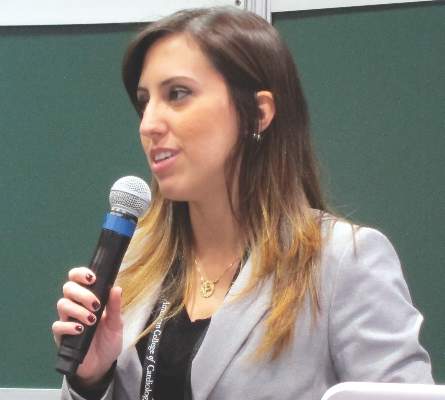
“Sometimes we as physicians hesitate in beginning oral anticoagulation therapy for patients that we just diagnosed. And of course patients are often afraid of anticoagulation therapy. But once they present with atrial fibrillation they are already at risk, and that’s why we need to anticoagulate them promptly,” added Dr. Guimaraes of the Duke Clinical Research Institute in Durham, N.C.
The benefits of apixaban (Eliquis) over warfarin seen in the overall randomized ARISTOTLE trial (N Engl J Med. 2011; 365:981-92) were preserved in the recent-onset subset of the atrial fibrillation (AF) study population, she noted.
The rationale for this new post hoc analysis of ARISTOTLE is that virtually all of the evidence supporting anticoagulation for stroke prevention in AF is based on studies conducted in patients with permanent, persistent, or long-standing paroxysmal AF. Much less is known about stroke risk and the benefits of anticoagulation in patients with recent-onset AF, Dr. Guimaraes explained.
The 1,899 ARISTOTLE participants with AF onset within 30 days prior to enrollment comprised 10.5% of the total study population, all of whom had AF and at least one other stroke risk factor. The recent-onset subgroup was the same age as the 16,241 subjects in this analysis who had longer-standing AF, but the recent-onset group included a higher proportion of women, had a lower prevalence of CAD, and their cardiovascular risk factor profile differed from that of the remote-onset AF group.
The composite endpoint of stroke, systemic embolism, major bleeding, or all-cause mortality occurred at a rate of 8.69%/year in the recent-onset AF group, compared with 6.43%/year in the remote-onset group. However, in a multivariate regression analysis adjusted for potential confounders, the only significant differences in outcome between the two groups were in all-cause mortality – 5.15%/year in the recent-onset group, 3.15% in the remote-onset AF patients – and in the composite of stroke, systemic embolism, or all-cause mortality, which had an incidence of 6.46%/year in the recent-onset group, compared with 4.57%/year in remote-onset patients.
Turning to the impact of apixaban, Dr. Guimaraes noted that, as previously reported in the overall study, the primary endpoint of stroke or systemic embolism occurred in the apixaban group at a rate of 1.27%/year, compared with 1.6%/year with warfarin, for a 21% relative risk reduction in favor of the newer agent. She and her coinvestigators determined that in the remote-onset AF subgroup the relative risk reduction was 20%, while in the recent-onset subgroup the size of the effect was similar at 22%.
The composite safety endpoint of major or clinically relevant bleeding occurred in the remote-onset patients at a rate of 3.97%/year with apixaban versus 5.97%/year with warfarin, for a 33% relative risk reduction favoring the novel agent. In the recent-onset group, the rates were 5.04%/year with apixaban, compared with 6.4%/year with warfarin, for a 22% relative risk reduction.
Dr. Guimaraes observed an important limitation of this post hoc analysis is that the remote-onset AF group may have been selected for improved survival, since they didn’t die in the first 30 days after diagnosis.
Session co-chair Dr. Brian Olshansky commented that this analysis, which highlights the risks of recent-onset AF, argues for a strategy whereby a patient who presents to the ED with new-onset AF should get sent home on apixaban rather than being hospitalized for several days in order to be stabilized on warfarin.
“With recent-onset atrial fibrillation it’s going to take you several days to get anticoagulated with warfarin, whereas you’re immediately anticoagulated with apixaban,” said Dr. Olshansky, emeritus professor of internal medicine at the University of Iowa, Iowa City.
The ARISTOTLE trial was supported by Bristol-Myers Squibb and Pfizer. Dr. Guimaraes reported having no financial conflicts of interest.
CHICAGO – The stroke risk in patients with recent-onset atrial fibrillation is similar to that of patients with longer-standing atrial fibrillation, according to a new secondary analysis of the landmark ARISTOTLE trial.
“Our key message is that patients with recent-onset atrial fibrillation had a similar risk of stroke but higher mortality than patients with remotely diagnosed atrial fibrillation, suggesting that patients with recently diagnosed atrial fibrillation are not at low risk and therefore warrant stroke prevention strategies,” Dr. Patricia O. Guimaraes said in presenting the findings at the annual meeting of the American College of Cardiology.
“Sometimes we as physicians hesitate in beginning oral anticoagulation therapy for patients that we just diagnosed. And of course patients are often afraid of anticoagulation therapy. But once they present with atrial fibrillation they are already at risk, and that’s why we need to anticoagulate them promptly,” added Dr. Guimaraes of the Duke Clinical Research Institute in Durham, N.C.
The benefits of apixaban (Eliquis) over warfarin seen in the overall randomized ARISTOTLE trial (N Engl J Med. 2011; 365:981-92) were preserved in the recent-onset subset of the atrial fibrillation (AF) study population, she noted.
The rationale for this new post hoc analysis of ARISTOTLE is that virtually all of the evidence supporting anticoagulation for stroke prevention in AF is based on studies conducted in patients with permanent, persistent, or long-standing paroxysmal AF. Much less is known about stroke risk and the benefits of anticoagulation in patients with recent-onset AF, Dr. Guimaraes explained.
The 1,899 ARISTOTLE participants with AF onset within 30 days prior to enrollment comprised 10.5% of the total study population, all of whom had AF and at least one other stroke risk factor. The recent-onset subgroup was the same age as the 16,241 subjects in this analysis who had longer-standing AF, but the recent-onset group included a higher proportion of women, had a lower prevalence of CAD, and their cardiovascular risk factor profile differed from that of the remote-onset AF group.
The composite endpoint of stroke, systemic embolism, major bleeding, or all-cause mortality occurred at a rate of 8.69%/year in the recent-onset AF group, compared with 6.43%/year in the remote-onset group. However, in a multivariate regression analysis adjusted for potential confounders, the only significant differences in outcome between the two groups were in all-cause mortality – 5.15%/year in the recent-onset group, 3.15% in the remote-onset AF patients – and in the composite of stroke, systemic embolism, or all-cause mortality, which had an incidence of 6.46%/year in the recent-onset group, compared with 4.57%/year in remote-onset patients.
Turning to the impact of apixaban, Dr. Guimaraes noted that, as previously reported in the overall study, the primary endpoint of stroke or systemic embolism occurred in the apixaban group at a rate of 1.27%/year, compared with 1.6%/year with warfarin, for a 21% relative risk reduction in favor of the newer agent. She and her coinvestigators determined that in the remote-onset AF subgroup the relative risk reduction was 20%, while in the recent-onset subgroup the size of the effect was similar at 22%.
The composite safety endpoint of major or clinically relevant bleeding occurred in the remote-onset patients at a rate of 3.97%/year with apixaban versus 5.97%/year with warfarin, for a 33% relative risk reduction favoring the novel agent. In the recent-onset group, the rates were 5.04%/year with apixaban, compared with 6.4%/year with warfarin, for a 22% relative risk reduction.
Dr. Guimaraes observed an important limitation of this post hoc analysis is that the remote-onset AF group may have been selected for improved survival, since they didn’t die in the first 30 days after diagnosis.
Session co-chair Dr. Brian Olshansky commented that this analysis, which highlights the risks of recent-onset AF, argues for a strategy whereby a patient who presents to the ED with new-onset AF should get sent home on apixaban rather than being hospitalized for several days in order to be stabilized on warfarin.
“With recent-onset atrial fibrillation it’s going to take you several days to get anticoagulated with warfarin, whereas you’re immediately anticoagulated with apixaban,” said Dr. Olshansky, emeritus professor of internal medicine at the University of Iowa, Iowa City.
The ARISTOTLE trial was supported by Bristol-Myers Squibb and Pfizer. Dr. Guimaraes reported having no financial conflicts of interest.
CHICAGO – The stroke risk in patients with recent-onset atrial fibrillation is similar to that of patients with longer-standing atrial fibrillation, according to a new secondary analysis of the landmark ARISTOTLE trial.
“Our key message is that patients with recent-onset atrial fibrillation had a similar risk of stroke but higher mortality than patients with remotely diagnosed atrial fibrillation, suggesting that patients with recently diagnosed atrial fibrillation are not at low risk and therefore warrant stroke prevention strategies,” Dr. Patricia O. Guimaraes said in presenting the findings at the annual meeting of the American College of Cardiology.
“Sometimes we as physicians hesitate in beginning oral anticoagulation therapy for patients that we just diagnosed. And of course patients are often afraid of anticoagulation therapy. But once they present with atrial fibrillation they are already at risk, and that’s why we need to anticoagulate them promptly,” added Dr. Guimaraes of the Duke Clinical Research Institute in Durham, N.C.
The benefits of apixaban (Eliquis) over warfarin seen in the overall randomized ARISTOTLE trial (N Engl J Med. 2011; 365:981-92) were preserved in the recent-onset subset of the atrial fibrillation (AF) study population, she noted.
The rationale for this new post hoc analysis of ARISTOTLE is that virtually all of the evidence supporting anticoagulation for stroke prevention in AF is based on studies conducted in patients with permanent, persistent, or long-standing paroxysmal AF. Much less is known about stroke risk and the benefits of anticoagulation in patients with recent-onset AF, Dr. Guimaraes explained.
The 1,899 ARISTOTLE participants with AF onset within 30 days prior to enrollment comprised 10.5% of the total study population, all of whom had AF and at least one other stroke risk factor. The recent-onset subgroup was the same age as the 16,241 subjects in this analysis who had longer-standing AF, but the recent-onset group included a higher proportion of women, had a lower prevalence of CAD, and their cardiovascular risk factor profile differed from that of the remote-onset AF group.
The composite endpoint of stroke, systemic embolism, major bleeding, or all-cause mortality occurred at a rate of 8.69%/year in the recent-onset AF group, compared with 6.43%/year in the remote-onset group. However, in a multivariate regression analysis adjusted for potential confounders, the only significant differences in outcome between the two groups were in all-cause mortality – 5.15%/year in the recent-onset group, 3.15% in the remote-onset AF patients – and in the composite of stroke, systemic embolism, or all-cause mortality, which had an incidence of 6.46%/year in the recent-onset group, compared with 4.57%/year in remote-onset patients.
Turning to the impact of apixaban, Dr. Guimaraes noted that, as previously reported in the overall study, the primary endpoint of stroke or systemic embolism occurred in the apixaban group at a rate of 1.27%/year, compared with 1.6%/year with warfarin, for a 21% relative risk reduction in favor of the newer agent. She and her coinvestigators determined that in the remote-onset AF subgroup the relative risk reduction was 20%, while in the recent-onset subgroup the size of the effect was similar at 22%.
The composite safety endpoint of major or clinically relevant bleeding occurred in the remote-onset patients at a rate of 3.97%/year with apixaban versus 5.97%/year with warfarin, for a 33% relative risk reduction favoring the novel agent. In the recent-onset group, the rates were 5.04%/year with apixaban, compared with 6.4%/year with warfarin, for a 22% relative risk reduction.
Dr. Guimaraes observed an important limitation of this post hoc analysis is that the remote-onset AF group may have been selected for improved survival, since they didn’t die in the first 30 days after diagnosis.
Session co-chair Dr. Brian Olshansky commented that this analysis, which highlights the risks of recent-onset AF, argues for a strategy whereby a patient who presents to the ED with new-onset AF should get sent home on apixaban rather than being hospitalized for several days in order to be stabilized on warfarin.
“With recent-onset atrial fibrillation it’s going to take you several days to get anticoagulated with warfarin, whereas you’re immediately anticoagulated with apixaban,” said Dr. Olshansky, emeritus professor of internal medicine at the University of Iowa, Iowa City.
The ARISTOTLE trial was supported by Bristol-Myers Squibb and Pfizer. Dr. Guimaraes reported having no financial conflicts of interest.
AT ACC 16
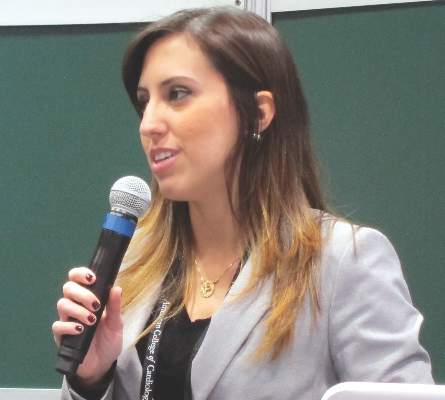
Stroke risk rises quickly in recent-onset atrial fib
CHICAGO – The stroke risk in patients with recent-onset atrial fibrillation is similar to that of patients with longer-standing atrial fibrillation, according to a new secondary analysis of the landmark ARISTOTLE trial.
“Our key message is that patients with recent-onset atrial fibrillation had a similar risk of stroke but higher mortality than patients with remotely diagnosed atrial fibrillation, suggesting that patients with recently diagnosed atrial fibrillation are not at low risk and therefore warrant stroke prevention strategies,” Dr. Patricia O. Guimaraes said in presenting the findings at the annual meeting of the American College of Cardiology.
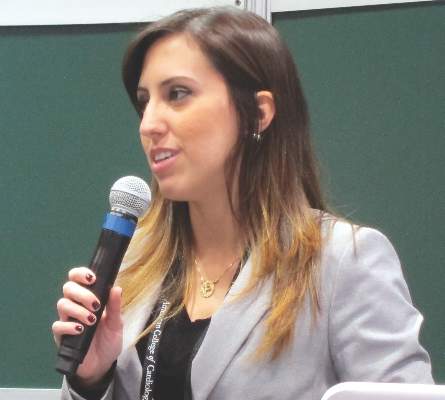
“Sometimes we as physicians hesitate in beginning oral anticoagulation therapy for patients that we just diagnosed. And of course patients are often afraid of anticoagulation therapy. But once they present with atrial fibrillation they are already at risk, and that’s why we need to anticoagulate them promptly,” added Dr. Guimaraes of the Duke Clinical Research Institute in Durham, N.C.
The benefits of apixaban (Eliquis) over warfarin seen in the overall randomized ARISTOTLE trial (N Engl J Med. 2011; 365:981-92) were preserved in the recent-onset subset of the atrial fibrillation (AF) study population, she noted.
The rationale for this new post hoc analysis of ARISTOTLE is that virtually all of the evidence supporting anticoagulation for stroke prevention in AF is based on studies conducted in patients with permanent, persistent, or long-standing paroxysmal AF. Much less is known about stroke risk and the benefits of anticoagulation in patients with recent-onset AF, Dr. Guimaraes explained.
The 1,899 ARISTOTLE participants with AF onset within 30 days prior to enrollment comprised 10.5% of the total study population, all of whom had AF and at least one other stroke risk factor. The recent-onset subgroup was the same age as the 16,241 subjects in this analysis who had longer-standing AF, but the recent-onset group included a higher proportion of women, had a lower prevalence of CAD, and their cardiovascular risk factor profile differed from that of the remote-onset AF group.
The composite endpoint of stroke, systemic embolism, major bleeding, or all-cause mortality occurred at a rate of 8.69%/year in the recent-onset AF group, compared with 6.43%/year in the remote-onset group. However, in a multivariate regression analysis adjusted for potential confounders, the only significant differences in outcome between the two groups were in all-cause mortality – 5.15%/year in the recent-onset group, 3.15% in the remote-onset AF patients – and in the composite of stroke, systemic embolism, or all-cause mortality, which had an incidence of 6.46%/year in the recent-onset group, compared with 4.57%/year in remote-onset patients.
Turning to the impact of apixaban, Dr. Guimaraes noted that, as previously reported in the overall study, the primary endpoint of stroke or systemic embolism occurred in the apixaban group at a rate of 1.27%/year, compared with 1.6%/year with warfarin, for a 21% relative risk reduction in favor of the newer agent. She and her coinvestigators determined that in the remote-onset AF subgroup the relative risk reduction was 20%, while in the recent-onset subgroup the size of the effect was similar at 22%.
The composite safety endpoint of major or clinically relevant bleeding occurred in the remote-onset patients at a rate of 3.97%/year with apixaban versus 5.97%/year with warfarin, for a 33% relative risk reduction favoring the novel agent. In the recent-onset group, the rates were 5.04%/year with apixaban, compared with 6.4%/year with warfarin, for a 22% relative risk reduction.
Dr. Guimaraes observed an important limitation of this post hoc analysis is that the remote-onset AF group may have been selected for improved survival, since they didn’t die in the first 30 days after diagnosis.
Session co-chair Dr. Brian Olshansky commented that this analysis, which highlights the risks of recent-onset AF, argues for a strategy whereby a patient who presents to the ED with new-onset AF should get sent home on apixaban rather than being hospitalized for several days in order to be stabilized on warfarin.
“With recent-onset atrial fibrillation it’s going to take you several days to get anticoagulated with warfarin, whereas you’re immediately anticoagulated with apixaban,” said Dr. Olshansky, emeritus professor of internal medicine at the University of Iowa, Iowa City.
The ARISTOTLE trial was supported by Bristol-Myers Squibb and Pfizer. Dr. Guimaraes reported having no financial conflicts of interest.
CHICAGO – The stroke risk in patients with recent-onset atrial fibrillation is similar to that of patients with longer-standing atrial fibrillation, according to a new secondary analysis of the landmark ARISTOTLE trial.
“Our key message is that patients with recent-onset atrial fibrillation had a similar risk of stroke but higher mortality than patients with remotely diagnosed atrial fibrillation, suggesting that patients with recently diagnosed atrial fibrillation are not at low risk and therefore warrant stroke prevention strategies,” Dr. Patricia O. Guimaraes said in presenting the findings at the annual meeting of the American College of Cardiology.
“Sometimes we as physicians hesitate in beginning oral anticoagulation therapy for patients that we just diagnosed. And of course patients are often afraid of anticoagulation therapy. But once they present with atrial fibrillation they are already at risk, and that’s why we need to anticoagulate them promptly,” added Dr. Guimaraes of the Duke Clinical Research Institute in Durham, N.C.
The benefits of apixaban (Eliquis) over warfarin seen in the overall randomized ARISTOTLE trial (N Engl J Med. 2011; 365:981-92) were preserved in the recent-onset subset of the atrial fibrillation (AF) study population, she noted.
The rationale for this new post hoc analysis of ARISTOTLE is that virtually all of the evidence supporting anticoagulation for stroke prevention in AF is based on studies conducted in patients with permanent, persistent, or long-standing paroxysmal AF. Much less is known about stroke risk and the benefits of anticoagulation in patients with recent-onset AF, Dr. Guimaraes explained.
The 1,899 ARISTOTLE participants with AF onset within 30 days prior to enrollment comprised 10.5% of the total study population, all of whom had AF and at least one other stroke risk factor. The recent-onset subgroup was the same age as the 16,241 subjects in this analysis who had longer-standing AF, but the recent-onset group included a higher proportion of women, had a lower prevalence of CAD, and their cardiovascular risk factor profile differed from that of the remote-onset AF group.
The composite endpoint of stroke, systemic embolism, major bleeding, or all-cause mortality occurred at a rate of 8.69%/year in the recent-onset AF group, compared with 6.43%/year in the remote-onset group. However, in a multivariate regression analysis adjusted for potential confounders, the only significant differences in outcome between the two groups were in all-cause mortality – 5.15%/year in the recent-onset group, 3.15% in the remote-onset AF patients – and in the composite of stroke, systemic embolism, or all-cause mortality, which had an incidence of 6.46%/year in the recent-onset group, compared with 4.57%/year in remote-onset patients.
Turning to the impact of apixaban, Dr. Guimaraes noted that, as previously reported in the overall study, the primary endpoint of stroke or systemic embolism occurred in the apixaban group at a rate of 1.27%/year, compared with 1.6%/year with warfarin, for a 21% relative risk reduction in favor of the newer agent. She and her coinvestigators determined that in the remote-onset AF subgroup the relative risk reduction was 20%, while in the recent-onset subgroup the size of the effect was similar at 22%.
The composite safety endpoint of major or clinically relevant bleeding occurred in the remote-onset patients at a rate of 3.97%/year with apixaban versus 5.97%/year with warfarin, for a 33% relative risk reduction favoring the novel agent. In the recent-onset group, the rates were 5.04%/year with apixaban, compared with 6.4%/year with warfarin, for a 22% relative risk reduction.
Dr. Guimaraes observed an important limitation of this post hoc analysis is that the remote-onset AF group may have been selected for improved survival, since they didn’t die in the first 30 days after diagnosis.
Session co-chair Dr. Brian Olshansky commented that this analysis, which highlights the risks of recent-onset AF, argues for a strategy whereby a patient who presents to the ED with new-onset AF should get sent home on apixaban rather than being hospitalized for several days in order to be stabilized on warfarin.
“With recent-onset atrial fibrillation it’s going to take you several days to get anticoagulated with warfarin, whereas you’re immediately anticoagulated with apixaban,” said Dr. Olshansky, emeritus professor of internal medicine at the University of Iowa, Iowa City.
The ARISTOTLE trial was supported by Bristol-Myers Squibb and Pfizer. Dr. Guimaraes reported having no financial conflicts of interest.
CHICAGO – The stroke risk in patients with recent-onset atrial fibrillation is similar to that of patients with longer-standing atrial fibrillation, according to a new secondary analysis of the landmark ARISTOTLE trial.
“Our key message is that patients with recent-onset atrial fibrillation had a similar risk of stroke but higher mortality than patients with remotely diagnosed atrial fibrillation, suggesting that patients with recently diagnosed atrial fibrillation are not at low risk and therefore warrant stroke prevention strategies,” Dr. Patricia O. Guimaraes said in presenting the findings at the annual meeting of the American College of Cardiology.
“Sometimes we as physicians hesitate in beginning oral anticoagulation therapy for patients that we just diagnosed. And of course patients are often afraid of anticoagulation therapy. But once they present with atrial fibrillation they are already at risk, and that’s why we need to anticoagulate them promptly,” added Dr. Guimaraes of the Duke Clinical Research Institute in Durham, N.C.
The benefits of apixaban (Eliquis) over warfarin seen in the overall randomized ARISTOTLE trial (N Engl J Med. 2011; 365:981-92) were preserved in the recent-onset subset of the atrial fibrillation (AF) study population, she noted.
The rationale for this new post hoc analysis of ARISTOTLE is that virtually all of the evidence supporting anticoagulation for stroke prevention in AF is based on studies conducted in patients with permanent, persistent, or long-standing paroxysmal AF. Much less is known about stroke risk and the benefits of anticoagulation in patients with recent-onset AF, Dr. Guimaraes explained.
The 1,899 ARISTOTLE participants with AF onset within 30 days prior to enrollment comprised 10.5% of the total study population, all of whom had AF and at least one other stroke risk factor. The recent-onset subgroup was the same age as the 16,241 subjects in this analysis who had longer-standing AF, but the recent-onset group included a higher proportion of women, had a lower prevalence of CAD, and their cardiovascular risk factor profile differed from that of the remote-onset AF group.
The composite endpoint of stroke, systemic embolism, major bleeding, or all-cause mortality occurred at a rate of 8.69%/year in the recent-onset AF group, compared with 6.43%/year in the remote-onset group. However, in a multivariate regression analysis adjusted for potential confounders, the only significant differences in outcome between the two groups were in all-cause mortality – 5.15%/year in the recent-onset group, 3.15% in the remote-onset AF patients – and in the composite of stroke, systemic embolism, or all-cause mortality, which had an incidence of 6.46%/year in the recent-onset group, compared with 4.57%/year in remote-onset patients.
Turning to the impact of apixaban, Dr. Guimaraes noted that, as previously reported in the overall study, the primary endpoint of stroke or systemic embolism occurred in the apixaban group at a rate of 1.27%/year, compared with 1.6%/year with warfarin, for a 21% relative risk reduction in favor of the newer agent. She and her coinvestigators determined that in the remote-onset AF subgroup the relative risk reduction was 20%, while in the recent-onset subgroup the size of the effect was similar at 22%.
The composite safety endpoint of major or clinically relevant bleeding occurred in the remote-onset patients at a rate of 3.97%/year with apixaban versus 5.97%/year with warfarin, for a 33% relative risk reduction favoring the novel agent. In the recent-onset group, the rates were 5.04%/year with apixaban, compared with 6.4%/year with warfarin, for a 22% relative risk reduction.
Dr. Guimaraes observed an important limitation of this post hoc analysis is that the remote-onset AF group may have been selected for improved survival, since they didn’t die in the first 30 days after diagnosis.
Session co-chair Dr. Brian Olshansky commented that this analysis, which highlights the risks of recent-onset AF, argues for a strategy whereby a patient who presents to the ED with new-onset AF should get sent home on apixaban rather than being hospitalized for several days in order to be stabilized on warfarin.
“With recent-onset atrial fibrillation it’s going to take you several days to get anticoagulated with warfarin, whereas you’re immediately anticoagulated with apixaban,” said Dr. Olshansky, emeritus professor of internal medicine at the University of Iowa, Iowa City.
The ARISTOTLE trial was supported by Bristol-Myers Squibb and Pfizer. Dr. Guimaraes reported having no financial conflicts of interest.
Key clinical point: Don’t delay starting oral anticoagulation in patients with recent-onset atrial fibrillation.
Major finding: All-cause mortality occurred at a rate of 5.15%/year in patients started on apixaban or warfarin within 30 days following diagnosis of atrial fibrillation, compared with 3.15%/year in those with longer-duration atrial fibrillation.
Data source: This was a secondary post hoc analysis of 18,140 participants in the randomized, double-blind, prospective ARISTOTLE trial of apixaban versus warfarin for stroke prevention.
Disclosures: The study presenter reported having no financial conflicts of interest.

Primary care residents’ approaches to HPV vaccine vary by specialty
SAN DIEGO – Among U.S. resident trainees in the primary care specialties, ob.gyn. and internal medicine resident physicians are the clear laggards when it comes to counseling appropriate candidates to receive the human papillomavirus (HPV) vaccine, Dr. Tiffany Zigras reported at the annual meeting of the Society of Gynecologic Oncology.
Pediatric residents led the way in self-reported “always” counseling eligible patients to receive the three-dose HPV vaccine series in her national survey, with family medicine residents in firm command of second place.

Although the HPV vaccine was approved by the Food and Drug Administration in 2006, uptake remains low. A 2014 report based upon National Health Interview Survey data concluded only 13.6% of U.S. women ages 18-26 had received all three doses of the vaccine. A national Status of Cancer report concluded that only 32% of females ages 13-17 years had been vaccinated; in the uninsured population this rate fell to a mere 14.1% (Am J Public Health. 2014 May;104(5):946-53), noted Dr. Zigras of Bridgeport (Conn.) Hospital/Yale New Haven Health.
Since physician recommendation is known to play a key role in vaccine uptake and the approach taken by primary care residents hadn’t previously been studied, Dr. Zigras and her coinvestigators created a 37-item electronic survey and sent it to residency program directors in the various primary care disciplines with a request that they share the web link with their trainees.
The survey was completed by 1,549 resident physicians. Fully 82% of the pediatric residents indicated that they “always” recommend the HPV vaccine as an important means of cancer prevention. So did 64% of family medicine residents, 39% of ob.gyn. residents, and 28% of internal medicine residents.
Overall, female primary care residents were three times more likely than their male counterparts to always recommend the HPV vaccine to their eligible patients.
Primary care residents cited parental disapproval as a major reason for vaccine refusal in 49% of cases, fear of vaccines in general as an insurmountable issue in 34%, and fear of needles as a significant factor in 14%.
Whether or not respondent residents had received education about the vaccine during medical school had no bearing on their current self-described rate of HPV vaccine recommendation. However, residents who reported receiving education about the risks, benefits, and value of the vaccine during their residency training were significantly more likely to always recommend it for eligible patients.
“Residents have a unique opportunity to capture a subset of patients who may otherwise not have an opportunity to receive the HPV vaccine,” Dr. Zigras observed. “Education about the HPV vaccine in resident curriculum is critical to improve the uptake of the HPV vaccine in the United States.”
She reported no financial conflicts with regard to her study.
SAN DIEGO – Among U.S. resident trainees in the primary care specialties, ob.gyn. and internal medicine resident physicians are the clear laggards when it comes to counseling appropriate candidates to receive the human papillomavirus (HPV) vaccine, Dr. Tiffany Zigras reported at the annual meeting of the Society of Gynecologic Oncology.
Pediatric residents led the way in self-reported “always” counseling eligible patients to receive the three-dose HPV vaccine series in her national survey, with family medicine residents in firm command of second place.
Although the HPV vaccine was approved by the Food and Drug Administration in 2006, uptake remains low. A 2014 report based upon National Health Interview Survey data concluded only 13.6% of U.S. women ages 18-26 had received all three doses of the vaccine. A national Status of Cancer report concluded that only 32% of females ages 13-17 years had been vaccinated; in the uninsured population this rate fell to a mere 14.1% (Am J Public Health. 2014 May;104(5):946-53), noted Dr. Zigras of Bridgeport (Conn.) Hospital/Yale New Haven Health.
Since physician recommendation is known to play a key role in vaccine uptake and the approach taken by primary care residents hadn’t previously been studied, Dr. Zigras and her coinvestigators created a 37-item electronic survey and sent it to residency program directors in the various primary care disciplines with a request that they share the web link with their trainees.
The survey was completed by 1,549 resident physicians. Fully 82% of the pediatric residents indicated that they “always” recommend the HPV vaccine as an important means of cancer prevention. So did 64% of family medicine residents, 39% of ob.gyn. residents, and 28% of internal medicine residents.
Overall, female primary care residents were three times more likely than their male counterparts to always recommend the HPV vaccine to their eligible patients.
Primary care residents cited parental disapproval as a major reason for vaccine refusal in 49% of cases, fear of vaccines in general as an insurmountable issue in 34%, and fear of needles as a significant factor in 14%.
Whether or not respondent residents had received education about the vaccine during medical school had no bearing on their current self-described rate of HPV vaccine recommendation. However, residents who reported receiving education about the risks, benefits, and value of the vaccine during their residency training were significantly more likely to always recommend it for eligible patients.
“Residents have a unique opportunity to capture a subset of patients who may otherwise not have an opportunity to receive the HPV vaccine,” Dr. Zigras observed. “Education about the HPV vaccine in resident curriculum is critical to improve the uptake of the HPV vaccine in the United States.”
She reported no financial conflicts with regard to her study.
SAN DIEGO – Among U.S. resident trainees in the primary care specialties, ob.gyn. and internal medicine resident physicians are the clear laggards when it comes to counseling appropriate candidates to receive the human papillomavirus (HPV) vaccine, Dr. Tiffany Zigras reported at the annual meeting of the Society of Gynecologic Oncology.
Pediatric residents led the way in self-reported “always” counseling eligible patients to receive the three-dose HPV vaccine series in her national survey, with family medicine residents in firm command of second place.
Although the HPV vaccine was approved by the Food and Drug Administration in 2006, uptake remains low. A 2014 report based upon National Health Interview Survey data concluded only 13.6% of U.S. women ages 18-26 had received all three doses of the vaccine. A national Status of Cancer report concluded that only 32% of females ages 13-17 years had been vaccinated; in the uninsured population this rate fell to a mere 14.1% (Am J Public Health. 2014 May;104(5):946-53), noted Dr. Zigras of Bridgeport (Conn.) Hospital/Yale New Haven Health.
Since physician recommendation is known to play a key role in vaccine uptake and the approach taken by primary care residents hadn’t previously been studied, Dr. Zigras and her coinvestigators created a 37-item electronic survey and sent it to residency program directors in the various primary care disciplines with a request that they share the web link with their trainees.
The survey was completed by 1,549 resident physicians. Fully 82% of the pediatric residents indicated that they “always” recommend the HPV vaccine as an important means of cancer prevention. So did 64% of family medicine residents, 39% of ob.gyn. residents, and 28% of internal medicine residents.
Overall, female primary care residents were three times more likely than their male counterparts to always recommend the HPV vaccine to their eligible patients.
Primary care residents cited parental disapproval as a major reason for vaccine refusal in 49% of cases, fear of vaccines in general as an insurmountable issue in 34%, and fear of needles as a significant factor in 14%.
Whether or not respondent residents had received education about the vaccine during medical school had no bearing on their current self-described rate of HPV vaccine recommendation. However, residents who reported receiving education about the risks, benefits, and value of the vaccine during their residency training were significantly more likely to always recommend it for eligible patients.
“Residents have a unique opportunity to capture a subset of patients who may otherwise not have an opportunity to receive the HPV vaccine,” Dr. Zigras observed. “Education about the HPV vaccine in resident curriculum is critical to improve the uptake of the HPV vaccine in the United States.”
She reported no financial conflicts with regard to her study.
AT THE ANNUAL MEETING ON WOMEN’S CANCER