User login
Policy & Practice : Want more health reform news? Subscribe to our podcast – search 'Policy & Practice' in the iTunes store
Stop-Smoking Coverage Expanded
Physicians will be reimbursed for counseling any Medicare patient about smoking cessation, not just those with tobacco-related illness, under new guidelines approved by the Centers for Medicare and Medicaid Services. Previously, a patient needed to at least show signs of illness related to smoking before Medicare would pay. Now, any smoker covered by Medicare can have up to eight smoking cessation sessions per year from a physician or another Medicare-recognized health practitioner, CMS said. American Medical Association President Cecil Wilson applauded the coverage expansion. “This expansion of coverage takes an important step toward helping Medicare patients lead healthier, tobacco-free lives,” he said in a statement.
Court Will Not Block Generic Lovenox
A U.S. District Court judge has refused to grant a motion for preliminary injunction against a generic version of Lovenox (enoxaparin sodium injection) that was filed by Lovenox maker Sanofi Aventis. In July, the Food and Drug Administration approved a generic version made by Sandoz Inc. Sanofi immediately sued the FDA and also sought an injunction to withdraw the approval. The Lovenox maker has not said yet whether it will appeal the judge's decision, but according to the Wall Street Journal, two other companies, Amphastar Pharmaceuticals Inc. and Teva Pharmaceutical Industries, have also applied for approval to market a generic version of Lovenox.
CMS Okays Pritikin, Ornish
The Centers for Medicare and Medicaid Services has said that it will now pay for Medicare enrollees who participate in the Ornish Program for Reversing Heart Disease and the Pritikin Program (also known as the Pritikin Longevity Program). Cardiac rehabilitation has been a covered benefit since 1982, but a new Part B benefit was more recently established for Intensive Cardiac Rehabilitation. The Pritikin and Ornish programs fall within that new benefit.
Consumers Wary of Drug Influence
Almost 70% of Americans who take prescription drugs believe that drug makers have too much influence over doctors when it comes to those prescriptions, and 50% believe that doctors prescribe drugs even when a person's condition could be managed without medication. The data are the result of a Consumer Reports magazine poll. On the basis of the survey of more than 1,150 adults, the magazine asserted that 51% of Americans don't think their doctors consider patients' ability to pay for prescribed drugs, 47% think gifts from pharmaceutical companies influence doctors' drug choices, 41% think their doctors tend to prescribe newer and more expensive drugs, and 20% have asked for a drug they've seen advertised. In those cases, 59% of the respondents said their doctors prescribed what they requested.
First EHR Certifying Bodies Named
A nonprofit organization dedicated to health information technology and a software-testing lab have been chosen as the first two bodies to officially test and certify electronic health record (EHR) systems for the federal government. The Certification Commission for Health Information Technology and the Drummond Group can immediately begin certifying EHR systems as HHS-compliant, the Department of Health and Human Services said in an announcement. Now that HHS has named the certifying organizations, vendors can start applying for certification of their EHR systems and physicians soon should be able to purchase certified products, the HHS said.
Outcomes Research Funded
HHS will provide grants totaling nearly $17 million for “patient-centered outcomes research” (PCOR), which focuses on treatments and strategies that might improve health outcomes from the patient's point of view. Most of the announced grants will support outcomes research in primary care, HHS said. As part of the grant program, five health organizations will attempt to show that providers and academic institutions can partner on PCOR. Each organization – in Illinois, California, New York, Massachusetts, and Oregon – will receive about $2 million over 3 years to create a national network for evaluating the patient-centered approach in patient populations that are not always adequately represented in other studies, according to HHS.
AMA Opposes Tax Change
The American Medical Association and 90 medical organizations, including the American Academy of Family Physicians and the American College of Physicians, have written to the Department of the Treasury urging it not to allow trial lawyers to deduct court costs and other expenses. Making such a change to tax law could encourage trial lawyers to file more claims, the organizations claimed. “Even though a substantial majority of claims are dropped or decided in favor of physicians, the cost of defending against meritless claims averages over $22,000,” their letter said. The organizations urged the treasury department to reconsider rumored plans to change current policy, which does not allow such tax deductions.
Prescription Drug Use Rises Again The percentage of Americans who
The percentage of Americans who said they took at least one prescription drug in the past month increased from 44% to 48% from 1999 to 2008, according to a report from the Centers for Disease Control and Prevention. At the same time, the number of people who said they had taken two or more drugs in previous month increased from 25% to 31%, and the number of people who took five or more drugs increased from 6% to 11%, the report found. One out of every five children used one or more prescription drugs, as did 90% of adults aged 60 or older. The data came from the National Health and Nutrition Examination Survey.
Stop-Smoking Coverage Expanded
Physicians will be reimbursed for counseling any Medicare patient about smoking cessation, not just those with tobacco-related illness, under new guidelines approved by the Centers for Medicare and Medicaid Services. Previously, a patient needed to at least show signs of illness related to smoking before Medicare would pay. Now, any smoker covered by Medicare can have up to eight smoking cessation sessions per year from a physician or another Medicare-recognized health practitioner, CMS said. American Medical Association President Cecil Wilson applauded the coverage expansion. “This expansion of coverage takes an important step toward helping Medicare patients lead healthier, tobacco-free lives,” he said in a statement.
Court Will Not Block Generic Lovenox
A U.S. District Court judge has refused to grant a motion for preliminary injunction against a generic version of Lovenox (enoxaparin sodium injection) that was filed by Lovenox maker Sanofi Aventis. In July, the Food and Drug Administration approved a generic version made by Sandoz Inc. Sanofi immediately sued the FDA and also sought an injunction to withdraw the approval. The Lovenox maker has not said yet whether it will appeal the judge's decision, but according to the Wall Street Journal, two other companies, Amphastar Pharmaceuticals Inc. and Teva Pharmaceutical Industries, have also applied for approval to market a generic version of Lovenox.
CMS Okays Pritikin, Ornish
The Centers for Medicare and Medicaid Services has said that it will now pay for Medicare enrollees who participate in the Ornish Program for Reversing Heart Disease and the Pritikin Program (also known as the Pritikin Longevity Program). Cardiac rehabilitation has been a covered benefit since 1982, but a new Part B benefit was more recently established for Intensive Cardiac Rehabilitation. The Pritikin and Ornish programs fall within that new benefit.
Consumers Wary of Drug Influence
Almost 70% of Americans who take prescription drugs believe that drug makers have too much influence over doctors when it comes to those prescriptions, and 50% believe that doctors prescribe drugs even when a person's condition could be managed without medication. The data are the result of a Consumer Reports magazine poll. On the basis of the survey of more than 1,150 adults, the magazine asserted that 51% of Americans don't think their doctors consider patients' ability to pay for prescribed drugs, 47% think gifts from pharmaceutical companies influence doctors' drug choices, 41% think their doctors tend to prescribe newer and more expensive drugs, and 20% have asked for a drug they've seen advertised. In those cases, 59% of the respondents said their doctors prescribed what they requested.
First EHR Certifying Bodies Named
A nonprofit organization dedicated to health information technology and a software-testing lab have been chosen as the first two bodies to officially test and certify electronic health record (EHR) systems for the federal government. The Certification Commission for Health Information Technology and the Drummond Group can immediately begin certifying EHR systems as HHS-compliant, the Department of Health and Human Services said in an announcement. Now that HHS has named the certifying organizations, vendors can start applying for certification of their EHR systems and physicians soon should be able to purchase certified products, the HHS said.
Outcomes Research Funded
HHS will provide grants totaling nearly $17 million for “patient-centered outcomes research” (PCOR), which focuses on treatments and strategies that might improve health outcomes from the patient's point of view. Most of the announced grants will support outcomes research in primary care, HHS said. As part of the grant program, five health organizations will attempt to show that providers and academic institutions can partner on PCOR. Each organization – in Illinois, California, New York, Massachusetts, and Oregon – will receive about $2 million over 3 years to create a national network for evaluating the patient-centered approach in patient populations that are not always adequately represented in other studies, according to HHS.
AMA Opposes Tax Change
The American Medical Association and 90 medical organizations, including the American Academy of Family Physicians and the American College of Physicians, have written to the Department of the Treasury urging it not to allow trial lawyers to deduct court costs and other expenses. Making such a change to tax law could encourage trial lawyers to file more claims, the organizations claimed. “Even though a substantial majority of claims are dropped or decided in favor of physicians, the cost of defending against meritless claims averages over $22,000,” their letter said. The organizations urged the treasury department to reconsider rumored plans to change current policy, which does not allow such tax deductions.
Prescription Drug Use Rises Again The percentage of Americans who
The percentage of Americans who said they took at least one prescription drug in the past month increased from 44% to 48% from 1999 to 2008, according to a report from the Centers for Disease Control and Prevention. At the same time, the number of people who said they had taken two or more drugs in previous month increased from 25% to 31%, and the number of people who took five or more drugs increased from 6% to 11%, the report found. One out of every five children used one or more prescription drugs, as did 90% of adults aged 60 or older. The data came from the National Health and Nutrition Examination Survey.
Stop-Smoking Coverage Expanded
Physicians will be reimbursed for counseling any Medicare patient about smoking cessation, not just those with tobacco-related illness, under new guidelines approved by the Centers for Medicare and Medicaid Services. Previously, a patient needed to at least show signs of illness related to smoking before Medicare would pay. Now, any smoker covered by Medicare can have up to eight smoking cessation sessions per year from a physician or another Medicare-recognized health practitioner, CMS said. American Medical Association President Cecil Wilson applauded the coverage expansion. “This expansion of coverage takes an important step toward helping Medicare patients lead healthier, tobacco-free lives,” he said in a statement.
Court Will Not Block Generic Lovenox
A U.S. District Court judge has refused to grant a motion for preliminary injunction against a generic version of Lovenox (enoxaparin sodium injection) that was filed by Lovenox maker Sanofi Aventis. In July, the Food and Drug Administration approved a generic version made by Sandoz Inc. Sanofi immediately sued the FDA and also sought an injunction to withdraw the approval. The Lovenox maker has not said yet whether it will appeal the judge's decision, but according to the Wall Street Journal, two other companies, Amphastar Pharmaceuticals Inc. and Teva Pharmaceutical Industries, have also applied for approval to market a generic version of Lovenox.
CMS Okays Pritikin, Ornish
The Centers for Medicare and Medicaid Services has said that it will now pay for Medicare enrollees who participate in the Ornish Program for Reversing Heart Disease and the Pritikin Program (also known as the Pritikin Longevity Program). Cardiac rehabilitation has been a covered benefit since 1982, but a new Part B benefit was more recently established for Intensive Cardiac Rehabilitation. The Pritikin and Ornish programs fall within that new benefit.
Consumers Wary of Drug Influence
Almost 70% of Americans who take prescription drugs believe that drug makers have too much influence over doctors when it comes to those prescriptions, and 50% believe that doctors prescribe drugs even when a person's condition could be managed without medication. The data are the result of a Consumer Reports magazine poll. On the basis of the survey of more than 1,150 adults, the magazine asserted that 51% of Americans don't think their doctors consider patients' ability to pay for prescribed drugs, 47% think gifts from pharmaceutical companies influence doctors' drug choices, 41% think their doctors tend to prescribe newer and more expensive drugs, and 20% have asked for a drug they've seen advertised. In those cases, 59% of the respondents said their doctors prescribed what they requested.
First EHR Certifying Bodies Named
A nonprofit organization dedicated to health information technology and a software-testing lab have been chosen as the first two bodies to officially test and certify electronic health record (EHR) systems for the federal government. The Certification Commission for Health Information Technology and the Drummond Group can immediately begin certifying EHR systems as HHS-compliant, the Department of Health and Human Services said in an announcement. Now that HHS has named the certifying organizations, vendors can start applying for certification of their EHR systems and physicians soon should be able to purchase certified products, the HHS said.
Outcomes Research Funded
HHS will provide grants totaling nearly $17 million for “patient-centered outcomes research” (PCOR), which focuses on treatments and strategies that might improve health outcomes from the patient's point of view. Most of the announced grants will support outcomes research in primary care, HHS said. As part of the grant program, five health organizations will attempt to show that providers and academic institutions can partner on PCOR. Each organization – in Illinois, California, New York, Massachusetts, and Oregon – will receive about $2 million over 3 years to create a national network for evaluating the patient-centered approach in patient populations that are not always adequately represented in other studies, according to HHS.
AMA Opposes Tax Change
The American Medical Association and 90 medical organizations, including the American Academy of Family Physicians and the American College of Physicians, have written to the Department of the Treasury urging it not to allow trial lawyers to deduct court costs and other expenses. Making such a change to tax law could encourage trial lawyers to file more claims, the organizations claimed. “Even though a substantial majority of claims are dropped or decided in favor of physicians, the cost of defending against meritless claims averages over $22,000,” their letter said. The organizations urged the treasury department to reconsider rumored plans to change current policy, which does not allow such tax deductions.
Prescription Drug Use Rises Again The percentage of Americans who
The percentage of Americans who said they took at least one prescription drug in the past month increased from 44% to 48% from 1999 to 2008, according to a report from the Centers for Disease Control and Prevention. At the same time, the number of people who said they had taken two or more drugs in previous month increased from 25% to 31%, and the number of people who took five or more drugs increased from 6% to 11%, the report found. One out of every five children used one or more prescription drugs, as did 90% of adults aged 60 or older. The data came from the National Health and Nutrition Examination Survey.
N.Y. Palliative Care Law Not Likely to Change Practice
A new law requiring New York physicians to discuss palliative care and end-of-life options with terminally ill patients is well intentioned, but may not do much to change clinical practice or institutional culture, according to some observers in the state.
The New York Palliative Care Information Act was signed into law by Gov. David Paterson (D) in August. Perhaps as a sign that palliative care is being embraced more readily and becoming better understood, it took just 14 months from the bill's introduction in the state Senate (S. 4498 and A. 7617) to its signing.
Even so, “whether or not it will change behavior is a bit of a black box,” said Dr. Bradley Flansbaum, director of hospitalist services at Lenox Hill Hospital in New York. “It's a nice thought, but I don't know how they're going to put it into effect.”
Under the law, physicians and nurse practitioners are required to provide a patient who has less than 6 months to live with information and counseling on palliative care and end-of-life options, including “the range of options appropriate to the patient, the prognosis, risks and benefits of the various options, and the patient's legal rights to comprehensive pain and symptom management at the end of life.”
The physician or NP can refer the patient to another provider who is willing to meet the legal statute or who is “professionally qualified” to offer the services. There is no reimbursement offered for the required services.
Because it is an amendment to the state's public health law, violations of the new law could result in penalties or fines. It's not clear how it will be enforced or what might trigger the penalties; the health department has until the law's effective date (February 2011) to devise regulations, said David Leven, executive director of Compassion and Choices of New York.
That advocacy group helped devise the proposal and then shepherded it though the legislature, said Mr. Leven. California has a similar statute, but is not as strong because it does not put the onus on physicians, he said.
The organization sought the legislation because even with increased training on end-of-life issues, too few physicians are having conversations with their dying patients, Mr. Leven said. That means patients' wishes are not being respected, to the detriment of both patients and the practice of medicine.
The organization also hoped that the law would be a catalyst to improving end-of-life education in medical school and at the professional level, he said.
Dr. Wendy Edwards, director of the palliative medicine program at Lenox Hill, said that education would be a key component, but there appeared to be no such formal requirements in the law. She said she wasn't sure that the new law was the way to increase attention to palliative care, but that it had likely come about as a result of frustration and impatience on the part of palliative specialists.
The wal will be positive, however, she said. Palliative care won't just be the standard of care, but will be the law, which gives some backing to hospitals that seek to implement and strengthen their quality of care, and end-of-life care in particular.
Although the Hospice and Palliative Care Association of New York State supported the law, the Medical Society of the State of New York did not. The medical society, which represents 25,000 physicians, opposed the law because of concerns that it would interfere with the way each and every doctor navigates through end-of-life situations with each individual patient, said Elizabeth C. Dears, the society's senior vice president for legislative and regulatory affairs.
The medical society also said that physicians are not licensed to provide legal advice in areas such as pain or symptom management, and that they may not know what they are supposed to be communicating to patients under certain provisions, while still being subject to penalties.
Although the medical society might object to requiring any such talk, both Dr. Flansbaum and Dr. Edwards said that, realistically, the law should be requiring palliative care to be offered sooner in the disease process and to a broader group of patients, such as those who have chronic life-limiting conditions such as heart failure.
“By the time you're invoking palliative care in terminal patients, you're behind the curve,” said Dr. Flansbaum.

Offer the care sooner, and to more patients, says Dr. Bradley Flansbaum.
Source Courtesy Lenox Hill Hospital
A new law requiring New York physicians to discuss palliative care and end-of-life options with terminally ill patients is well intentioned, but may not do much to change clinical practice or institutional culture, according to some observers in the state.
The New York Palliative Care Information Act was signed into law by Gov. David Paterson (D) in August. Perhaps as a sign that palliative care is being embraced more readily and becoming better understood, it took just 14 months from the bill's introduction in the state Senate (S. 4498 and A. 7617) to its signing.
Even so, “whether or not it will change behavior is a bit of a black box,” said Dr. Bradley Flansbaum, director of hospitalist services at Lenox Hill Hospital in New York. “It's a nice thought, but I don't know how they're going to put it into effect.”
Under the law, physicians and nurse practitioners are required to provide a patient who has less than 6 months to live with information and counseling on palliative care and end-of-life options, including “the range of options appropriate to the patient, the prognosis, risks and benefits of the various options, and the patient's legal rights to comprehensive pain and symptom management at the end of life.”
The physician or NP can refer the patient to another provider who is willing to meet the legal statute or who is “professionally qualified” to offer the services. There is no reimbursement offered for the required services.
Because it is an amendment to the state's public health law, violations of the new law could result in penalties or fines. It's not clear how it will be enforced or what might trigger the penalties; the health department has until the law's effective date (February 2011) to devise regulations, said David Leven, executive director of Compassion and Choices of New York.
That advocacy group helped devise the proposal and then shepherded it though the legislature, said Mr. Leven. California has a similar statute, but is not as strong because it does not put the onus on physicians, he said.
The organization sought the legislation because even with increased training on end-of-life issues, too few physicians are having conversations with their dying patients, Mr. Leven said. That means patients' wishes are not being respected, to the detriment of both patients and the practice of medicine.
The organization also hoped that the law would be a catalyst to improving end-of-life education in medical school and at the professional level, he said.
Dr. Wendy Edwards, director of the palliative medicine program at Lenox Hill, said that education would be a key component, but there appeared to be no such formal requirements in the law. She said she wasn't sure that the new law was the way to increase attention to palliative care, but that it had likely come about as a result of frustration and impatience on the part of palliative specialists.
The wal will be positive, however, she said. Palliative care won't just be the standard of care, but will be the law, which gives some backing to hospitals that seek to implement and strengthen their quality of care, and end-of-life care in particular.
Although the Hospice and Palliative Care Association of New York State supported the law, the Medical Society of the State of New York did not. The medical society, which represents 25,000 physicians, opposed the law because of concerns that it would interfere with the way each and every doctor navigates through end-of-life situations with each individual patient, said Elizabeth C. Dears, the society's senior vice president for legislative and regulatory affairs.
The medical society also said that physicians are not licensed to provide legal advice in areas such as pain or symptom management, and that they may not know what they are supposed to be communicating to patients under certain provisions, while still being subject to penalties.
Although the medical society might object to requiring any such talk, both Dr. Flansbaum and Dr. Edwards said that, realistically, the law should be requiring palliative care to be offered sooner in the disease process and to a broader group of patients, such as those who have chronic life-limiting conditions such as heart failure.
“By the time you're invoking palliative care in terminal patients, you're behind the curve,” said Dr. Flansbaum.
Offer the care sooner, and to more patients, says Dr. Bradley Flansbaum.
Source Courtesy Lenox Hill Hospital
A new law requiring New York physicians to discuss palliative care and end-of-life options with terminally ill patients is well intentioned, but may not do much to change clinical practice or institutional culture, according to some observers in the state.
The New York Palliative Care Information Act was signed into law by Gov. David Paterson (D) in August. Perhaps as a sign that palliative care is being embraced more readily and becoming better understood, it took just 14 months from the bill's introduction in the state Senate (S. 4498 and A. 7617) to its signing.
Even so, “whether or not it will change behavior is a bit of a black box,” said Dr. Bradley Flansbaum, director of hospitalist services at Lenox Hill Hospital in New York. “It's a nice thought, but I don't know how they're going to put it into effect.”
Under the law, physicians and nurse practitioners are required to provide a patient who has less than 6 months to live with information and counseling on palliative care and end-of-life options, including “the range of options appropriate to the patient, the prognosis, risks and benefits of the various options, and the patient's legal rights to comprehensive pain and symptom management at the end of life.”
The physician or NP can refer the patient to another provider who is willing to meet the legal statute or who is “professionally qualified” to offer the services. There is no reimbursement offered for the required services.
Because it is an amendment to the state's public health law, violations of the new law could result in penalties or fines. It's not clear how it will be enforced or what might trigger the penalties; the health department has until the law's effective date (February 2011) to devise regulations, said David Leven, executive director of Compassion and Choices of New York.
That advocacy group helped devise the proposal and then shepherded it though the legislature, said Mr. Leven. California has a similar statute, but is not as strong because it does not put the onus on physicians, he said.
The organization sought the legislation because even with increased training on end-of-life issues, too few physicians are having conversations with their dying patients, Mr. Leven said. That means patients' wishes are not being respected, to the detriment of both patients and the practice of medicine.
The organization also hoped that the law would be a catalyst to improving end-of-life education in medical school and at the professional level, he said.
Dr. Wendy Edwards, director of the palliative medicine program at Lenox Hill, said that education would be a key component, but there appeared to be no such formal requirements in the law. She said she wasn't sure that the new law was the way to increase attention to palliative care, but that it had likely come about as a result of frustration and impatience on the part of palliative specialists.
The wal will be positive, however, she said. Palliative care won't just be the standard of care, but will be the law, which gives some backing to hospitals that seek to implement and strengthen their quality of care, and end-of-life care in particular.
Although the Hospice and Palliative Care Association of New York State supported the law, the Medical Society of the State of New York did not. The medical society, which represents 25,000 physicians, opposed the law because of concerns that it would interfere with the way each and every doctor navigates through end-of-life situations with each individual patient, said Elizabeth C. Dears, the society's senior vice president for legislative and regulatory affairs.
The medical society also said that physicians are not licensed to provide legal advice in areas such as pain or symptom management, and that they may not know what they are supposed to be communicating to patients under certain provisions, while still being subject to penalties.
Although the medical society might object to requiring any such talk, both Dr. Flansbaum and Dr. Edwards said that, realistically, the law should be requiring palliative care to be offered sooner in the disease process and to a broader group of patients, such as those who have chronic life-limiting conditions such as heart failure.
“By the time you're invoking palliative care in terminal patients, you're behind the curve,” said Dr. Flansbaum.
Offer the care sooner, and to more patients, says Dr. Bradley Flansbaum.
Source Courtesy Lenox Hill Hospital
A Quarter of Acute Care Delivered in the ED : Patients with severe symptoms, including pain and fever, are more likely to seek emergency care.
WASHINGTON — More than a quarter (28%) of all acute care visits in the United States are made to the emergency department, while slightly less than half (42%) take place in primary care physicians' offices, according to a study released Sept. 7.
Another 20% of acute care visits are made to subspecialist offices, lead study author Dr. Stephen R. Pitts said at the briefing.
It appears that the more severe a complaint, the more likely a patient will seek care in the ED, said Dr. Pitts of the department of medicine at Emory University, Atlanta. However, the ED is frequently the only option for care, he said, noting that, “too often, patients can't get the care they need, when they need it, from their family doctor.”
Two-thirds of acute care ED occurred on weekends or on weekdays after office hours, Dr. Pitts and his colleagues found.
Uninsured patients received more than half their acute care in EDs, according to the study, which appears in the journal's September issue.
The authors based their study on data from the three federal surveys of ambulatory medical care in the outpatient, ED, and physician office setting.
Presenting complaints such as stomach and abdominal pain, chest pain, and fever, dominated the list of what brought patients to the ED. Conversely, patients who presented to the primary care physician's office for acute care most frequently complained of cough, throat symptoms, rash, and earache.
Seventy-five percent of patients with acute respiratory problems received care in a primary care practice or hospital outpatient department, the authors found.
Overall, emergency physicians took care of 11% of all ambulatory care visits, yet make up only 4% of the physician workforce, the authors said.
Previous studies have shown that emergency care accounts for only 3% of all health spending, Dr. Arthur L. Kellermann, a study coauthor, said at the briefing.
“The fact that 3% of our dollars and 4% of our doctors are delivering that percentage of care is not such a bad deal,” said Dr. Kellermann, an emergency physician and the Paul O'Neill Alcoa Chair in Policy Analysis at the Rand Corp. But, he said, it might not be the best possible care for patients or the optimum use of dollars for the health system.
In a separate study, Dr. Ateev Mehrotra and his colleagues reported that 14%-27% of ED visits could have been handled at either a retail clinic or an urgent care center. Switching to these alternate sites could save the system $4.4 billion a year, said Dr. Mehrotra of the University of Pittsburgh and a policy analyst at Rand.
The authors determined that most visits for nine common conditions treated at EDs could be switched easily to those alternate sites. Those conditions include upper-respiratory infections; musculoskeletal conditions such as strains, fractures, and back pain; dermatologic conditions; abdominal pain, headache, and other symptoms without a specific diagnosis; urinary tract infections, some chronic illnesses, and psychiatric conditions; lower-respiratory conditions; such minor problems as insect bites and conjunctivitis; and preventive care.
Disclosures: Dr. Mehrotra and his coauthors received funding from the California HealthCare Foundation for their study. One of Dr. Pitts' coauthors disclosed that she received a training grant from the Centers for Disease Control and Prevention; others reported no conflicts.
WASHINGTON — More than a quarter (28%) of all acute care visits in the United States are made to the emergency department, while slightly less than half (42%) take place in primary care physicians' offices, according to a study released Sept. 7.
Another 20% of acute care visits are made to subspecialist offices, lead study author Dr. Stephen R. Pitts said at the briefing.
It appears that the more severe a complaint, the more likely a patient will seek care in the ED, said Dr. Pitts of the department of medicine at Emory University, Atlanta. However, the ED is frequently the only option for care, he said, noting that, “too often, patients can't get the care they need, when they need it, from their family doctor.”
Two-thirds of acute care ED occurred on weekends or on weekdays after office hours, Dr. Pitts and his colleagues found.
Uninsured patients received more than half their acute care in EDs, according to the study, which appears in the journal's September issue.
The authors based their study on data from the three federal surveys of ambulatory medical care in the outpatient, ED, and physician office setting.
Presenting complaints such as stomach and abdominal pain, chest pain, and fever, dominated the list of what brought patients to the ED. Conversely, patients who presented to the primary care physician's office for acute care most frequently complained of cough, throat symptoms, rash, and earache.
Seventy-five percent of patients with acute respiratory problems received care in a primary care practice or hospital outpatient department, the authors found.
Overall, emergency physicians took care of 11% of all ambulatory care visits, yet make up only 4% of the physician workforce, the authors said.
Previous studies have shown that emergency care accounts for only 3% of all health spending, Dr. Arthur L. Kellermann, a study coauthor, said at the briefing.
“The fact that 3% of our dollars and 4% of our doctors are delivering that percentage of care is not such a bad deal,” said Dr. Kellermann, an emergency physician and the Paul O'Neill Alcoa Chair in Policy Analysis at the Rand Corp. But, he said, it might not be the best possible care for patients or the optimum use of dollars for the health system.
In a separate study, Dr. Ateev Mehrotra and his colleagues reported that 14%-27% of ED visits could have been handled at either a retail clinic or an urgent care center. Switching to these alternate sites could save the system $4.4 billion a year, said Dr. Mehrotra of the University of Pittsburgh and a policy analyst at Rand.
The authors determined that most visits for nine common conditions treated at EDs could be switched easily to those alternate sites. Those conditions include upper-respiratory infections; musculoskeletal conditions such as strains, fractures, and back pain; dermatologic conditions; abdominal pain, headache, and other symptoms without a specific diagnosis; urinary tract infections, some chronic illnesses, and psychiatric conditions; lower-respiratory conditions; such minor problems as insect bites and conjunctivitis; and preventive care.
Disclosures: Dr. Mehrotra and his coauthors received funding from the California HealthCare Foundation for their study. One of Dr. Pitts' coauthors disclosed that she received a training grant from the Centers for Disease Control and Prevention; others reported no conflicts.
WASHINGTON — More than a quarter (28%) of all acute care visits in the United States are made to the emergency department, while slightly less than half (42%) take place in primary care physicians' offices, according to a study released Sept. 7.
Another 20% of acute care visits are made to subspecialist offices, lead study author Dr. Stephen R. Pitts said at the briefing.
It appears that the more severe a complaint, the more likely a patient will seek care in the ED, said Dr. Pitts of the department of medicine at Emory University, Atlanta. However, the ED is frequently the only option for care, he said, noting that, “too often, patients can't get the care they need, when they need it, from their family doctor.”
Two-thirds of acute care ED occurred on weekends or on weekdays after office hours, Dr. Pitts and his colleagues found.
Uninsured patients received more than half their acute care in EDs, according to the study, which appears in the journal's September issue.
The authors based their study on data from the three federal surveys of ambulatory medical care in the outpatient, ED, and physician office setting.
Presenting complaints such as stomach and abdominal pain, chest pain, and fever, dominated the list of what brought patients to the ED. Conversely, patients who presented to the primary care physician's office for acute care most frequently complained of cough, throat symptoms, rash, and earache.
Seventy-five percent of patients with acute respiratory problems received care in a primary care practice or hospital outpatient department, the authors found.
Overall, emergency physicians took care of 11% of all ambulatory care visits, yet make up only 4% of the physician workforce, the authors said.
Previous studies have shown that emergency care accounts for only 3% of all health spending, Dr. Arthur L. Kellermann, a study coauthor, said at the briefing.
“The fact that 3% of our dollars and 4% of our doctors are delivering that percentage of care is not such a bad deal,” said Dr. Kellermann, an emergency physician and the Paul O'Neill Alcoa Chair in Policy Analysis at the Rand Corp. But, he said, it might not be the best possible care for patients or the optimum use of dollars for the health system.
In a separate study, Dr. Ateev Mehrotra and his colleagues reported that 14%-27% of ED visits could have been handled at either a retail clinic or an urgent care center. Switching to these alternate sites could save the system $4.4 billion a year, said Dr. Mehrotra of the University of Pittsburgh and a policy analyst at Rand.
The authors determined that most visits for nine common conditions treated at EDs could be switched easily to those alternate sites. Those conditions include upper-respiratory infections; musculoskeletal conditions such as strains, fractures, and back pain; dermatologic conditions; abdominal pain, headache, and other symptoms without a specific diagnosis; urinary tract infections, some chronic illnesses, and psychiatric conditions; lower-respiratory conditions; such minor problems as insect bites and conjunctivitis; and preventive care.
Disclosures: Dr. Mehrotra and his coauthors received funding from the California HealthCare Foundation for their study. One of Dr. Pitts' coauthors disclosed that she received a training grant from the Centers for Disease Control and Prevention; others reported no conflicts.
New York State Mandates Counseling of Terminally Ill
A new law requiring New York physicians to discuss palliative care and end-of-life options with terminally ill patients is well intentioned, but may not do much to change clinical practice or institutional culture, according to some observers in the state.
The New York Palliative Care Information Act was signed into law by Gov. David Paterson (D) in August. Perhaps as a sign that palliative care is being embraced more readily and becoming better understood, it took just 14 months from the bill's introduction in the state Senate (S. 4498 and A. 7617) to its signing.
Even so, “whether or not it will change behavior is a bit of a black box,” said Dr. Bradley Flansbaum, director of hospitalist services at Lenox Hill Hospital in New York. “It's a nice thought, but I don't know how they're going to put it into effect.”
Under the law, physicians and nurse practitioners are required to provide a patient who has less than 6 months to live with information and counseling on palliative care and end-of-life options, including, “the range of options appropriate to the patient, the prognosis, risks and benefits of the various options, and the patient's legal rights to comprehensive pain and symptom management at the end of life.”
The physician or nurse practitioner can refer the patient to another provider who is willing to meet the legal statute or who is “professionally qualified” to offer the services.
There is no reimbursement offered for the required services.
Because it is an amendment to the state's public health law, violations of the new law could result in penalties or fines. It's not clear how it will be enforced or what might trigger the penalties; the health department has until the law's effective date (February 2011) to devise regulations, said David Leven, executive director of Compassion and Choices of New York.
That advocacy group helped devise the proposal and then shepherded it through the legislature, said Mr. Leven. California has a similar statute, but is not as strong because it does not put the onus on physicians, he said.
The organization sought the legislation because even with increased training on end-of-life issues, too few physicians are having conversations with their dying patients, Mr. Leven said. That means patients' wishes are not being respected, to the detriment of both patients and the practice of medicine.
The organization also hoped that the law would be a catalyst to improving end-of-life education in medical school and at the professional level, he said.
Dr. Wendy Edwards, director of the palliative medicine program at Lenox Hill, said that education would be a key component, but there appeared to be no such formal requirements in the law. About 15 years ago, she was part of a group that attempted to get a bill passed to mandate the teaching of palliative care in medical schools, but it did not get anywhere.
She said she wasn't sure that the new law was the way to increase attention to palliative care, but that it had likely come about as a result of frustration and impatience on the part of palliative specialists.
The law will be positive, however, she said. Palliative care won't just be the standard of care, but will be the law, which gives some backing to hospitals that seek to implement and strengthen their quality of care, and end-of-life care in particular.
But it still will not make it easier for physicians who do not have experience in palliative care, Dr. Edwards said. “It's a very hard discussion to have; it's not something doctors are trained to do.”
A recent study in non–small cell lung cancer patients found that those who were given palliative care at the time of diagnosis had a better quality of life than did those in standard care (N. Engl. J. Med. 2010;363:733–42). This study may do more to advance the field than does the New York law, Dr. Edwards noted.
Although the Hospice and Palliative Care Association of New York State supported the law, the Medical Society of the State of New York did not. The medical society, which represents 25,000 physicians, opposed the law because of concerns that it would interfere with the way each and every doctor navigates through end-of-life situations with each individual patient, said Elizabeth C. Dears, the society's senior vice president for legislative and regulatory affairs.
Mandating that information be given on palliative care “may undermine the patient's belief and conviction in prevailing against their disease and undercut the confidence in their treating physician,” said Ms. Dears.
The medical society also said that physicians are not licensed to provide legal advice in areas such as pain or symptom management, and that they may not know what they are supposed to be communicating to patients under certain provisions, while still being subject to penalties.
Although the medical society might object to requiring any such talk, both Dr. Flansbaum and Dr. Edwards said that, realistically, the law should be requiring palliative care to be offered sooner in the disease process and to a broader group of patients, such as those who have chronic life-limiting conditions such as heart failure.
“By the time you're invoking palliative care in terminal patients, you're behind the curve,” said Dr. Flansbaum.

“I don't know how they're going to put it into effect,” said Dr. Bradley Flansbaum.
Source Courtesy Lenox Hill Hospital
A new law requiring New York physicians to discuss palliative care and end-of-life options with terminally ill patients is well intentioned, but may not do much to change clinical practice or institutional culture, according to some observers in the state.
The New York Palliative Care Information Act was signed into law by Gov. David Paterson (D) in August. Perhaps as a sign that palliative care is being embraced more readily and becoming better understood, it took just 14 months from the bill's introduction in the state Senate (S. 4498 and A. 7617) to its signing.
Even so, “whether or not it will change behavior is a bit of a black box,” said Dr. Bradley Flansbaum, director of hospitalist services at Lenox Hill Hospital in New York. “It's a nice thought, but I don't know how they're going to put it into effect.”
Under the law, physicians and nurse practitioners are required to provide a patient who has less than 6 months to live with information and counseling on palliative care and end-of-life options, including, “the range of options appropriate to the patient, the prognosis, risks and benefits of the various options, and the patient's legal rights to comprehensive pain and symptom management at the end of life.”
The physician or nurse practitioner can refer the patient to another provider who is willing to meet the legal statute or who is “professionally qualified” to offer the services.
There is no reimbursement offered for the required services.
Because it is an amendment to the state's public health law, violations of the new law could result in penalties or fines. It's not clear how it will be enforced or what might trigger the penalties; the health department has until the law's effective date (February 2011) to devise regulations, said David Leven, executive director of Compassion and Choices of New York.
That advocacy group helped devise the proposal and then shepherded it through the legislature, said Mr. Leven. California has a similar statute, but is not as strong because it does not put the onus on physicians, he said.
The organization sought the legislation because even with increased training on end-of-life issues, too few physicians are having conversations with their dying patients, Mr. Leven said. That means patients' wishes are not being respected, to the detriment of both patients and the practice of medicine.
The organization also hoped that the law would be a catalyst to improving end-of-life education in medical school and at the professional level, he said.
Dr. Wendy Edwards, director of the palliative medicine program at Lenox Hill, said that education would be a key component, but there appeared to be no such formal requirements in the law. About 15 years ago, she was part of a group that attempted to get a bill passed to mandate the teaching of palliative care in medical schools, but it did not get anywhere.
She said she wasn't sure that the new law was the way to increase attention to palliative care, but that it had likely come about as a result of frustration and impatience on the part of palliative specialists.
The law will be positive, however, she said. Palliative care won't just be the standard of care, but will be the law, which gives some backing to hospitals that seek to implement and strengthen their quality of care, and end-of-life care in particular.
But it still will not make it easier for physicians who do not have experience in palliative care, Dr. Edwards said. “It's a very hard discussion to have; it's not something doctors are trained to do.”
A recent study in non–small cell lung cancer patients found that those who were given palliative care at the time of diagnosis had a better quality of life than did those in standard care (N. Engl. J. Med. 2010;363:733–42). This study may do more to advance the field than does the New York law, Dr. Edwards noted.
Although the Hospice and Palliative Care Association of New York State supported the law, the Medical Society of the State of New York did not. The medical society, which represents 25,000 physicians, opposed the law because of concerns that it would interfere with the way each and every doctor navigates through end-of-life situations with each individual patient, said Elizabeth C. Dears, the society's senior vice president for legislative and regulatory affairs.
Mandating that information be given on palliative care “may undermine the patient's belief and conviction in prevailing against their disease and undercut the confidence in their treating physician,” said Ms. Dears.
The medical society also said that physicians are not licensed to provide legal advice in areas such as pain or symptom management, and that they may not know what they are supposed to be communicating to patients under certain provisions, while still being subject to penalties.
Although the medical society might object to requiring any such talk, both Dr. Flansbaum and Dr. Edwards said that, realistically, the law should be requiring palliative care to be offered sooner in the disease process and to a broader group of patients, such as those who have chronic life-limiting conditions such as heart failure.
“By the time you're invoking palliative care in terminal patients, you're behind the curve,” said Dr. Flansbaum.
“I don't know how they're going to put it into effect,” said Dr. Bradley Flansbaum.
Source Courtesy Lenox Hill Hospital
A new law requiring New York physicians to discuss palliative care and end-of-life options with terminally ill patients is well intentioned, but may not do much to change clinical practice or institutional culture, according to some observers in the state.
The New York Palliative Care Information Act was signed into law by Gov. David Paterson (D) in August. Perhaps as a sign that palliative care is being embraced more readily and becoming better understood, it took just 14 months from the bill's introduction in the state Senate (S. 4498 and A. 7617) to its signing.
Even so, “whether or not it will change behavior is a bit of a black box,” said Dr. Bradley Flansbaum, director of hospitalist services at Lenox Hill Hospital in New York. “It's a nice thought, but I don't know how they're going to put it into effect.”
Under the law, physicians and nurse practitioners are required to provide a patient who has less than 6 months to live with information and counseling on palliative care and end-of-life options, including, “the range of options appropriate to the patient, the prognosis, risks and benefits of the various options, and the patient's legal rights to comprehensive pain and symptom management at the end of life.”
The physician or nurse practitioner can refer the patient to another provider who is willing to meet the legal statute or who is “professionally qualified” to offer the services.
There is no reimbursement offered for the required services.
Because it is an amendment to the state's public health law, violations of the new law could result in penalties or fines. It's not clear how it will be enforced or what might trigger the penalties; the health department has until the law's effective date (February 2011) to devise regulations, said David Leven, executive director of Compassion and Choices of New York.
That advocacy group helped devise the proposal and then shepherded it through the legislature, said Mr. Leven. California has a similar statute, but is not as strong because it does not put the onus on physicians, he said.
The organization sought the legislation because even with increased training on end-of-life issues, too few physicians are having conversations with their dying patients, Mr. Leven said. That means patients' wishes are not being respected, to the detriment of both patients and the practice of medicine.
The organization also hoped that the law would be a catalyst to improving end-of-life education in medical school and at the professional level, he said.
Dr. Wendy Edwards, director of the palliative medicine program at Lenox Hill, said that education would be a key component, but there appeared to be no such formal requirements in the law. About 15 years ago, she was part of a group that attempted to get a bill passed to mandate the teaching of palliative care in medical schools, but it did not get anywhere.
She said she wasn't sure that the new law was the way to increase attention to palliative care, but that it had likely come about as a result of frustration and impatience on the part of palliative specialists.
The law will be positive, however, she said. Palliative care won't just be the standard of care, but will be the law, which gives some backing to hospitals that seek to implement and strengthen their quality of care, and end-of-life care in particular.
But it still will not make it easier for physicians who do not have experience in palliative care, Dr. Edwards said. “It's a very hard discussion to have; it's not something doctors are trained to do.”
A recent study in non–small cell lung cancer patients found that those who were given palliative care at the time of diagnosis had a better quality of life than did those in standard care (N. Engl. J. Med. 2010;363:733–42). This study may do more to advance the field than does the New York law, Dr. Edwards noted.
Although the Hospice and Palliative Care Association of New York State supported the law, the Medical Society of the State of New York did not. The medical society, which represents 25,000 physicians, opposed the law because of concerns that it would interfere with the way each and every doctor navigates through end-of-life situations with each individual patient, said Elizabeth C. Dears, the society's senior vice president for legislative and regulatory affairs.
Mandating that information be given on palliative care “may undermine the patient's belief and conviction in prevailing against their disease and undercut the confidence in their treating physician,” said Ms. Dears.
The medical society also said that physicians are not licensed to provide legal advice in areas such as pain or symptom management, and that they may not know what they are supposed to be communicating to patients under certain provisions, while still being subject to penalties.
Although the medical society might object to requiring any such talk, both Dr. Flansbaum and Dr. Edwards said that, realistically, the law should be requiring palliative care to be offered sooner in the disease process and to a broader group of patients, such as those who have chronic life-limiting conditions such as heart failure.
“By the time you're invoking palliative care in terminal patients, you're behind the curve,” said Dr. Flansbaum.
“I don't know how they're going to put it into effect,” said Dr. Bradley Flansbaum.
Source Courtesy Lenox Hill Hospital
Policy & Practice : Want more health reform news? Subscribe to our podcast – search 'Policy & Practice' in the iTunes store
Stop-Smoking Coverage Expanded
Physicians will be reimbursed for counseling any Medicare patient about smoking cessation, not just those with tobacco-related illness, under new guidelines approved by the Centers for Medicare and Medicaid Services. Previously, a patient needed to at least show signs of illness related to smoking before Medicare would pay. Under the new guidelines, any smoker covered by Medicare can have up to eight smoking-cessation sessions per year from a physician or other Medicare-recognized health practitioner, CMS said. American Medical Association President Cecil B. Wilson applauded the agency's coverage expansion. “More than 400,000 Americans die needlessly every year as a direct result of tobacco use,” Dr. Wilson said in a statement. “This expansion of coverage takes an important step toward helping Medicare patients lead healthier, tobacco-free lives.”
BP Will Pay for Health Studies
Oil company BP is contributing $10 million to the National Institutes of Health to jump-start the company's $500 million research project aimed at determining the health effects from the Deepwater Horizon spill in the Gulf of Mexico. The NIH, with local advice from people in the Gulf region, thus takes over distribution of the first funds from the company's 10-year Gulf of Mexico Research Initiative. The effort will focus on the potential health consequences of workers' exposure to oil and dispersants, such as respiratory, neurobehavioral, carcinogenic, and immunologic conditions. It also will evaluate “mental health concerns and other oil spill–related stressors such as job loss, family disruption, and financial uncertainties,” according to the NIH. Distribution of the remaining funds for the project will be determined in consultation with Gulf state governors, BP said.
Prescription Drug Use Rises Again
The percentage of Americans who said they took at least one prescription drug in the past month increased from 44% to 48% from 1999 to 2008, according to a report from the Centers for Disease Control and Prevention. At the same time, the number of people who said they had taken two or more drugs in the previous month increased from 25% to 31%, and the number of people who took five or more drugs increased from 6% to 11%, the report found. One out of every five children used one or more prescription drugs, as did 90% of adults aged 60 years and older. Women were more likely to have taken a prescription drug, while those who did not have health insurance, prescription drug coverage, or a regular place to receive health care tended to take fewer prescriptions. The data came from the National Health and Nutrition Examination Survey.
Patients See Pharma's Influence
Almost 70% of Americans who take prescription drugs believe that drug makers have too much influence over doctors when it comes to those prescriptions, and 50% believe that doctors prescribe drugs even when a person's condition could be managed without medication. The data are the result of a Consumer Reports magazine poll. On the basis of the survey of more than 1,150 adults, the magazine asserted that 51% of Americans don't think that their doctors consider patients' ability to pay for prescribed drugs and 47% think gifts from pharmaceutical companies influence doctors' drug choices.
Drug Information Found Lacking
The printed consumer information that is provided with prescription drugs often fails to provide easy-to-understand information about the product's use and risks, a study by the National Association of Boards of Pharmacy found. Secret shoppers visited pharmacies and filled prescriptions for lisinopril and metformin. Only about three-fourths of the consumer information, which pharmacies routinely staple to the outside of prescription bags, met the Food and Drug Administration's minimum criteria for usefulness. The FDA does not regulate the consumer information that accompanies prescriptions. Pharmacies usually purchase it from contractors. The study was published in the Archives of Internal Medicine.
First EHR Certifying Bodies Named
A nonprofit organization that is dedicated to health information technology and a software-testing lab have been chosen as the first two bodies to officially test and certify electronic health record (EHR) systems for the federal government. The Certification Commission for Health Information Technology and the Drummond Group can immediately begin certifying EHR systems as HHS compliant, the Department of Health and Human Services announced. Now that HHS has named the certifying organizations, vendors can apply for certification of their EHR systems and physicians soon should be able to purchase certified products, the HHS said.
Stop-Smoking Coverage Expanded
Physicians will be reimbursed for counseling any Medicare patient about smoking cessation, not just those with tobacco-related illness, under new guidelines approved by the Centers for Medicare and Medicaid Services. Previously, a patient needed to at least show signs of illness related to smoking before Medicare would pay. Under the new guidelines, any smoker covered by Medicare can have up to eight smoking-cessation sessions per year from a physician or other Medicare-recognized health practitioner, CMS said. American Medical Association President Cecil B. Wilson applauded the agency's coverage expansion. “More than 400,000 Americans die needlessly every year as a direct result of tobacco use,” Dr. Wilson said in a statement. “This expansion of coverage takes an important step toward helping Medicare patients lead healthier, tobacco-free lives.”
BP Will Pay for Health Studies
Oil company BP is contributing $10 million to the National Institutes of Health to jump-start the company's $500 million research project aimed at determining the health effects from the Deepwater Horizon spill in the Gulf of Mexico. The NIH, with local advice from people in the Gulf region, thus takes over distribution of the first funds from the company's 10-year Gulf of Mexico Research Initiative. The effort will focus on the potential health consequences of workers' exposure to oil and dispersants, such as respiratory, neurobehavioral, carcinogenic, and immunologic conditions. It also will evaluate “mental health concerns and other oil spill–related stressors such as job loss, family disruption, and financial uncertainties,” according to the NIH. Distribution of the remaining funds for the project will be determined in consultation with Gulf state governors, BP said.
Prescription Drug Use Rises Again
The percentage of Americans who said they took at least one prescription drug in the past month increased from 44% to 48% from 1999 to 2008, according to a report from the Centers for Disease Control and Prevention. At the same time, the number of people who said they had taken two or more drugs in the previous month increased from 25% to 31%, and the number of people who took five or more drugs increased from 6% to 11%, the report found. One out of every five children used one or more prescription drugs, as did 90% of adults aged 60 years and older. Women were more likely to have taken a prescription drug, while those who did not have health insurance, prescription drug coverage, or a regular place to receive health care tended to take fewer prescriptions. The data came from the National Health and Nutrition Examination Survey.
Patients See Pharma's Influence
Almost 70% of Americans who take prescription drugs believe that drug makers have too much influence over doctors when it comes to those prescriptions, and 50% believe that doctors prescribe drugs even when a person's condition could be managed without medication. The data are the result of a Consumer Reports magazine poll. On the basis of the survey of more than 1,150 adults, the magazine asserted that 51% of Americans don't think that their doctors consider patients' ability to pay for prescribed drugs and 47% think gifts from pharmaceutical companies influence doctors' drug choices.
Drug Information Found Lacking
The printed consumer information that is provided with prescription drugs often fails to provide easy-to-understand information about the product's use and risks, a study by the National Association of Boards of Pharmacy found. Secret shoppers visited pharmacies and filled prescriptions for lisinopril and metformin. Only about three-fourths of the consumer information, which pharmacies routinely staple to the outside of prescription bags, met the Food and Drug Administration's minimum criteria for usefulness. The FDA does not regulate the consumer information that accompanies prescriptions. Pharmacies usually purchase it from contractors. The study was published in the Archives of Internal Medicine.
First EHR Certifying Bodies Named
A nonprofit organization that is dedicated to health information technology and a software-testing lab have been chosen as the first two bodies to officially test and certify electronic health record (EHR) systems for the federal government. The Certification Commission for Health Information Technology and the Drummond Group can immediately begin certifying EHR systems as HHS compliant, the Department of Health and Human Services announced. Now that HHS has named the certifying organizations, vendors can apply for certification of their EHR systems and physicians soon should be able to purchase certified products, the HHS said.
Stop-Smoking Coverage Expanded
Physicians will be reimbursed for counseling any Medicare patient about smoking cessation, not just those with tobacco-related illness, under new guidelines approved by the Centers for Medicare and Medicaid Services. Previously, a patient needed to at least show signs of illness related to smoking before Medicare would pay. Under the new guidelines, any smoker covered by Medicare can have up to eight smoking-cessation sessions per year from a physician or other Medicare-recognized health practitioner, CMS said. American Medical Association President Cecil B. Wilson applauded the agency's coverage expansion. “More than 400,000 Americans die needlessly every year as a direct result of tobacco use,” Dr. Wilson said in a statement. “This expansion of coverage takes an important step toward helping Medicare patients lead healthier, tobacco-free lives.”
BP Will Pay for Health Studies
Oil company BP is contributing $10 million to the National Institutes of Health to jump-start the company's $500 million research project aimed at determining the health effects from the Deepwater Horizon spill in the Gulf of Mexico. The NIH, with local advice from people in the Gulf region, thus takes over distribution of the first funds from the company's 10-year Gulf of Mexico Research Initiative. The effort will focus on the potential health consequences of workers' exposure to oil and dispersants, such as respiratory, neurobehavioral, carcinogenic, and immunologic conditions. It also will evaluate “mental health concerns and other oil spill–related stressors such as job loss, family disruption, and financial uncertainties,” according to the NIH. Distribution of the remaining funds for the project will be determined in consultation with Gulf state governors, BP said.
Prescription Drug Use Rises Again
The percentage of Americans who said they took at least one prescription drug in the past month increased from 44% to 48% from 1999 to 2008, according to a report from the Centers for Disease Control and Prevention. At the same time, the number of people who said they had taken two or more drugs in the previous month increased from 25% to 31%, and the number of people who took five or more drugs increased from 6% to 11%, the report found. One out of every five children used one or more prescription drugs, as did 90% of adults aged 60 years and older. Women were more likely to have taken a prescription drug, while those who did not have health insurance, prescription drug coverage, or a regular place to receive health care tended to take fewer prescriptions. The data came from the National Health and Nutrition Examination Survey.
Patients See Pharma's Influence
Almost 70% of Americans who take prescription drugs believe that drug makers have too much influence over doctors when it comes to those prescriptions, and 50% believe that doctors prescribe drugs even when a person's condition could be managed without medication. The data are the result of a Consumer Reports magazine poll. On the basis of the survey of more than 1,150 adults, the magazine asserted that 51% of Americans don't think that their doctors consider patients' ability to pay for prescribed drugs and 47% think gifts from pharmaceutical companies influence doctors' drug choices.
Drug Information Found Lacking
The printed consumer information that is provided with prescription drugs often fails to provide easy-to-understand information about the product's use and risks, a study by the National Association of Boards of Pharmacy found. Secret shoppers visited pharmacies and filled prescriptions for lisinopril and metformin. Only about three-fourths of the consumer information, which pharmacies routinely staple to the outside of prescription bags, met the Food and Drug Administration's minimum criteria for usefulness. The FDA does not regulate the consumer information that accompanies prescriptions. Pharmacies usually purchase it from contractors. The study was published in the Archives of Internal Medicine.
First EHR Certifying Bodies Named
A nonprofit organization that is dedicated to health information technology and a software-testing lab have been chosen as the first two bodies to officially test and certify electronic health record (EHR) systems for the federal government. The Certification Commission for Health Information Technology and the Drummond Group can immediately begin certifying EHR systems as HHS compliant, the Department of Health and Human Services announced. Now that HHS has named the certifying organizations, vendors can apply for certification of their EHR systems and physicians soon should be able to purchase certified products, the HHS said.
Hybrid Model Combines Concierge With Traditional Practice
Some physicians looking for the steady income and slower pace of concierge medicine who have not wanted to give up their traditional practice have found a new solution: a hybrid practice that lets them devote a small percentage to the retainer side while keeping their roster of traditional patients.
So far, the full concierge model has not proven to be very popular. Only a tiny fraction of the nation’s almost 1 million physicians have chosen the concierge route, according to a recent study for the Medicare Payment Advisory Commission (MedPAC).
Researchers at the University of Chicago’s National Opinion Research Center and Georgetown University determined that about 750 physicians have gone to such retainer-only practices in which patients pay a monthly fee in exchange for longer appointments, same-day appointments, annual physicals, and the ability to reach the physician directly by e-mail or cell phone.
Many physicians have hesitated to fully embrace the concierge model because it may mean alienating patients.
The hybrid model is being promoted as an alternative by Concierge Choice Physicians, a Rockville Centre, N.Y.–based private company. CCP says more than 300,000 traditional and concierge patients are being managed by physicians who have contracts with the company.
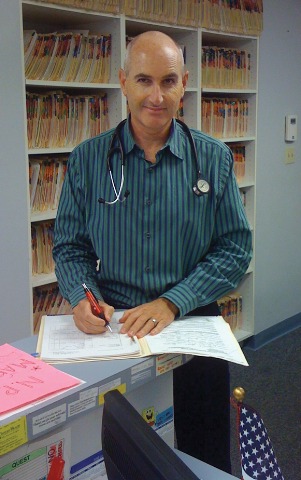
Dr. Gary Levinson, an internist in private practice in San Diego, is one of the physicians who has chosen to try a hybrid approach with CCP. Dr. Levinson said that he was looking for a way to spend more time with patients; besides a busy office practice, he also on call.
A few years ago, he decided he wanted off what he calls the “treadmill” and wanted to be “proactive instead of reactive.”
After hearing CCP’s pitch, Dr. Levinson says he was sold, largely because the company’s model would give him an opportunity to keep his existing patients. He and his partner have about 3,500 to 4,000 patients. Of those, less than 100 are in the concierge practice. These patients pay $1,800 a year for an annual physical (the practice bears the costs of all diagnostics), faster and longer appointments, and direct access to the physicians.
Initially, CCP mailed letters to the practice’s patients to let them know there was a new concierge option and invited them to meet with Dr. Levinson and his partner over two evening sessions. At those sessions, the physicians described why they went into medicine, and what they saw as the merits of the concierge practice, Dr. Levinson said. Some patients signed up on the spot, while others joined later. The practice has held one additional meeting since then but has otherwise not sought actively to recruit more patients, he said.
So what kinds of patients signed up? Some have serious chronic illnesses, but others are just more proactive about their health, Dr. Levinson said.
Dr. Levinson said that his office has a separate staff member who’s devoted to concierge patients. An hour each morning is blocked for the concierge patients; if the slot is unused, Dr. Levinson takes advantage of the time to catch up on paperwork or uses it to accommodate a non–concierge patient.
He’s also found that the concierge patients do not abuse the 24/7 personal access. So, while it could be a burden, it has ended up being completely manageable, he said.
Even so, to keep an appropriate balance between the concierge side and traditional practice, he’s capping the number of patients he’ll enroll at 150.
Aside from the revenue boost that’s come with the hybrid model, everyone – from his staff, to his patients, to himself – is happier, Dr. Levinson noted. He gets to know the concierge patients better, which makes him a sharper practitioner, he said. The traditional practice patients reap the benefits of his lowered stress levels. Not only is he less rushed, but, he added, “Overall, I’m happier. I enjoy my job more because I’m not beating myself up to make a living.”
Dr. Robert Altbaum, an internist in Westport, Conn., said that he’s also been a lot happier since adopting the CCP hybrid approach. He first began looking at a concierge model about 8 years ago when Medicare physician fee cuts appeared to be something that could happen.
But he and his six partners decided to table the idea because they worried that they would lose too many patients. They’ve been a part of the community for 60 years. Dr. Altbaum said that he wanted to keep his place in the community and his obligation to his patients.
Ironically, a few years later, some of the practice’s patients started migrating to a concierge model.
The partners started searching again for a way to fend off Medicare cuts and better serve patients. After reading about the hybrid approach, 4 of the 7 partners decided to give it a try a year ago.
Dr. Altbaum said he’s limited his concierge patients to 5% of his practice, or 100 patients. He comes in a half hour earlier and leaves a half hour later – concierge patients get the first and last slots of the day –which has added 5 hours to his week.
He has given up what used to be a day off, but, it has added 20% to his bottom line for about 10% of his time. And, he said it’s made him more available to his other patients because, in a sense, he’s now seeing 100 fewer patients.
His practice also has a concierge-specific staff person. But when she’s not busy, she helps the rest of the office staff, Dr. Altbaum said.
All his patients are “uniformly happy,” he said, adding that he’s more relaxed.
And, he said, he’s more secure that he can “continue medicine the way I want to practice.”
Disclosures: Dr. Altbaum and Dr. Levinson both reported no conflicts of interest.
Some physicians looking for the steady income and slower pace of concierge medicine who have not wanted to give up their traditional practice have found a new solution: a hybrid practice that lets them devote a small percentage to the retainer side while keeping their roster of traditional patients.
So far, the full concierge model has not proven to be very popular. Only a tiny fraction of the nation’s almost 1 million physicians have chosen the concierge route, according to a recent study for the Medicare Payment Advisory Commission (MedPAC).
Researchers at the University of Chicago’s National Opinion Research Center and Georgetown University determined that about 750 physicians have gone to such retainer-only practices in which patients pay a monthly fee in exchange for longer appointments, same-day appointments, annual physicals, and the ability to reach the physician directly by e-mail or cell phone.
Many physicians have hesitated to fully embrace the concierge model because it may mean alienating patients.
The hybrid model is being promoted as an alternative by Concierge Choice Physicians, a Rockville Centre, N.Y.–based private company. CCP says more than 300,000 traditional and concierge patients are being managed by physicians who have contracts with the company.
Dr. Gary Levinson, an internist in private practice in San Diego, is one of the physicians who has chosen to try a hybrid approach with CCP. Dr. Levinson said that he was looking for a way to spend more time with patients; besides a busy office practice, he also on call.
A few years ago, he decided he wanted off what he calls the “treadmill” and wanted to be “proactive instead of reactive.”
After hearing CCP’s pitch, Dr. Levinson says he was sold, largely because the company’s model would give him an opportunity to keep his existing patients. He and his partner have about 3,500 to 4,000 patients. Of those, less than 100 are in the concierge practice. These patients pay $1,800 a year for an annual physical (the practice bears the costs of all diagnostics), faster and longer appointments, and direct access to the physicians.
Initially, CCP mailed letters to the practice’s patients to let them know there was a new concierge option and invited them to meet with Dr. Levinson and his partner over two evening sessions. At those sessions, the physicians described why they went into medicine, and what they saw as the merits of the concierge practice, Dr. Levinson said. Some patients signed up on the spot, while others joined later. The practice has held one additional meeting since then but has otherwise not sought actively to recruit more patients, he said.
So what kinds of patients signed up? Some have serious chronic illnesses, but others are just more proactive about their health, Dr. Levinson said.
Dr. Levinson said that his office has a separate staff member who’s devoted to concierge patients. An hour each morning is blocked for the concierge patients; if the slot is unused, Dr. Levinson takes advantage of the time to catch up on paperwork or uses it to accommodate a non–concierge patient.
He’s also found that the concierge patients do not abuse the 24/7 personal access. So, while it could be a burden, it has ended up being completely manageable, he said.
Even so, to keep an appropriate balance between the concierge side and traditional practice, he’s capping the number of patients he’ll enroll at 150.
Aside from the revenue boost that’s come with the hybrid model, everyone – from his staff, to his patients, to himself – is happier, Dr. Levinson noted. He gets to know the concierge patients better, which makes him a sharper practitioner, he said. The traditional practice patients reap the benefits of his lowered stress levels. Not only is he less rushed, but, he added, “Overall, I’m happier. I enjoy my job more because I’m not beating myself up to make a living.”
Dr. Robert Altbaum, an internist in Westport, Conn., said that he’s also been a lot happier since adopting the CCP hybrid approach. He first began looking at a concierge model about 8 years ago when Medicare physician fee cuts appeared to be something that could happen.
But he and his six partners decided to table the idea because they worried that they would lose too many patients. They’ve been a part of the community for 60 years. Dr. Altbaum said that he wanted to keep his place in the community and his obligation to his patients.
Ironically, a few years later, some of the practice’s patients started migrating to a concierge model.
The partners started searching again for a way to fend off Medicare cuts and better serve patients. After reading about the hybrid approach, 4 of the 7 partners decided to give it a try a year ago.
Dr. Altbaum said he’s limited his concierge patients to 5% of his practice, or 100 patients. He comes in a half hour earlier and leaves a half hour later – concierge patients get the first and last slots of the day –which has added 5 hours to his week.
He has given up what used to be a day off, but, it has added 20% to his bottom line for about 10% of his time. And, he said it’s made him more available to his other patients because, in a sense, he’s now seeing 100 fewer patients.
His practice also has a concierge-specific staff person. But when she’s not busy, she helps the rest of the office staff, Dr. Altbaum said.
All his patients are “uniformly happy,” he said, adding that he’s more relaxed.
And, he said, he’s more secure that he can “continue medicine the way I want to practice.”
Disclosures: Dr. Altbaum and Dr. Levinson both reported no conflicts of interest.
Some physicians looking for the steady income and slower pace of concierge medicine who have not wanted to give up their traditional practice have found a new solution: a hybrid practice that lets them devote a small percentage to the retainer side while keeping their roster of traditional patients.
So far, the full concierge model has not proven to be very popular. Only a tiny fraction of the nation’s almost 1 million physicians have chosen the concierge route, according to a recent study for the Medicare Payment Advisory Commission (MedPAC).
Researchers at the University of Chicago’s National Opinion Research Center and Georgetown University determined that about 750 physicians have gone to such retainer-only practices in which patients pay a monthly fee in exchange for longer appointments, same-day appointments, annual physicals, and the ability to reach the physician directly by e-mail or cell phone.
Many physicians have hesitated to fully embrace the concierge model because it may mean alienating patients.
The hybrid model is being promoted as an alternative by Concierge Choice Physicians, a Rockville Centre, N.Y.–based private company. CCP says more than 300,000 traditional and concierge patients are being managed by physicians who have contracts with the company.
Dr. Gary Levinson, an internist in private practice in San Diego, is one of the physicians who has chosen to try a hybrid approach with CCP. Dr. Levinson said that he was looking for a way to spend more time with patients; besides a busy office practice, he also on call.
A few years ago, he decided he wanted off what he calls the “treadmill” and wanted to be “proactive instead of reactive.”
After hearing CCP’s pitch, Dr. Levinson says he was sold, largely because the company’s model would give him an opportunity to keep his existing patients. He and his partner have about 3,500 to 4,000 patients. Of those, less than 100 are in the concierge practice. These patients pay $1,800 a year for an annual physical (the practice bears the costs of all diagnostics), faster and longer appointments, and direct access to the physicians.
Initially, CCP mailed letters to the practice’s patients to let them know there was a new concierge option and invited them to meet with Dr. Levinson and his partner over two evening sessions. At those sessions, the physicians described why they went into medicine, and what they saw as the merits of the concierge practice, Dr. Levinson said. Some patients signed up on the spot, while others joined later. The practice has held one additional meeting since then but has otherwise not sought actively to recruit more patients, he said.
So what kinds of patients signed up? Some have serious chronic illnesses, but others are just more proactive about their health, Dr. Levinson said.
Dr. Levinson said that his office has a separate staff member who’s devoted to concierge patients. An hour each morning is blocked for the concierge patients; if the slot is unused, Dr. Levinson takes advantage of the time to catch up on paperwork or uses it to accommodate a non–concierge patient.
He’s also found that the concierge patients do not abuse the 24/7 personal access. So, while it could be a burden, it has ended up being completely manageable, he said.
Even so, to keep an appropriate balance between the concierge side and traditional practice, he’s capping the number of patients he’ll enroll at 150.
Aside from the revenue boost that’s come with the hybrid model, everyone – from his staff, to his patients, to himself – is happier, Dr. Levinson noted. He gets to know the concierge patients better, which makes him a sharper practitioner, he said. The traditional practice patients reap the benefits of his lowered stress levels. Not only is he less rushed, but, he added, “Overall, I’m happier. I enjoy my job more because I’m not beating myself up to make a living.”
Dr. Robert Altbaum, an internist in Westport, Conn., said that he’s also been a lot happier since adopting the CCP hybrid approach. He first began looking at a concierge model about 8 years ago when Medicare physician fee cuts appeared to be something that could happen.
But he and his six partners decided to table the idea because they worried that they would lose too many patients. They’ve been a part of the community for 60 years. Dr. Altbaum said that he wanted to keep his place in the community and his obligation to his patients.
Ironically, a few years later, some of the practice’s patients started migrating to a concierge model.
The partners started searching again for a way to fend off Medicare cuts and better serve patients. After reading about the hybrid approach, 4 of the 7 partners decided to give it a try a year ago.
Dr. Altbaum said he’s limited his concierge patients to 5% of his practice, or 100 patients. He comes in a half hour earlier and leaves a half hour later – concierge patients get the first and last slots of the day –which has added 5 hours to his week.
He has given up what used to be a day off, but, it has added 20% to his bottom line for about 10% of his time. And, he said it’s made him more available to his other patients because, in a sense, he’s now seeing 100 fewer patients.
His practice also has a concierge-specific staff person. But when she’s not busy, she helps the rest of the office staff, Dr. Altbaum said.
All his patients are “uniformly happy,” he said, adding that he’s more relaxed.
And, he said, he’s more secure that he can “continue medicine the way I want to practice.”
Disclosures: Dr. Altbaum and Dr. Levinson both reported no conflicts of interest.
Hybrid Model Combines Concierge With Traditional Practice
Some physicians looking for the steady income and slower pace of concierge medicine who have not wanted to give up their traditional practice have found a new solution: a hybrid practice that lets them devote a small percentage to the retainer side while keeping their roster of traditional patients.
So far, the full concierge model has not proven to be very popular. Only a tiny fraction of the nation’s almost 1 million physicians have chosen the concierge route, according to a recent study for the Medicare Payment Advisory Commission (MedPAC).
Researchers at the University of Chicago’s National Opinion Research Center and Georgetown University determined that about 750 physicians have gone to such retainer-only practices in which patients pay a monthly fee in exchange for longer appointments, same-day appointments, annual physicals, and the ability to reach the physician directly by e-mail or cell phone.
Many physicians have hesitated to fully embrace the concierge model because it may mean alienating patients.
The hybrid model is being promoted as an alternative by Concierge Choice Physicians, a Rockville Centre, N.Y.–based private company. CCP says more than 300,000 traditional and concierge patients are being managed by physicians who have contracts with the company.
Dr. Gary Levinson, an internist in private practice in San Diego, is one of the physicians who has chosen to try a hybrid approach with CCP. Dr. Levinson said that he was looking for a way to spend more time with patients; besides a busy office practice, he also on call.
A few years ago, he decided he wanted off what he calls the “treadmill” and wanted to be “proactive instead of reactive.”
After hearing CCP’s pitch, Dr. Levinson says he was sold, largely because the company’s model would give him an opportunity to keep his existing patients. He and his partner have about 3,500 to 4,000 patients. Of those, less than 100 are in the concierge practice. These patients pay $1,800 a year for an annual physical (the practice bears the costs of all diagnostics), faster and longer appointments, and direct access to the physicians.
Initially, CCP mailed letters to the practice’s patients to let them know there was a new concierge option and invited them to meet with Dr. Levinson and his partner over two evening sessions. At those sessions, the physicians described why they went into medicine, and what they saw as the merits of the concierge practice, Dr. Levinson said. Some patients signed up on the spot, while others joined later. The practice has held one additional meeting since then but has otherwise not sought actively to recruit more patients, he said.
So what kinds of patients signed up? Some have serious chronic illnesses, but others are just more proactive about their health, Dr. Levinson said.
Dr. Levinson said that his office has a separate staff member who’s devoted to concierge patients. An hour each morning is blocked for the concierge patients; if the slot is unused, Dr. Levinson takes advantage of the time to catch up on paperwork or uses it to accommodate a non–concierge patient.
He’s also found that the concierge patients do not abuse the 24/7 personal access. So, while it could be a burden, it has ended up being completely manageable, he said.
Even so, to keep an appropriate balance between the concierge side and traditional practice, he’s capping the number of patients he’ll enroll at 150.
Aside from the revenue boost that’s come with the hybrid model, everyone – from his staff, to his patients, to himself – is happier, Dr. Levinson noted. He gets to know the concierge patients better, which makes him a sharper practitioner, he said. The traditional practice patients reap the benefits of his lowered stress levels. Not only is he less rushed, but, he added, “Overall, I’m happier. I enjoy my job more because I’m not beating myself up to make a living.”
Dr. Robert Altbaum, an internist in Westport, Conn., said that he’s also been a lot happier since adopting the CCP hybrid approach. He first began looking at a concierge model about 8 years ago when Medicare physician fee cuts appeared to be something that could happen.
But he and his six partners decided to table the idea because they worried that they would lose too many patients. They’ve been a part of the community for 60 years. Dr. Altbaum said that he wanted to keep his place in the community and his obligation to his patients.
Ironically, a few years later, some of the practice’s patients started migrating to a concierge model.
The partners started searching again for a way to fend off Medicare cuts and better serve patients. After reading about the hybrid approach, 4 of the 7 partners decided to give it a try a year ago.
Dr. Altbaum said he’s limited his concierge patients to 5% of his practice, or 100 patients. He comes in a half hour earlier and leaves a half hour later – concierge patients get the first and last slots of the day –which has added 5 hours to his week.
He has given up what used to be a day off, but, it has added 20% to his bottom line for about 10% of his time. And, he said it’s made him more available to his other patients because, in a sense, he’s now seeing 100 fewer patients.
His practice also has a concierge-specific staff person. But when she’s not busy, she helps the rest of the office staff, Dr. Altbaum said.
All his patients are “uniformly happy,” he said, adding that he’s more relaxed.
And, he said, he’s more secure that he can “continue medicine the way I want to practice.”
Disclosures: Dr. Altbaum and Dr. Levinson both reported no conflicts of interest.
Some physicians looking for the steady income and slower pace of concierge medicine who have not wanted to give up their traditional practice have found a new solution: a hybrid practice that lets them devote a small percentage to the retainer side while keeping their roster of traditional patients.
So far, the full concierge model has not proven to be very popular. Only a tiny fraction of the nation’s almost 1 million physicians have chosen the concierge route, according to a recent study for the Medicare Payment Advisory Commission (MedPAC).
Researchers at the University of Chicago’s National Opinion Research Center and Georgetown University determined that about 750 physicians have gone to such retainer-only practices in which patients pay a monthly fee in exchange for longer appointments, same-day appointments, annual physicals, and the ability to reach the physician directly by e-mail or cell phone.
Many physicians have hesitated to fully embrace the concierge model because it may mean alienating patients.
The hybrid model is being promoted as an alternative by Concierge Choice Physicians, a Rockville Centre, N.Y.–based private company. CCP says more than 300,000 traditional and concierge patients are being managed by physicians who have contracts with the company.
Dr. Gary Levinson, an internist in private practice in San Diego, is one of the physicians who has chosen to try a hybrid approach with CCP. Dr. Levinson said that he was looking for a way to spend more time with patients; besides a busy office practice, he also on call.
A few years ago, he decided he wanted off what he calls the “treadmill” and wanted to be “proactive instead of reactive.”
After hearing CCP’s pitch, Dr. Levinson says he was sold, largely because the company’s model would give him an opportunity to keep his existing patients. He and his partner have about 3,500 to 4,000 patients. Of those, less than 100 are in the concierge practice. These patients pay $1,800 a year for an annual physical (the practice bears the costs of all diagnostics), faster and longer appointments, and direct access to the physicians.
Initially, CCP mailed letters to the practice’s patients to let them know there was a new concierge option and invited them to meet with Dr. Levinson and his partner over two evening sessions. At those sessions, the physicians described why they went into medicine, and what they saw as the merits of the concierge practice, Dr. Levinson said. Some patients signed up on the spot, while others joined later. The practice has held one additional meeting since then but has otherwise not sought actively to recruit more patients, he said.
So what kinds of patients signed up? Some have serious chronic illnesses, but others are just more proactive about their health, Dr. Levinson said.
Dr. Levinson said that his office has a separate staff member who’s devoted to concierge patients. An hour each morning is blocked for the concierge patients; if the slot is unused, Dr. Levinson takes advantage of the time to catch up on paperwork or uses it to accommodate a non–concierge patient.
He’s also found that the concierge patients do not abuse the 24/7 personal access. So, while it could be a burden, it has ended up being completely manageable, he said.
Even so, to keep an appropriate balance between the concierge side and traditional practice, he’s capping the number of patients he’ll enroll at 150.
Aside from the revenue boost that’s come with the hybrid model, everyone – from his staff, to his patients, to himself – is happier, Dr. Levinson noted. He gets to know the concierge patients better, which makes him a sharper practitioner, he said. The traditional practice patients reap the benefits of his lowered stress levels. Not only is he less rushed, but, he added, “Overall, I’m happier. I enjoy my job more because I’m not beating myself up to make a living.”
Dr. Robert Altbaum, an internist in Westport, Conn., said that he’s also been a lot happier since adopting the CCP hybrid approach. He first began looking at a concierge model about 8 years ago when Medicare physician fee cuts appeared to be something that could happen.
But he and his six partners decided to table the idea because they worried that they would lose too many patients. They’ve been a part of the community for 60 years. Dr. Altbaum said that he wanted to keep his place in the community and his obligation to his patients.
Ironically, a few years later, some of the practice’s patients started migrating to a concierge model.
The partners started searching again for a way to fend off Medicare cuts and better serve patients. After reading about the hybrid approach, 4 of the 7 partners decided to give it a try a year ago.
Dr. Altbaum said he’s limited his concierge patients to 5% of his practice, or 100 patients. He comes in a half hour earlier and leaves a half hour later – concierge patients get the first and last slots of the day –which has added 5 hours to his week.
He has given up what used to be a day off, but, it has added 20% to his bottom line for about 10% of his time. And, he said it’s made him more available to his other patients because, in a sense, he’s now seeing 100 fewer patients.
His practice also has a concierge-specific staff person. But when she’s not busy, she helps the rest of the office staff, Dr. Altbaum said.
All his patients are “uniformly happy,” he said, adding that he’s more relaxed.
And, he said, he’s more secure that he can “continue medicine the way I want to practice.”
Disclosures: Dr. Altbaum and Dr. Levinson both reported no conflicts of interest.
Some physicians looking for the steady income and slower pace of concierge medicine who have not wanted to give up their traditional practice have found a new solution: a hybrid practice that lets them devote a small percentage to the retainer side while keeping their roster of traditional patients.
So far, the full concierge model has not proven to be very popular. Only a tiny fraction of the nation’s almost 1 million physicians have chosen the concierge route, according to a recent study for the Medicare Payment Advisory Commission (MedPAC).
Researchers at the University of Chicago’s National Opinion Research Center and Georgetown University determined that about 750 physicians have gone to such retainer-only practices in which patients pay a monthly fee in exchange for longer appointments, same-day appointments, annual physicals, and the ability to reach the physician directly by e-mail or cell phone.
Many physicians have hesitated to fully embrace the concierge model because it may mean alienating patients.
The hybrid model is being promoted as an alternative by Concierge Choice Physicians, a Rockville Centre, N.Y.–based private company. CCP says more than 300,000 traditional and concierge patients are being managed by physicians who have contracts with the company.
Dr. Gary Levinson, an internist in private practice in San Diego, is one of the physicians who has chosen to try a hybrid approach with CCP. Dr. Levinson said that he was looking for a way to spend more time with patients; besides a busy office practice, he also on call.
A few years ago, he decided he wanted off what he calls the “treadmill” and wanted to be “proactive instead of reactive.”
After hearing CCP’s pitch, Dr. Levinson says he was sold, largely because the company’s model would give him an opportunity to keep his existing patients. He and his partner have about 3,500 to 4,000 patients. Of those, less than 100 are in the concierge practice. These patients pay $1,800 a year for an annual physical (the practice bears the costs of all diagnostics), faster and longer appointments, and direct access to the physicians.
Initially, CCP mailed letters to the practice’s patients to let them know there was a new concierge option and invited them to meet with Dr. Levinson and his partner over two evening sessions. At those sessions, the physicians described why they went into medicine, and what they saw as the merits of the concierge practice, Dr. Levinson said. Some patients signed up on the spot, while others joined later. The practice has held one additional meeting since then but has otherwise not sought actively to recruit more patients, he said.
So what kinds of patients signed up? Some have serious chronic illnesses, but others are just more proactive about their health, Dr. Levinson said.
Dr. Levinson said that his office has a separate staff member who’s devoted to concierge patients. An hour each morning is blocked for the concierge patients; if the slot is unused, Dr. Levinson takes advantage of the time to catch up on paperwork or uses it to accommodate a non–concierge patient.
He’s also found that the concierge patients do not abuse the 24/7 personal access. So, while it could be a burden, it has ended up being completely manageable, he said.
Even so, to keep an appropriate balance between the concierge side and traditional practice, he’s capping the number of patients he’ll enroll at 150.
Aside from the revenue boost that’s come with the hybrid model, everyone – from his staff, to his patients, to himself – is happier, Dr. Levinson noted. He gets to know the concierge patients better, which makes him a sharper practitioner, he said. The traditional practice patients reap the benefits of his lowered stress levels. Not only is he less rushed, but, he added, “Overall, I’m happier. I enjoy my job more because I’m not beating myself up to make a living.”
Dr. Robert Altbaum, an internist in Westport, Conn., said that he’s also been a lot happier since adopting the CCP hybrid approach. He first began looking at a concierge model about 8 years ago when Medicare physician fee cuts appeared to be something that could happen.
But he and his six partners decided to table the idea because they worried that they would lose too many patients. They’ve been a part of the community for 60 years. Dr. Altbaum said that he wanted to keep his place in the community and his obligation to his patients.
Ironically, a few years later, some of the practice’s patients started migrating to a concierge model.
The partners started searching again for a way to fend off Medicare cuts and better serve patients. After reading about the hybrid approach, 4 of the 7 partners decided to give it a try a year ago.
Dr. Altbaum said he’s limited his concierge patients to 5% of his practice, or 100 patients. He comes in a half hour earlier and leaves a half hour later – concierge patients get the first and last slots of the day –which has added 5 hours to his week.
He has given up what used to be a day off, but, it has added 20% to his bottom line for about 10% of his time. And, he said it’s made him more available to his other patients because, in a sense, he’s now seeing 100 fewer patients.
His practice also has a concierge-specific staff person. But when she’s not busy, she helps the rest of the office staff, Dr. Altbaum said.
All his patients are “uniformly happy,” he said, adding that he’s more relaxed.
And, he said, he’s more secure that he can “continue medicine the way I want to practice.”
Disclosures: Dr. Altbaum and Dr. Levinson both reported no conflicts of interest.
Florida Disciplining Docs For Unlicensed Procedures
In early August, the Board recommended that a Tampa physician who allowed unlicensed assistants to perform liposuction should have his license suspended for one year, and pay a $50,000 fine.
According to a story in the St. Petersburg Times, the physician was a family practitioner who had taken a 3-day course in cosmetic procedures. He had been performing liposuction since mid-2009 and had no issues until a complaint from one patient, who alleged that the two unlicensed assistants had performed the procedure, not the physician.
The doctor’s license is suspended immediately, but he has the opportunity to seek a trial with an administrative law judge.
The American Society of Aesthetic Plastic Surgery issued a statement praising the Florida Board for having acted, and said it was the second time recently that the group had disciplined a physician for inadequate training. “Allowing unlicensed or unqualified personnel to perform this type of surgical procedure is a serious breach of patient safety,” said Dr. Felmont F. Eaves, III, ASAPS president, in a statement.
In early August, the Board recommended that a Tampa physician who allowed unlicensed assistants to perform liposuction should have his license suspended for one year, and pay a $50,000 fine.
According to a story in the St. Petersburg Times, the physician was a family practitioner who had taken a 3-day course in cosmetic procedures. He had been performing liposuction since mid-2009 and had no issues until a complaint from one patient, who alleged that the two unlicensed assistants had performed the procedure, not the physician.
The doctor’s license is suspended immediately, but he has the opportunity to seek a trial with an administrative law judge.
The American Society of Aesthetic Plastic Surgery issued a statement praising the Florida Board for having acted, and said it was the second time recently that the group had disciplined a physician for inadequate training. “Allowing unlicensed or unqualified personnel to perform this type of surgical procedure is a serious breach of patient safety,” said Dr. Felmont F. Eaves, III, ASAPS president, in a statement.
In early August, the Board recommended that a Tampa physician who allowed unlicensed assistants to perform liposuction should have his license suspended for one year, and pay a $50,000 fine.
According to a story in the St. Petersburg Times, the physician was a family practitioner who had taken a 3-day course in cosmetic procedures. He had been performing liposuction since mid-2009 and had no issues until a complaint from one patient, who alleged that the two unlicensed assistants had performed the procedure, not the physician.
The doctor’s license is suspended immediately, but he has the opportunity to seek a trial with an administrative law judge.
The American Society of Aesthetic Plastic Surgery issued a statement praising the Florida Board for having acted, and said it was the second time recently that the group had disciplined a physician for inadequate training. “Allowing unlicensed or unqualified personnel to perform this type of surgical procedure is a serious breach of patient safety,” said Dr. Felmont F. Eaves, III, ASAPS president, in a statement.
N.Y. Palliative Care Law May Not Change Practice
A new law requiring New York physicians to discuss palliative care and end-of-life options with terminally ill patients is well intentioned, but may not do much to change clinical practice or institutional culture, according to some observers in the state.
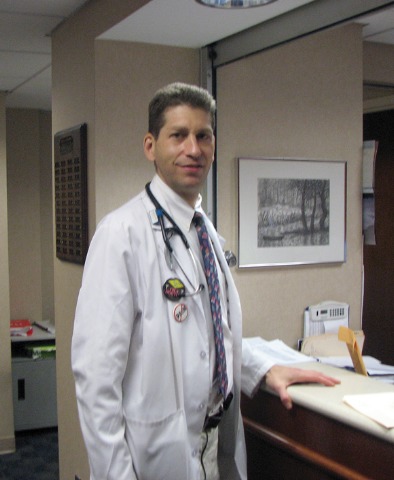
The New York Palliative Care Information Act was signed into law by Gov. David Paterson (D) in August. Perhaps as a sign that palliative care is being embraced more readily and becoming better understood, it took just 14 months from the bill’s introduction in the state Senate (S. 4498 and A. 7617) to its signing.
Even so, “whether or not it will change behavior is a bit of a black box,” said Dr. Bradley Flansbaum, director of hospitalist services at Lenox Hill Hospital in New York. “It’s a nice thought, but I don’t know how they’re going to put it into effect.”
Under the law, physicians and nurse practitioners are required to provide a patient who has less than 6 months to live with information and counseling on palliative care and end-of-life options, including, “the range of options appropriate to the patient, the prognosis, risks and benefits of the various options, and the patient’s legal rights to comprehensive pain and symptom management at the end of life.”
The physician or nurse practitioner can refer the patient to another provider who is willing to meet the legal statute or who is “professionally qualified” to offer the services.
There is no reimbursement offered for the required services.
Because it is an amendment to the state’s public health law, violations of the new law could result in penalties or fines. It’s not clear how it will be enforced or what might trigger the penalties; the health department has until the law’s effective date (February 2011) to devise regulations, said David Leven, executive director of Compassion and Choices of New York.
That advocacy group helped devise the proposal and then shepherded it though the legislature, said Mr. Leven. California has a similar statute, but is not as strong because it does not put the onus on physicians, he said.
The organization sought the legislation because even with increased training on end-of-life issues, too few physicians are having conversations with their dying patients, Mr. Leven said. That means patients’ wishes aren’t being respected, to the detriment of both patients and the practice of medicine.
The organization also hoped that the law would be a catalyst to improving end-of-life education in medical school and at the professional level, he said.
Dr. Wendy Edwards, director of the palliative medicine program at Lenox Hill, said that education would be a key component, but there appeared to be no such formal requirements in the law. About 15 years ago, she was part of a group that attempted to get a bill passed to mandate the teaching of palliative care in medical schools, but it did not get anywhere.
She said she wasn’t sure that the new law was the way to increase attention to palliative care, but that it had likely come about as a result of frustration and impatience on the part of palliative specialists.
The law will be positive, however, she said. Palliative care won’t just be the standard of care, but will be the law, which gives some backing to hospitals that seek to implement and strengthen their quality of care, and end-of-life care in particular.
But it still will not make it easier for physicians who do not have experience in palliative care, Dr. Edwards said. “It’s a very hard discussion to have; it’s not something doctors are trained to do.”
A recent study in non–small cell lung cancer patients found that those who were given palliative care at the time of diagnosis had a better quality of life than did those in standard care (N. Engl. J. Med. 2010;363:733-42). This study may do more to advance the field than does the New York law, Dr. Edwards noted.
Although the Hospice and Palliative Care Association of New York State supported the law, the Medical Society of the State of New York did not. The medical society, which represents 25,000 physicians, opposed the law because of concerns that it would interfere with the way each and every doctor navigates through end-of-life situations with each individual patient, said Elizabeth C. Dears, the society’s senior vice president for legislative and regulatory affairs.
Mandating that information be given on palliative care “may undermine the patient’s belief and conviction in prevailing against their disease and undercut the confidence in their treating physician,” said Ms. Dears.
The medical society also said that physicians are not licensed to provide legal advice in areas such as pain or symptom management, and that they may not know what they are supposed to be communicating to patients under certain provisions, while still being subject to penalties.
Although the medical society might object to requiring any such talk, both Dr. Flansbaum and Dr. Edwards said that, realistically, the law should be requiring palliative care to be offered sooner in the disease process and to a broader group of patients, such as those who have chronic life-limiting conditions such as heart failure.
“By the time you’re invoking palliative care in terminal patients, you’re behind the curve,” said Dr. Flansbaum.
A new law requiring New York physicians to discuss palliative care and end-of-life options with terminally ill patients is well intentioned, but may not do much to change clinical practice or institutional culture, according to some observers in the state.
The New York Palliative Care Information Act was signed into law by Gov. David Paterson (D) in August. Perhaps as a sign that palliative care is being embraced more readily and becoming better understood, it took just 14 months from the bill’s introduction in the state Senate (S. 4498 and A. 7617) to its signing.
Even so, “whether or not it will change behavior is a bit of a black box,” said Dr. Bradley Flansbaum, director of hospitalist services at Lenox Hill Hospital in New York. “It’s a nice thought, but I don’t know how they’re going to put it into effect.”
Under the law, physicians and nurse practitioners are required to provide a patient who has less than 6 months to live with information and counseling on palliative care and end-of-life options, including, “the range of options appropriate to the patient, the prognosis, risks and benefits of the various options, and the patient’s legal rights to comprehensive pain and symptom management at the end of life.”
The physician or nurse practitioner can refer the patient to another provider who is willing to meet the legal statute or who is “professionally qualified” to offer the services.
There is no reimbursement offered for the required services.
Because it is an amendment to the state’s public health law, violations of the new law could result in penalties or fines. It’s not clear how it will be enforced or what might trigger the penalties; the health department has until the law’s effective date (February 2011) to devise regulations, said David Leven, executive director of Compassion and Choices of New York.
That advocacy group helped devise the proposal and then shepherded it though the legislature, said Mr. Leven. California has a similar statute, but is not as strong because it does not put the onus on physicians, he said.
The organization sought the legislation because even with increased training on end-of-life issues, too few physicians are having conversations with their dying patients, Mr. Leven said. That means patients’ wishes aren’t being respected, to the detriment of both patients and the practice of medicine.
The organization also hoped that the law would be a catalyst to improving end-of-life education in medical school and at the professional level, he said.
Dr. Wendy Edwards, director of the palliative medicine program at Lenox Hill, said that education would be a key component, but there appeared to be no such formal requirements in the law. About 15 years ago, she was part of a group that attempted to get a bill passed to mandate the teaching of palliative care in medical schools, but it did not get anywhere.
She said she wasn’t sure that the new law was the way to increase attention to palliative care, but that it had likely come about as a result of frustration and impatience on the part of palliative specialists.
The law will be positive, however, she said. Palliative care won’t just be the standard of care, but will be the law, which gives some backing to hospitals that seek to implement and strengthen their quality of care, and end-of-life care in particular.
But it still will not make it easier for physicians who do not have experience in palliative care, Dr. Edwards said. “It’s a very hard discussion to have; it’s not something doctors are trained to do.”
A recent study in non–small cell lung cancer patients found that those who were given palliative care at the time of diagnosis had a better quality of life than did those in standard care (N. Engl. J. Med. 2010;363:733-42). This study may do more to advance the field than does the New York law, Dr. Edwards noted.
Although the Hospice and Palliative Care Association of New York State supported the law, the Medical Society of the State of New York did not. The medical society, which represents 25,000 physicians, opposed the law because of concerns that it would interfere with the way each and every doctor navigates through end-of-life situations with each individual patient, said Elizabeth C. Dears, the society’s senior vice president for legislative and regulatory affairs.
Mandating that information be given on palliative care “may undermine the patient’s belief and conviction in prevailing against their disease and undercut the confidence in their treating physician,” said Ms. Dears.
The medical society also said that physicians are not licensed to provide legal advice in areas such as pain or symptom management, and that they may not know what they are supposed to be communicating to patients under certain provisions, while still being subject to penalties.
Although the medical society might object to requiring any such talk, both Dr. Flansbaum and Dr. Edwards said that, realistically, the law should be requiring palliative care to be offered sooner in the disease process and to a broader group of patients, such as those who have chronic life-limiting conditions such as heart failure.
“By the time you’re invoking palliative care in terminal patients, you’re behind the curve,” said Dr. Flansbaum.
A new law requiring New York physicians to discuss palliative care and end-of-life options with terminally ill patients is well intentioned, but may not do much to change clinical practice or institutional culture, according to some observers in the state.
The New York Palliative Care Information Act was signed into law by Gov. David Paterson (D) in August. Perhaps as a sign that palliative care is being embraced more readily and becoming better understood, it took just 14 months from the bill’s introduction in the state Senate (S. 4498 and A. 7617) to its signing.
Even so, “whether or not it will change behavior is a bit of a black box,” said Dr. Bradley Flansbaum, director of hospitalist services at Lenox Hill Hospital in New York. “It’s a nice thought, but I don’t know how they’re going to put it into effect.”
Under the law, physicians and nurse practitioners are required to provide a patient who has less than 6 months to live with information and counseling on palliative care and end-of-life options, including, “the range of options appropriate to the patient, the prognosis, risks and benefits of the various options, and the patient’s legal rights to comprehensive pain and symptom management at the end of life.”
The physician or nurse practitioner can refer the patient to another provider who is willing to meet the legal statute or who is “professionally qualified” to offer the services.
There is no reimbursement offered for the required services.
Because it is an amendment to the state’s public health law, violations of the new law could result in penalties or fines. It’s not clear how it will be enforced or what might trigger the penalties; the health department has until the law’s effective date (February 2011) to devise regulations, said David Leven, executive director of Compassion and Choices of New York.
That advocacy group helped devise the proposal and then shepherded it though the legislature, said Mr. Leven. California has a similar statute, but is not as strong because it does not put the onus on physicians, he said.
The organization sought the legislation because even with increased training on end-of-life issues, too few physicians are having conversations with their dying patients, Mr. Leven said. That means patients’ wishes aren’t being respected, to the detriment of both patients and the practice of medicine.
The organization also hoped that the law would be a catalyst to improving end-of-life education in medical school and at the professional level, he said.
Dr. Wendy Edwards, director of the palliative medicine program at Lenox Hill, said that education would be a key component, but there appeared to be no such formal requirements in the law. About 15 years ago, she was part of a group that attempted to get a bill passed to mandate the teaching of palliative care in medical schools, but it did not get anywhere.
She said she wasn’t sure that the new law was the way to increase attention to palliative care, but that it had likely come about as a result of frustration and impatience on the part of palliative specialists.
The law will be positive, however, she said. Palliative care won’t just be the standard of care, but will be the law, which gives some backing to hospitals that seek to implement and strengthen their quality of care, and end-of-life care in particular.
But it still will not make it easier for physicians who do not have experience in palliative care, Dr. Edwards said. “It’s a very hard discussion to have; it’s not something doctors are trained to do.”
A recent study in non–small cell lung cancer patients found that those who were given palliative care at the time of diagnosis had a better quality of life than did those in standard care (N. Engl. J. Med. 2010;363:733-42). This study may do more to advance the field than does the New York law, Dr. Edwards noted.
Although the Hospice and Palliative Care Association of New York State supported the law, the Medical Society of the State of New York did not. The medical society, which represents 25,000 physicians, opposed the law because of concerns that it would interfere with the way each and every doctor navigates through end-of-life situations with each individual patient, said Elizabeth C. Dears, the society’s senior vice president for legislative and regulatory affairs.
Mandating that information be given on palliative care “may undermine the patient’s belief and conviction in prevailing against their disease and undercut the confidence in their treating physician,” said Ms. Dears.
The medical society also said that physicians are not licensed to provide legal advice in areas such as pain or symptom management, and that they may not know what they are supposed to be communicating to patients under certain provisions, while still being subject to penalties.
Although the medical society might object to requiring any such talk, both Dr. Flansbaum and Dr. Edwards said that, realistically, the law should be requiring palliative care to be offered sooner in the disease process and to a broader group of patients, such as those who have chronic life-limiting conditions such as heart failure.
“By the time you’re invoking palliative care in terminal patients, you’re behind the curve,” said Dr. Flansbaum.
Quarter of Acute Care Delivered in ED
WASHINGTON – More than a quarter (28%) of all acute care visits in the United States are made to the emergency department, while 20% of acute care visits are made to subspecialist offices, according to a study released Sept. 7.
Slightly less than half (42%) take place in primary care offices, said lead study author Dr. Stephen R. Pitts, who spoke at a briefing sponsored by the journal Health Affairs.
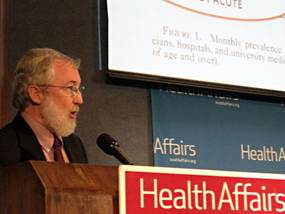
It appears that the more severe a complaint, the more likely a patient will seek care in the ED, said Dr. Pitts of the department of medicine at Emory University, Atlanta. However, the ED is frequently the only option for care, he said, noting that, "too often, patients can't get the care they need, when they need it."
Two-thirds of acute care ED occurred on weekends or on weekdays after office hours, Dr. Pitts and his colleagues found.
Uninsured patients received more than half their acute care in EDs, according to the study, which appears in the journal's September issue.
The authors based their study on data from the three federal surveys of ambulatory medical care in the outpatient, ED, and physician office setting.
Presenting complaints including stomach and abdominal pain, chest pain, and fever dominated the list of what brought patients to the ED. Conversely, patients who presented to their primary care physician’s office for acute care most frequently complained of cough, throat symptoms, rash, and earache.
Seventy-five percent of patients with acute respiratory problems received care in a primary care practice or hospital outpatient department, the authors found.
Overall, emergency physicians took care of 11% of all ambulatory care visits, yet make up only 4% of the physician workforce, the authors said.
Previous studies have shown that emergency care accounts for only 3% of all health spending, Dr. Arthur L. Kellermann, a study coauthor, said at the briefing.
"The fact that 3% of our dollars and 4% of our doctors are delivering that percentage of care is not such a bad deal," said Dr. Kellermann, an emergency physician and the Paul O'Neill Alcoa Chair in Policy Analysis at the Rand Corp. But, he said, it might not be the best possible care for patients or the optimum use of dollars for the health system.
In a separate study, Dr. Ateev Mehrotra and his colleagues reported that 14%-27% of ED visits could have been handled at either a retail clinic or an urgent care center. Switching to these alternate sites could save the system $4.4 billion a year, said Dr. Mehrotra of the University of Pittsburgh and a policy analyst at Rand.
The authors determined that most visits for nine common conditions treated at EDs could be switched easily to those alternate sites. Those conditions include upper-respiratory infections; musculoskeletal conditions such as strains, fractures, and back pain; dermatologic conditions; abdominal pain, headache, and other symptoms without a specific diagnosis; urinary tract infections, some chronic illnesses, and psychiatric conditions; lower-respiratory conditions; such minor problems as insect bites and conjunctivitis; and preventive care.
Dr. Mehrotra and his coauthors disclosed that they received funding from the California HealthCare Foundation for their study.
One of Dr. Pitts' coauthors disclosed that she received a training grant from the Centers for Disease Control and Prevention; others reported no conflicts
primary care, Dr. Stephen R. Pitts, Health Affairs, ED, uninsured, MEDICAID, Medicare
WASHINGTON – More than a quarter (28%) of all acute care visits in the United States are made to the emergency department, while 20% of acute care visits are made to subspecialist offices, according to a study released Sept. 7.
Slightly less than half (42%) take place in primary care offices, said lead study author Dr. Stephen R. Pitts, who spoke at a briefing sponsored by the journal Health Affairs.
It appears that the more severe a complaint, the more likely a patient will seek care in the ED, said Dr. Pitts of the department of medicine at Emory University, Atlanta. However, the ED is frequently the only option for care, he said, noting that, "too often, patients can't get the care they need, when they need it."
Two-thirds of acute care ED occurred on weekends or on weekdays after office hours, Dr. Pitts and his colleagues found.
Uninsured patients received more than half their acute care in EDs, according to the study, which appears in the journal's September issue.
The authors based their study on data from the three federal surveys of ambulatory medical care in the outpatient, ED, and physician office setting.
Presenting complaints including stomach and abdominal pain, chest pain, and fever dominated the list of what brought patients to the ED. Conversely, patients who presented to their primary care physician’s office for acute care most frequently complained of cough, throat symptoms, rash, and earache.
Seventy-five percent of patients with acute respiratory problems received care in a primary care practice or hospital outpatient department, the authors found.
Overall, emergency physicians took care of 11% of all ambulatory care visits, yet make up only 4% of the physician workforce, the authors said.
Previous studies have shown that emergency care accounts for only 3% of all health spending, Dr. Arthur L. Kellermann, a study coauthor, said at the briefing.
"The fact that 3% of our dollars and 4% of our doctors are delivering that percentage of care is not such a bad deal," said Dr. Kellermann, an emergency physician and the Paul O'Neill Alcoa Chair in Policy Analysis at the Rand Corp. But, he said, it might not be the best possible care for patients or the optimum use of dollars for the health system.
In a separate study, Dr. Ateev Mehrotra and his colleagues reported that 14%-27% of ED visits could have been handled at either a retail clinic or an urgent care center. Switching to these alternate sites could save the system $4.4 billion a year, said Dr. Mehrotra of the University of Pittsburgh and a policy analyst at Rand.
The authors determined that most visits for nine common conditions treated at EDs could be switched easily to those alternate sites. Those conditions include upper-respiratory infections; musculoskeletal conditions such as strains, fractures, and back pain; dermatologic conditions; abdominal pain, headache, and other symptoms without a specific diagnosis; urinary tract infections, some chronic illnesses, and psychiatric conditions; lower-respiratory conditions; such minor problems as insect bites and conjunctivitis; and preventive care.
Dr. Mehrotra and his coauthors disclosed that they received funding from the California HealthCare Foundation for their study.
One of Dr. Pitts' coauthors disclosed that she received a training grant from the Centers for Disease Control and Prevention; others reported no conflicts
WASHINGTON – More than a quarter (28%) of all acute care visits in the United States are made to the emergency department, while 20% of acute care visits are made to subspecialist offices, according to a study released Sept. 7.
Slightly less than half (42%) take place in primary care offices, said lead study author Dr. Stephen R. Pitts, who spoke at a briefing sponsored by the journal Health Affairs.
It appears that the more severe a complaint, the more likely a patient will seek care in the ED, said Dr. Pitts of the department of medicine at Emory University, Atlanta. However, the ED is frequently the only option for care, he said, noting that, "too often, patients can't get the care they need, when they need it."
Two-thirds of acute care ED occurred on weekends or on weekdays after office hours, Dr. Pitts and his colleagues found.
Uninsured patients received more than half their acute care in EDs, according to the study, which appears in the journal's September issue.
The authors based their study on data from the three federal surveys of ambulatory medical care in the outpatient, ED, and physician office setting.
Presenting complaints including stomach and abdominal pain, chest pain, and fever dominated the list of what brought patients to the ED. Conversely, patients who presented to their primary care physician’s office for acute care most frequently complained of cough, throat symptoms, rash, and earache.
Seventy-five percent of patients with acute respiratory problems received care in a primary care practice or hospital outpatient department, the authors found.
Overall, emergency physicians took care of 11% of all ambulatory care visits, yet make up only 4% of the physician workforce, the authors said.
Previous studies have shown that emergency care accounts for only 3% of all health spending, Dr. Arthur L. Kellermann, a study coauthor, said at the briefing.
"The fact that 3% of our dollars and 4% of our doctors are delivering that percentage of care is not such a bad deal," said Dr. Kellermann, an emergency physician and the Paul O'Neill Alcoa Chair in Policy Analysis at the Rand Corp. But, he said, it might not be the best possible care for patients or the optimum use of dollars for the health system.
In a separate study, Dr. Ateev Mehrotra and his colleagues reported that 14%-27% of ED visits could have been handled at either a retail clinic or an urgent care center. Switching to these alternate sites could save the system $4.4 billion a year, said Dr. Mehrotra of the University of Pittsburgh and a policy analyst at Rand.
The authors determined that most visits for nine common conditions treated at EDs could be switched easily to those alternate sites. Those conditions include upper-respiratory infections; musculoskeletal conditions such as strains, fractures, and back pain; dermatologic conditions; abdominal pain, headache, and other symptoms without a specific diagnosis; urinary tract infections, some chronic illnesses, and psychiatric conditions; lower-respiratory conditions; such minor problems as insect bites and conjunctivitis; and preventive care.
Dr. Mehrotra and his coauthors disclosed that they received funding from the California HealthCare Foundation for their study.
One of Dr. Pitts' coauthors disclosed that she received a training grant from the Centers for Disease Control and Prevention; others reported no conflicts
primary care, Dr. Stephen R. Pitts, Health Affairs, ED, uninsured, MEDICAID, Medicare
primary care, Dr. Stephen R. Pitts, Health Affairs, ED, uninsured, MEDICAID, Medicare