User login
More NCI Cooperative Groups Forming Alliances
WASHINGTON – The American College of Radiology’s Imaging Network and the Eastern Cooperative Oncology Group have announced that they will merge their cancer trial and research programs. And it appears that another group, the Gynecologic Oncology Group, also may be considering an alliance.
The merger between the ACR Imaging Network (ACRIN) and the Eastern Cooperative Oncology Group (ECOG), announced on March 18, is the latest in a series of alliances prompted by the National Cancer Institute’s plan to consolidate its Clinical Trials Cooperative Groups from 10 to 5, plus 1 pediatric group.
The American College of Surgeons Oncology Group, the Cancer and Leukemia Group B, and the North Central Cancer Treatment Group have announced merger plans.
And the Radiation Therapy Oncology Group and the National Surgical Adjuvant Breast and Bowel Project are joining forces in what they are calling "a collaborative alliance."
The mergers were discussed March 22 during "Implementing a National Cancer Clinical Trials System for the 21st Century," a workshop hosted by the National Cancer Policy Forum and the American Society of Clinical Oncology at the National Academy of Sciences.
The National Cancer Institute is acting in response to a report issued by the Institute of Medicine in early 2010 that recommended an overhaul of the cooperative group system. The IOM panel agreed with the NCI that it had become too unwieldy and bureaucratic. Trials were taking longer to complete, if they were being completed at all.
In a statement announcing their merger, ACRIN and ECOG said the new group would focus on three main areas: early detection and diagnosis; biomarker-driven phase II and phase III therapeutic studies; and "genetic, molecular, and imaging marker research to predict and monitor treatment response."
ECOG was one of the first cooperative groups in the NCI system. Now, it is one of the largest cancer research organizations in the United States, according to the group. ACRIN has a network of investigators from 100 academic and community-based facilities in the United States and overseas.
At the meeting, ECOG chair Dr. Robert L. Comis said that all of the groups had been trying to find ways to become stronger and "more responsive to the emerging science."
"We’re all competing for the same degenerating pot of money," said Dr. Comis, who is also president and chairman of the Coalition of Cancer Cooperative Groups, and director of the Drexel University Clinical Trials Research Center, Philadelphia.
That pressure is driving some of the consolidation, and all the mergers are making some of those who have not been asked to join a little nervous. Dr. Philip J. DiSaia, chairman of the Gynecologic Oncology Group, said at the meeting that the GOG members felt somewhat strongly that they were unique, and might not fit with any of the other groups.
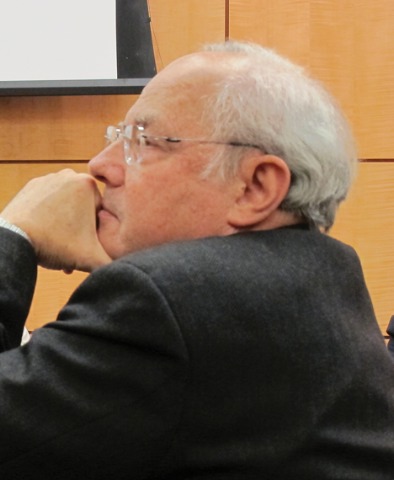
He mentioned that he had been in discussions with Dr. Norman Wolmark, chairman of the National Surgical Adjuvant Breast and Bowel Project, about a possible alliance, but that nothing had come of it yet.
Dr. Wolmark spoke up at the meeting and said that he was willing to state his commitment before the assembled audience and the "several dozens" viewing the meeting by webcast. "I ask, will you marry me?" said Dr. Wolmark, who is director of oncology at the West Penn Allegheny Health System in the Pittsburgh area. He then quickly added that, "full disclosure, it will be a threesome."
"I think open marriage could work," said Dr. DiSaia, a professor of obstetrics and gynecology at the University of California, Irvine.
The NCI and the cooperative groups are continuing to mull over how the new trial system will look. The expectation is that there will be a different system by 2014.
WASHINGTON – The American College of Radiology’s Imaging Network and the Eastern Cooperative Oncology Group have announced that they will merge their cancer trial and research programs. And it appears that another group, the Gynecologic Oncology Group, also may be considering an alliance.
The merger between the ACR Imaging Network (ACRIN) and the Eastern Cooperative Oncology Group (ECOG), announced on March 18, is the latest in a series of alliances prompted by the National Cancer Institute’s plan to consolidate its Clinical Trials Cooperative Groups from 10 to 5, plus 1 pediatric group.
The American College of Surgeons Oncology Group, the Cancer and Leukemia Group B, and the North Central Cancer Treatment Group have announced merger plans.
And the Radiation Therapy Oncology Group and the National Surgical Adjuvant Breast and Bowel Project are joining forces in what they are calling "a collaborative alliance."
The mergers were discussed March 22 during "Implementing a National Cancer Clinical Trials System for the 21st Century," a workshop hosted by the National Cancer Policy Forum and the American Society of Clinical Oncology at the National Academy of Sciences.
The National Cancer Institute is acting in response to a report issued by the Institute of Medicine in early 2010 that recommended an overhaul of the cooperative group system. The IOM panel agreed with the NCI that it had become too unwieldy and bureaucratic. Trials were taking longer to complete, if they were being completed at all.
In a statement announcing their merger, ACRIN and ECOG said the new group would focus on three main areas: early detection and diagnosis; biomarker-driven phase II and phase III therapeutic studies; and "genetic, molecular, and imaging marker research to predict and monitor treatment response."
ECOG was one of the first cooperative groups in the NCI system. Now, it is one of the largest cancer research organizations in the United States, according to the group. ACRIN has a network of investigators from 100 academic and community-based facilities in the United States and overseas.
At the meeting, ECOG chair Dr. Robert L. Comis said that all of the groups had been trying to find ways to become stronger and "more responsive to the emerging science."
"We’re all competing for the same degenerating pot of money," said Dr. Comis, who is also president and chairman of the Coalition of Cancer Cooperative Groups, and director of the Drexel University Clinical Trials Research Center, Philadelphia.
That pressure is driving some of the consolidation, and all the mergers are making some of those who have not been asked to join a little nervous. Dr. Philip J. DiSaia, chairman of the Gynecologic Oncology Group, said at the meeting that the GOG members felt somewhat strongly that they were unique, and might not fit with any of the other groups.
He mentioned that he had been in discussions with Dr. Norman Wolmark, chairman of the National Surgical Adjuvant Breast and Bowel Project, about a possible alliance, but that nothing had come of it yet.
Dr. Wolmark spoke up at the meeting and said that he was willing to state his commitment before the assembled audience and the "several dozens" viewing the meeting by webcast. "I ask, will you marry me?" said Dr. Wolmark, who is director of oncology at the West Penn Allegheny Health System in the Pittsburgh area. He then quickly added that, "full disclosure, it will be a threesome."
"I think open marriage could work," said Dr. DiSaia, a professor of obstetrics and gynecology at the University of California, Irvine.
The NCI and the cooperative groups are continuing to mull over how the new trial system will look. The expectation is that there will be a different system by 2014.
WASHINGTON – The American College of Radiology’s Imaging Network and the Eastern Cooperative Oncology Group have announced that they will merge their cancer trial and research programs. And it appears that another group, the Gynecologic Oncology Group, also may be considering an alliance.
The merger between the ACR Imaging Network (ACRIN) and the Eastern Cooperative Oncology Group (ECOG), announced on March 18, is the latest in a series of alliances prompted by the National Cancer Institute’s plan to consolidate its Clinical Trials Cooperative Groups from 10 to 5, plus 1 pediatric group.
The American College of Surgeons Oncology Group, the Cancer and Leukemia Group B, and the North Central Cancer Treatment Group have announced merger plans.
And the Radiation Therapy Oncology Group and the National Surgical Adjuvant Breast and Bowel Project are joining forces in what they are calling "a collaborative alliance."
The mergers were discussed March 22 during "Implementing a National Cancer Clinical Trials System for the 21st Century," a workshop hosted by the National Cancer Policy Forum and the American Society of Clinical Oncology at the National Academy of Sciences.
The National Cancer Institute is acting in response to a report issued by the Institute of Medicine in early 2010 that recommended an overhaul of the cooperative group system. The IOM panel agreed with the NCI that it had become too unwieldy and bureaucratic. Trials were taking longer to complete, if they were being completed at all.
In a statement announcing their merger, ACRIN and ECOG said the new group would focus on three main areas: early detection and diagnosis; biomarker-driven phase II and phase III therapeutic studies; and "genetic, molecular, and imaging marker research to predict and monitor treatment response."
ECOG was one of the first cooperative groups in the NCI system. Now, it is one of the largest cancer research organizations in the United States, according to the group. ACRIN has a network of investigators from 100 academic and community-based facilities in the United States and overseas.
At the meeting, ECOG chair Dr. Robert L. Comis said that all of the groups had been trying to find ways to become stronger and "more responsive to the emerging science."
"We’re all competing for the same degenerating pot of money," said Dr. Comis, who is also president and chairman of the Coalition of Cancer Cooperative Groups, and director of the Drexel University Clinical Trials Research Center, Philadelphia.
That pressure is driving some of the consolidation, and all the mergers are making some of those who have not been asked to join a little nervous. Dr. Philip J. DiSaia, chairman of the Gynecologic Oncology Group, said at the meeting that the GOG members felt somewhat strongly that they were unique, and might not fit with any of the other groups.
He mentioned that he had been in discussions with Dr. Norman Wolmark, chairman of the National Surgical Adjuvant Breast and Bowel Project, about a possible alliance, but that nothing had come of it yet.
Dr. Wolmark spoke up at the meeting and said that he was willing to state his commitment before the assembled audience and the "several dozens" viewing the meeting by webcast. "I ask, will you marry me?" said Dr. Wolmark, who is director of oncology at the West Penn Allegheny Health System in the Pittsburgh area. He then quickly added that, "full disclosure, it will be a threesome."
"I think open marriage could work," said Dr. DiSaia, a professor of obstetrics and gynecology at the University of California, Irvine.
The NCI and the cooperative groups are continuing to mull over how the new trial system will look. The expectation is that there will be a different system by 2014.
More NCI Cooperative Groups Forming Alliances
WASHINGTON – The American College of Radiology’s Imaging Network and the Eastern Cooperative Oncology Group have announced that they will merge their cancer trial and research programs. And it appears that another group, the Gynecologic Oncology Group, also may be considering an alliance.
The merger between the ACR Imaging Network (ACRIN) and the Eastern Cooperative Oncology Group (ECOG), announced on March 18, is the latest in a series of alliances prompted by the National Cancer Institute’s plan to consolidate its Clinical Trials Cooperative Groups from 10 to 5, plus 1 pediatric group.
The American College of Surgeons Oncology Group, the Cancer and Leukemia Group B, and the North Central Cancer Treatment Group have announced merger plans.
And the Radiation Therapy Oncology Group and the National Surgical Adjuvant Breast and Bowel Project are joining forces in what they are calling "a collaborative alliance."
The mergers were discussed March 22 during "Implementing a National Cancer Clinical Trials System for the 21st Century," a workshop hosted by the National Cancer Policy Forum and the American Society of Clinical Oncology at the National Academy of Sciences.
The National Cancer Institute is acting in response to a report issued by the Institute of Medicine in early 2010 that recommended an overhaul of the cooperative group system. The IOM panel agreed with the NCI that it had become too unwieldy and bureaucratic. Trials were taking longer to complete, if they were being completed at all.
In a statement announcing their merger, ACRIN and ECOG said the new group would focus on three main areas: early detection and diagnosis; biomarker-driven phase II and phase III therapeutic studies; and "genetic, molecular, and imaging marker research to predict and monitor treatment response."
ECOG was one of the first cooperative groups in the NCI system. Now, it is one of the largest cancer research organizations in the United States, according to the group. ACRIN has a network of investigators from 100 academic and community-based facilities in the United States and overseas.
At the meeting, ECOG chair Dr. Robert L. Comis said that all of the groups had been trying to find ways to become stronger and "more responsive to the emerging science."
"We’re all competing for the same degenerating pot of money," said Dr. Comis, who is also president and chairman of the Coalition of Cancer Cooperative Groups, and director of the Drexel University Clinical Trials Research Center, Philadelphia.
That pressure is driving some of the consolidation, and all the mergers are making some of those who have not been asked to join a little nervous. Dr. Philip J. DiSaia, chairman of the Gynecologic Oncology Group, said at the meeting that the GOG members felt somewhat strongly that they were unique, and might not fit with any of the other groups.
He mentioned that he had been in discussions with Dr. Norman Wolmark, chairman of the National Surgical Adjuvant Breast and Bowel Project, about a possible alliance, but that nothing had come of it yet.
Dr. Wolmark spoke up at the meeting and said that he was willing to state his commitment before the assembled audience and the "several dozens" viewing the meeting by webcast. "I ask, will you marry me?" said Dr. Wolmark, who is director of oncology at the West Penn Allegheny Health System in the Pittsburgh area. He then quickly added that, "full disclosure, it will be a threesome."
"I think open marriage could work," said Dr. DiSaia, a professor of obstetrics and gynecology at the University of California, Irvine.
The NCI and the cooperative groups are continuing to mull over how the new trial system will look. The expectation is that there will be a different system by 2014.
WASHINGTON – The American College of Radiology’s Imaging Network and the Eastern Cooperative Oncology Group have announced that they will merge their cancer trial and research programs. And it appears that another group, the Gynecologic Oncology Group, also may be considering an alliance.
The merger between the ACR Imaging Network (ACRIN) and the Eastern Cooperative Oncology Group (ECOG), announced on March 18, is the latest in a series of alliances prompted by the National Cancer Institute’s plan to consolidate its Clinical Trials Cooperative Groups from 10 to 5, plus 1 pediatric group.
The American College of Surgeons Oncology Group, the Cancer and Leukemia Group B, and the North Central Cancer Treatment Group have announced merger plans.
And the Radiation Therapy Oncology Group and the National Surgical Adjuvant Breast and Bowel Project are joining forces in what they are calling "a collaborative alliance."
The mergers were discussed March 22 during "Implementing a National Cancer Clinical Trials System for the 21st Century," a workshop hosted by the National Cancer Policy Forum and the American Society of Clinical Oncology at the National Academy of Sciences.
The National Cancer Institute is acting in response to a report issued by the Institute of Medicine in early 2010 that recommended an overhaul of the cooperative group system. The IOM panel agreed with the NCI that it had become too unwieldy and bureaucratic. Trials were taking longer to complete, if they were being completed at all.
In a statement announcing their merger, ACRIN and ECOG said the new group would focus on three main areas: early detection and diagnosis; biomarker-driven phase II and phase III therapeutic studies; and "genetic, molecular, and imaging marker research to predict and monitor treatment response."
ECOG was one of the first cooperative groups in the NCI system. Now, it is one of the largest cancer research organizations in the United States, according to the group. ACRIN has a network of investigators from 100 academic and community-based facilities in the United States and overseas.
At the meeting, ECOG chair Dr. Robert L. Comis said that all of the groups had been trying to find ways to become stronger and "more responsive to the emerging science."
"We’re all competing for the same degenerating pot of money," said Dr. Comis, who is also president and chairman of the Coalition of Cancer Cooperative Groups, and director of the Drexel University Clinical Trials Research Center, Philadelphia.
That pressure is driving some of the consolidation, and all the mergers are making some of those who have not been asked to join a little nervous. Dr. Philip J. DiSaia, chairman of the Gynecologic Oncology Group, said at the meeting that the GOG members felt somewhat strongly that they were unique, and might not fit with any of the other groups.
He mentioned that he had been in discussions with Dr. Norman Wolmark, chairman of the National Surgical Adjuvant Breast and Bowel Project, about a possible alliance, but that nothing had come of it yet.
Dr. Wolmark spoke up at the meeting and said that he was willing to state his commitment before the assembled audience and the "several dozens" viewing the meeting by webcast. "I ask, will you marry me?" said Dr. Wolmark, who is director of oncology at the West Penn Allegheny Health System in the Pittsburgh area. He then quickly added that, "full disclosure, it will be a threesome."
"I think open marriage could work," said Dr. DiSaia, a professor of obstetrics and gynecology at the University of California, Irvine.
The NCI and the cooperative groups are continuing to mull over how the new trial system will look. The expectation is that there will be a different system by 2014.
WASHINGTON – The American College of Radiology’s Imaging Network and the Eastern Cooperative Oncology Group have announced that they will merge their cancer trial and research programs. And it appears that another group, the Gynecologic Oncology Group, also may be considering an alliance.
The merger between the ACR Imaging Network (ACRIN) and the Eastern Cooperative Oncology Group (ECOG), announced on March 18, is the latest in a series of alliances prompted by the National Cancer Institute’s plan to consolidate its Clinical Trials Cooperative Groups from 10 to 5, plus 1 pediatric group.
The American College of Surgeons Oncology Group, the Cancer and Leukemia Group B, and the North Central Cancer Treatment Group have announced merger plans.
And the Radiation Therapy Oncology Group and the National Surgical Adjuvant Breast and Bowel Project are joining forces in what they are calling "a collaborative alliance."
The mergers were discussed March 22 during "Implementing a National Cancer Clinical Trials System for the 21st Century," a workshop hosted by the National Cancer Policy Forum and the American Society of Clinical Oncology at the National Academy of Sciences.
The National Cancer Institute is acting in response to a report issued by the Institute of Medicine in early 2010 that recommended an overhaul of the cooperative group system. The IOM panel agreed with the NCI that it had become too unwieldy and bureaucratic. Trials were taking longer to complete, if they were being completed at all.
In a statement announcing their merger, ACRIN and ECOG said the new group would focus on three main areas: early detection and diagnosis; biomarker-driven phase II and phase III therapeutic studies; and "genetic, molecular, and imaging marker research to predict and monitor treatment response."
ECOG was one of the first cooperative groups in the NCI system. Now, it is one of the largest cancer research organizations in the United States, according to the group. ACRIN has a network of investigators from 100 academic and community-based facilities in the United States and overseas.
At the meeting, ECOG chair Dr. Robert L. Comis said that all of the groups had been trying to find ways to become stronger and "more responsive to the emerging science."
"We’re all competing for the same degenerating pot of money," said Dr. Comis, who is also president and chairman of the Coalition of Cancer Cooperative Groups, and director of the Drexel University Clinical Trials Research Center, Philadelphia.
That pressure is driving some of the consolidation, and all the mergers are making some of those who have not been asked to join a little nervous. Dr. Philip J. DiSaia, chairman of the Gynecologic Oncology Group, said at the meeting that the GOG members felt somewhat strongly that they were unique, and might not fit with any of the other groups.
He mentioned that he had been in discussions with Dr. Norman Wolmark, chairman of the National Surgical Adjuvant Breast and Bowel Project, about a possible alliance, but that nothing had come of it yet.
Dr. Wolmark spoke up at the meeting and said that he was willing to state his commitment before the assembled audience and the "several dozens" viewing the meeting by webcast. "I ask, will you marry me?" said Dr. Wolmark, who is director of oncology at the West Penn Allegheny Health System in the Pittsburgh area. He then quickly added that, "full disclosure, it will be a threesome."
"I think open marriage could work," said Dr. DiSaia, a professor of obstetrics and gynecology at the University of California, Irvine.
The NCI and the cooperative groups are continuing to mull over how the new trial system will look. The expectation is that there will be a different system by 2014.
More NCI Cooperative Groups Forming Alliances
WASHINGTON – The American College of Radiology’s Imaging Network and the Eastern Cooperative Oncology Group have announced that they will merge their cancer trial and research programs. And it appears that another group, the Gynecologic Oncology Group, also may be considering an alliance.
The merger between the ACR Imaging Network (ACRIN) and the Eastern Cooperative Oncology Group (ECOG), announced on March 18, is the latest in a series of alliances prompted by the National Cancer Institute’s plan to consolidate its Clinical Trials Cooperative Groups from 10 to 5, plus 1 pediatric group.
The American College of Surgeons Oncology Group, the Cancer and Leukemia Group B, and the North Central Cancer Treatment Group have announced merger plans.
And the Radiation Therapy Oncology Group and the National Surgical Adjuvant Breast and Bowel Project are joining forces in what they are calling "a collaborative alliance."
The mergers were discussed March 22 during "Implementing a National Cancer Clinical Trials System for the 21st Century," a workshop hosted by the National Cancer Policy Forum and the American Society of Clinical Oncology at the National Academy of Sciences.
The National Cancer Institute is acting in response to a report issued by the Institute of Medicine in early 2010 that recommended an overhaul of the cooperative group system. The IOM panel agreed with the NCI that it had become too unwieldy and bureaucratic. Trials were taking longer to complete, if they were being completed at all.
In a statement announcing their merger, ACRIN and ECOG said the new group would focus on three main areas: early detection and diagnosis; biomarker-driven phase II and phase III therapeutic studies; and "genetic, molecular, and imaging marker research to predict and monitor treatment response."
ECOG was one of the first cooperative groups in the NCI system. Now, it is one of the largest cancer research organizations in the United States, according to the group. ACRIN has a network of investigators from 100 academic and community-based facilities in the United States and overseas.
At the meeting, ECOG chair Dr. Robert L. Comis said that all of the groups had been trying to find ways to become stronger and "more responsive to the emerging science."
"We’re all competing for the same degenerating pot of money," said Dr. Comis, who is also president and chairman of the Coalition of Cancer Cooperative Groups, and director of the Drexel University Clinical Trials Research Center, Philadelphia.
That pressure is driving some of the consolidation, and all the mergers are making some of those who have not been asked to join a little nervous. Dr. Philip J. DiSaia, chairman of the Gynecologic Oncology Group, said at the meeting that the GOG members felt somewhat strongly that they were unique, and might not fit with any of the other groups.
He mentioned that he had been in discussions with Dr. Norman Wolmark, chairman of the National Surgical Adjuvant Breast and Bowel Project, about a possible alliance, but that nothing had come of it yet.
Dr. Wolmark spoke up at the meeting and said that he was willing to state his commitment before the assembled audience and the "several dozens" viewing the meeting by webcast. "I ask, will you marry me?" said Dr. Wolmark, who is director of oncology at the West Penn Allegheny Health System in the Pittsburgh area. He then quickly added that, "full disclosure, it will be a threesome."
"I think open marriage could work," said Dr. DiSaia, a professor of obstetrics and gynecology at the University of California, Irvine.
The NCI and the cooperative groups are continuing to mull over how the new trial system will look. The expectation is that there will be a different system by 2014.
WASHINGTON – The American College of Radiology’s Imaging Network and the Eastern Cooperative Oncology Group have announced that they will merge their cancer trial and research programs. And it appears that another group, the Gynecologic Oncology Group, also may be considering an alliance.
The merger between the ACR Imaging Network (ACRIN) and the Eastern Cooperative Oncology Group (ECOG), announced on March 18, is the latest in a series of alliances prompted by the National Cancer Institute’s plan to consolidate its Clinical Trials Cooperative Groups from 10 to 5, plus 1 pediatric group.
The American College of Surgeons Oncology Group, the Cancer and Leukemia Group B, and the North Central Cancer Treatment Group have announced merger plans.
And the Radiation Therapy Oncology Group and the National Surgical Adjuvant Breast and Bowel Project are joining forces in what they are calling "a collaborative alliance."
The mergers were discussed March 22 during "Implementing a National Cancer Clinical Trials System for the 21st Century," a workshop hosted by the National Cancer Policy Forum and the American Society of Clinical Oncology at the National Academy of Sciences.
The National Cancer Institute is acting in response to a report issued by the Institute of Medicine in early 2010 that recommended an overhaul of the cooperative group system. The IOM panel agreed with the NCI that it had become too unwieldy and bureaucratic. Trials were taking longer to complete, if they were being completed at all.
In a statement announcing their merger, ACRIN and ECOG said the new group would focus on three main areas: early detection and diagnosis; biomarker-driven phase II and phase III therapeutic studies; and "genetic, molecular, and imaging marker research to predict and monitor treatment response."
ECOG was one of the first cooperative groups in the NCI system. Now, it is one of the largest cancer research organizations in the United States, according to the group. ACRIN has a network of investigators from 100 academic and community-based facilities in the United States and overseas.
At the meeting, ECOG chair Dr. Robert L. Comis said that all of the groups had been trying to find ways to become stronger and "more responsive to the emerging science."
"We’re all competing for the same degenerating pot of money," said Dr. Comis, who is also president and chairman of the Coalition of Cancer Cooperative Groups, and director of the Drexel University Clinical Trials Research Center, Philadelphia.
That pressure is driving some of the consolidation, and all the mergers are making some of those who have not been asked to join a little nervous. Dr. Philip J. DiSaia, chairman of the Gynecologic Oncology Group, said at the meeting that the GOG members felt somewhat strongly that they were unique, and might not fit with any of the other groups.
He mentioned that he had been in discussions with Dr. Norman Wolmark, chairman of the National Surgical Adjuvant Breast and Bowel Project, about a possible alliance, but that nothing had come of it yet.
Dr. Wolmark spoke up at the meeting and said that he was willing to state his commitment before the assembled audience and the "several dozens" viewing the meeting by webcast. "I ask, will you marry me?" said Dr. Wolmark, who is director of oncology at the West Penn Allegheny Health System in the Pittsburgh area. He then quickly added that, "full disclosure, it will be a threesome."
"I think open marriage could work," said Dr. DiSaia, a professor of obstetrics and gynecology at the University of California, Irvine.
The NCI and the cooperative groups are continuing to mull over how the new trial system will look. The expectation is that there will be a different system by 2014.
WASHINGTON – The American College of Radiology’s Imaging Network and the Eastern Cooperative Oncology Group have announced that they will merge their cancer trial and research programs. And it appears that another group, the Gynecologic Oncology Group, also may be considering an alliance.
The merger between the ACR Imaging Network (ACRIN) and the Eastern Cooperative Oncology Group (ECOG), announced on March 18, is the latest in a series of alliances prompted by the National Cancer Institute’s plan to consolidate its Clinical Trials Cooperative Groups from 10 to 5, plus 1 pediatric group.
The American College of Surgeons Oncology Group, the Cancer and Leukemia Group B, and the North Central Cancer Treatment Group have announced merger plans.
And the Radiation Therapy Oncology Group and the National Surgical Adjuvant Breast and Bowel Project are joining forces in what they are calling "a collaborative alliance."
The mergers were discussed March 22 during "Implementing a National Cancer Clinical Trials System for the 21st Century," a workshop hosted by the National Cancer Policy Forum and the American Society of Clinical Oncology at the National Academy of Sciences.
The National Cancer Institute is acting in response to a report issued by the Institute of Medicine in early 2010 that recommended an overhaul of the cooperative group system. The IOM panel agreed with the NCI that it had become too unwieldy and bureaucratic. Trials were taking longer to complete, if they were being completed at all.
In a statement announcing their merger, ACRIN and ECOG said the new group would focus on three main areas: early detection and diagnosis; biomarker-driven phase II and phase III therapeutic studies; and "genetic, molecular, and imaging marker research to predict and monitor treatment response."
ECOG was one of the first cooperative groups in the NCI system. Now, it is one of the largest cancer research organizations in the United States, according to the group. ACRIN has a network of investigators from 100 academic and community-based facilities in the United States and overseas.
At the meeting, ECOG chair Dr. Robert L. Comis said that all of the groups had been trying to find ways to become stronger and "more responsive to the emerging science."
"We’re all competing for the same degenerating pot of money," said Dr. Comis, who is also president and chairman of the Coalition of Cancer Cooperative Groups, and director of the Drexel University Clinical Trials Research Center, Philadelphia.
That pressure is driving some of the consolidation, and all the mergers are making some of those who have not been asked to join a little nervous. Dr. Philip J. DiSaia, chairman of the Gynecologic Oncology Group, said at the meeting that the GOG members felt somewhat strongly that they were unique, and might not fit with any of the other groups.
He mentioned that he had been in discussions with Dr. Norman Wolmark, chairman of the National Surgical Adjuvant Breast and Bowel Project, about a possible alliance, but that nothing had come of it yet.
Dr. Wolmark spoke up at the meeting and said that he was willing to state his commitment before the assembled audience and the "several dozens" viewing the meeting by webcast. "I ask, will you marry me?" said Dr. Wolmark, who is director of oncology at the West Penn Allegheny Health System in the Pittsburgh area. He then quickly added that, "full disclosure, it will be a threesome."
"I think open marriage could work," said Dr. DiSaia, a professor of obstetrics and gynecology at the University of California, Irvine.
The NCI and the cooperative groups are continuing to mull over how the new trial system will look. The expectation is that there will be a different system by 2014.
Dermatology Hospitalists Aim to Evolve Inpatient Practice
A relatively new subset of dermatology hopes to make its mark in the hospital setting by establishing a different type of inpatient practice – one that focuses on education, research, development of new treatment algorithms, and identification of emerging patterns in disease.
The small number of dermatologists who are hoping to make this all happen banded together a few years ago, creating the Society for Dermatology Hospitalists (SDH) as a subsection of the American Academy of Dermatology. There are about 20 members, all of whom spend at least half their time practicing in the hospital, said Dr. Daniela Kroshinsky, who was a cofounder of the Society.
The Society aims to reestablish dermatologists as members of the hospital team, said Dr. Kroshinsky of Harvard Medical School and director of inpatient medical education and research at Massachusetts General Hospital, Boston.
Also, by sharing information, the members of the SDH can identify emerging dermatologic conditions and create best practices, said Dr. Lindy Fox, also a cofounder of the Society from the department of clinical dermatology at the University of California, San Francisco.
The Society members have conference calls every quarter or so, and they conduct consults for the AAD. They also usually present as a group at AAD meetings, Dr. Fox said in an interview.
"We are able to recognize emerging patterns of cutaneous disease," she said.
The aim also is to be able to publish based on their collective experience.
For instance, Dr. Fox and her colleagues helped identify cutaneous conditions that resulted from taking cocaine that was tainted with levamisole. The cutaneous conditions were a tip-off that the drug was perhaps contaminated with some other substance. The Drug Enforcement Administration (DEA) eventually determined through its own testing that a large amount of seized cocaine contained levamisole, an agent approved to deworm livestock, which is often used as a cutting agent. Because of the levamisole, users are susceptible to neutropenia and vasculitis. The dermatologists’ article was published online at the Journal of the American Academy of Dermatology’s website in March 2010 (doi:10.1016/j.jaad.2010.01.055).
Another SDH participant, Dr. Jonathan Cotliar, said that the Society is helping to formalize medical dermatology in the hospital, and that it will ultimately improve patient care. "There’s such a void of evidence-based criteria for treating a lot of the cases we see in the hospital," Dr. Cotliar said in an interview. "The No. 1 goal is to pool our resources and patients to come up with evidence-based treatment recommendations," said Dr. Cotliar of the department of dermatology and internal medicine at Northwestern University, Chicago.
Dr. Cotliar said he basically "stumbled into" inpatient dermatology. He completed a dual internal medicine and dermatology residency and, when he began his career, decided he wanted to continue to care for patients in the hospital. He joined the faculty in 2004 at the University of California, Los Angeles, and began directing the inpatient consult service.
At UCLA, he quickly became known as the go-to guy for inpatient dermatology issues, he said. In 2010, when he went to Chicago, he continued the inpatient practice. Now, he focuses on the cutaneous complications of stem cell transplantation and chemotherapy.
The need for such consults is likely to grow. There is an increasing number of patients who are experiencing adverse drug reactions as well as complications from chemotherapy, say the Society members. Although something like Stevens-Johnson syndrome or toxic epidermal necrolysis might be rare, the reactions are becoming more common, especially with newer medications, said Dr. Kroshinsky. Having dermatology hospitalists at an institution means that these often-fatal syndromes are recognized sooner. And patterns of causation can be more easily determined.
Dr. Kroshinsky said that dermatology hospitalists are also called to consult on birthmarks, surgical complications, and patients admitted with aggressive cases of such underlying dermatologic diseases as psoriasis. "It’s a very interesting day," she said.
And there are enough consults to keep physicians busy, she said. Dr. Kroshinsky sees clinic patients in the morning and inpatients in the afternoon.
Dr. Fox started working in the hospital in 2005, after completing a year-long career development award at Yale University, New Haven, Conn. She implemented the program at UCSF, which consists of three primary dermatology attending physicians. They do consults for the primary inpatient physicians at the hospital and also manage patients admitted for their derm-related conditions. And they have a resident who rounds with an attending each month.
Having a new resident each month helps make the inpatient dermatology practice work, said Dr. Fox. It allows the dermatologists time for both inpatient and clinic responsibilities.
In part, because of the access to residents and subsidies from the hospital, for the time being, the dermatology hospitalist model seems to work best in the academic setting, she said. The Society is looking at how to make the practice more do-able for community facilities, said Dr. Fox.
Dr. Cotliar said that the Society is building on the example set by the Society for Pediatric Dermatology, which started out small with no structured training, fellowships, or board certification. But the group grew and eventually provided a crucial service in recognizing new disease entities and establishing evidence-based treatment protocols.
The Society participants said that they hope their section will evolve into something bigger and better, too.
A relatively new subset of dermatology hopes to make its mark in the hospital setting by establishing a different type of inpatient practice – one that focuses on education, research, development of new treatment algorithms, and identification of emerging patterns in disease.
The small number of dermatologists who are hoping to make this all happen banded together a few years ago, creating the Society for Dermatology Hospitalists (SDH) as a subsection of the American Academy of Dermatology. There are about 20 members, all of whom spend at least half their time practicing in the hospital, said Dr. Daniela Kroshinsky, who was a cofounder of the Society.
The Society aims to reestablish dermatologists as members of the hospital team, said Dr. Kroshinsky of Harvard Medical School and director of inpatient medical education and research at Massachusetts General Hospital, Boston.
Also, by sharing information, the members of the SDH can identify emerging dermatologic conditions and create best practices, said Dr. Lindy Fox, also a cofounder of the Society from the department of clinical dermatology at the University of California, San Francisco.
The Society members have conference calls every quarter or so, and they conduct consults for the AAD. They also usually present as a group at AAD meetings, Dr. Fox said in an interview.
"We are able to recognize emerging patterns of cutaneous disease," she said.
The aim also is to be able to publish based on their collective experience.
For instance, Dr. Fox and her colleagues helped identify cutaneous conditions that resulted from taking cocaine that was tainted with levamisole. The cutaneous conditions were a tip-off that the drug was perhaps contaminated with some other substance. The Drug Enforcement Administration (DEA) eventually determined through its own testing that a large amount of seized cocaine contained levamisole, an agent approved to deworm livestock, which is often used as a cutting agent. Because of the levamisole, users are susceptible to neutropenia and vasculitis. The dermatologists’ article was published online at the Journal of the American Academy of Dermatology’s website in March 2010 (doi:10.1016/j.jaad.2010.01.055).
Another SDH participant, Dr. Jonathan Cotliar, said that the Society is helping to formalize medical dermatology in the hospital, and that it will ultimately improve patient care. "There’s such a void of evidence-based criteria for treating a lot of the cases we see in the hospital," Dr. Cotliar said in an interview. "The No. 1 goal is to pool our resources and patients to come up with evidence-based treatment recommendations," said Dr. Cotliar of the department of dermatology and internal medicine at Northwestern University, Chicago.
Dr. Cotliar said he basically "stumbled into" inpatient dermatology. He completed a dual internal medicine and dermatology residency and, when he began his career, decided he wanted to continue to care for patients in the hospital. He joined the faculty in 2004 at the University of California, Los Angeles, and began directing the inpatient consult service.
At UCLA, he quickly became known as the go-to guy for inpatient dermatology issues, he said. In 2010, when he went to Chicago, he continued the inpatient practice. Now, he focuses on the cutaneous complications of stem cell transplantation and chemotherapy.
The need for such consults is likely to grow. There is an increasing number of patients who are experiencing adverse drug reactions as well as complications from chemotherapy, say the Society members. Although something like Stevens-Johnson syndrome or toxic epidermal necrolysis might be rare, the reactions are becoming more common, especially with newer medications, said Dr. Kroshinsky. Having dermatology hospitalists at an institution means that these often-fatal syndromes are recognized sooner. And patterns of causation can be more easily determined.
Dr. Kroshinsky said that dermatology hospitalists are also called to consult on birthmarks, surgical complications, and patients admitted with aggressive cases of such underlying dermatologic diseases as psoriasis. "It’s a very interesting day," she said.
And there are enough consults to keep physicians busy, she said. Dr. Kroshinsky sees clinic patients in the morning and inpatients in the afternoon.
Dr. Fox started working in the hospital in 2005, after completing a year-long career development award at Yale University, New Haven, Conn. She implemented the program at UCSF, which consists of three primary dermatology attending physicians. They do consults for the primary inpatient physicians at the hospital and also manage patients admitted for their derm-related conditions. And they have a resident who rounds with an attending each month.
Having a new resident each month helps make the inpatient dermatology practice work, said Dr. Fox. It allows the dermatologists time for both inpatient and clinic responsibilities.
In part, because of the access to residents and subsidies from the hospital, for the time being, the dermatology hospitalist model seems to work best in the academic setting, she said. The Society is looking at how to make the practice more do-able for community facilities, said Dr. Fox.
Dr. Cotliar said that the Society is building on the example set by the Society for Pediatric Dermatology, which started out small with no structured training, fellowships, or board certification. But the group grew and eventually provided a crucial service in recognizing new disease entities and establishing evidence-based treatment protocols.
The Society participants said that they hope their section will evolve into something bigger and better, too.
A relatively new subset of dermatology hopes to make its mark in the hospital setting by establishing a different type of inpatient practice – one that focuses on education, research, development of new treatment algorithms, and identification of emerging patterns in disease.
The small number of dermatologists who are hoping to make this all happen banded together a few years ago, creating the Society for Dermatology Hospitalists (SDH) as a subsection of the American Academy of Dermatology. There are about 20 members, all of whom spend at least half their time practicing in the hospital, said Dr. Daniela Kroshinsky, who was a cofounder of the Society.
The Society aims to reestablish dermatologists as members of the hospital team, said Dr. Kroshinsky of Harvard Medical School and director of inpatient medical education and research at Massachusetts General Hospital, Boston.
Also, by sharing information, the members of the SDH can identify emerging dermatologic conditions and create best practices, said Dr. Lindy Fox, also a cofounder of the Society from the department of clinical dermatology at the University of California, San Francisco.
The Society members have conference calls every quarter or so, and they conduct consults for the AAD. They also usually present as a group at AAD meetings, Dr. Fox said in an interview.
"We are able to recognize emerging patterns of cutaneous disease," she said.
The aim also is to be able to publish based on their collective experience.
For instance, Dr. Fox and her colleagues helped identify cutaneous conditions that resulted from taking cocaine that was tainted with levamisole. The cutaneous conditions were a tip-off that the drug was perhaps contaminated with some other substance. The Drug Enforcement Administration (DEA) eventually determined through its own testing that a large amount of seized cocaine contained levamisole, an agent approved to deworm livestock, which is often used as a cutting agent. Because of the levamisole, users are susceptible to neutropenia and vasculitis. The dermatologists’ article was published online at the Journal of the American Academy of Dermatology’s website in March 2010 (doi:10.1016/j.jaad.2010.01.055).
Another SDH participant, Dr. Jonathan Cotliar, said that the Society is helping to formalize medical dermatology in the hospital, and that it will ultimately improve patient care. "There’s such a void of evidence-based criteria for treating a lot of the cases we see in the hospital," Dr. Cotliar said in an interview. "The No. 1 goal is to pool our resources and patients to come up with evidence-based treatment recommendations," said Dr. Cotliar of the department of dermatology and internal medicine at Northwestern University, Chicago.
Dr. Cotliar said he basically "stumbled into" inpatient dermatology. He completed a dual internal medicine and dermatology residency and, when he began his career, decided he wanted to continue to care for patients in the hospital. He joined the faculty in 2004 at the University of California, Los Angeles, and began directing the inpatient consult service.
At UCLA, he quickly became known as the go-to guy for inpatient dermatology issues, he said. In 2010, when he went to Chicago, he continued the inpatient practice. Now, he focuses on the cutaneous complications of stem cell transplantation and chemotherapy.
The need for such consults is likely to grow. There is an increasing number of patients who are experiencing adverse drug reactions as well as complications from chemotherapy, say the Society members. Although something like Stevens-Johnson syndrome or toxic epidermal necrolysis might be rare, the reactions are becoming more common, especially with newer medications, said Dr. Kroshinsky. Having dermatology hospitalists at an institution means that these often-fatal syndromes are recognized sooner. And patterns of causation can be more easily determined.
Dr. Kroshinsky said that dermatology hospitalists are also called to consult on birthmarks, surgical complications, and patients admitted with aggressive cases of such underlying dermatologic diseases as psoriasis. "It’s a very interesting day," she said.
And there are enough consults to keep physicians busy, she said. Dr. Kroshinsky sees clinic patients in the morning and inpatients in the afternoon.
Dr. Fox started working in the hospital in 2005, after completing a year-long career development award at Yale University, New Haven, Conn. She implemented the program at UCSF, which consists of three primary dermatology attending physicians. They do consults for the primary inpatient physicians at the hospital and also manage patients admitted for their derm-related conditions. And they have a resident who rounds with an attending each month.
Having a new resident each month helps make the inpatient dermatology practice work, said Dr. Fox. It allows the dermatologists time for both inpatient and clinic responsibilities.
In part, because of the access to residents and subsidies from the hospital, for the time being, the dermatology hospitalist model seems to work best in the academic setting, she said. The Society is looking at how to make the practice more do-able for community facilities, said Dr. Fox.
Dr. Cotliar said that the Society is building on the example set by the Society for Pediatric Dermatology, which started out small with no structured training, fellowships, or board certification. But the group grew and eventually provided a crucial service in recognizing new disease entities and establishing evidence-based treatment protocols.
The Society participants said that they hope their section will evolve into something bigger and better, too.
Dermatology Hospitalists Aim to Evolve Inpatient Practice
A relatively new subset of dermatology hopes to make its mark in the hospital setting by establishing a different type of inpatient practice – one that focuses on education, research, development of new treatment algorithms, and identification of emerging patterns in disease.
The small number of dermatologists who are hoping to make this all happen banded together a few years ago, creating the Society for Dermatology Hospitalists (SDH) as a subsection of the American Academy of Dermatology. There are about 20 members, all of whom spend at least half their time practicing in the hospital, said Dr. Daniela Kroshinsky, who was a cofounder of the Society.
The Society aims to reestablish dermatologists as members of the hospital team, said Dr. Kroshinsky of Harvard Medical School and director of inpatient medical education and research at Massachusetts General Hospital, Boston.
Also, by sharing information, the members of the SDH can identify emerging dermatologic conditions and create best practices, said Dr. Lindy Fox, also a cofounder of the Society from the department of clinical dermatology at the University of California, San Francisco.
The Society members have conference calls every quarter or so, and they conduct consults for the AAD. They also usually present as a group at AAD meetings, Dr. Fox said in an interview.
"We are able to recognize emerging patterns of cutaneous disease," she said.
The aim also is to be able to publish based on their collective experience.
For instance, Dr. Fox and her colleagues helped identify cutaneous conditions that resulted from taking cocaine that was tainted with levamisole. The cutaneous conditions were a tip-off that the drug was perhaps contaminated with some other substance. The Drug Enforcement Administration (DEA) eventually determined through its own testing that a large amount of seized cocaine contained levamisole, an agent approved to deworm livestock, which is often used as a cutting agent. Because of the levamisole, users are susceptible to neutropenia and vasculitis. The dermatologists’ article was published online at the Journal of the American Academy of Dermatology’s website in March 2010 (doi:10.1016/j.jaad.2010.01.055).
Another SDH participant, Dr. Jonathan Cotliar, said that the Society is helping to formalize medical dermatology in the hospital, and that it will ultimately improve patient care. "There’s such a void of evidence-based criteria for treating a lot of the cases we see in the hospital," Dr. Cotliar said in an interview. "The No. 1 goal is to pool our resources and patients to come up with evidence-based treatment recommendations," said Dr. Cotliar of the department of dermatology and internal medicine at Northwestern University, Chicago.
Dr. Cotliar said he basically "stumbled into" inpatient dermatology. He completed a dual internal medicine and dermatology residency and, when he began his career, decided he wanted to continue to care for patients in the hospital. He joined the faculty in 2004 at the University of California, Los Angeles, and began directing the inpatient consult service.
At UCLA, he quickly became known as the go-to guy for inpatient dermatology issues, he said. In 2010, when he went to Chicago, he continued the inpatient practice. Now, he focuses on the cutaneous complications of stem cell transplantation and chemotherapy.
The need for such consults is likely to grow. There is an increasing number of patients who are experiencing adverse drug reactions as well as complications from chemotherapy, say the Society members. Although something like Stevens-Johnson syndrome or toxic epidermal necrolysis might be rare, the reactions are becoming more common, especially with newer medications, said Dr. Kroshinsky. Having dermatology hospitalists at an institution means that these often-fatal syndromes are recognized sooner. And patterns of causation can be more easily determined.
Dr. Kroshinsky said that dermatology hospitalists are also called to consult on birthmarks, surgical complications, and patients admitted with aggressive cases of such underlying dermatologic diseases as psoriasis. "It’s a very interesting day," she said.
And there are enough consults to keep physicians busy, she said. Dr. Kroshinsky sees clinic patients in the morning and inpatients in the afternoon.
Dr. Fox started working in the hospital in 2005, after completing a year-long career development award at Yale University, New Haven, Conn. She implemented the program at UCSF, which consists of three primary dermatology attending physicians. They do consults for the primary inpatient physicians at the hospital and also manage patients admitted for their derm-related conditions. And they have a resident who rounds with an attending each month.
Having a new resident each month helps make the inpatient dermatology practice work, said Dr. Fox. It allows the dermatologists time for both inpatient and clinic responsibilities.
In part, because of the access to residents and subsidies from the hospital, for the time being, the dermatology hospitalist model seems to work best in the academic setting, she said. The Society is looking at how to make the practice more do-able for community facilities, said Dr. Fox.
Dr. Cotliar said that the Society is building on the example set by the Society for Pediatric Dermatology, which started out small with no structured training, fellowships, or board certification. But the group grew and eventually provided a crucial service in recognizing new disease entities and establishing evidence-based treatment protocols.
The Society participants said that they hope their section will evolve into something bigger and better, too.
A relatively new subset of dermatology hopes to make its mark in the hospital setting by establishing a different type of inpatient practice – one that focuses on education, research, development of new treatment algorithms, and identification of emerging patterns in disease.
The small number of dermatologists who are hoping to make this all happen banded together a few years ago, creating the Society for Dermatology Hospitalists (SDH) as a subsection of the American Academy of Dermatology. There are about 20 members, all of whom spend at least half their time practicing in the hospital, said Dr. Daniela Kroshinsky, who was a cofounder of the Society.
The Society aims to reestablish dermatologists as members of the hospital team, said Dr. Kroshinsky of Harvard Medical School and director of inpatient medical education and research at Massachusetts General Hospital, Boston.
Also, by sharing information, the members of the SDH can identify emerging dermatologic conditions and create best practices, said Dr. Lindy Fox, also a cofounder of the Society from the department of clinical dermatology at the University of California, San Francisco.
The Society members have conference calls every quarter or so, and they conduct consults for the AAD. They also usually present as a group at AAD meetings, Dr. Fox said in an interview.
"We are able to recognize emerging patterns of cutaneous disease," she said.
The aim also is to be able to publish based on their collective experience.
For instance, Dr. Fox and her colleagues helped identify cutaneous conditions that resulted from taking cocaine that was tainted with levamisole. The cutaneous conditions were a tip-off that the drug was perhaps contaminated with some other substance. The Drug Enforcement Administration (DEA) eventually determined through its own testing that a large amount of seized cocaine contained levamisole, an agent approved to deworm livestock, which is often used as a cutting agent. Because of the levamisole, users are susceptible to neutropenia and vasculitis. The dermatologists’ article was published online at the Journal of the American Academy of Dermatology’s website in March 2010 (doi:10.1016/j.jaad.2010.01.055).
Another SDH participant, Dr. Jonathan Cotliar, said that the Society is helping to formalize medical dermatology in the hospital, and that it will ultimately improve patient care. "There’s such a void of evidence-based criteria for treating a lot of the cases we see in the hospital," Dr. Cotliar said in an interview. "The No. 1 goal is to pool our resources and patients to come up with evidence-based treatment recommendations," said Dr. Cotliar of the department of dermatology and internal medicine at Northwestern University, Chicago.
Dr. Cotliar said he basically "stumbled into" inpatient dermatology. He completed a dual internal medicine and dermatology residency and, when he began his career, decided he wanted to continue to care for patients in the hospital. He joined the faculty in 2004 at the University of California, Los Angeles, and began directing the inpatient consult service.
At UCLA, he quickly became known as the go-to guy for inpatient dermatology issues, he said. In 2010, when he went to Chicago, he continued the inpatient practice. Now, he focuses on the cutaneous complications of stem cell transplantation and chemotherapy.
The need for such consults is likely to grow. There is an increasing number of patients who are experiencing adverse drug reactions as well as complications from chemotherapy, say the Society members. Although something like Stevens-Johnson syndrome or toxic epidermal necrolysis might be rare, the reactions are becoming more common, especially with newer medications, said Dr. Kroshinsky. Having dermatology hospitalists at an institution means that these often-fatal syndromes are recognized sooner. And patterns of causation can be more easily determined.
Dr. Kroshinsky said that dermatology hospitalists are also called to consult on birthmarks, surgical complications, and patients admitted with aggressive cases of such underlying dermatologic diseases as psoriasis. "It’s a very interesting day," she said.
And there are enough consults to keep physicians busy, she said. Dr. Kroshinsky sees clinic patients in the morning and inpatients in the afternoon.
Dr. Fox started working in the hospital in 2005, after completing a year-long career development award at Yale University, New Haven, Conn. She implemented the program at UCSF, which consists of three primary dermatology attending physicians. They do consults for the primary inpatient physicians at the hospital and also manage patients admitted for their derm-related conditions. And they have a resident who rounds with an attending each month.
Having a new resident each month helps make the inpatient dermatology practice work, said Dr. Fox. It allows the dermatologists time for both inpatient and clinic responsibilities.
In part, because of the access to residents and subsidies from the hospital, for the time being, the dermatology hospitalist model seems to work best in the academic setting, she said. The Society is looking at how to make the practice more do-able for community facilities, said Dr. Fox.
Dr. Cotliar said that the Society is building on the example set by the Society for Pediatric Dermatology, which started out small with no structured training, fellowships, or board certification. But the group grew and eventually provided a crucial service in recognizing new disease entities and establishing evidence-based treatment protocols.
The Society participants said that they hope their section will evolve into something bigger and better, too.
A relatively new subset of dermatology hopes to make its mark in the hospital setting by establishing a different type of inpatient practice – one that focuses on education, research, development of new treatment algorithms, and identification of emerging patterns in disease.
The small number of dermatologists who are hoping to make this all happen banded together a few years ago, creating the Society for Dermatology Hospitalists (SDH) as a subsection of the American Academy of Dermatology. There are about 20 members, all of whom spend at least half their time practicing in the hospital, said Dr. Daniela Kroshinsky, who was a cofounder of the Society.
The Society aims to reestablish dermatologists as members of the hospital team, said Dr. Kroshinsky of Harvard Medical School and director of inpatient medical education and research at Massachusetts General Hospital, Boston.
Also, by sharing information, the members of the SDH can identify emerging dermatologic conditions and create best practices, said Dr. Lindy Fox, also a cofounder of the Society from the department of clinical dermatology at the University of California, San Francisco.
The Society members have conference calls every quarter or so, and they conduct consults for the AAD. They also usually present as a group at AAD meetings, Dr. Fox said in an interview.
"We are able to recognize emerging patterns of cutaneous disease," she said.
The aim also is to be able to publish based on their collective experience.
For instance, Dr. Fox and her colleagues helped identify cutaneous conditions that resulted from taking cocaine that was tainted with levamisole. The cutaneous conditions were a tip-off that the drug was perhaps contaminated with some other substance. The Drug Enforcement Administration (DEA) eventually determined through its own testing that a large amount of seized cocaine contained levamisole, an agent approved to deworm livestock, which is often used as a cutting agent. Because of the levamisole, users are susceptible to neutropenia and vasculitis. The dermatologists’ article was published online at the Journal of the American Academy of Dermatology’s website in March 2010 (doi:10.1016/j.jaad.2010.01.055).
Another SDH participant, Dr. Jonathan Cotliar, said that the Society is helping to formalize medical dermatology in the hospital, and that it will ultimately improve patient care. "There’s such a void of evidence-based criteria for treating a lot of the cases we see in the hospital," Dr. Cotliar said in an interview. "The No. 1 goal is to pool our resources and patients to come up with evidence-based treatment recommendations," said Dr. Cotliar of the department of dermatology and internal medicine at Northwestern University, Chicago.
Dr. Cotliar said he basically "stumbled into" inpatient dermatology. He completed a dual internal medicine and dermatology residency and, when he began his career, decided he wanted to continue to care for patients in the hospital. He joined the faculty in 2004 at the University of California, Los Angeles, and began directing the inpatient consult service.
At UCLA, he quickly became known as the go-to guy for inpatient dermatology issues, he said. In 2010, when he went to Chicago, he continued the inpatient practice. Now, he focuses on the cutaneous complications of stem cell transplantation and chemotherapy.
The need for such consults is likely to grow. There is an increasing number of patients who are experiencing adverse drug reactions as well as complications from chemotherapy, say the Society members. Although something like Stevens-Johnson syndrome or toxic epidermal necrolysis might be rare, the reactions are becoming more common, especially with newer medications, said Dr. Kroshinsky. Having dermatology hospitalists at an institution means that these often-fatal syndromes are recognized sooner. And patterns of causation can be more easily determined.
Dr. Kroshinsky said that dermatology hospitalists are also called to consult on birthmarks, surgical complications, and patients admitted with aggressive cases of such underlying dermatologic diseases as psoriasis. "It’s a very interesting day," she said.
And there are enough consults to keep physicians busy, she said. Dr. Kroshinsky sees clinic patients in the morning and inpatients in the afternoon.
Dr. Fox started working in the hospital in 2005, after completing a year-long career development award at Yale University, New Haven, Conn. She implemented the program at UCSF, which consists of three primary dermatology attending physicians. They do consults for the primary inpatient physicians at the hospital and also manage patients admitted for their derm-related conditions. And they have a resident who rounds with an attending each month.
Having a new resident each month helps make the inpatient dermatology practice work, said Dr. Fox. It allows the dermatologists time for both inpatient and clinic responsibilities.
In part, because of the access to residents and subsidies from the hospital, for the time being, the dermatology hospitalist model seems to work best in the academic setting, she said. The Society is looking at how to make the practice more do-able for community facilities, said Dr. Fox.
Dr. Cotliar said that the Society is building on the example set by the Society for Pediatric Dermatology, which started out small with no structured training, fellowships, or board certification. But the group grew and eventually provided a crucial service in recognizing new disease entities and establishing evidence-based treatment protocols.
The Society participants said that they hope their section will evolve into something bigger and better, too.
Dermatology Hospitalists Aim to Evolve Inpatient Practice
A relatively new subset of dermatology hopes to make its mark in the hospital setting by establishing a different type of inpatient practice – one that focuses on education, research, development of new treatment algorithms, and identification of emerging patterns in disease.
The small number of dermatologists who are hoping to make this all happen banded together a few years ago, creating the Society for Dermatology Hospitalists (SDH) as a subsection of the American Academy of Dermatology. There are about 20 members, all of whom spend at least half their time practicing in the hospital, said Dr. Daniela Kroshinsky, who was a cofounder of the Society.
The Society aims to reestablish dermatologists as members of the hospital team, said Dr. Kroshinsky of Harvard Medical School and director of inpatient medical education and research at Massachusetts General Hospital, Boston.
Also, by sharing information, the members of the SDH can identify emerging dermatologic conditions and create best practices, said Dr. Lindy Fox, also a cofounder of the Society from the department of clinical dermatology at the University of California, San Francisco.
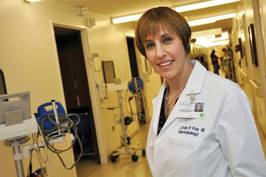
The Society members have conference calls every quarter or so, and they conduct consults for the AAD. They also usually present as a group at AAD meetings, Dr. Fox said in an interview.
"We are able to recognize emerging patterns of cutaneous disease," she said.
The aim also is to be able to publish based on their collective experience.
For instance, Dr. Fox and her colleagues helped identify cutaneous conditions that resulted from taking cocaine that was tainted with levamisole. The cutaneous conditions were a tip-off that the drug was perhaps contaminated with some other substance. The Drug Enforcement Administration (DEA) eventually determined through its own testing that a large amount of seized cocaine contained levamisole, an agent approved to deworm livestock, which is often used as a cutting agent. Because of the levamisole, users are susceptible to neutropenia and vasculitis. The dermatologists' article was published online at the Journal of the American Academy of Dermatology's website in March 2010 (doi:10.1016/j.jaad.2010.01.055).
Another SDH participant, Dr. Jonathan Cotliar, said that the Society is helping to formalize medical dermatology in the hospital, and that it will ultimately improve patient care. "There's such a void of evidence-based criteria for treating a lot of the cases we see in the hospital," Dr. Cotliar said in an interview. "The No. 1 goal is to pool our resources and patients to come up with evidence-based treatment recommendations," said Dr. Cotliar of the department of dermatology and internal medicine at Northwestern University, Chicago.
Dr. Cotliar said he basically "stumbled into" inpatient dermatology. He completed a dual internal medicine and dermatology residency and, when he began his career, decided he wanted to continue to care for patients in the hospital. He joined the faculty in 2004 at the University of California, Los Angeles, and began directing the inpatient consult service.
At UCLA, he quickly became known as the go-to guy for inpatient dermatology issues, he said. In 2010, when he went to Chicago, he continued the inpatient practice. Now, he focuses on the cutaneous complications of stem cell transplantation and chemotherapy.
The need for such consults is likely to grow. There is an increasing number of patients who are experiencing adverse drug reactions as well as complications from chemotherapy, say the Society members. Although something like Stevens-Johnson syndrome or toxic epidermal necrolysis might be rare, the reactions are becoming more common, especially with newer medications, said Dr. Kroshinsky. Having dermatology hospitalists at an institution means that these often-fatal syndromes are recognized sooner. And patterns of causation can be more easily determined.
Dr. Kroshinsky said that dermatology hospitalists are also called to consult on birthmarks, surgical complications, and patients admitted with aggressive cases of such underlying dermatologic diseases as psoriasis. "It's a very interesting day," she said.
And there are enough consults to keep physicians busy, she said. Dr. Kroshinsky sees clinic patients in the morning and inpatients in the afternoon.
Dr. Fox started working in the hospital in 2005, after completing a year-long career development award at Yale University, New Haven, Conn. She implemented the program at UCSF, which consists of three primary dermatology attending physicians. They do consults for the primary inpatient physicians at the hospital and also manage patients admitted for their derm-related conditions. And they have a resident who rounds with an attending each month.
Having a new resident each month helps make the inpatient dermatology practice work, said Dr. Fox. It allows the dermatologists time for both inpatient and clinic responsibilities.
In part, because of the access to residents and subsidies from the hospital, for the time being, the dermatology hospitalist model seems to work best in the academic setting, she said. The Society is looking at how to make the practice more doable for community facilities, said Dr. Fox.
Dr. Cotliar said that the Society is building on the example set by the Society for Pediatric Dermatology, which started out small with no structured training, fellowships, or board certification. But the group grew and eventually provided a crucial service in recognizing new disease entities and establishing evidence-based treatment protocols.
The Society participants said that they hope their section will evolve into something bigger and better, too.
A relatively new subset of dermatology hopes to make its mark in the hospital setting by establishing a different type of inpatient practice – one that focuses on education, research, development of new treatment algorithms, and identification of emerging patterns in disease.
The small number of dermatologists who are hoping to make this all happen banded together a few years ago, creating the Society for Dermatology Hospitalists (SDH) as a subsection of the American Academy of Dermatology. There are about 20 members, all of whom spend at least half their time practicing in the hospital, said Dr. Daniela Kroshinsky, who was a cofounder of the Society.
The Society aims to reestablish dermatologists as members of the hospital team, said Dr. Kroshinsky of Harvard Medical School and director of inpatient medical education and research at Massachusetts General Hospital, Boston.
Also, by sharing information, the members of the SDH can identify emerging dermatologic conditions and create best practices, said Dr. Lindy Fox, also a cofounder of the Society from the department of clinical dermatology at the University of California, San Francisco.
The Society members have conference calls every quarter or so, and they conduct consults for the AAD. They also usually present as a group at AAD meetings, Dr. Fox said in an interview.
"We are able to recognize emerging patterns of cutaneous disease," she said.
The aim also is to be able to publish based on their collective experience.
For instance, Dr. Fox and her colleagues helped identify cutaneous conditions that resulted from taking cocaine that was tainted with levamisole. The cutaneous conditions were a tip-off that the drug was perhaps contaminated with some other substance. The Drug Enforcement Administration (DEA) eventually determined through its own testing that a large amount of seized cocaine contained levamisole, an agent approved to deworm livestock, which is often used as a cutting agent. Because of the levamisole, users are susceptible to neutropenia and vasculitis. The dermatologists' article was published online at the Journal of the American Academy of Dermatology's website in March 2010 (doi:10.1016/j.jaad.2010.01.055).
Another SDH participant, Dr. Jonathan Cotliar, said that the Society is helping to formalize medical dermatology in the hospital, and that it will ultimately improve patient care. "There's such a void of evidence-based criteria for treating a lot of the cases we see in the hospital," Dr. Cotliar said in an interview. "The No. 1 goal is to pool our resources and patients to come up with evidence-based treatment recommendations," said Dr. Cotliar of the department of dermatology and internal medicine at Northwestern University, Chicago.
Dr. Cotliar said he basically "stumbled into" inpatient dermatology. He completed a dual internal medicine and dermatology residency and, when he began his career, decided he wanted to continue to care for patients in the hospital. He joined the faculty in 2004 at the University of California, Los Angeles, and began directing the inpatient consult service.
At UCLA, he quickly became known as the go-to guy for inpatient dermatology issues, he said. In 2010, when he went to Chicago, he continued the inpatient practice. Now, he focuses on the cutaneous complications of stem cell transplantation and chemotherapy.
The need for such consults is likely to grow. There is an increasing number of patients who are experiencing adverse drug reactions as well as complications from chemotherapy, say the Society members. Although something like Stevens-Johnson syndrome or toxic epidermal necrolysis might be rare, the reactions are becoming more common, especially with newer medications, said Dr. Kroshinsky. Having dermatology hospitalists at an institution means that these often-fatal syndromes are recognized sooner. And patterns of causation can be more easily determined.
Dr. Kroshinsky said that dermatology hospitalists are also called to consult on birthmarks, surgical complications, and patients admitted with aggressive cases of such underlying dermatologic diseases as psoriasis. "It's a very interesting day," she said.
And there are enough consults to keep physicians busy, she said. Dr. Kroshinsky sees clinic patients in the morning and inpatients in the afternoon.
Dr. Fox started working in the hospital in 2005, after completing a year-long career development award at Yale University, New Haven, Conn. She implemented the program at UCSF, which consists of three primary dermatology attending physicians. They do consults for the primary inpatient physicians at the hospital and also manage patients admitted for their derm-related conditions. And they have a resident who rounds with an attending each month.
Having a new resident each month helps make the inpatient dermatology practice work, said Dr. Fox. It allows the dermatologists time for both inpatient and clinic responsibilities.
In part, because of the access to residents and subsidies from the hospital, for the time being, the dermatology hospitalist model seems to work best in the academic setting, she said. The Society is looking at how to make the practice more doable for community facilities, said Dr. Fox.
Dr. Cotliar said that the Society is building on the example set by the Society for Pediatric Dermatology, which started out small with no structured training, fellowships, or board certification. But the group grew and eventually provided a crucial service in recognizing new disease entities and establishing evidence-based treatment protocols.
The Society participants said that they hope their section will evolve into something bigger and better, too.
A relatively new subset of dermatology hopes to make its mark in the hospital setting by establishing a different type of inpatient practice – one that focuses on education, research, development of new treatment algorithms, and identification of emerging patterns in disease.
The small number of dermatologists who are hoping to make this all happen banded together a few years ago, creating the Society for Dermatology Hospitalists (SDH) as a subsection of the American Academy of Dermatology. There are about 20 members, all of whom spend at least half their time practicing in the hospital, said Dr. Daniela Kroshinsky, who was a cofounder of the Society.
The Society aims to reestablish dermatologists as members of the hospital team, said Dr. Kroshinsky of Harvard Medical School and director of inpatient medical education and research at Massachusetts General Hospital, Boston.
Also, by sharing information, the members of the SDH can identify emerging dermatologic conditions and create best practices, said Dr. Lindy Fox, also a cofounder of the Society from the department of clinical dermatology at the University of California, San Francisco.
The Society members have conference calls every quarter or so, and they conduct consults for the AAD. They also usually present as a group at AAD meetings, Dr. Fox said in an interview.
"We are able to recognize emerging patterns of cutaneous disease," she said.
The aim also is to be able to publish based on their collective experience.
For instance, Dr. Fox and her colleagues helped identify cutaneous conditions that resulted from taking cocaine that was tainted with levamisole. The cutaneous conditions were a tip-off that the drug was perhaps contaminated with some other substance. The Drug Enforcement Administration (DEA) eventually determined through its own testing that a large amount of seized cocaine contained levamisole, an agent approved to deworm livestock, which is often used as a cutting agent. Because of the levamisole, users are susceptible to neutropenia and vasculitis. The dermatologists' article was published online at the Journal of the American Academy of Dermatology's website in March 2010 (doi:10.1016/j.jaad.2010.01.055).
Another SDH participant, Dr. Jonathan Cotliar, said that the Society is helping to formalize medical dermatology in the hospital, and that it will ultimately improve patient care. "There's such a void of evidence-based criteria for treating a lot of the cases we see in the hospital," Dr. Cotliar said in an interview. "The No. 1 goal is to pool our resources and patients to come up with evidence-based treatment recommendations," said Dr. Cotliar of the department of dermatology and internal medicine at Northwestern University, Chicago.
Dr. Cotliar said he basically "stumbled into" inpatient dermatology. He completed a dual internal medicine and dermatology residency and, when he began his career, decided he wanted to continue to care for patients in the hospital. He joined the faculty in 2004 at the University of California, Los Angeles, and began directing the inpatient consult service.
At UCLA, he quickly became known as the go-to guy for inpatient dermatology issues, he said. In 2010, when he went to Chicago, he continued the inpatient practice. Now, he focuses on the cutaneous complications of stem cell transplantation and chemotherapy.
The need for such consults is likely to grow. There is an increasing number of patients who are experiencing adverse drug reactions as well as complications from chemotherapy, say the Society members. Although something like Stevens-Johnson syndrome or toxic epidermal necrolysis might be rare, the reactions are becoming more common, especially with newer medications, said Dr. Kroshinsky. Having dermatology hospitalists at an institution means that these often-fatal syndromes are recognized sooner. And patterns of causation can be more easily determined.
Dr. Kroshinsky said that dermatology hospitalists are also called to consult on birthmarks, surgical complications, and patients admitted with aggressive cases of such underlying dermatologic diseases as psoriasis. "It's a very interesting day," she said.
And there are enough consults to keep physicians busy, she said. Dr. Kroshinsky sees clinic patients in the morning and inpatients in the afternoon.
Dr. Fox started working in the hospital in 2005, after completing a year-long career development award at Yale University, New Haven, Conn. She implemented the program at UCSF, which consists of three primary dermatology attending physicians. They do consults for the primary inpatient physicians at the hospital and also manage patients admitted for their derm-related conditions. And they have a resident who rounds with an attending each month.
Having a new resident each month helps make the inpatient dermatology practice work, said Dr. Fox. It allows the dermatologists time for both inpatient and clinic responsibilities.
In part, because of the access to residents and subsidies from the hospital, for the time being, the dermatology hospitalist model seems to work best in the academic setting, she said. The Society is looking at how to make the practice more doable for community facilities, said Dr. Fox.
Dr. Cotliar said that the Society is building on the example set by the Society for Pediatric Dermatology, which started out small with no structured training, fellowships, or board certification. But the group grew and eventually provided a crucial service in recognizing new disease entities and establishing evidence-based treatment protocols.
The Society participants said that they hope their section will evolve into something bigger and better, too.
Dermatology Hospitalists Aim to Evolve Inpatient Practice
A relatively new subset of dermatology hopes to make its mark in the hospital setting by establishing a different type of inpatient practice – one that focuses on education, research, development of new treatment algorithms, and identification of emerging patterns in disease.
The small number of dermatologists who are hoping to make this all happen banded together a few years ago, creating the Society for Dermatology Hospitalists (SDH) as a subsection of the American Academy of Dermatology. There are about 20 members, all of whom spend at least half their time practicing in the hospital, said Dr. Daniela Kroshinsky, who was a cofounder of the Society.
The Society aims to reestablish dermatologists as members of the hospital team, said Dr. Kroshinsky of Harvard Medical School and director of inpatient medical education and research at Massachusetts General Hospital, Boston.
Also, by sharing information, the members of the SDH can identify emerging dermatologic conditions and create best practices, said Dr. Lindy Fox, also a cofounder of the Society from the department of clinical dermatology at the University of California, San Francisco.
The Society members have conference calls every quarter or so, and they conduct consults for the AAD. They also usually present as a group at AAD meetings, Dr. Fox said in an interview.
"We are able to recognize emerging patterns of cutaneous disease," she said.
The aim also is to be able to publish based on their collective experience.
For instance, Dr. Fox and her colleagues helped identify cutaneous conditions that resulted from taking cocaine that was tainted with levamisole. The cutaneous conditions were a tip-off that the drug was perhaps contaminated with some other substance. The Drug Enforcement Administration (DEA) eventually determined through its own testing that a large amount of seized cocaine contained levamisole, an agent approved to deworm livestock, which is often used as a cutting agent. Because of the levamisole, users are susceptible to neutropenia and vasculitis. The dermatologists’ article was published online at the Journal of the American Academy of Dermatology’s website in March 2010 (doi:10.1016/j.jaad.2010.01.055).
Another SDH participant, Dr. Jonathan Cotliar, said that the Society is helping to formalize medical dermatology in the hospital, and that it will ultimately improve patient care. "There’s such a void of evidence-based criteria for treating a lot of the cases we see in the hospital," Dr. Cotliar said in an interview. "The No. 1 goal is to pool our resources and patients to come up with evidence-based treatment recommendations," said Dr. Cotliar of the department of dermatology and internal medicine at Northwestern University, Chicago.
Dr. Cotliar said he basically "stumbled into" inpatient dermatology. He completed a dual internal medicine and dermatology residency and, when he began his career, decided he wanted to continue to care for patients in the hospital. He joined the faculty in 2004 at the University of California, Los Angeles, and began directing the inpatient consult service.
At UCLA, he quickly became known as the go-to guy for inpatient dermatology issues, he said. In 2010, when he went to Chicago, he continued the inpatient practice. Now, he focuses on the cutaneous complications of stem cell transplantation and chemotherapy.
The need for such consults is likely to grow. There is an increasing number of patients who are experiencing adverse drug reactions as well as complications from chemotherapy, say the Society members. Although something like Stevens-Johnson syndrome or toxic epidermal necrolysis might be rare, the reactions are becoming more common, especially with newer medications, said Dr. Kroshinsky. Having dermatology hospitalists at an institution means that these often-fatal syndromes are recognized sooner. And patterns of causation can be more easily determined.
Dr. Kroshinsky said that dermatology hospitalists are also called to consult on birthmarks, surgical complications, and patients admitted with aggressive cases of such underlying dermatologic diseases as psoriasis. "It’s a very interesting day," she said.
And there are enough consults to keep physicians busy, she said. Dr. Kroshinsky sees clinic patients in the morning and inpatients in the afternoon.
Dr. Fox started working in the hospital in 2005, after completing a year-long career development award at Yale University, New Haven, Conn. She implemented the program at UCSF, which consists of three primary dermatology attending physicians. They do consults for the primary inpatient physicians at the hospital and also manage patients admitted for their derm-related conditions. And they have a resident who rounds with an attending each month.
Having a new resident each month helps make the inpatient dermatology practice work, said Dr. Fox. It allows the dermatologists time for both inpatient and clinic responsibilities.
In part, because of the access to residents and subsidies from the hospital, for the time being, the dermatology hospitalist model seems to work best in the academic setting, she said. The Society is looking at how to make the practice more do-able for community facilities, said Dr. Fox.
Dr. Cotliar said that the Society is building on the example set by the Society for Pediatric Dermatology, which started out small with no structured training, fellowships, or board certification. But the group grew and eventually provided a crucial service in recognizing new disease entities and establishing evidence-based treatment protocols.
The Society participants said that they hope their section will evolve into something bigger and better, too.
A relatively new subset of dermatology hopes to make its mark in the hospital setting by establishing a different type of inpatient practice – one that focuses on education, research, development of new treatment algorithms, and identification of emerging patterns in disease.
The small number of dermatologists who are hoping to make this all happen banded together a few years ago, creating the Society for Dermatology Hospitalists (SDH) as a subsection of the American Academy of Dermatology. There are about 20 members, all of whom spend at least half their time practicing in the hospital, said Dr. Daniela Kroshinsky, who was a cofounder of the Society.
The Society aims to reestablish dermatologists as members of the hospital team, said Dr. Kroshinsky of Harvard Medical School and director of inpatient medical education and research at Massachusetts General Hospital, Boston.
Also, by sharing information, the members of the SDH can identify emerging dermatologic conditions and create best practices, said Dr. Lindy Fox, also a cofounder of the Society from the department of clinical dermatology at the University of California, San Francisco.
The Society members have conference calls every quarter or so, and they conduct consults for the AAD. They also usually present as a group at AAD meetings, Dr. Fox said in an interview.
"We are able to recognize emerging patterns of cutaneous disease," she said.
The aim also is to be able to publish based on their collective experience.
For instance, Dr. Fox and her colleagues helped identify cutaneous conditions that resulted from taking cocaine that was tainted with levamisole. The cutaneous conditions were a tip-off that the drug was perhaps contaminated with some other substance. The Drug Enforcement Administration (DEA) eventually determined through its own testing that a large amount of seized cocaine contained levamisole, an agent approved to deworm livestock, which is often used as a cutting agent. Because of the levamisole, users are susceptible to neutropenia and vasculitis. The dermatologists’ article was published online at the Journal of the American Academy of Dermatology’s website in March 2010 (doi:10.1016/j.jaad.2010.01.055).
Another SDH participant, Dr. Jonathan Cotliar, said that the Society is helping to formalize medical dermatology in the hospital, and that it will ultimately improve patient care. "There’s such a void of evidence-based criteria for treating a lot of the cases we see in the hospital," Dr. Cotliar said in an interview. "The No. 1 goal is to pool our resources and patients to come up with evidence-based treatment recommendations," said Dr. Cotliar of the department of dermatology and internal medicine at Northwestern University, Chicago.
Dr. Cotliar said he basically "stumbled into" inpatient dermatology. He completed a dual internal medicine and dermatology residency and, when he began his career, decided he wanted to continue to care for patients in the hospital. He joined the faculty in 2004 at the University of California, Los Angeles, and began directing the inpatient consult service.
At UCLA, he quickly became known as the go-to guy for inpatient dermatology issues, he said. In 2010, when he went to Chicago, he continued the inpatient practice. Now, he focuses on the cutaneous complications of stem cell transplantation and chemotherapy.
The need for such consults is likely to grow. There is an increasing number of patients who are experiencing adverse drug reactions as well as complications from chemotherapy, say the Society members. Although something like Stevens-Johnson syndrome or toxic epidermal necrolysis might be rare, the reactions are becoming more common, especially with newer medications, said Dr. Kroshinsky. Having dermatology hospitalists at an institution means that these often-fatal syndromes are recognized sooner. And patterns of causation can be more easily determined.
Dr. Kroshinsky said that dermatology hospitalists are also called to consult on birthmarks, surgical complications, and patients admitted with aggressive cases of such underlying dermatologic diseases as psoriasis. "It’s a very interesting day," she said.
And there are enough consults to keep physicians busy, she said. Dr. Kroshinsky sees clinic patients in the morning and inpatients in the afternoon.
Dr. Fox started working in the hospital in 2005, after completing a year-long career development award at Yale University, New Haven, Conn. She implemented the program at UCSF, which consists of three primary dermatology attending physicians. They do consults for the primary inpatient physicians at the hospital and also manage patients admitted for their derm-related conditions. And they have a resident who rounds with an attending each month.
Having a new resident each month helps make the inpatient dermatology practice work, said Dr. Fox. It allows the dermatologists time for both inpatient and clinic responsibilities.
In part, because of the access to residents and subsidies from the hospital, for the time being, the dermatology hospitalist model seems to work best in the academic setting, she said. The Society is looking at how to make the practice more do-able for community facilities, said Dr. Fox.
Dr. Cotliar said that the Society is building on the example set by the Society for Pediatric Dermatology, which started out small with no structured training, fellowships, or board certification. But the group grew and eventually provided a crucial service in recognizing new disease entities and establishing evidence-based treatment protocols.
The Society participants said that they hope their section will evolve into something bigger and better, too.
A relatively new subset of dermatology hopes to make its mark in the hospital setting by establishing a different type of inpatient practice – one that focuses on education, research, development of new treatment algorithms, and identification of emerging patterns in disease.
The small number of dermatologists who are hoping to make this all happen banded together a few years ago, creating the Society for Dermatology Hospitalists (SDH) as a subsection of the American Academy of Dermatology. There are about 20 members, all of whom spend at least half their time practicing in the hospital, said Dr. Daniela Kroshinsky, who was a cofounder of the Society.
The Society aims to reestablish dermatologists as members of the hospital team, said Dr. Kroshinsky of Harvard Medical School and director of inpatient medical education and research at Massachusetts General Hospital, Boston.
Also, by sharing information, the members of the SDH can identify emerging dermatologic conditions and create best practices, said Dr. Lindy Fox, also a cofounder of the Society from the department of clinical dermatology at the University of California, San Francisco.
The Society members have conference calls every quarter or so, and they conduct consults for the AAD. They also usually present as a group at AAD meetings, Dr. Fox said in an interview.
"We are able to recognize emerging patterns of cutaneous disease," she said.
The aim also is to be able to publish based on their collective experience.
For instance, Dr. Fox and her colleagues helped identify cutaneous conditions that resulted from taking cocaine that was tainted with levamisole. The cutaneous conditions were a tip-off that the drug was perhaps contaminated with some other substance. The Drug Enforcement Administration (DEA) eventually determined through its own testing that a large amount of seized cocaine contained levamisole, an agent approved to deworm livestock, which is often used as a cutting agent. Because of the levamisole, users are susceptible to neutropenia and vasculitis. The dermatologists’ article was published online at the Journal of the American Academy of Dermatology’s website in March 2010 (doi:10.1016/j.jaad.2010.01.055).
Another SDH participant, Dr. Jonathan Cotliar, said that the Society is helping to formalize medical dermatology in the hospital, and that it will ultimately improve patient care. "There’s such a void of evidence-based criteria for treating a lot of the cases we see in the hospital," Dr. Cotliar said in an interview. "The No. 1 goal is to pool our resources and patients to come up with evidence-based treatment recommendations," said Dr. Cotliar of the department of dermatology and internal medicine at Northwestern University, Chicago.
Dr. Cotliar said he basically "stumbled into" inpatient dermatology. He completed a dual internal medicine and dermatology residency and, when he began his career, decided he wanted to continue to care for patients in the hospital. He joined the faculty in 2004 at the University of California, Los Angeles, and began directing the inpatient consult service.
At UCLA, he quickly became known as the go-to guy for inpatient dermatology issues, he said. In 2010, when he went to Chicago, he continued the inpatient practice. Now, he focuses on the cutaneous complications of stem cell transplantation and chemotherapy.
The need for such consults is likely to grow. There is an increasing number of patients who are experiencing adverse drug reactions as well as complications from chemotherapy, say the Society members. Although something like Stevens-Johnson syndrome or toxic epidermal necrolysis might be rare, the reactions are becoming more common, especially with newer medications, said Dr. Kroshinsky. Having dermatology hospitalists at an institution means that these often-fatal syndromes are recognized sooner. And patterns of causation can be more easily determined.
Dr. Kroshinsky said that dermatology hospitalists are also called to consult on birthmarks, surgical complications, and patients admitted with aggressive cases of such underlying dermatologic diseases as psoriasis. "It’s a very interesting day," she said.
And there are enough consults to keep physicians busy, she said. Dr. Kroshinsky sees clinic patients in the morning and inpatients in the afternoon.
Dr. Fox started working in the hospital in 2005, after completing a year-long career development award at Yale University, New Haven, Conn. She implemented the program at UCSF, which consists of three primary dermatology attending physicians. They do consults for the primary inpatient physicians at the hospital and also manage patients admitted for their derm-related conditions. And they have a resident who rounds with an attending each month.
Having a new resident each month helps make the inpatient dermatology practice work, said Dr. Fox. It allows the dermatologists time for both inpatient and clinic responsibilities.
In part, because of the access to residents and subsidies from the hospital, for the time being, the dermatology hospitalist model seems to work best in the academic setting, she said. The Society is looking at how to make the practice more do-able for community facilities, said Dr. Fox.
Dr. Cotliar said that the Society is building on the example set by the Society for Pediatric Dermatology, which started out small with no structured training, fellowships, or board certification. But the group grew and eventually provided a crucial service in recognizing new disease entities and establishing evidence-based treatment protocols.
The Society participants said that they hope their section will evolve into something bigger and better, too.
FDA Advisers See Strong Physician Role in DTC Genetic Tests
GAITHERSBURG, MD. – The Food and Drug Administration should require that genetic tests sold directly to consumers should in some cases be ordered by a trained health care professional, and such professionals should interpret results of most of these tests, an advisory committee to the agency has urged.
The Molecular and Clinical Genetics Panel did not take any formal votes during a meeting on March 8-9, but discussed a variety of issues related to tests that are currently sold, almost without any regulation, to consumers over the Internet. Last year, the FDA notified manufacturers of such tests that they must comply with agency rules, and the agency is working with companies now to help them win approval.
The tests run the gamut from diagnostics that determine carrier status for diseases like cystic fibrosis, to those that test for the presence of a specific mutation like BRCA or assess the risk of developing cardiovascular disease or certain cancers. A number of tests on the market have no scientific evidence to substantiate their claims for being able to predict outcomes such as whether a child will excel at sports.
In July 2010, the agency estimated that as many as 700 laboratories offer such direct-to-consumer (DTC) genetic tests.
During the course of the 2-day meeting, the 22 committee members struggled over whether the benefits of consumers’ having access to such data outweigh the risks of their being unable to understand the results, or perhaps their becoming falsely reassured or upset by them. The panelists gave the agency some suggestions on how the risks of poor communication or bad test design could be mitigated.
But most of the debate centered on the role of physicians or trained health care professionals, and most panelists believed that professionals should be centrally involved at some point in the process. Test makers and the consumer member of the panel, for their part, said that Americans have the right to their own genetic data, and that in all likelihood, consumers would consult with a physician, especially if it were for a serious condition like Huntington’s disease.
"As a patient, if I got a test result like that, I’d take it to my doctor," said Tiffany House, the panelist’s consumer representative. "I’d think they’d probably run to their doctor with this information," said Ms. House, a board member of the International Pompe Association.
After the meeting, FDA officials acknowledged that there was no real consensus on what role physicians should play. "We got lots of diverse advice," said Alberto Gutierrez, Ph.D., director of the Office of In Vitro Diagnostic Device Evaluation and Safety at the FDA’s Center for Devices and Radiological Health. He said that the agency would likely have to review each genetic test to determine whether it should be directly available to a consumer, and if so, whether a physician should order it or receive results directly. With so many opinions expressed, it may take awhile for things to settle out, said Elizabeth Mansfield, Ph.D., director of the personalized medicine staff in that same CDRH office. "We need to digest what came out of this meeting."
The FDA usually follows its panels’ advice, but is not required to do so.
The FDA asked the panel to assess five test categories (carrier tests, "pre-symptomatic" tests, susceptibility tests, pharmacogenetic tests, and nutrigenic tests). The agency wanted to know whether some categories should be classified as lower or higher risk and thus be subject to more regulatory restrictions.
The panel did not feel comfortable with the selling of carrier tests (that is, those that identify cystic fibrosis, Tay-Sachs disease, and other conditions) directly to consumers. "Many of these disorders have a spectrum of communication that can’t be well communicated outside of clinical consultation," said panelist Ira Lubin, Ph.D., a clinical molecular geneticist at the Centers for Disease Control and Prevention.
For tests that assess the risk of common conditions such as cancer, Alzheimer’s, or cardiovascular disease, the panel was concerned that the results might be falsely reassuring or might discount environmental or lifestyle factors that might also contribute to risk.
"I don’t think any of us are saying the patient or the consumer doesn’t have a right to know," said panelist Joann Boughman, Ph.D., CEO of the American Society of Human Genetics. "I would suggest we are not ready yet to put this directly into the consumers’ hands."
Former FDA official Mary Pendergast, who now works as a food and drug consultant and adviser to some companies that seek to market genetic tests, said that the panel was being paternalistic in its insistence on looking for a way to keep the tests from being sold directly to consumers. "There is an alternative to this highly paternalistic approach; that information in and of itself is not harmful," said Ms. Pendergast.
A government-sponsored study presented at the meeting seemed to back her assertion. The National Human Genome Research Institute’s Multiplex Initiative found that people who underwent tests for eight common diseases were highly satisfied with the results – regardless of what they showed – and that they felt as if they understood the tests’ implications and limitations.
The 266 people who took the tests tended to have more positive than negative emotions in the wake of receiving results, said Colleen McBride, Ph.D., the study’s designer and a senior investigator at the institute’s Social and Behavioral Research Branch.
GAITHERSBURG, MD. – The Food and Drug Administration should require that genetic tests sold directly to consumers should in some cases be ordered by a trained health care professional, and such professionals should interpret results of most of these tests, an advisory committee to the agency has urged.
The Molecular and Clinical Genetics Panel did not take any formal votes during a meeting on March 8-9, but discussed a variety of issues related to tests that are currently sold, almost without any regulation, to consumers over the Internet. Last year, the FDA notified manufacturers of such tests that they must comply with agency rules, and the agency is working with companies now to help them win approval.
The tests run the gamut from diagnostics that determine carrier status for diseases like cystic fibrosis, to those that test for the presence of a specific mutation like BRCA or assess the risk of developing cardiovascular disease or certain cancers. A number of tests on the market have no scientific evidence to substantiate their claims for being able to predict outcomes such as whether a child will excel at sports.
In July 2010, the agency estimated that as many as 700 laboratories offer such direct-to-consumer (DTC) genetic tests.
During the course of the 2-day meeting, the 22 committee members struggled over whether the benefits of consumers’ having access to such data outweigh the risks of their being unable to understand the results, or perhaps their becoming falsely reassured or upset by them. The panelists gave the agency some suggestions on how the risks of poor communication or bad test design could be mitigated.
But most of the debate centered on the role of physicians or trained health care professionals, and most panelists believed that professionals should be centrally involved at some point in the process. Test makers and the consumer member of the panel, for their part, said that Americans have the right to their own genetic data, and that in all likelihood, consumers would consult with a physician, especially if it were for a serious condition like Huntington’s disease.
"As a patient, if I got a test result like that, I’d take it to my doctor," said Tiffany House, the panelist’s consumer representative. "I’d think they’d probably run to their doctor with this information," said Ms. House, a board member of the International Pompe Association.
After the meeting, FDA officials acknowledged that there was no real consensus on what role physicians should play. "We got lots of diverse advice," said Alberto Gutierrez, Ph.D., director of the Office of In Vitro Diagnostic Device Evaluation and Safety at the FDA’s Center for Devices and Radiological Health. He said that the agency would likely have to review each genetic test to determine whether it should be directly available to a consumer, and if so, whether a physician should order it or receive results directly. With so many opinions expressed, it may take awhile for things to settle out, said Elizabeth Mansfield, Ph.D., director of the personalized medicine staff in that same CDRH office. "We need to digest what came out of this meeting."
The FDA usually follows its panels’ advice, but is not required to do so.
The FDA asked the panel to assess five test categories (carrier tests, "pre-symptomatic" tests, susceptibility tests, pharmacogenetic tests, and nutrigenic tests). The agency wanted to know whether some categories should be classified as lower or higher risk and thus be subject to more regulatory restrictions.
The panel did not feel comfortable with the selling of carrier tests (that is, those that identify cystic fibrosis, Tay-Sachs disease, and other conditions) directly to consumers. "Many of these disorders have a spectrum of communication that can’t be well communicated outside of clinical consultation," said panelist Ira Lubin, Ph.D., a clinical molecular geneticist at the Centers for Disease Control and Prevention.
For tests that assess the risk of common conditions such as cancer, Alzheimer’s, or cardiovascular disease, the panel was concerned that the results might be falsely reassuring or might discount environmental or lifestyle factors that might also contribute to risk.
"I don’t think any of us are saying the patient or the consumer doesn’t have a right to know," said panelist Joann Boughman, Ph.D., CEO of the American Society of Human Genetics. "I would suggest we are not ready yet to put this directly into the consumers’ hands."
Former FDA official Mary Pendergast, who now works as a food and drug consultant and adviser to some companies that seek to market genetic tests, said that the panel was being paternalistic in its insistence on looking for a way to keep the tests from being sold directly to consumers. "There is an alternative to this highly paternalistic approach; that information in and of itself is not harmful," said Ms. Pendergast.
A government-sponsored study presented at the meeting seemed to back her assertion. The National Human Genome Research Institute’s Multiplex Initiative found that people who underwent tests for eight common diseases were highly satisfied with the results – regardless of what they showed – and that they felt as if they understood the tests’ implications and limitations.
The 266 people who took the tests tended to have more positive than negative emotions in the wake of receiving results, said Colleen McBride, Ph.D., the study’s designer and a senior investigator at the institute’s Social and Behavioral Research Branch.
GAITHERSBURG, MD. – The Food and Drug Administration should require that genetic tests sold directly to consumers should in some cases be ordered by a trained health care professional, and such professionals should interpret results of most of these tests, an advisory committee to the agency has urged.
The Molecular and Clinical Genetics Panel did not take any formal votes during a meeting on March 8-9, but discussed a variety of issues related to tests that are currently sold, almost without any regulation, to consumers over the Internet. Last year, the FDA notified manufacturers of such tests that they must comply with agency rules, and the agency is working with companies now to help them win approval.
The tests run the gamut from diagnostics that determine carrier status for diseases like cystic fibrosis, to those that test for the presence of a specific mutation like BRCA or assess the risk of developing cardiovascular disease or certain cancers. A number of tests on the market have no scientific evidence to substantiate their claims for being able to predict outcomes such as whether a child will excel at sports.
In July 2010, the agency estimated that as many as 700 laboratories offer such direct-to-consumer (DTC) genetic tests.
During the course of the 2-day meeting, the 22 committee members struggled over whether the benefits of consumers’ having access to such data outweigh the risks of their being unable to understand the results, or perhaps their becoming falsely reassured or upset by them. The panelists gave the agency some suggestions on how the risks of poor communication or bad test design could be mitigated.
But most of the debate centered on the role of physicians or trained health care professionals, and most panelists believed that professionals should be centrally involved at some point in the process. Test makers and the consumer member of the panel, for their part, said that Americans have the right to their own genetic data, and that in all likelihood, consumers would consult with a physician, especially if it were for a serious condition like Huntington’s disease.
"As a patient, if I got a test result like that, I’d take it to my doctor," said Tiffany House, the panelist’s consumer representative. "I’d think they’d probably run to their doctor with this information," said Ms. House, a board member of the International Pompe Association.
After the meeting, FDA officials acknowledged that there was no real consensus on what role physicians should play. "We got lots of diverse advice," said Alberto Gutierrez, Ph.D., director of the Office of In Vitro Diagnostic Device Evaluation and Safety at the FDA’s Center for Devices and Radiological Health. He said that the agency would likely have to review each genetic test to determine whether it should be directly available to a consumer, and if so, whether a physician should order it or receive results directly. With so many opinions expressed, it may take awhile for things to settle out, said Elizabeth Mansfield, Ph.D., director of the personalized medicine staff in that same CDRH office. "We need to digest what came out of this meeting."
The FDA usually follows its panels’ advice, but is not required to do so.
The FDA asked the panel to assess five test categories (carrier tests, "pre-symptomatic" tests, susceptibility tests, pharmacogenetic tests, and nutrigenic tests). The agency wanted to know whether some categories should be classified as lower or higher risk and thus be subject to more regulatory restrictions.
The panel did not feel comfortable with the selling of carrier tests (that is, those that identify cystic fibrosis, Tay-Sachs disease, and other conditions) directly to consumers. "Many of these disorders have a spectrum of communication that can’t be well communicated outside of clinical consultation," said panelist Ira Lubin, Ph.D., a clinical molecular geneticist at the Centers for Disease Control and Prevention.
For tests that assess the risk of common conditions such as cancer, Alzheimer’s, or cardiovascular disease, the panel was concerned that the results might be falsely reassuring or might discount environmental or lifestyle factors that might also contribute to risk.
"I don’t think any of us are saying the patient or the consumer doesn’t have a right to know," said panelist Joann Boughman, Ph.D., CEO of the American Society of Human Genetics. "I would suggest we are not ready yet to put this directly into the consumers’ hands."
Former FDA official Mary Pendergast, who now works as a food and drug consultant and adviser to some companies that seek to market genetic tests, said that the panel was being paternalistic in its insistence on looking for a way to keep the tests from being sold directly to consumers. "There is an alternative to this highly paternalistic approach; that information in and of itself is not harmful," said Ms. Pendergast.
A government-sponsored study presented at the meeting seemed to back her assertion. The National Human Genome Research Institute’s Multiplex Initiative found that people who underwent tests for eight common diseases were highly satisfied with the results – regardless of what they showed – and that they felt as if they understood the tests’ implications and limitations.
The 266 people who took the tests tended to have more positive than negative emotions in the wake of receiving results, said Colleen McBride, Ph.D., the study’s designer and a senior investigator at the institute’s Social and Behavioral Research Branch.
FROM THE FOOD AND DRUG ADMINISTRATION
FDA Advisers See Strong Physician Role in DTC Genetic Tests
GAITHERSBURG, MD. – The Food and Drug Administration should require that genetic tests sold directly to consumers should in some cases be ordered by a trained health care professional, and such professionals should interpret results of most of these tests, an advisory committee to the agency has urged.
The Molecular and Clinical Genetics Panel did not take any formal votes during a meeting on March 8-9, but discussed a variety of issues related to tests that are currently sold, almost without any regulation, to consumers over the Internet. Last year, the FDA notified manufacturers of such tests that they must comply with agency rules, and the agency is working with companies now to help them win approval.
The tests run the gamut from diagnostics that determine carrier status for diseases like cystic fibrosis, to those that test for the presence of a specific mutation like BRCA or assess the risk of developing cardiovascular disease or certain cancers. A number of tests on the market have no scientific evidence to substantiate their claims for being able to predict outcomes such as whether a child will excel at sports.
In July 2010, the agency estimated that as many as 700 laboratories offer such direct-to-consumer (DTC) genetic tests.
During the course of the 2-day meeting, the 22 committee members struggled over whether the benefits of consumers’ having access to such data outweigh the risks of their being unable to understand the results, or perhaps their becoming falsely reassured or upset by them. The panelists gave the agency some suggestions on how the risks of poor communication or bad test design could be mitigated.
But most of the debate centered on the role of physicians or trained health care professionals, and most panelists believed that professionals should be centrally involved at some point in the process. Test makers and the consumer member of the panel, for their part, said that Americans have the right to their own genetic data, and that in all likelihood, consumers would consult with a physician, especially if it were for a serious condition like Huntington’s disease.
"As a patient, if I got a test result like that, I’d take it to my doctor," said Tiffany House, the panelist’s consumer representative. "I’d think they’d probably run to their doctor with this information," said Ms. House, a board member of the International Pompe Association.
After the meeting, FDA officials acknowledged that there was no real consensus on what role physicians should play. "We got lots of diverse advice," said Alberto Gutierrez, Ph.D., director of the Office of In Vitro Diagnostic Device Evaluation and Safety at the FDA’s Center for Devices and Radiological Health. He said that the agency would likely have to review each genetic test to determine whether it should be directly available to a consumer, and if so, whether a physician should order it or receive results directly. With so many opinions expressed, it may take awhile for things to settle out, said Elizabeth Mansfield, Ph.D., director of the personalized medicine staff in that same CDRH office. "We need to digest what came out of this meeting."
The FDA usually follows its panels’ advice, but is not required to do so.
The FDA asked the panel to assess five test categories (carrier tests, "pre-symptomatic" tests, susceptibility tests, pharmacogenetic tests, and nutrigenic tests). The agency wanted to know whether some categories should be classified as lower or higher risk and thus be subject to more regulatory restrictions.
The panel did not feel comfortable with the selling of carrier tests (that is, those that identify cystic fibrosis, Tay-Sachs disease, and other conditions) directly to consumers. "Many of these disorders have a spectrum of communication that can’t be well communicated outside of clinical consultation," said panelist Ira Lubin, Ph.D., a clinical molecular geneticist at the Centers for Disease Control and Prevention.
For tests that assess the risk of common conditions such as cancer, Alzheimer’s, or cardiovascular disease, the panel was concerned that the results might be falsely reassuring or might discount environmental or lifestyle factors that might also contribute to risk.
"I don’t think any of us are saying the patient or the consumer doesn’t have a right to know," said panelist Joann Boughman, Ph.D., CEO of the American Society of Human Genetics. "I would suggest we are not ready yet to put this directly into the consumers’ hands."
Former FDA official Mary Pendergast, who now works as a food and drug consultant and adviser to some companies that seek to market genetic tests, said that the panel was being paternalistic in its insistence on looking for a way to keep the tests from being sold directly to consumers. "There is an alternative to this highly paternalistic approach; that information in and of itself is not harmful," said Ms. Pendergast.
A government-sponsored study presented at the meeting seemed to back her assertion. The National Human Genome Research Institute’s Multiplex Initiative found that people who underwent tests for eight common diseases were highly satisfied with the results – regardless of what they showed – and that they felt as if they understood the tests’ implications and limitations.
The 266 people who took the tests tended to have more positive than negative emotions in the wake of receiving results, said Colleen McBride, Ph.D., the study’s designer and a senior investigator at the institute’s Social and Behavioral Research Branch.
GAITHERSBURG, MD. – The Food and Drug Administration should require that genetic tests sold directly to consumers should in some cases be ordered by a trained health care professional, and such professionals should interpret results of most of these tests, an advisory committee to the agency has urged.
The Molecular and Clinical Genetics Panel did not take any formal votes during a meeting on March 8-9, but discussed a variety of issues related to tests that are currently sold, almost without any regulation, to consumers over the Internet. Last year, the FDA notified manufacturers of such tests that they must comply with agency rules, and the agency is working with companies now to help them win approval.
The tests run the gamut from diagnostics that determine carrier status for diseases like cystic fibrosis, to those that test for the presence of a specific mutation like BRCA or assess the risk of developing cardiovascular disease or certain cancers. A number of tests on the market have no scientific evidence to substantiate their claims for being able to predict outcomes such as whether a child will excel at sports.
In July 2010, the agency estimated that as many as 700 laboratories offer such direct-to-consumer (DTC) genetic tests.
During the course of the 2-day meeting, the 22 committee members struggled over whether the benefits of consumers’ having access to such data outweigh the risks of their being unable to understand the results, or perhaps their becoming falsely reassured or upset by them. The panelists gave the agency some suggestions on how the risks of poor communication or bad test design could be mitigated.
But most of the debate centered on the role of physicians or trained health care professionals, and most panelists believed that professionals should be centrally involved at some point in the process. Test makers and the consumer member of the panel, for their part, said that Americans have the right to their own genetic data, and that in all likelihood, consumers would consult with a physician, especially if it were for a serious condition like Huntington’s disease.
"As a patient, if I got a test result like that, I’d take it to my doctor," said Tiffany House, the panelist’s consumer representative. "I’d think they’d probably run to their doctor with this information," said Ms. House, a board member of the International Pompe Association.
After the meeting, FDA officials acknowledged that there was no real consensus on what role physicians should play. "We got lots of diverse advice," said Alberto Gutierrez, Ph.D., director of the Office of In Vitro Diagnostic Device Evaluation and Safety at the FDA’s Center for Devices and Radiological Health. He said that the agency would likely have to review each genetic test to determine whether it should be directly available to a consumer, and if so, whether a physician should order it or receive results directly. With so many opinions expressed, it may take awhile for things to settle out, said Elizabeth Mansfield, Ph.D., director of the personalized medicine staff in that same CDRH office. "We need to digest what came out of this meeting."
The FDA usually follows its panels’ advice, but is not required to do so.
The FDA asked the panel to assess five test categories (carrier tests, "pre-symptomatic" tests, susceptibility tests, pharmacogenetic tests, and nutrigenic tests). The agency wanted to know whether some categories should be classified as lower or higher risk and thus be subject to more regulatory restrictions.
The panel did not feel comfortable with the selling of carrier tests (that is, those that identify cystic fibrosis, Tay-Sachs disease, and other conditions) directly to consumers. "Many of these disorders have a spectrum of communication that can’t be well communicated outside of clinical consultation," said panelist Ira Lubin, Ph.D., a clinical molecular geneticist at the Centers for Disease Control and Prevention.
For tests that assess the risk of common conditions such as cancer, Alzheimer’s, or cardiovascular disease, the panel was concerned that the results might be falsely reassuring or might discount environmental or lifestyle factors that might also contribute to risk.
"I don’t think any of us are saying the patient or the consumer doesn’t have a right to know," said panelist Joann Boughman, Ph.D., CEO of the American Society of Human Genetics. "I would suggest we are not ready yet to put this directly into the consumers’ hands."
Former FDA official Mary Pendergast, who now works as a food and drug consultant and adviser to some companies that seek to market genetic tests, said that the panel was being paternalistic in its insistence on looking for a way to keep the tests from being sold directly to consumers. "There is an alternative to this highly paternalistic approach; that information in and of itself is not harmful," said Ms. Pendergast.
A government-sponsored study presented at the meeting seemed to back her assertion. The National Human Genome Research Institute’s Multiplex Initiative found that people who underwent tests for eight common diseases were highly satisfied with the results – regardless of what they showed – and that they felt as if they understood the tests’ implications and limitations.
The 266 people who took the tests tended to have more positive than negative emotions in the wake of receiving results, said Colleen McBride, Ph.D., the study’s designer and a senior investigator at the institute’s Social and Behavioral Research Branch.
GAITHERSBURG, MD. – The Food and Drug Administration should require that genetic tests sold directly to consumers should in some cases be ordered by a trained health care professional, and such professionals should interpret results of most of these tests, an advisory committee to the agency has urged.
The Molecular and Clinical Genetics Panel did not take any formal votes during a meeting on March 8-9, but discussed a variety of issues related to tests that are currently sold, almost without any regulation, to consumers over the Internet. Last year, the FDA notified manufacturers of such tests that they must comply with agency rules, and the agency is working with companies now to help them win approval.
The tests run the gamut from diagnostics that determine carrier status for diseases like cystic fibrosis, to those that test for the presence of a specific mutation like BRCA or assess the risk of developing cardiovascular disease or certain cancers. A number of tests on the market have no scientific evidence to substantiate their claims for being able to predict outcomes such as whether a child will excel at sports.
In July 2010, the agency estimated that as many as 700 laboratories offer such direct-to-consumer (DTC) genetic tests.
During the course of the 2-day meeting, the 22 committee members struggled over whether the benefits of consumers’ having access to such data outweigh the risks of their being unable to understand the results, or perhaps their becoming falsely reassured or upset by them. The panelists gave the agency some suggestions on how the risks of poor communication or bad test design could be mitigated.
But most of the debate centered on the role of physicians or trained health care professionals, and most panelists believed that professionals should be centrally involved at some point in the process. Test makers and the consumer member of the panel, for their part, said that Americans have the right to their own genetic data, and that in all likelihood, consumers would consult with a physician, especially if it were for a serious condition like Huntington’s disease.
"As a patient, if I got a test result like that, I’d take it to my doctor," said Tiffany House, the panelist’s consumer representative. "I’d think they’d probably run to their doctor with this information," said Ms. House, a board member of the International Pompe Association.
After the meeting, FDA officials acknowledged that there was no real consensus on what role physicians should play. "We got lots of diverse advice," said Alberto Gutierrez, Ph.D., director of the Office of In Vitro Diagnostic Device Evaluation and Safety at the FDA’s Center for Devices and Radiological Health. He said that the agency would likely have to review each genetic test to determine whether it should be directly available to a consumer, and if so, whether a physician should order it or receive results directly. With so many opinions expressed, it may take awhile for things to settle out, said Elizabeth Mansfield, Ph.D., director of the personalized medicine staff in that same CDRH office. "We need to digest what came out of this meeting."
The FDA usually follows its panels’ advice, but is not required to do so.
The FDA asked the panel to assess five test categories (carrier tests, "pre-symptomatic" tests, susceptibility tests, pharmacogenetic tests, and nutrigenic tests). The agency wanted to know whether some categories should be classified as lower or higher risk and thus be subject to more regulatory restrictions.
The panel did not feel comfortable with the selling of carrier tests (that is, those that identify cystic fibrosis, Tay-Sachs disease, and other conditions) directly to consumers. "Many of these disorders have a spectrum of communication that can’t be well communicated outside of clinical consultation," said panelist Ira Lubin, Ph.D., a clinical molecular geneticist at the Centers for Disease Control and Prevention.
For tests that assess the risk of common conditions such as cancer, Alzheimer’s, or cardiovascular disease, the panel was concerned that the results might be falsely reassuring or might discount environmental or lifestyle factors that might also contribute to risk.
"I don’t think any of us are saying the patient or the consumer doesn’t have a right to know," said panelist Joann Boughman, Ph.D., CEO of the American Society of Human Genetics. "I would suggest we are not ready yet to put this directly into the consumers’ hands."
Former FDA official Mary Pendergast, who now works as a food and drug consultant and adviser to some companies that seek to market genetic tests, said that the panel was being paternalistic in its insistence on looking for a way to keep the tests from being sold directly to consumers. "There is an alternative to this highly paternalistic approach; that information in and of itself is not harmful," said Ms. Pendergast.
A government-sponsored study presented at the meeting seemed to back her assertion. The National Human Genome Research Institute’s Multiplex Initiative found that people who underwent tests for eight common diseases were highly satisfied with the results – regardless of what they showed – and that they felt as if they understood the tests’ implications and limitations.
The 266 people who took the tests tended to have more positive than negative emotions in the wake of receiving results, said Colleen McBride, Ph.D., the study’s designer and a senior investigator at the institute’s Social and Behavioral Research Branch.
FROM THE FOOD AND DRUG ADMINISTRATION
FDA Advisers See Strong Physician Role in DTC Genetic Tests
GAITHERSBURG, MD. – The Food and Drug Administration should require that genetic tests sold directly to consumers should in some cases be ordered by a trained health care professional, and such professionals should interpret results of most of these tests, an advisory committee to the agency has urged.
The Molecular and Clinical Genetics Panel did not take any formal votes during a meeting on March 8-9, but discussed a variety of issues related to tests that are currently sold, almost without any regulation, to consumers over the Internet. Last year, the FDA notified manufacturers of such tests that they must comply with agency rules, and the agency is working with companies now to help them win approval.
The tests run the gamut from diagnostics that determine carrier status for diseases like cystic fibrosis, to those that test for the presence of a specific mutation like BRCA or assess the risk of developing cardiovascular disease or certain cancers. A number of tests on the market have no scientific evidence to substantiate their claims for being able to predict outcomes such as whether a child will excel at sports.
In July 2010, the agency estimated that as many as 700 laboratories offer such direct-to-consumer (DTC) genetic tests.
During the course of the 2-day meeting, the 22 committee members struggled over whether the benefits of consumers’ having access to such data outweigh the risks of their being unable to understand the results, or perhaps their becoming falsely reassured or upset by them. The panelists gave the agency some suggestions on how the risks of poor communication or bad test design could be mitigated.
But most of the debate centered on the role of physicians or trained health care professionals, and most panelists believed that professionals should be centrally involved at some point in the process. Test makers and the consumer member of the panel, for their part, said that Americans have the right to their own genetic data, and that in all likelihood, consumers would consult with a physician, especially if it were for a serious condition like Huntington’s disease.
"As a patient, if I got a test result like that, I’d take it to my doctor," said Tiffany House, the panelist’s consumer representative. "I’d think they’d probably run to their doctor with this information," said Ms. House, a board member of the International Pompe Association.
After the meeting, FDA officials acknowledged that there was no real consensus on what role physicians should play. "We got lots of diverse advice," said Alberto Gutierrez, Ph.D., director of the Office of In Vitro Diagnostic Device Evaluation and Safety at the FDA’s Center for Devices and Radiological Health. He said that the agency would likely have to review each genetic test to determine whether it should be directly available to a consumer, and if so, whether a physician should order it or receive results directly. With so many opinions expressed, it may take awhile for things to settle out, said Elizabeth Mansfield, Ph.D., director of the personalized medicine staff in that same CDRH office. "We need to digest what came out of this meeting."
The FDA usually follows its panels’ advice, but is not required to do so.
The FDA asked the panel to assess five test categories (carrier tests, "pre-symptomatic" tests, susceptibility tests, pharmacogenetic tests, and nutrigenic tests). The agency wanted to know whether some categories should be classified as lower or higher risk and thus be subject to more regulatory restrictions.
The panel did not feel comfortable with the selling of carrier tests (that is, those that identify cystic fibrosis, Tay-Sachs disease, and other conditions) directly to consumers. "Many of these disorders have a spectrum of communication that can’t be well communicated outside of clinical consultation," said panelist Ira Lubin, Ph.D., a clinical molecular geneticist at the Centers for Disease Control and Prevention.
For tests that assess the risk of common conditions such as cancer, Alzheimer’s, or cardiovascular disease, the panel was concerned that the results might be falsely reassuring or might discount environmental or lifestyle factors that might also contribute to risk.
"I don’t think any of us are saying the patient or the consumer doesn’t have a right to know," said panelist Joann Boughman, Ph.D., CEO of the American Society of Human Genetics. "I would suggest we are not ready yet to put this directly into the consumers’ hands."
Former FDA official Mary Pendergast, who now works as a food and drug consultant and adviser to some companies that seek to market genetic tests, said that the panel was being paternalistic in its insistence on looking for a way to keep the tests from being sold directly to consumers. "There is an alternative to this highly paternalistic approach; that information in and of itself is not harmful," said Ms. Pendergast.
A government-sponsored study presented at the meeting seemed to back her assertion. The National Human Genome Research Institute’s Multiplex Initiative found that people who underwent tests for eight common diseases were highly satisfied with the results – regardless of what they showed – and that they felt as if they understood the tests’ implications and limitations.
The 266 people who took the tests tended to have more positive than negative emotions in the wake of receiving results, said Colleen McBride, Ph.D., the study’s designer and a senior investigator at the institute’s Social and Behavioral Research Branch.
GAITHERSBURG, MD. – The Food and Drug Administration should require that genetic tests sold directly to consumers should in some cases be ordered by a trained health care professional, and such professionals should interpret results of most of these tests, an advisory committee to the agency has urged.
The Molecular and Clinical Genetics Panel did not take any formal votes during a meeting on March 8-9, but discussed a variety of issues related to tests that are currently sold, almost without any regulation, to consumers over the Internet. Last year, the FDA notified manufacturers of such tests that they must comply with agency rules, and the agency is working with companies now to help them win approval.
The tests run the gamut from diagnostics that determine carrier status for diseases like cystic fibrosis, to those that test for the presence of a specific mutation like BRCA or assess the risk of developing cardiovascular disease or certain cancers. A number of tests on the market have no scientific evidence to substantiate their claims for being able to predict outcomes such as whether a child will excel at sports.
In July 2010, the agency estimated that as many as 700 laboratories offer such direct-to-consumer (DTC) genetic tests.
During the course of the 2-day meeting, the 22 committee members struggled over whether the benefits of consumers’ having access to such data outweigh the risks of their being unable to understand the results, or perhaps their becoming falsely reassured or upset by them. The panelists gave the agency some suggestions on how the risks of poor communication or bad test design could be mitigated.
But most of the debate centered on the role of physicians or trained health care professionals, and most panelists believed that professionals should be centrally involved at some point in the process. Test makers and the consumer member of the panel, for their part, said that Americans have the right to their own genetic data, and that in all likelihood, consumers would consult with a physician, especially if it were for a serious condition like Huntington’s disease.
"As a patient, if I got a test result like that, I’d take it to my doctor," said Tiffany House, the panelist’s consumer representative. "I’d think they’d probably run to their doctor with this information," said Ms. House, a board member of the International Pompe Association.
After the meeting, FDA officials acknowledged that there was no real consensus on what role physicians should play. "We got lots of diverse advice," said Alberto Gutierrez, Ph.D., director of the Office of In Vitro Diagnostic Device Evaluation and Safety at the FDA’s Center for Devices and Radiological Health. He said that the agency would likely have to review each genetic test to determine whether it should be directly available to a consumer, and if so, whether a physician should order it or receive results directly. With so many opinions expressed, it may take awhile for things to settle out, said Elizabeth Mansfield, Ph.D., director of the personalized medicine staff in that same CDRH office. "We need to digest what came out of this meeting."
The FDA usually follows its panels’ advice, but is not required to do so.
The FDA asked the panel to assess five test categories (carrier tests, "pre-symptomatic" tests, susceptibility tests, pharmacogenetic tests, and nutrigenic tests). The agency wanted to know whether some categories should be classified as lower or higher risk and thus be subject to more regulatory restrictions.
The panel did not feel comfortable with the selling of carrier tests (that is, those that identify cystic fibrosis, Tay-Sachs disease, and other conditions) directly to consumers. "Many of these disorders have a spectrum of communication that can’t be well communicated outside of clinical consultation," said panelist Ira Lubin, Ph.D., a clinical molecular geneticist at the Centers for Disease Control and Prevention.
For tests that assess the risk of common conditions such as cancer, Alzheimer’s, or cardiovascular disease, the panel was concerned that the results might be falsely reassuring or might discount environmental or lifestyle factors that might also contribute to risk.
"I don’t think any of us are saying the patient or the consumer doesn’t have a right to know," said panelist Joann Boughman, Ph.D., CEO of the American Society of Human Genetics. "I would suggest we are not ready yet to put this directly into the consumers’ hands."
Former FDA official Mary Pendergast, who now works as a food and drug consultant and adviser to some companies that seek to market genetic tests, said that the panel was being paternalistic in its insistence on looking for a way to keep the tests from being sold directly to consumers. "There is an alternative to this highly paternalistic approach; that information in and of itself is not harmful," said Ms. Pendergast.
A government-sponsored study presented at the meeting seemed to back her assertion. The National Human Genome Research Institute’s Multiplex Initiative found that people who underwent tests for eight common diseases were highly satisfied with the results – regardless of what they showed – and that they felt as if they understood the tests’ implications and limitations.
The 266 people who took the tests tended to have more positive than negative emotions in the wake of receiving results, said Colleen McBride, Ph.D., the study’s designer and a senior investigator at the institute’s Social and Behavioral Research Branch.
GAITHERSBURG, MD. – The Food and Drug Administration should require that genetic tests sold directly to consumers should in some cases be ordered by a trained health care professional, and such professionals should interpret results of most of these tests, an advisory committee to the agency has urged.
The Molecular and Clinical Genetics Panel did not take any formal votes during a meeting on March 8-9, but discussed a variety of issues related to tests that are currently sold, almost without any regulation, to consumers over the Internet. Last year, the FDA notified manufacturers of such tests that they must comply with agency rules, and the agency is working with companies now to help them win approval.
The tests run the gamut from diagnostics that determine carrier status for diseases like cystic fibrosis, to those that test for the presence of a specific mutation like BRCA or assess the risk of developing cardiovascular disease or certain cancers. A number of tests on the market have no scientific evidence to substantiate their claims for being able to predict outcomes such as whether a child will excel at sports.
In July 2010, the agency estimated that as many as 700 laboratories offer such direct-to-consumer (DTC) genetic tests.
During the course of the 2-day meeting, the 22 committee members struggled over whether the benefits of consumers’ having access to such data outweigh the risks of their being unable to understand the results, or perhaps their becoming falsely reassured or upset by them. The panelists gave the agency some suggestions on how the risks of poor communication or bad test design could be mitigated.
But most of the debate centered on the role of physicians or trained health care professionals, and most panelists believed that professionals should be centrally involved at some point in the process. Test makers and the consumer member of the panel, for their part, said that Americans have the right to their own genetic data, and that in all likelihood, consumers would consult with a physician, especially if it were for a serious condition like Huntington’s disease.
"As a patient, if I got a test result like that, I’d take it to my doctor," said Tiffany House, the panelist’s consumer representative. "I’d think they’d probably run to their doctor with this information," said Ms. House, a board member of the International Pompe Association.
After the meeting, FDA officials acknowledged that there was no real consensus on what role physicians should play. "We got lots of diverse advice," said Alberto Gutierrez, Ph.D., director of the Office of In Vitro Diagnostic Device Evaluation and Safety at the FDA’s Center for Devices and Radiological Health. He said that the agency would likely have to review each genetic test to determine whether it should be directly available to a consumer, and if so, whether a physician should order it or receive results directly. With so many opinions expressed, it may take awhile for things to settle out, said Elizabeth Mansfield, Ph.D., director of the personalized medicine staff in that same CDRH office. "We need to digest what came out of this meeting."
The FDA usually follows its panels’ advice, but is not required to do so.
The FDA asked the panel to assess five test categories (carrier tests, "pre-symptomatic" tests, susceptibility tests, pharmacogenetic tests, and nutrigenic tests). The agency wanted to know whether some categories should be classified as lower or higher risk and thus be subject to more regulatory restrictions.
The panel did not feel comfortable with the selling of carrier tests (that is, those that identify cystic fibrosis, Tay-Sachs disease, and other conditions) directly to consumers. "Many of these disorders have a spectrum of communication that can’t be well communicated outside of clinical consultation," said panelist Ira Lubin, Ph.D., a clinical molecular geneticist at the Centers for Disease Control and Prevention.
For tests that assess the risk of common conditions such as cancer, Alzheimer’s, or cardiovascular disease, the panel was concerned that the results might be falsely reassuring or might discount environmental or lifestyle factors that might also contribute to risk.
"I don’t think any of us are saying the patient or the consumer doesn’t have a right to know," said panelist Joann Boughman, Ph.D., CEO of the American Society of Human Genetics. "I would suggest we are not ready yet to put this directly into the consumers’ hands."
Former FDA official Mary Pendergast, who now works as a food and drug consultant and adviser to some companies that seek to market genetic tests, said that the panel was being paternalistic in its insistence on looking for a way to keep the tests from being sold directly to consumers. "There is an alternative to this highly paternalistic approach; that information in and of itself is not harmful," said Ms. Pendergast.
A government-sponsored study presented at the meeting seemed to back her assertion. The National Human Genome Research Institute’s Multiplex Initiative found that people who underwent tests for eight common diseases were highly satisfied with the results – regardless of what they showed – and that they felt as if they understood the tests’ implications and limitations.
The 266 people who took the tests tended to have more positive than negative emotions in the wake of receiving results, said Colleen McBride, Ph.D., the study’s designer and a senior investigator at the institute’s Social and Behavioral Research Branch.
FROM THE FOOD AND DRUG ADMINISTRATION