User login
AMA Delegates Duke It Out Over Individual Mandate
CHICAGO – Delegates at the American Medical Association’s annual policymaking meeting spent nearly 3 hours on June 19 airing their opinions over whether individuals should be required to buy health insurance coverage.
The debate was a prelude to an expected vote in the next 2 days by the full House of Delegates. At issue: Whether the AMA should change the policy it adopted last year to support the so-called individual mandate, which is required in the Affordable Care Act.
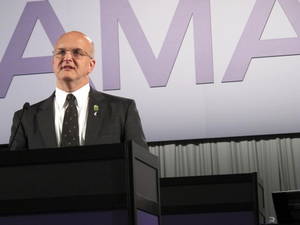
With so much controversy over the mandate, including challenges making their way through the courts, several delegations put forward resolutions to revisit the AMA policy.
The AMA’s Council on Medical Service presented a report at the meeting that urged a continuation of the policy, saying that no viable alternative exists to ensure that most or all of Americans would some day be covered by health insurance.
Dr. Cecil Wilson, president of the AMA, reminded delegates that the organization’s decision to back a mandate was made in the mid-1990s, even before health reform was on the agenda. "During that intervening time there has been no additional evidence to suggest that we have another alternative," said Dr. Wilson, an internist from Winter Park, Fla. "I would suggest that our decision in the middle of the last decade was a good decision. I think the need to stay with it is even more so now," he said.
That viewed was echoed by delegations from the American College of Physicians and the American Academy of Family Physicians, which together led a group of 19 specialty and state medical societies in offering a resolution to affirm support of the individual mandate.
"Without a personal responsibility requirement, the most likely and plausible alternative to achieve coverage for everyone is government-run health care," said Dr. Yul Ejnes, chairman of the ACP Board of Regents.
Many of those speaking in front of the House of Delegates in favor of the individual mandate argued that without it the private health insurance market would collapse. And, they pointed out, the uninsured are sicker and die younger. Having insurance means better health care, said Dr. Roland Goertz, AAFP president. "As physicians, we should want better health care."
A resolution urging that purchase of health insurance be a personal responsibility, not a mandate, was offered by the American Academy of Facial Plastic and Reconstructive Surgery, the American Association of Neurological Surgeons, the American Society of General Surgeons, and state delegations from Kansas; Arkansas; Washington, D.C.; Florida; Georgia; and Oklahoma.
Those who supported that resolution said that the AMA should not be supporting a mandate of any kind. Some urged the AMA to stay neutral on the issue, at least until the court challenges were settled. Most said that a mandate took away individual freedom.
Dr. Jeff Terry of the Alabama delegation said that the AMA had always supported choice. "Mandates take away choice. A mandate takes away responsibility," said Dr. Terry. "Mandates dictate what type of insurance is appropriate. And mandates put more bureaucracy in the system because they must be enforced."
Dr. Joe Bailey, a member of the Georgia delegation said that having a mandate meant forcing someone to buy a product against their will.
"I’m truly ashamed with what we are trying to do with mandates in this country," he said.
Several opponents of the mandate suggested that states be allowed to experiment, as Massachusetts had, but that it not be a federal requirement.
Division over the AMA’s support of health reform has led to declining membership across the country. A representative of the Mississippi delegation said that AMA membership in the state dropped precipitously in the last 2 years, from 4,500 to about 600. He said most had left in protest over the AMA’s backing of the Affordable Care Act.
House of Delegates, AMA, mandate, Affordable Care Act, AMA policy, AMA’s Council on Medical Service, health insurance coverage, Dr. Cecil Wilson, Dr. Yul Ejnes
CHICAGO – Delegates at the American Medical Association’s annual policymaking meeting spent nearly 3 hours on June 19 airing their opinions over whether individuals should be required to buy health insurance coverage.
The debate was a prelude to an expected vote in the next 2 days by the full House of Delegates. At issue: Whether the AMA should change the policy it adopted last year to support the so-called individual mandate, which is required in the Affordable Care Act.
With so much controversy over the mandate, including challenges making their way through the courts, several delegations put forward resolutions to revisit the AMA policy.
The AMA’s Council on Medical Service presented a report at the meeting that urged a continuation of the policy, saying that no viable alternative exists to ensure that most or all of Americans would some day be covered by health insurance.
Dr. Cecil Wilson, president of the AMA, reminded delegates that the organization’s decision to back a mandate was made in the mid-1990s, even before health reform was on the agenda. "During that intervening time there has been no additional evidence to suggest that we have another alternative," said Dr. Wilson, an internist from Winter Park, Fla. "I would suggest that our decision in the middle of the last decade was a good decision. I think the need to stay with it is even more so now," he said.
That viewed was echoed by delegations from the American College of Physicians and the American Academy of Family Physicians, which together led a group of 19 specialty and state medical societies in offering a resolution to affirm support of the individual mandate.
"Without a personal responsibility requirement, the most likely and plausible alternative to achieve coverage for everyone is government-run health care," said Dr. Yul Ejnes, chairman of the ACP Board of Regents.
Many of those speaking in front of the House of Delegates in favor of the individual mandate argued that without it the private health insurance market would collapse. And, they pointed out, the uninsured are sicker and die younger. Having insurance means better health care, said Dr. Roland Goertz, AAFP president. "As physicians, we should want better health care."
A resolution urging that purchase of health insurance be a personal responsibility, not a mandate, was offered by the American Academy of Facial Plastic and Reconstructive Surgery, the American Association of Neurological Surgeons, the American Society of General Surgeons, and state delegations from Kansas; Arkansas; Washington, D.C.; Florida; Georgia; and Oklahoma.
Those who supported that resolution said that the AMA should not be supporting a mandate of any kind. Some urged the AMA to stay neutral on the issue, at least until the court challenges were settled. Most said that a mandate took away individual freedom.
Dr. Jeff Terry of the Alabama delegation said that the AMA had always supported choice. "Mandates take away choice. A mandate takes away responsibility," said Dr. Terry. "Mandates dictate what type of insurance is appropriate. And mandates put more bureaucracy in the system because they must be enforced."
Dr. Joe Bailey, a member of the Georgia delegation said that having a mandate meant forcing someone to buy a product against their will.
"I’m truly ashamed with what we are trying to do with mandates in this country," he said.
Several opponents of the mandate suggested that states be allowed to experiment, as Massachusetts had, but that it not be a federal requirement.
Division over the AMA’s support of health reform has led to declining membership across the country. A representative of the Mississippi delegation said that AMA membership in the state dropped precipitously in the last 2 years, from 4,500 to about 600. He said most had left in protest over the AMA’s backing of the Affordable Care Act.
CHICAGO – Delegates at the American Medical Association’s annual policymaking meeting spent nearly 3 hours on June 19 airing their opinions over whether individuals should be required to buy health insurance coverage.
The debate was a prelude to an expected vote in the next 2 days by the full House of Delegates. At issue: Whether the AMA should change the policy it adopted last year to support the so-called individual mandate, which is required in the Affordable Care Act.
With so much controversy over the mandate, including challenges making their way through the courts, several delegations put forward resolutions to revisit the AMA policy.
The AMA’s Council on Medical Service presented a report at the meeting that urged a continuation of the policy, saying that no viable alternative exists to ensure that most or all of Americans would some day be covered by health insurance.
Dr. Cecil Wilson, president of the AMA, reminded delegates that the organization’s decision to back a mandate was made in the mid-1990s, even before health reform was on the agenda. "During that intervening time there has been no additional evidence to suggest that we have another alternative," said Dr. Wilson, an internist from Winter Park, Fla. "I would suggest that our decision in the middle of the last decade was a good decision. I think the need to stay with it is even more so now," he said.
That viewed was echoed by delegations from the American College of Physicians and the American Academy of Family Physicians, which together led a group of 19 specialty and state medical societies in offering a resolution to affirm support of the individual mandate.
"Without a personal responsibility requirement, the most likely and plausible alternative to achieve coverage for everyone is government-run health care," said Dr. Yul Ejnes, chairman of the ACP Board of Regents.
Many of those speaking in front of the House of Delegates in favor of the individual mandate argued that without it the private health insurance market would collapse. And, they pointed out, the uninsured are sicker and die younger. Having insurance means better health care, said Dr. Roland Goertz, AAFP president. "As physicians, we should want better health care."
A resolution urging that purchase of health insurance be a personal responsibility, not a mandate, was offered by the American Academy of Facial Plastic and Reconstructive Surgery, the American Association of Neurological Surgeons, the American Society of General Surgeons, and state delegations from Kansas; Arkansas; Washington, D.C.; Florida; Georgia; and Oklahoma.
Those who supported that resolution said that the AMA should not be supporting a mandate of any kind. Some urged the AMA to stay neutral on the issue, at least until the court challenges were settled. Most said that a mandate took away individual freedom.
Dr. Jeff Terry of the Alabama delegation said that the AMA had always supported choice. "Mandates take away choice. A mandate takes away responsibility," said Dr. Terry. "Mandates dictate what type of insurance is appropriate. And mandates put more bureaucracy in the system because they must be enforced."
Dr. Joe Bailey, a member of the Georgia delegation said that having a mandate meant forcing someone to buy a product against their will.
"I’m truly ashamed with what we are trying to do with mandates in this country," he said.
Several opponents of the mandate suggested that states be allowed to experiment, as Massachusetts had, but that it not be a federal requirement.
Division over the AMA’s support of health reform has led to declining membership across the country. A representative of the Mississippi delegation said that AMA membership in the state dropped precipitously in the last 2 years, from 4,500 to about 600. He said most had left in protest over the AMA’s backing of the Affordable Care Act.
House of Delegates, AMA, mandate, Affordable Care Act, AMA policy, AMA’s Council on Medical Service, health insurance coverage, Dr. Cecil Wilson, Dr. Yul Ejnes
House of Delegates, AMA, mandate, Affordable Care Act, AMA policy, AMA’s Council on Medical Service, health insurance coverage, Dr. Cecil Wilson, Dr. Yul Ejnes
FROM THE AMERICAN MEDICAL ASSOCIATION ANNUAL HOUSE OF DELEGATES MEETING
The AMA’s House Divided: The Policy & Practice Podcast
As the American Medical Association opened its annual House of Delegates meeting in Chicago on Saturday, there was a foreshadowing of the tussle that likely will come over the coming days. The annual policy-making confab always has contentious debate; this year (and as it was last year), the Affordable Care Act stands as more of a dividing than a unifying element for the nation's physicians.

The AMA's president, Dr. Cecil Wilson, told the delegates in his opening speech that while others may pretend to speak for organized medicine, patients and lawmakers look to the AMA as the voice of organized medicine. Other professional societies can -- and have -- disagreed.
For more on this, listen to the Policy & Practice Podcast:
As the American Medical Association opened its annual House of Delegates meeting in Chicago on Saturday, there was a foreshadowing of the tussle that likely will come over the coming days. The annual policy-making confab always has contentious debate; this year (and as it was last year), the Affordable Care Act stands as more of a dividing than a unifying element for the nation's physicians.
The AMA's president, Dr. Cecil Wilson, told the delegates in his opening speech that while others may pretend to speak for organized medicine, patients and lawmakers look to the AMA as the voice of organized medicine. Other professional societies can -- and have -- disagreed.
For more on this, listen to the Policy & Practice Podcast:
As the American Medical Association opened its annual House of Delegates meeting in Chicago on Saturday, there was a foreshadowing of the tussle that likely will come over the coming days. The annual policy-making confab always has contentious debate; this year (and as it was last year), the Affordable Care Act stands as more of a dividing than a unifying element for the nation's physicians.
The AMA's president, Dr. Cecil Wilson, told the delegates in his opening speech that while others may pretend to speak for organized medicine, patients and lawmakers look to the AMA as the voice of organized medicine. Other professional societies can -- and have -- disagreed.
For more on this, listen to the Policy & Practice Podcast:
FDA Approves Cancer Drugs Faster Than European Agency
WASHINGTON – From 2003 to 2010, the U.S. Food and Drug Administration approved novel oncology drugs at a faster pace than did its European counterpart, according to a study published online on June 16.
Researchers at the nonprofit Friends of Cancer Research compared the performance of the two agencies, in part because the perception among investors, patients, and investigators has been that the American regulatory agency lags behind other nations when it comes to getting medications to patients.
But the findings – published on the website of the journal Health Affairs – came to an opposite conclusion, which was a surprise, said Ellen V. Sigal, chairperson and founder of FOCR and an author of the paper, at a briefing on Capitol Hill (doi: 10.1377/hlthaff.2011.0231).
The authors compared review times for new molecular entities in oncology for the study years of 2003-2010. Thirty-five were approved either by the FDA or the European Medicines Agency (EMA) during that time. The FDA approved 32 of the medications, with a median time of 182 days from time of submission of the application and approval.
The EMA approved 26 of the 35 drugs, with a median time of 350 days from submission to approval. Three of the drugs were approved by the EMA but not by the FDA: Ceplene (histamine dihydrochloride), Mepact (mifamurtide) and Yondelis (trabectedin). All three were considered by FDA advisory committees and deemed too risky for the benefits they offered.
Twenty-three drugs were approved by both agencies but were available in the United States first. The study focused on new drugs only and did not take into account supplemental approvals, which are common in oncology. But the initial approvals are more important because the therapies are often used off label, noted the authors. And many of the drugs were approved using the FDA’s special accelerated approval process, which mandates a faster review.
Much of the improvement in review times over the years is credited to the Prescription Drug User Fee Act (PDUFA) of 1992. Dr. Janet Woodcock, director of the Center for Drug Evaluation and Research, said at the briefing that before, "there was the perception that U.S. patients were disadvantaged to patients in other countries." While that may have been true in the 1980s and before PDUFA was enacted, FDA’s own analysis shows that every year, there’s been an increase in the proportion of new drugs that are first launched in America. Now, 60% of all pharmaceuticals are available in the U.S. first, said Dr. Woodcock.
The authors of the study backed that analysis, concluding that, "Contrary to repeated public assertions, we found that new oncology medicines are consistently available in the United States before they are in Europe, and they are more likely to be approved by the FDA than by the EMA."
Ms. Sigal said that the findings are encouraging, "but that doesn’t mean [the FDA] gets a free pass."
Dr. John Marshall, clinical director of oncology at the Georgetown Lombardi Comprehensive Cancer Center in Washington, agreed at the briefing that there is good news in the report, but that it should not be viewed as the big picture. Given the long road of drug discovery, drawing a conclusion from the approval times is like taking a snapshot of the final lap of the Indianapolis 500. "You can’t say this is what the whole race is about," said Dr. Marshall.
He noted the difficulty of drug discovery, long approval times for trials from institutional review boards, and drawn-out discussions between drug companies and the FDA that have no deadlines. And, he added, "Probably the biggest thing that holds up drug approvals, particularly in the United States, less so in other parts of the world, is patient participation" in clinical trials. With as few as 3% of Americans taking part in trials, it takes longer to determine whether a therapy is viable, said Dr. Marshall.
Drug approval times are a "lagging indicator" of the health of the oncology drug development process, said Jonathan Leff, a managing director at Warburg Pincus, at the briefing. The leading indicators – such as capital investment in life sciences and the number of applications for FDA approval – are very negative, he said.
Mr. Leff said the perception persists among investors and company executives that the FDA is a roadblock to drug development. He said there needs to be some improvement in the process at the agency, but added that, "I actually think the FDA leads the world in the application of science in a way that keeps up with the cutting edge."
Dr. Marshall said that the market for cancer drugs is changing rapidly. "We have a shifting model from where everybody with breast cancer is going to get Taxol, to certain patients are going to get certain medicines," he said, adding that this shrinks the overall market for a product and thus, probably the interest in investing in that therapy.
WASHINGTON – From 2003 to 2010, the U.S. Food and Drug Administration approved novel oncology drugs at a faster pace than did its European counterpart, according to a study published online on June 16.
Researchers at the nonprofit Friends of Cancer Research compared the performance of the two agencies, in part because the perception among investors, patients, and investigators has been that the American regulatory agency lags behind other nations when it comes to getting medications to patients.
But the findings – published on the website of the journal Health Affairs – came to an opposite conclusion, which was a surprise, said Ellen V. Sigal, chairperson and founder of FOCR and an author of the paper, at a briefing on Capitol Hill (doi: 10.1377/hlthaff.2011.0231).
The authors compared review times for new molecular entities in oncology for the study years of 2003-2010. Thirty-five were approved either by the FDA or the European Medicines Agency (EMA) during that time. The FDA approved 32 of the medications, with a median time of 182 days from time of submission of the application and approval.
The EMA approved 26 of the 35 drugs, with a median time of 350 days from submission to approval. Three of the drugs were approved by the EMA but not by the FDA: Ceplene (histamine dihydrochloride), Mepact (mifamurtide) and Yondelis (trabectedin). All three were considered by FDA advisory committees and deemed too risky for the benefits they offered.
Twenty-three drugs were approved by both agencies but were available in the United States first. The study focused on new drugs only and did not take into account supplemental approvals, which are common in oncology. But the initial approvals are more important because the therapies are often used off label, noted the authors. And many of the drugs were approved using the FDA’s special accelerated approval process, which mandates a faster review.
Much of the improvement in review times over the years is credited to the Prescription Drug User Fee Act (PDUFA) of 1992. Dr. Janet Woodcock, director of the Center for Drug Evaluation and Research, said at the briefing that before, "there was the perception that U.S. patients were disadvantaged to patients in other countries." While that may have been true in the 1980s and before PDUFA was enacted, FDA’s own analysis shows that every year, there’s been an increase in the proportion of new drugs that are first launched in America. Now, 60% of all pharmaceuticals are available in the U.S. first, said Dr. Woodcock.
The authors of the study backed that analysis, concluding that, "Contrary to repeated public assertions, we found that new oncology medicines are consistently available in the United States before they are in Europe, and they are more likely to be approved by the FDA than by the EMA."
Ms. Sigal said that the findings are encouraging, "but that doesn’t mean [the FDA] gets a free pass."
Dr. John Marshall, clinical director of oncology at the Georgetown Lombardi Comprehensive Cancer Center in Washington, agreed at the briefing that there is good news in the report, but that it should not be viewed as the big picture. Given the long road of drug discovery, drawing a conclusion from the approval times is like taking a snapshot of the final lap of the Indianapolis 500. "You can’t say this is what the whole race is about," said Dr. Marshall.
He noted the difficulty of drug discovery, long approval times for trials from institutional review boards, and drawn-out discussions between drug companies and the FDA that have no deadlines. And, he added, "Probably the biggest thing that holds up drug approvals, particularly in the United States, less so in other parts of the world, is patient participation" in clinical trials. With as few as 3% of Americans taking part in trials, it takes longer to determine whether a therapy is viable, said Dr. Marshall.
Drug approval times are a "lagging indicator" of the health of the oncology drug development process, said Jonathan Leff, a managing director at Warburg Pincus, at the briefing. The leading indicators – such as capital investment in life sciences and the number of applications for FDA approval – are very negative, he said.
Mr. Leff said the perception persists among investors and company executives that the FDA is a roadblock to drug development. He said there needs to be some improvement in the process at the agency, but added that, "I actually think the FDA leads the world in the application of science in a way that keeps up with the cutting edge."
Dr. Marshall said that the market for cancer drugs is changing rapidly. "We have a shifting model from where everybody with breast cancer is going to get Taxol, to certain patients are going to get certain medicines," he said, adding that this shrinks the overall market for a product and thus, probably the interest in investing in that therapy.
WASHINGTON – From 2003 to 2010, the U.S. Food and Drug Administration approved novel oncology drugs at a faster pace than did its European counterpart, according to a study published online on June 16.
Researchers at the nonprofit Friends of Cancer Research compared the performance of the two agencies, in part because the perception among investors, patients, and investigators has been that the American regulatory agency lags behind other nations when it comes to getting medications to patients.
But the findings – published on the website of the journal Health Affairs – came to an opposite conclusion, which was a surprise, said Ellen V. Sigal, chairperson and founder of FOCR and an author of the paper, at a briefing on Capitol Hill (doi: 10.1377/hlthaff.2011.0231).
The authors compared review times for new molecular entities in oncology for the study years of 2003-2010. Thirty-five were approved either by the FDA or the European Medicines Agency (EMA) during that time. The FDA approved 32 of the medications, with a median time of 182 days from time of submission of the application and approval.
The EMA approved 26 of the 35 drugs, with a median time of 350 days from submission to approval. Three of the drugs were approved by the EMA but not by the FDA: Ceplene (histamine dihydrochloride), Mepact (mifamurtide) and Yondelis (trabectedin). All three were considered by FDA advisory committees and deemed too risky for the benefits they offered.
Twenty-three drugs were approved by both agencies but were available in the United States first. The study focused on new drugs only and did not take into account supplemental approvals, which are common in oncology. But the initial approvals are more important because the therapies are often used off label, noted the authors. And many of the drugs were approved using the FDA’s special accelerated approval process, which mandates a faster review.
Much of the improvement in review times over the years is credited to the Prescription Drug User Fee Act (PDUFA) of 1992. Dr. Janet Woodcock, director of the Center for Drug Evaluation and Research, said at the briefing that before, "there was the perception that U.S. patients were disadvantaged to patients in other countries." While that may have been true in the 1980s and before PDUFA was enacted, FDA’s own analysis shows that every year, there’s been an increase in the proportion of new drugs that are first launched in America. Now, 60% of all pharmaceuticals are available in the U.S. first, said Dr. Woodcock.
The authors of the study backed that analysis, concluding that, "Contrary to repeated public assertions, we found that new oncology medicines are consistently available in the United States before they are in Europe, and they are more likely to be approved by the FDA than by the EMA."
Ms. Sigal said that the findings are encouraging, "but that doesn’t mean [the FDA] gets a free pass."
Dr. John Marshall, clinical director of oncology at the Georgetown Lombardi Comprehensive Cancer Center in Washington, agreed at the briefing that there is good news in the report, but that it should not be viewed as the big picture. Given the long road of drug discovery, drawing a conclusion from the approval times is like taking a snapshot of the final lap of the Indianapolis 500. "You can’t say this is what the whole race is about," said Dr. Marshall.
He noted the difficulty of drug discovery, long approval times for trials from institutional review boards, and drawn-out discussions between drug companies and the FDA that have no deadlines. And, he added, "Probably the biggest thing that holds up drug approvals, particularly in the United States, less so in other parts of the world, is patient participation" in clinical trials. With as few as 3% of Americans taking part in trials, it takes longer to determine whether a therapy is viable, said Dr. Marshall.
Drug approval times are a "lagging indicator" of the health of the oncology drug development process, said Jonathan Leff, a managing director at Warburg Pincus, at the briefing. The leading indicators – such as capital investment in life sciences and the number of applications for FDA approval – are very negative, he said.
Mr. Leff said the perception persists among investors and company executives that the FDA is a roadblock to drug development. He said there needs to be some improvement in the process at the agency, but added that, "I actually think the FDA leads the world in the application of science in a way that keeps up with the cutting edge."
Dr. Marshall said that the market for cancer drugs is changing rapidly. "We have a shifting model from where everybody with breast cancer is going to get Taxol, to certain patients are going to get certain medicines," he said, adding that this shrinks the overall market for a product and thus, probably the interest in investing in that therapy.
Major Finding: The U.S. Food and Drug Administration approves new cancer therapies in a median of 182 days, compared with 350 days for the European Medicines Agency, which is a significant difference.
Data Source: Study published online at Health Affairs
Disclosures: The authors are all employees of Friends of Cancer Research, a nonprofit patient advocacy group.
FDA Approves Cancer Drugs Faster Than European Agency
WASHINGTON – From 2003 to 2010, the U.S. Food and Drug Administration approved novel oncology drugs at a faster pace than did its European counterpart, according to a study published online on June 16.
Researchers at the nonprofit Friends of Cancer Research compared the performance of the two agencies, in part because the perception among investors, patients, and investigators has been that the American regulatory agency lags behind other nations when it comes to getting medications to patients.
But the findings – published on the website of the journal Health Affairs – came to an opposite conclusion, which was a surprise, said Ellen V. Sigal, chairperson and founder of FOCR and an author of the paper, at a briefing on Capitol Hill (doi: 10.1377/hlthaff.2011.0231).
The authors compared review times for new molecular entities in oncology for the study years of 2003-2010. Thirty-five were approved either by the FDA or the European Medicines Agency (EMA) during that time. The FDA approved 32 of the medications, with a median time of 182 days from time of submission of the application and approval.
The EMA approved 26 of the 35 drugs, with a median time of 350 days from submission to approval. Three of the drugs were approved by the EMA but not by the FDA: Ceplene (histamine dihydrochloride), Mepact (mifamurtide) and Yondelis (trabectedin). All three were considered by FDA advisory committees and deemed too risky for the benefits they offered.
Twenty-three drugs were approved by both agencies but were available in the United States first. The study focused on new drugs only and did not take into account supplemental approvals, which are common in oncology. But the initial approvals are more important because the therapies are often used off label, noted the authors. And many of the drugs were approved using the FDA’s special accelerated approval process, which mandates a faster review.
Much of the improvement in review times over the years is credited to the Prescription Drug User Fee Act (PDUFA) of 1992. Dr. Janet Woodcock, director of the Center for Drug Evaluation and Research, said at the briefing that before, "there was the perception that U.S. patients were disadvantaged to patients in other countries." While that may have been true in the 1980s and before PDUFA was enacted, FDA’s own analysis shows that every year, there’s been an increase in the proportion of new drugs that are first launched in America. Now, 60% of all pharmaceuticals are available in the U.S. first, said Dr. Woodcock.
The authors of the study backed that analysis, concluding that, "Contrary to repeated public assertions, we found that new oncology medicines are consistently available in the United States before they are in Europe, and they are more likely to be approved by the FDA than by the EMA."
Ms. Sigal said that the findings are encouraging, "but that doesn’t mean [the FDA] gets a free pass."
Dr. John Marshall, clinical director of oncology at the Georgetown Lombardi Comprehensive Cancer Center in Washington, agreed at the briefing that there is good news in the report, but that it should not be viewed as the big picture. Given the long road of drug discovery, drawing a conclusion from the approval times is like taking a snapshot of the final lap of the Indianapolis 500. "You can’t say this is what the whole race is about," said Dr. Marshall.
He noted the difficulty of drug discovery, long approval times for trials from institutional review boards, and drawn-out discussions between drug companies and the FDA that have no deadlines. And, he added, "Probably the biggest thing that holds up drug approvals, particularly in the United States, less so in other parts of the world, is patient participation" in clinical trials. With as few as 3% of Americans taking part in trials, it takes longer to determine whether a therapy is viable, said Dr. Marshall.
Drug approval times are a "lagging indicator" of the health of the oncology drug development process, said Jonathan Leff, a managing director at Warburg Pincus, at the briefing. The leading indicators – such as capital investment in life sciences and the number of applications for FDA approval – are very negative, he said.
Mr. Leff said the perception persists among investors and company executives that the FDA is a roadblock to drug development. He said there needs to be some improvement in the process at the agency, but added that, "I actually think the FDA leads the world in the application of science in a way that keeps up with the cutting edge."
Dr. Marshall said that the market for cancer drugs is changing rapidly. "We have a shifting model from where everybody with breast cancer is going to get Taxol, to certain patients are going to get certain medicines," he said, adding that this shrinks the overall market for a product and thus, probably the interest in investing in that therapy.
WASHINGTON – From 2003 to 2010, the U.S. Food and Drug Administration approved novel oncology drugs at a faster pace than did its European counterpart, according to a study published online on June 16.
Researchers at the nonprofit Friends of Cancer Research compared the performance of the two agencies, in part because the perception among investors, patients, and investigators has been that the American regulatory agency lags behind other nations when it comes to getting medications to patients.
But the findings – published on the website of the journal Health Affairs – came to an opposite conclusion, which was a surprise, said Ellen V. Sigal, chairperson and founder of FOCR and an author of the paper, at a briefing on Capitol Hill (doi: 10.1377/hlthaff.2011.0231).
The authors compared review times for new molecular entities in oncology for the study years of 2003-2010. Thirty-five were approved either by the FDA or the European Medicines Agency (EMA) during that time. The FDA approved 32 of the medications, with a median time of 182 days from time of submission of the application and approval.
The EMA approved 26 of the 35 drugs, with a median time of 350 days from submission to approval. Three of the drugs were approved by the EMA but not by the FDA: Ceplene (histamine dihydrochloride), Mepact (mifamurtide) and Yondelis (trabectedin). All three were considered by FDA advisory committees and deemed too risky for the benefits they offered.
Twenty-three drugs were approved by both agencies but were available in the United States first. The study focused on new drugs only and did not take into account supplemental approvals, which are common in oncology. But the initial approvals are more important because the therapies are often used off label, noted the authors. And many of the drugs were approved using the FDA’s special accelerated approval process, which mandates a faster review.
Much of the improvement in review times over the years is credited to the Prescription Drug User Fee Act (PDUFA) of 1992. Dr. Janet Woodcock, director of the Center for Drug Evaluation and Research, said at the briefing that before, "there was the perception that U.S. patients were disadvantaged to patients in other countries." While that may have been true in the 1980s and before PDUFA was enacted, FDA’s own analysis shows that every year, there’s been an increase in the proportion of new drugs that are first launched in America. Now, 60% of all pharmaceuticals are available in the U.S. first, said Dr. Woodcock.
The authors of the study backed that analysis, concluding that, "Contrary to repeated public assertions, we found that new oncology medicines are consistently available in the United States before they are in Europe, and they are more likely to be approved by the FDA than by the EMA."
Ms. Sigal said that the findings are encouraging, "but that doesn’t mean [the FDA] gets a free pass."
Dr. John Marshall, clinical director of oncology at the Georgetown Lombardi Comprehensive Cancer Center in Washington, agreed at the briefing that there is good news in the report, but that it should not be viewed as the big picture. Given the long road of drug discovery, drawing a conclusion from the approval times is like taking a snapshot of the final lap of the Indianapolis 500. "You can’t say this is what the whole race is about," said Dr. Marshall.
He noted the difficulty of drug discovery, long approval times for trials from institutional review boards, and drawn-out discussions between drug companies and the FDA that have no deadlines. And, he added, "Probably the biggest thing that holds up drug approvals, particularly in the United States, less so in other parts of the world, is patient participation" in clinical trials. With as few as 3% of Americans taking part in trials, it takes longer to determine whether a therapy is viable, said Dr. Marshall.
Drug approval times are a "lagging indicator" of the health of the oncology drug development process, said Jonathan Leff, a managing director at Warburg Pincus, at the briefing. The leading indicators – such as capital investment in life sciences and the number of applications for FDA approval – are very negative, he said.
Mr. Leff said the perception persists among investors and company executives that the FDA is a roadblock to drug development. He said there needs to be some improvement in the process at the agency, but added that, "I actually think the FDA leads the world in the application of science in a way that keeps up with the cutting edge."
Dr. Marshall said that the market for cancer drugs is changing rapidly. "We have a shifting model from where everybody with breast cancer is going to get Taxol, to certain patients are going to get certain medicines," he said, adding that this shrinks the overall market for a product and thus, probably the interest in investing in that therapy.
WASHINGTON – From 2003 to 2010, the U.S. Food and Drug Administration approved novel oncology drugs at a faster pace than did its European counterpart, according to a study published online on June 16.
Researchers at the nonprofit Friends of Cancer Research compared the performance of the two agencies, in part because the perception among investors, patients, and investigators has been that the American regulatory agency lags behind other nations when it comes to getting medications to patients.
But the findings – published on the website of the journal Health Affairs – came to an opposite conclusion, which was a surprise, said Ellen V. Sigal, chairperson and founder of FOCR and an author of the paper, at a briefing on Capitol Hill (doi: 10.1377/hlthaff.2011.0231).
The authors compared review times for new molecular entities in oncology for the study years of 2003-2010. Thirty-five were approved either by the FDA or the European Medicines Agency (EMA) during that time. The FDA approved 32 of the medications, with a median time of 182 days from time of submission of the application and approval.
The EMA approved 26 of the 35 drugs, with a median time of 350 days from submission to approval. Three of the drugs were approved by the EMA but not by the FDA: Ceplene (histamine dihydrochloride), Mepact (mifamurtide) and Yondelis (trabectedin). All three were considered by FDA advisory committees and deemed too risky for the benefits they offered.
Twenty-three drugs were approved by both agencies but were available in the United States first. The study focused on new drugs only and did not take into account supplemental approvals, which are common in oncology. But the initial approvals are more important because the therapies are often used off label, noted the authors. And many of the drugs were approved using the FDA’s special accelerated approval process, which mandates a faster review.
Much of the improvement in review times over the years is credited to the Prescription Drug User Fee Act (PDUFA) of 1992. Dr. Janet Woodcock, director of the Center for Drug Evaluation and Research, said at the briefing that before, "there was the perception that U.S. patients were disadvantaged to patients in other countries." While that may have been true in the 1980s and before PDUFA was enacted, FDA’s own analysis shows that every year, there’s been an increase in the proportion of new drugs that are first launched in America. Now, 60% of all pharmaceuticals are available in the U.S. first, said Dr. Woodcock.
The authors of the study backed that analysis, concluding that, "Contrary to repeated public assertions, we found that new oncology medicines are consistently available in the United States before they are in Europe, and they are more likely to be approved by the FDA than by the EMA."
Ms. Sigal said that the findings are encouraging, "but that doesn’t mean [the FDA] gets a free pass."
Dr. John Marshall, clinical director of oncology at the Georgetown Lombardi Comprehensive Cancer Center in Washington, agreed at the briefing that there is good news in the report, but that it should not be viewed as the big picture. Given the long road of drug discovery, drawing a conclusion from the approval times is like taking a snapshot of the final lap of the Indianapolis 500. "You can’t say this is what the whole race is about," said Dr. Marshall.
He noted the difficulty of drug discovery, long approval times for trials from institutional review boards, and drawn-out discussions between drug companies and the FDA that have no deadlines. And, he added, "Probably the biggest thing that holds up drug approvals, particularly in the United States, less so in other parts of the world, is patient participation" in clinical trials. With as few as 3% of Americans taking part in trials, it takes longer to determine whether a therapy is viable, said Dr. Marshall.
Drug approval times are a "lagging indicator" of the health of the oncology drug development process, said Jonathan Leff, a managing director at Warburg Pincus, at the briefing. The leading indicators – such as capital investment in life sciences and the number of applications for FDA approval – are very negative, he said.
Mr. Leff said the perception persists among investors and company executives that the FDA is a roadblock to drug development. He said there needs to be some improvement in the process at the agency, but added that, "I actually think the FDA leads the world in the application of science in a way that keeps up with the cutting edge."
Dr. Marshall said that the market for cancer drugs is changing rapidly. "We have a shifting model from where everybody with breast cancer is going to get Taxol, to certain patients are going to get certain medicines," he said, adding that this shrinks the overall market for a product and thus, probably the interest in investing in that therapy.
FDA Approves Cancer Drugs Faster Than European Agency
WASHINGTON – From 2003 to 2010, the U.S. Food and Drug Administration approved novel oncology drugs at a faster pace than did its European counterpart, according to a study published online on June 16.
Researchers at the nonprofit Friends of Cancer Research compared the performance of the two agencies, in part because the perception among investors, patients, and investigators has been that the American regulatory agency lags behind other nations when it comes to getting medications to patients.
But the findings – published on the website of the journal Health Affairs – came to an opposite conclusion, which was a surprise, said Ellen V. Sigal, chairperson and founder of FOCR and an author of the paper, at a briefing on Capitol Hill (doi: 10.1377/hlthaff.2011.0231).
The authors compared review times for new molecular entities in oncology for the study years of 2003-2010. Thirty-five were approved either by the FDA or the European Medicines Agency (EMA) during that time. The FDA approved 32 of the medications, with a median time of 182 days from time of submission of the application and approval.
The EMA approved 26 of the 35 drugs, with a median time of 350 days from submission to approval. Three of the drugs were approved by the EMA but not by the FDA: Ceplene (histamine dihydrochloride), Mepact (mifamurtide) and Yondelis (trabectedin). All three were considered by FDA advisory committees and deemed too risky for the benefits they offered.
Twenty-three drugs were approved by both agencies but were available in the United States first. The study focused on new drugs only and did not take into account supplemental approvals, which are common in oncology. But the initial approvals are more important because the therapies are often used off label, noted the authors. And many of the drugs were approved using the FDA’s special accelerated approval process, which mandates a faster review.
Much of the improvement in review times over the years is credited to the Prescription Drug User Fee Act (PDUFA) of 1992. Dr. Janet Woodcock, director of the Center for Drug Evaluation and Research, said at the briefing that before, "there was the perception that U.S. patients were disadvantaged to patients in other countries." While that may have been true in the 1980s and before PDUFA was enacted, FDA’s own analysis shows that every year, there’s been an increase in the proportion of new drugs that are first launched in America. Now, 60% of all pharmaceuticals are available in the U.S. first, said Dr. Woodcock.
The authors of the study backed that analysis, concluding that, "Contrary to repeated public assertions, we found that new oncology medicines are consistently available in the United States before they are in Europe, and they are more likely to be approved by the FDA than by the EMA."
Ms. Sigal said that the findings are encouraging, "but that doesn’t mean [the FDA] gets a free pass."
Dr. John Marshall, clinical director of oncology at the Georgetown Lombardi Comprehensive Cancer Center in Washington, agreed at the briefing that there is good news in the report, but that it should not be viewed as the big picture. Given the long road of drug discovery, drawing a conclusion from the approval times is like taking a snapshot of the final lap of the Indianapolis 500. "You can’t say this is what the whole race is about," said Dr. Marshall.
He noted the difficulty of drug discovery, long approval times for trials from institutional review boards, and drawn-out discussions between drug companies and the FDA that have no deadlines. And, he added, "Probably the biggest thing that holds up drug approvals, particularly in the United States, less so in other parts of the world, is patient participation" in clinical trials. With as few as 3% of Americans taking part in trials, it takes longer to determine whether a therapy is viable, said Dr. Marshall.
Drug approval times are a "lagging indicator" of the health of the oncology drug development process, said Jonathan Leff, a managing director at Warburg Pincus, at the briefing. The leading indicators – such as capital investment in life sciences and the number of applications for FDA approval – are very negative, he said.
Mr. Leff said the perception persists among investors and company executives that the FDA is a roadblock to drug development. He said there needs to be some improvement in the process at the agency, but added that, "I actually think the FDA leads the world in the application of science in a way that keeps up with the cutting edge."
Dr. Marshall said that the market for cancer drugs is changing rapidly. "We have a shifting model from where everybody with breast cancer is going to get Taxol, to certain patients are going to get certain medicines," he said, adding that this shrinks the overall market for a product and thus, probably the interest in investing in that therapy.
WASHINGTON – From 2003 to 2010, the U.S. Food and Drug Administration approved novel oncology drugs at a faster pace than did its European counterpart, according to a study published online on June 16.
Researchers at the nonprofit Friends of Cancer Research compared the performance of the two agencies, in part because the perception among investors, patients, and investigators has been that the American regulatory agency lags behind other nations when it comes to getting medications to patients.
But the findings – published on the website of the journal Health Affairs – came to an opposite conclusion, which was a surprise, said Ellen V. Sigal, chairperson and founder of FOCR and an author of the paper, at a briefing on Capitol Hill (doi: 10.1377/hlthaff.2011.0231).
The authors compared review times for new molecular entities in oncology for the study years of 2003-2010. Thirty-five were approved either by the FDA or the European Medicines Agency (EMA) during that time. The FDA approved 32 of the medications, with a median time of 182 days from time of submission of the application and approval.
The EMA approved 26 of the 35 drugs, with a median time of 350 days from submission to approval. Three of the drugs were approved by the EMA but not by the FDA: Ceplene (histamine dihydrochloride), Mepact (mifamurtide) and Yondelis (trabectedin). All three were considered by FDA advisory committees and deemed too risky for the benefits they offered.
Twenty-three drugs were approved by both agencies but were available in the United States first. The study focused on new drugs only and did not take into account supplemental approvals, which are common in oncology. But the initial approvals are more important because the therapies are often used off label, noted the authors. And many of the drugs were approved using the FDA’s special accelerated approval process, which mandates a faster review.
Much of the improvement in review times over the years is credited to the Prescription Drug User Fee Act (PDUFA) of 1992. Dr. Janet Woodcock, director of the Center for Drug Evaluation and Research, said at the briefing that before, "there was the perception that U.S. patients were disadvantaged to patients in other countries." While that may have been true in the 1980s and before PDUFA was enacted, FDA’s own analysis shows that every year, there’s been an increase in the proportion of new drugs that are first launched in America. Now, 60% of all pharmaceuticals are available in the U.S. first, said Dr. Woodcock.
The authors of the study backed that analysis, concluding that, "Contrary to repeated public assertions, we found that new oncology medicines are consistently available in the United States before they are in Europe, and they are more likely to be approved by the FDA than by the EMA."
Ms. Sigal said that the findings are encouraging, "but that doesn’t mean [the FDA] gets a free pass."
Dr. John Marshall, clinical director of oncology at the Georgetown Lombardi Comprehensive Cancer Center in Washington, agreed at the briefing that there is good news in the report, but that it should not be viewed as the big picture. Given the long road of drug discovery, drawing a conclusion from the approval times is like taking a snapshot of the final lap of the Indianapolis 500. "You can’t say this is what the whole race is about," said Dr. Marshall.
He noted the difficulty of drug discovery, long approval times for trials from institutional review boards, and drawn-out discussions between drug companies and the FDA that have no deadlines. And, he added, "Probably the biggest thing that holds up drug approvals, particularly in the United States, less so in other parts of the world, is patient participation" in clinical trials. With as few as 3% of Americans taking part in trials, it takes longer to determine whether a therapy is viable, said Dr. Marshall.
Drug approval times are a "lagging indicator" of the health of the oncology drug development process, said Jonathan Leff, a managing director at Warburg Pincus, at the briefing. The leading indicators – such as capital investment in life sciences and the number of applications for FDA approval – are very negative, he said.
Mr. Leff said the perception persists among investors and company executives that the FDA is a roadblock to drug development. He said there needs to be some improvement in the process at the agency, but added that, "I actually think the FDA leads the world in the application of science in a way that keeps up with the cutting edge."
Dr. Marshall said that the market for cancer drugs is changing rapidly. "We have a shifting model from where everybody with breast cancer is going to get Taxol, to certain patients are going to get certain medicines," he said, adding that this shrinks the overall market for a product and thus, probably the interest in investing in that therapy.
WASHINGTON – From 2003 to 2010, the U.S. Food and Drug Administration approved novel oncology drugs at a faster pace than did its European counterpart, according to a study published online on June 16.
Researchers at the nonprofit Friends of Cancer Research compared the performance of the two agencies, in part because the perception among investors, patients, and investigators has been that the American regulatory agency lags behind other nations when it comes to getting medications to patients.
But the findings – published on the website of the journal Health Affairs – came to an opposite conclusion, which was a surprise, said Ellen V. Sigal, chairperson and founder of FOCR and an author of the paper, at a briefing on Capitol Hill (doi: 10.1377/hlthaff.2011.0231).
The authors compared review times for new molecular entities in oncology for the study years of 2003-2010. Thirty-five were approved either by the FDA or the European Medicines Agency (EMA) during that time. The FDA approved 32 of the medications, with a median time of 182 days from time of submission of the application and approval.
The EMA approved 26 of the 35 drugs, with a median time of 350 days from submission to approval. Three of the drugs were approved by the EMA but not by the FDA: Ceplene (histamine dihydrochloride), Mepact (mifamurtide) and Yondelis (trabectedin). All three were considered by FDA advisory committees and deemed too risky for the benefits they offered.
Twenty-three drugs were approved by both agencies but were available in the United States first. The study focused on new drugs only and did not take into account supplemental approvals, which are common in oncology. But the initial approvals are more important because the therapies are often used off label, noted the authors. And many of the drugs were approved using the FDA’s special accelerated approval process, which mandates a faster review.
Much of the improvement in review times over the years is credited to the Prescription Drug User Fee Act (PDUFA) of 1992. Dr. Janet Woodcock, director of the Center for Drug Evaluation and Research, said at the briefing that before, "there was the perception that U.S. patients were disadvantaged to patients in other countries." While that may have been true in the 1980s and before PDUFA was enacted, FDA’s own analysis shows that every year, there’s been an increase in the proportion of new drugs that are first launched in America. Now, 60% of all pharmaceuticals are available in the U.S. first, said Dr. Woodcock.
The authors of the study backed that analysis, concluding that, "Contrary to repeated public assertions, we found that new oncology medicines are consistently available in the United States before they are in Europe, and they are more likely to be approved by the FDA than by the EMA."
Ms. Sigal said that the findings are encouraging, "but that doesn’t mean [the FDA] gets a free pass."
Dr. John Marshall, clinical director of oncology at the Georgetown Lombardi Comprehensive Cancer Center in Washington, agreed at the briefing that there is good news in the report, but that it should not be viewed as the big picture. Given the long road of drug discovery, drawing a conclusion from the approval times is like taking a snapshot of the final lap of the Indianapolis 500. "You can’t say this is what the whole race is about," said Dr. Marshall.
He noted the difficulty of drug discovery, long approval times for trials from institutional review boards, and drawn-out discussions between drug companies and the FDA that have no deadlines. And, he added, "Probably the biggest thing that holds up drug approvals, particularly in the United States, less so in other parts of the world, is patient participation" in clinical trials. With as few as 3% of Americans taking part in trials, it takes longer to determine whether a therapy is viable, said Dr. Marshall.
Drug approval times are a "lagging indicator" of the health of the oncology drug development process, said Jonathan Leff, a managing director at Warburg Pincus, at the briefing. The leading indicators – such as capital investment in life sciences and the number of applications for FDA approval – are very negative, he said.
Mr. Leff said the perception persists among investors and company executives that the FDA is a roadblock to drug development. He said there needs to be some improvement in the process at the agency, but added that, "I actually think the FDA leads the world in the application of science in a way that keeps up with the cutting edge."
Dr. Marshall said that the market for cancer drugs is changing rapidly. "We have a shifting model from where everybody with breast cancer is going to get Taxol, to certain patients are going to get certain medicines," he said, adding that this shrinks the overall market for a product and thus, probably the interest in investing in that therapy.
Major Finding: The U.S. Food and Drug Administration approves new cancer therapies in a median of 182 days, compared with 350 days for the European Medicines Agency, which is a significant difference.
Data Source: Study published online at Health Affairs
Disclosures: The authors are all employees of Friends of Cancer Research, a nonprofit patient advocacy group.
FDA Approves Cancer Drugs Faster Than European Agency
WASHINGTON – From 2003 to 2010, the U.S. Food and Drug Administration approved novel oncology drugs at a faster pace than did its European counterpart, according to a study published online on June 16.
Researchers at the nonprofit Friends of Cancer Research compared the performance of the two agencies, in part because the perception among investors, patients, and investigators has been that the American regulatory agency lags behind other nations when it comes to getting medications to patients.
But the findings – published on the website of the journal Health Affairs – came to an opposite conclusion, which was a surprise, said Ellen V. Sigal, chairperson and founder of FOCR and an author of the paper, at a briefing on Capitol Hill (doi: 10.1377/hlthaff.2011.0231).
The authors compared review times for new molecular entities in oncology for the study years of 2003-2010. Thirty-five were approved either by the FDA or the European Medicines Agency (EMA) during that time. The FDA approved 32 of the medications, with a median time of 182 days from time of submission of the application and approval.
The EMA approved 26 of the 35 drugs, with a median time of 350 days from submission to approval. Three of the drugs were approved by the EMA but not by the FDA: Ceplene (histamine dihydrochloride), Mepact (mifamurtide) and Yondelis (trabectedin). All three were considered by FDA advisory committees and deemed too risky for the benefits they offered.
Twenty-three drugs were approved by both agencies but were available in the United States first. The study focused on new drugs only and did not take into account supplemental approvals, which are common in oncology. But the initial approvals are more important because the therapies are often used off label, noted the authors. And many of the drugs were approved using the FDA’s special accelerated approval process, which mandates a faster review.
Much of the improvement in review times over the years is credited to the Prescription Drug User Fee Act (PDUFA) of 1992. Dr. Janet Woodcock, director of the Center for Drug Evaluation and Research, said at the briefing that before, "there was the perception that U.S. patients were disadvantaged to patients in other countries." While that may have been true in the 1980s and before PDUFA was enacted, FDA’s own analysis shows that every year, there’s been an increase in the proportion of new drugs that are first launched in America. Now, 60% of all pharmaceuticals are available in the U.S. first, said Dr. Woodcock.
The authors of the study backed that analysis, concluding that, "Contrary to repeated public assertions, we found that new oncology medicines are consistently available in the United States before they are in Europe, and they are more likely to be approved by the FDA than by the EMA."
Ms. Sigal said that the findings are encouraging, "but that doesn’t mean [the FDA] gets a free pass."
Dr. John Marshall, clinical director of oncology at the Georgetown Lombardi Comprehensive Cancer Center in Washington, agreed at the briefing that there is good news in the report, but that it should not be viewed as the big picture. Given the long road of drug discovery, drawing a conclusion from the approval times is like taking a snapshot of the final lap of the Indianapolis 500. "You can’t say this is what the whole race is about," said Dr. Marshall.
He noted the difficulty of drug discovery, long approval times for trials from institutional review boards, and drawn-out discussions between drug companies and the FDA that have no deadlines. And, he added, "Probably the biggest thing that holds up drug approvals, particularly in the United States, less so in other parts of the world, is patient participation" in clinical trials. With as few as 3% of Americans taking part in trials, it takes longer to determine whether a therapy is viable, said Dr. Marshall.
Drug approval times are a "lagging indicator" of the health of the oncology drug development process, said Jonathan Leff, a managing director at Warburg Pincus, at the briefing. The leading indicators – such as capital investment in life sciences and the number of applications for FDA approval – are very negative, he said.
Mr. Leff said the perception persists among investors and company executives that the FDA is a roadblock to drug development. He said there needs to be some improvement in the process at the agency, but added that, "I actually think the FDA leads the world in the application of science in a way that keeps up with the cutting edge."
Dr. Marshall said that the market for cancer drugs is changing rapidly. "We have a shifting model from where everybody with breast cancer is going to get Taxol, to certain patients are going to get certain medicines," he said, adding that this shrinks the overall market for a product and thus, probably the interest in investing in that therapy.
WASHINGTON – From 2003 to 2010, the U.S. Food and Drug Administration approved novel oncology drugs at a faster pace than did its European counterpart, according to a study published online on June 16.
Researchers at the nonprofit Friends of Cancer Research compared the performance of the two agencies, in part because the perception among investors, patients, and investigators has been that the American regulatory agency lags behind other nations when it comes to getting medications to patients.
But the findings – published on the website of the journal Health Affairs – came to an opposite conclusion, which was a surprise, said Ellen V. Sigal, chairperson and founder of FOCR and an author of the paper, at a briefing on Capitol Hill (doi: 10.1377/hlthaff.2011.0231).
The authors compared review times for new molecular entities in oncology for the study years of 2003-2010. Thirty-five were approved either by the FDA or the European Medicines Agency (EMA) during that time. The FDA approved 32 of the medications, with a median time of 182 days from time of submission of the application and approval.
The EMA approved 26 of the 35 drugs, with a median time of 350 days from submission to approval. Three of the drugs were approved by the EMA but not by the FDA: Ceplene (histamine dihydrochloride), Mepact (mifamurtide) and Yondelis (trabectedin). All three were considered by FDA advisory committees and deemed too risky for the benefits they offered.
Twenty-three drugs were approved by both agencies but were available in the United States first. The study focused on new drugs only and did not take into account supplemental approvals, which are common in oncology. But the initial approvals are more important because the therapies are often used off label, noted the authors. And many of the drugs were approved using the FDA’s special accelerated approval process, which mandates a faster review.
Much of the improvement in review times over the years is credited to the Prescription Drug User Fee Act (PDUFA) of 1992. Dr. Janet Woodcock, director of the Center for Drug Evaluation and Research, said at the briefing that before, "there was the perception that U.S. patients were disadvantaged to patients in other countries." While that may have been true in the 1980s and before PDUFA was enacted, FDA’s own analysis shows that every year, there’s been an increase in the proportion of new drugs that are first launched in America. Now, 60% of all pharmaceuticals are available in the U.S. first, said Dr. Woodcock.
The authors of the study backed that analysis, concluding that, "Contrary to repeated public assertions, we found that new oncology medicines are consistently available in the United States before they are in Europe, and they are more likely to be approved by the FDA than by the EMA."
Ms. Sigal said that the findings are encouraging, "but that doesn’t mean [the FDA] gets a free pass."
Dr. John Marshall, clinical director of oncology at the Georgetown Lombardi Comprehensive Cancer Center in Washington, agreed at the briefing that there is good news in the report, but that it should not be viewed as the big picture. Given the long road of drug discovery, drawing a conclusion from the approval times is like taking a snapshot of the final lap of the Indianapolis 500. "You can’t say this is what the whole race is about," said Dr. Marshall.
He noted the difficulty of drug discovery, long approval times for trials from institutional review boards, and drawn-out discussions between drug companies and the FDA that have no deadlines. And, he added, "Probably the biggest thing that holds up drug approvals, particularly in the United States, less so in other parts of the world, is patient participation" in clinical trials. With as few as 3% of Americans taking part in trials, it takes longer to determine whether a therapy is viable, said Dr. Marshall.
Drug approval times are a "lagging indicator" of the health of the oncology drug development process, said Jonathan Leff, a managing director at Warburg Pincus, at the briefing. The leading indicators – such as capital investment in life sciences and the number of applications for FDA approval – are very negative, he said.
Mr. Leff said the perception persists among investors and company executives that the FDA is a roadblock to drug development. He said there needs to be some improvement in the process at the agency, but added that, "I actually think the FDA leads the world in the application of science in a way that keeps up with the cutting edge."
Dr. Marshall said that the market for cancer drugs is changing rapidly. "We have a shifting model from where everybody with breast cancer is going to get Taxol, to certain patients are going to get certain medicines," he said, adding that this shrinks the overall market for a product and thus, probably the interest in investing in that therapy.
WASHINGTON – From 2003 to 2010, the U.S. Food and Drug Administration approved novel oncology drugs at a faster pace than did its European counterpart, according to a study published online on June 16.
Researchers at the nonprofit Friends of Cancer Research compared the performance of the two agencies, in part because the perception among investors, patients, and investigators has been that the American regulatory agency lags behind other nations when it comes to getting medications to patients.
But the findings – published on the website of the journal Health Affairs – came to an opposite conclusion, which was a surprise, said Ellen V. Sigal, chairperson and founder of FOCR and an author of the paper, at a briefing on Capitol Hill (doi: 10.1377/hlthaff.2011.0231).
The authors compared review times for new molecular entities in oncology for the study years of 2003-2010. Thirty-five were approved either by the FDA or the European Medicines Agency (EMA) during that time. The FDA approved 32 of the medications, with a median time of 182 days from time of submission of the application and approval.
The EMA approved 26 of the 35 drugs, with a median time of 350 days from submission to approval. Three of the drugs were approved by the EMA but not by the FDA: Ceplene (histamine dihydrochloride), Mepact (mifamurtide) and Yondelis (trabectedin). All three were considered by FDA advisory committees and deemed too risky for the benefits they offered.
Twenty-three drugs were approved by both agencies but were available in the United States first. The study focused on new drugs only and did not take into account supplemental approvals, which are common in oncology. But the initial approvals are more important because the therapies are often used off label, noted the authors. And many of the drugs were approved using the FDA’s special accelerated approval process, which mandates a faster review.
Much of the improvement in review times over the years is credited to the Prescription Drug User Fee Act (PDUFA) of 1992. Dr. Janet Woodcock, director of the Center for Drug Evaluation and Research, said at the briefing that before, "there was the perception that U.S. patients were disadvantaged to patients in other countries." While that may have been true in the 1980s and before PDUFA was enacted, FDA’s own analysis shows that every year, there’s been an increase in the proportion of new drugs that are first launched in America. Now, 60% of all pharmaceuticals are available in the U.S. first, said Dr. Woodcock.
The authors of the study backed that analysis, concluding that, "Contrary to repeated public assertions, we found that new oncology medicines are consistently available in the United States before they are in Europe, and they are more likely to be approved by the FDA than by the EMA."
Ms. Sigal said that the findings are encouraging, "but that doesn’t mean [the FDA] gets a free pass."
Dr. John Marshall, clinical director of oncology at the Georgetown Lombardi Comprehensive Cancer Center in Washington, agreed at the briefing that there is good news in the report, but that it should not be viewed as the big picture. Given the long road of drug discovery, drawing a conclusion from the approval times is like taking a snapshot of the final lap of the Indianapolis 500. "You can’t say this is what the whole race is about," said Dr. Marshall.
He noted the difficulty of drug discovery, long approval times for trials from institutional review boards, and drawn-out discussions between drug companies and the FDA that have no deadlines. And, he added, "Probably the biggest thing that holds up drug approvals, particularly in the United States, less so in other parts of the world, is patient participation" in clinical trials. With as few as 3% of Americans taking part in trials, it takes longer to determine whether a therapy is viable, said Dr. Marshall.
Drug approval times are a "lagging indicator" of the health of the oncology drug development process, said Jonathan Leff, a managing director at Warburg Pincus, at the briefing. The leading indicators – such as capital investment in life sciences and the number of applications for FDA approval – are very negative, he said.
Mr. Leff said the perception persists among investors and company executives that the FDA is a roadblock to drug development. He said there needs to be some improvement in the process at the agency, but added that, "I actually think the FDA leads the world in the application of science in a way that keeps up with the cutting edge."
Dr. Marshall said that the market for cancer drugs is changing rapidly. "We have a shifting model from where everybody with breast cancer is going to get Taxol, to certain patients are going to get certain medicines," he said, adding that this shrinks the overall market for a product and thus, probably the interest in investing in that therapy.
Major Finding: The U.S. Food and Drug Administration approves new cancer therapies in a median of 182 days, compared with 350 days for the European Medicines Agency, which is a significant difference.
Data Source: Study published online at Health Affairs
Disclosures: The authors are all employees of Friends of Cancer Research, a nonprofit patient advocacy group.
MedPAC Calls SGR Flawed, Urges Replacement
WASHINGTON – The Sustainable Growth Rate is "flawed in many ways," according to the Medicare Payment Advisory Commission, which presented several possible alternatives in its semiannual report to Congress issued June 15.
Reform of the Sustainable Growth Rate formula (SGR) is essential to fixing the American health care system, MedPAC chairman Glenn M. Hackbarth said in a statement. "The Commission believes payment reform is a necessary, although not sufficient, condition for reform of the health care delivery system."
It is not the first time that the MedPAC commissioners have expressed their concern about the SGR and its continuing threat to both physicians and patients. Under the SGR, Medicare is on track to cut physician pay by 30% in 2012.
To eliminate the cuts that have mounted over the years is an expensive proposition – about $300 billion, according to estimates by MedPAC and others.
Thus, the commission has suggested several alternatives as well as potential ways to create Medicare savings to cover the cost of replacing the SGR.
One idea that has garnered strong support from the commission is overhauling the fee-for-service system by rewarding primary care physicians and encouraging a medical home model of care. Under that scenario, payments essentially would be shifted away from specialty care and procedure-based medicine to primary care, said MedPAC executive director Mark Miller.
The report also called for possible short-term fixes to the SGR to last for at least 2 years. In 2010, updates were so short-lived that they were often applied retroactively. The lack of predictability was difficult for physician practices, according to the report, which added that "the most disturbing outcome resulting from the short-term fixes was damage to patients’ and providers’ confidence in Medicare."
Mr. Miller said that the SGR proposals are just a small facet of MedPAC’s goal to move Medicare away from its fee-for-service payment system. MedPAC commissioners have been discussing how to move Medicare toward a more global payment model, such as the accountable care organizations (ACOs) that are being proposed by the Centers for Medicare and Medicaid Services (CMS).
The report also made a series of recommendations to reduce the ever-rising cost of ancillary services provided by physicians, particularly imaging services. The commission is not anti-imaging, said Mr. Miller. But there has been such a spike in volume in the last decade – 6% growth per beneficiary per year from 2004-2008 and 2% per year from 2008-2009 – that commissioners felt it was imperative to suggest ways to curb the growth.
Among the suggestions: disallow multiple payments for imaging of multiple body parts that are carried out simultaneously and reduce fees for physicians who order a procedure and then perform it themselves.
The report also recommended that Medicare require prior authorization of magnetic resonance imaging, computed tomography, and nuclear imaging for physicians who order more of these tests than do their peers. This change would likely take an act of Congress, however.
The commission outlined a process whereby physicians who are found to order more – but within appropriate bounds – would merely be subject to a prior notification process.
The commissioners did not embrace outright the radiology benefits management (RBM) model that’s used in the private sector, but Mr. Miller said that ultimately a Medicare contractor would administer the process, and that an RBM might be eligible.
The report also contained recommendations on improving how Medicare can support physicians and other health care providers interested in improving the quality of care they deliver. Among the biggest changes: Taking some payments that would go to Quality Improvement Organizations and funneling them directly to providers or communities that want to band together to create their own quality improvement programs.
The report can be viewed online.
WASHINGTON – The Sustainable Growth Rate is "flawed in many ways," according to the Medicare Payment Advisory Commission, which presented several possible alternatives in its semiannual report to Congress issued June 15.
Reform of the Sustainable Growth Rate formula (SGR) is essential to fixing the American health care system, MedPAC chairman Glenn M. Hackbarth said in a statement. "The Commission believes payment reform is a necessary, although not sufficient, condition for reform of the health care delivery system."
It is not the first time that the MedPAC commissioners have expressed their concern about the SGR and its continuing threat to both physicians and patients. Under the SGR, Medicare is on track to cut physician pay by 30% in 2012.
To eliminate the cuts that have mounted over the years is an expensive proposition – about $300 billion, according to estimates by MedPAC and others.
Thus, the commission has suggested several alternatives as well as potential ways to create Medicare savings to cover the cost of replacing the SGR.
One idea that has garnered strong support from the commission is overhauling the fee-for-service system by rewarding primary care physicians and encouraging a medical home model of care. Under that scenario, payments essentially would be shifted away from specialty care and procedure-based medicine to primary care, said MedPAC executive director Mark Miller.
The report also called for possible short-term fixes to the SGR to last for at least 2 years. In 2010, updates were so short-lived that they were often applied retroactively. The lack of predictability was difficult for physician practices, according to the report, which added that "the most disturbing outcome resulting from the short-term fixes was damage to patients’ and providers’ confidence in Medicare."
Mr. Miller said that the SGR proposals are just a small facet of MedPAC’s goal to move Medicare away from its fee-for-service payment system. MedPAC commissioners have been discussing how to move Medicare toward a more global payment model, such as the accountable care organizations (ACOs) that are being proposed by the Centers for Medicare and Medicaid Services (CMS).
The report also made a series of recommendations to reduce the ever-rising cost of ancillary services provided by physicians, particularly imaging services. The commission is not anti-imaging, said Mr. Miller. But there has been such a spike in volume in the last decade – 6% growth per beneficiary per year from 2004-2008 and 2% per year from 2008-2009 – that commissioners felt it was imperative to suggest ways to curb the growth.
Among the suggestions: disallow multiple payments for imaging of multiple body parts that are carried out simultaneously and reduce fees for physicians who order a procedure and then perform it themselves.
The report also recommended that Medicare require prior authorization of magnetic resonance imaging, computed tomography, and nuclear imaging for physicians who order more of these tests than do their peers. This change would likely take an act of Congress, however.
The commission outlined a process whereby physicians who are found to order more – but within appropriate bounds – would merely be subject to a prior notification process.
The commissioners did not embrace outright the radiology benefits management (RBM) model that’s used in the private sector, but Mr. Miller said that ultimately a Medicare contractor would administer the process, and that an RBM might be eligible.
The report also contained recommendations on improving how Medicare can support physicians and other health care providers interested in improving the quality of care they deliver. Among the biggest changes: Taking some payments that would go to Quality Improvement Organizations and funneling them directly to providers or communities that want to band together to create their own quality improvement programs.
The report can be viewed online.
WASHINGTON – The Sustainable Growth Rate is "flawed in many ways," according to the Medicare Payment Advisory Commission, which presented several possible alternatives in its semiannual report to Congress issued June 15.
Reform of the Sustainable Growth Rate formula (SGR) is essential to fixing the American health care system, MedPAC chairman Glenn M. Hackbarth said in a statement. "The Commission believes payment reform is a necessary, although not sufficient, condition for reform of the health care delivery system."
It is not the first time that the MedPAC commissioners have expressed their concern about the SGR and its continuing threat to both physicians and patients. Under the SGR, Medicare is on track to cut physician pay by 30% in 2012.
To eliminate the cuts that have mounted over the years is an expensive proposition – about $300 billion, according to estimates by MedPAC and others.
Thus, the commission has suggested several alternatives as well as potential ways to create Medicare savings to cover the cost of replacing the SGR.
One idea that has garnered strong support from the commission is overhauling the fee-for-service system by rewarding primary care physicians and encouraging a medical home model of care. Under that scenario, payments essentially would be shifted away from specialty care and procedure-based medicine to primary care, said MedPAC executive director Mark Miller.
The report also called for possible short-term fixes to the SGR to last for at least 2 years. In 2010, updates were so short-lived that they were often applied retroactively. The lack of predictability was difficult for physician practices, according to the report, which added that "the most disturbing outcome resulting from the short-term fixes was damage to patients’ and providers’ confidence in Medicare."
Mr. Miller said that the SGR proposals are just a small facet of MedPAC’s goal to move Medicare away from its fee-for-service payment system. MedPAC commissioners have been discussing how to move Medicare toward a more global payment model, such as the accountable care organizations (ACOs) that are being proposed by the Centers for Medicare and Medicaid Services (CMS).
The report also made a series of recommendations to reduce the ever-rising cost of ancillary services provided by physicians, particularly imaging services. The commission is not anti-imaging, said Mr. Miller. But there has been such a spike in volume in the last decade – 6% growth per beneficiary per year from 2004-2008 and 2% per year from 2008-2009 – that commissioners felt it was imperative to suggest ways to curb the growth.
Among the suggestions: disallow multiple payments for imaging of multiple body parts that are carried out simultaneously and reduce fees for physicians who order a procedure and then perform it themselves.
The report also recommended that Medicare require prior authorization of magnetic resonance imaging, computed tomography, and nuclear imaging for physicians who order more of these tests than do their peers. This change would likely take an act of Congress, however.
The commission outlined a process whereby physicians who are found to order more – but within appropriate bounds – would merely be subject to a prior notification process.
The commissioners did not embrace outright the radiology benefits management (RBM) model that’s used in the private sector, but Mr. Miller said that ultimately a Medicare contractor would administer the process, and that an RBM might be eligible.
The report also contained recommendations on improving how Medicare can support physicians and other health care providers interested in improving the quality of care they deliver. Among the biggest changes: Taking some payments that would go to Quality Improvement Organizations and funneling them directly to providers or communities that want to band together to create their own quality improvement programs.
The report can be viewed online.
FROM A BRIEFING HELD BY THE MEDICARE PAYMENT ADVISORY COMMISSION
MedPAC Calls SGR Flawed, Urges Replacement
WASHINGTON – The Sustainable Growth Rate is "flawed in many ways," according to the Medicare Payment Advisory Commission, which presented several possible alternatives in its semiannual report to Congress issued June 15.
Reform of the Sustainable Growth Rate formula (SGR) is essential to fixing the American health care system, MedPAC chairman Glenn M. Hackbarth said in a statement. "The Commission believes payment reform is a necessary, although not sufficient, condition for reform of the health care delivery system."
It is not the first time that the MedPAC commissioners have expressed their concern about the SGR and its continuing threat to both physicians and patients. Under the SGR, Medicare is on track to cut physician pay by 30% in 2012.
To eliminate the cuts that have mounted over the years is an expensive proposition – about $300 billion, according to estimates by MedPAC and others.
Thus, the commission has suggested several alternatives as well as potential ways to create Medicare savings to cover the cost of replacing the SGR.
One idea that has garnered strong support from the commission is overhauling the fee-for-service system by rewarding primary care physicians and encouraging a medical home model of care. Under that scenario, payments essentially would be shifted away from specialty care and procedure-based medicine to primary care, said MedPAC executive director Mark Miller.
The report also called for possible short-term fixes to the SGR to last for at least 2 years. In 2010, updates were so short-lived that they were often applied retroactively. The lack of predictability was difficult for physician practices, according to the report, which added that "the most disturbing outcome resulting from the short-term fixes was damage to patients’ and providers’ confidence in Medicare."
Mr. Miller said that the SGR proposals are just a small facet of MedPAC’s goal to move Medicare away from its fee-for-service payment system. MedPAC commissioners have been discussing how to move Medicare toward a more global payment model, such as the accountable care organizations (ACOs) that are being proposed by the Centers for Medicare and Medicaid Services (CMS).
The report also made a series of recommendations to reduce the ever-rising cost of ancillary services provided by physicians, particularly imaging services. The commission is not anti-imaging, said Mr. Miller. But there has been such a spike in volume in the last decade – 6% growth per beneficiary per year from 2004-2008 and 2% per year from 2008-2009 – that commissioners felt it was imperative to suggest ways to curb the growth.
Among the suggestions: disallow multiple payments for imaging of multiple body parts that are carried out simultaneously and reduce fees for physicians who order a procedure and then perform it themselves.
The report also recommended that Medicare require prior authorization of magnetic resonance imaging, computed tomography, and nuclear imaging for physicians who order more of these tests than do their peers. This change would likely take an act of Congress, however.
The commission outlined a process whereby physicians who are found to order more – but within appropriate bounds – would merely be subject to a prior notification process.
The commissioners did not embrace outright the radiology benefits management (RBM) model that’s used in the private sector, but Mr. Miller said that ultimately a Medicare contractor would administer the process, and that an RBM might be eligible.
The report also contained recommendations on improving how Medicare can support physicians and other health care providers interested in improving the quality of care they deliver. Among the biggest changes: Taking some payments that would go to Quality Improvement Organizations and funneling them directly to providers or communities that want to band together to create their own quality improvement programs.
The report can be viewed online.
WASHINGTON – The Sustainable Growth Rate is "flawed in many ways," according to the Medicare Payment Advisory Commission, which presented several possible alternatives in its semiannual report to Congress issued June 15.
Reform of the Sustainable Growth Rate formula (SGR) is essential to fixing the American health care system, MedPAC chairman Glenn M. Hackbarth said in a statement. "The Commission believes payment reform is a necessary, although not sufficient, condition for reform of the health care delivery system."
It is not the first time that the MedPAC commissioners have expressed their concern about the SGR and its continuing threat to both physicians and patients. Under the SGR, Medicare is on track to cut physician pay by 30% in 2012.
To eliminate the cuts that have mounted over the years is an expensive proposition – about $300 billion, according to estimates by MedPAC and others.
Thus, the commission has suggested several alternatives as well as potential ways to create Medicare savings to cover the cost of replacing the SGR.
One idea that has garnered strong support from the commission is overhauling the fee-for-service system by rewarding primary care physicians and encouraging a medical home model of care. Under that scenario, payments essentially would be shifted away from specialty care and procedure-based medicine to primary care, said MedPAC executive director Mark Miller.
The report also called for possible short-term fixes to the SGR to last for at least 2 years. In 2010, updates were so short-lived that they were often applied retroactively. The lack of predictability was difficult for physician practices, according to the report, which added that "the most disturbing outcome resulting from the short-term fixes was damage to patients’ and providers’ confidence in Medicare."
Mr. Miller said that the SGR proposals are just a small facet of MedPAC’s goal to move Medicare away from its fee-for-service payment system. MedPAC commissioners have been discussing how to move Medicare toward a more global payment model, such as the accountable care organizations (ACOs) that are being proposed by the Centers for Medicare and Medicaid Services (CMS).
The report also made a series of recommendations to reduce the ever-rising cost of ancillary services provided by physicians, particularly imaging services. The commission is not anti-imaging, said Mr. Miller. But there has been such a spike in volume in the last decade – 6% growth per beneficiary per year from 2004-2008 and 2% per year from 2008-2009 – that commissioners felt it was imperative to suggest ways to curb the growth.
Among the suggestions: disallow multiple payments for imaging of multiple body parts that are carried out simultaneously and reduce fees for physicians who order a procedure and then perform it themselves.
The report also recommended that Medicare require prior authorization of magnetic resonance imaging, computed tomography, and nuclear imaging for physicians who order more of these tests than do their peers. This change would likely take an act of Congress, however.
The commission outlined a process whereby physicians who are found to order more – but within appropriate bounds – would merely be subject to a prior notification process.
The commissioners did not embrace outright the radiology benefits management (RBM) model that’s used in the private sector, but Mr. Miller said that ultimately a Medicare contractor would administer the process, and that an RBM might be eligible.
The report also contained recommendations on improving how Medicare can support physicians and other health care providers interested in improving the quality of care they deliver. Among the biggest changes: Taking some payments that would go to Quality Improvement Organizations and funneling them directly to providers or communities that want to band together to create their own quality improvement programs.
The report can be viewed online.
WASHINGTON – The Sustainable Growth Rate is "flawed in many ways," according to the Medicare Payment Advisory Commission, which presented several possible alternatives in its semiannual report to Congress issued June 15.
Reform of the Sustainable Growth Rate formula (SGR) is essential to fixing the American health care system, MedPAC chairman Glenn M. Hackbarth said in a statement. "The Commission believes payment reform is a necessary, although not sufficient, condition for reform of the health care delivery system."
It is not the first time that the MedPAC commissioners have expressed their concern about the SGR and its continuing threat to both physicians and patients. Under the SGR, Medicare is on track to cut physician pay by 30% in 2012.
To eliminate the cuts that have mounted over the years is an expensive proposition – about $300 billion, according to estimates by MedPAC and others.
Thus, the commission has suggested several alternatives as well as potential ways to create Medicare savings to cover the cost of replacing the SGR.
One idea that has garnered strong support from the commission is overhauling the fee-for-service system by rewarding primary care physicians and encouraging a medical home model of care. Under that scenario, payments essentially would be shifted away from specialty care and procedure-based medicine to primary care, said MedPAC executive director Mark Miller.
The report also called for possible short-term fixes to the SGR to last for at least 2 years. In 2010, updates were so short-lived that they were often applied retroactively. The lack of predictability was difficult for physician practices, according to the report, which added that "the most disturbing outcome resulting from the short-term fixes was damage to patients’ and providers’ confidence in Medicare."
Mr. Miller said that the SGR proposals are just a small facet of MedPAC’s goal to move Medicare away from its fee-for-service payment system. MedPAC commissioners have been discussing how to move Medicare toward a more global payment model, such as the accountable care organizations (ACOs) that are being proposed by the Centers for Medicare and Medicaid Services (CMS).
The report also made a series of recommendations to reduce the ever-rising cost of ancillary services provided by physicians, particularly imaging services. The commission is not anti-imaging, said Mr. Miller. But there has been such a spike in volume in the last decade – 6% growth per beneficiary per year from 2004-2008 and 2% per year from 2008-2009 – that commissioners felt it was imperative to suggest ways to curb the growth.
Among the suggestions: disallow multiple payments for imaging of multiple body parts that are carried out simultaneously and reduce fees for physicians who order a procedure and then perform it themselves.
The report also recommended that Medicare require prior authorization of magnetic resonance imaging, computed tomography, and nuclear imaging for physicians who order more of these tests than do their peers. This change would likely take an act of Congress, however.
The commission outlined a process whereby physicians who are found to order more – but within appropriate bounds – would merely be subject to a prior notification process.
The commissioners did not embrace outright the radiology benefits management (RBM) model that’s used in the private sector, but Mr. Miller said that ultimately a Medicare contractor would administer the process, and that an RBM might be eligible.
The report also contained recommendations on improving how Medicare can support physicians and other health care providers interested in improving the quality of care they deliver. Among the biggest changes: Taking some payments that would go to Quality Improvement Organizations and funneling them directly to providers or communities that want to band together to create their own quality improvement programs.
The report can be viewed online.
FROM A BRIEFING HELD BY THE MEDICARE PAYMENT ADVISORY COMMISSION
MedPAC Calls SGR Flawed, Urges Replacement
WASHINGTON – The Sustainable Growth Rate is "flawed in many ways," according to the Medicare Payment Advisory Commission, which presented several possible alternatives in its semiannual report to Congress issued June 15.
Reform of the Sustainable Growth Rate formula (SGR) is essential to fixing the American health care system, MedPAC chairman Glenn M. Hackbarth said in a statement. "The Commission believes payment reform is a necessary, although not sufficient, condition for reform of the health care delivery system."
It is not the first time that the MedPAC commissioners have expressed their concern about the SGR and its continuing threat to both physicians and patients. Under the SGR, Medicare is on track to cut physician pay by 30% in 2012.
To eliminate the cuts that have mounted over the years is an expensive proposition – about $300 billion, according to estimates by MedPAC and others.
Thus, the commission has suggested several alternatives as well as potential ways to create Medicare savings to cover the cost of replacing the SGR.
One idea that has garnered strong support from the commission is overhauling the fee-for-service system by rewarding primary care physicians and encouraging a medical home model of care. Under that scenario, payments essentially would be shifted away from specialty care and procedure-based medicine to primary care, said MedPAC executive director Mark Miller.
The report also called for possible short-term fixes to the SGR to last for at least 2 years. In 2010, updates were so short-lived that they were often applied retroactively. The lack of predictability was difficult for physician practices, according to the report, which added that "the most disturbing outcome resulting from the short-term fixes was damage to patients’ and providers’ confidence in Medicare."
Mr. Miller said that the SGR proposals are just a small facet of MedPAC’s goal to move Medicare away from its fee-for-service payment system. MedPAC commissioners have been discussing how to move Medicare toward a more global payment model, such as the accountable care organizations (ACOs) that are being proposed by the Centers for Medicare and Medicaid Services (CMS).
The report also made a series of recommendations to reduce the ever-rising cost of ancillary services provided by physicians, particularly imaging services. The commission is not anti-imaging, said Mr. Miller. But there has been such a spike in volume in the last decade – 6% growth per beneficiary per year from 2004-2008 and 2% per year from 2008-2009 – that commissioners felt it was imperative to suggest ways to curb the growth.
Among the suggestions: disallow multiple payments for imaging of multiple body parts that are carried out simultaneously and reduce fees for physicians who order a procedure and then perform it themselves.
The report also recommended that Medicare require prior authorization of magnetic resonance imaging, computed tomography, and nuclear imaging for physicians who order more of these tests than do their peers. This change would likely take an act of Congress, however.
The commission outlined a process whereby physicians who are found to order more – but within appropriate bounds – would merely be subject to a prior notification process.
The commissioners did not embrace outright the radiology benefits management (RBM) model that’s used in the private sector, but Mr. Miller said that ultimately a Medicare contractor would administer the process, and that an RBM might be eligible.
The report also contained recommendations on improving how Medicare can support physicians and other health care providers interested in improving the quality of care they deliver. Among the biggest changes: Taking some payments that would go to Quality Improvement Organizations and funneling them directly to providers or communities that want to band together to create their own quality improvement programs.
The report can be viewed online.
WASHINGTON – The Sustainable Growth Rate is "flawed in many ways," according to the Medicare Payment Advisory Commission, which presented several possible alternatives in its semiannual report to Congress issued June 15.
Reform of the Sustainable Growth Rate formula (SGR) is essential to fixing the American health care system, MedPAC chairman Glenn M. Hackbarth said in a statement. "The Commission believes payment reform is a necessary, although not sufficient, condition for reform of the health care delivery system."
It is not the first time that the MedPAC commissioners have expressed their concern about the SGR and its continuing threat to both physicians and patients. Under the SGR, Medicare is on track to cut physician pay by 30% in 2012.
To eliminate the cuts that have mounted over the years is an expensive proposition – about $300 billion, according to estimates by MedPAC and others.
Thus, the commission has suggested several alternatives as well as potential ways to create Medicare savings to cover the cost of replacing the SGR.
One idea that has garnered strong support from the commission is overhauling the fee-for-service system by rewarding primary care physicians and encouraging a medical home model of care. Under that scenario, payments essentially would be shifted away from specialty care and procedure-based medicine to primary care, said MedPAC executive director Mark Miller.
The report also called for possible short-term fixes to the SGR to last for at least 2 years. In 2010, updates were so short-lived that they were often applied retroactively. The lack of predictability was difficult for physician practices, according to the report, which added that "the most disturbing outcome resulting from the short-term fixes was damage to patients’ and providers’ confidence in Medicare."
Mr. Miller said that the SGR proposals are just a small facet of MedPAC’s goal to move Medicare away from its fee-for-service payment system. MedPAC commissioners have been discussing how to move Medicare toward a more global payment model, such as the accountable care organizations (ACOs) that are being proposed by the Centers for Medicare and Medicaid Services (CMS).
The report also made a series of recommendations to reduce the ever-rising cost of ancillary services provided by physicians, particularly imaging services. The commission is not anti-imaging, said Mr. Miller. But there has been such a spike in volume in the last decade – 6% growth per beneficiary per year from 2004-2008 and 2% per year from 2008-2009 – that commissioners felt it was imperative to suggest ways to curb the growth.
Among the suggestions: disallow multiple payments for imaging of multiple body parts that are carried out simultaneously and reduce fees for physicians who order a procedure and then perform it themselves.
The report also recommended that Medicare require prior authorization of magnetic resonance imaging, computed tomography, and nuclear imaging for physicians who order more of these tests than do their peers. This change would likely take an act of Congress, however.
The commission outlined a process whereby physicians who are found to order more – but within appropriate bounds – would merely be subject to a prior notification process.
The commissioners did not embrace outright the radiology benefits management (RBM) model that’s used in the private sector, but Mr. Miller said that ultimately a Medicare contractor would administer the process, and that an RBM might be eligible.
The report also contained recommendations on improving how Medicare can support physicians and other health care providers interested in improving the quality of care they deliver. Among the biggest changes: Taking some payments that would go to Quality Improvement Organizations and funneling them directly to providers or communities that want to band together to create their own quality improvement programs.
The report can be viewed online.
WASHINGTON – The Sustainable Growth Rate is "flawed in many ways," according to the Medicare Payment Advisory Commission, which presented several possible alternatives in its semiannual report to Congress issued June 15.
Reform of the Sustainable Growth Rate formula (SGR) is essential to fixing the American health care system, MedPAC chairman Glenn M. Hackbarth said in a statement. "The Commission believes payment reform is a necessary, although not sufficient, condition for reform of the health care delivery system."
It is not the first time that the MedPAC commissioners have expressed their concern about the SGR and its continuing threat to both physicians and patients. Under the SGR, Medicare is on track to cut physician pay by 30% in 2012.
To eliminate the cuts that have mounted over the years is an expensive proposition – about $300 billion, according to estimates by MedPAC and others.
Thus, the commission has suggested several alternatives as well as potential ways to create Medicare savings to cover the cost of replacing the SGR.
One idea that has garnered strong support from the commission is overhauling the fee-for-service system by rewarding primary care physicians and encouraging a medical home model of care. Under that scenario, payments essentially would be shifted away from specialty care and procedure-based medicine to primary care, said MedPAC executive director Mark Miller.
The report also called for possible short-term fixes to the SGR to last for at least 2 years. In 2010, updates were so short-lived that they were often applied retroactively. The lack of predictability was difficult for physician practices, according to the report, which added that "the most disturbing outcome resulting from the short-term fixes was damage to patients’ and providers’ confidence in Medicare."
Mr. Miller said that the SGR proposals are just a small facet of MedPAC’s goal to move Medicare away from its fee-for-service payment system. MedPAC commissioners have been discussing how to move Medicare toward a more global payment model, such as the accountable care organizations (ACOs) that are being proposed by the Centers for Medicare and Medicaid Services (CMS).
The report also made a series of recommendations to reduce the ever-rising cost of ancillary services provided by physicians, particularly imaging services. The commission is not anti-imaging, said Mr. Miller. But there has been such a spike in volume in the last decade – 6% growth per beneficiary per year from 2004-2008 and 2% per year from 2008-2009 – that commissioners felt it was imperative to suggest ways to curb the growth.
Among the suggestions: disallow multiple payments for imaging of multiple body parts that are carried out simultaneously and reduce fees for physicians who order a procedure and then perform it themselves.
The report also recommended that Medicare require prior authorization of magnetic resonance imaging, computed tomography, and nuclear imaging for physicians who order more of these tests than do their peers. This change would likely take an act of Congress, however.
The commission outlined a process whereby physicians who are found to order more – but within appropriate bounds – would merely be subject to a prior notification process.
The commissioners did not embrace outright the radiology benefits management (RBM) model that’s used in the private sector, but Mr. Miller said that ultimately a Medicare contractor would administer the process, and that an RBM might be eligible.
The report also contained recommendations on improving how Medicare can support physicians and other health care providers interested in improving the quality of care they deliver. Among the biggest changes: Taking some payments that would go to Quality Improvement Organizations and funneling them directly to providers or communities that want to band together to create their own quality improvement programs.
The report can be viewed online.
FROM A BRIEFING HELD BY THE MEDICARE PAYMENT ADVISORY COMMISSION
MedPAC Calls SGR Flawed, Urges Replacement
WASHINGTON – The Sustainable Growth Rate is "flawed in many ways," according to the Medicare Payment Advisory Commission, which presented several possible alternatives in its semiannual report to Congress issued June 15.
Reform of the Sustainable Growth Rate formula (SGR) is essential to fixing the American health care system, MedPAC chairman Glenn M. Hackbarth said in a statement. "The Commission believes payment reform is a necessary, although not sufficient, condition for reform of the health care delivery system."
It is not the first time that the MedPAC commissioners have expressed their concern about the SGR and its continuing threat to both physicians and patients. Under the SGR, Medicare is on track to cut physician pay by 30% in 2012.
To eliminate the cuts that have mounted over the years is an expensive proposition – about $300 billion, according to estimates by MedPAC and others.
Thus, the commission has suggested several alternatives as well as potential ways to create Medicare savings to cover the cost of replacing the SGR.
One idea that has garnered strong support from the commission is overhauling the fee-for-service system by rewarding primary care physicians and encouraging a medical home model of care. Under that scenario, payments essentially would be shifted away from specialty care and procedure-based medicine to primary care, said MedPAC executive director Mark Miller.
The report also called for possible short-term fixes to the SGR to last for at least 2 years. In 2010, updates were so short-lived that they were often applied retroactively. The lack of predictability was difficult for physician practices, according to the report, which added that "the most disturbing outcome resulting from the short-term fixes was damage to patients’ and providers’ confidence in Medicare."
Mr. Miller said that the SGR proposals are just a small facet of MedPAC’s goal to move Medicare away from its fee-for-service payment system. MedPAC commissioners have been discussing how to move Medicare toward a more global payment model, such as the accountable care organizations (ACOs) that are being proposed by the Centers for Medicare and Medicaid Services (CMS).
The report also made a series of recommendations to reduce the ever-rising cost of ancillary services provided by physicians, particularly imaging services. The commission is not anti-imaging, said Mr. Miller. But there has been such a spike in volume in the last decade – 6% growth per beneficiary per year from 2004-2008 and 2% per year from 2008-2009 – that commissioners felt it was imperative to suggest ways to curb the growth.
Among the suggestions: disallow multiple payments for imaging of multiple body parts that are carried out simultaneously and reduce fees for physicians who order a procedure and then perform it themselves.
The report also recommended that Medicare require prior authorization of magnetic resonance imaging, computed tomography, and nuclear imaging for physicians who order more of these tests than do their peers. This change would likely take an act of Congress, however.
The commission outlined a process whereby physicians who are found to order more – but within appropriate bounds – would merely be subject to a prior notification process.
The commissioners did not embrace outright the radiology benefits management (RBM) model that’s used in the private sector, but Mr. Miller said that ultimately a Medicare contractor would administer the process, and that an RBM might be eligible.
The report also contained recommendations on improving how Medicare can support physicians and other health care providers interested in improving the quality of care they deliver. Among the biggest changes: Taking some payments that would go to Quality Improvement Organizations and funneling them directly to providers or communities that want to band together to create their own quality improvement programs.
The report can be viewed online.
WASHINGTON – The Sustainable Growth Rate is "flawed in many ways," according to the Medicare Payment Advisory Commission, which presented several possible alternatives in its semiannual report to Congress issued June 15.
Reform of the Sustainable Growth Rate formula (SGR) is essential to fixing the American health care system, MedPAC chairman Glenn M. Hackbarth said in a statement. "The Commission believes payment reform is a necessary, although not sufficient, condition for reform of the health care delivery system."
It is not the first time that the MedPAC commissioners have expressed their concern about the SGR and its continuing threat to both physicians and patients. Under the SGR, Medicare is on track to cut physician pay by 30% in 2012.
To eliminate the cuts that have mounted over the years is an expensive proposition – about $300 billion, according to estimates by MedPAC and others.
Thus, the commission has suggested several alternatives as well as potential ways to create Medicare savings to cover the cost of replacing the SGR.
One idea that has garnered strong support from the commission is overhauling the fee-for-service system by rewarding primary care physicians and encouraging a medical home model of care. Under that scenario, payments essentially would be shifted away from specialty care and procedure-based medicine to primary care, said MedPAC executive director Mark Miller.
The report also called for possible short-term fixes to the SGR to last for at least 2 years. In 2010, updates were so short-lived that they were often applied retroactively. The lack of predictability was difficult for physician practices, according to the report, which added that "the most disturbing outcome resulting from the short-term fixes was damage to patients’ and providers’ confidence in Medicare."
Mr. Miller said that the SGR proposals are just a small facet of MedPAC’s goal to move Medicare away from its fee-for-service payment system. MedPAC commissioners have been discussing how to move Medicare toward a more global payment model, such as the accountable care organizations (ACOs) that are being proposed by the Centers for Medicare and Medicaid Services (CMS).
The report also made a series of recommendations to reduce the ever-rising cost of ancillary services provided by physicians, particularly imaging services. The commission is not anti-imaging, said Mr. Miller. But there has been such a spike in volume in the last decade – 6% growth per beneficiary per year from 2004-2008 and 2% per year from 2008-2009 – that commissioners felt it was imperative to suggest ways to curb the growth.
Among the suggestions: disallow multiple payments for imaging of multiple body parts that are carried out simultaneously and reduce fees for physicians who order a procedure and then perform it themselves.
The report also recommended that Medicare require prior authorization of magnetic resonance imaging, computed tomography, and nuclear imaging for physicians who order more of these tests than do their peers. This change would likely take an act of Congress, however.
The commission outlined a process whereby physicians who are found to order more – but within appropriate bounds – would merely be subject to a prior notification process.
The commissioners did not embrace outright the radiology benefits management (RBM) model that’s used in the private sector, but Mr. Miller said that ultimately a Medicare contractor would administer the process, and that an RBM might be eligible.
The report also contained recommendations on improving how Medicare can support physicians and other health care providers interested in improving the quality of care they deliver. Among the biggest changes: Taking some payments that would go to Quality Improvement Organizations and funneling them directly to providers or communities that want to band together to create their own quality improvement programs.
The report can be viewed online.
WASHINGTON – The Sustainable Growth Rate is "flawed in many ways," according to the Medicare Payment Advisory Commission, which presented several possible alternatives in its semiannual report to Congress issued June 15.
Reform of the Sustainable Growth Rate formula (SGR) is essential to fixing the American health care system, MedPAC chairman Glenn M. Hackbarth said in a statement. "The Commission believes payment reform is a necessary, although not sufficient, condition for reform of the health care delivery system."
It is not the first time that the MedPAC commissioners have expressed their concern about the SGR and its continuing threat to both physicians and patients. Under the SGR, Medicare is on track to cut physician pay by 30% in 2012.
To eliminate the cuts that have mounted over the years is an expensive proposition – about $300 billion, according to estimates by MedPAC and others.
Thus, the commission has suggested several alternatives as well as potential ways to create Medicare savings to cover the cost of replacing the SGR.
One idea that has garnered strong support from the commission is overhauling the fee-for-service system by rewarding primary care physicians and encouraging a medical home model of care. Under that scenario, payments essentially would be shifted away from specialty care and procedure-based medicine to primary care, said MedPAC executive director Mark Miller.
The report also called for possible short-term fixes to the SGR to last for at least 2 years. In 2010, updates were so short-lived that they were often applied retroactively. The lack of predictability was difficult for physician practices, according to the report, which added that "the most disturbing outcome resulting from the short-term fixes was damage to patients’ and providers’ confidence in Medicare."
Mr. Miller said that the SGR proposals are just a small facet of MedPAC’s goal to move Medicare away from its fee-for-service payment system. MedPAC commissioners have been discussing how to move Medicare toward a more global payment model, such as the accountable care organizations (ACOs) that are being proposed by the Centers for Medicare and Medicaid Services (CMS).
The report also made a series of recommendations to reduce the ever-rising cost of ancillary services provided by physicians, particularly imaging services. The commission is not anti-imaging, said Mr. Miller. But there has been such a spike in volume in the last decade – 6% growth per beneficiary per year from 2004-2008 and 2% per year from 2008-2009 – that commissioners felt it was imperative to suggest ways to curb the growth.
Among the suggestions: disallow multiple payments for imaging of multiple body parts that are carried out simultaneously and reduce fees for physicians who order a procedure and then perform it themselves.
The report also recommended that Medicare require prior authorization of magnetic resonance imaging, computed tomography, and nuclear imaging for physicians who order more of these tests than do their peers. This change would likely take an act of Congress, however.
The commission outlined a process whereby physicians who are found to order more – but within appropriate bounds – would merely be subject to a prior notification process.
The commissioners did not embrace outright the radiology benefits management (RBM) model that’s used in the private sector, but Mr. Miller said that ultimately a Medicare contractor would administer the process, and that an RBM might be eligible.
The report also contained recommendations on improving how Medicare can support physicians and other health care providers interested in improving the quality of care they deliver. Among the biggest changes: Taking some payments that would go to Quality Improvement Organizations and funneling them directly to providers or communities that want to band together to create their own quality improvement programs.
The report can be viewed online.
FROM A BRIEFING HELD BY THE MEDICARE PAYMENT ADVISORY COMMISSION