User login
Most Cancers Not Elevated in Vasculitis
BERLIN – Nonmelanoma skin cancer was the only type of malignancy found to occur at an increased rate in new 5-year follow-up data on 535 patients treated for systemic small-vessel vasculitis in four major randomized trials sponsored by the European Vasculitis Society.
With 2,650 person-years of prospective observation of 281 clinical trial participants treated for granulomatosis with polyangiitis (formerly called Wegener’s granulomatosis) and 254 treated for microscopic polyangiitis, patients with circulating antineutrophil cytoplasmic antibody (ANCA)-associated vasculitis had a 2.78-fold greater incidence of nonmelanoma skin cancer than did the matched general population, based upon data from the European cancer registry. But no other type of cancer was significantly increased, Dr. Kerstin W.A. Westman reported at the annual European Congress of Rheumatology.
This finding came as a pleasant surprise. Earlier publications by other investigators have reported broadly elevated malignancy risks in the years following administration of the various toxic, largely cyclophosphamide-based therapeutic regimens for ANCA-associated vasculitis, noted Dr. Westman, a nephrologist at Lund (Sweden) University.
For example, Danish investigators reported significantly increased rates of bladder and prostate cancer and acute myeloid leukemia as well as nonmelanoma skin cancer in a study featuring 2,121 person-years of follow-up (J. Rheumatol.2008;35:100-5). However, the Danish patients were treated during 1973-1999, while participants in the four European Vasculitis Society randomized trials underwent treatment as recently as 2007, at which time, the research focus had shifted to trying to decrease the burden of immunosuppression while maintaining effectiveness, Dr. Westman observed. For this reason, she and her coworkers are cautiously optimistic about the limited cancer risk seen to date in their analysis.
"This may be caused by too short a period of time of follow-up or else, as we would like to think, maybe we have improved the treatment by lowering the cumulative dose of cyclophosphamide, making it less toxic. But that we don’t really know yet," she said.
Several audience members rose to relate that their own clinical experience has been that lymphoma, bladder cancer, and other malignancies crop up not within 5 years post treatment for ANCA-associated vasculitis, but 10-15 years later or even more.
"I completely agree," Dr. Westman replied. "It’s important for us to arrange longer-term follow-up to say anything conclusive about malignancy. We’re aiming for 10-year follow-up in these patients."
Still, she added, there is reason to be hopeful that some of the more recently evaluated treatment regimens are less oncogenic. For one thing, the earlier Danish study found increased rates of several types of cancer within 5 years.
Also, she cited a recent report on 445 patients with granulomatosis with polyangiitis treated during the past 4 decades at a single large German academic rheumatology center. The German investigators found no increase in malignancies. Moreover, the standardized mortality ratio – essentially, the risk of all-cause mortality compared to that of the matched general population – fell from 2.1 in patients treated during 1966-1993, to 1.41 in those treated in 1994-1998, to 1.03, meaning no increased risk, in patients treated in 1999-2002. Relapse rates during those three time periods dropped from 61% to 51% to 35% (Arthritis Rheum. 2011;63:257-66).
The four-study European Vasculitis Society cohort followed prospectively for 5 years had a median age of 61 years at the time of enrollment in the randomized trials. Of the 535 patients, 53% had antiproteinase-3 antibody positive ANCA (PR3-ANCA) and 38% had antimyeloperoxidase-positive ANCA.
Overall survival at 2 and 5 years was 85% and 78%, respectively. Mortality was 2.6-fold higher than in the age- and sex-matched general population. The mortality risk was greatest during the first year of follow up, with deaths mainly from infection or active vasculitis. After year 1, most deaths were caused by infection, cardiovascular events, or cancer.
Relapse, defined as new or worsened manifestations of ANCA-associated vasculitis requiring a change in therapy, occurred in 38% of patients. The two major risk factors for relapse were being PR3-ANCA positive or having cardiovascular involvement at enrollment.
The best 5-year overall survival was in patients younger than age 50 years at enrollment in their randomized trial. Survival was significantly worse in stepwise fashion in 50- to 60-year-olds, worse yet in 60- to 70-year-olds, and lowest of all in patients above age 70 years.
"Age matters," Dr. Westman declared.
One or more cardiovascular events occurred in 14% of the subjects during 5 years of follow-up. There were 32 cardiovascular deaths, 25 nonfatal strokes, and 42 nonfatal myocardial infarctions or revascularization procedures. Not surprisingly, older age was an independent risk factor for cardiovascular events. But PR3-ANCA–positive status proved to be an independent protector against cardiovascular events; it was associated with a 59% reduction in risk.
Also, in a new analysis of the CYCLOPS study, the most recent of the four European Vasculitis Society clinical trials, the risk of relapse was independently related to a participant’s PR3-ANCA status. The lowest relapse rate occurred in PR3-ANCA–negative patients randomized to daily oral cyclophosphamide for remission induction, while the worst relapse rate was in PR3-ANCA–positive patients assigned to pulse cyclophosphamide (Ann. Rheum. Dis. 2012;71:955-60). These findings may bring closer the day when individualized tailoring of immunosuppression might become possible.
Of patients with granulomatosis with polyangiitis, 49% experienced otolaryngologic involvement during 5 years of follow up, and in 65% of affected patients the otolaryngologic damage appeared to be permanent. An important study observation was that patients with frequent relapses were at increased risk of permanent otolaryngologic damage, Dr. Westman continued.
The four European Vasculitis Society randomized trials that tested various induction and maintenance-of-remission treatment regimens were known as NORAM, CYCAZAREM, MEPEX, and CYCLOPS.
The 5-year follow-up analysis of the four trials was funded by the European League Against Rheumatism. Dr. Westman reported having no financial conflicts.
BERLIN – Nonmelanoma skin cancer was the only type of malignancy found to occur at an increased rate in new 5-year follow-up data on 535 patients treated for systemic small-vessel vasculitis in four major randomized trials sponsored by the European Vasculitis Society.
With 2,650 person-years of prospective observation of 281 clinical trial participants treated for granulomatosis with polyangiitis (formerly called Wegener’s granulomatosis) and 254 treated for microscopic polyangiitis, patients with circulating antineutrophil cytoplasmic antibody (ANCA)-associated vasculitis had a 2.78-fold greater incidence of nonmelanoma skin cancer than did the matched general population, based upon data from the European cancer registry. But no other type of cancer was significantly increased, Dr. Kerstin W.A. Westman reported at the annual European Congress of Rheumatology.
This finding came as a pleasant surprise. Earlier publications by other investigators have reported broadly elevated malignancy risks in the years following administration of the various toxic, largely cyclophosphamide-based therapeutic regimens for ANCA-associated vasculitis, noted Dr. Westman, a nephrologist at Lund (Sweden) University.
For example, Danish investigators reported significantly increased rates of bladder and prostate cancer and acute myeloid leukemia as well as nonmelanoma skin cancer in a study featuring 2,121 person-years of follow-up (J. Rheumatol.2008;35:100-5). However, the Danish patients were treated during 1973-1999, while participants in the four European Vasculitis Society randomized trials underwent treatment as recently as 2007, at which time, the research focus had shifted to trying to decrease the burden of immunosuppression while maintaining effectiveness, Dr. Westman observed. For this reason, she and her coworkers are cautiously optimistic about the limited cancer risk seen to date in their analysis.
"This may be caused by too short a period of time of follow-up or else, as we would like to think, maybe we have improved the treatment by lowering the cumulative dose of cyclophosphamide, making it less toxic. But that we don’t really know yet," she said.
Several audience members rose to relate that their own clinical experience has been that lymphoma, bladder cancer, and other malignancies crop up not within 5 years post treatment for ANCA-associated vasculitis, but 10-15 years later or even more.
"I completely agree," Dr. Westman replied. "It’s important for us to arrange longer-term follow-up to say anything conclusive about malignancy. We’re aiming for 10-year follow-up in these patients."
Still, she added, there is reason to be hopeful that some of the more recently evaluated treatment regimens are less oncogenic. For one thing, the earlier Danish study found increased rates of several types of cancer within 5 years.
Also, she cited a recent report on 445 patients with granulomatosis with polyangiitis treated during the past 4 decades at a single large German academic rheumatology center. The German investigators found no increase in malignancies. Moreover, the standardized mortality ratio – essentially, the risk of all-cause mortality compared to that of the matched general population – fell from 2.1 in patients treated during 1966-1993, to 1.41 in those treated in 1994-1998, to 1.03, meaning no increased risk, in patients treated in 1999-2002. Relapse rates during those three time periods dropped from 61% to 51% to 35% (Arthritis Rheum. 2011;63:257-66).
The four-study European Vasculitis Society cohort followed prospectively for 5 years had a median age of 61 years at the time of enrollment in the randomized trials. Of the 535 patients, 53% had antiproteinase-3 antibody positive ANCA (PR3-ANCA) and 38% had antimyeloperoxidase-positive ANCA.
Overall survival at 2 and 5 years was 85% and 78%, respectively. Mortality was 2.6-fold higher than in the age- and sex-matched general population. The mortality risk was greatest during the first year of follow up, with deaths mainly from infection or active vasculitis. After year 1, most deaths were caused by infection, cardiovascular events, or cancer.
Relapse, defined as new or worsened manifestations of ANCA-associated vasculitis requiring a change in therapy, occurred in 38% of patients. The two major risk factors for relapse were being PR3-ANCA positive or having cardiovascular involvement at enrollment.
The best 5-year overall survival was in patients younger than age 50 years at enrollment in their randomized trial. Survival was significantly worse in stepwise fashion in 50- to 60-year-olds, worse yet in 60- to 70-year-olds, and lowest of all in patients above age 70 years.
"Age matters," Dr. Westman declared.
One or more cardiovascular events occurred in 14% of the subjects during 5 years of follow-up. There were 32 cardiovascular deaths, 25 nonfatal strokes, and 42 nonfatal myocardial infarctions or revascularization procedures. Not surprisingly, older age was an independent risk factor for cardiovascular events. But PR3-ANCA–positive status proved to be an independent protector against cardiovascular events; it was associated with a 59% reduction in risk.
Also, in a new analysis of the CYCLOPS study, the most recent of the four European Vasculitis Society clinical trials, the risk of relapse was independently related to a participant’s PR3-ANCA status. The lowest relapse rate occurred in PR3-ANCA–negative patients randomized to daily oral cyclophosphamide for remission induction, while the worst relapse rate was in PR3-ANCA–positive patients assigned to pulse cyclophosphamide (Ann. Rheum. Dis. 2012;71:955-60). These findings may bring closer the day when individualized tailoring of immunosuppression might become possible.
Of patients with granulomatosis with polyangiitis, 49% experienced otolaryngologic involvement during 5 years of follow up, and in 65% of affected patients the otolaryngologic damage appeared to be permanent. An important study observation was that patients with frequent relapses were at increased risk of permanent otolaryngologic damage, Dr. Westman continued.
The four European Vasculitis Society randomized trials that tested various induction and maintenance-of-remission treatment regimens were known as NORAM, CYCAZAREM, MEPEX, and CYCLOPS.
The 5-year follow-up analysis of the four trials was funded by the European League Against Rheumatism. Dr. Westman reported having no financial conflicts.
BERLIN – Nonmelanoma skin cancer was the only type of malignancy found to occur at an increased rate in new 5-year follow-up data on 535 patients treated for systemic small-vessel vasculitis in four major randomized trials sponsored by the European Vasculitis Society.
With 2,650 person-years of prospective observation of 281 clinical trial participants treated for granulomatosis with polyangiitis (formerly called Wegener’s granulomatosis) and 254 treated for microscopic polyangiitis, patients with circulating antineutrophil cytoplasmic antibody (ANCA)-associated vasculitis had a 2.78-fold greater incidence of nonmelanoma skin cancer than did the matched general population, based upon data from the European cancer registry. But no other type of cancer was significantly increased, Dr. Kerstin W.A. Westman reported at the annual European Congress of Rheumatology.
This finding came as a pleasant surprise. Earlier publications by other investigators have reported broadly elevated malignancy risks in the years following administration of the various toxic, largely cyclophosphamide-based therapeutic regimens for ANCA-associated vasculitis, noted Dr. Westman, a nephrologist at Lund (Sweden) University.
For example, Danish investigators reported significantly increased rates of bladder and prostate cancer and acute myeloid leukemia as well as nonmelanoma skin cancer in a study featuring 2,121 person-years of follow-up (J. Rheumatol.2008;35:100-5). However, the Danish patients were treated during 1973-1999, while participants in the four European Vasculitis Society randomized trials underwent treatment as recently as 2007, at which time, the research focus had shifted to trying to decrease the burden of immunosuppression while maintaining effectiveness, Dr. Westman observed. For this reason, she and her coworkers are cautiously optimistic about the limited cancer risk seen to date in their analysis.
"This may be caused by too short a period of time of follow-up or else, as we would like to think, maybe we have improved the treatment by lowering the cumulative dose of cyclophosphamide, making it less toxic. But that we don’t really know yet," she said.
Several audience members rose to relate that their own clinical experience has been that lymphoma, bladder cancer, and other malignancies crop up not within 5 years post treatment for ANCA-associated vasculitis, but 10-15 years later or even more.
"I completely agree," Dr. Westman replied. "It’s important for us to arrange longer-term follow-up to say anything conclusive about malignancy. We’re aiming for 10-year follow-up in these patients."
Still, she added, there is reason to be hopeful that some of the more recently evaluated treatment regimens are less oncogenic. For one thing, the earlier Danish study found increased rates of several types of cancer within 5 years.
Also, she cited a recent report on 445 patients with granulomatosis with polyangiitis treated during the past 4 decades at a single large German academic rheumatology center. The German investigators found no increase in malignancies. Moreover, the standardized mortality ratio – essentially, the risk of all-cause mortality compared to that of the matched general population – fell from 2.1 in patients treated during 1966-1993, to 1.41 in those treated in 1994-1998, to 1.03, meaning no increased risk, in patients treated in 1999-2002. Relapse rates during those three time periods dropped from 61% to 51% to 35% (Arthritis Rheum. 2011;63:257-66).
The four-study European Vasculitis Society cohort followed prospectively for 5 years had a median age of 61 years at the time of enrollment in the randomized trials. Of the 535 patients, 53% had antiproteinase-3 antibody positive ANCA (PR3-ANCA) and 38% had antimyeloperoxidase-positive ANCA.
Overall survival at 2 and 5 years was 85% and 78%, respectively. Mortality was 2.6-fold higher than in the age- and sex-matched general population. The mortality risk was greatest during the first year of follow up, with deaths mainly from infection or active vasculitis. After year 1, most deaths were caused by infection, cardiovascular events, or cancer.
Relapse, defined as new or worsened manifestations of ANCA-associated vasculitis requiring a change in therapy, occurred in 38% of patients. The two major risk factors for relapse were being PR3-ANCA positive or having cardiovascular involvement at enrollment.
The best 5-year overall survival was in patients younger than age 50 years at enrollment in their randomized trial. Survival was significantly worse in stepwise fashion in 50- to 60-year-olds, worse yet in 60- to 70-year-olds, and lowest of all in patients above age 70 years.
"Age matters," Dr. Westman declared.
One or more cardiovascular events occurred in 14% of the subjects during 5 years of follow-up. There were 32 cardiovascular deaths, 25 nonfatal strokes, and 42 nonfatal myocardial infarctions or revascularization procedures. Not surprisingly, older age was an independent risk factor for cardiovascular events. But PR3-ANCA–positive status proved to be an independent protector against cardiovascular events; it was associated with a 59% reduction in risk.
Also, in a new analysis of the CYCLOPS study, the most recent of the four European Vasculitis Society clinical trials, the risk of relapse was independently related to a participant’s PR3-ANCA status. The lowest relapse rate occurred in PR3-ANCA–negative patients randomized to daily oral cyclophosphamide for remission induction, while the worst relapse rate was in PR3-ANCA–positive patients assigned to pulse cyclophosphamide (Ann. Rheum. Dis. 2012;71:955-60). These findings may bring closer the day when individualized tailoring of immunosuppression might become possible.
Of patients with granulomatosis with polyangiitis, 49% experienced otolaryngologic involvement during 5 years of follow up, and in 65% of affected patients the otolaryngologic damage appeared to be permanent. An important study observation was that patients with frequent relapses were at increased risk of permanent otolaryngologic damage, Dr. Westman continued.
The four European Vasculitis Society randomized trials that tested various induction and maintenance-of-remission treatment regimens were known as NORAM, CYCAZAREM, MEPEX, and CYCLOPS.
The 5-year follow-up analysis of the four trials was funded by the European League Against Rheumatism. Dr. Westman reported having no financial conflicts.
AT THE ANNUAL EUROPEAN CONGRESS OF RHEUMATOLOGY
Major Finding: Patients with circulating antineutrophil cytoplasmic antibody (ANCA)-associated vasculitis had a 2.78-fold greater incidence of nonmelanoma skin cancer than did the matched general population, based upon European cancer registry data. But no other type of cancer was significantly increased in patients treated for ANCA-associated vasculitis. Patients in four European Vasculitis Society–sponsored randomized trials had an increased incidence of only one type of malignancy – nonmelanoma skin cancer – during 5 years of prospective follow-up.
Data Source: This finding is based on an analysis of data from a prospective follow-up of 281 patients with granulomatosis with polyangiitis and 254 with microscopic polyangiitis.
Disclosures: The long-term follow-up was funded by the European League Against Rheumatism. The investigators reported having no financial conflicts.
Certolizumab Eased Skin and Joint Symptoms in PsA
BERLIN – The tumor necrosis factor inhibitor certolizumab pegol significantly lessened both joint and skin symptoms of psoriatic arthritis in a pivotal phase-III clinical trial.
"This will be the basis for seeking regulatory approval for this drug in the treatment of psoriatic arthritis. It’s a very important development because we don’t have quite the armamentarium of drugs for treating psoriatic arthritis that we do in treating rheumatoid arthritis," Dr. Philip J. Mease observed when he presented the results of the study, known as RAPID-PsA, at the annual European Congress of Rheumatology.
The ACR 20, ACR 50, and ACR 70 responses (that is, 20%, 50%, and 70% improvements, respectively, in certain parameters specified by the American College of Rheumatology) to certolizumab were two- to fourfold higher than in placebo-treated controls. Also impressive were the proportion of certolizumab-treated patients with at least a PASI 75 (that is, a 75% improvement in the Psoriasis Area and Severity Index), as well as the documented improvement in physical functioning. But perhaps most striking of all was the kinetics of the response to certolizumab.
"As early as 1 week with this agent, it separates from placebo. There’s a very fast onset of action with certolizumab," noted Dr. Mease of the University of Washington, Seattle.
The 24-week, three-armed, phase III, double-blind clinical trial included 409 psoriatic arthritis (PsA) patients. They were randomized to placebo or to a loading dose of 400 mg of subcutaneous certolizumab (Cimzia) at weeks 0, 2, and 4, then were further randomized to continue certolizumab at either 200 mg every 2 weeks or 400 mg every 4 weeks.
These patients had severe PsA, with a mean baseline of 20 tender and 11 swollen joints. Nearly two-thirds of subjects had enthesitis and one-third had dactylitis. Their median baseline PASI was in the 7-8 range, with C-reactive protein levels ranging from 7 mg/L to 9 mg/L. All subjects had failed at least one disease-modifying antirheumatic drug, and about half had failed two or more. Moreover, 20% of subjects had previously received a TNF inhibitor that over time had become ineffective.
"That makes it presumably tougher to achieve the kinds of responses we see in most other trials where patients are required to be naive to anti-TNF medications. But this design more approximates a real-world situation in which some of the patients you’re treating receive certolizumab as first-line therapy, but others may receive it as second- or third-line anti-TNF medication," the rheumatologist explained.
The ACR 20 response to the pegylated humanized TNF inhibitor at week 12 (the prespecified primary study end point) was closely similar in the twice-monthly and once-monthly dosing groups, as was the ACR 50 response. However, the twice-monthly 200-mg regimen was superior at achieving ACR 70. (See box.)
Skin responses were "quite robust," Dr. Mease declared. At week 12, among patients with at least 3% body surface area involvement at baseline, PASI 75 responses were documented in 47% of patients in either of the certolizumab arms, compared with 14% of placebo-treated controls. At week 24, PASI 75 responses were noted in 62% of patients on twice-monthly certolizumab, in 61% of those on once-monthly therapy, and in 15% of controls.
Improved physical functioning was reflected in a mean 0.54-point reduction at week 24 from a mean baseline HAQ-DI (Health Assessment Questionnaire-Disease Index) score of 1.3 in the twice-monthly certolizumab group and a 0.46-point decrease with once-monthly therapy, both of which were well beyond the 0.35-point reduction threshold conventionally deemed to be a minimally clinically important improvement. In contrast, HAQ-DI scores decreased by a mean of only 0.19 points in the control group.

Side effects were the same as those seen in the treatment of rheumatoid arthritis, for which certolizumab is approved in the United States and Europe with the same dosing choices.
"No new safety news," Dr. Mease commented.
He noted that he was presenting a first look at the RAPID-PsA results. Later this year at the annual meeting of the American College of Rheumatology, he and his coinvestigators will be able to share the results of ongoing analyses of the radiographic response to treatment, as well as certolizumab’s ability to treat enthesitis and dactylitis.
Dr. Mease predicted that the dosing that’s ultimately approved for PsA will mimic that used in RA, offering patients the flexibility to choose between once- and twice-monthly therapy.
Psoriasis occurs in about 2.1% of the general population worldwide. Roughly 30% of affected patients also have PsA.
"This is one of the most devastating diseases a person can have because not only does it feature the functional impairment of a musculoskeletal disease but also the embarrassing cosmetic problems of psoriasis. Psoriatic arthritis is one of the few diseases we work with in rheumatology where suicide is one of the reasons for increased early mortality," Dr. Mease said.
Dr. Mease reported financial relation ships with UCB, which markets certolizumab. In addition, as a clinical trialist he has financial relationships with numerous other pharmaceutical companies that are interested in rheumatologic diseases.
BERLIN – The tumor necrosis factor inhibitor certolizumab pegol significantly lessened both joint and skin symptoms of psoriatic arthritis in a pivotal phase-III clinical trial.
"This will be the basis for seeking regulatory approval for this drug in the treatment of psoriatic arthritis. It’s a very important development because we don’t have quite the armamentarium of drugs for treating psoriatic arthritis that we do in treating rheumatoid arthritis," Dr. Philip J. Mease observed when he presented the results of the study, known as RAPID-PsA, at the annual European Congress of Rheumatology.
The ACR 20, ACR 50, and ACR 70 responses (that is, 20%, 50%, and 70% improvements, respectively, in certain parameters specified by the American College of Rheumatology) to certolizumab were two- to fourfold higher than in placebo-treated controls. Also impressive were the proportion of certolizumab-treated patients with at least a PASI 75 (that is, a 75% improvement in the Psoriasis Area and Severity Index), as well as the documented improvement in physical functioning. But perhaps most striking of all was the kinetics of the response to certolizumab.
"As early as 1 week with this agent, it separates from placebo. There’s a very fast onset of action with certolizumab," noted Dr. Mease of the University of Washington, Seattle.
The 24-week, three-armed, phase III, double-blind clinical trial included 409 psoriatic arthritis (PsA) patients. They were randomized to placebo or to a loading dose of 400 mg of subcutaneous certolizumab (Cimzia) at weeks 0, 2, and 4, then were further randomized to continue certolizumab at either 200 mg every 2 weeks or 400 mg every 4 weeks.
These patients had severe PsA, with a mean baseline of 20 tender and 11 swollen joints. Nearly two-thirds of subjects had enthesitis and one-third had dactylitis. Their median baseline PASI was in the 7-8 range, with C-reactive protein levels ranging from 7 mg/L to 9 mg/L. All subjects had failed at least one disease-modifying antirheumatic drug, and about half had failed two or more. Moreover, 20% of subjects had previously received a TNF inhibitor that over time had become ineffective.
"That makes it presumably tougher to achieve the kinds of responses we see in most other trials where patients are required to be naive to anti-TNF medications. But this design more approximates a real-world situation in which some of the patients you’re treating receive certolizumab as first-line therapy, but others may receive it as second- or third-line anti-TNF medication," the rheumatologist explained.
The ACR 20 response to the pegylated humanized TNF inhibitor at week 12 (the prespecified primary study end point) was closely similar in the twice-monthly and once-monthly dosing groups, as was the ACR 50 response. However, the twice-monthly 200-mg regimen was superior at achieving ACR 70. (See box.)
Skin responses were "quite robust," Dr. Mease declared. At week 12, among patients with at least 3% body surface area involvement at baseline, PASI 75 responses were documented in 47% of patients in either of the certolizumab arms, compared with 14% of placebo-treated controls. At week 24, PASI 75 responses were noted in 62% of patients on twice-monthly certolizumab, in 61% of those on once-monthly therapy, and in 15% of controls.
Improved physical functioning was reflected in a mean 0.54-point reduction at week 24 from a mean baseline HAQ-DI (Health Assessment Questionnaire-Disease Index) score of 1.3 in the twice-monthly certolizumab group and a 0.46-point decrease with once-monthly therapy, both of which were well beyond the 0.35-point reduction threshold conventionally deemed to be a minimally clinically important improvement. In contrast, HAQ-DI scores decreased by a mean of only 0.19 points in the control group.
Side effects were the same as those seen in the treatment of rheumatoid arthritis, for which certolizumab is approved in the United States and Europe with the same dosing choices.
"No new safety news," Dr. Mease commented.
He noted that he was presenting a first look at the RAPID-PsA results. Later this year at the annual meeting of the American College of Rheumatology, he and his coinvestigators will be able to share the results of ongoing analyses of the radiographic response to treatment, as well as certolizumab’s ability to treat enthesitis and dactylitis.
Dr. Mease predicted that the dosing that’s ultimately approved for PsA will mimic that used in RA, offering patients the flexibility to choose between once- and twice-monthly therapy.
Psoriasis occurs in about 2.1% of the general population worldwide. Roughly 30% of affected patients also have PsA.
"This is one of the most devastating diseases a person can have because not only does it feature the functional impairment of a musculoskeletal disease but also the embarrassing cosmetic problems of psoriasis. Psoriatic arthritis is one of the few diseases we work with in rheumatology where suicide is one of the reasons for increased early mortality," Dr. Mease said.
Dr. Mease reported financial relation ships with UCB, which markets certolizumab. In addition, as a clinical trialist he has financial relationships with numerous other pharmaceutical companies that are interested in rheumatologic diseases.
BERLIN – The tumor necrosis factor inhibitor certolizumab pegol significantly lessened both joint and skin symptoms of psoriatic arthritis in a pivotal phase-III clinical trial.
"This will be the basis for seeking regulatory approval for this drug in the treatment of psoriatic arthritis. It’s a very important development because we don’t have quite the armamentarium of drugs for treating psoriatic arthritis that we do in treating rheumatoid arthritis," Dr. Philip J. Mease observed when he presented the results of the study, known as RAPID-PsA, at the annual European Congress of Rheumatology.
The ACR 20, ACR 50, and ACR 70 responses (that is, 20%, 50%, and 70% improvements, respectively, in certain parameters specified by the American College of Rheumatology) to certolizumab were two- to fourfold higher than in placebo-treated controls. Also impressive were the proportion of certolizumab-treated patients with at least a PASI 75 (that is, a 75% improvement in the Psoriasis Area and Severity Index), as well as the documented improvement in physical functioning. But perhaps most striking of all was the kinetics of the response to certolizumab.
"As early as 1 week with this agent, it separates from placebo. There’s a very fast onset of action with certolizumab," noted Dr. Mease of the University of Washington, Seattle.
The 24-week, three-armed, phase III, double-blind clinical trial included 409 psoriatic arthritis (PsA) patients. They were randomized to placebo or to a loading dose of 400 mg of subcutaneous certolizumab (Cimzia) at weeks 0, 2, and 4, then were further randomized to continue certolizumab at either 200 mg every 2 weeks or 400 mg every 4 weeks.
These patients had severe PsA, with a mean baseline of 20 tender and 11 swollen joints. Nearly two-thirds of subjects had enthesitis and one-third had dactylitis. Their median baseline PASI was in the 7-8 range, with C-reactive protein levels ranging from 7 mg/L to 9 mg/L. All subjects had failed at least one disease-modifying antirheumatic drug, and about half had failed two or more. Moreover, 20% of subjects had previously received a TNF inhibitor that over time had become ineffective.
"That makes it presumably tougher to achieve the kinds of responses we see in most other trials where patients are required to be naive to anti-TNF medications. But this design more approximates a real-world situation in which some of the patients you’re treating receive certolizumab as first-line therapy, but others may receive it as second- or third-line anti-TNF medication," the rheumatologist explained.
The ACR 20 response to the pegylated humanized TNF inhibitor at week 12 (the prespecified primary study end point) was closely similar in the twice-monthly and once-monthly dosing groups, as was the ACR 50 response. However, the twice-monthly 200-mg regimen was superior at achieving ACR 70. (See box.)
Skin responses were "quite robust," Dr. Mease declared. At week 12, among patients with at least 3% body surface area involvement at baseline, PASI 75 responses were documented in 47% of patients in either of the certolizumab arms, compared with 14% of placebo-treated controls. At week 24, PASI 75 responses were noted in 62% of patients on twice-monthly certolizumab, in 61% of those on once-monthly therapy, and in 15% of controls.
Improved physical functioning was reflected in a mean 0.54-point reduction at week 24 from a mean baseline HAQ-DI (Health Assessment Questionnaire-Disease Index) score of 1.3 in the twice-monthly certolizumab group and a 0.46-point decrease with once-monthly therapy, both of which were well beyond the 0.35-point reduction threshold conventionally deemed to be a minimally clinically important improvement. In contrast, HAQ-DI scores decreased by a mean of only 0.19 points in the control group.
Side effects were the same as those seen in the treatment of rheumatoid arthritis, for which certolizumab is approved in the United States and Europe with the same dosing choices.
"No new safety news," Dr. Mease commented.
He noted that he was presenting a first look at the RAPID-PsA results. Later this year at the annual meeting of the American College of Rheumatology, he and his coinvestigators will be able to share the results of ongoing analyses of the radiographic response to treatment, as well as certolizumab’s ability to treat enthesitis and dactylitis.
Dr. Mease predicted that the dosing that’s ultimately approved for PsA will mimic that used in RA, offering patients the flexibility to choose between once- and twice-monthly therapy.
Psoriasis occurs in about 2.1% of the general population worldwide. Roughly 30% of affected patients also have PsA.
"This is one of the most devastating diseases a person can have because not only does it feature the functional impairment of a musculoskeletal disease but also the embarrassing cosmetic problems of psoriasis. Psoriatic arthritis is one of the few diseases we work with in rheumatology where suicide is one of the reasons for increased early mortality," Dr. Mease said.
Dr. Mease reported financial relation ships with UCB, which markets certolizumab. In addition, as a clinical trialist he has financial relationships with numerous other pharmaceutical companies that are interested in rheumatologic diseases.
FROM THE ANNUAL EUROPEAN CONGRESS OF RHEUMATOLOGY
Major Finding: An ACR 20 response at 12 weeks was documented in 58% of PsA patients who were randomized to the pegylated TNF inhibitor certolizumab at 200 mg every 2 weeks, in 51.9% on 200 mg every 4 weeks, and in 24.3% on placebo.
Data Source: The data come from a randomized, double-blind, prospective phase III clinical trial involving 409 PsA patients.
Disclosures: The RAPID-PsA trial was sponsored by UCB. Dr. Mease reported financial relation ships with UCB, which markets certolizumab. In addition, as a clinical trialist he has financial relationships with numerous other pharmaceutical companies interested in rheumatologic diseases.
Stem Cell Transplant Boosts Survival in Scleroderma
BERLIN – Hematopoietic stem cell transplantation appears to be a breakthrough in the treatment of poor-prognosis early diffuse cutaneous systemic sclerosis.
This complex, multistage therapy produced significantly better long-term survival than conventional pulsed-dose cyclophosphamide, despite the 10% treatment-related mortality in the first 100 days, according to the first report from the ASTIS (Autologous Stem Cell Transplantation International Scleroderma) trial.

Preliminary analysis indicates smoking canceled out the benefits of hematopoietic stem cell transplantation (HSCT) in ASTIS. If this finding is confirmed, it will create a "very tricky" ethical question: namely, should smokers with severe scleroderma be excluded from this therapy, said Dr. Jacob M. van Laar, who presented the ASTIS results at the European College of Rheumatology.
ASTIS was a 27-center European, randomized trial involving 156 patients with poor-prognosis early diffuse cutaneous scleroderma. Given that the condition’s mortality rivals that of lymphoma, the ASTIS investigators decided to study a therapy developed by oncologists for lymphoma: high-dose cyclophosphamide plus growth colony–stimulating factor, followed by collection of the patient’s CD34+ hematopoietic stem cells, another round of high-dose cyclophosphamide plus T-cell ablative therapy to ‘condition’ the immune system, then reintroduction of the CD34+ cells in order to fashion a new healthy immune system.
It’s an arduous procedure that takes place over the course of several months. The study hypothesis was that although some scleroderma patients would die early because of transplant-related complications, the net result in those who survived the procedure would be improved long-term outcomes, compared with conventional, lower-risk therapy. And that’s exactly what was seen, according to Dr. van Laar, who is professor of clinical rheumatology at Newcastle (U.K.) University.
The primary study end point was event-free survival; that is, survival without persistent organ failure involving the lungs, heart, or kidneys. During an average follow-up of 7 years, an event occurred in 19 patients in the HSCT group, compared with 27 who were randomized to standard therapy with 12 monthly intravenous pulses of cyclophosphamide at 750 mg/m2.
There were 16 deaths in the HSCT arm, compared with 26 in the control group. Half of the deaths in the transplant arm were treatment related, five resulted from disease progression, and one each from sepsis, stroke, and major organ failure.
In sharp contrast, major causes of death in the control group included disease progression in 15 cases, four fatal malignancies, and three deaths from major organ failure.
The HSCT group had a 2.5-fold greater risk of mortality than did controls during the first 4 months of the study. But by 1 year, the HSCT group had a 61% lower risk of death than patients on standard therapy and, since then, they have had a 78% lower mortality extending through 8 years of follow up.
Dr. van Laar emphasized that this was a sick group of scleroderma patients. They had an average disease duration of roughly 1.5 years at enrollment, an average age of 44 years, a modified Rodnan skin score of 25, major organ involvement in a high proportion of cases, and poor physical functioning as reflected in a mean Health Assessment Questionnaire Disease Index (HAQ-DI) score of 1.3.
Many (52%) of participants were past or current smokers. In those patients, there was no significant difference in long-term event-free survival among those who received HSCT as compared with conventional therapy. But among nonsmokers, HSCT was associated with nearly a 90% long-term event-free survival rate, compared with a 60% rate if they received conventional cyclophosphamide therapy.
Asked if he thought one of the lessons of ASTIS is that smokers should not have access to HSCT, the rheumatologist replied that it’s too early to say. He and his coinvestigators haven’t yet broken down the results in terms of past vs. current smokers, number of pack-years, and other potentially relevant factors. It will be instructive as well to see if the ongoing National Institutes of Health-sponsored SCOT (Scleroderma: Cyclophosphamide Or Transplantation) trial being conducted in 226 U.S. poor-prognosis scleroderma patients confirms that smoking has a deleterious effect on long-term outcomes, Dr. van Laar added.
Dr. Xavier Mariette, Congress scientific program chairman and professor of rheumatology at Hôpital Bicêtre in Paris, took issue with the ASTIS investigators’ description of their treatment regimen as HSCT.
"It’s very important to realize it’s not the autologous stem cell transplantation that is curative, it is the high-dose cyclophosphamide that is the most important element in the combination treatment," he asserted.
Dr. van Laar disagreed. He cited evidence that high-dose cyclophosphamide alone doesn’t bring sustained long-term benefits, and other data to suggest that stem cell transplantation may mediate immune effects.
"I personally think you need the whole package," Dr. van Laar said.
Ongoing ASTIS analyses of the impact of HSCT on skin scores, functional ability, and other important questions will be completed later this year in time for presentation at the annual meeting of the American College of Rheumatology.
Scleroderma is a connective tissue disorder with a prevalence of about 1 in 10,000. Diffuse scleroderma accounts for roughly 30% of cases.
ASTIS was jointly sponsored by the European Group for Blood and Marrow Transplantation and the European League Against Rheumatism.
Dr. van Laar reported having no financial conflicts.
BERLIN – Hematopoietic stem cell transplantation appears to be a breakthrough in the treatment of poor-prognosis early diffuse cutaneous systemic sclerosis.
This complex, multistage therapy produced significantly better long-term survival than conventional pulsed-dose cyclophosphamide, despite the 10% treatment-related mortality in the first 100 days, according to the first report from the ASTIS (Autologous Stem Cell Transplantation International Scleroderma) trial.
Preliminary analysis indicates smoking canceled out the benefits of hematopoietic stem cell transplantation (HSCT) in ASTIS. If this finding is confirmed, it will create a "very tricky" ethical question: namely, should smokers with severe scleroderma be excluded from this therapy, said Dr. Jacob M. van Laar, who presented the ASTIS results at the European College of Rheumatology.
ASTIS was a 27-center European, randomized trial involving 156 patients with poor-prognosis early diffuse cutaneous scleroderma. Given that the condition’s mortality rivals that of lymphoma, the ASTIS investigators decided to study a therapy developed by oncologists for lymphoma: high-dose cyclophosphamide plus growth colony–stimulating factor, followed by collection of the patient’s CD34+ hematopoietic stem cells, another round of high-dose cyclophosphamide plus T-cell ablative therapy to ‘condition’ the immune system, then reintroduction of the CD34+ cells in order to fashion a new healthy immune system.
It’s an arduous procedure that takes place over the course of several months. The study hypothesis was that although some scleroderma patients would die early because of transplant-related complications, the net result in those who survived the procedure would be improved long-term outcomes, compared with conventional, lower-risk therapy. And that’s exactly what was seen, according to Dr. van Laar, who is professor of clinical rheumatology at Newcastle (U.K.) University.
The primary study end point was event-free survival; that is, survival without persistent organ failure involving the lungs, heart, or kidneys. During an average follow-up of 7 years, an event occurred in 19 patients in the HSCT group, compared with 27 who were randomized to standard therapy with 12 monthly intravenous pulses of cyclophosphamide at 750 mg/m2.
There were 16 deaths in the HSCT arm, compared with 26 in the control group. Half of the deaths in the transplant arm were treatment related, five resulted from disease progression, and one each from sepsis, stroke, and major organ failure.
In sharp contrast, major causes of death in the control group included disease progression in 15 cases, four fatal malignancies, and three deaths from major organ failure.
The HSCT group had a 2.5-fold greater risk of mortality than did controls during the first 4 months of the study. But by 1 year, the HSCT group had a 61% lower risk of death than patients on standard therapy and, since then, they have had a 78% lower mortality extending through 8 years of follow up.
Dr. van Laar emphasized that this was a sick group of scleroderma patients. They had an average disease duration of roughly 1.5 years at enrollment, an average age of 44 years, a modified Rodnan skin score of 25, major organ involvement in a high proportion of cases, and poor physical functioning as reflected in a mean Health Assessment Questionnaire Disease Index (HAQ-DI) score of 1.3.
Many (52%) of participants were past or current smokers. In those patients, there was no significant difference in long-term event-free survival among those who received HSCT as compared with conventional therapy. But among nonsmokers, HSCT was associated with nearly a 90% long-term event-free survival rate, compared with a 60% rate if they received conventional cyclophosphamide therapy.
Asked if he thought one of the lessons of ASTIS is that smokers should not have access to HSCT, the rheumatologist replied that it’s too early to say. He and his coinvestigators haven’t yet broken down the results in terms of past vs. current smokers, number of pack-years, and other potentially relevant factors. It will be instructive as well to see if the ongoing National Institutes of Health-sponsored SCOT (Scleroderma: Cyclophosphamide Or Transplantation) trial being conducted in 226 U.S. poor-prognosis scleroderma patients confirms that smoking has a deleterious effect on long-term outcomes, Dr. van Laar added.
Dr. Xavier Mariette, Congress scientific program chairman and professor of rheumatology at Hôpital Bicêtre in Paris, took issue with the ASTIS investigators’ description of their treatment regimen as HSCT.
"It’s very important to realize it’s not the autologous stem cell transplantation that is curative, it is the high-dose cyclophosphamide that is the most important element in the combination treatment," he asserted.
Dr. van Laar disagreed. He cited evidence that high-dose cyclophosphamide alone doesn’t bring sustained long-term benefits, and other data to suggest that stem cell transplantation may mediate immune effects.
"I personally think you need the whole package," Dr. van Laar said.
Ongoing ASTIS analyses of the impact of HSCT on skin scores, functional ability, and other important questions will be completed later this year in time for presentation at the annual meeting of the American College of Rheumatology.
Scleroderma is a connective tissue disorder with a prevalence of about 1 in 10,000. Diffuse scleroderma accounts for roughly 30% of cases.
ASTIS was jointly sponsored by the European Group for Blood and Marrow Transplantation and the European League Against Rheumatism.
Dr. van Laar reported having no financial conflicts.
BERLIN – Hematopoietic stem cell transplantation appears to be a breakthrough in the treatment of poor-prognosis early diffuse cutaneous systemic sclerosis.
This complex, multistage therapy produced significantly better long-term survival than conventional pulsed-dose cyclophosphamide, despite the 10% treatment-related mortality in the first 100 days, according to the first report from the ASTIS (Autologous Stem Cell Transplantation International Scleroderma) trial.
Preliminary analysis indicates smoking canceled out the benefits of hematopoietic stem cell transplantation (HSCT) in ASTIS. If this finding is confirmed, it will create a "very tricky" ethical question: namely, should smokers with severe scleroderma be excluded from this therapy, said Dr. Jacob M. van Laar, who presented the ASTIS results at the European College of Rheumatology.
ASTIS was a 27-center European, randomized trial involving 156 patients with poor-prognosis early diffuse cutaneous scleroderma. Given that the condition’s mortality rivals that of lymphoma, the ASTIS investigators decided to study a therapy developed by oncologists for lymphoma: high-dose cyclophosphamide plus growth colony–stimulating factor, followed by collection of the patient’s CD34+ hematopoietic stem cells, another round of high-dose cyclophosphamide plus T-cell ablative therapy to ‘condition’ the immune system, then reintroduction of the CD34+ cells in order to fashion a new healthy immune system.
It’s an arduous procedure that takes place over the course of several months. The study hypothesis was that although some scleroderma patients would die early because of transplant-related complications, the net result in those who survived the procedure would be improved long-term outcomes, compared with conventional, lower-risk therapy. And that’s exactly what was seen, according to Dr. van Laar, who is professor of clinical rheumatology at Newcastle (U.K.) University.
The primary study end point was event-free survival; that is, survival without persistent organ failure involving the lungs, heart, or kidneys. During an average follow-up of 7 years, an event occurred in 19 patients in the HSCT group, compared with 27 who were randomized to standard therapy with 12 monthly intravenous pulses of cyclophosphamide at 750 mg/m2.
There were 16 deaths in the HSCT arm, compared with 26 in the control group. Half of the deaths in the transplant arm were treatment related, five resulted from disease progression, and one each from sepsis, stroke, and major organ failure.
In sharp contrast, major causes of death in the control group included disease progression in 15 cases, four fatal malignancies, and three deaths from major organ failure.
The HSCT group had a 2.5-fold greater risk of mortality than did controls during the first 4 months of the study. But by 1 year, the HSCT group had a 61% lower risk of death than patients on standard therapy and, since then, they have had a 78% lower mortality extending through 8 years of follow up.
Dr. van Laar emphasized that this was a sick group of scleroderma patients. They had an average disease duration of roughly 1.5 years at enrollment, an average age of 44 years, a modified Rodnan skin score of 25, major organ involvement in a high proportion of cases, and poor physical functioning as reflected in a mean Health Assessment Questionnaire Disease Index (HAQ-DI) score of 1.3.
Many (52%) of participants were past or current smokers. In those patients, there was no significant difference in long-term event-free survival among those who received HSCT as compared with conventional therapy. But among nonsmokers, HSCT was associated with nearly a 90% long-term event-free survival rate, compared with a 60% rate if they received conventional cyclophosphamide therapy.
Asked if he thought one of the lessons of ASTIS is that smokers should not have access to HSCT, the rheumatologist replied that it’s too early to say. He and his coinvestigators haven’t yet broken down the results in terms of past vs. current smokers, number of pack-years, and other potentially relevant factors. It will be instructive as well to see if the ongoing National Institutes of Health-sponsored SCOT (Scleroderma: Cyclophosphamide Or Transplantation) trial being conducted in 226 U.S. poor-prognosis scleroderma patients confirms that smoking has a deleterious effect on long-term outcomes, Dr. van Laar added.
Dr. Xavier Mariette, Congress scientific program chairman and professor of rheumatology at Hôpital Bicêtre in Paris, took issue with the ASTIS investigators’ description of their treatment regimen as HSCT.
"It’s very important to realize it’s not the autologous stem cell transplantation that is curative, it is the high-dose cyclophosphamide that is the most important element in the combination treatment," he asserted.
Dr. van Laar disagreed. He cited evidence that high-dose cyclophosphamide alone doesn’t bring sustained long-term benefits, and other data to suggest that stem cell transplantation may mediate immune effects.
"I personally think you need the whole package," Dr. van Laar said.
Ongoing ASTIS analyses of the impact of HSCT on skin scores, functional ability, and other important questions will be completed later this year in time for presentation at the annual meeting of the American College of Rheumatology.
Scleroderma is a connective tissue disorder with a prevalence of about 1 in 10,000. Diffuse scleroderma accounts for roughly 30% of cases.
ASTIS was jointly sponsored by the European Group for Blood and Marrow Transplantation and the European League Against Rheumatism.
Dr. van Laar reported having no financial conflicts.
FROM THE ANNUAL EUROPEAN CONGRESS OF RHEUMATOLOGY
Major Finding: Death or persistent major organ failure during an average 7 years of follow-up occurred in 19 patients with poor-prognosis diffuse cutaneous scleroderma treated with hematopoietic stem cell transplantation, for a significantly lower rate, compared with conventional therapy.
Data Source: The data come the randomized prospective 156-patient ASTIS (Autologous Stem Cell Transplantation International Scleroderma) trial.
Disclosures: ASTIS was jointly sponsored by the European Group for Blood and Marrow Transplantation and the European League Against Rheumatism. Dr. van Laar reported having no financial conflicts.
Rosuvastatin Lessened Endothelial Dysfunction in SSc
BERLIN – A 6-month course of rosuvastatin (Crestor) significantly lessened endothelial dysfunction and lowered levels of C-reactive protein in patients with systemic sclerosis, judging from findings from a new study presented at the annual European Congress of Rheumatology.
Dr. Gabriella Szucs of the department of rheumatology, University of Debrecen, Hungary, presented results from the first study of rosuvastatin therapy in systemic sclerosis (SSc), measuring the extent of endothelial dysfunction and response to the drug in the small and large vessels of these patients.

The most significant results were seen in flow-mediated dilatation (FMD), which improved from 2.2% plus or minus 3.1% to 5.7% plus or minus 3.8% (P = .0033) over the 6 months of rosuvastatin therapy. A normal level of FMD would be 8%.
The Hungarian researcher said she and her colleagues wanted to find out whether statin therapy improved the endothelial and macrovascular function as well as arterial stiffness. "These patients had systemic sclerosis with continuous progression for which we don’t even have basic therapy or so-called disease-modifying therapy. We need to try everything to see if something works or not," said Dr. Szucs, the principal investigator.
"Endothelial dysfunction is one of the first steps in the pathogenesis of the disease. If we can improve this step, it is possible that we can slow disease progression, but if this is allowed to worsen then vascular complications lead to clinical symptoms."
All 28 patients who entered the case series study had SSc, according to American College of Rheumatology criteria. The majority (25/28) were female, and average disease duration was just over 13 years. The limited form of SSc, which is most common in females, was present in 21 patients, and 7 had the cutaneous form. Patients included had not received any statin medication for 6 months prior to the study. All patients received 20 mg of rosuvastatin daily for the 6 months of the case-series study.
Other therapies used by patients, and on which they were stable at entry to the study, included ARB/ACE inhibitors (75%), calcium channel blockers (57%), and pentoxifylline (82%).
Vascular and laboratory parameters were checked both before and after rosuvastatin therapy, including triglycerides, total and low-density lipoprotein (LDL) cholesterol, and C-reactive protein (CRP) levels.
Notably, brachial artery flow-mediated dilatation significantly improved in 23 of the total of 28 patients (82%). "For stiffness in the larger arteries [pulse-wave velocity of the aorto-femoral and carotid-femoral] we didn’t see any changes but this might vary if treatment continues for longer. We intend to follow these patients up at 12 months and thereafter."
She added that CRP levels were also shown to improve. CRP levels dropped from 5.1 plus or minus 5.2 mg/L before treatment to 3.4 plus or minus 2.7 mg/L (P = .01) after 6 months. "They are almost in the normal range, but it is better for the patient to have a lower CRP because later cardiovascular morbidity and mortality can decrease."
As expected, LDL levels decreased over the 6 months from 3.0 plus or minus 1.3 mmol/L to 2.2 plus or minus 1.0 mmol/L (P = .005), and mean triglyceride levels dropped from 1.7 plus or minus 0.97 mmol/L to 1.3 plus or minus 0.46 mmol/L (P = .0004).
No difference was seen between the limited form or the diffuse cutaneous form, reported Dr. Szucs.
"Systemic sclerosis is basically a vascular disease and rosuvastatin may improve endothelial dysfunction, correct dyslipidemia, and decrease CRP levels," said Dr. Szucs. "These results suggest that statins should be used together with more conventional vasodilator therapy throughout the disease course in order to protect from micro- and macrovascular damage and complications in scleroderma."
Dr. Szucs has declared no relevant conflicts of interest.
BERLIN – A 6-month course of rosuvastatin (Crestor) significantly lessened endothelial dysfunction and lowered levels of C-reactive protein in patients with systemic sclerosis, judging from findings from a new study presented at the annual European Congress of Rheumatology.
Dr. Gabriella Szucs of the department of rheumatology, University of Debrecen, Hungary, presented results from the first study of rosuvastatin therapy in systemic sclerosis (SSc), measuring the extent of endothelial dysfunction and response to the drug in the small and large vessels of these patients.
The most significant results were seen in flow-mediated dilatation (FMD), which improved from 2.2% plus or minus 3.1% to 5.7% plus or minus 3.8% (P = .0033) over the 6 months of rosuvastatin therapy. A normal level of FMD would be 8%.
The Hungarian researcher said she and her colleagues wanted to find out whether statin therapy improved the endothelial and macrovascular function as well as arterial stiffness. "These patients had systemic sclerosis with continuous progression for which we don’t even have basic therapy or so-called disease-modifying therapy. We need to try everything to see if something works or not," said Dr. Szucs, the principal investigator.
"Endothelial dysfunction is one of the first steps in the pathogenesis of the disease. If we can improve this step, it is possible that we can slow disease progression, but if this is allowed to worsen then vascular complications lead to clinical symptoms."
All 28 patients who entered the case series study had SSc, according to American College of Rheumatology criteria. The majority (25/28) were female, and average disease duration was just over 13 years. The limited form of SSc, which is most common in females, was present in 21 patients, and 7 had the cutaneous form. Patients included had not received any statin medication for 6 months prior to the study. All patients received 20 mg of rosuvastatin daily for the 6 months of the case-series study.
Other therapies used by patients, and on which they were stable at entry to the study, included ARB/ACE inhibitors (75%), calcium channel blockers (57%), and pentoxifylline (82%).
Vascular and laboratory parameters were checked both before and after rosuvastatin therapy, including triglycerides, total and low-density lipoprotein (LDL) cholesterol, and C-reactive protein (CRP) levels.
Notably, brachial artery flow-mediated dilatation significantly improved in 23 of the total of 28 patients (82%). "For stiffness in the larger arteries [pulse-wave velocity of the aorto-femoral and carotid-femoral] we didn’t see any changes but this might vary if treatment continues for longer. We intend to follow these patients up at 12 months and thereafter."
She added that CRP levels were also shown to improve. CRP levels dropped from 5.1 plus or minus 5.2 mg/L before treatment to 3.4 plus or minus 2.7 mg/L (P = .01) after 6 months. "They are almost in the normal range, but it is better for the patient to have a lower CRP because later cardiovascular morbidity and mortality can decrease."
As expected, LDL levels decreased over the 6 months from 3.0 plus or minus 1.3 mmol/L to 2.2 plus or minus 1.0 mmol/L (P = .005), and mean triglyceride levels dropped from 1.7 plus or minus 0.97 mmol/L to 1.3 plus or minus 0.46 mmol/L (P = .0004).
No difference was seen between the limited form or the diffuse cutaneous form, reported Dr. Szucs.
"Systemic sclerosis is basically a vascular disease and rosuvastatin may improve endothelial dysfunction, correct dyslipidemia, and decrease CRP levels," said Dr. Szucs. "These results suggest that statins should be used together with more conventional vasodilator therapy throughout the disease course in order to protect from micro- and macrovascular damage and complications in scleroderma."
Dr. Szucs has declared no relevant conflicts of interest.
BERLIN – A 6-month course of rosuvastatin (Crestor) significantly lessened endothelial dysfunction and lowered levels of C-reactive protein in patients with systemic sclerosis, judging from findings from a new study presented at the annual European Congress of Rheumatology.
Dr. Gabriella Szucs of the department of rheumatology, University of Debrecen, Hungary, presented results from the first study of rosuvastatin therapy in systemic sclerosis (SSc), measuring the extent of endothelial dysfunction and response to the drug in the small and large vessels of these patients.
The most significant results were seen in flow-mediated dilatation (FMD), which improved from 2.2% plus or minus 3.1% to 5.7% plus or minus 3.8% (P = .0033) over the 6 months of rosuvastatin therapy. A normal level of FMD would be 8%.
The Hungarian researcher said she and her colleagues wanted to find out whether statin therapy improved the endothelial and macrovascular function as well as arterial stiffness. "These patients had systemic sclerosis with continuous progression for which we don’t even have basic therapy or so-called disease-modifying therapy. We need to try everything to see if something works or not," said Dr. Szucs, the principal investigator.
"Endothelial dysfunction is one of the first steps in the pathogenesis of the disease. If we can improve this step, it is possible that we can slow disease progression, but if this is allowed to worsen then vascular complications lead to clinical symptoms."
All 28 patients who entered the case series study had SSc, according to American College of Rheumatology criteria. The majority (25/28) were female, and average disease duration was just over 13 years. The limited form of SSc, which is most common in females, was present in 21 patients, and 7 had the cutaneous form. Patients included had not received any statin medication for 6 months prior to the study. All patients received 20 mg of rosuvastatin daily for the 6 months of the case-series study.
Other therapies used by patients, and on which they were stable at entry to the study, included ARB/ACE inhibitors (75%), calcium channel blockers (57%), and pentoxifylline (82%).
Vascular and laboratory parameters were checked both before and after rosuvastatin therapy, including triglycerides, total and low-density lipoprotein (LDL) cholesterol, and C-reactive protein (CRP) levels.
Notably, brachial artery flow-mediated dilatation significantly improved in 23 of the total of 28 patients (82%). "For stiffness in the larger arteries [pulse-wave velocity of the aorto-femoral and carotid-femoral] we didn’t see any changes but this might vary if treatment continues for longer. We intend to follow these patients up at 12 months and thereafter."
She added that CRP levels were also shown to improve. CRP levels dropped from 5.1 plus or minus 5.2 mg/L before treatment to 3.4 plus or minus 2.7 mg/L (P = .01) after 6 months. "They are almost in the normal range, but it is better for the patient to have a lower CRP because later cardiovascular morbidity and mortality can decrease."
As expected, LDL levels decreased over the 6 months from 3.0 plus or minus 1.3 mmol/L to 2.2 plus or minus 1.0 mmol/L (P = .005), and mean triglyceride levels dropped from 1.7 plus or minus 0.97 mmol/L to 1.3 plus or minus 0.46 mmol/L (P = .0004).
No difference was seen between the limited form or the diffuse cutaneous form, reported Dr. Szucs.
"Systemic sclerosis is basically a vascular disease and rosuvastatin may improve endothelial dysfunction, correct dyslipidemia, and decrease CRP levels," said Dr. Szucs. "These results suggest that statins should be used together with more conventional vasodilator therapy throughout the disease course in order to protect from micro- and macrovascular damage and complications in scleroderma."
Dr. Szucs has declared no relevant conflicts of interest.
FROM THE ANNUAL EUROPEAN CONGRESS OF RHEUMATOLOGY
Major finding: Rosuvastatin increased low-mediated dilatation in systemic sclerosis from 2.3% to 5.7%.
Data source: The data come from a case-series of 28 patients with systemic sclerosis treated with rosuvastatin over 6 months.
Disclosures: Dr. Szucs has declared no relevant conflicts of interest.
Weight Contributes to Anti-TNF Response in PsA
BERLIN – Obese patients with psoriatic arthritis demonstrate a worse response when starting anti–tumor necrosis factor therapy than do normal weight patients, but achievement of minimal disease activity can be improved by weight loss, based on two studies by Dr. Giovanni Di Minno, lead investigator on both.
The first study investigated the influence of obesity and the second, the influence of weight loss on response to starting anti–tumor necrosis factor (TNF) therapy.
The study on the effect of obesity on response to anti-TNF therapy in psoriatic arthritis (PsA) involved 135 psoriatic arthritis patients with a body mass index (BMI) over 30 kg/m2and 135 normal weight controls. Dr. Di Minno and his coinvestigators found that the two groups did not differ significantly in terms of disease activity and vascular risk factors including swollen and tender joint counts, levels of C-reactive protein, erythrocyte sedimentation rates, and psoriasis area severity index scores. They found that patients with a BMI over 30 had a higher prevalence of hypercholesterolemia and hypertriglyceridemia.
"Controlling weight is very important for these patients in the long term."
Dr. Di Minno and his associates in the department of clinical and experimental medicine, Federico II University, Naples, Italy, found that at 12 months’ follow-up, 98 of the 270 patients (36.3%) had achieved minimal disease activity (MDA). The prevalence of obesity was higher in those not achieving MDA than in those achieving it (64% vs. 25.5%, P less than .001).
"A BMI of over 30 was shown to be a strong predictor [of not achieving MDA] with a hazard ratio of 4.90 (95%CI: 3.04-7.87; P less than .001)," according to Cox regression analysis findings, reported Dr. Di Minno.
At 24 months, 17.3% of those who achieved MDA a year earlier relapsed, and 82.7% maintained their MDA. "A BMI greater than 30 was associated with a higher risk of disease relapse, with a hazard ratio of 2.04 [95% CI: 1.02-3.61; P = .014]," he said at the annual European Congress of Rheumatology.
Dr. Di Minno also noted that there was no difference found between the three anti-TNF blockers (infliximab, etanercept, and adalimumab) used in the study.
Session moderator Dr. Laura Coates said that the study was valuable because patients with PsA were prone to being overweight, and there was an established link between excess weight, metabolic syndrome, and psoriasis. "Until this study, there were no data to support the concept that weight loss could alter people’s outcome in terms of their arthritis response.
"This provides evidence of an immediate improvement to people’s health with weight loss, in terms of a better response to the anti-TNF therapies," said Dr. Coates of the division of rheumatic and musculoskeletal disease at Chapel Allerton Hospital in Leeds, England.
Furthermore, Dr. Coates noted that there was also a known association between psoriasis/PsA and cardiovascular morbidity related to the metabolic syndrome. "Controlling weight is very important for these patients in the long term as well," she said.
Introducing his second study, which investigated the effect of weight loss in obese patients, Dr Di Minno noted that prior studies had shown that restricting calorie intake reduced obesity-related inflammation.
The study specifically investigated the impact of changes in body weight on the achievement of MDA in PsA patients starting treatment on anti-TNF therapy.
A total of 126 obese (BMI greater than 30) patients with active PsA, who had not responded to traditional disease-modifying antirheumaic drugs were randomized to either a diet of 1,300 calories per day (n = 63), or an unrestricted diet (n = 63), with the advice to eat more vegetables, fish, and fresh fruits and no more than 2 tablespoons of olive oil per day. All patients were encouraged to exercise five times a week, and all started on anti-TNF therapy immediately.
"The intervention diet was the traditional Mediterranean diet rich in fibers, with a careful balance of sugar, proteins, and lipids, similar to the diet used by diabetics," explained Dr. Di Minno. The Mediterranean diet has been shown to lessen inflammation because it is rich in mono- and polyunsaturated fatty acids, antioxidants, dietary fiber, and phytochemicals.
At the 6-month follow-up, the researchers found a 5%-10% weight loss was achieved by 47.6% of patients on the hypocaloric diet versus 28.6% on the unrestricted diet. Only 41.3% of patients on the hypocaloric diet lost more than 10% of their body weight.
Furthermore, patients on the hypocaloric diet had more significant reductions in triglycerides and cholesterol compared with those on the unrestricted diet (29.1% vs. 10% for triglycerides. and 23.7% vs. 8.1% for cholesterol, for hypocaloric and unrestricted diets, respectively).
"To our surprise we found that the Mediterranean diet was not much better than the other diet in terms of MDA achievement [42.9% on the hypocaloric diet vs. 34.9% on the free diet; P = .465]," reported Dr. Di Minno.
MDA was achieved more frequently by patients who achieved a greater than 5% weight loss compared with those who did not [50% vs. 23.1%]. Furthermore, as weight loss increased so did the achievement of MDA, with 16.7%, 42.9%, and 59.5% MDA achievement for a weight loss of less than 5%, 5%-10%, and more than 10%, respectively.
The data strongly support the need for the control of body weight and cardiometabolic parameters in PsA subjects starting anti-TNF treatment, Dr. Di Minno said. "This may result in a better achievement of minimal disease activity in these patients."
Dr. Di Minno and Dr. Coates reported having no relevant financial conflicts.
BERLIN – Obese patients with psoriatic arthritis demonstrate a worse response when starting anti–tumor necrosis factor therapy than do normal weight patients, but achievement of minimal disease activity can be improved by weight loss, based on two studies by Dr. Giovanni Di Minno, lead investigator on both.
The first study investigated the influence of obesity and the second, the influence of weight loss on response to starting anti–tumor necrosis factor (TNF) therapy.
The study on the effect of obesity on response to anti-TNF therapy in psoriatic arthritis (PsA) involved 135 psoriatic arthritis patients with a body mass index (BMI) over 30 kg/m2and 135 normal weight controls. Dr. Di Minno and his coinvestigators found that the two groups did not differ significantly in terms of disease activity and vascular risk factors including swollen and tender joint counts, levels of C-reactive protein, erythrocyte sedimentation rates, and psoriasis area severity index scores. They found that patients with a BMI over 30 had a higher prevalence of hypercholesterolemia and hypertriglyceridemia.
"Controlling weight is very important for these patients in the long term."
Dr. Di Minno and his associates in the department of clinical and experimental medicine, Federico II University, Naples, Italy, found that at 12 months’ follow-up, 98 of the 270 patients (36.3%) had achieved minimal disease activity (MDA). The prevalence of obesity was higher in those not achieving MDA than in those achieving it (64% vs. 25.5%, P less than .001).
"A BMI of over 30 was shown to be a strong predictor [of not achieving MDA] with a hazard ratio of 4.90 (95%CI: 3.04-7.87; P less than .001)," according to Cox regression analysis findings, reported Dr. Di Minno.
At 24 months, 17.3% of those who achieved MDA a year earlier relapsed, and 82.7% maintained their MDA. "A BMI greater than 30 was associated with a higher risk of disease relapse, with a hazard ratio of 2.04 [95% CI: 1.02-3.61; P = .014]," he said at the annual European Congress of Rheumatology.
Dr. Di Minno also noted that there was no difference found between the three anti-TNF blockers (infliximab, etanercept, and adalimumab) used in the study.
Session moderator Dr. Laura Coates said that the study was valuable because patients with PsA were prone to being overweight, and there was an established link between excess weight, metabolic syndrome, and psoriasis. "Until this study, there were no data to support the concept that weight loss could alter people’s outcome in terms of their arthritis response.
"This provides evidence of an immediate improvement to people’s health with weight loss, in terms of a better response to the anti-TNF therapies," said Dr. Coates of the division of rheumatic and musculoskeletal disease at Chapel Allerton Hospital in Leeds, England.
Furthermore, Dr. Coates noted that there was also a known association between psoriasis/PsA and cardiovascular morbidity related to the metabolic syndrome. "Controlling weight is very important for these patients in the long term as well," she said.
Introducing his second study, which investigated the effect of weight loss in obese patients, Dr Di Minno noted that prior studies had shown that restricting calorie intake reduced obesity-related inflammation.
The study specifically investigated the impact of changes in body weight on the achievement of MDA in PsA patients starting treatment on anti-TNF therapy.
A total of 126 obese (BMI greater than 30) patients with active PsA, who had not responded to traditional disease-modifying antirheumaic drugs were randomized to either a diet of 1,300 calories per day (n = 63), or an unrestricted diet (n = 63), with the advice to eat more vegetables, fish, and fresh fruits and no more than 2 tablespoons of olive oil per day. All patients were encouraged to exercise five times a week, and all started on anti-TNF therapy immediately.
"The intervention diet was the traditional Mediterranean diet rich in fibers, with a careful balance of sugar, proteins, and lipids, similar to the diet used by diabetics," explained Dr. Di Minno. The Mediterranean diet has been shown to lessen inflammation because it is rich in mono- and polyunsaturated fatty acids, antioxidants, dietary fiber, and phytochemicals.
At the 6-month follow-up, the researchers found a 5%-10% weight loss was achieved by 47.6% of patients on the hypocaloric diet versus 28.6% on the unrestricted diet. Only 41.3% of patients on the hypocaloric diet lost more than 10% of their body weight.
Furthermore, patients on the hypocaloric diet had more significant reductions in triglycerides and cholesterol compared with those on the unrestricted diet (29.1% vs. 10% for triglycerides. and 23.7% vs. 8.1% for cholesterol, for hypocaloric and unrestricted diets, respectively).
"To our surprise we found that the Mediterranean diet was not much better than the other diet in terms of MDA achievement [42.9% on the hypocaloric diet vs. 34.9% on the free diet; P = .465]," reported Dr. Di Minno.
MDA was achieved more frequently by patients who achieved a greater than 5% weight loss compared with those who did not [50% vs. 23.1%]. Furthermore, as weight loss increased so did the achievement of MDA, with 16.7%, 42.9%, and 59.5% MDA achievement for a weight loss of less than 5%, 5%-10%, and more than 10%, respectively.
The data strongly support the need for the control of body weight and cardiometabolic parameters in PsA subjects starting anti-TNF treatment, Dr. Di Minno said. "This may result in a better achievement of minimal disease activity in these patients."
Dr. Di Minno and Dr. Coates reported having no relevant financial conflicts.
BERLIN – Obese patients with psoriatic arthritis demonstrate a worse response when starting anti–tumor necrosis factor therapy than do normal weight patients, but achievement of minimal disease activity can be improved by weight loss, based on two studies by Dr. Giovanni Di Minno, lead investigator on both.
The first study investigated the influence of obesity and the second, the influence of weight loss on response to starting anti–tumor necrosis factor (TNF) therapy.
The study on the effect of obesity on response to anti-TNF therapy in psoriatic arthritis (PsA) involved 135 psoriatic arthritis patients with a body mass index (BMI) over 30 kg/m2and 135 normal weight controls. Dr. Di Minno and his coinvestigators found that the two groups did not differ significantly in terms of disease activity and vascular risk factors including swollen and tender joint counts, levels of C-reactive protein, erythrocyte sedimentation rates, and psoriasis area severity index scores. They found that patients with a BMI over 30 had a higher prevalence of hypercholesterolemia and hypertriglyceridemia.
"Controlling weight is very important for these patients in the long term."
Dr. Di Minno and his associates in the department of clinical and experimental medicine, Federico II University, Naples, Italy, found that at 12 months’ follow-up, 98 of the 270 patients (36.3%) had achieved minimal disease activity (MDA). The prevalence of obesity was higher in those not achieving MDA than in those achieving it (64% vs. 25.5%, P less than .001).
"A BMI of over 30 was shown to be a strong predictor [of not achieving MDA] with a hazard ratio of 4.90 (95%CI: 3.04-7.87; P less than .001)," according to Cox regression analysis findings, reported Dr. Di Minno.
At 24 months, 17.3% of those who achieved MDA a year earlier relapsed, and 82.7% maintained their MDA. "A BMI greater than 30 was associated with a higher risk of disease relapse, with a hazard ratio of 2.04 [95% CI: 1.02-3.61; P = .014]," he said at the annual European Congress of Rheumatology.
Dr. Di Minno also noted that there was no difference found between the three anti-TNF blockers (infliximab, etanercept, and adalimumab) used in the study.
Session moderator Dr. Laura Coates said that the study was valuable because patients with PsA were prone to being overweight, and there was an established link between excess weight, metabolic syndrome, and psoriasis. "Until this study, there were no data to support the concept that weight loss could alter people’s outcome in terms of their arthritis response.
"This provides evidence of an immediate improvement to people’s health with weight loss, in terms of a better response to the anti-TNF therapies," said Dr. Coates of the division of rheumatic and musculoskeletal disease at Chapel Allerton Hospital in Leeds, England.
Furthermore, Dr. Coates noted that there was also a known association between psoriasis/PsA and cardiovascular morbidity related to the metabolic syndrome. "Controlling weight is very important for these patients in the long term as well," she said.
Introducing his second study, which investigated the effect of weight loss in obese patients, Dr Di Minno noted that prior studies had shown that restricting calorie intake reduced obesity-related inflammation.
The study specifically investigated the impact of changes in body weight on the achievement of MDA in PsA patients starting treatment on anti-TNF therapy.
A total of 126 obese (BMI greater than 30) patients with active PsA, who had not responded to traditional disease-modifying antirheumaic drugs were randomized to either a diet of 1,300 calories per day (n = 63), or an unrestricted diet (n = 63), with the advice to eat more vegetables, fish, and fresh fruits and no more than 2 tablespoons of olive oil per day. All patients were encouraged to exercise five times a week, and all started on anti-TNF therapy immediately.
"The intervention diet was the traditional Mediterranean diet rich in fibers, with a careful balance of sugar, proteins, and lipids, similar to the diet used by diabetics," explained Dr. Di Minno. The Mediterranean diet has been shown to lessen inflammation because it is rich in mono- and polyunsaturated fatty acids, antioxidants, dietary fiber, and phytochemicals.
At the 6-month follow-up, the researchers found a 5%-10% weight loss was achieved by 47.6% of patients on the hypocaloric diet versus 28.6% on the unrestricted diet. Only 41.3% of patients on the hypocaloric diet lost more than 10% of their body weight.
Furthermore, patients on the hypocaloric diet had more significant reductions in triglycerides and cholesterol compared with those on the unrestricted diet (29.1% vs. 10% for triglycerides. and 23.7% vs. 8.1% for cholesterol, for hypocaloric and unrestricted diets, respectively).
"To our surprise we found that the Mediterranean diet was not much better than the other diet in terms of MDA achievement [42.9% on the hypocaloric diet vs. 34.9% on the free diet; P = .465]," reported Dr. Di Minno.
MDA was achieved more frequently by patients who achieved a greater than 5% weight loss compared with those who did not [50% vs. 23.1%]. Furthermore, as weight loss increased so did the achievement of MDA, with 16.7%, 42.9%, and 59.5% MDA achievement for a weight loss of less than 5%, 5%-10%, and more than 10%, respectively.
The data strongly support the need for the control of body weight and cardiometabolic parameters in PsA subjects starting anti-TNF treatment, Dr. Di Minno said. "This may result in a better achievement of minimal disease activity in these patients."
Dr. Di Minno and Dr. Coates reported having no relevant financial conflicts.
FROM THE ANNUAL EUROPEAN CONGRESS OF RHEUMATOLOGY
Major finding: Minimal disease activity is achieved more often by obese PsA patients who lose at least 5% of their body weight than by those who do not (50% vs. 23.1%)
Data source: This conclusion is based on findings from two studies, one investigating the impact of obesity on anti-TNF response in 270 patients for 24 months and the other investigating the impact of weight loss on anti-TNF response in 126 patients for 6 months.
Disclosures: Dr. Di Minno and Dr. Coates reported having no relevant financial conflicts.
Mixed Results for TNF Inhibitors Plus Methotrexate in Psoriatic Arthritis
Psoriatic arthritis patients who are taking a tumor necrosis factor inhibitor for the first time do about the same with or without the addition of methotrexate, Dr. Karen M. Fagerli said at the annual European Congress of Rheumatology.
Patients who received concomitant methotrexate, however, were more likely to still be taking that therapy after 3 years than were patients on anti-TNF monotherapy.

Dr. Fagerli of the Diakonhjemmet Hospital, Oslo, and her colleagues presented new data on the impact of concomitant medication with methotrexate for psoriatic arthritis patients who are taking a TNF inhibitor for the first time. Although comedication with methotrexate is known to be helpful in rheumatoid arthritis and ineffective in ankylosing spondylitis, its value has been unclear when comes to psoriatic arthritis.
"The jury is very much still out on this," Dr. Fagerli said in an interview.
The new data indicate that the combination of methotrexate and a TNF inhibitor doesn’t have the same synergistic effect in psoriatic arthritis as it does in rheumatoid arthritis, but the fact that patients on combination therapy had superior drug survival indicates that there is a role for methotrexate with a TNF inhibitor, she said.
"We saw similar responses in patients with or without concomitant methotrexate. However, there were improved 3-year drug survival rates seen with concomitant methotrexate. This was most prominent in patients on infliximab, but there was no clear trend in patients receiving etanercept," she reported.
Figuring out exactly what that role is and which patients can most benefit from this combination of treatments will require more research. Examining the treatment effect in psoriatic arthritis is a growing area of study, Dr. Fagerli said, as more researchers look for effects specifically in that condition, rather than adopting practice from other diseases.
"I think this is really an emerging issue," Dr. Fagerli said.
In this study, the researchers analyzed data from the NOR-DMARD register, a repository of data on adult patients with inflammatory arthropathies who are starting a new DMARD (disease-modifying antirheumatic drug) treatment. The register, which began in 2000, includes patients consecutively from across five rheumatology departments in Norway. The current analysis included 370 psoriatic arthritis patients who were being treated with their first TNF inhibitor. The patients were receiving either combined treatment with methotrexate or were not receiving a concomitant DMARD.
At 3 months, there was very little difference in either the state of disease or the change from baseline between the two groups. The researchers considered responses on the patient and physician global assessments and the Modified Health Assessment Questionnaire and SF-6D health status instruments. However, there was an improved 3-year drug survival in the group receiving combination treatment.
Dr. Fagerli reported that she has received speakers honoraria from Abbott, MSD, Pfizer, and Roche.
Psoriatic arthritis patients who are taking a tumor necrosis factor inhibitor for the first time do about the same with or without the addition of methotrexate, Dr. Karen M. Fagerli said at the annual European Congress of Rheumatology.
Patients who received concomitant methotrexate, however, were more likely to still be taking that therapy after 3 years than were patients on anti-TNF monotherapy.
Dr. Fagerli of the Diakonhjemmet Hospital, Oslo, and her colleagues presented new data on the impact of concomitant medication with methotrexate for psoriatic arthritis patients who are taking a TNF inhibitor for the first time. Although comedication with methotrexate is known to be helpful in rheumatoid arthritis and ineffective in ankylosing spondylitis, its value has been unclear when comes to psoriatic arthritis.
"The jury is very much still out on this," Dr. Fagerli said in an interview.
The new data indicate that the combination of methotrexate and a TNF inhibitor doesn’t have the same synergistic effect in psoriatic arthritis as it does in rheumatoid arthritis, but the fact that patients on combination therapy had superior drug survival indicates that there is a role for methotrexate with a TNF inhibitor, she said.
"We saw similar responses in patients with or without concomitant methotrexate. However, there were improved 3-year drug survival rates seen with concomitant methotrexate. This was most prominent in patients on infliximab, but there was no clear trend in patients receiving etanercept," she reported.
Figuring out exactly what that role is and which patients can most benefit from this combination of treatments will require more research. Examining the treatment effect in psoriatic arthritis is a growing area of study, Dr. Fagerli said, as more researchers look for effects specifically in that condition, rather than adopting practice from other diseases.
"I think this is really an emerging issue," Dr. Fagerli said.
In this study, the researchers analyzed data from the NOR-DMARD register, a repository of data on adult patients with inflammatory arthropathies who are starting a new DMARD (disease-modifying antirheumatic drug) treatment. The register, which began in 2000, includes patients consecutively from across five rheumatology departments in Norway. The current analysis included 370 psoriatic arthritis patients who were being treated with their first TNF inhibitor. The patients were receiving either combined treatment with methotrexate or were not receiving a concomitant DMARD.
At 3 months, there was very little difference in either the state of disease or the change from baseline between the two groups. The researchers considered responses on the patient and physician global assessments and the Modified Health Assessment Questionnaire and SF-6D health status instruments. However, there was an improved 3-year drug survival in the group receiving combination treatment.
Dr. Fagerli reported that she has received speakers honoraria from Abbott, MSD, Pfizer, and Roche.
Psoriatic arthritis patients who are taking a tumor necrosis factor inhibitor for the first time do about the same with or without the addition of methotrexate, Dr. Karen M. Fagerli said at the annual European Congress of Rheumatology.
Patients who received concomitant methotrexate, however, were more likely to still be taking that therapy after 3 years than were patients on anti-TNF monotherapy.
Dr. Fagerli of the Diakonhjemmet Hospital, Oslo, and her colleagues presented new data on the impact of concomitant medication with methotrexate for psoriatic arthritis patients who are taking a TNF inhibitor for the first time. Although comedication with methotrexate is known to be helpful in rheumatoid arthritis and ineffective in ankylosing spondylitis, its value has been unclear when comes to psoriatic arthritis.
"The jury is very much still out on this," Dr. Fagerli said in an interview.
The new data indicate that the combination of methotrexate and a TNF inhibitor doesn’t have the same synergistic effect in psoriatic arthritis as it does in rheumatoid arthritis, but the fact that patients on combination therapy had superior drug survival indicates that there is a role for methotrexate with a TNF inhibitor, she said.
"We saw similar responses in patients with or without concomitant methotrexate. However, there were improved 3-year drug survival rates seen with concomitant methotrexate. This was most prominent in patients on infliximab, but there was no clear trend in patients receiving etanercept," she reported.
Figuring out exactly what that role is and which patients can most benefit from this combination of treatments will require more research. Examining the treatment effect in psoriatic arthritis is a growing area of study, Dr. Fagerli said, as more researchers look for effects specifically in that condition, rather than adopting practice from other diseases.
"I think this is really an emerging issue," Dr. Fagerli said.
In this study, the researchers analyzed data from the NOR-DMARD register, a repository of data on adult patients with inflammatory arthropathies who are starting a new DMARD (disease-modifying antirheumatic drug) treatment. The register, which began in 2000, includes patients consecutively from across five rheumatology departments in Norway. The current analysis included 370 psoriatic arthritis patients who were being treated with their first TNF inhibitor. The patients were receiving either combined treatment with methotrexate or were not receiving a concomitant DMARD.
At 3 months, there was very little difference in either the state of disease or the change from baseline between the two groups. The researchers considered responses on the patient and physician global assessments and the Modified Health Assessment Questionnaire and SF-6D health status instruments. However, there was an improved 3-year drug survival in the group receiving combination treatment.
Dr. Fagerli reported that she has received speakers honoraria from Abbott, MSD, Pfizer, and Roche.
FROM THE ANNUAL EUROPEAN CONGRESS OF RHEUMATOLOGY
Ustekinumab Beats Placebo for Psoriatic Arthritis
Ustekinumab at 45-mg and 90-mg doses significantly improved arthritis symptoms, physical function, and inflammation in adults with psoriatic arthritis, compared with placebo, after 24 weeks of treatment, according to findings presented by Dr. Iain B. McInnes at the annual European Congress of Rheumatology.
These findings come from the PSUMMIT I study, a multicenter, randomized trial of 615 patients. Participants were patients whose psoriatic arthritis (PsA) remained persistent, despite treatment with NSAIDS or disease-modifying antirheumatic drugs (DMARDs). They were randomized to 45 mg of ustekinumab, 90 mg of ustekinumab, or a placebo. Patients who had been treated with anti–tumor necrosis factor (anti-TNF) agents were excluded from the study.

After 24 weeks, approximately half of the patients in the 45 mg–dose (42%) and 90 mg–dose (50%) groups achieved an ACR 20 response (that is, a 20% improvement based on certain parameters specified by the American College of Rheumatology); the percentages for both groups were significantly greater than that of the placebo group (23%).
"These findings are in line with our expectations from the original phase II trial published a short number of years ago and with the success already enjoyed in using this medicine in treating the skin component of the psoriasis/psoriatic arthritis spectrum," said Dr. McInnes, director of the Institute for Infection, Inflammation, and Immunity at the University of Glascow (Scotland). The findings are also gratifying, he added. "There has been some evidence elsewhere to suggest that the cytokines that are targeted by ustekinumab might be of importance in psoriasis and psoriatic arthritis pathogenesis – these clinical data are compatible with those ideas," he noted.
Significantly more patients in both ustekinumab groups achieved ACR 50 and ACR 70 responses, compared with the placebo patients. In addition, ustekinumab patients had clinically meaningful changes from baseline Health Assessment Questionnaire Disability Index scores (defined as a change greater than or equal to 0.3), compared with placebo patients. Approximately twice as many patients in the two treatment groups demonstrated this change, compared with the placebo patients (48% vs. 28%, respectively).
The median change in enthesitis scores were 43% in the 45-mg ustekinumab group and 50% in the 90-mg ustekinumab group, compared with no change in the placebo group.
So far, no substantial differences in adverse events between the treatment and placebo groups have emerged, Dr. McInnes said in an interview. However, "this is a small trial – in comparison to the larger phase III and postmarketing datasets for this agent in the psoriasis field – and as such we need to be conservative in our interpretation of adverse events," he emphasized. "Continued vigilance will be the key here, and follow-up is ongoing," he said.
If the findings are confirmed in other studies, "we may be able to offer this agent to provide a new mode of action for the treatment of psoriatic arthritis, a disease for which we currently have too few options available," said Dr. McInnes. However, "it is too early to determine at which stage in the patient journey such use would be optimally employed," he said.
"It seems self-evident that use of ustekinumab would be after conventional drugs have been tried, and then, most likely it would be used after a TNF inhibitor because that has been the order of discovery. This reflects the RA treatment paradigm.
"But this might not be the best course; in fact, we might get similar results with different modes of action. So without head-to-head data we would make our decision based on the extent of safety data available. There is considerable safety evidence for ustekinumab in the skin literature; however, right now there is a challenge to work out where this drug will be used if it is marketed" said Dr. McInnes.
Approximately half of the patients were using methotrexate at baseline, but this did not impact the effect of ustekinumab vs. placebo.
Dr. McInnes reported financial support from Janssen Research and Development.
Ustekinumab at 45-mg and 90-mg doses significantly improved arthritis symptoms, physical function, and inflammation in adults with psoriatic arthritis, compared with placebo, after 24 weeks of treatment, according to findings presented by Dr. Iain B. McInnes at the annual European Congress of Rheumatology.
These findings come from the PSUMMIT I study, a multicenter, randomized trial of 615 patients. Participants were patients whose psoriatic arthritis (PsA) remained persistent, despite treatment with NSAIDS or disease-modifying antirheumatic drugs (DMARDs). They were randomized to 45 mg of ustekinumab, 90 mg of ustekinumab, or a placebo. Patients who had been treated with anti–tumor necrosis factor (anti-TNF) agents were excluded from the study.
After 24 weeks, approximately half of the patients in the 45 mg–dose (42%) and 90 mg–dose (50%) groups achieved an ACR 20 response (that is, a 20% improvement based on certain parameters specified by the American College of Rheumatology); the percentages for both groups were significantly greater than that of the placebo group (23%).
"These findings are in line with our expectations from the original phase II trial published a short number of years ago and with the success already enjoyed in using this medicine in treating the skin component of the psoriasis/psoriatic arthritis spectrum," said Dr. McInnes, director of the Institute for Infection, Inflammation, and Immunity at the University of Glascow (Scotland). The findings are also gratifying, he added. "There has been some evidence elsewhere to suggest that the cytokines that are targeted by ustekinumab might be of importance in psoriasis and psoriatic arthritis pathogenesis – these clinical data are compatible with those ideas," he noted.
Significantly more patients in both ustekinumab groups achieved ACR 50 and ACR 70 responses, compared with the placebo patients. In addition, ustekinumab patients had clinically meaningful changes from baseline Health Assessment Questionnaire Disability Index scores (defined as a change greater than or equal to 0.3), compared with placebo patients. Approximately twice as many patients in the two treatment groups demonstrated this change, compared with the placebo patients (48% vs. 28%, respectively).
The median change in enthesitis scores were 43% in the 45-mg ustekinumab group and 50% in the 90-mg ustekinumab group, compared with no change in the placebo group.
So far, no substantial differences in adverse events between the treatment and placebo groups have emerged, Dr. McInnes said in an interview. However, "this is a small trial – in comparison to the larger phase III and postmarketing datasets for this agent in the psoriasis field – and as such we need to be conservative in our interpretation of adverse events," he emphasized. "Continued vigilance will be the key here, and follow-up is ongoing," he said.
If the findings are confirmed in other studies, "we may be able to offer this agent to provide a new mode of action for the treatment of psoriatic arthritis, a disease for which we currently have too few options available," said Dr. McInnes. However, "it is too early to determine at which stage in the patient journey such use would be optimally employed," he said.
"It seems self-evident that use of ustekinumab would be after conventional drugs have been tried, and then, most likely it would be used after a TNF inhibitor because that has been the order of discovery. This reflects the RA treatment paradigm.
"But this might not be the best course; in fact, we might get similar results with different modes of action. So without head-to-head data we would make our decision based on the extent of safety data available. There is considerable safety evidence for ustekinumab in the skin literature; however, right now there is a challenge to work out where this drug will be used if it is marketed" said Dr. McInnes.
Approximately half of the patients were using methotrexate at baseline, but this did not impact the effect of ustekinumab vs. placebo.
Dr. McInnes reported financial support from Janssen Research and Development.
Ustekinumab at 45-mg and 90-mg doses significantly improved arthritis symptoms, physical function, and inflammation in adults with psoriatic arthritis, compared with placebo, after 24 weeks of treatment, according to findings presented by Dr. Iain B. McInnes at the annual European Congress of Rheumatology.
These findings come from the PSUMMIT I study, a multicenter, randomized trial of 615 patients. Participants were patients whose psoriatic arthritis (PsA) remained persistent, despite treatment with NSAIDS or disease-modifying antirheumatic drugs (DMARDs). They were randomized to 45 mg of ustekinumab, 90 mg of ustekinumab, or a placebo. Patients who had been treated with anti–tumor necrosis factor (anti-TNF) agents were excluded from the study.
After 24 weeks, approximately half of the patients in the 45 mg–dose (42%) and 90 mg–dose (50%) groups achieved an ACR 20 response (that is, a 20% improvement based on certain parameters specified by the American College of Rheumatology); the percentages for both groups were significantly greater than that of the placebo group (23%).
"These findings are in line with our expectations from the original phase II trial published a short number of years ago and with the success already enjoyed in using this medicine in treating the skin component of the psoriasis/psoriatic arthritis spectrum," said Dr. McInnes, director of the Institute for Infection, Inflammation, and Immunity at the University of Glascow (Scotland). The findings are also gratifying, he added. "There has been some evidence elsewhere to suggest that the cytokines that are targeted by ustekinumab might be of importance in psoriasis and psoriatic arthritis pathogenesis – these clinical data are compatible with those ideas," he noted.
Significantly more patients in both ustekinumab groups achieved ACR 50 and ACR 70 responses, compared with the placebo patients. In addition, ustekinumab patients had clinically meaningful changes from baseline Health Assessment Questionnaire Disability Index scores (defined as a change greater than or equal to 0.3), compared with placebo patients. Approximately twice as many patients in the two treatment groups demonstrated this change, compared with the placebo patients (48% vs. 28%, respectively).
The median change in enthesitis scores were 43% in the 45-mg ustekinumab group and 50% in the 90-mg ustekinumab group, compared with no change in the placebo group.
So far, no substantial differences in adverse events between the treatment and placebo groups have emerged, Dr. McInnes said in an interview. However, "this is a small trial – in comparison to the larger phase III and postmarketing datasets for this agent in the psoriasis field – and as such we need to be conservative in our interpretation of adverse events," he emphasized. "Continued vigilance will be the key here, and follow-up is ongoing," he said.
If the findings are confirmed in other studies, "we may be able to offer this agent to provide a new mode of action for the treatment of psoriatic arthritis, a disease for which we currently have too few options available," said Dr. McInnes. However, "it is too early to determine at which stage in the patient journey such use would be optimally employed," he said.
"It seems self-evident that use of ustekinumab would be after conventional drugs have been tried, and then, most likely it would be used after a TNF inhibitor because that has been the order of discovery. This reflects the RA treatment paradigm.
"But this might not be the best course; in fact, we might get similar results with different modes of action. So without head-to-head data we would make our decision based on the extent of safety data available. There is considerable safety evidence for ustekinumab in the skin literature; however, right now there is a challenge to work out where this drug will be used if it is marketed" said Dr. McInnes.
Approximately half of the patients were using methotrexate at baseline, but this did not impact the effect of ustekinumab vs. placebo.
Dr. McInnes reported financial support from Janssen Research and Development.
FROM THE ANNUAL EUROPEAN CONGRESS OF RHEUMATOLOGY
Major Finding: Ustekinumab promoted an ACR 20 response in approximately half of psoriatic arthritis patients in the 45-mg (42%) and 90-mg (50%) treatment groups.
Data Source: The data come from the PSUMMIT I study, a randomized, double-blind, placebo-controlled, multicenter trial of 615 patients.
Disclosures: Dr. McInnes has received consulting fees from Janssen Research and Development LLC.
MCTD May Be Subset of Systemic Scleroderma
SAN DESTIN, FLA. – Many patients with mixed connective tissue disease may represent a subset of systemic scleroderma, rather than a disease involving overlapping connective tissue disorders as is commonly believed, or a subset of lupus as some have suggested over the years, Dr. Virginia Steen said at the Congress of Clinical Rheumatology.
Several factors associated with clinical presentation support this argument, said Dr. Steen, professor of medicine at Georgetown University in Washington.

Nail Fold Capillaries/Digital Ulcers
For example, data from a study of nail fold capillary abnormalities in mixed connective tissue disease (MCTD) showed that the abnormalities took a sclerodermatous pattern in 64% of 22 patients, compared with a systemic lupus erythematosus (SLE) pattern in 23%, and a nonspecific pattern in 14%, she said.
Compared with typical findings in SLE, there was significantly greater capillary loss, and more of the bushy capillary formations seen in scleroderma.
"So it did tend to be more scleroderma-like, and this is particularly important, because we do see a lot of MCTD patients who have digital ulcers," she said. In most cases, the ulcers are ischemic and are caused by vascular changes similar to scleroderma, rather than due to a lupus vasculitis, she added.
Arthritis/Joint Involvement
Arthritis in MCTD also has different characteristics than arthritis seen in lupus, and more similarities to scleroderma. The arthritis in MCTD tends to be erosive, unlike arthritis seen in SLE, and it tends to be small, marginal, and asymmetric, occurring in the wrists and fingers. Other musculoskeletal features similar to those in scleroderma include calcinosis, distal tuft resorption, and acro-osteolysis.
Although MCTD patients do tend to get Jaccoud’s subluxation, much as SLE patients do, this occurs to a lesser extent than in lupus, and the frequency of cyclic citrullinated peptides is low as well (9% in one study).
"Hand arthritis is often quite mixed," Dr. Steen said.
Muscle Involvement
Muscle involvement is rarely the presenting feature in MCTD, but it is usually present in early disease, and although the perivascular and endomysial inflammation is more typical of dermatomyositis, there tends to not be a lot of skin involvement associated with this.
Furthermore, there is an increase in the thickness of vessel walls, which is fairly unique, and the immunochemical profile in these cases differs from what is typically seen with myositis in that creatine phosphokinase levels are lower, Dr. Steen said.
Also, the effects on muscle tend to be milder in MCTD, with some patients experiencing no symptoms, and it may not progress.
Skin Involvement
Skin involvement patterns also indicate that MCTD is actually a scleroderma subset. Skin involvement is much less common in MCTD than in SLE.
"It’s a lupuslike skin disease similar to subacute cutaneous lupus, but it also has vascular ectasia, hypovascularity, or luminal occlusion of the vessels, so it’s a little bit atypical," Dr. Steen said.
Also, lupus band test positivity is uncommon, and the most common skin manifestations are more scleroderma-like, with puffy fingers and sclerodactyly, she added. Patients with skin involvement usually have limited scleroderma, but about 20% go on to develop diffuse cutaneous scleroderma.
Gastrointestinal Involvement
Providing more evidence is the fact that esophageal involvement and the very severe small bowel dysmotility commonly seen in MCTD are identical to those seen in scleroderma, Dr. Steen said.
"There doesn’t seem to be any difference in the pattern, and as in scleroderma, it doesn’t respond to steroids or immunosuppressants. You really just have to treat it symptomatically," she noted.
Interstitial Lung Disease
Interstitial lung disease is a more challenging area, according to Dr. Steen. It is common in patients diagnosed with MCTD, but there is a lack of prospective study data. In a 2010 study, 66% of 144 patients with very early nonspecific interstitial pneumonitis (NSIP) were treated with steroids; 50% responded, and 50% went on to develop more severe and progressive fibrosis requiring immunosuppressive therapy.
"So there wasn’t a clear pattern where you would think this was a unique type of inflammatory interstitial pneumonitis that is clearly steroid responsive like some of the NSIPs that aren’t associated with connective tissues disease are. There is more fibrosis, and it does seem to be more typically scleroderma related than an independent type of lung disease," she said.
Pulmonary Hypertension
Pulmonary hypertension is one of the biggest challenges in MCTD, Dr. Steen said. Several studies have shown a significant association with pulmonary hypertension and mortality in these patients.
A small study of MCTD patients showed a large decrease in the DLCO (diffusing capacity of the lung for carbon monoxide), she said. Some of these patients had increased pulmonary artery pressure, and there were seven patients who actually had pulmonary arterial hypertension. The available autopsies revealed that the patients tended to have pretty typical pulmonary arteriolopathy, similar to what we see in scleroderma, with a striking intimal proliferation of the vasculature, she said.
Also, as in scleroderma, the pulmonary vessels – even in patients who didn’t have pulmonary hypertension – had similar but less extensive disease, she added.
Based on these various findings, which together show a great deal of similarity to scleroderma while highlighting numerous differences from other connective tissue diseases, Dr. Steen said she is increasingly convinced that MCTD is not a unique entity, mixed disease, or subset of lupus, but is actually a subset of systemic scleroderma.
Dr. Steen reported having no disclosures relevant to her presentation.
Muscle involvement,
SAN DESTIN, FLA. – Many patients with mixed connective tissue disease may represent a subset of systemic scleroderma, rather than a disease involving overlapping connective tissue disorders as is commonly believed, or a subset of lupus as some have suggested over the years, Dr. Virginia Steen said at the Congress of Clinical Rheumatology.
Several factors associated with clinical presentation support this argument, said Dr. Steen, professor of medicine at Georgetown University in Washington.
Nail Fold Capillaries/Digital Ulcers
For example, data from a study of nail fold capillary abnormalities in mixed connective tissue disease (MCTD) showed that the abnormalities took a sclerodermatous pattern in 64% of 22 patients, compared with a systemic lupus erythematosus (SLE) pattern in 23%, and a nonspecific pattern in 14%, she said.
Compared with typical findings in SLE, there was significantly greater capillary loss, and more of the bushy capillary formations seen in scleroderma.
"So it did tend to be more scleroderma-like, and this is particularly important, because we do see a lot of MCTD patients who have digital ulcers," she said. In most cases, the ulcers are ischemic and are caused by vascular changes similar to scleroderma, rather than due to a lupus vasculitis, she added.
Arthritis/Joint Involvement
Arthritis in MCTD also has different characteristics than arthritis seen in lupus, and more similarities to scleroderma. The arthritis in MCTD tends to be erosive, unlike arthritis seen in SLE, and it tends to be small, marginal, and asymmetric, occurring in the wrists and fingers. Other musculoskeletal features similar to those in scleroderma include calcinosis, distal tuft resorption, and acro-osteolysis.
Although MCTD patients do tend to get Jaccoud’s subluxation, much as SLE patients do, this occurs to a lesser extent than in lupus, and the frequency of cyclic citrullinated peptides is low as well (9% in one study).
"Hand arthritis is often quite mixed," Dr. Steen said.
Muscle Involvement
Muscle involvement is rarely the presenting feature in MCTD, but it is usually present in early disease, and although the perivascular and endomysial inflammation is more typical of dermatomyositis, there tends to not be a lot of skin involvement associated with this.
Furthermore, there is an increase in the thickness of vessel walls, which is fairly unique, and the immunochemical profile in these cases differs from what is typically seen with myositis in that creatine phosphokinase levels are lower, Dr. Steen said.
Also, the effects on muscle tend to be milder in MCTD, with some patients experiencing no symptoms, and it may not progress.
Skin Involvement
Skin involvement patterns also indicate that MCTD is actually a scleroderma subset. Skin involvement is much less common in MCTD than in SLE.
"It’s a lupuslike skin disease similar to subacute cutaneous lupus, but it also has vascular ectasia, hypovascularity, or luminal occlusion of the vessels, so it’s a little bit atypical," Dr. Steen said.
Also, lupus band test positivity is uncommon, and the most common skin manifestations are more scleroderma-like, with puffy fingers and sclerodactyly, she added. Patients with skin involvement usually have limited scleroderma, but about 20% go on to develop diffuse cutaneous scleroderma.
Gastrointestinal Involvement
Providing more evidence is the fact that esophageal involvement and the very severe small bowel dysmotility commonly seen in MCTD are identical to those seen in scleroderma, Dr. Steen said.
"There doesn’t seem to be any difference in the pattern, and as in scleroderma, it doesn’t respond to steroids or immunosuppressants. You really just have to treat it symptomatically," she noted.
Interstitial Lung Disease
Interstitial lung disease is a more challenging area, according to Dr. Steen. It is common in patients diagnosed with MCTD, but there is a lack of prospective study data. In a 2010 study, 66% of 144 patients with very early nonspecific interstitial pneumonitis (NSIP) were treated with steroids; 50% responded, and 50% went on to develop more severe and progressive fibrosis requiring immunosuppressive therapy.
"So there wasn’t a clear pattern where you would think this was a unique type of inflammatory interstitial pneumonitis that is clearly steroid responsive like some of the NSIPs that aren’t associated with connective tissues disease are. There is more fibrosis, and it does seem to be more typically scleroderma related than an independent type of lung disease," she said.
Pulmonary Hypertension
Pulmonary hypertension is one of the biggest challenges in MCTD, Dr. Steen said. Several studies have shown a significant association with pulmonary hypertension and mortality in these patients.
A small study of MCTD patients showed a large decrease in the DLCO (diffusing capacity of the lung for carbon monoxide), she said. Some of these patients had increased pulmonary artery pressure, and there were seven patients who actually had pulmonary arterial hypertension. The available autopsies revealed that the patients tended to have pretty typical pulmonary arteriolopathy, similar to what we see in scleroderma, with a striking intimal proliferation of the vasculature, she said.
Also, as in scleroderma, the pulmonary vessels – even in patients who didn’t have pulmonary hypertension – had similar but less extensive disease, she added.
Based on these various findings, which together show a great deal of similarity to scleroderma while highlighting numerous differences from other connective tissue diseases, Dr. Steen said she is increasingly convinced that MCTD is not a unique entity, mixed disease, or subset of lupus, but is actually a subset of systemic scleroderma.
Dr. Steen reported having no disclosures relevant to her presentation.
SAN DESTIN, FLA. – Many patients with mixed connective tissue disease may represent a subset of systemic scleroderma, rather than a disease involving overlapping connective tissue disorders as is commonly believed, or a subset of lupus as some have suggested over the years, Dr. Virginia Steen said at the Congress of Clinical Rheumatology.
Several factors associated with clinical presentation support this argument, said Dr. Steen, professor of medicine at Georgetown University in Washington.
Nail Fold Capillaries/Digital Ulcers
For example, data from a study of nail fold capillary abnormalities in mixed connective tissue disease (MCTD) showed that the abnormalities took a sclerodermatous pattern in 64% of 22 patients, compared with a systemic lupus erythematosus (SLE) pattern in 23%, and a nonspecific pattern in 14%, she said.
Compared with typical findings in SLE, there was significantly greater capillary loss, and more of the bushy capillary formations seen in scleroderma.
"So it did tend to be more scleroderma-like, and this is particularly important, because we do see a lot of MCTD patients who have digital ulcers," she said. In most cases, the ulcers are ischemic and are caused by vascular changes similar to scleroderma, rather than due to a lupus vasculitis, she added.
Arthritis/Joint Involvement
Arthritis in MCTD also has different characteristics than arthritis seen in lupus, and more similarities to scleroderma. The arthritis in MCTD tends to be erosive, unlike arthritis seen in SLE, and it tends to be small, marginal, and asymmetric, occurring in the wrists and fingers. Other musculoskeletal features similar to those in scleroderma include calcinosis, distal tuft resorption, and acro-osteolysis.
Although MCTD patients do tend to get Jaccoud’s subluxation, much as SLE patients do, this occurs to a lesser extent than in lupus, and the frequency of cyclic citrullinated peptides is low as well (9% in one study).
"Hand arthritis is often quite mixed," Dr. Steen said.
Muscle Involvement
Muscle involvement is rarely the presenting feature in MCTD, but it is usually present in early disease, and although the perivascular and endomysial inflammation is more typical of dermatomyositis, there tends to not be a lot of skin involvement associated with this.
Furthermore, there is an increase in the thickness of vessel walls, which is fairly unique, and the immunochemical profile in these cases differs from what is typically seen with myositis in that creatine phosphokinase levels are lower, Dr. Steen said.
Also, the effects on muscle tend to be milder in MCTD, with some patients experiencing no symptoms, and it may not progress.
Skin Involvement
Skin involvement patterns also indicate that MCTD is actually a scleroderma subset. Skin involvement is much less common in MCTD than in SLE.
"It’s a lupuslike skin disease similar to subacute cutaneous lupus, but it also has vascular ectasia, hypovascularity, or luminal occlusion of the vessels, so it’s a little bit atypical," Dr. Steen said.
Also, lupus band test positivity is uncommon, and the most common skin manifestations are more scleroderma-like, with puffy fingers and sclerodactyly, she added. Patients with skin involvement usually have limited scleroderma, but about 20% go on to develop diffuse cutaneous scleroderma.
Gastrointestinal Involvement
Providing more evidence is the fact that esophageal involvement and the very severe small bowel dysmotility commonly seen in MCTD are identical to those seen in scleroderma, Dr. Steen said.
"There doesn’t seem to be any difference in the pattern, and as in scleroderma, it doesn’t respond to steroids or immunosuppressants. You really just have to treat it symptomatically," she noted.
Interstitial Lung Disease
Interstitial lung disease is a more challenging area, according to Dr. Steen. It is common in patients diagnosed with MCTD, but there is a lack of prospective study data. In a 2010 study, 66% of 144 patients with very early nonspecific interstitial pneumonitis (NSIP) were treated with steroids; 50% responded, and 50% went on to develop more severe and progressive fibrosis requiring immunosuppressive therapy.
"So there wasn’t a clear pattern where you would think this was a unique type of inflammatory interstitial pneumonitis that is clearly steroid responsive like some of the NSIPs that aren’t associated with connective tissues disease are. There is more fibrosis, and it does seem to be more typically scleroderma related than an independent type of lung disease," she said.
Pulmonary Hypertension
Pulmonary hypertension is one of the biggest challenges in MCTD, Dr. Steen said. Several studies have shown a significant association with pulmonary hypertension and mortality in these patients.
A small study of MCTD patients showed a large decrease in the DLCO (diffusing capacity of the lung for carbon monoxide), she said. Some of these patients had increased pulmonary artery pressure, and there were seven patients who actually had pulmonary arterial hypertension. The available autopsies revealed that the patients tended to have pretty typical pulmonary arteriolopathy, similar to what we see in scleroderma, with a striking intimal proliferation of the vasculature, she said.
Also, as in scleroderma, the pulmonary vessels – even in patients who didn’t have pulmonary hypertension – had similar but less extensive disease, she added.
Based on these various findings, which together show a great deal of similarity to scleroderma while highlighting numerous differences from other connective tissue diseases, Dr. Steen said she is increasingly convinced that MCTD is not a unique entity, mixed disease, or subset of lupus, but is actually a subset of systemic scleroderma.
Dr. Steen reported having no disclosures relevant to her presentation.
Muscle involvement,
Muscle involvement,
EXPERT ANALYSIS FROM THE CONGRESS OF CLINICAL RHEUMATOLOGY
Physical Therapy Only Option for Skin Thickening in Scleroderma
SANDESTIN, FLA. – The successful management of severe diffuse skin thickening in scleroderma patients requires early aggressive treatment, including physical therapy, according to Dr. Virginia Steen.
"We don’t have any clear-cut treatment for severe skin disease, but one of the most important things we have to do is aggressive physical therapy – and make sure that they keep moving," Dr. Steen, professor of medicine at Georgetown University, Washington, D.C., said at the Congress of Clinical Rheumatology.

Keeping these patients moving requires that they be provided with adequate analgesia, she added.
A treatment option for those with a great deal of tendon, joint, and muscle involvement (in addition to skin involvement) is methotrexate at 15-25 mg/week, she said, noting that methotrexate is known to be helpful with these aspects of scleroderma, and some additional studies have shown it may be helpful for the skin as well. One randomized, controlled study of 71 patients, for example, showed a slight advantage for methotrexate over placebo for early diffuse scleroderma (Arthritis Rheum. 2001;44:1351-8).
Similarly, mycophenolate (CellCept), which has been shown in multiple open-label studies to be useful for scleroderma patients with lung involvement, also appears to have some beneficial effects on the skin, so consider its use in patients with both lung and skin involvement, Dr. Steen advised.
Cyclophosphamide (Cytoxan) is another drug that may be helpful in those with both lung and skin involvement.
"Cytoxan isn’t very dramatic in the skin, but you certainly may want to use it if you have any lung involvement," she said, noting that the Scleroderma Lung Study demonstrated that it is better than placebo in scleroderma lung disease (Ann. Rheum. Dis. 2007;66:1641-7). "I also still use d-penicillamine," she noted, explaining she prescribes this to patients with just skin involvement who don’t need treatment that is "too aggressive otherwise."
Although the lack of straightforward answers about how to target diffuse skin thickening in scleroderma is frustrating, there is encouraging news on the horizon.
"There are a lot of things at least in the works in terms of antifibrotic processes," Dr. Steen said, explaining that alteration of myocytes and myofibroblasts in animal models has been shown to reverse fibrosis, and work is ongoing.
Protein kinase inhibitors, for example, are of interest, and although the effects are not dramatic, they may have some benefit, except that there was significant toxicity, which led to discontinuation of one study. Other potential therapies involve transforming growth factor–beta antagonists, connective tissue growth factor antagonists, peroxisome proliferator–activated receptor gamma ligands, and interleuken-6 antagonists.
Ongoing work with the anti–IL-6 tocilizumab (Actemra), for example, is showing some intriguing results that could have implications for the treatment of the subset of patients with very high IL-6 leading to a fibrotic signature, Dr. Steen said.
Some preliminary animal model studies of tocilizumab showed that it improves the skin in mice with increased IL-6 and scleroderma and there is now a controlled trial of tocilizumab in early diffuse scleroderma.
"Although, there have only been a few case reports of Actemra in scleroderma, we are excited about its potential as an effective antifibrotic agent in scleroderma," Dr. Steen said in an interview.
Dr. Steen disclosed that she has received grant funding, consulting fees, and/or speaking fees from Actelion, Genentec/Roche , Gilead Pharmaceuticals, Pfizer, and United Therapeutics.
SANDESTIN, FLA. – The successful management of severe diffuse skin thickening in scleroderma patients requires early aggressive treatment, including physical therapy, according to Dr. Virginia Steen.
"We don’t have any clear-cut treatment for severe skin disease, but one of the most important things we have to do is aggressive physical therapy – and make sure that they keep moving," Dr. Steen, professor of medicine at Georgetown University, Washington, D.C., said at the Congress of Clinical Rheumatology.
Keeping these patients moving requires that they be provided with adequate analgesia, she added.
A treatment option for those with a great deal of tendon, joint, and muscle involvement (in addition to skin involvement) is methotrexate at 15-25 mg/week, she said, noting that methotrexate is known to be helpful with these aspects of scleroderma, and some additional studies have shown it may be helpful for the skin as well. One randomized, controlled study of 71 patients, for example, showed a slight advantage for methotrexate over placebo for early diffuse scleroderma (Arthritis Rheum. 2001;44:1351-8).
Similarly, mycophenolate (CellCept), which has been shown in multiple open-label studies to be useful for scleroderma patients with lung involvement, also appears to have some beneficial effects on the skin, so consider its use in patients with both lung and skin involvement, Dr. Steen advised.
Cyclophosphamide (Cytoxan) is another drug that may be helpful in those with both lung and skin involvement.
"Cytoxan isn’t very dramatic in the skin, but you certainly may want to use it if you have any lung involvement," she said, noting that the Scleroderma Lung Study demonstrated that it is better than placebo in scleroderma lung disease (Ann. Rheum. Dis. 2007;66:1641-7). "I also still use d-penicillamine," she noted, explaining she prescribes this to patients with just skin involvement who don’t need treatment that is "too aggressive otherwise."
Although the lack of straightforward answers about how to target diffuse skin thickening in scleroderma is frustrating, there is encouraging news on the horizon.
"There are a lot of things at least in the works in terms of antifibrotic processes," Dr. Steen said, explaining that alteration of myocytes and myofibroblasts in animal models has been shown to reverse fibrosis, and work is ongoing.
Protein kinase inhibitors, for example, are of interest, and although the effects are not dramatic, they may have some benefit, except that there was significant toxicity, which led to discontinuation of one study. Other potential therapies involve transforming growth factor–beta antagonists, connective tissue growth factor antagonists, peroxisome proliferator–activated receptor gamma ligands, and interleuken-6 antagonists.
Ongoing work with the anti–IL-6 tocilizumab (Actemra), for example, is showing some intriguing results that could have implications for the treatment of the subset of patients with very high IL-6 leading to a fibrotic signature, Dr. Steen said.
Some preliminary animal model studies of tocilizumab showed that it improves the skin in mice with increased IL-6 and scleroderma and there is now a controlled trial of tocilizumab in early diffuse scleroderma.
"Although, there have only been a few case reports of Actemra in scleroderma, we are excited about its potential as an effective antifibrotic agent in scleroderma," Dr. Steen said in an interview.
Dr. Steen disclosed that she has received grant funding, consulting fees, and/or speaking fees from Actelion, Genentec/Roche , Gilead Pharmaceuticals, Pfizer, and United Therapeutics.
SANDESTIN, FLA. – The successful management of severe diffuse skin thickening in scleroderma patients requires early aggressive treatment, including physical therapy, according to Dr. Virginia Steen.
"We don’t have any clear-cut treatment for severe skin disease, but one of the most important things we have to do is aggressive physical therapy – and make sure that they keep moving," Dr. Steen, professor of medicine at Georgetown University, Washington, D.C., said at the Congress of Clinical Rheumatology.
Keeping these patients moving requires that they be provided with adequate analgesia, she added.
A treatment option for those with a great deal of tendon, joint, and muscle involvement (in addition to skin involvement) is methotrexate at 15-25 mg/week, she said, noting that methotrexate is known to be helpful with these aspects of scleroderma, and some additional studies have shown it may be helpful for the skin as well. One randomized, controlled study of 71 patients, for example, showed a slight advantage for methotrexate over placebo for early diffuse scleroderma (Arthritis Rheum. 2001;44:1351-8).
Similarly, mycophenolate (CellCept), which has been shown in multiple open-label studies to be useful for scleroderma patients with lung involvement, also appears to have some beneficial effects on the skin, so consider its use in patients with both lung and skin involvement, Dr. Steen advised.
Cyclophosphamide (Cytoxan) is another drug that may be helpful in those with both lung and skin involvement.
"Cytoxan isn’t very dramatic in the skin, but you certainly may want to use it if you have any lung involvement," she said, noting that the Scleroderma Lung Study demonstrated that it is better than placebo in scleroderma lung disease (Ann. Rheum. Dis. 2007;66:1641-7). "I also still use d-penicillamine," she noted, explaining she prescribes this to patients with just skin involvement who don’t need treatment that is "too aggressive otherwise."
Although the lack of straightforward answers about how to target diffuse skin thickening in scleroderma is frustrating, there is encouraging news on the horizon.
"There are a lot of things at least in the works in terms of antifibrotic processes," Dr. Steen said, explaining that alteration of myocytes and myofibroblasts in animal models has been shown to reverse fibrosis, and work is ongoing.
Protein kinase inhibitors, for example, are of interest, and although the effects are not dramatic, they may have some benefit, except that there was significant toxicity, which led to discontinuation of one study. Other potential therapies involve transforming growth factor–beta antagonists, connective tissue growth factor antagonists, peroxisome proliferator–activated receptor gamma ligands, and interleuken-6 antagonists.
Ongoing work with the anti–IL-6 tocilizumab (Actemra), for example, is showing some intriguing results that could have implications for the treatment of the subset of patients with very high IL-6 leading to a fibrotic signature, Dr. Steen said.
Some preliminary animal model studies of tocilizumab showed that it improves the skin in mice with increased IL-6 and scleroderma and there is now a controlled trial of tocilizumab in early diffuse scleroderma.
"Although, there have only been a few case reports of Actemra in scleroderma, we are excited about its potential as an effective antifibrotic agent in scleroderma," Dr. Steen said in an interview.
Dr. Steen disclosed that she has received grant funding, consulting fees, and/or speaking fees from Actelion, Genentec/Roche , Gilead Pharmaceuticals, Pfizer, and United Therapeutics.
EXPERT ANALYSIS FROM THE CONGRESS OF CLINICAL RHEUMATOLOGY
High-Dose Ustekinumab Stomps Out Palmoplantar Psoriasis
RALEIGH, N.C. – Ustekinumab proved effective for the clearance of palmoplantar psoriasis in an open-label pilot study, but only at the higher 90-mg dose reserved under current labeling for psoriasis patients weighing at least 100 kg.
"Higher or more frequent dosing may be required to achieve clinical clearance in patients with palmoplantar psoriasis compared to current recommendations for plaque-type psoriasis," said Dr. Shiu-Chung Au of Tufts Medical Center, Boston.
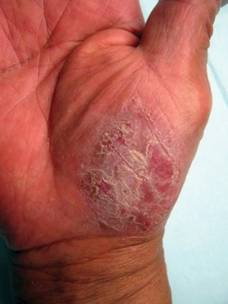
Dr. Au presented an open-label, 24-week study of 20 patients with moderate to severe palmoplantar psoriasis that was refractory to topical corticosteroids. Dosing of ustekinumab (Stelara) was as for plaque-type psoriasis: The 11 patients weighing less than 100 kg received 45 mg subcutaneously at weeks 0, 4, and 16, whereas the 9 patients weighing 100 kg or more received 90 mg on the same schedule.
The primary study end point was a Palm-Sole PGA (Physician’s Global Assessment) score of 0 or 1 at week 16. The average baseline score on this 0-5 measure of induration, erythema, and scaling was 4. The primary end point was achieved in 1 of 11 patients on the 45-mg dose, compared with 6 of 9 on the 90-mg dose (J. Dermatolog. Treat. 2012 May 8. [Epub ahead of print]). Of 20 patients, 12 improved at least 2 points on the Palm-Sole PGA at week 16.
In addition, significant improvements were documented with respect to the secondary end points for pain and quality of life. The mean pain score on a 100-point visual analog scale improved from 51 at week 0 to 29 at week 16, and held steady with a score of 30 at 24 weeks. Moreover, the mean score on the Dermatology Life Quality Index improved from 13.9 at baseline to 6.05 at week 16 and to 6.18 at week 24.
Ustekinumab was well tolerated with no serious adverse events.
Palmoplantar psoriasis is an uncommon variant of psoriasis that constitutes a therapeutic challenge, noted Dr. Au. It can be disfiguring and disabling, even though affected patients don’t necessarily have a large area of body surface involvement. The condition is characterized by fissures and sterile inflammatory pustules, in addition to classic well-demarcated psoriasis plaques. Affected patients experience considerable skin pain, often accompanied by a burning sensation. Some patients are unable to walk.
Clinically, palmoplantar psoriasis can look like other diseases, including palmoplantar pustulosis, dyshidrotic eczema, tinea pedis, and contact dermatitis, he explained. To help eliminate other possible diagnoses in the differential diagnosis, participants in the ustekinumab study had to have at least one classic psoriasis plaque somewhere other than the palms and soles.
Current treatment of palmoplantar psoriasis has been unsatisfactory, noted Dr. Au. No standard therapy is recognized, which was the impetus for studying ustekinumab. Future studies will look at employing the 90-mg dose in patients who weigh less than 100 kg and/or administering the 45-mg dose more frequently than the current standard every 3 months, he added.
In response to an audience question, he noted that responsiveness to the 90-mg dose was not weight related. The average weight in the high-dose group was 250 pounds, and the three nonresponders weighed in similarly to the six responders.
This investigator-initiated ustekinumab study was funded by a grant from Janssen Pharmaceuticals. Dr. Au reported having no financial conflicts. Senior investigator Dr. Alice B. Gottlieb reported having numerous industry relationships.
RALEIGH, N.C. – Ustekinumab proved effective for the clearance of palmoplantar psoriasis in an open-label pilot study, but only at the higher 90-mg dose reserved under current labeling for psoriasis patients weighing at least 100 kg.
"Higher or more frequent dosing may be required to achieve clinical clearance in patients with palmoplantar psoriasis compared to current recommendations for plaque-type psoriasis," said Dr. Shiu-Chung Au of Tufts Medical Center, Boston.
Dr. Au presented an open-label, 24-week study of 20 patients with moderate to severe palmoplantar psoriasis that was refractory to topical corticosteroids. Dosing of ustekinumab (Stelara) was as for plaque-type psoriasis: The 11 patients weighing less than 100 kg received 45 mg subcutaneously at weeks 0, 4, and 16, whereas the 9 patients weighing 100 kg or more received 90 mg on the same schedule.
The primary study end point was a Palm-Sole PGA (Physician’s Global Assessment) score of 0 or 1 at week 16. The average baseline score on this 0-5 measure of induration, erythema, and scaling was 4. The primary end point was achieved in 1 of 11 patients on the 45-mg dose, compared with 6 of 9 on the 90-mg dose (J. Dermatolog. Treat. 2012 May 8. [Epub ahead of print]). Of 20 patients, 12 improved at least 2 points on the Palm-Sole PGA at week 16.
In addition, significant improvements were documented with respect to the secondary end points for pain and quality of life. The mean pain score on a 100-point visual analog scale improved from 51 at week 0 to 29 at week 16, and held steady with a score of 30 at 24 weeks. Moreover, the mean score on the Dermatology Life Quality Index improved from 13.9 at baseline to 6.05 at week 16 and to 6.18 at week 24.
Ustekinumab was well tolerated with no serious adverse events.
Palmoplantar psoriasis is an uncommon variant of psoriasis that constitutes a therapeutic challenge, noted Dr. Au. It can be disfiguring and disabling, even though affected patients don’t necessarily have a large area of body surface involvement. The condition is characterized by fissures and sterile inflammatory pustules, in addition to classic well-demarcated psoriasis plaques. Affected patients experience considerable skin pain, often accompanied by a burning sensation. Some patients are unable to walk.
Clinically, palmoplantar psoriasis can look like other diseases, including palmoplantar pustulosis, dyshidrotic eczema, tinea pedis, and contact dermatitis, he explained. To help eliminate other possible diagnoses in the differential diagnosis, participants in the ustekinumab study had to have at least one classic psoriasis plaque somewhere other than the palms and soles.
Current treatment of palmoplantar psoriasis has been unsatisfactory, noted Dr. Au. No standard therapy is recognized, which was the impetus for studying ustekinumab. Future studies will look at employing the 90-mg dose in patients who weigh less than 100 kg and/or administering the 45-mg dose more frequently than the current standard every 3 months, he added.
In response to an audience question, he noted that responsiveness to the 90-mg dose was not weight related. The average weight in the high-dose group was 250 pounds, and the three nonresponders weighed in similarly to the six responders.
This investigator-initiated ustekinumab study was funded by a grant from Janssen Pharmaceuticals. Dr. Au reported having no financial conflicts. Senior investigator Dr. Alice B. Gottlieb reported having numerous industry relationships.
RALEIGH, N.C. – Ustekinumab proved effective for the clearance of palmoplantar psoriasis in an open-label pilot study, but only at the higher 90-mg dose reserved under current labeling for psoriasis patients weighing at least 100 kg.
"Higher or more frequent dosing may be required to achieve clinical clearance in patients with palmoplantar psoriasis compared to current recommendations for plaque-type psoriasis," said Dr. Shiu-Chung Au of Tufts Medical Center, Boston.
Dr. Au presented an open-label, 24-week study of 20 patients with moderate to severe palmoplantar psoriasis that was refractory to topical corticosteroids. Dosing of ustekinumab (Stelara) was as for plaque-type psoriasis: The 11 patients weighing less than 100 kg received 45 mg subcutaneously at weeks 0, 4, and 16, whereas the 9 patients weighing 100 kg or more received 90 mg on the same schedule.
The primary study end point was a Palm-Sole PGA (Physician’s Global Assessment) score of 0 or 1 at week 16. The average baseline score on this 0-5 measure of induration, erythema, and scaling was 4. The primary end point was achieved in 1 of 11 patients on the 45-mg dose, compared with 6 of 9 on the 90-mg dose (J. Dermatolog. Treat. 2012 May 8. [Epub ahead of print]). Of 20 patients, 12 improved at least 2 points on the Palm-Sole PGA at week 16.
In addition, significant improvements were documented with respect to the secondary end points for pain and quality of life. The mean pain score on a 100-point visual analog scale improved from 51 at week 0 to 29 at week 16, and held steady with a score of 30 at 24 weeks. Moreover, the mean score on the Dermatology Life Quality Index improved from 13.9 at baseline to 6.05 at week 16 and to 6.18 at week 24.
Ustekinumab was well tolerated with no serious adverse events.
Palmoplantar psoriasis is an uncommon variant of psoriasis that constitutes a therapeutic challenge, noted Dr. Au. It can be disfiguring and disabling, even though affected patients don’t necessarily have a large area of body surface involvement. The condition is characterized by fissures and sterile inflammatory pustules, in addition to classic well-demarcated psoriasis plaques. Affected patients experience considerable skin pain, often accompanied by a burning sensation. Some patients are unable to walk.
Clinically, palmoplantar psoriasis can look like other diseases, including palmoplantar pustulosis, dyshidrotic eczema, tinea pedis, and contact dermatitis, he explained. To help eliminate other possible diagnoses in the differential diagnosis, participants in the ustekinumab study had to have at least one classic psoriasis plaque somewhere other than the palms and soles.
Current treatment of palmoplantar psoriasis has been unsatisfactory, noted Dr. Au. No standard therapy is recognized, which was the impetus for studying ustekinumab. Future studies will look at employing the 90-mg dose in patients who weigh less than 100 kg and/or administering the 45-mg dose more frequently than the current standard every 3 months, he added.
In response to an audience question, he noted that responsiveness to the 90-mg dose was not weight related. The average weight in the high-dose group was 250 pounds, and the three nonresponders weighed in similarly to the six responders.
This investigator-initiated ustekinumab study was funded by a grant from Janssen Pharmaceuticals. Dr. Au reported having no financial conflicts. Senior investigator Dr. Alice B. Gottlieb reported having numerous industry relationships.
FROM THE ANNUAL MEETING OF THE SOCIETY FOR INVESTIGATIVE DERMATOLOGY
Major Finding: The primary endpoint of a palm-sole PGA score of 0 or 1 was achieved in 1 of 11 patients on the 45-mg dose, compared with 6 of 9 on the 90-mg dose
Data Source: An open-label, 24-week study of 20 patients treated with ustekinumab for moderate-to-severe palmoplantar psoriasis refractory to topical corticosteroids.
Disclosures: This investigator-initiated study was funded by a grant from Janssen Pharmaceuticals. Dr. Au reported having no financial conflicts. Senior investigator, Dr. Alice B. Gottlieb, reported having numerous industry relationships.