User login
Postdischarge antibiotics for complicated pneumonia
Clinical question: Are oral antibiotics as effective as intravenous (IV) antibiotics in the treatment of complicated pneumonia after discharge to home?
Background: Pneumonia is the most common illness among hospitalized children and adolescents (excluding neonates). Among children admitted with community acquired pneumonia, 15% may develop a complicated pneumonia (one with a pleural effusion or empyema). Treatment for these complicated pneumonias may include a variety of invasive procedures, such as video-assisted thorascopic surgery or chest tube placement.
Typically, a long course of antibiotics is prescribed on discharge, which may be oral or parenterally administered via a peripherally inserted central catheter (PICC). Previous studies have shown that oral antibiotics are equivalent to parenteral antibiotics for outpatient treatment of osteomyelitis. However, little evidence exists comparing the effectiveness of the two routes in treating complicated pneumonia.

The rate of PICC complications in complicated pneumonia also has not been well studied.
Study design: Retrospective cohort study.
Setting: Thirty-eight children’s hospitals affiliated with the Children’s Hospital Association.
Synopsis: Over 4 years, 7,820 encounters were identified with 2,123 patients ultimately being included in the cohort. Inclusion criteria were age 2 months to 18 years, and discharge diagnoses of pneumonia and pleural effusion. The authors excluded patients with chronic medical conditions, length of stay (LOS) less than 4 and more than 14 days, patients transferred to or from other institutions, and patients receiving no antibiotics on hospital day 1. The final criteria attempted to avoid inclusion of patients with nosocomial pneumonia. After application of these criteria, individual patient records were reviewed.
Patients were categorized as PICC or oral antibiotics based upon antibiotic route at their initial discharge. Treatment failure was defined as an ED revisit or rehospitalization that led to a change in antibiotic, lengthening of antibiotic course, or pleural drainage. Records were searched for evidence of PICC complications, adverse drug reactions, and other illness-related revisits. Patients in the PICC arm and oral arm were matched by age, race, insurance, LOS, positive vs. negative blood culture, ICU admission, and timing and type of pleural drainage.
Fifty-seven patients had treatment failure (2.7%). In matched analysis, there was no difference in treatment failure between PICC and oral routes (PICC treatment failure OR, 1.26 95% CI, 0.54-2.94). PICC complications were found in 7.1% of patients. Patients with PICC had significantly higher rates of adverse drug reactions (OR, 19.1 95% CI, 4.2-87.3) and illness-related revisits (OR 3.27 95% CI, 1.65-6.48), and all revisits (OR, 4.71 95% CI, 2.97-7.46).
PICC use varied markedly across geographic regions and institutions, with rates varying from less than 10% of cases to approximately 70%. Of geographic regions, the Mid-Atlantic used PICCs least often while the East North Central used them the most.
Bottom line: Treatment failure with both oral and PICC treatment of complicated pneumonia occur at the same rate, and are uncommon. Patients with PICCs had an increased rate of complications, including adverse drug reactions and revisits.
Citation: Shah SS, Srivastava R, Wu S, et al. Intravenous versus oral antibiotics for postdischarge treatment of complicated pneumonia. Pediatrics. 2016;138(6):e20161692. doi: 10.1542/peds.2016-1692.
Dr. Stubblefield is a pediatric hospitalist at Nemours/Alfred I. duPont Hospital for Children in Wilmington, Del., and clinical assistant professor of pediatrics at Sidney Kimmel Medical College at Thomas Jefferson University in Philadelphia.
Clinical question: Are oral antibiotics as effective as intravenous (IV) antibiotics in the treatment of complicated pneumonia after discharge to home?
Background: Pneumonia is the most common illness among hospitalized children and adolescents (excluding neonates). Among children admitted with community acquired pneumonia, 15% may develop a complicated pneumonia (one with a pleural effusion or empyema). Treatment for these complicated pneumonias may include a variety of invasive procedures, such as video-assisted thorascopic surgery or chest tube placement.
Typically, a long course of antibiotics is prescribed on discharge, which may be oral or parenterally administered via a peripherally inserted central catheter (PICC). Previous studies have shown that oral antibiotics are equivalent to parenteral antibiotics for outpatient treatment of osteomyelitis. However, little evidence exists comparing the effectiveness of the two routes in treating complicated pneumonia.
The rate of PICC complications in complicated pneumonia also has not been well studied.
Study design: Retrospective cohort study.
Setting: Thirty-eight children’s hospitals affiliated with the Children’s Hospital Association.
Synopsis: Over 4 years, 7,820 encounters were identified with 2,123 patients ultimately being included in the cohort. Inclusion criteria were age 2 months to 18 years, and discharge diagnoses of pneumonia and pleural effusion. The authors excluded patients with chronic medical conditions, length of stay (LOS) less than 4 and more than 14 days, patients transferred to or from other institutions, and patients receiving no antibiotics on hospital day 1. The final criteria attempted to avoid inclusion of patients with nosocomial pneumonia. After application of these criteria, individual patient records were reviewed.
Patients were categorized as PICC or oral antibiotics based upon antibiotic route at their initial discharge. Treatment failure was defined as an ED revisit or rehospitalization that led to a change in antibiotic, lengthening of antibiotic course, or pleural drainage. Records were searched for evidence of PICC complications, adverse drug reactions, and other illness-related revisits. Patients in the PICC arm and oral arm were matched by age, race, insurance, LOS, positive vs. negative blood culture, ICU admission, and timing and type of pleural drainage.
Fifty-seven patients had treatment failure (2.7%). In matched analysis, there was no difference in treatment failure between PICC and oral routes (PICC treatment failure OR, 1.26 95% CI, 0.54-2.94). PICC complications were found in 7.1% of patients. Patients with PICC had significantly higher rates of adverse drug reactions (OR, 19.1 95% CI, 4.2-87.3) and illness-related revisits (OR 3.27 95% CI, 1.65-6.48), and all revisits (OR, 4.71 95% CI, 2.97-7.46).
PICC use varied markedly across geographic regions and institutions, with rates varying from less than 10% of cases to approximately 70%. Of geographic regions, the Mid-Atlantic used PICCs least often while the East North Central used them the most.
Bottom line: Treatment failure with both oral and PICC treatment of complicated pneumonia occur at the same rate, and are uncommon. Patients with PICCs had an increased rate of complications, including adverse drug reactions and revisits.
Citation: Shah SS, Srivastava R, Wu S, et al. Intravenous versus oral antibiotics for postdischarge treatment of complicated pneumonia. Pediatrics. 2016;138(6):e20161692. doi: 10.1542/peds.2016-1692.
Dr. Stubblefield is a pediatric hospitalist at Nemours/Alfred I. duPont Hospital for Children in Wilmington, Del., and clinical assistant professor of pediatrics at Sidney Kimmel Medical College at Thomas Jefferson University in Philadelphia.
Clinical question: Are oral antibiotics as effective as intravenous (IV) antibiotics in the treatment of complicated pneumonia after discharge to home?
Background: Pneumonia is the most common illness among hospitalized children and adolescents (excluding neonates). Among children admitted with community acquired pneumonia, 15% may develop a complicated pneumonia (one with a pleural effusion or empyema). Treatment for these complicated pneumonias may include a variety of invasive procedures, such as video-assisted thorascopic surgery or chest tube placement.
Typically, a long course of antibiotics is prescribed on discharge, which may be oral or parenterally administered via a peripherally inserted central catheter (PICC). Previous studies have shown that oral antibiotics are equivalent to parenteral antibiotics for outpatient treatment of osteomyelitis. However, little evidence exists comparing the effectiveness of the two routes in treating complicated pneumonia.
The rate of PICC complications in complicated pneumonia also has not been well studied.
Study design: Retrospective cohort study.
Setting: Thirty-eight children’s hospitals affiliated with the Children’s Hospital Association.
Synopsis: Over 4 years, 7,820 encounters were identified with 2,123 patients ultimately being included in the cohort. Inclusion criteria were age 2 months to 18 years, and discharge diagnoses of pneumonia and pleural effusion. The authors excluded patients with chronic medical conditions, length of stay (LOS) less than 4 and more than 14 days, patients transferred to or from other institutions, and patients receiving no antibiotics on hospital day 1. The final criteria attempted to avoid inclusion of patients with nosocomial pneumonia. After application of these criteria, individual patient records were reviewed.
Patients were categorized as PICC or oral antibiotics based upon antibiotic route at their initial discharge. Treatment failure was defined as an ED revisit or rehospitalization that led to a change in antibiotic, lengthening of antibiotic course, or pleural drainage. Records were searched for evidence of PICC complications, adverse drug reactions, and other illness-related revisits. Patients in the PICC arm and oral arm were matched by age, race, insurance, LOS, positive vs. negative blood culture, ICU admission, and timing and type of pleural drainage.
Fifty-seven patients had treatment failure (2.7%). In matched analysis, there was no difference in treatment failure between PICC and oral routes (PICC treatment failure OR, 1.26 95% CI, 0.54-2.94). PICC complications were found in 7.1% of patients. Patients with PICC had significantly higher rates of adverse drug reactions (OR, 19.1 95% CI, 4.2-87.3) and illness-related revisits (OR 3.27 95% CI, 1.65-6.48), and all revisits (OR, 4.71 95% CI, 2.97-7.46).
PICC use varied markedly across geographic regions and institutions, with rates varying from less than 10% of cases to approximately 70%. Of geographic regions, the Mid-Atlantic used PICCs least often while the East North Central used them the most.
Bottom line: Treatment failure with both oral and PICC treatment of complicated pneumonia occur at the same rate, and are uncommon. Patients with PICCs had an increased rate of complications, including adverse drug reactions and revisits.
Citation: Shah SS, Srivastava R, Wu S, et al. Intravenous versus oral antibiotics for postdischarge treatment of complicated pneumonia. Pediatrics. 2016;138(6):e20161692. doi: 10.1542/peds.2016-1692.
Dr. Stubblefield is a pediatric hospitalist at Nemours/Alfred I. duPont Hospital for Children in Wilmington, Del., and clinical assistant professor of pediatrics at Sidney Kimmel Medical College at Thomas Jefferson University in Philadelphia.
Children with psychotic illness aren’t treated soon enough
SAN FRANCISCO – Early detection and treatment of psychotic illness is critical in children, according to Devanand Manoli, MD, PhD, of the University of California, San Francisco.
“After the conversion to psychotic illness, one of the most important prognostic factors is the duration of untreated psychosis.” A longer duration is associated with a greater symptom burden and lower functioning, which have “significant prognostic implications,” but sometimes treatment doesn’t come for a year or more. “There are many patients out there not receiving treatment,” the pediatric psychiatrist said at a psychopharmacology update held by the American Academy of Child and Adolescent Psychiatry.

The impact of early treatment raises the question of what to do with those who seem to be at risk, but don’t meet criteria for formal diagnosis.
It’s tough to be sure who exactly is at risk. Signs and symptoms can be nonspecific in adolescents, including disorganized communication, suspiciousness, verbal memory deficiencies, and decline in social functioning.
It’s even a tougher call in younger children. Most who exhibit psychotic or psychoticlike symptoms do not have a true psychotic disorder. Loose associations and illogical thinking are fairly common in early childhood, and preschool children can have transient tactile, visual, and other hallucinations that are benign. If there does seem to be a problem, metabolic issues are the most likely culprit before the age of 6 or so.
Again, comprehensive early intervention – including reducing environmental stressors – helps with functioning, symptoms, and other issues even before a formal diagnosis. However, antipsychotics do not decrease the rate of conversion to psychotic illness in truly high-risk children; their use is for symptom management, Dr. Manoli said.
It’s important adolescents avoid cannabis; it’s become clear in recent years that marijuana increases the risk of conversion to schizophrenia and the risk of relapse. “It’s a very important thing to emphasize. Cannabis use is something to counsel against,” he said.
Atypicals seem to be about equally effective, so their selection mostly comes down to side effects and cost. An exception might be clozapine. “It’s a medication we are very resistant to prescribe” because of the need for aggressive neutrophil monitoring and other issues, “but in patients with acute psychotic symptoms, it can be very effective” in both treatment-naïve and treatment-resistant children and help with aggression, he said, noting also that it’s important to remember children are more sensitive than adults to akathisia and other extrapyramidal symptoms with antipsychotics.
In response to audience questions, Dr. Manoli said there isn’t really a need to monitor for prolactin elevations with atypical antipsychotics unless there are symptoms, such as inappropriate breast tissue or lactation. In those cases, augmentation with aripiprazole can normalize levels.
He also noted that he and his colleagues do order baseline and follow-up ECGs when prescribing ziprasidone; prolonged QTc interval is a concern, regardless of family cardiac history.
Dr. Manoli reported research funding from the Brain & Behavior Research Foundation, the One Mind Institute, the National Institutes of Health, and other sources.
SAN FRANCISCO – Early detection and treatment of psychotic illness is critical in children, according to Devanand Manoli, MD, PhD, of the University of California, San Francisco.
“After the conversion to psychotic illness, one of the most important prognostic factors is the duration of untreated psychosis.” A longer duration is associated with a greater symptom burden and lower functioning, which have “significant prognostic implications,” but sometimes treatment doesn’t come for a year or more. “There are many patients out there not receiving treatment,” the pediatric psychiatrist said at a psychopharmacology update held by the American Academy of Child and Adolescent Psychiatry.
The impact of early treatment raises the question of what to do with those who seem to be at risk, but don’t meet criteria for formal diagnosis.
It’s tough to be sure who exactly is at risk. Signs and symptoms can be nonspecific in adolescents, including disorganized communication, suspiciousness, verbal memory deficiencies, and decline in social functioning.
It’s even a tougher call in younger children. Most who exhibit psychotic or psychoticlike symptoms do not have a true psychotic disorder. Loose associations and illogical thinking are fairly common in early childhood, and preschool children can have transient tactile, visual, and other hallucinations that are benign. If there does seem to be a problem, metabolic issues are the most likely culprit before the age of 6 or so.
Again, comprehensive early intervention – including reducing environmental stressors – helps with functioning, symptoms, and other issues even before a formal diagnosis. However, antipsychotics do not decrease the rate of conversion to psychotic illness in truly high-risk children; their use is for symptom management, Dr. Manoli said.
It’s important adolescents avoid cannabis; it’s become clear in recent years that marijuana increases the risk of conversion to schizophrenia and the risk of relapse. “It’s a very important thing to emphasize. Cannabis use is something to counsel against,” he said.
Atypicals seem to be about equally effective, so their selection mostly comes down to side effects and cost. An exception might be clozapine. “It’s a medication we are very resistant to prescribe” because of the need for aggressive neutrophil monitoring and other issues, “but in patients with acute psychotic symptoms, it can be very effective” in both treatment-naïve and treatment-resistant children and help with aggression, he said, noting also that it’s important to remember children are more sensitive than adults to akathisia and other extrapyramidal symptoms with antipsychotics.
In response to audience questions, Dr. Manoli said there isn’t really a need to monitor for prolactin elevations with atypical antipsychotics unless there are symptoms, such as inappropriate breast tissue or lactation. In those cases, augmentation with aripiprazole can normalize levels.
He also noted that he and his colleagues do order baseline and follow-up ECGs when prescribing ziprasidone; prolonged QTc interval is a concern, regardless of family cardiac history.
Dr. Manoli reported research funding from the Brain & Behavior Research Foundation, the One Mind Institute, the National Institutes of Health, and other sources.
SAN FRANCISCO – Early detection and treatment of psychotic illness is critical in children, according to Devanand Manoli, MD, PhD, of the University of California, San Francisco.
“After the conversion to psychotic illness, one of the most important prognostic factors is the duration of untreated psychosis.” A longer duration is associated with a greater symptom burden and lower functioning, which have “significant prognostic implications,” but sometimes treatment doesn’t come for a year or more. “There are many patients out there not receiving treatment,” the pediatric psychiatrist said at a psychopharmacology update held by the American Academy of Child and Adolescent Psychiatry.
The impact of early treatment raises the question of what to do with those who seem to be at risk, but don’t meet criteria for formal diagnosis.
It’s tough to be sure who exactly is at risk. Signs and symptoms can be nonspecific in adolescents, including disorganized communication, suspiciousness, verbal memory deficiencies, and decline in social functioning.
It’s even a tougher call in younger children. Most who exhibit psychotic or psychoticlike symptoms do not have a true psychotic disorder. Loose associations and illogical thinking are fairly common in early childhood, and preschool children can have transient tactile, visual, and other hallucinations that are benign. If there does seem to be a problem, metabolic issues are the most likely culprit before the age of 6 or so.
Again, comprehensive early intervention – including reducing environmental stressors – helps with functioning, symptoms, and other issues even before a formal diagnosis. However, antipsychotics do not decrease the rate of conversion to psychotic illness in truly high-risk children; their use is for symptom management, Dr. Manoli said.
It’s important adolescents avoid cannabis; it’s become clear in recent years that marijuana increases the risk of conversion to schizophrenia and the risk of relapse. “It’s a very important thing to emphasize. Cannabis use is something to counsel against,” he said.
Atypicals seem to be about equally effective, so their selection mostly comes down to side effects and cost. An exception might be clozapine. “It’s a medication we are very resistant to prescribe” because of the need for aggressive neutrophil monitoring and other issues, “but in patients with acute psychotic symptoms, it can be very effective” in both treatment-naïve and treatment-resistant children and help with aggression, he said, noting also that it’s important to remember children are more sensitive than adults to akathisia and other extrapyramidal symptoms with antipsychotics.
In response to audience questions, Dr. Manoli said there isn’t really a need to monitor for prolactin elevations with atypical antipsychotics unless there are symptoms, such as inappropriate breast tissue or lactation. In those cases, augmentation with aripiprazole can normalize levels.
He also noted that he and his colleagues do order baseline and follow-up ECGs when prescribing ziprasidone; prolonged QTc interval is a concern, regardless of family cardiac history.
Dr. Manoli reported research funding from the Brain & Behavior Research Foundation, the One Mind Institute, the National Institutes of Health, and other sources.
EXPERT ANALYSIS FROM THE PSYCHOPHARMACOLOGY UPDATE INSTITUTE

Teen vaccines: Where we are now, and how can we go further?
Adolescents remain undervaccinated for several diseases, and clinicians need to lead the charge to change this reality, according to new clinical reports issued by the American Academy of Pediatrics Committee on Infectious Diseases.
Teens are lagging behind the Healthy People 2020 vaccination goals for the Tdap, quadrivalent meningococcal conjugate (menACWY), and human papillomavirus (HPV) vaccines, lead authors Henry H. Bernstein, DO, and Joseph A. Bocchini Jr., MD, wrote in the Feb. 6 issue of Pediatrics.

“Although HPV vaccination rates are slowly improving, they continue to lag far behind Tdap and menACWY rates for both boys and girls,” the authors wrote. Only 63% of girls and 50% of boys have gotten at least one HPV vaccine dose; just 42% of girls and 28% of boys finished the entire three-dose series in 2015.
A recent study found that parents declined the HPV vaccine 56% of the time. The three most common reasons were the belief that their child had a low risk of acquiring HPV; fear that the risk of adverse events was too great and belief that the vaccine wasn’t well researched and hasn’t been on the market long enough.
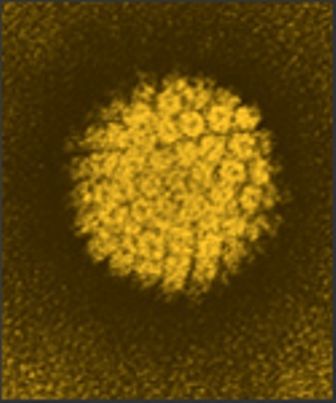
But teens also are falling behind with less controversial vaccines, the report noted. Fewer than half of teens got a flu shot in the 2015-2016 season. Rates for the MenACWY and Tdap are better, but not optimal (81% and 86%, respectively).
Barriers to optimal immunization
The clinical report puts clinicians on the first line of responsibility and makes no apologies for that.
“One of the greatest challenges is health care provider recommendation, which often lacks consistency and urgency,” the authors said. “Many health care providers do not universally recommend vaccines to eligible populations and do not offer concomitant vaccination with indicated vaccines during a single patient encounter.”
In fact, they noted, a recent physician survey found that only about 60% of pediatricians and family doctors strongly recommend the HPV vaccine for 11- and 12-year-old girls. Several parent surveys have determined that lack of provider recommendation is a leading reason for undervaccination among adolescents.
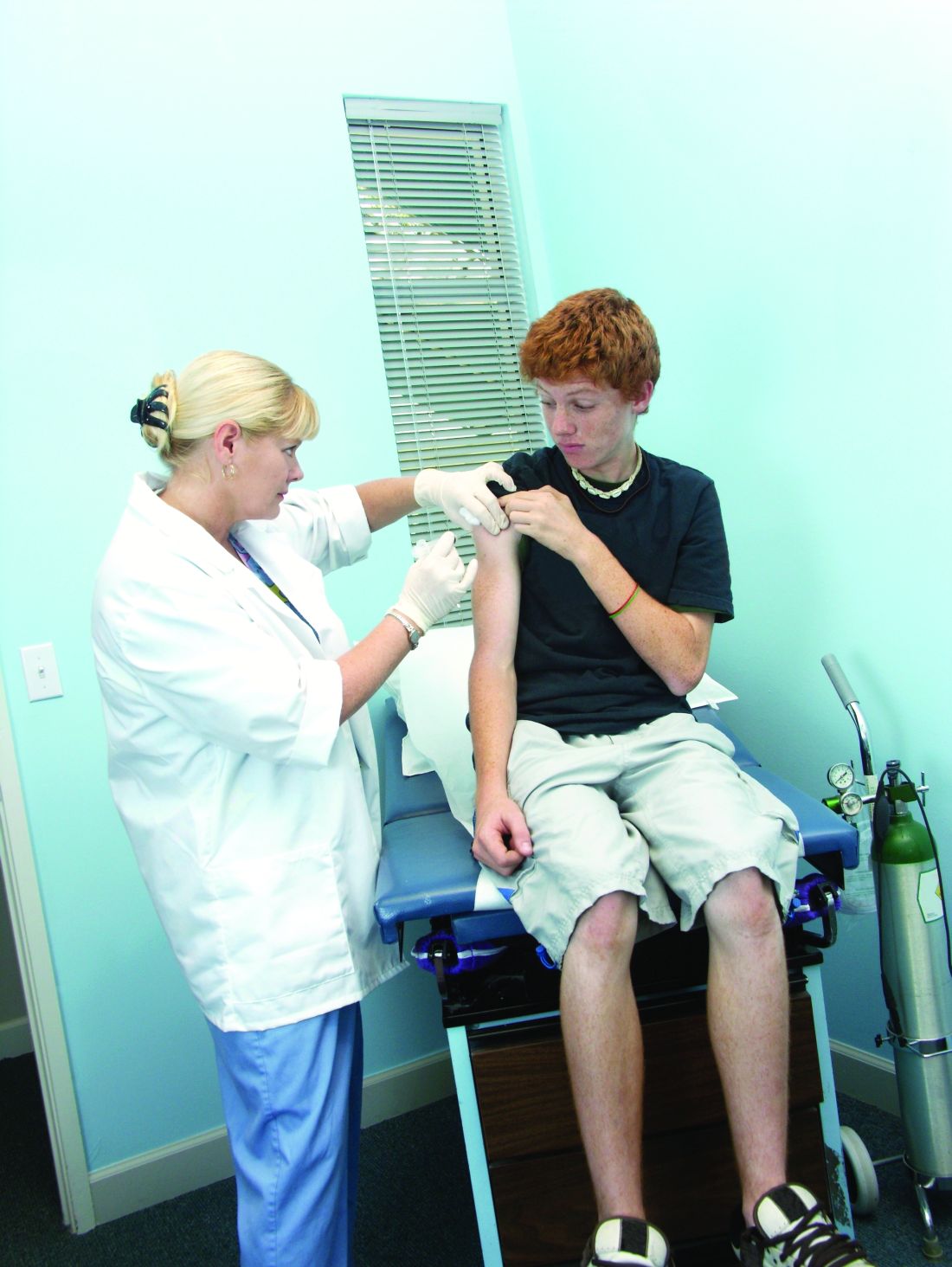
A companion clinical report, also authored by Dr. Bernstein and Dr. Bocchini, discusses practical ways to confront these barriers (Pediatrics. 2017 Feb 6. doi: 10.1542/peds.2016-4187). It opens with a strong call to physicians to lead the charge in increasing immunization rates.
“Up to 65% of parents have reported not receiving a recommendation … for immunizations. The major reason for nonreceipt [of Tdap and menACWY] was lack of a health care provider recommendation,” they said.
Overcoming parental vaccine hesitancy is a thorny struggle, the authors acknowledge. But they offer some helpful suggestions, including:
• Don’t offer immunizations as “optional.” This opens the door to vaccine dismissal. Instead, “strongly endorse all universally recommended vaccines as important for adolescents’ health.”
• Ask open-ended questions to get at the root of parental hesitancy. Give fact-based, medically sound information. Stress that doctors are parent partners in raising healthy children and protecting them from disease.
• Stress the big-picture benefits of vaccines. Telling parents that the HPV vaccine prevents cancer lifelong is a powerful message. “Up-to-date information on current events and disease outbreaks is a tool to bring into the conversation about vaccines as well.”
• Review the vaccine timeline. Do everything possible to ensure parents follow up and complete each series. “Follow-up immunization visits should be scheduled before the family leaves the care setting.”
• Don’t give up when a parent refuses a vaccine. “Although it may be challenging, it’s important that health care providers offer the vaccine at the next most appropriate time. Perseverance is critical for vaccine uptake and immunization rates.”
Dr. Bernstein and Dr. Bocchini also suggest that vaccine uptake could be boosted by a mental re-set of the office visit. “Missed opportunities for adolescent immunizations,” such as sick calls, are a prime example. “The majority of vaccines are administered during well-child visit [sports or camp physicals]. … However, acute care visits or sick visits in the patient-centered medical home are also an opportunity to deliver vaccines or to discuss upcoming vaccines,” they said.
Education and communication are essential to improving vaccine uptake, the report concludes. “Appropriate techniques for approaching adolescent patients and their parents in the office to encourage immunizations are important skills for healthcare providers. The key to increasing immunization rates and decreasing vaccine-preventable disease … is to focus on educating adolescents and strengthening health care providers’ recommendations by using all clinical opportunities to assess immunization status and provide needed vaccinations.”
Neither Dr Bernstein nor Dr. Bocchini had any financial disclosures.
Need help talking about teen vaccines? Check out these resources
The American Academy of Pediatrics offered the following resources designed to help clinicians communicate effectively when talking to patients and parents about vaccines:
• Talking to parents about the HPV vaccine. This website hosted by the Centers for Disease Control and Prevention includes a link to the latest vaccination recommendations, as well as a tip sheet with HPV vaccine talking points, a fact sheet on the vaccine’s safety data, and a video with four clinical vignettes that model effective communication.
• The HPV Champion Toolkit. This contains numerous resources to help clinicians learn to educate other health care professionals, discuss HPV vaccination with parents, and make practice changes to increase HPV vaccine uptake.
• You Are the Key to HPV Prevention. This CDC video presents up-to-date information on HPV infection and disease, the HPV vaccine, and ways to successfully communicate with patients and their parents about HPV vaccination.
• Adolescentvaccination.org. The National Foundation for Infectious Diseases maintains a website is entirely devoted to adolescent vaccination issues. It contains resources for clinicians, and parents.
• Top Strategies for Increasing Vaccine Coverage. This is a report by the American Academy of Pediatrics.
• You Call the Shots. This is an interactive, Web-based immunization training course created by the CDC.
• Suggestions to Improve Your Immunization Services. This is a checklist of suggestions, by the Immunization Action.
msullivan@frontlinemedcom.com
On Twitter @Alz_Gal
Adolescents remain undervaccinated for several diseases, and clinicians need to lead the charge to change this reality, according to new clinical reports issued by the American Academy of Pediatrics Committee on Infectious Diseases.
Teens are lagging behind the Healthy People 2020 vaccination goals for the Tdap, quadrivalent meningococcal conjugate (menACWY), and human papillomavirus (HPV) vaccines, lead authors Henry H. Bernstein, DO, and Joseph A. Bocchini Jr., MD, wrote in the Feb. 6 issue of Pediatrics.
“Although HPV vaccination rates are slowly improving, they continue to lag far behind Tdap and menACWY rates for both boys and girls,” the authors wrote. Only 63% of girls and 50% of boys have gotten at least one HPV vaccine dose; just 42% of girls and 28% of boys finished the entire three-dose series in 2015.
A recent study found that parents declined the HPV vaccine 56% of the time. The three most common reasons were the belief that their child had a low risk of acquiring HPV; fear that the risk of adverse events was too great and belief that the vaccine wasn’t well researched and hasn’t been on the market long enough.
But teens also are falling behind with less controversial vaccines, the report noted. Fewer than half of teens got a flu shot in the 2015-2016 season. Rates for the MenACWY and Tdap are better, but not optimal (81% and 86%, respectively).
Barriers to optimal immunization
The clinical report puts clinicians on the first line of responsibility and makes no apologies for that.
“One of the greatest challenges is health care provider recommendation, which often lacks consistency and urgency,” the authors said. “Many health care providers do not universally recommend vaccines to eligible populations and do not offer concomitant vaccination with indicated vaccines during a single patient encounter.”
In fact, they noted, a recent physician survey found that only about 60% of pediatricians and family doctors strongly recommend the HPV vaccine for 11- and 12-year-old girls. Several parent surveys have determined that lack of provider recommendation is a leading reason for undervaccination among adolescents.
A companion clinical report, also authored by Dr. Bernstein and Dr. Bocchini, discusses practical ways to confront these barriers (Pediatrics. 2017 Feb 6. doi: 10.1542/peds.2016-4187). It opens with a strong call to physicians to lead the charge in increasing immunization rates.
“Up to 65% of parents have reported not receiving a recommendation … for immunizations. The major reason for nonreceipt [of Tdap and menACWY] was lack of a health care provider recommendation,” they said.
Overcoming parental vaccine hesitancy is a thorny struggle, the authors acknowledge. But they offer some helpful suggestions, including:
• Don’t offer immunizations as “optional.” This opens the door to vaccine dismissal. Instead, “strongly endorse all universally recommended vaccines as important for adolescents’ health.”
• Ask open-ended questions to get at the root of parental hesitancy. Give fact-based, medically sound information. Stress that doctors are parent partners in raising healthy children and protecting them from disease.
• Stress the big-picture benefits of vaccines. Telling parents that the HPV vaccine prevents cancer lifelong is a powerful message. “Up-to-date information on current events and disease outbreaks is a tool to bring into the conversation about vaccines as well.”
• Review the vaccine timeline. Do everything possible to ensure parents follow up and complete each series. “Follow-up immunization visits should be scheduled before the family leaves the care setting.”
• Don’t give up when a parent refuses a vaccine. “Although it may be challenging, it’s important that health care providers offer the vaccine at the next most appropriate time. Perseverance is critical for vaccine uptake and immunization rates.”
Dr. Bernstein and Dr. Bocchini also suggest that vaccine uptake could be boosted by a mental re-set of the office visit. “Missed opportunities for adolescent immunizations,” such as sick calls, are a prime example. “The majority of vaccines are administered during well-child visit [sports or camp physicals]. … However, acute care visits or sick visits in the patient-centered medical home are also an opportunity to deliver vaccines or to discuss upcoming vaccines,” they said.
Education and communication are essential to improving vaccine uptake, the report concludes. “Appropriate techniques for approaching adolescent patients and their parents in the office to encourage immunizations are important skills for healthcare providers. The key to increasing immunization rates and decreasing vaccine-preventable disease … is to focus on educating adolescents and strengthening health care providers’ recommendations by using all clinical opportunities to assess immunization status and provide needed vaccinations.”
Neither Dr Bernstein nor Dr. Bocchini had any financial disclosures.
Need help talking about teen vaccines? Check out these resources
The American Academy of Pediatrics offered the following resources designed to help clinicians communicate effectively when talking to patients and parents about vaccines:
• Talking to parents about the HPV vaccine. This website hosted by the Centers for Disease Control and Prevention includes a link to the latest vaccination recommendations, as well as a tip sheet with HPV vaccine talking points, a fact sheet on the vaccine’s safety data, and a video with four clinical vignettes that model effective communication.
• The HPV Champion Toolkit. This contains numerous resources to help clinicians learn to educate other health care professionals, discuss HPV vaccination with parents, and make practice changes to increase HPV vaccine uptake.
• You Are the Key to HPV Prevention. This CDC video presents up-to-date information on HPV infection and disease, the HPV vaccine, and ways to successfully communicate with patients and their parents about HPV vaccination.
• Adolescentvaccination.org. The National Foundation for Infectious Diseases maintains a website is entirely devoted to adolescent vaccination issues. It contains resources for clinicians, and parents.
• Top Strategies for Increasing Vaccine Coverage. This is a report by the American Academy of Pediatrics.
• You Call the Shots. This is an interactive, Web-based immunization training course created by the CDC.
• Suggestions to Improve Your Immunization Services. This is a checklist of suggestions, by the Immunization Action.
msullivan@frontlinemedcom.com
On Twitter @Alz_Gal
Adolescents remain undervaccinated for several diseases, and clinicians need to lead the charge to change this reality, according to new clinical reports issued by the American Academy of Pediatrics Committee on Infectious Diseases.
Teens are lagging behind the Healthy People 2020 vaccination goals for the Tdap, quadrivalent meningococcal conjugate (menACWY), and human papillomavirus (HPV) vaccines, lead authors Henry H. Bernstein, DO, and Joseph A. Bocchini Jr., MD, wrote in the Feb. 6 issue of Pediatrics.
“Although HPV vaccination rates are slowly improving, they continue to lag far behind Tdap and menACWY rates for both boys and girls,” the authors wrote. Only 63% of girls and 50% of boys have gotten at least one HPV vaccine dose; just 42% of girls and 28% of boys finished the entire three-dose series in 2015.
A recent study found that parents declined the HPV vaccine 56% of the time. The three most common reasons were the belief that their child had a low risk of acquiring HPV; fear that the risk of adverse events was too great and belief that the vaccine wasn’t well researched and hasn’t been on the market long enough.
But teens also are falling behind with less controversial vaccines, the report noted. Fewer than half of teens got a flu shot in the 2015-2016 season. Rates for the MenACWY and Tdap are better, but not optimal (81% and 86%, respectively).
Barriers to optimal immunization
The clinical report puts clinicians on the first line of responsibility and makes no apologies for that.
“One of the greatest challenges is health care provider recommendation, which often lacks consistency and urgency,” the authors said. “Many health care providers do not universally recommend vaccines to eligible populations and do not offer concomitant vaccination with indicated vaccines during a single patient encounter.”
In fact, they noted, a recent physician survey found that only about 60% of pediatricians and family doctors strongly recommend the HPV vaccine for 11- and 12-year-old girls. Several parent surveys have determined that lack of provider recommendation is a leading reason for undervaccination among adolescents.
A companion clinical report, also authored by Dr. Bernstein and Dr. Bocchini, discusses practical ways to confront these barriers (Pediatrics. 2017 Feb 6. doi: 10.1542/peds.2016-4187). It opens with a strong call to physicians to lead the charge in increasing immunization rates.
“Up to 65% of parents have reported not receiving a recommendation … for immunizations. The major reason for nonreceipt [of Tdap and menACWY] was lack of a health care provider recommendation,” they said.
Overcoming parental vaccine hesitancy is a thorny struggle, the authors acknowledge. But they offer some helpful suggestions, including:
• Don’t offer immunizations as “optional.” This opens the door to vaccine dismissal. Instead, “strongly endorse all universally recommended vaccines as important for adolescents’ health.”
• Ask open-ended questions to get at the root of parental hesitancy. Give fact-based, medically sound information. Stress that doctors are parent partners in raising healthy children and protecting them from disease.
• Stress the big-picture benefits of vaccines. Telling parents that the HPV vaccine prevents cancer lifelong is a powerful message. “Up-to-date information on current events and disease outbreaks is a tool to bring into the conversation about vaccines as well.”
• Review the vaccine timeline. Do everything possible to ensure parents follow up and complete each series. “Follow-up immunization visits should be scheduled before the family leaves the care setting.”
• Don’t give up when a parent refuses a vaccine. “Although it may be challenging, it’s important that health care providers offer the vaccine at the next most appropriate time. Perseverance is critical for vaccine uptake and immunization rates.”
Dr. Bernstein and Dr. Bocchini also suggest that vaccine uptake could be boosted by a mental re-set of the office visit. “Missed opportunities for adolescent immunizations,” such as sick calls, are a prime example. “The majority of vaccines are administered during well-child visit [sports or camp physicals]. … However, acute care visits or sick visits in the patient-centered medical home are also an opportunity to deliver vaccines or to discuss upcoming vaccines,” they said.
Education and communication are essential to improving vaccine uptake, the report concludes. “Appropriate techniques for approaching adolescent patients and their parents in the office to encourage immunizations are important skills for healthcare providers. The key to increasing immunization rates and decreasing vaccine-preventable disease … is to focus on educating adolescents and strengthening health care providers’ recommendations by using all clinical opportunities to assess immunization status and provide needed vaccinations.”
Neither Dr Bernstein nor Dr. Bocchini had any financial disclosures.
Need help talking about teen vaccines? Check out these resources
The American Academy of Pediatrics offered the following resources designed to help clinicians communicate effectively when talking to patients and parents about vaccines:
• Talking to parents about the HPV vaccine. This website hosted by the Centers for Disease Control and Prevention includes a link to the latest vaccination recommendations, as well as a tip sheet with HPV vaccine talking points, a fact sheet on the vaccine’s safety data, and a video with four clinical vignettes that model effective communication.
• The HPV Champion Toolkit. This contains numerous resources to help clinicians learn to educate other health care professionals, discuss HPV vaccination with parents, and make practice changes to increase HPV vaccine uptake.
• You Are the Key to HPV Prevention. This CDC video presents up-to-date information on HPV infection and disease, the HPV vaccine, and ways to successfully communicate with patients and their parents about HPV vaccination.
• Adolescentvaccination.org. The National Foundation for Infectious Diseases maintains a website is entirely devoted to adolescent vaccination issues. It contains resources for clinicians, and parents.
• Top Strategies for Increasing Vaccine Coverage. This is a report by the American Academy of Pediatrics.
• You Call the Shots. This is an interactive, Web-based immunization training course created by the CDC.
• Suggestions to Improve Your Immunization Services. This is a checklist of suggestions, by the Immunization Action.
msullivan@frontlinemedcom.com
On Twitter @Alz_Gal
E-cigarette ‘dripping’ is up among teens
Use of electronic cigarettes among young people is on the rise, and one in four high school students report using these devices for dripping, according to a study by Suchitra Krishnan-Sarin, PhD, of Yale University, New Haven, and associates.
In the spring of 2015, 7,045 students from eight Connecticut high schools completed anonymous surveys that examined tobacco use behaviors and perceptions. Among 1,080 ever e-cigarette users, 26% of students reported ever using e-cigarettes for dripping, which involves “vaporizing the e-liquid at high temperatures by dripping a couple of drops of e-liquid directly onto an atomizer’s coil and then immediately inhaling the vapor.”
Students use dripping because it produces thicker clouds of vapor (according to 64% of respondents); because they get a stronger throat hit (28%); and because it makes the flavors taste better (39%). Curiosity was cited by 22% of the students. 
These results suggest that youth who use dripping may be those who are more familiar with and have experience with using multiple tobacco products, including e-cigarettes Pediatrics. 2017. doi: 10.1542/peds.2016-3224).
“Importantly, risk assessment models for e-cigarettes must take into consideration the prevalence rates and toxicities of these alternative e-cigarette use behaviors, especially among vulnerable youth. There is also a critical need for regulatory efforts that consider restrictions on the e-cigarette device so it cannot be easily manipulated for behaviors such as dripping,” the researchers noted. “Finally, there is an urgent need for prevention programs that educate youth about the potential dangers and toxicity of the use of e-cigarettes for dripping.”
Use of electronic cigarettes among young people is on the rise, and one in four high school students report using these devices for dripping, according to a study by Suchitra Krishnan-Sarin, PhD, of Yale University, New Haven, and associates.
In the spring of 2015, 7,045 students from eight Connecticut high schools completed anonymous surveys that examined tobacco use behaviors and perceptions. Among 1,080 ever e-cigarette users, 26% of students reported ever using e-cigarettes for dripping, which involves “vaporizing the e-liquid at high temperatures by dripping a couple of drops of e-liquid directly onto an atomizer’s coil and then immediately inhaling the vapor.”
Students use dripping because it produces thicker clouds of vapor (according to 64% of respondents); because they get a stronger throat hit (28%); and because it makes the flavors taste better (39%). Curiosity was cited by 22% of the students.
These results suggest that youth who use dripping may be those who are more familiar with and have experience with using multiple tobacco products, including e-cigarettes Pediatrics. 2017. doi: 10.1542/peds.2016-3224).
“Importantly, risk assessment models for e-cigarettes must take into consideration the prevalence rates and toxicities of these alternative e-cigarette use behaviors, especially among vulnerable youth. There is also a critical need for regulatory efforts that consider restrictions on the e-cigarette device so it cannot be easily manipulated for behaviors such as dripping,” the researchers noted. “Finally, there is an urgent need for prevention programs that educate youth about the potential dangers and toxicity of the use of e-cigarettes for dripping.”
Use of electronic cigarettes among young people is on the rise, and one in four high school students report using these devices for dripping, according to a study by Suchitra Krishnan-Sarin, PhD, of Yale University, New Haven, and associates.
In the spring of 2015, 7,045 students from eight Connecticut high schools completed anonymous surveys that examined tobacco use behaviors and perceptions. Among 1,080 ever e-cigarette users, 26% of students reported ever using e-cigarettes for dripping, which involves “vaporizing the e-liquid at high temperatures by dripping a couple of drops of e-liquid directly onto an atomizer’s coil and then immediately inhaling the vapor.”
Students use dripping because it produces thicker clouds of vapor (according to 64% of respondents); because they get a stronger throat hit (28%); and because it makes the flavors taste better (39%). Curiosity was cited by 22% of the students.
These results suggest that youth who use dripping may be those who are more familiar with and have experience with using multiple tobacco products, including e-cigarettes Pediatrics. 2017. doi: 10.1542/peds.2016-3224).
“Importantly, risk assessment models for e-cigarettes must take into consideration the prevalence rates and toxicities of these alternative e-cigarette use behaviors, especially among vulnerable youth. There is also a critical need for regulatory efforts that consider restrictions on the e-cigarette device so it cannot be easily manipulated for behaviors such as dripping,” the researchers noted. “Finally, there is an urgent need for prevention programs that educate youth about the potential dangers and toxicity of the use of e-cigarettes for dripping.”
FROM PEDIATRICS
Therapy demonstrates safety, efficacy in kids with hemophilia B
Photo courtesy of Biogen
A recombinant factor IX Fc fusion protein (rFIXFc) has produced favorable results in children with severe hemophilia B, researchers have reported.
The team said rFIXFc was generally well-tolerated in the phase 3 Kids B-LONG study, and none of the patients on this trial developed inhibitors.
In addition, the annualized bleeding rate was low, and most patients were able to maintain once-weekly dosing.
“To date, Kids B-LONG is the largest study to evaluate the safety and efficacy of extended half-life factor IX therapy in children with hemophilia B, and the study’s results align with those in studies of [rFIXFc] in adults and adolescents,” said Roshni Kulkarni, MD, of Michigan State University in East Lansing.
Dr Kulkarni and her colleagues reported results of Kids B-LONG in The Lancet Haematology. The research was funded by Biogen and Sobi, the companies marketing rFIXFc (also known as eftrenonacog alfa) as Alprolix.
The study included 30 males under the age of 12 with previously treated, severe hemophilia B.
All patients initially received rFIXFc prophylaxis (50-60 IU/kg) once per week. Doses were adjusted as needed (≤100 IU/kg per infusion, up to 2 times per week).
Twenty-seven patients (90%) completed the study. The median time spent on study was 49.4 weeks, and 24 patients received rFIXFc injections on at least 50 separate days.
None of the patients developed inhibitors to rFIXFc. There were no reports of anaphylaxis or serious hypersensitivity reactions, no vascular thrombotic events, and no deaths.
The most common adverse events were common cold (n=7, 23%) and fall (n=6, 20%). Four patients experienced serious adverse events while on study, all of which were considered unrelated to rFIXFc.
The median annualized bleeding rate was 2.0 overall, and there were no spontaneous joint bleeds.
Of all 30 patients treated, 10 (33%) experienced no bleeding episodes, and 19 (63%) reported no joint bleeding on-study.
Overall, 92% of bleeding episodes were controlled by 1 or 2 injections of rFIXFc.
Following a switch to rFIXFc, 80% of children who completed the study (22/27) extended their dosing interval compared to previous treatment.
One patient had his dosing interval reduced to 5 days, but all other patients remained on once-weekly prophylactic dosing throughout the study. 
Photo courtesy of Biogen
A recombinant factor IX Fc fusion protein (rFIXFc) has produced favorable results in children with severe hemophilia B, researchers have reported.
The team said rFIXFc was generally well-tolerated in the phase 3 Kids B-LONG study, and none of the patients on this trial developed inhibitors.
In addition, the annualized bleeding rate was low, and most patients were able to maintain once-weekly dosing.
“To date, Kids B-LONG is the largest study to evaluate the safety and efficacy of extended half-life factor IX therapy in children with hemophilia B, and the study’s results align with those in studies of [rFIXFc] in adults and adolescents,” said Roshni Kulkarni, MD, of Michigan State University in East Lansing.
Dr Kulkarni and her colleagues reported results of Kids B-LONG in The Lancet Haematology. The research was funded by Biogen and Sobi, the companies marketing rFIXFc (also known as eftrenonacog alfa) as Alprolix.
The study included 30 males under the age of 12 with previously treated, severe hemophilia B.
All patients initially received rFIXFc prophylaxis (50-60 IU/kg) once per week. Doses were adjusted as needed (≤100 IU/kg per infusion, up to 2 times per week).
Twenty-seven patients (90%) completed the study. The median time spent on study was 49.4 weeks, and 24 patients received rFIXFc injections on at least 50 separate days.
None of the patients developed inhibitors to rFIXFc. There were no reports of anaphylaxis or serious hypersensitivity reactions, no vascular thrombotic events, and no deaths.
The most common adverse events were common cold (n=7, 23%) and fall (n=6, 20%). Four patients experienced serious adverse events while on study, all of which were considered unrelated to rFIXFc.
The median annualized bleeding rate was 2.0 overall, and there were no spontaneous joint bleeds.
Of all 30 patients treated, 10 (33%) experienced no bleeding episodes, and 19 (63%) reported no joint bleeding on-study.
Overall, 92% of bleeding episodes were controlled by 1 or 2 injections of rFIXFc.
Following a switch to rFIXFc, 80% of children who completed the study (22/27) extended their dosing interval compared to previous treatment.
One patient had his dosing interval reduced to 5 days, but all other patients remained on once-weekly prophylactic dosing throughout the study.
Photo courtesy of Biogen
A recombinant factor IX Fc fusion protein (rFIXFc) has produced favorable results in children with severe hemophilia B, researchers have reported.
The team said rFIXFc was generally well-tolerated in the phase 3 Kids B-LONG study, and none of the patients on this trial developed inhibitors.
In addition, the annualized bleeding rate was low, and most patients were able to maintain once-weekly dosing.
“To date, Kids B-LONG is the largest study to evaluate the safety and efficacy of extended half-life factor IX therapy in children with hemophilia B, and the study’s results align with those in studies of [rFIXFc] in adults and adolescents,” said Roshni Kulkarni, MD, of Michigan State University in East Lansing.
Dr Kulkarni and her colleagues reported results of Kids B-LONG in The Lancet Haematology. The research was funded by Biogen and Sobi, the companies marketing rFIXFc (also known as eftrenonacog alfa) as Alprolix.
The study included 30 males under the age of 12 with previously treated, severe hemophilia B.
All patients initially received rFIXFc prophylaxis (50-60 IU/kg) once per week. Doses were adjusted as needed (≤100 IU/kg per infusion, up to 2 times per week).
Twenty-seven patients (90%) completed the study. The median time spent on study was 49.4 weeks, and 24 patients received rFIXFc injections on at least 50 separate days.
None of the patients developed inhibitors to rFIXFc. There were no reports of anaphylaxis or serious hypersensitivity reactions, no vascular thrombotic events, and no deaths.
The most common adverse events were common cold (n=7, 23%) and fall (n=6, 20%). Four patients experienced serious adverse events while on study, all of which were considered unrelated to rFIXFc.
The median annualized bleeding rate was 2.0 overall, and there were no spontaneous joint bleeds.
Of all 30 patients treated, 10 (33%) experienced no bleeding episodes, and 19 (63%) reported no joint bleeding on-study.
Overall, 92% of bleeding episodes were controlled by 1 or 2 injections of rFIXFc.
Following a switch to rFIXFc, 80% of children who completed the study (22/27) extended their dosing interval compared to previous treatment.
One patient had his dosing interval reduced to 5 days, but all other patients remained on once-weekly prophylactic dosing throughout the study.
Toddlers’ neurodevelopmental deficits linked with maternal diabetes
LAS VEGAS – Children born to obese women with insulin resistance during pregnancy showed significantly impaired neurodevelopment at 2 years of age, compared with children born to obese mothers without insulin resistance in a prospective observational study with 75 pregnant women.
The neurodevelopmental deficits were specific for the domains of motor function and attention, and the deficits correlated with several markers of abnormal glucose and fat metabolism in the insulin-resistant women, Alison G. Cahill, MD, said at the annual Pregnancy Meeting sponsored by the Society for Maternal-Fetal Medicine.
“The differences in neurodevelopment appear to not be global but instead specifically affect domains of motor development and attention,” said Dr. Cahill, chief of maternal fetal medicine at Washington University in St. Louis. “These findings are consistent with results from animal studies that suggest certain brain regions are more sensitive than others to metabolic abnormalities” while in utero.
“These are among the first data in humans to characterize the impact of metabolic abnormalities on brain development,” she added.
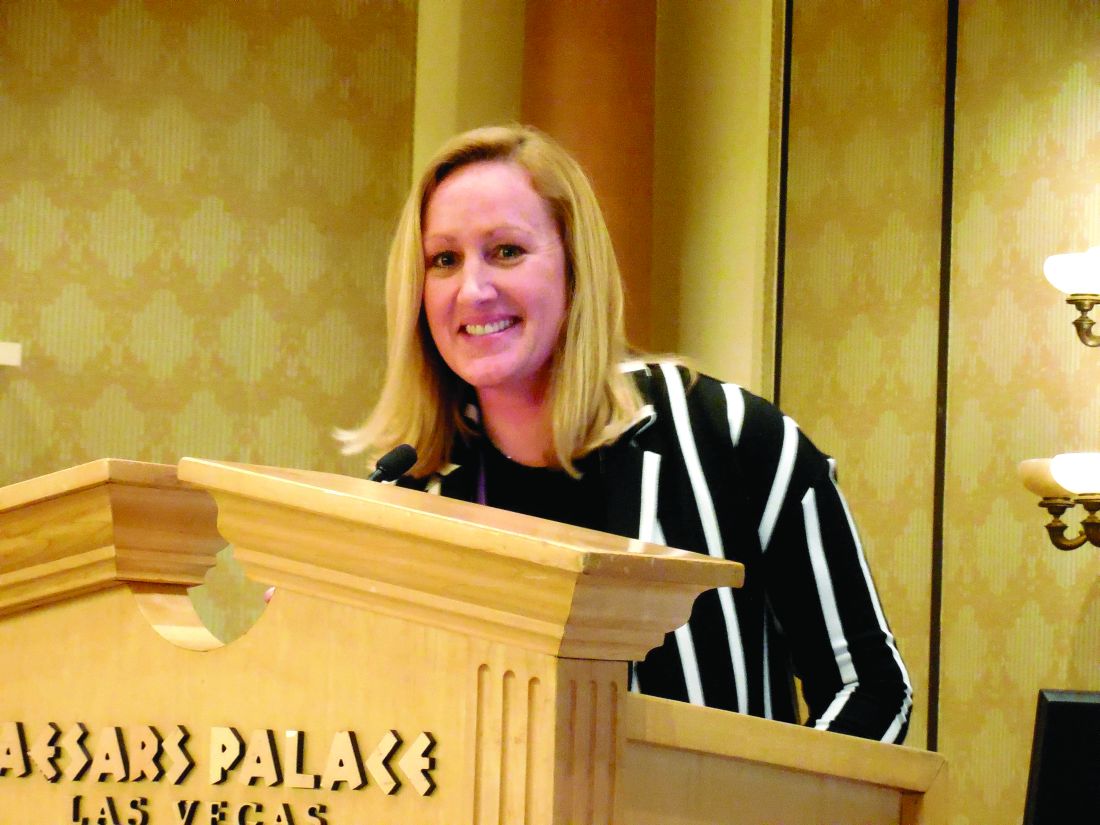
Dr. Cahill said that results from the lean mothers uniformly matched those from the obese mothers without insulin resistance, and so for brevity she only reported results from the obese control group.
Average gestational age at birth was 37 weeks in the insulin-resistant mothers and 38.7 weeks among the obese mothers without insulin resistance, a significant difference. Birth weight averaged 3,617 g in the mothers with insulin resistance and 3,373 g in the mothers without insulin resistance, a difference that was not statistically significant.
Dr. Cahill and her associates assessed the 2-year-olds with a battery of behavioral and functional assessments. They measured motor function, cognition, and language with the Bayley Scales of Infant and Toddler Development, prespecified as the study’s primary endpoint. They also applied the Modified Checklist for Autism in Toddlers (M-CHAT), as well as the Infant-Toddler Social and Emotional Assessment (ITSEA) to assess competence, externalizing, internalizing, and dysregulation.
The results of these analyses showed statistically significant deficits for the motor composite score on the Bayley assessment and for the competence component of the ITSEA assessment, Dr. Cahill reported. The average composite Bayley motor score was 88 in children from mothers with insulin resistance and 98 in the control children, a statistically significant difference.
Further analyses showed that the motor deficit was primarily in fine motor function, and that motor scores were depressed throughout the entire cohort of children born to mothers with insulin resistance.
Depressed competence scores on the ITSEA assessment reflect attention abnormalities, she explained.
A final analysis examined the correlation between the motor deficits identified and various metabolic tests of fat, glucose, and protein metabolism run on the enrolled mothers during the last weeks of gestation. This showed significant links between depressed motor development and maternal lipolytic rate, plasma free fatty acids, and hepatic glucose output.
This finding “suggests an association between abnormal lipid and glucose metabolism in mothers and aspects of neurodevelopment” in their children, Dr. Cahill said.
Dr. Cahill had no disclosures.
mzoler@frontlinemedcom.com On Twitter @mitchelzoler
LAS VEGAS – Children born to obese women with insulin resistance during pregnancy showed significantly impaired neurodevelopment at 2 years of age, compared with children born to obese mothers without insulin resistance in a prospective observational study with 75 pregnant women.
The neurodevelopmental deficits were specific for the domains of motor function and attention, and the deficits correlated with several markers of abnormal glucose and fat metabolism in the insulin-resistant women, Alison G. Cahill, MD, said at the annual Pregnancy Meeting sponsored by the Society for Maternal-Fetal Medicine.
“The differences in neurodevelopment appear to not be global but instead specifically affect domains of motor development and attention,” said Dr. Cahill, chief of maternal fetal medicine at Washington University in St. Louis. “These findings are consistent with results from animal studies that suggest certain brain regions are more sensitive than others to metabolic abnormalities” while in utero.
“These are among the first data in humans to characterize the impact of metabolic abnormalities on brain development,” she added.
Dr. Cahill said that results from the lean mothers uniformly matched those from the obese mothers without insulin resistance, and so for brevity she only reported results from the obese control group.
Average gestational age at birth was 37 weeks in the insulin-resistant mothers and 38.7 weeks among the obese mothers without insulin resistance, a significant difference. Birth weight averaged 3,617 g in the mothers with insulin resistance and 3,373 g in the mothers without insulin resistance, a difference that was not statistically significant.
Dr. Cahill and her associates assessed the 2-year-olds with a battery of behavioral and functional assessments. They measured motor function, cognition, and language with the Bayley Scales of Infant and Toddler Development, prespecified as the study’s primary endpoint. They also applied the Modified Checklist for Autism in Toddlers (M-CHAT), as well as the Infant-Toddler Social and Emotional Assessment (ITSEA) to assess competence, externalizing, internalizing, and dysregulation.
The results of these analyses showed statistically significant deficits for the motor composite score on the Bayley assessment and for the competence component of the ITSEA assessment, Dr. Cahill reported. The average composite Bayley motor score was 88 in children from mothers with insulin resistance and 98 in the control children, a statistically significant difference.
Further analyses showed that the motor deficit was primarily in fine motor function, and that motor scores were depressed throughout the entire cohort of children born to mothers with insulin resistance.
Depressed competence scores on the ITSEA assessment reflect attention abnormalities, she explained.
A final analysis examined the correlation between the motor deficits identified and various metabolic tests of fat, glucose, and protein metabolism run on the enrolled mothers during the last weeks of gestation. This showed significant links between depressed motor development and maternal lipolytic rate, plasma free fatty acids, and hepatic glucose output.
This finding “suggests an association between abnormal lipid and glucose metabolism in mothers and aspects of neurodevelopment” in their children, Dr. Cahill said.
Dr. Cahill had no disclosures.
mzoler@frontlinemedcom.com On Twitter @mitchelzoler
LAS VEGAS – Children born to obese women with insulin resistance during pregnancy showed significantly impaired neurodevelopment at 2 years of age, compared with children born to obese mothers without insulin resistance in a prospective observational study with 75 pregnant women.
The neurodevelopmental deficits were specific for the domains of motor function and attention, and the deficits correlated with several markers of abnormal glucose and fat metabolism in the insulin-resistant women, Alison G. Cahill, MD, said at the annual Pregnancy Meeting sponsored by the Society for Maternal-Fetal Medicine.
“The differences in neurodevelopment appear to not be global but instead specifically affect domains of motor development and attention,” said Dr. Cahill, chief of maternal fetal medicine at Washington University in St. Louis. “These findings are consistent with results from animal studies that suggest certain brain regions are more sensitive than others to metabolic abnormalities” while in utero.
“These are among the first data in humans to characterize the impact of metabolic abnormalities on brain development,” she added.
Dr. Cahill said that results from the lean mothers uniformly matched those from the obese mothers without insulin resistance, and so for brevity she only reported results from the obese control group.
Average gestational age at birth was 37 weeks in the insulin-resistant mothers and 38.7 weeks among the obese mothers without insulin resistance, a significant difference. Birth weight averaged 3,617 g in the mothers with insulin resistance and 3,373 g in the mothers without insulin resistance, a difference that was not statistically significant.
Dr. Cahill and her associates assessed the 2-year-olds with a battery of behavioral and functional assessments. They measured motor function, cognition, and language with the Bayley Scales of Infant and Toddler Development, prespecified as the study’s primary endpoint. They also applied the Modified Checklist for Autism in Toddlers (M-CHAT), as well as the Infant-Toddler Social and Emotional Assessment (ITSEA) to assess competence, externalizing, internalizing, and dysregulation.
The results of these analyses showed statistically significant deficits for the motor composite score on the Bayley assessment and for the competence component of the ITSEA assessment, Dr. Cahill reported. The average composite Bayley motor score was 88 in children from mothers with insulin resistance and 98 in the control children, a statistically significant difference.
Further analyses showed that the motor deficit was primarily in fine motor function, and that motor scores were depressed throughout the entire cohort of children born to mothers with insulin resistance.
Depressed competence scores on the ITSEA assessment reflect attention abnormalities, she explained.
A final analysis examined the correlation between the motor deficits identified and various metabolic tests of fat, glucose, and protein metabolism run on the enrolled mothers during the last weeks of gestation. This showed significant links between depressed motor development and maternal lipolytic rate, plasma free fatty acids, and hepatic glucose output.
This finding “suggests an association between abnormal lipid and glucose metabolism in mothers and aspects of neurodevelopment” in their children, Dr. Cahill said.
Dr. Cahill had no disclosures.
mzoler@frontlinemedcom.com On Twitter @mitchelzoler
Key clinical point:
Major finding: The Bayley motor scale score averaged 88 in children from insulin-resistant mothers and 98 when no insulin resistance existed.
Data source: Prospective, single-center observational study with 75 pregnant women.
Disclosures: Dr. Cahill had no disclosures.
VIDEO: Public reporting of congenital heart disease outcomes should be easily understood
HOUSTON – Survival statistics, surgeon-specific experience, and complication rates are the types of information most sought by parents of children with congenital heart disease, results from a large survey suggest.
Future efforts in public reporting for congenital heart surgery outcomes should have better methods for presenting the data in a valid, easily interpreted format, explained study investigator Mallory L. Irons, MD, an integrated cardiac surgery resident at the Hospital of the University of Pennsylvania, Philadelphia.
“We’re doing a good job of public reporting currently, but what we’re doing is not meeting the needs of all of our stakeholders – in this case, the parents of children with congenital heart disease,” Dr. Irons said in an interview at the annual meeting of the Society of Thoracic Surgeons. “The optimal public reporting scheme still has yet to be determined.”
Dr. Irons reported having no financial disclosures.
The video associated with this article is no longer available on this site. Please view all of our videos on the MDedge YouTube channel
HOUSTON – Survival statistics, surgeon-specific experience, and complication rates are the types of information most sought by parents of children with congenital heart disease, results from a large survey suggest.
Future efforts in public reporting for congenital heart surgery outcomes should have better methods for presenting the data in a valid, easily interpreted format, explained study investigator Mallory L. Irons, MD, an integrated cardiac surgery resident at the Hospital of the University of Pennsylvania, Philadelphia.
“We’re doing a good job of public reporting currently, but what we’re doing is not meeting the needs of all of our stakeholders – in this case, the parents of children with congenital heart disease,” Dr. Irons said in an interview at the annual meeting of the Society of Thoracic Surgeons. “The optimal public reporting scheme still has yet to be determined.”
Dr. Irons reported having no financial disclosures.
The video associated with this article is no longer available on this site. Please view all of our videos on the MDedge YouTube channel
HOUSTON – Survival statistics, surgeon-specific experience, and complication rates are the types of information most sought by parents of children with congenital heart disease, results from a large survey suggest.
Future efforts in public reporting for congenital heart surgery outcomes should have better methods for presenting the data in a valid, easily interpreted format, explained study investigator Mallory L. Irons, MD, an integrated cardiac surgery resident at the Hospital of the University of Pennsylvania, Philadelphia.
“We’re doing a good job of public reporting currently, but what we’re doing is not meeting the needs of all of our stakeholders – in this case, the parents of children with congenital heart disease,” Dr. Irons said in an interview at the annual meeting of the Society of Thoracic Surgeons. “The optimal public reporting scheme still has yet to be determined.”
Dr. Irons reported having no financial disclosures.
The video associated with this article is no longer available on this site. Please view all of our videos on the MDedge YouTube channel
FROM THE STS ANNUAL MEETING HOUSTON
VIDEO: Distinctive features define pediatric psoriasis
WAILEA, HAWAII – Plaque type psoriasis continues to be the most common type of psoriasis in children, but there are other presentations that should be considered, said Wynnis Tom, MD, a pediatric dermatologist at the University of California, San Diego, and Rady Children’s Hospital, San Diego.
“We certainly see a form of what some people would call napkin dermatitis,” or “diaper psoriasis,” affecting the diaper area in young infants, Dr. Tom said in a video interview at the Hawaii Dermatology Seminar provided by Global Academy for Medical Education/Skin Disease Education Foundation.
So when a child has a more refractory diaper rash, “look around to see if there are other lesions in the surrounding area that might be more typical for psoriasis,” she noted.
“We also see a lot more guttate disease” in children with psoriasis, which is more likely to be related to infections and triggers, Dr. Tom said. The face and scalp are often affected in children, and it is important to attend to these areas early to help avoid social stigma, she added.
Dr. Tom disclosed financial relationships with companies including Celgene, Janssen, and Promius. SDEF and this news organization are owned by the same parent company.
The video associated with this article is no longer available on this site. Please view all of our videos on the MDedge YouTube channel
WAILEA, HAWAII – Plaque type psoriasis continues to be the most common type of psoriasis in children, but there are other presentations that should be considered, said Wynnis Tom, MD, a pediatric dermatologist at the University of California, San Diego, and Rady Children’s Hospital, San Diego.
“We certainly see a form of what some people would call napkin dermatitis,” or “diaper psoriasis,” affecting the diaper area in young infants, Dr. Tom said in a video interview at the Hawaii Dermatology Seminar provided by Global Academy for Medical Education/Skin Disease Education Foundation.
So when a child has a more refractory diaper rash, “look around to see if there are other lesions in the surrounding area that might be more typical for psoriasis,” she noted.
“We also see a lot more guttate disease” in children with psoriasis, which is more likely to be related to infections and triggers, Dr. Tom said. The face and scalp are often affected in children, and it is important to attend to these areas early to help avoid social stigma, she added.
Dr. Tom disclosed financial relationships with companies including Celgene, Janssen, and Promius. SDEF and this news organization are owned by the same parent company.
The video associated with this article is no longer available on this site. Please view all of our videos on the MDedge YouTube channel
WAILEA, HAWAII – Plaque type psoriasis continues to be the most common type of psoriasis in children, but there are other presentations that should be considered, said Wynnis Tom, MD, a pediatric dermatologist at the University of California, San Diego, and Rady Children’s Hospital, San Diego.
“We certainly see a form of what some people would call napkin dermatitis,” or “diaper psoriasis,” affecting the diaper area in young infants, Dr. Tom said in a video interview at the Hawaii Dermatology Seminar provided by Global Academy for Medical Education/Skin Disease Education Foundation.
So when a child has a more refractory diaper rash, “look around to see if there are other lesions in the surrounding area that might be more typical for psoriasis,” she noted.
“We also see a lot more guttate disease” in children with psoriasis, which is more likely to be related to infections and triggers, Dr. Tom said. The face and scalp are often affected in children, and it is important to attend to these areas early to help avoid social stigma, she added.
Dr. Tom disclosed financial relationships with companies including Celgene, Janssen, and Promius. SDEF and this news organization are owned by the same parent company.
The video associated with this article is no longer available on this site. Please view all of our videos on the MDedge YouTube channel
AT SDEF HAWAII DERMATOLOGY SEMINAR

VIDEO: Pediatric psoriasis patients prepare for biologics
WAILEA, Hawaii – The first approval of a biologic for pediatric psoriasis, and ongoing clinical trials of other biologics in children with psoriasis, are among the encouraging therapeutic developments for this patient population, Wynnis Tom, MD, said at the Hawaii Dermatology Seminar provided by Global Academy for Medical Education/Skin Disease Education Foundation.
“We are incredibly excited ... as pediatric dermatologists that we’re finally seeing breakthroughs” in terms of Food and Drug Administration activity regarding the use of biologics for treating psoriasis in children, Dr. Tom said in a video interview at the seminar.
Etanercept (Enbrel) is now approved for children with psoriasis, the first biologic indicated for pediatric psoriasis, and clinical trials of other biologics that have been available for adults and nonbiologic products for pediatric psoriasis are underway, she said.
However, getting insurance coverage can still be a challenge, although having long-term efficacy and safety data helps, noted Dr. Tom of the department of dermatology and pediatrics, University of California, San Diego, and Rady Children’s Hospital, San Diego. Also helpful is sending letters to insurers on behalf of the patient, describing the patient’s quality of life, descriptions of treatments that have been unsuccessful, and even photos documenting the disease in the child, she added.
Dr. Tom disclosed ties with Promius, Celgene, and Janssen.
SDEF and this news organization are owned by the same parent company.
The video associated with this article is no longer available on this site. Please view all of our videos on the MDedge YouTube channel
WAILEA, Hawaii – The first approval of a biologic for pediatric psoriasis, and ongoing clinical trials of other biologics in children with psoriasis, are among the encouraging therapeutic developments for this patient population, Wynnis Tom, MD, said at the Hawaii Dermatology Seminar provided by Global Academy for Medical Education/Skin Disease Education Foundation.
“We are incredibly excited ... as pediatric dermatologists that we’re finally seeing breakthroughs” in terms of Food and Drug Administration activity regarding the use of biologics for treating psoriasis in children, Dr. Tom said in a video interview at the seminar.
Etanercept (Enbrel) is now approved for children with psoriasis, the first biologic indicated for pediatric psoriasis, and clinical trials of other biologics that have been available for adults and nonbiologic products for pediatric psoriasis are underway, she said.
However, getting insurance coverage can still be a challenge, although having long-term efficacy and safety data helps, noted Dr. Tom of the department of dermatology and pediatrics, University of California, San Diego, and Rady Children’s Hospital, San Diego. Also helpful is sending letters to insurers on behalf of the patient, describing the patient’s quality of life, descriptions of treatments that have been unsuccessful, and even photos documenting the disease in the child, she added.
Dr. Tom disclosed ties with Promius, Celgene, and Janssen.
SDEF and this news organization are owned by the same parent company.
The video associated with this article is no longer available on this site. Please view all of our videos on the MDedge YouTube channel
WAILEA, Hawaii – The first approval of a biologic for pediatric psoriasis, and ongoing clinical trials of other biologics in children with psoriasis, are among the encouraging therapeutic developments for this patient population, Wynnis Tom, MD, said at the Hawaii Dermatology Seminar provided by Global Academy for Medical Education/Skin Disease Education Foundation.
“We are incredibly excited ... as pediatric dermatologists that we’re finally seeing breakthroughs” in terms of Food and Drug Administration activity regarding the use of biologics for treating psoriasis in children, Dr. Tom said in a video interview at the seminar.
Etanercept (Enbrel) is now approved for children with psoriasis, the first biologic indicated for pediatric psoriasis, and clinical trials of other biologics that have been available for adults and nonbiologic products for pediatric psoriasis are underway, she said.
However, getting insurance coverage can still be a challenge, although having long-term efficacy and safety data helps, noted Dr. Tom of the department of dermatology and pediatrics, University of California, San Diego, and Rady Children’s Hospital, San Diego. Also helpful is sending letters to insurers on behalf of the patient, describing the patient’s quality of life, descriptions of treatments that have been unsuccessful, and even photos documenting the disease in the child, she added.
Dr. Tom disclosed ties with Promius, Celgene, and Janssen.
SDEF and this news organization are owned by the same parent company.
The video associated with this article is no longer available on this site. Please view all of our videos on the MDedge YouTube channel
AT SDEF HAWAII DERMATOLOGY SEMINAR

Kids, parents over-report ALL treatment adherence

New research published in Blood suggests young patients with acute lymphoblastic leukemia (ALL)—and their parents—are likely to over-report treatment adherence.
In a study of 416 pediatric ALL patients, 84% of patients or their parents said the patients took more 6-mercaptopurine (6MP) than they actually did.
6MP is prescribed for 2 years after chemotherapy with the goal of producing durable remissions, but studies show that over 95% of the prescribed doses must be taken for the medication to be effective.
“Because this therapy is administered orally every day, we cannot supervise our patients to make sure they are taking their pills,” said study author Smita Bhatia, MD, of the University of Alabama at Birmingham.
“Findings from this study suggest that we need better ways to monitor intake of medications as prescribed.”
This study included 416 pediatric ALL patients followed over 4 months. Patients received prescription pill bottles for their 6MP that contained a microprocessor chip in the cap to log the date and time the bottle was opened.
The logs were compared to self-report questionnaires completed by patients or their parents and provided to physicians at monthly check-ups.
Patients were classified as:
- Perfect reporters—self-report corresponded to data from the Medication Event Monitoring System (MEMS)
- Over-reporters—self-report was greater than MEMS data by more than 5 days per month for more than 50% of the study months
- Others—all patients not meeting criteria for perfect- or over-reporter.
Twelve percent of patients were classified as perfect reporters, 23.6% were over-reporters, 0.5% were under-reporters, and 63.9% were classified as “others.”
Self-reported 6MP intake exceeded MEMS data at least some of the time in 84% of patients.
“We observed that there was an inverse relationship between over-reporting and the extent of non-adherence,” Dr Bhatia noted.
Of the patients who adhered to their regimens (defined as taking their prescribed dose 95% of the time), a small percentage (8%) over-reported their intake.
However, among those found to be non-adherent, a substantially larger percent (47%) over-reported.
In order to find out why patients were not taking their prescribed medication, study author Wendy Landier, PhD, RN, also of the University of Alabama at Birmingham, organized interviews with patients and their parents.
In these interviews, Dr Landier noted that forgetfulness was the primary reason for non-adherence.
“We found that partnering with a parent was very conducive to our patients’ adherence, playing a key role in combatting forgetfulness,” she said.
Recognizing the importance of parental involvement in patient adherence, the researchers were inspired to conduct further research to make parents more involved.
In a trial that builds on this study, physicians send personalized text messages to both patients and their parents at a prescribed time reminding them to take their medicine. Both patient and parent then report back, via text, that the indicated dose was taken.
“Our first study showed that non-adherence was prevalent, increasing the risk of relapse,” Dr Bhatia said. “We then found that parental vigilance was an important facilitator to adherence, while forgetting to take the medication was the most commonly reported barrier.”
“We used these findings to inform the intervention trial to help families improve adherence to treatment. We hope that this will be a real step in improving outcomes in children with leukemia.”
New research published in Blood suggests young patients with acute lymphoblastic leukemia (ALL)—and their parents—are likely to over-report treatment adherence.
In a study of 416 pediatric ALL patients, 84% of patients or their parents said the patients took more 6-mercaptopurine (6MP) than they actually did.
6MP is prescribed for 2 years after chemotherapy with the goal of producing durable remissions, but studies show that over 95% of the prescribed doses must be taken for the medication to be effective.
“Because this therapy is administered orally every day, we cannot supervise our patients to make sure they are taking their pills,” said study author Smita Bhatia, MD, of the University of Alabama at Birmingham.
“Findings from this study suggest that we need better ways to monitor intake of medications as prescribed.”
This study included 416 pediatric ALL patients followed over 4 months. Patients received prescription pill bottles for their 6MP that contained a microprocessor chip in the cap to log the date and time the bottle was opened.
The logs were compared to self-report questionnaires completed by patients or their parents and provided to physicians at monthly check-ups.
Patients were classified as:
- Perfect reporters—self-report corresponded to data from the Medication Event Monitoring System (MEMS)
- Over-reporters—self-report was greater than MEMS data by more than 5 days per month for more than 50% of the study months
- Others—all patients not meeting criteria for perfect- or over-reporter.
Twelve percent of patients were classified as perfect reporters, 23.6% were over-reporters, 0.5% were under-reporters, and 63.9% were classified as “others.”
Self-reported 6MP intake exceeded MEMS data at least some of the time in 84% of patients.
“We observed that there was an inverse relationship between over-reporting and the extent of non-adherence,” Dr Bhatia noted.
Of the patients who adhered to their regimens (defined as taking their prescribed dose 95% of the time), a small percentage (8%) over-reported their intake.
However, among those found to be non-adherent, a substantially larger percent (47%) over-reported.
In order to find out why patients were not taking their prescribed medication, study author Wendy Landier, PhD, RN, also of the University of Alabama at Birmingham, organized interviews with patients and their parents.
In these interviews, Dr Landier noted that forgetfulness was the primary reason for non-adherence.
“We found that partnering with a parent was very conducive to our patients’ adherence, playing a key role in combatting forgetfulness,” she said.
Recognizing the importance of parental involvement in patient adherence, the researchers were inspired to conduct further research to make parents more involved.
In a trial that builds on this study, physicians send personalized text messages to both patients and their parents at a prescribed time reminding them to take their medicine. Both patient and parent then report back, via text, that the indicated dose was taken.
“Our first study showed that non-adherence was prevalent, increasing the risk of relapse,” Dr Bhatia said. “We then found that parental vigilance was an important facilitator to adherence, while forgetting to take the medication was the most commonly reported barrier.”
“We used these findings to inform the intervention trial to help families improve adherence to treatment. We hope that this will be a real step in improving outcomes in children with leukemia.”
New research published in Blood suggests young patients with acute lymphoblastic leukemia (ALL)—and their parents—are likely to over-report treatment adherence.
In a study of 416 pediatric ALL patients, 84% of patients or their parents said the patients took more 6-mercaptopurine (6MP) than they actually did.
6MP is prescribed for 2 years after chemotherapy with the goal of producing durable remissions, but studies show that over 95% of the prescribed doses must be taken for the medication to be effective.
“Because this therapy is administered orally every day, we cannot supervise our patients to make sure they are taking their pills,” said study author Smita Bhatia, MD, of the University of Alabama at Birmingham.
“Findings from this study suggest that we need better ways to monitor intake of medications as prescribed.”
This study included 416 pediatric ALL patients followed over 4 months. Patients received prescription pill bottles for their 6MP that contained a microprocessor chip in the cap to log the date and time the bottle was opened.
The logs were compared to self-report questionnaires completed by patients or their parents and provided to physicians at monthly check-ups.
Patients were classified as:
- Perfect reporters—self-report corresponded to data from the Medication Event Monitoring System (MEMS)
- Over-reporters—self-report was greater than MEMS data by more than 5 days per month for more than 50% of the study months
- Others—all patients not meeting criteria for perfect- or over-reporter.
Twelve percent of patients were classified as perfect reporters, 23.6% were over-reporters, 0.5% were under-reporters, and 63.9% were classified as “others.”
Self-reported 6MP intake exceeded MEMS data at least some of the time in 84% of patients.
“We observed that there was an inverse relationship between over-reporting and the extent of non-adherence,” Dr Bhatia noted.
Of the patients who adhered to their regimens (defined as taking their prescribed dose 95% of the time), a small percentage (8%) over-reported their intake.
However, among those found to be non-adherent, a substantially larger percent (47%) over-reported.
In order to find out why patients were not taking their prescribed medication, study author Wendy Landier, PhD, RN, also of the University of Alabama at Birmingham, organized interviews with patients and their parents.
In these interviews, Dr Landier noted that forgetfulness was the primary reason for non-adherence.
“We found that partnering with a parent was very conducive to our patients’ adherence, playing a key role in combatting forgetfulness,” she said.
Recognizing the importance of parental involvement in patient adherence, the researchers were inspired to conduct further research to make parents more involved.
In a trial that builds on this study, physicians send personalized text messages to both patients and their parents at a prescribed time reminding them to take their medicine. Both patient and parent then report back, via text, that the indicated dose was taken.
“Our first study showed that non-adherence was prevalent, increasing the risk of relapse,” Dr Bhatia said. “We then found that parental vigilance was an important facilitator to adherence, while forgetting to take the medication was the most commonly reported barrier.”
“We used these findings to inform the intervention trial to help families improve adherence to treatment. We hope that this will be a real step in improving outcomes in children with leukemia.”