User login
Second course of rifaximin edges out placebo in IBS-D trial
Patients with diarrhea-predominant irritable bowel syndrome (IBS-D) who responded to rifaximin but relapsed after completing treatment were significantly more likely to respond to a second course of the antibiotic than to placebo, according to a report in the December issue of Gastroenterology (2016 Aug 5. doi: 10.1053/j.gastro.2016.08.003).
A total of 38% of patients who received a second course of rifaximin met the primary endpoint in the randomized double-blinded trial, compared with 31.5% of the placebo group (P = .03), Dr. Anthony Lembo of Beth Israel Deaconess Medical Center, Boston, and his associates wrote in Gastroenterology. “Although this study had a positive outcome, questions remain regarding the role of nonsystemic antibiotics in the long term, particularly when patients with IBS-D may require years of symptom management,” they added. “Further research is needed to better understand the treatment algorithm in patients who may lose responsiveness to rifaximin.”

Rifaximin (Xifaxan) has been approved in the United States for treating IBS-D since 2015. The agent is an oral, minimally absorbed, broad-spectrum antibiotic that targets the gastrointestinal tract and has rarely been linked to “clinically relevant” antibiotic resistance, the researchers said. However, pivotal IBS-D trials had not investigated the durability of response to rifaximin or the efficacy and safety of repeat treatment, they noted. Therefore, they followed 1,074 patients with IBS-D who had responded to an open-label 2-week course of rifaximin dosed orally at 550 mg three times daily. By definition, these responders had met a combined primary endpoint that included at least a 30% decrease in abdominal pain and at least a 50% decrease in the frequency of loose stools during at least 2 of 4 weeks of follow-up.
In all, 692 (64%) responders relapsed up to 18 weeks after finishing the first rifaximin course, the investigators said. They randomly assigned 636 of these relapsers to double-blinded treatment with either placebo or a second course of rifaximin. In all, 125 of 328 patients (38.1%) in the rifaximin group again met the combined primary endpoint, compared with 97 of 308 patients (31.5%) in the placebo group (P = .03). Repeat rifaximin treatment also significantly outperformed placebo in terms of the individual abdominal pain endpoint (51% versus 42%, respectively; P = .02), but not the stool consistency endpoint (52% versus 50%).
“Adverse event rates were low and similar between groups,” the researchers said. Patients who received a second course of rifaximin most commonly developed nausea (3.7%), upper respiratory infection (3.7%), urinary tract infection (3.4%), and nasopharyngitis (3.0%). Four patients (1%) in each treatment group developed serious adverse events, none of which were deemed treatment related. One patient developed Clostridium difficile colitis 37 days after completing the second course of rifaximin. However, this patient had a past history of C. difficile infection, had tested negative for C. difficile toxins A and B at enrollment, and had completed a 10-day course of cefdinir for a urinary tract infection immediately before developing C. difficile colitis.
Salix Pharmaceuticals makes rifaximin and funded the study. Dr. Lembo and his coinvestigators disclosed ties to Salix.
Patients with diarrhea-predominant irritable bowel syndrome (IBS-D) who responded to rifaximin but relapsed after completing treatment were significantly more likely to respond to a second course of the antibiotic than to placebo, according to a report in the December issue of Gastroenterology (2016 Aug 5. doi: 10.1053/j.gastro.2016.08.003).
A total of 38% of patients who received a second course of rifaximin met the primary endpoint in the randomized double-blinded trial, compared with 31.5% of the placebo group (P = .03), Dr. Anthony Lembo of Beth Israel Deaconess Medical Center, Boston, and his associates wrote in Gastroenterology. “Although this study had a positive outcome, questions remain regarding the role of nonsystemic antibiotics in the long term, particularly when patients with IBS-D may require years of symptom management,” they added. “Further research is needed to better understand the treatment algorithm in patients who may lose responsiveness to rifaximin.”
Rifaximin (Xifaxan) has been approved in the United States for treating IBS-D since 2015. The agent is an oral, minimally absorbed, broad-spectrum antibiotic that targets the gastrointestinal tract and has rarely been linked to “clinically relevant” antibiotic resistance, the researchers said. However, pivotal IBS-D trials had not investigated the durability of response to rifaximin or the efficacy and safety of repeat treatment, they noted. Therefore, they followed 1,074 patients with IBS-D who had responded to an open-label 2-week course of rifaximin dosed orally at 550 mg three times daily. By definition, these responders had met a combined primary endpoint that included at least a 30% decrease in abdominal pain and at least a 50% decrease in the frequency of loose stools during at least 2 of 4 weeks of follow-up.
In all, 692 (64%) responders relapsed up to 18 weeks after finishing the first rifaximin course, the investigators said. They randomly assigned 636 of these relapsers to double-blinded treatment with either placebo or a second course of rifaximin. In all, 125 of 328 patients (38.1%) in the rifaximin group again met the combined primary endpoint, compared with 97 of 308 patients (31.5%) in the placebo group (P = .03). Repeat rifaximin treatment also significantly outperformed placebo in terms of the individual abdominal pain endpoint (51% versus 42%, respectively; P = .02), but not the stool consistency endpoint (52% versus 50%).
“Adverse event rates were low and similar between groups,” the researchers said. Patients who received a second course of rifaximin most commonly developed nausea (3.7%), upper respiratory infection (3.7%), urinary tract infection (3.4%), and nasopharyngitis (3.0%). Four patients (1%) in each treatment group developed serious adverse events, none of which were deemed treatment related. One patient developed Clostridium difficile colitis 37 days after completing the second course of rifaximin. However, this patient had a past history of C. difficile infection, had tested negative for C. difficile toxins A and B at enrollment, and had completed a 10-day course of cefdinir for a urinary tract infection immediately before developing C. difficile colitis.
Salix Pharmaceuticals makes rifaximin and funded the study. Dr. Lembo and his coinvestigators disclosed ties to Salix.
Patients with diarrhea-predominant irritable bowel syndrome (IBS-D) who responded to rifaximin but relapsed after completing treatment were significantly more likely to respond to a second course of the antibiotic than to placebo, according to a report in the December issue of Gastroenterology (2016 Aug 5. doi: 10.1053/j.gastro.2016.08.003).
A total of 38% of patients who received a second course of rifaximin met the primary endpoint in the randomized double-blinded trial, compared with 31.5% of the placebo group (P = .03), Dr. Anthony Lembo of Beth Israel Deaconess Medical Center, Boston, and his associates wrote in Gastroenterology. “Although this study had a positive outcome, questions remain regarding the role of nonsystemic antibiotics in the long term, particularly when patients with IBS-D may require years of symptom management,” they added. “Further research is needed to better understand the treatment algorithm in patients who may lose responsiveness to rifaximin.”
Rifaximin (Xifaxan) has been approved in the United States for treating IBS-D since 2015. The agent is an oral, minimally absorbed, broad-spectrum antibiotic that targets the gastrointestinal tract and has rarely been linked to “clinically relevant” antibiotic resistance, the researchers said. However, pivotal IBS-D trials had not investigated the durability of response to rifaximin or the efficacy and safety of repeat treatment, they noted. Therefore, they followed 1,074 patients with IBS-D who had responded to an open-label 2-week course of rifaximin dosed orally at 550 mg three times daily. By definition, these responders had met a combined primary endpoint that included at least a 30% decrease in abdominal pain and at least a 50% decrease in the frequency of loose stools during at least 2 of 4 weeks of follow-up.
In all, 692 (64%) responders relapsed up to 18 weeks after finishing the first rifaximin course, the investigators said. They randomly assigned 636 of these relapsers to double-blinded treatment with either placebo or a second course of rifaximin. In all, 125 of 328 patients (38.1%) in the rifaximin group again met the combined primary endpoint, compared with 97 of 308 patients (31.5%) in the placebo group (P = .03). Repeat rifaximin treatment also significantly outperformed placebo in terms of the individual abdominal pain endpoint (51% versus 42%, respectively; P = .02), but not the stool consistency endpoint (52% versus 50%).
“Adverse event rates were low and similar between groups,” the researchers said. Patients who received a second course of rifaximin most commonly developed nausea (3.7%), upper respiratory infection (3.7%), urinary tract infection (3.4%), and nasopharyngitis (3.0%). Four patients (1%) in each treatment group developed serious adverse events, none of which were deemed treatment related. One patient developed Clostridium difficile colitis 37 days after completing the second course of rifaximin. However, this patient had a past history of C. difficile infection, had tested negative for C. difficile toxins A and B at enrollment, and had completed a 10-day course of cefdinir for a urinary tract infection immediately before developing C. difficile colitis.
Salix Pharmaceuticals makes rifaximin and funded the study. Dr. Lembo and his coinvestigators disclosed ties to Salix.
FROM GASTROENTEROLOGY
Key clinical point: A second course of rifaximin may be merited in patients with diarrhea-predominant irritable bowel syndrome.
Major finding: In all, 38% of patients who received a second course of the antibiotic met the primary endpoint, compared with 31.5% of those who received placebo (P = .03),
Data source: A randomized, double-blind, phase III trial of 692 patients with IBS-D who relapsed after initially responding to a 2-week course of rifaximin.
Disclosures: Salix Pharmaceuticals, maker of rifaximin, funded the study. Dr. Lembo and his coinvestigators disclosed ties to Salix.
Yoga holds up to medications, walking for irritable bowel syndrome
Yoga may be a feasible and safe add-on therapy for patients with irritable bowel syndrome, based on a systematic review of six randomized controlled trials of 273 patients published in the December issue of Clinical Gastroenterology and Hepatology.
Yoga significantly outperformed no treatment and resembled pharmacologic therapies for IBS on measures of bowel symptoms, anxiety, and quality of life, said Dania Schumann of the University of Duisburg-Essen, Essen, Germany.
“Yoga also seems to be equally effective as a walking program in improving patient-reported outcomes,” she and her coinvestigators wrote. But “wide methodological heterogeneity” and a “mostly unclear risk of bias,” precluded a direct recommendation for yoga in IBS, they said. Nonetheless, “its practice need not be discouraged in this patient population, especially when [patients] believe that it benefits their health, quality of life, or IBS-related comorbidities.”
Experts have increasingly emphasized the role of stress, psychological disorders, and the bidirectional gut-brain axis in IBS, the reviewers noted. Because yoga had been found to cut stress and improve psychological functioning in past studies, they hypothesized that it also might improve IBS symptoms. By searching MEDLINE/Pubmed, the Cochrane Library, CAM-QUEST, CAMbase, and IndMED for studies of IBS and yoga, they identified 93 records, including six randomized controlled trials from India, the United States, and Canada. One trial defined IBS based on Rome I criteria, another used Rome II criteria, three used Rome III criteria, and the sixth trial relied solely on clinical and laboratory measures. Patients ranged in age from 14 to 44 years (median, 32 years), and most were female. They were allowed to continue their usual IBS care (Clin Gastroenterol Hepatol. 2016 Apr 22. doi: 10.1016/j.cgh.2016.04.026). Two trials compared 9-12 weeks of yoga with pharmacologic therapies. In one study, yoga and loperamide were associated with similar improvements in bowel symptoms, state anxiety, gastric motility, and other measures of autonomic reactivity. The second study found no significant differences in the colonic myoelectrical effects of yoga, placebo, and a regimen of psyllium husk, propantheline, and diazepam.
Three studies compared 4-12 weeks of Iyengar or hatha yoga with usual IBS care. Yoga outperformed standard care on measures of IBS symptoms, quality of life, psychological distress, and fatigue in two trials. The third study found a benefit for yoga after wait-listed controls joined the yoga intervention and the researchers combined their data with the other yoga group.
The sixth trial compared yoga with a walking program and found similar effects. Yoga was associated with significant improvements in abdominal pain, visceral sensitivity, and GI symptoms, while walking improved gastrointestinal symptoms, negative affect, and state anxiety. But at 6-month follow-up, walkers had fewer gastrointestinal symptoms than did the yoga group, perhaps because a walking program is easier to maintain at home, the reviewers noted.
Only one trial adequately performed adequate blinding during outcome assessments, and several others were at high risk of performance bias, reporting bias, and attrition bias, the reviewers said. The trials also did not adequately describe methods to randomize patients or conceal group allocations, and “selective reporting and high dropout rates [were] an issue,” they added.
Adverse events related to yoga included three cases of temporarily aggravated lower back pain and one fall after a participant slipped and hit his knee while in a headstand. However, only two trials assessed adverse events, the reviewers noted. “Future studies should ensure rigorous reporting of adverse events, and the correct use of terminology,” they said.
Because meditation, breathing exercises, and yoga seem to improve both stress and IBS symptoms, researchers should consider these practices when studying patients with “an increased gastrointestinal response to stress,” the reviewers concluded. “So far, the recent global guidelines of the World Gastroenterology Organization on IBS consider sufficient physical activity and relaxation techniques to be appropriate nonpharmacologic approaches.”
The reviewers did not report funding sources. They had no relevant conflicts of interest.
Yoga may be a feasible and safe add-on therapy for patients with irritable bowel syndrome, based on a systematic review of six randomized controlled trials of 273 patients published in the December issue of Clinical Gastroenterology and Hepatology.
Yoga significantly outperformed no treatment and resembled pharmacologic therapies for IBS on measures of bowel symptoms, anxiety, and quality of life, said Dania Schumann of the University of Duisburg-Essen, Essen, Germany.
“Yoga also seems to be equally effective as a walking program in improving patient-reported outcomes,” she and her coinvestigators wrote. But “wide methodological heterogeneity” and a “mostly unclear risk of bias,” precluded a direct recommendation for yoga in IBS, they said. Nonetheless, “its practice need not be discouraged in this patient population, especially when [patients] believe that it benefits their health, quality of life, or IBS-related comorbidities.”
Experts have increasingly emphasized the role of stress, psychological disorders, and the bidirectional gut-brain axis in IBS, the reviewers noted. Because yoga had been found to cut stress and improve psychological functioning in past studies, they hypothesized that it also might improve IBS symptoms. By searching MEDLINE/Pubmed, the Cochrane Library, CAM-QUEST, CAMbase, and IndMED for studies of IBS and yoga, they identified 93 records, including six randomized controlled trials from India, the United States, and Canada. One trial defined IBS based on Rome I criteria, another used Rome II criteria, three used Rome III criteria, and the sixth trial relied solely on clinical and laboratory measures. Patients ranged in age from 14 to 44 years (median, 32 years), and most were female. They were allowed to continue their usual IBS care (Clin Gastroenterol Hepatol. 2016 Apr 22. doi: 10.1016/j.cgh.2016.04.026). Two trials compared 9-12 weeks of yoga with pharmacologic therapies. In one study, yoga and loperamide were associated with similar improvements in bowel symptoms, state anxiety, gastric motility, and other measures of autonomic reactivity. The second study found no significant differences in the colonic myoelectrical effects of yoga, placebo, and a regimen of psyllium husk, propantheline, and diazepam.
Three studies compared 4-12 weeks of Iyengar or hatha yoga with usual IBS care. Yoga outperformed standard care on measures of IBS symptoms, quality of life, psychological distress, and fatigue in two trials. The third study found a benefit for yoga after wait-listed controls joined the yoga intervention and the researchers combined their data with the other yoga group.
The sixth trial compared yoga with a walking program and found similar effects. Yoga was associated with significant improvements in abdominal pain, visceral sensitivity, and GI symptoms, while walking improved gastrointestinal symptoms, negative affect, and state anxiety. But at 6-month follow-up, walkers had fewer gastrointestinal symptoms than did the yoga group, perhaps because a walking program is easier to maintain at home, the reviewers noted.
Only one trial adequately performed adequate blinding during outcome assessments, and several others were at high risk of performance bias, reporting bias, and attrition bias, the reviewers said. The trials also did not adequately describe methods to randomize patients or conceal group allocations, and “selective reporting and high dropout rates [were] an issue,” they added.
Adverse events related to yoga included three cases of temporarily aggravated lower back pain and one fall after a participant slipped and hit his knee while in a headstand. However, only two trials assessed adverse events, the reviewers noted. “Future studies should ensure rigorous reporting of adverse events, and the correct use of terminology,” they said.
Because meditation, breathing exercises, and yoga seem to improve both stress and IBS symptoms, researchers should consider these practices when studying patients with “an increased gastrointestinal response to stress,” the reviewers concluded. “So far, the recent global guidelines of the World Gastroenterology Organization on IBS consider sufficient physical activity and relaxation techniques to be appropriate nonpharmacologic approaches.”
The reviewers did not report funding sources. They had no relevant conflicts of interest.
Yoga may be a feasible and safe add-on therapy for patients with irritable bowel syndrome, based on a systematic review of six randomized controlled trials of 273 patients published in the December issue of Clinical Gastroenterology and Hepatology.
Yoga significantly outperformed no treatment and resembled pharmacologic therapies for IBS on measures of bowel symptoms, anxiety, and quality of life, said Dania Schumann of the University of Duisburg-Essen, Essen, Germany.
“Yoga also seems to be equally effective as a walking program in improving patient-reported outcomes,” she and her coinvestigators wrote. But “wide methodological heterogeneity” and a “mostly unclear risk of bias,” precluded a direct recommendation for yoga in IBS, they said. Nonetheless, “its practice need not be discouraged in this patient population, especially when [patients] believe that it benefits their health, quality of life, or IBS-related comorbidities.”
Experts have increasingly emphasized the role of stress, psychological disorders, and the bidirectional gut-brain axis in IBS, the reviewers noted. Because yoga had been found to cut stress and improve psychological functioning in past studies, they hypothesized that it also might improve IBS symptoms. By searching MEDLINE/Pubmed, the Cochrane Library, CAM-QUEST, CAMbase, and IndMED for studies of IBS and yoga, they identified 93 records, including six randomized controlled trials from India, the United States, and Canada. One trial defined IBS based on Rome I criteria, another used Rome II criteria, three used Rome III criteria, and the sixth trial relied solely on clinical and laboratory measures. Patients ranged in age from 14 to 44 years (median, 32 years), and most were female. They were allowed to continue their usual IBS care (Clin Gastroenterol Hepatol. 2016 Apr 22. doi: 10.1016/j.cgh.2016.04.026). Two trials compared 9-12 weeks of yoga with pharmacologic therapies. In one study, yoga and loperamide were associated with similar improvements in bowel symptoms, state anxiety, gastric motility, and other measures of autonomic reactivity. The second study found no significant differences in the colonic myoelectrical effects of yoga, placebo, and a regimen of psyllium husk, propantheline, and diazepam.
Three studies compared 4-12 weeks of Iyengar or hatha yoga with usual IBS care. Yoga outperformed standard care on measures of IBS symptoms, quality of life, psychological distress, and fatigue in two trials. The third study found a benefit for yoga after wait-listed controls joined the yoga intervention and the researchers combined their data with the other yoga group.
The sixth trial compared yoga with a walking program and found similar effects. Yoga was associated with significant improvements in abdominal pain, visceral sensitivity, and GI symptoms, while walking improved gastrointestinal symptoms, negative affect, and state anxiety. But at 6-month follow-up, walkers had fewer gastrointestinal symptoms than did the yoga group, perhaps because a walking program is easier to maintain at home, the reviewers noted.
Only one trial adequately performed adequate blinding during outcome assessments, and several others were at high risk of performance bias, reporting bias, and attrition bias, the reviewers said. The trials also did not adequately describe methods to randomize patients or conceal group allocations, and “selective reporting and high dropout rates [were] an issue,” they added.
Adverse events related to yoga included three cases of temporarily aggravated lower back pain and one fall after a participant slipped and hit his knee while in a headstand. However, only two trials assessed adverse events, the reviewers noted. “Future studies should ensure rigorous reporting of adverse events, and the correct use of terminology,” they said.
Because meditation, breathing exercises, and yoga seem to improve both stress and IBS symptoms, researchers should consider these practices when studying patients with “an increased gastrointestinal response to stress,” the reviewers concluded. “So far, the recent global guidelines of the World Gastroenterology Organization on IBS consider sufficient physical activity and relaxation techniques to be appropriate nonpharmacologic approaches.”
The reviewers did not report funding sources. They had no relevant conflicts of interest.
FROM CLINICAL GASTROENTEROLOGY AND HEPATOLOGY
Key clinical point: Yoga may be an appropriate adjunctive therapy for patients with irritable bowel syndrome.
Major finding: Yoga outperformed no treatment on measures of gastrointestinal symptoms, anxiety, and quality of life, and was comparable to standard medications and a walking program.
Data source: A systematic review of six randomized controlled trials of 273 patients with irritable bowel syndrome.
Disclosures: The reviewers did not report funding sources. They had no relevant conflicts of interest.
Discharging select diverticulitis patients from the ED found to be acceptable
CORONADO, CALIF. – Among patients diagnosed with diverticulitis via CT scan in the emergency department who were discharged home, only 13% required a return visit to the hospital, results from a long-term retrospective analysis demonstrated.
“In select patients whose assessment includes a CT scan, discharge to home from the emergency department with treatment for diverticulitis is safe,” study author Anne-Marie Sirany, MD, said at the annual meeting of the Western Surgical Association.

A few years ago, researchers conducted a randomized trial to evaluate the treatment of uncomplicated diverticulitis (Ann Surg. 2014;259[1]:38-44). Patients were diagnosed with diverticulitis in the emergency department and randomized to either hospital admission or outpatient management at home. The investigators found no significant differences between the readmission rates of the inpatient and outpatient groups, but the health care costs were three times lower in the outpatient group. Dr. Sirany and her associates set out to compare the outcomes of patients diagnosed with and treated for diverticulitis in the emergency department who were discharged to home, versus those who were admitted to the hospital. They reviewed the medical records of 240 patients with a primary diagnosis of diverticulitis by CT scan who were evaluated in the emergency department at one of four hospitals and one academic medical center from September 2010 to January 2012. The primary outcome was hospital readmission or return to the emergency department within 30 days, while the secondary outcomes were recurrent diverticulitis or surgical resection for diverticulitis.
The mean age of the 240 patients was 59 years, 45% were men, 22% had a Charlson Comorbidity Index (CCI) of greater than 2, and 7.5% were on steroids or immunosuppressant medications. More than half (62%) were admitted to the hospital, while the remaining 38% were discharged home on oral antibiotics. Compared with patients discharged home, those admitted to the hospital were more likely to be older than age 65 (43% vs. 24%, respectively; P = .003), have a CCI of 2 or greater (28% vs. 13%; P = .007), were more likely to be on immunosuppressant or steroid medications (11% vs. 1%; P = .003), show extraluminal air on CT (30% vs. 7%; P less than .0001), or show abscess on CT (19% vs. 1%; P less than .0001). “Of note: We did not have any patients who had CT scan findings of pneumoperitoneum who were discharged home, and 48% of patients admitted to the hospital had uncomplicated diverticulitis,” she said.
After a median follow-up of 37 months, no significant differences were observed between patients discharged to home and those admitted to the hospital in readmission or return to the emergency department (13% vs. 14%), recurrent diverticulitis (23% in each group), or in colon resection at subsequent encounter (16% vs. 19%). “Among patients discharged to home, only one patient required emergency surgery, and this was 20 months after their index admission,” Dr. Sirany said. “We think that the low rate of readmission in patients discharged home demonstrates that this is a safe approach to management of patients with diverticulitis, when using information from the CT scan.”
Closer analysis of patients who were discharged home revealed that six patients had extraluminal air on CT scan, three of whom returned to the emergency department or were admitted to the hospital. In addition, 11% of those with uncomplicated diverticulitis returned to the emergency department or were admitted to the hospital.
Dr. Sirany acknowledged certain limitations of the study, including its retrospective design, a lack of complete follow-up for all patients, and the fact that it included patients with recurrent diverticulitis. “Despite the limitations, we recommend that young, relatively healthy patients, with uncomplicated findings on CT scan, can be discharged to home and managed as an outpatient,” she said. “In an era where there’s increasing attention to health care costs, we need to think more critically about which patients need to be admitted for management of uncomplicated diverticulitis.” She reported having no financial disclosures.
dbrunk@frontlinemedcom.com
CORONADO, CALIF. – Among patients diagnosed with diverticulitis via CT scan in the emergency department who were discharged home, only 13% required a return visit to the hospital, results from a long-term retrospective analysis demonstrated.
“In select patients whose assessment includes a CT scan, discharge to home from the emergency department with treatment for diverticulitis is safe,” study author Anne-Marie Sirany, MD, said at the annual meeting of the Western Surgical Association.
A few years ago, researchers conducted a randomized trial to evaluate the treatment of uncomplicated diverticulitis (Ann Surg. 2014;259[1]:38-44). Patients were diagnosed with diverticulitis in the emergency department and randomized to either hospital admission or outpatient management at home. The investigators found no significant differences between the readmission rates of the inpatient and outpatient groups, but the health care costs were three times lower in the outpatient group. Dr. Sirany and her associates set out to compare the outcomes of patients diagnosed with and treated for diverticulitis in the emergency department who were discharged to home, versus those who were admitted to the hospital. They reviewed the medical records of 240 patients with a primary diagnosis of diverticulitis by CT scan who were evaluated in the emergency department at one of four hospitals and one academic medical center from September 2010 to January 2012. The primary outcome was hospital readmission or return to the emergency department within 30 days, while the secondary outcomes were recurrent diverticulitis or surgical resection for diverticulitis.
The mean age of the 240 patients was 59 years, 45% were men, 22% had a Charlson Comorbidity Index (CCI) of greater than 2, and 7.5% were on steroids or immunosuppressant medications. More than half (62%) were admitted to the hospital, while the remaining 38% were discharged home on oral antibiotics. Compared with patients discharged home, those admitted to the hospital were more likely to be older than age 65 (43% vs. 24%, respectively; P = .003), have a CCI of 2 or greater (28% vs. 13%; P = .007), were more likely to be on immunosuppressant or steroid medications (11% vs. 1%; P = .003), show extraluminal air on CT (30% vs. 7%; P less than .0001), or show abscess on CT (19% vs. 1%; P less than .0001). “Of note: We did not have any patients who had CT scan findings of pneumoperitoneum who were discharged home, and 48% of patients admitted to the hospital had uncomplicated diverticulitis,” she said.
After a median follow-up of 37 months, no significant differences were observed between patients discharged to home and those admitted to the hospital in readmission or return to the emergency department (13% vs. 14%), recurrent diverticulitis (23% in each group), or in colon resection at subsequent encounter (16% vs. 19%). “Among patients discharged to home, only one patient required emergency surgery, and this was 20 months after their index admission,” Dr. Sirany said. “We think that the low rate of readmission in patients discharged home demonstrates that this is a safe approach to management of patients with diverticulitis, when using information from the CT scan.”
Closer analysis of patients who were discharged home revealed that six patients had extraluminal air on CT scan, three of whom returned to the emergency department or were admitted to the hospital. In addition, 11% of those with uncomplicated diverticulitis returned to the emergency department or were admitted to the hospital.
Dr. Sirany acknowledged certain limitations of the study, including its retrospective design, a lack of complete follow-up for all patients, and the fact that it included patients with recurrent diverticulitis. “Despite the limitations, we recommend that young, relatively healthy patients, with uncomplicated findings on CT scan, can be discharged to home and managed as an outpatient,” she said. “In an era where there’s increasing attention to health care costs, we need to think more critically about which patients need to be admitted for management of uncomplicated diverticulitis.” She reported having no financial disclosures.
dbrunk@frontlinemedcom.com
CORONADO, CALIF. – Among patients diagnosed with diverticulitis via CT scan in the emergency department who were discharged home, only 13% required a return visit to the hospital, results from a long-term retrospective analysis demonstrated.
“In select patients whose assessment includes a CT scan, discharge to home from the emergency department with treatment for diverticulitis is safe,” study author Anne-Marie Sirany, MD, said at the annual meeting of the Western Surgical Association.
A few years ago, researchers conducted a randomized trial to evaluate the treatment of uncomplicated diverticulitis (Ann Surg. 2014;259[1]:38-44). Patients were diagnosed with diverticulitis in the emergency department and randomized to either hospital admission or outpatient management at home. The investigators found no significant differences between the readmission rates of the inpatient and outpatient groups, but the health care costs were three times lower in the outpatient group. Dr. Sirany and her associates set out to compare the outcomes of patients diagnosed with and treated for diverticulitis in the emergency department who were discharged to home, versus those who were admitted to the hospital. They reviewed the medical records of 240 patients with a primary diagnosis of diverticulitis by CT scan who were evaluated in the emergency department at one of four hospitals and one academic medical center from September 2010 to January 2012. The primary outcome was hospital readmission or return to the emergency department within 30 days, while the secondary outcomes were recurrent diverticulitis or surgical resection for diverticulitis.
The mean age of the 240 patients was 59 years, 45% were men, 22% had a Charlson Comorbidity Index (CCI) of greater than 2, and 7.5% were on steroids or immunosuppressant medications. More than half (62%) were admitted to the hospital, while the remaining 38% were discharged home on oral antibiotics. Compared with patients discharged home, those admitted to the hospital were more likely to be older than age 65 (43% vs. 24%, respectively; P = .003), have a CCI of 2 or greater (28% vs. 13%; P = .007), were more likely to be on immunosuppressant or steroid medications (11% vs. 1%; P = .003), show extraluminal air on CT (30% vs. 7%; P less than .0001), or show abscess on CT (19% vs. 1%; P less than .0001). “Of note: We did not have any patients who had CT scan findings of pneumoperitoneum who were discharged home, and 48% of patients admitted to the hospital had uncomplicated diverticulitis,” she said.
After a median follow-up of 37 months, no significant differences were observed between patients discharged to home and those admitted to the hospital in readmission or return to the emergency department (13% vs. 14%), recurrent diverticulitis (23% in each group), or in colon resection at subsequent encounter (16% vs. 19%). “Among patients discharged to home, only one patient required emergency surgery, and this was 20 months after their index admission,” Dr. Sirany said. “We think that the low rate of readmission in patients discharged home demonstrates that this is a safe approach to management of patients with diverticulitis, when using information from the CT scan.”
Closer analysis of patients who were discharged home revealed that six patients had extraluminal air on CT scan, three of whom returned to the emergency department or were admitted to the hospital. In addition, 11% of those with uncomplicated diverticulitis returned to the emergency department or were admitted to the hospital.
Dr. Sirany acknowledged certain limitations of the study, including its retrospective design, a lack of complete follow-up for all patients, and the fact that it included patients with recurrent diverticulitis. “Despite the limitations, we recommend that young, relatively healthy patients, with uncomplicated findings on CT scan, can be discharged to home and managed as an outpatient,” she said. “In an era where there’s increasing attention to health care costs, we need to think more critically about which patients need to be admitted for management of uncomplicated diverticulitis.” She reported having no financial disclosures.
dbrunk@frontlinemedcom.com
AT WSA 2016
Key clinical point:
Major finding: After a median follow-up of 37 months, no significant differences were observed between patients discharged to home and those admitted to the hospital in readmission or return to the emergency department (13% vs. 14%, respectively).
Data source: A retrospective review of 240 patients with a primary diagnosis of diverticulitis by CT scan who were evaluated in the emergency department at one of four hospitals and one academic medical center from September 2010 to January 2012.
Disclosures: Dr. Sirany reported having no financial disclosures.

Ustekinumab leads to high 6-week clinical response and 44-week remission rates
Intravenous induction of the monoclonal antibody ustekinumab induced significantly higher 6-week clinical response rates in patients with moderately to severely active Crohn’s disease, compared with those who received placebo.
In addition, among those who had achieved clinical response to induction therapy, subcutaneous administration of ustekinumab led to high 44-week remission rates.

All three trials were global, multisite, double-blind, placebo-controlled studies involving adults who had Crohn’s Disease Activity Index (CDAI) scores ranging from 220 to 450 out of 600, with higher scores indicating more severe disease.
“At week 0, patients in both induction trials were randomly assigned, in a 1:1:1 ratio, to receive a single intravenous infusion of 130 mg of ustekinumab, a weight-range–based dose that approximated 6 mg of ustekinumab per kilogram of body weight, or placebo,” Dr. Feagan, Dr. Sandborn, and their associates wrote.
A total of 741 patients participated in UNITI-1, while 628 patients participated in the UNITI-2 trial. Baseline and disease characteristics were similar among all groups, according to the researchers.
In UNITI-1, the percentage of patients who achieved the study’s primary endpoint of 6-week clinical response (defined as a 100-point decrease from baseline CDAI score or total CDAI score less than 150) was significantly higher in the groups that received ustekinumab at a dose of either 130 mg or 6 mg/kg (34.3% and 33.7%, respectively) than in the placebo group (21.5%).
The absolute difference between the 130-mg ustekinumab group and the placebo group was 12.8 percentage points (95% confidence interval, 5.0-20.7; P = .002), and the absolute difference between the 6-mg/kg ustekinumab dose and placebo was 12.3 percentage points (95% CI, 4.5-20.1; P = .003), the investigators reported.
Similarly, in UNITI-2, the percentages of patients who achieved 6-week clinical response also were significantly higher in the groups that received ustekinumab at a dose of either 130 mg or 6-mg/kg (51.7% and 55.5%, respectively), compared with the placebo group (28.7%).
The absolute difference between the 130-mg ustekinumab dose and placebo was 23.0 percentage points (95% CI, 13.8-32.1; P less than .001). Between the 6-mg/kg ustekinumab dose and placebo, the absolute difference was 26.8 percentage points (95% CI, 17.7-35.9; P less than .001).
“In the induction trials, both doses of ustekinumab were associated with greater reductions in and normalization of serum [C-reactive protein] levels than was placebo. The differences between ustekinumab and placebo were nominally significant and were observed as early as week 3 and persisted through week 8. Similar effects were observed for fecal calprotectin levels at week 6,” the investigators summarized.
In the maintenance trial IM-UNITI, patients from UNITI-1 and UNITI-2 (n = 1,281) who had a response to ustekinumab induction therapy at week 8 were randomly assigned, in a 1:1:1 ratio, to receive subcutaneous injections of 90 mg of ustekinumab every 8 weeks, 90 mg of ustekinumab every 12 weeks, or placebo through week 40.
In general, participants who received maintenance therapy with ustekinumab had significantly higher 44-week remission rates, compared with those who received placebo (53.1% for 8-week group, 48.8% for 12-week group, 35.9% for placebo).
“The rate of remission at week 44 was significantly higher among patients who entered maintenance in remission and who received treatment every 8 weeks – but not those who received treatment every 12 weeks – than among those who received placebo,” Dr. Feagan, Dr. Sandborn and their associates added.
Janssen Research and Development supported this study. Dr. Feagan, Dr. Sandborn, and 24 other investigators reported receiving financial compensation from various pharmaceutical companies, including Janssen. Nine of the investigators are employees of Janssen.
jcraig@frontlinemedcom.com
On Twitter @jessnicolecraig
Intravenous induction of the monoclonal antibody ustekinumab induced significantly higher 6-week clinical response rates in patients with moderately to severely active Crohn’s disease, compared with those who received placebo.
In addition, among those who had achieved clinical response to induction therapy, subcutaneous administration of ustekinumab led to high 44-week remission rates.
All three trials were global, multisite, double-blind, placebo-controlled studies involving adults who had Crohn’s Disease Activity Index (CDAI) scores ranging from 220 to 450 out of 600, with higher scores indicating more severe disease.
“At week 0, patients in both induction trials were randomly assigned, in a 1:1:1 ratio, to receive a single intravenous infusion of 130 mg of ustekinumab, a weight-range–based dose that approximated 6 mg of ustekinumab per kilogram of body weight, or placebo,” Dr. Feagan, Dr. Sandborn, and their associates wrote.
A total of 741 patients participated in UNITI-1, while 628 patients participated in the UNITI-2 trial. Baseline and disease characteristics were similar among all groups, according to the researchers.
In UNITI-1, the percentage of patients who achieved the study’s primary endpoint of 6-week clinical response (defined as a 100-point decrease from baseline CDAI score or total CDAI score less than 150) was significantly higher in the groups that received ustekinumab at a dose of either 130 mg or 6 mg/kg (34.3% and 33.7%, respectively) than in the placebo group (21.5%).
The absolute difference between the 130-mg ustekinumab group and the placebo group was 12.8 percentage points (95% confidence interval, 5.0-20.7; P = .002), and the absolute difference between the 6-mg/kg ustekinumab dose and placebo was 12.3 percentage points (95% CI, 4.5-20.1; P = .003), the investigators reported.
Similarly, in UNITI-2, the percentages of patients who achieved 6-week clinical response also were significantly higher in the groups that received ustekinumab at a dose of either 130 mg or 6-mg/kg (51.7% and 55.5%, respectively), compared with the placebo group (28.7%).
The absolute difference between the 130-mg ustekinumab dose and placebo was 23.0 percentage points (95% CI, 13.8-32.1; P less than .001). Between the 6-mg/kg ustekinumab dose and placebo, the absolute difference was 26.8 percentage points (95% CI, 17.7-35.9; P less than .001).
“In the induction trials, both doses of ustekinumab were associated with greater reductions in and normalization of serum [C-reactive protein] levels than was placebo. The differences between ustekinumab and placebo were nominally significant and were observed as early as week 3 and persisted through week 8. Similar effects were observed for fecal calprotectin levels at week 6,” the investigators summarized.
In the maintenance trial IM-UNITI, patients from UNITI-1 and UNITI-2 (n = 1,281) who had a response to ustekinumab induction therapy at week 8 were randomly assigned, in a 1:1:1 ratio, to receive subcutaneous injections of 90 mg of ustekinumab every 8 weeks, 90 mg of ustekinumab every 12 weeks, or placebo through week 40.
In general, participants who received maintenance therapy with ustekinumab had significantly higher 44-week remission rates, compared with those who received placebo (53.1% for 8-week group, 48.8% for 12-week group, 35.9% for placebo).
“The rate of remission at week 44 was significantly higher among patients who entered maintenance in remission and who received treatment every 8 weeks – but not those who received treatment every 12 weeks – than among those who received placebo,” Dr. Feagan, Dr. Sandborn and their associates added.
Janssen Research and Development supported this study. Dr. Feagan, Dr. Sandborn, and 24 other investigators reported receiving financial compensation from various pharmaceutical companies, including Janssen. Nine of the investigators are employees of Janssen.
jcraig@frontlinemedcom.com
On Twitter @jessnicolecraig
Intravenous induction of the monoclonal antibody ustekinumab induced significantly higher 6-week clinical response rates in patients with moderately to severely active Crohn’s disease, compared with those who received placebo.
In addition, among those who had achieved clinical response to induction therapy, subcutaneous administration of ustekinumab led to high 44-week remission rates.
All three trials were global, multisite, double-blind, placebo-controlled studies involving adults who had Crohn’s Disease Activity Index (CDAI) scores ranging from 220 to 450 out of 600, with higher scores indicating more severe disease.
“At week 0, patients in both induction trials were randomly assigned, in a 1:1:1 ratio, to receive a single intravenous infusion of 130 mg of ustekinumab, a weight-range–based dose that approximated 6 mg of ustekinumab per kilogram of body weight, or placebo,” Dr. Feagan, Dr. Sandborn, and their associates wrote.
A total of 741 patients participated in UNITI-1, while 628 patients participated in the UNITI-2 trial. Baseline and disease characteristics were similar among all groups, according to the researchers.
In UNITI-1, the percentage of patients who achieved the study’s primary endpoint of 6-week clinical response (defined as a 100-point decrease from baseline CDAI score or total CDAI score less than 150) was significantly higher in the groups that received ustekinumab at a dose of either 130 mg or 6 mg/kg (34.3% and 33.7%, respectively) than in the placebo group (21.5%).
The absolute difference between the 130-mg ustekinumab group and the placebo group was 12.8 percentage points (95% confidence interval, 5.0-20.7; P = .002), and the absolute difference between the 6-mg/kg ustekinumab dose and placebo was 12.3 percentage points (95% CI, 4.5-20.1; P = .003), the investigators reported.
Similarly, in UNITI-2, the percentages of patients who achieved 6-week clinical response also were significantly higher in the groups that received ustekinumab at a dose of either 130 mg or 6-mg/kg (51.7% and 55.5%, respectively), compared with the placebo group (28.7%).
The absolute difference between the 130-mg ustekinumab dose and placebo was 23.0 percentage points (95% CI, 13.8-32.1; P less than .001). Between the 6-mg/kg ustekinumab dose and placebo, the absolute difference was 26.8 percentage points (95% CI, 17.7-35.9; P less than .001).
“In the induction trials, both doses of ustekinumab were associated with greater reductions in and normalization of serum [C-reactive protein] levels than was placebo. The differences between ustekinumab and placebo were nominally significant and were observed as early as week 3 and persisted through week 8. Similar effects were observed for fecal calprotectin levels at week 6,” the investigators summarized.
In the maintenance trial IM-UNITI, patients from UNITI-1 and UNITI-2 (n = 1,281) who had a response to ustekinumab induction therapy at week 8 were randomly assigned, in a 1:1:1 ratio, to receive subcutaneous injections of 90 mg of ustekinumab every 8 weeks, 90 mg of ustekinumab every 12 weeks, or placebo through week 40.
In general, participants who received maintenance therapy with ustekinumab had significantly higher 44-week remission rates, compared with those who received placebo (53.1% for 8-week group, 48.8% for 12-week group, 35.9% for placebo).
“The rate of remission at week 44 was significantly higher among patients who entered maintenance in remission and who received treatment every 8 weeks – but not those who received treatment every 12 weeks – than among those who received placebo,” Dr. Feagan, Dr. Sandborn and their associates added.
Janssen Research and Development supported this study. Dr. Feagan, Dr. Sandborn, and 24 other investigators reported receiving financial compensation from various pharmaceutical companies, including Janssen. Nine of the investigators are employees of Janssen.
jcraig@frontlinemedcom.com
On Twitter @jessnicolecraig
FROM THE NEW ENGLAND JOURNAL OF MEDICINE
Key clinical point:
Major finding: 53.1% of patients who received ustekinumab every 8 weeks achieved 44-week remission, compared with 35.9% for placebo.
Data source: Three multisite, double-blind, placebo-controlled studies.
Disclosures: Janssen Research and Development supported this study. Dr. Feagan, Dr. Sandborn, and 24 other investigators reported receiving financial compensation from various pharmaceutical companies, including Janssen. Nine of the investigators are employees of Janssen.
Novel antibiotic hits skin and soft tissue infections with one-two punch
NEW ORLEANS – A novel antibiotic in development fared well in terms of efficacy and safety for patients hospitalized for suspected or confirmed Gram-positive acute skin and soft tissue infections, reveals the first reported findings of a phase II, randomized study.
Investigators randomized 122 patients over 18 years of age with wound infections, major cutaneous abscesses, or cellulitis to three different dosing intravenous/oral regimens of gepotidacin (GlaxoSmithKline). Patients in the 750-mg/1,500-mg q12h and 1,000-mg/2,000-mg q8h groups met the primary efficacy endpoint of an 80% or greater clinical success (83% and 92%, respectively) within 2-3 days. A third group, randomized to 1,000-mg/2,000-mg q12h, had a 72% early success rate.
All three groups of patients achieved the primary safety outcome, defined as less than a 2.5% withdrawal rate due to drug-related adverse events during gepotidacin treatment. One patient in the 750-mg q12h group withdrew because of a migraine related to the study drug.
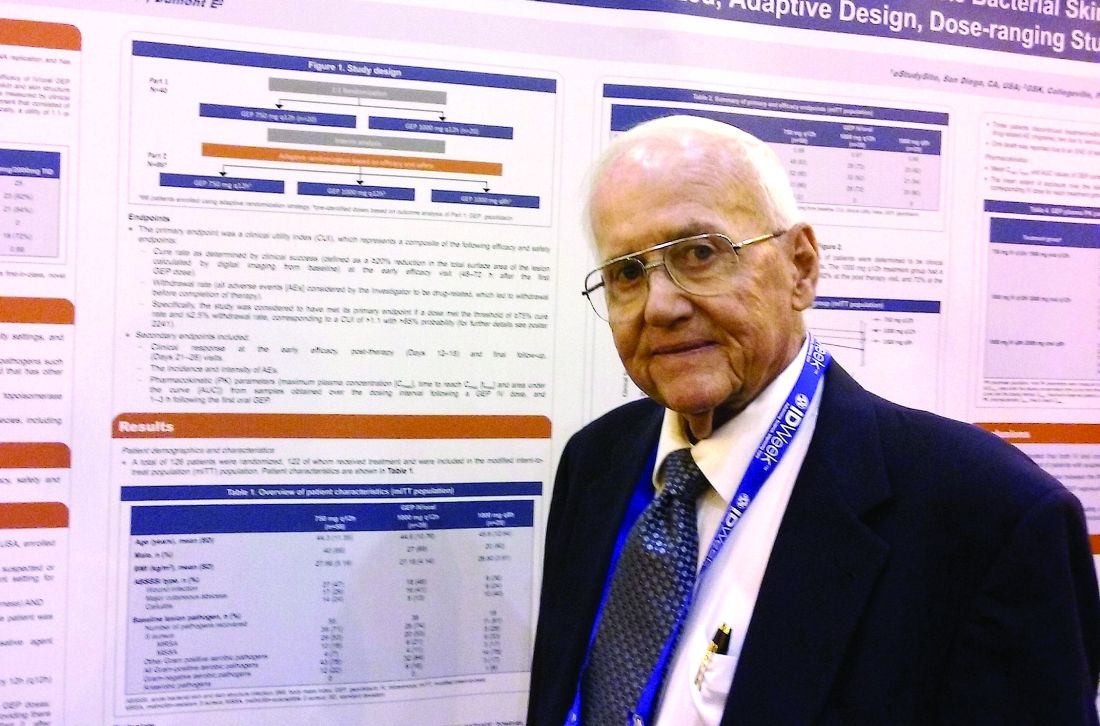
Gepotidacin cleaves bacterial DNA in two places to block replication. “Because of its dual mechanism, there are a lot of potential applications,” Dr. O’Riordan said at the combined annual meetings of the Infectious Diseases Society of America, the Society for Healthcare Epidemiology of America, the HIV Medicine Association, and the Pediatric Infectious Diseases Society. Gepotidacin is also being assessed in ongoing gonorrhea, complicated intra-abdominal infections, and urinary tract infection studies.
The researchers in the current study also measured clinical success at post therapy days 12-18. They found 90% of the 750-mg/1,500-mg q12h group, 82% of the 1,000-mg/2,000-mg q8h, and 84% of the 1,000-mg/2,000-mg q12h group achieved the composite efficacy endpoint.
Overall, 84 or 69% of study participants experienced an adverse event. Nausea, diarrhea, and vomiting were the most common mild-to-moderate adverse events associated with the 10 days of gepotidacin treatment. Two serious adverse events not related to treatment also occurred during the study.
The “low adverse events and reproducible resolution of skin infections” in this phase II study support further development of gepotidacin, Dr. O’Riordan said.
Dr. O’Riordan had no relevant disclosures. Some study coauthors are GlaxoSmithKline employees.
NEW ORLEANS – A novel antibiotic in development fared well in terms of efficacy and safety for patients hospitalized for suspected or confirmed Gram-positive acute skin and soft tissue infections, reveals the first reported findings of a phase II, randomized study.
Investigators randomized 122 patients over 18 years of age with wound infections, major cutaneous abscesses, or cellulitis to three different dosing intravenous/oral regimens of gepotidacin (GlaxoSmithKline). Patients in the 750-mg/1,500-mg q12h and 1,000-mg/2,000-mg q8h groups met the primary efficacy endpoint of an 80% or greater clinical success (83% and 92%, respectively) within 2-3 days. A third group, randomized to 1,000-mg/2,000-mg q12h, had a 72% early success rate.
All three groups of patients achieved the primary safety outcome, defined as less than a 2.5% withdrawal rate due to drug-related adverse events during gepotidacin treatment. One patient in the 750-mg q12h group withdrew because of a migraine related to the study drug.
Gepotidacin cleaves bacterial DNA in two places to block replication. “Because of its dual mechanism, there are a lot of potential applications,” Dr. O’Riordan said at the combined annual meetings of the Infectious Diseases Society of America, the Society for Healthcare Epidemiology of America, the HIV Medicine Association, and the Pediatric Infectious Diseases Society. Gepotidacin is also being assessed in ongoing gonorrhea, complicated intra-abdominal infections, and urinary tract infection studies.
The researchers in the current study also measured clinical success at post therapy days 12-18. They found 90% of the 750-mg/1,500-mg q12h group, 82% of the 1,000-mg/2,000-mg q8h, and 84% of the 1,000-mg/2,000-mg q12h group achieved the composite efficacy endpoint.
Overall, 84 or 69% of study participants experienced an adverse event. Nausea, diarrhea, and vomiting were the most common mild-to-moderate adverse events associated with the 10 days of gepotidacin treatment. Two serious adverse events not related to treatment also occurred during the study.
The “low adverse events and reproducible resolution of skin infections” in this phase II study support further development of gepotidacin, Dr. O’Riordan said.
Dr. O’Riordan had no relevant disclosures. Some study coauthors are GlaxoSmithKline employees.
NEW ORLEANS – A novel antibiotic in development fared well in terms of efficacy and safety for patients hospitalized for suspected or confirmed Gram-positive acute skin and soft tissue infections, reveals the first reported findings of a phase II, randomized study.
Investigators randomized 122 patients over 18 years of age with wound infections, major cutaneous abscesses, or cellulitis to three different dosing intravenous/oral regimens of gepotidacin (GlaxoSmithKline). Patients in the 750-mg/1,500-mg q12h and 1,000-mg/2,000-mg q8h groups met the primary efficacy endpoint of an 80% or greater clinical success (83% and 92%, respectively) within 2-3 days. A third group, randomized to 1,000-mg/2,000-mg q12h, had a 72% early success rate.
All three groups of patients achieved the primary safety outcome, defined as less than a 2.5% withdrawal rate due to drug-related adverse events during gepotidacin treatment. One patient in the 750-mg q12h group withdrew because of a migraine related to the study drug.
Gepotidacin cleaves bacterial DNA in two places to block replication. “Because of its dual mechanism, there are a lot of potential applications,” Dr. O’Riordan said at the combined annual meetings of the Infectious Diseases Society of America, the Society for Healthcare Epidemiology of America, the HIV Medicine Association, and the Pediatric Infectious Diseases Society. Gepotidacin is also being assessed in ongoing gonorrhea, complicated intra-abdominal infections, and urinary tract infection studies.
The researchers in the current study also measured clinical success at post therapy days 12-18. They found 90% of the 750-mg/1,500-mg q12h group, 82% of the 1,000-mg/2,000-mg q8h, and 84% of the 1,000-mg/2,000-mg q12h group achieved the composite efficacy endpoint.
Overall, 84 or 69% of study participants experienced an adverse event. Nausea, diarrhea, and vomiting were the most common mild-to-moderate adverse events associated with the 10 days of gepotidacin treatment. Two serious adverse events not related to treatment also occurred during the study.
The “low adverse events and reproducible resolution of skin infections” in this phase II study support further development of gepotidacin, Dr. O’Riordan said.
Dr. O’Riordan had no relevant disclosures. Some study coauthors are GlaxoSmithKline employees.
AT IDWEEK 2016
Key clinical point: A dual-mechanism-of-action antibiotic in development shows good efficacy and a low adverse event rate in a phase II study.
Major finding: A total 71 of 122 adult patients achieved clinical success within 48 to 72 hours with gepotidacin treatment.
Data source: 122 patients over 18 years of age with wound infections, major cutaneous abscesses, or cellulitis.
Disclosures: Dr. O’Riordan had no relevant disclosures. Some study coauthors are GlaxoSmithKline employees.
In era of infliximab, ulcerative colitis surgical outcomes worsen
WASHINGTON – The era of powerful biologics has led to unforeseen surgical outcomes in patients with ulcerative colitis.
Patients undergoing surgery for ulcerative colitis now are 38% more likely to die in the hospital than they were 15 years ago, before infliximab and other biologics were adopted as medical therapy for the disease. A database review covering 18 years found that other surgical outcomes are worse, too, Jonathan Abelson, MD, said at the annual clinical congress of the American College of Surgeons.
“These very powerful agents could be completely eliminating the need for surgery in patients with mild disease, leaving surgery for those who have very advanced disease and didn’t respond well to medical therapy,” said Dr. Abelson, a clinical research fellow at New York–Presbyterian Hospital, N.Y. “We are operating now only on patients with very severe disease, not the wider range of patients we had 15 years ago, when there weren’t as effective medical options.”
He and his colleagues used the New York Statewide Planning and Research Cooperative System (SPARCS) database to identify 7,070 patients who had undergone bowel resection for ulcerative colitis during two epochs: prebiologics (1995-2005) and postbiologics (2006-2013). The cohorts were about evenly split in numbers.
There were some statistically significant differences in baseline characteristics. Patients in epoch 2 were about a year older (51 vs. 50 years). Significantly more of them had at least two major comorbidities (28% vs. 18%). Minimally invasive surgery was significantly more common in epoch 2 (28% vs. 3%).
Significantly more surgeries in epoch 2 were staged into three or more procedures (14% vs. 9%). This finding probably reflects the level of disease severity in those presenting for surgery or the fact that they underwent surgery after recently receiving biologics, Dr. Abelson said.
“One of the limits of this study is that we don’t know exactly the reasons for these one-, two-, or three-stage surgeries. The theory is that patients who were more ill at presentation are more likely to have a multistaged surgery. Another reason could be that if they are on these powerful immunosuppressive regimens, the surgeon might be concerned about not healing well from a definitive one- or two-stage surgery.”
He then conducted a multivariate analysis that controlled for baseline factors, including a variety of individual comorbid conditions. In this analysis, patients in epoch 2 were 38% more likely to die in the hospital and 51% more likely to experience a major postoperative event, like shock, pulmonary embolism, stroke, or heart attack. The chance of a surgical complication was increased by 39%, and these patients were 25% more likely to need a transfusion during surgery than those from epoch 1.
The poorer outcomes held for an at least an entire year after surgery, Dr. Abelson said. At 1 year, patients in epoch 2 were 36% more likely to have a readmission than those in epoch 1. Major events and procedural complications were both 46% more likely. Patients were also 36% more likely to require an additional procedure.
“These are not the outcomes we want to see, especially in this era when our surgical techniques have improved so much,” Dr. Abelson said. “If what this represents, though, is that we are now operating on a higher-risk population, we can’t just say, ‘Well, that’s how it’s going to be.’ We need to figure out how to minimize morbidity and mortality in this high-risk patient population.”
One goal, he suggested, would be to assess response to a biologic regimen earlier in the hopes of determining who will respond well, and moving ahead with surgery in those who don’t.
This is a tough sell for patients, he said.
“There is a big fear of this surgery. It usually requires a temporary ileostomy and a stoma bag, and patients are terrified of that. There have been a few studies demonstrating that earlier referral to surgery improves quality of life; living with advanced ulcerative colitis can be extremely difficult and patients often feel a lot better after we remove their diseased colon. But getting there is a challenge.”
Dr. Abelson had no financial disclosures.
msullivan@frontlinemedcom.com
On Twitter @Alz_Gal
WASHINGTON – The era of powerful biologics has led to unforeseen surgical outcomes in patients with ulcerative colitis.
Patients undergoing surgery for ulcerative colitis now are 38% more likely to die in the hospital than they were 15 years ago, before infliximab and other biologics were adopted as medical therapy for the disease. A database review covering 18 years found that other surgical outcomes are worse, too, Jonathan Abelson, MD, said at the annual clinical congress of the American College of Surgeons.
“These very powerful agents could be completely eliminating the need for surgery in patients with mild disease, leaving surgery for those who have very advanced disease and didn’t respond well to medical therapy,” said Dr. Abelson, a clinical research fellow at New York–Presbyterian Hospital, N.Y. “We are operating now only on patients with very severe disease, not the wider range of patients we had 15 years ago, when there weren’t as effective medical options.”
He and his colleagues used the New York Statewide Planning and Research Cooperative System (SPARCS) database to identify 7,070 patients who had undergone bowel resection for ulcerative colitis during two epochs: prebiologics (1995-2005) and postbiologics (2006-2013). The cohorts were about evenly split in numbers.
There were some statistically significant differences in baseline characteristics. Patients in epoch 2 were about a year older (51 vs. 50 years). Significantly more of them had at least two major comorbidities (28% vs. 18%). Minimally invasive surgery was significantly more common in epoch 2 (28% vs. 3%).
Significantly more surgeries in epoch 2 were staged into three or more procedures (14% vs. 9%). This finding probably reflects the level of disease severity in those presenting for surgery or the fact that they underwent surgery after recently receiving biologics, Dr. Abelson said.
“One of the limits of this study is that we don’t know exactly the reasons for these one-, two-, or three-stage surgeries. The theory is that patients who were more ill at presentation are more likely to have a multistaged surgery. Another reason could be that if they are on these powerful immunosuppressive regimens, the surgeon might be concerned about not healing well from a definitive one- or two-stage surgery.”
He then conducted a multivariate analysis that controlled for baseline factors, including a variety of individual comorbid conditions. In this analysis, patients in epoch 2 were 38% more likely to die in the hospital and 51% more likely to experience a major postoperative event, like shock, pulmonary embolism, stroke, or heart attack. The chance of a surgical complication was increased by 39%, and these patients were 25% more likely to need a transfusion during surgery than those from epoch 1.
The poorer outcomes held for an at least an entire year after surgery, Dr. Abelson said. At 1 year, patients in epoch 2 were 36% more likely to have a readmission than those in epoch 1. Major events and procedural complications were both 46% more likely. Patients were also 36% more likely to require an additional procedure.
“These are not the outcomes we want to see, especially in this era when our surgical techniques have improved so much,” Dr. Abelson said. “If what this represents, though, is that we are now operating on a higher-risk population, we can’t just say, ‘Well, that’s how it’s going to be.’ We need to figure out how to minimize morbidity and mortality in this high-risk patient population.”
One goal, he suggested, would be to assess response to a biologic regimen earlier in the hopes of determining who will respond well, and moving ahead with surgery in those who don’t.
This is a tough sell for patients, he said.
“There is a big fear of this surgery. It usually requires a temporary ileostomy and a stoma bag, and patients are terrified of that. There have been a few studies demonstrating that earlier referral to surgery improves quality of life; living with advanced ulcerative colitis can be extremely difficult and patients often feel a lot better after we remove their diseased colon. But getting there is a challenge.”
Dr. Abelson had no financial disclosures.
msullivan@frontlinemedcom.com
On Twitter @Alz_Gal
WASHINGTON – The era of powerful biologics has led to unforeseen surgical outcomes in patients with ulcerative colitis.
Patients undergoing surgery for ulcerative colitis now are 38% more likely to die in the hospital than they were 15 years ago, before infliximab and other biologics were adopted as medical therapy for the disease. A database review covering 18 years found that other surgical outcomes are worse, too, Jonathan Abelson, MD, said at the annual clinical congress of the American College of Surgeons.
“These very powerful agents could be completely eliminating the need for surgery in patients with mild disease, leaving surgery for those who have very advanced disease and didn’t respond well to medical therapy,” said Dr. Abelson, a clinical research fellow at New York–Presbyterian Hospital, N.Y. “We are operating now only on patients with very severe disease, not the wider range of patients we had 15 years ago, when there weren’t as effective medical options.”
He and his colleagues used the New York Statewide Planning and Research Cooperative System (SPARCS) database to identify 7,070 patients who had undergone bowel resection for ulcerative colitis during two epochs: prebiologics (1995-2005) and postbiologics (2006-2013). The cohorts were about evenly split in numbers.
There were some statistically significant differences in baseline characteristics. Patients in epoch 2 were about a year older (51 vs. 50 years). Significantly more of them had at least two major comorbidities (28% vs. 18%). Minimally invasive surgery was significantly more common in epoch 2 (28% vs. 3%).
Significantly more surgeries in epoch 2 were staged into three or more procedures (14% vs. 9%). This finding probably reflects the level of disease severity in those presenting for surgery or the fact that they underwent surgery after recently receiving biologics, Dr. Abelson said.
“One of the limits of this study is that we don’t know exactly the reasons for these one-, two-, or three-stage surgeries. The theory is that patients who were more ill at presentation are more likely to have a multistaged surgery. Another reason could be that if they are on these powerful immunosuppressive regimens, the surgeon might be concerned about not healing well from a definitive one- or two-stage surgery.”
He then conducted a multivariate analysis that controlled for baseline factors, including a variety of individual comorbid conditions. In this analysis, patients in epoch 2 were 38% more likely to die in the hospital and 51% more likely to experience a major postoperative event, like shock, pulmonary embolism, stroke, or heart attack. The chance of a surgical complication was increased by 39%, and these patients were 25% more likely to need a transfusion during surgery than those from epoch 1.
The poorer outcomes held for an at least an entire year after surgery, Dr. Abelson said. At 1 year, patients in epoch 2 were 36% more likely to have a readmission than those in epoch 1. Major events and procedural complications were both 46% more likely. Patients were also 36% more likely to require an additional procedure.
“These are not the outcomes we want to see, especially in this era when our surgical techniques have improved so much,” Dr. Abelson said. “If what this represents, though, is that we are now operating on a higher-risk population, we can’t just say, ‘Well, that’s how it’s going to be.’ We need to figure out how to minimize morbidity and mortality in this high-risk patient population.”
One goal, he suggested, would be to assess response to a biologic regimen earlier in the hopes of determining who will respond well, and moving ahead with surgery in those who don’t.
This is a tough sell for patients, he said.
“There is a big fear of this surgery. It usually requires a temporary ileostomy and a stoma bag, and patients are terrified of that. There have been a few studies demonstrating that earlier referral to surgery improves quality of life; living with advanced ulcerative colitis can be extremely difficult and patients often feel a lot better after we remove their diseased colon. But getting there is a challenge.”
Dr. Abelson had no financial disclosures.
msullivan@frontlinemedcom.com
On Twitter @Alz_Gal
AT THE ACS CLINICAL CONGRESS
Key clinical point:
Major finding: Patients are 38% more likely to die in the hospital than they were 15 years ago.
Data source: The 18-year database review comprised more than 7,000 surgeries.
Disclosures: Dr. Abelson had no financial disclosures.
VIDEO: No effect of donor on FMT outcomes in C. difficile patients
NEW ORLEANS – Fecal microbiota transplantation, or FMT, is a highly effective treatment for Clostridium difficile infection (CDI) and other digestive and autoimmune disorders, but little is known about the role of donor characteristics with respect to outcomes in patients with recurrent CDI.
A study of nearly 1,999 patients with an 83.9% cure rate showed no significant difference between 28 donors in terms of clinical outcomes at 8 weeks, according to Majdi Osman, MD, of OpenBiome, a not-for-profit stool bank in the Boston area.
Studies in inflammatory bowel diseases have suggested that donors do matter, but that does not appear to be the case when it comes to recurrent CDI, Dr. Osman said at an annual scientific meeting on infectious diseases.
“Broadly speaking, it seems like the efficacy rate is the same amongst all of our donors,” he said in a video interview at the combined annual meetings of the Infectious Diseases Society of America, the Society for Healthcare Epidemiology of America, the HIV Medicine Association, and the Pediatric Infectious Diseases Society.
The video associated with this article is no longer available on this site. Please view all of our videos on the MDedge YouTube channel
Potential donors are subject to a rigorous screening process, and less than 3% are accepted, but given that donors were shown in previous studies to play a role in effectiveness in some other conditions, Dr. Osman said it was worth checking to see if outcomes in CDI could be further improved through donor selection.
In fact, it appears that “the donor doesn’t matter,” he said, noting that it may be that “we are selecting for a fairly narrow spectrum of the population, and actually the stool that we’re selecting is fairly similar in composition.”
Efforts are underway to look more closely at that possibility, and Dr. Osman said he hopes to see more standardized clinical trials and clinical follow-up. He also said he is excited about an FMT registry – a joint project of the American Gastroenterology Association and the Infectious Diseases Society of America – that will follow 4,000 patients for 10 years.
“We will be working closely with them to provide material and get some really good robust clinical data going forward,” he said.
Dr. Osman reported having no disclosures.
NEW ORLEANS – Fecal microbiota transplantation, or FMT, is a highly effective treatment for Clostridium difficile infection (CDI) and other digestive and autoimmune disorders, but little is known about the role of donor characteristics with respect to outcomes in patients with recurrent CDI.
A study of nearly 1,999 patients with an 83.9% cure rate showed no significant difference between 28 donors in terms of clinical outcomes at 8 weeks, according to Majdi Osman, MD, of OpenBiome, a not-for-profit stool bank in the Boston area.
Studies in inflammatory bowel diseases have suggested that donors do matter, but that does not appear to be the case when it comes to recurrent CDI, Dr. Osman said at an annual scientific meeting on infectious diseases.
“Broadly speaking, it seems like the efficacy rate is the same amongst all of our donors,” he said in a video interview at the combined annual meetings of the Infectious Diseases Society of America, the Society for Healthcare Epidemiology of America, the HIV Medicine Association, and the Pediatric Infectious Diseases Society.
The video associated with this article is no longer available on this site. Please view all of our videos on the MDedge YouTube channel
Potential donors are subject to a rigorous screening process, and less than 3% are accepted, but given that donors were shown in previous studies to play a role in effectiveness in some other conditions, Dr. Osman said it was worth checking to see if outcomes in CDI could be further improved through donor selection.
In fact, it appears that “the donor doesn’t matter,” he said, noting that it may be that “we are selecting for a fairly narrow spectrum of the population, and actually the stool that we’re selecting is fairly similar in composition.”
Efforts are underway to look more closely at that possibility, and Dr. Osman said he hopes to see more standardized clinical trials and clinical follow-up. He also said he is excited about an FMT registry – a joint project of the American Gastroenterology Association and the Infectious Diseases Society of America – that will follow 4,000 patients for 10 years.
“We will be working closely with them to provide material and get some really good robust clinical data going forward,” he said.
Dr. Osman reported having no disclosures.
NEW ORLEANS – Fecal microbiota transplantation, or FMT, is a highly effective treatment for Clostridium difficile infection (CDI) and other digestive and autoimmune disorders, but little is known about the role of donor characteristics with respect to outcomes in patients with recurrent CDI.
A study of nearly 1,999 patients with an 83.9% cure rate showed no significant difference between 28 donors in terms of clinical outcomes at 8 weeks, according to Majdi Osman, MD, of OpenBiome, a not-for-profit stool bank in the Boston area.
Studies in inflammatory bowel diseases have suggested that donors do matter, but that does not appear to be the case when it comes to recurrent CDI, Dr. Osman said at an annual scientific meeting on infectious diseases.
“Broadly speaking, it seems like the efficacy rate is the same amongst all of our donors,” he said in a video interview at the combined annual meetings of the Infectious Diseases Society of America, the Society for Healthcare Epidemiology of America, the HIV Medicine Association, and the Pediatric Infectious Diseases Society.
The video associated with this article is no longer available on this site. Please view all of our videos on the MDedge YouTube channel
Potential donors are subject to a rigorous screening process, and less than 3% are accepted, but given that donors were shown in previous studies to play a role in effectiveness in some other conditions, Dr. Osman said it was worth checking to see if outcomes in CDI could be further improved through donor selection.
In fact, it appears that “the donor doesn’t matter,” he said, noting that it may be that “we are selecting for a fairly narrow spectrum of the population, and actually the stool that we’re selecting is fairly similar in composition.”
Efforts are underway to look more closely at that possibility, and Dr. Osman said he hopes to see more standardized clinical trials and clinical follow-up. He also said he is excited about an FMT registry – a joint project of the American Gastroenterology Association and the Infectious Diseases Society of America – that will follow 4,000 patients for 10 years.
“We will be working closely with them to provide material and get some really good robust clinical data going forward,” he said.
Dr. Osman reported having no disclosures.

Bezlotoxumab reduces CDI recurrence across antibiotic subgroups
NEW ORLEANS – The monoclonal antibody bezlotoxumab significantly reduces the risk of Clostridium difficile infection (CDI) recurrence in adults receiving standard of care antibiotic treatment, regardless of whether that treatment is with metronidazole, vancomycin, or fidaxomicin, according to an analysis of data from the MODIFY I and II trials.
The global, randomized, double-blind, placebo-controlled trials demonstrated that bezlotoxumab was safe and effective for preventing CDI recurrence, and the current prespecified analysis further showed that choice of standard of care antibiotic therapy did not affect the outcomes, Erik R. Dubberke, MD, of Washington University in St. Louis, reported at IDWeek, an annual scientific meeting on infectious diseases.

Consistent with the overall study results, clinical cure rates were similar with bezlotoxumab and placebo, regardless of the standard of care antibiotic received (80% vs. 80.3%, respectively, overall; 81% vs. 81.3% in the metronidazole group; 78.5% vs. 79.6% in the vancomycin group; and 86.7% vs. 76.9% in the fidaxomicin group), he said.
However, CDI recurrence rates were lower among those who received bezlotoxumab, compared with those who received placebo in all three standard of care subgroups, with 10%, 15%, and 12% fewer bezlotoxumab vs. placebo patients experiencing recurrence in the metronidazole, vancomycin, and fidaxomicin groups, respectively, and 12% fewer experiencing recurrence overall.
The primary endpoint of CDI recurrence was defined in the studies as a new episode of diarrhea (at least three unformed stools in 24 hours) and a positive stool test for toxigenic C. difficile after clinical cure of the baseline CDI episode. Clinical cure was defined as standard of care antibiotics given for 14 days or less and no diarrhea for 2 consecutive days after completing standard of care treatment.
Of note, the patients in the vancomycin group were older and sicker, and had more risk factors for CDI, he said, noting, for example, that 57% of vancomycin patients were aged at least 65 years and 33% were aged at least 75 years, vs. 46% and 26% for metronidazole, respectively, and 46% and 18% for fidaxomicin; 72% of vancomycin patients were inpatients, compared with 65% and 50% of metronidazole and fidaxomicin patients.
Further, 19% of vancomycin patients, vs. 13% and 14% of metronidazole and fidaxomicin patients met criteria for severe CDI.
The findings of the current analysis are important, because the incidence of CDI recurrence is about 25%, and the risk increases with each subsequent recurrence, Dr. Dubberke said, concluding that this novel, nonantibiotic approach to prevention of CDI recurrence using bezlotoxumab, which recently received Food and Drug Administration approval for this indication, is of benefit for reducing that risk, regardless of the antibiotic used as part of standard of care therapy for CDI.
Dr. Dubberke reported serving as an investigator, adviser and/or consultant for Merck, Rebiotix, Sanofi Pasteur, and Summit, and receiving consultant fees and/or grant/research support from these companies.
NEW ORLEANS – The monoclonal antibody bezlotoxumab significantly reduces the risk of Clostridium difficile infection (CDI) recurrence in adults receiving standard of care antibiotic treatment, regardless of whether that treatment is with metronidazole, vancomycin, or fidaxomicin, according to an analysis of data from the MODIFY I and II trials.
The global, randomized, double-blind, placebo-controlled trials demonstrated that bezlotoxumab was safe and effective for preventing CDI recurrence, and the current prespecified analysis further showed that choice of standard of care antibiotic therapy did not affect the outcomes, Erik R. Dubberke, MD, of Washington University in St. Louis, reported at IDWeek, an annual scientific meeting on infectious diseases.
Consistent with the overall study results, clinical cure rates were similar with bezlotoxumab and placebo, regardless of the standard of care antibiotic received (80% vs. 80.3%, respectively, overall; 81% vs. 81.3% in the metronidazole group; 78.5% vs. 79.6% in the vancomycin group; and 86.7% vs. 76.9% in the fidaxomicin group), he said.
However, CDI recurrence rates were lower among those who received bezlotoxumab, compared with those who received placebo in all three standard of care subgroups, with 10%, 15%, and 12% fewer bezlotoxumab vs. placebo patients experiencing recurrence in the metronidazole, vancomycin, and fidaxomicin groups, respectively, and 12% fewer experiencing recurrence overall.
The primary endpoint of CDI recurrence was defined in the studies as a new episode of diarrhea (at least three unformed stools in 24 hours) and a positive stool test for toxigenic C. difficile after clinical cure of the baseline CDI episode. Clinical cure was defined as standard of care antibiotics given for 14 days or less and no diarrhea for 2 consecutive days after completing standard of care treatment.
Of note, the patients in the vancomycin group were older and sicker, and had more risk factors for CDI, he said, noting, for example, that 57% of vancomycin patients were aged at least 65 years and 33% were aged at least 75 years, vs. 46% and 26% for metronidazole, respectively, and 46% and 18% for fidaxomicin; 72% of vancomycin patients were inpatients, compared with 65% and 50% of metronidazole and fidaxomicin patients.
Further, 19% of vancomycin patients, vs. 13% and 14% of metronidazole and fidaxomicin patients met criteria for severe CDI.
The findings of the current analysis are important, because the incidence of CDI recurrence is about 25%, and the risk increases with each subsequent recurrence, Dr. Dubberke said, concluding that this novel, nonantibiotic approach to prevention of CDI recurrence using bezlotoxumab, which recently received Food and Drug Administration approval for this indication, is of benefit for reducing that risk, regardless of the antibiotic used as part of standard of care therapy for CDI.
Dr. Dubberke reported serving as an investigator, adviser and/or consultant for Merck, Rebiotix, Sanofi Pasteur, and Summit, and receiving consultant fees and/or grant/research support from these companies.
NEW ORLEANS – The monoclonal antibody bezlotoxumab significantly reduces the risk of Clostridium difficile infection (CDI) recurrence in adults receiving standard of care antibiotic treatment, regardless of whether that treatment is with metronidazole, vancomycin, or fidaxomicin, according to an analysis of data from the MODIFY I and II trials.
The global, randomized, double-blind, placebo-controlled trials demonstrated that bezlotoxumab was safe and effective for preventing CDI recurrence, and the current prespecified analysis further showed that choice of standard of care antibiotic therapy did not affect the outcomes, Erik R. Dubberke, MD, of Washington University in St. Louis, reported at IDWeek, an annual scientific meeting on infectious diseases.
Consistent with the overall study results, clinical cure rates were similar with bezlotoxumab and placebo, regardless of the standard of care antibiotic received (80% vs. 80.3%, respectively, overall; 81% vs. 81.3% in the metronidazole group; 78.5% vs. 79.6% in the vancomycin group; and 86.7% vs. 76.9% in the fidaxomicin group), he said.
However, CDI recurrence rates were lower among those who received bezlotoxumab, compared with those who received placebo in all three standard of care subgroups, with 10%, 15%, and 12% fewer bezlotoxumab vs. placebo patients experiencing recurrence in the metronidazole, vancomycin, and fidaxomicin groups, respectively, and 12% fewer experiencing recurrence overall.
The primary endpoint of CDI recurrence was defined in the studies as a new episode of diarrhea (at least three unformed stools in 24 hours) and a positive stool test for toxigenic C. difficile after clinical cure of the baseline CDI episode. Clinical cure was defined as standard of care antibiotics given for 14 days or less and no diarrhea for 2 consecutive days after completing standard of care treatment.
Of note, the patients in the vancomycin group were older and sicker, and had more risk factors for CDI, he said, noting, for example, that 57% of vancomycin patients were aged at least 65 years and 33% were aged at least 75 years, vs. 46% and 26% for metronidazole, respectively, and 46% and 18% for fidaxomicin; 72% of vancomycin patients were inpatients, compared with 65% and 50% of metronidazole and fidaxomicin patients.
Further, 19% of vancomycin patients, vs. 13% and 14% of metronidazole and fidaxomicin patients met criteria for severe CDI.
The findings of the current analysis are important, because the incidence of CDI recurrence is about 25%, and the risk increases with each subsequent recurrence, Dr. Dubberke said, concluding that this novel, nonantibiotic approach to prevention of CDI recurrence using bezlotoxumab, which recently received Food and Drug Administration approval for this indication, is of benefit for reducing that risk, regardless of the antibiotic used as part of standard of care therapy for CDI.
Dr. Dubberke reported serving as an investigator, adviser and/or consultant for Merck, Rebiotix, Sanofi Pasteur, and Summit, and receiving consultant fees and/or grant/research support from these companies.
AT IDWEEK 2016
Key clinical point:
Major finding: 12% fewer bezlotoxumab vs. placebo patients experienced CDI recurrence.
Data source: A prespecified analysis of data from 1,554 subjects from the MODIFY I and II trials.
Disclosures: Dr. Dubberke reported serving as an investigator, adviser, and/or consultant for Merck, Rebiotix, Sanofi Pasteur, and Summit, and receiving consultant fees and/or grant/research support from these companies.
Diabetes, stroke linked to recurrent C. difficile
LAS VEGAS – Diabetes and stroke are risk factors for recurrent Clostridium difficile infection (CDI), with stroke patients at about 10 times the risk of recurrence.
The underlying cause for the association is a mystery, but one-sided paralysis is one possibility. “A lot of stroke patients may be hemiplegic, and they may be bedridden, so that may be a risk factor by itself. It’s something that may need to be studied in the future,” Alan Putrus, MD, a gastroenterology fellow at St. John Providence Hospital, Detroit, said in an interview.
CDI recurrence rates range from 5% to 47%, depending on the institution. Although risk factors of initial CDI have been well defined, few studies have looked at risk factors associated with recurrence.
In order to get at the question, the researchers conducted a study of 108 initial CDIs and 113 recurrences at two urban and one suburban hospital. Patients who experienced recurrence were matched 1:1 to age- and gender-matched controls with no recurrent CDI.
CDI recurrence rates were 16.5% and 15.9% in the two urban hospitals, and 14.9% in the suburban hospital.
Logistic regression revealed risk factors associated with CDI recurrence, including diabetes (odds ratio, 1.91; 95% confidence interval, 1.05-3.47; P = .04), stroke (OR, 9.73; 95% CI, 1.15-82.35; P = .04), exposure to proton pump inhibitors in the past 3 months (OR, 1.82; 95% CI, 1.03-3.23; P = .04), and admission to an intensive care unit in the past 3 months (OR, 1.95; 95% CI, 1.0-3.83; P = .04).
The results suggest that diabetes and especially stroke may be important risk factors for CDI recurrence, and their presence should prompt physicians to alter patient care accordingly, according to Dr. Putrus.
He stressed the importance of antibiotic stewardship. “Once you find a certain bug or pathogen, try to deescalate the antibiotics as soon as you can. If a patient is diabetic, controlling their blood sugar may also help,” Dr. Putrus said.
Finally, physicians should consider whether proton pump inhibitors are really necessary. Some patients start on PPIs but remain on the drugs long after symptoms have abated. “A lot of patients just have some discomfort in their abdomen, and they never stop taking it. They keep refilling it. So that’s a problem,” said Dr. Putrus.
Dr. Putrus has declared no conflicts of interest.
AGA Resource
AGA offers information to educate your patients about C. difficile and fecal microbiota transplant. Learn more at http://www.gastro.org/patient-care/conditions-diseases/clostridium-difficile-infection.
LAS VEGAS – Diabetes and stroke are risk factors for recurrent Clostridium difficile infection (CDI), with stroke patients at about 10 times the risk of recurrence.
The underlying cause for the association is a mystery, but one-sided paralysis is one possibility. “A lot of stroke patients may be hemiplegic, and they may be bedridden, so that may be a risk factor by itself. It’s something that may need to be studied in the future,” Alan Putrus, MD, a gastroenterology fellow at St. John Providence Hospital, Detroit, said in an interview.
CDI recurrence rates range from 5% to 47%, depending on the institution. Although risk factors of initial CDI have been well defined, few studies have looked at risk factors associated with recurrence.
In order to get at the question, the researchers conducted a study of 108 initial CDIs and 113 recurrences at two urban and one suburban hospital. Patients who experienced recurrence were matched 1:1 to age- and gender-matched controls with no recurrent CDI.
CDI recurrence rates were 16.5% and 15.9% in the two urban hospitals, and 14.9% in the suburban hospital.
Logistic regression revealed risk factors associated with CDI recurrence, including diabetes (odds ratio, 1.91; 95% confidence interval, 1.05-3.47; P = .04), stroke (OR, 9.73; 95% CI, 1.15-82.35; P = .04), exposure to proton pump inhibitors in the past 3 months (OR, 1.82; 95% CI, 1.03-3.23; P = .04), and admission to an intensive care unit in the past 3 months (OR, 1.95; 95% CI, 1.0-3.83; P = .04).
The results suggest that diabetes and especially stroke may be important risk factors for CDI recurrence, and their presence should prompt physicians to alter patient care accordingly, according to Dr. Putrus.
He stressed the importance of antibiotic stewardship. “Once you find a certain bug or pathogen, try to deescalate the antibiotics as soon as you can. If a patient is diabetic, controlling their blood sugar may also help,” Dr. Putrus said.
Finally, physicians should consider whether proton pump inhibitors are really necessary. Some patients start on PPIs but remain on the drugs long after symptoms have abated. “A lot of patients just have some discomfort in their abdomen, and they never stop taking it. They keep refilling it. So that’s a problem,” said Dr. Putrus.
Dr. Putrus has declared no conflicts of interest.
AGA Resource
AGA offers information to educate your patients about C. difficile and fecal microbiota transplant. Learn more at http://www.gastro.org/patient-care/conditions-diseases/clostridium-difficile-infection.
LAS VEGAS – Diabetes and stroke are risk factors for recurrent Clostridium difficile infection (CDI), with stroke patients at about 10 times the risk of recurrence.
The underlying cause for the association is a mystery, but one-sided paralysis is one possibility. “A lot of stroke patients may be hemiplegic, and they may be bedridden, so that may be a risk factor by itself. It’s something that may need to be studied in the future,” Alan Putrus, MD, a gastroenterology fellow at St. John Providence Hospital, Detroit, said in an interview.
CDI recurrence rates range from 5% to 47%, depending on the institution. Although risk factors of initial CDI have been well defined, few studies have looked at risk factors associated with recurrence.
In order to get at the question, the researchers conducted a study of 108 initial CDIs and 113 recurrences at two urban and one suburban hospital. Patients who experienced recurrence were matched 1:1 to age- and gender-matched controls with no recurrent CDI.
CDI recurrence rates were 16.5% and 15.9% in the two urban hospitals, and 14.9% in the suburban hospital.
Logistic regression revealed risk factors associated with CDI recurrence, including diabetes (odds ratio, 1.91; 95% confidence interval, 1.05-3.47; P = .04), stroke (OR, 9.73; 95% CI, 1.15-82.35; P = .04), exposure to proton pump inhibitors in the past 3 months (OR, 1.82; 95% CI, 1.03-3.23; P = .04), and admission to an intensive care unit in the past 3 months (OR, 1.95; 95% CI, 1.0-3.83; P = .04).
The results suggest that diabetes and especially stroke may be important risk factors for CDI recurrence, and their presence should prompt physicians to alter patient care accordingly, according to Dr. Putrus.
He stressed the importance of antibiotic stewardship. “Once you find a certain bug or pathogen, try to deescalate the antibiotics as soon as you can. If a patient is diabetic, controlling their blood sugar may also help,” Dr. Putrus said.
Finally, physicians should consider whether proton pump inhibitors are really necessary. Some patients start on PPIs but remain on the drugs long after symptoms have abated. “A lot of patients just have some discomfort in their abdomen, and they never stop taking it. They keep refilling it. So that’s a problem,” said Dr. Putrus.
Dr. Putrus has declared no conflicts of interest.
AGA Resource
AGA offers information to educate your patients about C. difficile and fecal microbiota transplant. Learn more at http://www.gastro.org/patient-care/conditions-diseases/clostridium-difficile-infection.
AT ACG 2016
Key clinical point:
Major finding: Diabetes, stroke, and a history of PPI use were all associated with higher risks of recurrence.
Data source: Case-control, retrospective study.
Disclosures: Dr. Putrus has declared no conflicts of interest.
Ozanimod has lasting effect on ulcerative colitis
LAS VEGAS – Ozanimod, an oral agent that selectively modulates the sphingosine 1-phosphate (S1P) 1 and 5 receptor, has a lasting effect on symptoms of ulcerative colitis, according to results from an open-label extension study.
The study extends the phase II TOUCHSTONE trial, in which patients with ulcerative colitis showed significant clinical improvement out to 32 weeks. The current study showed those improvements lasting out to at least 1 year, with about 80% of patients staying on the drug at the end of the study.
With other drug regimens, “the loss rates are at least 50% of the patients, so this is a remarkable level of durability over time,” William Sandborn, MD, chief of gastroenterology at the University of California at San Diego, said at the annual meeting of the American College of Gastroenterology. “With biologics, if you follow patients out for a year or 2, you see a fair amount of loss of response and some of that probably has to do with the formation of antidrug antibodies and immunogenicity,” Dr. Sandborn added.

In the original TOUCHSTONE study, 197 patients were randomized to placebo, ozanimod 0.5 mg, or ozanimod 1.0 mg, and followed out to week 32. Twenty-one percent of those in the 1.0-mg group achieved clinical remission, compared with 26% in the 0.5-mg group and 6% of those receiving placebo. Clinical response rates were 51%, 35%, and 20%, respectively.
In the open-label study, patients from all arms who did not respond to treatment after the induction phase, or relapsed during the maintenance phase, or completed the maintenance phase (170 patients in total) entered the open-label study with a dose of 1.0 mg ozanimod. At the time of the cut-off, patients in the extension study had been taking ozanimod for at least 1 year.
At the start of the extension study, the partial Mayo Score (pMS) for patients on placebo, ozanimod 0.5 mg, and 1.0 mg were 4.6, 4.5, and 3.3, respectively. All groups showed improvement in pMS by week 44 (1.7, 1.7, and 1.9, respectively)
At week 44, 90.9% of patients had little or no active disease (physician global assessment 0 or 1), 98.4% had little or no blood in their stools, and 84.7% had no blood in their stools.
Adverse events with a frequency higher than 2% included ulcerative colitis flare (5.9%), anemia (3.5%), upper respiratory tract infection (4.1%), nasal pharyngitis (3.5%), back pain (2.9%), arthralgia (2.4%), and headache (2.4%). The researchers noted some transient elevation of alanine aminotransferase or aspartate aminotransferase, but these elevations were temporary and reversed during ongoing treatment; 2.4% of patients experienced ALT and AST levels higher than three times the upper limit of normal, and all were asymptomatic.
Serious adverse events that occurred in two or more patients included anemia (1.2%) and ulcerative colitis flare (2.4%).
“This is a promising oral product with a similar mechanism of action to other lymphocyte trafficking agents,” said Stephen Hanauer, MD, medical director of the digestive health center at the Northwestern University, Chicago, who attended the session.
Ozanimod and other lymphocyte trafficking agents may offer a slightly different profile than some of the other drug classes, such as the anti–tumor necrosis factor agents, according to Dr. Hanauer, because the agents don’t affect lymphocytes already in the tissues. On the other hand, once the drug has acted, its effect may linger. “The time to effect may be a little slower, but the long-term effect seems to be as good or better as other mechanisms of action.”
The drug’s real place could be in early disease, Dr. Hanauer said. “If this is truly an effective and safe agent, the real positioning should be earlier in the disease, before patients are exposed to steroids and other immune suppressants, or biologics that have an infection risk.”
Celgene funded the study. Dr. Sandborn has received funding from Receptos and Celgene and consulted for both companies. Dr. Hanauer has consulted with Receptos, Celgene, Pfizer, Jansen, and AbbVie.
AGA Resource
AGA offers an IBD Clinical Service Line that provides tools to help you become more efficient, understand quality standards, and improve the process of care for patients. Learn more at http://www.gastro.org/patient-care/conditions-diseases/ibd
LAS VEGAS – Ozanimod, an oral agent that selectively modulates the sphingosine 1-phosphate (S1P) 1 and 5 receptor, has a lasting effect on symptoms of ulcerative colitis, according to results from an open-label extension study.
The study extends the phase II TOUCHSTONE trial, in which patients with ulcerative colitis showed significant clinical improvement out to 32 weeks. The current study showed those improvements lasting out to at least 1 year, with about 80% of patients staying on the drug at the end of the study.
With other drug regimens, “the loss rates are at least 50% of the patients, so this is a remarkable level of durability over time,” William Sandborn, MD, chief of gastroenterology at the University of California at San Diego, said at the annual meeting of the American College of Gastroenterology. “With biologics, if you follow patients out for a year or 2, you see a fair amount of loss of response and some of that probably has to do with the formation of antidrug antibodies and immunogenicity,” Dr. Sandborn added.
In the original TOUCHSTONE study, 197 patients were randomized to placebo, ozanimod 0.5 mg, or ozanimod 1.0 mg, and followed out to week 32. Twenty-one percent of those in the 1.0-mg group achieved clinical remission, compared with 26% in the 0.5-mg group and 6% of those receiving placebo. Clinical response rates were 51%, 35%, and 20%, respectively.
In the open-label study, patients from all arms who did not respond to treatment after the induction phase, or relapsed during the maintenance phase, or completed the maintenance phase (170 patients in total) entered the open-label study with a dose of 1.0 mg ozanimod. At the time of the cut-off, patients in the extension study had been taking ozanimod for at least 1 year.
At the start of the extension study, the partial Mayo Score (pMS) for patients on placebo, ozanimod 0.5 mg, and 1.0 mg were 4.6, 4.5, and 3.3, respectively. All groups showed improvement in pMS by week 44 (1.7, 1.7, and 1.9, respectively)
At week 44, 90.9% of patients had little or no active disease (physician global assessment 0 or 1), 98.4% had little or no blood in their stools, and 84.7% had no blood in their stools.
Adverse events with a frequency higher than 2% included ulcerative colitis flare (5.9%), anemia (3.5%), upper respiratory tract infection (4.1%), nasal pharyngitis (3.5%), back pain (2.9%), arthralgia (2.4%), and headache (2.4%). The researchers noted some transient elevation of alanine aminotransferase or aspartate aminotransferase, but these elevations were temporary and reversed during ongoing treatment; 2.4% of patients experienced ALT and AST levels higher than three times the upper limit of normal, and all were asymptomatic.
Serious adverse events that occurred in two or more patients included anemia (1.2%) and ulcerative colitis flare (2.4%).
“This is a promising oral product with a similar mechanism of action to other lymphocyte trafficking agents,” said Stephen Hanauer, MD, medical director of the digestive health center at the Northwestern University, Chicago, who attended the session.
Ozanimod and other lymphocyte trafficking agents may offer a slightly different profile than some of the other drug classes, such as the anti–tumor necrosis factor agents, according to Dr. Hanauer, because the agents don’t affect lymphocytes already in the tissues. On the other hand, once the drug has acted, its effect may linger. “The time to effect may be a little slower, but the long-term effect seems to be as good or better as other mechanisms of action.”
The drug’s real place could be in early disease, Dr. Hanauer said. “If this is truly an effective and safe agent, the real positioning should be earlier in the disease, before patients are exposed to steroids and other immune suppressants, or biologics that have an infection risk.”
Celgene funded the study. Dr. Sandborn has received funding from Receptos and Celgene and consulted for both companies. Dr. Hanauer has consulted with Receptos, Celgene, Pfizer, Jansen, and AbbVie.
AGA Resource
AGA offers an IBD Clinical Service Line that provides tools to help you become more efficient, understand quality standards, and improve the process of care for patients. Learn more at http://www.gastro.org/patient-care/conditions-diseases/ibd
LAS VEGAS – Ozanimod, an oral agent that selectively modulates the sphingosine 1-phosphate (S1P) 1 and 5 receptor, has a lasting effect on symptoms of ulcerative colitis, according to results from an open-label extension study.
The study extends the phase II TOUCHSTONE trial, in which patients with ulcerative colitis showed significant clinical improvement out to 32 weeks. The current study showed those improvements lasting out to at least 1 year, with about 80% of patients staying on the drug at the end of the study.
With other drug regimens, “the loss rates are at least 50% of the patients, so this is a remarkable level of durability over time,” William Sandborn, MD, chief of gastroenterology at the University of California at San Diego, said at the annual meeting of the American College of Gastroenterology. “With biologics, if you follow patients out for a year or 2, you see a fair amount of loss of response and some of that probably has to do with the formation of antidrug antibodies and immunogenicity,” Dr. Sandborn added.
In the original TOUCHSTONE study, 197 patients were randomized to placebo, ozanimod 0.5 mg, or ozanimod 1.0 mg, and followed out to week 32. Twenty-one percent of those in the 1.0-mg group achieved clinical remission, compared with 26% in the 0.5-mg group and 6% of those receiving placebo. Clinical response rates were 51%, 35%, and 20%, respectively.
In the open-label study, patients from all arms who did not respond to treatment after the induction phase, or relapsed during the maintenance phase, or completed the maintenance phase (170 patients in total) entered the open-label study with a dose of 1.0 mg ozanimod. At the time of the cut-off, patients in the extension study had been taking ozanimod for at least 1 year.
At the start of the extension study, the partial Mayo Score (pMS) for patients on placebo, ozanimod 0.5 mg, and 1.0 mg were 4.6, 4.5, and 3.3, respectively. All groups showed improvement in pMS by week 44 (1.7, 1.7, and 1.9, respectively)
At week 44, 90.9% of patients had little or no active disease (physician global assessment 0 or 1), 98.4% had little or no blood in their stools, and 84.7% had no blood in their stools.
Adverse events with a frequency higher than 2% included ulcerative colitis flare (5.9%), anemia (3.5%), upper respiratory tract infection (4.1%), nasal pharyngitis (3.5%), back pain (2.9%), arthralgia (2.4%), and headache (2.4%). The researchers noted some transient elevation of alanine aminotransferase or aspartate aminotransferase, but these elevations were temporary and reversed during ongoing treatment; 2.4% of patients experienced ALT and AST levels higher than three times the upper limit of normal, and all were asymptomatic.
Serious adverse events that occurred in two or more patients included anemia (1.2%) and ulcerative colitis flare (2.4%).
“This is a promising oral product with a similar mechanism of action to other lymphocyte trafficking agents,” said Stephen Hanauer, MD, medical director of the digestive health center at the Northwestern University, Chicago, who attended the session.
Ozanimod and other lymphocyte trafficking agents may offer a slightly different profile than some of the other drug classes, such as the anti–tumor necrosis factor agents, according to Dr. Hanauer, because the agents don’t affect lymphocytes already in the tissues. On the other hand, once the drug has acted, its effect may linger. “The time to effect may be a little slower, but the long-term effect seems to be as good or better as other mechanisms of action.”
The drug’s real place could be in early disease, Dr. Hanauer said. “If this is truly an effective and safe agent, the real positioning should be earlier in the disease, before patients are exposed to steroids and other immune suppressants, or biologics that have an infection risk.”
Celgene funded the study. Dr. Sandborn has received funding from Receptos and Celgene and consulted for both companies. Dr. Hanauer has consulted with Receptos, Celgene, Pfizer, Jansen, and AbbVie.
AGA Resource
AGA offers an IBD Clinical Service Line that provides tools to help you become more efficient, understand quality standards, and improve the process of care for patients. Learn more at http://www.gastro.org/patient-care/conditions-diseases/ibd
AT ACG 2016
Key clinical point:
Major finding: Ozanimod maintains efficacy in ulcerative colitis out to 1 year, with 90% of patients having little or no evidence of active disease.
Data source: Open-label extension study following a phase II clinical trial.
Disclosures: Celgene funded the study. Dr. Sandborn has received funding from Receptos and Celgene and consulted for both companies. Dr. Hanauer has consulted with Receptos, Celgene, Pfizer, Jansen, and AbbVie.