User login
Obeticholic acid fails to prevent liver damage in an animal model of short-bowel syndrome
Obeticholic acid failed to prevent the development of short-bowel syndrome–associated liver disease in a preliminary study using piglet models. The findings were published in the July issue of Cellular and Molecular Gastroenterology and Hepatology (doi: 10.1016/j.jcmgh.2017.02.008).
Current treatment options for short-bowel syndrome-associated liver disease are limited, wrote Prue M. Pereira-Fantini, PhD, of Murdoch Childrens Research Institute, Victoria, Australia, and colleagues. However, the farnesoid X receptor, which regulates genes involved in bile acid synthesis, absorption, and transport in the intestine and liver, has shown promise as a pharmaceutical target.
“Recently, we described SBS-ALD-associated alterations in bile acid composition associated with disrupted farnesoid X receptor (FXR) signaling mechanisms,” the researchers said. Obeticholic acid (OCA) has been shown to prevent liver disease in mouse models and human disease, and the researchers explored whether it would be effective in the context of short-bowel syndrome associated liver disease (SBS-ALD).
The researchers randomized piglets into four groups to receive small-bowel resection or sham surgery, and either a daily dose of 2.4 mg/kg per day of OCA or no treatment. The pigs were euthanized 2 weeks after their surgeries, and the researchers collected portal plasma samples, bile samples, and liver samples.
OCA treatment in piglets in the SBS surgery group was associated with decreased stool fat that suggested improved fat absorption, but impacted liver morphology, the researchers noted. “Untreated, sham-operated piglets showed normal liver histology when compared with SBS piglets who showed decreased hepatic lobule area and small clusters of inflammatory cells together with mild-to-moderate vesicular zone 2 lipidosis,” they wrote.
Overall, OCA treatment prevented the depletion of taurine; taurine concentration was approximately 8 ng/mL for piglets with SBS treated with OCA compared with 8 ng/mL in the sham group, 9 ng/mL in the sham plus OCA group, and 3 ng/mL in the SBS-only group. However, bile acid dysmetabolism occurred as shown by HDCA levels, which increased with OCA treatment compared to sham controls but were significantly reduced in SBS piglets treated with OCA vs. untreated SBS piglets.
In addition, the researchers found that small-bowel resection did not impact gene expression levels of FXR targets in the intestine or liver. However, “intestinal FXR gene expression was 11-fold higher in untreated SBS piglets when compared with untreated sham piglets,” they wrote. OCA treatment had no significant impact on FXR gene expression in the OCA-treated group vs. the untreated group and in the OCA-treated SBS group.
Although the findings were limited by use of an animal model, the results suggest that OCA treatment may have clinical benefits for SBS patients by reducing fat malabsorption, which remains a challenge, the researchers wrote. However, OCA “did not prevent the development of SBS-ALD, thereby limiting the potential therapeutic benefit in patients with SBS,” they concluded.
The researchers had no financial conflicts to disclose. The study was supported in part by the National Health and Medical Research Council of Australia and by a research grant from the Science Foundation Ireland.
Obeticholic acid failed to prevent the development of short-bowel syndrome–associated liver disease in a preliminary study using piglet models. The findings were published in the July issue of Cellular and Molecular Gastroenterology and Hepatology (doi: 10.1016/j.jcmgh.2017.02.008).
Current treatment options for short-bowel syndrome-associated liver disease are limited, wrote Prue M. Pereira-Fantini, PhD, of Murdoch Childrens Research Institute, Victoria, Australia, and colleagues. However, the farnesoid X receptor, which regulates genes involved in bile acid synthesis, absorption, and transport in the intestine and liver, has shown promise as a pharmaceutical target.
“Recently, we described SBS-ALD-associated alterations in bile acid composition associated with disrupted farnesoid X receptor (FXR) signaling mechanisms,” the researchers said. Obeticholic acid (OCA) has been shown to prevent liver disease in mouse models and human disease, and the researchers explored whether it would be effective in the context of short-bowel syndrome associated liver disease (SBS-ALD).
The researchers randomized piglets into four groups to receive small-bowel resection or sham surgery, and either a daily dose of 2.4 mg/kg per day of OCA or no treatment. The pigs were euthanized 2 weeks after their surgeries, and the researchers collected portal plasma samples, bile samples, and liver samples.
OCA treatment in piglets in the SBS surgery group was associated with decreased stool fat that suggested improved fat absorption, but impacted liver morphology, the researchers noted. “Untreated, sham-operated piglets showed normal liver histology when compared with SBS piglets who showed decreased hepatic lobule area and small clusters of inflammatory cells together with mild-to-moderate vesicular zone 2 lipidosis,” they wrote.
Overall, OCA treatment prevented the depletion of taurine; taurine concentration was approximately 8 ng/mL for piglets with SBS treated with OCA compared with 8 ng/mL in the sham group, 9 ng/mL in the sham plus OCA group, and 3 ng/mL in the SBS-only group. However, bile acid dysmetabolism occurred as shown by HDCA levels, which increased with OCA treatment compared to sham controls but were significantly reduced in SBS piglets treated with OCA vs. untreated SBS piglets.
In addition, the researchers found that small-bowel resection did not impact gene expression levels of FXR targets in the intestine or liver. However, “intestinal FXR gene expression was 11-fold higher in untreated SBS piglets when compared with untreated sham piglets,” they wrote. OCA treatment had no significant impact on FXR gene expression in the OCA-treated group vs. the untreated group and in the OCA-treated SBS group.
Although the findings were limited by use of an animal model, the results suggest that OCA treatment may have clinical benefits for SBS patients by reducing fat malabsorption, which remains a challenge, the researchers wrote. However, OCA “did not prevent the development of SBS-ALD, thereby limiting the potential therapeutic benefit in patients with SBS,” they concluded.
The researchers had no financial conflicts to disclose. The study was supported in part by the National Health and Medical Research Council of Australia and by a research grant from the Science Foundation Ireland.
Obeticholic acid failed to prevent the development of short-bowel syndrome–associated liver disease in a preliminary study using piglet models. The findings were published in the July issue of Cellular and Molecular Gastroenterology and Hepatology (doi: 10.1016/j.jcmgh.2017.02.008).
Current treatment options for short-bowel syndrome-associated liver disease are limited, wrote Prue M. Pereira-Fantini, PhD, of Murdoch Childrens Research Institute, Victoria, Australia, and colleagues. However, the farnesoid X receptor, which regulates genes involved in bile acid synthesis, absorption, and transport in the intestine and liver, has shown promise as a pharmaceutical target.
“Recently, we described SBS-ALD-associated alterations in bile acid composition associated with disrupted farnesoid X receptor (FXR) signaling mechanisms,” the researchers said. Obeticholic acid (OCA) has been shown to prevent liver disease in mouse models and human disease, and the researchers explored whether it would be effective in the context of short-bowel syndrome associated liver disease (SBS-ALD).
The researchers randomized piglets into four groups to receive small-bowel resection or sham surgery, and either a daily dose of 2.4 mg/kg per day of OCA or no treatment. The pigs were euthanized 2 weeks after their surgeries, and the researchers collected portal plasma samples, bile samples, and liver samples.
OCA treatment in piglets in the SBS surgery group was associated with decreased stool fat that suggested improved fat absorption, but impacted liver morphology, the researchers noted. “Untreated, sham-operated piglets showed normal liver histology when compared with SBS piglets who showed decreased hepatic lobule area and small clusters of inflammatory cells together with mild-to-moderate vesicular zone 2 lipidosis,” they wrote.
Overall, OCA treatment prevented the depletion of taurine; taurine concentration was approximately 8 ng/mL for piglets with SBS treated with OCA compared with 8 ng/mL in the sham group, 9 ng/mL in the sham plus OCA group, and 3 ng/mL in the SBS-only group. However, bile acid dysmetabolism occurred as shown by HDCA levels, which increased with OCA treatment compared to sham controls but were significantly reduced in SBS piglets treated with OCA vs. untreated SBS piglets.
In addition, the researchers found that small-bowel resection did not impact gene expression levels of FXR targets in the intestine or liver. However, “intestinal FXR gene expression was 11-fold higher in untreated SBS piglets when compared with untreated sham piglets,” they wrote. OCA treatment had no significant impact on FXR gene expression in the OCA-treated group vs. the untreated group and in the OCA-treated SBS group.
Although the findings were limited by use of an animal model, the results suggest that OCA treatment may have clinical benefits for SBS patients by reducing fat malabsorption, which remains a challenge, the researchers wrote. However, OCA “did not prevent the development of SBS-ALD, thereby limiting the potential therapeutic benefit in patients with SBS,” they concluded.
The researchers had no financial conflicts to disclose. The study was supported in part by the National Health and Medical Research Council of Australia and by a research grant from the Science Foundation Ireland.
FROM CMGH
Key clinical point: Treatment with obeticholic acid improved absorption and altered bile acid, but did not prevent liver damage in a piglet model of short-bowel syndrome.
Major finding: Overall, taurine concentration was approximately 8 ng/mL for piglets with SBS treated with OCA compared with 8 ng/mL in the sham surgery group, 9 ng/mL in the sham treated with OCA group, and 3 ng/mL in the SBS-only group.
Data source: The data come from piglets treated with obeticholic acid or untreated, and randomized to a small-bowel resection or a sham surgery.
Disclosures: The researchers had no financial conflicts to disclose,
Sooner is better than later for acute UC surgery
AT ASCRS 2017
SEATTLE – Postponing surgery for acute ulcerative colitis more than a day increases postoperative complications, lengths of stay, and hospital costs, according to a review by Johns Hopkins University, Baltimore, of almost 2,000 patients.
It’s not uncommon to wait 5 or even 10 days to give biologics a chance to work when patients are admitted for acute ulcerative colitis (UC). Based on the review, however, “we believe that the need for prolonged medical therapy and resuscitation in this patient population prior to colectomy may be overstated,” and that “the lasting effects of persistent inflammation cascade are underestimated.”
There has to be “a conversation with the gastroenterologist to strike the right balance between medical and surgical therapy. Early surgical intervention” should be considered, lead author and general surgery resident Ira Leeds, MD, said at the American Society of Colon and Rectal Surgeons annual meeting.
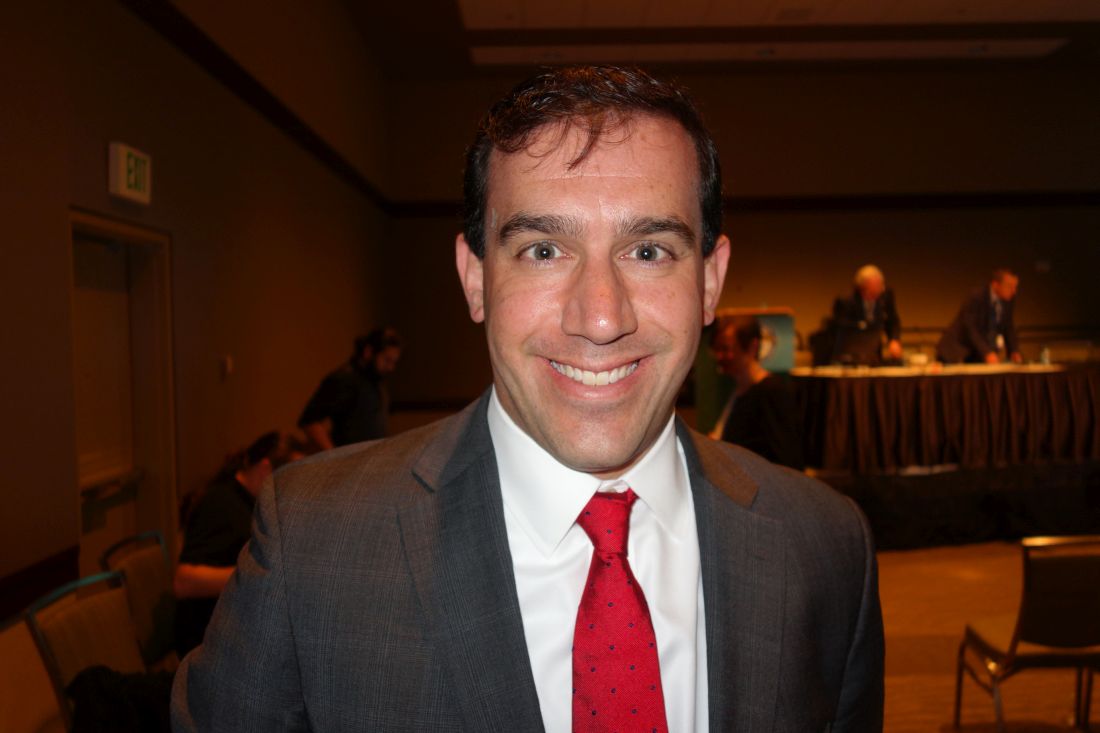
The team reviewed 1,953 index UC admissions with emergent non-elective abdominal surgery in the National Inpatient Sample (NIS) database from 2008-13; 546 patients (28%) had early operations - within 24 hours of admission – and the other 1,407 had operations after that time.
Although it’s impossible to say for sure given the limits of administrative data in the NIS, patients who had surgery soon after admission were probably sicker. Even so, they were less likely to have complications than patients in the delayed surgery group (55% versus 43%), and they had shorter hospital stays, with just 8% in the hospital past 21 days, versus 29% of patients who had delayed operations. The findings were similar for both overall length of stay and post-op length of stay.
Renal complications (8% versus 14%), pulmonary complications (20% versus 25%), and thromboembolic events (4% versus 6%) were also less common in the early surgery group. On multivariable analysis, delayed surgery increased the complication rate by 64%.
With fewer complications and shorter hospital stays, early operations were also less expensive, with a mean total hospitalization cost of $19,985 versus $34,258. The findings were all statistically significant.
Dr. Leeds noted the limits of the study; medical management regimes and the reasons for variations in surgical timing are unknown, among other things. “This is not the final answer on what to do with patients like this, but it opens the door to prospective studies that could control” for such variables, he said.
Early surgery patients were more likely to be male (57% versus 51%) and from households with incomes higher than the national median. There were no difference in age, race, comorbidities, region, or hospital type between the two groups.
Dr. Leeds said he had no disclosures.
AGA Resource
Visit www.gastro.org/ibd for patient education guides that you can share with your patients to help them understand and manage their ulcerative colitis and IBD.
AT ASCRS 2017
SEATTLE – Postponing surgery for acute ulcerative colitis more than a day increases postoperative complications, lengths of stay, and hospital costs, according to a review by Johns Hopkins University, Baltimore, of almost 2,000 patients.
It’s not uncommon to wait 5 or even 10 days to give biologics a chance to work when patients are admitted for acute ulcerative colitis (UC). Based on the review, however, “we believe that the need for prolonged medical therapy and resuscitation in this patient population prior to colectomy may be overstated,” and that “the lasting effects of persistent inflammation cascade are underestimated.”
There has to be “a conversation with the gastroenterologist to strike the right balance between medical and surgical therapy. Early surgical intervention” should be considered, lead author and general surgery resident Ira Leeds, MD, said at the American Society of Colon and Rectal Surgeons annual meeting.
The team reviewed 1,953 index UC admissions with emergent non-elective abdominal surgery in the National Inpatient Sample (NIS) database from 2008-13; 546 patients (28%) had early operations - within 24 hours of admission – and the other 1,407 had operations after that time.
Although it’s impossible to say for sure given the limits of administrative data in the NIS, patients who had surgery soon after admission were probably sicker. Even so, they were less likely to have complications than patients in the delayed surgery group (55% versus 43%), and they had shorter hospital stays, with just 8% in the hospital past 21 days, versus 29% of patients who had delayed operations. The findings were similar for both overall length of stay and post-op length of stay.
Renal complications (8% versus 14%), pulmonary complications (20% versus 25%), and thromboembolic events (4% versus 6%) were also less common in the early surgery group. On multivariable analysis, delayed surgery increased the complication rate by 64%.
With fewer complications and shorter hospital stays, early operations were also less expensive, with a mean total hospitalization cost of $19,985 versus $34,258. The findings were all statistically significant.
Dr. Leeds noted the limits of the study; medical management regimes and the reasons for variations in surgical timing are unknown, among other things. “This is not the final answer on what to do with patients like this, but it opens the door to prospective studies that could control” for such variables, he said.
Early surgery patients were more likely to be male (57% versus 51%) and from households with incomes higher than the national median. There were no difference in age, race, comorbidities, region, or hospital type between the two groups.
Dr. Leeds said he had no disclosures.
AGA Resource
Visit www.gastro.org/ibd for patient education guides that you can share with your patients to help them understand and manage their ulcerative colitis and IBD.
AT ASCRS 2017
SEATTLE – Postponing surgery for acute ulcerative colitis more than a day increases postoperative complications, lengths of stay, and hospital costs, according to a review by Johns Hopkins University, Baltimore, of almost 2,000 patients.
It’s not uncommon to wait 5 or even 10 days to give biologics a chance to work when patients are admitted for acute ulcerative colitis (UC). Based on the review, however, “we believe that the need for prolonged medical therapy and resuscitation in this patient population prior to colectomy may be overstated,” and that “the lasting effects of persistent inflammation cascade are underestimated.”
There has to be “a conversation with the gastroenterologist to strike the right balance between medical and surgical therapy. Early surgical intervention” should be considered, lead author and general surgery resident Ira Leeds, MD, said at the American Society of Colon and Rectal Surgeons annual meeting.
The team reviewed 1,953 index UC admissions with emergent non-elective abdominal surgery in the National Inpatient Sample (NIS) database from 2008-13; 546 patients (28%) had early operations - within 24 hours of admission – and the other 1,407 had operations after that time.
Although it’s impossible to say for sure given the limits of administrative data in the NIS, patients who had surgery soon after admission were probably sicker. Even so, they were less likely to have complications than patients in the delayed surgery group (55% versus 43%), and they had shorter hospital stays, with just 8% in the hospital past 21 days, versus 29% of patients who had delayed operations. The findings were similar for both overall length of stay and post-op length of stay.
Renal complications (8% versus 14%), pulmonary complications (20% versus 25%), and thromboembolic events (4% versus 6%) were also less common in the early surgery group. On multivariable analysis, delayed surgery increased the complication rate by 64%.
With fewer complications and shorter hospital stays, early operations were also less expensive, with a mean total hospitalization cost of $19,985 versus $34,258. The findings were all statistically significant.
Dr. Leeds noted the limits of the study; medical management regimes and the reasons for variations in surgical timing are unknown, among other things. “This is not the final answer on what to do with patients like this, but it opens the door to prospective studies that could control” for such variables, he said.
Early surgery patients were more likely to be male (57% versus 51%) and from households with incomes higher than the national median. There were no difference in age, race, comorbidities, region, or hospital type between the two groups.
Dr. Leeds said he had no disclosures.
AGA Resource
Visit www.gastro.org/ibd for patient education guides that you can share with your patients to help them understand and manage their ulcerative colitis and IBD.
Key clinical point:
Major finding: Patients who had surgery soon after admission were probably sicker. Even so, they were less likely to have complications than patients in the delayed surgery group (55% versus 43%), and they had shorter hospital stays, with just 8% in the hospital past 21 days, versus 29% of patients who had delayed operations.
Data source: Review of almost 2,000 patients in the National Inpatient Sample
Disclosures: The lead investigator had no disclosures.
SEATTLE – Postponing surgery for acute ulcerative colitis more than a day increases postoperative complications, lengths of stay, and hospital costs, according to a review by Johns Hopkins University, Baltimore, of almost 2,000 patients.
It’s not uncommon to wait 5 or even 10 days to give biologics a chance to work when patients are admitted for acute ulcerative colitis (UC). Based on the review, however, “we believe that the need for prolonged medical therapy and resuscitation in this patient population prior to colectomy may be overstated,” and that “the lasting effects of persistent inflammation cascade are underestimated.”
[[{"attributes":{},"fields":{}}]]
There has to be “a conversation with the gastroenterologist to strike the right balance between medical and surgical therapy. Early surgical intervention” should be considered, lead author and general surgery resident Ira Leeds, MD, said at the American Society of Colon and Rectal Surgeons annual meeting.
The team reviewed 1,953 index UC admissions with emergent non-elective abdominal surgery in the National Inpatient Sample (NIS) database from 2008-13; 546 patients (28%) had early operations - within 24 hours of admission – and the other 1,407 had operations after that time.
Although it’s impossible to say for sure given the limits of administrative data in the NIS, patients who had surgery soon after admission were probably sicker. Even so, they were less likely to have complications than patients in the delayed surgery group (55% versus 43%), and they had shorter hospital stays, with just 8% in the hospital past 21 days, versus 29% of patients who had delayed operations. The findings were similar for both overall length of stay and post-op length of stay.
Renal complications (8% versus 14%), pulmonary complications (20% versus 25%), and thromboembolic events (4% versus 6%) were also less common in the early surgery group. On multivariable analysis, delayed surgery increased the complication rate by 64%.
With fewer complications and shorter hospital stays, early operations were also less expensive, with a mean total hospitalization cost of $19,985 versus $34,258. The findings were all statistically significant.
Dr. Leeds noted the limits of the study; medical management regimes and the reasons for variations in surgical timing are unknown, among other things. “This is not the final answer on what to do with patients like this, but it opens the door to prospective studies that could control” for such variables, he said.
Early surgery patients were more likely to be male (57% versus 51%) and from households with incomes higher than the national median. There were no difference in age, race, comorbidities, region, or hospital type between the two groups.
Dr. Leeds said he had no disclosures.
aotto@frontlinemedcom.com
IL-23 antibody risankizumab can effect, maintain remission in Crohn’s
CHICAGO – Subcutaneous risankizumab maintained clinical remission for half a year in 76% of Crohn’s disease patients who responded to it during an induction study.
The interleukin-23 antibody (ABBV-066; AbbVie) also maintained endoscopic remission in 52% of patients who entered the open-label maintenance phase of the 52-week study, Brian Feagan, MD, said at the annual Digestive Disease Week®.

The three-phase study enrolled 121 patients with moderate to severe Crohn’s disease. The first 12 weeks consisted of intravenous induction therapy; patients were randomized to monthly infusions of risankizumab 200 mg or 600 mg or placebo. The endpoint was deep clinical remission. Patients who achieved remission exited the study. Results of this study were published in April (Lancet.2017;389[10080]:1699-09).
Phase II included only the patients who did not achieve deep clinical remission. They all received open label 600 mg risankizumab infusions every 4 weeks from weeks 14-26. The endpoints were clinical and endoscopic remission.
Phase III, on which Dr. Feagan reported, included the patients who achieved remission in phase II. These patients continued with subcutaneous risankizumab 180 mg every 8 weeks, from week 26-52.
Patients were an average of about 38 years old, with mean disease duration of 16 years. Their median Crohn’s Disease Activity Index (CDAI) score was around 300; their mean Crohn’s Disease Endoscopic Index score was 12. About a quarter had already taken at least one tumor necrosis factor–alpha inhibitor; half of those had taken at least two of those drugs.
At the end of the first induction period, 25 taking the study drug and 6 taking placebo achieved clinical remission (31% vs. 15%). Those taking 600 mg did better than those taking 200 mg (37% vs. 9%).
Patients who didn’t achieve deep clinical remission (a CDAI of less than 150 plus endoscopic remission) entered into the open-label reinduction phase; all received monthly 600-mg infusions from weeks 14 to 26. Of these, 62 achieved clinical remission and entered the open-label maintenance phase.
By week 52, the majority of patients were still in clinical remission, although this varied by the original treatment group: 76% of those first randomized to 600 mg, 59% of those randomized to 200 mg, and 79% of those randomized to placebo. Endoscopic remission was maintained in 52% of the 600-mg group, 23% of the 200-mg group, and 32% of the placebo group.
Deep remission occurred in a subset of patients: 43% of the 600-mg group, 13.6% of the 200-mg group, and 31.6% of the placebo group.
Dr. Feagan also said C-reactive protein levels remained suppressed in the maintenance period. Patients who entered that period had experienced a mean drop of about 9 mg/L in CRP. By week 52, this had risen slightly, but the median decrease was still around 8 mg/L from baseline measures.
There were 11 drug-related adverse events; these were severe in five patients, causing two to withdraw. There were 22 infections during the study, one of which was serious, but no cases of tuberculosis, cancer, or fungal or opportunistic infections.
“We did not see any new or unexpected safety signals,” Dr. Feagan said. “The drug was well tolerated and appears safe.”
This study showed a superior response for the 600-mg induction dose, but Dr. Feagan said the company may explore higher doses before making a final determination. Last November, the Food and Drug Administration granted Orphan Drug Designation to risankizumab for the investigational treatment of Crohn’s disease in pediatric patients. The company is also investigating it in psoriasis; it recently outperformed ustekinumab in a small phase II study of patients with moderate to severe psoriasis.
The study was funded by Boehringer Ingelheim. Dr. Feagan reported financial relationships with AbbVie and Boehringer Ingelheim.
msullivan@frontlinemedcom.com
On Twitter @alz_gal
CHICAGO – Subcutaneous risankizumab maintained clinical remission for half a year in 76% of Crohn’s disease patients who responded to it during an induction study.
The interleukin-23 antibody (ABBV-066; AbbVie) also maintained endoscopic remission in 52% of patients who entered the open-label maintenance phase of the 52-week study, Brian Feagan, MD, said at the annual Digestive Disease Week®.
The three-phase study enrolled 121 patients with moderate to severe Crohn’s disease. The first 12 weeks consisted of intravenous induction therapy; patients were randomized to monthly infusions of risankizumab 200 mg or 600 mg or placebo. The endpoint was deep clinical remission. Patients who achieved remission exited the study. Results of this study were published in April (Lancet.2017;389[10080]:1699-09).
Phase II included only the patients who did not achieve deep clinical remission. They all received open label 600 mg risankizumab infusions every 4 weeks from weeks 14-26. The endpoints were clinical and endoscopic remission.
Phase III, on which Dr. Feagan reported, included the patients who achieved remission in phase II. These patients continued with subcutaneous risankizumab 180 mg every 8 weeks, from week 26-52.
Patients were an average of about 38 years old, with mean disease duration of 16 years. Their median Crohn’s Disease Activity Index (CDAI) score was around 300; their mean Crohn’s Disease Endoscopic Index score was 12. About a quarter had already taken at least one tumor necrosis factor–alpha inhibitor; half of those had taken at least two of those drugs.
At the end of the first induction period, 25 taking the study drug and 6 taking placebo achieved clinical remission (31% vs. 15%). Those taking 600 mg did better than those taking 200 mg (37% vs. 9%).
Patients who didn’t achieve deep clinical remission (a CDAI of less than 150 plus endoscopic remission) entered into the open-label reinduction phase; all received monthly 600-mg infusions from weeks 14 to 26. Of these, 62 achieved clinical remission and entered the open-label maintenance phase.
By week 52, the majority of patients were still in clinical remission, although this varied by the original treatment group: 76% of those first randomized to 600 mg, 59% of those randomized to 200 mg, and 79% of those randomized to placebo. Endoscopic remission was maintained in 52% of the 600-mg group, 23% of the 200-mg group, and 32% of the placebo group.
Deep remission occurred in a subset of patients: 43% of the 600-mg group, 13.6% of the 200-mg group, and 31.6% of the placebo group.
Dr. Feagan also said C-reactive protein levels remained suppressed in the maintenance period. Patients who entered that period had experienced a mean drop of about 9 mg/L in CRP. By week 52, this had risen slightly, but the median decrease was still around 8 mg/L from baseline measures.
There were 11 drug-related adverse events; these were severe in five patients, causing two to withdraw. There were 22 infections during the study, one of which was serious, but no cases of tuberculosis, cancer, or fungal or opportunistic infections.
“We did not see any new or unexpected safety signals,” Dr. Feagan said. “The drug was well tolerated and appears safe.”
This study showed a superior response for the 600-mg induction dose, but Dr. Feagan said the company may explore higher doses before making a final determination. Last November, the Food and Drug Administration granted Orphan Drug Designation to risankizumab for the investigational treatment of Crohn’s disease in pediatric patients. The company is also investigating it in psoriasis; it recently outperformed ustekinumab in a small phase II study of patients with moderate to severe psoriasis.
The study was funded by Boehringer Ingelheim. Dr. Feagan reported financial relationships with AbbVie and Boehringer Ingelheim.
msullivan@frontlinemedcom.com
On Twitter @alz_gal
CHICAGO – Subcutaneous risankizumab maintained clinical remission for half a year in 76% of Crohn’s disease patients who responded to it during an induction study.
The interleukin-23 antibody (ABBV-066; AbbVie) also maintained endoscopic remission in 52% of patients who entered the open-label maintenance phase of the 52-week study, Brian Feagan, MD, said at the annual Digestive Disease Week®.
The three-phase study enrolled 121 patients with moderate to severe Crohn’s disease. The first 12 weeks consisted of intravenous induction therapy; patients were randomized to monthly infusions of risankizumab 200 mg or 600 mg or placebo. The endpoint was deep clinical remission. Patients who achieved remission exited the study. Results of this study were published in April (Lancet.2017;389[10080]:1699-09).
Phase II included only the patients who did not achieve deep clinical remission. They all received open label 600 mg risankizumab infusions every 4 weeks from weeks 14-26. The endpoints were clinical and endoscopic remission.
Phase III, on which Dr. Feagan reported, included the patients who achieved remission in phase II. These patients continued with subcutaneous risankizumab 180 mg every 8 weeks, from week 26-52.
Patients were an average of about 38 years old, with mean disease duration of 16 years. Their median Crohn’s Disease Activity Index (CDAI) score was around 300; their mean Crohn’s Disease Endoscopic Index score was 12. About a quarter had already taken at least one tumor necrosis factor–alpha inhibitor; half of those had taken at least two of those drugs.
At the end of the first induction period, 25 taking the study drug and 6 taking placebo achieved clinical remission (31% vs. 15%). Those taking 600 mg did better than those taking 200 mg (37% vs. 9%).
Patients who didn’t achieve deep clinical remission (a CDAI of less than 150 plus endoscopic remission) entered into the open-label reinduction phase; all received monthly 600-mg infusions from weeks 14 to 26. Of these, 62 achieved clinical remission and entered the open-label maintenance phase.
By week 52, the majority of patients were still in clinical remission, although this varied by the original treatment group: 76% of those first randomized to 600 mg, 59% of those randomized to 200 mg, and 79% of those randomized to placebo. Endoscopic remission was maintained in 52% of the 600-mg group, 23% of the 200-mg group, and 32% of the placebo group.
Deep remission occurred in a subset of patients: 43% of the 600-mg group, 13.6% of the 200-mg group, and 31.6% of the placebo group.
Dr. Feagan also said C-reactive protein levels remained suppressed in the maintenance period. Patients who entered that period had experienced a mean drop of about 9 mg/L in CRP. By week 52, this had risen slightly, but the median decrease was still around 8 mg/L from baseline measures.
There were 11 drug-related adverse events; these were severe in five patients, causing two to withdraw. There were 22 infections during the study, one of which was serious, but no cases of tuberculosis, cancer, or fungal or opportunistic infections.
“We did not see any new or unexpected safety signals,” Dr. Feagan said. “The drug was well tolerated and appears safe.”
This study showed a superior response for the 600-mg induction dose, but Dr. Feagan said the company may explore higher doses before making a final determination. Last November, the Food and Drug Administration granted Orphan Drug Designation to risankizumab for the investigational treatment of Crohn’s disease in pediatric patients. The company is also investigating it in psoriasis; it recently outperformed ustekinumab in a small phase II study of patients with moderate to severe psoriasis.
The study was funded by Boehringer Ingelheim. Dr. Feagan reported financial relationships with AbbVie and Boehringer Ingelheim.
msullivan@frontlinemedcom.com
On Twitter @alz_gal
AT DDW
Key clinical point:
Major finding: By week 52, clinical remission was maintained in 76% of those first randomized to 600 mg, 59% of those randomized to 200 mg, and 79% of those randomized to placebo.
Disclosures: Dr. Feagan reported financial relationships with Boehringer Ingelheim and AbbVie.
When fecal transplants for C. diff. fail, try, try again
CHICAGO – The best remedy for a failed fecal microbiota transplant for recurrent Clostridium difficile infection is most likely a second – or even a third or fourth attempt, according to Monika Fischer, MD.
Fecal microbiota transplants (FMTs) cure the large majority of those with recurrent C. difficile. But for those who don’t respond or who have an early recurrence, repeating the procedure will almost always effect cure, she said at the annual Digestive Disease Week.
“My recommendation would be to repeat FMT once you make sure the diagnosis actually is recurrent C. difficile,” said Dr. Fischer of Indiana University, Indianapolis. “There are sufficient data showing that the success rate after two FMTs significantly increases independent of the delivery route. But the effectiveness rate is highest when FMT is delivered via colonoscopy, so I recommend the second FMT be delivered that way.”
Recurrent failures can also be a sign that something else is amiss clinically, she said. So before proceeding with multiple procedures, some detective work may be in order. It’s best to start with confirmatory testing for the organism, she said.
“We have seen that about 25% of patients referred for FMT don’t actually have C. difficile at all,” Dr. Fischer said. “Be thinking about an alternative diagnosis when the stool tests negative, but the patient is still symptomatic, or if, before the FMT, there was less than a 50% improvement with vancomycin or fidaxomicin therapy.”
“When evaluating a patient for FMT failure, it should be confirmed by stool testing, preferably by toxin testing. Recent studies suggest that PCR [polymerase chain reaction]–positive but toxin-negative patients may be colonized with C. difficile but that an alternative pathology is driving the symptoms. Toxin-negative patients’ outcome is similar with or without treatment, and it is very rare that toxin-negative patients develop CDI [C. difficile infection]–related complications.”
For these patients, the problem could be any of the conditions that cause chronic diarrhea: inflammatory bowel disease, irritable bowel syndrome, celiac disease, microscopic colitis, bile salt malabsorption, chronic pancreatitis, or some other kind of infection. If C. difficile is the confirmed etiology, repeated FMTs are the way to go, Dr. Fischer said.
However, it may be worth mixing up the delivery method. The ever-expanding data on FMT continue to show that colonoscopy delivery has the lowest failure rate – about 10%. Enema is the least successful, with a 40% failure rate. In between those are nasoduodenal tube delivery, which is associated with a 20% failure rate, and oral capsules, with a failure rate varying from 12% to 30%. Fresh stool is also more effective than frozen, which, in turn, is more effective than the lyophilized preparation, Dr. Fischer said.
“Options are to repeat FMT via colonoscopy, but for patients who have had several failures, consider using the upper and lower route at the same time, and give fresh stool, especially if the first transplants used frozen.”
Although the efficacy of FMT doesn’t appear to depend on donor characteristics, patient characteristics do seem to play a role. Dr. Fischer and her colleagues have created an assessment tool to predict who may be at risk for failure. The model was developed in a 300-patient FMT cohort at two centers and validated in a third academic center FMT population. Of 24 clinical variables, three were incorporated into the failure risk model: severe disease (odds ratio, 6), inpatient status (OR, 3.8), and the number of prior C. difficile–related hospitalizations (OR, 1.4 for each one). For severe disease, patients got 5 points on the scale; for inpatient status, 4 points; and for each prior hospitalization, 1 point.
“Patients in the low-risk category [0] had up to 5% chance of failing. Patients with intermediate risk [1-2] had a 15% chance of failing, and patients in the high-risk category [3 or more points] had higher than 35% chance of not responding to single FMT,” Dr. Fischer said.
She also examined this tool in an extended cohort of nearly 500 patients at four additional sites; about 5% had failed more than two FMTs. “We identified two additional risk factors for failing multiple transplants,” Dr. Fischer said. “These were immunocompromised state, which increased the risk by 4 times, and male gender, which increased the risk by 2.5 times.”
She offered some options for the rare patient who has failed repeat FMTs and doesn’t want to try again. “There are some alternative or adjunctive therapies to repeat FMTs that may be considered, in lieu of repeating FMT for the third or fourth time or even following the first FMT failure, if dictated by patient preference. We sometimes offer these for elderly or frail patients or those with a limited life expectancy. These therapy options are from small, nonrandomized trials in multiply recurrent C. difficile infections but have not been vetted in the FMT nonresponder population.”
These include a vancomycin taper, or a vancomycin taper followed by fidaxomicin. Another option, albeit with limited applicability, is suppressive low-dose vancomycin 125 mg given every day, every other day, or every third day, indefinitely. “This can be especially good for elderly, frail patients with limited life expectancy, needing ongoing antibiotic therapy for urinary tract infections,” she said.
Finally, an 8-week vancomycin taper with daily kefir ingestion has been helpful for some patients. Although probiotics have never been proven helpful in C. difficile infections or FMT success, kefir is a different sort of supplement, she said.
“Kefir is different from yogurt. It contains bacteriocins like nisin, a protein with antibacterial properties produced by Lactococcus lactis.”
msullivan@frontlinemedcom.com
On Twitter @alz_gal
CHICAGO – The best remedy for a failed fecal microbiota transplant for recurrent Clostridium difficile infection is most likely a second – or even a third or fourth attempt, according to Monika Fischer, MD.
Fecal microbiota transplants (FMTs) cure the large majority of those with recurrent C. difficile. But for those who don’t respond or who have an early recurrence, repeating the procedure will almost always effect cure, she said at the annual Digestive Disease Week.
“My recommendation would be to repeat FMT once you make sure the diagnosis actually is recurrent C. difficile,” said Dr. Fischer of Indiana University, Indianapolis. “There are sufficient data showing that the success rate after two FMTs significantly increases independent of the delivery route. But the effectiveness rate is highest when FMT is delivered via colonoscopy, so I recommend the second FMT be delivered that way.”
Recurrent failures can also be a sign that something else is amiss clinically, she said. So before proceeding with multiple procedures, some detective work may be in order. It’s best to start with confirmatory testing for the organism, she said.
“We have seen that about 25% of patients referred for FMT don’t actually have C. difficile at all,” Dr. Fischer said. “Be thinking about an alternative diagnosis when the stool tests negative, but the patient is still symptomatic, or if, before the FMT, there was less than a 50% improvement with vancomycin or fidaxomicin therapy.”
“When evaluating a patient for FMT failure, it should be confirmed by stool testing, preferably by toxin testing. Recent studies suggest that PCR [polymerase chain reaction]–positive but toxin-negative patients may be colonized with C. difficile but that an alternative pathology is driving the symptoms. Toxin-negative patients’ outcome is similar with or without treatment, and it is very rare that toxin-negative patients develop CDI [C. difficile infection]–related complications.”
For these patients, the problem could be any of the conditions that cause chronic diarrhea: inflammatory bowel disease, irritable bowel syndrome, celiac disease, microscopic colitis, bile salt malabsorption, chronic pancreatitis, or some other kind of infection. If C. difficile is the confirmed etiology, repeated FMTs are the way to go, Dr. Fischer said.
However, it may be worth mixing up the delivery method. The ever-expanding data on FMT continue to show that colonoscopy delivery has the lowest failure rate – about 10%. Enema is the least successful, with a 40% failure rate. In between those are nasoduodenal tube delivery, which is associated with a 20% failure rate, and oral capsules, with a failure rate varying from 12% to 30%. Fresh stool is also more effective than frozen, which, in turn, is more effective than the lyophilized preparation, Dr. Fischer said.
“Options are to repeat FMT via colonoscopy, but for patients who have had several failures, consider using the upper and lower route at the same time, and give fresh stool, especially if the first transplants used frozen.”
Although the efficacy of FMT doesn’t appear to depend on donor characteristics, patient characteristics do seem to play a role. Dr. Fischer and her colleagues have created an assessment tool to predict who may be at risk for failure. The model was developed in a 300-patient FMT cohort at two centers and validated in a third academic center FMT population. Of 24 clinical variables, three were incorporated into the failure risk model: severe disease (odds ratio, 6), inpatient status (OR, 3.8), and the number of prior C. difficile–related hospitalizations (OR, 1.4 for each one). For severe disease, patients got 5 points on the scale; for inpatient status, 4 points; and for each prior hospitalization, 1 point.
“Patients in the low-risk category [0] had up to 5% chance of failing. Patients with intermediate risk [1-2] had a 15% chance of failing, and patients in the high-risk category [3 or more points] had higher than 35% chance of not responding to single FMT,” Dr. Fischer said.
She also examined this tool in an extended cohort of nearly 500 patients at four additional sites; about 5% had failed more than two FMTs. “We identified two additional risk factors for failing multiple transplants,” Dr. Fischer said. “These were immunocompromised state, which increased the risk by 4 times, and male gender, which increased the risk by 2.5 times.”
She offered some options for the rare patient who has failed repeat FMTs and doesn’t want to try again. “There are some alternative or adjunctive therapies to repeat FMTs that may be considered, in lieu of repeating FMT for the third or fourth time or even following the first FMT failure, if dictated by patient preference. We sometimes offer these for elderly or frail patients or those with a limited life expectancy. These therapy options are from small, nonrandomized trials in multiply recurrent C. difficile infections but have not been vetted in the FMT nonresponder population.”
These include a vancomycin taper, or a vancomycin taper followed by fidaxomicin. Another option, albeit with limited applicability, is suppressive low-dose vancomycin 125 mg given every day, every other day, or every third day, indefinitely. “This can be especially good for elderly, frail patients with limited life expectancy, needing ongoing antibiotic therapy for urinary tract infections,” she said.
Finally, an 8-week vancomycin taper with daily kefir ingestion has been helpful for some patients. Although probiotics have never been proven helpful in C. difficile infections or FMT success, kefir is a different sort of supplement, she said.
“Kefir is different from yogurt. It contains bacteriocins like nisin, a protein with antibacterial properties produced by Lactococcus lactis.”
msullivan@frontlinemedcom.com
On Twitter @alz_gal
CHICAGO – The best remedy for a failed fecal microbiota transplant for recurrent Clostridium difficile infection is most likely a second – or even a third or fourth attempt, according to Monika Fischer, MD.
Fecal microbiota transplants (FMTs) cure the large majority of those with recurrent C. difficile. But for those who don’t respond or who have an early recurrence, repeating the procedure will almost always effect cure, she said at the annual Digestive Disease Week.
“My recommendation would be to repeat FMT once you make sure the diagnosis actually is recurrent C. difficile,” said Dr. Fischer of Indiana University, Indianapolis. “There are sufficient data showing that the success rate after two FMTs significantly increases independent of the delivery route. But the effectiveness rate is highest when FMT is delivered via colonoscopy, so I recommend the second FMT be delivered that way.”
Recurrent failures can also be a sign that something else is amiss clinically, she said. So before proceeding with multiple procedures, some detective work may be in order. It’s best to start with confirmatory testing for the organism, she said.
“We have seen that about 25% of patients referred for FMT don’t actually have C. difficile at all,” Dr. Fischer said. “Be thinking about an alternative diagnosis when the stool tests negative, but the patient is still symptomatic, or if, before the FMT, there was less than a 50% improvement with vancomycin or fidaxomicin therapy.”
“When evaluating a patient for FMT failure, it should be confirmed by stool testing, preferably by toxin testing. Recent studies suggest that PCR [polymerase chain reaction]–positive but toxin-negative patients may be colonized with C. difficile but that an alternative pathology is driving the symptoms. Toxin-negative patients’ outcome is similar with or without treatment, and it is very rare that toxin-negative patients develop CDI [C. difficile infection]–related complications.”
For these patients, the problem could be any of the conditions that cause chronic diarrhea: inflammatory bowel disease, irritable bowel syndrome, celiac disease, microscopic colitis, bile salt malabsorption, chronic pancreatitis, or some other kind of infection. If C. difficile is the confirmed etiology, repeated FMTs are the way to go, Dr. Fischer said.
However, it may be worth mixing up the delivery method. The ever-expanding data on FMT continue to show that colonoscopy delivery has the lowest failure rate – about 10%. Enema is the least successful, with a 40% failure rate. In between those are nasoduodenal tube delivery, which is associated with a 20% failure rate, and oral capsules, with a failure rate varying from 12% to 30%. Fresh stool is also more effective than frozen, which, in turn, is more effective than the lyophilized preparation, Dr. Fischer said.
“Options are to repeat FMT via colonoscopy, but for patients who have had several failures, consider using the upper and lower route at the same time, and give fresh stool, especially if the first transplants used frozen.”
Although the efficacy of FMT doesn’t appear to depend on donor characteristics, patient characteristics do seem to play a role. Dr. Fischer and her colleagues have created an assessment tool to predict who may be at risk for failure. The model was developed in a 300-patient FMT cohort at two centers and validated in a third academic center FMT population. Of 24 clinical variables, three were incorporated into the failure risk model: severe disease (odds ratio, 6), inpatient status (OR, 3.8), and the number of prior C. difficile–related hospitalizations (OR, 1.4 for each one). For severe disease, patients got 5 points on the scale; for inpatient status, 4 points; and for each prior hospitalization, 1 point.
“Patients in the low-risk category [0] had up to 5% chance of failing. Patients with intermediate risk [1-2] had a 15% chance of failing, and patients in the high-risk category [3 or more points] had higher than 35% chance of not responding to single FMT,” Dr. Fischer said.
She also examined this tool in an extended cohort of nearly 500 patients at four additional sites; about 5% had failed more than two FMTs. “We identified two additional risk factors for failing multiple transplants,” Dr. Fischer said. “These were immunocompromised state, which increased the risk by 4 times, and male gender, which increased the risk by 2.5 times.”
She offered some options for the rare patient who has failed repeat FMTs and doesn’t want to try again. “There are some alternative or adjunctive therapies to repeat FMTs that may be considered, in lieu of repeating FMT for the third or fourth time or even following the first FMT failure, if dictated by patient preference. We sometimes offer these for elderly or frail patients or those with a limited life expectancy. These therapy options are from small, nonrandomized trials in multiply recurrent C. difficile infections but have not been vetted in the FMT nonresponder population.”
These include a vancomycin taper, or a vancomycin taper followed by fidaxomicin. Another option, albeit with limited applicability, is suppressive low-dose vancomycin 125 mg given every day, every other day, or every third day, indefinitely. “This can be especially good for elderly, frail patients with limited life expectancy, needing ongoing antibiotic therapy for urinary tract infections,” she said.
Finally, an 8-week vancomycin taper with daily kefir ingestion has been helpful for some patients. Although probiotics have never been proven helpful in C. difficile infections or FMT success, kefir is a different sort of supplement, she said.
“Kefir is different from yogurt. It contains bacteriocins like nisin, a protein with antibacterial properties produced by Lactococcus lactis.”
msullivan@frontlinemedcom.com
On Twitter @alz_gal
AT DDW 2017
VIDEO: Start probiotics within 2 days of antibiotics to prevent CDI
Starting probiotics within 2 days of the first antibiotic dose could cut the risk of Clostridium difficile infection among hospitalized adults by more than 50%, according to the results of a systemic review and metaregression analysis.
The protective effect waned when patients delayed starting probiotics, reported Nicole T. Shen, MD, of Cornell University, New York, and her associates. The study appears in Gastroenterology (doi: 10.1053/j.gastro.2017.02.003). “Given the magnitude of benefit and the low cost of probiotics, the decision is likely to be highly cost effective,” they added.
Systematic reviews support the use of probiotics for preventing Clostridium difficile infection (CDI), but guidelines do not reflect these findings. To help guide clinical practice, the reviewers searched MEDLINE, EMBASE, the International Journal of Probiotics and Prebiotics, and the Cochrane Library databases for randomized controlled trials of probiotics and CDI among hospitalized adults taking antibiotics. This search yielded 19 published studies of 6,261 patients. Two reviewers separately extracted data from these studies and examined quality of evidence and risk of bias.
SOURCE: AMERICAN GASTROENTEROLOGICAL ASSOCIATION
A total of 54 patients in the probiotic cohort (1.6%) developed CDI, compared with 115 controls (3.9%), a statistically significant difference (P less than .001). In regression analysis, the probiotic group was about 58% less likely to develop CDI than controls (hazard ratio, 0.42; 95% confidence interval, 0.30-0.57; P less than .001). Importantly, probiotics were significantly effective against CDI only when started within 2 days of antibiotic initiation (relative risk, 0.32; 95% CI, 0.22-0.48), not when started within 3-7 days (RR, 0.70, 95% CI, 0.40-1.23). The difference between these estimated risk ratios was statistically significant (P = .02).
In 18 of the 19 studies, patients received probiotics within 3 days of starting antibiotics, while patients in the remaining study could start probiotics any time within 7 days of antibiotic initiation. “Not only was [this] study unusual with respect to probiotic timing, it was also much larger than all other studies, and its results were statistically insignificant,” the reviewers wrote. Metaregression analyses of all studies and of all but the outlier study linked delaying probiotics with a decrease in efficacy against CDI, with P values of .04 and .09, respectively. Those findings “suggest that the decrement in efficacy with delay in starting probiotics is not sensitive to inclusion of a single large ‘outlier’ study,” the reviewers emphasized. “In fact, inclusion only dampens the magnitude of the decrement in efficacy, although it is still clinically important and statistically significant.”
The trials included 12 probiotic formulas containing Lactobacillus, Saccharomyces, Bifidobacterium, and Streptococcus, either alone or in combination. Probiotics were not associated with adverse effects in the trials. Quality of evidence was generally high, but seven trials had missing data on the primary outcome. Furthermore, two studies lacked a placebo group, and lead authors of two studies disclosed ties to the probiotic manufacturers that provided funding.
One reviewer received fellowship support from the Louis and Rachel Rudin Foundation. None had conflicts of interest.
Starting probiotics within 2 days of the first antibiotic dose could cut the risk of Clostridium difficile infection among hospitalized adults by more than 50%, according to the results of a systemic review and metaregression analysis.
The protective effect waned when patients delayed starting probiotics, reported Nicole T. Shen, MD, of Cornell University, New York, and her associates. The study appears in Gastroenterology (doi: 10.1053/j.gastro.2017.02.003). “Given the magnitude of benefit and the low cost of probiotics, the decision is likely to be highly cost effective,” they added.
Systematic reviews support the use of probiotics for preventing Clostridium difficile infection (CDI), but guidelines do not reflect these findings. To help guide clinical practice, the reviewers searched MEDLINE, EMBASE, the International Journal of Probiotics and Prebiotics, and the Cochrane Library databases for randomized controlled trials of probiotics and CDI among hospitalized adults taking antibiotics. This search yielded 19 published studies of 6,261 patients. Two reviewers separately extracted data from these studies and examined quality of evidence and risk of bias.
SOURCE: AMERICAN GASTROENTEROLOGICAL ASSOCIATION
A total of 54 patients in the probiotic cohort (1.6%) developed CDI, compared with 115 controls (3.9%), a statistically significant difference (P less than .001). In regression analysis, the probiotic group was about 58% less likely to develop CDI than controls (hazard ratio, 0.42; 95% confidence interval, 0.30-0.57; P less than .001). Importantly, probiotics were significantly effective against CDI only when started within 2 days of antibiotic initiation (relative risk, 0.32; 95% CI, 0.22-0.48), not when started within 3-7 days (RR, 0.70, 95% CI, 0.40-1.23). The difference between these estimated risk ratios was statistically significant (P = .02).
In 18 of the 19 studies, patients received probiotics within 3 days of starting antibiotics, while patients in the remaining study could start probiotics any time within 7 days of antibiotic initiation. “Not only was [this] study unusual with respect to probiotic timing, it was also much larger than all other studies, and its results were statistically insignificant,” the reviewers wrote. Metaregression analyses of all studies and of all but the outlier study linked delaying probiotics with a decrease in efficacy against CDI, with P values of .04 and .09, respectively. Those findings “suggest that the decrement in efficacy with delay in starting probiotics is not sensitive to inclusion of a single large ‘outlier’ study,” the reviewers emphasized. “In fact, inclusion only dampens the magnitude of the decrement in efficacy, although it is still clinically important and statistically significant.”
The trials included 12 probiotic formulas containing Lactobacillus, Saccharomyces, Bifidobacterium, and Streptococcus, either alone or in combination. Probiotics were not associated with adverse effects in the trials. Quality of evidence was generally high, but seven trials had missing data on the primary outcome. Furthermore, two studies lacked a placebo group, and lead authors of two studies disclosed ties to the probiotic manufacturers that provided funding.
One reviewer received fellowship support from the Louis and Rachel Rudin Foundation. None had conflicts of interest.
Starting probiotics within 2 days of the first antibiotic dose could cut the risk of Clostridium difficile infection among hospitalized adults by more than 50%, according to the results of a systemic review and metaregression analysis.
The protective effect waned when patients delayed starting probiotics, reported Nicole T. Shen, MD, of Cornell University, New York, and her associates. The study appears in Gastroenterology (doi: 10.1053/j.gastro.2017.02.003). “Given the magnitude of benefit and the low cost of probiotics, the decision is likely to be highly cost effective,” they added.
Systematic reviews support the use of probiotics for preventing Clostridium difficile infection (CDI), but guidelines do not reflect these findings. To help guide clinical practice, the reviewers searched MEDLINE, EMBASE, the International Journal of Probiotics and Prebiotics, and the Cochrane Library databases for randomized controlled trials of probiotics and CDI among hospitalized adults taking antibiotics. This search yielded 19 published studies of 6,261 patients. Two reviewers separately extracted data from these studies and examined quality of evidence and risk of bias.
SOURCE: AMERICAN GASTROENTEROLOGICAL ASSOCIATION
A total of 54 patients in the probiotic cohort (1.6%) developed CDI, compared with 115 controls (3.9%), a statistically significant difference (P less than .001). In regression analysis, the probiotic group was about 58% less likely to develop CDI than controls (hazard ratio, 0.42; 95% confidence interval, 0.30-0.57; P less than .001). Importantly, probiotics were significantly effective against CDI only when started within 2 days of antibiotic initiation (relative risk, 0.32; 95% CI, 0.22-0.48), not when started within 3-7 days (RR, 0.70, 95% CI, 0.40-1.23). The difference between these estimated risk ratios was statistically significant (P = .02).
In 18 of the 19 studies, patients received probiotics within 3 days of starting antibiotics, while patients in the remaining study could start probiotics any time within 7 days of antibiotic initiation. “Not only was [this] study unusual with respect to probiotic timing, it was also much larger than all other studies, and its results were statistically insignificant,” the reviewers wrote. Metaregression analyses of all studies and of all but the outlier study linked delaying probiotics with a decrease in efficacy against CDI, with P values of .04 and .09, respectively. Those findings “suggest that the decrement in efficacy with delay in starting probiotics is not sensitive to inclusion of a single large ‘outlier’ study,” the reviewers emphasized. “In fact, inclusion only dampens the magnitude of the decrement in efficacy, although it is still clinically important and statistically significant.”
The trials included 12 probiotic formulas containing Lactobacillus, Saccharomyces, Bifidobacterium, and Streptococcus, either alone or in combination. Probiotics were not associated with adverse effects in the trials. Quality of evidence was generally high, but seven trials had missing data on the primary outcome. Furthermore, two studies lacked a placebo group, and lead authors of two studies disclosed ties to the probiotic manufacturers that provided funding.
One reviewer received fellowship support from the Louis and Rachel Rudin Foundation. None had conflicts of interest.
FROM GASTROENTEROLOGY
Key clinical point: Starting probiotics within 2 days of antibiotics was associated with a significantly reduced risk of Clostridium difficile infection among hospitalized patients.
Major finding: Probiotics were significantly effective against CDI only when started within 2 days of antibiotic initiation (relative risk, 0.32; 95% CI, 0.22-0.48), not when started within 3-7 days (RR, 0.70; 95% CI, 0.40-1.23).
Data source: A systematic review and metaregression analysis of 19 studies of 6,261 patients.
Disclosures: One reviewer received fellowship support from the Louis and Rachel Rudin Foundation. None had conflicts of interest.

Flashback to 2012
It’s a whole new biosimilar world. In the April 2012 issue of GI & Hepatology News (GIHN) there was a small article on the issued Food and Drug Administration guidance on how to develop biosimilars. A biosimilar molecule must be structurally similar to the reference or originator product with the expectation that the safety and efficacy will be the same. The European Medicines Agency (EMA) established a legal framework for approving biologics in the European Union in 2003 and guidelines for approval in 2005 to 2006 with the first biosimilar approved in 2006 (somatropin [Omnitrope]).
The first monoclonal antibody biosimilar approved by the EMA was CT-P13 (infliximab-dyyb) in June 2013. There are now over 23 biosimilars approved for use in Europe. In 2012 there were no biosimilars on the market in the United States. This past year (2016) has been the year of the biosimilar with two of the four approved compounds used in inflammatory bowel disease – Inflectra (infliximab-dyyb, Hospira) April 2016 and Amjevita (adalimumab-atto, Amgen) September 2016 appearing.

The launch of these biosimilars raises a whole new series of questions. First and foremost for gastroenterologists – are the biosimilars truly similar in patients with inflammatory bowel disease? Adalimumab-atto was approved on the basis of two phase III studies in psoriasis and in rheumatoid arthritis and infliximab-dyyb was approved on the basis of studies in rheumatoid arthritis and ankylosing spondylitis. Other questions arise: 1. Can a patient who is doing well on the originator be safely switched to the biosimilar? 2. Can we use the same assays for drug monitoring? 3. Will use of biosimilars lead to a lower cost structure for patients and hospitals? 4. What are the regulations and guidelines for interchangeability? (GIHN March 2017) In the United States, development of biosimilars was slow to start but we expect to see an explosion in development of these agents in gastroenterology as the patents expire on the biologics currently in use.
Kim L. Isaacs, MD, PhD, is professor of medicine in the division of gastroenterology and hepatology at the University of North Carolina at Chapel Hill. She is codirector of the UNC Center for Inflammatory Bowel Disease. She is an Associate Editor for GI and Hepatology News.
It’s a whole new biosimilar world. In the April 2012 issue of GI & Hepatology News (GIHN) there was a small article on the issued Food and Drug Administration guidance on how to develop biosimilars. A biosimilar molecule must be structurally similar to the reference or originator product with the expectation that the safety and efficacy will be the same. The European Medicines Agency (EMA) established a legal framework for approving biologics in the European Union in 2003 and guidelines for approval in 2005 to 2006 with the first biosimilar approved in 2006 (somatropin [Omnitrope]).
The first monoclonal antibody biosimilar approved by the EMA was CT-P13 (infliximab-dyyb) in June 2013. There are now over 23 biosimilars approved for use in Europe. In 2012 there were no biosimilars on the market in the United States. This past year (2016) has been the year of the biosimilar with two of the four approved compounds used in inflammatory bowel disease – Inflectra (infliximab-dyyb, Hospira) April 2016 and Amjevita (adalimumab-atto, Amgen) September 2016 appearing.
The launch of these biosimilars raises a whole new series of questions. First and foremost for gastroenterologists – are the biosimilars truly similar in patients with inflammatory bowel disease? Adalimumab-atto was approved on the basis of two phase III studies in psoriasis and in rheumatoid arthritis and infliximab-dyyb was approved on the basis of studies in rheumatoid arthritis and ankylosing spondylitis. Other questions arise: 1. Can a patient who is doing well on the originator be safely switched to the biosimilar? 2. Can we use the same assays for drug monitoring? 3. Will use of biosimilars lead to a lower cost structure for patients and hospitals? 4. What are the regulations and guidelines for interchangeability? (GIHN March 2017) In the United States, development of biosimilars was slow to start but we expect to see an explosion in development of these agents in gastroenterology as the patents expire on the biologics currently in use.
Kim L. Isaacs, MD, PhD, is professor of medicine in the division of gastroenterology and hepatology at the University of North Carolina at Chapel Hill. She is codirector of the UNC Center for Inflammatory Bowel Disease. She is an Associate Editor for GI and Hepatology News.
It’s a whole new biosimilar world. In the April 2012 issue of GI & Hepatology News (GIHN) there was a small article on the issued Food and Drug Administration guidance on how to develop biosimilars. A biosimilar molecule must be structurally similar to the reference or originator product with the expectation that the safety and efficacy will be the same. The European Medicines Agency (EMA) established a legal framework for approving biologics in the European Union in 2003 and guidelines for approval in 2005 to 2006 with the first biosimilar approved in 2006 (somatropin [Omnitrope]).
The first monoclonal antibody biosimilar approved by the EMA was CT-P13 (infliximab-dyyb) in June 2013. There are now over 23 biosimilars approved for use in Europe. In 2012 there were no biosimilars on the market in the United States. This past year (2016) has been the year of the biosimilar with two of the four approved compounds used in inflammatory bowel disease – Inflectra (infliximab-dyyb, Hospira) April 2016 and Amjevita (adalimumab-atto, Amgen) September 2016 appearing.
The launch of these biosimilars raises a whole new series of questions. First and foremost for gastroenterologists – are the biosimilars truly similar in patients with inflammatory bowel disease? Adalimumab-atto was approved on the basis of two phase III studies in psoriasis and in rheumatoid arthritis and infliximab-dyyb was approved on the basis of studies in rheumatoid arthritis and ankylosing spondylitis. Other questions arise: 1. Can a patient who is doing well on the originator be safely switched to the biosimilar? 2. Can we use the same assays for drug monitoring? 3. Will use of biosimilars lead to a lower cost structure for patients and hospitals? 4. What are the regulations and guidelines for interchangeability? (GIHN March 2017) In the United States, development of biosimilars was slow to start but we expect to see an explosion in development of these agents in gastroenterology as the patents expire on the biologics currently in use.
Kim L. Isaacs, MD, PhD, is professor of medicine in the division of gastroenterology and hepatology at the University of North Carolina at Chapel Hill. She is codirector of the UNC Center for Inflammatory Bowel Disease. She is an Associate Editor for GI and Hepatology News.

Infliximab biosimilar noninferior to originator in IBD – NOR-SWITCH
CHICAGO – The biosimilar infliximab CT-P13 is not inferior to the originator infliximab in terms of efficacy, safety, and immunogenicity in the treatment of inflammatory bowel disease (IBD), a phase IV randomized trial showed.
Patient outcomes were not compromised with the use of the biosimilar, and the cost of treatment was much lower, said lead author Kristin K. Jørgensen, MD, PhD, at Digestive Disease Week®.
“Biologics represent a substantial source of IBD expenditure,” said Dr. Jørgensen of Akershus University Hospital, Lørenskog, Norway. “The medication is expensive, patients are treated on a long-term basis, and the incidence of IBD is increasing.”
Biosimilars are biotherapeutic products that are similar in terms of quality, safety, and efficacy to the already licensed reference biologic product. “Use of biosimilars can potentially dramatically decrease costs and may lead to better patient care,” said Dr. Jørgensen. “The patient gets increased access to biologic therapy, and it is easier to intensify dosing if indicated.”
Tumor necrosis factor–inhibitors are commonly used to treat Crohn’s disease, ulcerative colitis, spondyloarthritis, rheumatoid arthritis, psoriatic arthritis, and chronic plaque psoriasis, and, while they have altered the treatment paradigm, they are expensive products.
The goal of the NOR-SWITCH was to evaluate switching from originator infliximab to CT-P13, in terms of efficacy, safety, and immunogenicity.
Dr. Jørgensen and her colleagues conducted a randomized phase IV trial that enrolled 482 patients who were randomly assigned to either infliximab originator (n = 241) or CT-P13 (n = 241). The primary endpoint was disease worsening during follow-up.
Of the group, 155 patients (32%) had Crohn’s disease, 93 (19%) had ulcerative colitis, 91 (19%) had spondyloarthritis, 77 (16%) had rheumatoid arthritis, 30 (6%) had psoriatic arthritis, and 35 (7%) had chronic plaque psoriasis.
Disease worsening occurred at a similar rate in both groups. In the infliximab originator group, 53 patients (26%) experienced a worsening of their symptoms, compared with 61 patients (30%) in the CT-P13 group. The 95% confidence interval of the adjusted risk difference (−4.4%) was −12.7% to 3.9%, which fell within the prespecified noninferiority margin of 15%.
Therefore, the findings demonstrated that CT-P13 is not inferior to infliximab originator, and the adjusted relative risk of disease worsening for CT-P13 patients was 1.17 (95% CI, 0.82-1.52), compared with the infliximab originator group.
An almost equal number of patients achieved disease remission, 123 patients (61%) in the infliximab originator group and 126 patients (61%) in the CT-P13 group, and the adjusted rate difference was 0.6% (95% CI, –7.5%-8.8%; per-protocol set).
An explorative subgroup analysis that looked at patients with Crohn’s disease and ulcerative colitis showed similar findings between patients treated with either agent.
“Our results support switching from the originator to a biosimilar for nonmedical reasons,” concluded Dr. Jørgensen.
However, she urged caution in generalizing these findings to other biologic agents.
The study was funded by the Norwegian Ministry of Health and Care Services. Dr. Jorgensen reported receiving personal fees from Tillotts, Intercept, and Celltrion. Several coauthors also reported relationships with industry.
Digestive Disease Week® is jointly sponsored by the American Association for the Study of Liver Diseases (AASLD), the American Gastroenterological Association (AGA) Institute, the American Society for Gastrointestinal Endoscopy (ASGE), and the Society for Surgery of the Alimentary Tract (SSAT).
CHICAGO – The biosimilar infliximab CT-P13 is not inferior to the originator infliximab in terms of efficacy, safety, and immunogenicity in the treatment of inflammatory bowel disease (IBD), a phase IV randomized trial showed.
Patient outcomes were not compromised with the use of the biosimilar, and the cost of treatment was much lower, said lead author Kristin K. Jørgensen, MD, PhD, at Digestive Disease Week®.
“Biologics represent a substantial source of IBD expenditure,” said Dr. Jørgensen of Akershus University Hospital, Lørenskog, Norway. “The medication is expensive, patients are treated on a long-term basis, and the incidence of IBD is increasing.”
Biosimilars are biotherapeutic products that are similar in terms of quality, safety, and efficacy to the already licensed reference biologic product. “Use of biosimilars can potentially dramatically decrease costs and may lead to better patient care,” said Dr. Jørgensen. “The patient gets increased access to biologic therapy, and it is easier to intensify dosing if indicated.”
Tumor necrosis factor–inhibitors are commonly used to treat Crohn’s disease, ulcerative colitis, spondyloarthritis, rheumatoid arthritis, psoriatic arthritis, and chronic plaque psoriasis, and, while they have altered the treatment paradigm, they are expensive products.
The goal of the NOR-SWITCH was to evaluate switching from originator infliximab to CT-P13, in terms of efficacy, safety, and immunogenicity.
Dr. Jørgensen and her colleagues conducted a randomized phase IV trial that enrolled 482 patients who were randomly assigned to either infliximab originator (n = 241) or CT-P13 (n = 241). The primary endpoint was disease worsening during follow-up.
Of the group, 155 patients (32%) had Crohn’s disease, 93 (19%) had ulcerative colitis, 91 (19%) had spondyloarthritis, 77 (16%) had rheumatoid arthritis, 30 (6%) had psoriatic arthritis, and 35 (7%) had chronic plaque psoriasis.
Disease worsening occurred at a similar rate in both groups. In the infliximab originator group, 53 patients (26%) experienced a worsening of their symptoms, compared with 61 patients (30%) in the CT-P13 group. The 95% confidence interval of the adjusted risk difference (−4.4%) was −12.7% to 3.9%, which fell within the prespecified noninferiority margin of 15%.
Therefore, the findings demonstrated that CT-P13 is not inferior to infliximab originator, and the adjusted relative risk of disease worsening for CT-P13 patients was 1.17 (95% CI, 0.82-1.52), compared with the infliximab originator group.
An almost equal number of patients achieved disease remission, 123 patients (61%) in the infliximab originator group and 126 patients (61%) in the CT-P13 group, and the adjusted rate difference was 0.6% (95% CI, –7.5%-8.8%; per-protocol set).
An explorative subgroup analysis that looked at patients with Crohn’s disease and ulcerative colitis showed similar findings between patients treated with either agent.
“Our results support switching from the originator to a biosimilar for nonmedical reasons,” concluded Dr. Jørgensen.
However, she urged caution in generalizing these findings to other biologic agents.
The study was funded by the Norwegian Ministry of Health and Care Services. Dr. Jorgensen reported receiving personal fees from Tillotts, Intercept, and Celltrion. Several coauthors also reported relationships with industry.
Digestive Disease Week® is jointly sponsored by the American Association for the Study of Liver Diseases (AASLD), the American Gastroenterological Association (AGA) Institute, the American Society for Gastrointestinal Endoscopy (ASGE), and the Society for Surgery of the Alimentary Tract (SSAT).
CHICAGO – The biosimilar infliximab CT-P13 is not inferior to the originator infliximab in terms of efficacy, safety, and immunogenicity in the treatment of inflammatory bowel disease (IBD), a phase IV randomized trial showed.
Patient outcomes were not compromised with the use of the biosimilar, and the cost of treatment was much lower, said lead author Kristin K. Jørgensen, MD, PhD, at Digestive Disease Week®.
“Biologics represent a substantial source of IBD expenditure,” said Dr. Jørgensen of Akershus University Hospital, Lørenskog, Norway. “The medication is expensive, patients are treated on a long-term basis, and the incidence of IBD is increasing.”
Biosimilars are biotherapeutic products that are similar in terms of quality, safety, and efficacy to the already licensed reference biologic product. “Use of biosimilars can potentially dramatically decrease costs and may lead to better patient care,” said Dr. Jørgensen. “The patient gets increased access to biologic therapy, and it is easier to intensify dosing if indicated.”
Tumor necrosis factor–inhibitors are commonly used to treat Crohn’s disease, ulcerative colitis, spondyloarthritis, rheumatoid arthritis, psoriatic arthritis, and chronic plaque psoriasis, and, while they have altered the treatment paradigm, they are expensive products.
The goal of the NOR-SWITCH was to evaluate switching from originator infliximab to CT-P13, in terms of efficacy, safety, and immunogenicity.
Dr. Jørgensen and her colleagues conducted a randomized phase IV trial that enrolled 482 patients who were randomly assigned to either infliximab originator (n = 241) or CT-P13 (n = 241). The primary endpoint was disease worsening during follow-up.
Of the group, 155 patients (32%) had Crohn’s disease, 93 (19%) had ulcerative colitis, 91 (19%) had spondyloarthritis, 77 (16%) had rheumatoid arthritis, 30 (6%) had psoriatic arthritis, and 35 (7%) had chronic plaque psoriasis.
Disease worsening occurred at a similar rate in both groups. In the infliximab originator group, 53 patients (26%) experienced a worsening of their symptoms, compared with 61 patients (30%) in the CT-P13 group. The 95% confidence interval of the adjusted risk difference (−4.4%) was −12.7% to 3.9%, which fell within the prespecified noninferiority margin of 15%.
Therefore, the findings demonstrated that CT-P13 is not inferior to infliximab originator, and the adjusted relative risk of disease worsening for CT-P13 patients was 1.17 (95% CI, 0.82-1.52), compared with the infliximab originator group.
An almost equal number of patients achieved disease remission, 123 patients (61%) in the infliximab originator group and 126 patients (61%) in the CT-P13 group, and the adjusted rate difference was 0.6% (95% CI, –7.5%-8.8%; per-protocol set).
An explorative subgroup analysis that looked at patients with Crohn’s disease and ulcerative colitis showed similar findings between patients treated with either agent.
“Our results support switching from the originator to a biosimilar for nonmedical reasons,” concluded Dr. Jørgensen.
However, she urged caution in generalizing these findings to other biologic agents.
The study was funded by the Norwegian Ministry of Health and Care Services. Dr. Jorgensen reported receiving personal fees from Tillotts, Intercept, and Celltrion. Several coauthors also reported relationships with industry.
Digestive Disease Week® is jointly sponsored by the American Association for the Study of Liver Diseases (AASLD), the American Gastroenterological Association (AGA) Institute, the American Society for Gastrointestinal Endoscopy (ASGE), and the Society for Surgery of the Alimentary Tract (SSAT).
AT DDW
Key clinical point: An infliximab biosimilar was not inferior to the originator in terms of efficacy, safety, and immunogenicity in the treatment of inflammatory bowel disease (IBD).
Major finding: In the infliximab originator group, 53 patients (26%) experienced disease worsening, vs. 61 patients (30%) in the CT-P13 group, which fell within the prespecified noninferiority margin of 15%.
Data source: A phase IV randomized trial that included 482 patients with inflammatory bowel disease.
Disclosures: The study was funded by the Norwegian Ministry of Health and Care Services. Dr. Jorgensen reported receiving personal fees from Tillotts, Intercept, and Celltrion. Several coauthors also reported relationships with industry.
IL-2 and IL-8 elevated after gluten ingestion on gluten-free diet
CHICAGO – A gluten-free diet is often implemented by patients before they are evaluated for celiac disease, which, in turn, does not allow for accurate celiac disease testing.
A new study shows, however, that measuring serum cytokines following a gluten challenge may allow an accurate diagnosis of celiac disease to be made, even after patients have been on a gluten-free diet.
Levels of IL-2 and IL-8 were increased 2-4 hours after ingestion of gluten. Elevations in other cytokines occurred less frequently, and changes in cytokine levels were similar in both serum and plasma.
“IL-2 is a cytokine produced exclusively by T cells and goes up from 2 hours after gluten consumption in celiac patients and is highly specific,” said study author Robert P. Anderson, MD, of Immusant, Cambridge, Mass., who presented the findings of his study at Digestive Disease Week®. “Rises in IL 8 are less but significant as well.”
The authors note that individuals who are already on a gluten-free diet and who would like a definitive diagnosis of celiac disease all too often refuse or are unable to tolerate a gluten challenge for the time period that is needed – usually 4 or more weeks – for the serologic and histologic markers of celiac disease to become abnormal.
Dr. Anderson pointed out that elevated plasma levels of IL-2 and IL-8 accompanied by gastrointestinal symptoms have been observed 4 hours after receiving a single dose of Nexvax2, a therapeutic vaccine being developed by Immusant. The peptide-based vaccine is intended to protect against the effects of gluten exposure while maintaining a gluten-free diet in HLA-DQ2.5+ patients with celiac disease.
In this study, Dr. Anderson and his colleagues hypothesized that patients with celiac disease who were on a gluten-free diet would also exhibit elevated serum IL-2 and IL-8 after an oral gluten versus placebo challenge.
The cohort was comprised of 21 adults with HLA-DQ2.5+ celiac disease who were compliant with a gluten-free diet and who were randomized to consume either vital wheat gluten flour (5 g; ~ 3 g gluten) or a matched gluten-free flour drink (placebo) over 10 minutes.
Blood was collected prior to the challenge and then at 4, 6, and 24 hours afterwards. In addition, patient vital signs and reported outcomes were recorded hourly, and adverse events were tracked from day 1 to day 6.
At 4 hours after ingesting gluten, serum IL-2 and IL-8 were both significantly higher, compared with placebo.
“There was a 20-fold increase in IL-2 after gluten was consumed, between 3 and 5 hours afterwards,” said Dr. Anderson. “IL-8 went up but not as much.”
The median change from baseline for IL-2 after gluten intake was 19.5 ([7.0-47.1], vs. 0.7 [0.5-1.2] for placebo; P = .0001). For IL-8 it was 2.4 (1.2-4.9) vs. 1.1 (0.8-1.2) (P = .012).
Patient-reported outcomes were worse among those in the gluten group (7/12), compared with the placebo group (3/9), after 3 hours but did not reach statistical significance.
He added that his team is in the process of conducting a further study to assess the diagnostic utility of measuring cytokine activity.
Digestive Disease Week® is jointly sponsored by the American Association for the Study of Liver Diseases (AASLD), the American Gastroenterological Association (AGA) Institute, the American Society for Gastrointestinal Endoscopy (ASGE), and the Society for Surgery of the Alimentary Tract (SSAT).
CHICAGO – A gluten-free diet is often implemented by patients before they are evaluated for celiac disease, which, in turn, does not allow for accurate celiac disease testing.
A new study shows, however, that measuring serum cytokines following a gluten challenge may allow an accurate diagnosis of celiac disease to be made, even after patients have been on a gluten-free diet.
Levels of IL-2 and IL-8 were increased 2-4 hours after ingestion of gluten. Elevations in other cytokines occurred less frequently, and changes in cytokine levels were similar in both serum and plasma.
“IL-2 is a cytokine produced exclusively by T cells and goes up from 2 hours after gluten consumption in celiac patients and is highly specific,” said study author Robert P. Anderson, MD, of Immusant, Cambridge, Mass., who presented the findings of his study at Digestive Disease Week®. “Rises in IL 8 are less but significant as well.”
The authors note that individuals who are already on a gluten-free diet and who would like a definitive diagnosis of celiac disease all too often refuse or are unable to tolerate a gluten challenge for the time period that is needed – usually 4 or more weeks – for the serologic and histologic markers of celiac disease to become abnormal.
Dr. Anderson pointed out that elevated plasma levels of IL-2 and IL-8 accompanied by gastrointestinal symptoms have been observed 4 hours after receiving a single dose of Nexvax2, a therapeutic vaccine being developed by Immusant. The peptide-based vaccine is intended to protect against the effects of gluten exposure while maintaining a gluten-free diet in HLA-DQ2.5+ patients with celiac disease.
In this study, Dr. Anderson and his colleagues hypothesized that patients with celiac disease who were on a gluten-free diet would also exhibit elevated serum IL-2 and IL-8 after an oral gluten versus placebo challenge.
The cohort was comprised of 21 adults with HLA-DQ2.5+ celiac disease who were compliant with a gluten-free diet and who were randomized to consume either vital wheat gluten flour (5 g; ~ 3 g gluten) or a matched gluten-free flour drink (placebo) over 10 minutes.
Blood was collected prior to the challenge and then at 4, 6, and 24 hours afterwards. In addition, patient vital signs and reported outcomes were recorded hourly, and adverse events were tracked from day 1 to day 6.
At 4 hours after ingesting gluten, serum IL-2 and IL-8 were both significantly higher, compared with placebo.
“There was a 20-fold increase in IL-2 after gluten was consumed, between 3 and 5 hours afterwards,” said Dr. Anderson. “IL-8 went up but not as much.”
The median change from baseline for IL-2 after gluten intake was 19.5 ([7.0-47.1], vs. 0.7 [0.5-1.2] for placebo; P = .0001). For IL-8 it was 2.4 (1.2-4.9) vs. 1.1 (0.8-1.2) (P = .012).
Patient-reported outcomes were worse among those in the gluten group (7/12), compared with the placebo group (3/9), after 3 hours but did not reach statistical significance.
He added that his team is in the process of conducting a further study to assess the diagnostic utility of measuring cytokine activity.
Digestive Disease Week® is jointly sponsored by the American Association for the Study of Liver Diseases (AASLD), the American Gastroenterological Association (AGA) Institute, the American Society for Gastrointestinal Endoscopy (ASGE), and the Society for Surgery of the Alimentary Tract (SSAT).
CHICAGO – A gluten-free diet is often implemented by patients before they are evaluated for celiac disease, which, in turn, does not allow for accurate celiac disease testing.
A new study shows, however, that measuring serum cytokines following a gluten challenge may allow an accurate diagnosis of celiac disease to be made, even after patients have been on a gluten-free diet.
Levels of IL-2 and IL-8 were increased 2-4 hours after ingestion of gluten. Elevations in other cytokines occurred less frequently, and changes in cytokine levels were similar in both serum and plasma.
“IL-2 is a cytokine produced exclusively by T cells and goes up from 2 hours after gluten consumption in celiac patients and is highly specific,” said study author Robert P. Anderson, MD, of Immusant, Cambridge, Mass., who presented the findings of his study at Digestive Disease Week®. “Rises in IL 8 are less but significant as well.”
The authors note that individuals who are already on a gluten-free diet and who would like a definitive diagnosis of celiac disease all too often refuse or are unable to tolerate a gluten challenge for the time period that is needed – usually 4 or more weeks – for the serologic and histologic markers of celiac disease to become abnormal.
Dr. Anderson pointed out that elevated plasma levels of IL-2 and IL-8 accompanied by gastrointestinal symptoms have been observed 4 hours after receiving a single dose of Nexvax2, a therapeutic vaccine being developed by Immusant. The peptide-based vaccine is intended to protect against the effects of gluten exposure while maintaining a gluten-free diet in HLA-DQ2.5+ patients with celiac disease.
In this study, Dr. Anderson and his colleagues hypothesized that patients with celiac disease who were on a gluten-free diet would also exhibit elevated serum IL-2 and IL-8 after an oral gluten versus placebo challenge.
The cohort was comprised of 21 adults with HLA-DQ2.5+ celiac disease who were compliant with a gluten-free diet and who were randomized to consume either vital wheat gluten flour (5 g; ~ 3 g gluten) or a matched gluten-free flour drink (placebo) over 10 minutes.
Blood was collected prior to the challenge and then at 4, 6, and 24 hours afterwards. In addition, patient vital signs and reported outcomes were recorded hourly, and adverse events were tracked from day 1 to day 6.
At 4 hours after ingesting gluten, serum IL-2 and IL-8 were both significantly higher, compared with placebo.
“There was a 20-fold increase in IL-2 after gluten was consumed, between 3 and 5 hours afterwards,” said Dr. Anderson. “IL-8 went up but not as much.”
The median change from baseline for IL-2 after gluten intake was 19.5 ([7.0-47.1], vs. 0.7 [0.5-1.2] for placebo; P = .0001). For IL-8 it was 2.4 (1.2-4.9) vs. 1.1 (0.8-1.2) (P = .012).
Patient-reported outcomes were worse among those in the gluten group (7/12), compared with the placebo group (3/9), after 3 hours but did not reach statistical significance.
He added that his team is in the process of conducting a further study to assess the diagnostic utility of measuring cytokine activity.
Digestive Disease Week® is jointly sponsored by the American Association for the Study of Liver Diseases (AASLD), the American Gastroenterological Association (AGA) Institute, the American Society for Gastrointestinal Endoscopy (ASGE), and the Society for Surgery of the Alimentary Tract (SSAT).
AT DDW
Key clinical point: Measuring serum cytokines can potentially be used to diagnose celiac disease after the patient has been on a gluten-free diet.
Major finding: There was a median 19.5-fold change from baseline for IL-2 after gluten intake (7.0-fold to 47.1-fold) and 24-fold for IL-8 (1.2-fold to 4.9-fold).
Data source: Randomized trial comprising 21 volunteers with celiac disease.
Disclosures: Dr. Anderson is employed by Immusant.
Open-capsule technique improves AIE
CHICAGO – A thrice-daily regimen of open-capsule budesonide has the potential to manage a rare and severe illness – adult autoimmune enteropathy (AIE) – according to Ayush Sharma, MD.
Most patients who received the treatment responded to it, with about half experiencing a complete cessation of the chronic diarrhea that is the clinical hallmark of adult autoimmune enteropathy, Dr. Sharma said at the annual Digestive Disease Week®.

“AIE is a very rare disease, with only about 50 cases reported in the literature,” said Dr. Sharma. But part of its rarity may result from misdiagnosis. AIE is frequently mistaken for severe treatment-refractory celiac disease. Both are clinically characterized by refractory diarrhea, malabsorption of nutrients, and anorexia. However, unlike celiac disease, which is caused by genetic gluten intolerance and limited to the large intestine, AIE is a pangastrointestinal disorder that also involves the pancreas and liver. On histology, the small intestine displays often complete villous atrophy. AIE also has a very specific immune marker: gut epithelial cell antibodies, which attack enterocytes and goblet cells. These cells are often completely absent as the disease progresses.
AIE has typically been treated with immunosuppressive therapy, including corticosteroids and azathioprine. Resistant cases have been treated with adalimumab, infliximab, and tacrolimus, which are moderately successful. Because it’s an autoimmune disorder, patients need long-term maintenance therapy, which exposes them to all the risks associated with these powerful medicines.
Recently, physicians at the Mayo Clinic have adopted Dr. Murray’s open-capsule budesonide regimen as an AIE treatment. It employs three daily doses of 3-mg enteric-coated budesonide capsules, which are consumed in three different ways:
- Morning dose: Open the capsule, empty the contents in applesauce, grind between the teeth, and swallow with water.
- Afternoon dose: Open the capsule, empty the contents in applesauce, and swallow without chewing.
- Evening dose: Swallow the whole capsule.
Dr. Sharma presented a retrospective analysis comparing patient characteristics and treatment response among 43 patients with treatment-refractory celiac disease (RCD) and 26 with AIE. Patients were treated at the Mayo Clinic in Rochester from 2001 to 2016.
AIE patients were younger than RCD patients (44 vs. 57 years) and, more often, male (62% vs. 28%). They were more likely to report diarrhea (100% vs. 70%), weight loss (84% vs. 69%), and fatigue (50% vs. 14%), and to be on total parenteral nutrition (35% vs. 7%).
A large proportion (69%) had tried a gluten-free diet, but none responded to it. Gut epithelial cell antibodies were often present (82% of AIE patients vs. 12.5% of RCD patients). AIE patients more often had hypoalbuminemia (64% vs. 16%). Nearly half (46%) showed complete villous atrophy, compared with 30% of those with RCD. However, they showed intraepithelial lymphocytes less often than did those with RCD (54% vs. 91%).
Patients in both the AIE and RCD cohorts were initially treated with other drugs, including azathioprine (27% and 35%, respectively) and systemic corticosteroids (96% and 14%). Only three of the AIE patients responded well to these. Additionally, about a quarter of each cohort had already taken a course of enteric-coated budesonide, but none had responded to it. All patients except the three responders were given a trial of open-capsule budesonide.
Clinical response was defined as complete cessation of diarrhea after treatment. Partial response was an improvement in stool frequency or weight gain but not complete resolution. After subtracting the numbers lost to follow-up and the patients who responded to initial therapy, clinical outcomes were available for 17 AIE patients and 37 RCD patients (about 85% of each group).
Almost half of those with AIE (8; 47%) and a majority of those with RCD (25; 68%) experienced a complete response to open-capsule budesonide. A partial response occurred in seven of those with AIE (41%) and nine of those with RCD (24%). Only two patients with AIE and three with RCD failed to respond to the regimen.
“We were very happy to see that 89% of our AIE patients responded to open-label budesonide,” Dr. Sharma said. “We need prospective clinical trials of this treatment. Open-label budesonide may be useful as an initial treatment in AIE, with the benefit of a safer therapeutic profile than systemic steroids.”
Dr. Sharma had no relevant financial disclosures.
msullivan@frontlinemedcom.com
On Twitter @alz_gal
CHICAGO – A thrice-daily regimen of open-capsule budesonide has the potential to manage a rare and severe illness – adult autoimmune enteropathy (AIE) – according to Ayush Sharma, MD.
Most patients who received the treatment responded to it, with about half experiencing a complete cessation of the chronic diarrhea that is the clinical hallmark of adult autoimmune enteropathy, Dr. Sharma said at the annual Digestive Disease Week®.
“AIE is a very rare disease, with only about 50 cases reported in the literature,” said Dr. Sharma. But part of its rarity may result from misdiagnosis. AIE is frequently mistaken for severe treatment-refractory celiac disease. Both are clinically characterized by refractory diarrhea, malabsorption of nutrients, and anorexia. However, unlike celiac disease, which is caused by genetic gluten intolerance and limited to the large intestine, AIE is a pangastrointestinal disorder that also involves the pancreas and liver. On histology, the small intestine displays often complete villous atrophy. AIE also has a very specific immune marker: gut epithelial cell antibodies, which attack enterocytes and goblet cells. These cells are often completely absent as the disease progresses.
AIE has typically been treated with immunosuppressive therapy, including corticosteroids and azathioprine. Resistant cases have been treated with adalimumab, infliximab, and tacrolimus, which are moderately successful. Because it’s an autoimmune disorder, patients need long-term maintenance therapy, which exposes them to all the risks associated with these powerful medicines.
Recently, physicians at the Mayo Clinic have adopted Dr. Murray’s open-capsule budesonide regimen as an AIE treatment. It employs three daily doses of 3-mg enteric-coated budesonide capsules, which are consumed in three different ways:
- Morning dose: Open the capsule, empty the contents in applesauce, grind between the teeth, and swallow with water.
- Afternoon dose: Open the capsule, empty the contents in applesauce, and swallow without chewing.
- Evening dose: Swallow the whole capsule.
Dr. Sharma presented a retrospective analysis comparing patient characteristics and treatment response among 43 patients with treatment-refractory celiac disease (RCD) and 26 with AIE. Patients were treated at the Mayo Clinic in Rochester from 2001 to 2016.
AIE patients were younger than RCD patients (44 vs. 57 years) and, more often, male (62% vs. 28%). They were more likely to report diarrhea (100% vs. 70%), weight loss (84% vs. 69%), and fatigue (50% vs. 14%), and to be on total parenteral nutrition (35% vs. 7%).
A large proportion (69%) had tried a gluten-free diet, but none responded to it. Gut epithelial cell antibodies were often present (82% of AIE patients vs. 12.5% of RCD patients). AIE patients more often had hypoalbuminemia (64% vs. 16%). Nearly half (46%) showed complete villous atrophy, compared with 30% of those with RCD. However, they showed intraepithelial lymphocytes less often than did those with RCD (54% vs. 91%).
Patients in both the AIE and RCD cohorts were initially treated with other drugs, including azathioprine (27% and 35%, respectively) and systemic corticosteroids (96% and 14%). Only three of the AIE patients responded well to these. Additionally, about a quarter of each cohort had already taken a course of enteric-coated budesonide, but none had responded to it. All patients except the three responders were given a trial of open-capsule budesonide.
Clinical response was defined as complete cessation of diarrhea after treatment. Partial response was an improvement in stool frequency or weight gain but not complete resolution. After subtracting the numbers lost to follow-up and the patients who responded to initial therapy, clinical outcomes were available for 17 AIE patients and 37 RCD patients (about 85% of each group).
Almost half of those with AIE (8; 47%) and a majority of those with RCD (25; 68%) experienced a complete response to open-capsule budesonide. A partial response occurred in seven of those with AIE (41%) and nine of those with RCD (24%). Only two patients with AIE and three with RCD failed to respond to the regimen.
“We were very happy to see that 89% of our AIE patients responded to open-label budesonide,” Dr. Sharma said. “We need prospective clinical trials of this treatment. Open-label budesonide may be useful as an initial treatment in AIE, with the benefit of a safer therapeutic profile than systemic steroids.”
Dr. Sharma had no relevant financial disclosures.
msullivan@frontlinemedcom.com
On Twitter @alz_gal
CHICAGO – A thrice-daily regimen of open-capsule budesonide has the potential to manage a rare and severe illness – adult autoimmune enteropathy (AIE) – according to Ayush Sharma, MD.
Most patients who received the treatment responded to it, with about half experiencing a complete cessation of the chronic diarrhea that is the clinical hallmark of adult autoimmune enteropathy, Dr. Sharma said at the annual Digestive Disease Week®.
“AIE is a very rare disease, with only about 50 cases reported in the literature,” said Dr. Sharma. But part of its rarity may result from misdiagnosis. AIE is frequently mistaken for severe treatment-refractory celiac disease. Both are clinically characterized by refractory diarrhea, malabsorption of nutrients, and anorexia. However, unlike celiac disease, which is caused by genetic gluten intolerance and limited to the large intestine, AIE is a pangastrointestinal disorder that also involves the pancreas and liver. On histology, the small intestine displays often complete villous atrophy. AIE also has a very specific immune marker: gut epithelial cell antibodies, which attack enterocytes and goblet cells. These cells are often completely absent as the disease progresses.
AIE has typically been treated with immunosuppressive therapy, including corticosteroids and azathioprine. Resistant cases have been treated with adalimumab, infliximab, and tacrolimus, which are moderately successful. Because it’s an autoimmune disorder, patients need long-term maintenance therapy, which exposes them to all the risks associated with these powerful medicines.
Recently, physicians at the Mayo Clinic have adopted Dr. Murray’s open-capsule budesonide regimen as an AIE treatment. It employs three daily doses of 3-mg enteric-coated budesonide capsules, which are consumed in three different ways:
- Morning dose: Open the capsule, empty the contents in applesauce, grind between the teeth, and swallow with water.
- Afternoon dose: Open the capsule, empty the contents in applesauce, and swallow without chewing.
- Evening dose: Swallow the whole capsule.
Dr. Sharma presented a retrospective analysis comparing patient characteristics and treatment response among 43 patients with treatment-refractory celiac disease (RCD) and 26 with AIE. Patients were treated at the Mayo Clinic in Rochester from 2001 to 2016.
AIE patients were younger than RCD patients (44 vs. 57 years) and, more often, male (62% vs. 28%). They were more likely to report diarrhea (100% vs. 70%), weight loss (84% vs. 69%), and fatigue (50% vs. 14%), and to be on total parenteral nutrition (35% vs. 7%).
A large proportion (69%) had tried a gluten-free diet, but none responded to it. Gut epithelial cell antibodies were often present (82% of AIE patients vs. 12.5% of RCD patients). AIE patients more often had hypoalbuminemia (64% vs. 16%). Nearly half (46%) showed complete villous atrophy, compared with 30% of those with RCD. However, they showed intraepithelial lymphocytes less often than did those with RCD (54% vs. 91%).
Patients in both the AIE and RCD cohorts were initially treated with other drugs, including azathioprine (27% and 35%, respectively) and systemic corticosteroids (96% and 14%). Only three of the AIE patients responded well to these. Additionally, about a quarter of each cohort had already taken a course of enteric-coated budesonide, but none had responded to it. All patients except the three responders were given a trial of open-capsule budesonide.
Clinical response was defined as complete cessation of diarrhea after treatment. Partial response was an improvement in stool frequency or weight gain but not complete resolution. After subtracting the numbers lost to follow-up and the patients who responded to initial therapy, clinical outcomes were available for 17 AIE patients and 37 RCD patients (about 85% of each group).
Almost half of those with AIE (8; 47%) and a majority of those with RCD (25; 68%) experienced a complete response to open-capsule budesonide. A partial response occurred in seven of those with AIE (41%) and nine of those with RCD (24%). Only two patients with AIE and three with RCD failed to respond to the regimen.
“We were very happy to see that 89% of our AIE patients responded to open-label budesonide,” Dr. Sharma said. “We need prospective clinical trials of this treatment. Open-label budesonide may be useful as an initial treatment in AIE, with the benefit of a safer therapeutic profile than systemic steroids.”
Dr. Sharma had no relevant financial disclosures.
msullivan@frontlinemedcom.com
On Twitter @alz_gal
Key clinical point:
Major finding: Most patients (89%) experienced complete or partial remission after treatment.
Data source: A retrospective study comparing 26 patients with adult autoimmune enteropathy and 43 with treatment-refractory celiac disease.
Disclosures: Dr. Sharma had no relevant financial disclosures.
Plecanatide improves bowel function, abdominal pain
CHICAGO – Plecanatide, a drug recently approved for chronic idiopathic constipation, bested placebo in two randomized studies evaluating its effect in irritable bowel syndrome with constipation.
Results of the identical, 12-week, phase III studies propelled plecanatide (Trulance; Synergy Pharmaceuticals) into a supplemental new drug application for adult irritable bowel syndrome–constipation predominant (IBS-C), Ronald Fogel, MD, said at the annual Digestive Disease Week®.
During the question-and-answer period, though, clinicians didn’t quite echo the corporate enthusiasm for plecanatide. Several pointed out that overall responder rates were somewhat low for both the 3-mg and 6-mg dose (study -04, 30% both doses; study -05, 21% and 24%), with a drug-placebo differential of about 12% and 7%, respectively. When questioned, Dr. Fogel didn’t have data on the number needed to treat to improve one case. But, he asserted, such response numbers are typical for drug trials in patients with functional bowel disorders and meaningful to those who did respond.
“The differences were statistically significant, and, as someone who was there for both trials, I would say they are also clinically significant,” said Dr. Fogel, founder of the Digestive Health Center of Michigan, Chesterfield. “Patients who did respond were very happy.”
The drug was also quite well-tolerated, with diarrhea as the only important treatment-related adverse event and. This occurred in less than 2% of patients, and only about 1% of either cohort discontinued the medication because of severe diarrhea.
Plecanatide, structurally, is almost identical to uroguanylin, a peptide that regulates sodium and bicarbonate secretion into the intestine but with 8 times greater binding potential to the guanylate cyclase-C receptor. Both the natural and manmade molecules promote fluid secretion into the lumen and inhibit fluid absorption. Uroguanylin is most active in an acidic environment; therefore, plecanatide exerts most of its action in the proximal small intestine.
Synergy also asserts on its website that activation of the GC-C-receptor “may lead to decreased inflammation and pain sensation in the GI tract.” Abdominal pain was not a primary outcome in the pivotal trials for plecanatide’s idiopathic constipation studies, but it was a coprimary endpoint, with stool frequency, for the IBS-C trials.
The studies enrolled a total of 2,189 patients with a diagnosis of IBS-S. They were equally randomized to placebo or plecanatide 3 mg or 6 mg, once daily. Most (75%) were women. The mean age was about 43 years. At baseline, they reported less than one complete, spontaneous bowel movement per week. They also completed an 11-point scale on abdominal symptoms of pain (mean, 6), discomfort (mean, 6.2), and bloating (mean, 6.5).
The study included a 2-week pretreatment assessment period, 12 weeks of daily therapy during which patients filled out an electronic diary of stool frequency and abdominal pain/discomfort, and a 2-week follow-up. The primary endpoint was the number of overall responders, who had to experience both a decrease of at least 30% in their weekly abdominal pain score and an increase of at least one complete, spontaneous bowel movement per week.
Both studies posted statistically significant overall responder rates, relative to placebo, in both doses.
In study -04, the final overall placebo response rate was 17.8%, compared with 30% in the plecanatide 3-mg group and 29.5% in the plecanatide 6-mg group. In study -05, the placebo responder rate was 14%, compared with 21.5% in the 3-mg group and 24% in the 6-mg group.
Dr. Fogel showed stool frequency data but not abdominal pain data. About 41% of patients taking the study drug had increased bowel movements for at least 6 weeks of treatment, compared with 31.4% of those taking placebo. This 9% absolute difference was remarked on during the question-and-answer period as a surprisingly small separation. However, Dr. Fogel said that it was clinically significant as well as statistically so, with a P value of less than 0.001.
Plecanatide worked quickly. By the end of treatment week 1, the placebo and both active groups had already significantly separated, and that separation remained significant throughout the entire treatment period. During the 2-week follow-up period, the effect of both active doses tailed off and fell to the same as placebo by the end of 2 weeks.
One of the drug’s strongest points was its low rate of treatment-related diarrhea. Any diarrhea occurred in about 4% of both dosage groups, compared to 1% of the placebo group. Severe diarrhea occurred in 1% of the 3-mg and 0.4% of the 6-mg group, compared with 0.1% of the placebo group. This caused about 1% of patients to discontinue the study medication.
The adverse event profile was notably better than that of linaclotide (Linzess; Allergan), plecanatide’s close competitor. Also a guanylate cyclase–C agonist, linaclotide provoked diarrhea in almost 20% of patients in its pivotal phase III trials. Symptoms were severe in 2%. Lincalotide’s effectiveness in promoting bowel movements was slightly higher than that of plecanatide (about 48% in the pivotal trials), with a similar placebo response rate.
Plecanatide was approved earlier this year for chronic idiopathic constipation in adults.
Synergy Pharmaceuticals sponsored the study. Dr. Fogel has no financial interest in the company or in plecanatide.
msullivan@frontlinemedcom.com
On Twitter @alz_gal
CHICAGO – Plecanatide, a drug recently approved for chronic idiopathic constipation, bested placebo in two randomized studies evaluating its effect in irritable bowel syndrome with constipation.
Results of the identical, 12-week, phase III studies propelled plecanatide (Trulance; Synergy Pharmaceuticals) into a supplemental new drug application for adult irritable bowel syndrome–constipation predominant (IBS-C), Ronald Fogel, MD, said at the annual Digestive Disease Week®.
During the question-and-answer period, though, clinicians didn’t quite echo the corporate enthusiasm for plecanatide. Several pointed out that overall responder rates were somewhat low for both the 3-mg and 6-mg dose (study -04, 30% both doses; study -05, 21% and 24%), with a drug-placebo differential of about 12% and 7%, respectively. When questioned, Dr. Fogel didn’t have data on the number needed to treat to improve one case. But, he asserted, such response numbers are typical for drug trials in patients with functional bowel disorders and meaningful to those who did respond.
“The differences were statistically significant, and, as someone who was there for both trials, I would say they are also clinically significant,” said Dr. Fogel, founder of the Digestive Health Center of Michigan, Chesterfield. “Patients who did respond were very happy.”
The drug was also quite well-tolerated, with diarrhea as the only important treatment-related adverse event and. This occurred in less than 2% of patients, and only about 1% of either cohort discontinued the medication because of severe diarrhea.
Plecanatide, structurally, is almost identical to uroguanylin, a peptide that regulates sodium and bicarbonate secretion into the intestine but with 8 times greater binding potential to the guanylate cyclase-C receptor. Both the natural and manmade molecules promote fluid secretion into the lumen and inhibit fluid absorption. Uroguanylin is most active in an acidic environment; therefore, plecanatide exerts most of its action in the proximal small intestine.
Synergy also asserts on its website that activation of the GC-C-receptor “may lead to decreased inflammation and pain sensation in the GI tract.” Abdominal pain was not a primary outcome in the pivotal trials for plecanatide’s idiopathic constipation studies, but it was a coprimary endpoint, with stool frequency, for the IBS-C trials.
The studies enrolled a total of 2,189 patients with a diagnosis of IBS-S. They were equally randomized to placebo or plecanatide 3 mg or 6 mg, once daily. Most (75%) were women. The mean age was about 43 years. At baseline, they reported less than one complete, spontaneous bowel movement per week. They also completed an 11-point scale on abdominal symptoms of pain (mean, 6), discomfort (mean, 6.2), and bloating (mean, 6.5).
The study included a 2-week pretreatment assessment period, 12 weeks of daily therapy during which patients filled out an electronic diary of stool frequency and abdominal pain/discomfort, and a 2-week follow-up. The primary endpoint was the number of overall responders, who had to experience both a decrease of at least 30% in their weekly abdominal pain score and an increase of at least one complete, spontaneous bowel movement per week.
Both studies posted statistically significant overall responder rates, relative to placebo, in both doses.
In study -04, the final overall placebo response rate was 17.8%, compared with 30% in the plecanatide 3-mg group and 29.5% in the plecanatide 6-mg group. In study -05, the placebo responder rate was 14%, compared with 21.5% in the 3-mg group and 24% in the 6-mg group.
Dr. Fogel showed stool frequency data but not abdominal pain data. About 41% of patients taking the study drug had increased bowel movements for at least 6 weeks of treatment, compared with 31.4% of those taking placebo. This 9% absolute difference was remarked on during the question-and-answer period as a surprisingly small separation. However, Dr. Fogel said that it was clinically significant as well as statistically so, with a P value of less than 0.001.
Plecanatide worked quickly. By the end of treatment week 1, the placebo and both active groups had already significantly separated, and that separation remained significant throughout the entire treatment period. During the 2-week follow-up period, the effect of both active doses tailed off and fell to the same as placebo by the end of 2 weeks.
One of the drug’s strongest points was its low rate of treatment-related diarrhea. Any diarrhea occurred in about 4% of both dosage groups, compared to 1% of the placebo group. Severe diarrhea occurred in 1% of the 3-mg and 0.4% of the 6-mg group, compared with 0.1% of the placebo group. This caused about 1% of patients to discontinue the study medication.
The adverse event profile was notably better than that of linaclotide (Linzess; Allergan), plecanatide’s close competitor. Also a guanylate cyclase–C agonist, linaclotide provoked diarrhea in almost 20% of patients in its pivotal phase III trials. Symptoms were severe in 2%. Lincalotide’s effectiveness in promoting bowel movements was slightly higher than that of plecanatide (about 48% in the pivotal trials), with a similar placebo response rate.
Plecanatide was approved earlier this year for chronic idiopathic constipation in adults.
Synergy Pharmaceuticals sponsored the study. Dr. Fogel has no financial interest in the company or in plecanatide.
msullivan@frontlinemedcom.com
On Twitter @alz_gal
CHICAGO – Plecanatide, a drug recently approved for chronic idiopathic constipation, bested placebo in two randomized studies evaluating its effect in irritable bowel syndrome with constipation.
Results of the identical, 12-week, phase III studies propelled plecanatide (Trulance; Synergy Pharmaceuticals) into a supplemental new drug application for adult irritable bowel syndrome–constipation predominant (IBS-C), Ronald Fogel, MD, said at the annual Digestive Disease Week®.
During the question-and-answer period, though, clinicians didn’t quite echo the corporate enthusiasm for plecanatide. Several pointed out that overall responder rates were somewhat low for both the 3-mg and 6-mg dose (study -04, 30% both doses; study -05, 21% and 24%), with a drug-placebo differential of about 12% and 7%, respectively. When questioned, Dr. Fogel didn’t have data on the number needed to treat to improve one case. But, he asserted, such response numbers are typical for drug trials in patients with functional bowel disorders and meaningful to those who did respond.
“The differences were statistically significant, and, as someone who was there for both trials, I would say they are also clinically significant,” said Dr. Fogel, founder of the Digestive Health Center of Michigan, Chesterfield. “Patients who did respond were very happy.”
The drug was also quite well-tolerated, with diarrhea as the only important treatment-related adverse event and. This occurred in less than 2% of patients, and only about 1% of either cohort discontinued the medication because of severe diarrhea.
Plecanatide, structurally, is almost identical to uroguanylin, a peptide that regulates sodium and bicarbonate secretion into the intestine but with 8 times greater binding potential to the guanylate cyclase-C receptor. Both the natural and manmade molecules promote fluid secretion into the lumen and inhibit fluid absorption. Uroguanylin is most active in an acidic environment; therefore, plecanatide exerts most of its action in the proximal small intestine.
Synergy also asserts on its website that activation of the GC-C-receptor “may lead to decreased inflammation and pain sensation in the GI tract.” Abdominal pain was not a primary outcome in the pivotal trials for plecanatide’s idiopathic constipation studies, but it was a coprimary endpoint, with stool frequency, for the IBS-C trials.
The studies enrolled a total of 2,189 patients with a diagnosis of IBS-S. They were equally randomized to placebo or plecanatide 3 mg or 6 mg, once daily. Most (75%) were women. The mean age was about 43 years. At baseline, they reported less than one complete, spontaneous bowel movement per week. They also completed an 11-point scale on abdominal symptoms of pain (mean, 6), discomfort (mean, 6.2), and bloating (mean, 6.5).
The study included a 2-week pretreatment assessment period, 12 weeks of daily therapy during which patients filled out an electronic diary of stool frequency and abdominal pain/discomfort, and a 2-week follow-up. The primary endpoint was the number of overall responders, who had to experience both a decrease of at least 30% in their weekly abdominal pain score and an increase of at least one complete, spontaneous bowel movement per week.
Both studies posted statistically significant overall responder rates, relative to placebo, in both doses.
In study -04, the final overall placebo response rate was 17.8%, compared with 30% in the plecanatide 3-mg group and 29.5% in the plecanatide 6-mg group. In study -05, the placebo responder rate was 14%, compared with 21.5% in the 3-mg group and 24% in the 6-mg group.
Dr. Fogel showed stool frequency data but not abdominal pain data. About 41% of patients taking the study drug had increased bowel movements for at least 6 weeks of treatment, compared with 31.4% of those taking placebo. This 9% absolute difference was remarked on during the question-and-answer period as a surprisingly small separation. However, Dr. Fogel said that it was clinically significant as well as statistically so, with a P value of less than 0.001.
Plecanatide worked quickly. By the end of treatment week 1, the placebo and both active groups had already significantly separated, and that separation remained significant throughout the entire treatment period. During the 2-week follow-up period, the effect of both active doses tailed off and fell to the same as placebo by the end of 2 weeks.
One of the drug’s strongest points was its low rate of treatment-related diarrhea. Any diarrhea occurred in about 4% of both dosage groups, compared to 1% of the placebo group. Severe diarrhea occurred in 1% of the 3-mg and 0.4% of the 6-mg group, compared with 0.1% of the placebo group. This caused about 1% of patients to discontinue the study medication.
The adverse event profile was notably better than that of linaclotide (Linzess; Allergan), plecanatide’s close competitor. Also a guanylate cyclase–C agonist, linaclotide provoked diarrhea in almost 20% of patients in its pivotal phase III trials. Symptoms were severe in 2%. Lincalotide’s effectiveness in promoting bowel movements was slightly higher than that of plecanatide (about 48% in the pivotal trials), with a similar placebo response rate.
Plecanatide was approved earlier this year for chronic idiopathic constipation in adults.
Synergy Pharmaceuticals sponsored the study. Dr. Fogel has no financial interest in the company or in plecanatide.
msullivan@frontlinemedcom.com
On Twitter @alz_gal
Key clinical point:
Major finding: In study -04, the placebo response rate was 17.8%, compared with 30% in the plecanatide 3-mg group and 29.5% in the plecanatide 6-mg group. In study -05, the placebo responder rate was 14%, compared with 21.5% in the 3-mg group and 24% in the 6-mg group.
Data source: The studies enrolled almost 2,200 patients.
Disclosures: Synergy Pharmaceuticals sponsored the trials. Dr. Fogel has no financial interest in the company or in plecanatide.