User login
CAR exhibits activity in resistant B-cell malignancies
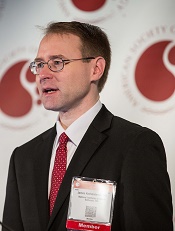
Photo courtesy of ASH
ORLANDO, FL—Allogeneic chimeric antigen receptor (CAR) T cells directed against CD19 can have “significant” activity against resistant B-cell malignancies, even when given without prior chemotherapy, according to a presentation at the 2015 ASH Annual Meeting.
Nine of 20 patients responded to treatment with the CAR T cells, despite having failed prior allogeneic transplant. The best responses were observed in patients with acute lymphoblastic leukemia (ALL) and chronic lymphocytic leukemia (CLL).
“Malignancies that were resistant to allogeneic transplants and standard donor lymphocyte infusions regressed after infusions of allogeneic anti-CD19 CAR T cells,” said James N. Kochenderfer, MD, of the National Cancer Institute in Bethesda, Maryland.
“Allogeneic anti-CD19 CAR T cells seem to be particularly effective against ALL and CLL, suggesting a possible antigenic stimulation that may be more pronounced in these malignancies.”
Adverse events associated with these CAR T cells included severe but reversible cytokine release syndrome, mild aphasia, and muscle damage. There were no cases of acute graft-vs-host disease (GVHD).
Dr Kochenderfer presented these results at ASH as abstract 99.
For this phase 1 study, researchers tested a CAR T-cell therapy that was originally developed by Dr Kochenderfer and his colleagues. The therapy is now known as KTE-C19 and is under development by Kite Pharmaceuticals. However, the company did not sponsor this trial.
The study was open to patients with any CD19+ B-cell malignancy that persisted after allogeneic transplant.
All patients except those with ALL were required to have received at least one standard donor lymphocyte infusion. In addition, patients were only eligible if they had minimal or no GVHD and were not receiving any systemic immunosuppressive drugs.
The trial included 20 patients—5 each with ALL, CLL, mantle cell lymphoma (MCL), and diffuse large B-cell lymphoma (DLBCL).
All patients received a single infusion of CAR T cells derived from their original transplant donor. Production of these cells took 8 days. The highest dose of CAR T cells given was 107 cells/kg.
Four of the ALL patients obtained a minimal-residual disease-negative complete response (CR), but 2 of these patients subsequently relapsed. Of the other 2 patients, 1 remains in CR at 18 months of follow-up, and the other went on to receive a second allogeneic transplant. That patient remains in CR today.
Among the CLL patients, 1 achieved a CR, and 1 achieved a partial response (PR). One patient had stable disease (SD), and the other 2 progressed. Both the CR and the PR are ongoing at 36 and 18 months of follow-up, respectively.
One MCL patient achieved a CR, 1 had a PR, and 3 had SD. The CR is ongoing at 31 months. One DLBCL patient achieved a CR, 3 had SD, and 1 progressed.
Dr Kochenderfer noted that response was associated with higher blood CAR T-cell levels. There was a significant difference in CAR T-cell levels between responders and nonresponders (P=0.001).
In addition, the presence of blood B-cell levels before CAR T-cell infusion was associated with higher blood CAR T-cell levels. Patients with normal or high B lymphocytes had higher levels of CAR T cells in their blood (P=0.04).
Patients with high tumor burdens developed severe cytokine-release syndrome with fever, tachycardia, and hypotension. The ALL patients were particularly susceptible to cytokine-release syndrome.
Dr Kochenderfer said neurologic toxicity was rare and mild. There was 1 case of mild aphasia.
There were 2 patients with elevations in CPK, indicating muscle damage. Those patients also reported muscle pain, and 1 patient reported weakness.
“This is one of the first reports, I think, of muscle damage in CAR T-cell patients,” Dr Kochenderfer said.
None of the patients developed acute GVHD after CAR T-cell therapy. One patient had continued worsening of pre-existing chronic GVHD after treatment, and 1 patient developed mild chronic eye GVHD more than a year after CAR T-cell infusion.
Dr Kochenderfer said additional details from this trial will be published in an upcoming issue of the Journal of Clinical Oncology. 
Photo courtesy of ASH
ORLANDO, FL—Allogeneic chimeric antigen receptor (CAR) T cells directed against CD19 can have “significant” activity against resistant B-cell malignancies, even when given without prior chemotherapy, according to a presentation at the 2015 ASH Annual Meeting.
Nine of 20 patients responded to treatment with the CAR T cells, despite having failed prior allogeneic transplant. The best responses were observed in patients with acute lymphoblastic leukemia (ALL) and chronic lymphocytic leukemia (CLL).
“Malignancies that were resistant to allogeneic transplants and standard donor lymphocyte infusions regressed after infusions of allogeneic anti-CD19 CAR T cells,” said James N. Kochenderfer, MD, of the National Cancer Institute in Bethesda, Maryland.
“Allogeneic anti-CD19 CAR T cells seem to be particularly effective against ALL and CLL, suggesting a possible antigenic stimulation that may be more pronounced in these malignancies.”
Adverse events associated with these CAR T cells included severe but reversible cytokine release syndrome, mild aphasia, and muscle damage. There were no cases of acute graft-vs-host disease (GVHD).
Dr Kochenderfer presented these results at ASH as abstract 99.
For this phase 1 study, researchers tested a CAR T-cell therapy that was originally developed by Dr Kochenderfer and his colleagues. The therapy is now known as KTE-C19 and is under development by Kite Pharmaceuticals. However, the company did not sponsor this trial.
The study was open to patients with any CD19+ B-cell malignancy that persisted after allogeneic transplant.
All patients except those with ALL were required to have received at least one standard donor lymphocyte infusion. In addition, patients were only eligible if they had minimal or no GVHD and were not receiving any systemic immunosuppressive drugs.
The trial included 20 patients—5 each with ALL, CLL, mantle cell lymphoma (MCL), and diffuse large B-cell lymphoma (DLBCL).
All patients received a single infusion of CAR T cells derived from their original transplant donor. Production of these cells took 8 days. The highest dose of CAR T cells given was 107 cells/kg.
Four of the ALL patients obtained a minimal-residual disease-negative complete response (CR), but 2 of these patients subsequently relapsed. Of the other 2 patients, 1 remains in CR at 18 months of follow-up, and the other went on to receive a second allogeneic transplant. That patient remains in CR today.
Among the CLL patients, 1 achieved a CR, and 1 achieved a partial response (PR). One patient had stable disease (SD), and the other 2 progressed. Both the CR and the PR are ongoing at 36 and 18 months of follow-up, respectively.
One MCL patient achieved a CR, 1 had a PR, and 3 had SD. The CR is ongoing at 31 months. One DLBCL patient achieved a CR, 3 had SD, and 1 progressed.
Dr Kochenderfer noted that response was associated with higher blood CAR T-cell levels. There was a significant difference in CAR T-cell levels between responders and nonresponders (P=0.001).
In addition, the presence of blood B-cell levels before CAR T-cell infusion was associated with higher blood CAR T-cell levels. Patients with normal or high B lymphocytes had higher levels of CAR T cells in their blood (P=0.04).
Patients with high tumor burdens developed severe cytokine-release syndrome with fever, tachycardia, and hypotension. The ALL patients were particularly susceptible to cytokine-release syndrome.
Dr Kochenderfer said neurologic toxicity was rare and mild. There was 1 case of mild aphasia.
There were 2 patients with elevations in CPK, indicating muscle damage. Those patients also reported muscle pain, and 1 patient reported weakness.
“This is one of the first reports, I think, of muscle damage in CAR T-cell patients,” Dr Kochenderfer said.
None of the patients developed acute GVHD after CAR T-cell therapy. One patient had continued worsening of pre-existing chronic GVHD after treatment, and 1 patient developed mild chronic eye GVHD more than a year after CAR T-cell infusion.
Dr Kochenderfer said additional details from this trial will be published in an upcoming issue of the Journal of Clinical Oncology.
Photo courtesy of ASH
ORLANDO, FL—Allogeneic chimeric antigen receptor (CAR) T cells directed against CD19 can have “significant” activity against resistant B-cell malignancies, even when given without prior chemotherapy, according to a presentation at the 2015 ASH Annual Meeting.
Nine of 20 patients responded to treatment with the CAR T cells, despite having failed prior allogeneic transplant. The best responses were observed in patients with acute lymphoblastic leukemia (ALL) and chronic lymphocytic leukemia (CLL).
“Malignancies that were resistant to allogeneic transplants and standard donor lymphocyte infusions regressed after infusions of allogeneic anti-CD19 CAR T cells,” said James N. Kochenderfer, MD, of the National Cancer Institute in Bethesda, Maryland.
“Allogeneic anti-CD19 CAR T cells seem to be particularly effective against ALL and CLL, suggesting a possible antigenic stimulation that may be more pronounced in these malignancies.”
Adverse events associated with these CAR T cells included severe but reversible cytokine release syndrome, mild aphasia, and muscle damage. There were no cases of acute graft-vs-host disease (GVHD).
Dr Kochenderfer presented these results at ASH as abstract 99.
For this phase 1 study, researchers tested a CAR T-cell therapy that was originally developed by Dr Kochenderfer and his colleagues. The therapy is now known as KTE-C19 and is under development by Kite Pharmaceuticals. However, the company did not sponsor this trial.
The study was open to patients with any CD19+ B-cell malignancy that persisted after allogeneic transplant.
All patients except those with ALL were required to have received at least one standard donor lymphocyte infusion. In addition, patients were only eligible if they had minimal or no GVHD and were not receiving any systemic immunosuppressive drugs.
The trial included 20 patients—5 each with ALL, CLL, mantle cell lymphoma (MCL), and diffuse large B-cell lymphoma (DLBCL).
All patients received a single infusion of CAR T cells derived from their original transplant donor. Production of these cells took 8 days. The highest dose of CAR T cells given was 107 cells/kg.
Four of the ALL patients obtained a minimal-residual disease-negative complete response (CR), but 2 of these patients subsequently relapsed. Of the other 2 patients, 1 remains in CR at 18 months of follow-up, and the other went on to receive a second allogeneic transplant. That patient remains in CR today.
Among the CLL patients, 1 achieved a CR, and 1 achieved a partial response (PR). One patient had stable disease (SD), and the other 2 progressed. Both the CR and the PR are ongoing at 36 and 18 months of follow-up, respectively.
One MCL patient achieved a CR, 1 had a PR, and 3 had SD. The CR is ongoing at 31 months. One DLBCL patient achieved a CR, 3 had SD, and 1 progressed.
Dr Kochenderfer noted that response was associated with higher blood CAR T-cell levels. There was a significant difference in CAR T-cell levels between responders and nonresponders (P=0.001).
In addition, the presence of blood B-cell levels before CAR T-cell infusion was associated with higher blood CAR T-cell levels. Patients with normal or high B lymphocytes had higher levels of CAR T cells in their blood (P=0.04).
Patients with high tumor burdens developed severe cytokine-release syndrome with fever, tachycardia, and hypotension. The ALL patients were particularly susceptible to cytokine-release syndrome.
Dr Kochenderfer said neurologic toxicity was rare and mild. There was 1 case of mild aphasia.
There were 2 patients with elevations in CPK, indicating muscle damage. Those patients also reported muscle pain, and 1 patient reported weakness.
“This is one of the first reports, I think, of muscle damage in CAR T-cell patients,” Dr Kochenderfer said.
None of the patients developed acute GVHD after CAR T-cell therapy. One patient had continued worsening of pre-existing chronic GVHD after treatment, and 1 patient developed mild chronic eye GVHD more than a year after CAR T-cell infusion.
Dr Kochenderfer said additional details from this trial will be published in an upcoming issue of the Journal of Clinical Oncology.
ALL patients over-report their 6MP compliance, researchers say

Photo courtesy of ASH
ORLANDO, FL—A study comparing subjective versus objective reporting of treatment compliance in patients with acute lymphoblastic leukemia (ALL) has shown that about a fourth of patients over-report how compliant they are with taking 6-mercaptopurine (6MP) as part of their maintenance therapy.
An earlier analysis of the Children’s Oncology Group (COG) AALL03N1 compliance study showed that adherence rates of less than 95% were associated with a 3.7-fold increased risk of relapse.
And about 40% of patients were non-adherent. Yet patients indicate they are taking their medication when questioned.
“We ask our patients if they are taking their meds,” said Wendy Landier, PhD, “and they tell us they are.”
“Even in this cohort who were being closely monitored and knew that they were being closely monitored electronically and were asked to self-report, we found over-reporting.”
Dr Landier, of the University of Alabama at Birmingham, reported these findings comparing self-reported adherence with electronic monitoring of 6MP intake at the 2015 ASH Annual Meeting (abstract 82).
The investigators collected data over 6 months from 416 ALL patients who were 21 years at diagnosis or younger and were receiving 6MP as part of their maintenance therapy.
Investigators measured subjective self-reporting by a patient questionnaire, which included patient demographic information in addition to the number of days the patient took 6MP over the past month.
For the objective medication event-monitoring system (MEMS), patients received a 6MP bottle that was fitted with a TrackCapTM. The cap had a microprocessor chip that recorded the date and time of each bottle opening.
Investigators downloaded the data at the end of the study. They then compared the MEMS with the self-reported data.
The investigators classified perfect reporters as those whose self-report corresponded to their MEMS.
They classified over-reporters as those whose self-report was greater than their MEMS data for 5 days or more and 50% of the months.
The rest they classified as others.
Patients were a median age of 6.0 years, and 277 (66.6%) were male. Parents completed the survey for patients younger than 12.
Two hundred forty-two patients (60.9%) had fathers whose education was less than some college, 159 (38.4%) had NCI high-risk disease, and 168 (40.4%) were non-adherent to 6MP as determined by earlier analysis of the COG AALL03N1 study.
Thirty-six percent were non-Hispanic white, 37% were Hispanic, 14% Asian, and 13% African American.
The investigators monitored the patients’ 6MP intake for a total of 1344 patient-months at 87 COG sites.
And the correlation between subjective and objective reporting was moderate, Dr Landier said, with the correlation ranging from 0.36 to 0.58.
Twelve percent of the patients were perfect reporters, with no difference between the reporting methods.
Twenty-four percent over-reported their intake, 1% under-reported their intake, and 64% were other.
The investigators analyzed variables associated with over-reporting and found that age 12 years or older (P=0.02), being Hispanic (P=0.02), Asian (P=0.02), or African American (P<0.001), paternal education less than college (P=0.02), and being classified as 6MP non-adherent (P<0.001) were all significant.
“Over-reporting of 6MP ingestion is common,” Dr Landier said, with 88% of patients or parents over-reporting the number of days 6MP was taken.
“What we’ve learned from this study is that we cannot rely on patients’ self-report in the clinic,” she said. “What we found is that only 12% of our patients are perfect, so to speak, and that the others mainly over-estimate, and I don’t believe intentionally.”
“[W]e need to have a better way of identifying which patients are at risk for over-reporting their intake, whether they’re aware of it or not,” she added.
Photo courtesy of ASH
ORLANDO, FL—A study comparing subjective versus objective reporting of treatment compliance in patients with acute lymphoblastic leukemia (ALL) has shown that about a fourth of patients over-report how compliant they are with taking 6-mercaptopurine (6MP) as part of their maintenance therapy.
An earlier analysis of the Children’s Oncology Group (COG) AALL03N1 compliance study showed that adherence rates of less than 95% were associated with a 3.7-fold increased risk of relapse.
And about 40% of patients were non-adherent. Yet patients indicate they are taking their medication when questioned.
“We ask our patients if they are taking their meds,” said Wendy Landier, PhD, “and they tell us they are.”
“Even in this cohort who were being closely monitored and knew that they were being closely monitored electronically and were asked to self-report, we found over-reporting.”
Dr Landier, of the University of Alabama at Birmingham, reported these findings comparing self-reported adherence with electronic monitoring of 6MP intake at the 2015 ASH Annual Meeting (abstract 82).
The investigators collected data over 6 months from 416 ALL patients who were 21 years at diagnosis or younger and were receiving 6MP as part of their maintenance therapy.
Investigators measured subjective self-reporting by a patient questionnaire, which included patient demographic information in addition to the number of days the patient took 6MP over the past month.
For the objective medication event-monitoring system (MEMS), patients received a 6MP bottle that was fitted with a TrackCapTM. The cap had a microprocessor chip that recorded the date and time of each bottle opening.
Investigators downloaded the data at the end of the study. They then compared the MEMS with the self-reported data.
The investigators classified perfect reporters as those whose self-report corresponded to their MEMS.
They classified over-reporters as those whose self-report was greater than their MEMS data for 5 days or more and 50% of the months.
The rest they classified as others.
Patients were a median age of 6.0 years, and 277 (66.6%) were male. Parents completed the survey for patients younger than 12.
Two hundred forty-two patients (60.9%) had fathers whose education was less than some college, 159 (38.4%) had NCI high-risk disease, and 168 (40.4%) were non-adherent to 6MP as determined by earlier analysis of the COG AALL03N1 study.
Thirty-six percent were non-Hispanic white, 37% were Hispanic, 14% Asian, and 13% African American.
The investigators monitored the patients’ 6MP intake for a total of 1344 patient-months at 87 COG sites.
And the correlation between subjective and objective reporting was moderate, Dr Landier said, with the correlation ranging from 0.36 to 0.58.
Twelve percent of the patients were perfect reporters, with no difference between the reporting methods.
Twenty-four percent over-reported their intake, 1% under-reported their intake, and 64% were other.
The investigators analyzed variables associated with over-reporting and found that age 12 years or older (P=0.02), being Hispanic (P=0.02), Asian (P=0.02), or African American (P<0.001), paternal education less than college (P=0.02), and being classified as 6MP non-adherent (P<0.001) were all significant.
“Over-reporting of 6MP ingestion is common,” Dr Landier said, with 88% of patients or parents over-reporting the number of days 6MP was taken.
“What we’ve learned from this study is that we cannot rely on patients’ self-report in the clinic,” she said. “What we found is that only 12% of our patients are perfect, so to speak, and that the others mainly over-estimate, and I don’t believe intentionally.”
“[W]e need to have a better way of identifying which patients are at risk for over-reporting their intake, whether they’re aware of it or not,” she added.
Photo courtesy of ASH
ORLANDO, FL—A study comparing subjective versus objective reporting of treatment compliance in patients with acute lymphoblastic leukemia (ALL) has shown that about a fourth of patients over-report how compliant they are with taking 6-mercaptopurine (6MP) as part of their maintenance therapy.
An earlier analysis of the Children’s Oncology Group (COG) AALL03N1 compliance study showed that adherence rates of less than 95% were associated with a 3.7-fold increased risk of relapse.
And about 40% of patients were non-adherent. Yet patients indicate they are taking their medication when questioned.
“We ask our patients if they are taking their meds,” said Wendy Landier, PhD, “and they tell us they are.”
“Even in this cohort who were being closely monitored and knew that they were being closely monitored electronically and were asked to self-report, we found over-reporting.”
Dr Landier, of the University of Alabama at Birmingham, reported these findings comparing self-reported adherence with electronic monitoring of 6MP intake at the 2015 ASH Annual Meeting (abstract 82).
The investigators collected data over 6 months from 416 ALL patients who were 21 years at diagnosis or younger and were receiving 6MP as part of their maintenance therapy.
Investigators measured subjective self-reporting by a patient questionnaire, which included patient demographic information in addition to the number of days the patient took 6MP over the past month.
For the objective medication event-monitoring system (MEMS), patients received a 6MP bottle that was fitted with a TrackCapTM. The cap had a microprocessor chip that recorded the date and time of each bottle opening.
Investigators downloaded the data at the end of the study. They then compared the MEMS with the self-reported data.
The investigators classified perfect reporters as those whose self-report corresponded to their MEMS.
They classified over-reporters as those whose self-report was greater than their MEMS data for 5 days or more and 50% of the months.
The rest they classified as others.
Patients were a median age of 6.0 years, and 277 (66.6%) were male. Parents completed the survey for patients younger than 12.
Two hundred forty-two patients (60.9%) had fathers whose education was less than some college, 159 (38.4%) had NCI high-risk disease, and 168 (40.4%) were non-adherent to 6MP as determined by earlier analysis of the COG AALL03N1 study.
Thirty-six percent were non-Hispanic white, 37% were Hispanic, 14% Asian, and 13% African American.
The investigators monitored the patients’ 6MP intake for a total of 1344 patient-months at 87 COG sites.
And the correlation between subjective and objective reporting was moderate, Dr Landier said, with the correlation ranging from 0.36 to 0.58.
Twelve percent of the patients were perfect reporters, with no difference between the reporting methods.
Twenty-four percent over-reported their intake, 1% under-reported their intake, and 64% were other.
The investigators analyzed variables associated with over-reporting and found that age 12 years or older (P=0.02), being Hispanic (P=0.02), Asian (P=0.02), or African American (P<0.001), paternal education less than college (P=0.02), and being classified as 6MP non-adherent (P<0.001) were all significant.
“Over-reporting of 6MP ingestion is common,” Dr Landier said, with 88% of patients or parents over-reporting the number of days 6MP was taken.
“What we’ve learned from this study is that we cannot rely on patients’ self-report in the clinic,” she said. “What we found is that only 12% of our patients are perfect, so to speak, and that the others mainly over-estimate, and I don’t believe intentionally.”
“[W]e need to have a better way of identifying which patients are at risk for over-reporting their intake, whether they’re aware of it or not,” she added.
ASH: Rituximab add-on therapy ‘new standard’ in BCP-ALL
ORLANDO – Adding rituximab to standard intensive chemotherapy significantly improved event-free survival in adults with Philadelphia-negative, CD20-positive B-cell precursor acute lymphoblastic leukemia in the phase III GRAALL-R 2005 study.
Rituximab (Rituxan) is already being used to improve outcomes in patients with lymphoma, and non-randomized data support addition of the anti-CD20 monoclonal antibody to chemotherapy in B-cell precursor (BCP) ALL, where the CD20 antigen is expressed in 30% to 40% of patients at diagnosis.
In the randomized GRAALL-R 2005, 2-year event-free survival (EFS) was 65% in the rituximab arm vs. 52% in the control arm (hazard ratio, 0.66; P = .038).

This difference is not explained by the early response rates, which were very close in both arms after one or two induction courses (92% vs. 90%; P = .63), Dr. Sébastien Maury, Hôpital Henri Mondor in Créteil, France, said during the plenary session at the annual meeting of the American Society of Hematology (Ab. 1).
The beneficial effect of rituximab, however, was clearly related to the cumulative incidence of relapse at 18% with vs. 32% without rituximab (HR, 0.52; P = .017).
Despite this advantage, overall survival was similar between patients given chemotherapy with and without rituximab (71% vs. 64%; HR, 0.70; P = .095), he said.
After censoring for patients not receiving allogeneic stem cell transplant in first complete remission, however, rituximab significantly prolonged 2-year EFS (HR, 0.59; P = .021) as well as overall survival (HR, 0.55; P = .018), Dr. Maury said.
“We thus recommend that the addition of rituximab become a new standard of care for these patients, although some aspects including the definition of the optimal dose needs to be determined in further studies,” he concluded.
Dr. Adele Fielding of University College London, who introduced the study at the meeting, said, “For me, the prior knowledge that the drug can be safely already added to chemotherapy in other settings provides profound comfort in a disease in which so many people are already damaged by the current therapies we offer.”
Also, of importance is the potential relevance of rituximab in patients in whom CD20 is present on fewer than 20% of blasts at diagnosis.
Key questions that remain in rituximab therapy of ALL beyond overall benefit include early and late toxicities and how best to judge response and when, she said. Synergies with other agents and the mechanism of action will also require clarification, especially which effector cells are relevant to ensure that agents are not used with rituximab that destroy the optimal chance for response.
“Finally, the cost of introducing novel agents cannot be ignored, even in well-developed economies, and I am hopeful that the cost of this drug will be variable for many countries and many patients.” Dr. Fielding said.
Study details
A total of 220 patients, aged 18-59 years, with newly diagnosed CD20-positive Ph-negative BCP-ALL were randomized to the pediatric-inspired Group for Research on Adult Acute Lymphoblastic Leukemia (GRAALL) chemotherapy protocol with or without rituximab 375 mg/m2 given during induction (day 1 and 7), salvage reinduction when needed (day 1 and 7), consolidation blocks (6 infusions), late intensification (day 1 and 7, and the first year of maintenance [6 infusions], for a total of 16-18 infusions. Allogeneic stem cell transplant (SCT) was offered after consolidation blocks 1 or 2 to patients with one or more high-risk criteria and an available donor. CD20-positivity was defined as expression of CD20 in more than 20% of leukemia blasts.
Eleven patients were excluded from the analysis because of non–ineligibility criteria, leaving 209 patients in the modified intent-to-treat analysis. Their median age was 40.2 years and 67% had high-risk ALL.
Rates of postinduction minimal residual disease less than 10–4 were 65% and 61% in the rituximab and control arms among 85 evaluable patients(P = .82), and rates of postconsolidation minimal residual disease less than 10–4 were 91% and 82% among 80 evaluable patients (P = .31), Dr. Maury reported.
Notably, more patients in the rituximab arm received allogeneic SCT in their first complete remission (34% vs. 20%; P = .029).
The cumulative incidence of death in first complete remission was 12% in both arms.
In multivariate analysis, rituximab impacted EFS, together with age, central nervous system involvement, white blood cells, or CD20 expression at diagnosis. A preferential effect with rituximab was seen in patients with high CD20 levels that deserves further evaluation, he observed.
There was no difference in the incidence of adverse events between the rituximab and control arms, although there was a trend for more infectious events with rituximab (71 events vs. 55 events), Dr. Maury said.
Allergic events – all but one from aspergillosis – were significantly more common in the control arm (2 events vs. 14 events; P = .002).
The Group for Research in Adult Acute Lymphoblastic Leukemia sponsored the study. Dr. Maury reported having no disclosures.
ORLANDO – Adding rituximab to standard intensive chemotherapy significantly improved event-free survival in adults with Philadelphia-negative, CD20-positive B-cell precursor acute lymphoblastic leukemia in the phase III GRAALL-R 2005 study.
Rituximab (Rituxan) is already being used to improve outcomes in patients with lymphoma, and non-randomized data support addition of the anti-CD20 monoclonal antibody to chemotherapy in B-cell precursor (BCP) ALL, where the CD20 antigen is expressed in 30% to 40% of patients at diagnosis.
In the randomized GRAALL-R 2005, 2-year event-free survival (EFS) was 65% in the rituximab arm vs. 52% in the control arm (hazard ratio, 0.66; P = .038).
This difference is not explained by the early response rates, which were very close in both arms after one or two induction courses (92% vs. 90%; P = .63), Dr. Sébastien Maury, Hôpital Henri Mondor in Créteil, France, said during the plenary session at the annual meeting of the American Society of Hematology (Ab. 1).
The beneficial effect of rituximab, however, was clearly related to the cumulative incidence of relapse at 18% with vs. 32% without rituximab (HR, 0.52; P = .017).
Despite this advantage, overall survival was similar between patients given chemotherapy with and without rituximab (71% vs. 64%; HR, 0.70; P = .095), he said.
After censoring for patients not receiving allogeneic stem cell transplant in first complete remission, however, rituximab significantly prolonged 2-year EFS (HR, 0.59; P = .021) as well as overall survival (HR, 0.55; P = .018), Dr. Maury said.
“We thus recommend that the addition of rituximab become a new standard of care for these patients, although some aspects including the definition of the optimal dose needs to be determined in further studies,” he concluded.
Dr. Adele Fielding of University College London, who introduced the study at the meeting, said, “For me, the prior knowledge that the drug can be safely already added to chemotherapy in other settings provides profound comfort in a disease in which so many people are already damaged by the current therapies we offer.”
Also, of importance is the potential relevance of rituximab in patients in whom CD20 is present on fewer than 20% of blasts at diagnosis.
Key questions that remain in rituximab therapy of ALL beyond overall benefit include early and late toxicities and how best to judge response and when, she said. Synergies with other agents and the mechanism of action will also require clarification, especially which effector cells are relevant to ensure that agents are not used with rituximab that destroy the optimal chance for response.
“Finally, the cost of introducing novel agents cannot be ignored, even in well-developed economies, and I am hopeful that the cost of this drug will be variable for many countries and many patients.” Dr. Fielding said.
Study details
A total of 220 patients, aged 18-59 years, with newly diagnosed CD20-positive Ph-negative BCP-ALL were randomized to the pediatric-inspired Group for Research on Adult Acute Lymphoblastic Leukemia (GRAALL) chemotherapy protocol with or without rituximab 375 mg/m2 given during induction (day 1 and 7), salvage reinduction when needed (day 1 and 7), consolidation blocks (6 infusions), late intensification (day 1 and 7, and the first year of maintenance [6 infusions], for a total of 16-18 infusions. Allogeneic stem cell transplant (SCT) was offered after consolidation blocks 1 or 2 to patients with one or more high-risk criteria and an available donor. CD20-positivity was defined as expression of CD20 in more than 20% of leukemia blasts.
Eleven patients were excluded from the analysis because of non–ineligibility criteria, leaving 209 patients in the modified intent-to-treat analysis. Their median age was 40.2 years and 67% had high-risk ALL.
Rates of postinduction minimal residual disease less than 10–4 were 65% and 61% in the rituximab and control arms among 85 evaluable patients(P = .82), and rates of postconsolidation minimal residual disease less than 10–4 were 91% and 82% among 80 evaluable patients (P = .31), Dr. Maury reported.
Notably, more patients in the rituximab arm received allogeneic SCT in their first complete remission (34% vs. 20%; P = .029).
The cumulative incidence of death in first complete remission was 12% in both arms.
In multivariate analysis, rituximab impacted EFS, together with age, central nervous system involvement, white blood cells, or CD20 expression at diagnosis. A preferential effect with rituximab was seen in patients with high CD20 levels that deserves further evaluation, he observed.
There was no difference in the incidence of adverse events between the rituximab and control arms, although there was a trend for more infectious events with rituximab (71 events vs. 55 events), Dr. Maury said.
Allergic events – all but one from aspergillosis – were significantly more common in the control arm (2 events vs. 14 events; P = .002).
The Group for Research in Adult Acute Lymphoblastic Leukemia sponsored the study. Dr. Maury reported having no disclosures.
ORLANDO – Adding rituximab to standard intensive chemotherapy significantly improved event-free survival in adults with Philadelphia-negative, CD20-positive B-cell precursor acute lymphoblastic leukemia in the phase III GRAALL-R 2005 study.
Rituximab (Rituxan) is already being used to improve outcomes in patients with lymphoma, and non-randomized data support addition of the anti-CD20 monoclonal antibody to chemotherapy in B-cell precursor (BCP) ALL, where the CD20 antigen is expressed in 30% to 40% of patients at diagnosis.
In the randomized GRAALL-R 2005, 2-year event-free survival (EFS) was 65% in the rituximab arm vs. 52% in the control arm (hazard ratio, 0.66; P = .038).
This difference is not explained by the early response rates, which were very close in both arms after one or two induction courses (92% vs. 90%; P = .63), Dr. Sébastien Maury, Hôpital Henri Mondor in Créteil, France, said during the plenary session at the annual meeting of the American Society of Hematology (Ab. 1).
The beneficial effect of rituximab, however, was clearly related to the cumulative incidence of relapse at 18% with vs. 32% without rituximab (HR, 0.52; P = .017).
Despite this advantage, overall survival was similar between patients given chemotherapy with and without rituximab (71% vs. 64%; HR, 0.70; P = .095), he said.
After censoring for patients not receiving allogeneic stem cell transplant in first complete remission, however, rituximab significantly prolonged 2-year EFS (HR, 0.59; P = .021) as well as overall survival (HR, 0.55; P = .018), Dr. Maury said.
“We thus recommend that the addition of rituximab become a new standard of care for these patients, although some aspects including the definition of the optimal dose needs to be determined in further studies,” he concluded.
Dr. Adele Fielding of University College London, who introduced the study at the meeting, said, “For me, the prior knowledge that the drug can be safely already added to chemotherapy in other settings provides profound comfort in a disease in which so many people are already damaged by the current therapies we offer.”
Also, of importance is the potential relevance of rituximab in patients in whom CD20 is present on fewer than 20% of blasts at diagnosis.
Key questions that remain in rituximab therapy of ALL beyond overall benefit include early and late toxicities and how best to judge response and when, she said. Synergies with other agents and the mechanism of action will also require clarification, especially which effector cells are relevant to ensure that agents are not used with rituximab that destroy the optimal chance for response.
“Finally, the cost of introducing novel agents cannot be ignored, even in well-developed economies, and I am hopeful that the cost of this drug will be variable for many countries and many patients.” Dr. Fielding said.
Study details
A total of 220 patients, aged 18-59 years, with newly diagnosed CD20-positive Ph-negative BCP-ALL were randomized to the pediatric-inspired Group for Research on Adult Acute Lymphoblastic Leukemia (GRAALL) chemotherapy protocol with or without rituximab 375 mg/m2 given during induction (day 1 and 7), salvage reinduction when needed (day 1 and 7), consolidation blocks (6 infusions), late intensification (day 1 and 7, and the first year of maintenance [6 infusions], for a total of 16-18 infusions. Allogeneic stem cell transplant (SCT) was offered after consolidation blocks 1 or 2 to patients with one or more high-risk criteria and an available donor. CD20-positivity was defined as expression of CD20 in more than 20% of leukemia blasts.
Eleven patients were excluded from the analysis because of non–ineligibility criteria, leaving 209 patients in the modified intent-to-treat analysis. Their median age was 40.2 years and 67% had high-risk ALL.
Rates of postinduction minimal residual disease less than 10–4 were 65% and 61% in the rituximab and control arms among 85 evaluable patients(P = .82), and rates of postconsolidation minimal residual disease less than 10–4 were 91% and 82% among 80 evaluable patients (P = .31), Dr. Maury reported.
Notably, more patients in the rituximab arm received allogeneic SCT in their first complete remission (34% vs. 20%; P = .029).
The cumulative incidence of death in first complete remission was 12% in both arms.
In multivariate analysis, rituximab impacted EFS, together with age, central nervous system involvement, white blood cells, or CD20 expression at diagnosis. A preferential effect with rituximab was seen in patients with high CD20 levels that deserves further evaluation, he observed.
There was no difference in the incidence of adverse events between the rituximab and control arms, although there was a trend for more infectious events with rituximab (71 events vs. 55 events), Dr. Maury said.
Allergic events – all but one from aspergillosis – were significantly more common in the control arm (2 events vs. 14 events; P = .002).
The Group for Research in Adult Acute Lymphoblastic Leukemia sponsored the study. Dr. Maury reported having no disclosures.
AT ASH 2015
Key clinical point: Adding rituximab to standard intensive chemotherapy is a new standard for CD20-positive, Philadelphia-negative, B-cell precursor acute lymphoblastic leukemia.
Major finding: Event-free survival was 65% in the rituximab arm vs. 52% in the control arm (HR, 0.66; P = .038).
Data source: Phase III study in 220 adults with CD20-positive, Ph-negative, BCP-ALL.
Disclosures: Group for Research in Adult Acute Lymphoblastic Leukemia sponsored the study. Dr. Maury reported having no disclosures.

ASH: Genes tag increased risk for avascular necrosis in ALL patients under age 10
ORLANDO – Variants in mesenchymal stem cell genes that are important to bone and fat differentiation were associated with the risk of developing osteonecrosis in children under age 10 with acute lymphocytic leukemia, Dr. Seth E. Karol, of St. Jude Children’s Research Hospital in Memphis, reported at the annual meeting of the American Society of Hematology.
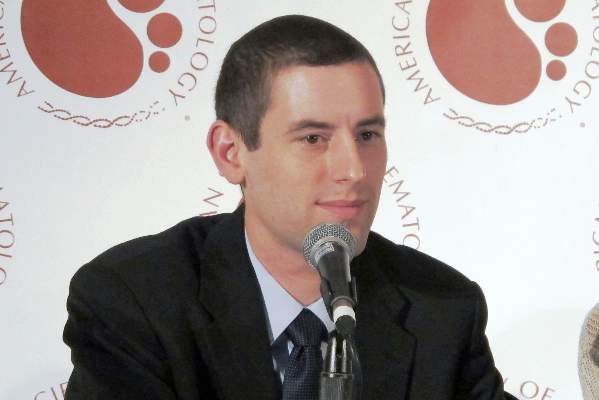
In a second study of children with ALL, Dr. Peter D. Cole, of Montefiore Medical Center, Albert Einstein College of Medicine, Bronx, NY, reported that patients under age 10 and homozygous for the 2R polymorphism in thymidylate synthase were at increased risk for avascular necrosis. For children over age 10 with ALL, homozygosity for the 2R polymorphism was linked with an increased risk of fracture.
The pathophysiology of bony morbidity differs depending on the patient’s age, Dr. Cole noted. “This is the first report identifying a genetic risk factor for avascular necrosis specifically among children younger than 10 years, a group where AVN is significantly less frequent.”
Bony morbidity is more common in children over age 10 with ALL, and related to exposure to crucial components of leukemia therapy including corticosteroids, asparaginase, and methotrexate. Therapy-induced osteonecrosis has become a limiting toxicity in the intensification of treatment for pediatric acute lymphoblastic leukemia (ALL), particularly among patients 10-20 years old.
However, children under 10 make up 75% of new pediatric ALL diagnoses, Dr. Karol said. So even though osteonecrosis occurs in just 3%-10% of children under age 10, those patients make up 40% of the cases.
In Dr. Cole’s study, research focused on 19 common genetic polymorphisms in peripheral blood or bone marrow collected at remission from 637 children treated for ALL.
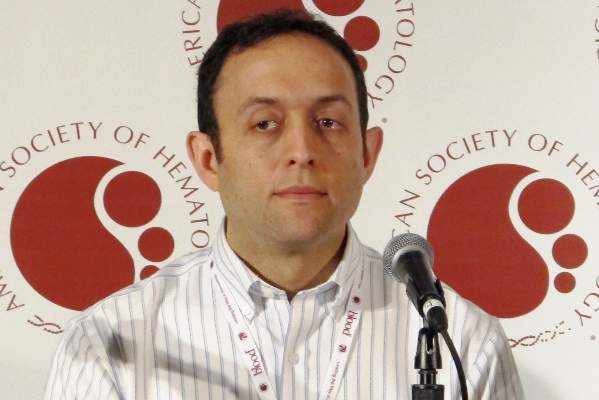
The research targeted common variants within genes related to glucocorticoid metabolism, oxidative damage, and folate physiology. Children above and below the age of 10 years were evaluated separately. Multivariable models for bony morbidity included sex, WBC at diagnosis, race, final risk group, and asparaginase randomization. Blood was collected during treatment for analysis of serum and RBC folate.
Of the 637 patients tested, 627 achieved a complete remission and received post-induction therapy; about 10% of patients experienced avascular necrosis and 22% had at least 1 fracture. Both morbidities were significantly more common in patients aged 10 and older; 23% had avascular necrosis and 31% had a fracture. In younger children, 5.5% had avascular necrosis and 19% had fractures.
Of 626 patients tested, about 21% were homozygous for the 2R polymorphism in thymidylate synthase. In children less than age 10, this 2R/2R genotype was associated with nearly three times the rate of 5-year estimated incidence of avascular necrosis, almost 12%, as compared to the 4% rate seen in children with 2R/3R or 3R/3R genotypes.
Among children over age 10, this polymorphism was associated with an increased risk of bony fracture (multivariable HR 2.13; 95% CI 1.13-3.99; P=0.019).
Bony morbidity was not associated with the other tested polymorphisms previously linked to risk of avascular necrosis, including PAI-1 (rs6092), ABCB1 (rs1045642), and the vitamin D receptor Fok1 restriction site (rs228570). No significant association was observed between thymidylate synthase genotype and serum or RBC folate at any time point during therapy.
In the study reported by Dr. Karol, the researchers studied a discovery cohort of 82 cases of osteonecrosis and 287 controls treated on the Children’s Oncology Group (COG) NCI standard risk ALL protocol and tested for replication in 817 children less than 10 treated on the COG high risk ALL protocol.
Both discovery and replication genome-wide association studies adjusted for demographic and therapy variables known to modify the risk of osteonecrosis. Genes associated with the identified single nucleotide polymorphisms were evaluated for enrichment in biologically relevant pathways.
Within the discovery cohort and replication cohorts, top ranked variants were located near bone morphogenic protein 7 (BMP7) and PROX1-antisense RNA1. The top replicated non-synonymous SNP, rs34144324, was in a glutamate receptor gene, and the genotyping of this variant was verified in the whole exome sequencing data.
Pathway analysis of genes linked to top SNPs demonstrated enrichment in glutamate receptor signaling and adipogenesis pathways.
“Patients with osteonecrosis are 8-15 times more likely to possesses genetic variants near a gene important to bone development (BMP7) and between 3-6 times more likely to have variants near a gene important to fat levels in the blood (PROX1),” Dr. Karol reported.
Dr. Cole and Dr. Karol had no relevant financial disclosures.
On Twitter @maryjodales
ORLANDO – Variants in mesenchymal stem cell genes that are important to bone and fat differentiation were associated with the risk of developing osteonecrosis in children under age 10 with acute lymphocytic leukemia, Dr. Seth E. Karol, of St. Jude Children’s Research Hospital in Memphis, reported at the annual meeting of the American Society of Hematology.
In a second study of children with ALL, Dr. Peter D. Cole, of Montefiore Medical Center, Albert Einstein College of Medicine, Bronx, NY, reported that patients under age 10 and homozygous for the 2R polymorphism in thymidylate synthase were at increased risk for avascular necrosis. For children over age 10 with ALL, homozygosity for the 2R polymorphism was linked with an increased risk of fracture.
The pathophysiology of bony morbidity differs depending on the patient’s age, Dr. Cole noted. “This is the first report identifying a genetic risk factor for avascular necrosis specifically among children younger than 10 years, a group where AVN is significantly less frequent.”
Bony morbidity is more common in children over age 10 with ALL, and related to exposure to crucial components of leukemia therapy including corticosteroids, asparaginase, and methotrexate. Therapy-induced osteonecrosis has become a limiting toxicity in the intensification of treatment for pediatric acute lymphoblastic leukemia (ALL), particularly among patients 10-20 years old.
However, children under 10 make up 75% of new pediatric ALL diagnoses, Dr. Karol said. So even though osteonecrosis occurs in just 3%-10% of children under age 10, those patients make up 40% of the cases.
In Dr. Cole’s study, research focused on 19 common genetic polymorphisms in peripheral blood or bone marrow collected at remission from 637 children treated for ALL.
The research targeted common variants within genes related to glucocorticoid metabolism, oxidative damage, and folate physiology. Children above and below the age of 10 years were evaluated separately. Multivariable models for bony morbidity included sex, WBC at diagnosis, race, final risk group, and asparaginase randomization. Blood was collected during treatment for analysis of serum and RBC folate.
Of the 637 patients tested, 627 achieved a complete remission and received post-induction therapy; about 10% of patients experienced avascular necrosis and 22% had at least 1 fracture. Both morbidities were significantly more common in patients aged 10 and older; 23% had avascular necrosis and 31% had a fracture. In younger children, 5.5% had avascular necrosis and 19% had fractures.
Of 626 patients tested, about 21% were homozygous for the 2R polymorphism in thymidylate synthase. In children less than age 10, this 2R/2R genotype was associated with nearly three times the rate of 5-year estimated incidence of avascular necrosis, almost 12%, as compared to the 4% rate seen in children with 2R/3R or 3R/3R genotypes.
Among children over age 10, this polymorphism was associated with an increased risk of bony fracture (multivariable HR 2.13; 95% CI 1.13-3.99; P=0.019).
Bony morbidity was not associated with the other tested polymorphisms previously linked to risk of avascular necrosis, including PAI-1 (rs6092), ABCB1 (rs1045642), and the vitamin D receptor Fok1 restriction site (rs228570). No significant association was observed between thymidylate synthase genotype and serum or RBC folate at any time point during therapy.
In the study reported by Dr. Karol, the researchers studied a discovery cohort of 82 cases of osteonecrosis and 287 controls treated on the Children’s Oncology Group (COG) NCI standard risk ALL protocol and tested for replication in 817 children less than 10 treated on the COG high risk ALL protocol.
Both discovery and replication genome-wide association studies adjusted for demographic and therapy variables known to modify the risk of osteonecrosis. Genes associated with the identified single nucleotide polymorphisms were evaluated for enrichment in biologically relevant pathways.
Within the discovery cohort and replication cohorts, top ranked variants were located near bone morphogenic protein 7 (BMP7) and PROX1-antisense RNA1. The top replicated non-synonymous SNP, rs34144324, was in a glutamate receptor gene, and the genotyping of this variant was verified in the whole exome sequencing data.
Pathway analysis of genes linked to top SNPs demonstrated enrichment in glutamate receptor signaling and adipogenesis pathways.
“Patients with osteonecrosis are 8-15 times more likely to possesses genetic variants near a gene important to bone development (BMP7) and between 3-6 times more likely to have variants near a gene important to fat levels in the blood (PROX1),” Dr. Karol reported.
Dr. Cole and Dr. Karol had no relevant financial disclosures.
On Twitter @maryjodales
ORLANDO – Variants in mesenchymal stem cell genes that are important to bone and fat differentiation were associated with the risk of developing osteonecrosis in children under age 10 with acute lymphocytic leukemia, Dr. Seth E. Karol, of St. Jude Children’s Research Hospital in Memphis, reported at the annual meeting of the American Society of Hematology.
In a second study of children with ALL, Dr. Peter D. Cole, of Montefiore Medical Center, Albert Einstein College of Medicine, Bronx, NY, reported that patients under age 10 and homozygous for the 2R polymorphism in thymidylate synthase were at increased risk for avascular necrosis. For children over age 10 with ALL, homozygosity for the 2R polymorphism was linked with an increased risk of fracture.
The pathophysiology of bony morbidity differs depending on the patient’s age, Dr. Cole noted. “This is the first report identifying a genetic risk factor for avascular necrosis specifically among children younger than 10 years, a group where AVN is significantly less frequent.”
Bony morbidity is more common in children over age 10 with ALL, and related to exposure to crucial components of leukemia therapy including corticosteroids, asparaginase, and methotrexate. Therapy-induced osteonecrosis has become a limiting toxicity in the intensification of treatment for pediatric acute lymphoblastic leukemia (ALL), particularly among patients 10-20 years old.
However, children under 10 make up 75% of new pediatric ALL diagnoses, Dr. Karol said. So even though osteonecrosis occurs in just 3%-10% of children under age 10, those patients make up 40% of the cases.
In Dr. Cole’s study, research focused on 19 common genetic polymorphisms in peripheral blood or bone marrow collected at remission from 637 children treated for ALL.
The research targeted common variants within genes related to glucocorticoid metabolism, oxidative damage, and folate physiology. Children above and below the age of 10 years were evaluated separately. Multivariable models for bony morbidity included sex, WBC at diagnosis, race, final risk group, and asparaginase randomization. Blood was collected during treatment for analysis of serum and RBC folate.
Of the 637 patients tested, 627 achieved a complete remission and received post-induction therapy; about 10% of patients experienced avascular necrosis and 22% had at least 1 fracture. Both morbidities were significantly more common in patients aged 10 and older; 23% had avascular necrosis and 31% had a fracture. In younger children, 5.5% had avascular necrosis and 19% had fractures.
Of 626 patients tested, about 21% were homozygous for the 2R polymorphism in thymidylate synthase. In children less than age 10, this 2R/2R genotype was associated with nearly three times the rate of 5-year estimated incidence of avascular necrosis, almost 12%, as compared to the 4% rate seen in children with 2R/3R or 3R/3R genotypes.
Among children over age 10, this polymorphism was associated with an increased risk of bony fracture (multivariable HR 2.13; 95% CI 1.13-3.99; P=0.019).
Bony morbidity was not associated with the other tested polymorphisms previously linked to risk of avascular necrosis, including PAI-1 (rs6092), ABCB1 (rs1045642), and the vitamin D receptor Fok1 restriction site (rs228570). No significant association was observed between thymidylate synthase genotype and serum or RBC folate at any time point during therapy.
In the study reported by Dr. Karol, the researchers studied a discovery cohort of 82 cases of osteonecrosis and 287 controls treated on the Children’s Oncology Group (COG) NCI standard risk ALL protocol and tested for replication in 817 children less than 10 treated on the COG high risk ALL protocol.
Both discovery and replication genome-wide association studies adjusted for demographic and therapy variables known to modify the risk of osteonecrosis. Genes associated with the identified single nucleotide polymorphisms were evaluated for enrichment in biologically relevant pathways.
Within the discovery cohort and replication cohorts, top ranked variants were located near bone morphogenic protein 7 (BMP7) and PROX1-antisense RNA1. The top replicated non-synonymous SNP, rs34144324, was in a glutamate receptor gene, and the genotyping of this variant was verified in the whole exome sequencing data.
Pathway analysis of genes linked to top SNPs demonstrated enrichment in glutamate receptor signaling and adipogenesis pathways.
“Patients with osteonecrosis are 8-15 times more likely to possesses genetic variants near a gene important to bone development (BMP7) and between 3-6 times more likely to have variants near a gene important to fat levels in the blood (PROX1),” Dr. Karol reported.
Dr. Cole and Dr. Karol had no relevant financial disclosures.
On Twitter @maryjodales
AT ASH 2015
Key clinical point: Gene profiles can identify ALL patients under age 10 at increased risk for avascular necrosis.
Major finding: In children under 10 who were homozygous for the 2R polymorphism in thymidylate synthase the rate of 5-year estimated incidence of avascular necrosis was nearly 12%, three times higher than the 4% rate seen in children with 2R/3R or 3R/3R genotypes.
Data source: Research focused on 19 common genetic polymorphisms in peripheral blood or bone marrow collected at remission from 637 children treated for ALL.
Disclosures: Dr. Cole and Dr. Karol had no relevant financial disclosures.
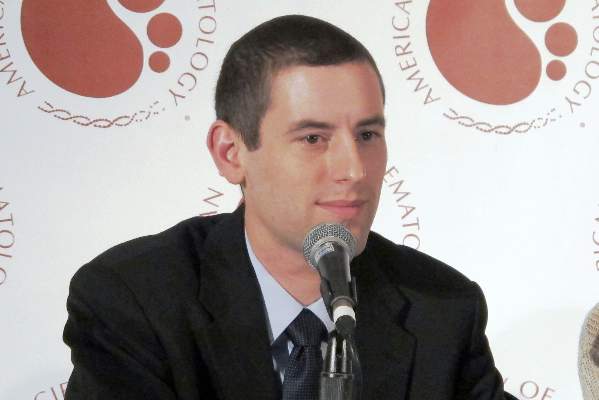
ASH: Pill bottles flag noncompliance in patients on ALL maintenance
ORLANDO – Pill containers are not known for eloquence, but they tell a disturbing tale of patient over-reporting of adherence to essential leukemia maintenance therapy.
Among 416 children with acute lymphoblastic leukemia (ALL) in first remission, the number of days patients or their guardians reported that the child took his/her daily oral 6-mercaptopurine (6MP) for maintenance was significantly higher than the number of days the pill bottles were opened, as reported by an electronic medication management system.
“Over-reporting was more likely in patients who were non-adherent, older, of non-white race, and came from households with lower paternal education,” said Dr. Wendy Landier from the Institute for Cancer Outcomes and Survivorship at the University of Alabama at Birmingham.
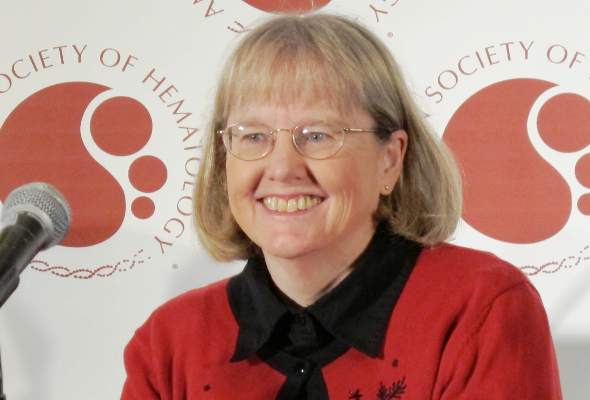
The results suggest that patient self-reports of adherence to 6MP oral maintenance therapy may be unreliable, and should be taken with a grain of salt, Dr. Landier said in a briefing at the American Society of Hematology annual meeting.
The investigators had previously reported that poor adherence to oral 6MP maintenance therapy was associated with a nealy four-fold increased risk for relapse (JCO 30[17]:2094-101, Blood 124[15]:2345-53).
To better understand why some patients are poorly adherent to 6MP maintenance therapy, the investigator provided 416 children with ALL in first remission with pill containers equipped with a Medication Event Management System (MEMS) that electronically recorded the dates and times that each pill bottle was opened over a 16-week period. Patients age 12 and older or the parents/guardians of younger children were also asked to report the date and time of each daily oral dose at the end of each 28-day study month.
The authors collected and evaluated a total of 1344 patient-months of self-report and MEMS data, compared the records, and stratified patients as either “perfect reporters”, whose self-reports matched the objective MEMS data; “over-reporters”, who self-report exceeded the MEMS data on 5 or more days per month for more than half of study months, and “others.”The median patient age at study entry was 6 years (range 2 to 20 years).
The authors reported in their study that 40.4% of patients were not adherent to oral 6MP therapy, as evidence by a mismatch between self-report and objective (MEMS) reporting.
The overall adjusted mean number of self-reported days per month that patients took their pills ranged from a low of 25.8+5.3 to a high of 26.1+4.5. The pill bottles, however, told a different tale, reporting that they had been opened from a low of 22.8 ± 6.4 to a high of 25.4 ± 4.5 days per month.
Month-by-month correlations between self-report and MEMS 0.36 to 0.58, and were all statistically significant.
In logistic regression models adjusted for thiopurine methyltransferase (TMPT) genotype, 6MP dose intensity, and 6-thiogaunine levels in red cells, significant predictors for over-reporting included older age, with an odds ratio (OR) of 1.07 for every 1-year increase in age (P = .04); Hispanic origin (OR 2.4, P = .02); Asian origin, (OR 3.1 P = .02; African-American origin (OR 5.3, P < .001); paternal education level lower than college (OR 2.1, P = .02); and 6MP non-adherence (OR 8.6, P < .0001).
Dr. Landier noted that 78.6% of over-reporters were non-adherent, compared with only 2% of perfect reporters.
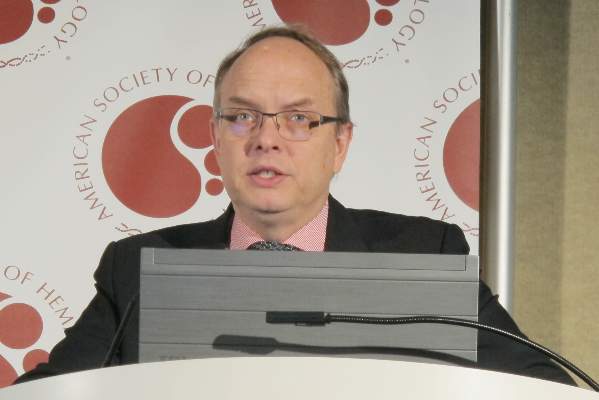
“The real importance of this paper from my perspective is this: there is a famous quote that if the patient doesn’t take the medication it can’t work and in an era where we’re trying to improve the care of patients, one of the things we oftentimes forget that if the medication isn’t being taken, the patient can’t get better from it,” said Dr. Mark Crowther, Professor and Chair in the Department of Pathology and Molecular Medicine of McMaster University in Hamilton, Ontario, Canada. Dr. Crowther moderated a briefing where Dr. Cserti-Gazdewich presented the data.
The study was supported by grants from the National Institutes of Health and from St. Baldrick’s Foundation. Dr. Landier and Dr. Crowther reported no relevant conflicts of interest.
ORLANDO – Pill containers are not known for eloquence, but they tell a disturbing tale of patient over-reporting of adherence to essential leukemia maintenance therapy.
Among 416 children with acute lymphoblastic leukemia (ALL) in first remission, the number of days patients or their guardians reported that the child took his/her daily oral 6-mercaptopurine (6MP) for maintenance was significantly higher than the number of days the pill bottles were opened, as reported by an electronic medication management system.
“Over-reporting was more likely in patients who were non-adherent, older, of non-white race, and came from households with lower paternal education,” said Dr. Wendy Landier from the Institute for Cancer Outcomes and Survivorship at the University of Alabama at Birmingham.
The results suggest that patient self-reports of adherence to 6MP oral maintenance therapy may be unreliable, and should be taken with a grain of salt, Dr. Landier said in a briefing at the American Society of Hematology annual meeting.
The investigators had previously reported that poor adherence to oral 6MP maintenance therapy was associated with a nealy four-fold increased risk for relapse (JCO 30[17]:2094-101, Blood 124[15]:2345-53).
To better understand why some patients are poorly adherent to 6MP maintenance therapy, the investigator provided 416 children with ALL in first remission with pill containers equipped with a Medication Event Management System (MEMS) that electronically recorded the dates and times that each pill bottle was opened over a 16-week period. Patients age 12 and older or the parents/guardians of younger children were also asked to report the date and time of each daily oral dose at the end of each 28-day study month.
The authors collected and evaluated a total of 1344 patient-months of self-report and MEMS data, compared the records, and stratified patients as either “perfect reporters”, whose self-reports matched the objective MEMS data; “over-reporters”, who self-report exceeded the MEMS data on 5 or more days per month for more than half of study months, and “others.”The median patient age at study entry was 6 years (range 2 to 20 years).
The authors reported in their study that 40.4% of patients were not adherent to oral 6MP therapy, as evidence by a mismatch between self-report and objective (MEMS) reporting.
The overall adjusted mean number of self-reported days per month that patients took their pills ranged from a low of 25.8+5.3 to a high of 26.1+4.5. The pill bottles, however, told a different tale, reporting that they had been opened from a low of 22.8 ± 6.4 to a high of 25.4 ± 4.5 days per month.
Month-by-month correlations between self-report and MEMS 0.36 to 0.58, and were all statistically significant.
In logistic regression models adjusted for thiopurine methyltransferase (TMPT) genotype, 6MP dose intensity, and 6-thiogaunine levels in red cells, significant predictors for over-reporting included older age, with an odds ratio (OR) of 1.07 for every 1-year increase in age (P = .04); Hispanic origin (OR 2.4, P = .02); Asian origin, (OR 3.1 P = .02; African-American origin (OR 5.3, P < .001); paternal education level lower than college (OR 2.1, P = .02); and 6MP non-adherence (OR 8.6, P < .0001).
Dr. Landier noted that 78.6% of over-reporters were non-adherent, compared with only 2% of perfect reporters.
“The real importance of this paper from my perspective is this: there is a famous quote that if the patient doesn’t take the medication it can’t work and in an era where we’re trying to improve the care of patients, one of the things we oftentimes forget that if the medication isn’t being taken, the patient can’t get better from it,” said Dr. Mark Crowther, Professor and Chair in the Department of Pathology and Molecular Medicine of McMaster University in Hamilton, Ontario, Canada. Dr. Crowther moderated a briefing where Dr. Cserti-Gazdewich presented the data.
The study was supported by grants from the National Institutes of Health and from St. Baldrick’s Foundation. Dr. Landier and Dr. Crowther reported no relevant conflicts of interest.
ORLANDO – Pill containers are not known for eloquence, but they tell a disturbing tale of patient over-reporting of adherence to essential leukemia maintenance therapy.
Among 416 children with acute lymphoblastic leukemia (ALL) in first remission, the number of days patients or their guardians reported that the child took his/her daily oral 6-mercaptopurine (6MP) for maintenance was significantly higher than the number of days the pill bottles were opened, as reported by an electronic medication management system.
“Over-reporting was more likely in patients who were non-adherent, older, of non-white race, and came from households with lower paternal education,” said Dr. Wendy Landier from the Institute for Cancer Outcomes and Survivorship at the University of Alabama at Birmingham.
The results suggest that patient self-reports of adherence to 6MP oral maintenance therapy may be unreliable, and should be taken with a grain of salt, Dr. Landier said in a briefing at the American Society of Hematology annual meeting.
The investigators had previously reported that poor adherence to oral 6MP maintenance therapy was associated with a nealy four-fold increased risk for relapse (JCO 30[17]:2094-101, Blood 124[15]:2345-53).
To better understand why some patients are poorly adherent to 6MP maintenance therapy, the investigator provided 416 children with ALL in first remission with pill containers equipped with a Medication Event Management System (MEMS) that electronically recorded the dates and times that each pill bottle was opened over a 16-week period. Patients age 12 and older or the parents/guardians of younger children were also asked to report the date and time of each daily oral dose at the end of each 28-day study month.
The authors collected and evaluated a total of 1344 patient-months of self-report and MEMS data, compared the records, and stratified patients as either “perfect reporters”, whose self-reports matched the objective MEMS data; “over-reporters”, who self-report exceeded the MEMS data on 5 or more days per month for more than half of study months, and “others.”The median patient age at study entry was 6 years (range 2 to 20 years).
The authors reported in their study that 40.4% of patients were not adherent to oral 6MP therapy, as evidence by a mismatch between self-report and objective (MEMS) reporting.
The overall adjusted mean number of self-reported days per month that patients took their pills ranged from a low of 25.8+5.3 to a high of 26.1+4.5. The pill bottles, however, told a different tale, reporting that they had been opened from a low of 22.8 ± 6.4 to a high of 25.4 ± 4.5 days per month.
Month-by-month correlations between self-report and MEMS 0.36 to 0.58, and were all statistically significant.
In logistic regression models adjusted for thiopurine methyltransferase (TMPT) genotype, 6MP dose intensity, and 6-thiogaunine levels in red cells, significant predictors for over-reporting included older age, with an odds ratio (OR) of 1.07 for every 1-year increase in age (P = .04); Hispanic origin (OR 2.4, P = .02); Asian origin, (OR 3.1 P = .02; African-American origin (OR 5.3, P < .001); paternal education level lower than college (OR 2.1, P = .02); and 6MP non-adherence (OR 8.6, P < .0001).
Dr. Landier noted that 78.6% of over-reporters were non-adherent, compared with only 2% of perfect reporters.
“The real importance of this paper from my perspective is this: there is a famous quote that if the patient doesn’t take the medication it can’t work and in an era where we’re trying to improve the care of patients, one of the things we oftentimes forget that if the medication isn’t being taken, the patient can’t get better from it,” said Dr. Mark Crowther, Professor and Chair in the Department of Pathology and Molecular Medicine of McMaster University in Hamilton, Ontario, Canada. Dr. Crowther moderated a briefing where Dr. Cserti-Gazdewich presented the data.
The study was supported by grants from the National Institutes of Health and from St. Baldrick’s Foundation. Dr. Landier and Dr. Crowther reported no relevant conflicts of interest.
AT ASH 2015
Key clinical point: Patients in first ALL remission may not be as adherent to 6MP maintenance therapy as they claim.
Major finding: In all, 40.4% of patients were not adherent to oral 6MP maintenance therapy.
Data source: Observational study comparing patient reported and electronically monitored dosing in 416 children/young adults with ALL in first remission.
Disclosures: The study was supported by grants from the National Institutes of Health and from St. Baldrick’s Foundation. Dr. Landier and Dr. Crowther reported no relevant conflicts of interest.
FDA approves generic imatinib

Photo by Steven Harbour
The US Food and Drug Administration (FDA) has approved the use of imatinib mesylate, a generic version of Novartis’s Gleevec being developed by a subsidiary of Sun Pharmaceuticals Limited.
Under the terms of a settlement agreement with Novartis, the Sun Pharma subsidiary is allowed to launch its generic imatinib in the US on February 1, 2016.
The drug will be available in 100 mg and 400 mg tablets.
The Sun Pharma subsidiary was the first company to file an abbreviated new drug application for generic imatinib with a para IV certification and is therefore eligible for 180 days of marketing exclusivity in the US.
Sun Pharma’s imatinib mesylate is approved for the following indications:
- Newly diagnosed adult and pediatric patients with Philadelphia chromosome positive chronic myeloid leukemia (Ph+ CML) in chronic phase
- Patients with (Ph+ CML) in blast crisis, accelerated phase, or in chronic phase after failure of interferon-alpha therapy
- Adult patients with relapsed or refractory Ph+ acute lymphoblastic leukemia
- Adult patients with myelodysplastic/myeloproliferative diseases associated with PDGFR gene re-arrangements
- Adult patients with aggressive systemic mastocytosis without the D816V c-Kit mutation or with c-Kit mutational status unknown
- Adult patients with hypereosinophilic syndrome (HES) and/or chronic eosinophilic leukemia (CEL) who have the FIP1L1-PDGFRα fusion kinase and for patients with HES and/or CEL who are FIP1L1- PDGFRα fusion kinase negative or unknown
- Adult patients with unresectable, recurrent and/or metastatic dermatofibrosarcoma protuberans.
The drug is not approved to treat patients with KIT (CD117)-positive unresectable and/or metastatic malignant gastrointestinal stromal tumors.
Photo by Steven Harbour
The US Food and Drug Administration (FDA) has approved the use of imatinib mesylate, a generic version of Novartis’s Gleevec being developed by a subsidiary of Sun Pharmaceuticals Limited.
Under the terms of a settlement agreement with Novartis, the Sun Pharma subsidiary is allowed to launch its generic imatinib in the US on February 1, 2016.
The drug will be available in 100 mg and 400 mg tablets.
The Sun Pharma subsidiary was the first company to file an abbreviated new drug application for generic imatinib with a para IV certification and is therefore eligible for 180 days of marketing exclusivity in the US.
Sun Pharma’s imatinib mesylate is approved for the following indications:
- Newly diagnosed adult and pediatric patients with Philadelphia chromosome positive chronic myeloid leukemia (Ph+ CML) in chronic phase
- Patients with (Ph+ CML) in blast crisis, accelerated phase, or in chronic phase after failure of interferon-alpha therapy
- Adult patients with relapsed or refractory Ph+ acute lymphoblastic leukemia
- Adult patients with myelodysplastic/myeloproliferative diseases associated with PDGFR gene re-arrangements
- Adult patients with aggressive systemic mastocytosis without the D816V c-Kit mutation or with c-Kit mutational status unknown
- Adult patients with hypereosinophilic syndrome (HES) and/or chronic eosinophilic leukemia (CEL) who have the FIP1L1-PDGFRα fusion kinase and for patients with HES and/or CEL who are FIP1L1- PDGFRα fusion kinase negative or unknown
- Adult patients with unresectable, recurrent and/or metastatic dermatofibrosarcoma protuberans.
The drug is not approved to treat patients with KIT (CD117)-positive unresectable and/or metastatic malignant gastrointestinal stromal tumors.
Photo by Steven Harbour
The US Food and Drug Administration (FDA) has approved the use of imatinib mesylate, a generic version of Novartis’s Gleevec being developed by a subsidiary of Sun Pharmaceuticals Limited.
Under the terms of a settlement agreement with Novartis, the Sun Pharma subsidiary is allowed to launch its generic imatinib in the US on February 1, 2016.
The drug will be available in 100 mg and 400 mg tablets.
The Sun Pharma subsidiary was the first company to file an abbreviated new drug application for generic imatinib with a para IV certification and is therefore eligible for 180 days of marketing exclusivity in the US.
Sun Pharma’s imatinib mesylate is approved for the following indications:
- Newly diagnosed adult and pediatric patients with Philadelphia chromosome positive chronic myeloid leukemia (Ph+ CML) in chronic phase
- Patients with (Ph+ CML) in blast crisis, accelerated phase, or in chronic phase after failure of interferon-alpha therapy
- Adult patients with relapsed or refractory Ph+ acute lymphoblastic leukemia
- Adult patients with myelodysplastic/myeloproliferative diseases associated with PDGFR gene re-arrangements
- Adult patients with aggressive systemic mastocytosis without the D816V c-Kit mutation or with c-Kit mutational status unknown
- Adult patients with hypereosinophilic syndrome (HES) and/or chronic eosinophilic leukemia (CEL) who have the FIP1L1-PDGFRα fusion kinase and for patients with HES and/or CEL who are FIP1L1- PDGFRα fusion kinase negative or unknown
- Adult patients with unresectable, recurrent and/or metastatic dermatofibrosarcoma protuberans.
The drug is not approved to treat patients with KIT (CD117)-positive unresectable and/or metastatic malignant gastrointestinal stromal tumors.
ASH: Genes, induction response identify high risk childhood B-lymphoblastic leukemia patients with good outcomes
ORLANDO – Cytogenetic profile and response to initial induction therapy can identify a subgroup of National Cancer Institute (NCI) high risk childhood B-lymphoblastic leukemia patients who have good outcomes, Dr. Elizabeth Raetz said, reporting results for her colleagues in the Children’s Oncology Group (COG).
Outcomes were excellent for patients with favorable cytogenetic features and rapid minimal residual disease responses during induction therapy, said Dr. Raetz, of Huntsman Cancer Institute and Primary Children’s Hospital, University of Utah, Salt Lake City. Notably, 5-year overall survival (OS) was over 98% for those with favorable cytogenetic subsets, nearly half of all patients, in a combined analysis of standard risk and high risk patients.
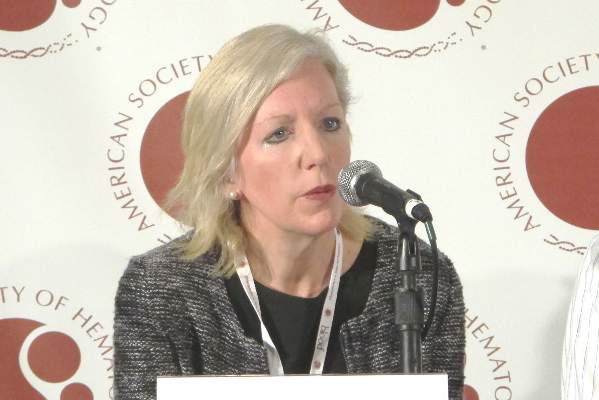
The findings suggest that these patients would not benefit from further intensification of their chemotherapy, sparing them possible toxicity and late effects.
The COG used clinical, biologic, and early disease response measures to study 11,144 patients, aged 1-30 years, enrolled on the COG AALL03B1 classification study. Patients began either a standard risk 3-drug or high risk 4-drug induction therapy based on NCI risk group, she said at the annual meeting of the American Society of Hematology.
After induction therapy, patients were classified into low (29%), standard (33%), high (34%), or very high (4%) risk groups for treatment allocation. Variables used for risk classification included age, initial WBC, extramedullary disease status, blast cytogenetics, early treatment response based on bone marrow morphology and minimal residual disease in marrow at day 29.
Rapid early response was defined as having less than 5% blasts in bone marrow by day 15 plus flow cytometry-based minimal residual disease less than 0.1% on day 29 of induction. Those with either 5% or more blasts in their marrow at day 15 or minimal residual disease of 0.1% or more at day 29 were deemed slow early responders.
Of the 96% of patients evaluable for post-induction treatment assignment, 5104 (65%) were treated for NCI standard risk and 2791 were treated for NCI high-risk B-ALL.
Rapid early responses were seen in 84% and slow early responses in 16%. For those with rapid early responses, the 5-year event-free survival rates was 89% and the overall survival rate was 95%. For those with slow early responses, EFS was 68% and OS was 84%.
The standard risk and high risk groups were then combined and analyzed based on cytogenetic subtype. The favorable gene ETV6-RUNX1 was seen in 26% (1,928 patients) and associated with an EFS of 93% as compared to an EFS of 84% for the 5578 patients without ETV6-RUNX1. OS was 98% for positive patients and 92% for negative patients. In the 21% (1,483 patients) with the triple trisomy 4/10/17, EFS was 95% as compared to an EFS of 84% for the 5,603 patients without the trisomy. OS was 99% and 92%, respectively.
In a subsequent analysis using current COG minimum residual disease response measures – with rapid early response defined as day 8 blood minimal residual disease less than 1% and day 29 marrow minimal residual disease less than 0.01% – the 243 high risk patients who had favorable cytogenetics and no detectable leukemia cells in their CSF had 5 years EFS of 95% and OS of 98%.
Dr. Raetz had no relevant financial disclosures.
Abstract 807: Genetic and Response-Based Risk Classification Identifies a Subgroup of NCI High Risk Childhood B-Lymphoblastic Leukemia (HR B-ALL) with Outstanding Outcomes: A Report from the Children’s Oncology Group (COG).
On Twitter @maryjodales
ORLANDO – Cytogenetic profile and response to initial induction therapy can identify a subgroup of National Cancer Institute (NCI) high risk childhood B-lymphoblastic leukemia patients who have good outcomes, Dr. Elizabeth Raetz said, reporting results for her colleagues in the Children’s Oncology Group (COG).
Outcomes were excellent for patients with favorable cytogenetic features and rapid minimal residual disease responses during induction therapy, said Dr. Raetz, of Huntsman Cancer Institute and Primary Children’s Hospital, University of Utah, Salt Lake City. Notably, 5-year overall survival (OS) was over 98% for those with favorable cytogenetic subsets, nearly half of all patients, in a combined analysis of standard risk and high risk patients.
The findings suggest that these patients would not benefit from further intensification of their chemotherapy, sparing them possible toxicity and late effects.
The COG used clinical, biologic, and early disease response measures to study 11,144 patients, aged 1-30 years, enrolled on the COG AALL03B1 classification study. Patients began either a standard risk 3-drug or high risk 4-drug induction therapy based on NCI risk group, she said at the annual meeting of the American Society of Hematology.
After induction therapy, patients were classified into low (29%), standard (33%), high (34%), or very high (4%) risk groups for treatment allocation. Variables used for risk classification included age, initial WBC, extramedullary disease status, blast cytogenetics, early treatment response based on bone marrow morphology and minimal residual disease in marrow at day 29.
Rapid early response was defined as having less than 5% blasts in bone marrow by day 15 plus flow cytometry-based minimal residual disease less than 0.1% on day 29 of induction. Those with either 5% or more blasts in their marrow at day 15 or minimal residual disease of 0.1% or more at day 29 were deemed slow early responders.
Of the 96% of patients evaluable for post-induction treatment assignment, 5104 (65%) were treated for NCI standard risk and 2791 were treated for NCI high-risk B-ALL.
Rapid early responses were seen in 84% and slow early responses in 16%. For those with rapid early responses, the 5-year event-free survival rates was 89% and the overall survival rate was 95%. For those with slow early responses, EFS was 68% and OS was 84%.
The standard risk and high risk groups were then combined and analyzed based on cytogenetic subtype. The favorable gene ETV6-RUNX1 was seen in 26% (1,928 patients) and associated with an EFS of 93% as compared to an EFS of 84% for the 5578 patients without ETV6-RUNX1. OS was 98% for positive patients and 92% for negative patients. In the 21% (1,483 patients) with the triple trisomy 4/10/17, EFS was 95% as compared to an EFS of 84% for the 5,603 patients without the trisomy. OS was 99% and 92%, respectively.
In a subsequent analysis using current COG minimum residual disease response measures – with rapid early response defined as day 8 blood minimal residual disease less than 1% and day 29 marrow minimal residual disease less than 0.01% – the 243 high risk patients who had favorable cytogenetics and no detectable leukemia cells in their CSF had 5 years EFS of 95% and OS of 98%.
Dr. Raetz had no relevant financial disclosures.
Abstract 807: Genetic and Response-Based Risk Classification Identifies a Subgroup of NCI High Risk Childhood B-Lymphoblastic Leukemia (HR B-ALL) with Outstanding Outcomes: A Report from the Children’s Oncology Group (COG).
On Twitter @maryjodales
ORLANDO – Cytogenetic profile and response to initial induction therapy can identify a subgroup of National Cancer Institute (NCI) high risk childhood B-lymphoblastic leukemia patients who have good outcomes, Dr. Elizabeth Raetz said, reporting results for her colleagues in the Children’s Oncology Group (COG).
Outcomes were excellent for patients with favorable cytogenetic features and rapid minimal residual disease responses during induction therapy, said Dr. Raetz, of Huntsman Cancer Institute and Primary Children’s Hospital, University of Utah, Salt Lake City. Notably, 5-year overall survival (OS) was over 98% for those with favorable cytogenetic subsets, nearly half of all patients, in a combined analysis of standard risk and high risk patients.
The findings suggest that these patients would not benefit from further intensification of their chemotherapy, sparing them possible toxicity and late effects.
The COG used clinical, biologic, and early disease response measures to study 11,144 patients, aged 1-30 years, enrolled on the COG AALL03B1 classification study. Patients began either a standard risk 3-drug or high risk 4-drug induction therapy based on NCI risk group, she said at the annual meeting of the American Society of Hematology.
After induction therapy, patients were classified into low (29%), standard (33%), high (34%), or very high (4%) risk groups for treatment allocation. Variables used for risk classification included age, initial WBC, extramedullary disease status, blast cytogenetics, early treatment response based on bone marrow morphology and minimal residual disease in marrow at day 29.
Rapid early response was defined as having less than 5% blasts in bone marrow by day 15 plus flow cytometry-based minimal residual disease less than 0.1% on day 29 of induction. Those with either 5% or more blasts in their marrow at day 15 or minimal residual disease of 0.1% or more at day 29 were deemed slow early responders.
Of the 96% of patients evaluable for post-induction treatment assignment, 5104 (65%) were treated for NCI standard risk and 2791 were treated for NCI high-risk B-ALL.
Rapid early responses were seen in 84% and slow early responses in 16%. For those with rapid early responses, the 5-year event-free survival rates was 89% and the overall survival rate was 95%. For those with slow early responses, EFS was 68% and OS was 84%.
The standard risk and high risk groups were then combined and analyzed based on cytogenetic subtype. The favorable gene ETV6-RUNX1 was seen in 26% (1,928 patients) and associated with an EFS of 93% as compared to an EFS of 84% for the 5578 patients without ETV6-RUNX1. OS was 98% for positive patients and 92% for negative patients. In the 21% (1,483 patients) with the triple trisomy 4/10/17, EFS was 95% as compared to an EFS of 84% for the 5,603 patients without the trisomy. OS was 99% and 92%, respectively.
In a subsequent analysis using current COG minimum residual disease response measures – with rapid early response defined as day 8 blood minimal residual disease less than 1% and day 29 marrow minimal residual disease less than 0.01% – the 243 high risk patients who had favorable cytogenetics and no detectable leukemia cells in their CSF had 5 years EFS of 95% and OS of 98%.
Dr. Raetz had no relevant financial disclosures.
Abstract 807: Genetic and Response-Based Risk Classification Identifies a Subgroup of NCI High Risk Childhood B-Lymphoblastic Leukemia (HR B-ALL) with Outstanding Outcomes: A Report from the Children’s Oncology Group (COG).
On Twitter @maryjodales
AT ASH 2015
Key clinical point: Knowing which patients would not benefit from further intensification of their chemotherapy might spare them possible toxicity and late effects.
Major finding: The 243 high risk patients who had favorable cytogenetics and no detectable leukemia cells in their CSF had 5 year EFS of 94% and OS of 98%.
Data source: 11,144 patients, aged 1-30 years, enrolled on the COG AALL03B1 classification study.
Disclosures: Dr. Raetz had no relevant financial disclosures.
ASH: Donor CAR-T cells elicit responses in mixture of progressive B-cell cancers
ORLANDO – A single infusion of donor-derived chimeric antigen receptor (CAR)-modified T cells targeting CD19 achieved remission in 9 of 20 patients with B-cell malignancies that progressed after allogeneic stem cell transplant, a study shows.
The seven complete remissions and two partial remissions occurred without any chemotherapy and without causing acute graft-versus-host disease (GVHD).

The experimental anti-CD 19 CAR T-cells seem particularly effective against acute lymphoid leukemia (ALL) and chronic lymphocytic leukemia (CLL), but responses also occurred in lymphoma, Dr. James Kochenderfer of the Center for Cancer Research, National Cancer Institute, in Bethesda, Md., reported at the annual meeting of the American Society of Hematology.
B-cell malignancies that persist after transplantation are often treated with unmanipulated donor lymphocytes, but these infusions are often ineffective and associated with significant morbidity and mortality from GVHD.
To improve on this approach, 20 patients were infused with T cells obtained from the original stem cell donor and transduced with a CD19-directed CAR that was encoded by a gamma-retroviral vector and included a CD28 co-stimulatory domain. The highest dose reached in the phase I study was 107 total cell/kg. Production of the anti-CD19 CAR T cells took only eight days for each patient, Dr. Kochenderfer said at a press briefing.
The patients had received at least one standard donor-leukocyte infusion, had to have minimal or no GVHD, and could not be receiving systemic immunosuppressive drugs.
The video associated with this article is no longer available on this site. Please view all of our videos on the MDedge YouTube channel
The highest response rates were in ALL, where four of five patients obtained complete remission (CR) with no detectable minimal residual disease by multi-color flow cytometry, Dr. Kochenderfer said. Two of these patients later relapsed, one is in ongoing CR at 18 months, and one went on to a second allogeneic transplant and continues in complete remission.
The longest ongoing CR at 36 months occurred in a patient treated for CLL. Another patient achieved a partial remission (PR) ongoing at 18 months, two patients progressed, and one has stable disease.
In five patients treated for Mantle cell lymphoma, there is one CR ongoing at 31 months, one PR, and three stable diseases.
Three of the five patients treated for diffuse large B-cell lymphoma experienced stable disease, one progressive disease, and one obtained a CR, but is no longer evaluable because she received other therapies for chronic GVHD. Dr. Kochenderfer went on describe an impressive response in this patient, who had large lymphoma masses at the back of her head and in her eye socket before infusion.
“Amazingly, the tumor masses completely disappeared within five days of CAR T-cell infusion,” he said.
Patients with high tumor burdens, however, experienced severe cytokine-release syndrome with fever, tachycardia, and hypertension that was treated with the interleukin-6 receptor antagonist tocilizumab (Actemra).
Only one case of mild aphasia occurred, which contrasts with other CAR T-cell therapies where neurotoxicity is common, Dr. Kochenderfer said.
One patient had continued worsening of pre-existing chronic GVHD after CAR T-cell therapy, and one patient developed very mild chronic eye GVHD more than a year after infusion.
The press corps was not fully convinced by the findings, however, asking Dr. Kochenderfer why they should be excited by the 40% remission rate when other CAR T-cell therapies have yielded remission rates as high as 90%.
Dr. Kochenderfer pointed out that four of the five ALL patients (80%) achieved a MRD-negative complete response, which compares favorably with other protocols. The remaining patients had far more advanced, treatment-resident disease of varying histologies than evaluated in other trials and, unlike most trials, all patients had received an allogeneic transplant. Further, the investigators used no chemotherapy whatsoever, whereas other CAR T-cells trials have used chemotherapy, sometimes in huge does, he said.
ORLANDO – A single infusion of donor-derived chimeric antigen receptor (CAR)-modified T cells targeting CD19 achieved remission in 9 of 20 patients with B-cell malignancies that progressed after allogeneic stem cell transplant, a study shows.
The seven complete remissions and two partial remissions occurred without any chemotherapy and without causing acute graft-versus-host disease (GVHD).
The experimental anti-CD 19 CAR T-cells seem particularly effective against acute lymphoid leukemia (ALL) and chronic lymphocytic leukemia (CLL), but responses also occurred in lymphoma, Dr. James Kochenderfer of the Center for Cancer Research, National Cancer Institute, in Bethesda, Md., reported at the annual meeting of the American Society of Hematology.
B-cell malignancies that persist after transplantation are often treated with unmanipulated donor lymphocytes, but these infusions are often ineffective and associated with significant morbidity and mortality from GVHD.
To improve on this approach, 20 patients were infused with T cells obtained from the original stem cell donor and transduced with a CD19-directed CAR that was encoded by a gamma-retroviral vector and included a CD28 co-stimulatory domain. The highest dose reached in the phase I study was 107 total cell/kg. Production of the anti-CD19 CAR T cells took only eight days for each patient, Dr. Kochenderfer said at a press briefing.
The patients had received at least one standard donor-leukocyte infusion, had to have minimal or no GVHD, and could not be receiving systemic immunosuppressive drugs.
The video associated with this article is no longer available on this site. Please view all of our videos on the MDedge YouTube channel
The highest response rates were in ALL, where four of five patients obtained complete remission (CR) with no detectable minimal residual disease by multi-color flow cytometry, Dr. Kochenderfer said. Two of these patients later relapsed, one is in ongoing CR at 18 months, and one went on to a second allogeneic transplant and continues in complete remission.
The longest ongoing CR at 36 months occurred in a patient treated for CLL. Another patient achieved a partial remission (PR) ongoing at 18 months, two patients progressed, and one has stable disease.
In five patients treated for Mantle cell lymphoma, there is one CR ongoing at 31 months, one PR, and three stable diseases.
Three of the five patients treated for diffuse large B-cell lymphoma experienced stable disease, one progressive disease, and one obtained a CR, but is no longer evaluable because she received other therapies for chronic GVHD. Dr. Kochenderfer went on describe an impressive response in this patient, who had large lymphoma masses at the back of her head and in her eye socket before infusion.
“Amazingly, the tumor masses completely disappeared within five days of CAR T-cell infusion,” he said.
Patients with high tumor burdens, however, experienced severe cytokine-release syndrome with fever, tachycardia, and hypertension that was treated with the interleukin-6 receptor antagonist tocilizumab (Actemra).
Only one case of mild aphasia occurred, which contrasts with other CAR T-cell therapies where neurotoxicity is common, Dr. Kochenderfer said.
One patient had continued worsening of pre-existing chronic GVHD after CAR T-cell therapy, and one patient developed very mild chronic eye GVHD more than a year after infusion.
The press corps was not fully convinced by the findings, however, asking Dr. Kochenderfer why they should be excited by the 40% remission rate when other CAR T-cell therapies have yielded remission rates as high as 90%.
Dr. Kochenderfer pointed out that four of the five ALL patients (80%) achieved a MRD-negative complete response, which compares favorably with other protocols. The remaining patients had far more advanced, treatment-resident disease of varying histologies than evaluated in other trials and, unlike most trials, all patients had received an allogeneic transplant. Further, the investigators used no chemotherapy whatsoever, whereas other CAR T-cells trials have used chemotherapy, sometimes in huge does, he said.
ORLANDO – A single infusion of donor-derived chimeric antigen receptor (CAR)-modified T cells targeting CD19 achieved remission in 9 of 20 patients with B-cell malignancies that progressed after allogeneic stem cell transplant, a study shows.
The seven complete remissions and two partial remissions occurred without any chemotherapy and without causing acute graft-versus-host disease (GVHD).
The experimental anti-CD 19 CAR T-cells seem particularly effective against acute lymphoid leukemia (ALL) and chronic lymphocytic leukemia (CLL), but responses also occurred in lymphoma, Dr. James Kochenderfer of the Center for Cancer Research, National Cancer Institute, in Bethesda, Md., reported at the annual meeting of the American Society of Hematology.
B-cell malignancies that persist after transplantation are often treated with unmanipulated donor lymphocytes, but these infusions are often ineffective and associated with significant morbidity and mortality from GVHD.
To improve on this approach, 20 patients were infused with T cells obtained from the original stem cell donor and transduced with a CD19-directed CAR that was encoded by a gamma-retroviral vector and included a CD28 co-stimulatory domain. The highest dose reached in the phase I study was 107 total cell/kg. Production of the anti-CD19 CAR T cells took only eight days for each patient, Dr. Kochenderfer said at a press briefing.
The patients had received at least one standard donor-leukocyte infusion, had to have minimal or no GVHD, and could not be receiving systemic immunosuppressive drugs.
The video associated with this article is no longer available on this site. Please view all of our videos on the MDedge YouTube channel
The highest response rates were in ALL, where four of five patients obtained complete remission (CR) with no detectable minimal residual disease by multi-color flow cytometry, Dr. Kochenderfer said. Two of these patients later relapsed, one is in ongoing CR at 18 months, and one went on to a second allogeneic transplant and continues in complete remission.
The longest ongoing CR at 36 months occurred in a patient treated for CLL. Another patient achieved a partial remission (PR) ongoing at 18 months, two patients progressed, and one has stable disease.
In five patients treated for Mantle cell lymphoma, there is one CR ongoing at 31 months, one PR, and three stable diseases.
Three of the five patients treated for diffuse large B-cell lymphoma experienced stable disease, one progressive disease, and one obtained a CR, but is no longer evaluable because she received other therapies for chronic GVHD. Dr. Kochenderfer went on describe an impressive response in this patient, who had large lymphoma masses at the back of her head and in her eye socket before infusion.
“Amazingly, the tumor masses completely disappeared within five days of CAR T-cell infusion,” he said.
Patients with high tumor burdens, however, experienced severe cytokine-release syndrome with fever, tachycardia, and hypertension that was treated with the interleukin-6 receptor antagonist tocilizumab (Actemra).
Only one case of mild aphasia occurred, which contrasts with other CAR T-cell therapies where neurotoxicity is common, Dr. Kochenderfer said.
One patient had continued worsening of pre-existing chronic GVHD after CAR T-cell therapy, and one patient developed very mild chronic eye GVHD more than a year after infusion.
The press corps was not fully convinced by the findings, however, asking Dr. Kochenderfer why they should be excited by the 40% remission rate when other CAR T-cell therapies have yielded remission rates as high as 90%.
Dr. Kochenderfer pointed out that four of the five ALL patients (80%) achieved a MRD-negative complete response, which compares favorably with other protocols. The remaining patients had far more advanced, treatment-resident disease of varying histologies than evaluated in other trials and, unlike most trials, all patients had received an allogeneic transplant. Further, the investigators used no chemotherapy whatsoever, whereas other CAR T-cells trials have used chemotherapy, sometimes in huge does, he said.
AT ASH 2015
Key clinical point: Allogeneic anti-CD19 CAR T-cell therapy showed promise in a treatment approach for B-cell malignancies persisting after allogeneic transplantation.
Major finding: Nine of 20 patients achieved remission with anti-CD19 CAR T-cell therapy.
Data source: Phase I study in 20 patients with CD19-positive B-cell malignancies progressing after allogeneic transplant.
Disclosures: Dr. Kochenderfer reported research funding from Bluebird bio, the study sponsor.

EC grants conditional approval for blinatumomab
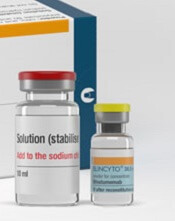
and solution for infusion
Photo courtesy of Amgen
The European Commission (EC) has granted conditional marketing authorization for blinatumomab (Blincyto) to treat adults with Philadelphia chromosome-negative (Ph-) relapsed or refractory B-precursor acute lymphoblastic leukemia (ALL).
This applies to the 28 member countries of the European Union as well as Iceland, Lichtenstein, and Norway.
Conditional marketing authorizations are valid for 1 year, on a renewable basis. The holder is required to complete ongoing studies or conduct new studies with the goal of confirming that a drug’s benefit-risk balance is positive.
Conditional marketing authorization is converted to a full authorization once these commitments have been fulfilled.
The EC granted conditional marketing authorization for blinatumomab based on a pair of phase 2 trials—Study ‘211 and Study ‘206.
Study ‘211
Results of Study ‘211 were presented at EHA 2014. The trial included 189 patients with Ph- relapsed or refractory B-precursor ALL.
The primary endpoint was complete remission or complete remission with partial hematologic recovery (CR/CRh). About 43% of patients achieved this endpoint within 2 cycles of therapy.
According to researchers, the most serious adverse events in this study were infection (31.7%), neurologic events (16.4%), neutropenia/febrile neutropenia (15.3%), cytokine release syndrome (CRS, 0.5%), and tumor lysis syndrome (0.5%).
Study ‘206
Results of Study ‘206 were presented at ASCO 2012. The trial included 36 patients with relapsed or refractory B-precursor ALL.
In this trial, the CR/CRh rate was 69.4% (25/36), with 15 patients achieving a CR (41.7%), and 10 patients achieving CRh (27.8%).
The “medically important” adverse events in this study, according to researchers, were CRS (n=3), central nervous system (CNS) events (3 seizures and 3 cases of encephalopathy), and fungal infection resulting in death (n=1).
However, the researchers found they could prevent CRS with dexamethasone. In addition, the CNS events were reversible, and blinatumomab could be reintroduced in 4 of the 6 patients with CNS events.
About blinatumomab
Blinatumomab is a bispecific T-cell engager (BiTE®) antibody construct that binds to CD19 on the surface of B cells and CD3 on the surface of T cells.
BiTE antibody constructs are intended to help the immune system detect and target malignant cells. The modified antibodies are designed to engage 2 different targets simultaneously, thereby juxtaposing T cells to cancer cells.
BiTE antibody constructs help place the T cells within reach of the targeted cells, with the intent of allowing T cells to inject toxins and trigger apoptosis in the cancer cells.
Blinatumomab was granted orphan drug designation by the European Medicines Agency in 2009 for the treatment of ALL.
The drug was granted breakthrough therapy designation and priority review by the US Food and Drug Administration.
Blinatumomab has conditional approval in the US to treat patients with relapsed or refractory Ph- B-precursor ALL. Continued approval for this indication may be contingent upon verification of clinical benefit in subsequent trials.
Blinatumomab is being developed by Amgen.
and solution for infusion
Photo courtesy of Amgen
The European Commission (EC) has granted conditional marketing authorization for blinatumomab (Blincyto) to treat adults with Philadelphia chromosome-negative (Ph-) relapsed or refractory B-precursor acute lymphoblastic leukemia (ALL).
This applies to the 28 member countries of the European Union as well as Iceland, Lichtenstein, and Norway.
Conditional marketing authorizations are valid for 1 year, on a renewable basis. The holder is required to complete ongoing studies or conduct new studies with the goal of confirming that a drug’s benefit-risk balance is positive.
Conditional marketing authorization is converted to a full authorization once these commitments have been fulfilled.
The EC granted conditional marketing authorization for blinatumomab based on a pair of phase 2 trials—Study ‘211 and Study ‘206.
Study ‘211
Results of Study ‘211 were presented at EHA 2014. The trial included 189 patients with Ph- relapsed or refractory B-precursor ALL.
The primary endpoint was complete remission or complete remission with partial hematologic recovery (CR/CRh). About 43% of patients achieved this endpoint within 2 cycles of therapy.
According to researchers, the most serious adverse events in this study were infection (31.7%), neurologic events (16.4%), neutropenia/febrile neutropenia (15.3%), cytokine release syndrome (CRS, 0.5%), and tumor lysis syndrome (0.5%).
Study ‘206
Results of Study ‘206 were presented at ASCO 2012. The trial included 36 patients with relapsed or refractory B-precursor ALL.
In this trial, the CR/CRh rate was 69.4% (25/36), with 15 patients achieving a CR (41.7%), and 10 patients achieving CRh (27.8%).
The “medically important” adverse events in this study, according to researchers, were CRS (n=3), central nervous system (CNS) events (3 seizures and 3 cases of encephalopathy), and fungal infection resulting in death (n=1).
However, the researchers found they could prevent CRS with dexamethasone. In addition, the CNS events were reversible, and blinatumomab could be reintroduced in 4 of the 6 patients with CNS events.
About blinatumomab
Blinatumomab is a bispecific T-cell engager (BiTE®) antibody construct that binds to CD19 on the surface of B cells and CD3 on the surface of T cells.
BiTE antibody constructs are intended to help the immune system detect and target malignant cells. The modified antibodies are designed to engage 2 different targets simultaneously, thereby juxtaposing T cells to cancer cells.
BiTE antibody constructs help place the T cells within reach of the targeted cells, with the intent of allowing T cells to inject toxins and trigger apoptosis in the cancer cells.
Blinatumomab was granted orphan drug designation by the European Medicines Agency in 2009 for the treatment of ALL.
The drug was granted breakthrough therapy designation and priority review by the US Food and Drug Administration.
Blinatumomab has conditional approval in the US to treat patients with relapsed or refractory Ph- B-precursor ALL. Continued approval for this indication may be contingent upon verification of clinical benefit in subsequent trials.
Blinatumomab is being developed by Amgen.
and solution for infusion
Photo courtesy of Amgen
The European Commission (EC) has granted conditional marketing authorization for blinatumomab (Blincyto) to treat adults with Philadelphia chromosome-negative (Ph-) relapsed or refractory B-precursor acute lymphoblastic leukemia (ALL).
This applies to the 28 member countries of the European Union as well as Iceland, Lichtenstein, and Norway.
Conditional marketing authorizations are valid for 1 year, on a renewable basis. The holder is required to complete ongoing studies or conduct new studies with the goal of confirming that a drug’s benefit-risk balance is positive.
Conditional marketing authorization is converted to a full authorization once these commitments have been fulfilled.
The EC granted conditional marketing authorization for blinatumomab based on a pair of phase 2 trials—Study ‘211 and Study ‘206.
Study ‘211
Results of Study ‘211 were presented at EHA 2014. The trial included 189 patients with Ph- relapsed or refractory B-precursor ALL.
The primary endpoint was complete remission or complete remission with partial hematologic recovery (CR/CRh). About 43% of patients achieved this endpoint within 2 cycles of therapy.
According to researchers, the most serious adverse events in this study were infection (31.7%), neurologic events (16.4%), neutropenia/febrile neutropenia (15.3%), cytokine release syndrome (CRS, 0.5%), and tumor lysis syndrome (0.5%).
Study ‘206
Results of Study ‘206 were presented at ASCO 2012. The trial included 36 patients with relapsed or refractory B-precursor ALL.
In this trial, the CR/CRh rate was 69.4% (25/36), with 15 patients achieving a CR (41.7%), and 10 patients achieving CRh (27.8%).
The “medically important” adverse events in this study, according to researchers, were CRS (n=3), central nervous system (CNS) events (3 seizures and 3 cases of encephalopathy), and fungal infection resulting in death (n=1).
However, the researchers found they could prevent CRS with dexamethasone. In addition, the CNS events were reversible, and blinatumomab could be reintroduced in 4 of the 6 patients with CNS events.
About blinatumomab
Blinatumomab is a bispecific T-cell engager (BiTE®) antibody construct that binds to CD19 on the surface of B cells and CD3 on the surface of T cells.
BiTE antibody constructs are intended to help the immune system detect and target malignant cells. The modified antibodies are designed to engage 2 different targets simultaneously, thereby juxtaposing T cells to cancer cells.
BiTE antibody constructs help place the T cells within reach of the targeted cells, with the intent of allowing T cells to inject toxins and trigger apoptosis in the cancer cells.
Blinatumomab was granted orphan drug designation by the European Medicines Agency in 2009 for the treatment of ALL.
The drug was granted breakthrough therapy designation and priority review by the US Food and Drug Administration.
Blinatumomab has conditional approval in the US to treat patients with relapsed or refractory Ph- B-precursor ALL. Continued approval for this indication may be contingent upon verification of clinical benefit in subsequent trials.
Blinatumomab is being developed by Amgen.
CHMP recommends pegaspargase for ALL
The European Medicines Agency’s Committee for Medicinal Products for Human Use (CHMP) has recommended marketing authorization for pegaspargase (Oncaspar) as part of combination antineoplastic therapy for pediatric and adult patients with acute lymphoblastic leukemia (ALL).
The CHMP’s opinion has been referred to the European Commission, which grants marketing authorization for drugs in the European Union.
If approved, pegaspargase will be marketed for the aforementioned indication in the 28 member countries of the European Union, as well as Iceland, Liechtenstein, and Norway.
Baxalta Incorporated, the company developing pegaspargase, expects a decision from the European Commission early next year.
First-line ALL
Researchers have evaluated the safety and effectiveness of pegaspargase in a study of 118 pediatric patients (ages 1 to 9) with newly diagnosed ALL. The patients were randomized 1:1 to pegaspargase or native E coli L-asparaginase, both as part of combination therapy.
Asparagine depletion (magnitude and duration) was similar between the 2 treatment arms. Event-free survival rates were also similar (about 80% in both arms), but the study was not designed to evaluate differences in event-free survival.
Grade 3/4 adverse events occurring in the pegaspargase and native E coli L-asparaginase arms, respectively, were abnormal liver tests (5% and 8%), elevated transaminases (3% and 7%), hyperbilirubinemia (2% and 2%), hyperglycemia (5% and 3%), central nervous system thrombosis (3% and 3%), coagulopathy (2% and 5%), pancreatitis (2% and 2%), and clinical allergic reactions to asparaginase (2% and 0%).
Previously treated ALL
Researchers have evaluated the effectiveness of pegaspargase in 4 open-label studies of patients with a history of prior clinical allergic reaction to asparaginase. The studies enrolled a total of 42 patients with multiply relapsed acute leukemia (39 with ALL).
Patients received pegaspargase as a single agent or in combination with multi-agent chemotherapy. The re-induction response rate was 50%—36% complete responses and 14% partial responses.
These results were similar to the overall response rates reported for patients with ALL receiving second-line, native E coli L-asparaginase-containing re-induction chemotherapy. However, antitumor activity was observed with single-agent pegaspargase as well (3 responses).
Adverse event information on pegaspargase in relapsed ALL has been compiled from 5 clinical trials. The studies enrolled a total of 174 patients with relapsed ALL who received pegaspargase as a single agent or in combination with multi-agent chemotherapy.
Sixty-two of the patients had prior hypersensitivity reactions to asparaginase, and 112 did not. Allergic reactions to pegaspargase occurred in 32% of previously hypersensitive patients and 10% of non-hypersensitive patients.
The most common adverse events observed in patients who received pegaspargase were clinical allergic reactions, elevated transaminases, hyperbilirubinemia, and coagulopathies. The most common serious adverse events due to pegaspargase were thrombosis (4%), hyperglycemia requiring insulin therapy (3%), and pancreatitis (1%).
For more details on these trials and pegaspargase, see the product information.
The European Medicines Agency’s Committee for Medicinal Products for Human Use (CHMP) has recommended marketing authorization for pegaspargase (Oncaspar) as part of combination antineoplastic therapy for pediatric and adult patients with acute lymphoblastic leukemia (ALL).
The CHMP’s opinion has been referred to the European Commission, which grants marketing authorization for drugs in the European Union.
If approved, pegaspargase will be marketed for the aforementioned indication in the 28 member countries of the European Union, as well as Iceland, Liechtenstein, and Norway.
Baxalta Incorporated, the company developing pegaspargase, expects a decision from the European Commission early next year.
First-line ALL
Researchers have evaluated the safety and effectiveness of pegaspargase in a study of 118 pediatric patients (ages 1 to 9) with newly diagnosed ALL. The patients were randomized 1:1 to pegaspargase or native E coli L-asparaginase, both as part of combination therapy.
Asparagine depletion (magnitude and duration) was similar between the 2 treatment arms. Event-free survival rates were also similar (about 80% in both arms), but the study was not designed to evaluate differences in event-free survival.
Grade 3/4 adverse events occurring in the pegaspargase and native E coli L-asparaginase arms, respectively, were abnormal liver tests (5% and 8%), elevated transaminases (3% and 7%), hyperbilirubinemia (2% and 2%), hyperglycemia (5% and 3%), central nervous system thrombosis (3% and 3%), coagulopathy (2% and 5%), pancreatitis (2% and 2%), and clinical allergic reactions to asparaginase (2% and 0%).
Previously treated ALL
Researchers have evaluated the effectiveness of pegaspargase in 4 open-label studies of patients with a history of prior clinical allergic reaction to asparaginase. The studies enrolled a total of 42 patients with multiply relapsed acute leukemia (39 with ALL).
Patients received pegaspargase as a single agent or in combination with multi-agent chemotherapy. The re-induction response rate was 50%—36% complete responses and 14% partial responses.
These results were similar to the overall response rates reported for patients with ALL receiving second-line, native E coli L-asparaginase-containing re-induction chemotherapy. However, antitumor activity was observed with single-agent pegaspargase as well (3 responses).
Adverse event information on pegaspargase in relapsed ALL has been compiled from 5 clinical trials. The studies enrolled a total of 174 patients with relapsed ALL who received pegaspargase as a single agent or in combination with multi-agent chemotherapy.
Sixty-two of the patients had prior hypersensitivity reactions to asparaginase, and 112 did not. Allergic reactions to pegaspargase occurred in 32% of previously hypersensitive patients and 10% of non-hypersensitive patients.
The most common adverse events observed in patients who received pegaspargase were clinical allergic reactions, elevated transaminases, hyperbilirubinemia, and coagulopathies. The most common serious adverse events due to pegaspargase were thrombosis (4%), hyperglycemia requiring insulin therapy (3%), and pancreatitis (1%).
For more details on these trials and pegaspargase, see the product information.
The European Medicines Agency’s Committee for Medicinal Products for Human Use (CHMP) has recommended marketing authorization for pegaspargase (Oncaspar) as part of combination antineoplastic therapy for pediatric and adult patients with acute lymphoblastic leukemia (ALL).
The CHMP’s opinion has been referred to the European Commission, which grants marketing authorization for drugs in the European Union.
If approved, pegaspargase will be marketed for the aforementioned indication in the 28 member countries of the European Union, as well as Iceland, Liechtenstein, and Norway.
Baxalta Incorporated, the company developing pegaspargase, expects a decision from the European Commission early next year.
First-line ALL
Researchers have evaluated the safety and effectiveness of pegaspargase in a study of 118 pediatric patients (ages 1 to 9) with newly diagnosed ALL. The patients were randomized 1:1 to pegaspargase or native E coli L-asparaginase, both as part of combination therapy.
Asparagine depletion (magnitude and duration) was similar between the 2 treatment arms. Event-free survival rates were also similar (about 80% in both arms), but the study was not designed to evaluate differences in event-free survival.
Grade 3/4 adverse events occurring in the pegaspargase and native E coli L-asparaginase arms, respectively, were abnormal liver tests (5% and 8%), elevated transaminases (3% and 7%), hyperbilirubinemia (2% and 2%), hyperglycemia (5% and 3%), central nervous system thrombosis (3% and 3%), coagulopathy (2% and 5%), pancreatitis (2% and 2%), and clinical allergic reactions to asparaginase (2% and 0%).
Previously treated ALL
Researchers have evaluated the effectiveness of pegaspargase in 4 open-label studies of patients with a history of prior clinical allergic reaction to asparaginase. The studies enrolled a total of 42 patients with multiply relapsed acute leukemia (39 with ALL).
Patients received pegaspargase as a single agent or in combination with multi-agent chemotherapy. The re-induction response rate was 50%—36% complete responses and 14% partial responses.
These results were similar to the overall response rates reported for patients with ALL receiving second-line, native E coli L-asparaginase-containing re-induction chemotherapy. However, antitumor activity was observed with single-agent pegaspargase as well (3 responses).
Adverse event information on pegaspargase in relapsed ALL has been compiled from 5 clinical trials. The studies enrolled a total of 174 patients with relapsed ALL who received pegaspargase as a single agent or in combination with multi-agent chemotherapy.
Sixty-two of the patients had prior hypersensitivity reactions to asparaginase, and 112 did not. Allergic reactions to pegaspargase occurred in 32% of previously hypersensitive patients and 10% of non-hypersensitive patients.
The most common adverse events observed in patients who received pegaspargase were clinical allergic reactions, elevated transaminases, hyperbilirubinemia, and coagulopathies. The most common serious adverse events due to pegaspargase were thrombosis (4%), hyperglycemia requiring insulin therapy (3%), and pancreatitis (1%).
For more details on these trials and pegaspargase, see the product information.