User login
MDedge conference coverage features onsite reporting of the latest study results and expert perspectives from leading researchers.
Racial morphing: A conundrum in cosmetic dermatology
HONOLULU – In the opinion of Nazanin A. Saedi, MD, social media-induced dissatisfaction with appearance is getting out of hand in the field of cosmetic dermatology, with the emergence of apps to filter and edit images to the patient’s liking.
This, coupled with
“Overexposure of celebrity images and altered faces on social media have led to a trend of overarching brows, sculpted noses, enlarged cheeks, and sharply defined jawlines,” Dr. Saedi, cochair of the laser and aesthetics surgery center at Dermatology Associates of Plymouth Meeting, Pa., said at the Hawaii Dermatology Seminar provided by MedscapeLIVE! “These trends have made people of different ethnicities morph into a similar appearance.”

At the meeting, she showed early career images of celebrities from different ethnic backgrounds, “and they all have unique features that make them look great,” said Dr. Saedi, clinical associate professor of dermatology at Thomas Jefferson University, Philadelphia. She then showed images of the same celebrities after they had undergone cosmetic procedures, “and they look so much more similar,” with overarched brows, sculpted noses, enlarged cheeks, and sharply defined jawlines. “Whereas they were all beautiful before individually, now they look very similar,” she said. “This is what we see on social media.”
Referring to the Kardashians as an example of celebrities who have had a lot of aesthetic treatments, look different than they did years ago, and are seen “more and more,” she added, “it’s this repeated overexposure to people on social media, to celebrities, that’s created this different trend of attractiveness.”
This trend also affects patients seeking cosmetic treatments, she noted. Individuals can use an app to alter their appearance, “changing the way they look to create the best version of themselves, they might say, or a filtered version of themselves,” said Dr. Saedi, one of the authors of a commentary on patient perception of beauty on social media published several years ago.
“I tell people, ‘Don’t use filters in your photos. Embrace your beauty.’ I have patients coming in who want to look like the social media photos they’ve curated, maybe larger lips or more definition in their jawline. What they don’t understand is that it takes a long time for that to happen. It’s a process.” In other cases, their desired outcome is not possible due to limits of their individual facial anatomy.
In a study published almost 20 years ago in the journal Perception, Irish researchers manipulated the familiarity of typical and distinctive faces to measure the effect on attractiveness. They found that episodic familiarity affects attractiveness ratings independently of general or structural familiarity.
“So, the more you saw a face, the more familiar that face was to you,” said Dr. Saedi, who was not involved with the study. “Over time, you felt that to be more attractive. I think that’s a lot of what’s going on in the trends that we’re seeing – both in real life and on social media. I do think we need to be more mindful of maintaining features that make an individual unique, while also maintaining their ethnic beauty.”
In an interview at the meeting, Jacqueline D. Watchmaker, MD, a board-certified cosmetic and medical dermatologist who practices in Scottsdale, Ariz., said that she identifies with the notion of racial morphing in her own clinical experience. “Patients come in and specifically ask for chiseled jawlines, high cheekbones, and bigger lips,” Dr. Watchmaker said. “It’s a tricky situation when they ask for [a treatment] you don’t think they need. I prefer a more staged approach to maintain their individuality while giving them a little bit of the aesthetic benefit that they’re looking for.”
Dr. Saedi disclosed ties with AbbVie, Aerolase, Allergan, Alma, Cartessa, Cynosure, Galderma Laboratories, LP, Grand Cosmetics, Revelle Aesthetics, and Revision Skincare. Dr. Watchmaker reported having no financial disclosures.
Medscape and this news organization are owned by the same parent company.
HONOLULU – In the opinion of Nazanin A. Saedi, MD, social media-induced dissatisfaction with appearance is getting out of hand in the field of cosmetic dermatology, with the emergence of apps to filter and edit images to the patient’s liking.
This, coupled with
“Overexposure of celebrity images and altered faces on social media have led to a trend of overarching brows, sculpted noses, enlarged cheeks, and sharply defined jawlines,” Dr. Saedi, cochair of the laser and aesthetics surgery center at Dermatology Associates of Plymouth Meeting, Pa., said at the Hawaii Dermatology Seminar provided by MedscapeLIVE! “These trends have made people of different ethnicities morph into a similar appearance.”
At the meeting, she showed early career images of celebrities from different ethnic backgrounds, “and they all have unique features that make them look great,” said Dr. Saedi, clinical associate professor of dermatology at Thomas Jefferson University, Philadelphia. She then showed images of the same celebrities after they had undergone cosmetic procedures, “and they look so much more similar,” with overarched brows, sculpted noses, enlarged cheeks, and sharply defined jawlines. “Whereas they were all beautiful before individually, now they look very similar,” she said. “This is what we see on social media.”
Referring to the Kardashians as an example of celebrities who have had a lot of aesthetic treatments, look different than they did years ago, and are seen “more and more,” she added, “it’s this repeated overexposure to people on social media, to celebrities, that’s created this different trend of attractiveness.”
This trend also affects patients seeking cosmetic treatments, she noted. Individuals can use an app to alter their appearance, “changing the way they look to create the best version of themselves, they might say, or a filtered version of themselves,” said Dr. Saedi, one of the authors of a commentary on patient perception of beauty on social media published several years ago.
“I tell people, ‘Don’t use filters in your photos. Embrace your beauty.’ I have patients coming in who want to look like the social media photos they’ve curated, maybe larger lips or more definition in their jawline. What they don’t understand is that it takes a long time for that to happen. It’s a process.” In other cases, their desired outcome is not possible due to limits of their individual facial anatomy.
In a study published almost 20 years ago in the journal Perception, Irish researchers manipulated the familiarity of typical and distinctive faces to measure the effect on attractiveness. They found that episodic familiarity affects attractiveness ratings independently of general or structural familiarity.
“So, the more you saw a face, the more familiar that face was to you,” said Dr. Saedi, who was not involved with the study. “Over time, you felt that to be more attractive. I think that’s a lot of what’s going on in the trends that we’re seeing – both in real life and on social media. I do think we need to be more mindful of maintaining features that make an individual unique, while also maintaining their ethnic beauty.”
In an interview at the meeting, Jacqueline D. Watchmaker, MD, a board-certified cosmetic and medical dermatologist who practices in Scottsdale, Ariz., said that she identifies with the notion of racial morphing in her own clinical experience. “Patients come in and specifically ask for chiseled jawlines, high cheekbones, and bigger lips,” Dr. Watchmaker said. “It’s a tricky situation when they ask for [a treatment] you don’t think they need. I prefer a more staged approach to maintain their individuality while giving them a little bit of the aesthetic benefit that they’re looking for.”
Dr. Saedi disclosed ties with AbbVie, Aerolase, Allergan, Alma, Cartessa, Cynosure, Galderma Laboratories, LP, Grand Cosmetics, Revelle Aesthetics, and Revision Skincare. Dr. Watchmaker reported having no financial disclosures.
Medscape and this news organization are owned by the same parent company.
HONOLULU – In the opinion of Nazanin A. Saedi, MD, social media-induced dissatisfaction with appearance is getting out of hand in the field of cosmetic dermatology, with the emergence of apps to filter and edit images to the patient’s liking.
This, coupled with
“Overexposure of celebrity images and altered faces on social media have led to a trend of overarching brows, sculpted noses, enlarged cheeks, and sharply defined jawlines,” Dr. Saedi, cochair of the laser and aesthetics surgery center at Dermatology Associates of Plymouth Meeting, Pa., said at the Hawaii Dermatology Seminar provided by MedscapeLIVE! “These trends have made people of different ethnicities morph into a similar appearance.”
At the meeting, she showed early career images of celebrities from different ethnic backgrounds, “and they all have unique features that make them look great,” said Dr. Saedi, clinical associate professor of dermatology at Thomas Jefferson University, Philadelphia. She then showed images of the same celebrities after they had undergone cosmetic procedures, “and they look so much more similar,” with overarched brows, sculpted noses, enlarged cheeks, and sharply defined jawlines. “Whereas they were all beautiful before individually, now they look very similar,” she said. “This is what we see on social media.”
Referring to the Kardashians as an example of celebrities who have had a lot of aesthetic treatments, look different than they did years ago, and are seen “more and more,” she added, “it’s this repeated overexposure to people on social media, to celebrities, that’s created this different trend of attractiveness.”
This trend also affects patients seeking cosmetic treatments, she noted. Individuals can use an app to alter their appearance, “changing the way they look to create the best version of themselves, they might say, or a filtered version of themselves,” said Dr. Saedi, one of the authors of a commentary on patient perception of beauty on social media published several years ago.
“I tell people, ‘Don’t use filters in your photos. Embrace your beauty.’ I have patients coming in who want to look like the social media photos they’ve curated, maybe larger lips or more definition in their jawline. What they don’t understand is that it takes a long time for that to happen. It’s a process.” In other cases, their desired outcome is not possible due to limits of their individual facial anatomy.
In a study published almost 20 years ago in the journal Perception, Irish researchers manipulated the familiarity of typical and distinctive faces to measure the effect on attractiveness. They found that episodic familiarity affects attractiveness ratings independently of general or structural familiarity.
“So, the more you saw a face, the more familiar that face was to you,” said Dr. Saedi, who was not involved with the study. “Over time, you felt that to be more attractive. I think that’s a lot of what’s going on in the trends that we’re seeing – both in real life and on social media. I do think we need to be more mindful of maintaining features that make an individual unique, while also maintaining their ethnic beauty.”
In an interview at the meeting, Jacqueline D. Watchmaker, MD, a board-certified cosmetic and medical dermatologist who practices in Scottsdale, Ariz., said that she identifies with the notion of racial morphing in her own clinical experience. “Patients come in and specifically ask for chiseled jawlines, high cheekbones, and bigger lips,” Dr. Watchmaker said. “It’s a tricky situation when they ask for [a treatment] you don’t think they need. I prefer a more staged approach to maintain their individuality while giving them a little bit of the aesthetic benefit that they’re looking for.”
Dr. Saedi disclosed ties with AbbVie, Aerolase, Allergan, Alma, Cartessa, Cynosure, Galderma Laboratories, LP, Grand Cosmetics, Revelle Aesthetics, and Revision Skincare. Dr. Watchmaker reported having no financial disclosures.
Medscape and this news organization are owned by the same parent company.
AT THE MEDSCAPELIVE! HAWAII DERMATOLOGY SEMINAR
Phase 3 results: Ponatinib bests imatinib for Ph+ALL
The agents were evaluated in the randomized, open-label, phase 3 PhALLCON study, the first head-to-head comparison of ponatinib and imatinib in combination with reduced-intensity chemotherapy in the Ph+ALL population.
Overall, patients in the ponatinib arm experienced a significantly higher minimal residual disease (MRD)–negative complete response rate as well as deeper and more durable responses compared with those in the imatinib arm, the investigators reported.
The findings were presented during an American Society of Clinical Oncology virtual plenary session.
In adults with ALL, Ph+ disease is the most frequent genetic subtype, accounting for about one third of cases. The current standard of care for newly diagnosed Ph+ALL, also known as BCR-ABL-1–positive ALL, is BCR-ABL1 TKIs in combination with chemotherapy or steroids. However, when treated with first- or second-generation TKIs, patients eventually progress due to the emergence of treatment resistance.
Before the advent of TKI therapies, Ph+ALL had a very poor prognosis, but the development of imatinib in 2001 was transformative, said Marlise R. Luskin, MD, a senior physician at Dana-Farber Cancer Institute, Boston, in the ASCO plenary session, exploring the state of the science.
Added to “backbone” chemotherapy regimens, imatinib improved complete response rates, increased eligibility for stem cell transplantation, and improved overall survival. Second-generation TKIs, including dasatinib and nilotinib further improved outcomes, said Dr. Luskin, also assistant professor at Harvard Medical School, Boston.
More recently, ponatinib has emerged as a promising treatment given its unique action against the ABLA1 T315I KD mutation present in about 75% of cases that relapse as well as the findings of improved MRD-negative complete response rates and event-free survival in retrospective studies, Dr. Luskin said.
The PhALLCON study was designed to further investigate promising results seen in retrospective studies of ponatinib.
To assess ponatinib versus imatinib, patients were enrolled and randomized two to one to receive either a 30-mg once-daily starting dose of ponatinib or a once-daily 600 mg dose of imatinib plus reduced-intensity chemotherapy. After cycle 20, patients received single agent ponatinib or imatinib until disease progression or unacceptable toxicity.
Of the 245 enrolled, 78 remained on treatment at the August 2022 data cutoff, including 42% of those in the ponatinib arm and 12% in the imatinib arm. The most common reasons for discontinuation included hematopoietic stem cell transplantation (31% for ponatinib and 37% for imatinib), adverse events (12% in both arms), and lack of efficacy (7% and 26%, respectively).
At median follow-up of 20 months among 164 patients in the ponatinib arm and 18 months among 81 patients in the imatinib arm, the MRD-negative complete response rates were 34.4% and 16.7%, respectively, said first author Elias J. Jabbour, MD, a professor of medicine at the University of Texas MD Anderson Cancer Center, Houston.
A trend toward improved event-free survival was also observed in the ponatinib arm, but the data were not mature at the time of the analysis, Dr. Jabbour noted.
The two treatments showed comparable safety. Treatment-emergent adverse event rates of any grade and of grade 3 or higher were similar in the two study arms. Arterial occlusive events were infrequent and were also similar between the arms.
“Taken together, for this patient population, the efficacy and safety results demonstrate a favorable risk-benefit assessment for ponatinib, which should be considered a standard of care for frontline therapy in patents with newly diagnosed Ph+ALL,” Dr. Jabbour said.
Although the PhALLCON findings are encouraging, invited discussant Anjali S. Advani, MD, of the Cleveland Clinic, noted some study “pitfalls and caveats,” including the generally younger age and low incidence of cardiovascular risk factors in the study population, which raises questions about the ability to extrapolate the findings to “the larger population, which may be older and have more comorbidities.”
Dr. Advani also said that the ponatinib versus imatinib comparison is a reasonable one, but that most clinicians are now using dasatinib, so “it would have been nice to have this comparison.”
Additionally, “the landscape is now changing with the use of blinatumomab plus TKIs – either dasatinib or ponatinib – in the up-front setting.”
“There is data now from various groups ... showing excellent results, although longer follow-up is needed on all of these,” she said.
One such study is the GIMEMA ALL2820 trial looking at ponatinib plus blinatumomab versus imatinib plus chemotherapy, said Nicolas Boissel, MD, PhD, of Hôpital Saint-Louis in Paris, an invited discussant who addressed the European perspective on the PhALLCON results.
“It is expected that access to ponatinib will be delayed in Europe, compared with the U.S., so meanwhile, clinical trials remain a good option to give access to ponatinib frontline,” he said.
Going forward, Dr. Boissel said it will be important to determine the role of second-generation TKIs in patients who are ineligible to receive ponatinib, the treatment duration needed to reduce long-term risk of relapse, and the potential for eliminating the need for postremission chemotherapy and stem cell transplantation in certain patients.
Dr. Advani added that when evaluating and comparing treatments, it will be important to look at genomic alterations and BCR-ABL mutation status, age and comorbidities, and patterns of disease relapse, including relapse sites and genomics. Longer follow-up results for event-free survival and overall survival are also needed.
“I think, particularly in younger patients with relatively few or no cardiovascular comorbidities, [ponatinib plus reduced-intensity chemotherapy] represents a really exciting option,” Dr. Advani said. “What’s difficult is that the landscape is changing quickly in this field, and so is the standard of care. I think what we struggle with is whether we should be using antibody-based therapies plus TKIs or look at an approach such as this, and further studies are going to be needed to answer that question.”
Dr. Jabbour disclosed ties with Pfizer, Takeda, Amgen, AbbVie, Bristol-Myers Squibb, Incyte, Adaptive Biotechnologies, Astellas Pharma, Genentech, and Ascentage Pharma. Dr. Luskin reported relationships with Pfizer, Novartis, and Abbvie. Dr. Advani disclosed ties with Novartis, Glycomimetics, Kite Pharma, Seattle Genetics, Amgen, Beam Therapeutics, Mkarta, Taiho Oncology, Jazz Pharmaceuticals, Pfizer, and Kura Oncology. Dr. Boissel reported relationships with Amgen, ARIAD/Incyte, Novartis, SERVIER, and Astellas Pharma.
A version of this article originally appeared on Medscape.com.
The agents were evaluated in the randomized, open-label, phase 3 PhALLCON study, the first head-to-head comparison of ponatinib and imatinib in combination with reduced-intensity chemotherapy in the Ph+ALL population.
Overall, patients in the ponatinib arm experienced a significantly higher minimal residual disease (MRD)–negative complete response rate as well as deeper and more durable responses compared with those in the imatinib arm, the investigators reported.
The findings were presented during an American Society of Clinical Oncology virtual plenary session.
In adults with ALL, Ph+ disease is the most frequent genetic subtype, accounting for about one third of cases. The current standard of care for newly diagnosed Ph+ALL, also known as BCR-ABL-1–positive ALL, is BCR-ABL1 TKIs in combination with chemotherapy or steroids. However, when treated with first- or second-generation TKIs, patients eventually progress due to the emergence of treatment resistance.
Before the advent of TKI therapies, Ph+ALL had a very poor prognosis, but the development of imatinib in 2001 was transformative, said Marlise R. Luskin, MD, a senior physician at Dana-Farber Cancer Institute, Boston, in the ASCO plenary session, exploring the state of the science.
Added to “backbone” chemotherapy regimens, imatinib improved complete response rates, increased eligibility for stem cell transplantation, and improved overall survival. Second-generation TKIs, including dasatinib and nilotinib further improved outcomes, said Dr. Luskin, also assistant professor at Harvard Medical School, Boston.
More recently, ponatinib has emerged as a promising treatment given its unique action against the ABLA1 T315I KD mutation present in about 75% of cases that relapse as well as the findings of improved MRD-negative complete response rates and event-free survival in retrospective studies, Dr. Luskin said.
The PhALLCON study was designed to further investigate promising results seen in retrospective studies of ponatinib.
To assess ponatinib versus imatinib, patients were enrolled and randomized two to one to receive either a 30-mg once-daily starting dose of ponatinib or a once-daily 600 mg dose of imatinib plus reduced-intensity chemotherapy. After cycle 20, patients received single agent ponatinib or imatinib until disease progression or unacceptable toxicity.
Of the 245 enrolled, 78 remained on treatment at the August 2022 data cutoff, including 42% of those in the ponatinib arm and 12% in the imatinib arm. The most common reasons for discontinuation included hematopoietic stem cell transplantation (31% for ponatinib and 37% for imatinib), adverse events (12% in both arms), and lack of efficacy (7% and 26%, respectively).
At median follow-up of 20 months among 164 patients in the ponatinib arm and 18 months among 81 patients in the imatinib arm, the MRD-negative complete response rates were 34.4% and 16.7%, respectively, said first author Elias J. Jabbour, MD, a professor of medicine at the University of Texas MD Anderson Cancer Center, Houston.
A trend toward improved event-free survival was also observed in the ponatinib arm, but the data were not mature at the time of the analysis, Dr. Jabbour noted.
The two treatments showed comparable safety. Treatment-emergent adverse event rates of any grade and of grade 3 or higher were similar in the two study arms. Arterial occlusive events were infrequent and were also similar between the arms.
“Taken together, for this patient population, the efficacy and safety results demonstrate a favorable risk-benefit assessment for ponatinib, which should be considered a standard of care for frontline therapy in patents with newly diagnosed Ph+ALL,” Dr. Jabbour said.
Although the PhALLCON findings are encouraging, invited discussant Anjali S. Advani, MD, of the Cleveland Clinic, noted some study “pitfalls and caveats,” including the generally younger age and low incidence of cardiovascular risk factors in the study population, which raises questions about the ability to extrapolate the findings to “the larger population, which may be older and have more comorbidities.”
Dr. Advani also said that the ponatinib versus imatinib comparison is a reasonable one, but that most clinicians are now using dasatinib, so “it would have been nice to have this comparison.”
Additionally, “the landscape is now changing with the use of blinatumomab plus TKIs – either dasatinib or ponatinib – in the up-front setting.”
“There is data now from various groups ... showing excellent results, although longer follow-up is needed on all of these,” she said.
One such study is the GIMEMA ALL2820 trial looking at ponatinib plus blinatumomab versus imatinib plus chemotherapy, said Nicolas Boissel, MD, PhD, of Hôpital Saint-Louis in Paris, an invited discussant who addressed the European perspective on the PhALLCON results.
“It is expected that access to ponatinib will be delayed in Europe, compared with the U.S., so meanwhile, clinical trials remain a good option to give access to ponatinib frontline,” he said.
Going forward, Dr. Boissel said it will be important to determine the role of second-generation TKIs in patients who are ineligible to receive ponatinib, the treatment duration needed to reduce long-term risk of relapse, and the potential for eliminating the need for postremission chemotherapy and stem cell transplantation in certain patients.
Dr. Advani added that when evaluating and comparing treatments, it will be important to look at genomic alterations and BCR-ABL mutation status, age and comorbidities, and patterns of disease relapse, including relapse sites and genomics. Longer follow-up results for event-free survival and overall survival are also needed.
“I think, particularly in younger patients with relatively few or no cardiovascular comorbidities, [ponatinib plus reduced-intensity chemotherapy] represents a really exciting option,” Dr. Advani said. “What’s difficult is that the landscape is changing quickly in this field, and so is the standard of care. I think what we struggle with is whether we should be using antibody-based therapies plus TKIs or look at an approach such as this, and further studies are going to be needed to answer that question.”
Dr. Jabbour disclosed ties with Pfizer, Takeda, Amgen, AbbVie, Bristol-Myers Squibb, Incyte, Adaptive Biotechnologies, Astellas Pharma, Genentech, and Ascentage Pharma. Dr. Luskin reported relationships with Pfizer, Novartis, and Abbvie. Dr. Advani disclosed ties with Novartis, Glycomimetics, Kite Pharma, Seattle Genetics, Amgen, Beam Therapeutics, Mkarta, Taiho Oncology, Jazz Pharmaceuticals, Pfizer, and Kura Oncology. Dr. Boissel reported relationships with Amgen, ARIAD/Incyte, Novartis, SERVIER, and Astellas Pharma.
A version of this article originally appeared on Medscape.com.
The agents were evaluated in the randomized, open-label, phase 3 PhALLCON study, the first head-to-head comparison of ponatinib and imatinib in combination with reduced-intensity chemotherapy in the Ph+ALL population.
Overall, patients in the ponatinib arm experienced a significantly higher minimal residual disease (MRD)–negative complete response rate as well as deeper and more durable responses compared with those in the imatinib arm, the investigators reported.
The findings were presented during an American Society of Clinical Oncology virtual plenary session.
In adults with ALL, Ph+ disease is the most frequent genetic subtype, accounting for about one third of cases. The current standard of care for newly diagnosed Ph+ALL, also known as BCR-ABL-1–positive ALL, is BCR-ABL1 TKIs in combination with chemotherapy or steroids. However, when treated with first- or second-generation TKIs, patients eventually progress due to the emergence of treatment resistance.
Before the advent of TKI therapies, Ph+ALL had a very poor prognosis, but the development of imatinib in 2001 was transformative, said Marlise R. Luskin, MD, a senior physician at Dana-Farber Cancer Institute, Boston, in the ASCO plenary session, exploring the state of the science.
Added to “backbone” chemotherapy regimens, imatinib improved complete response rates, increased eligibility for stem cell transplantation, and improved overall survival. Second-generation TKIs, including dasatinib and nilotinib further improved outcomes, said Dr. Luskin, also assistant professor at Harvard Medical School, Boston.
More recently, ponatinib has emerged as a promising treatment given its unique action against the ABLA1 T315I KD mutation present in about 75% of cases that relapse as well as the findings of improved MRD-negative complete response rates and event-free survival in retrospective studies, Dr. Luskin said.
The PhALLCON study was designed to further investigate promising results seen in retrospective studies of ponatinib.
To assess ponatinib versus imatinib, patients were enrolled and randomized two to one to receive either a 30-mg once-daily starting dose of ponatinib or a once-daily 600 mg dose of imatinib plus reduced-intensity chemotherapy. After cycle 20, patients received single agent ponatinib or imatinib until disease progression or unacceptable toxicity.
Of the 245 enrolled, 78 remained on treatment at the August 2022 data cutoff, including 42% of those in the ponatinib arm and 12% in the imatinib arm. The most common reasons for discontinuation included hematopoietic stem cell transplantation (31% for ponatinib and 37% for imatinib), adverse events (12% in both arms), and lack of efficacy (7% and 26%, respectively).
At median follow-up of 20 months among 164 patients in the ponatinib arm and 18 months among 81 patients in the imatinib arm, the MRD-negative complete response rates were 34.4% and 16.7%, respectively, said first author Elias J. Jabbour, MD, a professor of medicine at the University of Texas MD Anderson Cancer Center, Houston.
A trend toward improved event-free survival was also observed in the ponatinib arm, but the data were not mature at the time of the analysis, Dr. Jabbour noted.
The two treatments showed comparable safety. Treatment-emergent adverse event rates of any grade and of grade 3 or higher were similar in the two study arms. Arterial occlusive events were infrequent and were also similar between the arms.
“Taken together, for this patient population, the efficacy and safety results demonstrate a favorable risk-benefit assessment for ponatinib, which should be considered a standard of care for frontline therapy in patents with newly diagnosed Ph+ALL,” Dr. Jabbour said.
Although the PhALLCON findings are encouraging, invited discussant Anjali S. Advani, MD, of the Cleveland Clinic, noted some study “pitfalls and caveats,” including the generally younger age and low incidence of cardiovascular risk factors in the study population, which raises questions about the ability to extrapolate the findings to “the larger population, which may be older and have more comorbidities.”
Dr. Advani also said that the ponatinib versus imatinib comparison is a reasonable one, but that most clinicians are now using dasatinib, so “it would have been nice to have this comparison.”
Additionally, “the landscape is now changing with the use of blinatumomab plus TKIs – either dasatinib or ponatinib – in the up-front setting.”
“There is data now from various groups ... showing excellent results, although longer follow-up is needed on all of these,” she said.
One such study is the GIMEMA ALL2820 trial looking at ponatinib plus blinatumomab versus imatinib plus chemotherapy, said Nicolas Boissel, MD, PhD, of Hôpital Saint-Louis in Paris, an invited discussant who addressed the European perspective on the PhALLCON results.
“It is expected that access to ponatinib will be delayed in Europe, compared with the U.S., so meanwhile, clinical trials remain a good option to give access to ponatinib frontline,” he said.
Going forward, Dr. Boissel said it will be important to determine the role of second-generation TKIs in patients who are ineligible to receive ponatinib, the treatment duration needed to reduce long-term risk of relapse, and the potential for eliminating the need for postremission chemotherapy and stem cell transplantation in certain patients.
Dr. Advani added that when evaluating and comparing treatments, it will be important to look at genomic alterations and BCR-ABL mutation status, age and comorbidities, and patterns of disease relapse, including relapse sites and genomics. Longer follow-up results for event-free survival and overall survival are also needed.
“I think, particularly in younger patients with relatively few or no cardiovascular comorbidities, [ponatinib plus reduced-intensity chemotherapy] represents a really exciting option,” Dr. Advani said. “What’s difficult is that the landscape is changing quickly in this field, and so is the standard of care. I think what we struggle with is whether we should be using antibody-based therapies plus TKIs or look at an approach such as this, and further studies are going to be needed to answer that question.”
Dr. Jabbour disclosed ties with Pfizer, Takeda, Amgen, AbbVie, Bristol-Myers Squibb, Incyte, Adaptive Biotechnologies, Astellas Pharma, Genentech, and Ascentage Pharma. Dr. Luskin reported relationships with Pfizer, Novartis, and Abbvie. Dr. Advani disclosed ties with Novartis, Glycomimetics, Kite Pharma, Seattle Genetics, Amgen, Beam Therapeutics, Mkarta, Taiho Oncology, Jazz Pharmaceuticals, Pfizer, and Kura Oncology. Dr. Boissel reported relationships with Amgen, ARIAD/Incyte, Novartis, SERVIER, and Astellas Pharma.
A version of this article originally appeared on Medscape.com.
Fixed-dose combo pill for PAH promises accelerated benefit: A DUE
Already commonly used in combination for the treatment of pulmonary arterial hypertension (PAH), macitentan and tadalafil are safe and effective in a fixed-dose combination even as first-line therapy, according to a randomized multicenter comparative trial.
The fixed-dose combination “led to a highly significant and marked improvement in pulmonary vascular resistance when compared to macitentan and tadalafil as monotherapies,” Kelly Chin, MD, reported at the joint scientific sessions of the American College of Cardiology and the World Heart Federation.

Guidelines encourage rapid PVR reductions
In practice, it is common to start treatment with either the endothelial receptor antagonist (ERA) macitentan, the phosphodiesterase-5 (PDE-5) inhibitor tadalafil, or other frequently used medications for PAH, and to then add additional treatments, according to Dr. Chin. She pointed out, however, that guidelines, including those issued jointly by the European Society of Cardiology and the European Respiratory Society, encourage rapid escalation of therapy to quickly lower pulmonary vascular resistance (PVR).
In general, both macitentan and tadalafil are well tolerated, but the advantage and the safety of rapidly reducing PVR when these are initiated together in a single pill had not been evaluated previously in a major trial. In this double-blind phase III trial, called A DUE, 187 patients in functional class II or III PAH were randomized. The three-arm study included both treatment naive patients and patients who had been on stable doses (> 3 months) of an ERA or a PDE5 inhibitor, explained Dr. Chin, director of pulmonary hypertension at the UT Southwestern, Dallas.
Treatment naive patients, representing about 53% of the study population, were randomized to 10 mg macitentan monotherapy, 40 mg tadalafil monotherapy, or a fixed-dose, single-pill combination containing both. If on a stable dose of an ERA at trial entry, patients were randomized to 10 macitentan as a monotherapy or to the fixed dose combination. Patients entering the trial already on a stable dose of a PDE5 inhibitor were randomized to 40 mg tadalafil or the combination.
PVR reduced twofold on combination therapy
Relative to macitentan monotherapy, the percentage change from baseline in PVR by ratio of geometric mean, which was the primary outcome, was about twice as high on the combination (45% vs. 23%) at the end of the 16-week trial. This translates into a 29% PVR reduction (hazard ratio, 0.71; P < .0001).
For combination therapy relative to tadalafil monotherapy, the advantage for the fixed dose combination (44% vs. 22%) was about the same, also providing a nearly 30% relative reduction (HR, 0.72; P < .0001).
The increases in 6-minute walk distance (6MWD) at 16 weeks, a secondary endpoint, numerically favored the combination pill over both macitentan monotherapy (52.9 vs. 39.5 meters; P = .38) and tadalafil (43.4 vs. 15.9 meters; P = .059), but only the improvement relative to tadalafil monotherapy was considered a trend.
The proportion of patients who experienced at least one serious adverse event was higher in the combination arm (14.0%) relative to single agent macitentan (8.6%) or single agent tadalafil (9.1%). The adverse events and serious adverse events more common on the combination included hypotension, fluid retention, and anemia. This latter side effect occurred in 18.7%, 2.9%, and 2.3% in the combination, macitentan monotherapy, and tadalafil arms, respectively.
Several of those invited by the ACC to discuss the paper, including Lee R. Goldberg, MD, section chief of advanced heart failure and cardiac transplant, University of Pennsylvania, Philadelphia, raised concern about the increased rate of anemia among those in the combination pill. Two of the patients (2%) treated with the combination developed a hemoglobin < 8 g/dL.
Overall, nine (8.4%) of those on the fixed-dose combination, two (4.5%) of those randomized to tadalafil monotherapy, and none of the patients randomized to macitentan discontinued therapy due to side effects.
Anemia risk unexpected
Based on “the unexpected signal of an anemia risk,” Biykem Bozkurt, MD, PhD, chair of cardiology at Baylor College of Medicine, Houston, said that a larger scale trial with a longer follow-up is needed. While the concept of front-loading two drugs is attractive “for the very challenging PAH population,” she called for further evaluation of this safety signal before clinicians switch from the current practice of starting with one PAH therapy before adding others.
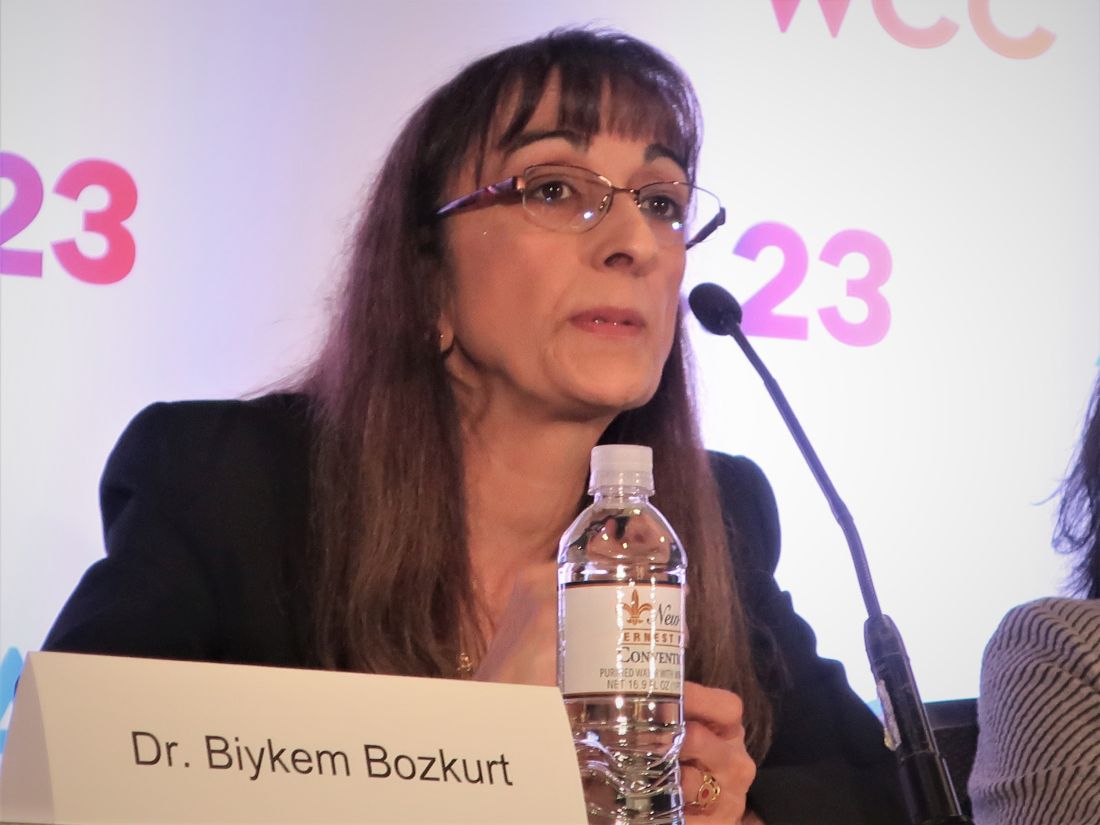
In addition, Dr. Bozkurt said a more definitive study would be helpful in determining whether starting with a fixed-pill combination is better than sequential treatment to improve quality of life. Dr. Bozkurt said it is likely that the lack of significant benefit on 6MWD in this study was due to the relatively small sample size, but an improvement in this measure would be another reason to consider a front-line fixed-dose combination.
Dr. Chin, in an interview, did not agree. She agreed that a larger sample size might have yielded a significant improvement in 6MWD, but she noted this outcome was moving in the right direction and was not the primary endpoint. In her opinion, this phase 3 trial does confirm that fixed-dose combination is well tolerated, has acceptable safety, and markedly improves PVR, fulfilling the guideline goal of controlling PAH more quickly.
Dr. Chin reports financial relationships with Altavant, Arena, Gossamer Bio, Janssen, Merck, ShouTi, and United Therapeutics. Dr. Goldberg reports financial relationships with Abbott, Respicardia/Zoll, and Viscardia. Dr. Bozkurt reports financial relationships with Abbott, Amgen, AstraZeneca, Boehringer Ingelheim, Cardurion, LivaNova, Relypsa, Renovacor, Sanofi-Aventis, and Vifor.
Already commonly used in combination for the treatment of pulmonary arterial hypertension (PAH), macitentan and tadalafil are safe and effective in a fixed-dose combination even as first-line therapy, according to a randomized multicenter comparative trial.
The fixed-dose combination “led to a highly significant and marked improvement in pulmonary vascular resistance when compared to macitentan and tadalafil as monotherapies,” Kelly Chin, MD, reported at the joint scientific sessions of the American College of Cardiology and the World Heart Federation.
Guidelines encourage rapid PVR reductions
In practice, it is common to start treatment with either the endothelial receptor antagonist (ERA) macitentan, the phosphodiesterase-5 (PDE-5) inhibitor tadalafil, or other frequently used medications for PAH, and to then add additional treatments, according to Dr. Chin. She pointed out, however, that guidelines, including those issued jointly by the European Society of Cardiology and the European Respiratory Society, encourage rapid escalation of therapy to quickly lower pulmonary vascular resistance (PVR).
In general, both macitentan and tadalafil are well tolerated, but the advantage and the safety of rapidly reducing PVR when these are initiated together in a single pill had not been evaluated previously in a major trial. In this double-blind phase III trial, called A DUE, 187 patients in functional class II or III PAH were randomized. The three-arm study included both treatment naive patients and patients who had been on stable doses (> 3 months) of an ERA or a PDE5 inhibitor, explained Dr. Chin, director of pulmonary hypertension at the UT Southwestern, Dallas.
Treatment naive patients, representing about 53% of the study population, were randomized to 10 mg macitentan monotherapy, 40 mg tadalafil monotherapy, or a fixed-dose, single-pill combination containing both. If on a stable dose of an ERA at trial entry, patients were randomized to 10 macitentan as a monotherapy or to the fixed dose combination. Patients entering the trial already on a stable dose of a PDE5 inhibitor were randomized to 40 mg tadalafil or the combination.
PVR reduced twofold on combination therapy
Relative to macitentan monotherapy, the percentage change from baseline in PVR by ratio of geometric mean, which was the primary outcome, was about twice as high on the combination (45% vs. 23%) at the end of the 16-week trial. This translates into a 29% PVR reduction (hazard ratio, 0.71; P < .0001).
For combination therapy relative to tadalafil monotherapy, the advantage for the fixed dose combination (44% vs. 22%) was about the same, also providing a nearly 30% relative reduction (HR, 0.72; P < .0001).
The increases in 6-minute walk distance (6MWD) at 16 weeks, a secondary endpoint, numerically favored the combination pill over both macitentan monotherapy (52.9 vs. 39.5 meters; P = .38) and tadalafil (43.4 vs. 15.9 meters; P = .059), but only the improvement relative to tadalafil monotherapy was considered a trend.
The proportion of patients who experienced at least one serious adverse event was higher in the combination arm (14.0%) relative to single agent macitentan (8.6%) or single agent tadalafil (9.1%). The adverse events and serious adverse events more common on the combination included hypotension, fluid retention, and anemia. This latter side effect occurred in 18.7%, 2.9%, and 2.3% in the combination, macitentan monotherapy, and tadalafil arms, respectively.
Several of those invited by the ACC to discuss the paper, including Lee R. Goldberg, MD, section chief of advanced heart failure and cardiac transplant, University of Pennsylvania, Philadelphia, raised concern about the increased rate of anemia among those in the combination pill. Two of the patients (2%) treated with the combination developed a hemoglobin < 8 g/dL.
Overall, nine (8.4%) of those on the fixed-dose combination, two (4.5%) of those randomized to tadalafil monotherapy, and none of the patients randomized to macitentan discontinued therapy due to side effects.
Anemia risk unexpected
Based on “the unexpected signal of an anemia risk,” Biykem Bozkurt, MD, PhD, chair of cardiology at Baylor College of Medicine, Houston, said that a larger scale trial with a longer follow-up is needed. While the concept of front-loading two drugs is attractive “for the very challenging PAH population,” she called for further evaluation of this safety signal before clinicians switch from the current practice of starting with one PAH therapy before adding others.
In addition, Dr. Bozkurt said a more definitive study would be helpful in determining whether starting with a fixed-pill combination is better than sequential treatment to improve quality of life. Dr. Bozkurt said it is likely that the lack of significant benefit on 6MWD in this study was due to the relatively small sample size, but an improvement in this measure would be another reason to consider a front-line fixed-dose combination.
Dr. Chin, in an interview, did not agree. She agreed that a larger sample size might have yielded a significant improvement in 6MWD, but she noted this outcome was moving in the right direction and was not the primary endpoint. In her opinion, this phase 3 trial does confirm that fixed-dose combination is well tolerated, has acceptable safety, and markedly improves PVR, fulfilling the guideline goal of controlling PAH more quickly.
Dr. Chin reports financial relationships with Altavant, Arena, Gossamer Bio, Janssen, Merck, ShouTi, and United Therapeutics. Dr. Goldberg reports financial relationships with Abbott, Respicardia/Zoll, and Viscardia. Dr. Bozkurt reports financial relationships with Abbott, Amgen, AstraZeneca, Boehringer Ingelheim, Cardurion, LivaNova, Relypsa, Renovacor, Sanofi-Aventis, and Vifor.
Already commonly used in combination for the treatment of pulmonary arterial hypertension (PAH), macitentan and tadalafil are safe and effective in a fixed-dose combination even as first-line therapy, according to a randomized multicenter comparative trial.
The fixed-dose combination “led to a highly significant and marked improvement in pulmonary vascular resistance when compared to macitentan and tadalafil as monotherapies,” Kelly Chin, MD, reported at the joint scientific sessions of the American College of Cardiology and the World Heart Federation.
Guidelines encourage rapid PVR reductions
In practice, it is common to start treatment with either the endothelial receptor antagonist (ERA) macitentan, the phosphodiesterase-5 (PDE-5) inhibitor tadalafil, or other frequently used medications for PAH, and to then add additional treatments, according to Dr. Chin. She pointed out, however, that guidelines, including those issued jointly by the European Society of Cardiology and the European Respiratory Society, encourage rapid escalation of therapy to quickly lower pulmonary vascular resistance (PVR).
In general, both macitentan and tadalafil are well tolerated, but the advantage and the safety of rapidly reducing PVR when these are initiated together in a single pill had not been evaluated previously in a major trial. In this double-blind phase III trial, called A DUE, 187 patients in functional class II or III PAH were randomized. The three-arm study included both treatment naive patients and patients who had been on stable doses (> 3 months) of an ERA or a PDE5 inhibitor, explained Dr. Chin, director of pulmonary hypertension at the UT Southwestern, Dallas.
Treatment naive patients, representing about 53% of the study population, were randomized to 10 mg macitentan monotherapy, 40 mg tadalafil monotherapy, or a fixed-dose, single-pill combination containing both. If on a stable dose of an ERA at trial entry, patients were randomized to 10 macitentan as a monotherapy or to the fixed dose combination. Patients entering the trial already on a stable dose of a PDE5 inhibitor were randomized to 40 mg tadalafil or the combination.
PVR reduced twofold on combination therapy
Relative to macitentan monotherapy, the percentage change from baseline in PVR by ratio of geometric mean, which was the primary outcome, was about twice as high on the combination (45% vs. 23%) at the end of the 16-week trial. This translates into a 29% PVR reduction (hazard ratio, 0.71; P < .0001).
For combination therapy relative to tadalafil monotherapy, the advantage for the fixed dose combination (44% vs. 22%) was about the same, also providing a nearly 30% relative reduction (HR, 0.72; P < .0001).
The increases in 6-minute walk distance (6MWD) at 16 weeks, a secondary endpoint, numerically favored the combination pill over both macitentan monotherapy (52.9 vs. 39.5 meters; P = .38) and tadalafil (43.4 vs. 15.9 meters; P = .059), but only the improvement relative to tadalafil monotherapy was considered a trend.
The proportion of patients who experienced at least one serious adverse event was higher in the combination arm (14.0%) relative to single agent macitentan (8.6%) or single agent tadalafil (9.1%). The adverse events and serious adverse events more common on the combination included hypotension, fluid retention, and anemia. This latter side effect occurred in 18.7%, 2.9%, and 2.3% in the combination, macitentan monotherapy, and tadalafil arms, respectively.
Several of those invited by the ACC to discuss the paper, including Lee R. Goldberg, MD, section chief of advanced heart failure and cardiac transplant, University of Pennsylvania, Philadelphia, raised concern about the increased rate of anemia among those in the combination pill. Two of the patients (2%) treated with the combination developed a hemoglobin < 8 g/dL.
Overall, nine (8.4%) of those on the fixed-dose combination, two (4.5%) of those randomized to tadalafil monotherapy, and none of the patients randomized to macitentan discontinued therapy due to side effects.
Anemia risk unexpected
Based on “the unexpected signal of an anemia risk,” Biykem Bozkurt, MD, PhD, chair of cardiology at Baylor College of Medicine, Houston, said that a larger scale trial with a longer follow-up is needed. While the concept of front-loading two drugs is attractive “for the very challenging PAH population,” she called for further evaluation of this safety signal before clinicians switch from the current practice of starting with one PAH therapy before adding others.
In addition, Dr. Bozkurt said a more definitive study would be helpful in determining whether starting with a fixed-pill combination is better than sequential treatment to improve quality of life. Dr. Bozkurt said it is likely that the lack of significant benefit on 6MWD in this study was due to the relatively small sample size, but an improvement in this measure would be another reason to consider a front-line fixed-dose combination.
Dr. Chin, in an interview, did not agree. She agreed that a larger sample size might have yielded a significant improvement in 6MWD, but she noted this outcome was moving in the right direction and was not the primary endpoint. In her opinion, this phase 3 trial does confirm that fixed-dose combination is well tolerated, has acceptable safety, and markedly improves PVR, fulfilling the guideline goal of controlling PAH more quickly.
Dr. Chin reports financial relationships with Altavant, Arena, Gossamer Bio, Janssen, Merck, ShouTi, and United Therapeutics. Dr. Goldberg reports financial relationships with Abbott, Respicardia/Zoll, and Viscardia. Dr. Bozkurt reports financial relationships with Abbott, Amgen, AstraZeneca, Boehringer Ingelheim, Cardurion, LivaNova, Relypsa, Renovacor, Sanofi-Aventis, and Vifor.
AT ACC 2023
Crohn’s disease remission rates ‘remarkably higher’ with vedolizumab
COPENHAGEN –
The study was presented at the annual congress of the European Crohn’s and Colitis Organization by Wolfgang Mohl, MD, of the Center for Gastroenterology in Saarbrucken, Germany, who suggested this biologic, which is a monoclonal antibody, could possibly be used as a first-line treatment instead of as a second or third choice. Currently, TNF inhibitors are generally prescribed first.
“Compared to previous research clinical trials, this prospective 2-year real-world study comparing vedolizumab with anti-TNF showed that, in biologic-naive Crohn’s disease patients, remission rates at 2 years with vedolizumab were remarkably higher than with anti-TNF [therapy],” Dr. Mohl and colleagues wrote in the study abstract.
“Now we know vedolizumab is a good first-line drug and that patients can stay on it for a long time,” he said in an interview. “These data also suggest that we are wrong in thinking TNF inhibitors should be standard. I don’t think this belief holds true anymore.”
The study included 63 biologic-naive patients who were treated with vedolizumab and 197 patients who were treated with anti-TNF agents adalimumab (58.4%) and infliximab (41.6%).
After 2 years, approximately 83% of patients who were treated with vedolizumab were still receiving treatment, but only 56% of patients who received anti-TNF therapy were still undergoing therapy with either adalimumab or infliximab. After 2 years of treatment, 64.2% of patients who were treated with vedolizumab were in clinical remission, compared with 44.7% of patients who were treated with anti-TNF therapy. And, 62.5% of patients who were treated with vedolizumab were not receiving steroid treatment, compared with 41.6% of patients in the anti-TNF therapy group. This, Dr. Mohl said, was a statistically significant difference (P < .05).
“It is clinically relevant to achieve remission without steroids because this is hard to obtain,” he said. “Patients really don’t want to have to take steroids because they can experience lots of side effects including osteoporosis. It’s good to be in remission, but to be in steroid-free remission is so much better.”
Vedolizumab is a relatively new drug, compared with infliximab and adalimumab, which were approved by the Food and Drug Administration in 1998 and 2008, respectively. “We wanted real-world data to help us understand the pattern of outcomes outside of the clinical trial environment,” Dr. Mohl said.
From 45 treatment centers across Germany, researchers prospectively enrolled 1,200 biologic-naive and biologic-experienced patients with either Crohn’s disease or ulcerative colitis between 2017 and 2020 into the VEDOIBD study. This analysis was limited to 260 patients with Crohn’s disease.
In addition to a higher proportion of patients on vedolizumab continuing on treatment, compared with patients on anti–TNF inhibitor therapy, there was a significantly higher clinical remission rate with vedolizumab (64.2%), compared with anti-TNFi therapy (44.7%) after 2 years (P < .05). Researchers used a statistical method to determine the effect of 2-year maintenance in only those patients who responded to a 3-month induction, and they found a significantly better response in terms of clinical remission in patients on vedolizumab (88.6%), compared with anti-TNF inhibitors (45.8%) (P = .0001), and likewise in steroid-free remission with 86.8% for vedolizumab, compared with 44.1% for anti-TNF inhibitors (P < .001).
Dr. Mohl described his experience with vedolizumab in clinical practice. “Vedolizumab may take a little longer to work but then we don’t lose patients due to side effects, which we see more often with anti-TNF therapy,” he said, adding that around 60% of patients experience side effects but around 10% actually stop anti-TNF because of side effects.
“We often lose patients because they develop antidrug antibodies, but also due to escape mechanisms, as well as dermatological side effects including psoriasis which is really annoying for patients. We also find that anti-TNF drugs just stop working after 12-18 months, and then we need to use steroids which patients dislike,” he said.
Andreas Stallmach, MD, director of gastroenterology, Friedrich Schiller University Jena (Germany), described the findings as important.
“I see this as a really important real-world data study and to summarize, vedolizumab in Crohn’s disease is better than expected. The main explanation for the difference is due to loss of response in the anti-TNF group and this could be explained by the development of autoantibodies against anti-TNF drugs. Now, vedolizumab could be a first-line treatment in patients with Crohn’s disease, especially patients with risk factors for, or history of infections, of comorbidities,” he said.
As a modern monoclonal antibody, vedolizumab uses fewer autoantibodies, compared with infliximab, which is much older, Dr. Stallmach said. “If we combine infliximab with an immunosuppressant agent, such as azathioprine, then we can prevent autoantibody development and increase the efficacy and adherence rate, but with this comes the increased risk of infections and malignancies.”
Dr. Mohl receives research support from companies involved in making biologics for inflammatory bowel disease. Dr. Stallmach is on the advisory boards of most companies that make biologics, including Takeda, which sponsored this study.
* This article was updated March 10, 2023.
COPENHAGEN –
The study was presented at the annual congress of the European Crohn’s and Colitis Organization by Wolfgang Mohl, MD, of the Center for Gastroenterology in Saarbrucken, Germany, who suggested this biologic, which is a monoclonal antibody, could possibly be used as a first-line treatment instead of as a second or third choice. Currently, TNF inhibitors are generally prescribed first.
“Compared to previous research clinical trials, this prospective 2-year real-world study comparing vedolizumab with anti-TNF showed that, in biologic-naive Crohn’s disease patients, remission rates at 2 years with vedolizumab were remarkably higher than with anti-TNF [therapy],” Dr. Mohl and colleagues wrote in the study abstract.
“Now we know vedolizumab is a good first-line drug and that patients can stay on it for a long time,” he said in an interview. “These data also suggest that we are wrong in thinking TNF inhibitors should be standard. I don’t think this belief holds true anymore.”
The study included 63 biologic-naive patients who were treated with vedolizumab and 197 patients who were treated with anti-TNF agents adalimumab (58.4%) and infliximab (41.6%).
After 2 years, approximately 83% of patients who were treated with vedolizumab were still receiving treatment, but only 56% of patients who received anti-TNF therapy were still undergoing therapy with either adalimumab or infliximab. After 2 years of treatment, 64.2% of patients who were treated with vedolizumab were in clinical remission, compared with 44.7% of patients who were treated with anti-TNF therapy. And, 62.5% of patients who were treated with vedolizumab were not receiving steroid treatment, compared with 41.6% of patients in the anti-TNF therapy group. This, Dr. Mohl said, was a statistically significant difference (P < .05).
“It is clinically relevant to achieve remission without steroids because this is hard to obtain,” he said. “Patients really don’t want to have to take steroids because they can experience lots of side effects including osteoporosis. It’s good to be in remission, but to be in steroid-free remission is so much better.”
Vedolizumab is a relatively new drug, compared with infliximab and adalimumab, which were approved by the Food and Drug Administration in 1998 and 2008, respectively. “We wanted real-world data to help us understand the pattern of outcomes outside of the clinical trial environment,” Dr. Mohl said.
From 45 treatment centers across Germany, researchers prospectively enrolled 1,200 biologic-naive and biologic-experienced patients with either Crohn’s disease or ulcerative colitis between 2017 and 2020 into the VEDOIBD study. This analysis was limited to 260 patients with Crohn’s disease.
In addition to a higher proportion of patients on vedolizumab continuing on treatment, compared with patients on anti–TNF inhibitor therapy, there was a significantly higher clinical remission rate with vedolizumab (64.2%), compared with anti-TNFi therapy (44.7%) after 2 years (P < .05). Researchers used a statistical method to determine the effect of 2-year maintenance in only those patients who responded to a 3-month induction, and they found a significantly better response in terms of clinical remission in patients on vedolizumab (88.6%), compared with anti-TNF inhibitors (45.8%) (P = .0001), and likewise in steroid-free remission with 86.8% for vedolizumab, compared with 44.1% for anti-TNF inhibitors (P < .001).
Dr. Mohl described his experience with vedolizumab in clinical practice. “Vedolizumab may take a little longer to work but then we don’t lose patients due to side effects, which we see more often with anti-TNF therapy,” he said, adding that around 60% of patients experience side effects but around 10% actually stop anti-TNF because of side effects.
“We often lose patients because they develop antidrug antibodies, but also due to escape mechanisms, as well as dermatological side effects including psoriasis which is really annoying for patients. We also find that anti-TNF drugs just stop working after 12-18 months, and then we need to use steroids which patients dislike,” he said.
Andreas Stallmach, MD, director of gastroenterology, Friedrich Schiller University Jena (Germany), described the findings as important.
“I see this as a really important real-world data study and to summarize, vedolizumab in Crohn’s disease is better than expected. The main explanation for the difference is due to loss of response in the anti-TNF group and this could be explained by the development of autoantibodies against anti-TNF drugs. Now, vedolizumab could be a first-line treatment in patients with Crohn’s disease, especially patients with risk factors for, or history of infections, of comorbidities,” he said.
As a modern monoclonal antibody, vedolizumab uses fewer autoantibodies, compared with infliximab, which is much older, Dr. Stallmach said. “If we combine infliximab with an immunosuppressant agent, such as azathioprine, then we can prevent autoantibody development and increase the efficacy and adherence rate, but with this comes the increased risk of infections and malignancies.”
Dr. Mohl receives research support from companies involved in making biologics for inflammatory bowel disease. Dr. Stallmach is on the advisory boards of most companies that make biologics, including Takeda, which sponsored this study.
* This article was updated March 10, 2023.
COPENHAGEN –
The study was presented at the annual congress of the European Crohn’s and Colitis Organization by Wolfgang Mohl, MD, of the Center for Gastroenterology in Saarbrucken, Germany, who suggested this biologic, which is a monoclonal antibody, could possibly be used as a first-line treatment instead of as a second or third choice. Currently, TNF inhibitors are generally prescribed first.
“Compared to previous research clinical trials, this prospective 2-year real-world study comparing vedolizumab with anti-TNF showed that, in biologic-naive Crohn’s disease patients, remission rates at 2 years with vedolizumab were remarkably higher than with anti-TNF [therapy],” Dr. Mohl and colleagues wrote in the study abstract.
“Now we know vedolizumab is a good first-line drug and that patients can stay on it for a long time,” he said in an interview. “These data also suggest that we are wrong in thinking TNF inhibitors should be standard. I don’t think this belief holds true anymore.”
The study included 63 biologic-naive patients who were treated with vedolizumab and 197 patients who were treated with anti-TNF agents adalimumab (58.4%) and infliximab (41.6%).
After 2 years, approximately 83% of patients who were treated with vedolizumab were still receiving treatment, but only 56% of patients who received anti-TNF therapy were still undergoing therapy with either adalimumab or infliximab. After 2 years of treatment, 64.2% of patients who were treated with vedolizumab were in clinical remission, compared with 44.7% of patients who were treated with anti-TNF therapy. And, 62.5% of patients who were treated with vedolizumab were not receiving steroid treatment, compared with 41.6% of patients in the anti-TNF therapy group. This, Dr. Mohl said, was a statistically significant difference (P < .05).
“It is clinically relevant to achieve remission without steroids because this is hard to obtain,” he said. “Patients really don’t want to have to take steroids because they can experience lots of side effects including osteoporosis. It’s good to be in remission, but to be in steroid-free remission is so much better.”
Vedolizumab is a relatively new drug, compared with infliximab and adalimumab, which were approved by the Food and Drug Administration in 1998 and 2008, respectively. “We wanted real-world data to help us understand the pattern of outcomes outside of the clinical trial environment,” Dr. Mohl said.
From 45 treatment centers across Germany, researchers prospectively enrolled 1,200 biologic-naive and biologic-experienced patients with either Crohn’s disease or ulcerative colitis between 2017 and 2020 into the VEDOIBD study. This analysis was limited to 260 patients with Crohn’s disease.
In addition to a higher proportion of patients on vedolizumab continuing on treatment, compared with patients on anti–TNF inhibitor therapy, there was a significantly higher clinical remission rate with vedolizumab (64.2%), compared with anti-TNFi therapy (44.7%) after 2 years (P < .05). Researchers used a statistical method to determine the effect of 2-year maintenance in only those patients who responded to a 3-month induction, and they found a significantly better response in terms of clinical remission in patients on vedolizumab (88.6%), compared with anti-TNF inhibitors (45.8%) (P = .0001), and likewise in steroid-free remission with 86.8% for vedolizumab, compared with 44.1% for anti-TNF inhibitors (P < .001).
Dr. Mohl described his experience with vedolizumab in clinical practice. “Vedolizumab may take a little longer to work but then we don’t lose patients due to side effects, which we see more often with anti-TNF therapy,” he said, adding that around 60% of patients experience side effects but around 10% actually stop anti-TNF because of side effects.
“We often lose patients because they develop antidrug antibodies, but also due to escape mechanisms, as well as dermatological side effects including psoriasis which is really annoying for patients. We also find that anti-TNF drugs just stop working after 12-18 months, and then we need to use steroids which patients dislike,” he said.
Andreas Stallmach, MD, director of gastroenterology, Friedrich Schiller University Jena (Germany), described the findings as important.
“I see this as a really important real-world data study and to summarize, vedolizumab in Crohn’s disease is better than expected. The main explanation for the difference is due to loss of response in the anti-TNF group and this could be explained by the development of autoantibodies against anti-TNF drugs. Now, vedolizumab could be a first-line treatment in patients with Crohn’s disease, especially patients with risk factors for, or history of infections, of comorbidities,” he said.
As a modern monoclonal antibody, vedolizumab uses fewer autoantibodies, compared with infliximab, which is much older, Dr. Stallmach said. “If we combine infliximab with an immunosuppressant agent, such as azathioprine, then we can prevent autoantibody development and increase the efficacy and adherence rate, but with this comes the increased risk of infections and malignancies.”
Dr. Mohl receives research support from companies involved in making biologics for inflammatory bowel disease. Dr. Stallmach is on the advisory boards of most companies that make biologics, including Takeda, which sponsored this study.
* This article was updated March 10, 2023.
AT ECCO 2023
Physical activity is a growing priority for patients with MS
SAN DIEGO – As , researchers have developed a mobile app to encourage young patients with the disease to become more active. The smartphone-based app provides tailored physical activity information, coaching advice, and tools to increase social connectedness.
A pilot study examining whether the intervention changes activity, depression, and fatigue levels should be wrapped up later this year, but it looks as though the app is succeeding.
“The feedback we’ve gotten so far from our coaches is that the kids seem highly motivated,” said one of the creators, E. Ann Yeh, MD, professor in the faculty of medicine at the University of Toronto and director of the pediatric MS and neuroinflammatory disorders program at the Hospital for Sick Children.
Preliminary work showed that use of the app was associated with a 31% increase in physical activity.
They discussed this and other studies of the role of exercise in MS at the annual meeting of the Americas Committee for Treatment and Research in Multiple Sclerosis.
Higher levels of depression and fatigue
Studies show that youths with MS who are less physically active are more likely to experience higher levels of fatigue and depression. Evidence suggests just 15-30 more minutes of moderate to vigorous physical activity (MVPA) makes a clinical difference in terms of improved depression and fatigue scores, said Dr. Yeh.
With moderate physical activity (for example, a brisk walk or raking the yard), the maximal heart rate (HRmax) reaches 64%-76%, while with vigorous physical activity (which includes jogging/running or participating in a strenuous fitness class), the HRmax reaches 77%-93%.
Dr. Yeh described vigorous physical activity as “the stuff that makes you sweat, makes your heart rate go up, and makes you not be able to talk when you’re moving.”
As it stands, kids get very little MVPA – 9.5 min/day, which is well below the recommended 60 min/day. Adults do a bit better – 18.7 min/day of MVPA – but this is still below the recommended 30 min/day.
Being physically active improves fatigue for adults as well as kids, said Dr. Yeh. She referred to a network meta-analysis of 27 studies involving 1,470 participants that evaluated 10 types of exercise interventions, including yoga, resistance training, dance, and aquatic activities. It found that exercise “does move the needle,” she said. “Regardless of the kind of activity that was studied, fatigue seemed to improve.”
The authors of that study ranked aquatic exercise as the most effective intervention. “It’s possible that aquatics worked better because people who can’t move well feel more comfortable in the water,” Dr. Yeh said.
But she cautioned that the one study in the meta-analysis that found a “quite strong” effect of aquatic exercise was “very small.”
With regard to depression, which affects about 30% of people with MS, Dr. Yeh told meeting attendees, “unfortunately, the data are less clear” when it comes to physical activity for adults. One meta-analysis of 15 randomized controlled trials involving 331 exercising participants and 260 control persons found that only a few studies showed positive effects of exercise on depressive symptoms.
However, Dr. Yeh noted that in this review, the baseline depressive symptoms of participants were “above the cutoff level,” which makes it more difficult to demonstrate change in depression levels.
Clear structural effects
Researchers have also described clear brain structural and functional effects from being physically active. For example, MVPA has been shown to affect brain volume, and it has been associated with better optical coherence tomography (OCT) metrics, which measures retinal thinning.
As for the impact of exercise on memory deficits, which is of interest, given the current focus on Alzheimer’s disease, “the jury is still out,” said Dr. Yeh. One 24-week randomized controlled trial found no difference in results on the Brief Repeatable Battery of Neuropsychological tests between participants who engaged in progressive aerobic exercise and control persons.
However, said Dr. Yeh, “the problem may not be with the intervention but with the outcome measures” and potentially with the populations studied.
It might be a different story for high-intensity exercise, though. A study by Danish researchers assessed the effects of a 24-week high-intensity intervention among 84 adult patients with mild-severe impairment.
The primary outcome of that study, which was the percentage of brain volume change, was not met, possibly because the study was too short. There were significant results for some secondary endpoints, including improved cardiorespiratory fitness and lower relapse rate.
“Even though on the face of it, it sounds like a negative study, there were important outcomes,” said Dr. Yeh.
Research into the possible mechanisms behind positive effects of physical activity is limited with regard to patients with MS, said Dr. Yeh. Some studies have implicated certain circulating factors, such as the cytokine irisin and brain-derived neurotrophic factor, but more work is needed, she said.
“There is need for further mechanistic knowledge related to exercise in MS, and this must be accomplished through prospective, randomized studies.”
While exercise likely makes some difference for MS patients, the problem is in getting them to be more active. “You can’t just write a prescription,” said Dr. Yeh.
“Patients should be doing whatever they can, but gradually, and should not go crazy at the beginning because they’ll just burn out,” she said.
She stressed that patients need to find what works for them personally. It’s also important for them to find ways to be active with a friend who can be “a motivator” to help sustain physical activity goals, said Dr. Yeh.
Patients can also look online for remote physical activity programs geared to people with MS, which popped up during the pandemic.
Improved mood, cognition, pain, sleep
In a comment, Marwa Kaisey, MD, assistant professor of neurology at Cedars-Sinai Medical Center, in Los Angeles, who cochaired the session highlighting the presentation, praised Dr. Yeh’s “excellent talk,” which highlighted the “strong benefit” of exercise for patients with MS.
“As a clinician, I often talk to my patients about the importance of physical exercise and have heard countless anecdotes of how their workout programs helped improve mood, cognition, pain, or sleep.”
However, she agreed there are several areas “where we need more data-driven solutions and a mechanistic understanding of the benefits of physical exercise.”
The pilot study was funded by the Consortium of Multiple Sclerosis Centers. The MS Society of Canada funded early work on the app, and the National MS Society is funding the trial of the app. Dr. Yeh receives support from the MS Society of Canada. Dr. Kaisey reports no relevant financial relationships.
A version of this article first appeared on Medscape.com.
SAN DIEGO – As , researchers have developed a mobile app to encourage young patients with the disease to become more active. The smartphone-based app provides tailored physical activity information, coaching advice, and tools to increase social connectedness.
A pilot study examining whether the intervention changes activity, depression, and fatigue levels should be wrapped up later this year, but it looks as though the app is succeeding.
“The feedback we’ve gotten so far from our coaches is that the kids seem highly motivated,” said one of the creators, E. Ann Yeh, MD, professor in the faculty of medicine at the University of Toronto and director of the pediatric MS and neuroinflammatory disorders program at the Hospital for Sick Children.
Preliminary work showed that use of the app was associated with a 31% increase in physical activity.
They discussed this and other studies of the role of exercise in MS at the annual meeting of the Americas Committee for Treatment and Research in Multiple Sclerosis.
Higher levels of depression and fatigue
Studies show that youths with MS who are less physically active are more likely to experience higher levels of fatigue and depression. Evidence suggests just 15-30 more minutes of moderate to vigorous physical activity (MVPA) makes a clinical difference in terms of improved depression and fatigue scores, said Dr. Yeh.
With moderate physical activity (for example, a brisk walk or raking the yard), the maximal heart rate (HRmax) reaches 64%-76%, while with vigorous physical activity (which includes jogging/running or participating in a strenuous fitness class), the HRmax reaches 77%-93%.
Dr. Yeh described vigorous physical activity as “the stuff that makes you sweat, makes your heart rate go up, and makes you not be able to talk when you’re moving.”
As it stands, kids get very little MVPA – 9.5 min/day, which is well below the recommended 60 min/day. Adults do a bit better – 18.7 min/day of MVPA – but this is still below the recommended 30 min/day.
Being physically active improves fatigue for adults as well as kids, said Dr. Yeh. She referred to a network meta-analysis of 27 studies involving 1,470 participants that evaluated 10 types of exercise interventions, including yoga, resistance training, dance, and aquatic activities. It found that exercise “does move the needle,” she said. “Regardless of the kind of activity that was studied, fatigue seemed to improve.”
The authors of that study ranked aquatic exercise as the most effective intervention. “It’s possible that aquatics worked better because people who can’t move well feel more comfortable in the water,” Dr. Yeh said.
But she cautioned that the one study in the meta-analysis that found a “quite strong” effect of aquatic exercise was “very small.”
With regard to depression, which affects about 30% of people with MS, Dr. Yeh told meeting attendees, “unfortunately, the data are less clear” when it comes to physical activity for adults. One meta-analysis of 15 randomized controlled trials involving 331 exercising participants and 260 control persons found that only a few studies showed positive effects of exercise on depressive symptoms.
However, Dr. Yeh noted that in this review, the baseline depressive symptoms of participants were “above the cutoff level,” which makes it more difficult to demonstrate change in depression levels.
Clear structural effects
Researchers have also described clear brain structural and functional effects from being physically active. For example, MVPA has been shown to affect brain volume, and it has been associated with better optical coherence tomography (OCT) metrics, which measures retinal thinning.
As for the impact of exercise on memory deficits, which is of interest, given the current focus on Alzheimer’s disease, “the jury is still out,” said Dr. Yeh. One 24-week randomized controlled trial found no difference in results on the Brief Repeatable Battery of Neuropsychological tests between participants who engaged in progressive aerobic exercise and control persons.
However, said Dr. Yeh, “the problem may not be with the intervention but with the outcome measures” and potentially with the populations studied.
It might be a different story for high-intensity exercise, though. A study by Danish researchers assessed the effects of a 24-week high-intensity intervention among 84 adult patients with mild-severe impairment.
The primary outcome of that study, which was the percentage of brain volume change, was not met, possibly because the study was too short. There were significant results for some secondary endpoints, including improved cardiorespiratory fitness and lower relapse rate.
“Even though on the face of it, it sounds like a negative study, there were important outcomes,” said Dr. Yeh.
Research into the possible mechanisms behind positive effects of physical activity is limited with regard to patients with MS, said Dr. Yeh. Some studies have implicated certain circulating factors, such as the cytokine irisin and brain-derived neurotrophic factor, but more work is needed, she said.
“There is need for further mechanistic knowledge related to exercise in MS, and this must be accomplished through prospective, randomized studies.”
While exercise likely makes some difference for MS patients, the problem is in getting them to be more active. “You can’t just write a prescription,” said Dr. Yeh.
“Patients should be doing whatever they can, but gradually, and should not go crazy at the beginning because they’ll just burn out,” she said.
She stressed that patients need to find what works for them personally. It’s also important for them to find ways to be active with a friend who can be “a motivator” to help sustain physical activity goals, said Dr. Yeh.
Patients can also look online for remote physical activity programs geared to people with MS, which popped up during the pandemic.
Improved mood, cognition, pain, sleep
In a comment, Marwa Kaisey, MD, assistant professor of neurology at Cedars-Sinai Medical Center, in Los Angeles, who cochaired the session highlighting the presentation, praised Dr. Yeh’s “excellent talk,” which highlighted the “strong benefit” of exercise for patients with MS.
“As a clinician, I often talk to my patients about the importance of physical exercise and have heard countless anecdotes of how their workout programs helped improve mood, cognition, pain, or sleep.”
However, she agreed there are several areas “where we need more data-driven solutions and a mechanistic understanding of the benefits of physical exercise.”
The pilot study was funded by the Consortium of Multiple Sclerosis Centers. The MS Society of Canada funded early work on the app, and the National MS Society is funding the trial of the app. Dr. Yeh receives support from the MS Society of Canada. Dr. Kaisey reports no relevant financial relationships.
A version of this article first appeared on Medscape.com.
SAN DIEGO – As , researchers have developed a mobile app to encourage young patients with the disease to become more active. The smartphone-based app provides tailored physical activity information, coaching advice, and tools to increase social connectedness.
A pilot study examining whether the intervention changes activity, depression, and fatigue levels should be wrapped up later this year, but it looks as though the app is succeeding.
“The feedback we’ve gotten so far from our coaches is that the kids seem highly motivated,” said one of the creators, E. Ann Yeh, MD, professor in the faculty of medicine at the University of Toronto and director of the pediatric MS and neuroinflammatory disorders program at the Hospital for Sick Children.
Preliminary work showed that use of the app was associated with a 31% increase in physical activity.
They discussed this and other studies of the role of exercise in MS at the annual meeting of the Americas Committee for Treatment and Research in Multiple Sclerosis.
Higher levels of depression and fatigue
Studies show that youths with MS who are less physically active are more likely to experience higher levels of fatigue and depression. Evidence suggests just 15-30 more minutes of moderate to vigorous physical activity (MVPA) makes a clinical difference in terms of improved depression and fatigue scores, said Dr. Yeh.
With moderate physical activity (for example, a brisk walk or raking the yard), the maximal heart rate (HRmax) reaches 64%-76%, while with vigorous physical activity (which includes jogging/running or participating in a strenuous fitness class), the HRmax reaches 77%-93%.
Dr. Yeh described vigorous physical activity as “the stuff that makes you sweat, makes your heart rate go up, and makes you not be able to talk when you’re moving.”
As it stands, kids get very little MVPA – 9.5 min/day, which is well below the recommended 60 min/day. Adults do a bit better – 18.7 min/day of MVPA – but this is still below the recommended 30 min/day.
Being physically active improves fatigue for adults as well as kids, said Dr. Yeh. She referred to a network meta-analysis of 27 studies involving 1,470 participants that evaluated 10 types of exercise interventions, including yoga, resistance training, dance, and aquatic activities. It found that exercise “does move the needle,” she said. “Regardless of the kind of activity that was studied, fatigue seemed to improve.”
The authors of that study ranked aquatic exercise as the most effective intervention. “It’s possible that aquatics worked better because people who can’t move well feel more comfortable in the water,” Dr. Yeh said.
But she cautioned that the one study in the meta-analysis that found a “quite strong” effect of aquatic exercise was “very small.”
With regard to depression, which affects about 30% of people with MS, Dr. Yeh told meeting attendees, “unfortunately, the data are less clear” when it comes to physical activity for adults. One meta-analysis of 15 randomized controlled trials involving 331 exercising participants and 260 control persons found that only a few studies showed positive effects of exercise on depressive symptoms.
However, Dr. Yeh noted that in this review, the baseline depressive symptoms of participants were “above the cutoff level,” which makes it more difficult to demonstrate change in depression levels.
Clear structural effects
Researchers have also described clear brain structural and functional effects from being physically active. For example, MVPA has been shown to affect brain volume, and it has been associated with better optical coherence tomography (OCT) metrics, which measures retinal thinning.
As for the impact of exercise on memory deficits, which is of interest, given the current focus on Alzheimer’s disease, “the jury is still out,” said Dr. Yeh. One 24-week randomized controlled trial found no difference in results on the Brief Repeatable Battery of Neuropsychological tests between participants who engaged in progressive aerobic exercise and control persons.
However, said Dr. Yeh, “the problem may not be with the intervention but with the outcome measures” and potentially with the populations studied.
It might be a different story for high-intensity exercise, though. A study by Danish researchers assessed the effects of a 24-week high-intensity intervention among 84 adult patients with mild-severe impairment.
The primary outcome of that study, which was the percentage of brain volume change, was not met, possibly because the study was too short. There were significant results for some secondary endpoints, including improved cardiorespiratory fitness and lower relapse rate.
“Even though on the face of it, it sounds like a negative study, there were important outcomes,” said Dr. Yeh.
Research into the possible mechanisms behind positive effects of physical activity is limited with regard to patients with MS, said Dr. Yeh. Some studies have implicated certain circulating factors, such as the cytokine irisin and brain-derived neurotrophic factor, but more work is needed, she said.
“There is need for further mechanistic knowledge related to exercise in MS, and this must be accomplished through prospective, randomized studies.”
While exercise likely makes some difference for MS patients, the problem is in getting them to be more active. “You can’t just write a prescription,” said Dr. Yeh.
“Patients should be doing whatever they can, but gradually, and should not go crazy at the beginning because they’ll just burn out,” she said.
She stressed that patients need to find what works for them personally. It’s also important for them to find ways to be active with a friend who can be “a motivator” to help sustain physical activity goals, said Dr. Yeh.
Patients can also look online for remote physical activity programs geared to people with MS, which popped up during the pandemic.
Improved mood, cognition, pain, sleep
In a comment, Marwa Kaisey, MD, assistant professor of neurology at Cedars-Sinai Medical Center, in Los Angeles, who cochaired the session highlighting the presentation, praised Dr. Yeh’s “excellent talk,” which highlighted the “strong benefit” of exercise for patients with MS.
“As a clinician, I often talk to my patients about the importance of physical exercise and have heard countless anecdotes of how their workout programs helped improve mood, cognition, pain, or sleep.”
However, she agreed there are several areas “where we need more data-driven solutions and a mechanistic understanding of the benefits of physical exercise.”
The pilot study was funded by the Consortium of Multiple Sclerosis Centers. The MS Society of Canada funded early work on the app, and the National MS Society is funding the trial of the app. Dr. Yeh receives support from the MS Society of Canada. Dr. Kaisey reports no relevant financial relationships.
A version of this article first appeared on Medscape.com.
AT ACTRIMS FORUM 2023
Encouraging 3-year data for TAVR in low-risk patients: EVOLUT
Three-year results from the Evolut trial seem to provide more reassurance on the use of transcatheter aortic valve replacement (TAVR) in low-surgical-risk patients.
The 3-year results show that low-surgical-risk patients undergoing aortic valve replacement continue to show lower rates of all-cause mortality and disabling stroke with TAVR, compared with surgery.
The rates of all-cause mortality or disabling stroke (the primary endpoint) at 3 years were 7.4% with TAVR and 10.4% with surgery.
Rates of new pacemaker implantation continued to be higher after TAVR and the frequency of new onset atrial fibrillation was more common after surgery.
“At 3 years, the rate of all-cause mortality or disabling stroke after TAVR with the Evolut valve compared very favorably to surgery. The absolute difference between treatment arms remained consistent with a 30% relative reduction in the hazard of death or disabling stroke, with a P value that just missed statistical significance,” said Evolut investigator John Forrest, MD, Yale University School of Medicine, New Haven, Conn.
“The Kaplan-Meier curves show what we’ve come to expect – an early separation of the curves – but what’s unique here, and seen for the first time, is that the early separation is maintained at year 1 and year 2, and between years 2 and 3 the curve didn’t start to come together, but, if anything, separated a little,” Dr. Forrest commented.
“Both components of the primary endpoint – all cause mortality and disabling stroke – numerically favor TAVR. The separation of the curves for stroke are maintained, and if anything, we see a further slight separation of the curves as we go forward out to 3 years in terms of all-cause mortality,” he added.
Dr. Forrest presented the 3-year results from the Evolut trial at the joint scientific sessions of the American College of Cardiology and the World Heart Federation. They were simultaneously published online in the Journal of the American College of Cardiology.
Dr. Forrest also reported that TAVR patients continued to have better valve hemodynamics at 3 years and very low rates of valve thrombosis; moreover, rates of moderate or greater paravalvular regurgitation and paravalvular leak (factors that can affect valve durability) were also low, although mild paravalvular regurgitation was higher with TAVR.
“In these low-risk patients, the durability of the valve is going to be critically important,” Dr. Forrest commented. “The excellent valve performance and durable outcomes out to 3 years in low-risk patients affirms the role of TAVR in this population,” he concluded.
On how these results may affect clinical practice, Dr. Forrest said: “I think in the U.S. these results reaffirm what we are doing. It gives us confidence to continue treating low-risk patients and being comfortable with that.”
He added: “Outside the U.S., the guidelines are a little different. Maybe we should reconsider some of these guidelines based on these data.”
David Moliterno, MD, Gill Heart and Vascular Institute, Lexington, Ky., who is not involved in the TAVR studies, said: “The results provide a little more reassurance ... that will go a little way further.”
“Uncertainty remains regarding long-term durability of the transcatheter valve in low-risk patients who are generally younger and likely more active than higher-risk cohorts,” he added. “The current 3-year results provide more confidence as the outcome curves for death and disabling stroke are trending in the right direction for TAVR versus surgery.”
Dr. Moliterno pointed out that while rates of paravalvular regurgitation and permanent pacemaker placement are decreasing with newer generation Evolut devices and implantation techniques, he noted that according to the U.S. Social Security Administration, patients aged 74 years as enrolled in this low-risk cohort have an additional life expectancy of approximately 12 years. “So, we have more device durability (and coronary access feasibility) to prove.”
In his presentation, Dr. Forrest explained that TAVR is now approved in the United States for all patients with aortic stenosis regardless of surgical risk and has become the dominant form of aortic valve replacement. Current ACC/AHA guidelines recommend that heart teams utilize a shared decision-making process when discussing aortic valve replacement with patients aged 65-80 years. In younger, lower-risk patients, the faster recovery and short-term benefits after TAVR must be balanced with long-term durability; however, only limited intermediate and long-term data exist to guide such discussions in this patient population.
The Evolut Low Risk trial randomly assigned 1,414 patients in need of aortic valve replacement to TAVR with a self-expanding, supra-annular valve or surgery. Results at 1 and 2 years have shown a similar benefit in the primary endpoint of all-cause mortality/disabling stroke for the less invasive TAVR procedure.
The current 3-year results suggest the benefit appears to be maintained out for another year.
The main results show that the rate of death or disabling stroke was 7.4% in the TAVR group versus 10.4% in the surgery group, giving a hazard ratio of 0.70 (P = .051).
In the JACC paper, the authors report that the absolute difference between treatment arms for all-cause mortality or disabling stroke remained broadly consistent over time: –1.8% at year 1; –2.0% at year 2; and –2.9% at year 3.
Other key results on valve durability show that mild paravalvular regurgitation was increased in the TAVR group (20.3%) versus 2.5% with surgery. However, rates of moderate or greater paravalvular regurgitation for both groups were below 1% and not significantly different between groups.
Patients who underwent TAVR had significantly improved valve hemodynamics (mean gradient 9.1 mm Hg TAVR vs. 12.1 mm Hg surgery; P < .001) at 3 years.
However, pacemaker placement was much higher in the TAVR group (23.2%), compared with 9.1% in the surgery group.
On the other hand, the surgery group had a greater incidence of atrial fibrillation (40%) versus 13% with TAVR.
Quality-of-life results looked good in both groups.
“As we’ve come to expect, patients recover more quickly after TAVR, so at 30 days their quality of life is better than those who have undergone surgery,” Dr. Forrest commented. “But by 1 year, both groups are doing exceptionally well and, remarkably, here by 3 years both groups have greater than a 20-point increase in their KCCQ score, showing a very large improvement in quality of life.”
Discussant of these latest results at the ACC late-breaking trials session, James Hermiller, MD, St. Vincent Ascension Heart Center, Indianapolis, said: “This 3-year data continues to demonstrate that the gift of TAVR keeps giving.”
Noting that the divergence in the effect curves was primarily driven by mortality rather than stroke, he asked whether this was cardiac or noncardiac mortality that was reduced.
Dr. Forrest responded: “It was a fairly equal contribution – a little bit more cardiac death. We have to remember that although the average age in this study was 74, there were some patients over 80 who were still low-surgical-risk included so we are going to see noncardiac death as well.”
Dr. Hermiller drew attention to the high pacemaker rate in the TAVR group and asked how these patients fared in comparison to those who didn’t need a pacemaker.
Dr. Forrest replied: “I think it’s fair to say that putting in a pacemaker is not a benign procedure. Patients who got a pacemaker did slightly worse than those who didn’t get a pacemaker, so we need to try to drive that rate down.”
He added that the number of patients needing a pacemaker after TAVR has come down with new implantation techniques and new generation valves.
“We realize that using a cusp overlap technique can significantly reduce the need for a pacemaker, and we see from registry data that with the use of this new technique the need for a pacemaker has dropped down to 8%-9%, significantly less than seen in this study,” Dr. Forrest commented.
Dr. Hermiller also asked about how TAVR affects future access for catheterization or percutaneous coronary intervention.
Dr. Forrest noted that 24 patients in the TAVR group required PCI in first 3 years, and all the PCI procedures had been successful. He noted that operators reported the procedure to be easy or moderately easy in about 75%-80% of cases and difficult in about 20% of patients. “So, it is slightly more challenging to engage the coronaries and have to go through the frame, but it is very feasible.”
Dr. Forrest concluded that: “These results provide patients and heart teams important data to aid in the shared decision-making process.”
But he acknowledged that longer term data are still needed. “And the potential impact that hemodynamics, valve design, new pacemakers, and other secondary endpoints have on long-term outcomes will be important to follow in this group of low-risk patients.”
The Evolut Low Risk trial was funded by Medtronic. Dr. Forrest has received grant support/research contracts and consultant fees/honoraria/speakers bureau fees from Edwards Lifesciences and Medtronic.
A version of this article first appeared on Medscape.com.
Three-year results from the Evolut trial seem to provide more reassurance on the use of transcatheter aortic valve replacement (TAVR) in low-surgical-risk patients.
The 3-year results show that low-surgical-risk patients undergoing aortic valve replacement continue to show lower rates of all-cause mortality and disabling stroke with TAVR, compared with surgery.
The rates of all-cause mortality or disabling stroke (the primary endpoint) at 3 years were 7.4% with TAVR and 10.4% with surgery.
Rates of new pacemaker implantation continued to be higher after TAVR and the frequency of new onset atrial fibrillation was more common after surgery.
“At 3 years, the rate of all-cause mortality or disabling stroke after TAVR with the Evolut valve compared very favorably to surgery. The absolute difference between treatment arms remained consistent with a 30% relative reduction in the hazard of death or disabling stroke, with a P value that just missed statistical significance,” said Evolut investigator John Forrest, MD, Yale University School of Medicine, New Haven, Conn.
“The Kaplan-Meier curves show what we’ve come to expect – an early separation of the curves – but what’s unique here, and seen for the first time, is that the early separation is maintained at year 1 and year 2, and between years 2 and 3 the curve didn’t start to come together, but, if anything, separated a little,” Dr. Forrest commented.
“Both components of the primary endpoint – all cause mortality and disabling stroke – numerically favor TAVR. The separation of the curves for stroke are maintained, and if anything, we see a further slight separation of the curves as we go forward out to 3 years in terms of all-cause mortality,” he added.
Dr. Forrest presented the 3-year results from the Evolut trial at the joint scientific sessions of the American College of Cardiology and the World Heart Federation. They were simultaneously published online in the Journal of the American College of Cardiology.
Dr. Forrest also reported that TAVR patients continued to have better valve hemodynamics at 3 years and very low rates of valve thrombosis; moreover, rates of moderate or greater paravalvular regurgitation and paravalvular leak (factors that can affect valve durability) were also low, although mild paravalvular regurgitation was higher with TAVR.
“In these low-risk patients, the durability of the valve is going to be critically important,” Dr. Forrest commented. “The excellent valve performance and durable outcomes out to 3 years in low-risk patients affirms the role of TAVR in this population,” he concluded.
On how these results may affect clinical practice, Dr. Forrest said: “I think in the U.S. these results reaffirm what we are doing. It gives us confidence to continue treating low-risk patients and being comfortable with that.”
He added: “Outside the U.S., the guidelines are a little different. Maybe we should reconsider some of these guidelines based on these data.”
David Moliterno, MD, Gill Heart and Vascular Institute, Lexington, Ky., who is not involved in the TAVR studies, said: “The results provide a little more reassurance ... that will go a little way further.”
“Uncertainty remains regarding long-term durability of the transcatheter valve in low-risk patients who are generally younger and likely more active than higher-risk cohorts,” he added. “The current 3-year results provide more confidence as the outcome curves for death and disabling stroke are trending in the right direction for TAVR versus surgery.”
Dr. Moliterno pointed out that while rates of paravalvular regurgitation and permanent pacemaker placement are decreasing with newer generation Evolut devices and implantation techniques, he noted that according to the U.S. Social Security Administration, patients aged 74 years as enrolled in this low-risk cohort have an additional life expectancy of approximately 12 years. “So, we have more device durability (and coronary access feasibility) to prove.”
In his presentation, Dr. Forrest explained that TAVR is now approved in the United States for all patients with aortic stenosis regardless of surgical risk and has become the dominant form of aortic valve replacement. Current ACC/AHA guidelines recommend that heart teams utilize a shared decision-making process when discussing aortic valve replacement with patients aged 65-80 years. In younger, lower-risk patients, the faster recovery and short-term benefits after TAVR must be balanced with long-term durability; however, only limited intermediate and long-term data exist to guide such discussions in this patient population.
The Evolut Low Risk trial randomly assigned 1,414 patients in need of aortic valve replacement to TAVR with a self-expanding, supra-annular valve or surgery. Results at 1 and 2 years have shown a similar benefit in the primary endpoint of all-cause mortality/disabling stroke for the less invasive TAVR procedure.
The current 3-year results suggest the benefit appears to be maintained out for another year.
The main results show that the rate of death or disabling stroke was 7.4% in the TAVR group versus 10.4% in the surgery group, giving a hazard ratio of 0.70 (P = .051).
In the JACC paper, the authors report that the absolute difference between treatment arms for all-cause mortality or disabling stroke remained broadly consistent over time: –1.8% at year 1; –2.0% at year 2; and –2.9% at year 3.
Other key results on valve durability show that mild paravalvular regurgitation was increased in the TAVR group (20.3%) versus 2.5% with surgery. However, rates of moderate or greater paravalvular regurgitation for both groups were below 1% and not significantly different between groups.
Patients who underwent TAVR had significantly improved valve hemodynamics (mean gradient 9.1 mm Hg TAVR vs. 12.1 mm Hg surgery; P < .001) at 3 years.
However, pacemaker placement was much higher in the TAVR group (23.2%), compared with 9.1% in the surgery group.
On the other hand, the surgery group had a greater incidence of atrial fibrillation (40%) versus 13% with TAVR.
Quality-of-life results looked good in both groups.
“As we’ve come to expect, patients recover more quickly after TAVR, so at 30 days their quality of life is better than those who have undergone surgery,” Dr. Forrest commented. “But by 1 year, both groups are doing exceptionally well and, remarkably, here by 3 years both groups have greater than a 20-point increase in their KCCQ score, showing a very large improvement in quality of life.”
Discussant of these latest results at the ACC late-breaking trials session, James Hermiller, MD, St. Vincent Ascension Heart Center, Indianapolis, said: “This 3-year data continues to demonstrate that the gift of TAVR keeps giving.”
Noting that the divergence in the effect curves was primarily driven by mortality rather than stroke, he asked whether this was cardiac or noncardiac mortality that was reduced.
Dr. Forrest responded: “It was a fairly equal contribution – a little bit more cardiac death. We have to remember that although the average age in this study was 74, there were some patients over 80 who were still low-surgical-risk included so we are going to see noncardiac death as well.”
Dr. Hermiller drew attention to the high pacemaker rate in the TAVR group and asked how these patients fared in comparison to those who didn’t need a pacemaker.
Dr. Forrest replied: “I think it’s fair to say that putting in a pacemaker is not a benign procedure. Patients who got a pacemaker did slightly worse than those who didn’t get a pacemaker, so we need to try to drive that rate down.”
He added that the number of patients needing a pacemaker after TAVR has come down with new implantation techniques and new generation valves.
“We realize that using a cusp overlap technique can significantly reduce the need for a pacemaker, and we see from registry data that with the use of this new technique the need for a pacemaker has dropped down to 8%-9%, significantly less than seen in this study,” Dr. Forrest commented.
Dr. Hermiller also asked about how TAVR affects future access for catheterization or percutaneous coronary intervention.
Dr. Forrest noted that 24 patients in the TAVR group required PCI in first 3 years, and all the PCI procedures had been successful. He noted that operators reported the procedure to be easy or moderately easy in about 75%-80% of cases and difficult in about 20% of patients. “So, it is slightly more challenging to engage the coronaries and have to go through the frame, but it is very feasible.”
Dr. Forrest concluded that: “These results provide patients and heart teams important data to aid in the shared decision-making process.”
But he acknowledged that longer term data are still needed. “And the potential impact that hemodynamics, valve design, new pacemakers, and other secondary endpoints have on long-term outcomes will be important to follow in this group of low-risk patients.”
The Evolut Low Risk trial was funded by Medtronic. Dr. Forrest has received grant support/research contracts and consultant fees/honoraria/speakers bureau fees from Edwards Lifesciences and Medtronic.
A version of this article first appeared on Medscape.com.
Three-year results from the Evolut trial seem to provide more reassurance on the use of transcatheter aortic valve replacement (TAVR) in low-surgical-risk patients.
The 3-year results show that low-surgical-risk patients undergoing aortic valve replacement continue to show lower rates of all-cause mortality and disabling stroke with TAVR, compared with surgery.
The rates of all-cause mortality or disabling stroke (the primary endpoint) at 3 years were 7.4% with TAVR and 10.4% with surgery.
Rates of new pacemaker implantation continued to be higher after TAVR and the frequency of new onset atrial fibrillation was more common after surgery.
“At 3 years, the rate of all-cause mortality or disabling stroke after TAVR with the Evolut valve compared very favorably to surgery. The absolute difference between treatment arms remained consistent with a 30% relative reduction in the hazard of death or disabling stroke, with a P value that just missed statistical significance,” said Evolut investigator John Forrest, MD, Yale University School of Medicine, New Haven, Conn.
“The Kaplan-Meier curves show what we’ve come to expect – an early separation of the curves – but what’s unique here, and seen for the first time, is that the early separation is maintained at year 1 and year 2, and between years 2 and 3 the curve didn’t start to come together, but, if anything, separated a little,” Dr. Forrest commented.
“Both components of the primary endpoint – all cause mortality and disabling stroke – numerically favor TAVR. The separation of the curves for stroke are maintained, and if anything, we see a further slight separation of the curves as we go forward out to 3 years in terms of all-cause mortality,” he added.
Dr. Forrest presented the 3-year results from the Evolut trial at the joint scientific sessions of the American College of Cardiology and the World Heart Federation. They were simultaneously published online in the Journal of the American College of Cardiology.
Dr. Forrest also reported that TAVR patients continued to have better valve hemodynamics at 3 years and very low rates of valve thrombosis; moreover, rates of moderate or greater paravalvular regurgitation and paravalvular leak (factors that can affect valve durability) were also low, although mild paravalvular regurgitation was higher with TAVR.
“In these low-risk patients, the durability of the valve is going to be critically important,” Dr. Forrest commented. “The excellent valve performance and durable outcomes out to 3 years in low-risk patients affirms the role of TAVR in this population,” he concluded.
On how these results may affect clinical practice, Dr. Forrest said: “I think in the U.S. these results reaffirm what we are doing. It gives us confidence to continue treating low-risk patients and being comfortable with that.”
He added: “Outside the U.S., the guidelines are a little different. Maybe we should reconsider some of these guidelines based on these data.”
David Moliterno, MD, Gill Heart and Vascular Institute, Lexington, Ky., who is not involved in the TAVR studies, said: “The results provide a little more reassurance ... that will go a little way further.”
“Uncertainty remains regarding long-term durability of the transcatheter valve in low-risk patients who are generally younger and likely more active than higher-risk cohorts,” he added. “The current 3-year results provide more confidence as the outcome curves for death and disabling stroke are trending in the right direction for TAVR versus surgery.”
Dr. Moliterno pointed out that while rates of paravalvular regurgitation and permanent pacemaker placement are decreasing with newer generation Evolut devices and implantation techniques, he noted that according to the U.S. Social Security Administration, patients aged 74 years as enrolled in this low-risk cohort have an additional life expectancy of approximately 12 years. “So, we have more device durability (and coronary access feasibility) to prove.”
In his presentation, Dr. Forrest explained that TAVR is now approved in the United States for all patients with aortic stenosis regardless of surgical risk and has become the dominant form of aortic valve replacement. Current ACC/AHA guidelines recommend that heart teams utilize a shared decision-making process when discussing aortic valve replacement with patients aged 65-80 years. In younger, lower-risk patients, the faster recovery and short-term benefits after TAVR must be balanced with long-term durability; however, only limited intermediate and long-term data exist to guide such discussions in this patient population.
The Evolut Low Risk trial randomly assigned 1,414 patients in need of aortic valve replacement to TAVR with a self-expanding, supra-annular valve or surgery. Results at 1 and 2 years have shown a similar benefit in the primary endpoint of all-cause mortality/disabling stroke for the less invasive TAVR procedure.
The current 3-year results suggest the benefit appears to be maintained out for another year.
The main results show that the rate of death or disabling stroke was 7.4% in the TAVR group versus 10.4% in the surgery group, giving a hazard ratio of 0.70 (P = .051).
In the JACC paper, the authors report that the absolute difference between treatment arms for all-cause mortality or disabling stroke remained broadly consistent over time: –1.8% at year 1; –2.0% at year 2; and –2.9% at year 3.
Other key results on valve durability show that mild paravalvular regurgitation was increased in the TAVR group (20.3%) versus 2.5% with surgery. However, rates of moderate or greater paravalvular regurgitation for both groups were below 1% and not significantly different between groups.
Patients who underwent TAVR had significantly improved valve hemodynamics (mean gradient 9.1 mm Hg TAVR vs. 12.1 mm Hg surgery; P < .001) at 3 years.
However, pacemaker placement was much higher in the TAVR group (23.2%), compared with 9.1% in the surgery group.
On the other hand, the surgery group had a greater incidence of atrial fibrillation (40%) versus 13% with TAVR.
Quality-of-life results looked good in both groups.
“As we’ve come to expect, patients recover more quickly after TAVR, so at 30 days their quality of life is better than those who have undergone surgery,” Dr. Forrest commented. “But by 1 year, both groups are doing exceptionally well and, remarkably, here by 3 years both groups have greater than a 20-point increase in their KCCQ score, showing a very large improvement in quality of life.”
Discussant of these latest results at the ACC late-breaking trials session, James Hermiller, MD, St. Vincent Ascension Heart Center, Indianapolis, said: “This 3-year data continues to demonstrate that the gift of TAVR keeps giving.”
Noting that the divergence in the effect curves was primarily driven by mortality rather than stroke, he asked whether this was cardiac or noncardiac mortality that was reduced.
Dr. Forrest responded: “It was a fairly equal contribution – a little bit more cardiac death. We have to remember that although the average age in this study was 74, there were some patients over 80 who were still low-surgical-risk included so we are going to see noncardiac death as well.”
Dr. Hermiller drew attention to the high pacemaker rate in the TAVR group and asked how these patients fared in comparison to those who didn’t need a pacemaker.
Dr. Forrest replied: “I think it’s fair to say that putting in a pacemaker is not a benign procedure. Patients who got a pacemaker did slightly worse than those who didn’t get a pacemaker, so we need to try to drive that rate down.”
He added that the number of patients needing a pacemaker after TAVR has come down with new implantation techniques and new generation valves.
“We realize that using a cusp overlap technique can significantly reduce the need for a pacemaker, and we see from registry data that with the use of this new technique the need for a pacemaker has dropped down to 8%-9%, significantly less than seen in this study,” Dr. Forrest commented.
Dr. Hermiller also asked about how TAVR affects future access for catheterization or percutaneous coronary intervention.
Dr. Forrest noted that 24 patients in the TAVR group required PCI in first 3 years, and all the PCI procedures had been successful. He noted that operators reported the procedure to be easy or moderately easy in about 75%-80% of cases and difficult in about 20% of patients. “So, it is slightly more challenging to engage the coronaries and have to go through the frame, but it is very feasible.”
Dr. Forrest concluded that: “These results provide patients and heart teams important data to aid in the shared decision-making process.”
But he acknowledged that longer term data are still needed. “And the potential impact that hemodynamics, valve design, new pacemakers, and other secondary endpoints have on long-term outcomes will be important to follow in this group of low-risk patients.”
The Evolut Low Risk trial was funded by Medtronic. Dr. Forrest has received grant support/research contracts and consultant fees/honoraria/speakers bureau fees from Edwards Lifesciences and Medtronic.
A version of this article first appeared on Medscape.com.
FROM ACC 2023
‘Keto-like’ diet linked to doubling of heart disease risk
Consumption of a low-carbohydrate, high-fat diet, dubbed a “keto-like” diet, was associated with an increase in LDL levels and a twofold increase in the risk for future cardiovascular events, in a new observational study.
“To our knowledge this is the first study to demonstrate an association between a carbohydrate-restricted dietary platform and greater risk of atherosclerotic cardiovascular disease,” said study investigator Iulia Iatan, MD, PhD, University of British Columbia, Vancouver.
“Hypercholesterolemia occurring during a low-carb, high-fat diet should not be assumed to be benign,” she concluded.
Dr. Iatan presented the study March 5 at the joint scientific sessions of the American College of Cardiology and the World Heart Federation.
The presentation received much media attention, with headlines implying a causal relationship with cardiac events based on these observational results. But lipid expert Steven Nissen, MD, of the Cleveland Clinic, warned against paying much attention to the headlines or to the study’s conclusions.
In an interview, Dr. Nissen pointed out that the LDL increase in the “keto-like” diet group was relatively small and “certainly not enough to produce a doubling in cardiovascular risk.
“The people who were on the ‘keto-like’ diet in this study were different than those who were on the standard diet,” he said. “Those on the ‘keto-like’ diet were on it for a reason – they were more overweight, they had a higher incidence of diabetes, so their risk profile was completely different. Even though the researchers tried to adjust for other cardiovascular risk factors, there will be unmeasured confounding in a study like this.”
He said he doesn’t think this study “answers any significant questions in a way that we want to have them answered. I’m not a big fan of this type of diet, but I don’t think it doubles the risk of adverse cardiovascular events, and I don’t think this study tells us one way or another.”
For the study, Dr. Iatan and colleagues defined a low-carbohydrate, high-fat diet as consisting of no more than 25% of total daily energy from carbohydrates and more than 45% of total daily calories from fat. This is somewhat higher in carbohydrates and lower in fat than a strict ketogenic diet but could be thought of as a ‘keto-like’ diet.
They analyzed data from the UK Biobank, a large-scale prospective database with health information from over half a million people living in the United Kingdom who were followed for at least 10 years.
On enrollment in the Biobank, participants completed a one-time, self-reported 24-hour diet questionnaire and, at the same time, had blood drawn to check their levels of cholesterol. The researchers identified 305 participants whose questionnaire responses indicated that they followed a low-carbohydrate, high-fat diet. These participants were matched by age and sex with 1,220 individuals who reported being on a standard diet.
Of the study population, 73% were women and the average age was 54 years. Those on a low carbohydrate/high fat diet had a higher average body mass index (27.7 vs. 26.7) and a higher incidence of diabetes (4.9% vs. 1.7%).
Results showed that compared with participants on a standard diet, those on the “keto-like” diet had significantly higher levels of both LDL cholesterol and apolipoprotein B (ApoB).
Levels of LDL were 3.80 mmol/L (147 mg/dL) in the keto-like group vs. 3.64 mmol/L (141 mg/dL) in the standard group (P = .004). Levels of ApoB were 1.09 g/L (109 mg/dL) in the keto-like group and 1.04 g/L (104 mg/dL) in the standard group (P < .001).
After an average of 11.8 years of follow-up, 9.8% of participants on the low-carbohydrate/high-fat diet vs. 4.3% in the standard diet group experienced one of the events included in the composite event endpoint: Angina, myocardial infarction, coronary artery disease, ischemic stroke, peripheral arterial disease, or coronary/carotid revascularization.
After adjustment for other risk factors for heart disease – diabetes, hypertension, obesity, and smoking – individuals on a low-carbohydrate, high-fat diet were found to have a twofold risk of having a cardiovascular event (HR, 2.18; P < .001).
‘Closer monitoring needed’
“Our results have shown, I think for the first time, that there is an association between this increasingly popular dietary pattern and high LDL cholesterol and an increased future risk of cardiovascular events,” senior author Liam Brunham, MD, of the University of British Columbia, said in an interview. “This is concerning as there are many people out there following this type of diet, and I think it suggests there is a need for closer monitoring of these people.”
He explained that while it would be expected for cholesterol levels to rise on a high-fat diet, “there has been a perception by some that this is not worrisome as it is reflecting certain metabolic changes. What we’ve shown in this study is that if your cholesterol does increase significantly on this diet then you should not assume that this is not a problem.
“For some people with diabetes this diet can help lower blood sugar and some people can lose weight on it,” he noted, “but what our data show is that there is a subgroup of people who experience high levels of LDL and ApoB and that seems to be driving the risk.”
He pointed out that overall the mean level of LDL was only slightly increased in the individuals on the low-carb/high-fat diet but severe high cholesterol (more than 5 mmol/L or 190 mg/dL) was about doubled in that group (10% vs. 5%). And these patients had a sixfold increase in risk of cardiovascular disease (P < .001).
“This suggests that there is a subgroup of people who are susceptible to this exacerbation of hypercholesterolemia in response to a low-carb/high-fat diet.”
Dr. Brunham said his advice would be that if people choose to follow this diet, they should have their cholesterol monitored, and manage their cardiovascular risk factors.
“I wouldn’t say it is not appropriate to follow this diet based on this study,” he added. “This is just an observational study. It is not definitive. But if people do want to follow this dietary pattern because they feel there would be some benefits, then they should be aware of the potential risks and take steps to mitigate those risks.”
Jury still out
Dr. Nissen said in his view “the jury was still out” on this type of diet. “I’m open to the possibility that, particularly in the short run, a ‘keto-like’ diet may help some people lose weight and that’s a good thing. But I do not generally recommend this type of diet.”
Rather, he advises patients to follow a Mediterranean diet, which has been proven to reduce cardiovascular events in a randomized study, the PREDIMED trial.
“We can’t make decisions on what type of diet to recommend to patients based on observational studies like this where there is a lot of subtlety missing. But when studies like this are reported, the mass media seize on it. That’s not the way the public needs to be educated,” Dr. Nissen said.
“We refer to this type of study as hypothesis-generating. It raises a hypothesis. It doesn’t answer the question. It is worth looking at the question of whether a ketogenic-like diet is harmful. We don’t know at present, and I don’t think we know any more after this study,” he added.
The authors of the study reported no relevant financial relationships.
A version of this article originally appeared on Medscape.com.
Consumption of a low-carbohydrate, high-fat diet, dubbed a “keto-like” diet, was associated with an increase in LDL levels and a twofold increase in the risk for future cardiovascular events, in a new observational study.
“To our knowledge this is the first study to demonstrate an association between a carbohydrate-restricted dietary platform and greater risk of atherosclerotic cardiovascular disease,” said study investigator Iulia Iatan, MD, PhD, University of British Columbia, Vancouver.
“Hypercholesterolemia occurring during a low-carb, high-fat diet should not be assumed to be benign,” she concluded.
Dr. Iatan presented the study March 5 at the joint scientific sessions of the American College of Cardiology and the World Heart Federation.
The presentation received much media attention, with headlines implying a causal relationship with cardiac events based on these observational results. But lipid expert Steven Nissen, MD, of the Cleveland Clinic, warned against paying much attention to the headlines or to the study’s conclusions.
In an interview, Dr. Nissen pointed out that the LDL increase in the “keto-like” diet group was relatively small and “certainly not enough to produce a doubling in cardiovascular risk.
“The people who were on the ‘keto-like’ diet in this study were different than those who were on the standard diet,” he said. “Those on the ‘keto-like’ diet were on it for a reason – they were more overweight, they had a higher incidence of diabetes, so their risk profile was completely different. Even though the researchers tried to adjust for other cardiovascular risk factors, there will be unmeasured confounding in a study like this.”
He said he doesn’t think this study “answers any significant questions in a way that we want to have them answered. I’m not a big fan of this type of diet, but I don’t think it doubles the risk of adverse cardiovascular events, and I don’t think this study tells us one way or another.”
For the study, Dr. Iatan and colleagues defined a low-carbohydrate, high-fat diet as consisting of no more than 25% of total daily energy from carbohydrates and more than 45% of total daily calories from fat. This is somewhat higher in carbohydrates and lower in fat than a strict ketogenic diet but could be thought of as a ‘keto-like’ diet.
They analyzed data from the UK Biobank, a large-scale prospective database with health information from over half a million people living in the United Kingdom who were followed for at least 10 years.
On enrollment in the Biobank, participants completed a one-time, self-reported 24-hour diet questionnaire and, at the same time, had blood drawn to check their levels of cholesterol. The researchers identified 305 participants whose questionnaire responses indicated that they followed a low-carbohydrate, high-fat diet. These participants were matched by age and sex with 1,220 individuals who reported being on a standard diet.
Of the study population, 73% were women and the average age was 54 years. Those on a low carbohydrate/high fat diet had a higher average body mass index (27.7 vs. 26.7) and a higher incidence of diabetes (4.9% vs. 1.7%).
Results showed that compared with participants on a standard diet, those on the “keto-like” diet had significantly higher levels of both LDL cholesterol and apolipoprotein B (ApoB).
Levels of LDL were 3.80 mmol/L (147 mg/dL) in the keto-like group vs. 3.64 mmol/L (141 mg/dL) in the standard group (P = .004). Levels of ApoB were 1.09 g/L (109 mg/dL) in the keto-like group and 1.04 g/L (104 mg/dL) in the standard group (P < .001).
After an average of 11.8 years of follow-up, 9.8% of participants on the low-carbohydrate/high-fat diet vs. 4.3% in the standard diet group experienced one of the events included in the composite event endpoint: Angina, myocardial infarction, coronary artery disease, ischemic stroke, peripheral arterial disease, or coronary/carotid revascularization.
After adjustment for other risk factors for heart disease – diabetes, hypertension, obesity, and smoking – individuals on a low-carbohydrate, high-fat diet were found to have a twofold risk of having a cardiovascular event (HR, 2.18; P < .001).
‘Closer monitoring needed’
“Our results have shown, I think for the first time, that there is an association between this increasingly popular dietary pattern and high LDL cholesterol and an increased future risk of cardiovascular events,” senior author Liam Brunham, MD, of the University of British Columbia, said in an interview. “This is concerning as there are many people out there following this type of diet, and I think it suggests there is a need for closer monitoring of these people.”
He explained that while it would be expected for cholesterol levels to rise on a high-fat diet, “there has been a perception by some that this is not worrisome as it is reflecting certain metabolic changes. What we’ve shown in this study is that if your cholesterol does increase significantly on this diet then you should not assume that this is not a problem.
“For some people with diabetes this diet can help lower blood sugar and some people can lose weight on it,” he noted, “but what our data show is that there is a subgroup of people who experience high levels of LDL and ApoB and that seems to be driving the risk.”
He pointed out that overall the mean level of LDL was only slightly increased in the individuals on the low-carb/high-fat diet but severe high cholesterol (more than 5 mmol/L or 190 mg/dL) was about doubled in that group (10% vs. 5%). And these patients had a sixfold increase in risk of cardiovascular disease (P < .001).
“This suggests that there is a subgroup of people who are susceptible to this exacerbation of hypercholesterolemia in response to a low-carb/high-fat diet.”
Dr. Brunham said his advice would be that if people choose to follow this diet, they should have their cholesterol monitored, and manage their cardiovascular risk factors.
“I wouldn’t say it is not appropriate to follow this diet based on this study,” he added. “This is just an observational study. It is not definitive. But if people do want to follow this dietary pattern because they feel there would be some benefits, then they should be aware of the potential risks and take steps to mitigate those risks.”
Jury still out
Dr. Nissen said in his view “the jury was still out” on this type of diet. “I’m open to the possibility that, particularly in the short run, a ‘keto-like’ diet may help some people lose weight and that’s a good thing. But I do not generally recommend this type of diet.”
Rather, he advises patients to follow a Mediterranean diet, which has been proven to reduce cardiovascular events in a randomized study, the PREDIMED trial.
“We can’t make decisions on what type of diet to recommend to patients based on observational studies like this where there is a lot of subtlety missing. But when studies like this are reported, the mass media seize on it. That’s not the way the public needs to be educated,” Dr. Nissen said.
“We refer to this type of study as hypothesis-generating. It raises a hypothesis. It doesn’t answer the question. It is worth looking at the question of whether a ketogenic-like diet is harmful. We don’t know at present, and I don’t think we know any more after this study,” he added.
The authors of the study reported no relevant financial relationships.
A version of this article originally appeared on Medscape.com.
Consumption of a low-carbohydrate, high-fat diet, dubbed a “keto-like” diet, was associated with an increase in LDL levels and a twofold increase in the risk for future cardiovascular events, in a new observational study.
“To our knowledge this is the first study to demonstrate an association between a carbohydrate-restricted dietary platform and greater risk of atherosclerotic cardiovascular disease,” said study investigator Iulia Iatan, MD, PhD, University of British Columbia, Vancouver.
“Hypercholesterolemia occurring during a low-carb, high-fat diet should not be assumed to be benign,” she concluded.
Dr. Iatan presented the study March 5 at the joint scientific sessions of the American College of Cardiology and the World Heart Federation.
The presentation received much media attention, with headlines implying a causal relationship with cardiac events based on these observational results. But lipid expert Steven Nissen, MD, of the Cleveland Clinic, warned against paying much attention to the headlines or to the study’s conclusions.
In an interview, Dr. Nissen pointed out that the LDL increase in the “keto-like” diet group was relatively small and “certainly not enough to produce a doubling in cardiovascular risk.
“The people who were on the ‘keto-like’ diet in this study were different than those who were on the standard diet,” he said. “Those on the ‘keto-like’ diet were on it for a reason – they were more overweight, they had a higher incidence of diabetes, so their risk profile was completely different. Even though the researchers tried to adjust for other cardiovascular risk factors, there will be unmeasured confounding in a study like this.”
He said he doesn’t think this study “answers any significant questions in a way that we want to have them answered. I’m not a big fan of this type of diet, but I don’t think it doubles the risk of adverse cardiovascular events, and I don’t think this study tells us one way or another.”
For the study, Dr. Iatan and colleagues defined a low-carbohydrate, high-fat diet as consisting of no more than 25% of total daily energy from carbohydrates and more than 45% of total daily calories from fat. This is somewhat higher in carbohydrates and lower in fat than a strict ketogenic diet but could be thought of as a ‘keto-like’ diet.
They analyzed data from the UK Biobank, a large-scale prospective database with health information from over half a million people living in the United Kingdom who were followed for at least 10 years.
On enrollment in the Biobank, participants completed a one-time, self-reported 24-hour diet questionnaire and, at the same time, had blood drawn to check their levels of cholesterol. The researchers identified 305 participants whose questionnaire responses indicated that they followed a low-carbohydrate, high-fat diet. These participants were matched by age and sex with 1,220 individuals who reported being on a standard diet.
Of the study population, 73% were women and the average age was 54 years. Those on a low carbohydrate/high fat diet had a higher average body mass index (27.7 vs. 26.7) and a higher incidence of diabetes (4.9% vs. 1.7%).
Results showed that compared with participants on a standard diet, those on the “keto-like” diet had significantly higher levels of both LDL cholesterol and apolipoprotein B (ApoB).
Levels of LDL were 3.80 mmol/L (147 mg/dL) in the keto-like group vs. 3.64 mmol/L (141 mg/dL) in the standard group (P = .004). Levels of ApoB were 1.09 g/L (109 mg/dL) in the keto-like group and 1.04 g/L (104 mg/dL) in the standard group (P < .001).
After an average of 11.8 years of follow-up, 9.8% of participants on the low-carbohydrate/high-fat diet vs. 4.3% in the standard diet group experienced one of the events included in the composite event endpoint: Angina, myocardial infarction, coronary artery disease, ischemic stroke, peripheral arterial disease, or coronary/carotid revascularization.
After adjustment for other risk factors for heart disease – diabetes, hypertension, obesity, and smoking – individuals on a low-carbohydrate, high-fat diet were found to have a twofold risk of having a cardiovascular event (HR, 2.18; P < .001).
‘Closer monitoring needed’
“Our results have shown, I think for the first time, that there is an association between this increasingly popular dietary pattern and high LDL cholesterol and an increased future risk of cardiovascular events,” senior author Liam Brunham, MD, of the University of British Columbia, said in an interview. “This is concerning as there are many people out there following this type of diet, and I think it suggests there is a need for closer monitoring of these people.”
He explained that while it would be expected for cholesterol levels to rise on a high-fat diet, “there has been a perception by some that this is not worrisome as it is reflecting certain metabolic changes. What we’ve shown in this study is that if your cholesterol does increase significantly on this diet then you should not assume that this is not a problem.
“For some people with diabetes this diet can help lower blood sugar and some people can lose weight on it,” he noted, “but what our data show is that there is a subgroup of people who experience high levels of LDL and ApoB and that seems to be driving the risk.”
He pointed out that overall the mean level of LDL was only slightly increased in the individuals on the low-carb/high-fat diet but severe high cholesterol (more than 5 mmol/L or 190 mg/dL) was about doubled in that group (10% vs. 5%). And these patients had a sixfold increase in risk of cardiovascular disease (P < .001).
“This suggests that there is a subgroup of people who are susceptible to this exacerbation of hypercholesterolemia in response to a low-carb/high-fat diet.”
Dr. Brunham said his advice would be that if people choose to follow this diet, they should have their cholesterol monitored, and manage their cardiovascular risk factors.
“I wouldn’t say it is not appropriate to follow this diet based on this study,” he added. “This is just an observational study. It is not definitive. But if people do want to follow this dietary pattern because they feel there would be some benefits, then they should be aware of the potential risks and take steps to mitigate those risks.”
Jury still out
Dr. Nissen said in his view “the jury was still out” on this type of diet. “I’m open to the possibility that, particularly in the short run, a ‘keto-like’ diet may help some people lose weight and that’s a good thing. But I do not generally recommend this type of diet.”
Rather, he advises patients to follow a Mediterranean diet, which has been proven to reduce cardiovascular events in a randomized study, the PREDIMED trial.
“We can’t make decisions on what type of diet to recommend to patients based on observational studies like this where there is a lot of subtlety missing. But when studies like this are reported, the mass media seize on it. That’s not the way the public needs to be educated,” Dr. Nissen said.
“We refer to this type of study as hypothesis-generating. It raises a hypothesis. It doesn’t answer the question. It is worth looking at the question of whether a ketogenic-like diet is harmful. We don’t know at present, and I don’t think we know any more after this study,” he added.
The authors of the study reported no relevant financial relationships.
A version of this article originally appeared on Medscape.com.
FROM ACC 2023
New digital tools hold promise for patients with MS
SAN DIEGO – A new wearable device detects, with a high degree of precision, various types of visual dysfunction, which eventually affects most patients with multiple sclerosis (MS). The device uses advanced digital technology to stimulate the retina and the occipital cortex while also stimulating the eye tracking system, and reports out this data, one of its developers, Jennifer Graves, MD, PhD, director of neuroimmunology research, University of California, San Diego, said in an interview.
“In one paradigm of testing, we can get both sets of information,” which eliminates the complicated equipment set-up used by neuro-ophthalmologists, and makes eye assessments more readily available, she said.
“We can make this accessible for more clinicians and more patients, even eventually having it in an emergency setting or an outpatient clinic setting.”
Dr. Graves discussed this and other next-generation digital tools at the annual meeting held by the Americas Committee for Treatment and Research in Multiple Sclerosis.
Currently, patients with MS can use accelerometers that determine overall activity level and devices that detect heart rate variability. They can also access mobile apps that track symptoms and medication adherence.
Limited sensitivity of current tools
However, current tools used to determine disability in MS are limited. The classification of MS subtypes is largely retrospective, and the preferred Expanded Disability Status Scale (EDSS) is problematic, said Dr. Graves.
For example, she said, the EDSS lacks sensitivity to short-term changes, depends on ambulation, and only poorly captures upper-extremity disability. “We know our patients are experiencing change and we know the tools we have now aren’t capturing that.”
She used the example of a pianist who can no longer play well with her right hand, but this can’t be detected with current tools. A device that uses technology from the gaming and computer control industry “can quantify that” change, said Dr. Graves.
She added that . “Rather than having descriptive terms, these digital tools will help us quantitate change so we can take action.”
The new sensing devices use multiple sensors, including accelerometers, gyroscopes, and surface electrical signals in muscles to capture very precise temporal and textural information related to movement. Their development uses traditional signal processing as well as artificial intelligence approaches.
Dr. Graves’s device, the MSight, captures afferent and efferent visual function with a single mobile brain-computer interface.
At least 80% of patients with MS have some measurable dysfunction in the afferent system that oversees how light from the environment is turned into images in the brain, explained Dr. Graves. The efferent visual system that controls eye movements is also “profoundly impacted by MS” with, again, up to 80% of patients with MS experiencing related dysfunction, she said.
Her new visual system correlates with burden of MS disease, said Dr. Graves. “Having efferent and eye tracking problems correlates with overall disability and walking function.”
The information collected by this new device “tends to be really helpful even in people who don’t appear to be disabled with MS because it’s literally a window into the brain to let us see what’s happening,” said Dr. Graves.
She and her colleagues are testing the MSight device in clinical trials and have a provisional patent for it.
Finger and foot taps
Another device her team is developing detects minute changes over several months in finger and toe tap movements that are very difficult for the human eye to capture.
Dr. Graves reported on a cross sectional validation study of 17 patients with MS showing the foot and finger tap measures strongly correlated with the EDSS and patient-reported outcomes (P < .0001). A longitudinal analysis of 68 patients with MS found information on finger and foot taps distinguished those with progressive from those with relapsing MS.
“We found that in patients with progressive MS, the information in the signal we were capturing was changing, whereas someone with relapsing MS had a little bit of that but much less,” said Dr. Graves.
These and other novel, self-contained devices “will provide a set of neurological vital signs that we can put in the hands of clinicians and patients” with MS, as is currently being done in other specialties – for example, cardiology, said Dr. Graves.
Intriguing, exciting
In a comment, David Gosselin, PhD, associate professor, department of molecular medicine, Laval University, Quebec City, who cochaired the session featuring next-generation digital tools, said more sensitive monitoring technologies coming down the pipeline are “intriguing and exciting.”
While the devices are still in early development, “the eventual integration of such noninvasive technology that measures subtle limb muscle function has the potential to redefine clinical practice,” said Dr. Gosselin.
“The idea of sampling a patient’s ability to move about on a frequent basis, perhaps even daily, and to generate data profiles over time, certainly hold promise with respect to tracking disease evolution and responses to treatments on a scale not accessible before.”
A more immediate and comprehensive overview of a patient’s response to a treatment “could yield more rapid insights into the effectiveness of novel therapies tested in clinical trials,” said Dr. Gosselin. “This could have profound implications.”
Future digital devices may facilitate monitoring of patients in more remote communities, too, said Dr. Gosselin.
However, before these technologies can be introduced on a broad level, several outstanding issues will have to be addressed, the most important being the streams of data they generate, said Dr. Gosselin.
“This clearly has the potential to overwhelm neurologists in the assessment of their patients’ conditions,” he said. “Which information, and in which analyzed forms, truly provides meaningful insights into patients’ conditions will need to be identified, and this will take time.”
Privacy may be an issue, too, said Dr. Gosselin. Some patients may be less inclined to comply with a procedure “that can capture and record their life so extensively.”
And how health care insurance providers can interface with these comprehensive profiles of patients’ lives will also have to be considered, he said.
Dr. Graves has a provisional patent on the MSight device; has received research support from MMSS, Octave, Biogen EMD Serono, Novartis, ATARA Biotherapeutics, and ABM; has served on advisory boards for Bayer, Genentech, and TG therapeutic and a pediatric clinical trial steering committee for Novartis; and has consulted for Google. Dr. Gosselin reports no relevant financial relationships.
A version of this article first appeared on Medscape.com.
SAN DIEGO – A new wearable device detects, with a high degree of precision, various types of visual dysfunction, which eventually affects most patients with multiple sclerosis (MS). The device uses advanced digital technology to stimulate the retina and the occipital cortex while also stimulating the eye tracking system, and reports out this data, one of its developers, Jennifer Graves, MD, PhD, director of neuroimmunology research, University of California, San Diego, said in an interview.
“In one paradigm of testing, we can get both sets of information,” which eliminates the complicated equipment set-up used by neuro-ophthalmologists, and makes eye assessments more readily available, she said.
“We can make this accessible for more clinicians and more patients, even eventually having it in an emergency setting or an outpatient clinic setting.”
Dr. Graves discussed this and other next-generation digital tools at the annual meeting held by the Americas Committee for Treatment and Research in Multiple Sclerosis.
Currently, patients with MS can use accelerometers that determine overall activity level and devices that detect heart rate variability. They can also access mobile apps that track symptoms and medication adherence.
Limited sensitivity of current tools
However, current tools used to determine disability in MS are limited. The classification of MS subtypes is largely retrospective, and the preferred Expanded Disability Status Scale (EDSS) is problematic, said Dr. Graves.
For example, she said, the EDSS lacks sensitivity to short-term changes, depends on ambulation, and only poorly captures upper-extremity disability. “We know our patients are experiencing change and we know the tools we have now aren’t capturing that.”
She used the example of a pianist who can no longer play well with her right hand, but this can’t be detected with current tools. A device that uses technology from the gaming and computer control industry “can quantify that” change, said Dr. Graves.
She added that . “Rather than having descriptive terms, these digital tools will help us quantitate change so we can take action.”
The new sensing devices use multiple sensors, including accelerometers, gyroscopes, and surface electrical signals in muscles to capture very precise temporal and textural information related to movement. Their development uses traditional signal processing as well as artificial intelligence approaches.
Dr. Graves’s device, the MSight, captures afferent and efferent visual function with a single mobile brain-computer interface.
At least 80% of patients with MS have some measurable dysfunction in the afferent system that oversees how light from the environment is turned into images in the brain, explained Dr. Graves. The efferent visual system that controls eye movements is also “profoundly impacted by MS” with, again, up to 80% of patients with MS experiencing related dysfunction, she said.
Her new visual system correlates with burden of MS disease, said Dr. Graves. “Having efferent and eye tracking problems correlates with overall disability and walking function.”
The information collected by this new device “tends to be really helpful even in people who don’t appear to be disabled with MS because it’s literally a window into the brain to let us see what’s happening,” said Dr. Graves.
She and her colleagues are testing the MSight device in clinical trials and have a provisional patent for it.
Finger and foot taps
Another device her team is developing detects minute changes over several months in finger and toe tap movements that are very difficult for the human eye to capture.
Dr. Graves reported on a cross sectional validation study of 17 patients with MS showing the foot and finger tap measures strongly correlated with the EDSS and patient-reported outcomes (P < .0001). A longitudinal analysis of 68 patients with MS found information on finger and foot taps distinguished those with progressive from those with relapsing MS.
“We found that in patients with progressive MS, the information in the signal we were capturing was changing, whereas someone with relapsing MS had a little bit of that but much less,” said Dr. Graves.
These and other novel, self-contained devices “will provide a set of neurological vital signs that we can put in the hands of clinicians and patients” with MS, as is currently being done in other specialties – for example, cardiology, said Dr. Graves.
Intriguing, exciting
In a comment, David Gosselin, PhD, associate professor, department of molecular medicine, Laval University, Quebec City, who cochaired the session featuring next-generation digital tools, said more sensitive monitoring technologies coming down the pipeline are “intriguing and exciting.”
While the devices are still in early development, “the eventual integration of such noninvasive technology that measures subtle limb muscle function has the potential to redefine clinical practice,” said Dr. Gosselin.
“The idea of sampling a patient’s ability to move about on a frequent basis, perhaps even daily, and to generate data profiles over time, certainly hold promise with respect to tracking disease evolution and responses to treatments on a scale not accessible before.”
A more immediate and comprehensive overview of a patient’s response to a treatment “could yield more rapid insights into the effectiveness of novel therapies tested in clinical trials,” said Dr. Gosselin. “This could have profound implications.”
Future digital devices may facilitate monitoring of patients in more remote communities, too, said Dr. Gosselin.
However, before these technologies can be introduced on a broad level, several outstanding issues will have to be addressed, the most important being the streams of data they generate, said Dr. Gosselin.
“This clearly has the potential to overwhelm neurologists in the assessment of their patients’ conditions,” he said. “Which information, and in which analyzed forms, truly provides meaningful insights into patients’ conditions will need to be identified, and this will take time.”
Privacy may be an issue, too, said Dr. Gosselin. Some patients may be less inclined to comply with a procedure “that can capture and record their life so extensively.”
And how health care insurance providers can interface with these comprehensive profiles of patients’ lives will also have to be considered, he said.
Dr. Graves has a provisional patent on the MSight device; has received research support from MMSS, Octave, Biogen EMD Serono, Novartis, ATARA Biotherapeutics, and ABM; has served on advisory boards for Bayer, Genentech, and TG therapeutic and a pediatric clinical trial steering committee for Novartis; and has consulted for Google. Dr. Gosselin reports no relevant financial relationships.
A version of this article first appeared on Medscape.com.
SAN DIEGO – A new wearable device detects, with a high degree of precision, various types of visual dysfunction, which eventually affects most patients with multiple sclerosis (MS). The device uses advanced digital technology to stimulate the retina and the occipital cortex while also stimulating the eye tracking system, and reports out this data, one of its developers, Jennifer Graves, MD, PhD, director of neuroimmunology research, University of California, San Diego, said in an interview.
“In one paradigm of testing, we can get both sets of information,” which eliminates the complicated equipment set-up used by neuro-ophthalmologists, and makes eye assessments more readily available, she said.
“We can make this accessible for more clinicians and more patients, even eventually having it in an emergency setting or an outpatient clinic setting.”
Dr. Graves discussed this and other next-generation digital tools at the annual meeting held by the Americas Committee for Treatment and Research in Multiple Sclerosis.
Currently, patients with MS can use accelerometers that determine overall activity level and devices that detect heart rate variability. They can also access mobile apps that track symptoms and medication adherence.
Limited sensitivity of current tools
However, current tools used to determine disability in MS are limited. The classification of MS subtypes is largely retrospective, and the preferred Expanded Disability Status Scale (EDSS) is problematic, said Dr. Graves.
For example, she said, the EDSS lacks sensitivity to short-term changes, depends on ambulation, and only poorly captures upper-extremity disability. “We know our patients are experiencing change and we know the tools we have now aren’t capturing that.”
She used the example of a pianist who can no longer play well with her right hand, but this can’t be detected with current tools. A device that uses technology from the gaming and computer control industry “can quantify that” change, said Dr. Graves.
She added that . “Rather than having descriptive terms, these digital tools will help us quantitate change so we can take action.”
The new sensing devices use multiple sensors, including accelerometers, gyroscopes, and surface electrical signals in muscles to capture very precise temporal and textural information related to movement. Their development uses traditional signal processing as well as artificial intelligence approaches.
Dr. Graves’s device, the MSight, captures afferent and efferent visual function with a single mobile brain-computer interface.
At least 80% of patients with MS have some measurable dysfunction in the afferent system that oversees how light from the environment is turned into images in the brain, explained Dr. Graves. The efferent visual system that controls eye movements is also “profoundly impacted by MS” with, again, up to 80% of patients with MS experiencing related dysfunction, she said.
Her new visual system correlates with burden of MS disease, said Dr. Graves. “Having efferent and eye tracking problems correlates with overall disability and walking function.”
The information collected by this new device “tends to be really helpful even in people who don’t appear to be disabled with MS because it’s literally a window into the brain to let us see what’s happening,” said Dr. Graves.
She and her colleagues are testing the MSight device in clinical trials and have a provisional patent for it.
Finger and foot taps
Another device her team is developing detects minute changes over several months in finger and toe tap movements that are very difficult for the human eye to capture.
Dr. Graves reported on a cross sectional validation study of 17 patients with MS showing the foot and finger tap measures strongly correlated with the EDSS and patient-reported outcomes (P < .0001). A longitudinal analysis of 68 patients with MS found information on finger and foot taps distinguished those with progressive from those with relapsing MS.
“We found that in patients with progressive MS, the information in the signal we were capturing was changing, whereas someone with relapsing MS had a little bit of that but much less,” said Dr. Graves.
These and other novel, self-contained devices “will provide a set of neurological vital signs that we can put in the hands of clinicians and patients” with MS, as is currently being done in other specialties – for example, cardiology, said Dr. Graves.
Intriguing, exciting
In a comment, David Gosselin, PhD, associate professor, department of molecular medicine, Laval University, Quebec City, who cochaired the session featuring next-generation digital tools, said more sensitive monitoring technologies coming down the pipeline are “intriguing and exciting.”
While the devices are still in early development, “the eventual integration of such noninvasive technology that measures subtle limb muscle function has the potential to redefine clinical practice,” said Dr. Gosselin.
“The idea of sampling a patient’s ability to move about on a frequent basis, perhaps even daily, and to generate data profiles over time, certainly hold promise with respect to tracking disease evolution and responses to treatments on a scale not accessible before.”
A more immediate and comprehensive overview of a patient’s response to a treatment “could yield more rapid insights into the effectiveness of novel therapies tested in clinical trials,” said Dr. Gosselin. “This could have profound implications.”
Future digital devices may facilitate monitoring of patients in more remote communities, too, said Dr. Gosselin.
However, before these technologies can be introduced on a broad level, several outstanding issues will have to be addressed, the most important being the streams of data they generate, said Dr. Gosselin.
“This clearly has the potential to overwhelm neurologists in the assessment of their patients’ conditions,” he said. “Which information, and in which analyzed forms, truly provides meaningful insights into patients’ conditions will need to be identified, and this will take time.”
Privacy may be an issue, too, said Dr. Gosselin. Some patients may be less inclined to comply with a procedure “that can capture and record their life so extensively.”
And how health care insurance providers can interface with these comprehensive profiles of patients’ lives will also have to be considered, he said.
Dr. Graves has a provisional patent on the MSight device; has received research support from MMSS, Octave, Biogen EMD Serono, Novartis, ATARA Biotherapeutics, and ABM; has served on advisory boards for Bayer, Genentech, and TG therapeutic and a pediatric clinical trial steering committee for Novartis; and has consulted for Google. Dr. Gosselin reports no relevant financial relationships.
A version of this article first appeared on Medscape.com.
AT ACTRIMS FORUM 2023
In early days, bioabsorbable stent rivals nonabsorbable devices
At 6 months follow-up, a new-generation resorbable stent with a magnesium scaffold appears to perform at a level comparable to nonabsorbable drug-eluting stents (DES), according to first-in-man results presented as a late-breaker at the Cardiovascular Research Technologies conference, sponsored by MedStar Heart & Vascular Institute.
“IVUS [intravascular ultrasound] assessment demonstrated preservation of the scaffold area from post procedure up to 6 months with a low mean neointimal area,” reported Michael Haude, MD, PhD, director of the Heart & Vascular Center, Neuss, Germany.
Neointimal formation and late lumen loss (LLL) have been the Achilles’ heel of previous efforts to develop a viable fully absorbable stent, making these 6-month data highly encouraging.
The tested device is the most recent iteration of the DREAMS (drug-eluting resorbable magnesium scaffold) technology. Relative to DREAMS 2G, the DREAMS 3G device has several design changes, including a higher radial force and reduced strut thickness.
The goal was to build on the promise of DREAMS 2G while avoiding its limitations.
“The problem with DREAMS 2G was that it showed low–target lesion failure and scaffold thrombosis rates in multiple trials, but in-scaffold LLL was not comparable to LLL values observed with historical PLLA [poly-L-lactic acid]–based scaffolds or contemporary DES,” Dr. Haude said.
The 6-month data with DREAMS 3G were drawn from the BIOMAG-I study. Patients with stable or unstable angina were enrolled if they had no angiographic evidence of thrombus at the target lesion. Patients were also required to have no more than two single de novo lesions requiring revascularization.
Of 116 patients enrolled, 115 were available for evaluation at 6 months. The study was not controlled, but outcomes were compared at 6 months to those observed with the DREAMS 2G device in the BIOSOLVE-II trial, published several years ago in the Lancet.
For the primary outcome of in-scaffold LLL at 6 months, the mean LLL from baseline at 6 months was more than 50% lower with the DREAMS 3G device in BIOMAG-I than DREAMS 2G in BIOSOLVE-II (0.21 vs. 0.44 mm). In a post hoc superiority analysis employing a weighted mean, a superiority analysis supported a highly significant difference in favor of the newer device (P < .0001).
More importantly, the low LLL in BIOMAG-I was not just favorable relative to previously evaluated bioabsorbable stents, but it appears to compete with nonabsorbable options at least after this length of follow-up.
In terms of LLL at 6 months, “these data suggested that DREAMS 3G “is now on the level of contemporary DES,” Dr. Haude said.
The relative difference in favor of DREAMS 3G was even greater at 6 months for the secondary endpoint of in-segment LLL (0.05 vs. 0.27 mm) with similar significance for the superiority margin in a post hoc analysis (P < .0001).
Serial optical coherence tomography (OCT) was conducted post procedure, and indicated that the struts “were well embedded in the vessel wall,” according to Dr. Haude. Only 4.4% of struts on average were malapposed. The total incomplete strut apposition area was on average 0.08 mm. At 6 months, most struts were no long discernible on OCT, documenting device resorption.
Clinical results at 6 months were supportive. There were no cases of definite or probable scaffold thrombosis, and there were no target vessel myocardial infarctions or cardiac deaths. There was one clinically driven target lesion revascularization.
DREAMS 3G has other features designed to make it easier to deploy, Dr. Haude said. For example, radiopaque markers are now situated on both ends of the stent, making it easier to see on imaging. There are also plans to make these stents available in 15 sizes to accommodate a broad range of anatomy.
The data were impressive for many of the panelists invited to discuss the results.
“For the first time, we are seeing a bioabsorbable device showing excellent healing and very little late lumen loss,” said Michael H. Joner, MD, professor of early clinical trials at the German Center for Cardiovascular Research, Munich. “The next step is some sort of direct comparison with a drug-eluting stent.”
Describing himself as “a little more skeptical,” Aoke V Finn, MD, medical director and chief scientific officer, CVPath Institute, University of Maryland, Baltimore, said he wants to know more about the speed of device degradation and to see more long-term results in terms of clinical events. Although he considers the data promising so far, he considers it too early to embark on a randomized trial.
Longer-term data are coming, according to Dr. Haude. In addition to the 12-month follow-up that will include OCT and IVUS evaluations, there are annual clinical follow-up analyses planned to 5 years.
Dr. Haude reports financial relationships with Biotronik, Cardiac Dimensions, OrbusNeich, and Philips. Dr. Joner reports no potential conflicts of interest. Dr. Finn reports financial relationships with 19 pharmaceutical companies including those that manufacture cardiovascular stents.
At 6 months follow-up, a new-generation resorbable stent with a magnesium scaffold appears to perform at a level comparable to nonabsorbable drug-eluting stents (DES), according to first-in-man results presented as a late-breaker at the Cardiovascular Research Technologies conference, sponsored by MedStar Heart & Vascular Institute.
“IVUS [intravascular ultrasound] assessment demonstrated preservation of the scaffold area from post procedure up to 6 months with a low mean neointimal area,” reported Michael Haude, MD, PhD, director of the Heart & Vascular Center, Neuss, Germany.
Neointimal formation and late lumen loss (LLL) have been the Achilles’ heel of previous efforts to develop a viable fully absorbable stent, making these 6-month data highly encouraging.
The tested device is the most recent iteration of the DREAMS (drug-eluting resorbable magnesium scaffold) technology. Relative to DREAMS 2G, the DREAMS 3G device has several design changes, including a higher radial force and reduced strut thickness.
The goal was to build on the promise of DREAMS 2G while avoiding its limitations.
“The problem with DREAMS 2G was that it showed low–target lesion failure and scaffold thrombosis rates in multiple trials, but in-scaffold LLL was not comparable to LLL values observed with historical PLLA [poly-L-lactic acid]–based scaffolds or contemporary DES,” Dr. Haude said.
The 6-month data with DREAMS 3G were drawn from the BIOMAG-I study. Patients with stable or unstable angina were enrolled if they had no angiographic evidence of thrombus at the target lesion. Patients were also required to have no more than two single de novo lesions requiring revascularization.
Of 116 patients enrolled, 115 were available for evaluation at 6 months. The study was not controlled, but outcomes were compared at 6 months to those observed with the DREAMS 2G device in the BIOSOLVE-II trial, published several years ago in the Lancet.
For the primary outcome of in-scaffold LLL at 6 months, the mean LLL from baseline at 6 months was more than 50% lower with the DREAMS 3G device in BIOMAG-I than DREAMS 2G in BIOSOLVE-II (0.21 vs. 0.44 mm). In a post hoc superiority analysis employing a weighted mean, a superiority analysis supported a highly significant difference in favor of the newer device (P < .0001).
More importantly, the low LLL in BIOMAG-I was not just favorable relative to previously evaluated bioabsorbable stents, but it appears to compete with nonabsorbable options at least after this length of follow-up.
In terms of LLL at 6 months, “these data suggested that DREAMS 3G “is now on the level of contemporary DES,” Dr. Haude said.
The relative difference in favor of DREAMS 3G was even greater at 6 months for the secondary endpoint of in-segment LLL (0.05 vs. 0.27 mm) with similar significance for the superiority margin in a post hoc analysis (P < .0001).
Serial optical coherence tomography (OCT) was conducted post procedure, and indicated that the struts “were well embedded in the vessel wall,” according to Dr. Haude. Only 4.4% of struts on average were malapposed. The total incomplete strut apposition area was on average 0.08 mm. At 6 months, most struts were no long discernible on OCT, documenting device resorption.
Clinical results at 6 months were supportive. There were no cases of definite or probable scaffold thrombosis, and there were no target vessel myocardial infarctions or cardiac deaths. There was one clinically driven target lesion revascularization.
DREAMS 3G has other features designed to make it easier to deploy, Dr. Haude said. For example, radiopaque markers are now situated on both ends of the stent, making it easier to see on imaging. There are also plans to make these stents available in 15 sizes to accommodate a broad range of anatomy.
The data were impressive for many of the panelists invited to discuss the results.
“For the first time, we are seeing a bioabsorbable device showing excellent healing and very little late lumen loss,” said Michael H. Joner, MD, professor of early clinical trials at the German Center for Cardiovascular Research, Munich. “The next step is some sort of direct comparison with a drug-eluting stent.”
Describing himself as “a little more skeptical,” Aoke V Finn, MD, medical director and chief scientific officer, CVPath Institute, University of Maryland, Baltimore, said he wants to know more about the speed of device degradation and to see more long-term results in terms of clinical events. Although he considers the data promising so far, he considers it too early to embark on a randomized trial.
Longer-term data are coming, according to Dr. Haude. In addition to the 12-month follow-up that will include OCT and IVUS evaluations, there are annual clinical follow-up analyses planned to 5 years.
Dr. Haude reports financial relationships with Biotronik, Cardiac Dimensions, OrbusNeich, and Philips. Dr. Joner reports no potential conflicts of interest. Dr. Finn reports financial relationships with 19 pharmaceutical companies including those that manufacture cardiovascular stents.
At 6 months follow-up, a new-generation resorbable stent with a magnesium scaffold appears to perform at a level comparable to nonabsorbable drug-eluting stents (DES), according to first-in-man results presented as a late-breaker at the Cardiovascular Research Technologies conference, sponsored by MedStar Heart & Vascular Institute.
“IVUS [intravascular ultrasound] assessment demonstrated preservation of the scaffold area from post procedure up to 6 months with a low mean neointimal area,” reported Michael Haude, MD, PhD, director of the Heart & Vascular Center, Neuss, Germany.
Neointimal formation and late lumen loss (LLL) have been the Achilles’ heel of previous efforts to develop a viable fully absorbable stent, making these 6-month data highly encouraging.
The tested device is the most recent iteration of the DREAMS (drug-eluting resorbable magnesium scaffold) technology. Relative to DREAMS 2G, the DREAMS 3G device has several design changes, including a higher radial force and reduced strut thickness.
The goal was to build on the promise of DREAMS 2G while avoiding its limitations.
“The problem with DREAMS 2G was that it showed low–target lesion failure and scaffold thrombosis rates in multiple trials, but in-scaffold LLL was not comparable to LLL values observed with historical PLLA [poly-L-lactic acid]–based scaffolds or contemporary DES,” Dr. Haude said.
The 6-month data with DREAMS 3G were drawn from the BIOMAG-I study. Patients with stable or unstable angina were enrolled if they had no angiographic evidence of thrombus at the target lesion. Patients were also required to have no more than two single de novo lesions requiring revascularization.
Of 116 patients enrolled, 115 were available for evaluation at 6 months. The study was not controlled, but outcomes were compared at 6 months to those observed with the DREAMS 2G device in the BIOSOLVE-II trial, published several years ago in the Lancet.
For the primary outcome of in-scaffold LLL at 6 months, the mean LLL from baseline at 6 months was more than 50% lower with the DREAMS 3G device in BIOMAG-I than DREAMS 2G in BIOSOLVE-II (0.21 vs. 0.44 mm). In a post hoc superiority analysis employing a weighted mean, a superiority analysis supported a highly significant difference in favor of the newer device (P < .0001).
More importantly, the low LLL in BIOMAG-I was not just favorable relative to previously evaluated bioabsorbable stents, but it appears to compete with nonabsorbable options at least after this length of follow-up.
In terms of LLL at 6 months, “these data suggested that DREAMS 3G “is now on the level of contemporary DES,” Dr. Haude said.
The relative difference in favor of DREAMS 3G was even greater at 6 months for the secondary endpoint of in-segment LLL (0.05 vs. 0.27 mm) with similar significance for the superiority margin in a post hoc analysis (P < .0001).
Serial optical coherence tomography (OCT) was conducted post procedure, and indicated that the struts “were well embedded in the vessel wall,” according to Dr. Haude. Only 4.4% of struts on average were malapposed. The total incomplete strut apposition area was on average 0.08 mm. At 6 months, most struts were no long discernible on OCT, documenting device resorption.
Clinical results at 6 months were supportive. There were no cases of definite or probable scaffold thrombosis, and there were no target vessel myocardial infarctions or cardiac deaths. There was one clinically driven target lesion revascularization.
DREAMS 3G has other features designed to make it easier to deploy, Dr. Haude said. For example, radiopaque markers are now situated on both ends of the stent, making it easier to see on imaging. There are also plans to make these stents available in 15 sizes to accommodate a broad range of anatomy.
The data were impressive for many of the panelists invited to discuss the results.
“For the first time, we are seeing a bioabsorbable device showing excellent healing and very little late lumen loss,” said Michael H. Joner, MD, professor of early clinical trials at the German Center for Cardiovascular Research, Munich. “The next step is some sort of direct comparison with a drug-eluting stent.”
Describing himself as “a little more skeptical,” Aoke V Finn, MD, medical director and chief scientific officer, CVPath Institute, University of Maryland, Baltimore, said he wants to know more about the speed of device degradation and to see more long-term results in terms of clinical events. Although he considers the data promising so far, he considers it too early to embark on a randomized trial.
Longer-term data are coming, according to Dr. Haude. In addition to the 12-month follow-up that will include OCT and IVUS evaluations, there are annual clinical follow-up analyses planned to 5 years.
Dr. Haude reports financial relationships with Biotronik, Cardiac Dimensions, OrbusNeich, and Philips. Dr. Joner reports no potential conflicts of interest. Dr. Finn reports financial relationships with 19 pharmaceutical companies including those that manufacture cardiovascular stents.
FROM CRT 2023
MS looks homogeneous
SAN DIEGO – , rather than a mixture of conditions with different genetic or other causes, according to a new analysis. The work suggests that personalized therapy based on clinical characteristics is likely to be the best approach, rather than precision medicine based on molecular or other subtypes.
Think MS is heterogeneous? Think again
The work drew upon data from 22,000 individuals, 32,000 attacks, 156,000 EDSS scores, 250,000 observation years, and 110,000 treatment years recorded in the Swedish MS registry. The researchers examined distributions in age of onset, severity, and distribution of relapses. Among patients treated with one of 12 disease-modifying therapies, they examined patterns of EDSS progression, appearance of new lesions, and relapses.
“

Regardless of which clinical characteristic of the MS syndrome that I study, I find a uniform distribution with very few if any outliers. That argues that MS is likely to be a homogeneous condition with some variation, but it’s highly unlikely that MS is a mixture of different conditions masquerading as the same thing,” said Jan Hillert, MD, PhD, who presented the study during a poster session at the annual meeting held by the Americas Committee for Treatment and Research in Multiple Sclerosis.
“There are big efforts out there trying to decipher the molecular basis of the MS syndrome, thinking that it’s a mixture of different things. And I would argue that our data very strongly argue against that,” said Dr. Hillert, who is a professor of neurology at Karolinska Institutet in Solna, Sweden.
Specific subtypes should produce individual groupings rather than a broad distribution. “If you have a multitude of factors, then this (finding of a broad distribution) is what you have. If you have a small number of strongly acting factors, like if there were genetic subgroups, then you would have a different distribution. So this is in line with the polygenic, complex nature of MS that we have been thinking about for many, many years, and which the genetics also support,” said Dr. Hillert.
The findings suggest that physicians should be emphasizing personalized treatment of MS based on factors like age, weight, disease activity and severity, disability, side effects, and other factors. “Personalized medicine I embrace, but the concept of precision medicine is naive. It’s not founded on any sound scientific evidence,” said Dr. Hillert.
An evolving definition
The conclusion is compelling, according to Patricia Coyle, MD, who was asked to comment on the study. “I have not seen this sort of analysis before. I think it doesn’t absolutely prove the case in talking about very small numbers, but it does make a very logical argument. This is not showing any meaningful large subgroups that you can call out,” said Dr. Coyle, who is a professor of neurology and director of the MS Comprehensive Care Center at Stonybrook Neurosciences Institute in New York.

“I think that it’s interesting, because we have routinely said we think this is heterogeneous, because no two patients are alike. But this is speaking against meaningful heterogeneity in MS. When you look at these sorts of statistical results, this is what you’d expect in a normal population, not in a disease where you might say, genetically, or molecularly, you could define significant subsets of individuals,” said Dr. Coyle.
The study isn’t the last word. “You would probably like to see some follow-up data, perhaps in other very large databases to make it more convincing, but I think you’re not hearing as many people talk about MS heterogeneity anymore. We know there’s a focal inflammatory component, we know there’s a neurodegenerative component. Both are present in all MS. People are even arguing that maybe it’s not meaningful to call out progressive and relapsing MS. I don’t agree with that, but I think the concept that there are meaningful subsets of patients is probably incorrect. [The idea that] one set is due to perhaps an infection, another might be molecular mimicry. ... Maybe that’s not the case at all,” said Dr. Coyle.
For example, some companies are looking into whether B cell depletion treatments might be more effective for one set of patients versus another. “The issue is, can you dissect out subsets where hitting B cells is really good and others where it doesn’t seem to matter? That really hasn’t [been successful],” said Dr. Coyle.
Dr. Hillert has served on scientific advisor boards for or received speaker’s fees from Biogen, Bristol Myers Squibb/Celgene, Janssen, Novartis, Teva, Merck KGaA, Sandoz, and Sanofi Genzyme. He has received research support from Biogen, Bristol Myers Squibb/Celgene, Merck, Janssen, Novartis, Roche, and Sanofi-Genzyme. Dr. Coyle has consulted for or received speaker fees from Accordant, Biogen, Bristol Myers Squibb, GlaxoSmithKline, Horizon Therapeutics, LabCorp, Eli Lilly and Company, Mylan, Novartis, Sanofi Genzyme, TG Therapeutics. She has received research support from Actelion, Alkermes, Celgene, CorEvitas, Genentech/Roche, Janssen, MedDay, NINDS, Novartis, and Sanofi Genzyme.
SAN DIEGO – , rather than a mixture of conditions with different genetic or other causes, according to a new analysis. The work suggests that personalized therapy based on clinical characteristics is likely to be the best approach, rather than precision medicine based on molecular or other subtypes.
Think MS is heterogeneous? Think again
The work drew upon data from 22,000 individuals, 32,000 attacks, 156,000 EDSS scores, 250,000 observation years, and 110,000 treatment years recorded in the Swedish MS registry. The researchers examined distributions in age of onset, severity, and distribution of relapses. Among patients treated with one of 12 disease-modifying therapies, they examined patterns of EDSS progression, appearance of new lesions, and relapses.
“
Regardless of which clinical characteristic of the MS syndrome that I study, I find a uniform distribution with very few if any outliers. That argues that MS is likely to be a homogeneous condition with some variation, but it’s highly unlikely that MS is a mixture of different conditions masquerading as the same thing,” said Jan Hillert, MD, PhD, who presented the study during a poster session at the annual meeting held by the Americas Committee for Treatment and Research in Multiple Sclerosis.
“There are big efforts out there trying to decipher the molecular basis of the MS syndrome, thinking that it’s a mixture of different things. And I would argue that our data very strongly argue against that,” said Dr. Hillert, who is a professor of neurology at Karolinska Institutet in Solna, Sweden.
Specific subtypes should produce individual groupings rather than a broad distribution. “If you have a multitude of factors, then this (finding of a broad distribution) is what you have. If you have a small number of strongly acting factors, like if there were genetic subgroups, then you would have a different distribution. So this is in line with the polygenic, complex nature of MS that we have been thinking about for many, many years, and which the genetics also support,” said Dr. Hillert.
The findings suggest that physicians should be emphasizing personalized treatment of MS based on factors like age, weight, disease activity and severity, disability, side effects, and other factors. “Personalized medicine I embrace, but the concept of precision medicine is naive. It’s not founded on any sound scientific evidence,” said Dr. Hillert.
An evolving definition
The conclusion is compelling, according to Patricia Coyle, MD, who was asked to comment on the study. “I have not seen this sort of analysis before. I think it doesn’t absolutely prove the case in talking about very small numbers, but it does make a very logical argument. This is not showing any meaningful large subgroups that you can call out,” said Dr. Coyle, who is a professor of neurology and director of the MS Comprehensive Care Center at Stonybrook Neurosciences Institute in New York.
“I think that it’s interesting, because we have routinely said we think this is heterogeneous, because no two patients are alike. But this is speaking against meaningful heterogeneity in MS. When you look at these sorts of statistical results, this is what you’d expect in a normal population, not in a disease where you might say, genetically, or molecularly, you could define significant subsets of individuals,” said Dr. Coyle.
The study isn’t the last word. “You would probably like to see some follow-up data, perhaps in other very large databases to make it more convincing, but I think you’re not hearing as many people talk about MS heterogeneity anymore. We know there’s a focal inflammatory component, we know there’s a neurodegenerative component. Both are present in all MS. People are even arguing that maybe it’s not meaningful to call out progressive and relapsing MS. I don’t agree with that, but I think the concept that there are meaningful subsets of patients is probably incorrect. [The idea that] one set is due to perhaps an infection, another might be molecular mimicry. ... Maybe that’s not the case at all,” said Dr. Coyle.
For example, some companies are looking into whether B cell depletion treatments might be more effective for one set of patients versus another. “The issue is, can you dissect out subsets where hitting B cells is really good and others where it doesn’t seem to matter? That really hasn’t [been successful],” said Dr. Coyle.
Dr. Hillert has served on scientific advisor boards for or received speaker’s fees from Biogen, Bristol Myers Squibb/Celgene, Janssen, Novartis, Teva, Merck KGaA, Sandoz, and Sanofi Genzyme. He has received research support from Biogen, Bristol Myers Squibb/Celgene, Merck, Janssen, Novartis, Roche, and Sanofi-Genzyme. Dr. Coyle has consulted for or received speaker fees from Accordant, Biogen, Bristol Myers Squibb, GlaxoSmithKline, Horizon Therapeutics, LabCorp, Eli Lilly and Company, Mylan, Novartis, Sanofi Genzyme, TG Therapeutics. She has received research support from Actelion, Alkermes, Celgene, CorEvitas, Genentech/Roche, Janssen, MedDay, NINDS, Novartis, and Sanofi Genzyme.
SAN DIEGO – , rather than a mixture of conditions with different genetic or other causes, according to a new analysis. The work suggests that personalized therapy based on clinical characteristics is likely to be the best approach, rather than precision medicine based on molecular or other subtypes.
Think MS is heterogeneous? Think again
The work drew upon data from 22,000 individuals, 32,000 attacks, 156,000 EDSS scores, 250,000 observation years, and 110,000 treatment years recorded in the Swedish MS registry. The researchers examined distributions in age of onset, severity, and distribution of relapses. Among patients treated with one of 12 disease-modifying therapies, they examined patterns of EDSS progression, appearance of new lesions, and relapses.
“
Regardless of which clinical characteristic of the MS syndrome that I study, I find a uniform distribution with very few if any outliers. That argues that MS is likely to be a homogeneous condition with some variation, but it’s highly unlikely that MS is a mixture of different conditions masquerading as the same thing,” said Jan Hillert, MD, PhD, who presented the study during a poster session at the annual meeting held by the Americas Committee for Treatment and Research in Multiple Sclerosis.
“There are big efforts out there trying to decipher the molecular basis of the MS syndrome, thinking that it’s a mixture of different things. And I would argue that our data very strongly argue against that,” said Dr. Hillert, who is a professor of neurology at Karolinska Institutet in Solna, Sweden.
Specific subtypes should produce individual groupings rather than a broad distribution. “If you have a multitude of factors, then this (finding of a broad distribution) is what you have. If you have a small number of strongly acting factors, like if there were genetic subgroups, then you would have a different distribution. So this is in line with the polygenic, complex nature of MS that we have been thinking about for many, many years, and which the genetics also support,” said Dr. Hillert.
The findings suggest that physicians should be emphasizing personalized treatment of MS based on factors like age, weight, disease activity and severity, disability, side effects, and other factors. “Personalized medicine I embrace, but the concept of precision medicine is naive. It’s not founded on any sound scientific evidence,” said Dr. Hillert.
An evolving definition
The conclusion is compelling, according to Patricia Coyle, MD, who was asked to comment on the study. “I have not seen this sort of analysis before. I think it doesn’t absolutely prove the case in talking about very small numbers, but it does make a very logical argument. This is not showing any meaningful large subgroups that you can call out,” said Dr. Coyle, who is a professor of neurology and director of the MS Comprehensive Care Center at Stonybrook Neurosciences Institute in New York.
“I think that it’s interesting, because we have routinely said we think this is heterogeneous, because no two patients are alike. But this is speaking against meaningful heterogeneity in MS. When you look at these sorts of statistical results, this is what you’d expect in a normal population, not in a disease where you might say, genetically, or molecularly, you could define significant subsets of individuals,” said Dr. Coyle.
The study isn’t the last word. “You would probably like to see some follow-up data, perhaps in other very large databases to make it more convincing, but I think you’re not hearing as many people talk about MS heterogeneity anymore. We know there’s a focal inflammatory component, we know there’s a neurodegenerative component. Both are present in all MS. People are even arguing that maybe it’s not meaningful to call out progressive and relapsing MS. I don’t agree with that, but I think the concept that there are meaningful subsets of patients is probably incorrect. [The idea that] one set is due to perhaps an infection, another might be molecular mimicry. ... Maybe that’s not the case at all,” said Dr. Coyle.
For example, some companies are looking into whether B cell depletion treatments might be more effective for one set of patients versus another. “The issue is, can you dissect out subsets where hitting B cells is really good and others where it doesn’t seem to matter? That really hasn’t [been successful],” said Dr. Coyle.
Dr. Hillert has served on scientific advisor boards for or received speaker’s fees from Biogen, Bristol Myers Squibb/Celgene, Janssen, Novartis, Teva, Merck KGaA, Sandoz, and Sanofi Genzyme. He has received research support from Biogen, Bristol Myers Squibb/Celgene, Merck, Janssen, Novartis, Roche, and Sanofi-Genzyme. Dr. Coyle has consulted for or received speaker fees from Accordant, Biogen, Bristol Myers Squibb, GlaxoSmithKline, Horizon Therapeutics, LabCorp, Eli Lilly and Company, Mylan, Novartis, Sanofi Genzyme, TG Therapeutics. She has received research support from Actelion, Alkermes, Celgene, CorEvitas, Genentech/Roche, Janssen, MedDay, NINDS, Novartis, and Sanofi Genzyme.
At ACTRIMS FORUM 2023