User login
New standard emerges for locally advanced rectal cancer
A new approach to the treatment of patients with high-risk, locally advanced rectal cancer reduces the rate of treatment failure and may also increase the rate of organ preservation, compared with the traditional approach.
Patients treated with short-course radiotherapy followed by chemotherapy before surgery showed reduced disease-related treatment failure at 3 years compared with the traditional approach of neoadjuvant chemoradiation followed by surgery plus or minus adjuvant chemotherapy.
This finding comes from the phase 3 RAPIDO trial.
This experimental treatment also doubles the rate of pathological complete response compared with standard of care, which is an added bonus, the researchers comment, as it may increase the opportunity for patients to seek an organ preservation nonsurgical option.
“Preoperative short-course radiotherapy followed by chemotherapy and total mesorectal excision could be considered as a new standard of care,” the researchers conclude. The team was led by Renu Bahadoer, MD, University Medical Center, Leiden, the Netherlands.
A “prominent benefit” of the experimental treatment — especially in this era of COVID-19 — is the reduction in the number of treatment days spent in healthcare facilities (12 days compared with 25-28 days with the traditional approach for the preoperative period alone), the researchers note.
“If adjuvant chemotherapy is given…the reduction is even more pronounced,” they add, “and this reduction in time spent in hospital minimizes the risk for these susceptible patients and improves hospitals’ ability to implement physical distancing during the COVID-19 pandemic situation.”
The study was published online December 7 in Lancet Oncology.
The new approach looks “promising” and is likely to become the new standard of care — especially in the current climate of COVID-19 when fewer visits to healthcare facilities are highly desirable, agree editorialists Avanish Saklani, MBBS, and colleagues from the Tata Memorial Centre, Homi Bhabha National Institute, Mumbai, India, writing in an accompanying commentary.
They also agreed that the protocol is likely to increase the number of patients being offered a “watch-and-wait” strategy because of its ability to induce a significantly higher pathological complete response.
However, the editorialists add a note of caution, “Whether or not this new treatment paradigm will have similar outcomes in a younger population with aggressive disease biology…is unknown.”
Details of the RAPIDO trial
The RAPIDO trial enrolled 912 eligible patients and was conducted across 54 hospitals and radiotherapy centers in 7 different countries. The median age of the cohort was 62 years, but 40% of the cohort were 65 years or older.
Eligible patients had a biopsy-proven, newly diagnosed, primary, locally advanced rectal adenocarcinoma, which was classified as high risk on pelvic MRI (with at least one of the following criteria: clinical tumor [cT] stage cT4a or cT4b, extramural vascular invasion, clinical nodal [cN] stage cN2, involved mesorectal fascia, or enlarged lateral lymph nodes considered metastatic).
They were randomly assigned 1:1 to receive either the experimental or standard treatment.
Patients in the experimental group received a short-course of radiotherapy, delivered in five fractions of 5 Gy each, given over a maximum of 8 days.
This was followed by chemotherapy, preferably started within 11 to 18 days after the last radiotherapy session. It consisted of six cycles of CAPOX (capecitabine, oxaliplatin) or nine cycles of FOLFOX4 (oxaliplatin, leucovorin, fluorouracil), and the choice was per physician discretion or hospital policy.
Surgery (total mesorectal excision) was then carried out 2 to 4 weeks later.
In the standard-of-care group, patients received radiotherapy and concomitant chemotherapy (with oral capecitabine). Radiotherapy was administered in 28 daily fractions of 1.8 Gy up to 50.4 Gy, or 25 fractions of 2.0 Gy up to 50.0 Gy, with the choice between the two made by the physician or according to hospital policy.
This was followed by total mesorectal excision and, if stipulated by hospital policy, adjuvant chemotherapy with eight cycles of CAPOX or 12 cycles of FOLFOX4.
“The primary endpoint was disease-related treatment failure, defined as the first occurrence of locoregional failure, distant metastasis, a new primary colorectal tumor, or treatment-related death,” Bahadoer and colleagues observe.
At 3 years, rates of disease-related treatment failure were significantly lower in the experimental group, at 23.7% vs 30.4% in the standard-of-care group (P = .019). So too was the probability of distant metastases, at 20% vs 26.8% for the standard-of-care group (P = .0048).
In addition, the rates of pathological complete response were twice as high at 28% in the experimental group compared to 14% in the standard-of-care group (P < .0001).
The editorialists also suggest that this increase in pathological complete response seen in the experimental arm is probably the result of additional chemotherapy after the delivery of initial radiotherapy.
In contrast, the cumulative probability of locoregional failure at 3 years was higher in the experimental group at 8.3% compared with 6% for the standard-of-care group, although this difference was not statistically significant (P = .12).
In the editorial, Saklani and colleagues comment that the higher rates of locoregional failure seen in the experimental group might possibly indicate that a proportion of patients in that arm were either nonresponders or poor responders to radiotherapy, or could be related to the considerable delay in surgery necessitated by the presurgical course of chemotherapy lasting some 18 weeks.
The authors suggest that “an interim restage MRI scan after three cycles of chemotherapy can potentially identify this group of patients who are non-responders to preoperative treatment, thus potentially prompting an earlier surgery than planned, and thus possibly improving overall survival outcomes.”
The most common grade 3 or higher adverse events (AEs) reported during preoperative treatment occurred in 48% of patients in the experimental arm compared with 25% of patients in the standard-of-care group. In the subgroup of patients in the standard-of-care arm who received adjuvant chemotherapy, slightly over one-third of patients developed grade 3 or higher AEs.
Serious AEs occurred in roughly equal numbers of patients in both groups (38% vs 34% in the standard-of-care arm). There were four treatment-related deaths in each of the two arms.
Bahadoer has disclosed no relevant financial relationships, but many coauthors have relationships with various pharmaceutical companies, as listed in the original article. The editorialists have disclosed no relevant financial relationships.
A version of this article first appeared on Medscape.com.
A new approach to the treatment of patients with high-risk, locally advanced rectal cancer reduces the rate of treatment failure and may also increase the rate of organ preservation, compared with the traditional approach.
Patients treated with short-course radiotherapy followed by chemotherapy before surgery showed reduced disease-related treatment failure at 3 years compared with the traditional approach of neoadjuvant chemoradiation followed by surgery plus or minus adjuvant chemotherapy.
This finding comes from the phase 3 RAPIDO trial.
This experimental treatment also doubles the rate of pathological complete response compared with standard of care, which is an added bonus, the researchers comment, as it may increase the opportunity for patients to seek an organ preservation nonsurgical option.
“Preoperative short-course radiotherapy followed by chemotherapy and total mesorectal excision could be considered as a new standard of care,” the researchers conclude. The team was led by Renu Bahadoer, MD, University Medical Center, Leiden, the Netherlands.
A “prominent benefit” of the experimental treatment — especially in this era of COVID-19 — is the reduction in the number of treatment days spent in healthcare facilities (12 days compared with 25-28 days with the traditional approach for the preoperative period alone), the researchers note.
“If adjuvant chemotherapy is given…the reduction is even more pronounced,” they add, “and this reduction in time spent in hospital minimizes the risk for these susceptible patients and improves hospitals’ ability to implement physical distancing during the COVID-19 pandemic situation.”
The study was published online December 7 in Lancet Oncology.
The new approach looks “promising” and is likely to become the new standard of care — especially in the current climate of COVID-19 when fewer visits to healthcare facilities are highly desirable, agree editorialists Avanish Saklani, MBBS, and colleagues from the Tata Memorial Centre, Homi Bhabha National Institute, Mumbai, India, writing in an accompanying commentary.
They also agreed that the protocol is likely to increase the number of patients being offered a “watch-and-wait” strategy because of its ability to induce a significantly higher pathological complete response.
However, the editorialists add a note of caution, “Whether or not this new treatment paradigm will have similar outcomes in a younger population with aggressive disease biology…is unknown.”
Details of the RAPIDO trial
The RAPIDO trial enrolled 912 eligible patients and was conducted across 54 hospitals and radiotherapy centers in 7 different countries. The median age of the cohort was 62 years, but 40% of the cohort were 65 years or older.
Eligible patients had a biopsy-proven, newly diagnosed, primary, locally advanced rectal adenocarcinoma, which was classified as high risk on pelvic MRI (with at least one of the following criteria: clinical tumor [cT] stage cT4a or cT4b, extramural vascular invasion, clinical nodal [cN] stage cN2, involved mesorectal fascia, or enlarged lateral lymph nodes considered metastatic).
They were randomly assigned 1:1 to receive either the experimental or standard treatment.
Patients in the experimental group received a short-course of radiotherapy, delivered in five fractions of 5 Gy each, given over a maximum of 8 days.
This was followed by chemotherapy, preferably started within 11 to 18 days after the last radiotherapy session. It consisted of six cycles of CAPOX (capecitabine, oxaliplatin) or nine cycles of FOLFOX4 (oxaliplatin, leucovorin, fluorouracil), and the choice was per physician discretion or hospital policy.
Surgery (total mesorectal excision) was then carried out 2 to 4 weeks later.
In the standard-of-care group, patients received radiotherapy and concomitant chemotherapy (with oral capecitabine). Radiotherapy was administered in 28 daily fractions of 1.8 Gy up to 50.4 Gy, or 25 fractions of 2.0 Gy up to 50.0 Gy, with the choice between the two made by the physician or according to hospital policy.
This was followed by total mesorectal excision and, if stipulated by hospital policy, adjuvant chemotherapy with eight cycles of CAPOX or 12 cycles of FOLFOX4.
“The primary endpoint was disease-related treatment failure, defined as the first occurrence of locoregional failure, distant metastasis, a new primary colorectal tumor, or treatment-related death,” Bahadoer and colleagues observe.
At 3 years, rates of disease-related treatment failure were significantly lower in the experimental group, at 23.7% vs 30.4% in the standard-of-care group (P = .019). So too was the probability of distant metastases, at 20% vs 26.8% for the standard-of-care group (P = .0048).
In addition, the rates of pathological complete response were twice as high at 28% in the experimental group compared to 14% in the standard-of-care group (P < .0001).
The editorialists also suggest that this increase in pathological complete response seen in the experimental arm is probably the result of additional chemotherapy after the delivery of initial radiotherapy.
In contrast, the cumulative probability of locoregional failure at 3 years was higher in the experimental group at 8.3% compared with 6% for the standard-of-care group, although this difference was not statistically significant (P = .12).
In the editorial, Saklani and colleagues comment that the higher rates of locoregional failure seen in the experimental group might possibly indicate that a proportion of patients in that arm were either nonresponders or poor responders to radiotherapy, or could be related to the considerable delay in surgery necessitated by the presurgical course of chemotherapy lasting some 18 weeks.
The authors suggest that “an interim restage MRI scan after three cycles of chemotherapy can potentially identify this group of patients who are non-responders to preoperative treatment, thus potentially prompting an earlier surgery than planned, and thus possibly improving overall survival outcomes.”
The most common grade 3 or higher adverse events (AEs) reported during preoperative treatment occurred in 48% of patients in the experimental arm compared with 25% of patients in the standard-of-care group. In the subgroup of patients in the standard-of-care arm who received adjuvant chemotherapy, slightly over one-third of patients developed grade 3 or higher AEs.
Serious AEs occurred in roughly equal numbers of patients in both groups (38% vs 34% in the standard-of-care arm). There were four treatment-related deaths in each of the two arms.
Bahadoer has disclosed no relevant financial relationships, but many coauthors have relationships with various pharmaceutical companies, as listed in the original article. The editorialists have disclosed no relevant financial relationships.
A version of this article first appeared on Medscape.com.
A new approach to the treatment of patients with high-risk, locally advanced rectal cancer reduces the rate of treatment failure and may also increase the rate of organ preservation, compared with the traditional approach.
Patients treated with short-course radiotherapy followed by chemotherapy before surgery showed reduced disease-related treatment failure at 3 years compared with the traditional approach of neoadjuvant chemoradiation followed by surgery plus or minus adjuvant chemotherapy.
This finding comes from the phase 3 RAPIDO trial.
This experimental treatment also doubles the rate of pathological complete response compared with standard of care, which is an added bonus, the researchers comment, as it may increase the opportunity for patients to seek an organ preservation nonsurgical option.
“Preoperative short-course radiotherapy followed by chemotherapy and total mesorectal excision could be considered as a new standard of care,” the researchers conclude. The team was led by Renu Bahadoer, MD, University Medical Center, Leiden, the Netherlands.
A “prominent benefit” of the experimental treatment — especially in this era of COVID-19 — is the reduction in the number of treatment days spent in healthcare facilities (12 days compared with 25-28 days with the traditional approach for the preoperative period alone), the researchers note.
“If adjuvant chemotherapy is given…the reduction is even more pronounced,” they add, “and this reduction in time spent in hospital minimizes the risk for these susceptible patients and improves hospitals’ ability to implement physical distancing during the COVID-19 pandemic situation.”
The study was published online December 7 in Lancet Oncology.
The new approach looks “promising” and is likely to become the new standard of care — especially in the current climate of COVID-19 when fewer visits to healthcare facilities are highly desirable, agree editorialists Avanish Saklani, MBBS, and colleagues from the Tata Memorial Centre, Homi Bhabha National Institute, Mumbai, India, writing in an accompanying commentary.
They also agreed that the protocol is likely to increase the number of patients being offered a “watch-and-wait” strategy because of its ability to induce a significantly higher pathological complete response.
However, the editorialists add a note of caution, “Whether or not this new treatment paradigm will have similar outcomes in a younger population with aggressive disease biology…is unknown.”
Details of the RAPIDO trial
The RAPIDO trial enrolled 912 eligible patients and was conducted across 54 hospitals and radiotherapy centers in 7 different countries. The median age of the cohort was 62 years, but 40% of the cohort were 65 years or older.
Eligible patients had a biopsy-proven, newly diagnosed, primary, locally advanced rectal adenocarcinoma, which was classified as high risk on pelvic MRI (with at least one of the following criteria: clinical tumor [cT] stage cT4a or cT4b, extramural vascular invasion, clinical nodal [cN] stage cN2, involved mesorectal fascia, or enlarged lateral lymph nodes considered metastatic).
They were randomly assigned 1:1 to receive either the experimental or standard treatment.
Patients in the experimental group received a short-course of radiotherapy, delivered in five fractions of 5 Gy each, given over a maximum of 8 days.
This was followed by chemotherapy, preferably started within 11 to 18 days after the last radiotherapy session. It consisted of six cycles of CAPOX (capecitabine, oxaliplatin) or nine cycles of FOLFOX4 (oxaliplatin, leucovorin, fluorouracil), and the choice was per physician discretion or hospital policy.
Surgery (total mesorectal excision) was then carried out 2 to 4 weeks later.
In the standard-of-care group, patients received radiotherapy and concomitant chemotherapy (with oral capecitabine). Radiotherapy was administered in 28 daily fractions of 1.8 Gy up to 50.4 Gy, or 25 fractions of 2.0 Gy up to 50.0 Gy, with the choice between the two made by the physician or according to hospital policy.
This was followed by total mesorectal excision and, if stipulated by hospital policy, adjuvant chemotherapy with eight cycles of CAPOX or 12 cycles of FOLFOX4.
“The primary endpoint was disease-related treatment failure, defined as the first occurrence of locoregional failure, distant metastasis, a new primary colorectal tumor, or treatment-related death,” Bahadoer and colleagues observe.
At 3 years, rates of disease-related treatment failure were significantly lower in the experimental group, at 23.7% vs 30.4% in the standard-of-care group (P = .019). So too was the probability of distant metastases, at 20% vs 26.8% for the standard-of-care group (P = .0048).
In addition, the rates of pathological complete response were twice as high at 28% in the experimental group compared to 14% in the standard-of-care group (P < .0001).
The editorialists also suggest that this increase in pathological complete response seen in the experimental arm is probably the result of additional chemotherapy after the delivery of initial radiotherapy.
In contrast, the cumulative probability of locoregional failure at 3 years was higher in the experimental group at 8.3% compared with 6% for the standard-of-care group, although this difference was not statistically significant (P = .12).
In the editorial, Saklani and colleagues comment that the higher rates of locoregional failure seen in the experimental group might possibly indicate that a proportion of patients in that arm were either nonresponders or poor responders to radiotherapy, or could be related to the considerable delay in surgery necessitated by the presurgical course of chemotherapy lasting some 18 weeks.
The authors suggest that “an interim restage MRI scan after three cycles of chemotherapy can potentially identify this group of patients who are non-responders to preoperative treatment, thus potentially prompting an earlier surgery than planned, and thus possibly improving overall survival outcomes.”
The most common grade 3 or higher adverse events (AEs) reported during preoperative treatment occurred in 48% of patients in the experimental arm compared with 25% of patients in the standard-of-care group. In the subgroup of patients in the standard-of-care arm who received adjuvant chemotherapy, slightly over one-third of patients developed grade 3 or higher AEs.
Serious AEs occurred in roughly equal numbers of patients in both groups (38% vs 34% in the standard-of-care arm). There were four treatment-related deaths in each of the two arms.
Bahadoer has disclosed no relevant financial relationships, but many coauthors have relationships with various pharmaceutical companies, as listed in the original article. The editorialists have disclosed no relevant financial relationships.
A version of this article first appeared on Medscape.com.
Meet the hosts of AGA’s new podcast: Small Talk, Big Topics
Matthew Whitson, MD, MSEd (lead host)
Walk us through your current GI role and your path to getting there:
I am currently the GI fellowship director at Hofstra-Northwell, by way of Mount Sinai in New York City for medical school and residency and the University of Pennsylvania, Philadelphia, for GI fellowship. I’m about 60:40 clinical and scholarship. My clinical focus is in esophageal and swallowing disorders, which came about because of mentorship and clinical exposure while at UPenn. During my fellowship, I also got a master’s in medical education again because of the tremendous sponsorship from the faculty and leadership. I have educational roles in the medical school, the internal medicine residency, and, of course, the GI fellowship.
What is your favorite part about your current role? Least favorite part?
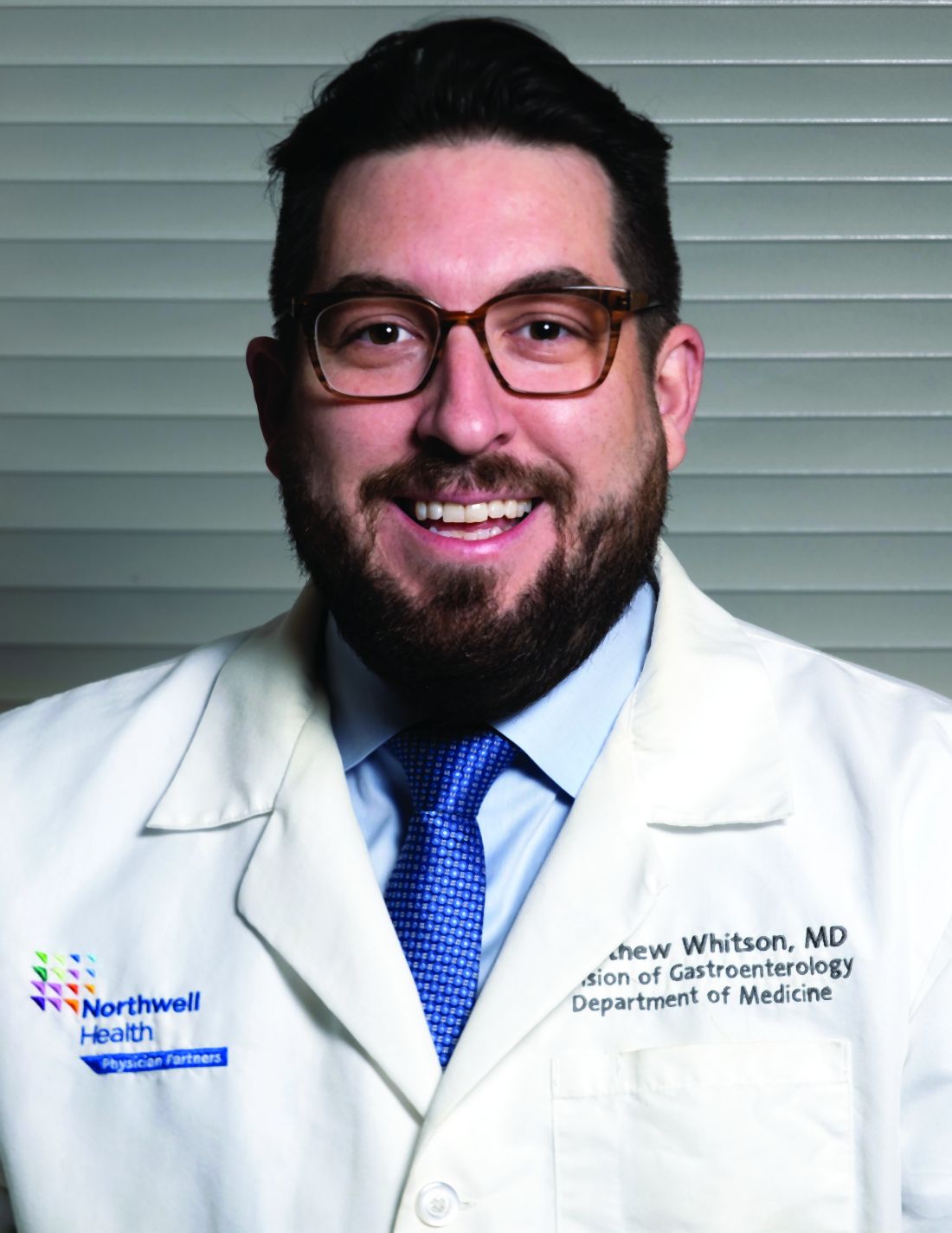
Favorite part: working with students and trainees. When you see a medical concept click for them and then see them apply that concept, or that skill, into practice it is incredibly rewarding. Least favorite part: the amount of written documentation needed to run a fellowship.
What are your interests outside of work?
I love going to see live music in New York and touring the museums of New York, preferably the MOMA, or getting to Storm King (an expansive sculpture garden) outside of the city when we can. Anytime we can get outside to go hiking or play golf is a good day.
What advice would you give to…
- Someone who matches into GI on Dec. 2: Celebrate; you’ve earned it! Those projects you started during residency – finish them now. Otherwise, it’s super hard to get them done during fellowship, especially if you are training at a different institution for GI fellowship.
- Someone who just graduated from GI fellowship: Negotiate that contract, and then negotiate it again. Have a budget, and don’t spend that “attending money” on anything major for at least 6 months.
How do you see the future of GI changing as a new generation of trainees enters the workforce?
The way we access information is changing. Everything is at the tip of your fingers at any time, so much so, it can be overwhelming. I think that learning how to critically appraise and access clinically appropriate data is a skill that everyone will need going forward. I think it will take an even more central role in our medical education. Beyond this, the importance of shared decision-making with your patients will continue to increase in the world of personalized medicine, as will the assortment of noninvasive testing options.
Why did you want to host this podcast?
Reading about mentorship, sponsorship, career development, etc. is important, but it doesn’t do these topics justice. It is such a nuanced thing and talking about it, exploring it, teasing it out is just so fun. Plus, I was a radio DJ when younger and have always dreamed of doing something in the audio medium as a professional.
What’s your favorite episode so far?
I won’t say favorite, but I think the Laurie Keefer episode is up there. It was such a nice conversation about a challenging concept: Building resilience in our trainees and ourselves. I learned a lot from her and have begun integrating some of these skills into my work as a program director.
What’s the best piece of advice you’ve gotten that’s helped you in your career so far?
I’m going to adopt this from a mentor of mine, but it’s the “me or my family rule.” What would you want done if the patient in front of you were your family member? If you keep that as your “True North,” then I think you are off to a good start as a clinician.
Nina Nandy, MD, MS (co-host)
Walk us through your current GI role and your path to getting there:

I think the biggest decision to make in medical school is medicine or surgery, and most things will fall under one of those categories. I liked the problem solving of medicine and the hands-on work of surgery, so I was leaning toward a procedural field then met some wonderful mentors in GI when I was in medical school. I think every field of medicine has a particular personality, and when I met gastroenterologists, it clicked with me, and I thought “I’ve found my people.” So, I went to residency in internal medicine with the goal of GI or bust. I am currently a practicing gastroenterologist, and I do general GI, liver disease, and motility.
What is your favorite part about your current role? Least favorite part?
I really love GI. I feel like I’ve found my calling, and its really exciting to be able to say that. What drew me to GI was the use of technology and minimally invasive endoscopy to see a person inside out and understand their pathology, the mix of chronic and acute conditions, and the educational aspect of talking to folks in clinic. I like putting people at ease, and GI is a great field for jokes. My least favorite part is doing peer-to-peers with insurance companies to get inflammatory bowel disease drugs approved.
What are your interests outside of work?
Outside of work, this podcast, and being division vice chief, I like to learn languages. I speak five and am working on a sixth. I’m writing a secret screenplay. I play piano and guitar, which reminds me of a quote: “All my life I wanted to play guitar badly. And now I play guitar. Badly.” I also love art; I use oil paint, acrylics, pen and ink, mixed media. I love to dance and am just getting into Peloton. But perhaps my most important role is maintaining the Instagram account for my two famous cats who will hopefully enable me to retire early. Are you out there, Purina?
What advice would you give to…
- Someone who matches into GI on Dec. 2: First of all, celebrate! Treat yo’self; you did it! Welcome to the most exciting field of medicine. But seriously, congratulate yourself for your hard work and don’t worry about being terrible at scoping because there’s a learning curve. Don’t worry about what you need to study because you are going to do it. Come in with an inquisitive, open mind. Don’t turn down consults because they seem ridiculous. You can always learn something! I think the best thing to do in fellowship is to do everything. Learn that motility and capsule, cannulate that common bile duct, place that esophageal stent! You won’t have this kind of support in the future, and you should get comfortable with everything possible while you can.
- Someone who just graduated from GI fellowship: As with those matching into GI, celebrate! Treat yo’self; you did it! I think this is the hardest transition; you don’t have that safety net anymore. You are the be-all, end-all last stop on the train. Just kidding. It seems that way, but you can always collaborate with colleagues and look things up on UpToDate. You know more than you think, and it is a continuous learning process, so it’s okay to have questions; it means you care. Yes, there will be more responsibility, and you need to keep up on path and your inbox because it will pile up. You need to think about appropriate follow-up and resources to offer your patients. You can keep up on current guidelines through your GI societies; do continuing medical education and postgraduate courses as well.
How do you see the future of GI changing as a new generation of trainees enters the workforce?
I think the future of GI is innovation, technology, social media, multidisciplinary learning. GI is a technology-centered field, and there will be new developments in medical devices and basic science research, such as the microbiome, which holds the key for numerous pathogenic processes. Physicians will need to be physician-scientists, physician-innovators, physician-business people, and physician-leaders. We must learn things beyond our own field to be successful in this changing world.
Why did you want to host this podcast?
I wanted to host this podcast because I think there is so much in fellowship we learn about GI but also so much we don’t learn about GI careers and the “real world” of practice. I wanted to create content focused on career development for early GIs and trainees and discuss “everything you wanted to know in fellowship but were afraid to ask.” I wanted to interview real successful people in the field, whether it be focusing on a career in medical education, basic science research, transplant hepatology, therapeutic endoscopy, or private practice. There are a lot of podcasts that do a great job focusing on guidelines, case reports, and research, but we wanted to take this one in a different direction. It is a great way to reach a broad audience across many platforms.
What’s your favorite episode so far?
I really like the Janice Jou episode. Not just because I’m on it, but also because she is a great, a dynamic, speaker, and our conversation was so effortless, and because she is a phenomenal program director and educator and has such valuable advice for trainees and early career gastroenterologists, drawing from her own experiences. Her tips – or rather “Janice jewels,” as I am trying to trademark on negotiation – are excellent. Check it out!
What’s the best piece of advice you’ve gotten that’s helped you in your career so far?
Don’t buy a house right out of training. Also, “live your life, not someone else’s.”
C.S. Tse, MD (co-host)
Walk us through your current GI role and your path to getting there:

I grew up in Toronto and moved to the United States for medical school at the Yale University, New Haven, Conn., and internal medicine residency at the Mayo Clinic in Rochester, Minnesota. During my residency, I became interested in gastroenterology with a particular interest in inflammatory bowel disease after studying the postoperative outcomes of IBD patients on biologics and examining the clinical course of IBD patients with coexistent celiac disease. I am a third-year gastroenterology fellow at Brown University. I will spend a year as the advanced IBD fellow at the University of California–San Diego from July 2021 to June 2022. My current research examines IBD patients’ quality of care and the psychosocial impacts on patients’ disease course. I am working with the Crohn’s and Colitis Foundation’s IBD Qorus Learning Health System to improve the quality of care and outcomes of patients with IBD.
What is your favorite part about your current role? Least favorite part?
My favorite part of my current role is to combine patient care with clinical research, particularly for patients with IBD. My least favorite part is encountering “red tape” that may give a false sense of productivity but not actually be beneficial for patient care. Some of this is discussed in this article from the Harvard Business Review.
What are your interests outside of work?
I serve as the National President of the American Medical Women’s Association (AMWA) Residents & Fellows Division. I am a Core Faculty member of the AMWA IGNITE MD program, which is a nation-wide initiative to educate and empower female medical trainees. I currently serve as an abstract reviewer for Digestive Diseases Week® (since 2018). I previously served as an abstract reviewer and judge for the American Medical Association’s Scientific Symposium (2019 & 2020). Outside of work, I enjoy hiking, traveling, and reading.
What advice would you give to someone who matches into GI on Dec. 2:
Identify mentors early. (You can have more than one!) Try to imagine where you want your career to be in 5 years – generalist vs. specialist. Will you have a niche in practice? Is advanced endoscopy (ERCP, EUS, etc.) going to be a part of your practice? Academic, private practice, community practice, or hybrid? Knowing your goals will help tailor the GI fellowship experience to get you to where you want to be in your career. GI fellowship may be like a buffet table where there are many opportunities and options, but one can rarely do it all! Choosing and pursuing experiences that ultimately align with your goals can help you make the most out of your time during GI fellowship training.
How do you see the future of GI changing as a new generation of trainees enters the workforce?
I think that there will be more integration of information technology and artificial intelligence into GI, just as for the rest of society. For example, we can see this clearly illustrated in the rapid uptake of telemedicine (including GI) during COVID-19.
Why did you want to host this podcast?
I am intrigued by the opportunity to connect with GIs broadly through this AGA podcast. It is a portable way to use on-demand technology to engage in conversations relevant to other early GIs who may not be conventionally addressed by other means, such as journal articles, conferences, traditional didactics, and books.
What’s your favorite episode so far?
Janice Jou’s podcast was phenomenal in providing mentorship advice (at a distance) to trainees who are interested in an academic career in clinical medicine.
What’s the best piece of advice you’ve gotten that’s helped you in your career so far?
“We are what we repeatedly do. Excellence, therefore, is not an act, but a habit.” This advice is most commonly credited to Aristotle.
Be sure to subscribe wherever you listen to podcasts or listen on the AGA website: https://gastro.org/podcast.
Dr. Whitson is GI fellowship director, Zucker School of Medicine at Hofstra-Northwell, Great Neck, N.Y. @MJWhitsonMD. Dr. Nandy is a gastroenterologist at Presbyterian Medical Group, Albuquerque, N.M. @NinaNandyMD. Dr. Tse is a GI fellow at Brown University, Providence, R.I. @CSTseMD.
Matthew Whitson, MD, MSEd (lead host)
Walk us through your current GI role and your path to getting there:
I am currently the GI fellowship director at Hofstra-Northwell, by way of Mount Sinai in New York City for medical school and residency and the University of Pennsylvania, Philadelphia, for GI fellowship. I’m about 60:40 clinical and scholarship. My clinical focus is in esophageal and swallowing disorders, which came about because of mentorship and clinical exposure while at UPenn. During my fellowship, I also got a master’s in medical education again because of the tremendous sponsorship from the faculty and leadership. I have educational roles in the medical school, the internal medicine residency, and, of course, the GI fellowship.
What is your favorite part about your current role? Least favorite part?
Favorite part: working with students and trainees. When you see a medical concept click for them and then see them apply that concept, or that skill, into practice it is incredibly rewarding. Least favorite part: the amount of written documentation needed to run a fellowship.
What are your interests outside of work?
I love going to see live music in New York and touring the museums of New York, preferably the MOMA, or getting to Storm King (an expansive sculpture garden) outside of the city when we can. Anytime we can get outside to go hiking or play golf is a good day.
What advice would you give to…
- Someone who matches into GI on Dec. 2: Celebrate; you’ve earned it! Those projects you started during residency – finish them now. Otherwise, it’s super hard to get them done during fellowship, especially if you are training at a different institution for GI fellowship.
- Someone who just graduated from GI fellowship: Negotiate that contract, and then negotiate it again. Have a budget, and don’t spend that “attending money” on anything major for at least 6 months.
How do you see the future of GI changing as a new generation of trainees enters the workforce?
The way we access information is changing. Everything is at the tip of your fingers at any time, so much so, it can be overwhelming. I think that learning how to critically appraise and access clinically appropriate data is a skill that everyone will need going forward. I think it will take an even more central role in our medical education. Beyond this, the importance of shared decision-making with your patients will continue to increase in the world of personalized medicine, as will the assortment of noninvasive testing options.
Why did you want to host this podcast?
Reading about mentorship, sponsorship, career development, etc. is important, but it doesn’t do these topics justice. It is such a nuanced thing and talking about it, exploring it, teasing it out is just so fun. Plus, I was a radio DJ when younger and have always dreamed of doing something in the audio medium as a professional.
What’s your favorite episode so far?
I won’t say favorite, but I think the Laurie Keefer episode is up there. It was such a nice conversation about a challenging concept: Building resilience in our trainees and ourselves. I learned a lot from her and have begun integrating some of these skills into my work as a program director.
What’s the best piece of advice you’ve gotten that’s helped you in your career so far?
I’m going to adopt this from a mentor of mine, but it’s the “me or my family rule.” What would you want done if the patient in front of you were your family member? If you keep that as your “True North,” then I think you are off to a good start as a clinician.
Nina Nandy, MD, MS (co-host)
Walk us through your current GI role and your path to getting there:
I think the biggest decision to make in medical school is medicine or surgery, and most things will fall under one of those categories. I liked the problem solving of medicine and the hands-on work of surgery, so I was leaning toward a procedural field then met some wonderful mentors in GI when I was in medical school. I think every field of medicine has a particular personality, and when I met gastroenterologists, it clicked with me, and I thought “I’ve found my people.” So, I went to residency in internal medicine with the goal of GI or bust. I am currently a practicing gastroenterologist, and I do general GI, liver disease, and motility.
What is your favorite part about your current role? Least favorite part?
I really love GI. I feel like I’ve found my calling, and its really exciting to be able to say that. What drew me to GI was the use of technology and minimally invasive endoscopy to see a person inside out and understand their pathology, the mix of chronic and acute conditions, and the educational aspect of talking to folks in clinic. I like putting people at ease, and GI is a great field for jokes. My least favorite part is doing peer-to-peers with insurance companies to get inflammatory bowel disease drugs approved.
What are your interests outside of work?
Outside of work, this podcast, and being division vice chief, I like to learn languages. I speak five and am working on a sixth. I’m writing a secret screenplay. I play piano and guitar, which reminds me of a quote: “All my life I wanted to play guitar badly. And now I play guitar. Badly.” I also love art; I use oil paint, acrylics, pen and ink, mixed media. I love to dance and am just getting into Peloton. But perhaps my most important role is maintaining the Instagram account for my two famous cats who will hopefully enable me to retire early. Are you out there, Purina?
What advice would you give to…
- Someone who matches into GI on Dec. 2: First of all, celebrate! Treat yo’self; you did it! Welcome to the most exciting field of medicine. But seriously, congratulate yourself for your hard work and don’t worry about being terrible at scoping because there’s a learning curve. Don’t worry about what you need to study because you are going to do it. Come in with an inquisitive, open mind. Don’t turn down consults because they seem ridiculous. You can always learn something! I think the best thing to do in fellowship is to do everything. Learn that motility and capsule, cannulate that common bile duct, place that esophageal stent! You won’t have this kind of support in the future, and you should get comfortable with everything possible while you can.
- Someone who just graduated from GI fellowship: As with those matching into GI, celebrate! Treat yo’self; you did it! I think this is the hardest transition; you don’t have that safety net anymore. You are the be-all, end-all last stop on the train. Just kidding. It seems that way, but you can always collaborate with colleagues and look things up on UpToDate. You know more than you think, and it is a continuous learning process, so it’s okay to have questions; it means you care. Yes, there will be more responsibility, and you need to keep up on path and your inbox because it will pile up. You need to think about appropriate follow-up and resources to offer your patients. You can keep up on current guidelines through your GI societies; do continuing medical education and postgraduate courses as well.
How do you see the future of GI changing as a new generation of trainees enters the workforce?
I think the future of GI is innovation, technology, social media, multidisciplinary learning. GI is a technology-centered field, and there will be new developments in medical devices and basic science research, such as the microbiome, which holds the key for numerous pathogenic processes. Physicians will need to be physician-scientists, physician-innovators, physician-business people, and physician-leaders. We must learn things beyond our own field to be successful in this changing world.
Why did you want to host this podcast?
I wanted to host this podcast because I think there is so much in fellowship we learn about GI but also so much we don’t learn about GI careers and the “real world” of practice. I wanted to create content focused on career development for early GIs and trainees and discuss “everything you wanted to know in fellowship but were afraid to ask.” I wanted to interview real successful people in the field, whether it be focusing on a career in medical education, basic science research, transplant hepatology, therapeutic endoscopy, or private practice. There are a lot of podcasts that do a great job focusing on guidelines, case reports, and research, but we wanted to take this one in a different direction. It is a great way to reach a broad audience across many platforms.
What’s your favorite episode so far?
I really like the Janice Jou episode. Not just because I’m on it, but also because she is a great, a dynamic, speaker, and our conversation was so effortless, and because she is a phenomenal program director and educator and has such valuable advice for trainees and early career gastroenterologists, drawing from her own experiences. Her tips – or rather “Janice jewels,” as I am trying to trademark on negotiation – are excellent. Check it out!
What’s the best piece of advice you’ve gotten that’s helped you in your career so far?
Don’t buy a house right out of training. Also, “live your life, not someone else’s.”
C.S. Tse, MD (co-host)
Walk us through your current GI role and your path to getting there:
I grew up in Toronto and moved to the United States for medical school at the Yale University, New Haven, Conn., and internal medicine residency at the Mayo Clinic in Rochester, Minnesota. During my residency, I became interested in gastroenterology with a particular interest in inflammatory bowel disease after studying the postoperative outcomes of IBD patients on biologics and examining the clinical course of IBD patients with coexistent celiac disease. I am a third-year gastroenterology fellow at Brown University. I will spend a year as the advanced IBD fellow at the University of California–San Diego from July 2021 to June 2022. My current research examines IBD patients’ quality of care and the psychosocial impacts on patients’ disease course. I am working with the Crohn’s and Colitis Foundation’s IBD Qorus Learning Health System to improve the quality of care and outcomes of patients with IBD.
What is your favorite part about your current role? Least favorite part?
My favorite part of my current role is to combine patient care with clinical research, particularly for patients with IBD. My least favorite part is encountering “red tape” that may give a false sense of productivity but not actually be beneficial for patient care. Some of this is discussed in this article from the Harvard Business Review.
What are your interests outside of work?
I serve as the National President of the American Medical Women’s Association (AMWA) Residents & Fellows Division. I am a Core Faculty member of the AMWA IGNITE MD program, which is a nation-wide initiative to educate and empower female medical trainees. I currently serve as an abstract reviewer for Digestive Diseases Week® (since 2018). I previously served as an abstract reviewer and judge for the American Medical Association’s Scientific Symposium (2019 & 2020). Outside of work, I enjoy hiking, traveling, and reading.
What advice would you give to someone who matches into GI on Dec. 2:
Identify mentors early. (You can have more than one!) Try to imagine where you want your career to be in 5 years – generalist vs. specialist. Will you have a niche in practice? Is advanced endoscopy (ERCP, EUS, etc.) going to be a part of your practice? Academic, private practice, community practice, or hybrid? Knowing your goals will help tailor the GI fellowship experience to get you to where you want to be in your career. GI fellowship may be like a buffet table where there are many opportunities and options, but one can rarely do it all! Choosing and pursuing experiences that ultimately align with your goals can help you make the most out of your time during GI fellowship training.
How do you see the future of GI changing as a new generation of trainees enters the workforce?
I think that there will be more integration of information technology and artificial intelligence into GI, just as for the rest of society. For example, we can see this clearly illustrated in the rapid uptake of telemedicine (including GI) during COVID-19.
Why did you want to host this podcast?
I am intrigued by the opportunity to connect with GIs broadly through this AGA podcast. It is a portable way to use on-demand technology to engage in conversations relevant to other early GIs who may not be conventionally addressed by other means, such as journal articles, conferences, traditional didactics, and books.
What’s your favorite episode so far?
Janice Jou’s podcast was phenomenal in providing mentorship advice (at a distance) to trainees who are interested in an academic career in clinical medicine.
What’s the best piece of advice you’ve gotten that’s helped you in your career so far?
“We are what we repeatedly do. Excellence, therefore, is not an act, but a habit.” This advice is most commonly credited to Aristotle.
Be sure to subscribe wherever you listen to podcasts or listen on the AGA website: https://gastro.org/podcast.
Dr. Whitson is GI fellowship director, Zucker School of Medicine at Hofstra-Northwell, Great Neck, N.Y. @MJWhitsonMD. Dr. Nandy is a gastroenterologist at Presbyterian Medical Group, Albuquerque, N.M. @NinaNandyMD. Dr. Tse is a GI fellow at Brown University, Providence, R.I. @CSTseMD.
Matthew Whitson, MD, MSEd (lead host)
Walk us through your current GI role and your path to getting there:
I am currently the GI fellowship director at Hofstra-Northwell, by way of Mount Sinai in New York City for medical school and residency and the University of Pennsylvania, Philadelphia, for GI fellowship. I’m about 60:40 clinical and scholarship. My clinical focus is in esophageal and swallowing disorders, which came about because of mentorship and clinical exposure while at UPenn. During my fellowship, I also got a master’s in medical education again because of the tremendous sponsorship from the faculty and leadership. I have educational roles in the medical school, the internal medicine residency, and, of course, the GI fellowship.
What is your favorite part about your current role? Least favorite part?
Favorite part: working with students and trainees. When you see a medical concept click for them and then see them apply that concept, or that skill, into practice it is incredibly rewarding. Least favorite part: the amount of written documentation needed to run a fellowship.
What are your interests outside of work?
I love going to see live music in New York and touring the museums of New York, preferably the MOMA, or getting to Storm King (an expansive sculpture garden) outside of the city when we can. Anytime we can get outside to go hiking or play golf is a good day.
What advice would you give to…
- Someone who matches into GI on Dec. 2: Celebrate; you’ve earned it! Those projects you started during residency – finish them now. Otherwise, it’s super hard to get them done during fellowship, especially if you are training at a different institution for GI fellowship.
- Someone who just graduated from GI fellowship: Negotiate that contract, and then negotiate it again. Have a budget, and don’t spend that “attending money” on anything major for at least 6 months.
How do you see the future of GI changing as a new generation of trainees enters the workforce?
The way we access information is changing. Everything is at the tip of your fingers at any time, so much so, it can be overwhelming. I think that learning how to critically appraise and access clinically appropriate data is a skill that everyone will need going forward. I think it will take an even more central role in our medical education. Beyond this, the importance of shared decision-making with your patients will continue to increase in the world of personalized medicine, as will the assortment of noninvasive testing options.
Why did you want to host this podcast?
Reading about mentorship, sponsorship, career development, etc. is important, but it doesn’t do these topics justice. It is such a nuanced thing and talking about it, exploring it, teasing it out is just so fun. Plus, I was a radio DJ when younger and have always dreamed of doing something in the audio medium as a professional.
What’s your favorite episode so far?
I won’t say favorite, but I think the Laurie Keefer episode is up there. It was such a nice conversation about a challenging concept: Building resilience in our trainees and ourselves. I learned a lot from her and have begun integrating some of these skills into my work as a program director.
What’s the best piece of advice you’ve gotten that’s helped you in your career so far?
I’m going to adopt this from a mentor of mine, but it’s the “me or my family rule.” What would you want done if the patient in front of you were your family member? If you keep that as your “True North,” then I think you are off to a good start as a clinician.
Nina Nandy, MD, MS (co-host)
Walk us through your current GI role and your path to getting there:
I think the biggest decision to make in medical school is medicine or surgery, and most things will fall under one of those categories. I liked the problem solving of medicine and the hands-on work of surgery, so I was leaning toward a procedural field then met some wonderful mentors in GI when I was in medical school. I think every field of medicine has a particular personality, and when I met gastroenterologists, it clicked with me, and I thought “I’ve found my people.” So, I went to residency in internal medicine with the goal of GI or bust. I am currently a practicing gastroenterologist, and I do general GI, liver disease, and motility.
What is your favorite part about your current role? Least favorite part?
I really love GI. I feel like I’ve found my calling, and its really exciting to be able to say that. What drew me to GI was the use of technology and minimally invasive endoscopy to see a person inside out and understand their pathology, the mix of chronic and acute conditions, and the educational aspect of talking to folks in clinic. I like putting people at ease, and GI is a great field for jokes. My least favorite part is doing peer-to-peers with insurance companies to get inflammatory bowel disease drugs approved.
What are your interests outside of work?
Outside of work, this podcast, and being division vice chief, I like to learn languages. I speak five and am working on a sixth. I’m writing a secret screenplay. I play piano and guitar, which reminds me of a quote: “All my life I wanted to play guitar badly. And now I play guitar. Badly.” I also love art; I use oil paint, acrylics, pen and ink, mixed media. I love to dance and am just getting into Peloton. But perhaps my most important role is maintaining the Instagram account for my two famous cats who will hopefully enable me to retire early. Are you out there, Purina?
What advice would you give to…
- Someone who matches into GI on Dec. 2: First of all, celebrate! Treat yo’self; you did it! Welcome to the most exciting field of medicine. But seriously, congratulate yourself for your hard work and don’t worry about being terrible at scoping because there’s a learning curve. Don’t worry about what you need to study because you are going to do it. Come in with an inquisitive, open mind. Don’t turn down consults because they seem ridiculous. You can always learn something! I think the best thing to do in fellowship is to do everything. Learn that motility and capsule, cannulate that common bile duct, place that esophageal stent! You won’t have this kind of support in the future, and you should get comfortable with everything possible while you can.
- Someone who just graduated from GI fellowship: As with those matching into GI, celebrate! Treat yo’self; you did it! I think this is the hardest transition; you don’t have that safety net anymore. You are the be-all, end-all last stop on the train. Just kidding. It seems that way, but you can always collaborate with colleagues and look things up on UpToDate. You know more than you think, and it is a continuous learning process, so it’s okay to have questions; it means you care. Yes, there will be more responsibility, and you need to keep up on path and your inbox because it will pile up. You need to think about appropriate follow-up and resources to offer your patients. You can keep up on current guidelines through your GI societies; do continuing medical education and postgraduate courses as well.
How do you see the future of GI changing as a new generation of trainees enters the workforce?
I think the future of GI is innovation, technology, social media, multidisciplinary learning. GI is a technology-centered field, and there will be new developments in medical devices and basic science research, such as the microbiome, which holds the key for numerous pathogenic processes. Physicians will need to be physician-scientists, physician-innovators, physician-business people, and physician-leaders. We must learn things beyond our own field to be successful in this changing world.
Why did you want to host this podcast?
I wanted to host this podcast because I think there is so much in fellowship we learn about GI but also so much we don’t learn about GI careers and the “real world” of practice. I wanted to create content focused on career development for early GIs and trainees and discuss “everything you wanted to know in fellowship but were afraid to ask.” I wanted to interview real successful people in the field, whether it be focusing on a career in medical education, basic science research, transplant hepatology, therapeutic endoscopy, or private practice. There are a lot of podcasts that do a great job focusing on guidelines, case reports, and research, but we wanted to take this one in a different direction. It is a great way to reach a broad audience across many platforms.
What’s your favorite episode so far?
I really like the Janice Jou episode. Not just because I’m on it, but also because she is a great, a dynamic, speaker, and our conversation was so effortless, and because she is a phenomenal program director and educator and has such valuable advice for trainees and early career gastroenterologists, drawing from her own experiences. Her tips – or rather “Janice jewels,” as I am trying to trademark on negotiation – are excellent. Check it out!
What’s the best piece of advice you’ve gotten that’s helped you in your career so far?
Don’t buy a house right out of training. Also, “live your life, not someone else’s.”
C.S. Tse, MD (co-host)
Walk us through your current GI role and your path to getting there:
I grew up in Toronto and moved to the United States for medical school at the Yale University, New Haven, Conn., and internal medicine residency at the Mayo Clinic in Rochester, Minnesota. During my residency, I became interested in gastroenterology with a particular interest in inflammatory bowel disease after studying the postoperative outcomes of IBD patients on biologics and examining the clinical course of IBD patients with coexistent celiac disease. I am a third-year gastroenterology fellow at Brown University. I will spend a year as the advanced IBD fellow at the University of California–San Diego from July 2021 to June 2022. My current research examines IBD patients’ quality of care and the psychosocial impacts on patients’ disease course. I am working with the Crohn’s and Colitis Foundation’s IBD Qorus Learning Health System to improve the quality of care and outcomes of patients with IBD.
What is your favorite part about your current role? Least favorite part?
My favorite part of my current role is to combine patient care with clinical research, particularly for patients with IBD. My least favorite part is encountering “red tape” that may give a false sense of productivity but not actually be beneficial for patient care. Some of this is discussed in this article from the Harvard Business Review.
What are your interests outside of work?
I serve as the National President of the American Medical Women’s Association (AMWA) Residents & Fellows Division. I am a Core Faculty member of the AMWA IGNITE MD program, which is a nation-wide initiative to educate and empower female medical trainees. I currently serve as an abstract reviewer for Digestive Diseases Week® (since 2018). I previously served as an abstract reviewer and judge for the American Medical Association’s Scientific Symposium (2019 & 2020). Outside of work, I enjoy hiking, traveling, and reading.
What advice would you give to someone who matches into GI on Dec. 2:
Identify mentors early. (You can have more than one!) Try to imagine where you want your career to be in 5 years – generalist vs. specialist. Will you have a niche in practice? Is advanced endoscopy (ERCP, EUS, etc.) going to be a part of your practice? Academic, private practice, community practice, or hybrid? Knowing your goals will help tailor the GI fellowship experience to get you to where you want to be in your career. GI fellowship may be like a buffet table where there are many opportunities and options, but one can rarely do it all! Choosing and pursuing experiences that ultimately align with your goals can help you make the most out of your time during GI fellowship training.
How do you see the future of GI changing as a new generation of trainees enters the workforce?
I think that there will be more integration of information technology and artificial intelligence into GI, just as for the rest of society. For example, we can see this clearly illustrated in the rapid uptake of telemedicine (including GI) during COVID-19.
Why did you want to host this podcast?
I am intrigued by the opportunity to connect with GIs broadly through this AGA podcast. It is a portable way to use on-demand technology to engage in conversations relevant to other early GIs who may not be conventionally addressed by other means, such as journal articles, conferences, traditional didactics, and books.
What’s your favorite episode so far?
Janice Jou’s podcast was phenomenal in providing mentorship advice (at a distance) to trainees who are interested in an academic career in clinical medicine.
What’s the best piece of advice you’ve gotten that’s helped you in your career so far?
“We are what we repeatedly do. Excellence, therefore, is not an act, but a habit.” This advice is most commonly credited to Aristotle.
Be sure to subscribe wherever you listen to podcasts or listen on the AGA website: https://gastro.org/podcast.
Dr. Whitson is GI fellowship director, Zucker School of Medicine at Hofstra-Northwell, Great Neck, N.Y. @MJWhitsonMD. Dr. Nandy is a gastroenterologist at Presbyterian Medical Group, Albuquerque, N.M. @NinaNandyMD. Dr. Tse is a GI fellow at Brown University, Providence, R.I. @CSTseMD.
Gut microbiome influences response to methotrexate in new-onset RA patients
The pretreatment gut microbiome can determine response to methotrexate therapy in patients with newly diagnosed rheumatoid arthritis, according to recent research published in Arthritis & Rheumatology.
About half of patients do not respond to methotrexate (MTX), despite it being a first-line therapy for RA, according to Alejandro Artacho of the Centro Superior de Investigación en Salud Pública in Valencia, Spain, and colleagues. In addition, there is currently no way to predict which patients will respond to MTX.

The role of the microbiome in drug response for patients with RA “has been known since it was discovered in 1972 that sulfasalazine requires gut bacteria for its activity,” Veena Taneja, PhD, a researcher and associate professor of immunology at the Mayo Clinic in Rochester, Minn., said in an interview. The microbiome and how it functions “needs to be explored as biomarkers as well as for treatment options for RA and other diseases,” added Dr. Taneja, who was not involved with the study.
Using 16S rRNA gene and shotgun metagenomic sequencing, the researchers evaluated whether the gut microbiome of a patient newly diagnosed with RA (NORA) influenced their response to MTX. The researchers extracted DNA from fecal samples in 26 patients from New York University Langone Medical Center, Lutheran Hospital, Staten Island, and Mount Sinai School of Medicine rheumatology clinics 48 hours prior to treatment with MTX and determined the bacterial taxa, operational taxonomic units (OTUs), and ribosomal sequence variants in each sample. These patients then received oral MTX with an average dose of 20 mg per week (range, 15-25 mg). The patients were grouped based on whether they responded (39%) or did not respond (61%) to MTX based on improvement of at least 1.8 in their Disease Activity Score in 28 joints (DAS28) after 4 months and no need to add a biologic.
Patients with a statistically significantly lower level of microbial diversity (P < .05) as measured by OTU level tended to respond better to MTX therapy. In patients who did not respond to MTX, there was a significantly higher abundance of Firmicutes, a significantly lower abundance of Bacteroidetes (P < .05), and a higher ratio of Firmicutes to Bacteroidetes.
There was also a consistent difference between abundance of gut microbial genes in patients who did not respond to MTX. “Taken together, these results indicate that the gut microbiome of NORA patients that respond favorably to MTX is distinct from that of MTX-NR, prompting us to hypothesize that the pretreatment microbiome could be used to predict clinical nonresponse,” the researchers said.
Using machine learning, Mr. Artacho and colleagues developed a predictive model based on the initial training cohort of 26 patients to assess MTX response. When the researchers tested the model in a validation cohort of 21 patients, they found it correctly predicted 78% of MTX responders and 83.3% of patients who did not respond to MTX, with the percentage of correct predictions increasing “when considering only those patients with the highest probability score of belonging to either group.”
In a separate set of 20 patients with RA who were prescribed either different conventional synthetic disease-modifying antirheumatic drugs or biologics or had not started any medications, the researchers’ model could not predict clinical response, “suggesting that the potential clinical utility of the model is restricted to RA patients that are both drug naive and exposed directly to MTX, but not to other drugs.”
“Our results open the possibility to rationally design microbiome-modulating strategies to improve oral absorption of MTX and its downstream immune effects, inform clinical decision-making or both,” they said.
Clinical application
Dr. Taneja said the findings of the study are novel and intriguing. “The observations suggest a strong influence of [the] host’s microbiome in response to MTX and in future may inform best treatment options for patients. The study speculates that certain microbial clades or microbes can be used to derive a favorable response in patients. This could explain why “one drug fits all” does not apply in treatment for RA,” she said.
The study is also a “step forward” in using the microbiome in regular clinical practice, she noted. “Since MTX is used as a first line of treatment and is one of the most affordable treatments for RA, the observations are definitely exciting.”

In an interview, Martin Kriegel, MD, PhD, of the department of immunobiology at Yale University, New Haven, Conn., and chair of rheumatology and clinical immunology at the University of Münster (Germany), explained that the prediction model has the potential to one day be a tool for clinicians to predict MTX response in patients with RA. However, he noted the researchers did not test a functional link between MTX and gut microbes in vivo.
“It would be useful to test mechanistic effects of MTX on gut microbial communities in vitro and in vivo,” he said. “In addition, it would be informative to apply the prediction model in other cohorts of RA with a different geographic background, possibly also a different duration of disease. If confirmed in a more heterogeneous group of patients, the tool could potentially be used in the clinic to tell some patients that they might not respond to MTX and therefore start therapy with another agent.”
This study was funded by the National Institutes of Health, the Rheumatology Research Foundation, the Searle Scholars Program, various funds from the Spanish government, the UCSF Breakthrough Program for Rheumatoid Arthritis-related Research, and the Arthritis Foundation Center for Excellence. Four authors report consultancies and memberships on scientific advisory boards with pharmaceutical and biotechnology companies that do not overlap with the current study.
Dr. Taneja reported that her institution holds a patent for developing Prevotella histicola as an anti-inflammatory treatment, of which she is a coinventor. Evelo Biosciences is a licensee for the patent, and Dr. Taneja reported receiving research support from the company. Dr. Kriegel reported receiving salary, consulting fees, honoraria, or research funds from AbbVie, Bristol-Myers Squibb, Cell Applications, Eligo Bioscience, and Roche. He also holds a patent on the use of antibiotics and commensal vaccination to treat autoimmunity.
SOURCE: Artacho A et al. Arthritis Rheumatol. 2020 Dec 13. doi: 10.1002/art.41622.
The pretreatment gut microbiome can determine response to methotrexate therapy in patients with newly diagnosed rheumatoid arthritis, according to recent research published in Arthritis & Rheumatology.
About half of patients do not respond to methotrexate (MTX), despite it being a first-line therapy for RA, according to Alejandro Artacho of the Centro Superior de Investigación en Salud Pública in Valencia, Spain, and colleagues. In addition, there is currently no way to predict which patients will respond to MTX.
The role of the microbiome in drug response for patients with RA “has been known since it was discovered in 1972 that sulfasalazine requires gut bacteria for its activity,” Veena Taneja, PhD, a researcher and associate professor of immunology at the Mayo Clinic in Rochester, Minn., said in an interview. The microbiome and how it functions “needs to be explored as biomarkers as well as for treatment options for RA and other diseases,” added Dr. Taneja, who was not involved with the study.
Using 16S rRNA gene and shotgun metagenomic sequencing, the researchers evaluated whether the gut microbiome of a patient newly diagnosed with RA (NORA) influenced their response to MTX. The researchers extracted DNA from fecal samples in 26 patients from New York University Langone Medical Center, Lutheran Hospital, Staten Island, and Mount Sinai School of Medicine rheumatology clinics 48 hours prior to treatment with MTX and determined the bacterial taxa, operational taxonomic units (OTUs), and ribosomal sequence variants in each sample. These patients then received oral MTX with an average dose of 20 mg per week (range, 15-25 mg). The patients were grouped based on whether they responded (39%) or did not respond (61%) to MTX based on improvement of at least 1.8 in their Disease Activity Score in 28 joints (DAS28) after 4 months and no need to add a biologic.
Patients with a statistically significantly lower level of microbial diversity (P < .05) as measured by OTU level tended to respond better to MTX therapy. In patients who did not respond to MTX, there was a significantly higher abundance of Firmicutes, a significantly lower abundance of Bacteroidetes (P < .05), and a higher ratio of Firmicutes to Bacteroidetes.
There was also a consistent difference between abundance of gut microbial genes in patients who did not respond to MTX. “Taken together, these results indicate that the gut microbiome of NORA patients that respond favorably to MTX is distinct from that of MTX-NR, prompting us to hypothesize that the pretreatment microbiome could be used to predict clinical nonresponse,” the researchers said.
Using machine learning, Mr. Artacho and colleagues developed a predictive model based on the initial training cohort of 26 patients to assess MTX response. When the researchers tested the model in a validation cohort of 21 patients, they found it correctly predicted 78% of MTX responders and 83.3% of patients who did not respond to MTX, with the percentage of correct predictions increasing “when considering only those patients with the highest probability score of belonging to either group.”
In a separate set of 20 patients with RA who were prescribed either different conventional synthetic disease-modifying antirheumatic drugs or biologics or had not started any medications, the researchers’ model could not predict clinical response, “suggesting that the potential clinical utility of the model is restricted to RA patients that are both drug naive and exposed directly to MTX, but not to other drugs.”
“Our results open the possibility to rationally design microbiome-modulating strategies to improve oral absorption of MTX and its downstream immune effects, inform clinical decision-making or both,” they said.
Clinical application
Dr. Taneja said the findings of the study are novel and intriguing. “The observations suggest a strong influence of [the] host’s microbiome in response to MTX and in future may inform best treatment options for patients. The study speculates that certain microbial clades or microbes can be used to derive a favorable response in patients. This could explain why “one drug fits all” does not apply in treatment for RA,” she said.
The study is also a “step forward” in using the microbiome in regular clinical practice, she noted. “Since MTX is used as a first line of treatment and is one of the most affordable treatments for RA, the observations are definitely exciting.”
In an interview, Martin Kriegel, MD, PhD, of the department of immunobiology at Yale University, New Haven, Conn., and chair of rheumatology and clinical immunology at the University of Münster (Germany), explained that the prediction model has the potential to one day be a tool for clinicians to predict MTX response in patients with RA. However, he noted the researchers did not test a functional link between MTX and gut microbes in vivo.
“It would be useful to test mechanistic effects of MTX on gut microbial communities in vitro and in vivo,” he said. “In addition, it would be informative to apply the prediction model in other cohorts of RA with a different geographic background, possibly also a different duration of disease. If confirmed in a more heterogeneous group of patients, the tool could potentially be used in the clinic to tell some patients that they might not respond to MTX and therefore start therapy with another agent.”
This study was funded by the National Institutes of Health, the Rheumatology Research Foundation, the Searle Scholars Program, various funds from the Spanish government, the UCSF Breakthrough Program for Rheumatoid Arthritis-related Research, and the Arthritis Foundation Center for Excellence. Four authors report consultancies and memberships on scientific advisory boards with pharmaceutical and biotechnology companies that do not overlap with the current study.
Dr. Taneja reported that her institution holds a patent for developing Prevotella histicola as an anti-inflammatory treatment, of which she is a coinventor. Evelo Biosciences is a licensee for the patent, and Dr. Taneja reported receiving research support from the company. Dr. Kriegel reported receiving salary, consulting fees, honoraria, or research funds from AbbVie, Bristol-Myers Squibb, Cell Applications, Eligo Bioscience, and Roche. He also holds a patent on the use of antibiotics and commensal vaccination to treat autoimmunity.
SOURCE: Artacho A et al. Arthritis Rheumatol. 2020 Dec 13. doi: 10.1002/art.41622.
The pretreatment gut microbiome can determine response to methotrexate therapy in patients with newly diagnosed rheumatoid arthritis, according to recent research published in Arthritis & Rheumatology.
About half of patients do not respond to methotrexate (MTX), despite it being a first-line therapy for RA, according to Alejandro Artacho of the Centro Superior de Investigación en Salud Pública in Valencia, Spain, and colleagues. In addition, there is currently no way to predict which patients will respond to MTX.
The role of the microbiome in drug response for patients with RA “has been known since it was discovered in 1972 that sulfasalazine requires gut bacteria for its activity,” Veena Taneja, PhD, a researcher and associate professor of immunology at the Mayo Clinic in Rochester, Minn., said in an interview. The microbiome and how it functions “needs to be explored as biomarkers as well as for treatment options for RA and other diseases,” added Dr. Taneja, who was not involved with the study.
Using 16S rRNA gene and shotgun metagenomic sequencing, the researchers evaluated whether the gut microbiome of a patient newly diagnosed with RA (NORA) influenced their response to MTX. The researchers extracted DNA from fecal samples in 26 patients from New York University Langone Medical Center, Lutheran Hospital, Staten Island, and Mount Sinai School of Medicine rheumatology clinics 48 hours prior to treatment with MTX and determined the bacterial taxa, operational taxonomic units (OTUs), and ribosomal sequence variants in each sample. These patients then received oral MTX with an average dose of 20 mg per week (range, 15-25 mg). The patients were grouped based on whether they responded (39%) or did not respond (61%) to MTX based on improvement of at least 1.8 in their Disease Activity Score in 28 joints (DAS28) after 4 months and no need to add a biologic.
Patients with a statistically significantly lower level of microbial diversity (P < .05) as measured by OTU level tended to respond better to MTX therapy. In patients who did not respond to MTX, there was a significantly higher abundance of Firmicutes, a significantly lower abundance of Bacteroidetes (P < .05), and a higher ratio of Firmicutes to Bacteroidetes.
There was also a consistent difference between abundance of gut microbial genes in patients who did not respond to MTX. “Taken together, these results indicate that the gut microbiome of NORA patients that respond favorably to MTX is distinct from that of MTX-NR, prompting us to hypothesize that the pretreatment microbiome could be used to predict clinical nonresponse,” the researchers said.
Using machine learning, Mr. Artacho and colleagues developed a predictive model based on the initial training cohort of 26 patients to assess MTX response. When the researchers tested the model in a validation cohort of 21 patients, they found it correctly predicted 78% of MTX responders and 83.3% of patients who did not respond to MTX, with the percentage of correct predictions increasing “when considering only those patients with the highest probability score of belonging to either group.”
In a separate set of 20 patients with RA who were prescribed either different conventional synthetic disease-modifying antirheumatic drugs or biologics or had not started any medications, the researchers’ model could not predict clinical response, “suggesting that the potential clinical utility of the model is restricted to RA patients that are both drug naive and exposed directly to MTX, but not to other drugs.”
“Our results open the possibility to rationally design microbiome-modulating strategies to improve oral absorption of MTX and its downstream immune effects, inform clinical decision-making or both,” they said.
Clinical application
Dr. Taneja said the findings of the study are novel and intriguing. “The observations suggest a strong influence of [the] host’s microbiome in response to MTX and in future may inform best treatment options for patients. The study speculates that certain microbial clades or microbes can be used to derive a favorable response in patients. This could explain why “one drug fits all” does not apply in treatment for RA,” she said.
The study is also a “step forward” in using the microbiome in regular clinical practice, she noted. “Since MTX is used as a first line of treatment and is one of the most affordable treatments for RA, the observations are definitely exciting.”
In an interview, Martin Kriegel, MD, PhD, of the department of immunobiology at Yale University, New Haven, Conn., and chair of rheumatology and clinical immunology at the University of Münster (Germany), explained that the prediction model has the potential to one day be a tool for clinicians to predict MTX response in patients with RA. However, he noted the researchers did not test a functional link between MTX and gut microbes in vivo.
“It would be useful to test mechanistic effects of MTX on gut microbial communities in vitro and in vivo,” he said. “In addition, it would be informative to apply the prediction model in other cohorts of RA with a different geographic background, possibly also a different duration of disease. If confirmed in a more heterogeneous group of patients, the tool could potentially be used in the clinic to tell some patients that they might not respond to MTX and therefore start therapy with another agent.”
This study was funded by the National Institutes of Health, the Rheumatology Research Foundation, the Searle Scholars Program, various funds from the Spanish government, the UCSF Breakthrough Program for Rheumatoid Arthritis-related Research, and the Arthritis Foundation Center for Excellence. Four authors report consultancies and memberships on scientific advisory boards with pharmaceutical and biotechnology companies that do not overlap with the current study.
Dr. Taneja reported that her institution holds a patent for developing Prevotella histicola as an anti-inflammatory treatment, of which she is a coinventor. Evelo Biosciences is a licensee for the patent, and Dr. Taneja reported receiving research support from the company. Dr. Kriegel reported receiving salary, consulting fees, honoraria, or research funds from AbbVie, Bristol-Myers Squibb, Cell Applications, Eligo Bioscience, and Roche. He also holds a patent on the use of antibiotics and commensal vaccination to treat autoimmunity.
SOURCE: Artacho A et al. Arthritis Rheumatol. 2020 Dec 13. doi: 10.1002/art.41622.
FROM ARTHRITIS & RHEUMATOLOGY

Omitting postop radiotherapy doesn’t affect survival in older breast cancer patients
Skipping whole-breast adjuvant radiotherapy does not appear to affect long-term survival in women age 65 and older who have had surgery for early-stage, hormone receptor–positive (HR+) breast cancer, according to 10-year follow-up of the phase 3 PRIME-2 study.

Although the risk for local recurrence was higher among patients who did not receive radiotherapy, the absolute risk for recurrence was still low, said study investigator Ian Kunkler, MRCPUK, FRCR, of Western General Hospital, University of Edinburgh in Scotland.
Dr. Kunkler presented results from PRIME-2 at the 2020 San Antonio Breast Cancer Symposium.
“In older patients, we have to carefully balance benefits [of radiotherapy] in terms of local control and survival against toxicities,” Dr. Kunkler said in an interview.
Omitting radiotherapy could help women avoid complications such as fatigue, changes to lung function, and an increased risk of cardiovascular damage.
“We think that these results should provide some reassurance that the omission of radiotherapy could be an option,” Dr. Kunkler said.
PRIME-2 results
The PRIME-2 study was a randomized trial that recruited 1,326 women with histologically confirmed, unilateral invasive breast cancer who were all 65 years or older.
For inclusion, the women had to have a tumor measuring 3 cm or less, have no nodal involvement, and be about to undergo breast-conserving surgery. Women also needed to be HR+ and be treated with adjuvant endocrine therapy.
The women were randomized 1:1 to receive adjuvant whole-breast irradiation at a dosing schedule of 40-50 Gy in 15-25 fractions or no radiotherapy in addition to adjuvant endocrine therapy.
The primary endpoint was the recurrence of breast cancer in the same breast at 10 years. There was a significantly lower rate of ipsilateral recurrence with radiotherapy than without it, at 0.9% and 9.8%, respectively (P = .00008).
Similarly, the 10-year rate of regional recurrence was significantly lower in the radiotherapy arm than in the no-radiotherapy arm (0.5% vs. 2.3%, P = .014).
However, there was no significant difference in the radiotherapy and nonradiotherapy arms when it came to distant recurrence (3.6% vs. 1.9%, P = .07), contralateral recurrence (2.2% vs. 1.2%, P = .20), or new, non–breast cancer (8.7% vs. 10.2%, P = .41).
The overall survival estimate at 10 years was 80.4% in women who did not receive radiotherapy and 81.0% in those who did (P = .68). Rates of metastasis-free survival were also similar (98.1% vs. 96.4%, P = .28).
“Most of these women are dying from non–breast cancer causes, reflecting the impact of competitive causes of non–breast cancer mortality,” Dr. Kunkler said.
Implications for practice
The current findings build on prior findings from the PRIME-2 study 5 years ago, which showed a small benefit of postoperative radiotherapy over no radiotherapy in reducing the rate of local recurrence. This led to the recommendation that postoperative radiotherapy might be safely omitted in some older women and influenced U.K. practice.
Indeed, Dr. Kunkler observed that U.K. guidelines have pretty much adopted the entry criteria for the PRIME-2 study (HR+, axillary node-negative [N0], T1–T2 up to 3 cm at the longest dimension, and clear margins) for the omission of radiotherapy.
“It’s had much less impact in the United States, where the usage of radiotherapy after breast-conserving surgery still remains very high,” Dr. Kunkler said.
He acknowledged that the current U.S. guidelines include the omission of radiotherapy in older women, but only those with much smaller (T1, N0) tumors, based on the findings of the Cancer and Leukemia Group B (CALGB) 9343 study.
“The findings from PRIME-2 so far seem consistent with long-term findings from CALGB 9343,” Matthew Katz, MD, of Lowell (Mass.) General Hospital Cancer Center, said in an interview.

However, “the median follow-up of the study was only 7 years, so it’s a little early to analyze 10-year data,” he added.
As to why leaving out radiotherapy in older women may be less common in the United States than in the U.K., Dr. Katz said it was probably due to a “tendency on the part of U.S. oncologists and cancer patients to lean more toward treatment to lower the risk of recurrence.
“When I discuss omitting radiation to women 70 or older with an early-stage, low risk breast cancer, the majority of people I see choose treatment,” he said. “The key is that a cancer patient can make informed choices about treatment based upon her or his values, looking at both the risks of cancer recurrence and the side effects of cancer treatments.”
“The decision as to whether radiotherapy is omitted or not has become a bit more nuanced,” since the PRIME-2 study started in 2003, Dr. Kunkler acknowledged.
He said there’s now evidence to suggest that shorter radiotherapy regimens may be beneficial. For example, the FAST-Forward trial showed that a regimen of 26 Gy in five fractions over 1 week was noninferior to a regimen of 40 Gy in 15 fractions over 3 weeks.
“There are really only two studies – the PRIME-2 study and the CALGB 9343 study – which are specific to an older age group,” Dr. Kunkler noted. “Most of the previous studies of breast-conserving surgery with or without radiotherapy receiving endocrine therapy have been predominantly in women under the age of 70. And indeed, 70 was often considered an exclusion criterion for randomized trials.”
PRIME-2 was funded by the Chief Scientist Office (Scottish Government) and the Breast Cancer Institute at the Western General Hospital in Edinburgh, Scotland. Neither Dr. Kunkler nor Dr. Katz had relevant disclosures.
SOURCE: Kunkler IH J et al. SABCS 2020, Abstract GS2-03.
Skipping whole-breast adjuvant radiotherapy does not appear to affect long-term survival in women age 65 and older who have had surgery for early-stage, hormone receptor–positive (HR+) breast cancer, according to 10-year follow-up of the phase 3 PRIME-2 study.
Although the risk for local recurrence was higher among patients who did not receive radiotherapy, the absolute risk for recurrence was still low, said study investigator Ian Kunkler, MRCPUK, FRCR, of Western General Hospital, University of Edinburgh in Scotland.
Dr. Kunkler presented results from PRIME-2 at the 2020 San Antonio Breast Cancer Symposium.
“In older patients, we have to carefully balance benefits [of radiotherapy] in terms of local control and survival against toxicities,” Dr. Kunkler said in an interview.
Omitting radiotherapy could help women avoid complications such as fatigue, changes to lung function, and an increased risk of cardiovascular damage.
“We think that these results should provide some reassurance that the omission of radiotherapy could be an option,” Dr. Kunkler said.
PRIME-2 results
The PRIME-2 study was a randomized trial that recruited 1,326 women with histologically confirmed, unilateral invasive breast cancer who were all 65 years or older.
For inclusion, the women had to have a tumor measuring 3 cm or less, have no nodal involvement, and be about to undergo breast-conserving surgery. Women also needed to be HR+ and be treated with adjuvant endocrine therapy.
The women were randomized 1:1 to receive adjuvant whole-breast irradiation at a dosing schedule of 40-50 Gy in 15-25 fractions or no radiotherapy in addition to adjuvant endocrine therapy.
The primary endpoint was the recurrence of breast cancer in the same breast at 10 years. There was a significantly lower rate of ipsilateral recurrence with radiotherapy than without it, at 0.9% and 9.8%, respectively (P = .00008).
Similarly, the 10-year rate of regional recurrence was significantly lower in the radiotherapy arm than in the no-radiotherapy arm (0.5% vs. 2.3%, P = .014).
However, there was no significant difference in the radiotherapy and nonradiotherapy arms when it came to distant recurrence (3.6% vs. 1.9%, P = .07), contralateral recurrence (2.2% vs. 1.2%, P = .20), or new, non–breast cancer (8.7% vs. 10.2%, P = .41).
The overall survival estimate at 10 years was 80.4% in women who did not receive radiotherapy and 81.0% in those who did (P = .68). Rates of metastasis-free survival were also similar (98.1% vs. 96.4%, P = .28).
“Most of these women are dying from non–breast cancer causes, reflecting the impact of competitive causes of non–breast cancer mortality,” Dr. Kunkler said.
Implications for practice
The current findings build on prior findings from the PRIME-2 study 5 years ago, which showed a small benefit of postoperative radiotherapy over no radiotherapy in reducing the rate of local recurrence. This led to the recommendation that postoperative radiotherapy might be safely omitted in some older women and influenced U.K. practice.
Indeed, Dr. Kunkler observed that U.K. guidelines have pretty much adopted the entry criteria for the PRIME-2 study (HR+, axillary node-negative [N0], T1–T2 up to 3 cm at the longest dimension, and clear margins) for the omission of radiotherapy.
“It’s had much less impact in the United States, where the usage of radiotherapy after breast-conserving surgery still remains very high,” Dr. Kunkler said.
He acknowledged that the current U.S. guidelines include the omission of radiotherapy in older women, but only those with much smaller (T1, N0) tumors, based on the findings of the Cancer and Leukemia Group B (CALGB) 9343 study.
“The findings from PRIME-2 so far seem consistent with long-term findings from CALGB 9343,” Matthew Katz, MD, of Lowell (Mass.) General Hospital Cancer Center, said in an interview.
However, “the median follow-up of the study was only 7 years, so it’s a little early to analyze 10-year data,” he added.
As to why leaving out radiotherapy in older women may be less common in the United States than in the U.K., Dr. Katz said it was probably due to a “tendency on the part of U.S. oncologists and cancer patients to lean more toward treatment to lower the risk of recurrence.
“When I discuss omitting radiation to women 70 or older with an early-stage, low risk breast cancer, the majority of people I see choose treatment,” he said. “The key is that a cancer patient can make informed choices about treatment based upon her or his values, looking at both the risks of cancer recurrence and the side effects of cancer treatments.”
“The decision as to whether radiotherapy is omitted or not has become a bit more nuanced,” since the PRIME-2 study started in 2003, Dr. Kunkler acknowledged.
He said there’s now evidence to suggest that shorter radiotherapy regimens may be beneficial. For example, the FAST-Forward trial showed that a regimen of 26 Gy in five fractions over 1 week was noninferior to a regimen of 40 Gy in 15 fractions over 3 weeks.
“There are really only two studies – the PRIME-2 study and the CALGB 9343 study – which are specific to an older age group,” Dr. Kunkler noted. “Most of the previous studies of breast-conserving surgery with or without radiotherapy receiving endocrine therapy have been predominantly in women under the age of 70. And indeed, 70 was often considered an exclusion criterion for randomized trials.”
PRIME-2 was funded by the Chief Scientist Office (Scottish Government) and the Breast Cancer Institute at the Western General Hospital in Edinburgh, Scotland. Neither Dr. Kunkler nor Dr. Katz had relevant disclosures.
SOURCE: Kunkler IH J et al. SABCS 2020, Abstract GS2-03.
Skipping whole-breast adjuvant radiotherapy does not appear to affect long-term survival in women age 65 and older who have had surgery for early-stage, hormone receptor–positive (HR+) breast cancer, according to 10-year follow-up of the phase 3 PRIME-2 study.
Although the risk for local recurrence was higher among patients who did not receive radiotherapy, the absolute risk for recurrence was still low, said study investigator Ian Kunkler, MRCPUK, FRCR, of Western General Hospital, University of Edinburgh in Scotland.
Dr. Kunkler presented results from PRIME-2 at the 2020 San Antonio Breast Cancer Symposium.
“In older patients, we have to carefully balance benefits [of radiotherapy] in terms of local control and survival against toxicities,” Dr. Kunkler said in an interview.
Omitting radiotherapy could help women avoid complications such as fatigue, changes to lung function, and an increased risk of cardiovascular damage.
“We think that these results should provide some reassurance that the omission of radiotherapy could be an option,” Dr. Kunkler said.
PRIME-2 results
The PRIME-2 study was a randomized trial that recruited 1,326 women with histologically confirmed, unilateral invasive breast cancer who were all 65 years or older.
For inclusion, the women had to have a tumor measuring 3 cm or less, have no nodal involvement, and be about to undergo breast-conserving surgery. Women also needed to be HR+ and be treated with adjuvant endocrine therapy.
The women were randomized 1:1 to receive adjuvant whole-breast irradiation at a dosing schedule of 40-50 Gy in 15-25 fractions or no radiotherapy in addition to adjuvant endocrine therapy.
The primary endpoint was the recurrence of breast cancer in the same breast at 10 years. There was a significantly lower rate of ipsilateral recurrence with radiotherapy than without it, at 0.9% and 9.8%, respectively (P = .00008).
Similarly, the 10-year rate of regional recurrence was significantly lower in the radiotherapy arm than in the no-radiotherapy arm (0.5% vs. 2.3%, P = .014).
However, there was no significant difference in the radiotherapy and nonradiotherapy arms when it came to distant recurrence (3.6% vs. 1.9%, P = .07), contralateral recurrence (2.2% vs. 1.2%, P = .20), or new, non–breast cancer (8.7% vs. 10.2%, P = .41).
The overall survival estimate at 10 years was 80.4% in women who did not receive radiotherapy and 81.0% in those who did (P = .68). Rates of metastasis-free survival were also similar (98.1% vs. 96.4%, P = .28).
“Most of these women are dying from non–breast cancer causes, reflecting the impact of competitive causes of non–breast cancer mortality,” Dr. Kunkler said.
Implications for practice
The current findings build on prior findings from the PRIME-2 study 5 years ago, which showed a small benefit of postoperative radiotherapy over no radiotherapy in reducing the rate of local recurrence. This led to the recommendation that postoperative radiotherapy might be safely omitted in some older women and influenced U.K. practice.
Indeed, Dr. Kunkler observed that U.K. guidelines have pretty much adopted the entry criteria for the PRIME-2 study (HR+, axillary node-negative [N0], T1–T2 up to 3 cm at the longest dimension, and clear margins) for the omission of radiotherapy.
“It’s had much less impact in the United States, where the usage of radiotherapy after breast-conserving surgery still remains very high,” Dr. Kunkler said.
He acknowledged that the current U.S. guidelines include the omission of radiotherapy in older women, but only those with much smaller (T1, N0) tumors, based on the findings of the Cancer and Leukemia Group B (CALGB) 9343 study.
“The findings from PRIME-2 so far seem consistent with long-term findings from CALGB 9343,” Matthew Katz, MD, of Lowell (Mass.) General Hospital Cancer Center, said in an interview.
However, “the median follow-up of the study was only 7 years, so it’s a little early to analyze 10-year data,” he added.
As to why leaving out radiotherapy in older women may be less common in the United States than in the U.K., Dr. Katz said it was probably due to a “tendency on the part of U.S. oncologists and cancer patients to lean more toward treatment to lower the risk of recurrence.
“When I discuss omitting radiation to women 70 or older with an early-stage, low risk breast cancer, the majority of people I see choose treatment,” he said. “The key is that a cancer patient can make informed choices about treatment based upon her or his values, looking at both the risks of cancer recurrence and the side effects of cancer treatments.”
“The decision as to whether radiotherapy is omitted or not has become a bit more nuanced,” since the PRIME-2 study started in 2003, Dr. Kunkler acknowledged.
He said there’s now evidence to suggest that shorter radiotherapy regimens may be beneficial. For example, the FAST-Forward trial showed that a regimen of 26 Gy in five fractions over 1 week was noninferior to a regimen of 40 Gy in 15 fractions over 3 weeks.
“There are really only two studies – the PRIME-2 study and the CALGB 9343 study – which are specific to an older age group,” Dr. Kunkler noted. “Most of the previous studies of breast-conserving surgery with or without radiotherapy receiving endocrine therapy have been predominantly in women under the age of 70. And indeed, 70 was often considered an exclusion criterion for randomized trials.”
PRIME-2 was funded by the Chief Scientist Office (Scottish Government) and the Breast Cancer Institute at the Western General Hospital in Edinburgh, Scotland. Neither Dr. Kunkler nor Dr. Katz had relevant disclosures.
SOURCE: Kunkler IH J et al. SABCS 2020, Abstract GS2-03.
FROM SABCS 2020

Tier 4 lockdown in England as virus variant spreading fast
Mr. Johnson told a Downing Street briefing: “The new variant could increase the R by 0.4 or more, and although there’s considerable uncertainty, it may be up to 70% more transmissible than the old variant, the original version of the disease.”
England’s Tier 4 is the equivalent of the old national lockdown restrictions and began Dec. 20.
It prevents Christmas relaxation for gatherings in Tier 4, aside from support bubbles.
Non-essential shops, gyms, and hairdressers will also close. People shouldn’t enter or leave Tier 4.
In the rest of England, special Christmas measures are reduced to 1 day down from the previous 5.
Canceling Christmas
Mr. Johnson had previously said it would be “inhuman” to cancel Christmas.
“When the science changes, we must change our response,” Mr. Johnson said. “When the virus changes its method of attack, we must change our method of defence. And as your Prime Minister I sincerely believe there is no alternative open to me.”
He added: “We’re sacrificing the chance to see our loved ones this Christmas so we have a better chance of protecting their lives so that we can see them at future Christmases.”
He denied he’d been slow to react to rising cases and evidence around the virus variant.
Rest of the UK
The PM’s announcement for England followed calls with the cabinet, and with the leaders of Scotland, Wales, and Northern Ireland.
Wales has brought forward its planned national lockdown to start at midnight with rules eased on Christmas Day. First Minister Mark Drakeford said: “The situation is incredibly serious. I cannot overstate this.”
Seventeen new variant cases have already been identified in Scotland. First Minister Nicola Sturgeon said: “We do now face a very serious situation. It is, in fact, probably the most serious and potentially dangerous juncture we have faced since the start of the COVID pandemic in February, and March.”
Although she said the situation in Scotland is not as severe as other parts of the UK, preventative measures were needed.
Restrictions will now only be lifted on Christmas day itself, and there’s a ban on non-essential travel to and from the rest of the UK.
Level 4 measures will be applied to all of mainland Scotland for 3 weeks from Boxing Day.
Ms. Sturgeon said making the announcement about Christmas made her want to cry.
New variant
The variant was identified through Public Health England genomic surveillance. Chief Medical Adviser Professor Chris Whitty issued a statement saying: “As a result of the rapid spread of the new variant, preliminary modelling data and rapidly rising incidence rates in the South East, the New and Emerging Respiratory Virus Threats Advisory Group (NERVTAG) now consider that the new strain can spread more quickly.
“We have alerted the World Health Organisation and are continuing to analyse the available data to improve our understanding.
“There is no current evidence to suggest the new strain causes a higher mortality rate or that it affects vaccines and treatments although urgent work is underway to confirm this.”
He told the news briefing: “In the South East, 43% of the virus is now this new variant, in Eastern England it’s 59%, and in London 62%.”
Rates of hospitalisation were higher where the new variant was more prevalent.
‘Cause for concern’
Chief Scientific Adviser Sir Patrick Vallance said: “The new variant contains 23 different changes, many of them associated with changes in the protein that the virus makes. This is an unusually large number of variants. It’s also got variants in areas of the virus that are known to be associated with how the virus binds to cells and enters cells. So there are some changes, which cause concern in terms of how the virus looks.”
He added: “This virus transmits and spreads fast.”
The variant may have originated in the UK, Sir Patrick said: “There’s a large outbreak in the UK, it may have started here, we don’t know for sure.”
Earlier, SAGE member, and Director of the Wellcome Trust, Sir Jeremy Farrar tweeted: “The new strain of COVID-19 is worrying & real cause for concern & extra caution. Research is ongoing to understand more, but acting urgently now is critical. There is no part of the UK & globally that should not be concerned. As in many countries, the situation is fragile.”
Dr. Samantha Batt-Rawden, president of Doctors’ Association UK and a senior intensive care registrar in the South East of England commented: “We realise how disappointing the new restrictions will be for many today, especially those in Tier 4 areas. However, doctors across the UK, but especially those in the South East are telling us that the surge in cases is already putting hospitals and critical care units under enormous strain.”
Vaccines
Mr. Johnson said 350,000 people across the UK have now had the first dose of the Pfizer/BioNTech vaccine.
On Dec. 18, the US FDA granted emergency use of Moderna’s messenger RNA COVID-19 vaccine, the country’s second after the Pfizer/BioNTech product.
The Moderna vaccine, and the Oxford/AstraZeneca jab, are still being assessed by the UK’s MHRA.
Daily data
In Dec. 19’s daily data another 27,052 UK positive tests were reported and 534 deaths.
The total number of deaths within 28 days of a positive test now stands at 67,075.
There are 18,771 COVID-19 patients in hospital and 1,364 ventilator beds are in use.
A version of this article first appeared on Medscape.com.
Mr. Johnson told a Downing Street briefing: “The new variant could increase the R by 0.4 or more, and although there’s considerable uncertainty, it may be up to 70% more transmissible than the old variant, the original version of the disease.”
England’s Tier 4 is the equivalent of the old national lockdown restrictions and began Dec. 20.
It prevents Christmas relaxation for gatherings in Tier 4, aside from support bubbles.
Non-essential shops, gyms, and hairdressers will also close. People shouldn’t enter or leave Tier 4.
In the rest of England, special Christmas measures are reduced to 1 day down from the previous 5.
Canceling Christmas
Mr. Johnson had previously said it would be “inhuman” to cancel Christmas.
“When the science changes, we must change our response,” Mr. Johnson said. “When the virus changes its method of attack, we must change our method of defence. And as your Prime Minister I sincerely believe there is no alternative open to me.”
He added: “We’re sacrificing the chance to see our loved ones this Christmas so we have a better chance of protecting their lives so that we can see them at future Christmases.”
He denied he’d been slow to react to rising cases and evidence around the virus variant.
Rest of the UK
The PM’s announcement for England followed calls with the cabinet, and with the leaders of Scotland, Wales, and Northern Ireland.
Wales has brought forward its planned national lockdown to start at midnight with rules eased on Christmas Day. First Minister Mark Drakeford said: “The situation is incredibly serious. I cannot overstate this.”
Seventeen new variant cases have already been identified in Scotland. First Minister Nicola Sturgeon said: “We do now face a very serious situation. It is, in fact, probably the most serious and potentially dangerous juncture we have faced since the start of the COVID pandemic in February, and March.”
Although she said the situation in Scotland is not as severe as other parts of the UK, preventative measures were needed.
Restrictions will now only be lifted on Christmas day itself, and there’s a ban on non-essential travel to and from the rest of the UK.
Level 4 measures will be applied to all of mainland Scotland for 3 weeks from Boxing Day.
Ms. Sturgeon said making the announcement about Christmas made her want to cry.
New variant
The variant was identified through Public Health England genomic surveillance. Chief Medical Adviser Professor Chris Whitty issued a statement saying: “As a result of the rapid spread of the new variant, preliminary modelling data and rapidly rising incidence rates in the South East, the New and Emerging Respiratory Virus Threats Advisory Group (NERVTAG) now consider that the new strain can spread more quickly.
“We have alerted the World Health Organisation and are continuing to analyse the available data to improve our understanding.
“There is no current evidence to suggest the new strain causes a higher mortality rate or that it affects vaccines and treatments although urgent work is underway to confirm this.”
He told the news briefing: “In the South East, 43% of the virus is now this new variant, in Eastern England it’s 59%, and in London 62%.”
Rates of hospitalisation were higher where the new variant was more prevalent.
‘Cause for concern’
Chief Scientific Adviser Sir Patrick Vallance said: “The new variant contains 23 different changes, many of them associated with changes in the protein that the virus makes. This is an unusually large number of variants. It’s also got variants in areas of the virus that are known to be associated with how the virus binds to cells and enters cells. So there are some changes, which cause concern in terms of how the virus looks.”
He added: “This virus transmits and spreads fast.”
The variant may have originated in the UK, Sir Patrick said: “There’s a large outbreak in the UK, it may have started here, we don’t know for sure.”
Earlier, SAGE member, and Director of the Wellcome Trust, Sir Jeremy Farrar tweeted: “The new strain of COVID-19 is worrying & real cause for concern & extra caution. Research is ongoing to understand more, but acting urgently now is critical. There is no part of the UK & globally that should not be concerned. As in many countries, the situation is fragile.”
Dr. Samantha Batt-Rawden, president of Doctors’ Association UK and a senior intensive care registrar in the South East of England commented: “We realise how disappointing the new restrictions will be for many today, especially those in Tier 4 areas. However, doctors across the UK, but especially those in the South East are telling us that the surge in cases is already putting hospitals and critical care units under enormous strain.”
Vaccines
Mr. Johnson said 350,000 people across the UK have now had the first dose of the Pfizer/BioNTech vaccine.
On Dec. 18, the US FDA granted emergency use of Moderna’s messenger RNA COVID-19 vaccine, the country’s second after the Pfizer/BioNTech product.
The Moderna vaccine, and the Oxford/AstraZeneca jab, are still being assessed by the UK’s MHRA.
Daily data
In Dec. 19’s daily data another 27,052 UK positive tests were reported and 534 deaths.
The total number of deaths within 28 days of a positive test now stands at 67,075.
There are 18,771 COVID-19 patients in hospital and 1,364 ventilator beds are in use.
A version of this article first appeared on Medscape.com.
Mr. Johnson told a Downing Street briefing: “The new variant could increase the R by 0.4 or more, and although there’s considerable uncertainty, it may be up to 70% more transmissible than the old variant, the original version of the disease.”
England’s Tier 4 is the equivalent of the old national lockdown restrictions and began Dec. 20.
It prevents Christmas relaxation for gatherings in Tier 4, aside from support bubbles.
Non-essential shops, gyms, and hairdressers will also close. People shouldn’t enter or leave Tier 4.
In the rest of England, special Christmas measures are reduced to 1 day down from the previous 5.
Canceling Christmas
Mr. Johnson had previously said it would be “inhuman” to cancel Christmas.
“When the science changes, we must change our response,” Mr. Johnson said. “When the virus changes its method of attack, we must change our method of defence. And as your Prime Minister I sincerely believe there is no alternative open to me.”
He added: “We’re sacrificing the chance to see our loved ones this Christmas so we have a better chance of protecting their lives so that we can see them at future Christmases.”
He denied he’d been slow to react to rising cases and evidence around the virus variant.
Rest of the UK
The PM’s announcement for England followed calls with the cabinet, and with the leaders of Scotland, Wales, and Northern Ireland.
Wales has brought forward its planned national lockdown to start at midnight with rules eased on Christmas Day. First Minister Mark Drakeford said: “The situation is incredibly serious. I cannot overstate this.”
Seventeen new variant cases have already been identified in Scotland. First Minister Nicola Sturgeon said: “We do now face a very serious situation. It is, in fact, probably the most serious and potentially dangerous juncture we have faced since the start of the COVID pandemic in February, and March.”
Although she said the situation in Scotland is not as severe as other parts of the UK, preventative measures were needed.
Restrictions will now only be lifted on Christmas day itself, and there’s a ban on non-essential travel to and from the rest of the UK.
Level 4 measures will be applied to all of mainland Scotland for 3 weeks from Boxing Day.
Ms. Sturgeon said making the announcement about Christmas made her want to cry.
New variant
The variant was identified through Public Health England genomic surveillance. Chief Medical Adviser Professor Chris Whitty issued a statement saying: “As a result of the rapid spread of the new variant, preliminary modelling data and rapidly rising incidence rates in the South East, the New and Emerging Respiratory Virus Threats Advisory Group (NERVTAG) now consider that the new strain can spread more quickly.
“We have alerted the World Health Organisation and are continuing to analyse the available data to improve our understanding.
“There is no current evidence to suggest the new strain causes a higher mortality rate or that it affects vaccines and treatments although urgent work is underway to confirm this.”
He told the news briefing: “In the South East, 43% of the virus is now this new variant, in Eastern England it’s 59%, and in London 62%.”
Rates of hospitalisation were higher where the new variant was more prevalent.
‘Cause for concern’
Chief Scientific Adviser Sir Patrick Vallance said: “The new variant contains 23 different changes, many of them associated with changes in the protein that the virus makes. This is an unusually large number of variants. It’s also got variants in areas of the virus that are known to be associated with how the virus binds to cells and enters cells. So there are some changes, which cause concern in terms of how the virus looks.”
He added: “This virus transmits and spreads fast.”
The variant may have originated in the UK, Sir Patrick said: “There’s a large outbreak in the UK, it may have started here, we don’t know for sure.”
Earlier, SAGE member, and Director of the Wellcome Trust, Sir Jeremy Farrar tweeted: “The new strain of COVID-19 is worrying & real cause for concern & extra caution. Research is ongoing to understand more, but acting urgently now is critical. There is no part of the UK & globally that should not be concerned. As in many countries, the situation is fragile.”
Dr. Samantha Batt-Rawden, president of Doctors’ Association UK and a senior intensive care registrar in the South East of England commented: “We realise how disappointing the new restrictions will be for many today, especially those in Tier 4 areas. However, doctors across the UK, but especially those in the South East are telling us that the surge in cases is already putting hospitals and critical care units under enormous strain.”
Vaccines
Mr. Johnson said 350,000 people across the UK have now had the first dose of the Pfizer/BioNTech vaccine.
On Dec. 18, the US FDA granted emergency use of Moderna’s messenger RNA COVID-19 vaccine, the country’s second after the Pfizer/BioNTech product.
The Moderna vaccine, and the Oxford/AstraZeneca jab, are still being assessed by the UK’s MHRA.
Daily data
In Dec. 19’s daily data another 27,052 UK positive tests were reported and 534 deaths.
The total number of deaths within 28 days of a positive test now stands at 67,075.
There are 18,771 COVID-19 patients in hospital and 1,364 ventilator beds are in use.
A version of this article first appeared on Medscape.com.
CDC identifies next priority groups for COVID-19 vaccine
The Advisory Committee on Immunization Practices of the Centers for Disease Control and Prevention voted 13-1 for the recommendation. This builds on ACIP’s initial recommendation about which groups should be in the first wave of vaccinations, described as Phase 1a.
ACIP earlier recommended that Phase 1a include U.S. health care workers, a group of about 21 million people, and residents of long-term care facilities, a group of about 3 million.
On Dec. 20, ACIP said the next priority group, Phase 1b, should consist of what it called frontline essential workers, a group of about 30 million, and adults aged 75 years and older, a group of about 21 million. When overlap between the groups is taken into account, Phase 1b covers about 49 million people, according to the CDC.
Phase 1c then would include adults aged 65-74 years (a group of about 32 million), adults aged 16-64 years with high-risk medical conditions (a group of about 110 million), and essential workers who did not qualify for inclusion in Phase 1b (a group of about 57 million). With the overlap, Phase 1c would cover about 129 million.
The Food and Drug Administration recently granted emergency use authorizations for two COVID-19 vaccines, one developed by Pfizer-BioNTech and another from Moderna. Other companies, including Johnson & Johnson, have advanced their potential rival COVID-19 vaccines into late-stages of testing. To date, about 2.83 million doses of Pfizer’s COVID-19 vaccine have been distributed and 556,208 doses have been administered, according to the CDC.
But there will likely still be a period of months when competition for limited doses of COVID-19 vaccine will trigger difficult decisions. Current estimates indicate there will be enough supply to provide COVID-19 vaccines for 20 million people in December, 30 million people in January, and 50 million people in February, said Nancy Messonnier, MD, director of the CDC’s National Center for Immunization and Respiratory Diseases.
State governments and health systems will take ACIP’s recommendations into account as they roll out the initial supplies of COVID-19 vaccines.
There’s clearly wide latitude in these decisions. Recently, for example, many members of Congress tweeted photos of themselves getting COVID-19 vaccines, despite not falling into ACIP’s description of the Phase 1 group.
Difficult choices
All ACIP members described the Dec. 20 vote as a difficult decision. It forced them to choose among segments of the U.S. population that could benefit from early access to the limited supply of COVID-19 vaccines.
“For every group we add, it means we subtract a group. For every group we subtract, it means they don’t get the vaccine” for some months, said ACIP member Helen Keipp Talbot, MD, of Vanderbilt University, Nashville, Tenn. “It’s incredibly humbling and heartbreaking.”
ACIP member Henry Bernstein, DO, who cast the lone dissenting vote, said he agreed with most of the panel’s recommendation. He said he fully supported the inclusion of adults aged 75 years and older and essential frontline workers in the second wave, Phase 1b. But he voted no because the data on COVID-19 morbidity and mortality for adults aged 65-74 years is similar enough to the older group to warrant their inclusion in the first wave.
“Therefore, inclusion of the 65- to 74-year-old group in Phase 1b made more sense to me,” said Dr. Bernstein, professor of pediatrics at the Zucker School of Medicine at Hofstra/Northwell in New York.
As defined by the CDC, frontline essential workers included in phase 1b will be those commonly called “first responders,” such as firefighters and police officers. Also in this group are teachers, support staff, daycare providers, and those employed in grocery and agriculture industries. Others in this group would include U.S. Postal Service employees and transit workers.
ACIP panelists noted the difficulties that will emerge as government officials and leaders of health care organizations move to apply their guidance to real-world decisions about distributing a limited supply of COVID-19 vaccine. There’s a potential to worsen existing disparities in access to health care, as people with more income may find it easier to obtain proof that they qualify as having a high-risk condition, said José Romero, MD, the chair of ACIP.
Many people “don’t have access to medical care and can’t come up with a doctor’s note that says, ‘I have diabetes,’ ” he said.
ACIP panelists also noted in their deliberations that people may technically qualify for a priority group but have little risk, such as someone with a chronic medical condition who works from home.
And the risk for COVID-19 remains serious even for those who will ultimately fall into the phase 2 for vaccination. Young adults have suffered serious complications following COVID-19, such as stroke, that may alter their lives dramatically, ACIP member Dr. Talbot said, adding that she is reminded of this in her work.
“We need to be very cautious about saying, ‘Young adults will be fine,’ ” she said. “I spent the past week on back-up clinical call and have read these charts and have cried every day.”
The three ACIP members who had conflicts that prevented their voting were Robert L. Atmar, MD, who said he had participated in COVID-19 trials, including research on the Moderna vaccine; Sharon E. Frey, MD, who said that she had been involved with research on COVID-19 vaccines, including Moderna’s; and Paul Hunter, MD, who said he has received a grant from Pfizer for pneumococcal vaccines. The other panel members have reported no relevant financial relationships.
A version of this article first appeared on Medscape.com.
The Advisory Committee on Immunization Practices of the Centers for Disease Control and Prevention voted 13-1 for the recommendation. This builds on ACIP’s initial recommendation about which groups should be in the first wave of vaccinations, described as Phase 1a.
ACIP earlier recommended that Phase 1a include U.S. health care workers, a group of about 21 million people, and residents of long-term care facilities, a group of about 3 million.
On Dec. 20, ACIP said the next priority group, Phase 1b, should consist of what it called frontline essential workers, a group of about 30 million, and adults aged 75 years and older, a group of about 21 million. When overlap between the groups is taken into account, Phase 1b covers about 49 million people, according to the CDC.
Phase 1c then would include adults aged 65-74 years (a group of about 32 million), adults aged 16-64 years with high-risk medical conditions (a group of about 110 million), and essential workers who did not qualify for inclusion in Phase 1b (a group of about 57 million). With the overlap, Phase 1c would cover about 129 million.
The Food and Drug Administration recently granted emergency use authorizations for two COVID-19 vaccines, one developed by Pfizer-BioNTech and another from Moderna. Other companies, including Johnson & Johnson, have advanced their potential rival COVID-19 vaccines into late-stages of testing. To date, about 2.83 million doses of Pfizer’s COVID-19 vaccine have been distributed and 556,208 doses have been administered, according to the CDC.
But there will likely still be a period of months when competition for limited doses of COVID-19 vaccine will trigger difficult decisions. Current estimates indicate there will be enough supply to provide COVID-19 vaccines for 20 million people in December, 30 million people in January, and 50 million people in February, said Nancy Messonnier, MD, director of the CDC’s National Center for Immunization and Respiratory Diseases.
State governments and health systems will take ACIP’s recommendations into account as they roll out the initial supplies of COVID-19 vaccines.
There’s clearly wide latitude in these decisions. Recently, for example, many members of Congress tweeted photos of themselves getting COVID-19 vaccines, despite not falling into ACIP’s description of the Phase 1 group.
Difficult choices
All ACIP members described the Dec. 20 vote as a difficult decision. It forced them to choose among segments of the U.S. population that could benefit from early access to the limited supply of COVID-19 vaccines.
“For every group we add, it means we subtract a group. For every group we subtract, it means they don’t get the vaccine” for some months, said ACIP member Helen Keipp Talbot, MD, of Vanderbilt University, Nashville, Tenn. “It’s incredibly humbling and heartbreaking.”
ACIP member Henry Bernstein, DO, who cast the lone dissenting vote, said he agreed with most of the panel’s recommendation. He said he fully supported the inclusion of adults aged 75 years and older and essential frontline workers in the second wave, Phase 1b. But he voted no because the data on COVID-19 morbidity and mortality for adults aged 65-74 years is similar enough to the older group to warrant their inclusion in the first wave.
“Therefore, inclusion of the 65- to 74-year-old group in Phase 1b made more sense to me,” said Dr. Bernstein, professor of pediatrics at the Zucker School of Medicine at Hofstra/Northwell in New York.
As defined by the CDC, frontline essential workers included in phase 1b will be those commonly called “first responders,” such as firefighters and police officers. Also in this group are teachers, support staff, daycare providers, and those employed in grocery and agriculture industries. Others in this group would include U.S. Postal Service employees and transit workers.
ACIP panelists noted the difficulties that will emerge as government officials and leaders of health care organizations move to apply their guidance to real-world decisions about distributing a limited supply of COVID-19 vaccine. There’s a potential to worsen existing disparities in access to health care, as people with more income may find it easier to obtain proof that they qualify as having a high-risk condition, said José Romero, MD, the chair of ACIP.
Many people “don’t have access to medical care and can’t come up with a doctor’s note that says, ‘I have diabetes,’ ” he said.
ACIP panelists also noted in their deliberations that people may technically qualify for a priority group but have little risk, such as someone with a chronic medical condition who works from home.
And the risk for COVID-19 remains serious even for those who will ultimately fall into the phase 2 for vaccination. Young adults have suffered serious complications following COVID-19, such as stroke, that may alter their lives dramatically, ACIP member Dr. Talbot said, adding that she is reminded of this in her work.
“We need to be very cautious about saying, ‘Young adults will be fine,’ ” she said. “I spent the past week on back-up clinical call and have read these charts and have cried every day.”
The three ACIP members who had conflicts that prevented their voting were Robert L. Atmar, MD, who said he had participated in COVID-19 trials, including research on the Moderna vaccine; Sharon E. Frey, MD, who said that she had been involved with research on COVID-19 vaccines, including Moderna’s; and Paul Hunter, MD, who said he has received a grant from Pfizer for pneumococcal vaccines. The other panel members have reported no relevant financial relationships.
A version of this article first appeared on Medscape.com.
The Advisory Committee on Immunization Practices of the Centers for Disease Control and Prevention voted 13-1 for the recommendation. This builds on ACIP’s initial recommendation about which groups should be in the first wave of vaccinations, described as Phase 1a.
ACIP earlier recommended that Phase 1a include U.S. health care workers, a group of about 21 million people, and residents of long-term care facilities, a group of about 3 million.
On Dec. 20, ACIP said the next priority group, Phase 1b, should consist of what it called frontline essential workers, a group of about 30 million, and adults aged 75 years and older, a group of about 21 million. When overlap between the groups is taken into account, Phase 1b covers about 49 million people, according to the CDC.
Phase 1c then would include adults aged 65-74 years (a group of about 32 million), adults aged 16-64 years with high-risk medical conditions (a group of about 110 million), and essential workers who did not qualify for inclusion in Phase 1b (a group of about 57 million). With the overlap, Phase 1c would cover about 129 million.
The Food and Drug Administration recently granted emergency use authorizations for two COVID-19 vaccines, one developed by Pfizer-BioNTech and another from Moderna. Other companies, including Johnson & Johnson, have advanced their potential rival COVID-19 vaccines into late-stages of testing. To date, about 2.83 million doses of Pfizer’s COVID-19 vaccine have been distributed and 556,208 doses have been administered, according to the CDC.
But there will likely still be a period of months when competition for limited doses of COVID-19 vaccine will trigger difficult decisions. Current estimates indicate there will be enough supply to provide COVID-19 vaccines for 20 million people in December, 30 million people in January, and 50 million people in February, said Nancy Messonnier, MD, director of the CDC’s National Center for Immunization and Respiratory Diseases.
State governments and health systems will take ACIP’s recommendations into account as they roll out the initial supplies of COVID-19 vaccines.
There’s clearly wide latitude in these decisions. Recently, for example, many members of Congress tweeted photos of themselves getting COVID-19 vaccines, despite not falling into ACIP’s description of the Phase 1 group.
Difficult choices
All ACIP members described the Dec. 20 vote as a difficult decision. It forced them to choose among segments of the U.S. population that could benefit from early access to the limited supply of COVID-19 vaccines.
“For every group we add, it means we subtract a group. For every group we subtract, it means they don’t get the vaccine” for some months, said ACIP member Helen Keipp Talbot, MD, of Vanderbilt University, Nashville, Tenn. “It’s incredibly humbling and heartbreaking.”
ACIP member Henry Bernstein, DO, who cast the lone dissenting vote, said he agreed with most of the panel’s recommendation. He said he fully supported the inclusion of adults aged 75 years and older and essential frontline workers in the second wave, Phase 1b. But he voted no because the data on COVID-19 morbidity and mortality for adults aged 65-74 years is similar enough to the older group to warrant their inclusion in the first wave.
“Therefore, inclusion of the 65- to 74-year-old group in Phase 1b made more sense to me,” said Dr. Bernstein, professor of pediatrics at the Zucker School of Medicine at Hofstra/Northwell in New York.
As defined by the CDC, frontline essential workers included in phase 1b will be those commonly called “first responders,” such as firefighters and police officers. Also in this group are teachers, support staff, daycare providers, and those employed in grocery and agriculture industries. Others in this group would include U.S. Postal Service employees and transit workers.
ACIP panelists noted the difficulties that will emerge as government officials and leaders of health care organizations move to apply their guidance to real-world decisions about distributing a limited supply of COVID-19 vaccine. There’s a potential to worsen existing disparities in access to health care, as people with more income may find it easier to obtain proof that they qualify as having a high-risk condition, said José Romero, MD, the chair of ACIP.
Many people “don’t have access to medical care and can’t come up with a doctor’s note that says, ‘I have diabetes,’ ” he said.
ACIP panelists also noted in their deliberations that people may technically qualify for a priority group but have little risk, such as someone with a chronic medical condition who works from home.
And the risk for COVID-19 remains serious even for those who will ultimately fall into the phase 2 for vaccination. Young adults have suffered serious complications following COVID-19, such as stroke, that may alter their lives dramatically, ACIP member Dr. Talbot said, adding that she is reminded of this in her work.
“We need to be very cautious about saying, ‘Young adults will be fine,’ ” she said. “I spent the past week on back-up clinical call and have read these charts and have cried every day.”
The three ACIP members who had conflicts that prevented their voting were Robert L. Atmar, MD, who said he had participated in COVID-19 trials, including research on the Moderna vaccine; Sharon E. Frey, MD, who said that she had been involved with research on COVID-19 vaccines, including Moderna’s; and Paul Hunter, MD, who said he has received a grant from Pfizer for pneumococcal vaccines. The other panel members have reported no relevant financial relationships.
A version of this article first appeared on Medscape.com.
COVID-19 ‘far more serious’ than flu, inpatient data confirm
About twice as many patients were admitted to hospitals in France for COVID-19 during a 2-month period than were admitted for seasonal influenza during a 3-month period the previous year, according to a study published online in The Lancet Respiratory Medicine.
In-hospital mortality was nearly three times higher for COVID-19 than for seasonal influenza, researchers found. In addition, patients with COVID-19 were more likely to require invasive mechanical ventilation (9.7% vs. 4%) and had longer average ICU stays (15 days vs. 8 days).
“SARS-CoV-2 appears to have a higher potential for respiratory pathogenicity, leading to more respiratory complications in patients with fewer comorbidities, and it is associated with a higher risk of mortality, particularly in adolescents, although any conclusions for this age group must be treated with caution considering the small number of deaths,” wrote Lionel Piroth, MD, PhD, of the infectious diseases department, Dijon (France) University Hospital, and colleagues.
The study “is the largest to date to compare the two diseases and confirms that COVID-19 is far more serious than the flu,” study author Catherine Quantin, MD, PhD, said in a news release. “The finding that the COVID-19 death rate was three times higher than for seasonal influenza is particularly striking when reminded that the 2018/2019 flu season had been the worst in the past five years in France in terms of number of deaths,” continued Dr. Quantin, who jointly led the research. She is affiliated with the University Hospital of Dijon and Inserm.
The investigators analyzed data from a national database and compared 89,530 COVID-19 hospital admissions between March 1 and April 30, 2020, with 45,819 seasonal flu hospital admissions between Dec. 1, 2018, and Feb. 28, 2019.
The death rate was 16.9% among patients hospitalized with COVID-19, compared with 5.8% among patients hospitalized with influenza.
Fewer patients younger 18 years were hospitalized with COVID-19 than with seasonal influenza (1.4% vs. 19.5%; 1,227 vs. 8,942), but a larger proportion of those younger than 5 years required intensive care for COVID-19 (2.9% vs. 0.9%). The fatality rates in children younger than 5 years were similar for both groups (0.5% vs. 0.2%).
Among patients aged 11-17 years, 5 of 548 (1.1%) patients with COVID-19 died, compared with 1 of 804 (0.1%) patients with flu.
Testing practices for influenza likely varied across hospitals, whereas testing for COVID-19 may have been more standardized. This could be a limitation of the study, the researchers noted. In addition, flu seasons vary year to year, and influenza cases may depend on vaccination coverage and residual population immunity.
“The large sample size is an important strength of the study and it is assumed that the indication for hospital admission in the two periods was the same and thus does not bias the results,” Eskild Petersen, MD, DMsc, wrote in a comment accompanying the study. “The results ... clearly show that COVID-19 is more serious than seasonal influenza.”
Furthermore, this study and prior research show that “COVID-19 is not an innocent infection in children and adolescents,” said Dr. Petersen, who is affiliated with the University of Aarhus in Denmark and the European Society for Clinical Microbiology and Infectious Diseases Emerging Infections Task Force.
The study was funded by the French National Research Agency. Two authors have various financial ties to several pharmaceutical companies, details of which are available in the journal article. Dr. Petersen has disclosed no relevant financial relationships.
A version of this article first appeared on Medscape.com.
About twice as many patients were admitted to hospitals in France for COVID-19 during a 2-month period than were admitted for seasonal influenza during a 3-month period the previous year, according to a study published online in The Lancet Respiratory Medicine.
In-hospital mortality was nearly three times higher for COVID-19 than for seasonal influenza, researchers found. In addition, patients with COVID-19 were more likely to require invasive mechanical ventilation (9.7% vs. 4%) and had longer average ICU stays (15 days vs. 8 days).
“SARS-CoV-2 appears to have a higher potential for respiratory pathogenicity, leading to more respiratory complications in patients with fewer comorbidities, and it is associated with a higher risk of mortality, particularly in adolescents, although any conclusions for this age group must be treated with caution considering the small number of deaths,” wrote Lionel Piroth, MD, PhD, of the infectious diseases department, Dijon (France) University Hospital, and colleagues.
The study “is the largest to date to compare the two diseases and confirms that COVID-19 is far more serious than the flu,” study author Catherine Quantin, MD, PhD, said in a news release. “The finding that the COVID-19 death rate was three times higher than for seasonal influenza is particularly striking when reminded that the 2018/2019 flu season had been the worst in the past five years in France in terms of number of deaths,” continued Dr. Quantin, who jointly led the research. She is affiliated with the University Hospital of Dijon and Inserm.
The investigators analyzed data from a national database and compared 89,530 COVID-19 hospital admissions between March 1 and April 30, 2020, with 45,819 seasonal flu hospital admissions between Dec. 1, 2018, and Feb. 28, 2019.
The death rate was 16.9% among patients hospitalized with COVID-19, compared with 5.8% among patients hospitalized with influenza.
Fewer patients younger 18 years were hospitalized with COVID-19 than with seasonal influenza (1.4% vs. 19.5%; 1,227 vs. 8,942), but a larger proportion of those younger than 5 years required intensive care for COVID-19 (2.9% vs. 0.9%). The fatality rates in children younger than 5 years were similar for both groups (0.5% vs. 0.2%).
Among patients aged 11-17 years, 5 of 548 (1.1%) patients with COVID-19 died, compared with 1 of 804 (0.1%) patients with flu.
Testing practices for influenza likely varied across hospitals, whereas testing for COVID-19 may have been more standardized. This could be a limitation of the study, the researchers noted. In addition, flu seasons vary year to year, and influenza cases may depend on vaccination coverage and residual population immunity.
“The large sample size is an important strength of the study and it is assumed that the indication for hospital admission in the two periods was the same and thus does not bias the results,” Eskild Petersen, MD, DMsc, wrote in a comment accompanying the study. “The results ... clearly show that COVID-19 is more serious than seasonal influenza.”
Furthermore, this study and prior research show that “COVID-19 is not an innocent infection in children and adolescents,” said Dr. Petersen, who is affiliated with the University of Aarhus in Denmark and the European Society for Clinical Microbiology and Infectious Diseases Emerging Infections Task Force.
The study was funded by the French National Research Agency. Two authors have various financial ties to several pharmaceutical companies, details of which are available in the journal article. Dr. Petersen has disclosed no relevant financial relationships.
A version of this article first appeared on Medscape.com.
About twice as many patients were admitted to hospitals in France for COVID-19 during a 2-month period than were admitted for seasonal influenza during a 3-month period the previous year, according to a study published online in The Lancet Respiratory Medicine.
In-hospital mortality was nearly three times higher for COVID-19 than for seasonal influenza, researchers found. In addition, patients with COVID-19 were more likely to require invasive mechanical ventilation (9.7% vs. 4%) and had longer average ICU stays (15 days vs. 8 days).
“SARS-CoV-2 appears to have a higher potential for respiratory pathogenicity, leading to more respiratory complications in patients with fewer comorbidities, and it is associated with a higher risk of mortality, particularly in adolescents, although any conclusions for this age group must be treated with caution considering the small number of deaths,” wrote Lionel Piroth, MD, PhD, of the infectious diseases department, Dijon (France) University Hospital, and colleagues.
The study “is the largest to date to compare the two diseases and confirms that COVID-19 is far more serious than the flu,” study author Catherine Quantin, MD, PhD, said in a news release. “The finding that the COVID-19 death rate was three times higher than for seasonal influenza is particularly striking when reminded that the 2018/2019 flu season had been the worst in the past five years in France in terms of number of deaths,” continued Dr. Quantin, who jointly led the research. She is affiliated with the University Hospital of Dijon and Inserm.
The investigators analyzed data from a national database and compared 89,530 COVID-19 hospital admissions between March 1 and April 30, 2020, with 45,819 seasonal flu hospital admissions between Dec. 1, 2018, and Feb. 28, 2019.
The death rate was 16.9% among patients hospitalized with COVID-19, compared with 5.8% among patients hospitalized with influenza.
Fewer patients younger 18 years were hospitalized with COVID-19 than with seasonal influenza (1.4% vs. 19.5%; 1,227 vs. 8,942), but a larger proportion of those younger than 5 years required intensive care for COVID-19 (2.9% vs. 0.9%). The fatality rates in children younger than 5 years were similar for both groups (0.5% vs. 0.2%).
Among patients aged 11-17 years, 5 of 548 (1.1%) patients with COVID-19 died, compared with 1 of 804 (0.1%) patients with flu.
Testing practices for influenza likely varied across hospitals, whereas testing for COVID-19 may have been more standardized. This could be a limitation of the study, the researchers noted. In addition, flu seasons vary year to year, and influenza cases may depend on vaccination coverage and residual population immunity.
“The large sample size is an important strength of the study and it is assumed that the indication for hospital admission in the two periods was the same and thus does not bias the results,” Eskild Petersen, MD, DMsc, wrote in a comment accompanying the study. “The results ... clearly show that COVID-19 is more serious than seasonal influenza.”
Furthermore, this study and prior research show that “COVID-19 is not an innocent infection in children and adolescents,” said Dr. Petersen, who is affiliated with the University of Aarhus in Denmark and the European Society for Clinical Microbiology and Infectious Diseases Emerging Infections Task Force.
The study was funded by the French National Research Agency. Two authors have various financial ties to several pharmaceutical companies, details of which are available in the journal article. Dr. Petersen has disclosed no relevant financial relationships.
A version of this article first appeared on Medscape.com.
ADHD meds may boost treatment retention in comorbid addiction
Judicious use of stimulants may help patients with attention-deficit hyperactivity disorder (ADHD) and comorbid substance use disorder (SUD) stay in addiction treatment programs, research shows.

Results of a 5-year retrospective cohort study showed adult patients with ADHD attending an addiction recovery program were five times less likely to drop out of care if they were receiving stimulant medication within the first 90 days, compared with their peers who received no medication.
“When considering the risks and benefits of ADHD pharmacotherapy and particularly stimulant therapy in the addiction clinic, we should really be thinking about the risk of treatment dropout and poor retention if we do not treat the ADHD syndrome,” study investigator Kristopher A. Kast, MD, Vanderbilt University, Nashville, Tenn., told this news organization.
The findings were presented at the American Academy of Addiction Psychiatry annual meeting, which was held online this year.
Comorbidity common
“This study matters because this clinical situation comes up a lot, where you have patients who are presenting in the substance use disorder clinic who are experiencing symptoms of ADHD and who have been on stimulant therapy either as a child or young adult in the past,” said Dr. Kast, who conducted this study while he was at Massachusetts General Hospital in Boston.
About 25% of patients presenting to outpatient substance use care meet criteria for an ADHD diagnosis, and having both conditions worsens ADHD and SUD outcomes, he noted.
“ADHD treatment would be helpful to these people, but often clinicians are reluctant to prescribe stimulant medication because it’s a controlled substance. Especially early on in treatment, we’re often worried that such a medication could destabilize the patient,” said Dr. Kast.
To examine the relationship between ADHD pharmacotherapy and retention in SUD treatment participants, the investigators assessed electronic medical record data from Mass General over a period of 5.5 years, from July 2014 to January 2020.
The data included information on 2,163 patients (63% men; mean age, 44 years) admitted to the addiction clinic. A total of 203 had a clinical diagnosis of ADHD (9.4%). Of these 203 participants, 171 were receiving ADHD pharmacotherapy and 32 were untreated.
Among all participants, the group with ADHD was significantly younger than the non-ADHD group (mean age, 38 vs. 45 years, respectively) and more likely to use cocaine (31% vs. 12%) and have private insurance (64% vs. 44%) (P < .001 for all comparisons).
Results showed ADHD stimulant therapy within the first 90 days of SUD treatment was a robust indication of retention. After adjusting for several variables, only ADHD pharmacotherapy was significantly associated with retention (hazard ratio, 0.59; 95% confidence interval, 0.4-0.9; P = .008).
“It was the only variable in a multivariate regression analysis that predicted longer-term retention. It was an even stronger predictor than Suboxone [buprenorphine and naloxone] therapy, with is traditionally strongly associated with retention,” Dr. Kast noted.
He added that, because this was a retrospective, nonrandomized study, it limited the ability to address confounding and unmeasured covariates.
“Our findings may not generalize to the undiagnosed group of patients who would be identified by standardized diagnostic instruments,” Kast said. “Future studies should address risk and number-needed-to-harm associated with ADHD pharmacotherapy.”
High dropout rate
Commenting on the findings for this news organization, Frances Levin, MD, professor of psychiatry at Columbia University Irving Medical Center, New York, noted that previous research has shown that patients with ADHD tend to do less well in addiction treatment and drop out of programs more frequently.
What has not been shown as effectively, at least in substance use treatment settings, is that treating ADHD makes a difference in terms of retention, she said.
Although Dr. Levin wasn’t involved in this study, she is currently part of a European study that is assessing SUD treatment-retention outcomes in patients with ADHD who have been randomly assigned to receive either stimulant or nonstimulant medication.
Clinicians are too often focused on risks for overtreatment, diversion, and misuse but what is underappreciated is the risk for undertreatment, Dr. Levin noted.
“ Not using the right drugs may make people less likely to stay in treatment and continue their drug use,” she said.
“Misuse and diversion are much higher with immediate-release preparations, and for this reason it’s important to use the long-acting stimulants in this population. Often people do not make that distinction,” Dr. Levin added.
As an expert in the field for more than 2 decades, Dr. Levin said she has learned a lot about treating this type of patient. “You have to monitor them very closely, and never prescribe in a cavalier way,” she said.
“I have the same discussion with these patients that I have when I talk about buprenorphine for opioid use disorder. It is a tremendously powerful medication, saves many lives and prevents overdose, but there is a risk of misuse and diversion, albeit pretty low. It’s there, and you have to use it carefully, but I think being careful vs. never prescribing are two different things,” Dr. Levin said.
‘Guidance and reassurance’
The traditional belief among the general medical community that controlled substances should always be avoided in patients with SUD has hindered treatment for many with comorbid ADHD, said Cornel Stanciu, MD, Dartmouth-Hitchcock Medical Center, Lebanon, N.H., when asked for comment.
“I have encountered many non–addiction-trained physicians who provide buprenorphine treatment for OUD, and they hesitate not only to assess for ADHD but also to implement standard of care treatment when such a diagnosis is made,” Dr. Stanciu told said in an interview.
He added that this practice often stems from fear of “being under the radar” of the U.S. Drug Enforcement Administration for what it might consider an aberrant prescribing pattern involving two controlled substances.
“Hopefully, studies such as Dr. Kast’s will continue to shine light on this issue and offer guidance and reassurance to those treating addictive disorders,” Dr. Stanciu said.
Dr. Kast, Dr. Levin, and Dr. Stanciu have disclosed no relevant financial relationships.
A version of this article first appeared on Medscape.com.
Judicious use of stimulants may help patients with attention-deficit hyperactivity disorder (ADHD) and comorbid substance use disorder (SUD) stay in addiction treatment programs, research shows.
Results of a 5-year retrospective cohort study showed adult patients with ADHD attending an addiction recovery program were five times less likely to drop out of care if they were receiving stimulant medication within the first 90 days, compared with their peers who received no medication.
“When considering the risks and benefits of ADHD pharmacotherapy and particularly stimulant therapy in the addiction clinic, we should really be thinking about the risk of treatment dropout and poor retention if we do not treat the ADHD syndrome,” study investigator Kristopher A. Kast, MD, Vanderbilt University, Nashville, Tenn., told this news organization.
The findings were presented at the American Academy of Addiction Psychiatry annual meeting, which was held online this year.
Comorbidity common
“This study matters because this clinical situation comes up a lot, where you have patients who are presenting in the substance use disorder clinic who are experiencing symptoms of ADHD and who have been on stimulant therapy either as a child or young adult in the past,” said Dr. Kast, who conducted this study while he was at Massachusetts General Hospital in Boston.
About 25% of patients presenting to outpatient substance use care meet criteria for an ADHD diagnosis, and having both conditions worsens ADHD and SUD outcomes, he noted.
“ADHD treatment would be helpful to these people, but often clinicians are reluctant to prescribe stimulant medication because it’s a controlled substance. Especially early on in treatment, we’re often worried that such a medication could destabilize the patient,” said Dr. Kast.
To examine the relationship between ADHD pharmacotherapy and retention in SUD treatment participants, the investigators assessed electronic medical record data from Mass General over a period of 5.5 years, from July 2014 to January 2020.
The data included information on 2,163 patients (63% men; mean age, 44 years) admitted to the addiction clinic. A total of 203 had a clinical diagnosis of ADHD (9.4%). Of these 203 participants, 171 were receiving ADHD pharmacotherapy and 32 were untreated.
Among all participants, the group with ADHD was significantly younger than the non-ADHD group (mean age, 38 vs. 45 years, respectively) and more likely to use cocaine (31% vs. 12%) and have private insurance (64% vs. 44%) (P < .001 for all comparisons).
Results showed ADHD stimulant therapy within the first 90 days of SUD treatment was a robust indication of retention. After adjusting for several variables, only ADHD pharmacotherapy was significantly associated with retention (hazard ratio, 0.59; 95% confidence interval, 0.4-0.9; P = .008).
“It was the only variable in a multivariate regression analysis that predicted longer-term retention. It was an even stronger predictor than Suboxone [buprenorphine and naloxone] therapy, with is traditionally strongly associated with retention,” Dr. Kast noted.
He added that, because this was a retrospective, nonrandomized study, it limited the ability to address confounding and unmeasured covariates.
“Our findings may not generalize to the undiagnosed group of patients who would be identified by standardized diagnostic instruments,” Kast said. “Future studies should address risk and number-needed-to-harm associated with ADHD pharmacotherapy.”
High dropout rate
Commenting on the findings for this news organization, Frances Levin, MD, professor of psychiatry at Columbia University Irving Medical Center, New York, noted that previous research has shown that patients with ADHD tend to do less well in addiction treatment and drop out of programs more frequently.
What has not been shown as effectively, at least in substance use treatment settings, is that treating ADHD makes a difference in terms of retention, she said.
Although Dr. Levin wasn’t involved in this study, she is currently part of a European study that is assessing SUD treatment-retention outcomes in patients with ADHD who have been randomly assigned to receive either stimulant or nonstimulant medication.
Clinicians are too often focused on risks for overtreatment, diversion, and misuse but what is underappreciated is the risk for undertreatment, Dr. Levin noted.
“ Not using the right drugs may make people less likely to stay in treatment and continue their drug use,” she said.
“Misuse and diversion are much higher with immediate-release preparations, and for this reason it’s important to use the long-acting stimulants in this population. Often people do not make that distinction,” Dr. Levin added.
As an expert in the field for more than 2 decades, Dr. Levin said she has learned a lot about treating this type of patient. “You have to monitor them very closely, and never prescribe in a cavalier way,” she said.
“I have the same discussion with these patients that I have when I talk about buprenorphine for opioid use disorder. It is a tremendously powerful medication, saves many lives and prevents overdose, but there is a risk of misuse and diversion, albeit pretty low. It’s there, and you have to use it carefully, but I think being careful vs. never prescribing are two different things,” Dr. Levin said.
‘Guidance and reassurance’
The traditional belief among the general medical community that controlled substances should always be avoided in patients with SUD has hindered treatment for many with comorbid ADHD, said Cornel Stanciu, MD, Dartmouth-Hitchcock Medical Center, Lebanon, N.H., when asked for comment.
“I have encountered many non–addiction-trained physicians who provide buprenorphine treatment for OUD, and they hesitate not only to assess for ADHD but also to implement standard of care treatment when such a diagnosis is made,” Dr. Stanciu told said in an interview.
He added that this practice often stems from fear of “being under the radar” of the U.S. Drug Enforcement Administration for what it might consider an aberrant prescribing pattern involving two controlled substances.
“Hopefully, studies such as Dr. Kast’s will continue to shine light on this issue and offer guidance and reassurance to those treating addictive disorders,” Dr. Stanciu said.
Dr. Kast, Dr. Levin, and Dr. Stanciu have disclosed no relevant financial relationships.
A version of this article first appeared on Medscape.com.
Judicious use of stimulants may help patients with attention-deficit hyperactivity disorder (ADHD) and comorbid substance use disorder (SUD) stay in addiction treatment programs, research shows.
Results of a 5-year retrospective cohort study showed adult patients with ADHD attending an addiction recovery program were five times less likely to drop out of care if they were receiving stimulant medication within the first 90 days, compared with their peers who received no medication.
“When considering the risks and benefits of ADHD pharmacotherapy and particularly stimulant therapy in the addiction clinic, we should really be thinking about the risk of treatment dropout and poor retention if we do not treat the ADHD syndrome,” study investigator Kristopher A. Kast, MD, Vanderbilt University, Nashville, Tenn., told this news organization.
The findings were presented at the American Academy of Addiction Psychiatry annual meeting, which was held online this year.
Comorbidity common
“This study matters because this clinical situation comes up a lot, where you have patients who are presenting in the substance use disorder clinic who are experiencing symptoms of ADHD and who have been on stimulant therapy either as a child or young adult in the past,” said Dr. Kast, who conducted this study while he was at Massachusetts General Hospital in Boston.
About 25% of patients presenting to outpatient substance use care meet criteria for an ADHD diagnosis, and having both conditions worsens ADHD and SUD outcomes, he noted.
“ADHD treatment would be helpful to these people, but often clinicians are reluctant to prescribe stimulant medication because it’s a controlled substance. Especially early on in treatment, we’re often worried that such a medication could destabilize the patient,” said Dr. Kast.
To examine the relationship between ADHD pharmacotherapy and retention in SUD treatment participants, the investigators assessed electronic medical record data from Mass General over a period of 5.5 years, from July 2014 to January 2020.
The data included information on 2,163 patients (63% men; mean age, 44 years) admitted to the addiction clinic. A total of 203 had a clinical diagnosis of ADHD (9.4%). Of these 203 participants, 171 were receiving ADHD pharmacotherapy and 32 were untreated.
Among all participants, the group with ADHD was significantly younger than the non-ADHD group (mean age, 38 vs. 45 years, respectively) and more likely to use cocaine (31% vs. 12%) and have private insurance (64% vs. 44%) (P < .001 for all comparisons).
Results showed ADHD stimulant therapy within the first 90 days of SUD treatment was a robust indication of retention. After adjusting for several variables, only ADHD pharmacotherapy was significantly associated with retention (hazard ratio, 0.59; 95% confidence interval, 0.4-0.9; P = .008).
“It was the only variable in a multivariate regression analysis that predicted longer-term retention. It was an even stronger predictor than Suboxone [buprenorphine and naloxone] therapy, with is traditionally strongly associated with retention,” Dr. Kast noted.
He added that, because this was a retrospective, nonrandomized study, it limited the ability to address confounding and unmeasured covariates.
“Our findings may not generalize to the undiagnosed group of patients who would be identified by standardized diagnostic instruments,” Kast said. “Future studies should address risk and number-needed-to-harm associated with ADHD pharmacotherapy.”
High dropout rate
Commenting on the findings for this news organization, Frances Levin, MD, professor of psychiatry at Columbia University Irving Medical Center, New York, noted that previous research has shown that patients with ADHD tend to do less well in addiction treatment and drop out of programs more frequently.
What has not been shown as effectively, at least in substance use treatment settings, is that treating ADHD makes a difference in terms of retention, she said.
Although Dr. Levin wasn’t involved in this study, she is currently part of a European study that is assessing SUD treatment-retention outcomes in patients with ADHD who have been randomly assigned to receive either stimulant or nonstimulant medication.
Clinicians are too often focused on risks for overtreatment, diversion, and misuse but what is underappreciated is the risk for undertreatment, Dr. Levin noted.
“ Not using the right drugs may make people less likely to stay in treatment and continue their drug use,” she said.
“Misuse and diversion are much higher with immediate-release preparations, and for this reason it’s important to use the long-acting stimulants in this population. Often people do not make that distinction,” Dr. Levin added.
As an expert in the field for more than 2 decades, Dr. Levin said she has learned a lot about treating this type of patient. “You have to monitor them very closely, and never prescribe in a cavalier way,” she said.
“I have the same discussion with these patients that I have when I talk about buprenorphine for opioid use disorder. It is a tremendously powerful medication, saves many lives and prevents overdose, but there is a risk of misuse and diversion, albeit pretty low. It’s there, and you have to use it carefully, but I think being careful vs. never prescribing are two different things,” Dr. Levin said.
‘Guidance and reassurance’
The traditional belief among the general medical community that controlled substances should always be avoided in patients with SUD has hindered treatment for many with comorbid ADHD, said Cornel Stanciu, MD, Dartmouth-Hitchcock Medical Center, Lebanon, N.H., when asked for comment.
“I have encountered many non–addiction-trained physicians who provide buprenorphine treatment for OUD, and they hesitate not only to assess for ADHD but also to implement standard of care treatment when such a diagnosis is made,” Dr. Stanciu told said in an interview.
He added that this practice often stems from fear of “being under the radar” of the U.S. Drug Enforcement Administration for what it might consider an aberrant prescribing pattern involving two controlled substances.
“Hopefully, studies such as Dr. Kast’s will continue to shine light on this issue and offer guidance and reassurance to those treating addictive disorders,” Dr. Stanciu said.
Dr. Kast, Dr. Levin, and Dr. Stanciu have disclosed no relevant financial relationships.
A version of this article first appeared on Medscape.com.

Second COVID-19 vaccine ready for use, CDC panel says
The panel voted 11-0, with three recusals, to recommend use of Moderna’s vaccine for people aged 18 years and older, while seeking more information on risk for anaphylaxis. This vote followed the December 18th decision by the US Food and Drug Administration (FDA) to grant emergency use authorization (EUA) for the vaccine, known as mRNA-1273.
On December 11, the FDA granted the first US emergency clearance for a COVID-19 vaccine to the Pfizer-BioNTech product. ACIP met the following day and voted to endorse the use of that vaccine, with a vote of 11-0 and three recusals. The Pfizer-BioNTech COVID-19 vaccine is recommended for use in people aged 16 years and older.
Moderna’s vaccine is expected to help curb the pandemic, with clinical trial data showing a 94.1% efficacy rate. But there’s also concerns about side effects noted in testing of both vaccines and in the early rollout of the Pfizer vaccine, particularly anaphylaxis.
“There are likely going to be lots of bumps in the road” with the introduction of the COVID-19 vaccines, but these are being disclosed to the public in a way that is “fair and transparent,” said ACIP member Beth P. Bell, MD, MPH.
“Our systems so far appear to be doing what they are supposed to do” in terms of determining risks from the COVID-19 vaccine, added Bell, who is a clinical professor in the department of global health at the University of Washington’s School of Public Health in Seattle. The Moderna EUA “represents progress towards ending this horrific pandemic,” she said.
In a new forecast released this week, the CDC projects that the number of newly reported COVID-19 deaths will likely increase over the next 4 weeks, with 15,800 to 27,700 new deaths likely to be reported in the week ending January 9, 2021. That could bring the total number of COVID-19 deaths in the United States to between 357,000 and 391,000 by this date, according to the agency.
ACIP panelist Lynn Bahta, RN, MPH, CPH, said she had been “eager” to have the panel proceed with its endorsement of the Moderna vaccine, “especially in light of the fact that we are seeing an average 2600 deaths a day.”
Having two COVID-19 vaccines available might help slow down the pandemic, “despite the fact that we still have a lot to learn both about the disease and the vaccine,” said Bahta, who is an immunization consultant with the Minnesota Department of Health in Saint Paul.
ACIP members encouraged Moderna officials who presented at the meeting to continue studies for potential complications associated with the vaccine when given to women who are pregnant or breastfeeding.
Panelists also pressed for more data on the risk for Bell’s palsy, which the FDA staff also had noted in the agency’s review of Moderna’s vaccine. Moderna has reported four cases from a pivotal study, one in the placebo group and three among study participants who received the company’s vaccine. These cases occurred between 15 and 33 days after vaccination, and are all resolved or resolving, according to Moderna.
There was also a question raised about how many doses of vaccine might be squeezed out of a vial. CDC will explore this topic further at its meeting on COVID-19 vaccines December 20, said Nancy Messonnier, MD, director of the agency’s National Center for Immunization and Respiratory Diseases, at the Saturday meeting.
“In this time of public health crisis, none of us would want to squander a single dose of a vaccine that’s potentially lifesaving,” CDC’s Messonnier said. “We’re going to plan to have a short discussion of that issue tomorrow.”
Messonnier also responded to a comment made during the meeting about cases where people who received COVID-19 vaccine were unaware of the CDC’s V-safe tool.
V-safe is a smartphone-based tool that uses text messaging and web surveys to help people keep in touch with the medical community after getting the COVID-19 vaccine and is seen as a way to help spot side effects. Messonnier asked that people listening to the webcast of the ACIP meeting help spread the word about the CDC’s V-safe tool.
“Our perception, based on the number of people who have enrolled in V-safe, is that the message is getting out to many places, but even one site that doesn’t have this information is something that we want to try to correct,” she said.
Anaphylaxis concerns
The chief concern for ACIP members and CDC staff about COVID-19 vaccines appeared to be reports of allergic reactions. Thomas Clark, MD, MPH, a CDC staff member, told the ACIP panel that, as of December 18, the agency had identified six cases of anaphylaxis following administration of the Pfizer-BioNTech vaccine that met a certain standard, known as the Brighton Collaboration criteria.
Additional case reports have been reviewed and determined not to be anaphylaxis, Clark said. All suspect cases were identified through processes such as the federal Vaccine Adverse Event Reporting System (VAERS), he said.
People who experience anaphylaxis following COVID-19 vaccination should not receive additional doses of the shot, Clark said in his presentation to ACIP. Members of the panel asked Clark whether there have been any discernible patterns to these cases, such as geographic clusters.
Clark replied that it was “early” in the process to make reports, with investigations still ongoing. He did note that the people who had anaphylaxis following vaccination had received their doses from more than one production lot, with multiple lots having been distributed.
“You folks may have seen in the news a couple of cases from Alaska, but we’ve had reports from other jurisdictions so there’s no obvious clustering geographically,” Clark said.
Another CDC staff member, Sarah Mbaeyi, MD, MPH, noted in her presentation that there should be an observation period of 30 minutes following COVID-19 vaccination for anyone with a history of anaphylaxis for any reason, and of at least 15 minutes for other recipients.
Disclosure of ingredients used in the COVID-19 vaccines might help people with an allergy assess these products, the representative for the American Medical Association, Sandra Fryhofer, MD, told ACIP. As such, she thanked CDC’s Mbaeyi for including a breakout of ingredients in her presentation to the panel. Fryhofer encouraged Moderna officials to be as transparent as possible in disclosing the ingredients of the company’s COVID-19 vaccine.
“That might be important because I think it’s very essential that we figure out what might be triggering these anaphylactic reactions, because that is definitely going to affect the vaccine implementation,” Fryhofer said.
The three ACIP members who had conflicts that prevented their voting were Robert L. Atmar, MD, who said at the Saturday meeting he had participated in COVID-19 trials, including research on the Moderna vaccine; Sharon E. Frey, MD, who said at the Saturday meeting that she had been involved with research on COVID-19 vaccines, including Moderna’s; and Paul Hunter, MD, who said he has received a grant from Pfizer for pneumococcal vaccines.
The other panel members have reported no relevant financial relationships.
This article first appeared on Medscape.com.
The panel voted 11-0, with three recusals, to recommend use of Moderna’s vaccine for people aged 18 years and older, while seeking more information on risk for anaphylaxis. This vote followed the December 18th decision by the US Food and Drug Administration (FDA) to grant emergency use authorization (EUA) for the vaccine, known as mRNA-1273.
On December 11, the FDA granted the first US emergency clearance for a COVID-19 vaccine to the Pfizer-BioNTech product. ACIP met the following day and voted to endorse the use of that vaccine, with a vote of 11-0 and three recusals. The Pfizer-BioNTech COVID-19 vaccine is recommended for use in people aged 16 years and older.
Moderna’s vaccine is expected to help curb the pandemic, with clinical trial data showing a 94.1% efficacy rate. But there’s also concerns about side effects noted in testing of both vaccines and in the early rollout of the Pfizer vaccine, particularly anaphylaxis.
“There are likely going to be lots of bumps in the road” with the introduction of the COVID-19 vaccines, but these are being disclosed to the public in a way that is “fair and transparent,” said ACIP member Beth P. Bell, MD, MPH.
“Our systems so far appear to be doing what they are supposed to do” in terms of determining risks from the COVID-19 vaccine, added Bell, who is a clinical professor in the department of global health at the University of Washington’s School of Public Health in Seattle. The Moderna EUA “represents progress towards ending this horrific pandemic,” she said.
In a new forecast released this week, the CDC projects that the number of newly reported COVID-19 deaths will likely increase over the next 4 weeks, with 15,800 to 27,700 new deaths likely to be reported in the week ending January 9, 2021. That could bring the total number of COVID-19 deaths in the United States to between 357,000 and 391,000 by this date, according to the agency.
ACIP panelist Lynn Bahta, RN, MPH, CPH, said she had been “eager” to have the panel proceed with its endorsement of the Moderna vaccine, “especially in light of the fact that we are seeing an average 2600 deaths a day.”
Having two COVID-19 vaccines available might help slow down the pandemic, “despite the fact that we still have a lot to learn both about the disease and the vaccine,” said Bahta, who is an immunization consultant with the Minnesota Department of Health in Saint Paul.
ACIP members encouraged Moderna officials who presented at the meeting to continue studies for potential complications associated with the vaccine when given to women who are pregnant or breastfeeding.
Panelists also pressed for more data on the risk for Bell’s palsy, which the FDA staff also had noted in the agency’s review of Moderna’s vaccine. Moderna has reported four cases from a pivotal study, one in the placebo group and three among study participants who received the company’s vaccine. These cases occurred between 15 and 33 days after vaccination, and are all resolved or resolving, according to Moderna.
There was also a question raised about how many doses of vaccine might be squeezed out of a vial. CDC will explore this topic further at its meeting on COVID-19 vaccines December 20, said Nancy Messonnier, MD, director of the agency’s National Center for Immunization and Respiratory Diseases, at the Saturday meeting.
“In this time of public health crisis, none of us would want to squander a single dose of a vaccine that’s potentially lifesaving,” CDC’s Messonnier said. “We’re going to plan to have a short discussion of that issue tomorrow.”
Messonnier also responded to a comment made during the meeting about cases where people who received COVID-19 vaccine were unaware of the CDC’s V-safe tool.
V-safe is a smartphone-based tool that uses text messaging and web surveys to help people keep in touch with the medical community after getting the COVID-19 vaccine and is seen as a way to help spot side effects. Messonnier asked that people listening to the webcast of the ACIP meeting help spread the word about the CDC’s V-safe tool.
“Our perception, based on the number of people who have enrolled in V-safe, is that the message is getting out to many places, but even one site that doesn’t have this information is something that we want to try to correct,” she said.
Anaphylaxis concerns
The chief concern for ACIP members and CDC staff about COVID-19 vaccines appeared to be reports of allergic reactions. Thomas Clark, MD, MPH, a CDC staff member, told the ACIP panel that, as of December 18, the agency had identified six cases of anaphylaxis following administration of the Pfizer-BioNTech vaccine that met a certain standard, known as the Brighton Collaboration criteria.
Additional case reports have been reviewed and determined not to be anaphylaxis, Clark said. All suspect cases were identified through processes such as the federal Vaccine Adverse Event Reporting System (VAERS), he said.
People who experience anaphylaxis following COVID-19 vaccination should not receive additional doses of the shot, Clark said in his presentation to ACIP. Members of the panel asked Clark whether there have been any discernible patterns to these cases, such as geographic clusters.
Clark replied that it was “early” in the process to make reports, with investigations still ongoing. He did note that the people who had anaphylaxis following vaccination had received their doses from more than one production lot, with multiple lots having been distributed.
“You folks may have seen in the news a couple of cases from Alaska, but we’ve had reports from other jurisdictions so there’s no obvious clustering geographically,” Clark said.
Another CDC staff member, Sarah Mbaeyi, MD, MPH, noted in her presentation that there should be an observation period of 30 minutes following COVID-19 vaccination for anyone with a history of anaphylaxis for any reason, and of at least 15 minutes for other recipients.
Disclosure of ingredients used in the COVID-19 vaccines might help people with an allergy assess these products, the representative for the American Medical Association, Sandra Fryhofer, MD, told ACIP. As such, she thanked CDC’s Mbaeyi for including a breakout of ingredients in her presentation to the panel. Fryhofer encouraged Moderna officials to be as transparent as possible in disclosing the ingredients of the company’s COVID-19 vaccine.
“That might be important because I think it’s very essential that we figure out what might be triggering these anaphylactic reactions, because that is definitely going to affect the vaccine implementation,” Fryhofer said.
The three ACIP members who had conflicts that prevented their voting were Robert L. Atmar, MD, who said at the Saturday meeting he had participated in COVID-19 trials, including research on the Moderna vaccine; Sharon E. Frey, MD, who said at the Saturday meeting that she had been involved with research on COVID-19 vaccines, including Moderna’s; and Paul Hunter, MD, who said he has received a grant from Pfizer for pneumococcal vaccines.
The other panel members have reported no relevant financial relationships.
This article first appeared on Medscape.com.
The panel voted 11-0, with three recusals, to recommend use of Moderna’s vaccine for people aged 18 years and older, while seeking more information on risk for anaphylaxis. This vote followed the December 18th decision by the US Food and Drug Administration (FDA) to grant emergency use authorization (EUA) for the vaccine, known as mRNA-1273.
On December 11, the FDA granted the first US emergency clearance for a COVID-19 vaccine to the Pfizer-BioNTech product. ACIP met the following day and voted to endorse the use of that vaccine, with a vote of 11-0 and three recusals. The Pfizer-BioNTech COVID-19 vaccine is recommended for use in people aged 16 years and older.
Moderna’s vaccine is expected to help curb the pandemic, with clinical trial data showing a 94.1% efficacy rate. But there’s also concerns about side effects noted in testing of both vaccines and in the early rollout of the Pfizer vaccine, particularly anaphylaxis.
“There are likely going to be lots of bumps in the road” with the introduction of the COVID-19 vaccines, but these are being disclosed to the public in a way that is “fair and transparent,” said ACIP member Beth P. Bell, MD, MPH.
“Our systems so far appear to be doing what they are supposed to do” in terms of determining risks from the COVID-19 vaccine, added Bell, who is a clinical professor in the department of global health at the University of Washington’s School of Public Health in Seattle. The Moderna EUA “represents progress towards ending this horrific pandemic,” she said.
In a new forecast released this week, the CDC projects that the number of newly reported COVID-19 deaths will likely increase over the next 4 weeks, with 15,800 to 27,700 new deaths likely to be reported in the week ending January 9, 2021. That could bring the total number of COVID-19 deaths in the United States to between 357,000 and 391,000 by this date, according to the agency.
ACIP panelist Lynn Bahta, RN, MPH, CPH, said she had been “eager” to have the panel proceed with its endorsement of the Moderna vaccine, “especially in light of the fact that we are seeing an average 2600 deaths a day.”
Having two COVID-19 vaccines available might help slow down the pandemic, “despite the fact that we still have a lot to learn both about the disease and the vaccine,” said Bahta, who is an immunization consultant with the Minnesota Department of Health in Saint Paul.
ACIP members encouraged Moderna officials who presented at the meeting to continue studies for potential complications associated with the vaccine when given to women who are pregnant or breastfeeding.
Panelists also pressed for more data on the risk for Bell’s palsy, which the FDA staff also had noted in the agency’s review of Moderna’s vaccine. Moderna has reported four cases from a pivotal study, one in the placebo group and three among study participants who received the company’s vaccine. These cases occurred between 15 and 33 days after vaccination, and are all resolved or resolving, according to Moderna.
There was also a question raised about how many doses of vaccine might be squeezed out of a vial. CDC will explore this topic further at its meeting on COVID-19 vaccines December 20, said Nancy Messonnier, MD, director of the agency’s National Center for Immunization and Respiratory Diseases, at the Saturday meeting.
“In this time of public health crisis, none of us would want to squander a single dose of a vaccine that’s potentially lifesaving,” CDC’s Messonnier said. “We’re going to plan to have a short discussion of that issue tomorrow.”
Messonnier also responded to a comment made during the meeting about cases where people who received COVID-19 vaccine were unaware of the CDC’s V-safe tool.
V-safe is a smartphone-based tool that uses text messaging and web surveys to help people keep in touch with the medical community after getting the COVID-19 vaccine and is seen as a way to help spot side effects. Messonnier asked that people listening to the webcast of the ACIP meeting help spread the word about the CDC’s V-safe tool.
“Our perception, based on the number of people who have enrolled in V-safe, is that the message is getting out to many places, but even one site that doesn’t have this information is something that we want to try to correct,” she said.
Anaphylaxis concerns
The chief concern for ACIP members and CDC staff about COVID-19 vaccines appeared to be reports of allergic reactions. Thomas Clark, MD, MPH, a CDC staff member, told the ACIP panel that, as of December 18, the agency had identified six cases of anaphylaxis following administration of the Pfizer-BioNTech vaccine that met a certain standard, known as the Brighton Collaboration criteria.
Additional case reports have been reviewed and determined not to be anaphylaxis, Clark said. All suspect cases were identified through processes such as the federal Vaccine Adverse Event Reporting System (VAERS), he said.
People who experience anaphylaxis following COVID-19 vaccination should not receive additional doses of the shot, Clark said in his presentation to ACIP. Members of the panel asked Clark whether there have been any discernible patterns to these cases, such as geographic clusters.
Clark replied that it was “early” in the process to make reports, with investigations still ongoing. He did note that the people who had anaphylaxis following vaccination had received their doses from more than one production lot, with multiple lots having been distributed.
“You folks may have seen in the news a couple of cases from Alaska, but we’ve had reports from other jurisdictions so there’s no obvious clustering geographically,” Clark said.
Another CDC staff member, Sarah Mbaeyi, MD, MPH, noted in her presentation that there should be an observation period of 30 minutes following COVID-19 vaccination for anyone with a history of anaphylaxis for any reason, and of at least 15 minutes for other recipients.
Disclosure of ingredients used in the COVID-19 vaccines might help people with an allergy assess these products, the representative for the American Medical Association, Sandra Fryhofer, MD, told ACIP. As such, she thanked CDC’s Mbaeyi for including a breakout of ingredients in her presentation to the panel. Fryhofer encouraged Moderna officials to be as transparent as possible in disclosing the ingredients of the company’s COVID-19 vaccine.
“That might be important because I think it’s very essential that we figure out what might be triggering these anaphylactic reactions, because that is definitely going to affect the vaccine implementation,” Fryhofer said.
The three ACIP members who had conflicts that prevented their voting were Robert L. Atmar, MD, who said at the Saturday meeting he had participated in COVID-19 trials, including research on the Moderna vaccine; Sharon E. Frey, MD, who said at the Saturday meeting that she had been involved with research on COVID-19 vaccines, including Moderna’s; and Paul Hunter, MD, who said he has received a grant from Pfizer for pneumococcal vaccines.
The other panel members have reported no relevant financial relationships.
This article first appeared on Medscape.com.
FDA grants emergency use for Moderna COVID-19 vaccine
As expected, the US Food and Drug Administration granted Moderna an emergency use authorization (EUA) for its messenger RNA COVID-19 vaccine December 18.

There is one final step — the Centers for Disease Control and Prevention Advisory Committee on Immunization Practices will need to recommend its use, as it did 2 days after the Pfizer/BioNTech mRNA vaccine received its EUA on December 10.
The EUA for the Moderna vaccine is “a major milestone in trying to contain this pandemic,” Hana Mohammed El Sahly, MD, told Medscape Medical News.
Scaling up distribution of the two vaccine products will come next. She notes that even under less emergent conditions, making sure people who need a vaccine receive it can be hard. “I hope the media attention around this will make more people aware that there are vaccines that might help them,” said El Sahly, chair of the FDA Vaccines and Related Biological Products Advisory Committee (VRBPAC).
The EUA for the Moderna vaccine follows a review by the independent VRBPAC members on December 17, which voted 20-0 with one abstention to recommend the EUA. The vaccine is authorized for use in people 18 and older.
Emergency approval of a second COVID-19 vaccine “is great — we need all the tools we can to fight this pandemic,” Stephen Schrantz, MD, infectious disease specialist and assistant professor of medicine at the University of Chicago, told Medscape Medical News. “The early data coming from Moderna looks good, and I agree with the FDA that an EUA is indicated.
“It’s incumbent upon all us healthcare professionals to put ourselves out there as supporting this vaccine and supporting people getting it,” Schrantz continued. “We want to make sure people who are on the fence understand this is a safe vaccine that has been vetted appropriately through the FDA and through phase 3 clinical trials.”
“I know the critical role physicians play as vaccine influencers,” AMA President Susan Bailey, MD, said during a December 14 webinar for journalists reporting on COVID-19 vaccines. “We have to continue to do what physicians have always done: review the evidence and trust the science. Lives are at stake.” The webinar was cosponsored by the AMA and the Poynter Institute.
Ramping up healthcare provider immunizations
“I am very excited to see the FDA’s positive review of the Moderna vaccine. We have been waiting to have another vaccine we can use for healthcare workers and staff, and now we have it,” Aneesh Mehta, MD, of Emory University School of Medicine in Atlanta, Georgia, told Medscape Medical News.
“We had been hoping for a vaccine with a 70% or 80% efficacy, and to see two vaccines now with greater than 90% efficacy is remarkable,” he added.
The efficacy levels associated with both mRNA vaccines “did exceed expectations for sure — this is not what we built the studies around. It was surprising in the good sense of the word,” said El Sahly, who is also associate professor of molecular virology and microbiology at Baylor College of Medicine in Houston, Texas.
Unanswered questions remain
Schrantz likewise said the high efficacy rate was important but not all that is needed. “[W]hat we know about this vaccine is it is very effective at preventing disease. We don’t have any understanding at this time whether or not these vaccines prevent infection and transmissibility.”
Bailey said, “The jury is still out on whether or not you can still transmit the virus after you’ve had the vaccine. Hopefully not, but we don’t really know that for sure.”
“It’s risky to think that once you get the shot in your arm everything goes back to normal. It doesn’t,” Bailey added.
Another unknown is the duration of protection following immunization. The Pfizer and Moderna products “have similar constructs, seem to have a reasonable safety profile, and excellent short-term efficacy,” El Sahly said. She cautioned, however, that long-term efficacy still needs to be determined.
Whether any rare adverse events will emerge in the long run is another question. Answers could come over time from the ongoing phase 3 trials, as well as from post-EUA surveillance among vaccine recipients.
“Our work is not done after issuing an EUA,” FDA Commissioner Stephen Hahn, MD, said in a JAMA webinar on December 14. The FDA is closely monitoring for any adverse event rates above the normal background incidence. “We are going to be transparent about it if we are seeing anything that is not at base level.”
“The key is to be humble, keep your eyes open and know that once the vaccine is out there, there may be things we learn that we don’t know now. That is true for virtually any medical innovation,” Paul Offit, MD, director of The Vaccine Education Center at Children’s Hospital of Philadelphia and a member of the FDA VRBPAC, said during the AMA/Poynter Institute webinar.
During the same webinar, an attendee asked about prioritizing immunization for spouses and family members of healthcare workers. “My husband wants to know that too,” replied Patricia A. Stinchfield, APRN, CNP, pediatric nurse practitioner in infectious diseases at Children’s Minnesota, St. Paul.
“It is true we should be thinking about our healthcare workers’ family members. But at this point in time we just don’t have the supplies to address it that way,” said Stinchfield, who is also the president-elect of the National Foundation for Infectious Diseases.
Advantages beyond the numbers?
“The major advantage of having two vaccines is sheer volume,” Mehta said. An additional advantage of more than one product is the potential to offer an option when a specific vaccine is contraindicated. “We could offer someone a different vaccine…similar to what we do with the influenza vaccine.”
“The more the merrier in terms of having more vaccine products,” Schrantz said. Despite differences in shipping, storage, minimum age requirements, and dosing intervals, the Pfizer and Moderna vaccines are very similar, he said. “Really the only difference between these two vaccines is the proprietary lipid nanoparticle — the delivery vehicle if you will.”
Both vaccines “appear very similar in their capacity to protect against disease, to protect [people in] various racial and ethnic backgrounds, and in their capacity to protect against severe disease,” Offit said.
In terms of vaccines in the development pipeline, “We don’t know but we might start to see a difference with the Johnson & Johnson vaccine or the Janssen vaccine, which are single dose. They might confer some advantages, but we are waiting on the safety and efficacy data,” Schrantz said.
As a two-dose vaccine, the AstraZeneca product does not offer an advantage on the dosing strategy, “but it is easier to transport than the mRNA vaccines,” he said. Some concerns with the initial data on the AstraZeneca vaccine will likely need to be addressed before the company applies for an EUA, Schrantz added.
“That is an important question,” El Sahly said. The ongoing studies should provide more data from participants of all ages and ethnic backgrounds that “will allow us to make a determination as to whether there is any difference between these two vaccines.
She added that the Pfizer and Moderna vaccines seem comparable from the early data. “We’ll see if this stands in the long run.”
Future outlook
Now that the FDA approved emergency use of two COVID-19 vaccines, “we need each state to quickly implement their plans to get the vaccines into the hands of providers who need to give the vaccines,” Mehta said. “We are seeing very effective rollout in multiple regions of the country. And we hope to see that continue as we get more vaccines from manufacturers over the coming months.”
“Within a year of identifying the sequence of this virus we have two large clinical vaccine trials that show efficacy,” Offit said. “That was an amazing technologic accomplishment, but now comes the hard part. Mass producing this vaccine, getting it out there, making sure everybody who most benefits gets it, is going to be really, really hard.”
“But I’m optimistic,” Offit said. “If we can do this by next Thanksgiving, we’re going to see a dramatic drop in the number of cases, hospitalizations and deaths, and we can get our lives back together again.”
“My greatest hope is that a year from now we look back and realize we did something really amazing together,” Bailey said, “and we have a feeling of accomplishment and appreciation for all the hard work that has been done.”
Mehta shared the important message he shares when walking around the hospital: “While these vaccines are coming and they are very promising, we need to continue to remember the 3 Ws: wearing a mask, washing your hands, and watching your distance,” he said.
“With the combination of those 3Ws and those vaccines, we will hopefully come through this COVID pandemic.”
El Sahly receives funding through the NIH for her research, including her role as co-chair of the Moderna vaccine phase 3 clinical trial. Schrantz is a site investigator for the Moderna and Janssen vaccine trials. Mehta also receives funding through the NIH. None of these experts had any relevant financial disclosures.
This article first appeared on Medscape.com.
As expected, the US Food and Drug Administration granted Moderna an emergency use authorization (EUA) for its messenger RNA COVID-19 vaccine December 18.
There is one final step — the Centers for Disease Control and Prevention Advisory Committee on Immunization Practices will need to recommend its use, as it did 2 days after the Pfizer/BioNTech mRNA vaccine received its EUA on December 10.
The EUA for the Moderna vaccine is “a major milestone in trying to contain this pandemic,” Hana Mohammed El Sahly, MD, told Medscape Medical News.
Scaling up distribution of the two vaccine products will come next. She notes that even under less emergent conditions, making sure people who need a vaccine receive it can be hard. “I hope the media attention around this will make more people aware that there are vaccines that might help them,” said El Sahly, chair of the FDA Vaccines and Related Biological Products Advisory Committee (VRBPAC).
The EUA for the Moderna vaccine follows a review by the independent VRBPAC members on December 17, which voted 20-0 with one abstention to recommend the EUA. The vaccine is authorized for use in people 18 and older.
Emergency approval of a second COVID-19 vaccine “is great — we need all the tools we can to fight this pandemic,” Stephen Schrantz, MD, infectious disease specialist and assistant professor of medicine at the University of Chicago, told Medscape Medical News. “The early data coming from Moderna looks good, and I agree with the FDA that an EUA is indicated.
“It’s incumbent upon all us healthcare professionals to put ourselves out there as supporting this vaccine and supporting people getting it,” Schrantz continued. “We want to make sure people who are on the fence understand this is a safe vaccine that has been vetted appropriately through the FDA and through phase 3 clinical trials.”
“I know the critical role physicians play as vaccine influencers,” AMA President Susan Bailey, MD, said during a December 14 webinar for journalists reporting on COVID-19 vaccines. “We have to continue to do what physicians have always done: review the evidence and trust the science. Lives are at stake.” The webinar was cosponsored by the AMA and the Poynter Institute.
Ramping up healthcare provider immunizations
“I am very excited to see the FDA’s positive review of the Moderna vaccine. We have been waiting to have another vaccine we can use for healthcare workers and staff, and now we have it,” Aneesh Mehta, MD, of Emory University School of Medicine in Atlanta, Georgia, told Medscape Medical News.
“We had been hoping for a vaccine with a 70% or 80% efficacy, and to see two vaccines now with greater than 90% efficacy is remarkable,” he added.
The efficacy levels associated with both mRNA vaccines “did exceed expectations for sure — this is not what we built the studies around. It was surprising in the good sense of the word,” said El Sahly, who is also associate professor of molecular virology and microbiology at Baylor College of Medicine in Houston, Texas.
Unanswered questions remain
Schrantz likewise said the high efficacy rate was important but not all that is needed. “[W]hat we know about this vaccine is it is very effective at preventing disease. We don’t have any understanding at this time whether or not these vaccines prevent infection and transmissibility.”
Bailey said, “The jury is still out on whether or not you can still transmit the virus after you’ve had the vaccine. Hopefully not, but we don’t really know that for sure.”
“It’s risky to think that once you get the shot in your arm everything goes back to normal. It doesn’t,” Bailey added.
Another unknown is the duration of protection following immunization. The Pfizer and Moderna products “have similar constructs, seem to have a reasonable safety profile, and excellent short-term efficacy,” El Sahly said. She cautioned, however, that long-term efficacy still needs to be determined.
Whether any rare adverse events will emerge in the long run is another question. Answers could come over time from the ongoing phase 3 trials, as well as from post-EUA surveillance among vaccine recipients.
“Our work is not done after issuing an EUA,” FDA Commissioner Stephen Hahn, MD, said in a JAMA webinar on December 14. The FDA is closely monitoring for any adverse event rates above the normal background incidence. “We are going to be transparent about it if we are seeing anything that is not at base level.”
“The key is to be humble, keep your eyes open and know that once the vaccine is out there, there may be things we learn that we don’t know now. That is true for virtually any medical innovation,” Paul Offit, MD, director of The Vaccine Education Center at Children’s Hospital of Philadelphia and a member of the FDA VRBPAC, said during the AMA/Poynter Institute webinar.
During the same webinar, an attendee asked about prioritizing immunization for spouses and family members of healthcare workers. “My husband wants to know that too,” replied Patricia A. Stinchfield, APRN, CNP, pediatric nurse practitioner in infectious diseases at Children’s Minnesota, St. Paul.
“It is true we should be thinking about our healthcare workers’ family members. But at this point in time we just don’t have the supplies to address it that way,” said Stinchfield, who is also the president-elect of the National Foundation for Infectious Diseases.
Advantages beyond the numbers?
“The major advantage of having two vaccines is sheer volume,” Mehta said. An additional advantage of more than one product is the potential to offer an option when a specific vaccine is contraindicated. “We could offer someone a different vaccine…similar to what we do with the influenza vaccine.”
“The more the merrier in terms of having more vaccine products,” Schrantz said. Despite differences in shipping, storage, minimum age requirements, and dosing intervals, the Pfizer and Moderna vaccines are very similar, he said. “Really the only difference between these two vaccines is the proprietary lipid nanoparticle — the delivery vehicle if you will.”
Both vaccines “appear very similar in their capacity to protect against disease, to protect [people in] various racial and ethnic backgrounds, and in their capacity to protect against severe disease,” Offit said.
In terms of vaccines in the development pipeline, “We don’t know but we might start to see a difference with the Johnson & Johnson vaccine or the Janssen vaccine, which are single dose. They might confer some advantages, but we are waiting on the safety and efficacy data,” Schrantz said.
As a two-dose vaccine, the AstraZeneca product does not offer an advantage on the dosing strategy, “but it is easier to transport than the mRNA vaccines,” he said. Some concerns with the initial data on the AstraZeneca vaccine will likely need to be addressed before the company applies for an EUA, Schrantz added.
“That is an important question,” El Sahly said. The ongoing studies should provide more data from participants of all ages and ethnic backgrounds that “will allow us to make a determination as to whether there is any difference between these two vaccines.
She added that the Pfizer and Moderna vaccines seem comparable from the early data. “We’ll see if this stands in the long run.”
Future outlook
Now that the FDA approved emergency use of two COVID-19 vaccines, “we need each state to quickly implement their plans to get the vaccines into the hands of providers who need to give the vaccines,” Mehta said. “We are seeing very effective rollout in multiple regions of the country. And we hope to see that continue as we get more vaccines from manufacturers over the coming months.”
“Within a year of identifying the sequence of this virus we have two large clinical vaccine trials that show efficacy,” Offit said. “That was an amazing technologic accomplishment, but now comes the hard part. Mass producing this vaccine, getting it out there, making sure everybody who most benefits gets it, is going to be really, really hard.”
“But I’m optimistic,” Offit said. “If we can do this by next Thanksgiving, we’re going to see a dramatic drop in the number of cases, hospitalizations and deaths, and we can get our lives back together again.”
“My greatest hope is that a year from now we look back and realize we did something really amazing together,” Bailey said, “and we have a feeling of accomplishment and appreciation for all the hard work that has been done.”
Mehta shared the important message he shares when walking around the hospital: “While these vaccines are coming and they are very promising, we need to continue to remember the 3 Ws: wearing a mask, washing your hands, and watching your distance,” he said.
“With the combination of those 3Ws and those vaccines, we will hopefully come through this COVID pandemic.”
El Sahly receives funding through the NIH for her research, including her role as co-chair of the Moderna vaccine phase 3 clinical trial. Schrantz is a site investigator for the Moderna and Janssen vaccine trials. Mehta also receives funding through the NIH. None of these experts had any relevant financial disclosures.
This article first appeared on Medscape.com.
As expected, the US Food and Drug Administration granted Moderna an emergency use authorization (EUA) for its messenger RNA COVID-19 vaccine December 18.
There is one final step — the Centers for Disease Control and Prevention Advisory Committee on Immunization Practices will need to recommend its use, as it did 2 days after the Pfizer/BioNTech mRNA vaccine received its EUA on December 10.
The EUA for the Moderna vaccine is “a major milestone in trying to contain this pandemic,” Hana Mohammed El Sahly, MD, told Medscape Medical News.
Scaling up distribution of the two vaccine products will come next. She notes that even under less emergent conditions, making sure people who need a vaccine receive it can be hard. “I hope the media attention around this will make more people aware that there are vaccines that might help them,” said El Sahly, chair of the FDA Vaccines and Related Biological Products Advisory Committee (VRBPAC).
The EUA for the Moderna vaccine follows a review by the independent VRBPAC members on December 17, which voted 20-0 with one abstention to recommend the EUA. The vaccine is authorized for use in people 18 and older.
Emergency approval of a second COVID-19 vaccine “is great — we need all the tools we can to fight this pandemic,” Stephen Schrantz, MD, infectious disease specialist and assistant professor of medicine at the University of Chicago, told Medscape Medical News. “The early data coming from Moderna looks good, and I agree with the FDA that an EUA is indicated.
“It’s incumbent upon all us healthcare professionals to put ourselves out there as supporting this vaccine and supporting people getting it,” Schrantz continued. “We want to make sure people who are on the fence understand this is a safe vaccine that has been vetted appropriately through the FDA and through phase 3 clinical trials.”
“I know the critical role physicians play as vaccine influencers,” AMA President Susan Bailey, MD, said during a December 14 webinar for journalists reporting on COVID-19 vaccines. “We have to continue to do what physicians have always done: review the evidence and trust the science. Lives are at stake.” The webinar was cosponsored by the AMA and the Poynter Institute.
Ramping up healthcare provider immunizations
“I am very excited to see the FDA’s positive review of the Moderna vaccine. We have been waiting to have another vaccine we can use for healthcare workers and staff, and now we have it,” Aneesh Mehta, MD, of Emory University School of Medicine in Atlanta, Georgia, told Medscape Medical News.
“We had been hoping for a vaccine with a 70% or 80% efficacy, and to see two vaccines now with greater than 90% efficacy is remarkable,” he added.
The efficacy levels associated with both mRNA vaccines “did exceed expectations for sure — this is not what we built the studies around. It was surprising in the good sense of the word,” said El Sahly, who is also associate professor of molecular virology and microbiology at Baylor College of Medicine in Houston, Texas.
Unanswered questions remain
Schrantz likewise said the high efficacy rate was important but not all that is needed. “[W]hat we know about this vaccine is it is very effective at preventing disease. We don’t have any understanding at this time whether or not these vaccines prevent infection and transmissibility.”
Bailey said, “The jury is still out on whether or not you can still transmit the virus after you’ve had the vaccine. Hopefully not, but we don’t really know that for sure.”
“It’s risky to think that once you get the shot in your arm everything goes back to normal. It doesn’t,” Bailey added.
Another unknown is the duration of protection following immunization. The Pfizer and Moderna products “have similar constructs, seem to have a reasonable safety profile, and excellent short-term efficacy,” El Sahly said. She cautioned, however, that long-term efficacy still needs to be determined.
Whether any rare adverse events will emerge in the long run is another question. Answers could come over time from the ongoing phase 3 trials, as well as from post-EUA surveillance among vaccine recipients.
“Our work is not done after issuing an EUA,” FDA Commissioner Stephen Hahn, MD, said in a JAMA webinar on December 14. The FDA is closely monitoring for any adverse event rates above the normal background incidence. “We are going to be transparent about it if we are seeing anything that is not at base level.”
“The key is to be humble, keep your eyes open and know that once the vaccine is out there, there may be things we learn that we don’t know now. That is true for virtually any medical innovation,” Paul Offit, MD, director of The Vaccine Education Center at Children’s Hospital of Philadelphia and a member of the FDA VRBPAC, said during the AMA/Poynter Institute webinar.
During the same webinar, an attendee asked about prioritizing immunization for spouses and family members of healthcare workers. “My husband wants to know that too,” replied Patricia A. Stinchfield, APRN, CNP, pediatric nurse practitioner in infectious diseases at Children’s Minnesota, St. Paul.
“It is true we should be thinking about our healthcare workers’ family members. But at this point in time we just don’t have the supplies to address it that way,” said Stinchfield, who is also the president-elect of the National Foundation for Infectious Diseases.
Advantages beyond the numbers?
“The major advantage of having two vaccines is sheer volume,” Mehta said. An additional advantage of more than one product is the potential to offer an option when a specific vaccine is contraindicated. “We could offer someone a different vaccine…similar to what we do with the influenza vaccine.”
“The more the merrier in terms of having more vaccine products,” Schrantz said. Despite differences in shipping, storage, minimum age requirements, and dosing intervals, the Pfizer and Moderna vaccines are very similar, he said. “Really the only difference between these two vaccines is the proprietary lipid nanoparticle — the delivery vehicle if you will.”
Both vaccines “appear very similar in their capacity to protect against disease, to protect [people in] various racial and ethnic backgrounds, and in their capacity to protect against severe disease,” Offit said.
In terms of vaccines in the development pipeline, “We don’t know but we might start to see a difference with the Johnson & Johnson vaccine or the Janssen vaccine, which are single dose. They might confer some advantages, but we are waiting on the safety and efficacy data,” Schrantz said.
As a two-dose vaccine, the AstraZeneca product does not offer an advantage on the dosing strategy, “but it is easier to transport than the mRNA vaccines,” he said. Some concerns with the initial data on the AstraZeneca vaccine will likely need to be addressed before the company applies for an EUA, Schrantz added.
“That is an important question,” El Sahly said. The ongoing studies should provide more data from participants of all ages and ethnic backgrounds that “will allow us to make a determination as to whether there is any difference between these two vaccines.
She added that the Pfizer and Moderna vaccines seem comparable from the early data. “We’ll see if this stands in the long run.”
Future outlook
Now that the FDA approved emergency use of two COVID-19 vaccines, “we need each state to quickly implement their plans to get the vaccines into the hands of providers who need to give the vaccines,” Mehta said. “We are seeing very effective rollout in multiple regions of the country. And we hope to see that continue as we get more vaccines from manufacturers over the coming months.”
“Within a year of identifying the sequence of this virus we have two large clinical vaccine trials that show efficacy,” Offit said. “That was an amazing technologic accomplishment, but now comes the hard part. Mass producing this vaccine, getting it out there, making sure everybody who most benefits gets it, is going to be really, really hard.”
“But I’m optimistic,” Offit said. “If we can do this by next Thanksgiving, we’re going to see a dramatic drop in the number of cases, hospitalizations and deaths, and we can get our lives back together again.”
“My greatest hope is that a year from now we look back and realize we did something really amazing together,” Bailey said, “and we have a feeling of accomplishment and appreciation for all the hard work that has been done.”
Mehta shared the important message he shares when walking around the hospital: “While these vaccines are coming and they are very promising, we need to continue to remember the 3 Ws: wearing a mask, washing your hands, and watching your distance,” he said.
“With the combination of those 3Ws and those vaccines, we will hopefully come through this COVID pandemic.”
El Sahly receives funding through the NIH for her research, including her role as co-chair of the Moderna vaccine phase 3 clinical trial. Schrantz is a site investigator for the Moderna and Janssen vaccine trials. Mehta also receives funding through the NIH. None of these experts had any relevant financial disclosures.
This article first appeared on Medscape.com.