User login
The Official Newspaper of the American Association for Thoracic Surgery
Real-World TAVI Matches Trial Results
MUNICH -- In-hospital mortality and complications following transcatheter aortic valve implantation in the real-world setting are comparable with those achieved in randomized controlled studies, according to data from the first large-scale national registry capturing surgical and catheter-based procedures.
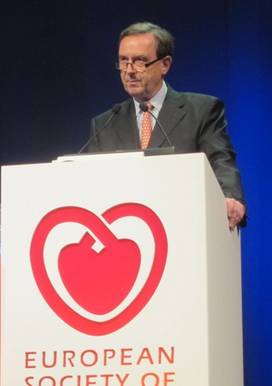
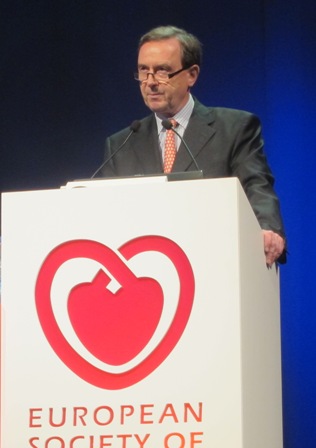
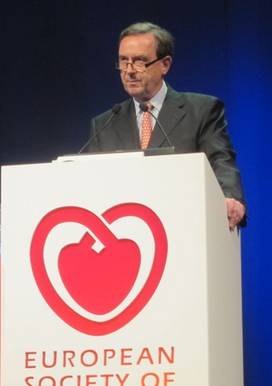
"In high-risk patients, the in-hospital mortality with TAVI is at least as good, if not better, as with the surgical approach," said Dr. Christian Hamm, who presented data from 13,860 patients in the German Aortic Valve Registry (GARY) at the annual congress of the European Society of Cardiology.
In-hospital mortality was 2.2% for conventional aortic valve replacement surgery alone, 4.6% for conventional surgery with coronary artery bypass grafting (CABG), 5.5% for TAVI using a transvascular approach, and 7.8% for TAVI with a transapical approach.
After adjusting for the expected higher risk profile of TAVI patients, the risk of in-hospital death was not increased with transvascular TAVI, compared with surgery alone, although there was a trend toward increased risk with transapical TAVI in both younger patients and those aged 75 years and older, said Dr. Hamm, medical director of the Kerckhoff Heart and Thorax Centre, Bad Nauheim, Germany.
When asked by the media whether the higher mortality may be diminishing use of the transapical approach, GARY coauthor Dr. Friedrich-Wilhelm Mohr said that similar rates have been seen in the source registry and that these patients tend to have slightly more comorbidities and vascular disease.
"The current data in 2012 do not show a pull back," said Dr. Mohr, medical director of the Leipzig (Germany) Heart Center. "It’s almost the same situation as here: two-thirds transfemoral and one-third transapical."
Consistent with earlier observations, the rate of cerebrovascular events was lowest in patients undergoing surgery without CABG at 2.2% and was "in the range of 3.5%" for all other groups, Dr. Hamm reported.
Discussant Dr. Olaf Wendler said it’s convincing that cerebrovascular complications are lower than in the landmark PARTNER (Placement of Aortic Transcatheter Valves) trial, which reported a 5% major stroke rate among TAVI patients at 30 days.
"This may be less of a problem than we thought about transcatheter-valve treatment in the past," he said. "However, again we don’t have all the details, definitions of the adverse events, and we don’t have a clear idea of how adverse events were adjudicated in this registry."
Rates of vascular complications and new onset atrioventricular (AV) blockage were highest after transvascular TAVI, while renal failure was most common after the transapical approach, said Dr. Wendler, professor at King’s College Hospital in London.
Specifically, vascular complications were reported in 12% of the transvascular patients, compared with 2.5% for the transapical approach, 2% for surgery plus CABG, and 1% for those patients who received surgery alone.
Residual postimplant aortic regurgitation, which has been linked to long-term TAVI outcome, "seemed to be excellent because more than 90% of patients had no or grade I regurgitation," Dr. Hamm said.
Only 7% of transvascular and 3% of transapical patients had grade II regurgitation, and only 1% of transapical and no transvascular patients had grade III or IV regurgitation.
Although between-valve comparisons were limited since the CoreValve was not implanted transapically, grade I or II aortic regurgitation was more common with the CoreValve (70%) than with the Edwards prosthesis (45.7%).
Despite the increasing shift of TAVI in lower-risk patients, data from GARY show that TAVI is being performed predominantly in high-risk patients, as recommended in various guidelines, Dr. Hamm said.
Participation in GARY is voluntary, with 92 of 99 German centers currently taking part. As of July 2012, more than 26,000 patients were included, of whom 23% were TAVI patients.
The current analysis included 13,860 patients from 53 cardiac surgery units and 69 cardiology units. Of these patients, 6,523 underwent surgery alone, 3,462 surgery plus CABG, 2,694 transvascular TAVI, and 1,181 transapical TAVI.
At baseline, TAVI patients were significantly older than surgical patients (average of 81 years transvascular and 80.3 years transapical vs. 68 years surgical); had significantly more comorbidities including atrial fibrillation, hypertension, and diabetes; and were significantly more likely to have a left ventricular ejection fraction below 30%.
Roughly half of elderly patients more than 75 years of age now receive TAVI in Germany, which is quite impressive and by far a higher number than any other country worldwide, said Dr. Wendler.
German investigators also have developed a novel risk scoring system called the AKL score, which, unlike the logistic EuroSCORE or Society of Thoracic Surgeons (STS) risk score, is based only on patients with aortic valve disease.
"The EuroSCORE, as many of us know, is not very suitable in this scenario," Dr. Hamm said.
When the GARY authors compared observed vs. expected in-hospital mortality based on patients’ EuroSCORE, the observed risk for mortality was much lower than predicted by the EuroSCORE.
When the same analysis was performed using the AKL score, however, the observed and expected mortality outcomes were very similar, suggesting the "AKL score much better reflects the real outcome of the patients," he said.
Dr. Wendler remarked that in low-risk patients, however, the observed in-hospital mortality was higher than what was predicted, "questioning if this is the right treatment for this group of patients."
GARY is supported by the German Heart Foundation and unrestricted grants from heart valve manufacturers. Dr. Hamm disclosed honoraria from Medtronic and Edwards Lifesciences and participation in clinical trials with Medtronic, Edwards, Symetis, and JenaValve.
Dr. Mohr reported no conflicts of interest. Dr. Wendler reported research ties with Edwards and consulting for Edwards and St. Jude Medical.
MUNICH -- In-hospital mortality and complications following transcatheter aortic valve implantation in the real-world setting are comparable with those achieved in randomized controlled studies, according to data from the first large-scale national registry capturing surgical and catheter-based procedures.
"In high-risk patients, the in-hospital mortality with TAVI is at least as good, if not better, as with the surgical approach," said Dr. Christian Hamm, who presented data from 13,860 patients in the German Aortic Valve Registry (GARY) at the annual congress of the European Society of Cardiology.
In-hospital mortality was 2.2% for conventional aortic valve replacement surgery alone, 4.6% for conventional surgery with coronary artery bypass grafting (CABG), 5.5% for TAVI using a transvascular approach, and 7.8% for TAVI with a transapical approach.
After adjusting for the expected higher risk profile of TAVI patients, the risk of in-hospital death was not increased with transvascular TAVI, compared with surgery alone, although there was a trend toward increased risk with transapical TAVI in both younger patients and those aged 75 years and older, said Dr. Hamm, medical director of the Kerckhoff Heart and Thorax Centre, Bad Nauheim, Germany.
When asked by the media whether the higher mortality may be diminishing use of the transapical approach, GARY coauthor Dr. Friedrich-Wilhelm Mohr said that similar rates have been seen in the source registry and that these patients tend to have slightly more comorbidities and vascular disease.
"The current data in 2012 do not show a pull back," said Dr. Mohr, medical director of the Leipzig (Germany) Heart Center. "It’s almost the same situation as here: two-thirds transfemoral and one-third transapical."
Consistent with earlier observations, the rate of cerebrovascular events was lowest in patients undergoing surgery without CABG at 2.2% and was "in the range of 3.5%" for all other groups, Dr. Hamm reported.
Discussant Dr. Olaf Wendler said it’s convincing that cerebrovascular complications are lower than in the landmark PARTNER (Placement of Aortic Transcatheter Valves) trial, which reported a 5% major stroke rate among TAVI patients at 30 days.
"This may be less of a problem than we thought about transcatheter-valve treatment in the past," he said. "However, again we don’t have all the details, definitions of the adverse events, and we don’t have a clear idea of how adverse events were adjudicated in this registry."
Rates of vascular complications and new onset atrioventricular (AV) blockage were highest after transvascular TAVI, while renal failure was most common after the transapical approach, said Dr. Wendler, professor at King’s College Hospital in London.
Specifically, vascular complications were reported in 12% of the transvascular patients, compared with 2.5% for the transapical approach, 2% for surgery plus CABG, and 1% for those patients who received surgery alone.
Residual postimplant aortic regurgitation, which has been linked to long-term TAVI outcome, "seemed to be excellent because more than 90% of patients had no or grade I regurgitation," Dr. Hamm said.
Only 7% of transvascular and 3% of transapical patients had grade II regurgitation, and only 1% of transapical and no transvascular patients had grade III or IV regurgitation.
Although between-valve comparisons were limited since the CoreValve was not implanted transapically, grade I or II aortic regurgitation was more common with the CoreValve (70%) than with the Edwards prosthesis (45.7%).
Despite the increasing shift of TAVI in lower-risk patients, data from GARY show that TAVI is being performed predominantly in high-risk patients, as recommended in various guidelines, Dr. Hamm said.
Participation in GARY is voluntary, with 92 of 99 German centers currently taking part. As of July 2012, more than 26,000 patients were included, of whom 23% were TAVI patients.
The current analysis included 13,860 patients from 53 cardiac surgery units and 69 cardiology units. Of these patients, 6,523 underwent surgery alone, 3,462 surgery plus CABG, 2,694 transvascular TAVI, and 1,181 transapical TAVI.
At baseline, TAVI patients were significantly older than surgical patients (average of 81 years transvascular and 80.3 years transapical vs. 68 years surgical); had significantly more comorbidities including atrial fibrillation, hypertension, and diabetes; and were significantly more likely to have a left ventricular ejection fraction below 30%.
Roughly half of elderly patients more than 75 years of age now receive TAVI in Germany, which is quite impressive and by far a higher number than any other country worldwide, said Dr. Wendler.
German investigators also have developed a novel risk scoring system called the AKL score, which, unlike the logistic EuroSCORE or Society of Thoracic Surgeons (STS) risk score, is based only on patients with aortic valve disease.
"The EuroSCORE, as many of us know, is not very suitable in this scenario," Dr. Hamm said.
When the GARY authors compared observed vs. expected in-hospital mortality based on patients’ EuroSCORE, the observed risk for mortality was much lower than predicted by the EuroSCORE.
When the same analysis was performed using the AKL score, however, the observed and expected mortality outcomes were very similar, suggesting the "AKL score much better reflects the real outcome of the patients," he said.
Dr. Wendler remarked that in low-risk patients, however, the observed in-hospital mortality was higher than what was predicted, "questioning if this is the right treatment for this group of patients."
GARY is supported by the German Heart Foundation and unrestricted grants from heart valve manufacturers. Dr. Hamm disclosed honoraria from Medtronic and Edwards Lifesciences and participation in clinical trials with Medtronic, Edwards, Symetis, and JenaValve.
Dr. Mohr reported no conflicts of interest. Dr. Wendler reported research ties with Edwards and consulting for Edwards and St. Jude Medical.
MUNICH -- In-hospital mortality and complications following transcatheter aortic valve implantation in the real-world setting are comparable with those achieved in randomized controlled studies, according to data from the first large-scale national registry capturing surgical and catheter-based procedures.
"In high-risk patients, the in-hospital mortality with TAVI is at least as good, if not better, as with the surgical approach," said Dr. Christian Hamm, who presented data from 13,860 patients in the German Aortic Valve Registry (GARY) at the annual congress of the European Society of Cardiology.
In-hospital mortality was 2.2% for conventional aortic valve replacement surgery alone, 4.6% for conventional surgery with coronary artery bypass grafting (CABG), 5.5% for TAVI using a transvascular approach, and 7.8% for TAVI with a transapical approach.
After adjusting for the expected higher risk profile of TAVI patients, the risk of in-hospital death was not increased with transvascular TAVI, compared with surgery alone, although there was a trend toward increased risk with transapical TAVI in both younger patients and those aged 75 years and older, said Dr. Hamm, medical director of the Kerckhoff Heart and Thorax Centre, Bad Nauheim, Germany.
When asked by the media whether the higher mortality may be diminishing use of the transapical approach, GARY coauthor Dr. Friedrich-Wilhelm Mohr said that similar rates have been seen in the source registry and that these patients tend to have slightly more comorbidities and vascular disease.
"The current data in 2012 do not show a pull back," said Dr. Mohr, medical director of the Leipzig (Germany) Heart Center. "It’s almost the same situation as here: two-thirds transfemoral and one-third transapical."
Consistent with earlier observations, the rate of cerebrovascular events was lowest in patients undergoing surgery without CABG at 2.2% and was "in the range of 3.5%" for all other groups, Dr. Hamm reported.
Discussant Dr. Olaf Wendler said it’s convincing that cerebrovascular complications are lower than in the landmark PARTNER (Placement of Aortic Transcatheter Valves) trial, which reported a 5% major stroke rate among TAVI patients at 30 days.
"This may be less of a problem than we thought about transcatheter-valve treatment in the past," he said. "However, again we don’t have all the details, definitions of the adverse events, and we don’t have a clear idea of how adverse events were adjudicated in this registry."
Rates of vascular complications and new onset atrioventricular (AV) blockage were highest after transvascular TAVI, while renal failure was most common after the transapical approach, said Dr. Wendler, professor at King’s College Hospital in London.
Specifically, vascular complications were reported in 12% of the transvascular patients, compared with 2.5% for the transapical approach, 2% for surgery plus CABG, and 1% for those patients who received surgery alone.
Residual postimplant aortic regurgitation, which has been linked to long-term TAVI outcome, "seemed to be excellent because more than 90% of patients had no or grade I regurgitation," Dr. Hamm said.
Only 7% of transvascular and 3% of transapical patients had grade II regurgitation, and only 1% of transapical and no transvascular patients had grade III or IV regurgitation.
Although between-valve comparisons were limited since the CoreValve was not implanted transapically, grade I or II aortic regurgitation was more common with the CoreValve (70%) than with the Edwards prosthesis (45.7%).
Despite the increasing shift of TAVI in lower-risk patients, data from GARY show that TAVI is being performed predominantly in high-risk patients, as recommended in various guidelines, Dr. Hamm said.
Participation in GARY is voluntary, with 92 of 99 German centers currently taking part. As of July 2012, more than 26,000 patients were included, of whom 23% were TAVI patients.
The current analysis included 13,860 patients from 53 cardiac surgery units and 69 cardiology units. Of these patients, 6,523 underwent surgery alone, 3,462 surgery plus CABG, 2,694 transvascular TAVI, and 1,181 transapical TAVI.
At baseline, TAVI patients were significantly older than surgical patients (average of 81 years transvascular and 80.3 years transapical vs. 68 years surgical); had significantly more comorbidities including atrial fibrillation, hypertension, and diabetes; and were significantly more likely to have a left ventricular ejection fraction below 30%.
Roughly half of elderly patients more than 75 years of age now receive TAVI in Germany, which is quite impressive and by far a higher number than any other country worldwide, said Dr. Wendler.
German investigators also have developed a novel risk scoring system called the AKL score, which, unlike the logistic EuroSCORE or Society of Thoracic Surgeons (STS) risk score, is based only on patients with aortic valve disease.
"The EuroSCORE, as many of us know, is not very suitable in this scenario," Dr. Hamm said.
When the GARY authors compared observed vs. expected in-hospital mortality based on patients’ EuroSCORE, the observed risk for mortality was much lower than predicted by the EuroSCORE.
When the same analysis was performed using the AKL score, however, the observed and expected mortality outcomes were very similar, suggesting the "AKL score much better reflects the real outcome of the patients," he said.
Dr. Wendler remarked that in low-risk patients, however, the observed in-hospital mortality was higher than what was predicted, "questioning if this is the right treatment for this group of patients."
GARY is supported by the German Heart Foundation and unrestricted grants from heart valve manufacturers. Dr. Hamm disclosed honoraria from Medtronic and Edwards Lifesciences and participation in clinical trials with Medtronic, Edwards, Symetis, and JenaValve.
Dr. Mohr reported no conflicts of interest. Dr. Wendler reported research ties with Edwards and consulting for Edwards and St. Jude Medical.
ANNUAL CONGRESS OF THE EUROPEAN SOCIETY OF CARDIOLOGY
Major Finding: In-hospital mortality was 2.2% for conventional aortic valve replacement surgery, 4.6% for conventional surgery with coronary artery bypass grafting, 5.5% for transvascular TAVI, and 7.8% for transapical TAVI.
Data Source: Data are from 13,860 patients treated with TAVI in 2011 in the German Aortic Valve Registry.
Disclosures: GARY is supported by the German Heart Foundation and unrestricted grants from heart valve manufacturers. Dr. Hamm disclosed honoraria from Medtronic and Edwards Lifesciences and participation in clinical trials with Medtronic, Edwards, Symetis, and JenaValve. Dr. Mohr reported no conflicts of interest. Dr. Wendler reported research ties with Edwards and consulting for Edwards and St. Jude Medical.
Real-World TAVI Matches Trial Results
MUNICH -- In-hospital mortality and complications following transcatheter aortic valve implantation in the real-world setting are comparable with those achieved in randomized controlled studies, according to data from the first large-scale national registry capturing surgical and catheter-based procedures.
"In high-risk patients, the in-hospital mortality with TAVI is at least as good, if not better, as with the surgical approach," said Dr. Christian Hamm, who presented data from 13,860 patients in the German Aortic Valve Registry (GARY) at the annual congress of the European Society of Cardiology.
In-hospital mortality was 2.2% for conventional aortic valve replacement surgery alone, 4.6% for conventional surgery with coronary artery bypass grafting (CABG), 5.5% for TAVI using a transvascular approach, and 7.8% for TAVI with a transapical approach.
After adjusting for the expected higher risk profile of TAVI patients, the risk of in-hospital death was not increased with transvascular TAVI, compared with surgery alone, although there was a trend toward increased risk with transapical TAVI in both younger patients and those aged 75 years and older, said Dr. Hamm, medical director of the Kerckhoff Heart and Thorax Centre, Bad Nauheim, Germany.
When asked by the media whether the higher mortality may be diminishing use of the transapical approach, GARY coauthor Dr. Friedrich-Wilhelm Mohr said that similar rates have been seen in the source registry and that these patients tend to have slightly more comorbidities and vascular disease.
"The current data in 2012 do not show a pull back," said Dr. Mohr, medical director of the Leipzig (Germany) Heart Center. "It’s almost the same situation as here: two-thirds transfemoral and one-third transapical."
Consistent with earlier observations, the rate of cerebrovascular events was lowest in patients undergoing surgery without CABG at 2.2% and was "in the range of 3.5%" for all other groups, Dr. Hamm reported.
Discussant Dr. Olaf Wendler said it’s convincing that cerebrovascular complications are lower than in the landmark PARTNER (Placement of Aortic Transcatheter Valves) trial, which reported a 5% major stroke rate among TAVI patients at 30 days.
"This may be less of a problem than we thought about transcatheter-valve treatment in the past," he said. "However, again we don’t have all the details, definitions of the adverse events, and we don’t have a clear idea of how adverse events were adjudicated in this registry."
Rates of vascular complications and new onset atrioventricular (AV) blockage were highest after transvascular TAVI, while renal failure was most common after the transapical approach, said Dr. Wendler, professor at King’s College Hospital in London.
Specifically, vascular complications were reported in 12% of the transvascular patients, compared with 2.5% for the transapical approach, 2% for surgery plus CABG, and 1% for those patients who received surgery alone.
Residual postimplant aortic regurgitation, which has been linked to long-term TAVI outcome, "seemed to be excellent because more than 90% of patients had no or grade I regurgitation," Dr. Hamm said.
Only 7% of transvascular and 3% of transapical patients had grade II regurgitation, and only 1% of transapical and no transvascular patients had grade III or IV regurgitation.
Although between-valve comparisons were limited since the CoreValve was not implanted transapically, grade I or II aortic regurgitation was more common with the CoreValve (70%) than with the Edwards prosthesis (45.7%).
Despite the increasing shift of TAVI in lower-risk patients, data from GARY show that TAVI is being performed predominantly in high-risk patients, as recommended in various guidelines, Dr. Hamm said.
Participation in GARY is voluntary, with 92 of 99 German centers currently taking part. As of July 2012, more than 26,000 patients were included, of whom 23% were TAVI patients.
The current analysis included 13,860 patients from 53 cardiac surgery units and 69 cardiology units. Of these patients, 6,523 underwent surgery alone, 3,462 surgery plus CABG, 2,694 transvascular TAVI, and 1,181 transapical TAVI.
At baseline, TAVI patients were significantly older than surgical patients (average of 81 years transvascular and 80.3 years transapical vs. 68 years surgical); had significantly more comorbidities including atrial fibrillation, hypertension, and diabetes; and were significantly more likely to have a left ventricular ejection fraction below 30%.
Roughly half of elderly patients more than 75 years of age now receive TAVI in Germany, which is quite impressive and by far a higher number than any other country worldwide, said Dr. Wendler.
German investigators also have developed a novel risk scoring system called the AKL score, which, unlike the logistic EuroSCORE or Society of Thoracic Surgeons (STS) risk score, is based only on patients with aortic valve disease.
"The EuroSCORE, as many of us know, is not very suitable in this scenario," Dr. Hamm said.
When the GARY authors compared observed vs. expected in-hospital mortality based on patients’ EuroSCORE, the observed risk for mortality was much lower than predicted by the EuroSCORE.
When the same analysis was performed using the AKL score, however, the observed and expected mortality outcomes were very similar, suggesting the "AKL score much better reflects the real outcome of the patients," he said.
Dr. Wendler remarked that in low-risk patients, however, the observed in-hospital mortality was higher than what was predicted, "questioning if this is the right treatment for this group of patients."
GARY is supported by the German Heart Foundation and unrestricted grants from heart valve manufacturers. Dr. Hamm disclosed honoraria from Medtronic and Edwards Lifesciences and participation in clinical trials with Medtronic, Edwards, Symetis, and JenaValve.
Dr. Mohr reported no conflicts of interest. Dr. Wendler reported research ties with Edwards and consulting for Edwards and St. Jude Medical.
MUNICH -- In-hospital mortality and complications following transcatheter aortic valve implantation in the real-world setting are comparable with those achieved in randomized controlled studies, according to data from the first large-scale national registry capturing surgical and catheter-based procedures.
"In high-risk patients, the in-hospital mortality with TAVI is at least as good, if not better, as with the surgical approach," said Dr. Christian Hamm, who presented data from 13,860 patients in the German Aortic Valve Registry (GARY) at the annual congress of the European Society of Cardiology.
In-hospital mortality was 2.2% for conventional aortic valve replacement surgery alone, 4.6% for conventional surgery with coronary artery bypass grafting (CABG), 5.5% for TAVI using a transvascular approach, and 7.8% for TAVI with a transapical approach.
After adjusting for the expected higher risk profile of TAVI patients, the risk of in-hospital death was not increased with transvascular TAVI, compared with surgery alone, although there was a trend toward increased risk with transapical TAVI in both younger patients and those aged 75 years and older, said Dr. Hamm, medical director of the Kerckhoff Heart and Thorax Centre, Bad Nauheim, Germany.
When asked by the media whether the higher mortality may be diminishing use of the transapical approach, GARY coauthor Dr. Friedrich-Wilhelm Mohr said that similar rates have been seen in the source registry and that these patients tend to have slightly more comorbidities and vascular disease.
"The current data in 2012 do not show a pull back," said Dr. Mohr, medical director of the Leipzig (Germany) Heart Center. "It’s almost the same situation as here: two-thirds transfemoral and one-third transapical."
Consistent with earlier observations, the rate of cerebrovascular events was lowest in patients undergoing surgery without CABG at 2.2% and was "in the range of 3.5%" for all other groups, Dr. Hamm reported.
Discussant Dr. Olaf Wendler said it’s convincing that cerebrovascular complications are lower than in the landmark PARTNER (Placement of Aortic Transcatheter Valves) trial, which reported a 5% major stroke rate among TAVI patients at 30 days.
"This may be less of a problem than we thought about transcatheter-valve treatment in the past," he said. "However, again we don’t have all the details, definitions of the adverse events, and we don’t have a clear idea of how adverse events were adjudicated in this registry."
Rates of vascular complications and new onset atrioventricular (AV) blockage were highest after transvascular TAVI, while renal failure was most common after the transapical approach, said Dr. Wendler, professor at King’s College Hospital in London.
Specifically, vascular complications were reported in 12% of the transvascular patients, compared with 2.5% for the transapical approach, 2% for surgery plus CABG, and 1% for those patients who received surgery alone.
Residual postimplant aortic regurgitation, which has been linked to long-term TAVI outcome, "seemed to be excellent because more than 90% of patients had no or grade I regurgitation," Dr. Hamm said.
Only 7% of transvascular and 3% of transapical patients had grade II regurgitation, and only 1% of transapical and no transvascular patients had grade III or IV regurgitation.
Although between-valve comparisons were limited since the CoreValve was not implanted transapically, grade I or II aortic regurgitation was more common with the CoreValve (70%) than with the Edwards prosthesis (45.7%).
Despite the increasing shift of TAVI in lower-risk patients, data from GARY show that TAVI is being performed predominantly in high-risk patients, as recommended in various guidelines, Dr. Hamm said.
Participation in GARY is voluntary, with 92 of 99 German centers currently taking part. As of July 2012, more than 26,000 patients were included, of whom 23% were TAVI patients.
The current analysis included 13,860 patients from 53 cardiac surgery units and 69 cardiology units. Of these patients, 6,523 underwent surgery alone, 3,462 surgery plus CABG, 2,694 transvascular TAVI, and 1,181 transapical TAVI.
At baseline, TAVI patients were significantly older than surgical patients (average of 81 years transvascular and 80.3 years transapical vs. 68 years surgical); had significantly more comorbidities including atrial fibrillation, hypertension, and diabetes; and were significantly more likely to have a left ventricular ejection fraction below 30%.
Roughly half of elderly patients more than 75 years of age now receive TAVI in Germany, which is quite impressive and by far a higher number than any other country worldwide, said Dr. Wendler.
German investigators also have developed a novel risk scoring system called the AKL score, which, unlike the logistic EuroSCORE or Society of Thoracic Surgeons (STS) risk score, is based only on patients with aortic valve disease.
"The EuroSCORE, as many of us know, is not very suitable in this scenario," Dr. Hamm said.
When the GARY authors compared observed vs. expected in-hospital mortality based on patients’ EuroSCORE, the observed risk for mortality was much lower than predicted by the EuroSCORE.
When the same analysis was performed using the AKL score, however, the observed and expected mortality outcomes were very similar, suggesting the "AKL score much better reflects the real outcome of the patients," he said.
Dr. Wendler remarked that in low-risk patients, however, the observed in-hospital mortality was higher than what was predicted, "questioning if this is the right treatment for this group of patients."
GARY is supported by the German Heart Foundation and unrestricted grants from heart valve manufacturers. Dr. Hamm disclosed honoraria from Medtronic and Edwards Lifesciences and participation in clinical trials with Medtronic, Edwards, Symetis, and JenaValve.
Dr. Mohr reported no conflicts of interest. Dr. Wendler reported research ties with Edwards and consulting for Edwards and St. Jude Medical.
MUNICH -- In-hospital mortality and complications following transcatheter aortic valve implantation in the real-world setting are comparable with those achieved in randomized controlled studies, according to data from the first large-scale national registry capturing surgical and catheter-based procedures.
"In high-risk patients, the in-hospital mortality with TAVI is at least as good, if not better, as with the surgical approach," said Dr. Christian Hamm, who presented data from 13,860 patients in the German Aortic Valve Registry (GARY) at the annual congress of the European Society of Cardiology.
In-hospital mortality was 2.2% for conventional aortic valve replacement surgery alone, 4.6% for conventional surgery with coronary artery bypass grafting (CABG), 5.5% for TAVI using a transvascular approach, and 7.8% for TAVI with a transapical approach.
After adjusting for the expected higher risk profile of TAVI patients, the risk of in-hospital death was not increased with transvascular TAVI, compared with surgery alone, although there was a trend toward increased risk with transapical TAVI in both younger patients and those aged 75 years and older, said Dr. Hamm, medical director of the Kerckhoff Heart and Thorax Centre, Bad Nauheim, Germany.
When asked by the media whether the higher mortality may be diminishing use of the transapical approach, GARY coauthor Dr. Friedrich-Wilhelm Mohr said that similar rates have been seen in the source registry and that these patients tend to have slightly more comorbidities and vascular disease.
"The current data in 2012 do not show a pull back," said Dr. Mohr, medical director of the Leipzig (Germany) Heart Center. "It’s almost the same situation as here: two-thirds transfemoral and one-third transapical."
Consistent with earlier observations, the rate of cerebrovascular events was lowest in patients undergoing surgery without CABG at 2.2% and was "in the range of 3.5%" for all other groups, Dr. Hamm reported.
Discussant Dr. Olaf Wendler said it’s convincing that cerebrovascular complications are lower than in the landmark PARTNER (Placement of Aortic Transcatheter Valves) trial, which reported a 5% major stroke rate among TAVI patients at 30 days.
"This may be less of a problem than we thought about transcatheter-valve treatment in the past," he said. "However, again we don’t have all the details, definitions of the adverse events, and we don’t have a clear idea of how adverse events were adjudicated in this registry."
Rates of vascular complications and new onset atrioventricular (AV) blockage were highest after transvascular TAVI, while renal failure was most common after the transapical approach, said Dr. Wendler, professor at King’s College Hospital in London.
Specifically, vascular complications were reported in 12% of the transvascular patients, compared with 2.5% for the transapical approach, 2% for surgery plus CABG, and 1% for those patients who received surgery alone.
Residual postimplant aortic regurgitation, which has been linked to long-term TAVI outcome, "seemed to be excellent because more than 90% of patients had no or grade I regurgitation," Dr. Hamm said.
Only 7% of transvascular and 3% of transapical patients had grade II regurgitation, and only 1% of transapical and no transvascular patients had grade III or IV regurgitation.
Although between-valve comparisons were limited since the CoreValve was not implanted transapically, grade I or II aortic regurgitation was more common with the CoreValve (70%) than with the Edwards prosthesis (45.7%).
Despite the increasing shift of TAVI in lower-risk patients, data from GARY show that TAVI is being performed predominantly in high-risk patients, as recommended in various guidelines, Dr. Hamm said.
Participation in GARY is voluntary, with 92 of 99 German centers currently taking part. As of July 2012, more than 26,000 patients were included, of whom 23% were TAVI patients.
The current analysis included 13,860 patients from 53 cardiac surgery units and 69 cardiology units. Of these patients, 6,523 underwent surgery alone, 3,462 surgery plus CABG, 2,694 transvascular TAVI, and 1,181 transapical TAVI.
At baseline, TAVI patients were significantly older than surgical patients (average of 81 years transvascular and 80.3 years transapical vs. 68 years surgical); had significantly more comorbidities including atrial fibrillation, hypertension, and diabetes; and were significantly more likely to have a left ventricular ejection fraction below 30%.
Roughly half of elderly patients more than 75 years of age now receive TAVI in Germany, which is quite impressive and by far a higher number than any other country worldwide, said Dr. Wendler.
German investigators also have developed a novel risk scoring system called the AKL score, which, unlike the logistic EuroSCORE or Society of Thoracic Surgeons (STS) risk score, is based only on patients with aortic valve disease.
"The EuroSCORE, as many of us know, is not very suitable in this scenario," Dr. Hamm said.
When the GARY authors compared observed vs. expected in-hospital mortality based on patients’ EuroSCORE, the observed risk for mortality was much lower than predicted by the EuroSCORE.
When the same analysis was performed using the AKL score, however, the observed and expected mortality outcomes were very similar, suggesting the "AKL score much better reflects the real outcome of the patients," he said.
Dr. Wendler remarked that in low-risk patients, however, the observed in-hospital mortality was higher than what was predicted, "questioning if this is the right treatment for this group of patients."
GARY is supported by the German Heart Foundation and unrestricted grants from heart valve manufacturers. Dr. Hamm disclosed honoraria from Medtronic and Edwards Lifesciences and participation in clinical trials with Medtronic, Edwards, Symetis, and JenaValve.
Dr. Mohr reported no conflicts of interest. Dr. Wendler reported research ties with Edwards and consulting for Edwards and St. Jude Medical.
ANNUAL CONGRESS OF THE EUROPEAN SOCIETY OF CARDIOLOGY
Major Finding: In-hospital mortality was 2.2% for conventional aortic valve replacement surgery, 4.6% for conventional surgery with coronary artery bypass grafting, 5.5% for transvascular TAVI, and 7.8% for transapical TAVI.
Data Source: Data are from 13,860 patients treated with TAVI in 2011 in the German Aortic Valve Registry.
Disclosures: GARY is supported by the German Heart Foundation and unrestricted grants from heart valve manufacturers. Dr. Hamm disclosed honoraria from Medtronic and Edwards Lifesciences and participation in clinical trials with Medtronic, Edwards, Symetis, and JenaValve. Dr. Mohr reported no conflicts of interest. Dr. Wendler reported research ties with Edwards and consulting for Edwards and St. Jude Medical.
AHA Program Chair on Election, ACA, and NIH Funding
One day after President Obama's reelection, we caught up with Dr. Elliott Antman, American Heart Association's 2012 Program Chair, for comments on how the results of the election could impact physicians' practices and patient care.
One day after President Obama's reelection, we caught up with Dr. Elliott Antman, American Heart Association's 2012 Program Chair, for comments on how the results of the election could impact physicians' practices and patient care.
One day after President Obama's reelection, we caught up with Dr. Elliott Antman, American Heart Association's 2012 Program Chair, for comments on how the results of the election could impact physicians' practices and patient care.
AHA Program Chair on Election, ACA, and NIH Funding
One day after President Obama's reelection, we caught up with Dr. Elliott Antman, American Heart Association's 2012 Program Chair, for comments on how the results of the election could impact physicians' practices and patient care.
One day after President Obama's reelection, we caught up with Dr. Elliott Antman, American Heart Association's 2012 Program Chair, for comments on how the results of the election could impact physicians' practices and patient care.
One day after President Obama's reelection, we caught up with Dr. Elliott Antman, American Heart Association's 2012 Program Chair, for comments on how the results of the election could impact physicians' practices and patient care.
Mentor vs. Educator: Common Ground/Subtle Difference
There is a recent and needed interest in fostering the maturation of surgical trainees, both in the scientific literature and the lay press. Much of this focus has been on the mentorship and educational development of the surgeon in training. As a point of reference, there were 56 citations in PubMed for the calendar year 2012 (January through September) with mentorship or educator and surgery as keywords. This spans the spectrum from conveying technical skills in the operating room and on the wards, to transferring knowledge, to navigating the intricate dynamics of starting a practice.
While there is a great deal of commonality between a mentor and educator, there are subtle differences. Merriam-Webster has a definition of a mentor as "a trusted counselor or guide." An educator is defined as "one skilled in teaching." As what I believe to be a demonstration of the understanding that there are nuances of becoming a skilled educator, the Joint Council on Thoracic Surgery Education (JCTSE) and The Society of Thoracic Surgeons (STS) jointly sponsor the Educate the Educators (EtE) program. The EtE program’s purpose is to enhance the teaching skills of cardiothoracic surgery faculty.
I recently had the fortunate opportunity to attend and participate in this year’s EtE course held this July 27-29 at The William and Ida Friday Center for Continuing Education at the University of North Carolina, Chapel Hill. This informative course was directed by Dr. Edward Verrier (University of Washington), Dr. Ara Vaporciyan (The University of Texas M.D. Anderson Cancer Center) and Dr. Stephen Yang (The Johns Hopkins University). The EtE program, which had 37 attendees, was run concurrently with this year’s Thoracic Surgery Directors Association 5th Annual Cardiothoracic Surgery Boot Camp.
The course focused on developing a framework for an effective educational environment – one where the trainee is able to learn, retain, and utilize the knowledge or skills. The need to engage learners at all the levels was especially poignant to cardiothoracic surgery education where the team and students span from medical students to general surgery residents to thoracic residents and fellows. Developing a deeper understanding of the level of pre-knowledge will become even more critical as integrated training programs expand.
Understanding the needs of the learner – especially as it relates to the development of curriculum – was a focus of Dr. Vaporciyan’s discussions. The field of curriculum development and assessment is beyond the scope of this article, but hinges on understanding curriculum as a process. The process begins with assessing the needs of the learner. It is followed by a thorough understanding of the goals and objectives of the educational experience. Finally, the materials, methods, and instructors are molded to best utilize their strengths. This approach ultimately makes the learning relevant to the trainee and optimally engages them. The ongoing engagement allows feedback to be best used to measure a trainee’s strengths and weaknesses. The educator then facilitates the process.
A large amount of time was dedicated to understanding the learner of today. This was spearheaded by a luncheon lecture and subsequent direct discussions with Dr. Mark Taylor, M.S.W., Ed.D on the generational changes of learners. What was most interesting, to this attendee, was the influence of intergenerational, cultural, and technological factors on the trainee of today and how those stereotypes (justified and unjustified) are carried through to the current training paradigm. Dr. Taylor’s talks were nicely augmented by those of Dr. Yang on utilizing deliberate teaching. This process focuses on setting objectives for a particular encounter (e.g., surgical case, bedside rounds, lecture) and providing feedback immediately.
The approach to deliberate teaching was especially relevant to today’s thoracic residency paradigm where work-hours are limited. To this end, an approach to maximally optimize learning, placing detailed background preparation with the trainee so that when they participate they are up to speed. That is to say, the majority of the content would be delivered off-line. The trainees are then held responsible for this information so that the learning encounter can be productive and focused on deeper understanding eliminating confusion.
Then the educational encounter would not be a regurgitation of information available elsewhere, but a conversation. This would enable the adult learner of the 21st century to utilize the study method and approach that is most effective for them and their lifestyle.
The commitment of the JTSCE and STS to improving thoracic resident education through the EtE program is outstanding. The EtE program is a very valuable resource for those with an interest in thoracic surgical education to expand their knowledge base.
There is a recent and needed interest in fostering the maturation of surgical trainees, both in the scientific literature and the lay press. Much of this focus has been on the mentorship and educational development of the surgeon in training. As a point of reference, there were 56 citations in PubMed for the calendar year 2012 (January through September) with mentorship or educator and surgery as keywords. This spans the spectrum from conveying technical skills in the operating room and on the wards, to transferring knowledge, to navigating the intricate dynamics of starting a practice.
While there is a great deal of commonality between a mentor and educator, there are subtle differences. Merriam-Webster has a definition of a mentor as "a trusted counselor or guide." An educator is defined as "one skilled in teaching." As what I believe to be a demonstration of the understanding that there are nuances of becoming a skilled educator, the Joint Council on Thoracic Surgery Education (JCTSE) and The Society of Thoracic Surgeons (STS) jointly sponsor the Educate the Educators (EtE) program. The EtE program’s purpose is to enhance the teaching skills of cardiothoracic surgery faculty.
I recently had the fortunate opportunity to attend and participate in this year’s EtE course held this July 27-29 at The William and Ida Friday Center for Continuing Education at the University of North Carolina, Chapel Hill. This informative course was directed by Dr. Edward Verrier (University of Washington), Dr. Ara Vaporciyan (The University of Texas M.D. Anderson Cancer Center) and Dr. Stephen Yang (The Johns Hopkins University). The EtE program, which had 37 attendees, was run concurrently with this year’s Thoracic Surgery Directors Association 5th Annual Cardiothoracic Surgery Boot Camp.
The course focused on developing a framework for an effective educational environment – one where the trainee is able to learn, retain, and utilize the knowledge or skills. The need to engage learners at all the levels was especially poignant to cardiothoracic surgery education where the team and students span from medical students to general surgery residents to thoracic residents and fellows. Developing a deeper understanding of the level of pre-knowledge will become even more critical as integrated training programs expand.
Understanding the needs of the learner – especially as it relates to the development of curriculum – was a focus of Dr. Vaporciyan’s discussions. The field of curriculum development and assessment is beyond the scope of this article, but hinges on understanding curriculum as a process. The process begins with assessing the needs of the learner. It is followed by a thorough understanding of the goals and objectives of the educational experience. Finally, the materials, methods, and instructors are molded to best utilize their strengths. This approach ultimately makes the learning relevant to the trainee and optimally engages them. The ongoing engagement allows feedback to be best used to measure a trainee’s strengths and weaknesses. The educator then facilitates the process.
A large amount of time was dedicated to understanding the learner of today. This was spearheaded by a luncheon lecture and subsequent direct discussions with Dr. Mark Taylor, M.S.W., Ed.D on the generational changes of learners. What was most interesting, to this attendee, was the influence of intergenerational, cultural, and technological factors on the trainee of today and how those stereotypes (justified and unjustified) are carried through to the current training paradigm. Dr. Taylor’s talks were nicely augmented by those of Dr. Yang on utilizing deliberate teaching. This process focuses on setting objectives for a particular encounter (e.g., surgical case, bedside rounds, lecture) and providing feedback immediately.
The approach to deliberate teaching was especially relevant to today’s thoracic residency paradigm where work-hours are limited. To this end, an approach to maximally optimize learning, placing detailed background preparation with the trainee so that when they participate they are up to speed. That is to say, the majority of the content would be delivered off-line. The trainees are then held responsible for this information so that the learning encounter can be productive and focused on deeper understanding eliminating confusion.
Then the educational encounter would not be a regurgitation of information available elsewhere, but a conversation. This would enable the adult learner of the 21st century to utilize the study method and approach that is most effective for them and their lifestyle.
The commitment of the JTSCE and STS to improving thoracic resident education through the EtE program is outstanding. The EtE program is a very valuable resource for those with an interest in thoracic surgical education to expand their knowledge base.
There is a recent and needed interest in fostering the maturation of surgical trainees, both in the scientific literature and the lay press. Much of this focus has been on the mentorship and educational development of the surgeon in training. As a point of reference, there were 56 citations in PubMed for the calendar year 2012 (January through September) with mentorship or educator and surgery as keywords. This spans the spectrum from conveying technical skills in the operating room and on the wards, to transferring knowledge, to navigating the intricate dynamics of starting a practice.
While there is a great deal of commonality between a mentor and educator, there are subtle differences. Merriam-Webster has a definition of a mentor as "a trusted counselor or guide." An educator is defined as "one skilled in teaching." As what I believe to be a demonstration of the understanding that there are nuances of becoming a skilled educator, the Joint Council on Thoracic Surgery Education (JCTSE) and The Society of Thoracic Surgeons (STS) jointly sponsor the Educate the Educators (EtE) program. The EtE program’s purpose is to enhance the teaching skills of cardiothoracic surgery faculty.
I recently had the fortunate opportunity to attend and participate in this year’s EtE course held this July 27-29 at The William and Ida Friday Center for Continuing Education at the University of North Carolina, Chapel Hill. This informative course was directed by Dr. Edward Verrier (University of Washington), Dr. Ara Vaporciyan (The University of Texas M.D. Anderson Cancer Center) and Dr. Stephen Yang (The Johns Hopkins University). The EtE program, which had 37 attendees, was run concurrently with this year’s Thoracic Surgery Directors Association 5th Annual Cardiothoracic Surgery Boot Camp.
The course focused on developing a framework for an effective educational environment – one where the trainee is able to learn, retain, and utilize the knowledge or skills. The need to engage learners at all the levels was especially poignant to cardiothoracic surgery education where the team and students span from medical students to general surgery residents to thoracic residents and fellows. Developing a deeper understanding of the level of pre-knowledge will become even more critical as integrated training programs expand.
Understanding the needs of the learner – especially as it relates to the development of curriculum – was a focus of Dr. Vaporciyan’s discussions. The field of curriculum development and assessment is beyond the scope of this article, but hinges on understanding curriculum as a process. The process begins with assessing the needs of the learner. It is followed by a thorough understanding of the goals and objectives of the educational experience. Finally, the materials, methods, and instructors are molded to best utilize their strengths. This approach ultimately makes the learning relevant to the trainee and optimally engages them. The ongoing engagement allows feedback to be best used to measure a trainee’s strengths and weaknesses. The educator then facilitates the process.
A large amount of time was dedicated to understanding the learner of today. This was spearheaded by a luncheon lecture and subsequent direct discussions with Dr. Mark Taylor, M.S.W., Ed.D on the generational changes of learners. What was most interesting, to this attendee, was the influence of intergenerational, cultural, and technological factors on the trainee of today and how those stereotypes (justified and unjustified) are carried through to the current training paradigm. Dr. Taylor’s talks were nicely augmented by those of Dr. Yang on utilizing deliberate teaching. This process focuses on setting objectives for a particular encounter (e.g., surgical case, bedside rounds, lecture) and providing feedback immediately.
The approach to deliberate teaching was especially relevant to today’s thoracic residency paradigm where work-hours are limited. To this end, an approach to maximally optimize learning, placing detailed background preparation with the trainee so that when they participate they are up to speed. That is to say, the majority of the content would be delivered off-line. The trainees are then held responsible for this information so that the learning encounter can be productive and focused on deeper understanding eliminating confusion.
Then the educational encounter would not be a regurgitation of information available elsewhere, but a conversation. This would enable the adult learner of the 21st century to utilize the study method and approach that is most effective for them and their lifestyle.
The commitment of the JTSCE and STS to improving thoracic resident education through the EtE program is outstanding. The EtE program is a very valuable resource for those with an interest in thoracic surgical education to expand their knowledge base.
3-D TEE Bests 2-D in Aortic Annulus Measurement
NATIONAL HARBOR, MD. – Measurements of aortic annular geometry, valve calcification, and final device position with two- and three-dimensional echocardiography are predictive of increased risk of leakage after trans-catheter valve implantation, according to a retrospective study.
The study also showed that 3-D transesophageal echocardiography (3-D TEE) does a better job of measuring the aortic annulus, compared with 2-D TEE.
The annular measurement is critical for optimal valve sizing and prevention of paravalvular aortic regurgitation in patients undergoing transcatheter aortic valve replacement (TAVR).
Paravalvular aortic regurgitation (PAR), is a known complication of TAVR, and according to 2-year analysis of the PARTNER trial, PAR after TAVR was associated with increased late mortality ( N. Engl. J. Med. 2012;366:1686-95).
TAVR is in its infancy in the United States, compared with Europe, and experts are studying how and which imaging techniques could yield the best results before, during, and after TAVR (also called TAVI).
"Every center has their preference," said Dr. Praveen Mehrotra, a noninvasive cardiologist and the lead author of the study at Massachusetts General Hospital in Boston. "Some centers use CT and 2-D TEE. At Mass General, we integrate information obtained from 2-D and 3-D TEE."
Meanwhile, the role of 3-D TEE in TAVR hasn’t been adequately explored, added Dr. Mehrotra, who presented his poster at the annual meeting of the American Society of Echocardiography.
Dr. Mehrotra and his colleagues set out to retrospectively identify 2-D and 3-D TEE parameters that could predict significant PAR after TAVR.
They analyzed 2-D and 3-D TEE images from 94 patients undergoing TAVR between June 2008 and December 2011. The images were used to assess three parameters: annulus geometry, aortic valve apparatus calcification, and final device position.
Twenty-one of the patients (22%) showed significant PAR after TAVR, but before postdilation.
In 2-D TEE, the annulus geometry was assessed by measuring the largest anteroposterior annulus dimension at the aortic valve hinge points in mid systole, the authors wrote. Using 3-D TEE, researchers measured or calculated four parameters for the aortic annulus geometry: minor axis, major axis, eccentricity index, and annular area.
The annular dimension measured by 2-D TEE was similar in the PAR (22.8 mm) and No PAR (22.4 mm) groups. But, the 3-D TEE measurements were significantly larger in the PAR group than in the No PAR group, as measured by annular minor axis (23.8 mm vs. 22.7 mm), major axis (27.0 mm vs. 25.3 mm), eccentricity index (0.88 vs. 0.90), and annular area (5.19 cm2 vs. 4.52 cm2), the researchers reported.
The annular-prosthesis incongruence (API) index was also significantly higher in patients with PAR (1.07% vs. 0.93%), "indicating valve undersizing in this group," the authors wrote.
Using 3-D TEE, the researchers identified and graded significant areas of calcification in the aortic valve apparatus, which is also very important before TAVR, said Mehrotra.
The final device position was assessed using 2-D TEE images.
The results showed that higher API index, Aortic Valve Apparatus Calcification score, and final position of the device were predictors of significant PAR after TAVR, with odds ratios of 9.4, 3.6, and 1.2, respectively, the authors reported.
"Our study highlights the ability of 2-D and 3-D TEE for accurate annular sizing and optimal valve positioning during TAVR," they wrote.
The takeaway message, said Dr. Mehrotra in an interview, is that "the role of echo is essential before, during, and after TAVR.
He added that 3-D echocardiography has an emerging role in annular sizing. In particular, annular area by 3-D TEE may be more important than the anteroposterior dimension by 2-D TEE for accurate valve sizing, said Dr. Mehrotra. "Technologies like 3-D TEE and cardiac CT can help with preprocedural planning, but they should be used by people who understand how to use them."
While his study focused on 2-D and 3-D TEE, Dr. Mehrotra said he expected more studies begin comparing cardiac CT and 3-D TEE, which is more like, "comparing apples to apples."
In a discussion on TAVR imaging, Dr. Rebecca T. Hahn, director of interventional echocardiography at Columbia University, New York, said that cardiac CT and echocardiography are complementary. However, CT is less user-dependent, compared with 3-D TEE.
Dr. Mehrotra and Dr. Hahn had no relevant financial disclosures.
NATIONAL HARBOR, MD. – Measurements of aortic annular geometry, valve calcification, and final device position with two- and three-dimensional echocardiography are predictive of increased risk of leakage after trans-catheter valve implantation, according to a retrospective study.
The study also showed that 3-D transesophageal echocardiography (3-D TEE) does a better job of measuring the aortic annulus, compared with 2-D TEE.
The annular measurement is critical for optimal valve sizing and prevention of paravalvular aortic regurgitation in patients undergoing transcatheter aortic valve replacement (TAVR).
Paravalvular aortic regurgitation (PAR), is a known complication of TAVR, and according to 2-year analysis of the PARTNER trial, PAR after TAVR was associated with increased late mortality ( N. Engl. J. Med. 2012;366:1686-95).
TAVR is in its infancy in the United States, compared with Europe, and experts are studying how and which imaging techniques could yield the best results before, during, and after TAVR (also called TAVI).
"Every center has their preference," said Dr. Praveen Mehrotra, a noninvasive cardiologist and the lead author of the study at Massachusetts General Hospital in Boston. "Some centers use CT and 2-D TEE. At Mass General, we integrate information obtained from 2-D and 3-D TEE."
Meanwhile, the role of 3-D TEE in TAVR hasn’t been adequately explored, added Dr. Mehrotra, who presented his poster at the annual meeting of the American Society of Echocardiography.
Dr. Mehrotra and his colleagues set out to retrospectively identify 2-D and 3-D TEE parameters that could predict significant PAR after TAVR.
They analyzed 2-D and 3-D TEE images from 94 patients undergoing TAVR between June 2008 and December 2011. The images were used to assess three parameters: annulus geometry, aortic valve apparatus calcification, and final device position.
Twenty-one of the patients (22%) showed significant PAR after TAVR, but before postdilation.
In 2-D TEE, the annulus geometry was assessed by measuring the largest anteroposterior annulus dimension at the aortic valve hinge points in mid systole, the authors wrote. Using 3-D TEE, researchers measured or calculated four parameters for the aortic annulus geometry: minor axis, major axis, eccentricity index, and annular area.
The annular dimension measured by 2-D TEE was similar in the PAR (22.8 mm) and No PAR (22.4 mm) groups. But, the 3-D TEE measurements were significantly larger in the PAR group than in the No PAR group, as measured by annular minor axis (23.8 mm vs. 22.7 mm), major axis (27.0 mm vs. 25.3 mm), eccentricity index (0.88 vs. 0.90), and annular area (5.19 cm2 vs. 4.52 cm2), the researchers reported.
The annular-prosthesis incongruence (API) index was also significantly higher in patients with PAR (1.07% vs. 0.93%), "indicating valve undersizing in this group," the authors wrote.
Using 3-D TEE, the researchers identified and graded significant areas of calcification in the aortic valve apparatus, which is also very important before TAVR, said Mehrotra.
The final device position was assessed using 2-D TEE images.
The results showed that higher API index, Aortic Valve Apparatus Calcification score, and final position of the device were predictors of significant PAR after TAVR, with odds ratios of 9.4, 3.6, and 1.2, respectively, the authors reported.
"Our study highlights the ability of 2-D and 3-D TEE for accurate annular sizing and optimal valve positioning during TAVR," they wrote.
The takeaway message, said Dr. Mehrotra in an interview, is that "the role of echo is essential before, during, and after TAVR.
He added that 3-D echocardiography has an emerging role in annular sizing. In particular, annular area by 3-D TEE may be more important than the anteroposterior dimension by 2-D TEE for accurate valve sizing, said Dr. Mehrotra. "Technologies like 3-D TEE and cardiac CT can help with preprocedural planning, but they should be used by people who understand how to use them."
While his study focused on 2-D and 3-D TEE, Dr. Mehrotra said he expected more studies begin comparing cardiac CT and 3-D TEE, which is more like, "comparing apples to apples."
In a discussion on TAVR imaging, Dr. Rebecca T. Hahn, director of interventional echocardiography at Columbia University, New York, said that cardiac CT and echocardiography are complementary. However, CT is less user-dependent, compared with 3-D TEE.
Dr. Mehrotra and Dr. Hahn had no relevant financial disclosures.
NATIONAL HARBOR, MD. – Measurements of aortic annular geometry, valve calcification, and final device position with two- and three-dimensional echocardiography are predictive of increased risk of leakage after trans-catheter valve implantation, according to a retrospective study.
The study also showed that 3-D transesophageal echocardiography (3-D TEE) does a better job of measuring the aortic annulus, compared with 2-D TEE.
The annular measurement is critical for optimal valve sizing and prevention of paravalvular aortic regurgitation in patients undergoing transcatheter aortic valve replacement (TAVR).
Paravalvular aortic regurgitation (PAR), is a known complication of TAVR, and according to 2-year analysis of the PARTNER trial, PAR after TAVR was associated with increased late mortality ( N. Engl. J. Med. 2012;366:1686-95).
TAVR is in its infancy in the United States, compared with Europe, and experts are studying how and which imaging techniques could yield the best results before, during, and after TAVR (also called TAVI).
"Every center has their preference," said Dr. Praveen Mehrotra, a noninvasive cardiologist and the lead author of the study at Massachusetts General Hospital in Boston. "Some centers use CT and 2-D TEE. At Mass General, we integrate information obtained from 2-D and 3-D TEE."
Meanwhile, the role of 3-D TEE in TAVR hasn’t been adequately explored, added Dr. Mehrotra, who presented his poster at the annual meeting of the American Society of Echocardiography.
Dr. Mehrotra and his colleagues set out to retrospectively identify 2-D and 3-D TEE parameters that could predict significant PAR after TAVR.
They analyzed 2-D and 3-D TEE images from 94 patients undergoing TAVR between June 2008 and December 2011. The images were used to assess three parameters: annulus geometry, aortic valve apparatus calcification, and final device position.
Twenty-one of the patients (22%) showed significant PAR after TAVR, but before postdilation.
In 2-D TEE, the annulus geometry was assessed by measuring the largest anteroposterior annulus dimension at the aortic valve hinge points in mid systole, the authors wrote. Using 3-D TEE, researchers measured or calculated four parameters for the aortic annulus geometry: minor axis, major axis, eccentricity index, and annular area.
The annular dimension measured by 2-D TEE was similar in the PAR (22.8 mm) and No PAR (22.4 mm) groups. But, the 3-D TEE measurements were significantly larger in the PAR group than in the No PAR group, as measured by annular minor axis (23.8 mm vs. 22.7 mm), major axis (27.0 mm vs. 25.3 mm), eccentricity index (0.88 vs. 0.90), and annular area (5.19 cm2 vs. 4.52 cm2), the researchers reported.
The annular-prosthesis incongruence (API) index was also significantly higher in patients with PAR (1.07% vs. 0.93%), "indicating valve undersizing in this group," the authors wrote.
Using 3-D TEE, the researchers identified and graded significant areas of calcification in the aortic valve apparatus, which is also very important before TAVR, said Mehrotra.
The final device position was assessed using 2-D TEE images.
The results showed that higher API index, Aortic Valve Apparatus Calcification score, and final position of the device were predictors of significant PAR after TAVR, with odds ratios of 9.4, 3.6, and 1.2, respectively, the authors reported.
"Our study highlights the ability of 2-D and 3-D TEE for accurate annular sizing and optimal valve positioning during TAVR," they wrote.
The takeaway message, said Dr. Mehrotra in an interview, is that "the role of echo is essential before, during, and after TAVR.
He added that 3-D echocardiography has an emerging role in annular sizing. In particular, annular area by 3-D TEE may be more important than the anteroposterior dimension by 2-D TEE for accurate valve sizing, said Dr. Mehrotra. "Technologies like 3-D TEE and cardiac CT can help with preprocedural planning, but they should be used by people who understand how to use them."
While his study focused on 2-D and 3-D TEE, Dr. Mehrotra said he expected more studies begin comparing cardiac CT and 3-D TEE, which is more like, "comparing apples to apples."
In a discussion on TAVR imaging, Dr. Rebecca T. Hahn, director of interventional echocardiography at Columbia University, New York, said that cardiac CT and echocardiography are complementary. However, CT is less user-dependent, compared with 3-D TEE.
Dr. Mehrotra and Dr. Hahn had no relevant financial disclosures.
New Data Back Safety of Robotic-Assisted Thymectomy
SAN FRANCISCO – Successful outcomes in 74 of 79 patients who underwent robotic-assisted thymectomy suggest that the technology is safe and feasible, results of a multicenter European study demonstrate.
Dr. Franca Melfi, of the University of Pisa in Italy, reported on 79 patients with early thymoma who were surgically treated at multiple centers in Europe between 2002 and 2011. More than half, 45 patients, had myasthenia gravis. At last follow-up, 74 patients were still alive and free from recurrence. One patient died of a diffuse intrathoracic recurrence and the others died of unrealted causes, she said at the annual meeting of the American Association for Thoracic Surgery.
Improved depth perception and precise movements facilitated by articulated instruments are among the benefits of the robotic approach. The robot facilitates safe access to the thymus in the upper mediastinal area where the space is small and there are numerous vessels. This approach also allows a prolonged thymectomy when removal of all the fat is required, she explained.
The 608 reported robotic-assisted thymectomies worldwide come from 43 papers published since 2003, but most feature a small number of patients and/or a short follow-up, Dr. Melfi said. One of the few larger studies of robotic-assisted thymectomy included 106 patients with myasthenia gravis (Ann. N.Y. Acad. Sci. 2008;1132:329-35). Researchers in this prospective study reported a mean operative time of 186 minutes, a 1% conversion rate, and a 30-day mortality of 0%. They had a low overall postoperative morbidity rate (2 of 95 patients): one instance of bleeding and one nerve injury.
A greater than 40% complete and stable remission rate for myasthenia gravis was "a real interesting result," Dr. Melfi said, noting that mean follow-up was 20 months. Most participants reported improved quality of life, she added.
Additional clinical experience and refinements are warranted, Dr. Melfi said, acknowledging the need for prospective, randomized trials.
Dr. Melfi reported no conflicts.☐
SAN FRANCISCO – Successful outcomes in 74 of 79 patients who underwent robotic-assisted thymectomy suggest that the technology is safe and feasible, results of a multicenter European study demonstrate.
Dr. Franca Melfi, of the University of Pisa in Italy, reported on 79 patients with early thymoma who were surgically treated at multiple centers in Europe between 2002 and 2011. More than half, 45 patients, had myasthenia gravis. At last follow-up, 74 patients were still alive and free from recurrence. One patient died of a diffuse intrathoracic recurrence and the others died of unrealted causes, she said at the annual meeting of the American Association for Thoracic Surgery.
Improved depth perception and precise movements facilitated by articulated instruments are among the benefits of the robotic approach. The robot facilitates safe access to the thymus in the upper mediastinal area where the space is small and there are numerous vessels. This approach also allows a prolonged thymectomy when removal of all the fat is required, she explained.
The 608 reported robotic-assisted thymectomies worldwide come from 43 papers published since 2003, but most feature a small number of patients and/or a short follow-up, Dr. Melfi said. One of the few larger studies of robotic-assisted thymectomy included 106 patients with myasthenia gravis (Ann. N.Y. Acad. Sci. 2008;1132:329-35). Researchers in this prospective study reported a mean operative time of 186 minutes, a 1% conversion rate, and a 30-day mortality of 0%. They had a low overall postoperative morbidity rate (2 of 95 patients): one instance of bleeding and one nerve injury.
A greater than 40% complete and stable remission rate for myasthenia gravis was "a real interesting result," Dr. Melfi said, noting that mean follow-up was 20 months. Most participants reported improved quality of life, she added.
Additional clinical experience and refinements are warranted, Dr. Melfi said, acknowledging the need for prospective, randomized trials.
Dr. Melfi reported no conflicts.☐
SAN FRANCISCO – Successful outcomes in 74 of 79 patients who underwent robotic-assisted thymectomy suggest that the technology is safe and feasible, results of a multicenter European study demonstrate.
Dr. Franca Melfi, of the University of Pisa in Italy, reported on 79 patients with early thymoma who were surgically treated at multiple centers in Europe between 2002 and 2011. More than half, 45 patients, had myasthenia gravis. At last follow-up, 74 patients were still alive and free from recurrence. One patient died of a diffuse intrathoracic recurrence and the others died of unrealted causes, she said at the annual meeting of the American Association for Thoracic Surgery.
Improved depth perception and precise movements facilitated by articulated instruments are among the benefits of the robotic approach. The robot facilitates safe access to the thymus in the upper mediastinal area where the space is small and there are numerous vessels. This approach also allows a prolonged thymectomy when removal of all the fat is required, she explained.
The 608 reported robotic-assisted thymectomies worldwide come from 43 papers published since 2003, but most feature a small number of patients and/or a short follow-up, Dr. Melfi said. One of the few larger studies of robotic-assisted thymectomy included 106 patients with myasthenia gravis (Ann. N.Y. Acad. Sci. 2008;1132:329-35). Researchers in this prospective study reported a mean operative time of 186 minutes, a 1% conversion rate, and a 30-day mortality of 0%. They had a low overall postoperative morbidity rate (2 of 95 patients): one instance of bleeding and one nerve injury.
A greater than 40% complete and stable remission rate for myasthenia gravis was "a real interesting result," Dr. Melfi said, noting that mean follow-up was 20 months. Most participants reported improved quality of life, she added.
Additional clinical experience and refinements are warranted, Dr. Melfi said, acknowledging the need for prospective, randomized trials.
Dr. Melfi reported no conflicts.☐
Major Finding: Seventy-four of 79 patients with thymoma were alive at last follow-up, supporting the efficacy and safety of robotic-assisted thymectomy.
Data Source: This was a multicenter study of patients with early-stage thymoma undergoing robotic-assisted surgery between 2002 and 2011 in Europe.
Disclosures: Dr. Melfi said she had no relevant financial disclosures.
No Consensus on Neonatal Heart Syndrome Surgery
SAN FRANCISCO – There is no consensus among experts on the optimal surgical approach to repair neonatal hypoplastic left heart syndrome, if a series of consecutive talks at the AATS annual meeting was any indication.
Dr. David J. Barron is a proponent of the placement of a stage 1 right ventricle–pulmonary artery (RV-PA) conduit (Circulation 2003;108[suppl. 1]:II155-60); Dr. J. William Gaynor prefers a stage 1 Blalock-Taussig (BT) shunt; and Dr. Mark E. Galantowicz advocates a hybrid stage 1 procedure.
Dr. Emile A Bacha tied all these strategies together in a differential approach to management of neonates with hypoplastic left heart syndrome. There may be no one answer; local factors such as surgeon experience or medical center volume can impart significant difference on outcomes, Dr. Bacha said. His bias, in general, is to use the BT shunt for aortic stenosis and the RV-PA conduit for aortic atresia, and to reserve the hybrid approach for high-risk patients. Dr. Bacha is director of congenital and pediatric cardiac surgery at the Morgan Stanley Children’s Hospital of New York–Presbyterian in New York City.
The surgeons provided an overview:
• Stage 1 RV-PA conduits. "If you have any condition where there are three different ways to do the same operation, [it indicates that] we are still looking for the right way of doing it. What is important is trying to find the right operation for the right patient," said Dr. Barron, a consultant cardiac surgeon at Birmingham (England) Children’s Hospital.
"It’s all about diastole" with the RV-PA conduit, Dr. Barron said. The maintenance of diastolic pressure is a benefit with RV-PA, compared with the classic Norwood shunt, he added. "When you turn off the shunt in the OR, you get dramatic drop with Norwood where both systolic and diastolic drop. With the RV-PA, the systolic pressure drops but the diastolic pressure is maintained. This facilitates "more of cardiac output to systemic circulation, where you want it to be."
"We’re in an era of evidence-based medicine, and it’s not always easy to find class I evidence in congenital heart disease. The strategy sounds good, but can we actually prove it is better?" Dr. Barron asked. He pointed to a comparison of 549 infants who were randomized to a modified BT or RV-PA shunt; the study revealed a 10% survival advantage for the RV-PA patients at 1 year (N. Engl. J. Med. 2010;362:1980-92).
A disadvantage of the PV-RA shunt was more catheterization lab interventions (41%, vs. 26% for the modified BT shunt). In addition, the transplantation-free survival advantage was no longer significant after 12 months, he said.
• Stage 1 BT shunts. "We really need to focus on how well these children do over the long run," said Dr. Gaynor, of the Children’s Hospital of Philadelphia (CHOP). "Most of the benefit of the RV-PA is in the early interstage period." He pointed out that transplant-free survival was not statistically different in the New England Journal of Medicine study at a mean of 32 months’ follow-up.
Dr. Bacha noted that with both speakers using the same study to argue their points,"it may be time for a new trial."
Dr. Gaynor said he will remain a proponent of the modified BT shunt until sufficient, long-term evidence supports survival and other advantages with the use of the RV-PA. The RV-PA may have some advantages for high-risk subgroups, but more data are needed.
Likewise, an examination of stage 1 reconstruction at CHOP with either the RV-PA or a modified BT shunt showed no significant difference on overall survival, Dr. Gaynor said. (Ann. Thorac. Surg. 2005:80:1582-90). Interestingly, timing made a difference: Patients with the modified BT shunt had significantly higher morbidity during the interstage period, but those with an RV-PA conduit demonstrated a trend toward increased death or transplant for heart failure after stage 2 reconstruction.
• Hybrid stage 1 surgery. "I am in favor of hybrid stage 1 for initial palliation for hypoplastic left heart syndrome. Hybrid stage 1 has at least equivalent results to traditional approaches in standard-risk patients," said Dr. Galantowicz, chief of cardiothoracic surgery at Nationwide Children’s Hospital in Columbus, Ohio.
A hybrid stage 1 can effectively bridge a child to recovery and can salvage a child who was not diagnosed at birth, Dr. Galantowicz said.
There is some evidence that a hybrid approach is less costly overall, compared with placement of a modified BT shunt (Ann. Thorac. Surg. 2009;87:1885-92).
"The standard approach is one of the most costly and resource intensive for any of the congenital children we have," Dr. Galantowicz said. "Ultimately, it’s really not about which of these procedures is better, ... but which is better for which subcategory of patient," he added.
Dr. Barron, Dr. Gaynor, Dr. Galantowicz, and Dr. Bacha each said they had no relevant financial disclosures.
SAN FRANCISCO – There is no consensus among experts on the optimal surgical approach to repair neonatal hypoplastic left heart syndrome, if a series of consecutive talks at the AATS annual meeting was any indication.
Dr. David J. Barron is a proponent of the placement of a stage 1 right ventricle–pulmonary artery (RV-PA) conduit (Circulation 2003;108[suppl. 1]:II155-60); Dr. J. William Gaynor prefers a stage 1 Blalock-Taussig (BT) shunt; and Dr. Mark E. Galantowicz advocates a hybrid stage 1 procedure.
Dr. Emile A Bacha tied all these strategies together in a differential approach to management of neonates with hypoplastic left heart syndrome. There may be no one answer; local factors such as surgeon experience or medical center volume can impart significant difference on outcomes, Dr. Bacha said. His bias, in general, is to use the BT shunt for aortic stenosis and the RV-PA conduit for aortic atresia, and to reserve the hybrid approach for high-risk patients. Dr. Bacha is director of congenital and pediatric cardiac surgery at the Morgan Stanley Children’s Hospital of New York–Presbyterian in New York City.
The surgeons provided an overview:
• Stage 1 RV-PA conduits. "If you have any condition where there are three different ways to do the same operation, [it indicates that] we are still looking for the right way of doing it. What is important is trying to find the right operation for the right patient," said Dr. Barron, a consultant cardiac surgeon at Birmingham (England) Children’s Hospital.
"It’s all about diastole" with the RV-PA conduit, Dr. Barron said. The maintenance of diastolic pressure is a benefit with RV-PA, compared with the classic Norwood shunt, he added. "When you turn off the shunt in the OR, you get dramatic drop with Norwood where both systolic and diastolic drop. With the RV-PA, the systolic pressure drops but the diastolic pressure is maintained. This facilitates "more of cardiac output to systemic circulation, where you want it to be."
"We’re in an era of evidence-based medicine, and it’s not always easy to find class I evidence in congenital heart disease. The strategy sounds good, but can we actually prove it is better?" Dr. Barron asked. He pointed to a comparison of 549 infants who were randomized to a modified BT or RV-PA shunt; the study revealed a 10% survival advantage for the RV-PA patients at 1 year (N. Engl. J. Med. 2010;362:1980-92).
A disadvantage of the PV-RA shunt was more catheterization lab interventions (41%, vs. 26% for the modified BT shunt). In addition, the transplantation-free survival advantage was no longer significant after 12 months, he said.
• Stage 1 BT shunts. "We really need to focus on how well these children do over the long run," said Dr. Gaynor, of the Children’s Hospital of Philadelphia (CHOP). "Most of the benefit of the RV-PA is in the early interstage period." He pointed out that transplant-free survival was not statistically different in the New England Journal of Medicine study at a mean of 32 months’ follow-up.
Dr. Bacha noted that with both speakers using the same study to argue their points,"it may be time for a new trial."
Dr. Gaynor said he will remain a proponent of the modified BT shunt until sufficient, long-term evidence supports survival and other advantages with the use of the RV-PA. The RV-PA may have some advantages for high-risk subgroups, but more data are needed.
Likewise, an examination of stage 1 reconstruction at CHOP with either the RV-PA or a modified BT shunt showed no significant difference on overall survival, Dr. Gaynor said. (Ann. Thorac. Surg. 2005:80:1582-90). Interestingly, timing made a difference: Patients with the modified BT shunt had significantly higher morbidity during the interstage period, but those with an RV-PA conduit demonstrated a trend toward increased death or transplant for heart failure after stage 2 reconstruction.
• Hybrid stage 1 surgery. "I am in favor of hybrid stage 1 for initial palliation for hypoplastic left heart syndrome. Hybrid stage 1 has at least equivalent results to traditional approaches in standard-risk patients," said Dr. Galantowicz, chief of cardiothoracic surgery at Nationwide Children’s Hospital in Columbus, Ohio.
A hybrid stage 1 can effectively bridge a child to recovery and can salvage a child who was not diagnosed at birth, Dr. Galantowicz said.
There is some evidence that a hybrid approach is less costly overall, compared with placement of a modified BT shunt (Ann. Thorac. Surg. 2009;87:1885-92).
"The standard approach is one of the most costly and resource intensive for any of the congenital children we have," Dr. Galantowicz said. "Ultimately, it’s really not about which of these procedures is better, ... but which is better for which subcategory of patient," he added.
Dr. Barron, Dr. Gaynor, Dr. Galantowicz, and Dr. Bacha each said they had no relevant financial disclosures.
SAN FRANCISCO – There is no consensus among experts on the optimal surgical approach to repair neonatal hypoplastic left heart syndrome, if a series of consecutive talks at the AATS annual meeting was any indication.
Dr. David J. Barron is a proponent of the placement of a stage 1 right ventricle–pulmonary artery (RV-PA) conduit (Circulation 2003;108[suppl. 1]:II155-60); Dr. J. William Gaynor prefers a stage 1 Blalock-Taussig (BT) shunt; and Dr. Mark E. Galantowicz advocates a hybrid stage 1 procedure.
Dr. Emile A Bacha tied all these strategies together in a differential approach to management of neonates with hypoplastic left heart syndrome. There may be no one answer; local factors such as surgeon experience or medical center volume can impart significant difference on outcomes, Dr. Bacha said. His bias, in general, is to use the BT shunt for aortic stenosis and the RV-PA conduit for aortic atresia, and to reserve the hybrid approach for high-risk patients. Dr. Bacha is director of congenital and pediatric cardiac surgery at the Morgan Stanley Children’s Hospital of New York–Presbyterian in New York City.
The surgeons provided an overview:
• Stage 1 RV-PA conduits. "If you have any condition where there are three different ways to do the same operation, [it indicates that] we are still looking for the right way of doing it. What is important is trying to find the right operation for the right patient," said Dr. Barron, a consultant cardiac surgeon at Birmingham (England) Children’s Hospital.
"It’s all about diastole" with the RV-PA conduit, Dr. Barron said. The maintenance of diastolic pressure is a benefit with RV-PA, compared with the classic Norwood shunt, he added. "When you turn off the shunt in the OR, you get dramatic drop with Norwood where both systolic and diastolic drop. With the RV-PA, the systolic pressure drops but the diastolic pressure is maintained. This facilitates "more of cardiac output to systemic circulation, where you want it to be."
"We’re in an era of evidence-based medicine, and it’s not always easy to find class I evidence in congenital heart disease. The strategy sounds good, but can we actually prove it is better?" Dr. Barron asked. He pointed to a comparison of 549 infants who were randomized to a modified BT or RV-PA shunt; the study revealed a 10% survival advantage for the RV-PA patients at 1 year (N. Engl. J. Med. 2010;362:1980-92).
A disadvantage of the PV-RA shunt was more catheterization lab interventions (41%, vs. 26% for the modified BT shunt). In addition, the transplantation-free survival advantage was no longer significant after 12 months, he said.
• Stage 1 BT shunts. "We really need to focus on how well these children do over the long run," said Dr. Gaynor, of the Children’s Hospital of Philadelphia (CHOP). "Most of the benefit of the RV-PA is in the early interstage period." He pointed out that transplant-free survival was not statistically different in the New England Journal of Medicine study at a mean of 32 months’ follow-up.
Dr. Bacha noted that with both speakers using the same study to argue their points,"it may be time for a new trial."
Dr. Gaynor said he will remain a proponent of the modified BT shunt until sufficient, long-term evidence supports survival and other advantages with the use of the RV-PA. The RV-PA may have some advantages for high-risk subgroups, but more data are needed.
Likewise, an examination of stage 1 reconstruction at CHOP with either the RV-PA or a modified BT shunt showed no significant difference on overall survival, Dr. Gaynor said. (Ann. Thorac. Surg. 2005:80:1582-90). Interestingly, timing made a difference: Patients with the modified BT shunt had significantly higher morbidity during the interstage period, but those with an RV-PA conduit demonstrated a trend toward increased death or transplant for heart failure after stage 2 reconstruction.
• Hybrid stage 1 surgery. "I am in favor of hybrid stage 1 for initial palliation for hypoplastic left heart syndrome. Hybrid stage 1 has at least equivalent results to traditional approaches in standard-risk patients," said Dr. Galantowicz, chief of cardiothoracic surgery at Nationwide Children’s Hospital in Columbus, Ohio.
A hybrid stage 1 can effectively bridge a child to recovery and can salvage a child who was not diagnosed at birth, Dr. Galantowicz said.
There is some evidence that a hybrid approach is less costly overall, compared with placement of a modified BT shunt (Ann. Thorac. Surg. 2009;87:1885-92).
"The standard approach is one of the most costly and resource intensive for any of the congenital children we have," Dr. Galantowicz said. "Ultimately, it’s really not about which of these procedures is better, ... but which is better for which subcategory of patient," he added.
Dr. Barron, Dr. Gaynor, Dr. Galantowicz, and Dr. Bacha each said they had no relevant financial disclosures.
New Data Back Safety of Robotic-Assisted Thymectomy
SAN FRANCISCO – Successful outcomes in 74 of 79 patients who underwent robotic-assisted thymectomy suggest that the technology is safe and feasible, results of a multicenter European study demonstrate.
Dr. Franca Melfi, of the University of Pisa in Italy, reported on 79 patients with early thymoma who were surgically treated at multiple centers in Europe between 2002 and 2011. More than half, 45 patients, had myasthenia gravis. At last follow-up, 74 patients were still alive and free from recurrence. One patient died of a diffuse intrathoracic recurrence and the others died of unrealted causes, she said at the annual meeting of the American Association for Thoracic Surgery.
Improved depth perception and precise movements facilitated by articulated instruments are among the benefits of the robotic approach. The robot facilitates safe access to the thymus in the upper mediastinal area where the space is small and there are numerous vessels. This approach also allows a prolonged thymectomy when removal of all the fat is required, she explained.
The 608 reported robotic-assisted thymectomies worldwide come from 43 papers published since 2003, but most feature a small number of patients and/or a short follow-up, Dr. Melfi said. One of the few larger studies of robotic-assisted thymectomy included 106 patients with myasthenia gravis (Ann. N.Y. Acad. Sci. 2008;1132:329-35). Researchers in this prospective study reported a mean operative time of 186 minutes, a 1% conversion rate, and a 30-day mortality of 0%. They had a low overall postoperative morbidity rate (2 of 95 patients): one instance of bleeding and one nerve injury.
A greater than 40% complete and stable remission rate for myasthenia gravis was "a real interesting result," Dr. Melfi said, noting that mean follow-up was 20 months. Most participants reported improved quality of life, she added.
Additional clinical experience and refinements are warranted, Dr. Melfi said, acknowledging the need for prospective, randomized trials.
Dr. Melfi reported no conflicts.☐
SAN FRANCISCO – Successful outcomes in 74 of 79 patients who underwent robotic-assisted thymectomy suggest that the technology is safe and feasible, results of a multicenter European study demonstrate.
Dr. Franca Melfi, of the University of Pisa in Italy, reported on 79 patients with early thymoma who were surgically treated at multiple centers in Europe between 2002 and 2011. More than half, 45 patients, had myasthenia gravis. At last follow-up, 74 patients were still alive and free from recurrence. One patient died of a diffuse intrathoracic recurrence and the others died of unrealted causes, she said at the annual meeting of the American Association for Thoracic Surgery.
Improved depth perception and precise movements facilitated by articulated instruments are among the benefits of the robotic approach. The robot facilitates safe access to the thymus in the upper mediastinal area where the space is small and there are numerous vessels. This approach also allows a prolonged thymectomy when removal of all the fat is required, she explained.
The 608 reported robotic-assisted thymectomies worldwide come from 43 papers published since 2003, but most feature a small number of patients and/or a short follow-up, Dr. Melfi said. One of the few larger studies of robotic-assisted thymectomy included 106 patients with myasthenia gravis (Ann. N.Y. Acad. Sci. 2008;1132:329-35). Researchers in this prospective study reported a mean operative time of 186 minutes, a 1% conversion rate, and a 30-day mortality of 0%. They had a low overall postoperative morbidity rate (2 of 95 patients): one instance of bleeding and one nerve injury.
A greater than 40% complete and stable remission rate for myasthenia gravis was "a real interesting result," Dr. Melfi said, noting that mean follow-up was 20 months. Most participants reported improved quality of life, she added.
Additional clinical experience and refinements are warranted, Dr. Melfi said, acknowledging the need for prospective, randomized trials.
Dr. Melfi reported no conflicts.☐
SAN FRANCISCO – Successful outcomes in 74 of 79 patients who underwent robotic-assisted thymectomy suggest that the technology is safe and feasible, results of a multicenter European study demonstrate.
Dr. Franca Melfi, of the University of Pisa in Italy, reported on 79 patients with early thymoma who were surgically treated at multiple centers in Europe between 2002 and 2011. More than half, 45 patients, had myasthenia gravis. At last follow-up, 74 patients were still alive and free from recurrence. One patient died of a diffuse intrathoracic recurrence and the others died of unrealted causes, she said at the annual meeting of the American Association for Thoracic Surgery.
Improved depth perception and precise movements facilitated by articulated instruments are among the benefits of the robotic approach. The robot facilitates safe access to the thymus in the upper mediastinal area where the space is small and there are numerous vessels. This approach also allows a prolonged thymectomy when removal of all the fat is required, she explained.
The 608 reported robotic-assisted thymectomies worldwide come from 43 papers published since 2003, but most feature a small number of patients and/or a short follow-up, Dr. Melfi said. One of the few larger studies of robotic-assisted thymectomy included 106 patients with myasthenia gravis (Ann. N.Y. Acad. Sci. 2008;1132:329-35). Researchers in this prospective study reported a mean operative time of 186 minutes, a 1% conversion rate, and a 30-day mortality of 0%. They had a low overall postoperative morbidity rate (2 of 95 patients): one instance of bleeding and one nerve injury.
A greater than 40% complete and stable remission rate for myasthenia gravis was "a real interesting result," Dr. Melfi said, noting that mean follow-up was 20 months. Most participants reported improved quality of life, she added.
Additional clinical experience and refinements are warranted, Dr. Melfi said, acknowledging the need for prospective, randomized trials.
Dr. Melfi reported no conflicts.☐
Major Finding: Seventy-four of 79 patients with thymoma were alive at last follow-up, supporting the efficacy and safety of robotic-assisted thymectomy.
Data Source: This was a multicenter study of patients with early-stage thymoma undergoing robotic-assisted surgery between 2002 and 2011 in Europe.
Disclosures: Dr. Melfi said she had no relevant financial disclosures.
No Consensus on Neonatal Heart Syndrome Surgery
SAN FRANCISCO – There is no consensus among experts on the optimal surgical approach to repair neonatal hypoplastic left heart syndrome, if a series of consecutive talks at the AATS annual meeting was any indication.
Dr. David J. Barron is a proponent of the placement of a stage 1 right ventricle–pulmonary artery (RV-PA) conduit (Circulation 2003;108[suppl. 1]:II155-60); Dr. J. William Gaynor prefers a stage 1 Blalock-Taussig (BT) shunt; and Dr. Mark E. Galantowicz advocates a hybrid stage 1 procedure.
Dr. Emile A Bacha tied all these strategies together in a differential approach to management of neonates with hypoplastic left heart syndrome. There may be no one answer; local factors such as surgeon experience or medical center volume can impart significant difference on outcomes, Dr. Bacha said. His bias, in general, is to use the BT shunt for aortic stenosis and the RV-PA conduit for aortic atresia, and to reserve the hybrid approach for high-risk patients. Dr. Bacha is director of congenital and pediatric cardiac surgery at the Morgan Stanley Children’s Hospital of New York–Presbyterian in New York City.
The surgeons provided an overview:
• Stage 1 RV-PA conduits. "If you have any condition where there are three different ways to do the same operation, [it indicates that] we are still looking for the right way of doing it. What is important is trying to find the right operation for the right patient," said Dr. Barron, a consultant cardiac surgeon at Birmingham (England) Children’s Hospital.
"It’s all about diastole" with the RV-PA conduit, Dr. Barron said. The maintenance of diastolic pressure is a benefit with RV-PA, compared with the classic Norwood shunt, he added. "When you turn off the shunt in the OR, you get dramatic drop with Norwood where both systolic and diastolic drop. With the RV-PA, the systolic pressure drops but the diastolic pressure is maintained. This facilitates "more of cardiac output to systemic circulation, where you want it to be."
"We’re in an era of evidence-based medicine, and it’s not always easy to find class I evidence in congenital heart disease. The strategy sounds good, but can we actually prove it is better?" Dr. Barron asked. He pointed to a comparison of 549 infants who were randomized to a modified BT or RV-PA shunt; the study revealed a 10% survival advantage for the RV-PA patients at 1 year (N. Engl. J. Med. 2010;362:1980-92).
A disadvantage of the PV-RA shunt was more catheterization lab interventions (41%, vs. 26% for the modified BT shunt). In addition, the transplantation-free survival advantage was no longer significant after 12 months, he said.
• Stage 1 BT shunts. "We really need to focus on how well these children do over the long run," said Dr. Gaynor, of the Children’s Hospital of Philadelphia (CHOP). "Most of the benefit of the RV-PA is in the early interstage period." He pointed out that transplant-free survival was not statistically different in the New England Journal of Medicine study at a mean of 32 months’ follow-up.
Dr. Bacha noted that with both speakers using the same study to argue their points,"it may be time for a new trial."
Dr. Gaynor said he will remain a proponent of the modified BT shunt until sufficient, long-term evidence supports survival and other advantages with the use of the RV-PA. The RV-PA may have some advantages for high-risk subgroups, but more data are needed.
Likewise, an examination of stage 1 reconstruction at CHOP with either the RV-PA or a modified BT shunt showed no significant difference on overall survival, Dr. Gaynor said. (Ann. Thorac. Surg. 2005:80:1582-90). Interestingly, timing made a difference: Patients with the modified BT shunt had significantly higher morbidity during the interstage period, but those with an RV-PA conduit demonstrated a trend toward increased death or transplant for heart failure after stage 2 reconstruction.
• Hybrid stage 1 surgery. "I am in favor of hybrid stage 1 for initial palliation for hypoplastic left heart syndrome. Hybrid stage 1 has at least equivalent results to traditional approaches in standard-risk patients," said Dr. Galantowicz, chief of cardiothoracic surgery at Nationwide Children’s Hospital in Columbus, Ohio.
A hybrid stage 1 can effectively bridge a child to recovery and can salvage a child who was not diagnosed at birth, Dr. Galantowicz said.
There is some evidence that a hybrid approach is less costly overall, compared with placement of a modified BT shunt (Ann. Thorac. Surg. 2009;87:1885-92).
"The standard approach is one of the most costly and resource intensive for any of the congenital children we have," Dr. Galantowicz said. "Ultimately, it’s really not about which of these procedures is better, ... but which is better for which subcategory of patient," he added.
Dr. Barron, Dr. Gaynor, Dr. Galantowicz, and Dr. Bacha each said they had no relevant financial disclosures.
SAN FRANCISCO – There is no consensus among experts on the optimal surgical approach to repair neonatal hypoplastic left heart syndrome, if a series of consecutive talks at the AATS annual meeting was any indication.
Dr. David J. Barron is a proponent of the placement of a stage 1 right ventricle–pulmonary artery (RV-PA) conduit (Circulation 2003;108[suppl. 1]:II155-60); Dr. J. William Gaynor prefers a stage 1 Blalock-Taussig (BT) shunt; and Dr. Mark E. Galantowicz advocates a hybrid stage 1 procedure.
Dr. Emile A Bacha tied all these strategies together in a differential approach to management of neonates with hypoplastic left heart syndrome. There may be no one answer; local factors such as surgeon experience or medical center volume can impart significant difference on outcomes, Dr. Bacha said. His bias, in general, is to use the BT shunt for aortic stenosis and the RV-PA conduit for aortic atresia, and to reserve the hybrid approach for high-risk patients. Dr. Bacha is director of congenital and pediatric cardiac surgery at the Morgan Stanley Children’s Hospital of New York–Presbyterian in New York City.
The surgeons provided an overview:
• Stage 1 RV-PA conduits. "If you have any condition where there are three different ways to do the same operation, [it indicates that] we are still looking for the right way of doing it. What is important is trying to find the right operation for the right patient," said Dr. Barron, a consultant cardiac surgeon at Birmingham (England) Children’s Hospital.
"It’s all about diastole" with the RV-PA conduit, Dr. Barron said. The maintenance of diastolic pressure is a benefit with RV-PA, compared with the classic Norwood shunt, he added. "When you turn off the shunt in the OR, you get dramatic drop with Norwood where both systolic and diastolic drop. With the RV-PA, the systolic pressure drops but the diastolic pressure is maintained. This facilitates "more of cardiac output to systemic circulation, where you want it to be."
"We’re in an era of evidence-based medicine, and it’s not always easy to find class I evidence in congenital heart disease. The strategy sounds good, but can we actually prove it is better?" Dr. Barron asked. He pointed to a comparison of 549 infants who were randomized to a modified BT or RV-PA shunt; the study revealed a 10% survival advantage for the RV-PA patients at 1 year (N. Engl. J. Med. 2010;362:1980-92).
A disadvantage of the PV-RA shunt was more catheterization lab interventions (41%, vs. 26% for the modified BT shunt). In addition, the transplantation-free survival advantage was no longer significant after 12 months, he said.
• Stage 1 BT shunts. "We really need to focus on how well these children do over the long run," said Dr. Gaynor, of the Children’s Hospital of Philadelphia (CHOP). "Most of the benefit of the RV-PA is in the early interstage period." He pointed out that transplant-free survival was not statistically different in the New England Journal of Medicine study at a mean of 32 months’ follow-up.
Dr. Bacha noted that with both speakers using the same study to argue their points,"it may be time for a new trial."
Dr. Gaynor said he will remain a proponent of the modified BT shunt until sufficient, long-term evidence supports survival and other advantages with the use of the RV-PA. The RV-PA may have some advantages for high-risk subgroups, but more data are needed.
Likewise, an examination of stage 1 reconstruction at CHOP with either the RV-PA or a modified BT shunt showed no significant difference on overall survival, Dr. Gaynor said. (Ann. Thorac. Surg. 2005:80:1582-90). Interestingly, timing made a difference: Patients with the modified BT shunt had significantly higher morbidity during the interstage period, but those with an RV-PA conduit demonstrated a trend toward increased death or transplant for heart failure after stage 2 reconstruction.
• Hybrid stage 1 surgery. "I am in favor of hybrid stage 1 for initial palliation for hypoplastic left heart syndrome. Hybrid stage 1 has at least equivalent results to traditional approaches in standard-risk patients," said Dr. Galantowicz, chief of cardiothoracic surgery at Nationwide Children’s Hospital in Columbus, Ohio.
A hybrid stage 1 can effectively bridge a child to recovery and can salvage a child who was not diagnosed at birth, Dr. Galantowicz said.
There is some evidence that a hybrid approach is less costly overall, compared with placement of a modified BT shunt (Ann. Thorac. Surg. 2009;87:1885-92).
"The standard approach is one of the most costly and resource intensive for any of the congenital children we have," Dr. Galantowicz said. "Ultimately, it’s really not about which of these procedures is better, ... but which is better for which subcategory of patient," he added.
Dr. Barron, Dr. Gaynor, Dr. Galantowicz, and Dr. Bacha each said they had no relevant financial disclosures.
SAN FRANCISCO – There is no consensus among experts on the optimal surgical approach to repair neonatal hypoplastic left heart syndrome, if a series of consecutive talks at the AATS annual meeting was any indication.
Dr. David J. Barron is a proponent of the placement of a stage 1 right ventricle–pulmonary artery (RV-PA) conduit (Circulation 2003;108[suppl. 1]:II155-60); Dr. J. William Gaynor prefers a stage 1 Blalock-Taussig (BT) shunt; and Dr. Mark E. Galantowicz advocates a hybrid stage 1 procedure.
Dr. Emile A Bacha tied all these strategies together in a differential approach to management of neonates with hypoplastic left heart syndrome. There may be no one answer; local factors such as surgeon experience or medical center volume can impart significant difference on outcomes, Dr. Bacha said. His bias, in general, is to use the BT shunt for aortic stenosis and the RV-PA conduit for aortic atresia, and to reserve the hybrid approach for high-risk patients. Dr. Bacha is director of congenital and pediatric cardiac surgery at the Morgan Stanley Children’s Hospital of New York–Presbyterian in New York City.
The surgeons provided an overview:
• Stage 1 RV-PA conduits. "If you have any condition where there are three different ways to do the same operation, [it indicates that] we are still looking for the right way of doing it. What is important is trying to find the right operation for the right patient," said Dr. Barron, a consultant cardiac surgeon at Birmingham (England) Children’s Hospital.
"It’s all about diastole" with the RV-PA conduit, Dr. Barron said. The maintenance of diastolic pressure is a benefit with RV-PA, compared with the classic Norwood shunt, he added. "When you turn off the shunt in the OR, you get dramatic drop with Norwood where both systolic and diastolic drop. With the RV-PA, the systolic pressure drops but the diastolic pressure is maintained. This facilitates "more of cardiac output to systemic circulation, where you want it to be."
"We’re in an era of evidence-based medicine, and it’s not always easy to find class I evidence in congenital heart disease. The strategy sounds good, but can we actually prove it is better?" Dr. Barron asked. He pointed to a comparison of 549 infants who were randomized to a modified BT or RV-PA shunt; the study revealed a 10% survival advantage for the RV-PA patients at 1 year (N. Engl. J. Med. 2010;362:1980-92).
A disadvantage of the PV-RA shunt was more catheterization lab interventions (41%, vs. 26% for the modified BT shunt). In addition, the transplantation-free survival advantage was no longer significant after 12 months, he said.
• Stage 1 BT shunts. "We really need to focus on how well these children do over the long run," said Dr. Gaynor, of the Children’s Hospital of Philadelphia (CHOP). "Most of the benefit of the RV-PA is in the early interstage period." He pointed out that transplant-free survival was not statistically different in the New England Journal of Medicine study at a mean of 32 months’ follow-up.
Dr. Bacha noted that with both speakers using the same study to argue their points,"it may be time for a new trial."
Dr. Gaynor said he will remain a proponent of the modified BT shunt until sufficient, long-term evidence supports survival and other advantages with the use of the RV-PA. The RV-PA may have some advantages for high-risk subgroups, but more data are needed.
Likewise, an examination of stage 1 reconstruction at CHOP with either the RV-PA or a modified BT shunt showed no significant difference on overall survival, Dr. Gaynor said. (Ann. Thorac. Surg. 2005:80:1582-90). Interestingly, timing made a difference: Patients with the modified BT shunt had significantly higher morbidity during the interstage period, but those with an RV-PA conduit demonstrated a trend toward increased death or transplant for heart failure after stage 2 reconstruction.
• Hybrid stage 1 surgery. "I am in favor of hybrid stage 1 for initial palliation for hypoplastic left heart syndrome. Hybrid stage 1 has at least equivalent results to traditional approaches in standard-risk patients," said Dr. Galantowicz, chief of cardiothoracic surgery at Nationwide Children’s Hospital in Columbus, Ohio.
A hybrid stage 1 can effectively bridge a child to recovery and can salvage a child who was not diagnosed at birth, Dr. Galantowicz said.
There is some evidence that a hybrid approach is less costly overall, compared with placement of a modified BT shunt (Ann. Thorac. Surg. 2009;87:1885-92).
"The standard approach is one of the most costly and resource intensive for any of the congenital children we have," Dr. Galantowicz said. "Ultimately, it’s really not about which of these procedures is better, ... but which is better for which subcategory of patient," he added.
Dr. Barron, Dr. Gaynor, Dr. Galantowicz, and Dr. Bacha each said they had no relevant financial disclosures.