User login
Neurology Reviews covers innovative and emerging news in neurology and neuroscience every month, with a focus on practical approaches to treating Parkinson's disease, epilepsy, headache, stroke, multiple sclerosis, Alzheimer's disease, and other neurologic disorders.
PML
Progressive multifocal leukoencephalopathy
Rituxan
The leading independent newspaper covering neurology news and commentary.
Cautionary tale spurs ‘world’s first’ COVID-19 psychiatric ward
There was no hand sanitizer on the hospital’s psychiatric ward for fear patients would drink it; they slept together on futons in communal rooms and the windows were sealed shut to prevent suicide attempts — all conditions that created the perfect environment for the rapid spread of a potentially deadly virus.

This scenario may sound like a something out of a horror film, but as reported last month by the UK newspaper The Independent, it was the reality in the psychiatric ward of South Korea’s Daenam Hospital after COVID-19 struck. Eventually health officials put the ward on lockdown, but it wasn’t long before all but two of the unit’s 103 patients were positive for the virus.
To avoid a similar catastrophe, staff at an Israeli hospital have created what they describe as the “world’s first” dedicated COVID-19 unit for psychiatric inpatients.
Clinicians at Israel’s national hospital, Sheba Medical Center Tel HaShomer in Tel Aviv, believe the 16-bed unit, which officially opened on March 26, will stop psychiatric inpatients with the virus — who may have trouble with social distancing — from spreading it to others on the ward.
“Psychiatric patients are going to get sick from coronavirus just like anybody else,” Mark Weiser, MD, head of the psychiatric division at the institution told Medscape Medical News. “But we’re concerned that, on a psychiatric ward, a patient who is COVID-19 positive can also be psychotic, manic, cognitively impaired, or have poor judgment … making it difficult for that patient to keep social distancing, and very quickly you’ll have an entire ward of patients infected.
“So the basic public health issue is how to prevent a single psychiatric patient who is hospitalized and COVID-19-positive from making everybody else sick,” he added.
Unique Challenges, Rapid Response
Adapting an existing psychiatric ward to one exclusively used by inpatients with COVID-19 required significant planning, coordination, and modifications to ensure the well-being of patients and staff.
A dedicated entrance for the exclusive use of infected psychiatric inpatients was also created.
In addition, two-way television cameras in patients’ rooms were installed to facilitate a constant flow of communication and enable therapeutic sessions and family visits. All of these modifications were completed in under a week.
“Under normal circumstances, we have cameras in the public areas of our wards, but in order to respect people’s privacy, we do not have cameras in their rooms.
“In this specific ward, on the other hand, we did put cameras in the rooms, so if a patient needs to be watched more closely, it could be done remotely without exposing staff to the virus. We have a person who’s watching the screens at all times, just to see what’s going on and see what patients are doing,” said Weiser.
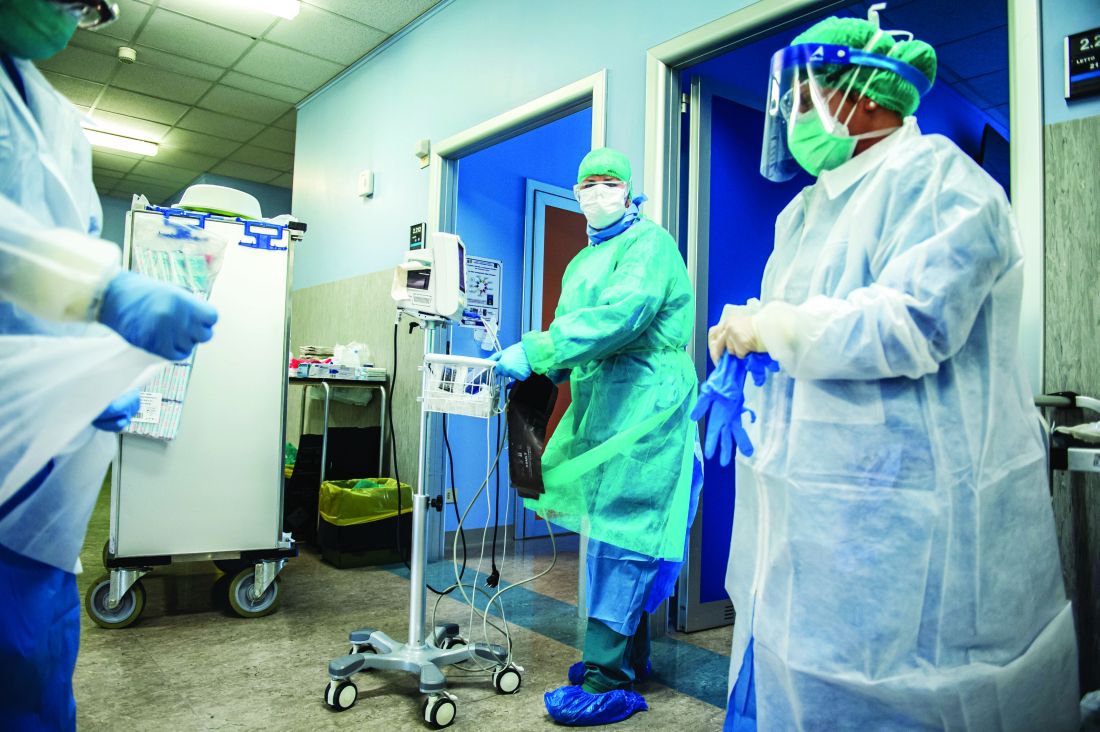
Protective personal equipment (PPE) and clothing for staff was tailored to the unique challenges posed by the ward’s patient population.
“Of course, you need to wear clothes that are protective against the virus,” said Weiser. “But sometimes our patients can get agitated or even violent, so you’ve got protect against that as well.”
With this in mind, all personnel working on the ward must put on an extra layer of PPE as well as a tear-proof robe. The institution has also implemented a strict protocol that dictates the order in which PPE is donned and doffed.
“It’s got to be done in a very careful and very specific way,” said Weiser. “We have all of it organized with a poster that explains what should be taken off or put on, and in what order.”
For institutions considering setting up a similar unit, Weiser said close proximity to an active care hospital with the capacity to provide urgent care is key.
“We’re psychiatrists; we’re not great at treating acute respiratory problems. So patients with significant respiratory problems need a place to get appropriate care quickly,” he said.
In setting up the unit, there were still a few obstacles, Weiser noted. For instance, despite the many protective and safety measures undertaken by the institution, some of the hospital staff were concerned about their risk of contracting the virus.
To address these concerns, the hospital’s leadership brought in infectious disease experts to educate hospital personnel about the virus and transmission risk.
“They told our staff that given all the precautions we had taken, there was very little risk anyone else could become infected,” Weiser said.
Despite the many challenges, Weiser said he and his colleagues are thrilled with the dedicated ward and the positive reception it has received.
“My colleagues and the directors of psychiatric hospitals all around the country are very happy with this because now they’re not hospitalizing infected patients. They’re very happy for us to take care of this,” he said.
“No Easy Solutions”
Commenting on the initiative for Medscape Medical News, John M. Oldham, MD, chief of staff at Baylor College of Medicine’s Menninger Clinic in Houston, Texas, raised some questions.
“Is it really going to be the treatment unit or a quarantine unit? Because if you don’t have a comparable level of established, effective treatment for these patients, then you’re simply herding them off to a different place where they’re going to suffer both illnesses,” he cautioned.
Nevertheless, Oldham recognized that the issue of how to treat psychiatric patients who test positive for COVID-19 is complex.
“We’re still wrestling with that question here at Menninger. We have created an enclosed section of the inpatient area reserved for this possibility.
“If we have a patient who tests positive, we will immediately put that patient in one of these rooms in the quarantine section. Then we will use protective equipment for our staff to go and provide care for the patient,” he said.
However, he acknowledged that a psychiatric hospital is in no position to treat patients who develop severe illness from COVID-19.
“We’re certainly worried about it,” he said, “because how many inpatient general medical units are going to want to take a significantly symptomatic COVID-19 patient who was in the hospital for being acutely suicidal? There are no easy solutions.”
This article first appeared on Medscape.com.
There was no hand sanitizer on the hospital’s psychiatric ward for fear patients would drink it; they slept together on futons in communal rooms and the windows were sealed shut to prevent suicide attempts — all conditions that created the perfect environment for the rapid spread of a potentially deadly virus.
This scenario may sound like a something out of a horror film, but as reported last month by the UK newspaper The Independent, it was the reality in the psychiatric ward of South Korea’s Daenam Hospital after COVID-19 struck. Eventually health officials put the ward on lockdown, but it wasn’t long before all but two of the unit’s 103 patients were positive for the virus.
To avoid a similar catastrophe, staff at an Israeli hospital have created what they describe as the “world’s first” dedicated COVID-19 unit for psychiatric inpatients.
Clinicians at Israel’s national hospital, Sheba Medical Center Tel HaShomer in Tel Aviv, believe the 16-bed unit, which officially opened on March 26, will stop psychiatric inpatients with the virus — who may have trouble with social distancing — from spreading it to others on the ward.
“Psychiatric patients are going to get sick from coronavirus just like anybody else,” Mark Weiser, MD, head of the psychiatric division at the institution told Medscape Medical News. “But we’re concerned that, on a psychiatric ward, a patient who is COVID-19 positive can also be psychotic, manic, cognitively impaired, or have poor judgment … making it difficult for that patient to keep social distancing, and very quickly you’ll have an entire ward of patients infected.
“So the basic public health issue is how to prevent a single psychiatric patient who is hospitalized and COVID-19-positive from making everybody else sick,” he added.
Unique Challenges, Rapid Response
Adapting an existing psychiatric ward to one exclusively used by inpatients with COVID-19 required significant planning, coordination, and modifications to ensure the well-being of patients and staff.
A dedicated entrance for the exclusive use of infected psychiatric inpatients was also created.
In addition, two-way television cameras in patients’ rooms were installed to facilitate a constant flow of communication and enable therapeutic sessions and family visits. All of these modifications were completed in under a week.
“Under normal circumstances, we have cameras in the public areas of our wards, but in order to respect people’s privacy, we do not have cameras in their rooms.
“In this specific ward, on the other hand, we did put cameras in the rooms, so if a patient needs to be watched more closely, it could be done remotely without exposing staff to the virus. We have a person who’s watching the screens at all times, just to see what’s going on and see what patients are doing,” said Weiser.
Protective personal equipment (PPE) and clothing for staff was tailored to the unique challenges posed by the ward’s patient population.
“Of course, you need to wear clothes that are protective against the virus,” said Weiser. “But sometimes our patients can get agitated or even violent, so you’ve got protect against that as well.”
With this in mind, all personnel working on the ward must put on an extra layer of PPE as well as a tear-proof robe. The institution has also implemented a strict protocol that dictates the order in which PPE is donned and doffed.
“It’s got to be done in a very careful and very specific way,” said Weiser. “We have all of it organized with a poster that explains what should be taken off or put on, and in what order.”
For institutions considering setting up a similar unit, Weiser said close proximity to an active care hospital with the capacity to provide urgent care is key.
“We’re psychiatrists; we’re not great at treating acute respiratory problems. So patients with significant respiratory problems need a place to get appropriate care quickly,” he said.
In setting up the unit, there were still a few obstacles, Weiser noted. For instance, despite the many protective and safety measures undertaken by the institution, some of the hospital staff were concerned about their risk of contracting the virus.
To address these concerns, the hospital’s leadership brought in infectious disease experts to educate hospital personnel about the virus and transmission risk.
“They told our staff that given all the precautions we had taken, there was very little risk anyone else could become infected,” Weiser said.
Despite the many challenges, Weiser said he and his colleagues are thrilled with the dedicated ward and the positive reception it has received.
“My colleagues and the directors of psychiatric hospitals all around the country are very happy with this because now they’re not hospitalizing infected patients. They’re very happy for us to take care of this,” he said.
“No Easy Solutions”
Commenting on the initiative for Medscape Medical News, John M. Oldham, MD, chief of staff at Baylor College of Medicine’s Menninger Clinic in Houston, Texas, raised some questions.
“Is it really going to be the treatment unit or a quarantine unit? Because if you don’t have a comparable level of established, effective treatment for these patients, then you’re simply herding them off to a different place where they’re going to suffer both illnesses,” he cautioned.
Nevertheless, Oldham recognized that the issue of how to treat psychiatric patients who test positive for COVID-19 is complex.
“We’re still wrestling with that question here at Menninger. We have created an enclosed section of the inpatient area reserved for this possibility.
“If we have a patient who tests positive, we will immediately put that patient in one of these rooms in the quarantine section. Then we will use protective equipment for our staff to go and provide care for the patient,” he said.
However, he acknowledged that a psychiatric hospital is in no position to treat patients who develop severe illness from COVID-19.
“We’re certainly worried about it,” he said, “because how many inpatient general medical units are going to want to take a significantly symptomatic COVID-19 patient who was in the hospital for being acutely suicidal? There are no easy solutions.”
This article first appeared on Medscape.com.
There was no hand sanitizer on the hospital’s psychiatric ward for fear patients would drink it; they slept together on futons in communal rooms and the windows were sealed shut to prevent suicide attempts — all conditions that created the perfect environment for the rapid spread of a potentially deadly virus.
This scenario may sound like a something out of a horror film, but as reported last month by the UK newspaper The Independent, it was the reality in the psychiatric ward of South Korea’s Daenam Hospital after COVID-19 struck. Eventually health officials put the ward on lockdown, but it wasn’t long before all but two of the unit’s 103 patients were positive for the virus.
To avoid a similar catastrophe, staff at an Israeli hospital have created what they describe as the “world’s first” dedicated COVID-19 unit for psychiatric inpatients.
Clinicians at Israel’s national hospital, Sheba Medical Center Tel HaShomer in Tel Aviv, believe the 16-bed unit, which officially opened on March 26, will stop psychiatric inpatients with the virus — who may have trouble with social distancing — from spreading it to others on the ward.
“Psychiatric patients are going to get sick from coronavirus just like anybody else,” Mark Weiser, MD, head of the psychiatric division at the institution told Medscape Medical News. “But we’re concerned that, on a psychiatric ward, a patient who is COVID-19 positive can also be psychotic, manic, cognitively impaired, or have poor judgment … making it difficult for that patient to keep social distancing, and very quickly you’ll have an entire ward of patients infected.
“So the basic public health issue is how to prevent a single psychiatric patient who is hospitalized and COVID-19-positive from making everybody else sick,” he added.
Unique Challenges, Rapid Response
Adapting an existing psychiatric ward to one exclusively used by inpatients with COVID-19 required significant planning, coordination, and modifications to ensure the well-being of patients and staff.
A dedicated entrance for the exclusive use of infected psychiatric inpatients was also created.
In addition, two-way television cameras in patients’ rooms were installed to facilitate a constant flow of communication and enable therapeutic sessions and family visits. All of these modifications were completed in under a week.
“Under normal circumstances, we have cameras in the public areas of our wards, but in order to respect people’s privacy, we do not have cameras in their rooms.
“In this specific ward, on the other hand, we did put cameras in the rooms, so if a patient needs to be watched more closely, it could be done remotely without exposing staff to the virus. We have a person who’s watching the screens at all times, just to see what’s going on and see what patients are doing,” said Weiser.
Protective personal equipment (PPE) and clothing for staff was tailored to the unique challenges posed by the ward’s patient population.
“Of course, you need to wear clothes that are protective against the virus,” said Weiser. “But sometimes our patients can get agitated or even violent, so you’ve got protect against that as well.”
With this in mind, all personnel working on the ward must put on an extra layer of PPE as well as a tear-proof robe. The institution has also implemented a strict protocol that dictates the order in which PPE is donned and doffed.
“It’s got to be done in a very careful and very specific way,” said Weiser. “We have all of it organized with a poster that explains what should be taken off or put on, and in what order.”
For institutions considering setting up a similar unit, Weiser said close proximity to an active care hospital with the capacity to provide urgent care is key.
“We’re psychiatrists; we’re not great at treating acute respiratory problems. So patients with significant respiratory problems need a place to get appropriate care quickly,” he said.
In setting up the unit, there were still a few obstacles, Weiser noted. For instance, despite the many protective and safety measures undertaken by the institution, some of the hospital staff were concerned about their risk of contracting the virus.
To address these concerns, the hospital’s leadership brought in infectious disease experts to educate hospital personnel about the virus and transmission risk.
“They told our staff that given all the precautions we had taken, there was very little risk anyone else could become infected,” Weiser said.
Despite the many challenges, Weiser said he and his colleagues are thrilled with the dedicated ward and the positive reception it has received.
“My colleagues and the directors of psychiatric hospitals all around the country are very happy with this because now they’re not hospitalizing infected patients. They’re very happy for us to take care of this,” he said.
“No Easy Solutions”
Commenting on the initiative for Medscape Medical News, John M. Oldham, MD, chief of staff at Baylor College of Medicine’s Menninger Clinic in Houston, Texas, raised some questions.
“Is it really going to be the treatment unit or a quarantine unit? Because if you don’t have a comparable level of established, effective treatment for these patients, then you’re simply herding them off to a different place where they’re going to suffer both illnesses,” he cautioned.
Nevertheless, Oldham recognized that the issue of how to treat psychiatric patients who test positive for COVID-19 is complex.
“We’re still wrestling with that question here at Menninger. We have created an enclosed section of the inpatient area reserved for this possibility.
“If we have a patient who tests positive, we will immediately put that patient in one of these rooms in the quarantine section. Then we will use protective equipment for our staff to go and provide care for the patient,” he said.
However, he acknowledged that a psychiatric hospital is in no position to treat patients who develop severe illness from COVID-19.
“We’re certainly worried about it,” he said, “because how many inpatient general medical units are going to want to take a significantly symptomatic COVID-19 patient who was in the hospital for being acutely suicidal? There are no easy solutions.”
This article first appeared on Medscape.com.
COVID-19: How intensive care cardiology can inform the response
Because of their place at the interface between critical care and cardiovascular medicine, critical care cardiologists are in a good position to come up with novel approaches to adapting critical care systems to the current crisis. Health care and clinical resources have been severely strained in some places, and increasing evidence suggests that SARS-CoV-2 can cause injury to most organ systems. More than a quarter of hospitalized patients have cardiac injury, which can be a key reason for clinical deterioration.
An international group of critical care cardiologists led by Jason Katz, MD, of Duke University, Durham, N.C., offered suggestions for scalable models for critical care delivery in the context of COVID-19 in the Journal of the American College of Cardiology.
Critical care cardiology developed in response to changes in patient populations and their clinical needs. Respiratory insufficiency, heart failure, structural heart disease, and multisystem organ dysfunction became more common than patients with complicated acute MI, leading cardiologists in critical care cardiology to become more proficient in general critical care medicine, and to become leaders in forming collaborative multidisciplinary teams. The authors argued that COVID-19 is precipitating a similar need to adapt to the changing needs of patients.
“This pandemic should serve as a clarion call to our health care systems that we should continue to develop a nimble workforce that can adapt to change quickly during a crisis. We believe critical care cardiologists are well positioned to help serve society in this capacity,” the authors wrote.
Surge staging
They proposed four surge stages based in part on an American College of Chest Physicians–endorsed model (Chest 2014 Oct;146:e61S-74S), which regards a 25% capacity surge as minor. At the other end of the spectrum, a 200% surge is defined as a “disaster.” In minor surges (less than 25% increase), the traditional cardiac ICU (CICU) model can continue to be applied. During moderate (25%-100% increases) or major (100%-200%) surges, the critical care cardiologist should collaborate or consult within multiple health care teams. Physicians not trained in critical care can assist with care of intubated and critically ill patients under the supervision of a critical care cardiologist or under the supervision of a partnership between a non–cardiac critical care medicine provider and a cardiologist. The number of patients cared for by each team should increase in step with the size of the surge.
In disaster situations (more than 200% surge), there should be adaptive and dynamic staffing reorganization. The report included an illustration of a range of steps that can be taken, including alterations to staffing, regional care systems, resource management, and triage practices. Scoring systems such as Sequential Organ Failure Assessment may be useful for triaging, but the authors also suggest employment of validated cardiac disease–specific scores, because traditional ICU measures don’t always apply well to CICU populations.
At the hospital level, deferrals should be made for elective cardiac procedures that require CICU or postanesthesia care unit recovery periods. Semielective procedures should be considered after risk-benefit considerations when delays could lead to morbidity or mortality. Even some traditional emergency procedures may need to be reevaluated in the COVID-19 context: For example, some low-risk ST-segment elevation MI (STEMI) patients don’t require ICU care but are manageable in cardiac intermediate care beds instead. Historical triage practices should be reexamined to predict which STEMI patients will require ICU care.
Resource allocation
The CICU work flow will be affected as some of its beds are opened up to COVID-19 patients. Standard philosophies of concentrating intense resources will have to give way to a utilitarian approach that evaluates operations based on efficiency, equity, and justice. Physician-patient contact should be minimized using technological links when possible, and rounds might be reorganized to first examine patients without COVID-19, in order to minimize between-patient spread.
Military medicine, which is used to ramping up operations during times of crisis, has potential lessons for the current pandemic. In the face of mass casualties, military physicians often turn to the North Atlantic Treaty Organization triage system, which separates patients into four categories: immediate, requiring lifesaving intervention; delayed, requiring intervention within hours to days; minimal, where the patient is injured but ambulatory; and expectant patients who are deceased or too injured to save. Impersonal though this system may be, it may be required in the most severe scenarios when resources are scarce or absent.
The authors reported no relevant financial disclosures.
SOURCE: Katz J et al. J Am Coll Cardiol. 2020 Apr 15. doi: 10.1016/j.annonc.2020.02.01.
Because of their place at the interface between critical care and cardiovascular medicine, critical care cardiologists are in a good position to come up with novel approaches to adapting critical care systems to the current crisis. Health care and clinical resources have been severely strained in some places, and increasing evidence suggests that SARS-CoV-2 can cause injury to most organ systems. More than a quarter of hospitalized patients have cardiac injury, which can be a key reason for clinical deterioration.
An international group of critical care cardiologists led by Jason Katz, MD, of Duke University, Durham, N.C., offered suggestions for scalable models for critical care delivery in the context of COVID-19 in the Journal of the American College of Cardiology.
Critical care cardiology developed in response to changes in patient populations and their clinical needs. Respiratory insufficiency, heart failure, structural heart disease, and multisystem organ dysfunction became more common than patients with complicated acute MI, leading cardiologists in critical care cardiology to become more proficient in general critical care medicine, and to become leaders in forming collaborative multidisciplinary teams. The authors argued that COVID-19 is precipitating a similar need to adapt to the changing needs of patients.
“This pandemic should serve as a clarion call to our health care systems that we should continue to develop a nimble workforce that can adapt to change quickly during a crisis. We believe critical care cardiologists are well positioned to help serve society in this capacity,” the authors wrote.
Surge staging
They proposed four surge stages based in part on an American College of Chest Physicians–endorsed model (Chest 2014 Oct;146:e61S-74S), which regards a 25% capacity surge as minor. At the other end of the spectrum, a 200% surge is defined as a “disaster.” In minor surges (less than 25% increase), the traditional cardiac ICU (CICU) model can continue to be applied. During moderate (25%-100% increases) or major (100%-200%) surges, the critical care cardiologist should collaborate or consult within multiple health care teams. Physicians not trained in critical care can assist with care of intubated and critically ill patients under the supervision of a critical care cardiologist or under the supervision of a partnership between a non–cardiac critical care medicine provider and a cardiologist. The number of patients cared for by each team should increase in step with the size of the surge.
In disaster situations (more than 200% surge), there should be adaptive and dynamic staffing reorganization. The report included an illustration of a range of steps that can be taken, including alterations to staffing, regional care systems, resource management, and triage practices. Scoring systems such as Sequential Organ Failure Assessment may be useful for triaging, but the authors also suggest employment of validated cardiac disease–specific scores, because traditional ICU measures don’t always apply well to CICU populations.
At the hospital level, deferrals should be made for elective cardiac procedures that require CICU or postanesthesia care unit recovery periods. Semielective procedures should be considered after risk-benefit considerations when delays could lead to morbidity or mortality. Even some traditional emergency procedures may need to be reevaluated in the COVID-19 context: For example, some low-risk ST-segment elevation MI (STEMI) patients don’t require ICU care but are manageable in cardiac intermediate care beds instead. Historical triage practices should be reexamined to predict which STEMI patients will require ICU care.
Resource allocation
The CICU work flow will be affected as some of its beds are opened up to COVID-19 patients. Standard philosophies of concentrating intense resources will have to give way to a utilitarian approach that evaluates operations based on efficiency, equity, and justice. Physician-patient contact should be minimized using technological links when possible, and rounds might be reorganized to first examine patients without COVID-19, in order to minimize between-patient spread.
Military medicine, which is used to ramping up operations during times of crisis, has potential lessons for the current pandemic. In the face of mass casualties, military physicians often turn to the North Atlantic Treaty Organization triage system, which separates patients into four categories: immediate, requiring lifesaving intervention; delayed, requiring intervention within hours to days; minimal, where the patient is injured but ambulatory; and expectant patients who are deceased or too injured to save. Impersonal though this system may be, it may be required in the most severe scenarios when resources are scarce or absent.
The authors reported no relevant financial disclosures.
SOURCE: Katz J et al. J Am Coll Cardiol. 2020 Apr 15. doi: 10.1016/j.annonc.2020.02.01.
Because of their place at the interface between critical care and cardiovascular medicine, critical care cardiologists are in a good position to come up with novel approaches to adapting critical care systems to the current crisis. Health care and clinical resources have been severely strained in some places, and increasing evidence suggests that SARS-CoV-2 can cause injury to most organ systems. More than a quarter of hospitalized patients have cardiac injury, which can be a key reason for clinical deterioration.
An international group of critical care cardiologists led by Jason Katz, MD, of Duke University, Durham, N.C., offered suggestions for scalable models for critical care delivery in the context of COVID-19 in the Journal of the American College of Cardiology.
Critical care cardiology developed in response to changes in patient populations and their clinical needs. Respiratory insufficiency, heart failure, structural heart disease, and multisystem organ dysfunction became more common than patients with complicated acute MI, leading cardiologists in critical care cardiology to become more proficient in general critical care medicine, and to become leaders in forming collaborative multidisciplinary teams. The authors argued that COVID-19 is precipitating a similar need to adapt to the changing needs of patients.
“This pandemic should serve as a clarion call to our health care systems that we should continue to develop a nimble workforce that can adapt to change quickly during a crisis. We believe critical care cardiologists are well positioned to help serve society in this capacity,” the authors wrote.
Surge staging
They proposed four surge stages based in part on an American College of Chest Physicians–endorsed model (Chest 2014 Oct;146:e61S-74S), which regards a 25% capacity surge as minor. At the other end of the spectrum, a 200% surge is defined as a “disaster.” In minor surges (less than 25% increase), the traditional cardiac ICU (CICU) model can continue to be applied. During moderate (25%-100% increases) or major (100%-200%) surges, the critical care cardiologist should collaborate or consult within multiple health care teams. Physicians not trained in critical care can assist with care of intubated and critically ill patients under the supervision of a critical care cardiologist or under the supervision of a partnership between a non–cardiac critical care medicine provider and a cardiologist. The number of patients cared for by each team should increase in step with the size of the surge.
In disaster situations (more than 200% surge), there should be adaptive and dynamic staffing reorganization. The report included an illustration of a range of steps that can be taken, including alterations to staffing, regional care systems, resource management, and triage practices. Scoring systems such as Sequential Organ Failure Assessment may be useful for triaging, but the authors also suggest employment of validated cardiac disease–specific scores, because traditional ICU measures don’t always apply well to CICU populations.
At the hospital level, deferrals should be made for elective cardiac procedures that require CICU or postanesthesia care unit recovery periods. Semielective procedures should be considered after risk-benefit considerations when delays could lead to morbidity or mortality. Even some traditional emergency procedures may need to be reevaluated in the COVID-19 context: For example, some low-risk ST-segment elevation MI (STEMI) patients don’t require ICU care but are manageable in cardiac intermediate care beds instead. Historical triage practices should be reexamined to predict which STEMI patients will require ICU care.
Resource allocation
The CICU work flow will be affected as some of its beds are opened up to COVID-19 patients. Standard philosophies of concentrating intense resources will have to give way to a utilitarian approach that evaluates operations based on efficiency, equity, and justice. Physician-patient contact should be minimized using technological links when possible, and rounds might be reorganized to first examine patients without COVID-19, in order to minimize between-patient spread.
Military medicine, which is used to ramping up operations during times of crisis, has potential lessons for the current pandemic. In the face of mass casualties, military physicians often turn to the North Atlantic Treaty Organization triage system, which separates patients into four categories: immediate, requiring lifesaving intervention; delayed, requiring intervention within hours to days; minimal, where the patient is injured but ambulatory; and expectant patients who are deceased or too injured to save. Impersonal though this system may be, it may be required in the most severe scenarios when resources are scarce or absent.
The authors reported no relevant financial disclosures.
SOURCE: Katz J et al. J Am Coll Cardiol. 2020 Apr 15. doi: 10.1016/j.annonc.2020.02.01.
FROM THE JOURNAL OF THE AMERICAN COLLEGE OF CARDIOLOGY
Small-molecule CGRP receptor antagonists may pose a risk during stroke

“It turns out that these drugs make the blood vessels of the brain dysfunctional, such that the collateral channels that bring in blood to the region that is having the stroke are impaired,” explains the study’s lead author, Cenk Ayata, MD, associate professor of neurology and radiology at Harvard Medical School, Boston.
In an interview, Alan M. Rapoport, MD, clinical professor of neurology at the University of California, Los Angeles, talks with Dr. Ayata about his study findings, and about CGRP receptor antagonists’ potential effects if a patient has an ischemic event.
This article was updated 4/21/20.
“It turns out that these drugs make the blood vessels of the brain dysfunctional, such that the collateral channels that bring in blood to the region that is having the stroke are impaired,” explains the study’s lead author, Cenk Ayata, MD, associate professor of neurology and radiology at Harvard Medical School, Boston.
In an interview, Alan M. Rapoport, MD, clinical professor of neurology at the University of California, Los Angeles, talks with Dr. Ayata about his study findings, and about CGRP receptor antagonists’ potential effects if a patient has an ischemic event.
This article was updated 4/21/20.
“It turns out that these drugs make the blood vessels of the brain dysfunctional, such that the collateral channels that bring in blood to the region that is having the stroke are impaired,” explains the study’s lead author, Cenk Ayata, MD, associate professor of neurology and radiology at Harvard Medical School, Boston.
In an interview, Alan M. Rapoport, MD, clinical professor of neurology at the University of California, Los Angeles, talks with Dr. Ayata about his study findings, and about CGRP receptor antagonists’ potential effects if a patient has an ischemic event.
This article was updated 4/21/20.

Obesity link to severe COVID-19, especially in patients aged under 60
It is becoming increasingly clear that obesity is one of the biggest risk factors for severe COVID-19 disease, particularly among younger patients.
Newly published data from New York show that, among those aged under 60 years, obesity was twice as likely to result in hospitalization for COVID-19 and also significantly increased the likelihood that a person would end up in intensive care.
“Obesity [in people younger than 60] appears to be a previously unrecognized risk factor for hospital admission and need for critical care. This has important and practical implications when nearly 40% of adults in the U.S. are obese with a body mass index [BMI] of [at least] 30,” wrote Jennifer Lighter, MD, of New York University Langone Health, and colleagues in their research letter published in Clinical Infectious Diseases.
Similar findings in a preprint publication, yet to be peer reviewed, from another New York hospital show that, with the exception of older age, obesity (BMI greater than 40 kg/m2) had the strongest association with hospitalization for COVID-19, increasing the risk more than 500%.
Meanwhile, a new French study shows a high frequency of obesity among patients admitted to one ICU for COVID-19; furthermore, disease severity increased with increasing BMI. One of the authors said in an interview that many of the presenting patients were younger, with their only risk factor being obesity.
“Patients with obesity should avoid any COVID-19 contamination by enforcing all prevention measures during the current pandemic,” wrote the authors, led by Arthur Simonnet, MD, Centre Hospitalier Universitaire de Lille (France).
They also stressed that COVID-19 patients “with severe obesity should be monitored more closely.”
Those with obesity are young and become very sick, very quickly
François Pattou, MD, PhD, coauthor of the French article published in Obesity said in an interview that, when patients with COVID-19 began to arrive at their ICU in Lille, there were young patients who did not have any other comorbidities.
“They were just obese,” he observed, adding that they seemed “to have a very specific disease, something different” from that seen before, with patients becoming very sick, very quickly.
In their study, they examined 124 consecutive patients admitted to intensive care with COVID-19 between Feb. 25 and April 5, 2020, and compared them with a historical control group of 306 patients admitted to the ICU at the same hospital for non–COVID-19-related severe acute respiratory disease in 2019.
By April 6, 60 patients with COVID-19 had been discharged from intensive care, 18 had died, and 46 remained in the unit. The majority (73%) were male, and their median age was 60 years. Obesity and severe obesity were significantly more prevalent among the patients with COVID-19, at 47.6% and 28.2% versus 25.2% and 10.8% among historical controls (P < .001 for trend).
A key finding was that those with a BMI greater than 35 had a more than 600% increased risk of requiring mechanical ventilation (odds ratio, 7.36; P = .021), compared with those with a BMI less than 25, even after adjusting for age, diabetes, and hypertension.
Obesity in under 60s at least doubles risk of admission in U.S.
The studies out of New York, one of which was stratified by age, paint a similar picture.
Dr. Lighter and colleagues found that, of the 3,615 individuals who tested positive for COVID-19 in their series, 775 (21%) had a BMI of 30-34 and 595 (16%) had a BMI of at least 35. Obesity wasn’t a predictor of admission to hospital or the ICU in those over the age of 60 years, but in those younger than 60 years, it was.
Those under age 60 with a BMI of 30-34 were twice as likely to be admitted to hospital (hazard ratio, 2.0; P < .0001) and critical care (HR, 1.8; P = .006), compared with those under age 60 with a BMI less than 30. Likewise, those under age 60 with a BMI of at least 35 were 2.2 (P < .0001) and 3.6 (P < .0001) times more likely to be admitted to acute and critical care.
“Unfortunately, obesity in people [less than] 60 years is a newly identified epidemiologic risk factor which may contribute to increased morbidity rates [with COVID-19] experienced in the U.S.,” they concluded.
And in the other U.S. study, Christopher M. Petrilli, MD, of New York University, and colleagues looked at 4,103 patients with COVID-19 treated between March 1 and April 2, 2020, and followed to April 7.
Just under half of patients (48.7%) were hospitalized, of whom 22.3% required mechanical ventilation and 14.6% died or were discharged to hospice. The research was published on medRxiv, showing that, apart from age, the strongest predictors of hospitalization were BMI greater than 40 (OR, 6.2) and heart failure (OR, 4.3).
“It is notable that the chronic condition with the strongest association with critical illness was obesity, with a substantially higher odds ratio than any cardiovascular or pulmonary disease,” they noted.
Inflammation is a possible culprit
Dr. Pattou believes that the culprit behind the increased risk of disease severity seen with obesity in COVID-19 is inflammation, mediated by fibrin deposits in the circulation, which his colleagues have seen on autopsy, and which “block oxygen passage through the blood.”
This may help explain why mechanical ventilation can be less successful in these patients. “The answer is to get rid of this inflammation,” Dr. Pattou observed.
Dr. Petrilli and colleagues also observed that obesity “is well-recognized to be a proinflammatory condition.”
And their findings showed “the importance of inflammatory markers in distinguishing future critical from noncritical illness,” they said, noting that, among these markers, early elevations in C-reactive protein and D-dimer “had the strongest association with mechanical ventilation or mortality.”
Livio Luzi, MD, of IRCCS MultiMedica, Milan, Italy, has previously written on the relationship between influenza and obesity, and discussed in an interview the potential lessons for the COVID-19 pandemic.
“Obesity is characterized by an impairment of immune response and by a low-grade chronic inflammation. Furthermore, obese subjects have an altered dynamic of pulmonary ventilation, with reduced diaphragmatic excursion,” Dr. Luzi said. These factors, alongside others, “may help to explain” the current results, and stress the importance of close monitoring of those with obesity and COVID-19.
No relevant financial relationships were declared.
This article first appeared on Medscape.com.
It is becoming increasingly clear that obesity is one of the biggest risk factors for severe COVID-19 disease, particularly among younger patients.
Newly published data from New York show that, among those aged under 60 years, obesity was twice as likely to result in hospitalization for COVID-19 and also significantly increased the likelihood that a person would end up in intensive care.
“Obesity [in people younger than 60] appears to be a previously unrecognized risk factor for hospital admission and need for critical care. This has important and practical implications when nearly 40% of adults in the U.S. are obese with a body mass index [BMI] of [at least] 30,” wrote Jennifer Lighter, MD, of New York University Langone Health, and colleagues in their research letter published in Clinical Infectious Diseases.
Similar findings in a preprint publication, yet to be peer reviewed, from another New York hospital show that, with the exception of older age, obesity (BMI greater than 40 kg/m2) had the strongest association with hospitalization for COVID-19, increasing the risk more than 500%.
Meanwhile, a new French study shows a high frequency of obesity among patients admitted to one ICU for COVID-19; furthermore, disease severity increased with increasing BMI. One of the authors said in an interview that many of the presenting patients were younger, with their only risk factor being obesity.
“Patients with obesity should avoid any COVID-19 contamination by enforcing all prevention measures during the current pandemic,” wrote the authors, led by Arthur Simonnet, MD, Centre Hospitalier Universitaire de Lille (France).
They also stressed that COVID-19 patients “with severe obesity should be monitored more closely.”
Those with obesity are young and become very sick, very quickly
François Pattou, MD, PhD, coauthor of the French article published in Obesity said in an interview that, when patients with COVID-19 began to arrive at their ICU in Lille, there were young patients who did not have any other comorbidities.
“They were just obese,” he observed, adding that they seemed “to have a very specific disease, something different” from that seen before, with patients becoming very sick, very quickly.
In their study, they examined 124 consecutive patients admitted to intensive care with COVID-19 between Feb. 25 and April 5, 2020, and compared them with a historical control group of 306 patients admitted to the ICU at the same hospital for non–COVID-19-related severe acute respiratory disease in 2019.
By April 6, 60 patients with COVID-19 had been discharged from intensive care, 18 had died, and 46 remained in the unit. The majority (73%) were male, and their median age was 60 years. Obesity and severe obesity were significantly more prevalent among the patients with COVID-19, at 47.6% and 28.2% versus 25.2% and 10.8% among historical controls (P < .001 for trend).
A key finding was that those with a BMI greater than 35 had a more than 600% increased risk of requiring mechanical ventilation (odds ratio, 7.36; P = .021), compared with those with a BMI less than 25, even after adjusting for age, diabetes, and hypertension.
Obesity in under 60s at least doubles risk of admission in U.S.
The studies out of New York, one of which was stratified by age, paint a similar picture.
Dr. Lighter and colleagues found that, of the 3,615 individuals who tested positive for COVID-19 in their series, 775 (21%) had a BMI of 30-34 and 595 (16%) had a BMI of at least 35. Obesity wasn’t a predictor of admission to hospital or the ICU in those over the age of 60 years, but in those younger than 60 years, it was.
Those under age 60 with a BMI of 30-34 were twice as likely to be admitted to hospital (hazard ratio, 2.0; P < .0001) and critical care (HR, 1.8; P = .006), compared with those under age 60 with a BMI less than 30. Likewise, those under age 60 with a BMI of at least 35 were 2.2 (P < .0001) and 3.6 (P < .0001) times more likely to be admitted to acute and critical care.
“Unfortunately, obesity in people [less than] 60 years is a newly identified epidemiologic risk factor which may contribute to increased morbidity rates [with COVID-19] experienced in the U.S.,” they concluded.
And in the other U.S. study, Christopher M. Petrilli, MD, of New York University, and colleagues looked at 4,103 patients with COVID-19 treated between March 1 and April 2, 2020, and followed to April 7.
Just under half of patients (48.7%) were hospitalized, of whom 22.3% required mechanical ventilation and 14.6% died or were discharged to hospice. The research was published on medRxiv, showing that, apart from age, the strongest predictors of hospitalization were BMI greater than 40 (OR, 6.2) and heart failure (OR, 4.3).
“It is notable that the chronic condition with the strongest association with critical illness was obesity, with a substantially higher odds ratio than any cardiovascular or pulmonary disease,” they noted.
Inflammation is a possible culprit
Dr. Pattou believes that the culprit behind the increased risk of disease severity seen with obesity in COVID-19 is inflammation, mediated by fibrin deposits in the circulation, which his colleagues have seen on autopsy, and which “block oxygen passage through the blood.”
This may help explain why mechanical ventilation can be less successful in these patients. “The answer is to get rid of this inflammation,” Dr. Pattou observed.
Dr. Petrilli and colleagues also observed that obesity “is well-recognized to be a proinflammatory condition.”
And their findings showed “the importance of inflammatory markers in distinguishing future critical from noncritical illness,” they said, noting that, among these markers, early elevations in C-reactive protein and D-dimer “had the strongest association with mechanical ventilation or mortality.”
Livio Luzi, MD, of IRCCS MultiMedica, Milan, Italy, has previously written on the relationship between influenza and obesity, and discussed in an interview the potential lessons for the COVID-19 pandemic.
“Obesity is characterized by an impairment of immune response and by a low-grade chronic inflammation. Furthermore, obese subjects have an altered dynamic of pulmonary ventilation, with reduced diaphragmatic excursion,” Dr. Luzi said. These factors, alongside others, “may help to explain” the current results, and stress the importance of close monitoring of those with obesity and COVID-19.
No relevant financial relationships were declared.
This article first appeared on Medscape.com.
It is becoming increasingly clear that obesity is one of the biggest risk factors for severe COVID-19 disease, particularly among younger patients.
Newly published data from New York show that, among those aged under 60 years, obesity was twice as likely to result in hospitalization for COVID-19 and also significantly increased the likelihood that a person would end up in intensive care.
“Obesity [in people younger than 60] appears to be a previously unrecognized risk factor for hospital admission and need for critical care. This has important and practical implications when nearly 40% of adults in the U.S. are obese with a body mass index [BMI] of [at least] 30,” wrote Jennifer Lighter, MD, of New York University Langone Health, and colleagues in their research letter published in Clinical Infectious Diseases.
Similar findings in a preprint publication, yet to be peer reviewed, from another New York hospital show that, with the exception of older age, obesity (BMI greater than 40 kg/m2) had the strongest association with hospitalization for COVID-19, increasing the risk more than 500%.
Meanwhile, a new French study shows a high frequency of obesity among patients admitted to one ICU for COVID-19; furthermore, disease severity increased with increasing BMI. One of the authors said in an interview that many of the presenting patients were younger, with their only risk factor being obesity.
“Patients with obesity should avoid any COVID-19 contamination by enforcing all prevention measures during the current pandemic,” wrote the authors, led by Arthur Simonnet, MD, Centre Hospitalier Universitaire de Lille (France).
They also stressed that COVID-19 patients “with severe obesity should be monitored more closely.”
Those with obesity are young and become very sick, very quickly
François Pattou, MD, PhD, coauthor of the French article published in Obesity said in an interview that, when patients with COVID-19 began to arrive at their ICU in Lille, there were young patients who did not have any other comorbidities.
“They were just obese,” he observed, adding that they seemed “to have a very specific disease, something different” from that seen before, with patients becoming very sick, very quickly.
In their study, they examined 124 consecutive patients admitted to intensive care with COVID-19 between Feb. 25 and April 5, 2020, and compared them with a historical control group of 306 patients admitted to the ICU at the same hospital for non–COVID-19-related severe acute respiratory disease in 2019.
By April 6, 60 patients with COVID-19 had been discharged from intensive care, 18 had died, and 46 remained in the unit. The majority (73%) were male, and their median age was 60 years. Obesity and severe obesity were significantly more prevalent among the patients with COVID-19, at 47.6% and 28.2% versus 25.2% and 10.8% among historical controls (P < .001 for trend).
A key finding was that those with a BMI greater than 35 had a more than 600% increased risk of requiring mechanical ventilation (odds ratio, 7.36; P = .021), compared with those with a BMI less than 25, even after adjusting for age, diabetes, and hypertension.
Obesity in under 60s at least doubles risk of admission in U.S.
The studies out of New York, one of which was stratified by age, paint a similar picture.
Dr. Lighter and colleagues found that, of the 3,615 individuals who tested positive for COVID-19 in their series, 775 (21%) had a BMI of 30-34 and 595 (16%) had a BMI of at least 35. Obesity wasn’t a predictor of admission to hospital or the ICU in those over the age of 60 years, but in those younger than 60 years, it was.
Those under age 60 with a BMI of 30-34 were twice as likely to be admitted to hospital (hazard ratio, 2.0; P < .0001) and critical care (HR, 1.8; P = .006), compared with those under age 60 with a BMI less than 30. Likewise, those under age 60 with a BMI of at least 35 were 2.2 (P < .0001) and 3.6 (P < .0001) times more likely to be admitted to acute and critical care.
“Unfortunately, obesity in people [less than] 60 years is a newly identified epidemiologic risk factor which may contribute to increased morbidity rates [with COVID-19] experienced in the U.S.,” they concluded.
And in the other U.S. study, Christopher M. Petrilli, MD, of New York University, and colleagues looked at 4,103 patients with COVID-19 treated between March 1 and April 2, 2020, and followed to April 7.
Just under half of patients (48.7%) were hospitalized, of whom 22.3% required mechanical ventilation and 14.6% died or were discharged to hospice. The research was published on medRxiv, showing that, apart from age, the strongest predictors of hospitalization were BMI greater than 40 (OR, 6.2) and heart failure (OR, 4.3).
“It is notable that the chronic condition with the strongest association with critical illness was obesity, with a substantially higher odds ratio than any cardiovascular or pulmonary disease,” they noted.
Inflammation is a possible culprit
Dr. Pattou believes that the culprit behind the increased risk of disease severity seen with obesity in COVID-19 is inflammation, mediated by fibrin deposits in the circulation, which his colleagues have seen on autopsy, and which “block oxygen passage through the blood.”
This may help explain why mechanical ventilation can be less successful in these patients. “The answer is to get rid of this inflammation,” Dr. Pattou observed.
Dr. Petrilli and colleagues also observed that obesity “is well-recognized to be a proinflammatory condition.”
And their findings showed “the importance of inflammatory markers in distinguishing future critical from noncritical illness,” they said, noting that, among these markers, early elevations in C-reactive protein and D-dimer “had the strongest association with mechanical ventilation or mortality.”
Livio Luzi, MD, of IRCCS MultiMedica, Milan, Italy, has previously written on the relationship between influenza and obesity, and discussed in an interview the potential lessons for the COVID-19 pandemic.
“Obesity is characterized by an impairment of immune response and by a low-grade chronic inflammation. Furthermore, obese subjects have an altered dynamic of pulmonary ventilation, with reduced diaphragmatic excursion,” Dr. Luzi said. These factors, alongside others, “may help to explain” the current results, and stress the importance of close monitoring of those with obesity and COVID-19.
No relevant financial relationships were declared.
This article first appeared on Medscape.com.
The necessity of being together
COVID-19 has prompted many changes in pediatric health care. They say necessity is the mother of invention. Sometimes, necessity is the motivator for the long-past-due adoption of a previous invention, such as telemedicine for minor illnesses. And sometimes necessity reminds us about what is really important in a world of high technology.
Unlike our nearly overwhelmed internal medicine, ED, and family physician colleagues, many pediatricians are in a lull that threatens the financial viability of our practices. We are postponing annual well visits. We have fewer sick visits and hospitalizations since respiratory syncytial virus (RSV) and influenza also have been reduced by social distancing. Parents are avoiding the risk of contagion in the waiting room and not bringing their children in for minor complaints. There is more telemedicine – a welcome change in financing and practice whose time has come, but was being delayed by lack of insurance coverage.
Technology has allowed clinicians to respond to the pandemic in ways that would not have been possible a few years ago. Online tools, such as subscription email lists, webinars, and electronic medical news services, provide updates when the information changes weekly on the virus’s contagiousness, asymptomatic and presymptomatic transmission, prevalence, the effectiveness of masks, and experimental treatment options. These changes have been so fast that many journal articles based on data from China were obsolete and contradicted before they appeared in print.
However, technology only helped us to more effectively do what we needed to do in the first place – come together in a world of physical distancing and work toward common goals. In many hospitals, pediatric wards were emptied by reduced RSV admissions and postponed elective surgeries. These units have been converted to accept adult patients up to age 30 or 40 years. Our med-peds colleagues quickly created webinars and online resource packages on topics pediatric hospitalists might need to care for that population. There were refresher courses on ventilator management and reminders that community pediatric hospitalists, who in the winter might have one-third of their admissions with RSV, have more experience managing viral pneumonia than the internists.
Ward teams were created with a pediatric attending and an internal medicine resident. The resident’s familiarity with the names of blood pressure medicines complemented the attending’s years of clinical judgment and bedside manner. People are stepping out of their comfort zones but initial reports from the front lines are that, with each other’s support, we’ve got this.
Mistakes in telemedicine are being made, shared, and learned from. Emergency physicians are collecting anecdotes of situations when things were missed or treatment delayed. Surgeons report seeing increased numbers of cases in which the diagnosis of appendicitis was delayed, which isn’t surprising when a pediatrician cannot lay hands on the belly. Perhaps any case in which a parent calls a second or third time should be seen in the flesh.

Some newborn nurseries are discharging mother and baby at 24 hours after birth and rediscovering what was learned about that practice, which became common in the 1990s. It works well for the vast majority of babies, but we need to be ready to detect the occasional jaundiced baby or the one where breastfeeding isn’t going well. The gray-haired pediatricians can recall those nuances.
Another key role is to help everyone process the frequent deaths during a pandemic. First, there are the families we care for. Children are losing grandparents with little warning. Parents may be overwhelmed with grief while ill themselves. That makes children vulnerable.
Our medical system in 2 months has moved heaven and earth – and significantly harmed the medical care and financial future of our children – trying to assure that every 80-year-old has the right to die while attached to a ventilator, even though only a small fraction of them will survive to discharge. Meanwhile, on the wards, visitation policies have people deteriorating and dying alone. I find this paradigm distressing and antithetical to my training.
Medicine and nursing both have long histories in which the practitioner recognized that there was little they could do to prevent the death. Their role was to compassionately guide the family through it. For some people, this connection is the most precious of the arts of medicine and nursing. We need to reexamine our values. We need to get creative. We need to involve palliative care experts and clergy with the same urgency with which we have automakers making ventilators.
Second, there are our colleagues. Pediatric caregivers, particularly trainees, rarely encounter deaths and can benefit from debriefing sessions, even short ones. There is comfort in having a colleague review the situation and say: “There was nothing you could have done.” Or even: “That minor omission did not alter the outcome.” Even when everything was done properly, deaths cause moral suffering that needs processing and healing. Even if you don’t have magic words to give, just being present aids in the healing. We are all in this, together.
Dr. Powell is a pediatric hospitalist and clinical ethics consultant living in St. Louis. He has no relevant financial disclosures. Email him at pdnews@mdedge.com.
COVID-19 has prompted many changes in pediatric health care. They say necessity is the mother of invention. Sometimes, necessity is the motivator for the long-past-due adoption of a previous invention, such as telemedicine for minor illnesses. And sometimes necessity reminds us about what is really important in a world of high technology.
Unlike our nearly overwhelmed internal medicine, ED, and family physician colleagues, many pediatricians are in a lull that threatens the financial viability of our practices. We are postponing annual well visits. We have fewer sick visits and hospitalizations since respiratory syncytial virus (RSV) and influenza also have been reduced by social distancing. Parents are avoiding the risk of contagion in the waiting room and not bringing their children in for minor complaints. There is more telemedicine – a welcome change in financing and practice whose time has come, but was being delayed by lack of insurance coverage.
Technology has allowed clinicians to respond to the pandemic in ways that would not have been possible a few years ago. Online tools, such as subscription email lists, webinars, and electronic medical news services, provide updates when the information changes weekly on the virus’s contagiousness, asymptomatic and presymptomatic transmission, prevalence, the effectiveness of masks, and experimental treatment options. These changes have been so fast that many journal articles based on data from China were obsolete and contradicted before they appeared in print.
However, technology only helped us to more effectively do what we needed to do in the first place – come together in a world of physical distancing and work toward common goals. In many hospitals, pediatric wards were emptied by reduced RSV admissions and postponed elective surgeries. These units have been converted to accept adult patients up to age 30 or 40 years. Our med-peds colleagues quickly created webinars and online resource packages on topics pediatric hospitalists might need to care for that population. There were refresher courses on ventilator management and reminders that community pediatric hospitalists, who in the winter might have one-third of their admissions with RSV, have more experience managing viral pneumonia than the internists.
Ward teams were created with a pediatric attending and an internal medicine resident. The resident’s familiarity with the names of blood pressure medicines complemented the attending’s years of clinical judgment and bedside manner. People are stepping out of their comfort zones but initial reports from the front lines are that, with each other’s support, we’ve got this.
Mistakes in telemedicine are being made, shared, and learned from. Emergency physicians are collecting anecdotes of situations when things were missed or treatment delayed. Surgeons report seeing increased numbers of cases in which the diagnosis of appendicitis was delayed, which isn’t surprising when a pediatrician cannot lay hands on the belly. Perhaps any case in which a parent calls a second or third time should be seen in the flesh.
Some newborn nurseries are discharging mother and baby at 24 hours after birth and rediscovering what was learned about that practice, which became common in the 1990s. It works well for the vast majority of babies, but we need to be ready to detect the occasional jaundiced baby or the one where breastfeeding isn’t going well. The gray-haired pediatricians can recall those nuances.
Another key role is to help everyone process the frequent deaths during a pandemic. First, there are the families we care for. Children are losing grandparents with little warning. Parents may be overwhelmed with grief while ill themselves. That makes children vulnerable.
Our medical system in 2 months has moved heaven and earth – and significantly harmed the medical care and financial future of our children – trying to assure that every 80-year-old has the right to die while attached to a ventilator, even though only a small fraction of them will survive to discharge. Meanwhile, on the wards, visitation policies have people deteriorating and dying alone. I find this paradigm distressing and antithetical to my training.
Medicine and nursing both have long histories in which the practitioner recognized that there was little they could do to prevent the death. Their role was to compassionately guide the family through it. For some people, this connection is the most precious of the arts of medicine and nursing. We need to reexamine our values. We need to get creative. We need to involve palliative care experts and clergy with the same urgency with which we have automakers making ventilators.
Second, there are our colleagues. Pediatric caregivers, particularly trainees, rarely encounter deaths and can benefit from debriefing sessions, even short ones. There is comfort in having a colleague review the situation and say: “There was nothing you could have done.” Or even: “That minor omission did not alter the outcome.” Even when everything was done properly, deaths cause moral suffering that needs processing and healing. Even if you don’t have magic words to give, just being present aids in the healing. We are all in this, together.
Dr. Powell is a pediatric hospitalist and clinical ethics consultant living in St. Louis. He has no relevant financial disclosures. Email him at pdnews@mdedge.com.
COVID-19 has prompted many changes in pediatric health care. They say necessity is the mother of invention. Sometimes, necessity is the motivator for the long-past-due adoption of a previous invention, such as telemedicine for minor illnesses. And sometimes necessity reminds us about what is really important in a world of high technology.
Unlike our nearly overwhelmed internal medicine, ED, and family physician colleagues, many pediatricians are in a lull that threatens the financial viability of our practices. We are postponing annual well visits. We have fewer sick visits and hospitalizations since respiratory syncytial virus (RSV) and influenza also have been reduced by social distancing. Parents are avoiding the risk of contagion in the waiting room and not bringing their children in for minor complaints. There is more telemedicine – a welcome change in financing and practice whose time has come, but was being delayed by lack of insurance coverage.
Technology has allowed clinicians to respond to the pandemic in ways that would not have been possible a few years ago. Online tools, such as subscription email lists, webinars, and electronic medical news services, provide updates when the information changes weekly on the virus’s contagiousness, asymptomatic and presymptomatic transmission, prevalence, the effectiveness of masks, and experimental treatment options. These changes have been so fast that many journal articles based on data from China were obsolete and contradicted before they appeared in print.
However, technology only helped us to more effectively do what we needed to do in the first place – come together in a world of physical distancing and work toward common goals. In many hospitals, pediatric wards were emptied by reduced RSV admissions and postponed elective surgeries. These units have been converted to accept adult patients up to age 30 or 40 years. Our med-peds colleagues quickly created webinars and online resource packages on topics pediatric hospitalists might need to care for that population. There were refresher courses on ventilator management and reminders that community pediatric hospitalists, who in the winter might have one-third of their admissions with RSV, have more experience managing viral pneumonia than the internists.
Ward teams were created with a pediatric attending and an internal medicine resident. The resident’s familiarity with the names of blood pressure medicines complemented the attending’s years of clinical judgment and bedside manner. People are stepping out of their comfort zones but initial reports from the front lines are that, with each other’s support, we’ve got this.
Mistakes in telemedicine are being made, shared, and learned from. Emergency physicians are collecting anecdotes of situations when things were missed or treatment delayed. Surgeons report seeing increased numbers of cases in which the diagnosis of appendicitis was delayed, which isn’t surprising when a pediatrician cannot lay hands on the belly. Perhaps any case in which a parent calls a second or third time should be seen in the flesh.
Some newborn nurseries are discharging mother and baby at 24 hours after birth and rediscovering what was learned about that practice, which became common in the 1990s. It works well for the vast majority of babies, but we need to be ready to detect the occasional jaundiced baby or the one where breastfeeding isn’t going well. The gray-haired pediatricians can recall those nuances.
Another key role is to help everyone process the frequent deaths during a pandemic. First, there are the families we care for. Children are losing grandparents with little warning. Parents may be overwhelmed with grief while ill themselves. That makes children vulnerable.
Our medical system in 2 months has moved heaven and earth – and significantly harmed the medical care and financial future of our children – trying to assure that every 80-year-old has the right to die while attached to a ventilator, even though only a small fraction of them will survive to discharge. Meanwhile, on the wards, visitation policies have people deteriorating and dying alone. I find this paradigm distressing and antithetical to my training.
Medicine and nursing both have long histories in which the practitioner recognized that there was little they could do to prevent the death. Their role was to compassionately guide the family through it. For some people, this connection is the most precious of the arts of medicine and nursing. We need to reexamine our values. We need to get creative. We need to involve palliative care experts and clergy with the same urgency with which we have automakers making ventilators.
Second, there are our colleagues. Pediatric caregivers, particularly trainees, rarely encounter deaths and can benefit from debriefing sessions, even short ones. There is comfort in having a colleague review the situation and say: “There was nothing you could have done.” Or even: “That minor omission did not alter the outcome.” Even when everything was done properly, deaths cause moral suffering that needs processing and healing. Even if you don’t have magic words to give, just being present aids in the healing. We are all in this, together.
Dr. Powell is a pediatric hospitalist and clinical ethics consultant living in St. Louis. He has no relevant financial disclosures. Email him at pdnews@mdedge.com.
Can convalescent plasma treat COVID-19 patients?
As an Episcopal priest, Father Robert Pace of Fort Worth, TX, is used to putting others first and reaching out to help. So when the pulmonologist who helped him through his ordeal with COVID-19 asked if he would like to donate blood to help other patients, he did not hesitate.
“I said, ‘Absolutely,’” Pace, 53, recalls. He says the idea was ‘very appealing.’ ” During his ordeal with COVID-19 in March, he had spent 3 days in the hospital, isolated and on IV fluids and oxygen. He was short of breath, with a heartbeat more rapid than usual.
Now, fully recovered, his blood was a precious commodity, antibody-rich and potentially life-saving.
As researchers scramble to test drugs to fight COVID-19, others are turning to an age-old treatment. They’re collecting the blood of survivors and giving it to patients in the throes of a severe infection, a treatment known as convalescent plasma therapy.
Doctors say the treatment will probably serve as a bridge until other drugs and a vaccine become available.
Although the FDA considers the treatment investigational, in late March, it eased access to it. Patients can get it as part of a clinical trial or through an expanded access program overseen by hospitals or universities. A doctor can also request permission to use the treatment for a single patient.
“It is considered an emergent, compassionate need,” says John Burk, MD, a pulmonologist at Texas Health Harris Methodist Hospital, Fort Worth, who treated Pace. “It is a way to bring it to the bedside.” And the approval can happen quickly. Burk says he got one from the FDA just 20 minutes after requesting it for a severely ill patient.
How it works
The premise of how it works is “quite straightforward,” says Michael Joyner, MD, a professor of anesthesiology at the Mayo Clinic, Rochester, MN. “When someone is recovered and no longer symptomatic, you can harvest those antibodies from their blood and give them to someone else, and hopefully alter the course of their disease.” Joyner is the principal investigator for the FDA’s national Expanded Access to Convalescent Plasma for the Treatment of Patients with COVID-19, with 1,000 sites already signed on.
Convalescent therapy has been used to fight many other viruses, including Ebola, severe acute respiratory syndrome (SARS), the “bird” flu, H1N1 flu, and during the 1918 flu pandemic. Joyner says the strongest evidence for it comes from the 1950s, when it was used to treat a rodent-borne illness called Argentine hemorrhagic fever. Using convalescent plasma therapy for this infection reduced the death rate from nearly 43% before the treatment became common in the late 1950s to about 3% after it was widely used, one report found.
Data about convalescent therapy specifically for COVID-19 is limited. Chinese researchers reported on five critically ill patients, all on mechanical ventilation, treated with convalescent plasma after they had received antiviral and anti-inflammatory medicines. Three could leave the hospital after 51-55 days, and two were in stable condition in the hospital 37 days after the transfusion.
In another study of 10 severely ill patients, symptoms went away or improved in all 10 within 1 to 3 days after the transfusion. Two of the three on ventilators were weaned off and put on oxygen instead. None died.
Chinese researchers also reported three cases of patients with COVID-19 given the convalescent therapy who had a satisfactory recovery.
Researchers who reviewed the track record of convalescent therapy for other conditions recently concluded that the treatment doesn’t appear to cause severe side effects and it should be studied for COVID-19.
Although information on side effects specific to this treatment is evolving, Joyner says they are “very, very low.”
According to the FDA, allergic reactions can occur with plasma therapies. Because the treatment for COVID-19 is new, it is not known if patients might have other types of reactions.
Who can donate?
Blood bank officials and researchers running the convalescent plasma programs say the desire to help is widespread, and they’ve been deluged with offers to donate. But requirements are strict.
Donors must have evidence of COVID-19 infection, documented in a variety of ways, such as a diagnostic test by nasal swab or a blood test showing antibodies. And they must be symptom-free for 14 days, with test results, or 28 days without.
The treatment involves collecting plasma, not whole blood. Plasma, the liquid part of the blood, helps with clotting and supports immunity. During the collection, a donor’s blood is put through a machine that collects the plasma only and sends the red blood cells and platelets back to the donor.
Clinical trials
Requirements may be more stringent for donors joining a formal clinical trial rather than an expanded access program. For instance, potential donors in a randomized clinical trial underway at Stony Brook University must have higher antibody levels than required by the FDA, says study leader Elliott Bennett-Guerrero, MD, medical director of perioperative quality and patient safety and professor at the Renaissance School of Medicine.
He hopes to enroll up to 500 patients from the Long Island, NY, area. While clinical trials typically have a 50-50 split, with half of subjects getting a treatment and half a placebo, Bennett-Guerrero’s study will give 80% of patients the convalescent plasma and 20% standard plasma.
Julia Sabia Motley, 57, of Merrick, NY, is hoping to become a donor for the Stony Brook study. She and her husband, Sean Motley, 59, tested positive in late March. She has to pass one more test to join the trial. Her husband is also planning to try to donate. “I can finally do something,” Sabia Motley says. Her son is in the MD-PhD program at Stony Brook and told her about the study.
Many questions remain
The treatment for COVID-19 is in its infancy. Burk has given the convalescent plasma to two patients. One is now recovering at home, and the other is on a ventilator but improving, he says.
About 200 nationwide have received the therapy, Joyner says. He expects blood supplies to increase as more people are eligible to donate.
Questions remain about how effective the convalescent therapy will be. While experts know that the COVID-19 antibodies “can be helpful in fighting the virus, we don’t know how long the antibodies in the plasma would stay in place,” Bennett-Guerrero says.
Nor do doctors know who the therapy might work best for, beyond people with a severe or life-threatening illness. When it’s been used for other infections, it’s generally given in early stages once someone has symptoms, Joyner says.
Joyner says he sees the treatment as a stopgap ‘’until concentrated antibodies are available.” Several drug companies are working to retrieve antibodies from donors and make concentrated antibody drugs.
“Typically we would think convalescent plasma might be a helpful bridge until therapies that are safe and effective and can be mass-produced are available, such as a vaccine or a drug,” Bennett-Guerrero says.
Even so, he says that he doesn’t think he will have a problem attracting donors, and that he will have repeat donors eager to help.
More information for potential donors
Blood banks, the American Red Cross, and others involved in convalescent plasma therapy have posted information online for potential donors. People who don’t meet the qualifications for COVID-19 plasma donations are welcomed as regular blood donors if they meet those criteria
According to the FDA, a donation could potentially help save the lives of up to four COVID-19 patients.
Father Pace is already planning another visit to the blood bank. To pass the time last time, he says, he prayed for the person who would eventually get his blood.
This article first appeared on WebMD.com.
As an Episcopal priest, Father Robert Pace of Fort Worth, TX, is used to putting others first and reaching out to help. So when the pulmonologist who helped him through his ordeal with COVID-19 asked if he would like to donate blood to help other patients, he did not hesitate.
“I said, ‘Absolutely,’” Pace, 53, recalls. He says the idea was ‘very appealing.’ ” During his ordeal with COVID-19 in March, he had spent 3 days in the hospital, isolated and on IV fluids and oxygen. He was short of breath, with a heartbeat more rapid than usual.
Now, fully recovered, his blood was a precious commodity, antibody-rich and potentially life-saving.
As researchers scramble to test drugs to fight COVID-19, others are turning to an age-old treatment. They’re collecting the blood of survivors and giving it to patients in the throes of a severe infection, a treatment known as convalescent plasma therapy.
Doctors say the treatment will probably serve as a bridge until other drugs and a vaccine become available.
Although the FDA considers the treatment investigational, in late March, it eased access to it. Patients can get it as part of a clinical trial or through an expanded access program overseen by hospitals or universities. A doctor can also request permission to use the treatment for a single patient.
“It is considered an emergent, compassionate need,” says John Burk, MD, a pulmonologist at Texas Health Harris Methodist Hospital, Fort Worth, who treated Pace. “It is a way to bring it to the bedside.” And the approval can happen quickly. Burk says he got one from the FDA just 20 minutes after requesting it for a severely ill patient.
How it works
The premise of how it works is “quite straightforward,” says Michael Joyner, MD, a professor of anesthesiology at the Mayo Clinic, Rochester, MN. “When someone is recovered and no longer symptomatic, you can harvest those antibodies from their blood and give them to someone else, and hopefully alter the course of their disease.” Joyner is the principal investigator for the FDA’s national Expanded Access to Convalescent Plasma for the Treatment of Patients with COVID-19, with 1,000 sites already signed on.
Convalescent therapy has been used to fight many other viruses, including Ebola, severe acute respiratory syndrome (SARS), the “bird” flu, H1N1 flu, and during the 1918 flu pandemic. Joyner says the strongest evidence for it comes from the 1950s, when it was used to treat a rodent-borne illness called Argentine hemorrhagic fever. Using convalescent plasma therapy for this infection reduced the death rate from nearly 43% before the treatment became common in the late 1950s to about 3% after it was widely used, one report found.
Data about convalescent therapy specifically for COVID-19 is limited. Chinese researchers reported on five critically ill patients, all on mechanical ventilation, treated with convalescent plasma after they had received antiviral and anti-inflammatory medicines. Three could leave the hospital after 51-55 days, and two were in stable condition in the hospital 37 days after the transfusion.
In another study of 10 severely ill patients, symptoms went away or improved in all 10 within 1 to 3 days after the transfusion. Two of the three on ventilators were weaned off and put on oxygen instead. None died.
Chinese researchers also reported three cases of patients with COVID-19 given the convalescent therapy who had a satisfactory recovery.
Researchers who reviewed the track record of convalescent therapy for other conditions recently concluded that the treatment doesn’t appear to cause severe side effects and it should be studied for COVID-19.
Although information on side effects specific to this treatment is evolving, Joyner says they are “very, very low.”
According to the FDA, allergic reactions can occur with plasma therapies. Because the treatment for COVID-19 is new, it is not known if patients might have other types of reactions.
Who can donate?
Blood bank officials and researchers running the convalescent plasma programs say the desire to help is widespread, and they’ve been deluged with offers to donate. But requirements are strict.
Donors must have evidence of COVID-19 infection, documented in a variety of ways, such as a diagnostic test by nasal swab or a blood test showing antibodies. And they must be symptom-free for 14 days, with test results, or 28 days without.
The treatment involves collecting plasma, not whole blood. Plasma, the liquid part of the blood, helps with clotting and supports immunity. During the collection, a donor’s blood is put through a machine that collects the plasma only and sends the red blood cells and platelets back to the donor.
Clinical trials
Requirements may be more stringent for donors joining a formal clinical trial rather than an expanded access program. For instance, potential donors in a randomized clinical trial underway at Stony Brook University must have higher antibody levels than required by the FDA, says study leader Elliott Bennett-Guerrero, MD, medical director of perioperative quality and patient safety and professor at the Renaissance School of Medicine.
He hopes to enroll up to 500 patients from the Long Island, NY, area. While clinical trials typically have a 50-50 split, with half of subjects getting a treatment and half a placebo, Bennett-Guerrero’s study will give 80% of patients the convalescent plasma and 20% standard plasma.
Julia Sabia Motley, 57, of Merrick, NY, is hoping to become a donor for the Stony Brook study. She and her husband, Sean Motley, 59, tested positive in late March. She has to pass one more test to join the trial. Her husband is also planning to try to donate. “I can finally do something,” Sabia Motley says. Her son is in the MD-PhD program at Stony Brook and told her about the study.
Many questions remain
The treatment for COVID-19 is in its infancy. Burk has given the convalescent plasma to two patients. One is now recovering at home, and the other is on a ventilator but improving, he says.
About 200 nationwide have received the therapy, Joyner says. He expects blood supplies to increase as more people are eligible to donate.
Questions remain about how effective the convalescent therapy will be. While experts know that the COVID-19 antibodies “can be helpful in fighting the virus, we don’t know how long the antibodies in the plasma would stay in place,” Bennett-Guerrero says.
Nor do doctors know who the therapy might work best for, beyond people with a severe or life-threatening illness. When it’s been used for other infections, it’s generally given in early stages once someone has symptoms, Joyner says.
Joyner says he sees the treatment as a stopgap ‘’until concentrated antibodies are available.” Several drug companies are working to retrieve antibodies from donors and make concentrated antibody drugs.
“Typically we would think convalescent plasma might be a helpful bridge until therapies that are safe and effective and can be mass-produced are available, such as a vaccine or a drug,” Bennett-Guerrero says.
Even so, he says that he doesn’t think he will have a problem attracting donors, and that he will have repeat donors eager to help.
More information for potential donors
Blood banks, the American Red Cross, and others involved in convalescent plasma therapy have posted information online for potential donors. People who don’t meet the qualifications for COVID-19 plasma donations are welcomed as regular blood donors if they meet those criteria
According to the FDA, a donation could potentially help save the lives of up to four COVID-19 patients.
Father Pace is already planning another visit to the blood bank. To pass the time last time, he says, he prayed for the person who would eventually get his blood.
This article first appeared on WebMD.com.
As an Episcopal priest, Father Robert Pace of Fort Worth, TX, is used to putting others first and reaching out to help. So when the pulmonologist who helped him through his ordeal with COVID-19 asked if he would like to donate blood to help other patients, he did not hesitate.
“I said, ‘Absolutely,’” Pace, 53, recalls. He says the idea was ‘very appealing.’ ” During his ordeal with COVID-19 in March, he had spent 3 days in the hospital, isolated and on IV fluids and oxygen. He was short of breath, with a heartbeat more rapid than usual.
Now, fully recovered, his blood was a precious commodity, antibody-rich and potentially life-saving.
As researchers scramble to test drugs to fight COVID-19, others are turning to an age-old treatment. They’re collecting the blood of survivors and giving it to patients in the throes of a severe infection, a treatment known as convalescent plasma therapy.
Doctors say the treatment will probably serve as a bridge until other drugs and a vaccine become available.
Although the FDA considers the treatment investigational, in late March, it eased access to it. Patients can get it as part of a clinical trial or through an expanded access program overseen by hospitals or universities. A doctor can also request permission to use the treatment for a single patient.
“It is considered an emergent, compassionate need,” says John Burk, MD, a pulmonologist at Texas Health Harris Methodist Hospital, Fort Worth, who treated Pace. “It is a way to bring it to the bedside.” And the approval can happen quickly. Burk says he got one from the FDA just 20 minutes after requesting it for a severely ill patient.
How it works
The premise of how it works is “quite straightforward,” says Michael Joyner, MD, a professor of anesthesiology at the Mayo Clinic, Rochester, MN. “When someone is recovered and no longer symptomatic, you can harvest those antibodies from their blood and give them to someone else, and hopefully alter the course of their disease.” Joyner is the principal investigator for the FDA’s national Expanded Access to Convalescent Plasma for the Treatment of Patients with COVID-19, with 1,000 sites already signed on.
Convalescent therapy has been used to fight many other viruses, including Ebola, severe acute respiratory syndrome (SARS), the “bird” flu, H1N1 flu, and during the 1918 flu pandemic. Joyner says the strongest evidence for it comes from the 1950s, when it was used to treat a rodent-borne illness called Argentine hemorrhagic fever. Using convalescent plasma therapy for this infection reduced the death rate from nearly 43% before the treatment became common in the late 1950s to about 3% after it was widely used, one report found.
Data about convalescent therapy specifically for COVID-19 is limited. Chinese researchers reported on five critically ill patients, all on mechanical ventilation, treated with convalescent plasma after they had received antiviral and anti-inflammatory medicines. Three could leave the hospital after 51-55 days, and two were in stable condition in the hospital 37 days after the transfusion.
In another study of 10 severely ill patients, symptoms went away or improved in all 10 within 1 to 3 days after the transfusion. Two of the three on ventilators were weaned off and put on oxygen instead. None died.
Chinese researchers also reported three cases of patients with COVID-19 given the convalescent therapy who had a satisfactory recovery.
Researchers who reviewed the track record of convalescent therapy for other conditions recently concluded that the treatment doesn’t appear to cause severe side effects and it should be studied for COVID-19.
Although information on side effects specific to this treatment is evolving, Joyner says they are “very, very low.”
According to the FDA, allergic reactions can occur with plasma therapies. Because the treatment for COVID-19 is new, it is not known if patients might have other types of reactions.
Who can donate?
Blood bank officials and researchers running the convalescent plasma programs say the desire to help is widespread, and they’ve been deluged with offers to donate. But requirements are strict.
Donors must have evidence of COVID-19 infection, documented in a variety of ways, such as a diagnostic test by nasal swab or a blood test showing antibodies. And they must be symptom-free for 14 days, with test results, or 28 days without.
The treatment involves collecting plasma, not whole blood. Plasma, the liquid part of the blood, helps with clotting and supports immunity. During the collection, a donor’s blood is put through a machine that collects the plasma only and sends the red blood cells and platelets back to the donor.
Clinical trials
Requirements may be more stringent for donors joining a formal clinical trial rather than an expanded access program. For instance, potential donors in a randomized clinical trial underway at Stony Brook University must have higher antibody levels than required by the FDA, says study leader Elliott Bennett-Guerrero, MD, medical director of perioperative quality and patient safety and professor at the Renaissance School of Medicine.
He hopes to enroll up to 500 patients from the Long Island, NY, area. While clinical trials typically have a 50-50 split, with half of subjects getting a treatment and half a placebo, Bennett-Guerrero’s study will give 80% of patients the convalescent plasma and 20% standard plasma.
Julia Sabia Motley, 57, of Merrick, NY, is hoping to become a donor for the Stony Brook study. She and her husband, Sean Motley, 59, tested positive in late March. She has to pass one more test to join the trial. Her husband is also planning to try to donate. “I can finally do something,” Sabia Motley says. Her son is in the MD-PhD program at Stony Brook and told her about the study.
Many questions remain
The treatment for COVID-19 is in its infancy. Burk has given the convalescent plasma to two patients. One is now recovering at home, and the other is on a ventilator but improving, he says.
About 200 nationwide have received the therapy, Joyner says. He expects blood supplies to increase as more people are eligible to donate.
Questions remain about how effective the convalescent therapy will be. While experts know that the COVID-19 antibodies “can be helpful in fighting the virus, we don’t know how long the antibodies in the plasma would stay in place,” Bennett-Guerrero says.
Nor do doctors know who the therapy might work best for, beyond people with a severe or life-threatening illness. When it’s been used for other infections, it’s generally given in early stages once someone has symptoms, Joyner says.
Joyner says he sees the treatment as a stopgap ‘’until concentrated antibodies are available.” Several drug companies are working to retrieve antibodies from donors and make concentrated antibody drugs.
“Typically we would think convalescent plasma might be a helpful bridge until therapies that are safe and effective and can be mass-produced are available, such as a vaccine or a drug,” Bennett-Guerrero says.
Even so, he says that he doesn’t think he will have a problem attracting donors, and that he will have repeat donors eager to help.
More information for potential donors
Blood banks, the American Red Cross, and others involved in convalescent plasma therapy have posted information online for potential donors. People who don’t meet the qualifications for COVID-19 plasma donations are welcomed as regular blood donors if they meet those criteria
According to the FDA, a donation could potentially help save the lives of up to four COVID-19 patients.
Father Pace is already planning another visit to the blood bank. To pass the time last time, he says, he prayed for the person who would eventually get his blood.
This article first appeared on WebMD.com.
Hospitalist well-being during the COVID-19 crisis
The outbreak of severe acute respiratory syndrome coronavirus 2 (SARS-CoV-2), and the spread of COVID-19, is overwhelming for many people. Health care workers in the United States and around the world are leading the battle on the front lines of the pandemic. Thus, they experience a higher level of stress, fear, and anxiety during this crisis.

Over the course of weeks, hospitalists have reviewed articles, attended webinars, and discussed institutional strategies to respond to COVID-19. They follow the most up-to-date clinical information about the approach to patient care, conserving personal protective equipment (PPE), and guidance on how to talk to patients and families during crisis situations. The safety of hospitalists has been underscored with persistent advocacy from multiple organizations, for PPE, access to testing supplies, and decreasing any unnecessary exposure.
While it is agreed that the safety and well-being of hospital medicine teams is crucial to our society’s victory over COVID-19, very little has been discussed with regards to the “hospitalist” well-being and wellness during this pandemic.
The well-being of providers is essential to the success of a health care system. Many hospitalists already experience moral injury and showed evidence of provider burnout before COVID-19. With the onset of the pandemic, this will only get worse and burnout will accelerate if nothing is done to stop it. We cannot wait for the dust to settle to help our colleagues, we must act now.
Many providers have expressed similar pandemic fears, including, uncertainty about screening and testing capability, fear of the PPE shortage, fear of being exposed and underprepared, and fear of bringing the virus home and making family members sick. This list is not exclusive, and there are so many other factors that providers are internally processing, all while continuing their commitment to patient care and safety.
Practicing medicine comes with the heaviest of responsibilities, including the defense of the health of humanity. Therefore, it is easy to understand that, while providers are on the battlefield of this pandemic as they defend the health of humanity, they are not thinking of their own wellness or well-being. Moral injury describes the mental, emotional, and spiritual distress people feel after “perpetrating, failing to prevent, or bearing witness to acts that transgress deeply held moral beliefs and expectations.” This is already happening, with many hospitals in various cities running out of ventilators, lacking basic supplies for provider safety and leaving providers in survival mode on the front lines without their “suits of armor.” However, many providers will never recognize moral injury or burnout because they are focused on saving as many lives as possible with very limited resources.
While many websites can aid patient and community members on wellness during COVID-19, there is no specific forum or outlet for providers. We must give all hospital medicine team members a multimedia platform to address the fear, anxiety, and uncertainty of COVID-19. We must also provide them with techniques for resilience, coping strategies, and develop a network of support as the situation evolves, in real time.
We must remind hospitalists, “You may be scared, you may feel anxious, and that is okay. It is normal to have these feelings and it is healthy to acknowledge them. Fear serves as an important role in keeping us safe, but if left unchecked it can be horrifying and crippling. However, to conquer it we must face our fears together, with strategy, knowledge, and advocacy. This is the way to rebuild the current health care climate with confidence and trust.”
Although the world may seem foreign and dangerous, it is in adversity that we will find our strength as a hospital medicine community. We go to work every day because that is what we do. Your courage to come to work every day, in spite of any danger that it may present to you, is an inspiration to the world. The battle is not lost, and as individuals and as a community we must build resilience, inspire hope, and empower each other. We are stronger together than we are alone. As hospitalists around the country, and throughout the world, we must agree to uphold the moral integrity of medicine without sacrificing ourselves.
Dr. Williams is the vice-president of the Hampton Roads chapter of the Society of Hospital Medicine. She is a hospitalist at Sentara Careplex Hospital in Hampton, Va., where she also serves as the vice-president of the Medical Executive Committee.
Resource
Dean, Wendy; Talbot, Simon; and Dean, Austin. Reframing clinician distress: Moral injury not burnout. Fed Pract. 2019 Sept;36(9):400-2.
The outbreak of severe acute respiratory syndrome coronavirus 2 (SARS-CoV-2), and the spread of COVID-19, is overwhelming for many people. Health care workers in the United States and around the world are leading the battle on the front lines of the pandemic. Thus, they experience a higher level of stress, fear, and anxiety during this crisis.
Over the course of weeks, hospitalists have reviewed articles, attended webinars, and discussed institutional strategies to respond to COVID-19. They follow the most up-to-date clinical information about the approach to patient care, conserving personal protective equipment (PPE), and guidance on how to talk to patients and families during crisis situations. The safety of hospitalists has been underscored with persistent advocacy from multiple organizations, for PPE, access to testing supplies, and decreasing any unnecessary exposure.
While it is agreed that the safety and well-being of hospital medicine teams is crucial to our society’s victory over COVID-19, very little has been discussed with regards to the “hospitalist” well-being and wellness during this pandemic.
The well-being of providers is essential to the success of a health care system. Many hospitalists already experience moral injury and showed evidence of provider burnout before COVID-19. With the onset of the pandemic, this will only get worse and burnout will accelerate if nothing is done to stop it. We cannot wait for the dust to settle to help our colleagues, we must act now.
Many providers have expressed similar pandemic fears, including, uncertainty about screening and testing capability, fear of the PPE shortage, fear of being exposed and underprepared, and fear of bringing the virus home and making family members sick. This list is not exclusive, and there are so many other factors that providers are internally processing, all while continuing their commitment to patient care and safety.
Practicing medicine comes with the heaviest of responsibilities, including the defense of the health of humanity. Therefore, it is easy to understand that, while providers are on the battlefield of this pandemic as they defend the health of humanity, they are not thinking of their own wellness or well-being. Moral injury describes the mental, emotional, and spiritual distress people feel after “perpetrating, failing to prevent, or bearing witness to acts that transgress deeply held moral beliefs and expectations.” This is already happening, with many hospitals in various cities running out of ventilators, lacking basic supplies for provider safety and leaving providers in survival mode on the front lines without their “suits of armor.” However, many providers will never recognize moral injury or burnout because they are focused on saving as many lives as possible with very limited resources.
While many websites can aid patient and community members on wellness during COVID-19, there is no specific forum or outlet for providers. We must give all hospital medicine team members a multimedia platform to address the fear, anxiety, and uncertainty of COVID-19. We must also provide them with techniques for resilience, coping strategies, and develop a network of support as the situation evolves, in real time.
We must remind hospitalists, “You may be scared, you may feel anxious, and that is okay. It is normal to have these feelings and it is healthy to acknowledge them. Fear serves as an important role in keeping us safe, but if left unchecked it can be horrifying and crippling. However, to conquer it we must face our fears together, with strategy, knowledge, and advocacy. This is the way to rebuild the current health care climate with confidence and trust.”
Although the world may seem foreign and dangerous, it is in adversity that we will find our strength as a hospital medicine community. We go to work every day because that is what we do. Your courage to come to work every day, in spite of any danger that it may present to you, is an inspiration to the world. The battle is not lost, and as individuals and as a community we must build resilience, inspire hope, and empower each other. We are stronger together than we are alone. As hospitalists around the country, and throughout the world, we must agree to uphold the moral integrity of medicine without sacrificing ourselves.
Dr. Williams is the vice-president of the Hampton Roads chapter of the Society of Hospital Medicine. She is a hospitalist at Sentara Careplex Hospital in Hampton, Va., where she also serves as the vice-president of the Medical Executive Committee.
Resource
Dean, Wendy; Talbot, Simon; and Dean, Austin. Reframing clinician distress: Moral injury not burnout. Fed Pract. 2019 Sept;36(9):400-2.
The outbreak of severe acute respiratory syndrome coronavirus 2 (SARS-CoV-2), and the spread of COVID-19, is overwhelming for many people. Health care workers in the United States and around the world are leading the battle on the front lines of the pandemic. Thus, they experience a higher level of stress, fear, and anxiety during this crisis.
Over the course of weeks, hospitalists have reviewed articles, attended webinars, and discussed institutional strategies to respond to COVID-19. They follow the most up-to-date clinical information about the approach to patient care, conserving personal protective equipment (PPE), and guidance on how to talk to patients and families during crisis situations. The safety of hospitalists has been underscored with persistent advocacy from multiple organizations, for PPE, access to testing supplies, and decreasing any unnecessary exposure.
While it is agreed that the safety and well-being of hospital medicine teams is crucial to our society’s victory over COVID-19, very little has been discussed with regards to the “hospitalist” well-being and wellness during this pandemic.
The well-being of providers is essential to the success of a health care system. Many hospitalists already experience moral injury and showed evidence of provider burnout before COVID-19. With the onset of the pandemic, this will only get worse and burnout will accelerate if nothing is done to stop it. We cannot wait for the dust to settle to help our colleagues, we must act now.
Many providers have expressed similar pandemic fears, including, uncertainty about screening and testing capability, fear of the PPE shortage, fear of being exposed and underprepared, and fear of bringing the virus home and making family members sick. This list is not exclusive, and there are so many other factors that providers are internally processing, all while continuing their commitment to patient care and safety.
Practicing medicine comes with the heaviest of responsibilities, including the defense of the health of humanity. Therefore, it is easy to understand that, while providers are on the battlefield of this pandemic as they defend the health of humanity, they are not thinking of their own wellness or well-being. Moral injury describes the mental, emotional, and spiritual distress people feel after “perpetrating, failing to prevent, or bearing witness to acts that transgress deeply held moral beliefs and expectations.” This is already happening, with many hospitals in various cities running out of ventilators, lacking basic supplies for provider safety and leaving providers in survival mode on the front lines without their “suits of armor.” However, many providers will never recognize moral injury or burnout because they are focused on saving as many lives as possible with very limited resources.
While many websites can aid patient and community members on wellness during COVID-19, there is no specific forum or outlet for providers. We must give all hospital medicine team members a multimedia platform to address the fear, anxiety, and uncertainty of COVID-19. We must also provide them with techniques for resilience, coping strategies, and develop a network of support as the situation evolves, in real time.
We must remind hospitalists, “You may be scared, you may feel anxious, and that is okay. It is normal to have these feelings and it is healthy to acknowledge them. Fear serves as an important role in keeping us safe, but if left unchecked it can be horrifying and crippling. However, to conquer it we must face our fears together, with strategy, knowledge, and advocacy. This is the way to rebuild the current health care climate with confidence and trust.”
Although the world may seem foreign and dangerous, it is in adversity that we will find our strength as a hospital medicine community. We go to work every day because that is what we do. Your courage to come to work every day, in spite of any danger that it may present to you, is an inspiration to the world. The battle is not lost, and as individuals and as a community we must build resilience, inspire hope, and empower each other. We are stronger together than we are alone. As hospitalists around the country, and throughout the world, we must agree to uphold the moral integrity of medicine without sacrificing ourselves.
Dr. Williams is the vice-president of the Hampton Roads chapter of the Society of Hospital Medicine. She is a hospitalist at Sentara Careplex Hospital in Hampton, Va., where she also serves as the vice-president of the Medical Executive Committee.
Resource
Dean, Wendy; Talbot, Simon; and Dean, Austin. Reframing clinician distress: Moral injury not burnout. Fed Pract. 2019 Sept;36(9):400-2.
Imaging recommendations issued for COVID-19 patients
A consensus statement on the role of imaging during the acute work-up of COVID-19 patients called for liberal use in patients with moderate to severe clinical features indicative of infection, regardless of their COVID-19 test results, but limited use in patients who present with mild symptoms or are asymptomatic.

The consensus statement on The Role of Imaging in Patient Management during the COVID-19 Pandemic released by the Fleischner Society on April 7 was designed to highlight the “key decision points around imaging” in COVID-19 patients.
“We developed the statement to be applicable across settings” so that each clinic or hospital managing COVID-19 patients could decide the situations where chest radiography (CXR) or CT would work best, said Geoffrey D. Rubin, MD, professor of cardiovascular research, radiology, and bioengineering at Duke University in Durham, N.C., and lead author of the statement.
Written by 15 thoracic radiologists and 10 pulmonologists/intensivists including an anesthesiologist, a pathologist, and additional experts in emergency medicine, infection control, and laboratory medicine, and with members from any of 10 countries on three continents, the panel arrived at agreement by more than 70% for each of the 14 questions.
“I was impressed and a little surprised that consensus was achieved for every question” posed to the panel by the Fleischner Society for Thoracic Imaging and Diagnosis, Dr. Rubin said in an interview. The panel also placed their 14 decisions about imaging within the context of three distinct clinical scenarios chosen to mirror common real-world situations: mild COVID-19 features, moderate to severe features with no critical-resource constraints, and moderate to severe features with constrained resources. The statement also summarized its conclusions as five main recommendations and three additional recommendations.
Main recommendations
- Imaging is not routinely indicated for COVID-19 screening in asymptomatic people.
- Imaging is not indicated for patients with mild features of COVID-19 unless they are at risk for disease progression.
- Imaging is indicated for patients with features of moderate to severe COVID-19 regardless of COVID-19 test results.
- Imaging is indicated for patients with COVID-19 and evidence of worsening respiratory status.
- When access to CT is limited, chest radiography may be preferred for COVID-19 patients unless features of respiratory worsening warrant using CT.
Additional recommendations
- Daily chest radiographs are not indicated in stable, intubated patients with COVID-19.
- CT is indicated in patients with functional impairment, hypoxemia, or both, after COVID-19 recovery.
- COVID-19 testing is warranted in patients incidentally found to have findings suggestive of COVID-19 on a CT scan.
The statement particularly called out one of its recommendations – that a COVID-19 diagnosis “may be presumed when imaging findings are strongly suggestive of COVID-19 despite negative COVID-19 testing” in a patient who has moderate to severe clinical features of COVID-19 and whose pretest probability is high. The panel voted unanimously in favor of this concept, that imaging is “indicated” in hospitalized patients with moderate to severe symptoms consistent with COVID-19 despite a negative COVID-19 test result. “This guidance represents variance from other published recommendations which advise against the use of imaging for the initial diagnosis of COVID-19,” the statement acknowledged and specifically cited the recommendations issued in March 2020 by the American College of Radiology. Despite that, the ACR and Fleischner recommendations “are not at odds with one another,” maintained Dr. Rubin. The panel based its take on this question on the “direct experience” of its members caring for COVID-19 patients, according to the statement.

“I wholeheartedly agree with the suggested uses of imaging outlined by the panel,” commented Sachin Gupta, MD, FCCP, a pulmonologist and critical care physician in San Francisco. “The consensus statement brings a practical way to consider obtaining imaging. It leaves the door open to local standards and best judgment for using CXR or CT. Many physicians are unclear whether to image low-risk and mildly symptomatic patients. This statement gives support to a watchful waiting approach.” Another recommendation advises against daily CXR in stable, intubated COVID-19 patients. This “now gives backing from an important society and thought leaders while giving an explanation” for why daily imaging is problematic, he noted in an interview. The daily CXR in these patients adds no value, and skipping unneeded imaging minimizes SARS-CoV-2 exposure to radiology personnel, and conserves personal protection equipment, said the statement.
“The Fleischner Society is known worldwide for its recommendations. Having the society lend its weight on triage with imaging for COVID-19 patients is important. I suspect it will help standardize practice.”
Dr. Gupta also highlighted that lung imaging with a portable ultrasound unit has quickly become recognized as a very useful imaging tool with increasing use as the pandemic has unfolded, an option not covered by the Fleischner statement. Study results have “confirmed excellent sensitivity, specificity, and reproducibility” with lung ultrasound, and it’s also “easy to use,” Dr. Gupta said.
Ultrasound chest imaging of COVID-19 patients did not get included in the statement despite the reliance some U.S. sites have already placed on it largely because few on the panel had direct experience using it. “We didn’t feel we could contribute” to a discussion of ultrasound, Dr. Rubin said.
The statement’s recommendations appear to have already begun influencing practice. “The feedback I’ve gotten is that people are relying on them,” said Dr. Rubin, and some programs have sent him screen shots of the recommendations embedded in their local electronic health record.
The Radiological Society of North America is hosting a webinar on the statement on April 17.
A consensus statement on the role of imaging during the acute work-up of COVID-19 patients called for liberal use in patients with moderate to severe clinical features indicative of infection, regardless of their COVID-19 test results, but limited use in patients who present with mild symptoms or are asymptomatic.
The consensus statement on The Role of Imaging in Patient Management during the COVID-19 Pandemic released by the Fleischner Society on April 7 was designed to highlight the “key decision points around imaging” in COVID-19 patients.
“We developed the statement to be applicable across settings” so that each clinic or hospital managing COVID-19 patients could decide the situations where chest radiography (CXR) or CT would work best, said Geoffrey D. Rubin, MD, professor of cardiovascular research, radiology, and bioengineering at Duke University in Durham, N.C., and lead author of the statement.
Written by 15 thoracic radiologists and 10 pulmonologists/intensivists including an anesthesiologist, a pathologist, and additional experts in emergency medicine, infection control, and laboratory medicine, and with members from any of 10 countries on three continents, the panel arrived at agreement by more than 70% for each of the 14 questions.
“I was impressed and a little surprised that consensus was achieved for every question” posed to the panel by the Fleischner Society for Thoracic Imaging and Diagnosis, Dr. Rubin said in an interview. The panel also placed their 14 decisions about imaging within the context of three distinct clinical scenarios chosen to mirror common real-world situations: mild COVID-19 features, moderate to severe features with no critical-resource constraints, and moderate to severe features with constrained resources. The statement also summarized its conclusions as five main recommendations and three additional recommendations.
Main recommendations
- Imaging is not routinely indicated for COVID-19 screening in asymptomatic people.
- Imaging is not indicated for patients with mild features of COVID-19 unless they are at risk for disease progression.
- Imaging is indicated for patients with features of moderate to severe COVID-19 regardless of COVID-19 test results.
- Imaging is indicated for patients with COVID-19 and evidence of worsening respiratory status.
- When access to CT is limited, chest radiography may be preferred for COVID-19 patients unless features of respiratory worsening warrant using CT.
Additional recommendations
- Daily chest radiographs are not indicated in stable, intubated patients with COVID-19.
- CT is indicated in patients with functional impairment, hypoxemia, or both, after COVID-19 recovery.
- COVID-19 testing is warranted in patients incidentally found to have findings suggestive of COVID-19 on a CT scan.
The statement particularly called out one of its recommendations – that a COVID-19 diagnosis “may be presumed when imaging findings are strongly suggestive of COVID-19 despite negative COVID-19 testing” in a patient who has moderate to severe clinical features of COVID-19 and whose pretest probability is high. The panel voted unanimously in favor of this concept, that imaging is “indicated” in hospitalized patients with moderate to severe symptoms consistent with COVID-19 despite a negative COVID-19 test result. “This guidance represents variance from other published recommendations which advise against the use of imaging for the initial diagnosis of COVID-19,” the statement acknowledged and specifically cited the recommendations issued in March 2020 by the American College of Radiology. Despite that, the ACR and Fleischner recommendations “are not at odds with one another,” maintained Dr. Rubin. The panel based its take on this question on the “direct experience” of its members caring for COVID-19 patients, according to the statement.
“I wholeheartedly agree with the suggested uses of imaging outlined by the panel,” commented Sachin Gupta, MD, FCCP, a pulmonologist and critical care physician in San Francisco. “The consensus statement brings a practical way to consider obtaining imaging. It leaves the door open to local standards and best judgment for using CXR or CT. Many physicians are unclear whether to image low-risk and mildly symptomatic patients. This statement gives support to a watchful waiting approach.” Another recommendation advises against daily CXR in stable, intubated COVID-19 patients. This “now gives backing from an important society and thought leaders while giving an explanation” for why daily imaging is problematic, he noted in an interview. The daily CXR in these patients adds no value, and skipping unneeded imaging minimizes SARS-CoV-2 exposure to radiology personnel, and conserves personal protection equipment, said the statement.
“The Fleischner Society is known worldwide for its recommendations. Having the society lend its weight on triage with imaging for COVID-19 patients is important. I suspect it will help standardize practice.”
Dr. Gupta also highlighted that lung imaging with a portable ultrasound unit has quickly become recognized as a very useful imaging tool with increasing use as the pandemic has unfolded, an option not covered by the Fleischner statement. Study results have “confirmed excellent sensitivity, specificity, and reproducibility” with lung ultrasound, and it’s also “easy to use,” Dr. Gupta said.
Ultrasound chest imaging of COVID-19 patients did not get included in the statement despite the reliance some U.S. sites have already placed on it largely because few on the panel had direct experience using it. “We didn’t feel we could contribute” to a discussion of ultrasound, Dr. Rubin said.
The statement’s recommendations appear to have already begun influencing practice. “The feedback I’ve gotten is that people are relying on them,” said Dr. Rubin, and some programs have sent him screen shots of the recommendations embedded in their local electronic health record.
The Radiological Society of North America is hosting a webinar on the statement on April 17.
A consensus statement on the role of imaging during the acute work-up of COVID-19 patients called for liberal use in patients with moderate to severe clinical features indicative of infection, regardless of their COVID-19 test results, but limited use in patients who present with mild symptoms or are asymptomatic.
The consensus statement on The Role of Imaging in Patient Management during the COVID-19 Pandemic released by the Fleischner Society on April 7 was designed to highlight the “key decision points around imaging” in COVID-19 patients.
“We developed the statement to be applicable across settings” so that each clinic or hospital managing COVID-19 patients could decide the situations where chest radiography (CXR) or CT would work best, said Geoffrey D. Rubin, MD, professor of cardiovascular research, radiology, and bioengineering at Duke University in Durham, N.C., and lead author of the statement.
Written by 15 thoracic radiologists and 10 pulmonologists/intensivists including an anesthesiologist, a pathologist, and additional experts in emergency medicine, infection control, and laboratory medicine, and with members from any of 10 countries on three continents, the panel arrived at agreement by more than 70% for each of the 14 questions.
“I was impressed and a little surprised that consensus was achieved for every question” posed to the panel by the Fleischner Society for Thoracic Imaging and Diagnosis, Dr. Rubin said in an interview. The panel also placed their 14 decisions about imaging within the context of three distinct clinical scenarios chosen to mirror common real-world situations: mild COVID-19 features, moderate to severe features with no critical-resource constraints, and moderate to severe features with constrained resources. The statement also summarized its conclusions as five main recommendations and three additional recommendations.
Main recommendations
- Imaging is not routinely indicated for COVID-19 screening in asymptomatic people.
- Imaging is not indicated for patients with mild features of COVID-19 unless they are at risk for disease progression.
- Imaging is indicated for patients with features of moderate to severe COVID-19 regardless of COVID-19 test results.
- Imaging is indicated for patients with COVID-19 and evidence of worsening respiratory status.
- When access to CT is limited, chest radiography may be preferred for COVID-19 patients unless features of respiratory worsening warrant using CT.
Additional recommendations
- Daily chest radiographs are not indicated in stable, intubated patients with COVID-19.
- CT is indicated in patients with functional impairment, hypoxemia, or both, after COVID-19 recovery.
- COVID-19 testing is warranted in patients incidentally found to have findings suggestive of COVID-19 on a CT scan.
The statement particularly called out one of its recommendations – that a COVID-19 diagnosis “may be presumed when imaging findings are strongly suggestive of COVID-19 despite negative COVID-19 testing” in a patient who has moderate to severe clinical features of COVID-19 and whose pretest probability is high. The panel voted unanimously in favor of this concept, that imaging is “indicated” in hospitalized patients with moderate to severe symptoms consistent with COVID-19 despite a negative COVID-19 test result. “This guidance represents variance from other published recommendations which advise against the use of imaging for the initial diagnosis of COVID-19,” the statement acknowledged and specifically cited the recommendations issued in March 2020 by the American College of Radiology. Despite that, the ACR and Fleischner recommendations “are not at odds with one another,” maintained Dr. Rubin. The panel based its take on this question on the “direct experience” of its members caring for COVID-19 patients, according to the statement.
“I wholeheartedly agree with the suggested uses of imaging outlined by the panel,” commented Sachin Gupta, MD, FCCP, a pulmonologist and critical care physician in San Francisco. “The consensus statement brings a practical way to consider obtaining imaging. It leaves the door open to local standards and best judgment for using CXR or CT. Many physicians are unclear whether to image low-risk and mildly symptomatic patients. This statement gives support to a watchful waiting approach.” Another recommendation advises against daily CXR in stable, intubated COVID-19 patients. This “now gives backing from an important society and thought leaders while giving an explanation” for why daily imaging is problematic, he noted in an interview. The daily CXR in these patients adds no value, and skipping unneeded imaging minimizes SARS-CoV-2 exposure to radiology personnel, and conserves personal protection equipment, said the statement.
“The Fleischner Society is known worldwide for its recommendations. Having the society lend its weight on triage with imaging for COVID-19 patients is important. I suspect it will help standardize practice.”
Dr. Gupta also highlighted that lung imaging with a portable ultrasound unit has quickly become recognized as a very useful imaging tool with increasing use as the pandemic has unfolded, an option not covered by the Fleischner statement. Study results have “confirmed excellent sensitivity, specificity, and reproducibility” with lung ultrasound, and it’s also “easy to use,” Dr. Gupta said.
Ultrasound chest imaging of COVID-19 patients did not get included in the statement despite the reliance some U.S. sites have already placed on it largely because few on the panel had direct experience using it. “We didn’t feel we could contribute” to a discussion of ultrasound, Dr. Rubin said.
The statement’s recommendations appear to have already begun influencing practice. “The feedback I’ve gotten is that people are relying on them,” said Dr. Rubin, and some programs have sent him screen shots of the recommendations embedded in their local electronic health record.
The Radiological Society of North America is hosting a webinar on the statement on April 17.
FROM CHEST
Evidence suggests possible RAS-blocker benefit in COVID-19 patients
Patients infected by the COVID-19 virus may benefit from treatments that dampen the renin-angiotensin system, according to a review of several animal studies. These preclinical findings generally support the positions taken in recent week by several cardiology societies that recommended patients taking drugs that moderate the renin-angiotensin system stay on these treatments.
“In patients with cardiovascular disease and SARS-CoV2, the use of ACE inhibitors, ARBs [angiotensin receptor blockers], or MRAs [mineralocorticoid-receptor antagonists] may be favorable as a method to endogenously upregulate ACE2 as a compensatory mechanism that provides anti-inflammatory, antifibrotic, and antithrombotic support as well as reduction in progression of vascular/cardiac remodeling and heart failure,” wrote Jeffrey Bander, MD, and his associates in a report published online (J Am Coll Cardiol. 2020 Apr 15. doi: 10.1016/j.jacc.2020.04.028).
“Based on our review, we hypothesize cardiovascular patients with COVID-19 should remain on RAS [renin-angiotensin system] inhibitors given the protective effects of the ACE2 pathway until RAS blockade is proven to increase the risk to COVID-19,” said the researchers, who are affiliated with the Icahn School of Medicine at Mount Sinai in New York.
The ACE2 protein, found both in human blood as well as in cell membranes, especially cells of the lungs, heart, kidneys, and gastrointestinal tissues, functions as both a key enzyme in RAS regulation as well as the primary cell receptor for entry of SARS-CoV2.
Their conclusion jibed with both a joint statement in March from the American College of Cardiology, American Heart Association, and the Heart Failure Society of America; and with the conclusions of a review organized by the European Society of Hypertension’s COVID-19 Task Force (Cardiovasc Res. 2020 Apr 15. doi: 10.1093/cvr/cvaa097).
In their review, the Mount Sinai authors described results from several animal studies suggesting that ACE2 and its associated signaling proteins could potentially be a “valuable therapeutic target.” They also highlighted several clinical intervention studies recently launched to target ACE2, related proteins, and regulation of this arm of the RAS.
Currently, “no data support any conclusive effects of the use of RAS inhibitors in patients with COVID-19,” they concluded. They acknowledged that “the question remains whether the use of ACE inhibitors, ARBs, and MRAs should be avoided in the setting of SARS-CoV infection,” but emphasized that “adequate data on the effects of RAS inhibition in COVID-19 patients is not available,” with more data becoming available soon from ongoing clinical studies.
None of the authors had any disclosures.
Patients infected by the COVID-19 virus may benefit from treatments that dampen the renin-angiotensin system, according to a review of several animal studies. These preclinical findings generally support the positions taken in recent week by several cardiology societies that recommended patients taking drugs that moderate the renin-angiotensin system stay on these treatments.
“In patients with cardiovascular disease and SARS-CoV2, the use of ACE inhibitors, ARBs [angiotensin receptor blockers], or MRAs [mineralocorticoid-receptor antagonists] may be favorable as a method to endogenously upregulate ACE2 as a compensatory mechanism that provides anti-inflammatory, antifibrotic, and antithrombotic support as well as reduction in progression of vascular/cardiac remodeling and heart failure,” wrote Jeffrey Bander, MD, and his associates in a report published online (J Am Coll Cardiol. 2020 Apr 15. doi: 10.1016/j.jacc.2020.04.028).
“Based on our review, we hypothesize cardiovascular patients with COVID-19 should remain on RAS [renin-angiotensin system] inhibitors given the protective effects of the ACE2 pathway until RAS blockade is proven to increase the risk to COVID-19,” said the researchers, who are affiliated with the Icahn School of Medicine at Mount Sinai in New York.
The ACE2 protein, found both in human blood as well as in cell membranes, especially cells of the lungs, heart, kidneys, and gastrointestinal tissues, functions as both a key enzyme in RAS regulation as well as the primary cell receptor for entry of SARS-CoV2.
Their conclusion jibed with both a joint statement in March from the American College of Cardiology, American Heart Association, and the Heart Failure Society of America; and with the conclusions of a review organized by the European Society of Hypertension’s COVID-19 Task Force (Cardiovasc Res. 2020 Apr 15. doi: 10.1093/cvr/cvaa097).
In their review, the Mount Sinai authors described results from several animal studies suggesting that ACE2 and its associated signaling proteins could potentially be a “valuable therapeutic target.” They also highlighted several clinical intervention studies recently launched to target ACE2, related proteins, and regulation of this arm of the RAS.
Currently, “no data support any conclusive effects of the use of RAS inhibitors in patients with COVID-19,” they concluded. They acknowledged that “the question remains whether the use of ACE inhibitors, ARBs, and MRAs should be avoided in the setting of SARS-CoV infection,” but emphasized that “adequate data on the effects of RAS inhibition in COVID-19 patients is not available,” with more data becoming available soon from ongoing clinical studies.
None of the authors had any disclosures.
Patients infected by the COVID-19 virus may benefit from treatments that dampen the renin-angiotensin system, according to a review of several animal studies. These preclinical findings generally support the positions taken in recent week by several cardiology societies that recommended patients taking drugs that moderate the renin-angiotensin system stay on these treatments.
“In patients with cardiovascular disease and SARS-CoV2, the use of ACE inhibitors, ARBs [angiotensin receptor blockers], or MRAs [mineralocorticoid-receptor antagonists] may be favorable as a method to endogenously upregulate ACE2 as a compensatory mechanism that provides anti-inflammatory, antifibrotic, and antithrombotic support as well as reduction in progression of vascular/cardiac remodeling and heart failure,” wrote Jeffrey Bander, MD, and his associates in a report published online (J Am Coll Cardiol. 2020 Apr 15. doi: 10.1016/j.jacc.2020.04.028).
“Based on our review, we hypothesize cardiovascular patients with COVID-19 should remain on RAS [renin-angiotensin system] inhibitors given the protective effects of the ACE2 pathway until RAS blockade is proven to increase the risk to COVID-19,” said the researchers, who are affiliated with the Icahn School of Medicine at Mount Sinai in New York.
The ACE2 protein, found both in human blood as well as in cell membranes, especially cells of the lungs, heart, kidneys, and gastrointestinal tissues, functions as both a key enzyme in RAS regulation as well as the primary cell receptor for entry of SARS-CoV2.
Their conclusion jibed with both a joint statement in March from the American College of Cardiology, American Heart Association, and the Heart Failure Society of America; and with the conclusions of a review organized by the European Society of Hypertension’s COVID-19 Task Force (Cardiovasc Res. 2020 Apr 15. doi: 10.1093/cvr/cvaa097).
In their review, the Mount Sinai authors described results from several animal studies suggesting that ACE2 and its associated signaling proteins could potentially be a “valuable therapeutic target.” They also highlighted several clinical intervention studies recently launched to target ACE2, related proteins, and regulation of this arm of the RAS.
Currently, “no data support any conclusive effects of the use of RAS inhibitors in patients with COVID-19,” they concluded. They acknowledged that “the question remains whether the use of ACE inhibitors, ARBs, and MRAs should be avoided in the setting of SARS-CoV infection,” but emphasized that “adequate data on the effects of RAS inhibition in COVID-19 patients is not available,” with more data becoming available soon from ongoing clinical studies.
None of the authors had any disclosures.
REPORTING FROM JACC
Sleep in the time of COVID-19
Mass social distancing and social isolation to prevent the spread of a deadly disease, along with technological tools that allow social communication and continued work and school, is an unprecedented situation.

The current reality of most people’s lives during the COVID-19 pandemic has the potential to induce or exacerbate sleep problems, though it may also present some with an opportunity to improve sleep, wrote Ellemarije Altena, PhD, of the University of Bordeaux (France), and her colleagues in a recent research review in the Journal of Sleep Research.
The review was conducted by a task force of the European Academy for Cognitive Behavioural Therapy for Insomnia. The European CBT-I Academy is an initiative of the European Insomnia Network to promote implementation and dissemination of treatment.
After discussing the known effects of stress, confinement, and altered schedules on sleep, the authors present recommendations on ways to manage sleep problems such as insomnia in the general public and potentially encourage people to take advantage of the opportunity to align their schedules with their natural circadian rhythms. Physicians may find the recommendations helpful in advising patients with sleep problems related to the COVID-19 emergency.
“Being forced to stay at home, work from home, do homeschooling with children, drastically minimize outings, reduce social interaction or work many more hours under stressful circumstances, and in parallel manage the attendant health risks, can have a major impact on daily functioning and nighttime sleep,” Dr. Altena and colleagues wrote.

There may also be a lag time in physicians hearing about changes in sleep or sleeping problems from patients, said Krishna M. Sundar, MD, FCCP, medical director of the Sleep-Wake Center at the University of Utah in Salt Lake City. “There may actually be some improvement in sleep durations given that most folks are working from home with more time with family and less work-related stress,” he said in an interview. “In terms of sleep or other effects on worsening of psychiatric problems, it is still not clear what the overall effects are going to be.”
Although daylight has the biggest impact on regulating circadian rhythms, artificial light, meal times, diet, and amount of physical activity can also have an influence. Negative effects on sleep can result from both excessively high activity levels, such as stress and work overload, or excessively low levels, such as from depression or confinement, the authors note.
The current situation also opens the door to interactions between stress, sleep, anxiety, and risk of PTSD. “Those sensitive to stress-related sleep disruption are more likely to develop chronic insomnia,” which, in combination with a major stressor, is a risk factor for PTSD, the authors write. They note that 7% of Wuhan residents, the city in China where the virus appears to have originated, particularly women, reported PTSD symptoms after the COVID-19 outbreak, and anxiety was highest in those under age 35 years and those who followed news about the disease for more than 3 hours a day.
Better sleep quality and fewer early morning awakenings, however, appeared to be protective against PTSD symptoms. The authors note the value of physical exercise, cognitive interventions, and relaxation techniques, including meditation, for reducing stress and milder symptoms of PTSD.
“Some patients are sleeping a bit better because of the pace of things has slowed down a bit,” said Anne C. Trainor, a nurse practitioner and instructor in the neurology department’s sleep disorders program at Oregon Health & Science University in Portland, who was not involved in the study. “Keeping a regular schedule for sleeping and eating, getting exercise daily – preferably in sunlight and not just before bedtime – and using relaxation or mindfulness practice and cognitive interventions to help manage anxiety” were the key takeaways from this review, Ms. Trainor said in an interview.
Home confinement, stressors and sleep
A wide range of stressors could affect sleep during COVID-19 social distancing interventions, including “major changes in routines, living with uncertainty,” and anxiety about health, the economic situation, and how long this situation will last, the authors write.
Parents must juggle work, homeschooling, and ordinary household errands and management. Meanwhile, entrepreneurs, small business owners ,and workers in entertainment, hospitality and food service must contend with anxiety about job uncertainty and financial security. For anyone working from home, disruptions to work and home routines can make it difficult to associate being home with relaxation – and sleep.
“The more regular our sleep schedule is the better quality our sleep tends to be, but it is a struggle when we don’t have separate spaces to work and parent in,” Ms. Trainor said.
At the same time, “confinement-related stress may be caused by an inability to engage in rewarding activities, such as visiting friends and family, shopping, attending cultural and sports events, and visiting bars or restaurants,” the authors write. “Spending more time with family in a limited space can also induce stress, particularly in situations where there are preexisting family difficulties.”
Being stuck at home may lead to less daylight exposure than usual, reduced physical activity, and increased eating, which can contribute to weight gain and other health risks. However, “the effect of stress from confinement, loss of work, and health concerns needs to be individualized and may be difficult to generalize,” Dr. Sundar said.
The authors of the review note the established associations between too little social interaction, increased stress, and poor sleep quality, though loneliness mediates this relationship. Loneliness is also a risk during this time, with or without online social interaction.
Children and teens may also have difficulty sleeping, which can affect their behavioral and emotional regulation, and primary caregivers experience more stress while juggling childcare, household duties, and work.
“While many parents share childcare and household responsibilities, in most families these tasks are still predominantly managed by mothers,” the authors added.
“Sharing responsibilities between parents and not overworking just one parent is key,” said Brandon M. Seay MD, a pediatric pulmonologist and sleep specialist at Children’s Healthcare of Atlanta. He also recommended trying to incorporate work into the day while kids are doing online learning.
Ms. Trainor agreed that trading off responsibilities between parents is ideal, though the challenge is greater for single parents. It may be possible for some to take family leave, but not all families have that option, she said.
The study authors also point out a Catch-22 for many people: The blurred boundary between home life and work life can undermine work productivity and efficiency, thereby increasing stress. “Healthy sleep may be a key protective factor to cope positively with these challenges, although adequate opportunity to sleep may be affected by increased time pressure of work, childcare, and household requirements.”
Dr. Seay advises adults to try to get at least 6-8 hours of sleep each night, even taking advantage of a later waking time – if the kids also sleep in – to help. “If anything, the ability to sleep later and wake up later is of benefit for a lot of my teenage patients,” he said in an interview.
In fact, the study authors also address possible positive effects on sleep for some people during the current situation. Since social support can improve sleep quality, social media interaction might provide some social support, though it’s not the same as meeting people in person and “screen exposure may hamper sleep quality when used close to bedtime.”
Some people may actually have an opportunity to get more daylight exposure or exercise, which can improve sleep, and some, especially night owls and teenagers, may be able to align their daily schedules more closely to their natural circadian rhythms.
“Given that we are not bound by usual work or social schedules, there may be a tendency to drift to our sleep chronotypes,” especially for teenagers, Dr. Sundar said.
For some, this may be their first opportunity to learn what their chronotype is, Dr. Seay said.
“It is always advantageous to ‘obey’ your natural sleep timing, [although] it simply isn’t always the most efficient outside of our current situation,” he said. “Use this as a time to figure out your natural sleep timing if you constantly have issues being able to wake up in the morning. Now that you don’t have to be up for work or school, you can figure out what time works for you.”
At the same time, if you have an extreme circadian rhythm disorder, especially an irregular one, it may still be best to try to keep a regular sleep schedule to avoid feeling isolated if others are socializing while you’re asleep, Ms. Trainor said.
The authors similarly note the limits of potential benefits during this time, noting that they “may not be enough to counteract the negative effects of the increased work and family requirements, as well as the overwhelming levels of stress and anxiety about the well-being of oneself and others, and the negative effects of confinement for family social reactions.”
Treating stress, anxiety, and insomnia
The first-line treatment for chronic insomnia is cognitive-behavioral therapy for insomnia, but “recent evidence shows that cognitive-behavioral therapy can also serve to treat sudden-onset (acute) insomnia due to rapid stress-causing situation changes,” the authors noted. They also reviewed the key elements of CBT-I: stimulus control, sleep hygiene, relaxation interventions, cognitive reappraisal, paradoxical intention, and sleep restriction.
CBT-I lends very naturally to telemedicine, Dr. Seay, Dr. Sundar, and Ms. Trainor all agreed.
“I actually see this current situation as an opportunity for health care practices and providers to expand the reach of telemedicine – due to necessity – which will hopefully continue after confinement has been lifted worldwide,” Dr. Seay said.
Dr. Sundar pointed to research supporting CBT-I online and several apps that can be used for it, such as SHUTi and Sleepio. Ms. Trainor noted that the Cleveland Clinic offers a basic CBT-I online class for $40.
The authors note that prescribing medication is generally discouraged because it lacks evidence for long-term effectiveness of chronic insomnia, but it might be worth considering as a second-line therapy for acute insomnia from outside stressors, such as home confinement, if CBT-I doesn’t work or isn’t possible. Pharmacologic treatment can include benzodiazepines, hypnotic benzodiazepine receptor agonists, or sedating antidepressants, particularly if used for a comorbid mood disorder.
The authors then offer general recommendations for improving sleep that doctors can pass on to their patients:
- Get up and go to bed at approximately the same times daily.
- Schedule 15-minute breaks during the day to manage stress and reflect on worries and the situation.
- Reserve the bed for sleep and sex only; not for working, watching TV, using the computer, or doing other activities.
- Try to follow your natural sleep rhythm as much as possible.
- Use social media as stress relief, an opportunity to communicate with friends and family, and distraction, especially with uplifting stories or humor.
- Leave devices out of the bedroom.
- Limit your exposure to news about the COVID-19 pandemic.
- Exercise regularly, ideally in daylight.
- Look for ways to stay busy and distracted, including making your home or bedroom more comfortable if possible.
- Get as much daylight during the day as possible, and keep lights dim or dark at night.
- Engage in familiar, comfortable, relaxing activities before bedtime.
- If your daily activity level is lower, eat less as well, ideally at least 2 hours before going to bed.
The authors also offered recommendations specifically for families:
- Divide child care, home maintenance, and chores between adults, being sure not to let the lion’s share fall on women.
- Maintain regular sleep times for children and spend the 30 minutes before their bedtime doing a calming, familiar activity that both the children and parents enjoy.
- “While using computer, smartphones, and watching TV more than usual may be inevitable in confinement, avoid technological devices after dinner or too close to bedtime.”
- Ensure your child has daily physical activity, keep a relatively consistent schedule or routine, expose them to as much daylight or bright light as possible during the day, and try to limit their bed use only to sleeping if possible. “Parents need to be involved in setting schedules for sleep and meal times so that kids do not get into sleep patterns that are difficult to change when school starts back,” Dr. Sundar said. “Limiting screen time is also important especially during nighttime.”
- Reassure children if they wake up anxious at night.
SOURCE: Altena E et al. J Sleep Res. 2020 Apr 4. doi: 10.1111/jsr.13052.
Mass social distancing and social isolation to prevent the spread of a deadly disease, along with technological tools that allow social communication and continued work and school, is an unprecedented situation.
The current reality of most people’s lives during the COVID-19 pandemic has the potential to induce or exacerbate sleep problems, though it may also present some with an opportunity to improve sleep, wrote Ellemarije Altena, PhD, of the University of Bordeaux (France), and her colleagues in a recent research review in the Journal of Sleep Research.
The review was conducted by a task force of the European Academy for Cognitive Behavioural Therapy for Insomnia. The European CBT-I Academy is an initiative of the European Insomnia Network to promote implementation and dissemination of treatment.
After discussing the known effects of stress, confinement, and altered schedules on sleep, the authors present recommendations on ways to manage sleep problems such as insomnia in the general public and potentially encourage people to take advantage of the opportunity to align their schedules with their natural circadian rhythms. Physicians may find the recommendations helpful in advising patients with sleep problems related to the COVID-19 emergency.
“Being forced to stay at home, work from home, do homeschooling with children, drastically minimize outings, reduce social interaction or work many more hours under stressful circumstances, and in parallel manage the attendant health risks, can have a major impact on daily functioning and nighttime sleep,” Dr. Altena and colleagues wrote.
There may also be a lag time in physicians hearing about changes in sleep or sleeping problems from patients, said Krishna M. Sundar, MD, FCCP, medical director of the Sleep-Wake Center at the University of Utah in Salt Lake City. “There may actually be some improvement in sleep durations given that most folks are working from home with more time with family and less work-related stress,” he said in an interview. “In terms of sleep or other effects on worsening of psychiatric problems, it is still not clear what the overall effects are going to be.”
Although daylight has the biggest impact on regulating circadian rhythms, artificial light, meal times, diet, and amount of physical activity can also have an influence. Negative effects on sleep can result from both excessively high activity levels, such as stress and work overload, or excessively low levels, such as from depression or confinement, the authors note.
The current situation also opens the door to interactions between stress, sleep, anxiety, and risk of PTSD. “Those sensitive to stress-related sleep disruption are more likely to develop chronic insomnia,” which, in combination with a major stressor, is a risk factor for PTSD, the authors write. They note that 7% of Wuhan residents, the city in China where the virus appears to have originated, particularly women, reported PTSD symptoms after the COVID-19 outbreak, and anxiety was highest in those under age 35 years and those who followed news about the disease for more than 3 hours a day.
Better sleep quality and fewer early morning awakenings, however, appeared to be protective against PTSD symptoms. The authors note the value of physical exercise, cognitive interventions, and relaxation techniques, including meditation, for reducing stress and milder symptoms of PTSD.
“Some patients are sleeping a bit better because of the pace of things has slowed down a bit,” said Anne C. Trainor, a nurse practitioner and instructor in the neurology department’s sleep disorders program at Oregon Health & Science University in Portland, who was not involved in the study. “Keeping a regular schedule for sleeping and eating, getting exercise daily – preferably in sunlight and not just before bedtime – and using relaxation or mindfulness practice and cognitive interventions to help manage anxiety” were the key takeaways from this review, Ms. Trainor said in an interview.
Home confinement, stressors and sleep
A wide range of stressors could affect sleep during COVID-19 social distancing interventions, including “major changes in routines, living with uncertainty,” and anxiety about health, the economic situation, and how long this situation will last, the authors write.
Parents must juggle work, homeschooling, and ordinary household errands and management. Meanwhile, entrepreneurs, small business owners ,and workers in entertainment, hospitality and food service must contend with anxiety about job uncertainty and financial security. For anyone working from home, disruptions to work and home routines can make it difficult to associate being home with relaxation – and sleep.
“The more regular our sleep schedule is the better quality our sleep tends to be, but it is a struggle when we don’t have separate spaces to work and parent in,” Ms. Trainor said.
At the same time, “confinement-related stress may be caused by an inability to engage in rewarding activities, such as visiting friends and family, shopping, attending cultural and sports events, and visiting bars or restaurants,” the authors write. “Spending more time with family in a limited space can also induce stress, particularly in situations where there are preexisting family difficulties.”
Being stuck at home may lead to less daylight exposure than usual, reduced physical activity, and increased eating, which can contribute to weight gain and other health risks. However, “the effect of stress from confinement, loss of work, and health concerns needs to be individualized and may be difficult to generalize,” Dr. Sundar said.
The authors of the review note the established associations between too little social interaction, increased stress, and poor sleep quality, though loneliness mediates this relationship. Loneliness is also a risk during this time, with or without online social interaction.
Children and teens may also have difficulty sleeping, which can affect their behavioral and emotional regulation, and primary caregivers experience more stress while juggling childcare, household duties, and work.
“While many parents share childcare and household responsibilities, in most families these tasks are still predominantly managed by mothers,” the authors added.
“Sharing responsibilities between parents and not overworking just one parent is key,” said Brandon M. Seay MD, a pediatric pulmonologist and sleep specialist at Children’s Healthcare of Atlanta. He also recommended trying to incorporate work into the day while kids are doing online learning.
Ms. Trainor agreed that trading off responsibilities between parents is ideal, though the challenge is greater for single parents. It may be possible for some to take family leave, but not all families have that option, she said.
The study authors also point out a Catch-22 for many people: The blurred boundary between home life and work life can undermine work productivity and efficiency, thereby increasing stress. “Healthy sleep may be a key protective factor to cope positively with these challenges, although adequate opportunity to sleep may be affected by increased time pressure of work, childcare, and household requirements.”
Dr. Seay advises adults to try to get at least 6-8 hours of sleep each night, even taking advantage of a later waking time – if the kids also sleep in – to help. “If anything, the ability to sleep later and wake up later is of benefit for a lot of my teenage patients,” he said in an interview.
In fact, the study authors also address possible positive effects on sleep for some people during the current situation. Since social support can improve sleep quality, social media interaction might provide some social support, though it’s not the same as meeting people in person and “screen exposure may hamper sleep quality when used close to bedtime.”
Some people may actually have an opportunity to get more daylight exposure or exercise, which can improve sleep, and some, especially night owls and teenagers, may be able to align their daily schedules more closely to their natural circadian rhythms.
“Given that we are not bound by usual work or social schedules, there may be a tendency to drift to our sleep chronotypes,” especially for teenagers, Dr. Sundar said.
For some, this may be their first opportunity to learn what their chronotype is, Dr. Seay said.
“It is always advantageous to ‘obey’ your natural sleep timing, [although] it simply isn’t always the most efficient outside of our current situation,” he said. “Use this as a time to figure out your natural sleep timing if you constantly have issues being able to wake up in the morning. Now that you don’t have to be up for work or school, you can figure out what time works for you.”
At the same time, if you have an extreme circadian rhythm disorder, especially an irregular one, it may still be best to try to keep a regular sleep schedule to avoid feeling isolated if others are socializing while you’re asleep, Ms. Trainor said.
The authors similarly note the limits of potential benefits during this time, noting that they “may not be enough to counteract the negative effects of the increased work and family requirements, as well as the overwhelming levels of stress and anxiety about the well-being of oneself and others, and the negative effects of confinement for family social reactions.”
Treating stress, anxiety, and insomnia
The first-line treatment for chronic insomnia is cognitive-behavioral therapy for insomnia, but “recent evidence shows that cognitive-behavioral therapy can also serve to treat sudden-onset (acute) insomnia due to rapid stress-causing situation changes,” the authors noted. They also reviewed the key elements of CBT-I: stimulus control, sleep hygiene, relaxation interventions, cognitive reappraisal, paradoxical intention, and sleep restriction.
CBT-I lends very naturally to telemedicine, Dr. Seay, Dr. Sundar, and Ms. Trainor all agreed.
“I actually see this current situation as an opportunity for health care practices and providers to expand the reach of telemedicine – due to necessity – which will hopefully continue after confinement has been lifted worldwide,” Dr. Seay said.
Dr. Sundar pointed to research supporting CBT-I online and several apps that can be used for it, such as SHUTi and Sleepio. Ms. Trainor noted that the Cleveland Clinic offers a basic CBT-I online class for $40.
The authors note that prescribing medication is generally discouraged because it lacks evidence for long-term effectiveness of chronic insomnia, but it might be worth considering as a second-line therapy for acute insomnia from outside stressors, such as home confinement, if CBT-I doesn’t work or isn’t possible. Pharmacologic treatment can include benzodiazepines, hypnotic benzodiazepine receptor agonists, or sedating antidepressants, particularly if used for a comorbid mood disorder.
The authors then offer general recommendations for improving sleep that doctors can pass on to their patients:
- Get up and go to bed at approximately the same times daily.
- Schedule 15-minute breaks during the day to manage stress and reflect on worries and the situation.
- Reserve the bed for sleep and sex only; not for working, watching TV, using the computer, or doing other activities.
- Try to follow your natural sleep rhythm as much as possible.
- Use social media as stress relief, an opportunity to communicate with friends and family, and distraction, especially with uplifting stories or humor.
- Leave devices out of the bedroom.
- Limit your exposure to news about the COVID-19 pandemic.
- Exercise regularly, ideally in daylight.
- Look for ways to stay busy and distracted, including making your home or bedroom more comfortable if possible.
- Get as much daylight during the day as possible, and keep lights dim or dark at night.
- Engage in familiar, comfortable, relaxing activities before bedtime.
- If your daily activity level is lower, eat less as well, ideally at least 2 hours before going to bed.
The authors also offered recommendations specifically for families:
- Divide child care, home maintenance, and chores between adults, being sure not to let the lion’s share fall on women.
- Maintain regular sleep times for children and spend the 30 minutes before their bedtime doing a calming, familiar activity that both the children and parents enjoy.
- “While using computer, smartphones, and watching TV more than usual may be inevitable in confinement, avoid technological devices after dinner or too close to bedtime.”
- Ensure your child has daily physical activity, keep a relatively consistent schedule or routine, expose them to as much daylight or bright light as possible during the day, and try to limit their bed use only to sleeping if possible. “Parents need to be involved in setting schedules for sleep and meal times so that kids do not get into sleep patterns that are difficult to change when school starts back,” Dr. Sundar said. “Limiting screen time is also important especially during nighttime.”
- Reassure children if they wake up anxious at night.
SOURCE: Altena E et al. J Sleep Res. 2020 Apr 4. doi: 10.1111/jsr.13052.
Mass social distancing and social isolation to prevent the spread of a deadly disease, along with technological tools that allow social communication and continued work and school, is an unprecedented situation.
The current reality of most people’s lives during the COVID-19 pandemic has the potential to induce or exacerbate sleep problems, though it may also present some with an opportunity to improve sleep, wrote Ellemarije Altena, PhD, of the University of Bordeaux (France), and her colleagues in a recent research review in the Journal of Sleep Research.
The review was conducted by a task force of the European Academy for Cognitive Behavioural Therapy for Insomnia. The European CBT-I Academy is an initiative of the European Insomnia Network to promote implementation and dissemination of treatment.
After discussing the known effects of stress, confinement, and altered schedules on sleep, the authors present recommendations on ways to manage sleep problems such as insomnia in the general public and potentially encourage people to take advantage of the opportunity to align their schedules with their natural circadian rhythms. Physicians may find the recommendations helpful in advising patients with sleep problems related to the COVID-19 emergency.
“Being forced to stay at home, work from home, do homeschooling with children, drastically minimize outings, reduce social interaction or work many more hours under stressful circumstances, and in parallel manage the attendant health risks, can have a major impact on daily functioning and nighttime sleep,” Dr. Altena and colleagues wrote.
There may also be a lag time in physicians hearing about changes in sleep or sleeping problems from patients, said Krishna M. Sundar, MD, FCCP, medical director of the Sleep-Wake Center at the University of Utah in Salt Lake City. “There may actually be some improvement in sleep durations given that most folks are working from home with more time with family and less work-related stress,” he said in an interview. “In terms of sleep or other effects on worsening of psychiatric problems, it is still not clear what the overall effects are going to be.”
Although daylight has the biggest impact on regulating circadian rhythms, artificial light, meal times, diet, and amount of physical activity can also have an influence. Negative effects on sleep can result from both excessively high activity levels, such as stress and work overload, or excessively low levels, such as from depression or confinement, the authors note.
The current situation also opens the door to interactions between stress, sleep, anxiety, and risk of PTSD. “Those sensitive to stress-related sleep disruption are more likely to develop chronic insomnia,” which, in combination with a major stressor, is a risk factor for PTSD, the authors write. They note that 7% of Wuhan residents, the city in China where the virus appears to have originated, particularly women, reported PTSD symptoms after the COVID-19 outbreak, and anxiety was highest in those under age 35 years and those who followed news about the disease for more than 3 hours a day.
Better sleep quality and fewer early morning awakenings, however, appeared to be protective against PTSD symptoms. The authors note the value of physical exercise, cognitive interventions, and relaxation techniques, including meditation, for reducing stress and milder symptoms of PTSD.
“Some patients are sleeping a bit better because of the pace of things has slowed down a bit,” said Anne C. Trainor, a nurse practitioner and instructor in the neurology department’s sleep disorders program at Oregon Health & Science University in Portland, who was not involved in the study. “Keeping a regular schedule for sleeping and eating, getting exercise daily – preferably in sunlight and not just before bedtime – and using relaxation or mindfulness practice and cognitive interventions to help manage anxiety” were the key takeaways from this review, Ms. Trainor said in an interview.
Home confinement, stressors and sleep
A wide range of stressors could affect sleep during COVID-19 social distancing interventions, including “major changes in routines, living with uncertainty,” and anxiety about health, the economic situation, and how long this situation will last, the authors write.
Parents must juggle work, homeschooling, and ordinary household errands and management. Meanwhile, entrepreneurs, small business owners ,and workers in entertainment, hospitality and food service must contend with anxiety about job uncertainty and financial security. For anyone working from home, disruptions to work and home routines can make it difficult to associate being home with relaxation – and sleep.
“The more regular our sleep schedule is the better quality our sleep tends to be, but it is a struggle when we don’t have separate spaces to work and parent in,” Ms. Trainor said.
At the same time, “confinement-related stress may be caused by an inability to engage in rewarding activities, such as visiting friends and family, shopping, attending cultural and sports events, and visiting bars or restaurants,” the authors write. “Spending more time with family in a limited space can also induce stress, particularly in situations where there are preexisting family difficulties.”
Being stuck at home may lead to less daylight exposure than usual, reduced physical activity, and increased eating, which can contribute to weight gain and other health risks. However, “the effect of stress from confinement, loss of work, and health concerns needs to be individualized and may be difficult to generalize,” Dr. Sundar said.
The authors of the review note the established associations between too little social interaction, increased stress, and poor sleep quality, though loneliness mediates this relationship. Loneliness is also a risk during this time, with or without online social interaction.
Children and teens may also have difficulty sleeping, which can affect their behavioral and emotional regulation, and primary caregivers experience more stress while juggling childcare, household duties, and work.
“While many parents share childcare and household responsibilities, in most families these tasks are still predominantly managed by mothers,” the authors added.
“Sharing responsibilities between parents and not overworking just one parent is key,” said Brandon M. Seay MD, a pediatric pulmonologist and sleep specialist at Children’s Healthcare of Atlanta. He also recommended trying to incorporate work into the day while kids are doing online learning.
Ms. Trainor agreed that trading off responsibilities between parents is ideal, though the challenge is greater for single parents. It may be possible for some to take family leave, but not all families have that option, she said.
The study authors also point out a Catch-22 for many people: The blurred boundary between home life and work life can undermine work productivity and efficiency, thereby increasing stress. “Healthy sleep may be a key protective factor to cope positively with these challenges, although adequate opportunity to sleep may be affected by increased time pressure of work, childcare, and household requirements.”
Dr. Seay advises adults to try to get at least 6-8 hours of sleep each night, even taking advantage of a later waking time – if the kids also sleep in – to help. “If anything, the ability to sleep later and wake up later is of benefit for a lot of my teenage patients,” he said in an interview.
In fact, the study authors also address possible positive effects on sleep for some people during the current situation. Since social support can improve sleep quality, social media interaction might provide some social support, though it’s not the same as meeting people in person and “screen exposure may hamper sleep quality when used close to bedtime.”
Some people may actually have an opportunity to get more daylight exposure or exercise, which can improve sleep, and some, especially night owls and teenagers, may be able to align their daily schedules more closely to their natural circadian rhythms.
“Given that we are not bound by usual work or social schedules, there may be a tendency to drift to our sleep chronotypes,” especially for teenagers, Dr. Sundar said.
For some, this may be their first opportunity to learn what their chronotype is, Dr. Seay said.
“It is always advantageous to ‘obey’ your natural sleep timing, [although] it simply isn’t always the most efficient outside of our current situation,” he said. “Use this as a time to figure out your natural sleep timing if you constantly have issues being able to wake up in the morning. Now that you don’t have to be up for work or school, you can figure out what time works for you.”
At the same time, if you have an extreme circadian rhythm disorder, especially an irregular one, it may still be best to try to keep a regular sleep schedule to avoid feeling isolated if others are socializing while you’re asleep, Ms. Trainor said.
The authors similarly note the limits of potential benefits during this time, noting that they “may not be enough to counteract the negative effects of the increased work and family requirements, as well as the overwhelming levels of stress and anxiety about the well-being of oneself and others, and the negative effects of confinement for family social reactions.”
Treating stress, anxiety, and insomnia
The first-line treatment for chronic insomnia is cognitive-behavioral therapy for insomnia, but “recent evidence shows that cognitive-behavioral therapy can also serve to treat sudden-onset (acute) insomnia due to rapid stress-causing situation changes,” the authors noted. They also reviewed the key elements of CBT-I: stimulus control, sleep hygiene, relaxation interventions, cognitive reappraisal, paradoxical intention, and sleep restriction.
CBT-I lends very naturally to telemedicine, Dr. Seay, Dr. Sundar, and Ms. Trainor all agreed.
“I actually see this current situation as an opportunity for health care practices and providers to expand the reach of telemedicine – due to necessity – which will hopefully continue after confinement has been lifted worldwide,” Dr. Seay said.
Dr. Sundar pointed to research supporting CBT-I online and several apps that can be used for it, such as SHUTi and Sleepio. Ms. Trainor noted that the Cleveland Clinic offers a basic CBT-I online class for $40.
The authors note that prescribing medication is generally discouraged because it lacks evidence for long-term effectiveness of chronic insomnia, but it might be worth considering as a second-line therapy for acute insomnia from outside stressors, such as home confinement, if CBT-I doesn’t work or isn’t possible. Pharmacologic treatment can include benzodiazepines, hypnotic benzodiazepine receptor agonists, or sedating antidepressants, particularly if used for a comorbid mood disorder.
The authors then offer general recommendations for improving sleep that doctors can pass on to their patients:
- Get up and go to bed at approximately the same times daily.
- Schedule 15-minute breaks during the day to manage stress and reflect on worries and the situation.
- Reserve the bed for sleep and sex only; not for working, watching TV, using the computer, or doing other activities.
- Try to follow your natural sleep rhythm as much as possible.
- Use social media as stress relief, an opportunity to communicate with friends and family, and distraction, especially with uplifting stories or humor.
- Leave devices out of the bedroom.
- Limit your exposure to news about the COVID-19 pandemic.
- Exercise regularly, ideally in daylight.
- Look for ways to stay busy and distracted, including making your home or bedroom more comfortable if possible.
- Get as much daylight during the day as possible, and keep lights dim or dark at night.
- Engage in familiar, comfortable, relaxing activities before bedtime.
- If your daily activity level is lower, eat less as well, ideally at least 2 hours before going to bed.
The authors also offered recommendations specifically for families:
- Divide child care, home maintenance, and chores between adults, being sure not to let the lion’s share fall on women.
- Maintain regular sleep times for children and spend the 30 minutes before their bedtime doing a calming, familiar activity that both the children and parents enjoy.
- “While using computer, smartphones, and watching TV more than usual may be inevitable in confinement, avoid technological devices after dinner or too close to bedtime.”
- Ensure your child has daily physical activity, keep a relatively consistent schedule or routine, expose them to as much daylight or bright light as possible during the day, and try to limit their bed use only to sleeping if possible. “Parents need to be involved in setting schedules for sleep and meal times so that kids do not get into sleep patterns that are difficult to change when school starts back,” Dr. Sundar said. “Limiting screen time is also important especially during nighttime.”
- Reassure children if they wake up anxious at night.
SOURCE: Altena E et al. J Sleep Res. 2020 Apr 4. doi: 10.1111/jsr.13052.
FROM JOURNAL OF SLEEP RESEARCH