User login
Interferon-free regimen benefits HCV-infected liver transplant recipients
An oral, interferon-free drug regimen produced a 97% rate of sustained virologic response in liver transplant recipients who had recurrent hepatitis C viral infection – “an historically difficult-to-treat population” at high risk of death who have extremely limited treatment options, according to a study reported at the annual meeting of the American Association for the Study of Liver Diseases.
In an industry-sponsored, open-label phase II trial involving 34 adults with recurrent HCV infection following liver transplantation, 24 weeks of daily ombitasvir plus the ritonavir-boosted protease inhibitor ABT-450 (ABT-50/r), added to dasabuvir and ribavirin, eradicated every patient’s HCV RNA levels within 4 months. Only one patient had a relapse during a further 24 weeks of follow-up, said Dr. Parvez Mantry of the Liver Institute at Methodist Dallas, who presented the data at the meeting.*
Results of the study, which was conducted at 10 transplant centers in the United States and Spain, were presented at the meeting and simultaneously published online Nov. 11 in the New England Journal of Medicine (N. Engl. J. Med. 2014 Nov. 11 [doi: 10.1056/NEJMoa1408921]).
The standard of care for treating recurrent HCV infection after liver transplantation has been 48 weeks of peginterferon with ribavirin, but response rates are relatively low (13%-43%) because of interferon’s toxic effects. Moreover, the agent is known to induce graft injury, reducing both graft and patient survival.
The investigators assessed the safety and efficacy of a tablet formulation combining ombitasvir, a potent NS5A inhibitor, with ABT-50/r, a protease inhibitor that increases peak, trough, and overall drug exposure and allows once-daily dosing. To this was added standard dasabuvir and ribavirin, with ribavirin dosing adjusted according to the treating physician’s discretion to avert adverse hematologic effects in these immunosuppressed transplant recipients. Modified doses of standard calcineurin inhibitors (cyclosporine or tacrolimus) also were recommended for all patients, and low-dose glucocorticoids were permitted as needed.
The study participants were 18-70 years of age (mean age, 59.6 years) and had received liver transplants because of chronic HCV infection a minimum of 1 year previously. They had no or only mild liver fibrosis, were receiving stable cyclosporine- or tacrolimus-based immunosuppression, and were not coinfected with HIV or hepatitis B.
The primary efficacy endpoint was a sustained virologic response (SVR) 12 weeks after treatment was completed. All the study participants achieved an SVR by week 4 of treatment, which persisted in all of them until treatment was completed. At that time, 1 patient relapsed, so the overall SVR rate was 97%. This same SVR rate was sustained through final follow-up at post-treatment week 24.
In the patient who relapsed, HCV DNA showed resistance-associated genetic variants that had not been present at baseline. This patient also had been unresponsive to previous peginterferon-ribavirin therapy.
Adverse events were common, although the majority were mild or moderate in severity. Fatigue, headache, and cough were the most frequent adverse events. Grade 2 elevations in total bilirubin developed in two patients (6%), with no jaundice or scleral icterus. Nine patients showed grade 2 decreases in hemoglobin; none required a blood transfusion, and five required erythropoietin. There were no deaths and no cases of graft rejection.
One patient discontinued the study drug at week 18 after developing moderate rash, memory impairment, and anxiety deemed to be possibly drug related. However, that patient had already achieved an SVR before discontinuing treatment, and that SVR persisted at final follow-up 12 weeks later.
However, this study was not large enough to allow adequate assessment of adverse event rates or comparison of them with rates for other treatments, the investigators noted.
The researchers also noted that these study participants were easier to treat than the general population of liver transplant recipients with recurrent HCV, because they did not have advanced fibrosis or comorbid infections. In addition, patients with early, aggressive forms of recurrent HCV, such as fibrosing cholestatic hepatitis, were excluded from this study, as were patients maintained on immunosuppressive agents other than cyclosporine or tacrolimus.
This trial was sponsored by AbbVie, whose employees also designed the study, gathered and analyzed the data, and wrote the report. Study investigator Dr. Paul Y. Kwo reported receiving personal fees and grants from, and serving on advisory boards for, AbbVie, Bristol-Myers Squibb, and other companies. His associates reported ties to numerous industry sources.
AGA Resource:
HCV Clinical Service Line: http://www.gastro.org/practice/clinical-service-line/hcv-clinical-service-line
An oral, interferon-free drug regimen produced a 97% rate of sustained virologic response in liver transplant recipients who had recurrent hepatitis C viral infection – “an historically difficult-to-treat population” at high risk of death who have extremely limited treatment options, according to a study reported at the annual meeting of the American Association for the Study of Liver Diseases.
In an industry-sponsored, open-label phase II trial involving 34 adults with recurrent HCV infection following liver transplantation, 24 weeks of daily ombitasvir plus the ritonavir-boosted protease inhibitor ABT-450 (ABT-50/r), added to dasabuvir and ribavirin, eradicated every patient’s HCV RNA levels within 4 months. Only one patient had a relapse during a further 24 weeks of follow-up, said Dr. Parvez Mantry of the Liver Institute at Methodist Dallas, who presented the data at the meeting.*
Results of the study, which was conducted at 10 transplant centers in the United States and Spain, were presented at the meeting and simultaneously published online Nov. 11 in the New England Journal of Medicine (N. Engl. J. Med. 2014 Nov. 11 [doi: 10.1056/NEJMoa1408921]).
The standard of care for treating recurrent HCV infection after liver transplantation has been 48 weeks of peginterferon with ribavirin, but response rates are relatively low (13%-43%) because of interferon’s toxic effects. Moreover, the agent is known to induce graft injury, reducing both graft and patient survival.
The investigators assessed the safety and efficacy of a tablet formulation combining ombitasvir, a potent NS5A inhibitor, with ABT-50/r, a protease inhibitor that increases peak, trough, and overall drug exposure and allows once-daily dosing. To this was added standard dasabuvir and ribavirin, with ribavirin dosing adjusted according to the treating physician’s discretion to avert adverse hematologic effects in these immunosuppressed transplant recipients. Modified doses of standard calcineurin inhibitors (cyclosporine or tacrolimus) also were recommended for all patients, and low-dose glucocorticoids were permitted as needed.
The study participants were 18-70 years of age (mean age, 59.6 years) and had received liver transplants because of chronic HCV infection a minimum of 1 year previously. They had no or only mild liver fibrosis, were receiving stable cyclosporine- or tacrolimus-based immunosuppression, and were not coinfected with HIV or hepatitis B.
The primary efficacy endpoint was a sustained virologic response (SVR) 12 weeks after treatment was completed. All the study participants achieved an SVR by week 4 of treatment, which persisted in all of them until treatment was completed. At that time, 1 patient relapsed, so the overall SVR rate was 97%. This same SVR rate was sustained through final follow-up at post-treatment week 24.
In the patient who relapsed, HCV DNA showed resistance-associated genetic variants that had not been present at baseline. This patient also had been unresponsive to previous peginterferon-ribavirin therapy.
Adverse events were common, although the majority were mild or moderate in severity. Fatigue, headache, and cough were the most frequent adverse events. Grade 2 elevations in total bilirubin developed in two patients (6%), with no jaundice or scleral icterus. Nine patients showed grade 2 decreases in hemoglobin; none required a blood transfusion, and five required erythropoietin. There were no deaths and no cases of graft rejection.
One patient discontinued the study drug at week 18 after developing moderate rash, memory impairment, and anxiety deemed to be possibly drug related. However, that patient had already achieved an SVR before discontinuing treatment, and that SVR persisted at final follow-up 12 weeks later.
However, this study was not large enough to allow adequate assessment of adverse event rates or comparison of them with rates for other treatments, the investigators noted.
The researchers also noted that these study participants were easier to treat than the general population of liver transplant recipients with recurrent HCV, because they did not have advanced fibrosis or comorbid infections. In addition, patients with early, aggressive forms of recurrent HCV, such as fibrosing cholestatic hepatitis, were excluded from this study, as were patients maintained on immunosuppressive agents other than cyclosporine or tacrolimus.
This trial was sponsored by AbbVie, whose employees also designed the study, gathered and analyzed the data, and wrote the report. Study investigator Dr. Paul Y. Kwo reported receiving personal fees and grants from, and serving on advisory boards for, AbbVie, Bristol-Myers Squibb, and other companies. His associates reported ties to numerous industry sources.
AGA Resource:
HCV Clinical Service Line: http://www.gastro.org/practice/clinical-service-line/hcv-clinical-service-line
An oral, interferon-free drug regimen produced a 97% rate of sustained virologic response in liver transplant recipients who had recurrent hepatitis C viral infection – “an historically difficult-to-treat population” at high risk of death who have extremely limited treatment options, according to a study reported at the annual meeting of the American Association for the Study of Liver Diseases.
In an industry-sponsored, open-label phase II trial involving 34 adults with recurrent HCV infection following liver transplantation, 24 weeks of daily ombitasvir plus the ritonavir-boosted protease inhibitor ABT-450 (ABT-50/r), added to dasabuvir and ribavirin, eradicated every patient’s HCV RNA levels within 4 months. Only one patient had a relapse during a further 24 weeks of follow-up, said Dr. Parvez Mantry of the Liver Institute at Methodist Dallas, who presented the data at the meeting.*
Results of the study, which was conducted at 10 transplant centers in the United States and Spain, were presented at the meeting and simultaneously published online Nov. 11 in the New England Journal of Medicine (N. Engl. J. Med. 2014 Nov. 11 [doi: 10.1056/NEJMoa1408921]).
The standard of care for treating recurrent HCV infection after liver transplantation has been 48 weeks of peginterferon with ribavirin, but response rates are relatively low (13%-43%) because of interferon’s toxic effects. Moreover, the agent is known to induce graft injury, reducing both graft and patient survival.
The investigators assessed the safety and efficacy of a tablet formulation combining ombitasvir, a potent NS5A inhibitor, with ABT-50/r, a protease inhibitor that increases peak, trough, and overall drug exposure and allows once-daily dosing. To this was added standard dasabuvir and ribavirin, with ribavirin dosing adjusted according to the treating physician’s discretion to avert adverse hematologic effects in these immunosuppressed transplant recipients. Modified doses of standard calcineurin inhibitors (cyclosporine or tacrolimus) also were recommended for all patients, and low-dose glucocorticoids were permitted as needed.
The study participants were 18-70 years of age (mean age, 59.6 years) and had received liver transplants because of chronic HCV infection a minimum of 1 year previously. They had no or only mild liver fibrosis, were receiving stable cyclosporine- or tacrolimus-based immunosuppression, and were not coinfected with HIV or hepatitis B.
The primary efficacy endpoint was a sustained virologic response (SVR) 12 weeks after treatment was completed. All the study participants achieved an SVR by week 4 of treatment, which persisted in all of them until treatment was completed. At that time, 1 patient relapsed, so the overall SVR rate was 97%. This same SVR rate was sustained through final follow-up at post-treatment week 24.
In the patient who relapsed, HCV DNA showed resistance-associated genetic variants that had not been present at baseline. This patient also had been unresponsive to previous peginterferon-ribavirin therapy.
Adverse events were common, although the majority were mild or moderate in severity. Fatigue, headache, and cough were the most frequent adverse events. Grade 2 elevations in total bilirubin developed in two patients (6%), with no jaundice or scleral icterus. Nine patients showed grade 2 decreases in hemoglobin; none required a blood transfusion, and five required erythropoietin. There were no deaths and no cases of graft rejection.
One patient discontinued the study drug at week 18 after developing moderate rash, memory impairment, and anxiety deemed to be possibly drug related. However, that patient had already achieved an SVR before discontinuing treatment, and that SVR persisted at final follow-up 12 weeks later.
However, this study was not large enough to allow adequate assessment of adverse event rates or comparison of them with rates for other treatments, the investigators noted.
The researchers also noted that these study participants were easier to treat than the general population of liver transplant recipients with recurrent HCV, because they did not have advanced fibrosis or comorbid infections. In addition, patients with early, aggressive forms of recurrent HCV, such as fibrosing cholestatic hepatitis, were excluded from this study, as were patients maintained on immunosuppressive agents other than cyclosporine or tacrolimus.
This trial was sponsored by AbbVie, whose employees also designed the study, gathered and analyzed the data, and wrote the report. Study investigator Dr. Paul Y. Kwo reported receiving personal fees and grants from, and serving on advisory boards for, AbbVie, Bristol-Myers Squibb, and other companies. His associates reported ties to numerous industry sources.
AGA Resource:
HCV Clinical Service Line: http://www.gastro.org/practice/clinical-service-line/hcv-clinical-service-line
Key clinical point: An oral, interferon-free drug combination produced a 97% sustained virologic response rate in liver transplant recipients with recurrent HCV infection.
Major finding: The primary efficacy endpoint, an SVR 12 weeks after completion of treatment, was 97% (33 of 34 patients).
Data source: An industry-sponsored, multicenter, open-label phase II trial involving 34 adults with chronic HCV infection despite liver transplantation.
Disclosures: This trial was sponsored by AbbVie, whose employees also designed the study, gathered and analyzed the data, and wrote the report. Dr. Kwo reported receiving personal fees and grants from, and serving on advisory boards for, AbbVie, Bristol-Myers Squibb, and other companies. His associates reported ties to numerous industry sources.
Achieving sustained response key to successful HCV treatment
BOSTON – Risks for mortality, hepatocellular carcinoma, and liver transplantations were significantly lower in patients with hepatitis C who achieved a sustained virologic response after treatment, compared with patients without a sustained response, in a meta-analysis of long-term follow-up data on 23,309 patients.
In patients with a sustained virologic response (SVR), the risk of death was 62%-84% lower, the risk of developing hepatocellular carcinoma was 68%-79% lower, and the risk of liver transplantation was 90% lower, compared with patients who did not achieve a SVR, Andrew M. Hill, Ph.D., and his associates reported at the annual meeting of the American Association for the Study of Liver Diseases.

The cohort included 15,067 patients with hepatitis C without cirrhosis, HIV, or prior transplantation; 4,987 patients with hepatitis C and cirrhosis; 1,170 patients with hepatitis C who had undergone liver transplantation; and 2,085 patients coinfected with hepatitis C and HIV.
Treatment consisted primarily of pegylated interferon plus ribavirin. “These analyses need to be repeated for studies of direct acting antivirals,” said Dr. Hill of the University of Liverpool, England.
In the current study, SVR was associated with a 62% reduction in the risk of death in the general group of mono-infected patients without cirrhosis or transplantation, an 84% reduction in patients with cirrhosis, and a 73% reduction in those coinfected with HIV, multivariate analyses showed.
The 5-year risk of all-cause mortality was 4.5% after SVR and 10.5% with no SVR in the general group of patients with HCV. In those with cirrhosis, mortality rates were 3.6% after SVR or 11.3% with no SVR. In patients who also had HIV, mortality rates were 1.3% after SVR and 10% with no SVR, Dr. Hill reported.
The 5-year risk of developing hepatocellular carcinoma as 2.9% after SVR and 9.3% with no SVR in the general group with HCV. In patients with cirrhosis, hepatocellular carcinoma rates were 5.3% with SVR and 13.9% with no SVR. In patients who had HIV, hepatocellular carcinoma rates were 0.9% after SVR and 10% with no SVR.
Reinfection with HCV can complicate the results of treatment, Dr. Hill said. The 5-year reinfection rates were 0.9% in low-risk patients, 8.2% in IV drug users or prisoners, and 23.6% in patients coinfected with HIV.
“The cost-effectiveness of treatment of hepatitis C depends on the extent of reductions in the risk of liver transplantation, hepatocellular carcinoma, and all-cause mortality,” he said.
The World Health Organization and UNITAID funded the study. Dr. Hill reported financial associations with Janssen Pharmaceuticals.
On Twitter @sherryboschert
BOSTON – Risks for mortality, hepatocellular carcinoma, and liver transplantations were significantly lower in patients with hepatitis C who achieved a sustained virologic response after treatment, compared with patients without a sustained response, in a meta-analysis of long-term follow-up data on 23,309 patients.
In patients with a sustained virologic response (SVR), the risk of death was 62%-84% lower, the risk of developing hepatocellular carcinoma was 68%-79% lower, and the risk of liver transplantation was 90% lower, compared with patients who did not achieve a SVR, Andrew M. Hill, Ph.D., and his associates reported at the annual meeting of the American Association for the Study of Liver Diseases.
The cohort included 15,067 patients with hepatitis C without cirrhosis, HIV, or prior transplantation; 4,987 patients with hepatitis C and cirrhosis; 1,170 patients with hepatitis C who had undergone liver transplantation; and 2,085 patients coinfected with hepatitis C and HIV.
Treatment consisted primarily of pegylated interferon plus ribavirin. “These analyses need to be repeated for studies of direct acting antivirals,” said Dr. Hill of the University of Liverpool, England.
In the current study, SVR was associated with a 62% reduction in the risk of death in the general group of mono-infected patients without cirrhosis or transplantation, an 84% reduction in patients with cirrhosis, and a 73% reduction in those coinfected with HIV, multivariate analyses showed.
The 5-year risk of all-cause mortality was 4.5% after SVR and 10.5% with no SVR in the general group of patients with HCV. In those with cirrhosis, mortality rates were 3.6% after SVR or 11.3% with no SVR. In patients who also had HIV, mortality rates were 1.3% after SVR and 10% with no SVR, Dr. Hill reported.
The 5-year risk of developing hepatocellular carcinoma as 2.9% after SVR and 9.3% with no SVR in the general group with HCV. In patients with cirrhosis, hepatocellular carcinoma rates were 5.3% with SVR and 13.9% with no SVR. In patients who had HIV, hepatocellular carcinoma rates were 0.9% after SVR and 10% with no SVR.
Reinfection with HCV can complicate the results of treatment, Dr. Hill said. The 5-year reinfection rates were 0.9% in low-risk patients, 8.2% in IV drug users or prisoners, and 23.6% in patients coinfected with HIV.
“The cost-effectiveness of treatment of hepatitis C depends on the extent of reductions in the risk of liver transplantation, hepatocellular carcinoma, and all-cause mortality,” he said.
The World Health Organization and UNITAID funded the study. Dr. Hill reported financial associations with Janssen Pharmaceuticals.
On Twitter @sherryboschert
BOSTON – Risks for mortality, hepatocellular carcinoma, and liver transplantations were significantly lower in patients with hepatitis C who achieved a sustained virologic response after treatment, compared with patients without a sustained response, in a meta-analysis of long-term follow-up data on 23,309 patients.
In patients with a sustained virologic response (SVR), the risk of death was 62%-84% lower, the risk of developing hepatocellular carcinoma was 68%-79% lower, and the risk of liver transplantation was 90% lower, compared with patients who did not achieve a SVR, Andrew M. Hill, Ph.D., and his associates reported at the annual meeting of the American Association for the Study of Liver Diseases.
The cohort included 15,067 patients with hepatitis C without cirrhosis, HIV, or prior transplantation; 4,987 patients with hepatitis C and cirrhosis; 1,170 patients with hepatitis C who had undergone liver transplantation; and 2,085 patients coinfected with hepatitis C and HIV.
Treatment consisted primarily of pegylated interferon plus ribavirin. “These analyses need to be repeated for studies of direct acting antivirals,” said Dr. Hill of the University of Liverpool, England.
In the current study, SVR was associated with a 62% reduction in the risk of death in the general group of mono-infected patients without cirrhosis or transplantation, an 84% reduction in patients with cirrhosis, and a 73% reduction in those coinfected with HIV, multivariate analyses showed.
The 5-year risk of all-cause mortality was 4.5% after SVR and 10.5% with no SVR in the general group of patients with HCV. In those with cirrhosis, mortality rates were 3.6% after SVR or 11.3% with no SVR. In patients who also had HIV, mortality rates were 1.3% after SVR and 10% with no SVR, Dr. Hill reported.
The 5-year risk of developing hepatocellular carcinoma as 2.9% after SVR and 9.3% with no SVR in the general group with HCV. In patients with cirrhosis, hepatocellular carcinoma rates were 5.3% with SVR and 13.9% with no SVR. In patients who had HIV, hepatocellular carcinoma rates were 0.9% after SVR and 10% with no SVR.
Reinfection with HCV can complicate the results of treatment, Dr. Hill said. The 5-year reinfection rates were 0.9% in low-risk patients, 8.2% in IV drug users or prisoners, and 23.6% in patients coinfected with HIV.
“The cost-effectiveness of treatment of hepatitis C depends on the extent of reductions in the risk of liver transplantation, hepatocellular carcinoma, and all-cause mortality,” he said.
The World Health Organization and UNITAID funded the study. Dr. Hill reported financial associations with Janssen Pharmaceuticals.
On Twitter @sherryboschert
AT THE LIVER MEETING 2014
Key clinical point: Achieving a sustained virologic response to hepatitis C treatment improved long-term outcomes.
Major finding: Achieving a sustained virologic response was associated with a 62%-84% lower risk of death.
Data source: A meta-analysis of data on 23,309 patients with hepatitis C infection in 129 studies.
Disclosures: The World Health Organization and UNITAID funded the study. Dr. Hill reported ties with Janssen Pharmaceuticals.
VIDEO: Hepatitis C burden could wallop Medicare
BOSTON – The graying of America will add at least 1 million more patients with chronic hepatitis C virus infection into the Medicare system between 2010 and 2024.
“If all of these patients were treated with an all-oral high efficacy regimen, however, it could save 33,922 lives and increase the number of years lived by an estimated 200,000 years,” study author David Rein, Ph.D., reported at the annual meeting of the American Association for the Study of Liver Diseases.
The study is the first to estimate the number of chronically infected HCV patients in the Medicare system, and the data suggest that as of 2009, there were already 407,786 such patients in the system.
Most patients (68%) were diagnosed with chronic disease only, 24% were diagnosed with some form of end-stage liver disease, and 8% died in 2009.
Co-morbities were commona among the cohort, with 64% having at least one other chronic condition, such as diabetes, renal disease, alcohol/substance abuse, or mental health conditions.
The annual cost of their HCV treatment in 2009 was $2.7 billion in 2014 dollars.
Over the next 10 years, that number could rise to $6.7 billion if these patients aren’t treated, Dr. Rein, a principal research scientist in the Atlanta office of NORC at the University of Chicago, said.
To hear more about this study and whether Medicare can afford this level of care, click here to hear our interview with Dr. Rein.
The study was funded by an unrestricted research grant from Gilead Sciences. Dr. Rein and his co-authors reported having no conflicting interests.
The video associated with this article is no longer available on this site. Please view all of our videos on the MDedge YouTube channel
BOSTON – The graying of America will add at least 1 million more patients with chronic hepatitis C virus infection into the Medicare system between 2010 and 2024.
“If all of these patients were treated with an all-oral high efficacy regimen, however, it could save 33,922 lives and increase the number of years lived by an estimated 200,000 years,” study author David Rein, Ph.D., reported at the annual meeting of the American Association for the Study of Liver Diseases.
The study is the first to estimate the number of chronically infected HCV patients in the Medicare system, and the data suggest that as of 2009, there were already 407,786 such patients in the system.
Most patients (68%) were diagnosed with chronic disease only, 24% were diagnosed with some form of end-stage liver disease, and 8% died in 2009.
Co-morbities were commona among the cohort, with 64% having at least one other chronic condition, such as diabetes, renal disease, alcohol/substance abuse, or mental health conditions.
The annual cost of their HCV treatment in 2009 was $2.7 billion in 2014 dollars.
Over the next 10 years, that number could rise to $6.7 billion if these patients aren’t treated, Dr. Rein, a principal research scientist in the Atlanta office of NORC at the University of Chicago, said.
To hear more about this study and whether Medicare can afford this level of care, click here to hear our interview with Dr. Rein.
The study was funded by an unrestricted research grant from Gilead Sciences. Dr. Rein and his co-authors reported having no conflicting interests.
The video associated with this article is no longer available on this site. Please view all of our videos on the MDedge YouTube channel
BOSTON – The graying of America will add at least 1 million more patients with chronic hepatitis C virus infection into the Medicare system between 2010 and 2024.
“If all of these patients were treated with an all-oral high efficacy regimen, however, it could save 33,922 lives and increase the number of years lived by an estimated 200,000 years,” study author David Rein, Ph.D., reported at the annual meeting of the American Association for the Study of Liver Diseases.
The study is the first to estimate the number of chronically infected HCV patients in the Medicare system, and the data suggest that as of 2009, there were already 407,786 such patients in the system.
Most patients (68%) were diagnosed with chronic disease only, 24% were diagnosed with some form of end-stage liver disease, and 8% died in 2009.
Co-morbities were commona among the cohort, with 64% having at least one other chronic condition, such as diabetes, renal disease, alcohol/substance abuse, or mental health conditions.
The annual cost of their HCV treatment in 2009 was $2.7 billion in 2014 dollars.
Over the next 10 years, that number could rise to $6.7 billion if these patients aren’t treated, Dr. Rein, a principal research scientist in the Atlanta office of NORC at the University of Chicago, said.
To hear more about this study and whether Medicare can afford this level of care, click here to hear our interview with Dr. Rein.
The study was funded by an unrestricted research grant from Gilead Sciences. Dr. Rein and his co-authors reported having no conflicting interests.
The video associated with this article is no longer available on this site. Please view all of our videos on the MDedge YouTube channel
FROM THE LIVER MEETING 2014

FDA approves simeprevir-sofosbuvir combo for hepatitis C
The Food and Drug Administration has approved the use of sofosbuvir in combination with simeprevir for treatment of patients with chronic hepatitis C virus. It is a ribavirin- and interferon-free regimen.
The approval is reflected in changes to the label of simeprevir (Olysio), an HCV NS3/4A protease inhibitor, which was approved in 2013 for chronic hepatitis C genotype 1 infection “as a component of a combination antiviral treatment regimen.”
The new label summarizes the results of COSMOS, an open label, randomized phase II trial of HCV genotype 1–infected prior null responders with a METAVIR fibrosis score of F0 F2 or treatment naive subjects and prior null responders with a METAVIR fibrosis score of F3 F4 and compensated liver disease. The sustained virologic response rates 12 weeks after planned end of treatment was 93% among those treated with the combination for 12 weeks, and 97% among those treated for 24 weeks. The study was published online (Lancet 2014 July [doi:10.1016/S0140-6736(14)61036-9]).
In COSMOS, the most common adverse reactions reported by more than 10% of treated patients during 12 weeks of combination treatment were fatigue in 25%, headache (21%), nausea (21%), insomnia (14%), pruritus (11%), rash (11%), and photosensitivity (7%). Among those treated for 24 weeks, dizziness (16%) and diarrhea (16%) were reported, according to the revised label.
When combined with sofosbuvir, treatment of treatment-naive and treatment-experienced patients is recommended for 12 weeks (for patients without cirrhosis) or 24 weeks (for patients with cirrhosis).
Simeprevir is marketed by Janssen Therapeutics. Sofosbuvir, an HCV nucleotide analog NS5B polymerase inhibitor approved in December 2013 for treatment of chronic hepatitis C as a component of a combination antiviral treatment regimen, is marketed as Sovaldi by Gilead Sciences. The combination was approved Nov. 5.
The Food and Drug Administration has approved the use of sofosbuvir in combination with simeprevir for treatment of patients with chronic hepatitis C virus. It is a ribavirin- and interferon-free regimen.
The approval is reflected in changes to the label of simeprevir (Olysio), an HCV NS3/4A protease inhibitor, which was approved in 2013 for chronic hepatitis C genotype 1 infection “as a component of a combination antiviral treatment regimen.”
The new label summarizes the results of COSMOS, an open label, randomized phase II trial of HCV genotype 1–infected prior null responders with a METAVIR fibrosis score of F0 F2 or treatment naive subjects and prior null responders with a METAVIR fibrosis score of F3 F4 and compensated liver disease. The sustained virologic response rates 12 weeks after planned end of treatment was 93% among those treated with the combination for 12 weeks, and 97% among those treated for 24 weeks. The study was published online (Lancet 2014 July [doi:10.1016/S0140-6736(14)61036-9]).
In COSMOS, the most common adverse reactions reported by more than 10% of treated patients during 12 weeks of combination treatment were fatigue in 25%, headache (21%), nausea (21%), insomnia (14%), pruritus (11%), rash (11%), and photosensitivity (7%). Among those treated for 24 weeks, dizziness (16%) and diarrhea (16%) were reported, according to the revised label.
When combined with sofosbuvir, treatment of treatment-naive and treatment-experienced patients is recommended for 12 weeks (for patients without cirrhosis) or 24 weeks (for patients with cirrhosis).
Simeprevir is marketed by Janssen Therapeutics. Sofosbuvir, an HCV nucleotide analog NS5B polymerase inhibitor approved in December 2013 for treatment of chronic hepatitis C as a component of a combination antiviral treatment regimen, is marketed as Sovaldi by Gilead Sciences. The combination was approved Nov. 5.
The Food and Drug Administration has approved the use of sofosbuvir in combination with simeprevir for treatment of patients with chronic hepatitis C virus. It is a ribavirin- and interferon-free regimen.
The approval is reflected in changes to the label of simeprevir (Olysio), an HCV NS3/4A protease inhibitor, which was approved in 2013 for chronic hepatitis C genotype 1 infection “as a component of a combination antiviral treatment regimen.”
The new label summarizes the results of COSMOS, an open label, randomized phase II trial of HCV genotype 1–infected prior null responders with a METAVIR fibrosis score of F0 F2 or treatment naive subjects and prior null responders with a METAVIR fibrosis score of F3 F4 and compensated liver disease. The sustained virologic response rates 12 weeks after planned end of treatment was 93% among those treated with the combination for 12 weeks, and 97% among those treated for 24 weeks. The study was published online (Lancet 2014 July [doi:10.1016/S0140-6736(14)61036-9]).
In COSMOS, the most common adverse reactions reported by more than 10% of treated patients during 12 weeks of combination treatment were fatigue in 25%, headache (21%), nausea (21%), insomnia (14%), pruritus (11%), rash (11%), and photosensitivity (7%). Among those treated for 24 weeks, dizziness (16%) and diarrhea (16%) were reported, according to the revised label.
When combined with sofosbuvir, treatment of treatment-naive and treatment-experienced patients is recommended for 12 weeks (for patients without cirrhosis) or 24 weeks (for patients with cirrhosis).
Simeprevir is marketed by Janssen Therapeutics. Sofosbuvir, an HCV nucleotide analog NS5B polymerase inhibitor approved in December 2013 for treatment of chronic hepatitis C as a component of a combination antiviral treatment regimen, is marketed as Sovaldi by Gilead Sciences. The combination was approved Nov. 5.
Elevated branched-chain amino acids may predict pancreatic cancer
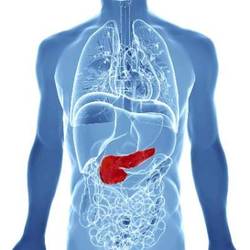
Elevated plasma levels of three branched-chain amino acids may predict the development of pancreatic ductal adenocarcinoma at least 2 years before diagnosis, and well before the onset of clinical cachexia, new data suggest.
Researchers retrospectively examined blood samples taken in four large prospective cohort studies, including the Nurses Health Study and the Women’s Health Initiative, and found significant associations between the levels of 15 metabolites and future diagnosis of pancreatic cancer.
In particular, elevated plasma levels of isoleucine, leucine, and valine were highly predictive of later pancreatic cancer, as patients in the top quintile of increasing levels had at least a twofold increase in the risk of pancreatic cancer, compared with those in the bottom quintile, according to a paper published online in Nature Medicine.
Researchers found that the associations between elevated branched-chain amino acids and future cancer diagnosis were most significant between 2 and 5 years before the diagnosis (Nature Med. 2014;20:1193-8 [doi:10.1038/nm.3686]).
Previous studies attempting to single out metabolite biomarkers predicting future risk of cancer have relied on a cross-sectional design, comparing affected patients with cancer-free individuals, which researchers said was likely to be complicated by the impact of advanced disease on circulating metabolite profiles.
“This is particularly true for patients with pancreatic cancer, who commonly have significant anorexia, weight loss, and pancreatic insufficiency at the time of diagnosis,” wrote Jared R. Mayers, Ph.D., from the Koch Institute for Integrative Cancer Research at MIT, Boston,and his colleagues.
“Increased muscle catabolism represents one aspect of cancer-associated cachexia, a wasting syndrome frequently affecting patients with advanced PDAC [pancreatic ductal adenocarcinoma] and contributing to worse outcomes.”“Our findings, however, suggest that protein breakdown begins much earlier than previously appreciated and predates onset of clinical cachexia.”
Elevated circulating branched-chain amino acids are known to be associated with a future risk of diabetes, and type 2 diabetes is also a predisposing factor for pancreatic cancer.
However, researchers found the results remained unchanged after excluding subjects who had diabetes at baseline, suggesting that the findings were not simply indicating the prevalent diabetes associated with the later development of pancreatic cancer.
The study showed circulating branched-chain amino acids (BCAA) were also modestly correlated with obesity and glucose intolerance; however, the relationship with future pancreatic cancer risk persisted after accounting for those markers.
Researchers also tested the possibility that occult pancreatic cancer may have already been present during the periods showing the strongest correlations between elevated BCAAs and later cancer risk, by conducting a prospective serial blood sampling study in mice genetically predisposed to pancreatic cancer.
They found the mice – which have a median survival of 21 weeks – initially showed similar levels of BCAAs to normal mice, but these increased significantly from 15 to 17 weeks before death.
“These data suggest circulating BCAA elevations accompany early PDAC,” the researchers wrote.
The study was supported by the Howard Hughes Medical Institute, the Lustgarten Foundation, and grants from the National Institutes of Health, the Nestle Research Center, the Robert T. and Judith B. Hale Fund for Pancreatic Cancer, Perry S. Levy Fund for Gastrointestinal Cancer Research, the Pappas Family Research Fund for Pancreatic Cancer, the Burroughs Wellcome Fund, the Damon Runyon Cancer Research Foundation, the Smith Family and the Stern Family, the American Society of Clinical Oncology Conquer Cancer Foundation, the Howard Hughes Medical Institute and Promises for Purple. There were no conflicts of interest declared.
Elevated plasma levels of three branched-chain amino acids may predict the development of pancreatic ductal adenocarcinoma at least 2 years before diagnosis, and well before the onset of clinical cachexia, new data suggest.
Researchers retrospectively examined blood samples taken in four large prospective cohort studies, including the Nurses Health Study and the Women’s Health Initiative, and found significant associations between the levels of 15 metabolites and future diagnosis of pancreatic cancer.
In particular, elevated plasma levels of isoleucine, leucine, and valine were highly predictive of later pancreatic cancer, as patients in the top quintile of increasing levels had at least a twofold increase in the risk of pancreatic cancer, compared with those in the bottom quintile, according to a paper published online in Nature Medicine.
Researchers found that the associations between elevated branched-chain amino acids and future cancer diagnosis were most significant between 2 and 5 years before the diagnosis (Nature Med. 2014;20:1193-8 [doi:10.1038/nm.3686]).
Previous studies attempting to single out metabolite biomarkers predicting future risk of cancer have relied on a cross-sectional design, comparing affected patients with cancer-free individuals, which researchers said was likely to be complicated by the impact of advanced disease on circulating metabolite profiles.
“This is particularly true for patients with pancreatic cancer, who commonly have significant anorexia, weight loss, and pancreatic insufficiency at the time of diagnosis,” wrote Jared R. Mayers, Ph.D., from the Koch Institute for Integrative Cancer Research at MIT, Boston,and his colleagues.
“Increased muscle catabolism represents one aspect of cancer-associated cachexia, a wasting syndrome frequently affecting patients with advanced PDAC [pancreatic ductal adenocarcinoma] and contributing to worse outcomes.”“Our findings, however, suggest that protein breakdown begins much earlier than previously appreciated and predates onset of clinical cachexia.”
Elevated circulating branched-chain amino acids are known to be associated with a future risk of diabetes, and type 2 diabetes is also a predisposing factor for pancreatic cancer.
However, researchers found the results remained unchanged after excluding subjects who had diabetes at baseline, suggesting that the findings were not simply indicating the prevalent diabetes associated with the later development of pancreatic cancer.
The study showed circulating branched-chain amino acids (BCAA) were also modestly correlated with obesity and glucose intolerance; however, the relationship with future pancreatic cancer risk persisted after accounting for those markers.
Researchers also tested the possibility that occult pancreatic cancer may have already been present during the periods showing the strongest correlations between elevated BCAAs and later cancer risk, by conducting a prospective serial blood sampling study in mice genetically predisposed to pancreatic cancer.
They found the mice – which have a median survival of 21 weeks – initially showed similar levels of BCAAs to normal mice, but these increased significantly from 15 to 17 weeks before death.
“These data suggest circulating BCAA elevations accompany early PDAC,” the researchers wrote.
The study was supported by the Howard Hughes Medical Institute, the Lustgarten Foundation, and grants from the National Institutes of Health, the Nestle Research Center, the Robert T. and Judith B. Hale Fund for Pancreatic Cancer, Perry S. Levy Fund for Gastrointestinal Cancer Research, the Pappas Family Research Fund for Pancreatic Cancer, the Burroughs Wellcome Fund, the Damon Runyon Cancer Research Foundation, the Smith Family and the Stern Family, the American Society of Clinical Oncology Conquer Cancer Foundation, the Howard Hughes Medical Institute and Promises for Purple. There were no conflicts of interest declared.
Elevated plasma levels of three branched-chain amino acids may predict the development of pancreatic ductal adenocarcinoma at least 2 years before diagnosis, and well before the onset of clinical cachexia, new data suggest.
Researchers retrospectively examined blood samples taken in four large prospective cohort studies, including the Nurses Health Study and the Women’s Health Initiative, and found significant associations between the levels of 15 metabolites and future diagnosis of pancreatic cancer.
In particular, elevated plasma levels of isoleucine, leucine, and valine were highly predictive of later pancreatic cancer, as patients in the top quintile of increasing levels had at least a twofold increase in the risk of pancreatic cancer, compared with those in the bottom quintile, according to a paper published online in Nature Medicine.
Researchers found that the associations between elevated branched-chain amino acids and future cancer diagnosis were most significant between 2 and 5 years before the diagnosis (Nature Med. 2014;20:1193-8 [doi:10.1038/nm.3686]).
Previous studies attempting to single out metabolite biomarkers predicting future risk of cancer have relied on a cross-sectional design, comparing affected patients with cancer-free individuals, which researchers said was likely to be complicated by the impact of advanced disease on circulating metabolite profiles.
“This is particularly true for patients with pancreatic cancer, who commonly have significant anorexia, weight loss, and pancreatic insufficiency at the time of diagnosis,” wrote Jared R. Mayers, Ph.D., from the Koch Institute for Integrative Cancer Research at MIT, Boston,and his colleagues.
“Increased muscle catabolism represents one aspect of cancer-associated cachexia, a wasting syndrome frequently affecting patients with advanced PDAC [pancreatic ductal adenocarcinoma] and contributing to worse outcomes.”“Our findings, however, suggest that protein breakdown begins much earlier than previously appreciated and predates onset of clinical cachexia.”
Elevated circulating branched-chain amino acids are known to be associated with a future risk of diabetes, and type 2 diabetes is also a predisposing factor for pancreatic cancer.
However, researchers found the results remained unchanged after excluding subjects who had diabetes at baseline, suggesting that the findings were not simply indicating the prevalent diabetes associated with the later development of pancreatic cancer.
The study showed circulating branched-chain amino acids (BCAA) were also modestly correlated with obesity and glucose intolerance; however, the relationship with future pancreatic cancer risk persisted after accounting for those markers.
Researchers also tested the possibility that occult pancreatic cancer may have already been present during the periods showing the strongest correlations between elevated BCAAs and later cancer risk, by conducting a prospective serial blood sampling study in mice genetically predisposed to pancreatic cancer.
They found the mice – which have a median survival of 21 weeks – initially showed similar levels of BCAAs to normal mice, but these increased significantly from 15 to 17 weeks before death.
“These data suggest circulating BCAA elevations accompany early PDAC,” the researchers wrote.
The study was supported by the Howard Hughes Medical Institute, the Lustgarten Foundation, and grants from the National Institutes of Health, the Nestle Research Center, the Robert T. and Judith B. Hale Fund for Pancreatic Cancer, Perry S. Levy Fund for Gastrointestinal Cancer Research, the Pappas Family Research Fund for Pancreatic Cancer, the Burroughs Wellcome Fund, the Damon Runyon Cancer Research Foundation, the Smith Family and the Stern Family, the American Society of Clinical Oncology Conquer Cancer Foundation, the Howard Hughes Medical Institute and Promises for Purple. There were no conflicts of interest declared.
FROM NATURE MEDICINE
Key clinical point: Elevated plasma levels of three branched-chain amino acids may predict the development of pancreatic cancer at least 2 years before diagnosis.
Major finding: Individuals in the highest quintile of plasma isoleucine, leucine, and valine have a twofold increase in the risk of pancreatic cancer.
Data source: Retrospective analysis of data from four large prospective cohort studies.
Disclosures: The study was supported by the Howard Hughes Medical Institute, the Lustgarten Foundation, and grants from the National Institutes of Health, the Nestle Research Center, the Robert T. and Judith B. Hale Fund for Pancreatic Cancer, Perry S. Levy Fund for Gastrointestinal Cancer Research, the Pappas Family Research Fund for Pancreatic Cancer, the Burroughs Wellcome Fund, the Damon Runyon Cancer Research Foundation, the Smith Family and the Stern Family, the American Society of Clinical Oncology Conquer Cancer Foundation, the Howard Hughes Medical Institute, and Promises for Purple. There were no conflicts of interest declared.
Sofosbuvir/ledipasvir effective for relapsed hep C patients
Patients with chronic hepatitis C genotype 1 infection who relapse after sofosbuvir plus ribavirin may be successfully retreated with sofosbuvir plus ledipasvir, a new study demonstrated.
During the study, investigators approached patients treated with sofosbuvir plus ribavirin for 24 weeks in the National Institute of Allergy and Infectious Diseases (NIAID) SPARE study who relapsed after treatment. The participants, mostly black men with an interleukin-28B non-CC genotype, were offered retreatment with sofosbuvir plus ledipasvir for 12 weeks in the ongoing, phase IIa, open-label NIAID SYNERGY study. Fourteen enrolled. The medication was a single daily tablet of 400 mg of sofosbuvir and 90 mg of ledipasvir.
All patients achieved sustained viral response to treatment (SVR12), including seven who had advanced liver disease and one with a detectable NS5B S282T mutation, according to work directed by Dr. Anu Osinusi of Gilead Sciences, manufacturer of the combination drug. Most adverse events, including loose stool, constipation, headache, myalgia, nasal congestion, and pruritic rash, were mild.
The research suggests that patients who have viral relapse after sofosbuvir/ribavirin “can be successfully retreated with sofosbuvir/ledipasvir for 12 weeks,” the authors wrote. “The low incidence of adverse events, low pill burden, short treatment duration, and high efficacy demonstrated in this group and other populations make this drug combination attractive in a real-world setting.”
The study was supported by NIAID, the National Institutes of Health, the National Cancer Institute, and Gilead Sciences (manufacturer of sofosbuvir/ledipasvir). Two authors are employed by Gilead; two others disclosed other company-sponsored findings during the study period.
Patients with chronic hepatitis C genotype 1 infection who relapse after sofosbuvir plus ribavirin may be successfully retreated with sofosbuvir plus ledipasvir, a new study demonstrated.
During the study, investigators approached patients treated with sofosbuvir plus ribavirin for 24 weeks in the National Institute of Allergy and Infectious Diseases (NIAID) SPARE study who relapsed after treatment. The participants, mostly black men with an interleukin-28B non-CC genotype, were offered retreatment with sofosbuvir plus ledipasvir for 12 weeks in the ongoing, phase IIa, open-label NIAID SYNERGY study. Fourteen enrolled. The medication was a single daily tablet of 400 mg of sofosbuvir and 90 mg of ledipasvir.
All patients achieved sustained viral response to treatment (SVR12), including seven who had advanced liver disease and one with a detectable NS5B S282T mutation, according to work directed by Dr. Anu Osinusi of Gilead Sciences, manufacturer of the combination drug. Most adverse events, including loose stool, constipation, headache, myalgia, nasal congestion, and pruritic rash, were mild.
The research suggests that patients who have viral relapse after sofosbuvir/ribavirin “can be successfully retreated with sofosbuvir/ledipasvir for 12 weeks,” the authors wrote. “The low incidence of adverse events, low pill burden, short treatment duration, and high efficacy demonstrated in this group and other populations make this drug combination attractive in a real-world setting.”
The study was supported by NIAID, the National Institutes of Health, the National Cancer Institute, and Gilead Sciences (manufacturer of sofosbuvir/ledipasvir). Two authors are employed by Gilead; two others disclosed other company-sponsored findings during the study period.
Patients with chronic hepatitis C genotype 1 infection who relapse after sofosbuvir plus ribavirin may be successfully retreated with sofosbuvir plus ledipasvir, a new study demonstrated.
During the study, investigators approached patients treated with sofosbuvir plus ribavirin for 24 weeks in the National Institute of Allergy and Infectious Diseases (NIAID) SPARE study who relapsed after treatment. The participants, mostly black men with an interleukin-28B non-CC genotype, were offered retreatment with sofosbuvir plus ledipasvir for 12 weeks in the ongoing, phase IIa, open-label NIAID SYNERGY study. Fourteen enrolled. The medication was a single daily tablet of 400 mg of sofosbuvir and 90 mg of ledipasvir.
All patients achieved sustained viral response to treatment (SVR12), including seven who had advanced liver disease and one with a detectable NS5B S282T mutation, according to work directed by Dr. Anu Osinusi of Gilead Sciences, manufacturer of the combination drug. Most adverse events, including loose stool, constipation, headache, myalgia, nasal congestion, and pruritic rash, were mild.
The research suggests that patients who have viral relapse after sofosbuvir/ribavirin “can be successfully retreated with sofosbuvir/ledipasvir for 12 weeks,” the authors wrote. “The low incidence of adverse events, low pill burden, short treatment duration, and high efficacy demonstrated in this group and other populations make this drug combination attractive in a real-world setting.”
The study was supported by NIAID, the National Institutes of Health, the National Cancer Institute, and Gilead Sciences (manufacturer of sofosbuvir/ledipasvir). Two authors are employed by Gilead; two others disclosed other company-sponsored findings during the study period.
Key clinical point: Patients with chronic hepatitis C genotype 1 infection who relapse after sofosbuvir/ribavirin treatment may be successfully retreated with sofosbuvir/ledipasvir.
Major finding: All patients achieved sustained viral response to treatment.
Data source: A phase IIa, open-label study of 14 patients given sofosbuvir plus ledipasvir for 12 weeks after relapsing from 24 weeks of treatment with sofosbuvir plus ribavirin.
Disclosures: The study was supported by the National Institute of Allergy and Infectious Diseases, the National Institutes of Health, the National Cancer Institute, and Gilead Sciences (manufacturer of sofosbuvir/ledipasvir). Two authors are employed by Gilead; two others disclosed other company-sponsored findings during the study period.
Hepatitis E virus mutation linked to ribavirin resistance
A mutation in the hepatitis E virus might contribute to ribavirin treatment failure in transplant recipients with chronic HEV infection, according to a small study published in the November issue of Gastroenterology.
The study is the first to find in vitro evidence for a virulence mutation in HEV, said Dr. Yannick Debing at the University of Leuven in Belgium, Dr. Annett Gisa at the Hanover Medical School in Germany, and their associates.
Courtesy: American Gastroenterological Association
The researchers studied 15 solid-organ transplant recipients who received ribavirin monotherapy for chronic HEV infection. Thirteen patients were successfully treated, but two with genotype 3c infections failed therapy. Viral RNA levels in both of these patients initially dropped and then rose, suggesting emerging resistance to ribavirin therapy, the investigators said (Gastroenterology 2014 Aug. 30 [doi: 10.1053/j.gastro.2014.08.040]).
When the researchers sequenced HEV genomes from the nonresponders, they found a G1634R mutation in HEV viral polymerase that conferred greater replication capacity compared with wild-type HEV, even after in vitro ribavirin treatment, they reported. “It may be interesting to assess the possible use of position 1634 as a prognostic marker, and accordingly to adjust the dose and duration of ribavirin therapy based on the presence of the G1634R variant,” Dr. Debing and his associates said.
The mutation consisted of a G-to-A nucleotide substitution in the C-terminal region of viral polymerase, the investigators said. By comparing HEV sequences in GenBank (an open-access collection of publicly available nucleotide sequences and their proteins), they found that G1634 was the most common amino acid sequence in genotype 3 HEV, while the K1634 sequence predominated in genotypes 1 and 4.
A subgenomic replicon of genotype 3 HEV with the 1634R mutation showed no increase in ribavirin sensitivity, compared with the wild-type replicon (50% effective concentration [EC50] values, 5.1 ± 4.1 mcM and 5.1 ± 3.7 mcM, respectively), the investigators said. But when they tested the 1634R variant in human hepatoma cells, they observed a 3.4-fold increase in luminescence signaling, compared with cells transfected with capped replicon RNA from wild-type HEV (P = .04). Greater luminescence indicated that the 1634R mutation increased viral replication, they said.
In addition, an HEV replicon with the K1634 mutation showed 2.7 times more luminescence compared with cells transfected with wild-type viral RNA (P = .07), the researchers reported.
The investigators next studied the effects of the 1634 R/K mutations on the full-length HEV genome. They introduced HEV with the two variants into human hepatoma cells, measured the amounts of viral RNA released, and found that both variants replicated at higher levels than did wild-type virus. When they treated these cells with 10- or 25-mcM ribavirin, replication levels dropped for the 1634 R/K variants and for wild-type virus, but remained at least twice as high for the variants, they said.
“The increased replication capacity of the mutant may have contributed to the persistent disease courses despite [ribavirin] treatment, although other patient- and virus-related factors could have contributed as well,” the investigators said.
The research was supported by the Research Foundation–Flanders, KU Leuven University, the Robert Koch Institute, Geconcerteerde Onderzoeksactie, the German Federal Ministry for Education and Research, and EU FP7 project SILVER. The authors reported having no conflicts of interest.
A mutation in the hepatitis E virus might contribute to ribavirin treatment failure in transplant recipients with chronic HEV infection, according to a small study published in the November issue of Gastroenterology.
The study is the first to find in vitro evidence for a virulence mutation in HEV, said Dr. Yannick Debing at the University of Leuven in Belgium, Dr. Annett Gisa at the Hanover Medical School in Germany, and their associates.
Courtesy: American Gastroenterological Association
The researchers studied 15 solid-organ transplant recipients who received ribavirin monotherapy for chronic HEV infection. Thirteen patients were successfully treated, but two with genotype 3c infections failed therapy. Viral RNA levels in both of these patients initially dropped and then rose, suggesting emerging resistance to ribavirin therapy, the investigators said (Gastroenterology 2014 Aug. 30 [doi: 10.1053/j.gastro.2014.08.040]).
When the researchers sequenced HEV genomes from the nonresponders, they found a G1634R mutation in HEV viral polymerase that conferred greater replication capacity compared with wild-type HEV, even after in vitro ribavirin treatment, they reported. “It may be interesting to assess the possible use of position 1634 as a prognostic marker, and accordingly to adjust the dose and duration of ribavirin therapy based on the presence of the G1634R variant,” Dr. Debing and his associates said.
The mutation consisted of a G-to-A nucleotide substitution in the C-terminal region of viral polymerase, the investigators said. By comparing HEV sequences in GenBank (an open-access collection of publicly available nucleotide sequences and their proteins), they found that G1634 was the most common amino acid sequence in genotype 3 HEV, while the K1634 sequence predominated in genotypes 1 and 4.
A subgenomic replicon of genotype 3 HEV with the 1634R mutation showed no increase in ribavirin sensitivity, compared with the wild-type replicon (50% effective concentration [EC50] values, 5.1 ± 4.1 mcM and 5.1 ± 3.7 mcM, respectively), the investigators said. But when they tested the 1634R variant in human hepatoma cells, they observed a 3.4-fold increase in luminescence signaling, compared with cells transfected with capped replicon RNA from wild-type HEV (P = .04). Greater luminescence indicated that the 1634R mutation increased viral replication, they said.
In addition, an HEV replicon with the K1634 mutation showed 2.7 times more luminescence compared with cells transfected with wild-type viral RNA (P = .07), the researchers reported.
The investigators next studied the effects of the 1634 R/K mutations on the full-length HEV genome. They introduced HEV with the two variants into human hepatoma cells, measured the amounts of viral RNA released, and found that both variants replicated at higher levels than did wild-type virus. When they treated these cells with 10- or 25-mcM ribavirin, replication levels dropped for the 1634 R/K variants and for wild-type virus, but remained at least twice as high for the variants, they said.
“The increased replication capacity of the mutant may have contributed to the persistent disease courses despite [ribavirin] treatment, although other patient- and virus-related factors could have contributed as well,” the investigators said.
The research was supported by the Research Foundation–Flanders, KU Leuven University, the Robert Koch Institute, Geconcerteerde Onderzoeksactie, the German Federal Ministry for Education and Research, and EU FP7 project SILVER. The authors reported having no conflicts of interest.
A mutation in the hepatitis E virus might contribute to ribavirin treatment failure in transplant recipients with chronic HEV infection, according to a small study published in the November issue of Gastroenterology.
The study is the first to find in vitro evidence for a virulence mutation in HEV, said Dr. Yannick Debing at the University of Leuven in Belgium, Dr. Annett Gisa at the Hanover Medical School in Germany, and their associates.
Courtesy: American Gastroenterological Association
The researchers studied 15 solid-organ transplant recipients who received ribavirin monotherapy for chronic HEV infection. Thirteen patients were successfully treated, but two with genotype 3c infections failed therapy. Viral RNA levels in both of these patients initially dropped and then rose, suggesting emerging resistance to ribavirin therapy, the investigators said (Gastroenterology 2014 Aug. 30 [doi: 10.1053/j.gastro.2014.08.040]).
When the researchers sequenced HEV genomes from the nonresponders, they found a G1634R mutation in HEV viral polymerase that conferred greater replication capacity compared with wild-type HEV, even after in vitro ribavirin treatment, they reported. “It may be interesting to assess the possible use of position 1634 as a prognostic marker, and accordingly to adjust the dose and duration of ribavirin therapy based on the presence of the G1634R variant,” Dr. Debing and his associates said.
The mutation consisted of a G-to-A nucleotide substitution in the C-terminal region of viral polymerase, the investigators said. By comparing HEV sequences in GenBank (an open-access collection of publicly available nucleotide sequences and their proteins), they found that G1634 was the most common amino acid sequence in genotype 3 HEV, while the K1634 sequence predominated in genotypes 1 and 4.
A subgenomic replicon of genotype 3 HEV with the 1634R mutation showed no increase in ribavirin sensitivity, compared with the wild-type replicon (50% effective concentration [EC50] values, 5.1 ± 4.1 mcM and 5.1 ± 3.7 mcM, respectively), the investigators said. But when they tested the 1634R variant in human hepatoma cells, they observed a 3.4-fold increase in luminescence signaling, compared with cells transfected with capped replicon RNA from wild-type HEV (P = .04). Greater luminescence indicated that the 1634R mutation increased viral replication, they said.
In addition, an HEV replicon with the K1634 mutation showed 2.7 times more luminescence compared with cells transfected with wild-type viral RNA (P = .07), the researchers reported.
The investigators next studied the effects of the 1634 R/K mutations on the full-length HEV genome. They introduced HEV with the two variants into human hepatoma cells, measured the amounts of viral RNA released, and found that both variants replicated at higher levels than did wild-type virus. When they treated these cells with 10- or 25-mcM ribavirin, replication levels dropped for the 1634 R/K variants and for wild-type virus, but remained at least twice as high for the variants, they said.
“The increased replication capacity of the mutant may have contributed to the persistent disease courses despite [ribavirin] treatment, although other patient- and virus-related factors could have contributed as well,” the investigators said.
The research was supported by the Research Foundation–Flanders, KU Leuven University, the Robert Koch Institute, Geconcerteerde Onderzoeksactie, the German Federal Ministry for Education and Research, and EU FP7 project SILVER. The authors reported having no conflicts of interest.
Key clinical point: A virulence mutation in the hepatitis E virus (HEV) was associated with ribavirin treatment failure.
Major finding: The mutation was associated with a 3.4-fold increase in luminescence signals, compared with wild-type HEV (P = .04), indicating greater viral replication.
Data source: Study of 15 solid-organ transplant recipients with chronic HEV infection.
Disclosures: The research was supported by the Research Foundation–Flanders, KU Leuven University, the Robert Koch Institute, Geconcerteerde Onderzoeksactie, the German Federal Ministry for Education and Research, and EU FP7 project SILVER. The authors reported having no conflicts of interest.
FDA approves hepatitis C combination pill
The first combination pill to treat chronic hepatitis C virus genotype 1 infection was approved by the Food and Drug Administration Oct. 10.
The once-daily tablet under the trade name Harvoni combines 400 mg of the already-approved hepatitis C drug sofosbuvir (Sovaldi) with 90 mg of a new drug, ledipasvir, and is the first approved regimen that does not require coadministration of interferon or ribaviron to treat hepatitis C in adults, according to the FDA.

In three clinical trials with a total of 1,518 patients, 94%-99% reached a sustained virologic response (no virus detected in the blood) at least 12 weeks (SVR 12) after finishing treatment, according to an FDA statement. The agency gave the drug fast-track consideration and approval under its breakthrough therapy designation.
“With the development and approval of new treatments for hepatitis C virus, we are changing the treatment paradigm for Americans living with the disease,” Dr. Edward Cox, director of the FDA Office of Antimicrobial Products said in a statement. “Until last year, the only available treatments for hepatitis C virus required administration with interferon and ribavirin. Now, patients and health care professionals have multiple treatment options, including a combination pill to help simplify treatment regimens,.”
The FDA approved sofosbuvir and another new drug to treat hepatitis C, simeprevir (Olysio), in late 2013. Since then, the high costs of these new treatments have generated controversy. Even before Harvoni’s approval, one analysis estimated that the new treatments could increase 2015 spending in Medicare’s Part D program by up to $5.8 billion.
Gilead, which markets sofosbuvir and the new combination pill, said in a statement that a typical 12-week course of Harvoni will cost $94,500, compared with Sovaldi’s price tag of $84,000 for 12 weeks, the New York Times reported. Some patients may be successfully treated after 8 weeks.
In the first of Harvoni’s three pivotal trials, cure rates were 94% after 8 weeks of treatment and 96% after 12 weeks of treatment in previously untreated patients with chronic hepatitis C infection. In the second trial including patients with and without cirrhosis, 99% were cured after 12 weeks of treatment. In the third trial of treatment-experience patients with or without cirrhosis, 94% were cured after 12 weeks of treatment and 99% after 24 weeks of treatment. Adding ribavirin did not improve response rates in any of the trials.
The FDA recommended a dosage duration of 12 weeks in patients with chronic hepatitis who have not previously been treated or who failed treatment but don’t have cirrhosis, or 24 weeks in patients with cirrhosis who failed previous treatment. Limiting treatment to 8 weeks may be considered in treatment-naive patients without cirrhosis who have pretreatment hepatitis C virus RNA levels below 6 million IU/mL.
The most common adverse reactions reported with Harvoni use included fatigue in 13%-18%, headache in 11%-17%, nausea in 6%-9%, diarrhea in 3%-7%, and insomnia in 3%-6%.
Both drugs in Harvoni interfere with enzymes needed by hepatitis C virus to multiply. Ledipasvir is a hepatitis C virus NS5A inhibitor, and sofosbuvir is a hepatitis C virus nucleotide analog NS5B polymerase inhibitor.
On Twitter @sherryboschert
The first combination pill to treat chronic hepatitis C virus genotype 1 infection was approved by the Food and Drug Administration Oct. 10.
The once-daily tablet under the trade name Harvoni combines 400 mg of the already-approved hepatitis C drug sofosbuvir (Sovaldi) with 90 mg of a new drug, ledipasvir, and is the first approved regimen that does not require coadministration of interferon or ribaviron to treat hepatitis C in adults, according to the FDA.
In three clinical trials with a total of 1,518 patients, 94%-99% reached a sustained virologic response (no virus detected in the blood) at least 12 weeks (SVR 12) after finishing treatment, according to an FDA statement. The agency gave the drug fast-track consideration and approval under its breakthrough therapy designation.
“With the development and approval of new treatments for hepatitis C virus, we are changing the treatment paradigm for Americans living with the disease,” Dr. Edward Cox, director of the FDA Office of Antimicrobial Products said in a statement. “Until last year, the only available treatments for hepatitis C virus required administration with interferon and ribavirin. Now, patients and health care professionals have multiple treatment options, including a combination pill to help simplify treatment regimens,.”
The FDA approved sofosbuvir and another new drug to treat hepatitis C, simeprevir (Olysio), in late 2013. Since then, the high costs of these new treatments have generated controversy. Even before Harvoni’s approval, one analysis estimated that the new treatments could increase 2015 spending in Medicare’s Part D program by up to $5.8 billion.
Gilead, which markets sofosbuvir and the new combination pill, said in a statement that a typical 12-week course of Harvoni will cost $94,500, compared with Sovaldi’s price tag of $84,000 for 12 weeks, the New York Times reported. Some patients may be successfully treated after 8 weeks.
In the first of Harvoni’s three pivotal trials, cure rates were 94% after 8 weeks of treatment and 96% after 12 weeks of treatment in previously untreated patients with chronic hepatitis C infection. In the second trial including patients with and without cirrhosis, 99% were cured after 12 weeks of treatment. In the third trial of treatment-experience patients with or without cirrhosis, 94% were cured after 12 weeks of treatment and 99% after 24 weeks of treatment. Adding ribavirin did not improve response rates in any of the trials.
The FDA recommended a dosage duration of 12 weeks in patients with chronic hepatitis who have not previously been treated or who failed treatment but don’t have cirrhosis, or 24 weeks in patients with cirrhosis who failed previous treatment. Limiting treatment to 8 weeks may be considered in treatment-naive patients without cirrhosis who have pretreatment hepatitis C virus RNA levels below 6 million IU/mL.
The most common adverse reactions reported with Harvoni use included fatigue in 13%-18%, headache in 11%-17%, nausea in 6%-9%, diarrhea in 3%-7%, and insomnia in 3%-6%.
Both drugs in Harvoni interfere with enzymes needed by hepatitis C virus to multiply. Ledipasvir is a hepatitis C virus NS5A inhibitor, and sofosbuvir is a hepatitis C virus nucleotide analog NS5B polymerase inhibitor.
On Twitter @sherryboschert
The first combination pill to treat chronic hepatitis C virus genotype 1 infection was approved by the Food and Drug Administration Oct. 10.
The once-daily tablet under the trade name Harvoni combines 400 mg of the already-approved hepatitis C drug sofosbuvir (Sovaldi) with 90 mg of a new drug, ledipasvir, and is the first approved regimen that does not require coadministration of interferon or ribaviron to treat hepatitis C in adults, according to the FDA.
In three clinical trials with a total of 1,518 patients, 94%-99% reached a sustained virologic response (no virus detected in the blood) at least 12 weeks (SVR 12) after finishing treatment, according to an FDA statement. The agency gave the drug fast-track consideration and approval under its breakthrough therapy designation.
“With the development and approval of new treatments for hepatitis C virus, we are changing the treatment paradigm for Americans living with the disease,” Dr. Edward Cox, director of the FDA Office of Antimicrobial Products said in a statement. “Until last year, the only available treatments for hepatitis C virus required administration with interferon and ribavirin. Now, patients and health care professionals have multiple treatment options, including a combination pill to help simplify treatment regimens,.”
The FDA approved sofosbuvir and another new drug to treat hepatitis C, simeprevir (Olysio), in late 2013. Since then, the high costs of these new treatments have generated controversy. Even before Harvoni’s approval, one analysis estimated that the new treatments could increase 2015 spending in Medicare’s Part D program by up to $5.8 billion.
Gilead, which markets sofosbuvir and the new combination pill, said in a statement that a typical 12-week course of Harvoni will cost $94,500, compared with Sovaldi’s price tag of $84,000 for 12 weeks, the New York Times reported. Some patients may be successfully treated after 8 weeks.
In the first of Harvoni’s three pivotal trials, cure rates were 94% after 8 weeks of treatment and 96% after 12 weeks of treatment in previously untreated patients with chronic hepatitis C infection. In the second trial including patients with and without cirrhosis, 99% were cured after 12 weeks of treatment. In the third trial of treatment-experience patients with or without cirrhosis, 94% were cured after 12 weeks of treatment and 99% after 24 weeks of treatment. Adding ribavirin did not improve response rates in any of the trials.
The FDA recommended a dosage duration of 12 weeks in patients with chronic hepatitis who have not previously been treated or who failed treatment but don’t have cirrhosis, or 24 weeks in patients with cirrhosis who failed previous treatment. Limiting treatment to 8 weeks may be considered in treatment-naive patients without cirrhosis who have pretreatment hepatitis C virus RNA levels below 6 million IU/mL.
The most common adverse reactions reported with Harvoni use included fatigue in 13%-18%, headache in 11%-17%, nausea in 6%-9%, diarrhea in 3%-7%, and insomnia in 3%-6%.
Both drugs in Harvoni interfere with enzymes needed by hepatitis C virus to multiply. Ledipasvir is a hepatitis C virus NS5A inhibitor, and sofosbuvir is a hepatitis C virus nucleotide analog NS5B polymerase inhibitor.
On Twitter @sherryboschert

Hepatology section
The hepatology session at the AGA Postgraduate Course in Chicago had a range of excellent topics for the practicing gastroenterologist/hepatologist. Perhaps the area that is changing most rapidly is that of treatment of hepatitis C. Dr. Jordan Feld from the University of Toronto presented “Choosing the optimal HCV regimen.” Dr. Feld’s presentation highlighted the recent approval of simeprevir and sofosbuvir both with pegylated interferon and ribavirin for treatment of chronic hepatitis C genotype 1. HCV cure rates of 80% to 90% were described. He also told us about exciting developments with interferon-free regimens that will be available in October/November of 2014.
The combination of sofosbuvir and ledipasvir and the combination of three direct-acting antiviral agents with or without ribavirin will revolutionize our care of hepatitis C patients from now on. Many clinicians have already been using interferon-free regimens by combining simeprevir and sofosbuvir for 12 weeks with excellent results. Dr. Feld finished by highlighting the fact that the American Association for the Study of Liver Diseases/Infectious Diseases Society of America guidelines are now available and provide a useful resource for treatment for your hepatitis C patients.

Dr. Michael Lucey from the University of Wisconsin School of Medicine and Public Health talked about the management of alcoholic hepatitis. Dr. Stephen Harrison from Brooke Army Medical Center presented impressive data on the huge number of patients that we will be seeing with nonalcoholic fatty liver disease/nonalcoholic steatohepatitis. By careful estimates, he predicts that there may be as many as 25 million patients in the United States with NASH. New treatments are being developed, but we are still a long way from having reliable treatments for this disease. Thus, lifestyle modifications with judicious weight loss and exercise regimens remain the most important treatments available for NASH/NAFLD. Dr. Harrison also highlighted the recent studies that demonstrate that regular coffee consumption may be helpful for reducing fibrosis in patients with NAFLD.
Dr. Jorge Marrero from the University of Texas Southwestern Medical School presented data on kidney injury in cirrhosis and how to differentiate acute kidney injury from hepatorenal syndrome. Finally, Dr. Sam Lee from the University of Calgary presented “Management of coagulation disorders in cirrhosis.” He discussed the use of anticoagulation and taught us to recognize that cirrhosis is not a hypocoagulable state and that there are situations where anticoagulant therapy in cirrhosis is definitely a benefit. The idea of using anticoagulation in patients with cirrhosis is counterintuitive to many of us, but Dr. Lee presented data to endorse this approach. I think all of will have to think hard in our practices on how we proceed with the use of anticoagulation in patients with portal vein thrombosis.
Dr. Bacon is the James F. King MD Endowed Chair in Gastroenterology, professor of internal medicine, and director of abdominal transplantation at Saint Louis University School of Medicine, division of gastroenterology and hepatology, St. Louis.
The hepatology session at the AGA Postgraduate Course in Chicago had a range of excellent topics for the practicing gastroenterologist/hepatologist. Perhaps the area that is changing most rapidly is that of treatment of hepatitis C. Dr. Jordan Feld from the University of Toronto presented “Choosing the optimal HCV regimen.” Dr. Feld’s presentation highlighted the recent approval of simeprevir and sofosbuvir both with pegylated interferon and ribavirin for treatment of chronic hepatitis C genotype 1. HCV cure rates of 80% to 90% were described. He also told us about exciting developments with interferon-free regimens that will be available in October/November of 2014.
The combination of sofosbuvir and ledipasvir and the combination of three direct-acting antiviral agents with or without ribavirin will revolutionize our care of hepatitis C patients from now on. Many clinicians have already been using interferon-free regimens by combining simeprevir and sofosbuvir for 12 weeks with excellent results. Dr. Feld finished by highlighting the fact that the American Association for the Study of Liver Diseases/Infectious Diseases Society of America guidelines are now available and provide a useful resource for treatment for your hepatitis C patients.
Dr. Michael Lucey from the University of Wisconsin School of Medicine and Public Health talked about the management of alcoholic hepatitis. Dr. Stephen Harrison from Brooke Army Medical Center presented impressive data on the huge number of patients that we will be seeing with nonalcoholic fatty liver disease/nonalcoholic steatohepatitis. By careful estimates, he predicts that there may be as many as 25 million patients in the United States with NASH. New treatments are being developed, but we are still a long way from having reliable treatments for this disease. Thus, lifestyle modifications with judicious weight loss and exercise regimens remain the most important treatments available for NASH/NAFLD. Dr. Harrison also highlighted the recent studies that demonstrate that regular coffee consumption may be helpful for reducing fibrosis in patients with NAFLD.
Dr. Jorge Marrero from the University of Texas Southwestern Medical School presented data on kidney injury in cirrhosis and how to differentiate acute kidney injury from hepatorenal syndrome. Finally, Dr. Sam Lee from the University of Calgary presented “Management of coagulation disorders in cirrhosis.” He discussed the use of anticoagulation and taught us to recognize that cirrhosis is not a hypocoagulable state and that there are situations where anticoagulant therapy in cirrhosis is definitely a benefit. The idea of using anticoagulation in patients with cirrhosis is counterintuitive to many of us, but Dr. Lee presented data to endorse this approach. I think all of will have to think hard in our practices on how we proceed with the use of anticoagulation in patients with portal vein thrombosis.
Dr. Bacon is the James F. King MD Endowed Chair in Gastroenterology, professor of internal medicine, and director of abdominal transplantation at Saint Louis University School of Medicine, division of gastroenterology and hepatology, St. Louis.
The hepatology session at the AGA Postgraduate Course in Chicago had a range of excellent topics for the practicing gastroenterologist/hepatologist. Perhaps the area that is changing most rapidly is that of treatment of hepatitis C. Dr. Jordan Feld from the University of Toronto presented “Choosing the optimal HCV regimen.” Dr. Feld’s presentation highlighted the recent approval of simeprevir and sofosbuvir both with pegylated interferon and ribavirin for treatment of chronic hepatitis C genotype 1. HCV cure rates of 80% to 90% were described. He also told us about exciting developments with interferon-free regimens that will be available in October/November of 2014.
The combination of sofosbuvir and ledipasvir and the combination of three direct-acting antiviral agents with or without ribavirin will revolutionize our care of hepatitis C patients from now on. Many clinicians have already been using interferon-free regimens by combining simeprevir and sofosbuvir for 12 weeks with excellent results. Dr. Feld finished by highlighting the fact that the American Association for the Study of Liver Diseases/Infectious Diseases Society of America guidelines are now available and provide a useful resource for treatment for your hepatitis C patients.
Dr. Michael Lucey from the University of Wisconsin School of Medicine and Public Health talked about the management of alcoholic hepatitis. Dr. Stephen Harrison from Brooke Army Medical Center presented impressive data on the huge number of patients that we will be seeing with nonalcoholic fatty liver disease/nonalcoholic steatohepatitis. By careful estimates, he predicts that there may be as many as 25 million patients in the United States with NASH. New treatments are being developed, but we are still a long way from having reliable treatments for this disease. Thus, lifestyle modifications with judicious weight loss and exercise regimens remain the most important treatments available for NASH/NAFLD. Dr. Harrison also highlighted the recent studies that demonstrate that regular coffee consumption may be helpful for reducing fibrosis in patients with NAFLD.
Dr. Jorge Marrero from the University of Texas Southwestern Medical School presented data on kidney injury in cirrhosis and how to differentiate acute kidney injury from hepatorenal syndrome. Finally, Dr. Sam Lee from the University of Calgary presented “Management of coagulation disorders in cirrhosis.” He discussed the use of anticoagulation and taught us to recognize that cirrhosis is not a hypocoagulable state and that there are situations where anticoagulant therapy in cirrhosis is definitely a benefit. The idea of using anticoagulation in patients with cirrhosis is counterintuitive to many of us, but Dr. Lee presented data to endorse this approach. I think all of will have to think hard in our practices on how we proceed with the use of anticoagulation in patients with portal vein thrombosis.
Dr. Bacon is the James F. King MD Endowed Chair in Gastroenterology, professor of internal medicine, and director of abdominal transplantation at Saint Louis University School of Medicine, division of gastroenterology and hepatology, St. Louis.

TURQUOISE regimen active against HCV-HIV coinfection
WASHINGTON – Early studies show that a new, combined antiviral regimen seems to suppress hepatitis C viremia while keeping HIV viremia stable in coinfected patients.
Dr. Joseph Eron presented phase II data from 63 patients who were enrolled in TURQUOISE-I. A total of 94% (59/63) of patients achieved a sustained virologic response (SVR) 12 weeks after completing 12 weeks of therapy, and 61 of 63 patients achieved an SVR 4 weeks after completing 12 or 24 weeks of therapy, Dr. Eron reported at the annual Interscience Conference on Antimicrobial Agents and Chemotherapy.
The regimen included ABT-450 (an NS3-4A protease inhibitor that was identified by AbbVie and Enanta), which was combined with ritonavir and ombitasvir (another AbbVie drug, also known as ABT-267) into a single tablet, plus dasabuvir (ABT-333) and ribavirin. Ombitasvir is an NS5A inhibitor and dasabuvir is a non-nucleoside NS5B polymerase inhibitor.
To be included in TURQUOISE-I, patients have to be aged 18-70 years; be treatment naive or have previous pegylated interferon/ribavirin treatment experience; have hepatitis C virus (HCV) genotype 1 infection; have plasma HIV-1 RNA less than 40 copies/mL; and be taking a stable, qualifying HIV-1 antiretroviral therapy regimen, said Dr. Eron, a professor of medicine at the University of North Carolina, Chapel Hill.
Patients with cirrhosis are not excluded, but will not be enrolled if they have had prior therapy with direct-acting antivirals for HCV, or any current or past clinical evidence of liver decompensation.
All patients will be followed for 48 weeks after therapy is stopped. Thirty-one patients were given therapy for 12 weeks and then assessed for SVR at 12 weeks. Thirty-two patients were given therapy for 24 weeks and assessed 4 weeks later. Patients also were evaluated for end-of-treatment response, on-treatment virologic failure, and post-treatment HCV viral relapse.
At baseline, 59 patients in each arm were male, and 16 were African American. The mean age was 51 years. Six patients in each arm (19%) had cirrhosis. A high proportion in each arm (53/63 in the 12-week and 49/63 in the 24-week arm) had the interleukin-28B genotype, which is known to indicate a much harder-to-treat disease, Dr. Eron said.
At the end of treatment, only one patient in each arm was not responsive. Four weeks post therapy, 29 of 31 patients in the 12-week arm and 31 of 32 patients in the 24-week arm had an SVR.
Two patients had virologic failure. Both had been unresponsive to previous therapies, and both had the IL-28B genotype and resistance-associated variants at the time of failure.
No patient withdrew because of adverse events, but about 90% (57/63) experienced some side effect, with the most common being fatigue and insomnia. Six patients had to reduce their ribavirin dose because of a decline in hemoglobin levels, but they were still responsive to therapy. Five patients had a confirmed increase in HIV RNA higher than 40 copies/mL, but not above 200 copies/mL, said Dr. Eron. And all the patients remained suppressed on the same HIV regimen and without interrupting their HCV therapy, he said.
Soon, a cohort of patients on stable darunavir antiretroviral therapy will be enrolled and given the three-drug HCV regimen for 12 weeks. The full global TURQUOISE study will begin later in 2014, Dr. Eron said.
The study was sponsored by AbbVie. Dr. Eron received grant and research support from, and/or served as a consultant to, AbbVie, Bristol-Myers Squibb, and other companies. Other authors had numerous additional disclosures.
On Twitter @aliciaault
WASHINGTON – Early studies show that a new, combined antiviral regimen seems to suppress hepatitis C viremia while keeping HIV viremia stable in coinfected patients.
Dr. Joseph Eron presented phase II data from 63 patients who were enrolled in TURQUOISE-I. A total of 94% (59/63) of patients achieved a sustained virologic response (SVR) 12 weeks after completing 12 weeks of therapy, and 61 of 63 patients achieved an SVR 4 weeks after completing 12 or 24 weeks of therapy, Dr. Eron reported at the annual Interscience Conference on Antimicrobial Agents and Chemotherapy.
The regimen included ABT-450 (an NS3-4A protease inhibitor that was identified by AbbVie and Enanta), which was combined with ritonavir and ombitasvir (another AbbVie drug, also known as ABT-267) into a single tablet, plus dasabuvir (ABT-333) and ribavirin. Ombitasvir is an NS5A inhibitor and dasabuvir is a non-nucleoside NS5B polymerase inhibitor.
To be included in TURQUOISE-I, patients have to be aged 18-70 years; be treatment naive or have previous pegylated interferon/ribavirin treatment experience; have hepatitis C virus (HCV) genotype 1 infection; have plasma HIV-1 RNA less than 40 copies/mL; and be taking a stable, qualifying HIV-1 antiretroviral therapy regimen, said Dr. Eron, a professor of medicine at the University of North Carolina, Chapel Hill.
Patients with cirrhosis are not excluded, but will not be enrolled if they have had prior therapy with direct-acting antivirals for HCV, or any current or past clinical evidence of liver decompensation.
All patients will be followed for 48 weeks after therapy is stopped. Thirty-one patients were given therapy for 12 weeks and then assessed for SVR at 12 weeks. Thirty-two patients were given therapy for 24 weeks and assessed 4 weeks later. Patients also were evaluated for end-of-treatment response, on-treatment virologic failure, and post-treatment HCV viral relapse.
At baseline, 59 patients in each arm were male, and 16 were African American. The mean age was 51 years. Six patients in each arm (19%) had cirrhosis. A high proportion in each arm (53/63 in the 12-week and 49/63 in the 24-week arm) had the interleukin-28B genotype, which is known to indicate a much harder-to-treat disease, Dr. Eron said.
At the end of treatment, only one patient in each arm was not responsive. Four weeks post therapy, 29 of 31 patients in the 12-week arm and 31 of 32 patients in the 24-week arm had an SVR.
Two patients had virologic failure. Both had been unresponsive to previous therapies, and both had the IL-28B genotype and resistance-associated variants at the time of failure.
No patient withdrew because of adverse events, but about 90% (57/63) experienced some side effect, with the most common being fatigue and insomnia. Six patients had to reduce their ribavirin dose because of a decline in hemoglobin levels, but they were still responsive to therapy. Five patients had a confirmed increase in HIV RNA higher than 40 copies/mL, but not above 200 copies/mL, said Dr. Eron. And all the patients remained suppressed on the same HIV regimen and without interrupting their HCV therapy, he said.
Soon, a cohort of patients on stable darunavir antiretroviral therapy will be enrolled and given the three-drug HCV regimen for 12 weeks. The full global TURQUOISE study will begin later in 2014, Dr. Eron said.
The study was sponsored by AbbVie. Dr. Eron received grant and research support from, and/or served as a consultant to, AbbVie, Bristol-Myers Squibb, and other companies. Other authors had numerous additional disclosures.
On Twitter @aliciaault
WASHINGTON – Early studies show that a new, combined antiviral regimen seems to suppress hepatitis C viremia while keeping HIV viremia stable in coinfected patients.
Dr. Joseph Eron presented phase II data from 63 patients who were enrolled in TURQUOISE-I. A total of 94% (59/63) of patients achieved a sustained virologic response (SVR) 12 weeks after completing 12 weeks of therapy, and 61 of 63 patients achieved an SVR 4 weeks after completing 12 or 24 weeks of therapy, Dr. Eron reported at the annual Interscience Conference on Antimicrobial Agents and Chemotherapy.
The regimen included ABT-450 (an NS3-4A protease inhibitor that was identified by AbbVie and Enanta), which was combined with ritonavir and ombitasvir (another AbbVie drug, also known as ABT-267) into a single tablet, plus dasabuvir (ABT-333) and ribavirin. Ombitasvir is an NS5A inhibitor and dasabuvir is a non-nucleoside NS5B polymerase inhibitor.
To be included in TURQUOISE-I, patients have to be aged 18-70 years; be treatment naive or have previous pegylated interferon/ribavirin treatment experience; have hepatitis C virus (HCV) genotype 1 infection; have plasma HIV-1 RNA less than 40 copies/mL; and be taking a stable, qualifying HIV-1 antiretroviral therapy regimen, said Dr. Eron, a professor of medicine at the University of North Carolina, Chapel Hill.
Patients with cirrhosis are not excluded, but will not be enrolled if they have had prior therapy with direct-acting antivirals for HCV, or any current or past clinical evidence of liver decompensation.
All patients will be followed for 48 weeks after therapy is stopped. Thirty-one patients were given therapy for 12 weeks and then assessed for SVR at 12 weeks. Thirty-two patients were given therapy for 24 weeks and assessed 4 weeks later. Patients also were evaluated for end-of-treatment response, on-treatment virologic failure, and post-treatment HCV viral relapse.
At baseline, 59 patients in each arm were male, and 16 were African American. The mean age was 51 years. Six patients in each arm (19%) had cirrhosis. A high proportion in each arm (53/63 in the 12-week and 49/63 in the 24-week arm) had the interleukin-28B genotype, which is known to indicate a much harder-to-treat disease, Dr. Eron said.
At the end of treatment, only one patient in each arm was not responsive. Four weeks post therapy, 29 of 31 patients in the 12-week arm and 31 of 32 patients in the 24-week arm had an SVR.
Two patients had virologic failure. Both had been unresponsive to previous therapies, and both had the IL-28B genotype and resistance-associated variants at the time of failure.
No patient withdrew because of adverse events, but about 90% (57/63) experienced some side effect, with the most common being fatigue and insomnia. Six patients had to reduce their ribavirin dose because of a decline in hemoglobin levels, but they were still responsive to therapy. Five patients had a confirmed increase in HIV RNA higher than 40 copies/mL, but not above 200 copies/mL, said Dr. Eron. And all the patients remained suppressed on the same HIV regimen and without interrupting their HCV therapy, he said.
Soon, a cohort of patients on stable darunavir antiretroviral therapy will be enrolled and given the three-drug HCV regimen for 12 weeks. The full global TURQUOISE study will begin later in 2014, Dr. Eron said.
The study was sponsored by AbbVie. Dr. Eron received grant and research support from, and/or served as a consultant to, AbbVie, Bristol-Myers Squibb, and other companies. Other authors had numerous additional disclosures.
On Twitter @aliciaault
AT ICAAC 2014
Key clinical point: A new therapy is on the horizon for HCV-HIV coinfected patients that achieves high virologic response with few severe side effects.
Major finding: A three-drug regimen that includes ABT-450 and ombitasvir in one pill, plus dasabuvir and ribavirin, achieved high SVR in patients coinfected with HCV GT1 and HIV.
Data source: A 63-patient, two-arm, open-label prospective study.
Disclosures: The study was sponsored by AbbVie. Dr. Eron received grant and research support from, and/or served as a consultant to, AbbVie, Bristol-Myers Squibb, and other companies. Other authors had numerous additional disclosures.