User login
A 35-year-old female presented with a 1-day history of eroded papules and vesicles distributed periorally
.1 While it predominantly affects children, it is important to note that it can also affect adults. Although it is not a life threatening infection, it can cause a painful rash and is highly contagious. The infection is easily spread in multiple ways, including via respiratory droplets, contact with vesicular or nasal secretions, or through fecal-oral transmission. Most cases occur during the summer and fall seasons but individuals can be infected at any time of the year.
HFMD typically starts with a few days of non-specific viral symptoms, such as fever, cough, sore throat, and fatigue. It is then followed by an eruption of intraoral macules and vesicles and a widespread distribution of oval shaped macules that predominantly involve the hands and feet.1 Both children and adults can present atypically. Atypical presentations include vesicles and bullae on extensor surfaces such as the forearms, as well as eruptions on the face or buttocks.2 Other atypical morphologies include eczema herpeticum-like, Gianotti-Crosti-like, and purpuric/petechiae.3 Atypical hand, food, and mouth disease cases are often caused by coxsackievirus A6, however other strains of coxsackievirus can also cause atypical symptoms.2,3
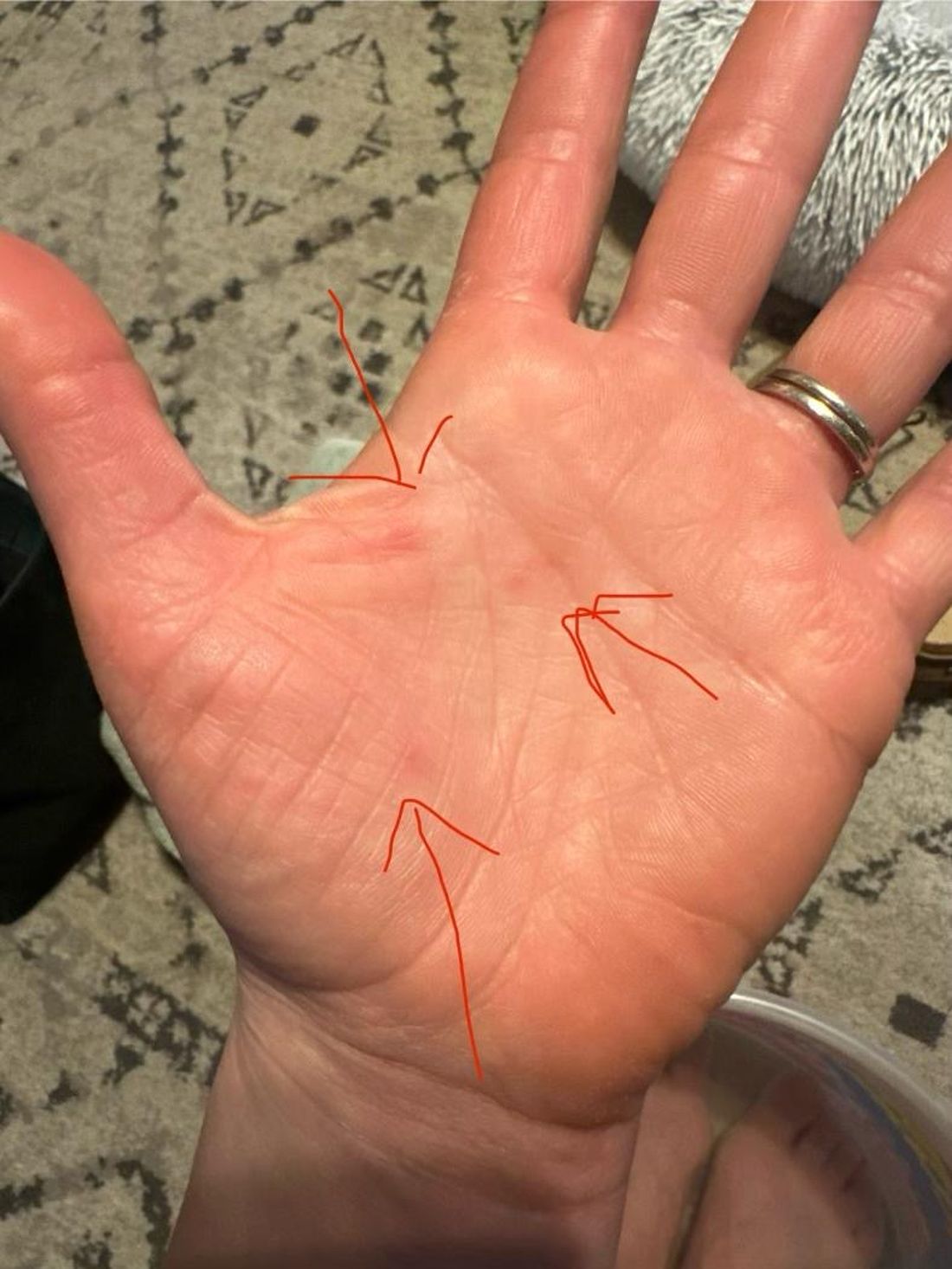
Our 35-year-old female patient presented with eroded papules and vesicles around the mouth. A diagnosis of atypical HFMD was made clinically in the following days when the patient developed the more classic intraoral and acral macules and vesicles.
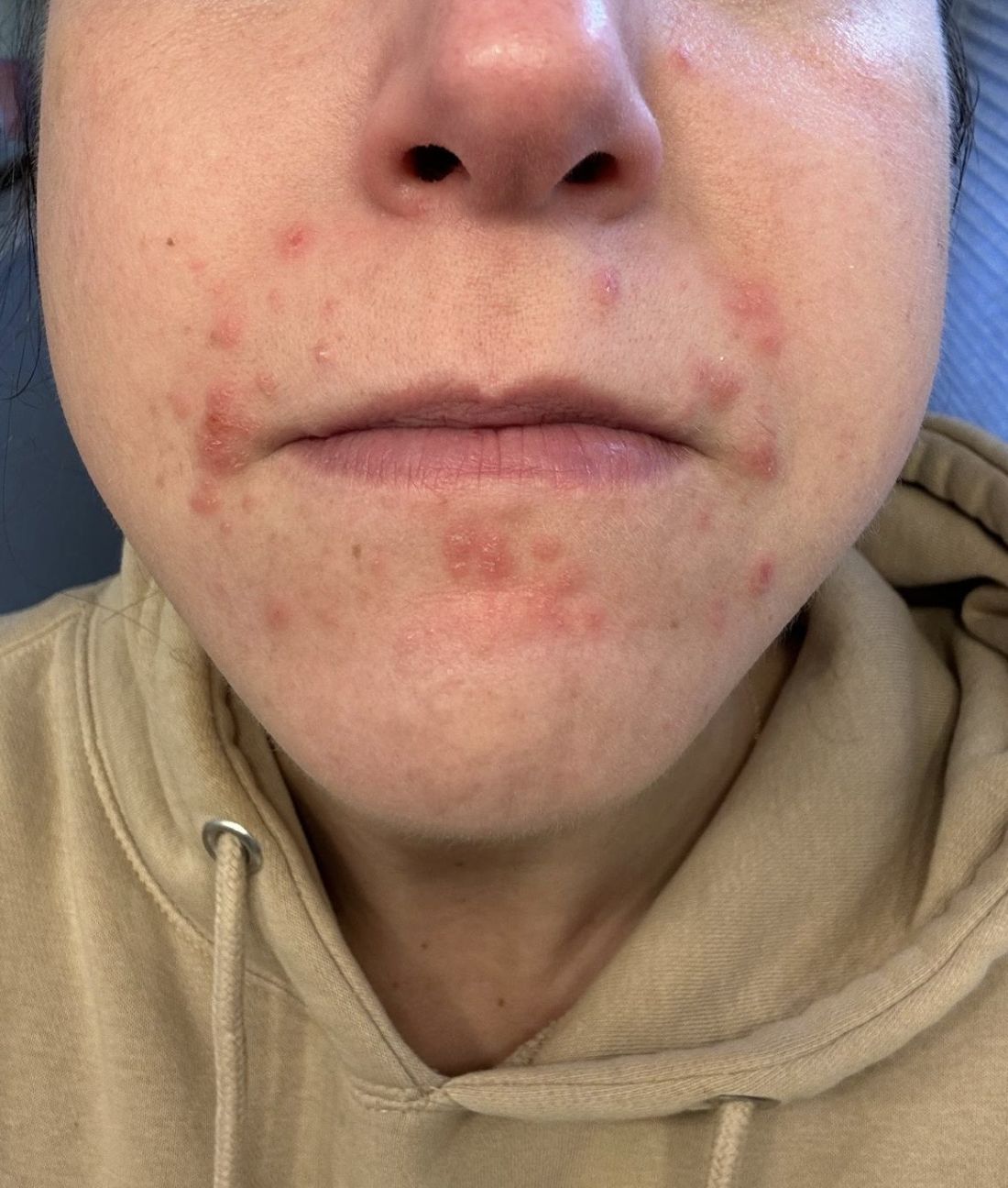
Similar to our case, HFMD is most often diagnosed clinically. PCR testing from an active vesicle or nasopharyngeal swab can be obtained. Treatment for HFMD is supportive and symptoms generally resolve over 7-10 days. Over-the-counter analgesics, such as ibuprofen and acetaminophen, as well as oral analgesics that contain lidocaine or diphenhydramine are often helpful3. In this case, our patient improved over the course of seven days without needing therapy.

This case and the photos were submitted by Vanessa Ortega, BS, University of California, San Diego; Brooke Resh Sateesh, MD, and Justin Gordon, MD, San Diego Family Dermatology. The column was edited by Donna Bilu Martin, MD.
Dr. Bilu Martin is a board-certified dermatologist in private practice at Premier Dermatology, MD, in Aventura, Fla. More diagnostic cases are available at mdedge.com/dermatology. To submit a case for possible publication, send an email to dermnews@mdedge.com.
References
1. Centers for Disease Control and Prevention. (2023, June 20). Symptoms of hand, foot, and mouth disease.
2. Drago F et al. J Am Acad Dermatol. 2017 Aug;77(2):e51-6. doi: 10.1016/j.jaad.2017.03.046.
3. Starkey SY et al. Pediatr Dermatol. 2024 Jan-Feb;41(1):23-7. doi: 10.1111/pde.15461.
.1 While it predominantly affects children, it is important to note that it can also affect adults. Although it is not a life threatening infection, it can cause a painful rash and is highly contagious. The infection is easily spread in multiple ways, including via respiratory droplets, contact with vesicular or nasal secretions, or through fecal-oral transmission. Most cases occur during the summer and fall seasons but individuals can be infected at any time of the year.
HFMD typically starts with a few days of non-specific viral symptoms, such as fever, cough, sore throat, and fatigue. It is then followed by an eruption of intraoral macules and vesicles and a widespread distribution of oval shaped macules that predominantly involve the hands and feet.1 Both children and adults can present atypically. Atypical presentations include vesicles and bullae on extensor surfaces such as the forearms, as well as eruptions on the face or buttocks.2 Other atypical morphologies include eczema herpeticum-like, Gianotti-Crosti-like, and purpuric/petechiae.3 Atypical hand, food, and mouth disease cases are often caused by coxsackievirus A6, however other strains of coxsackievirus can also cause atypical symptoms.2,3
Our 35-year-old female patient presented with eroded papules and vesicles around the mouth. A diagnosis of atypical HFMD was made clinically in the following days when the patient developed the more classic intraoral and acral macules and vesicles.
Similar to our case, HFMD is most often diagnosed clinically. PCR testing from an active vesicle or nasopharyngeal swab can be obtained. Treatment for HFMD is supportive and symptoms generally resolve over 7-10 days. Over-the-counter analgesics, such as ibuprofen and acetaminophen, as well as oral analgesics that contain lidocaine or diphenhydramine are often helpful3. In this case, our patient improved over the course of seven days without needing therapy.
This case and the photos were submitted by Vanessa Ortega, BS, University of California, San Diego; Brooke Resh Sateesh, MD, and Justin Gordon, MD, San Diego Family Dermatology. The column was edited by Donna Bilu Martin, MD.
Dr. Bilu Martin is a board-certified dermatologist in private practice at Premier Dermatology, MD, in Aventura, Fla. More diagnostic cases are available at mdedge.com/dermatology. To submit a case for possible publication, send an email to dermnews@mdedge.com.
References
1. Centers for Disease Control and Prevention. (2023, June 20). Symptoms of hand, foot, and mouth disease.
2. Drago F et al. J Am Acad Dermatol. 2017 Aug;77(2):e51-6. doi: 10.1016/j.jaad.2017.03.046.
3. Starkey SY et al. Pediatr Dermatol. 2024 Jan-Feb;41(1):23-7. doi: 10.1111/pde.15461.
.1 While it predominantly affects children, it is important to note that it can also affect adults. Although it is not a life threatening infection, it can cause a painful rash and is highly contagious. The infection is easily spread in multiple ways, including via respiratory droplets, contact with vesicular or nasal secretions, or through fecal-oral transmission. Most cases occur during the summer and fall seasons but individuals can be infected at any time of the year.
HFMD typically starts with a few days of non-specific viral symptoms, such as fever, cough, sore throat, and fatigue. It is then followed by an eruption of intraoral macules and vesicles and a widespread distribution of oval shaped macules that predominantly involve the hands and feet.1 Both children and adults can present atypically. Atypical presentations include vesicles and bullae on extensor surfaces such as the forearms, as well as eruptions on the face or buttocks.2 Other atypical morphologies include eczema herpeticum-like, Gianotti-Crosti-like, and purpuric/petechiae.3 Atypical hand, food, and mouth disease cases are often caused by coxsackievirus A6, however other strains of coxsackievirus can also cause atypical symptoms.2,3
Our 35-year-old female patient presented with eroded papules and vesicles around the mouth. A diagnosis of atypical HFMD was made clinically in the following days when the patient developed the more classic intraoral and acral macules and vesicles.
Similar to our case, HFMD is most often diagnosed clinically. PCR testing from an active vesicle or nasopharyngeal swab can be obtained. Treatment for HFMD is supportive and symptoms generally resolve over 7-10 days. Over-the-counter analgesics, such as ibuprofen and acetaminophen, as well as oral analgesics that contain lidocaine or diphenhydramine are often helpful3. In this case, our patient improved over the course of seven days without needing therapy.
This case and the photos were submitted by Vanessa Ortega, BS, University of California, San Diego; Brooke Resh Sateesh, MD, and Justin Gordon, MD, San Diego Family Dermatology. The column was edited by Donna Bilu Martin, MD.
Dr. Bilu Martin is a board-certified dermatologist in private practice at Premier Dermatology, MD, in Aventura, Fla. More diagnostic cases are available at mdedge.com/dermatology. To submit a case for possible publication, send an email to dermnews@mdedge.com.
References
1. Centers for Disease Control and Prevention. (2023, June 20). Symptoms of hand, foot, and mouth disease.
2. Drago F et al. J Am Acad Dermatol. 2017 Aug;77(2):e51-6. doi: 10.1016/j.jaad.2017.03.046.
3. Starkey SY et al. Pediatr Dermatol. 2024 Jan-Feb;41(1):23-7. doi: 10.1111/pde.15461.
Treating Pediatric Vitiligo: Consensus Statement Provides Recommendations
TOPLINE:
METHODOLOGY:
- While half of all vitiligo cases manifest within the initial two decades of life, no guidelines specifically address the management of vitiligo in children, adolescents, and young adults with vitiligo.
- A protocol was established to formulate consensus recommendations addressing questions related to pediatric vitiligo.
- Overall, 50 articles on topical corticosteroids and/or topical calcineurin inhibitors, five on topical Janus kinase inhibitors, and two each on pseudocatalase and microdermabrasion were included.
- The participants recorded their agreement levels with the formulated statements, using a 5-point Likert scale.
TAKEAWAY:
- TCIs, TCSs, JAK inhibitors, and phototherapy, specifically narrowband ultraviolet (UV)-B light therapy, are mainstay treatments; the combination of UV-B light and topical therapy may enhance initial repigmentation.
- Long-term monitoring for skin cancers is advised, and short outdoor UV exposure is suggested for pediatric patients.
- TCIs, such as tacrolimus and pimecrolimus, are recommended as first-line therapy, particularly on the face, applied twice daily for ≥ 3 months; continued use for 6-12 additional months is recommended if repigmentation is observed.
- The choice of TCS class depends on the site and planned usage duration. Short-term use or overlap with TCIs is recommended because of the risk for atrophy with long-term TCS use. Class 5-6 agents are another option.
- For areas with thin skin, TCSs can be considered second-line treatments.
- Topical JAK inhibitors, specifically topical 1.5% ruxolitinib cream, are recommended for patients aged ≥ 12 years, as first- or second-line therapy. Limitation to 10% body surface area is recommended to minimize systemic absorption. Limited evidence exists for children aged < 12 years.
IN PRACTICE:
“Effective therapy requires a focus on long-term therapeutic interventions to maximize the local gain and retention of pigmentation with a trial period of twice-weekly application. Counseling should include discussion of the chronicity of vitiligo and the need for long-term care,” the authors wrote.
LIMITATIONS:
Some of the recommendations were opinion-based because of the scarcity of evidence-based literature.
SOURCE:
The consensus statement was published on March 13 in JAMA Dermatology.
DISCLOSURES:
This work was supported by grants from Vitiligo Research Foundation and Incyte Pharmaceuticals. The majority of authors disclosed financial relationships outside this work; several reported no disclosures.
A version of this article appeared on Medscape.com.
TOPLINE:
METHODOLOGY:
- While half of all vitiligo cases manifest within the initial two decades of life, no guidelines specifically address the management of vitiligo in children, adolescents, and young adults with vitiligo.
- A protocol was established to formulate consensus recommendations addressing questions related to pediatric vitiligo.
- Overall, 50 articles on topical corticosteroids and/or topical calcineurin inhibitors, five on topical Janus kinase inhibitors, and two each on pseudocatalase and microdermabrasion were included.
- The participants recorded their agreement levels with the formulated statements, using a 5-point Likert scale.
TAKEAWAY:
- TCIs, TCSs, JAK inhibitors, and phototherapy, specifically narrowband ultraviolet (UV)-B light therapy, are mainstay treatments; the combination of UV-B light and topical therapy may enhance initial repigmentation.
- Long-term monitoring for skin cancers is advised, and short outdoor UV exposure is suggested for pediatric patients.
- TCIs, such as tacrolimus and pimecrolimus, are recommended as first-line therapy, particularly on the face, applied twice daily for ≥ 3 months; continued use for 6-12 additional months is recommended if repigmentation is observed.
- The choice of TCS class depends on the site and planned usage duration. Short-term use or overlap with TCIs is recommended because of the risk for atrophy with long-term TCS use. Class 5-6 agents are another option.
- For areas with thin skin, TCSs can be considered second-line treatments.
- Topical JAK inhibitors, specifically topical 1.5% ruxolitinib cream, are recommended for patients aged ≥ 12 years, as first- or second-line therapy. Limitation to 10% body surface area is recommended to minimize systemic absorption. Limited evidence exists for children aged < 12 years.
IN PRACTICE:
“Effective therapy requires a focus on long-term therapeutic interventions to maximize the local gain and retention of pigmentation with a trial period of twice-weekly application. Counseling should include discussion of the chronicity of vitiligo and the need for long-term care,” the authors wrote.
LIMITATIONS:
Some of the recommendations were opinion-based because of the scarcity of evidence-based literature.
SOURCE:
The consensus statement was published on March 13 in JAMA Dermatology.
DISCLOSURES:
This work was supported by grants from Vitiligo Research Foundation and Incyte Pharmaceuticals. The majority of authors disclosed financial relationships outside this work; several reported no disclosures.
A version of this article appeared on Medscape.com.
TOPLINE:
METHODOLOGY:
- While half of all vitiligo cases manifest within the initial two decades of life, no guidelines specifically address the management of vitiligo in children, adolescents, and young adults with vitiligo.
- A protocol was established to formulate consensus recommendations addressing questions related to pediatric vitiligo.
- Overall, 50 articles on topical corticosteroids and/or topical calcineurin inhibitors, five on topical Janus kinase inhibitors, and two each on pseudocatalase and microdermabrasion were included.
- The participants recorded their agreement levels with the formulated statements, using a 5-point Likert scale.
TAKEAWAY:
- TCIs, TCSs, JAK inhibitors, and phototherapy, specifically narrowband ultraviolet (UV)-B light therapy, are mainstay treatments; the combination of UV-B light and topical therapy may enhance initial repigmentation.
- Long-term monitoring for skin cancers is advised, and short outdoor UV exposure is suggested for pediatric patients.
- TCIs, such as tacrolimus and pimecrolimus, are recommended as first-line therapy, particularly on the face, applied twice daily for ≥ 3 months; continued use for 6-12 additional months is recommended if repigmentation is observed.
- The choice of TCS class depends on the site and planned usage duration. Short-term use or overlap with TCIs is recommended because of the risk for atrophy with long-term TCS use. Class 5-6 agents are another option.
- For areas with thin skin, TCSs can be considered second-line treatments.
- Topical JAK inhibitors, specifically topical 1.5% ruxolitinib cream, are recommended for patients aged ≥ 12 years, as first- or second-line therapy. Limitation to 10% body surface area is recommended to minimize systemic absorption. Limited evidence exists for children aged < 12 years.
IN PRACTICE:
“Effective therapy requires a focus on long-term therapeutic interventions to maximize the local gain and retention of pigmentation with a trial period of twice-weekly application. Counseling should include discussion of the chronicity of vitiligo and the need for long-term care,” the authors wrote.
LIMITATIONS:
Some of the recommendations were opinion-based because of the scarcity of evidence-based literature.
SOURCE:
The consensus statement was published on March 13 in JAMA Dermatology.
DISCLOSURES:
This work was supported by grants from Vitiligo Research Foundation and Incyte Pharmaceuticals. The majority of authors disclosed financial relationships outside this work; several reported no disclosures.
A version of this article appeared on Medscape.com.
Sublingual Immunotherapy Safe, Effective for Older Kids
Sublingual immunotherapy (SLIT) is as safe and effective for high-risk older children and adolescents as oral immunotherapy (OIT) is for infants and preschoolers, according to new research.
Preliminary data from a study of more than 180 pediatric patients with multiple food allergies showed that while most patients had mild symptoms, none experienced a severe grade 4 reaction during the buildup and maintenance phase of SLIT.
In addition, 70% of those tested at the end of the treatment protocol were able to tolerate 300 mg of their allergen, a success rate nearly as high as that for OIT.
The study was published in The Journal of Allergy and Clinical Immunology: In Practice.
SLIT has been used successfully in the treatment of environmental allergens such as grass and tree pollen and dust mites. In this study, researchers decided to test SLIT’s effectiveness and safety in the treatment of food allergies in older children.
“We knew that OIT is very effective and safe in infants and toddlers, but there was literature illustrating that for older, school-age kids and adolescents, OIT is not safe enough, as those older age groups tend to have higher risk of severe reaction during treatment,” senior author Edmond Chan, MD, clinical professor of allergy at the University of British Columbia and pediatric allergist at BC Children’s Hospital, both in Vancouver, British Columbia, Canada, told this news organization. “With that knowledge, we decided to explore SLIT as another first-phase therapy for the older kids.”
The investigators recruited 188 high-risk older children aged 4-18 years for multifood SLIT. Most (61.7%) participants had multiple food allergies. Approximately 68% were male, and the population’s median age was 11.3 years.
Nearly half (48.4%) of participants had atopic dermatitis, 45.2% had asthma, 58.0% had allergic rhinitis, and 2.66% had preexisting eosinophilic esophagitis.
Most (75.0%) of the children were classified as higher risk, and 23 had a history of a grade 3 or 4 reaction before beginning SLIT.
Of the 188 children who were initially enrolled in the study, 173 (92.0%) finished their SLIT buildup phase.
Because the study started when COVID-19 pandemic restrictions were in place, the SLIT protocol mandated that patients be seen virtually. The patients’ caregivers learned how to mix and administer the required doses at home using recipes specially developed by the research team that used products bought at the grocery store.
A wide variety of food allergens were treated, including peanut, other legumes, tree nuts, sesame, other seeds, egg, cow’s milk, fish, wheat, shrimp, and other allergens.
The children built up to 2-mg protein SLIT maintenance over the course of three to five visits under nurse supervision.
After 1-2 years of daily SLIT maintenance, patients were offered a low-dose oral food challenge (OFC; cumulative dose: 300 mg of protein) with the goal of bypassing OIT buildup.
Nearly all patients (93.1%) had symptoms during SLIT buildup, but most were mild grade 1 (52.1%) or 2 (40.4%) reactions. Only one patient had a grade 3 reaction. None of the patients experienced a severe grade 4 reaction.
The most common grade 1 reaction was oral itch, an expected symptom of SLIT, which occurred in 82.7% of the patients.
Four patients (2.10%) received epinephrine during buildup and went to the emergency department. All these patients returned to continue SLIT without further need for epinephrine.
To test the effectiveness of SLIT, the researchers performed 50 low-dose OFCs in 20 patients. Of these food challenges, 35 (70%) were successful, and patients were asked to start daily 300-mg OIT maintenance, thus bypassing OIT buildup.
An additional nine OFCs that were unsuccessful were counseled to self-escalate from 80 mg or higher to 300 mg at home with medical guidance as needed.
“Our preliminary data of 20 patients and 50 low-dose oral food challenges suggest that an initial phase of 1-2 years of 2-mg daily SLIT therapy may be a safe and effective way to bypass the OIT buildup phase without the need for dozens of in-person visits with an allergist,” said Dr. Chan.
“So now we have the best of both worlds. We harness the safety of SLIT for the first 1-2 years, with the effectiveness of OIT for the remainder of the treatment period,” he said.
Adds to Evidence
Commenting on the study for this news organization, Julia Upton, MD, associate professor of pediatrics at the University of Toronto, Toronto, Ontario, Canada, said, “This study adds to the evidence that consistent, low exposure to food drives meaningful desensitization far above the daily dose.” Upton did not participate in the research.
“Prior prospective studies in SLIT demonstrated that small single-digit-milligram doses and time greatly increased the threshold of reaction. This real-world report suggests that a way to utilize that threshold increase is by switching to a commonly used maintenance dose of OIT,” said Dr. Upton.
“Although few patients have been assessed for the 300-mg challenge, this study is notable for the age group of 4-18 years, and that many of the patients had reacted to low doses in the past. It also shows that many families are capable of diluting and mixing their own immunotherapy solutions with store-bought foods under the guidance of an experienced allergy clinic,” she added.
“Overall, evidence is building that by various routes, initial small amounts with minimal updoses, plus the tincture of time, may be preferred to multiple frequent updosing from multiple perspectives, including safety, feasibility, cost, and medical resources. It will also be important to understand the preferences and goals of the patient and family as various regimens become more available,” Dr. Upton concluded.
The study was funded by BC Children’s Hospital Foundation. Dr. Chan reported receiving research support from DVB Technologies; has been a member of advisory boards for Pfizer, Miravo, Medexus, Leo Pharma, Kaleo, DBV, AllerGenis, Sanofi, Genzyme, Bausch Health, Avir Pharma, AstraZeneca, ALK, and Alladapt; and was a colead of the CSACI OIT guidelines. Dr. Upton reported research support/grants from Novartis, Regeneron, Sanofi, ALK Abello, DBV Technologies, CIHR, and SickKids Food Allergy and Anaphylaxis Program and fees from Pfizer, ALK Abello, Bausch Health, Astra Zeneca, and Pharming. She serves as an associate editor for Allergy, Asthma & Clinical Immunology and is on the Board of Directors of Canadian Society of Allergy and Clinical Immunology and the Healthcare Advisory Board of Food Allergy Canada.
A version of this article appeared on Medscape.com .
Sublingual immunotherapy (SLIT) is as safe and effective for high-risk older children and adolescents as oral immunotherapy (OIT) is for infants and preschoolers, according to new research.
Preliminary data from a study of more than 180 pediatric patients with multiple food allergies showed that while most patients had mild symptoms, none experienced a severe grade 4 reaction during the buildup and maintenance phase of SLIT.
In addition, 70% of those tested at the end of the treatment protocol were able to tolerate 300 mg of their allergen, a success rate nearly as high as that for OIT.
The study was published in The Journal of Allergy and Clinical Immunology: In Practice.
SLIT has been used successfully in the treatment of environmental allergens such as grass and tree pollen and dust mites. In this study, researchers decided to test SLIT’s effectiveness and safety in the treatment of food allergies in older children.
“We knew that OIT is very effective and safe in infants and toddlers, but there was literature illustrating that for older, school-age kids and adolescents, OIT is not safe enough, as those older age groups tend to have higher risk of severe reaction during treatment,” senior author Edmond Chan, MD, clinical professor of allergy at the University of British Columbia and pediatric allergist at BC Children’s Hospital, both in Vancouver, British Columbia, Canada, told this news organization. “With that knowledge, we decided to explore SLIT as another first-phase therapy for the older kids.”
The investigators recruited 188 high-risk older children aged 4-18 years for multifood SLIT. Most (61.7%) participants had multiple food allergies. Approximately 68% were male, and the population’s median age was 11.3 years.
Nearly half (48.4%) of participants had atopic dermatitis, 45.2% had asthma, 58.0% had allergic rhinitis, and 2.66% had preexisting eosinophilic esophagitis.
Most (75.0%) of the children were classified as higher risk, and 23 had a history of a grade 3 or 4 reaction before beginning SLIT.
Of the 188 children who were initially enrolled in the study, 173 (92.0%) finished their SLIT buildup phase.
Because the study started when COVID-19 pandemic restrictions were in place, the SLIT protocol mandated that patients be seen virtually. The patients’ caregivers learned how to mix and administer the required doses at home using recipes specially developed by the research team that used products bought at the grocery store.
A wide variety of food allergens were treated, including peanut, other legumes, tree nuts, sesame, other seeds, egg, cow’s milk, fish, wheat, shrimp, and other allergens.
The children built up to 2-mg protein SLIT maintenance over the course of three to five visits under nurse supervision.
After 1-2 years of daily SLIT maintenance, patients were offered a low-dose oral food challenge (OFC; cumulative dose: 300 mg of protein) with the goal of bypassing OIT buildup.
Nearly all patients (93.1%) had symptoms during SLIT buildup, but most were mild grade 1 (52.1%) or 2 (40.4%) reactions. Only one patient had a grade 3 reaction. None of the patients experienced a severe grade 4 reaction.
The most common grade 1 reaction was oral itch, an expected symptom of SLIT, which occurred in 82.7% of the patients.
Four patients (2.10%) received epinephrine during buildup and went to the emergency department. All these patients returned to continue SLIT without further need for epinephrine.
To test the effectiveness of SLIT, the researchers performed 50 low-dose OFCs in 20 patients. Of these food challenges, 35 (70%) were successful, and patients were asked to start daily 300-mg OIT maintenance, thus bypassing OIT buildup.
An additional nine OFCs that were unsuccessful were counseled to self-escalate from 80 mg or higher to 300 mg at home with medical guidance as needed.
“Our preliminary data of 20 patients and 50 low-dose oral food challenges suggest that an initial phase of 1-2 years of 2-mg daily SLIT therapy may be a safe and effective way to bypass the OIT buildup phase without the need for dozens of in-person visits with an allergist,” said Dr. Chan.
“So now we have the best of both worlds. We harness the safety of SLIT for the first 1-2 years, with the effectiveness of OIT for the remainder of the treatment period,” he said.
Adds to Evidence
Commenting on the study for this news organization, Julia Upton, MD, associate professor of pediatrics at the University of Toronto, Toronto, Ontario, Canada, said, “This study adds to the evidence that consistent, low exposure to food drives meaningful desensitization far above the daily dose.” Upton did not participate in the research.
“Prior prospective studies in SLIT demonstrated that small single-digit-milligram doses and time greatly increased the threshold of reaction. This real-world report suggests that a way to utilize that threshold increase is by switching to a commonly used maintenance dose of OIT,” said Dr. Upton.
“Although few patients have been assessed for the 300-mg challenge, this study is notable for the age group of 4-18 years, and that many of the patients had reacted to low doses in the past. It also shows that many families are capable of diluting and mixing their own immunotherapy solutions with store-bought foods under the guidance of an experienced allergy clinic,” she added.
“Overall, evidence is building that by various routes, initial small amounts with minimal updoses, plus the tincture of time, may be preferred to multiple frequent updosing from multiple perspectives, including safety, feasibility, cost, and medical resources. It will also be important to understand the preferences and goals of the patient and family as various regimens become more available,” Dr. Upton concluded.
The study was funded by BC Children’s Hospital Foundation. Dr. Chan reported receiving research support from DVB Technologies; has been a member of advisory boards for Pfizer, Miravo, Medexus, Leo Pharma, Kaleo, DBV, AllerGenis, Sanofi, Genzyme, Bausch Health, Avir Pharma, AstraZeneca, ALK, and Alladapt; and was a colead of the CSACI OIT guidelines. Dr. Upton reported research support/grants from Novartis, Regeneron, Sanofi, ALK Abello, DBV Technologies, CIHR, and SickKids Food Allergy and Anaphylaxis Program and fees from Pfizer, ALK Abello, Bausch Health, Astra Zeneca, and Pharming. She serves as an associate editor for Allergy, Asthma & Clinical Immunology and is on the Board of Directors of Canadian Society of Allergy and Clinical Immunology and the Healthcare Advisory Board of Food Allergy Canada.
A version of this article appeared on Medscape.com .
Sublingual immunotherapy (SLIT) is as safe and effective for high-risk older children and adolescents as oral immunotherapy (OIT) is for infants and preschoolers, according to new research.
Preliminary data from a study of more than 180 pediatric patients with multiple food allergies showed that while most patients had mild symptoms, none experienced a severe grade 4 reaction during the buildup and maintenance phase of SLIT.
In addition, 70% of those tested at the end of the treatment protocol were able to tolerate 300 mg of their allergen, a success rate nearly as high as that for OIT.
The study was published in The Journal of Allergy and Clinical Immunology: In Practice.
SLIT has been used successfully in the treatment of environmental allergens such as grass and tree pollen and dust mites. In this study, researchers decided to test SLIT’s effectiveness and safety in the treatment of food allergies in older children.
“We knew that OIT is very effective and safe in infants and toddlers, but there was literature illustrating that for older, school-age kids and adolescents, OIT is not safe enough, as those older age groups tend to have higher risk of severe reaction during treatment,” senior author Edmond Chan, MD, clinical professor of allergy at the University of British Columbia and pediatric allergist at BC Children’s Hospital, both in Vancouver, British Columbia, Canada, told this news organization. “With that knowledge, we decided to explore SLIT as another first-phase therapy for the older kids.”
The investigators recruited 188 high-risk older children aged 4-18 years for multifood SLIT. Most (61.7%) participants had multiple food allergies. Approximately 68% were male, and the population’s median age was 11.3 years.
Nearly half (48.4%) of participants had atopic dermatitis, 45.2% had asthma, 58.0% had allergic rhinitis, and 2.66% had preexisting eosinophilic esophagitis.
Most (75.0%) of the children were classified as higher risk, and 23 had a history of a grade 3 or 4 reaction before beginning SLIT.
Of the 188 children who were initially enrolled in the study, 173 (92.0%) finished their SLIT buildup phase.
Because the study started when COVID-19 pandemic restrictions were in place, the SLIT protocol mandated that patients be seen virtually. The patients’ caregivers learned how to mix and administer the required doses at home using recipes specially developed by the research team that used products bought at the grocery store.
A wide variety of food allergens were treated, including peanut, other legumes, tree nuts, sesame, other seeds, egg, cow’s milk, fish, wheat, shrimp, and other allergens.
The children built up to 2-mg protein SLIT maintenance over the course of three to five visits under nurse supervision.
After 1-2 years of daily SLIT maintenance, patients were offered a low-dose oral food challenge (OFC; cumulative dose: 300 mg of protein) with the goal of bypassing OIT buildup.
Nearly all patients (93.1%) had symptoms during SLIT buildup, but most were mild grade 1 (52.1%) or 2 (40.4%) reactions. Only one patient had a grade 3 reaction. None of the patients experienced a severe grade 4 reaction.
The most common grade 1 reaction was oral itch, an expected symptom of SLIT, which occurred in 82.7% of the patients.
Four patients (2.10%) received epinephrine during buildup and went to the emergency department. All these patients returned to continue SLIT without further need for epinephrine.
To test the effectiveness of SLIT, the researchers performed 50 low-dose OFCs in 20 patients. Of these food challenges, 35 (70%) were successful, and patients were asked to start daily 300-mg OIT maintenance, thus bypassing OIT buildup.
An additional nine OFCs that were unsuccessful were counseled to self-escalate from 80 mg or higher to 300 mg at home with medical guidance as needed.
“Our preliminary data of 20 patients and 50 low-dose oral food challenges suggest that an initial phase of 1-2 years of 2-mg daily SLIT therapy may be a safe and effective way to bypass the OIT buildup phase without the need for dozens of in-person visits with an allergist,” said Dr. Chan.
“So now we have the best of both worlds. We harness the safety of SLIT for the first 1-2 years, with the effectiveness of OIT for the remainder of the treatment period,” he said.
Adds to Evidence
Commenting on the study for this news organization, Julia Upton, MD, associate professor of pediatrics at the University of Toronto, Toronto, Ontario, Canada, said, “This study adds to the evidence that consistent, low exposure to food drives meaningful desensitization far above the daily dose.” Upton did not participate in the research.
“Prior prospective studies in SLIT demonstrated that small single-digit-milligram doses and time greatly increased the threshold of reaction. This real-world report suggests that a way to utilize that threshold increase is by switching to a commonly used maintenance dose of OIT,” said Dr. Upton.
“Although few patients have been assessed for the 300-mg challenge, this study is notable for the age group of 4-18 years, and that many of the patients had reacted to low doses in the past. It also shows that many families are capable of diluting and mixing their own immunotherapy solutions with store-bought foods under the guidance of an experienced allergy clinic,” she added.
“Overall, evidence is building that by various routes, initial small amounts with minimal updoses, plus the tincture of time, may be preferred to multiple frequent updosing from multiple perspectives, including safety, feasibility, cost, and medical resources. It will also be important to understand the preferences and goals of the patient and family as various regimens become more available,” Dr. Upton concluded.
The study was funded by BC Children’s Hospital Foundation. Dr. Chan reported receiving research support from DVB Technologies; has been a member of advisory boards for Pfizer, Miravo, Medexus, Leo Pharma, Kaleo, DBV, AllerGenis, Sanofi, Genzyme, Bausch Health, Avir Pharma, AstraZeneca, ALK, and Alladapt; and was a colead of the CSACI OIT guidelines. Dr. Upton reported research support/grants from Novartis, Regeneron, Sanofi, ALK Abello, DBV Technologies, CIHR, and SickKids Food Allergy and Anaphylaxis Program and fees from Pfizer, ALK Abello, Bausch Health, Astra Zeneca, and Pharming. She serves as an associate editor for Allergy, Asthma & Clinical Immunology and is on the Board of Directors of Canadian Society of Allergy and Clinical Immunology and the Healthcare Advisory Board of Food Allergy Canada.
A version of this article appeared on Medscape.com .
THE JOURNAL OF ALLERGY AND CLINICAL IMMUNOLOGY: IN PRACTICE
Inside the 2024 AAD Acne Guidelines: New Therapies Join Old Standbys
SAN DIEGO — Just weeks after the American Academy of Dermatology (AAD) published its updated acne management guidelines, a dermatologist who helped write the recommendations provided colleagues with insight into recently approved topical therapies, the importance of multimodal therapy, and a controversial report linking benzoyl peroxide (BP) to the carcinogen benzene.
In regard to topical treatments, the guidelines make a “strong” recommendation for topical retinoids based on “moderate” evidence, Andrea L. Zaenglein, MD, professor of dermatology and pediatrics, Penn State University, Hershey, Pennsylvania, said at the annual meeting of the American Academy of Dermatology. The recommendation was based on a pooled analysis of four randomized controlled trials that found patients with acne who used the medications were more likely to have improvement via the Investigator Global Assessment (IGA) scale at 12 weeks than were those treated with a vehicle (risk ratio [RR], 1.57; 1.21-2.04).
The updated guidelines were published on January 30 in the Journal of the American Academy of Dermatology. The previous guidelines were issued in 2016.
“We have four current retinoids that we use: adapalene, tretinoin, tazarotene, and trifarotene,” Dr. Zaenglein said. “Typically, when we think about retinoids, we think of adapalene as being more tolerable and tazarotene as being more effective. But we also know that they can work to prevent and treat scarring, and they work against comedonal lesions and inflammatory lesions.”
Newer concentrations include tretinoin 0.05% lotion, tazarotene 0.045% lotion, and trifarotene 0.005% cream. She noted that this trifarotene concentration can be helpful for moderate truncal acne and also referred to evidence that whey protein appears to exacerbate that condition. “I always ask teenage kids about that: Are they using those protein powders?”
Recommendations for ‘Multimodal Therapy,’ Especially With Antibiotics
Dr. Zaenglein highlighted a “good practice statement” in the new guidelines that says, “when managing acne with topical medications, we recommend multimodal therapy combining multiple mechanisms of action.”
Topical antibiotics are effective treatments on their own and include erythromycin, clindamycin, and minocycline (Minocin), she said. But the guidelines, which refer to evidence supporting them as “moderate,” do not recommend them as monotherapy because of the risk for antibiotic resistance.
The oral retinoid isotretinoin may be appropriate in conjunction with topical medications, she said, “and we also recommend fixed combination products because they’re associated with increased adherence.”
Dermatologists are familiar with several of these products because “we’ve been using them for years and years,” she said. The guidelines note that “compared to vehicle at 12 weeks, a greater proportion of patients treated with combined BP and topical retinoid achieved IGA success in three RCTs (RR, 2.19; 1.77-2.72).”
Dr. Zaenglein noted that the guidelines recommend that patients taking antibiotics also use benzoyl peroxide, which has “moderate” evidence regarding preventing the development of antibiotic resistance. “Lower strengths tend to be less irritating, and over-the-counter formulations are readily available,” she said, adding that colleagues should make sure to warn patients about the risk of bleaching clothes and towels with BP.
Now, there’s a newly approved treatment, the first fixed-dose triple combination therapy for acne, she said. It combines 1.2% clindamycin, 3.1% benzoyl peroxide, and 0.15% adapalene (Cabtreo) and is Food and Drug Administration (FDA)-approved for treating acne in patients ages 12 and up.
The new AAD guidelines note that “potential adverse effect profiles of the fixed-dose combinations generally reflect those of the individual agents in summation. Some fixed-dose combination products may be less expensive than prescribing their individual components separately.” The evidence supporting fixed-dose combinations in conjunction with benzoyl peroxide is considered “moderate.”
Dapsone gel, 7.5% (Aczone) is another option for acne. “It’s a topical so you don’t need to do G6PD [glucose-6-phosphate dehydrogenase] testing,” Dr. Zaenglein said. “It’s well tolerated, and mean total lesions fell by 48.9% vs 43.2% for vehicle,” in a 2018 study, which she said also found that females benefited more than males from this treatment.
Clascoterone 1% cream (Winlevi), approved in 2020, is appropriate for males and females aged 12 and up, Dr. Zaenglein said. She noted that it’s the only topical anti-androgen that can be used in males. However, while it has a “high” level of evidence because of phase 3 clinical trials showing benefits in moderate to severe acne, the AAD guidelines only conditionally recommend this option because the high price of clascoterone “may impact equitable acne treatment access.” The price listed on the website GoodRx (accessed on March 12) lists drugstore prices for a single 60-gram tube as ranging from $590 to $671.
“One of the harder things is trying to figure out where clascoterone fits in our kind of standard combination therapy,” she said. “Much like other hormonal therapies, it works better over the long term.”
Two more topical options per the AAD guidelines are salicylic acid, based on one randomized controlled trial, and azelaic acid (Azelex, Finacea), based on three randomized controlled trials. Both of these recommendations are conditional because of limited evidence: Evidence is considered “low” for salicylic acid and “moderate” for azelaic acid, the guidelines say, and azelaic acid “may be particularly helpful for patients with sensitive skin or darker skin types due to its lightening effect on dyspigmentation.”
As for risk for topical treatments during pregnancy/lactation, the guidelines note that topical therapies other than topical retinoids are “preferred” during pregnancy. Tazarotene is contraindicated during pregnancy, and salicylic acid should be used only in limited areas of exposure. There are no data for dapsone and clascoterone during pregnancy/lactation, and minocycline is “not recommended.”
The guideline authors noted that “available evidence is insufficient to develop a recommendation on the use of topical glycolic acid, sulfur, sodium sulfacetamide, and resorcinol for acne treatment or to make recommendations that compare topical BP, retinoids, antibiotics, and their combinations directly against each other.”
Could BP Post a Risk From Benzene?
Dr. Zaenglein highlighted a recently released report by Valisure, an independent laboratory, which reported finding high levels of the cancer-causing chemical benzene in several acne treatments, including brands such as Clearasil. “They didn’t release all of the ones that they evaluated, but there were a lot ... that we commonly recommend for our patients,” she said.
On March 6, CBS News reported that Valisure “ran tests at various temperatures over 18 days and found some products ‘can form over 800 times the conditionally restricted FDA concentration limit of two parts per million (ppm) for benzene’ in 2 weeks at 50° C (122° F),” but that benzene levels “at room temperature were more modest, ranging from about one to 24 parts per million.”
Dr. Zaenglein said she’s not ready to urge patients to discontinue BP, although in light of the findings, “I will tell them to store it at room temperature or lower.”
For now, it’s important to wait for independent verification of the results, she said. “And then it’s up to the manufacturers to reevaluate the stability of their benzoyl peroxide products with heat.”
Dr. Zaenglein disclosed relationships with AbbVie, Arcutis, Biofrontera, Galderma, and Incyte (grants/research funding), Church & Dwight (consulting fees), and UCB (consulting honoraria).
A version of this article appeared on Medscape.com.
SAN DIEGO — Just weeks after the American Academy of Dermatology (AAD) published its updated acne management guidelines, a dermatologist who helped write the recommendations provided colleagues with insight into recently approved topical therapies, the importance of multimodal therapy, and a controversial report linking benzoyl peroxide (BP) to the carcinogen benzene.
In regard to topical treatments, the guidelines make a “strong” recommendation for topical retinoids based on “moderate” evidence, Andrea L. Zaenglein, MD, professor of dermatology and pediatrics, Penn State University, Hershey, Pennsylvania, said at the annual meeting of the American Academy of Dermatology. The recommendation was based on a pooled analysis of four randomized controlled trials that found patients with acne who used the medications were more likely to have improvement via the Investigator Global Assessment (IGA) scale at 12 weeks than were those treated with a vehicle (risk ratio [RR], 1.57; 1.21-2.04).
The updated guidelines were published on January 30 in the Journal of the American Academy of Dermatology. The previous guidelines were issued in 2016.
“We have four current retinoids that we use: adapalene, tretinoin, tazarotene, and trifarotene,” Dr. Zaenglein said. “Typically, when we think about retinoids, we think of adapalene as being more tolerable and tazarotene as being more effective. But we also know that they can work to prevent and treat scarring, and they work against comedonal lesions and inflammatory lesions.”
Newer concentrations include tretinoin 0.05% lotion, tazarotene 0.045% lotion, and trifarotene 0.005% cream. She noted that this trifarotene concentration can be helpful for moderate truncal acne and also referred to evidence that whey protein appears to exacerbate that condition. “I always ask teenage kids about that: Are they using those protein powders?”
Recommendations for ‘Multimodal Therapy,’ Especially With Antibiotics
Dr. Zaenglein highlighted a “good practice statement” in the new guidelines that says, “when managing acne with topical medications, we recommend multimodal therapy combining multiple mechanisms of action.”
Topical antibiotics are effective treatments on their own and include erythromycin, clindamycin, and minocycline (Minocin), she said. But the guidelines, which refer to evidence supporting them as “moderate,” do not recommend them as monotherapy because of the risk for antibiotic resistance.
The oral retinoid isotretinoin may be appropriate in conjunction with topical medications, she said, “and we also recommend fixed combination products because they’re associated with increased adherence.”
Dermatologists are familiar with several of these products because “we’ve been using them for years and years,” she said. The guidelines note that “compared to vehicle at 12 weeks, a greater proportion of patients treated with combined BP and topical retinoid achieved IGA success in three RCTs (RR, 2.19; 1.77-2.72).”
Dr. Zaenglein noted that the guidelines recommend that patients taking antibiotics also use benzoyl peroxide, which has “moderate” evidence regarding preventing the development of antibiotic resistance. “Lower strengths tend to be less irritating, and over-the-counter formulations are readily available,” she said, adding that colleagues should make sure to warn patients about the risk of bleaching clothes and towels with BP.
Now, there’s a newly approved treatment, the first fixed-dose triple combination therapy for acne, she said. It combines 1.2% clindamycin, 3.1% benzoyl peroxide, and 0.15% adapalene (Cabtreo) and is Food and Drug Administration (FDA)-approved for treating acne in patients ages 12 and up.
The new AAD guidelines note that “potential adverse effect profiles of the fixed-dose combinations generally reflect those of the individual agents in summation. Some fixed-dose combination products may be less expensive than prescribing their individual components separately.” The evidence supporting fixed-dose combinations in conjunction with benzoyl peroxide is considered “moderate.”
Dapsone gel, 7.5% (Aczone) is another option for acne. “It’s a topical so you don’t need to do G6PD [glucose-6-phosphate dehydrogenase] testing,” Dr. Zaenglein said. “It’s well tolerated, and mean total lesions fell by 48.9% vs 43.2% for vehicle,” in a 2018 study, which she said also found that females benefited more than males from this treatment.
Clascoterone 1% cream (Winlevi), approved in 2020, is appropriate for males and females aged 12 and up, Dr. Zaenglein said. She noted that it’s the only topical anti-androgen that can be used in males. However, while it has a “high” level of evidence because of phase 3 clinical trials showing benefits in moderate to severe acne, the AAD guidelines only conditionally recommend this option because the high price of clascoterone “may impact equitable acne treatment access.” The price listed on the website GoodRx (accessed on March 12) lists drugstore prices for a single 60-gram tube as ranging from $590 to $671.
“One of the harder things is trying to figure out where clascoterone fits in our kind of standard combination therapy,” she said. “Much like other hormonal therapies, it works better over the long term.”
Two more topical options per the AAD guidelines are salicylic acid, based on one randomized controlled trial, and azelaic acid (Azelex, Finacea), based on three randomized controlled trials. Both of these recommendations are conditional because of limited evidence: Evidence is considered “low” for salicylic acid and “moderate” for azelaic acid, the guidelines say, and azelaic acid “may be particularly helpful for patients with sensitive skin or darker skin types due to its lightening effect on dyspigmentation.”
As for risk for topical treatments during pregnancy/lactation, the guidelines note that topical therapies other than topical retinoids are “preferred” during pregnancy. Tazarotene is contraindicated during pregnancy, and salicylic acid should be used only in limited areas of exposure. There are no data for dapsone and clascoterone during pregnancy/lactation, and minocycline is “not recommended.”
The guideline authors noted that “available evidence is insufficient to develop a recommendation on the use of topical glycolic acid, sulfur, sodium sulfacetamide, and resorcinol for acne treatment or to make recommendations that compare topical BP, retinoids, antibiotics, and their combinations directly against each other.”
Could BP Post a Risk From Benzene?
Dr. Zaenglein highlighted a recently released report by Valisure, an independent laboratory, which reported finding high levels of the cancer-causing chemical benzene in several acne treatments, including brands such as Clearasil. “They didn’t release all of the ones that they evaluated, but there were a lot ... that we commonly recommend for our patients,” she said.
On March 6, CBS News reported that Valisure “ran tests at various temperatures over 18 days and found some products ‘can form over 800 times the conditionally restricted FDA concentration limit of two parts per million (ppm) for benzene’ in 2 weeks at 50° C (122° F),” but that benzene levels “at room temperature were more modest, ranging from about one to 24 parts per million.”
Dr. Zaenglein said she’s not ready to urge patients to discontinue BP, although in light of the findings, “I will tell them to store it at room temperature or lower.”
For now, it’s important to wait for independent verification of the results, she said. “And then it’s up to the manufacturers to reevaluate the stability of their benzoyl peroxide products with heat.”
Dr. Zaenglein disclosed relationships with AbbVie, Arcutis, Biofrontera, Galderma, and Incyte (grants/research funding), Church & Dwight (consulting fees), and UCB (consulting honoraria).
A version of this article appeared on Medscape.com.
SAN DIEGO — Just weeks after the American Academy of Dermatology (AAD) published its updated acne management guidelines, a dermatologist who helped write the recommendations provided colleagues with insight into recently approved topical therapies, the importance of multimodal therapy, and a controversial report linking benzoyl peroxide (BP) to the carcinogen benzene.
In regard to topical treatments, the guidelines make a “strong” recommendation for topical retinoids based on “moderate” evidence, Andrea L. Zaenglein, MD, professor of dermatology and pediatrics, Penn State University, Hershey, Pennsylvania, said at the annual meeting of the American Academy of Dermatology. The recommendation was based on a pooled analysis of four randomized controlled trials that found patients with acne who used the medications were more likely to have improvement via the Investigator Global Assessment (IGA) scale at 12 weeks than were those treated with a vehicle (risk ratio [RR], 1.57; 1.21-2.04).
The updated guidelines were published on January 30 in the Journal of the American Academy of Dermatology. The previous guidelines were issued in 2016.
“We have four current retinoids that we use: adapalene, tretinoin, tazarotene, and trifarotene,” Dr. Zaenglein said. “Typically, when we think about retinoids, we think of adapalene as being more tolerable and tazarotene as being more effective. But we also know that they can work to prevent and treat scarring, and they work against comedonal lesions and inflammatory lesions.”
Newer concentrations include tretinoin 0.05% lotion, tazarotene 0.045% lotion, and trifarotene 0.005% cream. She noted that this trifarotene concentration can be helpful for moderate truncal acne and also referred to evidence that whey protein appears to exacerbate that condition. “I always ask teenage kids about that: Are they using those protein powders?”
Recommendations for ‘Multimodal Therapy,’ Especially With Antibiotics
Dr. Zaenglein highlighted a “good practice statement” in the new guidelines that says, “when managing acne with topical medications, we recommend multimodal therapy combining multiple mechanisms of action.”
Topical antibiotics are effective treatments on their own and include erythromycin, clindamycin, and minocycline (Minocin), she said. But the guidelines, which refer to evidence supporting them as “moderate,” do not recommend them as monotherapy because of the risk for antibiotic resistance.
The oral retinoid isotretinoin may be appropriate in conjunction with topical medications, she said, “and we also recommend fixed combination products because they’re associated with increased adherence.”
Dermatologists are familiar with several of these products because “we’ve been using them for years and years,” she said. The guidelines note that “compared to vehicle at 12 weeks, a greater proportion of patients treated with combined BP and topical retinoid achieved IGA success in three RCTs (RR, 2.19; 1.77-2.72).”
Dr. Zaenglein noted that the guidelines recommend that patients taking antibiotics also use benzoyl peroxide, which has “moderate” evidence regarding preventing the development of antibiotic resistance. “Lower strengths tend to be less irritating, and over-the-counter formulations are readily available,” she said, adding that colleagues should make sure to warn patients about the risk of bleaching clothes and towels with BP.
Now, there’s a newly approved treatment, the first fixed-dose triple combination therapy for acne, she said. It combines 1.2% clindamycin, 3.1% benzoyl peroxide, and 0.15% adapalene (Cabtreo) and is Food and Drug Administration (FDA)-approved for treating acne in patients ages 12 and up.
The new AAD guidelines note that “potential adverse effect profiles of the fixed-dose combinations generally reflect those of the individual agents in summation. Some fixed-dose combination products may be less expensive than prescribing their individual components separately.” The evidence supporting fixed-dose combinations in conjunction with benzoyl peroxide is considered “moderate.”
Dapsone gel, 7.5% (Aczone) is another option for acne. “It’s a topical so you don’t need to do G6PD [glucose-6-phosphate dehydrogenase] testing,” Dr. Zaenglein said. “It’s well tolerated, and mean total lesions fell by 48.9% vs 43.2% for vehicle,” in a 2018 study, which she said also found that females benefited more than males from this treatment.
Clascoterone 1% cream (Winlevi), approved in 2020, is appropriate for males and females aged 12 and up, Dr. Zaenglein said. She noted that it’s the only topical anti-androgen that can be used in males. However, while it has a “high” level of evidence because of phase 3 clinical trials showing benefits in moderate to severe acne, the AAD guidelines only conditionally recommend this option because the high price of clascoterone “may impact equitable acne treatment access.” The price listed on the website GoodRx (accessed on March 12) lists drugstore prices for a single 60-gram tube as ranging from $590 to $671.
“One of the harder things is trying to figure out where clascoterone fits in our kind of standard combination therapy,” she said. “Much like other hormonal therapies, it works better over the long term.”
Two more topical options per the AAD guidelines are salicylic acid, based on one randomized controlled trial, and azelaic acid (Azelex, Finacea), based on three randomized controlled trials. Both of these recommendations are conditional because of limited evidence: Evidence is considered “low” for salicylic acid and “moderate” for azelaic acid, the guidelines say, and azelaic acid “may be particularly helpful for patients with sensitive skin or darker skin types due to its lightening effect on dyspigmentation.”
As for risk for topical treatments during pregnancy/lactation, the guidelines note that topical therapies other than topical retinoids are “preferred” during pregnancy. Tazarotene is contraindicated during pregnancy, and salicylic acid should be used only in limited areas of exposure. There are no data for dapsone and clascoterone during pregnancy/lactation, and minocycline is “not recommended.”
The guideline authors noted that “available evidence is insufficient to develop a recommendation on the use of topical glycolic acid, sulfur, sodium sulfacetamide, and resorcinol for acne treatment or to make recommendations that compare topical BP, retinoids, antibiotics, and their combinations directly against each other.”
Could BP Post a Risk From Benzene?
Dr. Zaenglein highlighted a recently released report by Valisure, an independent laboratory, which reported finding high levels of the cancer-causing chemical benzene in several acne treatments, including brands such as Clearasil. “They didn’t release all of the ones that they evaluated, but there were a lot ... that we commonly recommend for our patients,” she said.
On March 6, CBS News reported that Valisure “ran tests at various temperatures over 18 days and found some products ‘can form over 800 times the conditionally restricted FDA concentration limit of two parts per million (ppm) for benzene’ in 2 weeks at 50° C (122° F),” but that benzene levels “at room temperature were more modest, ranging from about one to 24 parts per million.”
Dr. Zaenglein said she’s not ready to urge patients to discontinue BP, although in light of the findings, “I will tell them to store it at room temperature or lower.”
For now, it’s important to wait for independent verification of the results, she said. “And then it’s up to the manufacturers to reevaluate the stability of their benzoyl peroxide products with heat.”
Dr. Zaenglein disclosed relationships with AbbVie, Arcutis, Biofrontera, Galderma, and Incyte (grants/research funding), Church & Dwight (consulting fees), and UCB (consulting honoraria).
A version of this article appeared on Medscape.com.
FROM AAD 2024
Latest NCCN Melanoma Guidelines Capture Dynamic of Constantly Evolving Best Practice
SAN DIEGO — that extend a slow divergence from the last set of detailed recommendations released by the American Academy of Dermatology (AAD) in 2019.
Based on the constantly evolving science that drives guidelines, the new set of NCCN recommendations reflects the latest iteration of a consensus effort to define best practice, according to Susan M. Swetter, MD, professor of dermatology and director of the Pigmented Lesion and Melanoma Program at Stanford University in California.
Dr. Swetter chaired the committee that developed the most recent NCCN guidelines, released February 12. She also chaired the work group that developed the AAD recommendations, released in 2019. Differences between the two primarily reflect evolving evidence and expert opinion over time.
Next AAD Guidelines More Than 1 Year Away
The AAD guidelines are developed infrequently and in a process that can take years. The next AAD cutaneous melanoma guidelines are not likely to be released until the end of 2025 or in 2026, Dr. Swetter said at the annual meeting of the American Academy of Dermatology on March 8. In contrast, the NCCN guidelines for cutaneous melanoma are revisited frequently. The last iteration was published only 1 year ago.
Many of the changes in the 2024 NCCN guidelines capture incremental advances rather than a radical departure from previous practice. One example involves shave biopsies. According to a new recommendation, residual pigment or tumor found at the base of a shave procedure, whether for tumor removal or biopsy, should prompt a deeper punch or elliptical biopsy.
The additional biopsy “should be performed immediately and submitted in a separate container to the pathologist,” Dr. Swetter said.
Further, the biopsy should be accompanied with a note to the pathologist that the shave specimen was transected. She added that the Breslow thickness (the measurement of the depth of the melanoma from the top of the granular layer down to the deepest point of the tumor) can accompany each of the two tissue specimens submitted to the pathologist.
This update — like most of the NCCN guidelines — is a category 2A recommendation. Category 1 recommendations signal a high level of evidence, such as a multicenter randomized trial. A 2A recommendation is based on nondefinitive evidence, but it does represent near uniform (≥ 85% agreement) expert consensus.
More Than 50% Consensus Generally Required
The NCCN committee that issues periodic guidelines on cutaneous melanoma is formed by a rotating group of interdisciplinary melanoma specialists. More than 30 academic institutions nationwide are generally represented, and the group includes patient advocates. Typically, no comment or recommendation is provided if the committee cannot generate at least a majority endorsement (≥ 50%) on a given topic.
Overall, the majority of guidelines, including those issued by the NCCN and the AAD, are aligned, except to the degree of the time lag that provides different sets of evidence to consider. The rationale for keeping abreast of the NCCN recommendations is that updates are more frequent, according to Dr. Swetter, who noted that these are available for free once a user has registered on the NCCN website.
Importantly, guidelines not only identify what further steps can be taken to improve diagnostic accuracy or outcomes but what practices can be abandoned to improve the benefit-to-risk ratio. As an example, surgical margins for primary melanomas have been becoming progressively smaller on the basis of evidence that larger margins increase morbidity without improving outcomes.
Although Dr. Swetter acknowledged that “we still haven’t identified the narrowest, most efficacious margins for cutaneous melanoma,” she cited studies now suggesting that margins of 2 cm appear to be sufficient even for advanced T3 and T4 tumors. Prior to the 1970s, margins of 5 cm or greater were common.
There are still many unanswered questions about optimal margins, but the 2023 NCCN guidelines already called for surgical margins of at least 1 cm and no more than 2 cm for large invasive melanomas when clinically measured around the primary tumor. Dr. Swetter said that even smaller margins can be considered “to accommodate function and/or the anatomic location.”
Best Margins for MIS Undefined
So far, there are no randomized trials yet to guide surgical margins or depth for many melanoma subtypes, including melanoma in situ (MIS). These are the types of data, when they become available, that change guidelines.
The list of procedures often performed, but for which there is no specific guidance from NCCN or other organizations, is long. Numerous examples were provided during the AAD symposium on guidelines, during which Dr. Swetter spoke. The bedside diagnosis of cutaneous melanoma with noninvasive testing was one.
Describing the 2-gene molecular assay for the evaluation of a suspected melanoma, Caroline C. Kim, MD, director of the Melanoma and Pigmented Lesion Program at Tufts University in Boston, explained that this tool, which is based on the presence of the LINC00158 gene and the preferentially expressed antigen in melanoma (PRAME), has limited utility as a tool for establishing a diagnosis of melanoma. But, she said, it has reasonably good reliability for ruling out melanoma, thereby providing a basis to avoid or delay further diagnostic steps, such as biopsy.
Skin biopsy, as established in the guidelines, “is still the gold standard,” but there are numerous studies indicating that patients negative for both LINC00158 and PRAME have a low risk for melanoma, she said.
“A double negative result is not 100% effective, but it is high,” said Dr. Kim, who provided several examples whereby she employed the test to follow the patient rather than do invasive testing.
This test is gaining popularity, according to Dr. Kim, who cited several surveys suggesting growing use among clinicians, but she characterized it as an adjunctive approach that should be considered in the context of guidelines. It is an example of an approach that is not yet standard practice but can be helpful if used appropriately, she noted.
Dr. Swetter and Dr. Kim report no relevant financial relationships.
A version of this article appeared on Medscape.com.
SAN DIEGO — that extend a slow divergence from the last set of detailed recommendations released by the American Academy of Dermatology (AAD) in 2019.
Based on the constantly evolving science that drives guidelines, the new set of NCCN recommendations reflects the latest iteration of a consensus effort to define best practice, according to Susan M. Swetter, MD, professor of dermatology and director of the Pigmented Lesion and Melanoma Program at Stanford University in California.
Dr. Swetter chaired the committee that developed the most recent NCCN guidelines, released February 12. She also chaired the work group that developed the AAD recommendations, released in 2019. Differences between the two primarily reflect evolving evidence and expert opinion over time.
Next AAD Guidelines More Than 1 Year Away
The AAD guidelines are developed infrequently and in a process that can take years. The next AAD cutaneous melanoma guidelines are not likely to be released until the end of 2025 or in 2026, Dr. Swetter said at the annual meeting of the American Academy of Dermatology on March 8. In contrast, the NCCN guidelines for cutaneous melanoma are revisited frequently. The last iteration was published only 1 year ago.
Many of the changes in the 2024 NCCN guidelines capture incremental advances rather than a radical departure from previous practice. One example involves shave biopsies. According to a new recommendation, residual pigment or tumor found at the base of a shave procedure, whether for tumor removal or biopsy, should prompt a deeper punch or elliptical biopsy.
The additional biopsy “should be performed immediately and submitted in a separate container to the pathologist,” Dr. Swetter said.
Further, the biopsy should be accompanied with a note to the pathologist that the shave specimen was transected. She added that the Breslow thickness (the measurement of the depth of the melanoma from the top of the granular layer down to the deepest point of the tumor) can accompany each of the two tissue specimens submitted to the pathologist.
This update — like most of the NCCN guidelines — is a category 2A recommendation. Category 1 recommendations signal a high level of evidence, such as a multicenter randomized trial. A 2A recommendation is based on nondefinitive evidence, but it does represent near uniform (≥ 85% agreement) expert consensus.
More Than 50% Consensus Generally Required
The NCCN committee that issues periodic guidelines on cutaneous melanoma is formed by a rotating group of interdisciplinary melanoma specialists. More than 30 academic institutions nationwide are generally represented, and the group includes patient advocates. Typically, no comment or recommendation is provided if the committee cannot generate at least a majority endorsement (≥ 50%) on a given topic.
Overall, the majority of guidelines, including those issued by the NCCN and the AAD, are aligned, except to the degree of the time lag that provides different sets of evidence to consider. The rationale for keeping abreast of the NCCN recommendations is that updates are more frequent, according to Dr. Swetter, who noted that these are available for free once a user has registered on the NCCN website.
Importantly, guidelines not only identify what further steps can be taken to improve diagnostic accuracy or outcomes but what practices can be abandoned to improve the benefit-to-risk ratio. As an example, surgical margins for primary melanomas have been becoming progressively smaller on the basis of evidence that larger margins increase morbidity without improving outcomes.
Although Dr. Swetter acknowledged that “we still haven’t identified the narrowest, most efficacious margins for cutaneous melanoma,” she cited studies now suggesting that margins of 2 cm appear to be sufficient even for advanced T3 and T4 tumors. Prior to the 1970s, margins of 5 cm or greater were common.
There are still many unanswered questions about optimal margins, but the 2023 NCCN guidelines already called for surgical margins of at least 1 cm and no more than 2 cm for large invasive melanomas when clinically measured around the primary tumor. Dr. Swetter said that even smaller margins can be considered “to accommodate function and/or the anatomic location.”
Best Margins for MIS Undefined
So far, there are no randomized trials yet to guide surgical margins or depth for many melanoma subtypes, including melanoma in situ (MIS). These are the types of data, when they become available, that change guidelines.
The list of procedures often performed, but for which there is no specific guidance from NCCN or other organizations, is long. Numerous examples were provided during the AAD symposium on guidelines, during which Dr. Swetter spoke. The bedside diagnosis of cutaneous melanoma with noninvasive testing was one.
Describing the 2-gene molecular assay for the evaluation of a suspected melanoma, Caroline C. Kim, MD, director of the Melanoma and Pigmented Lesion Program at Tufts University in Boston, explained that this tool, which is based on the presence of the LINC00158 gene and the preferentially expressed antigen in melanoma (PRAME), has limited utility as a tool for establishing a diagnosis of melanoma. But, she said, it has reasonably good reliability for ruling out melanoma, thereby providing a basis to avoid or delay further diagnostic steps, such as biopsy.
Skin biopsy, as established in the guidelines, “is still the gold standard,” but there are numerous studies indicating that patients negative for both LINC00158 and PRAME have a low risk for melanoma, she said.
“A double negative result is not 100% effective, but it is high,” said Dr. Kim, who provided several examples whereby she employed the test to follow the patient rather than do invasive testing.
This test is gaining popularity, according to Dr. Kim, who cited several surveys suggesting growing use among clinicians, but she characterized it as an adjunctive approach that should be considered in the context of guidelines. It is an example of an approach that is not yet standard practice but can be helpful if used appropriately, she noted.
Dr. Swetter and Dr. Kim report no relevant financial relationships.
A version of this article appeared on Medscape.com.
SAN DIEGO — that extend a slow divergence from the last set of detailed recommendations released by the American Academy of Dermatology (AAD) in 2019.
Based on the constantly evolving science that drives guidelines, the new set of NCCN recommendations reflects the latest iteration of a consensus effort to define best practice, according to Susan M. Swetter, MD, professor of dermatology and director of the Pigmented Lesion and Melanoma Program at Stanford University in California.
Dr. Swetter chaired the committee that developed the most recent NCCN guidelines, released February 12. She also chaired the work group that developed the AAD recommendations, released in 2019. Differences between the two primarily reflect evolving evidence and expert opinion over time.
Next AAD Guidelines More Than 1 Year Away
The AAD guidelines are developed infrequently and in a process that can take years. The next AAD cutaneous melanoma guidelines are not likely to be released until the end of 2025 or in 2026, Dr. Swetter said at the annual meeting of the American Academy of Dermatology on March 8. In contrast, the NCCN guidelines for cutaneous melanoma are revisited frequently. The last iteration was published only 1 year ago.
Many of the changes in the 2024 NCCN guidelines capture incremental advances rather than a radical departure from previous practice. One example involves shave biopsies. According to a new recommendation, residual pigment or tumor found at the base of a shave procedure, whether for tumor removal or biopsy, should prompt a deeper punch or elliptical biopsy.
The additional biopsy “should be performed immediately and submitted in a separate container to the pathologist,” Dr. Swetter said.
Further, the biopsy should be accompanied with a note to the pathologist that the shave specimen was transected. She added that the Breslow thickness (the measurement of the depth of the melanoma from the top of the granular layer down to the deepest point of the tumor) can accompany each of the two tissue specimens submitted to the pathologist.
This update — like most of the NCCN guidelines — is a category 2A recommendation. Category 1 recommendations signal a high level of evidence, such as a multicenter randomized trial. A 2A recommendation is based on nondefinitive evidence, but it does represent near uniform (≥ 85% agreement) expert consensus.
More Than 50% Consensus Generally Required
The NCCN committee that issues periodic guidelines on cutaneous melanoma is formed by a rotating group of interdisciplinary melanoma specialists. More than 30 academic institutions nationwide are generally represented, and the group includes patient advocates. Typically, no comment or recommendation is provided if the committee cannot generate at least a majority endorsement (≥ 50%) on a given topic.
Overall, the majority of guidelines, including those issued by the NCCN and the AAD, are aligned, except to the degree of the time lag that provides different sets of evidence to consider. The rationale for keeping abreast of the NCCN recommendations is that updates are more frequent, according to Dr. Swetter, who noted that these are available for free once a user has registered on the NCCN website.
Importantly, guidelines not only identify what further steps can be taken to improve diagnostic accuracy or outcomes but what practices can be abandoned to improve the benefit-to-risk ratio. As an example, surgical margins for primary melanomas have been becoming progressively smaller on the basis of evidence that larger margins increase morbidity without improving outcomes.
Although Dr. Swetter acknowledged that “we still haven’t identified the narrowest, most efficacious margins for cutaneous melanoma,” she cited studies now suggesting that margins of 2 cm appear to be sufficient even for advanced T3 and T4 tumors. Prior to the 1970s, margins of 5 cm or greater were common.
There are still many unanswered questions about optimal margins, but the 2023 NCCN guidelines already called for surgical margins of at least 1 cm and no more than 2 cm for large invasive melanomas when clinically measured around the primary tumor. Dr. Swetter said that even smaller margins can be considered “to accommodate function and/or the anatomic location.”
Best Margins for MIS Undefined
So far, there are no randomized trials yet to guide surgical margins or depth for many melanoma subtypes, including melanoma in situ (MIS). These are the types of data, when they become available, that change guidelines.
The list of procedures often performed, but for which there is no specific guidance from NCCN or other organizations, is long. Numerous examples were provided during the AAD symposium on guidelines, during which Dr. Swetter spoke. The bedside diagnosis of cutaneous melanoma with noninvasive testing was one.
Describing the 2-gene molecular assay for the evaluation of a suspected melanoma, Caroline C. Kim, MD, director of the Melanoma and Pigmented Lesion Program at Tufts University in Boston, explained that this tool, which is based on the presence of the LINC00158 gene and the preferentially expressed antigen in melanoma (PRAME), has limited utility as a tool for establishing a diagnosis of melanoma. But, she said, it has reasonably good reliability for ruling out melanoma, thereby providing a basis to avoid or delay further diagnostic steps, such as biopsy.
Skin biopsy, as established in the guidelines, “is still the gold standard,” but there are numerous studies indicating that patients negative for both LINC00158 and PRAME have a low risk for melanoma, she said.
“A double negative result is not 100% effective, but it is high,” said Dr. Kim, who provided several examples whereby she employed the test to follow the patient rather than do invasive testing.
This test is gaining popularity, according to Dr. Kim, who cited several surveys suggesting growing use among clinicians, but she characterized it as an adjunctive approach that should be considered in the context of guidelines. It is an example of an approach that is not yet standard practice but can be helpful if used appropriately, she noted.
Dr. Swetter and Dr. Kim report no relevant financial relationships.
A version of this article appeared on Medscape.com.
FROM AAD 2024
Sulfites Selected as ACDS Allergen of the Year
by the American Contact Dermatitis Society (ACDS).
Sulfites are currently not found in most screening patch test series, so may be missed as a relevant contact allergen, Donald V. Belsito, MD, emeritus professor in the Department of Dermatology at Columbia University, New York City, said in his presentation on the Allergen of the Year on March 7 at the annual meeting of the American Contact Dermatitis Society in San Diego. Sulfites, he noted, are distinct from sulfates, and the groups do not cross-react with each other.
Sodium disulfite, an inorganic compound, belongs to a group of sulfiting agents, which contain the sulfite ion SO32− and include ammonium sulfite, potassium sulfite, and sodium sulfite, Dr. Belsito said. Sulfites function as antioxidants and preservatives in a range of products including food and beverages, personal care products, and pharmaceuticals.
The type of sulfite allergy diagnosed by patch testing is type IV hypersensitivity or delayed-type hypersensitivity, where patients present with pruritic, red, scaling macules, papulovesicles, and patches, Dr. Belsito told this news organization. “It is not the type I, immediate hypersensitivity that causes hives and, in some cases, anaphylaxis,” he said. Sulfites also can cause these side effects, so correct labeling of food and beverages is important, he noted.
Some common nonoccupational sulfite sources include hair coloring and bleach products, hairspray, tanning lotions, makeup, sunscreens, and deodorants, Dr. Belsito said in his presentation. Medications including topical antifungals, topical corticosteroids, and nasal solutions can be culprits, as can water in swimming pools, he noted.
In occupational settings, sulfites may be present not only in food and drink products but also can be used in production of products, such as those used for sterilization during beer and wine fermentation, Dr. Belsito said. Other potential occupational sources of sulfite exposure include healthcare settings and textile, chemical, rubber, and pharmaceutical manufacturing.
High-sulfite food products (> 100 ppm) to be aware of include dried fruit (raisins and prunes are exceptions), bottled lemon or lime juice (but not frozen products), wine, molasses, grape juice (white, or white, pink, and red sparkling), and pickled cocktail onions, Dr. Belsito said.
“Like other contact allergens, the clinical presentation correlates with exposure,” he added. A study by the North American Contact Dermatitis Group (NACDG) found that 28.8% of patients positive for sulfite allergy on patch testing presented with facial dermatitis, which was not only related to cosmetics and medications used on the face but also from products, such as shampoo, used on the scalp that dripped onto the face. “The scalp is relatively resistant to the expression of contact allergy and may not be involved at all,” he said.
According to the NACDG study, the hands were the second most common site of dermatitis associated with sulfites (20.5%) followed by generalized distribution (13.6%). These sites are to be expected, given the sources of food and beverage, personal care products, and occupational materials, Dr. Belsito said.
“Eczematous dermatitis of the lips is also common in patients with ingested food sources of sulfites,” he said.
Systemic contact dermatitis to sulfites has been documented following oral, rectal, and parental exposure, Dr. Belsito told this news organization. “Systemic dermatitis may present as a scattered/generalized dermatitis, symmetrical drug-related intertriginous and flexural exanthema (also referred to as baboon syndrome), or erythroderma,” he said.
How to Spot Sulfite Allergies
The exclusion of sulfites from most patch test series means that sulfite allergy diagnoses are often missed, despite the wide range of potential exposures, Dr. Belsito said.
“Most cases of allergic contact dermatitis occur at the site of application of the allergen,” he noted. Depending on the location of the dermatitis, a detailed history of exposures that includes cosmetics and topical medications, work-related materials, and foods and beverages might suggest a sulfite allergy, he said.
Given the range of potential clinical presentations and the many and varied exposures to sulfites, Dr. Belsito’s best tip for clinicians is to routinely screen for them and evaluate the many avenues of exposure if a patch test is positive, he said.
For now, he said he does not think additional research is needed on sulfites as allergens; instead, sulfites, such as sodium metabisulfite/sodium disulfite, should be included in all clinicians’ baseline screening series, he said.
The Allergen of the Year was also recently announced in the journal Dermatitis. Authors Samuel F. Ekstein, MS, and Erin M. Warshaw, MD, from the Department of Dermatology, Park Nicollet Health Services, Minneapolis, Minnesota, noted that the ACDS hoped to raise awareness of sulfites as a “significant allergen” and called for their increased inclusion in screening patch test series.
Patients identified with sulfite allergies can find alternative products on the ACDS CAMP (Contact Allergen Management Program) website, Dr. Warshaw said in an interview.
She also highlighted some examples of sulfites as allergens in healthcare settings in particular. She described one patient who presented with dermatitis at the site of three previous hand orthopedic procedures.
“Although surgical cleansers were suspected, the patient reacted to sodium metabisulfite. Review of the operating room contactants confirmed sulfites as preservatives in an injectable anesthetic and antibiotic used for wound irrigation,” she said. Another patient who had been treated for recurrent otitis externa and seborrheic dermatitis was found to be allergic to sulfites in an otic antibiotic suspension as well as in a ketoconazole cream product, she added.
In the paper, Dr. Warshaw and Mr. Ekstein called for the addition of sulfites to the test series. Although the NACDG added sodium metabisulfite to the series in 2017, sulfites are not part of the American Contact Dermatitis Core Series, they wrote. Sodium metabisulfite, they said, was added to the European baseline standard series after review of the 2019-2020 patch test reactivity and clinical relevance data.
The ACDS meeting is held every year the day before the annual meeting of the American Academy of Dermatology.
Dr. Belsito and Dr. Warshaw had no financial conflicts to disclose.
A version of this article appeared on Medscape.com.
by the American Contact Dermatitis Society (ACDS).
Sulfites are currently not found in most screening patch test series, so may be missed as a relevant contact allergen, Donald V. Belsito, MD, emeritus professor in the Department of Dermatology at Columbia University, New York City, said in his presentation on the Allergen of the Year on March 7 at the annual meeting of the American Contact Dermatitis Society in San Diego. Sulfites, he noted, are distinct from sulfates, and the groups do not cross-react with each other.
Sodium disulfite, an inorganic compound, belongs to a group of sulfiting agents, which contain the sulfite ion SO32− and include ammonium sulfite, potassium sulfite, and sodium sulfite, Dr. Belsito said. Sulfites function as antioxidants and preservatives in a range of products including food and beverages, personal care products, and pharmaceuticals.
The type of sulfite allergy diagnosed by patch testing is type IV hypersensitivity or delayed-type hypersensitivity, where patients present with pruritic, red, scaling macules, papulovesicles, and patches, Dr. Belsito told this news organization. “It is not the type I, immediate hypersensitivity that causes hives and, in some cases, anaphylaxis,” he said. Sulfites also can cause these side effects, so correct labeling of food and beverages is important, he noted.
Some common nonoccupational sulfite sources include hair coloring and bleach products, hairspray, tanning lotions, makeup, sunscreens, and deodorants, Dr. Belsito said in his presentation. Medications including topical antifungals, topical corticosteroids, and nasal solutions can be culprits, as can water in swimming pools, he noted.
In occupational settings, sulfites may be present not only in food and drink products but also can be used in production of products, such as those used for sterilization during beer and wine fermentation, Dr. Belsito said. Other potential occupational sources of sulfite exposure include healthcare settings and textile, chemical, rubber, and pharmaceutical manufacturing.
High-sulfite food products (> 100 ppm) to be aware of include dried fruit (raisins and prunes are exceptions), bottled lemon or lime juice (but not frozen products), wine, molasses, grape juice (white, or white, pink, and red sparkling), and pickled cocktail onions, Dr. Belsito said.
“Like other contact allergens, the clinical presentation correlates with exposure,” he added. A study by the North American Contact Dermatitis Group (NACDG) found that 28.8% of patients positive for sulfite allergy on patch testing presented with facial dermatitis, which was not only related to cosmetics and medications used on the face but also from products, such as shampoo, used on the scalp that dripped onto the face. “The scalp is relatively resistant to the expression of contact allergy and may not be involved at all,” he said.
According to the NACDG study, the hands were the second most common site of dermatitis associated with sulfites (20.5%) followed by generalized distribution (13.6%). These sites are to be expected, given the sources of food and beverage, personal care products, and occupational materials, Dr. Belsito said.
“Eczematous dermatitis of the lips is also common in patients with ingested food sources of sulfites,” he said.
Systemic contact dermatitis to sulfites has been documented following oral, rectal, and parental exposure, Dr. Belsito told this news organization. “Systemic dermatitis may present as a scattered/generalized dermatitis, symmetrical drug-related intertriginous and flexural exanthema (also referred to as baboon syndrome), or erythroderma,” he said.
How to Spot Sulfite Allergies
The exclusion of sulfites from most patch test series means that sulfite allergy diagnoses are often missed, despite the wide range of potential exposures, Dr. Belsito said.
“Most cases of allergic contact dermatitis occur at the site of application of the allergen,” he noted. Depending on the location of the dermatitis, a detailed history of exposures that includes cosmetics and topical medications, work-related materials, and foods and beverages might suggest a sulfite allergy, he said.
Given the range of potential clinical presentations and the many and varied exposures to sulfites, Dr. Belsito’s best tip for clinicians is to routinely screen for them and evaluate the many avenues of exposure if a patch test is positive, he said.
For now, he said he does not think additional research is needed on sulfites as allergens; instead, sulfites, such as sodium metabisulfite/sodium disulfite, should be included in all clinicians’ baseline screening series, he said.
The Allergen of the Year was also recently announced in the journal Dermatitis. Authors Samuel F. Ekstein, MS, and Erin M. Warshaw, MD, from the Department of Dermatology, Park Nicollet Health Services, Minneapolis, Minnesota, noted that the ACDS hoped to raise awareness of sulfites as a “significant allergen” and called for their increased inclusion in screening patch test series.
Patients identified with sulfite allergies can find alternative products on the ACDS CAMP (Contact Allergen Management Program) website, Dr. Warshaw said in an interview.
She also highlighted some examples of sulfites as allergens in healthcare settings in particular. She described one patient who presented with dermatitis at the site of three previous hand orthopedic procedures.
“Although surgical cleansers were suspected, the patient reacted to sodium metabisulfite. Review of the operating room contactants confirmed sulfites as preservatives in an injectable anesthetic and antibiotic used for wound irrigation,” she said. Another patient who had been treated for recurrent otitis externa and seborrheic dermatitis was found to be allergic to sulfites in an otic antibiotic suspension as well as in a ketoconazole cream product, she added.
In the paper, Dr. Warshaw and Mr. Ekstein called for the addition of sulfites to the test series. Although the NACDG added sodium metabisulfite to the series in 2017, sulfites are not part of the American Contact Dermatitis Core Series, they wrote. Sodium metabisulfite, they said, was added to the European baseline standard series after review of the 2019-2020 patch test reactivity and clinical relevance data.
The ACDS meeting is held every year the day before the annual meeting of the American Academy of Dermatology.
Dr. Belsito and Dr. Warshaw had no financial conflicts to disclose.
A version of this article appeared on Medscape.com.
by the American Contact Dermatitis Society (ACDS).
Sulfites are currently not found in most screening patch test series, so may be missed as a relevant contact allergen, Donald V. Belsito, MD, emeritus professor in the Department of Dermatology at Columbia University, New York City, said in his presentation on the Allergen of the Year on March 7 at the annual meeting of the American Contact Dermatitis Society in San Diego. Sulfites, he noted, are distinct from sulfates, and the groups do not cross-react with each other.
Sodium disulfite, an inorganic compound, belongs to a group of sulfiting agents, which contain the sulfite ion SO32− and include ammonium sulfite, potassium sulfite, and sodium sulfite, Dr. Belsito said. Sulfites function as antioxidants and preservatives in a range of products including food and beverages, personal care products, and pharmaceuticals.
The type of sulfite allergy diagnosed by patch testing is type IV hypersensitivity or delayed-type hypersensitivity, where patients present with pruritic, red, scaling macules, papulovesicles, and patches, Dr. Belsito told this news organization. “It is not the type I, immediate hypersensitivity that causes hives and, in some cases, anaphylaxis,” he said. Sulfites also can cause these side effects, so correct labeling of food and beverages is important, he noted.
Some common nonoccupational sulfite sources include hair coloring and bleach products, hairspray, tanning lotions, makeup, sunscreens, and deodorants, Dr. Belsito said in his presentation. Medications including topical antifungals, topical corticosteroids, and nasal solutions can be culprits, as can water in swimming pools, he noted.
In occupational settings, sulfites may be present not only in food and drink products but also can be used in production of products, such as those used for sterilization during beer and wine fermentation, Dr. Belsito said. Other potential occupational sources of sulfite exposure include healthcare settings and textile, chemical, rubber, and pharmaceutical manufacturing.
High-sulfite food products (> 100 ppm) to be aware of include dried fruit (raisins and prunes are exceptions), bottled lemon or lime juice (but not frozen products), wine, molasses, grape juice (white, or white, pink, and red sparkling), and pickled cocktail onions, Dr. Belsito said.
“Like other contact allergens, the clinical presentation correlates with exposure,” he added. A study by the North American Contact Dermatitis Group (NACDG) found that 28.8% of patients positive for sulfite allergy on patch testing presented with facial dermatitis, which was not only related to cosmetics and medications used on the face but also from products, such as shampoo, used on the scalp that dripped onto the face. “The scalp is relatively resistant to the expression of contact allergy and may not be involved at all,” he said.
According to the NACDG study, the hands were the second most common site of dermatitis associated with sulfites (20.5%) followed by generalized distribution (13.6%). These sites are to be expected, given the sources of food and beverage, personal care products, and occupational materials, Dr. Belsito said.
“Eczematous dermatitis of the lips is also common in patients with ingested food sources of sulfites,” he said.
Systemic contact dermatitis to sulfites has been documented following oral, rectal, and parental exposure, Dr. Belsito told this news organization. “Systemic dermatitis may present as a scattered/generalized dermatitis, symmetrical drug-related intertriginous and flexural exanthema (also referred to as baboon syndrome), or erythroderma,” he said.
How to Spot Sulfite Allergies
The exclusion of sulfites from most patch test series means that sulfite allergy diagnoses are often missed, despite the wide range of potential exposures, Dr. Belsito said.
“Most cases of allergic contact dermatitis occur at the site of application of the allergen,” he noted. Depending on the location of the dermatitis, a detailed history of exposures that includes cosmetics and topical medications, work-related materials, and foods and beverages might suggest a sulfite allergy, he said.
Given the range of potential clinical presentations and the many and varied exposures to sulfites, Dr. Belsito’s best tip for clinicians is to routinely screen for them and evaluate the many avenues of exposure if a patch test is positive, he said.
For now, he said he does not think additional research is needed on sulfites as allergens; instead, sulfites, such as sodium metabisulfite/sodium disulfite, should be included in all clinicians’ baseline screening series, he said.
The Allergen of the Year was also recently announced in the journal Dermatitis. Authors Samuel F. Ekstein, MS, and Erin M. Warshaw, MD, from the Department of Dermatology, Park Nicollet Health Services, Minneapolis, Minnesota, noted that the ACDS hoped to raise awareness of sulfites as a “significant allergen” and called for their increased inclusion in screening patch test series.
Patients identified with sulfite allergies can find alternative products on the ACDS CAMP (Contact Allergen Management Program) website, Dr. Warshaw said in an interview.
She also highlighted some examples of sulfites as allergens in healthcare settings in particular. She described one patient who presented with dermatitis at the site of three previous hand orthopedic procedures.
“Although surgical cleansers were suspected, the patient reacted to sodium metabisulfite. Review of the operating room contactants confirmed sulfites as preservatives in an injectable anesthetic and antibiotic used for wound irrigation,” she said. Another patient who had been treated for recurrent otitis externa and seborrheic dermatitis was found to be allergic to sulfites in an otic antibiotic suspension as well as in a ketoconazole cream product, she added.
In the paper, Dr. Warshaw and Mr. Ekstein called for the addition of sulfites to the test series. Although the NACDG added sodium metabisulfite to the series in 2017, sulfites are not part of the American Contact Dermatitis Core Series, they wrote. Sodium metabisulfite, they said, was added to the European baseline standard series after review of the 2019-2020 patch test reactivity and clinical relevance data.
The ACDS meeting is held every year the day before the annual meeting of the American Academy of Dermatology.
Dr. Belsito and Dr. Warshaw had no financial conflicts to disclose.
A version of this article appeared on Medscape.com.
FROM ACDS 2024
TIL for Melanoma: What Are the Costs and Other Challenges to Getting It to Patients?
The US Food and Drug Administration (FDA) recently approved the tumor-infiltrating lymphocyte cell therapy (TIL) for use in certain adults with unresectable or metastatic melanoma. This marks the first time the FDA has allowed a cellular therapy to be marketed for a solid tumor cancer.
Lifileucel is made from a patient’s surgically removed tumor. Tissue from that tumor is then sent to a manufacturing center. Turnaround time to when the drug is ready to be sent back to the cancer center for use is approximately 34 days, according to the drug’s manufacturer, Iovance.
Insurance Adjustments
The cost of the one-time lifileucel treatment is $515,000, according to the manufacturer.
Two investigators in the clinical trials of lifileucel, Allison Betof Warner, MD, of Stanford University, Stanford, California, and Igor Puzanov, MD, of Roswell Park Comprehensive Cancer Center, Buffalo, New York, shared their expectations regarding factors that would contribute to how much a patient paid for the drug.
Given the drug’s recent approval, the logistical details are still being worked out between cancer centers and insurers regarding how much patients will pay out of pocket for lifileucel, said Dr. Betof Warner, who is assistant professor in the Department of Medicine, Division of Medical Oncology at Stanford University.
The associated costs, including the surgery that is needed to procure the TIL cells for expansion into the final drug product, will be different for each patient, she told this publication.
Patients’ costs for lifileucel will vary based on their insurance, explained Dr. Puzanov, chief of melanoma and professor of oncology at Roswell Park Comprehensive Cancer Center.
At Roswell Park, “we will work with our regionally-based payers on a case-by-case basis to seek approval for those patients we believe can most benefit from lifileucel,” he said in an interview. Preauthorization will be required, as is standard for many cancer treatments, he added.
Once payer approval is in place, Dr. Puzanov said, he did not anticipate significant delays in access for patients.
Certified centers such as the multidisciplinary team at Roswell Park are ready to treat patients now. Other centers are similarly prepared, especially those involved in the clinical trials of lifileucel, he said.
Logistics and Infrastructure
A position article and guidelines on the management of and best practices for TIL was published in the Journal for ImmunoTherapy of Cancer on February 29. The paper, of which both Dr. Betof Warner and Dr. Puzanov served as authors, noted that one of the barriers to the use of TIL cell therapy in clinical practice is the need for state-of-the art infrastructure at centers that want to offer the treatment. Scheduling, patient referrals, and surgery, as well as the production and infusion of TIL, must be organized and streamlined for successful treatment, the authors wrote.
The two supply chains involved in TIL — the transportation of the tumor tissue from the treatment center to the manufacturer and transport of the TIL infusion product back to the treatment center — must be timely and precise, they emphasized.
Docs Hope TIL Improves in Several Ways
Although the TIL technology is a breakthrough, “we hope to see even better efficacy and lower toxicity as further research looks at ways to improve on the current TIL standard,” Dr. Puzanov said.
More research and dose adjustments may impact patient costs and side effects, he noted. “I am looking to see TILs used in the front line, with or without checkpoint inhibitors.”
Research is needed to explore how to lower the chemotherapy doses and possibly the associated toxicity, he added. Finally, researchers must consider whether high-dose IL-2 therapy — given as part of the TIL cell therapy — could be replaced with other cytokines, or whether the number of doses could be lowered. Another avenue of exploration is engineering genes for cytokines into TILs, he said.
“The key is to think about TIL therapy before you need it — ideally, when the patient is still doing well on their frontline checkpoint inhibition immunotherapy,” Dr. Puzanov said in an interview. That is the time for evaluation, and specialty centers can provide an expert assessment, he said.
“We are constantly working to improve TIL therapy,” Dr. Betof Warner told this publication. More research is needed optimize the regimen to reduce side effects, which would not only make treatment easier for currently eligible patients, but might allow treatment for patients not currently eligible.
“For example, we are looking for ways to reduce the dose of preparative chemotherapy, which prepares the body for the cells to maximize their longevity and efficacy, and to reduce or eliminate the need to give IL-2 after the cell administration,” continued Dr. Betof Warner, who is also Director of Melanoma Medical Oncology, Director of Solid Tumor Cellular Therapy, and Codirector of the Pigmented Lesion and Melanoma Program at Stanford University. “We are also actively studying next-generation TIL therapies to try to increase the efficacy.”
“Lifileucel has about a 30% success rate for melanoma that has progressed after standard therapy; we are working hard to do better than that,” she noted.
In a press release, Iovance summarized the results of the trial that supported the FDA’s accelerated approval of lifileucel. In an open-label single-arm study, including multiple sites worldwide, 73 adults with unresectable or metastatic melanoma who had received at least one previous systemic therapy underwent a lymphodepleting regimen followed by treatments with fludarabine and aldesleukin. Patients then received lifileucel at a median dose of 21.1 x 10⁹ viable cells; the recommended dose ranges from 7.5 x 10⁹ to 72 x 109 cells.
The primary efficacy outcome was objective response rate (ORR). The ORR in the study was 31.5%, and the median time to initial lifileucel response was 1.5 months.
The clinical trials of lifileucel for which Dr. Betof Warner and Dr. Puzanov served as investigators were sponsored by Iovance.
The US Food and Drug Administration (FDA) recently approved the tumor-infiltrating lymphocyte cell therapy (TIL) for use in certain adults with unresectable or metastatic melanoma. This marks the first time the FDA has allowed a cellular therapy to be marketed for a solid tumor cancer.
Lifileucel is made from a patient’s surgically removed tumor. Tissue from that tumor is then sent to a manufacturing center. Turnaround time to when the drug is ready to be sent back to the cancer center for use is approximately 34 days, according to the drug’s manufacturer, Iovance.
Insurance Adjustments
The cost of the one-time lifileucel treatment is $515,000, according to the manufacturer.
Two investigators in the clinical trials of lifileucel, Allison Betof Warner, MD, of Stanford University, Stanford, California, and Igor Puzanov, MD, of Roswell Park Comprehensive Cancer Center, Buffalo, New York, shared their expectations regarding factors that would contribute to how much a patient paid for the drug.
Given the drug’s recent approval, the logistical details are still being worked out between cancer centers and insurers regarding how much patients will pay out of pocket for lifileucel, said Dr. Betof Warner, who is assistant professor in the Department of Medicine, Division of Medical Oncology at Stanford University.
The associated costs, including the surgery that is needed to procure the TIL cells for expansion into the final drug product, will be different for each patient, she told this publication.
Patients’ costs for lifileucel will vary based on their insurance, explained Dr. Puzanov, chief of melanoma and professor of oncology at Roswell Park Comprehensive Cancer Center.
At Roswell Park, “we will work with our regionally-based payers on a case-by-case basis to seek approval for those patients we believe can most benefit from lifileucel,” he said in an interview. Preauthorization will be required, as is standard for many cancer treatments, he added.
Once payer approval is in place, Dr. Puzanov said, he did not anticipate significant delays in access for patients.
Certified centers such as the multidisciplinary team at Roswell Park are ready to treat patients now. Other centers are similarly prepared, especially those involved in the clinical trials of lifileucel, he said.
Logistics and Infrastructure
A position article and guidelines on the management of and best practices for TIL was published in the Journal for ImmunoTherapy of Cancer on February 29. The paper, of which both Dr. Betof Warner and Dr. Puzanov served as authors, noted that one of the barriers to the use of TIL cell therapy in clinical practice is the need for state-of-the art infrastructure at centers that want to offer the treatment. Scheduling, patient referrals, and surgery, as well as the production and infusion of TIL, must be organized and streamlined for successful treatment, the authors wrote.
The two supply chains involved in TIL — the transportation of the tumor tissue from the treatment center to the manufacturer and transport of the TIL infusion product back to the treatment center — must be timely and precise, they emphasized.
Docs Hope TIL Improves in Several Ways
Although the TIL technology is a breakthrough, “we hope to see even better efficacy and lower toxicity as further research looks at ways to improve on the current TIL standard,” Dr. Puzanov said.
More research and dose adjustments may impact patient costs and side effects, he noted. “I am looking to see TILs used in the front line, with or without checkpoint inhibitors.”
Research is needed to explore how to lower the chemotherapy doses and possibly the associated toxicity, he added. Finally, researchers must consider whether high-dose IL-2 therapy — given as part of the TIL cell therapy — could be replaced with other cytokines, or whether the number of doses could be lowered. Another avenue of exploration is engineering genes for cytokines into TILs, he said.
“The key is to think about TIL therapy before you need it — ideally, when the patient is still doing well on their frontline checkpoint inhibition immunotherapy,” Dr. Puzanov said in an interview. That is the time for evaluation, and specialty centers can provide an expert assessment, he said.
“We are constantly working to improve TIL therapy,” Dr. Betof Warner told this publication. More research is needed optimize the regimen to reduce side effects, which would not only make treatment easier for currently eligible patients, but might allow treatment for patients not currently eligible.
“For example, we are looking for ways to reduce the dose of preparative chemotherapy, which prepares the body for the cells to maximize their longevity and efficacy, and to reduce or eliminate the need to give IL-2 after the cell administration,” continued Dr. Betof Warner, who is also Director of Melanoma Medical Oncology, Director of Solid Tumor Cellular Therapy, and Codirector of the Pigmented Lesion and Melanoma Program at Stanford University. “We are also actively studying next-generation TIL therapies to try to increase the efficacy.”
“Lifileucel has about a 30% success rate for melanoma that has progressed after standard therapy; we are working hard to do better than that,” she noted.
In a press release, Iovance summarized the results of the trial that supported the FDA’s accelerated approval of lifileucel. In an open-label single-arm study, including multiple sites worldwide, 73 adults with unresectable or metastatic melanoma who had received at least one previous systemic therapy underwent a lymphodepleting regimen followed by treatments with fludarabine and aldesleukin. Patients then received lifileucel at a median dose of 21.1 x 10⁹ viable cells; the recommended dose ranges from 7.5 x 10⁹ to 72 x 109 cells.
The primary efficacy outcome was objective response rate (ORR). The ORR in the study was 31.5%, and the median time to initial lifileucel response was 1.5 months.
The clinical trials of lifileucel for which Dr. Betof Warner and Dr. Puzanov served as investigators were sponsored by Iovance.
The US Food and Drug Administration (FDA) recently approved the tumor-infiltrating lymphocyte cell therapy (TIL) for use in certain adults with unresectable or metastatic melanoma. This marks the first time the FDA has allowed a cellular therapy to be marketed for a solid tumor cancer.
Lifileucel is made from a patient’s surgically removed tumor. Tissue from that tumor is then sent to a manufacturing center. Turnaround time to when the drug is ready to be sent back to the cancer center for use is approximately 34 days, according to the drug’s manufacturer, Iovance.
Insurance Adjustments
The cost of the one-time lifileucel treatment is $515,000, according to the manufacturer.
Two investigators in the clinical trials of lifileucel, Allison Betof Warner, MD, of Stanford University, Stanford, California, and Igor Puzanov, MD, of Roswell Park Comprehensive Cancer Center, Buffalo, New York, shared their expectations regarding factors that would contribute to how much a patient paid for the drug.
Given the drug’s recent approval, the logistical details are still being worked out between cancer centers and insurers regarding how much patients will pay out of pocket for lifileucel, said Dr. Betof Warner, who is assistant professor in the Department of Medicine, Division of Medical Oncology at Stanford University.
The associated costs, including the surgery that is needed to procure the TIL cells for expansion into the final drug product, will be different for each patient, she told this publication.
Patients’ costs for lifileucel will vary based on their insurance, explained Dr. Puzanov, chief of melanoma and professor of oncology at Roswell Park Comprehensive Cancer Center.
At Roswell Park, “we will work with our regionally-based payers on a case-by-case basis to seek approval for those patients we believe can most benefit from lifileucel,” he said in an interview. Preauthorization will be required, as is standard for many cancer treatments, he added.
Once payer approval is in place, Dr. Puzanov said, he did not anticipate significant delays in access for patients.
Certified centers such as the multidisciplinary team at Roswell Park are ready to treat patients now. Other centers are similarly prepared, especially those involved in the clinical trials of lifileucel, he said.
Logistics and Infrastructure
A position article and guidelines on the management of and best practices for TIL was published in the Journal for ImmunoTherapy of Cancer on February 29. The paper, of which both Dr. Betof Warner and Dr. Puzanov served as authors, noted that one of the barriers to the use of TIL cell therapy in clinical practice is the need for state-of-the art infrastructure at centers that want to offer the treatment. Scheduling, patient referrals, and surgery, as well as the production and infusion of TIL, must be organized and streamlined for successful treatment, the authors wrote.
The two supply chains involved in TIL — the transportation of the tumor tissue from the treatment center to the manufacturer and transport of the TIL infusion product back to the treatment center — must be timely and precise, they emphasized.
Docs Hope TIL Improves in Several Ways
Although the TIL technology is a breakthrough, “we hope to see even better efficacy and lower toxicity as further research looks at ways to improve on the current TIL standard,” Dr. Puzanov said.
More research and dose adjustments may impact patient costs and side effects, he noted. “I am looking to see TILs used in the front line, with or without checkpoint inhibitors.”
Research is needed to explore how to lower the chemotherapy doses and possibly the associated toxicity, he added. Finally, researchers must consider whether high-dose IL-2 therapy — given as part of the TIL cell therapy — could be replaced with other cytokines, or whether the number of doses could be lowered. Another avenue of exploration is engineering genes for cytokines into TILs, he said.
“The key is to think about TIL therapy before you need it — ideally, when the patient is still doing well on their frontline checkpoint inhibition immunotherapy,” Dr. Puzanov said in an interview. That is the time for evaluation, and specialty centers can provide an expert assessment, he said.
“We are constantly working to improve TIL therapy,” Dr. Betof Warner told this publication. More research is needed optimize the regimen to reduce side effects, which would not only make treatment easier for currently eligible patients, but might allow treatment for patients not currently eligible.
“For example, we are looking for ways to reduce the dose of preparative chemotherapy, which prepares the body for the cells to maximize their longevity and efficacy, and to reduce or eliminate the need to give IL-2 after the cell administration,” continued Dr. Betof Warner, who is also Director of Melanoma Medical Oncology, Director of Solid Tumor Cellular Therapy, and Codirector of the Pigmented Lesion and Melanoma Program at Stanford University. “We are also actively studying next-generation TIL therapies to try to increase the efficacy.”
“Lifileucel has about a 30% success rate for melanoma that has progressed after standard therapy; we are working hard to do better than that,” she noted.
In a press release, Iovance summarized the results of the trial that supported the FDA’s accelerated approval of lifileucel. In an open-label single-arm study, including multiple sites worldwide, 73 adults with unresectable or metastatic melanoma who had received at least one previous systemic therapy underwent a lymphodepleting regimen followed by treatments with fludarabine and aldesleukin. Patients then received lifileucel at a median dose of 21.1 x 10⁹ viable cells; the recommended dose ranges from 7.5 x 10⁹ to 72 x 109 cells.
The primary efficacy outcome was objective response rate (ORR). The ORR in the study was 31.5%, and the median time to initial lifileucel response was 1.5 months.
The clinical trials of lifileucel for which Dr. Betof Warner and Dr. Puzanov served as investigators were sponsored by Iovance.
Is Atopic Dermatitis Linked to Cognitive Impairment Symptoms in Children?
TOPLINE:
METHODOLOGY:
It remains unknown whether subpopulations of children with atopic dermatitis face a greater risk for cognitive impairment or not.
To determine the association, researchers drew from a weighted sample of 69,732,807 children with atopic dermatitis in the 2021 US National Health Interview Survey.
Main outcomes of interest were difficulty in learning or memory (cognitive impairment symptoms) as reported by the child’s caregiver.
The researchers performed logistic regression to compare the odds of learning or memory difficulties between 60,509,794 children without atopic dermatitis and 9,223,013 children with atopic dermatitis.
TAKEAWAY:
Children with versus without atopic dermatitis were more likely to experience difficulties with learning (10.8% [95% CI, 7.8%-15.8%] vs 5.9% [95% CI, 5.1%-6.9%]; P < .001) and difficulties with memory (11.1% [95% CI, 8.0%-15.9%] vs 5.8% [95% CI, 4.9%-6.9%]; P < .001).
On multivariable logistic regression adjusted for sociodemographic factors, asthma, food allergies, and seasonal allergies or hay fever, researchers found that having atopic dermatitis was associated with increased odds of difficulties in learning (adjusted odds ratio [aOR], 1.77; 95% CI, 1.28-2.45) and memory (aOR, 1.69; 95% CI, 1.19-2.41).
When stratified by neurodevelopmental comorbidities, having atopic dermatitis was associated with a 2- to 3-fold greater odds of memory difficulties among children with any neurodevelopmental disorder (aOR, 2.26; 95% CI, 1.43-3.57), which included ADHD (aOR, 2.90; 95% CI, 1.60-5.24) or learning disabilities (aOR, 2.04; 95% CI, 1.04-4.00).
Having atopic dermatitis was not associated with learning or memory difficulties among children without neurodevelopmental conditions.
IN PRACTICE:
“These findings may improve the risk stratification of children with atopic dermatitis for cognitive impairment and suggest that evaluation for cognitive impairment should be prioritized among children with atopic dermatitis and comorbid ADHD or learning disability,” the authors wrote.
SOURCE:
Corresponding author Joy Wan, MD, of the department of dermatology at Johns Hopkins University School of Medicine, Baltimore, and colleagues conducted the research, which was published on March 6, 2024, in JAMA Dermatology.
LIMITATIONS:
The study’s limitations were its cross-sectional design, reliance on caregiver reports, and the fact that National Health Interview Survey data do not include information on factors such as atopic dermatitis severity, age at atopic dermatitis diagnosis, and sleep.
DISCLOSURES:
The study was supported by a grant from the National Institutes of Health. Dr. Wan reported receiving a grant from Pfizer and personal fees from Sun Pharmaceutical Industries and Janssen Pharmaceuticals outside the submitted work. No other study authors had disclosures to report.
A version of this article appeared on Medscape.com.
TOPLINE:
METHODOLOGY:
It remains unknown whether subpopulations of children with atopic dermatitis face a greater risk for cognitive impairment or not.
To determine the association, researchers drew from a weighted sample of 69,732,807 children with atopic dermatitis in the 2021 US National Health Interview Survey.
Main outcomes of interest were difficulty in learning or memory (cognitive impairment symptoms) as reported by the child’s caregiver.
The researchers performed logistic regression to compare the odds of learning or memory difficulties between 60,509,794 children without atopic dermatitis and 9,223,013 children with atopic dermatitis.
TAKEAWAY:
Children with versus without atopic dermatitis were more likely to experience difficulties with learning (10.8% [95% CI, 7.8%-15.8%] vs 5.9% [95% CI, 5.1%-6.9%]; P < .001) and difficulties with memory (11.1% [95% CI, 8.0%-15.9%] vs 5.8% [95% CI, 4.9%-6.9%]; P < .001).
On multivariable logistic regression adjusted for sociodemographic factors, asthma, food allergies, and seasonal allergies or hay fever, researchers found that having atopic dermatitis was associated with increased odds of difficulties in learning (adjusted odds ratio [aOR], 1.77; 95% CI, 1.28-2.45) and memory (aOR, 1.69; 95% CI, 1.19-2.41).
When stratified by neurodevelopmental comorbidities, having atopic dermatitis was associated with a 2- to 3-fold greater odds of memory difficulties among children with any neurodevelopmental disorder (aOR, 2.26; 95% CI, 1.43-3.57), which included ADHD (aOR, 2.90; 95% CI, 1.60-5.24) or learning disabilities (aOR, 2.04; 95% CI, 1.04-4.00).
Having atopic dermatitis was not associated with learning or memory difficulties among children without neurodevelopmental conditions.
IN PRACTICE:
“These findings may improve the risk stratification of children with atopic dermatitis for cognitive impairment and suggest that evaluation for cognitive impairment should be prioritized among children with atopic dermatitis and comorbid ADHD or learning disability,” the authors wrote.
SOURCE:
Corresponding author Joy Wan, MD, of the department of dermatology at Johns Hopkins University School of Medicine, Baltimore, and colleagues conducted the research, which was published on March 6, 2024, in JAMA Dermatology.
LIMITATIONS:
The study’s limitations were its cross-sectional design, reliance on caregiver reports, and the fact that National Health Interview Survey data do not include information on factors such as atopic dermatitis severity, age at atopic dermatitis diagnosis, and sleep.
DISCLOSURES:
The study was supported by a grant from the National Institutes of Health. Dr. Wan reported receiving a grant from Pfizer and personal fees from Sun Pharmaceutical Industries and Janssen Pharmaceuticals outside the submitted work. No other study authors had disclosures to report.
A version of this article appeared on Medscape.com.
TOPLINE:
METHODOLOGY:
It remains unknown whether subpopulations of children with atopic dermatitis face a greater risk for cognitive impairment or not.
To determine the association, researchers drew from a weighted sample of 69,732,807 children with atopic dermatitis in the 2021 US National Health Interview Survey.
Main outcomes of interest were difficulty in learning or memory (cognitive impairment symptoms) as reported by the child’s caregiver.
The researchers performed logistic regression to compare the odds of learning or memory difficulties between 60,509,794 children without atopic dermatitis and 9,223,013 children with atopic dermatitis.
TAKEAWAY:
Children with versus without atopic dermatitis were more likely to experience difficulties with learning (10.8% [95% CI, 7.8%-15.8%] vs 5.9% [95% CI, 5.1%-6.9%]; P < .001) and difficulties with memory (11.1% [95% CI, 8.0%-15.9%] vs 5.8% [95% CI, 4.9%-6.9%]; P < .001).
On multivariable logistic regression adjusted for sociodemographic factors, asthma, food allergies, and seasonal allergies or hay fever, researchers found that having atopic dermatitis was associated with increased odds of difficulties in learning (adjusted odds ratio [aOR], 1.77; 95% CI, 1.28-2.45) and memory (aOR, 1.69; 95% CI, 1.19-2.41).
When stratified by neurodevelopmental comorbidities, having atopic dermatitis was associated with a 2- to 3-fold greater odds of memory difficulties among children with any neurodevelopmental disorder (aOR, 2.26; 95% CI, 1.43-3.57), which included ADHD (aOR, 2.90; 95% CI, 1.60-5.24) or learning disabilities (aOR, 2.04; 95% CI, 1.04-4.00).
Having atopic dermatitis was not associated with learning or memory difficulties among children without neurodevelopmental conditions.
IN PRACTICE:
“These findings may improve the risk stratification of children with atopic dermatitis for cognitive impairment and suggest that evaluation for cognitive impairment should be prioritized among children with atopic dermatitis and comorbid ADHD or learning disability,” the authors wrote.
SOURCE:
Corresponding author Joy Wan, MD, of the department of dermatology at Johns Hopkins University School of Medicine, Baltimore, and colleagues conducted the research, which was published on March 6, 2024, in JAMA Dermatology.
LIMITATIONS:
The study’s limitations were its cross-sectional design, reliance on caregiver reports, and the fact that National Health Interview Survey data do not include information on factors such as atopic dermatitis severity, age at atopic dermatitis diagnosis, and sleep.
DISCLOSURES:
The study was supported by a grant from the National Institutes of Health. Dr. Wan reported receiving a grant from Pfizer and personal fees from Sun Pharmaceutical Industries and Janssen Pharmaceuticals outside the submitted work. No other study authors had disclosures to report.
A version of this article appeared on Medscape.com.
Study Finds No Increased Cancer Risk With Spironolactone
TOPLINE:
than that of unexposed women.
METHODOLOGY:
- Spironolactone, used off-label for several skin conditions in women, carries a warning about an increased tumor risk associated with high doses in rat models, and its antiandrogen properties have prompted hypotheses about a possible increased risk for breast or gynecologic cancers.
- The researchers reviewed data on 420 women with a history of spironolactone use for acne, hair loss, and hirsutism and 3272 women with no spironolactone use at the authors› institution. Their mean age ranged from 42 to 63 years; the majority were White, and 38% were non-White.
- Median spironolactone doses ranged from 25 mg to 225 mg; chart reviews included 5-year follow-up data from the first spironolactone exposure to allow time for tumor development.
TAKEAWAY:
- A total of 37 of the 420 women exposed to spironolactone developed any tumors, as did 546 of the 3272 with no spironolactone exposure.
- After the researchers controlled for age and race, women exposed to spironolactone were no more likely to develop a malignant tumor than a benign tumor, compared with unexposed women (odds ratio [OR], 0.48, P = .2).
- The risk for breast or uterine cancer was not significantly different in the spironolactone and non-spironolactone groups (OR, 0.95, P > .9).
IN PRACTICE:
“Women taking spironolactone for acne, hair loss, and hirsutism and who are at low risk of breast or gynecologic cancers may be counseled to have regular gynecology follow-up, but no more frequently than the general population,” but more studies are needed to evaluate risk over longer periods of time, the researchers wrote.
SOURCE:
The lead author of the study was Rachel C. Hill, BS, a student at Weill Cornell Medical College, New York City, and Shari R. Lipner, MD, PhD, of the department of dermatology at Weill Cornell Medical College, was the corresponding author. The study was published online in The Journal of the American Academy of Dermatology.
LIMITATIONS:
The findings were limited by the retrospective design, as well as the small number of spironolactone patients analyzed, the short follow-up period, the lack of information about spironolactone courses, and the inability to control for family history of malignancy.
DISCLOSURES:
The study was supported by the National Center for Advancing Translational Sciences and a grant from the Clinical and Translational Science Center at Weill Cornell Medical College awarded to Ms. Hill. None of the authors had relevant disclosures; Dr. Lipner disclosed serving as a consultant for Ortho-Dermatologics, Eli Lilly, Moberg Pharmaceuticals, and BelleTorus Corporation.
A version of this article appeared on Medscape.com.
TOPLINE:
than that of unexposed women.
METHODOLOGY:
- Spironolactone, used off-label for several skin conditions in women, carries a warning about an increased tumor risk associated with high doses in rat models, and its antiandrogen properties have prompted hypotheses about a possible increased risk for breast or gynecologic cancers.
- The researchers reviewed data on 420 women with a history of spironolactone use for acne, hair loss, and hirsutism and 3272 women with no spironolactone use at the authors› institution. Their mean age ranged from 42 to 63 years; the majority were White, and 38% were non-White.
- Median spironolactone doses ranged from 25 mg to 225 mg; chart reviews included 5-year follow-up data from the first spironolactone exposure to allow time for tumor development.
TAKEAWAY:
- A total of 37 of the 420 women exposed to spironolactone developed any tumors, as did 546 of the 3272 with no spironolactone exposure.
- After the researchers controlled for age and race, women exposed to spironolactone were no more likely to develop a malignant tumor than a benign tumor, compared with unexposed women (odds ratio [OR], 0.48, P = .2).
- The risk for breast or uterine cancer was not significantly different in the spironolactone and non-spironolactone groups (OR, 0.95, P > .9).
IN PRACTICE:
“Women taking spironolactone for acne, hair loss, and hirsutism and who are at low risk of breast or gynecologic cancers may be counseled to have regular gynecology follow-up, but no more frequently than the general population,” but more studies are needed to evaluate risk over longer periods of time, the researchers wrote.
SOURCE:
The lead author of the study was Rachel C. Hill, BS, a student at Weill Cornell Medical College, New York City, and Shari R. Lipner, MD, PhD, of the department of dermatology at Weill Cornell Medical College, was the corresponding author. The study was published online in The Journal of the American Academy of Dermatology.
LIMITATIONS:
The findings were limited by the retrospective design, as well as the small number of spironolactone patients analyzed, the short follow-up period, the lack of information about spironolactone courses, and the inability to control for family history of malignancy.
DISCLOSURES:
The study was supported by the National Center for Advancing Translational Sciences and a grant from the Clinical and Translational Science Center at Weill Cornell Medical College awarded to Ms. Hill. None of the authors had relevant disclosures; Dr. Lipner disclosed serving as a consultant for Ortho-Dermatologics, Eli Lilly, Moberg Pharmaceuticals, and BelleTorus Corporation.
A version of this article appeared on Medscape.com.
TOPLINE:
than that of unexposed women.
METHODOLOGY:
- Spironolactone, used off-label for several skin conditions in women, carries a warning about an increased tumor risk associated with high doses in rat models, and its antiandrogen properties have prompted hypotheses about a possible increased risk for breast or gynecologic cancers.
- The researchers reviewed data on 420 women with a history of spironolactone use for acne, hair loss, and hirsutism and 3272 women with no spironolactone use at the authors› institution. Their mean age ranged from 42 to 63 years; the majority were White, and 38% were non-White.
- Median spironolactone doses ranged from 25 mg to 225 mg; chart reviews included 5-year follow-up data from the first spironolactone exposure to allow time for tumor development.
TAKEAWAY:
- A total of 37 of the 420 women exposed to spironolactone developed any tumors, as did 546 of the 3272 with no spironolactone exposure.
- After the researchers controlled for age and race, women exposed to spironolactone were no more likely to develop a malignant tumor than a benign tumor, compared with unexposed women (odds ratio [OR], 0.48, P = .2).
- The risk for breast or uterine cancer was not significantly different in the spironolactone and non-spironolactone groups (OR, 0.95, P > .9).
IN PRACTICE:
“Women taking spironolactone for acne, hair loss, and hirsutism and who are at low risk of breast or gynecologic cancers may be counseled to have regular gynecology follow-up, but no more frequently than the general population,” but more studies are needed to evaluate risk over longer periods of time, the researchers wrote.
SOURCE:
The lead author of the study was Rachel C. Hill, BS, a student at Weill Cornell Medical College, New York City, and Shari R. Lipner, MD, PhD, of the department of dermatology at Weill Cornell Medical College, was the corresponding author. The study was published online in The Journal of the American Academy of Dermatology.
LIMITATIONS:
The findings were limited by the retrospective design, as well as the small number of spironolactone patients analyzed, the short follow-up period, the lack of information about spironolactone courses, and the inability to control for family history of malignancy.
DISCLOSURES:
The study was supported by the National Center for Advancing Translational Sciences and a grant from the Clinical and Translational Science Center at Weill Cornell Medical College awarded to Ms. Hill. None of the authors had relevant disclosures; Dr. Lipner disclosed serving as a consultant for Ortho-Dermatologics, Eli Lilly, Moberg Pharmaceuticals, and BelleTorus Corporation.
A version of this article appeared on Medscape.com.
Another Neurotoxin for Frown Lines Enters the Market
The Food and Drug Administration (FDA) has approved letibotulinumtoxinA-wlbg, an injectable neurotoxin long used in South Korea for the treatment of moderate to severe glabellar (frown) lines in adults. Developed by Hugel, the product is being marketed under the brand name Letybo.
The FDA’s approval was based on positive results from three phase 3 trials of letibotulinumtoxinA-wlbg that enrolled more than 1000 individuals in the United States and Europe. According to information in the package insert, the most common adverse reaction reported in the trials was headache, which occurred in 2% of trial participants. Other adverse events reported by fewer than 1% of trial participants included brow ptosis, eyelid ptosis, and blepharospasm, while the most frequently reported injection site reactions included administrative site swelling, facial pain, folliculitis, and periorbital hematoma.
According to a press release from the company, letibotulinumtoxinA-wlbg has been the leading neurotoxin brand in South Korea for 7 consecutive years, and the product has been sold in more than 50 different countries. Hugel plans to launch Letybo for US-based aesthetic clinicians in the latter half of 2024.
A version of this article appeared on Medscape.com.
The Food and Drug Administration (FDA) has approved letibotulinumtoxinA-wlbg, an injectable neurotoxin long used in South Korea for the treatment of moderate to severe glabellar (frown) lines in adults. Developed by Hugel, the product is being marketed under the brand name Letybo.
The FDA’s approval was based on positive results from three phase 3 trials of letibotulinumtoxinA-wlbg that enrolled more than 1000 individuals in the United States and Europe. According to information in the package insert, the most common adverse reaction reported in the trials was headache, which occurred in 2% of trial participants. Other adverse events reported by fewer than 1% of trial participants included brow ptosis, eyelid ptosis, and blepharospasm, while the most frequently reported injection site reactions included administrative site swelling, facial pain, folliculitis, and periorbital hematoma.
According to a press release from the company, letibotulinumtoxinA-wlbg has been the leading neurotoxin brand in South Korea for 7 consecutive years, and the product has been sold in more than 50 different countries. Hugel plans to launch Letybo for US-based aesthetic clinicians in the latter half of 2024.
A version of this article appeared on Medscape.com.
The Food and Drug Administration (FDA) has approved letibotulinumtoxinA-wlbg, an injectable neurotoxin long used in South Korea for the treatment of moderate to severe glabellar (frown) lines in adults. Developed by Hugel, the product is being marketed under the brand name Letybo.
The FDA’s approval was based on positive results from three phase 3 trials of letibotulinumtoxinA-wlbg that enrolled more than 1000 individuals in the United States and Europe. According to information in the package insert, the most common adverse reaction reported in the trials was headache, which occurred in 2% of trial participants. Other adverse events reported by fewer than 1% of trial participants included brow ptosis, eyelid ptosis, and blepharospasm, while the most frequently reported injection site reactions included administrative site swelling, facial pain, folliculitis, and periorbital hematoma.
According to a press release from the company, letibotulinumtoxinA-wlbg has been the leading neurotoxin brand in South Korea for 7 consecutive years, and the product has been sold in more than 50 different countries. Hugel plans to launch Letybo for US-based aesthetic clinicians in the latter half of 2024.
A version of this article appeared on Medscape.com.