User login
Can Safety of Filler Injections Be Improved? Yes, They Cannula
ORLANDO – Short, fixed cannulas can deliver filler products to augment multiple areas of the face, including nasolabial folds, the dorsum of the nose, and under the eyes, according to Dr. Doris Hexsel.
The small caliber, short cannulas also offer greater precision for filler placement, compared with the longer, flexible cannulas currently on the market, said Dr. Hexsel of the department of dermatology at Pontificia Universidade Católica do Rio Grande (Brazil) do Sul.

Cannulas are disposable, can be attached to different syringe types, and can replace needles for most facial filler indications, Dr. Hexsel said. One notable exception is in the treatment of superficial lines or defects, where she said she still recommends the use of a needle.
Cannulas can deliver a wide range of filler products. "Anything we inject with needles we can also inject with cannulas," Dr. Hexsel said at the annual meeting of the Florida Society of Dermatologic Surgeons.
All cannulas with a rounded end typically cause less bruising and trauma, compared with needles. Cannulas also help to avoid other needle-related adverse events, Dr. Hexsel said. Perforation of the veins or arteries and accidental injection of fillers into vessels are the most serious examples.
Facial augmentation via cannula is "particularly useful for patients taking anticoagulants or who cannot bruise because they have a social event," Dr. Hexsel said. Reduction of the risk of a sharps injury is a plus for physicians, she added.
Cannulas cannot puncture the skin, so a needle stick is still required to make an entry hole. Proponents of long cannulas will point to a need for only one entry point, Dr. Hexsel said, but "a single orifice and use of a long cannula cannot reach all indications." Nasolabial folds, for example, require at least two entry points to treat.
Dr. Hexsel designed a cannula that she and her colleagues compared with a standard needle in a prospective, randomized, phase II bilateral study of 25 women (Dermatol. Surg. 2011 Oct. 19 [doi:10.1111/j.1524-4725.2011.02195.x]). The metallic cannula safely and effectively delivered hyaluronic acid for nasolabial fold augmentation and was associated with less pain, edema, hematoma and redness at the site, compared with the side treated with a needle. At day 3, the mean Modified Fitzpatrick Wrinkle Scale was comparable for both treated sides of the face (from 2.40 at baseline to 1.46 on the cannula-injected side and from 2.40 to 1.48 on the needle-injected side).
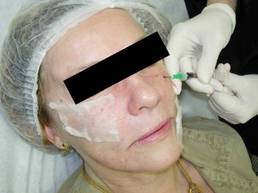
Another use for cannulas is to deliver filler products to correct any defects of the nasal dorsum after rhinoplasty, she said.
Cannulas can also deliver fillers to help improve the appearance of dark circles under the eyes. After Dr. Hexsel cleans and marks the area, she said she injects a small amount of lidocaine anesthetic. She said that she then makes a small hole with a regular needle and introduces the cannula. Only inject a small amount of filler product at a time, she said. "You can ask patients to participate. I can put in a little Restylane under the eyes, give the patient a mirror, and ask them where they want more." The patient leaves with nothing visible; a small micropore dressing can be placed over the entry points.
Dr. Hexsel disclosed holding design patents on cannula devices not yet available in the United States.
ORLANDO – Short, fixed cannulas can deliver filler products to augment multiple areas of the face, including nasolabial folds, the dorsum of the nose, and under the eyes, according to Dr. Doris Hexsel.
The small caliber, short cannulas also offer greater precision for filler placement, compared with the longer, flexible cannulas currently on the market, said Dr. Hexsel of the department of dermatology at Pontificia Universidade Católica do Rio Grande (Brazil) do Sul.
Cannulas are disposable, can be attached to different syringe types, and can replace needles for most facial filler indications, Dr. Hexsel said. One notable exception is in the treatment of superficial lines or defects, where she said she still recommends the use of a needle.
Cannulas can deliver a wide range of filler products. "Anything we inject with needles we can also inject with cannulas," Dr. Hexsel said at the annual meeting of the Florida Society of Dermatologic Surgeons.
All cannulas with a rounded end typically cause less bruising and trauma, compared with needles. Cannulas also help to avoid other needle-related adverse events, Dr. Hexsel said. Perforation of the veins or arteries and accidental injection of fillers into vessels are the most serious examples.
Facial augmentation via cannula is "particularly useful for patients taking anticoagulants or who cannot bruise because they have a social event," Dr. Hexsel said. Reduction of the risk of a sharps injury is a plus for physicians, she added.
Cannulas cannot puncture the skin, so a needle stick is still required to make an entry hole. Proponents of long cannulas will point to a need for only one entry point, Dr. Hexsel said, but "a single orifice and use of a long cannula cannot reach all indications." Nasolabial folds, for example, require at least two entry points to treat.
Dr. Hexsel designed a cannula that she and her colleagues compared with a standard needle in a prospective, randomized, phase II bilateral study of 25 women (Dermatol. Surg. 2011 Oct. 19 [doi:10.1111/j.1524-4725.2011.02195.x]). The metallic cannula safely and effectively delivered hyaluronic acid for nasolabial fold augmentation and was associated with less pain, edema, hematoma and redness at the site, compared with the side treated with a needle. At day 3, the mean Modified Fitzpatrick Wrinkle Scale was comparable for both treated sides of the face (from 2.40 at baseline to 1.46 on the cannula-injected side and from 2.40 to 1.48 on the needle-injected side).
Another use for cannulas is to deliver filler products to correct any defects of the nasal dorsum after rhinoplasty, she said.
Cannulas can also deliver fillers to help improve the appearance of dark circles under the eyes. After Dr. Hexsel cleans and marks the area, she said she injects a small amount of lidocaine anesthetic. She said that she then makes a small hole with a regular needle and introduces the cannula. Only inject a small amount of filler product at a time, she said. "You can ask patients to participate. I can put in a little Restylane under the eyes, give the patient a mirror, and ask them where they want more." The patient leaves with nothing visible; a small micropore dressing can be placed over the entry points.
Dr. Hexsel disclosed holding design patents on cannula devices not yet available in the United States.
ORLANDO – Short, fixed cannulas can deliver filler products to augment multiple areas of the face, including nasolabial folds, the dorsum of the nose, and under the eyes, according to Dr. Doris Hexsel.
The small caliber, short cannulas also offer greater precision for filler placement, compared with the longer, flexible cannulas currently on the market, said Dr. Hexsel of the department of dermatology at Pontificia Universidade Católica do Rio Grande (Brazil) do Sul.
Cannulas are disposable, can be attached to different syringe types, and can replace needles for most facial filler indications, Dr. Hexsel said. One notable exception is in the treatment of superficial lines or defects, where she said she still recommends the use of a needle.
Cannulas can deliver a wide range of filler products. "Anything we inject with needles we can also inject with cannulas," Dr. Hexsel said at the annual meeting of the Florida Society of Dermatologic Surgeons.
All cannulas with a rounded end typically cause less bruising and trauma, compared with needles. Cannulas also help to avoid other needle-related adverse events, Dr. Hexsel said. Perforation of the veins or arteries and accidental injection of fillers into vessels are the most serious examples.
Facial augmentation via cannula is "particularly useful for patients taking anticoagulants or who cannot bruise because they have a social event," Dr. Hexsel said. Reduction of the risk of a sharps injury is a plus for physicians, she added.
Cannulas cannot puncture the skin, so a needle stick is still required to make an entry hole. Proponents of long cannulas will point to a need for only one entry point, Dr. Hexsel said, but "a single orifice and use of a long cannula cannot reach all indications." Nasolabial folds, for example, require at least two entry points to treat.
Dr. Hexsel designed a cannula that she and her colleagues compared with a standard needle in a prospective, randomized, phase II bilateral study of 25 women (Dermatol. Surg. 2011 Oct. 19 [doi:10.1111/j.1524-4725.2011.02195.x]). The metallic cannula safely and effectively delivered hyaluronic acid for nasolabial fold augmentation and was associated with less pain, edema, hematoma and redness at the site, compared with the side treated with a needle. At day 3, the mean Modified Fitzpatrick Wrinkle Scale was comparable for both treated sides of the face (from 2.40 at baseline to 1.46 on the cannula-injected side and from 2.40 to 1.48 on the needle-injected side).
Another use for cannulas is to deliver filler products to correct any defects of the nasal dorsum after rhinoplasty, she said.
Cannulas can also deliver fillers to help improve the appearance of dark circles under the eyes. After Dr. Hexsel cleans and marks the area, she said she injects a small amount of lidocaine anesthetic. She said that she then makes a small hole with a regular needle and introduces the cannula. Only inject a small amount of filler product at a time, she said. "You can ask patients to participate. I can put in a little Restylane under the eyes, give the patient a mirror, and ask them where they want more." The patient leaves with nothing visible; a small micropore dressing can be placed over the entry points.
Dr. Hexsel disclosed holding design patents on cannula devices not yet available in the United States.
EXPERT ANALYSIS FROM THE ANNUAL MEETING OF THE FLORIDA SOCIETY OF DERMATOLOGIC SURGEONS
Skin of Color: Melasma Education for Patients
Melasma can be a distressing condition for our darker skinned patients. When educating them about sun protection, remind them that:
1. SPF only refers to protection against UVB radiation; it has no implication on the amount of protection against UVA. UVA is highly implicated in the progression of melasma. UVA even penetrates window glass so, if your patients drive, sit near a window, and/or are "never in the sun," remind them that they still need UVA and UVB protection every day.
2. Sunscreen needs to be applied 365 days a year. Ultraviolet light is present on cloudy, snowy, and rainy days.

3. "Broad spectrum" does not mean complete coverage. The two sunscreens that offer complete coverage against both UVA and UVB are Anthelios with Mexoryl and Neutrogena with Helioplex technology.
4. Heat can worsen melasma. If your patients work around heat, such as cooking by a hot stove or being around hot air, the heat can contribute to their melasma.
5. Computer monitors emit a small amount of UV. Suggest that melasma patients purchase a UV shield for their screens.
6. UV bracelets or beads help monitor the amount of UV in a given area. With the help of the devices, patients can monitor the amount of UV at home, at work, and in their car. Consider demonstrating the technology to your patients in the office to teach them about UV exposures in their daily environments.
7. Purchasing sunscreens with high SPF and broad spectrum coverage can be difficult. Most sunscreens leave a white or ashy residue on darker skin. Sunscreens with micronized titanium dioxide or zinc oxide can minimize the white residue and are more cosmetically appealing. Similarly, newer foundations and makeup products on the market have been developed that contain high SPF sunscreens in a tinted base. Some of my favorites include Laura Mercier tinted moisturizer and Revision Intellishade. Both have a small amount of tint to counteract the white appearance on darker skin.
8. Practice aggressive sun avoidance and protection before medical management. I don’t treat any patient with melasma unless they are vigilant about sun protection. The lasers, bleaching creams, medications (such as retinoids), and peels we use to treat melasma can make the skin more susceptible to UV radiation which can make melasma worse.
- Lily Talakoub, M.D.
Melasma can be a distressing condition for our darker skinned patients. When educating them about sun protection, remind them that:
1. SPF only refers to protection against UVB radiation; it has no implication on the amount of protection against UVA. UVA is highly implicated in the progression of melasma. UVA even penetrates window glass so, if your patients drive, sit near a window, and/or are "never in the sun," remind them that they still need UVA and UVB protection every day.
2. Sunscreen needs to be applied 365 days a year. Ultraviolet light is present on cloudy, snowy, and rainy days.
3. "Broad spectrum" does not mean complete coverage. The two sunscreens that offer complete coverage against both UVA and UVB are Anthelios with Mexoryl and Neutrogena with Helioplex technology.
4. Heat can worsen melasma. If your patients work around heat, such as cooking by a hot stove or being around hot air, the heat can contribute to their melasma.
5. Computer monitors emit a small amount of UV. Suggest that melasma patients purchase a UV shield for their screens.
6. UV bracelets or beads help monitor the amount of UV in a given area. With the help of the devices, patients can monitor the amount of UV at home, at work, and in their car. Consider demonstrating the technology to your patients in the office to teach them about UV exposures in their daily environments.
7. Purchasing sunscreens with high SPF and broad spectrum coverage can be difficult. Most sunscreens leave a white or ashy residue on darker skin. Sunscreens with micronized titanium dioxide or zinc oxide can minimize the white residue and are more cosmetically appealing. Similarly, newer foundations and makeup products on the market have been developed that contain high SPF sunscreens in a tinted base. Some of my favorites include Laura Mercier tinted moisturizer and Revision Intellishade. Both have a small amount of tint to counteract the white appearance on darker skin.
8. Practice aggressive sun avoidance and protection before medical management. I don’t treat any patient with melasma unless they are vigilant about sun protection. The lasers, bleaching creams, medications (such as retinoids), and peels we use to treat melasma can make the skin more susceptible to UV radiation which can make melasma worse.
- Lily Talakoub, M.D.
Melasma can be a distressing condition for our darker skinned patients. When educating them about sun protection, remind them that:
1. SPF only refers to protection against UVB radiation; it has no implication on the amount of protection against UVA. UVA is highly implicated in the progression of melasma. UVA even penetrates window glass so, if your patients drive, sit near a window, and/or are "never in the sun," remind them that they still need UVA and UVB protection every day.
2. Sunscreen needs to be applied 365 days a year. Ultraviolet light is present on cloudy, snowy, and rainy days.
3. "Broad spectrum" does not mean complete coverage. The two sunscreens that offer complete coverage against both UVA and UVB are Anthelios with Mexoryl and Neutrogena with Helioplex technology.
4. Heat can worsen melasma. If your patients work around heat, such as cooking by a hot stove or being around hot air, the heat can contribute to their melasma.
5. Computer monitors emit a small amount of UV. Suggest that melasma patients purchase a UV shield for their screens.
6. UV bracelets or beads help monitor the amount of UV in a given area. With the help of the devices, patients can monitor the amount of UV at home, at work, and in their car. Consider demonstrating the technology to your patients in the office to teach them about UV exposures in their daily environments.
7. Purchasing sunscreens with high SPF and broad spectrum coverage can be difficult. Most sunscreens leave a white or ashy residue on darker skin. Sunscreens with micronized titanium dioxide or zinc oxide can minimize the white residue and are more cosmetically appealing. Similarly, newer foundations and makeup products on the market have been developed that contain high SPF sunscreens in a tinted base. Some of my favorites include Laura Mercier tinted moisturizer and Revision Intellishade. Both have a small amount of tint to counteract the white appearance on darker skin.
8. Practice aggressive sun avoidance and protection before medical management. I don’t treat any patient with melasma unless they are vigilant about sun protection. The lasers, bleaching creams, medications (such as retinoids), and peels we use to treat melasma can make the skin more susceptible to UV radiation which can make melasma worse.
- Lily Talakoub, M.D.
'Pinch Bleph' Within Cosmetic Dermatologists' Realm of Expertise
ORLANDO – Cosmetic dermatologists can easily perform a skin pinch blepharoplasty to remove excess skin from a patient’s lower eyelid, according to N. Fred Eaglstein, D.O.
"This is a very simple technique, especially for derm surgeons used to doing large skin flaps and grafts," said Dr. Eaglstein at the annual meeting of the Florida Society of Dermatologic surgeons. "I do all these procedures in my office."
The "pinch bleph" can be performed alone or in conjunction with laser resurfacing to improve the appearance of dermatochalasis and thin, wrinkled, sun-damaged lower eyelid skin, Dr. Eaglstein said. Not all patients are candidates, however. Because the technique removes only excess skin, it is not indicated for patients with lower, orbital, fat-pad protrusion.
Following a baseline ophthalmology examination, instruct the patient to discontinue aspirin, NSAIDs, and any herbal products that could prolong bleeding. Exclude or get clearance for patients with significant medical problems such as thyroid disease, Dr. Eaglstein said.
To determine how much skin to remove, pinch the lower eyelid skin together using blunt forceps until the eyelid margins start to evert. Then, mark the area with a fine tip gentian violet marker. He said that he crushes the excess skin using a curved hemostat and excises the tissue with Westcott or sharp iris scissors. He recommends 6-0 nylon sutures or 6-0 fast absorbing gut sutures to close the wound. "I use 6-0 fast absorbing."
"Don’t take too much skin if you plan to do laser resurfacing. You don’t want to get too much tightening [if you also plan to do] erbium laser resurfacing," said Dr. Eaglstein, a private practice dermatologist in Orange Park, Fla.
Expected complications include ecchymosis and edema. Less commonly, patients can experience hematoma, infection, scleral show, or ectropion.
"The pinch blepharoplasty is a simple, safe, and effective surgical procedure for the derm surgeon interested in providing cosmetic rejuvenation of the lower eyelid," Dr. Eaglstein said.
For more information, Dr. Eaglstein recommended a report by Joesph Niamtu III, D.M.D. on his lower eyelid blepharoplasty technique and experience (Cosmetic Derm. 2008;21:652-7).
He also recommended a report on a series of 77 candidates for traditional lower blepharoplasty who underwent a pinch blepharoplasty (Plast. Reconstr. Surg. 2005;115:1405-12). The author reported no significant scleral show or ectropion adverse events.
Dr. Eaglstein reported having no relevant conflicts of interest.
ORLANDO – Cosmetic dermatologists can easily perform a skin pinch blepharoplasty to remove excess skin from a patient’s lower eyelid, according to N. Fred Eaglstein, D.O.
"This is a very simple technique, especially for derm surgeons used to doing large skin flaps and grafts," said Dr. Eaglstein at the annual meeting of the Florida Society of Dermatologic surgeons. "I do all these procedures in my office."
The "pinch bleph" can be performed alone or in conjunction with laser resurfacing to improve the appearance of dermatochalasis and thin, wrinkled, sun-damaged lower eyelid skin, Dr. Eaglstein said. Not all patients are candidates, however. Because the technique removes only excess skin, it is not indicated for patients with lower, orbital, fat-pad protrusion.
Following a baseline ophthalmology examination, instruct the patient to discontinue aspirin, NSAIDs, and any herbal products that could prolong bleeding. Exclude or get clearance for patients with significant medical problems such as thyroid disease, Dr. Eaglstein said.
To determine how much skin to remove, pinch the lower eyelid skin together using blunt forceps until the eyelid margins start to evert. Then, mark the area with a fine tip gentian violet marker. He said that he crushes the excess skin using a curved hemostat and excises the tissue with Westcott or sharp iris scissors. He recommends 6-0 nylon sutures or 6-0 fast absorbing gut sutures to close the wound. "I use 6-0 fast absorbing."
"Don’t take too much skin if you plan to do laser resurfacing. You don’t want to get too much tightening [if you also plan to do] erbium laser resurfacing," said Dr. Eaglstein, a private practice dermatologist in Orange Park, Fla.
Expected complications include ecchymosis and edema. Less commonly, patients can experience hematoma, infection, scleral show, or ectropion.
"The pinch blepharoplasty is a simple, safe, and effective surgical procedure for the derm surgeon interested in providing cosmetic rejuvenation of the lower eyelid," Dr. Eaglstein said.
For more information, Dr. Eaglstein recommended a report by Joesph Niamtu III, D.M.D. on his lower eyelid blepharoplasty technique and experience (Cosmetic Derm. 2008;21:652-7).
He also recommended a report on a series of 77 candidates for traditional lower blepharoplasty who underwent a pinch blepharoplasty (Plast. Reconstr. Surg. 2005;115:1405-12). The author reported no significant scleral show or ectropion adverse events.
Dr. Eaglstein reported having no relevant conflicts of interest.
ORLANDO – Cosmetic dermatologists can easily perform a skin pinch blepharoplasty to remove excess skin from a patient’s lower eyelid, according to N. Fred Eaglstein, D.O.
"This is a very simple technique, especially for derm surgeons used to doing large skin flaps and grafts," said Dr. Eaglstein at the annual meeting of the Florida Society of Dermatologic surgeons. "I do all these procedures in my office."
The "pinch bleph" can be performed alone or in conjunction with laser resurfacing to improve the appearance of dermatochalasis and thin, wrinkled, sun-damaged lower eyelid skin, Dr. Eaglstein said. Not all patients are candidates, however. Because the technique removes only excess skin, it is not indicated for patients with lower, orbital, fat-pad protrusion.
Following a baseline ophthalmology examination, instruct the patient to discontinue aspirin, NSAIDs, and any herbal products that could prolong bleeding. Exclude or get clearance for patients with significant medical problems such as thyroid disease, Dr. Eaglstein said.
To determine how much skin to remove, pinch the lower eyelid skin together using blunt forceps until the eyelid margins start to evert. Then, mark the area with a fine tip gentian violet marker. He said that he crushes the excess skin using a curved hemostat and excises the tissue with Westcott or sharp iris scissors. He recommends 6-0 nylon sutures or 6-0 fast absorbing gut sutures to close the wound. "I use 6-0 fast absorbing."
"Don’t take too much skin if you plan to do laser resurfacing. You don’t want to get too much tightening [if you also plan to do] erbium laser resurfacing," said Dr. Eaglstein, a private practice dermatologist in Orange Park, Fla.
Expected complications include ecchymosis and edema. Less commonly, patients can experience hematoma, infection, scleral show, or ectropion.
"The pinch blepharoplasty is a simple, safe, and effective surgical procedure for the derm surgeon interested in providing cosmetic rejuvenation of the lower eyelid," Dr. Eaglstein said.
For more information, Dr. Eaglstein recommended a report by Joesph Niamtu III, D.M.D. on his lower eyelid blepharoplasty technique and experience (Cosmetic Derm. 2008;21:652-7).
He also recommended a report on a series of 77 candidates for traditional lower blepharoplasty who underwent a pinch blepharoplasty (Plast. Reconstr. Surg. 2005;115:1405-12). The author reported no significant scleral show or ectropion adverse events.
Dr. Eaglstein reported having no relevant conflicts of interest.
EXPERT ANALYSIS FROM THE ANNUAL MEETING OF THE FLORIDA SOCIETY OF DERMATOLOGIC SURGEONS
Asian Patients Want Less Facial Volume, Not More
ORLANDO – Be conservative when injecting Asian patients with botulinum toxin type A, advised Dr. Jessica Wu.
She said she has seen her fair share of patients who come to her complaining about their botulinum toxin treatments. "Many Asian patients come to me saying that Botox or Dysport isn’t for them," Dr. Wu said in an interview. "They say their forehead feels heavy or they have trouble opening their eyes, and they can’t apply eye makeup properly." This, said Dr. Wu, is because of a lack of experience and knowledge in treating Asian patients.

As the U.S. population becomes more diverse, there’s a growing need for dermatologists to learn about differences in treating skin of color. The Asian population, for instance, was the fastest growing ethnic group in the United States between 2000 and 2010, according to 2010 data from the U.S. Census Bureau. And, Asian patients accounted for 6% of all cosmetic procedures in 2010, according to a 2010 report from the American Society of Plastic Surgeons.
Meanwhile, injectable fillers, botulinum toxin A, and chemical peels were the most-requested minimally invasive procedures among Asians, said Dr. Wu, assistant clinical professor of dermatology at the University of Southern California, Los Angeles.
"I think many of my colleagues would benefit from more education on treating Asian patients," said Dr. Wu. "We treat a diverse population. It’s something that’s not discussed enough."
Asian patients tend to have heavier eyelids, more melanin in their skin, thicker dermis, and more prominent collagen bundles. So their skin "generally requires less fillers when compared with Caucasian patients of the same age," said Dr. Wu. Fillers can also be used to enhance facial contours, including the nose and lips.
In addition, fine lines and wrinkles are less obvious in patients under age 50. Instead, hyperpigmentation is the earliest sign of aging in Asian skin. "Asian patients are more likely to seek help with pigmentation than wrinkles, so [dermatologists] should become familiar with hyperpigmentation disorders," said Dr. Wu.
Masseter hypertrophy is another common complaint among Asian patients, whether from bruxism, gum chewing, or diet. Dr. Wu said she has used onabotulinumtoxinA and abobotulinumtoxinA to slim down jawlines. "Ask the patients to clench teeth and palpate the muscle," said advised. She said she uses 12-32 units of onabotulinumtoxinA in 1 to 3 sites per side.
"Facial shaping has become synonymous with adding volume, whereas many of my patients want less volume, especially in their lower face," said Dr. Wu.
While there’s a growing body of literature and research coming from Asia, particularly Korea, there’s tremendous need for research in the United States, said Dr. Wu. "The number of Asian patients seeking cosmetic procedures is higher than their representation in the population, so dermatologists can provide better care for their patients if they become more educated about Asian skin and anatomy."
Dr. Wu is an investigator and consultant for Allergan, and a consultant for Johnson & Johnson and Unilever.
ORLANDO – Be conservative when injecting Asian patients with botulinum toxin type A, advised Dr. Jessica Wu.
She said she has seen her fair share of patients who come to her complaining about their botulinum toxin treatments. "Many Asian patients come to me saying that Botox or Dysport isn’t for them," Dr. Wu said in an interview. "They say their forehead feels heavy or they have trouble opening their eyes, and they can’t apply eye makeup properly." This, said Dr. Wu, is because of a lack of experience and knowledge in treating Asian patients.
As the U.S. population becomes more diverse, there’s a growing need for dermatologists to learn about differences in treating skin of color. The Asian population, for instance, was the fastest growing ethnic group in the United States between 2000 and 2010, according to 2010 data from the U.S. Census Bureau. And, Asian patients accounted for 6% of all cosmetic procedures in 2010, according to a 2010 report from the American Society of Plastic Surgeons.
Meanwhile, injectable fillers, botulinum toxin A, and chemical peels were the most-requested minimally invasive procedures among Asians, said Dr. Wu, assistant clinical professor of dermatology at the University of Southern California, Los Angeles.
"I think many of my colleagues would benefit from more education on treating Asian patients," said Dr. Wu. "We treat a diverse population. It’s something that’s not discussed enough."
Asian patients tend to have heavier eyelids, more melanin in their skin, thicker dermis, and more prominent collagen bundles. So their skin "generally requires less fillers when compared with Caucasian patients of the same age," said Dr. Wu. Fillers can also be used to enhance facial contours, including the nose and lips.
In addition, fine lines and wrinkles are less obvious in patients under age 50. Instead, hyperpigmentation is the earliest sign of aging in Asian skin. "Asian patients are more likely to seek help with pigmentation than wrinkles, so [dermatologists] should become familiar with hyperpigmentation disorders," said Dr. Wu.
Masseter hypertrophy is another common complaint among Asian patients, whether from bruxism, gum chewing, or diet. Dr. Wu said she has used onabotulinumtoxinA and abobotulinumtoxinA to slim down jawlines. "Ask the patients to clench teeth and palpate the muscle," said advised. She said she uses 12-32 units of onabotulinumtoxinA in 1 to 3 sites per side.
"Facial shaping has become synonymous with adding volume, whereas many of my patients want less volume, especially in their lower face," said Dr. Wu.
While there’s a growing body of literature and research coming from Asia, particularly Korea, there’s tremendous need for research in the United States, said Dr. Wu. "The number of Asian patients seeking cosmetic procedures is higher than their representation in the population, so dermatologists can provide better care for their patients if they become more educated about Asian skin and anatomy."
Dr. Wu is an investigator and consultant for Allergan, and a consultant for Johnson & Johnson and Unilever.
ORLANDO – Be conservative when injecting Asian patients with botulinum toxin type A, advised Dr. Jessica Wu.
She said she has seen her fair share of patients who come to her complaining about their botulinum toxin treatments. "Many Asian patients come to me saying that Botox or Dysport isn’t for them," Dr. Wu said in an interview. "They say their forehead feels heavy or they have trouble opening their eyes, and they can’t apply eye makeup properly." This, said Dr. Wu, is because of a lack of experience and knowledge in treating Asian patients.
As the U.S. population becomes more diverse, there’s a growing need for dermatologists to learn about differences in treating skin of color. The Asian population, for instance, was the fastest growing ethnic group in the United States between 2000 and 2010, according to 2010 data from the U.S. Census Bureau. And, Asian patients accounted for 6% of all cosmetic procedures in 2010, according to a 2010 report from the American Society of Plastic Surgeons.
Meanwhile, injectable fillers, botulinum toxin A, and chemical peels were the most-requested minimally invasive procedures among Asians, said Dr. Wu, assistant clinical professor of dermatology at the University of Southern California, Los Angeles.
"I think many of my colleagues would benefit from more education on treating Asian patients," said Dr. Wu. "We treat a diverse population. It’s something that’s not discussed enough."
Asian patients tend to have heavier eyelids, more melanin in their skin, thicker dermis, and more prominent collagen bundles. So their skin "generally requires less fillers when compared with Caucasian patients of the same age," said Dr. Wu. Fillers can also be used to enhance facial contours, including the nose and lips.
In addition, fine lines and wrinkles are less obvious in patients under age 50. Instead, hyperpigmentation is the earliest sign of aging in Asian skin. "Asian patients are more likely to seek help with pigmentation than wrinkles, so [dermatologists] should become familiar with hyperpigmentation disorders," said Dr. Wu.
Masseter hypertrophy is another common complaint among Asian patients, whether from bruxism, gum chewing, or diet. Dr. Wu said she has used onabotulinumtoxinA and abobotulinumtoxinA to slim down jawlines. "Ask the patients to clench teeth and palpate the muscle," said advised. She said she uses 12-32 units of onabotulinumtoxinA in 1 to 3 sites per side.
"Facial shaping has become synonymous with adding volume, whereas many of my patients want less volume, especially in their lower face," said Dr. Wu.
While there’s a growing body of literature and research coming from Asia, particularly Korea, there’s tremendous need for research in the United States, said Dr. Wu. "The number of Asian patients seeking cosmetic procedures is higher than their representation in the population, so dermatologists can provide better care for their patients if they become more educated about Asian skin and anatomy."
Dr. Wu is an investigator and consultant for Allergan, and a consultant for Johnson & Johnson and Unilever.
EXPERT ANALYSIS FROM THE ORLANDO DERMATOLOGY AESTHETIC AND CLINICAL CONFERENCE
Don't Delegate Cosmetic Procedures, Expert Says
LAS VEGAS – Soon after completing a cosmetic dermatologic surgery fellowship at the University of Pittsburgh Medical Center in 2001, Dr. Suzan Obagi stayed on to help launch one of the first academically based cosmetic surgery practices.
There was no previous business plan, no model at another university," Dr. Obagi said at the annual meeting of the American Academy of Cosmetic Surgery.
Today, toxin and filler treatments at the UPMC cosmetic surgery and skin health center are booked 4 months out, and Dr. Obagi said she treats about 1,200 patients with botulinum toxin type A each year and another 600-700 patients with dermal fillers. "If I’ve managed to build a successful cosmetic surgery practice in an academic setting, all of you can certainly do so in a noncampus setting," said Dr. Obagi, who directs the center.
Botulinum toxin type A and dermal fillers are the mainstays of any cosmetic surgery practice because patients strive for the instant results that come from using them. "Instant gratification: That’s what it’s all about," said Dr. Obagi. "Patients don’t want the prolonged down time or the stigma of looking like they’ve had something done. They love the natural look you can give them with injectables. For me, it’s a fun part of my practice. ... I get to be artistic."
Demand for injectables persists during times of economic uncertainty, she added. "When we had the downturn in the economy in 2008, we saw that the number of large [cosmetic surgery] cases dropped off, but the number of small procedures like injections of botulinum toxin type A and other fillers remained the same. What we did to get through some of that downturn was to open up more slots and get more patients in for these procedures."
She offered the following tips on how to enhance an injectables practice:
• Stand out from the competition. "Part of this is how your practice handles patients when they come in, but a bigger part of your practice is, how good are you with the needle?" Dr. Obagi said. "Your artistry is what’s going to speak volumes, so you have to differentiate yourself with your skill, and you have to make sure patients are able to come in every 3-4 months. If your schedule does not allow that to be booked, then you’re going to miss out."
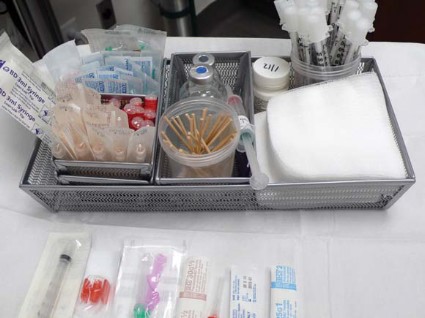
• Set up rooms for efficiency. She said she equips each exam room with a wire basket full of needles, syringes, gauze, anesthetic, and other supplies she’ll need to treat every botulinum toxin type A and dermal filler patient who comes in. "I walk into a room and I can do two to three different things on that patient without having to step out of that room again," Dr. Obagi explained. "I don’t have to go fumbling for anything. I can spend all of that time talking to the patient, inquiring about their family, their adventures, learning about them. It diffuses the situation because patients know you’re going to come at them with a needle. They know they’re going to be feeling some pain shortly. Whatever you can do to calm them before you come at them with that needle really makes a difference."
To optimize the patient experience, she purchased powered procedure chairs for each exam room. "They’re about $10,000 per chair, but they have foot pedals for adjustment so you don’t have to touch anything with your hands," she said. "It’s all about comfort for you and the patient."
She also stocks the waiting room and each exam room with brochures that describe each procedure offered at the center.
• Evaluate each patient at every visit. If a patient has been treated with botulinum toxin type A for the last 5 years, she or he "may need it in other areas now that you’ve taken care of areas they were initially bothered by," Dr. Obagi said. "You need to keep reassessing the patient every time she or he comes in."
• Inject patients quickly and comfortably. Dr. Obagi said she uses the smallest needle possible and stabilizes the fingers on her nondominating hand "so my hand is steady; it’s not going to shake [during injection]," she said. "I have been on the receiving end of good and bad botulinum toxin type A treatments. What makes the difference is being quick with the injection. Make sure your hand is stabilized, and don’t go deeper than you need to. Botulinum toxin type A is not meant to be injected into the periosteum. Don’t go there; it hurts."
• Do the procedures yourself. This allows you to see the patient every 3-4 months to recommend ancillary treatments and surgery.
Dr. Obagi said she charges patients by the amount of toxin or filler used, not by the specific anatomic area she treats. That works well, she said, "because some patients may require 12 U in an area of the face while another patient may require 50 U in that same area."
She said she runs two parallel schedules to optimize efficiency. For example, her afternoon consultation times are at 1 p.m., 1:30 p.m., 2 p.m., 2:30 p.m., 3 p.m., 3:30 p.m., and 4 p.m., while her treatment times for botulinum toxin type A and filler patients are at 1:45 p.m., 2:15 p.m., 2:45 p.m., 3:15 p.m., and 3:45 p.m. "So after I finish a consult in one room, I go into another room and do a quick treatment," she said. "I come back out and go to the next consult."
Dr. Obagi said she had no relevant financial disclosures.
LAS VEGAS – Soon after completing a cosmetic dermatologic surgery fellowship at the University of Pittsburgh Medical Center in 2001, Dr. Suzan Obagi stayed on to help launch one of the first academically based cosmetic surgery practices.
There was no previous business plan, no model at another university," Dr. Obagi said at the annual meeting of the American Academy of Cosmetic Surgery.
Today, toxin and filler treatments at the UPMC cosmetic surgery and skin health center are booked 4 months out, and Dr. Obagi said she treats about 1,200 patients with botulinum toxin type A each year and another 600-700 patients with dermal fillers. "If I’ve managed to build a successful cosmetic surgery practice in an academic setting, all of you can certainly do so in a noncampus setting," said Dr. Obagi, who directs the center.
Botulinum toxin type A and dermal fillers are the mainstays of any cosmetic surgery practice because patients strive for the instant results that come from using them. "Instant gratification: That’s what it’s all about," said Dr. Obagi. "Patients don’t want the prolonged down time or the stigma of looking like they’ve had something done. They love the natural look you can give them with injectables. For me, it’s a fun part of my practice. ... I get to be artistic."
Demand for injectables persists during times of economic uncertainty, she added. "When we had the downturn in the economy in 2008, we saw that the number of large [cosmetic surgery] cases dropped off, but the number of small procedures like injections of botulinum toxin type A and other fillers remained the same. What we did to get through some of that downturn was to open up more slots and get more patients in for these procedures."
She offered the following tips on how to enhance an injectables practice:
• Stand out from the competition. "Part of this is how your practice handles patients when they come in, but a bigger part of your practice is, how good are you with the needle?" Dr. Obagi said. "Your artistry is what’s going to speak volumes, so you have to differentiate yourself with your skill, and you have to make sure patients are able to come in every 3-4 months. If your schedule does not allow that to be booked, then you’re going to miss out."
• Set up rooms for efficiency. She said she equips each exam room with a wire basket full of needles, syringes, gauze, anesthetic, and other supplies she’ll need to treat every botulinum toxin type A and dermal filler patient who comes in. "I walk into a room and I can do two to three different things on that patient without having to step out of that room again," Dr. Obagi explained. "I don’t have to go fumbling for anything. I can spend all of that time talking to the patient, inquiring about their family, their adventures, learning about them. It diffuses the situation because patients know you’re going to come at them with a needle. They know they’re going to be feeling some pain shortly. Whatever you can do to calm them before you come at them with that needle really makes a difference."
To optimize the patient experience, she purchased powered procedure chairs for each exam room. "They’re about $10,000 per chair, but they have foot pedals for adjustment so you don’t have to touch anything with your hands," she said. "It’s all about comfort for you and the patient."
She also stocks the waiting room and each exam room with brochures that describe each procedure offered at the center.
• Evaluate each patient at every visit. If a patient has been treated with botulinum toxin type A for the last 5 years, she or he "may need it in other areas now that you’ve taken care of areas they were initially bothered by," Dr. Obagi said. "You need to keep reassessing the patient every time she or he comes in."
• Inject patients quickly and comfortably. Dr. Obagi said she uses the smallest needle possible and stabilizes the fingers on her nondominating hand "so my hand is steady; it’s not going to shake [during injection]," she said. "I have been on the receiving end of good and bad botulinum toxin type A treatments. What makes the difference is being quick with the injection. Make sure your hand is stabilized, and don’t go deeper than you need to. Botulinum toxin type A is not meant to be injected into the periosteum. Don’t go there; it hurts."
• Do the procedures yourself. This allows you to see the patient every 3-4 months to recommend ancillary treatments and surgery.
Dr. Obagi said she charges patients by the amount of toxin or filler used, not by the specific anatomic area she treats. That works well, she said, "because some patients may require 12 U in an area of the face while another patient may require 50 U in that same area."
She said she runs two parallel schedules to optimize efficiency. For example, her afternoon consultation times are at 1 p.m., 1:30 p.m., 2 p.m., 2:30 p.m., 3 p.m., 3:30 p.m., and 4 p.m., while her treatment times for botulinum toxin type A and filler patients are at 1:45 p.m., 2:15 p.m., 2:45 p.m., 3:15 p.m., and 3:45 p.m. "So after I finish a consult in one room, I go into another room and do a quick treatment," she said. "I come back out and go to the next consult."
Dr. Obagi said she had no relevant financial disclosures.
LAS VEGAS – Soon after completing a cosmetic dermatologic surgery fellowship at the University of Pittsburgh Medical Center in 2001, Dr. Suzan Obagi stayed on to help launch one of the first academically based cosmetic surgery practices.
There was no previous business plan, no model at another university," Dr. Obagi said at the annual meeting of the American Academy of Cosmetic Surgery.
Today, toxin and filler treatments at the UPMC cosmetic surgery and skin health center are booked 4 months out, and Dr. Obagi said she treats about 1,200 patients with botulinum toxin type A each year and another 600-700 patients with dermal fillers. "If I’ve managed to build a successful cosmetic surgery practice in an academic setting, all of you can certainly do so in a noncampus setting," said Dr. Obagi, who directs the center.
Botulinum toxin type A and dermal fillers are the mainstays of any cosmetic surgery practice because patients strive for the instant results that come from using them. "Instant gratification: That’s what it’s all about," said Dr. Obagi. "Patients don’t want the prolonged down time or the stigma of looking like they’ve had something done. They love the natural look you can give them with injectables. For me, it’s a fun part of my practice. ... I get to be artistic."
Demand for injectables persists during times of economic uncertainty, she added. "When we had the downturn in the economy in 2008, we saw that the number of large [cosmetic surgery] cases dropped off, but the number of small procedures like injections of botulinum toxin type A and other fillers remained the same. What we did to get through some of that downturn was to open up more slots and get more patients in for these procedures."
She offered the following tips on how to enhance an injectables practice:
• Stand out from the competition. "Part of this is how your practice handles patients when they come in, but a bigger part of your practice is, how good are you with the needle?" Dr. Obagi said. "Your artistry is what’s going to speak volumes, so you have to differentiate yourself with your skill, and you have to make sure patients are able to come in every 3-4 months. If your schedule does not allow that to be booked, then you’re going to miss out."
• Set up rooms for efficiency. She said she equips each exam room with a wire basket full of needles, syringes, gauze, anesthetic, and other supplies she’ll need to treat every botulinum toxin type A and dermal filler patient who comes in. "I walk into a room and I can do two to three different things on that patient without having to step out of that room again," Dr. Obagi explained. "I don’t have to go fumbling for anything. I can spend all of that time talking to the patient, inquiring about their family, their adventures, learning about them. It diffuses the situation because patients know you’re going to come at them with a needle. They know they’re going to be feeling some pain shortly. Whatever you can do to calm them before you come at them with that needle really makes a difference."
To optimize the patient experience, she purchased powered procedure chairs for each exam room. "They’re about $10,000 per chair, but they have foot pedals for adjustment so you don’t have to touch anything with your hands," she said. "It’s all about comfort for you and the patient."
She also stocks the waiting room and each exam room with brochures that describe each procedure offered at the center.
• Evaluate each patient at every visit. If a patient has been treated with botulinum toxin type A for the last 5 years, she or he "may need it in other areas now that you’ve taken care of areas they were initially bothered by," Dr. Obagi said. "You need to keep reassessing the patient every time she or he comes in."
• Inject patients quickly and comfortably. Dr. Obagi said she uses the smallest needle possible and stabilizes the fingers on her nondominating hand "so my hand is steady; it’s not going to shake [during injection]," she said. "I have been on the receiving end of good and bad botulinum toxin type A treatments. What makes the difference is being quick with the injection. Make sure your hand is stabilized, and don’t go deeper than you need to. Botulinum toxin type A is not meant to be injected into the periosteum. Don’t go there; it hurts."
• Do the procedures yourself. This allows you to see the patient every 3-4 months to recommend ancillary treatments and surgery.
Dr. Obagi said she charges patients by the amount of toxin or filler used, not by the specific anatomic area she treats. That works well, she said, "because some patients may require 12 U in an area of the face while another patient may require 50 U in that same area."
She said she runs two parallel schedules to optimize efficiency. For example, her afternoon consultation times are at 1 p.m., 1:30 p.m., 2 p.m., 2:30 p.m., 3 p.m., 3:30 p.m., and 4 p.m., while her treatment times for botulinum toxin type A and filler patients are at 1:45 p.m., 2:15 p.m., 2:45 p.m., 3:15 p.m., and 3:45 p.m. "So after I finish a consult in one room, I go into another room and do a quick treatment," she said. "I come back out and go to the next consult."
Dr. Obagi said she had no relevant financial disclosures.
EXPERT ANALYSIS FROM THE ANNUAL MEETING OF THE AMERICAN ACADEMY OF COSMETIC SURGERY
Stem Cell Fat Grafting Dynamically Restores Volume
LAS VEGAS – When using fat and stem cell transfer for facial volume enhancement, it's disingenuous to tell patients a stem cell face-lift is being performed, said Dr. Mark Berman.
The accurate description is to tell patients a stem cell fat graft is being performed. "Tell them 'we're using a fat graft, and the reason it works is because your fat is loaded with stem cells, which can turn on, proliferate, and grow new fat cells,' " Dr. Berman said at the annual meeting of the American Academy of Cosmetic Surgery. "This is a dynamic process."
In 2008, Dr. Hee Young Lee introduced Dr. Berman to a system he created, known as the Lipokit (Medi-Khan, Korea and currently distributed as the Adivive system by Palomar), a closed device approved for condensed autologous fat transfer. Dr. Berman said he began using the system at his Beverly Hills, Calif.–based cosmetic surgery practice for facial volume enhancement.
A key component of the device, he said, is the fat-processing unit, a single-use, disposable syringe with a bidirectional moving piston, a microfilter, a fluid gate, and a weighted metallic ring. "What makes this syringe unique is that it allows you to compress and filter the fat at the same time, so you actually increase the concentration of cells," said Dr. Berman. "You can also put in tumescent anesthesia in this system real easily."
Early in his clinical experience with the Adivive system, he said he would spin harvested fat in a centrifuge at 4,000 rpm for 8 minutes. Now he spins the harvested fat at 2,800 rpm for 3 minutes. "The difference is, at the lower rate, the stem cells tend to have increased viability, while at the higher rate you get increased concentration of stem cells," Dr. Berman explained.
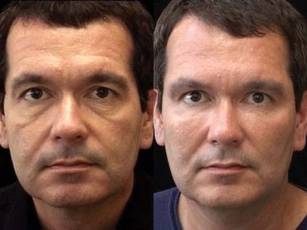
The results of stem cell fat grafting for facial volume enhancement are generally superior to those achieved with dermal filler injections because the process restores facial volume naturally. "Most of our face-lift patients don’t want to look different; they want to look like they used to," he said. "Aging is not about sagging skin caused by gravity. Gravity does not cause aging; it just affects how you look in different positions."
Aging, he continued, is caused by "loss of facial fat, loss of skin elasticity, and loss of bone volume very late in life or related to tooth loss. Your face is basically skin, fat, muscle, and bone. You have about 60% of fat between the first layer of skin and muscle, and the rest is under the muscle."
Stem cell fat grafting can restore a three-dimensional appearance to the patient's skin, said Dr. Berman, who coined the term "space lift" to describe the concept of lifting the skin away from the facial bones by fat-grafting techniques.
"I have traveled around the world talking with people who are experts on fat grafting, and we all agree on one thing: The variable is not our technique," he said. "The big variable is the quality of the stem cells mixed in with the patient's fat. I tell the patient, 'If you're not willing to repeat the operation, don't do it at all,' because at some point noticeable losses of the transferred fat may occur. Some people find that frustrating."
Dr. Berman disclosed teaching the technique in courses sponsored by Palomar.
LAS VEGAS – When using fat and stem cell transfer for facial volume enhancement, it's disingenuous to tell patients a stem cell face-lift is being performed, said Dr. Mark Berman.
The accurate description is to tell patients a stem cell fat graft is being performed. "Tell them 'we're using a fat graft, and the reason it works is because your fat is loaded with stem cells, which can turn on, proliferate, and grow new fat cells,' " Dr. Berman said at the annual meeting of the American Academy of Cosmetic Surgery. "This is a dynamic process."
In 2008, Dr. Hee Young Lee introduced Dr. Berman to a system he created, known as the Lipokit (Medi-Khan, Korea and currently distributed as the Adivive system by Palomar), a closed device approved for condensed autologous fat transfer. Dr. Berman said he began using the system at his Beverly Hills, Calif.–based cosmetic surgery practice for facial volume enhancement.
A key component of the device, he said, is the fat-processing unit, a single-use, disposable syringe with a bidirectional moving piston, a microfilter, a fluid gate, and a weighted metallic ring. "What makes this syringe unique is that it allows you to compress and filter the fat at the same time, so you actually increase the concentration of cells," said Dr. Berman. "You can also put in tumescent anesthesia in this system real easily."
Early in his clinical experience with the Adivive system, he said he would spin harvested fat in a centrifuge at 4,000 rpm for 8 minutes. Now he spins the harvested fat at 2,800 rpm for 3 minutes. "The difference is, at the lower rate, the stem cells tend to have increased viability, while at the higher rate you get increased concentration of stem cells," Dr. Berman explained.
The results of stem cell fat grafting for facial volume enhancement are generally superior to those achieved with dermal filler injections because the process restores facial volume naturally. "Most of our face-lift patients don’t want to look different; they want to look like they used to," he said. "Aging is not about sagging skin caused by gravity. Gravity does not cause aging; it just affects how you look in different positions."
Aging, he continued, is caused by "loss of facial fat, loss of skin elasticity, and loss of bone volume very late in life or related to tooth loss. Your face is basically skin, fat, muscle, and bone. You have about 60% of fat between the first layer of skin and muscle, and the rest is under the muscle."
Stem cell fat grafting can restore a three-dimensional appearance to the patient's skin, said Dr. Berman, who coined the term "space lift" to describe the concept of lifting the skin away from the facial bones by fat-grafting techniques.
"I have traveled around the world talking with people who are experts on fat grafting, and we all agree on one thing: The variable is not our technique," he said. "The big variable is the quality of the stem cells mixed in with the patient's fat. I tell the patient, 'If you're not willing to repeat the operation, don't do it at all,' because at some point noticeable losses of the transferred fat may occur. Some people find that frustrating."
Dr. Berman disclosed teaching the technique in courses sponsored by Palomar.
LAS VEGAS – When using fat and stem cell transfer for facial volume enhancement, it's disingenuous to tell patients a stem cell face-lift is being performed, said Dr. Mark Berman.
The accurate description is to tell patients a stem cell fat graft is being performed. "Tell them 'we're using a fat graft, and the reason it works is because your fat is loaded with stem cells, which can turn on, proliferate, and grow new fat cells,' " Dr. Berman said at the annual meeting of the American Academy of Cosmetic Surgery. "This is a dynamic process."
In 2008, Dr. Hee Young Lee introduced Dr. Berman to a system he created, known as the Lipokit (Medi-Khan, Korea and currently distributed as the Adivive system by Palomar), a closed device approved for condensed autologous fat transfer. Dr. Berman said he began using the system at his Beverly Hills, Calif.–based cosmetic surgery practice for facial volume enhancement.
A key component of the device, he said, is the fat-processing unit, a single-use, disposable syringe with a bidirectional moving piston, a microfilter, a fluid gate, and a weighted metallic ring. "What makes this syringe unique is that it allows you to compress and filter the fat at the same time, so you actually increase the concentration of cells," said Dr. Berman. "You can also put in tumescent anesthesia in this system real easily."
Early in his clinical experience with the Adivive system, he said he would spin harvested fat in a centrifuge at 4,000 rpm for 8 minutes. Now he spins the harvested fat at 2,800 rpm for 3 minutes. "The difference is, at the lower rate, the stem cells tend to have increased viability, while at the higher rate you get increased concentration of stem cells," Dr. Berman explained.
The results of stem cell fat grafting for facial volume enhancement are generally superior to those achieved with dermal filler injections because the process restores facial volume naturally. "Most of our face-lift patients don’t want to look different; they want to look like they used to," he said. "Aging is not about sagging skin caused by gravity. Gravity does not cause aging; it just affects how you look in different positions."
Aging, he continued, is caused by "loss of facial fat, loss of skin elasticity, and loss of bone volume very late in life or related to tooth loss. Your face is basically skin, fat, muscle, and bone. You have about 60% of fat between the first layer of skin and muscle, and the rest is under the muscle."
Stem cell fat grafting can restore a three-dimensional appearance to the patient's skin, said Dr. Berman, who coined the term "space lift" to describe the concept of lifting the skin away from the facial bones by fat-grafting techniques.
"I have traveled around the world talking with people who are experts on fat grafting, and we all agree on one thing: The variable is not our technique," he said. "The big variable is the quality of the stem cells mixed in with the patient's fat. I tell the patient, 'If you're not willing to repeat the operation, don't do it at all,' because at some point noticeable losses of the transferred fat may occur. Some people find that frustrating."
Dr. Berman disclosed teaching the technique in courses sponsored by Palomar.
EXPERT ANALYSIS FROM THE ANNUAL MEETING OF THE AMERICAN ACADEMY OF COSMETIC SURGERY
Cosmeceutical Experts Agree on Best Antiaging Products
The skin care market may pull in $9 billion per year, but three cosmeceutical experts agreed that the best over-the-counter antiaging products come down to two words: "moisturizer" and "sunscreen."
Speaking in separate presentations at the annual meeting of the American Society of Cosmetic Dermatology and Aesthetic Surgery (ASCDAS), Dr. Zoe D. Draelos, Dr. Ellen S. Marmur, and Dr. Michael H. Gold agreed that there is little science to back up claims made by cosmeceutical companies.

Cosmeceuticals fall somewhere between cosmetics and pharmaceuticals; therefore, they are not regulated, and manufacturers are not required to show evidence of antiaging effectiveness. When evidence does exist, it generally points back to the moisturizer and sunscreen properties.
Dr. Draelos, a dermatologist in High Point, N.C., and a consulting professor of dermatology at Duke University in Durham, N.C., studied the ingredients in over-the-counter skin care products. She found that 80% of products are basically moisturizers that serve as a vehicle to deliver a high-profile ingredient being touted by the manufacturer (Plast. Reconstr. Surg. 2010;125:719-24).

"Hands down, it’s the moisturizer" that’s the most important cosmeceutical choice, she said. "All the products that make antiaging claims are making moisturizer claims," and most antiaging products also have sunscreen ingredients in them.
Dr. Michael Gold said he has been dispensing cosmeceuticals for 22 years and has seen the market explode. "There is now a $700 moisturizer," he said. "There may be no difference" between that and a $10 moisturizer, "but some people will pay the $700 because it’s $700."
Dr. Gold, the founder and medical director of a skin care center based in Nashville, Tenn., urged his colleagues, "If you dispense, do it ethically."
Dermatologists have an important role to play by assessing the marketing claims of cosmeceuticals, not just listening to them. "Even though we don’t have a lot of good research right now, patients want something their doctor feels good about," said Dr. Marmur of Mount Sinai School of Medicine, New York, who is also president of the ASCDAS.

She took that approach in her book, written with Gina Way, "Simple Skin Beauty: Every Woman’s Guide to a Lifetime of Healthy, Gorgeous Skin" (Atria Books, 2009). The book "perhaps put me at odds with some of the industry, but we’re challenging them to produce better science," she said.
Dr. Marmur and her associates are conducting the first independent, randomized, blinded, controlled trial comparing over-the-counter antiaging creams. With more than 130 subjects enrolled, the study will evaluate 28 biomarkers in seven lines of products, with the people who apply the products blinded to the product being used.
Not all antiaging cream manufacturers are included, however, "Some brands refused to participate" perhaps because they were afraid that the study would show that their product is effective but is a pharmaceutical, she said.
Dr. Draelos echoed that observation during a question-and-answer session. "The industry doesn’t want closer scrutiny," she said.
Dr. Draelos also spoke at the 2011 Skin Disease Education Foundation's Women's and Pediatric Dermatology Seminar. She said she recommends that her patients start with a moisturizer containing dimethicone, glycerin, or petrolatum. "The most robust moisturizer known to man has these three ingredients," she said.
For antiaging, she suggested recommending sunscreens containing avobenzone, oxybenzone, octocrylene, reflecting spheres, or antioxidant botanicals.
How does that translate into over-the-counter product recommendations for patients? For hands, Dr. Draelos favors Neutrogena Norwegian Formula Hand Cream. For the face, she recommends Johnson & Johnson’s Aveeno Positively Radiant Daily Moisturizer SPF 30, and for the body, she suggests Galderma’s Cetaphil Cream.
In separate interviews, the three dermatologists agreed that more research is needed on the efficacy of cosmeceuticals, and delved into the nuances of ingredients in antiaging skin-care regimens. They also agreed that dermatologists need to be patients’ advocates and educators first and foremost.

Moisturizers and sunscreen undoubtedly are the main ingredients in most cosmeceutical regimens, but there are good data to support other ingredients, said Dr. Paul F. Lizzul of Tufts Medical Center, Boston. Randomized clinical trials have shown that retinoids, for example, can be beneficial, but patients probably are better served by prescription-strength retinoids to get "a better bang for their buck," compared with over-the-counter products, he said.
For other cosmeceutical ingredients, however, there may be in vitro or in vivo data but no rigorous clinical studies to back them up. "Even as a well-trained academic dermatologist with an extensive scientific and clinical research background, I, at times, am at a loss to understand the claims made by some cosmeceutical manufacturers," he said.
Dr. Lizzul does not believe that most of the questionable "active ingredients" penetrate the stratum corneum to be able to have the claimed effects on the dermis or epidermis. In some cases, if the ingredient magically penetrated to the dermis, it could be harmful, not helpful, he added.
"It is curious to me that at many of our meetings, research presented to support product claims is oftentimes no more than anecdotal evidence. If you critically look at the presentation and the actual data, you would be remiss to believe that product X actually works," he said.

On the other hand, the lack of double-blind studies of a particular product or ingredient does not mean that it isn’t helpful. By reviewing the biochemistry, basic science, and clinical observations of a treatment, dermatologists can steer patients toward a potential treatment, said Dr. Wendy E. Roberts, a dermatologist in Rancho Mirage, Calif.
She compared her approach to cosmeceuticals to the correlations she makes as a dermatopathologist. "Under the microscope it could be many things, but you match it with the clinical information and come up with a diagnosis. We can kind of use that model with cosmeceuticals," she said. "With our expertise, we know that there’s this body of evidence, we know the activity, and we have our living lab, which is our patients [whom we] see every day. Those observations can lead to further observations."
Many reports in the medical literature describe antiaging benefits from ingredients like peptides, vitamin C, alpha and beta hydroxy acids, lactic acid, retinol, niacinamide, and other ingredients, which can be incorporated into moisturizer formulas, Dr. Roberts said.
Although the three pillars of cosmeceutical regimens are cleansers, moisturizers, and sunscreen, limiting the discussion to those vague terms is "so 1990s," she said. "As a cosmetic dermatologist, it is my job to be able to know the science of a product and recommend the cosmeceutical for that skin type. Working in the capital of sun-damaged skin, I see how certain cosmeceuticals alone can improve skin qualities."
Dr. Leslie Baumann of Miami Beach also said that ingredients other than moisturizer and sunscreen are necessary, depending on the patient’s skin type. She has patients complete a questionnaire to help determine skin type, and matches ingredients to that type.
Sensitive skin types, for example, need anti-inflammatory ingredients, she said. Aged skin benefits from retinoids. Lighteners can help skin with unwanted pigment.
Dermatologists have an ethical responsibility to advise patients on the best cosmeceutical options and on more affordable options if they exist. "Sometimes cheaper products will suffice, and sometimes they will not," Dr. Baumann said.
Dr. Draelos has been a consultant and researcher for Avon, Dial, Johnson & Johnson, L’Oréal, Nu Skin, Procter & Gamble, and Stiefel. Dr. Marmur disclosed financial relationships with Allergan, DUSA Pharmaceuticals, Genentech, Medicis, Merz, and Sanofi-Aventis. Dr. Gold has been a consultant or researcher for Allergan, Medicis, Mentor (Johnson & Johnson), Merz, Galderma, and numerous other companies.
Dr. Roberts has had financial relationships with Allergan, Johnson & Johnson, L’Oréal, La Roche–Posay, and Ortho Dermatologics. Dr. Baumann has led or participated in research trials for more than 50 cosmetic and pharmaceutical companies. Dr. Lizzul had no relevant disclosures.
SDEF and this news organization are owned by Elsevier.
The skin care market may pull in $9 billion per year, but three cosmeceutical experts agreed that the best over-the-counter antiaging products come down to two words: "moisturizer" and "sunscreen."
Speaking in separate presentations at the annual meeting of the American Society of Cosmetic Dermatology and Aesthetic Surgery (ASCDAS), Dr. Zoe D. Draelos, Dr. Ellen S. Marmur, and Dr. Michael H. Gold agreed that there is little science to back up claims made by cosmeceutical companies.
Cosmeceuticals fall somewhere between cosmetics and pharmaceuticals; therefore, they are not regulated, and manufacturers are not required to show evidence of antiaging effectiveness. When evidence does exist, it generally points back to the moisturizer and sunscreen properties.
Dr. Draelos, a dermatologist in High Point, N.C., and a consulting professor of dermatology at Duke University in Durham, N.C., studied the ingredients in over-the-counter skin care products. She found that 80% of products are basically moisturizers that serve as a vehicle to deliver a high-profile ingredient being touted by the manufacturer (Plast. Reconstr. Surg. 2010;125:719-24).
"Hands down, it’s the moisturizer" that’s the most important cosmeceutical choice, she said. "All the products that make antiaging claims are making moisturizer claims," and most antiaging products also have sunscreen ingredients in them.
Dr. Michael Gold said he has been dispensing cosmeceuticals for 22 years and has seen the market explode. "There is now a $700 moisturizer," he said. "There may be no difference" between that and a $10 moisturizer, "but some people will pay the $700 because it’s $700."
Dr. Gold, the founder and medical director of a skin care center based in Nashville, Tenn., urged his colleagues, "If you dispense, do it ethically."
Dermatologists have an important role to play by assessing the marketing claims of cosmeceuticals, not just listening to them. "Even though we don’t have a lot of good research right now, patients want something their doctor feels good about," said Dr. Marmur of Mount Sinai School of Medicine, New York, who is also president of the ASCDAS.
She took that approach in her book, written with Gina Way, "Simple Skin Beauty: Every Woman’s Guide to a Lifetime of Healthy, Gorgeous Skin" (Atria Books, 2009). The book "perhaps put me at odds with some of the industry, but we’re challenging them to produce better science," she said.
Dr. Marmur and her associates are conducting the first independent, randomized, blinded, controlled trial comparing over-the-counter antiaging creams. With more than 130 subjects enrolled, the study will evaluate 28 biomarkers in seven lines of products, with the people who apply the products blinded to the product being used.
Not all antiaging cream manufacturers are included, however, "Some brands refused to participate" perhaps because they were afraid that the study would show that their product is effective but is a pharmaceutical, she said.
Dr. Draelos echoed that observation during a question-and-answer session. "The industry doesn’t want closer scrutiny," she said.
Dr. Draelos also spoke at the 2011 Skin Disease Education Foundation's Women's and Pediatric Dermatology Seminar. She said she recommends that her patients start with a moisturizer containing dimethicone, glycerin, or petrolatum. "The most robust moisturizer known to man has these three ingredients," she said.
For antiaging, she suggested recommending sunscreens containing avobenzone, oxybenzone, octocrylene, reflecting spheres, or antioxidant botanicals.
How does that translate into over-the-counter product recommendations for patients? For hands, Dr. Draelos favors Neutrogena Norwegian Formula Hand Cream. For the face, she recommends Johnson & Johnson’s Aveeno Positively Radiant Daily Moisturizer SPF 30, and for the body, she suggests Galderma’s Cetaphil Cream.
In separate interviews, the three dermatologists agreed that more research is needed on the efficacy of cosmeceuticals, and delved into the nuances of ingredients in antiaging skin-care regimens. They also agreed that dermatologists need to be patients’ advocates and educators first and foremost.
Moisturizers and sunscreen undoubtedly are the main ingredients in most cosmeceutical regimens, but there are good data to support other ingredients, said Dr. Paul F. Lizzul of Tufts Medical Center, Boston. Randomized clinical trials have shown that retinoids, for example, can be beneficial, but patients probably are better served by prescription-strength retinoids to get "a better bang for their buck," compared with over-the-counter products, he said.
For other cosmeceutical ingredients, however, there may be in vitro or in vivo data but no rigorous clinical studies to back them up. "Even as a well-trained academic dermatologist with an extensive scientific and clinical research background, I, at times, am at a loss to understand the claims made by some cosmeceutical manufacturers," he said.
Dr. Lizzul does not believe that most of the questionable "active ingredients" penetrate the stratum corneum to be able to have the claimed effects on the dermis or epidermis. In some cases, if the ingredient magically penetrated to the dermis, it could be harmful, not helpful, he added.
"It is curious to me that at many of our meetings, research presented to support product claims is oftentimes no more than anecdotal evidence. If you critically look at the presentation and the actual data, you would be remiss to believe that product X actually works," he said.
On the other hand, the lack of double-blind studies of a particular product or ingredient does not mean that it isn’t helpful. By reviewing the biochemistry, basic science, and clinical observations of a treatment, dermatologists can steer patients toward a potential treatment, said Dr. Wendy E. Roberts, a dermatologist in Rancho Mirage, Calif.
She compared her approach to cosmeceuticals to the correlations she makes as a dermatopathologist. "Under the microscope it could be many things, but you match it with the clinical information and come up with a diagnosis. We can kind of use that model with cosmeceuticals," she said. "With our expertise, we know that there’s this body of evidence, we know the activity, and we have our living lab, which is our patients [whom we] see every day. Those observations can lead to further observations."
Many reports in the medical literature describe antiaging benefits from ingredients like peptides, vitamin C, alpha and beta hydroxy acids, lactic acid, retinol, niacinamide, and other ingredients, which can be incorporated into moisturizer formulas, Dr. Roberts said.
Although the three pillars of cosmeceutical regimens are cleansers, moisturizers, and sunscreen, limiting the discussion to those vague terms is "so 1990s," she said. "As a cosmetic dermatologist, it is my job to be able to know the science of a product and recommend the cosmeceutical for that skin type. Working in the capital of sun-damaged skin, I see how certain cosmeceuticals alone can improve skin qualities."
Dr. Leslie Baumann of Miami Beach also said that ingredients other than moisturizer and sunscreen are necessary, depending on the patient’s skin type. She has patients complete a questionnaire to help determine skin type, and matches ingredients to that type.
Sensitive skin types, for example, need anti-inflammatory ingredients, she said. Aged skin benefits from retinoids. Lighteners can help skin with unwanted pigment.
Dermatologists have an ethical responsibility to advise patients on the best cosmeceutical options and on more affordable options if they exist. "Sometimes cheaper products will suffice, and sometimes they will not," Dr. Baumann said.
Dr. Draelos has been a consultant and researcher for Avon, Dial, Johnson & Johnson, L’Oréal, Nu Skin, Procter & Gamble, and Stiefel. Dr. Marmur disclosed financial relationships with Allergan, DUSA Pharmaceuticals, Genentech, Medicis, Merz, and Sanofi-Aventis. Dr. Gold has been a consultant or researcher for Allergan, Medicis, Mentor (Johnson & Johnson), Merz, Galderma, and numerous other companies.
Dr. Roberts has had financial relationships with Allergan, Johnson & Johnson, L’Oréal, La Roche–Posay, and Ortho Dermatologics. Dr. Baumann has led or participated in research trials for more than 50 cosmetic and pharmaceutical companies. Dr. Lizzul had no relevant disclosures.
SDEF and this news organization are owned by Elsevier.
The skin care market may pull in $9 billion per year, but three cosmeceutical experts agreed that the best over-the-counter antiaging products come down to two words: "moisturizer" and "sunscreen."
Speaking in separate presentations at the annual meeting of the American Society of Cosmetic Dermatology and Aesthetic Surgery (ASCDAS), Dr. Zoe D. Draelos, Dr. Ellen S. Marmur, and Dr. Michael H. Gold agreed that there is little science to back up claims made by cosmeceutical companies.
Cosmeceuticals fall somewhere between cosmetics and pharmaceuticals; therefore, they are not regulated, and manufacturers are not required to show evidence of antiaging effectiveness. When evidence does exist, it generally points back to the moisturizer and sunscreen properties.
Dr. Draelos, a dermatologist in High Point, N.C., and a consulting professor of dermatology at Duke University in Durham, N.C., studied the ingredients in over-the-counter skin care products. She found that 80% of products are basically moisturizers that serve as a vehicle to deliver a high-profile ingredient being touted by the manufacturer (Plast. Reconstr. Surg. 2010;125:719-24).
"Hands down, it’s the moisturizer" that’s the most important cosmeceutical choice, she said. "All the products that make antiaging claims are making moisturizer claims," and most antiaging products also have sunscreen ingredients in them.
Dr. Michael Gold said he has been dispensing cosmeceuticals for 22 years and has seen the market explode. "There is now a $700 moisturizer," he said. "There may be no difference" between that and a $10 moisturizer, "but some people will pay the $700 because it’s $700."
Dr. Gold, the founder and medical director of a skin care center based in Nashville, Tenn., urged his colleagues, "If you dispense, do it ethically."
Dermatologists have an important role to play by assessing the marketing claims of cosmeceuticals, not just listening to them. "Even though we don’t have a lot of good research right now, patients want something their doctor feels good about," said Dr. Marmur of Mount Sinai School of Medicine, New York, who is also president of the ASCDAS.
She took that approach in her book, written with Gina Way, "Simple Skin Beauty: Every Woman’s Guide to a Lifetime of Healthy, Gorgeous Skin" (Atria Books, 2009). The book "perhaps put me at odds with some of the industry, but we’re challenging them to produce better science," she said.
Dr. Marmur and her associates are conducting the first independent, randomized, blinded, controlled trial comparing over-the-counter antiaging creams. With more than 130 subjects enrolled, the study will evaluate 28 biomarkers in seven lines of products, with the people who apply the products blinded to the product being used.
Not all antiaging cream manufacturers are included, however, "Some brands refused to participate" perhaps because they were afraid that the study would show that their product is effective but is a pharmaceutical, she said.
Dr. Draelos echoed that observation during a question-and-answer session. "The industry doesn’t want closer scrutiny," she said.
Dr. Draelos also spoke at the 2011 Skin Disease Education Foundation's Women's and Pediatric Dermatology Seminar. She said she recommends that her patients start with a moisturizer containing dimethicone, glycerin, or petrolatum. "The most robust moisturizer known to man has these three ingredients," she said.
For antiaging, she suggested recommending sunscreens containing avobenzone, oxybenzone, octocrylene, reflecting spheres, or antioxidant botanicals.
How does that translate into over-the-counter product recommendations for patients? For hands, Dr. Draelos favors Neutrogena Norwegian Formula Hand Cream. For the face, she recommends Johnson & Johnson’s Aveeno Positively Radiant Daily Moisturizer SPF 30, and for the body, she suggests Galderma’s Cetaphil Cream.
In separate interviews, the three dermatologists agreed that more research is needed on the efficacy of cosmeceuticals, and delved into the nuances of ingredients in antiaging skin-care regimens. They also agreed that dermatologists need to be patients’ advocates and educators first and foremost.
Moisturizers and sunscreen undoubtedly are the main ingredients in most cosmeceutical regimens, but there are good data to support other ingredients, said Dr. Paul F. Lizzul of Tufts Medical Center, Boston. Randomized clinical trials have shown that retinoids, for example, can be beneficial, but patients probably are better served by prescription-strength retinoids to get "a better bang for their buck," compared with over-the-counter products, he said.
For other cosmeceutical ingredients, however, there may be in vitro or in vivo data but no rigorous clinical studies to back them up. "Even as a well-trained academic dermatologist with an extensive scientific and clinical research background, I, at times, am at a loss to understand the claims made by some cosmeceutical manufacturers," he said.
Dr. Lizzul does not believe that most of the questionable "active ingredients" penetrate the stratum corneum to be able to have the claimed effects on the dermis or epidermis. In some cases, if the ingredient magically penetrated to the dermis, it could be harmful, not helpful, he added.
"It is curious to me that at many of our meetings, research presented to support product claims is oftentimes no more than anecdotal evidence. If you critically look at the presentation and the actual data, you would be remiss to believe that product X actually works," he said.
On the other hand, the lack of double-blind studies of a particular product or ingredient does not mean that it isn’t helpful. By reviewing the biochemistry, basic science, and clinical observations of a treatment, dermatologists can steer patients toward a potential treatment, said Dr. Wendy E. Roberts, a dermatologist in Rancho Mirage, Calif.
She compared her approach to cosmeceuticals to the correlations she makes as a dermatopathologist. "Under the microscope it could be many things, but you match it with the clinical information and come up with a diagnosis. We can kind of use that model with cosmeceuticals," she said. "With our expertise, we know that there’s this body of evidence, we know the activity, and we have our living lab, which is our patients [whom we] see every day. Those observations can lead to further observations."
Many reports in the medical literature describe antiaging benefits from ingredients like peptides, vitamin C, alpha and beta hydroxy acids, lactic acid, retinol, niacinamide, and other ingredients, which can be incorporated into moisturizer formulas, Dr. Roberts said.
Although the three pillars of cosmeceutical regimens are cleansers, moisturizers, and sunscreen, limiting the discussion to those vague terms is "so 1990s," she said. "As a cosmetic dermatologist, it is my job to be able to know the science of a product and recommend the cosmeceutical for that skin type. Working in the capital of sun-damaged skin, I see how certain cosmeceuticals alone can improve skin qualities."
Dr. Leslie Baumann of Miami Beach also said that ingredients other than moisturizer and sunscreen are necessary, depending on the patient’s skin type. She has patients complete a questionnaire to help determine skin type, and matches ingredients to that type.
Sensitive skin types, for example, need anti-inflammatory ingredients, she said. Aged skin benefits from retinoids. Lighteners can help skin with unwanted pigment.
Dermatologists have an ethical responsibility to advise patients on the best cosmeceutical options and on more affordable options if they exist. "Sometimes cheaper products will suffice, and sometimes they will not," Dr. Baumann said.
Dr. Draelos has been a consultant and researcher for Avon, Dial, Johnson & Johnson, L’Oréal, Nu Skin, Procter & Gamble, and Stiefel. Dr. Marmur disclosed financial relationships with Allergan, DUSA Pharmaceuticals, Genentech, Medicis, Merz, and Sanofi-Aventis. Dr. Gold has been a consultant or researcher for Allergan, Medicis, Mentor (Johnson & Johnson), Merz, Galderma, and numerous other companies.
Dr. Roberts has had financial relationships with Allergan, Johnson & Johnson, L’Oréal, La Roche–Posay, and Ortho Dermatologics. Dr. Baumann has led or participated in research trials for more than 50 cosmetic and pharmaceutical companies. Dr. Lizzul had no relevant disclosures.
SDEF and this news organization are owned by Elsevier.
EXPERT ANALYSIS FROM THE ANNUAL MEETING OF THE AMERICAN SOCIETY OF COSMETIC DERMATOLOGY AND AESTHETIC SURGERY
Off-Label Fillers Help Reposition Aging Eyes
LAS VEGAS – Off-label use of hyaluronic acid fillers can help reposition aging eyes for a younger look.
As bones of the orbital socket dissolve with age, the globe of the eyeball descends and shifts laterally, shifting the balance of the gaze. Permanent fillers such as silicone have been used in the retro-orbital space to lift up the globe, but that doesn’t help move the globe from a lateral to a more medial position, Dr. Ellen S. Marmur said at the annual meeting of the American Society of Cosmetic Dermatology and Aesthetic Surgery.

For a typical patient who has malar flattening and complains of looking tired all the time, Dr. Marmur uses a "two-point technique." She injects two perpendicular boluses of hyaluronic acid filler under the muscles below each eye and molds the filler upward.
She starts medially to the infraorbital foramen and stays deep, using the fewest injections to cause the fewest bruises and to give a smooth finish.
For patients who are older, she may extend the two-point technique into a five-point technique or even a circumferential technique.
"I start medially and then continue on laterally throughout the upper cheek, all the way up to near the medial canthus," said Dr. Marmur of Mount Sinai School of Medicine, New York. It’s hard to stay under the muscle all the way, so she injects using a threading technique with the bevel down so the filler is being pushed down.
Even dermatologists who are experienced in these techniques will cause bruising in approximately half of patients, she said. The worst bruising and swelling happens in the lateral aspect of the orbit because of the vessels and the histamine released there.
"You should be worried about occlusion, so try to avoid the vasculature," Dr. Marmur said.
If there is lidocaine in the injections, it will numb some of the muscle and the area might get "a little bit twitchy" during the injection.
"Once you fill these areas, you realize it’s a continuum and you want to go around" the lateral orbit itself, she said. "Some people get almost a little ‘V’ of the lateral canthus. Just filling that in also helps reassert the nice dimension and the width of the gaze and makes people look a little less serious. We start looking really serious when we’re getting older."
The eyes are considered a "danger zone" of the face because injections can tract bacteria into the cavernous sinus, she cautioned. "I’ve never seen it happen, and it hasn’t been reported, but be very clean in the area."
Filler injections also can produce a Tyndall effect, a discoloration that can get worse as the filler degrades. "I’m not exactly sure why that is," said Dr. Marmur, adding that she looks forward to newer hyaluronic acid fillers that won’t show the blue hue.
Injections also can take on a "festoonlike appearance," caused either by the filler itself or when the filler grabs water that needs to be massaged away, she said.
Dr. Marmur always talks to patients about the option of using hyaluronidase to reverse the hyaluronic acid filler. "There’s no shame in having it in your office and using it whenever you want," she said. "It’s a nice, comfortable option for people, especially if they’re doing their eyes for the first time.
Dermatologists will be learning from each other about which of the many approved hyaluronic acid fillers are good to use in different areas of the face, but the specialty really needs some well-designed, head-to-head, randomized trials comparing the strengths and weaknesses of these fillers, she said. The studies should compare the fillers for use in patients of different facial types and ages.
Planning cosmetic facial injections for aged patients involves thinking about how they may have looked when they were younger, and understanding the effects of aging, such as bone degradation, muscle thinning, skin laxity, and drooping fat. It also involves understanding the ideals of beauty that might be achieved without changing how the patient looks. Dermatologists also must commit themselves "to not overdoing it and not letting our patients push us into overdoing it," she said.
Dr. Marmur disclosed financial ties with Allergan, DUSA Pharmaceuticals, Genentech, Medicis, Merz, and Sanofi-Aventis.
LAS VEGAS – Off-label use of hyaluronic acid fillers can help reposition aging eyes for a younger look.
As bones of the orbital socket dissolve with age, the globe of the eyeball descends and shifts laterally, shifting the balance of the gaze. Permanent fillers such as silicone have been used in the retro-orbital space to lift up the globe, but that doesn’t help move the globe from a lateral to a more medial position, Dr. Ellen S. Marmur said at the annual meeting of the American Society of Cosmetic Dermatology and Aesthetic Surgery.
For a typical patient who has malar flattening and complains of looking tired all the time, Dr. Marmur uses a "two-point technique." She injects two perpendicular boluses of hyaluronic acid filler under the muscles below each eye and molds the filler upward.
She starts medially to the infraorbital foramen and stays deep, using the fewest injections to cause the fewest bruises and to give a smooth finish.
For patients who are older, she may extend the two-point technique into a five-point technique or even a circumferential technique.
"I start medially and then continue on laterally throughout the upper cheek, all the way up to near the medial canthus," said Dr. Marmur of Mount Sinai School of Medicine, New York. It’s hard to stay under the muscle all the way, so she injects using a threading technique with the bevel down so the filler is being pushed down.
Even dermatologists who are experienced in these techniques will cause bruising in approximately half of patients, she said. The worst bruising and swelling happens in the lateral aspect of the orbit because of the vessels and the histamine released there.
"You should be worried about occlusion, so try to avoid the vasculature," Dr. Marmur said.
If there is lidocaine in the injections, it will numb some of the muscle and the area might get "a little bit twitchy" during the injection.
"Once you fill these areas, you realize it’s a continuum and you want to go around" the lateral orbit itself, she said. "Some people get almost a little ‘V’ of the lateral canthus. Just filling that in also helps reassert the nice dimension and the width of the gaze and makes people look a little less serious. We start looking really serious when we’re getting older."
The eyes are considered a "danger zone" of the face because injections can tract bacteria into the cavernous sinus, she cautioned. "I’ve never seen it happen, and it hasn’t been reported, but be very clean in the area."
Filler injections also can produce a Tyndall effect, a discoloration that can get worse as the filler degrades. "I’m not exactly sure why that is," said Dr. Marmur, adding that she looks forward to newer hyaluronic acid fillers that won’t show the blue hue.
Injections also can take on a "festoonlike appearance," caused either by the filler itself or when the filler grabs water that needs to be massaged away, she said.
Dr. Marmur always talks to patients about the option of using hyaluronidase to reverse the hyaluronic acid filler. "There’s no shame in having it in your office and using it whenever you want," she said. "It’s a nice, comfortable option for people, especially if they’re doing their eyes for the first time.
Dermatologists will be learning from each other about which of the many approved hyaluronic acid fillers are good to use in different areas of the face, but the specialty really needs some well-designed, head-to-head, randomized trials comparing the strengths and weaknesses of these fillers, she said. The studies should compare the fillers for use in patients of different facial types and ages.
Planning cosmetic facial injections for aged patients involves thinking about how they may have looked when they were younger, and understanding the effects of aging, such as bone degradation, muscle thinning, skin laxity, and drooping fat. It also involves understanding the ideals of beauty that might be achieved without changing how the patient looks. Dermatologists also must commit themselves "to not overdoing it and not letting our patients push us into overdoing it," she said.
Dr. Marmur disclosed financial ties with Allergan, DUSA Pharmaceuticals, Genentech, Medicis, Merz, and Sanofi-Aventis.
LAS VEGAS – Off-label use of hyaluronic acid fillers can help reposition aging eyes for a younger look.
As bones of the orbital socket dissolve with age, the globe of the eyeball descends and shifts laterally, shifting the balance of the gaze. Permanent fillers such as silicone have been used in the retro-orbital space to lift up the globe, but that doesn’t help move the globe from a lateral to a more medial position, Dr. Ellen S. Marmur said at the annual meeting of the American Society of Cosmetic Dermatology and Aesthetic Surgery.
For a typical patient who has malar flattening and complains of looking tired all the time, Dr. Marmur uses a "two-point technique." She injects two perpendicular boluses of hyaluronic acid filler under the muscles below each eye and molds the filler upward.
She starts medially to the infraorbital foramen and stays deep, using the fewest injections to cause the fewest bruises and to give a smooth finish.
For patients who are older, she may extend the two-point technique into a five-point technique or even a circumferential technique.
"I start medially and then continue on laterally throughout the upper cheek, all the way up to near the medial canthus," said Dr. Marmur of Mount Sinai School of Medicine, New York. It’s hard to stay under the muscle all the way, so she injects using a threading technique with the bevel down so the filler is being pushed down.
Even dermatologists who are experienced in these techniques will cause bruising in approximately half of patients, she said. The worst bruising and swelling happens in the lateral aspect of the orbit because of the vessels and the histamine released there.
"You should be worried about occlusion, so try to avoid the vasculature," Dr. Marmur said.
If there is lidocaine in the injections, it will numb some of the muscle and the area might get "a little bit twitchy" during the injection.
"Once you fill these areas, you realize it’s a continuum and you want to go around" the lateral orbit itself, she said. "Some people get almost a little ‘V’ of the lateral canthus. Just filling that in also helps reassert the nice dimension and the width of the gaze and makes people look a little less serious. We start looking really serious when we’re getting older."
The eyes are considered a "danger zone" of the face because injections can tract bacteria into the cavernous sinus, she cautioned. "I’ve never seen it happen, and it hasn’t been reported, but be very clean in the area."
Filler injections also can produce a Tyndall effect, a discoloration that can get worse as the filler degrades. "I’m not exactly sure why that is," said Dr. Marmur, adding that she looks forward to newer hyaluronic acid fillers that won’t show the blue hue.
Injections also can take on a "festoonlike appearance," caused either by the filler itself or when the filler grabs water that needs to be massaged away, she said.
Dr. Marmur always talks to patients about the option of using hyaluronidase to reverse the hyaluronic acid filler. "There’s no shame in having it in your office and using it whenever you want," she said. "It’s a nice, comfortable option for people, especially if they’re doing their eyes for the first time.
Dermatologists will be learning from each other about which of the many approved hyaluronic acid fillers are good to use in different areas of the face, but the specialty really needs some well-designed, head-to-head, randomized trials comparing the strengths and weaknesses of these fillers, she said. The studies should compare the fillers for use in patients of different facial types and ages.
Planning cosmetic facial injections for aged patients involves thinking about how they may have looked when they were younger, and understanding the effects of aging, such as bone degradation, muscle thinning, skin laxity, and drooping fat. It also involves understanding the ideals of beauty that might be achieved without changing how the patient looks. Dermatologists also must commit themselves "to not overdoing it and not letting our patients push us into overdoing it," she said.
Dr. Marmur disclosed financial ties with Allergan, DUSA Pharmaceuticals, Genentech, Medicis, Merz, and Sanofi-Aventis.
EXPERT ANALYSIS FROM THE ANNUAL MEETING OF THE AMERICAN SOCIETY OF COSMETIC DERMATOLOGY AND AESTHETIC SURGERY
Internal Marketing Key to Gaining New Patients
LAS VEGAS – It is not uncommon for cosmetic dermatologists to follow their competitors when it comes to external marketing efforts, according to Tracy L. Drumm, an aesthetic medical marketing expert.
"Maybe it’s print advertising, pay-per-click online advertising, or maybe it’s social media," Ms. Drumm said at the annual meeting of the American Academy of Cosmetic Surgery. "The problem is external marketing – marketing to patients who don’t already know you – is the most expensive form of marketing."

According to Ms. Drumm, vice president of Chicago-based IF Marketing, a more effective way to generate new patients is through internal marketing, which she described as "talking to people who are already coming through the door, who already know you, who come to you every 3-4 months for their Botox treatments."
The best way to do this is to provide tools to patients that "empower them to talk to their friends about you." This may be in the form of business cards that contain practice information, such as how many neurotoxin treatments or specific cosmetic surgeries were performed last year, or a list of the procedures offered with corresponding columns for before and after photos. "Highlight what makes you special and unique," advised Ms. Drumm.
Another strategy is to have a dedicated space in the waiting room for a "referral station" stocked with business cards customized for each of the procedures offered, with a corresponding sign that reads: "The greatest compliment you can give us is a referral." One practice that adopted the referral station now replenishes the cards weekly. "People take the cards," she said. "They’re portable, small, and discreet to pass on."
Creating a "patient passport" card for existing patients is another way to advertise. This is a laminated business card–size tool that contains a before and after photo of the patient, along with office contact information. This strategy "reminds patients of how they looked before their procedure and provides a visual reminder of their improvement," Ms. Drumm said. "It’s also something they can share with their friends."
Profiling patients who consent to advertise their "transformation" on postcards, brochures, handouts, posters, or in a newsletter is another effective way to promote a practice. "The nice thing is that you can send these profiles to your existing patients to help keep them coming back," she said. "But you can also purchase data and have this sent out to people who match the demographics of your current patients."
In today’s business climate, relationship building is more important than ever, Ms. Drumm said, so she recommends mailing cards to mark patient birthdays, Mother’s Day, and other special holidays. Consider inserting a $50 gift certificate for patients in each card, as well as a $50 gift certificate for a friend. In 2 years of tracking results of this tactic at one practice, 17 new patients referred from friends spent about $35,000. "A qualified referral from a friend is a very powerful source," she said. "You want to keep encouraging these referrals."
For direct mail promotions, Ms. Drumm recommended the acronym TOIB for teaser, offer, immediacy, and brand.
The teaser should consist of a catchy phrase to get people’s attention, she said, such as "four ways to look younger overnight" or "four steps to a summer bikini." The offer, paired with the teaser, should be of perceived value, such as a free consultation or free microdermabrasion.
"Then, offer immediacy to make sure you are at the top of someone’s to-do list," Ms. Drumm said. "Maybe it’s something like, ‘the first 15 people to RSVP get a complimentary swag bag.’ Offer something to make that person want to take action."
The fourth component is brand. "Everything you do should be stamped with the logo and name of your practice," she said.
Ms. Drumm said that she had no relevant financial conflicts to disclose.
LAS VEGAS – It is not uncommon for cosmetic dermatologists to follow their competitors when it comes to external marketing efforts, according to Tracy L. Drumm, an aesthetic medical marketing expert.
"Maybe it’s print advertising, pay-per-click online advertising, or maybe it’s social media," Ms. Drumm said at the annual meeting of the American Academy of Cosmetic Surgery. "The problem is external marketing – marketing to patients who don’t already know you – is the most expensive form of marketing."
According to Ms. Drumm, vice president of Chicago-based IF Marketing, a more effective way to generate new patients is through internal marketing, which she described as "talking to people who are already coming through the door, who already know you, who come to you every 3-4 months for their Botox treatments."
The best way to do this is to provide tools to patients that "empower them to talk to their friends about you." This may be in the form of business cards that contain practice information, such as how many neurotoxin treatments or specific cosmetic surgeries were performed last year, or a list of the procedures offered with corresponding columns for before and after photos. "Highlight what makes you special and unique," advised Ms. Drumm.
Another strategy is to have a dedicated space in the waiting room for a "referral station" stocked with business cards customized for each of the procedures offered, with a corresponding sign that reads: "The greatest compliment you can give us is a referral." One practice that adopted the referral station now replenishes the cards weekly. "People take the cards," she said. "They’re portable, small, and discreet to pass on."
Creating a "patient passport" card for existing patients is another way to advertise. This is a laminated business card–size tool that contains a before and after photo of the patient, along with office contact information. This strategy "reminds patients of how they looked before their procedure and provides a visual reminder of their improvement," Ms. Drumm said. "It’s also something they can share with their friends."
Profiling patients who consent to advertise their "transformation" on postcards, brochures, handouts, posters, or in a newsletter is another effective way to promote a practice. "The nice thing is that you can send these profiles to your existing patients to help keep them coming back," she said. "But you can also purchase data and have this sent out to people who match the demographics of your current patients."
In today’s business climate, relationship building is more important than ever, Ms. Drumm said, so she recommends mailing cards to mark patient birthdays, Mother’s Day, and other special holidays. Consider inserting a $50 gift certificate for patients in each card, as well as a $50 gift certificate for a friend. In 2 years of tracking results of this tactic at one practice, 17 new patients referred from friends spent about $35,000. "A qualified referral from a friend is a very powerful source," she said. "You want to keep encouraging these referrals."
For direct mail promotions, Ms. Drumm recommended the acronym TOIB for teaser, offer, immediacy, and brand.
The teaser should consist of a catchy phrase to get people’s attention, she said, such as "four ways to look younger overnight" or "four steps to a summer bikini." The offer, paired with the teaser, should be of perceived value, such as a free consultation or free microdermabrasion.
"Then, offer immediacy to make sure you are at the top of someone’s to-do list," Ms. Drumm said. "Maybe it’s something like, ‘the first 15 people to RSVP get a complimentary swag bag.’ Offer something to make that person want to take action."
The fourth component is brand. "Everything you do should be stamped with the logo and name of your practice," she said.
Ms. Drumm said that she had no relevant financial conflicts to disclose.
LAS VEGAS – It is not uncommon for cosmetic dermatologists to follow their competitors when it comes to external marketing efforts, according to Tracy L. Drumm, an aesthetic medical marketing expert.
"Maybe it’s print advertising, pay-per-click online advertising, or maybe it’s social media," Ms. Drumm said at the annual meeting of the American Academy of Cosmetic Surgery. "The problem is external marketing – marketing to patients who don’t already know you – is the most expensive form of marketing."
According to Ms. Drumm, vice president of Chicago-based IF Marketing, a more effective way to generate new patients is through internal marketing, which she described as "talking to people who are already coming through the door, who already know you, who come to you every 3-4 months for their Botox treatments."
The best way to do this is to provide tools to patients that "empower them to talk to their friends about you." This may be in the form of business cards that contain practice information, such as how many neurotoxin treatments or specific cosmetic surgeries were performed last year, or a list of the procedures offered with corresponding columns for before and after photos. "Highlight what makes you special and unique," advised Ms. Drumm.
Another strategy is to have a dedicated space in the waiting room for a "referral station" stocked with business cards customized for each of the procedures offered, with a corresponding sign that reads: "The greatest compliment you can give us is a referral." One practice that adopted the referral station now replenishes the cards weekly. "People take the cards," she said. "They’re portable, small, and discreet to pass on."
Creating a "patient passport" card for existing patients is another way to advertise. This is a laminated business card–size tool that contains a before and after photo of the patient, along with office contact information. This strategy "reminds patients of how they looked before their procedure and provides a visual reminder of their improvement," Ms. Drumm said. "It’s also something they can share with their friends."
Profiling patients who consent to advertise their "transformation" on postcards, brochures, handouts, posters, or in a newsletter is another effective way to promote a practice. "The nice thing is that you can send these profiles to your existing patients to help keep them coming back," she said. "But you can also purchase data and have this sent out to people who match the demographics of your current patients."
In today’s business climate, relationship building is more important than ever, Ms. Drumm said, so she recommends mailing cards to mark patient birthdays, Mother’s Day, and other special holidays. Consider inserting a $50 gift certificate for patients in each card, as well as a $50 gift certificate for a friend. In 2 years of tracking results of this tactic at one practice, 17 new patients referred from friends spent about $35,000. "A qualified referral from a friend is a very powerful source," she said. "You want to keep encouraging these referrals."
For direct mail promotions, Ms. Drumm recommended the acronym TOIB for teaser, offer, immediacy, and brand.
The teaser should consist of a catchy phrase to get people’s attention, she said, such as "four ways to look younger overnight" or "four steps to a summer bikini." The offer, paired with the teaser, should be of perceived value, such as a free consultation or free microdermabrasion.
"Then, offer immediacy to make sure you are at the top of someone’s to-do list," Ms. Drumm said. "Maybe it’s something like, ‘the first 15 people to RSVP get a complimentary swag bag.’ Offer something to make that person want to take action."
The fourth component is brand. "Everything you do should be stamped with the logo and name of your practice," she said.
Ms. Drumm said that she had no relevant financial conflicts to disclose.
EXPERT ANALYSIS FROM THE ANNUAL MEETING OF THE AMERICAN ACADEMY OF COSMETIC SURGERY
LET Gel Eases Pediatric Wound Suturing
STEAMBOAT SPRINGS, COLO. – Make lidocaine, epinephrine, and tetracaine gel your choice for pain control when repairing lacerations in children, Dr. Steven M. Selbst said.
Adoption of LET gel for routine use in wound repair may be the single most important change in practice that physicians can make in terms of analgesia for children, said Dr. Steven M. Selbst, professor and vice chair of pediatrics at Jefferson Medical College, Philadelphia.
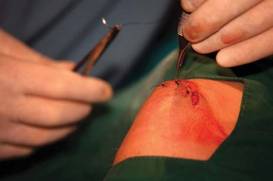
"Even if you don’t suture wounds in your office, I think it’s key to try to make sure that the emergency department near your office uses LET in wound repair for children. It’s an incredible agent. I’ve been using it for 20 years, and I know it has been around for longer than that. I’ve seen so many anxious kids who are scared to death of having a wound repair with suturing that have had a completely painless repair with LET without any injection whatsoever. To me it’s amazing that some hospitals still don’t use LET," said Dr. Selbst, who is chair of the executive committee of the American Academy of Pediatrics Section on Pediatric Emergency Medicine.
The advantages of pharmacist-compounded LET gel over commercially available anesthetic creams, such as eutectic mixture of local anesthetics (EMLA) and lidocaine 4% (LMX-4), include much lower cost and a good anesthetic response within 20-30 minutes after LET is applied. In contrast, EMLA requires 60 minutes of contact, making it less practical for laceration repair. LET is as effective as tetracaine, adrenaline, and cocaine (TAC) solution, but it costs less and has less morbidity, he said at the meeting.
Once the treated site shows blanching due to LET’s vasoconstrictive activity, the physician can proceed with pain-free suturing, even on the face and scalp.
The gel formulation of LET contains 10 mL of injectable lidocaine 20%, 5 mL of racemic epinephrine, 12.5 mL of tetracaine hydrochloride 2%, 31.5 mg of sodium metabisulfite, and methylcellulose gel 5% added in sufficient quantity to bring the total volume to 50 mL. The ingredients are stirred or shaken until completely mixed, which takes about 2-3 minutes.
The LET gel remains stable for 4 weeks at room temperature or for 6 months if refrigerated.

"You can apply the gel directly to the wound or put it on cotton gauze and tape it to the wound. Use a generous amount," Dr. Selbst said.
Numerous studies have documented that inadequate pain control is far more common in children with painful conditions than in adults. Children with lower-extremity fractures, serious burns, or sickle cell crises were less than half as likely to get analgesics in the emergency department, compared with adults with the same conditions, according to an earlier study done by Dr. Selbst and a colleague. They also found that kids younger than 2 years got analgesics less frequently than older children (Ann. Emerg. Med. 1990;19:1010-3).
Recent studies indicate this gap has narrowed somewhat, although inadequate dosing of analgesics in children continues to be a problem. Possible explanations include the inability of infants and young children to verbalize, the disproved myth that babies don’t feel or remember pain, and fear of causing respiratory depression or addiction, although there is no evidence that giving a single dose of a narcotic for an acute painful condition is associated with an increased risk of addiction, Dr. Selbst emphasized.
He reported having no financial conflicts.
STEAMBOAT SPRINGS, COLO. – Make lidocaine, epinephrine, and tetracaine gel your choice for pain control when repairing lacerations in children, Dr. Steven M. Selbst said.
Adoption of LET gel for routine use in wound repair may be the single most important change in practice that physicians can make in terms of analgesia for children, said Dr. Steven M. Selbst, professor and vice chair of pediatrics at Jefferson Medical College, Philadelphia.
"Even if you don’t suture wounds in your office, I think it’s key to try to make sure that the emergency department near your office uses LET in wound repair for children. It’s an incredible agent. I’ve been using it for 20 years, and I know it has been around for longer than that. I’ve seen so many anxious kids who are scared to death of having a wound repair with suturing that have had a completely painless repair with LET without any injection whatsoever. To me it’s amazing that some hospitals still don’t use LET," said Dr. Selbst, who is chair of the executive committee of the American Academy of Pediatrics Section on Pediatric Emergency Medicine.
The advantages of pharmacist-compounded LET gel over commercially available anesthetic creams, such as eutectic mixture of local anesthetics (EMLA) and lidocaine 4% (LMX-4), include much lower cost and a good anesthetic response within 20-30 minutes after LET is applied. In contrast, EMLA requires 60 minutes of contact, making it less practical for laceration repair. LET is as effective as tetracaine, adrenaline, and cocaine (TAC) solution, but it costs less and has less morbidity, he said at the meeting.
Once the treated site shows blanching due to LET’s vasoconstrictive activity, the physician can proceed with pain-free suturing, even on the face and scalp.
The gel formulation of LET contains 10 mL of injectable lidocaine 20%, 5 mL of racemic epinephrine, 12.5 mL of tetracaine hydrochloride 2%, 31.5 mg of sodium metabisulfite, and methylcellulose gel 5% added in sufficient quantity to bring the total volume to 50 mL. The ingredients are stirred or shaken until completely mixed, which takes about 2-3 minutes.
The LET gel remains stable for 4 weeks at room temperature or for 6 months if refrigerated.
"You can apply the gel directly to the wound or put it on cotton gauze and tape it to the wound. Use a generous amount," Dr. Selbst said.
Numerous studies have documented that inadequate pain control is far more common in children with painful conditions than in adults. Children with lower-extremity fractures, serious burns, or sickle cell crises were less than half as likely to get analgesics in the emergency department, compared with adults with the same conditions, according to an earlier study done by Dr. Selbst and a colleague. They also found that kids younger than 2 years got analgesics less frequently than older children (Ann. Emerg. Med. 1990;19:1010-3).
Recent studies indicate this gap has narrowed somewhat, although inadequate dosing of analgesics in children continues to be a problem. Possible explanations include the inability of infants and young children to verbalize, the disproved myth that babies don’t feel or remember pain, and fear of causing respiratory depression or addiction, although there is no evidence that giving a single dose of a narcotic for an acute painful condition is associated with an increased risk of addiction, Dr. Selbst emphasized.
He reported having no financial conflicts.
STEAMBOAT SPRINGS, COLO. – Make lidocaine, epinephrine, and tetracaine gel your choice for pain control when repairing lacerations in children, Dr. Steven M. Selbst said.
Adoption of LET gel for routine use in wound repair may be the single most important change in practice that physicians can make in terms of analgesia for children, said Dr. Steven M. Selbst, professor and vice chair of pediatrics at Jefferson Medical College, Philadelphia.
"Even if you don’t suture wounds in your office, I think it’s key to try to make sure that the emergency department near your office uses LET in wound repair for children. It’s an incredible agent. I’ve been using it for 20 years, and I know it has been around for longer than that. I’ve seen so many anxious kids who are scared to death of having a wound repair with suturing that have had a completely painless repair with LET without any injection whatsoever. To me it’s amazing that some hospitals still don’t use LET," said Dr. Selbst, who is chair of the executive committee of the American Academy of Pediatrics Section on Pediatric Emergency Medicine.
The advantages of pharmacist-compounded LET gel over commercially available anesthetic creams, such as eutectic mixture of local anesthetics (EMLA) and lidocaine 4% (LMX-4), include much lower cost and a good anesthetic response within 20-30 minutes after LET is applied. In contrast, EMLA requires 60 minutes of contact, making it less practical for laceration repair. LET is as effective as tetracaine, adrenaline, and cocaine (TAC) solution, but it costs less and has less morbidity, he said at the meeting.
Once the treated site shows blanching due to LET’s vasoconstrictive activity, the physician can proceed with pain-free suturing, even on the face and scalp.
The gel formulation of LET contains 10 mL of injectable lidocaine 20%, 5 mL of racemic epinephrine, 12.5 mL of tetracaine hydrochloride 2%, 31.5 mg of sodium metabisulfite, and methylcellulose gel 5% added in sufficient quantity to bring the total volume to 50 mL. The ingredients are stirred or shaken until completely mixed, which takes about 2-3 minutes.
The LET gel remains stable for 4 weeks at room temperature or for 6 months if refrigerated.
"You can apply the gel directly to the wound or put it on cotton gauze and tape it to the wound. Use a generous amount," Dr. Selbst said.
Numerous studies have documented that inadequate pain control is far more common in children with painful conditions than in adults. Children with lower-extremity fractures, serious burns, or sickle cell crises were less than half as likely to get analgesics in the emergency department, compared with adults with the same conditions, according to an earlier study done by Dr. Selbst and a colleague. They also found that kids younger than 2 years got analgesics less frequently than older children (Ann. Emerg. Med. 1990;19:1010-3).
Recent studies indicate this gap has narrowed somewhat, although inadequate dosing of analgesics in children continues to be a problem. Possible explanations include the inability of infants and young children to verbalize, the disproved myth that babies don’t feel or remember pain, and fear of causing respiratory depression or addiction, although there is no evidence that giving a single dose of a narcotic for an acute painful condition is associated with an increased risk of addiction, Dr. Selbst emphasized.
He reported having no financial conflicts.
A MEETING ON PRACTICAL PEDIATRICS SPONSORED BY THE AMERICAN ACADEMY OF PEDIATRICS