User login
Hospital Costs for Inpatients with Septicemia Total $20.3 Billion in 2011
Total annual cost of hospital care for septicemia (excluding patients in labor) in U.S. hospitals in 2011.
The figure represents 1.094 million discharges. It’s the first among 20 big-ticket medical conditions listed in an August 2013 Agency for Healthcare Research and Quality Statistical Brief, highlighted in Becker’s Hospital Review.3,4
Other high-cost conditions on the list were osteoarthritis ($14.8 billion; 964,000 discharges); complications of device, implement, or graft (12.9 billion; 699,000 discharges); and general childbirth (12.4 billion; 3,819,000).
References
- Chang W, Maynard G, Clay B. Implementation of a computerized COPD inpatient pathway and transition pathway [abstract]. J Hosp Med. 2013;8 Suppl 1:709.
- Schmitt S, McQuillen DP, Nahass R, et al. Infectious diseases specialty intervention is associated with decreased mortality and lower healthcare costs [published online ahead of print September 25, 2013]. Clin Infect Dis.
- Torio CM, Andrews RM. National inpatient hospital costs: the most expensive conditions by payer, 2011. Healthcare Cost and Utilization Project Statistical Brief #160. Available at: http://www.hcup-us.ahrq.gov/reports/statbriefs/sb160.jsp. Accessed October 26, 2013.
- Herman B. Top 20 most expensive inpatient conditions. Becker’s Hospital Review. Oct. 9, 2013. Available at: http://www.beckershospitalreview.com/racs-/-icd-9-/-icd-10/top-20-most-expensive-inpatient-conditions.html. Accessed October 26, 2013.
Total annual cost of hospital care for septicemia (excluding patients in labor) in U.S. hospitals in 2011.
The figure represents 1.094 million discharges. It’s the first among 20 big-ticket medical conditions listed in an August 2013 Agency for Healthcare Research and Quality Statistical Brief, highlighted in Becker’s Hospital Review.3,4
Other high-cost conditions on the list were osteoarthritis ($14.8 billion; 964,000 discharges); complications of device, implement, or graft (12.9 billion; 699,000 discharges); and general childbirth (12.4 billion; 3,819,000).
References
- Chang W, Maynard G, Clay B. Implementation of a computerized COPD inpatient pathway and transition pathway [abstract]. J Hosp Med. 2013;8 Suppl 1:709.
- Schmitt S, McQuillen DP, Nahass R, et al. Infectious diseases specialty intervention is associated with decreased mortality and lower healthcare costs [published online ahead of print September 25, 2013]. Clin Infect Dis.
- Torio CM, Andrews RM. National inpatient hospital costs: the most expensive conditions by payer, 2011. Healthcare Cost and Utilization Project Statistical Brief #160. Available at: http://www.hcup-us.ahrq.gov/reports/statbriefs/sb160.jsp. Accessed October 26, 2013.
- Herman B. Top 20 most expensive inpatient conditions. Becker’s Hospital Review. Oct. 9, 2013. Available at: http://www.beckershospitalreview.com/racs-/-icd-9-/-icd-10/top-20-most-expensive-inpatient-conditions.html. Accessed October 26, 2013.
Total annual cost of hospital care for septicemia (excluding patients in labor) in U.S. hospitals in 2011.
The figure represents 1.094 million discharges. It’s the first among 20 big-ticket medical conditions listed in an August 2013 Agency for Healthcare Research and Quality Statistical Brief, highlighted in Becker’s Hospital Review.3,4
Other high-cost conditions on the list were osteoarthritis ($14.8 billion; 964,000 discharges); complications of device, implement, or graft (12.9 billion; 699,000 discharges); and general childbirth (12.4 billion; 3,819,000).
References
- Chang W, Maynard G, Clay B. Implementation of a computerized COPD inpatient pathway and transition pathway [abstract]. J Hosp Med. 2013;8 Suppl 1:709.
- Schmitt S, McQuillen DP, Nahass R, et al. Infectious diseases specialty intervention is associated with decreased mortality and lower healthcare costs [published online ahead of print September 25, 2013]. Clin Infect Dis.
- Torio CM, Andrews RM. National inpatient hospital costs: the most expensive conditions by payer, 2011. Healthcare Cost and Utilization Project Statistical Brief #160. Available at: http://www.hcup-us.ahrq.gov/reports/statbriefs/sb160.jsp. Accessed October 26, 2013.
- Herman B. Top 20 most expensive inpatient conditions. Becker’s Hospital Review. Oct. 9, 2013. Available at: http://www.beckershospitalreview.com/racs-/-icd-9-/-icd-10/top-20-most-expensive-inpatient-conditions.html. Accessed October 26, 2013.
Nocturnists Vital For Hospitalist Group Continuity, Physician Retention

Having nocturnist coverage in your practice is a coveted position to be in for many hospital medicine providers. Rick Washington, MD, medical director for WellStar Kennestone Hospital in Marietta, Ga., says that “not only does it make it easier to recruit and retain daytime physicians when you have nocturnists as a part of your program, but they also serve a very valuable role in the continuity of the program throughout the nighttime hours, providing a stable admitting presence in the emergency department at all times.”
According to the 2012 State of Hospital Medicine Report, nearly half of all hospital medicine groups (HMGs) serving adults only incorporate nocturnists into their programs. Nocturnists are most common in HMGs employed by universities or medical schools (67%) and hospitals/integrated delivery systems (50%). The prevalence among management company-employed groups is much lower (25%), and no data was available for multispecialty groups or private hospitalist-only groups (see Figure 1).
As could be expected, the prevalence of nocturnists increases dramatically as the number of total FTEs of the practice increases. As the number of patients on a service, and thus the number of FTEs, grows, so does the expectation to provide on-site night coverage.
The percentage of compensation paid as base salary also has an impact; in general, the higher the percentage of compensation in base salary, the more likely that practice is to have nocturnists. Typically, night shifts tend to be less productive from a billable encounter perspective, so having a base rate of pay tends to be an essential factor in successfully maintaining nocturnists.

However, surprisingly, in the 63% of groups that reported paying a nocturnist differential, the clinicians earned only a median of 15% more in total compensation than their non-nocturnist counterparts. Perhaps this has to do with other factors that programs are utilizing in order to entice and retain nocturnists, which includes the possibility of doing fewer shifts or shorter shifts than their colleagues. In fact, 49% of respondent groups reported implementing a nocturnist schedule differential, most commonly in the range of one to 20% fewer shifts than non-nocturnist hospitalists in the same practice.
Other practices implement a schedule differential by shortening the length of nocturnist shifts, instead of reducing the number of shifts worked.
“For me, the key to doing this long term has been the ability to have an eight-hour shift rather than 12 hours,” says Dr. Nancy Maignan, who soon will celebrate five years as a nocturnist at WellStar Kennestone Hospital. “Another factor is flexibility with our schedule. We do not work 7-on/7-off. My schedule is dependent on my family’s schedule…this allows me to attend field trips and be off for most of their [her kids] school break.”
Although she points out that a supportive family is crucial, a supportive HMG is key. I would encourage groups thinking of implementing a nocturnist role to think carefully about how to make the job one that hospitalists can successfully do for a long time, rather than just trying to attract people to the role by making it financially lucrative.
Beth Papetti is assistant vice president of WellStar Medical Group in Marrietta, Ga. She is a member of SHM’s Practice Analysis Committee.
Having nocturnist coverage in your practice is a coveted position to be in for many hospital medicine providers. Rick Washington, MD, medical director for WellStar Kennestone Hospital in Marietta, Ga., says that “not only does it make it easier to recruit and retain daytime physicians when you have nocturnists as a part of your program, but they also serve a very valuable role in the continuity of the program throughout the nighttime hours, providing a stable admitting presence in the emergency department at all times.”
According to the 2012 State of Hospital Medicine Report, nearly half of all hospital medicine groups (HMGs) serving adults only incorporate nocturnists into their programs. Nocturnists are most common in HMGs employed by universities or medical schools (67%) and hospitals/integrated delivery systems (50%). The prevalence among management company-employed groups is much lower (25%), and no data was available for multispecialty groups or private hospitalist-only groups (see Figure 1).
As could be expected, the prevalence of nocturnists increases dramatically as the number of total FTEs of the practice increases. As the number of patients on a service, and thus the number of FTEs, grows, so does the expectation to provide on-site night coverage.
The percentage of compensation paid as base salary also has an impact; in general, the higher the percentage of compensation in base salary, the more likely that practice is to have nocturnists. Typically, night shifts tend to be less productive from a billable encounter perspective, so having a base rate of pay tends to be an essential factor in successfully maintaining nocturnists.
However, surprisingly, in the 63% of groups that reported paying a nocturnist differential, the clinicians earned only a median of 15% more in total compensation than their non-nocturnist counterparts. Perhaps this has to do with other factors that programs are utilizing in order to entice and retain nocturnists, which includes the possibility of doing fewer shifts or shorter shifts than their colleagues. In fact, 49% of respondent groups reported implementing a nocturnist schedule differential, most commonly in the range of one to 20% fewer shifts than non-nocturnist hospitalists in the same practice.
Other practices implement a schedule differential by shortening the length of nocturnist shifts, instead of reducing the number of shifts worked.
“For me, the key to doing this long term has been the ability to have an eight-hour shift rather than 12 hours,” says Dr. Nancy Maignan, who soon will celebrate five years as a nocturnist at WellStar Kennestone Hospital. “Another factor is flexibility with our schedule. We do not work 7-on/7-off. My schedule is dependent on my family’s schedule…this allows me to attend field trips and be off for most of their [her kids] school break.”
Although she points out that a supportive family is crucial, a supportive HMG is key. I would encourage groups thinking of implementing a nocturnist role to think carefully about how to make the job one that hospitalists can successfully do for a long time, rather than just trying to attract people to the role by making it financially lucrative.
Beth Papetti is assistant vice president of WellStar Medical Group in Marrietta, Ga. She is a member of SHM’s Practice Analysis Committee.
Having nocturnist coverage in your practice is a coveted position to be in for many hospital medicine providers. Rick Washington, MD, medical director for WellStar Kennestone Hospital in Marietta, Ga., says that “not only does it make it easier to recruit and retain daytime physicians when you have nocturnists as a part of your program, but they also serve a very valuable role in the continuity of the program throughout the nighttime hours, providing a stable admitting presence in the emergency department at all times.”
According to the 2012 State of Hospital Medicine Report, nearly half of all hospital medicine groups (HMGs) serving adults only incorporate nocturnists into their programs. Nocturnists are most common in HMGs employed by universities or medical schools (67%) and hospitals/integrated delivery systems (50%). The prevalence among management company-employed groups is much lower (25%), and no data was available for multispecialty groups or private hospitalist-only groups (see Figure 1).
As could be expected, the prevalence of nocturnists increases dramatically as the number of total FTEs of the practice increases. As the number of patients on a service, and thus the number of FTEs, grows, so does the expectation to provide on-site night coverage.
The percentage of compensation paid as base salary also has an impact; in general, the higher the percentage of compensation in base salary, the more likely that practice is to have nocturnists. Typically, night shifts tend to be less productive from a billable encounter perspective, so having a base rate of pay tends to be an essential factor in successfully maintaining nocturnists.
However, surprisingly, in the 63% of groups that reported paying a nocturnist differential, the clinicians earned only a median of 15% more in total compensation than their non-nocturnist counterparts. Perhaps this has to do with other factors that programs are utilizing in order to entice and retain nocturnists, which includes the possibility of doing fewer shifts or shorter shifts than their colleagues. In fact, 49% of respondent groups reported implementing a nocturnist schedule differential, most commonly in the range of one to 20% fewer shifts than non-nocturnist hospitalists in the same practice.
Other practices implement a schedule differential by shortening the length of nocturnist shifts, instead of reducing the number of shifts worked.
“For me, the key to doing this long term has been the ability to have an eight-hour shift rather than 12 hours,” says Dr. Nancy Maignan, who soon will celebrate five years as a nocturnist at WellStar Kennestone Hospital. “Another factor is flexibility with our schedule. We do not work 7-on/7-off. My schedule is dependent on my family’s schedule…this allows me to attend field trips and be off for most of their [her kids] school break.”
Although she points out that a supportive family is crucial, a supportive HMG is key. I would encourage groups thinking of implementing a nocturnist role to think carefully about how to make the job one that hospitalists can successfully do for a long time, rather than just trying to attract people to the role by making it financially lucrative.
Beth Papetti is assistant vice president of WellStar Medical Group in Marrietta, Ga. She is a member of SHM’s Practice Analysis Committee.
Feds delay online enrollment in small business exchange for 1 year
Small employers seeking health insurance through the Affordable Care Act’s small business marketplace will have to wait another year to enroll online.
Officials at the Centers for Medicare and Medicaid Services (CMS) announced on Nov. 27 that online enrollment would be delayed until November 2014, though enrollment will continue through paper applications. Employers will also be able to sign up for insurance through insurance brokers or agents, and directly through health plans.
The administration delayed the Small Business Health Options Program (SHOP) Marketplace to prioritize fixes to healthcare.gov, the tech-plagued federal marketplace used by individuals purchasing insurance, according to Julie Bataille, director of CMS’ Office of Communications.
The SHOP Marketplace allows small businesses with 50 or fewer full-time-equivalent employees to choose health plan options. For 2014, employers will only be able to select one plan.
Businesses with 50 or fewer employees are not required to offer insurance under the Affordable Care Act, though their employees must have coverage in place by March 31, 2014, in order to avoid a penalty under the health law.
In the meantime, federal health officials said they are still "on track" to meet their self-imposed deadline of Nov. 30 for getting healthcare.gov working well for the vast majority of users. By the end of November, healthcare.gov will be able to handle about 50,000 users at one time and more than 800,000 over the course of a day. But officials also stressed that Nov. 30 does not represent a relaunch of the website.
"It is not a magical date," Ms. Bataille said.
Small employers seeking health insurance through the Affordable Care Act’s small business marketplace will have to wait another year to enroll online.
Officials at the Centers for Medicare and Medicaid Services (CMS) announced on Nov. 27 that online enrollment would be delayed until November 2014, though enrollment will continue through paper applications. Employers will also be able to sign up for insurance through insurance brokers or agents, and directly through health plans.
The administration delayed the Small Business Health Options Program (SHOP) Marketplace to prioritize fixes to healthcare.gov, the tech-plagued federal marketplace used by individuals purchasing insurance, according to Julie Bataille, director of CMS’ Office of Communications.
The SHOP Marketplace allows small businesses with 50 or fewer full-time-equivalent employees to choose health plan options. For 2014, employers will only be able to select one plan.
Businesses with 50 or fewer employees are not required to offer insurance under the Affordable Care Act, though their employees must have coverage in place by March 31, 2014, in order to avoid a penalty under the health law.
In the meantime, federal health officials said they are still "on track" to meet their self-imposed deadline of Nov. 30 for getting healthcare.gov working well for the vast majority of users. By the end of November, healthcare.gov will be able to handle about 50,000 users at one time and more than 800,000 over the course of a day. But officials also stressed that Nov. 30 does not represent a relaunch of the website.
"It is not a magical date," Ms. Bataille said.
Small employers seeking health insurance through the Affordable Care Act’s small business marketplace will have to wait another year to enroll online.
Officials at the Centers for Medicare and Medicaid Services (CMS) announced on Nov. 27 that online enrollment would be delayed until November 2014, though enrollment will continue through paper applications. Employers will also be able to sign up for insurance through insurance brokers or agents, and directly through health plans.
The administration delayed the Small Business Health Options Program (SHOP) Marketplace to prioritize fixes to healthcare.gov, the tech-plagued federal marketplace used by individuals purchasing insurance, according to Julie Bataille, director of CMS’ Office of Communications.
The SHOP Marketplace allows small businesses with 50 or fewer full-time-equivalent employees to choose health plan options. For 2014, employers will only be able to select one plan.
Businesses with 50 or fewer employees are not required to offer insurance under the Affordable Care Act, though their employees must have coverage in place by March 31, 2014, in order to avoid a penalty under the health law.
In the meantime, federal health officials said they are still "on track" to meet their self-imposed deadline of Nov. 30 for getting healthcare.gov working well for the vast majority of users. By the end of November, healthcare.gov will be able to handle about 50,000 users at one time and more than 800,000 over the course of a day. But officials also stressed that Nov. 30 does not represent a relaunch of the website.
"It is not a magical date," Ms. Bataille said.
Point/Counterpoint: Will Choosing Wisely improve quality of care?
Campaign pushes doctors to be the best
"YES"
Of all the tools at a physician’s disposal, the pen – and now the mouse – is among the most powerful. In a system that rewards physicians for doing more, it is no surprise that more is done. More tests and more procedures – often leading to more waste and more potential harm to patients.
In the Choosing Wisely campaign, I see professionalism at its highest level, as the campaign calls on physicians to be the very best doctors they can be for their patients. Nearly 60 societies have joined; by early next year, they will have issued more than 300 recommendations of tests and procedures they say are overused or unnecessary, based on the latest research and evidence. While we strive to embody professional values, clearly there are many areas in which we are doing things that do not benefit our patients.

Can Choosing Wisely improve quality of care? It already is. Systems are beginning to embed conversations on overuse—the aspiration of the campaign—into their cultures through electronic health records (EHR) and other constructs. For example, Cedars-Sinai Medical Center has incorporated 120 Choosing Wisely recommendations into its EHR system. When a physician orders tests, procedures, or medications that may be unwarranted or pose unnecessary risks, the system alerts the physician and provides information on the relevant Choosing Wisely recommendation.
Inspired by the campaign, Kaiser Permanente conducted an institutional review and has launched projects to reduce overuse of imaging in five areas: for uncomplicated headaches; of carotids for syncope without neurologic symptoms; for low back pain; for adnexal cysts; and for pulmonary embolism with low probability. In those areas, it is performing chart reviews to determine how widespread overuse really is. In the case of imaging for uncomplicated headaches, Kaiser Permanente found that 25% of employed physicians’ orders were unnecessary.
These are just two examples, and we are hearing many more as additional organizations join the effort and the ABIM Foundation’s 22 grantees advance projects in their communities.
There are some critics that say the campaign should address liability or tort reform. Those criticisms are misdirected—that’s not what Choosing Wisely is about. It is about conversations between physicians and patients aimed at getting the best care possible.
Choosing Wisely will help improve quality of care because it allows us – physicians and patients together – to find common ground by identifying areas in which we can avoid harm and helping change the mindset "more is better."
Reducing waste and improving care is complicated, but I am optimistic we are headed in the right direction. Physician leadership exemplified by Choosing Wisely has created spaces for us to have productive conversations about how we can work together to provide better care to all.
Dr. Richard Baron is the president and CEO of the ABIM Foundation, which spearheads the "Choosing Wisely" campaign.
Campaign lacks standard for ‘unnecessary’
"NO"
The Choosing Wisely campaign has the noble intent of trying to improve the quality of medical care in this country by decreasing the amount of unnecessary testing being performed. Many Choosing Wisely recommendations appear reasonable, yet many other recommendations may decrease the quality of medical care while increasing legal liability.
Perhaps the biggest flaw in the Choosing Wisely initiative is a lack of uniform metrics. It is easy to assert that a test is unnecessary, but what criteria are used to reliably and prospectively define what is necessary? Cost basis? Sensitivity? Negative predictive value? Failing to have a standard definition for "unnecessary" medical care invites hindsight bias into the determination of a test’s utility. Similarly, it is disingenuous to assert that Choosing Wisely will enhance the quality of medical care without first defining and vetting specific quality benchmarks. How can we improve quality when we haven’t even defined quality?

While some Choosing Wisely recommendations have a clear benefit (antibiotics just won’t cure children’s coughs), clinicians who follow other Choosing Wisely recommendations will inevitably miss more heart attacks, more pulmonary emboli, and more treatable cancers. Of course, the number of diagnostic misses will amount to only a small percentage of patients who would have otherwise received the unnecessary testing, but with more than 1 billion yearly outpatient medical visits in this country, that small percentage may total tens of thousands of patients with potential adverse outcomes caused by following Choosing Wisely recommendations.
According to the Institute of Medicine, up to 98,000 patients die from avoidable medical errors each year. Missed diagnoses account not only for a substantial portion of those avoidable deaths but are also the most common cause of malpractice litigation in the United States. Rest assured that when a physician withholds testing to decrease government expenditures, few state medical boards, fewer juries, and no patients will deem it "quality" medical care when a diagnosis is missed. We won’t convince the public that a preventable death from an undiagnosed pulmonary embolism resulted from adherence to a "quality" initiative. When bad outcomes occur, patients won’t thank us for being stewards of medical resources.
Fortunately, an increase in the overall quality of medical care should decrease legal liability, right? Perhaps not. Rather than inspiring confidence that use of its recommendations will save costs, improve quality, and decrease harm, Choosing Wisely acknowledges the opposite by trying to impose added liability for using its recommendations on the very people whose decision making it seeks to change. "The use of this report is at your own risk ... the ABIM Foundation ... [is] not liable for any loss, injury, or other damage related to your use of this report."
The Choosing Wisely site has many thoughtful recommendations, but don’t be misled: Many Choosing Wisely guidelines are more concerned with cost reduction than they are with quality improvement, regardless of the definition of "quality" we choose to use.
Dr. William Sullivan is an emergency physician, a past president of the Illinois College of Emergency Physicians, and has a private law practice in Frankfort, Ill.
Campaign pushes doctors to be the best
"YES"
Of all the tools at a physician’s disposal, the pen – and now the mouse – is among the most powerful. In a system that rewards physicians for doing more, it is no surprise that more is done. More tests and more procedures – often leading to more waste and more potential harm to patients.
In the Choosing Wisely campaign, I see professionalism at its highest level, as the campaign calls on physicians to be the very best doctors they can be for their patients. Nearly 60 societies have joined; by early next year, they will have issued more than 300 recommendations of tests and procedures they say are overused or unnecessary, based on the latest research and evidence. While we strive to embody professional values, clearly there are many areas in which we are doing things that do not benefit our patients.
Can Choosing Wisely improve quality of care? It already is. Systems are beginning to embed conversations on overuse—the aspiration of the campaign—into their cultures through electronic health records (EHR) and other constructs. For example, Cedars-Sinai Medical Center has incorporated 120 Choosing Wisely recommendations into its EHR system. When a physician orders tests, procedures, or medications that may be unwarranted or pose unnecessary risks, the system alerts the physician and provides information on the relevant Choosing Wisely recommendation.
Inspired by the campaign, Kaiser Permanente conducted an institutional review and has launched projects to reduce overuse of imaging in five areas: for uncomplicated headaches; of carotids for syncope without neurologic symptoms; for low back pain; for adnexal cysts; and for pulmonary embolism with low probability. In those areas, it is performing chart reviews to determine how widespread overuse really is. In the case of imaging for uncomplicated headaches, Kaiser Permanente found that 25% of employed physicians’ orders were unnecessary.
These are just two examples, and we are hearing many more as additional organizations join the effort and the ABIM Foundation’s 22 grantees advance projects in their communities.
There are some critics that say the campaign should address liability or tort reform. Those criticisms are misdirected—that’s not what Choosing Wisely is about. It is about conversations between physicians and patients aimed at getting the best care possible.
Choosing Wisely will help improve quality of care because it allows us – physicians and patients together – to find common ground by identifying areas in which we can avoid harm and helping change the mindset "more is better."
Reducing waste and improving care is complicated, but I am optimistic we are headed in the right direction. Physician leadership exemplified by Choosing Wisely has created spaces for us to have productive conversations about how we can work together to provide better care to all.
Dr. Richard Baron is the president and CEO of the ABIM Foundation, which spearheads the "Choosing Wisely" campaign.
Campaign lacks standard for ‘unnecessary’
"NO"
The Choosing Wisely campaign has the noble intent of trying to improve the quality of medical care in this country by decreasing the amount of unnecessary testing being performed. Many Choosing Wisely recommendations appear reasonable, yet many other recommendations may decrease the quality of medical care while increasing legal liability.
Perhaps the biggest flaw in the Choosing Wisely initiative is a lack of uniform metrics. It is easy to assert that a test is unnecessary, but what criteria are used to reliably and prospectively define what is necessary? Cost basis? Sensitivity? Negative predictive value? Failing to have a standard definition for "unnecessary" medical care invites hindsight bias into the determination of a test’s utility. Similarly, it is disingenuous to assert that Choosing Wisely will enhance the quality of medical care without first defining and vetting specific quality benchmarks. How can we improve quality when we haven’t even defined quality?
While some Choosing Wisely recommendations have a clear benefit (antibiotics just won’t cure children’s coughs), clinicians who follow other Choosing Wisely recommendations will inevitably miss more heart attacks, more pulmonary emboli, and more treatable cancers. Of course, the number of diagnostic misses will amount to only a small percentage of patients who would have otherwise received the unnecessary testing, but with more than 1 billion yearly outpatient medical visits in this country, that small percentage may total tens of thousands of patients with potential adverse outcomes caused by following Choosing Wisely recommendations.
According to the Institute of Medicine, up to 98,000 patients die from avoidable medical errors each year. Missed diagnoses account not only for a substantial portion of those avoidable deaths but are also the most common cause of malpractice litigation in the United States. Rest assured that when a physician withholds testing to decrease government expenditures, few state medical boards, fewer juries, and no patients will deem it "quality" medical care when a diagnosis is missed. We won’t convince the public that a preventable death from an undiagnosed pulmonary embolism resulted from adherence to a "quality" initiative. When bad outcomes occur, patients won’t thank us for being stewards of medical resources.
Fortunately, an increase in the overall quality of medical care should decrease legal liability, right? Perhaps not. Rather than inspiring confidence that use of its recommendations will save costs, improve quality, and decrease harm, Choosing Wisely acknowledges the opposite by trying to impose added liability for using its recommendations on the very people whose decision making it seeks to change. "The use of this report is at your own risk ... the ABIM Foundation ... [is] not liable for any loss, injury, or other damage related to your use of this report."
The Choosing Wisely site has many thoughtful recommendations, but don’t be misled: Many Choosing Wisely guidelines are more concerned with cost reduction than they are with quality improvement, regardless of the definition of "quality" we choose to use.
Dr. William Sullivan is an emergency physician, a past president of the Illinois College of Emergency Physicians, and has a private law practice in Frankfort, Ill.
Campaign pushes doctors to be the best
"YES"
Of all the tools at a physician’s disposal, the pen – and now the mouse – is among the most powerful. In a system that rewards physicians for doing more, it is no surprise that more is done. More tests and more procedures – often leading to more waste and more potential harm to patients.
In the Choosing Wisely campaign, I see professionalism at its highest level, as the campaign calls on physicians to be the very best doctors they can be for their patients. Nearly 60 societies have joined; by early next year, they will have issued more than 300 recommendations of tests and procedures they say are overused or unnecessary, based on the latest research and evidence. While we strive to embody professional values, clearly there are many areas in which we are doing things that do not benefit our patients.
Can Choosing Wisely improve quality of care? It already is. Systems are beginning to embed conversations on overuse—the aspiration of the campaign—into their cultures through electronic health records (EHR) and other constructs. For example, Cedars-Sinai Medical Center has incorporated 120 Choosing Wisely recommendations into its EHR system. When a physician orders tests, procedures, or medications that may be unwarranted or pose unnecessary risks, the system alerts the physician and provides information on the relevant Choosing Wisely recommendation.
Inspired by the campaign, Kaiser Permanente conducted an institutional review and has launched projects to reduce overuse of imaging in five areas: for uncomplicated headaches; of carotids for syncope without neurologic symptoms; for low back pain; for adnexal cysts; and for pulmonary embolism with low probability. In those areas, it is performing chart reviews to determine how widespread overuse really is. In the case of imaging for uncomplicated headaches, Kaiser Permanente found that 25% of employed physicians’ orders were unnecessary.
These are just two examples, and we are hearing many more as additional organizations join the effort and the ABIM Foundation’s 22 grantees advance projects in their communities.
There are some critics that say the campaign should address liability or tort reform. Those criticisms are misdirected—that’s not what Choosing Wisely is about. It is about conversations between physicians and patients aimed at getting the best care possible.
Choosing Wisely will help improve quality of care because it allows us – physicians and patients together – to find common ground by identifying areas in which we can avoid harm and helping change the mindset "more is better."
Reducing waste and improving care is complicated, but I am optimistic we are headed in the right direction. Physician leadership exemplified by Choosing Wisely has created spaces for us to have productive conversations about how we can work together to provide better care to all.
Dr. Richard Baron is the president and CEO of the ABIM Foundation, which spearheads the "Choosing Wisely" campaign.
Campaign lacks standard for ‘unnecessary’
"NO"
The Choosing Wisely campaign has the noble intent of trying to improve the quality of medical care in this country by decreasing the amount of unnecessary testing being performed. Many Choosing Wisely recommendations appear reasonable, yet many other recommendations may decrease the quality of medical care while increasing legal liability.
Perhaps the biggest flaw in the Choosing Wisely initiative is a lack of uniform metrics. It is easy to assert that a test is unnecessary, but what criteria are used to reliably and prospectively define what is necessary? Cost basis? Sensitivity? Negative predictive value? Failing to have a standard definition for "unnecessary" medical care invites hindsight bias into the determination of a test’s utility. Similarly, it is disingenuous to assert that Choosing Wisely will enhance the quality of medical care without first defining and vetting specific quality benchmarks. How can we improve quality when we haven’t even defined quality?
While some Choosing Wisely recommendations have a clear benefit (antibiotics just won’t cure children’s coughs), clinicians who follow other Choosing Wisely recommendations will inevitably miss more heart attacks, more pulmonary emboli, and more treatable cancers. Of course, the number of diagnostic misses will amount to only a small percentage of patients who would have otherwise received the unnecessary testing, but with more than 1 billion yearly outpatient medical visits in this country, that small percentage may total tens of thousands of patients with potential adverse outcomes caused by following Choosing Wisely recommendations.
According to the Institute of Medicine, up to 98,000 patients die from avoidable medical errors each year. Missed diagnoses account not only for a substantial portion of those avoidable deaths but are also the most common cause of malpractice litigation in the United States. Rest assured that when a physician withholds testing to decrease government expenditures, few state medical boards, fewer juries, and no patients will deem it "quality" medical care when a diagnosis is missed. We won’t convince the public that a preventable death from an undiagnosed pulmonary embolism resulted from adherence to a "quality" initiative. When bad outcomes occur, patients won’t thank us for being stewards of medical resources.
Fortunately, an increase in the overall quality of medical care should decrease legal liability, right? Perhaps not. Rather than inspiring confidence that use of its recommendations will save costs, improve quality, and decrease harm, Choosing Wisely acknowledges the opposite by trying to impose added liability for using its recommendations on the very people whose decision making it seeks to change. "The use of this report is at your own risk ... the ABIM Foundation ... [is] not liable for any loss, injury, or other damage related to your use of this report."
The Choosing Wisely site has many thoughtful recommendations, but don’t be misled: Many Choosing Wisely guidelines are more concerned with cost reduction than they are with quality improvement, regardless of the definition of "quality" we choose to use.
Dr. William Sullivan is an emergency physician, a past president of the Illinois College of Emergency Physicians, and has a private law practice in Frankfort, Ill.

Can Congress fix the SGR this year?
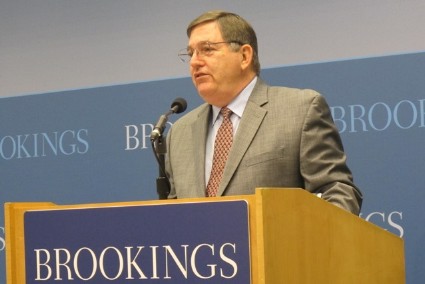
WASHINGTON – Once again, Congress will likely scramble at year’s end to make a last-minute decision on the Medicare Sustainable Growth Rate formula, Rep. Michael Burgess (R-Texas) said at a forum on physician payment.
Although the House Energy and Commerce committee passed an SGR replacement bill in July, the Senate Finance committee is slated to make final changes its proposal by early December, said Rep. Burgess, an ob.gyn.
Rep. Burgess is the lead sponsor of the Energy and Commerce Committee bill, the Medicare Patient Access and Quality Improvement Act of 2013. If enacted, that legislation would replace the SGR with a 0.5% payment increase for physicians from 2014 through 2018. It would continue to support fee-for-service medicine, but also encourage the formation of new delivery models and reward reporting of quality data.

The December timeline in the Senate "is going to push us pretty close to the deadline, and that’s once again a very uncomfortable place to be," he said, adding that the House is scheduled to recess on Dec. 13.
Even if the Finance Committee approves its proposal, which was developed with the House Ways and Means Committee, the legislation would have to be reconciled with the Energy and Commerce bill. One key difference: The Finance/Ways and Means proposal would freeze physician payments for 10 years, which physician groups oppose.
Any final bill would then have to be approved by both the full House and full Senate – all of which would have to be accomplished before year’s end, since the SGR calls for a 25% cut in Medicare fees on Jan. 1. The tight timeframe raises the specter of a temporary deal – or a patch – to avoid the cut.
"A patch would look a lot like the opposite of success to me," Rep. Burgess said. He added that "as long as we are moving in the right direction, I won’t say no to a patch."
He said that he would not approve of such a deal if it was struck solely because Congress had not worked hard enough to achieve a meaningful SGR replacement.
Rep. Burgess noted that the cost of repeal – estimated at $150 billion to $200 billion over 10 years – is about the same as is already being spent each year just to avoid the statutory cuts.
Congressional leaders have yet to discuss how to pay for an SGR fix, he said, because they want to first develop a policy on which legislators, doctors, and the Centers for Medicare and Medicaid Services can agree. He acknowledged that finding a funding mechanism would be painful but should not derail SGR replacement efforts.
Figuring out how to reform physician payment going forward remains a thorny issue, according to congressional staff members at the forum.
Legislators understand from their constituents that many physicians aren’t ready to move away from fee-for-service medicine, so they have been wrestling with how to create incentives to embrace alternative payment systems and quality measures.
Staff members urged physicians to unify around the proposals in front of Congress now. "It’s awfully important for the physician community to say ‘we actually like this, we think this works, we think we should do this,’ " said Dan Todd, who works on the Senate Finance Committee’s Republican staff.
Getting the final bill right is critically important as well, said Amy Hall, who works on the House Ways and Means Committee’s Democratic staff. "We don’t want to be back here in 5 years repealing the SGR repeal bill."
On Twitter @aliciaault
WASHINGTON – Once again, Congress will likely scramble at year’s end to make a last-minute decision on the Medicare Sustainable Growth Rate formula, Rep. Michael Burgess (R-Texas) said at a forum on physician payment.
Although the House Energy and Commerce committee passed an SGR replacement bill in July, the Senate Finance committee is slated to make final changes its proposal by early December, said Rep. Burgess, an ob.gyn.
Rep. Burgess is the lead sponsor of the Energy and Commerce Committee bill, the Medicare Patient Access and Quality Improvement Act of 2013. If enacted, that legislation would replace the SGR with a 0.5% payment increase for physicians from 2014 through 2018. It would continue to support fee-for-service medicine, but also encourage the formation of new delivery models and reward reporting of quality data.
The December timeline in the Senate "is going to push us pretty close to the deadline, and that’s once again a very uncomfortable place to be," he said, adding that the House is scheduled to recess on Dec. 13.
Even if the Finance Committee approves its proposal, which was developed with the House Ways and Means Committee, the legislation would have to be reconciled with the Energy and Commerce bill. One key difference: The Finance/Ways and Means proposal would freeze physician payments for 10 years, which physician groups oppose.
Any final bill would then have to be approved by both the full House and full Senate – all of which would have to be accomplished before year’s end, since the SGR calls for a 25% cut in Medicare fees on Jan. 1. The tight timeframe raises the specter of a temporary deal – or a patch – to avoid the cut.
"A patch would look a lot like the opposite of success to me," Rep. Burgess said. He added that "as long as we are moving in the right direction, I won’t say no to a patch."
He said that he would not approve of such a deal if it was struck solely because Congress had not worked hard enough to achieve a meaningful SGR replacement.
Rep. Burgess noted that the cost of repeal – estimated at $150 billion to $200 billion over 10 years – is about the same as is already being spent each year just to avoid the statutory cuts.
Congressional leaders have yet to discuss how to pay for an SGR fix, he said, because they want to first develop a policy on which legislators, doctors, and the Centers for Medicare and Medicaid Services can agree. He acknowledged that finding a funding mechanism would be painful but should not derail SGR replacement efforts.
Figuring out how to reform physician payment going forward remains a thorny issue, according to congressional staff members at the forum.
Legislators understand from their constituents that many physicians aren’t ready to move away from fee-for-service medicine, so they have been wrestling with how to create incentives to embrace alternative payment systems and quality measures.
Staff members urged physicians to unify around the proposals in front of Congress now. "It’s awfully important for the physician community to say ‘we actually like this, we think this works, we think we should do this,’ " said Dan Todd, who works on the Senate Finance Committee’s Republican staff.
Getting the final bill right is critically important as well, said Amy Hall, who works on the House Ways and Means Committee’s Democratic staff. "We don’t want to be back here in 5 years repealing the SGR repeal bill."
On Twitter @aliciaault
WASHINGTON – Once again, Congress will likely scramble at year’s end to make a last-minute decision on the Medicare Sustainable Growth Rate formula, Rep. Michael Burgess (R-Texas) said at a forum on physician payment.
Although the House Energy and Commerce committee passed an SGR replacement bill in July, the Senate Finance committee is slated to make final changes its proposal by early December, said Rep. Burgess, an ob.gyn.
Rep. Burgess is the lead sponsor of the Energy and Commerce Committee bill, the Medicare Patient Access and Quality Improvement Act of 2013. If enacted, that legislation would replace the SGR with a 0.5% payment increase for physicians from 2014 through 2018. It would continue to support fee-for-service medicine, but also encourage the formation of new delivery models and reward reporting of quality data.
The December timeline in the Senate "is going to push us pretty close to the deadline, and that’s once again a very uncomfortable place to be," he said, adding that the House is scheduled to recess on Dec. 13.
Even if the Finance Committee approves its proposal, which was developed with the House Ways and Means Committee, the legislation would have to be reconciled with the Energy and Commerce bill. One key difference: The Finance/Ways and Means proposal would freeze physician payments for 10 years, which physician groups oppose.
Any final bill would then have to be approved by both the full House and full Senate – all of which would have to be accomplished before year’s end, since the SGR calls for a 25% cut in Medicare fees on Jan. 1. The tight timeframe raises the specter of a temporary deal – or a patch – to avoid the cut.
"A patch would look a lot like the opposite of success to me," Rep. Burgess said. He added that "as long as we are moving in the right direction, I won’t say no to a patch."
He said that he would not approve of such a deal if it was struck solely because Congress had not worked hard enough to achieve a meaningful SGR replacement.
Rep. Burgess noted that the cost of repeal – estimated at $150 billion to $200 billion over 10 years – is about the same as is already being spent each year just to avoid the statutory cuts.
Congressional leaders have yet to discuss how to pay for an SGR fix, he said, because they want to first develop a policy on which legislators, doctors, and the Centers for Medicare and Medicaid Services can agree. He acknowledged that finding a funding mechanism would be painful but should not derail SGR replacement efforts.
Figuring out how to reform physician payment going forward remains a thorny issue, according to congressional staff members at the forum.
Legislators understand from their constituents that many physicians aren’t ready to move away from fee-for-service medicine, so they have been wrestling with how to create incentives to embrace alternative payment systems and quality measures.
Staff members urged physicians to unify around the proposals in front of Congress now. "It’s awfully important for the physician community to say ‘we actually like this, we think this works, we think we should do this,’ " said Dan Todd, who works on the Senate Finance Committee’s Republican staff.
Getting the final bill right is critically important as well, said Amy Hall, who works on the House Ways and Means Committee’s Democratic staff. "We don’t want to be back here in 5 years repealing the SGR repeal bill."
On Twitter @aliciaault
AT THE BROOKINGS INSTITUTION
AMA delegates take on SGR, ICD-10, grace period for exchange plans
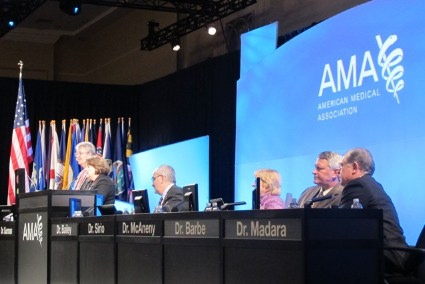
NATIONAL HARBOR, MD. – Money issues, notably the Medicare Sustainable Growth Rate formula and ICD-10, dominated deliberations at the American Medical Association Interim House of Delegates meeting.
"The AMA has heard the nation’s physicians, and we’re pulling out the stops to get Congress to act and take a fiscally responsible course that will stop the annual cycle of draconian Medicare cuts and short-term patches," Dr. Ardis Dee Hoven, AMA president, said in a statement after the delegates voted on Nov. 18.

There was some dissent over what the AMA should ask for in terms of a replacement for the Sustainable Growth Rate (SGR) formula, but most resolutions relating to alternative approaches were struck down, with one exception: a request that the organization continue to push for annual increases in physician fees going forward.
The AMA previously had indicated its opposition to a provision in the proposal by the Senate Finance Committee and the House Ways and Means Committee to freeze payments for 10 years.
"This year, we have the opportunity to speak with a voice that will actually resonate across the country," said Dr. Richard E. Thorp,president of the California Medical Association. He noted that the House of Delegates had "spent a significant amount of time trying to develop a unified message," which it now had done. "The SGR needs to be put to bed, buried, pour concrete in it. We’ve got to get an end to this thing," said Dr. Thorp.
Dr. Corey Howard, chair of the Florida delegation, agreed. "This is absolutely the right time, with the right message, and it needs to be done now."
AMA delegates also reiterated their concerns about the implementation of the latest iteration of the International Classification of Diseases – ICD-10 – calling for a delay. The coding system is set to launch on Oct. 1, 2014.
"If you like the implementation of the ACA on Oct. 1, 2013, you’re going to love the implementation of ICD-10 on Oct. 1, 2014," said Dr. Gary Bryant, a delegate from the American College of Rheumatology.
The ACR sought a permanent delay to ICD-10 implementation at the House of Delegates annual meeting in June. The House instead approved a resolution calling for the AMA to seek legislation to delay the implementation by 2 years.
The AMA has estimated that it will cost from $83,290 to $2.7 million per practice, depending on size, to implement ICD-10.
The House of Delegates also expressed concern about an Affordable Care Act provision that allows insurers to deny payment for medical care if the patient does not pay his or her health insurance premiums. Under the law, patients can take up to 90 days to pay premiums on policies bought through the health insurance exchanges, yet still get covered services. If the patient skips out on premiums all together, insurers do not have to pay for care that has been provided.
The California delegation offered a resolution to require insurers to pay for services rendered if a patient had eligibility and authorized coverage. The resolution also called on the AMA to oppose efforts to mandate physician participation in exchange plans.
The House voted to support most of the resolution, but in a modification, asked the AMA to advocate that health plans be required to notify physicians that a patient is in the grace period, and which month the patient is in. If physicians are not notified, it would result in a binding eligibility determination for the insurer.
Finally, the delegates called on the Centers for Disease Control and Prevention to collect more detailed data on prescription drug abuse.
"The AMA will urge the CDC to take the lead in promoting a standard approach for documenting and assessing unintentional poisonings and deaths involving controlled substances for pain relief," Dr. Patrice Harris, an AMA board member, said in a statement. "If we are to effectively fight this public health epidemic, we must have a system of data collection and analysis that provides more detailed information on the contributing factors."
On Twitter @aliciaault
NATIONAL HARBOR, MD. – Money issues, notably the Medicare Sustainable Growth Rate formula and ICD-10, dominated deliberations at the American Medical Association Interim House of Delegates meeting.
"The AMA has heard the nation’s physicians, and we’re pulling out the stops to get Congress to act and take a fiscally responsible course that will stop the annual cycle of draconian Medicare cuts and short-term patches," Dr. Ardis Dee Hoven, AMA president, said in a statement after the delegates voted on Nov. 18.
There was some dissent over what the AMA should ask for in terms of a replacement for the Sustainable Growth Rate (SGR) formula, but most resolutions relating to alternative approaches were struck down, with one exception: a request that the organization continue to push for annual increases in physician fees going forward.
The AMA previously had indicated its opposition to a provision in the proposal by the Senate Finance Committee and the House Ways and Means Committee to freeze payments for 10 years.
"This year, we have the opportunity to speak with a voice that will actually resonate across the country," said Dr. Richard E. Thorp,president of the California Medical Association. He noted that the House of Delegates had "spent a significant amount of time trying to develop a unified message," which it now had done. "The SGR needs to be put to bed, buried, pour concrete in it. We’ve got to get an end to this thing," said Dr. Thorp.
Dr. Corey Howard, chair of the Florida delegation, agreed. "This is absolutely the right time, with the right message, and it needs to be done now."
AMA delegates also reiterated their concerns about the implementation of the latest iteration of the International Classification of Diseases – ICD-10 – calling for a delay. The coding system is set to launch on Oct. 1, 2014.
"If you like the implementation of the ACA on Oct. 1, 2013, you’re going to love the implementation of ICD-10 on Oct. 1, 2014," said Dr. Gary Bryant, a delegate from the American College of Rheumatology.
The ACR sought a permanent delay to ICD-10 implementation at the House of Delegates annual meeting in June. The House instead approved a resolution calling for the AMA to seek legislation to delay the implementation by 2 years.
The AMA has estimated that it will cost from $83,290 to $2.7 million per practice, depending on size, to implement ICD-10.
The House of Delegates also expressed concern about an Affordable Care Act provision that allows insurers to deny payment for medical care if the patient does not pay his or her health insurance premiums. Under the law, patients can take up to 90 days to pay premiums on policies bought through the health insurance exchanges, yet still get covered services. If the patient skips out on premiums all together, insurers do not have to pay for care that has been provided.
The California delegation offered a resolution to require insurers to pay for services rendered if a patient had eligibility and authorized coverage. The resolution also called on the AMA to oppose efforts to mandate physician participation in exchange plans.
The House voted to support most of the resolution, but in a modification, asked the AMA to advocate that health plans be required to notify physicians that a patient is in the grace period, and which month the patient is in. If physicians are not notified, it would result in a binding eligibility determination for the insurer.
Finally, the delegates called on the Centers for Disease Control and Prevention to collect more detailed data on prescription drug abuse.
"The AMA will urge the CDC to take the lead in promoting a standard approach for documenting and assessing unintentional poisonings and deaths involving controlled substances for pain relief," Dr. Patrice Harris, an AMA board member, said in a statement. "If we are to effectively fight this public health epidemic, we must have a system of data collection and analysis that provides more detailed information on the contributing factors."
On Twitter @aliciaault
NATIONAL HARBOR, MD. – Money issues, notably the Medicare Sustainable Growth Rate formula and ICD-10, dominated deliberations at the American Medical Association Interim House of Delegates meeting.
"The AMA has heard the nation’s physicians, and we’re pulling out the stops to get Congress to act and take a fiscally responsible course that will stop the annual cycle of draconian Medicare cuts and short-term patches," Dr. Ardis Dee Hoven, AMA president, said in a statement after the delegates voted on Nov. 18.
There was some dissent over what the AMA should ask for in terms of a replacement for the Sustainable Growth Rate (SGR) formula, but most resolutions relating to alternative approaches were struck down, with one exception: a request that the organization continue to push for annual increases in physician fees going forward.
The AMA previously had indicated its opposition to a provision in the proposal by the Senate Finance Committee and the House Ways and Means Committee to freeze payments for 10 years.
"This year, we have the opportunity to speak with a voice that will actually resonate across the country," said Dr. Richard E. Thorp,president of the California Medical Association. He noted that the House of Delegates had "spent a significant amount of time trying to develop a unified message," which it now had done. "The SGR needs to be put to bed, buried, pour concrete in it. We’ve got to get an end to this thing," said Dr. Thorp.
Dr. Corey Howard, chair of the Florida delegation, agreed. "This is absolutely the right time, with the right message, and it needs to be done now."
AMA delegates also reiterated their concerns about the implementation of the latest iteration of the International Classification of Diseases – ICD-10 – calling for a delay. The coding system is set to launch on Oct. 1, 2014.
"If you like the implementation of the ACA on Oct. 1, 2013, you’re going to love the implementation of ICD-10 on Oct. 1, 2014," said Dr. Gary Bryant, a delegate from the American College of Rheumatology.
The ACR sought a permanent delay to ICD-10 implementation at the House of Delegates annual meeting in June. The House instead approved a resolution calling for the AMA to seek legislation to delay the implementation by 2 years.
The AMA has estimated that it will cost from $83,290 to $2.7 million per practice, depending on size, to implement ICD-10.
The House of Delegates also expressed concern about an Affordable Care Act provision that allows insurers to deny payment for medical care if the patient does not pay his or her health insurance premiums. Under the law, patients can take up to 90 days to pay premiums on policies bought through the health insurance exchanges, yet still get covered services. If the patient skips out on premiums all together, insurers do not have to pay for care that has been provided.
The California delegation offered a resolution to require insurers to pay for services rendered if a patient had eligibility and authorized coverage. The resolution also called on the AMA to oppose efforts to mandate physician participation in exchange plans.
The House voted to support most of the resolution, but in a modification, asked the AMA to advocate that health plans be required to notify physicians that a patient is in the grace period, and which month the patient is in. If physicians are not notified, it would result in a binding eligibility determination for the insurer.
Finally, the delegates called on the Centers for Disease Control and Prevention to collect more detailed data on prescription drug abuse.
"The AMA will urge the CDC to take the lead in promoting a standard approach for documenting and assessing unintentional poisonings and deaths involving controlled substances for pain relief," Dr. Patrice Harris, an AMA board member, said in a statement. "If we are to effectively fight this public health epidemic, we must have a system of data collection and analysis that provides more detailed information on the contributing factors."
On Twitter @aliciaault
AT THE AMA INTERIM HOUSE OF DELEGATES
Murthy nominated to be Surgeon General
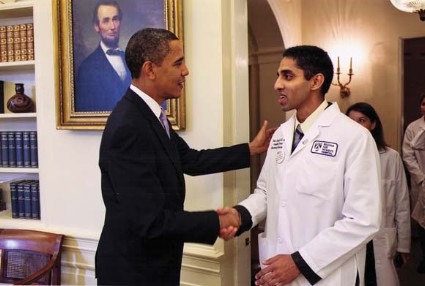
President Obama has nominated Dr. Vivek Murthy, a hospitalist at Brigham and Women’s Hospital in Boston and a staunch defender of the Affordable Care Act, to be the nation’s top doctor.
Dr. Murthy has been a strong supporter of President Obama and his health reform efforts since 2008. He is co-founder and president of Doctors for America, a group that was originally launched in 2008 as Doctors for Obama to directly support Mr. Obama’s election.
Over the last few years, Doctors for America has deployed its physician members around the country to argue for the benefits of the Affordable Care Act. The group filed an amicus brief with the Supreme Court in support of upholding the ACA’s individual insurance mandate.

During the 2012 campaign, Dr. Murthy was a volunteer adviser to President Obama’s campaign.
In an interview with this news organization in 2012, Dr. Murthy said he wasn’t politically active for most of his life. But in the last few years, he entered politics as a way to push his views on how to reform health care. He said that it is important for physicians to be involved in politics because of their unique view of the health care system.
"As individual physicians and also as leaders in our community, we can play a role in helping to give more voice to the perspective of physicians and patients," he said in the interview. "If these perspectives are missing as our health care system is being redesigned then we’re not going to have a system that ultimately works."
Dr. Murthy also has focused on public health. In 1995, he co-founded VISIONS Worldwide, a nonprofit organization involved in HIV/AIDS education in India and the United States. And in 2011, President Obama appointed him to serve on the Advisory Group on Prevention, Health Promotion, and Integrative and Public Health.
If confirmed by the Senate, Dr. Murthy would replace acting Surgeon General Boris D. Lushniak and serve a 4-year term.
mschneider@frontlinemedcom.com
On Twitter @MaryEllenNY
President Obama has nominated Dr. Vivek Murthy, a hospitalist at Brigham and Women’s Hospital in Boston and a staunch defender of the Affordable Care Act, to be the nation’s top doctor.
Dr. Murthy has been a strong supporter of President Obama and his health reform efforts since 2008. He is co-founder and president of Doctors for America, a group that was originally launched in 2008 as Doctors for Obama to directly support Mr. Obama’s election.
Over the last few years, Doctors for America has deployed its physician members around the country to argue for the benefits of the Affordable Care Act. The group filed an amicus brief with the Supreme Court in support of upholding the ACA’s individual insurance mandate.
During the 2012 campaign, Dr. Murthy was a volunteer adviser to President Obama’s campaign.
In an interview with this news organization in 2012, Dr. Murthy said he wasn’t politically active for most of his life. But in the last few years, he entered politics as a way to push his views on how to reform health care. He said that it is important for physicians to be involved in politics because of their unique view of the health care system.
"As individual physicians and also as leaders in our community, we can play a role in helping to give more voice to the perspective of physicians and patients," he said in the interview. "If these perspectives are missing as our health care system is being redesigned then we’re not going to have a system that ultimately works."
Dr. Murthy also has focused on public health. In 1995, he co-founded VISIONS Worldwide, a nonprofit organization involved in HIV/AIDS education in India and the United States. And in 2011, President Obama appointed him to serve on the Advisory Group on Prevention, Health Promotion, and Integrative and Public Health.
If confirmed by the Senate, Dr. Murthy would replace acting Surgeon General Boris D. Lushniak and serve a 4-year term.
mschneider@frontlinemedcom.com
On Twitter @MaryEllenNY
President Obama has nominated Dr. Vivek Murthy, a hospitalist at Brigham and Women’s Hospital in Boston and a staunch defender of the Affordable Care Act, to be the nation’s top doctor.
Dr. Murthy has been a strong supporter of President Obama and his health reform efforts since 2008. He is co-founder and president of Doctors for America, a group that was originally launched in 2008 as Doctors for Obama to directly support Mr. Obama’s election.
Over the last few years, Doctors for America has deployed its physician members around the country to argue for the benefits of the Affordable Care Act. The group filed an amicus brief with the Supreme Court in support of upholding the ACA’s individual insurance mandate.
During the 2012 campaign, Dr. Murthy was a volunteer adviser to President Obama’s campaign.
In an interview with this news organization in 2012, Dr. Murthy said he wasn’t politically active for most of his life. But in the last few years, he entered politics as a way to push his views on how to reform health care. He said that it is important for physicians to be involved in politics because of their unique view of the health care system.
"As individual physicians and also as leaders in our community, we can play a role in helping to give more voice to the perspective of physicians and patients," he said in the interview. "If these perspectives are missing as our health care system is being redesigned then we’re not going to have a system that ultimately works."
Dr. Murthy also has focused on public health. In 1995, he co-founded VISIONS Worldwide, a nonprofit organization involved in HIV/AIDS education in India and the United States. And in 2011, President Obama appointed him to serve on the Advisory Group on Prevention, Health Promotion, and Integrative and Public Health.
If confirmed by the Senate, Dr. Murthy would replace acting Surgeon General Boris D. Lushniak and serve a 4-year term.
mschneider@frontlinemedcom.com
On Twitter @MaryEllenNY
Obama offers another year to some canceled plans
Individuals who have had their health insurance policies canceled over the last few weeks may be able to keep them because of an administrative fix.
At a Nov. 14 press conference, President Barack Obama said he was making an administrative change that would allow health plans to continue to offer existing plans to their current enrollees throughout 2014, even if those plans don’t meet the coverage standards under the Affordable Care Act.
Whether to offer the plans now is up to insurance companies and state insurance commissioners, but the ACA is no longer a barrier, President Obama said.
If insurers continue to offer these plans in 2014, they must spell out to their customers which insurance protections the plans are lacking and what may be available on the health insurance exchanges.

Under the ACA, health plans that were in place before the law was signed in March 2010 are "grandfathered" in place and consumers can keep them. However, if insurers make changes to those plans, the plans must come into compliance with ACA requirements. The ACA also requires plans created after March 2010 to meet the law’s requirements starting on Jan. 1, 2014.
Under the action announced by President Obama, plans that have been created or altered since 2010 can continue to be offered to existing enrollees in 2014.
The announcement came after several congressional Democrats began to join their Republican colleagues in calling for a change that would allow Americans to keep their current health plans. The House is set to vote on Nov. 15 on a bill introduced by Rep. Fred Upton (R-Mich.) that would essentially grandfather all existing health plans during 2014. Unlike the President’s fix, the Upton proposal would allow current plans to continue to enroll new members.
President Obama said he now regrets the pledge he made that if Americans like their health plans they could keep them. While it was true for about 95% of Americans, he said, the grandfathering clause crafted by the administration did not go far enough in allowing more people to keep their plans. "That’s on me," he said during the press conference.
The President’s announcement was greeted with skepticism by House Speaker John Boehner (R-Ohio), who urged Democrats to join him in supporting Rep. Upton’s bill (H.R. 3350) instead.
Speaker Boehner said the Obama administration misled the public with the "if you like your health plan, you can keep it" pledge. "It’s clear that the American people simply can’t trust this White House," he said.
Health care insurers also expressed displeasure with the President’s announcement on grandfathered plans, saying that it has the potential to "destabilize" the insurance market.
"Premiums have already been set for next year based on an assumption of when consumers will be transitioning to the new marketplace. If, due to these changes, fewer younger and healthier people choose to purchase coverage in the exchange, premiums will increase in the marketplace and there will be fewer choices for consumers," Karen Ignagni, president and CEO of America’s Health Insurance Plans, said in a statement. "Additional steps must be taken to stabilize the marketplace and mitigate the adverse impact on consumers."
mschneider@frontlinemedcom.com
On Twitter @MaryEllenNY
Individuals who have had their health insurance policies canceled over the last few weeks may be able to keep them because of an administrative fix.
At a Nov. 14 press conference, President Barack Obama said he was making an administrative change that would allow health plans to continue to offer existing plans to their current enrollees throughout 2014, even if those plans don’t meet the coverage standards under the Affordable Care Act.
Whether to offer the plans now is up to insurance companies and state insurance commissioners, but the ACA is no longer a barrier, President Obama said.
If insurers continue to offer these plans in 2014, they must spell out to their customers which insurance protections the plans are lacking and what may be available on the health insurance exchanges.
Under the ACA, health plans that were in place before the law was signed in March 2010 are "grandfathered" in place and consumers can keep them. However, if insurers make changes to those plans, the plans must come into compliance with ACA requirements. The ACA also requires plans created after March 2010 to meet the law’s requirements starting on Jan. 1, 2014.
Under the action announced by President Obama, plans that have been created or altered since 2010 can continue to be offered to existing enrollees in 2014.
The announcement came after several congressional Democrats began to join their Republican colleagues in calling for a change that would allow Americans to keep their current health plans. The House is set to vote on Nov. 15 on a bill introduced by Rep. Fred Upton (R-Mich.) that would essentially grandfather all existing health plans during 2014. Unlike the President’s fix, the Upton proposal would allow current plans to continue to enroll new members.
President Obama said he now regrets the pledge he made that if Americans like their health plans they could keep them. While it was true for about 95% of Americans, he said, the grandfathering clause crafted by the administration did not go far enough in allowing more people to keep their plans. "That’s on me," he said during the press conference.
The President’s announcement was greeted with skepticism by House Speaker John Boehner (R-Ohio), who urged Democrats to join him in supporting Rep. Upton’s bill (H.R. 3350) instead.
Speaker Boehner said the Obama administration misled the public with the "if you like your health plan, you can keep it" pledge. "It’s clear that the American people simply can’t trust this White House," he said.
Health care insurers also expressed displeasure with the President’s announcement on grandfathered plans, saying that it has the potential to "destabilize" the insurance market.
"Premiums have already been set for next year based on an assumption of when consumers will be transitioning to the new marketplace. If, due to these changes, fewer younger and healthier people choose to purchase coverage in the exchange, premiums will increase in the marketplace and there will be fewer choices for consumers," Karen Ignagni, president and CEO of America’s Health Insurance Plans, said in a statement. "Additional steps must be taken to stabilize the marketplace and mitigate the adverse impact on consumers."
mschneider@frontlinemedcom.com
On Twitter @MaryEllenNY
Individuals who have had their health insurance policies canceled over the last few weeks may be able to keep them because of an administrative fix.
At a Nov. 14 press conference, President Barack Obama said he was making an administrative change that would allow health plans to continue to offer existing plans to their current enrollees throughout 2014, even if those plans don’t meet the coverage standards under the Affordable Care Act.
Whether to offer the plans now is up to insurance companies and state insurance commissioners, but the ACA is no longer a barrier, President Obama said.
If insurers continue to offer these plans in 2014, they must spell out to their customers which insurance protections the plans are lacking and what may be available on the health insurance exchanges.
Under the ACA, health plans that were in place before the law was signed in March 2010 are "grandfathered" in place and consumers can keep them. However, if insurers make changes to those plans, the plans must come into compliance with ACA requirements. The ACA also requires plans created after March 2010 to meet the law’s requirements starting on Jan. 1, 2014.
Under the action announced by President Obama, plans that have been created or altered since 2010 can continue to be offered to existing enrollees in 2014.
The announcement came after several congressional Democrats began to join their Republican colleagues in calling for a change that would allow Americans to keep their current health plans. The House is set to vote on Nov. 15 on a bill introduced by Rep. Fred Upton (R-Mich.) that would essentially grandfather all existing health plans during 2014. Unlike the President’s fix, the Upton proposal would allow current plans to continue to enroll new members.
President Obama said he now regrets the pledge he made that if Americans like their health plans they could keep them. While it was true for about 95% of Americans, he said, the grandfathering clause crafted by the administration did not go far enough in allowing more people to keep their plans. "That’s on me," he said during the press conference.
The President’s announcement was greeted with skepticism by House Speaker John Boehner (R-Ohio), who urged Democrats to join him in supporting Rep. Upton’s bill (H.R. 3350) instead.
Speaker Boehner said the Obama administration misled the public with the "if you like your health plan, you can keep it" pledge. "It’s clear that the American people simply can’t trust this White House," he said.
Health care insurers also expressed displeasure with the President’s announcement on grandfathered plans, saying that it has the potential to "destabilize" the insurance market.
"Premiums have already been set for next year based on an assumption of when consumers will be transitioning to the new marketplace. If, due to these changes, fewer younger and healthier people choose to purchase coverage in the exchange, premiums will increase in the marketplace and there will be fewer choices for consumers," Karen Ignagni, president and CEO of America’s Health Insurance Plans, said in a statement. "Additional steps must be taken to stabilize the marketplace and mitigate the adverse impact on consumers."
mschneider@frontlinemedcom.com
On Twitter @MaryEllenNY
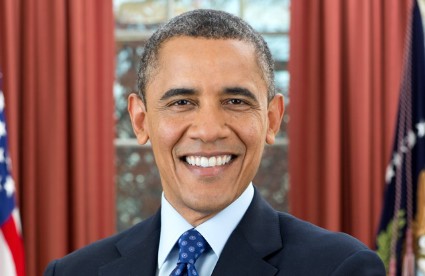
Fewer than 27,000 have selected a plan through healthcare.gov
Just under 27,000 Americans chose – but did not necessarily pay for – health insurance through the federal healthcare.gov website during its first month of operation.
The Department of Health and Human Services reports that from Oct. 1 to Nov. 2, a total of 106,185 people – 26,794 via healthcare.gov and 79,391 via state-based health insurance exchanges – had selected a plan for enrollment. Hundreds of thousands more (396,261) had been determined to be eligible for Medicaid or the Children’s Health Insurance Plan (CHIP). The majority of those (212,865) went through one of the 15 state-based exchanges, while 183,396 got the determination through healthcare.gov, which serves as the health insurance exchange for 36 states.

HHS Secretary Kathleen Sebelius said in a briefing with reporters that the Administration at present could not release the number of people who have paid for insurance. Those data will be available by Dec. 15, which is the deadline for getting coverage that starts Jan. 1.
But the numbers indicate that the "marketplace is working" and that people are enrolling in person, over the phone, and online, Ms. Sebelius said. She added that the data show that people have not bought plans yet are still shopping.
"People want to make sure their doctors are in their network, they want to see what kind of benefits they have, they want to check out options, they want to talk to people," she said. The expectation is that "these numbers will grow substantially over next 5 months."
Physicians may not be aware of whether they are participating in an exchange plan or they may not be participating. A recent survey by the Medical Society of the State of New York found that a third of members weren’t sure if they were in an exchange plan network and another third said they would not participate in an exchange plan.
In an interview, Dr. Stephen L. Brotherton, president of the Texas Medical Association, said that "the street information is different" from what the Centers for Medicare & Medicaid Services is reporting on what consumers can learn about physician networks.
Meanwhile, Ms. Sebelius said that interest in purchasing health insurance is "reflected in the numbers of people who are seeking information and shopping for plans."
According to the HHS report, there have been about 27 million unique visitors to healthcare.gov and 3.1 million calls to state and federal call centers.
In the first month, 846,184 applications, representing just over 1.5 million Americans, were completed through the state and federal online sites. HHS says that this figure represents about 22% of the estimated 7 million people the Congressional Budget Office said were likely to enroll in a plan in 2014. About a half million people who submitted applications were not eligible for a health insurance exchange plan. Out of the 1 million who have been determined to be eligible, about 106,000 have selected a plan through the federal or state exchanges.
HHS says there were an additional 259,107 paper and phone applications for plans through the federal exchange.
The HHS report found that shopping online was the primary mode for most exchange users. On average, 93% of state exchange applications that were submitted and completed were done electronically. That dropped to 67% for applications submitted and completed through healthcare.gov.
On Nov. 12, CMS officials said that the agency would be sending "waves" of e-mails to some 275,000 people who had tried to get on healthcare.gov in the early weeks and had not succeeded. They also said that the site was currently configured to handle any added demand from people responding to those e-mails.
Ms. Sebelius said that she remains optimistic that enrollment figures will grow. "Will we convert 100%? Probably not, but I don’t think that was ever the expectation," she said.
"But I think a number of the people who are currently in the shopping mode will at the end of the day enroll in coverage."
On Twitter @aliciaault
Just under 27,000 Americans chose – but did not necessarily pay for – health insurance through the federal healthcare.gov website during its first month of operation.
The Department of Health and Human Services reports that from Oct. 1 to Nov. 2, a total of 106,185 people – 26,794 via healthcare.gov and 79,391 via state-based health insurance exchanges – had selected a plan for enrollment. Hundreds of thousands more (396,261) had been determined to be eligible for Medicaid or the Children’s Health Insurance Plan (CHIP). The majority of those (212,865) went through one of the 15 state-based exchanges, while 183,396 got the determination through healthcare.gov, which serves as the health insurance exchange for 36 states.
HHS Secretary Kathleen Sebelius said in a briefing with reporters that the Administration at present could not release the number of people who have paid for insurance. Those data will be available by Dec. 15, which is the deadline for getting coverage that starts Jan. 1.
But the numbers indicate that the "marketplace is working" and that people are enrolling in person, over the phone, and online, Ms. Sebelius said. She added that the data show that people have not bought plans yet are still shopping.
"People want to make sure their doctors are in their network, they want to see what kind of benefits they have, they want to check out options, they want to talk to people," she said. The expectation is that "these numbers will grow substantially over next 5 months."
Physicians may not be aware of whether they are participating in an exchange plan or they may not be participating. A recent survey by the Medical Society of the State of New York found that a third of members weren’t sure if they were in an exchange plan network and another third said they would not participate in an exchange plan.
In an interview, Dr. Stephen L. Brotherton, president of the Texas Medical Association, said that "the street information is different" from what the Centers for Medicare & Medicaid Services is reporting on what consumers can learn about physician networks.
Meanwhile, Ms. Sebelius said that interest in purchasing health insurance is "reflected in the numbers of people who are seeking information and shopping for plans."
According to the HHS report, there have been about 27 million unique visitors to healthcare.gov and 3.1 million calls to state and federal call centers.
In the first month, 846,184 applications, representing just over 1.5 million Americans, were completed through the state and federal online sites. HHS says that this figure represents about 22% of the estimated 7 million people the Congressional Budget Office said were likely to enroll in a plan in 2014. About a half million people who submitted applications were not eligible for a health insurance exchange plan. Out of the 1 million who have been determined to be eligible, about 106,000 have selected a plan through the federal or state exchanges.
HHS says there were an additional 259,107 paper and phone applications for plans through the federal exchange.
The HHS report found that shopping online was the primary mode for most exchange users. On average, 93% of state exchange applications that were submitted and completed were done electronically. That dropped to 67% for applications submitted and completed through healthcare.gov.
On Nov. 12, CMS officials said that the agency would be sending "waves" of e-mails to some 275,000 people who had tried to get on healthcare.gov in the early weeks and had not succeeded. They also said that the site was currently configured to handle any added demand from people responding to those e-mails.
Ms. Sebelius said that she remains optimistic that enrollment figures will grow. "Will we convert 100%? Probably not, but I don’t think that was ever the expectation," she said.
"But I think a number of the people who are currently in the shopping mode will at the end of the day enroll in coverage."
On Twitter @aliciaault
Just under 27,000 Americans chose – but did not necessarily pay for – health insurance through the federal healthcare.gov website during its first month of operation.
The Department of Health and Human Services reports that from Oct. 1 to Nov. 2, a total of 106,185 people – 26,794 via healthcare.gov and 79,391 via state-based health insurance exchanges – had selected a plan for enrollment. Hundreds of thousands more (396,261) had been determined to be eligible for Medicaid or the Children’s Health Insurance Plan (CHIP). The majority of those (212,865) went through one of the 15 state-based exchanges, while 183,396 got the determination through healthcare.gov, which serves as the health insurance exchange for 36 states.
HHS Secretary Kathleen Sebelius said in a briefing with reporters that the Administration at present could not release the number of people who have paid for insurance. Those data will be available by Dec. 15, which is the deadline for getting coverage that starts Jan. 1.
But the numbers indicate that the "marketplace is working" and that people are enrolling in person, over the phone, and online, Ms. Sebelius said. She added that the data show that people have not bought plans yet are still shopping.
"People want to make sure their doctors are in their network, they want to see what kind of benefits they have, they want to check out options, they want to talk to people," she said. The expectation is that "these numbers will grow substantially over next 5 months."
Physicians may not be aware of whether they are participating in an exchange plan or they may not be participating. A recent survey by the Medical Society of the State of New York found that a third of members weren’t sure if they were in an exchange plan network and another third said they would not participate in an exchange plan.
In an interview, Dr. Stephen L. Brotherton, president of the Texas Medical Association, said that "the street information is different" from what the Centers for Medicare & Medicaid Services is reporting on what consumers can learn about physician networks.
Meanwhile, Ms. Sebelius said that interest in purchasing health insurance is "reflected in the numbers of people who are seeking information and shopping for plans."
According to the HHS report, there have been about 27 million unique visitors to healthcare.gov and 3.1 million calls to state and federal call centers.
In the first month, 846,184 applications, representing just over 1.5 million Americans, were completed through the state and federal online sites. HHS says that this figure represents about 22% of the estimated 7 million people the Congressional Budget Office said were likely to enroll in a plan in 2014. About a half million people who submitted applications were not eligible for a health insurance exchange plan. Out of the 1 million who have been determined to be eligible, about 106,000 have selected a plan through the federal or state exchanges.
HHS says there were an additional 259,107 paper and phone applications for plans through the federal exchange.
The HHS report found that shopping online was the primary mode for most exchange users. On average, 93% of state exchange applications that were submitted and completed were done electronically. That dropped to 67% for applications submitted and completed through healthcare.gov.
On Nov. 12, CMS officials said that the agency would be sending "waves" of e-mails to some 275,000 people who had tried to get on healthcare.gov in the early weeks and had not succeeded. They also said that the site was currently configured to handle any added demand from people responding to those e-mails.
Ms. Sebelius said that she remains optimistic that enrollment figures will grow. "Will we convert 100%? Probably not, but I don’t think that was ever the expectation," she said.
"But I think a number of the people who are currently in the shopping mode will at the end of the day enroll in coverage."
On Twitter @aliciaault
Obamacare enrollment numbers wanted: The Policy & Practice Podcast
Everyone wants to know. How many people have enrolled in health plans through the federal exchange? Health and Human Services Secretary Kathleen Sebelius says the first numbers will be out this week. But neither she, nor other HHS officials will divulge any further details.
And Republicans want those details. House Oversight and Government Reform Committee Chairman Darrell Issa (R-Calif.) says he has confidential notes from inside HHS that show that only 6 people had enrolled by the second day of the exchange’s operation. He subpoenaed Secretary Sebelius, demanding more information on healthcare.gov’s problems, testing of the website, and the number of enrollees – all by Nov. 13.
House Ways and Means Committee Chairman Dave Camp (R-Mich.) also subpoenaed the Secretary, seeking much of the same information.
Meanwhile, the healthcare.gov website continues to suffer technical problems, which may be keeping people from signing up. Millions of Americans – at least 1 million in California alone – have received cancellation notices from their insurers. These are largely people who have policies in the individual market. HHS has said that those policies are generally expensive and don’t offer as many benefits as are required by the Affordable Care Act. But people are now being forced to look for new coverage at a time when it’s hard to shop on the federal exchange.
The situation led President Obama to apologize in an interview with NBC News. Even with that, some in Congress want to rewrite the ACA to let the individual policies continue. Sen. Mary Landrieu (D-La.) and Sen. Joe Manchin (D-W.Va.) introduced such a proposal, as did Sen. Ron Johnson (R-Wis.). Rep. Fred Upton (R-Mich.) has put forward the Keep Your Health Plan Act in the House, which may see a vote as early as this week.
For all that and more, have a listen to our podcast.
On Twitter @aliciaault
Everyone wants to know. How many people have enrolled in health plans through the federal exchange? Health and Human Services Secretary Kathleen Sebelius says the first numbers will be out this week. But neither she, nor other HHS officials will divulge any further details.
And Republicans want those details. House Oversight and Government Reform Committee Chairman Darrell Issa (R-Calif.) says he has confidential notes from inside HHS that show that only 6 people had enrolled by the second day of the exchange’s operation. He subpoenaed Secretary Sebelius, demanding more information on healthcare.gov’s problems, testing of the website, and the number of enrollees – all by Nov. 13.
House Ways and Means Committee Chairman Dave Camp (R-Mich.) also subpoenaed the Secretary, seeking much of the same information.
Meanwhile, the healthcare.gov website continues to suffer technical problems, which may be keeping people from signing up. Millions of Americans – at least 1 million in California alone – have received cancellation notices from their insurers. These are largely people who have policies in the individual market. HHS has said that those policies are generally expensive and don’t offer as many benefits as are required by the Affordable Care Act. But people are now being forced to look for new coverage at a time when it’s hard to shop on the federal exchange.
The situation led President Obama to apologize in an interview with NBC News. Even with that, some in Congress want to rewrite the ACA to let the individual policies continue. Sen. Mary Landrieu (D-La.) and Sen. Joe Manchin (D-W.Va.) introduced such a proposal, as did Sen. Ron Johnson (R-Wis.). Rep. Fred Upton (R-Mich.) has put forward the Keep Your Health Plan Act in the House, which may see a vote as early as this week.
For all that and more, have a listen to our podcast.
On Twitter @aliciaault
Everyone wants to know. How many people have enrolled in health plans through the federal exchange? Health and Human Services Secretary Kathleen Sebelius says the first numbers will be out this week. But neither she, nor other HHS officials will divulge any further details.
And Republicans want those details. House Oversight and Government Reform Committee Chairman Darrell Issa (R-Calif.) says he has confidential notes from inside HHS that show that only 6 people had enrolled by the second day of the exchange’s operation. He subpoenaed Secretary Sebelius, demanding more information on healthcare.gov’s problems, testing of the website, and the number of enrollees – all by Nov. 13.
House Ways and Means Committee Chairman Dave Camp (R-Mich.) also subpoenaed the Secretary, seeking much of the same information.
Meanwhile, the healthcare.gov website continues to suffer technical problems, which may be keeping people from signing up. Millions of Americans – at least 1 million in California alone – have received cancellation notices from their insurers. These are largely people who have policies in the individual market. HHS has said that those policies are generally expensive and don’t offer as many benefits as are required by the Affordable Care Act. But people are now being forced to look for new coverage at a time when it’s hard to shop on the federal exchange.
The situation led President Obama to apologize in an interview with NBC News. Even with that, some in Congress want to rewrite the ACA to let the individual policies continue. Sen. Mary Landrieu (D-La.) and Sen. Joe Manchin (D-W.Va.) introduced such a proposal, as did Sen. Ron Johnson (R-Wis.). Rep. Fred Upton (R-Mich.) has put forward the Keep Your Health Plan Act in the House, which may see a vote as early as this week.
For all that and more, have a listen to our podcast.
On Twitter @aliciaault