User login
Treat Hypertension Even Earlier, Guidelines Say
High blood pressure should be treated at 130/80 mm Hg, rather than 140/90, according to findings from a landmark study that support a key change in the 2017 Hypertension Clinical Practice Guidelines.
The American Heart Association and American College of Cardiology announced the update along with the new guidelines, the first comprehensive high blood pressure guidelines in more than a decade.
The changes were informed by results from the NIH-funded Systolic Blood Pressure Intervention Trial (SPRINT), which was designed to determine the best way to treat high blood pressure in adults aged ≥ 50 years who are at high risk for heart disease. The study included > 9,300 participants and remains the largest of its kind to date to examine the effects on cardiovascular and kidney disease of maintaining systolic blood pressure at a lower than previously recommended level.
High blood pressure should be treated at 130/80 mm Hg, rather than 140/90, according to findings from a landmark study that support a key change in the 2017 Hypertension Clinical Practice Guidelines.
The American Heart Association and American College of Cardiology announced the update along with the new guidelines, the first comprehensive high blood pressure guidelines in more than a decade.
The changes were informed by results from the NIH-funded Systolic Blood Pressure Intervention Trial (SPRINT), which was designed to determine the best way to treat high blood pressure in adults aged ≥ 50 years who are at high risk for heart disease. The study included > 9,300 participants and remains the largest of its kind to date to examine the effects on cardiovascular and kidney disease of maintaining systolic blood pressure at a lower than previously recommended level.
High blood pressure should be treated at 130/80 mm Hg, rather than 140/90, according to findings from a landmark study that support a key change in the 2017 Hypertension Clinical Practice Guidelines.
The American Heart Association and American College of Cardiology announced the update along with the new guidelines, the first comprehensive high blood pressure guidelines in more than a decade.
The changes were informed by results from the NIH-funded Systolic Blood Pressure Intervention Trial (SPRINT), which was designed to determine the best way to treat high blood pressure in adults aged ≥ 50 years who are at high risk for heart disease. The study included > 9,300 participants and remains the largest of its kind to date to examine the effects on cardiovascular and kidney disease of maintaining systolic blood pressure at a lower than previously recommended level.
Phrenic-nerve stimulator maintains benefits for 18 months
TORONTO – The implanted phrenic-nerve stimulation device that received Food and Drug Administration marketing approval in October 2017 for treating central sleep apnea has now shown safety and efficacy out to 18 months of continuous use in 102 patients.
After 18 months of treatment with the Remede System, patients’ outcomes remained stable and patients continued to see the improvements they had experienced after 6 and 12 months of treatment. These improvements included significant average reductions from baseline in apnea-hypopnea index and central apnea index and significant increases in oxygenation and sleep quality, Andrew C. Kao, MD, said at the CHEST annual meeting.
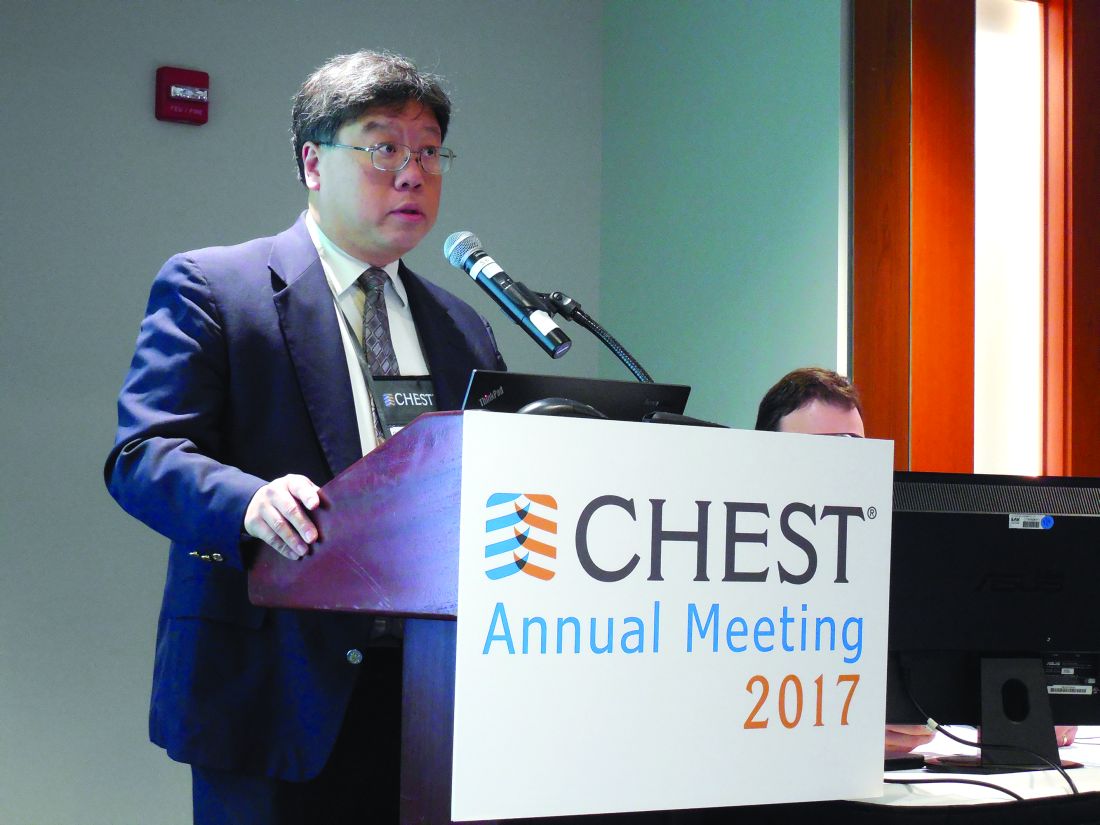
“We were concerned that there would be a degradation of the benefit [over time]. We are very happy that the benefit was sustained,” said Dr. Kao, a heart failure cardiologist at Saint Luke’s Health System in Kansas City, Mo.
Dr. Kao did not report an 18-month follow-up for the study’s primary endpoint, the percentage of patients after 6 months on treatment who had at least a 50% reduction from baseline in their apnea-hypopnea index. His report focused on the 6-, 12-, and 18-month changes relative to baseline for five secondary outcomes: central sleep apnea index, apnea-hypopnea index, arousal index, oxygen desaturation index, and time spent in REM sleep. For all five of these outcomes, the 102 patients showed an average, statistically significant improvement compared with baseline after 6 months on treatment that persisted virtually unchanged at 12 and 18 months.
For example, average central sleep apnea index fell from 27 events/hour at baseline to 5 per hour at 6, 12, and 18 months. Average apnea-hypopnea index fell from 46 events/hour at baseline to about 25 per hour at 6, 12, and 18 months. The average percentage of sleep spent in REM sleep improved from 12% at baseline to about 15% at 6, 12, and 18 months.
During 18 months of treatment following device implantation, four of the 102 patients had a serious adverse event. One patient required lead repositioning to relieve discomfort and three had an interaction with an implanted cardiac device. The effects resolved in all four patients without long-term impact. An additional 16 patients had discomfort that required an unscheduled medical visit, but these were not classified as serious episodes, and in 14 of these patients the discomfort resolved.
The Remede System phrenic-nerve stimulator received FDA marketing approval for moderate to severe central sleep apnea based on 6-month efficacy and 12-month safety data (Lancet. 2016 Sept 3;388[10048]:974-82). The Pivotal Trial of the Remede System enrolled 151 patients with an apnea-hypopnea index of at least 20 events/hour, about half of whom had heart failure. All patients received a device implant: In the initial intervention group of 73 patients, researchers turned on the device 1 month after implantation, and in the 78 patients randomized to the initial control arm, the device remained off for the first 7 months and then went active. The researchers followed up with 46 patients drawn from both the original treatment arm and 56 patients from the original control arm, at which point the patients had been receiving 18 months of treatment.
The Remede System pivotal trial was sponsored by Respicardia, which markets the phrenic-verse stimulator. Dr. Kao’s institution, Saint Luke’s Health System, received grant support from Respicardia.
mzoler@frontlinemedcom.com
On Twitter @mitchelzoler
TORONTO – The implanted phrenic-nerve stimulation device that received Food and Drug Administration marketing approval in October 2017 for treating central sleep apnea has now shown safety and efficacy out to 18 months of continuous use in 102 patients.
After 18 months of treatment with the Remede System, patients’ outcomes remained stable and patients continued to see the improvements they had experienced after 6 and 12 months of treatment. These improvements included significant average reductions from baseline in apnea-hypopnea index and central apnea index and significant increases in oxygenation and sleep quality, Andrew C. Kao, MD, said at the CHEST annual meeting.
“We were concerned that there would be a degradation of the benefit [over time]. We are very happy that the benefit was sustained,” said Dr. Kao, a heart failure cardiologist at Saint Luke’s Health System in Kansas City, Mo.
Dr. Kao did not report an 18-month follow-up for the study’s primary endpoint, the percentage of patients after 6 months on treatment who had at least a 50% reduction from baseline in their apnea-hypopnea index. His report focused on the 6-, 12-, and 18-month changes relative to baseline for five secondary outcomes: central sleep apnea index, apnea-hypopnea index, arousal index, oxygen desaturation index, and time spent in REM sleep. For all five of these outcomes, the 102 patients showed an average, statistically significant improvement compared with baseline after 6 months on treatment that persisted virtually unchanged at 12 and 18 months.
For example, average central sleep apnea index fell from 27 events/hour at baseline to 5 per hour at 6, 12, and 18 months. Average apnea-hypopnea index fell from 46 events/hour at baseline to about 25 per hour at 6, 12, and 18 months. The average percentage of sleep spent in REM sleep improved from 12% at baseline to about 15% at 6, 12, and 18 months.
During 18 months of treatment following device implantation, four of the 102 patients had a serious adverse event. One patient required lead repositioning to relieve discomfort and three had an interaction with an implanted cardiac device. The effects resolved in all four patients without long-term impact. An additional 16 patients had discomfort that required an unscheduled medical visit, but these were not classified as serious episodes, and in 14 of these patients the discomfort resolved.
The Remede System phrenic-nerve stimulator received FDA marketing approval for moderate to severe central sleep apnea based on 6-month efficacy and 12-month safety data (Lancet. 2016 Sept 3;388[10048]:974-82). The Pivotal Trial of the Remede System enrolled 151 patients with an apnea-hypopnea index of at least 20 events/hour, about half of whom had heart failure. All patients received a device implant: In the initial intervention group of 73 patients, researchers turned on the device 1 month after implantation, and in the 78 patients randomized to the initial control arm, the device remained off for the first 7 months and then went active. The researchers followed up with 46 patients drawn from both the original treatment arm and 56 patients from the original control arm, at which point the patients had been receiving 18 months of treatment.
The Remede System pivotal trial was sponsored by Respicardia, which markets the phrenic-verse stimulator. Dr. Kao’s institution, Saint Luke’s Health System, received grant support from Respicardia.
mzoler@frontlinemedcom.com
On Twitter @mitchelzoler
TORONTO – The implanted phrenic-nerve stimulation device that received Food and Drug Administration marketing approval in October 2017 for treating central sleep apnea has now shown safety and efficacy out to 18 months of continuous use in 102 patients.
After 18 months of treatment with the Remede System, patients’ outcomes remained stable and patients continued to see the improvements they had experienced after 6 and 12 months of treatment. These improvements included significant average reductions from baseline in apnea-hypopnea index and central apnea index and significant increases in oxygenation and sleep quality, Andrew C. Kao, MD, said at the CHEST annual meeting.
“We were concerned that there would be a degradation of the benefit [over time]. We are very happy that the benefit was sustained,” said Dr. Kao, a heart failure cardiologist at Saint Luke’s Health System in Kansas City, Mo.
Dr. Kao did not report an 18-month follow-up for the study’s primary endpoint, the percentage of patients after 6 months on treatment who had at least a 50% reduction from baseline in their apnea-hypopnea index. His report focused on the 6-, 12-, and 18-month changes relative to baseline for five secondary outcomes: central sleep apnea index, apnea-hypopnea index, arousal index, oxygen desaturation index, and time spent in REM sleep. For all five of these outcomes, the 102 patients showed an average, statistically significant improvement compared with baseline after 6 months on treatment that persisted virtually unchanged at 12 and 18 months.
For example, average central sleep apnea index fell from 27 events/hour at baseline to 5 per hour at 6, 12, and 18 months. Average apnea-hypopnea index fell from 46 events/hour at baseline to about 25 per hour at 6, 12, and 18 months. The average percentage of sleep spent in REM sleep improved from 12% at baseline to about 15% at 6, 12, and 18 months.
During 18 months of treatment following device implantation, four of the 102 patients had a serious adverse event. One patient required lead repositioning to relieve discomfort and three had an interaction with an implanted cardiac device. The effects resolved in all four patients without long-term impact. An additional 16 patients had discomfort that required an unscheduled medical visit, but these were not classified as serious episodes, and in 14 of these patients the discomfort resolved.
The Remede System phrenic-nerve stimulator received FDA marketing approval for moderate to severe central sleep apnea based on 6-month efficacy and 12-month safety data (Lancet. 2016 Sept 3;388[10048]:974-82). The Pivotal Trial of the Remede System enrolled 151 patients with an apnea-hypopnea index of at least 20 events/hour, about half of whom had heart failure. All patients received a device implant: In the initial intervention group of 73 patients, researchers turned on the device 1 month after implantation, and in the 78 patients randomized to the initial control arm, the device remained off for the first 7 months and then went active. The researchers followed up with 46 patients drawn from both the original treatment arm and 56 patients from the original control arm, at which point the patients had been receiving 18 months of treatment.
The Remede System pivotal trial was sponsored by Respicardia, which markets the phrenic-verse stimulator. Dr. Kao’s institution, Saint Luke’s Health System, received grant support from Respicardia.
mzoler@frontlinemedcom.com
On Twitter @mitchelzoler
AT CHEST 2017
Key clinical point:
Major finding: Average central apnea index improved from 27 events/hour at baseline to 5 events/hour after 6, 12, and 18 months of treatment.
Data source: 102 patients enrolled in the Pivotal Trial of the remede System were followed for 18 months of treatment.
Disclosures: The remede System pivotal trial was sponsored by Respicardia, which markets the phrenic-verse stimulator. Dr. Kao’s institution, Saint Luke’s Health System, received grant support from Respicardia.
First-in-class glutaminase inhibitor combats anti-PD-1/PD-L1 resistance
NATIONAL HARBOR, MD. – Combination treatment with the first-in-class glutaminase inhibitor CB-839 and nivolumab is well-tolerated and shows clinical activity in patients with advanced melanoma, renal cell carcinoma, or non-small cell lung cancer, including anti-PD-1/PD-L1 refractory patients, according to initial results from a phase 1/2 study.
Responses in melanoma patients who were progressing on nivolumab at study entry and who were refractory to multiple prior immunotherapy regimens are particularly notable, as they highlight the potential for CB-839, when added to nivolumab (Opdivo), to help overcome resistance to anti-PD-L1 therapy, Funda Meric‐Bernstam, MD, reported at the annual meeting of the Society for Immunotherapy of Cancer.
CB‐839 is highly selective and targets tumor glutamine metabolism, said Dr. Meric-Bernstam of the University of Texas MD Anderson Cancer Center, Houston.
Competition between tumor cells and immune cells for nutrients such as glutamine in the tumor microenvironment can create a metabolic checkpoint that induces local immune suppression. CB‐839 inhibits tumor glutamine consumption, thereby increasing glutamine availability to support T‐cell activity, she explained, noting that in preclinical models, CB‐839 increased intra‐tumoral glutamine and enhanced antitumor activity of PD‐1/PD‐L1 inhibitors.
In the phase 1 dose escalation study, she and her colleagues evaluated the safety and efficacy of CB-839 in combination with the PD‐1 inhibitor nivolumab in patients with melanoma, non-small cell lung cancer (NSCLC), or renal cell carcinoma (RCC). Phase 2 expansion cohorts include a melanoma rescue cohort of patients progressing on anti-PD-L1 therapy at study entry (22 patients), an NSCLC and RCC rescue cohort of patients who were progressing on anti-PD-L1 therapy at study entry or who had stable disease for 6 months or longer without a response (11 NSCLC and 11 RCC), an RCC cohort of patients with prior immunotherapy exposure and no response (10 patients), and an RCC cohort of patents who had no prior immunotherapy exposure (28 patients).
During dose escalation, patients received oral CB‐839 at 600 mg or 800 mg twice daily in combination with standard‐dose nivolumab. In the ongoing phase 2 expansion study, which continues to enroll, patients are receiving 800 mg of CB-839 twice daily with standard‐dose nivolumab, Dr. Meric-Bernstam said.
Patients in each of the cohorts were high risk and/or had intermediate or poor prognostic status at study entry. For example, 50% of patients in the melanoma rescue cohort had liver metastases, 77% had other visceral metastases, and 18% had brain metastases, and the majority of patients in the lung cancer/RCC cohort had visceral metastases. Most had progressive disease as their best response on their last line of immunotherapy.
Of 16 response-evaluable melanoma patients, 1 experienced a complete response, 2 had partial responses, and 4 had stable disease.
“So overall in this patient population that was progressing on a PD-1/PD-L1 inhibitor at enrollment, 19% had an objective response. The disease control rate in this group was 44%,” she said.
In evaluable patients in the lung cancer rescue cohort (6 patients), RCC rescue cohort (8 patients), and RCC prior exposure cohort (7 patients), disease control rates ranged from 57% to 75%, and in the immunotherapy-naive RCC cohort (19 patients), the partial response rate was 21%, and 53% had stable disease, so the overall disease control rate was 74%. Half of the patients in that group remain on study, she noted.
A closer look at the melanoma rescue cohort showed dramatic and rapid responses in two patients who each achieved a partial response in about 8 weeks with response durations of 3.7 months and 5.4 months, respectively. Additionally, pre-treatment biopsies in this cohort showed an elevated T-cell inflamed signature associated with clinical benefit from the addition of CB-839, and in one patient who had both a pretreatment and on-treatment biopsy that was evaluable, the latter showed an increase in T-cell inflamed signature and T-cell effector genes.
In all cohorts, the combination therapy was generally well tolerated. A maximum tolerated dose was not reached. Dose-limiting toxicity – a grade 3 alanine aminotransferase (ALT) increase – occurred in one patient on the 800-mg dose. The most common grade 3 or greater adverse events were fatigue, nausea, photophobia, rash, and elevated ALT, she said, noting that two patients discontinued for treatment-related adverse events (one for a grade 3 rash and one for grade 2 pneumonitis).
“Overall there appeared to be no apparent increase in immune-related adverse events, either in rate or severity, compared with [nivolumab] monotherapy,” she said.
The combination of CB-839 and nivolumab was well tolerated, and in some patients – as seen in the melanoma cohort – adding CB-839 to checkpoint blockade can overcome checkpoint blockade resistance, Dr. Meric-Bernstam concluded, noting that the disease control rates seen in the majority of lung cancer and RCC patients who were progressing on checkpoint blockade is encouraging, as is the objective response rate seen thus far in the RCC therapy-naive patients, and the stable and deep responses seen in the melanoma rescue cohort.
“Based on our encouraging signal in the melanoma rescue cohort, this [cohort] has been expanded,” she said.
Calithera Biosciences sponsored the study. Bristol-Myers Squibb provided nivolumab for the study. Dr. Meric-Bernstam has received grant or research support from Calithera Biosciences and many other companies. She also reported being a paid consultant for several companies and serving on an advisory committee or review panel, or as a board member for multiple companies.
NATIONAL HARBOR, MD. – Combination treatment with the first-in-class glutaminase inhibitor CB-839 and nivolumab is well-tolerated and shows clinical activity in patients with advanced melanoma, renal cell carcinoma, or non-small cell lung cancer, including anti-PD-1/PD-L1 refractory patients, according to initial results from a phase 1/2 study.
Responses in melanoma patients who were progressing on nivolumab at study entry and who were refractory to multiple prior immunotherapy regimens are particularly notable, as they highlight the potential for CB-839, when added to nivolumab (Opdivo), to help overcome resistance to anti-PD-L1 therapy, Funda Meric‐Bernstam, MD, reported at the annual meeting of the Society for Immunotherapy of Cancer.
CB‐839 is highly selective and targets tumor glutamine metabolism, said Dr. Meric-Bernstam of the University of Texas MD Anderson Cancer Center, Houston.
Competition between tumor cells and immune cells for nutrients such as glutamine in the tumor microenvironment can create a metabolic checkpoint that induces local immune suppression. CB‐839 inhibits tumor glutamine consumption, thereby increasing glutamine availability to support T‐cell activity, she explained, noting that in preclinical models, CB‐839 increased intra‐tumoral glutamine and enhanced antitumor activity of PD‐1/PD‐L1 inhibitors.
In the phase 1 dose escalation study, she and her colleagues evaluated the safety and efficacy of CB-839 in combination with the PD‐1 inhibitor nivolumab in patients with melanoma, non-small cell lung cancer (NSCLC), or renal cell carcinoma (RCC). Phase 2 expansion cohorts include a melanoma rescue cohort of patients progressing on anti-PD-L1 therapy at study entry (22 patients), an NSCLC and RCC rescue cohort of patients who were progressing on anti-PD-L1 therapy at study entry or who had stable disease for 6 months or longer without a response (11 NSCLC and 11 RCC), an RCC cohort of patients with prior immunotherapy exposure and no response (10 patients), and an RCC cohort of patents who had no prior immunotherapy exposure (28 patients).
During dose escalation, patients received oral CB‐839 at 600 mg or 800 mg twice daily in combination with standard‐dose nivolumab. In the ongoing phase 2 expansion study, which continues to enroll, patients are receiving 800 mg of CB-839 twice daily with standard‐dose nivolumab, Dr. Meric-Bernstam said.
Patients in each of the cohorts were high risk and/or had intermediate or poor prognostic status at study entry. For example, 50% of patients in the melanoma rescue cohort had liver metastases, 77% had other visceral metastases, and 18% had brain metastases, and the majority of patients in the lung cancer/RCC cohort had visceral metastases. Most had progressive disease as their best response on their last line of immunotherapy.
Of 16 response-evaluable melanoma patients, 1 experienced a complete response, 2 had partial responses, and 4 had stable disease.
“So overall in this patient population that was progressing on a PD-1/PD-L1 inhibitor at enrollment, 19% had an objective response. The disease control rate in this group was 44%,” she said.
In evaluable patients in the lung cancer rescue cohort (6 patients), RCC rescue cohort (8 patients), and RCC prior exposure cohort (7 patients), disease control rates ranged from 57% to 75%, and in the immunotherapy-naive RCC cohort (19 patients), the partial response rate was 21%, and 53% had stable disease, so the overall disease control rate was 74%. Half of the patients in that group remain on study, she noted.
A closer look at the melanoma rescue cohort showed dramatic and rapid responses in two patients who each achieved a partial response in about 8 weeks with response durations of 3.7 months and 5.4 months, respectively. Additionally, pre-treatment biopsies in this cohort showed an elevated T-cell inflamed signature associated with clinical benefit from the addition of CB-839, and in one patient who had both a pretreatment and on-treatment biopsy that was evaluable, the latter showed an increase in T-cell inflamed signature and T-cell effector genes.
In all cohorts, the combination therapy was generally well tolerated. A maximum tolerated dose was not reached. Dose-limiting toxicity – a grade 3 alanine aminotransferase (ALT) increase – occurred in one patient on the 800-mg dose. The most common grade 3 or greater adverse events were fatigue, nausea, photophobia, rash, and elevated ALT, she said, noting that two patients discontinued for treatment-related adverse events (one for a grade 3 rash and one for grade 2 pneumonitis).
“Overall there appeared to be no apparent increase in immune-related adverse events, either in rate or severity, compared with [nivolumab] monotherapy,” she said.
The combination of CB-839 and nivolumab was well tolerated, and in some patients – as seen in the melanoma cohort – adding CB-839 to checkpoint blockade can overcome checkpoint blockade resistance, Dr. Meric-Bernstam concluded, noting that the disease control rates seen in the majority of lung cancer and RCC patients who were progressing on checkpoint blockade is encouraging, as is the objective response rate seen thus far in the RCC therapy-naive patients, and the stable and deep responses seen in the melanoma rescue cohort.
“Based on our encouraging signal in the melanoma rescue cohort, this [cohort] has been expanded,” she said.
Calithera Biosciences sponsored the study. Bristol-Myers Squibb provided nivolumab for the study. Dr. Meric-Bernstam has received grant or research support from Calithera Biosciences and many other companies. She also reported being a paid consultant for several companies and serving on an advisory committee or review panel, or as a board member for multiple companies.
NATIONAL HARBOR, MD. – Combination treatment with the first-in-class glutaminase inhibitor CB-839 and nivolumab is well-tolerated and shows clinical activity in patients with advanced melanoma, renal cell carcinoma, or non-small cell lung cancer, including anti-PD-1/PD-L1 refractory patients, according to initial results from a phase 1/2 study.
Responses in melanoma patients who were progressing on nivolumab at study entry and who were refractory to multiple prior immunotherapy regimens are particularly notable, as they highlight the potential for CB-839, when added to nivolumab (Opdivo), to help overcome resistance to anti-PD-L1 therapy, Funda Meric‐Bernstam, MD, reported at the annual meeting of the Society for Immunotherapy of Cancer.
CB‐839 is highly selective and targets tumor glutamine metabolism, said Dr. Meric-Bernstam of the University of Texas MD Anderson Cancer Center, Houston.
Competition between tumor cells and immune cells for nutrients such as glutamine in the tumor microenvironment can create a metabolic checkpoint that induces local immune suppression. CB‐839 inhibits tumor glutamine consumption, thereby increasing glutamine availability to support T‐cell activity, she explained, noting that in preclinical models, CB‐839 increased intra‐tumoral glutamine and enhanced antitumor activity of PD‐1/PD‐L1 inhibitors.
In the phase 1 dose escalation study, she and her colleagues evaluated the safety and efficacy of CB-839 in combination with the PD‐1 inhibitor nivolumab in patients with melanoma, non-small cell lung cancer (NSCLC), or renal cell carcinoma (RCC). Phase 2 expansion cohorts include a melanoma rescue cohort of patients progressing on anti-PD-L1 therapy at study entry (22 patients), an NSCLC and RCC rescue cohort of patients who were progressing on anti-PD-L1 therapy at study entry or who had stable disease for 6 months or longer without a response (11 NSCLC and 11 RCC), an RCC cohort of patients with prior immunotherapy exposure and no response (10 patients), and an RCC cohort of patents who had no prior immunotherapy exposure (28 patients).
During dose escalation, patients received oral CB‐839 at 600 mg or 800 mg twice daily in combination with standard‐dose nivolumab. In the ongoing phase 2 expansion study, which continues to enroll, patients are receiving 800 mg of CB-839 twice daily with standard‐dose nivolumab, Dr. Meric-Bernstam said.
Patients in each of the cohorts were high risk and/or had intermediate or poor prognostic status at study entry. For example, 50% of patients in the melanoma rescue cohort had liver metastases, 77% had other visceral metastases, and 18% had brain metastases, and the majority of patients in the lung cancer/RCC cohort had visceral metastases. Most had progressive disease as their best response on their last line of immunotherapy.
Of 16 response-evaluable melanoma patients, 1 experienced a complete response, 2 had partial responses, and 4 had stable disease.
“So overall in this patient population that was progressing on a PD-1/PD-L1 inhibitor at enrollment, 19% had an objective response. The disease control rate in this group was 44%,” she said.
In evaluable patients in the lung cancer rescue cohort (6 patients), RCC rescue cohort (8 patients), and RCC prior exposure cohort (7 patients), disease control rates ranged from 57% to 75%, and in the immunotherapy-naive RCC cohort (19 patients), the partial response rate was 21%, and 53% had stable disease, so the overall disease control rate was 74%. Half of the patients in that group remain on study, she noted.
A closer look at the melanoma rescue cohort showed dramatic and rapid responses in two patients who each achieved a partial response in about 8 weeks with response durations of 3.7 months and 5.4 months, respectively. Additionally, pre-treatment biopsies in this cohort showed an elevated T-cell inflamed signature associated with clinical benefit from the addition of CB-839, and in one patient who had both a pretreatment and on-treatment biopsy that was evaluable, the latter showed an increase in T-cell inflamed signature and T-cell effector genes.
In all cohorts, the combination therapy was generally well tolerated. A maximum tolerated dose was not reached. Dose-limiting toxicity – a grade 3 alanine aminotransferase (ALT) increase – occurred in one patient on the 800-mg dose. The most common grade 3 or greater adverse events were fatigue, nausea, photophobia, rash, and elevated ALT, she said, noting that two patients discontinued for treatment-related adverse events (one for a grade 3 rash and one for grade 2 pneumonitis).
“Overall there appeared to be no apparent increase in immune-related adverse events, either in rate or severity, compared with [nivolumab] monotherapy,” she said.
The combination of CB-839 and nivolumab was well tolerated, and in some patients – as seen in the melanoma cohort – adding CB-839 to checkpoint blockade can overcome checkpoint blockade resistance, Dr. Meric-Bernstam concluded, noting that the disease control rates seen in the majority of lung cancer and RCC patients who were progressing on checkpoint blockade is encouraging, as is the objective response rate seen thus far in the RCC therapy-naive patients, and the stable and deep responses seen in the melanoma rescue cohort.
“Based on our encouraging signal in the melanoma rescue cohort, this [cohort] has been expanded,” she said.
Calithera Biosciences sponsored the study. Bristol-Myers Squibb provided nivolumab for the study. Dr. Meric-Bernstam has received grant or research support from Calithera Biosciences and many other companies. She also reported being a paid consultant for several companies and serving on an advisory committee or review panel, or as a board member for multiple companies.
AT SITC 2017
Key clinical point:
Major finding: The objective response rate in advanced melanoma patients refractory to anti-PD-1/PD-L1 therapy was 19%.
Data source: A phase 1/2 study of 82 patients.
Disclosures: Calithera Biosciences sponsored the study. Bristol-Myers Squibb provided nivolumab for the study. Dr. Meric-Bernstam has received grant or research support from Calithera Biosciences and many other companies. She also reported being a paid consultant for several companies and serving on an advisory committee or review panel or as a board member for multiple companies.
ENCORE 601 study: Entinostat shows promise in NSCLC
NATIONAL HARBOR, MD. – The oral, class I selective histone deacetylase (HDAC) inhibitor entinostat given in combination with pembrolizumab demonstrated antitumor activity and acceptable safety in patients with non–small cell lung cancer in the phase 1b/2 ENCORE 601 study.
Entinostat, which has been shown in preclinical models to enhance suppressor cells in the tumor microenvironment, was evaluated in ENCORE 601 as a treatment for non–small cell lung cancer (NSCLC), melanoma, and colorectal cancer. Previously reported phase 1 results showed that an oral dose of 5 mg weekly plus 200 mg of pembrolizumab given intravenously every 3 weeks deserved further exploration for these indications, according to Leena Gandhi, MD, who reported phase 2, stage 1 results from the lung cancer arm of the Simon two-stage study at the annual meeting of the Society for Immunotherapy of Cancer.
Treatment at that dose was studied in both anti-PD-L1–naive patients with advanced NSCLC, and in NSCLC patients who progressed on anti-PD-L1 treatment, said Dr. Gandhi of New York University Langone Medical Center.
The primary objective of stage 1 was objective response rate, and criteria for advancement were 4 or more responses out of 17 evaluable anti-PD-L1–naive patients (cohort 1), and at least 3 responses out of 31 patients who progressed on anti-PD-L1 therapy (cohort 2).
Both cohorts met the endpoint, with 4 of 17 evaluable cohort 1 patients (24%) achieving a partial response, and 3 of 31 evaluable cohort 2 patients (10%) achieving a partial response.
In cohort 1, two responses were confirmed and two were unconfirmed. One of the unconfirmed patients had malignant pericardial effusion, but remains on study with continued clinical benefit, Dr. Gandhi said, noting that three patients remain on study in all.
“The other notable thing I’d like to point out here … is that the majority of these were patients who did not have high levels of expression of PD-L1,” she said.
In cohort 2 patients, two responses were confirmed and one was unconfirmed. Three patients remain on study.
“In both of these cohorts there are a couple of patients who’ve had quite durable responses,” she said.
The best response to prior anti-PD-1therapy in the cohort 2 patients who had a response was stable disease (two patients). The response to prior therapy was unknown in one patient, she noted.
“All of them had clear regressions, after that initial PD-1 therapy, with this combination,” she said, noting that two had “essentially negative PD-L1 expression, and none had high levels of expression.”
Treatment was associated with grade 3/4 adverse events deemed drug related in 31% of patients; the most common of these events, occurring in at least 10% of patients in cohort 1, were hypophosphatemia and neutropenia, and in cohort 2 were fatigue, anemia, anorexia, and pneumonitis; 13% of patients discontinued treatment due to an adverse event, Dr. Gandhi said.
Of note, there were reductions in circulating myeloid derived suppressor cells in both cohorts following treatment.
Based on the responses seen in this first stage of the study, cohort 2 has advanced to stage 2 and has completed enrollment. Additional patients have not been enrolled in cohort 1, but that is still under consideration, she said.
Dr. Gandhi reported having no disclosures.
NATIONAL HARBOR, MD. – The oral, class I selective histone deacetylase (HDAC) inhibitor entinostat given in combination with pembrolizumab demonstrated antitumor activity and acceptable safety in patients with non–small cell lung cancer in the phase 1b/2 ENCORE 601 study.
Entinostat, which has been shown in preclinical models to enhance suppressor cells in the tumor microenvironment, was evaluated in ENCORE 601 as a treatment for non–small cell lung cancer (NSCLC), melanoma, and colorectal cancer. Previously reported phase 1 results showed that an oral dose of 5 mg weekly plus 200 mg of pembrolizumab given intravenously every 3 weeks deserved further exploration for these indications, according to Leena Gandhi, MD, who reported phase 2, stage 1 results from the lung cancer arm of the Simon two-stage study at the annual meeting of the Society for Immunotherapy of Cancer.
Treatment at that dose was studied in both anti-PD-L1–naive patients with advanced NSCLC, and in NSCLC patients who progressed on anti-PD-L1 treatment, said Dr. Gandhi of New York University Langone Medical Center.
The primary objective of stage 1 was objective response rate, and criteria for advancement were 4 or more responses out of 17 evaluable anti-PD-L1–naive patients (cohort 1), and at least 3 responses out of 31 patients who progressed on anti-PD-L1 therapy (cohort 2).
Both cohorts met the endpoint, with 4 of 17 evaluable cohort 1 patients (24%) achieving a partial response, and 3 of 31 evaluable cohort 2 patients (10%) achieving a partial response.
In cohort 1, two responses were confirmed and two were unconfirmed. One of the unconfirmed patients had malignant pericardial effusion, but remains on study with continued clinical benefit, Dr. Gandhi said, noting that three patients remain on study in all.
“The other notable thing I’d like to point out here … is that the majority of these were patients who did not have high levels of expression of PD-L1,” she said.
In cohort 2 patients, two responses were confirmed and one was unconfirmed. Three patients remain on study.
“In both of these cohorts there are a couple of patients who’ve had quite durable responses,” she said.
The best response to prior anti-PD-1therapy in the cohort 2 patients who had a response was stable disease (two patients). The response to prior therapy was unknown in one patient, she noted.
“All of them had clear regressions, after that initial PD-1 therapy, with this combination,” she said, noting that two had “essentially negative PD-L1 expression, and none had high levels of expression.”
Treatment was associated with grade 3/4 adverse events deemed drug related in 31% of patients; the most common of these events, occurring in at least 10% of patients in cohort 1, were hypophosphatemia and neutropenia, and in cohort 2 were fatigue, anemia, anorexia, and pneumonitis; 13% of patients discontinued treatment due to an adverse event, Dr. Gandhi said.
Of note, there were reductions in circulating myeloid derived suppressor cells in both cohorts following treatment.
Based on the responses seen in this first stage of the study, cohort 2 has advanced to stage 2 and has completed enrollment. Additional patients have not been enrolled in cohort 1, but that is still under consideration, she said.
Dr. Gandhi reported having no disclosures.
NATIONAL HARBOR, MD. – The oral, class I selective histone deacetylase (HDAC) inhibitor entinostat given in combination with pembrolizumab demonstrated antitumor activity and acceptable safety in patients with non–small cell lung cancer in the phase 1b/2 ENCORE 601 study.
Entinostat, which has been shown in preclinical models to enhance suppressor cells in the tumor microenvironment, was evaluated in ENCORE 601 as a treatment for non–small cell lung cancer (NSCLC), melanoma, and colorectal cancer. Previously reported phase 1 results showed that an oral dose of 5 mg weekly plus 200 mg of pembrolizumab given intravenously every 3 weeks deserved further exploration for these indications, according to Leena Gandhi, MD, who reported phase 2, stage 1 results from the lung cancer arm of the Simon two-stage study at the annual meeting of the Society for Immunotherapy of Cancer.
Treatment at that dose was studied in both anti-PD-L1–naive patients with advanced NSCLC, and in NSCLC patients who progressed on anti-PD-L1 treatment, said Dr. Gandhi of New York University Langone Medical Center.
The primary objective of stage 1 was objective response rate, and criteria for advancement were 4 or more responses out of 17 evaluable anti-PD-L1–naive patients (cohort 1), and at least 3 responses out of 31 patients who progressed on anti-PD-L1 therapy (cohort 2).
Both cohorts met the endpoint, with 4 of 17 evaluable cohort 1 patients (24%) achieving a partial response, and 3 of 31 evaluable cohort 2 patients (10%) achieving a partial response.
In cohort 1, two responses were confirmed and two were unconfirmed. One of the unconfirmed patients had malignant pericardial effusion, but remains on study with continued clinical benefit, Dr. Gandhi said, noting that three patients remain on study in all.
“The other notable thing I’d like to point out here … is that the majority of these were patients who did not have high levels of expression of PD-L1,” she said.
In cohort 2 patients, two responses were confirmed and one was unconfirmed. Three patients remain on study.
“In both of these cohorts there are a couple of patients who’ve had quite durable responses,” she said.
The best response to prior anti-PD-1therapy in the cohort 2 patients who had a response was stable disease (two patients). The response to prior therapy was unknown in one patient, she noted.
“All of them had clear regressions, after that initial PD-1 therapy, with this combination,” she said, noting that two had “essentially negative PD-L1 expression, and none had high levels of expression.”
Treatment was associated with grade 3/4 adverse events deemed drug related in 31% of patients; the most common of these events, occurring in at least 10% of patients in cohort 1, were hypophosphatemia and neutropenia, and in cohort 2 were fatigue, anemia, anorexia, and pneumonitis; 13% of patients discontinued treatment due to an adverse event, Dr. Gandhi said.
Of note, there were reductions in circulating myeloid derived suppressor cells in both cohorts following treatment.
Based on the responses seen in this first stage of the study, cohort 2 has advanced to stage 2 and has completed enrollment. Additional patients have not been enrolled in cohort 1, but that is still under consideration, she said.
Dr. Gandhi reported having no disclosures.
AT SITC 2017
Key clinical point:
Major finding: Partial responses were seen in 24% of cohort 1 patients and 10% of cohort 2 patients.
Data source: Stage 1 of a phase 2 Simon two-stage study (48 evaluable patients).
Disclosures: Dr. Gandhi reported having no disclosures.
Shorter Length of Stay May Be Better for Some PE Patients
Discharging patients with low-risk pulmonary embolism (PE) sooner not only saves money, but it could be saving their lives, according to a study of 6,746 VHA patients with PE.
Of the patients, 1,918 were low-risk, and of those, 688 had a short length of stay (LOS) (2 days or less). While adverse events associated with PE (recurrent venous thromboembolism, major bleeding, and death) were similar, patients with short LOS had fewer hospital-acquired complications (1.5% vs 13.3%) and bacterial pneumonias (5.9% vs 11.7%). Patients in the long LOS cohort had a higher number of pharmacy visits per patient (12.2 vs 9.4) and surgeries for placement of the inferior vena cava filter.
The researchers note that PE is associated with a “substantial burden” of health care utilization and associated costs. The annual cost per patient for an initial episode of PE ranges from $13,000 to $31,000; with recurrent episodes, the cost can be $11,014-$14,722 per year. In this study, inpatient costs for short LOS were half those of the longer LOS costs ($2,164 vs $5,100). Total costs were $9,056 for short LOS vs $12,544.
But they also note that since patients with low-risk PE can be identified using the validated risk stratification tools, an opportunity exists to select patients who can be safely treated without a traditional hospital admission. The researchers cite estimates that, in fact, up to 50% of PE patients can be treated safely as outpatients. Although this is common practice in Europe, U.S. physicians have been less willing to adopt the strategy, they add.
Risk stratification, the researchers conclude, is “of utmost importance”: Reducing the LOS among low-risk PE patients may substantially reduce the disease’s clinical and economic burden.
Discharging patients with low-risk pulmonary embolism (PE) sooner not only saves money, but it could be saving their lives, according to a study of 6,746 VHA patients with PE.
Of the patients, 1,918 were low-risk, and of those, 688 had a short length of stay (LOS) (2 days or less). While adverse events associated with PE (recurrent venous thromboembolism, major bleeding, and death) were similar, patients with short LOS had fewer hospital-acquired complications (1.5% vs 13.3%) and bacterial pneumonias (5.9% vs 11.7%). Patients in the long LOS cohort had a higher number of pharmacy visits per patient (12.2 vs 9.4) and surgeries for placement of the inferior vena cava filter.
The researchers note that PE is associated with a “substantial burden” of health care utilization and associated costs. The annual cost per patient for an initial episode of PE ranges from $13,000 to $31,000; with recurrent episodes, the cost can be $11,014-$14,722 per year. In this study, inpatient costs for short LOS were half those of the longer LOS costs ($2,164 vs $5,100). Total costs were $9,056 for short LOS vs $12,544.
But they also note that since patients with low-risk PE can be identified using the validated risk stratification tools, an opportunity exists to select patients who can be safely treated without a traditional hospital admission. The researchers cite estimates that, in fact, up to 50% of PE patients can be treated safely as outpatients. Although this is common practice in Europe, U.S. physicians have been less willing to adopt the strategy, they add.
Risk stratification, the researchers conclude, is “of utmost importance”: Reducing the LOS among low-risk PE patients may substantially reduce the disease’s clinical and economic burden.
Discharging patients with low-risk pulmonary embolism (PE) sooner not only saves money, but it could be saving their lives, according to a study of 6,746 VHA patients with PE.
Of the patients, 1,918 were low-risk, and of those, 688 had a short length of stay (LOS) (2 days or less). While adverse events associated with PE (recurrent venous thromboembolism, major bleeding, and death) were similar, patients with short LOS had fewer hospital-acquired complications (1.5% vs 13.3%) and bacterial pneumonias (5.9% vs 11.7%). Patients in the long LOS cohort had a higher number of pharmacy visits per patient (12.2 vs 9.4) and surgeries for placement of the inferior vena cava filter.
The researchers note that PE is associated with a “substantial burden” of health care utilization and associated costs. The annual cost per patient for an initial episode of PE ranges from $13,000 to $31,000; with recurrent episodes, the cost can be $11,014-$14,722 per year. In this study, inpatient costs for short LOS were half those of the longer LOS costs ($2,164 vs $5,100). Total costs were $9,056 for short LOS vs $12,544.
But they also note that since patients with low-risk PE can be identified using the validated risk stratification tools, an opportunity exists to select patients who can be safely treated without a traditional hospital admission. The researchers cite estimates that, in fact, up to 50% of PE patients can be treated safely as outpatients. Although this is common practice in Europe, U.S. physicians have been less willing to adopt the strategy, they add.
Risk stratification, the researchers conclude, is “of utmost importance”: Reducing the LOS among low-risk PE patients may substantially reduce the disease’s clinical and economic burden.
Marginal zone lymphoma treatment studies to be presented at ASH
Findings from several studies on marginal zone lymphoma (MZL) will be presented during oral and poster sessions at the annual meeting of the American Society of Hematology, with a focus on evaluating combination treatment approaches.
Some of the MZL treatment–related studies include the assessment of chlorambucil plus rituximab in patients with extranodal marginal zone B-cell lymphoma of mucosa associated lymphoid tissue, the combination of bendamustine with rituximab for first-line treatment of splenic MZL, and the safety and progression-free survival associated with lenalidomide and rituximab in previously untreated patients with MZL.
Other studies consider how to approach refractory disease. One study looks at the use of ibrutinib in patients with relapsed/refractory MZL, and researchers will also present findings from a systematic literature review of the efficacy and safety of various treatments among patients with relapsed/refractory MZL.
Abstract 1506: IELSG-38: A Phase II Study of Chlorambucil in Combination with Rituximab Followed by Maintenance Therapy with Subcutaneous Rituximab in Patients with Extranodal Marginal Zone B-Cell Lymphoma of Mucosa Associated Lymphoid Tissue (MALT) .
Abstract 4062: Bendamustine in Combination with Rituximab as First-Line Treatment of Splenic Marginal Zone Lymphoma (BRISMA). Results of the IELSG-36 Phase II Study.
Abstract 3026: Ibrutinib Therapy in Patients with Relapsed/Refractory Marginal Zone Lymphoma: Analysis by Prior Rituximab Treatment and Baseline Mutations.
Abstract 4040: Safety and Activity of Lenalidomide and Rituximab in Previously Untreated Marginal Zone Lymphoma: Subgroup Analysis and Long-Term Follow-Up of an Open-Label Phase II Trial.
Abstract 2783: Systematic Literature Review of the Clinical Efficacy and Safety of Treatments in the Relapsed/Refractory Setting for Patients with Follicular Lymphoma or Marginal Zone Lymphoma.
Findings from several studies on marginal zone lymphoma (MZL) will be presented during oral and poster sessions at the annual meeting of the American Society of Hematology, with a focus on evaluating combination treatment approaches.
Some of the MZL treatment–related studies include the assessment of chlorambucil plus rituximab in patients with extranodal marginal zone B-cell lymphoma of mucosa associated lymphoid tissue, the combination of bendamustine with rituximab for first-line treatment of splenic MZL, and the safety and progression-free survival associated with lenalidomide and rituximab in previously untreated patients with MZL.
Other studies consider how to approach refractory disease. One study looks at the use of ibrutinib in patients with relapsed/refractory MZL, and researchers will also present findings from a systematic literature review of the efficacy and safety of various treatments among patients with relapsed/refractory MZL.
Abstract 1506: IELSG-38: A Phase II Study of Chlorambucil in Combination with Rituximab Followed by Maintenance Therapy with Subcutaneous Rituximab in Patients with Extranodal Marginal Zone B-Cell Lymphoma of Mucosa Associated Lymphoid Tissue (MALT) .
Abstract 4062: Bendamustine in Combination with Rituximab as First-Line Treatment of Splenic Marginal Zone Lymphoma (BRISMA). Results of the IELSG-36 Phase II Study.
Abstract 3026: Ibrutinib Therapy in Patients with Relapsed/Refractory Marginal Zone Lymphoma: Analysis by Prior Rituximab Treatment and Baseline Mutations.
Abstract 4040: Safety and Activity of Lenalidomide and Rituximab in Previously Untreated Marginal Zone Lymphoma: Subgroup Analysis and Long-Term Follow-Up of an Open-Label Phase II Trial.
Abstract 2783: Systematic Literature Review of the Clinical Efficacy and Safety of Treatments in the Relapsed/Refractory Setting for Patients with Follicular Lymphoma or Marginal Zone Lymphoma.
Findings from several studies on marginal zone lymphoma (MZL) will be presented during oral and poster sessions at the annual meeting of the American Society of Hematology, with a focus on evaluating combination treatment approaches.
Some of the MZL treatment–related studies include the assessment of chlorambucil plus rituximab in patients with extranodal marginal zone B-cell lymphoma of mucosa associated lymphoid tissue, the combination of bendamustine with rituximab for first-line treatment of splenic MZL, and the safety and progression-free survival associated with lenalidomide and rituximab in previously untreated patients with MZL.
Other studies consider how to approach refractory disease. One study looks at the use of ibrutinib in patients with relapsed/refractory MZL, and researchers will also present findings from a systematic literature review of the efficacy and safety of various treatments among patients with relapsed/refractory MZL.
Abstract 1506: IELSG-38: A Phase II Study of Chlorambucil in Combination with Rituximab Followed by Maintenance Therapy with Subcutaneous Rituximab in Patients with Extranodal Marginal Zone B-Cell Lymphoma of Mucosa Associated Lymphoid Tissue (MALT) .
Abstract 4062: Bendamustine in Combination with Rituximab as First-Line Treatment of Splenic Marginal Zone Lymphoma (BRISMA). Results of the IELSG-36 Phase II Study.
Abstract 3026: Ibrutinib Therapy in Patients with Relapsed/Refractory Marginal Zone Lymphoma: Analysis by Prior Rituximab Treatment and Baseline Mutations.
Abstract 4040: Safety and Activity of Lenalidomide and Rituximab in Previously Untreated Marginal Zone Lymphoma: Subgroup Analysis and Long-Term Follow-Up of an Open-Label Phase II Trial.
Abstract 2783: Systematic Literature Review of the Clinical Efficacy and Safety of Treatments in the Relapsed/Refractory Setting for Patients with Follicular Lymphoma or Marginal Zone Lymphoma.
FROM ASH 2017
‘Untangling’ DNA Damage
“Imagine your DNA is a giant ball of yarn,” says Matthew Schellenberg, PhD. That is the metaphor he uses to help describe the findings of a study he conducted with other researchers from the NIH. They discovered how 2 proteins work together to “untangle” DNA damage known as a DNA-protein crosslink (DPC).
When DNA becomes tangled inside of cells, organisms use another protein called topoisomerase 2 (TOP2) to straighten things out, by cutting and “retying” individual threads. To do that, it first conceals the cut DNA ends within the core of the TOP2 protein, which allows it to then retie, or rejoin, the DNA ends. However, cancer drugs or environmental chemicals sometimes can block this retying ability, so the TOP2 remains stuck. That creates a stable environment for TOP2 and DPC, leading to an accumulation of severed DNA that kills cells.
Scott Williams, PhD, deputy chief of the Genome Integrity and Structural Biology Laboratory at the National Institute of Environmental Health Sciences, headed the team that identified ZATT as a new contributor to the process of removing DPCs. He uses another metaphor, likening the TOP2-DPCs to “ticking time bombs for cells.” The molecular charges are armed, Williams says, by TOP2’s interaction with environmental toxicants, chemical metabolites, tobacco exposures, or DNA damage caused by ultraviolet light.
While cancer drugs induce formation of TOP2-DPCs to treat cancer, TOP2-DPC lesions also can cause rearrangement of an organism’s genome that leads to cancer. If they are not removed, they trigger cell death. That led Williams and the research team to find out how DPCs are located and broken down. In his metaphor, the protein ZATT “is like a bomb-sniffing dog.” When it locates the target, it sounds an alarm to mobilize the recruitment of TOP2, which “cuts the red wire to disarm these threats.”
Schellenberg says, “We’ve discovered how we defend against this potent means of killing.” The knowledge may help researchers make drugs that kill cancer cells more effective.
“Imagine your DNA is a giant ball of yarn,” says Matthew Schellenberg, PhD. That is the metaphor he uses to help describe the findings of a study he conducted with other researchers from the NIH. They discovered how 2 proteins work together to “untangle” DNA damage known as a DNA-protein crosslink (DPC).
When DNA becomes tangled inside of cells, organisms use another protein called topoisomerase 2 (TOP2) to straighten things out, by cutting and “retying” individual threads. To do that, it first conceals the cut DNA ends within the core of the TOP2 protein, which allows it to then retie, or rejoin, the DNA ends. However, cancer drugs or environmental chemicals sometimes can block this retying ability, so the TOP2 remains stuck. That creates a stable environment for TOP2 and DPC, leading to an accumulation of severed DNA that kills cells.
Scott Williams, PhD, deputy chief of the Genome Integrity and Structural Biology Laboratory at the National Institute of Environmental Health Sciences, headed the team that identified ZATT as a new contributor to the process of removing DPCs. He uses another metaphor, likening the TOP2-DPCs to “ticking time bombs for cells.” The molecular charges are armed, Williams says, by TOP2’s interaction with environmental toxicants, chemical metabolites, tobacco exposures, or DNA damage caused by ultraviolet light.
While cancer drugs induce formation of TOP2-DPCs to treat cancer, TOP2-DPC lesions also can cause rearrangement of an organism’s genome that leads to cancer. If they are not removed, they trigger cell death. That led Williams and the research team to find out how DPCs are located and broken down. In his metaphor, the protein ZATT “is like a bomb-sniffing dog.” When it locates the target, it sounds an alarm to mobilize the recruitment of TOP2, which “cuts the red wire to disarm these threats.”
Schellenberg says, “We’ve discovered how we defend against this potent means of killing.” The knowledge may help researchers make drugs that kill cancer cells more effective.
“Imagine your DNA is a giant ball of yarn,” says Matthew Schellenberg, PhD. That is the metaphor he uses to help describe the findings of a study he conducted with other researchers from the NIH. They discovered how 2 proteins work together to “untangle” DNA damage known as a DNA-protein crosslink (DPC).
When DNA becomes tangled inside of cells, organisms use another protein called topoisomerase 2 (TOP2) to straighten things out, by cutting and “retying” individual threads. To do that, it first conceals the cut DNA ends within the core of the TOP2 protein, which allows it to then retie, or rejoin, the DNA ends. However, cancer drugs or environmental chemicals sometimes can block this retying ability, so the TOP2 remains stuck. That creates a stable environment for TOP2 and DPC, leading to an accumulation of severed DNA that kills cells.
Scott Williams, PhD, deputy chief of the Genome Integrity and Structural Biology Laboratory at the National Institute of Environmental Health Sciences, headed the team that identified ZATT as a new contributor to the process of removing DPCs. He uses another metaphor, likening the TOP2-DPCs to “ticking time bombs for cells.” The molecular charges are armed, Williams says, by TOP2’s interaction with environmental toxicants, chemical metabolites, tobacco exposures, or DNA damage caused by ultraviolet light.
While cancer drugs induce formation of TOP2-DPCs to treat cancer, TOP2-DPC lesions also can cause rearrangement of an organism’s genome that leads to cancer. If they are not removed, they trigger cell death. That led Williams and the research team to find out how DPCs are located and broken down. In his metaphor, the protein ZATT “is like a bomb-sniffing dog.” When it locates the target, it sounds an alarm to mobilize the recruitment of TOP2, which “cuts the red wire to disarm these threats.”
Schellenberg says, “We’ve discovered how we defend against this potent means of killing.” The knowledge may help researchers make drugs that kill cancer cells more effective.
Mayo experts outline Waldenström macroglobulinemia management
, especially when rapid control is needed for bulky disease, according to treatment guidelines from a multidisciplinary expert panel.
The Mayo Clinic Cancer Center Myeloma, Amyloidosis, and Dysproteinemia and Lymphoma Disease-Oriented Groups, composed of experts who have collectively treated hundreds of patients with Waldenström macroglobulinemia, updated their recommendations for management of the condition in JAMA Oncology. It’s the first update from the group since 2010. The new treatment approaches are based on clinical and observational studies published or presented through December 2015 and consensus recommendations.
The Mayo group said dexamethasone-rituximab-cyclophosphamide can be an alternative treatment for patients with symptomatic Waldenström macroglobulinemia with a low disease burden. But because of an absence of data, the group said rituximab maintenance therapy is not recommended for routine use outside of clinical trials.
Rituximab monotherapy is contraindicated if patients have symptomatic hyperviscosity; without preemptive plasmapheresis, this treatment should be avoided in those with very high serum IgM. They recommended a prompt start of therapeutic plasma exchange for hyperviscosity syndrome, before starting cytoreductive treatment. But rituximab is indicated when patients have symptomatic mild to moderate anemia, symptomatic cryoglobulinemia (in combination with steroids), or hemolytic anemia that does not respond to corticosteroids.
In cases of first or second relapse, autologous stem cell transplantation should be considered in patients with chemosensitive disease who are eligible for transplant, especially when the first remission duration was less than 2 years. Patients with refractory Waldenström macroglobulinemia should not be offered autologous stem cell transplantation.
Read the full set of recommendations in JAMA Oncology (2017 Sep 1;3[9]:1257-65).
mschneider@frontlinemedcom.com
On Twitter @maryellenny
, especially when rapid control is needed for bulky disease, according to treatment guidelines from a multidisciplinary expert panel.
The Mayo Clinic Cancer Center Myeloma, Amyloidosis, and Dysproteinemia and Lymphoma Disease-Oriented Groups, composed of experts who have collectively treated hundreds of patients with Waldenström macroglobulinemia, updated their recommendations for management of the condition in JAMA Oncology. It’s the first update from the group since 2010. The new treatment approaches are based on clinical and observational studies published or presented through December 2015 and consensus recommendations.
The Mayo group said dexamethasone-rituximab-cyclophosphamide can be an alternative treatment for patients with symptomatic Waldenström macroglobulinemia with a low disease burden. But because of an absence of data, the group said rituximab maintenance therapy is not recommended for routine use outside of clinical trials.
Rituximab monotherapy is contraindicated if patients have symptomatic hyperviscosity; without preemptive plasmapheresis, this treatment should be avoided in those with very high serum IgM. They recommended a prompt start of therapeutic plasma exchange for hyperviscosity syndrome, before starting cytoreductive treatment. But rituximab is indicated when patients have symptomatic mild to moderate anemia, symptomatic cryoglobulinemia (in combination with steroids), or hemolytic anemia that does not respond to corticosteroids.
In cases of first or second relapse, autologous stem cell transplantation should be considered in patients with chemosensitive disease who are eligible for transplant, especially when the first remission duration was less than 2 years. Patients with refractory Waldenström macroglobulinemia should not be offered autologous stem cell transplantation.
Read the full set of recommendations in JAMA Oncology (2017 Sep 1;3[9]:1257-65).
mschneider@frontlinemedcom.com
On Twitter @maryellenny
, especially when rapid control is needed for bulky disease, according to treatment guidelines from a multidisciplinary expert panel.
The Mayo Clinic Cancer Center Myeloma, Amyloidosis, and Dysproteinemia and Lymphoma Disease-Oriented Groups, composed of experts who have collectively treated hundreds of patients with Waldenström macroglobulinemia, updated their recommendations for management of the condition in JAMA Oncology. It’s the first update from the group since 2010. The new treatment approaches are based on clinical and observational studies published or presented through December 2015 and consensus recommendations.
The Mayo group said dexamethasone-rituximab-cyclophosphamide can be an alternative treatment for patients with symptomatic Waldenström macroglobulinemia with a low disease burden. But because of an absence of data, the group said rituximab maintenance therapy is not recommended for routine use outside of clinical trials.
Rituximab monotherapy is contraindicated if patients have symptomatic hyperviscosity; without preemptive plasmapheresis, this treatment should be avoided in those with very high serum IgM. They recommended a prompt start of therapeutic plasma exchange for hyperviscosity syndrome, before starting cytoreductive treatment. But rituximab is indicated when patients have symptomatic mild to moderate anemia, symptomatic cryoglobulinemia (in combination with steroids), or hemolytic anemia that does not respond to corticosteroids.
In cases of first or second relapse, autologous stem cell transplantation should be considered in patients with chemosensitive disease who are eligible for transplant, especially when the first remission duration was less than 2 years. Patients with refractory Waldenström macroglobulinemia should not be offered autologous stem cell transplantation.
Read the full set of recommendations in JAMA Oncology (2017 Sep 1;3[9]:1257-65).
mschneider@frontlinemedcom.com
On Twitter @maryellenny
FROM JAMA ONCOLOGY
CAR T-cell therapy: Moving from cost to value
Chimeric antigen receptor (CAR) T-cell therapy has generated a great deal of excitement in recent months with the approval of Novartis’ Kymriah (tisagenlecleucel) for pediatric acute lymphoblastic leukemia and Kite Pharma’s Yescarta (axicabtagene ciloleucel) for relapsed/refractory large B-cell lymphoma in adults, and experts in the field foresee a wave of approvals for additional indications in the coming months.
“CAR T is coming unbelievably fast,” Richard Maziarz, MD, professor of medicine at Oregon Health and Science University, Portland, said in an interview.
In fact, a search of clinicaltrials.gov revealed 120 open CAR T-cell–based therapy trials for cancer and other conditions such as autoimmune diseases, he said.
Price tag pressure
During a plenary session on genetically modified cell therapies at the annual meeting of the Society for Immunotherapy of Cancer, experts and investigators provided a glimpse of what’s in store, including new targets and smarter targeting and combinations that incorporate CAR T-cell therapy to treat solid tumors.
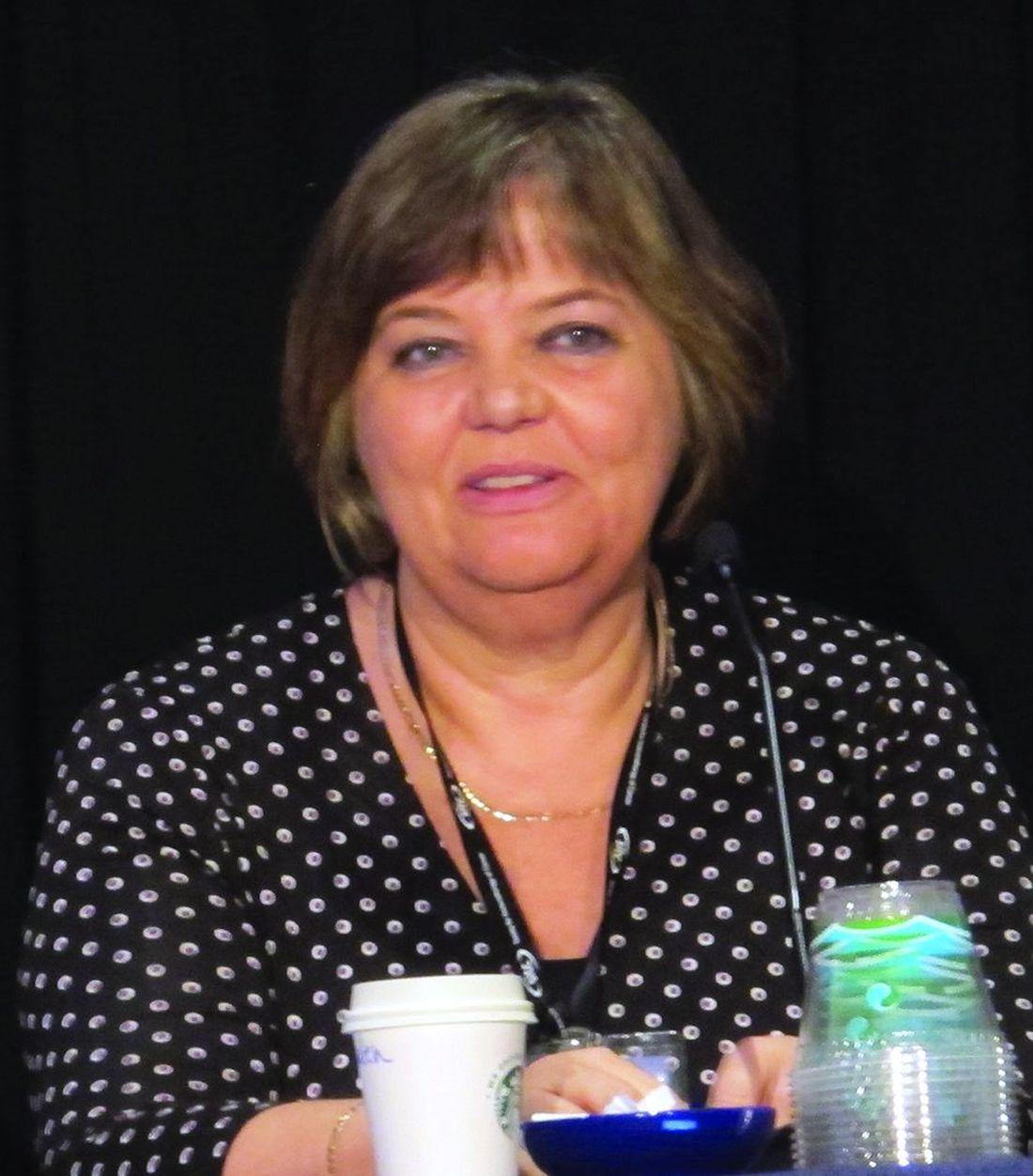
The “list price” for tisagenlecleucel is $475,000, and the potential patient pool is in the hundreds. The price for axicabtagene ciloleucel is $373,000, with a potential market in the thousands. Taking this into account, the global CAR T market is estimated at about $72 million and is projected to expand to nearly $3.5 billion in the next decade, said Dr. Maziarz, who is also chair of the Value and Health Economics Interest Group of the American Society for Blood and Marrow Transplantation.
The market for adoptive cell therapy overall – including transplant, CAR T, natural killer cells, and cell vaccines – is projected by some individuals to be worth $30 billion by 2030, he added, noting, for the sake of comparison, that the total estimated U.S. expenditure for all cancer care in the United States in 2010 was $125 billion.
At the heart of the issue of cost is the matter of value, he said.
“You can talk about price, and you can talk about cost, but … what we want to do with our dollars is buy value – and quality and value are very hard to measure,” he said, noting that he expects public and governmental backlash, as was seen with prior high-cost treatments such as Sovaldi for hepatitis C and Glybera for lipoprotein lipase deficiency.
Value-based payment is a recurrent theme in medicine, and these treatments came under intense scrutiny for their high costs. Sovaldi, for example, costs approximately $90,000 for a treatment course. That sounds like a lot of money, but it cures the disease and can prevent long-term complications, Dr. Maziarz said. Still, it received a lot of negative press, and the backlash was severe.
“People do respond to price,” he said, noting that he predicts the same for CAR T-cell therapies.
The costs of CAR T-cell therapy, particularly when taking into consideration the costs that hospitals will incur given the lymphodepletion that patients experience and the after-care required, will likely exceed those of most stem cell transplants and could easily reach the $1 million-plus estimates, Helen Heslop, MD, professor of medicine and pediatrics and director of the Center for Cell and Gene Therapy at Baylor College of Medicine, Houston, said in an interview.
Aside from the research and development costs, these treatments also cost more to make than any others previously made, according to Carl H. June, MD, the Richard W. Vague Professor In Immunotherapy at the University of Pennsylvania, Philadelphia, and a pioneer in CAR T-cell research.
Dr. June predicted that costs will be forced down over time because of process improvements and competition. “What’s unknown is the time span on how long it will take,” he said in an interview.
Groups like the United Kingdom’s National Institute for Health and Care Excellence (NICE) are already looking at value-based approaches to providing CAR T-cell therapy, Dr. Heslop said.
“I think there will need to be a lot more comparative effectiveness analyses done,” she said. “I know my institution started to look at the cost in a child with ALL once they relapse, and when you look at all the downstream cost, even though [CAR T-cell therapy] sounds very expensive, as a one-time therapy versus much longer treatment, it may actually be value based,” she said.
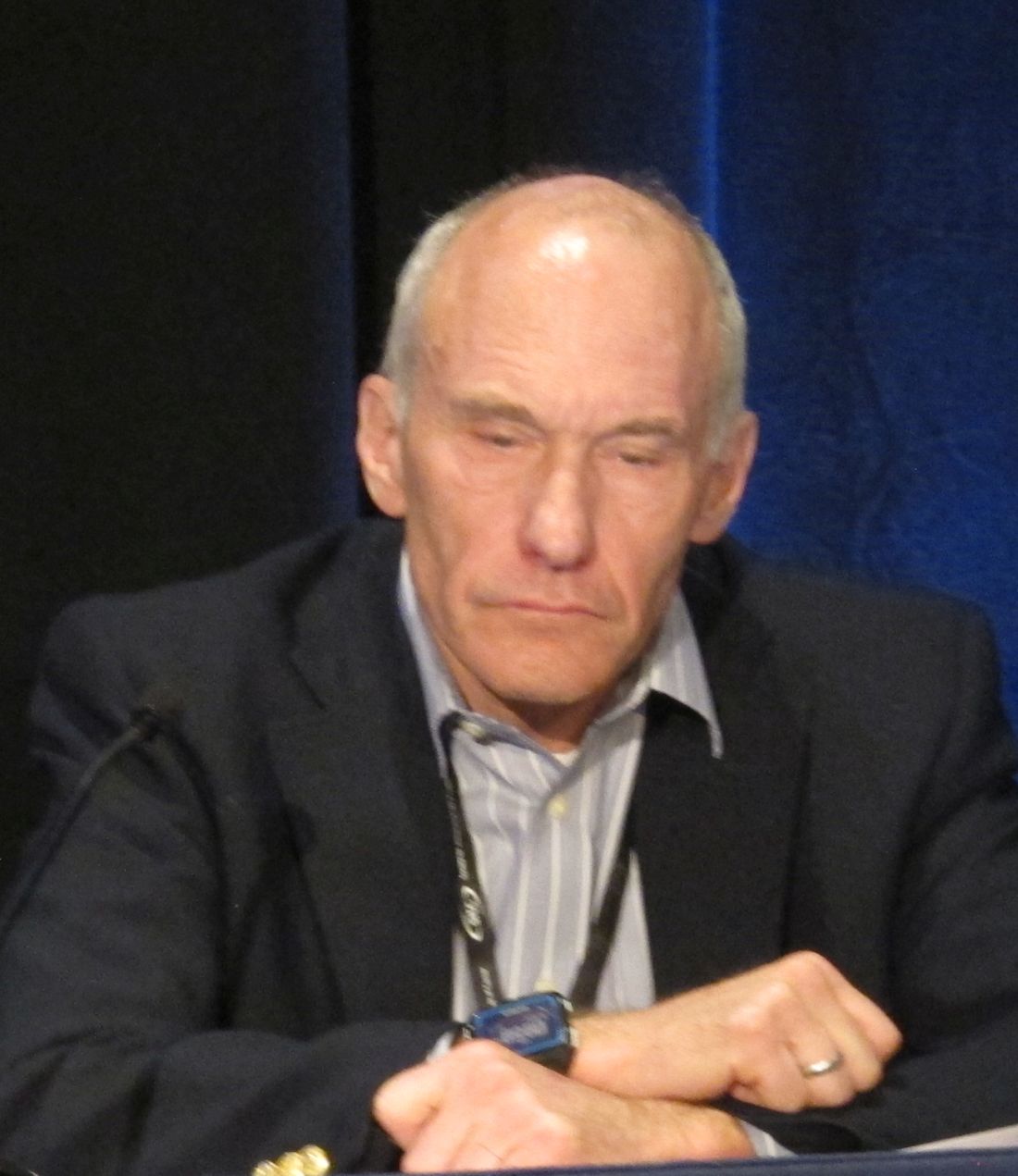
When it comes to improving access, one of the approaches being studied is the use of universal cell banks as opposed to autologous cells for therapy. This “off-the-shelf” approach, much like the approach used in transfusion medicine, would allow for quicker availability of the cells to a greater number of patients, she said.
Dr. June who, along with Dr. Heslop, cochaired the SITC plenary session on genetically modified cell therapy, agreed, saying that if this approach works with T cells, it would radically change the CAR T landscape in terms of availability and, perhaps – eventually – cost.
Preliminary results from phase I studies (CALM and PALL) of this approach will be presented at the upcoming annual meeting of the American Society of Hematology. The studies are a joint effort by Servier and Cellectis, which joined forces in the development of UCART19, an allogeneic CAR-T product for the treatment of CD19-expressing B-cell acute lymphoblastic leukemia.
Still, value remains an important consideration. If a therapy is expected to extend a pancreatic cancer patient’s life by a month, it’s probably valid to ask if that is cost effective, but if it is potentially curative for a patient with hematologic malignancy, it’s very hard to say they can’t access it, Dr. Heslop said.
Cost-saving proposals
Efforts to address the cost concerns, including proposals for novel payment strategies, are already emerging. One example involves an offer by Novartis to charge for Kymriah only if treated patients go into remission within 1 month. Details of the plan haven’t been released.
Another approach is being considered in Europe and involves a graduated payment system for an investigational regulatory T cell therapy for autoimmune disease, Dr. Maziarz said. For example, if the drug costs $1 million, the government might pay $200,000 the first year and then $100,000 per year if the patient is cured. “If the patient relapses, they can stop their payment, as cure was not achieved,” he explained.
In many discussions about value, the definition is based on quality-adjusted life years (QALY) gained, he said. A recent statement from the American College of Cardiology and the American Heart Association on cost/value methodology, for example, used $50,000 per QALY gained as the cut-off for a good investment. Costs of $50,000 to less than $150,000 per QALY were considered to be of intermediate value, and costs of $150,000 or greater per QALY gained were considered to be of low value.
“A number of payers are using these guidelines to determine what drugs they will put on their portfolio and make available to enrollees,” Dr. Maziarz said.
In anticipation of cost-related issues with CAR T-cell therapy, the Institute for Clinical and Economic Review (ICER) and its California Technology Assessment Forum (CTAP) put out a request for information and input regarding their intent to collaboratively initiate an assessment of CAR T-cell effectiveness and value, he said.
In the meantime, Dr. Maziarz said that most private insurers he’s been in contact with are planning coverage of CAR T-cell therapy but are working out the details of how to do it.
“It’s typically going to involve very, very strict guidelines for the patients who go on therapy – it’s not going to be a liberal use of the product. It will involve strict adherence to the label,” he said.
The real challenge, however, will be in the Medicare and Medicaid programs, because of the current nature of the reimbursement structures and lack of clear procedural codes to define the effort and cost of care associated with the application of these novel cell therapies.
Walid F. Gellad, MD, and Aaron S. Kesselheim, MD, anticipated some of these challenges in light of accelerated approval processes for expensive drugs and proposed in a May 2017 paper that government payers reimburse only the cost of manufacturing and some predetermined mark-up for such drugs until confirmatory trials demonstrate clinical benefit (N Engl J Med. 2017;376[21]:2001-04).
“Both Yescarta and Kymriah are approved with very, very, very limited data – 100 patients, 80 patients. They absolutely look promising. I was part of those studies, so I’m a believer, but the classic approach to determining success in the medical community is a randomized controlled trial,” Dr. Maziarz said.
The proposal by Dr. Gellad and Dr. Kesselheim acknowledged this, and said perhaps full payment isn’t warranted while the drugs remain in development and until they are proven to be a good investment.
Their proposal also calls for an economic impact analysis after 1-2 years on the market for all accelerated-approval pathway drugs that cost over a predetermined amount, timely and optimally designed confirmatory trials following accelerated approval to limit the period of uncertainty about the true clinical effect of the drug, and additional price concessions to public insurance programs for such drugs until the confirmatory trials are completed. Under this proposal, the unpaid portion of drug costs would be held in escrow until the drug’s efficacy is confirmed.
“I think what’s going to happen is that, as prices and costs go up for any therapy, that backlash will occur. These types of proposals to create solutions will come not from individual companies, but from the government,” Dr. Maziarz said. “I’m 100% excited about the work. I’m extremely excited to be part of the explorations. … I just still think we have to at least try to be aware and cognizant of the issues that we’ll be facing.”
Dr. Maziarz has received consulting fees from Novartis, Juno Therapeutics, and Kite Pharma. Dr. Heslop has received consulting fees from Novartis, has conducted research for Cell Medica and holds intellectual property rights/patent from Cell Medica, and has ownership interest in ViraCyte and Marker Therapeutics. Dr. June received royalties from Novartis, has conducted research for Novartis, and has ownership interest in Tmunity Therapeutics.
Chimeric antigen receptor (CAR) T-cell therapy has generated a great deal of excitement in recent months with the approval of Novartis’ Kymriah (tisagenlecleucel) for pediatric acute lymphoblastic leukemia and Kite Pharma’s Yescarta (axicabtagene ciloleucel) for relapsed/refractory large B-cell lymphoma in adults, and experts in the field foresee a wave of approvals for additional indications in the coming months.
“CAR T is coming unbelievably fast,” Richard Maziarz, MD, professor of medicine at Oregon Health and Science University, Portland, said in an interview.
In fact, a search of clinicaltrials.gov revealed 120 open CAR T-cell–based therapy trials for cancer and other conditions such as autoimmune diseases, he said.
Price tag pressure
During a plenary session on genetically modified cell therapies at the annual meeting of the Society for Immunotherapy of Cancer, experts and investigators provided a glimpse of what’s in store, including new targets and smarter targeting and combinations that incorporate CAR T-cell therapy to treat solid tumors.
The “list price” for tisagenlecleucel is $475,000, and the potential patient pool is in the hundreds. The price for axicabtagene ciloleucel is $373,000, with a potential market in the thousands. Taking this into account, the global CAR T market is estimated at about $72 million and is projected to expand to nearly $3.5 billion in the next decade, said Dr. Maziarz, who is also chair of the Value and Health Economics Interest Group of the American Society for Blood and Marrow Transplantation.
The market for adoptive cell therapy overall – including transplant, CAR T, natural killer cells, and cell vaccines – is projected by some individuals to be worth $30 billion by 2030, he added, noting, for the sake of comparison, that the total estimated U.S. expenditure for all cancer care in the United States in 2010 was $125 billion.
At the heart of the issue of cost is the matter of value, he said.
“You can talk about price, and you can talk about cost, but … what we want to do with our dollars is buy value – and quality and value are very hard to measure,” he said, noting that he expects public and governmental backlash, as was seen with prior high-cost treatments such as Sovaldi for hepatitis C and Glybera for lipoprotein lipase deficiency.
Value-based payment is a recurrent theme in medicine, and these treatments came under intense scrutiny for their high costs. Sovaldi, for example, costs approximately $90,000 for a treatment course. That sounds like a lot of money, but it cures the disease and can prevent long-term complications, Dr. Maziarz said. Still, it received a lot of negative press, and the backlash was severe.
“People do respond to price,” he said, noting that he predicts the same for CAR T-cell therapies.
The costs of CAR T-cell therapy, particularly when taking into consideration the costs that hospitals will incur given the lymphodepletion that patients experience and the after-care required, will likely exceed those of most stem cell transplants and could easily reach the $1 million-plus estimates, Helen Heslop, MD, professor of medicine and pediatrics and director of the Center for Cell and Gene Therapy at Baylor College of Medicine, Houston, said in an interview.
Aside from the research and development costs, these treatments also cost more to make than any others previously made, according to Carl H. June, MD, the Richard W. Vague Professor In Immunotherapy at the University of Pennsylvania, Philadelphia, and a pioneer in CAR T-cell research.
Dr. June predicted that costs will be forced down over time because of process improvements and competition. “What’s unknown is the time span on how long it will take,” he said in an interview.
Groups like the United Kingdom’s National Institute for Health and Care Excellence (NICE) are already looking at value-based approaches to providing CAR T-cell therapy, Dr. Heslop said.
“I think there will need to be a lot more comparative effectiveness analyses done,” she said. “I know my institution started to look at the cost in a child with ALL once they relapse, and when you look at all the downstream cost, even though [CAR T-cell therapy] sounds very expensive, as a one-time therapy versus much longer treatment, it may actually be value based,” she said.
When it comes to improving access, one of the approaches being studied is the use of universal cell banks as opposed to autologous cells for therapy. This “off-the-shelf” approach, much like the approach used in transfusion medicine, would allow for quicker availability of the cells to a greater number of patients, she said.
Dr. June who, along with Dr. Heslop, cochaired the SITC plenary session on genetically modified cell therapy, agreed, saying that if this approach works with T cells, it would radically change the CAR T landscape in terms of availability and, perhaps – eventually – cost.
Preliminary results from phase I studies (CALM and PALL) of this approach will be presented at the upcoming annual meeting of the American Society of Hematology. The studies are a joint effort by Servier and Cellectis, which joined forces in the development of UCART19, an allogeneic CAR-T product for the treatment of CD19-expressing B-cell acute lymphoblastic leukemia.
Still, value remains an important consideration. If a therapy is expected to extend a pancreatic cancer patient’s life by a month, it’s probably valid to ask if that is cost effective, but if it is potentially curative for a patient with hematologic malignancy, it’s very hard to say they can’t access it, Dr. Heslop said.
Cost-saving proposals
Efforts to address the cost concerns, including proposals for novel payment strategies, are already emerging. One example involves an offer by Novartis to charge for Kymriah only if treated patients go into remission within 1 month. Details of the plan haven’t been released.
Another approach is being considered in Europe and involves a graduated payment system for an investigational regulatory T cell therapy for autoimmune disease, Dr. Maziarz said. For example, if the drug costs $1 million, the government might pay $200,000 the first year and then $100,000 per year if the patient is cured. “If the patient relapses, they can stop their payment, as cure was not achieved,” he explained.
In many discussions about value, the definition is based on quality-adjusted life years (QALY) gained, he said. A recent statement from the American College of Cardiology and the American Heart Association on cost/value methodology, for example, used $50,000 per QALY gained as the cut-off for a good investment. Costs of $50,000 to less than $150,000 per QALY were considered to be of intermediate value, and costs of $150,000 or greater per QALY gained were considered to be of low value.
“A number of payers are using these guidelines to determine what drugs they will put on their portfolio and make available to enrollees,” Dr. Maziarz said.
In anticipation of cost-related issues with CAR T-cell therapy, the Institute for Clinical and Economic Review (ICER) and its California Technology Assessment Forum (CTAP) put out a request for information and input regarding their intent to collaboratively initiate an assessment of CAR T-cell effectiveness and value, he said.
In the meantime, Dr. Maziarz said that most private insurers he’s been in contact with are planning coverage of CAR T-cell therapy but are working out the details of how to do it.
“It’s typically going to involve very, very strict guidelines for the patients who go on therapy – it’s not going to be a liberal use of the product. It will involve strict adherence to the label,” he said.
The real challenge, however, will be in the Medicare and Medicaid programs, because of the current nature of the reimbursement structures and lack of clear procedural codes to define the effort and cost of care associated with the application of these novel cell therapies.
Walid F. Gellad, MD, and Aaron S. Kesselheim, MD, anticipated some of these challenges in light of accelerated approval processes for expensive drugs and proposed in a May 2017 paper that government payers reimburse only the cost of manufacturing and some predetermined mark-up for such drugs until confirmatory trials demonstrate clinical benefit (N Engl J Med. 2017;376[21]:2001-04).
“Both Yescarta and Kymriah are approved with very, very, very limited data – 100 patients, 80 patients. They absolutely look promising. I was part of those studies, so I’m a believer, but the classic approach to determining success in the medical community is a randomized controlled trial,” Dr. Maziarz said.
The proposal by Dr. Gellad and Dr. Kesselheim acknowledged this, and said perhaps full payment isn’t warranted while the drugs remain in development and until they are proven to be a good investment.
Their proposal also calls for an economic impact analysis after 1-2 years on the market for all accelerated-approval pathway drugs that cost over a predetermined amount, timely and optimally designed confirmatory trials following accelerated approval to limit the period of uncertainty about the true clinical effect of the drug, and additional price concessions to public insurance programs for such drugs until the confirmatory trials are completed. Under this proposal, the unpaid portion of drug costs would be held in escrow until the drug’s efficacy is confirmed.
“I think what’s going to happen is that, as prices and costs go up for any therapy, that backlash will occur. These types of proposals to create solutions will come not from individual companies, but from the government,” Dr. Maziarz said. “I’m 100% excited about the work. I’m extremely excited to be part of the explorations. … I just still think we have to at least try to be aware and cognizant of the issues that we’ll be facing.”
Dr. Maziarz has received consulting fees from Novartis, Juno Therapeutics, and Kite Pharma. Dr. Heslop has received consulting fees from Novartis, has conducted research for Cell Medica and holds intellectual property rights/patent from Cell Medica, and has ownership interest in ViraCyte and Marker Therapeutics. Dr. June received royalties from Novartis, has conducted research for Novartis, and has ownership interest in Tmunity Therapeutics.
Chimeric antigen receptor (CAR) T-cell therapy has generated a great deal of excitement in recent months with the approval of Novartis’ Kymriah (tisagenlecleucel) for pediatric acute lymphoblastic leukemia and Kite Pharma’s Yescarta (axicabtagene ciloleucel) for relapsed/refractory large B-cell lymphoma in adults, and experts in the field foresee a wave of approvals for additional indications in the coming months.
“CAR T is coming unbelievably fast,” Richard Maziarz, MD, professor of medicine at Oregon Health and Science University, Portland, said in an interview.
In fact, a search of clinicaltrials.gov revealed 120 open CAR T-cell–based therapy trials for cancer and other conditions such as autoimmune diseases, he said.
Price tag pressure
During a plenary session on genetically modified cell therapies at the annual meeting of the Society for Immunotherapy of Cancer, experts and investigators provided a glimpse of what’s in store, including new targets and smarter targeting and combinations that incorporate CAR T-cell therapy to treat solid tumors.
The “list price” for tisagenlecleucel is $475,000, and the potential patient pool is in the hundreds. The price for axicabtagene ciloleucel is $373,000, with a potential market in the thousands. Taking this into account, the global CAR T market is estimated at about $72 million and is projected to expand to nearly $3.5 billion in the next decade, said Dr. Maziarz, who is also chair of the Value and Health Economics Interest Group of the American Society for Blood and Marrow Transplantation.
The market for adoptive cell therapy overall – including transplant, CAR T, natural killer cells, and cell vaccines – is projected by some individuals to be worth $30 billion by 2030, he added, noting, for the sake of comparison, that the total estimated U.S. expenditure for all cancer care in the United States in 2010 was $125 billion.
At the heart of the issue of cost is the matter of value, he said.
“You can talk about price, and you can talk about cost, but … what we want to do with our dollars is buy value – and quality and value are very hard to measure,” he said, noting that he expects public and governmental backlash, as was seen with prior high-cost treatments such as Sovaldi for hepatitis C and Glybera for lipoprotein lipase deficiency.
Value-based payment is a recurrent theme in medicine, and these treatments came under intense scrutiny for their high costs. Sovaldi, for example, costs approximately $90,000 for a treatment course. That sounds like a lot of money, but it cures the disease and can prevent long-term complications, Dr. Maziarz said. Still, it received a lot of negative press, and the backlash was severe.
“People do respond to price,” he said, noting that he predicts the same for CAR T-cell therapies.
The costs of CAR T-cell therapy, particularly when taking into consideration the costs that hospitals will incur given the lymphodepletion that patients experience and the after-care required, will likely exceed those of most stem cell transplants and could easily reach the $1 million-plus estimates, Helen Heslop, MD, professor of medicine and pediatrics and director of the Center for Cell and Gene Therapy at Baylor College of Medicine, Houston, said in an interview.
Aside from the research and development costs, these treatments also cost more to make than any others previously made, according to Carl H. June, MD, the Richard W. Vague Professor In Immunotherapy at the University of Pennsylvania, Philadelphia, and a pioneer in CAR T-cell research.
Dr. June predicted that costs will be forced down over time because of process improvements and competition. “What’s unknown is the time span on how long it will take,” he said in an interview.
Groups like the United Kingdom’s National Institute for Health and Care Excellence (NICE) are already looking at value-based approaches to providing CAR T-cell therapy, Dr. Heslop said.
“I think there will need to be a lot more comparative effectiveness analyses done,” she said. “I know my institution started to look at the cost in a child with ALL once they relapse, and when you look at all the downstream cost, even though [CAR T-cell therapy] sounds very expensive, as a one-time therapy versus much longer treatment, it may actually be value based,” she said.
When it comes to improving access, one of the approaches being studied is the use of universal cell banks as opposed to autologous cells for therapy. This “off-the-shelf” approach, much like the approach used in transfusion medicine, would allow for quicker availability of the cells to a greater number of patients, she said.
Dr. June who, along with Dr. Heslop, cochaired the SITC plenary session on genetically modified cell therapy, agreed, saying that if this approach works with T cells, it would radically change the CAR T landscape in terms of availability and, perhaps – eventually – cost.
Preliminary results from phase I studies (CALM and PALL) of this approach will be presented at the upcoming annual meeting of the American Society of Hematology. The studies are a joint effort by Servier and Cellectis, which joined forces in the development of UCART19, an allogeneic CAR-T product for the treatment of CD19-expressing B-cell acute lymphoblastic leukemia.
Still, value remains an important consideration. If a therapy is expected to extend a pancreatic cancer patient’s life by a month, it’s probably valid to ask if that is cost effective, but if it is potentially curative for a patient with hematologic malignancy, it’s very hard to say they can’t access it, Dr. Heslop said.
Cost-saving proposals
Efforts to address the cost concerns, including proposals for novel payment strategies, are already emerging. One example involves an offer by Novartis to charge for Kymriah only if treated patients go into remission within 1 month. Details of the plan haven’t been released.
Another approach is being considered in Europe and involves a graduated payment system for an investigational regulatory T cell therapy for autoimmune disease, Dr. Maziarz said. For example, if the drug costs $1 million, the government might pay $200,000 the first year and then $100,000 per year if the patient is cured. “If the patient relapses, they can stop their payment, as cure was not achieved,” he explained.
In many discussions about value, the definition is based on quality-adjusted life years (QALY) gained, he said. A recent statement from the American College of Cardiology and the American Heart Association on cost/value methodology, for example, used $50,000 per QALY gained as the cut-off for a good investment. Costs of $50,000 to less than $150,000 per QALY were considered to be of intermediate value, and costs of $150,000 or greater per QALY gained were considered to be of low value.
“A number of payers are using these guidelines to determine what drugs they will put on their portfolio and make available to enrollees,” Dr. Maziarz said.
In anticipation of cost-related issues with CAR T-cell therapy, the Institute for Clinical and Economic Review (ICER) and its California Technology Assessment Forum (CTAP) put out a request for information and input regarding their intent to collaboratively initiate an assessment of CAR T-cell effectiveness and value, he said.
In the meantime, Dr. Maziarz said that most private insurers he’s been in contact with are planning coverage of CAR T-cell therapy but are working out the details of how to do it.
“It’s typically going to involve very, very strict guidelines for the patients who go on therapy – it’s not going to be a liberal use of the product. It will involve strict adherence to the label,” he said.
The real challenge, however, will be in the Medicare and Medicaid programs, because of the current nature of the reimbursement structures and lack of clear procedural codes to define the effort and cost of care associated with the application of these novel cell therapies.
Walid F. Gellad, MD, and Aaron S. Kesselheim, MD, anticipated some of these challenges in light of accelerated approval processes for expensive drugs and proposed in a May 2017 paper that government payers reimburse only the cost of manufacturing and some predetermined mark-up for such drugs until confirmatory trials demonstrate clinical benefit (N Engl J Med. 2017;376[21]:2001-04).
“Both Yescarta and Kymriah are approved with very, very, very limited data – 100 patients, 80 patients. They absolutely look promising. I was part of those studies, so I’m a believer, but the classic approach to determining success in the medical community is a randomized controlled trial,” Dr. Maziarz said.
The proposal by Dr. Gellad and Dr. Kesselheim acknowledged this, and said perhaps full payment isn’t warranted while the drugs remain in development and until they are proven to be a good investment.
Their proposal also calls for an economic impact analysis after 1-2 years on the market for all accelerated-approval pathway drugs that cost over a predetermined amount, timely and optimally designed confirmatory trials following accelerated approval to limit the period of uncertainty about the true clinical effect of the drug, and additional price concessions to public insurance programs for such drugs until the confirmatory trials are completed. Under this proposal, the unpaid portion of drug costs would be held in escrow until the drug’s efficacy is confirmed.
“I think what’s going to happen is that, as prices and costs go up for any therapy, that backlash will occur. These types of proposals to create solutions will come not from individual companies, but from the government,” Dr. Maziarz said. “I’m 100% excited about the work. I’m extremely excited to be part of the explorations. … I just still think we have to at least try to be aware and cognizant of the issues that we’ll be facing.”
Dr. Maziarz has received consulting fees from Novartis, Juno Therapeutics, and Kite Pharma. Dr. Heslop has received consulting fees from Novartis, has conducted research for Cell Medica and holds intellectual property rights/patent from Cell Medica, and has ownership interest in ViraCyte and Marker Therapeutics. Dr. June received royalties from Novartis, has conducted research for Novartis, and has ownership interest in Tmunity Therapeutics.
The ‘Virtual Radiology Resident’—Coming to a Computer Near You
Researchers around the world may be able to teach computers how to better detect and diagnose disease, thanks to > 100,000 chest x-ray images and corresponding data recently released by the NIH Clinical Center.
Reading and diagnosing chest x-rays requires careful observation, as well as knowledge of anatomy, physiology, and pathology. When that is combined with the need to consider all common thoracic diseases, it becomes hard to automate a consistent technique for reading images, the NIH says. With the free dataset, the hope is that academic and research institution staff will be able to teach their computers to read and process enormous amounts of scans, to confirm radiologists’ results, and potentially identify anything that may have been overlooked.
The NIH says in addition to being a “virtual radiology resident,” advanced computer technology has other potential benefits: For instance, it could identify slow changes occurring over the course of multiple chest x-rays that might otherwise be overlooked. The technology also would be useful in poor countries that lack radiologists. And in the future, the “resident” might be taught to read more complex images, such as CT and MRI.
The dataset, compiled from scans from > 30,000 patients, including many with advanced lung disease, was scrubbed of private information before release. The images are available via Box at https://nihcc.app.box.com/v/ChestXray-NIHCC.
Researchers around the world may be able to teach computers how to better detect and diagnose disease, thanks to > 100,000 chest x-ray images and corresponding data recently released by the NIH Clinical Center.
Reading and diagnosing chest x-rays requires careful observation, as well as knowledge of anatomy, physiology, and pathology. When that is combined with the need to consider all common thoracic diseases, it becomes hard to automate a consistent technique for reading images, the NIH says. With the free dataset, the hope is that academic and research institution staff will be able to teach their computers to read and process enormous amounts of scans, to confirm radiologists’ results, and potentially identify anything that may have been overlooked.
The NIH says in addition to being a “virtual radiology resident,” advanced computer technology has other potential benefits: For instance, it could identify slow changes occurring over the course of multiple chest x-rays that might otherwise be overlooked. The technology also would be useful in poor countries that lack radiologists. And in the future, the “resident” might be taught to read more complex images, such as CT and MRI.
The dataset, compiled from scans from > 30,000 patients, including many with advanced lung disease, was scrubbed of private information before release. The images are available via Box at https://nihcc.app.box.com/v/ChestXray-NIHCC.
Researchers around the world may be able to teach computers how to better detect and diagnose disease, thanks to > 100,000 chest x-ray images and corresponding data recently released by the NIH Clinical Center.
Reading and diagnosing chest x-rays requires careful observation, as well as knowledge of anatomy, physiology, and pathology. When that is combined with the need to consider all common thoracic diseases, it becomes hard to automate a consistent technique for reading images, the NIH says. With the free dataset, the hope is that academic and research institution staff will be able to teach their computers to read and process enormous amounts of scans, to confirm radiologists’ results, and potentially identify anything that may have been overlooked.
The NIH says in addition to being a “virtual radiology resident,” advanced computer technology has other potential benefits: For instance, it could identify slow changes occurring over the course of multiple chest x-rays that might otherwise be overlooked. The technology also would be useful in poor countries that lack radiologists. And in the future, the “resident” might be taught to read more complex images, such as CT and MRI.
The dataset, compiled from scans from > 30,000 patients, including many with advanced lung disease, was scrubbed of private information before release. The images are available via Box at https://nihcc.app.box.com/v/ChestXray-NIHCC.