User login
Bringing you the latest news, research and reviews, exclusive interviews, podcasts, quizzes, and more.
Powered by CHEST Physician, Clinician Reviews, MDedge Family Medicine, Internal Medicine News, and The Journal of Clinical Outcomes Management.
Pragmatic Trials Point to Equivalence of LTRAs for Asthma
Two "pragmatic" studies of leukotriene receptor antagonists in real-world asthma patients fell just short of demonstrating the drugs’ equivalence with inhaled glucocorticoids as first-line therapy and with beta-agonists as add-on therapy for exacerbations, according to a report in the May 5 issue of the New England Journal of Medicine.
Leukotriene receptor antagonists (LTRAs) met the criteria for equivalence to the other medications at 2-month follow-up, a time point that "represents a standard efficacy period" in most clinical trials. But LTRAs fell just shy of meeting the criteria for equivalence at 2-year follow-up, and that was the primary outcome measure for both studies, said Dr. David Price of the University of Aberdeen (Scotland) and his associates.
Despite this negative finding, "our [results] suggest that there is little difference in real-world effectiveness between an LTRA and an inhaled glucocorticoid as first-line controller therapy and between an LTRA and a long-acting beta-agonist as an add-on to an inhaled glucocorticoid," they said.
"Caution is needed in interpreting the results of these pragmatic trials," they noted.
In a perspective piece accompanying Dr. Price’s report, James H. Ware, Ph.D., and Dr. Mary Beth Hamel agreed, citing the "many challenges" involved in conducting pragmatic trials and interpreting their findings (N. Engl. J. Med. 2011;364:1685-7).
But "despite the trials’ limitations, the data provide encouraging evidence of equivalence or near-equivalence of the treatment strategies over the course of 2 years. Though imperfect, they provide helpful guidance for clinical care," said Dr. Ware, professor of biostatistics at Harvard School of Public Health, Boston, and a statistical consultant to the New England Journal of Medicine, and Dr. Hamel, also of Harvard and a deputy editor of the journal.
The two studies, conducted in parallel at 53 primary care practices throughout the United Kingdom, were funded primarily by the U.K. Health Technology Assessment Programme "for the explicit purpose of informing guidelines for asthma management in the British National Health Service," Dr. Ware and Dr. Hamel noted.
Both studies were unblinded and sought to enroll a broad spectrum of asthma patients aged 12-80 years, so as to reflect the complexity and diversity of routine clinical practice. However, because the studies ended up with very few subjects younger than 25 years of age, "our findings apply only to adults," Dr. Price and his colleagues said.
In the first study, 306 patients were randomly assigned to open-label treatment with either an LTRA (montelukast or zafirlukast) or an inhaled glucocorticoid (beclomethasone, budesonide, or fluticasone) as first-line therapy. Mean scores on the Mini Asthma Quality of Life Questionnaire (MiniAQLQ) were equivalent between the two groups at 2 months, as were secondary end points of the frequency of exacerbations and mean scores on the Asthma Control Questionnaire, the Royal College of Physicians three-item questionnaire (RCP3), and the Mini Rhinoconjunctivitis Quality of Life Questionnaire.
All these secondary end points also were equivalent at 2-year follow-up. But mean scores on the MiniAQLQ did not meet the prespecified criteria for equivalence at 2 years.
In the second study, 352 patients whose asthma was not well controlled with inhaled glucocorticoids were randomly assigned to open-label add-on treatment with either an LTRA or a long-acting beta-agonist. Again, mean scores on the MiniAQLQ demonstrated equivalence of the two medications at 2 months, as did all the secondary end points at both 2 months and 2 years.
But again, the primary end point of mean scores on the MiniAQLQ at 2 years fell just outside the prespecified criteria for equivalence.
These results "suggest that an LTRA is equivalent to both comparison drugs with regard to the effect on asthma-related quality of life at 2 months in a diverse patient population with asthma," the investigators said (N. Engl. J. Med. 2011;364:1695-707).
However, they also "suggest that caution should be applied in extrapolating results from randomized clinical trials to the broad population of patients with asthma who are treated in community settings."
In both of these trials, leukotriene receptor antagonists were "essentially equivalent" in efficacy – findings that challenge current guidelines that favor inhaled glucocorticoids, according to Dr. Sven-Erik Dahlen and Dr. Barbro Dahlen of the Karolinska Institutet, Stockholm, and Dr. Jeffrey M. Drazen, editor in chief of the New England Journal of Medicine.
"The data reported by Price et al. send an important message to both the family doctor and the hospital specialist," they said in an editorial (N. Engl. J. Med. 2011;364:1769-70) accompanying Dr. Price’s report.
"Oral leukotriene modifiers provide an alternative treatment that may help patients pursue their activities of daily life as effectively as inhaled glucocorticoids do."
They added, "We think this alternative approach works in the real-world setting primarily because it is easier to take a pill once or twice a day than to use an inhaler. The data from the two studies support this view, since the rates of adherence to the oral LTRAs were 65% and 74% in the first-line controller and add-on therapy trials, respectively, compared with only 41% and 46% for the inhaled glucocorticoid."
This study was supported primarily by the U.K. Health Technology Assessment Programme. Additional funding for the study was provided by Clement Clarke International, Merck Sharp & Dohme, AstraZeneca, and Research in Real Life. Dr. Price and his associates reported numerous ties to industry sources. Dr. Ware and Dr. Hamel reported no conflicts of interest. Dr. Sven-Erik Dahlen reported ties to Regeneron Pharmaceuticals and GlaxoSmithKline, and Dr. Barbro Dahlen reported ties to Actelion and Genentech.
Two "pragmatic" studies of leukotriene receptor antagonists in real-world asthma patients fell just short of demonstrating the drugs’ equivalence with inhaled glucocorticoids as first-line therapy and with beta-agonists as add-on therapy for exacerbations, according to a report in the May 5 issue of the New England Journal of Medicine.
Leukotriene receptor antagonists (LTRAs) met the criteria for equivalence to the other medications at 2-month follow-up, a time point that "represents a standard efficacy period" in most clinical trials. But LTRAs fell just shy of meeting the criteria for equivalence at 2-year follow-up, and that was the primary outcome measure for both studies, said Dr. David Price of the University of Aberdeen (Scotland) and his associates.
Despite this negative finding, "our [results] suggest that there is little difference in real-world effectiveness between an LTRA and an inhaled glucocorticoid as first-line controller therapy and between an LTRA and a long-acting beta-agonist as an add-on to an inhaled glucocorticoid," they said.
"Caution is needed in interpreting the results of these pragmatic trials," they noted.
In a perspective piece accompanying Dr. Price’s report, James H. Ware, Ph.D., and Dr. Mary Beth Hamel agreed, citing the "many challenges" involved in conducting pragmatic trials and interpreting their findings (N. Engl. J. Med. 2011;364:1685-7).
But "despite the trials’ limitations, the data provide encouraging evidence of equivalence or near-equivalence of the treatment strategies over the course of 2 years. Though imperfect, they provide helpful guidance for clinical care," said Dr. Ware, professor of biostatistics at Harvard School of Public Health, Boston, and a statistical consultant to the New England Journal of Medicine, and Dr. Hamel, also of Harvard and a deputy editor of the journal.
The two studies, conducted in parallel at 53 primary care practices throughout the United Kingdom, were funded primarily by the U.K. Health Technology Assessment Programme "for the explicit purpose of informing guidelines for asthma management in the British National Health Service," Dr. Ware and Dr. Hamel noted.
Both studies were unblinded and sought to enroll a broad spectrum of asthma patients aged 12-80 years, so as to reflect the complexity and diversity of routine clinical practice. However, because the studies ended up with very few subjects younger than 25 years of age, "our findings apply only to adults," Dr. Price and his colleagues said.
In the first study, 306 patients were randomly assigned to open-label treatment with either an LTRA (montelukast or zafirlukast) or an inhaled glucocorticoid (beclomethasone, budesonide, or fluticasone) as first-line therapy. Mean scores on the Mini Asthma Quality of Life Questionnaire (MiniAQLQ) were equivalent between the two groups at 2 months, as were secondary end points of the frequency of exacerbations and mean scores on the Asthma Control Questionnaire, the Royal College of Physicians three-item questionnaire (RCP3), and the Mini Rhinoconjunctivitis Quality of Life Questionnaire.
All these secondary end points also were equivalent at 2-year follow-up. But mean scores on the MiniAQLQ did not meet the prespecified criteria for equivalence at 2 years.
In the second study, 352 patients whose asthma was not well controlled with inhaled glucocorticoids were randomly assigned to open-label add-on treatment with either an LTRA or a long-acting beta-agonist. Again, mean scores on the MiniAQLQ demonstrated equivalence of the two medications at 2 months, as did all the secondary end points at both 2 months and 2 years.
But again, the primary end point of mean scores on the MiniAQLQ at 2 years fell just outside the prespecified criteria for equivalence.
These results "suggest that an LTRA is equivalent to both comparison drugs with regard to the effect on asthma-related quality of life at 2 months in a diverse patient population with asthma," the investigators said (N. Engl. J. Med. 2011;364:1695-707).
However, they also "suggest that caution should be applied in extrapolating results from randomized clinical trials to the broad population of patients with asthma who are treated in community settings."
In both of these trials, leukotriene receptor antagonists were "essentially equivalent" in efficacy – findings that challenge current guidelines that favor inhaled glucocorticoids, according to Dr. Sven-Erik Dahlen and Dr. Barbro Dahlen of the Karolinska Institutet, Stockholm, and Dr. Jeffrey M. Drazen, editor in chief of the New England Journal of Medicine.
"The data reported by Price et al. send an important message to both the family doctor and the hospital specialist," they said in an editorial (N. Engl. J. Med. 2011;364:1769-70) accompanying Dr. Price’s report.
"Oral leukotriene modifiers provide an alternative treatment that may help patients pursue their activities of daily life as effectively as inhaled glucocorticoids do."
They added, "We think this alternative approach works in the real-world setting primarily because it is easier to take a pill once or twice a day than to use an inhaler. The data from the two studies support this view, since the rates of adherence to the oral LTRAs were 65% and 74% in the first-line controller and add-on therapy trials, respectively, compared with only 41% and 46% for the inhaled glucocorticoid."
This study was supported primarily by the U.K. Health Technology Assessment Programme. Additional funding for the study was provided by Clement Clarke International, Merck Sharp & Dohme, AstraZeneca, and Research in Real Life. Dr. Price and his associates reported numerous ties to industry sources. Dr. Ware and Dr. Hamel reported no conflicts of interest. Dr. Sven-Erik Dahlen reported ties to Regeneron Pharmaceuticals and GlaxoSmithKline, and Dr. Barbro Dahlen reported ties to Actelion and Genentech.
Two "pragmatic" studies of leukotriene receptor antagonists in real-world asthma patients fell just short of demonstrating the drugs’ equivalence with inhaled glucocorticoids as first-line therapy and with beta-agonists as add-on therapy for exacerbations, according to a report in the May 5 issue of the New England Journal of Medicine.
Leukotriene receptor antagonists (LTRAs) met the criteria for equivalence to the other medications at 2-month follow-up, a time point that "represents a standard efficacy period" in most clinical trials. But LTRAs fell just shy of meeting the criteria for equivalence at 2-year follow-up, and that was the primary outcome measure for both studies, said Dr. David Price of the University of Aberdeen (Scotland) and his associates.
Despite this negative finding, "our [results] suggest that there is little difference in real-world effectiveness between an LTRA and an inhaled glucocorticoid as first-line controller therapy and between an LTRA and a long-acting beta-agonist as an add-on to an inhaled glucocorticoid," they said.
"Caution is needed in interpreting the results of these pragmatic trials," they noted.
In a perspective piece accompanying Dr. Price’s report, James H. Ware, Ph.D., and Dr. Mary Beth Hamel agreed, citing the "many challenges" involved in conducting pragmatic trials and interpreting their findings (N. Engl. J. Med. 2011;364:1685-7).
But "despite the trials’ limitations, the data provide encouraging evidence of equivalence or near-equivalence of the treatment strategies over the course of 2 years. Though imperfect, they provide helpful guidance for clinical care," said Dr. Ware, professor of biostatistics at Harvard School of Public Health, Boston, and a statistical consultant to the New England Journal of Medicine, and Dr. Hamel, also of Harvard and a deputy editor of the journal.
The two studies, conducted in parallel at 53 primary care practices throughout the United Kingdom, were funded primarily by the U.K. Health Technology Assessment Programme "for the explicit purpose of informing guidelines for asthma management in the British National Health Service," Dr. Ware and Dr. Hamel noted.
Both studies were unblinded and sought to enroll a broad spectrum of asthma patients aged 12-80 years, so as to reflect the complexity and diversity of routine clinical practice. However, because the studies ended up with very few subjects younger than 25 years of age, "our findings apply only to adults," Dr. Price and his colleagues said.
In the first study, 306 patients were randomly assigned to open-label treatment with either an LTRA (montelukast or zafirlukast) or an inhaled glucocorticoid (beclomethasone, budesonide, or fluticasone) as first-line therapy. Mean scores on the Mini Asthma Quality of Life Questionnaire (MiniAQLQ) were equivalent between the two groups at 2 months, as were secondary end points of the frequency of exacerbations and mean scores on the Asthma Control Questionnaire, the Royal College of Physicians three-item questionnaire (RCP3), and the Mini Rhinoconjunctivitis Quality of Life Questionnaire.
All these secondary end points also were equivalent at 2-year follow-up. But mean scores on the MiniAQLQ did not meet the prespecified criteria for equivalence at 2 years.
In the second study, 352 patients whose asthma was not well controlled with inhaled glucocorticoids were randomly assigned to open-label add-on treatment with either an LTRA or a long-acting beta-agonist. Again, mean scores on the MiniAQLQ demonstrated equivalence of the two medications at 2 months, as did all the secondary end points at both 2 months and 2 years.
But again, the primary end point of mean scores on the MiniAQLQ at 2 years fell just outside the prespecified criteria for equivalence.
These results "suggest that an LTRA is equivalent to both comparison drugs with regard to the effect on asthma-related quality of life at 2 months in a diverse patient population with asthma," the investigators said (N. Engl. J. Med. 2011;364:1695-707).
However, they also "suggest that caution should be applied in extrapolating results from randomized clinical trials to the broad population of patients with asthma who are treated in community settings."
In both of these trials, leukotriene receptor antagonists were "essentially equivalent" in efficacy – findings that challenge current guidelines that favor inhaled glucocorticoids, according to Dr. Sven-Erik Dahlen and Dr. Barbro Dahlen of the Karolinska Institutet, Stockholm, and Dr. Jeffrey M. Drazen, editor in chief of the New England Journal of Medicine.
"The data reported by Price et al. send an important message to both the family doctor and the hospital specialist," they said in an editorial (N. Engl. J. Med. 2011;364:1769-70) accompanying Dr. Price’s report.
"Oral leukotriene modifiers provide an alternative treatment that may help patients pursue their activities of daily life as effectively as inhaled glucocorticoids do."
They added, "We think this alternative approach works in the real-world setting primarily because it is easier to take a pill once or twice a day than to use an inhaler. The data from the two studies support this view, since the rates of adherence to the oral LTRAs were 65% and 74% in the first-line controller and add-on therapy trials, respectively, compared with only 41% and 46% for the inhaled glucocorticoid."
This study was supported primarily by the U.K. Health Technology Assessment Programme. Additional funding for the study was provided by Clement Clarke International, Merck Sharp & Dohme, AstraZeneca, and Research in Real Life. Dr. Price and his associates reported numerous ties to industry sources. Dr. Ware and Dr. Hamel reported no conflicts of interest. Dr. Sven-Erik Dahlen reported ties to Regeneron Pharmaceuticals and GlaxoSmithKline, and Dr. Barbro Dahlen reported ties to Actelion and Genentech.
FROM THE NEW ENGLAND JOURNAL OF MEDICINE
Major Finding: Leukotriene antagonists showed equivalence with inhaled glucocorticoids as first-line therapy for asthma and with beta-agonists as add-on therapy for asthma at 2 months and at 2 years on several measures, but fell just short of demonstrating equivalence on the primary end point at 2 years.
Data Source: Two parallel, multicenter "pragmatic" trials to assess the real-world effectiveness of leukotriene antagonists compared with inhaled glucocorticoids as first-line treatment and compared with long-acting beta-agonists as add-on therapy for poorly controlled asthma.
Disclosures: This study was supported primarily by the U.K. Health Technology Assessment Programme; additional support was provided by Clement Clarke International, Merck Sharp & Dohme, AstraZeneca, and Research in Real Life. Dr. Price and his associates reported numerous ties to industry sources.
Pragmatic Trials Point to Equivalence of LTRAs for Asthma
Two "pragmatic" studies of leukotriene receptor antagonists in real-world asthma patients fell just short of demonstrating the drugs’ equivalence with inhaled glucocorticoids as first-line therapy and with beta-agonists as add-on therapy for exacerbations, according to a report in the May 5 issue of the New England Journal of Medicine.
Leukotriene receptor antagonists (LTRAs) met the criteria for equivalence to the other medications at 2-month follow-up, a time point that "represents a standard efficacy period" in most clinical trials. But LTRAs fell just shy of meeting the criteria for equivalence at 2-year follow-up, and that was the primary outcome measure for both studies, said Dr. David Price of the University of Aberdeen (Scotland) and his associates.
Despite this negative finding, "our [results] suggest that there is little difference in real-world effectiveness between an LTRA and an inhaled glucocorticoid as first-line controller therapy and between an LTRA and a long-acting beta-agonist as an add-on to an inhaled glucocorticoid," they said.
"Caution is needed in interpreting the results of these pragmatic trials," they noted.
In a perspective piece accompanying Dr. Price’s report, James H. Ware, Ph.D., and Dr. Mary Beth Hamel agreed, citing the "many challenges" involved in conducting pragmatic trials and interpreting their findings (N. Engl. J. Med. 2011;364:1685-7).
But "despite the trials’ limitations, the data provide encouraging evidence of equivalence or near-equivalence of the treatment strategies over the course of 2 years. Though imperfect, they provide helpful guidance for clinical care," said Dr. Ware, professor of biostatistics at Harvard School of Public Health, Boston, and a statistical consultant to the New England Journal of Medicine, and Dr. Hamel, also of Harvard and a deputy editor of the journal.
The two studies, conducted in parallel at 53 primary care practices throughout the United Kingdom, were funded primarily by the U.K. Health Technology Assessment Programme "for the explicit purpose of informing guidelines for asthma management in the British National Health Service," Dr. Ware and Dr. Hamel noted.
Both studies were unblinded and sought to enroll a broad spectrum of asthma patients aged 12-80 years, so as to reflect the complexity and diversity of routine clinical practice. However, because the studies ended up with very few subjects younger than 25 years of age, "our findings apply only to adults," Dr. Price and his colleagues said.
In the first study, 306 patients were randomly assigned to open-label treatment with either an LTRA (montelukast or zafirlukast) or an inhaled glucocorticoid (beclomethasone, budesonide, or fluticasone) as first-line therapy. Mean scores on the Mini Asthma Quality of Life Questionnaire (MiniAQLQ) were equivalent between the two groups at 2 months, as were secondary end points of the frequency of exacerbations and mean scores on the Asthma Control Questionnaire, the Royal College of Physicians three-item questionnaire (RCP3), and the Mini Rhinoconjunctivitis Quality of Life Questionnaire.
All these secondary end points also were equivalent at 2-year follow-up. But mean scores on the MiniAQLQ did not meet the prespecified criteria for equivalence at 2 years.
In the second study, 352 patients whose asthma was not well controlled with inhaled glucocorticoids were randomly assigned to open-label add-on treatment with either an LTRA or a long-acting beta-agonist. Again, mean scores on the MiniAQLQ demonstrated equivalence of the two medications at 2 months, as did all the secondary end points at both 2 months and 2 years.
But again, the primary end point of mean scores on the MiniAQLQ at 2 years fell just outside the prespecified criteria for equivalence.
These results "suggest that an LTRA is equivalent to both comparison drugs with regard to the effect on asthma-related quality of life at 2 months in a diverse patient population with asthma," the investigators said (N. Engl. J. Med. 2011;364:1695-707).
However, they also "suggest that caution should be applied in extrapolating results from randomized clinical trials to the broad population of patients with asthma who are treated in community settings."
In both of these trials, leukotriene receptor antagonists were "essentially equivalent" in efficacy – findings that challenge current guidelines that favor inhaled glucocorticoids, according to Dr. Sven-Erik Dahlen and Dr. Barbro Dahlen of the Karolinska Institutet, Stockholm, and Dr. Jeffrey M. Drazen, editor in chief of the New England Journal of Medicine.
"The data reported by Price et al. send an important message to both the family doctor and the hospital specialist," they said in an editorial (N. Engl. J. Med. 2011;364:1769-70) accompanying Dr. Price’s report.
"Oral leukotriene modifiers provide an alternative treatment that may help patients pursue their activities of daily life as effectively as inhaled glucocorticoids do."
They added, "We think this alternative approach works in the real-world setting primarily because it is easier to take a pill once or twice a day than to use an inhaler. The data from the two studies support this view, since the rates of adherence to the oral LTRAs were 65% and 74% in the first-line controller and add-on therapy trials, respectively, compared with only 41% and 46% for the inhaled glucocorticoid."
This study was supported primarily by the U.K. Health Technology Assessment Programme. Additional funding for the study was provided by Clement Clarke International, Merck Sharp & Dohme, AstraZeneca, and Research in Real Life. Dr. Price and his associates reported numerous ties to industry sources. Dr. Ware and Dr. Hamel reported no conflicts of interest. Dr. Sven-Erik Dahlen reported ties to Regeneron Pharmaceuticals and GlaxoSmithKline, and Dr. Barbro Dahlen reported ties to Actelion and Genentech.
Two "pragmatic" studies of leukotriene receptor antagonists in real-world asthma patients fell just short of demonstrating the drugs’ equivalence with inhaled glucocorticoids as first-line therapy and with beta-agonists as add-on therapy for exacerbations, according to a report in the May 5 issue of the New England Journal of Medicine.
Leukotriene receptor antagonists (LTRAs) met the criteria for equivalence to the other medications at 2-month follow-up, a time point that "represents a standard efficacy period" in most clinical trials. But LTRAs fell just shy of meeting the criteria for equivalence at 2-year follow-up, and that was the primary outcome measure for both studies, said Dr. David Price of the University of Aberdeen (Scotland) and his associates.
Despite this negative finding, "our [results] suggest that there is little difference in real-world effectiveness between an LTRA and an inhaled glucocorticoid as first-line controller therapy and between an LTRA and a long-acting beta-agonist as an add-on to an inhaled glucocorticoid," they said.
"Caution is needed in interpreting the results of these pragmatic trials," they noted.
In a perspective piece accompanying Dr. Price’s report, James H. Ware, Ph.D., and Dr. Mary Beth Hamel agreed, citing the "many challenges" involved in conducting pragmatic trials and interpreting their findings (N. Engl. J. Med. 2011;364:1685-7).
But "despite the trials’ limitations, the data provide encouraging evidence of equivalence or near-equivalence of the treatment strategies over the course of 2 years. Though imperfect, they provide helpful guidance for clinical care," said Dr. Ware, professor of biostatistics at Harvard School of Public Health, Boston, and a statistical consultant to the New England Journal of Medicine, and Dr. Hamel, also of Harvard and a deputy editor of the journal.
The two studies, conducted in parallel at 53 primary care practices throughout the United Kingdom, were funded primarily by the U.K. Health Technology Assessment Programme "for the explicit purpose of informing guidelines for asthma management in the British National Health Service," Dr. Ware and Dr. Hamel noted.
Both studies were unblinded and sought to enroll a broad spectrum of asthma patients aged 12-80 years, so as to reflect the complexity and diversity of routine clinical practice. However, because the studies ended up with very few subjects younger than 25 years of age, "our findings apply only to adults," Dr. Price and his colleagues said.
In the first study, 306 patients were randomly assigned to open-label treatment with either an LTRA (montelukast or zafirlukast) or an inhaled glucocorticoid (beclomethasone, budesonide, or fluticasone) as first-line therapy. Mean scores on the Mini Asthma Quality of Life Questionnaire (MiniAQLQ) were equivalent between the two groups at 2 months, as were secondary end points of the frequency of exacerbations and mean scores on the Asthma Control Questionnaire, the Royal College of Physicians three-item questionnaire (RCP3), and the Mini Rhinoconjunctivitis Quality of Life Questionnaire.
All these secondary end points also were equivalent at 2-year follow-up. But mean scores on the MiniAQLQ did not meet the prespecified criteria for equivalence at 2 years.
In the second study, 352 patients whose asthma was not well controlled with inhaled glucocorticoids were randomly assigned to open-label add-on treatment with either an LTRA or a long-acting beta-agonist. Again, mean scores on the MiniAQLQ demonstrated equivalence of the two medications at 2 months, as did all the secondary end points at both 2 months and 2 years.
But again, the primary end point of mean scores on the MiniAQLQ at 2 years fell just outside the prespecified criteria for equivalence.
These results "suggest that an LTRA is equivalent to both comparison drugs with regard to the effect on asthma-related quality of life at 2 months in a diverse patient population with asthma," the investigators said (N. Engl. J. Med. 2011;364:1695-707).
However, they also "suggest that caution should be applied in extrapolating results from randomized clinical trials to the broad population of patients with asthma who are treated in community settings."
In both of these trials, leukotriene receptor antagonists were "essentially equivalent" in efficacy – findings that challenge current guidelines that favor inhaled glucocorticoids, according to Dr. Sven-Erik Dahlen and Dr. Barbro Dahlen of the Karolinska Institutet, Stockholm, and Dr. Jeffrey M. Drazen, editor in chief of the New England Journal of Medicine.
"The data reported by Price et al. send an important message to both the family doctor and the hospital specialist," they said in an editorial (N. Engl. J. Med. 2011;364:1769-70) accompanying Dr. Price’s report.
"Oral leukotriene modifiers provide an alternative treatment that may help patients pursue their activities of daily life as effectively as inhaled glucocorticoids do."
They added, "We think this alternative approach works in the real-world setting primarily because it is easier to take a pill once or twice a day than to use an inhaler. The data from the two studies support this view, since the rates of adherence to the oral LTRAs were 65% and 74% in the first-line controller and add-on therapy trials, respectively, compared with only 41% and 46% for the inhaled glucocorticoid."
This study was supported primarily by the U.K. Health Technology Assessment Programme. Additional funding for the study was provided by Clement Clarke International, Merck Sharp & Dohme, AstraZeneca, and Research in Real Life. Dr. Price and his associates reported numerous ties to industry sources. Dr. Ware and Dr. Hamel reported no conflicts of interest. Dr. Sven-Erik Dahlen reported ties to Regeneron Pharmaceuticals and GlaxoSmithKline, and Dr. Barbro Dahlen reported ties to Actelion and Genentech.
Two "pragmatic" studies of leukotriene receptor antagonists in real-world asthma patients fell just short of demonstrating the drugs’ equivalence with inhaled glucocorticoids as first-line therapy and with beta-agonists as add-on therapy for exacerbations, according to a report in the May 5 issue of the New England Journal of Medicine.
Leukotriene receptor antagonists (LTRAs) met the criteria for equivalence to the other medications at 2-month follow-up, a time point that "represents a standard efficacy period" in most clinical trials. But LTRAs fell just shy of meeting the criteria for equivalence at 2-year follow-up, and that was the primary outcome measure for both studies, said Dr. David Price of the University of Aberdeen (Scotland) and his associates.
Despite this negative finding, "our [results] suggest that there is little difference in real-world effectiveness between an LTRA and an inhaled glucocorticoid as first-line controller therapy and between an LTRA and a long-acting beta-agonist as an add-on to an inhaled glucocorticoid," they said.
"Caution is needed in interpreting the results of these pragmatic trials," they noted.
In a perspective piece accompanying Dr. Price’s report, James H. Ware, Ph.D., and Dr. Mary Beth Hamel agreed, citing the "many challenges" involved in conducting pragmatic trials and interpreting their findings (N. Engl. J. Med. 2011;364:1685-7).
But "despite the trials’ limitations, the data provide encouraging evidence of equivalence or near-equivalence of the treatment strategies over the course of 2 years. Though imperfect, they provide helpful guidance for clinical care," said Dr. Ware, professor of biostatistics at Harvard School of Public Health, Boston, and a statistical consultant to the New England Journal of Medicine, and Dr. Hamel, also of Harvard and a deputy editor of the journal.
The two studies, conducted in parallel at 53 primary care practices throughout the United Kingdom, were funded primarily by the U.K. Health Technology Assessment Programme "for the explicit purpose of informing guidelines for asthma management in the British National Health Service," Dr. Ware and Dr. Hamel noted.
Both studies were unblinded and sought to enroll a broad spectrum of asthma patients aged 12-80 years, so as to reflect the complexity and diversity of routine clinical practice. However, because the studies ended up with very few subjects younger than 25 years of age, "our findings apply only to adults," Dr. Price and his colleagues said.
In the first study, 306 patients were randomly assigned to open-label treatment with either an LTRA (montelukast or zafirlukast) or an inhaled glucocorticoid (beclomethasone, budesonide, or fluticasone) as first-line therapy. Mean scores on the Mini Asthma Quality of Life Questionnaire (MiniAQLQ) were equivalent between the two groups at 2 months, as were secondary end points of the frequency of exacerbations and mean scores on the Asthma Control Questionnaire, the Royal College of Physicians three-item questionnaire (RCP3), and the Mini Rhinoconjunctivitis Quality of Life Questionnaire.
All these secondary end points also were equivalent at 2-year follow-up. But mean scores on the MiniAQLQ did not meet the prespecified criteria for equivalence at 2 years.
In the second study, 352 patients whose asthma was not well controlled with inhaled glucocorticoids were randomly assigned to open-label add-on treatment with either an LTRA or a long-acting beta-agonist. Again, mean scores on the MiniAQLQ demonstrated equivalence of the two medications at 2 months, as did all the secondary end points at both 2 months and 2 years.
But again, the primary end point of mean scores on the MiniAQLQ at 2 years fell just outside the prespecified criteria for equivalence.
These results "suggest that an LTRA is equivalent to both comparison drugs with regard to the effect on asthma-related quality of life at 2 months in a diverse patient population with asthma," the investigators said (N. Engl. J. Med. 2011;364:1695-707).
However, they also "suggest that caution should be applied in extrapolating results from randomized clinical trials to the broad population of patients with asthma who are treated in community settings."
In both of these trials, leukotriene receptor antagonists were "essentially equivalent" in efficacy – findings that challenge current guidelines that favor inhaled glucocorticoids, according to Dr. Sven-Erik Dahlen and Dr. Barbro Dahlen of the Karolinska Institutet, Stockholm, and Dr. Jeffrey M. Drazen, editor in chief of the New England Journal of Medicine.
"The data reported by Price et al. send an important message to both the family doctor and the hospital specialist," they said in an editorial (N. Engl. J. Med. 2011;364:1769-70) accompanying Dr. Price’s report.
"Oral leukotriene modifiers provide an alternative treatment that may help patients pursue their activities of daily life as effectively as inhaled glucocorticoids do."
They added, "We think this alternative approach works in the real-world setting primarily because it is easier to take a pill once or twice a day than to use an inhaler. The data from the two studies support this view, since the rates of adherence to the oral LTRAs were 65% and 74% in the first-line controller and add-on therapy trials, respectively, compared with only 41% and 46% for the inhaled glucocorticoid."
This study was supported primarily by the U.K. Health Technology Assessment Programme. Additional funding for the study was provided by Clement Clarke International, Merck Sharp & Dohme, AstraZeneca, and Research in Real Life. Dr. Price and his associates reported numerous ties to industry sources. Dr. Ware and Dr. Hamel reported no conflicts of interest. Dr. Sven-Erik Dahlen reported ties to Regeneron Pharmaceuticals and GlaxoSmithKline, and Dr. Barbro Dahlen reported ties to Actelion and Genentech.
FROM THE NEW ENGLAND JOURNAL OF MEDICINE
Major Finding: Leukotriene antagonists showed equivalence with inhaled glucocorticoids as first-line therapy for asthma and with beta-agonists as add-on therapy for asthma at 2 months and at 2 years on several measures, but fell just short of demonstrating equivalence on the primary end point at 2 years.
Data Source: Two parallel, multicenter "pragmatic" trials to assess the real-world effectiveness of leukotriene antagonists compared with inhaled glucocorticoids as first-line treatment and compared with long-acting beta-agonists as add-on therapy for poorly controlled asthma.
Disclosures: This study was supported primarily by the U.K. Health Technology Assessment Programme; additional support was provided by Clement Clarke International, Merck Sharp & Dohme, AstraZeneca, and Research in Real Life. Dr. Price and his associates reported numerous ties to industry sources.
CDC: Asthma Rates Continue to Rise
Despite national efforts to improve the quality of care and health outcomes of individuals with asthma, the overall prevalence of the chronic respiratory disease in the United States increased by more than 12% between 2001 and 2009, according to a report released May 3 by the Centers for Disease Control and Prevention.
The video associated with this article is no longer available on this site. Please view all of our videos on the MDedge YouTube channel
Based on data from the 2001-2009 National Health Interview Survey and the 2001, 2005, and 2009 state-based Behavioral Risk Factor Surveillance System, the prevalence of asthma among people of all ages increased from 20.3 million (7.3%) in 2001 to 24.6 million (8.2%) in 2009, the agency reported in the May 3 issue of the Morbidity and Mortality Weekly Report. The prevalence among children younger than 18 years increased from 8.7% to 9.6% during this period, with the highest prevalence rates observed among poor children, at 13.5%; non-Hispanic black children, at 17.0%; and boys, at 11.3%. Among adults, asthma prevalence increased from 6.9% in 2001 to 7.7% in 2009, with the highest rates seen in poor adults (10.6%) and in women (9.7%), according to the report (MMWR 2011;60:1-7).
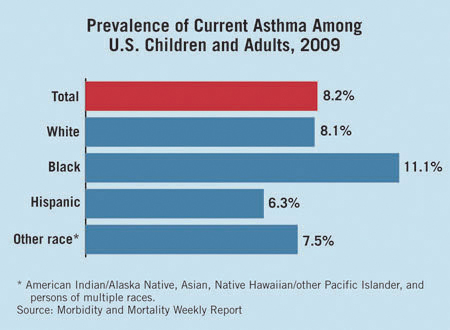
"Approximately 1 out of every 12 individuals in the United States has asthma, and the number is rising," said Ileana Arias, Ph.D., principal deputy director of the CDC. "The estimated total cost of asthma in terms of medical expenses, lost school or work days, and premature death was $56 billion in 2007," she said in a press briefing. Although the reasons for the increased prevalence of the condition are unclear, particularly in light of improvements that have been made in outdoor air quality and the reduction of two common asthma triggers (smoking and second-hand smoke), "we do know that there are measures that can be taken to control asthma symptoms to avoid exacerbations and many attacks, and health care providers, insurers, people with asthma, and others should work together to implement these measures," she said.
A review of the disease characteristics and self-management education status data for 2008 showed that "more than half [52.6%] of the people with asthma reported having an attack within the prior year. Nearly 42% missed 1 or more days of work or school because of their asthma, 26% visited the emergency department or urgent care center for treatment, and 7% were hospitalized," Paul Garbe, DVM, chief of the CDC’s Air Pollution and Respiratory Health Branch, said during the press briefing. "The estimated per person/per year medical expenses associated with asthma between 2002 and 2007 was $3,259."
Assessing gaps in health care coverage and access could alter the asthma landscape, Dr. Garbe said. "Of the nearly 90% of asthma patients with health insurance, approximately 12% reported not being able to afford their prescription medicine, 37% had ever seen or talked to a specialist physician about their asthma, and 86% had ever talked to a primary care provider about it," he said. Among the uninsured asthma population, 40% reportedly couldn’t afford medication, nearly 20% had seen or talked to an asthma specialist, and 60% had seen or talked to a primary care physician about their asthma.
Further, although it is well understood that optimal asthma control includes self-management training, appropriate use of inhaled corticosteroids, and avoidance of environmental allergens and irritants, only one-third of the population had ever been given an action plan as recommended by the National Institute of Health’s National Asthma Education and Prevention Program (NAEPP), Dr. Garbe said. An action plan, as defined by the NAEPP, is a written form developed by health care providers that addresses the asthma-related needs and circumstances of individual patients, including how to monitor symptoms, when to make medication changes, how to identify and avoid irritants and allergens, how to recognize worsening symptoms, and when to take action.
The CDC has worked with health departments in some states to develop and implement interventions based on the guidelines. In Connecticut, for example, "a program for in-home education and environmental assessment has been implemented in an effort to reduce the number of children and adults who rely on the emergency department as their primary source of health care," Dr. Garbe said. "Since the program began, there has been a dramatic reduction in the average number of emergency/urgent care visits for asthma, from approximately three in a 6-month period to fewer than one." Rhode Island and New York also have developed asthma education programs designed to reduce the human and economic costs of asthma, he said.
Although potentially limited by the fact that the databases from which the results were obtained are based on adult self-report or adult proxy responses for children and thus are vulnerable to recall bias, the findings do suggest that people with asthma are doing a suboptimal job of managing their symptoms and that coordinated efforts at the local, state, and national levels should target patient education. Evidence-based interventions to reduce environmental risk factors for asthma also are needed, Dr. Garbe said.
Dr. Arias and Dr. Garbe disclosed no financial conflicts of interest.
Despite national efforts to improve the quality of care and health outcomes of individuals with asthma, the overall prevalence of the chronic respiratory disease in the United States increased by more than 12% between 2001 and 2009, according to a report released May 3 by the Centers for Disease Control and Prevention.
The video associated with this article is no longer available on this site. Please view all of our videos on the MDedge YouTube channel
Based on data from the 2001-2009 National Health Interview Survey and the 2001, 2005, and 2009 state-based Behavioral Risk Factor Surveillance System, the prevalence of asthma among people of all ages increased from 20.3 million (7.3%) in 2001 to 24.6 million (8.2%) in 2009, the agency reported in the May 3 issue of the Morbidity and Mortality Weekly Report. The prevalence among children younger than 18 years increased from 8.7% to 9.6% during this period, with the highest prevalence rates observed among poor children, at 13.5%; non-Hispanic black children, at 17.0%; and boys, at 11.3%. Among adults, asthma prevalence increased from 6.9% in 2001 to 7.7% in 2009, with the highest rates seen in poor adults (10.6%) and in women (9.7%), according to the report (MMWR 2011;60:1-7).
"Approximately 1 out of every 12 individuals in the United States has asthma, and the number is rising," said Ileana Arias, Ph.D., principal deputy director of the CDC. "The estimated total cost of asthma in terms of medical expenses, lost school or work days, and premature death was $56 billion in 2007," she said in a press briefing. Although the reasons for the increased prevalence of the condition are unclear, particularly in light of improvements that have been made in outdoor air quality and the reduction of two common asthma triggers (smoking and second-hand smoke), "we do know that there are measures that can be taken to control asthma symptoms to avoid exacerbations and many attacks, and health care providers, insurers, people with asthma, and others should work together to implement these measures," she said.
A review of the disease characteristics and self-management education status data for 2008 showed that "more than half [52.6%] of the people with asthma reported having an attack within the prior year. Nearly 42% missed 1 or more days of work or school because of their asthma, 26% visited the emergency department or urgent care center for treatment, and 7% were hospitalized," Paul Garbe, DVM, chief of the CDC’s Air Pollution and Respiratory Health Branch, said during the press briefing. "The estimated per person/per year medical expenses associated with asthma between 2002 and 2007 was $3,259."
Assessing gaps in health care coverage and access could alter the asthma landscape, Dr. Garbe said. "Of the nearly 90% of asthma patients with health insurance, approximately 12% reported not being able to afford their prescription medicine, 37% had ever seen or talked to a specialist physician about their asthma, and 86% had ever talked to a primary care provider about it," he said. Among the uninsured asthma population, 40% reportedly couldn’t afford medication, nearly 20% had seen or talked to an asthma specialist, and 60% had seen or talked to a primary care physician about their asthma.
Further, although it is well understood that optimal asthma control includes self-management training, appropriate use of inhaled corticosteroids, and avoidance of environmental allergens and irritants, only one-third of the population had ever been given an action plan as recommended by the National Institute of Health’s National Asthma Education and Prevention Program (NAEPP), Dr. Garbe said. An action plan, as defined by the NAEPP, is a written form developed by health care providers that addresses the asthma-related needs and circumstances of individual patients, including how to monitor symptoms, when to make medication changes, how to identify and avoid irritants and allergens, how to recognize worsening symptoms, and when to take action.
The CDC has worked with health departments in some states to develop and implement interventions based on the guidelines. In Connecticut, for example, "a program for in-home education and environmental assessment has been implemented in an effort to reduce the number of children and adults who rely on the emergency department as their primary source of health care," Dr. Garbe said. "Since the program began, there has been a dramatic reduction in the average number of emergency/urgent care visits for asthma, from approximately three in a 6-month period to fewer than one." Rhode Island and New York also have developed asthma education programs designed to reduce the human and economic costs of asthma, he said.
Although potentially limited by the fact that the databases from which the results were obtained are based on adult self-report or adult proxy responses for children and thus are vulnerable to recall bias, the findings do suggest that people with asthma are doing a suboptimal job of managing their symptoms and that coordinated efforts at the local, state, and national levels should target patient education. Evidence-based interventions to reduce environmental risk factors for asthma also are needed, Dr. Garbe said.
Dr. Arias and Dr. Garbe disclosed no financial conflicts of interest.
Despite national efforts to improve the quality of care and health outcomes of individuals with asthma, the overall prevalence of the chronic respiratory disease in the United States increased by more than 12% between 2001 and 2009, according to a report released May 3 by the Centers for Disease Control and Prevention.
The video associated with this article is no longer available on this site. Please view all of our videos on the MDedge YouTube channel
Based on data from the 2001-2009 National Health Interview Survey and the 2001, 2005, and 2009 state-based Behavioral Risk Factor Surveillance System, the prevalence of asthma among people of all ages increased from 20.3 million (7.3%) in 2001 to 24.6 million (8.2%) in 2009, the agency reported in the May 3 issue of the Morbidity and Mortality Weekly Report. The prevalence among children younger than 18 years increased from 8.7% to 9.6% during this period, with the highest prevalence rates observed among poor children, at 13.5%; non-Hispanic black children, at 17.0%; and boys, at 11.3%. Among adults, asthma prevalence increased from 6.9% in 2001 to 7.7% in 2009, with the highest rates seen in poor adults (10.6%) and in women (9.7%), according to the report (MMWR 2011;60:1-7).
"Approximately 1 out of every 12 individuals in the United States has asthma, and the number is rising," said Ileana Arias, Ph.D., principal deputy director of the CDC. "The estimated total cost of asthma in terms of medical expenses, lost school or work days, and premature death was $56 billion in 2007," she said in a press briefing. Although the reasons for the increased prevalence of the condition are unclear, particularly in light of improvements that have been made in outdoor air quality and the reduction of two common asthma triggers (smoking and second-hand smoke), "we do know that there are measures that can be taken to control asthma symptoms to avoid exacerbations and many attacks, and health care providers, insurers, people with asthma, and others should work together to implement these measures," she said.
A review of the disease characteristics and self-management education status data for 2008 showed that "more than half [52.6%] of the people with asthma reported having an attack within the prior year. Nearly 42% missed 1 or more days of work or school because of their asthma, 26% visited the emergency department or urgent care center for treatment, and 7% were hospitalized," Paul Garbe, DVM, chief of the CDC’s Air Pollution and Respiratory Health Branch, said during the press briefing. "The estimated per person/per year medical expenses associated with asthma between 2002 and 2007 was $3,259."
Assessing gaps in health care coverage and access could alter the asthma landscape, Dr. Garbe said. "Of the nearly 90% of asthma patients with health insurance, approximately 12% reported not being able to afford their prescription medicine, 37% had ever seen or talked to a specialist physician about their asthma, and 86% had ever talked to a primary care provider about it," he said. Among the uninsured asthma population, 40% reportedly couldn’t afford medication, nearly 20% had seen or talked to an asthma specialist, and 60% had seen or talked to a primary care physician about their asthma.
Further, although it is well understood that optimal asthma control includes self-management training, appropriate use of inhaled corticosteroids, and avoidance of environmental allergens and irritants, only one-third of the population had ever been given an action plan as recommended by the National Institute of Health’s National Asthma Education and Prevention Program (NAEPP), Dr. Garbe said. An action plan, as defined by the NAEPP, is a written form developed by health care providers that addresses the asthma-related needs and circumstances of individual patients, including how to monitor symptoms, when to make medication changes, how to identify and avoid irritants and allergens, how to recognize worsening symptoms, and when to take action.
The CDC has worked with health departments in some states to develop and implement interventions based on the guidelines. In Connecticut, for example, "a program for in-home education and environmental assessment has been implemented in an effort to reduce the number of children and adults who rely on the emergency department as their primary source of health care," Dr. Garbe said. "Since the program began, there has been a dramatic reduction in the average number of emergency/urgent care visits for asthma, from approximately three in a 6-month period to fewer than one." Rhode Island and New York also have developed asthma education programs designed to reduce the human and economic costs of asthma, he said.
Although potentially limited by the fact that the databases from which the results were obtained are based on adult self-report or adult proxy responses for children and thus are vulnerable to recall bias, the findings do suggest that people with asthma are doing a suboptimal job of managing their symptoms and that coordinated efforts at the local, state, and national levels should target patient education. Evidence-based interventions to reduce environmental risk factors for asthma also are needed, Dr. Garbe said.
Dr. Arias and Dr. Garbe disclosed no financial conflicts of interest.
FROM THE MORBIDITY AND MORTALITY WEEKLY REPORT
Major Finding: The prevalence of asthma among people of all ages in the United States increased from 20.3 million (7.3%) in 2001 to 24.6 million (8.2%) in 2009.
Data Source: Data from the 2001-2009 National Health Interview Survey and the 2001, 2005, and 2009 state-based Behavioral Risk Factor Surveillance System.
Disclosures: Dr. Arias and Dr. Garbe disclosed no financial conflicts of interest.
CDC: Asthma Rates Continue to Rise
Despite national efforts to improve the quality of care and health outcomes of individuals with asthma, the overall prevalence of the chronic respiratory disease in the United States increased by more than 12% between 2001 and 2009, according to a report released May 3 by the Centers for Disease Control and Prevention.
Based on data from the 2001-2009 National Health Interview Survey and the 2001, 2005, and 2009 state-based Behavioral Risk Factor Surveillance System, the prevalence of asthma among people of all ages increased from 20.3 million (7.3%) in 2001 to 24.6 million (8.2%) in 2009, the agency reported in the May 3 issue of the Morbidity and Mortality Weekly Report. The prevalence among children younger than 18 years increased from 8.7% to 9.6% during this period, with the highest prevalence rates observed among poor children, at 13.5%; non-Hispanic black children, at 17.0%; and boys, at 11.3%. Among adults, asthma prevalence increased from 6.9% in 2001 to 7.7% in 2009, with the highest rates seen in poor adults (10.6%) and in women (9.7%), according to the report (MMWR 2011;60:1-7).

"Approximately 1 out of every 12 individuals in the United States has asthma, and the number is rising," said Ileana Arias, Ph.D., principal deputy director of the CDC. "The estimated total cost of asthma in terms of medical expenses, lost school or work days, and premature death was $56 billion in 2007," she said in a press briefing. Although the reasons for the increased prevalence of the condition are unclear, particularly in light of improvements that have been made in outdoor air quality and the reduction of two common asthma triggers (smoking and second-hand smoke), "we do know that there are measures that can be taken to control asthma symptoms to avoid exacerbations and many attacks, and health care providers, insurers, people with asthma, and others should work together to implement these measures," she said.
A review of the disease characteristics and self-management education status data for 2008 showed that "more than half [52.6%] of the people with asthma reported having an attack within the prior year. Nearly 42% missed 1 or more days of work or school because of their asthma, 26% visited the emergency department or urgent care center for treatment, and 7% were hospitalized," Paul Garbe, DVM, chief of the CDC’s Air Pollution and Respiratory Health Branch, said during the press briefing. "The estimated per person/per year medical expenses associated with asthma between 2002 and 2007 was $3,259."
Assessing gaps in health care coverage and access could alter the asthma landscape, Dr. Garbe said. "Of the nearly 90% of asthma patients with health insurance, approximately 12% reported not being able to afford their prescription medicine, 37% had ever seen or talked to a specialist physician about their asthma, and 86% had ever talked to a primary care provider about it," he said. Among the uninsured asthma population, 40% reportedly couldn’t afford medication, nearly 20% had seen or talked to an asthma specialist, and 60% had seen or talked to a primary care physician about their asthma.
Further, although it is well understood that optimal asthma control includes self-management training, appropriate use of inhaled corticosteroids, and avoidance of environmental allergens and irritants, only one-third of the population had ever been given an action plan as recommended by the National Institute of Health’s National Asthma Education and Prevention Program (NAEPP), Dr. Garbe said. An action plan, as defined by the NAEPP, is a written form developed by health care providers that addresses the asthma-related needs and circumstances of individual patients, including how to monitor symptoms, when to make medication changes, how to identify and avoid irritants and allergens, how to recognize worsening symptoms, and when to take action.
The CDC has worked with health departments in some states to develop and implement interventions based on the guidelines. In Connecticut, for example, "a program for in-home education and environmental assessment has been implemented in an effort to reduce the number of children and adults who rely on the emergency department as their primary source of health care," Dr. Garbe said. "Since the program began, there has been a dramatic reduction in the average number of emergency/urgent care visits for asthma, from approximately three in a 6-month period to fewer than one." Rhode Island and New York also have developed asthma education programs designed to reduce the human and economic costs of asthma, he said.
Although potentially limited by the fact that the databases from which the results were obtained are based on adult self-report or adult proxy responses for children and thus are vulnerable to recall bias, the findings do suggest that people with asthma are doing a suboptimal job of managing their symptoms and that coordinated efforts at the local, state, and national levels should target patient education. Evidence-based interventions to reduce environmental risk factors for asthma also are needed, Dr. Garbe said.
Dr. Arias and Dr. Garbe disclosed no financial conflicts of interest.
Despite national efforts to improve the quality of care and health outcomes of individuals with asthma, the overall prevalence of the chronic respiratory disease in the United States increased by more than 12% between 2001 and 2009, according to a report released May 3 by the Centers for Disease Control and Prevention.
Based on data from the 2001-2009 National Health Interview Survey and the 2001, 2005, and 2009 state-based Behavioral Risk Factor Surveillance System, the prevalence of asthma among people of all ages increased from 20.3 million (7.3%) in 2001 to 24.6 million (8.2%) in 2009, the agency reported in the May 3 issue of the Morbidity and Mortality Weekly Report. The prevalence among children younger than 18 years increased from 8.7% to 9.6% during this period, with the highest prevalence rates observed among poor children, at 13.5%; non-Hispanic black children, at 17.0%; and boys, at 11.3%. Among adults, asthma prevalence increased from 6.9% in 2001 to 7.7% in 2009, with the highest rates seen in poor adults (10.6%) and in women (9.7%), according to the report (MMWR 2011;60:1-7).
"Approximately 1 out of every 12 individuals in the United States has asthma, and the number is rising," said Ileana Arias, Ph.D., principal deputy director of the CDC. "The estimated total cost of asthma in terms of medical expenses, lost school or work days, and premature death was $56 billion in 2007," she said in a press briefing. Although the reasons for the increased prevalence of the condition are unclear, particularly in light of improvements that have been made in outdoor air quality and the reduction of two common asthma triggers (smoking and second-hand smoke), "we do know that there are measures that can be taken to control asthma symptoms to avoid exacerbations and many attacks, and health care providers, insurers, people with asthma, and others should work together to implement these measures," she said.
A review of the disease characteristics and self-management education status data for 2008 showed that "more than half [52.6%] of the people with asthma reported having an attack within the prior year. Nearly 42% missed 1 or more days of work or school because of their asthma, 26% visited the emergency department or urgent care center for treatment, and 7% were hospitalized," Paul Garbe, DVM, chief of the CDC’s Air Pollution and Respiratory Health Branch, said during the press briefing. "The estimated per person/per year medical expenses associated with asthma between 2002 and 2007 was $3,259."
Assessing gaps in health care coverage and access could alter the asthma landscape, Dr. Garbe said. "Of the nearly 90% of asthma patients with health insurance, approximately 12% reported not being able to afford their prescription medicine, 37% had ever seen or talked to a specialist physician about their asthma, and 86% had ever talked to a primary care provider about it," he said. Among the uninsured asthma population, 40% reportedly couldn’t afford medication, nearly 20% had seen or talked to an asthma specialist, and 60% had seen or talked to a primary care physician about their asthma.
Further, although it is well understood that optimal asthma control includes self-management training, appropriate use of inhaled corticosteroids, and avoidance of environmental allergens and irritants, only one-third of the population had ever been given an action plan as recommended by the National Institute of Health’s National Asthma Education and Prevention Program (NAEPP), Dr. Garbe said. An action plan, as defined by the NAEPP, is a written form developed by health care providers that addresses the asthma-related needs and circumstances of individual patients, including how to monitor symptoms, when to make medication changes, how to identify and avoid irritants and allergens, how to recognize worsening symptoms, and when to take action.
The CDC has worked with health departments in some states to develop and implement interventions based on the guidelines. In Connecticut, for example, "a program for in-home education and environmental assessment has been implemented in an effort to reduce the number of children and adults who rely on the emergency department as their primary source of health care," Dr. Garbe said. "Since the program began, there has been a dramatic reduction in the average number of emergency/urgent care visits for asthma, from approximately three in a 6-month period to fewer than one." Rhode Island and New York also have developed asthma education programs designed to reduce the human and economic costs of asthma, he said.
Although potentially limited by the fact that the databases from which the results were obtained are based on adult self-report or adult proxy responses for children and thus are vulnerable to recall bias, the findings do suggest that people with asthma are doing a suboptimal job of managing their symptoms and that coordinated efforts at the local, state, and national levels should target patient education. Evidence-based interventions to reduce environmental risk factors for asthma also are needed, Dr. Garbe said.
Dr. Arias and Dr. Garbe disclosed no financial conflicts of interest.
Despite national efforts to improve the quality of care and health outcomes of individuals with asthma, the overall prevalence of the chronic respiratory disease in the United States increased by more than 12% between 2001 and 2009, according to a report released May 3 by the Centers for Disease Control and Prevention.
Based on data from the 2001-2009 National Health Interview Survey and the 2001, 2005, and 2009 state-based Behavioral Risk Factor Surveillance System, the prevalence of asthma among people of all ages increased from 20.3 million (7.3%) in 2001 to 24.6 million (8.2%) in 2009, the agency reported in the May 3 issue of the Morbidity and Mortality Weekly Report. The prevalence among children younger than 18 years increased from 8.7% to 9.6% during this period, with the highest prevalence rates observed among poor children, at 13.5%; non-Hispanic black children, at 17.0%; and boys, at 11.3%. Among adults, asthma prevalence increased from 6.9% in 2001 to 7.7% in 2009, with the highest rates seen in poor adults (10.6%) and in women (9.7%), according to the report (MMWR 2011;60:1-7).
"Approximately 1 out of every 12 individuals in the United States has asthma, and the number is rising," said Ileana Arias, Ph.D., principal deputy director of the CDC. "The estimated total cost of asthma in terms of medical expenses, lost school or work days, and premature death was $56 billion in 2007," she said in a press briefing. Although the reasons for the increased prevalence of the condition are unclear, particularly in light of improvements that have been made in outdoor air quality and the reduction of two common asthma triggers (smoking and second-hand smoke), "we do know that there are measures that can be taken to control asthma symptoms to avoid exacerbations and many attacks, and health care providers, insurers, people with asthma, and others should work together to implement these measures," she said.
A review of the disease characteristics and self-management education status data for 2008 showed that "more than half [52.6%] of the people with asthma reported having an attack within the prior year. Nearly 42% missed 1 or more days of work or school because of their asthma, 26% visited the emergency department or urgent care center for treatment, and 7% were hospitalized," Paul Garbe, DVM, chief of the CDC’s Air Pollution and Respiratory Health Branch, said during the press briefing. "The estimated per person/per year medical expenses associated with asthma between 2002 and 2007 was $3,259."
Assessing gaps in health care coverage and access could alter the asthma landscape, Dr. Garbe said. "Of the nearly 90% of asthma patients with health insurance, approximately 12% reported not being able to afford their prescription medicine, 37% had ever seen or talked to a specialist physician about their asthma, and 86% had ever talked to a primary care provider about it," he said. Among the uninsured asthma population, 40% reportedly couldn’t afford medication, nearly 20% had seen or talked to an asthma specialist, and 60% had seen or talked to a primary care physician about their asthma.
Further, although it is well understood that optimal asthma control includes self-management training, appropriate use of inhaled corticosteroids, and avoidance of environmental allergens and irritants, only one-third of the population had ever been given an action plan as recommended by the National Institute of Health’s National Asthma Education and Prevention Program (NAEPP), Dr. Garbe said. An action plan, as defined by the NAEPP, is a written form developed by health care providers that addresses the asthma-related needs and circumstances of individual patients, including how to monitor symptoms, when to make medication changes, how to identify and avoid irritants and allergens, how to recognize worsening symptoms, and when to take action.
The CDC has worked with health departments in some states to develop and implement interventions based on the guidelines. In Connecticut, for example, "a program for in-home education and environmental assessment has been implemented in an effort to reduce the number of children and adults who rely on the emergency department as their primary source of health care," Dr. Garbe said. "Since the program began, there has been a dramatic reduction in the average number of emergency/urgent care visits for asthma, from approximately three in a 6-month period to fewer than one." Rhode Island and New York also have developed asthma education programs designed to reduce the human and economic costs of asthma, he said.
Although potentially limited by the fact that the databases from which the results were obtained are based on adult self-report or adult proxy responses for children and thus are vulnerable to recall bias, the findings do suggest that people with asthma are doing a suboptimal job of managing their symptoms and that coordinated efforts at the local, state, and national levels should target patient education. Evidence-based interventions to reduce environmental risk factors for asthma also are needed, Dr. Garbe said.
Dr. Arias and Dr. Garbe disclosed no financial conflicts of interest.
FROM THE MORBIDITY AND MORTALITY WEEKLY REPORT
Major Finding: The prevalence of asthma among people of all ages in the United States increased from 20.3 million (7.3%) in 2001 to 24.6 million (8.2%) in 2009.
Data Source: Data from the 2001-2009 National Health Interview Survey and the 2001, 2005, and 2009 state-based Behavioral Risk Factor Surveillance System.
Disclosures: Dr. Arias and Dr. Garbe disclosed no financial conflicts of interest.
Secondhand Smoke Exposure May Worsen Illness in Kids Hospitalized With Flu
DENVER – Children exposed to secondhand tobacco smoke who are admitted to the hospital for influenza are more likely to require admission to the intensive care unit and have a longer hospital stay than their peers who are not exposed to secondhand smoke.
These effects are even greater for children with chronic illnesses who are exposed to secondhand smoke, Dr. Karen M. Wilson reported at the annual meeting of the Pediatric Academic Societies.

An estimated 18% of children aged 3-11 years are regularly exposed to secondhand tobacco smoke inside the home, said Dr. Wilson, assistant professor of pediatrics at the University of Rochester (N.Y.).
Although secondhand smoke exposure is associated with worse outcomes for children’s illnesses, including respiratory syncytial virus and asthma, "the effect of secondhand smoke exposure on influenza severity in children is unclear," she noted. "More than 40% of preschool children experience influenza at some point. In adults, tobacco smoke increases the risk of influenza infection and the risk of complications."
To determine if children hospitalized with influenza who are exposed to secondhand smoke have more severe illness, Dr. Wilson and her associates conducted a review of 169 medical charts at Golisano Children’s Hospital in Rochester. They generated a list of patients aged 0-15 years with a discharge diagnosis of influenza between 2002 and 2009. The influenza diagnosis was verified by laboratory review.
Measures of severity included intensive care unit admission, defined as admission or transfer to the ICU at any time during the stay; need for mechanical ventilation, defined as any documentation of endotracheal intubation during the stay; and length of stay.
Exposure to secondhand smoke was assessed by any documentation of presence or absence of secondhand smoke exposure by any provider. "Any documentation of exposure was considered exposed; documentation of no exposure was considered not exposed," Dr. Wilson said.
She reported findings from 113 children who were included in the final analysis. Of these, 46 (41%) were exposed to secondhand smoke and 67 (59%) were not. The average age of the 113 children was 4 years, and 50% were male. Of the 113 children, 58% were white, 22% were black, 8% were Hispanic, and 3.5% were Asian; race/ethnicity was unknown in the remaining 8.5%. Fewer than half of the children (44%) had public health insurance.
More than three-quarters of the children (78%) had influenza A. In addition, 25% had asthma, 25% had an underlying chronic condition, 14% had documentation of prematurity, 19% required ICU care, and 6% required mechanical ventilation.
None of the potential covariates – including asthma, prematurity, and chronic conditions – were significantly associated with secondhand smoke exposure. However, children exposed to secondhand smoke were significantly more likely to require ICU admission (31% vs. 10% for children with no exposure) and mechanical ventilation (13% vs. 2%, respectively).
The mean length of stay was 2.1 days for children who had no chronic condition or exposure to secondhand smoke, 2.5 days for children who had no chronic condition but had exposure to secondhand smoke, 3.5 days for children who had a chronic condition but no exposure to secondhand smoke, and 11 days for children who had a chronic condition and were exposed to secondhand smoke.
In a logistic regression model controlling for age, gender, race, and type of insurance, exposure to secondhand smoke was significantly associated with ICU admission but chronic conditions were not.
In a logistic regression model limited to exposure to secondhand smoke and chronic conditions, chronic conditions were associated with the need for mechanical ventilation but exposure to secondhand smoke was not.
In a negative binomial regression model using the log-transformed length of stay, controlling for age, gender, race, insurance type, and chronic conditions, exposure to secondhand smoke was associated with an increased length of hospital stay, with an incident rate ratio of 1.9.
Dr. Wilson acknowledged certain limitations of the study, including its single-center design "and the potential for errors in documentation and abstraction," she said. "The exposure measure was reliant on provider documentation ... but provider documentation is more likely to underestimate secondhand smoke exposure in children, so we probably misclassified some children as being non–smoke exposed."
In addition, "there may be other covariates that we were not able to measure because we don’t have documentation in the chart," she said.
Despite such limitations, Dr. Wilson said that the findings support the notion of considering secondhand smoke exposure in risk stratification for children admitted with influenza. "Greater efforts are needed to help parents eliminate their children’s exposure to secondhand smoke," she said. "Parents of children with chronic illness should be aware of the risk of secondhand smoke exposure, and children exposed to secondhand smoke should be a priority group for influenza immunization."
Dr. Wilson disclosed that she is on the speakers bureau for the American Academy of Pediatrics Julius B. Richmond Center of Excellence, with funding from the Flight Attendant Medical Research Institute, National Research Service Award T32, Strong Children’s Research Center Summer Research Program, and the Child Health Corporation of America through a grant to the Pediatric Research in Inpatient Settings Network.
DENVER – Children exposed to secondhand tobacco smoke who are admitted to the hospital for influenza are more likely to require admission to the intensive care unit and have a longer hospital stay than their peers who are not exposed to secondhand smoke.
These effects are even greater for children with chronic illnesses who are exposed to secondhand smoke, Dr. Karen M. Wilson reported at the annual meeting of the Pediatric Academic Societies.
An estimated 18% of children aged 3-11 years are regularly exposed to secondhand tobacco smoke inside the home, said Dr. Wilson, assistant professor of pediatrics at the University of Rochester (N.Y.).
Although secondhand smoke exposure is associated with worse outcomes for children’s illnesses, including respiratory syncytial virus and asthma, "the effect of secondhand smoke exposure on influenza severity in children is unclear," she noted. "More than 40% of preschool children experience influenza at some point. In adults, tobacco smoke increases the risk of influenza infection and the risk of complications."
To determine if children hospitalized with influenza who are exposed to secondhand smoke have more severe illness, Dr. Wilson and her associates conducted a review of 169 medical charts at Golisano Children’s Hospital in Rochester. They generated a list of patients aged 0-15 years with a discharge diagnosis of influenza between 2002 and 2009. The influenza diagnosis was verified by laboratory review.
Measures of severity included intensive care unit admission, defined as admission or transfer to the ICU at any time during the stay; need for mechanical ventilation, defined as any documentation of endotracheal intubation during the stay; and length of stay.
Exposure to secondhand smoke was assessed by any documentation of presence or absence of secondhand smoke exposure by any provider. "Any documentation of exposure was considered exposed; documentation of no exposure was considered not exposed," Dr. Wilson said.
She reported findings from 113 children who were included in the final analysis. Of these, 46 (41%) were exposed to secondhand smoke and 67 (59%) were not. The average age of the 113 children was 4 years, and 50% were male. Of the 113 children, 58% were white, 22% were black, 8% were Hispanic, and 3.5% were Asian; race/ethnicity was unknown in the remaining 8.5%. Fewer than half of the children (44%) had public health insurance.
More than three-quarters of the children (78%) had influenza A. In addition, 25% had asthma, 25% had an underlying chronic condition, 14% had documentation of prematurity, 19% required ICU care, and 6% required mechanical ventilation.
None of the potential covariates – including asthma, prematurity, and chronic conditions – were significantly associated with secondhand smoke exposure. However, children exposed to secondhand smoke were significantly more likely to require ICU admission (31% vs. 10% for children with no exposure) and mechanical ventilation (13% vs. 2%, respectively).
The mean length of stay was 2.1 days for children who had no chronic condition or exposure to secondhand smoke, 2.5 days for children who had no chronic condition but had exposure to secondhand smoke, 3.5 days for children who had a chronic condition but no exposure to secondhand smoke, and 11 days for children who had a chronic condition and were exposed to secondhand smoke.
In a logistic regression model controlling for age, gender, race, and type of insurance, exposure to secondhand smoke was significantly associated with ICU admission but chronic conditions were not.
In a logistic regression model limited to exposure to secondhand smoke and chronic conditions, chronic conditions were associated with the need for mechanical ventilation but exposure to secondhand smoke was not.
In a negative binomial regression model using the log-transformed length of stay, controlling for age, gender, race, insurance type, and chronic conditions, exposure to secondhand smoke was associated with an increased length of hospital stay, with an incident rate ratio of 1.9.
Dr. Wilson acknowledged certain limitations of the study, including its single-center design "and the potential for errors in documentation and abstraction," she said. "The exposure measure was reliant on provider documentation ... but provider documentation is more likely to underestimate secondhand smoke exposure in children, so we probably misclassified some children as being non–smoke exposed."
In addition, "there may be other covariates that we were not able to measure because we don’t have documentation in the chart," she said.
Despite such limitations, Dr. Wilson said that the findings support the notion of considering secondhand smoke exposure in risk stratification for children admitted with influenza. "Greater efforts are needed to help parents eliminate their children’s exposure to secondhand smoke," she said. "Parents of children with chronic illness should be aware of the risk of secondhand smoke exposure, and children exposed to secondhand smoke should be a priority group for influenza immunization."
Dr. Wilson disclosed that she is on the speakers bureau for the American Academy of Pediatrics Julius B. Richmond Center of Excellence, with funding from the Flight Attendant Medical Research Institute, National Research Service Award T32, Strong Children’s Research Center Summer Research Program, and the Child Health Corporation of America through a grant to the Pediatric Research in Inpatient Settings Network.
DENVER – Children exposed to secondhand tobacco smoke who are admitted to the hospital for influenza are more likely to require admission to the intensive care unit and have a longer hospital stay than their peers who are not exposed to secondhand smoke.
These effects are even greater for children with chronic illnesses who are exposed to secondhand smoke, Dr. Karen M. Wilson reported at the annual meeting of the Pediatric Academic Societies.
An estimated 18% of children aged 3-11 years are regularly exposed to secondhand tobacco smoke inside the home, said Dr. Wilson, assistant professor of pediatrics at the University of Rochester (N.Y.).
Although secondhand smoke exposure is associated with worse outcomes for children’s illnesses, including respiratory syncytial virus and asthma, "the effect of secondhand smoke exposure on influenza severity in children is unclear," she noted. "More than 40% of preschool children experience influenza at some point. In adults, tobacco smoke increases the risk of influenza infection and the risk of complications."
To determine if children hospitalized with influenza who are exposed to secondhand smoke have more severe illness, Dr. Wilson and her associates conducted a review of 169 medical charts at Golisano Children’s Hospital in Rochester. They generated a list of patients aged 0-15 years with a discharge diagnosis of influenza between 2002 and 2009. The influenza diagnosis was verified by laboratory review.
Measures of severity included intensive care unit admission, defined as admission or transfer to the ICU at any time during the stay; need for mechanical ventilation, defined as any documentation of endotracheal intubation during the stay; and length of stay.
Exposure to secondhand smoke was assessed by any documentation of presence or absence of secondhand smoke exposure by any provider. "Any documentation of exposure was considered exposed; documentation of no exposure was considered not exposed," Dr. Wilson said.
She reported findings from 113 children who were included in the final analysis. Of these, 46 (41%) were exposed to secondhand smoke and 67 (59%) were not. The average age of the 113 children was 4 years, and 50% were male. Of the 113 children, 58% were white, 22% were black, 8% were Hispanic, and 3.5% were Asian; race/ethnicity was unknown in the remaining 8.5%. Fewer than half of the children (44%) had public health insurance.
More than three-quarters of the children (78%) had influenza A. In addition, 25% had asthma, 25% had an underlying chronic condition, 14% had documentation of prematurity, 19% required ICU care, and 6% required mechanical ventilation.
None of the potential covariates – including asthma, prematurity, and chronic conditions – were significantly associated with secondhand smoke exposure. However, children exposed to secondhand smoke were significantly more likely to require ICU admission (31% vs. 10% for children with no exposure) and mechanical ventilation (13% vs. 2%, respectively).
The mean length of stay was 2.1 days for children who had no chronic condition or exposure to secondhand smoke, 2.5 days for children who had no chronic condition but had exposure to secondhand smoke, 3.5 days for children who had a chronic condition but no exposure to secondhand smoke, and 11 days for children who had a chronic condition and were exposed to secondhand smoke.
In a logistic regression model controlling for age, gender, race, and type of insurance, exposure to secondhand smoke was significantly associated with ICU admission but chronic conditions were not.
In a logistic regression model limited to exposure to secondhand smoke and chronic conditions, chronic conditions were associated with the need for mechanical ventilation but exposure to secondhand smoke was not.
In a negative binomial regression model using the log-transformed length of stay, controlling for age, gender, race, insurance type, and chronic conditions, exposure to secondhand smoke was associated with an increased length of hospital stay, with an incident rate ratio of 1.9.
Dr. Wilson acknowledged certain limitations of the study, including its single-center design "and the potential for errors in documentation and abstraction," she said. "The exposure measure was reliant on provider documentation ... but provider documentation is more likely to underestimate secondhand smoke exposure in children, so we probably misclassified some children as being non–smoke exposed."
In addition, "there may be other covariates that we were not able to measure because we don’t have documentation in the chart," she said.
Despite such limitations, Dr. Wilson said that the findings support the notion of considering secondhand smoke exposure in risk stratification for children admitted with influenza. "Greater efforts are needed to help parents eliminate their children’s exposure to secondhand smoke," she said. "Parents of children with chronic illness should be aware of the risk of secondhand smoke exposure, and children exposed to secondhand smoke should be a priority group for influenza immunization."
Dr. Wilson disclosed that she is on the speakers bureau for the American Academy of Pediatrics Julius B. Richmond Center of Excellence, with funding from the Flight Attendant Medical Research Institute, National Research Service Award T32, Strong Children’s Research Center Summer Research Program, and the Child Health Corporation of America through a grant to the Pediatric Research in Inpatient Settings Network.
FROM THE ANNUAL MEETING OF THE PEDIATRIC ACADEMIC SOCIETIES
Major Finding: During their hospital stay for influenza, children previously exposed to secondhand smoke were significantly more likely to require ICU admission (31% vs. 10% for children with no exposure) and mechanical ventilation (13% vs. 2%, respectively).
Data Source: A chart review of 113 patients aged 0-15 years discharged from Golisano Children’s Hospital in Rochester, N.Y., with a diagnosis of influenza between 2002 and 2009.
Disclosures: Dr. Wilson disclosed that she is on the speakers bureau for the American Academy of Pediatrics Julius B. Richmond Center of Excellence, with funding from the Flight Attendant Medical Research Institute, National Research Service Award T32, Strong Children’s Research Center Summer Research Program, and the Child Health Corporation of America through a grant to the Pediatric Research in Inpatient Settings Network.
Grand Rounds: Woman, 49, With Dyspnea and Chest Tightness
A 49-year-old woman presented to urgent care with complaints of worsening dyspnea for the previous two days. She reported that her symptoms had begun gradually; at the time of her presentation, however, she was also experiencing chest tightness, occasional wheezing, and a nonproductive cough. She had experienced similar symptoms in the past and obtained good results by using her albuterol inhaler. During the current episode, however, she had not had the usual response to inhaler treatment.
The patient’s medical history was positive for environmental allergies, asthma, and GERD. Two weeks earlier, she had undergone dilatation and curettage (D&C) for dysfunctional bleeding, with no associated complications.
In the social history, the patient reported drinking four to six caffeine beverages daily and consuming alcohol moderately (two to four glasses of wine per week). She was following no formal dietary regimen. The patient denied current or past history of tobacco use and had not traveled recently. She had no family history of coronary vascular disease.
Her medications included albuterol and desloratadine as needed, pantoprazole 40 mg/d, and drospirenone/ethinyl estradiol. The patient said she used her albuterol inhaler four to six times per month but more often in the summer and fall. Nighttime awakenings due to asthma symptoms occurred no more than twice per month. She denied prior history of acute asthma exacerbations requiring oral systemic corticosteroids. The patient stated that since her D&C, she had been using ibuprofen almost daily for mild abdominal cramping.
A review of systems was positive for mild fatigue since her D&C. The patient denied fever, chills, headache, sore throat, or cough. She did complain of daily nasal congestion but with no unusual drainage. The patient denied orthopnea, chest pain, palpitations, or peripheral edema, as well as nausea, vomiting, diarrhea, constipation, hematochezia, or melena. She admitted to daily heartburn for the previous two weeks that was relieved somewhat with pantoprazole. She had not experienced urinary frequency or urgency, dysuria, or hematuria. She also denied rash, pruritus, weakness, paresthesias, joint pain, or swelling.
Physical examination revealed an alert, oriented female who appeared slightly anxious but was in no acute distress. Specific findings were pulse, 110 beats/min; blood pressure, 138/88 mm Hg; respirations, 24 breaths/min; temperature, 97.7°F; O2 saturation, 92% on room air. Her height measured 5’2” and weight, 150 lb (BMI, 27.43).
Her conjunctiva were slightly injected, and the tympanic membranes were intact bilaterally with a light reflex; the septum was midline. The mucosa was pale, boggy, and moist with clear drainage and no inflammation. The nasopharynx had no erythema, and the tonsils appeared normal, although a cobblestone appearance was noted in the posterior pharynx. The neck was supple with no adenopathy.
The patient’s heart rate, 110 beats/min, was regular with no murmurs, rubs, or gallops. In the lungs, a prolonged expiratory phase was noted, with diffuse wheezing on chest auscultation bilaterally. Neither retractions nor use of accessory muscles with breathing was observed. The abdomen was soft, rounded, and nontender with no organomegaly. Bowel sounds were evident in all four quadrants. The patient’s skin was free of suspicious lesions or rashes. Her extremities were without edema, and no calf tenderness was noted; Homans’ sign was negative. Superficial varicosities were noted bilaterally.
The top differential diagnosis included:
• Acute asthma (risk factors: history of uncontrolled asthma, as evidenced by frequent use of albuterol)
• Acute anemia (risk factors: history of dysfunctional uterine bleeding, recent D&C)
• Pulmonary embolism (risk factors: recent surgery, recent start of oral contraceptive use).
Additional diagnoses to be considered less likely included:
• Acute coronary syndrome/MI (possible causes of chest tightness, dyspnea, dyspepsia; but no chest pain, diaphoresis, or nausea)
• Acute respiratory distress (history of tachycardia, possible dyspnea; but no diaphoresis, cyanosis, retractions, accessory muscle use, or lung crackles)
• Pneumonia (risk factors: recent surgery, possible cause of nonproductive cough; but no evidence of fever, chills, rales, or pleuritic chest pain).
Diagnostic testing included a 12-lead ECG to evaluate the patient for cardiac arrhythmia or injury; on it, tachycardia was noted, with a regular rate of 106 beats/min. The patient’s chest x-ray yielded normal results.
Laboratory testing included a complete blood count to screen for anemia and infection. Results included a white blood cell count of 8,200/mL (normal range, 4,500 to 11,000/mL); hematocrit, 38.2% (normal range for women, 36.1% to 44.3%); hemoglobin, 13.1 g/dL (normal for women, 12.1 to 15.1 g/dL). A comprehensive metabolic panel was performed to assess electrolyte levels and kidney and liver function; findings were normal. Results of a D-dimer assay, which was obtained to exclude pulmonary embolism,1 were normal at 0.5 mg/L (range, 0.4 to 1.4 mg/L).
In the case of heightened suspicion for MI, the patient would have been transferred to the emergency department (ED) for evaluation, including serial cardiac troponin levels; elevated troponin levels are deemed the standard criterion to define and diagnose MI in a consensus document from the European Society of Cardiology and the American College of Cardiology.2 (Troponin-T and troponin-I are more tissue-specific than the MB fraction of creatine kinase [CK-MB] in detecting MI; positive troponin levels are considered virtually diagnostic of MI.2 Typically, cardiac troponin levels are measured two to three times over a 12- to 16-hour period.)
Peak expiratory flow (PEF), which was measured to evaluate the patient’s respiratory status, was 150 L/min (compared with personal best for a patient of her height and age, approximately 460 L/min). She was given 2.5 mg/3 mL of inhaled albuterol over 15 minutes. Her PEF increased to 350 L/min. O2 saturation improved to 96% on room air, pulse to 104 beats/min, and respirations 20 breaths/min; her blood pressure reading was now 140/90 mm Hg. A prolonged expiratory phase persisted in the lungs, but diffuse wheezing decreased by 40% on chest auscultation.
A second albuterol treatment was administered 20 minutes later, and the patient’s PEF increased to 380 L/min and O2 saturation to 99%. The lungs presently cleared with no further wheezing noted.
In addition, the patient was given a GI cocktail (ie, liquid antacid combined with an anticholinergic agent and viscous lidocaine). Within 10 minutes, her chest tightness was relieved 100%. Her blood pressure was then measured at 135/84 mm Hg; respirations, 18 breaths/min; and pulse rate, 96 beats/min.
According to the National Asthma Education and Prevention Program (NAEPP) 2007 Guidelines for the Diagnosis and Management of Asthma, Expert Panel Report 3 (EPR-3),3 the patient was classified as having intermittent, not-well-controlled asthma with an acute exacerbation. In addition, she was given a diagnosis of uncontrolled GERD.
DISCUSSION
Asthma Incidence and Risk Factors
Asthma affects approximately 300 million people worldwide and remains a global respiratory concern.4 In the United States, this chronic health condition has a prevalence of 8% to 10%. It is estimated that 5% to 10% of asthmatic patients have severe disease that does not respond typically to therapeutic interventions.5
Asthma involves bronchial hyperresponsiveness, airflow obstruction, and underlying inflammation. Acute episodes of asthma, arising from bronchospasm, usually manifest with progressively worsening cough, shortness of breath, chest tightness and wheezing (asthma’s hallmark symptoms), or a combination of symptoms.3
Symptoms of asthma or exacerbations of reactive airway disease vary from patient to patient. In addition to the hallmark symptoms noted, subacute or acute episodes of asthma exacerbation are characterized by decreases in expiratory airflow that can be documented by objective measurements of lung function, such as PEF or spirometry; these measures of airflow indicate the severity of an exacerbation more reliably than does perceived symptom severity.3 The EPR-3 panelists recommend determining asthma severity using a combination of objective criteria and clinical symptoms,3 although few clinicians use the objective criteria.6
Estimates of the prevalence of GERD among patients with asthma have varied from 34% to 89%.7-9 Patients with GERD are 1.97 times more likely than patients without GERD to have asthma10; silent gastroesophageal reflux has been identified in 24% to 62% of patients with asthma, and early studies suggest that treatment for GERD may improve asthma control in patients with severe or difficult-to-control asthma.8,11,12
The exact link between the two conditions is unclear. However, possible explanations why GERD and asthma coincide are that acid flow causes injury to the lining of the throat, airways, and lungs, making inhalation difficult and often causing a persistent cough; or that when acid enters the esophagus, a nerve reflex is triggered that causes the airways to narrow in order to prevent the acid from entering; this can explain dyspnea.8,9
Economic Burden
Asthma is costly to treat, and because there is no cure, the expense is ongoing. According to a 2011 report,13 the average annual direct cost of care (eg, medications, hospital admissions, nonemergency office visits) for one asthma patient between 2002 and 2007 was $3,259. In 2007, the most current data available, the total cost of asthma in the US was $56 billion, with productivity losses due to mortality accounting for $2.1 billion and morbidity-related losses estimated at $3.8 billion.13 The economic consequences of asthma are substantial and can place a considerable burden on affected individuals, their families, the health care system, and society as a whole.3
Current Standard of Care
Based on the scientific literature and the opinions expressed by the NAEPP in the EPR-3,3 clinicians are advised to consider the following general principles and goals for managing asthma: early treatment, special attention to patients at high risk for asthma-related death, and special attention to infants.3 The guidelines emphasize the importance of a clinician/patient partnership to facilitate the asthma patient’s self-management.
Early treatment is a particularly important component for management of asthma exacerbations. Important elements of early treatment include a written asthma action plan, combined with enhanced awareness of the early indicators of an exacerbation (ie, worsening PEF).3,14 It is believed that if patients are able to monitor their respiratory condition and follow a plan of care based on their PEF and/or signs and symptoms of asthma, they are more likely to achieve optimal management of their disease.15
Written Asthma Action Plan. The EPR-33 recommends that health care providers supply all asthmatic patients with a written asthma action plan that will define and support the patient’s efforts at self-management. Written asthma action plans are particularly beneficial for patients with moderate to severe persistent asthma, poorly controlled asthma, or a history of severe exacerbations.3,14
The written asthma action plan should include instructions for daily management of asthma and ways to recognize and treat worsening asthma, including adjustments to medication dosing. Plans may be based on PEF and/or symptoms. Asthma action plans should be discussed and reevaluated at follow-up visits.3 A sample asthma action plan can be found at www.health.state.ny.us/diseases/asthma/pdf/4850.pdf.16
Peak Expiratory Flow (PEF). The EPR-33 recommends PEF monitoring in all asthma patients, regardless of the severity of their exacerbations.17 PEF-based plans are especially useful for the patient who has difficulty perceiving early signs and symptoms of worsening asthma.3,18 A PEF-based plan instructs the patient to use quick-relief medications if symptoms occur or if PEF drops below 80% of the patient’s personal or predicted best. (Measured personal best is the patient’s highest PEF in the previous two weeks of good asthma control,3,19 whereas predicted best is calculated based on findings from a 1983 study by Knudson et al.3,20)
A PEF between 50% and 79% requires the patient to carefully monitor his or her response to the quick-relief medication and, based on that response, consider whether to contact a health care provider. When PEF falls below 50%, a provider’s immediate intervention is usually recommended.3
In the urgent care or ED setting, according to EPR-3 recommendations,3 the PEF or forced expiratory volume in 1 second (FEV1) is used to indicate the following:
• ≥ 70% predicted PEF or FEV1: goal for discharge
• 40% to 69% predicted PEF or FEV1: incomplete response to treatment, frequent need for treatment in the ED
• 3
Treatment and Management
Asthma management interventions that target the treatment of active disease and predisposing triggers are designed to reduce the severity and/or duration of morbidity associated with asthma—principally, to prevent symptoms and exacerbations (see Table 13).
When patients are discharged following an asthma exacerbation, their medications should include an oral corticosteroid burst and a short-acting b2-agonist (SABA); the clinician should also consider prescribing an inhaled corticosteroid (ICS).3
It is no longer recommended that ICS dosing be doubled in place of an oral steroid burst.3,21 The addition of a leukotriene receptor antagonist (LTRA) may also be considered.3,22
Patients should be given an action plan, and follow-up with a primary care provider should be scheduled within a few days—or even the following day, depending on the severity of the patient’s condition. The importance of follow-up with a primary care provider, a pulmonologist, or an asthma/allergy specialist should be emphasized.3,23
For patients who have difficulty recognizing their symptoms, a peak flow meter may be useful. This device is also recommended for patients with moderate to severe asthma or a history of numerous severe exacerbations.3 Additionally, spacers should always be used with metered dose inhalers (MDIs), because they make it easier for medication to reach the lungs and reduce the amount deposited in the mouth and throat, where it can lead to irritation. At each office visit, use of the peak flow meter and inhaler technique should be observed, and the action plan reevaluated and changed if necessary.3,14
Additional components of patient education include instruction in controlling environmental factors: avoiding environmental tobacco smoke, exposure to insect allergens, and molds. It is also important to stress controlling comorbid conditions that influence asthma, such as allergies or GERD. Patients with symptoms of GERD should be advised to take the steps shown in Table 2.8,24
Clinical Implications
Assessment of the severity of an asthma exacerbation is an essential component of ambulatory asthma care. Underclassification of asthma severity has been associated with increased morbidity and mortality,6 and the NAEPP guidelines recommend that clinicians assess and document asthma severity at each clinic visit.3,25 Patients who receive care based on evidence-based practice guidelines have been shown to experience 28% better outcomes.26
PATIENT OUTCOME
The case patient was discharged on an oral corticosteroid burst and a low-dose ICS. She was instructed how and when to use her SABA and given a prescription for a spacer; use of a peak flow meter was initiated with an estimated personal best goal of 460 L/min. The patient was given a written asthma action plan to help her recognize early signs and symptoms of worsening asthma and was advised to use quick-relief medications if she experienced symptoms or if her PEF dropped below 80% of her predicted best.
The patient’s clinician emphasized the importance of controlling any asthma-triggering environmental factors and reviewed nonpharmacologic interventions to control GERD. The patient was advised to resume desloratadine 5 mg/d and pantoprazole 40 mg/d. She was also instructed to schedule an appointment with her primary care provider within 48 hours and to return to urgent care or the ED with any further exacerbation of respiratory symptoms not controlled by her SABA.
CONCLUSION
Asthma morbidity is a nationally recognized, major public health problem. Given the sharp rise in health care costs and limited resources, health care providers must factor in the comparative effectiveness, comparative cost, and cost-effectiveness of both new and existing health care interventions when making treatment decisions.
Many asthmatic patients face the challenges of health care access and quality. By promoting their self-care and awareness, clinicians can help asthmatic patients achieve better symptom management and use the health care system less often.
REFERENCES
1. Stein PD, Hull RD, Patel KC, et al. D-Dimer for the exclusion of acute venous thrombosis and pulmonary embolism. Ann Intern Med. 2004;140(8):589-602.
2. Alpert JS, Thygesen K, Antman E, Bassand JP. Myocardial infarction redefined: a consensus document of The Joint European Society of Cardiology/American College of Cardiology Committee for the redefinition of myocardial infarction. J Am Coll Cardiol. 2000;36(3):959-969.
3. National Asthma Education and Prevention Program, National Heart, Lung, and Blood Institute. Expert Panel Report 3: Guidelines for the Diagnosis and Management of Asthma. Bethesda, MD: National Heart, Lung, and Blood Institute; 2007. US Department of Health and Human Services publication NIH 07-4051.
4. Lougheed DM. Variability in asthma: symptom perception, care, and outcomes. Can J Physiol Pharmacol. 2007;85(1):149-154.
5. Higgins JC. The ‘crashing asthmatic.’ Am Fam Physician. 2003;67(5):997-1004.
6. Cowen MK, Wakefield DB, Cloutier MM. Classifying asthma severity: objective versus subjective measures. J Asthma. 2007;44(9):711-715.
7. Takenaka R, Matsuno O, Kitajima K, et al. The use of frequency scale for the symptoms of GERD in assessment of gastro-oesophageal reflux symptoms in asthma. Allergol Immunopathol (Madr). 2010;38(1):20-24.
8. Harding SM, Barnes PJ, Hollingsworth H. Gastroesophageal reflux and asthma (2010). www.uptodate.com/contents/gastroesophageal-reflux-and-asthma. Accessed April 5, 2011.
9. Havemann BD, Henderson CA, El-Serag HB. The association between gastro-oesophageal reflux disease and asthma: a systematic review. Gut. 2007;56(12):1654-1664.
10. Tsai MC, Lin HL, Lin CC, et al. Increased risk of concurrent asthma among patients with gastroesophageal reflux disease: a nationwide population-based study. Eur J Gastroenterol Hepatol. 2010;22(10):1169-1173.
11. Harding SM, Richter JE, Guzzo MR, et al. Asthma and gastroesophageal reflux: acid suppressive therapy improves asthma outcome. Am J Med. 1996;100(4):395-405.
12. Gibson PG, Henry RL, Coughlan JL. Gastro-oesophageal reflux treatment for asthma in adults and children. Cochrane Database Syst Rev. 2003;(2):CD001496.
13. Barnett SB, Nurmagambetov TA. Costs of asthma in the United States: 2002-2007. J Allergy Clin Immunol. 2011;127(1):145-152.
14. Walders N, Kercsmar C, Schluchter M, et al. An interdisciplinary intervention for undertreated pediatric asthma. Chest. 2006;129(2):292-299.
15. Morrow R, Fletcher J, Mulvihill M, Park H. The asthma dialogues: a model of interactive education for skills. J Contin Educ Health Prof. 2007;27(1): 49-58.
16. State of New York, Department of Health. Asthma action plan. www.health.state.ny.us/diseases/asthma/pdf/4850.pdf. Accessed April 11, 2011.
17. Picken HA, Greenfield S, Teres D, et al. Effects of local standards on the implementation of national guidelines for asthma: primary care agreement with national asthma guidelines. J Gen Intern Med. 1998;13(10):659-663.
18. Hardie GE, Gold WM, Janson S, et al. Understanding how asthmatics perceive symptom distress during a methacholine challenge. J Asthma. 2002;39(7):611-618.
19. Reddel HK, Marks GB, Jenkins CR. When can personal best peak flow be determined for asthma action plans? Thorax. 2004;59(11):922-924.
20. Knudson RJ, Lebowitz MD, Holberg CJ, Burrows B. Changes in the normal maximal expiratory flow-volume curve with growth and aging. Am Rev Respir Dis. 1983;127(6):725-734.
21. Ind PW, Dal Negro R, Colman NC, et al. Addition of salmeterol to fluticasone propionate treatment in moderate-to-severe asthma. Respir Med. 2003;97(5):555-562.
22. Price DB, Hernandez D, Magyar P, et al; Clinical Outcomes with Montelukast as a Partner Agent to Corticosteroid Therapy (COMPACT) International Study Group. Randomised controlled trial of montelukast plus inhaled budesonide versus double dose inhaled budesonide in adult patients with asthma. Thorax. 2003;58(3):211-216.
23. Schatz M, Zeiger RS, Mosen D, et al. Improved asthma outcomes from allergy specialist care: a population-based cross-sectional analysis. J Allergy Clin Immunol. 2005;116(6):1307-1313.
24. Hampel H, Abraham NS, El-Serag HB. Meta-analysis: obesity and the risk for gastroesophageal reflux disease and its complications. Ann Intern Med. 2005;143(3):199-211.
25. Cabana MD, Bruckman D, Meister K, et al. Documentation of asthma severity in pediatric outpatient clinics. Clin Pediatr (Phila). 2003;42(2):121-125.
26. Heater BS, Becker AM, Olson RK. Nursing interventions and patient outcomes: a meta-analysis of studies. Nurs Res. 1988;37(5):303-307.
A 49-year-old woman presented to urgent care with complaints of worsening dyspnea for the previous two days. She reported that her symptoms had begun gradually; at the time of her presentation, however, she was also experiencing chest tightness, occasional wheezing, and a nonproductive cough. She had experienced similar symptoms in the past and obtained good results by using her albuterol inhaler. During the current episode, however, she had not had the usual response to inhaler treatment.
The patient’s medical history was positive for environmental allergies, asthma, and GERD. Two weeks earlier, she had undergone dilatation and curettage (D&C) for dysfunctional bleeding, with no associated complications.
In the social history, the patient reported drinking four to six caffeine beverages daily and consuming alcohol moderately (two to four glasses of wine per week). She was following no formal dietary regimen. The patient denied current or past history of tobacco use and had not traveled recently. She had no family history of coronary vascular disease.
Her medications included albuterol and desloratadine as needed, pantoprazole 40 mg/d, and drospirenone/ethinyl estradiol. The patient said she used her albuterol inhaler four to six times per month but more often in the summer and fall. Nighttime awakenings due to asthma symptoms occurred no more than twice per month. She denied prior history of acute asthma exacerbations requiring oral systemic corticosteroids. The patient stated that since her D&C, she had been using ibuprofen almost daily for mild abdominal cramping.
A review of systems was positive for mild fatigue since her D&C. The patient denied fever, chills, headache, sore throat, or cough. She did complain of daily nasal congestion but with no unusual drainage. The patient denied orthopnea, chest pain, palpitations, or peripheral edema, as well as nausea, vomiting, diarrhea, constipation, hematochezia, or melena. She admitted to daily heartburn for the previous two weeks that was relieved somewhat with pantoprazole. She had not experienced urinary frequency or urgency, dysuria, or hematuria. She also denied rash, pruritus, weakness, paresthesias, joint pain, or swelling.
Physical examination revealed an alert, oriented female who appeared slightly anxious but was in no acute distress. Specific findings were pulse, 110 beats/min; blood pressure, 138/88 mm Hg; respirations, 24 breaths/min; temperature, 97.7°F; O2 saturation, 92% on room air. Her height measured 5’2” and weight, 150 lb (BMI, 27.43).
Her conjunctiva were slightly injected, and the tympanic membranes were intact bilaterally with a light reflex; the septum was midline. The mucosa was pale, boggy, and moist with clear drainage and no inflammation. The nasopharynx had no erythema, and the tonsils appeared normal, although a cobblestone appearance was noted in the posterior pharynx. The neck was supple with no adenopathy.
The patient’s heart rate, 110 beats/min, was regular with no murmurs, rubs, or gallops. In the lungs, a prolonged expiratory phase was noted, with diffuse wheezing on chest auscultation bilaterally. Neither retractions nor use of accessory muscles with breathing was observed. The abdomen was soft, rounded, and nontender with no organomegaly. Bowel sounds were evident in all four quadrants. The patient’s skin was free of suspicious lesions or rashes. Her extremities were without edema, and no calf tenderness was noted; Homans’ sign was negative. Superficial varicosities were noted bilaterally.
The top differential diagnosis included:
• Acute asthma (risk factors: history of uncontrolled asthma, as evidenced by frequent use of albuterol)
• Acute anemia (risk factors: history of dysfunctional uterine bleeding, recent D&C)
• Pulmonary embolism (risk factors: recent surgery, recent start of oral contraceptive use).
Additional diagnoses to be considered less likely included:
• Acute coronary syndrome/MI (possible causes of chest tightness, dyspnea, dyspepsia; but no chest pain, diaphoresis, or nausea)
• Acute respiratory distress (history of tachycardia, possible dyspnea; but no diaphoresis, cyanosis, retractions, accessory muscle use, or lung crackles)
• Pneumonia (risk factors: recent surgery, possible cause of nonproductive cough; but no evidence of fever, chills, rales, or pleuritic chest pain).
Diagnostic testing included a 12-lead ECG to evaluate the patient for cardiac arrhythmia or injury; on it, tachycardia was noted, with a regular rate of 106 beats/min. The patient’s chest x-ray yielded normal results.
Laboratory testing included a complete blood count to screen for anemia and infection. Results included a white blood cell count of 8,200/mL (normal range, 4,500 to 11,000/mL); hematocrit, 38.2% (normal range for women, 36.1% to 44.3%); hemoglobin, 13.1 g/dL (normal for women, 12.1 to 15.1 g/dL). A comprehensive metabolic panel was performed to assess electrolyte levels and kidney and liver function; findings were normal. Results of a D-dimer assay, which was obtained to exclude pulmonary embolism,1 were normal at 0.5 mg/L (range, 0.4 to 1.4 mg/L).
In the case of heightened suspicion for MI, the patient would have been transferred to the emergency department (ED) for evaluation, including serial cardiac troponin levels; elevated troponin levels are deemed the standard criterion to define and diagnose MI in a consensus document from the European Society of Cardiology and the American College of Cardiology.2 (Troponin-T and troponin-I are more tissue-specific than the MB fraction of creatine kinase [CK-MB] in detecting MI; positive troponin levels are considered virtually diagnostic of MI.2 Typically, cardiac troponin levels are measured two to three times over a 12- to 16-hour period.)
Peak expiratory flow (PEF), which was measured to evaluate the patient’s respiratory status, was 150 L/min (compared with personal best for a patient of her height and age, approximately 460 L/min). She was given 2.5 mg/3 mL of inhaled albuterol over 15 minutes. Her PEF increased to 350 L/min. O2 saturation improved to 96% on room air, pulse to 104 beats/min, and respirations 20 breaths/min; her blood pressure reading was now 140/90 mm Hg. A prolonged expiratory phase persisted in the lungs, but diffuse wheezing decreased by 40% on chest auscultation.
A second albuterol treatment was administered 20 minutes later, and the patient’s PEF increased to 380 L/min and O2 saturation to 99%. The lungs presently cleared with no further wheezing noted.
In addition, the patient was given a GI cocktail (ie, liquid antacid combined with an anticholinergic agent and viscous lidocaine). Within 10 minutes, her chest tightness was relieved 100%. Her blood pressure was then measured at 135/84 mm Hg; respirations, 18 breaths/min; and pulse rate, 96 beats/min.
According to the National Asthma Education and Prevention Program (NAEPP) 2007 Guidelines for the Diagnosis and Management of Asthma, Expert Panel Report 3 (EPR-3),3 the patient was classified as having intermittent, not-well-controlled asthma with an acute exacerbation. In addition, she was given a diagnosis of uncontrolled GERD.
DISCUSSION
Asthma Incidence and Risk Factors
Asthma affects approximately 300 million people worldwide and remains a global respiratory concern.4 In the United States, this chronic health condition has a prevalence of 8% to 10%. It is estimated that 5% to 10% of asthmatic patients have severe disease that does not respond typically to therapeutic interventions.5
Asthma involves bronchial hyperresponsiveness, airflow obstruction, and underlying inflammation. Acute episodes of asthma, arising from bronchospasm, usually manifest with progressively worsening cough, shortness of breath, chest tightness and wheezing (asthma’s hallmark symptoms), or a combination of symptoms.3
Symptoms of asthma or exacerbations of reactive airway disease vary from patient to patient. In addition to the hallmark symptoms noted, subacute or acute episodes of asthma exacerbation are characterized by decreases in expiratory airflow that can be documented by objective measurements of lung function, such as PEF or spirometry; these measures of airflow indicate the severity of an exacerbation more reliably than does perceived symptom severity.3 The EPR-3 panelists recommend determining asthma severity using a combination of objective criteria and clinical symptoms,3 although few clinicians use the objective criteria.6
Estimates of the prevalence of GERD among patients with asthma have varied from 34% to 89%.7-9 Patients with GERD are 1.97 times more likely than patients without GERD to have asthma10; silent gastroesophageal reflux has been identified in 24% to 62% of patients with asthma, and early studies suggest that treatment for GERD may improve asthma control in patients with severe or difficult-to-control asthma.8,11,12
The exact link between the two conditions is unclear. However, possible explanations why GERD and asthma coincide are that acid flow causes injury to the lining of the throat, airways, and lungs, making inhalation difficult and often causing a persistent cough; or that when acid enters the esophagus, a nerve reflex is triggered that causes the airways to narrow in order to prevent the acid from entering; this can explain dyspnea.8,9
Economic Burden
Asthma is costly to treat, and because there is no cure, the expense is ongoing. According to a 2011 report,13 the average annual direct cost of care (eg, medications, hospital admissions, nonemergency office visits) for one asthma patient between 2002 and 2007 was $3,259. In 2007, the most current data available, the total cost of asthma in the US was $56 billion, with productivity losses due to mortality accounting for $2.1 billion and morbidity-related losses estimated at $3.8 billion.13 The economic consequences of asthma are substantial and can place a considerable burden on affected individuals, their families, the health care system, and society as a whole.3
Current Standard of Care
Based on the scientific literature and the opinions expressed by the NAEPP in the EPR-3,3 clinicians are advised to consider the following general principles and goals for managing asthma: early treatment, special attention to patients at high risk for asthma-related death, and special attention to infants.3 The guidelines emphasize the importance of a clinician/patient partnership to facilitate the asthma patient’s self-management.
Early treatment is a particularly important component for management of asthma exacerbations. Important elements of early treatment include a written asthma action plan, combined with enhanced awareness of the early indicators of an exacerbation (ie, worsening PEF).3,14 It is believed that if patients are able to monitor their respiratory condition and follow a plan of care based on their PEF and/or signs and symptoms of asthma, they are more likely to achieve optimal management of their disease.15
Written Asthma Action Plan. The EPR-33 recommends that health care providers supply all asthmatic patients with a written asthma action plan that will define and support the patient’s efforts at self-management. Written asthma action plans are particularly beneficial for patients with moderate to severe persistent asthma, poorly controlled asthma, or a history of severe exacerbations.3,14
The written asthma action plan should include instructions for daily management of asthma and ways to recognize and treat worsening asthma, including adjustments to medication dosing. Plans may be based on PEF and/or symptoms. Asthma action plans should be discussed and reevaluated at follow-up visits.3 A sample asthma action plan can be found at www.health.state.ny.us/diseases/asthma/pdf/4850.pdf.16
Peak Expiratory Flow (PEF). The EPR-33 recommends PEF monitoring in all asthma patients, regardless of the severity of their exacerbations.17 PEF-based plans are especially useful for the patient who has difficulty perceiving early signs and symptoms of worsening asthma.3,18 A PEF-based plan instructs the patient to use quick-relief medications if symptoms occur or if PEF drops below 80% of the patient’s personal or predicted best. (Measured personal best is the patient’s highest PEF in the previous two weeks of good asthma control,3,19 whereas predicted best is calculated based on findings from a 1983 study by Knudson et al.3,20)
A PEF between 50% and 79% requires the patient to carefully monitor his or her response to the quick-relief medication and, based on that response, consider whether to contact a health care provider. When PEF falls below 50%, a provider’s immediate intervention is usually recommended.3
In the urgent care or ED setting, according to EPR-3 recommendations,3 the PEF or forced expiratory volume in 1 second (FEV1) is used to indicate the following:
• ≥ 70% predicted PEF or FEV1: goal for discharge
• 40% to 69% predicted PEF or FEV1: incomplete response to treatment, frequent need for treatment in the ED
• 3
Treatment and Management
Asthma management interventions that target the treatment of active disease and predisposing triggers are designed to reduce the severity and/or duration of morbidity associated with asthma—principally, to prevent symptoms and exacerbations (see Table 13).
When patients are discharged following an asthma exacerbation, their medications should include an oral corticosteroid burst and a short-acting b2-agonist (SABA); the clinician should also consider prescribing an inhaled corticosteroid (ICS).3
It is no longer recommended that ICS dosing be doubled in place of an oral steroid burst.3,21 The addition of a leukotriene receptor antagonist (LTRA) may also be considered.3,22
Patients should be given an action plan, and follow-up with a primary care provider should be scheduled within a few days—or even the following day, depending on the severity of the patient’s condition. The importance of follow-up with a primary care provider, a pulmonologist, or an asthma/allergy specialist should be emphasized.3,23
For patients who have difficulty recognizing their symptoms, a peak flow meter may be useful. This device is also recommended for patients with moderate to severe asthma or a history of numerous severe exacerbations.3 Additionally, spacers should always be used with metered dose inhalers (MDIs), because they make it easier for medication to reach the lungs and reduce the amount deposited in the mouth and throat, where it can lead to irritation. At each office visit, use of the peak flow meter and inhaler technique should be observed, and the action plan reevaluated and changed if necessary.3,14
Additional components of patient education include instruction in controlling environmental factors: avoiding environmental tobacco smoke, exposure to insect allergens, and molds. It is also important to stress controlling comorbid conditions that influence asthma, such as allergies or GERD. Patients with symptoms of GERD should be advised to take the steps shown in Table 2.8,24
Clinical Implications
Assessment of the severity of an asthma exacerbation is an essential component of ambulatory asthma care. Underclassification of asthma severity has been associated with increased morbidity and mortality,6 and the NAEPP guidelines recommend that clinicians assess and document asthma severity at each clinic visit.3,25 Patients who receive care based on evidence-based practice guidelines have been shown to experience 28% better outcomes.26
PATIENT OUTCOME
The case patient was discharged on an oral corticosteroid burst and a low-dose ICS. She was instructed how and when to use her SABA and given a prescription for a spacer; use of a peak flow meter was initiated with an estimated personal best goal of 460 L/min. The patient was given a written asthma action plan to help her recognize early signs and symptoms of worsening asthma and was advised to use quick-relief medications if she experienced symptoms or if her PEF dropped below 80% of her predicted best.
The patient’s clinician emphasized the importance of controlling any asthma-triggering environmental factors and reviewed nonpharmacologic interventions to control GERD. The patient was advised to resume desloratadine 5 mg/d and pantoprazole 40 mg/d. She was also instructed to schedule an appointment with her primary care provider within 48 hours and to return to urgent care or the ED with any further exacerbation of respiratory symptoms not controlled by her SABA.
CONCLUSION
Asthma morbidity is a nationally recognized, major public health problem. Given the sharp rise in health care costs and limited resources, health care providers must factor in the comparative effectiveness, comparative cost, and cost-effectiveness of both new and existing health care interventions when making treatment decisions.
Many asthmatic patients face the challenges of health care access and quality. By promoting their self-care and awareness, clinicians can help asthmatic patients achieve better symptom management and use the health care system less often.
REFERENCES
1. Stein PD, Hull RD, Patel KC, et al. D-Dimer for the exclusion of acute venous thrombosis and pulmonary embolism. Ann Intern Med. 2004;140(8):589-602.
2. Alpert JS, Thygesen K, Antman E, Bassand JP. Myocardial infarction redefined: a consensus document of The Joint European Society of Cardiology/American College of Cardiology Committee for the redefinition of myocardial infarction. J Am Coll Cardiol. 2000;36(3):959-969.
3. National Asthma Education and Prevention Program, National Heart, Lung, and Blood Institute. Expert Panel Report 3: Guidelines for the Diagnosis and Management of Asthma. Bethesda, MD: National Heart, Lung, and Blood Institute; 2007. US Department of Health and Human Services publication NIH 07-4051.
4. Lougheed DM. Variability in asthma: symptom perception, care, and outcomes. Can J Physiol Pharmacol. 2007;85(1):149-154.
5. Higgins JC. The ‘crashing asthmatic.’ Am Fam Physician. 2003;67(5):997-1004.
6. Cowen MK, Wakefield DB, Cloutier MM. Classifying asthma severity: objective versus subjective measures. J Asthma. 2007;44(9):711-715.
7. Takenaka R, Matsuno O, Kitajima K, et al. The use of frequency scale for the symptoms of GERD in assessment of gastro-oesophageal reflux symptoms in asthma. Allergol Immunopathol (Madr). 2010;38(1):20-24.
8. Harding SM, Barnes PJ, Hollingsworth H. Gastroesophageal reflux and asthma (2010). www.uptodate.com/contents/gastroesophageal-reflux-and-asthma. Accessed April 5, 2011.
9. Havemann BD, Henderson CA, El-Serag HB. The association between gastro-oesophageal reflux disease and asthma: a systematic review. Gut. 2007;56(12):1654-1664.
10. Tsai MC, Lin HL, Lin CC, et al. Increased risk of concurrent asthma among patients with gastroesophageal reflux disease: a nationwide population-based study. Eur J Gastroenterol Hepatol. 2010;22(10):1169-1173.
11. Harding SM, Richter JE, Guzzo MR, et al. Asthma and gastroesophageal reflux: acid suppressive therapy improves asthma outcome. Am J Med. 1996;100(4):395-405.
12. Gibson PG, Henry RL, Coughlan JL. Gastro-oesophageal reflux treatment for asthma in adults and children. Cochrane Database Syst Rev. 2003;(2):CD001496.
13. Barnett SB, Nurmagambetov TA. Costs of asthma in the United States: 2002-2007. J Allergy Clin Immunol. 2011;127(1):145-152.
14. Walders N, Kercsmar C, Schluchter M, et al. An interdisciplinary intervention for undertreated pediatric asthma. Chest. 2006;129(2):292-299.
15. Morrow R, Fletcher J, Mulvihill M, Park H. The asthma dialogues: a model of interactive education for skills. J Contin Educ Health Prof. 2007;27(1): 49-58.
16. State of New York, Department of Health. Asthma action plan. www.health.state.ny.us/diseases/asthma/pdf/4850.pdf. Accessed April 11, 2011.
17. Picken HA, Greenfield S, Teres D, et al. Effects of local standards on the implementation of national guidelines for asthma: primary care agreement with national asthma guidelines. J Gen Intern Med. 1998;13(10):659-663.
18. Hardie GE, Gold WM, Janson S, et al. Understanding how asthmatics perceive symptom distress during a methacholine challenge. J Asthma. 2002;39(7):611-618.
19. Reddel HK, Marks GB, Jenkins CR. When can personal best peak flow be determined for asthma action plans? Thorax. 2004;59(11):922-924.
20. Knudson RJ, Lebowitz MD, Holberg CJ, Burrows B. Changes in the normal maximal expiratory flow-volume curve with growth and aging. Am Rev Respir Dis. 1983;127(6):725-734.
21. Ind PW, Dal Negro R, Colman NC, et al. Addition of salmeterol to fluticasone propionate treatment in moderate-to-severe asthma. Respir Med. 2003;97(5):555-562.
22. Price DB, Hernandez D, Magyar P, et al; Clinical Outcomes with Montelukast as a Partner Agent to Corticosteroid Therapy (COMPACT) International Study Group. Randomised controlled trial of montelukast plus inhaled budesonide versus double dose inhaled budesonide in adult patients with asthma. Thorax. 2003;58(3):211-216.
23. Schatz M, Zeiger RS, Mosen D, et al. Improved asthma outcomes from allergy specialist care: a population-based cross-sectional analysis. J Allergy Clin Immunol. 2005;116(6):1307-1313.
24. Hampel H, Abraham NS, El-Serag HB. Meta-analysis: obesity and the risk for gastroesophageal reflux disease and its complications. Ann Intern Med. 2005;143(3):199-211.
25. Cabana MD, Bruckman D, Meister K, et al. Documentation of asthma severity in pediatric outpatient clinics. Clin Pediatr (Phila). 2003;42(2):121-125.
26. Heater BS, Becker AM, Olson RK. Nursing interventions and patient outcomes: a meta-analysis of studies. Nurs Res. 1988;37(5):303-307.
A 49-year-old woman presented to urgent care with complaints of worsening dyspnea for the previous two days. She reported that her symptoms had begun gradually; at the time of her presentation, however, she was also experiencing chest tightness, occasional wheezing, and a nonproductive cough. She had experienced similar symptoms in the past and obtained good results by using her albuterol inhaler. During the current episode, however, she had not had the usual response to inhaler treatment.
The patient’s medical history was positive for environmental allergies, asthma, and GERD. Two weeks earlier, she had undergone dilatation and curettage (D&C) for dysfunctional bleeding, with no associated complications.
In the social history, the patient reported drinking four to six caffeine beverages daily and consuming alcohol moderately (two to four glasses of wine per week). She was following no formal dietary regimen. The patient denied current or past history of tobacco use and had not traveled recently. She had no family history of coronary vascular disease.
Her medications included albuterol and desloratadine as needed, pantoprazole 40 mg/d, and drospirenone/ethinyl estradiol. The patient said she used her albuterol inhaler four to six times per month but more often in the summer and fall. Nighttime awakenings due to asthma symptoms occurred no more than twice per month. She denied prior history of acute asthma exacerbations requiring oral systemic corticosteroids. The patient stated that since her D&C, she had been using ibuprofen almost daily for mild abdominal cramping.
A review of systems was positive for mild fatigue since her D&C. The patient denied fever, chills, headache, sore throat, or cough. She did complain of daily nasal congestion but with no unusual drainage. The patient denied orthopnea, chest pain, palpitations, or peripheral edema, as well as nausea, vomiting, diarrhea, constipation, hematochezia, or melena. She admitted to daily heartburn for the previous two weeks that was relieved somewhat with pantoprazole. She had not experienced urinary frequency or urgency, dysuria, or hematuria. She also denied rash, pruritus, weakness, paresthesias, joint pain, or swelling.
Physical examination revealed an alert, oriented female who appeared slightly anxious but was in no acute distress. Specific findings were pulse, 110 beats/min; blood pressure, 138/88 mm Hg; respirations, 24 breaths/min; temperature, 97.7°F; O2 saturation, 92% on room air. Her height measured 5’2” and weight, 150 lb (BMI, 27.43).
Her conjunctiva were slightly injected, and the tympanic membranes were intact bilaterally with a light reflex; the septum was midline. The mucosa was pale, boggy, and moist with clear drainage and no inflammation. The nasopharynx had no erythema, and the tonsils appeared normal, although a cobblestone appearance was noted in the posterior pharynx. The neck was supple with no adenopathy.
The patient’s heart rate, 110 beats/min, was regular with no murmurs, rubs, or gallops. In the lungs, a prolonged expiratory phase was noted, with diffuse wheezing on chest auscultation bilaterally. Neither retractions nor use of accessory muscles with breathing was observed. The abdomen was soft, rounded, and nontender with no organomegaly. Bowel sounds were evident in all four quadrants. The patient’s skin was free of suspicious lesions or rashes. Her extremities were without edema, and no calf tenderness was noted; Homans’ sign was negative. Superficial varicosities were noted bilaterally.
The top differential diagnosis included:
• Acute asthma (risk factors: history of uncontrolled asthma, as evidenced by frequent use of albuterol)
• Acute anemia (risk factors: history of dysfunctional uterine bleeding, recent D&C)
• Pulmonary embolism (risk factors: recent surgery, recent start of oral contraceptive use).
Additional diagnoses to be considered less likely included:
• Acute coronary syndrome/MI (possible causes of chest tightness, dyspnea, dyspepsia; but no chest pain, diaphoresis, or nausea)
• Acute respiratory distress (history of tachycardia, possible dyspnea; but no diaphoresis, cyanosis, retractions, accessory muscle use, or lung crackles)
• Pneumonia (risk factors: recent surgery, possible cause of nonproductive cough; but no evidence of fever, chills, rales, or pleuritic chest pain).
Diagnostic testing included a 12-lead ECG to evaluate the patient for cardiac arrhythmia or injury; on it, tachycardia was noted, with a regular rate of 106 beats/min. The patient’s chest x-ray yielded normal results.
Laboratory testing included a complete blood count to screen for anemia and infection. Results included a white blood cell count of 8,200/mL (normal range, 4,500 to 11,000/mL); hematocrit, 38.2% (normal range for women, 36.1% to 44.3%); hemoglobin, 13.1 g/dL (normal for women, 12.1 to 15.1 g/dL). A comprehensive metabolic panel was performed to assess electrolyte levels and kidney and liver function; findings were normal. Results of a D-dimer assay, which was obtained to exclude pulmonary embolism,1 were normal at 0.5 mg/L (range, 0.4 to 1.4 mg/L).
In the case of heightened suspicion for MI, the patient would have been transferred to the emergency department (ED) for evaluation, including serial cardiac troponin levels; elevated troponin levels are deemed the standard criterion to define and diagnose MI in a consensus document from the European Society of Cardiology and the American College of Cardiology.2 (Troponin-T and troponin-I are more tissue-specific than the MB fraction of creatine kinase [CK-MB] in detecting MI; positive troponin levels are considered virtually diagnostic of MI.2 Typically, cardiac troponin levels are measured two to three times over a 12- to 16-hour period.)
Peak expiratory flow (PEF), which was measured to evaluate the patient’s respiratory status, was 150 L/min (compared with personal best for a patient of her height and age, approximately 460 L/min). She was given 2.5 mg/3 mL of inhaled albuterol over 15 minutes. Her PEF increased to 350 L/min. O2 saturation improved to 96% on room air, pulse to 104 beats/min, and respirations 20 breaths/min; her blood pressure reading was now 140/90 mm Hg. A prolonged expiratory phase persisted in the lungs, but diffuse wheezing decreased by 40% on chest auscultation.
A second albuterol treatment was administered 20 minutes later, and the patient’s PEF increased to 380 L/min and O2 saturation to 99%. The lungs presently cleared with no further wheezing noted.
In addition, the patient was given a GI cocktail (ie, liquid antacid combined with an anticholinergic agent and viscous lidocaine). Within 10 minutes, her chest tightness was relieved 100%. Her blood pressure was then measured at 135/84 mm Hg; respirations, 18 breaths/min; and pulse rate, 96 beats/min.
According to the National Asthma Education and Prevention Program (NAEPP) 2007 Guidelines for the Diagnosis and Management of Asthma, Expert Panel Report 3 (EPR-3),3 the patient was classified as having intermittent, not-well-controlled asthma with an acute exacerbation. In addition, she was given a diagnosis of uncontrolled GERD.
DISCUSSION
Asthma Incidence and Risk Factors
Asthma affects approximately 300 million people worldwide and remains a global respiratory concern.4 In the United States, this chronic health condition has a prevalence of 8% to 10%. It is estimated that 5% to 10% of asthmatic patients have severe disease that does not respond typically to therapeutic interventions.5
Asthma involves bronchial hyperresponsiveness, airflow obstruction, and underlying inflammation. Acute episodes of asthma, arising from bronchospasm, usually manifest with progressively worsening cough, shortness of breath, chest tightness and wheezing (asthma’s hallmark symptoms), or a combination of symptoms.3
Symptoms of asthma or exacerbations of reactive airway disease vary from patient to patient. In addition to the hallmark symptoms noted, subacute or acute episodes of asthma exacerbation are characterized by decreases in expiratory airflow that can be documented by objective measurements of lung function, such as PEF or spirometry; these measures of airflow indicate the severity of an exacerbation more reliably than does perceived symptom severity.3 The EPR-3 panelists recommend determining asthma severity using a combination of objective criteria and clinical symptoms,3 although few clinicians use the objective criteria.6
Estimates of the prevalence of GERD among patients with asthma have varied from 34% to 89%.7-9 Patients with GERD are 1.97 times more likely than patients without GERD to have asthma10; silent gastroesophageal reflux has been identified in 24% to 62% of patients with asthma, and early studies suggest that treatment for GERD may improve asthma control in patients with severe or difficult-to-control asthma.8,11,12
The exact link between the two conditions is unclear. However, possible explanations why GERD and asthma coincide are that acid flow causes injury to the lining of the throat, airways, and lungs, making inhalation difficult and often causing a persistent cough; or that when acid enters the esophagus, a nerve reflex is triggered that causes the airways to narrow in order to prevent the acid from entering; this can explain dyspnea.8,9
Economic Burden
Asthma is costly to treat, and because there is no cure, the expense is ongoing. According to a 2011 report,13 the average annual direct cost of care (eg, medications, hospital admissions, nonemergency office visits) for one asthma patient between 2002 and 2007 was $3,259. In 2007, the most current data available, the total cost of asthma in the US was $56 billion, with productivity losses due to mortality accounting for $2.1 billion and morbidity-related losses estimated at $3.8 billion.13 The economic consequences of asthma are substantial and can place a considerable burden on affected individuals, their families, the health care system, and society as a whole.3
Current Standard of Care
Based on the scientific literature and the opinions expressed by the NAEPP in the EPR-3,3 clinicians are advised to consider the following general principles and goals for managing asthma: early treatment, special attention to patients at high risk for asthma-related death, and special attention to infants.3 The guidelines emphasize the importance of a clinician/patient partnership to facilitate the asthma patient’s self-management.
Early treatment is a particularly important component for management of asthma exacerbations. Important elements of early treatment include a written asthma action plan, combined with enhanced awareness of the early indicators of an exacerbation (ie, worsening PEF).3,14 It is believed that if patients are able to monitor their respiratory condition and follow a plan of care based on their PEF and/or signs and symptoms of asthma, they are more likely to achieve optimal management of their disease.15
Written Asthma Action Plan. The EPR-33 recommends that health care providers supply all asthmatic patients with a written asthma action plan that will define and support the patient’s efforts at self-management. Written asthma action plans are particularly beneficial for patients with moderate to severe persistent asthma, poorly controlled asthma, or a history of severe exacerbations.3,14
The written asthma action plan should include instructions for daily management of asthma and ways to recognize and treat worsening asthma, including adjustments to medication dosing. Plans may be based on PEF and/or symptoms. Asthma action plans should be discussed and reevaluated at follow-up visits.3 A sample asthma action plan can be found at www.health.state.ny.us/diseases/asthma/pdf/4850.pdf.16
Peak Expiratory Flow (PEF). The EPR-33 recommends PEF monitoring in all asthma patients, regardless of the severity of their exacerbations.17 PEF-based plans are especially useful for the patient who has difficulty perceiving early signs and symptoms of worsening asthma.3,18 A PEF-based plan instructs the patient to use quick-relief medications if symptoms occur or if PEF drops below 80% of the patient’s personal or predicted best. (Measured personal best is the patient’s highest PEF in the previous two weeks of good asthma control,3,19 whereas predicted best is calculated based on findings from a 1983 study by Knudson et al.3,20)
A PEF between 50% and 79% requires the patient to carefully monitor his or her response to the quick-relief medication and, based on that response, consider whether to contact a health care provider. When PEF falls below 50%, a provider’s immediate intervention is usually recommended.3
In the urgent care or ED setting, according to EPR-3 recommendations,3 the PEF or forced expiratory volume in 1 second (FEV1) is used to indicate the following:
• ≥ 70% predicted PEF or FEV1: goal for discharge
• 40% to 69% predicted PEF or FEV1: incomplete response to treatment, frequent need for treatment in the ED
• 3
Treatment and Management
Asthma management interventions that target the treatment of active disease and predisposing triggers are designed to reduce the severity and/or duration of morbidity associated with asthma—principally, to prevent symptoms and exacerbations (see Table 13).
When patients are discharged following an asthma exacerbation, their medications should include an oral corticosteroid burst and a short-acting b2-agonist (SABA); the clinician should also consider prescribing an inhaled corticosteroid (ICS).3
It is no longer recommended that ICS dosing be doubled in place of an oral steroid burst.3,21 The addition of a leukotriene receptor antagonist (LTRA) may also be considered.3,22
Patients should be given an action plan, and follow-up with a primary care provider should be scheduled within a few days—or even the following day, depending on the severity of the patient’s condition. The importance of follow-up with a primary care provider, a pulmonologist, or an asthma/allergy specialist should be emphasized.3,23
For patients who have difficulty recognizing their symptoms, a peak flow meter may be useful. This device is also recommended for patients with moderate to severe asthma or a history of numerous severe exacerbations.3 Additionally, spacers should always be used with metered dose inhalers (MDIs), because they make it easier for medication to reach the lungs and reduce the amount deposited in the mouth and throat, where it can lead to irritation. At each office visit, use of the peak flow meter and inhaler technique should be observed, and the action plan reevaluated and changed if necessary.3,14
Additional components of patient education include instruction in controlling environmental factors: avoiding environmental tobacco smoke, exposure to insect allergens, and molds. It is also important to stress controlling comorbid conditions that influence asthma, such as allergies or GERD. Patients with symptoms of GERD should be advised to take the steps shown in Table 2.8,24
Clinical Implications
Assessment of the severity of an asthma exacerbation is an essential component of ambulatory asthma care. Underclassification of asthma severity has been associated with increased morbidity and mortality,6 and the NAEPP guidelines recommend that clinicians assess and document asthma severity at each clinic visit.3,25 Patients who receive care based on evidence-based practice guidelines have been shown to experience 28% better outcomes.26
PATIENT OUTCOME
The case patient was discharged on an oral corticosteroid burst and a low-dose ICS. She was instructed how and when to use her SABA and given a prescription for a spacer; use of a peak flow meter was initiated with an estimated personal best goal of 460 L/min. The patient was given a written asthma action plan to help her recognize early signs and symptoms of worsening asthma and was advised to use quick-relief medications if she experienced symptoms or if her PEF dropped below 80% of her predicted best.
The patient’s clinician emphasized the importance of controlling any asthma-triggering environmental factors and reviewed nonpharmacologic interventions to control GERD. The patient was advised to resume desloratadine 5 mg/d and pantoprazole 40 mg/d. She was also instructed to schedule an appointment with her primary care provider within 48 hours and to return to urgent care or the ED with any further exacerbation of respiratory symptoms not controlled by her SABA.
CONCLUSION
Asthma morbidity is a nationally recognized, major public health problem. Given the sharp rise in health care costs and limited resources, health care providers must factor in the comparative effectiveness, comparative cost, and cost-effectiveness of both new and existing health care interventions when making treatment decisions.
Many asthmatic patients face the challenges of health care access and quality. By promoting their self-care and awareness, clinicians can help asthmatic patients achieve better symptom management and use the health care system less often.
REFERENCES
1. Stein PD, Hull RD, Patel KC, et al. D-Dimer for the exclusion of acute venous thrombosis and pulmonary embolism. Ann Intern Med. 2004;140(8):589-602.
2. Alpert JS, Thygesen K, Antman E, Bassand JP. Myocardial infarction redefined: a consensus document of The Joint European Society of Cardiology/American College of Cardiology Committee for the redefinition of myocardial infarction. J Am Coll Cardiol. 2000;36(3):959-969.
3. National Asthma Education and Prevention Program, National Heart, Lung, and Blood Institute. Expert Panel Report 3: Guidelines for the Diagnosis and Management of Asthma. Bethesda, MD: National Heart, Lung, and Blood Institute; 2007. US Department of Health and Human Services publication NIH 07-4051.
4. Lougheed DM. Variability in asthma: symptom perception, care, and outcomes. Can J Physiol Pharmacol. 2007;85(1):149-154.
5. Higgins JC. The ‘crashing asthmatic.’ Am Fam Physician. 2003;67(5):997-1004.
6. Cowen MK, Wakefield DB, Cloutier MM. Classifying asthma severity: objective versus subjective measures. J Asthma. 2007;44(9):711-715.
7. Takenaka R, Matsuno O, Kitajima K, et al. The use of frequency scale for the symptoms of GERD in assessment of gastro-oesophageal reflux symptoms in asthma. Allergol Immunopathol (Madr). 2010;38(1):20-24.
8. Harding SM, Barnes PJ, Hollingsworth H. Gastroesophageal reflux and asthma (2010). www.uptodate.com/contents/gastroesophageal-reflux-and-asthma. Accessed April 5, 2011.
9. Havemann BD, Henderson CA, El-Serag HB. The association between gastro-oesophageal reflux disease and asthma: a systematic review. Gut. 2007;56(12):1654-1664.
10. Tsai MC, Lin HL, Lin CC, et al. Increased risk of concurrent asthma among patients with gastroesophageal reflux disease: a nationwide population-based study. Eur J Gastroenterol Hepatol. 2010;22(10):1169-1173.
11. Harding SM, Richter JE, Guzzo MR, et al. Asthma and gastroesophageal reflux: acid suppressive therapy improves asthma outcome. Am J Med. 1996;100(4):395-405.
12. Gibson PG, Henry RL, Coughlan JL. Gastro-oesophageal reflux treatment for asthma in adults and children. Cochrane Database Syst Rev. 2003;(2):CD001496.
13. Barnett SB, Nurmagambetov TA. Costs of asthma in the United States: 2002-2007. J Allergy Clin Immunol. 2011;127(1):145-152.
14. Walders N, Kercsmar C, Schluchter M, et al. An interdisciplinary intervention for undertreated pediatric asthma. Chest. 2006;129(2):292-299.
15. Morrow R, Fletcher J, Mulvihill M, Park H. The asthma dialogues: a model of interactive education for skills. J Contin Educ Health Prof. 2007;27(1): 49-58.
16. State of New York, Department of Health. Asthma action plan. www.health.state.ny.us/diseases/asthma/pdf/4850.pdf. Accessed April 11, 2011.
17. Picken HA, Greenfield S, Teres D, et al. Effects of local standards on the implementation of national guidelines for asthma: primary care agreement with national asthma guidelines. J Gen Intern Med. 1998;13(10):659-663.
18. Hardie GE, Gold WM, Janson S, et al. Understanding how asthmatics perceive symptom distress during a methacholine challenge. J Asthma. 2002;39(7):611-618.
19. Reddel HK, Marks GB, Jenkins CR. When can personal best peak flow be determined for asthma action plans? Thorax. 2004;59(11):922-924.
20. Knudson RJ, Lebowitz MD, Holberg CJ, Burrows B. Changes in the normal maximal expiratory flow-volume curve with growth and aging. Am Rev Respir Dis. 1983;127(6):725-734.
21. Ind PW, Dal Negro R, Colman NC, et al. Addition of salmeterol to fluticasone propionate treatment in moderate-to-severe asthma. Respir Med. 2003;97(5):555-562.
22. Price DB, Hernandez D, Magyar P, et al; Clinical Outcomes with Montelukast as a Partner Agent to Corticosteroid Therapy (COMPACT) International Study Group. Randomised controlled trial of montelukast plus inhaled budesonide versus double dose inhaled budesonide in adult patients with asthma. Thorax. 2003;58(3):211-216.
23. Schatz M, Zeiger RS, Mosen D, et al. Improved asthma outcomes from allergy specialist care: a population-based cross-sectional analysis. J Allergy Clin Immunol. 2005;116(6):1307-1313.
24. Hampel H, Abraham NS, El-Serag HB. Meta-analysis: obesity and the risk for gastroesophageal reflux disease and its complications. Ann Intern Med. 2005;143(3):199-211.
25. Cabana MD, Bruckman D, Meister K, et al. Documentation of asthma severity in pediatric outpatient clinics. Clin Pediatr (Phila). 2003;42(2):121-125.
26. Heater BS, Becker AM, Olson RK. Nursing interventions and patient outcomes: a meta-analysis of studies. Nurs Res. 1988;37(5):303-307.
Failure to monitor INR leads to severe bleeding, disability ... Rash and hives not taken seriously enough ... More
Failure to monitor INR leads to severe bleeding, disability
A MAN WITH A HISTORY OF DEEP VEIN THROMBOSIS was taking warfarin 10 mg every even day and 7.5 mg every odd day. His physician changed the warfarin dosage while the patient was taking ciprofloxacin, then resumed the original regimen once the patient finished taking the antibiotic.
No new prescriptions were written to confirm the change nor, the patient claimed, was a proper explanation of the new regimen provided. His international normalized ratio (INR) wasn’t checked after the dosage change.
After 2 weeks on the new warfarin dosage, the patient went to the emergency department (ED) complaining of groin pain and a change in urine color. Urinalysis found red blood cells too numerous to count. Although the patient told the ED staff he was taking warfarin, they didn’t check his INR. He was given a diagnosis of urinary tract infection (UTI) and discharged.
Three days later, the patient returned to the ED because of increased bleeding from his Foley catheter. Once again his INR wasn’t checked and he was discharged with a UTI diagnosis and a prescription for antibiotics. Two days afterwards, he was taken back to the hospital bleeding from all orifices. His INR was 75.
The patient spent a month in the hospital, most of it in the intensive care unit, followed by 3 months in a rehabilitation facility before returning home. He remained confined to a hospital bed.
PLAINTIFF’S CLAIM The physician and hospital were negligent for failing to instruct the patient regarding the change in warfarin dosage and neglecting to check his INR.
THE DEFENSE No information about the defense is available.
VERDICT $700,000 Maryland settlement.
COMMENT The management of anticoagulation has numerous pitfalls for the unwary. Careful monitoring can save lives—and lawsuits.
Rash and hives not taken seriously enough
A HISTORY OF 3 SEIZURES in a 7-year-old boy prompted a neurologist to prescribe valproic acid. The neurologist later added lamotrigine because of the child’s behavior problems. After taking both medications for 2 weeks, the child developed a rash, at which point the neurologist discontinued the lamotrigine and started diphenhydramine.
The following day, the child was brought to the ED with an itchy rash and hives on his torso and extremities. An allergic reaction was diagnosed and the child was discharged with instructions to take diphenhydramine along with acetaminophen and ibuprofen as needed. When informed of the ED visit, the neurologist requested a follow-up appointment in 4 weeks.
Two days later, the child was back in the ED because the rash had progressed to include redness and swelling of the face. Once again, he was discharged with a diagnosis of allergic reaction and instructions to take diphenhydramine and acetaminophen.
Two days afterward, the child was taken to a different ED, from which he was airlifted to a tertiary care center and admitted to the intensive care unit for treatment of Stevens-Johnson syndrome. The condition advanced to toxic epidermal necrolysis with sloughing of skin and the lining of the gastrointestinal tract. Several weeks later, the child died.
PLAINTIFF’S CLAIM The neurologist was negligent in prescribing lamotrigine for the behavior problem instead of referring the boy to a child psychologist. The lamotrigine dosage was excessive; the neurologist didn’t respond properly to the report of a rash.
The pharmacist was negligent in failing to contact the neurologist to discuss the excessive dosage. Discharging the child from the ED with a life-threatening drug reaction was unreasonable.
THE DEFENSE The defendants denied that they were negligent or caused the child’s death. They were prepared to present the histories of the parents, whose backgrounds included drug abuse, and state investigations regarding the care of the child.
VERDICT $1.55 million Washington settlement.
COMMENT When prescribing a drug with a potentially serious adverse effect, it’s always prudent to document patient education and follow-up thoroughly. Even though hindsight is 20/20, an “allergic reaction” in a patient on lamotrigine should raise red flags.
Delay in spotting compartment syndrome has permanent consequences
SEVERE NUMBNESS, TINGLING, AND PAIN IN HER LEFT CALF brought a 20-year-old woman to the ED. She couldn’t lift her left foot or bear weight on her left foot or leg. She reported awakening with the symptoms after a New Year’s Eve party the previous evening. After an examination, but no tests, she was discharged with a diagnosis of “floppy foot syndrome” and a prescription for a non-narcotic pain medication.
The young woman went to another ED the next day, complaining of continued pain and swelling in her left calf. She was admitted to the hospital for an orthopedic consultation, which resulted in a diagnosis of compartment syndrome. By that time, the patient had gone into renal failure from rhabdomyolysis caused by tissue breakdown. She underwent a fasciotomy, after which she required hemodialysis (until her kidney function returned) and rehabilitation. Damage to the nerves of her left calf and leg left her with permanent foot drop.
PLAINTIFF’S CLAIM The hospital was negligent in failing to diagnose compartment syndrome when the woman went to the ED. Proper diagnosis and treatment at that time would have prevented the nerve damage and foot drop.
THE DEFENSE No information about the defense is available.
VERDICT $750,000 Maryland settlement.
COMMENT Compartment syndrome can be challenging to recognize. Recently I have come across several allegations of malpractice for untimely diagnosis. Remember this important problem when faced with a patient with leg pain.
Multiple errors end in death from pneumonia
A 24-YEAR-OLD MAN WITH CHEST PAIN AND A COUGH went to his physician, who diagnosed chest wall pain and prescribed a narcotic pain reliever. The young man returned the next day complaining of increased chest pain. He said he’d been spitting up blood-stained sputum. He was perspiring and vomited in the doctor’s waiting room. The doctor diagnosed an upper respiratory infection and prescribed a cough syrup containing more narcotics.
Later that day the patient had a radiograph at a hospital. It revealed pneumonia. Shortly afterward, the hospital confirmed by fax with the doctor’s office that the doctor had received the results. The doctor didn’t read the radiograph results for 2 days.
After the doctor read the radiograph report, his office tried to contact the patient but misdialed his phone number, then made no further attempts at contact. The patient’s former wife found him at home unresponsive. He was admitted to the ED, where he died of pneumonia shortly thereafter.
PLAINTIFF’S CLAIM No information about the plaintiff’s claim is available.
THE DEFENSE No information about the defense is available.
VERDICT $1.85 million net verdict in Virginia.
COMMENT A cascade of mistakes (sometimes referred to as the Swiss cheese effect) occurs, and a preventable death results. Are you at risk for such an event? What fail-safe measures do you have in place in your practice?
Failure to monitor INR leads to severe bleeding, disability
A MAN WITH A HISTORY OF DEEP VEIN THROMBOSIS was taking warfarin 10 mg every even day and 7.5 mg every odd day. His physician changed the warfarin dosage while the patient was taking ciprofloxacin, then resumed the original regimen once the patient finished taking the antibiotic.
No new prescriptions were written to confirm the change nor, the patient claimed, was a proper explanation of the new regimen provided. His international normalized ratio (INR) wasn’t checked after the dosage change.
After 2 weeks on the new warfarin dosage, the patient went to the emergency department (ED) complaining of groin pain and a change in urine color. Urinalysis found red blood cells too numerous to count. Although the patient told the ED staff he was taking warfarin, they didn’t check his INR. He was given a diagnosis of urinary tract infection (UTI) and discharged.
Three days later, the patient returned to the ED because of increased bleeding from his Foley catheter. Once again his INR wasn’t checked and he was discharged with a UTI diagnosis and a prescription for antibiotics. Two days afterwards, he was taken back to the hospital bleeding from all orifices. His INR was 75.
The patient spent a month in the hospital, most of it in the intensive care unit, followed by 3 months in a rehabilitation facility before returning home. He remained confined to a hospital bed.
PLAINTIFF’S CLAIM The physician and hospital were negligent for failing to instruct the patient regarding the change in warfarin dosage and neglecting to check his INR.
THE DEFENSE No information about the defense is available.
VERDICT $700,000 Maryland settlement.
COMMENT The management of anticoagulation has numerous pitfalls for the unwary. Careful monitoring can save lives—and lawsuits.
Rash and hives not taken seriously enough
A HISTORY OF 3 SEIZURES in a 7-year-old boy prompted a neurologist to prescribe valproic acid. The neurologist later added lamotrigine because of the child’s behavior problems. After taking both medications for 2 weeks, the child developed a rash, at which point the neurologist discontinued the lamotrigine and started diphenhydramine.
The following day, the child was brought to the ED with an itchy rash and hives on his torso and extremities. An allergic reaction was diagnosed and the child was discharged with instructions to take diphenhydramine along with acetaminophen and ibuprofen as needed. When informed of the ED visit, the neurologist requested a follow-up appointment in 4 weeks.
Two days later, the child was back in the ED because the rash had progressed to include redness and swelling of the face. Once again, he was discharged with a diagnosis of allergic reaction and instructions to take diphenhydramine and acetaminophen.
Two days afterward, the child was taken to a different ED, from which he was airlifted to a tertiary care center and admitted to the intensive care unit for treatment of Stevens-Johnson syndrome. The condition advanced to toxic epidermal necrolysis with sloughing of skin and the lining of the gastrointestinal tract. Several weeks later, the child died.
PLAINTIFF’S CLAIM The neurologist was negligent in prescribing lamotrigine for the behavior problem instead of referring the boy to a child psychologist. The lamotrigine dosage was excessive; the neurologist didn’t respond properly to the report of a rash.
The pharmacist was negligent in failing to contact the neurologist to discuss the excessive dosage. Discharging the child from the ED with a life-threatening drug reaction was unreasonable.
THE DEFENSE The defendants denied that they were negligent or caused the child’s death. They were prepared to present the histories of the parents, whose backgrounds included drug abuse, and state investigations regarding the care of the child.
VERDICT $1.55 million Washington settlement.
COMMENT When prescribing a drug with a potentially serious adverse effect, it’s always prudent to document patient education and follow-up thoroughly. Even though hindsight is 20/20, an “allergic reaction” in a patient on lamotrigine should raise red flags.
Delay in spotting compartment syndrome has permanent consequences
SEVERE NUMBNESS, TINGLING, AND PAIN IN HER LEFT CALF brought a 20-year-old woman to the ED. She couldn’t lift her left foot or bear weight on her left foot or leg. She reported awakening with the symptoms after a New Year’s Eve party the previous evening. After an examination, but no tests, she was discharged with a diagnosis of “floppy foot syndrome” and a prescription for a non-narcotic pain medication.
The young woman went to another ED the next day, complaining of continued pain and swelling in her left calf. She was admitted to the hospital for an orthopedic consultation, which resulted in a diagnosis of compartment syndrome. By that time, the patient had gone into renal failure from rhabdomyolysis caused by tissue breakdown. She underwent a fasciotomy, after which she required hemodialysis (until her kidney function returned) and rehabilitation. Damage to the nerves of her left calf and leg left her with permanent foot drop.
PLAINTIFF’S CLAIM The hospital was negligent in failing to diagnose compartment syndrome when the woman went to the ED. Proper diagnosis and treatment at that time would have prevented the nerve damage and foot drop.
THE DEFENSE No information about the defense is available.
VERDICT $750,000 Maryland settlement.
COMMENT Compartment syndrome can be challenging to recognize. Recently I have come across several allegations of malpractice for untimely diagnosis. Remember this important problem when faced with a patient with leg pain.
Multiple errors end in death from pneumonia
A 24-YEAR-OLD MAN WITH CHEST PAIN AND A COUGH went to his physician, who diagnosed chest wall pain and prescribed a narcotic pain reliever. The young man returned the next day complaining of increased chest pain. He said he’d been spitting up blood-stained sputum. He was perspiring and vomited in the doctor’s waiting room. The doctor diagnosed an upper respiratory infection and prescribed a cough syrup containing more narcotics.
Later that day the patient had a radiograph at a hospital. It revealed pneumonia. Shortly afterward, the hospital confirmed by fax with the doctor’s office that the doctor had received the results. The doctor didn’t read the radiograph results for 2 days.
After the doctor read the radiograph report, his office tried to contact the patient but misdialed his phone number, then made no further attempts at contact. The patient’s former wife found him at home unresponsive. He was admitted to the ED, where he died of pneumonia shortly thereafter.
PLAINTIFF’S CLAIM No information about the plaintiff’s claim is available.
THE DEFENSE No information about the defense is available.
VERDICT $1.85 million net verdict in Virginia.
COMMENT A cascade of mistakes (sometimes referred to as the Swiss cheese effect) occurs, and a preventable death results. Are you at risk for such an event? What fail-safe measures do you have in place in your practice?
Failure to monitor INR leads to severe bleeding, disability
A MAN WITH A HISTORY OF DEEP VEIN THROMBOSIS was taking warfarin 10 mg every even day and 7.5 mg every odd day. His physician changed the warfarin dosage while the patient was taking ciprofloxacin, then resumed the original regimen once the patient finished taking the antibiotic.
No new prescriptions were written to confirm the change nor, the patient claimed, was a proper explanation of the new regimen provided. His international normalized ratio (INR) wasn’t checked after the dosage change.
After 2 weeks on the new warfarin dosage, the patient went to the emergency department (ED) complaining of groin pain and a change in urine color. Urinalysis found red blood cells too numerous to count. Although the patient told the ED staff he was taking warfarin, they didn’t check his INR. He was given a diagnosis of urinary tract infection (UTI) and discharged.
Three days later, the patient returned to the ED because of increased bleeding from his Foley catheter. Once again his INR wasn’t checked and he was discharged with a UTI diagnosis and a prescription for antibiotics. Two days afterwards, he was taken back to the hospital bleeding from all orifices. His INR was 75.
The patient spent a month in the hospital, most of it in the intensive care unit, followed by 3 months in a rehabilitation facility before returning home. He remained confined to a hospital bed.
PLAINTIFF’S CLAIM The physician and hospital were negligent for failing to instruct the patient regarding the change in warfarin dosage and neglecting to check his INR.
THE DEFENSE No information about the defense is available.
VERDICT $700,000 Maryland settlement.
COMMENT The management of anticoagulation has numerous pitfalls for the unwary. Careful monitoring can save lives—and lawsuits.
Rash and hives not taken seriously enough
A HISTORY OF 3 SEIZURES in a 7-year-old boy prompted a neurologist to prescribe valproic acid. The neurologist later added lamotrigine because of the child’s behavior problems. After taking both medications for 2 weeks, the child developed a rash, at which point the neurologist discontinued the lamotrigine and started diphenhydramine.
The following day, the child was brought to the ED with an itchy rash and hives on his torso and extremities. An allergic reaction was diagnosed and the child was discharged with instructions to take diphenhydramine along with acetaminophen and ibuprofen as needed. When informed of the ED visit, the neurologist requested a follow-up appointment in 4 weeks.
Two days later, the child was back in the ED because the rash had progressed to include redness and swelling of the face. Once again, he was discharged with a diagnosis of allergic reaction and instructions to take diphenhydramine and acetaminophen.
Two days afterward, the child was taken to a different ED, from which he was airlifted to a tertiary care center and admitted to the intensive care unit for treatment of Stevens-Johnson syndrome. The condition advanced to toxic epidermal necrolysis with sloughing of skin and the lining of the gastrointestinal tract. Several weeks later, the child died.
PLAINTIFF’S CLAIM The neurologist was negligent in prescribing lamotrigine for the behavior problem instead of referring the boy to a child psychologist. The lamotrigine dosage was excessive; the neurologist didn’t respond properly to the report of a rash.
The pharmacist was negligent in failing to contact the neurologist to discuss the excessive dosage. Discharging the child from the ED with a life-threatening drug reaction was unreasonable.
THE DEFENSE The defendants denied that they were negligent or caused the child’s death. They were prepared to present the histories of the parents, whose backgrounds included drug abuse, and state investigations regarding the care of the child.
VERDICT $1.55 million Washington settlement.
COMMENT When prescribing a drug with a potentially serious adverse effect, it’s always prudent to document patient education and follow-up thoroughly. Even though hindsight is 20/20, an “allergic reaction” in a patient on lamotrigine should raise red flags.
Delay in spotting compartment syndrome has permanent consequences
SEVERE NUMBNESS, TINGLING, AND PAIN IN HER LEFT CALF brought a 20-year-old woman to the ED. She couldn’t lift her left foot or bear weight on her left foot or leg. She reported awakening with the symptoms after a New Year’s Eve party the previous evening. After an examination, but no tests, she was discharged with a diagnosis of “floppy foot syndrome” and a prescription for a non-narcotic pain medication.
The young woman went to another ED the next day, complaining of continued pain and swelling in her left calf. She was admitted to the hospital for an orthopedic consultation, which resulted in a diagnosis of compartment syndrome. By that time, the patient had gone into renal failure from rhabdomyolysis caused by tissue breakdown. She underwent a fasciotomy, after which she required hemodialysis (until her kidney function returned) and rehabilitation. Damage to the nerves of her left calf and leg left her with permanent foot drop.
PLAINTIFF’S CLAIM The hospital was negligent in failing to diagnose compartment syndrome when the woman went to the ED. Proper diagnosis and treatment at that time would have prevented the nerve damage and foot drop.
THE DEFENSE No information about the defense is available.
VERDICT $750,000 Maryland settlement.
COMMENT Compartment syndrome can be challenging to recognize. Recently I have come across several allegations of malpractice for untimely diagnosis. Remember this important problem when faced with a patient with leg pain.
Multiple errors end in death from pneumonia
A 24-YEAR-OLD MAN WITH CHEST PAIN AND A COUGH went to his physician, who diagnosed chest wall pain and prescribed a narcotic pain reliever. The young man returned the next day complaining of increased chest pain. He said he’d been spitting up blood-stained sputum. He was perspiring and vomited in the doctor’s waiting room. The doctor diagnosed an upper respiratory infection and prescribed a cough syrup containing more narcotics.
Later that day the patient had a radiograph at a hospital. It revealed pneumonia. Shortly afterward, the hospital confirmed by fax with the doctor’s office that the doctor had received the results. The doctor didn’t read the radiograph results for 2 days.
After the doctor read the radiograph report, his office tried to contact the patient but misdialed his phone number, then made no further attempts at contact. The patient’s former wife found him at home unresponsive. He was admitted to the ED, where he died of pneumonia shortly thereafter.
PLAINTIFF’S CLAIM No information about the plaintiff’s claim is available.
THE DEFENSE No information about the defense is available.
VERDICT $1.85 million net verdict in Virginia.
COMMENT A cascade of mistakes (sometimes referred to as the Swiss cheese effect) occurs, and a preventable death results. Are you at risk for such an event? What fail-safe measures do you have in place in your practice?
FDA Approved Gabapentin Prodrug for Treating RLS
The Food and Drug Administration announced the approval of an extended-release form of gabapentin for moderate to severe restless legs syndrome.
The drug, known as Horizant (gabapentin enacarbil), is a prodrug of gabapentin. It was developed by XenoPort Inc. of Santa Clara, Calif., and GlaxoSmithKline.
“People with restless legs syndrome can experience considerable distress from their symptoms,” said Dr. Russell Katz, director of the FDA's Division of Neurology Products at the agency's Center for Drug Evaluation and Research, in a statement. “Horizant provides significant help in treating these symptoms.”
According to the National Institute of Neurological Disorders and Stroke, restless legs syndrome (RLS) is a neurologic disorder that is “characterized by unpleasant sensations in the legs and an uncontrollable, and sometimes overwhelming, urge to move them for relief.” Mild to moderate cases are treated with lifestyle and behavioral changes. More severe cases warrant therapies such as dopaminergics, benzodiazepines, opioids, and anticonvulsants.
Two other drugs were approved for the condition for moderate to severe RLS: Requip (ropinirole) in 2005 and Mirapex (pramipexole) in 2006.
The prevalence and incidence rates of RLS are currently not well known, according to the Restless Legs Syndrome Foundation. There is no cure and symptoms can worsen with age. The manufacturers estimate that 1%-3% of the U.S. population is symptomatic.
RLS remains underrecognized, “and many patients go untreated as a result,” said Dr. Atul Pande, senior vice president at GlaxoSmithKline Neurosciences Medicine Development Center. “GSK has been committed to helping patients and healthcare professionals better understand and treat this condition. We are pleased to provide a new treatment” for moderate to severe primary RLS, he said in a statement.
XenoPort CEO Ronald W. Barrett said that Horizant was the “culmination of XenoPort's efforts to develop a nondopaminergic therapy” for patients with RLS.
Horizant carries a number of risks and contraindications. Even at the once-daily dose of 600 mg, it can cause somnolence and “significant driving impairment,” according to GSK and XenoPort.
It is an antiepileptic, and that class of drugs has been shown to increase the risk of suicidal thoughts or behaviors. Horizant also increases this risk, and will carry such a warning, said the companies and the FDA.
The dosage also needs to be adjusted for patients with renal impairment.
The Food and Drug Administration announced the approval of an extended-release form of gabapentin for moderate to severe restless legs syndrome.
The drug, known as Horizant (gabapentin enacarbil), is a prodrug of gabapentin. It was developed by XenoPort Inc. of Santa Clara, Calif., and GlaxoSmithKline.
“People with restless legs syndrome can experience considerable distress from their symptoms,” said Dr. Russell Katz, director of the FDA's Division of Neurology Products at the agency's Center for Drug Evaluation and Research, in a statement. “Horizant provides significant help in treating these symptoms.”
According to the National Institute of Neurological Disorders and Stroke, restless legs syndrome (RLS) is a neurologic disorder that is “characterized by unpleasant sensations in the legs and an uncontrollable, and sometimes overwhelming, urge to move them for relief.” Mild to moderate cases are treated with lifestyle and behavioral changes. More severe cases warrant therapies such as dopaminergics, benzodiazepines, opioids, and anticonvulsants.
Two other drugs were approved for the condition for moderate to severe RLS: Requip (ropinirole) in 2005 and Mirapex (pramipexole) in 2006.
The prevalence and incidence rates of RLS are currently not well known, according to the Restless Legs Syndrome Foundation. There is no cure and symptoms can worsen with age. The manufacturers estimate that 1%-3% of the U.S. population is symptomatic.
RLS remains underrecognized, “and many patients go untreated as a result,” said Dr. Atul Pande, senior vice president at GlaxoSmithKline Neurosciences Medicine Development Center. “GSK has been committed to helping patients and healthcare professionals better understand and treat this condition. We are pleased to provide a new treatment” for moderate to severe primary RLS, he said in a statement.
XenoPort CEO Ronald W. Barrett said that Horizant was the “culmination of XenoPort's efforts to develop a nondopaminergic therapy” for patients with RLS.
Horizant carries a number of risks and contraindications. Even at the once-daily dose of 600 mg, it can cause somnolence and “significant driving impairment,” according to GSK and XenoPort.
It is an antiepileptic, and that class of drugs has been shown to increase the risk of suicidal thoughts or behaviors. Horizant also increases this risk, and will carry such a warning, said the companies and the FDA.
The dosage also needs to be adjusted for patients with renal impairment.
The Food and Drug Administration announced the approval of an extended-release form of gabapentin for moderate to severe restless legs syndrome.
The drug, known as Horizant (gabapentin enacarbil), is a prodrug of gabapentin. It was developed by XenoPort Inc. of Santa Clara, Calif., and GlaxoSmithKline.
“People with restless legs syndrome can experience considerable distress from their symptoms,” said Dr. Russell Katz, director of the FDA's Division of Neurology Products at the agency's Center for Drug Evaluation and Research, in a statement. “Horizant provides significant help in treating these symptoms.”
According to the National Institute of Neurological Disorders and Stroke, restless legs syndrome (RLS) is a neurologic disorder that is “characterized by unpleasant sensations in the legs and an uncontrollable, and sometimes overwhelming, urge to move them for relief.” Mild to moderate cases are treated with lifestyle and behavioral changes. More severe cases warrant therapies such as dopaminergics, benzodiazepines, opioids, and anticonvulsants.
Two other drugs were approved for the condition for moderate to severe RLS: Requip (ropinirole) in 2005 and Mirapex (pramipexole) in 2006.
The prevalence and incidence rates of RLS are currently not well known, according to the Restless Legs Syndrome Foundation. There is no cure and symptoms can worsen with age. The manufacturers estimate that 1%-3% of the U.S. population is symptomatic.
RLS remains underrecognized, “and many patients go untreated as a result,” said Dr. Atul Pande, senior vice president at GlaxoSmithKline Neurosciences Medicine Development Center. “GSK has been committed to helping patients and healthcare professionals better understand and treat this condition. We are pleased to provide a new treatment” for moderate to severe primary RLS, he said in a statement.
XenoPort CEO Ronald W. Barrett said that Horizant was the “culmination of XenoPort's efforts to develop a nondopaminergic therapy” for patients with RLS.
Horizant carries a number of risks and contraindications. Even at the once-daily dose of 600 mg, it can cause somnolence and “significant driving impairment,” according to GSK and XenoPort.
It is an antiepileptic, and that class of drugs has been shown to increase the risk of suicidal thoughts or behaviors. Horizant also increases this risk, and will carry such a warning, said the companies and the FDA.
The dosage also needs to be adjusted for patients with renal impairment.
Telling Patients Bad News Takes Practice, Skill, and Compassion
TAMPA – Sharing bad news with patients might not be easy, but it’s a skill physicians can learn and as important as knowing how to ready an EKG or an x-ray, James A. Avery, MD, CMD, said.
"What I am proposing is that giving bad news well is a fundamental long-term care physician skill, and competence in this area is critical," Dr. Avery said at this year’s AMDA – Dedicated to Long Term Medicine annual meeting.

"Giving bad news ... takes desire, courage, and practice," said Dr. Avery. "Patients deserve to get bad news delivered with compassion, hope, and integrity."
Plan ahead for the conversation; start with what the patient knows and wants to know; and develop a compassionate tone, said Dr. Avery, chief medical officer at Golden Living in Washington, a corporation that focuses on skilled nursing, assisted living, and rehabilitation therapy. Also, always provide an appropriate prognosis. "It’s your obligation to bring this up. Patients and families may be afraid to ask."
What can happen if the conversation is not done correctly? "If bad news is given poorly, it can rob hope and create distress, confusion, and anxiety. It can weaken the patient’s faith and set off a chain of events that adversely affects the survivors for years," said Dr. Avery.
"I was particularly bad at giving bad news at first," he said. A pulmonologist by training, he also worked for years in hospice care in both Florida and New York. He spoke with patients who transitioned to hospice from Memorial Sloan-Kettering Cancer Center, for example.
"I learned quickly that if I was going to give bad news, not to schedule the patient for midmorning on a Monday. It is too chaotic," Dr. Avery said. Schedule the patient for the first appointment after lunch or at the end of the day. Allow sufficient time and create a comfortable, private place with tissues available, he added.
Next, determine where each patient is in terms of understanding his or her illness. "Explore and ask," Dr. Avery said. Good questions include:
- Is there anyone else you want to have in the conversation?
- How do you understand what has happened to you medically?
- What have doctors told you about this illness?
- What do you think caused this illness?
"I cannot tell you how many patients with colon cancer thought they had it because they took too many antacids," Dr. Avery said. "Also, I had one woman with breast cancer who responded ‘Burger King.’ She had read an article that fatty foods caused breast cancer. She had guilt that she was leaving her family because she ate burgers instead of salads."
Also, determine how much the patient wants to know. "About 90% of patients want full information [about their condition], but everyone wants to know everything about treatment." Physicians also can be instrumental in allaying end-of-life fears, Dr. Avery said. Regardless of illness, most patients think some symptom is going to get worse and worse and crescendo in pain before they die. "How do people with [chronic obstructive pulmonary disease] die? Yes, the symptoms get worse, but with COPD, they get COPD narcosis, get sleepy, and drift away."
Intentionally develop and use a compassionate tone, Dr. Avery said. This is important because patients surveyed after they received bad news said the attitude of the person who spoke with them was the most important factor. The clarity of the message and privacy were also important, but they ranked far behind clinician attitude, he said.
Allow for silence. Let the message to sink in. "Give the patient plenty of time to react, respond, and ask questions." Also allow tears – "That can be a real problem for a lot of doctors."
A challenge for physicians is to be empathetic without breaking down completely, Dr. Avery said. When working in hospice care in New York, he frequently spent the day traveling by subway to clients’ residences. "Am I going to travel around weeping? No. You have to somehow try to meet where they are, but you cannot go there completely. It would be self-destructive."
"One reason physicians think they do not give bad news well is they fear their own response; that they will break down," Dr. Avery said. Try to determine the patient’s attitude and reflect it back to them. "This is what you do when things get emotional. And they will correct you if you’re wrong. If you say ‘You sound angry,’ they might say ‘No, I’m upset.’"
Another important thing to ask patients is "Have the doctors told you how long you have?" An accurate prognosis will help patients and family prepare, Dr. Avery said. "You have to tell them. If you don’t, they will seek a second opinion and/or leave the long-term care setting, because no one has told them." Less-experienced doctors and doctors who have had long and strong relationship with a patient can be especially poor at prognostication, he said.
Be completely honest and avoid stating a precise amount of time, such as "3 months." "I say, ‘It could be weeks instead of months,’ or, ‘It could be months instead of years.’ If they ask for a more precise prognosis, tell them it’s difficult to say, because it is," Dr. Avery said.
If you still do not feel comfortable giving a patient bad news, refer the patient to someone who does. "Call in hospice, call in palliative care. If you cannot give that bad news, you are obligated to do this," Dr. Avery said.
If your attitude is right and you’re speaking with a compassionate tone, what else should you keep in mind when giving a patient bad news?
Watch your body language, because about 90% of communication is nonverbal, Dr. Avery said. Make eye contact, for example.
Do not sound matter of fact. "Patients will say the doctor appears bored," Dr. Avery explained. At the same time, avoid rambling, he advised. A good way to do this is intentionally pause on a frequent basis. Develop a technique to slow yourself down. Dr. Avery said he silently counts backward from 10 to slow himself down, for example.
Provide information in small chunks. This is better than "the information dump," which is a tendency to disclose every detail to a patient when initial bad news is shared.
"I tell the patient she can raise her hand and stop me if it’s too much information at any point," he said.
Never say, ‘There is nothing more I can do for you," Dr. Avery advised. He said he often tells patients that there is nothing more he can do for their dementia or their cancer, "but there is a lot I can do for you as a person. ... Otherwise, you are referring to them as a lung cancer, and you’ve reduced them to an organ with a disease."
You also can admit the limitations of medicine, Dr. Avery said. "You can say, for example, ‘I wish we had more effective therapy for your condition,’ or ‘I wish I had a magic pill or magic wand I could use it to take away your cancer.’ "
Dr. Avery said that he had no relevant financial conflict of interest.
TAMPA – Sharing bad news with patients might not be easy, but it’s a skill physicians can learn and as important as knowing how to ready an EKG or an x-ray, James A. Avery, MD, CMD, said.
"What I am proposing is that giving bad news well is a fundamental long-term care physician skill, and competence in this area is critical," Dr. Avery said at this year’s AMDA – Dedicated to Long Term Medicine annual meeting.
"Giving bad news ... takes desire, courage, and practice," said Dr. Avery. "Patients deserve to get bad news delivered with compassion, hope, and integrity."
Plan ahead for the conversation; start with what the patient knows and wants to know; and develop a compassionate tone, said Dr. Avery, chief medical officer at Golden Living in Washington, a corporation that focuses on skilled nursing, assisted living, and rehabilitation therapy. Also, always provide an appropriate prognosis. "It’s your obligation to bring this up. Patients and families may be afraid to ask."
What can happen if the conversation is not done correctly? "If bad news is given poorly, it can rob hope and create distress, confusion, and anxiety. It can weaken the patient’s faith and set off a chain of events that adversely affects the survivors for years," said Dr. Avery.
"I was particularly bad at giving bad news at first," he said. A pulmonologist by training, he also worked for years in hospice care in both Florida and New York. He spoke with patients who transitioned to hospice from Memorial Sloan-Kettering Cancer Center, for example.
"I learned quickly that if I was going to give bad news, not to schedule the patient for midmorning on a Monday. It is too chaotic," Dr. Avery said. Schedule the patient for the first appointment after lunch or at the end of the day. Allow sufficient time and create a comfortable, private place with tissues available, he added.
Next, determine where each patient is in terms of understanding his or her illness. "Explore and ask," Dr. Avery said. Good questions include:
- Is there anyone else you want to have in the conversation?
- How do you understand what has happened to you medically?
- What have doctors told you about this illness?
- What do you think caused this illness?
"I cannot tell you how many patients with colon cancer thought they had it because they took too many antacids," Dr. Avery said. "Also, I had one woman with breast cancer who responded ‘Burger King.’ She had read an article that fatty foods caused breast cancer. She had guilt that she was leaving her family because she ate burgers instead of salads."
Also, determine how much the patient wants to know. "About 90% of patients want full information [about their condition], but everyone wants to know everything about treatment." Physicians also can be instrumental in allaying end-of-life fears, Dr. Avery said. Regardless of illness, most patients think some symptom is going to get worse and worse and crescendo in pain before they die. "How do people with [chronic obstructive pulmonary disease] die? Yes, the symptoms get worse, but with COPD, they get COPD narcosis, get sleepy, and drift away."
Intentionally develop and use a compassionate tone, Dr. Avery said. This is important because patients surveyed after they received bad news said the attitude of the person who spoke with them was the most important factor. The clarity of the message and privacy were also important, but they ranked far behind clinician attitude, he said.
Allow for silence. Let the message to sink in. "Give the patient plenty of time to react, respond, and ask questions." Also allow tears – "That can be a real problem for a lot of doctors."
A challenge for physicians is to be empathetic without breaking down completely, Dr. Avery said. When working in hospice care in New York, he frequently spent the day traveling by subway to clients’ residences. "Am I going to travel around weeping? No. You have to somehow try to meet where they are, but you cannot go there completely. It would be self-destructive."
"One reason physicians think they do not give bad news well is they fear their own response; that they will break down," Dr. Avery said. Try to determine the patient’s attitude and reflect it back to them. "This is what you do when things get emotional. And they will correct you if you’re wrong. If you say ‘You sound angry,’ they might say ‘No, I’m upset.’"
Another important thing to ask patients is "Have the doctors told you how long you have?" An accurate prognosis will help patients and family prepare, Dr. Avery said. "You have to tell them. If you don’t, they will seek a second opinion and/or leave the long-term care setting, because no one has told them." Less-experienced doctors and doctors who have had long and strong relationship with a patient can be especially poor at prognostication, he said.
Be completely honest and avoid stating a precise amount of time, such as "3 months." "I say, ‘It could be weeks instead of months,’ or, ‘It could be months instead of years.’ If they ask for a more precise prognosis, tell them it’s difficult to say, because it is," Dr. Avery said.
If you still do not feel comfortable giving a patient bad news, refer the patient to someone who does. "Call in hospice, call in palliative care. If you cannot give that bad news, you are obligated to do this," Dr. Avery said.
If your attitude is right and you’re speaking with a compassionate tone, what else should you keep in mind when giving a patient bad news?
Watch your body language, because about 90% of communication is nonverbal, Dr. Avery said. Make eye contact, for example.
Do not sound matter of fact. "Patients will say the doctor appears bored," Dr. Avery explained. At the same time, avoid rambling, he advised. A good way to do this is intentionally pause on a frequent basis. Develop a technique to slow yourself down. Dr. Avery said he silently counts backward from 10 to slow himself down, for example.
Provide information in small chunks. This is better than "the information dump," which is a tendency to disclose every detail to a patient when initial bad news is shared.
"I tell the patient she can raise her hand and stop me if it’s too much information at any point," he said.
Never say, ‘There is nothing more I can do for you," Dr. Avery advised. He said he often tells patients that there is nothing more he can do for their dementia or their cancer, "but there is a lot I can do for you as a person. ... Otherwise, you are referring to them as a lung cancer, and you’ve reduced them to an organ with a disease."
You also can admit the limitations of medicine, Dr. Avery said. "You can say, for example, ‘I wish we had more effective therapy for your condition,’ or ‘I wish I had a magic pill or magic wand I could use it to take away your cancer.’ "
Dr. Avery said that he had no relevant financial conflict of interest.
TAMPA – Sharing bad news with patients might not be easy, but it’s a skill physicians can learn and as important as knowing how to ready an EKG or an x-ray, James A. Avery, MD, CMD, said.
"What I am proposing is that giving bad news well is a fundamental long-term care physician skill, and competence in this area is critical," Dr. Avery said at this year’s AMDA – Dedicated to Long Term Medicine annual meeting.
"Giving bad news ... takes desire, courage, and practice," said Dr. Avery. "Patients deserve to get bad news delivered with compassion, hope, and integrity."
Plan ahead for the conversation; start with what the patient knows and wants to know; and develop a compassionate tone, said Dr. Avery, chief medical officer at Golden Living in Washington, a corporation that focuses on skilled nursing, assisted living, and rehabilitation therapy. Also, always provide an appropriate prognosis. "It’s your obligation to bring this up. Patients and families may be afraid to ask."
What can happen if the conversation is not done correctly? "If bad news is given poorly, it can rob hope and create distress, confusion, and anxiety. It can weaken the patient’s faith and set off a chain of events that adversely affects the survivors for years," said Dr. Avery.
"I was particularly bad at giving bad news at first," he said. A pulmonologist by training, he also worked for years in hospice care in both Florida and New York. He spoke with patients who transitioned to hospice from Memorial Sloan-Kettering Cancer Center, for example.
"I learned quickly that if I was going to give bad news, not to schedule the patient for midmorning on a Monday. It is too chaotic," Dr. Avery said. Schedule the patient for the first appointment after lunch or at the end of the day. Allow sufficient time and create a comfortable, private place with tissues available, he added.
Next, determine where each patient is in terms of understanding his or her illness. "Explore and ask," Dr. Avery said. Good questions include:
- Is there anyone else you want to have in the conversation?
- How do you understand what has happened to you medically?
- What have doctors told you about this illness?
- What do you think caused this illness?
"I cannot tell you how many patients with colon cancer thought they had it because they took too many antacids," Dr. Avery said. "Also, I had one woman with breast cancer who responded ‘Burger King.’ She had read an article that fatty foods caused breast cancer. She had guilt that she was leaving her family because she ate burgers instead of salads."
Also, determine how much the patient wants to know. "About 90% of patients want full information [about their condition], but everyone wants to know everything about treatment." Physicians also can be instrumental in allaying end-of-life fears, Dr. Avery said. Regardless of illness, most patients think some symptom is going to get worse and worse and crescendo in pain before they die. "How do people with [chronic obstructive pulmonary disease] die? Yes, the symptoms get worse, but with COPD, they get COPD narcosis, get sleepy, and drift away."
Intentionally develop and use a compassionate tone, Dr. Avery said. This is important because patients surveyed after they received bad news said the attitude of the person who spoke with them was the most important factor. The clarity of the message and privacy were also important, but they ranked far behind clinician attitude, he said.
Allow for silence. Let the message to sink in. "Give the patient plenty of time to react, respond, and ask questions." Also allow tears – "That can be a real problem for a lot of doctors."
A challenge for physicians is to be empathetic without breaking down completely, Dr. Avery said. When working in hospice care in New York, he frequently spent the day traveling by subway to clients’ residences. "Am I going to travel around weeping? No. You have to somehow try to meet where they are, but you cannot go there completely. It would be self-destructive."
"One reason physicians think they do not give bad news well is they fear their own response; that they will break down," Dr. Avery said. Try to determine the patient’s attitude and reflect it back to them. "This is what you do when things get emotional. And they will correct you if you’re wrong. If you say ‘You sound angry,’ they might say ‘No, I’m upset.’"
Another important thing to ask patients is "Have the doctors told you how long you have?" An accurate prognosis will help patients and family prepare, Dr. Avery said. "You have to tell them. If you don’t, they will seek a second opinion and/or leave the long-term care setting, because no one has told them." Less-experienced doctors and doctors who have had long and strong relationship with a patient can be especially poor at prognostication, he said.
Be completely honest and avoid stating a precise amount of time, such as "3 months." "I say, ‘It could be weeks instead of months,’ or, ‘It could be months instead of years.’ If they ask for a more precise prognosis, tell them it’s difficult to say, because it is," Dr. Avery said.
If you still do not feel comfortable giving a patient bad news, refer the patient to someone who does. "Call in hospice, call in palliative care. If you cannot give that bad news, you are obligated to do this," Dr. Avery said.
If your attitude is right and you’re speaking with a compassionate tone, what else should you keep in mind when giving a patient bad news?
Watch your body language, because about 90% of communication is nonverbal, Dr. Avery said. Make eye contact, for example.
Do not sound matter of fact. "Patients will say the doctor appears bored," Dr. Avery explained. At the same time, avoid rambling, he advised. A good way to do this is intentionally pause on a frequent basis. Develop a technique to slow yourself down. Dr. Avery said he silently counts backward from 10 to slow himself down, for example.
Provide information in small chunks. This is better than "the information dump," which is a tendency to disclose every detail to a patient when initial bad news is shared.
"I tell the patient she can raise her hand and stop me if it’s too much information at any point," he said.
Never say, ‘There is nothing more I can do for you," Dr. Avery advised. He said he often tells patients that there is nothing more he can do for their dementia or their cancer, "but there is a lot I can do for you as a person. ... Otherwise, you are referring to them as a lung cancer, and you’ve reduced them to an organ with a disease."
You also can admit the limitations of medicine, Dr. Avery said. "You can say, for example, ‘I wish we had more effective therapy for your condition,’ or ‘I wish I had a magic pill or magic wand I could use it to take away your cancer.’ "
Dr. Avery said that he had no relevant financial conflict of interest.
FROM THE AMDA -- DEDICATED TO LONG TERM CARE MEDICINE ANNUAL MEETING
Office-Based Aspirin Desensitization May Be Safe
SAN FRANCISCO – A small, retrospective study suggests that patients with aspirin-exacerbated respiratory disease may be safely desensitized to aspirin in an office setting rather than in a hospital.
Each of 15 patients who underwent a 1-day aspirin desensitization protocol in a clinic completed the protocol and ingested a cumulative total of 568 mg of aspirin on average by the end of the day. Each was then able to tolerate taking aspirin up to 650 mg b.i.d., Richard S. Dunn and Dr. Richard W. Hendershot reported in a poster presentation at the annual meeting of the American Academy of Allergy, Asthma, and Immunology.

In-hospital aspirin desensitization for patients with aspirin-exacerbated respiratory disease typically takes 2-3 days, and some clinicians recommend doing it in an ICU, said Mr. Dunn, a fourth-year medical student at the University of Utah, Salt Lake City. Dr. Hendershot is an allergy and immunology specialist with Intermountain Healthcare in Salt Lake City.
The outpatient protocol took 8-9 hours. The cost to desensitize a patient averaged $2,678 in the outpatient clinic, compared with an average daily cost for ICU care of $13,347 reported in the literature.
Desensitization started with application of intranasal ketorolac three times over half-hour intervals. Patients then ingested 81 mg of aspirin and increased the dose by 81 mg every 2 hours to a final dose of 325 mg.
They were closely monitored during the desensitization. No complications were seen in 56% of patients. FEV1 (forced expiratory volume in 1 second) decreased by more than 20% in 19% of patients; 13% of patients developed flushing, and dyspnea or urticaria was each seen in 6% of patients.
Approximately 21% of people with asthma and 40% of patients with asthma who are dependent on glucocorticoids have aspirin-exacerbated respiratory disease. These patients often present with asthma, chronic rhinosinusitis, and nasal polyps. If they ingest a cyclooxygenase-1 inhibitor, they develop asthma symptoms, rhinorrhea, periorbital edema, urticaria, pruritus, angioedema, anaphylaxis, or other symptoms.
The design of the desensitization protocol was borrowed from a similar protocol that was tested in a controlled study of 100 patients (Ann. Allergy Asthma Immunol. 2010;105:130-5).
A patient who could not afford desensitization in the hospital inspired the development of the outpatient protocol that was used in the study.
The results suggest that aspirin desensitization for the treatment of aspirin-exacerbated respiratory disease can be done safely and efficaciously in the outpatient setting in less time and with less cost, compared with inpatient treatment protocols, the investigators concluded.
The investigators reported having no conflicts of interest.
SAN FRANCISCO – A small, retrospective study suggests that patients with aspirin-exacerbated respiratory disease may be safely desensitized to aspirin in an office setting rather than in a hospital.
Each of 15 patients who underwent a 1-day aspirin desensitization protocol in a clinic completed the protocol and ingested a cumulative total of 568 mg of aspirin on average by the end of the day. Each was then able to tolerate taking aspirin up to 650 mg b.i.d., Richard S. Dunn and Dr. Richard W. Hendershot reported in a poster presentation at the annual meeting of the American Academy of Allergy, Asthma, and Immunology.
In-hospital aspirin desensitization for patients with aspirin-exacerbated respiratory disease typically takes 2-3 days, and some clinicians recommend doing it in an ICU, said Mr. Dunn, a fourth-year medical student at the University of Utah, Salt Lake City. Dr. Hendershot is an allergy and immunology specialist with Intermountain Healthcare in Salt Lake City.
The outpatient protocol took 8-9 hours. The cost to desensitize a patient averaged $2,678 in the outpatient clinic, compared with an average daily cost for ICU care of $13,347 reported in the literature.
Desensitization started with application of intranasal ketorolac three times over half-hour intervals. Patients then ingested 81 mg of aspirin and increased the dose by 81 mg every 2 hours to a final dose of 325 mg.
They were closely monitored during the desensitization. No complications were seen in 56% of patients. FEV1 (forced expiratory volume in 1 second) decreased by more than 20% in 19% of patients; 13% of patients developed flushing, and dyspnea or urticaria was each seen in 6% of patients.
Approximately 21% of people with asthma and 40% of patients with asthma who are dependent on glucocorticoids have aspirin-exacerbated respiratory disease. These patients often present with asthma, chronic rhinosinusitis, and nasal polyps. If they ingest a cyclooxygenase-1 inhibitor, they develop asthma symptoms, rhinorrhea, periorbital edema, urticaria, pruritus, angioedema, anaphylaxis, or other symptoms.
The design of the desensitization protocol was borrowed from a similar protocol that was tested in a controlled study of 100 patients (Ann. Allergy Asthma Immunol. 2010;105:130-5).
A patient who could not afford desensitization in the hospital inspired the development of the outpatient protocol that was used in the study.
The results suggest that aspirin desensitization for the treatment of aspirin-exacerbated respiratory disease can be done safely and efficaciously in the outpatient setting in less time and with less cost, compared with inpatient treatment protocols, the investigators concluded.
The investigators reported having no conflicts of interest.
SAN FRANCISCO – A small, retrospective study suggests that patients with aspirin-exacerbated respiratory disease may be safely desensitized to aspirin in an office setting rather than in a hospital.
Each of 15 patients who underwent a 1-day aspirin desensitization protocol in a clinic completed the protocol and ingested a cumulative total of 568 mg of aspirin on average by the end of the day. Each was then able to tolerate taking aspirin up to 650 mg b.i.d., Richard S. Dunn and Dr. Richard W. Hendershot reported in a poster presentation at the annual meeting of the American Academy of Allergy, Asthma, and Immunology.
In-hospital aspirin desensitization for patients with aspirin-exacerbated respiratory disease typically takes 2-3 days, and some clinicians recommend doing it in an ICU, said Mr. Dunn, a fourth-year medical student at the University of Utah, Salt Lake City. Dr. Hendershot is an allergy and immunology specialist with Intermountain Healthcare in Salt Lake City.
The outpatient protocol took 8-9 hours. The cost to desensitize a patient averaged $2,678 in the outpatient clinic, compared with an average daily cost for ICU care of $13,347 reported in the literature.
Desensitization started with application of intranasal ketorolac three times over half-hour intervals. Patients then ingested 81 mg of aspirin and increased the dose by 81 mg every 2 hours to a final dose of 325 mg.
They were closely monitored during the desensitization. No complications were seen in 56% of patients. FEV1 (forced expiratory volume in 1 second) decreased by more than 20% in 19% of patients; 13% of patients developed flushing, and dyspnea or urticaria was each seen in 6% of patients.
Approximately 21% of people with asthma and 40% of patients with asthma who are dependent on glucocorticoids have aspirin-exacerbated respiratory disease. These patients often present with asthma, chronic rhinosinusitis, and nasal polyps. If they ingest a cyclooxygenase-1 inhibitor, they develop asthma symptoms, rhinorrhea, periorbital edema, urticaria, pruritus, angioedema, anaphylaxis, or other symptoms.
The design of the desensitization protocol was borrowed from a similar protocol that was tested in a controlled study of 100 patients (Ann. Allergy Asthma Immunol. 2010;105:130-5).
A patient who could not afford desensitization in the hospital inspired the development of the outpatient protocol that was used in the study.
The results suggest that aspirin desensitization for the treatment of aspirin-exacerbated respiratory disease can be done safely and efficaciously in the outpatient setting in less time and with less cost, compared with inpatient treatment protocols, the investigators concluded.
The investigators reported having no conflicts of interest.
FROM A POSTER PRESENTATION AT THE ANNUAL MEETING OF THE AMERICAN ACADEMY OF ALLERGY, ASTHMA, AND IMMUNOLOGY
Major Finding: Fifteen patients with aspirin-exacerbated respiratory disease tolerated desensitization to aspirin in an outpatient setting.
Data Source: Retrospective chart review of patients desensitized to aspirin using a 1-day protocol in a clinic.
Disclosures: The investigators reported having no conflicts of interest.