User login
Bringing you the latest news, research and reviews, exclusive interviews, podcasts, quizzes, and more.
Powered by CHEST Physician, Clinician Reviews, MDedge Family Medicine, Internal Medicine News, and The Journal of Clinical Outcomes Management.
Biphasic reaction risk rises with severity of initial anaphylactic attack
SAN DIEGO – The more severe an anaphylactic reaction, the more likely that a child will have a second reaction within several hours, according to data from a review of more than 400 children. The findings were presented at the annual meeting of the American Academy of Allergy, Asthma, and Immunology.
Researchers found five independent predictors for biphasic reactions: age 6-9 years (OR, 3.60); time greater than 90 minutes from the onset of the initial anaphylactic reaction to emergency department presentation (OR, 2.58); wide pulse pressure at triage (OR, 2.92); treatment of the initial reaction with more than one dose of epinephrine (OR, 2.7); and administration of inhaled albuterol (Salbutamol) in the ED (OR, 2.39).

The "five clinical predictors could ultimately be used to identify patients who would benefit from prolonged ED or inpatient monitoring," noted Dr. Waleed D. Alqurashi of the University of Ottawa, and colleagues. "These findings may enable better utilization of ED resources and counseling of patients and families after anaphylactic reactions," they added.
The retrospective multicenter study included data from 484 children who visited an ED from January 2010 through December 2010 with anaphylactic reactions requiring epinephrine. Of these, 71 (15%) went on to a second reaction, most within 6 hours of the first. The median age of the children was 4.8 years, and about 65% were male.
"If any of these predictors are there, it means they need to be observed" at least 6-8 hours, said Dr. Alqurashi, an emergency medicine research fellow. "If the initial reaction was mild and treated appropriately with epinephrine, they don’t need to stay in the department for a long period of time," he said.
Of the 71 biphasic reactions, 53 (75%) occurred in the ED a median of 4.7 hours after the initial anaphylactic reaction; 18 (25%) occurred after ED discharge at a median of 18.5 hours from the first reaction. Thirty-five (49%) of the second reactions were anaphylactic, requiring epinephrine. "The other half were milder in nature," but still sometimes required oxygen or other significant interventions, Dr. Alqurashi said.
"Nobody knows exactly how often [biphasic reactions] happen," he said, although the data suggest that reactions occur about 15% of the time. The hunch is that the second reaction isn’t really an independent event, just a continuation of the first attack, he explained. "When you treat it the first time, you mask the symptoms" and the patient presents clinically again a few hours later, after the first round of medications wears off.
There were no statistical differences between children who had uniphasic and biphasic reactions in terms of the numbers of systems involved in their reactions. The majority of children in both groups had respiratory signs.
In agreement with previous studies, systemic steroids did not prevent biphasic reactions. "They were not useful. There may be a subpopulation that benefits from them, for example, people with asthma," Dr. Alqurashi said.
The investigators did not report outside funding. Dr. Alqurashi said he has no disclosures.
SAN DIEGO – The more severe an anaphylactic reaction, the more likely that a child will have a second reaction within several hours, according to data from a review of more than 400 children. The findings were presented at the annual meeting of the American Academy of Allergy, Asthma, and Immunology.
Researchers found five independent predictors for biphasic reactions: age 6-9 years (OR, 3.60); time greater than 90 minutes from the onset of the initial anaphylactic reaction to emergency department presentation (OR, 2.58); wide pulse pressure at triage (OR, 2.92); treatment of the initial reaction with more than one dose of epinephrine (OR, 2.7); and administration of inhaled albuterol (Salbutamol) in the ED (OR, 2.39).
The "five clinical predictors could ultimately be used to identify patients who would benefit from prolonged ED or inpatient monitoring," noted Dr. Waleed D. Alqurashi of the University of Ottawa, and colleagues. "These findings may enable better utilization of ED resources and counseling of patients and families after anaphylactic reactions," they added.
The retrospective multicenter study included data from 484 children who visited an ED from January 2010 through December 2010 with anaphylactic reactions requiring epinephrine. Of these, 71 (15%) went on to a second reaction, most within 6 hours of the first. The median age of the children was 4.8 years, and about 65% were male.
"If any of these predictors are there, it means they need to be observed" at least 6-8 hours, said Dr. Alqurashi, an emergency medicine research fellow. "If the initial reaction was mild and treated appropriately with epinephrine, they don’t need to stay in the department for a long period of time," he said.
Of the 71 biphasic reactions, 53 (75%) occurred in the ED a median of 4.7 hours after the initial anaphylactic reaction; 18 (25%) occurred after ED discharge at a median of 18.5 hours from the first reaction. Thirty-five (49%) of the second reactions were anaphylactic, requiring epinephrine. "The other half were milder in nature," but still sometimes required oxygen or other significant interventions, Dr. Alqurashi said.
"Nobody knows exactly how often [biphasic reactions] happen," he said, although the data suggest that reactions occur about 15% of the time. The hunch is that the second reaction isn’t really an independent event, just a continuation of the first attack, he explained. "When you treat it the first time, you mask the symptoms" and the patient presents clinically again a few hours later, after the first round of medications wears off.
There were no statistical differences between children who had uniphasic and biphasic reactions in terms of the numbers of systems involved in their reactions. The majority of children in both groups had respiratory signs.
In agreement with previous studies, systemic steroids did not prevent biphasic reactions. "They were not useful. There may be a subpopulation that benefits from them, for example, people with asthma," Dr. Alqurashi said.
The investigators did not report outside funding. Dr. Alqurashi said he has no disclosures.
SAN DIEGO – The more severe an anaphylactic reaction, the more likely that a child will have a second reaction within several hours, according to data from a review of more than 400 children. The findings were presented at the annual meeting of the American Academy of Allergy, Asthma, and Immunology.
Researchers found five independent predictors for biphasic reactions: age 6-9 years (OR, 3.60); time greater than 90 minutes from the onset of the initial anaphylactic reaction to emergency department presentation (OR, 2.58); wide pulse pressure at triage (OR, 2.92); treatment of the initial reaction with more than one dose of epinephrine (OR, 2.7); and administration of inhaled albuterol (Salbutamol) in the ED (OR, 2.39).
The "five clinical predictors could ultimately be used to identify patients who would benefit from prolonged ED or inpatient monitoring," noted Dr. Waleed D. Alqurashi of the University of Ottawa, and colleagues. "These findings may enable better utilization of ED resources and counseling of patients and families after anaphylactic reactions," they added.
The retrospective multicenter study included data from 484 children who visited an ED from January 2010 through December 2010 with anaphylactic reactions requiring epinephrine. Of these, 71 (15%) went on to a second reaction, most within 6 hours of the first. The median age of the children was 4.8 years, and about 65% were male.
"If any of these predictors are there, it means they need to be observed" at least 6-8 hours, said Dr. Alqurashi, an emergency medicine research fellow. "If the initial reaction was mild and treated appropriately with epinephrine, they don’t need to stay in the department for a long period of time," he said.
Of the 71 biphasic reactions, 53 (75%) occurred in the ED a median of 4.7 hours after the initial anaphylactic reaction; 18 (25%) occurred after ED discharge at a median of 18.5 hours from the first reaction. Thirty-five (49%) of the second reactions were anaphylactic, requiring epinephrine. "The other half were milder in nature," but still sometimes required oxygen or other significant interventions, Dr. Alqurashi said.
"Nobody knows exactly how often [biphasic reactions] happen," he said, although the data suggest that reactions occur about 15% of the time. The hunch is that the second reaction isn’t really an independent event, just a continuation of the first attack, he explained. "When you treat it the first time, you mask the symptoms" and the patient presents clinically again a few hours later, after the first round of medications wears off.
There were no statistical differences between children who had uniphasic and biphasic reactions in terms of the numbers of systems involved in their reactions. The majority of children in both groups had respiratory signs.
In agreement with previous studies, systemic steroids did not prevent biphasic reactions. "They were not useful. There may be a subpopulation that benefits from them, for example, people with asthma," Dr. Alqurashi said.
The investigators did not report outside funding. Dr. Alqurashi said he has no disclosures.
AT THE 2014 AAAAI ANNUAL MEETING
Major finding: The odds of biphasic reactions more than double if the first anaphylactic attack requires more than one epinephrine shot (OR, 2.92; 95% CI 1.69-5.04).
Data Source: Retrospective cohort analysis of anaphylactic reactions in 484 children.
Disclosures: The investigators did not report outside funding. The lead author had no disclosures.

Computer program calls parents when asthma scrips run low
SAN DIEGO – A newly developed computer program mines electronic medical records to find pediatric asthma patients who are about to run out of their inhaled corticosteroid inhalers, then calls their parents to help them order new ones.
It’s not a robocall. Parents don’t push buttons to signal their response. Instead, they speak to the computer, and it understands what they say, just like the automated speech-recognition telephone systems used by credit card companies, airlines, and other industries. The software was developed by team from National Jewish Health and Kaiser Permanente Colorado, both in Denver.

At 24 months, adherence – measured by medication possession ratio – was 44.5% among 452 children randomized to the calls and 35.5% among 447 who were not, a statistically significant 25% difference.
"It takes a fair amount of work to get a system like this going, but then the computer does the rest. Most adherence interventions expect busy health care providers to do something; this doesn’t add any burden to their day. Think of it as the electronic health record picking up the phone and talking with patients," said project leader Bruce Bender, Ph.D., head of pediatric behavioral health at National Jewish Health in Denver.
The system calls parents 10 days before the child is due to run out of the inhaler. "It pulls information out of the EHR, so when it talks to the parent, it references the prescribing physician, the name of the child, and the last time the inhaled corticosteroid prescription was filled." It then gives parents options to refill the prescription or talk with an asthma nurse or pharmacist, among other things, he said.
The 25% adherence improvement was consistent throughout the investigation and in subgroups stratified by age, gender, race, body mass index, or disease-related characteristics.
ED visits and admissions did not differ between the call and control groups. "We were a little bit surprised by that, because this is a bigger bump in adherence than you typically see in adherence interventions." Maybe it was because "care is already pretty good in [our system]; we keep people out of the ED pretty effectively." In both groups, there were 0.09 ED visits per person in the year before enrollment, Dr. Bender said at the annual meeting of the American Academy of Allergy, Asthma, and Immunology.
"It could also be that in asthma, you really need to change the [adherence] curve more dramatically to see a change in outcomes," he said.
Children in the study were aged 3-12 years. About 10% of parents contacted declined to participate in the program; about 90% of those who did said in subsequent surveys that they liked the calls and found them helpful. Dr. Bender and his colleagues said they hope to scale up the system for cardiovascular and adult asthma patients.
If parents did not pick up the phone, the system would leave a message and try a few more times, but "we capped it at three [callbacks]. We didn’t want people to feel harassed," he said.
Eliza Corp., a computer company outside of Boston, developed the program’s software. The efforts were funded by the National Heart, Lung, and Blood institute. Dr. Bender said he has no relevant disclosures.
SAN DIEGO – A newly developed computer program mines electronic medical records to find pediatric asthma patients who are about to run out of their inhaled corticosteroid inhalers, then calls their parents to help them order new ones.
It’s not a robocall. Parents don’t push buttons to signal their response. Instead, they speak to the computer, and it understands what they say, just like the automated speech-recognition telephone systems used by credit card companies, airlines, and other industries. The software was developed by team from National Jewish Health and Kaiser Permanente Colorado, both in Denver.
At 24 months, adherence – measured by medication possession ratio – was 44.5% among 452 children randomized to the calls and 35.5% among 447 who were not, a statistically significant 25% difference.
"It takes a fair amount of work to get a system like this going, but then the computer does the rest. Most adherence interventions expect busy health care providers to do something; this doesn’t add any burden to their day. Think of it as the electronic health record picking up the phone and talking with patients," said project leader Bruce Bender, Ph.D., head of pediatric behavioral health at National Jewish Health in Denver.
The system calls parents 10 days before the child is due to run out of the inhaler. "It pulls information out of the EHR, so when it talks to the parent, it references the prescribing physician, the name of the child, and the last time the inhaled corticosteroid prescription was filled." It then gives parents options to refill the prescription or talk with an asthma nurse or pharmacist, among other things, he said.
The 25% adherence improvement was consistent throughout the investigation and in subgroups stratified by age, gender, race, body mass index, or disease-related characteristics.
ED visits and admissions did not differ between the call and control groups. "We were a little bit surprised by that, because this is a bigger bump in adherence than you typically see in adherence interventions." Maybe it was because "care is already pretty good in [our system]; we keep people out of the ED pretty effectively." In both groups, there were 0.09 ED visits per person in the year before enrollment, Dr. Bender said at the annual meeting of the American Academy of Allergy, Asthma, and Immunology.
"It could also be that in asthma, you really need to change the [adherence] curve more dramatically to see a change in outcomes," he said.
Children in the study were aged 3-12 years. About 10% of parents contacted declined to participate in the program; about 90% of those who did said in subsequent surveys that they liked the calls and found them helpful. Dr. Bender and his colleagues said they hope to scale up the system for cardiovascular and adult asthma patients.
If parents did not pick up the phone, the system would leave a message and try a few more times, but "we capped it at three [callbacks]. We didn’t want people to feel harassed," he said.
Eliza Corp., a computer company outside of Boston, developed the program’s software. The efforts were funded by the National Heart, Lung, and Blood institute. Dr. Bender said he has no relevant disclosures.
SAN DIEGO – A newly developed computer program mines electronic medical records to find pediatric asthma patients who are about to run out of their inhaled corticosteroid inhalers, then calls their parents to help them order new ones.
It’s not a robocall. Parents don’t push buttons to signal their response. Instead, they speak to the computer, and it understands what they say, just like the automated speech-recognition telephone systems used by credit card companies, airlines, and other industries. The software was developed by team from National Jewish Health and Kaiser Permanente Colorado, both in Denver.
At 24 months, adherence – measured by medication possession ratio – was 44.5% among 452 children randomized to the calls and 35.5% among 447 who were not, a statistically significant 25% difference.
"It takes a fair amount of work to get a system like this going, but then the computer does the rest. Most adherence interventions expect busy health care providers to do something; this doesn’t add any burden to their day. Think of it as the electronic health record picking up the phone and talking with patients," said project leader Bruce Bender, Ph.D., head of pediatric behavioral health at National Jewish Health in Denver.
The system calls parents 10 days before the child is due to run out of the inhaler. "It pulls information out of the EHR, so when it talks to the parent, it references the prescribing physician, the name of the child, and the last time the inhaled corticosteroid prescription was filled." It then gives parents options to refill the prescription or talk with an asthma nurse or pharmacist, among other things, he said.
The 25% adherence improvement was consistent throughout the investigation and in subgroups stratified by age, gender, race, body mass index, or disease-related characteristics.
ED visits and admissions did not differ between the call and control groups. "We were a little bit surprised by that, because this is a bigger bump in adherence than you typically see in adherence interventions." Maybe it was because "care is already pretty good in [our system]; we keep people out of the ED pretty effectively." In both groups, there were 0.09 ED visits per person in the year before enrollment, Dr. Bender said at the annual meeting of the American Academy of Allergy, Asthma, and Immunology.
"It could also be that in asthma, you really need to change the [adherence] curve more dramatically to see a change in outcomes," he said.
Children in the study were aged 3-12 years. About 10% of parents contacted declined to participate in the program; about 90% of those who did said in subsequent surveys that they liked the calls and found them helpful. Dr. Bender and his colleagues said they hope to scale up the system for cardiovascular and adult asthma patients.
If parents did not pick up the phone, the system would leave a message and try a few more times, but "we capped it at three [callbacks]. We didn’t want people to feel harassed," he said.
Eliza Corp., a computer company outside of Boston, developed the program’s software. The efforts were funded by the National Heart, Lung, and Blood institute. Dr. Bender said he has no relevant disclosures.
AT THE 2014 AAAAI ANNUAL MEETING
Major finding: A computer program that links electronic medical records and speech recognition software automatically calls parents when the child’s asthma inhaler is about to run out, and helps them order a new one. The program increased inhaler adherence by 25%.
Data Source: Two year trial involving 899 patients.
Disclosures: The efforts were funded by the National Heart, Lung, and Blood institute. The lead investigator has no relevant disclosures.

FDA panel votes against OTC Primatene Mist replacement for asthma
The majority of a Food and Drug Administration advisory panel rejected approval of a newly formulated replacement for Primatene Mist as an over-the-counter treatment for asthma, at a recent meeting.
The FDA’s Nonprescription Drugs and Pulmonary-Allergy Drugs advisory committees voted 18 to 6 that the epinephrine metered-dose inhaler for the temporary relief of mild symptoms of intermittent asthma, as an OTC product, did not have a favorable risk-benefit profile.
On Feb. 25, the panel voted 14 to 10 that the efficacy data provided "substantial evidence" that treatment with the device was effective for the proposed indication, "the temporary relief of mild symptoms of intermittent asthma, including wheezing, tightness of chest, and shortness of breath," in adults and children aged 12 years and older. But in a 17 to 7 vote, the majority of the panel voted that safety had not been adequately demonstrated.

Armstrong Pharmaceuticals bought the rights to the Primatene Mist trademark from Wyeth and developed the new chlorofluorocarbon (CFC)-free version, which uses hydrofluoroalkane (HFA) as a propellant and has a proposed tradename of Primatene HFA. Primatene Mist, approved for treating asthma symptoms in 1967, was phased out as part of the Montreal Protocol on Substances that Deplete the Ozone Layer and taken off the market in 2011, because it used CFCs as a propellant. Primatene Mist delivered 200 mcg of epinephrine per actuation; Primatene HFA delivers 125 mcg per actuation. Epinephrine is a short-acting beta2-agonist bronchodilator.
Although the 12-week phase III study showed that treatment with the product showed statistically significant differences in the area under the curve (AUC) change in percent forced expiratory volume in 1 second (%FEV1) at week 12, over placebo, the primary endpoint, the FDA briefing documents said that concerns with the OTC availability of the product include the potential for overuse and off-label use, as well as the reliability of the device.
The agency sought the advisory panel’s input on the risk-benefit issue, noting that the public had raised concerns "both for and against the need for an OTC asthma treatment option," according to the FDA documents. "On the one hand, it has been stated that a quick-relief medication available OTC is needed for use in low-income, elderly, and uninsured individuals who might otherwise not have access to treatment or be able to see a health care practitioner. In contrast, there is also a concern that because asthma is a potentially life-threatening condition that should be diagnosed and treated by a health care professional, availability of an OTC bronchodilator product may discourage consumers from seeking appropriate care, resulting in worse asthma outcomes."
The FDA usually follows the recommendations of its advisory panels. There are no metered-dose inhaler bronchodilators currently available as OTC products in the United States.
The majority of a Food and Drug Administration advisory panel rejected approval of a newly formulated replacement for Primatene Mist as an over-the-counter treatment for asthma, at a recent meeting.
The FDA’s Nonprescription Drugs and Pulmonary-Allergy Drugs advisory committees voted 18 to 6 that the epinephrine metered-dose inhaler for the temporary relief of mild symptoms of intermittent asthma, as an OTC product, did not have a favorable risk-benefit profile.
On Feb. 25, the panel voted 14 to 10 that the efficacy data provided "substantial evidence" that treatment with the device was effective for the proposed indication, "the temporary relief of mild symptoms of intermittent asthma, including wheezing, tightness of chest, and shortness of breath," in adults and children aged 12 years and older. But in a 17 to 7 vote, the majority of the panel voted that safety had not been adequately demonstrated.
Armstrong Pharmaceuticals bought the rights to the Primatene Mist trademark from Wyeth and developed the new chlorofluorocarbon (CFC)-free version, which uses hydrofluoroalkane (HFA) as a propellant and has a proposed tradename of Primatene HFA. Primatene Mist, approved for treating asthma symptoms in 1967, was phased out as part of the Montreal Protocol on Substances that Deplete the Ozone Layer and taken off the market in 2011, because it used CFCs as a propellant. Primatene Mist delivered 200 mcg of epinephrine per actuation; Primatene HFA delivers 125 mcg per actuation. Epinephrine is a short-acting beta2-agonist bronchodilator.
Although the 12-week phase III study showed that treatment with the product showed statistically significant differences in the area under the curve (AUC) change in percent forced expiratory volume in 1 second (%FEV1) at week 12, over placebo, the primary endpoint, the FDA briefing documents said that concerns with the OTC availability of the product include the potential for overuse and off-label use, as well as the reliability of the device.
The agency sought the advisory panel’s input on the risk-benefit issue, noting that the public had raised concerns "both for and against the need for an OTC asthma treatment option," according to the FDA documents. "On the one hand, it has been stated that a quick-relief medication available OTC is needed for use in low-income, elderly, and uninsured individuals who might otherwise not have access to treatment or be able to see a health care practitioner. In contrast, there is also a concern that because asthma is a potentially life-threatening condition that should be diagnosed and treated by a health care professional, availability of an OTC bronchodilator product may discourage consumers from seeking appropriate care, resulting in worse asthma outcomes."
The FDA usually follows the recommendations of its advisory panels. There are no metered-dose inhaler bronchodilators currently available as OTC products in the United States.
The majority of a Food and Drug Administration advisory panel rejected approval of a newly formulated replacement for Primatene Mist as an over-the-counter treatment for asthma, at a recent meeting.
The FDA’s Nonprescription Drugs and Pulmonary-Allergy Drugs advisory committees voted 18 to 6 that the epinephrine metered-dose inhaler for the temporary relief of mild symptoms of intermittent asthma, as an OTC product, did not have a favorable risk-benefit profile.
On Feb. 25, the panel voted 14 to 10 that the efficacy data provided "substantial evidence" that treatment with the device was effective for the proposed indication, "the temporary relief of mild symptoms of intermittent asthma, including wheezing, tightness of chest, and shortness of breath," in adults and children aged 12 years and older. But in a 17 to 7 vote, the majority of the panel voted that safety had not been adequately demonstrated.
Armstrong Pharmaceuticals bought the rights to the Primatene Mist trademark from Wyeth and developed the new chlorofluorocarbon (CFC)-free version, which uses hydrofluoroalkane (HFA) as a propellant and has a proposed tradename of Primatene HFA. Primatene Mist, approved for treating asthma symptoms in 1967, was phased out as part of the Montreal Protocol on Substances that Deplete the Ozone Layer and taken off the market in 2011, because it used CFCs as a propellant. Primatene Mist delivered 200 mcg of epinephrine per actuation; Primatene HFA delivers 125 mcg per actuation. Epinephrine is a short-acting beta2-agonist bronchodilator.
Although the 12-week phase III study showed that treatment with the product showed statistically significant differences in the area under the curve (AUC) change in percent forced expiratory volume in 1 second (%FEV1) at week 12, over placebo, the primary endpoint, the FDA briefing documents said that concerns with the OTC availability of the product include the potential for overuse and off-label use, as well as the reliability of the device.
The agency sought the advisory panel’s input on the risk-benefit issue, noting that the public had raised concerns "both for and against the need for an OTC asthma treatment option," according to the FDA documents. "On the one hand, it has been stated that a quick-relief medication available OTC is needed for use in low-income, elderly, and uninsured individuals who might otherwise not have access to treatment or be able to see a health care practitioner. In contrast, there is also a concern that because asthma is a potentially life-threatening condition that should be diagnosed and treated by a health care professional, availability of an OTC bronchodilator product may discourage consumers from seeking appropriate care, resulting in worse asthma outcomes."
The FDA usually follows the recommendations of its advisory panels. There are no metered-dose inhaler bronchodilators currently available as OTC products in the United States.
FROM AN FDA ADVISORY COMMITTEE MEETING

Sublingual immunotherapy is coming soon
KEYSTONE, COLO. – Sublingual immunotherapy is finally coming.
Allergy therapy using rapidly dissolving oral tablets instead of subcutaneous injections has been approved in Europe for years. With Food and Drug Administration approval of sublingual immunotherapy tablets for the treatment of grass and ragweed allergies considered highly likely later this spring, the expectation is that patients, their referring physicians, and allergists will have many questions about this game-changing therapeutic innovation.
Dr. Harold S. Nelson, who closely follows developments in the field, provided answers at a meeting on allergy and respiratory diseases sponsored by National Jewish Health.

Among his key points:
• The effectiveness of sublingual immunotherapy (SLIT) for allergic rhinitis and allergic asthma is now thoroughly established. So are the optimal dosing regimens: SLIT tablets are dosed once daily at 30 times the optimal subcutaneous immunotherapy (SCIT) once-monthly maintenance dose. In other words, over the course of a month, a patient on SLIT will take a roughly 30 times greater dose of grass or ragweed allergen than will a patient on SCIT.
• SLIT for grass allergy will be approved for patients aged 5-65, while SLIT for ragweed will receive an indication for 18- to 65-year-olds.
• SLIT, like conventional subcutaneous immunotherapy, is disease-modifying therapy, which prevents new sensitization and progression to asthma.
• The optimal duration of SLIT is 3-4 years, which typically produces 7-8 years of persisting benefit before retreatment is needed.
• SCIT results in faster clinical improvement than does SLIT. And at least through the first 12-15 months, SCIT also appears to be significantly more effective.
• The use of SLIT in combination with mixes of other readily available pollen extracts is not supported by any evidence of efficacy.
• The big advantages SLIT offers over SCIT are convenience and safety. Although in U.S. clinical trials 1 in every 200-300 SLIT-treated patients experienced mild systemic reactions – typically with the first dose no fatal or near-fatal anaphylactic reactions have occurred. That’s why SLIT will be approved for at-home use after a first in-office observed dose. However, the FDA will mandate that SLIT prescriptions be accompanied by coprescription of an epinephrine autoinjector, according to Dr. Nelson of National Jewish Health in Denver and professor of medicine at the University of Colorado at Denver.
Once SLIT products win FDA approval, the therapy will get a CPT code and become, for the first time, a billable treatment – a most welcome development. But Dr. Nelson emphasized that SLIT’s approval will also create a new dilemma for physicians and their many patients with multiple allergies, say, to trees, dogs, and molds in addition to grasses or ragweed.
"Something everybody’s going to have to decide is where to position this treatment," Dr. Nelson said. "Most of the companies have no plans to take SLIT beyond the standardized extracts, which means grass, ragweed, house dust mite, and cat. You’re probably never going to have SLIT for cottonwood or juniper. And it seems unlikely that anyone is going to put a patient on tablets and injections at the same time. So it’s a decision that will have to be made for every patient: whether the ability to treat grass and ragweed, and later, house dust mite and cat, is sufficient for that patient. Because if it’s not, then probably the patient is still a candidate for SCIT."
The strategy of the companies developing SLIT is not that oral therapy is supposed to be a replacement for SCIT, but rather that it provides an immunotherapy option for patients who currently don’t receive it because they balk at the inconvenience of monthly in-office injections, he continued.
"The idea is that if these people are told, ‘You can just take a tablet at home,’ they’ll opt to get at least their allergies to grass and ragweed treated," Dr. Nelson explained.

Compliance and treatment persistence are going to be issues with SLIT, as documented in a Dutch retrospective study of 3,690 patients placed on SLIT and 2,796 who received SCIT. Only 23% of patients on SCIT stayed on treatment for the recommended 3 years. While that’s hardly a stellar adherence rate, it was actually more than three times better than with SLIT, where the rate was just 7%. The median duration of adherence with SCIT was 1.7 years, compared with 0.6 years for SLIT. The main reason patients stopped SCIT was the inconvenience, while the No. 1 reason people gave up on SLIT was ineffectiveness (J. Allergy Clin. Immunol. 2013;132:353-60).
To be fair, the Dutch study is a worst-case scenario for SLIT, according to Dr. Nelson. There are data showing adherence to SLIT is best when patients are routinely seen in the office every 3 months, apparently not the case in the Dutch study.
In a soon-to-be-published report, Dr. Nelson has reviewed 11 randomized head-to-head-comparison studies of SLIT versus SCIT and found them consistently uninformative. Most often, the deck was stacked against SLIT because it was given only three times per week and/or in too-low doses. In his view, there is only one enlightening comparative study, a recent randomized trial in which 40 Danish patients allergic to grass pollen received optimally dosed SLIT, SCIT, or neither for 15 months, with the same company’s standardized injectable and tablet Timothy grass preparations being used.
After 15 months, both treatments were effective, clinically as well as immunologically, compared with the no-treatment controls, with the benefits becoming significant in the first 1-3 months. However, the improvements in IgG4, IgE-blocking factor, facilitated antigen presentation, and the basal activation test were generally twice as great in the SCIT group. Moreover, the symptomatic response to nasal challenge – the only measure of clinical response utilized in the study was significantly better than in controls only with SCIT (Clin. Exp. Allergy 2014;44:417-28).
"This is the best comparative study we have, and it may be the best we’ll get. Here both treatments are being given optimally, and it’s very clear that at least in the first year, SCIT beats SLIT. It looks as though SLIT is trying to catch up late but doesn’t quite get there through 15 months. The investigators have stored frozen cells, so we can look forward to data on changes in regulatory T cells and suppression of Th2 cells in further publications," Dr. Nelson said.
Of note, an analysis of seven phase III clinical trials totaling nearly 2,700 adults and children showed that roughly half of them experienced transient local adverse reactions to grass SLIT. The reactions usually began on day 1, lasted 30-60 minutes, and recurred with the first seven or so daily doses. The reactions predominantly involved itching of the mouth or throat. About 10% of patients reported a sensation of swelling in the mouth that wasn’t visible to observers and tended to last longer than a week.
"Some people are surprised at the high incidence of these local, transient adverse reactions," he commented.
A common practice among American allergists is off-label sublingual administration of mixtures of eight or more pollen extracts. But a randomized, double-blind, placebo-controlled clinical trial in which Dr. Nelson was senior coinvestigator suggested this may be counterproductive when such mixtures are given in conjunction with Timothy pollen extract. A SLIT combination of Timothy pollen and nine additional pollen allergen extracts performed significantly worse than Timothy alone at the same dose; in fact, it failed to outdistance placebo in most endpoints (J. Allergy Clin. Immunol. 2009;124:150-6).
"This was a small, 56-patient study that clearly needs to be replicated, but there’s no financial backing for it. This is rather critical, since many people doing off-label sublingual immunotherapy using multiple allergen extracts think that they know what they’re doing. I hope I’ve made the point that they don’t know what dose to use, and there’s no evidence that multiple allergen mixes are really effective," Dr. Nelson said.
Grass allergies are the most common seasonal allergies in the United States. The three standardized SLIT products under FDA review, all of which have been approved in Europe for years, are Grastek, a Timothy grass extract, and Ragwitek, both developed by Merck in partnership with ALK of Denmark, and Oralair, a five-grass product developed by the French company Stallergenes. Oralair, to be marketed in the United States by Greer, contains Timothy grass allergen as well as extracts of four other temperate pasture grasses. Of note, Bermuda and Bahia grasses, common causes of seasonal allergy, aren’t included in Oralair or Grastek.
The companies have pursued different dosing strategies. ALK recommends taking Grastek continuously year-round. Stallergenes recommends starting Oralair a few months before the start of grass allergy season and stopping when the pollen season is over. In one 3-year study, 633 grass-allergic patients were randomized to Oralair or placebo starting 2 or 4 months prior to the pollen season. The reduction in adjusted symptom scores was similar with 2 vs. 4 months of therapy in advance of the allergy season (J. Allergy Clin. Immunol. 2011;128:559-66). That’s an important finding because it means preseasonally treated patients can purchase 8 weeks fewer tablets, the allergist noted.
Dr. Nelson’s prediction that these three SLIT products are headed for FDA approval this spring stems from enthusiastic endorsements by the agency’s Allergenic Products Advisory Committee. The SLIT grass allergy products were recommended unanimously, and the ragweed SLIT also received a strongly favorable vote.
He reported serving as a consultant to Merck, Pearl Therapeutic, and Circassia.
KEYSTONE, COLO. – Sublingual immunotherapy is finally coming.
Allergy therapy using rapidly dissolving oral tablets instead of subcutaneous injections has been approved in Europe for years. With Food and Drug Administration approval of sublingual immunotherapy tablets for the treatment of grass and ragweed allergies considered highly likely later this spring, the expectation is that patients, their referring physicians, and allergists will have many questions about this game-changing therapeutic innovation.
Dr. Harold S. Nelson, who closely follows developments in the field, provided answers at a meeting on allergy and respiratory diseases sponsored by National Jewish Health.
Among his key points:
• The effectiveness of sublingual immunotherapy (SLIT) for allergic rhinitis and allergic asthma is now thoroughly established. So are the optimal dosing regimens: SLIT tablets are dosed once daily at 30 times the optimal subcutaneous immunotherapy (SCIT) once-monthly maintenance dose. In other words, over the course of a month, a patient on SLIT will take a roughly 30 times greater dose of grass or ragweed allergen than will a patient on SCIT.
• SLIT for grass allergy will be approved for patients aged 5-65, while SLIT for ragweed will receive an indication for 18- to 65-year-olds.
• SLIT, like conventional subcutaneous immunotherapy, is disease-modifying therapy, which prevents new sensitization and progression to asthma.
• The optimal duration of SLIT is 3-4 years, which typically produces 7-8 years of persisting benefit before retreatment is needed.
• SCIT results in faster clinical improvement than does SLIT. And at least through the first 12-15 months, SCIT also appears to be significantly more effective.
• The use of SLIT in combination with mixes of other readily available pollen extracts is not supported by any evidence of efficacy.
• The big advantages SLIT offers over SCIT are convenience and safety. Although in U.S. clinical trials 1 in every 200-300 SLIT-treated patients experienced mild systemic reactions – typically with the first dose no fatal or near-fatal anaphylactic reactions have occurred. That’s why SLIT will be approved for at-home use after a first in-office observed dose. However, the FDA will mandate that SLIT prescriptions be accompanied by coprescription of an epinephrine autoinjector, according to Dr. Nelson of National Jewish Health in Denver and professor of medicine at the University of Colorado at Denver.
Once SLIT products win FDA approval, the therapy will get a CPT code and become, for the first time, a billable treatment – a most welcome development. But Dr. Nelson emphasized that SLIT’s approval will also create a new dilemma for physicians and their many patients with multiple allergies, say, to trees, dogs, and molds in addition to grasses or ragweed.
"Something everybody’s going to have to decide is where to position this treatment," Dr. Nelson said. "Most of the companies have no plans to take SLIT beyond the standardized extracts, which means grass, ragweed, house dust mite, and cat. You’re probably never going to have SLIT for cottonwood or juniper. And it seems unlikely that anyone is going to put a patient on tablets and injections at the same time. So it’s a decision that will have to be made for every patient: whether the ability to treat grass and ragweed, and later, house dust mite and cat, is sufficient for that patient. Because if it’s not, then probably the patient is still a candidate for SCIT."
The strategy of the companies developing SLIT is not that oral therapy is supposed to be a replacement for SCIT, but rather that it provides an immunotherapy option for patients who currently don’t receive it because they balk at the inconvenience of monthly in-office injections, he continued.
"The idea is that if these people are told, ‘You can just take a tablet at home,’ they’ll opt to get at least their allergies to grass and ragweed treated," Dr. Nelson explained.
Compliance and treatment persistence are going to be issues with SLIT, as documented in a Dutch retrospective study of 3,690 patients placed on SLIT and 2,796 who received SCIT. Only 23% of patients on SCIT stayed on treatment for the recommended 3 years. While that’s hardly a stellar adherence rate, it was actually more than three times better than with SLIT, where the rate was just 7%. The median duration of adherence with SCIT was 1.7 years, compared with 0.6 years for SLIT. The main reason patients stopped SCIT was the inconvenience, while the No. 1 reason people gave up on SLIT was ineffectiveness (J. Allergy Clin. Immunol. 2013;132:353-60).
To be fair, the Dutch study is a worst-case scenario for SLIT, according to Dr. Nelson. There are data showing adherence to SLIT is best when patients are routinely seen in the office every 3 months, apparently not the case in the Dutch study.
In a soon-to-be-published report, Dr. Nelson has reviewed 11 randomized head-to-head-comparison studies of SLIT versus SCIT and found them consistently uninformative. Most often, the deck was stacked against SLIT because it was given only three times per week and/or in too-low doses. In his view, there is only one enlightening comparative study, a recent randomized trial in which 40 Danish patients allergic to grass pollen received optimally dosed SLIT, SCIT, or neither for 15 months, with the same company’s standardized injectable and tablet Timothy grass preparations being used.
After 15 months, both treatments were effective, clinically as well as immunologically, compared with the no-treatment controls, with the benefits becoming significant in the first 1-3 months. However, the improvements in IgG4, IgE-blocking factor, facilitated antigen presentation, and the basal activation test were generally twice as great in the SCIT group. Moreover, the symptomatic response to nasal challenge – the only measure of clinical response utilized in the study was significantly better than in controls only with SCIT (Clin. Exp. Allergy 2014;44:417-28).
"This is the best comparative study we have, and it may be the best we’ll get. Here both treatments are being given optimally, and it’s very clear that at least in the first year, SCIT beats SLIT. It looks as though SLIT is trying to catch up late but doesn’t quite get there through 15 months. The investigators have stored frozen cells, so we can look forward to data on changes in regulatory T cells and suppression of Th2 cells in further publications," Dr. Nelson said.
Of note, an analysis of seven phase III clinical trials totaling nearly 2,700 adults and children showed that roughly half of them experienced transient local adverse reactions to grass SLIT. The reactions usually began on day 1, lasted 30-60 minutes, and recurred with the first seven or so daily doses. The reactions predominantly involved itching of the mouth or throat. About 10% of patients reported a sensation of swelling in the mouth that wasn’t visible to observers and tended to last longer than a week.
"Some people are surprised at the high incidence of these local, transient adverse reactions," he commented.
A common practice among American allergists is off-label sublingual administration of mixtures of eight or more pollen extracts. But a randomized, double-blind, placebo-controlled clinical trial in which Dr. Nelson was senior coinvestigator suggested this may be counterproductive when such mixtures are given in conjunction with Timothy pollen extract. A SLIT combination of Timothy pollen and nine additional pollen allergen extracts performed significantly worse than Timothy alone at the same dose; in fact, it failed to outdistance placebo in most endpoints (J. Allergy Clin. Immunol. 2009;124:150-6).
"This was a small, 56-patient study that clearly needs to be replicated, but there’s no financial backing for it. This is rather critical, since many people doing off-label sublingual immunotherapy using multiple allergen extracts think that they know what they’re doing. I hope I’ve made the point that they don’t know what dose to use, and there’s no evidence that multiple allergen mixes are really effective," Dr. Nelson said.
Grass allergies are the most common seasonal allergies in the United States. The three standardized SLIT products under FDA review, all of which have been approved in Europe for years, are Grastek, a Timothy grass extract, and Ragwitek, both developed by Merck in partnership with ALK of Denmark, and Oralair, a five-grass product developed by the French company Stallergenes. Oralair, to be marketed in the United States by Greer, contains Timothy grass allergen as well as extracts of four other temperate pasture grasses. Of note, Bermuda and Bahia grasses, common causes of seasonal allergy, aren’t included in Oralair or Grastek.
The companies have pursued different dosing strategies. ALK recommends taking Grastek continuously year-round. Stallergenes recommends starting Oralair a few months before the start of grass allergy season and stopping when the pollen season is over. In one 3-year study, 633 grass-allergic patients were randomized to Oralair or placebo starting 2 or 4 months prior to the pollen season. The reduction in adjusted symptom scores was similar with 2 vs. 4 months of therapy in advance of the allergy season (J. Allergy Clin. Immunol. 2011;128:559-66). That’s an important finding because it means preseasonally treated patients can purchase 8 weeks fewer tablets, the allergist noted.
Dr. Nelson’s prediction that these three SLIT products are headed for FDA approval this spring stems from enthusiastic endorsements by the agency’s Allergenic Products Advisory Committee. The SLIT grass allergy products were recommended unanimously, and the ragweed SLIT also received a strongly favorable vote.
He reported serving as a consultant to Merck, Pearl Therapeutic, and Circassia.
KEYSTONE, COLO. – Sublingual immunotherapy is finally coming.
Allergy therapy using rapidly dissolving oral tablets instead of subcutaneous injections has been approved in Europe for years. With Food and Drug Administration approval of sublingual immunotherapy tablets for the treatment of grass and ragweed allergies considered highly likely later this spring, the expectation is that patients, their referring physicians, and allergists will have many questions about this game-changing therapeutic innovation.
Dr. Harold S. Nelson, who closely follows developments in the field, provided answers at a meeting on allergy and respiratory diseases sponsored by National Jewish Health.
Among his key points:
• The effectiveness of sublingual immunotherapy (SLIT) for allergic rhinitis and allergic asthma is now thoroughly established. So are the optimal dosing regimens: SLIT tablets are dosed once daily at 30 times the optimal subcutaneous immunotherapy (SCIT) once-monthly maintenance dose. In other words, over the course of a month, a patient on SLIT will take a roughly 30 times greater dose of grass or ragweed allergen than will a patient on SCIT.
• SLIT for grass allergy will be approved for patients aged 5-65, while SLIT for ragweed will receive an indication for 18- to 65-year-olds.
• SLIT, like conventional subcutaneous immunotherapy, is disease-modifying therapy, which prevents new sensitization and progression to asthma.
• The optimal duration of SLIT is 3-4 years, which typically produces 7-8 years of persisting benefit before retreatment is needed.
• SCIT results in faster clinical improvement than does SLIT. And at least through the first 12-15 months, SCIT also appears to be significantly more effective.
• The use of SLIT in combination with mixes of other readily available pollen extracts is not supported by any evidence of efficacy.
• The big advantages SLIT offers over SCIT are convenience and safety. Although in U.S. clinical trials 1 in every 200-300 SLIT-treated patients experienced mild systemic reactions – typically with the first dose no fatal or near-fatal anaphylactic reactions have occurred. That’s why SLIT will be approved for at-home use after a first in-office observed dose. However, the FDA will mandate that SLIT prescriptions be accompanied by coprescription of an epinephrine autoinjector, according to Dr. Nelson of National Jewish Health in Denver and professor of medicine at the University of Colorado at Denver.
Once SLIT products win FDA approval, the therapy will get a CPT code and become, for the first time, a billable treatment – a most welcome development. But Dr. Nelson emphasized that SLIT’s approval will also create a new dilemma for physicians and their many patients with multiple allergies, say, to trees, dogs, and molds in addition to grasses or ragweed.
"Something everybody’s going to have to decide is where to position this treatment," Dr. Nelson said. "Most of the companies have no plans to take SLIT beyond the standardized extracts, which means grass, ragweed, house dust mite, and cat. You’re probably never going to have SLIT for cottonwood or juniper. And it seems unlikely that anyone is going to put a patient on tablets and injections at the same time. So it’s a decision that will have to be made for every patient: whether the ability to treat grass and ragweed, and later, house dust mite and cat, is sufficient for that patient. Because if it’s not, then probably the patient is still a candidate for SCIT."
The strategy of the companies developing SLIT is not that oral therapy is supposed to be a replacement for SCIT, but rather that it provides an immunotherapy option for patients who currently don’t receive it because they balk at the inconvenience of monthly in-office injections, he continued.
"The idea is that if these people are told, ‘You can just take a tablet at home,’ they’ll opt to get at least their allergies to grass and ragweed treated," Dr. Nelson explained.
Compliance and treatment persistence are going to be issues with SLIT, as documented in a Dutch retrospective study of 3,690 patients placed on SLIT and 2,796 who received SCIT. Only 23% of patients on SCIT stayed on treatment for the recommended 3 years. While that’s hardly a stellar adherence rate, it was actually more than three times better than with SLIT, where the rate was just 7%. The median duration of adherence with SCIT was 1.7 years, compared with 0.6 years for SLIT. The main reason patients stopped SCIT was the inconvenience, while the No. 1 reason people gave up on SLIT was ineffectiveness (J. Allergy Clin. Immunol. 2013;132:353-60).
To be fair, the Dutch study is a worst-case scenario for SLIT, according to Dr. Nelson. There are data showing adherence to SLIT is best when patients are routinely seen in the office every 3 months, apparently not the case in the Dutch study.
In a soon-to-be-published report, Dr. Nelson has reviewed 11 randomized head-to-head-comparison studies of SLIT versus SCIT and found them consistently uninformative. Most often, the deck was stacked against SLIT because it was given only three times per week and/or in too-low doses. In his view, there is only one enlightening comparative study, a recent randomized trial in which 40 Danish patients allergic to grass pollen received optimally dosed SLIT, SCIT, or neither for 15 months, with the same company’s standardized injectable and tablet Timothy grass preparations being used.
After 15 months, both treatments were effective, clinically as well as immunologically, compared with the no-treatment controls, with the benefits becoming significant in the first 1-3 months. However, the improvements in IgG4, IgE-blocking factor, facilitated antigen presentation, and the basal activation test were generally twice as great in the SCIT group. Moreover, the symptomatic response to nasal challenge – the only measure of clinical response utilized in the study was significantly better than in controls only with SCIT (Clin. Exp. Allergy 2014;44:417-28).
"This is the best comparative study we have, and it may be the best we’ll get. Here both treatments are being given optimally, and it’s very clear that at least in the first year, SCIT beats SLIT. It looks as though SLIT is trying to catch up late but doesn’t quite get there through 15 months. The investigators have stored frozen cells, so we can look forward to data on changes in regulatory T cells and suppression of Th2 cells in further publications," Dr. Nelson said.
Of note, an analysis of seven phase III clinical trials totaling nearly 2,700 adults and children showed that roughly half of them experienced transient local adverse reactions to grass SLIT. The reactions usually began on day 1, lasted 30-60 minutes, and recurred with the first seven or so daily doses. The reactions predominantly involved itching of the mouth or throat. About 10% of patients reported a sensation of swelling in the mouth that wasn’t visible to observers and tended to last longer than a week.
"Some people are surprised at the high incidence of these local, transient adverse reactions," he commented.
A common practice among American allergists is off-label sublingual administration of mixtures of eight or more pollen extracts. But a randomized, double-blind, placebo-controlled clinical trial in which Dr. Nelson was senior coinvestigator suggested this may be counterproductive when such mixtures are given in conjunction with Timothy pollen extract. A SLIT combination of Timothy pollen and nine additional pollen allergen extracts performed significantly worse than Timothy alone at the same dose; in fact, it failed to outdistance placebo in most endpoints (J. Allergy Clin. Immunol. 2009;124:150-6).
"This was a small, 56-patient study that clearly needs to be replicated, but there’s no financial backing for it. This is rather critical, since many people doing off-label sublingual immunotherapy using multiple allergen extracts think that they know what they’re doing. I hope I’ve made the point that they don’t know what dose to use, and there’s no evidence that multiple allergen mixes are really effective," Dr. Nelson said.
Grass allergies are the most common seasonal allergies in the United States. The three standardized SLIT products under FDA review, all of which have been approved in Europe for years, are Grastek, a Timothy grass extract, and Ragwitek, both developed by Merck in partnership with ALK of Denmark, and Oralair, a five-grass product developed by the French company Stallergenes. Oralair, to be marketed in the United States by Greer, contains Timothy grass allergen as well as extracts of four other temperate pasture grasses. Of note, Bermuda and Bahia grasses, common causes of seasonal allergy, aren’t included in Oralair or Grastek.
The companies have pursued different dosing strategies. ALK recommends taking Grastek continuously year-round. Stallergenes recommends starting Oralair a few months before the start of grass allergy season and stopping when the pollen season is over. In one 3-year study, 633 grass-allergic patients were randomized to Oralair or placebo starting 2 or 4 months prior to the pollen season. The reduction in adjusted symptom scores was similar with 2 vs. 4 months of therapy in advance of the allergy season (J. Allergy Clin. Immunol. 2011;128:559-66). That’s an important finding because it means preseasonally treated patients can purchase 8 weeks fewer tablets, the allergist noted.
Dr. Nelson’s prediction that these three SLIT products are headed for FDA approval this spring stems from enthusiastic endorsements by the agency’s Allergenic Products Advisory Committee. The SLIT grass allergy products were recommended unanimously, and the ragweed SLIT also received a strongly favorable vote.
He reported serving as a consultant to Merck, Pearl Therapeutic, and Circassia.
EXPERT ANALYSIS FROM THE PULMONARY AND ALLERGY UPDATE

Chronic rhinosinusitis with nasal polyps more severe in women
SAN DIEGO – Women with chronic rhinosinusitis and co-occurring nasal polyps appear to harbor more severe disease, compared with men, results from a large retrospective study demonstrate.
"For now, these are very preliminary studies, so there is not a lot of clinical application," Kathryn E. Hulse, Ph.D., said in an interview before the annual meeting of the American Academy of Allergy, Asthma, and Immunology, where the work was presented. "The hope is that if we can figure out why chronic rhinosinusitis with nasal polyps is more severe in women, we would be able to design better therapeutic strategies to treat this disease in both men and women."
Up to half of patients with chronic rhinosinusitis have comorbid asthma, and Dr. Hulse and her associates at Northwestern University, Chicago, have previously reported that a subset of chronic rhinosinusitis patients with nasal polyps (CRSwNP) have elevated autoantigen-specific antibodies within their nasal polyps (J. Allergy Clin. Immunol. 2011;128:1198-206). In what she said is the first study of its kind, Dr. Hulse of the school’s division of allergy and immunology, and her associates retrospectively reviewed a database of 1,240 patients who underwent nasal surgery or were treated for CRS at Northwestern. They evaluated the effect of gender on the prevalence of CRSwNP, aspirin sensitivity, and asthma status, and used enzyme-linked immunosorbent assay to compare levels of eosinophil cationic protein and anti-dsDNA antibodies in NP extracts from men and women.

Mean patient age was 41 years, and 48% were women. Although women comprised about 50% of controls and CRS patients without NP, a significantly smaller proportion of CRSwNP patients were female (35%). Women with CRSwNP were significantly more likely to have comorbid asthma, and 65% of patients with aspirin-exacerbated respiratory disease (CRSwNP plus asthma and aspirin sensitivity) were women. Asthmatic women with CRSwNP had the highest levels of autoantigen-specific IgG and eosinophil cationic protein, and were significantly more likely to have revision surgeries.
"We thought we would find that CRSwNP was more prevalent and severe in women, especially because these patients have asthma and some features of local autoimmunity, which can be more prevalent and severe in women," Dr. Hulse said. "Instead, we found that men were more likely to have CRSwNP than women, but women did seem to have more severe disease."
She acknowledged certain limitations of the study, including the fact that it focused solely on patients receiving care at a tertiary care center, "so we do not know if these results would be similar if we looked at the general population of people with CRSwNP who do not seek out specialized care. Also, these data were collected for patients at only one location, so we also do not know if the results would be similar at other tertiary care centers."
During a press briefing at the meeting, Dr. Hulse characterized the findings as "an important first step in identifying a potential area of future research and providing the justification for doing larger studies to see if this holds true in a larger population [of patients] or at other sites."
The study was funded by grants from the National Institutes of Health, including the Building Interdisciplinary Research Careers in Women’s Health program. Dr. Hulse said that she had no relevant financial conflicts.
SAN DIEGO – Women with chronic rhinosinusitis and co-occurring nasal polyps appear to harbor more severe disease, compared with men, results from a large retrospective study demonstrate.
"For now, these are very preliminary studies, so there is not a lot of clinical application," Kathryn E. Hulse, Ph.D., said in an interview before the annual meeting of the American Academy of Allergy, Asthma, and Immunology, where the work was presented. "The hope is that if we can figure out why chronic rhinosinusitis with nasal polyps is more severe in women, we would be able to design better therapeutic strategies to treat this disease in both men and women."
Up to half of patients with chronic rhinosinusitis have comorbid asthma, and Dr. Hulse and her associates at Northwestern University, Chicago, have previously reported that a subset of chronic rhinosinusitis patients with nasal polyps (CRSwNP) have elevated autoantigen-specific antibodies within their nasal polyps (J. Allergy Clin. Immunol. 2011;128:1198-206). In what she said is the first study of its kind, Dr. Hulse of the school’s division of allergy and immunology, and her associates retrospectively reviewed a database of 1,240 patients who underwent nasal surgery or were treated for CRS at Northwestern. They evaluated the effect of gender on the prevalence of CRSwNP, aspirin sensitivity, and asthma status, and used enzyme-linked immunosorbent assay to compare levels of eosinophil cationic protein and anti-dsDNA antibodies in NP extracts from men and women.
Mean patient age was 41 years, and 48% were women. Although women comprised about 50% of controls and CRS patients without NP, a significantly smaller proportion of CRSwNP patients were female (35%). Women with CRSwNP were significantly more likely to have comorbid asthma, and 65% of patients with aspirin-exacerbated respiratory disease (CRSwNP plus asthma and aspirin sensitivity) were women. Asthmatic women with CRSwNP had the highest levels of autoantigen-specific IgG and eosinophil cationic protein, and were significantly more likely to have revision surgeries.
"We thought we would find that CRSwNP was more prevalent and severe in women, especially because these patients have asthma and some features of local autoimmunity, which can be more prevalent and severe in women," Dr. Hulse said. "Instead, we found that men were more likely to have CRSwNP than women, but women did seem to have more severe disease."
She acknowledged certain limitations of the study, including the fact that it focused solely on patients receiving care at a tertiary care center, "so we do not know if these results would be similar if we looked at the general population of people with CRSwNP who do not seek out specialized care. Also, these data were collected for patients at only one location, so we also do not know if the results would be similar at other tertiary care centers."
During a press briefing at the meeting, Dr. Hulse characterized the findings as "an important first step in identifying a potential area of future research and providing the justification for doing larger studies to see if this holds true in a larger population [of patients] or at other sites."
The study was funded by grants from the National Institutes of Health, including the Building Interdisciplinary Research Careers in Women’s Health program. Dr. Hulse said that she had no relevant financial conflicts.
SAN DIEGO – Women with chronic rhinosinusitis and co-occurring nasal polyps appear to harbor more severe disease, compared with men, results from a large retrospective study demonstrate.
"For now, these are very preliminary studies, so there is not a lot of clinical application," Kathryn E. Hulse, Ph.D., said in an interview before the annual meeting of the American Academy of Allergy, Asthma, and Immunology, where the work was presented. "The hope is that if we can figure out why chronic rhinosinusitis with nasal polyps is more severe in women, we would be able to design better therapeutic strategies to treat this disease in both men and women."
Up to half of patients with chronic rhinosinusitis have comorbid asthma, and Dr. Hulse and her associates at Northwestern University, Chicago, have previously reported that a subset of chronic rhinosinusitis patients with nasal polyps (CRSwNP) have elevated autoantigen-specific antibodies within their nasal polyps (J. Allergy Clin. Immunol. 2011;128:1198-206). In what she said is the first study of its kind, Dr. Hulse of the school’s division of allergy and immunology, and her associates retrospectively reviewed a database of 1,240 patients who underwent nasal surgery or were treated for CRS at Northwestern. They evaluated the effect of gender on the prevalence of CRSwNP, aspirin sensitivity, and asthma status, and used enzyme-linked immunosorbent assay to compare levels of eosinophil cationic protein and anti-dsDNA antibodies in NP extracts from men and women.
Mean patient age was 41 years, and 48% were women. Although women comprised about 50% of controls and CRS patients without NP, a significantly smaller proportion of CRSwNP patients were female (35%). Women with CRSwNP were significantly more likely to have comorbid asthma, and 65% of patients with aspirin-exacerbated respiratory disease (CRSwNP plus asthma and aspirin sensitivity) were women. Asthmatic women with CRSwNP had the highest levels of autoantigen-specific IgG and eosinophil cationic protein, and were significantly more likely to have revision surgeries.
"We thought we would find that CRSwNP was more prevalent and severe in women, especially because these patients have asthma and some features of local autoimmunity, which can be more prevalent and severe in women," Dr. Hulse said. "Instead, we found that men were more likely to have CRSwNP than women, but women did seem to have more severe disease."
She acknowledged certain limitations of the study, including the fact that it focused solely on patients receiving care at a tertiary care center, "so we do not know if these results would be similar if we looked at the general population of people with CRSwNP who do not seek out specialized care. Also, these data were collected for patients at only one location, so we also do not know if the results would be similar at other tertiary care centers."
During a press briefing at the meeting, Dr. Hulse characterized the findings as "an important first step in identifying a potential area of future research and providing the justification for doing larger studies to see if this holds true in a larger population [of patients] or at other sites."
The study was funded by grants from the National Institutes of Health, including the Building Interdisciplinary Research Careers in Women’s Health program. Dr. Hulse said that she had no relevant financial conflicts.
AT THE 2014 AAAAI ANNUAL MEETING
Major finding: Compared with men, women with chronic rhinosinusitis and co-occurring nasal polyps (CRSwNP) were more likely to have comorbid asthma, and 65% of patients with aspirin-exacerbated respiratory disease (CRSwNP plus asthma and aspirin sensitivity) were women.
Data source: A retrospective review of 1,240 patients who underwent nasal surgery or were treated for chronic rhinosinusitis at Northwestern University, Chicago.
Disclosures: The study was funded by grants from the National Institutes of Health. Dr. Hulse said that she had no relevant financial conflicts.

Phytoestrogens may prevent, treat asthma and allergy
SAN DIEGO – Could increased consumption of phytoestrogens help prevent or treat asthma and allergy?
Dr. Jessica Savage, an allergist and immunologist at Brigham and Women’s Hospital, Boston, and her colleagues correlated one-time urinary phytoestrogen measurements from 7,909 subjects in the National Health and Nutrition Examination Survey, 2003-2010, with histories of physician-diagnosed asthma and self-reported wheezing.

The investigators also considered serum total and specific IgE levels obtained from a subset of 2,218 subjects. They defined atopy as having at least one positive IgE level (0.35 kU/L or above) to an aeroallergen.
Adjusting for a wide range of potential cofounders, including age, gender, race, urinary creatinine, poverty, body mass index, smoking, and smoke exposure, they found that, for every natural log increase in urinary enterolactone, the odds of asthma decreased by 8%. Enterolactone also was significantly inversely associated with asthma prevalence and had the strongest inverse association with wheezing.
For every natural log increase in urinary o-desmethylangolensin (ODMA), there was a 7% decrease in the odds of wheeze. The odds of atopy significantly decreased with increasing ODMA levels.
"We can’t say anything about cause and effect" yet, but if the association holds up with further investigation, it might suggest a role for phytoestrogen probiotics to help treat the conditions, Dr. Savagesaid at the annual meeting of the American Academy of Allergy, Asthma, and Immunology.
Phytoestrogens are plant-derived compounds. Gut bacteria convert lignans, which are particularly plentiful in flax seeds, into enterolactone, and the isoflavone daidzein, particularly plentiful in soybeans, into ODMA.
"Increased consumption of sources of phytoestrogens or probiotics to increase precursor conversion may help prevent or treat asthma and allergic disease," Dr. Savage said. "I was really surprised that the enterolactone signal is very strong both for asthma and for wheezing."
Although soy-derived compounds have been associated with better lung function and decreased lung symptoms in the past, "there’s really not a lot known about enterolactone," she said. "The idea is that somehow these metabolites are anti-inflammatory. Urinary levels are partly due to your diet and partly to having the right bacterial flora in your gut. Our findings could be explained by people just having different diets; they could also be explained by people with asthma having lower levels of the right kind of bacteria."
About half the subjects were female, and about 80% were over age 18 years; 70% of the study population was white.
Enterolactone tertiles were defined as 0.2-178; 179-644; and 645-122,000 ng/mL urine. ODMA tertiles were defined as 0.1-1.4; 1.5-12.8; and 12.9-18,500 ng/mL urine.
The study was funded by the National Institutes of Health. The investigators reported no relevant disclosures.
SAN DIEGO – Could increased consumption of phytoestrogens help prevent or treat asthma and allergy?
Dr. Jessica Savage, an allergist and immunologist at Brigham and Women’s Hospital, Boston, and her colleagues correlated one-time urinary phytoestrogen measurements from 7,909 subjects in the National Health and Nutrition Examination Survey, 2003-2010, with histories of physician-diagnosed asthma and self-reported wheezing.
The investigators also considered serum total and specific IgE levels obtained from a subset of 2,218 subjects. They defined atopy as having at least one positive IgE level (0.35 kU/L or above) to an aeroallergen.
Adjusting for a wide range of potential cofounders, including age, gender, race, urinary creatinine, poverty, body mass index, smoking, and smoke exposure, they found that, for every natural log increase in urinary enterolactone, the odds of asthma decreased by 8%. Enterolactone also was significantly inversely associated with asthma prevalence and had the strongest inverse association with wheezing.
For every natural log increase in urinary o-desmethylangolensin (ODMA), there was a 7% decrease in the odds of wheeze. The odds of atopy significantly decreased with increasing ODMA levels.
"We can’t say anything about cause and effect" yet, but if the association holds up with further investigation, it might suggest a role for phytoestrogen probiotics to help treat the conditions, Dr. Savagesaid at the annual meeting of the American Academy of Allergy, Asthma, and Immunology.
Phytoestrogens are plant-derived compounds. Gut bacteria convert lignans, which are particularly plentiful in flax seeds, into enterolactone, and the isoflavone daidzein, particularly plentiful in soybeans, into ODMA.
"Increased consumption of sources of phytoestrogens or probiotics to increase precursor conversion may help prevent or treat asthma and allergic disease," Dr. Savage said. "I was really surprised that the enterolactone signal is very strong both for asthma and for wheezing."
Although soy-derived compounds have been associated with better lung function and decreased lung symptoms in the past, "there’s really not a lot known about enterolactone," she said. "The idea is that somehow these metabolites are anti-inflammatory. Urinary levels are partly due to your diet and partly to having the right bacterial flora in your gut. Our findings could be explained by people just having different diets; they could also be explained by people with asthma having lower levels of the right kind of bacteria."
About half the subjects were female, and about 80% were over age 18 years; 70% of the study population was white.
Enterolactone tertiles were defined as 0.2-178; 179-644; and 645-122,000 ng/mL urine. ODMA tertiles were defined as 0.1-1.4; 1.5-12.8; and 12.9-18,500 ng/mL urine.
The study was funded by the National Institutes of Health. The investigators reported no relevant disclosures.
SAN DIEGO – Could increased consumption of phytoestrogens help prevent or treat asthma and allergy?
Dr. Jessica Savage, an allergist and immunologist at Brigham and Women’s Hospital, Boston, and her colleagues correlated one-time urinary phytoestrogen measurements from 7,909 subjects in the National Health and Nutrition Examination Survey, 2003-2010, with histories of physician-diagnosed asthma and self-reported wheezing.
The investigators also considered serum total and specific IgE levels obtained from a subset of 2,218 subjects. They defined atopy as having at least one positive IgE level (0.35 kU/L or above) to an aeroallergen.
Adjusting for a wide range of potential cofounders, including age, gender, race, urinary creatinine, poverty, body mass index, smoking, and smoke exposure, they found that, for every natural log increase in urinary enterolactone, the odds of asthma decreased by 8%. Enterolactone also was significantly inversely associated with asthma prevalence and had the strongest inverse association with wheezing.
For every natural log increase in urinary o-desmethylangolensin (ODMA), there was a 7% decrease in the odds of wheeze. The odds of atopy significantly decreased with increasing ODMA levels.
"We can’t say anything about cause and effect" yet, but if the association holds up with further investigation, it might suggest a role for phytoestrogen probiotics to help treat the conditions, Dr. Savagesaid at the annual meeting of the American Academy of Allergy, Asthma, and Immunology.
Phytoestrogens are plant-derived compounds. Gut bacteria convert lignans, which are particularly plentiful in flax seeds, into enterolactone, and the isoflavone daidzein, particularly plentiful in soybeans, into ODMA.
"Increased consumption of sources of phytoestrogens or probiotics to increase precursor conversion may help prevent or treat asthma and allergic disease," Dr. Savage said. "I was really surprised that the enterolactone signal is very strong both for asthma and for wheezing."
Although soy-derived compounds have been associated with better lung function and decreased lung symptoms in the past, "there’s really not a lot known about enterolactone," she said. "The idea is that somehow these metabolites are anti-inflammatory. Urinary levels are partly due to your diet and partly to having the right bacterial flora in your gut. Our findings could be explained by people just having different diets; they could also be explained by people with asthma having lower levels of the right kind of bacteria."
About half the subjects were female, and about 80% were over age 18 years; 70% of the study population was white.
Enterolactone tertiles were defined as 0.2-178; 179-644; and 645-122,000 ng/mL urine. ODMA tertiles were defined as 0.1-1.4; 1.5-12.8; and 12.9-18,500 ng/mL urine.
The study was funded by the National Institutes of Health. The investigators reported no relevant disclosures.
AT THE 2014 AAAAI ANNUAL MEETING
Major finding: For every natural log increase in urinary enterolactone, the odds of asthma decrease by 8%.
Data Source: The National Health and Nutrition Examination Survey 2003-2010.
Disclosures: The study was funded by the National Institutes of Health. The investigators reported no relevant disclosures.

Omalizumab reduces epinephrine need during oral immunotherapy
SAN DIEGO– Omalizumab appears to significantly reduce adverse effects from oral immunotherapy for cows’ milk allergy, allowing patients to reach maintenance doses of powdered skim milk sooner, according to the first double-blind, randomized, placebo-controlled trial to see if omalizumab makes oral immunotherapy safer.
The investigators randomized 28 milk-allergic subjects to omalizumab (Xolair) injections during oral immunotherapy (OIT) and 29 others to dummy shots for 16 months. The median age in the trial was about 10 years; 70% of the subjects were male; and most had asthma, allergic rhinitis, and other food allergies.

Milk OIT was started after 4 months, with the goal of escalating patients to a maintenance dose of 3.84 g/day of powdered skim milk.
Just one omalizumab patient needed an epinephrine shot, while nine placebo subjects needed a total of 17 epinephrine shots. Omalizumab subjects had a median of five OIT symptoms – for instance, perioral itching, tingling, or hives; mild throat symptoms; and abdominal cramps – during escalation and maintenance therapy, while the placebo group had a median of 47.5 (P =.0001).
Omalizumab subjects needed a median of 198 OIT doses to reach maintenance dosing in a median of 25.9 weeks; placebo patients needed a median of 224.5 doses to reach maintenance in a median of 30.8 weeks. The differences were significant.
"OIT is very promising" as a way to desensitize patients, but "it’s still very experimental. The major limitation is the frequency of side effects. The reactions are unpredictable and [mostly] occur at home, so there’s a real risk to this therapy. We don’t really have a good idea of who is not going to do well until they actually develop the reactions. There’s a risk that some of these kids might develop other allergic problems like eosinophilic esophagitis, or you could make them more sensitive," said lead investigator Dr. Jennifer S. Kim, a pediatric allergist and immunologist at the North Shore University Health System in Chicago.

"To make OIT safer, omalizumab is being studied. When our results were unblinded, I was happy to see that it works," she said at the annual meeting of the American Academy of Allergy, Asthma, and Immunology.
There were no statistically significant baseline differences between the two study arms for age or baseline milk specific IgE (median 39.4 kUA/L omalizumab vs. 42.0 kUA/L control), milk PST wheal (median 10.0 mm omalizumab vs. 8.0 mm control), or food challenge doses at first symptoms (20 mg in both groups).
Omalizumab is a subcutaneous injection currently indicated only for allergic asthma. It was dosed according to product labelling – every 2-4 weeks depending on weight and IgE levels. "We did not really have any adverse effects from the injection," Dr. Kim said.
Powdered milk was used for OIT because it’s easier to dispense to subjects and less likely to spoil than fresh milk, among other reasons. Patients dissolved it in whatever they chose, often Gatorade. "It wasn’t peoples’ favorite thing to take on a daily basis," she said.
The results are from an interim analysis, and the study is ongoing.
The National Institutes of Health funded the project. The omalizumab used in the trial was donated by its maker, Genentech, and comarketer, Novartis. Dr. Kim said that she has no disclosures. The senior author, Dr. Hugh Sampson of Mount Sinai Hospital in New York, is an unpaid advisor to Novartis.
SAN DIEGO– Omalizumab appears to significantly reduce adverse effects from oral immunotherapy for cows’ milk allergy, allowing patients to reach maintenance doses of powdered skim milk sooner, according to the first double-blind, randomized, placebo-controlled trial to see if omalizumab makes oral immunotherapy safer.
The investigators randomized 28 milk-allergic subjects to omalizumab (Xolair) injections during oral immunotherapy (OIT) and 29 others to dummy shots for 16 months. The median age in the trial was about 10 years; 70% of the subjects were male; and most had asthma, allergic rhinitis, and other food allergies.
Milk OIT was started after 4 months, with the goal of escalating patients to a maintenance dose of 3.84 g/day of powdered skim milk.
Just one omalizumab patient needed an epinephrine shot, while nine placebo subjects needed a total of 17 epinephrine shots. Omalizumab subjects had a median of five OIT symptoms – for instance, perioral itching, tingling, or hives; mild throat symptoms; and abdominal cramps – during escalation and maintenance therapy, while the placebo group had a median of 47.5 (P =.0001).
Omalizumab subjects needed a median of 198 OIT doses to reach maintenance dosing in a median of 25.9 weeks; placebo patients needed a median of 224.5 doses to reach maintenance in a median of 30.8 weeks. The differences were significant.
"OIT is very promising" as a way to desensitize patients, but "it’s still very experimental. The major limitation is the frequency of side effects. The reactions are unpredictable and [mostly] occur at home, so there’s a real risk to this therapy. We don’t really have a good idea of who is not going to do well until they actually develop the reactions. There’s a risk that some of these kids might develop other allergic problems like eosinophilic esophagitis, or you could make them more sensitive," said lead investigator Dr. Jennifer S. Kim, a pediatric allergist and immunologist at the North Shore University Health System in Chicago.
"To make OIT safer, omalizumab is being studied. When our results were unblinded, I was happy to see that it works," she said at the annual meeting of the American Academy of Allergy, Asthma, and Immunology.
There were no statistically significant baseline differences between the two study arms for age or baseline milk specific IgE (median 39.4 kUA/L omalizumab vs. 42.0 kUA/L control), milk PST wheal (median 10.0 mm omalizumab vs. 8.0 mm control), or food challenge doses at first symptoms (20 mg in both groups).
Omalizumab is a subcutaneous injection currently indicated only for allergic asthma. It was dosed according to product labelling – every 2-4 weeks depending on weight and IgE levels. "We did not really have any adverse effects from the injection," Dr. Kim said.
Powdered milk was used for OIT because it’s easier to dispense to subjects and less likely to spoil than fresh milk, among other reasons. Patients dissolved it in whatever they chose, often Gatorade. "It wasn’t peoples’ favorite thing to take on a daily basis," she said.
The results are from an interim analysis, and the study is ongoing.
The National Institutes of Health funded the project. The omalizumab used in the trial was donated by its maker, Genentech, and comarketer, Novartis. Dr. Kim said that she has no disclosures. The senior author, Dr. Hugh Sampson of Mount Sinai Hospital in New York, is an unpaid advisor to Novartis.
SAN DIEGO– Omalizumab appears to significantly reduce adverse effects from oral immunotherapy for cows’ milk allergy, allowing patients to reach maintenance doses of powdered skim milk sooner, according to the first double-blind, randomized, placebo-controlled trial to see if omalizumab makes oral immunotherapy safer.
The investigators randomized 28 milk-allergic subjects to omalizumab (Xolair) injections during oral immunotherapy (OIT) and 29 others to dummy shots for 16 months. The median age in the trial was about 10 years; 70% of the subjects were male; and most had asthma, allergic rhinitis, and other food allergies.
Milk OIT was started after 4 months, with the goal of escalating patients to a maintenance dose of 3.84 g/day of powdered skim milk.
Just one omalizumab patient needed an epinephrine shot, while nine placebo subjects needed a total of 17 epinephrine shots. Omalizumab subjects had a median of five OIT symptoms – for instance, perioral itching, tingling, or hives; mild throat symptoms; and abdominal cramps – during escalation and maintenance therapy, while the placebo group had a median of 47.5 (P =.0001).
Omalizumab subjects needed a median of 198 OIT doses to reach maintenance dosing in a median of 25.9 weeks; placebo patients needed a median of 224.5 doses to reach maintenance in a median of 30.8 weeks. The differences were significant.
"OIT is very promising" as a way to desensitize patients, but "it’s still very experimental. The major limitation is the frequency of side effects. The reactions are unpredictable and [mostly] occur at home, so there’s a real risk to this therapy. We don’t really have a good idea of who is not going to do well until they actually develop the reactions. There’s a risk that some of these kids might develop other allergic problems like eosinophilic esophagitis, or you could make them more sensitive," said lead investigator Dr. Jennifer S. Kim, a pediatric allergist and immunologist at the North Shore University Health System in Chicago.
"To make OIT safer, omalizumab is being studied. When our results were unblinded, I was happy to see that it works," she said at the annual meeting of the American Academy of Allergy, Asthma, and Immunology.
There were no statistically significant baseline differences between the two study arms for age or baseline milk specific IgE (median 39.4 kUA/L omalizumab vs. 42.0 kUA/L control), milk PST wheal (median 10.0 mm omalizumab vs. 8.0 mm control), or food challenge doses at first symptoms (20 mg in both groups).
Omalizumab is a subcutaneous injection currently indicated only for allergic asthma. It was dosed according to product labelling – every 2-4 weeks depending on weight and IgE levels. "We did not really have any adverse effects from the injection," Dr. Kim said.
Powdered milk was used for OIT because it’s easier to dispense to subjects and less likely to spoil than fresh milk, among other reasons. Patients dissolved it in whatever they chose, often Gatorade. "It wasn’t peoples’ favorite thing to take on a daily basis," she said.
The results are from an interim analysis, and the study is ongoing.
The National Institutes of Health funded the project. The omalizumab used in the trial was donated by its maker, Genentech, and comarketer, Novartis. Dr. Kim said that she has no disclosures. The senior author, Dr. Hugh Sampson of Mount Sinai Hospital in New York, is an unpaid advisor to Novartis.
AT THE 2014 AAAAI ANNUAL MEETING
Major finding: During escalation and maintenance cows’ milk OIT, just 1 of 28 patients on adjunctive omalizumab needed epinephrine rescue, versus 9 of 29 subjects on adjunctive placebo.
Data Source: Randomized, double-blind, placebo-controlled trial in 57 patients, mostly children, undergoing OIT for cows’ milk allergy.
Disclosures: The National Institutes of Health funded the project. The omalizumab used in the trial was donated by its maker, Genentech, and comarketer, Novartis. Dr. Kim said that she has no disclosures.

No propofol reactions seen in egg, soy allergic patients
SAN DIEGO – Patients with food allergies – including those with a history of anaphylaxis – had no adverse reactions to propofol administered for anesthesia during endoscopy, based on a study that included 160 patients with food allergies.
Intravenous propofol (2,6-diisopropylphenol) includes lipid suspensions that contain egg lecithin/phosphatide and soy oil, ingredients that have raised "concern regarding administration of propofol in patients with egg and soy allergy," explained Dr. Harshna Mehta, a pediatric allergist-immunologist at the Icahn School of Medicine at Mount Sinai, New York. "Additionally, since the peanut is a legume similar to soy, there is also potential concern for peanut allergic patients."

Case reports of propofol-associated allergic reactions – presumably related to cross-reactivity to foods – have appeared in the medical literature. "However, most of these cases lacked confirmatory testing for actual food allergy vs. mere sensitization," Dr. Mehta said in an interview before the annual meeting of the American Academy of Allergy, Asthma, and Immunology, where the study results were presented.
Prior to this study, the largest study included 28 egg allergic patients, with two having a history of anaphylaxis (Anesth. Analg. 2011;113: 140-4).
Dr. Mehta and her associates reviewed the records of 563 patients who had endoscopies performed at the Mount Sinai Center for Eosinophilic Disorders from November 2004 to January 2014.
The researchers identified 160 patients with a median age of 14 years who had one or more food allergies, including 31 with a history of anaphylaxis. Egg, peanut, and soy allergies were confirmed based on finding elevated food specific serum IgE levels, positive skin prick tests and/or convincing allergic reaction history. Patients were included in the study if anesthesia records indicated propofol as the chief anesthetic administered.
Of the 160 patients, 95 had evidence of egg allergy (median egg-IgE = 9.57 kIU/L); 15 of these patients had a history of an anaphylactic reaction to egg. Of the 28 patients with confirmed soy allergy (median soy-IgE = 6.63 kU/L), 2 had a history of anaphylaxis. Dr. Mehta also reported that 117 patients had peanut allergy (median peanut-IgE =38.8 kIU/L); 11 o these patients had a history of anaphylaxis to peanuts.
There were no reported reactions to propofol in any of the patients.
"The most surprising finding was the number of egg/peanut/soy patients who have significant allergic comorbidities – such as history of anaphylaxis, allergic rhinitis, asthma, and atopic disease – that have safely received this medication," Dr. Mehta noted. "We are still in the process of determining the statistical confidence with which we can say how safe propofol is for administration to egg/soy/peanut allergic patients. We are also planning to test the product in the laboratory for the presence of egg protein."
Dr. Mehta said that she had no relevant financial conflicts to disclose.
SAN DIEGO – Patients with food allergies – including those with a history of anaphylaxis – had no adverse reactions to propofol administered for anesthesia during endoscopy, based on a study that included 160 patients with food allergies.
Intravenous propofol (2,6-diisopropylphenol) includes lipid suspensions that contain egg lecithin/phosphatide and soy oil, ingredients that have raised "concern regarding administration of propofol in patients with egg and soy allergy," explained Dr. Harshna Mehta, a pediatric allergist-immunologist at the Icahn School of Medicine at Mount Sinai, New York. "Additionally, since the peanut is a legume similar to soy, there is also potential concern for peanut allergic patients."
Case reports of propofol-associated allergic reactions – presumably related to cross-reactivity to foods – have appeared in the medical literature. "However, most of these cases lacked confirmatory testing for actual food allergy vs. mere sensitization," Dr. Mehta said in an interview before the annual meeting of the American Academy of Allergy, Asthma, and Immunology, where the study results were presented.
Prior to this study, the largest study included 28 egg allergic patients, with two having a history of anaphylaxis (Anesth. Analg. 2011;113: 140-4).
Dr. Mehta and her associates reviewed the records of 563 patients who had endoscopies performed at the Mount Sinai Center for Eosinophilic Disorders from November 2004 to January 2014.
The researchers identified 160 patients with a median age of 14 years who had one or more food allergies, including 31 with a history of anaphylaxis. Egg, peanut, and soy allergies were confirmed based on finding elevated food specific serum IgE levels, positive skin prick tests and/or convincing allergic reaction history. Patients were included in the study if anesthesia records indicated propofol as the chief anesthetic administered.
Of the 160 patients, 95 had evidence of egg allergy (median egg-IgE = 9.57 kIU/L); 15 of these patients had a history of an anaphylactic reaction to egg. Of the 28 patients with confirmed soy allergy (median soy-IgE = 6.63 kU/L), 2 had a history of anaphylaxis. Dr. Mehta also reported that 117 patients had peanut allergy (median peanut-IgE =38.8 kIU/L); 11 o these patients had a history of anaphylaxis to peanuts.
There were no reported reactions to propofol in any of the patients.
"The most surprising finding was the number of egg/peanut/soy patients who have significant allergic comorbidities – such as history of anaphylaxis, allergic rhinitis, asthma, and atopic disease – that have safely received this medication," Dr. Mehta noted. "We are still in the process of determining the statistical confidence with which we can say how safe propofol is for administration to egg/soy/peanut allergic patients. We are also planning to test the product in the laboratory for the presence of egg protein."
Dr. Mehta said that she had no relevant financial conflicts to disclose.
SAN DIEGO – Patients with food allergies – including those with a history of anaphylaxis – had no adverse reactions to propofol administered for anesthesia during endoscopy, based on a study that included 160 patients with food allergies.
Intravenous propofol (2,6-diisopropylphenol) includes lipid suspensions that contain egg lecithin/phosphatide and soy oil, ingredients that have raised "concern regarding administration of propofol in patients with egg and soy allergy," explained Dr. Harshna Mehta, a pediatric allergist-immunologist at the Icahn School of Medicine at Mount Sinai, New York. "Additionally, since the peanut is a legume similar to soy, there is also potential concern for peanut allergic patients."
Case reports of propofol-associated allergic reactions – presumably related to cross-reactivity to foods – have appeared in the medical literature. "However, most of these cases lacked confirmatory testing for actual food allergy vs. mere sensitization," Dr. Mehta said in an interview before the annual meeting of the American Academy of Allergy, Asthma, and Immunology, where the study results were presented.
Prior to this study, the largest study included 28 egg allergic patients, with two having a history of anaphylaxis (Anesth. Analg. 2011;113: 140-4).
Dr. Mehta and her associates reviewed the records of 563 patients who had endoscopies performed at the Mount Sinai Center for Eosinophilic Disorders from November 2004 to January 2014.
The researchers identified 160 patients with a median age of 14 years who had one or more food allergies, including 31 with a history of anaphylaxis. Egg, peanut, and soy allergies were confirmed based on finding elevated food specific serum IgE levels, positive skin prick tests and/or convincing allergic reaction history. Patients were included in the study if anesthesia records indicated propofol as the chief anesthetic administered.
Of the 160 patients, 95 had evidence of egg allergy (median egg-IgE = 9.57 kIU/L); 15 of these patients had a history of an anaphylactic reaction to egg. Of the 28 patients with confirmed soy allergy (median soy-IgE = 6.63 kU/L), 2 had a history of anaphylaxis. Dr. Mehta also reported that 117 patients had peanut allergy (median peanut-IgE =38.8 kIU/L); 11 o these patients had a history of anaphylaxis to peanuts.
There were no reported reactions to propofol in any of the patients.
"The most surprising finding was the number of egg/peanut/soy patients who have significant allergic comorbidities – such as history of anaphylaxis, allergic rhinitis, asthma, and atopic disease – that have safely received this medication," Dr. Mehta noted. "We are still in the process of determining the statistical confidence with which we can say how safe propofol is for administration to egg/soy/peanut allergic patients. We are also planning to test the product in the laboratory for the presence of egg protein."
Dr. Mehta said that she had no relevant financial conflicts to disclose.
AT THE 2014 AAAAI ANNUAL MEETING
Major finding: No allergic reactions were reported in patients with known food allergies who received propofol prior to undergoing endoscopy.
Data source: A review of records from 160 food allergy patients who had endoscopies performed at the Mount Sinai Center for Eosinophilic Disorders from November 2004 to January 2014.
Disclosures: Dr. Mehta said that she had no relevant financial conflicts to disclose.

Purpuric lesions in an elderly woman
A 68-year-old woman presented with a 5-day history of extensive pruritic purpuric skin lesions of varying sizes on her trunk and extremities (FIGURE 1A and 1B). In addition, the patient had a few nonblanching, erythematous macules on her extremities.
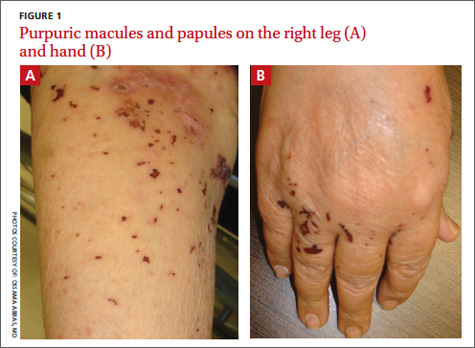
The patient had no neurological complaints and her family history was negative for a similar condition. We performed a punch biopsy.
WHAT IS YOUR DIAGNOSIS?
HOW WOULD YOU TREAT THIS PATIENT?
Diagnosis: Churg-Strauss syndrome
Churg-Strauss syndrome (CSS)—also known as allergic granulomatosis and angiitis—is a rare multisystemic vasculitis of small- to medium-sized vessels characterized by asthma, chronic rhinosinusitis, and prominent peripheral blood eosinophilia.1,2 Mean diagnosis age is 50 years with no gender predilection.2 Any organ system can be affected, although the lungs are most commonly involved, followed by the skin.1,2
Based on criteria from the American College of Rheumatology, the diagnosis of CSS can be made if 4 of the following 6 criteria are met: (1) asthma, (2) eosinophilia >10% on a differential white blood cell (WBC) count, (3) paranasal sinus abnormalities, (4) a transient pulmonary infiltrate detected on chest x-ray, (5) mono- or polyneuropathy, and (6) a biopsy specimen showing extravascular accumulation of eosinophils.2
Skin biopsy specimen from our patient showed leukocytoclastic vasculitis with prominent tissue eosinophilia. Laboratory studies showed an elevated WBC count of 12,300/mcL (reference range, 4500-11,000/mcL), and eosinophilia of 40% (reference range, 1%-4%). A serologic test for perinuclear pattern antineutrophil cytoplasmic antibodies (p-ANCA) was positive. (More on this in a moment.) Radiography of the chest showed transient pulmonary infiltrates.
Based on the clinical and laboratory findings, the patient was positive for 4 of 6 criteria and given a diagnosis of CSS.
What we know—and don’t know—about CSS
The exact etiopathogenesis of CSS is unknown.2-4 Although ANCAs are detected in about 40% to 60% of CSS patients, it is not yet known whether ANCAs have a pathogenic role.2-3 Abnormalities in immunologic function also occur, including heightened Th1 and Th2 lymphocyte function, increased recruitment of eosinophils, and decreased eosinophil apoptosis. Genetic factors, including certain interleukin-10 polymorphisms and HLA classes such as HLA-DRB4, may also contribute to CSS pathogenesis.4
Three distinct sequential phases have been described, although these are not always clearly distinguishable.2,5
• The first is the prodromal or allergic phase, which is characterized by the onset of asthma later in life in patients with no family history of atopy. There may or may not be an associated allergic rhinitis.
• In the eosinophilic phase, peripheral blood eosinophilia and eosinophilic infiltration of multiple organs (especially the lungs and gastrointestinal [GI] tract) occur.
• The vasculitis phase is characterized by life-threatening systemic vasculitis of the small and medium vessels that is often associated with vascular and extravascular granulomatosis.
Cutaneous and extracutaneous findings
One-half to two-thirds of patients with CSS have cutaneous manifestations that typically present in the vasculitis phase.2,5 The most common skin finding is palpable purpura on the lower extremities. Macular or papular erythematous eruption, urticaria, subcutaneous skin-colored or erythematous nodules, livedo reticularis, and erythema multiforme–like eruption may also be seen.2,5,6 Skin biopsies will show numerous eosinophils with either leukocytoclastic vasculitis or extravascular necrotizing granuloma.5
Extracutaneous manifestations of CSS include renal, cardiac, GI tract, and nervous system involvement.2,7
To identify patients with a poor prognosis, the 5-factor score (FFS) can be used. This score assigns 1 point each to GI tract involvement, renal insufficiency, proteinuria, central nervous system involvement, and cardiomyopathy.7 CSS patients with an FFS ≥2 have a considerably greater risk of mortality.7
Treatment involves corticosteroids
Systemic corticosteroids (prednisone, 1 mg/kg/day) are the primary treatment for patients with CSS; most patients improve dramatically with therapy.2 Adjunctive therapy with immunosuppressive agents such as cyclophosphamide, methotrexate (10-15 mg per week), chlorambucil, or azathioprine may be needed if a patient does not respond adequately to steroids alone.2
Prednisone for our patient
We started our patient on prednisone 1 mg/kg/d. Her skin lesions resolved and subsequent laboratory tests, including eosinophil counts, normalized. Prednisone therapy was gradually tapered over several months to attain the lowest dose required for control of symptoms—in this case, 5 mg/d.
CORRESPONDENCE
Ossama Abbas, MD, Associate Professor, Department of Dermatology, American University of Beirut Medical Center, PO Box 11-0236, Riad El Solh, Beirut 1107 2020, Beirut, Lebanon; ossamaabbas2003@yahoo.com
1. Churg J, Strauss L. Allergic granulomatosis, allergic angiitis and periarteritis nodosa. Am J Pathol. 1951;27:277-301.
2. Sinico RA, Bottero P. Churg-Strauss angiitis. Best Pract Res Clin Rheumatol. 2009;23:355-366.
3. Zwerina J, Axmann R, Jatzwauk M, et al. Pathogenesis of Churg-Strauss syndrome: recent insights. Autoimmunity. 2009;42:376-379.
4. Vaglio A, Martorana D, Maggiore U, et al; Secondary and Primary Vasculitis Study Group. HLA-DRB4 as a genetic risk factor for Churg-Strauss syndrome. Arthritis Rheum. 2007;56:3159-3166.
5. Davis MD, Daoud MS, McEvoy MT, et al. Cutaneous manifestations of Churg-Strauss syndrome: a clinicopathologic correlation. J Am Acad Dermatol. 1997;37(2 pt 1):199-203.
6. Tlacuilo-Parra A, Soto-Ortíz JA, Guevara-Gutiérrez E. Churg-Strauss syndrome manifested by urticarial plaques. Int J Dermatol. 2003;42:386-388.
7. Guillevin L, Lhote F, Gayraud M, et al. Prognostic factors in polyarteritis nodosa and Churg-Strauss syndrome. A prospective study in 342 patients. Medicine (Baltimore). 1996;75:17-28.
A 68-year-old woman presented with a 5-day history of extensive pruritic purpuric skin lesions of varying sizes on her trunk and extremities (FIGURE 1A and 1B). In addition, the patient had a few nonblanching, erythematous macules on her extremities.
The patient had no neurological complaints and her family history was negative for a similar condition. We performed a punch biopsy.
WHAT IS YOUR DIAGNOSIS?
HOW WOULD YOU TREAT THIS PATIENT?
Diagnosis: Churg-Strauss syndrome
Churg-Strauss syndrome (CSS)—also known as allergic granulomatosis and angiitis—is a rare multisystemic vasculitis of small- to medium-sized vessels characterized by asthma, chronic rhinosinusitis, and prominent peripheral blood eosinophilia.1,2 Mean diagnosis age is 50 years with no gender predilection.2 Any organ system can be affected, although the lungs are most commonly involved, followed by the skin.1,2
Based on criteria from the American College of Rheumatology, the diagnosis of CSS can be made if 4 of the following 6 criteria are met: (1) asthma, (2) eosinophilia >10% on a differential white blood cell (WBC) count, (3) paranasal sinus abnormalities, (4) a transient pulmonary infiltrate detected on chest x-ray, (5) mono- or polyneuropathy, and (6) a biopsy specimen showing extravascular accumulation of eosinophils.2
Skin biopsy specimen from our patient showed leukocytoclastic vasculitis with prominent tissue eosinophilia. Laboratory studies showed an elevated WBC count of 12,300/mcL (reference range, 4500-11,000/mcL), and eosinophilia of 40% (reference range, 1%-4%). A serologic test for perinuclear pattern antineutrophil cytoplasmic antibodies (p-ANCA) was positive. (More on this in a moment.) Radiography of the chest showed transient pulmonary infiltrates.
Based on the clinical and laboratory findings, the patient was positive for 4 of 6 criteria and given a diagnosis of CSS.
What we know—and don’t know—about CSS
The exact etiopathogenesis of CSS is unknown.2-4 Although ANCAs are detected in about 40% to 60% of CSS patients, it is not yet known whether ANCAs have a pathogenic role.2-3 Abnormalities in immunologic function also occur, including heightened Th1 and Th2 lymphocyte function, increased recruitment of eosinophils, and decreased eosinophil apoptosis. Genetic factors, including certain interleukin-10 polymorphisms and HLA classes such as HLA-DRB4, may also contribute to CSS pathogenesis.4
Three distinct sequential phases have been described, although these are not always clearly distinguishable.2,5
• The first is the prodromal or allergic phase, which is characterized by the onset of asthma later in life in patients with no family history of atopy. There may or may not be an associated allergic rhinitis.
• In the eosinophilic phase, peripheral blood eosinophilia and eosinophilic infiltration of multiple organs (especially the lungs and gastrointestinal [GI] tract) occur.
• The vasculitis phase is characterized by life-threatening systemic vasculitis of the small and medium vessels that is often associated with vascular and extravascular granulomatosis.
Cutaneous and extracutaneous findings
One-half to two-thirds of patients with CSS have cutaneous manifestations that typically present in the vasculitis phase.2,5 The most common skin finding is palpable purpura on the lower extremities. Macular or papular erythematous eruption, urticaria, subcutaneous skin-colored or erythematous nodules, livedo reticularis, and erythema multiforme–like eruption may also be seen.2,5,6 Skin biopsies will show numerous eosinophils with either leukocytoclastic vasculitis or extravascular necrotizing granuloma.5
Extracutaneous manifestations of CSS include renal, cardiac, GI tract, and nervous system involvement.2,7
To identify patients with a poor prognosis, the 5-factor score (FFS) can be used. This score assigns 1 point each to GI tract involvement, renal insufficiency, proteinuria, central nervous system involvement, and cardiomyopathy.7 CSS patients with an FFS ≥2 have a considerably greater risk of mortality.7
Treatment involves corticosteroids
Systemic corticosteroids (prednisone, 1 mg/kg/day) are the primary treatment for patients with CSS; most patients improve dramatically with therapy.2 Adjunctive therapy with immunosuppressive agents such as cyclophosphamide, methotrexate (10-15 mg per week), chlorambucil, or azathioprine may be needed if a patient does not respond adequately to steroids alone.2
Prednisone for our patient
We started our patient on prednisone 1 mg/kg/d. Her skin lesions resolved and subsequent laboratory tests, including eosinophil counts, normalized. Prednisone therapy was gradually tapered over several months to attain the lowest dose required for control of symptoms—in this case, 5 mg/d.
CORRESPONDENCE
Ossama Abbas, MD, Associate Professor, Department of Dermatology, American University of Beirut Medical Center, PO Box 11-0236, Riad El Solh, Beirut 1107 2020, Beirut, Lebanon; ossamaabbas2003@yahoo.com
A 68-year-old woman presented with a 5-day history of extensive pruritic purpuric skin lesions of varying sizes on her trunk and extremities (FIGURE 1A and 1B). In addition, the patient had a few nonblanching, erythematous macules on her extremities.
The patient had no neurological complaints and her family history was negative for a similar condition. We performed a punch biopsy.
WHAT IS YOUR DIAGNOSIS?
HOW WOULD YOU TREAT THIS PATIENT?
Diagnosis: Churg-Strauss syndrome
Churg-Strauss syndrome (CSS)—also known as allergic granulomatosis and angiitis—is a rare multisystemic vasculitis of small- to medium-sized vessels characterized by asthma, chronic rhinosinusitis, and prominent peripheral blood eosinophilia.1,2 Mean diagnosis age is 50 years with no gender predilection.2 Any organ system can be affected, although the lungs are most commonly involved, followed by the skin.1,2
Based on criteria from the American College of Rheumatology, the diagnosis of CSS can be made if 4 of the following 6 criteria are met: (1) asthma, (2) eosinophilia >10% on a differential white blood cell (WBC) count, (3) paranasal sinus abnormalities, (4) a transient pulmonary infiltrate detected on chest x-ray, (5) mono- or polyneuropathy, and (6) a biopsy specimen showing extravascular accumulation of eosinophils.2
Skin biopsy specimen from our patient showed leukocytoclastic vasculitis with prominent tissue eosinophilia. Laboratory studies showed an elevated WBC count of 12,300/mcL (reference range, 4500-11,000/mcL), and eosinophilia of 40% (reference range, 1%-4%). A serologic test for perinuclear pattern antineutrophil cytoplasmic antibodies (p-ANCA) was positive. (More on this in a moment.) Radiography of the chest showed transient pulmonary infiltrates.
Based on the clinical and laboratory findings, the patient was positive for 4 of 6 criteria and given a diagnosis of CSS.
What we know—and don’t know—about CSS
The exact etiopathogenesis of CSS is unknown.2-4 Although ANCAs are detected in about 40% to 60% of CSS patients, it is not yet known whether ANCAs have a pathogenic role.2-3 Abnormalities in immunologic function also occur, including heightened Th1 and Th2 lymphocyte function, increased recruitment of eosinophils, and decreased eosinophil apoptosis. Genetic factors, including certain interleukin-10 polymorphisms and HLA classes such as HLA-DRB4, may also contribute to CSS pathogenesis.4
Three distinct sequential phases have been described, although these are not always clearly distinguishable.2,5
• The first is the prodromal or allergic phase, which is characterized by the onset of asthma later in life in patients with no family history of atopy. There may or may not be an associated allergic rhinitis.
• In the eosinophilic phase, peripheral blood eosinophilia and eosinophilic infiltration of multiple organs (especially the lungs and gastrointestinal [GI] tract) occur.
• The vasculitis phase is characterized by life-threatening systemic vasculitis of the small and medium vessels that is often associated with vascular and extravascular granulomatosis.
Cutaneous and extracutaneous findings
One-half to two-thirds of patients with CSS have cutaneous manifestations that typically present in the vasculitis phase.2,5 The most common skin finding is palpable purpura on the lower extremities. Macular or papular erythematous eruption, urticaria, subcutaneous skin-colored or erythematous nodules, livedo reticularis, and erythema multiforme–like eruption may also be seen.2,5,6 Skin biopsies will show numerous eosinophils with either leukocytoclastic vasculitis or extravascular necrotizing granuloma.5
Extracutaneous manifestations of CSS include renal, cardiac, GI tract, and nervous system involvement.2,7
To identify patients with a poor prognosis, the 5-factor score (FFS) can be used. This score assigns 1 point each to GI tract involvement, renal insufficiency, proteinuria, central nervous system involvement, and cardiomyopathy.7 CSS patients with an FFS ≥2 have a considerably greater risk of mortality.7
Treatment involves corticosteroids
Systemic corticosteroids (prednisone, 1 mg/kg/day) are the primary treatment for patients with CSS; most patients improve dramatically with therapy.2 Adjunctive therapy with immunosuppressive agents such as cyclophosphamide, methotrexate (10-15 mg per week), chlorambucil, or azathioprine may be needed if a patient does not respond adequately to steroids alone.2
Prednisone for our patient
We started our patient on prednisone 1 mg/kg/d. Her skin lesions resolved and subsequent laboratory tests, including eosinophil counts, normalized. Prednisone therapy was gradually tapered over several months to attain the lowest dose required for control of symptoms—in this case, 5 mg/d.
CORRESPONDENCE
Ossama Abbas, MD, Associate Professor, Department of Dermatology, American University of Beirut Medical Center, PO Box 11-0236, Riad El Solh, Beirut 1107 2020, Beirut, Lebanon; ossamaabbas2003@yahoo.com
1. Churg J, Strauss L. Allergic granulomatosis, allergic angiitis and periarteritis nodosa. Am J Pathol. 1951;27:277-301.
2. Sinico RA, Bottero P. Churg-Strauss angiitis. Best Pract Res Clin Rheumatol. 2009;23:355-366.
3. Zwerina J, Axmann R, Jatzwauk M, et al. Pathogenesis of Churg-Strauss syndrome: recent insights. Autoimmunity. 2009;42:376-379.
4. Vaglio A, Martorana D, Maggiore U, et al; Secondary and Primary Vasculitis Study Group. HLA-DRB4 as a genetic risk factor for Churg-Strauss syndrome. Arthritis Rheum. 2007;56:3159-3166.
5. Davis MD, Daoud MS, McEvoy MT, et al. Cutaneous manifestations of Churg-Strauss syndrome: a clinicopathologic correlation. J Am Acad Dermatol. 1997;37(2 pt 1):199-203.
6. Tlacuilo-Parra A, Soto-Ortíz JA, Guevara-Gutiérrez E. Churg-Strauss syndrome manifested by urticarial plaques. Int J Dermatol. 2003;42:386-388.
7. Guillevin L, Lhote F, Gayraud M, et al. Prognostic factors in polyarteritis nodosa and Churg-Strauss syndrome. A prospective study in 342 patients. Medicine (Baltimore). 1996;75:17-28.
1. Churg J, Strauss L. Allergic granulomatosis, allergic angiitis and periarteritis nodosa. Am J Pathol. 1951;27:277-301.
2. Sinico RA, Bottero P. Churg-Strauss angiitis. Best Pract Res Clin Rheumatol. 2009;23:355-366.
3. Zwerina J, Axmann R, Jatzwauk M, et al. Pathogenesis of Churg-Strauss syndrome: recent insights. Autoimmunity. 2009;42:376-379.
4. Vaglio A, Martorana D, Maggiore U, et al; Secondary and Primary Vasculitis Study Group. HLA-DRB4 as a genetic risk factor for Churg-Strauss syndrome. Arthritis Rheum. 2007;56:3159-3166.
5. Davis MD, Daoud MS, McEvoy MT, et al. Cutaneous manifestations of Churg-Strauss syndrome: a clinicopathologic correlation. J Am Acad Dermatol. 1997;37(2 pt 1):199-203.
6. Tlacuilo-Parra A, Soto-Ortíz JA, Guevara-Gutiérrez E. Churg-Strauss syndrome manifested by urticarial plaques. Int J Dermatol. 2003;42:386-388.
7. Guillevin L, Lhote F, Gayraud M, et al. Prognostic factors in polyarteritis nodosa and Churg-Strauss syndrome. A prospective study in 342 patients. Medicine (Baltimore). 1996;75:17-28.
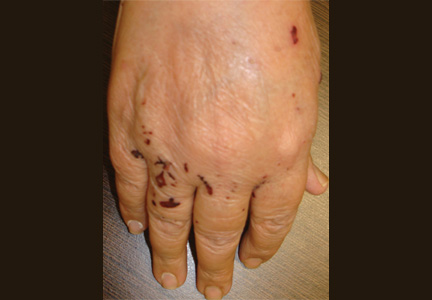
FDA vaccines panel: Retain current strains in next season’s influenza vaccines
SILVER SPRING, MD. – The trivalent and quadrivalent influenza vaccines for the 2014-2015 influenza season in the United States should retain the same strains that are included in the current season’s vaccines, according to a Food and Drug Administration expert panel.
At a meeting, the FDA’s Vaccines and Related Biological Products Advisory Committee voted 16 to 0 that the 2014-2015 trivalent influenza vaccine should retain the three strains included in the current vaccine: an A/California/7/2009 (H1N1)-like virus and an A/Texas/50/2012 (H3N2)-like virus, the two influenza A strains; and a B/Massachusetts/2/2012-like virus, a B/Yamagata lineage strain, as the influenza B strain.

For the quadrivalent vaccine, the panel unanimously recommended that the B/Victoria lineage strain contained in the current quadrivalent vaccine, a B/Brisbane/60/2008-like virus, be retained as the second influenza B strain.
The 2014-15 season will be the second season that quadrivalent influenza vaccines – which contain both a B/Victoria lineage and a B/Yamagata lineage vaccine virus strain – will be available.
During the current season, the quadrivalent vaccine was widely available, according to Sam Lee, Ph.D., senior director of pandemic influenza strategy at Sanofi Pasteur. Dr. Lee, who represented the vaccine manufacturers at the meeting, said that through January 2014, about 134 million doses of influenza vaccine were distributed in the United States, about the same as during the 2012-2013 season. The quadrivalent vaccine accounted for about 20% of the total vaccine doses distributed, and is expected to account for more than half of the doses distributed during next season, he said.
So far, influenza vaccine manufacturers do not anticipate any problems with the availability of the strains to be included in the vaccines, Dr. Lee told the panel.
Providing an update on influenza activity during the current season, Dr. Lisa Grohskopf, of the influenza division in the Centers for Disease Control & Prevention’s National Center for Immunization and Respiratory Diseases, said that influenza activity peaked in late December and early January and that influenza A (H1N1) viruses have predominated. As of Feb. 15, there have been 52 influenza-associated pediatric deaths reported, which is less than the number reported last season (171) but more than during the 2011-2012 influenza season (35), she noted.
The FDA panel meets at the same time each year to review influenza surveillance and epidemiology data in North America and globally, antigenic characteristics of influenza virus strains currently circulating in human populations, and serologic responses to circulating influenza viruses of people immunized with the current approved vaccine.
The panel’s recommendations are the same as the World Health Organization’s recommendation for next season’s northern hemisphere influenza vaccine, which was made the week before the FDA meeting.
The FDA usually follows the recommendations of its advisory panels. Panelists have been cleared of potential conflicts of interest related to the topic of the meeting. Occasionally, a panelist may be given a waiver, but not at this meeting.
SILVER SPRING, MD. – The trivalent and quadrivalent influenza vaccines for the 2014-2015 influenza season in the United States should retain the same strains that are included in the current season’s vaccines, according to a Food and Drug Administration expert panel.
At a meeting, the FDA’s Vaccines and Related Biological Products Advisory Committee voted 16 to 0 that the 2014-2015 trivalent influenza vaccine should retain the three strains included in the current vaccine: an A/California/7/2009 (H1N1)-like virus and an A/Texas/50/2012 (H3N2)-like virus, the two influenza A strains; and a B/Massachusetts/2/2012-like virus, a B/Yamagata lineage strain, as the influenza B strain.
For the quadrivalent vaccine, the panel unanimously recommended that the B/Victoria lineage strain contained in the current quadrivalent vaccine, a B/Brisbane/60/2008-like virus, be retained as the second influenza B strain.
The 2014-15 season will be the second season that quadrivalent influenza vaccines – which contain both a B/Victoria lineage and a B/Yamagata lineage vaccine virus strain – will be available.
During the current season, the quadrivalent vaccine was widely available, according to Sam Lee, Ph.D., senior director of pandemic influenza strategy at Sanofi Pasteur. Dr. Lee, who represented the vaccine manufacturers at the meeting, said that through January 2014, about 134 million doses of influenza vaccine were distributed in the United States, about the same as during the 2012-2013 season. The quadrivalent vaccine accounted for about 20% of the total vaccine doses distributed, and is expected to account for more than half of the doses distributed during next season, he said.
So far, influenza vaccine manufacturers do not anticipate any problems with the availability of the strains to be included in the vaccines, Dr. Lee told the panel.
Providing an update on influenza activity during the current season, Dr. Lisa Grohskopf, of the influenza division in the Centers for Disease Control & Prevention’s National Center for Immunization and Respiratory Diseases, said that influenza activity peaked in late December and early January and that influenza A (H1N1) viruses have predominated. As of Feb. 15, there have been 52 influenza-associated pediatric deaths reported, which is less than the number reported last season (171) but more than during the 2011-2012 influenza season (35), she noted.
The FDA panel meets at the same time each year to review influenza surveillance and epidemiology data in North America and globally, antigenic characteristics of influenza virus strains currently circulating in human populations, and serologic responses to circulating influenza viruses of people immunized with the current approved vaccine.
The panel’s recommendations are the same as the World Health Organization’s recommendation for next season’s northern hemisphere influenza vaccine, which was made the week before the FDA meeting.
The FDA usually follows the recommendations of its advisory panels. Panelists have been cleared of potential conflicts of interest related to the topic of the meeting. Occasionally, a panelist may be given a waiver, but not at this meeting.
SILVER SPRING, MD. – The trivalent and quadrivalent influenza vaccines for the 2014-2015 influenza season in the United States should retain the same strains that are included in the current season’s vaccines, according to a Food and Drug Administration expert panel.
At a meeting, the FDA’s Vaccines and Related Biological Products Advisory Committee voted 16 to 0 that the 2014-2015 trivalent influenza vaccine should retain the three strains included in the current vaccine: an A/California/7/2009 (H1N1)-like virus and an A/Texas/50/2012 (H3N2)-like virus, the two influenza A strains; and a B/Massachusetts/2/2012-like virus, a B/Yamagata lineage strain, as the influenza B strain.
For the quadrivalent vaccine, the panel unanimously recommended that the B/Victoria lineage strain contained in the current quadrivalent vaccine, a B/Brisbane/60/2008-like virus, be retained as the second influenza B strain.
The 2014-15 season will be the second season that quadrivalent influenza vaccines – which contain both a B/Victoria lineage and a B/Yamagata lineage vaccine virus strain – will be available.
During the current season, the quadrivalent vaccine was widely available, according to Sam Lee, Ph.D., senior director of pandemic influenza strategy at Sanofi Pasteur. Dr. Lee, who represented the vaccine manufacturers at the meeting, said that through January 2014, about 134 million doses of influenza vaccine were distributed in the United States, about the same as during the 2012-2013 season. The quadrivalent vaccine accounted for about 20% of the total vaccine doses distributed, and is expected to account for more than half of the doses distributed during next season, he said.
So far, influenza vaccine manufacturers do not anticipate any problems with the availability of the strains to be included in the vaccines, Dr. Lee told the panel.
Providing an update on influenza activity during the current season, Dr. Lisa Grohskopf, of the influenza division in the Centers for Disease Control & Prevention’s National Center for Immunization and Respiratory Diseases, said that influenza activity peaked in late December and early January and that influenza A (H1N1) viruses have predominated. As of Feb. 15, there have been 52 influenza-associated pediatric deaths reported, which is less than the number reported last season (171) but more than during the 2011-2012 influenza season (35), she noted.
The FDA panel meets at the same time each year to review influenza surveillance and epidemiology data in North America and globally, antigenic characteristics of influenza virus strains currently circulating in human populations, and serologic responses to circulating influenza viruses of people immunized with the current approved vaccine.
The panel’s recommendations are the same as the World Health Organization’s recommendation for next season’s northern hemisphere influenza vaccine, which was made the week before the FDA meeting.
The FDA usually follows the recommendations of its advisory panels. Panelists have been cleared of potential conflicts of interest related to the topic of the meeting. Occasionally, a panelist may be given a waiver, but not at this meeting.
AT AN FDA ADVISORY PANEL MEETING