User login
Bringing you the latest news, research and reviews, exclusive interviews, podcasts, quizzes, and more.
Powered by CHEST Physician, Clinician Reviews, MDedge Family Medicine, Internal Medicine News, and The Journal of Clinical Outcomes Management.
VIDEO: Insomnia is a marker for suicide and depression
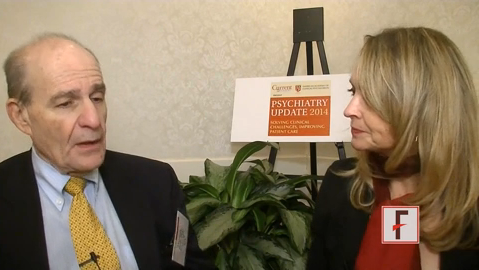
CHICAGO – "Having insomnia increases the risk of suicidality," according to Thomas Roth, Ph.D., a speaker at this year’s Psychiatry Update 2014 sponsored by Current Psychiatry and the American Academy of Clinical Psychiatrists. "This is especially true in adolescents."
In this video, Dr. Roth of Henry Ford Hospital in Detroit discusses what primary care physicians can do to help manage the drastic impact insomnia can have on a person’s life, and he explores the relationship sleeplessness has with suicide and depression. He also discusses how insomnia can be triggered by a variety of medications, including beta-blockers.
Current Psychiatry and this news organization are owned by the same parent company.
The video associated with this article is no longer available on this site. Please view all of our videos on the MDedge YouTube channel
On Twitter @whitneymcknight
CHICAGO – "Having insomnia increases the risk of suicidality," according to Thomas Roth, Ph.D., a speaker at this year’s Psychiatry Update 2014 sponsored by Current Psychiatry and the American Academy of Clinical Psychiatrists. "This is especially true in adolescents."
In this video, Dr. Roth of Henry Ford Hospital in Detroit discusses what primary care physicians can do to help manage the drastic impact insomnia can have on a person’s life, and he explores the relationship sleeplessness has with suicide and depression. He also discusses how insomnia can be triggered by a variety of medications, including beta-blockers.
Current Psychiatry and this news organization are owned by the same parent company.
The video associated with this article is no longer available on this site. Please view all of our videos on the MDedge YouTube channel
On Twitter @whitneymcknight
CHICAGO – "Having insomnia increases the risk of suicidality," according to Thomas Roth, Ph.D., a speaker at this year’s Psychiatry Update 2014 sponsored by Current Psychiatry and the American Academy of Clinical Psychiatrists. "This is especially true in adolescents."
In this video, Dr. Roth of Henry Ford Hospital in Detroit discusses what primary care physicians can do to help manage the drastic impact insomnia can have on a person’s life, and he explores the relationship sleeplessness has with suicide and depression. He also discusses how insomnia can be triggered by a variety of medications, including beta-blockers.
Current Psychiatry and this news organization are owned by the same parent company.
The video associated with this article is no longer available on this site. Please view all of our videos on the MDedge YouTube channel
On Twitter @whitneymcknight
EXPERT ANALYSIS FROM THE AACP 2014 PSYCHIATRY UPDATE MEETING
FDA approves Ragwitek, third sublingual allergy med in a month
The Food and Drug Administration has approved Ragwitek, a sublingual treatment for short ragweed pollen–related allergic rhinitis in people aged 18-65 years.
This is the first FDA-approved oral therapy for hay fever, with or without conjunctivitis, and the third oral allergy medication approved by the FDA in less than a month. On April 1, the agency green-lighted Oralair for the treatment of gross pollen-related allergies in persons aged 10-65 years. On April 15, Grastek earned approval as an oral treatment for grass pollen allergy in people aged 5-65 years.

The approval offers "millions of adults living with ragweed-pollen allergies in the United States an alternative to allergy shots to help manage their disease," Dr. Karen Midthun, director of the FDA’s Center for Biologics Evaluation and Research, said in a statement. Other treatments include avoiding the allergen and medications to treat symptoms.
Ragwitek contains traces of pollen from the short ragweed (Ambrosia artemisiifolia) plant, and is administered as a quick-dissolving tablet placed once daily under the tongue. Treatment begins 12 weeks before the ragweed pollen season begins in late summer/early fall, and continues throughout the season. The first dose of the therapy is taken under observation by a health care provider. If no adverse reaction is noted after 30 minutes, the patient self-administers the medication thereafter.
Ragwitek’s safety was assessed in approximately 1,700 adults. The most common adverse reactions included itching in the mouth and ears and some throat irritation. Among those patients, 760 were evaluated to determine the therapy’s efficacy. Those assigned to Ragwitek reported about a 26% reduction in symptoms, compared with those who took placebo.
A black box warning accompanies the treatment, cautioning that life-threatening, severe allergic reactions are possible. A self-injected dose of epinephrine is recommended if needed.
Catalent Pharma Solutions manufactures Ragwitek for Merck, Sharp & Dohme.
On Twitter @whitneymcknight
The Food and Drug Administration has approved Ragwitek, a sublingual treatment for short ragweed pollen–related allergic rhinitis in people aged 18-65 years.
This is the first FDA-approved oral therapy for hay fever, with or without conjunctivitis, and the third oral allergy medication approved by the FDA in less than a month. On April 1, the agency green-lighted Oralair for the treatment of gross pollen-related allergies in persons aged 10-65 years. On April 15, Grastek earned approval as an oral treatment for grass pollen allergy in people aged 5-65 years.
The approval offers "millions of adults living with ragweed-pollen allergies in the United States an alternative to allergy shots to help manage their disease," Dr. Karen Midthun, director of the FDA’s Center for Biologics Evaluation and Research, said in a statement. Other treatments include avoiding the allergen and medications to treat symptoms.
Ragwitek contains traces of pollen from the short ragweed (Ambrosia artemisiifolia) plant, and is administered as a quick-dissolving tablet placed once daily under the tongue. Treatment begins 12 weeks before the ragweed pollen season begins in late summer/early fall, and continues throughout the season. The first dose of the therapy is taken under observation by a health care provider. If no adverse reaction is noted after 30 minutes, the patient self-administers the medication thereafter.
Ragwitek’s safety was assessed in approximately 1,700 adults. The most common adverse reactions included itching in the mouth and ears and some throat irritation. Among those patients, 760 were evaluated to determine the therapy’s efficacy. Those assigned to Ragwitek reported about a 26% reduction in symptoms, compared with those who took placebo.
A black box warning accompanies the treatment, cautioning that life-threatening, severe allergic reactions are possible. A self-injected dose of epinephrine is recommended if needed.
Catalent Pharma Solutions manufactures Ragwitek for Merck, Sharp & Dohme.
On Twitter @whitneymcknight
The Food and Drug Administration has approved Ragwitek, a sublingual treatment for short ragweed pollen–related allergic rhinitis in people aged 18-65 years.
This is the first FDA-approved oral therapy for hay fever, with or without conjunctivitis, and the third oral allergy medication approved by the FDA in less than a month. On April 1, the agency green-lighted Oralair for the treatment of gross pollen-related allergies in persons aged 10-65 years. On April 15, Grastek earned approval as an oral treatment for grass pollen allergy in people aged 5-65 years.
The approval offers "millions of adults living with ragweed-pollen allergies in the United States an alternative to allergy shots to help manage their disease," Dr. Karen Midthun, director of the FDA’s Center for Biologics Evaluation and Research, said in a statement. Other treatments include avoiding the allergen and medications to treat symptoms.
Ragwitek contains traces of pollen from the short ragweed (Ambrosia artemisiifolia) plant, and is administered as a quick-dissolving tablet placed once daily under the tongue. Treatment begins 12 weeks before the ragweed pollen season begins in late summer/early fall, and continues throughout the season. The first dose of the therapy is taken under observation by a health care provider. If no adverse reaction is noted after 30 minutes, the patient self-administers the medication thereafter.
Ragwitek’s safety was assessed in approximately 1,700 adults. The most common adverse reactions included itching in the mouth and ears and some throat irritation. Among those patients, 760 were evaluated to determine the therapy’s efficacy. Those assigned to Ragwitek reported about a 26% reduction in symptoms, compared with those who took placebo.
A black box warning accompanies the treatment, cautioning that life-threatening, severe allergic reactions are possible. A self-injected dose of epinephrine is recommended if needed.
Catalent Pharma Solutions manufactures Ragwitek for Merck, Sharp & Dohme.
On Twitter @whitneymcknight

Apixiban for VTE reduces subsequent hospitalizations
WASHINGTON – Treating acute venous thromboembolism with the fixed-dose oral factor Xa inhibitor apixaban significantly reduces subsequent all-cause hospitalizations, compared with conventional therapy with enoxaparin followed by warfarin, according to a secondary analysis of the landmark AMPLIFY trial.
The 21% reduction in the risk of hospitalization in the apixaban group during the 6 months following the initial VTE was driven mainly by fewer hospitalizations for recurrent VTE or major bleeding. There were also significantly fewer physician office visits by patients on apixaban than for those on enoxaparin/warfarin, Dr. Margot Johnson reported at the annual meeting of the American College of Cardiology.
An analysis of the cost savings associated with this reduction in hospitalizations seen in AMPLIFY is underway and will be reported later this year, added Dr. Johnson of King’s College Hospital in London.
AMPLIFY (Apixaban for the Initial Management of Pulmonary Embolism and Deep Vein Thrombosis) was a randomized double-blind study of 5,365 patients with acute symptomatic VTE who were assigned to 6 months of treatment with apixaban (Eliquis) at 10 mg b.i.d. for 7 days followed by 5 mg b.i.d. or to enoxaparin followed by warfarin. In the previously reported primary outcomes (N. Engl. J. Med. 2013;369:799-808), apixaban showed noninferiority to the conventional regimen in terms of the rate of recurrent VTE or VTE-related death, and a highly significant superiority in terms of major bleeding, with a 69% risk reduction.
Dr. Johnson reported that during the 6-month study period, 5.72% of the apixaban group had one or more hospitalizations after the initial event, compared with 7.07% of the control group. This translated to a significant 21% relative risk reduction. For every 74 patients treated with apixaban instead of enoxaparin/warfarin, one hospitalization was avoided. Moreover, when a hospitalization occurred in apixaban-treated patients, the mean length of stay was shorter: 10.2 vs. 11.7 days in the enoxaparin-warfarin group.
The median time to a first hospitalization was 63 days in the apixaban group, compared with 34.5 days in controls.
The apixaban group’s advantage in terms of hospitalization risk was consistent across subgroups on the basis of age, body weight, sex, and renal function.
The number of emergency department visits during the 6-month follow-up period was similar in the two study arms. However, only 5.8% of the apixaban group visited a physician’s office, compared with 7.3% of controls. The reasons for these office visits were basically the same as for the hospitalizations: mostly recurrent VTEs and bleeding episodes. In the apixaban group, 35 patients had an office visit for recurrent VTE, compared with 61 controls. And 71 apixaban-treated patients made an office visit for bleeding episodes, compared with 130 controls.
Session cochair Dr. Emile R. Mohler commented on the finding that 37 patients in the apixaban group and 48 on enoxaparin/warfarin required hospitalization for recurrent VTE.
"It seems like we’re not doing a good enough job there. Either both of these anticoagulants don’t work well, or the patients aren’t taking the medication, or we’re not following up with them enough. I can’t remember the last time in my own clinical practice that somebody who took their medication came back within 6 months of having a VTE. It seems strange. I think there’s a lot of room for improvement," commented Dr. Mohler, professor of medicine and director of vascular medicine at the University of Pennsylvania, Philadelphia.
Dr. Johnson agreed about the room for improvement. But she added that, although the data she presented were based upon an intention-to-treat analysis, the results were the same – significantly fewer hospitalizations in the apixaban group – in a per-protocol analysis that excluded patients with less than 80% adherence to their study medication.
"One of the big things we saw in AMPLIFY is that whenever you stop an anticoagulant, you see the recurrence rate go up by about 10% per year. So it’s very important that these people continue their anticoagulation – and the more we can reduce their bleeding events, the more likely they are to comply with that therapy and be protected from having another VTE," she added.
Session cochair Dr. John P. Cooke commented that one underutilized aspect of treatment for acute VTE is compressive support, which he said has been given short shrift in the major practice guidelines.
"Often as physicians, we give patients a pill and we think that we’ve treated them. Compressive support is important in VTE," stressed Dr. Cooke, chair of the department of cardiovascular sciences at the Houston Methodist Research Institute and director of the Center for Cardiovascular Regeneration at the Houston Methodist DeBakey Heart and Vascular Center.
The AMPLIFY trial was sponsored by Bristol-Myers Squibb and Pfizer. Dr. Johnson reported having no financial conflicts.
WASHINGTON – Treating acute venous thromboembolism with the fixed-dose oral factor Xa inhibitor apixaban significantly reduces subsequent all-cause hospitalizations, compared with conventional therapy with enoxaparin followed by warfarin, according to a secondary analysis of the landmark AMPLIFY trial.
The 21% reduction in the risk of hospitalization in the apixaban group during the 6 months following the initial VTE was driven mainly by fewer hospitalizations for recurrent VTE or major bleeding. There were also significantly fewer physician office visits by patients on apixaban than for those on enoxaparin/warfarin, Dr. Margot Johnson reported at the annual meeting of the American College of Cardiology.
An analysis of the cost savings associated with this reduction in hospitalizations seen in AMPLIFY is underway and will be reported later this year, added Dr. Johnson of King’s College Hospital in London.
AMPLIFY (Apixaban for the Initial Management of Pulmonary Embolism and Deep Vein Thrombosis) was a randomized double-blind study of 5,365 patients with acute symptomatic VTE who were assigned to 6 months of treatment with apixaban (Eliquis) at 10 mg b.i.d. for 7 days followed by 5 mg b.i.d. or to enoxaparin followed by warfarin. In the previously reported primary outcomes (N. Engl. J. Med. 2013;369:799-808), apixaban showed noninferiority to the conventional regimen in terms of the rate of recurrent VTE or VTE-related death, and a highly significant superiority in terms of major bleeding, with a 69% risk reduction.
Dr. Johnson reported that during the 6-month study period, 5.72% of the apixaban group had one or more hospitalizations after the initial event, compared with 7.07% of the control group. This translated to a significant 21% relative risk reduction. For every 74 patients treated with apixaban instead of enoxaparin/warfarin, one hospitalization was avoided. Moreover, when a hospitalization occurred in apixaban-treated patients, the mean length of stay was shorter: 10.2 vs. 11.7 days in the enoxaparin-warfarin group.
The median time to a first hospitalization was 63 days in the apixaban group, compared with 34.5 days in controls.
The apixaban group’s advantage in terms of hospitalization risk was consistent across subgroups on the basis of age, body weight, sex, and renal function.
The number of emergency department visits during the 6-month follow-up period was similar in the two study arms. However, only 5.8% of the apixaban group visited a physician’s office, compared with 7.3% of controls. The reasons for these office visits were basically the same as for the hospitalizations: mostly recurrent VTEs and bleeding episodes. In the apixaban group, 35 patients had an office visit for recurrent VTE, compared with 61 controls. And 71 apixaban-treated patients made an office visit for bleeding episodes, compared with 130 controls.
Session cochair Dr. Emile R. Mohler commented on the finding that 37 patients in the apixaban group and 48 on enoxaparin/warfarin required hospitalization for recurrent VTE.
"It seems like we’re not doing a good enough job there. Either both of these anticoagulants don’t work well, or the patients aren’t taking the medication, or we’re not following up with them enough. I can’t remember the last time in my own clinical practice that somebody who took their medication came back within 6 months of having a VTE. It seems strange. I think there’s a lot of room for improvement," commented Dr. Mohler, professor of medicine and director of vascular medicine at the University of Pennsylvania, Philadelphia.
Dr. Johnson agreed about the room for improvement. But she added that, although the data she presented were based upon an intention-to-treat analysis, the results were the same – significantly fewer hospitalizations in the apixaban group – in a per-protocol analysis that excluded patients with less than 80% adherence to their study medication.
"One of the big things we saw in AMPLIFY is that whenever you stop an anticoagulant, you see the recurrence rate go up by about 10% per year. So it’s very important that these people continue their anticoagulation – and the more we can reduce their bleeding events, the more likely they are to comply with that therapy and be protected from having another VTE," she added.
Session cochair Dr. John P. Cooke commented that one underutilized aspect of treatment for acute VTE is compressive support, which he said has been given short shrift in the major practice guidelines.
"Often as physicians, we give patients a pill and we think that we’ve treated them. Compressive support is important in VTE," stressed Dr. Cooke, chair of the department of cardiovascular sciences at the Houston Methodist Research Institute and director of the Center for Cardiovascular Regeneration at the Houston Methodist DeBakey Heart and Vascular Center.
The AMPLIFY trial was sponsored by Bristol-Myers Squibb and Pfizer. Dr. Johnson reported having no financial conflicts.
WASHINGTON – Treating acute venous thromboembolism with the fixed-dose oral factor Xa inhibitor apixaban significantly reduces subsequent all-cause hospitalizations, compared with conventional therapy with enoxaparin followed by warfarin, according to a secondary analysis of the landmark AMPLIFY trial.
The 21% reduction in the risk of hospitalization in the apixaban group during the 6 months following the initial VTE was driven mainly by fewer hospitalizations for recurrent VTE or major bleeding. There were also significantly fewer physician office visits by patients on apixaban than for those on enoxaparin/warfarin, Dr. Margot Johnson reported at the annual meeting of the American College of Cardiology.
An analysis of the cost savings associated with this reduction in hospitalizations seen in AMPLIFY is underway and will be reported later this year, added Dr. Johnson of King’s College Hospital in London.
AMPLIFY (Apixaban for the Initial Management of Pulmonary Embolism and Deep Vein Thrombosis) was a randomized double-blind study of 5,365 patients with acute symptomatic VTE who were assigned to 6 months of treatment with apixaban (Eliquis) at 10 mg b.i.d. for 7 days followed by 5 mg b.i.d. or to enoxaparin followed by warfarin. In the previously reported primary outcomes (N. Engl. J. Med. 2013;369:799-808), apixaban showed noninferiority to the conventional regimen in terms of the rate of recurrent VTE or VTE-related death, and a highly significant superiority in terms of major bleeding, with a 69% risk reduction.
Dr. Johnson reported that during the 6-month study period, 5.72% of the apixaban group had one or more hospitalizations after the initial event, compared with 7.07% of the control group. This translated to a significant 21% relative risk reduction. For every 74 patients treated with apixaban instead of enoxaparin/warfarin, one hospitalization was avoided. Moreover, when a hospitalization occurred in apixaban-treated patients, the mean length of stay was shorter: 10.2 vs. 11.7 days in the enoxaparin-warfarin group.
The median time to a first hospitalization was 63 days in the apixaban group, compared with 34.5 days in controls.
The apixaban group’s advantage in terms of hospitalization risk was consistent across subgroups on the basis of age, body weight, sex, and renal function.
The number of emergency department visits during the 6-month follow-up period was similar in the two study arms. However, only 5.8% of the apixaban group visited a physician’s office, compared with 7.3% of controls. The reasons for these office visits were basically the same as for the hospitalizations: mostly recurrent VTEs and bleeding episodes. In the apixaban group, 35 patients had an office visit for recurrent VTE, compared with 61 controls. And 71 apixaban-treated patients made an office visit for bleeding episodes, compared with 130 controls.
Session cochair Dr. Emile R. Mohler commented on the finding that 37 patients in the apixaban group and 48 on enoxaparin/warfarin required hospitalization for recurrent VTE.
"It seems like we’re not doing a good enough job there. Either both of these anticoagulants don’t work well, or the patients aren’t taking the medication, or we’re not following up with them enough. I can’t remember the last time in my own clinical practice that somebody who took their medication came back within 6 months of having a VTE. It seems strange. I think there’s a lot of room for improvement," commented Dr. Mohler, professor of medicine and director of vascular medicine at the University of Pennsylvania, Philadelphia.
Dr. Johnson agreed about the room for improvement. But she added that, although the data she presented were based upon an intention-to-treat analysis, the results were the same – significantly fewer hospitalizations in the apixaban group – in a per-protocol analysis that excluded patients with less than 80% adherence to their study medication.
"One of the big things we saw in AMPLIFY is that whenever you stop an anticoagulant, you see the recurrence rate go up by about 10% per year. So it’s very important that these people continue their anticoagulation – and the more we can reduce their bleeding events, the more likely they are to comply with that therapy and be protected from having another VTE," she added.
Session cochair Dr. John P. Cooke commented that one underutilized aspect of treatment for acute VTE is compressive support, which he said has been given short shrift in the major practice guidelines.
"Often as physicians, we give patients a pill and we think that we’ve treated them. Compressive support is important in VTE," stressed Dr. Cooke, chair of the department of cardiovascular sciences at the Houston Methodist Research Institute and director of the Center for Cardiovascular Regeneration at the Houston Methodist DeBakey Heart and Vascular Center.
The AMPLIFY trial was sponsored by Bristol-Myers Squibb and Pfizer. Dr. Johnson reported having no financial conflicts.
AT ACC 14
Major finding: Patients whose acute venous thromboembolism was treated with 6 months of apixaban were 21% less likely to have another hospitalization than were those who received enoxaparin followed by warfarin.
Data source: The double-blind AMPLIFY trial, which randomized 5,365 patients with acute VTE to 6 months of fixed-dose apixaban or conventional therapy with enoxaparin followed by warfarin.
Disclosures: The study was sponsored by Bristol-Myers Squibb and Pfizer. The presenter reported having no financial conflicts.
Tobacco use tied to 53% of deaths in schizophrenia patients
Patients with schizophrenia, bipolar disorder, or depression have a significantly increased risk of tobacco-related mortality.
Among more than 591,000 such patients, tobacco-related deaths were about doubled, compared with the general population, Russell C. Callaghan, Ph.D., and his colleagues reported (J. Psych. Res. 2014;48:102-10).
In the study, the researchers analyzed the death records of patients who had been hospitalized with an ICD-9 primary psychiatric diagnosis in California between 1990 and 2005. Mortality estimates for conditions related to tobacco use comprised 53% of the total deaths in the schizophrenia cohort, 48% of deaths in the bipolar cohort, and 50% in the depression cohort, wrote Dr. Callaghan, associate professor in the Northern Medical Program at the University of Northern British Columbia, Prince George, and his associates.

The SMRs (standardized mortality ratios) for tobacco-related conditions were 2.45 for those in the schizophrenia group, 1.57 for the bipolar cohort, and 1.95 for the depression cohort. Cancer deaths were elevated among those with schizophrenia and depression, with SMRs of 1.3 among those with schizophrenia and 1.22 among those with depression. The risk was not increased among those with bipolar disorder, a finding that the investigators found to be surprising.
In addition, the schizophrenia, bipolar disorder, and depression groups all had increased rates of cardiovascular disease (SMRs of 2.46, 1.56, and 1.95, respectively). They also showed significantly higher SMRs for respiratory diseases (3.7, 2.4, and 2.7), wrote Dr. Callaghan, who also is affiliated with the Centre for Addiction and Mental Health in Toronto, and his associates.
Two factors are probably driving the excess mortality, they noted: insufficient tobacco use counseling and treatment, and the absence of regular cancer screenings.
The investigators cited several limitations. Because their cohort assignment algorithm "relied upon inpatient ICD-9 diagnoses of schizophrenia, bipolar disorder, and depression," the sample is based on those with fairly severe illness and might not have included those who had limited access to care. In addition, the medical records that were examined did not include information about the "presence, frequency, intensity, or duration of tobacco use," they wrote.
Despite those limitations, the findings suggest that addressing tobacco use in those groups is a "critical clinical and public health concern," they said.
"Our results stand as a call for increased recognition of the full harmful impact of tobacco use in these populations, as well as the urgent need to develop and implement strategies to reduce tobacco-related harms," Dr. Callaghan and his associates wrote.
The study was sponsored by the Centre for Addiction and Mental Health. The authors reported that they had no conflicts of interest.
On Twitter @Alz_Gal
Patients with schizophrenia, bipolar disorder, or depression have a significantly increased risk of tobacco-related mortality.
Among more than 591,000 such patients, tobacco-related deaths were about doubled, compared with the general population, Russell C. Callaghan, Ph.D., and his colleagues reported (J. Psych. Res. 2014;48:102-10).
In the study, the researchers analyzed the death records of patients who had been hospitalized with an ICD-9 primary psychiatric diagnosis in California between 1990 and 2005. Mortality estimates for conditions related to tobacco use comprised 53% of the total deaths in the schizophrenia cohort, 48% of deaths in the bipolar cohort, and 50% in the depression cohort, wrote Dr. Callaghan, associate professor in the Northern Medical Program at the University of Northern British Columbia, Prince George, and his associates.
The SMRs (standardized mortality ratios) for tobacco-related conditions were 2.45 for those in the schizophrenia group, 1.57 for the bipolar cohort, and 1.95 for the depression cohort. Cancer deaths were elevated among those with schizophrenia and depression, with SMRs of 1.3 among those with schizophrenia and 1.22 among those with depression. The risk was not increased among those with bipolar disorder, a finding that the investigators found to be surprising.
In addition, the schizophrenia, bipolar disorder, and depression groups all had increased rates of cardiovascular disease (SMRs of 2.46, 1.56, and 1.95, respectively). They also showed significantly higher SMRs for respiratory diseases (3.7, 2.4, and 2.7), wrote Dr. Callaghan, who also is affiliated with the Centre for Addiction and Mental Health in Toronto, and his associates.
Two factors are probably driving the excess mortality, they noted: insufficient tobacco use counseling and treatment, and the absence of regular cancer screenings.
The investigators cited several limitations. Because their cohort assignment algorithm "relied upon inpatient ICD-9 diagnoses of schizophrenia, bipolar disorder, and depression," the sample is based on those with fairly severe illness and might not have included those who had limited access to care. In addition, the medical records that were examined did not include information about the "presence, frequency, intensity, or duration of tobacco use," they wrote.
Despite those limitations, the findings suggest that addressing tobacco use in those groups is a "critical clinical and public health concern," they said.
"Our results stand as a call for increased recognition of the full harmful impact of tobacco use in these populations, as well as the urgent need to develop and implement strategies to reduce tobacco-related harms," Dr. Callaghan and his associates wrote.
The study was sponsored by the Centre for Addiction and Mental Health. The authors reported that they had no conflicts of interest.
On Twitter @Alz_Gal
Patients with schizophrenia, bipolar disorder, or depression have a significantly increased risk of tobacco-related mortality.
Among more than 591,000 such patients, tobacco-related deaths were about doubled, compared with the general population, Russell C. Callaghan, Ph.D., and his colleagues reported (J. Psych. Res. 2014;48:102-10).
In the study, the researchers analyzed the death records of patients who had been hospitalized with an ICD-9 primary psychiatric diagnosis in California between 1990 and 2005. Mortality estimates for conditions related to tobacco use comprised 53% of the total deaths in the schizophrenia cohort, 48% of deaths in the bipolar cohort, and 50% in the depression cohort, wrote Dr. Callaghan, associate professor in the Northern Medical Program at the University of Northern British Columbia, Prince George, and his associates.
The SMRs (standardized mortality ratios) for tobacco-related conditions were 2.45 for those in the schizophrenia group, 1.57 for the bipolar cohort, and 1.95 for the depression cohort. Cancer deaths were elevated among those with schizophrenia and depression, with SMRs of 1.3 among those with schizophrenia and 1.22 among those with depression. The risk was not increased among those with bipolar disorder, a finding that the investigators found to be surprising.
In addition, the schizophrenia, bipolar disorder, and depression groups all had increased rates of cardiovascular disease (SMRs of 2.46, 1.56, and 1.95, respectively). They also showed significantly higher SMRs for respiratory diseases (3.7, 2.4, and 2.7), wrote Dr. Callaghan, who also is affiliated with the Centre for Addiction and Mental Health in Toronto, and his associates.
Two factors are probably driving the excess mortality, they noted: insufficient tobacco use counseling and treatment, and the absence of regular cancer screenings.
The investigators cited several limitations. Because their cohort assignment algorithm "relied upon inpatient ICD-9 diagnoses of schizophrenia, bipolar disorder, and depression," the sample is based on those with fairly severe illness and might not have included those who had limited access to care. In addition, the medical records that were examined did not include information about the "presence, frequency, intensity, or duration of tobacco use," they wrote.
Despite those limitations, the findings suggest that addressing tobacco use in those groups is a "critical clinical and public health concern," they said.
"Our results stand as a call for increased recognition of the full harmful impact of tobacco use in these populations, as well as the urgent need to develop and implement strategies to reduce tobacco-related harms," Dr. Callaghan and his associates wrote.
The study was sponsored by the Centre for Addiction and Mental Health. The authors reported that they had no conflicts of interest.
On Twitter @Alz_Gal
FROM THE JOURNAL OF PSYCHIATRIC RESEARCH
Major finding: The standardized mortality ratios for tobacco-related conditions were 2.45 for those in the schizophrenia group, 1.57 for the bipolar cohort, and 1.95 for the depression cohort.
Data source: The review included data on more than 591,000 patients extracted from California state records from 1990 to 2005.
Disclosures: The study was sponsored by the Centre for Addiction and Mental Health. The authors reported that they had no conflicts of interest.

FDA approves Grastek, second oral allergy therapy
The Food and Drug Administration has approved Grastek, a sublingual immunotherapy for grass pollen–induced allergic rhinitis with or without conjunctivitis in individuals aged 5-65 years.
Grastek (Timothy Grass Pollen Allergen Extract), manufactured by Merck, was unanimously supported by an FDA advisory committee in December and is the second sublingual oral therapy to be approved by the agency in a few weeks. On April 1, the FDA approved Greer Laboratories’ Oralair, which contains a mixture of freeze-dried extracts from the pollens of five grasses: Kentucky blue grass, orchard, perennial rye, sweet vernal, and Timothy. That product is approved for individuals aged 10-65 years.

Like Oralair, Grastek has a black box warning of the potential for severe allergic reactions such as anaphylaxis. Grastek is also contraindicated in patients with severe, unstable, or uncontrolled asthma; a history of any severe systemic allergic reaction; a history of any severe local reaction after taking any sublingual allergen immunotherapy; a history of eosinophilic esophagitis; or hypersensitivity to any of the inactive ingredients contained in the product.
Timothy grass (Phleum pratense) is a common, widespread, long-stemmed grass that is very hardy. According to Merck, it is cross reactive with other grasses, including sweet vernal, orchard (also known as cocksfoot), perennial rye, Kentucky blue (also known as June grass), meadow fescue, and redtop.
Before initiating treatment, a patient’s allergy must be confirmed by positive skin test or in vitro testing for pollen-specific IgE antibodies for Timothy grass or cross-reactive grass pollens. Therapy – at a dose of one tablet sublingually daily – is begun 12 weeks before the grass pollen season and should continue through the season. The first dose should be given under a physician’s supervision, according to Merck. Subsequent doses can be taken at home, but patients should also be prescribed injectable epinephrine and given training in how to use the autoinjector.
The company said that Grastek can be taken daily for up to 3 consecutive years.
In trials, the most common adverse reactions for both adult and pediatric patients included oral pruritus, throat irritation, and mouth edema. Adults also experienced ear pruritus.
The FDA approved production of tablets that have a potency of 2,800 Bioequivalent Allergy Units (BAU) of Timothy Grass pollen extract, which will be supplied in 10-tablet blister packs. The agency also said in its approval letter that it will require Merck to create a Medication Guide for distribution to patients because the product "poses a serious and significant public health concern."
Merck also will be required to conduct a 3-year, 10,000-patient postmarketing study to gauge safety, to be completed by about 2017. A second postmarketing study is also required, looking at 10,000 new users who are identified through electronic medical records. That study is also due to be finished by 2017.
Grastek will be available in U.S. pharmacies in late April, according to Merck.
On Twitter @aliciaault
The Food and Drug Administration has approved Grastek, a sublingual immunotherapy for grass pollen–induced allergic rhinitis with or without conjunctivitis in individuals aged 5-65 years.
Grastek (Timothy Grass Pollen Allergen Extract), manufactured by Merck, was unanimously supported by an FDA advisory committee in December and is the second sublingual oral therapy to be approved by the agency in a few weeks. On April 1, the FDA approved Greer Laboratories’ Oralair, which contains a mixture of freeze-dried extracts from the pollens of five grasses: Kentucky blue grass, orchard, perennial rye, sweet vernal, and Timothy. That product is approved for individuals aged 10-65 years.
Like Oralair, Grastek has a black box warning of the potential for severe allergic reactions such as anaphylaxis. Grastek is also contraindicated in patients with severe, unstable, or uncontrolled asthma; a history of any severe systemic allergic reaction; a history of any severe local reaction after taking any sublingual allergen immunotherapy; a history of eosinophilic esophagitis; or hypersensitivity to any of the inactive ingredients contained in the product.
Timothy grass (Phleum pratense) is a common, widespread, long-stemmed grass that is very hardy. According to Merck, it is cross reactive with other grasses, including sweet vernal, orchard (also known as cocksfoot), perennial rye, Kentucky blue (also known as June grass), meadow fescue, and redtop.
Before initiating treatment, a patient’s allergy must be confirmed by positive skin test or in vitro testing for pollen-specific IgE antibodies for Timothy grass or cross-reactive grass pollens. Therapy – at a dose of one tablet sublingually daily – is begun 12 weeks before the grass pollen season and should continue through the season. The first dose should be given under a physician’s supervision, according to Merck. Subsequent doses can be taken at home, but patients should also be prescribed injectable epinephrine and given training in how to use the autoinjector.
The company said that Grastek can be taken daily for up to 3 consecutive years.
In trials, the most common adverse reactions for both adult and pediatric patients included oral pruritus, throat irritation, and mouth edema. Adults also experienced ear pruritus.
The FDA approved production of tablets that have a potency of 2,800 Bioequivalent Allergy Units (BAU) of Timothy Grass pollen extract, which will be supplied in 10-tablet blister packs. The agency also said in its approval letter that it will require Merck to create a Medication Guide for distribution to patients because the product "poses a serious and significant public health concern."
Merck also will be required to conduct a 3-year, 10,000-patient postmarketing study to gauge safety, to be completed by about 2017. A second postmarketing study is also required, looking at 10,000 new users who are identified through electronic medical records. That study is also due to be finished by 2017.
Grastek will be available in U.S. pharmacies in late April, according to Merck.
On Twitter @aliciaault
The Food and Drug Administration has approved Grastek, a sublingual immunotherapy for grass pollen–induced allergic rhinitis with or without conjunctivitis in individuals aged 5-65 years.
Grastek (Timothy Grass Pollen Allergen Extract), manufactured by Merck, was unanimously supported by an FDA advisory committee in December and is the second sublingual oral therapy to be approved by the agency in a few weeks. On April 1, the FDA approved Greer Laboratories’ Oralair, which contains a mixture of freeze-dried extracts from the pollens of five grasses: Kentucky blue grass, orchard, perennial rye, sweet vernal, and Timothy. That product is approved for individuals aged 10-65 years.
Like Oralair, Grastek has a black box warning of the potential for severe allergic reactions such as anaphylaxis. Grastek is also contraindicated in patients with severe, unstable, or uncontrolled asthma; a history of any severe systemic allergic reaction; a history of any severe local reaction after taking any sublingual allergen immunotherapy; a history of eosinophilic esophagitis; or hypersensitivity to any of the inactive ingredients contained in the product.
Timothy grass (Phleum pratense) is a common, widespread, long-stemmed grass that is very hardy. According to Merck, it is cross reactive with other grasses, including sweet vernal, orchard (also known as cocksfoot), perennial rye, Kentucky blue (also known as June grass), meadow fescue, and redtop.
Before initiating treatment, a patient’s allergy must be confirmed by positive skin test or in vitro testing for pollen-specific IgE antibodies for Timothy grass or cross-reactive grass pollens. Therapy – at a dose of one tablet sublingually daily – is begun 12 weeks before the grass pollen season and should continue through the season. The first dose should be given under a physician’s supervision, according to Merck. Subsequent doses can be taken at home, but patients should also be prescribed injectable epinephrine and given training in how to use the autoinjector.
The company said that Grastek can be taken daily for up to 3 consecutive years.
In trials, the most common adverse reactions for both adult and pediatric patients included oral pruritus, throat irritation, and mouth edema. Adults also experienced ear pruritus.
The FDA approved production of tablets that have a potency of 2,800 Bioequivalent Allergy Units (BAU) of Timothy Grass pollen extract, which will be supplied in 10-tablet blister packs. The agency also said in its approval letter that it will require Merck to create a Medication Guide for distribution to patients because the product "poses a serious and significant public health concern."
Merck also will be required to conduct a 3-year, 10,000-patient postmarketing study to gauge safety, to be completed by about 2017. A second postmarketing study is also required, looking at 10,000 new users who are identified through electronic medical records. That study is also due to be finished by 2017.
Grastek will be available in U.S. pharmacies in late April, according to Merck.
On Twitter @aliciaault

Menopause doesn’t drive severe asthma
MADRID – Menopause is blamed for many things, but it’s unlikely to be the reason for the increased risk of severe asthma or worse quality of life in elderly asthmatic women, a study suggests.
"The increased unadjusted asthma severity and need for health care utilization in postmenopausal women are more likely due to other factors like age and other comorbidities rather than menopause per se," Dr. Joe Zein said at the world congress of the American College of Chest Physicians.

The investigators used a propensity score matching method to analyze the effect of menopause on asthma severity, quality of life, and health care utilization in 166 menopausal and 538 premenopausal women enrolled in the Severe Asthma Research program from 2002 to 2011. Subsequent multivariate logistic regression analyses were used to adjust for the covariates of age at enrollment, hypertension, gastroesophageal reflux disease (GERD), and hormone therapy, which was used in only 35 menopausal women.
Compared with premenopausal women, menopausal women were older and reported less atopy and more comorbidities, such as higher body mass index, diabetes mellitus, hypertension, GERD, obstructive sleep apnea, sinusitis, and nasal polyps, said Dr. Zein, a pulmonologist at Cleveland Clinic.
Menopausal women also had lower lung function and higher neutrophil percentage in both induced sputum and bronchoalveolar lavage fluid.
Severe asthma was present in 31% (167/538) of premenopausal and 72% (119/166) of menopausal women.
In unadjusted analysis, the risk of severe asthma was almost sixfold higher in menopausal women (odds ratio, 5.62; 95% confidence interval 3.83-8.26), but dropped dramatically in the adjusted analysis (OR, 1.46), he said.
Menopausal women also had lower average scores than did premenopausal women (4.06 vs. 4.56) on the 7-point Asthma Quality of Life Questionnaire, with 7 being "not impaired at all" and 1 being "severely impaired." The mean difference between groups pointed to worse quality of life among menopausal women in unadjusted analysis (–0.5), but again this faded after multivariate adjustment (0.31; 95% C.I. –0.30 to 0.93).
Similar trends were observed for health care utilization including emergency department visits (unadjusted OR, 1.33; adjusted OR, 1.15) and hospitalization (unadjusted OR, 2.93; adjusted OR, 0.70), Dr. Zein said.
Finally, an analysis stratified by menopausal status that looked at the association between enrollment age and the probability of severe asthma, suggested a rise in severe asthma among premenopausal women and those in early menopause, followed by a steady decline around age 55 years. Two possible hypotheses are that insulin resistance is higher during the period around menopause and thus may worsen asthma and that estrogen levels initially rise during early menopause before declining and also may increase asthma severity, Dr. Zein said.
"We don’t know exactly, but I think we should not look at menopause as one entity."
Several studies have tried to tease out the effects of menopause and aging on asthma severity, with conflicting results.
A recent study reported that menopausal women in their fifties and sixties are more than twice as likely to be hospitalized for asthma as men the same age (Ann. Allergy Asthma Immunol. 2013;111:176-81).
The Harvard Nurses Health Study, however, found that postmenopausal women who never used hormone therapy had a significantly lower age-adjusted risk of asthma than premenopausal women (Am. J. Respir. Crit. Care Med. 1995;152:1183-8).
The role of estrogen in asthma remains controversial, Dr. Zein observed. The incidence of asthma is twice as high among boys during childhood, but this switches during puberty when girls have a higher incidence of asthma as well as asthma-related hospitalizations and health care utilization, he noted.
Dr. Zein reported no financial disclosures; a coauthor reported grant monies from the National Institutes of Health.
MADRID – Menopause is blamed for many things, but it’s unlikely to be the reason for the increased risk of severe asthma or worse quality of life in elderly asthmatic women, a study suggests.
"The increased unadjusted asthma severity and need for health care utilization in postmenopausal women are more likely due to other factors like age and other comorbidities rather than menopause per se," Dr. Joe Zein said at the world congress of the American College of Chest Physicians.
The investigators used a propensity score matching method to analyze the effect of menopause on asthma severity, quality of life, and health care utilization in 166 menopausal and 538 premenopausal women enrolled in the Severe Asthma Research program from 2002 to 2011. Subsequent multivariate logistic regression analyses were used to adjust for the covariates of age at enrollment, hypertension, gastroesophageal reflux disease (GERD), and hormone therapy, which was used in only 35 menopausal women.
Compared with premenopausal women, menopausal women were older and reported less atopy and more comorbidities, such as higher body mass index, diabetes mellitus, hypertension, GERD, obstructive sleep apnea, sinusitis, and nasal polyps, said Dr. Zein, a pulmonologist at Cleveland Clinic.
Menopausal women also had lower lung function and higher neutrophil percentage in both induced sputum and bronchoalveolar lavage fluid.
Severe asthma was present in 31% (167/538) of premenopausal and 72% (119/166) of menopausal women.
In unadjusted analysis, the risk of severe asthma was almost sixfold higher in menopausal women (odds ratio, 5.62; 95% confidence interval 3.83-8.26), but dropped dramatically in the adjusted analysis (OR, 1.46), he said.
Menopausal women also had lower average scores than did premenopausal women (4.06 vs. 4.56) on the 7-point Asthma Quality of Life Questionnaire, with 7 being "not impaired at all" and 1 being "severely impaired." The mean difference between groups pointed to worse quality of life among menopausal women in unadjusted analysis (–0.5), but again this faded after multivariate adjustment (0.31; 95% C.I. –0.30 to 0.93).
Similar trends were observed for health care utilization including emergency department visits (unadjusted OR, 1.33; adjusted OR, 1.15) and hospitalization (unadjusted OR, 2.93; adjusted OR, 0.70), Dr. Zein said.
Finally, an analysis stratified by menopausal status that looked at the association between enrollment age and the probability of severe asthma, suggested a rise in severe asthma among premenopausal women and those in early menopause, followed by a steady decline around age 55 years. Two possible hypotheses are that insulin resistance is higher during the period around menopause and thus may worsen asthma and that estrogen levels initially rise during early menopause before declining and also may increase asthma severity, Dr. Zein said.
"We don’t know exactly, but I think we should not look at menopause as one entity."
Several studies have tried to tease out the effects of menopause and aging on asthma severity, with conflicting results.
A recent study reported that menopausal women in their fifties and sixties are more than twice as likely to be hospitalized for asthma as men the same age (Ann. Allergy Asthma Immunol. 2013;111:176-81).
The Harvard Nurses Health Study, however, found that postmenopausal women who never used hormone therapy had a significantly lower age-adjusted risk of asthma than premenopausal women (Am. J. Respir. Crit. Care Med. 1995;152:1183-8).
The role of estrogen in asthma remains controversial, Dr. Zein observed. The incidence of asthma is twice as high among boys during childhood, but this switches during puberty when girls have a higher incidence of asthma as well as asthma-related hospitalizations and health care utilization, he noted.
Dr. Zein reported no financial disclosures; a coauthor reported grant monies from the National Institutes of Health.
MADRID – Menopause is blamed for many things, but it’s unlikely to be the reason for the increased risk of severe asthma or worse quality of life in elderly asthmatic women, a study suggests.
"The increased unadjusted asthma severity and need for health care utilization in postmenopausal women are more likely due to other factors like age and other comorbidities rather than menopause per se," Dr. Joe Zein said at the world congress of the American College of Chest Physicians.
The investigators used a propensity score matching method to analyze the effect of menopause on asthma severity, quality of life, and health care utilization in 166 menopausal and 538 premenopausal women enrolled in the Severe Asthma Research program from 2002 to 2011. Subsequent multivariate logistic regression analyses were used to adjust for the covariates of age at enrollment, hypertension, gastroesophageal reflux disease (GERD), and hormone therapy, which was used in only 35 menopausal women.
Compared with premenopausal women, menopausal women were older and reported less atopy and more comorbidities, such as higher body mass index, diabetes mellitus, hypertension, GERD, obstructive sleep apnea, sinusitis, and nasal polyps, said Dr. Zein, a pulmonologist at Cleveland Clinic.
Menopausal women also had lower lung function and higher neutrophil percentage in both induced sputum and bronchoalveolar lavage fluid.
Severe asthma was present in 31% (167/538) of premenopausal and 72% (119/166) of menopausal women.
In unadjusted analysis, the risk of severe asthma was almost sixfold higher in menopausal women (odds ratio, 5.62; 95% confidence interval 3.83-8.26), but dropped dramatically in the adjusted analysis (OR, 1.46), he said.
Menopausal women also had lower average scores than did premenopausal women (4.06 vs. 4.56) on the 7-point Asthma Quality of Life Questionnaire, with 7 being "not impaired at all" and 1 being "severely impaired." The mean difference between groups pointed to worse quality of life among menopausal women in unadjusted analysis (–0.5), but again this faded after multivariate adjustment (0.31; 95% C.I. –0.30 to 0.93).
Similar trends were observed for health care utilization including emergency department visits (unadjusted OR, 1.33; adjusted OR, 1.15) and hospitalization (unadjusted OR, 2.93; adjusted OR, 0.70), Dr. Zein said.
Finally, an analysis stratified by menopausal status that looked at the association between enrollment age and the probability of severe asthma, suggested a rise in severe asthma among premenopausal women and those in early menopause, followed by a steady decline around age 55 years. Two possible hypotheses are that insulin resistance is higher during the period around menopause and thus may worsen asthma and that estrogen levels initially rise during early menopause before declining and also may increase asthma severity, Dr. Zein said.
"We don’t know exactly, but I think we should not look at menopause as one entity."
Several studies have tried to tease out the effects of menopause and aging on asthma severity, with conflicting results.
A recent study reported that menopausal women in their fifties and sixties are more than twice as likely to be hospitalized for asthma as men the same age (Ann. Allergy Asthma Immunol. 2013;111:176-81).
The Harvard Nurses Health Study, however, found that postmenopausal women who never used hormone therapy had a significantly lower age-adjusted risk of asthma than premenopausal women (Am. J. Respir. Crit. Care Med. 1995;152:1183-8).
The role of estrogen in asthma remains controversial, Dr. Zein observed. The incidence of asthma is twice as high among boys during childhood, but this switches during puberty when girls have a higher incidence of asthma as well as asthma-related hospitalizations and health care utilization, he noted.
Dr. Zein reported no financial disclosures; a coauthor reported grant monies from the National Institutes of Health.
AT CHEST WORLD CONGRESS 2014
Major finding: The odds ratio for severe asthma was 5.62 for menopausal vs. premenopausal women in unadjusted analysis, but 1.46 after adjustment.
Data source: A retrospective analysis of 166 menopausal and 538 premenopausal asthmatic women.
Disclosures: Dr. Zein reported no financial disclosures; a coauthor reported grant monies from the National Institutes of Health.

Cloud of questions hovers around electronic cigarettes
SAN DIEGO – The country’s leading regulatory agency has as many questions about the potential health effects of electronic cigarettes as concerned clinicians do.
According to Mitchell Zeller, J.D., director of the Food and Drug Administration’s (FDA’s) Center for Tobacco Products, two key behavioral questions are who is using them and how they are being used.

"The only way to get answers to that is to fund the research to do it," he said during a press briefing at the annual meeting of the American Association for Cancer Research. "We’ve been funding research on e-cigarettes for a while and will continue to do that. As a regulatory maker, we’ll then make regulatory policy decisions based on what the science tells us."
The FDA does not currently regulate e-cigarettes, but the agency intends to issue a proposed rule extending its product authorities beyond cigarettes, cigarette tobacco, roll-your-own tobacco, and smokeless tobacco. "We’re very close to being able to announce [that] proposed rule," Mr. Zeller said.

He noted that if the subset of current smokers who are unable or unwilling to quit, substitute conventional cigarettes for e-cigarettes, "there’s a chance there could be a positive impact on public health. But the standard that Congress has given the FDA to implement and enforce – when that day comes that we do regulate e cigarettes – it’s going to be about the net population [impact], not just the subset of smokers unable or unwilling to quit. What if it turns out that the use pattern is not complete substitution but situational substitution, where an otherwise health-concerned, interested-in-quitting smoker is using e-cigarettes as a bridge to get from their last cigarette to their next cigarette? That would have a net negative impact on public health. It’s going to be the FDA’s job to figure out what the net of all of that is, but right now all of us in government and research have far more questions than answers when it comes to e- cigarettes."
"We understand that there are a lot of impatience and urgency around the issue," said Robert T. Croyle, Ph.D., director of the National Cancer Institute’s Division of Cancer Control and Population Sciences. Investigating the health effect of e-cigarettes poses certain challenges, "but we’re dedicated to expanding work in this area," he said.
Neither Mr. Zeller nor Dr. Croyle had relevant financial conflicts to disclose.
SAN DIEGO – The country’s leading regulatory agency has as many questions about the potential health effects of electronic cigarettes as concerned clinicians do.
According to Mitchell Zeller, J.D., director of the Food and Drug Administration’s (FDA’s) Center for Tobacco Products, two key behavioral questions are who is using them and how they are being used.
"The only way to get answers to that is to fund the research to do it," he said during a press briefing at the annual meeting of the American Association for Cancer Research. "We’ve been funding research on e-cigarettes for a while and will continue to do that. As a regulatory maker, we’ll then make regulatory policy decisions based on what the science tells us."
The FDA does not currently regulate e-cigarettes, but the agency intends to issue a proposed rule extending its product authorities beyond cigarettes, cigarette tobacco, roll-your-own tobacco, and smokeless tobacco. "We’re very close to being able to announce [that] proposed rule," Mr. Zeller said.
He noted that if the subset of current smokers who are unable or unwilling to quit, substitute conventional cigarettes for e-cigarettes, "there’s a chance there could be a positive impact on public health. But the standard that Congress has given the FDA to implement and enforce – when that day comes that we do regulate e cigarettes – it’s going to be about the net population [impact], not just the subset of smokers unable or unwilling to quit. What if it turns out that the use pattern is not complete substitution but situational substitution, where an otherwise health-concerned, interested-in-quitting smoker is using e-cigarettes as a bridge to get from their last cigarette to their next cigarette? That would have a net negative impact on public health. It’s going to be the FDA’s job to figure out what the net of all of that is, but right now all of us in government and research have far more questions than answers when it comes to e- cigarettes."
"We understand that there are a lot of impatience and urgency around the issue," said Robert T. Croyle, Ph.D., director of the National Cancer Institute’s Division of Cancer Control and Population Sciences. Investigating the health effect of e-cigarettes poses certain challenges, "but we’re dedicated to expanding work in this area," he said.
Neither Mr. Zeller nor Dr. Croyle had relevant financial conflicts to disclose.
SAN DIEGO – The country’s leading regulatory agency has as many questions about the potential health effects of electronic cigarettes as concerned clinicians do.
According to Mitchell Zeller, J.D., director of the Food and Drug Administration’s (FDA’s) Center for Tobacco Products, two key behavioral questions are who is using them and how they are being used.
"The only way to get answers to that is to fund the research to do it," he said during a press briefing at the annual meeting of the American Association for Cancer Research. "We’ve been funding research on e-cigarettes for a while and will continue to do that. As a regulatory maker, we’ll then make regulatory policy decisions based on what the science tells us."
The FDA does not currently regulate e-cigarettes, but the agency intends to issue a proposed rule extending its product authorities beyond cigarettes, cigarette tobacco, roll-your-own tobacco, and smokeless tobacco. "We’re very close to being able to announce [that] proposed rule," Mr. Zeller said.
He noted that if the subset of current smokers who are unable or unwilling to quit, substitute conventional cigarettes for e-cigarettes, "there’s a chance there could be a positive impact on public health. But the standard that Congress has given the FDA to implement and enforce – when that day comes that we do regulate e cigarettes – it’s going to be about the net population [impact], not just the subset of smokers unable or unwilling to quit. What if it turns out that the use pattern is not complete substitution but situational substitution, where an otherwise health-concerned, interested-in-quitting smoker is using e-cigarettes as a bridge to get from their last cigarette to their next cigarette? That would have a net negative impact on public health. It’s going to be the FDA’s job to figure out what the net of all of that is, but right now all of us in government and research have far more questions than answers when it comes to e- cigarettes."
"We understand that there are a lot of impatience and urgency around the issue," said Robert T. Croyle, Ph.D., director of the National Cancer Institute’s Division of Cancer Control and Population Sciences. Investigating the health effect of e-cigarettes poses certain challenges, "but we’re dedicated to expanding work in this area," he said.
Neither Mr. Zeller nor Dr. Croyle had relevant financial conflicts to disclose.
AT THE AACR ANNUAL MEETING
Evidence-Based Apps: Texting reminders improved pediatric asthma control
A small study presented at the American Academy of Allergy, Asthma, and Immunology meeting in San Diego adds to a growing body of evidence that texting patients reminders to take their medication may improve asthma control.
Dr. Humaa M. Bhatti’s ongoing study is one of the few so far to look not just at medication adherence but at health outcomes. But, like similar studies before it, the trial’s small size and short duration so far preclude any definitive pronouncements about the effectiveness of using text messages (also known as short message service) via mobile phones to influence patient behavior. A couple of recent reviews of the literature, however, show mostly positive results.
The video associated with this article is no longer available on this site. Please view all of our videos on the MDedge YouTube channel
Starting in April 2013, Dr. Bhatti and her associates recruited 37 patients up to 18 years of age with asthma to receive twice-daily texts from a research assistant reminding them to take medication. Texts went to the parents of children and/or directly to the adolescents. Patients or parents also could reply to communicate with the research assistant.
For the 29 patients who received 3-9 months of texting at the time of preliminary analysis of results (8 patients dropped out), records showed that 21 patients had two or more steroid bursts in the 12 months prior to the start of texting (72%), 28 had at least one urgent visit (96%) in that year, and 28 had been hospitalized for asthma at least once (96%).

The number of asthma exacerbations requiring prednisone decreased from a mean of 3.4/patient before the trial to 1.6/patient with texted reminders. Hospitalizations decreased from a mean of 1.6/patient before the trial to 0.8/patient. Urgent or emergency visits decreased from a mean of 3/patient before the trial to 1.4/patient. Those differences were statistically significant, reported Dr. Bhatti, an allergy and immunology fellow at the Children’s Hospital of Michigan, Detroit.
Since the texting started, 16 of the 29 patients (55%) had no steroid bursts, emergency department visits, or hospitalizations. Similar results were seen for 25 patients who were added to the study since November 2013, a preliminary analysis found.
The study soon will open to all patients with asthma at the hospital to see if results remain positive and are sustained over longer periods. With more patients to text, the investigators are considering using an automated text-sending program that would not allow the recipients to reply, and patients may be randomized to receive texts from either the research assistant or the text program to see if there is a difference in outcomes.
A separate systematic review of the literature found five randomized controlled trials and one "pragmatic" randomized controlled trial reporting evidence that daily technology-based reminders improved asthma medication adherence. None of these trials documented improved clinical outcomes or changes in asthma-related quality of life. The reminder systems studied included text messages, automated phone calls, or audiovisual reminder devices. The median follow-up time was 16 weeks (J. Asthma 2014 Feb. 13 [doi: 10.3109/02770903.2014.888572]).

Texting also looked good in another literature review that found 13 controlled clinical trials of interventions using text messages, audiovisual reminders from electronic reminder devices, or pagers for patients on chronic medication. Of the four studies using texting, medication adherence improved in the one study of asthma and in two studies of HIV, but made no difference in one study of women on oral contraceptives (J. Am. Med. Inform. Assoc. 2012 [doi: 10.1136/amiajnl-2011-00748]). The one study on patients with asthma in that review was, again, a small, short study of 26 adults. Adherence to treatment improved after 12 weeks by an absolute rate of 18% in the texting group compared with controls (Respir. Med. 2010;104:166-71).
There are hints elsewhere that texting may not always help. At the 2011 meeting of the American Academy of Allergy, Asthma and Immunology, Dr. Jennifer S. Lee reported that two of seven patients aged 6-17 years improved their asthma control after receiving text message reminders. Texting influenced children but not adolescents, according to news interviews with Dr. Lee, an allergist and ear, nose, and throat specialist in Brooklyn, N.Y.
Dr. Bhatti had no financial disclosures.
A small study presented at the American Academy of Allergy, Asthma, and Immunology meeting in San Diego adds to a growing body of evidence that texting patients reminders to take their medication may improve asthma control.
Dr. Humaa M. Bhatti’s ongoing study is one of the few so far to look not just at medication adherence but at health outcomes. But, like similar studies before it, the trial’s small size and short duration so far preclude any definitive pronouncements about the effectiveness of using text messages (also known as short message service) via mobile phones to influence patient behavior. A couple of recent reviews of the literature, however, show mostly positive results.
The video associated with this article is no longer available on this site. Please view all of our videos on the MDedge YouTube channel
Starting in April 2013, Dr. Bhatti and her associates recruited 37 patients up to 18 years of age with asthma to receive twice-daily texts from a research assistant reminding them to take medication. Texts went to the parents of children and/or directly to the adolescents. Patients or parents also could reply to communicate with the research assistant.
For the 29 patients who received 3-9 months of texting at the time of preliminary analysis of results (8 patients dropped out), records showed that 21 patients had two or more steroid bursts in the 12 months prior to the start of texting (72%), 28 had at least one urgent visit (96%) in that year, and 28 had been hospitalized for asthma at least once (96%).
The number of asthma exacerbations requiring prednisone decreased from a mean of 3.4/patient before the trial to 1.6/patient with texted reminders. Hospitalizations decreased from a mean of 1.6/patient before the trial to 0.8/patient. Urgent or emergency visits decreased from a mean of 3/patient before the trial to 1.4/patient. Those differences were statistically significant, reported Dr. Bhatti, an allergy and immunology fellow at the Children’s Hospital of Michigan, Detroit.
Since the texting started, 16 of the 29 patients (55%) had no steroid bursts, emergency department visits, or hospitalizations. Similar results were seen for 25 patients who were added to the study since November 2013, a preliminary analysis found.
The study soon will open to all patients with asthma at the hospital to see if results remain positive and are sustained over longer periods. With more patients to text, the investigators are considering using an automated text-sending program that would not allow the recipients to reply, and patients may be randomized to receive texts from either the research assistant or the text program to see if there is a difference in outcomes.
A separate systematic review of the literature found five randomized controlled trials and one "pragmatic" randomized controlled trial reporting evidence that daily technology-based reminders improved asthma medication adherence. None of these trials documented improved clinical outcomes or changes in asthma-related quality of life. The reminder systems studied included text messages, automated phone calls, or audiovisual reminder devices. The median follow-up time was 16 weeks (J. Asthma 2014 Feb. 13 [doi: 10.3109/02770903.2014.888572]).
Texting also looked good in another literature review that found 13 controlled clinical trials of interventions using text messages, audiovisual reminders from electronic reminder devices, or pagers for patients on chronic medication. Of the four studies using texting, medication adherence improved in the one study of asthma and in two studies of HIV, but made no difference in one study of women on oral contraceptives (J. Am. Med. Inform. Assoc. 2012 [doi: 10.1136/amiajnl-2011-00748]). The one study on patients with asthma in that review was, again, a small, short study of 26 adults. Adherence to treatment improved after 12 weeks by an absolute rate of 18% in the texting group compared with controls (Respir. Med. 2010;104:166-71).
There are hints elsewhere that texting may not always help. At the 2011 meeting of the American Academy of Allergy, Asthma and Immunology, Dr. Jennifer S. Lee reported that two of seven patients aged 6-17 years improved their asthma control after receiving text message reminders. Texting influenced children but not adolescents, according to news interviews with Dr. Lee, an allergist and ear, nose, and throat specialist in Brooklyn, N.Y.
Dr. Bhatti had no financial disclosures.
A small study presented at the American Academy of Allergy, Asthma, and Immunology meeting in San Diego adds to a growing body of evidence that texting patients reminders to take their medication may improve asthma control.
Dr. Humaa M. Bhatti’s ongoing study is one of the few so far to look not just at medication adherence but at health outcomes. But, like similar studies before it, the trial’s small size and short duration so far preclude any definitive pronouncements about the effectiveness of using text messages (also known as short message service) via mobile phones to influence patient behavior. A couple of recent reviews of the literature, however, show mostly positive results.
The video associated with this article is no longer available on this site. Please view all of our videos on the MDedge YouTube channel
Starting in April 2013, Dr. Bhatti and her associates recruited 37 patients up to 18 years of age with asthma to receive twice-daily texts from a research assistant reminding them to take medication. Texts went to the parents of children and/or directly to the adolescents. Patients or parents also could reply to communicate with the research assistant.
For the 29 patients who received 3-9 months of texting at the time of preliminary analysis of results (8 patients dropped out), records showed that 21 patients had two or more steroid bursts in the 12 months prior to the start of texting (72%), 28 had at least one urgent visit (96%) in that year, and 28 had been hospitalized for asthma at least once (96%).
The number of asthma exacerbations requiring prednisone decreased from a mean of 3.4/patient before the trial to 1.6/patient with texted reminders. Hospitalizations decreased from a mean of 1.6/patient before the trial to 0.8/patient. Urgent or emergency visits decreased from a mean of 3/patient before the trial to 1.4/patient. Those differences were statistically significant, reported Dr. Bhatti, an allergy and immunology fellow at the Children’s Hospital of Michigan, Detroit.
Since the texting started, 16 of the 29 patients (55%) had no steroid bursts, emergency department visits, or hospitalizations. Similar results were seen for 25 patients who were added to the study since November 2013, a preliminary analysis found.
The study soon will open to all patients with asthma at the hospital to see if results remain positive and are sustained over longer periods. With more patients to text, the investigators are considering using an automated text-sending program that would not allow the recipients to reply, and patients may be randomized to receive texts from either the research assistant or the text program to see if there is a difference in outcomes.
A separate systematic review of the literature found five randomized controlled trials and one "pragmatic" randomized controlled trial reporting evidence that daily technology-based reminders improved asthma medication adherence. None of these trials documented improved clinical outcomes or changes in asthma-related quality of life. The reminder systems studied included text messages, automated phone calls, or audiovisual reminder devices. The median follow-up time was 16 weeks (J. Asthma 2014 Feb. 13 [doi: 10.3109/02770903.2014.888572]).
Texting also looked good in another literature review that found 13 controlled clinical trials of interventions using text messages, audiovisual reminders from electronic reminder devices, or pagers for patients on chronic medication. Of the four studies using texting, medication adherence improved in the one study of asthma and in two studies of HIV, but made no difference in one study of women on oral contraceptives (J. Am. Med. Inform. Assoc. 2012 [doi: 10.1136/amiajnl-2011-00748]). The one study on patients with asthma in that review was, again, a small, short study of 26 adults. Adherence to treatment improved after 12 weeks by an absolute rate of 18% in the texting group compared with controls (Respir. Med. 2010;104:166-71).
There are hints elsewhere that texting may not always help. At the 2011 meeting of the American Academy of Allergy, Asthma and Immunology, Dr. Jennifer S. Lee reported that two of seven patients aged 6-17 years improved their asthma control after receiving text message reminders. Texting influenced children but not adolescents, according to news interviews with Dr. Lee, an allergist and ear, nose, and throat specialist in Brooklyn, N.Y.
Dr. Bhatti had no financial disclosures.

Ultrasound-facilitated endovascular thrombolysis 'a game changer' in acute pulmonary embolism
WASHINGTON – Ultrasound-facilitated, catheter-directed, low-dose fibrinolysis for acute massive or submassive pulmonary embolism significantly improves right ventricular function, reduces pulmonary hypertension and angiographic evidence of obstruction, and lessens the risk of fibrinolysis-associated intracranial hemorrhage, according to a prospective multicenter clinical trial.
"By minimizing the risk of intracranial bleeding, ultrasound-facilitated, catheter-directed, low-dose fibrinolysis represents a potential game changer in the treatment of high-risk pulmonary embolism patients," Dr. Gregory Piazza said in presenting the results of the SEATTLE II study at the annual meeting of the American College of Cardiology.

Full-dose systemic fibrinolysis has long been the go-to advanced therapy for high-risk pulmonary embolism (PE), but physicians are leery of the associated 2%-3% risk of catastrophic intracranial hemorrhage, noted Dr. Piazza, a cardiologist at Brigham and Women’s Hospital and Harvard University, Boston.
SEATTLE II was a single-arm, 21-site, prospective study in which 150 patients with high-risk PE underwent treatment using the commercially available EKOS EkoSonic Endovascular System.
Twenty-one percent of patients had massive PE, defined as presentation with syncope, cardiogenic shock, resuscitated cardiac arrest, or persistent hypotension. The remaining 79% had submassive PE, with normal blood pressure but evidence of right ventricular dysfunction. All participants had to have a right ventricular/left ventricular ratio (RV/LV) of 0.9 or greater on the same chest CT scan used in diagnosing the PE. This CT documentation of right ventricular dysfunction has been associated in a meta-analysis of patients with submassive PE with a 7.4-fold increased risk of death due to PE compared to normotensive PE patients with normal right ventricular function (J. Thromb. Haemost. 2013;11:1823-32).
The primary endpoint was change in RV/LV on chest CT from baseline to 48 hours after initiation of fibrinolysis. This ratio improved from 1.55 to 1.13, for a statistically and clinically significant 27% reduction. A similar-size improvement was seen in pulmonary artery systolic pressure – a secondary efficacy endpoint – which decreased from 51.4 mm Hg before treatment to 37.5 mm Hg post procedure and 36.9 mm Hg at 48 hours. Both efficacy endpoints improved to a similar extent regardless of whether patients had massive or submassive PE.
The mean Modified Miller Pulmonary Artery Angiographic Obstruction Score improved by 30%, from 22.5 pretreatment to 15.8 at 48 hours.
Three in-hospital deaths occurred. One was due to massive PE which occurred before the fibrinolysis procedure could be completed. The others were not directly attributable to PE: One involved overwhelming sepsis and the other was due to progressive respiratory failure. Major bleeding occurred in 11% of patients; however, 16 of the 17 events were classified as GUSTO moderate bleeds, with only a single GUSTO severe hemorrhage.
There were no intracranial hemorrhages.
The fibrinolytic agent used in SEATTLE II was tissue plasminogen activator, delivered at 1 mg/hr for a total dose of 24 mg. Patients with unilateral PE received a single device and 24 hours of infusion time. The 86% of patients who had bilateral disease got two devices and 12 hours of therapy.
The proprietary EKOS system consists of two catheters: an outer infusion catheter with side holes that elute the fibrinolytic agent, and an inner core catheter with ultrasound transducers placed at regular intervals. These transducers produce low-intensity ultrasound which serves two purposes. Through a process called acoustic streaming, the low-intensity ultrasound helps push the fibrinolytic agent closer to the thrombus. Plus, the ultrasound energy causes the clot fibrin to reconfigure from a tight lattice to a more porous structure that promotes deeper penetration of the fibrinolytic, Dr. Piazza explained.
Audience members greeted the study results enthusiastically.
"Most of us really do believe that for safety reasons this is the way to go, rather than systemic fibrinolysis," one said.
Dr. Piazza said the next step in defining the EKOS system’s role in clinical practice will be to study briefer infusion times as a means of achieving faster patient improvement with reduced use of hospital resources, including ICU and intermediate-care unit time.
The EKOS system has been approved in the United States since 2005 for treatment of blood clots in the arms and legs. In Europe it gained an additional indication for treatment of massive and submassive PE in 2011.
The SEATTLE II study was sponsored by EKOS Corp. Dr. Piazza reported receiving a research grant from the company.
WASHINGTON – Ultrasound-facilitated, catheter-directed, low-dose fibrinolysis for acute massive or submassive pulmonary embolism significantly improves right ventricular function, reduces pulmonary hypertension and angiographic evidence of obstruction, and lessens the risk of fibrinolysis-associated intracranial hemorrhage, according to a prospective multicenter clinical trial.
"By minimizing the risk of intracranial bleeding, ultrasound-facilitated, catheter-directed, low-dose fibrinolysis represents a potential game changer in the treatment of high-risk pulmonary embolism patients," Dr. Gregory Piazza said in presenting the results of the SEATTLE II study at the annual meeting of the American College of Cardiology.
Full-dose systemic fibrinolysis has long been the go-to advanced therapy for high-risk pulmonary embolism (PE), but physicians are leery of the associated 2%-3% risk of catastrophic intracranial hemorrhage, noted Dr. Piazza, a cardiologist at Brigham and Women’s Hospital and Harvard University, Boston.
SEATTLE II was a single-arm, 21-site, prospective study in which 150 patients with high-risk PE underwent treatment using the commercially available EKOS EkoSonic Endovascular System.
Twenty-one percent of patients had massive PE, defined as presentation with syncope, cardiogenic shock, resuscitated cardiac arrest, or persistent hypotension. The remaining 79% had submassive PE, with normal blood pressure but evidence of right ventricular dysfunction. All participants had to have a right ventricular/left ventricular ratio (RV/LV) of 0.9 or greater on the same chest CT scan used in diagnosing the PE. This CT documentation of right ventricular dysfunction has been associated in a meta-analysis of patients with submassive PE with a 7.4-fold increased risk of death due to PE compared to normotensive PE patients with normal right ventricular function (J. Thromb. Haemost. 2013;11:1823-32).
The primary endpoint was change in RV/LV on chest CT from baseline to 48 hours after initiation of fibrinolysis. This ratio improved from 1.55 to 1.13, for a statistically and clinically significant 27% reduction. A similar-size improvement was seen in pulmonary artery systolic pressure – a secondary efficacy endpoint – which decreased from 51.4 mm Hg before treatment to 37.5 mm Hg post procedure and 36.9 mm Hg at 48 hours. Both efficacy endpoints improved to a similar extent regardless of whether patients had massive or submassive PE.
The mean Modified Miller Pulmonary Artery Angiographic Obstruction Score improved by 30%, from 22.5 pretreatment to 15.8 at 48 hours.
Three in-hospital deaths occurred. One was due to massive PE which occurred before the fibrinolysis procedure could be completed. The others were not directly attributable to PE: One involved overwhelming sepsis and the other was due to progressive respiratory failure. Major bleeding occurred in 11% of patients; however, 16 of the 17 events were classified as GUSTO moderate bleeds, with only a single GUSTO severe hemorrhage.
There were no intracranial hemorrhages.
The fibrinolytic agent used in SEATTLE II was tissue plasminogen activator, delivered at 1 mg/hr for a total dose of 24 mg. Patients with unilateral PE received a single device and 24 hours of infusion time. The 86% of patients who had bilateral disease got two devices and 12 hours of therapy.
The proprietary EKOS system consists of two catheters: an outer infusion catheter with side holes that elute the fibrinolytic agent, and an inner core catheter with ultrasound transducers placed at regular intervals. These transducers produce low-intensity ultrasound which serves two purposes. Through a process called acoustic streaming, the low-intensity ultrasound helps push the fibrinolytic agent closer to the thrombus. Plus, the ultrasound energy causes the clot fibrin to reconfigure from a tight lattice to a more porous structure that promotes deeper penetration of the fibrinolytic, Dr. Piazza explained.
Audience members greeted the study results enthusiastically.
"Most of us really do believe that for safety reasons this is the way to go, rather than systemic fibrinolysis," one said.
Dr. Piazza said the next step in defining the EKOS system’s role in clinical practice will be to study briefer infusion times as a means of achieving faster patient improvement with reduced use of hospital resources, including ICU and intermediate-care unit time.
The EKOS system has been approved in the United States since 2005 for treatment of blood clots in the arms and legs. In Europe it gained an additional indication for treatment of massive and submassive PE in 2011.
The SEATTLE II study was sponsored by EKOS Corp. Dr. Piazza reported receiving a research grant from the company.
WASHINGTON – Ultrasound-facilitated, catheter-directed, low-dose fibrinolysis for acute massive or submassive pulmonary embolism significantly improves right ventricular function, reduces pulmonary hypertension and angiographic evidence of obstruction, and lessens the risk of fibrinolysis-associated intracranial hemorrhage, according to a prospective multicenter clinical trial.
"By minimizing the risk of intracranial bleeding, ultrasound-facilitated, catheter-directed, low-dose fibrinolysis represents a potential game changer in the treatment of high-risk pulmonary embolism patients," Dr. Gregory Piazza said in presenting the results of the SEATTLE II study at the annual meeting of the American College of Cardiology.
Full-dose systemic fibrinolysis has long been the go-to advanced therapy for high-risk pulmonary embolism (PE), but physicians are leery of the associated 2%-3% risk of catastrophic intracranial hemorrhage, noted Dr. Piazza, a cardiologist at Brigham and Women’s Hospital and Harvard University, Boston.
SEATTLE II was a single-arm, 21-site, prospective study in which 150 patients with high-risk PE underwent treatment using the commercially available EKOS EkoSonic Endovascular System.
Twenty-one percent of patients had massive PE, defined as presentation with syncope, cardiogenic shock, resuscitated cardiac arrest, or persistent hypotension. The remaining 79% had submassive PE, with normal blood pressure but evidence of right ventricular dysfunction. All participants had to have a right ventricular/left ventricular ratio (RV/LV) of 0.9 or greater on the same chest CT scan used in diagnosing the PE. This CT documentation of right ventricular dysfunction has been associated in a meta-analysis of patients with submassive PE with a 7.4-fold increased risk of death due to PE compared to normotensive PE patients with normal right ventricular function (J. Thromb. Haemost. 2013;11:1823-32).
The primary endpoint was change in RV/LV on chest CT from baseline to 48 hours after initiation of fibrinolysis. This ratio improved from 1.55 to 1.13, for a statistically and clinically significant 27% reduction. A similar-size improvement was seen in pulmonary artery systolic pressure – a secondary efficacy endpoint – which decreased from 51.4 mm Hg before treatment to 37.5 mm Hg post procedure and 36.9 mm Hg at 48 hours. Both efficacy endpoints improved to a similar extent regardless of whether patients had massive or submassive PE.
The mean Modified Miller Pulmonary Artery Angiographic Obstruction Score improved by 30%, from 22.5 pretreatment to 15.8 at 48 hours.
Three in-hospital deaths occurred. One was due to massive PE which occurred before the fibrinolysis procedure could be completed. The others were not directly attributable to PE: One involved overwhelming sepsis and the other was due to progressive respiratory failure. Major bleeding occurred in 11% of patients; however, 16 of the 17 events were classified as GUSTO moderate bleeds, with only a single GUSTO severe hemorrhage.
There were no intracranial hemorrhages.
The fibrinolytic agent used in SEATTLE II was tissue plasminogen activator, delivered at 1 mg/hr for a total dose of 24 mg. Patients with unilateral PE received a single device and 24 hours of infusion time. The 86% of patients who had bilateral disease got two devices and 12 hours of therapy.
The proprietary EKOS system consists of two catheters: an outer infusion catheter with side holes that elute the fibrinolytic agent, and an inner core catheter with ultrasound transducers placed at regular intervals. These transducers produce low-intensity ultrasound which serves two purposes. Through a process called acoustic streaming, the low-intensity ultrasound helps push the fibrinolytic agent closer to the thrombus. Plus, the ultrasound energy causes the clot fibrin to reconfigure from a tight lattice to a more porous structure that promotes deeper penetration of the fibrinolytic, Dr. Piazza explained.
Audience members greeted the study results enthusiastically.
"Most of us really do believe that for safety reasons this is the way to go, rather than systemic fibrinolysis," one said.
Dr. Piazza said the next step in defining the EKOS system’s role in clinical practice will be to study briefer infusion times as a means of achieving faster patient improvement with reduced use of hospital resources, including ICU and intermediate-care unit time.
The EKOS system has been approved in the United States since 2005 for treatment of blood clots in the arms and legs. In Europe it gained an additional indication for treatment of massive and submassive PE in 2011.
The SEATTLE II study was sponsored by EKOS Corp. Dr. Piazza reported receiving a research grant from the company.
AT ACC 14
Major finding: Ultrasound-facilitated, catheter-directed, low-dose fibrinolysis in patients with high-risk pulmonary embolism improved right ventricular function and reduced pulmonary hypertension with no intracranial hemorrhages or fatal bleeding events.
Data source: SEATTLE II, a multicenter, single-arm, prospective study of 150 patients with massive or submassive pulmonary embolism.
Disclosures: The study was sponsored by EKOS Corp. The presenter received a research grant from the company.

New data question oseltamivir’s influenza efficacy, safety
A new systematic review of clinical studies of the oral anti-influenza drug oseltamivir that included a substantial amount of clinical data that were not part of previously published assessments showed that significant questions exist about oseltamivir’s role in treating and preventing influenza and in pandemic preparedness.
"Our results show that oseltamivir reduces the proportion of participants with symptomatic influenza when used for prophylaxis and has modest symptomatic effects when used for treatment, but it also causes nausea and vomiting and increases the risk of headache and renal and psychiatric syndromes," Tom Jefferson, Ph.D., wrote in an article published online on April 9 (BMJ 2014;348:g2545 doi:10.1136/bmj.g2545).
"We believe these findings provide reason to question the stockpiling of oseltamivir, its inclusion on the [World Health Organization] list of essential drugs, and its use in clinical practice as an anti-influenza drug," concluded Dr. Jefferson, an epidemiologist with the Cochrane Library and head of the Italian Health Technology Assessment program in Rome, and his coauthors. "The trade-off between benefits and harms should be borne in mind when making decisions to use oseltamivir for treatment, prophylaxis, or stockpiling," they wrote.
A second, simultaneously-published study by the same Cochrane-based group using previously unavailable clinical-study data for zanamivir, an inhaled anti-influenza drug, found that, while zanamivir treatment safely reduced by half a day the time to improvement in adults with symptomatic influenza, it had no effect on reducing the risk of complications of influenza, particularly pneumonia, or the risk for hospitalization or death, nor did it show any efficacy for reducing asymptomatic influenza and the subsequent risk for transmission (BMJ 2014;348:g2547 doi:10.1136/bmj.g2547).
The newly available data used by the Cochrane researchers in both reviews came from the manufacturers of the two drugs, Roche in the case of oseltamivir (Tamiflu) and GlaxoSmithKline in the case of zanamivir (Relenza). "Owing to the risk of reporting bias there are legitimate reasons to doubt the stated benefits of oseltamivir and the results of previous Cochrane reviews of neuraminidase inhibitors in adults and children," wrote Dr. Jefferson and his associates in the oseltamivir report.
"To tackle these problems, we have conducted a 4-year campaign to obtain full study reports of the oseltamivir trial program" as well as a parallel campaign that yielded full study reports for zanamivir. The 4-year campaign noted in the review involved an unusual collaboration between Dr. Jefferson and his Cochrane associates and editors at BMJ to put ongoing pressure on Roche and GlaxoSmithKline to promise and then follow through on delivering the full clinical reports from the drugs’ studies, data that finally reached the Cochrane researchers in late 2013.
"For the first time, a Cochrane review [on neuraminidase inhibitors] is based on all relevant full clinical study reports of a family of drugs, integrated by regulatory comments," the authors wrote. "We are pretty confident that this is the closest you’ll get to an unbiased data set," Dr. Jefferson added in an interview.
Despite the unprecedented completeness of the data behind the two reports and the questions they raise about the two drugs, Dr. Jefferson expressed skepticism that public health policy in the United States or United Kingdom will change as a result of the publications.
"I don’t think the people who made the decision to stockpile these drugs for influenza can make an objective decision with any new evidence. [Oseltamivir] was stockpiled but the evidence of its toxicity wasn’t ‘discovered’ by us. It’s been known since the 1990s. I’m skeptical [there will be change now] because the whole system needs to be overhauled. Individual physicians are very loath to prescribe these drugs. But for public health decisions I’m not holding my breath," Dr. Jefferson said.
In reply to a request for comment on the new reports, Gregory Härtl, a spokesperson for the WHO in Geneva, made this statement: "WHO has not seen the paper so cannot comment on specifics. We welcome a new and rigorous analysis of available data and look forward to consideration of its findings after it appears. WHO is committed to an evidence-based approach to determining the best advice for patient care."
Jason McDonald, a spokesperson for the Centers for Disease Control and Prevention in Atlanta made this statement: "CDC supports efforts to make public previously unpublished data from clinical trials. CDC and its advisory committee on immunization practices review all relevant scientific literature when making policy decisions about public health. Clinical trials are just one component of the overall body of scientific evidence that CDC and ACIP [Advisory Committee on Immunization Practices] review when making clinical recommendations on antiviral drugs. Observational trials are another such component, and CDC and ACIP have reviewed a considerable and ever growing number of such studies that show the benefits of antiviral medications in not only reducing and shortening symptoms of disease but also preventing hospitalizations and deaths, including in high risk children and adults. While there are limitations and possible biases that must be considered and controlled in such studies, these studies are easier to conduct due to ethical considerations and more of them are available.
"CDC welcomes the public release of all such data for academic review and discussion. These data have not changed CDC and ACIP’s recommendations for the clinical use of antivirals in the United States. Decisions regarding the purchase of antivirals for use in the U.S. Strategic National Stockpile in the event of an emergency are not made by CDC.
"It’s important to acknowledge that the neuraminidase inhibitor class of antiviral drugs, which includes Tamiflu and zanamivir, are a second line of defense against the flu. These drugs represent an important tool in the event of a flu outbreak, when a vaccine isn’t yet available. Such drugs are often the only treatment option available for flu, and while we all support the development of new and better drugs in the future, we must make the best use of the tools we have at our disposal to promote public health."
In June 2013, a multidisciplinary and international group of researchers developed an independent statistical plan for analyzing the full oseltamivir dataset with an eye toward determining the efficacy and safety of oseltamivir for treating and preventing influenza in both individual patients and for public health. The Multidisciplinary Group for Advice on Science (MUGAS) plans to present the results of its analysis in September at a meeting of the European Scientific Working Group on Influenza, according to Dr. Richard J. Whitely, professor and director of pediatric infectious diseases at the University of Alabama in Birmingham, and one of the organizers of the MUGAS project on oseltamivir.
Dr. Jefferson receives royalties from Blackwells and Il Pensiero Scientifico Editore, Rome, and gives interviews anonymously to market research companies about phase I or II pharmaceutical products. In 2011, he was an expert witness in a litigation case related to oseltamivir phosphate and in a labor case on influenza vaccines in health care workers in Canada. He has been a consultant for Roche, GlaxoSmithKline, and Sanofi-Synthelabo, and is currently a consultant for IMS Health.
BMJ support key
Dr. Jefferson called his 4-year effort to get full clinical-testing data on oseltamivir and zanamivir from the manufacturers a "campaign," and cited key support from the staff of the U.K.-based BMJ medical journal.
"If BMJ had not become involved neither Roche nor GlaxoSmithKline would have cooperated. BMJ pledged their support when we asked for the full clinical reports" in 2009, recalled Dr. Jefferson, who first raised the issue of getting wider data access and also led the Cochrane analysis on the new data.
The story began in 2009, during the H1N1 pandemic, which led to the Cochrane group’s receiving funding to perform an update to a neuraminidase-inhibitor review they had done in 2006. In the intervening years, information emerged suggesting a large cache of unpublished data had never been seen during the 2006 review, which focused on published materials.
"In 2011, we decided not to accept anything that had been published because it was biased," Dr. Jefferson said in an interview.
BMJ editors compiled details and links on this web page to the thrusts and parries between themselves and Cochrane staffers and the two companies involved, Roche and GlaxoSmithKline, during the several years it took to receive and evaluate the full data: www.bmj.com/tamiflu.
In an editorial accompanying the two reports from Cochrane on oseltamivir and zanamivir, Dr. Fiona Godlee, editor-in-chief at BMJ, Dr. Elizabeth Loder, another BMJ editor, and Dr. David Tovey, editor-in-chief of the Cochrane Library, called the Cochrane reviewers and their associates who authored the two papers "pioneers" for "navigating the uncharted territory" of the data analyses they performed using huge numbers of clinical study reports (BMJ 201;348:g2630 [doi: 10.1136/bmj.g2630]).
Dr. Loder, Dr. Tovey, and Dr. Godlee also said in their editorial that they saw the effort to get more data on the neuraminidase inhibitors as part of a larger effort to remake the way that drugs are assessed and reviewed.
The process required to obtain and analyze the neuraminidase inhibitor data showed "with greater clarity than ever that the current system is broken," they wrote. "The review’s conclusions should lead to serious soul-searching among policy makers. So, too, should the story behind the review, illustrating as it does the entrenched flaws in the current system. Why did no one else demand this level of scrutiny before spending such huge sums of money on one drug?" they asked.
Dr. Godlee said that she and BMJ have been closely involved from the outset in the campaign for access to clinical trial data on oseltamivir. She coedited a book on peer review with one of the Cochrane authors, Dr. Tom Jefferson. She and BMJ work closely with another of the Cochrane authors, Carl Heneghan, on jointly hosted conferences. She recently recruited a third Cochrane author, Peter Doshi, to the staff of BMJ as an associate editor. She was not directly involved in the decisions to accept the neuraminidase inhibitor papers for publication in BMJ but will undoubtedly have communicated to her editorial colleagues her keenness that BMJ should publish them if at all possible.
*This article was updated April 10, 2014.
On Twitter @mitchelzoler
This publication of the most recent iteration of Cochrane reviews on the benefits and harms of oseltamivir and zanamivir marks the first time that reviews of these products included information from all the pertinent clinical trials conducted by the manufacturers. With these comprehensive new reviews based on all the data, the perspective on these drugs has changed substantially. With all the evidence available from treatment and prophylaxis studies it has become clear that convincing trial evidence of a reduction in the risk of hospitalization or complications is lacking.
In addition, the reviews found that oseltamivir causes nausea and vomiting, and probably causes heachaches, renal problems, and psychiatric syndromes. Zanamivir had fewer adverse effects but also had no demonstrated effect on complications or hospitalizations. Zanamivir reduced the duration of symptoms by about half a day, but the reviewers found that it may be no better than other symptom-relief medications. For prophylaxis, zanamivir significantly reduced the risk of symptomatic influenza, but there was heterogeneity among the studies and sample sizes were small. In addition there was no difference in asymptomatic influenza.
Based on these findings it is difficult to conceive that many patients would actively seek these treatments. The benefits involve a shortening of symptoms that few patients would find worth the risk of incurring the harms of treatment. From a health-system perspective, enormous expenditures on these drugs do not appear to have commensurate benefit.
Despite questions raised several years ago about full transparency on the risks and benefits of these two drugs, the medical establishment embraced them. Governments stockpiled the drugs, presuming that their potential public-health benefit merited a substantial financial investment. During this period, when not all of the trial results were fully and widely available, the Centers for Disease Control and Prevention, the U.K. National Institute for Health Care Excellence, the American Academy of Pediatrics, and the World Health Organization all suggested that oseltamivir and zanamivir provided benefits with minimal risks.
Of primary importance for decision makers is that now, with all of the data available for others to evaluate, the knowns and unknowns can be laid out clearly and reveal the weakness of the evidentiary support for these products and what we need to learn about them in the future.
Dr. Harlan M. Krumholz is a cardiologist and professor of medicine and director of the Center for Outcomes Research and Evaluation at Yale University, New Haven, Conn. He said that he has received research grants from Medtronic and Johnson & Johnson and that he chairs a scientific advisory board for UnitedHealthcare. He made these comments in an editorial (BMJ 2014;348:g2548 doi:10.1136/bmj.g2548).
This publication of the most recent iteration of Cochrane reviews on the benefits and harms of oseltamivir and zanamivir marks the first time that reviews of these products included information from all the pertinent clinical trials conducted by the manufacturers. With these comprehensive new reviews based on all the data, the perspective on these drugs has changed substantially. With all the evidence available from treatment and prophylaxis studies it has become clear that convincing trial evidence of a reduction in the risk of hospitalization or complications is lacking.
In addition, the reviews found that oseltamivir causes nausea and vomiting, and probably causes heachaches, renal problems, and psychiatric syndromes. Zanamivir had fewer adverse effects but also had no demonstrated effect on complications or hospitalizations. Zanamivir reduced the duration of symptoms by about half a day, but the reviewers found that it may be no better than other symptom-relief medications. For prophylaxis, zanamivir significantly reduced the risk of symptomatic influenza, but there was heterogeneity among the studies and sample sizes were small. In addition there was no difference in asymptomatic influenza.
Based on these findings it is difficult to conceive that many patients would actively seek these treatments. The benefits involve a shortening of symptoms that few patients would find worth the risk of incurring the harms of treatment. From a health-system perspective, enormous expenditures on these drugs do not appear to have commensurate benefit.
Despite questions raised several years ago about full transparency on the risks and benefits of these two drugs, the medical establishment embraced them. Governments stockpiled the drugs, presuming that their potential public-health benefit merited a substantial financial investment. During this period, when not all of the trial results were fully and widely available, the Centers for Disease Control and Prevention, the U.K. National Institute for Health Care Excellence, the American Academy of Pediatrics, and the World Health Organization all suggested that oseltamivir and zanamivir provided benefits with minimal risks.
Of primary importance for decision makers is that now, with all of the data available for others to evaluate, the knowns and unknowns can be laid out clearly and reveal the weakness of the evidentiary support for these products and what we need to learn about them in the future.
Dr. Harlan M. Krumholz is a cardiologist and professor of medicine and director of the Center for Outcomes Research and Evaluation at Yale University, New Haven, Conn. He said that he has received research grants from Medtronic and Johnson & Johnson and that he chairs a scientific advisory board for UnitedHealthcare. He made these comments in an editorial (BMJ 2014;348:g2548 doi:10.1136/bmj.g2548).
This publication of the most recent iteration of Cochrane reviews on the benefits and harms of oseltamivir and zanamivir marks the first time that reviews of these products included information from all the pertinent clinical trials conducted by the manufacturers. With these comprehensive new reviews based on all the data, the perspective on these drugs has changed substantially. With all the evidence available from treatment and prophylaxis studies it has become clear that convincing trial evidence of a reduction in the risk of hospitalization or complications is lacking.
In addition, the reviews found that oseltamivir causes nausea and vomiting, and probably causes heachaches, renal problems, and psychiatric syndromes. Zanamivir had fewer adverse effects but also had no demonstrated effect on complications or hospitalizations. Zanamivir reduced the duration of symptoms by about half a day, but the reviewers found that it may be no better than other symptom-relief medications. For prophylaxis, zanamivir significantly reduced the risk of symptomatic influenza, but there was heterogeneity among the studies and sample sizes were small. In addition there was no difference in asymptomatic influenza.
Based on these findings it is difficult to conceive that many patients would actively seek these treatments. The benefits involve a shortening of symptoms that few patients would find worth the risk of incurring the harms of treatment. From a health-system perspective, enormous expenditures on these drugs do not appear to have commensurate benefit.
Despite questions raised several years ago about full transparency on the risks and benefits of these two drugs, the medical establishment embraced them. Governments stockpiled the drugs, presuming that their potential public-health benefit merited a substantial financial investment. During this period, when not all of the trial results were fully and widely available, the Centers for Disease Control and Prevention, the U.K. National Institute for Health Care Excellence, the American Academy of Pediatrics, and the World Health Organization all suggested that oseltamivir and zanamivir provided benefits with minimal risks.
Of primary importance for decision makers is that now, with all of the data available for others to evaluate, the knowns and unknowns can be laid out clearly and reveal the weakness of the evidentiary support for these products and what we need to learn about them in the future.
Dr. Harlan M. Krumholz is a cardiologist and professor of medicine and director of the Center for Outcomes Research and Evaluation at Yale University, New Haven, Conn. He said that he has received research grants from Medtronic and Johnson & Johnson and that he chairs a scientific advisory board for UnitedHealthcare. He made these comments in an editorial (BMJ 2014;348:g2548 doi:10.1136/bmj.g2548).
A new systematic review of clinical studies of the oral anti-influenza drug oseltamivir that included a substantial amount of clinical data that were not part of previously published assessments showed that significant questions exist about oseltamivir’s role in treating and preventing influenza and in pandemic preparedness.
"Our results show that oseltamivir reduces the proportion of participants with symptomatic influenza when used for prophylaxis and has modest symptomatic effects when used for treatment, but it also causes nausea and vomiting and increases the risk of headache and renal and psychiatric syndromes," Tom Jefferson, Ph.D., wrote in an article published online on April 9 (BMJ 2014;348:g2545 doi:10.1136/bmj.g2545).
"We believe these findings provide reason to question the stockpiling of oseltamivir, its inclusion on the [World Health Organization] list of essential drugs, and its use in clinical practice as an anti-influenza drug," concluded Dr. Jefferson, an epidemiologist with the Cochrane Library and head of the Italian Health Technology Assessment program in Rome, and his coauthors. "The trade-off between benefits and harms should be borne in mind when making decisions to use oseltamivir for treatment, prophylaxis, or stockpiling," they wrote.
A second, simultaneously-published study by the same Cochrane-based group using previously unavailable clinical-study data for zanamivir, an inhaled anti-influenza drug, found that, while zanamivir treatment safely reduced by half a day the time to improvement in adults with symptomatic influenza, it had no effect on reducing the risk of complications of influenza, particularly pneumonia, or the risk for hospitalization or death, nor did it show any efficacy for reducing asymptomatic influenza and the subsequent risk for transmission (BMJ 2014;348:g2547 doi:10.1136/bmj.g2547).
The newly available data used by the Cochrane researchers in both reviews came from the manufacturers of the two drugs, Roche in the case of oseltamivir (Tamiflu) and GlaxoSmithKline in the case of zanamivir (Relenza). "Owing to the risk of reporting bias there are legitimate reasons to doubt the stated benefits of oseltamivir and the results of previous Cochrane reviews of neuraminidase inhibitors in adults and children," wrote Dr. Jefferson and his associates in the oseltamivir report.
"To tackle these problems, we have conducted a 4-year campaign to obtain full study reports of the oseltamivir trial program" as well as a parallel campaign that yielded full study reports for zanamivir. The 4-year campaign noted in the review involved an unusual collaboration between Dr. Jefferson and his Cochrane associates and editors at BMJ to put ongoing pressure on Roche and GlaxoSmithKline to promise and then follow through on delivering the full clinical reports from the drugs’ studies, data that finally reached the Cochrane researchers in late 2013.
"For the first time, a Cochrane review [on neuraminidase inhibitors] is based on all relevant full clinical study reports of a family of drugs, integrated by regulatory comments," the authors wrote. "We are pretty confident that this is the closest you’ll get to an unbiased data set," Dr. Jefferson added in an interview.
Despite the unprecedented completeness of the data behind the two reports and the questions they raise about the two drugs, Dr. Jefferson expressed skepticism that public health policy in the United States or United Kingdom will change as a result of the publications.
"I don’t think the people who made the decision to stockpile these drugs for influenza can make an objective decision with any new evidence. [Oseltamivir] was stockpiled but the evidence of its toxicity wasn’t ‘discovered’ by us. It’s been known since the 1990s. I’m skeptical [there will be change now] because the whole system needs to be overhauled. Individual physicians are very loath to prescribe these drugs. But for public health decisions I’m not holding my breath," Dr. Jefferson said.
In reply to a request for comment on the new reports, Gregory Härtl, a spokesperson for the WHO in Geneva, made this statement: "WHO has not seen the paper so cannot comment on specifics. We welcome a new and rigorous analysis of available data and look forward to consideration of its findings after it appears. WHO is committed to an evidence-based approach to determining the best advice for patient care."
Jason McDonald, a spokesperson for the Centers for Disease Control and Prevention in Atlanta made this statement: "CDC supports efforts to make public previously unpublished data from clinical trials. CDC and its advisory committee on immunization practices review all relevant scientific literature when making policy decisions about public health. Clinical trials are just one component of the overall body of scientific evidence that CDC and ACIP [Advisory Committee on Immunization Practices] review when making clinical recommendations on antiviral drugs. Observational trials are another such component, and CDC and ACIP have reviewed a considerable and ever growing number of such studies that show the benefits of antiviral medications in not only reducing and shortening symptoms of disease but also preventing hospitalizations and deaths, including in high risk children and adults. While there are limitations and possible biases that must be considered and controlled in such studies, these studies are easier to conduct due to ethical considerations and more of them are available.
"CDC welcomes the public release of all such data for academic review and discussion. These data have not changed CDC and ACIP’s recommendations for the clinical use of antivirals in the United States. Decisions regarding the purchase of antivirals for use in the U.S. Strategic National Stockpile in the event of an emergency are not made by CDC.
"It’s important to acknowledge that the neuraminidase inhibitor class of antiviral drugs, which includes Tamiflu and zanamivir, are a second line of defense against the flu. These drugs represent an important tool in the event of a flu outbreak, when a vaccine isn’t yet available. Such drugs are often the only treatment option available for flu, and while we all support the development of new and better drugs in the future, we must make the best use of the tools we have at our disposal to promote public health."
In June 2013, a multidisciplinary and international group of researchers developed an independent statistical plan for analyzing the full oseltamivir dataset with an eye toward determining the efficacy and safety of oseltamivir for treating and preventing influenza in both individual patients and for public health. The Multidisciplinary Group for Advice on Science (MUGAS) plans to present the results of its analysis in September at a meeting of the European Scientific Working Group on Influenza, according to Dr. Richard J. Whitely, professor and director of pediatric infectious diseases at the University of Alabama in Birmingham, and one of the organizers of the MUGAS project on oseltamivir.
Dr. Jefferson receives royalties from Blackwells and Il Pensiero Scientifico Editore, Rome, and gives interviews anonymously to market research companies about phase I or II pharmaceutical products. In 2011, he was an expert witness in a litigation case related to oseltamivir phosphate and in a labor case on influenza vaccines in health care workers in Canada. He has been a consultant for Roche, GlaxoSmithKline, and Sanofi-Synthelabo, and is currently a consultant for IMS Health.
BMJ support key
Dr. Jefferson called his 4-year effort to get full clinical-testing data on oseltamivir and zanamivir from the manufacturers a "campaign," and cited key support from the staff of the U.K.-based BMJ medical journal.
"If BMJ had not become involved neither Roche nor GlaxoSmithKline would have cooperated. BMJ pledged their support when we asked for the full clinical reports" in 2009, recalled Dr. Jefferson, who first raised the issue of getting wider data access and also led the Cochrane analysis on the new data.
The story began in 2009, during the H1N1 pandemic, which led to the Cochrane group’s receiving funding to perform an update to a neuraminidase-inhibitor review they had done in 2006. In the intervening years, information emerged suggesting a large cache of unpublished data had never been seen during the 2006 review, which focused on published materials.
"In 2011, we decided not to accept anything that had been published because it was biased," Dr. Jefferson said in an interview.
BMJ editors compiled details and links on this web page to the thrusts and parries between themselves and Cochrane staffers and the two companies involved, Roche and GlaxoSmithKline, during the several years it took to receive and evaluate the full data: www.bmj.com/tamiflu.
In an editorial accompanying the two reports from Cochrane on oseltamivir and zanamivir, Dr. Fiona Godlee, editor-in-chief at BMJ, Dr. Elizabeth Loder, another BMJ editor, and Dr. David Tovey, editor-in-chief of the Cochrane Library, called the Cochrane reviewers and their associates who authored the two papers "pioneers" for "navigating the uncharted territory" of the data analyses they performed using huge numbers of clinical study reports (BMJ 201;348:g2630 [doi: 10.1136/bmj.g2630]).
Dr. Loder, Dr. Tovey, and Dr. Godlee also said in their editorial that they saw the effort to get more data on the neuraminidase inhibitors as part of a larger effort to remake the way that drugs are assessed and reviewed.
The process required to obtain and analyze the neuraminidase inhibitor data showed "with greater clarity than ever that the current system is broken," they wrote. "The review’s conclusions should lead to serious soul-searching among policy makers. So, too, should the story behind the review, illustrating as it does the entrenched flaws in the current system. Why did no one else demand this level of scrutiny before spending such huge sums of money on one drug?" they asked.
Dr. Godlee said that she and BMJ have been closely involved from the outset in the campaign for access to clinical trial data on oseltamivir. She coedited a book on peer review with one of the Cochrane authors, Dr. Tom Jefferson. She and BMJ work closely with another of the Cochrane authors, Carl Heneghan, on jointly hosted conferences. She recently recruited a third Cochrane author, Peter Doshi, to the staff of BMJ as an associate editor. She was not directly involved in the decisions to accept the neuraminidase inhibitor papers for publication in BMJ but will undoubtedly have communicated to her editorial colleagues her keenness that BMJ should publish them if at all possible.
*This article was updated April 10, 2014.
On Twitter @mitchelzoler
A new systematic review of clinical studies of the oral anti-influenza drug oseltamivir that included a substantial amount of clinical data that were not part of previously published assessments showed that significant questions exist about oseltamivir’s role in treating and preventing influenza and in pandemic preparedness.
"Our results show that oseltamivir reduces the proportion of participants with symptomatic influenza when used for prophylaxis and has modest symptomatic effects when used for treatment, but it also causes nausea and vomiting and increases the risk of headache and renal and psychiatric syndromes," Tom Jefferson, Ph.D., wrote in an article published online on April 9 (BMJ 2014;348:g2545 doi:10.1136/bmj.g2545).
"We believe these findings provide reason to question the stockpiling of oseltamivir, its inclusion on the [World Health Organization] list of essential drugs, and its use in clinical practice as an anti-influenza drug," concluded Dr. Jefferson, an epidemiologist with the Cochrane Library and head of the Italian Health Technology Assessment program in Rome, and his coauthors. "The trade-off between benefits and harms should be borne in mind when making decisions to use oseltamivir for treatment, prophylaxis, or stockpiling," they wrote.
A second, simultaneously-published study by the same Cochrane-based group using previously unavailable clinical-study data for zanamivir, an inhaled anti-influenza drug, found that, while zanamivir treatment safely reduced by half a day the time to improvement in adults with symptomatic influenza, it had no effect on reducing the risk of complications of influenza, particularly pneumonia, or the risk for hospitalization or death, nor did it show any efficacy for reducing asymptomatic influenza and the subsequent risk for transmission (BMJ 2014;348:g2547 doi:10.1136/bmj.g2547).
The newly available data used by the Cochrane researchers in both reviews came from the manufacturers of the two drugs, Roche in the case of oseltamivir (Tamiflu) and GlaxoSmithKline in the case of zanamivir (Relenza). "Owing to the risk of reporting bias there are legitimate reasons to doubt the stated benefits of oseltamivir and the results of previous Cochrane reviews of neuraminidase inhibitors in adults and children," wrote Dr. Jefferson and his associates in the oseltamivir report.
"To tackle these problems, we have conducted a 4-year campaign to obtain full study reports of the oseltamivir trial program" as well as a parallel campaign that yielded full study reports for zanamivir. The 4-year campaign noted in the review involved an unusual collaboration between Dr. Jefferson and his Cochrane associates and editors at BMJ to put ongoing pressure on Roche and GlaxoSmithKline to promise and then follow through on delivering the full clinical reports from the drugs’ studies, data that finally reached the Cochrane researchers in late 2013.
"For the first time, a Cochrane review [on neuraminidase inhibitors] is based on all relevant full clinical study reports of a family of drugs, integrated by regulatory comments," the authors wrote. "We are pretty confident that this is the closest you’ll get to an unbiased data set," Dr. Jefferson added in an interview.
Despite the unprecedented completeness of the data behind the two reports and the questions they raise about the two drugs, Dr. Jefferson expressed skepticism that public health policy in the United States or United Kingdom will change as a result of the publications.
"I don’t think the people who made the decision to stockpile these drugs for influenza can make an objective decision with any new evidence. [Oseltamivir] was stockpiled but the evidence of its toxicity wasn’t ‘discovered’ by us. It’s been known since the 1990s. I’m skeptical [there will be change now] because the whole system needs to be overhauled. Individual physicians are very loath to prescribe these drugs. But for public health decisions I’m not holding my breath," Dr. Jefferson said.
In reply to a request for comment on the new reports, Gregory Härtl, a spokesperson for the WHO in Geneva, made this statement: "WHO has not seen the paper so cannot comment on specifics. We welcome a new and rigorous analysis of available data and look forward to consideration of its findings after it appears. WHO is committed to an evidence-based approach to determining the best advice for patient care."
Jason McDonald, a spokesperson for the Centers for Disease Control and Prevention in Atlanta made this statement: "CDC supports efforts to make public previously unpublished data from clinical trials. CDC and its advisory committee on immunization practices review all relevant scientific literature when making policy decisions about public health. Clinical trials are just one component of the overall body of scientific evidence that CDC and ACIP [Advisory Committee on Immunization Practices] review when making clinical recommendations on antiviral drugs. Observational trials are another such component, and CDC and ACIP have reviewed a considerable and ever growing number of such studies that show the benefits of antiviral medications in not only reducing and shortening symptoms of disease but also preventing hospitalizations and deaths, including in high risk children and adults. While there are limitations and possible biases that must be considered and controlled in such studies, these studies are easier to conduct due to ethical considerations and more of them are available.
"CDC welcomes the public release of all such data for academic review and discussion. These data have not changed CDC and ACIP’s recommendations for the clinical use of antivirals in the United States. Decisions regarding the purchase of antivirals for use in the U.S. Strategic National Stockpile in the event of an emergency are not made by CDC.
"It’s important to acknowledge that the neuraminidase inhibitor class of antiviral drugs, which includes Tamiflu and zanamivir, are a second line of defense against the flu. These drugs represent an important tool in the event of a flu outbreak, when a vaccine isn’t yet available. Such drugs are often the only treatment option available for flu, and while we all support the development of new and better drugs in the future, we must make the best use of the tools we have at our disposal to promote public health."
In June 2013, a multidisciplinary and international group of researchers developed an independent statistical plan for analyzing the full oseltamivir dataset with an eye toward determining the efficacy and safety of oseltamivir for treating and preventing influenza in both individual patients and for public health. The Multidisciplinary Group for Advice on Science (MUGAS) plans to present the results of its analysis in September at a meeting of the European Scientific Working Group on Influenza, according to Dr. Richard J. Whitely, professor and director of pediatric infectious diseases at the University of Alabama in Birmingham, and one of the organizers of the MUGAS project on oseltamivir.
Dr. Jefferson receives royalties from Blackwells and Il Pensiero Scientifico Editore, Rome, and gives interviews anonymously to market research companies about phase I or II pharmaceutical products. In 2011, he was an expert witness in a litigation case related to oseltamivir phosphate and in a labor case on influenza vaccines in health care workers in Canada. He has been a consultant for Roche, GlaxoSmithKline, and Sanofi-Synthelabo, and is currently a consultant for IMS Health.
BMJ support key
Dr. Jefferson called his 4-year effort to get full clinical-testing data on oseltamivir and zanamivir from the manufacturers a "campaign," and cited key support from the staff of the U.K.-based BMJ medical journal.
"If BMJ had not become involved neither Roche nor GlaxoSmithKline would have cooperated. BMJ pledged their support when we asked for the full clinical reports" in 2009, recalled Dr. Jefferson, who first raised the issue of getting wider data access and also led the Cochrane analysis on the new data.
The story began in 2009, during the H1N1 pandemic, which led to the Cochrane group’s receiving funding to perform an update to a neuraminidase-inhibitor review they had done in 2006. In the intervening years, information emerged suggesting a large cache of unpublished data had never been seen during the 2006 review, which focused on published materials.
"In 2011, we decided not to accept anything that had been published because it was biased," Dr. Jefferson said in an interview.
BMJ editors compiled details and links on this web page to the thrusts and parries between themselves and Cochrane staffers and the two companies involved, Roche and GlaxoSmithKline, during the several years it took to receive and evaluate the full data: www.bmj.com/tamiflu.
In an editorial accompanying the two reports from Cochrane on oseltamivir and zanamivir, Dr. Fiona Godlee, editor-in-chief at BMJ, Dr. Elizabeth Loder, another BMJ editor, and Dr. David Tovey, editor-in-chief of the Cochrane Library, called the Cochrane reviewers and their associates who authored the two papers "pioneers" for "navigating the uncharted territory" of the data analyses they performed using huge numbers of clinical study reports (BMJ 201;348:g2630 [doi: 10.1136/bmj.g2630]).
Dr. Loder, Dr. Tovey, and Dr. Godlee also said in their editorial that they saw the effort to get more data on the neuraminidase inhibitors as part of a larger effort to remake the way that drugs are assessed and reviewed.
The process required to obtain and analyze the neuraminidase inhibitor data showed "with greater clarity than ever that the current system is broken," they wrote. "The review’s conclusions should lead to serious soul-searching among policy makers. So, too, should the story behind the review, illustrating as it does the entrenched flaws in the current system. Why did no one else demand this level of scrutiny before spending such huge sums of money on one drug?" they asked.
Dr. Godlee said that she and BMJ have been closely involved from the outset in the campaign for access to clinical trial data on oseltamivir. She coedited a book on peer review with one of the Cochrane authors, Dr. Tom Jefferson. She and BMJ work closely with another of the Cochrane authors, Carl Heneghan, on jointly hosted conferences. She recently recruited a third Cochrane author, Peter Doshi, to the staff of BMJ as an associate editor. She was not directly involved in the decisions to accept the neuraminidase inhibitor papers for publication in BMJ but will undoubtedly have communicated to her editorial colleagues her keenness that BMJ should publish them if at all possible.
*This article was updated April 10, 2014.
On Twitter @mitchelzoler
FROM BMJ
Key clinical point: The benefit of oseltamivir may not outweigh the risks for influenza prophylaxis or for treatment. While zanamivir reduced the length of influenza symptoms, it did not reduce the rate of complications.
Major finding: New clinical data on safety and efficacy of oseltamivir show that in prophylaxis trials, it reduced symptomatic influenza by 55% and zanamivir reduced the time to first alleviation of symptoms of influenza-like illness by an average 14.4 hours, raising questions on risk-to-benefit of both drugs.
Data source: Review of 20 clinical studies of oseltamivir and 26 studies of zanamivir.
Disclosures: Dr. Jefferson receives royalties from Blackwells and Il Pensiero Scientifico Editore, Rome, and gives interviews anonymously to market research companies about phase I or II pharmaceutical products. In 2011, he was an expert witness in a litigation case related to oseltamivir phosphate and in a labor case on influenza vaccines in health care workers in Canada. He has been a consultant for Roche, GlaxoSmithKline, and Sanofi-Synthelabo, and is currently a consultant for IMS Health.