User login
DoD and VA Enhance Complex Care Initiatives
The DoD and the VA unveiled a plan that synchronizes current processes to ease the transition of health care service members from the DoD to the VA. The new interagency coordination also aims to help afflicted service members and veterans who require multiple care specialties throughout both departments.
This effort comes as a result of the work of the DoD-VA Interagency Care Coordination Committee (IC3), which was established in 2012. The new plan’s goal is to align more than 250 subpolicies to 1 overarching policy that governs the coordination of complex care cases that transition between the departments.
Related: VA/DoD to Help Lead New Cancer Initiative
“More than a decade of combat has placed enormous demands on a generation of service members and veterans—particularly those who have suffered wounds, injuries, or illnesses that require a complex plan of care,” said Karen Guice, MD, MPP, Principal Deputy Assistant Secretary of Defense for Health Affairs and Co-chair of IC3. “These individuals require the complex coordination of medical and rehabilitative care, benefits, and other services to successfully transition from active duty to veteran status, and to optimally recover from their illnesses or injuries.”
To help maximize the plan’s chances to succeed, the IC3 developed a new role—Lead Coordinator—that makes current employees the primary coordinator for individual patients. The lead coordinator will offer personal guidance and help service members and their families understand the benefits and services to which they are entitled.
It is expected that a total of 1,500 DoD staff and 1,200 VA staff will serve as lead coordinators.
“Great attention has been made to developing a system that focuses on continuity of care, holistic support services and a ‘warm handoff’ for service members and veterans as they move from and between military, VA and community health care systems," said Linda Spoonster Schwartz, DrPH, assistant secretary for policy and planning for the VA and cochair of IC3. "Our care coordinators now have at their fingertips tools and processes that improve and simplify the lines of communication for our wounded, ill, and injured service members and veterans who require complex care coordination, their families, and those who provide their care in both departments."
Schwartz added that the process "will enhance and improve the quality of care and services for these Veterans and their families now and in the future.”
The DoD and the VA unveiled a plan that synchronizes current processes to ease the transition of health care service members from the DoD to the VA. The new interagency coordination also aims to help afflicted service members and veterans who require multiple care specialties throughout both departments.
This effort comes as a result of the work of the DoD-VA Interagency Care Coordination Committee (IC3), which was established in 2012. The new plan’s goal is to align more than 250 subpolicies to 1 overarching policy that governs the coordination of complex care cases that transition between the departments.
Related: VA/DoD to Help Lead New Cancer Initiative
“More than a decade of combat has placed enormous demands on a generation of service members and veterans—particularly those who have suffered wounds, injuries, or illnesses that require a complex plan of care,” said Karen Guice, MD, MPP, Principal Deputy Assistant Secretary of Defense for Health Affairs and Co-chair of IC3. “These individuals require the complex coordination of medical and rehabilitative care, benefits, and other services to successfully transition from active duty to veteran status, and to optimally recover from their illnesses or injuries.”
To help maximize the plan’s chances to succeed, the IC3 developed a new role—Lead Coordinator—that makes current employees the primary coordinator for individual patients. The lead coordinator will offer personal guidance and help service members and their families understand the benefits and services to which they are entitled.
It is expected that a total of 1,500 DoD staff and 1,200 VA staff will serve as lead coordinators.
“Great attention has been made to developing a system that focuses on continuity of care, holistic support services and a ‘warm handoff’ for service members and veterans as they move from and between military, VA and community health care systems," said Linda Spoonster Schwartz, DrPH, assistant secretary for policy and planning for the VA and cochair of IC3. "Our care coordinators now have at their fingertips tools and processes that improve and simplify the lines of communication for our wounded, ill, and injured service members and veterans who require complex care coordination, their families, and those who provide their care in both departments."
Schwartz added that the process "will enhance and improve the quality of care and services for these Veterans and their families now and in the future.”
The DoD and the VA unveiled a plan that synchronizes current processes to ease the transition of health care service members from the DoD to the VA. The new interagency coordination also aims to help afflicted service members and veterans who require multiple care specialties throughout both departments.
This effort comes as a result of the work of the DoD-VA Interagency Care Coordination Committee (IC3), which was established in 2012. The new plan’s goal is to align more than 250 subpolicies to 1 overarching policy that governs the coordination of complex care cases that transition between the departments.
Related: VA/DoD to Help Lead New Cancer Initiative
“More than a decade of combat has placed enormous demands on a generation of service members and veterans—particularly those who have suffered wounds, injuries, or illnesses that require a complex plan of care,” said Karen Guice, MD, MPP, Principal Deputy Assistant Secretary of Defense for Health Affairs and Co-chair of IC3. “These individuals require the complex coordination of medical and rehabilitative care, benefits, and other services to successfully transition from active duty to veteran status, and to optimally recover from their illnesses or injuries.”
To help maximize the plan’s chances to succeed, the IC3 developed a new role—Lead Coordinator—that makes current employees the primary coordinator for individual patients. The lead coordinator will offer personal guidance and help service members and their families understand the benefits and services to which they are entitled.
It is expected that a total of 1,500 DoD staff and 1,200 VA staff will serve as lead coordinators.
“Great attention has been made to developing a system that focuses on continuity of care, holistic support services and a ‘warm handoff’ for service members and veterans as they move from and between military, VA and community health care systems," said Linda Spoonster Schwartz, DrPH, assistant secretary for policy and planning for the VA and cochair of IC3. "Our care coordinators now have at their fingertips tools and processes that improve and simplify the lines of communication for our wounded, ill, and injured service members and veterans who require complex care coordination, their families, and those who provide their care in both departments."
Schwartz added that the process "will enhance and improve the quality of care and services for these Veterans and their families now and in the future.”
Better billing privacy protections needed for youth
Better protections of confidential health information of adolescents and young adults in billing and insurance statements are needed, according to a position paper endorsed by the American Academy of Pediatrics, Society for Adolescent Health and Medicine, and the American College of Obstetricians and Gynecologists.
The three societies are calling for policies and procedures to be established “to ensure that health care billing and insurance claims processes such as explanation of benefit (EOB) notifications do not impede the confidential provision of health care services to adolescents” (J Adolesc Health. 2016 Mar. doi: 10.1016/j.jadohealth.2015.12.009).

To reach that objective, the position paper is calling for the Department of Health & Human Services to issue guidance to clarify “endanger” and “endangerment” in the special confidentiality provisions of HIPAA to make it clear that they include “harms that result when access to important sensitive services, such as contraception and STI services, is impeded by fear of loss of confidentiality.”
AAP, ACOG, and SAHM also endorse the idea that sending EOBs and similar notices “should not be required when individuals insured as dependents obtain sensitive services.”
Dr. Lee Savio Beers, medical director for municipal and regional affairs, Child Health Advocacy Institute at Children’s National Medical Center in Washington, said the policy paper is “a nice summary of what has been best practices for a while and what we really should establish more clearly as best practice.”
She recalled experiences in practice where adolescents told her they did not come for treatment because of concerns that “information would show up on the billing statement to their parents, and they would know that they were seeking care for these issues and then surmise that they were sexually active.”
Dr. Beers added that the position paper could go further in establishing requirements for both parents and caregivers on the importance of confidentiality.
“I think that it is sometimes hard for parents to think about there might be something that my child is going to go to the doctor for that I am not going to know about,” she said in an interview.
“When we see patients for visits, when they get close to their teenage years, we start interviewing them, giving them an opportunity to talk without their parent in the room,” she continued. “Some families are surprised by it. Some are glad that you are asking them to step out. Others want to talk about it for a few minutes, but I think there is an important parent and caregiver education component to this as well, particularly when you start talking about things like insurance benefits, which I think parents typically think of as being really fully within their purview.”
Better protections of confidential health information of adolescents and young adults in billing and insurance statements are needed, according to a position paper endorsed by the American Academy of Pediatrics, Society for Adolescent Health and Medicine, and the American College of Obstetricians and Gynecologists.
The three societies are calling for policies and procedures to be established “to ensure that health care billing and insurance claims processes such as explanation of benefit (EOB) notifications do not impede the confidential provision of health care services to adolescents” (J Adolesc Health. 2016 Mar. doi: 10.1016/j.jadohealth.2015.12.009).
To reach that objective, the position paper is calling for the Department of Health & Human Services to issue guidance to clarify “endanger” and “endangerment” in the special confidentiality provisions of HIPAA to make it clear that they include “harms that result when access to important sensitive services, such as contraception and STI services, is impeded by fear of loss of confidentiality.”
AAP, ACOG, and SAHM also endorse the idea that sending EOBs and similar notices “should not be required when individuals insured as dependents obtain sensitive services.”
Dr. Lee Savio Beers, medical director for municipal and regional affairs, Child Health Advocacy Institute at Children’s National Medical Center in Washington, said the policy paper is “a nice summary of what has been best practices for a while and what we really should establish more clearly as best practice.”
She recalled experiences in practice where adolescents told her they did not come for treatment because of concerns that “information would show up on the billing statement to their parents, and they would know that they were seeking care for these issues and then surmise that they were sexually active.”
Dr. Beers added that the position paper could go further in establishing requirements for both parents and caregivers on the importance of confidentiality.
“I think that it is sometimes hard for parents to think about there might be something that my child is going to go to the doctor for that I am not going to know about,” she said in an interview.
“When we see patients for visits, when they get close to their teenage years, we start interviewing them, giving them an opportunity to talk without their parent in the room,” she continued. “Some families are surprised by it. Some are glad that you are asking them to step out. Others want to talk about it for a few minutes, but I think there is an important parent and caregiver education component to this as well, particularly when you start talking about things like insurance benefits, which I think parents typically think of as being really fully within their purview.”
Better protections of confidential health information of adolescents and young adults in billing and insurance statements are needed, according to a position paper endorsed by the American Academy of Pediatrics, Society for Adolescent Health and Medicine, and the American College of Obstetricians and Gynecologists.
The three societies are calling for policies and procedures to be established “to ensure that health care billing and insurance claims processes such as explanation of benefit (EOB) notifications do not impede the confidential provision of health care services to adolescents” (J Adolesc Health. 2016 Mar. doi: 10.1016/j.jadohealth.2015.12.009).
To reach that objective, the position paper is calling for the Department of Health & Human Services to issue guidance to clarify “endanger” and “endangerment” in the special confidentiality provisions of HIPAA to make it clear that they include “harms that result when access to important sensitive services, such as contraception and STI services, is impeded by fear of loss of confidentiality.”
AAP, ACOG, and SAHM also endorse the idea that sending EOBs and similar notices “should not be required when individuals insured as dependents obtain sensitive services.”
Dr. Lee Savio Beers, medical director for municipal and regional affairs, Child Health Advocacy Institute at Children’s National Medical Center in Washington, said the policy paper is “a nice summary of what has been best practices for a while and what we really should establish more clearly as best practice.”
She recalled experiences in practice where adolescents told her they did not come for treatment because of concerns that “information would show up on the billing statement to their parents, and they would know that they were seeking care for these issues and then surmise that they were sexually active.”
Dr. Beers added that the position paper could go further in establishing requirements for both parents and caregivers on the importance of confidentiality.
“I think that it is sometimes hard for parents to think about there might be something that my child is going to go to the doctor for that I am not going to know about,” she said in an interview.
“When we see patients for visits, when they get close to their teenage years, we start interviewing them, giving them an opportunity to talk without their parent in the room,” she continued. “Some families are surprised by it. Some are glad that you are asking them to step out. Others want to talk about it for a few minutes, but I think there is an important parent and caregiver education component to this as well, particularly when you start talking about things like insurance benefits, which I think parents typically think of as being really fully within their purview.”
FROM JOURNAL OF ADOLESCENT HEALTH

10 Questions You Should Consider for Specialist Consultations
Caring for patients in the inpatient setting is complex and often requires consultation from specialists. Yet the actual skill of obtaining a consult is rarely taught. Medical students and residents usually learn by trial and error, becoming targets of frustrated consultants and suffering humiliation and much anxiety. To facilitate communication between the primary team and the specialist, we propose that the student and/or resident start by asking the following questions.

1. Why Call This Consult?
To decide whether you need a consult, first determine the type. Consultations can be broken down into three different types: advice on diagnosis, advice on management, or arrangements for a specific procedure or test. Advice on diagnosis or management is typically required when a clinical issue has reached the bounds of knowledge, experience, or comfort zone of the team or physician (e.g., idiopathic leukocytosis). For procedures, a consultant who is licensed to perform the procedure may be required (e.g., endoscopy for GI bleed).
2. What Should Be Done before a Consult Is Requested?
First, ask yourself, “If I were the consultant, what would I want to know?” Before calling, put yourself in the shoes of the consultant and consider the available data carefully to develop your own hypotheses. For example, infectious disease consultants typically make judgments based on relevant culture data, current and/or past antibiotics, imaging, and signs or symptoms of active infection. Reading about the problem beforehand allows you to anticipate possible questions and consider additional studies that may be requested by the consultant. It also helps ascertain whether the consultation is actually necessary or targeted to the right team.
3. What Is the Clinical Question?
Bergus and colleagues found that a well-structured clinical question clearly identifies the treatment the primary doctor is proposing and the desired outcomes for the patient.1 For instance, rather than asking, “What should we do for this 75-year-old man with chest pain?”, a better question might be, “Will the addition of ranolazine increase exercise tolerance in our 75-year-old man with angina who is already taking a beta blocker and nitrates?” When both components are present, clinical questions are more likely to be answered.
4. How Do I Best Present the Case to My Consultant?
Requesting a consultation requires a succinct presentation that focuses on the aspects of the case most pertinent to the specialist. To do this, again put yourself in the shoes of the consultant. For example, a patient’s history of venous thromboembolism (VTE) will always be relevant to a hematologist, whereas a history of GERD may not be needed in your initial conversation. Limit the initial presentation to two to three minutes and organize using the four I’s:
- Introduction: “My name is X with blue medicine team; I am calling to request a consult.”
- Information: Patient name, location, medical record number, attending physician.
- Inquiry: “I am requesting evaluation for an EGD in a patient with an upper GI bleed.”
- Important items (the story): “Mr. X is a 55-year-old male with history of peptic ulcer disease presenting with abdominal pain.”
5. What Data Requests Should I Anticipate?
Have your clinical data easily accessible in case additional information is requested (i.e., keep the chart open when calling). If certain tests are predictably going to be needed by the specialist (e.g., renal ultrasound for a nephrologist), make sure that the results are available or in process. Also, be prepared to take notes if the consultant requests additional tests up front.
6. How Urgent Is the Consult?
Consultations can be emergent, urgent, or elective. Directly communicate any emergent or urgent consults in order to clarify the issues expeditiously. For more routine consults, consider delaying the call until enough laboratory data or imaging is available for the consultant to answer the question. Do not call a nonurgent consult at the end of the day or on a weekend.
7. Where Can I Meet with the Consultant to Discuss the Case?
Be available to your consultants by offering the fastest and most reliable means for them to get in touch with you. Take advantage of your consultants and learn from them. Be where they are: If looking at the blood smear, join them. If spinning the urine, ask to examine the sediment together. Discussing the case in person demonstrates your interest, engendering a more serious and perhaps expeditious consideration of your case. Finally, request seminal articles that have driven their decision to allow for more intelligent conversations in the future.
8. How Can I Nurture My Relationship with the Consulting Team?
The best relationships with consultants require give-and-take. Be a reliable source by providing accurate documentation of ongoing events, history and physical examination, and laboratory data in your notes. Understand consultant recommendations and summarize these in your plan. Avoid “Plan per Renal/GI/Cards/Heme, etc.” in your notes. Continue to think about the questions and issues and read on your own. If you are unclear about the recommendations, clarify them with the consulting team. Speaking with consultants is a learning opportunity; never forget to ask why they have made a certain recommendation. Avoid “chart wars” if there are points of disagreement with the plan or recommendations.
9. How Do I Close the Loop on the Consult?
Closing the communication loop is one of the most important aspects of the consult because it allows you to act on the recommendations. Remember that consultants are likely to be as busy as you are (if not busier). If the consult was urgent, call consultants directly for guidance. If it wasn’t urgent, look in the chart first for their note. Checking the chart later in the day could help to avoid unnecessary phone calls and increase your efficiency.
10. Am I Sure I Want a Curbside Consult?
In a curbside consult, you request advice of an expert who is neither in the presence of the patients nor has a therapeutic relationship with them. A study by Burden and colleagues in 2013 found that 55% of physicians offered different advice in formal consultation than in a curbside consultation, and 60% felt that formal consultation changed management.2 Similarly, Kuo and colleagues noted that 77% of subspecialists reported that important clinical findings were frequently missing from curbsides.3 Some recommend limiting curbsides to simple questions that don’t require consultants to assess multiple variables; as a courtesy, consider offering them the option of a formal consult. Ultimately, the decision to request a curbside consultation, and any consultation for that matter, should always be discussed with your attending physician.
Conclusion
Effective communication with consultants requires forethought and is an exercise in clinical reasoning of great educational value to students and residents. By considering the questions above, the consultative experience can be more productive for both the primary and consulting team and will enhance the care of the hospitalized patient. TH
Dr. Esquivel is a hospitalist in the Division of Hospital Medicine at Weill Cornell Medical College in New York City. Dr. Rendon is a hospitalist in the Division of Hospital Medicine at the University of New Mexico in Albuquerque.
References
1. Bergus GR, Randall CS, Sinift SD, Rosenthal DM. Does the structure of clinical questions affect the outcome of curbside consultations with specialty colleagues? Arch Fam Med. 2000;9(6):541-547.
2. Burden M, Sarcone E, Keniston A, et al. Prospective comparison of curbside versus formal consultations. J Hosp Med. 2013;8(1):31-35.
3. Kuo D, Gifford DR, Stein MD. Curbside consultation practices and attitudes among primary care physicians and medical subspecialists. JAMA. 1998;280(10):905-909.
Caring for patients in the inpatient setting is complex and often requires consultation from specialists. Yet the actual skill of obtaining a consult is rarely taught. Medical students and residents usually learn by trial and error, becoming targets of frustrated consultants and suffering humiliation and much anxiety. To facilitate communication between the primary team and the specialist, we propose that the student and/or resident start by asking the following questions.
1. Why Call This Consult?
To decide whether you need a consult, first determine the type. Consultations can be broken down into three different types: advice on diagnosis, advice on management, or arrangements for a specific procedure or test. Advice on diagnosis or management is typically required when a clinical issue has reached the bounds of knowledge, experience, or comfort zone of the team or physician (e.g., idiopathic leukocytosis). For procedures, a consultant who is licensed to perform the procedure may be required (e.g., endoscopy for GI bleed).
2. What Should Be Done before a Consult Is Requested?
First, ask yourself, “If I were the consultant, what would I want to know?” Before calling, put yourself in the shoes of the consultant and consider the available data carefully to develop your own hypotheses. For example, infectious disease consultants typically make judgments based on relevant culture data, current and/or past antibiotics, imaging, and signs or symptoms of active infection. Reading about the problem beforehand allows you to anticipate possible questions and consider additional studies that may be requested by the consultant. It also helps ascertain whether the consultation is actually necessary or targeted to the right team.
3. What Is the Clinical Question?
Bergus and colleagues found that a well-structured clinical question clearly identifies the treatment the primary doctor is proposing and the desired outcomes for the patient.1 For instance, rather than asking, “What should we do for this 75-year-old man with chest pain?”, a better question might be, “Will the addition of ranolazine increase exercise tolerance in our 75-year-old man with angina who is already taking a beta blocker and nitrates?” When both components are present, clinical questions are more likely to be answered.
4. How Do I Best Present the Case to My Consultant?
Requesting a consultation requires a succinct presentation that focuses on the aspects of the case most pertinent to the specialist. To do this, again put yourself in the shoes of the consultant. For example, a patient’s history of venous thromboembolism (VTE) will always be relevant to a hematologist, whereas a history of GERD may not be needed in your initial conversation. Limit the initial presentation to two to three minutes and organize using the four I’s:
- Introduction: “My name is X with blue medicine team; I am calling to request a consult.”
- Information: Patient name, location, medical record number, attending physician.
- Inquiry: “I am requesting evaluation for an EGD in a patient with an upper GI bleed.”
- Important items (the story): “Mr. X is a 55-year-old male with history of peptic ulcer disease presenting with abdominal pain.”
5. What Data Requests Should I Anticipate?
Have your clinical data easily accessible in case additional information is requested (i.e., keep the chart open when calling). If certain tests are predictably going to be needed by the specialist (e.g., renal ultrasound for a nephrologist), make sure that the results are available or in process. Also, be prepared to take notes if the consultant requests additional tests up front.
6. How Urgent Is the Consult?
Consultations can be emergent, urgent, or elective. Directly communicate any emergent or urgent consults in order to clarify the issues expeditiously. For more routine consults, consider delaying the call until enough laboratory data or imaging is available for the consultant to answer the question. Do not call a nonurgent consult at the end of the day or on a weekend.
7. Where Can I Meet with the Consultant to Discuss the Case?
Be available to your consultants by offering the fastest and most reliable means for them to get in touch with you. Take advantage of your consultants and learn from them. Be where they are: If looking at the blood smear, join them. If spinning the urine, ask to examine the sediment together. Discussing the case in person demonstrates your interest, engendering a more serious and perhaps expeditious consideration of your case. Finally, request seminal articles that have driven their decision to allow for more intelligent conversations in the future.
8. How Can I Nurture My Relationship with the Consulting Team?
The best relationships with consultants require give-and-take. Be a reliable source by providing accurate documentation of ongoing events, history and physical examination, and laboratory data in your notes. Understand consultant recommendations and summarize these in your plan. Avoid “Plan per Renal/GI/Cards/Heme, etc.” in your notes. Continue to think about the questions and issues and read on your own. If you are unclear about the recommendations, clarify them with the consulting team. Speaking with consultants is a learning opportunity; never forget to ask why they have made a certain recommendation. Avoid “chart wars” if there are points of disagreement with the plan or recommendations.
9. How Do I Close the Loop on the Consult?
Closing the communication loop is one of the most important aspects of the consult because it allows you to act on the recommendations. Remember that consultants are likely to be as busy as you are (if not busier). If the consult was urgent, call consultants directly for guidance. If it wasn’t urgent, look in the chart first for their note. Checking the chart later in the day could help to avoid unnecessary phone calls and increase your efficiency.
10. Am I Sure I Want a Curbside Consult?
In a curbside consult, you request advice of an expert who is neither in the presence of the patients nor has a therapeutic relationship with them. A study by Burden and colleagues in 2013 found that 55% of physicians offered different advice in formal consultation than in a curbside consultation, and 60% felt that formal consultation changed management.2 Similarly, Kuo and colleagues noted that 77% of subspecialists reported that important clinical findings were frequently missing from curbsides.3 Some recommend limiting curbsides to simple questions that don’t require consultants to assess multiple variables; as a courtesy, consider offering them the option of a formal consult. Ultimately, the decision to request a curbside consultation, and any consultation for that matter, should always be discussed with your attending physician.
Conclusion
Effective communication with consultants requires forethought and is an exercise in clinical reasoning of great educational value to students and residents. By considering the questions above, the consultative experience can be more productive for both the primary and consulting team and will enhance the care of the hospitalized patient. TH
Dr. Esquivel is a hospitalist in the Division of Hospital Medicine at Weill Cornell Medical College in New York City. Dr. Rendon is a hospitalist in the Division of Hospital Medicine at the University of New Mexico in Albuquerque.
References
1. Bergus GR, Randall CS, Sinift SD, Rosenthal DM. Does the structure of clinical questions affect the outcome of curbside consultations with specialty colleagues? Arch Fam Med. 2000;9(6):541-547.
2. Burden M, Sarcone E, Keniston A, et al. Prospective comparison of curbside versus formal consultations. J Hosp Med. 2013;8(1):31-35.
3. Kuo D, Gifford DR, Stein MD. Curbside consultation practices and attitudes among primary care physicians and medical subspecialists. JAMA. 1998;280(10):905-909.
Caring for patients in the inpatient setting is complex and often requires consultation from specialists. Yet the actual skill of obtaining a consult is rarely taught. Medical students and residents usually learn by trial and error, becoming targets of frustrated consultants and suffering humiliation and much anxiety. To facilitate communication between the primary team and the specialist, we propose that the student and/or resident start by asking the following questions.
1. Why Call This Consult?
To decide whether you need a consult, first determine the type. Consultations can be broken down into three different types: advice on diagnosis, advice on management, or arrangements for a specific procedure or test. Advice on diagnosis or management is typically required when a clinical issue has reached the bounds of knowledge, experience, or comfort zone of the team or physician (e.g., idiopathic leukocytosis). For procedures, a consultant who is licensed to perform the procedure may be required (e.g., endoscopy for GI bleed).
2. What Should Be Done before a Consult Is Requested?
First, ask yourself, “If I were the consultant, what would I want to know?” Before calling, put yourself in the shoes of the consultant and consider the available data carefully to develop your own hypotheses. For example, infectious disease consultants typically make judgments based on relevant culture data, current and/or past antibiotics, imaging, and signs or symptoms of active infection. Reading about the problem beforehand allows you to anticipate possible questions and consider additional studies that may be requested by the consultant. It also helps ascertain whether the consultation is actually necessary or targeted to the right team.
3. What Is the Clinical Question?
Bergus and colleagues found that a well-structured clinical question clearly identifies the treatment the primary doctor is proposing and the desired outcomes for the patient.1 For instance, rather than asking, “What should we do for this 75-year-old man with chest pain?”, a better question might be, “Will the addition of ranolazine increase exercise tolerance in our 75-year-old man with angina who is already taking a beta blocker and nitrates?” When both components are present, clinical questions are more likely to be answered.
4. How Do I Best Present the Case to My Consultant?
Requesting a consultation requires a succinct presentation that focuses on the aspects of the case most pertinent to the specialist. To do this, again put yourself in the shoes of the consultant. For example, a patient’s history of venous thromboembolism (VTE) will always be relevant to a hematologist, whereas a history of GERD may not be needed in your initial conversation. Limit the initial presentation to two to three minutes and organize using the four I’s:
- Introduction: “My name is X with blue medicine team; I am calling to request a consult.”
- Information: Patient name, location, medical record number, attending physician.
- Inquiry: “I am requesting evaluation for an EGD in a patient with an upper GI bleed.”
- Important items (the story): “Mr. X is a 55-year-old male with history of peptic ulcer disease presenting with abdominal pain.”
5. What Data Requests Should I Anticipate?
Have your clinical data easily accessible in case additional information is requested (i.e., keep the chart open when calling). If certain tests are predictably going to be needed by the specialist (e.g., renal ultrasound for a nephrologist), make sure that the results are available or in process. Also, be prepared to take notes if the consultant requests additional tests up front.
6. How Urgent Is the Consult?
Consultations can be emergent, urgent, or elective. Directly communicate any emergent or urgent consults in order to clarify the issues expeditiously. For more routine consults, consider delaying the call until enough laboratory data or imaging is available for the consultant to answer the question. Do not call a nonurgent consult at the end of the day or on a weekend.
7. Where Can I Meet with the Consultant to Discuss the Case?
Be available to your consultants by offering the fastest and most reliable means for them to get in touch with you. Take advantage of your consultants and learn from them. Be where they are: If looking at the blood smear, join them. If spinning the urine, ask to examine the sediment together. Discussing the case in person demonstrates your interest, engendering a more serious and perhaps expeditious consideration of your case. Finally, request seminal articles that have driven their decision to allow for more intelligent conversations in the future.
8. How Can I Nurture My Relationship with the Consulting Team?
The best relationships with consultants require give-and-take. Be a reliable source by providing accurate documentation of ongoing events, history and physical examination, and laboratory data in your notes. Understand consultant recommendations and summarize these in your plan. Avoid “Plan per Renal/GI/Cards/Heme, etc.” in your notes. Continue to think about the questions and issues and read on your own. If you are unclear about the recommendations, clarify them with the consulting team. Speaking with consultants is a learning opportunity; never forget to ask why they have made a certain recommendation. Avoid “chart wars” if there are points of disagreement with the plan or recommendations.
9. How Do I Close the Loop on the Consult?
Closing the communication loop is one of the most important aspects of the consult because it allows you to act on the recommendations. Remember that consultants are likely to be as busy as you are (if not busier). If the consult was urgent, call consultants directly for guidance. If it wasn’t urgent, look in the chart first for their note. Checking the chart later in the day could help to avoid unnecessary phone calls and increase your efficiency.
10. Am I Sure I Want a Curbside Consult?
In a curbside consult, you request advice of an expert who is neither in the presence of the patients nor has a therapeutic relationship with them. A study by Burden and colleagues in 2013 found that 55% of physicians offered different advice in formal consultation than in a curbside consultation, and 60% felt that formal consultation changed management.2 Similarly, Kuo and colleagues noted that 77% of subspecialists reported that important clinical findings were frequently missing from curbsides.3 Some recommend limiting curbsides to simple questions that don’t require consultants to assess multiple variables; as a courtesy, consider offering them the option of a formal consult. Ultimately, the decision to request a curbside consultation, and any consultation for that matter, should always be discussed with your attending physician.
Conclusion
Effective communication with consultants requires forethought and is an exercise in clinical reasoning of great educational value to students and residents. By considering the questions above, the consultative experience can be more productive for both the primary and consulting team and will enhance the care of the hospitalized patient. TH
Dr. Esquivel is a hospitalist in the Division of Hospital Medicine at Weill Cornell Medical College in New York City. Dr. Rendon is a hospitalist in the Division of Hospital Medicine at the University of New Mexico in Albuquerque.
References
1. Bergus GR, Randall CS, Sinift SD, Rosenthal DM. Does the structure of clinical questions affect the outcome of curbside consultations with specialty colleagues? Arch Fam Med. 2000;9(6):541-547.
2. Burden M, Sarcone E, Keniston A, et al. Prospective comparison of curbside versus formal consultations. J Hosp Med. 2013;8(1):31-35.
3. Kuo D, Gifford DR, Stein MD. Curbside consultation practices and attitudes among primary care physicians and medical subspecialists. JAMA. 1998;280(10):905-909.
Team finds precursors to HSPCs in mice

Image by Matthias Zepper
Researchers have reportedly identified precursor cells that can be matured into transplantable hematopoietic stem/progenitor cells (HSPCs) in the lab.
The investigators discovered the precursor cells in the placentas and embryos of mice, but the team believes their findings could aid the development of patient-specific HSPCs and more differentiated blood products for cell-replacement therapy in humans.
“To cure disease in the long-term, we need to be able to transplant something that can keep producing new blood cells and won’t be rejected by the patient’s body,” said study author Kateri Moore, DVM, of the Icahn School of Medicine at Mount Sinai in New York, New York.
“We are excited by the results of our study. The precursor cells can be matured in the lab to transplantable HSPCs. Our reprogramming process can inform developmental hematopoiesis and vice-versa.”
Dr Moore and her colleagues described this work in Developmental Cell.
With previous work, the researchers reprogrammed mouse fibroblasts to become HSPCs. They showed that this process occurred through hemogenic precursors that are Prom1+Sca1+CD34+CD45− (PS34CD45−).
So for the current study, the investigators examined mouse placentas and embryos, looking for cells with the same phenotype. They were able to find and analyze PS34CD45− cells.
Investigation revealed that PS34CD45− cells express endothelial and hematopoietic markers. And the cells originate in embryonic tissue and localize to the vascular labyrinth.
Furthermore, the researchers said global gene expression profiles of PS34CD45− cells correlate with reprogrammed precursors and establish a hemogenic precursor cell molecular signature.
In culture, PS34CD45− cells gave rise to multi-lineage hematopoietic colonies. PS34CD45− cells generated B and T lymphocytes and engrafted in primary and secondary immunodeficient mice.
The investigators said the next step is to test these findings in humans.
“Our ultimate goal is to grow blood-forming cells in the lab and improve efficiencies to generate patient-specific blood cells,” Dr Moore said. “This study brings us a step closer to reaching this goal.” 
Image by Matthias Zepper
Researchers have reportedly identified precursor cells that can be matured into transplantable hematopoietic stem/progenitor cells (HSPCs) in the lab.
The investigators discovered the precursor cells in the placentas and embryos of mice, but the team believes their findings could aid the development of patient-specific HSPCs and more differentiated blood products for cell-replacement therapy in humans.
“To cure disease in the long-term, we need to be able to transplant something that can keep producing new blood cells and won’t be rejected by the patient’s body,” said study author Kateri Moore, DVM, of the Icahn School of Medicine at Mount Sinai in New York, New York.
“We are excited by the results of our study. The precursor cells can be matured in the lab to transplantable HSPCs. Our reprogramming process can inform developmental hematopoiesis and vice-versa.”
Dr Moore and her colleagues described this work in Developmental Cell.
With previous work, the researchers reprogrammed mouse fibroblasts to become HSPCs. They showed that this process occurred through hemogenic precursors that are Prom1+Sca1+CD34+CD45− (PS34CD45−).
So for the current study, the investigators examined mouse placentas and embryos, looking for cells with the same phenotype. They were able to find and analyze PS34CD45− cells.
Investigation revealed that PS34CD45− cells express endothelial and hematopoietic markers. And the cells originate in embryonic tissue and localize to the vascular labyrinth.
Furthermore, the researchers said global gene expression profiles of PS34CD45− cells correlate with reprogrammed precursors and establish a hemogenic precursor cell molecular signature.
In culture, PS34CD45− cells gave rise to multi-lineage hematopoietic colonies. PS34CD45− cells generated B and T lymphocytes and engrafted in primary and secondary immunodeficient mice.
The investigators said the next step is to test these findings in humans.
“Our ultimate goal is to grow blood-forming cells in the lab and improve efficiencies to generate patient-specific blood cells,” Dr Moore said. “This study brings us a step closer to reaching this goal.”
Image by Matthias Zepper
Researchers have reportedly identified precursor cells that can be matured into transplantable hematopoietic stem/progenitor cells (HSPCs) in the lab.
The investigators discovered the precursor cells in the placentas and embryos of mice, but the team believes their findings could aid the development of patient-specific HSPCs and more differentiated blood products for cell-replacement therapy in humans.
“To cure disease in the long-term, we need to be able to transplant something that can keep producing new blood cells and won’t be rejected by the patient’s body,” said study author Kateri Moore, DVM, of the Icahn School of Medicine at Mount Sinai in New York, New York.
“We are excited by the results of our study. The precursor cells can be matured in the lab to transplantable HSPCs. Our reprogramming process can inform developmental hematopoiesis and vice-versa.”
Dr Moore and her colleagues described this work in Developmental Cell.
With previous work, the researchers reprogrammed mouse fibroblasts to become HSPCs. They showed that this process occurred through hemogenic precursors that are Prom1+Sca1+CD34+CD45− (PS34CD45−).
So for the current study, the investigators examined mouse placentas and embryos, looking for cells with the same phenotype. They were able to find and analyze PS34CD45− cells.
Investigation revealed that PS34CD45− cells express endothelial and hematopoietic markers. And the cells originate in embryonic tissue and localize to the vascular labyrinth.
Furthermore, the researchers said global gene expression profiles of PS34CD45− cells correlate with reprogrammed precursors and establish a hemogenic precursor cell molecular signature.
In culture, PS34CD45− cells gave rise to multi-lineage hematopoietic colonies. PS34CD45− cells generated B and T lymphocytes and engrafted in primary and secondary immunodeficient mice.
The investigators said the next step is to test these findings in humans.
“Our ultimate goal is to grow blood-forming cells in the lab and improve efficiencies to generate patient-specific blood cells,” Dr Moore said. “This study brings us a step closer to reaching this goal.”
Tool provides insight into T cells’ behavior
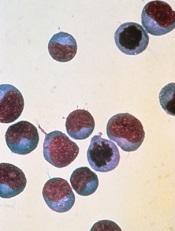
Image courtesy of NIAID
A new tool can help scientists determine how different types of T cells detect, destroy, and remember antigens, according to research published in Nature Methods.
The tool is TraCeR, a computational method that allows researchers to reconstruct full-length, paired T-cell receptor sequences from single-cell RNA sequence data.
TraCeR reveals clonal relationships between T cells as well as their transcriptional profiles.
In the current study, TraCeR helped scientists detect T-cell clonotypes in mice infected with Salmonella.
“This new tool for single-cell sequencing gives us a new approach to the study of T cells and opens up new opportunities to explore immune responses in disease, vaccination, cancer, and autoimmunity,” said study author Sarah Teichmann, PhD, of the Wellcome Trust Sanger Institute in Cambridge, UK.
She and her colleagues noted that T-cell receptors are extremely variable, and a combination of paired sequences determines which protein a receptor will detect. So to understand what is happening at the molecular level, it is imperative to find both sequences in each cell.
TraCeR is designed to allow scientists to look at the DNA and RNA profiles of these highly variable T-cell receptors at the same time.
Dr Teichmann and her colleagues found that receptor sequences are unique, unless the T cells have the same parent cell. The presence of “sibling” cells proves that an infection has triggered the division of a particular T cell, which indicates it is multiplying to fight an antigen.
Using TraCeR, the researchers were able to accurately identify sibling T cells and explore their different responses to Salmonella infection in mice.
“This technique helps us see whether all the ‘children’ of a particular T cell do the same thing at the same time, which is an open question in biology,” said study author Tapio Lönnberg, PhD, of the European Molecular Biology Laboratory-European Bioinformatics Institute in Cambridge, UK.
“We can start to see whether the antigen itself plays a role in how a T cell will respond, and even whether it’s possible to determine what the invader is, just based on the sequence of a T-cell receptor.”
The researchers said their next step is to apply similar methods to the study of B cells to better understand the adaptive immune system as a whole.
Image courtesy of NIAID
A new tool can help scientists determine how different types of T cells detect, destroy, and remember antigens, according to research published in Nature Methods.
The tool is TraCeR, a computational method that allows researchers to reconstruct full-length, paired T-cell receptor sequences from single-cell RNA sequence data.
TraCeR reveals clonal relationships between T cells as well as their transcriptional profiles.
In the current study, TraCeR helped scientists detect T-cell clonotypes in mice infected with Salmonella.
“This new tool for single-cell sequencing gives us a new approach to the study of T cells and opens up new opportunities to explore immune responses in disease, vaccination, cancer, and autoimmunity,” said study author Sarah Teichmann, PhD, of the Wellcome Trust Sanger Institute in Cambridge, UK.
She and her colleagues noted that T-cell receptors are extremely variable, and a combination of paired sequences determines which protein a receptor will detect. So to understand what is happening at the molecular level, it is imperative to find both sequences in each cell.
TraCeR is designed to allow scientists to look at the DNA and RNA profiles of these highly variable T-cell receptors at the same time.
Dr Teichmann and her colleagues found that receptor sequences are unique, unless the T cells have the same parent cell. The presence of “sibling” cells proves that an infection has triggered the division of a particular T cell, which indicates it is multiplying to fight an antigen.
Using TraCeR, the researchers were able to accurately identify sibling T cells and explore their different responses to Salmonella infection in mice.
“This technique helps us see whether all the ‘children’ of a particular T cell do the same thing at the same time, which is an open question in biology,” said study author Tapio Lönnberg, PhD, of the European Molecular Biology Laboratory-European Bioinformatics Institute in Cambridge, UK.
“We can start to see whether the antigen itself plays a role in how a T cell will respond, and even whether it’s possible to determine what the invader is, just based on the sequence of a T-cell receptor.”
The researchers said their next step is to apply similar methods to the study of B cells to better understand the adaptive immune system as a whole.
Image courtesy of NIAID
A new tool can help scientists determine how different types of T cells detect, destroy, and remember antigens, according to research published in Nature Methods.
The tool is TraCeR, a computational method that allows researchers to reconstruct full-length, paired T-cell receptor sequences from single-cell RNA sequence data.
TraCeR reveals clonal relationships between T cells as well as their transcriptional profiles.
In the current study, TraCeR helped scientists detect T-cell clonotypes in mice infected with Salmonella.
“This new tool for single-cell sequencing gives us a new approach to the study of T cells and opens up new opportunities to explore immune responses in disease, vaccination, cancer, and autoimmunity,” said study author Sarah Teichmann, PhD, of the Wellcome Trust Sanger Institute in Cambridge, UK.
She and her colleagues noted that T-cell receptors are extremely variable, and a combination of paired sequences determines which protein a receptor will detect. So to understand what is happening at the molecular level, it is imperative to find both sequences in each cell.
TraCeR is designed to allow scientists to look at the DNA and RNA profiles of these highly variable T-cell receptors at the same time.
Dr Teichmann and her colleagues found that receptor sequences are unique, unless the T cells have the same parent cell. The presence of “sibling” cells proves that an infection has triggered the division of a particular T cell, which indicates it is multiplying to fight an antigen.
Using TraCeR, the researchers were able to accurately identify sibling T cells and explore their different responses to Salmonella infection in mice.
“This technique helps us see whether all the ‘children’ of a particular T cell do the same thing at the same time, which is an open question in biology,” said study author Tapio Lönnberg, PhD, of the European Molecular Biology Laboratory-European Bioinformatics Institute in Cambridge, UK.
“We can start to see whether the antigen itself plays a role in how a T cell will respond, and even whether it’s possible to determine what the invader is, just based on the sequence of a T-cell receptor.”
The researchers said their next step is to apply similar methods to the study of B cells to better understand the adaptive immune system as a whole.
VTE linked to survival after bladder cancer surgery

Image by Andre E.X. Brown
Patients who undergo surgery for bladder cancer may require long-term prophylaxis for venous thromboembolism (VTE), according to research published in BJU International.
The study showed an increase in VTE incidence over time, with more than half of VTEs occurring after patients were discharged from the hospital.
In addition, VTE was associated with an increased risk of death—from the cancer or any cause.
The study included 3879 patients from the Ontario Cancer Registry who had radical cystectomy to treat bladder cancer between 1994 and 2008.
Within 1 month of their surgical admission date, 3.6% of patients had been diagnosed with VTE. The VTE incidence increased to 4.7% by 2 months and 5.4% by 3 months.
In all, 55% of VTE events occurred after hospital discharge, which is generally when patients are not receiving VTE prophylaxis.
“Although the findings in this population-based study confirmed some previous understanding of the frequency of VTE for this complex surgery, we were surprised at the number that were diagnosed after hospital discharge,” said study author D. Robert Siemens, MD, of Queen’s University in Kingston, Ontario, Canada.
“Furthermore, we were unable to identify strong predictive factors associated with VTE, suggesting to us that most all patients should receive prolonged VTE prophylaxis well beyond their hospital discharge.”
More specifically, the researchers conducted a multivariate analysis and found that higher surgeon volume and increased length of hospital stay were the only factors significantly associated with VTE (P=0.004 and P<0.001, respectively).
The team also discovered that patients with VTE tended to die earlier. VTE was associated with inferior cancer-specific survival and overall survival. The hazard ratios were 1.35 and 1.27, respectively.
Dr Siemens said these results suggest VTE could represent a marker of more aggressive disease.
Image by Andre E.X. Brown
Patients who undergo surgery for bladder cancer may require long-term prophylaxis for venous thromboembolism (VTE), according to research published in BJU International.
The study showed an increase in VTE incidence over time, with more than half of VTEs occurring after patients were discharged from the hospital.
In addition, VTE was associated with an increased risk of death—from the cancer or any cause.
The study included 3879 patients from the Ontario Cancer Registry who had radical cystectomy to treat bladder cancer between 1994 and 2008.
Within 1 month of their surgical admission date, 3.6% of patients had been diagnosed with VTE. The VTE incidence increased to 4.7% by 2 months and 5.4% by 3 months.
In all, 55% of VTE events occurred after hospital discharge, which is generally when patients are not receiving VTE prophylaxis.
“Although the findings in this population-based study confirmed some previous understanding of the frequency of VTE for this complex surgery, we were surprised at the number that were diagnosed after hospital discharge,” said study author D. Robert Siemens, MD, of Queen’s University in Kingston, Ontario, Canada.
“Furthermore, we were unable to identify strong predictive factors associated with VTE, suggesting to us that most all patients should receive prolonged VTE prophylaxis well beyond their hospital discharge.”
More specifically, the researchers conducted a multivariate analysis and found that higher surgeon volume and increased length of hospital stay were the only factors significantly associated with VTE (P=0.004 and P<0.001, respectively).
The team also discovered that patients with VTE tended to die earlier. VTE was associated with inferior cancer-specific survival and overall survival. The hazard ratios were 1.35 and 1.27, respectively.
Dr Siemens said these results suggest VTE could represent a marker of more aggressive disease.
Image by Andre E.X. Brown
Patients who undergo surgery for bladder cancer may require long-term prophylaxis for venous thromboembolism (VTE), according to research published in BJU International.
The study showed an increase in VTE incidence over time, with more than half of VTEs occurring after patients were discharged from the hospital.
In addition, VTE was associated with an increased risk of death—from the cancer or any cause.
The study included 3879 patients from the Ontario Cancer Registry who had radical cystectomy to treat bladder cancer between 1994 and 2008.
Within 1 month of their surgical admission date, 3.6% of patients had been diagnosed with VTE. The VTE incidence increased to 4.7% by 2 months and 5.4% by 3 months.
In all, 55% of VTE events occurred after hospital discharge, which is generally when patients are not receiving VTE prophylaxis.
“Although the findings in this population-based study confirmed some previous understanding of the frequency of VTE for this complex surgery, we were surprised at the number that were diagnosed after hospital discharge,” said study author D. Robert Siemens, MD, of Queen’s University in Kingston, Ontario, Canada.
“Furthermore, we were unable to identify strong predictive factors associated with VTE, suggesting to us that most all patients should receive prolonged VTE prophylaxis well beyond their hospital discharge.”
More specifically, the researchers conducted a multivariate analysis and found that higher surgeon volume and increased length of hospital stay were the only factors significantly associated with VTE (P=0.004 and P<0.001, respectively).
The team also discovered that patients with VTE tended to die earlier. VTE was associated with inferior cancer-specific survival and overall survival. The hazard ratios were 1.35 and 1.27, respectively.
Dr Siemens said these results suggest VTE could represent a marker of more aggressive disease.
Compound could treat T-ALL subtype

Photo courtesy of
The Ottawa Hospital
An experimental compound is “highly promising” as a potential treatment for a subtype of T-cell acute lymphoblastic leukemia (T-ALL), according to researchers.
The team found the histone demethylase UTX is important for the maintenance of TAL1-positive T-ALL.
Inhibiting UTX with a compound known as GSK-J4 proved toxic to TAL1-positive T-ALL cells in vitro and in vivo, but normal cells were spared.
The researchers reported these findings in Genes & Development.
“It’s very exciting because this is the first time anyone has found a potential personalized treatment for this aggressive disease,” said study author Marjorie Brand, PhD, of The Ottawa Hospital Research Institute in Ontario, Canada.
“Unlike current therapies, ours targets the offending gene without harming the rest of the body.”
Dr Brand and her colleagues decided the best way to find a better treatment for TAL1-positive T-ALL was to investigate exactly how it works at a molecular level. So they analyzed the TAL1 gene, which, in certain circumstances, can transform T-cell precursors into leukemic cells.
They found that TAL1 needs UTX to trigger leukemia production. This was surprising because UTX was previously described as a tumor suppressor in T-ALL.
The team said their work suggests UTX is actually a pro-oncogenic cofactor that is essential for leukemia maintenance in TAL1-positive—but not TAL1-negative—T-ALL.
The researchers found that targeting UTX with the H3K27 demethylase inhibitor GSK-J4 could completely halt the growth of TAL1-positive leukemia cells and induce apoptosis in these cells in vitro. But the compound did not have the same effect in TAL1-negative T-ALL.
The team also tested GSK-J4 in mouse models of T-ALL. After 3 weeks of treatment, there was a “dramatic decrease” in the percentage of leukemic blasts in the bone marrow of mice with TAL1-positive T-ALL. These mice also had a reduction in the infiltration of leukemic cells in the spleen.
However, mice with TAL1-negative T-ALL did not experience the same benefits.
The researchers said GSK-J4 appeared to be well-tolerated. None of the treated mice experienced weight loss or adverse effects in the intestine, spleen, liver, kidney, or hematopoietic system.
“While our study is a proof-of-concept, these promising results might one day lead to a similar targeted treatment for humans,” said study author Carmen Palii, PhD, also of The Ottawa Hospital Research Institute.
In the meantime, the researchers are conducting additional studies in mice, testing higher doses of GSK-J4 and evaluating long-term side effects of the compound.
Photo courtesy of
The Ottawa Hospital
An experimental compound is “highly promising” as a potential treatment for a subtype of T-cell acute lymphoblastic leukemia (T-ALL), according to researchers.
The team found the histone demethylase UTX is important for the maintenance of TAL1-positive T-ALL.
Inhibiting UTX with a compound known as GSK-J4 proved toxic to TAL1-positive T-ALL cells in vitro and in vivo, but normal cells were spared.
The researchers reported these findings in Genes & Development.
“It’s very exciting because this is the first time anyone has found a potential personalized treatment for this aggressive disease,” said study author Marjorie Brand, PhD, of The Ottawa Hospital Research Institute in Ontario, Canada.
“Unlike current therapies, ours targets the offending gene without harming the rest of the body.”
Dr Brand and her colleagues decided the best way to find a better treatment for TAL1-positive T-ALL was to investigate exactly how it works at a molecular level. So they analyzed the TAL1 gene, which, in certain circumstances, can transform T-cell precursors into leukemic cells.
They found that TAL1 needs UTX to trigger leukemia production. This was surprising because UTX was previously described as a tumor suppressor in T-ALL.
The team said their work suggests UTX is actually a pro-oncogenic cofactor that is essential for leukemia maintenance in TAL1-positive—but not TAL1-negative—T-ALL.
The researchers found that targeting UTX with the H3K27 demethylase inhibitor GSK-J4 could completely halt the growth of TAL1-positive leukemia cells and induce apoptosis in these cells in vitro. But the compound did not have the same effect in TAL1-negative T-ALL.
The team also tested GSK-J4 in mouse models of T-ALL. After 3 weeks of treatment, there was a “dramatic decrease” in the percentage of leukemic blasts in the bone marrow of mice with TAL1-positive T-ALL. These mice also had a reduction in the infiltration of leukemic cells in the spleen.
However, mice with TAL1-negative T-ALL did not experience the same benefits.
The researchers said GSK-J4 appeared to be well-tolerated. None of the treated mice experienced weight loss or adverse effects in the intestine, spleen, liver, kidney, or hematopoietic system.
“While our study is a proof-of-concept, these promising results might one day lead to a similar targeted treatment for humans,” said study author Carmen Palii, PhD, also of The Ottawa Hospital Research Institute.
In the meantime, the researchers are conducting additional studies in mice, testing higher doses of GSK-J4 and evaluating long-term side effects of the compound.
Photo courtesy of
The Ottawa Hospital
An experimental compound is “highly promising” as a potential treatment for a subtype of T-cell acute lymphoblastic leukemia (T-ALL), according to researchers.
The team found the histone demethylase UTX is important for the maintenance of TAL1-positive T-ALL.
Inhibiting UTX with a compound known as GSK-J4 proved toxic to TAL1-positive T-ALL cells in vitro and in vivo, but normal cells were spared.
The researchers reported these findings in Genes & Development.
“It’s very exciting because this is the first time anyone has found a potential personalized treatment for this aggressive disease,” said study author Marjorie Brand, PhD, of The Ottawa Hospital Research Institute in Ontario, Canada.
“Unlike current therapies, ours targets the offending gene without harming the rest of the body.”
Dr Brand and her colleagues decided the best way to find a better treatment for TAL1-positive T-ALL was to investigate exactly how it works at a molecular level. So they analyzed the TAL1 gene, which, in certain circumstances, can transform T-cell precursors into leukemic cells.
They found that TAL1 needs UTX to trigger leukemia production. This was surprising because UTX was previously described as a tumor suppressor in T-ALL.
The team said their work suggests UTX is actually a pro-oncogenic cofactor that is essential for leukemia maintenance in TAL1-positive—but not TAL1-negative—T-ALL.
The researchers found that targeting UTX with the H3K27 demethylase inhibitor GSK-J4 could completely halt the growth of TAL1-positive leukemia cells and induce apoptosis in these cells in vitro. But the compound did not have the same effect in TAL1-negative T-ALL.
The team also tested GSK-J4 in mouse models of T-ALL. After 3 weeks of treatment, there was a “dramatic decrease” in the percentage of leukemic blasts in the bone marrow of mice with TAL1-positive T-ALL. These mice also had a reduction in the infiltration of leukemic cells in the spleen.
However, mice with TAL1-negative T-ALL did not experience the same benefits.
The researchers said GSK-J4 appeared to be well-tolerated. None of the treated mice experienced weight loss or adverse effects in the intestine, spleen, liver, kidney, or hematopoietic system.
“While our study is a proof-of-concept, these promising results might one day lead to a similar targeted treatment for humans,” said study author Carmen Palii, PhD, also of The Ottawa Hospital Research Institute.
In the meantime, the researchers are conducting additional studies in mice, testing higher doses of GSK-J4 and evaluating long-term side effects of the compound.
Survey shows Clinical Practice in Management of EOS in Newborns Varies
NEW YORK (Reuters Health) - Clinical practice in management of early-onset sepsis (EOS) in newborns varies widely across Europe, North America and Asia, new survey results show.
National guidelines also disagree on when to start antibiotics in low-risk situations, and how to decide to stop therapy in high-risk scenarios, Dr. Wendy van Herk of Erasmus MC University Medical Center-Sophia Children's Hospital in Rotterdam, the Netherlands, and colleagues found."
A discussion leading to terms of a threshold to treat neonates with low infection risk, prospective studies ofstrategies regarding early discontinuation of unnecessary antibiotic therapy with safety endpoints acknowledging different backgrounds of health care systems, and clear and concise guidelines followed by research to study the impact are mandatory to improve management of term and late preterm infants at risk for EOS," they write in their report, online January 13 in The Pediatric Infectious Disease Journal.
Up to 15% of term and late-preterm neonates are evaluated for suspected EOS, and 10% receive intravenous antibiotics within the first three days of life, the researchers note. But the incidence of culture-proven EOS in term and late-preterm newborns is less than 0.1%, they add.
To investigate current management of suspected EOS, the researchers surveyed pediatricians and neonatologists and reviewed guidelines from Canada, the United States, the United Kingdom, Switzerland and Belgium. A total of 439 clinicians responded to the survey.
In response to a question about whether they would start antibiotic treatment in a scenario rated "low risk" for EOS, 29% of physicians said they would, 26% would not, and 45% said they would start treatment if the patients' laboratory markers were abnormal. Nearly all of the respondents (99%) said they would initiate antibiotics in a high-risk scenario.
In the low-risk situation, 89% said they would stop antibiotic treatment before 72 hours. In the high-risk scenario, 35% said they would stop antibiotics before 72 hours, 56% said they would continue treatment for five to seven days, and 9% said they would treat patients for more than seven days.
Overall, 31% of the survey respondents said they would base their decision to start antibiotic treatment on laboratory investigations, while 72% said they would do so when deciding to continue treatment. Most said they would use complete blood count (CBC) and C-reactive protein (CRP), while a small minority said they would use newer inflammation markers including procalcitonin (PCT) and interleukins.
While all the guidelines reviewed recommended treating newborns with clinical signs indicating infection, and re-evaluating whether patients needed more antibiotics at 36 to 48 hours, they did not provide specific advice on treatment when newborns had prolonged clinical signs of infection or high levels of infection markers. All guidelines recommended using CBC or CRP, while only one included PCT.
Dr. van Herk and colleagues also compared the guidelines for each country with the survey responses of physicians from that country, and found most followed national guidelines on when to start or discontinue antibiotics.
"The diversity with regards to duration of antibiotic therapy in higher risk situations raises the question, what are safe strategies to minimize duration of antibiotic therapy without under-treatment of truly septic neonates?" the authors write. "Currently, the duration of antibiotic therapy is controversial even for proven infection. Prospective, international, multicenter trials studying newer infection markers with a safety endpoint may be helpful in answering this question."
NEW YORK (Reuters Health) - Clinical practice in management of early-onset sepsis (EOS) in newborns varies widely across Europe, North America and Asia, new survey results show.
National guidelines also disagree on when to start antibiotics in low-risk situations, and how to decide to stop therapy in high-risk scenarios, Dr. Wendy van Herk of Erasmus MC University Medical Center-Sophia Children's Hospital in Rotterdam, the Netherlands, and colleagues found."
A discussion leading to terms of a threshold to treat neonates with low infection risk, prospective studies ofstrategies regarding early discontinuation of unnecessary antibiotic therapy with safety endpoints acknowledging different backgrounds of health care systems, and clear and concise guidelines followed by research to study the impact are mandatory to improve management of term and late preterm infants at risk for EOS," they write in their report, online January 13 in The Pediatric Infectious Disease Journal.
Up to 15% of term and late-preterm neonates are evaluated for suspected EOS, and 10% receive intravenous antibiotics within the first three days of life, the researchers note. But the incidence of culture-proven EOS in term and late-preterm newborns is less than 0.1%, they add.
To investigate current management of suspected EOS, the researchers surveyed pediatricians and neonatologists and reviewed guidelines from Canada, the United States, the United Kingdom, Switzerland and Belgium. A total of 439 clinicians responded to the survey.
In response to a question about whether they would start antibiotic treatment in a scenario rated "low risk" for EOS, 29% of physicians said they would, 26% would not, and 45% said they would start treatment if the patients' laboratory markers were abnormal. Nearly all of the respondents (99%) said they would initiate antibiotics in a high-risk scenario.
In the low-risk situation, 89% said they would stop antibiotic treatment before 72 hours. In the high-risk scenario, 35% said they would stop antibiotics before 72 hours, 56% said they would continue treatment for five to seven days, and 9% said they would treat patients for more than seven days.
Overall, 31% of the survey respondents said they would base their decision to start antibiotic treatment on laboratory investigations, while 72% said they would do so when deciding to continue treatment. Most said they would use complete blood count (CBC) and C-reactive protein (CRP), while a small minority said they would use newer inflammation markers including procalcitonin (PCT) and interleukins.
While all the guidelines reviewed recommended treating newborns with clinical signs indicating infection, and re-evaluating whether patients needed more antibiotics at 36 to 48 hours, they did not provide specific advice on treatment when newborns had prolonged clinical signs of infection or high levels of infection markers. All guidelines recommended using CBC or CRP, while only one included PCT.
Dr. van Herk and colleagues also compared the guidelines for each country with the survey responses of physicians from that country, and found most followed national guidelines on when to start or discontinue antibiotics.
"The diversity with regards to duration of antibiotic therapy in higher risk situations raises the question, what are safe strategies to minimize duration of antibiotic therapy without under-treatment of truly septic neonates?" the authors write. "Currently, the duration of antibiotic therapy is controversial even for proven infection. Prospective, international, multicenter trials studying newer infection markers with a safety endpoint may be helpful in answering this question."
NEW YORK (Reuters Health) - Clinical practice in management of early-onset sepsis (EOS) in newborns varies widely across Europe, North America and Asia, new survey results show.
National guidelines also disagree on when to start antibiotics in low-risk situations, and how to decide to stop therapy in high-risk scenarios, Dr. Wendy van Herk of Erasmus MC University Medical Center-Sophia Children's Hospital in Rotterdam, the Netherlands, and colleagues found."
A discussion leading to terms of a threshold to treat neonates with low infection risk, prospective studies ofstrategies regarding early discontinuation of unnecessary antibiotic therapy with safety endpoints acknowledging different backgrounds of health care systems, and clear and concise guidelines followed by research to study the impact are mandatory to improve management of term and late preterm infants at risk for EOS," they write in their report, online January 13 in The Pediatric Infectious Disease Journal.
Up to 15% of term and late-preterm neonates are evaluated for suspected EOS, and 10% receive intravenous antibiotics within the first three days of life, the researchers note. But the incidence of culture-proven EOS in term and late-preterm newborns is less than 0.1%, they add.
To investigate current management of suspected EOS, the researchers surveyed pediatricians and neonatologists and reviewed guidelines from Canada, the United States, the United Kingdom, Switzerland and Belgium. A total of 439 clinicians responded to the survey.
In response to a question about whether they would start antibiotic treatment in a scenario rated "low risk" for EOS, 29% of physicians said they would, 26% would not, and 45% said they would start treatment if the patients' laboratory markers were abnormal. Nearly all of the respondents (99%) said they would initiate antibiotics in a high-risk scenario.
In the low-risk situation, 89% said they would stop antibiotic treatment before 72 hours. In the high-risk scenario, 35% said they would stop antibiotics before 72 hours, 56% said they would continue treatment for five to seven days, and 9% said they would treat patients for more than seven days.
Overall, 31% of the survey respondents said they would base their decision to start antibiotic treatment on laboratory investigations, while 72% said they would do so when deciding to continue treatment. Most said they would use complete blood count (CBC) and C-reactive protein (CRP), while a small minority said they would use newer inflammation markers including procalcitonin (PCT) and interleukins.
While all the guidelines reviewed recommended treating newborns with clinical signs indicating infection, and re-evaluating whether patients needed more antibiotics at 36 to 48 hours, they did not provide specific advice on treatment when newborns had prolonged clinical signs of infection or high levels of infection markers. All guidelines recommended using CBC or CRP, while only one included PCT.
Dr. van Herk and colleagues also compared the guidelines for each country with the survey responses of physicians from that country, and found most followed national guidelines on when to start or discontinue antibiotics.
"The diversity with regards to duration of antibiotic therapy in higher risk situations raises the question, what are safe strategies to minimize duration of antibiotic therapy without under-treatment of truly septic neonates?" the authors write. "Currently, the duration of antibiotic therapy is controversial even for proven infection. Prospective, international, multicenter trials studying newer infection markers with a safety endpoint may be helpful in answering this question."
Best Practices: Infant Formula Comparison and Recommendations
A supplement to Pediatric News. This supplement is sponsored by Perrigo Nutritionals.
Topics
- Food Insecurity and Formula Stretching
- Addressing Food Insecurity’s Effects with Store Brand Infant Formula
- Is Switching Formula Safe?
- Conclusion
Faculty/Faculty Disclosure
Jenifer R. Lightdale, MD, MPH
Division Chief, Pediatric Gastroenterology, Hepatology and Nutrition
UMass Memorial Children’s Medical Center
Professor of Pediatrics
University of Massachusetts Medical School
Worcester, MA
Dr. Lightdale reports that she is on the medical advisory board for Perrigo Nutritionals, and is an invited speaker for Mead Johnson & Company, LLC.
A supplement to Pediatric News. This supplement is sponsored by Perrigo Nutritionals.
Topics
- Food Insecurity and Formula Stretching
- Addressing Food Insecurity’s Effects with Store Brand Infant Formula
- Is Switching Formula Safe?
- Conclusion
Faculty/Faculty Disclosure
Jenifer R. Lightdale, MD, MPH
Division Chief, Pediatric Gastroenterology, Hepatology and Nutrition
UMass Memorial Children’s Medical Center
Professor of Pediatrics
University of Massachusetts Medical School
Worcester, MA
Dr. Lightdale reports that she is on the medical advisory board for Perrigo Nutritionals, and is an invited speaker for Mead Johnson & Company, LLC.
A supplement to Pediatric News. This supplement is sponsored by Perrigo Nutritionals.
Topics
- Food Insecurity and Formula Stretching
- Addressing Food Insecurity’s Effects with Store Brand Infant Formula
- Is Switching Formula Safe?
- Conclusion
Faculty/Faculty Disclosure
Jenifer R. Lightdale, MD, MPH
Division Chief, Pediatric Gastroenterology, Hepatology and Nutrition
UMass Memorial Children’s Medical Center
Professor of Pediatrics
University of Massachusetts Medical School
Worcester, MA
Dr. Lightdale reports that she is on the medical advisory board for Perrigo Nutritionals, and is an invited speaker for Mead Johnson & Company, LLC.
No evidence supports hydrolyzed formula over cows’ milk for allergy prevention
Findings on the use of hydrolyzed formula in place of standard cows’ milk formula to prevent allergy in high-risk infants do not support current guidelines, according to Dr. Robert J Boyle of Imperial College London and his associates.
A review and meta-analysis were performed on 28 randomized control trials, 6 quasirandomized trials, and 3 controlled clinical trials describing allergic or autoimmune outcomes, with more than 19,000 participants. Among 13 studies reporting on the risk of food allergy, no significant difference was found in the risk of any food allergy with partially hydrolyzed formula (risk ratio, 1.73; 95% confidence interval, 0.79-3.80) and extensively hydrolyzed formula (RR, 0.86; CI, 0.26-2.82), compared with standard formula at age 0-4 years, and for extensively hydrolyzed formula at age 5-14 years.

The review also examined and found no significant evidence favoring the use of hydrolyzed formula in place of standard cows’ milk formula to avert the risk of eczema, wheeze, allergic rhinitis, or type 1 diabetes mellitus.
The researchers suggest that guidelines be updated and revised to reflect these new findings.
“We found no consistent evidence to support the current recommendations and found evidence of publication bias, methodological biases, and conflict of interest in those studies reporting allergic outcomes,” Dr. Boyle and his associates concluded. “We suggest that any future trials on hydrolyzed formula should be prospectively registered, independently funded, and include adequate oversight to ensure that they do not negatively impact on breastfeeding in study participants”.
Read the full study at the British Medical Journal (doi: 10.1136/bmj.i974)
Findings on the use of hydrolyzed formula in place of standard cows’ milk formula to prevent allergy in high-risk infants do not support current guidelines, according to Dr. Robert J Boyle of Imperial College London and his associates.
A review and meta-analysis were performed on 28 randomized control trials, 6 quasirandomized trials, and 3 controlled clinical trials describing allergic or autoimmune outcomes, with more than 19,000 participants. Among 13 studies reporting on the risk of food allergy, no significant difference was found in the risk of any food allergy with partially hydrolyzed formula (risk ratio, 1.73; 95% confidence interval, 0.79-3.80) and extensively hydrolyzed formula (RR, 0.86; CI, 0.26-2.82), compared with standard formula at age 0-4 years, and for extensively hydrolyzed formula at age 5-14 years.
The review also examined and found no significant evidence favoring the use of hydrolyzed formula in place of standard cows’ milk formula to avert the risk of eczema, wheeze, allergic rhinitis, or type 1 diabetes mellitus.
The researchers suggest that guidelines be updated and revised to reflect these new findings.
“We found no consistent evidence to support the current recommendations and found evidence of publication bias, methodological biases, and conflict of interest in those studies reporting allergic outcomes,” Dr. Boyle and his associates concluded. “We suggest that any future trials on hydrolyzed formula should be prospectively registered, independently funded, and include adequate oversight to ensure that they do not negatively impact on breastfeeding in study participants”.
Read the full study at the British Medical Journal (doi: 10.1136/bmj.i974)
Findings on the use of hydrolyzed formula in place of standard cows’ milk formula to prevent allergy in high-risk infants do not support current guidelines, according to Dr. Robert J Boyle of Imperial College London and his associates.
A review and meta-analysis were performed on 28 randomized control trials, 6 quasirandomized trials, and 3 controlled clinical trials describing allergic or autoimmune outcomes, with more than 19,000 participants. Among 13 studies reporting on the risk of food allergy, no significant difference was found in the risk of any food allergy with partially hydrolyzed formula (risk ratio, 1.73; 95% confidence interval, 0.79-3.80) and extensively hydrolyzed formula (RR, 0.86; CI, 0.26-2.82), compared with standard formula at age 0-4 years, and for extensively hydrolyzed formula at age 5-14 years.
The review also examined and found no significant evidence favoring the use of hydrolyzed formula in place of standard cows’ milk formula to avert the risk of eczema, wheeze, allergic rhinitis, or type 1 diabetes mellitus.
The researchers suggest that guidelines be updated and revised to reflect these new findings.
“We found no consistent evidence to support the current recommendations and found evidence of publication bias, methodological biases, and conflict of interest in those studies reporting allergic outcomes,” Dr. Boyle and his associates concluded. “We suggest that any future trials on hydrolyzed formula should be prospectively registered, independently funded, and include adequate oversight to ensure that they do not negatively impact on breastfeeding in study participants”.
Read the full study at the British Medical Journal (doi: 10.1136/bmj.i974)
FROM BRITISH MEDICAL JOURNAL