User login
A gift in your will: Getting started
A simple, flexible, and versatile way to ensure The AGA Research Foundation can continue our work for years to come is a gift in your will or living trust, known as a charitable bequest. To make a charitable bequest, you need a current will or living trust.
Your gift can be made as a percentage of your estate. Or you can make a specific bequest by contributing a certain amount of cash, securities, or property. After your lifetime, the AGA Research Foundation receives your gift.
We hope you’ll consider including a gift to the AGA Research Foundation in your will or living trust. It’s simple – just a few sentences in your will or trust are all that is needed. The official bequest language for the AGA Research Foundation is: “I, [name], of [city, state, ZIP], give, devise, and bequeath to the AGA Research Foundation [written amount or percentage of the estate or description of property] for its unrestricted use and purpose.”
When planning a future gift, it’s sometimes difficult to determine what size donation will make sense. Emergencies happen, and you need to make sure your family is financially taken care of first. Including a bequest of a percentage of your estate ensures that your gift will remain proportionate, no matter how your estate’s value fluctuates over the years.
Whether you would like to put your donation to work today or benefit us after your lifetime, you can find a charitable plan that lets you provide for your family and support the AGA Research Foundation.
Please contact us for more information at foundation@gastro.org or visit http://gastro.planmylegacy.org.
A simple, flexible, and versatile way to ensure The AGA Research Foundation can continue our work for years to come is a gift in your will or living trust, known as a charitable bequest. To make a charitable bequest, you need a current will or living trust.
Your gift can be made as a percentage of your estate. Or you can make a specific bequest by contributing a certain amount of cash, securities, or property. After your lifetime, the AGA Research Foundation receives your gift.
We hope you’ll consider including a gift to the AGA Research Foundation in your will or living trust. It’s simple – just a few sentences in your will or trust are all that is needed. The official bequest language for the AGA Research Foundation is: “I, [name], of [city, state, ZIP], give, devise, and bequeath to the AGA Research Foundation [written amount or percentage of the estate or description of property] for its unrestricted use and purpose.”
When planning a future gift, it’s sometimes difficult to determine what size donation will make sense. Emergencies happen, and you need to make sure your family is financially taken care of first. Including a bequest of a percentage of your estate ensures that your gift will remain proportionate, no matter how your estate’s value fluctuates over the years.
Whether you would like to put your donation to work today or benefit us after your lifetime, you can find a charitable plan that lets you provide for your family and support the AGA Research Foundation.
Please contact us for more information at foundation@gastro.org or visit http://gastro.planmylegacy.org.
A simple, flexible, and versatile way to ensure The AGA Research Foundation can continue our work for years to come is a gift in your will or living trust, known as a charitable bequest. To make a charitable bequest, you need a current will or living trust.
Your gift can be made as a percentage of your estate. Or you can make a specific bequest by contributing a certain amount of cash, securities, or property. After your lifetime, the AGA Research Foundation receives your gift.
We hope you’ll consider including a gift to the AGA Research Foundation in your will or living trust. It’s simple – just a few sentences in your will or trust are all that is needed. The official bequest language for the AGA Research Foundation is: “I, [name], of [city, state, ZIP], give, devise, and bequeath to the AGA Research Foundation [written amount or percentage of the estate or description of property] for its unrestricted use and purpose.”
When planning a future gift, it’s sometimes difficult to determine what size donation will make sense. Emergencies happen, and you need to make sure your family is financially taken care of first. Including a bequest of a percentage of your estate ensures that your gift will remain proportionate, no matter how your estate’s value fluctuates over the years.
Whether you would like to put your donation to work today or benefit us after your lifetime, you can find a charitable plan that lets you provide for your family and support the AGA Research Foundation.
Please contact us for more information at foundation@gastro.org or visit http://gastro.planmylegacy.org.
Perinatal depression screening: New recommendations and challenges
It was almost a year ago that the American College of Obstetricians and Gynecologists came out unequivocally in favor of universal screening for perinatal depression.
In the revised policy statement from ACOG’s Committee on Obstetric Practice, the college recommended that physicians screen women for depression and anxiety symptoms at least once during the perinatal period using a standard, validated tool. ACOG also noted that screening must be coupled with appropriate follow-up and that clinical staff must be prepared to start therapy or refer patients to treatment (Obstet. Gynecol. 2015;125:1268-71).

This move toward routine screening was intuitive given the prevalence of perinatal mood and anxiety disorders.
Fast forward to January 2016 and the U.S. Preventive Services Task Force final recommendation calling for screening all adults for depression, including the at-risk populations of pregnant and postpartum women. Much like the ACOG guidelines, the USPSTF recommendations call for adequate systems to ensure treatment and follow-up (JAMA. 2016 Jan. 26;315[4]:380-7).
These recommendations, although timely, derive from relatively sparse data on the actual effectiveness of perinatal screening. Although the move toward screening is welcome and simply commonsense, it is concerning that there has been very little systematic study of the effectiveness of screening for such a prevalent and impactful illness. At the end of the day, the question remains: Will screening for perinatal depression in obstetric and possibly pediatric settings lead to improved outcomes for patients and families?
We’re screening, but will it make a difference?
As more U.S. states, along with other countries around the world, have begun routine screening of women in the perinatal period, it’s become clear that screening itself is easy to do. What has yet to be adequately demonstrated is how screening moves us toward getting women into treatment and ultimately toward getting women well.
New Jersey and Illinois are good examples of states that should be applauded for recognizing early on how important it is to identify women with perinatal depression. But even in these early-adopter states, the actual implementation of referral systems has been lacking.

Here in Massachusetts, we have a state-funded program designed to teach local women’s health providers – including ob.gyns. – about diagnosing perinatal depression. The MCPAP (Massachusetts Child Psychiatry Access Project) for Moms program also offers resources for consultation and referral. The program is fairly new, so it’s still unclear whether ob.gyns. and primary care physicians will accept the role of de facto mental health treaters, as well as whether the women who are identified through screening will go on to recover acutely and, more importantly, over the long term.
These experiences among the states highlight how great a challenge it is to go from screening to positive health outcomes for women.
Downstream difficulties
A lack of evidence isn’t the only problem. A recent editorial in the Lancet raised the concern that the currently available screening tests are not suitable for clinical practice. The suggestion read to some like heresy.
The Edinburgh Postnatal Depression Scale, which is the most commonly used screening instrument, has a positive predictive value of detecting major depressive disorder of 47%-64%, according to the editorial, making it prone to delivering false positives (doi: 10.1016/S0140-6736[16]00265-8).
“This situation is potentially dangerous,” the Lancet editorial noted, since results of qualitative studies “suggest that women are extremely concerned about depression screening, about the stigma associated with a diagnosis of depression, and that a positive result might lead to an automatic social service referral, and potentially removal of their baby.”
A recent article, published in the New York Times, raises an additional concern about what a depression diagnosis could mean for insurability. The article highlights the experience of a woman whose diagnosis of postpartum depression is creating difficulties for her in getting life insurance. The point is underscored that it is perfectly legal for life and disability insurers to charge more to patients with a diagnosis of mental illness or to deny coverage outright.
No going back
The whole issue of perinatal depression screening has opened a Pandora’s box, and that is a good thing. The conversation is long overdue in America. It is time for greater national awareness and focus on a disease that is as prevalent as perinatal depression and as disabling for women and their families.
The focus up to this point has been on perinatal depression screening, but we’re about to see a shift toward building the community infrastructure that will be critical for managing patients, including those women who have previously been marginalized and have had very poor access to care.
Widespread screening and treatment will also require a level of cooperation between advocacy groups and providers who are multidisciplinary in their approach, taking advantage of both pharmacologic and nonpharmacologic approaches. A model of crossdisciplinary collaboration will include, for example, providers from psychiatrists to therapists to doulas to social workers to clinicians who focus on mother-infant interaction. It is a long list and models for such collaboration are somewhat lacking.
One good example of a pilot effort for such a collaboration is the Massachusetts Postpartum Depression Commission, which includes a full spectrum of participants from doulas, social workers, and perinatal psychiatrists to lay people. The partnerships and the networking that’s going on across disciplines is absolutely new and is going to be essential if we’re going to manage an issue as large as the treatment of perinatal depression.
The enhanced awareness of the need to screen for, identify, and treat postpartum depression will also lead to better tools with greater specificity, perhaps using new technologies for better identification and treatment, everything from telemedicine to smartphone applications.
There will certainly be growing pains as we gather evidence, refine our screening instruments, and build referral systems, but I don’t see this as a reason not to identify illness in this vulnerable population. Rather, it is a charge to the field that there is work to be done.
Dr. Cohen is the director of the Center for Women’s Mental Health at Massachusetts General Hospital in Boston, which provides information resources and conducts clinical care and research in reproductive mental health. He has been a consultant to manufacturers of psychiatric medications.
It was almost a year ago that the American College of Obstetricians and Gynecologists came out unequivocally in favor of universal screening for perinatal depression.
In the revised policy statement from ACOG’s Committee on Obstetric Practice, the college recommended that physicians screen women for depression and anxiety symptoms at least once during the perinatal period using a standard, validated tool. ACOG also noted that screening must be coupled with appropriate follow-up and that clinical staff must be prepared to start therapy or refer patients to treatment (Obstet. Gynecol. 2015;125:1268-71).
This move toward routine screening was intuitive given the prevalence of perinatal mood and anxiety disorders.
Fast forward to January 2016 and the U.S. Preventive Services Task Force final recommendation calling for screening all adults for depression, including the at-risk populations of pregnant and postpartum women. Much like the ACOG guidelines, the USPSTF recommendations call for adequate systems to ensure treatment and follow-up (JAMA. 2016 Jan. 26;315[4]:380-7).
These recommendations, although timely, derive from relatively sparse data on the actual effectiveness of perinatal screening. Although the move toward screening is welcome and simply commonsense, it is concerning that there has been very little systematic study of the effectiveness of screening for such a prevalent and impactful illness. At the end of the day, the question remains: Will screening for perinatal depression in obstetric and possibly pediatric settings lead to improved outcomes for patients and families?
We’re screening, but will it make a difference?
As more U.S. states, along with other countries around the world, have begun routine screening of women in the perinatal period, it’s become clear that screening itself is easy to do. What has yet to be adequately demonstrated is how screening moves us toward getting women into treatment and ultimately toward getting women well.
New Jersey and Illinois are good examples of states that should be applauded for recognizing early on how important it is to identify women with perinatal depression. But even in these early-adopter states, the actual implementation of referral systems has been lacking.
Here in Massachusetts, we have a state-funded program designed to teach local women’s health providers – including ob.gyns. – about diagnosing perinatal depression. The MCPAP (Massachusetts Child Psychiatry Access Project) for Moms program also offers resources for consultation and referral. The program is fairly new, so it’s still unclear whether ob.gyns. and primary care physicians will accept the role of de facto mental health treaters, as well as whether the women who are identified through screening will go on to recover acutely and, more importantly, over the long term.
These experiences among the states highlight how great a challenge it is to go from screening to positive health outcomes for women.
Downstream difficulties
A lack of evidence isn’t the only problem. A recent editorial in the Lancet raised the concern that the currently available screening tests are not suitable for clinical practice. The suggestion read to some like heresy.
The Edinburgh Postnatal Depression Scale, which is the most commonly used screening instrument, has a positive predictive value of detecting major depressive disorder of 47%-64%, according to the editorial, making it prone to delivering false positives (doi: 10.1016/S0140-6736[16]00265-8).
“This situation is potentially dangerous,” the Lancet editorial noted, since results of qualitative studies “suggest that women are extremely concerned about depression screening, about the stigma associated with a diagnosis of depression, and that a positive result might lead to an automatic social service referral, and potentially removal of their baby.”
A recent article, published in the New York Times, raises an additional concern about what a depression diagnosis could mean for insurability. The article highlights the experience of a woman whose diagnosis of postpartum depression is creating difficulties for her in getting life insurance. The point is underscored that it is perfectly legal for life and disability insurers to charge more to patients with a diagnosis of mental illness or to deny coverage outright.
No going back
The whole issue of perinatal depression screening has opened a Pandora’s box, and that is a good thing. The conversation is long overdue in America. It is time for greater national awareness and focus on a disease that is as prevalent as perinatal depression and as disabling for women and their families.
The focus up to this point has been on perinatal depression screening, but we’re about to see a shift toward building the community infrastructure that will be critical for managing patients, including those women who have previously been marginalized and have had very poor access to care.
Widespread screening and treatment will also require a level of cooperation between advocacy groups and providers who are multidisciplinary in their approach, taking advantage of both pharmacologic and nonpharmacologic approaches. A model of crossdisciplinary collaboration will include, for example, providers from psychiatrists to therapists to doulas to social workers to clinicians who focus on mother-infant interaction. It is a long list and models for such collaboration are somewhat lacking.
One good example of a pilot effort for such a collaboration is the Massachusetts Postpartum Depression Commission, which includes a full spectrum of participants from doulas, social workers, and perinatal psychiatrists to lay people. The partnerships and the networking that’s going on across disciplines is absolutely new and is going to be essential if we’re going to manage an issue as large as the treatment of perinatal depression.
The enhanced awareness of the need to screen for, identify, and treat postpartum depression will also lead to better tools with greater specificity, perhaps using new technologies for better identification and treatment, everything from telemedicine to smartphone applications.
There will certainly be growing pains as we gather evidence, refine our screening instruments, and build referral systems, but I don’t see this as a reason not to identify illness in this vulnerable population. Rather, it is a charge to the field that there is work to be done.
Dr. Cohen is the director of the Center for Women’s Mental Health at Massachusetts General Hospital in Boston, which provides information resources and conducts clinical care and research in reproductive mental health. He has been a consultant to manufacturers of psychiatric medications.
It was almost a year ago that the American College of Obstetricians and Gynecologists came out unequivocally in favor of universal screening for perinatal depression.
In the revised policy statement from ACOG’s Committee on Obstetric Practice, the college recommended that physicians screen women for depression and anxiety symptoms at least once during the perinatal period using a standard, validated tool. ACOG also noted that screening must be coupled with appropriate follow-up and that clinical staff must be prepared to start therapy or refer patients to treatment (Obstet. Gynecol. 2015;125:1268-71).
This move toward routine screening was intuitive given the prevalence of perinatal mood and anxiety disorders.
Fast forward to January 2016 and the U.S. Preventive Services Task Force final recommendation calling for screening all adults for depression, including the at-risk populations of pregnant and postpartum women. Much like the ACOG guidelines, the USPSTF recommendations call for adequate systems to ensure treatment and follow-up (JAMA. 2016 Jan. 26;315[4]:380-7).
These recommendations, although timely, derive from relatively sparse data on the actual effectiveness of perinatal screening. Although the move toward screening is welcome and simply commonsense, it is concerning that there has been very little systematic study of the effectiveness of screening for such a prevalent and impactful illness. At the end of the day, the question remains: Will screening for perinatal depression in obstetric and possibly pediatric settings lead to improved outcomes for patients and families?
We’re screening, but will it make a difference?
As more U.S. states, along with other countries around the world, have begun routine screening of women in the perinatal period, it’s become clear that screening itself is easy to do. What has yet to be adequately demonstrated is how screening moves us toward getting women into treatment and ultimately toward getting women well.
New Jersey and Illinois are good examples of states that should be applauded for recognizing early on how important it is to identify women with perinatal depression. But even in these early-adopter states, the actual implementation of referral systems has been lacking.
Here in Massachusetts, we have a state-funded program designed to teach local women’s health providers – including ob.gyns. – about diagnosing perinatal depression. The MCPAP (Massachusetts Child Psychiatry Access Project) for Moms program also offers resources for consultation and referral. The program is fairly new, so it’s still unclear whether ob.gyns. and primary care physicians will accept the role of de facto mental health treaters, as well as whether the women who are identified through screening will go on to recover acutely and, more importantly, over the long term.
These experiences among the states highlight how great a challenge it is to go from screening to positive health outcomes for women.
Downstream difficulties
A lack of evidence isn’t the only problem. A recent editorial in the Lancet raised the concern that the currently available screening tests are not suitable for clinical practice. The suggestion read to some like heresy.
The Edinburgh Postnatal Depression Scale, which is the most commonly used screening instrument, has a positive predictive value of detecting major depressive disorder of 47%-64%, according to the editorial, making it prone to delivering false positives (doi: 10.1016/S0140-6736[16]00265-8).
“This situation is potentially dangerous,” the Lancet editorial noted, since results of qualitative studies “suggest that women are extremely concerned about depression screening, about the stigma associated with a diagnosis of depression, and that a positive result might lead to an automatic social service referral, and potentially removal of their baby.”
A recent article, published in the New York Times, raises an additional concern about what a depression diagnosis could mean for insurability. The article highlights the experience of a woman whose diagnosis of postpartum depression is creating difficulties for her in getting life insurance. The point is underscored that it is perfectly legal for life and disability insurers to charge more to patients with a diagnosis of mental illness or to deny coverage outright.
No going back
The whole issue of perinatal depression screening has opened a Pandora’s box, and that is a good thing. The conversation is long overdue in America. It is time for greater national awareness and focus on a disease that is as prevalent as perinatal depression and as disabling for women and their families.
The focus up to this point has been on perinatal depression screening, but we’re about to see a shift toward building the community infrastructure that will be critical for managing patients, including those women who have previously been marginalized and have had very poor access to care.
Widespread screening and treatment will also require a level of cooperation between advocacy groups and providers who are multidisciplinary in their approach, taking advantage of both pharmacologic and nonpharmacologic approaches. A model of crossdisciplinary collaboration will include, for example, providers from psychiatrists to therapists to doulas to social workers to clinicians who focus on mother-infant interaction. It is a long list and models for such collaboration are somewhat lacking.
One good example of a pilot effort for such a collaboration is the Massachusetts Postpartum Depression Commission, which includes a full spectrum of participants from doulas, social workers, and perinatal psychiatrists to lay people. The partnerships and the networking that’s going on across disciplines is absolutely new and is going to be essential if we’re going to manage an issue as large as the treatment of perinatal depression.
The enhanced awareness of the need to screen for, identify, and treat postpartum depression will also lead to better tools with greater specificity, perhaps using new technologies for better identification and treatment, everything from telemedicine to smartphone applications.
There will certainly be growing pains as we gather evidence, refine our screening instruments, and build referral systems, but I don’t see this as a reason not to identify illness in this vulnerable population. Rather, it is a charge to the field that there is work to be done.
Dr. Cohen is the director of the Center for Women’s Mental Health at Massachusetts General Hospital in Boston, which provides information resources and conducts clinical care and research in reproductive mental health. He has been a consultant to manufacturers of psychiatric medications.

The Pimple That Wasn’t
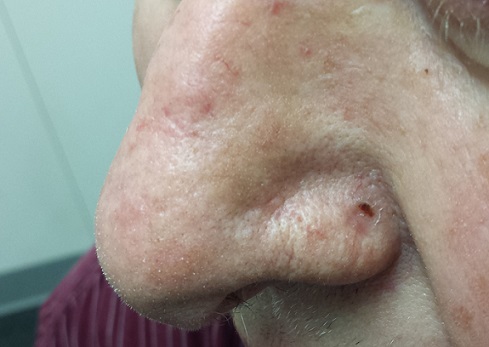
At first, this 70-year-old man thought the lesion on his nose was a pimple, although it seemed oddly resilient. When he attempted to pop it, nothing came out.
When it not only failed to heal but also grew over a six-month period, he finally decided to consult his primary care provider (PCP). The PCP told him not to worry about it but offered to refer him to dermatology—mostly because the patient’s wife was concerned.
The patient gives a history of extensive sun exposure in childhood and young adulthood. In the 1960s, he was drafted into the military and served two tours of duty in the jungles of Vietnam, where he acquired an almost permanent sunburn.
EXAMINATION
The patient is quite fair, with modest facial sun damage manifesting as telangiectasias and solar elastosis. The lesion in question is a glassy, scarlike, concave papule with a scab at one end. It is located in the left alar groove and measures about 5 mm in diameter.
Under local anesthesia, the lesion is biopsied and sent to pathology.
What is the diagnosis?
DISCUSSION
The pathology report indicated basal cell carcinoma (BCC). Given the location, the patient was referred to a Mohs surgeon, who needed two passes to clear the site of cancer. Closure of the resulting 2.5-cm defect required a skin graft, using the postauricular neck as the donor site. Afterward, the PCP, the patient, and his wife all expressed astonishment that such a tiny lesion had required so complex a procedure.
BCC is, by far, the most common of the sun-caused skin cancers, with more than a million new cases diagnosed in the US each year. While rarely dangerous, BCCs can be highly destructive of local structures (eyelids, noses, ears, faces) if left untreated for extended periods. Virtually all BCCs grow relentlessly, but some are more aggressive than others—a trait confirmed not only by the behavior of the cancer, but also, in some cases, by characteristic histologic findings.
Location has a major impact on the behavior of a given BCC. The posterior portion of the nose (alar groove) is particularly prone to harbor more extensive and aggressive BCCs.
Given the additional cosmetic implications of removing cancers from this area, these often require Mohs surgery to ensure complete, mircroscopically controlled removal of the cancer, as well as closure of the wound in a cosmetically acceptable manner.
Some aggressive types of BCC will require radiation therapy even after Mohs or conventional surgical removal. Fortunately, deaths from BCCs usually result from local invasion and not from metastasis, which is extremely rare.
For providers, the key is a low threshold for the necessity of biopsy. Simple shave biopsy is usually adequate. When PCPs are uncomfortable performing such biopsies, expedited referral to dermatology is called for.
TAKE-HOME LEARNING POINTS
• BCC is the most common of the sun-caused skin cancers, with more than a million new cases diagnosed every year in the US.
• While they rarely metastasize, BCCs can result in extensive invasion of local structures (eg, bone, cartilage, and even brain).
• Some BCCs are more aggressive than others in terms of demonstrated biologic activity.
• Some anatomical locations are themselves predictors of increased biologic activity; the nose is a prime example of this phenomenon.
• Mohs surgery—named after Frederic Mohs, MD, who pioneered the concept—ensures complete removal of the cancer and provides cosmetically acceptable closure as well.
At first, this 70-year-old man thought the lesion on his nose was a pimple, although it seemed oddly resilient. When he attempted to pop it, nothing came out.
When it not only failed to heal but also grew over a six-month period, he finally decided to consult his primary care provider (PCP). The PCP told him not to worry about it but offered to refer him to dermatology—mostly because the patient’s wife was concerned.
The patient gives a history of extensive sun exposure in childhood and young adulthood. In the 1960s, he was drafted into the military and served two tours of duty in the jungles of Vietnam, where he acquired an almost permanent sunburn.
EXAMINATION
The patient is quite fair, with modest facial sun damage manifesting as telangiectasias and solar elastosis. The lesion in question is a glassy, scarlike, concave papule with a scab at one end. It is located in the left alar groove and measures about 5 mm in diameter.
Under local anesthesia, the lesion is biopsied and sent to pathology.
What is the diagnosis?
DISCUSSION
The pathology report indicated basal cell carcinoma (BCC). Given the location, the patient was referred to a Mohs surgeon, who needed two passes to clear the site of cancer. Closure of the resulting 2.5-cm defect required a skin graft, using the postauricular neck as the donor site. Afterward, the PCP, the patient, and his wife all expressed astonishment that such a tiny lesion had required so complex a procedure.
BCC is, by far, the most common of the sun-caused skin cancers, with more than a million new cases diagnosed in the US each year. While rarely dangerous, BCCs can be highly destructive of local structures (eyelids, noses, ears, faces) if left untreated for extended periods. Virtually all BCCs grow relentlessly, but some are more aggressive than others—a trait confirmed not only by the behavior of the cancer, but also, in some cases, by characteristic histologic findings.
Location has a major impact on the behavior of a given BCC. The posterior portion of the nose (alar groove) is particularly prone to harbor more extensive and aggressive BCCs.
Given the additional cosmetic implications of removing cancers from this area, these often require Mohs surgery to ensure complete, mircroscopically controlled removal of the cancer, as well as closure of the wound in a cosmetically acceptable manner.
Some aggressive types of BCC will require radiation therapy even after Mohs or conventional surgical removal. Fortunately, deaths from BCCs usually result from local invasion and not from metastasis, which is extremely rare.
For providers, the key is a low threshold for the necessity of biopsy. Simple shave biopsy is usually adequate. When PCPs are uncomfortable performing such biopsies, expedited referral to dermatology is called for.
TAKE-HOME LEARNING POINTS
• BCC is the most common of the sun-caused skin cancers, with more than a million new cases diagnosed every year in the US.
• While they rarely metastasize, BCCs can result in extensive invasion of local structures (eg, bone, cartilage, and even brain).
• Some BCCs are more aggressive than others in terms of demonstrated biologic activity.
• Some anatomical locations are themselves predictors of increased biologic activity; the nose is a prime example of this phenomenon.
• Mohs surgery—named after Frederic Mohs, MD, who pioneered the concept—ensures complete removal of the cancer and provides cosmetically acceptable closure as well.
At first, this 70-year-old man thought the lesion on his nose was a pimple, although it seemed oddly resilient. When he attempted to pop it, nothing came out.
When it not only failed to heal but also grew over a six-month period, he finally decided to consult his primary care provider (PCP). The PCP told him not to worry about it but offered to refer him to dermatology—mostly because the patient’s wife was concerned.
The patient gives a history of extensive sun exposure in childhood and young adulthood. In the 1960s, he was drafted into the military and served two tours of duty in the jungles of Vietnam, where he acquired an almost permanent sunburn.
EXAMINATION
The patient is quite fair, with modest facial sun damage manifesting as telangiectasias and solar elastosis. The lesion in question is a glassy, scarlike, concave papule with a scab at one end. It is located in the left alar groove and measures about 5 mm in diameter.
Under local anesthesia, the lesion is biopsied and sent to pathology.
What is the diagnosis?
DISCUSSION
The pathology report indicated basal cell carcinoma (BCC). Given the location, the patient was referred to a Mohs surgeon, who needed two passes to clear the site of cancer. Closure of the resulting 2.5-cm defect required a skin graft, using the postauricular neck as the donor site. Afterward, the PCP, the patient, and his wife all expressed astonishment that such a tiny lesion had required so complex a procedure.
BCC is, by far, the most common of the sun-caused skin cancers, with more than a million new cases diagnosed in the US each year. While rarely dangerous, BCCs can be highly destructive of local structures (eyelids, noses, ears, faces) if left untreated for extended periods. Virtually all BCCs grow relentlessly, but some are more aggressive than others—a trait confirmed not only by the behavior of the cancer, but also, in some cases, by characteristic histologic findings.
Location has a major impact on the behavior of a given BCC. The posterior portion of the nose (alar groove) is particularly prone to harbor more extensive and aggressive BCCs.
Given the additional cosmetic implications of removing cancers from this area, these often require Mohs surgery to ensure complete, mircroscopically controlled removal of the cancer, as well as closure of the wound in a cosmetically acceptable manner.
Some aggressive types of BCC will require radiation therapy even after Mohs or conventional surgical removal. Fortunately, deaths from BCCs usually result from local invasion and not from metastasis, which is extremely rare.
For providers, the key is a low threshold for the necessity of biopsy. Simple shave biopsy is usually adequate. When PCPs are uncomfortable performing such biopsies, expedited referral to dermatology is called for.
TAKE-HOME LEARNING POINTS
• BCC is the most common of the sun-caused skin cancers, with more than a million new cases diagnosed every year in the US.
• While they rarely metastasize, BCCs can result in extensive invasion of local structures (eg, bone, cartilage, and even brain).
• Some BCCs are more aggressive than others in terms of demonstrated biologic activity.
• Some anatomical locations are themselves predictors of increased biologic activity; the nose is a prime example of this phenomenon.
• Mohs surgery—named after Frederic Mohs, MD, who pioneered the concept—ensures complete removal of the cancer and provides cosmetically acceptable closure as well.
Giant-Cell Arteritis May Underlie New Headache
OJAI, CA—Headache specialists may play an important role in diagnosing giant-cell arteritis, a vasculitis of large and medium vessels, because new headache is the initial symptom in about a third of cases, according to a lecture provided at the Ninth Annual Headache Cooperative of the Pacific Winter Conference. Early treatment with corticosteroids can help prevent permanent visual loss in this disorder. “If you strongly suspect the diagnosis, start prednisone and then proceed, in terms of trying to confirm the diagnosis,” said Jerry W. Swanson, MD, Professor of Neurology at the Mayo Clinic College of Medicine in Rochester, Minnesota. “If there have been any ischemic complications, which most commonly would affect the eye, therapy should be started immediately.”

Diagnosing giant-cell arteritis without sufficient evidence, however, can subject patients to the risks of long-term steroid use unnecessarily, he noted.
A Feared Complication
In the United States, an estimated 1% of women and 0.5% of men develop giant-cell arteritis. Prevalence is estimated to be one in 500 individuals over age 50, and peak incidence is in the 70s. “You virtually never see this before the age of 50,” said Dr. Swanson. The disorder has a genetic component and is most common in individuals of Scandinavian descent.
Research indicates that giant-cell arteritis “is an immunologic, not an infectious, problem,” said Dr. Swanson. The pathophysiology of the disease appears to involve dendritic cells in the vessel wall, which initiate a cascade of events that involves two major immune-response networks and leads to lumen-obstructive intimal hyperplasia and remodeling of the arterial wall.
Permanent visual loss is the most frequent and feared complication. It occurs in about 20% of patients. Transient monocular, and rarely binocular, vision loss can be an early manifestation of the disorder. This transient visual loss may soon be followed by permanent visual loss. The usual mechanism of visual loss is anterior ischemic optic neuropathy.
Headache Features Have Limited Use
The diagnosis of giant-cell arteritis should be considered in a patient age 50 or older with new headaches, abrupt onset of visual disturbances, symptoms of polymyalgia rheumatica, or jaw claudication. Systemic symptoms such as low-grade fever and anemia may arise, as well as high erythrocyte sedimentation rate or high serum C-reactive protein.
Headache is the most common symptom, occurring in almost three-quarters of patients. The headaches typically are acute or subacute and are associated with scalp tenderness near the temporal or occipital arteries. The headache features otherwise are not particularly helpful. “The headaches have been described as persistent or remittent, and they can resemble primary headache disorders just as cardiac cephalalgia can,” said Dr. Swanson. Features similar to migraine, cluster headache, or idiopathic stabbing headache have been described.
Jaw claudication is highly specific for giant-cell arteritis. Persistent dry cough and manifestations such as sore throat, tongue pain, trismus, and choking also have been described. Audiovestibular manifestations are fairly common, and polymyalgia rheumatica is present in 40% to 50% of patients with giant-cell arteritis.
Ophthalmologic exam can be normal, although some patients have cotton wool spots in the retina, suggesting retinal ischemia. Physicians should carefully examine the superficial temporal arteries for tenderness, absent pulsations, or marked prominence of the arteries.
Screening Test of Choice
Elevated erythrocyte sedimentation rate is one of the major hallmarks of giant-cell arteritis and “the screening test of choice,” said Dr. Swanson. In a series of more than 940 biopsy-proven cases, only 4% of patients had a normal sedimentation rate. “If the [sedimentation] rate is normal, still consider the diagnosis if clinical features are present, but it’s much less likely,” he said.
Although imperfect, temporal artery biopsy is the gold standard for diagnosing giant-cell arteritis. “Unfortunately, attempts to develop an algorithm that would say, ‘If they have a certain score, for instance, then do a biopsy or not,’ have failed,” he said. “You have to take the entire picture and then develop some sort of index of suspicion.”
Of all patients suspected of giant-cell arteritis, about a third of biopsies are positive. Positive yield increases if biopsies are 2 cm or longer. There is no clear consensus on whether to biopsy the temporal artery on one or both sides. At the Mayo Clinic, surgical pathologists often biopsy the side that is more symptomatic. Surgeons have the patient remain and may biopsy the other side if the first biopsy is negative and there is a high index of suspicion. “I realize that may not be possible at most institutions, but it seems to be a prudent approach,” Dr. Swanson said.
Younge et al found that certain factors and combinations of factors could be highly predictive of temporal artery biopsy results, including jaw claudication, new headache, scalp tenderness, and decreased vision.
In one series, approximately 9% of patients with negative biopsy subsequently were diagnosed with giant-cell arteritis, “so that unfortunately can occur.” One variant of giant-cell arteritis tends to affect the large vessels leaving the aorta and to spare the temporal arteries, which could lead to a negative biopsy. The most common cause of a negative biopsy, however, is that “it is a different diagnosis.”
“If the biopsy is negative, but you suspect this [disorder] very, very strongly, then continue the treatment because then there should be a marked improvement in symptoms within a week.” As this is an autoimmune disorder, consultation with a rheumatologist is usually helpful.
Imaging studies are not part of routine testing, but FDG PET may be useful in making the diagnosis.
Old and New Therapies
The FDA has not approved medications specifically for giant-cell arteritis. The mainstay of treatment is corticosteroids. Rheumatologists principally treat giant-cell arteritis, and neurologists should involve them early in the process, Dr. Swanson said.
Low-dose aspirin is frequently added for its antiplatelet effect, and this practice is supported by observational studies. Follow-up includes monitoring and treating the effects of glucocorticoids. Once glucocorticoid therapy is initiated, the risk of blindness is estimated to be about 1%.
To avoid corticosteroid or glucocorticoid adverse effects, such as osteopenia and bone fracture, methotrexate has been used. Three studies using methotrexate have shown reductions in the cumulative dose of glucocorticoid over 48 weeks and a reduced risk of relapse after prednisone is stopped. It takes 24 to 36 weeks for methotrexate to have its full anti-immune effect, Dr. Swanson noted.
Several case series have reported that tocilizumab, a humanized monoclonal antibody that targets interleukin 6, may be effective in patients in whom it has been difficult to taper glucocorticoids to an acceptable level or who have had refractory or relapsing disease. Controlled trials of this drug are under way, and “it will be important to have those results to know if this [drug] is in fact worthwhile,” Dr. Swanson said.
Results from a randomized, double-blind, placebo-controlled trial of tocilizumab in giant-cell arteritis were published online ahead of print March 4 in Lancet. In the phase II trial, 20 patients received IV tocilizumab and 10 patients received placebo infusions at four-week intervals for a year. Both groups received oral prednisolone. At 12 weeks, 85% of patients in the tocilizumab group achieved complete remission of disease, compared with 40% of patients in the placebo group. By 52 weeks, 85% of patients in the tocilizumab group achieved relapse-free survival, compared with 20% in the placebo group. The mean cumulative prednisolone dose was 43 mg/kg in the tocilizumab group versus 110 mg/kg in the placebo group. Rates of serious adverse events were higher in the placebo group than in the active treatment group. These preliminary results suggest that tocilizumab may become an important new management tool, Dr. Swanson said.
Cyclophosphamide has been used in patients at high risk of glucocorticoid-related adverse effects who have not responded adequately to other agents. In a meta-analysis of 88 cases, 84% of patients responded to cyclophosphamide, but 19% relapsed and 2.5% discontinued the therapy because of adverse effects.
Several other potential treatments may be on the horizon, including abatacept, a novel fusion protein that consists of cytotoxic T lymphocyte antigen (CTLA) linked to a modified heavy-chain constant region of human immunoglobulin G1; anakinra, which blocks the biologic activity of interleukin-1 (IL-1) by competitively inhibiting IL-1 binding to the IL-1 type I receptor; and gevokizumab, a humanized anti-IL-1β monoclonal antibody. Randomized trials have found that tumor necrosis factor inhibition therapies, including infliximab, etanercept, and adalimumab, are not effective in giant-cell arteritis.
—Jake Remaly
Suggested Reading
Quartuccio L, Maset M, De Maglio G, et al. Role of oral cyclophosphamide in the treatment of giant cell arteritis. Rheumatology (Oxford). 2012;51(9):1677-1686.
Smith JH, Swanson JW. Giant cell arteritis. Headache. 2014;54(8):1273-1289.
Steel L, Khan A, Dasgupta B. Giant cell arteritis: beyond corticosteroids. Drugs Aging. 2015;32(8):591-599.
Villiger PM, Adler S, Kuchen S, et al. Tocilizumab for induction and maintenance of remission in giant cell arteritis: a phase 2, randomised, double-blind, placebo-controlled trial. Lancet. 2016 Mar 4 [Epub ahead of print].
Younge BR, Cook BE Jr, Bartley GB, et al. Initiation of glucocorticoid therapy: before or after temporal artery biopsy? Mayo Clin Proc. 2004;79(4):483-491.
OJAI, CA—Headache specialists may play an important role in diagnosing giant-cell arteritis, a vasculitis of large and medium vessels, because new headache is the initial symptom in about a third of cases, according to a lecture provided at the Ninth Annual Headache Cooperative of the Pacific Winter Conference. Early treatment with corticosteroids can help prevent permanent visual loss in this disorder. “If you strongly suspect the diagnosis, start prednisone and then proceed, in terms of trying to confirm the diagnosis,” said Jerry W. Swanson, MD, Professor of Neurology at the Mayo Clinic College of Medicine in Rochester, Minnesota. “If there have been any ischemic complications, which most commonly would affect the eye, therapy should be started immediately.”
Diagnosing giant-cell arteritis without sufficient evidence, however, can subject patients to the risks of long-term steroid use unnecessarily, he noted.
A Feared Complication
In the United States, an estimated 1% of women and 0.5% of men develop giant-cell arteritis. Prevalence is estimated to be one in 500 individuals over age 50, and peak incidence is in the 70s. “You virtually never see this before the age of 50,” said Dr. Swanson. The disorder has a genetic component and is most common in individuals of Scandinavian descent.
Research indicates that giant-cell arteritis “is an immunologic, not an infectious, problem,” said Dr. Swanson. The pathophysiology of the disease appears to involve dendritic cells in the vessel wall, which initiate a cascade of events that involves two major immune-response networks and leads to lumen-obstructive intimal hyperplasia and remodeling of the arterial wall.
Permanent visual loss is the most frequent and feared complication. It occurs in about 20% of patients. Transient monocular, and rarely binocular, vision loss can be an early manifestation of the disorder. This transient visual loss may soon be followed by permanent visual loss. The usual mechanism of visual loss is anterior ischemic optic neuropathy.
Headache Features Have Limited Use
The diagnosis of giant-cell arteritis should be considered in a patient age 50 or older with new headaches, abrupt onset of visual disturbances, symptoms of polymyalgia rheumatica, or jaw claudication. Systemic symptoms such as low-grade fever and anemia may arise, as well as high erythrocyte sedimentation rate or high serum C-reactive protein.
Headache is the most common symptom, occurring in almost three-quarters of patients. The headaches typically are acute or subacute and are associated with scalp tenderness near the temporal or occipital arteries. The headache features otherwise are not particularly helpful. “The headaches have been described as persistent or remittent, and they can resemble primary headache disorders just as cardiac cephalalgia can,” said Dr. Swanson. Features similar to migraine, cluster headache, or idiopathic stabbing headache have been described.
Jaw claudication is highly specific for giant-cell arteritis. Persistent dry cough and manifestations such as sore throat, tongue pain, trismus, and choking also have been described. Audiovestibular manifestations are fairly common, and polymyalgia rheumatica is present in 40% to 50% of patients with giant-cell arteritis.
Ophthalmologic exam can be normal, although some patients have cotton wool spots in the retina, suggesting retinal ischemia. Physicians should carefully examine the superficial temporal arteries for tenderness, absent pulsations, or marked prominence of the arteries.
Screening Test of Choice
Elevated erythrocyte sedimentation rate is one of the major hallmarks of giant-cell arteritis and “the screening test of choice,” said Dr. Swanson. In a series of more than 940 biopsy-proven cases, only 4% of patients had a normal sedimentation rate. “If the [sedimentation] rate is normal, still consider the diagnosis if clinical features are present, but it’s much less likely,” he said.
Although imperfect, temporal artery biopsy is the gold standard for diagnosing giant-cell arteritis. “Unfortunately, attempts to develop an algorithm that would say, ‘If they have a certain score, for instance, then do a biopsy or not,’ have failed,” he said. “You have to take the entire picture and then develop some sort of index of suspicion.”
Of all patients suspected of giant-cell arteritis, about a third of biopsies are positive. Positive yield increases if biopsies are 2 cm or longer. There is no clear consensus on whether to biopsy the temporal artery on one or both sides. At the Mayo Clinic, surgical pathologists often biopsy the side that is more symptomatic. Surgeons have the patient remain and may biopsy the other side if the first biopsy is negative and there is a high index of suspicion. “I realize that may not be possible at most institutions, but it seems to be a prudent approach,” Dr. Swanson said.
Younge et al found that certain factors and combinations of factors could be highly predictive of temporal artery biopsy results, including jaw claudication, new headache, scalp tenderness, and decreased vision.
In one series, approximately 9% of patients with negative biopsy subsequently were diagnosed with giant-cell arteritis, “so that unfortunately can occur.” One variant of giant-cell arteritis tends to affect the large vessels leaving the aorta and to spare the temporal arteries, which could lead to a negative biopsy. The most common cause of a negative biopsy, however, is that “it is a different diagnosis.”
“If the biopsy is negative, but you suspect this [disorder] very, very strongly, then continue the treatment because then there should be a marked improvement in symptoms within a week.” As this is an autoimmune disorder, consultation with a rheumatologist is usually helpful.
Imaging studies are not part of routine testing, but FDG PET may be useful in making the diagnosis.
Old and New Therapies
The FDA has not approved medications specifically for giant-cell arteritis. The mainstay of treatment is corticosteroids. Rheumatologists principally treat giant-cell arteritis, and neurologists should involve them early in the process, Dr. Swanson said.
Low-dose aspirin is frequently added for its antiplatelet effect, and this practice is supported by observational studies. Follow-up includes monitoring and treating the effects of glucocorticoids. Once glucocorticoid therapy is initiated, the risk of blindness is estimated to be about 1%.
To avoid corticosteroid or glucocorticoid adverse effects, such as osteopenia and bone fracture, methotrexate has been used. Three studies using methotrexate have shown reductions in the cumulative dose of glucocorticoid over 48 weeks and a reduced risk of relapse after prednisone is stopped. It takes 24 to 36 weeks for methotrexate to have its full anti-immune effect, Dr. Swanson noted.
Several case series have reported that tocilizumab, a humanized monoclonal antibody that targets interleukin 6, may be effective in patients in whom it has been difficult to taper glucocorticoids to an acceptable level or who have had refractory or relapsing disease. Controlled trials of this drug are under way, and “it will be important to have those results to know if this [drug] is in fact worthwhile,” Dr. Swanson said.
Results from a randomized, double-blind, placebo-controlled trial of tocilizumab in giant-cell arteritis were published online ahead of print March 4 in Lancet. In the phase II trial, 20 patients received IV tocilizumab and 10 patients received placebo infusions at four-week intervals for a year. Both groups received oral prednisolone. At 12 weeks, 85% of patients in the tocilizumab group achieved complete remission of disease, compared with 40% of patients in the placebo group. By 52 weeks, 85% of patients in the tocilizumab group achieved relapse-free survival, compared with 20% in the placebo group. The mean cumulative prednisolone dose was 43 mg/kg in the tocilizumab group versus 110 mg/kg in the placebo group. Rates of serious adverse events were higher in the placebo group than in the active treatment group. These preliminary results suggest that tocilizumab may become an important new management tool, Dr. Swanson said.
Cyclophosphamide has been used in patients at high risk of glucocorticoid-related adverse effects who have not responded adequately to other agents. In a meta-analysis of 88 cases, 84% of patients responded to cyclophosphamide, but 19% relapsed and 2.5% discontinued the therapy because of adverse effects.
Several other potential treatments may be on the horizon, including abatacept, a novel fusion protein that consists of cytotoxic T lymphocyte antigen (CTLA) linked to a modified heavy-chain constant region of human immunoglobulin G1; anakinra, which blocks the biologic activity of interleukin-1 (IL-1) by competitively inhibiting IL-1 binding to the IL-1 type I receptor; and gevokizumab, a humanized anti-IL-1β monoclonal antibody. Randomized trials have found that tumor necrosis factor inhibition therapies, including infliximab, etanercept, and adalimumab, are not effective in giant-cell arteritis.
—Jake Remaly
OJAI, CA—Headache specialists may play an important role in diagnosing giant-cell arteritis, a vasculitis of large and medium vessels, because new headache is the initial symptom in about a third of cases, according to a lecture provided at the Ninth Annual Headache Cooperative of the Pacific Winter Conference. Early treatment with corticosteroids can help prevent permanent visual loss in this disorder. “If you strongly suspect the diagnosis, start prednisone and then proceed, in terms of trying to confirm the diagnosis,” said Jerry W. Swanson, MD, Professor of Neurology at the Mayo Clinic College of Medicine in Rochester, Minnesota. “If there have been any ischemic complications, which most commonly would affect the eye, therapy should be started immediately.”
Diagnosing giant-cell arteritis without sufficient evidence, however, can subject patients to the risks of long-term steroid use unnecessarily, he noted.
A Feared Complication
In the United States, an estimated 1% of women and 0.5% of men develop giant-cell arteritis. Prevalence is estimated to be one in 500 individuals over age 50, and peak incidence is in the 70s. “You virtually never see this before the age of 50,” said Dr. Swanson. The disorder has a genetic component and is most common in individuals of Scandinavian descent.
Research indicates that giant-cell arteritis “is an immunologic, not an infectious, problem,” said Dr. Swanson. The pathophysiology of the disease appears to involve dendritic cells in the vessel wall, which initiate a cascade of events that involves two major immune-response networks and leads to lumen-obstructive intimal hyperplasia and remodeling of the arterial wall.
Permanent visual loss is the most frequent and feared complication. It occurs in about 20% of patients. Transient monocular, and rarely binocular, vision loss can be an early manifestation of the disorder. This transient visual loss may soon be followed by permanent visual loss. The usual mechanism of visual loss is anterior ischemic optic neuropathy.
Headache Features Have Limited Use
The diagnosis of giant-cell arteritis should be considered in a patient age 50 or older with new headaches, abrupt onset of visual disturbances, symptoms of polymyalgia rheumatica, or jaw claudication. Systemic symptoms such as low-grade fever and anemia may arise, as well as high erythrocyte sedimentation rate or high serum C-reactive protein.
Headache is the most common symptom, occurring in almost three-quarters of patients. The headaches typically are acute or subacute and are associated with scalp tenderness near the temporal or occipital arteries. The headache features otherwise are not particularly helpful. “The headaches have been described as persistent or remittent, and they can resemble primary headache disorders just as cardiac cephalalgia can,” said Dr. Swanson. Features similar to migraine, cluster headache, or idiopathic stabbing headache have been described.
Jaw claudication is highly specific for giant-cell arteritis. Persistent dry cough and manifestations such as sore throat, tongue pain, trismus, and choking also have been described. Audiovestibular manifestations are fairly common, and polymyalgia rheumatica is present in 40% to 50% of patients with giant-cell arteritis.
Ophthalmologic exam can be normal, although some patients have cotton wool spots in the retina, suggesting retinal ischemia. Physicians should carefully examine the superficial temporal arteries for tenderness, absent pulsations, or marked prominence of the arteries.
Screening Test of Choice
Elevated erythrocyte sedimentation rate is one of the major hallmarks of giant-cell arteritis and “the screening test of choice,” said Dr. Swanson. In a series of more than 940 biopsy-proven cases, only 4% of patients had a normal sedimentation rate. “If the [sedimentation] rate is normal, still consider the diagnosis if clinical features are present, but it’s much less likely,” he said.
Although imperfect, temporal artery biopsy is the gold standard for diagnosing giant-cell arteritis. “Unfortunately, attempts to develop an algorithm that would say, ‘If they have a certain score, for instance, then do a biopsy or not,’ have failed,” he said. “You have to take the entire picture and then develop some sort of index of suspicion.”
Of all patients suspected of giant-cell arteritis, about a third of biopsies are positive. Positive yield increases if biopsies are 2 cm or longer. There is no clear consensus on whether to biopsy the temporal artery on one or both sides. At the Mayo Clinic, surgical pathologists often biopsy the side that is more symptomatic. Surgeons have the patient remain and may biopsy the other side if the first biopsy is negative and there is a high index of suspicion. “I realize that may not be possible at most institutions, but it seems to be a prudent approach,” Dr. Swanson said.
Younge et al found that certain factors and combinations of factors could be highly predictive of temporal artery biopsy results, including jaw claudication, new headache, scalp tenderness, and decreased vision.
In one series, approximately 9% of patients with negative biopsy subsequently were diagnosed with giant-cell arteritis, “so that unfortunately can occur.” One variant of giant-cell arteritis tends to affect the large vessels leaving the aorta and to spare the temporal arteries, which could lead to a negative biopsy. The most common cause of a negative biopsy, however, is that “it is a different diagnosis.”
“If the biopsy is negative, but you suspect this [disorder] very, very strongly, then continue the treatment because then there should be a marked improvement in symptoms within a week.” As this is an autoimmune disorder, consultation with a rheumatologist is usually helpful.
Imaging studies are not part of routine testing, but FDG PET may be useful in making the diagnosis.
Old and New Therapies
The FDA has not approved medications specifically for giant-cell arteritis. The mainstay of treatment is corticosteroids. Rheumatologists principally treat giant-cell arteritis, and neurologists should involve them early in the process, Dr. Swanson said.
Low-dose aspirin is frequently added for its antiplatelet effect, and this practice is supported by observational studies. Follow-up includes monitoring and treating the effects of glucocorticoids. Once glucocorticoid therapy is initiated, the risk of blindness is estimated to be about 1%.
To avoid corticosteroid or glucocorticoid adverse effects, such as osteopenia and bone fracture, methotrexate has been used. Three studies using methotrexate have shown reductions in the cumulative dose of glucocorticoid over 48 weeks and a reduced risk of relapse after prednisone is stopped. It takes 24 to 36 weeks for methotrexate to have its full anti-immune effect, Dr. Swanson noted.
Several case series have reported that tocilizumab, a humanized monoclonal antibody that targets interleukin 6, may be effective in patients in whom it has been difficult to taper glucocorticoids to an acceptable level or who have had refractory or relapsing disease. Controlled trials of this drug are under way, and “it will be important to have those results to know if this [drug] is in fact worthwhile,” Dr. Swanson said.
Results from a randomized, double-blind, placebo-controlled trial of tocilizumab in giant-cell arteritis were published online ahead of print March 4 in Lancet. In the phase II trial, 20 patients received IV tocilizumab and 10 patients received placebo infusions at four-week intervals for a year. Both groups received oral prednisolone. At 12 weeks, 85% of patients in the tocilizumab group achieved complete remission of disease, compared with 40% of patients in the placebo group. By 52 weeks, 85% of patients in the tocilizumab group achieved relapse-free survival, compared with 20% in the placebo group. The mean cumulative prednisolone dose was 43 mg/kg in the tocilizumab group versus 110 mg/kg in the placebo group. Rates of serious adverse events were higher in the placebo group than in the active treatment group. These preliminary results suggest that tocilizumab may become an important new management tool, Dr. Swanson said.
Cyclophosphamide has been used in patients at high risk of glucocorticoid-related adverse effects who have not responded adequately to other agents. In a meta-analysis of 88 cases, 84% of patients responded to cyclophosphamide, but 19% relapsed and 2.5% discontinued the therapy because of adverse effects.
Several other potential treatments may be on the horizon, including abatacept, a novel fusion protein that consists of cytotoxic T lymphocyte antigen (CTLA) linked to a modified heavy-chain constant region of human immunoglobulin G1; anakinra, which blocks the biologic activity of interleukin-1 (IL-1) by competitively inhibiting IL-1 binding to the IL-1 type I receptor; and gevokizumab, a humanized anti-IL-1β monoclonal antibody. Randomized trials have found that tumor necrosis factor inhibition therapies, including infliximab, etanercept, and adalimumab, are not effective in giant-cell arteritis.
—Jake Remaly
Suggested Reading
Quartuccio L, Maset M, De Maglio G, et al. Role of oral cyclophosphamide in the treatment of giant cell arteritis. Rheumatology (Oxford). 2012;51(9):1677-1686.
Smith JH, Swanson JW. Giant cell arteritis. Headache. 2014;54(8):1273-1289.
Steel L, Khan A, Dasgupta B. Giant cell arteritis: beyond corticosteroids. Drugs Aging. 2015;32(8):591-599.
Villiger PM, Adler S, Kuchen S, et al. Tocilizumab for induction and maintenance of remission in giant cell arteritis: a phase 2, randomised, double-blind, placebo-controlled trial. Lancet. 2016 Mar 4 [Epub ahead of print].
Younge BR, Cook BE Jr, Bartley GB, et al. Initiation of glucocorticoid therapy: before or after temporal artery biopsy? Mayo Clin Proc. 2004;79(4):483-491.
Suggested Reading
Quartuccio L, Maset M, De Maglio G, et al. Role of oral cyclophosphamide in the treatment of giant cell arteritis. Rheumatology (Oxford). 2012;51(9):1677-1686.
Smith JH, Swanson JW. Giant cell arteritis. Headache. 2014;54(8):1273-1289.
Steel L, Khan A, Dasgupta B. Giant cell arteritis: beyond corticosteroids. Drugs Aging. 2015;32(8):591-599.
Villiger PM, Adler S, Kuchen S, et al. Tocilizumab for induction and maintenance of remission in giant cell arteritis: a phase 2, randomised, double-blind, placebo-controlled trial. Lancet. 2016 Mar 4 [Epub ahead of print].
Younge BR, Cook BE Jr, Bartley GB, et al. Initiation of glucocorticoid therapy: before or after temporal artery biopsy? Mayo Clin Proc. 2004;79(4):483-491.

New and Noteworthy Information—April 2016
Carotid endarterectomy is superior to carotid artery stenting in patients age 70 and older with symptomatic carotid stenosis, according to a study published online ahead of print February 12 in the Lancet. Researchers analyzed individual patient data from four randomized controlled trials. In all, 4,754 patients were randomly assigned to carotid endarterectomy or carotid artery stenting. For patients assigned to carotid artery stenting, the periprocedural hazard ratio for stroke and death in patients age 65 to 69, compared with patients younger than 60, was 2.16. The hazard ratio was about 4.0 for patients age 70 or older. There was no evidence of an increased periprocedural risk by age group with carotid endarterectomy. Age was not associated with the postprocedural stroke risk either within treatment group or between treatment groups.
Having a history of major surgery is associated with a negligibly lower level of cognitive functioning, according to a study published in the February issue of Anesthesiology. Using linear regression adjusted for sex and age, investigators compared results from five cognitive tests between twins who had major, minor, hip, knee replacement, or other surgery, and a reference group of twins without surgery. Genetic and shared environmental confounding was addressed in intrapair analysis of 87 monozygotic and 124 dizygotic same-sex twin pairs in whom one had a history of major surgery and the other did not. Compared with the reference group, twins with at least one major surgery had a composite cognitive score that was one tenth of one standard deviation lower.
Alcohol consumption immediately raises cardiovascular risk, but risk remains high only following heavy alcohol consumption, according to a study published March 8 in Circulation. Researchers identified 23 studies including 29,457 participants that assessed the association between alcohol intake and cardiovascular events in the subsequent hours and days. They calculated pooled relative risks for the association between alcohol intake and myocardial infarction, ischemic stroke, and hemorrhagic stroke. Their analysis was based on DerSimonian and Laird random-effects models. Moderate alcohol consumption was associated with a higher cardiovascular risk that was attenuated after 24 hours. Moderate alcohol consumption also was protective against myocardial infarction, hemorrhagic stroke, and ischemic stroke within one week. Heavy alcohol consumption was associated with higher cardiovascular risk during the following day and week.
Hostile attitudes and effortful coping in young adulthood are associated with worse cognition in midlife, according to a study published online ahead of print March 2 in Neurology. Investigators used linear regression to examine the association of these two characteristics at baseline with subsequent cognitive ability in 3,126 black and white people. Baseline hostility and effortful coping were prospectively associated with lower cognitive function 25 years later, controlling for age, sex, race, education, long-term exposure to depression, discrimination, negative life events, and baseline cognitive ability. Compared with the lowest quartile, those in the highest quartile of hostility performed 0.21 standard deviation units lower on cognitive tasks. Those in the highest quartile of effortful coping performed 0.30 standard deviation units lower on cognitive tasks, compared with those in the lowest quartile.
Insufficient amounts of vitamin D during pregnancy may increase the risk of multiple sclerosis (MS) in offspring, according to a study published online ahead of print March 7 in JAMA Neurology. Researchers identified 193 people who received a diagnosis of MS before December 31, 2009, and matched 176 cases with 326 controls. Maternal serum vitamin D levels were measured using a chemiluminescence assay. Mean maternal vitamin D levels were in the insufficient range, but were higher in controls than in cases. Maternal vitamin D deficiency during early pregnancy was associated with a nearly twofold increased risk of MS in the offspring, compared with maternal vitamin D sufficiency. The researchers found no statistically significant association between the risk of MS and increasing serum vitamin D levels.
Comorbidity is more common than expected in multiple sclerosis (MS), even around the time of diagnosis, according to a study published online ahead of print March 9 in Neurology. Using population-based administrative health data, researchers identified 23,382 incident MS cases and 116,638 age-, sex-, and geographically matched controls. Investigators estimated the prevalence of hypertension, diabetes, hyperlipidemia, heart disease, chronic lung disease, epilepsy, fibromyalgia, inflammatory bowel disease, depression, anxiety, bipolar disorder, and schizophrenia at MS diagnosis using validated case definitions. Compared with the matched population, all comorbidities except hyperlipidemia were more common in the MS population. The prevalence of hypertension was 16% higher for women with MS and 48% higher for men with MS, compared with controls. Diabetes, epilepsy, depression, and anxiety were more prevalent among men with MS than women with MS.
Increasing energy output from various physical activities is related to larger gray matter volumes in the elderly, regardless of cognitive status, according to a study published online ahead of print March 11 in the Journal of Alzheimer’s Disease. Subjects were recruited from a population-based longitudinal study of cardiovascular health in people age 65 or older. Researchers analyzed a subsample of 876 subjects for whom data about energy output, cognition, and brain volume were available. Higher energy output from various physical activity types was associated with larger gray matter volumes in frontal, temporal, and parietal lobes, as well as in the hippocampus, thalamus, and basal ganglia. High levels of caloric expenditure moderated neurodegeneration-associated volume loss in the precuneus, posterior cingulate, and cerebellar vermis.
Periodontitis is associated with an increase in cognitive decline in Alzheimer’s disease, independent of baseline cognitive state, according to a study published March 10 in PLoS One. The increase may be mediated through effects on systemic inflammation. In a six-month observational cohort study, 60 participants with mild to moderate Alzheimer’s disease underwent cognitive assessments and blood tests for systemic inflammatory markers. A dental hygienist who was blind to cognitive outcomes assessed participants’ dental health. Participants were followed up at six months, when all assessments were repeated. Periodontitis at baseline was not related to baseline cognitive state, but was associated with a sixfold increase in the rate of cognitive decline, as measured by the Alzheimer’s Disease Assessment Scale–Cognitive subscale, over a six-month follow-up period.
Zika virus infection can cause Guillain-Barré syndrome, according to a study published online ahead of print February 29 in the Lancet. Researchers examined people diagnosed with Guillain-Barré syndrome during an outbreak in French Polynesia, along with two groups of matched controls. In all, 42 patients were diagnosed with Guillain-Barré syndrome during the study period, and 41 of them had anti-Zika virus immunoglobulin M (IgM) or immunoglobulin G. All cases had neutralizing antibodies against Zika virus, compared with 54 of 98 participants in control group 1. Furthermore, 39 cases had Zika virus IgM, and 37 had experienced a transient illness at a median of six days before the onset of neurologic symptoms. Patients with Guillain-Barré syndrome had electrophysiologic findings compatible with acute motor axonal neuropathy type and had rapid evolution of disease.
Radiosurgery may benefit some patients with arteriovenous malformations, according to a study published in the February issue of Stroke. Researchers combined cerebral arteriovenous malformation radiosurgery outcome data from seven institutions participating in the International Gamma Knife Research Foundation. The cohort included 509 patients with a mean age of 40. Favorable outcome was defined as obliteration of malformation, no postprocedural hemorrhage, and no permanent radiation-induced changes. Adverse outcome was defined as any new or worsening neurologic symptoms or death. Arteriovenous malformation was obliterated in 75% of patients. The postradiosurgery hemorrhage rate during the latency period was 0.9% per year. Symptomatic and permanent radiation-induced changes occurred in 11% and 3% of patients, respectively. The rates of favorable outcome, adverse neurologic outcome, permanent neurologic morbidity, and mortality were 70%, 13%, 5%, and 4%, respectively.
A video-game-based cognitive rehabilitation program changes thalamocortical functional connectivity and improves cognition in patients with multiple sclerosis (MS), according to a study published online ahead of print March 8 in Radiology. Researchers randomized 24 patients with MS and cognitive impairment to the cognitive rehabilitation program or a wait-list group. Patients were evaluated with cognitive tests and 3-T resting-state functional MRI at baseline and at eight weeks. Eleven healthy controls also underwent baseline resting-state functional MRI. Patients with MS had lower thalamocortical functional connectivity at baseline than controls. At follow-up, the intervention group had increased functional connectivity in the cingulum, precuneus, and bilateral parietal cortex, and lower functional connectivity in the cerebellum and the left prefrontal cortex, compared with the wait-list group. These changes correlated with cognitive improvement.
Traumatic brain injury (TBI) may be a risk factor for mild cognitive impairment (MCI), but the association between the two may be related to gender and depression, according to a study published online ahead of print February 8 in the Journal of Alzheimer’s Disease. Investigators examined data for 3,187 people with MCI and 3,244 people with normal cognition. TBI was categorized based on lifetime reported TBI with loss of consciousness without chronic deficit. TBI history was a significant predictor of MCI and was associated with increased odds of MCI diagnosis in unadjusted models and adjusted models accounting for age, education, APOE4, and a composite vascular score. The association was largely attenuated after adjustment for history of depression. MCI was diagnosed a mean of 2.3 years earlier among people with TBI.
The FDA has approved Briviact (brivaracetam) as an adjunctive therapy in the treatment of partial-onset seizures in patients age 16 and older with epilepsy. Briviact’s effectiveness was studied in three clinical trials including 1,550 participants. Briviact, taken along with other medications, effectively reduced seizure frequency. The most common side effects reported by people taking Briviact in clinical trials include drowsiness, dizziness, fatigue, nausea, and vomiting. Briviact will be available in film-coated tablets, oral solution, and injection. Briviact injection can be used when oral administration is temporarily not feasible. The recommended starting dosage is 50 mg twice daily. Based on individual patient tolerability and therapeutic response, the dose may be adjusted to 25 mg twice daily or 100 mg twice daily. UCB, headquartered in Brussels, manufactures the drug.
—Kimberly Williams
Carotid endarterectomy is superior to carotid artery stenting in patients age 70 and older with symptomatic carotid stenosis, according to a study published online ahead of print February 12 in the Lancet. Researchers analyzed individual patient data from four randomized controlled trials. In all, 4,754 patients were randomly assigned to carotid endarterectomy or carotid artery stenting. For patients assigned to carotid artery stenting, the periprocedural hazard ratio for stroke and death in patients age 65 to 69, compared with patients younger than 60, was 2.16. The hazard ratio was about 4.0 for patients age 70 or older. There was no evidence of an increased periprocedural risk by age group with carotid endarterectomy. Age was not associated with the postprocedural stroke risk either within treatment group or between treatment groups.
Having a history of major surgery is associated with a negligibly lower level of cognitive functioning, according to a study published in the February issue of Anesthesiology. Using linear regression adjusted for sex and age, investigators compared results from five cognitive tests between twins who had major, minor, hip, knee replacement, or other surgery, and a reference group of twins without surgery. Genetic and shared environmental confounding was addressed in intrapair analysis of 87 monozygotic and 124 dizygotic same-sex twin pairs in whom one had a history of major surgery and the other did not. Compared with the reference group, twins with at least one major surgery had a composite cognitive score that was one tenth of one standard deviation lower.
Alcohol consumption immediately raises cardiovascular risk, but risk remains high only following heavy alcohol consumption, according to a study published March 8 in Circulation. Researchers identified 23 studies including 29,457 participants that assessed the association between alcohol intake and cardiovascular events in the subsequent hours and days. They calculated pooled relative risks for the association between alcohol intake and myocardial infarction, ischemic stroke, and hemorrhagic stroke. Their analysis was based on DerSimonian and Laird random-effects models. Moderate alcohol consumption was associated with a higher cardiovascular risk that was attenuated after 24 hours. Moderate alcohol consumption also was protective against myocardial infarction, hemorrhagic stroke, and ischemic stroke within one week. Heavy alcohol consumption was associated with higher cardiovascular risk during the following day and week.
Hostile attitudes and effortful coping in young adulthood are associated with worse cognition in midlife, according to a study published online ahead of print March 2 in Neurology. Investigators used linear regression to examine the association of these two characteristics at baseline with subsequent cognitive ability in 3,126 black and white people. Baseline hostility and effortful coping were prospectively associated with lower cognitive function 25 years later, controlling for age, sex, race, education, long-term exposure to depression, discrimination, negative life events, and baseline cognitive ability. Compared with the lowest quartile, those in the highest quartile of hostility performed 0.21 standard deviation units lower on cognitive tasks. Those in the highest quartile of effortful coping performed 0.30 standard deviation units lower on cognitive tasks, compared with those in the lowest quartile.
Insufficient amounts of vitamin D during pregnancy may increase the risk of multiple sclerosis (MS) in offspring, according to a study published online ahead of print March 7 in JAMA Neurology. Researchers identified 193 people who received a diagnosis of MS before December 31, 2009, and matched 176 cases with 326 controls. Maternal serum vitamin D levels were measured using a chemiluminescence assay. Mean maternal vitamin D levels were in the insufficient range, but were higher in controls than in cases. Maternal vitamin D deficiency during early pregnancy was associated with a nearly twofold increased risk of MS in the offspring, compared with maternal vitamin D sufficiency. The researchers found no statistically significant association between the risk of MS and increasing serum vitamin D levels.
Comorbidity is more common than expected in multiple sclerosis (MS), even around the time of diagnosis, according to a study published online ahead of print March 9 in Neurology. Using population-based administrative health data, researchers identified 23,382 incident MS cases and 116,638 age-, sex-, and geographically matched controls. Investigators estimated the prevalence of hypertension, diabetes, hyperlipidemia, heart disease, chronic lung disease, epilepsy, fibromyalgia, inflammatory bowel disease, depression, anxiety, bipolar disorder, and schizophrenia at MS diagnosis using validated case definitions. Compared with the matched population, all comorbidities except hyperlipidemia were more common in the MS population. The prevalence of hypertension was 16% higher for women with MS and 48% higher for men with MS, compared with controls. Diabetes, epilepsy, depression, and anxiety were more prevalent among men with MS than women with MS.
Increasing energy output from various physical activities is related to larger gray matter volumes in the elderly, regardless of cognitive status, according to a study published online ahead of print March 11 in the Journal of Alzheimer’s Disease. Subjects were recruited from a population-based longitudinal study of cardiovascular health in people age 65 or older. Researchers analyzed a subsample of 876 subjects for whom data about energy output, cognition, and brain volume were available. Higher energy output from various physical activity types was associated with larger gray matter volumes in frontal, temporal, and parietal lobes, as well as in the hippocampus, thalamus, and basal ganglia. High levels of caloric expenditure moderated neurodegeneration-associated volume loss in the precuneus, posterior cingulate, and cerebellar vermis.
Periodontitis is associated with an increase in cognitive decline in Alzheimer’s disease, independent of baseline cognitive state, according to a study published March 10 in PLoS One. The increase may be mediated through effects on systemic inflammation. In a six-month observational cohort study, 60 participants with mild to moderate Alzheimer’s disease underwent cognitive assessments and blood tests for systemic inflammatory markers. A dental hygienist who was blind to cognitive outcomes assessed participants’ dental health. Participants were followed up at six months, when all assessments were repeated. Periodontitis at baseline was not related to baseline cognitive state, but was associated with a sixfold increase in the rate of cognitive decline, as measured by the Alzheimer’s Disease Assessment Scale–Cognitive subscale, over a six-month follow-up period.
Zika virus infection can cause Guillain-Barré syndrome, according to a study published online ahead of print February 29 in the Lancet. Researchers examined people diagnosed with Guillain-Barré syndrome during an outbreak in French Polynesia, along with two groups of matched controls. In all, 42 patients were diagnosed with Guillain-Barré syndrome during the study period, and 41 of them had anti-Zika virus immunoglobulin M (IgM) or immunoglobulin G. All cases had neutralizing antibodies against Zika virus, compared with 54 of 98 participants in control group 1. Furthermore, 39 cases had Zika virus IgM, and 37 had experienced a transient illness at a median of six days before the onset of neurologic symptoms. Patients with Guillain-Barré syndrome had electrophysiologic findings compatible with acute motor axonal neuropathy type and had rapid evolution of disease.
Radiosurgery may benefit some patients with arteriovenous malformations, according to a study published in the February issue of Stroke. Researchers combined cerebral arteriovenous malformation radiosurgery outcome data from seven institutions participating in the International Gamma Knife Research Foundation. The cohort included 509 patients with a mean age of 40. Favorable outcome was defined as obliteration of malformation, no postprocedural hemorrhage, and no permanent radiation-induced changes. Adverse outcome was defined as any new or worsening neurologic symptoms or death. Arteriovenous malformation was obliterated in 75% of patients. The postradiosurgery hemorrhage rate during the latency period was 0.9% per year. Symptomatic and permanent radiation-induced changes occurred in 11% and 3% of patients, respectively. The rates of favorable outcome, adverse neurologic outcome, permanent neurologic morbidity, and mortality were 70%, 13%, 5%, and 4%, respectively.
A video-game-based cognitive rehabilitation program changes thalamocortical functional connectivity and improves cognition in patients with multiple sclerosis (MS), according to a study published online ahead of print March 8 in Radiology. Researchers randomized 24 patients with MS and cognitive impairment to the cognitive rehabilitation program or a wait-list group. Patients were evaluated with cognitive tests and 3-T resting-state functional MRI at baseline and at eight weeks. Eleven healthy controls also underwent baseline resting-state functional MRI. Patients with MS had lower thalamocortical functional connectivity at baseline than controls. At follow-up, the intervention group had increased functional connectivity in the cingulum, precuneus, and bilateral parietal cortex, and lower functional connectivity in the cerebellum and the left prefrontal cortex, compared with the wait-list group. These changes correlated with cognitive improvement.
Traumatic brain injury (TBI) may be a risk factor for mild cognitive impairment (MCI), but the association between the two may be related to gender and depression, according to a study published online ahead of print February 8 in the Journal of Alzheimer’s Disease. Investigators examined data for 3,187 people with MCI and 3,244 people with normal cognition. TBI was categorized based on lifetime reported TBI with loss of consciousness without chronic deficit. TBI history was a significant predictor of MCI and was associated with increased odds of MCI diagnosis in unadjusted models and adjusted models accounting for age, education, APOE4, and a composite vascular score. The association was largely attenuated after adjustment for history of depression. MCI was diagnosed a mean of 2.3 years earlier among people with TBI.
The FDA has approved Briviact (brivaracetam) as an adjunctive therapy in the treatment of partial-onset seizures in patients age 16 and older with epilepsy. Briviact’s effectiveness was studied in three clinical trials including 1,550 participants. Briviact, taken along with other medications, effectively reduced seizure frequency. The most common side effects reported by people taking Briviact in clinical trials include drowsiness, dizziness, fatigue, nausea, and vomiting. Briviact will be available in film-coated tablets, oral solution, and injection. Briviact injection can be used when oral administration is temporarily not feasible. The recommended starting dosage is 50 mg twice daily. Based on individual patient tolerability and therapeutic response, the dose may be adjusted to 25 mg twice daily or 100 mg twice daily. UCB, headquartered in Brussels, manufactures the drug.
—Kimberly Williams
Carotid endarterectomy is superior to carotid artery stenting in patients age 70 and older with symptomatic carotid stenosis, according to a study published online ahead of print February 12 in the Lancet. Researchers analyzed individual patient data from four randomized controlled trials. In all, 4,754 patients were randomly assigned to carotid endarterectomy or carotid artery stenting. For patients assigned to carotid artery stenting, the periprocedural hazard ratio for stroke and death in patients age 65 to 69, compared with patients younger than 60, was 2.16. The hazard ratio was about 4.0 for patients age 70 or older. There was no evidence of an increased periprocedural risk by age group with carotid endarterectomy. Age was not associated with the postprocedural stroke risk either within treatment group or between treatment groups.
Having a history of major surgery is associated with a negligibly lower level of cognitive functioning, according to a study published in the February issue of Anesthesiology. Using linear regression adjusted for sex and age, investigators compared results from five cognitive tests between twins who had major, minor, hip, knee replacement, or other surgery, and a reference group of twins without surgery. Genetic and shared environmental confounding was addressed in intrapair analysis of 87 monozygotic and 124 dizygotic same-sex twin pairs in whom one had a history of major surgery and the other did not. Compared with the reference group, twins with at least one major surgery had a composite cognitive score that was one tenth of one standard deviation lower.
Alcohol consumption immediately raises cardiovascular risk, but risk remains high only following heavy alcohol consumption, according to a study published March 8 in Circulation. Researchers identified 23 studies including 29,457 participants that assessed the association between alcohol intake and cardiovascular events in the subsequent hours and days. They calculated pooled relative risks for the association between alcohol intake and myocardial infarction, ischemic stroke, and hemorrhagic stroke. Their analysis was based on DerSimonian and Laird random-effects models. Moderate alcohol consumption was associated with a higher cardiovascular risk that was attenuated after 24 hours. Moderate alcohol consumption also was protective against myocardial infarction, hemorrhagic stroke, and ischemic stroke within one week. Heavy alcohol consumption was associated with higher cardiovascular risk during the following day and week.
Hostile attitudes and effortful coping in young adulthood are associated with worse cognition in midlife, according to a study published online ahead of print March 2 in Neurology. Investigators used linear regression to examine the association of these two characteristics at baseline with subsequent cognitive ability in 3,126 black and white people. Baseline hostility and effortful coping were prospectively associated with lower cognitive function 25 years later, controlling for age, sex, race, education, long-term exposure to depression, discrimination, negative life events, and baseline cognitive ability. Compared with the lowest quartile, those in the highest quartile of hostility performed 0.21 standard deviation units lower on cognitive tasks. Those in the highest quartile of effortful coping performed 0.30 standard deviation units lower on cognitive tasks, compared with those in the lowest quartile.
Insufficient amounts of vitamin D during pregnancy may increase the risk of multiple sclerosis (MS) in offspring, according to a study published online ahead of print March 7 in JAMA Neurology. Researchers identified 193 people who received a diagnosis of MS before December 31, 2009, and matched 176 cases with 326 controls. Maternal serum vitamin D levels were measured using a chemiluminescence assay. Mean maternal vitamin D levels were in the insufficient range, but were higher in controls than in cases. Maternal vitamin D deficiency during early pregnancy was associated with a nearly twofold increased risk of MS in the offspring, compared with maternal vitamin D sufficiency. The researchers found no statistically significant association between the risk of MS and increasing serum vitamin D levels.
Comorbidity is more common than expected in multiple sclerosis (MS), even around the time of diagnosis, according to a study published online ahead of print March 9 in Neurology. Using population-based administrative health data, researchers identified 23,382 incident MS cases and 116,638 age-, sex-, and geographically matched controls. Investigators estimated the prevalence of hypertension, diabetes, hyperlipidemia, heart disease, chronic lung disease, epilepsy, fibromyalgia, inflammatory bowel disease, depression, anxiety, bipolar disorder, and schizophrenia at MS diagnosis using validated case definitions. Compared with the matched population, all comorbidities except hyperlipidemia were more common in the MS population. The prevalence of hypertension was 16% higher for women with MS and 48% higher for men with MS, compared with controls. Diabetes, epilepsy, depression, and anxiety were more prevalent among men with MS than women with MS.
Increasing energy output from various physical activities is related to larger gray matter volumes in the elderly, regardless of cognitive status, according to a study published online ahead of print March 11 in the Journal of Alzheimer’s Disease. Subjects were recruited from a population-based longitudinal study of cardiovascular health in people age 65 or older. Researchers analyzed a subsample of 876 subjects for whom data about energy output, cognition, and brain volume were available. Higher energy output from various physical activity types was associated with larger gray matter volumes in frontal, temporal, and parietal lobes, as well as in the hippocampus, thalamus, and basal ganglia. High levels of caloric expenditure moderated neurodegeneration-associated volume loss in the precuneus, posterior cingulate, and cerebellar vermis.
Periodontitis is associated with an increase in cognitive decline in Alzheimer’s disease, independent of baseline cognitive state, according to a study published March 10 in PLoS One. The increase may be mediated through effects on systemic inflammation. In a six-month observational cohort study, 60 participants with mild to moderate Alzheimer’s disease underwent cognitive assessments and blood tests for systemic inflammatory markers. A dental hygienist who was blind to cognitive outcomes assessed participants’ dental health. Participants were followed up at six months, when all assessments were repeated. Periodontitis at baseline was not related to baseline cognitive state, but was associated with a sixfold increase in the rate of cognitive decline, as measured by the Alzheimer’s Disease Assessment Scale–Cognitive subscale, over a six-month follow-up period.
Zika virus infection can cause Guillain-Barré syndrome, according to a study published online ahead of print February 29 in the Lancet. Researchers examined people diagnosed with Guillain-Barré syndrome during an outbreak in French Polynesia, along with two groups of matched controls. In all, 42 patients were diagnosed with Guillain-Barré syndrome during the study period, and 41 of them had anti-Zika virus immunoglobulin M (IgM) or immunoglobulin G. All cases had neutralizing antibodies against Zika virus, compared with 54 of 98 participants in control group 1. Furthermore, 39 cases had Zika virus IgM, and 37 had experienced a transient illness at a median of six days before the onset of neurologic symptoms. Patients with Guillain-Barré syndrome had electrophysiologic findings compatible with acute motor axonal neuropathy type and had rapid evolution of disease.
Radiosurgery may benefit some patients with arteriovenous malformations, according to a study published in the February issue of Stroke. Researchers combined cerebral arteriovenous malformation radiosurgery outcome data from seven institutions participating in the International Gamma Knife Research Foundation. The cohort included 509 patients with a mean age of 40. Favorable outcome was defined as obliteration of malformation, no postprocedural hemorrhage, and no permanent radiation-induced changes. Adverse outcome was defined as any new or worsening neurologic symptoms or death. Arteriovenous malformation was obliterated in 75% of patients. The postradiosurgery hemorrhage rate during the latency period was 0.9% per year. Symptomatic and permanent radiation-induced changes occurred in 11% and 3% of patients, respectively. The rates of favorable outcome, adverse neurologic outcome, permanent neurologic morbidity, and mortality were 70%, 13%, 5%, and 4%, respectively.
A video-game-based cognitive rehabilitation program changes thalamocortical functional connectivity and improves cognition in patients with multiple sclerosis (MS), according to a study published online ahead of print March 8 in Radiology. Researchers randomized 24 patients with MS and cognitive impairment to the cognitive rehabilitation program or a wait-list group. Patients were evaluated with cognitive tests and 3-T resting-state functional MRI at baseline and at eight weeks. Eleven healthy controls also underwent baseline resting-state functional MRI. Patients with MS had lower thalamocortical functional connectivity at baseline than controls. At follow-up, the intervention group had increased functional connectivity in the cingulum, precuneus, and bilateral parietal cortex, and lower functional connectivity in the cerebellum and the left prefrontal cortex, compared with the wait-list group. These changes correlated with cognitive improvement.
Traumatic brain injury (TBI) may be a risk factor for mild cognitive impairment (MCI), but the association between the two may be related to gender and depression, according to a study published online ahead of print February 8 in the Journal of Alzheimer’s Disease. Investigators examined data for 3,187 people with MCI and 3,244 people with normal cognition. TBI was categorized based on lifetime reported TBI with loss of consciousness without chronic deficit. TBI history was a significant predictor of MCI and was associated with increased odds of MCI diagnosis in unadjusted models and adjusted models accounting for age, education, APOE4, and a composite vascular score. The association was largely attenuated after adjustment for history of depression. MCI was diagnosed a mean of 2.3 years earlier among people with TBI.
The FDA has approved Briviact (brivaracetam) as an adjunctive therapy in the treatment of partial-onset seizures in patients age 16 and older with epilepsy. Briviact’s effectiveness was studied in three clinical trials including 1,550 participants. Briviact, taken along with other medications, effectively reduced seizure frequency. The most common side effects reported by people taking Briviact in clinical trials include drowsiness, dizziness, fatigue, nausea, and vomiting. Briviact will be available in film-coated tablets, oral solution, and injection. Briviact injection can be used when oral administration is temporarily not feasible. The recommended starting dosage is 50 mg twice daily. Based on individual patient tolerability and therapeutic response, the dose may be adjusted to 25 mg twice daily or 100 mg twice daily. UCB, headquartered in Brussels, manufactures the drug.
—Kimberly Williams

Small bowel surgery for the benign gynecologist

For more videos from the Society of Gynecologic Surgeons, click here
Visit the Society of Gynecologic Surgeons online: sgsonline.org
For more videos from the Society of Gynecologic Surgeons, click here
Visit the Society of Gynecologic Surgeons online: sgsonline.org
For more videos from the Society of Gynecologic Surgeons, click here
Visit the Society of Gynecologic Surgeons online: sgsonline.org
This video is brought to you by 
Hospital Medicine 2016 Brims with Lively Talks, Record Crowds in San Diego
Yes, it rained some in dry San Diego—for the first time in a month, according to locals. But that was the extent of the disappointment at HM16—SHM’s annual meeting highlighted by inspiring words from the U.S. surgeon general, a fellow hospitalist.

Read more about the speakers at HM16.
HM16 featured fascinating perspectives from giants in the field, vigorous panel discussions, lively workshops, streamlined how-to’s, encouraging work-life talks, and practical presentations on management.
And a record-breaking crowd continued the field’s trajectory of expansion.
“You were 4,000 strong this year,” said assistant course director Leonard Feldman, MD, SFHM. “Next year, let’s try for five.”
Yes, it rained some in dry San Diego—for the first time in a month, according to locals. But that was the extent of the disappointment at HM16—SHM’s annual meeting highlighted by inspiring words from the U.S. surgeon general, a fellow hospitalist.
Read more about the speakers at HM16.
HM16 featured fascinating perspectives from giants in the field, vigorous panel discussions, lively workshops, streamlined how-to’s, encouraging work-life talks, and practical presentations on management.
And a record-breaking crowd continued the field’s trajectory of expansion.
“You were 4,000 strong this year,” said assistant course director Leonard Feldman, MD, SFHM. “Next year, let’s try for five.”
Yes, it rained some in dry San Diego—for the first time in a month, according to locals. But that was the extent of the disappointment at HM16—SHM’s annual meeting highlighted by inspiring words from the U.S. surgeon general, a fellow hospitalist.
Read more about the speakers at HM16.
HM16 featured fascinating perspectives from giants in the field, vigorous panel discussions, lively workshops, streamlined how-to’s, encouraging work-life talks, and practical presentations on management.
And a record-breaking crowd continued the field’s trajectory of expansion.
“You were 4,000 strong this year,” said assistant course director Leonard Feldman, MD, SFHM. “Next year, let’s try for five.”
Community Partnerships, Data Key to Readmission Reduction in Diverse Populations

“We found it wasn’t on a bus route,” says Janice Finder, RN, MSN, director of the hospital’s Transitions in Care program and a part of SHM’s Project BOOST, which focuses on successful discharge outcomes. So in collaboration with the Texas Department of Aging and Disability Services, the hospital provided cab vouchers for these patients to travel to and from appointments.
The hospital also realized that to improve the chances its large Hispanic diabetic population remained healthy, it would need to tailor its disease management efforts to their culture, particularly when it came to diet.
“Their eating habits are very different, and we want to ensure they have meals based on what they actually eat,” Finder says.
These are exactly the kinds of approaches a new guide developed for the Centers for Medicare & Medicaid Services (CMS) by the Disparities Solutions Center (DSC), based at Massachusetts General Hospital (MGH) in Boston, is looking to promote in an effort to reduce unnecessary hospital readmissions.1 CMS recently made the Guide to Preventing Readmissions among Racially and Ethnically Diverse Medicare Beneficiaries available on its website.

“We know readmissions is an issue for diverse populations, that they are more likely than their white counterparts to be admitted within 30 days of discharge,” says Aswita Tan-McGrory, MBA, MSPH, deputy director of DSC within the Mongan Institute for Health Policy at MGH. “So there was a good business case for creating this guide.”
Keys to Success
Within the guide is a collection of evidence-based information, case studies, and seven recommendations the DSC team assembled to assist hospital leaders looking to reduce readmissions among some of the nation’s highest-risk populations.
While Tan-McGrory acknowledges it may be impractical for hospitals to adopt each recommendation, she says they can pick and choose which they can most effectively adopt.
“We put together these seven steps and looked for who does this really well, and the honest truth is not very many are,” she says. “It’s a complicated process, but it’s some guidance because there really wasn’t anything out there.”
Included in the recommendations: Create a “strong radar” (engage in robust data collection), identify root causes, begin to think about discharge at admission, deploy a team, consider systems and social determinants, focus on culturally competent communication, and foster community partnerships.
“It’s not just medication reconciliation or discharge instructions in a different language,” Tan-McGrory says. “What happens when a patient gets home?”
These types of questions are important because CMS now penalizes hospitals for what it deems excessive avoidable readmissions within 30 days of discharge. In 2016, hospitals can lose up to 3% of their Medicare payments under the Hospital Readmissions Reduction Program.
In 2014, nearly 18% of Medicare patients were admitted within a month of discharge at a cost of $26 billion.2 According to the new guide, Agency for Healthcare Research and Quality data indicate African-American and Hispanic patients make up a higher share of these readmissions, in part because they are disproportionately affected by chronic high-readmission-risk diseases like congestive heart failure.
Social Determinants
Though it’s challenging for healthcare providers, one way to reduce readmissions is to address the social determinants of health, Tan-McGrory says.
“Hospitals have felt in the past that it’s not their domain, but their patients are coming back,” she says. “How do you address people’s isolation at home? How can you send them from the hospital when no one is there to follow up or take care of them?”
The answers may lie in part on building community partnerships, something in which Finder’s hospital has successfully engaged. For example, the hospital has teamed with its local United Way to work with Asian patients on issues related to pain management and palliative care.
At Berkshire Medical Center, a 300-bed community teaching hospital in western Massachusetts, electronic health software helps staff flag patients at admission for potential readmission risks. Looking briefly at the new guide, William DeMarco, DO, SFHM, chief of hospital medicine (and also part of Project BOOST), noticed several new areas they may be able to incorporate into the system.
But adequate data collection and interpretation to help understand these disparities is not always possible, particularly for readmissions, Dr. DeMarco says.
However, as in one of the case studies examined in the DCS guide, Berkshire recently began to identify its high utilizers, pairing multidisciplinary teams with individual primary care providers in order to help meet these patients’ needs.
“It can take several hours for one patient, coordinating and getting a lot of people together,” Dr. DeMarco says. “It’s the only way to accomplish that goal, but it’s very resource intensive.”
Although hospitals traditionally focus on what they can do within their four walls, providers are becoming increasingly aware that the social determinants of health—like transportation, dietary choices, and language barriers—deeply impact some racial and ethnically diverse populations. Now, CMS thinks it’s worth paying closer attention. TH
Kelly April Tyrrell is a freelance writer in Madison, Wis.
References
- Betancourt JR, Tan-McGrory A, Kenst KS. Guide to preventing readmissions among racially and ethnically diverse medicare beneficiaries. Prepared by the Disparities Solutions Center, Mongan Institute for Health Policy at Massachusetts General Hospital. Baltimore, MD: Centers for Medicare & Medicaid Services Office of Minority Health; September 2015.
- Rau J. Medicare fines 2,610 hospitals in third round of readmission penalties. Kaiser Health News. Available at: http://kaiserhealthnews.org/news/medicare-readmissions-penalties-2015/. Accessed February 15, 2016.
“We found it wasn’t on a bus route,” says Janice Finder, RN, MSN, director of the hospital’s Transitions in Care program and a part of SHM’s Project BOOST, which focuses on successful discharge outcomes. So in collaboration with the Texas Department of Aging and Disability Services, the hospital provided cab vouchers for these patients to travel to and from appointments.
The hospital also realized that to improve the chances its large Hispanic diabetic population remained healthy, it would need to tailor its disease management efforts to their culture, particularly when it came to diet.
“Their eating habits are very different, and we want to ensure they have meals based on what they actually eat,” Finder says.
These are exactly the kinds of approaches a new guide developed for the Centers for Medicare & Medicaid Services (CMS) by the Disparities Solutions Center (DSC), based at Massachusetts General Hospital (MGH) in Boston, is looking to promote in an effort to reduce unnecessary hospital readmissions.1 CMS recently made the Guide to Preventing Readmissions among Racially and Ethnically Diverse Medicare Beneficiaries available on its website.
“We know readmissions is an issue for diverse populations, that they are more likely than their white counterparts to be admitted within 30 days of discharge,” says Aswita Tan-McGrory, MBA, MSPH, deputy director of DSC within the Mongan Institute for Health Policy at MGH. “So there was a good business case for creating this guide.”
Keys to Success
Within the guide is a collection of evidence-based information, case studies, and seven recommendations the DSC team assembled to assist hospital leaders looking to reduce readmissions among some of the nation’s highest-risk populations.
While Tan-McGrory acknowledges it may be impractical for hospitals to adopt each recommendation, she says they can pick and choose which they can most effectively adopt.
“We put together these seven steps and looked for who does this really well, and the honest truth is not very many are,” she says. “It’s a complicated process, but it’s some guidance because there really wasn’t anything out there.”
Included in the recommendations: Create a “strong radar” (engage in robust data collection), identify root causes, begin to think about discharge at admission, deploy a team, consider systems and social determinants, focus on culturally competent communication, and foster community partnerships.
“It’s not just medication reconciliation or discharge instructions in a different language,” Tan-McGrory says. “What happens when a patient gets home?”
These types of questions are important because CMS now penalizes hospitals for what it deems excessive avoidable readmissions within 30 days of discharge. In 2016, hospitals can lose up to 3% of their Medicare payments under the Hospital Readmissions Reduction Program.
In 2014, nearly 18% of Medicare patients were admitted within a month of discharge at a cost of $26 billion.2 According to the new guide, Agency for Healthcare Research and Quality data indicate African-American and Hispanic patients make up a higher share of these readmissions, in part because they are disproportionately affected by chronic high-readmission-risk diseases like congestive heart failure.
Social Determinants
Though it’s challenging for healthcare providers, one way to reduce readmissions is to address the social determinants of health, Tan-McGrory says.
“Hospitals have felt in the past that it’s not their domain, but their patients are coming back,” she says. “How do you address people’s isolation at home? How can you send them from the hospital when no one is there to follow up or take care of them?”
The answers may lie in part on building community partnerships, something in which Finder’s hospital has successfully engaged. For example, the hospital has teamed with its local United Way to work with Asian patients on issues related to pain management and palliative care.
At Berkshire Medical Center, a 300-bed community teaching hospital in western Massachusetts, electronic health software helps staff flag patients at admission for potential readmission risks. Looking briefly at the new guide, William DeMarco, DO, SFHM, chief of hospital medicine (and also part of Project BOOST), noticed several new areas they may be able to incorporate into the system.
But adequate data collection and interpretation to help understand these disparities is not always possible, particularly for readmissions, Dr. DeMarco says.
However, as in one of the case studies examined in the DCS guide, Berkshire recently began to identify its high utilizers, pairing multidisciplinary teams with individual primary care providers in order to help meet these patients’ needs.
“It can take several hours for one patient, coordinating and getting a lot of people together,” Dr. DeMarco says. “It’s the only way to accomplish that goal, but it’s very resource intensive.”
Although hospitals traditionally focus on what they can do within their four walls, providers are becoming increasingly aware that the social determinants of health—like transportation, dietary choices, and language barriers—deeply impact some racial and ethnically diverse populations. Now, CMS thinks it’s worth paying closer attention. TH
Kelly April Tyrrell is a freelance writer in Madison, Wis.
References
- Betancourt JR, Tan-McGrory A, Kenst KS. Guide to preventing readmissions among racially and ethnically diverse medicare beneficiaries. Prepared by the Disparities Solutions Center, Mongan Institute for Health Policy at Massachusetts General Hospital. Baltimore, MD: Centers for Medicare & Medicaid Services Office of Minority Health; September 2015.
- Rau J. Medicare fines 2,610 hospitals in third round of readmission penalties. Kaiser Health News. Available at: http://kaiserhealthnews.org/news/medicare-readmissions-penalties-2015/. Accessed February 15, 2016.
“We found it wasn’t on a bus route,” says Janice Finder, RN, MSN, director of the hospital’s Transitions in Care program and a part of SHM’s Project BOOST, which focuses on successful discharge outcomes. So in collaboration with the Texas Department of Aging and Disability Services, the hospital provided cab vouchers for these patients to travel to and from appointments.
The hospital also realized that to improve the chances its large Hispanic diabetic population remained healthy, it would need to tailor its disease management efforts to their culture, particularly when it came to diet.
“Their eating habits are very different, and we want to ensure they have meals based on what they actually eat,” Finder says.
These are exactly the kinds of approaches a new guide developed for the Centers for Medicare & Medicaid Services (CMS) by the Disparities Solutions Center (DSC), based at Massachusetts General Hospital (MGH) in Boston, is looking to promote in an effort to reduce unnecessary hospital readmissions.1 CMS recently made the Guide to Preventing Readmissions among Racially and Ethnically Diverse Medicare Beneficiaries available on its website.
“We know readmissions is an issue for diverse populations, that they are more likely than their white counterparts to be admitted within 30 days of discharge,” says Aswita Tan-McGrory, MBA, MSPH, deputy director of DSC within the Mongan Institute for Health Policy at MGH. “So there was a good business case for creating this guide.”
Keys to Success
Within the guide is a collection of evidence-based information, case studies, and seven recommendations the DSC team assembled to assist hospital leaders looking to reduce readmissions among some of the nation’s highest-risk populations.
While Tan-McGrory acknowledges it may be impractical for hospitals to adopt each recommendation, she says they can pick and choose which they can most effectively adopt.
“We put together these seven steps and looked for who does this really well, and the honest truth is not very many are,” she says. “It’s a complicated process, but it’s some guidance because there really wasn’t anything out there.”
Included in the recommendations: Create a “strong radar” (engage in robust data collection), identify root causes, begin to think about discharge at admission, deploy a team, consider systems and social determinants, focus on culturally competent communication, and foster community partnerships.
“It’s not just medication reconciliation or discharge instructions in a different language,” Tan-McGrory says. “What happens when a patient gets home?”
These types of questions are important because CMS now penalizes hospitals for what it deems excessive avoidable readmissions within 30 days of discharge. In 2016, hospitals can lose up to 3% of their Medicare payments under the Hospital Readmissions Reduction Program.
In 2014, nearly 18% of Medicare patients were admitted within a month of discharge at a cost of $26 billion.2 According to the new guide, Agency for Healthcare Research and Quality data indicate African-American and Hispanic patients make up a higher share of these readmissions, in part because they are disproportionately affected by chronic high-readmission-risk diseases like congestive heart failure.
Social Determinants
Though it’s challenging for healthcare providers, one way to reduce readmissions is to address the social determinants of health, Tan-McGrory says.
“Hospitals have felt in the past that it’s not their domain, but their patients are coming back,” she says. “How do you address people’s isolation at home? How can you send them from the hospital when no one is there to follow up or take care of them?”
The answers may lie in part on building community partnerships, something in which Finder’s hospital has successfully engaged. For example, the hospital has teamed with its local United Way to work with Asian patients on issues related to pain management and palliative care.
At Berkshire Medical Center, a 300-bed community teaching hospital in western Massachusetts, electronic health software helps staff flag patients at admission for potential readmission risks. Looking briefly at the new guide, William DeMarco, DO, SFHM, chief of hospital medicine (and also part of Project BOOST), noticed several new areas they may be able to incorporate into the system.
But adequate data collection and interpretation to help understand these disparities is not always possible, particularly for readmissions, Dr. DeMarco says.
However, as in one of the case studies examined in the DCS guide, Berkshire recently began to identify its high utilizers, pairing multidisciplinary teams with individual primary care providers in order to help meet these patients’ needs.
“It can take several hours for one patient, coordinating and getting a lot of people together,” Dr. DeMarco says. “It’s the only way to accomplish that goal, but it’s very resource intensive.”
Although hospitals traditionally focus on what they can do within their four walls, providers are becoming increasingly aware that the social determinants of health—like transportation, dietary choices, and language barriers—deeply impact some racial and ethnically diverse populations. Now, CMS thinks it’s worth paying closer attention. TH
Kelly April Tyrrell is a freelance writer in Madison, Wis.
References
- Betancourt JR, Tan-McGrory A, Kenst KS. Guide to preventing readmissions among racially and ethnically diverse medicare beneficiaries. Prepared by the Disparities Solutions Center, Mongan Institute for Health Policy at Massachusetts General Hospital. Baltimore, MD: Centers for Medicare & Medicaid Services Office of Minority Health; September 2015.
- Rau J. Medicare fines 2,610 hospitals in third round of readmission penalties. Kaiser Health News. Available at: http://kaiserhealthnews.org/news/medicare-readmissions-penalties-2015/. Accessed February 15, 2016.

'Everything We Say and Do': Soliciting Goals from Our Patients and Their Families
Editor’s note: “Everything We Say and Do” is an informational series developed by SHM’s Patient Experience Committee to provide readers with thoughtful and actionable communication tactics that have great potential to positively impact patients’ experience of care. Each article will focus on how the contributor applies one ormore of the “key communication” tactics in practice to maintain provider accountability for “Everything we say and do that affects our patients’ thoughts, feelings and well-being.”
Read more from the “Everything We Say and Do” series.
What I Say and Do

Why I Do It
The literature shows that, in most cases, doctors interrupt within 18 to 23 seconds and that when we interrupt, patients often never get back to what they were saying, the course of their story changes, and our diagnostic accuracy decreases. I also do it because I learn things that I wouldn’t otherwise know, and my patients feel heard and treated with respect. Listening has a healing effect, and in medicine, it can be equally if not more therapeutic than the medicines and clinical care we provide. I find that it helps me to be a more effective doctor, one who is helping my patient in the way that is most meaningful and helpful to them. It is very easy to navigate an encounter from the physician point of view and to make assumptions about what people want and need from me, but in reality, what is most important to me is not always what is most important to them.
Allowing patients to tell me what is important shows them respect and also sets me up for success as I am more likely to know and meet their needs. Doing this up front saves time by preventing the “doorknob” questions on the way out. The human connection that follows keeps me connected to my purpose as a doctor. People often worry that listening will take too much time, but we know from the literature that most patients will talk for no more than 90 seconds. It’s really a very short amount of time for a gold mine of information.
How I Do It
Before I jump into my agenda, I make sure to know what is on the patient’s and family’s mind. What is most important to them to address? Once we have agreed on what we will be discussing or doing with our time in a way that includes both what I and the patient/family find important, I start by asking the patient to tell me everything about the first item at hand. I do not interrupt by asking questions, making comments, or “fixing.” I approach them with authentic curiosity, encouraging more without directing what they say.
I start with, “I’m here to talk to you about _____, but first, can you tell me what you’d like to make sure we talk about today?” Or, “Tell me a list of things that you’d like to make sure we talk about today.”
I follow that with, “What else?” until there is nothing else. Once we have negotiated what we will discuss, I say, “Tell me all about _______.” I do not interrupt or think about my response while I am listening. My only response is to use nonverbal continuers (“Uh huh,” “mmmm”), reflections (“That sounds really hard”), verbal continuers (“Tell me more”), empathic statements (“I can see why you would feel that way”), and body language that shows I am with them (sitting at eye level, facing them, looking at them rather than at my phone, pager or a computer screen.)
All of this happens before I jump into any of my own focused or clarifying questions.
Dr. Sliwka is medical director of patient and provider experience, medical director of the Goldman Medical Service, and associate clinical professor of medicine in the Division of Hospital Medicine at the UCSF Medical Center in San Francisco.
Table 1.

Editor’s note: “Everything We Say and Do” is an informational series developed by SHM’s Patient Experience Committee to provide readers with thoughtful and actionable communication tactics that have great potential to positively impact patients’ experience of care. Each article will focus on how the contributor applies one ormore of the “key communication” tactics in practice to maintain provider accountability for “Everything we say and do that affects our patients’ thoughts, feelings and well-being.”
Read more from the “Everything We Say and Do” series.
What I Say and Do
Why I Do It
The literature shows that, in most cases, doctors interrupt within 18 to 23 seconds and that when we interrupt, patients often never get back to what they were saying, the course of their story changes, and our diagnostic accuracy decreases. I also do it because I learn things that I wouldn’t otherwise know, and my patients feel heard and treated with respect. Listening has a healing effect, and in medicine, it can be equally if not more therapeutic than the medicines and clinical care we provide. I find that it helps me to be a more effective doctor, one who is helping my patient in the way that is most meaningful and helpful to them. It is very easy to navigate an encounter from the physician point of view and to make assumptions about what people want and need from me, but in reality, what is most important to me is not always what is most important to them.
Allowing patients to tell me what is important shows them respect and also sets me up for success as I am more likely to know and meet their needs. Doing this up front saves time by preventing the “doorknob” questions on the way out. The human connection that follows keeps me connected to my purpose as a doctor. People often worry that listening will take too much time, but we know from the literature that most patients will talk for no more than 90 seconds. It’s really a very short amount of time for a gold mine of information.
How I Do It
Before I jump into my agenda, I make sure to know what is on the patient’s and family’s mind. What is most important to them to address? Once we have agreed on what we will be discussing or doing with our time in a way that includes both what I and the patient/family find important, I start by asking the patient to tell me everything about the first item at hand. I do not interrupt by asking questions, making comments, or “fixing.” I approach them with authentic curiosity, encouraging more without directing what they say.
I start with, “I’m here to talk to you about _____, but first, can you tell me what you’d like to make sure we talk about today?” Or, “Tell me a list of things that you’d like to make sure we talk about today.”
I follow that with, “What else?” until there is nothing else. Once we have negotiated what we will discuss, I say, “Tell me all about _______.” I do not interrupt or think about my response while I am listening. My only response is to use nonverbal continuers (“Uh huh,” “mmmm”), reflections (“That sounds really hard”), verbal continuers (“Tell me more”), empathic statements (“I can see why you would feel that way”), and body language that shows I am with them (sitting at eye level, facing them, looking at them rather than at my phone, pager or a computer screen.)
All of this happens before I jump into any of my own focused or clarifying questions.
Dr. Sliwka is medical director of patient and provider experience, medical director of the Goldman Medical Service, and associate clinical professor of medicine in the Division of Hospital Medicine at the UCSF Medical Center in San Francisco.
Table 1.
Editor’s note: “Everything We Say and Do” is an informational series developed by SHM’s Patient Experience Committee to provide readers with thoughtful and actionable communication tactics that have great potential to positively impact patients’ experience of care. Each article will focus on how the contributor applies one ormore of the “key communication” tactics in practice to maintain provider accountability for “Everything we say and do that affects our patients’ thoughts, feelings and well-being.”
Read more from the “Everything We Say and Do” series.
What I Say and Do
Why I Do It
The literature shows that, in most cases, doctors interrupt within 18 to 23 seconds and that when we interrupt, patients often never get back to what they were saying, the course of their story changes, and our diagnostic accuracy decreases. I also do it because I learn things that I wouldn’t otherwise know, and my patients feel heard and treated with respect. Listening has a healing effect, and in medicine, it can be equally if not more therapeutic than the medicines and clinical care we provide. I find that it helps me to be a more effective doctor, one who is helping my patient in the way that is most meaningful and helpful to them. It is very easy to navigate an encounter from the physician point of view and to make assumptions about what people want and need from me, but in reality, what is most important to me is not always what is most important to them.
Allowing patients to tell me what is important shows them respect and also sets me up for success as I am more likely to know and meet their needs. Doing this up front saves time by preventing the “doorknob” questions on the way out. The human connection that follows keeps me connected to my purpose as a doctor. People often worry that listening will take too much time, but we know from the literature that most patients will talk for no more than 90 seconds. It’s really a very short amount of time for a gold mine of information.
How I Do It
Before I jump into my agenda, I make sure to know what is on the patient’s and family’s mind. What is most important to them to address? Once we have agreed on what we will be discussing or doing with our time in a way that includes both what I and the patient/family find important, I start by asking the patient to tell me everything about the first item at hand. I do not interrupt by asking questions, making comments, or “fixing.” I approach them with authentic curiosity, encouraging more without directing what they say.
I start with, “I’m here to talk to you about _____, but first, can you tell me what you’d like to make sure we talk about today?” Or, “Tell me a list of things that you’d like to make sure we talk about today.”
I follow that with, “What else?” until there is nothing else. Once we have negotiated what we will discuss, I say, “Tell me all about _______.” I do not interrupt or think about my response while I am listening. My only response is to use nonverbal continuers (“Uh huh,” “mmmm”), reflections (“That sounds really hard”), verbal continuers (“Tell me more”), empathic statements (“I can see why you would feel that way”), and body language that shows I am with them (sitting at eye level, facing them, looking at them rather than at my phone, pager or a computer screen.)
All of this happens before I jump into any of my own focused or clarifying questions.
Dr. Sliwka is medical director of patient and provider experience, medical director of the Goldman Medical Service, and associate clinical professor of medicine in the Division of Hospital Medicine at the UCSF Medical Center in San Francisco.
Table 1.

Study Suggests Growing Up in a Stress-Free Environment Lowers your Risk of Heart Attacks
(Reuters Health) - Kids who live in a stress-free environment may grow up to be adults with a lower risk of heart attacks than their peers who experience social, emotional or financial difficulties during childhood, a Finnish study suggests.
Researchers assessed psychosocial factors in 311 kids at age 12 and 18. Then, at age 28, they looked for coronary artery calcification.
The adults who had high psychosocial wellbeing as kids were 15% less likely to have calcium deposits clogging their arteries as adults, the study found.
"This study suggests that childhood psychosocial factors may have long-term consequences on cardiovascular health," lead study author Dr. Markus Juonala of the University of Turku in Finland said by email.
To understand the connection between how kids feel growing up and how their arteries look decades later, Juonala and colleagues analyzed data gathered from 1980 to 2008 as part of the Cardiovascular Risk in Young Finns Study.
Among other things, this study measured psychosocial wellbeing by looking at family income and education levels, parents' job status, parents' mental health and history of smoking or substance abuse, parents' weight and exercise habits, stressful events such as divorce, death or moves, as well as the child's level of aggressive or anti-social behaviors and ability to interact with other people.
In addition, researchers analyzed results from computed tomography (CT) scans assessing coronary artery calcification. Overall, 55 participants, or about 18%, had at least some calcification in their arteries, researchers report in JAMA Pediatrics, March 14.
Among this group with calcification, 28 participants had low levels of buildup, 20 had moderate amounts of calcium and 7 had substantial deposits, the study found.
Even after accounting for adult circumstances like psychosocial factors and risk factors for heart disease like obesity, smoking, hypertension and elevated cholesterol, the research team still found well-being during childhood was associated with reduced coronary artery calcification in adulthood.
The study is observational and doesn't prove childhood stress causes clogged arteries or heart attacks, only that the two things are related, the authors note.
It's possible, however, that stress during childhood might trigger changes in metabolic functioning and inflammation that later contribute to calcium deposits in the arteries, the researchers point out.
It's also possible that happier kids may develop healthier habits like better diets and more rigorous exercise routines that help keep arteries unclogged and lower their risk of heart disease later in life.
"The take-home message for parents is to understand that stress in childhood may have many adverse effects and that they should help their children avoid stress," said Dr. Stephen Daniels, a researcher at the University of Colorado School of Medicine and pediatrician-in-chief at Children's Hospital Colorado.
Parents may not always be able to eliminate stress, however, particularly the stress that can come from environmental factors like lower socioeconomic status, Daniels, who wasn't involved in the study, added by email.
When children grow up with stress, they can still take charge of their health as adults to lower their risk of heart disease, Daniels noted.
"For an adult who had a stressful childhood, the best approach is to be aware of their cardiovascular risk status and to reduce their risk by improving diet and physical activity and avoiding cigarette smoking," Daniels added. "Where risk factors exist, such as high blood pressure, they should be appropriately treated."
(Reuters Health) - Kids who live in a stress-free environment may grow up to be adults with a lower risk of heart attacks than their peers who experience social, emotional or financial difficulties during childhood, a Finnish study suggests.
Researchers assessed psychosocial factors in 311 kids at age 12 and 18. Then, at age 28, they looked for coronary artery calcification.
The adults who had high psychosocial wellbeing as kids were 15% less likely to have calcium deposits clogging their arteries as adults, the study found.
"This study suggests that childhood psychosocial factors may have long-term consequences on cardiovascular health," lead study author Dr. Markus Juonala of the University of Turku in Finland said by email.
To understand the connection between how kids feel growing up and how their arteries look decades later, Juonala and colleagues analyzed data gathered from 1980 to 2008 as part of the Cardiovascular Risk in Young Finns Study.
Among other things, this study measured psychosocial wellbeing by looking at family income and education levels, parents' job status, parents' mental health and history of smoking or substance abuse, parents' weight and exercise habits, stressful events such as divorce, death or moves, as well as the child's level of aggressive or anti-social behaviors and ability to interact with other people.
In addition, researchers analyzed results from computed tomography (CT) scans assessing coronary artery calcification. Overall, 55 participants, or about 18%, had at least some calcification in their arteries, researchers report in JAMA Pediatrics, March 14.
Among this group with calcification, 28 participants had low levels of buildup, 20 had moderate amounts of calcium and 7 had substantial deposits, the study found.
Even after accounting for adult circumstances like psychosocial factors and risk factors for heart disease like obesity, smoking, hypertension and elevated cholesterol, the research team still found well-being during childhood was associated with reduced coronary artery calcification in adulthood.
The study is observational and doesn't prove childhood stress causes clogged arteries or heart attacks, only that the two things are related, the authors note.
It's possible, however, that stress during childhood might trigger changes in metabolic functioning and inflammation that later contribute to calcium deposits in the arteries, the researchers point out.
It's also possible that happier kids may develop healthier habits like better diets and more rigorous exercise routines that help keep arteries unclogged and lower their risk of heart disease later in life.
"The take-home message for parents is to understand that stress in childhood may have many adverse effects and that they should help their children avoid stress," said Dr. Stephen Daniels, a researcher at the University of Colorado School of Medicine and pediatrician-in-chief at Children's Hospital Colorado.
Parents may not always be able to eliminate stress, however, particularly the stress that can come from environmental factors like lower socioeconomic status, Daniels, who wasn't involved in the study, added by email.
When children grow up with stress, they can still take charge of their health as adults to lower their risk of heart disease, Daniels noted.
"For an adult who had a stressful childhood, the best approach is to be aware of their cardiovascular risk status and to reduce their risk by improving diet and physical activity and avoiding cigarette smoking," Daniels added. "Where risk factors exist, such as high blood pressure, they should be appropriately treated."
(Reuters Health) - Kids who live in a stress-free environment may grow up to be adults with a lower risk of heart attacks than their peers who experience social, emotional or financial difficulties during childhood, a Finnish study suggests.
Researchers assessed psychosocial factors in 311 kids at age 12 and 18. Then, at age 28, they looked for coronary artery calcification.
The adults who had high psychosocial wellbeing as kids were 15% less likely to have calcium deposits clogging their arteries as adults, the study found.
"This study suggests that childhood psychosocial factors may have long-term consequences on cardiovascular health," lead study author Dr. Markus Juonala of the University of Turku in Finland said by email.
To understand the connection between how kids feel growing up and how their arteries look decades later, Juonala and colleagues analyzed data gathered from 1980 to 2008 as part of the Cardiovascular Risk in Young Finns Study.
Among other things, this study measured psychosocial wellbeing by looking at family income and education levels, parents' job status, parents' mental health and history of smoking or substance abuse, parents' weight and exercise habits, stressful events such as divorce, death or moves, as well as the child's level of aggressive or anti-social behaviors and ability to interact with other people.
In addition, researchers analyzed results from computed tomography (CT) scans assessing coronary artery calcification. Overall, 55 participants, or about 18%, had at least some calcification in their arteries, researchers report in JAMA Pediatrics, March 14.
Among this group with calcification, 28 participants had low levels of buildup, 20 had moderate amounts of calcium and 7 had substantial deposits, the study found.
Even after accounting for adult circumstances like psychosocial factors and risk factors for heart disease like obesity, smoking, hypertension and elevated cholesterol, the research team still found well-being during childhood was associated with reduced coronary artery calcification in adulthood.
The study is observational and doesn't prove childhood stress causes clogged arteries or heart attacks, only that the two things are related, the authors note.
It's possible, however, that stress during childhood might trigger changes in metabolic functioning and inflammation that later contribute to calcium deposits in the arteries, the researchers point out.
It's also possible that happier kids may develop healthier habits like better diets and more rigorous exercise routines that help keep arteries unclogged and lower their risk of heart disease later in life.
"The take-home message for parents is to understand that stress in childhood may have many adverse effects and that they should help their children avoid stress," said Dr. Stephen Daniels, a researcher at the University of Colorado School of Medicine and pediatrician-in-chief at Children's Hospital Colorado.
Parents may not always be able to eliminate stress, however, particularly the stress that can come from environmental factors like lower socioeconomic status, Daniels, who wasn't involved in the study, added by email.
When children grow up with stress, they can still take charge of their health as adults to lower their risk of heart disease, Daniels noted.
"For an adult who had a stressful childhood, the best approach is to be aware of their cardiovascular risk status and to reduce their risk by improving diet and physical activity and avoiding cigarette smoking," Daniels added. "Where risk factors exist, such as high blood pressure, they should be appropriately treated."