User login
Antibiotic use in dermatology declining, with one exception
Dermatologists are prescribing fewer antibiotics for acne and rosacea, but prescribing after dermatologic surgery has increased in the past decade.
In a study published online Jan. 16 in JAMA Dermatology, researchers report the results of a cross-sectional analysis of antibiotic prescribing by 11,986 dermatologists between 2008 and 2016, using commercial claims data.
The analysis showed that, over this period of time, the overall rate of antibiotic prescribing by dermatologists decreased by 36.6%, from 3.36 courses per 100 dermatologist visits to 2.13 courses. In particular, antibiotic prescribing for acne decreased by 28.1%, from 11.76 courses per 100 visits to 8.45 courses, and for rosacea it decreased by 18.1%, from 10.89 courses per 100 visits to 8.92 courses.
John S. Barbieri, MD, of the department of dermatology, University of Pennsylvania, and his coauthors described the overall decline in antibiotic prescribing as “encouraging,” considering that in 2013 dermatologists were identified as the “most frequent prescribers of oral antibiotics per clinician.” The decline resulted in an estimated 480,000 fewer antibiotic courses a year, they noted.
“Much of the decrease in extended courses of antibiotic therapy is associated with visits for acne and rosacea,” they wrote. “Although recent guidelines suggest limiting the duration of therapy in this patient population, course duration has remained stable over time, suggesting that this decrease may be due to fewer patients being treated with antibiotics rather than patients being treated for a shorter duration.”
However, the rate of oral antibiotic prescriptions associated with surgical visits increased by 69.6%, from 3.92 courses per 100 visits to 6.65. This increase was concerning, given the risk of surgical-site infections was low, the authors pointed out. “In addition, a 2008 advisory statement on antibiotic prophylaxis recommends single-dose perioperative antibiotics for patients at increased risk of surgical-site infection,” they added.
The study also noted a 35.3% increase in antibiotic prescribing for cysts and a 3.2% increase for hidradenitis suppurativa.
Over the entire study period, nearly 1 million courses of oral antibiotics were prescribed. Doxycycline hyclate accounted for around one quarter of prescriptions, as did minocycline, while 19.9% of prescriptions were for cephalexin.
“Given the low rate of infectious complications, even for Mohs surgery, and the lack of evidence to support the use of prolonged rather than single-dose perioperative regimens, the postoperative courses of antibiotics identified in this study may increase risks to patients without substantial benefits,” they added.
The study was partly supported by the National Institute of Arthritis and Musculoskeletal Skin Diseases. No conflicts of interest were declared.
SOURCE: Barbieri J et al. JAMA Dermatology. 2019 Jan 16. doi: 10.1001/jamadermatol.2018.4944.
Reducing antibiotic prescribing in dermatology – as in so many other areas of medical practice – is a challenge, but there are a number of strategies that can help.
The first is to take a wait-and-see approach, which has been shown to be effective for childhood otitis media. Communication training for physicians can also help them to manage patient requests for antibiotics by working out the patient’s level of understanding of their condition and treatment options, and their expectations, and getting them to agree to keep antibiotics as a contingency plan. There are clinical decision support tools available to help physicians identify high-risk surgical patients who may require postoperative antibiotics.
It will help to have alternative treatment options for conditions such as acne and rosacea, such as better topical therapies, and an increase in clinical trials for these therapies will hopefully provide more options for patients.
Joslyn S. Kirby, MD, and Jordan S. Lim, MB, are in the department of dermatology, Penn State University, Hershey. These comments are taken from an accompanying editorial (JAMA Dermatology. 2019 Jan 16. doi: 10.1001/jamadermatol.2018.4877). They had no disclosures.
Reducing antibiotic prescribing in dermatology – as in so many other areas of medical practice – is a challenge, but there are a number of strategies that can help.
The first is to take a wait-and-see approach, which has been shown to be effective for childhood otitis media. Communication training for physicians can also help them to manage patient requests for antibiotics by working out the patient’s level of understanding of their condition and treatment options, and their expectations, and getting them to agree to keep antibiotics as a contingency plan. There are clinical decision support tools available to help physicians identify high-risk surgical patients who may require postoperative antibiotics.
It will help to have alternative treatment options for conditions such as acne and rosacea, such as better topical therapies, and an increase in clinical trials for these therapies will hopefully provide more options for patients.
Joslyn S. Kirby, MD, and Jordan S. Lim, MB, are in the department of dermatology, Penn State University, Hershey. These comments are taken from an accompanying editorial (JAMA Dermatology. 2019 Jan 16. doi: 10.1001/jamadermatol.2018.4877). They had no disclosures.
Reducing antibiotic prescribing in dermatology – as in so many other areas of medical practice – is a challenge, but there are a number of strategies that can help.
The first is to take a wait-and-see approach, which has been shown to be effective for childhood otitis media. Communication training for physicians can also help them to manage patient requests for antibiotics by working out the patient’s level of understanding of their condition and treatment options, and their expectations, and getting them to agree to keep antibiotics as a contingency plan. There are clinical decision support tools available to help physicians identify high-risk surgical patients who may require postoperative antibiotics.
It will help to have alternative treatment options for conditions such as acne and rosacea, such as better topical therapies, and an increase in clinical trials for these therapies will hopefully provide more options for patients.
Joslyn S. Kirby, MD, and Jordan S. Lim, MB, are in the department of dermatology, Penn State University, Hershey. These comments are taken from an accompanying editorial (JAMA Dermatology. 2019 Jan 16. doi: 10.1001/jamadermatol.2018.4877). They had no disclosures.
Dermatologists are prescribing fewer antibiotics for acne and rosacea, but prescribing after dermatologic surgery has increased in the past decade.
In a study published online Jan. 16 in JAMA Dermatology, researchers report the results of a cross-sectional analysis of antibiotic prescribing by 11,986 dermatologists between 2008 and 2016, using commercial claims data.
The analysis showed that, over this period of time, the overall rate of antibiotic prescribing by dermatologists decreased by 36.6%, from 3.36 courses per 100 dermatologist visits to 2.13 courses. In particular, antibiotic prescribing for acne decreased by 28.1%, from 11.76 courses per 100 visits to 8.45 courses, and for rosacea it decreased by 18.1%, from 10.89 courses per 100 visits to 8.92 courses.
John S. Barbieri, MD, of the department of dermatology, University of Pennsylvania, and his coauthors described the overall decline in antibiotic prescribing as “encouraging,” considering that in 2013 dermatologists were identified as the “most frequent prescribers of oral antibiotics per clinician.” The decline resulted in an estimated 480,000 fewer antibiotic courses a year, they noted.
“Much of the decrease in extended courses of antibiotic therapy is associated with visits for acne and rosacea,” they wrote. “Although recent guidelines suggest limiting the duration of therapy in this patient population, course duration has remained stable over time, suggesting that this decrease may be due to fewer patients being treated with antibiotics rather than patients being treated for a shorter duration.”
However, the rate of oral antibiotic prescriptions associated with surgical visits increased by 69.6%, from 3.92 courses per 100 visits to 6.65. This increase was concerning, given the risk of surgical-site infections was low, the authors pointed out. “In addition, a 2008 advisory statement on antibiotic prophylaxis recommends single-dose perioperative antibiotics for patients at increased risk of surgical-site infection,” they added.
The study also noted a 35.3% increase in antibiotic prescribing for cysts and a 3.2% increase for hidradenitis suppurativa.
Over the entire study period, nearly 1 million courses of oral antibiotics were prescribed. Doxycycline hyclate accounted for around one quarter of prescriptions, as did minocycline, while 19.9% of prescriptions were for cephalexin.
“Given the low rate of infectious complications, even for Mohs surgery, and the lack of evidence to support the use of prolonged rather than single-dose perioperative regimens, the postoperative courses of antibiotics identified in this study may increase risks to patients without substantial benefits,” they added.
The study was partly supported by the National Institute of Arthritis and Musculoskeletal Skin Diseases. No conflicts of interest were declared.
SOURCE: Barbieri J et al. JAMA Dermatology. 2019 Jan 16. doi: 10.1001/jamadermatol.2018.4944.
Dermatologists are prescribing fewer antibiotics for acne and rosacea, but prescribing after dermatologic surgery has increased in the past decade.
In a study published online Jan. 16 in JAMA Dermatology, researchers report the results of a cross-sectional analysis of antibiotic prescribing by 11,986 dermatologists between 2008 and 2016, using commercial claims data.
The analysis showed that, over this period of time, the overall rate of antibiotic prescribing by dermatologists decreased by 36.6%, from 3.36 courses per 100 dermatologist visits to 2.13 courses. In particular, antibiotic prescribing for acne decreased by 28.1%, from 11.76 courses per 100 visits to 8.45 courses, and for rosacea it decreased by 18.1%, from 10.89 courses per 100 visits to 8.92 courses.
John S. Barbieri, MD, of the department of dermatology, University of Pennsylvania, and his coauthors described the overall decline in antibiotic prescribing as “encouraging,” considering that in 2013 dermatologists were identified as the “most frequent prescribers of oral antibiotics per clinician.” The decline resulted in an estimated 480,000 fewer antibiotic courses a year, they noted.
“Much of the decrease in extended courses of antibiotic therapy is associated with visits for acne and rosacea,” they wrote. “Although recent guidelines suggest limiting the duration of therapy in this patient population, course duration has remained stable over time, suggesting that this decrease may be due to fewer patients being treated with antibiotics rather than patients being treated for a shorter duration.”
However, the rate of oral antibiotic prescriptions associated with surgical visits increased by 69.6%, from 3.92 courses per 100 visits to 6.65. This increase was concerning, given the risk of surgical-site infections was low, the authors pointed out. “In addition, a 2008 advisory statement on antibiotic prophylaxis recommends single-dose perioperative antibiotics for patients at increased risk of surgical-site infection,” they added.
The study also noted a 35.3% increase in antibiotic prescribing for cysts and a 3.2% increase for hidradenitis suppurativa.
Over the entire study period, nearly 1 million courses of oral antibiotics were prescribed. Doxycycline hyclate accounted for around one quarter of prescriptions, as did minocycline, while 19.9% of prescriptions were for cephalexin.
“Given the low rate of infectious complications, even for Mohs surgery, and the lack of evidence to support the use of prolonged rather than single-dose perioperative regimens, the postoperative courses of antibiotics identified in this study may increase risks to patients without substantial benefits,” they added.
The study was partly supported by the National Institute of Arthritis and Musculoskeletal Skin Diseases. No conflicts of interest were declared.
SOURCE: Barbieri J et al. JAMA Dermatology. 2019 Jan 16. doi: 10.1001/jamadermatol.2018.4944.
FROM JAMA DERMATOLOGY
Key clinical point: Antibiotic prescriptions by dermatologists have decreased since 2008.
Major finding: Between 2008 and 2016, antibiotic prescriptions by dermatologists dropped by 36.6%.
Study details: Cross-sectional analysis of antibiotic prescribing by 11,986 dermatologists from 2008 to 2016.
Disclosures: The study was partly supported by the National Institute of Arthritis and Musculoskeletal Skin Diseases. The authors had no disclosures.
Source: Barbieri J et al. JAMA Dermatology. 2019 Jan 16. doi: 10.1001/jamadermatol.2018.4944.
Core Temperature Not Elevated at Rest in RRMS
Contrary to recent reports, resting core temperature is not elevated in patients with relapsing-remitting multiple sclerosis (RRMS) compared to healthy controls when measured using precision thermometry, according to a recent study. Furthermore, no association was observed between resting rectal temperature (Tre) and any subjective measures of fatigue in a subset of participants with MS. Across 2 international data collection sites (Sydney and Dallas), 28 RRMS patients and 27 aged-matched controls (CON) were exposed to either 30°C, 30% relative humidity (RH) (Sydney) or 25°C, 30% RH (Dallas). Resting Tre and esophageal (Teso) temperature and resting oxygen consumption (VO2) was measured in MS (n=28) and CON (n=27) groups who completed the 25°C and 30°C trials. Tympanic membrane (Ttym) temperature was measured in MS (n=16) and CON (n=15) groups in the 30°C condition. A modified fatigue impact scale (MFIS) questionnaire was used to assess subjective measures of psychosocial, physical, and cognitive fatigue in the 30°C condition. Researchers found:
- Irrespective of ambient temperature, no group differences were observed for Tre, Teso, or resting VO2.
- Similarly, no group differences were observed for Ttym in the 30°C condition.
Chaseling GK, Allen DR, Vucic S, et al. Core temperature is not elevated at rest in people with relapsing-remitting multiple sclerosis. [Published online ahead of print January 3, 2019]. Mult Scler Relat Disord. doi:10.1016/j.msard.2019.01.013.
Contrary to recent reports, resting core temperature is not elevated in patients with relapsing-remitting multiple sclerosis (RRMS) compared to healthy controls when measured using precision thermometry, according to a recent study. Furthermore, no association was observed between resting rectal temperature (Tre) and any subjective measures of fatigue in a subset of participants with MS. Across 2 international data collection sites (Sydney and Dallas), 28 RRMS patients and 27 aged-matched controls (CON) were exposed to either 30°C, 30% relative humidity (RH) (Sydney) or 25°C, 30% RH (Dallas). Resting Tre and esophageal (Teso) temperature and resting oxygen consumption (VO2) was measured in MS (n=28) and CON (n=27) groups who completed the 25°C and 30°C trials. Tympanic membrane (Ttym) temperature was measured in MS (n=16) and CON (n=15) groups in the 30°C condition. A modified fatigue impact scale (MFIS) questionnaire was used to assess subjective measures of psychosocial, physical, and cognitive fatigue in the 30°C condition. Researchers found:
- Irrespective of ambient temperature, no group differences were observed for Tre, Teso, or resting VO2.
- Similarly, no group differences were observed for Ttym in the 30°C condition.
Chaseling GK, Allen DR, Vucic S, et al. Core temperature is not elevated at rest in people with relapsing-remitting multiple sclerosis. [Published online ahead of print January 3, 2019]. Mult Scler Relat Disord. doi:10.1016/j.msard.2019.01.013.
Contrary to recent reports, resting core temperature is not elevated in patients with relapsing-remitting multiple sclerosis (RRMS) compared to healthy controls when measured using precision thermometry, according to a recent study. Furthermore, no association was observed between resting rectal temperature (Tre) and any subjective measures of fatigue in a subset of participants with MS. Across 2 international data collection sites (Sydney and Dallas), 28 RRMS patients and 27 aged-matched controls (CON) were exposed to either 30°C, 30% relative humidity (RH) (Sydney) or 25°C, 30% RH (Dallas). Resting Tre and esophageal (Teso) temperature and resting oxygen consumption (VO2) was measured in MS (n=28) and CON (n=27) groups who completed the 25°C and 30°C trials. Tympanic membrane (Ttym) temperature was measured in MS (n=16) and CON (n=15) groups in the 30°C condition. A modified fatigue impact scale (MFIS) questionnaire was used to assess subjective measures of psychosocial, physical, and cognitive fatigue in the 30°C condition. Researchers found:
- Irrespective of ambient temperature, no group differences were observed for Tre, Teso, or resting VO2.
- Similarly, no group differences were observed for Ttym in the 30°C condition.
Chaseling GK, Allen DR, Vucic S, et al. Core temperature is not elevated at rest in people with relapsing-remitting multiple sclerosis. [Published online ahead of print January 3, 2019]. Mult Scler Relat Disord. doi:10.1016/j.msard.2019.01.013.
Body Composition, Disability in People with MS
Persons with multiple sclerosis (MS) who have greater disability exhibit higher body fat and lower bone tissue content and density than those with mild disability, a recent study found. Researchers conducted a cross-sectional investigation of 47 ambulatory persons with relapsing remitting MS who were grouped by Expanded Disability Status Scale (EDSS) scores as having mild (1.0‒4.0; n=26) or moderate (4.5‒6.5; n=21) disability. Main outcome measures were whole-body and regional soft tissue composition (%body fat [BF], fat mass [FM], and fat-free soft tissue mass [FFM]), bone mineral content (BMC), and bone mineral density (BMD). Other outcomes included physical fitness, mobility, cognitive processing speed, symptoms, and health-related quality of life (HRQOL). They found:
- Whole-body and regional %BF and FM were significantly higher, and whole-body and appendicular BMC and BMD were significantly lower in participants with moderate disability than those with mild disability.
- There were no significant differences in whole-body or regional FFM by disability status.
- In the overall sample, body fat correlated significantly with cardiorespiratory fitness, pain symptoms, and psychological HRQOL.
- FFM and BMC correlated primarily with measures of muscular strength.
Pilutti LA, Motl RW. Body composition and disability in people with multiple sclerosis: A dual-energy x-ray absorptiometry study. [Published online ahead of print January 3, 2019]. Mult Scler Relat Disord. doi:10.1016/j.msard.2019.01.009.
Persons with multiple sclerosis (MS) who have greater disability exhibit higher body fat and lower bone tissue content and density than those with mild disability, a recent study found. Researchers conducted a cross-sectional investigation of 47 ambulatory persons with relapsing remitting MS who were grouped by Expanded Disability Status Scale (EDSS) scores as having mild (1.0‒4.0; n=26) or moderate (4.5‒6.5; n=21) disability. Main outcome measures were whole-body and regional soft tissue composition (%body fat [BF], fat mass [FM], and fat-free soft tissue mass [FFM]), bone mineral content (BMC), and bone mineral density (BMD). Other outcomes included physical fitness, mobility, cognitive processing speed, symptoms, and health-related quality of life (HRQOL). They found:
- Whole-body and regional %BF and FM were significantly higher, and whole-body and appendicular BMC and BMD were significantly lower in participants with moderate disability than those with mild disability.
- There were no significant differences in whole-body or regional FFM by disability status.
- In the overall sample, body fat correlated significantly with cardiorespiratory fitness, pain symptoms, and psychological HRQOL.
- FFM and BMC correlated primarily with measures of muscular strength.
Pilutti LA, Motl RW. Body composition and disability in people with multiple sclerosis: A dual-energy x-ray absorptiometry study. [Published online ahead of print January 3, 2019]. Mult Scler Relat Disord. doi:10.1016/j.msard.2019.01.009.
Persons with multiple sclerosis (MS) who have greater disability exhibit higher body fat and lower bone tissue content and density than those with mild disability, a recent study found. Researchers conducted a cross-sectional investigation of 47 ambulatory persons with relapsing remitting MS who were grouped by Expanded Disability Status Scale (EDSS) scores as having mild (1.0‒4.0; n=26) or moderate (4.5‒6.5; n=21) disability. Main outcome measures were whole-body and regional soft tissue composition (%body fat [BF], fat mass [FM], and fat-free soft tissue mass [FFM]), bone mineral content (BMC), and bone mineral density (BMD). Other outcomes included physical fitness, mobility, cognitive processing speed, symptoms, and health-related quality of life (HRQOL). They found:
- Whole-body and regional %BF and FM were significantly higher, and whole-body and appendicular BMC and BMD were significantly lower in participants with moderate disability than those with mild disability.
- There were no significant differences in whole-body or regional FFM by disability status.
- In the overall sample, body fat correlated significantly with cardiorespiratory fitness, pain symptoms, and psychological HRQOL.
- FFM and BMC correlated primarily with measures of muscular strength.
Pilutti LA, Motl RW. Body composition and disability in people with multiple sclerosis: A dual-energy x-ray absorptiometry study. [Published online ahead of print January 3, 2019]. Mult Scler Relat Disord. doi:10.1016/j.msard.2019.01.009.
Examining Pseudobulbar Affect in Multiple Sclerosis
The prevalence of pseudobulbar affect (PBA) in multiple sclerosis (MS) is low, according to a recent study, but similar symptoms may co-occur or overlap with depression, highlighting the importance of concomitant assessment of mood when evaluating potential PBA. Furthermore, PBA may be associated with cognitive impairment in people with MS. North American Research Committee on MS (NARCOMS) registry participants completed the Center for Neurologic Study-Lability Scale (CNS-LS), a validated 7-question self-report measure of PBA. Researchers categorized individuals as PBA-positive (PBA[+]) if they had a composite score ≥17 without current depression. Participants also reported their demographic characteristics and their clinical characteristics using Patient-Determined Disease Steps and Performance Scales. They found:
- Of the 8,136 responders, 574 (7%) had scores ≥17 on the CNS-LS; however, only 200 (2.5%) individuals had scores ≥17 without comorbid depression, of whom only 22 (11%) reported a diagnosis of PBA.
- PBA(+) individuals tended to be younger (mean [SD] 53.4 [11.0] vs 57.2 [10.3] years), non-white (13% vs 9%), and have lower socioeconomic status (≤$30,000 annual income: 28% vs 22%).
- In multivariable models, PBA(+) was associated with increased odds of more severe cognitive impairment.
Fitzgerald KC, Salter A, Tyry T, Fox RJ, Cutter G, Marrie RA. Pseudobulbar affect.
Prevalence and association with symptoms in multiple sclerosis. Neurol Clin Pract. 2018;8(6):472-481. doi:10.1212/CPJ.0000000000000523.
The prevalence of pseudobulbar affect (PBA) in multiple sclerosis (MS) is low, according to a recent study, but similar symptoms may co-occur or overlap with depression, highlighting the importance of concomitant assessment of mood when evaluating potential PBA. Furthermore, PBA may be associated with cognitive impairment in people with MS. North American Research Committee on MS (NARCOMS) registry participants completed the Center for Neurologic Study-Lability Scale (CNS-LS), a validated 7-question self-report measure of PBA. Researchers categorized individuals as PBA-positive (PBA[+]) if they had a composite score ≥17 without current depression. Participants also reported their demographic characteristics and their clinical characteristics using Patient-Determined Disease Steps and Performance Scales. They found:
- Of the 8,136 responders, 574 (7%) had scores ≥17 on the CNS-LS; however, only 200 (2.5%) individuals had scores ≥17 without comorbid depression, of whom only 22 (11%) reported a diagnosis of PBA.
- PBA(+) individuals tended to be younger (mean [SD] 53.4 [11.0] vs 57.2 [10.3] years), non-white (13% vs 9%), and have lower socioeconomic status (≤$30,000 annual income: 28% vs 22%).
- In multivariable models, PBA(+) was associated with increased odds of more severe cognitive impairment.
Fitzgerald KC, Salter A, Tyry T, Fox RJ, Cutter G, Marrie RA. Pseudobulbar affect.
Prevalence and association with symptoms in multiple sclerosis. Neurol Clin Pract. 2018;8(6):472-481. doi:10.1212/CPJ.0000000000000523.
The prevalence of pseudobulbar affect (PBA) in multiple sclerosis (MS) is low, according to a recent study, but similar symptoms may co-occur or overlap with depression, highlighting the importance of concomitant assessment of mood when evaluating potential PBA. Furthermore, PBA may be associated with cognitive impairment in people with MS. North American Research Committee on MS (NARCOMS) registry participants completed the Center for Neurologic Study-Lability Scale (CNS-LS), a validated 7-question self-report measure of PBA. Researchers categorized individuals as PBA-positive (PBA[+]) if they had a composite score ≥17 without current depression. Participants also reported their demographic characteristics and their clinical characteristics using Patient-Determined Disease Steps and Performance Scales. They found:
- Of the 8,136 responders, 574 (7%) had scores ≥17 on the CNS-LS; however, only 200 (2.5%) individuals had scores ≥17 without comorbid depression, of whom only 22 (11%) reported a diagnosis of PBA.
- PBA(+) individuals tended to be younger (mean [SD] 53.4 [11.0] vs 57.2 [10.3] years), non-white (13% vs 9%), and have lower socioeconomic status (≤$30,000 annual income: 28% vs 22%).
- In multivariable models, PBA(+) was associated with increased odds of more severe cognitive impairment.
Fitzgerald KC, Salter A, Tyry T, Fox RJ, Cutter G, Marrie RA. Pseudobulbar affect.
Prevalence and association with symptoms in multiple sclerosis. Neurol Clin Pract. 2018;8(6):472-481. doi:10.1212/CPJ.0000000000000523.
Training in pathology and a good microscope help vulvar disorder diagnosis
LAS VEGAS –

In a presentation at the Pelvic Anatomy and Gynecologic Surgery Symposium, Dr. Baggish ran through some tips about diagnosing and treating vulvar conditions. He discussed routine disorders (such as pubic lice), potentially dangerous disorders (such as lichen sclerosis, an inflammatory skin condition that can develop into squamous cell carcinoma), and rare disorders (such as Behçet’s syndrome, an inflammation of the blood vessels that can cause genital sores, and Fox-Fordyce disease of the vulva, which produces intense itching).
Dr. Baggish, a professor at the University of California, San Francisco, who treats patients in the Wine Country town of Saint Helena, elaborated on the treatment of vulvar disease in an interview at the meeting jointly provided by Global Academy for Medical Education and the University of Cincinnati. Global Academy and this news organization are owned by the same company. The following are a few of his tips for gynecologists who want to expand their expertise and treat more patients with vulvar disorders.
- Get training in pathology. “That has made a big difference in my ability to intercept different kinds of vulvar and skin diseases,” he said. “You also need to see a lot of abnormalities so you can recognize the kinds of changes that you’re seeing.”
- Take a closer look with a microscope. “I have an operating microscope like an ophthalmologist would use, and it’s on a stand, not a table,” he said. “It always provides magnification with good light. This is a big advantage because misdiagnoses can be made when you can’t see the lesion well.” He added that he projects what he sees in the microscope onto a monitor so the patient can take a look herself. “I’ve found that very valuable,” he said.
- Be alert for chemical burns. “I’ve seen chemical burns when patients have had fungal infections and treated it with certain topical treatments like gentian violet. Somebody may also get a chemical burn from putting some kind of deodorant on their vulva,” Dr. Baggish said. “If you have a chemical burn, you’ll want to treat it with a cream to cover the lesion until it heals on its own. Silvadene is soothing, and patients find it very comfortable.”
- Get the right kind of biopsy. If you can’t identify a lesion, he said, “it’s better to do a biopsy.” He recommends asking pathologists for a reticulum stain. “It shows the support structure of the underlying tissue in the dermis of the layers of the skin, like the structure of a building before you put the covering on the girders,” he said. “The support structure is broken up in lichen planus [a common inflammatory condition that affects the skin and mucous membranes and can cause pain and itch]. You see that if you do a reticulum stain.” If a patient has an inflammatory condition, ask for relevant stains, he said. “For example, if there’s a question that this could be a viral disease like herpes simplex, I’m going to ask them to do a stain for viral inclusions,” he said. “Likewise, I will always ask for a stain for fungal particles, for yeast particles. Sometimes I’ll pick up something like an infection I otherwise would have missed.”
- Contact a specialist when needed. If a biopsy doesn’t help you identify a lesion, he said, “seek out an expert in this area who could be helpful.”
A number of gynecologists like Dr. Baggish specialize in vulvar disease, and several medical centers in the United States operate specialized vulvar clinics including Oregon Health & Science University, Portland; the University of Michigan, Ann Arbor; and Saint Louis University.
Dr. Baggish said he had no disclosures.
LAS VEGAS –
In a presentation at the Pelvic Anatomy and Gynecologic Surgery Symposium, Dr. Baggish ran through some tips about diagnosing and treating vulvar conditions. He discussed routine disorders (such as pubic lice), potentially dangerous disorders (such as lichen sclerosis, an inflammatory skin condition that can develop into squamous cell carcinoma), and rare disorders (such as Behçet’s syndrome, an inflammation of the blood vessels that can cause genital sores, and Fox-Fordyce disease of the vulva, which produces intense itching).
Dr. Baggish, a professor at the University of California, San Francisco, who treats patients in the Wine Country town of Saint Helena, elaborated on the treatment of vulvar disease in an interview at the meeting jointly provided by Global Academy for Medical Education and the University of Cincinnati. Global Academy and this news organization are owned by the same company. The following are a few of his tips for gynecologists who want to expand their expertise and treat more patients with vulvar disorders.
- Get training in pathology. “That has made a big difference in my ability to intercept different kinds of vulvar and skin diseases,” he said. “You also need to see a lot of abnormalities so you can recognize the kinds of changes that you’re seeing.”
- Take a closer look with a microscope. “I have an operating microscope like an ophthalmologist would use, and it’s on a stand, not a table,” he said. “It always provides magnification with good light. This is a big advantage because misdiagnoses can be made when you can’t see the lesion well.” He added that he projects what he sees in the microscope onto a monitor so the patient can take a look herself. “I’ve found that very valuable,” he said.
- Be alert for chemical burns. “I’ve seen chemical burns when patients have had fungal infections and treated it with certain topical treatments like gentian violet. Somebody may also get a chemical burn from putting some kind of deodorant on their vulva,” Dr. Baggish said. “If you have a chemical burn, you’ll want to treat it with a cream to cover the lesion until it heals on its own. Silvadene is soothing, and patients find it very comfortable.”
- Get the right kind of biopsy. If you can’t identify a lesion, he said, “it’s better to do a biopsy.” He recommends asking pathologists for a reticulum stain. “It shows the support structure of the underlying tissue in the dermis of the layers of the skin, like the structure of a building before you put the covering on the girders,” he said. “The support structure is broken up in lichen planus [a common inflammatory condition that affects the skin and mucous membranes and can cause pain and itch]. You see that if you do a reticulum stain.” If a patient has an inflammatory condition, ask for relevant stains, he said. “For example, if there’s a question that this could be a viral disease like herpes simplex, I’m going to ask them to do a stain for viral inclusions,” he said. “Likewise, I will always ask for a stain for fungal particles, for yeast particles. Sometimes I’ll pick up something like an infection I otherwise would have missed.”
- Contact a specialist when needed. If a biopsy doesn’t help you identify a lesion, he said, “seek out an expert in this area who could be helpful.”
A number of gynecologists like Dr. Baggish specialize in vulvar disease, and several medical centers in the United States operate specialized vulvar clinics including Oregon Health & Science University, Portland; the University of Michigan, Ann Arbor; and Saint Louis University.
Dr. Baggish said he had no disclosures.
LAS VEGAS –
In a presentation at the Pelvic Anatomy and Gynecologic Surgery Symposium, Dr. Baggish ran through some tips about diagnosing and treating vulvar conditions. He discussed routine disorders (such as pubic lice), potentially dangerous disorders (such as lichen sclerosis, an inflammatory skin condition that can develop into squamous cell carcinoma), and rare disorders (such as Behçet’s syndrome, an inflammation of the blood vessels that can cause genital sores, and Fox-Fordyce disease of the vulva, which produces intense itching).
Dr. Baggish, a professor at the University of California, San Francisco, who treats patients in the Wine Country town of Saint Helena, elaborated on the treatment of vulvar disease in an interview at the meeting jointly provided by Global Academy for Medical Education and the University of Cincinnati. Global Academy and this news organization are owned by the same company. The following are a few of his tips for gynecologists who want to expand their expertise and treat more patients with vulvar disorders.
- Get training in pathology. “That has made a big difference in my ability to intercept different kinds of vulvar and skin diseases,” he said. “You also need to see a lot of abnormalities so you can recognize the kinds of changes that you’re seeing.”
- Take a closer look with a microscope. “I have an operating microscope like an ophthalmologist would use, and it’s on a stand, not a table,” he said. “It always provides magnification with good light. This is a big advantage because misdiagnoses can be made when you can’t see the lesion well.” He added that he projects what he sees in the microscope onto a monitor so the patient can take a look herself. “I’ve found that very valuable,” he said.
- Be alert for chemical burns. “I’ve seen chemical burns when patients have had fungal infections and treated it with certain topical treatments like gentian violet. Somebody may also get a chemical burn from putting some kind of deodorant on their vulva,” Dr. Baggish said. “If you have a chemical burn, you’ll want to treat it with a cream to cover the lesion until it heals on its own. Silvadene is soothing, and patients find it very comfortable.”
- Get the right kind of biopsy. If you can’t identify a lesion, he said, “it’s better to do a biopsy.” He recommends asking pathologists for a reticulum stain. “It shows the support structure of the underlying tissue in the dermis of the layers of the skin, like the structure of a building before you put the covering on the girders,” he said. “The support structure is broken up in lichen planus [a common inflammatory condition that affects the skin and mucous membranes and can cause pain and itch]. You see that if you do a reticulum stain.” If a patient has an inflammatory condition, ask for relevant stains, he said. “For example, if there’s a question that this could be a viral disease like herpes simplex, I’m going to ask them to do a stain for viral inclusions,” he said. “Likewise, I will always ask for a stain for fungal particles, for yeast particles. Sometimes I’ll pick up something like an infection I otherwise would have missed.”
- Contact a specialist when needed. If a biopsy doesn’t help you identify a lesion, he said, “seek out an expert in this area who could be helpful.”
A number of gynecologists like Dr. Baggish specialize in vulvar disease, and several medical centers in the United States operate specialized vulvar clinics including Oregon Health & Science University, Portland; the University of Michigan, Ann Arbor; and Saint Louis University.
Dr. Baggish said he had no disclosures.
EXPERT ANALYSIS FROM PAGS

Vulvar disease treatment tips: From lice to lichen sclerosus
LAS VEGAS – at the Pelvic Anatomy and Gynecologic Surgery Symposium.
Pubic lice
Treat with malathion 0.5% lotion (Ovide), permethrin 1%-5% (Nix), or lindane 1% (Kwell). Be aware that the U.S. Library of Medicine cautions that lindane can cause serious side effects, and patients should use it only “if there is some reason you cannot use the other medications or if you have tried the other medications and they have not worked.”
Pruritus (itchy skin)
Eliminate possible contact allergens such as soaps, detergents, and undergarments. Swabs with 2% acetic acid solution can assist with general hygiene. It’s important to address secondary infections, and control of diet and stress may be helpful.
Folliculitis (inflammation of hair follicles)
A salt water bath can be helpful. Try 2 cups of “Instant Ocean” – a sea salt product for aquariums – in a shallow bath twice daily.
It can be treated with silver sulfadiazine (Silvadene) cream (three times daily and at bedtime) or clindamycin (Cleocin) cream (three times daily and at bedtime).
Consider a systemic drug after culture results come back if needed.
Lichen sclerosus (a skin inflammation also known as white spot disease)
“I see a lot of lichen sclerosus,” Dr. Baggish said. “Every single practice day, I’m seeing two or three [cases].”
Topical treatments include testosterone cream (which has low efficacy) and topical corticosteroid creams and ointments (the standard treatment).
Other treatments provide better and more consistent results: Etretinate (Tegison), a retinoid that is expensive and can produce serious side effects, and injectable dexamethasone (Decadron), which can stop progression.
Be aware that 10% of patients with this condition may develop squamous cell carcinoma. Monitor for any changes in appearance and biopsy if needed.
Behçet’s disease (a blood vessel inflammation disorder also known as silk road disease)
This rare condition can cause mouth and genital ulcers and uveitis (eye inflammation). For treatment, start 40 mg prednisone for 2-3 days, then 20 mg for 2 days, then 10 mg for 4 days, then stop. Start treatment immediately if there are signs of an oral lesion.
Fox-Fordyce disease (an inflammatory response that blocks sweat ducts and causes intense itching)
Treatment includes estrogen (2.5 mg per day) and tretinoin (Retin-A, apply once daily), usually given together. Suggest that patients try the Instant Ocean salt water treatment in the bath once daily (see details above under folliculitis entry).
Genital warts
Vaporize the warts via laser. “If they look like they’re recurring, I put them on interferon for 3 months because otherwise they just keep recurring,” Dr. Baggish said. “You could put topical treatments on them, but they’ll recur.”
Dr. Baggish, of the University of California, San Francisco, had no relevant financial disclosures. The meeting was jointly provided by Global Academy for Medical Education and the University of Cincinnati. Global Academy and this news organization are owned by the same company.
LAS VEGAS – at the Pelvic Anatomy and Gynecologic Surgery Symposium.
Pubic lice
Treat with malathion 0.5% lotion (Ovide), permethrin 1%-5% (Nix), or lindane 1% (Kwell). Be aware that the U.S. Library of Medicine cautions that lindane can cause serious side effects, and patients should use it only “if there is some reason you cannot use the other medications or if you have tried the other medications and they have not worked.”
Pruritus (itchy skin)
Eliminate possible contact allergens such as soaps, detergents, and undergarments. Swabs with 2% acetic acid solution can assist with general hygiene. It’s important to address secondary infections, and control of diet and stress may be helpful.
Folliculitis (inflammation of hair follicles)
A salt water bath can be helpful. Try 2 cups of “Instant Ocean” – a sea salt product for aquariums – in a shallow bath twice daily.
It can be treated with silver sulfadiazine (Silvadene) cream (three times daily and at bedtime) or clindamycin (Cleocin) cream (three times daily and at bedtime).
Consider a systemic drug after culture results come back if needed.
Lichen sclerosus (a skin inflammation also known as white spot disease)
“I see a lot of lichen sclerosus,” Dr. Baggish said. “Every single practice day, I’m seeing two or three [cases].”
Topical treatments include testosterone cream (which has low efficacy) and topical corticosteroid creams and ointments (the standard treatment).
Other treatments provide better and more consistent results: Etretinate (Tegison), a retinoid that is expensive and can produce serious side effects, and injectable dexamethasone (Decadron), which can stop progression.
Be aware that 10% of patients with this condition may develop squamous cell carcinoma. Monitor for any changes in appearance and biopsy if needed.
Behçet’s disease (a blood vessel inflammation disorder also known as silk road disease)
This rare condition can cause mouth and genital ulcers and uveitis (eye inflammation). For treatment, start 40 mg prednisone for 2-3 days, then 20 mg for 2 days, then 10 mg for 4 days, then stop. Start treatment immediately if there are signs of an oral lesion.
Fox-Fordyce disease (an inflammatory response that blocks sweat ducts and causes intense itching)
Treatment includes estrogen (2.5 mg per day) and tretinoin (Retin-A, apply once daily), usually given together. Suggest that patients try the Instant Ocean salt water treatment in the bath once daily (see details above under folliculitis entry).
Genital warts
Vaporize the warts via laser. “If they look like they’re recurring, I put them on interferon for 3 months because otherwise they just keep recurring,” Dr. Baggish said. “You could put topical treatments on them, but they’ll recur.”
Dr. Baggish, of the University of California, San Francisco, had no relevant financial disclosures. The meeting was jointly provided by Global Academy for Medical Education and the University of Cincinnati. Global Academy and this news organization are owned by the same company.
LAS VEGAS – at the Pelvic Anatomy and Gynecologic Surgery Symposium.
Pubic lice
Treat with malathion 0.5% lotion (Ovide), permethrin 1%-5% (Nix), or lindane 1% (Kwell). Be aware that the U.S. Library of Medicine cautions that lindane can cause serious side effects, and patients should use it only “if there is some reason you cannot use the other medications or if you have tried the other medications and they have not worked.”
Pruritus (itchy skin)
Eliminate possible contact allergens such as soaps, detergents, and undergarments. Swabs with 2% acetic acid solution can assist with general hygiene. It’s important to address secondary infections, and control of diet and stress may be helpful.
Folliculitis (inflammation of hair follicles)
A salt water bath can be helpful. Try 2 cups of “Instant Ocean” – a sea salt product for aquariums – in a shallow bath twice daily.
It can be treated with silver sulfadiazine (Silvadene) cream (three times daily and at bedtime) or clindamycin (Cleocin) cream (three times daily and at bedtime).
Consider a systemic drug after culture results come back if needed.
Lichen sclerosus (a skin inflammation also known as white spot disease)
“I see a lot of lichen sclerosus,” Dr. Baggish said. “Every single practice day, I’m seeing two or three [cases].”
Topical treatments include testosterone cream (which has low efficacy) and topical corticosteroid creams and ointments (the standard treatment).
Other treatments provide better and more consistent results: Etretinate (Tegison), a retinoid that is expensive and can produce serious side effects, and injectable dexamethasone (Decadron), which can stop progression.
Be aware that 10% of patients with this condition may develop squamous cell carcinoma. Monitor for any changes in appearance and biopsy if needed.
Behçet’s disease (a blood vessel inflammation disorder also known as silk road disease)
This rare condition can cause mouth and genital ulcers and uveitis (eye inflammation). For treatment, start 40 mg prednisone for 2-3 days, then 20 mg for 2 days, then 10 mg for 4 days, then stop. Start treatment immediately if there are signs of an oral lesion.
Fox-Fordyce disease (an inflammatory response that blocks sweat ducts and causes intense itching)
Treatment includes estrogen (2.5 mg per day) and tretinoin (Retin-A, apply once daily), usually given together. Suggest that patients try the Instant Ocean salt water treatment in the bath once daily (see details above under folliculitis entry).
Genital warts
Vaporize the warts via laser. “If they look like they’re recurring, I put them on interferon for 3 months because otherwise they just keep recurring,” Dr. Baggish said. “You could put topical treatments on them, but they’ll recur.”
Dr. Baggish, of the University of California, San Francisco, had no relevant financial disclosures. The meeting was jointly provided by Global Academy for Medical Education and the University of Cincinnati. Global Academy and this news organization are owned by the same company.
EXPERT ANALYSIS FROM PAGS
Myeloma expert named as endowed cancer chair at Emory
Sagar Lonial, MD, an expert in the biology and treatment of multiple myeloma, was recently named as the Anne and Bernard Gray Family Chair in Cancer at Winship Cancer Institute of Emory University, Atlanta.

The endowment was created in honor of Mrs. Gray’s sister, Karen Ammons Howell, who died of breast cancer. Dr. Lonial, who joined Emory more than 20 years ago, is also the chief medical officer for Winship Cancer Institute and the chairman of the department of hematology and medical oncology. He is currently leading a global genome sequencing study for patients with newly diagnosed myeloma.
The Moffitt Cancer Center, Tampa, is taking a step toward precision medicine. They recently created the position of artificial intelligence officer. J. Ross Mitchell, PhD, is taking on the new role and is tasked with using computer science – and, specifically, artificial intelligence applications – to improve efficiency and quality of care at the center. Dr. Mitchell previously worked at the Mayo Clinic in Scottsdale, Ariz., leading medical imaging information projects, including the application of machine learning in brain tumor imaging.
Oren Cahlon, MD, a radiation oncologist at Memorial Sloan Kettering Cancer Center, New York, has been tapped as associate deputy physician in chief for the institution’s Regional Care Network. This puts Dr. Cahlon, an expert in proton therapy, in a new role overseeing outpatient clinical programs across seven locations in New York and New Jersey. Dr. Cahlon will continue in his position as vice chair of the department of radiation oncology, in which he has served since 2016.
John Barrett, MD, is the new editor in chief of the British Journal of Haematology. He begins his term in January 2019. Dr. Barrett, who is a clinical professor of medicine at George Washington University Cancer Center in Washington takes over from Finbarr E. Cotter, MBBS, PhD, who had served in the role since 2006.
The cancer community is mourning the passage of Bertrand Coiffier, MD, PhD, who died in January 2019 at the age of 71. The well-known lymphoma researcher led the team that first described the use of the R-CHOP chemotherapy regimen for the treatment of diffuse large B-cell lymphoma in 2002. Dr. Coiffier also was a founding member of the Groupe d’Etude des Lymphomes de l’Adulte (GELA), which began in Europe in 1984 to advance basic and clinical research on lymphoma in adults, and later became LYSA (Lymphoma Study Association).
Sagar Lonial, MD, an expert in the biology and treatment of multiple myeloma, was recently named as the Anne and Bernard Gray Family Chair in Cancer at Winship Cancer Institute of Emory University, Atlanta.
The endowment was created in honor of Mrs. Gray’s sister, Karen Ammons Howell, who died of breast cancer. Dr. Lonial, who joined Emory more than 20 years ago, is also the chief medical officer for Winship Cancer Institute and the chairman of the department of hematology and medical oncology. He is currently leading a global genome sequencing study for patients with newly diagnosed myeloma.
The Moffitt Cancer Center, Tampa, is taking a step toward precision medicine. They recently created the position of artificial intelligence officer. J. Ross Mitchell, PhD, is taking on the new role and is tasked with using computer science – and, specifically, artificial intelligence applications – to improve efficiency and quality of care at the center. Dr. Mitchell previously worked at the Mayo Clinic in Scottsdale, Ariz., leading medical imaging information projects, including the application of machine learning in brain tumor imaging.
Oren Cahlon, MD, a radiation oncologist at Memorial Sloan Kettering Cancer Center, New York, has been tapped as associate deputy physician in chief for the institution’s Regional Care Network. This puts Dr. Cahlon, an expert in proton therapy, in a new role overseeing outpatient clinical programs across seven locations in New York and New Jersey. Dr. Cahlon will continue in his position as vice chair of the department of radiation oncology, in which he has served since 2016.
John Barrett, MD, is the new editor in chief of the British Journal of Haematology. He begins his term in January 2019. Dr. Barrett, who is a clinical professor of medicine at George Washington University Cancer Center in Washington takes over from Finbarr E. Cotter, MBBS, PhD, who had served in the role since 2006.
The cancer community is mourning the passage of Bertrand Coiffier, MD, PhD, who died in January 2019 at the age of 71. The well-known lymphoma researcher led the team that first described the use of the R-CHOP chemotherapy regimen for the treatment of diffuse large B-cell lymphoma in 2002. Dr. Coiffier also was a founding member of the Groupe d’Etude des Lymphomes de l’Adulte (GELA), which began in Europe in 1984 to advance basic and clinical research on lymphoma in adults, and later became LYSA (Lymphoma Study Association).
Sagar Lonial, MD, an expert in the biology and treatment of multiple myeloma, was recently named as the Anne and Bernard Gray Family Chair in Cancer at Winship Cancer Institute of Emory University, Atlanta.
The endowment was created in honor of Mrs. Gray’s sister, Karen Ammons Howell, who died of breast cancer. Dr. Lonial, who joined Emory more than 20 years ago, is also the chief medical officer for Winship Cancer Institute and the chairman of the department of hematology and medical oncology. He is currently leading a global genome sequencing study for patients with newly diagnosed myeloma.
The Moffitt Cancer Center, Tampa, is taking a step toward precision medicine. They recently created the position of artificial intelligence officer. J. Ross Mitchell, PhD, is taking on the new role and is tasked with using computer science – and, specifically, artificial intelligence applications – to improve efficiency and quality of care at the center. Dr. Mitchell previously worked at the Mayo Clinic in Scottsdale, Ariz., leading medical imaging information projects, including the application of machine learning in brain tumor imaging.
Oren Cahlon, MD, a radiation oncologist at Memorial Sloan Kettering Cancer Center, New York, has been tapped as associate deputy physician in chief for the institution’s Regional Care Network. This puts Dr. Cahlon, an expert in proton therapy, in a new role overseeing outpatient clinical programs across seven locations in New York and New Jersey. Dr. Cahlon will continue in his position as vice chair of the department of radiation oncology, in which he has served since 2016.
John Barrett, MD, is the new editor in chief of the British Journal of Haematology. He begins his term in January 2019. Dr. Barrett, who is a clinical professor of medicine at George Washington University Cancer Center in Washington takes over from Finbarr E. Cotter, MBBS, PhD, who had served in the role since 2006.
The cancer community is mourning the passage of Bertrand Coiffier, MD, PhD, who died in January 2019 at the age of 71. The well-known lymphoma researcher led the team that first described the use of the R-CHOP chemotherapy regimen for the treatment of diffuse large B-cell lymphoma in 2002. Dr. Coiffier also was a founding member of the Groupe d’Etude des Lymphomes de l’Adulte (GELA), which began in Europe in 1984 to advance basic and clinical research on lymphoma in adults, and later became LYSA (Lymphoma Study Association).

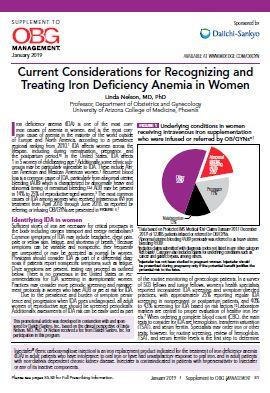
Current Considerations for Recognizing and Treating Iron Deficiency Anemia in Women

Click here to read the supplement.
Iron deficiency anemia (IDA) is one of the most common causes of anemia in women, and affects women of all ages. In this supplement, you will read about:
- How to identify IDA in women
- How to treat IDA
- A patient case study
Click here to read the supplement.
Click here to read the supplement.
Iron deficiency anemia (IDA) is one of the most common causes of anemia in women, and affects women of all ages. In this supplement, you will read about:
- How to identify IDA in women
- How to treat IDA
- A patient case study
Click here to read the supplement.
Click here to read the supplement.
Iron deficiency anemia (IDA) is one of the most common causes of anemia in women, and affects women of all ages. In this supplement, you will read about:
- How to identify IDA in women
- How to treat IDA
- A patient case study
Click here to read the supplement.
DBS may improve nonmotor symptoms in Parkinson’s disease
LAS VEGAS – , according to a small study presented at the annual meeting of the North American Neuromodulation Society. DBS of the subthalamic nucleus (STN), however, does not significantly improve these symptoms.
“Further work will be needed to confirm whether DBS needs to be bilateral ... and whether demographic differences are significant,” said Michael Gillogly, RN, clinical research nurse in the department of neurosurgery at Albany (New York) Medical Center. “The pilot data suggest that, if all else is equal, and the patient has significant urinary dysfunction as a major complaint, GPI DBS may be preferentially considered.”
The benefits of DBS on motor symptoms in Parkinson’s disease are well documented in the literature, but the technique’s effects on nonmotor symptoms are less clear. Nonmotor symptoms – such as cognitive deficits, gastrointestinal dysfunction, genitourinary dysfunction, and sleep disturbance – are common in all stages of Parkinson’s disease and significantly impair quality of life. Data indicate that speech and neuropsychological symptoms worsen with DBS of the STN, but research into the effect of DBS of the GPI on nonmotor symptoms is limited.
Mr. Gillogly and his colleagues considered all surgical candidates at their facility for enrollment into a study evaluating nonmotor outcomes in Parkinson’s disease at baseline, before implantation, and at 6 months after DBS. Study outcomes were patient perception of urinary, swallowing, and gastrointestinal function at 6 months after DBS of the GPI, compared with DBS of the STN.
The researchers chose two tools each to measure sialorrhea, dysphagia, and genitourinary dysfunction. These tools included the Drooling Severity and Frequency Scale (DSFS), the Swallowing Disturbance Questionnaire, and the International Prostate Symptom Score (IPSS). The investigators also collected demographic information, including sex, age at the time of surgery, duration of illness, neuropsychological profile, and medication inventory.
In all, 34 patients (12 women) were enrolled in the study and completed each outcome measure preoperatively and at 6 months postoperatively. The mean age of our subjects at the time of surgery was 64 years. Eight received DBS of the GPI, and 26 received DBS of the STN. Mr. Gillogly and his colleagues observed a significant 31% improvement in DSFS score and a significant 24% improvement on the IPSS among GPI-targeted patients. They found no significant improvements among patients who had STN targeting. When the investigators compared patients with unilateral lead placement and those with bilateral lead placement, they observed that all of the significant improvement among patients with GPI targeting occurred when treatment was bilateral.
The small sample size is a notable limitation of the study, and subset analyses were limited, said Mr. Gillogly. In addition, it was difficult to determine whether the symptoms studied were directly related to Parkinson’s disease, because they often arise as part of the natural aging process. “Other limitations of the study include lack of objective measurements, as these are all patient perception, and the innate limitations of self-reported questionnaires,” said Mr. Gillogly.
Two of the researchers reported having consulted for Medtronic, which markets a DBS system. One author received grant funding and consulting fees from Boston Scientific, Medtronic, and Abbott, all of which make DBS devices.
LAS VEGAS – , according to a small study presented at the annual meeting of the North American Neuromodulation Society. DBS of the subthalamic nucleus (STN), however, does not significantly improve these symptoms.
“Further work will be needed to confirm whether DBS needs to be bilateral ... and whether demographic differences are significant,” said Michael Gillogly, RN, clinical research nurse in the department of neurosurgery at Albany (New York) Medical Center. “The pilot data suggest that, if all else is equal, and the patient has significant urinary dysfunction as a major complaint, GPI DBS may be preferentially considered.”
The benefits of DBS on motor symptoms in Parkinson’s disease are well documented in the literature, but the technique’s effects on nonmotor symptoms are less clear. Nonmotor symptoms – such as cognitive deficits, gastrointestinal dysfunction, genitourinary dysfunction, and sleep disturbance – are common in all stages of Parkinson’s disease and significantly impair quality of life. Data indicate that speech and neuropsychological symptoms worsen with DBS of the STN, but research into the effect of DBS of the GPI on nonmotor symptoms is limited.
Mr. Gillogly and his colleagues considered all surgical candidates at their facility for enrollment into a study evaluating nonmotor outcomes in Parkinson’s disease at baseline, before implantation, and at 6 months after DBS. Study outcomes were patient perception of urinary, swallowing, and gastrointestinal function at 6 months after DBS of the GPI, compared with DBS of the STN.
The researchers chose two tools each to measure sialorrhea, dysphagia, and genitourinary dysfunction. These tools included the Drooling Severity and Frequency Scale (DSFS), the Swallowing Disturbance Questionnaire, and the International Prostate Symptom Score (IPSS). The investigators also collected demographic information, including sex, age at the time of surgery, duration of illness, neuropsychological profile, and medication inventory.
In all, 34 patients (12 women) were enrolled in the study and completed each outcome measure preoperatively and at 6 months postoperatively. The mean age of our subjects at the time of surgery was 64 years. Eight received DBS of the GPI, and 26 received DBS of the STN. Mr. Gillogly and his colleagues observed a significant 31% improvement in DSFS score and a significant 24% improvement on the IPSS among GPI-targeted patients. They found no significant improvements among patients who had STN targeting. When the investigators compared patients with unilateral lead placement and those with bilateral lead placement, they observed that all of the significant improvement among patients with GPI targeting occurred when treatment was bilateral.
The small sample size is a notable limitation of the study, and subset analyses were limited, said Mr. Gillogly. In addition, it was difficult to determine whether the symptoms studied were directly related to Parkinson’s disease, because they often arise as part of the natural aging process. “Other limitations of the study include lack of objective measurements, as these are all patient perception, and the innate limitations of self-reported questionnaires,” said Mr. Gillogly.
Two of the researchers reported having consulted for Medtronic, which markets a DBS system. One author received grant funding and consulting fees from Boston Scientific, Medtronic, and Abbott, all of which make DBS devices.
LAS VEGAS – , according to a small study presented at the annual meeting of the North American Neuromodulation Society. DBS of the subthalamic nucleus (STN), however, does not significantly improve these symptoms.
“Further work will be needed to confirm whether DBS needs to be bilateral ... and whether demographic differences are significant,” said Michael Gillogly, RN, clinical research nurse in the department of neurosurgery at Albany (New York) Medical Center. “The pilot data suggest that, if all else is equal, and the patient has significant urinary dysfunction as a major complaint, GPI DBS may be preferentially considered.”
The benefits of DBS on motor symptoms in Parkinson’s disease are well documented in the literature, but the technique’s effects on nonmotor symptoms are less clear. Nonmotor symptoms – such as cognitive deficits, gastrointestinal dysfunction, genitourinary dysfunction, and sleep disturbance – are common in all stages of Parkinson’s disease and significantly impair quality of life. Data indicate that speech and neuropsychological symptoms worsen with DBS of the STN, but research into the effect of DBS of the GPI on nonmotor symptoms is limited.
Mr. Gillogly and his colleagues considered all surgical candidates at their facility for enrollment into a study evaluating nonmotor outcomes in Parkinson’s disease at baseline, before implantation, and at 6 months after DBS. Study outcomes were patient perception of urinary, swallowing, and gastrointestinal function at 6 months after DBS of the GPI, compared with DBS of the STN.
The researchers chose two tools each to measure sialorrhea, dysphagia, and genitourinary dysfunction. These tools included the Drooling Severity and Frequency Scale (DSFS), the Swallowing Disturbance Questionnaire, and the International Prostate Symptom Score (IPSS). The investigators also collected demographic information, including sex, age at the time of surgery, duration of illness, neuropsychological profile, and medication inventory.
In all, 34 patients (12 women) were enrolled in the study and completed each outcome measure preoperatively and at 6 months postoperatively. The mean age of our subjects at the time of surgery was 64 years. Eight received DBS of the GPI, and 26 received DBS of the STN. Mr. Gillogly and his colleagues observed a significant 31% improvement in DSFS score and a significant 24% improvement on the IPSS among GPI-targeted patients. They found no significant improvements among patients who had STN targeting. When the investigators compared patients with unilateral lead placement and those with bilateral lead placement, they observed that all of the significant improvement among patients with GPI targeting occurred when treatment was bilateral.
The small sample size is a notable limitation of the study, and subset analyses were limited, said Mr. Gillogly. In addition, it was difficult to determine whether the symptoms studied were directly related to Parkinson’s disease, because they often arise as part of the natural aging process. “Other limitations of the study include lack of objective measurements, as these are all patient perception, and the innate limitations of self-reported questionnaires,” said Mr. Gillogly.
Two of the researchers reported having consulted for Medtronic, which markets a DBS system. One author received grant funding and consulting fees from Boston Scientific, Medtronic, and Abbott, all of which make DBS devices.
REPORTING FROM NANS 2019
Key clinical point: Bilateral stimulation of the globus pallidus internus reduces sialorrhea and improves genitourinary symptoms.
Major finding: Patients reported 31% improvement in sialorrhea and 24% improvement in urinary function.
Study details: A prospective study of 34 patients receiving DBS of the STN or GPI.
Disclosures: No funding was reported.
Cancer vaccine fails in CRC but trial yields lessons
SAN FRANCISCO – , according to final results of the German and Austrian phase 2 randomized LICC trial. However, information gleaned from the results, which were reported at the 2019 GI Cancers Symposium, will help inform future research.

“Hepatic metastectomy … is deemed the only potential curative treatment for stage IV colorectal cancer with limited liver disease. However, high recurrence rates after resection remain a major challenge: They range up to 50%-75% within the first 2 years,” said lead investigator Carl C. Schimanski, MD, PhD, of the Klinikum Darmstadt GmbH in Darmstadt, Germany.
Tecemotide is a liposome carrying mucin 1 (MUC1) antigen and an adjuvant that is taken up by antigen-presenting cells, ultimately leading to production of MUC1-specific cytotoxic T lymphocytes that target tumors. “MUC1 has been described to be expressed in up to 100% of colorectal cancer metastasis, so we thought this might be a good target,” Dr. Schimanski explained.
All 121 patients in the LICC trial had recently undergone primary or secondary resection, with either R0 or R1 outcome, for liver-only metastases of colorectal cancer. They were treated on a double-blind basis with a single dose of cyclophosphamide to reduce regulatory T cells, followed by tecemotide (weekly for 8 weeks, then every 6 weeks for up to 2 years) or with placebo.
Results showed that recurrence-free survival was actually shorter, by more than 5 months, with the vaccine versus placebo. In addition, the 3-year rate of overall survival was lower by an absolute 10%. Interestingly, tumor expression of MUC1 did not influence benefit from the vaccine.
But Dr. Schimanski noted that survival was better than expected at the trial’s outset. For example, the 65-month median overall survival among all patients in LICC undergoing secondary resection was about a year longer than that of similar patients in the CELIM trial (54 months) and the FIRE-3 trial (56 months).
“The LICC trial failed to meet its primary endpoint of significantly improving recurrence-free survival or overall survival with tecemotide. We had unexpectedly high overall survival in both arms, highlighting the critical importance of accurate staging and intensive surveillance, in our eyes,” he concluded. “We have further analysis of a very large translational program, and we hope to learn a lot about recurrence independent of tecemotide.”
A good space for testing immune therapies
In 2009, a consensus panel of immunologists ranked MUC1 as the second-best cancer antigen for translational research, “so there was clearly a feeling that this was a good target at that time for going forward,” noted invited discussant Michael J. Overman, MD, a professor in the department of gastrointestinal medical oncology, division of cancer medicine, University of Texas MD Anderson Cancer Center, Houston.

He agreed with the LICC investigators’ conclusions that the trial was negative and that MUC1 expression does not appear to predict outcome. “Whether that’s the wrong target, or whether it was the wrong formulation in regards to cancer vaccine, I think we do not know. I do think that survival was encouraging,” he said.
“There’s many unanswered questions in regards to the LICC study and in regards to cancer vaccines in general,” Dr. Overman noted. Among them, what are the optimal antigens to target, what are the optimal vaccine formulations and adjuvant agents, what is the best way to address the immunosuppressive tumor microenvironment, and what is the correct disease setting for vaccine testing?
“The LICC study is very impressive in demonstrating that we can enroll in this posthepatectomy space, postmetastectomy space. It’s a very increasingly interesting space for, potentially, drug development and immunologic exploration,” he maintained. “One of the benefits of this space when we talk about a minimal residual disease setting is that you potentially do not have the suppressive effects from the tumor microenvironment that potentially are hindering success in regards to having immune therapy response. So I would say that this is a space we should consider for drug development going forward.”
Study details
In the LICC trial, tecemotide and placebo yielded a respective median recurrence-free survival of 6.1 months and 11.4 months (P = .1754) and a respective overall survival of 62.8 months and not reached (P = .2141), Dr. Schimanski reported at the symposium, sponsored by the American Gastroenterological Association, the American Society for Clinical Oncology, the American Society for Radiation Oncology, and the Society of Surgical Oncology. The 3-year overall survival rate was 69.1% with tecemotide and 79.1% with placebo.
That survival “was astonishing for us,” Dr. Schimanski said. “We think – but we cannot prove it – that has resulted from careful staging due to the retrospective radiological review and the initial staging, and a very tight surveillance program.”
Findings were similar regardless of whether patients had low, medium, or high tumor MUC1 expression; therefore, “we have to conclude that the target is not really validated.”
Patients in the tecemotide arm had higher rates of any-grade nausea, fatigue, diarrhea, and viral upper respiratory tract infections, at least some of which was likely attributable to the single dose of cyclophosphamide, according to Dr. Schimanski. They also had higher (but still low) rates of grade 3 or 4 back pain, anemia, ileus, cholestatic jaundice, and increased blood uric acid levels (2.5% for each). There was a single death in that arm from Merkel cell carcinoma that was deemed potentially related to the vaccine.
Dr. Schimanski disclosed that an immediate family member is employed by Merck and that he receives research funding from Merck KGaA (institutional). The trial was funded by Merck KGaA.
SOURCE: Schimanski CC et al. GI Cancers Symposium, Abstract 480.
SAN FRANCISCO – , according to final results of the German and Austrian phase 2 randomized LICC trial. However, information gleaned from the results, which were reported at the 2019 GI Cancers Symposium, will help inform future research.
“Hepatic metastectomy … is deemed the only potential curative treatment for stage IV colorectal cancer with limited liver disease. However, high recurrence rates after resection remain a major challenge: They range up to 50%-75% within the first 2 years,” said lead investigator Carl C. Schimanski, MD, PhD, of the Klinikum Darmstadt GmbH in Darmstadt, Germany.
Tecemotide is a liposome carrying mucin 1 (MUC1) antigen and an adjuvant that is taken up by antigen-presenting cells, ultimately leading to production of MUC1-specific cytotoxic T lymphocytes that target tumors. “MUC1 has been described to be expressed in up to 100% of colorectal cancer metastasis, so we thought this might be a good target,” Dr. Schimanski explained.
All 121 patients in the LICC trial had recently undergone primary or secondary resection, with either R0 or R1 outcome, for liver-only metastases of colorectal cancer. They were treated on a double-blind basis with a single dose of cyclophosphamide to reduce regulatory T cells, followed by tecemotide (weekly for 8 weeks, then every 6 weeks for up to 2 years) or with placebo.
Results showed that recurrence-free survival was actually shorter, by more than 5 months, with the vaccine versus placebo. In addition, the 3-year rate of overall survival was lower by an absolute 10%. Interestingly, tumor expression of MUC1 did not influence benefit from the vaccine.
But Dr. Schimanski noted that survival was better than expected at the trial’s outset. For example, the 65-month median overall survival among all patients in LICC undergoing secondary resection was about a year longer than that of similar patients in the CELIM trial (54 months) and the FIRE-3 trial (56 months).
“The LICC trial failed to meet its primary endpoint of significantly improving recurrence-free survival or overall survival with tecemotide. We had unexpectedly high overall survival in both arms, highlighting the critical importance of accurate staging and intensive surveillance, in our eyes,” he concluded. “We have further analysis of a very large translational program, and we hope to learn a lot about recurrence independent of tecemotide.”
A good space for testing immune therapies
In 2009, a consensus panel of immunologists ranked MUC1 as the second-best cancer antigen for translational research, “so there was clearly a feeling that this was a good target at that time for going forward,” noted invited discussant Michael J. Overman, MD, a professor in the department of gastrointestinal medical oncology, division of cancer medicine, University of Texas MD Anderson Cancer Center, Houston.
He agreed with the LICC investigators’ conclusions that the trial was negative and that MUC1 expression does not appear to predict outcome. “Whether that’s the wrong target, or whether it was the wrong formulation in regards to cancer vaccine, I think we do not know. I do think that survival was encouraging,” he said.
“There’s many unanswered questions in regards to the LICC study and in regards to cancer vaccines in general,” Dr. Overman noted. Among them, what are the optimal antigens to target, what are the optimal vaccine formulations and adjuvant agents, what is the best way to address the immunosuppressive tumor microenvironment, and what is the correct disease setting for vaccine testing?
“The LICC study is very impressive in demonstrating that we can enroll in this posthepatectomy space, postmetastectomy space. It’s a very increasingly interesting space for, potentially, drug development and immunologic exploration,” he maintained. “One of the benefits of this space when we talk about a minimal residual disease setting is that you potentially do not have the suppressive effects from the tumor microenvironment that potentially are hindering success in regards to having immune therapy response. So I would say that this is a space we should consider for drug development going forward.”
Study details
In the LICC trial, tecemotide and placebo yielded a respective median recurrence-free survival of 6.1 months and 11.4 months (P = .1754) and a respective overall survival of 62.8 months and not reached (P = .2141), Dr. Schimanski reported at the symposium, sponsored by the American Gastroenterological Association, the American Society for Clinical Oncology, the American Society for Radiation Oncology, and the Society of Surgical Oncology. The 3-year overall survival rate was 69.1% with tecemotide and 79.1% with placebo.
That survival “was astonishing for us,” Dr. Schimanski said. “We think – but we cannot prove it – that has resulted from careful staging due to the retrospective radiological review and the initial staging, and a very tight surveillance program.”
Findings were similar regardless of whether patients had low, medium, or high tumor MUC1 expression; therefore, “we have to conclude that the target is not really validated.”
Patients in the tecemotide arm had higher rates of any-grade nausea, fatigue, diarrhea, and viral upper respiratory tract infections, at least some of which was likely attributable to the single dose of cyclophosphamide, according to Dr. Schimanski. They also had higher (but still low) rates of grade 3 or 4 back pain, anemia, ileus, cholestatic jaundice, and increased blood uric acid levels (2.5% for each). There was a single death in that arm from Merkel cell carcinoma that was deemed potentially related to the vaccine.
Dr. Schimanski disclosed that an immediate family member is employed by Merck and that he receives research funding from Merck KGaA (institutional). The trial was funded by Merck KGaA.
SOURCE: Schimanski CC et al. GI Cancers Symposium, Abstract 480.
SAN FRANCISCO – , according to final results of the German and Austrian phase 2 randomized LICC trial. However, information gleaned from the results, which were reported at the 2019 GI Cancers Symposium, will help inform future research.
“Hepatic metastectomy … is deemed the only potential curative treatment for stage IV colorectal cancer with limited liver disease. However, high recurrence rates after resection remain a major challenge: They range up to 50%-75% within the first 2 years,” said lead investigator Carl C. Schimanski, MD, PhD, of the Klinikum Darmstadt GmbH in Darmstadt, Germany.
Tecemotide is a liposome carrying mucin 1 (MUC1) antigen and an adjuvant that is taken up by antigen-presenting cells, ultimately leading to production of MUC1-specific cytotoxic T lymphocytes that target tumors. “MUC1 has been described to be expressed in up to 100% of colorectal cancer metastasis, so we thought this might be a good target,” Dr. Schimanski explained.
All 121 patients in the LICC trial had recently undergone primary or secondary resection, with either R0 or R1 outcome, for liver-only metastases of colorectal cancer. They were treated on a double-blind basis with a single dose of cyclophosphamide to reduce regulatory T cells, followed by tecemotide (weekly for 8 weeks, then every 6 weeks for up to 2 years) or with placebo.
Results showed that recurrence-free survival was actually shorter, by more than 5 months, with the vaccine versus placebo. In addition, the 3-year rate of overall survival was lower by an absolute 10%. Interestingly, tumor expression of MUC1 did not influence benefit from the vaccine.
But Dr. Schimanski noted that survival was better than expected at the trial’s outset. For example, the 65-month median overall survival among all patients in LICC undergoing secondary resection was about a year longer than that of similar patients in the CELIM trial (54 months) and the FIRE-3 trial (56 months).
“The LICC trial failed to meet its primary endpoint of significantly improving recurrence-free survival or overall survival with tecemotide. We had unexpectedly high overall survival in both arms, highlighting the critical importance of accurate staging and intensive surveillance, in our eyes,” he concluded. “We have further analysis of a very large translational program, and we hope to learn a lot about recurrence independent of tecemotide.”
A good space for testing immune therapies
In 2009, a consensus panel of immunologists ranked MUC1 as the second-best cancer antigen for translational research, “so there was clearly a feeling that this was a good target at that time for going forward,” noted invited discussant Michael J. Overman, MD, a professor in the department of gastrointestinal medical oncology, division of cancer medicine, University of Texas MD Anderson Cancer Center, Houston.
He agreed with the LICC investigators’ conclusions that the trial was negative and that MUC1 expression does not appear to predict outcome. “Whether that’s the wrong target, or whether it was the wrong formulation in regards to cancer vaccine, I think we do not know. I do think that survival was encouraging,” he said.
“There’s many unanswered questions in regards to the LICC study and in regards to cancer vaccines in general,” Dr. Overman noted. Among them, what are the optimal antigens to target, what are the optimal vaccine formulations and adjuvant agents, what is the best way to address the immunosuppressive tumor microenvironment, and what is the correct disease setting for vaccine testing?
“The LICC study is very impressive in demonstrating that we can enroll in this posthepatectomy space, postmetastectomy space. It’s a very increasingly interesting space for, potentially, drug development and immunologic exploration,” he maintained. “One of the benefits of this space when we talk about a minimal residual disease setting is that you potentially do not have the suppressive effects from the tumor microenvironment that potentially are hindering success in regards to having immune therapy response. So I would say that this is a space we should consider for drug development going forward.”
Study details
In the LICC trial, tecemotide and placebo yielded a respective median recurrence-free survival of 6.1 months and 11.4 months (P = .1754) and a respective overall survival of 62.8 months and not reached (P = .2141), Dr. Schimanski reported at the symposium, sponsored by the American Gastroenterological Association, the American Society for Clinical Oncology, the American Society for Radiation Oncology, and the Society of Surgical Oncology. The 3-year overall survival rate was 69.1% with tecemotide and 79.1% with placebo.
That survival “was astonishing for us,” Dr. Schimanski said. “We think – but we cannot prove it – that has resulted from careful staging due to the retrospective radiological review and the initial staging, and a very tight surveillance program.”
Findings were similar regardless of whether patients had low, medium, or high tumor MUC1 expression; therefore, “we have to conclude that the target is not really validated.”
Patients in the tecemotide arm had higher rates of any-grade nausea, fatigue, diarrhea, and viral upper respiratory tract infections, at least some of which was likely attributable to the single dose of cyclophosphamide, according to Dr. Schimanski. They also had higher (but still low) rates of grade 3 or 4 back pain, anemia, ileus, cholestatic jaundice, and increased blood uric acid levels (2.5% for each). There was a single death in that arm from Merkel cell carcinoma that was deemed potentially related to the vaccine.
Dr. Schimanski disclosed that an immediate family member is employed by Merck and that he receives research funding from Merck KGaA (institutional). The trial was funded by Merck KGaA.
SOURCE: Schimanski CC et al. GI Cancers Symposium, Abstract 480.
REPORTING FROM THE 2019 GI CANCERS SYMPOSIUM
Key clinical point: Tecemotide did not improve outcomes among patients with resected liver-only metastases of CRC.
Major finding: Tecemotide was not superior to placebo with respect to median recurrence-free survival (6.1 vs. 11.4 months; P = .1754) or overall survival (62.8 months vs. not reached; P = .2141).
Study details: A phase 2 randomized controlled trial among 121 patients having had R0/R1 resection of isolated liver CRC metastases (LICC trial).
Disclosures: Dr. Schimanski disclosed that an immediate family member is employed by Merck and that he receives research funding from Merck KGaA (institutional). The trial was funded by Merck KGaA.
Source: Schimanski CC et al. GI Cancers Symposium, Abstract 480.