User login
Deployment-Related Lung Diseases Warrant Greater Scrutiny
Respiratory disorders presenting in troops deployed to Iraq and Afghanistan require a standardized diagnostic approach and centers of excellence with specific expertise.
Those recommendations are part of forthcoming white paper to be released by National Jewish Health in Denver designed to better define and manage deployment-related lung diseases, a controversial diagnosis that has stirred debate over its cause and potential for long-term disability and costly government compensation.
"I think there’s confusion within the Department of Medical Affairs about how to assess whether people have suffered some deployment-related lung condition," says Dr. Cecile Rose, a member of the white paper working group and director of the occupational and environmental medicine clinic at National Jewish Health.
In the community setting, "I think it’s just starting to hit the radar screen of physicians, if it’s even there," she adds.

Researchers point to inhalational exposure to a complex mixture of high ambient dust levels, combustion products, extremes of temperature and humidity, and open-air burn pits used to burn garbage on military bases. Military officials contend that development of respiratory diseases will depend not only on the type and extent of exposure, but on comorbidities such as preexisting asthma, tobacco use, and genetic predisposition. A consensus report released in October 2011 by the Institute of Medicine and sponsored by the U.S. Department of Defense (DOD) concluded there was insufficient data to link burn pit exposure in Iraq to chronic respiratory diseases.
Part of the challenge in truly understanding the risk is that the exposures are problematic to characterize, Dr. Rose says. Some troops may have had particular job duties that placed them in much closer proximity to burn pit combustion products, while others have had multiple deployments that could suggest a dose-dependent effect.
In terms of a hallmark diagnostic clue, there isn’t one, she says. Many veterans complain of dyspnea upon exertion and say they used to be able to run 2 miles in 14 minutes, but now can’t even get close to passing the military’s physical fitness requirements. A handful will have abnormal pulmonary function testing either at rest or with exercise, but there are also a substantial number with normal pulmonary tests and normal high-resolution computed tomography.
"Then the physician is in the challenging position of having to decide whether to send someone for a surgical lung biopsy to evaluate the possibility of constrictive bronchiolitis because you can’t make that diagnosis without a biopsy," Dr. Rose says. The working group is attempting to create a standardized approach to diagnosis and a model for clinical centers of excellence where patients could be sent to undergo testing and assessment that would include consideration of surgical lung biopsy.
Physicians at Vanderbilt University in Nashville, Tenn., and Fort Campbell, Ky., had created just such a collaborative diagnostic protocol, but the referrals stopped after the working group convened in February 2010, says Dr. Robert F. Miller, a pulmonologist at the Vanderbilt-Ingram Cancer Center in Nashville. Instead of traveling the 30 or so miles from Fort Campbell to Vanderbilt, soldiers are now sent several hundred miles away to Fort Hood in Texas, "where you can pretty much be assured they are not going to get an invasive workup and are going to leave without a diagnosis or disability benefit," he adds.
Together with colleague Dr. Matthew King, Dr. Miller published the largest case series to date in which open lung biopsy was used to diagnose 38 cases of constrictive bronchiolitis and 11 other lung ailments in 49 Fort Campbell soldiers with unexplained exertional dyspnea and normal pulmonary-function and cardiopulmonary-exercise testing (N. Engl. J. Med. 2011;365: 222-30).
The findings have largely been embraced by the academic and wider medical community, but there was some criticism for the unorthodox use of the invasive test and the potential for bias because of the high diagnostic yield and use of two unblinded pathologists (N. Engl. J. Med. 2011;365:1743-45). Dr. Miller agrees that a lung biopsy is not the standard of care in this setting, but says they opted to use it "after seeing too many soldiers with the exact same story." To date, he’s biopsied 66 soldiers, with 62 showing small airways disease, 3 sarcoid, and 1 normal.
Over the next 6 months, Dr. Rose and her associates will send 50 of the biopsies, along with both positive and negative control samples, to a panel of pathologists to develop a small airway scoring system. Dr. Miller doesn’t expect 100% concordance with his results, but believes the DOD-funded research will validate Vanderbilt’s findings of small airways disease.
"I talk to people every week just to validate what we’ve done and there have been biopsies done all over the country that are finding the same thing in Nevada, Kansas, Colorado, Seattle, Chicago," he says. "So everybody is finding this, if they’re looking for it."
Still, the biopsies are beginning to look a bit different. They still contain the same features of small airway narrowing, associated arteriopathy and pigment deposits, but are more likely to have changes of inflammation and hypersensitivity than scarring, Dr. Miller says. One explanation is that part of his population may have been skewed up front because a lot of the soldiers seen early on were exposed to the Mishraq sulfur mine fires in 2003 – an argument raised by military officials who argued that this type of exposure is unique to the study cohort.
Interestingly, a recent case report by Dr. Anthony Szema, with The State University of New York at Stony Brook, identified titanium, iron, and copper in the lung biopsy of a soldier with nonspecific interstitial pneumonitis and bronchiolitis (J. Occup. Environ. Med. 2012;54:1-2).
Lessons Learned From 9/11
Two other key recommendations from the working group are to institute predeployment respiratory testing, including spirometry, and to follow the troops longitudinally. Annual pulmonary function test data from World Trade Center firefighters has proven invaluable in assessing the impact of exposure, revealing a very acute and substantial decline in forced expiratory volume in 1 second (FEV1) averaging 600 cc within the first 6 months after 911, typically followed by a return to the normal age-related decline in FEV1, Dr. Rose says.
"We’re really just starting to follow our patients now, so whether this is an acute decline that then stabilizes or whether this is a persistent accelerated decline in lung function, we just don’t know," she admits.
So far, pulmonary function testing has been relatively stable, although patients will typically say they are more short of breath, Dr. Miller says. When they’ve been able to check it, their exercise tests are getting worse, a change he suggests is probably better explained by deconditioning and weight gain than by progression and disease.
Dr. Miller says the best way to assess predeployment lung function is for each soldier to serve as his or her own control, but that it may not be practical to test everyone who’s deployed. Still, if enough cardiopulmonary testing is performed, it may help determine how a soldier at a particular age, height, and weight with a specific 2-mile run time would correlate with a cardiopulmonary test. At the very least, the 2-mile run times should be put in the medical record, and that is not the case now, he says.
For their part, military officials have said they do not believe long-term respiratory problems will be an issue for the majority of troops deployed to Iraq and Afghanistan, and that predeployment spirometry is not warranted.
Although troops typically express relief at a diagnosis, the prognosis for constrictive bronchiolitis is grim. None of the patients have responded well to oral corticosteroids or in a few cases, to second-line immunosuppressive drugs, Dr. Rose says.
Recent news reports are being used by veterans to push for better care, with one group, DisabledVeterans.org, recently launching a breathing survey to document soldiers’ health and experience with the Department of Veterans Affairs.
The exact scope of the problem is unknown, but the financial ramifications for the government are potentially staggering given the roughly two million troops deployed since 2001. The prospective DOD Millennium Cohort study reported respiratory problems in 14% of troops deployed to Iraq/Afghanistan and 10% of troops not deployed (Am. J. Epidemiol. 2009;170:1433-42), while a retrospective study by Dr. Szema reported respiratory symptoms requiring spirometry in 14.5% of Iraq/Afghanistan troops vs. just 2% of troops deployed elsewhere (J. Occup. Environ. Med. 2011;53:961-5).
For Dr. Miller, it has become a matter of advocacy.
"What these guys sacrifice is incredible, even when they’re not injured, and they deserve better than what they’re getting when they’re injured, whether it’s loss of limb, PTSD or a lung injury," he argues. "I hope we can prevail in what we’re doing."
Respiratory disorders presenting in troops deployed to Iraq and Afghanistan require a standardized diagnostic approach and centers of excellence with specific expertise.
Those recommendations are part of forthcoming white paper to be released by National Jewish Health in Denver designed to better define and manage deployment-related lung diseases, a controversial diagnosis that has stirred debate over its cause and potential for long-term disability and costly government compensation.
"I think there’s confusion within the Department of Medical Affairs about how to assess whether people have suffered some deployment-related lung condition," says Dr. Cecile Rose, a member of the white paper working group and director of the occupational and environmental medicine clinic at National Jewish Health.
In the community setting, "I think it’s just starting to hit the radar screen of physicians, if it’s even there," she adds.
Researchers point to inhalational exposure to a complex mixture of high ambient dust levels, combustion products, extremes of temperature and humidity, and open-air burn pits used to burn garbage on military bases. Military officials contend that development of respiratory diseases will depend not only on the type and extent of exposure, but on comorbidities such as preexisting asthma, tobacco use, and genetic predisposition. A consensus report released in October 2011 by the Institute of Medicine and sponsored by the U.S. Department of Defense (DOD) concluded there was insufficient data to link burn pit exposure in Iraq to chronic respiratory diseases.
Part of the challenge in truly understanding the risk is that the exposures are problematic to characterize, Dr. Rose says. Some troops may have had particular job duties that placed them in much closer proximity to burn pit combustion products, while others have had multiple deployments that could suggest a dose-dependent effect.
In terms of a hallmark diagnostic clue, there isn’t one, she says. Many veterans complain of dyspnea upon exertion and say they used to be able to run 2 miles in 14 minutes, but now can’t even get close to passing the military’s physical fitness requirements. A handful will have abnormal pulmonary function testing either at rest or with exercise, but there are also a substantial number with normal pulmonary tests and normal high-resolution computed tomography.
"Then the physician is in the challenging position of having to decide whether to send someone for a surgical lung biopsy to evaluate the possibility of constrictive bronchiolitis because you can’t make that diagnosis without a biopsy," Dr. Rose says. The working group is attempting to create a standardized approach to diagnosis and a model for clinical centers of excellence where patients could be sent to undergo testing and assessment that would include consideration of surgical lung biopsy.
Physicians at Vanderbilt University in Nashville, Tenn., and Fort Campbell, Ky., had created just such a collaborative diagnostic protocol, but the referrals stopped after the working group convened in February 2010, says Dr. Robert F. Miller, a pulmonologist at the Vanderbilt-Ingram Cancer Center in Nashville. Instead of traveling the 30 or so miles from Fort Campbell to Vanderbilt, soldiers are now sent several hundred miles away to Fort Hood in Texas, "where you can pretty much be assured they are not going to get an invasive workup and are going to leave without a diagnosis or disability benefit," he adds.
Together with colleague Dr. Matthew King, Dr. Miller published the largest case series to date in which open lung biopsy was used to diagnose 38 cases of constrictive bronchiolitis and 11 other lung ailments in 49 Fort Campbell soldiers with unexplained exertional dyspnea and normal pulmonary-function and cardiopulmonary-exercise testing (N. Engl. J. Med. 2011;365: 222-30).
The findings have largely been embraced by the academic and wider medical community, but there was some criticism for the unorthodox use of the invasive test and the potential for bias because of the high diagnostic yield and use of two unblinded pathologists (N. Engl. J. Med. 2011;365:1743-45). Dr. Miller agrees that a lung biopsy is not the standard of care in this setting, but says they opted to use it "after seeing too many soldiers with the exact same story." To date, he’s biopsied 66 soldiers, with 62 showing small airways disease, 3 sarcoid, and 1 normal.
Over the next 6 months, Dr. Rose and her associates will send 50 of the biopsies, along with both positive and negative control samples, to a panel of pathologists to develop a small airway scoring system. Dr. Miller doesn’t expect 100% concordance with his results, but believes the DOD-funded research will validate Vanderbilt’s findings of small airways disease.
"I talk to people every week just to validate what we’ve done and there have been biopsies done all over the country that are finding the same thing in Nevada, Kansas, Colorado, Seattle, Chicago," he says. "So everybody is finding this, if they’re looking for it."
Still, the biopsies are beginning to look a bit different. They still contain the same features of small airway narrowing, associated arteriopathy and pigment deposits, but are more likely to have changes of inflammation and hypersensitivity than scarring, Dr. Miller says. One explanation is that part of his population may have been skewed up front because a lot of the soldiers seen early on were exposed to the Mishraq sulfur mine fires in 2003 – an argument raised by military officials who argued that this type of exposure is unique to the study cohort.
Interestingly, a recent case report by Dr. Anthony Szema, with The State University of New York at Stony Brook, identified titanium, iron, and copper in the lung biopsy of a soldier with nonspecific interstitial pneumonitis and bronchiolitis (J. Occup. Environ. Med. 2012;54:1-2).
Lessons Learned From 9/11
Two other key recommendations from the working group are to institute predeployment respiratory testing, including spirometry, and to follow the troops longitudinally. Annual pulmonary function test data from World Trade Center firefighters has proven invaluable in assessing the impact of exposure, revealing a very acute and substantial decline in forced expiratory volume in 1 second (FEV1) averaging 600 cc within the first 6 months after 911, typically followed by a return to the normal age-related decline in FEV1, Dr. Rose says.
"We’re really just starting to follow our patients now, so whether this is an acute decline that then stabilizes or whether this is a persistent accelerated decline in lung function, we just don’t know," she admits.
So far, pulmonary function testing has been relatively stable, although patients will typically say they are more short of breath, Dr. Miller says. When they’ve been able to check it, their exercise tests are getting worse, a change he suggests is probably better explained by deconditioning and weight gain than by progression and disease.
Dr. Miller says the best way to assess predeployment lung function is for each soldier to serve as his or her own control, but that it may not be practical to test everyone who’s deployed. Still, if enough cardiopulmonary testing is performed, it may help determine how a soldier at a particular age, height, and weight with a specific 2-mile run time would correlate with a cardiopulmonary test. At the very least, the 2-mile run times should be put in the medical record, and that is not the case now, he says.
For their part, military officials have said they do not believe long-term respiratory problems will be an issue for the majority of troops deployed to Iraq and Afghanistan, and that predeployment spirometry is not warranted.
Although troops typically express relief at a diagnosis, the prognosis for constrictive bronchiolitis is grim. None of the patients have responded well to oral corticosteroids or in a few cases, to second-line immunosuppressive drugs, Dr. Rose says.
Recent news reports are being used by veterans to push for better care, with one group, DisabledVeterans.org, recently launching a breathing survey to document soldiers’ health and experience with the Department of Veterans Affairs.
The exact scope of the problem is unknown, but the financial ramifications for the government are potentially staggering given the roughly two million troops deployed since 2001. The prospective DOD Millennium Cohort study reported respiratory problems in 14% of troops deployed to Iraq/Afghanistan and 10% of troops not deployed (Am. J. Epidemiol. 2009;170:1433-42), while a retrospective study by Dr. Szema reported respiratory symptoms requiring spirometry in 14.5% of Iraq/Afghanistan troops vs. just 2% of troops deployed elsewhere (J. Occup. Environ. Med. 2011;53:961-5).
For Dr. Miller, it has become a matter of advocacy.
"What these guys sacrifice is incredible, even when they’re not injured, and they deserve better than what they’re getting when they’re injured, whether it’s loss of limb, PTSD or a lung injury," he argues. "I hope we can prevail in what we’re doing."
Respiratory disorders presenting in troops deployed to Iraq and Afghanistan require a standardized diagnostic approach and centers of excellence with specific expertise.
Those recommendations are part of forthcoming white paper to be released by National Jewish Health in Denver designed to better define and manage deployment-related lung diseases, a controversial diagnosis that has stirred debate over its cause and potential for long-term disability and costly government compensation.
"I think there’s confusion within the Department of Medical Affairs about how to assess whether people have suffered some deployment-related lung condition," says Dr. Cecile Rose, a member of the white paper working group and director of the occupational and environmental medicine clinic at National Jewish Health.
In the community setting, "I think it’s just starting to hit the radar screen of physicians, if it’s even there," she adds.
Researchers point to inhalational exposure to a complex mixture of high ambient dust levels, combustion products, extremes of temperature and humidity, and open-air burn pits used to burn garbage on military bases. Military officials contend that development of respiratory diseases will depend not only on the type and extent of exposure, but on comorbidities such as preexisting asthma, tobacco use, and genetic predisposition. A consensus report released in October 2011 by the Institute of Medicine and sponsored by the U.S. Department of Defense (DOD) concluded there was insufficient data to link burn pit exposure in Iraq to chronic respiratory diseases.
Part of the challenge in truly understanding the risk is that the exposures are problematic to characterize, Dr. Rose says. Some troops may have had particular job duties that placed them in much closer proximity to burn pit combustion products, while others have had multiple deployments that could suggest a dose-dependent effect.
In terms of a hallmark diagnostic clue, there isn’t one, she says. Many veterans complain of dyspnea upon exertion and say they used to be able to run 2 miles in 14 minutes, but now can’t even get close to passing the military’s physical fitness requirements. A handful will have abnormal pulmonary function testing either at rest or with exercise, but there are also a substantial number with normal pulmonary tests and normal high-resolution computed tomography.
"Then the physician is in the challenging position of having to decide whether to send someone for a surgical lung biopsy to evaluate the possibility of constrictive bronchiolitis because you can’t make that diagnosis without a biopsy," Dr. Rose says. The working group is attempting to create a standardized approach to diagnosis and a model for clinical centers of excellence where patients could be sent to undergo testing and assessment that would include consideration of surgical lung biopsy.
Physicians at Vanderbilt University in Nashville, Tenn., and Fort Campbell, Ky., had created just such a collaborative diagnostic protocol, but the referrals stopped after the working group convened in February 2010, says Dr. Robert F. Miller, a pulmonologist at the Vanderbilt-Ingram Cancer Center in Nashville. Instead of traveling the 30 or so miles from Fort Campbell to Vanderbilt, soldiers are now sent several hundred miles away to Fort Hood in Texas, "where you can pretty much be assured they are not going to get an invasive workup and are going to leave without a diagnosis or disability benefit," he adds.
Together with colleague Dr. Matthew King, Dr. Miller published the largest case series to date in which open lung biopsy was used to diagnose 38 cases of constrictive bronchiolitis and 11 other lung ailments in 49 Fort Campbell soldiers with unexplained exertional dyspnea and normal pulmonary-function and cardiopulmonary-exercise testing (N. Engl. J. Med. 2011;365: 222-30).
The findings have largely been embraced by the academic and wider medical community, but there was some criticism for the unorthodox use of the invasive test and the potential for bias because of the high diagnostic yield and use of two unblinded pathologists (N. Engl. J. Med. 2011;365:1743-45). Dr. Miller agrees that a lung biopsy is not the standard of care in this setting, but says they opted to use it "after seeing too many soldiers with the exact same story." To date, he’s biopsied 66 soldiers, with 62 showing small airways disease, 3 sarcoid, and 1 normal.
Over the next 6 months, Dr. Rose and her associates will send 50 of the biopsies, along with both positive and negative control samples, to a panel of pathologists to develop a small airway scoring system. Dr. Miller doesn’t expect 100% concordance with his results, but believes the DOD-funded research will validate Vanderbilt’s findings of small airways disease.
"I talk to people every week just to validate what we’ve done and there have been biopsies done all over the country that are finding the same thing in Nevada, Kansas, Colorado, Seattle, Chicago," he says. "So everybody is finding this, if they’re looking for it."
Still, the biopsies are beginning to look a bit different. They still contain the same features of small airway narrowing, associated arteriopathy and pigment deposits, but are more likely to have changes of inflammation and hypersensitivity than scarring, Dr. Miller says. One explanation is that part of his population may have been skewed up front because a lot of the soldiers seen early on were exposed to the Mishraq sulfur mine fires in 2003 – an argument raised by military officials who argued that this type of exposure is unique to the study cohort.
Interestingly, a recent case report by Dr. Anthony Szema, with The State University of New York at Stony Brook, identified titanium, iron, and copper in the lung biopsy of a soldier with nonspecific interstitial pneumonitis and bronchiolitis (J. Occup. Environ. Med. 2012;54:1-2).
Lessons Learned From 9/11
Two other key recommendations from the working group are to institute predeployment respiratory testing, including spirometry, and to follow the troops longitudinally. Annual pulmonary function test data from World Trade Center firefighters has proven invaluable in assessing the impact of exposure, revealing a very acute and substantial decline in forced expiratory volume in 1 second (FEV1) averaging 600 cc within the first 6 months after 911, typically followed by a return to the normal age-related decline in FEV1, Dr. Rose says.
"We’re really just starting to follow our patients now, so whether this is an acute decline that then stabilizes or whether this is a persistent accelerated decline in lung function, we just don’t know," she admits.
So far, pulmonary function testing has been relatively stable, although patients will typically say they are more short of breath, Dr. Miller says. When they’ve been able to check it, their exercise tests are getting worse, a change he suggests is probably better explained by deconditioning and weight gain than by progression and disease.
Dr. Miller says the best way to assess predeployment lung function is for each soldier to serve as his or her own control, but that it may not be practical to test everyone who’s deployed. Still, if enough cardiopulmonary testing is performed, it may help determine how a soldier at a particular age, height, and weight with a specific 2-mile run time would correlate with a cardiopulmonary test. At the very least, the 2-mile run times should be put in the medical record, and that is not the case now, he says.
For their part, military officials have said they do not believe long-term respiratory problems will be an issue for the majority of troops deployed to Iraq and Afghanistan, and that predeployment spirometry is not warranted.
Although troops typically express relief at a diagnosis, the prognosis for constrictive bronchiolitis is grim. None of the patients have responded well to oral corticosteroids or in a few cases, to second-line immunosuppressive drugs, Dr. Rose says.
Recent news reports are being used by veterans to push for better care, with one group, DisabledVeterans.org, recently launching a breathing survey to document soldiers’ health and experience with the Department of Veterans Affairs.
The exact scope of the problem is unknown, but the financial ramifications for the government are potentially staggering given the roughly two million troops deployed since 2001. The prospective DOD Millennium Cohort study reported respiratory problems in 14% of troops deployed to Iraq/Afghanistan and 10% of troops not deployed (Am. J. Epidemiol. 2009;170:1433-42), while a retrospective study by Dr. Szema reported respiratory symptoms requiring spirometry in 14.5% of Iraq/Afghanistan troops vs. just 2% of troops deployed elsewhere (J. Occup. Environ. Med. 2011;53:961-5).
For Dr. Miller, it has become a matter of advocacy.
"What these guys sacrifice is incredible, even when they’re not injured, and they deserve better than what they’re getting when they’re injured, whether it’s loss of limb, PTSD or a lung injury," he argues. "I hope we can prevail in what we’re doing."
After Tornado, Joplin Rebuilds Stronger Than Before
When the catastrophic EF5 tornado hit Joplin, Mo., on that late Sunday afternoon of May 22, 2011, the paper records and x-rays from St. John's Hospital were scattered across nearby counties like ticker-tape confetti.
The building was unusable and the power system and generators were destroyed, but the hospital’s IT network connection, with access to its newly minted electronic medical record system, was miraculously still working.
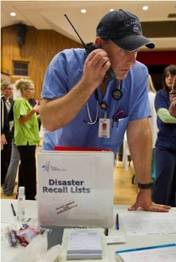
"We’d only gone live with the system on May 1, which in hindsight turns out to be a blessing because when all of the patients that were in our facility – 183 inpatients and 24 patients in the emergency department – were transferred to other facilities, they were able to access their records," said emergency physician Dr. Sean Smith, president of Mercy Clinic–Joplin.
Records were subsequently printed off-site and faxed or sent by courier to other hospitals. If patients went to a sister facility in the Mercy Health network, their new physicians had immediate access to everything from medication and allergy information to history and physical examination records. "Everything was seamless, as if they’d been at that facility all along," he said.
The Joplin tornado destroyed some 8,000 structures in the area and was the first direct hit by a tornado on an acute care hospital in this country. In late January, demolition began on the building that had been St. John’s Hospital since 1968, along with three medical office buildings and a rehabilitation facility across 47 acres. An emotional groundbreaking was also held that month for a permanent 600,000-square-foot, 327-bed hospital on 100 acres about 3 miles south of the old hospital, slated for completion in early 2015.

St. John’s, now known simply as Mercy-Joplin, has gone through several incarnations over the last year, including a MASH unit, a prefabricated modular hospital, and a 150,000-square-foot component hospital that just opened its doors in April, according to Mercy president and CEO Lynn Britton. The new component facility contains a full-service emergency department and is stronger than the old building, with glass that can withstand 200-mph winds.
"One thing we definitely learned is the power of the electronic medical record in this kind of situation," Mr. Britton said, but much of the credit for maintaining continuity of care lay in the resilience and dedication of the health care providers who worked 48-72 hours without stopping after the disaster, he added.
Quick thinking during triage sent patients with complex medication regimens to a Mercy facility where their records could be instantly accessed, while others were sent to facilities across the region. Within 90 minutes, a command center was set up at Joplin Memorial Hall, and within 12 hours, a portable hospital was in place and stocked with two large truckloads of supplies delivered through Mercy’s independent supply chain. Within 48 hours, arrangements had been made to have CT scanners set up in the parking lot of Memorial Hall, Dr. Smith said.
"A lot of that is due to the fact that we’re part of a larger organization," he said. "If we had been a solitary, independent hospital in Middle America, I don’t think we would have had that level of infrastructure to support our services."
That scale also allowed Mercy Health – the eighth largest Catholic health care system in the United States, with 31 hospitals – to make a promise that none of the 2,200 employees in Joplin would lose their jobs. At an annual payroll of $120 million, it was a hefty commitment.*

"The reason we did it was a lesson learned from [Hurricane] Katrina," Mr. Britton said. "When the health care systems couldn’t or didn’t make that commitment, medical professionals not only needed income, but also had to continue to practice their skills or they lose competency, so they had to seek a place to practice. I didn’t want the medical community in Joplin to lose their competencies or disband."
The decision was also important to the economy of Joplin, a city of 50,000 and a regional hub for Kansas, Oklahoma, Missouri, and Arkansas that swells to 250,000 people during the workday. Mercy and nearby Freeman Health System are two of the big economic drivers, and without Mercy, it’s unlikely that Joplin could have recovered economically, Mr. Britton said, adding, "It didn’t make sense to take the money and run."
Although Mercy is maintaining much of its patient care, some services such as obstetrics and elective or emergent cardiac surgery have been off-line for most of the past year. Hospitals and health care providers throughout the region have had to increase services following the disaster, albeit without the same bolus of disaster funding or resources as Mercy had.
"I think what’s often missed in this is that we did take a hit and we continue to take a hit," said Freeman Health emergency physician Dr. Frank Veer. "They took a punch to the face, but we’ve taken body blows ever since then, and I’m impressed with my colleagues’ ability to continue to step up and do that job."
Because there was no electricity during the first few hours after the tornado, the exact patient count isn’t available, but Freeman officials said they treated well over 500 patients and performed 22 lifesaving surgeries. Another 1,700 patients were cared for over the next few days and weeks, and patient volume has continued to be high.
So Freeman has had to find more efficient ways to deliver care – not simply to be a better health system, but out of necessity, Dr. Veer said. The hospital added one full shift in the ED, staffed by ED docs and nurses taking on additional hours.
All three men say that flexibility is the key to any disaster response plan and that a secure back-up communication system – including analog radios and a network of ham radio operators – is invaluable. The tornado destroyed five repeater or relay towers in the Joplin area, which meant that cell phones were unusable and digital EMS channels didn’t work all that well either, Dr. Smith said. Analog radios were the only reliable way to communicate during the first several days or, for some parts of town, weeks.
St. John’s had a disaster trailer on-site that was designed to accommodate 250 patients and included emergency communications equipment. "They found the trailer a week later and it was a mile away, and all they found was the frame and the axles," Dr. Smith said. "If it had been in an underground bunker, it would have been much better, but it was parked next to the hospital, as it had been for years."

The new hospital will include a hardened structure for back-up communication systems and emergency supplies. Back-up power sources will be located 100-200 yards from the hospital, instead of right next to the ED and nearby gas lines, which ruptured during the storm and began leaking into the hospital.
Dr. Smith recommends that medical staff create personal disaster kits with whatever supplies they might need for at least 72-96 hours, such as their own medications. Some workers had such kits, but it wasn’t a policy.
"I can bet that 95% of us in Joplin now have [a disaster kit], be it in our car or our house," he added.
With the tornado season just underway in the Midwest, Mercy has yet to test many of the hard lessons learned. Fears of a mass exodus have gone unrealized. By July, there will be a net gain of 30-32 physicians in the clinic, including 15 who are new to the community, Dr. Smith said. Even the four physicians who were en route to Joplin when the tornado hit opted to stay on.
"It has reinvigorated our desire to practice medicine," he said. "I don’t know if that makes sense to you, but medicine is no longer a job. What we did before May 22 was important, but since May 22, it’s not a job, it is a mission.
"We’re here to build the infrastructure for health care in our community and to provide top-quality patient care. But we also have a mission to leave a legacy here, to rebuild Joplin, and to [affect] how health care will be delivered here for the next 50 or 100 years."
CORRECTION: 4/19/12 The original version of this story misstated the amount of the annual payroll for Mercy Health.
When the catastrophic EF5 tornado hit Joplin, Mo., on that late Sunday afternoon of May 22, 2011, the paper records and x-rays from St. John's Hospital were scattered across nearby counties like ticker-tape confetti.
The building was unusable and the power system and generators were destroyed, but the hospital’s IT network connection, with access to its newly minted electronic medical record system, was miraculously still working.
"We’d only gone live with the system on May 1, which in hindsight turns out to be a blessing because when all of the patients that were in our facility – 183 inpatients and 24 patients in the emergency department – were transferred to other facilities, they were able to access their records," said emergency physician Dr. Sean Smith, president of Mercy Clinic–Joplin.
Records were subsequently printed off-site and faxed or sent by courier to other hospitals. If patients went to a sister facility in the Mercy Health network, their new physicians had immediate access to everything from medication and allergy information to history and physical examination records. "Everything was seamless, as if they’d been at that facility all along," he said.
The Joplin tornado destroyed some 8,000 structures in the area and was the first direct hit by a tornado on an acute care hospital in this country. In late January, demolition began on the building that had been St. John’s Hospital since 1968, along with three medical office buildings and a rehabilitation facility across 47 acres. An emotional groundbreaking was also held that month for a permanent 600,000-square-foot, 327-bed hospital on 100 acres about 3 miles south of the old hospital, slated for completion in early 2015.
St. John’s, now known simply as Mercy-Joplin, has gone through several incarnations over the last year, including a MASH unit, a prefabricated modular hospital, and a 150,000-square-foot component hospital that just opened its doors in April, according to Mercy president and CEO Lynn Britton. The new component facility contains a full-service emergency department and is stronger than the old building, with glass that can withstand 200-mph winds.
"One thing we definitely learned is the power of the electronic medical record in this kind of situation," Mr. Britton said, but much of the credit for maintaining continuity of care lay in the resilience and dedication of the health care providers who worked 48-72 hours without stopping after the disaster, he added.
Quick thinking during triage sent patients with complex medication regimens to a Mercy facility where their records could be instantly accessed, while others were sent to facilities across the region. Within 90 minutes, a command center was set up at Joplin Memorial Hall, and within 12 hours, a portable hospital was in place and stocked with two large truckloads of supplies delivered through Mercy’s independent supply chain. Within 48 hours, arrangements had been made to have CT scanners set up in the parking lot of Memorial Hall, Dr. Smith said.
"A lot of that is due to the fact that we’re part of a larger organization," he said. "If we had been a solitary, independent hospital in Middle America, I don’t think we would have had that level of infrastructure to support our services."
That scale also allowed Mercy Health – the eighth largest Catholic health care system in the United States, with 31 hospitals – to make a promise that none of the 2,200 employees in Joplin would lose their jobs. At an annual payroll of $120 million, it was a hefty commitment.*
"The reason we did it was a lesson learned from [Hurricane] Katrina," Mr. Britton said. "When the health care systems couldn’t or didn’t make that commitment, medical professionals not only needed income, but also had to continue to practice their skills or they lose competency, so they had to seek a place to practice. I didn’t want the medical community in Joplin to lose their competencies or disband."
The decision was also important to the economy of Joplin, a city of 50,000 and a regional hub for Kansas, Oklahoma, Missouri, and Arkansas that swells to 250,000 people during the workday. Mercy and nearby Freeman Health System are two of the big economic drivers, and without Mercy, it’s unlikely that Joplin could have recovered economically, Mr. Britton said, adding, "It didn’t make sense to take the money and run."
Although Mercy is maintaining much of its patient care, some services such as obstetrics and elective or emergent cardiac surgery have been off-line for most of the past year. Hospitals and health care providers throughout the region have had to increase services following the disaster, albeit without the same bolus of disaster funding or resources as Mercy had.
"I think what’s often missed in this is that we did take a hit and we continue to take a hit," said Freeman Health emergency physician Dr. Frank Veer. "They took a punch to the face, but we’ve taken body blows ever since then, and I’m impressed with my colleagues’ ability to continue to step up and do that job."
Because there was no electricity during the first few hours after the tornado, the exact patient count isn’t available, but Freeman officials said they treated well over 500 patients and performed 22 lifesaving surgeries. Another 1,700 patients were cared for over the next few days and weeks, and patient volume has continued to be high.
So Freeman has had to find more efficient ways to deliver care – not simply to be a better health system, but out of necessity, Dr. Veer said. The hospital added one full shift in the ED, staffed by ED docs and nurses taking on additional hours.
All three men say that flexibility is the key to any disaster response plan and that a secure back-up communication system – including analog radios and a network of ham radio operators – is invaluable. The tornado destroyed five repeater or relay towers in the Joplin area, which meant that cell phones were unusable and digital EMS channels didn’t work all that well either, Dr. Smith said. Analog radios were the only reliable way to communicate during the first several days or, for some parts of town, weeks.
St. John’s had a disaster trailer on-site that was designed to accommodate 250 patients and included emergency communications equipment. "They found the trailer a week later and it was a mile away, and all they found was the frame and the axles," Dr. Smith said. "If it had been in an underground bunker, it would have been much better, but it was parked next to the hospital, as it had been for years."
The new hospital will include a hardened structure for back-up communication systems and emergency supplies. Back-up power sources will be located 100-200 yards from the hospital, instead of right next to the ED and nearby gas lines, which ruptured during the storm and began leaking into the hospital.
Dr. Smith recommends that medical staff create personal disaster kits with whatever supplies they might need for at least 72-96 hours, such as their own medications. Some workers had such kits, but it wasn’t a policy.
"I can bet that 95% of us in Joplin now have [a disaster kit], be it in our car or our house," he added.
With the tornado season just underway in the Midwest, Mercy has yet to test many of the hard lessons learned. Fears of a mass exodus have gone unrealized. By July, there will be a net gain of 30-32 physicians in the clinic, including 15 who are new to the community, Dr. Smith said. Even the four physicians who were en route to Joplin when the tornado hit opted to stay on.
"It has reinvigorated our desire to practice medicine," he said. "I don’t know if that makes sense to you, but medicine is no longer a job. What we did before May 22 was important, but since May 22, it’s not a job, it is a mission.
"We’re here to build the infrastructure for health care in our community and to provide top-quality patient care. But we also have a mission to leave a legacy here, to rebuild Joplin, and to [affect] how health care will be delivered here for the next 50 or 100 years."
CORRECTION: 4/19/12 The original version of this story misstated the amount of the annual payroll for Mercy Health.
When the catastrophic EF5 tornado hit Joplin, Mo., on that late Sunday afternoon of May 22, 2011, the paper records and x-rays from St. John's Hospital were scattered across nearby counties like ticker-tape confetti.
The building was unusable and the power system and generators were destroyed, but the hospital’s IT network connection, with access to its newly minted electronic medical record system, was miraculously still working.
"We’d only gone live with the system on May 1, which in hindsight turns out to be a blessing because when all of the patients that were in our facility – 183 inpatients and 24 patients in the emergency department – were transferred to other facilities, they were able to access their records," said emergency physician Dr. Sean Smith, president of Mercy Clinic–Joplin.
Records were subsequently printed off-site and faxed or sent by courier to other hospitals. If patients went to a sister facility in the Mercy Health network, their new physicians had immediate access to everything from medication and allergy information to history and physical examination records. "Everything was seamless, as if they’d been at that facility all along," he said.
The Joplin tornado destroyed some 8,000 structures in the area and was the first direct hit by a tornado on an acute care hospital in this country. In late January, demolition began on the building that had been St. John’s Hospital since 1968, along with three medical office buildings and a rehabilitation facility across 47 acres. An emotional groundbreaking was also held that month for a permanent 600,000-square-foot, 327-bed hospital on 100 acres about 3 miles south of the old hospital, slated for completion in early 2015.
St. John’s, now known simply as Mercy-Joplin, has gone through several incarnations over the last year, including a MASH unit, a prefabricated modular hospital, and a 150,000-square-foot component hospital that just opened its doors in April, according to Mercy president and CEO Lynn Britton. The new component facility contains a full-service emergency department and is stronger than the old building, with glass that can withstand 200-mph winds.
"One thing we definitely learned is the power of the electronic medical record in this kind of situation," Mr. Britton said, but much of the credit for maintaining continuity of care lay in the resilience and dedication of the health care providers who worked 48-72 hours without stopping after the disaster, he added.
Quick thinking during triage sent patients with complex medication regimens to a Mercy facility where their records could be instantly accessed, while others were sent to facilities across the region. Within 90 minutes, a command center was set up at Joplin Memorial Hall, and within 12 hours, a portable hospital was in place and stocked with two large truckloads of supplies delivered through Mercy’s independent supply chain. Within 48 hours, arrangements had been made to have CT scanners set up in the parking lot of Memorial Hall, Dr. Smith said.
"A lot of that is due to the fact that we’re part of a larger organization," he said. "If we had been a solitary, independent hospital in Middle America, I don’t think we would have had that level of infrastructure to support our services."
That scale also allowed Mercy Health – the eighth largest Catholic health care system in the United States, with 31 hospitals – to make a promise that none of the 2,200 employees in Joplin would lose their jobs. At an annual payroll of $120 million, it was a hefty commitment.*
"The reason we did it was a lesson learned from [Hurricane] Katrina," Mr. Britton said. "When the health care systems couldn’t or didn’t make that commitment, medical professionals not only needed income, but also had to continue to practice their skills or they lose competency, so they had to seek a place to practice. I didn’t want the medical community in Joplin to lose their competencies or disband."
The decision was also important to the economy of Joplin, a city of 50,000 and a regional hub for Kansas, Oklahoma, Missouri, and Arkansas that swells to 250,000 people during the workday. Mercy and nearby Freeman Health System are two of the big economic drivers, and without Mercy, it’s unlikely that Joplin could have recovered economically, Mr. Britton said, adding, "It didn’t make sense to take the money and run."
Although Mercy is maintaining much of its patient care, some services such as obstetrics and elective or emergent cardiac surgery have been off-line for most of the past year. Hospitals and health care providers throughout the region have had to increase services following the disaster, albeit without the same bolus of disaster funding or resources as Mercy had.
"I think what’s often missed in this is that we did take a hit and we continue to take a hit," said Freeman Health emergency physician Dr. Frank Veer. "They took a punch to the face, but we’ve taken body blows ever since then, and I’m impressed with my colleagues’ ability to continue to step up and do that job."
Because there was no electricity during the first few hours after the tornado, the exact patient count isn’t available, but Freeman officials said they treated well over 500 patients and performed 22 lifesaving surgeries. Another 1,700 patients were cared for over the next few days and weeks, and patient volume has continued to be high.
So Freeman has had to find more efficient ways to deliver care – not simply to be a better health system, but out of necessity, Dr. Veer said. The hospital added one full shift in the ED, staffed by ED docs and nurses taking on additional hours.
All three men say that flexibility is the key to any disaster response plan and that a secure back-up communication system – including analog radios and a network of ham radio operators – is invaluable. The tornado destroyed five repeater or relay towers in the Joplin area, which meant that cell phones were unusable and digital EMS channels didn’t work all that well either, Dr. Smith said. Analog radios were the only reliable way to communicate during the first several days or, for some parts of town, weeks.
St. John’s had a disaster trailer on-site that was designed to accommodate 250 patients and included emergency communications equipment. "They found the trailer a week later and it was a mile away, and all they found was the frame and the axles," Dr. Smith said. "If it had been in an underground bunker, it would have been much better, but it was parked next to the hospital, as it had been for years."
The new hospital will include a hardened structure for back-up communication systems and emergency supplies. Back-up power sources will be located 100-200 yards from the hospital, instead of right next to the ED and nearby gas lines, which ruptured during the storm and began leaking into the hospital.
Dr. Smith recommends that medical staff create personal disaster kits with whatever supplies they might need for at least 72-96 hours, such as their own medications. Some workers had such kits, but it wasn’t a policy.
"I can bet that 95% of us in Joplin now have [a disaster kit], be it in our car or our house," he added.
With the tornado season just underway in the Midwest, Mercy has yet to test many of the hard lessons learned. Fears of a mass exodus have gone unrealized. By July, there will be a net gain of 30-32 physicians in the clinic, including 15 who are new to the community, Dr. Smith said. Even the four physicians who were en route to Joplin when the tornado hit opted to stay on.
"It has reinvigorated our desire to practice medicine," he said. "I don’t know if that makes sense to you, but medicine is no longer a job. What we did before May 22 was important, but since May 22, it’s not a job, it is a mission.
"We’re here to build the infrastructure for health care in our community and to provide top-quality patient care. But we also have a mission to leave a legacy here, to rebuild Joplin, and to [affect] how health care will be delivered here for the next 50 or 100 years."
CORRECTION: 4/19/12 The original version of this story misstated the amount of the annual payroll for Mercy Health.
Low-Tech Intervention Doubles Evidence-Based ACS Care
CHICAGO – A very active, low-technology quality improvement program can improve the uptake of evidence-based therapies for acute coronary syndrome in public hospitals, results of the BRIDGE-ACS study show.
Patients at hospitals randomized to the multiphase program were twice as likely to receive all evidence-based therapies including aspirin, clopidogrel (Plavix), anticoagulants, and statins within the first 24 hours.
Although BRIDGE-ACS (Brazilian Intervention to Increase Evidence Usage in Acute Coronary Syndromes) was not powered to evaluate clinical outcomes, all trended in the right direction, co-principal investigator Dr. Otávio Berwanger said at the annual meeting of the American College of Cardiology.

"Because it is simple and feasible, the tools tested in the BRIDGE-ACS trial can become the basis for developing quality-improvement programs to maximize the use of evidence-based interventions for the management of acute coronary syndromes," he said.
Registries in several countries have shown consistently that the translation of research findings into practice is suboptimal. These care gaps are an even bigger problem in low- and middle-income countries, where up to 80% of the global burden of cardiovascular disease resides, observed Dr. Berwanger of the Hospital do Coração, São Paulo, Brazil.
BRIDGE-ACS randomized 34 public general hospitals from major urban areas in Brazil to routine practice or the intervention. A total of 1,150 consecutive ACS patients were treated during March-November 2011. Their mean age was 62 years, and about 40% presented with ST-segment elevation myocardial infarction (STEMI), 36% presented with non-STEMI, and 24% had unstable angina.
For the intervention, triage nurses identified ACS patients by placing a yellow "chest pain" sticker on their chart, and evaluating physicians were given a checklist consistent with national guidelines. The charts were coded green, yellow, and red to denote a scale from no chest pain to severe pain, and patients were given colored bracelets that matched the risk category to serve as simple reminders throughout their hospital stay, Dr. Berwanger explained.
The most important element of the intervention program was the use of specially trained nurse–case managers to ensure that all components of the intervention were being used and who followed the patients from the emergency room until discharge, he said.
Less-active components of the program included providing educational materials such as pocket guidelines, posters, and websites that contained evidence-based recommendations for the management of patients with ACS.
"As you see, it’s complex, but it doesn’t rely on complex and expensive technology," Dr. Berwanger remarked.
Among the 80% of patients without contraindications, adherence to all evidence-based therapies in the first 24 hours was 67.9% at the intervention hospitals and 49.5% at the control hospitals, a significant difference. The results remained significant when the analysis excluded statins (78% vs. 58%), which are not critical in the first 24 hours, he said.
Eligible patients were also significantly more likely at the intervention hospitals to receive all acute and discharge medications (51% vs. 32%), even after excluding statins.

"One of the key findings of your study is not the 24-hour results, but that more patients at discharge are actually on the right therapy," said discussant Dr. Erik Magnus Ohman of Duke University, Durham, N.C. "It tells us that if you get it right from the beginning, the patients are going to stay on the right track. It’s very important."
The mean Composite Adherence Score was significantly higher at the intervention hospitals, at 89%, than at the control hospital, at 81.4%.
A subgroup analysis showed that the intervention had a larger effect in hospitals with percutaneous coronary intervention capabilities (odds ratio, 7.97) and in patients with a final diagnosis of non-STEMI (OR, 3.47), Dr. Berwanger said.
Session co-moderator Dr. Robert Harrington, director of Duke Clinical Research Institute, asked which component of the intervention really made the difference and whether a case manager who follows ACS patients throughout the hospital is sustainable.
Dr. Berwanger replied that the dedicated nurse–case manager is the key. He acknowledges that this is challenging and costly to sustain because he or she should be exempt from performing other duties, but says hospital managers and chief operating officers may become convinced and hire such staff if they start seeing the difference in quality.
At 30 days, there was a nonsignificant trend favoring the intervention hospitals over controls for major cardiovascular adverse events (5.5% vs. 7%), cardiovascular mortality (6.6% vs. 7.1%), and total mortality (7.0% vs. 8.4%).
Rates of in-hospital major bleeding events higher in the intervention group, driven largely by higher use of anticoagulants and statins, but was not significant (1.2% vs. 0.2%), Dr. Berwanger reported.
He said the investigators are continuing to follow patients at the participating hospitals as part of an observational study and are meeting with the Brazilian Health Ministry to fund a BRIDGE-ACS II trial to assess clinical outcomes of ACS.
The study was simultaneously published (JAMA 2012 [doi:10.1001/jama.2012.413]).
This study is funded by the Brazilian Ministry of Health in partnership with Hospital do Coração. Dr. Berwanger reported no competing interests.
CHICAGO – A very active, low-technology quality improvement program can improve the uptake of evidence-based therapies for acute coronary syndrome in public hospitals, results of the BRIDGE-ACS study show.
Patients at hospitals randomized to the multiphase program were twice as likely to receive all evidence-based therapies including aspirin, clopidogrel (Plavix), anticoagulants, and statins within the first 24 hours.
Although BRIDGE-ACS (Brazilian Intervention to Increase Evidence Usage in Acute Coronary Syndromes) was not powered to evaluate clinical outcomes, all trended in the right direction, co-principal investigator Dr. Otávio Berwanger said at the annual meeting of the American College of Cardiology.
"Because it is simple and feasible, the tools tested in the BRIDGE-ACS trial can become the basis for developing quality-improvement programs to maximize the use of evidence-based interventions for the management of acute coronary syndromes," he said.
Registries in several countries have shown consistently that the translation of research findings into practice is suboptimal. These care gaps are an even bigger problem in low- and middle-income countries, where up to 80% of the global burden of cardiovascular disease resides, observed Dr. Berwanger of the Hospital do Coração, São Paulo, Brazil.
BRIDGE-ACS randomized 34 public general hospitals from major urban areas in Brazil to routine practice or the intervention. A total of 1,150 consecutive ACS patients were treated during March-November 2011. Their mean age was 62 years, and about 40% presented with ST-segment elevation myocardial infarction (STEMI), 36% presented with non-STEMI, and 24% had unstable angina.
For the intervention, triage nurses identified ACS patients by placing a yellow "chest pain" sticker on their chart, and evaluating physicians were given a checklist consistent with national guidelines. The charts were coded green, yellow, and red to denote a scale from no chest pain to severe pain, and patients were given colored bracelets that matched the risk category to serve as simple reminders throughout their hospital stay, Dr. Berwanger explained.
The most important element of the intervention program was the use of specially trained nurse–case managers to ensure that all components of the intervention were being used and who followed the patients from the emergency room until discharge, he said.
Less-active components of the program included providing educational materials such as pocket guidelines, posters, and websites that contained evidence-based recommendations for the management of patients with ACS.
"As you see, it’s complex, but it doesn’t rely on complex and expensive technology," Dr. Berwanger remarked.
Among the 80% of patients without contraindications, adherence to all evidence-based therapies in the first 24 hours was 67.9% at the intervention hospitals and 49.5% at the control hospitals, a significant difference. The results remained significant when the analysis excluded statins (78% vs. 58%), which are not critical in the first 24 hours, he said.
Eligible patients were also significantly more likely at the intervention hospitals to receive all acute and discharge medications (51% vs. 32%), even after excluding statins.
"One of the key findings of your study is not the 24-hour results, but that more patients at discharge are actually on the right therapy," said discussant Dr. Erik Magnus Ohman of Duke University, Durham, N.C. "It tells us that if you get it right from the beginning, the patients are going to stay on the right track. It’s very important."
The mean Composite Adherence Score was significantly higher at the intervention hospitals, at 89%, than at the control hospital, at 81.4%.
A subgroup analysis showed that the intervention had a larger effect in hospitals with percutaneous coronary intervention capabilities (odds ratio, 7.97) and in patients with a final diagnosis of non-STEMI (OR, 3.47), Dr. Berwanger said.
Session co-moderator Dr. Robert Harrington, director of Duke Clinical Research Institute, asked which component of the intervention really made the difference and whether a case manager who follows ACS patients throughout the hospital is sustainable.
Dr. Berwanger replied that the dedicated nurse–case manager is the key. He acknowledges that this is challenging and costly to sustain because he or she should be exempt from performing other duties, but says hospital managers and chief operating officers may become convinced and hire such staff if they start seeing the difference in quality.
At 30 days, there was a nonsignificant trend favoring the intervention hospitals over controls for major cardiovascular adverse events (5.5% vs. 7%), cardiovascular mortality (6.6% vs. 7.1%), and total mortality (7.0% vs. 8.4%).
Rates of in-hospital major bleeding events higher in the intervention group, driven largely by higher use of anticoagulants and statins, but was not significant (1.2% vs. 0.2%), Dr. Berwanger reported.
He said the investigators are continuing to follow patients at the participating hospitals as part of an observational study and are meeting with the Brazilian Health Ministry to fund a BRIDGE-ACS II trial to assess clinical outcomes of ACS.
The study was simultaneously published (JAMA 2012 [doi:10.1001/jama.2012.413]).
This study is funded by the Brazilian Ministry of Health in partnership with Hospital do Coração. Dr. Berwanger reported no competing interests.
CHICAGO – A very active, low-technology quality improvement program can improve the uptake of evidence-based therapies for acute coronary syndrome in public hospitals, results of the BRIDGE-ACS study show.
Patients at hospitals randomized to the multiphase program were twice as likely to receive all evidence-based therapies including aspirin, clopidogrel (Plavix), anticoagulants, and statins within the first 24 hours.
Although BRIDGE-ACS (Brazilian Intervention to Increase Evidence Usage in Acute Coronary Syndromes) was not powered to evaluate clinical outcomes, all trended in the right direction, co-principal investigator Dr. Otávio Berwanger said at the annual meeting of the American College of Cardiology.
"Because it is simple and feasible, the tools tested in the BRIDGE-ACS trial can become the basis for developing quality-improvement programs to maximize the use of evidence-based interventions for the management of acute coronary syndromes," he said.
Registries in several countries have shown consistently that the translation of research findings into practice is suboptimal. These care gaps are an even bigger problem in low- and middle-income countries, where up to 80% of the global burden of cardiovascular disease resides, observed Dr. Berwanger of the Hospital do Coração, São Paulo, Brazil.
BRIDGE-ACS randomized 34 public general hospitals from major urban areas in Brazil to routine practice or the intervention. A total of 1,150 consecutive ACS patients were treated during March-November 2011. Their mean age was 62 years, and about 40% presented with ST-segment elevation myocardial infarction (STEMI), 36% presented with non-STEMI, and 24% had unstable angina.
For the intervention, triage nurses identified ACS patients by placing a yellow "chest pain" sticker on their chart, and evaluating physicians were given a checklist consistent with national guidelines. The charts were coded green, yellow, and red to denote a scale from no chest pain to severe pain, and patients were given colored bracelets that matched the risk category to serve as simple reminders throughout their hospital stay, Dr. Berwanger explained.
The most important element of the intervention program was the use of specially trained nurse–case managers to ensure that all components of the intervention were being used and who followed the patients from the emergency room until discharge, he said.
Less-active components of the program included providing educational materials such as pocket guidelines, posters, and websites that contained evidence-based recommendations for the management of patients with ACS.
"As you see, it’s complex, but it doesn’t rely on complex and expensive technology," Dr. Berwanger remarked.
Among the 80% of patients without contraindications, adherence to all evidence-based therapies in the first 24 hours was 67.9% at the intervention hospitals and 49.5% at the control hospitals, a significant difference. The results remained significant when the analysis excluded statins (78% vs. 58%), which are not critical in the first 24 hours, he said.
Eligible patients were also significantly more likely at the intervention hospitals to receive all acute and discharge medications (51% vs. 32%), even after excluding statins.
"One of the key findings of your study is not the 24-hour results, but that more patients at discharge are actually on the right therapy," said discussant Dr. Erik Magnus Ohman of Duke University, Durham, N.C. "It tells us that if you get it right from the beginning, the patients are going to stay on the right track. It’s very important."
The mean Composite Adherence Score was significantly higher at the intervention hospitals, at 89%, than at the control hospital, at 81.4%.
A subgroup analysis showed that the intervention had a larger effect in hospitals with percutaneous coronary intervention capabilities (odds ratio, 7.97) and in patients with a final diagnosis of non-STEMI (OR, 3.47), Dr. Berwanger said.
Session co-moderator Dr. Robert Harrington, director of Duke Clinical Research Institute, asked which component of the intervention really made the difference and whether a case manager who follows ACS patients throughout the hospital is sustainable.
Dr. Berwanger replied that the dedicated nurse–case manager is the key. He acknowledges that this is challenging and costly to sustain because he or she should be exempt from performing other duties, but says hospital managers and chief operating officers may become convinced and hire such staff if they start seeing the difference in quality.
At 30 days, there was a nonsignificant trend favoring the intervention hospitals over controls for major cardiovascular adverse events (5.5% vs. 7%), cardiovascular mortality (6.6% vs. 7.1%), and total mortality (7.0% vs. 8.4%).
Rates of in-hospital major bleeding events higher in the intervention group, driven largely by higher use of anticoagulants and statins, but was not significant (1.2% vs. 0.2%), Dr. Berwanger reported.
He said the investigators are continuing to follow patients at the participating hospitals as part of an observational study and are meeting with the Brazilian Health Ministry to fund a BRIDGE-ACS II trial to assess clinical outcomes of ACS.
The study was simultaneously published (JAMA 2012 [doi:10.1001/jama.2012.413]).
This study is funded by the Brazilian Ministry of Health in partnership with Hospital do Coração. Dr. Berwanger reported no competing interests.
FROM THE ANNUAL MEETING OF THE AMERICAN COLLEGE OF CARDIOLOGY
Major Finding: ACS patients at hospitals with the intervention were significantly more likely than were those at control hospitals to receive all acute and discharge medications (51% vs. 32%).
Data Source: Data came from the BRIDGE-ACS, a multicenter cluster trial involving 34 public general hospitals including 1,150 consecutive patients randomized to a three-pronged intervention comprising nurse case management, reminders, and educational materials, or routine practice.
Disclosures: This study is funded by the Brazilian Ministry of Health in partnership with Hospital do Coração. Dr. Berwanger reported no competing interests.
Cardiac CT Trims Triage Time for ACS, but Not Costs
CHICAGO – Triaging chest-pain patients with cardiac CT angiography increased direct emergency room discharges and shortened hospital stays, but did not reduce costs, compared with a standard emergency department evaluation, in the prospective, randomized ROMICAT-II trial.
There were no missed cases of acute coronary syndrome with either strategy in ROMICAT II, the Rule Out Myocardial Infarction using Computer Assisted Computed Tomography II trial.

Incorporating cardiac computed tomography angiography (CCTA) early into an emergency department (ED) evaluation strategy improves clinical decision making for ED triage compared to current practice and is safe, principal investigator Dr. Udo Hoffmann said at the annual meeting of the American College of Cardiology.
ROMICAT II evenly randomized 1,000 patients, aged 40-74 years, with suspected acute coronary syndrome to the CCTA-based strategy or standard ED evaluation. Their mean age was 54 years and half had 2-3 major cardiovascular risk factors.
The average time to diagnosis was shortened by 8 hours with CCTA from 18.7 hours with a standard evaluation to 10.4 hours. A diagnosis could not be made in 4% of CT scans.
The average length of stay, the study’s primary end point, was significantly shorter at 23 hours vs. 31 hours with a standard evaluation. This was driven largely by patients without ACS as a final diagnosis, who averaged 17 hours in the hospital with CCTA vs. 27 hours with a standard evaluation, said Dr. Hoffmann, a cardiac radiologist at Massachusetts General Hospital in Boston.
Patients with an ACS diagnosis had similar lengths of stay, averaging 86.3 hours vs. 84 hours, respectively. ROMICAT I reported an 8% prevalence of ACS in acute chest-pain patients at low to intermediate risk of ACS.
"An interesting data point here is that it took about 8 hours to discharge 50% of patients in the CT arm, while it took about 18 hours longer to discharge 50% of patients in the standard-of-care arm," he said.
The number CCTA patients discharged directly from the emergency department was triple that of the standard-evaluation group (46.7% vs. 12.4%), with no missed ACS. At 28 days, major adverse cardiovascular events were similar, reported in two CCTA and five standard-care patients. In all, 13 CCTA patients and 19 standard-care patients returned to the ED, with seven repeat hospitalizations in both groups.

Invited discussant Dr. Matthew Budoff, director of the University of California, Los Angeles BioMed CT Reading Center, observed that similar trends were just reported at the meeting from the American College of Radiology Imaging Network PA 4005 trial and were reported last year from the CT-STAT (Computed Tomography for Systematic Triage of Acute Chest Pain Patients to Treatment trial. (J. Am. Coll. Cardiol. 2011;58:1414-22).
"We’re now garnering significant clinical evidence with three randomized trials that are all very consistent," he said.
Financial Costs
While cost analyses are still awaited from American College of Radiology Imaging Network PA 4005, hospital billing data from a subset of patients in ROMICAT II showed that ED costs with the CCTA strategy were significantly lower, at 19% less per patient at a mean of $2,053 vs. $2,532 with a standard evaluation, Dr. Hoffmann reported. Hospital costs, however, were 50% higher with the CCTA strategy ($1,950 vs. $1,297), driven largely by significantly more diagnostic testing during the index stay and more invasive coronary angiography (12% vs. 8%).
Dr. Hoffmann said Medicare data have shown a doubling in procedures and costs after CCTA. He described the absence of an increase in costs as "a major step forward," but also acknowledged "there’s always room for improvement."
He went on to say that CCTA may become more cost effective as technology evolves and the effectiveness of CT increases and as emergency room experience with CCTA improves. ROMICAT II was conducted at centers without ED CCTA experience, and required training by Dr. Hoffmann and a coauthor was not included in the cost analysis, he acknowledged.
Dr. Michael Crawford, professor of medicine and chief of clinical cardiology at the University of California, San Francisco Medical Center, pointed out that CCTA use in ROMICAT II was very contained since enrollment was limited to patients coming to the emergency room on weekday business hours only.
"So if you expand this to 24/7 coverage, the cost has to go up," he told reporters. "The question of what you save downstream by avoiding further tests remains to be shown in the future."
Radiation Costs
Invited discussant Dr. Elliott Antman expressed concerns about the cost of radiation exposure, noting that there was roughly a threefold increase in the cumulative radiation dose with the CCTA strategy (14.3 5.3 mSv vs. 5.3 mSv), and that chest-pain patients often present to different emergency departments.
"If in fact one adopts a strategy using cardiac CT, there is the potential for patients to have repeated exposures," said Dr. Antman, professor of medicine at Harvard University and senior faculty member in the cardiovascular division at Brigham and Women’s Hospital in Boston.
Dr. Hoffmann said there is a cost to performing a CT and to being able to discharge patients early, but also noted the collateral effect early discharge of chest-pain patients can have on getting other patients seen in the emergency room.
Dr. Budoff commented that there have been less repeat visits with CCTA in the three trials to date, and thus if one looked at cumulative radiation exposure over the subsequent year, "it might actually start to balance a little better."
This study was sponsored by Massachusetts General Hospital. Dr. Hoffmann reported research grants from the National Institutes of Health and Siemens Medical Systems. Five of his coauthors reported consulting and research funding from a variety of sources.
CHICAGO – Triaging chest-pain patients with cardiac CT angiography increased direct emergency room discharges and shortened hospital stays, but did not reduce costs, compared with a standard emergency department evaluation, in the prospective, randomized ROMICAT-II trial.
There were no missed cases of acute coronary syndrome with either strategy in ROMICAT II, the Rule Out Myocardial Infarction using Computer Assisted Computed Tomography II trial.
Incorporating cardiac computed tomography angiography (CCTA) early into an emergency department (ED) evaluation strategy improves clinical decision making for ED triage compared to current practice and is safe, principal investigator Dr. Udo Hoffmann said at the annual meeting of the American College of Cardiology.
ROMICAT II evenly randomized 1,000 patients, aged 40-74 years, with suspected acute coronary syndrome to the CCTA-based strategy or standard ED evaluation. Their mean age was 54 years and half had 2-3 major cardiovascular risk factors.
The average time to diagnosis was shortened by 8 hours with CCTA from 18.7 hours with a standard evaluation to 10.4 hours. A diagnosis could not be made in 4% of CT scans.
The average length of stay, the study’s primary end point, was significantly shorter at 23 hours vs. 31 hours with a standard evaluation. This was driven largely by patients without ACS as a final diagnosis, who averaged 17 hours in the hospital with CCTA vs. 27 hours with a standard evaluation, said Dr. Hoffmann, a cardiac radiologist at Massachusetts General Hospital in Boston.
Patients with an ACS diagnosis had similar lengths of stay, averaging 86.3 hours vs. 84 hours, respectively. ROMICAT I reported an 8% prevalence of ACS in acute chest-pain patients at low to intermediate risk of ACS.
"An interesting data point here is that it took about 8 hours to discharge 50% of patients in the CT arm, while it took about 18 hours longer to discharge 50% of patients in the standard-of-care arm," he said.
The number CCTA patients discharged directly from the emergency department was triple that of the standard-evaluation group (46.7% vs. 12.4%), with no missed ACS. At 28 days, major adverse cardiovascular events were similar, reported in two CCTA and five standard-care patients. In all, 13 CCTA patients and 19 standard-care patients returned to the ED, with seven repeat hospitalizations in both groups.
Invited discussant Dr. Matthew Budoff, director of the University of California, Los Angeles BioMed CT Reading Center, observed that similar trends were just reported at the meeting from the American College of Radiology Imaging Network PA 4005 trial and were reported last year from the CT-STAT (Computed Tomography for Systematic Triage of Acute Chest Pain Patients to Treatment trial. (J. Am. Coll. Cardiol. 2011;58:1414-22).
"We’re now garnering significant clinical evidence with three randomized trials that are all very consistent," he said.
Financial Costs
While cost analyses are still awaited from American College of Radiology Imaging Network PA 4005, hospital billing data from a subset of patients in ROMICAT II showed that ED costs with the CCTA strategy were significantly lower, at 19% less per patient at a mean of $2,053 vs. $2,532 with a standard evaluation, Dr. Hoffmann reported. Hospital costs, however, were 50% higher with the CCTA strategy ($1,950 vs. $1,297), driven largely by significantly more diagnostic testing during the index stay and more invasive coronary angiography (12% vs. 8%).
Dr. Hoffmann said Medicare data have shown a doubling in procedures and costs after CCTA. He described the absence of an increase in costs as "a major step forward," but also acknowledged "there’s always room for improvement."
He went on to say that CCTA may become more cost effective as technology evolves and the effectiveness of CT increases and as emergency room experience with CCTA improves. ROMICAT II was conducted at centers without ED CCTA experience, and required training by Dr. Hoffmann and a coauthor was not included in the cost analysis, he acknowledged.
Dr. Michael Crawford, professor of medicine and chief of clinical cardiology at the University of California, San Francisco Medical Center, pointed out that CCTA use in ROMICAT II was very contained since enrollment was limited to patients coming to the emergency room on weekday business hours only.
"So if you expand this to 24/7 coverage, the cost has to go up," he told reporters. "The question of what you save downstream by avoiding further tests remains to be shown in the future."
Radiation Costs
Invited discussant Dr. Elliott Antman expressed concerns about the cost of radiation exposure, noting that there was roughly a threefold increase in the cumulative radiation dose with the CCTA strategy (14.3 5.3 mSv vs. 5.3 mSv), and that chest-pain patients often present to different emergency departments.
"If in fact one adopts a strategy using cardiac CT, there is the potential for patients to have repeated exposures," said Dr. Antman, professor of medicine at Harvard University and senior faculty member in the cardiovascular division at Brigham and Women’s Hospital in Boston.
Dr. Hoffmann said there is a cost to performing a CT and to being able to discharge patients early, but also noted the collateral effect early discharge of chest-pain patients can have on getting other patients seen in the emergency room.
Dr. Budoff commented that there have been less repeat visits with CCTA in the three trials to date, and thus if one looked at cumulative radiation exposure over the subsequent year, "it might actually start to balance a little better."
This study was sponsored by Massachusetts General Hospital. Dr. Hoffmann reported research grants from the National Institutes of Health and Siemens Medical Systems. Five of his coauthors reported consulting and research funding from a variety of sources.
CHICAGO – Triaging chest-pain patients with cardiac CT angiography increased direct emergency room discharges and shortened hospital stays, but did not reduce costs, compared with a standard emergency department evaluation, in the prospective, randomized ROMICAT-II trial.
There were no missed cases of acute coronary syndrome with either strategy in ROMICAT II, the Rule Out Myocardial Infarction using Computer Assisted Computed Tomography II trial.
Incorporating cardiac computed tomography angiography (CCTA) early into an emergency department (ED) evaluation strategy improves clinical decision making for ED triage compared to current practice and is safe, principal investigator Dr. Udo Hoffmann said at the annual meeting of the American College of Cardiology.
ROMICAT II evenly randomized 1,000 patients, aged 40-74 years, with suspected acute coronary syndrome to the CCTA-based strategy or standard ED evaluation. Their mean age was 54 years and half had 2-3 major cardiovascular risk factors.
The average time to diagnosis was shortened by 8 hours with CCTA from 18.7 hours with a standard evaluation to 10.4 hours. A diagnosis could not be made in 4% of CT scans.
The average length of stay, the study’s primary end point, was significantly shorter at 23 hours vs. 31 hours with a standard evaluation. This was driven largely by patients without ACS as a final diagnosis, who averaged 17 hours in the hospital with CCTA vs. 27 hours with a standard evaluation, said Dr. Hoffmann, a cardiac radiologist at Massachusetts General Hospital in Boston.
Patients with an ACS diagnosis had similar lengths of stay, averaging 86.3 hours vs. 84 hours, respectively. ROMICAT I reported an 8% prevalence of ACS in acute chest-pain patients at low to intermediate risk of ACS.
"An interesting data point here is that it took about 8 hours to discharge 50% of patients in the CT arm, while it took about 18 hours longer to discharge 50% of patients in the standard-of-care arm," he said.
The number CCTA patients discharged directly from the emergency department was triple that of the standard-evaluation group (46.7% vs. 12.4%), with no missed ACS. At 28 days, major adverse cardiovascular events were similar, reported in two CCTA and five standard-care patients. In all, 13 CCTA patients and 19 standard-care patients returned to the ED, with seven repeat hospitalizations in both groups.
Invited discussant Dr. Matthew Budoff, director of the University of California, Los Angeles BioMed CT Reading Center, observed that similar trends were just reported at the meeting from the American College of Radiology Imaging Network PA 4005 trial and were reported last year from the CT-STAT (Computed Tomography for Systematic Triage of Acute Chest Pain Patients to Treatment trial. (J. Am. Coll. Cardiol. 2011;58:1414-22).
"We’re now garnering significant clinical evidence with three randomized trials that are all very consistent," he said.
Financial Costs
While cost analyses are still awaited from American College of Radiology Imaging Network PA 4005, hospital billing data from a subset of patients in ROMICAT II showed that ED costs with the CCTA strategy were significantly lower, at 19% less per patient at a mean of $2,053 vs. $2,532 with a standard evaluation, Dr. Hoffmann reported. Hospital costs, however, were 50% higher with the CCTA strategy ($1,950 vs. $1,297), driven largely by significantly more diagnostic testing during the index stay and more invasive coronary angiography (12% vs. 8%).
Dr. Hoffmann said Medicare data have shown a doubling in procedures and costs after CCTA. He described the absence of an increase in costs as "a major step forward," but also acknowledged "there’s always room for improvement."
He went on to say that CCTA may become more cost effective as technology evolves and the effectiveness of CT increases and as emergency room experience with CCTA improves. ROMICAT II was conducted at centers without ED CCTA experience, and required training by Dr. Hoffmann and a coauthor was not included in the cost analysis, he acknowledged.
Dr. Michael Crawford, professor of medicine and chief of clinical cardiology at the University of California, San Francisco Medical Center, pointed out that CCTA use in ROMICAT II was very contained since enrollment was limited to patients coming to the emergency room on weekday business hours only.
"So if you expand this to 24/7 coverage, the cost has to go up," he told reporters. "The question of what you save downstream by avoiding further tests remains to be shown in the future."
Radiation Costs
Invited discussant Dr. Elliott Antman expressed concerns about the cost of radiation exposure, noting that there was roughly a threefold increase in the cumulative radiation dose with the CCTA strategy (14.3 5.3 mSv vs. 5.3 mSv), and that chest-pain patients often present to different emergency departments.
"If in fact one adopts a strategy using cardiac CT, there is the potential for patients to have repeated exposures," said Dr. Antman, professor of medicine at Harvard University and senior faculty member in the cardiovascular division at Brigham and Women’s Hospital in Boston.
Dr. Hoffmann said there is a cost to performing a CT and to being able to discharge patients early, but also noted the collateral effect early discharge of chest-pain patients can have on getting other patients seen in the emergency room.
Dr. Budoff commented that there have been less repeat visits with CCTA in the three trials to date, and thus if one looked at cumulative radiation exposure over the subsequent year, "it might actually start to balance a little better."
This study was sponsored by Massachusetts General Hospital. Dr. Hoffmann reported research grants from the National Institutes of Health and Siemens Medical Systems. Five of his coauthors reported consulting and research funding from a variety of sources.
FROM THE ANNUAL MEETING OF THE AMERICAN COLLEGE OF CARDIOLOGY
Major Finding: The average length of stay was 23.2 hours with cardiac CT angiography screening and 30.8 hours with a standard evaluation.
Data Source: ROMICAT II, a multicenter, randomized comparative-effectiveness trial, included 1,000 chest-pain patients presenting to the ED with suspected acute coronary syndrome.
Disclosures: This study was sponsored by Massachusetts General Hospital. Dr. Hoffmann reported research grants from the National Institutes of Health and Siemens Medical Systems. Five of his coauthors reported consulting and research funding from a variety of sources.
Glucose Cocktail Halved Cardiac Arrest in Suspected ACS
CHICAGO – Glucose, insulin, and potassium given in the field to patients with suspected acute coronary syndrome cut in half the odds of pre- or in-hospital cardiac arrest or death in the prospective, double-blind, randomized IMMEDIATE trial.
The benefits of glucose, insulin, and potassium (GIK) were even more pronounced in patients with ST-elevation myocardial infarction (STEMI), reducing this outcome by a statistically significant 60%, compared with placebo (6% vs. 14%; risk ratio, 0.39).
The study’s primary end point of progression to myocardial infarction at 30 days was reported in 49% of GIK and 53% of placebo patients, a nonsignificant difference.
Although GIK did not prevent infarcts, it significantly reduced their size, coprincipal investigator Dr. Harry P. Selker said at the annual meeting of the American College of Cardiology.
"Risks and side effects rates from GIK are very low and GIK is inexpensive, potentially available in all communities, and deserves further evaluation in trials for widespread," he said.
Despite missing its primary end point, the panel of invited discussants was enthusiastic about the potential for IMMEDIATE (Immediate Myocardial Metabolic Enhancement During Initial Assessment and Treatment in Emergency Care) to revive the 50-year-old therapy, long advocated by the late Tufts researcher Dr. Carl Apstein.
Panelist Dr. Bernard Gersh, from the Mayo Clinic in Rochester, Minn., asked whether the investigators were surprised at the magnitude of the treatment effect, given that GIK has failed in prior trials involving more than 20,000 patients.
"No, first of all, we know that most of the mortality is in that first hour since cardiac arrest and a lot of its effect is [against] cardiac arrest," replied Dr. Selker, professor of medicine and director of the Center for Cardiovascular Health Services Research at Tufts Medical Center in Boston. Experimental animal studies have also shown a 50% reduction in cardiac arrest. GIK decreases plasma and cellular free fatty acid levels, which are known to damage cell membranes and cause arrhythmias, supports the myocardium when there is less blood flow, and preserves myocardial potassium, an antiarrhythmic.
Notably, a subgroup analysis confirmed a significant benefit for GIK on cardiac arrest or hospital mortality only in those patients who received the therapy within 1 hour of symptom onset (odds ratio, 0.28), compared with those receiving GIK at least 1-6 hours (OR, 0.39) or more than 6 hours after symptom onset (OR, 1.18).
Dr. Elliott Antman, professor of medicine at Harvard University and senior faculty member in the cardiovascular division at Brigham and Women’s Hospital in Boston, asked why IMMEDIATE succeeded where so many other earlier GIK trials failed.
GIK was used for 12 hours, not 24-48 hours as previously done in other trials, said Dr. Selker, who also remarked that larger trials are needed to validate the findings since there are opposing data.
IMMEDIATE randomized 911 patients with suspected acute coronary syndrome to usual care or 30% glucose plus 50 IU insulin and 80 mEq potassium chloride/L at 1.5 mL/kg per hour administered en route by paramedics. All patients had a 12-lead ambulance ECG with Acute Ca Ischemia–Time-Insensitive Predictive Instrument (ACI-TIPI) and Thrombolytic Predictive Instrument (TPI) decision support.
Patients had at least one of the following: at least 75% predicted probability of ACS on ACI-TIPI, TPI detection of STEMI, or STEMI identified by local EMS protocol. Their mean age was 63 years and one-third had a history of myocardial infarction. Paramedics were from 36 EMS systems in 13 states across the country.
Pre- or in-hospital cardiac arrest or mortality was reported in 4% of GIK vs. 9% of placebo patients, a significant difference. The individual components of the composite outcome trended in the right direction, but did not achieve significance, Dr. Selker said.
At 30 days, 4% of the 432 GIK patients and 6% of the 479 placebo patients had died, a nonsignificant difference.
Mortality or hospitalization for heart failure was also similar between groups, occurring in 6% of GIK and 8% of placebo patients at 30 days.
Among STEMI patients, only the composite of cardiac arrest or pre- or in-hospital mortality significantly favored the GIK arm.
The percentage of patients with any glucose greater than 300 mg/dL was significantly higher in the GIK arm at 21% vs. 10% in the placebo arm. GIK also raised glucose levels in patients with diabetes (44% vs. 29%), but this did not lead to any serious adverse events, Dr. Selker said.
Dr. Antman asked whether the investigators evaluated the location of the STEMI because of the potential for an imbalance in anterior versus inferior locations that might have favored the GIK group. Dr. Selker said they had not performed that subanalysis.
IMMEDIATE was simultaneously published in JAMA (JAMA 2012 March 27 [doi: 10.1001/jama.2012.426]).
This study was funded by the National Heart, Lung, and Blood Institute. Dr. Selker and his coauthors reported no relevant conflicts of interest.
CHICAGO – Glucose, insulin, and potassium given in the field to patients with suspected acute coronary syndrome cut in half the odds of pre- or in-hospital cardiac arrest or death in the prospective, double-blind, randomized IMMEDIATE trial.
The benefits of glucose, insulin, and potassium (GIK) were even more pronounced in patients with ST-elevation myocardial infarction (STEMI), reducing this outcome by a statistically significant 60%, compared with placebo (6% vs. 14%; risk ratio, 0.39).
The study’s primary end point of progression to myocardial infarction at 30 days was reported in 49% of GIK and 53% of placebo patients, a nonsignificant difference.
Although GIK did not prevent infarcts, it significantly reduced their size, coprincipal investigator Dr. Harry P. Selker said at the annual meeting of the American College of Cardiology.
"Risks and side effects rates from GIK are very low and GIK is inexpensive, potentially available in all communities, and deserves further evaluation in trials for widespread," he said.
Despite missing its primary end point, the panel of invited discussants was enthusiastic about the potential for IMMEDIATE (Immediate Myocardial Metabolic Enhancement During Initial Assessment and Treatment in Emergency Care) to revive the 50-year-old therapy, long advocated by the late Tufts researcher Dr. Carl Apstein.
Panelist Dr. Bernard Gersh, from the Mayo Clinic in Rochester, Minn., asked whether the investigators were surprised at the magnitude of the treatment effect, given that GIK has failed in prior trials involving more than 20,000 patients.
"No, first of all, we know that most of the mortality is in that first hour since cardiac arrest and a lot of its effect is [against] cardiac arrest," replied Dr. Selker, professor of medicine and director of the Center for Cardiovascular Health Services Research at Tufts Medical Center in Boston. Experimental animal studies have also shown a 50% reduction in cardiac arrest. GIK decreases plasma and cellular free fatty acid levels, which are known to damage cell membranes and cause arrhythmias, supports the myocardium when there is less blood flow, and preserves myocardial potassium, an antiarrhythmic.
Notably, a subgroup analysis confirmed a significant benefit for GIK on cardiac arrest or hospital mortality only in those patients who received the therapy within 1 hour of symptom onset (odds ratio, 0.28), compared with those receiving GIK at least 1-6 hours (OR, 0.39) or more than 6 hours after symptom onset (OR, 1.18).
Dr. Elliott Antman, professor of medicine at Harvard University and senior faculty member in the cardiovascular division at Brigham and Women’s Hospital in Boston, asked why IMMEDIATE succeeded where so many other earlier GIK trials failed.
GIK was used for 12 hours, not 24-48 hours as previously done in other trials, said Dr. Selker, who also remarked that larger trials are needed to validate the findings since there are opposing data.
IMMEDIATE randomized 911 patients with suspected acute coronary syndrome to usual care or 30% glucose plus 50 IU insulin and 80 mEq potassium chloride/L at 1.5 mL/kg per hour administered en route by paramedics. All patients had a 12-lead ambulance ECG with Acute Ca Ischemia–Time-Insensitive Predictive Instrument (ACI-TIPI) and Thrombolytic Predictive Instrument (TPI) decision support.
Patients had at least one of the following: at least 75% predicted probability of ACS on ACI-TIPI, TPI detection of STEMI, or STEMI identified by local EMS protocol. Their mean age was 63 years and one-third had a history of myocardial infarction. Paramedics were from 36 EMS systems in 13 states across the country.
Pre- or in-hospital cardiac arrest or mortality was reported in 4% of GIK vs. 9% of placebo patients, a significant difference. The individual components of the composite outcome trended in the right direction, but did not achieve significance, Dr. Selker said.
At 30 days, 4% of the 432 GIK patients and 6% of the 479 placebo patients had died, a nonsignificant difference.
Mortality or hospitalization for heart failure was also similar between groups, occurring in 6% of GIK and 8% of placebo patients at 30 days.
Among STEMI patients, only the composite of cardiac arrest or pre- or in-hospital mortality significantly favored the GIK arm.
The percentage of patients with any glucose greater than 300 mg/dL was significantly higher in the GIK arm at 21% vs. 10% in the placebo arm. GIK also raised glucose levels in patients with diabetes (44% vs. 29%), but this did not lead to any serious adverse events, Dr. Selker said.
Dr. Antman asked whether the investigators evaluated the location of the STEMI because of the potential for an imbalance in anterior versus inferior locations that might have favored the GIK group. Dr. Selker said they had not performed that subanalysis.
IMMEDIATE was simultaneously published in JAMA (JAMA 2012 March 27 [doi: 10.1001/jama.2012.426]).
This study was funded by the National Heart, Lung, and Blood Institute. Dr. Selker and his coauthors reported no relevant conflicts of interest.
CHICAGO – Glucose, insulin, and potassium given in the field to patients with suspected acute coronary syndrome cut in half the odds of pre- or in-hospital cardiac arrest or death in the prospective, double-blind, randomized IMMEDIATE trial.
The benefits of glucose, insulin, and potassium (GIK) were even more pronounced in patients with ST-elevation myocardial infarction (STEMI), reducing this outcome by a statistically significant 60%, compared with placebo (6% vs. 14%; risk ratio, 0.39).
The study’s primary end point of progression to myocardial infarction at 30 days was reported in 49% of GIK and 53% of placebo patients, a nonsignificant difference.
Although GIK did not prevent infarcts, it significantly reduced their size, coprincipal investigator Dr. Harry P. Selker said at the annual meeting of the American College of Cardiology.
"Risks and side effects rates from GIK are very low and GIK is inexpensive, potentially available in all communities, and deserves further evaluation in trials for widespread," he said.
Despite missing its primary end point, the panel of invited discussants was enthusiastic about the potential for IMMEDIATE (Immediate Myocardial Metabolic Enhancement During Initial Assessment and Treatment in Emergency Care) to revive the 50-year-old therapy, long advocated by the late Tufts researcher Dr. Carl Apstein.
Panelist Dr. Bernard Gersh, from the Mayo Clinic in Rochester, Minn., asked whether the investigators were surprised at the magnitude of the treatment effect, given that GIK has failed in prior trials involving more than 20,000 patients.
"No, first of all, we know that most of the mortality is in that first hour since cardiac arrest and a lot of its effect is [against] cardiac arrest," replied Dr. Selker, professor of medicine and director of the Center for Cardiovascular Health Services Research at Tufts Medical Center in Boston. Experimental animal studies have also shown a 50% reduction in cardiac arrest. GIK decreases plasma and cellular free fatty acid levels, which are known to damage cell membranes and cause arrhythmias, supports the myocardium when there is less blood flow, and preserves myocardial potassium, an antiarrhythmic.
Notably, a subgroup analysis confirmed a significant benefit for GIK on cardiac arrest or hospital mortality only in those patients who received the therapy within 1 hour of symptom onset (odds ratio, 0.28), compared with those receiving GIK at least 1-6 hours (OR, 0.39) or more than 6 hours after symptom onset (OR, 1.18).
Dr. Elliott Antman, professor of medicine at Harvard University and senior faculty member in the cardiovascular division at Brigham and Women’s Hospital in Boston, asked why IMMEDIATE succeeded where so many other earlier GIK trials failed.
GIK was used for 12 hours, not 24-48 hours as previously done in other trials, said Dr. Selker, who also remarked that larger trials are needed to validate the findings since there are opposing data.
IMMEDIATE randomized 911 patients with suspected acute coronary syndrome to usual care or 30% glucose plus 50 IU insulin and 80 mEq potassium chloride/L at 1.5 mL/kg per hour administered en route by paramedics. All patients had a 12-lead ambulance ECG with Acute Ca Ischemia–Time-Insensitive Predictive Instrument (ACI-TIPI) and Thrombolytic Predictive Instrument (TPI) decision support.
Patients had at least one of the following: at least 75% predicted probability of ACS on ACI-TIPI, TPI detection of STEMI, or STEMI identified by local EMS protocol. Their mean age was 63 years and one-third had a history of myocardial infarction. Paramedics were from 36 EMS systems in 13 states across the country.
Pre- or in-hospital cardiac arrest or mortality was reported in 4% of GIK vs. 9% of placebo patients, a significant difference. The individual components of the composite outcome trended in the right direction, but did not achieve significance, Dr. Selker said.
At 30 days, 4% of the 432 GIK patients and 6% of the 479 placebo patients had died, a nonsignificant difference.
Mortality or hospitalization for heart failure was also similar between groups, occurring in 6% of GIK and 8% of placebo patients at 30 days.
Among STEMI patients, only the composite of cardiac arrest or pre- or in-hospital mortality significantly favored the GIK arm.
The percentage of patients with any glucose greater than 300 mg/dL was significantly higher in the GIK arm at 21% vs. 10% in the placebo arm. GIK also raised glucose levels in patients with diabetes (44% vs. 29%), but this did not lead to any serious adverse events, Dr. Selker said.
Dr. Antman asked whether the investigators evaluated the location of the STEMI because of the potential for an imbalance in anterior versus inferior locations that might have favored the GIK group. Dr. Selker said they had not performed that subanalysis.
IMMEDIATE was simultaneously published in JAMA (JAMA 2012 March 27 [doi: 10.1001/jama.2012.426]).
This study was funded by the National Heart, Lung, and Blood Institute. Dr. Selker and his coauthors reported no relevant conflicts of interest.
FROM THE ANNUAL MEETING OF THE AMERICAN COLLEGE OF CARDIOLOGY
Major Finding: Administration of GIK in patients with suspected acute coronary syndrome reduced the combined end point of pre- or in-hospital cardiac arrest or death by 60%, compared with placebo, a significant difference.
Data Source: The prospective, double-blind randomized trial included 911 patients with suspected acute coronary syndrome.
Disclosures: This study was funded by the National Heart, Lung, and Blood Institute. Dr. Selker and his coauthors reported no relevant conflicts of interest.
Trial Supports Cardiac CT for Acute Chest Pain
CHICAGO – Cardiac CT angiography in the emergency department safely redirects to home the many patients who would otherwise be admitted for acute chest pain, according to results of the prospective, randomized ACRIN PA 4005 trial.
Low- to intermediate-risk patients who receive cardiac computed tomographic angiography (CCTA) were more likely to be discharged directly from the emergency department (ED), to have shorter hospital stays, and to have more than double the coronary artery disease (CAD) diagnosed than were those receiving a traditional evaluation.
Moreover, none of the 640 patients who had a negative CCTA died or had a myocardial infarction within 30 days after presentation (95% confidence interval, 0-0.57), Dr. Harold Litt, principal investigator of ACRIN (American College of Radiology Imaging Network) PA 4005, said at the annual meeting of the American College of Cardiology.
The upper limit of the confidence interval met the study’s prespecified safety threshold of less than 1%, and may be robust enough to help sway ED physicians who have been unwilling to adopt a CT-based strategy because similar findings from other randomized trials were not sufficiently powered.
"This is a large public health problem," Dr. Litt said, noting that roughly 2%-3% of patients are discharged from the ED with an unrecognized MI.

Conversely, more than 6 million Americans visit the ED for chest pain each year. Only 10%-15% are ultimately diagnosed with acute coronary syndrome (ACS), with most admitted to hospitals at a staggering cost of more than $3 billion annually.
The ACRIN PA 4005 trial randomized 1,370 patients with symptoms consistent with possible ACS from five clinical sites to undergo at least 64-slice CCTA or traditional evaluation, comprising mostly – but not limited to – exercise treadmill test, stress test with imaging, and stress echocardiography. They had an average TIMI (Thrombolysis in Myocardial Infarction) risk score of 0-2 and an electrocardiogram without acute ischemia. Their average age was about 50 years, and 60% were black.
Half of the 908 CCTA patients were discharged directly from the ED, compared with 23% of the 642 traditional-care patients (95% CI, 21.4-32.2).
The overall length of stay was 18 hours and 25 hours, respectively, but decreased even further to 12 hours for the 602 CCTA patients who had a negative scan, said Dr. Litt, chief of cardiovascular imaging at the University of Pennsylvania Health System in Philadelphia.
The CCTA group was also less likely than was the traditional-care group to have negative findings on invasive angiography (29% vs. 53%; 95% CI, –48.8-3.3).
The finding of more incidental CAD diagnoses in the CCTA arm vs. the traditional-care arm (9% vs. 3.5%; 95% CI, 0-11.2) is more problematic to interpret.
"Will this result in better prevention for them as they go on?" he asked. "Will they be encouraged to have lifestyle modifications and be put on statins, etc., resulting in lower future event rates and not showing up in the emergency room? Or will it just result in more testing that won’t be a benefit to them? We don’t know the answer to that."
No significant differences were observed in a 30-day resource utilization that included catheterization, revascularization, repeat ED visit, rehospitalization, and cardiologist visit. A 1-year follow-up is being obtained, and cost modeling will be conducted, he said. The possibility for substantial health care savings exists, however, as low- to intermediate-risk patients account for 50%-70% of cases presenting with possible ACS.
Overall, MI was reported within 30 days after presentation in 10 CCTA patientsand 5 traditional-care patients (1% vs. 11%; CI, –5.6-5.7). One serious adverse event (bradyarrhythmia) occurred in each group. There were no cardiac deaths in the traditional-care group.
Dr. Litt acknowledged that CCTA does increase radiation exposure, but said that radiation dosage is very technology dependent and that current technology has reduced the average radiation dose to less than that from nuclear myocardial perfusion studies. He also cautioned that the ACRIN PA 4005 results should not be extrapolated to groups with a higher risk of clinically significant coronary disease.
Invited discussant Dr. Thomas Gerber, a professor of medicine and radiology at Mayo Clinic in Jacksonville, Fla., asked why the investigators chose to focus on coronary CT angiography instead of the "triple rule-out" CT angiography strategy to evaluate the coronary arteries, pulmonary arteries, and thoracic aorta, and whether there were any patients who had pulmonary embolism or aortic dissection on subsequent evaluation.
Dr. Litt said they did track PE and acute aortic syndromes, and will report these findings in the future. The investigators used CCTA because they wanted to focus on patients in whom exclusion of ACS was the primary diagnostic question. He acknowledged that not all dissections are visible on CT, but added that "we are getting to the point where the radiology dose from a triple rule-out isn’t all that much higher than from a coronary CT. So in light of that new technology, that question may need to be reevaluated."
In a separate interview, Dr. James G. Adams, professor and chair of emergency medicine at Northwestern University in Chicago, said that no test is perfect, that all the evidence shows that coronary CT is at least as good as other testing strategies used in the initial evaluation of patients with acute chest pain, and that there are fewer hospital admissions.
"This [study] will certainly be used to promote coronary CT for patients at low to moderate risk of coronary disease," he said. "I believe that emergency physicians will increase their use."
Adoption of the CCTA approach depends on much more than whether emergency physicians find the results convincing, emergency physician Dr. Robert Solomon of Allegheny General Hospital in Pittsburgh said in an interview.
"Cardiology and radiology must also buy into it, and the resources necessary to enable clinicians to use this approach must be made available," he said. "This includes cardiologists, radiologists, and trained technologists. The necessary resources will not be available 24-7, even at tertiary care centers, so timing will always be an issue."
This study was sponsored by the Commonwealth of Pennsylvania Department of Health and the American Radiology Imaging Network Foundation. Dr. Litt reported grant funding and travel reimbursement from Siemens Medical Solutions and consulting fees from Medrad-Bayer. The study was simultaneously published online in the New England Journal of Medicine (2012 March 26 [doi:10.1056/NEJMoa1201163]).
CHICAGO – Cardiac CT angiography in the emergency department safely redirects to home the many patients who would otherwise be admitted for acute chest pain, according to results of the prospective, randomized ACRIN PA 4005 trial.
Low- to intermediate-risk patients who receive cardiac computed tomographic angiography (CCTA) were more likely to be discharged directly from the emergency department (ED), to have shorter hospital stays, and to have more than double the coronary artery disease (CAD) diagnosed than were those receiving a traditional evaluation.
Moreover, none of the 640 patients who had a negative CCTA died or had a myocardial infarction within 30 days after presentation (95% confidence interval, 0-0.57), Dr. Harold Litt, principal investigator of ACRIN (American College of Radiology Imaging Network) PA 4005, said at the annual meeting of the American College of Cardiology.
The upper limit of the confidence interval met the study’s prespecified safety threshold of less than 1%, and may be robust enough to help sway ED physicians who have been unwilling to adopt a CT-based strategy because similar findings from other randomized trials were not sufficiently powered.
"This is a large public health problem," Dr. Litt said, noting that roughly 2%-3% of patients are discharged from the ED with an unrecognized MI.
Conversely, more than 6 million Americans visit the ED for chest pain each year. Only 10%-15% are ultimately diagnosed with acute coronary syndrome (ACS), with most admitted to hospitals at a staggering cost of more than $3 billion annually.
The ACRIN PA 4005 trial randomized 1,370 patients with symptoms consistent with possible ACS from five clinical sites to undergo at least 64-slice CCTA or traditional evaluation, comprising mostly – but not limited to – exercise treadmill test, stress test with imaging, and stress echocardiography. They had an average TIMI (Thrombolysis in Myocardial Infarction) risk score of 0-2 and an electrocardiogram without acute ischemia. Their average age was about 50 years, and 60% were black.
Half of the 908 CCTA patients were discharged directly from the ED, compared with 23% of the 642 traditional-care patients (95% CI, 21.4-32.2).
The overall length of stay was 18 hours and 25 hours, respectively, but decreased even further to 12 hours for the 602 CCTA patients who had a negative scan, said Dr. Litt, chief of cardiovascular imaging at the University of Pennsylvania Health System in Philadelphia.
The CCTA group was also less likely than was the traditional-care group to have negative findings on invasive angiography (29% vs. 53%; 95% CI, –48.8-3.3).
The finding of more incidental CAD diagnoses in the CCTA arm vs. the traditional-care arm (9% vs. 3.5%; 95% CI, 0-11.2) is more problematic to interpret.
"Will this result in better prevention for them as they go on?" he asked. "Will they be encouraged to have lifestyle modifications and be put on statins, etc., resulting in lower future event rates and not showing up in the emergency room? Or will it just result in more testing that won’t be a benefit to them? We don’t know the answer to that."
No significant differences were observed in a 30-day resource utilization that included catheterization, revascularization, repeat ED visit, rehospitalization, and cardiologist visit. A 1-year follow-up is being obtained, and cost modeling will be conducted, he said. The possibility for substantial health care savings exists, however, as low- to intermediate-risk patients account for 50%-70% of cases presenting with possible ACS.
Overall, MI was reported within 30 days after presentation in 10 CCTA patientsand 5 traditional-care patients (1% vs. 11%; CI, –5.6-5.7). One serious adverse event (bradyarrhythmia) occurred in each group. There were no cardiac deaths in the traditional-care group.
Dr. Litt acknowledged that CCTA does increase radiation exposure, but said that radiation dosage is very technology dependent and that current technology has reduced the average radiation dose to less than that from nuclear myocardial perfusion studies. He also cautioned that the ACRIN PA 4005 results should not be extrapolated to groups with a higher risk of clinically significant coronary disease.
Invited discussant Dr. Thomas Gerber, a professor of medicine and radiology at Mayo Clinic in Jacksonville, Fla., asked why the investigators chose to focus on coronary CT angiography instead of the "triple rule-out" CT angiography strategy to evaluate the coronary arteries, pulmonary arteries, and thoracic aorta, and whether there were any patients who had pulmonary embolism or aortic dissection on subsequent evaluation.
Dr. Litt said they did track PE and acute aortic syndromes, and will report these findings in the future. The investigators used CCTA because they wanted to focus on patients in whom exclusion of ACS was the primary diagnostic question. He acknowledged that not all dissections are visible on CT, but added that "we are getting to the point where the radiology dose from a triple rule-out isn’t all that much higher than from a coronary CT. So in light of that new technology, that question may need to be reevaluated."
In a separate interview, Dr. James G. Adams, professor and chair of emergency medicine at Northwestern University in Chicago, said that no test is perfect, that all the evidence shows that coronary CT is at least as good as other testing strategies used in the initial evaluation of patients with acute chest pain, and that there are fewer hospital admissions.
"This [study] will certainly be used to promote coronary CT for patients at low to moderate risk of coronary disease," he said. "I believe that emergency physicians will increase their use."
Adoption of the CCTA approach depends on much more than whether emergency physicians find the results convincing, emergency physician Dr. Robert Solomon of Allegheny General Hospital in Pittsburgh said in an interview.
"Cardiology and radiology must also buy into it, and the resources necessary to enable clinicians to use this approach must be made available," he said. "This includes cardiologists, radiologists, and trained technologists. The necessary resources will not be available 24-7, even at tertiary care centers, so timing will always be an issue."
This study was sponsored by the Commonwealth of Pennsylvania Department of Health and the American Radiology Imaging Network Foundation. Dr. Litt reported grant funding and travel reimbursement from Siemens Medical Solutions and consulting fees from Medrad-Bayer. The study was simultaneously published online in the New England Journal of Medicine (2012 March 26 [doi:10.1056/NEJMoa1201163]).
CHICAGO – Cardiac CT angiography in the emergency department safely redirects to home the many patients who would otherwise be admitted for acute chest pain, according to results of the prospective, randomized ACRIN PA 4005 trial.
Low- to intermediate-risk patients who receive cardiac computed tomographic angiography (CCTA) were more likely to be discharged directly from the emergency department (ED), to have shorter hospital stays, and to have more than double the coronary artery disease (CAD) diagnosed than were those receiving a traditional evaluation.
Moreover, none of the 640 patients who had a negative CCTA died or had a myocardial infarction within 30 days after presentation (95% confidence interval, 0-0.57), Dr. Harold Litt, principal investigator of ACRIN (American College of Radiology Imaging Network) PA 4005, said at the annual meeting of the American College of Cardiology.
The upper limit of the confidence interval met the study’s prespecified safety threshold of less than 1%, and may be robust enough to help sway ED physicians who have been unwilling to adopt a CT-based strategy because similar findings from other randomized trials were not sufficiently powered.
"This is a large public health problem," Dr. Litt said, noting that roughly 2%-3% of patients are discharged from the ED with an unrecognized MI.
Conversely, more than 6 million Americans visit the ED for chest pain each year. Only 10%-15% are ultimately diagnosed with acute coronary syndrome (ACS), with most admitted to hospitals at a staggering cost of more than $3 billion annually.
The ACRIN PA 4005 trial randomized 1,370 patients with symptoms consistent with possible ACS from five clinical sites to undergo at least 64-slice CCTA or traditional evaluation, comprising mostly – but not limited to – exercise treadmill test, stress test with imaging, and stress echocardiography. They had an average TIMI (Thrombolysis in Myocardial Infarction) risk score of 0-2 and an electrocardiogram without acute ischemia. Their average age was about 50 years, and 60% were black.
Half of the 908 CCTA patients were discharged directly from the ED, compared with 23% of the 642 traditional-care patients (95% CI, 21.4-32.2).
The overall length of stay was 18 hours and 25 hours, respectively, but decreased even further to 12 hours for the 602 CCTA patients who had a negative scan, said Dr. Litt, chief of cardiovascular imaging at the University of Pennsylvania Health System in Philadelphia.
The CCTA group was also less likely than was the traditional-care group to have negative findings on invasive angiography (29% vs. 53%; 95% CI, –48.8-3.3).
The finding of more incidental CAD diagnoses in the CCTA arm vs. the traditional-care arm (9% vs. 3.5%; 95% CI, 0-11.2) is more problematic to interpret.
"Will this result in better prevention for them as they go on?" he asked. "Will they be encouraged to have lifestyle modifications and be put on statins, etc., resulting in lower future event rates and not showing up in the emergency room? Or will it just result in more testing that won’t be a benefit to them? We don’t know the answer to that."
No significant differences were observed in a 30-day resource utilization that included catheterization, revascularization, repeat ED visit, rehospitalization, and cardiologist visit. A 1-year follow-up is being obtained, and cost modeling will be conducted, he said. The possibility for substantial health care savings exists, however, as low- to intermediate-risk patients account for 50%-70% of cases presenting with possible ACS.
Overall, MI was reported within 30 days after presentation in 10 CCTA patientsand 5 traditional-care patients (1% vs. 11%; CI, –5.6-5.7). One serious adverse event (bradyarrhythmia) occurred in each group. There were no cardiac deaths in the traditional-care group.
Dr. Litt acknowledged that CCTA does increase radiation exposure, but said that radiation dosage is very technology dependent and that current technology has reduced the average radiation dose to less than that from nuclear myocardial perfusion studies. He also cautioned that the ACRIN PA 4005 results should not be extrapolated to groups with a higher risk of clinically significant coronary disease.
Invited discussant Dr. Thomas Gerber, a professor of medicine and radiology at Mayo Clinic in Jacksonville, Fla., asked why the investigators chose to focus on coronary CT angiography instead of the "triple rule-out" CT angiography strategy to evaluate the coronary arteries, pulmonary arteries, and thoracic aorta, and whether there were any patients who had pulmonary embolism or aortic dissection on subsequent evaluation.
Dr. Litt said they did track PE and acute aortic syndromes, and will report these findings in the future. The investigators used CCTA because they wanted to focus on patients in whom exclusion of ACS was the primary diagnostic question. He acknowledged that not all dissections are visible on CT, but added that "we are getting to the point where the radiology dose from a triple rule-out isn’t all that much higher than from a coronary CT. So in light of that new technology, that question may need to be reevaluated."
In a separate interview, Dr. James G. Adams, professor and chair of emergency medicine at Northwestern University in Chicago, said that no test is perfect, that all the evidence shows that coronary CT is at least as good as other testing strategies used in the initial evaluation of patients with acute chest pain, and that there are fewer hospital admissions.
"This [study] will certainly be used to promote coronary CT for patients at low to moderate risk of coronary disease," he said. "I believe that emergency physicians will increase their use."
Adoption of the CCTA approach depends on much more than whether emergency physicians find the results convincing, emergency physician Dr. Robert Solomon of Allegheny General Hospital in Pittsburgh said in an interview.
"Cardiology and radiology must also buy into it, and the resources necessary to enable clinicians to use this approach must be made available," he said. "This includes cardiologists, radiologists, and trained technologists. The necessary resources will not be available 24-7, even at tertiary care centers, so timing will always be an issue."
This study was sponsored by the Commonwealth of Pennsylvania Department of Health and the American Radiology Imaging Network Foundation. Dr. Litt reported grant funding and travel reimbursement from Siemens Medical Solutions and consulting fees from Medrad-Bayer. The study was simultaneously published online in the New England Journal of Medicine (2012 March 26 [doi:10.1056/NEJMoa1201163]).
FROM THE ANNUAL MEETING OF THE AMERICAN COLLEGE OF CARDIOLOGY
Major Finding: None of 640 patients who had been cleared with a negative cardiac CT angiogram died or had an MI within 30 days after ED presentation.
Data Source: Data are from a prospective, randomized trial of 1,370 low- to intermediate-risk patients presenting to the ED with potential acute coronary syndromes.
Disclosures: This study was sponsored by the Commonwealth of Pennsylvania Department of Health and the American Radiology Imaging Network Foundation. Dr. Litt reported consulting fees from Medrad-Bayer and grant funding and travel reimbursement from Siemens Medical Solutions.
CORONARY Trial Fails to Show Superiority of Off-Pump CABG
CHICAGO – The CORONARY trial provides new insights into the benefits of performing coronary artery bypass grafting on a beating heart, but falls short of delivering a knockout victory for the off-pump technique.
There were no significant differences in the rate of the composite coprimary outcome of death, stroke, nonfatal myocardial infarction (MI), or new renal failure at 30 days between off-pump CABG and bypass with the induction of ischemic cardiac arrest (on-pump) (9.8% vs. 10.3%; P = .59; hazard ratio, 0.95), or in any of its individual components.
Off-pump CABG was associated with fewer transfusions, reoperations for bleeding, acute kidney injuries, and respiratory infections or failure, but more early repeat revascularizations.
"We believe that in experienced hands, both procedures are reasonable options based on short-term results," principal investigator Dr. André Lamy said in a late-breaking session at the annual meeting of the American College of Cardiology. The difference in 30-day morbidity in the CORONARY (Coronary Artery Bypass Grafting Off or On Pump Revascularization) study may or may not lead to significant differences during ongoing follow-up, he added.
Invited discussant Dr. Robert Guyton, with the adult cardiac surgery team at Emory University in Atlanta, said CORONARY is larger by a factor of two than any other prospective randomized trial comparing on-pump versus off-pump surgery and is well executed.
"However, it is a superiority trial that failed to show a superiority of off-pump surgery," he said. "Therefore the conclusion probably needs to be stated that there is no significant difference detected. You can’t claim that there’s no difference between the two in this trial."
Dr. Guyton also highlighted a Cochrane systematic review, published just days before the meeting, of 86 trials involving 10,716 patients that showed a mortality benefit with on-pump CABG. The review failed to demonstrate any significant benefit of off-pump CABG with regard to mortality, stroke, or myocardial infarction, and concluded that on-pump CABG should remain the standard surgical treatment (Cochrane Database Syst. Rev. 2012 Mar 14;3:CD007224).
Dr. Lamy said he was not well versed in the details of the review but pointed out that one of its studies reported an inordinately high mortality rate of 25% with off-pump CABG that may have shifted the review results.
A New England Journal of Medicine editorial (10.1056/NEJMe1203194) that accompanied simultaneous publication of the CORONARY study (10.1056/NEJMoa1200388) called the lack of postoperative coronary arteriography an important limitation of CORONARY, and noted that the true relative efficacy and durability of off-pump CABG will probably be determined by longer-term follow-up.
Editorialist Dr. Frederick L. Grover, chair of the department of surgery at the University of Colorado in Denver, wrote that forthcoming neurocognitive data will have a major influence on the interpretation of the primary trial results.
He observed that unlike the recent Randomized On/Off Bypass trial (N. Engl. J. Med. 2009;361:1827-37) that reported worse outcomes at 1 year with off-pump than with on-pump CABG among veterans, CORONARY was limited to surgeons with more extensive off-pump experience, and did not allow trainees to act as primary surgeons. CORONARY also included a somewhat higher-risk population of patients, who may derive a greater relative benefit from the off-pump technique. Although these differences did not significantly influence short-term outcomes between the two trials, their long-term outcome remains to be seen, said Dr. Grover, also of the cardiothoracic surgery section of the Denver Veterans Affairs Medical Center.
CORONARY randomly assigned 4,752 patients from 79 centers in 19 countries to undergo CABG either off-pump or on-pump. Patients had to be at least 70 years of age, or 60-69 years old with at least one prespecified risk factor, or 55-59 years old with at least two of the prespecified risk factors of diabetes, urgent revascularization, recent smoking history, or a left ventricular ejection fraction of no more than 35%. Only staff cardiac surgeons with more than 2 years of experience who had completed 100 cases of one or both techniques were allowed. The mean patient age was 67 years, one-third had a prior MI, and roughly 20% had a EuroSCORE (European System for Cardiac Operative Risk Evaluation) of more than 5.
Incomplete revascularization was significantly more frequent in the off-pump group, while operating time and initial ventilation were significantly higher in the on-pump group, said Dr. Lamy, with the Population Health Research Institute, Hamilton Health Sciences, McMaster University, Hamilton, Ont.
The need for any blood transfusion was significantly higher at 63.3% of the on-pump group versus 50.7% in the off-pump group (P less than .001), as was the need for antifibrinolytics (37% vs. 26%; P less than .001), and reoperation for bleeding (2.4% vs. 1.4%; P = .02).
At 30 days, there was no difference between the off-pump and on-pump groups in the coprimary outcome components of death (2.5% for both; hazard ratio, 1.02), stroke (1.0% vs 1.1%; HR, 0.89), nonfatal MI (6.7% vs. 7.2%; HR, 0.93), and new renal failure (1.2% vs. 1.1%; HR, 1.04).
Respiratory infection or failure was reported in 6% of the off-pump group and 7.5% of the on-pump group (P = .03; relative risk, 0.79), acute kidney injury stage 1 in 28% vs. 32% (P = .01; RR, 0.87) and RIFLE (risk, injury, failure, loss, and end-stage kidney disease) risk in 17% vs. 19.6% (P = .02; RR, 0.87), he said.
A subgroup analysis found no differences between the two techniques by age, cerebrovascular or peripheral arterial disease, EuroSCORE, left ventricular ejection fraction, region, or experience of the surgeon, Dr. Lamy said.
Both approaches are valid, and surgeons will need to tailor surgery for each individual patient, he said in an interview. For example, the off-pump technique may be best in a frail elderly patient to avoid transfusions and massive fluid infusion, whereas the on-pump technique may be best for a very large patient with the heart deeply placed within the chest.
Neurological outcomes and a cost-effectiveness analysis will be forthcoming. Five-year data on the coprimary end point plus repeat coronary revascularization over 5 years of follow-up are expected in 2016, Dr. Lamy said.
This study is funded by the Canadian Institutes of Health Research. Dr. Lamy reported consulting fees and honoraria from AstraZeneca.
CHICAGO – The CORONARY trial provides new insights into the benefits of performing coronary artery bypass grafting on a beating heart, but falls short of delivering a knockout victory for the off-pump technique.
There were no significant differences in the rate of the composite coprimary outcome of death, stroke, nonfatal myocardial infarction (MI), or new renal failure at 30 days between off-pump CABG and bypass with the induction of ischemic cardiac arrest (on-pump) (9.8% vs. 10.3%; P = .59; hazard ratio, 0.95), or in any of its individual components.
Off-pump CABG was associated with fewer transfusions, reoperations for bleeding, acute kidney injuries, and respiratory infections or failure, but more early repeat revascularizations.
"We believe that in experienced hands, both procedures are reasonable options based on short-term results," principal investigator Dr. André Lamy said in a late-breaking session at the annual meeting of the American College of Cardiology. The difference in 30-day morbidity in the CORONARY (Coronary Artery Bypass Grafting Off or On Pump Revascularization) study may or may not lead to significant differences during ongoing follow-up, he added.
Invited discussant Dr. Robert Guyton, with the adult cardiac surgery team at Emory University in Atlanta, said CORONARY is larger by a factor of two than any other prospective randomized trial comparing on-pump versus off-pump surgery and is well executed.
"However, it is a superiority trial that failed to show a superiority of off-pump surgery," he said. "Therefore the conclusion probably needs to be stated that there is no significant difference detected. You can’t claim that there’s no difference between the two in this trial."
Dr. Guyton also highlighted a Cochrane systematic review, published just days before the meeting, of 86 trials involving 10,716 patients that showed a mortality benefit with on-pump CABG. The review failed to demonstrate any significant benefit of off-pump CABG with regard to mortality, stroke, or myocardial infarction, and concluded that on-pump CABG should remain the standard surgical treatment (Cochrane Database Syst. Rev. 2012 Mar 14;3:CD007224).
Dr. Lamy said he was not well versed in the details of the review but pointed out that one of its studies reported an inordinately high mortality rate of 25% with off-pump CABG that may have shifted the review results.
A New England Journal of Medicine editorial (10.1056/NEJMe1203194) that accompanied simultaneous publication of the CORONARY study (10.1056/NEJMoa1200388) called the lack of postoperative coronary arteriography an important limitation of CORONARY, and noted that the true relative efficacy and durability of off-pump CABG will probably be determined by longer-term follow-up.
Editorialist Dr. Frederick L. Grover, chair of the department of surgery at the University of Colorado in Denver, wrote that forthcoming neurocognitive data will have a major influence on the interpretation of the primary trial results.
He observed that unlike the recent Randomized On/Off Bypass trial (N. Engl. J. Med. 2009;361:1827-37) that reported worse outcomes at 1 year with off-pump than with on-pump CABG among veterans, CORONARY was limited to surgeons with more extensive off-pump experience, and did not allow trainees to act as primary surgeons. CORONARY also included a somewhat higher-risk population of patients, who may derive a greater relative benefit from the off-pump technique. Although these differences did not significantly influence short-term outcomes between the two trials, their long-term outcome remains to be seen, said Dr. Grover, also of the cardiothoracic surgery section of the Denver Veterans Affairs Medical Center.
CORONARY randomly assigned 4,752 patients from 79 centers in 19 countries to undergo CABG either off-pump or on-pump. Patients had to be at least 70 years of age, or 60-69 years old with at least one prespecified risk factor, or 55-59 years old with at least two of the prespecified risk factors of diabetes, urgent revascularization, recent smoking history, or a left ventricular ejection fraction of no more than 35%. Only staff cardiac surgeons with more than 2 years of experience who had completed 100 cases of one or both techniques were allowed. The mean patient age was 67 years, one-third had a prior MI, and roughly 20% had a EuroSCORE (European System for Cardiac Operative Risk Evaluation) of more than 5.
Incomplete revascularization was significantly more frequent in the off-pump group, while operating time and initial ventilation were significantly higher in the on-pump group, said Dr. Lamy, with the Population Health Research Institute, Hamilton Health Sciences, McMaster University, Hamilton, Ont.
The need for any blood transfusion was significantly higher at 63.3% of the on-pump group versus 50.7% in the off-pump group (P less than .001), as was the need for antifibrinolytics (37% vs. 26%; P less than .001), and reoperation for bleeding (2.4% vs. 1.4%; P = .02).
At 30 days, there was no difference between the off-pump and on-pump groups in the coprimary outcome components of death (2.5% for both; hazard ratio, 1.02), stroke (1.0% vs 1.1%; HR, 0.89), nonfatal MI (6.7% vs. 7.2%; HR, 0.93), and new renal failure (1.2% vs. 1.1%; HR, 1.04).
Respiratory infection or failure was reported in 6% of the off-pump group and 7.5% of the on-pump group (P = .03; relative risk, 0.79), acute kidney injury stage 1 in 28% vs. 32% (P = .01; RR, 0.87) and RIFLE (risk, injury, failure, loss, and end-stage kidney disease) risk in 17% vs. 19.6% (P = .02; RR, 0.87), he said.
A subgroup analysis found no differences between the two techniques by age, cerebrovascular or peripheral arterial disease, EuroSCORE, left ventricular ejection fraction, region, or experience of the surgeon, Dr. Lamy said.
Both approaches are valid, and surgeons will need to tailor surgery for each individual patient, he said in an interview. For example, the off-pump technique may be best in a frail elderly patient to avoid transfusions and massive fluid infusion, whereas the on-pump technique may be best for a very large patient with the heart deeply placed within the chest.
Neurological outcomes and a cost-effectiveness analysis will be forthcoming. Five-year data on the coprimary end point plus repeat coronary revascularization over 5 years of follow-up are expected in 2016, Dr. Lamy said.
This study is funded by the Canadian Institutes of Health Research. Dr. Lamy reported consulting fees and honoraria from AstraZeneca.
CHICAGO – The CORONARY trial provides new insights into the benefits of performing coronary artery bypass grafting on a beating heart, but falls short of delivering a knockout victory for the off-pump technique.
There were no significant differences in the rate of the composite coprimary outcome of death, stroke, nonfatal myocardial infarction (MI), or new renal failure at 30 days between off-pump CABG and bypass with the induction of ischemic cardiac arrest (on-pump) (9.8% vs. 10.3%; P = .59; hazard ratio, 0.95), or in any of its individual components.
Off-pump CABG was associated with fewer transfusions, reoperations for bleeding, acute kidney injuries, and respiratory infections or failure, but more early repeat revascularizations.
"We believe that in experienced hands, both procedures are reasonable options based on short-term results," principal investigator Dr. André Lamy said in a late-breaking session at the annual meeting of the American College of Cardiology. The difference in 30-day morbidity in the CORONARY (Coronary Artery Bypass Grafting Off or On Pump Revascularization) study may or may not lead to significant differences during ongoing follow-up, he added.
Invited discussant Dr. Robert Guyton, with the adult cardiac surgery team at Emory University in Atlanta, said CORONARY is larger by a factor of two than any other prospective randomized trial comparing on-pump versus off-pump surgery and is well executed.
"However, it is a superiority trial that failed to show a superiority of off-pump surgery," he said. "Therefore the conclusion probably needs to be stated that there is no significant difference detected. You can’t claim that there’s no difference between the two in this trial."
Dr. Guyton also highlighted a Cochrane systematic review, published just days before the meeting, of 86 trials involving 10,716 patients that showed a mortality benefit with on-pump CABG. The review failed to demonstrate any significant benefit of off-pump CABG with regard to mortality, stroke, or myocardial infarction, and concluded that on-pump CABG should remain the standard surgical treatment (Cochrane Database Syst. Rev. 2012 Mar 14;3:CD007224).
Dr. Lamy said he was not well versed in the details of the review but pointed out that one of its studies reported an inordinately high mortality rate of 25% with off-pump CABG that may have shifted the review results.
A New England Journal of Medicine editorial (10.1056/NEJMe1203194) that accompanied simultaneous publication of the CORONARY study (10.1056/NEJMoa1200388) called the lack of postoperative coronary arteriography an important limitation of CORONARY, and noted that the true relative efficacy and durability of off-pump CABG will probably be determined by longer-term follow-up.
Editorialist Dr. Frederick L. Grover, chair of the department of surgery at the University of Colorado in Denver, wrote that forthcoming neurocognitive data will have a major influence on the interpretation of the primary trial results.
He observed that unlike the recent Randomized On/Off Bypass trial (N. Engl. J. Med. 2009;361:1827-37) that reported worse outcomes at 1 year with off-pump than with on-pump CABG among veterans, CORONARY was limited to surgeons with more extensive off-pump experience, and did not allow trainees to act as primary surgeons. CORONARY also included a somewhat higher-risk population of patients, who may derive a greater relative benefit from the off-pump technique. Although these differences did not significantly influence short-term outcomes between the two trials, their long-term outcome remains to be seen, said Dr. Grover, also of the cardiothoracic surgery section of the Denver Veterans Affairs Medical Center.
CORONARY randomly assigned 4,752 patients from 79 centers in 19 countries to undergo CABG either off-pump or on-pump. Patients had to be at least 70 years of age, or 60-69 years old with at least one prespecified risk factor, or 55-59 years old with at least two of the prespecified risk factors of diabetes, urgent revascularization, recent smoking history, or a left ventricular ejection fraction of no more than 35%. Only staff cardiac surgeons with more than 2 years of experience who had completed 100 cases of one or both techniques were allowed. The mean patient age was 67 years, one-third had a prior MI, and roughly 20% had a EuroSCORE (European System for Cardiac Operative Risk Evaluation) of more than 5.
Incomplete revascularization was significantly more frequent in the off-pump group, while operating time and initial ventilation were significantly higher in the on-pump group, said Dr. Lamy, with the Population Health Research Institute, Hamilton Health Sciences, McMaster University, Hamilton, Ont.
The need for any blood transfusion was significantly higher at 63.3% of the on-pump group versus 50.7% in the off-pump group (P less than .001), as was the need for antifibrinolytics (37% vs. 26%; P less than .001), and reoperation for bleeding (2.4% vs. 1.4%; P = .02).
At 30 days, there was no difference between the off-pump and on-pump groups in the coprimary outcome components of death (2.5% for both; hazard ratio, 1.02), stroke (1.0% vs 1.1%; HR, 0.89), nonfatal MI (6.7% vs. 7.2%; HR, 0.93), and new renal failure (1.2% vs. 1.1%; HR, 1.04).
Respiratory infection or failure was reported in 6% of the off-pump group and 7.5% of the on-pump group (P = .03; relative risk, 0.79), acute kidney injury stage 1 in 28% vs. 32% (P = .01; RR, 0.87) and RIFLE (risk, injury, failure, loss, and end-stage kidney disease) risk in 17% vs. 19.6% (P = .02; RR, 0.87), he said.
A subgroup analysis found no differences between the two techniques by age, cerebrovascular or peripheral arterial disease, EuroSCORE, left ventricular ejection fraction, region, or experience of the surgeon, Dr. Lamy said.
Both approaches are valid, and surgeons will need to tailor surgery for each individual patient, he said in an interview. For example, the off-pump technique may be best in a frail elderly patient to avoid transfusions and massive fluid infusion, whereas the on-pump technique may be best for a very large patient with the heart deeply placed within the chest.
Neurological outcomes and a cost-effectiveness analysis will be forthcoming. Five-year data on the coprimary end point plus repeat coronary revascularization over 5 years of follow-up are expected in 2016, Dr. Lamy said.
This study is funded by the Canadian Institutes of Health Research. Dr. Lamy reported consulting fees and honoraria from AstraZeneca.
FROM A LATE-BREAKING CLINICAL TRIAL SESSION AT THE ANNUAL MEETING OF THE AMERICAN COLLEGE OF CARDIOLOGY
PTH Monitoring Deemed Unnecessary After Parathyroidectomy
MADISON, WIS. – Patients with normal calcium levels and elevated parathyroid hormone levels after curative parathyroidectomy do not have higher rates of recurrent primary hyperparathyroidism than those with normal parathyroid levels, according to a single-center review of 310 patients.
No patient developed recurrent disease after a mean follow-up of 26 months, Dr. Carrie Carsello said at the annual meeting of the Central Surgical Association.
"Given our lack of recurrence, routine measurement of PTH levels postoperatively may not be necessary in normocalcemic patients," she said. "Persistently elevated PTH levels in patients with normocalcemia likely do not matter."
This controversial conclusion sparked a lively debate, with some attendees calling for longer follow-up and others expressing concern at abandoning repeat parathyroid hormone (PTH) measurements.
Invited discussant Dr. Rebecca Sippel, chief of endocrine surgery at the University of Wisconsin, Madison, observed that elevated PTH levels after curative parathyroidectomy are a common and poorly understood problem that causes a great deal of testing and angst for patients and physicians alike. She questioned whether longer follow-up would change the authors’ conclusion, citing a recent paper that reported multiple postoperative PTH fluctuations over 10 years’ follow-up and recurrence rates of 1.1% in patients with normal postoperative PTH and calcium levels and 5% in those with normocalcemic parathormone elevation (Surgery 2011;150:1076-84).
Dr. Carsello said that many reports have shown that PTH elevations are a transient phenomenon and that some of their own patients initially had an elevated PTH that normalized, while others developed elevated PTH over time. The only thing that jumped out when they compared patients who initially had a calcium level higher than the 9.7-ng/mL cutoff, was that they had smaller glands resected. She also noted that calcium follow-up in some patients reached almost 10 years, "so it’s kind of hard to say that with longer follow-up we would have seen an increase in recurrence."
In the current cohort, surgery was curative in 300 patients. Ten patients had hypercalcemia at 6 months, six with persistent primary hyperparathyroidism and four with recurrent primary hyperparathyroidism.
Among the remaining 300 patients, 62 (21%) had elevated PTH levels and 238 had normal PTH levels at 6 months, said Dr. Carsello, an endocrine surgery fellow at the Medical College of Wisconsin in Milwaukee. All had normal calcium levels, and 85% had single-gland disease at the time of surgery. Their mean age was 60 years.
Data available at 1 year for 155 of the 238 patients revealed elevated calcium levels in 3 patients and normal calcium in 152. Continued follow-up beyond 1 year in 118 of these patients showed that 106 remained normocalcemic with normal PTH levels and 12 had normal calcium, but developed elevated PTH (10%).
Among the 62 patients with elevated PTH at 6 months, all 38 with data available at 1 year had normal calcium, she said. Additional follow-up available in 32 of the 38 patients revealed that 15 remained normocalcemic with normal PTH levels, while 17 were normocalcemic with elevated PTH (53%).
Postoperative calcium levels measured at 3 months, 6 months, and at least 1 year were significantly different between the 238 patients with normal PTH levels and the 62 patients with elevated PTH only at 6 months (9.6 mg/dL vs. 9.7 mg/dL; P = .0009), Dr. Carsello said.
As expected, PTH levels were significantly higher in the elevated PTH group at 3 months (89 pg/mL vs. 44 pg/mL), 6 months (89 pg/mL vs. 39 pg/mL) and at least 1 year (78 pg/mL vs. 39 pg/mL) (P less than .001 for all three). In addition, patients with elevated PTH had significantly lower 25-OH vitamin D levels at 6 months (30 ng/mL vs. 36 ng/mL; P = .05).
"Given the small numbers, it is difficult to say whether elevated PTH levels were secondary to vitamin D deficiency alone or if other factors played a role," Dr. Carsello said.
Still, the finding of lower 25-OH vitamin D levels supports aggressive vitamin D supplementation in patients following parathyroidectomy.
"We routinely recommend vitamin D supplementation in patients with levels less than 32 [ng/mL]," she said.
Attendee Dr. Christopher McHenry, director of general surgery at MetroHealth Medical Center in Cleveland, said the main message he took from the analysis is that measuring PTH levels after surgery is not necessary, because "the issue here is that you’re not going to intervene unless the patient is hypercalcemic and so probably the most reasonable way to follow these patients is with serum calcium levels."
Dr. Richard Prinz, a meeting attendee who is vice chair of surgery at NorthShore University HealthSystem in Evanston, Ill. rose to say he was "vexed" at the idea of abandoning postoperative PTH measurements as both calcium and PTH are used to diagnose patients, and that a substantial number of his surgical cases have high normal or borderline elevated calcium levels that are inappropriate for their PTH levels.
"These patients have similar levels, I think, to what you are describing as cured of the disease, so I find using only serum calcium as a marker of cure troubling," he added.
Dr. Carsello said their group uses 10.0 to 10.2 ng/mL as the upper limit of normal calcium.
At baseline, no significant differences were observed between patients in the elevated PTH group and the normal PTH group in preoperative calcium or creatinine, median percentage drop of intraoperative PTH at 10 minutes, or the percent undergoing minimally invasive or focused parathyroidectomy. Patients with elevated PTH, however, had larger glands resected (median 785 mg vs. 516 mg; P = .04).
Patients in the elevated PTH group also had a significantly higher body mass index than those in the normal PTH group (median 30.8 kg/m2 vs. 27.2 kg/m2; P less than .0001), and were more likely to be black (19% vs. 6%).
Dr. Carsello and Dr. Sippel reported no conflicts of interest.
MADISON, WIS. – Patients with normal calcium levels and elevated parathyroid hormone levels after curative parathyroidectomy do not have higher rates of recurrent primary hyperparathyroidism than those with normal parathyroid levels, according to a single-center review of 310 patients.
No patient developed recurrent disease after a mean follow-up of 26 months, Dr. Carrie Carsello said at the annual meeting of the Central Surgical Association.
"Given our lack of recurrence, routine measurement of PTH levels postoperatively may not be necessary in normocalcemic patients," she said. "Persistently elevated PTH levels in patients with normocalcemia likely do not matter."
This controversial conclusion sparked a lively debate, with some attendees calling for longer follow-up and others expressing concern at abandoning repeat parathyroid hormone (PTH) measurements.
Invited discussant Dr. Rebecca Sippel, chief of endocrine surgery at the University of Wisconsin, Madison, observed that elevated PTH levels after curative parathyroidectomy are a common and poorly understood problem that causes a great deal of testing and angst for patients and physicians alike. She questioned whether longer follow-up would change the authors’ conclusion, citing a recent paper that reported multiple postoperative PTH fluctuations over 10 years’ follow-up and recurrence rates of 1.1% in patients with normal postoperative PTH and calcium levels and 5% in those with normocalcemic parathormone elevation (Surgery 2011;150:1076-84).
Dr. Carsello said that many reports have shown that PTH elevations are a transient phenomenon and that some of their own patients initially had an elevated PTH that normalized, while others developed elevated PTH over time. The only thing that jumped out when they compared patients who initially had a calcium level higher than the 9.7-ng/mL cutoff, was that they had smaller glands resected. She also noted that calcium follow-up in some patients reached almost 10 years, "so it’s kind of hard to say that with longer follow-up we would have seen an increase in recurrence."
In the current cohort, surgery was curative in 300 patients. Ten patients had hypercalcemia at 6 months, six with persistent primary hyperparathyroidism and four with recurrent primary hyperparathyroidism.
Among the remaining 300 patients, 62 (21%) had elevated PTH levels and 238 had normal PTH levels at 6 months, said Dr. Carsello, an endocrine surgery fellow at the Medical College of Wisconsin in Milwaukee. All had normal calcium levels, and 85% had single-gland disease at the time of surgery. Their mean age was 60 years.
Data available at 1 year for 155 of the 238 patients revealed elevated calcium levels in 3 patients and normal calcium in 152. Continued follow-up beyond 1 year in 118 of these patients showed that 106 remained normocalcemic with normal PTH levels and 12 had normal calcium, but developed elevated PTH (10%).
Among the 62 patients with elevated PTH at 6 months, all 38 with data available at 1 year had normal calcium, she said. Additional follow-up available in 32 of the 38 patients revealed that 15 remained normocalcemic with normal PTH levels, while 17 were normocalcemic with elevated PTH (53%).
Postoperative calcium levels measured at 3 months, 6 months, and at least 1 year were significantly different between the 238 patients with normal PTH levels and the 62 patients with elevated PTH only at 6 months (9.6 mg/dL vs. 9.7 mg/dL; P = .0009), Dr. Carsello said.
As expected, PTH levels were significantly higher in the elevated PTH group at 3 months (89 pg/mL vs. 44 pg/mL), 6 months (89 pg/mL vs. 39 pg/mL) and at least 1 year (78 pg/mL vs. 39 pg/mL) (P less than .001 for all three). In addition, patients with elevated PTH had significantly lower 25-OH vitamin D levels at 6 months (30 ng/mL vs. 36 ng/mL; P = .05).
"Given the small numbers, it is difficult to say whether elevated PTH levels were secondary to vitamin D deficiency alone or if other factors played a role," Dr. Carsello said.
Still, the finding of lower 25-OH vitamin D levels supports aggressive vitamin D supplementation in patients following parathyroidectomy.
"We routinely recommend vitamin D supplementation in patients with levels less than 32 [ng/mL]," she said.
Attendee Dr. Christopher McHenry, director of general surgery at MetroHealth Medical Center in Cleveland, said the main message he took from the analysis is that measuring PTH levels after surgery is not necessary, because "the issue here is that you’re not going to intervene unless the patient is hypercalcemic and so probably the most reasonable way to follow these patients is with serum calcium levels."
Dr. Richard Prinz, a meeting attendee who is vice chair of surgery at NorthShore University HealthSystem in Evanston, Ill. rose to say he was "vexed" at the idea of abandoning postoperative PTH measurements as both calcium and PTH are used to diagnose patients, and that a substantial number of his surgical cases have high normal or borderline elevated calcium levels that are inappropriate for their PTH levels.
"These patients have similar levels, I think, to what you are describing as cured of the disease, so I find using only serum calcium as a marker of cure troubling," he added.
Dr. Carsello said their group uses 10.0 to 10.2 ng/mL as the upper limit of normal calcium.
At baseline, no significant differences were observed between patients in the elevated PTH group and the normal PTH group in preoperative calcium or creatinine, median percentage drop of intraoperative PTH at 10 minutes, or the percent undergoing minimally invasive or focused parathyroidectomy. Patients with elevated PTH, however, had larger glands resected (median 785 mg vs. 516 mg; P = .04).
Patients in the elevated PTH group also had a significantly higher body mass index than those in the normal PTH group (median 30.8 kg/m2 vs. 27.2 kg/m2; P less than .0001), and were more likely to be black (19% vs. 6%).
Dr. Carsello and Dr. Sippel reported no conflicts of interest.
MADISON, WIS. – Patients with normal calcium levels and elevated parathyroid hormone levels after curative parathyroidectomy do not have higher rates of recurrent primary hyperparathyroidism than those with normal parathyroid levels, according to a single-center review of 310 patients.
No patient developed recurrent disease after a mean follow-up of 26 months, Dr. Carrie Carsello said at the annual meeting of the Central Surgical Association.
"Given our lack of recurrence, routine measurement of PTH levels postoperatively may not be necessary in normocalcemic patients," she said. "Persistently elevated PTH levels in patients with normocalcemia likely do not matter."
This controversial conclusion sparked a lively debate, with some attendees calling for longer follow-up and others expressing concern at abandoning repeat parathyroid hormone (PTH) measurements.
Invited discussant Dr. Rebecca Sippel, chief of endocrine surgery at the University of Wisconsin, Madison, observed that elevated PTH levels after curative parathyroidectomy are a common and poorly understood problem that causes a great deal of testing and angst for patients and physicians alike. She questioned whether longer follow-up would change the authors’ conclusion, citing a recent paper that reported multiple postoperative PTH fluctuations over 10 years’ follow-up and recurrence rates of 1.1% in patients with normal postoperative PTH and calcium levels and 5% in those with normocalcemic parathormone elevation (Surgery 2011;150:1076-84).
Dr. Carsello said that many reports have shown that PTH elevations are a transient phenomenon and that some of their own patients initially had an elevated PTH that normalized, while others developed elevated PTH over time. The only thing that jumped out when they compared patients who initially had a calcium level higher than the 9.7-ng/mL cutoff, was that they had smaller glands resected. She also noted that calcium follow-up in some patients reached almost 10 years, "so it’s kind of hard to say that with longer follow-up we would have seen an increase in recurrence."
In the current cohort, surgery was curative in 300 patients. Ten patients had hypercalcemia at 6 months, six with persistent primary hyperparathyroidism and four with recurrent primary hyperparathyroidism.
Among the remaining 300 patients, 62 (21%) had elevated PTH levels and 238 had normal PTH levels at 6 months, said Dr. Carsello, an endocrine surgery fellow at the Medical College of Wisconsin in Milwaukee. All had normal calcium levels, and 85% had single-gland disease at the time of surgery. Their mean age was 60 years.
Data available at 1 year for 155 of the 238 patients revealed elevated calcium levels in 3 patients and normal calcium in 152. Continued follow-up beyond 1 year in 118 of these patients showed that 106 remained normocalcemic with normal PTH levels and 12 had normal calcium, but developed elevated PTH (10%).
Among the 62 patients with elevated PTH at 6 months, all 38 with data available at 1 year had normal calcium, she said. Additional follow-up available in 32 of the 38 patients revealed that 15 remained normocalcemic with normal PTH levels, while 17 were normocalcemic with elevated PTH (53%).
Postoperative calcium levels measured at 3 months, 6 months, and at least 1 year were significantly different between the 238 patients with normal PTH levels and the 62 patients with elevated PTH only at 6 months (9.6 mg/dL vs. 9.7 mg/dL; P = .0009), Dr. Carsello said.
As expected, PTH levels were significantly higher in the elevated PTH group at 3 months (89 pg/mL vs. 44 pg/mL), 6 months (89 pg/mL vs. 39 pg/mL) and at least 1 year (78 pg/mL vs. 39 pg/mL) (P less than .001 for all three). In addition, patients with elevated PTH had significantly lower 25-OH vitamin D levels at 6 months (30 ng/mL vs. 36 ng/mL; P = .05).
"Given the small numbers, it is difficult to say whether elevated PTH levels were secondary to vitamin D deficiency alone or if other factors played a role," Dr. Carsello said.
Still, the finding of lower 25-OH vitamin D levels supports aggressive vitamin D supplementation in patients following parathyroidectomy.
"We routinely recommend vitamin D supplementation in patients with levels less than 32 [ng/mL]," she said.
Attendee Dr. Christopher McHenry, director of general surgery at MetroHealth Medical Center in Cleveland, said the main message he took from the analysis is that measuring PTH levels after surgery is not necessary, because "the issue here is that you’re not going to intervene unless the patient is hypercalcemic and so probably the most reasonable way to follow these patients is with serum calcium levels."
Dr. Richard Prinz, a meeting attendee who is vice chair of surgery at NorthShore University HealthSystem in Evanston, Ill. rose to say he was "vexed" at the idea of abandoning postoperative PTH measurements as both calcium and PTH are used to diagnose patients, and that a substantial number of his surgical cases have high normal or borderline elevated calcium levels that are inappropriate for their PTH levels.
"These patients have similar levels, I think, to what you are describing as cured of the disease, so I find using only serum calcium as a marker of cure troubling," he added.
Dr. Carsello said their group uses 10.0 to 10.2 ng/mL as the upper limit of normal calcium.
At baseline, no significant differences were observed between patients in the elevated PTH group and the normal PTH group in preoperative calcium or creatinine, median percentage drop of intraoperative PTH at 10 minutes, or the percent undergoing minimally invasive or focused parathyroidectomy. Patients with elevated PTH, however, had larger glands resected (median 785 mg vs. 516 mg; P = .04).
Patients in the elevated PTH group also had a significantly higher body mass index than those in the normal PTH group (median 30.8 kg/m2 vs. 27.2 kg/m2; P less than .0001), and were more likely to be black (19% vs. 6%).
Dr. Carsello and Dr. Sippel reported no conflicts of interest.
FROM THE ANNUAL MEETING OF THE CENTRAL SURGICAL ASSOCIATION
Sleeping Too Much or Too Little Puts Heart at Risk
CHICAGO – Sleeping too much as well as too little appears to be detrimental to cardiovascular health, according to large retrospective analysis of the NHANES database.
Individuals who slept less than 6 hours per day had twice the risk of myocardial infarction (odds ratio 2.04) or stroke (OR 2.01), compared with those who slept 6-8 hours, even after adjusting for a multiple confounders associated with cardiovascular risk.
Individuals with less than 6 hours of sleep duration were also at increased risk of heart failure (OR 1.67), Dr. Rohit R. Arora reported at the annual meeting of the American College of Cardiology.
Intriguingly, persons who slept more than 8 hours per night had a twofold increased risk of angina (OR 2.07) as well as an increased risk of coronary artery disease (OR 1.19).
"It seems that the optimal time is 6 to 8 hours," said Dr. Arora, chair of cardiology and professor of medicine at the Chicago Medical School.
He stressed that the analysis could not establish a cause-and-effect relationship, but suggested that patients who sleep more than 8 hours per night may do so because of underlying comorbid conditions such as chronic obstructive pulmonary disease and diabetes or low socioeconomic status, all of which could contribute to their cardiovascular risk.
Previous studies have shown that insufficient sleep is associated with hyperactivation of the sympathetic nervous system, glucose intolerance, an increase in cortisol levels and blood pressure, decreased variability in heart rate, disruption of the hypothalamic axis, and a general increase in inflammatory markers.
The analysis included 3,019 individuals, at least 45 years of age, who participated in the 2007-2008 National Health and Nutrition Examination Survey (NHANES). Patients were asked about sleep quality and then stratified into one of three categories: fewer than 6 hours of sleep a night, 6-8 hours a night, and more than 8 hours of sleep per night.
The analysis adjusted for the covariates of age, systolic blood pressure, gender, body mass index, diabetes, smoking status, total cholesterol, HDL-cholesterol, sleep apnea, and family history of heart attack. The analysis could not determine the underlying level of cardiovascular or cerebrovascular disease in the participants, nor did it evaluate quality of sleep, which emerging data suggests plays a role in certain cardiovascular outcomes, Dr. Arora said.
What is clear from the analysis is that providers should talk to their patients about their sleep, particularly those who are at greater risk for heart disease. The data also support a recommendation for 6-8 hours of sleep per night in current guidelines. As for whether this recommendation should be given early on in life to adolescents, who are known to have inadequate sleep, the recommendation would not be amiss, he said in an interview.
Dr. Arora reported no relevant conflicts of interest.
myocardial infarction, stroke, American College of Cardiology
CHICAGO – Sleeping too much as well as too little appears to be detrimental to cardiovascular health, according to large retrospective analysis of the NHANES database.
Individuals who slept less than 6 hours per day had twice the risk of myocardial infarction (odds ratio 2.04) or stroke (OR 2.01), compared with those who slept 6-8 hours, even after adjusting for a multiple confounders associated with cardiovascular risk.
Individuals with less than 6 hours of sleep duration were also at increased risk of heart failure (OR 1.67), Dr. Rohit R. Arora reported at the annual meeting of the American College of Cardiology.
Intriguingly, persons who slept more than 8 hours per night had a twofold increased risk of angina (OR 2.07) as well as an increased risk of coronary artery disease (OR 1.19).
"It seems that the optimal time is 6 to 8 hours," said Dr. Arora, chair of cardiology and professor of medicine at the Chicago Medical School.
He stressed that the analysis could not establish a cause-and-effect relationship, but suggested that patients who sleep more than 8 hours per night may do so because of underlying comorbid conditions such as chronic obstructive pulmonary disease and diabetes or low socioeconomic status, all of which could contribute to their cardiovascular risk.
Previous studies have shown that insufficient sleep is associated with hyperactivation of the sympathetic nervous system, glucose intolerance, an increase in cortisol levels and blood pressure, decreased variability in heart rate, disruption of the hypothalamic axis, and a general increase in inflammatory markers.
The analysis included 3,019 individuals, at least 45 years of age, who participated in the 2007-2008 National Health and Nutrition Examination Survey (NHANES). Patients were asked about sleep quality and then stratified into one of three categories: fewer than 6 hours of sleep a night, 6-8 hours a night, and more than 8 hours of sleep per night.
The analysis adjusted for the covariates of age, systolic blood pressure, gender, body mass index, diabetes, smoking status, total cholesterol, HDL-cholesterol, sleep apnea, and family history of heart attack. The analysis could not determine the underlying level of cardiovascular or cerebrovascular disease in the participants, nor did it evaluate quality of sleep, which emerging data suggests plays a role in certain cardiovascular outcomes, Dr. Arora said.
What is clear from the analysis is that providers should talk to their patients about their sleep, particularly those who are at greater risk for heart disease. The data also support a recommendation for 6-8 hours of sleep per night in current guidelines. As for whether this recommendation should be given early on in life to adolescents, who are known to have inadequate sleep, the recommendation would not be amiss, he said in an interview.
Dr. Arora reported no relevant conflicts of interest.
CHICAGO – Sleeping too much as well as too little appears to be detrimental to cardiovascular health, according to large retrospective analysis of the NHANES database.
Individuals who slept less than 6 hours per day had twice the risk of myocardial infarction (odds ratio 2.04) or stroke (OR 2.01), compared with those who slept 6-8 hours, even after adjusting for a multiple confounders associated with cardiovascular risk.
Individuals with less than 6 hours of sleep duration were also at increased risk of heart failure (OR 1.67), Dr. Rohit R. Arora reported at the annual meeting of the American College of Cardiology.
Intriguingly, persons who slept more than 8 hours per night had a twofold increased risk of angina (OR 2.07) as well as an increased risk of coronary artery disease (OR 1.19).
"It seems that the optimal time is 6 to 8 hours," said Dr. Arora, chair of cardiology and professor of medicine at the Chicago Medical School.
He stressed that the analysis could not establish a cause-and-effect relationship, but suggested that patients who sleep more than 8 hours per night may do so because of underlying comorbid conditions such as chronic obstructive pulmonary disease and diabetes or low socioeconomic status, all of which could contribute to their cardiovascular risk.
Previous studies have shown that insufficient sleep is associated with hyperactivation of the sympathetic nervous system, glucose intolerance, an increase in cortisol levels and blood pressure, decreased variability in heart rate, disruption of the hypothalamic axis, and a general increase in inflammatory markers.
The analysis included 3,019 individuals, at least 45 years of age, who participated in the 2007-2008 National Health and Nutrition Examination Survey (NHANES). Patients were asked about sleep quality and then stratified into one of three categories: fewer than 6 hours of sleep a night, 6-8 hours a night, and more than 8 hours of sleep per night.
The analysis adjusted for the covariates of age, systolic blood pressure, gender, body mass index, diabetes, smoking status, total cholesterol, HDL-cholesterol, sleep apnea, and family history of heart attack. The analysis could not determine the underlying level of cardiovascular or cerebrovascular disease in the participants, nor did it evaluate quality of sleep, which emerging data suggests plays a role in certain cardiovascular outcomes, Dr. Arora said.
What is clear from the analysis is that providers should talk to their patients about their sleep, particularly those who are at greater risk for heart disease. The data also support a recommendation for 6-8 hours of sleep per night in current guidelines. As for whether this recommendation should be given early on in life to adolescents, who are known to have inadequate sleep, the recommendation would not be amiss, he said in an interview.
Dr. Arora reported no relevant conflicts of interest.
myocardial infarction, stroke, American College of Cardiology
myocardial infarction, stroke, American College of Cardiology
FROM THE ANNUAL MEETING OF THE AMERICAN COLLEGE OF CARDIOLOGY
Major Finding: Persons who slept more than eight hours per night had a twofold increased risk of angina (2.07) as well as an increased risk of coronary artery disease (OR 1.19).
Data Source: Retrospective analysis of 3,019 individuals who participated in the 2007-2008 National Health and Nutrition Examination Survey (NHANES).
Disclosures: Dr. Arora reported no relevant conflicts of interest.
Elective Angioplasty Safe at Hospitals Without Surgical Backup
CHICAGO – Clinical outcomes of elective percutaneous coronary intervention are similar at hospitals with or without on-site cardiac surgery, results of the CPORT-E trial show.
Mortality at 6 weeks was 0.9% at hospitals without on-site surgery, compared with 1% at those with on-site surgery, meeting the prespecified values for noninferiority.
At 9 months, major adverse cardiac event (MACE) rates were 12.1% and 11.2%, respectively. These also met the noninferiority criteria.
The need for target vessel revascularization (TVR) was slightly higher at hospitals without on-site cardiac surgery, but other adverse events such as bleeding, stroke, renal failure, and need for surgical revascularization were the same at hospitals with and without on-site surgery, Dr. Thomas Aversano reported at the annual meeting of the American College of Cardiology.
Session comoderator Dr. Robert Harrington, director of Duke Clinical Research Institute in Durham, N.C, asked whether every hospital should now offer elective PCI based on the results of the CPORT-E (Cardiovascular Patient Outcomes Research Team Nonprimary PCI) trial.
Dr. Aversano replied without hesitation "No, this study was not undertaken with the express idea of expansion of angioplasty programs. Really, the fundamental question was whether or not health care regulators, policy makers, and national organizations could use angioplasty in hospitals without on-site cardiac surgery as a tool. Is this possible? Is this safe?"
Invited discussant Dr. Gilles Montalescot, professor of cardiology at Hôpital Pitié-Salpétrière in Paris, said it’s always good for a study to confirm current practice, but that "the big difference is that you have excluded all high-risk patients and the temptation is to take all patients who come to the cath lab."
Dr. Aversano, the lead investigator of CPORT-E and associate professor of cardiology at Johns Hopkins University, Baltimore, emphasized that participating hospitals without on-site cardiac surgery undertook a formal PCI development program prior to study participation that took roughly 3-6 months to complete. It included detailed care plans and pathways, order sets, and training of staff in the care of PCI patients. Interventionalists were also required to meet criteria for competency developed by the ACC, the American Heart Association, and the Society for Cardiac Angiography and Interventions.
"What didn’t come out in the [online NEJM] article or the presentation is that these hospitals didn’t simply buy stents and guidewires and start doing this; it was a full development program," he said.
When asked whether the results could serve as a model for hospitals that may be considering offering PCI, Dr. Aversano said he was hesitant to make such a recommendation because each institution has its own unique political and logistical issues that prevent a "cookbook" approach.
ACC past president Dr. Ralph Brindis said results from the randomized trial support recent guideline changes by the ACC stating that it is reasonable for hospitals without cardiac surgery to perform elective PCI, not just emergency PCI.
"How policy makers at a state or government level utilize this in terms of offering PCI to local populations is yet to be determined," Dr. Brindis, clinical professor of medicine at the University of California, San Francisco, said in an interview. "Certainly every hospital shouldn’t be doing this, but there are issues of access in terms of having PCI available for our populations, particularly rural areas."
The 60 CPORT-E hospitals were located in 10 states and had a median annual PCI procedural volume of 150.
In all, 14,149 patients were randomly assigned to undergo PCI at a hospital without on-site cardiac surgery, and 4,718 were assigned to undergo PCI at a hospital with cardiac surgery, with 14,010 and 4,538 patients, respectively, ultimately undergoing the procedure. Patients were well matched, although prior PCI was more common among those randomized to hospitals without cardiac surgery (32% vs. 30.4%), Dr. Aversano said. Their average age was 64 years (N. Engl. J. Med. 2012 March 25 [doi: 10.1056/NEJMoa1114540]).
Staged procedures, meaning those performed on a different day than the initial cath lab visit, were more common at hospitals with on-site cardiac surgery than those without (68% vs. 26%), resulting in more catheterization laboratory visits (1.7 vs. 1.3).
Index PCI failure, however, was higher at hospitals without surgery on site (SOS) than those with SOS both per patient (3.4% vs. 2.5%) and per lesion (6.6% vs. 5.9%), he said. Use of bare metal stents was also higher at hospitals without SOS (24.2% vs. 23%).
At 9 months, there was no difference between hospitals without or with SOS in the composite elements of MACE including death (3.2% for both), Q-wave myocardial infarction (3.1% both) and TVR (6.5% vs. 5.4%, respectively), which included any unplanned PCI or coronary artery bypass grafting (CABG) after randomization.
Rates for hospitals without and with SOS were 5.2% vs. 5.3% for bleeding, 1.2% vs. 1.1% for vascular repair, 0.5% vs. 0.6% for stroke and 0.8% vs. 0.9% for renal insufficiency, respectively.
CABG was performed significantly more often at hospitals without SOS than those with SOS (2.3% vs. 1.5%).
An exploratory analysis of the intention-to-treat population that excluded CABG as part of TVR showed that MACE rates were 11.9% at hospitals without SOS and 10.5% at those with SOS.
An exploratory per protocol analysis also showed higher MACE rates at hospitals without SOS than at those with SOS (12% and 10.4% respectively), although these differences are within the range of noninferiority used in other recent stent trials, Dr. Aversano noted.
TVR may be higher in patients having PCI at hospitals without cardiac surgery because of a higher rate of bare metal stents used, which is a more conservative approach to PCI at relatively inexperienced hospitals, and a lack of a full complement of interventional devices, he suggested.
Johns Hopkins University and participating sites provided support for this trial. Dr. Brindis is a consultant to Ivivi Health Sciences. Dr. Harrington disclosed ties with numerous pharmaceutical companies. Dr. Aversano reported that he has no conflicts of interest.
CHICAGO – Clinical outcomes of elective percutaneous coronary intervention are similar at hospitals with or without on-site cardiac surgery, results of the CPORT-E trial show.
Mortality at 6 weeks was 0.9% at hospitals without on-site surgery, compared with 1% at those with on-site surgery, meeting the prespecified values for noninferiority.
At 9 months, major adverse cardiac event (MACE) rates were 12.1% and 11.2%, respectively. These also met the noninferiority criteria.
The need for target vessel revascularization (TVR) was slightly higher at hospitals without on-site cardiac surgery, but other adverse events such as bleeding, stroke, renal failure, and need for surgical revascularization were the same at hospitals with and without on-site surgery, Dr. Thomas Aversano reported at the annual meeting of the American College of Cardiology.
Session comoderator Dr. Robert Harrington, director of Duke Clinical Research Institute in Durham, N.C, asked whether every hospital should now offer elective PCI based on the results of the CPORT-E (Cardiovascular Patient Outcomes Research Team Nonprimary PCI) trial.
Dr. Aversano replied without hesitation "No, this study was not undertaken with the express idea of expansion of angioplasty programs. Really, the fundamental question was whether or not health care regulators, policy makers, and national organizations could use angioplasty in hospitals without on-site cardiac surgery as a tool. Is this possible? Is this safe?"
Invited discussant Dr. Gilles Montalescot, professor of cardiology at Hôpital Pitié-Salpétrière in Paris, said it’s always good for a study to confirm current practice, but that "the big difference is that you have excluded all high-risk patients and the temptation is to take all patients who come to the cath lab."
Dr. Aversano, the lead investigator of CPORT-E and associate professor of cardiology at Johns Hopkins University, Baltimore, emphasized that participating hospitals without on-site cardiac surgery undertook a formal PCI development program prior to study participation that took roughly 3-6 months to complete. It included detailed care plans and pathways, order sets, and training of staff in the care of PCI patients. Interventionalists were also required to meet criteria for competency developed by the ACC, the American Heart Association, and the Society for Cardiac Angiography and Interventions.
"What didn’t come out in the [online NEJM] article or the presentation is that these hospitals didn’t simply buy stents and guidewires and start doing this; it was a full development program," he said.
When asked whether the results could serve as a model for hospitals that may be considering offering PCI, Dr. Aversano said he was hesitant to make such a recommendation because each institution has its own unique political and logistical issues that prevent a "cookbook" approach.
ACC past president Dr. Ralph Brindis said results from the randomized trial support recent guideline changes by the ACC stating that it is reasonable for hospitals without cardiac surgery to perform elective PCI, not just emergency PCI.
"How policy makers at a state or government level utilize this in terms of offering PCI to local populations is yet to be determined," Dr. Brindis, clinical professor of medicine at the University of California, San Francisco, said in an interview. "Certainly every hospital shouldn’t be doing this, but there are issues of access in terms of having PCI available for our populations, particularly rural areas."
The 60 CPORT-E hospitals were located in 10 states and had a median annual PCI procedural volume of 150.
In all, 14,149 patients were randomly assigned to undergo PCI at a hospital without on-site cardiac surgery, and 4,718 were assigned to undergo PCI at a hospital with cardiac surgery, with 14,010 and 4,538 patients, respectively, ultimately undergoing the procedure. Patients were well matched, although prior PCI was more common among those randomized to hospitals without cardiac surgery (32% vs. 30.4%), Dr. Aversano said. Their average age was 64 years (N. Engl. J. Med. 2012 March 25 [doi: 10.1056/NEJMoa1114540]).
Staged procedures, meaning those performed on a different day than the initial cath lab visit, were more common at hospitals with on-site cardiac surgery than those without (68% vs. 26%), resulting in more catheterization laboratory visits (1.7 vs. 1.3).
Index PCI failure, however, was higher at hospitals without surgery on site (SOS) than those with SOS both per patient (3.4% vs. 2.5%) and per lesion (6.6% vs. 5.9%), he said. Use of bare metal stents was also higher at hospitals without SOS (24.2% vs. 23%).
At 9 months, there was no difference between hospitals without or with SOS in the composite elements of MACE including death (3.2% for both), Q-wave myocardial infarction (3.1% both) and TVR (6.5% vs. 5.4%, respectively), which included any unplanned PCI or coronary artery bypass grafting (CABG) after randomization.
Rates for hospitals without and with SOS were 5.2% vs. 5.3% for bleeding, 1.2% vs. 1.1% for vascular repair, 0.5% vs. 0.6% for stroke and 0.8% vs. 0.9% for renal insufficiency, respectively.
CABG was performed significantly more often at hospitals without SOS than those with SOS (2.3% vs. 1.5%).
An exploratory analysis of the intention-to-treat population that excluded CABG as part of TVR showed that MACE rates were 11.9% at hospitals without SOS and 10.5% at those with SOS.
An exploratory per protocol analysis also showed higher MACE rates at hospitals without SOS than at those with SOS (12% and 10.4% respectively), although these differences are within the range of noninferiority used in other recent stent trials, Dr. Aversano noted.
TVR may be higher in patients having PCI at hospitals without cardiac surgery because of a higher rate of bare metal stents used, which is a more conservative approach to PCI at relatively inexperienced hospitals, and a lack of a full complement of interventional devices, he suggested.
Johns Hopkins University and participating sites provided support for this trial. Dr. Brindis is a consultant to Ivivi Health Sciences. Dr. Harrington disclosed ties with numerous pharmaceutical companies. Dr. Aversano reported that he has no conflicts of interest.
CHICAGO – Clinical outcomes of elective percutaneous coronary intervention are similar at hospitals with or without on-site cardiac surgery, results of the CPORT-E trial show.
Mortality at 6 weeks was 0.9% at hospitals without on-site surgery, compared with 1% at those with on-site surgery, meeting the prespecified values for noninferiority.
At 9 months, major adverse cardiac event (MACE) rates were 12.1% and 11.2%, respectively. These also met the noninferiority criteria.
The need for target vessel revascularization (TVR) was slightly higher at hospitals without on-site cardiac surgery, but other adverse events such as bleeding, stroke, renal failure, and need for surgical revascularization were the same at hospitals with and without on-site surgery, Dr. Thomas Aversano reported at the annual meeting of the American College of Cardiology.
Session comoderator Dr. Robert Harrington, director of Duke Clinical Research Institute in Durham, N.C, asked whether every hospital should now offer elective PCI based on the results of the CPORT-E (Cardiovascular Patient Outcomes Research Team Nonprimary PCI) trial.
Dr. Aversano replied without hesitation "No, this study was not undertaken with the express idea of expansion of angioplasty programs. Really, the fundamental question was whether or not health care regulators, policy makers, and national organizations could use angioplasty in hospitals without on-site cardiac surgery as a tool. Is this possible? Is this safe?"
Invited discussant Dr. Gilles Montalescot, professor of cardiology at Hôpital Pitié-Salpétrière in Paris, said it’s always good for a study to confirm current practice, but that "the big difference is that you have excluded all high-risk patients and the temptation is to take all patients who come to the cath lab."
Dr. Aversano, the lead investigator of CPORT-E and associate professor of cardiology at Johns Hopkins University, Baltimore, emphasized that participating hospitals without on-site cardiac surgery undertook a formal PCI development program prior to study participation that took roughly 3-6 months to complete. It included detailed care plans and pathways, order sets, and training of staff in the care of PCI patients. Interventionalists were also required to meet criteria for competency developed by the ACC, the American Heart Association, and the Society for Cardiac Angiography and Interventions.
"What didn’t come out in the [online NEJM] article or the presentation is that these hospitals didn’t simply buy stents and guidewires and start doing this; it was a full development program," he said.
When asked whether the results could serve as a model for hospitals that may be considering offering PCI, Dr. Aversano said he was hesitant to make such a recommendation because each institution has its own unique political and logistical issues that prevent a "cookbook" approach.
ACC past president Dr. Ralph Brindis said results from the randomized trial support recent guideline changes by the ACC stating that it is reasonable for hospitals without cardiac surgery to perform elective PCI, not just emergency PCI.
"How policy makers at a state or government level utilize this in terms of offering PCI to local populations is yet to be determined," Dr. Brindis, clinical professor of medicine at the University of California, San Francisco, said in an interview. "Certainly every hospital shouldn’t be doing this, but there are issues of access in terms of having PCI available for our populations, particularly rural areas."
The 60 CPORT-E hospitals were located in 10 states and had a median annual PCI procedural volume of 150.
In all, 14,149 patients were randomly assigned to undergo PCI at a hospital without on-site cardiac surgery, and 4,718 were assigned to undergo PCI at a hospital with cardiac surgery, with 14,010 and 4,538 patients, respectively, ultimately undergoing the procedure. Patients were well matched, although prior PCI was more common among those randomized to hospitals without cardiac surgery (32% vs. 30.4%), Dr. Aversano said. Their average age was 64 years (N. Engl. J. Med. 2012 March 25 [doi: 10.1056/NEJMoa1114540]).
Staged procedures, meaning those performed on a different day than the initial cath lab visit, were more common at hospitals with on-site cardiac surgery than those without (68% vs. 26%), resulting in more catheterization laboratory visits (1.7 vs. 1.3).
Index PCI failure, however, was higher at hospitals without surgery on site (SOS) than those with SOS both per patient (3.4% vs. 2.5%) and per lesion (6.6% vs. 5.9%), he said. Use of bare metal stents was also higher at hospitals without SOS (24.2% vs. 23%).
At 9 months, there was no difference between hospitals without or with SOS in the composite elements of MACE including death (3.2% for both), Q-wave myocardial infarction (3.1% both) and TVR (6.5% vs. 5.4%, respectively), which included any unplanned PCI or coronary artery bypass grafting (CABG) after randomization.
Rates for hospitals without and with SOS were 5.2% vs. 5.3% for bleeding, 1.2% vs. 1.1% for vascular repair, 0.5% vs. 0.6% for stroke and 0.8% vs. 0.9% for renal insufficiency, respectively.
CABG was performed significantly more often at hospitals without SOS than those with SOS (2.3% vs. 1.5%).
An exploratory analysis of the intention-to-treat population that excluded CABG as part of TVR showed that MACE rates were 11.9% at hospitals without SOS and 10.5% at those with SOS.
An exploratory per protocol analysis also showed higher MACE rates at hospitals without SOS than at those with SOS (12% and 10.4% respectively), although these differences are within the range of noninferiority used in other recent stent trials, Dr. Aversano noted.
TVR may be higher in patients having PCI at hospitals without cardiac surgery because of a higher rate of bare metal stents used, which is a more conservative approach to PCI at relatively inexperienced hospitals, and a lack of a full complement of interventional devices, he suggested.
Johns Hopkins University and participating sites provided support for this trial. Dr. Brindis is a consultant to Ivivi Health Sciences. Dr. Harrington disclosed ties with numerous pharmaceutical companies. Dr. Aversano reported that he has no conflicts of interest.
FROM THE ANNUAL MEETING OF THE AMERICAN COLLEGE OF CARDIOLOGY
Major Finding: Mortality at 6 weeks was 0.9% at hospitals without on-site surgery, compared with 1% at those with on-site surgery, meeting the prespecified values for noninferiority.
Data Source: This was a randomized noninferiority trial of 18,867 patients assigned to elective percutaneous coronary intervention at hospitals with and without on-site cardiac surgery.
Disclosures: Johns Hopkins University and participating sites provided support for this trial. Dr. Brindis is a consultant to Ivivi Health Sciences. Dr. Harrington disclosed ties with numerous pharmaceutical companies. Dr. Aversano reported that he has no conflicts of interest.