User login
Study confirms benefits of 10 years of tamoxifen
CHICAGO – A second study shows that 10 years of adjuvant tamoxifen is superior to the standard five years in women with estrogen receptor-positive early breast cancer.
Among nearly 7,000 women randomized in the aTTom (Adjuvant Tamoxifen Treatment Offers More) study, extended tamoxifen significantly reduced the risk of recurrence from 32% to 28% in the 10 years or more after diagnosis (P = .003).
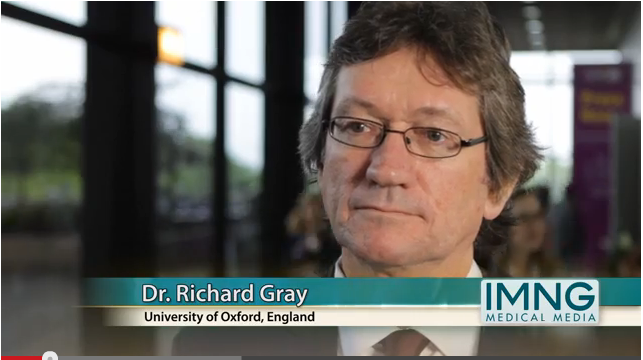
This translated into a borderline significant difference in breast cancer mortality, reducing it from 24% to 21% (P = .06), Richard Gray, M.Sc., reported in the plenary session at the annual meeting of the American Society of Clinical Oncology.

Just 6 months ago, Prof. Gray reported that recurrences were down 25% and breast cancer deaths down 29% in years 10-14 after diagnosis in women on tamoxifen for 10 years in the companion ATLAS (Adjuvant Tamoxifen: Longer Against Shorter) trial.
The benefits came at a cost, however. Extended exposure to tamoxifen in aTTom more than doubled the number of endometrial cancers (102 vs. 45 cases; rate ratio, 2.20; P less than .0001) and significantly increased the risk of dying from it (37 vs. 20 deaths; RR, 1.83; P = .02).
On a population basis, the benefits in reduced breast cancer mortality outweigh the risks, according to Prof. Gray, professor of medical statistics at the University of Oxford (U.K.).
Monitoring with ultrasound for endometrial changes could improve early detection and reduce the impact of this known toxicity, Dr. Hope S. Rugo, director of the breast oncology clinical trials program at the University of California, San Francisco, said in an interview. This risk is also known to vary considerably by age.
"The dramatic findings presented in the aTTom study today will clearly have a significant impact on clinical practice on Monday and are arguably some of the most important data for the treatment of women with early-stage, hormone receptor–positive breast cancer," she said.
The decision to continue tamoxifen beyond the recommended 5 years should be based on the extent of residual risk of recurrence, and must be balanced against tolerability and alternative options, Dr. Rugo said. Extended-duration tamoxifen is a particularly important option for women at risk for late relapse, who are not candidates for aromatase inhibitors because of menopausal status or tolerability.
Great option for premenopausal women
For women who remain premenopausal on tamoxifen, "extended tamoxifen is a great option where there has been no prior standard," said Dr. Ann H. Partridge, who founded the young women with breast cancer program at Boston’s Dana-Farber Cancer Institute and who was invited to discuss the study during the plenary session. These women have a higher risk of disease, and therefore potentially have the greatest risk reduction and lowest risk of serious toxicity, including an almost negligible risk of endometrial cancer.
She went on to say that the personal cost, however, in this population may be the greatest, referring to fertility. Interestingly, ATLAS also reported a significant increase in pulmonary embolism, but it was coupled with a decrease in ischemic heart disease (Lancet 2012 ;805-16 [doi:10.1016/s0140-6736(12)61963-1]). Cardiovascular events have not been reported for aTTOM.
Adherence, which is a challenge in the real world, quality of life, and symptoms such as vasomotor symptoms, alterations in mood, sexual functioning, and musculoskeletal problems also must be considered, Dr. Partridge said.
"We all know that minor side effects can become deeply troubling over time in this setting," she said.
ASCO spokesperson Dr. Sylvia Adams, a breast cancer specialist at New York University Langone Medical Center said in a statement that the results are practice changing for premenopausal women with hormone receptor–positive breast cancer, and especially relevant for women at high risk of recurrence.
A retrospective analysis of combined data from aTTom, ATLAS, and three smaller trials is planned to determine whether certain subgroups of women are most likely to benefit from longer tamoxifen treatment, according to Prof. Gray.
Tamoxifen compliance was about 75%
The aTTom study randomly assigned 6,953 women with estrogen receptor–positive (40%) or ER-untested invasive breast cancer (80% estimated to be ER+) who had been taking tamoxifen for 5 years to continue tamoxifen for another 5 years or stop immediately. Tamoxifen compliance in the continuation arm was about 75%.
Breast cancer recurred in 580 women allocated to continue tamoxifen and 672 randomized to stop (RR, 0.85; P = .003). There was no benefit in years 5-6 after diagnosis (odds ratio, 1.17), but began to emerge later on, in years 7-9 (OR, 0.99), years 10-14 (OR, 0.79) and 15 years or later (0.75), Prof. Gray said.
Breast cancer deaths were reported in 404 patients on extended tamoxifen and 452 patients in the 5-year group (RR, 0.88; P = .06).
Tamoxifen had little effect on all-cause mortality in the extended and 5-year groups (885 vs. 939 deaths; P = .2).
The aTTom study was funded by Cancer Research UK and the UK Medical Research Council. Prof. Gray reported having no financial conflicts. Dr. Partridge said she had no relevant disclosures.
CHICAGO – A second study shows that 10 years of adjuvant tamoxifen is superior to the standard five years in women with estrogen receptor-positive early breast cancer.
Among nearly 7,000 women randomized in the aTTom (Adjuvant Tamoxifen Treatment Offers More) study, extended tamoxifen significantly reduced the risk of recurrence from 32% to 28% in the 10 years or more after diagnosis (P = .003).
This translated into a borderline significant difference in breast cancer mortality, reducing it from 24% to 21% (P = .06), Richard Gray, M.Sc., reported in the plenary session at the annual meeting of the American Society of Clinical Oncology.
Just 6 months ago, Prof. Gray reported that recurrences were down 25% and breast cancer deaths down 29% in years 10-14 after diagnosis in women on tamoxifen for 10 years in the companion ATLAS (Adjuvant Tamoxifen: Longer Against Shorter) trial.
The benefits came at a cost, however. Extended exposure to tamoxifen in aTTom more than doubled the number of endometrial cancers (102 vs. 45 cases; rate ratio, 2.20; P less than .0001) and significantly increased the risk of dying from it (37 vs. 20 deaths; RR, 1.83; P = .02).
On a population basis, the benefits in reduced breast cancer mortality outweigh the risks, according to Prof. Gray, professor of medical statistics at the University of Oxford (U.K.).
Monitoring with ultrasound for endometrial changes could improve early detection and reduce the impact of this known toxicity, Dr. Hope S. Rugo, director of the breast oncology clinical trials program at the University of California, San Francisco, said in an interview. This risk is also known to vary considerably by age.
"The dramatic findings presented in the aTTom study today will clearly have a significant impact on clinical practice on Monday and are arguably some of the most important data for the treatment of women with early-stage, hormone receptor–positive breast cancer," she said.
The decision to continue tamoxifen beyond the recommended 5 years should be based on the extent of residual risk of recurrence, and must be balanced against tolerability and alternative options, Dr. Rugo said. Extended-duration tamoxifen is a particularly important option for women at risk for late relapse, who are not candidates for aromatase inhibitors because of menopausal status or tolerability.
Great option for premenopausal women
For women who remain premenopausal on tamoxifen, "extended tamoxifen is a great option where there has been no prior standard," said Dr. Ann H. Partridge, who founded the young women with breast cancer program at Boston’s Dana-Farber Cancer Institute and who was invited to discuss the study during the plenary session. These women have a higher risk of disease, and therefore potentially have the greatest risk reduction and lowest risk of serious toxicity, including an almost negligible risk of endometrial cancer.
She went on to say that the personal cost, however, in this population may be the greatest, referring to fertility. Interestingly, ATLAS also reported a significant increase in pulmonary embolism, but it was coupled with a decrease in ischemic heart disease (Lancet 2012 ;805-16 [doi:10.1016/s0140-6736(12)61963-1]). Cardiovascular events have not been reported for aTTOM.
Adherence, which is a challenge in the real world, quality of life, and symptoms such as vasomotor symptoms, alterations in mood, sexual functioning, and musculoskeletal problems also must be considered, Dr. Partridge said.
"We all know that minor side effects can become deeply troubling over time in this setting," she said.
ASCO spokesperson Dr. Sylvia Adams, a breast cancer specialist at New York University Langone Medical Center said in a statement that the results are practice changing for premenopausal women with hormone receptor–positive breast cancer, and especially relevant for women at high risk of recurrence.
A retrospective analysis of combined data from aTTom, ATLAS, and three smaller trials is planned to determine whether certain subgroups of women are most likely to benefit from longer tamoxifen treatment, according to Prof. Gray.
Tamoxifen compliance was about 75%
The aTTom study randomly assigned 6,953 women with estrogen receptor–positive (40%) or ER-untested invasive breast cancer (80% estimated to be ER+) who had been taking tamoxifen for 5 years to continue tamoxifen for another 5 years or stop immediately. Tamoxifen compliance in the continuation arm was about 75%.
Breast cancer recurred in 580 women allocated to continue tamoxifen and 672 randomized to stop (RR, 0.85; P = .003). There was no benefit in years 5-6 after diagnosis (odds ratio, 1.17), but began to emerge later on, in years 7-9 (OR, 0.99), years 10-14 (OR, 0.79) and 15 years or later (0.75), Prof. Gray said.
Breast cancer deaths were reported in 404 patients on extended tamoxifen and 452 patients in the 5-year group (RR, 0.88; P = .06).
Tamoxifen had little effect on all-cause mortality in the extended and 5-year groups (885 vs. 939 deaths; P = .2).
The aTTom study was funded by Cancer Research UK and the UK Medical Research Council. Prof. Gray reported having no financial conflicts. Dr. Partridge said she had no relevant disclosures.
CHICAGO – A second study shows that 10 years of adjuvant tamoxifen is superior to the standard five years in women with estrogen receptor-positive early breast cancer.
Among nearly 7,000 women randomized in the aTTom (Adjuvant Tamoxifen Treatment Offers More) study, extended tamoxifen significantly reduced the risk of recurrence from 32% to 28% in the 10 years or more after diagnosis (P = .003).
This translated into a borderline significant difference in breast cancer mortality, reducing it from 24% to 21% (P = .06), Richard Gray, M.Sc., reported in the plenary session at the annual meeting of the American Society of Clinical Oncology.
Just 6 months ago, Prof. Gray reported that recurrences were down 25% and breast cancer deaths down 29% in years 10-14 after diagnosis in women on tamoxifen for 10 years in the companion ATLAS (Adjuvant Tamoxifen: Longer Against Shorter) trial.
The benefits came at a cost, however. Extended exposure to tamoxifen in aTTom more than doubled the number of endometrial cancers (102 vs. 45 cases; rate ratio, 2.20; P less than .0001) and significantly increased the risk of dying from it (37 vs. 20 deaths; RR, 1.83; P = .02).
On a population basis, the benefits in reduced breast cancer mortality outweigh the risks, according to Prof. Gray, professor of medical statistics at the University of Oxford (U.K.).
Monitoring with ultrasound for endometrial changes could improve early detection and reduce the impact of this known toxicity, Dr. Hope S. Rugo, director of the breast oncology clinical trials program at the University of California, San Francisco, said in an interview. This risk is also known to vary considerably by age.
"The dramatic findings presented in the aTTom study today will clearly have a significant impact on clinical practice on Monday and are arguably some of the most important data for the treatment of women with early-stage, hormone receptor–positive breast cancer," she said.
The decision to continue tamoxifen beyond the recommended 5 years should be based on the extent of residual risk of recurrence, and must be balanced against tolerability and alternative options, Dr. Rugo said. Extended-duration tamoxifen is a particularly important option for women at risk for late relapse, who are not candidates for aromatase inhibitors because of menopausal status or tolerability.
Great option for premenopausal women
For women who remain premenopausal on tamoxifen, "extended tamoxifen is a great option where there has been no prior standard," said Dr. Ann H. Partridge, who founded the young women with breast cancer program at Boston’s Dana-Farber Cancer Institute and who was invited to discuss the study during the plenary session. These women have a higher risk of disease, and therefore potentially have the greatest risk reduction and lowest risk of serious toxicity, including an almost negligible risk of endometrial cancer.
She went on to say that the personal cost, however, in this population may be the greatest, referring to fertility. Interestingly, ATLAS also reported a significant increase in pulmonary embolism, but it was coupled with a decrease in ischemic heart disease (Lancet 2012 ;805-16 [doi:10.1016/s0140-6736(12)61963-1]). Cardiovascular events have not been reported for aTTOM.
Adherence, which is a challenge in the real world, quality of life, and symptoms such as vasomotor symptoms, alterations in mood, sexual functioning, and musculoskeletal problems also must be considered, Dr. Partridge said.
"We all know that minor side effects can become deeply troubling over time in this setting," she said.
ASCO spokesperson Dr. Sylvia Adams, a breast cancer specialist at New York University Langone Medical Center said in a statement that the results are practice changing for premenopausal women with hormone receptor–positive breast cancer, and especially relevant for women at high risk of recurrence.
A retrospective analysis of combined data from aTTom, ATLAS, and three smaller trials is planned to determine whether certain subgroups of women are most likely to benefit from longer tamoxifen treatment, according to Prof. Gray.
Tamoxifen compliance was about 75%
The aTTom study randomly assigned 6,953 women with estrogen receptor–positive (40%) or ER-untested invasive breast cancer (80% estimated to be ER+) who had been taking tamoxifen for 5 years to continue tamoxifen for another 5 years or stop immediately. Tamoxifen compliance in the continuation arm was about 75%.
Breast cancer recurred in 580 women allocated to continue tamoxifen and 672 randomized to stop (RR, 0.85; P = .003). There was no benefit in years 5-6 after diagnosis (odds ratio, 1.17), but began to emerge later on, in years 7-9 (OR, 0.99), years 10-14 (OR, 0.79) and 15 years or later (0.75), Prof. Gray said.
Breast cancer deaths were reported in 404 patients on extended tamoxifen and 452 patients in the 5-year group (RR, 0.88; P = .06).
Tamoxifen had little effect on all-cause mortality in the extended and 5-year groups (885 vs. 939 deaths; P = .2).
The aTTom study was funded by Cancer Research UK and the UK Medical Research Council. Prof. Gray reported having no financial conflicts. Dr. Partridge said she had no relevant disclosures.
AT THE ASCO ANNUAL MEETING 2013
Major finding: Ten years of tamoxifen significantly reduced the risk of recurrence from 32% to 28% in the 10 years or more after diagnosis (P = .003).
Data source: Randomized controlled trial in 6,953 with estrogen receptor-positive or ER untested early breast cancer at 176 British centers.
Disclosures: The aTTom study was funded by Cancer Research UK and the UK Medical Research Council. Prof. Gray reported having no financial conflicts. Dr. Partridge said she had no relevant disclosures.
Sorafenib emerges as option for advanced thyroid cancer
CHICAGO – The long wait for a new medical therapy for advanced radioactive-refractory thyroid cancer is drawing to a close.
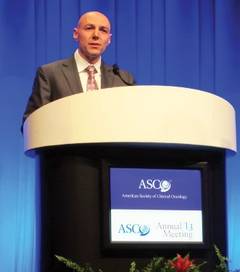
Twice-daily oral sorafenib (Nexavar) nearly doubled the median time to disease progression from 5.8 months with placebo to 10.8 months (hazard ratio, 0.587; P less than .0001) among 417 patients in the double-blind, international phase III DECISION study.
The benefit of sorafenib on this primary endpoint was seen across all patient characteristics, including age, histology, and geographic region, principal investigator Dr. Marcia S. Brose said during the plenary session at the annual meeting of the American Society of Clinical Oncology.
Median overall survival has not been reached for either arm, and will be strongly affected by the 71% of controls who crossed over to open-label treatment with the multikinase inhibitor.
No standard therapy exists for the 5%-15% of patients with thyroid cancer who are refractory to standard treatment with surgery and radioactive iodine (RAI). Doxorubicin (Adriamycin) chemotherapy was approved some 30 years ago, but it is ineffective and toxic.
"Sorafenib is a potential new treatment option for patients with locally advanced or metastatic radioactive-refractory differentiated thyroid cancer," said Dr. Brose, director of thyroid cancer therapeutics and head and neck clinical trials at the University of Pennsylvania, Philadelphia.
Approval sought in U.S. and abroad
DECISION (Study of sorafenib in locally advanced or metastatic patients with radioactive iodine refractory thyroid cancer) is the first phase III study to demonstrate treatment efficacy in this setting. Based on its results, a supplemental New Drug Application will be submitted for sorafenib by midyear in the United States, with global submissions to follow, according to study sponsors Bayer Healthcare Pharmaceuticals and Onyx Pharmaceuticals. The drug is already approved in the United States for advanced renal and liver cancer.
DECISION involved 417 patients in the United States, Europe, or Asia who had locally advanced or metastatic RAI-refractory differentiated thyroid cancer that had progressed within the previous 14 months and had received no prior chemotherapy, targeted therapy, or thalidomide. Patients received twice-daily sorafenib 400 mg or placebo. The majority had distant metastases (96%), 66% had papillary histology, and 61% had an ECOG performance status of 0. Their median age was 63 years.
Sorafenib did not induce any complete responses. Partial responses, defined by at least a 30% reduction in tumor size, occurred in 12.2% of sorafenib patients vs. 0.5% of controls, and lasted for a median of 10.2 months, Dr. Brose said. An additional 42% of patients experienced stable disease for more than 6 months, resulting in a disease control rate of 54% in the sorafenib arm vs. 34% in the placebo arm.
In all, 73% of sorafenib-treated patients had some tumor shrinkage, compared with 27% of placebo-treated patients, and this was often sufficient to relieve symptoms, she said.
It would have been nice to see more partial responses, but all responses were clinically meaningful, Dr. Brose said in an interview.
"Unlike other cancers, what’s interesting is that these patients can have 100 nodules in their chest and actually experience very few symptoms, but what will kill them is when those grow," she said. "So the more clinically important number that is going to prevent the hospitalizations and other complications is not so much the issue of response, but how long it lasts."
Whom and when to treat
Invited discussant Dr. Ezra Cohen, codirector of the head and neck cancer program at the University of Chicago Comprehensive Cancer Center, said not all iodine-refractory patients need treatment, noting that at 400 days, 25% of placebo-treated patients did not progress in DECISION.
The real question going forward is not whether all refractory differentiated thyroid cancer patients should receive sorafenib, but whom and when to treat, he said. Factors that will come into play are whether the patient is symptomatic, the location of the disease and whether that location will portend the onset of symptoms in the near future, and the growth rate of their anatomic disease.
"What you don’t see on this list is the change in chemical factors, and that is specifically thyroid globulin," Dr. Cohen said. "The rise in thyroid globulin, while often important to patients, in my opinion should not be used as a criterion to initiate therapy."
He pointed out that other vascular endothelial growth factor (VEGF) receptor inhibitors are currently being evaluated in iodine-refractory differentiated thyroid cancer, including the ongoing phase III trial of lenvatinib (NCT01321554). "If I had to guess, it will reinforce the data we just saw with sorafenib," he added.
Finally, Dr. Cohen said clinicians are already seeing a wave of patients in the clinic who are refractory to VEGF inhibitors, and that this emerging entity needs to be addressed and patients encouraged to enter clinical trials.
During a press briefing at the meeting, Dr. Gregory A. Masters, of the Helen F. Graham Cancer Center in Newark, Del., told reporters that apart from entering patients in clinical trials, there are no good options for patients who progress.
"Now we have an option where we know that we can prolong progression-free survival, and I think using this for our patients will become a very attractive option and I think, yes, it will become the standard of care," he said.
DECISION was funded by Bayer HealthCare Pharmaceuticals and Onyx Pharmaceuticals. Dr. Brose reported consulting fees, honoraria, and research funding from these companies. Dr. Cohen disclosed relationships with other companies.
Overall, thyroid cancer is very treatable and has an excellent prognosis. However, a subset of patients with thyroid cancer has disease that is resistant to radioactive iodine, and for those patients, especially those with metastatic disease, we have very limited treatment options. Traditional chemotherapy has had little to no efficacy against most thyroid cancers, leaving patients with the only option of enrolling in a clinical trial.

|
| Dr. Rebecca Sippel |
Thankfully, several phase II clinical trials of multikinase inhibitors have recently shown partial response rates in up to 50% of patients. Sorefenib is the first of these drugs to move on to a phase III clinical trial. This study showed disease stabilization in over 50% of patients and a significant improvement in progression-free survival (10.8 vs. 5.8 months). The results of this study will hopefully lead to sorafenib being the first FDA-approved treatment for radioactive iodine-resistant thyroid cancer, which will be a welcome addition to those of us treating patients with advanced thyroid cancer.
While the results of this study are exciting, it is clear that this is not going to be a cure for metastatic thyroid cancer. As with all multikinase inhibitors, not all patients will respond, and of those that do, it is likely that they will develop resistance to treatment, and that the benefits will not be long-standing. Therefore it is important that we continue to pursue our efforts to examine other drugs that have shown efficacy in early studies and also try to better understand the mechanisms behind multikinase drug resistance, so that we can continue to provide treatments and hope to our patients with radioactive iodine-resistant thyroid cancer.
Rebecca S. Sippel, M.D., FACS, is chief of endocrine surgery, department of surgery, University of Wisconsin-Madison.
Overall, thyroid cancer is very treatable and has an excellent prognosis. However, a subset of patients with thyroid cancer has disease that is resistant to radioactive iodine, and for those patients, especially those with metastatic disease, we have very limited treatment options. Traditional chemotherapy has had little to no efficacy against most thyroid cancers, leaving patients with the only option of enrolling in a clinical trial.
|
|
| Dr. Rebecca Sippel |
Thankfully, several phase II clinical trials of multikinase inhibitors have recently shown partial response rates in up to 50% of patients. Sorefenib is the first of these drugs to move on to a phase III clinical trial. This study showed disease stabilization in over 50% of patients and a significant improvement in progression-free survival (10.8 vs. 5.8 months). The results of this study will hopefully lead to sorafenib being the first FDA-approved treatment for radioactive iodine-resistant thyroid cancer, which will be a welcome addition to those of us treating patients with advanced thyroid cancer.
While the results of this study are exciting, it is clear that this is not going to be a cure for metastatic thyroid cancer. As with all multikinase inhibitors, not all patients will respond, and of those that do, it is likely that they will develop resistance to treatment, and that the benefits will not be long-standing. Therefore it is important that we continue to pursue our efforts to examine other drugs that have shown efficacy in early studies and also try to better understand the mechanisms behind multikinase drug resistance, so that we can continue to provide treatments and hope to our patients with radioactive iodine-resistant thyroid cancer.
Rebecca S. Sippel, M.D., FACS, is chief of endocrine surgery, department of surgery, University of Wisconsin-Madison.
Overall, thyroid cancer is very treatable and has an excellent prognosis. However, a subset of patients with thyroid cancer has disease that is resistant to radioactive iodine, and for those patients, especially those with metastatic disease, we have very limited treatment options. Traditional chemotherapy has had little to no efficacy against most thyroid cancers, leaving patients with the only option of enrolling in a clinical trial.
|
|
| Dr. Rebecca Sippel |
Thankfully, several phase II clinical trials of multikinase inhibitors have recently shown partial response rates in up to 50% of patients. Sorefenib is the first of these drugs to move on to a phase III clinical trial. This study showed disease stabilization in over 50% of patients and a significant improvement in progression-free survival (10.8 vs. 5.8 months). The results of this study will hopefully lead to sorafenib being the first FDA-approved treatment for radioactive iodine-resistant thyroid cancer, which will be a welcome addition to those of us treating patients with advanced thyroid cancer.
While the results of this study are exciting, it is clear that this is not going to be a cure for metastatic thyroid cancer. As with all multikinase inhibitors, not all patients will respond, and of those that do, it is likely that they will develop resistance to treatment, and that the benefits will not be long-standing. Therefore it is important that we continue to pursue our efforts to examine other drugs that have shown efficacy in early studies and also try to better understand the mechanisms behind multikinase drug resistance, so that we can continue to provide treatments and hope to our patients with radioactive iodine-resistant thyroid cancer.
Rebecca S. Sippel, M.D., FACS, is chief of endocrine surgery, department of surgery, University of Wisconsin-Madison.
CHICAGO – The long wait for a new medical therapy for advanced radioactive-refractory thyroid cancer is drawing to a close.
Twice-daily oral sorafenib (Nexavar) nearly doubled the median time to disease progression from 5.8 months with placebo to 10.8 months (hazard ratio, 0.587; P less than .0001) among 417 patients in the double-blind, international phase III DECISION study.
The benefit of sorafenib on this primary endpoint was seen across all patient characteristics, including age, histology, and geographic region, principal investigator Dr. Marcia S. Brose said during the plenary session at the annual meeting of the American Society of Clinical Oncology.
Median overall survival has not been reached for either arm, and will be strongly affected by the 71% of controls who crossed over to open-label treatment with the multikinase inhibitor.
No standard therapy exists for the 5%-15% of patients with thyroid cancer who are refractory to standard treatment with surgery and radioactive iodine (RAI). Doxorubicin (Adriamycin) chemotherapy was approved some 30 years ago, but it is ineffective and toxic.
"Sorafenib is a potential new treatment option for patients with locally advanced or metastatic radioactive-refractory differentiated thyroid cancer," said Dr. Brose, director of thyroid cancer therapeutics and head and neck clinical trials at the University of Pennsylvania, Philadelphia.
Approval sought in U.S. and abroad
DECISION (Study of sorafenib in locally advanced or metastatic patients with radioactive iodine refractory thyroid cancer) is the first phase III study to demonstrate treatment efficacy in this setting. Based on its results, a supplemental New Drug Application will be submitted for sorafenib by midyear in the United States, with global submissions to follow, according to study sponsors Bayer Healthcare Pharmaceuticals and Onyx Pharmaceuticals. The drug is already approved in the United States for advanced renal and liver cancer.
DECISION involved 417 patients in the United States, Europe, or Asia who had locally advanced or metastatic RAI-refractory differentiated thyroid cancer that had progressed within the previous 14 months and had received no prior chemotherapy, targeted therapy, or thalidomide. Patients received twice-daily sorafenib 400 mg or placebo. The majority had distant metastases (96%), 66% had papillary histology, and 61% had an ECOG performance status of 0. Their median age was 63 years.
Sorafenib did not induce any complete responses. Partial responses, defined by at least a 30% reduction in tumor size, occurred in 12.2% of sorafenib patients vs. 0.5% of controls, and lasted for a median of 10.2 months, Dr. Brose said. An additional 42% of patients experienced stable disease for more than 6 months, resulting in a disease control rate of 54% in the sorafenib arm vs. 34% in the placebo arm.
In all, 73% of sorafenib-treated patients had some tumor shrinkage, compared with 27% of placebo-treated patients, and this was often sufficient to relieve symptoms, she said.
It would have been nice to see more partial responses, but all responses were clinically meaningful, Dr. Brose said in an interview.
"Unlike other cancers, what’s interesting is that these patients can have 100 nodules in their chest and actually experience very few symptoms, but what will kill them is when those grow," she said. "So the more clinically important number that is going to prevent the hospitalizations and other complications is not so much the issue of response, but how long it lasts."
Whom and when to treat
Invited discussant Dr. Ezra Cohen, codirector of the head and neck cancer program at the University of Chicago Comprehensive Cancer Center, said not all iodine-refractory patients need treatment, noting that at 400 days, 25% of placebo-treated patients did not progress in DECISION.
The real question going forward is not whether all refractory differentiated thyroid cancer patients should receive sorafenib, but whom and when to treat, he said. Factors that will come into play are whether the patient is symptomatic, the location of the disease and whether that location will portend the onset of symptoms in the near future, and the growth rate of their anatomic disease.
"What you don’t see on this list is the change in chemical factors, and that is specifically thyroid globulin," Dr. Cohen said. "The rise in thyroid globulin, while often important to patients, in my opinion should not be used as a criterion to initiate therapy."
He pointed out that other vascular endothelial growth factor (VEGF) receptor inhibitors are currently being evaluated in iodine-refractory differentiated thyroid cancer, including the ongoing phase III trial of lenvatinib (NCT01321554). "If I had to guess, it will reinforce the data we just saw with sorafenib," he added.
Finally, Dr. Cohen said clinicians are already seeing a wave of patients in the clinic who are refractory to VEGF inhibitors, and that this emerging entity needs to be addressed and patients encouraged to enter clinical trials.
During a press briefing at the meeting, Dr. Gregory A. Masters, of the Helen F. Graham Cancer Center in Newark, Del., told reporters that apart from entering patients in clinical trials, there are no good options for patients who progress.
"Now we have an option where we know that we can prolong progression-free survival, and I think using this for our patients will become a very attractive option and I think, yes, it will become the standard of care," he said.
DECISION was funded by Bayer HealthCare Pharmaceuticals and Onyx Pharmaceuticals. Dr. Brose reported consulting fees, honoraria, and research funding from these companies. Dr. Cohen disclosed relationships with other companies.
CHICAGO – The long wait for a new medical therapy for advanced radioactive-refractory thyroid cancer is drawing to a close.
Twice-daily oral sorafenib (Nexavar) nearly doubled the median time to disease progression from 5.8 months with placebo to 10.8 months (hazard ratio, 0.587; P less than .0001) among 417 patients in the double-blind, international phase III DECISION study.
The benefit of sorafenib on this primary endpoint was seen across all patient characteristics, including age, histology, and geographic region, principal investigator Dr. Marcia S. Brose said during the plenary session at the annual meeting of the American Society of Clinical Oncology.
Median overall survival has not been reached for either arm, and will be strongly affected by the 71% of controls who crossed over to open-label treatment with the multikinase inhibitor.
No standard therapy exists for the 5%-15% of patients with thyroid cancer who are refractory to standard treatment with surgery and radioactive iodine (RAI). Doxorubicin (Adriamycin) chemotherapy was approved some 30 years ago, but it is ineffective and toxic.
"Sorafenib is a potential new treatment option for patients with locally advanced or metastatic radioactive-refractory differentiated thyroid cancer," said Dr. Brose, director of thyroid cancer therapeutics and head and neck clinical trials at the University of Pennsylvania, Philadelphia.
Approval sought in U.S. and abroad
DECISION (Study of sorafenib in locally advanced or metastatic patients with radioactive iodine refractory thyroid cancer) is the first phase III study to demonstrate treatment efficacy in this setting. Based on its results, a supplemental New Drug Application will be submitted for sorafenib by midyear in the United States, with global submissions to follow, according to study sponsors Bayer Healthcare Pharmaceuticals and Onyx Pharmaceuticals. The drug is already approved in the United States for advanced renal and liver cancer.
DECISION involved 417 patients in the United States, Europe, or Asia who had locally advanced or metastatic RAI-refractory differentiated thyroid cancer that had progressed within the previous 14 months and had received no prior chemotherapy, targeted therapy, or thalidomide. Patients received twice-daily sorafenib 400 mg or placebo. The majority had distant metastases (96%), 66% had papillary histology, and 61% had an ECOG performance status of 0. Their median age was 63 years.
Sorafenib did not induce any complete responses. Partial responses, defined by at least a 30% reduction in tumor size, occurred in 12.2% of sorafenib patients vs. 0.5% of controls, and lasted for a median of 10.2 months, Dr. Brose said. An additional 42% of patients experienced stable disease for more than 6 months, resulting in a disease control rate of 54% in the sorafenib arm vs. 34% in the placebo arm.
In all, 73% of sorafenib-treated patients had some tumor shrinkage, compared with 27% of placebo-treated patients, and this was often sufficient to relieve symptoms, she said.
It would have been nice to see more partial responses, but all responses were clinically meaningful, Dr. Brose said in an interview.
"Unlike other cancers, what’s interesting is that these patients can have 100 nodules in their chest and actually experience very few symptoms, but what will kill them is when those grow," she said. "So the more clinically important number that is going to prevent the hospitalizations and other complications is not so much the issue of response, but how long it lasts."
Whom and when to treat
Invited discussant Dr. Ezra Cohen, codirector of the head and neck cancer program at the University of Chicago Comprehensive Cancer Center, said not all iodine-refractory patients need treatment, noting that at 400 days, 25% of placebo-treated patients did not progress in DECISION.
The real question going forward is not whether all refractory differentiated thyroid cancer patients should receive sorafenib, but whom and when to treat, he said. Factors that will come into play are whether the patient is symptomatic, the location of the disease and whether that location will portend the onset of symptoms in the near future, and the growth rate of their anatomic disease.
"What you don’t see on this list is the change in chemical factors, and that is specifically thyroid globulin," Dr. Cohen said. "The rise in thyroid globulin, while often important to patients, in my opinion should not be used as a criterion to initiate therapy."
He pointed out that other vascular endothelial growth factor (VEGF) receptor inhibitors are currently being evaluated in iodine-refractory differentiated thyroid cancer, including the ongoing phase III trial of lenvatinib (NCT01321554). "If I had to guess, it will reinforce the data we just saw with sorafenib," he added.
Finally, Dr. Cohen said clinicians are already seeing a wave of patients in the clinic who are refractory to VEGF inhibitors, and that this emerging entity needs to be addressed and patients encouraged to enter clinical trials.
During a press briefing at the meeting, Dr. Gregory A. Masters, of the Helen F. Graham Cancer Center in Newark, Del., told reporters that apart from entering patients in clinical trials, there are no good options for patients who progress.
"Now we have an option where we know that we can prolong progression-free survival, and I think using this for our patients will become a very attractive option and I think, yes, it will become the standard of care," he said.
DECISION was funded by Bayer HealthCare Pharmaceuticals and Onyx Pharmaceuticals. Dr. Brose reported consulting fees, honoraria, and research funding from these companies. Dr. Cohen disclosed relationships with other companies.
AT THE ASCO ANNUAL MEETING 2013
Major finding: Median progression-free survival was 10.8 months with sorafenib and 5.8 months with placebo (P less than .0001).
Data source: Double-blind, phase III, randomized trial in 417 patients with radioactive iodine–refractory thyroid cancer that was locally advanced or metastatic.
Disclosures: DECISION was funded by Bayer HealthCare Pharmaceuticals and Onyx Pharmaceuticals. Dr. Brose reported consulting fees, honoraria, and research funding from these companies. Dr. Cohen disclosed relationships with other companies.
10 years of tamoxifen halves risk of death from breast cancer
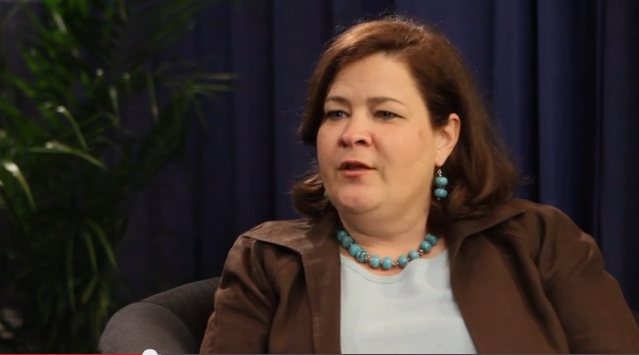
CHICAGO – In a plenary session at the ASCO 2013 annual meeting, Dr. Richard Gray of the University of Oxford said that when it comes to treating breast cancer patients with tamoxifen "the evidence is now overwhelming."
He presented data from the aTTom trial showing that 10 years of tamoxifen treatment cut these patients' risk of dying of breast cancer in half, when compared with 5 years of treatment.
CHICAGO – In a plenary session at the ASCO 2013 annual meeting, Dr. Richard Gray of the University of Oxford said that when it comes to treating breast cancer patients with tamoxifen "the evidence is now overwhelming."
He presented data from the aTTom trial showing that 10 years of tamoxifen treatment cut these patients' risk of dying of breast cancer in half, when compared with 5 years of treatment.
CHICAGO – In a plenary session at the ASCO 2013 annual meeting, Dr. Richard Gray of the University of Oxford said that when it comes to treating breast cancer patients with tamoxifen "the evidence is now overwhelming."
He presented data from the aTTom trial showing that 10 years of tamoxifen treatment cut these patients' risk of dying of breast cancer in half, when compared with 5 years of treatment.
AT THE ASCO ANNUAL MEETING 2013
FIRE-3: Cetuximab/FOLFIRI prolongs metastatic colorectal cancer survival
CHICAGO – Pairing cetuximab with first-line FOLFIRI chemotherapy significantly extended overall survival by roughly 4 months over bevacizumab plus FOLFIRI among patients with KRAS wild-type metastatic colorectal cancer in the phase III FIRE-3 trial.
Patients in the cetuximab (Erbitux) and bevacizumab (Avastin) arms had similar times to disease progression of 10 and 10.3 months, respectively (Hazard ratio, 1.06; P = .54), but those given cetuximab lived for 28.7 months vs. 25 months with bevacizumab (HR, 0.77; P = .017).
The German AIO (Arbeitsgemeinschaft In-ternistische Onkologie) study group trial is the first to directly compare the two approved targeted agents with FOLFIRI (folinic acid, fluorouracil, and irinotecan) chemotherapy.
"Based on our findings, we believe that a substantial gain in survival can be achieved when doctors offer cetuximab-based treatment as first-line to their patients with KRAS wild-type metastatic colorectal cancer," lead author Dr. Volker Heinemann said in a press briefing at the annual meeting of the American Society of Clinical Oncology (ASCO), where the data were presented.
FIRE-3 was a negative trial, however, as the primary end point of objective response rate was statistically similar between the cetuximab and bevacizumab arms at 62% and 57% in an intent-to-treat analysis of all 592 patients (odds ratio, 1.18; P = .18). Response was significantly greater with cetuximab though among the 526 patients assessable for efficacy (72.2% vs. 63.1%; OR, 1.52; P = .17), said Dr. Heinemann, professor of medical oncology at the University of Munich.
The take-home message is that patients with metastatic colorectal cancer have options, but the mixed results also raise questions about the influence of subsequent therapies on overall survival, Dr. Richard Goldberg, physician-in-chief at The Ohio State University’s Comprehensive Cancer Center and an ASCO spokesperson, said at the briefing.
"Really all of the different lines of therapy contributed to this outcome and I would challenge the investigators from the AIO to go back and study their data -- study the second, third and fourth-line treatments that their patients had and help explain this finding, which does seem a bit anomalous," he said.
Dr. Heinemann responded that these data will be presented at a forthcoming meeting in Barcelona, and that data suggest cetuximab-based therapy causes deeper tumor shrinkage than bevacizumab. About 60% of all patients received second-line therapy and about 40% crossed over to the other study arm, he added.
The survival benefit is impressive and will reinforce cetuximab and FOLFIRI in those already using the combination, but is unlikely to result in a profound shift in prescribing habits away from bevacizumab and FOLFOX (folinic acid, 5-fluorouracil, and oxaliplatin) chemotherapy, the dominant combination in the United States, Dr. Al B. Benson III, said in an interview. Instead, many clinicians are awaiting results from the North American intergroup phase III C80405 trial comparing cetuximab with bevacizumab in some patients on FOLFIRI, but the majority on FOLFOX.
"One of the problems in the U.S. with cetuximab is that many patients really do not want to be exposed to the risk of rash; so, what we’ve found, is that people would rather postpone that decision to receive cetuximab if they’re wild-type," said Dr. Benson, professor of hematology/oncology and associate director for clinical investigations at the Robert Lurie Comprehensive Cancer Center of Northwestern University in Chicago.
Dr. Goldberg agreed that it’s doubtful FIRE-3 will change U.S. practice, and said the 80405 trial investigators have petitioned to have the data released ahead of its expected timeline of next year.
"We’re hoping that the data monitoring committee will respond to the uncertainty that this presentation raises and if there is no compelling reason to keep the data blinded, release the data for public scrutiny sometime this year," he said in an interview.
FOLFOX and FOLFIRI are each recommended first-line treatments in the recently updated 2013 National Comprehensive Cancer Network (NCCN) guidelines for metastatic colon cancer, with the addition of a biologic agent optional. If patients receive a bevacizumab-containing regimen first line, the guidelines now recommend that bevacizumab continuation with a different chemotherapy backbone after progression.
Dr. Benson, who helped pen the 2013 NCCN update and is an 80405 trial investigator, said that subsequent therapies, as well as dose reductions and treatment duration, will influence interpretation of the FIRE-3 survival data.
FIRE-3 randomized 592 patients with wild-type tumors to FOLFIRI every 2 weeks plus cetuximab 400 mg/m2 on day 1, followed by 250 mg/m2 weekly, or bevacizumab 5 mg/kg every 2 weeks. An ECOG performance status of 0-1 was present in 98% of patients, 66% were male, and their median age was 64 years.
The trial initially recruited 735 patients independent of KRAS status, but was amended to include only KRAS wild-type tumors after it became known that cetuximab was not active in these patients. At the ASCO 2011 meeting, Dr. Heinemann reported no difference in efficacy or survival between the two strategies in the subgroup of patients with KRAS-mutated tumors.
Among patients with wild-type tumors, the median treatment duration was shorter with cetuximab at 4.7 months vs. 5.3 months with bevacizumab. This is not surprising given the potential for skin issues with cetuximab, but that the toxicity profiles were manageable for both combinations, he said in an interview.
Dr. Heinemann reported honoraria, other remuneration and research funding from the study sponsor, Merck, and honoraria and other remuneration from Roche. Several of his coauthors reported honoraria, other remuneration, and research funding from Merck. Merck distributes cetuximab outside of the United States.
Heinemann, V., et al. "Randomized comparison of FOLFIRI plus cetuximab versus FOLFIRIE plus bevacizumab as first-line treatment of KRAS-wildtype metastatic colorectal cancer: German AIO study KRK-0303 (FIRE-3)." LBA3506.
CHICAGO – Pairing cetuximab with first-line FOLFIRI chemotherapy significantly extended overall survival by roughly 4 months over bevacizumab plus FOLFIRI among patients with KRAS wild-type metastatic colorectal cancer in the phase III FIRE-3 trial.
Patients in the cetuximab (Erbitux) and bevacizumab (Avastin) arms had similar times to disease progression of 10 and 10.3 months, respectively (Hazard ratio, 1.06; P = .54), but those given cetuximab lived for 28.7 months vs. 25 months with bevacizumab (HR, 0.77; P = .017).
The German AIO (Arbeitsgemeinschaft In-ternistische Onkologie) study group trial is the first to directly compare the two approved targeted agents with FOLFIRI (folinic acid, fluorouracil, and irinotecan) chemotherapy.
"Based on our findings, we believe that a substantial gain in survival can be achieved when doctors offer cetuximab-based treatment as first-line to their patients with KRAS wild-type metastatic colorectal cancer," lead author Dr. Volker Heinemann said in a press briefing at the annual meeting of the American Society of Clinical Oncology (ASCO), where the data were presented.
FIRE-3 was a negative trial, however, as the primary end point of objective response rate was statistically similar between the cetuximab and bevacizumab arms at 62% and 57% in an intent-to-treat analysis of all 592 patients (odds ratio, 1.18; P = .18). Response was significantly greater with cetuximab though among the 526 patients assessable for efficacy (72.2% vs. 63.1%; OR, 1.52; P = .17), said Dr. Heinemann, professor of medical oncology at the University of Munich.
The take-home message is that patients with metastatic colorectal cancer have options, but the mixed results also raise questions about the influence of subsequent therapies on overall survival, Dr. Richard Goldberg, physician-in-chief at The Ohio State University’s Comprehensive Cancer Center and an ASCO spokesperson, said at the briefing.
"Really all of the different lines of therapy contributed to this outcome and I would challenge the investigators from the AIO to go back and study their data -- study the second, third and fourth-line treatments that their patients had and help explain this finding, which does seem a bit anomalous," he said.
Dr. Heinemann responded that these data will be presented at a forthcoming meeting in Barcelona, and that data suggest cetuximab-based therapy causes deeper tumor shrinkage than bevacizumab. About 60% of all patients received second-line therapy and about 40% crossed over to the other study arm, he added.
The survival benefit is impressive and will reinforce cetuximab and FOLFIRI in those already using the combination, but is unlikely to result in a profound shift in prescribing habits away from bevacizumab and FOLFOX (folinic acid, 5-fluorouracil, and oxaliplatin) chemotherapy, the dominant combination in the United States, Dr. Al B. Benson III, said in an interview. Instead, many clinicians are awaiting results from the North American intergroup phase III C80405 trial comparing cetuximab with bevacizumab in some patients on FOLFIRI, but the majority on FOLFOX.
"One of the problems in the U.S. with cetuximab is that many patients really do not want to be exposed to the risk of rash; so, what we’ve found, is that people would rather postpone that decision to receive cetuximab if they’re wild-type," said Dr. Benson, professor of hematology/oncology and associate director for clinical investigations at the Robert Lurie Comprehensive Cancer Center of Northwestern University in Chicago.
Dr. Goldberg agreed that it’s doubtful FIRE-3 will change U.S. practice, and said the 80405 trial investigators have petitioned to have the data released ahead of its expected timeline of next year.
"We’re hoping that the data monitoring committee will respond to the uncertainty that this presentation raises and if there is no compelling reason to keep the data blinded, release the data for public scrutiny sometime this year," he said in an interview.
FOLFOX and FOLFIRI are each recommended first-line treatments in the recently updated 2013 National Comprehensive Cancer Network (NCCN) guidelines for metastatic colon cancer, with the addition of a biologic agent optional. If patients receive a bevacizumab-containing regimen first line, the guidelines now recommend that bevacizumab continuation with a different chemotherapy backbone after progression.
Dr. Benson, who helped pen the 2013 NCCN update and is an 80405 trial investigator, said that subsequent therapies, as well as dose reductions and treatment duration, will influence interpretation of the FIRE-3 survival data.
FIRE-3 randomized 592 patients with wild-type tumors to FOLFIRI every 2 weeks plus cetuximab 400 mg/m2 on day 1, followed by 250 mg/m2 weekly, or bevacizumab 5 mg/kg every 2 weeks. An ECOG performance status of 0-1 was present in 98% of patients, 66% were male, and their median age was 64 years.
The trial initially recruited 735 patients independent of KRAS status, but was amended to include only KRAS wild-type tumors after it became known that cetuximab was not active in these patients. At the ASCO 2011 meeting, Dr. Heinemann reported no difference in efficacy or survival between the two strategies in the subgroup of patients with KRAS-mutated tumors.
Among patients with wild-type tumors, the median treatment duration was shorter with cetuximab at 4.7 months vs. 5.3 months with bevacizumab. This is not surprising given the potential for skin issues with cetuximab, but that the toxicity profiles were manageable for both combinations, he said in an interview.
Dr. Heinemann reported honoraria, other remuneration and research funding from the study sponsor, Merck, and honoraria and other remuneration from Roche. Several of his coauthors reported honoraria, other remuneration, and research funding from Merck. Merck distributes cetuximab outside of the United States.
Heinemann, V., et al. "Randomized comparison of FOLFIRI plus cetuximab versus FOLFIRIE plus bevacizumab as first-line treatment of KRAS-wildtype metastatic colorectal cancer: German AIO study KRK-0303 (FIRE-3)." LBA3506.
CHICAGO – Pairing cetuximab with first-line FOLFIRI chemotherapy significantly extended overall survival by roughly 4 months over bevacizumab plus FOLFIRI among patients with KRAS wild-type metastatic colorectal cancer in the phase III FIRE-3 trial.
Patients in the cetuximab (Erbitux) and bevacizumab (Avastin) arms had similar times to disease progression of 10 and 10.3 months, respectively (Hazard ratio, 1.06; P = .54), but those given cetuximab lived for 28.7 months vs. 25 months with bevacizumab (HR, 0.77; P = .017).
The German AIO (Arbeitsgemeinschaft In-ternistische Onkologie) study group trial is the first to directly compare the two approved targeted agents with FOLFIRI (folinic acid, fluorouracil, and irinotecan) chemotherapy.
"Based on our findings, we believe that a substantial gain in survival can be achieved when doctors offer cetuximab-based treatment as first-line to their patients with KRAS wild-type metastatic colorectal cancer," lead author Dr. Volker Heinemann said in a press briefing at the annual meeting of the American Society of Clinical Oncology (ASCO), where the data were presented.
FIRE-3 was a negative trial, however, as the primary end point of objective response rate was statistically similar between the cetuximab and bevacizumab arms at 62% and 57% in an intent-to-treat analysis of all 592 patients (odds ratio, 1.18; P = .18). Response was significantly greater with cetuximab though among the 526 patients assessable for efficacy (72.2% vs. 63.1%; OR, 1.52; P = .17), said Dr. Heinemann, professor of medical oncology at the University of Munich.
The take-home message is that patients with metastatic colorectal cancer have options, but the mixed results also raise questions about the influence of subsequent therapies on overall survival, Dr. Richard Goldberg, physician-in-chief at The Ohio State University’s Comprehensive Cancer Center and an ASCO spokesperson, said at the briefing.
"Really all of the different lines of therapy contributed to this outcome and I would challenge the investigators from the AIO to go back and study their data -- study the second, third and fourth-line treatments that their patients had and help explain this finding, which does seem a bit anomalous," he said.
Dr. Heinemann responded that these data will be presented at a forthcoming meeting in Barcelona, and that data suggest cetuximab-based therapy causes deeper tumor shrinkage than bevacizumab. About 60% of all patients received second-line therapy and about 40% crossed over to the other study arm, he added.
The survival benefit is impressive and will reinforce cetuximab and FOLFIRI in those already using the combination, but is unlikely to result in a profound shift in prescribing habits away from bevacizumab and FOLFOX (folinic acid, 5-fluorouracil, and oxaliplatin) chemotherapy, the dominant combination in the United States, Dr. Al B. Benson III, said in an interview. Instead, many clinicians are awaiting results from the North American intergroup phase III C80405 trial comparing cetuximab with bevacizumab in some patients on FOLFIRI, but the majority on FOLFOX.
"One of the problems in the U.S. with cetuximab is that many patients really do not want to be exposed to the risk of rash; so, what we’ve found, is that people would rather postpone that decision to receive cetuximab if they’re wild-type," said Dr. Benson, professor of hematology/oncology and associate director for clinical investigations at the Robert Lurie Comprehensive Cancer Center of Northwestern University in Chicago.
Dr. Goldberg agreed that it’s doubtful FIRE-3 will change U.S. practice, and said the 80405 trial investigators have petitioned to have the data released ahead of its expected timeline of next year.
"We’re hoping that the data monitoring committee will respond to the uncertainty that this presentation raises and if there is no compelling reason to keep the data blinded, release the data for public scrutiny sometime this year," he said in an interview.
FOLFOX and FOLFIRI are each recommended first-line treatments in the recently updated 2013 National Comprehensive Cancer Network (NCCN) guidelines for metastatic colon cancer, with the addition of a biologic agent optional. If patients receive a bevacizumab-containing regimen first line, the guidelines now recommend that bevacizumab continuation with a different chemotherapy backbone after progression.
Dr. Benson, who helped pen the 2013 NCCN update and is an 80405 trial investigator, said that subsequent therapies, as well as dose reductions and treatment duration, will influence interpretation of the FIRE-3 survival data.
FIRE-3 randomized 592 patients with wild-type tumors to FOLFIRI every 2 weeks plus cetuximab 400 mg/m2 on day 1, followed by 250 mg/m2 weekly, or bevacizumab 5 mg/kg every 2 weeks. An ECOG performance status of 0-1 was present in 98% of patients, 66% were male, and their median age was 64 years.
The trial initially recruited 735 patients independent of KRAS status, but was amended to include only KRAS wild-type tumors after it became known that cetuximab was not active in these patients. At the ASCO 2011 meeting, Dr. Heinemann reported no difference in efficacy or survival between the two strategies in the subgroup of patients with KRAS-mutated tumors.
Among patients with wild-type tumors, the median treatment duration was shorter with cetuximab at 4.7 months vs. 5.3 months with bevacizumab. This is not surprising given the potential for skin issues with cetuximab, but that the toxicity profiles were manageable for both combinations, he said in an interview.
Dr. Heinemann reported honoraria, other remuneration and research funding from the study sponsor, Merck, and honoraria and other remuneration from Roche. Several of his coauthors reported honoraria, other remuneration, and research funding from Merck. Merck distributes cetuximab outside of the United States.
Heinemann, V., et al. "Randomized comparison of FOLFIRI plus cetuximab versus FOLFIRIE plus bevacizumab as first-line treatment of KRAS-wildtype metastatic colorectal cancer: German AIO study KRK-0303 (FIRE-3)." LBA3506.
AT THE ASCO ANNUAL MEETING 2013
Major finding: Median overall survival with cetuximab plus FOLFIRI was 28.7 months vs. 25 months with bevacizumab plus FOLFIRI.
Data source: Multicenter, randomized phase III trial of first-line cetuximab or bevacizumab plus FOLFIRI chemotherapy in 592 patients with wild-type KRAS metastatic colorectal cancer.
Disclosures: Dr. Heinemann reported honoraria, other remuneration, and research funding from the study sponsor, Merck, and honoraria and other remuneration from Roche. Several of his coauthors reported honoraria, other remuneration, and research funding from Merck. Merck distributes cetuximab outside of the United States.
Survival equivalent with sublobar, lobar resection of stage Ia NSCLC
MINNEAPOLIS – Sublobar resection and lobectomy resulted in equivalent lung cancer survival and overall recurrence rates in a screen-detected cohort of 348 stage IA non–small-cell lung cancer patients.
In all, 7% of patients (4/54) who underwent sublobar resection and 10% of those (29/294) who underwent lobectomy died of lung cancer after a median follow-up of 73 months (P = .64).
All-cause mortality was also statistically similar at 17% and 22%, said Dr. Nasser Altorki, professor of cardiothoracic surgery and director of thoracic surgery at New York Presbyterian–Weill Cornell Medical Center in New York.
Although lobectomy has been the standard of care for resection of early-stage non–small-cell lung cancer since 1994, several studies support sublobar resection in patients with small peripheral tumors and the elderly with compromised pulmonary reserve.
The best surgical treatment for younger patients with adequate cardiopulmonary function remains controversial, with two large, ongoing trials in the U.S. and Japan evaluating lobar vs. sublobar resection in this setting. A recent best evidence paper (Interact. CardioVasc. Thorac. Surg. 2012;14:816-20) concluded that lobectomy is still the best surgical option for these patients, citing evidence of lower survival and higher recurrence rates with wedge resections than with anatomic segmentectomies. The two sublobar techniques are often lumped together in comparisons with lobectomy, but are not technically or oncologically the same.
Wedge resection in the current study seemed to be associated with a higher rate of recurrence than segmentectomy, Dr. Altorki said at the annual meeting of the American Association for Thoracic Surgery.
Recurrence occurred in 32 patients after lobectomy and 8 after sublobar resection (11% vs. 15%; P = .40), with all of the sublobar resection recurrences occurring after wedge resection (8/38 or 21% vs. 0%).
"I don’t want to say this is a practice-changing study; however, it is a study that calls for more technical equipoise in our approach to the [surgical] treatment of lung cancer," he said during a discussion of the results. "Clearly, we can apply this operation to patients who would be candidates for both lobectomy and sublobar resection, but it does not extend to those patients, for example, that would have been poor candidates for any surgical resection."
The 348 patients had c1A non–small-cell lung cancer that presented as a solid nodule on computed tomography screening and underwent surgery as part of the International Early Lung Cancer Action Program from 1993 to 2011. Comorbidities were similar among the lobectomy and sublobar patients including cardiac disease (6% vs. 11%), chronic obstructive pulmonary disease (15% vs. 26%) and diabetes (9% vs. 7%). Their median age was 63 vs. 65 years, and the median number of pack-years of smoking was 48 vs. 49, respectively.
The lobectomy group had significantly larger tumors (13 mm vs. 11 mm), more frequent sampling of mediastinal nodes (78% vs. 56%) and more resected lymph nodes (mean 8 vs. 5).
The overall rate of hospital mortality in the multicenter study was low at 0.9% (3/348) and "represents what is achievable in screening centers of excellence," Dr. Altorki said.
Ten-year survival was 88% with lobectomy and 90% with sublobar resection (log rank P = .64). There was no difference in patients with tumors less than 2 cm (88% vs. 89%), who represented the majority or 86% of the cohort.
Cox regression analysis, adjusted for the above potential confounders, showed that only age (hazard ratio, 2.9; P less than .0001) and severe emphysema (HR, 4.2; P = .005) significantly predicted survival, whereas sublobar resection did not (HR, 0.8; P = .60), he said.
Invited discussant Dr. Joseph S. Friedberg, chief of thoracic surgery at the University of Pennsylvania Health System-Presbyterian in Philadelphia, expressed surprise that despite undergoing surgery by highly qualified general thoracic surgeons, 70% of sublobar resections were performed as wedge and not segmentectomies, and that more than 40% of sublobar resection patients and nearly a quarter of lobectomy patients did not have one mediastinal node biopsied.
"One would expect, based on the Lung Cancer Study Group analysis and common sense, that some of these patients, especially sublobar resection patients, were understaged and/or undertreated and yet the results are as good as anything in the literature," he said. "How do you reconcile that?"
Dr. Altorki said assessment of the mediastinal field was disappointing and that further education is needed on the prognostic and therapeutic benefits of such assessment, but that the rate far exceeds what is in the published literature. He also speculated that most of the patients were done by video-assisted thoracic surgery and that mediastinal node assessment may not be as straightforward with VATS as it is with open surgery.
Dr. Altorki said that, going in, many of the surgeons may have thought that a 1- to 1.2-cm tumor may be equally resected with wedge resection and anatomic segmentectomy, and that this "is a job we have to address in ongoing randomized trials."
Dr. Altorki reported no relevant financial disclosures.
MINNEAPOLIS – Sublobar resection and lobectomy resulted in equivalent lung cancer survival and overall recurrence rates in a screen-detected cohort of 348 stage IA non–small-cell lung cancer patients.
In all, 7% of patients (4/54) who underwent sublobar resection and 10% of those (29/294) who underwent lobectomy died of lung cancer after a median follow-up of 73 months (P = .64).
All-cause mortality was also statistically similar at 17% and 22%, said Dr. Nasser Altorki, professor of cardiothoracic surgery and director of thoracic surgery at New York Presbyterian–Weill Cornell Medical Center in New York.
Although lobectomy has been the standard of care for resection of early-stage non–small-cell lung cancer since 1994, several studies support sublobar resection in patients with small peripheral tumors and the elderly with compromised pulmonary reserve.
The best surgical treatment for younger patients with adequate cardiopulmonary function remains controversial, with two large, ongoing trials in the U.S. and Japan evaluating lobar vs. sublobar resection in this setting. A recent best evidence paper (Interact. CardioVasc. Thorac. Surg. 2012;14:816-20) concluded that lobectomy is still the best surgical option for these patients, citing evidence of lower survival and higher recurrence rates with wedge resections than with anatomic segmentectomies. The two sublobar techniques are often lumped together in comparisons with lobectomy, but are not technically or oncologically the same.
Wedge resection in the current study seemed to be associated with a higher rate of recurrence than segmentectomy, Dr. Altorki said at the annual meeting of the American Association for Thoracic Surgery.
Recurrence occurred in 32 patients after lobectomy and 8 after sublobar resection (11% vs. 15%; P = .40), with all of the sublobar resection recurrences occurring after wedge resection (8/38 or 21% vs. 0%).
"I don’t want to say this is a practice-changing study; however, it is a study that calls for more technical equipoise in our approach to the [surgical] treatment of lung cancer," he said during a discussion of the results. "Clearly, we can apply this operation to patients who would be candidates for both lobectomy and sublobar resection, but it does not extend to those patients, for example, that would have been poor candidates for any surgical resection."
The 348 patients had c1A non–small-cell lung cancer that presented as a solid nodule on computed tomography screening and underwent surgery as part of the International Early Lung Cancer Action Program from 1993 to 2011. Comorbidities were similar among the lobectomy and sublobar patients including cardiac disease (6% vs. 11%), chronic obstructive pulmonary disease (15% vs. 26%) and diabetes (9% vs. 7%). Their median age was 63 vs. 65 years, and the median number of pack-years of smoking was 48 vs. 49, respectively.
The lobectomy group had significantly larger tumors (13 mm vs. 11 mm), more frequent sampling of mediastinal nodes (78% vs. 56%) and more resected lymph nodes (mean 8 vs. 5).
The overall rate of hospital mortality in the multicenter study was low at 0.9% (3/348) and "represents what is achievable in screening centers of excellence," Dr. Altorki said.
Ten-year survival was 88% with lobectomy and 90% with sublobar resection (log rank P = .64). There was no difference in patients with tumors less than 2 cm (88% vs. 89%), who represented the majority or 86% of the cohort.
Cox regression analysis, adjusted for the above potential confounders, showed that only age (hazard ratio, 2.9; P less than .0001) and severe emphysema (HR, 4.2; P = .005) significantly predicted survival, whereas sublobar resection did not (HR, 0.8; P = .60), he said.
Invited discussant Dr. Joseph S. Friedberg, chief of thoracic surgery at the University of Pennsylvania Health System-Presbyterian in Philadelphia, expressed surprise that despite undergoing surgery by highly qualified general thoracic surgeons, 70% of sublobar resections were performed as wedge and not segmentectomies, and that more than 40% of sublobar resection patients and nearly a quarter of lobectomy patients did not have one mediastinal node biopsied.
"One would expect, based on the Lung Cancer Study Group analysis and common sense, that some of these patients, especially sublobar resection patients, were understaged and/or undertreated and yet the results are as good as anything in the literature," he said. "How do you reconcile that?"
Dr. Altorki said assessment of the mediastinal field was disappointing and that further education is needed on the prognostic and therapeutic benefits of such assessment, but that the rate far exceeds what is in the published literature. He also speculated that most of the patients were done by video-assisted thoracic surgery and that mediastinal node assessment may not be as straightforward with VATS as it is with open surgery.
Dr. Altorki said that, going in, many of the surgeons may have thought that a 1- to 1.2-cm tumor may be equally resected with wedge resection and anatomic segmentectomy, and that this "is a job we have to address in ongoing randomized trials."
Dr. Altorki reported no relevant financial disclosures.
MINNEAPOLIS – Sublobar resection and lobectomy resulted in equivalent lung cancer survival and overall recurrence rates in a screen-detected cohort of 348 stage IA non–small-cell lung cancer patients.
In all, 7% of patients (4/54) who underwent sublobar resection and 10% of those (29/294) who underwent lobectomy died of lung cancer after a median follow-up of 73 months (P = .64).
All-cause mortality was also statistically similar at 17% and 22%, said Dr. Nasser Altorki, professor of cardiothoracic surgery and director of thoracic surgery at New York Presbyterian–Weill Cornell Medical Center in New York.
Although lobectomy has been the standard of care for resection of early-stage non–small-cell lung cancer since 1994, several studies support sublobar resection in patients with small peripheral tumors and the elderly with compromised pulmonary reserve.
The best surgical treatment for younger patients with adequate cardiopulmonary function remains controversial, with two large, ongoing trials in the U.S. and Japan evaluating lobar vs. sublobar resection in this setting. A recent best evidence paper (Interact. CardioVasc. Thorac. Surg. 2012;14:816-20) concluded that lobectomy is still the best surgical option for these patients, citing evidence of lower survival and higher recurrence rates with wedge resections than with anatomic segmentectomies. The two sublobar techniques are often lumped together in comparisons with lobectomy, but are not technically or oncologically the same.
Wedge resection in the current study seemed to be associated with a higher rate of recurrence than segmentectomy, Dr. Altorki said at the annual meeting of the American Association for Thoracic Surgery.
Recurrence occurred in 32 patients after lobectomy and 8 after sublobar resection (11% vs. 15%; P = .40), with all of the sublobar resection recurrences occurring after wedge resection (8/38 or 21% vs. 0%).
"I don’t want to say this is a practice-changing study; however, it is a study that calls for more technical equipoise in our approach to the [surgical] treatment of lung cancer," he said during a discussion of the results. "Clearly, we can apply this operation to patients who would be candidates for both lobectomy and sublobar resection, but it does not extend to those patients, for example, that would have been poor candidates for any surgical resection."
The 348 patients had c1A non–small-cell lung cancer that presented as a solid nodule on computed tomography screening and underwent surgery as part of the International Early Lung Cancer Action Program from 1993 to 2011. Comorbidities were similar among the lobectomy and sublobar patients including cardiac disease (6% vs. 11%), chronic obstructive pulmonary disease (15% vs. 26%) and diabetes (9% vs. 7%). Their median age was 63 vs. 65 years, and the median number of pack-years of smoking was 48 vs. 49, respectively.
The lobectomy group had significantly larger tumors (13 mm vs. 11 mm), more frequent sampling of mediastinal nodes (78% vs. 56%) and more resected lymph nodes (mean 8 vs. 5).
The overall rate of hospital mortality in the multicenter study was low at 0.9% (3/348) and "represents what is achievable in screening centers of excellence," Dr. Altorki said.
Ten-year survival was 88% with lobectomy and 90% with sublobar resection (log rank P = .64). There was no difference in patients with tumors less than 2 cm (88% vs. 89%), who represented the majority or 86% of the cohort.
Cox regression analysis, adjusted for the above potential confounders, showed that only age (hazard ratio, 2.9; P less than .0001) and severe emphysema (HR, 4.2; P = .005) significantly predicted survival, whereas sublobar resection did not (HR, 0.8; P = .60), he said.
Invited discussant Dr. Joseph S. Friedberg, chief of thoracic surgery at the University of Pennsylvania Health System-Presbyterian in Philadelphia, expressed surprise that despite undergoing surgery by highly qualified general thoracic surgeons, 70% of sublobar resections were performed as wedge and not segmentectomies, and that more than 40% of sublobar resection patients and nearly a quarter of lobectomy patients did not have one mediastinal node biopsied.
"One would expect, based on the Lung Cancer Study Group analysis and common sense, that some of these patients, especially sublobar resection patients, were understaged and/or undertreated and yet the results are as good as anything in the literature," he said. "How do you reconcile that?"
Dr. Altorki said assessment of the mediastinal field was disappointing and that further education is needed on the prognostic and therapeutic benefits of such assessment, but that the rate far exceeds what is in the published literature. He also speculated that most of the patients were done by video-assisted thoracic surgery and that mediastinal node assessment may not be as straightforward with VATS as it is with open surgery.
Dr. Altorki said that, going in, many of the surgeons may have thought that a 1- to 1.2-cm tumor may be equally resected with wedge resection and anatomic segmentectomy, and that this "is a job we have to address in ongoing randomized trials."
Dr. Altorki reported no relevant financial disclosures.
AT THE AATS ANNUAL MEETING
Major finding: Lung cancer–specific mortality was 7% with sublobar resection and 10% with lobar resection.
Data source: Retrospective analysis of 348 patients with stage IA non–small-cell lung cancer in the prospective International Early Lung Cancer Action Program.
Disclosures: Dr. Altorki reported no relevant financial disclosures.
Fewer graduates, more thoracic surgery board failures
MINNEAPOLIS – The number of residents failing the American Board of Thoracic Surgery exams has risen significantly in the wake of reduced residency hours, a new study confirms.
The change is particularly alarming for the ABTS oral boards, Dr. Susan Moffatt-Bruce reported at the annual meeting of the American Association for Thoracic Surgery.
The failure rate for the oral exams doubled from 14.4% to 28.1% between 2000 to 2005 and 2006 to 2011, the 6 years before and 6 years after the Accreditation Council for Graduate Medical Education imposed an 80-hour residency work week. By 2012, 30% of residents were failing the oral exam.

Of the 903 residents who took the written exam between 2000 and 2005, 10.6% failed, compared with 17.4% of the 672 residents writing the exam between 2006 and 2007. By 2012, however, the success rate reached 85.4%.
Although the percentage failing the written exam was lower than for the oral exams in both time periods, it remained significantly higher from 2006 to 2011 than before the 80-hour work week requirement (12% vs. 21%) said Dr. Moffatt-Bruce, a cardiothoracic surgeon at the Ohio State Medical Center in Columbus.
"There are a decreasing number of trainees, and we will not meet the needs of a growing American population," she said, observing that the shortfall of certified cardiothoracic surgeons could be realized as early as 2020.
Dr. Moffatt-Bruce speculated that the higher failure rate for the oral exams could be the result of a decrease in the number of critical cardiac cases and in experiential learning for thoracic surgery residents, particularly on the weekends and evenings.
"It is very hard to pass an oral exam question about a scenario that you may never have encountered as a resident," she said.
Since 2000, the number of new certificates awarded by the ABTS has decreased steadily from a peak of 126 certificates in 2002 to 93 certificates in 2011. An additional 100 residents would need to be trained to meet the need for cardiothoracic surgeons by 2030, Dr. Moffatt-Bruce said.
She was careful to acknowledge existing efforts by various groups to attract students, such as the 6-year Integrated Cardiothoracic Surgery Residency Program (I-6), but she said additional strategies are needed to improve not only the number of trainees, but also the way in which they learn.
During a discussion of the results, Dr. Edward Verrier, surgical director, Joint Council of Thoracic Surgery Education, said various societies have gotten together and this spring will roll out a completely new content management system for the cardiothoracic surgery curriculum as well as a new curriculum and learning management tool that will help track issues related to competency and various milestones.
"It’s very important to recognize that these issues have been on the table; they’ve been very carefully thought out at the board level, the society level and by some of the other organizations dedicated to education, and we will see significant transitions over the next year," he said.
Dr. Teresa Kieser, a cardiothoracic surgeon with University of Calgary in Canada, said that more than half of medical school graduates in Canada are women, but that perhaps women aren’t choosing cardiothoracic surgery as a career.
Dr. Moffatt-Bruce, who trained in both the U.S. and Canada, agreed there are challenges facing women in cardiothoracic surgery, but said the curriculum needs to be more attractive to everyone and that providing experiences early on in the medical school curriculum and environment will entice residents "to see that this really is a great career choice, that this is the way of the future and that the need is going to be very real. We have to set the burning platform for everyone and we can do that very easily as an association with the various societies."
Dr. Moffatt-Bruce and her coauthors reported having no financial disclosures.
MINNEAPOLIS – The number of residents failing the American Board of Thoracic Surgery exams has risen significantly in the wake of reduced residency hours, a new study confirms.
The change is particularly alarming for the ABTS oral boards, Dr. Susan Moffatt-Bruce reported at the annual meeting of the American Association for Thoracic Surgery.
The failure rate for the oral exams doubled from 14.4% to 28.1% between 2000 to 2005 and 2006 to 2011, the 6 years before and 6 years after the Accreditation Council for Graduate Medical Education imposed an 80-hour residency work week. By 2012, 30% of residents were failing the oral exam.
Of the 903 residents who took the written exam between 2000 and 2005, 10.6% failed, compared with 17.4% of the 672 residents writing the exam between 2006 and 2007. By 2012, however, the success rate reached 85.4%.
Although the percentage failing the written exam was lower than for the oral exams in both time periods, it remained significantly higher from 2006 to 2011 than before the 80-hour work week requirement (12% vs. 21%) said Dr. Moffatt-Bruce, a cardiothoracic surgeon at the Ohio State Medical Center in Columbus.
"There are a decreasing number of trainees, and we will not meet the needs of a growing American population," she said, observing that the shortfall of certified cardiothoracic surgeons could be realized as early as 2020.
Dr. Moffatt-Bruce speculated that the higher failure rate for the oral exams could be the result of a decrease in the number of critical cardiac cases and in experiential learning for thoracic surgery residents, particularly on the weekends and evenings.
"It is very hard to pass an oral exam question about a scenario that you may never have encountered as a resident," she said.
Since 2000, the number of new certificates awarded by the ABTS has decreased steadily from a peak of 126 certificates in 2002 to 93 certificates in 2011. An additional 100 residents would need to be trained to meet the need for cardiothoracic surgeons by 2030, Dr. Moffatt-Bruce said.
She was careful to acknowledge existing efforts by various groups to attract students, such as the 6-year Integrated Cardiothoracic Surgery Residency Program (I-6), but she said additional strategies are needed to improve not only the number of trainees, but also the way in which they learn.
During a discussion of the results, Dr. Edward Verrier, surgical director, Joint Council of Thoracic Surgery Education, said various societies have gotten together and this spring will roll out a completely new content management system for the cardiothoracic surgery curriculum as well as a new curriculum and learning management tool that will help track issues related to competency and various milestones.
"It’s very important to recognize that these issues have been on the table; they’ve been very carefully thought out at the board level, the society level and by some of the other organizations dedicated to education, and we will see significant transitions over the next year," he said.
Dr. Teresa Kieser, a cardiothoracic surgeon with University of Calgary in Canada, said that more than half of medical school graduates in Canada are women, but that perhaps women aren’t choosing cardiothoracic surgery as a career.
Dr. Moffatt-Bruce, who trained in both the U.S. and Canada, agreed there are challenges facing women in cardiothoracic surgery, but said the curriculum needs to be more attractive to everyone and that providing experiences early on in the medical school curriculum and environment will entice residents "to see that this really is a great career choice, that this is the way of the future and that the need is going to be very real. We have to set the burning platform for everyone and we can do that very easily as an association with the various societies."
Dr. Moffatt-Bruce and her coauthors reported having no financial disclosures.
MINNEAPOLIS – The number of residents failing the American Board of Thoracic Surgery exams has risen significantly in the wake of reduced residency hours, a new study confirms.
The change is particularly alarming for the ABTS oral boards, Dr. Susan Moffatt-Bruce reported at the annual meeting of the American Association for Thoracic Surgery.
The failure rate for the oral exams doubled from 14.4% to 28.1% between 2000 to 2005 and 2006 to 2011, the 6 years before and 6 years after the Accreditation Council for Graduate Medical Education imposed an 80-hour residency work week. By 2012, 30% of residents were failing the oral exam.
Of the 903 residents who took the written exam between 2000 and 2005, 10.6% failed, compared with 17.4% of the 672 residents writing the exam between 2006 and 2007. By 2012, however, the success rate reached 85.4%.
Although the percentage failing the written exam was lower than for the oral exams in both time periods, it remained significantly higher from 2006 to 2011 than before the 80-hour work week requirement (12% vs. 21%) said Dr. Moffatt-Bruce, a cardiothoracic surgeon at the Ohio State Medical Center in Columbus.
"There are a decreasing number of trainees, and we will not meet the needs of a growing American population," she said, observing that the shortfall of certified cardiothoracic surgeons could be realized as early as 2020.
Dr. Moffatt-Bruce speculated that the higher failure rate for the oral exams could be the result of a decrease in the number of critical cardiac cases and in experiential learning for thoracic surgery residents, particularly on the weekends and evenings.
"It is very hard to pass an oral exam question about a scenario that you may never have encountered as a resident," she said.
Since 2000, the number of new certificates awarded by the ABTS has decreased steadily from a peak of 126 certificates in 2002 to 93 certificates in 2011. An additional 100 residents would need to be trained to meet the need for cardiothoracic surgeons by 2030, Dr. Moffatt-Bruce said.
She was careful to acknowledge existing efforts by various groups to attract students, such as the 6-year Integrated Cardiothoracic Surgery Residency Program (I-6), but she said additional strategies are needed to improve not only the number of trainees, but also the way in which they learn.
During a discussion of the results, Dr. Edward Verrier, surgical director, Joint Council of Thoracic Surgery Education, said various societies have gotten together and this spring will roll out a completely new content management system for the cardiothoracic surgery curriculum as well as a new curriculum and learning management tool that will help track issues related to competency and various milestones.
"It’s very important to recognize that these issues have been on the table; they’ve been very carefully thought out at the board level, the society level and by some of the other organizations dedicated to education, and we will see significant transitions over the next year," he said.
Dr. Teresa Kieser, a cardiothoracic surgeon with University of Calgary in Canada, said that more than half of medical school graduates in Canada are women, but that perhaps women aren’t choosing cardiothoracic surgery as a career.
Dr. Moffatt-Bruce, who trained in both the U.S. and Canada, agreed there are challenges facing women in cardiothoracic surgery, but said the curriculum needs to be more attractive to everyone and that providing experiences early on in the medical school curriculum and environment will entice residents "to see that this really is a great career choice, that this is the way of the future and that the need is going to be very real. We have to set the burning platform for everyone and we can do that very easily as an association with the various societies."
Dr. Moffatt-Bruce and her coauthors reported having no financial disclosures.
AT THE AATS ANNUAL MEETING
Major finding: The failure rate for ABTS oral exams doubled from 14.4% to 28.1% between 2000-2005 and 2006-2011, the 6 years before and after the 80-hour residency work week.
Data source: Retrospective analysis of ABTS Board scores, both written and oral, from 2000-2011.
Disclosures: Dr. Moffatt-Bruce and her coauthors reported having no financial disclosures.

Single, high-dose erythropoietin cuts heart surgery transfusions
MINNEAPOLIS – A single high dose of human recombinant erythropoietin given 2 days before heart surgery reduced blood transfusions by 65%, without substantially increasing mortality or morbidity in the prospective, randomized SHOT trial.
Patients who received 80,000 IU of erythropoietin (Eprex) in a single bolus plus iron supplementation until discharge needed 0.39 blood units/patient, compared with 1.12 units/patient for those receiving standard care involving thromboelastography and tranexamic acid (P less than .001; risk ratio, 0.338).
All-cause mortality at 45 days postoperative was 3.0% with erythropoietin and 3.33% without it (P = .26), Dr. Luca Weltert said at the annual meeting of the American Association for Thoracic Surgery.

The investigators undertook the SHOT (Blood Sparing Strategies: Single Shot High Dose Erythropoietin Two Days Before Heart Surgery) trial because their original erythropoietin protocol proved too complicated for everyday use. The protocol was incorporated into the 2012 Society of Thoracic Surgeons and Society of Cardiovascular Anesthesiologists blood conservation clinical practice guidelines, but consisted of five different doses of erythropoietin in 5 days, totaling 52,000 IU, he explained.
Invited discussant Dr. Victor Ferraris, of the Lexington (Ky.) Veterans Affairs Medical Center, questioned whether the high dose of erythropoietin increased thromboembolic events, in light of the black box warnings added to erythropoiesis-stimulating agents due to an increased risk for thromboembolic events in patients with malignancy and an increased risk of serious cardiovascular events in patients with chronic kidney disease when the hemoglobin level exceeds 12 g/dL.
Thromboembolic events were not significantly different between groups, and the trial did not include cancer patients, said Dr. Weltert of the European Hospital in Rome.
Major nonfatal adverse events at 45 days were reported in 4.33% of erythropoietin and 5.67% of control patients (P = .13). Specifically, there were no differences in neurologic complications (4 vs. 5 events, respectively), long-term wound infection (4 in both groups), deep vein thrombosis (2 vs. 5), onset of acute hypertension (1 vs. 2), and new-onset renal failure (2 vs. 1).
Attendees continued this line of questioning, asking how reliable the negative finding is and whether the investigators could have missed a population with a positive result. The efficacy endpoint was based on a minimal sample size of 400 patients, and the trial enrolled 600 consecutive "all comers," Dr. Weltert said, but he added that 3,000 to 4,000 patients would be needed for the safety endpoint, "so the samples are ridiculously small to really state strongly that there is no harm for a subgroup."
The two study arms were well matched, with 35% of all patients undergoing coronary artery bypass grafting, 31% valve surgery, roughly 20% repair of the ascending aorta, and other in about 14%. The mean logistic EuroScore was 9.94 in the erythropoietin group and 10.12 in the control group, and the mean ages were 72.9 and 70.4 years, respectively.
Mean hemoglobin levels on day 4 postoperative was significantly higher in the erythropoietin group than in controls (10.21 vs. 9.01 g/dL; P = .02), Dr. Weltert said.
There were no significant differences between the erythropoietin and control groups in intensive care unit stay (2.71 vs. 2.60 days, respectively), perioperative myocardial infarction (7 vs. 7), cardiac tamponade (3 vs. 5), or need for reintubation (13 vs. 15).
An attendee asked whether hemoglobin levels drifted between days 3 and 4 postoperatively, as this can confound the decision to transfuse after cardiac surgery, and whether the investigators looked at another potential confounder, hemoglobin trigger, since no less than five randomized controlled trials have shown that a hemoglobin level of 7-8 g/dL should be used as a transfusion trigger.
Dr. Weltert said the team picked day 4 to check hemoglobin levels for practical reasons because that’s the day when you see the biggest drift and that the erythropoietin group fared better. He went on to say, "The trigger is extremely important, and I think it will be the very next step in bloodless surgery."
The investigators did compare costs for the two strategies, with standard care ringing up at 336 euros (U.S.$434), vs. 297 euros (U.S.$383) for the erythropoietin protocol (P = .05).
The European Hospital sponsored the study. Dr. Weltert reported no relevant disclosures.
MINNEAPOLIS – A single high dose of human recombinant erythropoietin given 2 days before heart surgery reduced blood transfusions by 65%, without substantially increasing mortality or morbidity in the prospective, randomized SHOT trial.
Patients who received 80,000 IU of erythropoietin (Eprex) in a single bolus plus iron supplementation until discharge needed 0.39 blood units/patient, compared with 1.12 units/patient for those receiving standard care involving thromboelastography and tranexamic acid (P less than .001; risk ratio, 0.338).
All-cause mortality at 45 days postoperative was 3.0% with erythropoietin and 3.33% without it (P = .26), Dr. Luca Weltert said at the annual meeting of the American Association for Thoracic Surgery.
The investigators undertook the SHOT (Blood Sparing Strategies: Single Shot High Dose Erythropoietin Two Days Before Heart Surgery) trial because their original erythropoietin protocol proved too complicated for everyday use. The protocol was incorporated into the 2012 Society of Thoracic Surgeons and Society of Cardiovascular Anesthesiologists blood conservation clinical practice guidelines, but consisted of five different doses of erythropoietin in 5 days, totaling 52,000 IU, he explained.
Invited discussant Dr. Victor Ferraris, of the Lexington (Ky.) Veterans Affairs Medical Center, questioned whether the high dose of erythropoietin increased thromboembolic events, in light of the black box warnings added to erythropoiesis-stimulating agents due to an increased risk for thromboembolic events in patients with malignancy and an increased risk of serious cardiovascular events in patients with chronic kidney disease when the hemoglobin level exceeds 12 g/dL.
Thromboembolic events were not significantly different between groups, and the trial did not include cancer patients, said Dr. Weltert of the European Hospital in Rome.
Major nonfatal adverse events at 45 days were reported in 4.33% of erythropoietin and 5.67% of control patients (P = .13). Specifically, there were no differences in neurologic complications (4 vs. 5 events, respectively), long-term wound infection (4 in both groups), deep vein thrombosis (2 vs. 5), onset of acute hypertension (1 vs. 2), and new-onset renal failure (2 vs. 1).
Attendees continued this line of questioning, asking how reliable the negative finding is and whether the investigators could have missed a population with a positive result. The efficacy endpoint was based on a minimal sample size of 400 patients, and the trial enrolled 600 consecutive "all comers," Dr. Weltert said, but he added that 3,000 to 4,000 patients would be needed for the safety endpoint, "so the samples are ridiculously small to really state strongly that there is no harm for a subgroup."
The two study arms were well matched, with 35% of all patients undergoing coronary artery bypass grafting, 31% valve surgery, roughly 20% repair of the ascending aorta, and other in about 14%. The mean logistic EuroScore was 9.94 in the erythropoietin group and 10.12 in the control group, and the mean ages were 72.9 and 70.4 years, respectively.
Mean hemoglobin levels on day 4 postoperative was significantly higher in the erythropoietin group than in controls (10.21 vs. 9.01 g/dL; P = .02), Dr. Weltert said.
There were no significant differences between the erythropoietin and control groups in intensive care unit stay (2.71 vs. 2.60 days, respectively), perioperative myocardial infarction (7 vs. 7), cardiac tamponade (3 vs. 5), or need for reintubation (13 vs. 15).
An attendee asked whether hemoglobin levels drifted between days 3 and 4 postoperatively, as this can confound the decision to transfuse after cardiac surgery, and whether the investigators looked at another potential confounder, hemoglobin trigger, since no less than five randomized controlled trials have shown that a hemoglobin level of 7-8 g/dL should be used as a transfusion trigger.
Dr. Weltert said the team picked day 4 to check hemoglobin levels for practical reasons because that’s the day when you see the biggest drift and that the erythropoietin group fared better. He went on to say, "The trigger is extremely important, and I think it will be the very next step in bloodless surgery."
The investigators did compare costs for the two strategies, with standard care ringing up at 336 euros (U.S.$434), vs. 297 euros (U.S.$383) for the erythropoietin protocol (P = .05).
The European Hospital sponsored the study. Dr. Weltert reported no relevant disclosures.
MINNEAPOLIS – A single high dose of human recombinant erythropoietin given 2 days before heart surgery reduced blood transfusions by 65%, without substantially increasing mortality or morbidity in the prospective, randomized SHOT trial.
Patients who received 80,000 IU of erythropoietin (Eprex) in a single bolus plus iron supplementation until discharge needed 0.39 blood units/patient, compared with 1.12 units/patient for those receiving standard care involving thromboelastography and tranexamic acid (P less than .001; risk ratio, 0.338).
All-cause mortality at 45 days postoperative was 3.0% with erythropoietin and 3.33% without it (P = .26), Dr. Luca Weltert said at the annual meeting of the American Association for Thoracic Surgery.
The investigators undertook the SHOT (Blood Sparing Strategies: Single Shot High Dose Erythropoietin Two Days Before Heart Surgery) trial because their original erythropoietin protocol proved too complicated for everyday use. The protocol was incorporated into the 2012 Society of Thoracic Surgeons and Society of Cardiovascular Anesthesiologists blood conservation clinical practice guidelines, but consisted of five different doses of erythropoietin in 5 days, totaling 52,000 IU, he explained.
Invited discussant Dr. Victor Ferraris, of the Lexington (Ky.) Veterans Affairs Medical Center, questioned whether the high dose of erythropoietin increased thromboembolic events, in light of the black box warnings added to erythropoiesis-stimulating agents due to an increased risk for thromboembolic events in patients with malignancy and an increased risk of serious cardiovascular events in patients with chronic kidney disease when the hemoglobin level exceeds 12 g/dL.
Thromboembolic events were not significantly different between groups, and the trial did not include cancer patients, said Dr. Weltert of the European Hospital in Rome.
Major nonfatal adverse events at 45 days were reported in 4.33% of erythropoietin and 5.67% of control patients (P = .13). Specifically, there were no differences in neurologic complications (4 vs. 5 events, respectively), long-term wound infection (4 in both groups), deep vein thrombosis (2 vs. 5), onset of acute hypertension (1 vs. 2), and new-onset renal failure (2 vs. 1).
Attendees continued this line of questioning, asking how reliable the negative finding is and whether the investigators could have missed a population with a positive result. The efficacy endpoint was based on a minimal sample size of 400 patients, and the trial enrolled 600 consecutive "all comers," Dr. Weltert said, but he added that 3,000 to 4,000 patients would be needed for the safety endpoint, "so the samples are ridiculously small to really state strongly that there is no harm for a subgroup."
The two study arms were well matched, with 35% of all patients undergoing coronary artery bypass grafting, 31% valve surgery, roughly 20% repair of the ascending aorta, and other in about 14%. The mean logistic EuroScore was 9.94 in the erythropoietin group and 10.12 in the control group, and the mean ages were 72.9 and 70.4 years, respectively.
Mean hemoglobin levels on day 4 postoperative was significantly higher in the erythropoietin group than in controls (10.21 vs. 9.01 g/dL; P = .02), Dr. Weltert said.
There were no significant differences between the erythropoietin and control groups in intensive care unit stay (2.71 vs. 2.60 days, respectively), perioperative myocardial infarction (7 vs. 7), cardiac tamponade (3 vs. 5), or need for reintubation (13 vs. 15).
An attendee asked whether hemoglobin levels drifted between days 3 and 4 postoperatively, as this can confound the decision to transfuse after cardiac surgery, and whether the investigators looked at another potential confounder, hemoglobin trigger, since no less than five randomized controlled trials have shown that a hemoglobin level of 7-8 g/dL should be used as a transfusion trigger.
Dr. Weltert said the team picked day 4 to check hemoglobin levels for practical reasons because that’s the day when you see the biggest drift and that the erythropoietin group fared better. He went on to say, "The trigger is extremely important, and I think it will be the very next step in bloodless surgery."
The investigators did compare costs for the two strategies, with standard care ringing up at 336 euros (U.S.$434), vs. 297 euros (U.S.$383) for the erythropoietin protocol (P = .05).
The European Hospital sponsored the study. Dr. Weltert reported no relevant disclosures.
AT THE AATS ANNUAL MEETING
Major finding: Patients receiving an 80,000-IU bolus of human recombinant erythropoietin plus iron received 0.39 blood units/patient, compared with 1.12 units/patient among those given standard care.
Data source: Prospective, randomized, placebo-controlled trial in 600 consecutive patients undergoing heart surgery.
Disclosures: The European Hospital sponsored the study. Dr. Weltert reported no relevant disclosures.

Utility of routine CT scans questioned in B-cell lymphoma surveillance
Routine surveillance with computed tomography scans add little to the surveillance of patients in remission from diffuse large B-cell lymphoma, a large epidemiologic study shows.
Planned CT scans detected diffuse large B-cell lymphoma (DLBCL) relapse prior to clinical symptoms or signs in only 8 of the 537 (1.5%) patients who entered post-treatment surveillance.
The vast majority (62%) of relapses were detected by patients who contacted their provider because of symptoms before their planned visit, according to lead author Dr. Carrie A. Thompson, a hematologist at Mayo Clinic, Rochester, Minn.

"The take-home point is that the majority of relapses occur outside of planned follow-up visits and are accompanied by symptoms, exam or lab abnormalities," she said. "In this study, scheduled scans added little to patients who had none of the above."
She noted that DLBCL patients in remission in the United States undergo a median of 2.5 CT or positron emission tomography scans per year during surveillance, according to a recent study (Leuk. Lymphoma 2012;53:1113-6). Moreover, only 4.2% of patients in the series received no imaging.
DLBCL is the most common form of non-Hodgkin lymphoma, with about 20,000 new cases diagnosed each year in the United States. It is an aggressive lymphoma, but is potentially curable with chemotherapy. Post-treatment surveillance is necessary, but the optimal strategy is unclear, she explained at a press briefing highlighting studies at the upcoming American Society of Clinical Oncology (ASCO) meeting.
The National Comprehensive Cancer Network recommends that patients be evaluated every 3-6 months for 5 years, with a CT scan no more often than every 6 months for the first 2 years after treatment completion, and then as clinically indicated.
The investigators enrolled 644 patients with biopsy-proven DLBCL treated with anthracycline-based chemotherapy in the University of Iowa/Mayo Clinic SPORE (Specialized Programs of Research Excellence) Molecular Epidemiology Resource, a prospective cohort of newly diagnosed lymphoma patients. Their median age was 63 years (range 18-92), 54% were men, and median follow-up was 59 months (range 8-116). Overall disease management and follow-up was at the discretion of their hematologist/oncologist.
Of the 537 patients who entered surveillance, 109 (20%) relapsed. Medical records were available in 100 patients.
Of the 38 patients with relapse detected at a planned visit, 26 had an abnormal physical exam and/or labs, Dr. Thompson said. The remaining 12 patients were asymptomatic, and their relapses were detected solely by CT scan. "It is noteworthy that four of these relapses turned out to be another form of lymphoma, not diffuse B-cell lymphoma," she added.
Although the data show that scans detected relapses in a minority of patients, it is too early to say definitively how many scans are needed or how often they should be done, Dr. Thompson told reporters.
"I think it’s very interesting, it’s very provocative, but what I would like to see is a randomized study to determine just what the best surveillance strategy is in this disease," she said. "Is it scheduled scans, as we currently do, or clinically directed scans, where we only do a scan when a patient has new symptoms or abnormal findings on clinical exam or laboratory findings?"
Incoming ASCO president Clifford Hudis, chief of the breast cancer medicine service at Memorial Sloan-Kettering Cancer Center in New York, observed that the low 1.5% rate of CT-detected relapse mirrors what has been observed in other common malignancies.
"These findings will help physicians develop guidelines for following patients who are in remission from DLBCL and will spare patients from the costs and excessive radiation exposure of unnecessary CT scans, not to mention the impact of false-positive findings on such scans," Dr. Hudis said.
Dr. Thomson reported having no financial disclosures.
Routine surveillance with computed tomography scans add little to the surveillance of patients in remission from diffuse large B-cell lymphoma, a large epidemiologic study shows.
Planned CT scans detected diffuse large B-cell lymphoma (DLBCL) relapse prior to clinical symptoms or signs in only 8 of the 537 (1.5%) patients who entered post-treatment surveillance.
The vast majority (62%) of relapses were detected by patients who contacted their provider because of symptoms before their planned visit, according to lead author Dr. Carrie A. Thompson, a hematologist at Mayo Clinic, Rochester, Minn.
"The take-home point is that the majority of relapses occur outside of planned follow-up visits and are accompanied by symptoms, exam or lab abnormalities," she said. "In this study, scheduled scans added little to patients who had none of the above."
She noted that DLBCL patients in remission in the United States undergo a median of 2.5 CT or positron emission tomography scans per year during surveillance, according to a recent study (Leuk. Lymphoma 2012;53:1113-6). Moreover, only 4.2% of patients in the series received no imaging.
DLBCL is the most common form of non-Hodgkin lymphoma, with about 20,000 new cases diagnosed each year in the United States. It is an aggressive lymphoma, but is potentially curable with chemotherapy. Post-treatment surveillance is necessary, but the optimal strategy is unclear, she explained at a press briefing highlighting studies at the upcoming American Society of Clinical Oncology (ASCO) meeting.
The National Comprehensive Cancer Network recommends that patients be evaluated every 3-6 months for 5 years, with a CT scan no more often than every 6 months for the first 2 years after treatment completion, and then as clinically indicated.
The investigators enrolled 644 patients with biopsy-proven DLBCL treated with anthracycline-based chemotherapy in the University of Iowa/Mayo Clinic SPORE (Specialized Programs of Research Excellence) Molecular Epidemiology Resource, a prospective cohort of newly diagnosed lymphoma patients. Their median age was 63 years (range 18-92), 54% were men, and median follow-up was 59 months (range 8-116). Overall disease management and follow-up was at the discretion of their hematologist/oncologist.
Of the 537 patients who entered surveillance, 109 (20%) relapsed. Medical records were available in 100 patients.
Of the 38 patients with relapse detected at a planned visit, 26 had an abnormal physical exam and/or labs, Dr. Thompson said. The remaining 12 patients were asymptomatic, and their relapses were detected solely by CT scan. "It is noteworthy that four of these relapses turned out to be another form of lymphoma, not diffuse B-cell lymphoma," she added.
Although the data show that scans detected relapses in a minority of patients, it is too early to say definitively how many scans are needed or how often they should be done, Dr. Thompson told reporters.
"I think it’s very interesting, it’s very provocative, but what I would like to see is a randomized study to determine just what the best surveillance strategy is in this disease," she said. "Is it scheduled scans, as we currently do, or clinically directed scans, where we only do a scan when a patient has new symptoms or abnormal findings on clinical exam or laboratory findings?"
Incoming ASCO president Clifford Hudis, chief of the breast cancer medicine service at Memorial Sloan-Kettering Cancer Center in New York, observed that the low 1.5% rate of CT-detected relapse mirrors what has been observed in other common malignancies.
"These findings will help physicians develop guidelines for following patients who are in remission from DLBCL and will spare patients from the costs and excessive radiation exposure of unnecessary CT scans, not to mention the impact of false-positive findings on such scans," Dr. Hudis said.
Dr. Thomson reported having no financial disclosures.
Routine surveillance with computed tomography scans add little to the surveillance of patients in remission from diffuse large B-cell lymphoma, a large epidemiologic study shows.
Planned CT scans detected diffuse large B-cell lymphoma (DLBCL) relapse prior to clinical symptoms or signs in only 8 of the 537 (1.5%) patients who entered post-treatment surveillance.
The vast majority (62%) of relapses were detected by patients who contacted their provider because of symptoms before their planned visit, according to lead author Dr. Carrie A. Thompson, a hematologist at Mayo Clinic, Rochester, Minn.
"The take-home point is that the majority of relapses occur outside of planned follow-up visits and are accompanied by symptoms, exam or lab abnormalities," she said. "In this study, scheduled scans added little to patients who had none of the above."
She noted that DLBCL patients in remission in the United States undergo a median of 2.5 CT or positron emission tomography scans per year during surveillance, according to a recent study (Leuk. Lymphoma 2012;53:1113-6). Moreover, only 4.2% of patients in the series received no imaging.
DLBCL is the most common form of non-Hodgkin lymphoma, with about 20,000 new cases diagnosed each year in the United States. It is an aggressive lymphoma, but is potentially curable with chemotherapy. Post-treatment surveillance is necessary, but the optimal strategy is unclear, she explained at a press briefing highlighting studies at the upcoming American Society of Clinical Oncology (ASCO) meeting.
The National Comprehensive Cancer Network recommends that patients be evaluated every 3-6 months for 5 years, with a CT scan no more often than every 6 months for the first 2 years after treatment completion, and then as clinically indicated.
The investigators enrolled 644 patients with biopsy-proven DLBCL treated with anthracycline-based chemotherapy in the University of Iowa/Mayo Clinic SPORE (Specialized Programs of Research Excellence) Molecular Epidemiology Resource, a prospective cohort of newly diagnosed lymphoma patients. Their median age was 63 years (range 18-92), 54% were men, and median follow-up was 59 months (range 8-116). Overall disease management and follow-up was at the discretion of their hematologist/oncologist.
Of the 537 patients who entered surveillance, 109 (20%) relapsed. Medical records were available in 100 patients.
Of the 38 patients with relapse detected at a planned visit, 26 had an abnormal physical exam and/or labs, Dr. Thompson said. The remaining 12 patients were asymptomatic, and their relapses were detected solely by CT scan. "It is noteworthy that four of these relapses turned out to be another form of lymphoma, not diffuse B-cell lymphoma," she added.
Although the data show that scans detected relapses in a minority of patients, it is too early to say definitively how many scans are needed or how often they should be done, Dr. Thompson told reporters.
"I think it’s very interesting, it’s very provocative, but what I would like to see is a randomized study to determine just what the best surveillance strategy is in this disease," she said. "Is it scheduled scans, as we currently do, or clinically directed scans, where we only do a scan when a patient has new symptoms or abnormal findings on clinical exam or laboratory findings?"
Incoming ASCO president Clifford Hudis, chief of the breast cancer medicine service at Memorial Sloan-Kettering Cancer Center in New York, observed that the low 1.5% rate of CT-detected relapse mirrors what has been observed in other common malignancies.
"These findings will help physicians develop guidelines for following patients who are in remission from DLBCL and will spare patients from the costs and excessive radiation exposure of unnecessary CT scans, not to mention the impact of false-positive findings on such scans," Dr. Hudis said.
Dr. Thomson reported having no financial disclosures.
AT THE ASCO 2013 PRESSCAST
Major finding: Planned CT scans detected DLBCL relapse before clinical symptoms or signs in only 8 of 537 patients in post-treatment surveillance.
Data source: Epidemiologic study in 537 patients with diffuse large B-cell lymphoma in the prospective SPORE Molecular Epidemiology Resource.
Disclosures: Dr. Thompson reported having no financial disclosures.

Ultralow-dose CT bests X-Ray for lung cancer follow-up, but is it enough?
MINNEAPOLIS – Minimal-dose computed tomography was superior to chest radiographs for surveillance after curative lung cancer resection in a randomized controlled trial involving over 300 patients.
"Minimal-dose CT should be the modality of choice for surveillance after resection of lung cancer," Dr. Waël Hanna said at the annual meeting of the American Association for Thoracic Surgery.

Repeated radiation exposure and a high false-positive rate have been stumbling blocks to national lung cancer screening with low-dose spiral CT, despite the technology demonstrating 20% fewer lung cancer deaths compared with chest x-ray in asymptomatic heavy smokers in the National Lung Cancer Screening Trial (NLST). Minimal-dose CT of the chest delivers a radiation dose of 0.2 mSv per scan, which is comparable to chest x-ray at 0.16 mSv and lower than a diagnostic CT or low-dose CT at roughly 8 mSv and 1.5 mSv, he said.
The 311 patients in the current study were prospectively enrolled after curative resection and underwent minimal-dose CT and chest x-ray at 3, 6, 12, 18, 24, 36, 48, and 60 months. A total of 1,137 pairs of chest X-ray and CT scans were analyzed by radiologists blinded to the other modality.
Minimal-dose CT detected 94.2% of the new or recurrent lung cancer, compared with 21.1% for chest x-ray (P value .0001), said Dr. Hanna, a thoracic surgery fellow at the University of Toronto.
The increased sensitivity came at a cost of significantly lower specificity (86% vs. 99.9%) and positive predictive value (25.1% vs. 91.6%; both P less than .0001). The negative predictive value for minimal-dose CT, however, was almost perfect (99.7% vs. 96.1%; P = .007).
More importantly, of the 63 patients diagnosed with new or recurrent cancer, 49 (78%) had asymptomatic disease detected only on minimal dose CT, Dr. Hanna said. Two-thirds of the asymptomatic patients were diagnosed within the first year of surveillance and 94% within 2 years of initial surgery.
"Why is this important? Because when you find it at an earlier stage, earlier in time, you can do something about it," he said.
Asymptomatic patients who were restaged and given curative surgery or radiation went on to live a median of 69 months (range, 12-76) after the initial operation, compared with a median survival of 25 months (range, 6-48) among asymptomatic patients given palliative treatment after restaging (P less than .001).
The 14 patients with symptomatic recurrent or new cancer had a median survival of only 15 months (range, 7-63) with palliative care.
"We are not saying that minimal-dose CT improves survival because these two patient populations are different," Dr. Hanna said. "The patient who presents with asymptomatic disease of the chest and is a candidate for surgery is clearly different from the patient who presents with brain metastases and is symptomatic. But follow-up with minimal-dose CT allows us to identify this cohort of patients in whom close surveillance after surgery is not futile, in whom close surveillance after surgery is amenable to intervention and treatment, and is associated with long survival."
Several prominent guidelines, including those from the AATS and National Comprehensive Cancer Network, have moved to include regular CT scans in the wake of the NLST, but evidence is lacking to suggest that earlier treatment of recurrence leads to better outcomes.
Invited discussant Dr. Michael Jaklitsch of Brigham and Women’s Hospital, Boston, said that the investigators were able to take a group of patients who would have had a 5-year survival of 50% and raise it to 75% through aggressive surveillance and show that they were "truly curing" these patients.
"Is this enough data to change our personal practices today," he posited. "For me personally, the answer is yes. This single paper presents me with enough data to say I will use minimal-dose CT scan as my sole method of screening for recurrence of early-stage lung cancer moving forward."
Dr. Jaklitsch questioned whether there were subpopulations in whom minimal-dose CT would not work, such as the obese or those with surgical clips. Dr. Hanna said that radiologists at his center are more comfortable using low-dose CT for surveillance because of the risk of scatter in either of these subgroups or in those with mediastinal involvement.
Dr. Hanna also noted that minimal-dose CT is not available everywhere, but Dr. Jaklitsch said that he took the specifications from the paper to his community hospital and they said they could be done. "So at least in the U.S., this will have dramatic penetrance," he added.

New AATS president David Sugarbaker, chief of thoracic surgery at Brigham and Women’s Hospital and the Richard E. Wilson Professor of Surgical Oncology at Harvard Medical School, Boston, was not convinced, and suggested that the study essentially describes the detection of new primary tumors following initial resection.
"It’s important to realize that what you’re really talking about is screening patients who’ve had lobar resection for lung cancer," Dr. Sugarbaker said.
"So, I’m not sure you’re conclusion about follow-up detection of metastatic disease is really an accurate description as to what you’ve done, particularly with the inability of minimal-dose CT to assess the mediastinal. Particularly in the larger lesions, where distant metastatic disease may be more frequent, I’m not sure that minimal dose CT is adequate for those patients, where again, mediastinal disease can be the real issue," he said.
Dr. Hanna said that they realize these patients are also at risk of mediastinal disease and that the future will include a more patient-centered approach to surveillance in which patients with a higher risk of distant recurrence will have some other test on top of minimal-dose CT.
Dr. Hanna and his coauthors reported having no study sponsorship or financial disclosures.
MINNEAPOLIS – Minimal-dose computed tomography was superior to chest radiographs for surveillance after curative lung cancer resection in a randomized controlled trial involving over 300 patients.
"Minimal-dose CT should be the modality of choice for surveillance after resection of lung cancer," Dr. Waël Hanna said at the annual meeting of the American Association for Thoracic Surgery.
Repeated radiation exposure and a high false-positive rate have been stumbling blocks to national lung cancer screening with low-dose spiral CT, despite the technology demonstrating 20% fewer lung cancer deaths compared with chest x-ray in asymptomatic heavy smokers in the National Lung Cancer Screening Trial (NLST). Minimal-dose CT of the chest delivers a radiation dose of 0.2 mSv per scan, which is comparable to chest x-ray at 0.16 mSv and lower than a diagnostic CT or low-dose CT at roughly 8 mSv and 1.5 mSv, he said.
The 311 patients in the current study were prospectively enrolled after curative resection and underwent minimal-dose CT and chest x-ray at 3, 6, 12, 18, 24, 36, 48, and 60 months. A total of 1,137 pairs of chest X-ray and CT scans were analyzed by radiologists blinded to the other modality.
Minimal-dose CT detected 94.2% of the new or recurrent lung cancer, compared with 21.1% for chest x-ray (P value .0001), said Dr. Hanna, a thoracic surgery fellow at the University of Toronto.
The increased sensitivity came at a cost of significantly lower specificity (86% vs. 99.9%) and positive predictive value (25.1% vs. 91.6%; both P less than .0001). The negative predictive value for minimal-dose CT, however, was almost perfect (99.7% vs. 96.1%; P = .007).
More importantly, of the 63 patients diagnosed with new or recurrent cancer, 49 (78%) had asymptomatic disease detected only on minimal dose CT, Dr. Hanna said. Two-thirds of the asymptomatic patients were diagnosed within the first year of surveillance and 94% within 2 years of initial surgery.
"Why is this important? Because when you find it at an earlier stage, earlier in time, you can do something about it," he said.
Asymptomatic patients who were restaged and given curative surgery or radiation went on to live a median of 69 months (range, 12-76) after the initial operation, compared with a median survival of 25 months (range, 6-48) among asymptomatic patients given palliative treatment after restaging (P less than .001).
The 14 patients with symptomatic recurrent or new cancer had a median survival of only 15 months (range, 7-63) with palliative care.
"We are not saying that minimal-dose CT improves survival because these two patient populations are different," Dr. Hanna said. "The patient who presents with asymptomatic disease of the chest and is a candidate for surgery is clearly different from the patient who presents with brain metastases and is symptomatic. But follow-up with minimal-dose CT allows us to identify this cohort of patients in whom close surveillance after surgery is not futile, in whom close surveillance after surgery is amenable to intervention and treatment, and is associated with long survival."
Several prominent guidelines, including those from the AATS and National Comprehensive Cancer Network, have moved to include regular CT scans in the wake of the NLST, but evidence is lacking to suggest that earlier treatment of recurrence leads to better outcomes.
Invited discussant Dr. Michael Jaklitsch of Brigham and Women’s Hospital, Boston, said that the investigators were able to take a group of patients who would have had a 5-year survival of 50% and raise it to 75% through aggressive surveillance and show that they were "truly curing" these patients.
"Is this enough data to change our personal practices today," he posited. "For me personally, the answer is yes. This single paper presents me with enough data to say I will use minimal-dose CT scan as my sole method of screening for recurrence of early-stage lung cancer moving forward."
Dr. Jaklitsch questioned whether there were subpopulations in whom minimal-dose CT would not work, such as the obese or those with surgical clips. Dr. Hanna said that radiologists at his center are more comfortable using low-dose CT for surveillance because of the risk of scatter in either of these subgroups or in those with mediastinal involvement.
Dr. Hanna also noted that minimal-dose CT is not available everywhere, but Dr. Jaklitsch said that he took the specifications from the paper to his community hospital and they said they could be done. "So at least in the U.S., this will have dramatic penetrance," he added.
New AATS president David Sugarbaker, chief of thoracic surgery at Brigham and Women’s Hospital and the Richard E. Wilson Professor of Surgical Oncology at Harvard Medical School, Boston, was not convinced, and suggested that the study essentially describes the detection of new primary tumors following initial resection.
"It’s important to realize that what you’re really talking about is screening patients who’ve had lobar resection for lung cancer," Dr. Sugarbaker said.
"So, I’m not sure you’re conclusion about follow-up detection of metastatic disease is really an accurate description as to what you’ve done, particularly with the inability of minimal-dose CT to assess the mediastinal. Particularly in the larger lesions, where distant metastatic disease may be more frequent, I’m not sure that minimal dose CT is adequate for those patients, where again, mediastinal disease can be the real issue," he said.
Dr. Hanna said that they realize these patients are also at risk of mediastinal disease and that the future will include a more patient-centered approach to surveillance in which patients with a higher risk of distant recurrence will have some other test on top of minimal-dose CT.
Dr. Hanna and his coauthors reported having no study sponsorship or financial disclosures.
MINNEAPOLIS – Minimal-dose computed tomography was superior to chest radiographs for surveillance after curative lung cancer resection in a randomized controlled trial involving over 300 patients.
"Minimal-dose CT should be the modality of choice for surveillance after resection of lung cancer," Dr. Waël Hanna said at the annual meeting of the American Association for Thoracic Surgery.
Repeated radiation exposure and a high false-positive rate have been stumbling blocks to national lung cancer screening with low-dose spiral CT, despite the technology demonstrating 20% fewer lung cancer deaths compared with chest x-ray in asymptomatic heavy smokers in the National Lung Cancer Screening Trial (NLST). Minimal-dose CT of the chest delivers a radiation dose of 0.2 mSv per scan, which is comparable to chest x-ray at 0.16 mSv and lower than a diagnostic CT or low-dose CT at roughly 8 mSv and 1.5 mSv, he said.
The 311 patients in the current study were prospectively enrolled after curative resection and underwent minimal-dose CT and chest x-ray at 3, 6, 12, 18, 24, 36, 48, and 60 months. A total of 1,137 pairs of chest X-ray and CT scans were analyzed by radiologists blinded to the other modality.
Minimal-dose CT detected 94.2% of the new or recurrent lung cancer, compared with 21.1% for chest x-ray (P value .0001), said Dr. Hanna, a thoracic surgery fellow at the University of Toronto.
The increased sensitivity came at a cost of significantly lower specificity (86% vs. 99.9%) and positive predictive value (25.1% vs. 91.6%; both P less than .0001). The negative predictive value for minimal-dose CT, however, was almost perfect (99.7% vs. 96.1%; P = .007).
More importantly, of the 63 patients diagnosed with new or recurrent cancer, 49 (78%) had asymptomatic disease detected only on minimal dose CT, Dr. Hanna said. Two-thirds of the asymptomatic patients were diagnosed within the first year of surveillance and 94% within 2 years of initial surgery.
"Why is this important? Because when you find it at an earlier stage, earlier in time, you can do something about it," he said.
Asymptomatic patients who were restaged and given curative surgery or radiation went on to live a median of 69 months (range, 12-76) after the initial operation, compared with a median survival of 25 months (range, 6-48) among asymptomatic patients given palliative treatment after restaging (P less than .001).
The 14 patients with symptomatic recurrent or new cancer had a median survival of only 15 months (range, 7-63) with palliative care.
"We are not saying that minimal-dose CT improves survival because these two patient populations are different," Dr. Hanna said. "The patient who presents with asymptomatic disease of the chest and is a candidate for surgery is clearly different from the patient who presents with brain metastases and is symptomatic. But follow-up with minimal-dose CT allows us to identify this cohort of patients in whom close surveillance after surgery is not futile, in whom close surveillance after surgery is amenable to intervention and treatment, and is associated with long survival."
Several prominent guidelines, including those from the AATS and National Comprehensive Cancer Network, have moved to include regular CT scans in the wake of the NLST, but evidence is lacking to suggest that earlier treatment of recurrence leads to better outcomes.
Invited discussant Dr. Michael Jaklitsch of Brigham and Women’s Hospital, Boston, said that the investigators were able to take a group of patients who would have had a 5-year survival of 50% and raise it to 75% through aggressive surveillance and show that they were "truly curing" these patients.
"Is this enough data to change our personal practices today," he posited. "For me personally, the answer is yes. This single paper presents me with enough data to say I will use minimal-dose CT scan as my sole method of screening for recurrence of early-stage lung cancer moving forward."
Dr. Jaklitsch questioned whether there were subpopulations in whom minimal-dose CT would not work, such as the obese or those with surgical clips. Dr. Hanna said that radiologists at his center are more comfortable using low-dose CT for surveillance because of the risk of scatter in either of these subgroups or in those with mediastinal involvement.
Dr. Hanna also noted that minimal-dose CT is not available everywhere, but Dr. Jaklitsch said that he took the specifications from the paper to his community hospital and they said they could be done. "So at least in the U.S., this will have dramatic penetrance," he added.
New AATS president David Sugarbaker, chief of thoracic surgery at Brigham and Women’s Hospital and the Richard E. Wilson Professor of Surgical Oncology at Harvard Medical School, Boston, was not convinced, and suggested that the study essentially describes the detection of new primary tumors following initial resection.
"It’s important to realize that what you’re really talking about is screening patients who’ve had lobar resection for lung cancer," Dr. Sugarbaker said.
"So, I’m not sure you’re conclusion about follow-up detection of metastatic disease is really an accurate description as to what you’ve done, particularly with the inability of minimal-dose CT to assess the mediastinal. Particularly in the larger lesions, where distant metastatic disease may be more frequent, I’m not sure that minimal dose CT is adequate for those patients, where again, mediastinal disease can be the real issue," he said.
Dr. Hanna said that they realize these patients are also at risk of mediastinal disease and that the future will include a more patient-centered approach to surveillance in which patients with a higher risk of distant recurrence will have some other test on top of minimal-dose CT.
Dr. Hanna and his coauthors reported having no study sponsorship or financial disclosures.
AT THE AATS ANNUAL MEETING
Major finding: Minimal-dose CT detected 94.2% of new or recurrent lung cancer, compared with 21.1% for chest x-ray.
Data source: Prospective study of 311 curative resection patients who underwent minimal-dose CT and chest x-ray at 3, 6, 12, 18, 24, 36, 48, and 60 months. A total of 1,137 pairs of chest x-ray and CT scans were analyzed.
Disclosures: The researchers reported having no study sponsorship or financial disclosures.

Postop surveillance sufficient for stage I testicular cancer
Surveillance is sufficient for most men with stage I seminoma after successful orchiectomy, according to the findings of the largest study ever performed to address the issue.
The 1,822 men followed only with surveillance in Denmark had an excellent disease-specific survival of 99.5%, Dr. Mette Saskø Mortensen said at a press briefing highlighting research to be presented at the upcoming American Society of Clinical Oncology annual meeting. Only 10 men died of testicular cancer or treatment-related causes during a median follow-up of 15.4 years.

This finding means that for every 1,000 men followed by a surveillance program, only 4 will die within 10 years, said incoming ASCO president Dr. Clifford Hudis, chief of breast cancer medicine service at Memorial Sloan-Kettering Cancer Center in New York.
He described the study as one of several recent reminders that sometimes "less is more" in patient care and noted that opting for surveillance spares patients from the harmful side effects of chemotherapy and radiation without diminishing their chances for long-term survival.
Seminoma is a relatively rare cancer, but it is the most common solid tumor among young men. Initial treatment is typically orchiectomy, but no standard postoperative management strategy has been established. The current results will likely accelerate the trend toward surveillance in the United States, where roughly 50% of men undergo either radiotherapy or chemotherapy with carboplatin after surgery.
Overall, 355 (19.5%) of the 1,822 men experienced a relapse during surveillance, said Dr. Mortensen, a PhD student in the oncology department at Copenhagen University Hospital.
The median time to relapse was 13.7 months, with the majority of patients (72.4%) relapsing within the first 2 years. Another 20.3% relapsed within years 2-5 and 7.3% after 5 years.
"With only 19.5% of the patients relapsing, the surveillance strategy spares the remaining 80% of patients from unnecessary treatment after orchiectomy," Dr. Mortensen said. "Surveillance is a safe strategy for stage I seminoma patients."
Surveillance has been the main follow-up strategy for stage I seminoma in Denmark since 1984, and consists of 5 years of scheduled clinical visits, computed tomography scans/chest x-rays, and blood measurements of tumor markers. Men in the analysis were diagnosed from 1984 to 2008, and their data were collected up to December 2012 from patient files and linked national registries.
As observed in other smaller studies, the risk for relapse was increased with elevated human chorionic gonadotropin levels of more than 200 IU/L, vascular invasion, and tumors larger than 4 cm, Dr. Mortensen said.
The study was supported in part by the Danish Cancer Society, Danish Research Foundation and the Preben and Anna Simonsen Foundation. Dr. Mortensen reported having no financial disclosures.
Surveillance is sufficient for most men with stage I seminoma after successful orchiectomy, according to the findings of the largest study ever performed to address the issue.
The 1,822 men followed only with surveillance in Denmark had an excellent disease-specific survival of 99.5%, Dr. Mette Saskø Mortensen said at a press briefing highlighting research to be presented at the upcoming American Society of Clinical Oncology annual meeting. Only 10 men died of testicular cancer or treatment-related causes during a median follow-up of 15.4 years.
This finding means that for every 1,000 men followed by a surveillance program, only 4 will die within 10 years, said incoming ASCO president Dr. Clifford Hudis, chief of breast cancer medicine service at Memorial Sloan-Kettering Cancer Center in New York.
He described the study as one of several recent reminders that sometimes "less is more" in patient care and noted that opting for surveillance spares patients from the harmful side effects of chemotherapy and radiation without diminishing their chances for long-term survival.
Seminoma is a relatively rare cancer, but it is the most common solid tumor among young men. Initial treatment is typically orchiectomy, but no standard postoperative management strategy has been established. The current results will likely accelerate the trend toward surveillance in the United States, where roughly 50% of men undergo either radiotherapy or chemotherapy with carboplatin after surgery.
Overall, 355 (19.5%) of the 1,822 men experienced a relapse during surveillance, said Dr. Mortensen, a PhD student in the oncology department at Copenhagen University Hospital.
The median time to relapse was 13.7 months, with the majority of patients (72.4%) relapsing within the first 2 years. Another 20.3% relapsed within years 2-5 and 7.3% after 5 years.
"With only 19.5% of the patients relapsing, the surveillance strategy spares the remaining 80% of patients from unnecessary treatment after orchiectomy," Dr. Mortensen said. "Surveillance is a safe strategy for stage I seminoma patients."
Surveillance has been the main follow-up strategy for stage I seminoma in Denmark since 1984, and consists of 5 years of scheduled clinical visits, computed tomography scans/chest x-rays, and blood measurements of tumor markers. Men in the analysis were diagnosed from 1984 to 2008, and their data were collected up to December 2012 from patient files and linked national registries.
As observed in other smaller studies, the risk for relapse was increased with elevated human chorionic gonadotropin levels of more than 200 IU/L, vascular invasion, and tumors larger than 4 cm, Dr. Mortensen said.
The study was supported in part by the Danish Cancer Society, Danish Research Foundation and the Preben and Anna Simonsen Foundation. Dr. Mortensen reported having no financial disclosures.
Surveillance is sufficient for most men with stage I seminoma after successful orchiectomy, according to the findings of the largest study ever performed to address the issue.
The 1,822 men followed only with surveillance in Denmark had an excellent disease-specific survival of 99.5%, Dr. Mette Saskø Mortensen said at a press briefing highlighting research to be presented at the upcoming American Society of Clinical Oncology annual meeting. Only 10 men died of testicular cancer or treatment-related causes during a median follow-up of 15.4 years.
This finding means that for every 1,000 men followed by a surveillance program, only 4 will die within 10 years, said incoming ASCO president Dr. Clifford Hudis, chief of breast cancer medicine service at Memorial Sloan-Kettering Cancer Center in New York.
He described the study as one of several recent reminders that sometimes "less is more" in patient care and noted that opting for surveillance spares patients from the harmful side effects of chemotherapy and radiation without diminishing their chances for long-term survival.
Seminoma is a relatively rare cancer, but it is the most common solid tumor among young men. Initial treatment is typically orchiectomy, but no standard postoperative management strategy has been established. The current results will likely accelerate the trend toward surveillance in the United States, where roughly 50% of men undergo either radiotherapy or chemotherapy with carboplatin after surgery.
Overall, 355 (19.5%) of the 1,822 men experienced a relapse during surveillance, said Dr. Mortensen, a PhD student in the oncology department at Copenhagen University Hospital.
The median time to relapse was 13.7 months, with the majority of patients (72.4%) relapsing within the first 2 years. Another 20.3% relapsed within years 2-5 and 7.3% after 5 years.
"With only 19.5% of the patients relapsing, the surveillance strategy spares the remaining 80% of patients from unnecessary treatment after orchiectomy," Dr. Mortensen said. "Surveillance is a safe strategy for stage I seminoma patients."
Surveillance has been the main follow-up strategy for stage I seminoma in Denmark since 1984, and consists of 5 years of scheduled clinical visits, computed tomography scans/chest x-rays, and blood measurements of tumor markers. Men in the analysis were diagnosed from 1984 to 2008, and their data were collected up to December 2012 from patient files and linked national registries.
As observed in other smaller studies, the risk for relapse was increased with elevated human chorionic gonadotropin levels of more than 200 IU/L, vascular invasion, and tumors larger than 4 cm, Dr. Mortensen said.
The study was supported in part by the Danish Cancer Society, Danish Research Foundation and the Preben and Anna Simonsen Foundation. Dr. Mortensen reported having no financial disclosures.
AT THE ASCO 2013 PRESSCAST
Major finding: The 10-year cancer-specific survival was 99.6%.
Data source: Retrospective, nationwide cohort study of surveillance in 1,822 men with stage I seminoma.
Disclosures: The study was supported in part by the Danish Cancer Society, Danish Research Foundation, and the Preben and Anna Simonsen Foundation. Dr. Mortensen reported having no financial disclosures.