User login
Standard-dose radiation bests high-dose radiation in advanced NSCLC
Standard-dose radiation produced better overall survival and locoregional control than did high-dose radiation when given with concurrent chemotherapy in patients with newly diagnosed stage III non–small cell lung cancer in the phase III, randomized RTOG 0617 trial.
Patients on the high dose had a 56% greater risk of death than those on a standard 60 Gy dose. Median overall survival times were 18.5 months with high-dose radiation and 28.7 months with a standard dose (hazard ratio, 1.56; P = .0007).
The risk of local failure also was increased by 37% in the high-dose arm (HR, 1.37; P = .03).
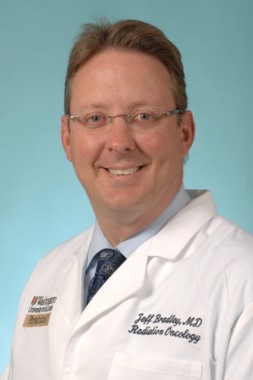
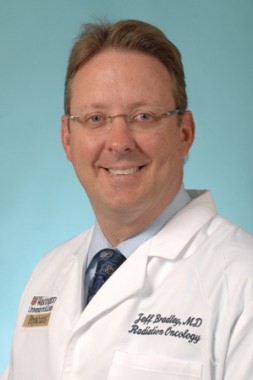
"At this point, there is no clear reason for the poor outcome we experienced on the high-dose arm," lead author Dr. Jeffrey Bradley said in a press briefing highlighting studies to be presented at the upcoming annual meeting of the American Society of Clinical Oncology (ASCO).
The most likely culprit is unreported toxicities, although other possible explanations are increased heart dose, longer duration of therapy, or a combination of these factors, he said.
The results are surprising because conventional thinking has been that higher doses of radiation would more effectively kill the tumor and thereby improve survival.
A phase-III trial in the 1970s established the standard radiation dose of 60 Gy in this setting but, over time, several radiation dose-ranging phase-II studies have reported promising results and improved median survival times with radiation doses up to 74 Gy, explained Dr. Bradley, professor of radiation oncology and chief of the thoracic service at Washington University, St. Louis.
At the same time, improvements in technology such as three-dimensional radiation therapy (RT) and intensity-modulated RT techniques have made RT delivery more precise, allowing organs and tissues sensitive to radiation to receive less radiation while the tumor receives more. This technique was explored in Radiation Therapy Oncology Group (RTOG) 0617.
"This is a very surprising result, especially when using these special radiation techniques that were designed to be more precise, you would expect that the outcome would be better," ASCO president Sandra Swain, medical director of the Washington (D.C.) Cancer Institute, told reporters. "This should really put an end to higher-dose treatments, given the better outcomes in the standard-dose arms."
Dr. Bradley said, "A lot of phase-III trials turn out negative when phase-II trials look good, so I think it was good to do a phase-III trial and get this answered."
RTOG 0617 randomly assigned 464 patients with newly diagnosed, unresected stage-III non–small cell lung cancer to conformal RT to 60 Gy, five times per week for 6 weeks or to 74 Gy five times per week for 7.5 weeks. All patients received concurrent chemotherapy with weekly paclitaxel (Taxol) and carboplatin, with a second randomization for patients to receive consolidation chemotherapy with or without cetuximab (Erbitux).
Among the 419 patients available for analysis at 18 months, local failure rates were 25% with standard-dose RT and 34.3% with high-dose RT (P = .03, as noted above), Dr. Bradley reported.
Median 18-month overall survival rates were 67% with the standard radiation dose vs. 54% with the high dose.
Median overall survival times in both groups were higher than expected, but "the overall survival benefit of 60 Gy is independent of the cetuximab question," he said. Data from that portion of the trial are expected to be reported in 2014.
Finally, the only significant difference in physician-reported side effects was a slightly higher rate of esophagitis in the high-dose arms (21% vs. 7%).
Full details of RTOG 0617 (abstract 7501) will be reported 10:15 a.m. on June 4 at ASCO’s annual meeting in Chicago.
The study was supported by the National Cancer Institute. Dr. Bradley reported having no relevant financial disclosures. A coauthor reported research funding from the NCI.
Standard-dose radiation produced better overall survival and locoregional control than did high-dose radiation when given with concurrent chemotherapy in patients with newly diagnosed stage III non–small cell lung cancer in the phase III, randomized RTOG 0617 trial.
Patients on the high dose had a 56% greater risk of death than those on a standard 60 Gy dose. Median overall survival times were 18.5 months with high-dose radiation and 28.7 months with a standard dose (hazard ratio, 1.56; P = .0007).
The risk of local failure also was increased by 37% in the high-dose arm (HR, 1.37; P = .03).
"At this point, there is no clear reason for the poor outcome we experienced on the high-dose arm," lead author Dr. Jeffrey Bradley said in a press briefing highlighting studies to be presented at the upcoming annual meeting of the American Society of Clinical Oncology (ASCO).
The most likely culprit is unreported toxicities, although other possible explanations are increased heart dose, longer duration of therapy, or a combination of these factors, he said.
The results are surprising because conventional thinking has been that higher doses of radiation would more effectively kill the tumor and thereby improve survival.
A phase-III trial in the 1970s established the standard radiation dose of 60 Gy in this setting but, over time, several radiation dose-ranging phase-II studies have reported promising results and improved median survival times with radiation doses up to 74 Gy, explained Dr. Bradley, professor of radiation oncology and chief of the thoracic service at Washington University, St. Louis.
At the same time, improvements in technology such as three-dimensional radiation therapy (RT) and intensity-modulated RT techniques have made RT delivery more precise, allowing organs and tissues sensitive to radiation to receive less radiation while the tumor receives more. This technique was explored in Radiation Therapy Oncology Group (RTOG) 0617.
"This is a very surprising result, especially when using these special radiation techniques that were designed to be more precise, you would expect that the outcome would be better," ASCO president Sandra Swain, medical director of the Washington (D.C.) Cancer Institute, told reporters. "This should really put an end to higher-dose treatments, given the better outcomes in the standard-dose arms."
Dr. Bradley said, "A lot of phase-III trials turn out negative when phase-II trials look good, so I think it was good to do a phase-III trial and get this answered."
RTOG 0617 randomly assigned 464 patients with newly diagnosed, unresected stage-III non–small cell lung cancer to conformal RT to 60 Gy, five times per week for 6 weeks or to 74 Gy five times per week for 7.5 weeks. All patients received concurrent chemotherapy with weekly paclitaxel (Taxol) and carboplatin, with a second randomization for patients to receive consolidation chemotherapy with or without cetuximab (Erbitux).
Among the 419 patients available for analysis at 18 months, local failure rates were 25% with standard-dose RT and 34.3% with high-dose RT (P = .03, as noted above), Dr. Bradley reported.
Median 18-month overall survival rates were 67% with the standard radiation dose vs. 54% with the high dose.
Median overall survival times in both groups were higher than expected, but "the overall survival benefit of 60 Gy is independent of the cetuximab question," he said. Data from that portion of the trial are expected to be reported in 2014.
Finally, the only significant difference in physician-reported side effects was a slightly higher rate of esophagitis in the high-dose arms (21% vs. 7%).
Full details of RTOG 0617 (abstract 7501) will be reported 10:15 a.m. on June 4 at ASCO’s annual meeting in Chicago.
The study was supported by the National Cancer Institute. Dr. Bradley reported having no relevant financial disclosures. A coauthor reported research funding from the NCI.
Standard-dose radiation produced better overall survival and locoregional control than did high-dose radiation when given with concurrent chemotherapy in patients with newly diagnosed stage III non–small cell lung cancer in the phase III, randomized RTOG 0617 trial.
Patients on the high dose had a 56% greater risk of death than those on a standard 60 Gy dose. Median overall survival times were 18.5 months with high-dose radiation and 28.7 months with a standard dose (hazard ratio, 1.56; P = .0007).
The risk of local failure also was increased by 37% in the high-dose arm (HR, 1.37; P = .03).
"At this point, there is no clear reason for the poor outcome we experienced on the high-dose arm," lead author Dr. Jeffrey Bradley said in a press briefing highlighting studies to be presented at the upcoming annual meeting of the American Society of Clinical Oncology (ASCO).
The most likely culprit is unreported toxicities, although other possible explanations are increased heart dose, longer duration of therapy, or a combination of these factors, he said.
The results are surprising because conventional thinking has been that higher doses of radiation would more effectively kill the tumor and thereby improve survival.
A phase-III trial in the 1970s established the standard radiation dose of 60 Gy in this setting but, over time, several radiation dose-ranging phase-II studies have reported promising results and improved median survival times with radiation doses up to 74 Gy, explained Dr. Bradley, professor of radiation oncology and chief of the thoracic service at Washington University, St. Louis.
At the same time, improvements in technology such as three-dimensional radiation therapy (RT) and intensity-modulated RT techniques have made RT delivery more precise, allowing organs and tissues sensitive to radiation to receive less radiation while the tumor receives more. This technique was explored in Radiation Therapy Oncology Group (RTOG) 0617.
"This is a very surprising result, especially when using these special radiation techniques that were designed to be more precise, you would expect that the outcome would be better," ASCO president Sandra Swain, medical director of the Washington (D.C.) Cancer Institute, told reporters. "This should really put an end to higher-dose treatments, given the better outcomes in the standard-dose arms."
Dr. Bradley said, "A lot of phase-III trials turn out negative when phase-II trials look good, so I think it was good to do a phase-III trial and get this answered."
RTOG 0617 randomly assigned 464 patients with newly diagnosed, unresected stage-III non–small cell lung cancer to conformal RT to 60 Gy, five times per week for 6 weeks or to 74 Gy five times per week for 7.5 weeks. All patients received concurrent chemotherapy with weekly paclitaxel (Taxol) and carboplatin, with a second randomization for patients to receive consolidation chemotherapy with or without cetuximab (Erbitux).
Among the 419 patients available for analysis at 18 months, local failure rates were 25% with standard-dose RT and 34.3% with high-dose RT (P = .03, as noted above), Dr. Bradley reported.
Median 18-month overall survival rates were 67% with the standard radiation dose vs. 54% with the high dose.
Median overall survival times in both groups were higher than expected, but "the overall survival benefit of 60 Gy is independent of the cetuximab question," he said. Data from that portion of the trial are expected to be reported in 2014.
Finally, the only significant difference in physician-reported side effects was a slightly higher rate of esophagitis in the high-dose arms (21% vs. 7%).
Full details of RTOG 0617 (abstract 7501) will be reported 10:15 a.m. on June 4 at ASCO’s annual meeting in Chicago.
The study was supported by the National Cancer Institute. Dr. Bradley reported having no relevant financial disclosures. A coauthor reported research funding from the NCI.
FROM THE ASCO 2013 PRESSCAST
Major finding: Patients with stage-III non–small cell lung cancer who received high-dose radiation had a 56% greater risk of death than those on a standard 60 Gy dose.
Data source: Phase-III randomized trial in 464 patients with stage-III non–small cell lung cancer.
Disclosures: The study was supported by the National Cancer Institute. Dr. Bradley reported having no relevant financial disclosures. A coauthor reported research funding from the NCI.
Fontan reoperation mortality unexpectedly high in multicenter analysis
MINNEAPOLIS – Early mortality is substantially higher than initially thought for Fontan revision or conversion, the most common reoperation in adults with congenital heart disease.
Discharge mortality was 10.1% among adults undergoing a Fontan redo from 2007 to 2011 in an analysis of the STS-CHSD (Society of Thoracic Surgeons Congenital Heart Surgery Database), encompassing more than 90% of heart surgeries in the United States.
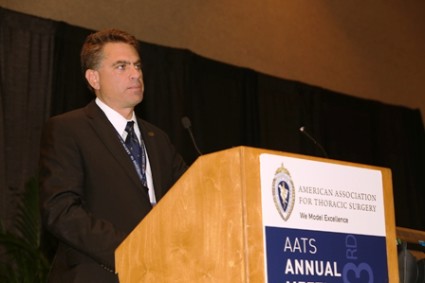
When Fontan conversion was first described in a single-center series, however, discharge mortality was less than 1% (Ann. Thorac. Surg. 2007;84:1457-65), observed Dr. Jeffrey P. Jacobs, chair of the STS-CHSD, and a cardiovascular surgeon with All Children’s Hospital, Johns Hopkins Medicine, St. Petersburg, Fla.
"This point really exemplifies the power of multi-institution data and exemplifies that the published literature reflecting an excellence experience at one center, may not reflect the reality of what is going on across the country or across the world," he said at the annual meeting of the American Association for Thoracic Surgery.
The STS-CHSD includes 108 congenital heart surgery hospitals in North America, 105 in the United States and 3 in Canada, or 84% of programs in the United States.
The investigators identified 92,603 index cardiac operations in the database from 2007-2011, after excluding those with missing data and patients weighing 2,500 g or less undergoing patent ductus arteriosus ligation as their primary procedure.
In all, 30,673 (33%) had one or more prior cardiopulmonary bypass cardiothoracic operation, which was used as a surrogate for reoperation.
Discharge mortality was 3.98% with no prior bypass cardiothoracic operations, 2.38% with one, 1.67% with two, 2.41% with three, 3.31% with four, 4.08% with five, and 5.07% with six or more reoperations, Dr. Jacobs said.
Mean length of stay was 14.8 days for the index procedure and increased in a stepwise manner from 10.8 days with one prior surgery to 14.07 with six or more surgeries.
Fontan (total cavopulmonary connection, external conduit) was the most common reoperation performed among all patients and had the highest discharge mortality whether it was fenestrated (1.8% among 1,870 patients) or nonfenestrated (1.6% among 1,403 patients).
Discharge mortality was lower among all patients for bidirectional cavopulmonary anastomosis (1.3%), pulmonic valve replacement (0.4%), conduit reoperation (0.8%), pacemaker procedure (0.3%), and permanent pacemaker implantation (1.4%).
The number of neonates dying before discharge was alarmingly high for various operations including total anomalous pulmonary venous connection repair (55.6%), pulmonary artery banding (36.4%), and the Norwood procedure (21.6%), but Dr. Jacobs cautioned that these reoperations are very rare events occurring in 18, 11, and 37 cases, respectively.
In contrast, discharge mortality among infants reached a high of 2.6% for a hemi-Fontan reoperation (8 deaths/311 procedures) and was half that for bidirectional cavopulmonary anastomosis, the most common reoperation among infants (29 deaths/2,271 procedures).
Discharge mortality for reoperations among children, aged 1-18 years, in the United States also remained below 2%, he said. The highest rate was 1.7% for a Fontan redo (TCPC, external conduit, fenestrated), the most common operation, performed in 1,852 children.
Finally, there were no double-digit discharge mortality rates among adults, save for the bloated 10.1% reported for Fontan revision or conversion. Rates were low for arrhythmia surgery–atrial surgical ablation (3.4%), right ventricle to pulmonary artery conduit placement (3.3%), permanent pacemaker implantation (2%), conduit reoperation (1.6%), pulmonic valve replacement (0.3%), and pacemaker procedure (0.2%).
Science tells us what we can do, guidelines what we should do, and registries what we are actually doing, Dr. Jacobs concluded.
Dr. Jacobs is chair of the STS Congenital Heart Surgery Database Taskforce; STS Task Force on Longitudinal Follow-Up and Linked Registries; and the STS Public Reporting Task Force.
MINNEAPOLIS – Early mortality is substantially higher than initially thought for Fontan revision or conversion, the most common reoperation in adults with congenital heart disease.
Discharge mortality was 10.1% among adults undergoing a Fontan redo from 2007 to 2011 in an analysis of the STS-CHSD (Society of Thoracic Surgeons Congenital Heart Surgery Database), encompassing more than 90% of heart surgeries in the United States.
When Fontan conversion was first described in a single-center series, however, discharge mortality was less than 1% (Ann. Thorac. Surg. 2007;84:1457-65), observed Dr. Jeffrey P. Jacobs, chair of the STS-CHSD, and a cardiovascular surgeon with All Children’s Hospital, Johns Hopkins Medicine, St. Petersburg, Fla.
"This point really exemplifies the power of multi-institution data and exemplifies that the published literature reflecting an excellence experience at one center, may not reflect the reality of what is going on across the country or across the world," he said at the annual meeting of the American Association for Thoracic Surgery.
The STS-CHSD includes 108 congenital heart surgery hospitals in North America, 105 in the United States and 3 in Canada, or 84% of programs in the United States.
The investigators identified 92,603 index cardiac operations in the database from 2007-2011, after excluding those with missing data and patients weighing 2,500 g or less undergoing patent ductus arteriosus ligation as their primary procedure.
In all, 30,673 (33%) had one or more prior cardiopulmonary bypass cardiothoracic operation, which was used as a surrogate for reoperation.
Discharge mortality was 3.98% with no prior bypass cardiothoracic operations, 2.38% with one, 1.67% with two, 2.41% with three, 3.31% with four, 4.08% with five, and 5.07% with six or more reoperations, Dr. Jacobs said.
Mean length of stay was 14.8 days for the index procedure and increased in a stepwise manner from 10.8 days with one prior surgery to 14.07 with six or more surgeries.
Fontan (total cavopulmonary connection, external conduit) was the most common reoperation performed among all patients and had the highest discharge mortality whether it was fenestrated (1.8% among 1,870 patients) or nonfenestrated (1.6% among 1,403 patients).
Discharge mortality was lower among all patients for bidirectional cavopulmonary anastomosis (1.3%), pulmonic valve replacement (0.4%), conduit reoperation (0.8%), pacemaker procedure (0.3%), and permanent pacemaker implantation (1.4%).
The number of neonates dying before discharge was alarmingly high for various operations including total anomalous pulmonary venous connection repair (55.6%), pulmonary artery banding (36.4%), and the Norwood procedure (21.6%), but Dr. Jacobs cautioned that these reoperations are very rare events occurring in 18, 11, and 37 cases, respectively.
In contrast, discharge mortality among infants reached a high of 2.6% for a hemi-Fontan reoperation (8 deaths/311 procedures) and was half that for bidirectional cavopulmonary anastomosis, the most common reoperation among infants (29 deaths/2,271 procedures).
Discharge mortality for reoperations among children, aged 1-18 years, in the United States also remained below 2%, he said. The highest rate was 1.7% for a Fontan redo (TCPC, external conduit, fenestrated), the most common operation, performed in 1,852 children.
Finally, there were no double-digit discharge mortality rates among adults, save for the bloated 10.1% reported for Fontan revision or conversion. Rates were low for arrhythmia surgery–atrial surgical ablation (3.4%), right ventricle to pulmonary artery conduit placement (3.3%), permanent pacemaker implantation (2%), conduit reoperation (1.6%), pulmonic valve replacement (0.3%), and pacemaker procedure (0.2%).
Science tells us what we can do, guidelines what we should do, and registries what we are actually doing, Dr. Jacobs concluded.
Dr. Jacobs is chair of the STS Congenital Heart Surgery Database Taskforce; STS Task Force on Longitudinal Follow-Up and Linked Registries; and the STS Public Reporting Task Force.
MINNEAPOLIS – Early mortality is substantially higher than initially thought for Fontan revision or conversion, the most common reoperation in adults with congenital heart disease.
Discharge mortality was 10.1% among adults undergoing a Fontan redo from 2007 to 2011 in an analysis of the STS-CHSD (Society of Thoracic Surgeons Congenital Heart Surgery Database), encompassing more than 90% of heart surgeries in the United States.
When Fontan conversion was first described in a single-center series, however, discharge mortality was less than 1% (Ann. Thorac. Surg. 2007;84:1457-65), observed Dr. Jeffrey P. Jacobs, chair of the STS-CHSD, and a cardiovascular surgeon with All Children’s Hospital, Johns Hopkins Medicine, St. Petersburg, Fla.
"This point really exemplifies the power of multi-institution data and exemplifies that the published literature reflecting an excellence experience at one center, may not reflect the reality of what is going on across the country or across the world," he said at the annual meeting of the American Association for Thoracic Surgery.
The STS-CHSD includes 108 congenital heart surgery hospitals in North America, 105 in the United States and 3 in Canada, or 84% of programs in the United States.
The investigators identified 92,603 index cardiac operations in the database from 2007-2011, after excluding those with missing data and patients weighing 2,500 g or less undergoing patent ductus arteriosus ligation as their primary procedure.
In all, 30,673 (33%) had one or more prior cardiopulmonary bypass cardiothoracic operation, which was used as a surrogate for reoperation.
Discharge mortality was 3.98% with no prior bypass cardiothoracic operations, 2.38% with one, 1.67% with two, 2.41% with three, 3.31% with four, 4.08% with five, and 5.07% with six or more reoperations, Dr. Jacobs said.
Mean length of stay was 14.8 days for the index procedure and increased in a stepwise manner from 10.8 days with one prior surgery to 14.07 with six or more surgeries.
Fontan (total cavopulmonary connection, external conduit) was the most common reoperation performed among all patients and had the highest discharge mortality whether it was fenestrated (1.8% among 1,870 patients) or nonfenestrated (1.6% among 1,403 patients).
Discharge mortality was lower among all patients for bidirectional cavopulmonary anastomosis (1.3%), pulmonic valve replacement (0.4%), conduit reoperation (0.8%), pacemaker procedure (0.3%), and permanent pacemaker implantation (1.4%).
The number of neonates dying before discharge was alarmingly high for various operations including total anomalous pulmonary venous connection repair (55.6%), pulmonary artery banding (36.4%), and the Norwood procedure (21.6%), but Dr. Jacobs cautioned that these reoperations are very rare events occurring in 18, 11, and 37 cases, respectively.
In contrast, discharge mortality among infants reached a high of 2.6% for a hemi-Fontan reoperation (8 deaths/311 procedures) and was half that for bidirectional cavopulmonary anastomosis, the most common reoperation among infants (29 deaths/2,271 procedures).
Discharge mortality for reoperations among children, aged 1-18 years, in the United States also remained below 2%, he said. The highest rate was 1.7% for a Fontan redo (TCPC, external conduit, fenestrated), the most common operation, performed in 1,852 children.
Finally, there were no double-digit discharge mortality rates among adults, save for the bloated 10.1% reported for Fontan revision or conversion. Rates were low for arrhythmia surgery–atrial surgical ablation (3.4%), right ventricle to pulmonary artery conduit placement (3.3%), permanent pacemaker implantation (2%), conduit reoperation (1.6%), pulmonic valve replacement (0.3%), and pacemaker procedure (0.2%).
Science tells us what we can do, guidelines what we should do, and registries what we are actually doing, Dr. Jacobs concluded.
Dr. Jacobs is chair of the STS Congenital Heart Surgery Database Taskforce; STS Task Force on Longitudinal Follow-Up and Linked Registries; and the STS Public Reporting Task Force.
AT THE AATS ANNUAL MEETING
Major finding: Discharge mortality was 10.1% among adults undergoing a Fontan conversion from 2007 to 2011.
Data source: Retrospective analysis of 92,603 index cardiac operations in the Society of Thoracic Surgeons Congenital Heart Surgery Database, including 30,673 reoperations.
Disclosures: Dr. Jacobs is chair of the STS Congenital Heart Surgery Database Taskforce, STS Task Force on Longitudinal Follow-Up and Linked Registries and the STS Public Reporting Task Force.
Cardiorespiratory fitness predicts cancer risk, outcomes in men
Measured levels of cardiorespiratory fitness appear to be as predictive of cancer risk and survival as they are of heart disease risk and survival, according to a 20-year, prospective study of more than 17,000 men.
The risks of lung and colorectal cancer were reduced 68% and 38%, respectively, in men with the highest level of cardiorespiratory fitness, compared with those who were the least fit.
Cardiorespiratory fitness did not significantly reduce prostate cancer risk, but the risk of dying was significantly lower among men with prostate, lung, or colorectal cancer if they were more fit in middle age (P less than .001).

Prior studies have shown that being physically active is protective against cancer, but this study is unique because it looked at a very specific marker – cardiorespiratory fitness as measured by maximal exercise tolerance testing, Dr. Susan G. Lakoski said during a press briefing highlighting research to be presented at the upcoming American Society of Clinical Oncology (ASCO) meeting.
"Fitness as formal measurement is known to prevent cardiovascular disease and it’s also known that it helps in terms of survival risk, but what hasn’t been known is does it prevent incident cancer and mortality after cancer diagnosis and that’s what’s elucidated in the current study," said Dr. Lakoski, director of the cardiovascular prevention program for cancer patients at the University of Vermont, Burlington.
She noted that several organizations, including the President’s Council on Fitness, Sports & Nutrition, are trying to measure fitness formally and that the American Heart Association has issued policy statements that fitness should be measured and normative values developed to determine cardiovascular risk.
"Fitness is a formal measurement; it’s sort of like measuring your LDL cholesterol, you get a very specific number to target," Dr. Lakoski said. "When you ask someone about their physical activity, you don’t get that information."
The 17,049 men in the study underwent exercise tolerance testing with a treadmill or bicycle and risk factor assessment at an average age of 50 years as part of the Cooper Center Longitudinal Study in Dallas. Metabolic equivalents (METs) were used to record the men’s cardiorespiratory fitness (CRF) and to place them into five CRF quintiles. Lung, colorectal and prostate cancers were assessed using Medicare claims data at Medicare age, and cause-specific mortality was determined after cancer diagnosis.
Over the 20 years of follow-up, 2,885 men were diagnosed with prostate, lung, or colorectal cancer and 769 died.
Compared with men in the lowest CRF quintile, hazard ratios (HR) for incident lung, colorectal and prostate cancer among men in the highest quintile were 0.32 (P less than .001), 0.62 (P = .05) and 1.13 (P = .14), after researchers adjusted for such risk factors as smoking, body mass index, and age, Dr. Lakoski reported.
In men who developed cancer, both cancer-specific mortality and cardiovascular-specific mortality declined across increasing CRF quintiles (P values less than .0001).
Even a single MET increase reduced the risk of dying from cancer and cardiovascular disease by 14% and 23%, respectively (HR, 0.86; HR, 0.77; P less than .001 for both measures), Dr. Lakoski said.
Another striking finding is that even if men aren’t obese, they still have an increased risk of cancer if they aren’t fit, "which suggests that everyone can benefit from improving their fitness," Dr. Sandra Swain, ASCO president and medical director of the Washington (D.C.) Cancer Institute told reporters.
"The findings make clear that patients should be advised that they need to achieve a certain fitness level, and not just be told that they need to exercise," Dr. Swain noted in a statement.
"A primary care physician should start to think about fitness in the same light as body weight or high cholesterol," Dr. Lakoski said in an interview. "Fitness is a key risk factor for survival, and based on this study, an important factor to measure to assess future cancer risk and prognosis in men."
The study did not evaluate whether a particular type of exercise contributed more consistently to cardiovascular fitness, but in general, activities performed at high intensity, regardless of type, are the best way to improve fitness, she said.
Additional research is needed to determine fitness and cancer risk in women, fitness and risk of all major site-specific cancers and the necessary change in fitness to prevent cancer, Dr. Lakoski observed.
Assessment protocols and norms are available for CRF testing from the Cooper Institute.
Dr. Lakoski reported no relevant disclosures.
Measured levels of cardiorespiratory fitness appear to be as predictive of cancer risk and survival as they are of heart disease risk and survival, according to a 20-year, prospective study of more than 17,000 men.
The risks of lung and colorectal cancer were reduced 68% and 38%, respectively, in men with the highest level of cardiorespiratory fitness, compared with those who were the least fit.
Cardiorespiratory fitness did not significantly reduce prostate cancer risk, but the risk of dying was significantly lower among men with prostate, lung, or colorectal cancer if they were more fit in middle age (P less than .001).
Prior studies have shown that being physically active is protective against cancer, but this study is unique because it looked at a very specific marker – cardiorespiratory fitness as measured by maximal exercise tolerance testing, Dr. Susan G. Lakoski said during a press briefing highlighting research to be presented at the upcoming American Society of Clinical Oncology (ASCO) meeting.
"Fitness as formal measurement is known to prevent cardiovascular disease and it’s also known that it helps in terms of survival risk, but what hasn’t been known is does it prevent incident cancer and mortality after cancer diagnosis and that’s what’s elucidated in the current study," said Dr. Lakoski, director of the cardiovascular prevention program for cancer patients at the University of Vermont, Burlington.
She noted that several organizations, including the President’s Council on Fitness, Sports & Nutrition, are trying to measure fitness formally and that the American Heart Association has issued policy statements that fitness should be measured and normative values developed to determine cardiovascular risk.
"Fitness is a formal measurement; it’s sort of like measuring your LDL cholesterol, you get a very specific number to target," Dr. Lakoski said. "When you ask someone about their physical activity, you don’t get that information."
The 17,049 men in the study underwent exercise tolerance testing with a treadmill or bicycle and risk factor assessment at an average age of 50 years as part of the Cooper Center Longitudinal Study in Dallas. Metabolic equivalents (METs) were used to record the men’s cardiorespiratory fitness (CRF) and to place them into five CRF quintiles. Lung, colorectal and prostate cancers were assessed using Medicare claims data at Medicare age, and cause-specific mortality was determined after cancer diagnosis.
Over the 20 years of follow-up, 2,885 men were diagnosed with prostate, lung, or colorectal cancer and 769 died.
Compared with men in the lowest CRF quintile, hazard ratios (HR) for incident lung, colorectal and prostate cancer among men in the highest quintile were 0.32 (P less than .001), 0.62 (P = .05) and 1.13 (P = .14), after researchers adjusted for such risk factors as smoking, body mass index, and age, Dr. Lakoski reported.
In men who developed cancer, both cancer-specific mortality and cardiovascular-specific mortality declined across increasing CRF quintiles (P values less than .0001).
Even a single MET increase reduced the risk of dying from cancer and cardiovascular disease by 14% and 23%, respectively (HR, 0.86; HR, 0.77; P less than .001 for both measures), Dr. Lakoski said.
Another striking finding is that even if men aren’t obese, they still have an increased risk of cancer if they aren’t fit, "which suggests that everyone can benefit from improving their fitness," Dr. Sandra Swain, ASCO president and medical director of the Washington (D.C.) Cancer Institute told reporters.
"The findings make clear that patients should be advised that they need to achieve a certain fitness level, and not just be told that they need to exercise," Dr. Swain noted in a statement.
"A primary care physician should start to think about fitness in the same light as body weight or high cholesterol," Dr. Lakoski said in an interview. "Fitness is a key risk factor for survival, and based on this study, an important factor to measure to assess future cancer risk and prognosis in men."
The study did not evaluate whether a particular type of exercise contributed more consistently to cardiovascular fitness, but in general, activities performed at high intensity, regardless of type, are the best way to improve fitness, she said.
Additional research is needed to determine fitness and cancer risk in women, fitness and risk of all major site-specific cancers and the necessary change in fitness to prevent cancer, Dr. Lakoski observed.
Assessment protocols and norms are available for CRF testing from the Cooper Institute.
Dr. Lakoski reported no relevant disclosures.
Measured levels of cardiorespiratory fitness appear to be as predictive of cancer risk and survival as they are of heart disease risk and survival, according to a 20-year, prospective study of more than 17,000 men.
The risks of lung and colorectal cancer were reduced 68% and 38%, respectively, in men with the highest level of cardiorespiratory fitness, compared with those who were the least fit.
Cardiorespiratory fitness did not significantly reduce prostate cancer risk, but the risk of dying was significantly lower among men with prostate, lung, or colorectal cancer if they were more fit in middle age (P less than .001).
Prior studies have shown that being physically active is protective against cancer, but this study is unique because it looked at a very specific marker – cardiorespiratory fitness as measured by maximal exercise tolerance testing, Dr. Susan G. Lakoski said during a press briefing highlighting research to be presented at the upcoming American Society of Clinical Oncology (ASCO) meeting.
"Fitness as formal measurement is known to prevent cardiovascular disease and it’s also known that it helps in terms of survival risk, but what hasn’t been known is does it prevent incident cancer and mortality after cancer diagnosis and that’s what’s elucidated in the current study," said Dr. Lakoski, director of the cardiovascular prevention program for cancer patients at the University of Vermont, Burlington.
She noted that several organizations, including the President’s Council on Fitness, Sports & Nutrition, are trying to measure fitness formally and that the American Heart Association has issued policy statements that fitness should be measured and normative values developed to determine cardiovascular risk.
"Fitness is a formal measurement; it’s sort of like measuring your LDL cholesterol, you get a very specific number to target," Dr. Lakoski said. "When you ask someone about their physical activity, you don’t get that information."
The 17,049 men in the study underwent exercise tolerance testing with a treadmill or bicycle and risk factor assessment at an average age of 50 years as part of the Cooper Center Longitudinal Study in Dallas. Metabolic equivalents (METs) were used to record the men’s cardiorespiratory fitness (CRF) and to place them into five CRF quintiles. Lung, colorectal and prostate cancers were assessed using Medicare claims data at Medicare age, and cause-specific mortality was determined after cancer diagnosis.
Over the 20 years of follow-up, 2,885 men were diagnosed with prostate, lung, or colorectal cancer and 769 died.
Compared with men in the lowest CRF quintile, hazard ratios (HR) for incident lung, colorectal and prostate cancer among men in the highest quintile were 0.32 (P less than .001), 0.62 (P = .05) and 1.13 (P = .14), after researchers adjusted for such risk factors as smoking, body mass index, and age, Dr. Lakoski reported.
In men who developed cancer, both cancer-specific mortality and cardiovascular-specific mortality declined across increasing CRF quintiles (P values less than .0001).
Even a single MET increase reduced the risk of dying from cancer and cardiovascular disease by 14% and 23%, respectively (HR, 0.86; HR, 0.77; P less than .001 for both measures), Dr. Lakoski said.
Another striking finding is that even if men aren’t obese, they still have an increased risk of cancer if they aren’t fit, "which suggests that everyone can benefit from improving their fitness," Dr. Sandra Swain, ASCO president and medical director of the Washington (D.C.) Cancer Institute told reporters.
"The findings make clear that patients should be advised that they need to achieve a certain fitness level, and not just be told that they need to exercise," Dr. Swain noted in a statement.
"A primary care physician should start to think about fitness in the same light as body weight or high cholesterol," Dr. Lakoski said in an interview. "Fitness is a key risk factor for survival, and based on this study, an important factor to measure to assess future cancer risk and prognosis in men."
The study did not evaluate whether a particular type of exercise contributed more consistently to cardiovascular fitness, but in general, activities performed at high intensity, regardless of type, are the best way to improve fitness, she said.
Additional research is needed to determine fitness and cancer risk in women, fitness and risk of all major site-specific cancers and the necessary change in fitness to prevent cancer, Dr. Lakoski observed.
Assessment protocols and norms are available for CRF testing from the Cooper Institute.
Dr. Lakoski reported no relevant disclosures.
AT THE ASCO 2013 PRESSCAST
Major finding: Compared with men in the lowest cardiorespiratory fitness quintile, hazard ratios for incident lung and colorectal cancer among men in the highest quintile were 0.32 (P less than .001) and 0.62 (P = .05) after adjustment for such risk factors as smoking, body mass index and age.
Data source: Prospective study involving 17,049 men in the Cooper Center Longitudinal Study.
Disclosures: Dr. Lakoski reported no relevant disclosures.

DVDs buoy knee osteoarthritis exercise, until the novelty fades
PHILADELPHIA – Home exercise DVDs do not enhance long-term adherence to prescribed exercise in patients with knee osteoarthritis, despite producing substantial improvements in pain and physical function at 2 years in a randomized controlled trial.
As with most home exercise DVDs, things started off great.
Patients who took home a 30-minute DVD after watching it alongside a physiotherapist reported exercising 5.5 and 5.1 times per week at 3 months and 6 months, compared with just 4.3 and 3.9 times per week among controls given detailed verbal and hands-on instruction in a quadriceps exercise protocol, but no video (P = .0358; P =.0369).
At 12 months and 24 months, however, there was no significant difference in exercise adherence between the two groups (P = .169; P = .324), Dr. Harukazu Tohyama said at the World Congress on Osteoarthritis.
The investigators also hypothesized that use of a home exercise DVD could prevent radiographic progression of knee osteoarthritis (OA), but this was not the case among the study’s 107 patients.
The DVD group showed a significant increase in femorotibial angle at 12 and 24 months over baseline values (both P less than .05), but the difference between groups was not significant at either time point (P = .334; P = .293), said Dr. Tohyama, who is on the faculty of the department of sports medicine at Hokkaido University in Sapporo, Japan.
Joint space area, minimum joint space width, and osteophyte area were also similar between groups, as assessed using a fully automated knee OA computer-aided diagnosis (KOA-CAD) measuring system (Osteoarthritis Cartilage. 2008;16:1300-6).
The DVD-based program encompassed muscle stretching, active range-of-motion exercises, and five forms of muscle strengthening. Both the DVD and control group had their intervention reinforced at a clinic visit 4 weeks after randomization.
Members of the audience suggested that a single visit at 4 weeks without additional boosters is not enough to promote adherence. They also questioned whether a 24-month follow-up is long enough to detect whether OA progression is occurring, and cautioned that the study numbers may be too small to draw such a conclusion.
Dr. Tohyama responded that a 24-month follow-up is sufficient for joint OA, but that "for joint [space] narrowing, 24 months is not enough. We need longer follow-up."
Of the 107 patients randomized, 48 were available for analysis in the DVD group and 23 in the control group. The remainder was lost to follow-up or refused the allocation.
The patients were more than 50 years old and had Kellgren-Lawrence grade 2, 3, or 4 knee OA and knee pain. Patients requiring regular or intermittent use of steroids or nonsteroidal anti-inflammatory drugs were excluded.
Scores on the WOMAC (Western Ontario and McMaster Universities Arthritis Index) for all categories were significantly greater in the DVD group than in the control group at 3, 6, 12, and 24 months, Dr. Tohyama said at the meeting, which was sponsored by the Osteoarthritis Research Society International.
WOMAC scores at 6 months in the DVD and control groups were 2.7 vs. 0.2 for pain (P = .0001), 0.60 vs. –0.20 for stiffness (P = .0020), and 8.3 vs. 0.7 for function (P = .0001).
At 24 months, the corresponding scores were 2.2 vs. 0.6 (P = .023), 0.60 vs. –0.07 (P = .011), and 7.3 vs. 2.3 (P = .014).
Improvement in the physical component of the Short Form-8 Health Survey was also significantly greater in the DVD group than in the control group at 3, 6, and 12 months (12 months: 8.3 vs. 2.3; P = .002), but not at 24 months (7.1 vs. 4.1; P = .07).
No significant between-group differences were observed on the SF-8 mental component at any of the time points, he said.
Body mass decreased significantly early on in the DVD group, at 3 and 6 months, compared with controls, but the decline waned along with adherence, and was no longer significant at 12 or 24 months.
Although exercise DVDs may be popular and engaging, "I think what is most important for adherence improvement is to form an exercise habit," Dr. Tohyama said in an interview.
The Japanese Orthopaedic Association sponsored the study. Dr. Tohyama reported having no financial disclosures.
PHILADELPHIA – Home exercise DVDs do not enhance long-term adherence to prescribed exercise in patients with knee osteoarthritis, despite producing substantial improvements in pain and physical function at 2 years in a randomized controlled trial.
As with most home exercise DVDs, things started off great.
Patients who took home a 30-minute DVD after watching it alongside a physiotherapist reported exercising 5.5 and 5.1 times per week at 3 months and 6 months, compared with just 4.3 and 3.9 times per week among controls given detailed verbal and hands-on instruction in a quadriceps exercise protocol, but no video (P = .0358; P =.0369).
At 12 months and 24 months, however, there was no significant difference in exercise adherence between the two groups (P = .169; P = .324), Dr. Harukazu Tohyama said at the World Congress on Osteoarthritis.
The investigators also hypothesized that use of a home exercise DVD could prevent radiographic progression of knee osteoarthritis (OA), but this was not the case among the study’s 107 patients.
The DVD group showed a significant increase in femorotibial angle at 12 and 24 months over baseline values (both P less than .05), but the difference between groups was not significant at either time point (P = .334; P = .293), said Dr. Tohyama, who is on the faculty of the department of sports medicine at Hokkaido University in Sapporo, Japan.
Joint space area, minimum joint space width, and osteophyte area were also similar between groups, as assessed using a fully automated knee OA computer-aided diagnosis (KOA-CAD) measuring system (Osteoarthritis Cartilage. 2008;16:1300-6).
The DVD-based program encompassed muscle stretching, active range-of-motion exercises, and five forms of muscle strengthening. Both the DVD and control group had their intervention reinforced at a clinic visit 4 weeks after randomization.
Members of the audience suggested that a single visit at 4 weeks without additional boosters is not enough to promote adherence. They also questioned whether a 24-month follow-up is long enough to detect whether OA progression is occurring, and cautioned that the study numbers may be too small to draw such a conclusion.
Dr. Tohyama responded that a 24-month follow-up is sufficient for joint OA, but that "for joint [space] narrowing, 24 months is not enough. We need longer follow-up."
Of the 107 patients randomized, 48 were available for analysis in the DVD group and 23 in the control group. The remainder was lost to follow-up or refused the allocation.
The patients were more than 50 years old and had Kellgren-Lawrence grade 2, 3, or 4 knee OA and knee pain. Patients requiring regular or intermittent use of steroids or nonsteroidal anti-inflammatory drugs were excluded.
Scores on the WOMAC (Western Ontario and McMaster Universities Arthritis Index) for all categories were significantly greater in the DVD group than in the control group at 3, 6, 12, and 24 months, Dr. Tohyama said at the meeting, which was sponsored by the Osteoarthritis Research Society International.
WOMAC scores at 6 months in the DVD and control groups were 2.7 vs. 0.2 for pain (P = .0001), 0.60 vs. –0.20 for stiffness (P = .0020), and 8.3 vs. 0.7 for function (P = .0001).
At 24 months, the corresponding scores were 2.2 vs. 0.6 (P = .023), 0.60 vs. –0.07 (P = .011), and 7.3 vs. 2.3 (P = .014).
Improvement in the physical component of the Short Form-8 Health Survey was also significantly greater in the DVD group than in the control group at 3, 6, and 12 months (12 months: 8.3 vs. 2.3; P = .002), but not at 24 months (7.1 vs. 4.1; P = .07).
No significant between-group differences were observed on the SF-8 mental component at any of the time points, he said.
Body mass decreased significantly early on in the DVD group, at 3 and 6 months, compared with controls, but the decline waned along with adherence, and was no longer significant at 12 or 24 months.
Although exercise DVDs may be popular and engaging, "I think what is most important for adherence improvement is to form an exercise habit," Dr. Tohyama said in an interview.
The Japanese Orthopaedic Association sponsored the study. Dr. Tohyama reported having no financial disclosures.
PHILADELPHIA – Home exercise DVDs do not enhance long-term adherence to prescribed exercise in patients with knee osteoarthritis, despite producing substantial improvements in pain and physical function at 2 years in a randomized controlled trial.
As with most home exercise DVDs, things started off great.
Patients who took home a 30-minute DVD after watching it alongside a physiotherapist reported exercising 5.5 and 5.1 times per week at 3 months and 6 months, compared with just 4.3 and 3.9 times per week among controls given detailed verbal and hands-on instruction in a quadriceps exercise protocol, but no video (P = .0358; P =.0369).
At 12 months and 24 months, however, there was no significant difference in exercise adherence between the two groups (P = .169; P = .324), Dr. Harukazu Tohyama said at the World Congress on Osteoarthritis.
The investigators also hypothesized that use of a home exercise DVD could prevent radiographic progression of knee osteoarthritis (OA), but this was not the case among the study’s 107 patients.
The DVD group showed a significant increase in femorotibial angle at 12 and 24 months over baseline values (both P less than .05), but the difference between groups was not significant at either time point (P = .334; P = .293), said Dr. Tohyama, who is on the faculty of the department of sports medicine at Hokkaido University in Sapporo, Japan.
Joint space area, minimum joint space width, and osteophyte area were also similar between groups, as assessed using a fully automated knee OA computer-aided diagnosis (KOA-CAD) measuring system (Osteoarthritis Cartilage. 2008;16:1300-6).
The DVD-based program encompassed muscle stretching, active range-of-motion exercises, and five forms of muscle strengthening. Both the DVD and control group had their intervention reinforced at a clinic visit 4 weeks after randomization.
Members of the audience suggested that a single visit at 4 weeks without additional boosters is not enough to promote adherence. They also questioned whether a 24-month follow-up is long enough to detect whether OA progression is occurring, and cautioned that the study numbers may be too small to draw such a conclusion.
Dr. Tohyama responded that a 24-month follow-up is sufficient for joint OA, but that "for joint [space] narrowing, 24 months is not enough. We need longer follow-up."
Of the 107 patients randomized, 48 were available for analysis in the DVD group and 23 in the control group. The remainder was lost to follow-up or refused the allocation.
The patients were more than 50 years old and had Kellgren-Lawrence grade 2, 3, or 4 knee OA and knee pain. Patients requiring regular or intermittent use of steroids or nonsteroidal anti-inflammatory drugs were excluded.
Scores on the WOMAC (Western Ontario and McMaster Universities Arthritis Index) for all categories were significantly greater in the DVD group than in the control group at 3, 6, 12, and 24 months, Dr. Tohyama said at the meeting, which was sponsored by the Osteoarthritis Research Society International.
WOMAC scores at 6 months in the DVD and control groups were 2.7 vs. 0.2 for pain (P = .0001), 0.60 vs. –0.20 for stiffness (P = .0020), and 8.3 vs. 0.7 for function (P = .0001).
At 24 months, the corresponding scores were 2.2 vs. 0.6 (P = .023), 0.60 vs. –0.07 (P = .011), and 7.3 vs. 2.3 (P = .014).
Improvement in the physical component of the Short Form-8 Health Survey was also significantly greater in the DVD group than in the control group at 3, 6, and 12 months (12 months: 8.3 vs. 2.3; P = .002), but not at 24 months (7.1 vs. 4.1; P = .07).
No significant between-group differences were observed on the SF-8 mental component at any of the time points, he said.
Body mass decreased significantly early on in the DVD group, at 3 and 6 months, compared with controls, but the decline waned along with adherence, and was no longer significant at 12 or 24 months.
Although exercise DVDs may be popular and engaging, "I think what is most important for adherence improvement is to form an exercise habit," Dr. Tohyama said in an interview.
The Japanese Orthopaedic Association sponsored the study. Dr. Tohyama reported having no financial disclosures.
AT OARSI
Major finding: At 12 and 24 months, there was no significant difference in exercise adherence between those with home exercise videos and those without (P = .169; P = .324).
Data source: Randomized, placebo-controlled trial in 107 consecutive patients with knee osteoarthritis.
Disclosures: The Japanese Orthopaedic Association sponsored the study. Dr. Tohyama reported having no financial disclosures.
PROACT Trial: Lower INR goal acceptable
MINNEAPOLIS – High-risk patients receiving the On-X mechanical aortic valve can be safely managed with less aggressive anticoagulation than currently recommended, interim results of the PROACT trial suggest.*
The lower target international normalized ratio (INR) in the trial resulted in a decline of more than 50% in bleeding events and did not increase the risk of thromboembolism, reported Dr. John Puskas, international principal investigator for PROACT (Prospective Randomized On-X Anticoagulation Clinical Trial) and associate chief of cardiothoracic surgery at Emory University in Atlanta.

"This aortic bileaflet mechanical valve may be safely managed in these select patients at an INR of 1.5 to 2.0, with daily low-dose aspirin," he said at the annual meeting of the American Association for Thoracic Surgery.
Current American College of Cardiology and American Heart Association guidelines recommend that warfarin be dosed to achieve an INR of 2.0 to 3.0 after implantation of a bileaflet mechanical valve, and that once-daily aspirin 75-100 mg be added for all patients with mechanical heart valves.
Dr. Puskas and his associates analyzed data from 375 high-risk patients randomly assigned to lower-dose warfarin (INR 1.5-2.0) or to continue standard-dose warfarin (INR 2.0-3.0), 3 months after implantation with the On-X bileaflet mechanical heart valve. All patients received aspirin 81 mg daily. INR was adjusted by rigorous home self-monitoring, with an average of 9 days between readings and at least 96% compliance.
High-risk patients included those with chronic atrial fibrillation, left ventricular ejection fraction less than 30%, ventricular aneurysm, left atrium diameter greater than 50 mm, prior neurological events, on estrogen replacement therapy, hypercoagulability, or inadequate platelet response to aspirin or clopidogrel (Plavix). There were 185 patients in the experimental, test arm and 190 in the control arm. After randomization, 11 test patients had a neurological event (5 strokes, 6 transient ischemic attacks) and crossed over to the control group, per protocol.
After an average follow-up of 3.82 years, patients managed with a lower target INR had a significant benefit compared with controls with respect to number of major bleeding events (10 vs. 25, respectively), minor bleeds (8 vs. 25), total bleeds (18 vs. 50), and all bleeding and thrombus (38 vs. 64), Dr. Puskas said. The corresponding rate ratios (RRs) were 0.45, 0.36, 0.40, and 0.66.
There was no difference between groups in the composite primary endpoint of major bleed, stroke, transient ischemic attack, thromboembolic events and thrombosis (30 events vs. 39 events; RR, 0.86; P = .54), he said.
Specifically, hemorrhagic stroke occurred in 1 test patient and 2 controls (RR, 0.56) and ischemic stroke in 5 patients in each group (RR, 1.12), he said.
Valve-related mortality was also similar in the test and control groups (5 deaths vs. 4 deaths), as was total mortality (10 vs. 11), Dr. Puskas said.
Invited discussant Dr. A. Pieter Kappetein, a member of the RE-ALIGN trial steering committee and professor of thoracic surgery at Erasmus Medical Center in Rotterdam, the Netherlands, said the number of patients in the analysis was extremely low and questioned the validity of combining bleeding and thromboembolic events in the primary endpoint.
"In this study, you mix the efficacy endpoint with the safety endpoints," he said, observing that they move in opposite directions.
In light of such large-scale trials as ARISTOTLE and RELY, he asked whether PROACT should be considered a pilot trial and whether a new trial, designed with roughly 8,000 patients, should be performed that would also include newer anticoagulation agents to adequately evaluate reduced anticoagulation in mechanical valves.
"Is it not potentially dangerous if we do not know what the increase is for thrombosis and follow your conclusions?" he added.
Dr. Puskas said he shared Dr. Kappetein’s concern about the noninferiority design of the trial and that it was a topic of great discussion with the Food and Drug Administration (FDA). He also agreed that thrombotic events and bleeding events move in the opposite direction.
"What we are really looking for is to determine the sweet spot where those two curves intersect," he said. "While it is theoretically and intellectually correct to say that thrombosis is the efficacy issue and hemorrhage is the safety issue, we are obliged to combine those for two reasons.
"The first is practical; no company will sponsor an 8,000-patient trial, and second, this is, in fact, a trade-off in the minds of patients and clinicians. So, it is a relevant clinical endpoint – the unholy composite, if you will – of thrombosis and hemorrhage."
Finally, a member of the audience asked whether the results would hold up with standard management because universal point-of-care home testing is not the "real world" in the United States.
Dr. Puskas replied that it is in Scandinavia and other parts of the world, and admonished American clinicians, including himself, "to catch up to what should be standard of care." He noted that, based on the roughly 53,000 INR readings in PROACT, controlling INR within your range was more important in terms of adverse events, particularly hemorrhagic events, than what arm patients were assigned to.
"Home monitoring is available, it’s not high tech and it’s much easier for patients," he said. "To be perfectly blunt, there’s really no excuse for us not using it uniformly in America. Quite frankly, it is a conflict of interest between local caregivers and their patients’ well-being.
"There is a small revenue stream to cardiology offices and primary care doctors running Coumadin clinics, and that is keeping us in the system that we have now rather than home monitoring through bigger, centralized Coumadin clinics."
Dr. Puskas did not report data on PROACT’s low-risk arm managed with clopidogrel 75 mg/day plus aspirin 325 mg/day, or a third arm managed on warfarin at an INR of 2.0-2.5 plus aspirin 81 mg/day. The low-risk data will not be available for at least one more year, although the investigators are in discussion with the FDA about a possible interim analysis, he said in an interview.
The evaluable high-risk patients were 79% male, 93% were in sinus rhythm preoperatively, and concomitant procedures included coronary artery bypass grafting in 27%, aortic aneurysm repair in 14%, and other procedures in 25%. Their average age was 55 years.
Life Technologies sponsored the study. Dr. Puskas reported having no financial relationship with Life Technologies.
Correction, 6/18/2013: An earlier version of this article stated that the On-X aortic valve is investigational. This was a misstatement. The valve itself has been approved in the United States since 2001. The PROACT trial applications of lowered INR and an aspirin/Plavix regimen are not approved.
MINNEAPOLIS – High-risk patients receiving the On-X mechanical aortic valve can be safely managed with less aggressive anticoagulation than currently recommended, interim results of the PROACT trial suggest.*
The lower target international normalized ratio (INR) in the trial resulted in a decline of more than 50% in bleeding events and did not increase the risk of thromboembolism, reported Dr. John Puskas, international principal investigator for PROACT (Prospective Randomized On-X Anticoagulation Clinical Trial) and associate chief of cardiothoracic surgery at Emory University in Atlanta.
"This aortic bileaflet mechanical valve may be safely managed in these select patients at an INR of 1.5 to 2.0, with daily low-dose aspirin," he said at the annual meeting of the American Association for Thoracic Surgery.
Current American College of Cardiology and American Heart Association guidelines recommend that warfarin be dosed to achieve an INR of 2.0 to 3.0 after implantation of a bileaflet mechanical valve, and that once-daily aspirin 75-100 mg be added for all patients with mechanical heart valves.
Dr. Puskas and his associates analyzed data from 375 high-risk patients randomly assigned to lower-dose warfarin (INR 1.5-2.0) or to continue standard-dose warfarin (INR 2.0-3.0), 3 months after implantation with the On-X bileaflet mechanical heart valve. All patients received aspirin 81 mg daily. INR was adjusted by rigorous home self-monitoring, with an average of 9 days between readings and at least 96% compliance.
High-risk patients included those with chronic atrial fibrillation, left ventricular ejection fraction less than 30%, ventricular aneurysm, left atrium diameter greater than 50 mm, prior neurological events, on estrogen replacement therapy, hypercoagulability, or inadequate platelet response to aspirin or clopidogrel (Plavix). There were 185 patients in the experimental, test arm and 190 in the control arm. After randomization, 11 test patients had a neurological event (5 strokes, 6 transient ischemic attacks) and crossed over to the control group, per protocol.
After an average follow-up of 3.82 years, patients managed with a lower target INR had a significant benefit compared with controls with respect to number of major bleeding events (10 vs. 25, respectively), minor bleeds (8 vs. 25), total bleeds (18 vs. 50), and all bleeding and thrombus (38 vs. 64), Dr. Puskas said. The corresponding rate ratios (RRs) were 0.45, 0.36, 0.40, and 0.66.
There was no difference between groups in the composite primary endpoint of major bleed, stroke, transient ischemic attack, thromboembolic events and thrombosis (30 events vs. 39 events; RR, 0.86; P = .54), he said.
Specifically, hemorrhagic stroke occurred in 1 test patient and 2 controls (RR, 0.56) and ischemic stroke in 5 patients in each group (RR, 1.12), he said.
Valve-related mortality was also similar in the test and control groups (5 deaths vs. 4 deaths), as was total mortality (10 vs. 11), Dr. Puskas said.
Invited discussant Dr. A. Pieter Kappetein, a member of the RE-ALIGN trial steering committee and professor of thoracic surgery at Erasmus Medical Center in Rotterdam, the Netherlands, said the number of patients in the analysis was extremely low and questioned the validity of combining bleeding and thromboembolic events in the primary endpoint.
"In this study, you mix the efficacy endpoint with the safety endpoints," he said, observing that they move in opposite directions.
In light of such large-scale trials as ARISTOTLE and RELY, he asked whether PROACT should be considered a pilot trial and whether a new trial, designed with roughly 8,000 patients, should be performed that would also include newer anticoagulation agents to adequately evaluate reduced anticoagulation in mechanical valves.
"Is it not potentially dangerous if we do not know what the increase is for thrombosis and follow your conclusions?" he added.
Dr. Puskas said he shared Dr. Kappetein’s concern about the noninferiority design of the trial and that it was a topic of great discussion with the Food and Drug Administration (FDA). He also agreed that thrombotic events and bleeding events move in the opposite direction.
"What we are really looking for is to determine the sweet spot where those two curves intersect," he said. "While it is theoretically and intellectually correct to say that thrombosis is the efficacy issue and hemorrhage is the safety issue, we are obliged to combine those for two reasons.
"The first is practical; no company will sponsor an 8,000-patient trial, and second, this is, in fact, a trade-off in the minds of patients and clinicians. So, it is a relevant clinical endpoint – the unholy composite, if you will – of thrombosis and hemorrhage."
Finally, a member of the audience asked whether the results would hold up with standard management because universal point-of-care home testing is not the "real world" in the United States.
Dr. Puskas replied that it is in Scandinavia and other parts of the world, and admonished American clinicians, including himself, "to catch up to what should be standard of care." He noted that, based on the roughly 53,000 INR readings in PROACT, controlling INR within your range was more important in terms of adverse events, particularly hemorrhagic events, than what arm patients were assigned to.
"Home monitoring is available, it’s not high tech and it’s much easier for patients," he said. "To be perfectly blunt, there’s really no excuse for us not using it uniformly in America. Quite frankly, it is a conflict of interest between local caregivers and their patients’ well-being.
"There is a small revenue stream to cardiology offices and primary care doctors running Coumadin clinics, and that is keeping us in the system that we have now rather than home monitoring through bigger, centralized Coumadin clinics."
Dr. Puskas did not report data on PROACT’s low-risk arm managed with clopidogrel 75 mg/day plus aspirin 325 mg/day, or a third arm managed on warfarin at an INR of 2.0-2.5 plus aspirin 81 mg/day. The low-risk data will not be available for at least one more year, although the investigators are in discussion with the FDA about a possible interim analysis, he said in an interview.
The evaluable high-risk patients were 79% male, 93% were in sinus rhythm preoperatively, and concomitant procedures included coronary artery bypass grafting in 27%, aortic aneurysm repair in 14%, and other procedures in 25%. Their average age was 55 years.
Life Technologies sponsored the study. Dr. Puskas reported having no financial relationship with Life Technologies.
Correction, 6/18/2013: An earlier version of this article stated that the On-X aortic valve is investigational. This was a misstatement. The valve itself has been approved in the United States since 2001. The PROACT trial applications of lowered INR and an aspirin/Plavix regimen are not approved.
MINNEAPOLIS – High-risk patients receiving the On-X mechanical aortic valve can be safely managed with less aggressive anticoagulation than currently recommended, interim results of the PROACT trial suggest.*
The lower target international normalized ratio (INR) in the trial resulted in a decline of more than 50% in bleeding events and did not increase the risk of thromboembolism, reported Dr. John Puskas, international principal investigator for PROACT (Prospective Randomized On-X Anticoagulation Clinical Trial) and associate chief of cardiothoracic surgery at Emory University in Atlanta.
"This aortic bileaflet mechanical valve may be safely managed in these select patients at an INR of 1.5 to 2.0, with daily low-dose aspirin," he said at the annual meeting of the American Association for Thoracic Surgery.
Current American College of Cardiology and American Heart Association guidelines recommend that warfarin be dosed to achieve an INR of 2.0 to 3.0 after implantation of a bileaflet mechanical valve, and that once-daily aspirin 75-100 mg be added for all patients with mechanical heart valves.
Dr. Puskas and his associates analyzed data from 375 high-risk patients randomly assigned to lower-dose warfarin (INR 1.5-2.0) or to continue standard-dose warfarin (INR 2.0-3.0), 3 months after implantation with the On-X bileaflet mechanical heart valve. All patients received aspirin 81 mg daily. INR was adjusted by rigorous home self-monitoring, with an average of 9 days between readings and at least 96% compliance.
High-risk patients included those with chronic atrial fibrillation, left ventricular ejection fraction less than 30%, ventricular aneurysm, left atrium diameter greater than 50 mm, prior neurological events, on estrogen replacement therapy, hypercoagulability, or inadequate platelet response to aspirin or clopidogrel (Plavix). There were 185 patients in the experimental, test arm and 190 in the control arm. After randomization, 11 test patients had a neurological event (5 strokes, 6 transient ischemic attacks) and crossed over to the control group, per protocol.
After an average follow-up of 3.82 years, patients managed with a lower target INR had a significant benefit compared with controls with respect to number of major bleeding events (10 vs. 25, respectively), minor bleeds (8 vs. 25), total bleeds (18 vs. 50), and all bleeding and thrombus (38 vs. 64), Dr. Puskas said. The corresponding rate ratios (RRs) were 0.45, 0.36, 0.40, and 0.66.
There was no difference between groups in the composite primary endpoint of major bleed, stroke, transient ischemic attack, thromboembolic events and thrombosis (30 events vs. 39 events; RR, 0.86; P = .54), he said.
Specifically, hemorrhagic stroke occurred in 1 test patient and 2 controls (RR, 0.56) and ischemic stroke in 5 patients in each group (RR, 1.12), he said.
Valve-related mortality was also similar in the test and control groups (5 deaths vs. 4 deaths), as was total mortality (10 vs. 11), Dr. Puskas said.
Invited discussant Dr. A. Pieter Kappetein, a member of the RE-ALIGN trial steering committee and professor of thoracic surgery at Erasmus Medical Center in Rotterdam, the Netherlands, said the number of patients in the analysis was extremely low and questioned the validity of combining bleeding and thromboembolic events in the primary endpoint.
"In this study, you mix the efficacy endpoint with the safety endpoints," he said, observing that they move in opposite directions.
In light of such large-scale trials as ARISTOTLE and RELY, he asked whether PROACT should be considered a pilot trial and whether a new trial, designed with roughly 8,000 patients, should be performed that would also include newer anticoagulation agents to adequately evaluate reduced anticoagulation in mechanical valves.
"Is it not potentially dangerous if we do not know what the increase is for thrombosis and follow your conclusions?" he added.
Dr. Puskas said he shared Dr. Kappetein’s concern about the noninferiority design of the trial and that it was a topic of great discussion with the Food and Drug Administration (FDA). He also agreed that thrombotic events and bleeding events move in the opposite direction.
"What we are really looking for is to determine the sweet spot where those two curves intersect," he said. "While it is theoretically and intellectually correct to say that thrombosis is the efficacy issue and hemorrhage is the safety issue, we are obliged to combine those for two reasons.
"The first is practical; no company will sponsor an 8,000-patient trial, and second, this is, in fact, a trade-off in the minds of patients and clinicians. So, it is a relevant clinical endpoint – the unholy composite, if you will – of thrombosis and hemorrhage."
Finally, a member of the audience asked whether the results would hold up with standard management because universal point-of-care home testing is not the "real world" in the United States.
Dr. Puskas replied that it is in Scandinavia and other parts of the world, and admonished American clinicians, including himself, "to catch up to what should be standard of care." He noted that, based on the roughly 53,000 INR readings in PROACT, controlling INR within your range was more important in terms of adverse events, particularly hemorrhagic events, than what arm patients were assigned to.
"Home monitoring is available, it’s not high tech and it’s much easier for patients," he said. "To be perfectly blunt, there’s really no excuse for us not using it uniformly in America. Quite frankly, it is a conflict of interest between local caregivers and their patients’ well-being.
"There is a small revenue stream to cardiology offices and primary care doctors running Coumadin clinics, and that is keeping us in the system that we have now rather than home monitoring through bigger, centralized Coumadin clinics."
Dr. Puskas did not report data on PROACT’s low-risk arm managed with clopidogrel 75 mg/day plus aspirin 325 mg/day, or a third arm managed on warfarin at an INR of 2.0-2.5 plus aspirin 81 mg/day. The low-risk data will not be available for at least one more year, although the investigators are in discussion with the FDA about a possible interim analysis, he said in an interview.
The evaluable high-risk patients were 79% male, 93% were in sinus rhythm preoperatively, and concomitant procedures included coronary artery bypass grafting in 27%, aortic aneurysm repair in 14%, and other procedures in 25%. Their average age was 55 years.
Life Technologies sponsored the study. Dr. Puskas reported having no financial relationship with Life Technologies.
Correction, 6/18/2013: An earlier version of this article stated that the On-X aortic valve is investigational. This was a misstatement. The valve itself has been approved in the United States since 2001. The PROACT trial applications of lowered INR and an aspirin/Plavix regimen are not approved.
AT THE AATS ANNUAL MEETING
Major finding: The composite primary endpoint of major bleed, stroke, transient ischemic attack, thromboembolic events, and thrombosis occurred in 30 patients managed with less aggressive anticoagulation and in 39 managed with standard warfarin anticoagulation (rate ratio, 0.86; P = .54).
Data source: Interim analysis of 375 high-risk aortic valve replacement patients in the Prospective Randomized On-X Anticoagulation Trial.
Disclosures: Life Technologies sponsored the study. Dr. Puskas reported having no financial relationship with Life Technologies.

Less aggressive anticoagulation appears safe after high-risk aortic valve replacement
MINNEAPOLIS – High-risk patients receiving the On-X mechanical aortic valve can be safely managed with less aggressive anticoagulation than currently recommended, interim results of the PROACT trial suggest.*
The lower target international normalized ratio (INR) in the trial resulted in a decline of more than 50% in bleeding events and did not increase the risk of thromboembolism, reported Dr. John Puskas, international principal investigator for PROACT (Prospective Randomized On-X Anticoagulation Clinical Trial) and associate chief of cardiothoracic surgery at Emory University in Atlanta.

"This aortic bileaflet mechanical valve may be safely managed in these select patients at an INR of 1.5 to 2.0, with daily low-dose aspirin," he said at the annual meeting of the American Association for Thoracic Surgery.
Current American College of Cardiology and American Heart Association guidelines recommend that warfarin be dosed to achieve an INR of 2.0 to 3.0 after implantation of a bileaflet mechanical valve, and that once-daily aspirin 75-100 mg be added for all patients with mechanical heart valves.
Dr. Puskas and his associates analyzed data from 375 high-risk patients randomly assigned to lower-dose warfarin (INR 1.5-2.0) or to continue standard-dose warfarin (INR 2.0-3.0), 3 months after implantation with the On-X bileaflet mechanical heart valve. All patients received aspirin 81 mg daily. INR was adjusted by rigorous home self-monitoring, with an average of 9 days between readings and at least 96% compliance.
High-risk patients included those with chronic atrial fibrillation, left ventricular ejection fraction less than 30%, ventricular aneurysm, left atrium diameter greater than 50 mm, prior neurological events, on estrogen replacement therapy, hypercoagulability, or inadequate platelet response to aspirin or clopidogrel (Plavix). There were 185 patients in the experimental, test arm and 190 in the control arm. After randomization, 11 test patients had a neurological event (5 strokes, 6 transient ischemic attacks) and crossed over to the control group, per protocol.
After an average follow-up of 3.82 years, patients managed with a lower target INR had a significant benefit compared with controls with respect to number of major bleeding events (10 vs. 25, respectively), minor bleeds (8 vs. 25), total bleeds (18 vs. 50), and all bleeding and thrombus (38 vs. 64), Dr. Puskas said. The corresponding rate ratios (RRs) were 0.45, 0.36, 0.40, and 0.66.
There was no difference between groups in the composite primary endpoint of major bleed, stroke, transient ischemic attack, thromboembolic events and thrombosis (30 events vs. 39 events; RR, 0.86; P = .54), he said.
Specifically, hemorrhagic stroke occurred in 1 test patient and 2 controls (RR, 0.56) and ischemic stroke in 5 patients in each group (RR, 1.12), he said.
Valve-related mortality was also similar in the test and control groups (5 deaths vs. 4 deaths), as was total mortality (10 vs. 11), Dr. Puskas said.
Invited discussant Dr. A. Pieter Kappetein, a member of the RE-ALIGN trial steering committee and professor of thoracic surgery at Erasmus Medical Center in Rotterdam, the Netherlands, said the number of patients in the analysis was extremely low and questioned the validity of combining bleeding and thromboembolic events in the primary endpoint.
"In this study, you mix the efficacy endpoint with the safety endpoints," he said, observing that they move in opposite directions.
In light of such large-scale trials as ARISTOTLE and RELY, he asked whether PROACT should be considered a pilot trial and whether a new trial, designed with roughly 8,000 patients, should be performed that would also include newer anticoagulation agents to adequately evaluate reduced anticoagulation in mechanical valves.
"Is it not potentially dangerous if we do not know what the increase is for thrombosis and follow your conclusions?" he added.
Dr. Puskas said he shared Dr. Kappetein’s concern about the noninferiority design of the trial and that it was a topic of great discussion with the Food and Drug Administration (FDA). He also agreed that thrombotic events and bleeding events move in the opposite direction.
"What we are really looking for is to determine the sweet spot where those two curves intersect," he said. "While it is theoretically and intellectually correct to say that thrombosis is the efficacy issue and hemorrhage is the safety issue, we are obliged to combine those for two reasons.
"The first is practical; no company will sponsor an 8,000-patient trial, and second, this is, in fact, a trade-off in the minds of patients and clinicians. So, it is a relevant clinical endpoint – the unholy composite, if you will – of thrombosis and hemorrhage."
Finally, a member of the audience asked whether the results would hold up with standard management because universal point-of-care home testing is not the "real world" in the United States.
Dr. Puskas replied that it is in Scandinavia and other parts of the world, and admonished American clinicians, including himself, "to catch up to what should be standard of care." He noted that, based on the roughly 53,000 INR readings in PROACT, controlling INR within your range was more important in terms of adverse events, particularly hemorrhagic events, than what arm patients were assigned to.
"Home monitoring is available, it’s not high tech and it’s much easier for patients," he said. "To be perfectly blunt, there’s really no excuse for us not using it uniformly in America. Quite frankly, it is a conflict of interest between local caregivers and their patients’ well-being.
"There is a small revenue stream to cardiology offices and primary care doctors running Coumadin clinics, and that is keeping us in the system that we have now rather than home monitoring through bigger, centralized Coumadin clinics."
Dr. Puskas did not report data on PROACT’s low-risk arm managed with clopidogrel 75 mg/day plus aspirin 325 mg/day, or a third arm managed on warfarin at an INR of 2.0-2.5 plus aspirin 81 mg/day. The low-risk data will not be available for at least one more year, although the investigators are in discussion with the FDA about a possible interim analysis, he said in an interview.
The evaluable high-risk patients were 79% male, 93% were in sinus rhythm preoperatively, and concomitant procedures included coronary artery bypass grafting in 27%, aortic aneurysm repair in 14%, and other procedures in 25%. Their average age was 55 years.
Life Technologies sponsored the study. Dr. Puskas reported having no financial relationship with Life Technologies.
Correction, 6/18/2013: An earlier version of this article stated that the On-X aortic valve is investigational. This was a misstatement. The valve itself has been approved in the United States since 2001. The PROACT trial applications of lowered INR and an aspirin/Plavix regimen are not approved.
MINNEAPOLIS – High-risk patients receiving the On-X mechanical aortic valve can be safely managed with less aggressive anticoagulation than currently recommended, interim results of the PROACT trial suggest.*
The lower target international normalized ratio (INR) in the trial resulted in a decline of more than 50% in bleeding events and did not increase the risk of thromboembolism, reported Dr. John Puskas, international principal investigator for PROACT (Prospective Randomized On-X Anticoagulation Clinical Trial) and associate chief of cardiothoracic surgery at Emory University in Atlanta.
"This aortic bileaflet mechanical valve may be safely managed in these select patients at an INR of 1.5 to 2.0, with daily low-dose aspirin," he said at the annual meeting of the American Association for Thoracic Surgery.
Current American College of Cardiology and American Heart Association guidelines recommend that warfarin be dosed to achieve an INR of 2.0 to 3.0 after implantation of a bileaflet mechanical valve, and that once-daily aspirin 75-100 mg be added for all patients with mechanical heart valves.
Dr. Puskas and his associates analyzed data from 375 high-risk patients randomly assigned to lower-dose warfarin (INR 1.5-2.0) or to continue standard-dose warfarin (INR 2.0-3.0), 3 months after implantation with the On-X bileaflet mechanical heart valve. All patients received aspirin 81 mg daily. INR was adjusted by rigorous home self-monitoring, with an average of 9 days between readings and at least 96% compliance.
High-risk patients included those with chronic atrial fibrillation, left ventricular ejection fraction less than 30%, ventricular aneurysm, left atrium diameter greater than 50 mm, prior neurological events, on estrogen replacement therapy, hypercoagulability, or inadequate platelet response to aspirin or clopidogrel (Plavix). There were 185 patients in the experimental, test arm and 190 in the control arm. After randomization, 11 test patients had a neurological event (5 strokes, 6 transient ischemic attacks) and crossed over to the control group, per protocol.
After an average follow-up of 3.82 years, patients managed with a lower target INR had a significant benefit compared with controls with respect to number of major bleeding events (10 vs. 25, respectively), minor bleeds (8 vs. 25), total bleeds (18 vs. 50), and all bleeding and thrombus (38 vs. 64), Dr. Puskas said. The corresponding rate ratios (RRs) were 0.45, 0.36, 0.40, and 0.66.
There was no difference between groups in the composite primary endpoint of major bleed, stroke, transient ischemic attack, thromboembolic events and thrombosis (30 events vs. 39 events; RR, 0.86; P = .54), he said.
Specifically, hemorrhagic stroke occurred in 1 test patient and 2 controls (RR, 0.56) and ischemic stroke in 5 patients in each group (RR, 1.12), he said.
Valve-related mortality was also similar in the test and control groups (5 deaths vs. 4 deaths), as was total mortality (10 vs. 11), Dr. Puskas said.
Invited discussant Dr. A. Pieter Kappetein, a member of the RE-ALIGN trial steering committee and professor of thoracic surgery at Erasmus Medical Center in Rotterdam, the Netherlands, said the number of patients in the analysis was extremely low and questioned the validity of combining bleeding and thromboembolic events in the primary endpoint.
"In this study, you mix the efficacy endpoint with the safety endpoints," he said, observing that they move in opposite directions.
In light of such large-scale trials as ARISTOTLE and RELY, he asked whether PROACT should be considered a pilot trial and whether a new trial, designed with roughly 8,000 patients, should be performed that would also include newer anticoagulation agents to adequately evaluate reduced anticoagulation in mechanical valves.
"Is it not potentially dangerous if we do not know what the increase is for thrombosis and follow your conclusions?" he added.
Dr. Puskas said he shared Dr. Kappetein’s concern about the noninferiority design of the trial and that it was a topic of great discussion with the Food and Drug Administration (FDA). He also agreed that thrombotic events and bleeding events move in the opposite direction.
"What we are really looking for is to determine the sweet spot where those two curves intersect," he said. "While it is theoretically and intellectually correct to say that thrombosis is the efficacy issue and hemorrhage is the safety issue, we are obliged to combine those for two reasons.
"The first is practical; no company will sponsor an 8,000-patient trial, and second, this is, in fact, a trade-off in the minds of patients and clinicians. So, it is a relevant clinical endpoint – the unholy composite, if you will – of thrombosis and hemorrhage."
Finally, a member of the audience asked whether the results would hold up with standard management because universal point-of-care home testing is not the "real world" in the United States.
Dr. Puskas replied that it is in Scandinavia and other parts of the world, and admonished American clinicians, including himself, "to catch up to what should be standard of care." He noted that, based on the roughly 53,000 INR readings in PROACT, controlling INR within your range was more important in terms of adverse events, particularly hemorrhagic events, than what arm patients were assigned to.
"Home monitoring is available, it’s not high tech and it’s much easier for patients," he said. "To be perfectly blunt, there’s really no excuse for us not using it uniformly in America. Quite frankly, it is a conflict of interest between local caregivers and their patients’ well-being.
"There is a small revenue stream to cardiology offices and primary care doctors running Coumadin clinics, and that is keeping us in the system that we have now rather than home monitoring through bigger, centralized Coumadin clinics."
Dr. Puskas did not report data on PROACT’s low-risk arm managed with clopidogrel 75 mg/day plus aspirin 325 mg/day, or a third arm managed on warfarin at an INR of 2.0-2.5 plus aspirin 81 mg/day. The low-risk data will not be available for at least one more year, although the investigators are in discussion with the FDA about a possible interim analysis, he said in an interview.
The evaluable high-risk patients were 79% male, 93% were in sinus rhythm preoperatively, and concomitant procedures included coronary artery bypass grafting in 27%, aortic aneurysm repair in 14%, and other procedures in 25%. Their average age was 55 years.
Life Technologies sponsored the study. Dr. Puskas reported having no financial relationship with Life Technologies.
Correction, 6/18/2013: An earlier version of this article stated that the On-X aortic valve is investigational. This was a misstatement. The valve itself has been approved in the United States since 2001. The PROACT trial applications of lowered INR and an aspirin/Plavix regimen are not approved.
MINNEAPOLIS – High-risk patients receiving the On-X mechanical aortic valve can be safely managed with less aggressive anticoagulation than currently recommended, interim results of the PROACT trial suggest.*
The lower target international normalized ratio (INR) in the trial resulted in a decline of more than 50% in bleeding events and did not increase the risk of thromboembolism, reported Dr. John Puskas, international principal investigator for PROACT (Prospective Randomized On-X Anticoagulation Clinical Trial) and associate chief of cardiothoracic surgery at Emory University in Atlanta.
"This aortic bileaflet mechanical valve may be safely managed in these select patients at an INR of 1.5 to 2.0, with daily low-dose aspirin," he said at the annual meeting of the American Association for Thoracic Surgery.
Current American College of Cardiology and American Heart Association guidelines recommend that warfarin be dosed to achieve an INR of 2.0 to 3.0 after implantation of a bileaflet mechanical valve, and that once-daily aspirin 75-100 mg be added for all patients with mechanical heart valves.
Dr. Puskas and his associates analyzed data from 375 high-risk patients randomly assigned to lower-dose warfarin (INR 1.5-2.0) or to continue standard-dose warfarin (INR 2.0-3.0), 3 months after implantation with the On-X bileaflet mechanical heart valve. All patients received aspirin 81 mg daily. INR was adjusted by rigorous home self-monitoring, with an average of 9 days between readings and at least 96% compliance.
High-risk patients included those with chronic atrial fibrillation, left ventricular ejection fraction less than 30%, ventricular aneurysm, left atrium diameter greater than 50 mm, prior neurological events, on estrogen replacement therapy, hypercoagulability, or inadequate platelet response to aspirin or clopidogrel (Plavix). There were 185 patients in the experimental, test arm and 190 in the control arm. After randomization, 11 test patients had a neurological event (5 strokes, 6 transient ischemic attacks) and crossed over to the control group, per protocol.
After an average follow-up of 3.82 years, patients managed with a lower target INR had a significant benefit compared with controls with respect to number of major bleeding events (10 vs. 25, respectively), minor bleeds (8 vs. 25), total bleeds (18 vs. 50), and all bleeding and thrombus (38 vs. 64), Dr. Puskas said. The corresponding rate ratios (RRs) were 0.45, 0.36, 0.40, and 0.66.
There was no difference between groups in the composite primary endpoint of major bleed, stroke, transient ischemic attack, thromboembolic events and thrombosis (30 events vs. 39 events; RR, 0.86; P = .54), he said.
Specifically, hemorrhagic stroke occurred in 1 test patient and 2 controls (RR, 0.56) and ischemic stroke in 5 patients in each group (RR, 1.12), he said.
Valve-related mortality was also similar in the test and control groups (5 deaths vs. 4 deaths), as was total mortality (10 vs. 11), Dr. Puskas said.
Invited discussant Dr. A. Pieter Kappetein, a member of the RE-ALIGN trial steering committee and professor of thoracic surgery at Erasmus Medical Center in Rotterdam, the Netherlands, said the number of patients in the analysis was extremely low and questioned the validity of combining bleeding and thromboembolic events in the primary endpoint.
"In this study, you mix the efficacy endpoint with the safety endpoints," he said, observing that they move in opposite directions.
In light of such large-scale trials as ARISTOTLE and RELY, he asked whether PROACT should be considered a pilot trial and whether a new trial, designed with roughly 8,000 patients, should be performed that would also include newer anticoagulation agents to adequately evaluate reduced anticoagulation in mechanical valves.
"Is it not potentially dangerous if we do not know what the increase is for thrombosis and follow your conclusions?" he added.
Dr. Puskas said he shared Dr. Kappetein’s concern about the noninferiority design of the trial and that it was a topic of great discussion with the Food and Drug Administration (FDA). He also agreed that thrombotic events and bleeding events move in the opposite direction.
"What we are really looking for is to determine the sweet spot where those two curves intersect," he said. "While it is theoretically and intellectually correct to say that thrombosis is the efficacy issue and hemorrhage is the safety issue, we are obliged to combine those for two reasons.
"The first is practical; no company will sponsor an 8,000-patient trial, and second, this is, in fact, a trade-off in the minds of patients and clinicians. So, it is a relevant clinical endpoint – the unholy composite, if you will – of thrombosis and hemorrhage."
Finally, a member of the audience asked whether the results would hold up with standard management because universal point-of-care home testing is not the "real world" in the United States.
Dr. Puskas replied that it is in Scandinavia and other parts of the world, and admonished American clinicians, including himself, "to catch up to what should be standard of care." He noted that, based on the roughly 53,000 INR readings in PROACT, controlling INR within your range was more important in terms of adverse events, particularly hemorrhagic events, than what arm patients were assigned to.
"Home monitoring is available, it’s not high tech and it’s much easier for patients," he said. "To be perfectly blunt, there’s really no excuse for us not using it uniformly in America. Quite frankly, it is a conflict of interest between local caregivers and their patients’ well-being.
"There is a small revenue stream to cardiology offices and primary care doctors running Coumadin clinics, and that is keeping us in the system that we have now rather than home monitoring through bigger, centralized Coumadin clinics."
Dr. Puskas did not report data on PROACT’s low-risk arm managed with clopidogrel 75 mg/day plus aspirin 325 mg/day, or a third arm managed on warfarin at an INR of 2.0-2.5 plus aspirin 81 mg/day. The low-risk data will not be available for at least one more year, although the investigators are in discussion with the FDA about a possible interim analysis, he said in an interview.
The evaluable high-risk patients were 79% male, 93% were in sinus rhythm preoperatively, and concomitant procedures included coronary artery bypass grafting in 27%, aortic aneurysm repair in 14%, and other procedures in 25%. Their average age was 55 years.
Life Technologies sponsored the study. Dr. Puskas reported having no financial relationship with Life Technologies.
Correction, 6/18/2013: An earlier version of this article stated that the On-X aortic valve is investigational. This was a misstatement. The valve itself has been approved in the United States since 2001. The PROACT trial applications of lowered INR and an aspirin/Plavix regimen are not approved.
AT THE AATS ANNUAL MEETING
Major finding: The composite primary endpoint of major bleed, stroke, transient ischemic attack, thromboembolic events, and thrombosis occurred in 30 patients managed with less aggressive anticoagulation and in 39 managed with standard warfarin anticoagulation (rate ratio, 0.86; P = .54).
Data source: Interim analysis of 375 high-risk aortic valve replacement patients in the Prospective Randomized On-X Anticoagulation Trial.
Disclosures: Life Technologies sponsored the study. Dr. Puskas reported having no financial relationship with Life Technologies.

Data mixed on role of exercise in older, obese, osteoarthritic patients
PHILADELPHIA – There are few certainties in medicine, but most would agree that exercise is good for you.
In older, largely postmenopausal women, a recent systematic review showed that exercise does indeed prevent weight gain, preserves lean body mass when combined with weight loss, and is a key determinant for the positive effects of weight loss later in life (Maturitas. 2012;72:13-22).
What’s not clear, however, is whether exercise plays the same positive role in weight loss in older, obese patients with knee osteoarthritis, Stephen P. Messier, Ph.D., said at the World Congress on Osteoarthritis.
"Once you take that leap – make that decision to lose weight – the question is: ‘Does exercise enhance, impede, or have no effect on the process and the potential outcomes?,’ " said Dr. Messier, professor and director of the J.B. Snow Biomechanics Laboratory at Wake Forest University, Winston-Salem, N.C.

The question is highly relevant, as the risk of developing knee OA is up to 12 times higher in obese men and up to 17 times higher in obese women (Arthritis Res. Ther. 2010;12:R88).
Dr. Messier reviewed data from two long-running randomized intervention trials at Wake Forest, suggesting that exercise does not impede weight loss. Compliance was 61% for diet only and 63% for diet plus exercise in ADAPT (Arthritis, Diet and Activity Promotion).
On the other hand, adding exercise to diet doesn’t dramatically enhance weight loss, acknowledged Dr. Messier, principal investigator of ADAPT and of the IDEA (Intensive Diet and Exercise for Arthritis) trial, which had a weight loss goal of at least 10% of body weight, or twice the goal of ADAPT.
Patients who adhered to a diet with or without exercise lost more weight than did those who did neither in ADAPT, but just 2 kilograms of weight loss separated the diet-plus-exercise group from the diet-only group in IDEA. Fat loss was similar.
What was concerning was that the addition of exercise to diet did not prevent the loss of lean mass, Dr. Messier said. The mean change in lean mass was –4.2 with intensive dietary restriction vs. –4.7 with the same diet plus 15 minutes of walking and 20 minutes of weight training thrice-weekly in IDEA.
The silver lining
Knee OA patients and their physicians can take heart, as virtually every clinical outcome favored diet plus exercise over diet alone, Dr. Messier observed.
When exercise was combined with diet for 18 months, patients experienced a 30% decrease in pain and 24% improvement in function in ADAPT, with even higher results of 51% and 47% in IDEA.
"The big take-home message was that the diet and exercise group had a 50% reduction in pain, and you don’t find that with any pharmacologic intervention," he said in an interview.
Dr. Messier speculated that the loss of lean body mass with diet plus exercise could be offset by adding strength training – a tactic that is currently being studied in 370 patients with knee OA in START (Strength Training for Arthritis Trial).
"A more intensive strength training regimen may build muscle and attenuate the loss of lean body mass," he said. "If it works, we could get the best of both worlds."
Diet driving mechanistic changes
Interestingly, the data suggest that diet alone may be slightly better than diet plus exercise in improving mechanistic outcomes, Dr. Messier said.
Among the 142 sedentary overweight/obese older adults with knee OA in ADAPT, every 1 pound of weight loss resulted in a fourfold reduction in compressive forces exerted on the knee per step (Arthritis Rheum. 2005;52:2026-32).
The average change in knee compressive forces from baseline in IDEA was 11% with diet alone, 9% with diet plus exercise, and 5% with exercise alone. Reductions in interleukin-6, a marker of physical disability in older adults, were also significantly better with diet than with diet plus exercise, and the decrease was independent of gender, body mass index and other baseline values.
"Once again, it is the weight loss that counts," he said.
That said, should clinicians push their knee OA patients to exercise and diet?
Diet plus exercise should be the standard of care in our older adults with osteoarthritis of the knee, Dr. Messier concluded.
"OA and other obesity-related diseases place an enormous physical and financial burden on our health care system," he said. "Intensive weight loss, when combined with exercise, can safely achieve a mean long-term weight loss of 11.4% for compliant patients and they can expect significant improvement in symptoms relative to either exercise or diet alone. Wider adoption of intensive weight loss combined with exercise can reduce the burden of disability related to OA and obesity in our aging population."
The congress was sponsored by Osteoarthritis Research Society International. Dr. Messier reported no relevant conflicts of interest.
PHILADELPHIA – There are few certainties in medicine, but most would agree that exercise is good for you.
In older, largely postmenopausal women, a recent systematic review showed that exercise does indeed prevent weight gain, preserves lean body mass when combined with weight loss, and is a key determinant for the positive effects of weight loss later in life (Maturitas. 2012;72:13-22).
What’s not clear, however, is whether exercise plays the same positive role in weight loss in older, obese patients with knee osteoarthritis, Stephen P. Messier, Ph.D., said at the World Congress on Osteoarthritis.
"Once you take that leap – make that decision to lose weight – the question is: ‘Does exercise enhance, impede, or have no effect on the process and the potential outcomes?,’ " said Dr. Messier, professor and director of the J.B. Snow Biomechanics Laboratory at Wake Forest University, Winston-Salem, N.C.
The question is highly relevant, as the risk of developing knee OA is up to 12 times higher in obese men and up to 17 times higher in obese women (Arthritis Res. Ther. 2010;12:R88).
Dr. Messier reviewed data from two long-running randomized intervention trials at Wake Forest, suggesting that exercise does not impede weight loss. Compliance was 61% for diet only and 63% for diet plus exercise in ADAPT (Arthritis, Diet and Activity Promotion).
On the other hand, adding exercise to diet doesn’t dramatically enhance weight loss, acknowledged Dr. Messier, principal investigator of ADAPT and of the IDEA (Intensive Diet and Exercise for Arthritis) trial, which had a weight loss goal of at least 10% of body weight, or twice the goal of ADAPT.
Patients who adhered to a diet with or without exercise lost more weight than did those who did neither in ADAPT, but just 2 kilograms of weight loss separated the diet-plus-exercise group from the diet-only group in IDEA. Fat loss was similar.
What was concerning was that the addition of exercise to diet did not prevent the loss of lean mass, Dr. Messier said. The mean change in lean mass was –4.2 with intensive dietary restriction vs. –4.7 with the same diet plus 15 minutes of walking and 20 minutes of weight training thrice-weekly in IDEA.
The silver lining
Knee OA patients and their physicians can take heart, as virtually every clinical outcome favored diet plus exercise over diet alone, Dr. Messier observed.
When exercise was combined with diet for 18 months, patients experienced a 30% decrease in pain and 24% improvement in function in ADAPT, with even higher results of 51% and 47% in IDEA.
"The big take-home message was that the diet and exercise group had a 50% reduction in pain, and you don’t find that with any pharmacologic intervention," he said in an interview.
Dr. Messier speculated that the loss of lean body mass with diet plus exercise could be offset by adding strength training – a tactic that is currently being studied in 370 patients with knee OA in START (Strength Training for Arthritis Trial).
"A more intensive strength training regimen may build muscle and attenuate the loss of lean body mass," he said. "If it works, we could get the best of both worlds."
Diet driving mechanistic changes
Interestingly, the data suggest that diet alone may be slightly better than diet plus exercise in improving mechanistic outcomes, Dr. Messier said.
Among the 142 sedentary overweight/obese older adults with knee OA in ADAPT, every 1 pound of weight loss resulted in a fourfold reduction in compressive forces exerted on the knee per step (Arthritis Rheum. 2005;52:2026-32).
The average change in knee compressive forces from baseline in IDEA was 11% with diet alone, 9% with diet plus exercise, and 5% with exercise alone. Reductions in interleukin-6, a marker of physical disability in older adults, were also significantly better with diet than with diet plus exercise, and the decrease was independent of gender, body mass index and other baseline values.
"Once again, it is the weight loss that counts," he said.
That said, should clinicians push their knee OA patients to exercise and diet?
Diet plus exercise should be the standard of care in our older adults with osteoarthritis of the knee, Dr. Messier concluded.
"OA and other obesity-related diseases place an enormous physical and financial burden on our health care system," he said. "Intensive weight loss, when combined with exercise, can safely achieve a mean long-term weight loss of 11.4% for compliant patients and they can expect significant improvement in symptoms relative to either exercise or diet alone. Wider adoption of intensive weight loss combined with exercise can reduce the burden of disability related to OA and obesity in our aging population."
The congress was sponsored by Osteoarthritis Research Society International. Dr. Messier reported no relevant conflicts of interest.
PHILADELPHIA – There are few certainties in medicine, but most would agree that exercise is good for you.
In older, largely postmenopausal women, a recent systematic review showed that exercise does indeed prevent weight gain, preserves lean body mass when combined with weight loss, and is a key determinant for the positive effects of weight loss later in life (Maturitas. 2012;72:13-22).
What’s not clear, however, is whether exercise plays the same positive role in weight loss in older, obese patients with knee osteoarthritis, Stephen P. Messier, Ph.D., said at the World Congress on Osteoarthritis.
"Once you take that leap – make that decision to lose weight – the question is: ‘Does exercise enhance, impede, or have no effect on the process and the potential outcomes?,’ " said Dr. Messier, professor and director of the J.B. Snow Biomechanics Laboratory at Wake Forest University, Winston-Salem, N.C.
The question is highly relevant, as the risk of developing knee OA is up to 12 times higher in obese men and up to 17 times higher in obese women (Arthritis Res. Ther. 2010;12:R88).
Dr. Messier reviewed data from two long-running randomized intervention trials at Wake Forest, suggesting that exercise does not impede weight loss. Compliance was 61% for diet only and 63% for diet plus exercise in ADAPT (Arthritis, Diet and Activity Promotion).
On the other hand, adding exercise to diet doesn’t dramatically enhance weight loss, acknowledged Dr. Messier, principal investigator of ADAPT and of the IDEA (Intensive Diet and Exercise for Arthritis) trial, which had a weight loss goal of at least 10% of body weight, or twice the goal of ADAPT.
Patients who adhered to a diet with or without exercise lost more weight than did those who did neither in ADAPT, but just 2 kilograms of weight loss separated the diet-plus-exercise group from the diet-only group in IDEA. Fat loss was similar.
What was concerning was that the addition of exercise to diet did not prevent the loss of lean mass, Dr. Messier said. The mean change in lean mass was –4.2 with intensive dietary restriction vs. –4.7 with the same diet plus 15 minutes of walking and 20 minutes of weight training thrice-weekly in IDEA.
The silver lining
Knee OA patients and their physicians can take heart, as virtually every clinical outcome favored diet plus exercise over diet alone, Dr. Messier observed.
When exercise was combined with diet for 18 months, patients experienced a 30% decrease in pain and 24% improvement in function in ADAPT, with even higher results of 51% and 47% in IDEA.
"The big take-home message was that the diet and exercise group had a 50% reduction in pain, and you don’t find that with any pharmacologic intervention," he said in an interview.
Dr. Messier speculated that the loss of lean body mass with diet plus exercise could be offset by adding strength training – a tactic that is currently being studied in 370 patients with knee OA in START (Strength Training for Arthritis Trial).
"A more intensive strength training regimen may build muscle and attenuate the loss of lean body mass," he said. "If it works, we could get the best of both worlds."
Diet driving mechanistic changes
Interestingly, the data suggest that diet alone may be slightly better than diet plus exercise in improving mechanistic outcomes, Dr. Messier said.
Among the 142 sedentary overweight/obese older adults with knee OA in ADAPT, every 1 pound of weight loss resulted in a fourfold reduction in compressive forces exerted on the knee per step (Arthritis Rheum. 2005;52:2026-32).
The average change in knee compressive forces from baseline in IDEA was 11% with diet alone, 9% with diet plus exercise, and 5% with exercise alone. Reductions in interleukin-6, a marker of physical disability in older adults, were also significantly better with diet than with diet plus exercise, and the decrease was independent of gender, body mass index and other baseline values.
"Once again, it is the weight loss that counts," he said.
That said, should clinicians push their knee OA patients to exercise and diet?
Diet plus exercise should be the standard of care in our older adults with osteoarthritis of the knee, Dr. Messier concluded.
"OA and other obesity-related diseases place an enormous physical and financial burden on our health care system," he said. "Intensive weight loss, when combined with exercise, can safely achieve a mean long-term weight loss of 11.4% for compliant patients and they can expect significant improvement in symptoms relative to either exercise or diet alone. Wider adoption of intensive weight loss combined with exercise can reduce the burden of disability related to OA and obesity in our aging population."
The congress was sponsored by Osteoarthritis Research Society International. Dr. Messier reported no relevant conflicts of interest.
EXPERT ANALYSIS FROM OARSI
Stroke: The brave new world of prevention and treatment
HONOLULU– What if you could scan your patients for stroke-susceptibility loci or implant a device in their brains to repair stroke-damaged pathways?
Those novel approaches may sound far-fetched, but such forward-thinking concepts are achievable, according to some of the best minds in the field of stroke medicine, who put forth these and other proposals at a special session at the International Stroke Conference. To spice things up even more, session organizers limited presentations to just 5 minutes and relied on the audience in some cases to keep on schedule and enthusiastically applaud the speakers off the stage. Here are just a few of the fascinating insights offered during the session, entitled "The Next Big Thing in Stroke."
Restorative therapies
Just 2 decades after scientists demonstrated the plasticity of the brain after stroke, the restorative processes that occur after the acute phase of stroke continue to be teased out, opening up potential targets for new drugs. At the same time, neurotechnology is maturing.

"We’re very quickly entering a brave new world of neuroengineering in the brain after stroke," said Randolph J. Nudo, Ph.D., director of the Landon Center on Aging at the University of Kansas Medical Center, Kansas City.
In the emerging field of robotics, a neural interface system implanted in two humans with long-standing tetraplegia recorded neural signals from the brain as input commands to control a robotic arm (Nature 2012;485:372-5).
A miniaturized closed-loop system implanted in the cerebral cortex of brain-injured rats has been shown to improve recovery. Dr. Nudo sees the potential of these advances for neurotransmitter sensing, open-and closed-loop drug delivery, and control of stem cell integration.
Dr. Joel Stein, chair of rehabilitative and regeneration medicine at Columbia University, New York, said robotics are being used to deliver rehabilitation therapy. Exoskeletal work stations (Hocoma) incorporate engaging games or virtual reality experiences to provide a large number of repetitions for the patient without therapist fatigue. Wearable "bionic legs" (Tibion) provide external force to supplement muscle strength and improve motor skills through practice.
Not all robotics have panned out, however. In a study of veterans, robot-assisted therapy provided only modest effects on poststroke upper-limb impairment (N. Engl. J. Med. 2010;362:1772-83). The robotic therapy also was somewhat more expensive than intensive human therapy ($9,977 vs. $8,269).
Robotics are not necessarily always going to be better; but when they are equally as good as traditional approaches, they provide us with new efficiencies in terms of delivery, said Dr. Stein. "The bottom line is that robots are coming, we should prepare for them and expect them to become a key piece of clinical practice in this field in the future."
Genetics
It’s still the early days in the search for genetic susceptibility loci for stroke, but we’re getting closer, said Dr. Ralph Sacco, professor and chair of neurology at Miller School of Medicine at the University of Miami.
The collaborative METASTROKE study offered some findings. The big push now, as the cost of these studies comes down, is moving from common variants to rare variants using next-generation sequencing and even whole-genome studies.
Large family studies that use next-generation sequencing such as the National Institute of Health–supported Life After Linkage study, should also help in smaller more homogenous groups.
"We really have to refine our phenotypes using extreme phenotypes, subgroups, and subclinical traits and make sure we get the phenotype right, so all this next-generation sequencing will make sense," Dr. Sacco said.
The ability to identify rare variants may open up unknown novel pathways that could serve as targets for drug therapy. Someday, clinicians could use genetic testing to identify "at-risk" patients for ultra-early stroke prevention therapies. Pharmacogenomic profiles will be used to personalize stroke prevention treatments.
A global preemptive strike
Several speakers looked to a prevention model to reverse the exploding global burden of stroke.
Dr. Valery Feigin, director of the National Institute for Stroke and Applied Neurosciences in Auckland, New Zealand, said that priority should be given to a population-based approach that includes legislative measures aimed at environmental risk factors such as reducing salt intake – something recently introduced in some European countries.
"A very small shift in the distribution of risk factors across the population will result in a major drop in stroke incidence," he said, noting, for example, that smoking cessation alone can reduce stroke risk by 12%-19%.
The suggestion elicited a flurry of comments during the discussion period including concerns about creating a "nanny state" and a reminder of the political price that New York City Mayor Michael Bloomberg paid for trying to reduce the size of soft drinks. Still others suggested that such measures need to be positively reinforced and that there is a civil obligation to act given the massive costs of poor public health.
Dr. Lewis Morgenstern, an epidemiologist and director of the stroke program at the University of Michigan, Ann Arbor, observed that even in the West where stroke incidence and mortality are declining, "Stoke is becoming more and more a disease of the poor and underserved."
He called on clinicians to address these disparities through global research agendas and advocacy, but also to reach out locally to poor and underserved populations with stroke prevention and preparedness messages. As for what they should emphasize, he highlighted a recent estimate that the cost of an endovascular procedure is at least $10,000, whereas a 1-month supply of the blood pressuring–lowering diuretic hydrochlorothiazide 25 mg costs $4.
Neuroprotection
After more than a decade developing a class of drugs called postsynaptic density-95 (PSD-95) protein inhibitors, the ENACT trial recently provided a positive signal that neuroprotection is achievable, said study coauthor Dr. Michael Tymianski, a neurosurgeon at the University of Toronto.
Like reperfusion therapies, however, neuroprotectants are emergency drugs that need to be administered in a prehospital setting. Only two trials, ENACT and the ongoing FAST-MAG, have recruited stroke patients in less than 4 hours. Thus, any new clinical trial design that waits 3-4 hours before administering neuroprotective agents is unlikely to detect the small effect size of delayed neuroprotection, he noted.
That said, we now have an effective drug and a feasible trial design. Planning is underway for a study that, if successful, may provide the necessary signal needed to determine whether neuroprotection is practical, Dr. Tymianski said.
‘Garbage in, garbage out’
Dr. Steven Warach, executive director of the Seton/University of Texas Southwestern Clinical Research Institute in Austin, made a plea for scientific rigor in future clinical trials to avoid the "garbage in, garbage out" type of research that just adds noise to the field.
Over the next 10 years, clinical trial enrollment and assessment will move away from the individual investigator. Instead, a "handful of on-call central adjudicators" will decide which patients get into trials based on both clinical and biologic case definitions and will assess outcomes.
"It’s all about three things. Whatever advances we talk about in clinical science, it’s about reducing bias, reducing variance, and increasing the power of the trials," he said.
The conference was sponsored by the American Heart Association.
Dr. Nudo reported research support from the National Institutes of Health and the Department of Defense and disclosed ties with Microtransponder. Dr. Stein disclosed research funding from Tibion, Tyromotion, and Myomo, and ties to Myomo. Dr. Sacco, Dr. Feigin, Dr. Morgenstern, Dr. Tymianski, and Dr. Warach reported having no disclosures.
HONOLULU– What if you could scan your patients for stroke-susceptibility loci or implant a device in their brains to repair stroke-damaged pathways?
Those novel approaches may sound far-fetched, but such forward-thinking concepts are achievable, according to some of the best minds in the field of stroke medicine, who put forth these and other proposals at a special session at the International Stroke Conference. To spice things up even more, session organizers limited presentations to just 5 minutes and relied on the audience in some cases to keep on schedule and enthusiastically applaud the speakers off the stage. Here are just a few of the fascinating insights offered during the session, entitled "The Next Big Thing in Stroke."
Restorative therapies
Just 2 decades after scientists demonstrated the plasticity of the brain after stroke, the restorative processes that occur after the acute phase of stroke continue to be teased out, opening up potential targets for new drugs. At the same time, neurotechnology is maturing.
"We’re very quickly entering a brave new world of neuroengineering in the brain after stroke," said Randolph J. Nudo, Ph.D., director of the Landon Center on Aging at the University of Kansas Medical Center, Kansas City.
In the emerging field of robotics, a neural interface system implanted in two humans with long-standing tetraplegia recorded neural signals from the brain as input commands to control a robotic arm (Nature 2012;485:372-5).
A miniaturized closed-loop system implanted in the cerebral cortex of brain-injured rats has been shown to improve recovery. Dr. Nudo sees the potential of these advances for neurotransmitter sensing, open-and closed-loop drug delivery, and control of stem cell integration.
Dr. Joel Stein, chair of rehabilitative and regeneration medicine at Columbia University, New York, said robotics are being used to deliver rehabilitation therapy. Exoskeletal work stations (Hocoma) incorporate engaging games or virtual reality experiences to provide a large number of repetitions for the patient without therapist fatigue. Wearable "bionic legs" (Tibion) provide external force to supplement muscle strength and improve motor skills through practice.
Not all robotics have panned out, however. In a study of veterans, robot-assisted therapy provided only modest effects on poststroke upper-limb impairment (N. Engl. J. Med. 2010;362:1772-83). The robotic therapy also was somewhat more expensive than intensive human therapy ($9,977 vs. $8,269).
Robotics are not necessarily always going to be better; but when they are equally as good as traditional approaches, they provide us with new efficiencies in terms of delivery, said Dr. Stein. "The bottom line is that robots are coming, we should prepare for them and expect them to become a key piece of clinical practice in this field in the future."
Genetics
It’s still the early days in the search for genetic susceptibility loci for stroke, but we’re getting closer, said Dr. Ralph Sacco, professor and chair of neurology at Miller School of Medicine at the University of Miami.
The collaborative METASTROKE study offered some findings. The big push now, as the cost of these studies comes down, is moving from common variants to rare variants using next-generation sequencing and even whole-genome studies.
Large family studies that use next-generation sequencing such as the National Institute of Health–supported Life After Linkage study, should also help in smaller more homogenous groups.
"We really have to refine our phenotypes using extreme phenotypes, subgroups, and subclinical traits and make sure we get the phenotype right, so all this next-generation sequencing will make sense," Dr. Sacco said.
The ability to identify rare variants may open up unknown novel pathways that could serve as targets for drug therapy. Someday, clinicians could use genetic testing to identify "at-risk" patients for ultra-early stroke prevention therapies. Pharmacogenomic profiles will be used to personalize stroke prevention treatments.
A global preemptive strike
Several speakers looked to a prevention model to reverse the exploding global burden of stroke.
Dr. Valery Feigin, director of the National Institute for Stroke and Applied Neurosciences in Auckland, New Zealand, said that priority should be given to a population-based approach that includes legislative measures aimed at environmental risk factors such as reducing salt intake – something recently introduced in some European countries.
"A very small shift in the distribution of risk factors across the population will result in a major drop in stroke incidence," he said, noting, for example, that smoking cessation alone can reduce stroke risk by 12%-19%.
The suggestion elicited a flurry of comments during the discussion period including concerns about creating a "nanny state" and a reminder of the political price that New York City Mayor Michael Bloomberg paid for trying to reduce the size of soft drinks. Still others suggested that such measures need to be positively reinforced and that there is a civil obligation to act given the massive costs of poor public health.
Dr. Lewis Morgenstern, an epidemiologist and director of the stroke program at the University of Michigan, Ann Arbor, observed that even in the West where stroke incidence and mortality are declining, "Stoke is becoming more and more a disease of the poor and underserved."
He called on clinicians to address these disparities through global research agendas and advocacy, but also to reach out locally to poor and underserved populations with stroke prevention and preparedness messages. As for what they should emphasize, he highlighted a recent estimate that the cost of an endovascular procedure is at least $10,000, whereas a 1-month supply of the blood pressuring–lowering diuretic hydrochlorothiazide 25 mg costs $4.
Neuroprotection
After more than a decade developing a class of drugs called postsynaptic density-95 (PSD-95) protein inhibitors, the ENACT trial recently provided a positive signal that neuroprotection is achievable, said study coauthor Dr. Michael Tymianski, a neurosurgeon at the University of Toronto.
Like reperfusion therapies, however, neuroprotectants are emergency drugs that need to be administered in a prehospital setting. Only two trials, ENACT and the ongoing FAST-MAG, have recruited stroke patients in less than 4 hours. Thus, any new clinical trial design that waits 3-4 hours before administering neuroprotective agents is unlikely to detect the small effect size of delayed neuroprotection, he noted.
That said, we now have an effective drug and a feasible trial design. Planning is underway for a study that, if successful, may provide the necessary signal needed to determine whether neuroprotection is practical, Dr. Tymianski said.
‘Garbage in, garbage out’
Dr. Steven Warach, executive director of the Seton/University of Texas Southwestern Clinical Research Institute in Austin, made a plea for scientific rigor in future clinical trials to avoid the "garbage in, garbage out" type of research that just adds noise to the field.
Over the next 10 years, clinical trial enrollment and assessment will move away from the individual investigator. Instead, a "handful of on-call central adjudicators" will decide which patients get into trials based on both clinical and biologic case definitions and will assess outcomes.
"It’s all about three things. Whatever advances we talk about in clinical science, it’s about reducing bias, reducing variance, and increasing the power of the trials," he said.
The conference was sponsored by the American Heart Association.
Dr. Nudo reported research support from the National Institutes of Health and the Department of Defense and disclosed ties with Microtransponder. Dr. Stein disclosed research funding from Tibion, Tyromotion, and Myomo, and ties to Myomo. Dr. Sacco, Dr. Feigin, Dr. Morgenstern, Dr. Tymianski, and Dr. Warach reported having no disclosures.
HONOLULU– What if you could scan your patients for stroke-susceptibility loci or implant a device in their brains to repair stroke-damaged pathways?
Those novel approaches may sound far-fetched, but such forward-thinking concepts are achievable, according to some of the best minds in the field of stroke medicine, who put forth these and other proposals at a special session at the International Stroke Conference. To spice things up even more, session organizers limited presentations to just 5 minutes and relied on the audience in some cases to keep on schedule and enthusiastically applaud the speakers off the stage. Here are just a few of the fascinating insights offered during the session, entitled "The Next Big Thing in Stroke."
Restorative therapies
Just 2 decades after scientists demonstrated the plasticity of the brain after stroke, the restorative processes that occur after the acute phase of stroke continue to be teased out, opening up potential targets for new drugs. At the same time, neurotechnology is maturing.
"We’re very quickly entering a brave new world of neuroengineering in the brain after stroke," said Randolph J. Nudo, Ph.D., director of the Landon Center on Aging at the University of Kansas Medical Center, Kansas City.
In the emerging field of robotics, a neural interface system implanted in two humans with long-standing tetraplegia recorded neural signals from the brain as input commands to control a robotic arm (Nature 2012;485:372-5).
A miniaturized closed-loop system implanted in the cerebral cortex of brain-injured rats has been shown to improve recovery. Dr. Nudo sees the potential of these advances for neurotransmitter sensing, open-and closed-loop drug delivery, and control of stem cell integration.
Dr. Joel Stein, chair of rehabilitative and regeneration medicine at Columbia University, New York, said robotics are being used to deliver rehabilitation therapy. Exoskeletal work stations (Hocoma) incorporate engaging games or virtual reality experiences to provide a large number of repetitions for the patient without therapist fatigue. Wearable "bionic legs" (Tibion) provide external force to supplement muscle strength and improve motor skills through practice.
Not all robotics have panned out, however. In a study of veterans, robot-assisted therapy provided only modest effects on poststroke upper-limb impairment (N. Engl. J. Med. 2010;362:1772-83). The robotic therapy also was somewhat more expensive than intensive human therapy ($9,977 vs. $8,269).
Robotics are not necessarily always going to be better; but when they are equally as good as traditional approaches, they provide us with new efficiencies in terms of delivery, said Dr. Stein. "The bottom line is that robots are coming, we should prepare for them and expect them to become a key piece of clinical practice in this field in the future."
Genetics
It’s still the early days in the search for genetic susceptibility loci for stroke, but we’re getting closer, said Dr. Ralph Sacco, professor and chair of neurology at Miller School of Medicine at the University of Miami.
The collaborative METASTROKE study offered some findings. The big push now, as the cost of these studies comes down, is moving from common variants to rare variants using next-generation sequencing and even whole-genome studies.
Large family studies that use next-generation sequencing such as the National Institute of Health–supported Life After Linkage study, should also help in smaller more homogenous groups.
"We really have to refine our phenotypes using extreme phenotypes, subgroups, and subclinical traits and make sure we get the phenotype right, so all this next-generation sequencing will make sense," Dr. Sacco said.
The ability to identify rare variants may open up unknown novel pathways that could serve as targets for drug therapy. Someday, clinicians could use genetic testing to identify "at-risk" patients for ultra-early stroke prevention therapies. Pharmacogenomic profiles will be used to personalize stroke prevention treatments.
A global preemptive strike
Several speakers looked to a prevention model to reverse the exploding global burden of stroke.
Dr. Valery Feigin, director of the National Institute for Stroke and Applied Neurosciences in Auckland, New Zealand, said that priority should be given to a population-based approach that includes legislative measures aimed at environmental risk factors such as reducing salt intake – something recently introduced in some European countries.
"A very small shift in the distribution of risk factors across the population will result in a major drop in stroke incidence," he said, noting, for example, that smoking cessation alone can reduce stroke risk by 12%-19%.
The suggestion elicited a flurry of comments during the discussion period including concerns about creating a "nanny state" and a reminder of the political price that New York City Mayor Michael Bloomberg paid for trying to reduce the size of soft drinks. Still others suggested that such measures need to be positively reinforced and that there is a civil obligation to act given the massive costs of poor public health.
Dr. Lewis Morgenstern, an epidemiologist and director of the stroke program at the University of Michigan, Ann Arbor, observed that even in the West where stroke incidence and mortality are declining, "Stoke is becoming more and more a disease of the poor and underserved."
He called on clinicians to address these disparities through global research agendas and advocacy, but also to reach out locally to poor and underserved populations with stroke prevention and preparedness messages. As for what they should emphasize, he highlighted a recent estimate that the cost of an endovascular procedure is at least $10,000, whereas a 1-month supply of the blood pressuring–lowering diuretic hydrochlorothiazide 25 mg costs $4.
Neuroprotection
After more than a decade developing a class of drugs called postsynaptic density-95 (PSD-95) protein inhibitors, the ENACT trial recently provided a positive signal that neuroprotection is achievable, said study coauthor Dr. Michael Tymianski, a neurosurgeon at the University of Toronto.
Like reperfusion therapies, however, neuroprotectants are emergency drugs that need to be administered in a prehospital setting. Only two trials, ENACT and the ongoing FAST-MAG, have recruited stroke patients in less than 4 hours. Thus, any new clinical trial design that waits 3-4 hours before administering neuroprotective agents is unlikely to detect the small effect size of delayed neuroprotection, he noted.
That said, we now have an effective drug and a feasible trial design. Planning is underway for a study that, if successful, may provide the necessary signal needed to determine whether neuroprotection is practical, Dr. Tymianski said.
‘Garbage in, garbage out’
Dr. Steven Warach, executive director of the Seton/University of Texas Southwestern Clinical Research Institute in Austin, made a plea for scientific rigor in future clinical trials to avoid the "garbage in, garbage out" type of research that just adds noise to the field.
Over the next 10 years, clinical trial enrollment and assessment will move away from the individual investigator. Instead, a "handful of on-call central adjudicators" will decide which patients get into trials based on both clinical and biologic case definitions and will assess outcomes.
"It’s all about three things. Whatever advances we talk about in clinical science, it’s about reducing bias, reducing variance, and increasing the power of the trials," he said.
The conference was sponsored by the American Heart Association.
Dr. Nudo reported research support from the National Institutes of Health and the Department of Defense and disclosed ties with Microtransponder. Dr. Stein disclosed research funding from Tibion, Tyromotion, and Myomo, and ties to Myomo. Dr. Sacco, Dr. Feigin, Dr. Morgenstern, Dr. Tymianski, and Dr. Warach reported having no disclosures.
EXPERT ANALYSIS FROM THE INTERNATIONAL STROKE CONFERENCE

Prearthroplasty exercise benefits short lived
PHILADELPHIA – Preoperative neuromuscular exercise does not significantly improve function or pain 3 months after total hip or knee replacement, according to a randomized, controlled trial in 165 patients.
The study’s primary endpoint of self-reported activities of daily living (ADLs) at 3 months was similar in patients who exercised prior to surgery and those who did not (mean between-group difference 4.4 points; P = .096). The change from baseline in the group who exercised prior to surgery was 29 points vs. 25 points in the surgery-only group, on a 100-point, worst-to-best scale.
Joint-related quality of life (mean 4.5 points; P = .22) and pain (mean 3.6 points; P = .09) were also not significantly different between the two groups, Dr. Allan Villadsen said at the World Congress on Osteoarthritis Research Society.
The 8 weeks of twice-weekly exercise, however, was not for naught.
Patients improved immediately following exercise and this improvement carried over to 6 weeks after surgery, "indicating an earlier onset of recovery," he said. "Therefore, we believe exercise constitutes a viable treatment option for the individual patient who’s willing to engage in exercise prior to total hip or knee replacement and possibly obtain an earlier onset of recovery."
While preoperative exercise has been shown to improve function in other settings, little is known about its role in knee- and hip-replacement surgery for patients with severe osteoarthritis (OA). A meta-analysis of 23 randomized controlled trials involving 1,461 patients reported a small improvement in physical function and pain 3 weeks after total hip arthroscopy, but no effects in total knee replacement 3 months after surgery (Osteoarthritis Cartilage 2011;19:1381-95).A subsequent systematic review and meta-analysis, however, suggests that the therapeutic validity of the exercise programs used in the studies may have hampered the beneficial effects (PLos One 2012;7:e38031). In addition, the sample sizes were small, and the calculated effect sizes for pain and physical function were based on only two to four studies, observed Dr. Villadsen of the Institute of Sport Science and Clinical Biomechanics, University of Southern Denmark, Odense.
The current trial randomly assigned 165 patients with severe symptomatic hip or knee OA scheduled for unilateral primary total joint replacement to receive a brochure recommending exercise prior to surgery and a 3-hour information session with health professionals or the same intervention plus individualized group-based neuromuscular exercise guided by a physiotherapist. The sessions were designed to improve sensorimotor control and range of motion, and included warm up on a stationary bike, a circuit program, and a walking cool-down period, Dr. Villadsen said at the meeting, sponsored by Osteoarthritis Research Society International (OARSI).
Hip OA was present in 43 of the 84 patients in the exercise arm and 41 of the 81 controls. Their mean age was 67 years and mean ADL score on the 100-point Hip Disability and Osteoarthritis Outcome Score (HOOS) or Knee Injury and Osteoarthritis Outcome Score (KOOS) questionnaires was 50.6 and 45.6, respectively.
At 6 weeks, the between-group difference in activities of daily living on both the HOOS and KOOS questionnaires was 5.2, favoring the exercise group (P = .05), Dr. Villadsen said.
During a discussion of the results, an audience member asked whether the patients had tried exercise prior to joint replacement, which is the current recommendation. Dr. Villadsen said they did not track this, but that anecdotally, "Many of these patients are not offered what is recommended in the international guidelines, which is very disturbing ... if you asked them, many of them never even exercised before."
Session moderator and orthopedic surgeon Dr. Victor Goldberg, with Case Western Reserve University in Cleveland said it’s difficult to tease out the effects of surgery in analyses like these, but agreed that many patients are being sent to surgery without having been counseled to exercise. Part of the problem is that patients with mild to moderate OA are typically cared for by primary care physicians, who aren’t as well versed as rheumatologists and orthopedic surgeons are on the impairment, he said in an interview.
"That’s one of the charges of OARSI and our guidelines, is to really put it out in the community," he added.
"These kinds of studies, which point to the need for intervention in arthroplasty, particularly with well-done neuromuscular exercise programs, are very important to the overall management of these patients," Dr. Goldberg said. It’s needed because 15%-23% of patients after surgery say " ‘I’m not much better; I still hurt.’ "
Self-reported data at 1 year are currently being processed and will be included in a manuscript on the cost-effectiveness of the intervention, Dr. Villadsen said in an interview.
Dr. Villadsen reported having no financial disclosures.
PHILADELPHIA – Preoperative neuromuscular exercise does not significantly improve function or pain 3 months after total hip or knee replacement, according to a randomized, controlled trial in 165 patients.
The study’s primary endpoint of self-reported activities of daily living (ADLs) at 3 months was similar in patients who exercised prior to surgery and those who did not (mean between-group difference 4.4 points; P = .096). The change from baseline in the group who exercised prior to surgery was 29 points vs. 25 points in the surgery-only group, on a 100-point, worst-to-best scale.
Joint-related quality of life (mean 4.5 points; P = .22) and pain (mean 3.6 points; P = .09) were also not significantly different between the two groups, Dr. Allan Villadsen said at the World Congress on Osteoarthritis Research Society.
The 8 weeks of twice-weekly exercise, however, was not for naught.
Patients improved immediately following exercise and this improvement carried over to 6 weeks after surgery, "indicating an earlier onset of recovery," he said. "Therefore, we believe exercise constitutes a viable treatment option for the individual patient who’s willing to engage in exercise prior to total hip or knee replacement and possibly obtain an earlier onset of recovery."
While preoperative exercise has been shown to improve function in other settings, little is known about its role in knee- and hip-replacement surgery for patients with severe osteoarthritis (OA). A meta-analysis of 23 randomized controlled trials involving 1,461 patients reported a small improvement in physical function and pain 3 weeks after total hip arthroscopy, but no effects in total knee replacement 3 months after surgery (Osteoarthritis Cartilage 2011;19:1381-95).A subsequent systematic review and meta-analysis, however, suggests that the therapeutic validity of the exercise programs used in the studies may have hampered the beneficial effects (PLos One 2012;7:e38031). In addition, the sample sizes were small, and the calculated effect sizes for pain and physical function were based on only two to four studies, observed Dr. Villadsen of the Institute of Sport Science and Clinical Biomechanics, University of Southern Denmark, Odense.
The current trial randomly assigned 165 patients with severe symptomatic hip or knee OA scheduled for unilateral primary total joint replacement to receive a brochure recommending exercise prior to surgery and a 3-hour information session with health professionals or the same intervention plus individualized group-based neuromuscular exercise guided by a physiotherapist. The sessions were designed to improve sensorimotor control and range of motion, and included warm up on a stationary bike, a circuit program, and a walking cool-down period, Dr. Villadsen said at the meeting, sponsored by Osteoarthritis Research Society International (OARSI).
Hip OA was present in 43 of the 84 patients in the exercise arm and 41 of the 81 controls. Their mean age was 67 years and mean ADL score on the 100-point Hip Disability and Osteoarthritis Outcome Score (HOOS) or Knee Injury and Osteoarthritis Outcome Score (KOOS) questionnaires was 50.6 and 45.6, respectively.
At 6 weeks, the between-group difference in activities of daily living on both the HOOS and KOOS questionnaires was 5.2, favoring the exercise group (P = .05), Dr. Villadsen said.
During a discussion of the results, an audience member asked whether the patients had tried exercise prior to joint replacement, which is the current recommendation. Dr. Villadsen said they did not track this, but that anecdotally, "Many of these patients are not offered what is recommended in the international guidelines, which is very disturbing ... if you asked them, many of them never even exercised before."
Session moderator and orthopedic surgeon Dr. Victor Goldberg, with Case Western Reserve University in Cleveland said it’s difficult to tease out the effects of surgery in analyses like these, but agreed that many patients are being sent to surgery without having been counseled to exercise. Part of the problem is that patients with mild to moderate OA are typically cared for by primary care physicians, who aren’t as well versed as rheumatologists and orthopedic surgeons are on the impairment, he said in an interview.
"That’s one of the charges of OARSI and our guidelines, is to really put it out in the community," he added.
"These kinds of studies, which point to the need for intervention in arthroplasty, particularly with well-done neuromuscular exercise programs, are very important to the overall management of these patients," Dr. Goldberg said. It’s needed because 15%-23% of patients after surgery say " ‘I’m not much better; I still hurt.’ "
Self-reported data at 1 year are currently being processed and will be included in a manuscript on the cost-effectiveness of the intervention, Dr. Villadsen said in an interview.
Dr. Villadsen reported having no financial disclosures.
PHILADELPHIA – Preoperative neuromuscular exercise does not significantly improve function or pain 3 months after total hip or knee replacement, according to a randomized, controlled trial in 165 patients.
The study’s primary endpoint of self-reported activities of daily living (ADLs) at 3 months was similar in patients who exercised prior to surgery and those who did not (mean between-group difference 4.4 points; P = .096). The change from baseline in the group who exercised prior to surgery was 29 points vs. 25 points in the surgery-only group, on a 100-point, worst-to-best scale.
Joint-related quality of life (mean 4.5 points; P = .22) and pain (mean 3.6 points; P = .09) were also not significantly different between the two groups, Dr. Allan Villadsen said at the World Congress on Osteoarthritis Research Society.
The 8 weeks of twice-weekly exercise, however, was not for naught.
Patients improved immediately following exercise and this improvement carried over to 6 weeks after surgery, "indicating an earlier onset of recovery," he said. "Therefore, we believe exercise constitutes a viable treatment option for the individual patient who’s willing to engage in exercise prior to total hip or knee replacement and possibly obtain an earlier onset of recovery."
While preoperative exercise has been shown to improve function in other settings, little is known about its role in knee- and hip-replacement surgery for patients with severe osteoarthritis (OA). A meta-analysis of 23 randomized controlled trials involving 1,461 patients reported a small improvement in physical function and pain 3 weeks after total hip arthroscopy, but no effects in total knee replacement 3 months after surgery (Osteoarthritis Cartilage 2011;19:1381-95).A subsequent systematic review and meta-analysis, however, suggests that the therapeutic validity of the exercise programs used in the studies may have hampered the beneficial effects (PLos One 2012;7:e38031). In addition, the sample sizes were small, and the calculated effect sizes for pain and physical function were based on only two to four studies, observed Dr. Villadsen of the Institute of Sport Science and Clinical Biomechanics, University of Southern Denmark, Odense.
The current trial randomly assigned 165 patients with severe symptomatic hip or knee OA scheduled for unilateral primary total joint replacement to receive a brochure recommending exercise prior to surgery and a 3-hour information session with health professionals or the same intervention plus individualized group-based neuromuscular exercise guided by a physiotherapist. The sessions were designed to improve sensorimotor control and range of motion, and included warm up on a stationary bike, a circuit program, and a walking cool-down period, Dr. Villadsen said at the meeting, sponsored by Osteoarthritis Research Society International (OARSI).
Hip OA was present in 43 of the 84 patients in the exercise arm and 41 of the 81 controls. Their mean age was 67 years and mean ADL score on the 100-point Hip Disability and Osteoarthritis Outcome Score (HOOS) or Knee Injury and Osteoarthritis Outcome Score (KOOS) questionnaires was 50.6 and 45.6, respectively.
At 6 weeks, the between-group difference in activities of daily living on both the HOOS and KOOS questionnaires was 5.2, favoring the exercise group (P = .05), Dr. Villadsen said.
During a discussion of the results, an audience member asked whether the patients had tried exercise prior to joint replacement, which is the current recommendation. Dr. Villadsen said they did not track this, but that anecdotally, "Many of these patients are not offered what is recommended in the international guidelines, which is very disturbing ... if you asked them, many of them never even exercised before."
Session moderator and orthopedic surgeon Dr. Victor Goldberg, with Case Western Reserve University in Cleveland said it’s difficult to tease out the effects of surgery in analyses like these, but agreed that many patients are being sent to surgery without having been counseled to exercise. Part of the problem is that patients with mild to moderate OA are typically cared for by primary care physicians, who aren’t as well versed as rheumatologists and orthopedic surgeons are on the impairment, he said in an interview.
"That’s one of the charges of OARSI and our guidelines, is to really put it out in the community," he added.
"These kinds of studies, which point to the need for intervention in arthroplasty, particularly with well-done neuromuscular exercise programs, are very important to the overall management of these patients," Dr. Goldberg said. It’s needed because 15%-23% of patients after surgery say " ‘I’m not much better; I still hurt.’ "
Self-reported data at 1 year are currently being processed and will be included in a manuscript on the cost-effectiveness of the intervention, Dr. Villadsen said in an interview.
Dr. Villadsen reported having no financial disclosures.
AT OARSI
Major finding: Self-reported activities of daily living at 3 months was similar in patients who exercised prior to surgery and those who did not (mean between-group difference 4.4 points; P = .096).
Data source: Randomized, assessor-blinded trial in 165 patients undergoing total hip or knee replacement.
Disclosures: Dr. Villadsen reported having no financial disclosures.
Suicide rates soaring among middle-aged adults
Suicide rates among middle-aged Americans rose a striking 28% over the last decade, a possible reflection of the stressful economic times.
The annual, age-adjusted suicide rate among adults, aged 35-64 years, was 13.7/100,000 persons in 1999 vs. 17.6/100,000 in 2010, according to a study by the Centers for Disease Control and Prevention. The greatest increases were observed among American Indian/Alaska Natives (65%) and whites (40%).
The investigators are calling for additional research but suggest that the recent economic downturn might have contributed to the rise in middle-age suicides, observing that suicide rates traditionally cycle up during times of economic hardship.

Other contributing factors include a cohort effect based on evidence that baby boomers had unusually high suicide rates during their adolescent years, and a rise in intentional overdoses associated with the increased availability of prescription opioids.
The report also highlights a disturbing increase in suicide by suffocation, predominantly hanging, jumping 81.3% from 2.3/100,000 persons in 1999 to 4.1/100,000 in 2010. This was followed by increases of 24.4% for poisoning, predominantly overdose; and 14.4% for firearms. Women were more likely to use poison and firearms to commit suicide, and men were most likely to use firearms and suffocation.
"This increasing trend is particularly troubling, because a large proportion of suicide attempts by suffocation result in death, suggesting a need for increased public awareness of suicide risk factors and research of potential suicide prevention strategies to reduce suffocation deaths," wrote lead author Joseph L. Annest, Ph.D., and his colleagues at the CDC (MMWR 2013;62:321-5).
The statistics are shocking but have a ring of veracity, Dr. Michael F. Myers, professor of clinical psychiatry at State University of New York, Brooklyn, said in an interview.
"All of us in the field of suicidology are so involved in the world of guns and reducing suicides by firearms, but it’s true," he said, recalling the case of a young man who aborted his plans for suicide only after spotting an emergency room across from a Home Depot where he was preparing to buy a rope – because he didn’t want to wait to buy a gun.
In the report, Dr. Annest suggests that the overall suicide rates are likely an underestimation of the actual prevalence, because suicides might be undercounted in the National Vital Statistics System, which was used for the analysis.
The findings are consistent, however, with a study reported earlier this year by Johns Hopkins University, Baltimore, citing a 16% increase in the suicide rate between 2000 and 2010, driven largely by an increase in suicides by hanging/suffocation (52%) and poisoning (19%). Subgroup analyses showed that hanging/suffocation suicides skyrocketed by a startling 104% among those aged 45-59 years (Am. J. Prev. Med. 2013;44:146-9).
According to Susan P. Baker, lead author of the Hopkins study, when looking at the CDC’s findings, it is important not to lose sight of trends found among other age and gender groups. For example, although the largest increases were found in the 55-59 group, rates also rose among women in their 20s and girls aged 10-14
“For the latter group, the numbers are fairly small (87 deaths in 2010), and the rates are only about half the rate for boys,” said Ms. Baker, a professor in the Johns Hopkins Bloomberg School of Public Health, Baltimore. “But [they] increased so much in 2009 and 2010 that they might deserve special attention. This is especially true because suicide is the third-leading cause of death in the 10- 14-year age group.”

Both studies underscore the need for a shift in prevention strategies, which traditionally have focused on youths and older adults. Prevention efforts targeting the needs of adults aged 35-64 years are particularly important for this cohort because of its size, history of elevated suicide rates, and their movement toward older adulthood when suicide rates are traditionally the highest, the CDC report contends.
Some 76 million people were born in the United States during the baby boom years of 1946 to 1964.
The 2012 Surgeon General’s "National Strategy for Suicide Prevention" highlights the need for prevention strategies such as enhanced social support and access to mental health and preventive services, but notes that other strategies are likely to be "particularly critical" for addressing the needs of middle-age Americans. Those efforts will need to help overcome risk factors such as economic challenges, job loss, intimate partner problems or violence, caregiver responsibilities for children and aging parents, and declining health or chronic health problems.
Another risk factor that should be added to the list is an unrecognized or undiagnosed mental illness, Dr. Myers said. Individuals who suffer from an unrecognized mental illness actually might begin to think that thoughts of despair and suicide are normal. They might not consider that they are not well and need to seek treatment, should it even be available. For those attempting suicide by hanging, the risk is made even more real by the easy access of ropes and other means.
On the other hand, he noted that an underlying condition need not always be present to put persons at risk from current stressors, as is the case for victims of unrelenting bullying as well.
"These are real-life factors, and people vary in their resilience," Dr. Myers said. "Not everyone can survive these horrible economic times."
Indeed, the current analysis found that no region of the country was immune from the trend, with suicide rates increasing significantly across all four geographic regions and in 39 states. Suicide rates among middle-age adults were highest in the West (19.5/100,000 persons), followed by the South (18.4), Midwest (17.3) and Northeast (13.9). Although the West had the highest suicide rate, the greatest increase over the study period was in the Midwest (up 35.6%), followed by the Northeast (32.7%), South (24.4%) and West (23.6%).
The study was conducted by the Centers for Disease Control and Prevention.
Suicide rates among middle-aged Americans rose a striking 28% over the last decade, a possible reflection of the stressful economic times.
The annual, age-adjusted suicide rate among adults, aged 35-64 years, was 13.7/100,000 persons in 1999 vs. 17.6/100,000 in 2010, according to a study by the Centers for Disease Control and Prevention. The greatest increases were observed among American Indian/Alaska Natives (65%) and whites (40%).
The investigators are calling for additional research but suggest that the recent economic downturn might have contributed to the rise in middle-age suicides, observing that suicide rates traditionally cycle up during times of economic hardship.
Other contributing factors include a cohort effect based on evidence that baby boomers had unusually high suicide rates during their adolescent years, and a rise in intentional overdoses associated with the increased availability of prescription opioids.
The report also highlights a disturbing increase in suicide by suffocation, predominantly hanging, jumping 81.3% from 2.3/100,000 persons in 1999 to 4.1/100,000 in 2010. This was followed by increases of 24.4% for poisoning, predominantly overdose; and 14.4% for firearms. Women were more likely to use poison and firearms to commit suicide, and men were most likely to use firearms and suffocation.
"This increasing trend is particularly troubling, because a large proportion of suicide attempts by suffocation result in death, suggesting a need for increased public awareness of suicide risk factors and research of potential suicide prevention strategies to reduce suffocation deaths," wrote lead author Joseph L. Annest, Ph.D., and his colleagues at the CDC (MMWR 2013;62:321-5).
The statistics are shocking but have a ring of veracity, Dr. Michael F. Myers, professor of clinical psychiatry at State University of New York, Brooklyn, said in an interview.
"All of us in the field of suicidology are so involved in the world of guns and reducing suicides by firearms, but it’s true," he said, recalling the case of a young man who aborted his plans for suicide only after spotting an emergency room across from a Home Depot where he was preparing to buy a rope – because he didn’t want to wait to buy a gun.
In the report, Dr. Annest suggests that the overall suicide rates are likely an underestimation of the actual prevalence, because suicides might be undercounted in the National Vital Statistics System, which was used for the analysis.
The findings are consistent, however, with a study reported earlier this year by Johns Hopkins University, Baltimore, citing a 16% increase in the suicide rate between 2000 and 2010, driven largely by an increase in suicides by hanging/suffocation (52%) and poisoning (19%). Subgroup analyses showed that hanging/suffocation suicides skyrocketed by a startling 104% among those aged 45-59 years (Am. J. Prev. Med. 2013;44:146-9).
According to Susan P. Baker, lead author of the Hopkins study, when looking at the CDC’s findings, it is important not to lose sight of trends found among other age and gender groups. For example, although the largest increases were found in the 55-59 group, rates also rose among women in their 20s and girls aged 10-14
“For the latter group, the numbers are fairly small (87 deaths in 2010), and the rates are only about half the rate for boys,” said Ms. Baker, a professor in the Johns Hopkins Bloomberg School of Public Health, Baltimore. “But [they] increased so much in 2009 and 2010 that they might deserve special attention. This is especially true because suicide is the third-leading cause of death in the 10- 14-year age group.”
Both studies underscore the need for a shift in prevention strategies, which traditionally have focused on youths and older adults. Prevention efforts targeting the needs of adults aged 35-64 years are particularly important for this cohort because of its size, history of elevated suicide rates, and their movement toward older adulthood when suicide rates are traditionally the highest, the CDC report contends.
Some 76 million people were born in the United States during the baby boom years of 1946 to 1964.
The 2012 Surgeon General’s "National Strategy for Suicide Prevention" highlights the need for prevention strategies such as enhanced social support and access to mental health and preventive services, but notes that other strategies are likely to be "particularly critical" for addressing the needs of middle-age Americans. Those efforts will need to help overcome risk factors such as economic challenges, job loss, intimate partner problems or violence, caregiver responsibilities for children and aging parents, and declining health or chronic health problems.
Another risk factor that should be added to the list is an unrecognized or undiagnosed mental illness, Dr. Myers said. Individuals who suffer from an unrecognized mental illness actually might begin to think that thoughts of despair and suicide are normal. They might not consider that they are not well and need to seek treatment, should it even be available. For those attempting suicide by hanging, the risk is made even more real by the easy access of ropes and other means.
On the other hand, he noted that an underlying condition need not always be present to put persons at risk from current stressors, as is the case for victims of unrelenting bullying as well.
"These are real-life factors, and people vary in their resilience," Dr. Myers said. "Not everyone can survive these horrible economic times."
Indeed, the current analysis found that no region of the country was immune from the trend, with suicide rates increasing significantly across all four geographic regions and in 39 states. Suicide rates among middle-age adults were highest in the West (19.5/100,000 persons), followed by the South (18.4), Midwest (17.3) and Northeast (13.9). Although the West had the highest suicide rate, the greatest increase over the study period was in the Midwest (up 35.6%), followed by the Northeast (32.7%), South (24.4%) and West (23.6%).
The study was conducted by the Centers for Disease Control and Prevention.
Suicide rates among middle-aged Americans rose a striking 28% over the last decade, a possible reflection of the stressful economic times.
The annual, age-adjusted suicide rate among adults, aged 35-64 years, was 13.7/100,000 persons in 1999 vs. 17.6/100,000 in 2010, according to a study by the Centers for Disease Control and Prevention. The greatest increases were observed among American Indian/Alaska Natives (65%) and whites (40%).
The investigators are calling for additional research but suggest that the recent economic downturn might have contributed to the rise in middle-age suicides, observing that suicide rates traditionally cycle up during times of economic hardship.
Other contributing factors include a cohort effect based on evidence that baby boomers had unusually high suicide rates during their adolescent years, and a rise in intentional overdoses associated with the increased availability of prescription opioids.
The report also highlights a disturbing increase in suicide by suffocation, predominantly hanging, jumping 81.3% from 2.3/100,000 persons in 1999 to 4.1/100,000 in 2010. This was followed by increases of 24.4% for poisoning, predominantly overdose; and 14.4% for firearms. Women were more likely to use poison and firearms to commit suicide, and men were most likely to use firearms and suffocation.
"This increasing trend is particularly troubling, because a large proportion of suicide attempts by suffocation result in death, suggesting a need for increased public awareness of suicide risk factors and research of potential suicide prevention strategies to reduce suffocation deaths," wrote lead author Joseph L. Annest, Ph.D., and his colleagues at the CDC (MMWR 2013;62:321-5).
The statistics are shocking but have a ring of veracity, Dr. Michael F. Myers, professor of clinical psychiatry at State University of New York, Brooklyn, said in an interview.
"All of us in the field of suicidology are so involved in the world of guns and reducing suicides by firearms, but it’s true," he said, recalling the case of a young man who aborted his plans for suicide only after spotting an emergency room across from a Home Depot where he was preparing to buy a rope – because he didn’t want to wait to buy a gun.
In the report, Dr. Annest suggests that the overall suicide rates are likely an underestimation of the actual prevalence, because suicides might be undercounted in the National Vital Statistics System, which was used for the analysis.
The findings are consistent, however, with a study reported earlier this year by Johns Hopkins University, Baltimore, citing a 16% increase in the suicide rate between 2000 and 2010, driven largely by an increase in suicides by hanging/suffocation (52%) and poisoning (19%). Subgroup analyses showed that hanging/suffocation suicides skyrocketed by a startling 104% among those aged 45-59 years (Am. J. Prev. Med. 2013;44:146-9).
According to Susan P. Baker, lead author of the Hopkins study, when looking at the CDC’s findings, it is important not to lose sight of trends found among other age and gender groups. For example, although the largest increases were found in the 55-59 group, rates also rose among women in their 20s and girls aged 10-14
“For the latter group, the numbers are fairly small (87 deaths in 2010), and the rates are only about half the rate for boys,” said Ms. Baker, a professor in the Johns Hopkins Bloomberg School of Public Health, Baltimore. “But [they] increased so much in 2009 and 2010 that they might deserve special attention. This is especially true because suicide is the third-leading cause of death in the 10- 14-year age group.”
Both studies underscore the need for a shift in prevention strategies, which traditionally have focused on youths and older adults. Prevention efforts targeting the needs of adults aged 35-64 years are particularly important for this cohort because of its size, history of elevated suicide rates, and their movement toward older adulthood when suicide rates are traditionally the highest, the CDC report contends.
Some 76 million people were born in the United States during the baby boom years of 1946 to 1964.
The 2012 Surgeon General’s "National Strategy for Suicide Prevention" highlights the need for prevention strategies such as enhanced social support and access to mental health and preventive services, but notes that other strategies are likely to be "particularly critical" for addressing the needs of middle-age Americans. Those efforts will need to help overcome risk factors such as economic challenges, job loss, intimate partner problems or violence, caregiver responsibilities for children and aging parents, and declining health or chronic health problems.
Another risk factor that should be added to the list is an unrecognized or undiagnosed mental illness, Dr. Myers said. Individuals who suffer from an unrecognized mental illness actually might begin to think that thoughts of despair and suicide are normal. They might not consider that they are not well and need to seek treatment, should it even be available. For those attempting suicide by hanging, the risk is made even more real by the easy access of ropes and other means.
On the other hand, he noted that an underlying condition need not always be present to put persons at risk from current stressors, as is the case for victims of unrelenting bullying as well.
"These are real-life factors, and people vary in their resilience," Dr. Myers said. "Not everyone can survive these horrible economic times."
Indeed, the current analysis found that no region of the country was immune from the trend, with suicide rates increasing significantly across all four geographic regions and in 39 states. Suicide rates among middle-age adults were highest in the West (19.5/100,000 persons), followed by the South (18.4), Midwest (17.3) and Northeast (13.9). Although the West had the highest suicide rate, the greatest increase over the study period was in the Midwest (up 35.6%), followed by the Northeast (32.7%), South (24.4%) and West (23.6%).
The study was conducted by the Centers for Disease Control and Prevention.
FROM MORBIDITY AND MORTALITY WEEKLY REPORT
Major finding: The annual, age-adjusted suicide rate among adults, aged 35-64 years, increased 28.4% from 13.7/100,000 persons in 1999 to 17.6/100,000 in 2010.
Data source: Analysis of mortality data from 1999 to 2010 in the National Vital Statistics System.
Disclosures: The study was conducted by the Centers for Disease Control and Prevention.