User login
Top vascular readmission procedures
CHICAGO - Lower-extremity revascularization or amputation was among the strongest predictors of 30-day vascular surgery readmission in what is being described as the largest single-center review in this setting to date. Lower-extremity revascularization and amputations made up 63% of unplanned readmissions, though rates for endovascular lower-extremity revascularization were almost half that of open revascularization (8.2% vs. 15%).
Notably, below-knee amputations fared the worst, with a 30-day unplanned readmission rate of 24%, compared with 13.3% for above-knee amputations and 16.4% for foot amputation.

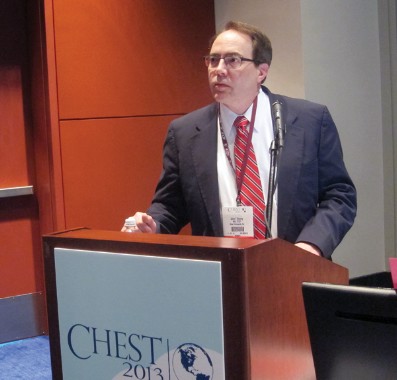
"Amputations and open lower-extremity revascularization had the highest rates of readmission in this analysis and therefore we need to focus our efforts and find additional postoperative [management] strategies for these two subgroups," Dr. Travis L. Engelbert said at the annual meeting of the Midwestern Vascular Surgical Society.
The analysis involved 2,505 patients who underwent vascular surgery at the University of Wisconsin Hospitals and Clinics in Madison from 2009 to mid-2013. The overall readmission rate was 9.7% (n = 244). Of these, 147 patients (60.2%) were readmitted to the vascular surgery service.
The most common readmitting diagnosis was wound complication or infection in 37%, said Dr. Engelbert, a vascular surgeon at the university.
Patients whose index admission was urgent rather than elective had significantly higher readmission rates (14.6% vs. 6.9%; P less than .001), as did those living remotely rather than inside Dane County, where the university is located (12% vs. 8.8%; P = .02).
Not surprisingly, higher illness severity, as calculated using the 3M APR DRG software, was significantly associated with readmission (15.6% high vs. 4.3% low severity; P less than .001).
Patients who were readmitted had a longer initial length of stay (8.5 days vs. 6.1 days; P less than .01), and were more likely to have an ICU admission (18.3% vs. 9.5% without ICU stay; P less than .05), he reported.
Based on insurance status, patients covered by Medicaid (16.8%) and Medicare (10%) were most likely to have an unplanned readmission, followed by fee-for-service patients (9.5%), self-pay (8%), and HMO (5.5%) patients (P = .02).
Dr. Engelbert observed that vascular surgery outcomes have come under scrutiny and that there has been some discussion of cutbacks in Medicare reimbursement given its high rates of readmission.
"This is already starting to happen for certain medical patient populations and if this were to happen, it would significantly affect a vascular service?s practice because a majority of our patients are covered by Medicare and have a higher readmission rate," he said.
The analysis suggests that vascular surgeons may also want to pay closer attention to discharge destination for their patients. Readmission rates were about three times higher for patients discharged to a rehabilitation facility or skilled nursing facility than for those discharged home (19.2% and 16.2% vs. 6.2%; P less than .01).
"The discharge destination matters," Dr. Engelbert said. "... We need to have improved coordination between hospitals and postdischarge destinations. And, we also might need to look at how these patients are cared for and if they are discharged to the appropriate level of care when they?re discharged to these skilled nursing and rehabilitation facilities."
The effects of discharge destination (odds ratio, 1.54 skilled nursing facility), index length of stay (OR, 1.03), insurance (OR, 0.43 HMO), and lower-extremity revascularization or amputation (OR, 2.35) persisted in multivariable logistic regression analysis that controlled for age, sex, race, proximity to hospital, clinic follow-up time, urgent vs. elective admission, insurance type, procedure type, length of stay, and discharge destination.
Dr. Engelbert had no conflicts.
CHICAGO - Lower-extremity revascularization or amputation was among the strongest predictors of 30-day vascular surgery readmission in what is being described as the largest single-center review in this setting to date. Lower-extremity revascularization and amputations made up 63% of unplanned readmissions, though rates for endovascular lower-extremity revascularization were almost half that of open revascularization (8.2% vs. 15%).
Notably, below-knee amputations fared the worst, with a 30-day unplanned readmission rate of 24%, compared with 13.3% for above-knee amputations and 16.4% for foot amputation.
"Amputations and open lower-extremity revascularization had the highest rates of readmission in this analysis and therefore we need to focus our efforts and find additional postoperative [management] strategies for these two subgroups," Dr. Travis L. Engelbert said at the annual meeting of the Midwestern Vascular Surgical Society.
The analysis involved 2,505 patients who underwent vascular surgery at the University of Wisconsin Hospitals and Clinics in Madison from 2009 to mid-2013. The overall readmission rate was 9.7% (n = 244). Of these, 147 patients (60.2%) were readmitted to the vascular surgery service.
The most common readmitting diagnosis was wound complication or infection in 37%, said Dr. Engelbert, a vascular surgeon at the university.
Patients whose index admission was urgent rather than elective had significantly higher readmission rates (14.6% vs. 6.9%; P less than .001), as did those living remotely rather than inside Dane County, where the university is located (12% vs. 8.8%; P = .02).
Not surprisingly, higher illness severity, as calculated using the 3M APR DRG software, was significantly associated with readmission (15.6% high vs. 4.3% low severity; P less than .001).
Patients who were readmitted had a longer initial length of stay (8.5 days vs. 6.1 days; P less than .01), and were more likely to have an ICU admission (18.3% vs. 9.5% without ICU stay; P less than .05), he reported.
Based on insurance status, patients covered by Medicaid (16.8%) and Medicare (10%) were most likely to have an unplanned readmission, followed by fee-for-service patients (9.5%), self-pay (8%), and HMO (5.5%) patients (P = .02).
Dr. Engelbert observed that vascular surgery outcomes have come under scrutiny and that there has been some discussion of cutbacks in Medicare reimbursement given its high rates of readmission.
"This is already starting to happen for certain medical patient populations and if this were to happen, it would significantly affect a vascular service?s practice because a majority of our patients are covered by Medicare and have a higher readmission rate," he said.
The analysis suggests that vascular surgeons may also want to pay closer attention to discharge destination for their patients. Readmission rates were about three times higher for patients discharged to a rehabilitation facility or skilled nursing facility than for those discharged home (19.2% and 16.2% vs. 6.2%; P less than .01).
"The discharge destination matters," Dr. Engelbert said. "... We need to have improved coordination between hospitals and postdischarge destinations. And, we also might need to look at how these patients are cared for and if they are discharged to the appropriate level of care when they?re discharged to these skilled nursing and rehabilitation facilities."
The effects of discharge destination (odds ratio, 1.54 skilled nursing facility), index length of stay (OR, 1.03), insurance (OR, 0.43 HMO), and lower-extremity revascularization or amputation (OR, 2.35) persisted in multivariable logistic regression analysis that controlled for age, sex, race, proximity to hospital, clinic follow-up time, urgent vs. elective admission, insurance type, procedure type, length of stay, and discharge destination.
Dr. Engelbert had no conflicts.
CHICAGO - Lower-extremity revascularization or amputation was among the strongest predictors of 30-day vascular surgery readmission in what is being described as the largest single-center review in this setting to date. Lower-extremity revascularization and amputations made up 63% of unplanned readmissions, though rates for endovascular lower-extremity revascularization were almost half that of open revascularization (8.2% vs. 15%).
Notably, below-knee amputations fared the worst, with a 30-day unplanned readmission rate of 24%, compared with 13.3% for above-knee amputations and 16.4% for foot amputation.
"Amputations and open lower-extremity revascularization had the highest rates of readmission in this analysis and therefore we need to focus our efforts and find additional postoperative [management] strategies for these two subgroups," Dr. Travis L. Engelbert said at the annual meeting of the Midwestern Vascular Surgical Society.
The analysis involved 2,505 patients who underwent vascular surgery at the University of Wisconsin Hospitals and Clinics in Madison from 2009 to mid-2013. The overall readmission rate was 9.7% (n = 244). Of these, 147 patients (60.2%) were readmitted to the vascular surgery service.
The most common readmitting diagnosis was wound complication or infection in 37%, said Dr. Engelbert, a vascular surgeon at the university.
Patients whose index admission was urgent rather than elective had significantly higher readmission rates (14.6% vs. 6.9%; P less than .001), as did those living remotely rather than inside Dane County, where the university is located (12% vs. 8.8%; P = .02).
Not surprisingly, higher illness severity, as calculated using the 3M APR DRG software, was significantly associated with readmission (15.6% high vs. 4.3% low severity; P less than .001).
Patients who were readmitted had a longer initial length of stay (8.5 days vs. 6.1 days; P less than .01), and were more likely to have an ICU admission (18.3% vs. 9.5% without ICU stay; P less than .05), he reported.
Based on insurance status, patients covered by Medicaid (16.8%) and Medicare (10%) were most likely to have an unplanned readmission, followed by fee-for-service patients (9.5%), self-pay (8%), and HMO (5.5%) patients (P = .02).
Dr. Engelbert observed that vascular surgery outcomes have come under scrutiny and that there has been some discussion of cutbacks in Medicare reimbursement given its high rates of readmission.
"This is already starting to happen for certain medical patient populations and if this were to happen, it would significantly affect a vascular service?s practice because a majority of our patients are covered by Medicare and have a higher readmission rate," he said.
The analysis suggests that vascular surgeons may also want to pay closer attention to discharge destination for their patients. Readmission rates were about three times higher for patients discharged to a rehabilitation facility or skilled nursing facility than for those discharged home (19.2% and 16.2% vs. 6.2%; P less than .01).
"The discharge destination matters," Dr. Engelbert said. "... We need to have improved coordination between hospitals and postdischarge destinations. And, we also might need to look at how these patients are cared for and if they are discharged to the appropriate level of care when they?re discharged to these skilled nursing and rehabilitation facilities."
The effects of discharge destination (odds ratio, 1.54 skilled nursing facility), index length of stay (OR, 1.03), insurance (OR, 0.43 HMO), and lower-extremity revascularization or amputation (OR, 2.35) persisted in multivariable logistic regression analysis that controlled for age, sex, race, proximity to hospital, clinic follow-up time, urgent vs. elective admission, insurance type, procedure type, length of stay, and discharge destination.
Dr. Engelbert had no conflicts.

Oral Chinese formula rivals IV arsenic in acute promyelocytic leukemia
An oral tetra-arsenic tetra-sulfide formula may be a promising alternative to intravenous arsenic trioxide in the first-line treatment of acute promyelocytic leukemia.
The oral realgar–Indigo naturalis formula (RIF) plus all-trans-retinoic acid (ATRA) produced a similar 2-year disease-free survival rate as intravenous arsenic trioxide (ATO) plus ATRA (98.1% vs. 95.5%, respectively; P < .001 for noninferiority) in a multicenter, randomized phase III trial.
This is the first study to demonstrate noninferiority for the RIF/ATRA combination in the first-line treatment of acute promyelocytic leukemia (APL). Toxicity, which is a concern with any arsenic-containing agent, was also similar with both treatments.
"The results may indicate that oral RIF may be used in place of ATO as a first-line treatment in newly diagnosed APL," Dr. Hong-Hu Zhu reported in the Journal of Clinical Oncology (2013;31:4215-21).
RIF is commercially available in China and contains realgar (a tetra-arsenic tetra-sulfide mineral), Indigo naturalis, Radix salviae miltiorrhizae, and Radix pseudostellariae. Indigo naturalis and Radix salviae miltiorrhizae promote intracellular transport of arsenics and have shown synergistic effects with tetra-arsenic tetra-sulfide on the differentiation and apoptosis of APL cells, explained Dr. Zhu, of Peking University People’s Hospital, Beijing.
In a prior phase II trial, RIF demonstrated a reasonable safety profile and a 96.7% complete response (CR) rate (Chin. J. Hematol. 2006;27:801-4).
The current trial, designed by the Chinese APL Cooperative Group, randomly assigned 242 patients, aged 15-60 years, with APL to induction ATRA 25 mg/m2 plus oral RIF 60 mg/kg or ATO 0.16 mg/kg. Mitoxantrone 1.4 mg/m2 daily was added for 5 days on the fourth day or on the first day for patients with a white blood cell (WBC) count higher than 10 x 109/L.
After achieving a CR, patients received three courses of consolidation chemotherapy (homoharringtonine, cytarabine, daunorubicin, and mitoxantrone), and eight cycles of maintenance therapy consisting of ATRA 25 mg/m2 for 15 days for the first month followed by either RIF 60 mg/kg for RIF induction patients or ATO 0.16 mg/kg for ATO induction patients for 15 days for the second and third months, and continued for 2 years.
All patients received seven intrathecal injections of cytarabine 50 mg/methotrexate 10 mg/dexamethasone 5 mg for central nervous system (CNS) leukemia prophylaxis. Eleven patients were excluded from the final analysis for various reasons, including failure to meet entry criteria. All patients had a WHO (World Health Organization) performance status of 2 or lower; their median age was 36 years.
After a median follow-up of 39 months (range, 21-64 months), 98.3% of patients achieved a CR. The CR rate was similar between the RIF and ATO groups (99.1% vs. 97.4%, respectively; P = .62), as was the median time to CR of 29 days. CR rates were comparable or slightly higher than in previous studies using ATRA and chemotherapy or an arsenic-based first-line treatment, Dr. Zhu observed.
Of the 227 patients receiving consolidation chemotherapy and maintenance therapy, 1 patient in each arm relapsed, but achieved a second CR after reinduction with tamibarotene and ATO, and remained alive at last follow-up.
Three-year overall survival was similar in the RIF and ATO groups (99.1% vs. 96.6%; P = .18). Survival was also higher than observed in previous reports (64% to 92%), possibly due to the 2-year induction/maintenance treatment period, exclusion of patients with a high risk of relapse (WBC greater than 50 x 109/L), and use of CNS prophylaxis, he said.
Grade 3/4 nonhematologic adverse events, including liver events, were similar between the two groups.
Both RIF and ATO achieved arsenic concentrations within a range (0.1-2.0 mmol/L) previously shown by the authors to induce apoptosis of APL cells, "which may explain why both drugs had comparable efficacies," the authors noted. No significant accumulation of arsenic was observed in the study (cumulative dose, about 2,500 mg), despite the 2 years of treatment.
Dr. Zhu reported having no financial disclosures; a coauthor reported consulting for and receiving honoraria from Novartis and Bristol-Myers Squibb.
An oral tetra-arsenic tetra-sulfide formula may be a promising alternative to intravenous arsenic trioxide in the first-line treatment of acute promyelocytic leukemia.
The oral realgar–Indigo naturalis formula (RIF) plus all-trans-retinoic acid (ATRA) produced a similar 2-year disease-free survival rate as intravenous arsenic trioxide (ATO) plus ATRA (98.1% vs. 95.5%, respectively; P < .001 for noninferiority) in a multicenter, randomized phase III trial.
This is the first study to demonstrate noninferiority for the RIF/ATRA combination in the first-line treatment of acute promyelocytic leukemia (APL). Toxicity, which is a concern with any arsenic-containing agent, was also similar with both treatments.
"The results may indicate that oral RIF may be used in place of ATO as a first-line treatment in newly diagnosed APL," Dr. Hong-Hu Zhu reported in the Journal of Clinical Oncology (2013;31:4215-21).
RIF is commercially available in China and contains realgar (a tetra-arsenic tetra-sulfide mineral), Indigo naturalis, Radix salviae miltiorrhizae, and Radix pseudostellariae. Indigo naturalis and Radix salviae miltiorrhizae promote intracellular transport of arsenics and have shown synergistic effects with tetra-arsenic tetra-sulfide on the differentiation and apoptosis of APL cells, explained Dr. Zhu, of Peking University People’s Hospital, Beijing.
In a prior phase II trial, RIF demonstrated a reasonable safety profile and a 96.7% complete response (CR) rate (Chin. J. Hematol. 2006;27:801-4).
The current trial, designed by the Chinese APL Cooperative Group, randomly assigned 242 patients, aged 15-60 years, with APL to induction ATRA 25 mg/m2 plus oral RIF 60 mg/kg or ATO 0.16 mg/kg. Mitoxantrone 1.4 mg/m2 daily was added for 5 days on the fourth day or on the first day for patients with a white blood cell (WBC) count higher than 10 x 109/L.
After achieving a CR, patients received three courses of consolidation chemotherapy (homoharringtonine, cytarabine, daunorubicin, and mitoxantrone), and eight cycles of maintenance therapy consisting of ATRA 25 mg/m2 for 15 days for the first month followed by either RIF 60 mg/kg for RIF induction patients or ATO 0.16 mg/kg for ATO induction patients for 15 days for the second and third months, and continued for 2 years.
All patients received seven intrathecal injections of cytarabine 50 mg/methotrexate 10 mg/dexamethasone 5 mg for central nervous system (CNS) leukemia prophylaxis. Eleven patients were excluded from the final analysis for various reasons, including failure to meet entry criteria. All patients had a WHO (World Health Organization) performance status of 2 or lower; their median age was 36 years.
After a median follow-up of 39 months (range, 21-64 months), 98.3% of patients achieved a CR. The CR rate was similar between the RIF and ATO groups (99.1% vs. 97.4%, respectively; P = .62), as was the median time to CR of 29 days. CR rates were comparable or slightly higher than in previous studies using ATRA and chemotherapy or an arsenic-based first-line treatment, Dr. Zhu observed.
Of the 227 patients receiving consolidation chemotherapy and maintenance therapy, 1 patient in each arm relapsed, but achieved a second CR after reinduction with tamibarotene and ATO, and remained alive at last follow-up.
Three-year overall survival was similar in the RIF and ATO groups (99.1% vs. 96.6%; P = .18). Survival was also higher than observed in previous reports (64% to 92%), possibly due to the 2-year induction/maintenance treatment period, exclusion of patients with a high risk of relapse (WBC greater than 50 x 109/L), and use of CNS prophylaxis, he said.
Grade 3/4 nonhematologic adverse events, including liver events, were similar between the two groups.
Both RIF and ATO achieved arsenic concentrations within a range (0.1-2.0 mmol/L) previously shown by the authors to induce apoptosis of APL cells, "which may explain why both drugs had comparable efficacies," the authors noted. No significant accumulation of arsenic was observed in the study (cumulative dose, about 2,500 mg), despite the 2 years of treatment.
Dr. Zhu reported having no financial disclosures; a coauthor reported consulting for and receiving honoraria from Novartis and Bristol-Myers Squibb.
An oral tetra-arsenic tetra-sulfide formula may be a promising alternative to intravenous arsenic trioxide in the first-line treatment of acute promyelocytic leukemia.
The oral realgar–Indigo naturalis formula (RIF) plus all-trans-retinoic acid (ATRA) produced a similar 2-year disease-free survival rate as intravenous arsenic trioxide (ATO) plus ATRA (98.1% vs. 95.5%, respectively; P < .001 for noninferiority) in a multicenter, randomized phase III trial.
This is the first study to demonstrate noninferiority for the RIF/ATRA combination in the first-line treatment of acute promyelocytic leukemia (APL). Toxicity, which is a concern with any arsenic-containing agent, was also similar with both treatments.
"The results may indicate that oral RIF may be used in place of ATO as a first-line treatment in newly diagnosed APL," Dr. Hong-Hu Zhu reported in the Journal of Clinical Oncology (2013;31:4215-21).
RIF is commercially available in China and contains realgar (a tetra-arsenic tetra-sulfide mineral), Indigo naturalis, Radix salviae miltiorrhizae, and Radix pseudostellariae. Indigo naturalis and Radix salviae miltiorrhizae promote intracellular transport of arsenics and have shown synergistic effects with tetra-arsenic tetra-sulfide on the differentiation and apoptosis of APL cells, explained Dr. Zhu, of Peking University People’s Hospital, Beijing.
In a prior phase II trial, RIF demonstrated a reasonable safety profile and a 96.7% complete response (CR) rate (Chin. J. Hematol. 2006;27:801-4).
The current trial, designed by the Chinese APL Cooperative Group, randomly assigned 242 patients, aged 15-60 years, with APL to induction ATRA 25 mg/m2 plus oral RIF 60 mg/kg or ATO 0.16 mg/kg. Mitoxantrone 1.4 mg/m2 daily was added for 5 days on the fourth day or on the first day for patients with a white blood cell (WBC) count higher than 10 x 109/L.
After achieving a CR, patients received three courses of consolidation chemotherapy (homoharringtonine, cytarabine, daunorubicin, and mitoxantrone), and eight cycles of maintenance therapy consisting of ATRA 25 mg/m2 for 15 days for the first month followed by either RIF 60 mg/kg for RIF induction patients or ATO 0.16 mg/kg for ATO induction patients for 15 days for the second and third months, and continued for 2 years.
All patients received seven intrathecal injections of cytarabine 50 mg/methotrexate 10 mg/dexamethasone 5 mg for central nervous system (CNS) leukemia prophylaxis. Eleven patients were excluded from the final analysis for various reasons, including failure to meet entry criteria. All patients had a WHO (World Health Organization) performance status of 2 or lower; their median age was 36 years.
After a median follow-up of 39 months (range, 21-64 months), 98.3% of patients achieved a CR. The CR rate was similar between the RIF and ATO groups (99.1% vs. 97.4%, respectively; P = .62), as was the median time to CR of 29 days. CR rates were comparable or slightly higher than in previous studies using ATRA and chemotherapy or an arsenic-based first-line treatment, Dr. Zhu observed.
Of the 227 patients receiving consolidation chemotherapy and maintenance therapy, 1 patient in each arm relapsed, but achieved a second CR after reinduction with tamibarotene and ATO, and remained alive at last follow-up.
Three-year overall survival was similar in the RIF and ATO groups (99.1% vs. 96.6%; P = .18). Survival was also higher than observed in previous reports (64% to 92%), possibly due to the 2-year induction/maintenance treatment period, exclusion of patients with a high risk of relapse (WBC greater than 50 x 109/L), and use of CNS prophylaxis, he said.
Grade 3/4 nonhematologic adverse events, including liver events, were similar between the two groups.
Both RIF and ATO achieved arsenic concentrations within a range (0.1-2.0 mmol/L) previously shown by the authors to induce apoptosis of APL cells, "which may explain why both drugs had comparable efficacies," the authors noted. No significant accumulation of arsenic was observed in the study (cumulative dose, about 2,500 mg), despite the 2 years of treatment.
Dr. Zhu reported having no financial disclosures; a coauthor reported consulting for and receiving honoraria from Novartis and Bristol-Myers Squibb.
Major finding: Two-year disease-free survival was 98% in the RIF group vs. 95.5% in the ATO group (P < .001 for noninferiority).
Data source: A prospective, multicenter, randomized phase III study in 242 patients with acute promyelocytic leukemia.
Disclosures: Dr. Zhu reported having no financial disclosures; a coauthor reported consulting for and receiving honoraria from Novartis and Bristol-Myers Squibb.
Roflumilast holds up in real world, postapproval studies
CHICAGO – Patients with chronic obstructive pulmonary disease treated with roflumilast had fewer all-cause hospital readmissions and monthly COPD exacerbations than nonusers in two real world database analyses.
Among 1,400 patients, all-cause, 30-day hospital readmissions were 6.9% for those using once-daily oral roflumilast (Daliresp) and 11.1% for nonusers (P = .021).
COPD-related hospital readmissions were also lower with roflumilast, but these findings did not reach statistical significance (6.3% vs. 9.2%; P = .086), Dr. Alpesh N. Amin reported at the annual meeting of the American College of Chest Physicians.
He noted that Medicare recently fined 230 hospitals $227 million for high readmission rates.

"Heart failure, MI, and pneumonia are first on the list, but COPD is right behind that in terms of the penalty issues," said Dr. Amin, chair of the department of medicine and executive director of the hospitalist program at the University of California, Irvine.
Roflumilast, a selective phosphodiesterase-4 inhibitor, was approved in May 2011 to reduce the frequency of COPD exacerbations in patients with severe COPD associated with chronic bronchitis and a history of exacerbations.
Dr. Amin's retrospective study used data from MarketScan, a large U.S. commercial health insurance claims database, and Medicare supplemental data to evaluate hospitalizations among 15,755 patients discharged for COPD between July 1, 2011, and Dec. 31, 2011. Patients had to have used roflumilast within 14 days after hospitalization or be discharged for COPD without roflumilast use during the entire study period.
After propensity score matching and logistic regression to control for confounding by indication and baseline characteristics, a matched cohort of 350 roflumilast and 1,050 nonroflumilast patients remained.
Conditional logistic regressions showed that roflumilast use is associated with a significantly lower likelihood of all-cause 30-day hospital readmission (odds ratio, 0.59), and a trend toward decreased COPD 30-day readmission (OR, 0.66; P = .089), Dr. Amin said.

All patients in the study were covered by large employer-sponsored private health insurance programs, so generalization of the results to the Medicare and Medicaid populations cannot be assumed, he noted. During the same session, a second database analysis showed that despite being sicker at baseline, adults treated with roflumilast along with other COPD medications had significantly fewer monthly exacerbations than those receiving at least three other COPD maintenance medications.
During the 12-month baseline period, roflumilast patients used significantly more COPD drugs than nonroflumilast patients (mean 3.2 vs. 2.6), were on those drugs significantly longer (mean, 187 days vs. 166 days), and had significantly more baseline ER visits (mean, 0.5 vs. 0.3), and hospitalizations (79% vs. 72%).
The benefit was mainly driven by a reduction in moderate exacerbations, said Dr. Andrew Shorr, a critical care pulmonologist at Washington (D.C.) Hospital Center.
In unadjusted models, rates of combined monthly moderate and severe exacerbations fell 11.1% in the roflumilast group and rose 15.9% among controls, a significant difference.
When looked at separately, the difference was statistically significant for moderate exacerbations (–11.8% vs. +20.7%; P = .001), but not for severe exacerbations requiring hospitalization (–8.8% vs. –5.3%), he said.
After the investigators adjusted for baseline characteristics in a difference-in-difference model, the reduction remained significant for monthly severe/moderate (–0.0160) and moderate exacerbations (–0.0149), but not for severe exacerbations (–0.0012; P = .63).
"We estimated that the magnitude of the effect, after adjusting for baseline imbalances and natural time trends, was about a 23% absolute reduction in monthly exacerbations for the roflumilast group over controls," Dr. Shorr said.
The analysis was based on medical and pharmacy claims in the IMS LifeLink PharMetrics Plus database from May 2010 to December 2012. Data were for 710 COPD patients receiving roflumilast plus other COPD medications and 13,501 patients receiving at least two COPD maintenance medications and prescribed a third maintenance drug during the study index period of May 2011 and September 2012. Patients with asthma or who were corticosteroid dependent were excluded.
Forest Research Institute sponsored the studies. Dr. Amin and Dr. Shorr reported research support and other remuneration from Forest. Some coauthors in each study are Forest employees.
CHICAGO – Patients with chronic obstructive pulmonary disease treated with roflumilast had fewer all-cause hospital readmissions and monthly COPD exacerbations than nonusers in two real world database analyses.
Among 1,400 patients, all-cause, 30-day hospital readmissions were 6.9% for those using once-daily oral roflumilast (Daliresp) and 11.1% for nonusers (P = .021).
COPD-related hospital readmissions were also lower with roflumilast, but these findings did not reach statistical significance (6.3% vs. 9.2%; P = .086), Dr. Alpesh N. Amin reported at the annual meeting of the American College of Chest Physicians.
He noted that Medicare recently fined 230 hospitals $227 million for high readmission rates.
"Heart failure, MI, and pneumonia are first on the list, but COPD is right behind that in terms of the penalty issues," said Dr. Amin, chair of the department of medicine and executive director of the hospitalist program at the University of California, Irvine.
Roflumilast, a selective phosphodiesterase-4 inhibitor, was approved in May 2011 to reduce the frequency of COPD exacerbations in patients with severe COPD associated with chronic bronchitis and a history of exacerbations.
Dr. Amin's retrospective study used data from MarketScan, a large U.S. commercial health insurance claims database, and Medicare supplemental data to evaluate hospitalizations among 15,755 patients discharged for COPD between July 1, 2011, and Dec. 31, 2011. Patients had to have used roflumilast within 14 days after hospitalization or be discharged for COPD without roflumilast use during the entire study period.
After propensity score matching and logistic regression to control for confounding by indication and baseline characteristics, a matched cohort of 350 roflumilast and 1,050 nonroflumilast patients remained.
Conditional logistic regressions showed that roflumilast use is associated with a significantly lower likelihood of all-cause 30-day hospital readmission (odds ratio, 0.59), and a trend toward decreased COPD 30-day readmission (OR, 0.66; P = .089), Dr. Amin said.
All patients in the study were covered by large employer-sponsored private health insurance programs, so generalization of the results to the Medicare and Medicaid populations cannot be assumed, he noted. During the same session, a second database analysis showed that despite being sicker at baseline, adults treated with roflumilast along with other COPD medications had significantly fewer monthly exacerbations than those receiving at least three other COPD maintenance medications.
During the 12-month baseline period, roflumilast patients used significantly more COPD drugs than nonroflumilast patients (mean 3.2 vs. 2.6), were on those drugs significantly longer (mean, 187 days vs. 166 days), and had significantly more baseline ER visits (mean, 0.5 vs. 0.3), and hospitalizations (79% vs. 72%).
The benefit was mainly driven by a reduction in moderate exacerbations, said Dr. Andrew Shorr, a critical care pulmonologist at Washington (D.C.) Hospital Center.
In unadjusted models, rates of combined monthly moderate and severe exacerbations fell 11.1% in the roflumilast group and rose 15.9% among controls, a significant difference.
When looked at separately, the difference was statistically significant for moderate exacerbations (–11.8% vs. +20.7%; P = .001), but not for severe exacerbations requiring hospitalization (–8.8% vs. –5.3%), he said.
After the investigators adjusted for baseline characteristics in a difference-in-difference model, the reduction remained significant for monthly severe/moderate (–0.0160) and moderate exacerbations (–0.0149), but not for severe exacerbations (–0.0012; P = .63).
"We estimated that the magnitude of the effect, after adjusting for baseline imbalances and natural time trends, was about a 23% absolute reduction in monthly exacerbations for the roflumilast group over controls," Dr. Shorr said.
The analysis was based on medical and pharmacy claims in the IMS LifeLink PharMetrics Plus database from May 2010 to December 2012. Data were for 710 COPD patients receiving roflumilast plus other COPD medications and 13,501 patients receiving at least two COPD maintenance medications and prescribed a third maintenance drug during the study index period of May 2011 and September 2012. Patients with asthma or who were corticosteroid dependent were excluded.
Forest Research Institute sponsored the studies. Dr. Amin and Dr. Shorr reported research support and other remuneration from Forest. Some coauthors in each study are Forest employees.
CHICAGO – Patients with chronic obstructive pulmonary disease treated with roflumilast had fewer all-cause hospital readmissions and monthly COPD exacerbations than nonusers in two real world database analyses.
Among 1,400 patients, all-cause, 30-day hospital readmissions were 6.9% for those using once-daily oral roflumilast (Daliresp) and 11.1% for nonusers (P = .021).
COPD-related hospital readmissions were also lower with roflumilast, but these findings did not reach statistical significance (6.3% vs. 9.2%; P = .086), Dr. Alpesh N. Amin reported at the annual meeting of the American College of Chest Physicians.
He noted that Medicare recently fined 230 hospitals $227 million for high readmission rates.
"Heart failure, MI, and pneumonia are first on the list, but COPD is right behind that in terms of the penalty issues," said Dr. Amin, chair of the department of medicine and executive director of the hospitalist program at the University of California, Irvine.
Roflumilast, a selective phosphodiesterase-4 inhibitor, was approved in May 2011 to reduce the frequency of COPD exacerbations in patients with severe COPD associated with chronic bronchitis and a history of exacerbations.
Dr. Amin's retrospective study used data from MarketScan, a large U.S. commercial health insurance claims database, and Medicare supplemental data to evaluate hospitalizations among 15,755 patients discharged for COPD between July 1, 2011, and Dec. 31, 2011. Patients had to have used roflumilast within 14 days after hospitalization or be discharged for COPD without roflumilast use during the entire study period.
After propensity score matching and logistic regression to control for confounding by indication and baseline characteristics, a matched cohort of 350 roflumilast and 1,050 nonroflumilast patients remained.
Conditional logistic regressions showed that roflumilast use is associated with a significantly lower likelihood of all-cause 30-day hospital readmission (odds ratio, 0.59), and a trend toward decreased COPD 30-day readmission (OR, 0.66; P = .089), Dr. Amin said.
All patients in the study were covered by large employer-sponsored private health insurance programs, so generalization of the results to the Medicare and Medicaid populations cannot be assumed, he noted. During the same session, a second database analysis showed that despite being sicker at baseline, adults treated with roflumilast along with other COPD medications had significantly fewer monthly exacerbations than those receiving at least three other COPD maintenance medications.
During the 12-month baseline period, roflumilast patients used significantly more COPD drugs than nonroflumilast patients (mean 3.2 vs. 2.6), were on those drugs significantly longer (mean, 187 days vs. 166 days), and had significantly more baseline ER visits (mean, 0.5 vs. 0.3), and hospitalizations (79% vs. 72%).
The benefit was mainly driven by a reduction in moderate exacerbations, said Dr. Andrew Shorr, a critical care pulmonologist at Washington (D.C.) Hospital Center.
In unadjusted models, rates of combined monthly moderate and severe exacerbations fell 11.1% in the roflumilast group and rose 15.9% among controls, a significant difference.
When looked at separately, the difference was statistically significant for moderate exacerbations (–11.8% vs. +20.7%; P = .001), but not for severe exacerbations requiring hospitalization (–8.8% vs. –5.3%), he said.
After the investigators adjusted for baseline characteristics in a difference-in-difference model, the reduction remained significant for monthly severe/moderate (–0.0160) and moderate exacerbations (–0.0149), but not for severe exacerbations (–0.0012; P = .63).
"We estimated that the magnitude of the effect, after adjusting for baseline imbalances and natural time trends, was about a 23% absolute reduction in monthly exacerbations for the roflumilast group over controls," Dr. Shorr said.
The analysis was based on medical and pharmacy claims in the IMS LifeLink PharMetrics Plus database from May 2010 to December 2012. Data were for 710 COPD patients receiving roflumilast plus other COPD medications and 13,501 patients receiving at least two COPD maintenance medications and prescribed a third maintenance drug during the study index period of May 2011 and September 2012. Patients with asthma or who were corticosteroid dependent were excluded.
Forest Research Institute sponsored the studies. Dr. Amin and Dr. Shorr reported research support and other remuneration from Forest. Some coauthors in each study are Forest employees.
AT CHEST 2013
Major finding: 30-day hospital readmissions were 6.9% for those using once-daily oral roflumilast vs. 11.1% for nonusers.
Data source: Two database analyses of COPD patients.
Disclosures: Forest Research Institute sponsored the studies. Dr. Amin and Dr. Shorr reported research support and other remuneration from Forest. Some coauthors in each study are Forest employees.

Anticoagulant edoxaban comparable with warfarin in atrial fib
Two doses of the once-daily, oral factor Xa inhibitor edoxaban were noninferior to warfarin in preventing stroke or systemic embolism in patients with atrial fibrillation in the phase III ENGAGE AF-TIMI 48 trial.
The primary endpoint of stroke or embolic events was seen in 1.50% of patients per year on well-controlled warfarin vs. 1.18% with edoxaban 60 mg (hazard ratio, 0.79; P less than .001 for noninferiority) and 1.61% with edoxaban 30 mg (HR, 1.07; P = .005 for noninferiority), Dr. Robert P. Giugliano reported at the American Heart Association scientific sessions.
Edoxaban also bested oral warfarin on the study’s principal safety endpoint of major bleeding and significantly reduced bleeding and death from cardiovascular causes in the study, published simultaneously with the presentation (N. Engl. J. Med. 2013 Nov. 19 [doi:10.1056/NEJMoa1310907]).

Edoxaban is currently approved only in Japan (Lixiana) for venous thromboembolism (VTE) prevention after major orthopedic surgery, although regulatory filings are expected in the United States, Europe, and Japan in 2014 following recent positive results phase III results for the treatment and prevention of recurrent symptomatic VTE.
Though positive, the results of ENGAGE AF-TIMI 48 (Effective Anticoagulation With Factor Xa Next Generation in Atrial Fibrillation – Thrombolysis in Myocardial Infarction 48) do little to distinguish edoxaban from other novel oral anticoagulants entering the market, including the factor Xa inhibitors rivaroxaban (Xarelto) and apixaban (Eliquis), and the twice-daily direct thrombin inhibitor dabigatran (Pradaxa).
Approval of the lower dose of edoxaban is unlikely as it barely meets noninferiority for the primary endpoint in the intention-to-treat analysis (upper 95% confidence interval bound of 1.34; noninferiority margin of 1.38) – and ischemic stroke was significantly worse than warfarin (1.77% per year vs. 1.25% per year; HR, 1.41; P less than .001), observed cardiologist Dr. Sanjay Kaul of Cedars-Sinai Medical Center, Los Angeles.
High-dose edoxaban had the same ischemic stroke rate as warfarin, 1.25%.
Annualized rates of hemorrhagic stroke were 0.47% with warfarin, compared with 0.26% with high-dose edoxaban (HR, 0.54) and 0.16% with low-dose edoxaban (HR, 0.33; both P less than .001).
High-dose edoxaban also failed to meet superiority over warfarin for the primary endpoint in a prespecified intention-to-treat analysis (1.57% vs. 1.80%; HR, 0.87; P = .08), so a superiority claim won’t be allowed.
"Marketability might be an issue, as the treatment advantage is not overwhelming," Dr. Kaul said in an interview. "Being the fourth kid on the block with no unique advantage might challenge its acceptability in clinical practice and marketability."
ENGAGE AF-TIMI 48 enrolled 21,105 patients with moderate- to high-risk atrial fibrillation. One-quarter had paroxysmal atrial fibrillation, median follow-up was 2.8 years, and the warfarin group was in the therapeutic range for a median of 68.4% of the treatment period.
Major bleeding occurred in 3.43% of patients per year with warfarin vs. 2.75% with edoxaban 60 mg (HR, 0.80) and in 1.61% with edoxaban 30 mg (HR, 0.47; both P less than .001), reported Dr. Giugliano of Brigham and Women’s Hospital and Harvard Medical School, in Boston. The corresponding annualized rates of death from cardiovascular causes were, respectively, 3.17% vs. 2.74% and 2.71%, both nonsignificant differences.
Rates of the key composite secondary endpoint of stroke, systemic embolism, or death from cardiovascular causes were 4.43% with warfarin vs. 3.85% with high-dose edoxaban (HR, 0.87%; P = .005) and 4.23% for low-dose edoxaban, which failed to reach statistical significance (HR, 0.95; P = .32), he noted.
Dr. Giugliano and his coauthors reported grant support and other financial relationships with Daiichi Sankyo, the study sponsor. Dr. Kaul reported stock in Johnson & Johnson and consultancy for Boehringer Ingelheim.

|
| Dr. Jun Chiong |
Dr. Jun Chiong, FCCP, comments: The direct factor Xa (FXa) inhibitors have gained popularity for use in several indications, most notably for the prevention of stroke in patients with atrial fibrillation. There are several advantages of using these agents, particularly on the PT/INR monitoring which are challenging, especially to stroke patients with limited activities of daily living.
The Achilles' heel of these novel oral anticoagulants is the lack of an antidote, although research is ongoing currently. Widespread use of these agents will mainly depend onits their formulary status in health plans as we are moving toward affordable and value-based care.
|
|
| Dr. Jun Chiong |
Dr. Jun Chiong, FCCP, comments: The direct factor Xa (FXa) inhibitors have gained popularity for use in several indications, most notably for the prevention of stroke in patients with atrial fibrillation. There are several advantages of using these agents, particularly on the PT/INR monitoring which are challenging, especially to stroke patients with limited activities of daily living.
The Achilles' heel of these novel oral anticoagulants is the lack of an antidote, although research is ongoing currently. Widespread use of these agents will mainly depend onits their formulary status in health plans as we are moving toward affordable and value-based care.
|
|
| Dr. Jun Chiong |
Dr. Jun Chiong, FCCP, comments: The direct factor Xa (FXa) inhibitors have gained popularity for use in several indications, most notably for the prevention of stroke in patients with atrial fibrillation. There are several advantages of using these agents, particularly on the PT/INR monitoring which are challenging, especially to stroke patients with limited activities of daily living.
The Achilles' heel of these novel oral anticoagulants is the lack of an antidote, although research is ongoing currently. Widespread use of these agents will mainly depend onits their formulary status in health plans as we are moving toward affordable and value-based care.
Two doses of the once-daily, oral factor Xa inhibitor edoxaban were noninferior to warfarin in preventing stroke or systemic embolism in patients with atrial fibrillation in the phase III ENGAGE AF-TIMI 48 trial.
The primary endpoint of stroke or embolic events was seen in 1.50% of patients per year on well-controlled warfarin vs. 1.18% with edoxaban 60 mg (hazard ratio, 0.79; P less than .001 for noninferiority) and 1.61% with edoxaban 30 mg (HR, 1.07; P = .005 for noninferiority), Dr. Robert P. Giugliano reported at the American Heart Association scientific sessions.
Edoxaban also bested oral warfarin on the study’s principal safety endpoint of major bleeding and significantly reduced bleeding and death from cardiovascular causes in the study, published simultaneously with the presentation (N. Engl. J. Med. 2013 Nov. 19 [doi:10.1056/NEJMoa1310907]).
Edoxaban is currently approved only in Japan (Lixiana) for venous thromboembolism (VTE) prevention after major orthopedic surgery, although regulatory filings are expected in the United States, Europe, and Japan in 2014 following recent positive results phase III results for the treatment and prevention of recurrent symptomatic VTE.
Though positive, the results of ENGAGE AF-TIMI 48 (Effective Anticoagulation With Factor Xa Next Generation in Atrial Fibrillation – Thrombolysis in Myocardial Infarction 48) do little to distinguish edoxaban from other novel oral anticoagulants entering the market, including the factor Xa inhibitors rivaroxaban (Xarelto) and apixaban (Eliquis), and the twice-daily direct thrombin inhibitor dabigatran (Pradaxa).
Approval of the lower dose of edoxaban is unlikely as it barely meets noninferiority for the primary endpoint in the intention-to-treat analysis (upper 95% confidence interval bound of 1.34; noninferiority margin of 1.38) – and ischemic stroke was significantly worse than warfarin (1.77% per year vs. 1.25% per year; HR, 1.41; P less than .001), observed cardiologist Dr. Sanjay Kaul of Cedars-Sinai Medical Center, Los Angeles.
High-dose edoxaban had the same ischemic stroke rate as warfarin, 1.25%.
Annualized rates of hemorrhagic stroke were 0.47% with warfarin, compared with 0.26% with high-dose edoxaban (HR, 0.54) and 0.16% with low-dose edoxaban (HR, 0.33; both P less than .001).
High-dose edoxaban also failed to meet superiority over warfarin for the primary endpoint in a prespecified intention-to-treat analysis (1.57% vs. 1.80%; HR, 0.87; P = .08), so a superiority claim won’t be allowed.
"Marketability might be an issue, as the treatment advantage is not overwhelming," Dr. Kaul said in an interview. "Being the fourth kid on the block with no unique advantage might challenge its acceptability in clinical practice and marketability."
ENGAGE AF-TIMI 48 enrolled 21,105 patients with moderate- to high-risk atrial fibrillation. One-quarter had paroxysmal atrial fibrillation, median follow-up was 2.8 years, and the warfarin group was in the therapeutic range for a median of 68.4% of the treatment period.
Major bleeding occurred in 3.43% of patients per year with warfarin vs. 2.75% with edoxaban 60 mg (HR, 0.80) and in 1.61% with edoxaban 30 mg (HR, 0.47; both P less than .001), reported Dr. Giugliano of Brigham and Women’s Hospital and Harvard Medical School, in Boston. The corresponding annualized rates of death from cardiovascular causes were, respectively, 3.17% vs. 2.74% and 2.71%, both nonsignificant differences.
Rates of the key composite secondary endpoint of stroke, systemic embolism, or death from cardiovascular causes were 4.43% with warfarin vs. 3.85% with high-dose edoxaban (HR, 0.87%; P = .005) and 4.23% for low-dose edoxaban, which failed to reach statistical significance (HR, 0.95; P = .32), he noted.
Dr. Giugliano and his coauthors reported grant support and other financial relationships with Daiichi Sankyo, the study sponsor. Dr. Kaul reported stock in Johnson & Johnson and consultancy for Boehringer Ingelheim.
Two doses of the once-daily, oral factor Xa inhibitor edoxaban were noninferior to warfarin in preventing stroke or systemic embolism in patients with atrial fibrillation in the phase III ENGAGE AF-TIMI 48 trial.
The primary endpoint of stroke or embolic events was seen in 1.50% of patients per year on well-controlled warfarin vs. 1.18% with edoxaban 60 mg (hazard ratio, 0.79; P less than .001 for noninferiority) and 1.61% with edoxaban 30 mg (HR, 1.07; P = .005 for noninferiority), Dr. Robert P. Giugliano reported at the American Heart Association scientific sessions.
Edoxaban also bested oral warfarin on the study’s principal safety endpoint of major bleeding and significantly reduced bleeding and death from cardiovascular causes in the study, published simultaneously with the presentation (N. Engl. J. Med. 2013 Nov. 19 [doi:10.1056/NEJMoa1310907]).
Edoxaban is currently approved only in Japan (Lixiana) for venous thromboembolism (VTE) prevention after major orthopedic surgery, although regulatory filings are expected in the United States, Europe, and Japan in 2014 following recent positive results phase III results for the treatment and prevention of recurrent symptomatic VTE.
Though positive, the results of ENGAGE AF-TIMI 48 (Effective Anticoagulation With Factor Xa Next Generation in Atrial Fibrillation – Thrombolysis in Myocardial Infarction 48) do little to distinguish edoxaban from other novel oral anticoagulants entering the market, including the factor Xa inhibitors rivaroxaban (Xarelto) and apixaban (Eliquis), and the twice-daily direct thrombin inhibitor dabigatran (Pradaxa).
Approval of the lower dose of edoxaban is unlikely as it barely meets noninferiority for the primary endpoint in the intention-to-treat analysis (upper 95% confidence interval bound of 1.34; noninferiority margin of 1.38) – and ischemic stroke was significantly worse than warfarin (1.77% per year vs. 1.25% per year; HR, 1.41; P less than .001), observed cardiologist Dr. Sanjay Kaul of Cedars-Sinai Medical Center, Los Angeles.
High-dose edoxaban had the same ischemic stroke rate as warfarin, 1.25%.
Annualized rates of hemorrhagic stroke were 0.47% with warfarin, compared with 0.26% with high-dose edoxaban (HR, 0.54) and 0.16% with low-dose edoxaban (HR, 0.33; both P less than .001).
High-dose edoxaban also failed to meet superiority over warfarin for the primary endpoint in a prespecified intention-to-treat analysis (1.57% vs. 1.80%; HR, 0.87; P = .08), so a superiority claim won’t be allowed.
"Marketability might be an issue, as the treatment advantage is not overwhelming," Dr. Kaul said in an interview. "Being the fourth kid on the block with no unique advantage might challenge its acceptability in clinical practice and marketability."
ENGAGE AF-TIMI 48 enrolled 21,105 patients with moderate- to high-risk atrial fibrillation. One-quarter had paroxysmal atrial fibrillation, median follow-up was 2.8 years, and the warfarin group was in the therapeutic range for a median of 68.4% of the treatment period.
Major bleeding occurred in 3.43% of patients per year with warfarin vs. 2.75% with edoxaban 60 mg (HR, 0.80) and in 1.61% with edoxaban 30 mg (HR, 0.47; both P less than .001), reported Dr. Giugliano of Brigham and Women’s Hospital and Harvard Medical School, in Boston. The corresponding annualized rates of death from cardiovascular causes were, respectively, 3.17% vs. 2.74% and 2.71%, both nonsignificant differences.
Rates of the key composite secondary endpoint of stroke, systemic embolism, or death from cardiovascular causes were 4.43% with warfarin vs. 3.85% with high-dose edoxaban (HR, 0.87%; P = .005) and 4.23% for low-dose edoxaban, which failed to reach statistical significance (HR, 0.95; P = .32), he noted.
Dr. Giugliano and his coauthors reported grant support and other financial relationships with Daiichi Sankyo, the study sponsor. Dr. Kaul reported stock in Johnson & Johnson and consultancy for Boehringer Ingelheim.
FROM THE AHA SCIENTIFIC SESSIONS
Major finding: The annualized rate of stroke or embolic events was 1.50% with warfarin vs. 1.18% with edoxaban 60 mg (HR, 0.79; P less than .001) and 1.61% with edoxaban 30 mg (HR, 1.07, P .005).
Data source: A prospective, phase III study in 21,105 patients with moderate- to high-risk atrial fibrillation.
Disclosures: Dr. Giugliano and his coauthors reported grant support and other financial relationships with Daiichi Sankyo, the study sponsor. Dr. Kaul reported stock in Johnson & Johnson and consultancy for Boehringer Ingelheim.

Biologics inch ahead in asthma treatment
CHICAGO – Targeted biological therapies are working in rheumatoid arthritis, cancer, and irritable bowel disease, leading some experts to question whether their time in asthma has finally arrived.
"We’re still not there yet, but perhaps we can see the light at the end of the tunnel," Dr. Diego J. Maselli said at the annual meeting of the American College of Chest Physicians.
Early successes in animal models of asthma have not translated to humans with asthma, in part because of disparities in immunology, biology, and anatomy, but also because of the heterogeneous nature of the disease.
The benchmark so far for asthma biologics is the anti-immunoglobulin E (anti-IgE) monoclonal antibody omalizumab (Xolair), indicated for moderate to severe persistent asthma that is uncontrolled with inhaled corticosteroids.
Omalizumab gained approval after cutting exacerbations in two trials involving patients with a forced expiratory volume in one second (FEV1) between 40% and 80% predicted, but the drug had no effect on exacerbations in a third trial that did not restrict screening FEV1 and allowed use of long-acting beta2-agonists. In all three studies, exacerbations were not reduced in patients requiring oral steroids as maintenance therapy or those with an FEV1 over 80%.
There is now significant experience with omalizumab, and although there was a concern regarding a slight increase in the incidence of malignancy in the initial studies, large registries have shown no risk for malignant neoplasms or cardiovascular effects, said Dr. Maselli, of the University of Texas Health Science Center, San Antonio.
Promising results with several new agents, however, suggest that phenotypical markers such as IgE, eosinophils, and periostin are necessary to identify patients most likely to benefit from targeted therapy, he noted.
For example, the investigational interleukin 5 (IL-5) antagonist mepolizumab produced mixed initial results, but reduced asthma exacerbations over the course of 50 weeks from a mean of 3.4 to 2 in one study (N. Engl. J. Med. 2009;360:973-84), and by 48% over placebo in a second study when used in highly selected asthma patient populations with confirmed sputum or serum eosinophilia (Lancet 2012;380:651-9).
A recent meta-analysis (PLOS One 2013 March 27 [10.1371/journal.pone.0059872]) of seven mepolizumab studies echoed these findings, but also concluded the drug fails to significantly improve lung function, Dr. Maselli observed.
Provocative results from another biologic suggest that the presence of nasal polyps in eosinophilic asthma may be useful in further selecting patients for IL-5 antagonist therapy. Intravenous treatment with the anti-IL-5 antibody reslizumab (Cinquil) had a greater effect on sputum eosinophilia and asthma exacerbations in poorly controlled asthmatics with nasal polyps (Am. J. Respir. Crit. Care. Med. 2011;184:1125-32).
Serum levels of the matricellular protein periostin are also being used to better target interleukin-13 (IL-13)-directed therapy, Dr. Maselli said. IL-13 induces bronchial epithelial cells to secrete periostin and is thought to play a central role in asthma by promoting mucus secretion and airway remodeling and hyper-reactivity.
Six monthly injections of the experimental anti-IL-13 monoclonal antibody lebrikizumab significantly improved lung function over placebo in asthmatics poorly controlled on inhaled corticosteroids, but produced a more robust increase in FEV1 and a 60% reduction in exacerbations only in the subgroup with high pretreatment periostin levels (N. Engl. J. Med. 2011;365:1088-98). Interestingly, the investigators had hypothesized that high serum IgE plus high peripheral-blood eosinophil counts would serve as a marker for patients with high IL-13 expression.
To further complicate IL-13 blockade, a more recent lebrikizumab study in asthmatic patients not receiving inhaled steroids reported no meaningful differences in FEV1 between various lebrikizumab dose groups and placebo in a periostin subgroup (J. Allergy Clin. Immunol. 2013;132:567-574.e12).
The investigational anti-IL-13 monoclonal antibody tralokinumab also recently failed to meet its primary endpoint of improving Asthma Control Questionnaire scores compared with placebo and modestly improved FEV1 in a phase II study (Eur. Respir. J. 2013;41:330-8).
Finally, strong phase II results are being seen with dupilumab, a monoclonal antibody that inhibits both IL-4 and IL-13 signaling, Dr. Maselli said. Dupilumab cut exacerbations by a dramatic 87%, improved lung function, and decreased biomarkers associated with type 2 helper T-cell-driven inflammation in patients with elevated eosinophil levels and moderate to severe uncontrolled asthma despite use of glucocorticosteroids and long-acting beta-agonists (N. Engl. J. Med. 2013;368:2455-66).
"These agents allow clinicians to target specific asthma phenotypes with the aid of biomarkers such as IgE, eosinophilia, and periostin, and show a glimpse of what the future of ‘personalized medicine’ may offer," he said in an interview. "Ongoing studies will help elucidate which of these newer therapies will prove effective and safe for these difficult-to-treat asthmatics."
Dr. Maselli reported having no financial disclosures.
CHICAGO – Targeted biological therapies are working in rheumatoid arthritis, cancer, and irritable bowel disease, leading some experts to question whether their time in asthma has finally arrived.
"We’re still not there yet, but perhaps we can see the light at the end of the tunnel," Dr. Diego J. Maselli said at the annual meeting of the American College of Chest Physicians.
Early successes in animal models of asthma have not translated to humans with asthma, in part because of disparities in immunology, biology, and anatomy, but also because of the heterogeneous nature of the disease.
The benchmark so far for asthma biologics is the anti-immunoglobulin E (anti-IgE) monoclonal antibody omalizumab (Xolair), indicated for moderate to severe persistent asthma that is uncontrolled with inhaled corticosteroids.
Omalizumab gained approval after cutting exacerbations in two trials involving patients with a forced expiratory volume in one second (FEV1) between 40% and 80% predicted, but the drug had no effect on exacerbations in a third trial that did not restrict screening FEV1 and allowed use of long-acting beta2-agonists. In all three studies, exacerbations were not reduced in patients requiring oral steroids as maintenance therapy or those with an FEV1 over 80%.
There is now significant experience with omalizumab, and although there was a concern regarding a slight increase in the incidence of malignancy in the initial studies, large registries have shown no risk for malignant neoplasms or cardiovascular effects, said Dr. Maselli, of the University of Texas Health Science Center, San Antonio.
Promising results with several new agents, however, suggest that phenotypical markers such as IgE, eosinophils, and periostin are necessary to identify patients most likely to benefit from targeted therapy, he noted.
For example, the investigational interleukin 5 (IL-5) antagonist mepolizumab produced mixed initial results, but reduced asthma exacerbations over the course of 50 weeks from a mean of 3.4 to 2 in one study (N. Engl. J. Med. 2009;360:973-84), and by 48% over placebo in a second study when used in highly selected asthma patient populations with confirmed sputum or serum eosinophilia (Lancet 2012;380:651-9).
A recent meta-analysis (PLOS One 2013 March 27 [10.1371/journal.pone.0059872]) of seven mepolizumab studies echoed these findings, but also concluded the drug fails to significantly improve lung function, Dr. Maselli observed.
Provocative results from another biologic suggest that the presence of nasal polyps in eosinophilic asthma may be useful in further selecting patients for IL-5 antagonist therapy. Intravenous treatment with the anti-IL-5 antibody reslizumab (Cinquil) had a greater effect on sputum eosinophilia and asthma exacerbations in poorly controlled asthmatics with nasal polyps (Am. J. Respir. Crit. Care. Med. 2011;184:1125-32).
Serum levels of the matricellular protein periostin are also being used to better target interleukin-13 (IL-13)-directed therapy, Dr. Maselli said. IL-13 induces bronchial epithelial cells to secrete periostin and is thought to play a central role in asthma by promoting mucus secretion and airway remodeling and hyper-reactivity.
Six monthly injections of the experimental anti-IL-13 monoclonal antibody lebrikizumab significantly improved lung function over placebo in asthmatics poorly controlled on inhaled corticosteroids, but produced a more robust increase in FEV1 and a 60% reduction in exacerbations only in the subgroup with high pretreatment periostin levels (N. Engl. J. Med. 2011;365:1088-98). Interestingly, the investigators had hypothesized that high serum IgE plus high peripheral-blood eosinophil counts would serve as a marker for patients with high IL-13 expression.
To further complicate IL-13 blockade, a more recent lebrikizumab study in asthmatic patients not receiving inhaled steroids reported no meaningful differences in FEV1 between various lebrikizumab dose groups and placebo in a periostin subgroup (J. Allergy Clin. Immunol. 2013;132:567-574.e12).
The investigational anti-IL-13 monoclonal antibody tralokinumab also recently failed to meet its primary endpoint of improving Asthma Control Questionnaire scores compared with placebo and modestly improved FEV1 in a phase II study (Eur. Respir. J. 2013;41:330-8).
Finally, strong phase II results are being seen with dupilumab, a monoclonal antibody that inhibits both IL-4 and IL-13 signaling, Dr. Maselli said. Dupilumab cut exacerbations by a dramatic 87%, improved lung function, and decreased biomarkers associated with type 2 helper T-cell-driven inflammation in patients with elevated eosinophil levels and moderate to severe uncontrolled asthma despite use of glucocorticosteroids and long-acting beta-agonists (N. Engl. J. Med. 2013;368:2455-66).
"These agents allow clinicians to target specific asthma phenotypes with the aid of biomarkers such as IgE, eosinophilia, and periostin, and show a glimpse of what the future of ‘personalized medicine’ may offer," he said in an interview. "Ongoing studies will help elucidate which of these newer therapies will prove effective and safe for these difficult-to-treat asthmatics."
Dr. Maselli reported having no financial disclosures.
CHICAGO – Targeted biological therapies are working in rheumatoid arthritis, cancer, and irritable bowel disease, leading some experts to question whether their time in asthma has finally arrived.
"We’re still not there yet, but perhaps we can see the light at the end of the tunnel," Dr. Diego J. Maselli said at the annual meeting of the American College of Chest Physicians.
Early successes in animal models of asthma have not translated to humans with asthma, in part because of disparities in immunology, biology, and anatomy, but also because of the heterogeneous nature of the disease.
The benchmark so far for asthma biologics is the anti-immunoglobulin E (anti-IgE) monoclonal antibody omalizumab (Xolair), indicated for moderate to severe persistent asthma that is uncontrolled with inhaled corticosteroids.
Omalizumab gained approval after cutting exacerbations in two trials involving patients with a forced expiratory volume in one second (FEV1) between 40% and 80% predicted, but the drug had no effect on exacerbations in a third trial that did not restrict screening FEV1 and allowed use of long-acting beta2-agonists. In all three studies, exacerbations were not reduced in patients requiring oral steroids as maintenance therapy or those with an FEV1 over 80%.
There is now significant experience with omalizumab, and although there was a concern regarding a slight increase in the incidence of malignancy in the initial studies, large registries have shown no risk for malignant neoplasms or cardiovascular effects, said Dr. Maselli, of the University of Texas Health Science Center, San Antonio.
Promising results with several new agents, however, suggest that phenotypical markers such as IgE, eosinophils, and periostin are necessary to identify patients most likely to benefit from targeted therapy, he noted.
For example, the investigational interleukin 5 (IL-5) antagonist mepolizumab produced mixed initial results, but reduced asthma exacerbations over the course of 50 weeks from a mean of 3.4 to 2 in one study (N. Engl. J. Med. 2009;360:973-84), and by 48% over placebo in a second study when used in highly selected asthma patient populations with confirmed sputum or serum eosinophilia (Lancet 2012;380:651-9).
A recent meta-analysis (PLOS One 2013 March 27 [10.1371/journal.pone.0059872]) of seven mepolizumab studies echoed these findings, but also concluded the drug fails to significantly improve lung function, Dr. Maselli observed.
Provocative results from another biologic suggest that the presence of nasal polyps in eosinophilic asthma may be useful in further selecting patients for IL-5 antagonist therapy. Intravenous treatment with the anti-IL-5 antibody reslizumab (Cinquil) had a greater effect on sputum eosinophilia and asthma exacerbations in poorly controlled asthmatics with nasal polyps (Am. J. Respir. Crit. Care. Med. 2011;184:1125-32).
Serum levels of the matricellular protein periostin are also being used to better target interleukin-13 (IL-13)-directed therapy, Dr. Maselli said. IL-13 induces bronchial epithelial cells to secrete periostin and is thought to play a central role in asthma by promoting mucus secretion and airway remodeling and hyper-reactivity.
Six monthly injections of the experimental anti-IL-13 monoclonal antibody lebrikizumab significantly improved lung function over placebo in asthmatics poorly controlled on inhaled corticosteroids, but produced a more robust increase in FEV1 and a 60% reduction in exacerbations only in the subgroup with high pretreatment periostin levels (N. Engl. J. Med. 2011;365:1088-98). Interestingly, the investigators had hypothesized that high serum IgE plus high peripheral-blood eosinophil counts would serve as a marker for patients with high IL-13 expression.
To further complicate IL-13 blockade, a more recent lebrikizumab study in asthmatic patients not receiving inhaled steroids reported no meaningful differences in FEV1 between various lebrikizumab dose groups and placebo in a periostin subgroup (J. Allergy Clin. Immunol. 2013;132:567-574.e12).
The investigational anti-IL-13 monoclonal antibody tralokinumab also recently failed to meet its primary endpoint of improving Asthma Control Questionnaire scores compared with placebo and modestly improved FEV1 in a phase II study (Eur. Respir. J. 2013;41:330-8).
Finally, strong phase II results are being seen with dupilumab, a monoclonal antibody that inhibits both IL-4 and IL-13 signaling, Dr. Maselli said. Dupilumab cut exacerbations by a dramatic 87%, improved lung function, and decreased biomarkers associated with type 2 helper T-cell-driven inflammation in patients with elevated eosinophil levels and moderate to severe uncontrolled asthma despite use of glucocorticosteroids and long-acting beta-agonists (N. Engl. J. Med. 2013;368:2455-66).
"These agents allow clinicians to target specific asthma phenotypes with the aid of biomarkers such as IgE, eosinophilia, and periostin, and show a glimpse of what the future of ‘personalized medicine’ may offer," he said in an interview. "Ongoing studies will help elucidate which of these newer therapies will prove effective and safe for these difficult-to-treat asthmatics."
Dr. Maselli reported having no financial disclosures.
AT CHEST 2013
First U.S. TAVR experience fares well post-market
Postmarket outcomes with the first commercially available U.S. transcatheter aortic valve replacement device are comparable with randomized trial and international registry experience, national registry results suggest.
The Edwards LifeSciences Sapien XT valve was successfully implanted in 92% of 7,710 TAVR patients, two-thirds with a transfemoral approach.
The primary outcomes of in-hospital all-cause mortality and stroke were 5.5% and 2%, respectively, Dr. Michael J. Mack reported at the American Heart Association scientific sessions.
Conversion to open-heart surgery was needed in only 1% of patients, but associated with a 49% incidence of in-hospital mortality.
Major bleeding and vascular complications were relatively low, at 3.5% and 6.4%, respectively, despite the overall lack of experience and use of larger sheath delivery systems. Acute renal insufficiency occurred in 5.5% of patients.
The 30-day death and stroke rates were 7.6% and 2.8% among 3,113 patients with sufficient follow-up. Most deaths were due to noncardiovascular causes, he noted.
This is the first public report from the national Society of Thoracic Surgeons/American College of Cardiology Transcatheter Valve Therapy (TVT) Registry, and comes amid calls for increased postmarket surveillance of high-risk medical devices.
The results also help address whether outcomes after a controlled commercial rollout of the first-generation valve hold up to those from clinical trials and the global TAVR experience, now based on second- and third-generation devices, according to Dr. Mack, past STS president and director of cardiovascular research and medicine at the Heart Hospital Baylor Plano in Plano, Texas.
The Food and Drug Administration initially approved the Edwards valve for severe, symptomatic aortic stenosis in inoperable patients in 2011 and expanded its label in September 2012 to include operable, high-risk patients using either a transfemoral or transapical approach.
The TVT analysis comprised 1,559 inoperable and 6,151 high-risk, operable patients who underwent TAVR at 224 participating registry hospitals from November 2011 to May 2013. Their median STS predicted risk of operative mortality (PROM) was 7%, but varied widely from 1.2% to 17.4%. Their median age was 84 years.
The risk profile of patients was generally lower in the registry than in randomized trials and European reports, and may have contributed to the good outcomes, Dr. Mack acknowledged. The mean PROM was 11.2% among inoperable patients and 11.8% among high-risk, operable patients in the pivotal PARTNER trial, which was used for the device’s approval.
Although incomplete data may have been entered into the risk calculator, the other plausible explanation is "risk creep," or that patients with lower surgical risk are being treated with the less-invasive procedure, leading to better outcomes, he noted.
Other possible contributors to the registry outcomes include a shorter U.S. learning curve due to international collaboration, inclusion of at least 35 highly experienced PARTNER study centers in the registry, and mandated training by the manufacturer including a company employed clinical specialist during all procedures.
Still, the results stack up well. Germany, which has led the TAVR revolution, had an in-hospital mortality of 5.1% with a transfemoral approach and 7.7% with a transapical approach in 2011 in the German Aortic Valve Registry.
In the PARTNER trial, 30-day mortality was 5% among inoperable patients, 3.7% among high-risk, operable patients by a transfemoral approach, and 8.7% among high-risk, operable patients by a transapical approach.
This compares with 30-day mortality rates of 6.1%, 4.6%, and 9.8%, respectively, in the TVT registry, Dr. Mack reported.
The TVT registry captured an estimated 88% of TAVR procedures performed between May 2012, when the Centers for Medicare and Medicaid Services issued its national coverage determination, and the end of the study. Notably, 30-day outcomes were reported from only 114 hospitals or 51% of the 244 hospitals in the registry. The results were published simultaneously with Dr. Mack’s presentation (JAMA 2013;310:2069-77. doi:10.1001/jama/2013.282043).
More complete long-term outcomes at 30 days and 1 year are needed to have a more comprehensive assessment of TAVR outcomes in the United States, Dr. Mack cautioned. Patient health status and quality of life outcomes will also be addressed in subsequent reports.
So far, it’s known that most (63%) patients were discharged home, 6% experienced new-onset atrial fibrillation, and 6.6% needed a new permanent pacemaker or implantable cardioverter-defibrillator.
The study was funded by the American College of Cardiology Foundation and the Society of Thoracic Surgeons. Dr. Mack reported no other disclosures; a co-author reported travel support from the STS and a second reported consulting for Janssen, Boehringer Ingelheim, and Sanofi.
Postmarket outcomes with the first commercially available U.S. transcatheter aortic valve replacement device are comparable with randomized trial and international registry experience, national registry results suggest.
The Edwards LifeSciences Sapien XT valve was successfully implanted in 92% of 7,710 TAVR patients, two-thirds with a transfemoral approach.
The primary outcomes of in-hospital all-cause mortality and stroke were 5.5% and 2%, respectively, Dr. Michael J. Mack reported at the American Heart Association scientific sessions.
Conversion to open-heart surgery was needed in only 1% of patients, but associated with a 49% incidence of in-hospital mortality.
Major bleeding and vascular complications were relatively low, at 3.5% and 6.4%, respectively, despite the overall lack of experience and use of larger sheath delivery systems. Acute renal insufficiency occurred in 5.5% of patients.
The 30-day death and stroke rates were 7.6% and 2.8% among 3,113 patients with sufficient follow-up. Most deaths were due to noncardiovascular causes, he noted.
This is the first public report from the national Society of Thoracic Surgeons/American College of Cardiology Transcatheter Valve Therapy (TVT) Registry, and comes amid calls for increased postmarket surveillance of high-risk medical devices.
The results also help address whether outcomes after a controlled commercial rollout of the first-generation valve hold up to those from clinical trials and the global TAVR experience, now based on second- and third-generation devices, according to Dr. Mack, past STS president and director of cardiovascular research and medicine at the Heart Hospital Baylor Plano in Plano, Texas.
The Food and Drug Administration initially approved the Edwards valve for severe, symptomatic aortic stenosis in inoperable patients in 2011 and expanded its label in September 2012 to include operable, high-risk patients using either a transfemoral or transapical approach.
The TVT analysis comprised 1,559 inoperable and 6,151 high-risk, operable patients who underwent TAVR at 224 participating registry hospitals from November 2011 to May 2013. Their median STS predicted risk of operative mortality (PROM) was 7%, but varied widely from 1.2% to 17.4%. Their median age was 84 years.
The risk profile of patients was generally lower in the registry than in randomized trials and European reports, and may have contributed to the good outcomes, Dr. Mack acknowledged. The mean PROM was 11.2% among inoperable patients and 11.8% among high-risk, operable patients in the pivotal PARTNER trial, which was used for the device’s approval.
Although incomplete data may have been entered into the risk calculator, the other plausible explanation is "risk creep," or that patients with lower surgical risk are being treated with the less-invasive procedure, leading to better outcomes, he noted.
Other possible contributors to the registry outcomes include a shorter U.S. learning curve due to international collaboration, inclusion of at least 35 highly experienced PARTNER study centers in the registry, and mandated training by the manufacturer including a company employed clinical specialist during all procedures.
Still, the results stack up well. Germany, which has led the TAVR revolution, had an in-hospital mortality of 5.1% with a transfemoral approach and 7.7% with a transapical approach in 2011 in the German Aortic Valve Registry.
In the PARTNER trial, 30-day mortality was 5% among inoperable patients, 3.7% among high-risk, operable patients by a transfemoral approach, and 8.7% among high-risk, operable patients by a transapical approach.
This compares with 30-day mortality rates of 6.1%, 4.6%, and 9.8%, respectively, in the TVT registry, Dr. Mack reported.
The TVT registry captured an estimated 88% of TAVR procedures performed between May 2012, when the Centers for Medicare and Medicaid Services issued its national coverage determination, and the end of the study. Notably, 30-day outcomes were reported from only 114 hospitals or 51% of the 244 hospitals in the registry. The results were published simultaneously with Dr. Mack’s presentation (JAMA 2013;310:2069-77. doi:10.1001/jama/2013.282043).
More complete long-term outcomes at 30 days and 1 year are needed to have a more comprehensive assessment of TAVR outcomes in the United States, Dr. Mack cautioned. Patient health status and quality of life outcomes will also be addressed in subsequent reports.
So far, it’s known that most (63%) patients were discharged home, 6% experienced new-onset atrial fibrillation, and 6.6% needed a new permanent pacemaker or implantable cardioverter-defibrillator.
The study was funded by the American College of Cardiology Foundation and the Society of Thoracic Surgeons. Dr. Mack reported no other disclosures; a co-author reported travel support from the STS and a second reported consulting for Janssen, Boehringer Ingelheim, and Sanofi.
Postmarket outcomes with the first commercially available U.S. transcatheter aortic valve replacement device are comparable with randomized trial and international registry experience, national registry results suggest.
The Edwards LifeSciences Sapien XT valve was successfully implanted in 92% of 7,710 TAVR patients, two-thirds with a transfemoral approach.
The primary outcomes of in-hospital all-cause mortality and stroke were 5.5% and 2%, respectively, Dr. Michael J. Mack reported at the American Heart Association scientific sessions.
Conversion to open-heart surgery was needed in only 1% of patients, but associated with a 49% incidence of in-hospital mortality.
Major bleeding and vascular complications were relatively low, at 3.5% and 6.4%, respectively, despite the overall lack of experience and use of larger sheath delivery systems. Acute renal insufficiency occurred in 5.5% of patients.
The 30-day death and stroke rates were 7.6% and 2.8% among 3,113 patients with sufficient follow-up. Most deaths were due to noncardiovascular causes, he noted.
This is the first public report from the national Society of Thoracic Surgeons/American College of Cardiology Transcatheter Valve Therapy (TVT) Registry, and comes amid calls for increased postmarket surveillance of high-risk medical devices.
The results also help address whether outcomes after a controlled commercial rollout of the first-generation valve hold up to those from clinical trials and the global TAVR experience, now based on second- and third-generation devices, according to Dr. Mack, past STS president and director of cardiovascular research and medicine at the Heart Hospital Baylor Plano in Plano, Texas.
The Food and Drug Administration initially approved the Edwards valve for severe, symptomatic aortic stenosis in inoperable patients in 2011 and expanded its label in September 2012 to include operable, high-risk patients using either a transfemoral or transapical approach.
The TVT analysis comprised 1,559 inoperable and 6,151 high-risk, operable patients who underwent TAVR at 224 participating registry hospitals from November 2011 to May 2013. Their median STS predicted risk of operative mortality (PROM) was 7%, but varied widely from 1.2% to 17.4%. Their median age was 84 years.
The risk profile of patients was generally lower in the registry than in randomized trials and European reports, and may have contributed to the good outcomes, Dr. Mack acknowledged. The mean PROM was 11.2% among inoperable patients and 11.8% among high-risk, operable patients in the pivotal PARTNER trial, which was used for the device’s approval.
Although incomplete data may have been entered into the risk calculator, the other plausible explanation is "risk creep," or that patients with lower surgical risk are being treated with the less-invasive procedure, leading to better outcomes, he noted.
Other possible contributors to the registry outcomes include a shorter U.S. learning curve due to international collaboration, inclusion of at least 35 highly experienced PARTNER study centers in the registry, and mandated training by the manufacturer including a company employed clinical specialist during all procedures.
Still, the results stack up well. Germany, which has led the TAVR revolution, had an in-hospital mortality of 5.1% with a transfemoral approach and 7.7% with a transapical approach in 2011 in the German Aortic Valve Registry.
In the PARTNER trial, 30-day mortality was 5% among inoperable patients, 3.7% among high-risk, operable patients by a transfemoral approach, and 8.7% among high-risk, operable patients by a transapical approach.
This compares with 30-day mortality rates of 6.1%, 4.6%, and 9.8%, respectively, in the TVT registry, Dr. Mack reported.
The TVT registry captured an estimated 88% of TAVR procedures performed between May 2012, when the Centers for Medicare and Medicaid Services issued its national coverage determination, and the end of the study. Notably, 30-day outcomes were reported from only 114 hospitals or 51% of the 244 hospitals in the registry. The results were published simultaneously with Dr. Mack’s presentation (JAMA 2013;310:2069-77. doi:10.1001/jama/2013.282043).
More complete long-term outcomes at 30 days and 1 year are needed to have a more comprehensive assessment of TAVR outcomes in the United States, Dr. Mack cautioned. Patient health status and quality of life outcomes will also be addressed in subsequent reports.
So far, it’s known that most (63%) patients were discharged home, 6% experienced new-onset atrial fibrillation, and 6.6% needed a new permanent pacemaker or implantable cardioverter-defibrillator.
The study was funded by the American College of Cardiology Foundation and the Society of Thoracic Surgeons. Dr. Mack reported no other disclosures; a co-author reported travel support from the STS and a second reported consulting for Janssen, Boehringer Ingelheim, and Sanofi.
FROM THE AHA SCIENTIFIC SESSIONS
Major finding: The 30-day death rate was 7.6% and stroke rate 2.8%.
Data source: A retrospective analysis of 7,710 patients undergoing post-approval TAVR with the Edwards Sapien XT device from November 2011 to May 2013.
Disclosures: The study was funded by the American College of Cardiology Foundation and the Society of Thoracic Surgeons. Dr. Mack reported no other disclosures; a co-author reported travel support from the STS and a second reported consulting for Janssen, Boehringer Ingelheim, and Sanofi.
Ibrutinib approved for mantle cell lymphoma
Ibrutinib is now approved for the treatment of patients with mantle cell lymphoma who have received at least one prior therapy, the Food and Drug Administration announced Nov. 13.
The once-daily, oral therapy, marketed as Imbruvica, is the second drug to receive FDA approval under the breakthrough therapy designation established to speed the development and review of treatments for serious or life-threatening diseases.
"Imbruvica’s approval demonstrates the FDA’s commitment to making treatments available to patients with rare diseases," Dr. Richard Pazdur, director of hematology and oncology products in the FDA’s Center for Drug Evaluation and Research, said in a statement.

Mantle cell lymphoma is an orphan disease, with only about 2,900 new cases of MCL diagnosed each year. MCL comprises only about 6% of all non-Hodgkin’s lymphoma cases in the United States.
Ibrutinib’s approval comes a little more than 4 months after the new drug application was filed in June 2013 and is based on a phase II study reporting an investigator-assessed overall response rate of 66% at a daily dose of 560 mg ibrutinib in 111 patients with relapsed or refractory MCL after a median of three prior therapies. The median duration of response was 17.5 months. An improvement in survival and disease-related symptoms has not been established.
Ibrutinib works by blocking Bruton’s tyrosine kinase, a mediator of the B-cell receptor signaling pathway that has been shown in nonclinical studies to inhibit malignant B-cell survival.
The FDA also granted ibrutinib priority review and orphan-product designation, because the drug demonstrated "the potential to be a significant improvement in safety or effectiveness in the treatment of a serious condition and is intended to treat a rare disease," according to the FDA statement.
Ibrutinib is the third drug approved to treat MCL. In June 2013, the FDA approved the oral thalidomide analogue lenalidomide (Revlimid) for the treatment of MCL that had relapsed or progressed after two prior therapies including bortezomib (Velcade), a subcutaneous therapy that has been available for MCL since 2006.
"It is gratifying to see an early example of the new breakthrough therapy designation pathway meeting its intention – getting promising treatments to patients who are waiting for new options," Dr. Ellen V. Sigal, chairperson and founder of the Washington-based Friends of Cancer Research advocacy organization, said in a statement issued by Janssen Biotech, which is comarketing the drug with Pharmacyclics.
The two companies are expected to continue with phase III studies of ibrutinib and have also submitted the drug to the FDA for the treatment of previously treated chronic lymphocytic leukemia/small lymphocytic lymphoma.
In the pivotal MCL trial, the most common treatment-related adverse events with single-agent ibrutinib were mild or moderate diarrhea, fatigue, and nausea (N. Engl. J. Med. 2013;369:507-16). Grade 3 or higher hematologic events were neutropenia (16%), thrombocytopenia (11%), and anemia (10%).
Ibrutinib is now approved for the treatment of patients with mantle cell lymphoma who have received at least one prior therapy, the Food and Drug Administration announced Nov. 13.
The once-daily, oral therapy, marketed as Imbruvica, is the second drug to receive FDA approval under the breakthrough therapy designation established to speed the development and review of treatments for serious or life-threatening diseases.
"Imbruvica’s approval demonstrates the FDA’s commitment to making treatments available to patients with rare diseases," Dr. Richard Pazdur, director of hematology and oncology products in the FDA’s Center for Drug Evaluation and Research, said in a statement.
Mantle cell lymphoma is an orphan disease, with only about 2,900 new cases of MCL diagnosed each year. MCL comprises only about 6% of all non-Hodgkin’s lymphoma cases in the United States.
Ibrutinib’s approval comes a little more than 4 months after the new drug application was filed in June 2013 and is based on a phase II study reporting an investigator-assessed overall response rate of 66% at a daily dose of 560 mg ibrutinib in 111 patients with relapsed or refractory MCL after a median of three prior therapies. The median duration of response was 17.5 months. An improvement in survival and disease-related symptoms has not been established.
Ibrutinib works by blocking Bruton’s tyrosine kinase, a mediator of the B-cell receptor signaling pathway that has been shown in nonclinical studies to inhibit malignant B-cell survival.
The FDA also granted ibrutinib priority review and orphan-product designation, because the drug demonstrated "the potential to be a significant improvement in safety or effectiveness in the treatment of a serious condition and is intended to treat a rare disease," according to the FDA statement.
Ibrutinib is the third drug approved to treat MCL. In June 2013, the FDA approved the oral thalidomide analogue lenalidomide (Revlimid) for the treatment of MCL that had relapsed or progressed after two prior therapies including bortezomib (Velcade), a subcutaneous therapy that has been available for MCL since 2006.
"It is gratifying to see an early example of the new breakthrough therapy designation pathway meeting its intention – getting promising treatments to patients who are waiting for new options," Dr. Ellen V. Sigal, chairperson and founder of the Washington-based Friends of Cancer Research advocacy organization, said in a statement issued by Janssen Biotech, which is comarketing the drug with Pharmacyclics.
The two companies are expected to continue with phase III studies of ibrutinib and have also submitted the drug to the FDA for the treatment of previously treated chronic lymphocytic leukemia/small lymphocytic lymphoma.
In the pivotal MCL trial, the most common treatment-related adverse events with single-agent ibrutinib were mild or moderate diarrhea, fatigue, and nausea (N. Engl. J. Med. 2013;369:507-16). Grade 3 or higher hematologic events were neutropenia (16%), thrombocytopenia (11%), and anemia (10%).
Ibrutinib is now approved for the treatment of patients with mantle cell lymphoma who have received at least one prior therapy, the Food and Drug Administration announced Nov. 13.
The once-daily, oral therapy, marketed as Imbruvica, is the second drug to receive FDA approval under the breakthrough therapy designation established to speed the development and review of treatments for serious or life-threatening diseases.
"Imbruvica’s approval demonstrates the FDA’s commitment to making treatments available to patients with rare diseases," Dr. Richard Pazdur, director of hematology and oncology products in the FDA’s Center for Drug Evaluation and Research, said in a statement.
Mantle cell lymphoma is an orphan disease, with only about 2,900 new cases of MCL diagnosed each year. MCL comprises only about 6% of all non-Hodgkin’s lymphoma cases in the United States.
Ibrutinib’s approval comes a little more than 4 months after the new drug application was filed in June 2013 and is based on a phase II study reporting an investigator-assessed overall response rate of 66% at a daily dose of 560 mg ibrutinib in 111 patients with relapsed or refractory MCL after a median of three prior therapies. The median duration of response was 17.5 months. An improvement in survival and disease-related symptoms has not been established.
Ibrutinib works by blocking Bruton’s tyrosine kinase, a mediator of the B-cell receptor signaling pathway that has been shown in nonclinical studies to inhibit malignant B-cell survival.
The FDA also granted ibrutinib priority review and orphan-product designation, because the drug demonstrated "the potential to be a significant improvement in safety or effectiveness in the treatment of a serious condition and is intended to treat a rare disease," according to the FDA statement.
Ibrutinib is the third drug approved to treat MCL. In June 2013, the FDA approved the oral thalidomide analogue lenalidomide (Revlimid) for the treatment of MCL that had relapsed or progressed after two prior therapies including bortezomib (Velcade), a subcutaneous therapy that has been available for MCL since 2006.
"It is gratifying to see an early example of the new breakthrough therapy designation pathway meeting its intention – getting promising treatments to patients who are waiting for new options," Dr. Ellen V. Sigal, chairperson and founder of the Washington-based Friends of Cancer Research advocacy organization, said in a statement issued by Janssen Biotech, which is comarketing the drug with Pharmacyclics.
The two companies are expected to continue with phase III studies of ibrutinib and have also submitted the drug to the FDA for the treatment of previously treated chronic lymphocytic leukemia/small lymphocytic lymphoma.
In the pivotal MCL trial, the most common treatment-related adverse events with single-agent ibrutinib were mild or moderate diarrhea, fatigue, and nausea (N. Engl. J. Med. 2013;369:507-16). Grade 3 or higher hematologic events were neutropenia (16%), thrombocytopenia (11%), and anemia (10%).

Trial explores ranolazine in pulmonary hypertension-linked heart failure
CHICAGO – The antianginal drug ranolazine improved hemodynamics and functional status in patients with pulmonary hypertension associated with heart failure with preserved ejection fraction in a proof-of-concept trial of just 10 patients.
Six months of twice-daily ranolazine (Ranexa) decreased baseline mean pulmonary arterial pressure (PAP) by 41% and mean pulmonary capillary wedge pressure (PCWP) by 40% in this hard-to-treat population.
Half of the patients improved from World Health Organization functional class III to II, and no patient deteriorated.
"This pilot study suggests ranolazine might be a promising treatment for pulmonary hypertension associated with heart failure with preserved EF [ejection fraction]," Dr. Harrison Farber said during a late-breaking abstract session at the annual meeting of the American College of Chest Physicians.
Pulmonary hypertension (PH) associated with heart failure with preserved ejection fraction (HFpEF) is an increasingly common condition, but currently no effective treatment exists for HFpEF alone or PH associated with it. Disappointing results were reported earlier this year for sildenafil (Viagra) in patients with diastolic heart failure in the RELAX trial.
"This pilot study suggests ranolazine might be a promising treatment for pulmonary hypertension associated with heart failure with preserved EF [ejection fraction]..."
Ranolazine is approved for the treatment of chronic angina, and was selected because animal and human data suggest it reduces left ventricular wall stiffness and mechanical dysfunction in conditions associated with diastolic dysfunction, said Dr. Farber, director of the pulmonary hypertension center, Boston University.
To ensure patients in the single-center, open-label, prospective, non–placebo controlled trial truly had HFpEF, entry criteria were fairly strict. They included left ventricular ejection fraction (LVEF) greater than 50% by echocardiogram, mean PAP of at least 25 mm Hg, PCWP between 18 mm Hg and 30 mm Hg, and a pulmonary arterial diastolic pressure-PCWP gradient of 10 mm Hg or less.
The eight women and two men received twice-daily ranolazine 500 mg, titrated to 1,000 mg twice daily, as tolerated. Their mean age was 63 years, mean body mass index 41.6 kg/m2, and 80% had diabetes.
At 6 months, mean PAP dropped from 39 mm Hg to 23 mm Hg, mean PCWP from 22 mm Hg to 13 mm HG, and 6-minute walk distances increased from 286 meters to 319 meters, Dr. Farber said.
"Seven of the subjects have actually continued ranolazine for a year or greater and the 6-minute-walk and functional class improvements have actually been maintained to this point," he said.
No significant changes were seen in cardiac index, pulmonary vascular resistance, echocardiogram parameters, brain natriuretic peptide, N-terminal pro-BNP, or troponin.
There was, however, a significant reduction in LV mass at 6 months on blinded MRI evaluation, and a trend for improved right ventricular ejection fraction and decrease in RV mass, he said.
Session comoderator Dr. Namita Sood with Ohio State University in Columbus congratulated the authors on "a courageous study" in an understudied population and asked whether the drop in PAP and PCWP was a consequence of improved LV and diastolic dysfunction or whether ranolazine may have a direct effect on pulmonary vasculature.
Dr. Farber responded, "To be honest, the answer is I don’t know, but since the two were sort of in concert, my guess would be – although it was a small study and I can’t tell you for sure – it was more of an effect on the left ventricle and a concomitant drop in the pulmonary pressures."
Some audience members questioned whether the investigators targeted the right population since patients did not appear to be sufficiently diuresed at entry. Dr. Farber said the exploratory analysis was done to determine if a signal was present and that tighter controls would be needed if they go forward. Diuretics were not controlled in the 10 patients, although no dramatic changes in doses occurred. No patients were on nitrates.
One patient discontinued treatment because of the worsening of an existing symptomatic bradyarrhythmia. Otherwise, the drug was well tolerated, with the only other side effect being headache that went away in the first week of treatment, he said.
Dr. Farber and his coauthors reported grant support from Gilead Sciences, which makes ranolazine.
This article was updated 11/7/13.
CHICAGO – The antianginal drug ranolazine improved hemodynamics and functional status in patients with pulmonary hypertension associated with heart failure with preserved ejection fraction in a proof-of-concept trial of just 10 patients.
Six months of twice-daily ranolazine (Ranexa) decreased baseline mean pulmonary arterial pressure (PAP) by 41% and mean pulmonary capillary wedge pressure (PCWP) by 40% in this hard-to-treat population.
Half of the patients improved from World Health Organization functional class III to II, and no patient deteriorated.
"This pilot study suggests ranolazine might be a promising treatment for pulmonary hypertension associated with heart failure with preserved EF [ejection fraction]," Dr. Harrison Farber said during a late-breaking abstract session at the annual meeting of the American College of Chest Physicians.
Pulmonary hypertension (PH) associated with heart failure with preserved ejection fraction (HFpEF) is an increasingly common condition, but currently no effective treatment exists for HFpEF alone or PH associated with it. Disappointing results were reported earlier this year for sildenafil (Viagra) in patients with diastolic heart failure in the RELAX trial.
"This pilot study suggests ranolazine might be a promising treatment for pulmonary hypertension associated with heart failure with preserved EF [ejection fraction]..."
Ranolazine is approved for the treatment of chronic angina, and was selected because animal and human data suggest it reduces left ventricular wall stiffness and mechanical dysfunction in conditions associated with diastolic dysfunction, said Dr. Farber, director of the pulmonary hypertension center, Boston University.
To ensure patients in the single-center, open-label, prospective, non–placebo controlled trial truly had HFpEF, entry criteria were fairly strict. They included left ventricular ejection fraction (LVEF) greater than 50% by echocardiogram, mean PAP of at least 25 mm Hg, PCWP between 18 mm Hg and 30 mm Hg, and a pulmonary arterial diastolic pressure-PCWP gradient of 10 mm Hg or less.
The eight women and two men received twice-daily ranolazine 500 mg, titrated to 1,000 mg twice daily, as tolerated. Their mean age was 63 years, mean body mass index 41.6 kg/m2, and 80% had diabetes.
At 6 months, mean PAP dropped from 39 mm Hg to 23 mm Hg, mean PCWP from 22 mm Hg to 13 mm HG, and 6-minute walk distances increased from 286 meters to 319 meters, Dr. Farber said.
"Seven of the subjects have actually continued ranolazine for a year or greater and the 6-minute-walk and functional class improvements have actually been maintained to this point," he said.
No significant changes were seen in cardiac index, pulmonary vascular resistance, echocardiogram parameters, brain natriuretic peptide, N-terminal pro-BNP, or troponin.
There was, however, a significant reduction in LV mass at 6 months on blinded MRI evaluation, and a trend for improved right ventricular ejection fraction and decrease in RV mass, he said.
Session comoderator Dr. Namita Sood with Ohio State University in Columbus congratulated the authors on "a courageous study" in an understudied population and asked whether the drop in PAP and PCWP was a consequence of improved LV and diastolic dysfunction or whether ranolazine may have a direct effect on pulmonary vasculature.
Dr. Farber responded, "To be honest, the answer is I don’t know, but since the two were sort of in concert, my guess would be – although it was a small study and I can’t tell you for sure – it was more of an effect on the left ventricle and a concomitant drop in the pulmonary pressures."
Some audience members questioned whether the investigators targeted the right population since patients did not appear to be sufficiently diuresed at entry. Dr. Farber said the exploratory analysis was done to determine if a signal was present and that tighter controls would be needed if they go forward. Diuretics were not controlled in the 10 patients, although no dramatic changes in doses occurred. No patients were on nitrates.
One patient discontinued treatment because of the worsening of an existing symptomatic bradyarrhythmia. Otherwise, the drug was well tolerated, with the only other side effect being headache that went away in the first week of treatment, he said.
Dr. Farber and his coauthors reported grant support from Gilead Sciences, which makes ranolazine.
This article was updated 11/7/13.
CHICAGO – The antianginal drug ranolazine improved hemodynamics and functional status in patients with pulmonary hypertension associated with heart failure with preserved ejection fraction in a proof-of-concept trial of just 10 patients.
Six months of twice-daily ranolazine (Ranexa) decreased baseline mean pulmonary arterial pressure (PAP) by 41% and mean pulmonary capillary wedge pressure (PCWP) by 40% in this hard-to-treat population.
Half of the patients improved from World Health Organization functional class III to II, and no patient deteriorated.
"This pilot study suggests ranolazine might be a promising treatment for pulmonary hypertension associated with heart failure with preserved EF [ejection fraction]," Dr. Harrison Farber said during a late-breaking abstract session at the annual meeting of the American College of Chest Physicians.
Pulmonary hypertension (PH) associated with heart failure with preserved ejection fraction (HFpEF) is an increasingly common condition, but currently no effective treatment exists for HFpEF alone or PH associated with it. Disappointing results were reported earlier this year for sildenafil (Viagra) in patients with diastolic heart failure in the RELAX trial.
"This pilot study suggests ranolazine might be a promising treatment for pulmonary hypertension associated with heart failure with preserved EF [ejection fraction]..."
Ranolazine is approved for the treatment of chronic angina, and was selected because animal and human data suggest it reduces left ventricular wall stiffness and mechanical dysfunction in conditions associated with diastolic dysfunction, said Dr. Farber, director of the pulmonary hypertension center, Boston University.
To ensure patients in the single-center, open-label, prospective, non–placebo controlled trial truly had HFpEF, entry criteria were fairly strict. They included left ventricular ejection fraction (LVEF) greater than 50% by echocardiogram, mean PAP of at least 25 mm Hg, PCWP between 18 mm Hg and 30 mm Hg, and a pulmonary arterial diastolic pressure-PCWP gradient of 10 mm Hg or less.
The eight women and two men received twice-daily ranolazine 500 mg, titrated to 1,000 mg twice daily, as tolerated. Their mean age was 63 years, mean body mass index 41.6 kg/m2, and 80% had diabetes.
At 6 months, mean PAP dropped from 39 mm Hg to 23 mm Hg, mean PCWP from 22 mm Hg to 13 mm HG, and 6-minute walk distances increased from 286 meters to 319 meters, Dr. Farber said.
"Seven of the subjects have actually continued ranolazine for a year or greater and the 6-minute-walk and functional class improvements have actually been maintained to this point," he said.
No significant changes were seen in cardiac index, pulmonary vascular resistance, echocardiogram parameters, brain natriuretic peptide, N-terminal pro-BNP, or troponin.
There was, however, a significant reduction in LV mass at 6 months on blinded MRI evaluation, and a trend for improved right ventricular ejection fraction and decrease in RV mass, he said.
Session comoderator Dr. Namita Sood with Ohio State University in Columbus congratulated the authors on "a courageous study" in an understudied population and asked whether the drop in PAP and PCWP was a consequence of improved LV and diastolic dysfunction or whether ranolazine may have a direct effect on pulmonary vasculature.
Dr. Farber responded, "To be honest, the answer is I don’t know, but since the two were sort of in concert, my guess would be – although it was a small study and I can’t tell you for sure – it was more of an effect on the left ventricle and a concomitant drop in the pulmonary pressures."
Some audience members questioned whether the investigators targeted the right population since patients did not appear to be sufficiently diuresed at entry. Dr. Farber said the exploratory analysis was done to determine if a signal was present and that tighter controls would be needed if they go forward. Diuretics were not controlled in the 10 patients, although no dramatic changes in doses occurred. No patients were on nitrates.
One patient discontinued treatment because of the worsening of an existing symptomatic bradyarrhythmia. Otherwise, the drug was well tolerated, with the only other side effect being headache that went away in the first week of treatment, he said.
Dr. Farber and his coauthors reported grant support from Gilead Sciences, which makes ranolazine.
This article was updated 11/7/13.
AT CHEST 2013
Major finding: At 6 months, ranolazine decreased baseline mean pulmonary arterial pressure 41% and mean pulmonary wedge pressure by 40%.
Data source: A prospective open-label trial in 10 patients with pulmonary hypertension associated with heart failure with preserved ejection fraction.
Disclosures: Dr. Farber and his coauthors reported grant support from Gilead Sciences, which makes ranolazine.
Real-world snapshot of lung nodule management raises concerns
CHICAGO – One in three patients sent to surgery for a suspicious lung nodule by their community pulmonologist did not have cancer in a retrospective analysis of 385 patients.
In addition, half of patients with benign disease underwent an invasive procedure, Dr. Nichole Tanner said at the annual meeting of the American College of Chest Physicians (ACCP).

Physician judgment plays a key role in the newly updated ACCP lung cancer guidelines (Chest 2013;143:e93S-e120S). They recommend that clinicians estimate the pretest probability of malignancy for indeterminate nodules larger than 8 mm either qualitatively by using their clinical judgment and/or quantitatively with a validated risk model.
Patients in the study, conducted at 16 sites across the country, had 8- to 20-mm nodules, and were mostly former (45%) or current smokers (27.5%), white (86%), and covered by private insurance (55.3%) or Medicare (38.2%). Their average age was 64.5 years.
Invasive procedures included anything outside of simple imaging for monitoring. Computed tomography (CT)- and bronchoscopic-guided biopsy were considered minor invasive procedures, while major invasive procedures included any surgical procedure such as mediastinoscopy, thoracotomy, and video-assisted thorascopic surgery (VATS).
Monitoring only was used for 184 patients, and ran the gamut from one to a "shocking seven" CT or positron-emission tomography (PET) scans in 2 years, said Dr. Tanner, with the Medical University of South Carolina, Charleston. None of these nodules were malignant.
Of the 124 nodules biopsied, 35% were malignant, 56% were diagnosed as benign, and 8% were benign based on stability.
Of the 77 nodules surgically removed, 64% were malignant and 36% were benign, she said.
While a reassuring 76% of nodules seen by community pulmonologists were benign, the results highlight the complexity involved in managing a patient population that is surely on the rise as lung cancer screening spreads nationally.
During a rousing debate that followed the presentation, audience members expressed concern over the 36% of patients taken to surgery for benign disease, highlighting a 3% death rate associated with thoracotomy and the potential for reduced lung function after surgery.
Others, including a thoracic surgeon, countered that removal of a suspicious nodule can catch lung disease at an earlier stage, eliminates the need for repeat CT/PET imaging exposure, and is requested by some patients for their peace of mind or even to pass a pre-employment physical.
Session comoderator and interventional respirologist Dr. Anne Gonzalez, with McGill University Health Center, Montreal, said in an interview, "I was perhaps shocked there were so many [patients] that went directly to surgery, but on the other hand, the guidelines do recommend that if the suspicion of lung cancer is high enough – 65% – patients should go to surgery."
Dr. Gonzalez also echoed comments from the floor that, importantly, the study failed to detail whether patients’ nodules were identified as incidental findings or were the result of symptom-driven screening.
In a multivariate analysis, current smoking (odds ratio, 3.28) and larger nodule size (12-15 mm: OR, 3.30; 16-20 mm: OR, 4.97) influenced who underwent invasive procedures, Dr. Tanner said. Geographic region of the country did not pan out as a predictor.
Cancer was present in 39% of 16- to 20-mm nodules and 31% of 12- to 15-mm nodules, compared with 12% of 8- to 11-mm nodules.
One attendee commented that the number of patients undergoing surgery for benign disease at his institution has dramatically declined with the establishment of a 45-member multidisciplinary tumor board to review and manage patients with lung nodules.
This approach is helpful in that patients won’t be lost to follow-up and can be presented with a plan that has the support of multiple physicians, but "I don’t see this as a feasible way with which to manage every pulmonary nodule," Dr. Tanner said in an interview. "In the lung cancer screening program we’re implementing at our Veterans Affairs hospital in the very near future, we will have a nodule tracking system to ensure that no patients are lost to follow-up and will make treatment and diagnostic decisions based on the Fleischner criteria for radiographic follow-up of lung nodules, as well as the ACCP guidelines."
Dr. Tanner reported consulting for the study sponsor, Integrated Diagnostics.
CHICAGO – One in three patients sent to surgery for a suspicious lung nodule by their community pulmonologist did not have cancer in a retrospective analysis of 385 patients.
In addition, half of patients with benign disease underwent an invasive procedure, Dr. Nichole Tanner said at the annual meeting of the American College of Chest Physicians (ACCP).
Physician judgment plays a key role in the newly updated ACCP lung cancer guidelines (Chest 2013;143:e93S-e120S). They recommend that clinicians estimate the pretest probability of malignancy for indeterminate nodules larger than 8 mm either qualitatively by using their clinical judgment and/or quantitatively with a validated risk model.
Patients in the study, conducted at 16 sites across the country, had 8- to 20-mm nodules, and were mostly former (45%) or current smokers (27.5%), white (86%), and covered by private insurance (55.3%) or Medicare (38.2%). Their average age was 64.5 years.
Invasive procedures included anything outside of simple imaging for monitoring. Computed tomography (CT)- and bronchoscopic-guided biopsy were considered minor invasive procedures, while major invasive procedures included any surgical procedure such as mediastinoscopy, thoracotomy, and video-assisted thorascopic surgery (VATS).
Monitoring only was used for 184 patients, and ran the gamut from one to a "shocking seven" CT or positron-emission tomography (PET) scans in 2 years, said Dr. Tanner, with the Medical University of South Carolina, Charleston. None of these nodules were malignant.
Of the 124 nodules biopsied, 35% were malignant, 56% were diagnosed as benign, and 8% were benign based on stability.
Of the 77 nodules surgically removed, 64% were malignant and 36% were benign, she said.
While a reassuring 76% of nodules seen by community pulmonologists were benign, the results highlight the complexity involved in managing a patient population that is surely on the rise as lung cancer screening spreads nationally.
During a rousing debate that followed the presentation, audience members expressed concern over the 36% of patients taken to surgery for benign disease, highlighting a 3% death rate associated with thoracotomy and the potential for reduced lung function after surgery.
Others, including a thoracic surgeon, countered that removal of a suspicious nodule can catch lung disease at an earlier stage, eliminates the need for repeat CT/PET imaging exposure, and is requested by some patients for their peace of mind or even to pass a pre-employment physical.
Session comoderator and interventional respirologist Dr. Anne Gonzalez, with McGill University Health Center, Montreal, said in an interview, "I was perhaps shocked there were so many [patients] that went directly to surgery, but on the other hand, the guidelines do recommend that if the suspicion of lung cancer is high enough – 65% – patients should go to surgery."
Dr. Gonzalez also echoed comments from the floor that, importantly, the study failed to detail whether patients’ nodules were identified as incidental findings or were the result of symptom-driven screening.
In a multivariate analysis, current smoking (odds ratio, 3.28) and larger nodule size (12-15 mm: OR, 3.30; 16-20 mm: OR, 4.97) influenced who underwent invasive procedures, Dr. Tanner said. Geographic region of the country did not pan out as a predictor.
Cancer was present in 39% of 16- to 20-mm nodules and 31% of 12- to 15-mm nodules, compared with 12% of 8- to 11-mm nodules.
One attendee commented that the number of patients undergoing surgery for benign disease at his institution has dramatically declined with the establishment of a 45-member multidisciplinary tumor board to review and manage patients with lung nodules.
This approach is helpful in that patients won’t be lost to follow-up and can be presented with a plan that has the support of multiple physicians, but "I don’t see this as a feasible way with which to manage every pulmonary nodule," Dr. Tanner said in an interview. "In the lung cancer screening program we’re implementing at our Veterans Affairs hospital in the very near future, we will have a nodule tracking system to ensure that no patients are lost to follow-up and will make treatment and diagnostic decisions based on the Fleischner criteria for radiographic follow-up of lung nodules, as well as the ACCP guidelines."
Dr. Tanner reported consulting for the study sponsor, Integrated Diagnostics.
CHICAGO – One in three patients sent to surgery for a suspicious lung nodule by their community pulmonologist did not have cancer in a retrospective analysis of 385 patients.
In addition, half of patients with benign disease underwent an invasive procedure, Dr. Nichole Tanner said at the annual meeting of the American College of Chest Physicians (ACCP).
Physician judgment plays a key role in the newly updated ACCP lung cancer guidelines (Chest 2013;143:e93S-e120S). They recommend that clinicians estimate the pretest probability of malignancy for indeterminate nodules larger than 8 mm either qualitatively by using their clinical judgment and/or quantitatively with a validated risk model.
Patients in the study, conducted at 16 sites across the country, had 8- to 20-mm nodules, and were mostly former (45%) or current smokers (27.5%), white (86%), and covered by private insurance (55.3%) or Medicare (38.2%). Their average age was 64.5 years.
Invasive procedures included anything outside of simple imaging for monitoring. Computed tomography (CT)- and bronchoscopic-guided biopsy were considered minor invasive procedures, while major invasive procedures included any surgical procedure such as mediastinoscopy, thoracotomy, and video-assisted thorascopic surgery (VATS).
Monitoring only was used for 184 patients, and ran the gamut from one to a "shocking seven" CT or positron-emission tomography (PET) scans in 2 years, said Dr. Tanner, with the Medical University of South Carolina, Charleston. None of these nodules were malignant.
Of the 124 nodules biopsied, 35% were malignant, 56% were diagnosed as benign, and 8% were benign based on stability.
Of the 77 nodules surgically removed, 64% were malignant and 36% were benign, she said.
While a reassuring 76% of nodules seen by community pulmonologists were benign, the results highlight the complexity involved in managing a patient population that is surely on the rise as lung cancer screening spreads nationally.
During a rousing debate that followed the presentation, audience members expressed concern over the 36% of patients taken to surgery for benign disease, highlighting a 3% death rate associated with thoracotomy and the potential for reduced lung function after surgery.
Others, including a thoracic surgeon, countered that removal of a suspicious nodule can catch lung disease at an earlier stage, eliminates the need for repeat CT/PET imaging exposure, and is requested by some patients for their peace of mind or even to pass a pre-employment physical.
Session comoderator and interventional respirologist Dr. Anne Gonzalez, with McGill University Health Center, Montreal, said in an interview, "I was perhaps shocked there were so many [patients] that went directly to surgery, but on the other hand, the guidelines do recommend that if the suspicion of lung cancer is high enough – 65% – patients should go to surgery."
Dr. Gonzalez also echoed comments from the floor that, importantly, the study failed to detail whether patients’ nodules were identified as incidental findings or were the result of symptom-driven screening.
In a multivariate analysis, current smoking (odds ratio, 3.28) and larger nodule size (12-15 mm: OR, 3.30; 16-20 mm: OR, 4.97) influenced who underwent invasive procedures, Dr. Tanner said. Geographic region of the country did not pan out as a predictor.
Cancer was present in 39% of 16- to 20-mm nodules and 31% of 12- to 15-mm nodules, compared with 12% of 8- to 11-mm nodules.
One attendee commented that the number of patients undergoing surgery for benign disease at his institution has dramatically declined with the establishment of a 45-member multidisciplinary tumor board to review and manage patients with lung nodules.
This approach is helpful in that patients won’t be lost to follow-up and can be presented with a plan that has the support of multiple physicians, but "I don’t see this as a feasible way with which to manage every pulmonary nodule," Dr. Tanner said in an interview. "In the lung cancer screening program we’re implementing at our Veterans Affairs hospital in the very near future, we will have a nodule tracking system to ensure that no patients are lost to follow-up and will make treatment and diagnostic decisions based on the Fleischner criteria for radiographic follow-up of lung nodules, as well as the ACCP guidelines."
Dr. Tanner reported consulting for the study sponsor, Integrated Diagnostics.
AT CHEST 2013
Major finding: Of patients sent to surgery for a suspicious lung nodule, 36% had benign disease.
Data source: A retrospective study of 385 patients with indeterminate lung nodules.
Disclosures: Dr. Tanner reported consulting for the study sponsor, Integrated Diagnostics.

Many hospitals miss e-opportunity to promote smoking cessation
CHICAGO – Americans turning to a hospital website for tips on how to quit smoking have only roughly a 50-50 chance of finding help, a study suggests.
In the study, the percentage of hospitals with smoking cessation information easily available on their website was 48% in 2012, up from 28% in 2000. Two analyses were of the same 50 randomly selected U.S. hospitals, with two websites going offline in the interim.
"This small sample shows there’s a trend toward improvement in hospitals providing information on their websites, with still some opportunity for improvement," Dr. John T. Denny said at the annual meeting of the American College of Chest Physicians.
Session comoderator Dr. Mary Beth Scholand put it more succinctly, saying, "Why there isn’t something there really boggles the mind." Dr. Scholand is director of the interstitial lung disease clinic at University of Utah Health Care in St. Lake City.
The number of consumers visiting the Internet to gather health information has increased dramatically over the last decade, with many searching hospital sites specifically for smoking cessation information and services, said Dr. Denny, who is with the Rutgers-Robert Wood Johnson Medical School in New Brunswick, N.J.
A recent survey reported that 47% of 1,128 adult smokers in England were interested in trying an Internet site or mobile app to quit smoking, though only 0.3% had done so within the past year (J. Med. Internet Res. 2013;15:e50 [doi: 10.2196/jmir.2342]). Interested smokers were younger, more cigarette dependent, had more recent quit attempts, and were more likely to have handheld computer access.
U.S. smokers using the Internet in an analysis of the 2003 Health Information National Trends Survey were also younger and had a higher income, fewer barriers to health care, and a greater interest in quitting than smokers not on the Internet (Nicotine Tob. Res. 2006;8 Suppl 1:S77-85), Dr. Denny observed.
"This is an opportunity for hospitals to actually recruit those folks into their hospital network" at a young age and maintain them as lifelong patients, he said, adding that this "stickiness" or loyalty has already been demonstrated with hospital ob.gyn. services.
Smokers appear to be discerning, however, when it comes to the quality of health information available on the Internet. When 706 current and former smokers in the United States rated 133 different smoking cessation websites, two of the three most frequently visited sites were owned by tobacco companies. These sites were not perceived as helpful, while the nonprofit smokefree.gov and anti-smoking.org received above-average marks (Nicotine Tob. Res. 2006;8 Suppl 1:S27-34).
Dr. Denny and his colleagues did not examine why the hospitals in their analysis failed to provide online resources, although the cost to do so is nominal.
"One feature that’s very, very cost effective is just to add a link to something like QuitNet.com or the American Lung Association," he said.
Dr. Denny and his coauthors reported having no financial disclosures.
CHICAGO – Americans turning to a hospital website for tips on how to quit smoking have only roughly a 50-50 chance of finding help, a study suggests.
In the study, the percentage of hospitals with smoking cessation information easily available on their website was 48% in 2012, up from 28% in 2000. Two analyses were of the same 50 randomly selected U.S. hospitals, with two websites going offline in the interim.
"This small sample shows there’s a trend toward improvement in hospitals providing information on their websites, with still some opportunity for improvement," Dr. John T. Denny said at the annual meeting of the American College of Chest Physicians.
Session comoderator Dr. Mary Beth Scholand put it more succinctly, saying, "Why there isn’t something there really boggles the mind." Dr. Scholand is director of the interstitial lung disease clinic at University of Utah Health Care in St. Lake City.
The number of consumers visiting the Internet to gather health information has increased dramatically over the last decade, with many searching hospital sites specifically for smoking cessation information and services, said Dr. Denny, who is with the Rutgers-Robert Wood Johnson Medical School in New Brunswick, N.J.
A recent survey reported that 47% of 1,128 adult smokers in England were interested in trying an Internet site or mobile app to quit smoking, though only 0.3% had done so within the past year (J. Med. Internet Res. 2013;15:e50 [doi: 10.2196/jmir.2342]). Interested smokers were younger, more cigarette dependent, had more recent quit attempts, and were more likely to have handheld computer access.
U.S. smokers using the Internet in an analysis of the 2003 Health Information National Trends Survey were also younger and had a higher income, fewer barriers to health care, and a greater interest in quitting than smokers not on the Internet (Nicotine Tob. Res. 2006;8 Suppl 1:S77-85), Dr. Denny observed.
"This is an opportunity for hospitals to actually recruit those folks into their hospital network" at a young age and maintain them as lifelong patients, he said, adding that this "stickiness" or loyalty has already been demonstrated with hospital ob.gyn. services.
Smokers appear to be discerning, however, when it comes to the quality of health information available on the Internet. When 706 current and former smokers in the United States rated 133 different smoking cessation websites, two of the three most frequently visited sites were owned by tobacco companies. These sites were not perceived as helpful, while the nonprofit smokefree.gov and anti-smoking.org received above-average marks (Nicotine Tob. Res. 2006;8 Suppl 1:S27-34).
Dr. Denny and his colleagues did not examine why the hospitals in their analysis failed to provide online resources, although the cost to do so is nominal.
"One feature that’s very, very cost effective is just to add a link to something like QuitNet.com or the American Lung Association," he said.
Dr. Denny and his coauthors reported having no financial disclosures.
CHICAGO – Americans turning to a hospital website for tips on how to quit smoking have only roughly a 50-50 chance of finding help, a study suggests.
In the study, the percentage of hospitals with smoking cessation information easily available on their website was 48% in 2012, up from 28% in 2000. Two analyses were of the same 50 randomly selected U.S. hospitals, with two websites going offline in the interim.
"This small sample shows there’s a trend toward improvement in hospitals providing information on their websites, with still some opportunity for improvement," Dr. John T. Denny said at the annual meeting of the American College of Chest Physicians.
Session comoderator Dr. Mary Beth Scholand put it more succinctly, saying, "Why there isn’t something there really boggles the mind." Dr. Scholand is director of the interstitial lung disease clinic at University of Utah Health Care in St. Lake City.
The number of consumers visiting the Internet to gather health information has increased dramatically over the last decade, with many searching hospital sites specifically for smoking cessation information and services, said Dr. Denny, who is with the Rutgers-Robert Wood Johnson Medical School in New Brunswick, N.J.
A recent survey reported that 47% of 1,128 adult smokers in England were interested in trying an Internet site or mobile app to quit smoking, though only 0.3% had done so within the past year (J. Med. Internet Res. 2013;15:e50 [doi: 10.2196/jmir.2342]). Interested smokers were younger, more cigarette dependent, had more recent quit attempts, and were more likely to have handheld computer access.
U.S. smokers using the Internet in an analysis of the 2003 Health Information National Trends Survey were also younger and had a higher income, fewer barriers to health care, and a greater interest in quitting than smokers not on the Internet (Nicotine Tob. Res. 2006;8 Suppl 1:S77-85), Dr. Denny observed.
"This is an opportunity for hospitals to actually recruit those folks into their hospital network" at a young age and maintain them as lifelong patients, he said, adding that this "stickiness" or loyalty has already been demonstrated with hospital ob.gyn. services.
Smokers appear to be discerning, however, when it comes to the quality of health information available on the Internet. When 706 current and former smokers in the United States rated 133 different smoking cessation websites, two of the three most frequently visited sites were owned by tobacco companies. These sites were not perceived as helpful, while the nonprofit smokefree.gov and anti-smoking.org received above-average marks (Nicotine Tob. Res. 2006;8 Suppl 1:S27-34).
Dr. Denny and his colleagues did not examine why the hospitals in their analysis failed to provide online resources, although the cost to do so is nominal.
"One feature that’s very, very cost effective is just to add a link to something like QuitNet.com or the American Lung Association," he said.
Dr. Denny and his coauthors reported having no financial disclosures.
AT CHEST 2013
Major finding: Smoking-cessation programs were on 28.2% of 50 hospital websites in 2000 and 48% of 48 evaluable websites in 2012.
Data source: A retrospective study of 48 hospital websites.
Disclosures: Dr. Denny and his coauthors reported having no financial disclosures.