User login
Socioeconomic Sleuthing Predicts Asthma Readmissions
KANSAS CITY, MO. – The use of a socioeconomic-based risk index early in the hospital encounter can identify children at significantly increased risk of asthma readmission and family financial strain, a secondary analysis suggests.
The study of 601 patients with asthma found that children classified at high social risk had more than double the risk of hospital readmission or return emergency department visit within 12 months than did those at low risk, according to Dr. Andrew Beck, a pediatrics fellow at Cincinnati Children’s Hospital Medical Center, and his colleagues.
In addition, patients at high risk had nearly 15-fold increased odds of reporting two or more financial hardships.
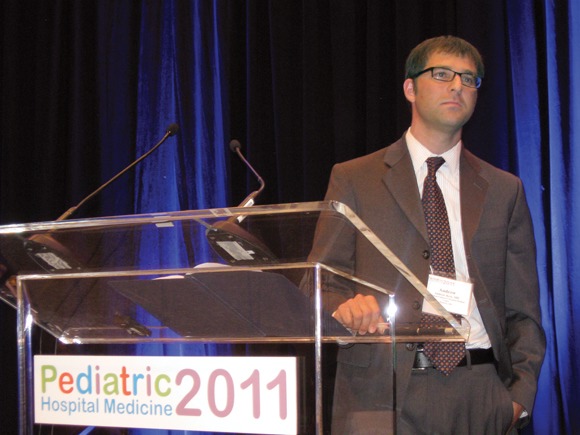
Dr. Beck observed that area-based geographic data is used routinely in public health for surveillance, resource allocation, and deprivation assessment but not at the bedside, where electronic medical records can improve data linkages from the moment patients register with their address.
"We don’t routinely use this data to identify patients who may be at increased social risk," he said during the plenary session at Pediatric Hospital Medicine 2011. "Every child receives the same basic, acute-oriented medical care, potentially missing the opportunity to inform other hospital, social, and medical interventions."
To illustrate his point, Dr. Beck pointed to a 20-fold difference in asthma admissions among patients aged 1-17 years and a 10-fold difference in median household income between Cincinnati’s tony, east-side Hyde Park neighborhood and the historic, urban Over-the-Rhine neighborhood. Some Cincinnati neighborhoods have no residents living in poverty, while others have 50% of children living below the poverty line.
The researchers devised a point-of-first-contact (PFC) risk index using the patient’s insurance status and U.S. census tract variables of poverty rate, home value, and education that were geographically coded to the patient’s address and zip code. One point was given if patients were on the "at-risk" side of the national median for each variable and another given if they were publicly insured or uninsured. Race/ethnicity was not included because of the potential for misclassification.
Analyzing the Backgrounds of Asthmatic Children
Based on the index, 117 of the 601 children, aged 1-16 years, in the prospective cohort, were at low risk (0 points), 201 were at medium risk (1-2 points), and 283 at high risk (3-4 points), he said at the meeting, sponsored by the Society of Hospital Medicine, the American Academy of Pediatrics, and Academic Pediatric Association.
A total of 237 children (39%) returned to the ED or were readmitted within 12 months. Overall, 73% of the low-risk group had not returned to the hospital, compared with 64% of the medium-risk and 53% of the high-risk group, he said.
When this association was assessed in a Cox model using the low-risk group as the reference, the risk of reutilization was increased 70% among those at medium risk (hazard ratio, 1.7) and more than double among those at high risk (HR, 2.3).
The researchers then measured family financial strain in face-to-face interviews with caregivers using five validated questions chosen for their likelihood of leading to intervention. In all, 38% of families reported not having enough money to make ends meet, 11% said they did not have enough food to eat, 23% were unable to pay the full rent/mortgage, 39% were unable to pay full utilities, and 13% were forced to move in with others for financial reasons.
Nearly one-third (32%) of the sample answered "yes" to two or more financial strain questions. The odds of reporting two or more financial hardships were 14.8-fold higher for the high-risk group and 7.9-fold higher for the medium-risk group, which was statistically significant (both P value less than .0001), Dr. Beck said. Interestingly, this correlation had a high sensitivity (97%) and negative predictive value (95%), illustrating the index’s value as a screening tool, he added.
"Because the PFC index is based on data available so early on in the admission encounter and triage, we believe it could be used to quickly triage who may and who may not benefit from further assessment and intervention by deriving a risk profile before you even enter the room," Dr. Beck concluded.
The Value in Determining Patient Risk
Session co-moderator Dr. Karen Wilson of the University of Rochester (N.Y.) agreed that the data could be readily available but said more work needs to be done to determine how patients would react if told by an ED physician they were at risk based on where they live.
"It is a novel idea that I think deserves further investigation, but it’s probably not something, just based on our IT system, that is practical to use right now because we don’t have the computer systems to automatically generate that census tract information," she said in an interview.
Fellow comoderator Dr. Mike Dean, chief of pediatric critical care at the University of Utah in Salt Lake City, asked whether it would suffice to simply determine whether patients lived in an area of extreme poverty according to census data rather than using a more complex and completely automated index. Dr. Beck said that approach would be feasible and that a significant effect size was observed even when the variable of extreme poverty was evaluated in isolation
Overall, 57% of children in the analysis lived in a census tract where more than 3.3% of the population lived below the 50% poverty line, 65% lived in a tract with a median home value of $106,700 or less, and 36% lived in a tract where 18% or more of adults lacked a high school education.
A total of 64% of the cohort was male, 53% were black, their mean age was 5.9 years, and 65% had public insurance or no insurance.
Dr. Beck, his coauthors, and Dr. Dean report no relevant financial relationships. Dr. Wilson reports a research grant from Child Health Corp. of America.
KANSAS CITY, MO. – The use of a socioeconomic-based risk index early in the hospital encounter can identify children at significantly increased risk of asthma readmission and family financial strain, a secondary analysis suggests.
The study of 601 patients with asthma found that children classified at high social risk had more than double the risk of hospital readmission or return emergency department visit within 12 months than did those at low risk, according to Dr. Andrew Beck, a pediatrics fellow at Cincinnati Children’s Hospital Medical Center, and his colleagues.
In addition, patients at high risk had nearly 15-fold increased odds of reporting two or more financial hardships.
Dr. Beck observed that area-based geographic data is used routinely in public health for surveillance, resource allocation, and deprivation assessment but not at the bedside, where electronic medical records can improve data linkages from the moment patients register with their address.
"We don’t routinely use this data to identify patients who may be at increased social risk," he said during the plenary session at Pediatric Hospital Medicine 2011. "Every child receives the same basic, acute-oriented medical care, potentially missing the opportunity to inform other hospital, social, and medical interventions."
To illustrate his point, Dr. Beck pointed to a 20-fold difference in asthma admissions among patients aged 1-17 years and a 10-fold difference in median household income between Cincinnati’s tony, east-side Hyde Park neighborhood and the historic, urban Over-the-Rhine neighborhood. Some Cincinnati neighborhoods have no residents living in poverty, while others have 50% of children living below the poverty line.
The researchers devised a point-of-first-contact (PFC) risk index using the patient’s insurance status and U.S. census tract variables of poverty rate, home value, and education that were geographically coded to the patient’s address and zip code. One point was given if patients were on the "at-risk" side of the national median for each variable and another given if they were publicly insured or uninsured. Race/ethnicity was not included because of the potential for misclassification.
Analyzing the Backgrounds of Asthmatic Children
Based on the index, 117 of the 601 children, aged 1-16 years, in the prospective cohort, were at low risk (0 points), 201 were at medium risk (1-2 points), and 283 at high risk (3-4 points), he said at the meeting, sponsored by the Society of Hospital Medicine, the American Academy of Pediatrics, and Academic Pediatric Association.
A total of 237 children (39%) returned to the ED or were readmitted within 12 months. Overall, 73% of the low-risk group had not returned to the hospital, compared with 64% of the medium-risk and 53% of the high-risk group, he said.
When this association was assessed in a Cox model using the low-risk group as the reference, the risk of reutilization was increased 70% among those at medium risk (hazard ratio, 1.7) and more than double among those at high risk (HR, 2.3).
The researchers then measured family financial strain in face-to-face interviews with caregivers using five validated questions chosen for their likelihood of leading to intervention. In all, 38% of families reported not having enough money to make ends meet, 11% said they did not have enough food to eat, 23% were unable to pay the full rent/mortgage, 39% were unable to pay full utilities, and 13% were forced to move in with others for financial reasons.
Nearly one-third (32%) of the sample answered "yes" to two or more financial strain questions. The odds of reporting two or more financial hardships were 14.8-fold higher for the high-risk group and 7.9-fold higher for the medium-risk group, which was statistically significant (both P value less than .0001), Dr. Beck said. Interestingly, this correlation had a high sensitivity (97%) and negative predictive value (95%), illustrating the index’s value as a screening tool, he added.
"Because the PFC index is based on data available so early on in the admission encounter and triage, we believe it could be used to quickly triage who may and who may not benefit from further assessment and intervention by deriving a risk profile before you even enter the room," Dr. Beck concluded.
The Value in Determining Patient Risk
Session co-moderator Dr. Karen Wilson of the University of Rochester (N.Y.) agreed that the data could be readily available but said more work needs to be done to determine how patients would react if told by an ED physician they were at risk based on where they live.
"It is a novel idea that I think deserves further investigation, but it’s probably not something, just based on our IT system, that is practical to use right now because we don’t have the computer systems to automatically generate that census tract information," she said in an interview.
Fellow comoderator Dr. Mike Dean, chief of pediatric critical care at the University of Utah in Salt Lake City, asked whether it would suffice to simply determine whether patients lived in an area of extreme poverty according to census data rather than using a more complex and completely automated index. Dr. Beck said that approach would be feasible and that a significant effect size was observed even when the variable of extreme poverty was evaluated in isolation
Overall, 57% of children in the analysis lived in a census tract where more than 3.3% of the population lived below the 50% poverty line, 65% lived in a tract with a median home value of $106,700 or less, and 36% lived in a tract where 18% or more of adults lacked a high school education.
A total of 64% of the cohort was male, 53% were black, their mean age was 5.9 years, and 65% had public insurance or no insurance.
Dr. Beck, his coauthors, and Dr. Dean report no relevant financial relationships. Dr. Wilson reports a research grant from Child Health Corp. of America.
KANSAS CITY, MO. – The use of a socioeconomic-based risk index early in the hospital encounter can identify children at significantly increased risk of asthma readmission and family financial strain, a secondary analysis suggests.
The study of 601 patients with asthma found that children classified at high social risk had more than double the risk of hospital readmission or return emergency department visit within 12 months than did those at low risk, according to Dr. Andrew Beck, a pediatrics fellow at Cincinnati Children’s Hospital Medical Center, and his colleagues.
In addition, patients at high risk had nearly 15-fold increased odds of reporting two or more financial hardships.
Dr. Beck observed that area-based geographic data is used routinely in public health for surveillance, resource allocation, and deprivation assessment but not at the bedside, where electronic medical records can improve data linkages from the moment patients register with their address.
"We don’t routinely use this data to identify patients who may be at increased social risk," he said during the plenary session at Pediatric Hospital Medicine 2011. "Every child receives the same basic, acute-oriented medical care, potentially missing the opportunity to inform other hospital, social, and medical interventions."
To illustrate his point, Dr. Beck pointed to a 20-fold difference in asthma admissions among patients aged 1-17 years and a 10-fold difference in median household income between Cincinnati’s tony, east-side Hyde Park neighborhood and the historic, urban Over-the-Rhine neighborhood. Some Cincinnati neighborhoods have no residents living in poverty, while others have 50% of children living below the poverty line.
The researchers devised a point-of-first-contact (PFC) risk index using the patient’s insurance status and U.S. census tract variables of poverty rate, home value, and education that were geographically coded to the patient’s address and zip code. One point was given if patients were on the "at-risk" side of the national median for each variable and another given if they were publicly insured or uninsured. Race/ethnicity was not included because of the potential for misclassification.
Analyzing the Backgrounds of Asthmatic Children
Based on the index, 117 of the 601 children, aged 1-16 years, in the prospective cohort, were at low risk (0 points), 201 were at medium risk (1-2 points), and 283 at high risk (3-4 points), he said at the meeting, sponsored by the Society of Hospital Medicine, the American Academy of Pediatrics, and Academic Pediatric Association.
A total of 237 children (39%) returned to the ED or were readmitted within 12 months. Overall, 73% of the low-risk group had not returned to the hospital, compared with 64% of the medium-risk and 53% of the high-risk group, he said.
When this association was assessed in a Cox model using the low-risk group as the reference, the risk of reutilization was increased 70% among those at medium risk (hazard ratio, 1.7) and more than double among those at high risk (HR, 2.3).
The researchers then measured family financial strain in face-to-face interviews with caregivers using five validated questions chosen for their likelihood of leading to intervention. In all, 38% of families reported not having enough money to make ends meet, 11% said they did not have enough food to eat, 23% were unable to pay the full rent/mortgage, 39% were unable to pay full utilities, and 13% were forced to move in with others for financial reasons.
Nearly one-third (32%) of the sample answered "yes" to two or more financial strain questions. The odds of reporting two or more financial hardships were 14.8-fold higher for the high-risk group and 7.9-fold higher for the medium-risk group, which was statistically significant (both P value less than .0001), Dr. Beck said. Interestingly, this correlation had a high sensitivity (97%) and negative predictive value (95%), illustrating the index’s value as a screening tool, he added.
"Because the PFC index is based on data available so early on in the admission encounter and triage, we believe it could be used to quickly triage who may and who may not benefit from further assessment and intervention by deriving a risk profile before you even enter the room," Dr. Beck concluded.
The Value in Determining Patient Risk
Session co-moderator Dr. Karen Wilson of the University of Rochester (N.Y.) agreed that the data could be readily available but said more work needs to be done to determine how patients would react if told by an ED physician they were at risk based on where they live.
"It is a novel idea that I think deserves further investigation, but it’s probably not something, just based on our IT system, that is practical to use right now because we don’t have the computer systems to automatically generate that census tract information," she said in an interview.
Fellow comoderator Dr. Mike Dean, chief of pediatric critical care at the University of Utah in Salt Lake City, asked whether it would suffice to simply determine whether patients lived in an area of extreme poverty according to census data rather than using a more complex and completely automated index. Dr. Beck said that approach would be feasible and that a significant effect size was observed even when the variable of extreme poverty was evaluated in isolation
Overall, 57% of children in the analysis lived in a census tract where more than 3.3% of the population lived below the 50% poverty line, 65% lived in a tract with a median home value of $106,700 or less, and 36% lived in a tract where 18% or more of adults lacked a high school education.
A total of 64% of the cohort was male, 53% were black, their mean age was 5.9 years, and 65% had public insurance or no insurance.
Dr. Beck, his coauthors, and Dr. Dean report no relevant financial relationships. Dr. Wilson reports a research grant from Child Health Corp. of America.
FROM PEDIATRIC HOSPITAL MEDICINE 2011
Major Finding: Children with asthma classified at high socioeconomic risk had 2.3 times higher risk of hospital readmission or return ED visit within 12 months than did those at low risk.
Data Source: Secondary analysis of a prospective observational cohort of 601 children admitted with asthma.
Disclosures: Dr. Beck, his coauthors, and Dr. Dean report no relevant financial relationships. Dr. Wilson reports a research grant from Child Health Corp. of America.
Antibiotics Are Often Enough to Treat Complicated Childhood Pneumonia
KANSAS CITY, MO. – Just four children experienced radiographic or spirometric abnormalities 6 months after hospitalization for complicated pneumonia in a prospective observational study involving 82 patients.
"Long-term sequelae from this condition are uncommon, and this may be important information for clinicians, patients, and parents in weighing various treatment decisions," study coauthor Dr. Sanjay Mahant said at the Pediatric Hospital Medicine 2011 meeting.

While the best management strategy for complicated pneumonia continues to be debated, there’s been increasing use of procedures, particularly chest tube placement with fibrinolytics such as tissue plasminogen activator and video-assisted thoracoscopic surgery.
The lack of long-term sequelae in the Canadian-based study is particularly remarkable in that 40 children received a chest drain with fibrinolytics and 11 received a chest drain alone, while the remaining were treated only with antibiotics.
"I still think larger studies are needed, but it’s really important when we’re discussing with families up front to explain why we’re doing these interventions," Dr. Mahant said. "We need to add in the mix that long-term outcomes are good regardless of whether we do antibiotics alone or an intervention, and what we’re really focusing on is reducing the short-term morbidity."
Research has focused almost entirely on short-term outcomes, with very few large, prospective studies available on how children with complicated pneumonia do over the long haul.
The current study is novel and important in that it looked not just at long-term lung function in a large prospective cohort, but also quality of life and outcomes relevant to families, session comoderator and pediatric infectious disease specialist Dr. Samir Shah said in an interview. He observed that a large portion of the children experienced short-term clinical phenomena in the study, but that these abnormalities appeared to resolve when followed out to 1 year.
"I think that’s very encouraging and good information to know, and will help inform our short-term treatment decisions, realizing that these kids seem to do well, somewhat or perhaps, no matter what we do," he said. "That may be helpful in prioritizing how invasive we need to be with drainage procedures and surgical procedures."
The study enrolled 82 children between October 2008 and October 2010 who were hospitalized with ultrasound evidence of pleural effusions with loculations. Their median age was 3.6 years and 55% were male.
Their median length of stay was 10 days, eight were admitted to the pediatric ICU, and none died, Dr. Mahant reported on behalf of principal investigator Dr. Eyal Cohen and their colleagues at the Hospital for Sick Children, University of Toronto. Six patients were readmitted within 1 month, of which three required treatment with a chest drain.
At 1 month follow-up, fever was reported in 15 (18%) children and persistent cough in 19 (23%). Failure to thrive was observed in two (2%). Among the 74 children evaluated at 6 months, 12 (16%) had persistent cough and none were feverish or failed to thrive.
A predicted forced expiratory volume in 1 second of 80% or less was reported in 7 (35%) of 20 patients at 1 month and only 1 (3.5%) of 28 patients evaluated at 6 months, he said at the meeting, which was sponsored by the Society of Hospital Medicine, the American Academy of Pediatrics, and the Academic Pediatric Association. Spirometry results at 1 year in this patient were normal.
Persistent chest radiographic abnormalities, defined as effusion, pneumatocele or abscess, were noted in 24 (29%) of 82 patients at 1 month and 3 (4.6%) of 65 patients at 6 months. Chest x-rays were normal in two of the three children at 1 year, with one child lost to follow-up. A 7-year-old initially treated with a drain and no fibrinolytics required readmission, but he was among those with normal x-rays at 1 year, Dr. Mahant said.
The median time lost from school in the first month was 5 days, with 23% of parents reporting work loss. At 6 months, the median school loss was 2 days and just 9% of parents reported work loss.
Parent- and child-reported total scores on the Pediatric Quality of Life questionnaire were similar at 6 months to healthy controls. In addition, scores were significantly higher in the empyema cohort than in historical asthma controls (P value less than .001), he said.
While the data are encouraging, it is uncertain whether they will be enough to ratchet back the use of more invasive procedures, particularly in the United States. In addition, clinicians worldwide are facing an increasing incidence of complicated pneumonia since the 1990s due in part to pneumococcal serotype shift and antibacterial resistance, Dr. Mahant said.
Dr. Shah of Cincinnati Children’s Hospital Medical Center said the findings will give clinicians pause about whether invasive procedures are needed and the relative timing of these procedures. Moreover, researchers will recognize the importance of measuring long-term outcomes in future trials.
"I think that it’s critical to look at these [outcomes] because ultimately that is what matters," he said. "I think most people would be willing to trade a day or two in the hospital if whatever you’re doing led to fewer long-term symptoms."
Dr. Mahant and his coauthors reported a University of Toronto grant and funding from the SickKids Foundation. Dr. Shah reported no relevant financial disclosures.
KANSAS CITY, MO. – Just four children experienced radiographic or spirometric abnormalities 6 months after hospitalization for complicated pneumonia in a prospective observational study involving 82 patients.
"Long-term sequelae from this condition are uncommon, and this may be important information for clinicians, patients, and parents in weighing various treatment decisions," study coauthor Dr. Sanjay Mahant said at the Pediatric Hospital Medicine 2011 meeting.
While the best management strategy for complicated pneumonia continues to be debated, there’s been increasing use of procedures, particularly chest tube placement with fibrinolytics such as tissue plasminogen activator and video-assisted thoracoscopic surgery.
The lack of long-term sequelae in the Canadian-based study is particularly remarkable in that 40 children received a chest drain with fibrinolytics and 11 received a chest drain alone, while the remaining were treated only with antibiotics.
"I still think larger studies are needed, but it’s really important when we’re discussing with families up front to explain why we’re doing these interventions," Dr. Mahant said. "We need to add in the mix that long-term outcomes are good regardless of whether we do antibiotics alone or an intervention, and what we’re really focusing on is reducing the short-term morbidity."
Research has focused almost entirely on short-term outcomes, with very few large, prospective studies available on how children with complicated pneumonia do over the long haul.
The current study is novel and important in that it looked not just at long-term lung function in a large prospective cohort, but also quality of life and outcomes relevant to families, session comoderator and pediatric infectious disease specialist Dr. Samir Shah said in an interview. He observed that a large portion of the children experienced short-term clinical phenomena in the study, but that these abnormalities appeared to resolve when followed out to 1 year.
"I think that’s very encouraging and good information to know, and will help inform our short-term treatment decisions, realizing that these kids seem to do well, somewhat or perhaps, no matter what we do," he said. "That may be helpful in prioritizing how invasive we need to be with drainage procedures and surgical procedures."
The study enrolled 82 children between October 2008 and October 2010 who were hospitalized with ultrasound evidence of pleural effusions with loculations. Their median age was 3.6 years and 55% were male.
Their median length of stay was 10 days, eight were admitted to the pediatric ICU, and none died, Dr. Mahant reported on behalf of principal investigator Dr. Eyal Cohen and their colleagues at the Hospital for Sick Children, University of Toronto. Six patients were readmitted within 1 month, of which three required treatment with a chest drain.
At 1 month follow-up, fever was reported in 15 (18%) children and persistent cough in 19 (23%). Failure to thrive was observed in two (2%). Among the 74 children evaluated at 6 months, 12 (16%) had persistent cough and none were feverish or failed to thrive.
A predicted forced expiratory volume in 1 second of 80% or less was reported in 7 (35%) of 20 patients at 1 month and only 1 (3.5%) of 28 patients evaluated at 6 months, he said at the meeting, which was sponsored by the Society of Hospital Medicine, the American Academy of Pediatrics, and the Academic Pediatric Association. Spirometry results at 1 year in this patient were normal.
Persistent chest radiographic abnormalities, defined as effusion, pneumatocele or abscess, were noted in 24 (29%) of 82 patients at 1 month and 3 (4.6%) of 65 patients at 6 months. Chest x-rays were normal in two of the three children at 1 year, with one child lost to follow-up. A 7-year-old initially treated with a drain and no fibrinolytics required readmission, but he was among those with normal x-rays at 1 year, Dr. Mahant said.
The median time lost from school in the first month was 5 days, with 23% of parents reporting work loss. At 6 months, the median school loss was 2 days and just 9% of parents reported work loss.
Parent- and child-reported total scores on the Pediatric Quality of Life questionnaire were similar at 6 months to healthy controls. In addition, scores were significantly higher in the empyema cohort than in historical asthma controls (P value less than .001), he said.
While the data are encouraging, it is uncertain whether they will be enough to ratchet back the use of more invasive procedures, particularly in the United States. In addition, clinicians worldwide are facing an increasing incidence of complicated pneumonia since the 1990s due in part to pneumococcal serotype shift and antibacterial resistance, Dr. Mahant said.
Dr. Shah of Cincinnati Children’s Hospital Medical Center said the findings will give clinicians pause about whether invasive procedures are needed and the relative timing of these procedures. Moreover, researchers will recognize the importance of measuring long-term outcomes in future trials.
"I think that it’s critical to look at these [outcomes] because ultimately that is what matters," he said. "I think most people would be willing to trade a day or two in the hospital if whatever you’re doing led to fewer long-term symptoms."
Dr. Mahant and his coauthors reported a University of Toronto grant and funding from the SickKids Foundation. Dr. Shah reported no relevant financial disclosures.
KANSAS CITY, MO. – Just four children experienced radiographic or spirometric abnormalities 6 months after hospitalization for complicated pneumonia in a prospective observational study involving 82 patients.
"Long-term sequelae from this condition are uncommon, and this may be important information for clinicians, patients, and parents in weighing various treatment decisions," study coauthor Dr. Sanjay Mahant said at the Pediatric Hospital Medicine 2011 meeting.
While the best management strategy for complicated pneumonia continues to be debated, there’s been increasing use of procedures, particularly chest tube placement with fibrinolytics such as tissue plasminogen activator and video-assisted thoracoscopic surgery.
The lack of long-term sequelae in the Canadian-based study is particularly remarkable in that 40 children received a chest drain with fibrinolytics and 11 received a chest drain alone, while the remaining were treated only with antibiotics.
"I still think larger studies are needed, but it’s really important when we’re discussing with families up front to explain why we’re doing these interventions," Dr. Mahant said. "We need to add in the mix that long-term outcomes are good regardless of whether we do antibiotics alone or an intervention, and what we’re really focusing on is reducing the short-term morbidity."
Research has focused almost entirely on short-term outcomes, with very few large, prospective studies available on how children with complicated pneumonia do over the long haul.
The current study is novel and important in that it looked not just at long-term lung function in a large prospective cohort, but also quality of life and outcomes relevant to families, session comoderator and pediatric infectious disease specialist Dr. Samir Shah said in an interview. He observed that a large portion of the children experienced short-term clinical phenomena in the study, but that these abnormalities appeared to resolve when followed out to 1 year.
"I think that’s very encouraging and good information to know, and will help inform our short-term treatment decisions, realizing that these kids seem to do well, somewhat or perhaps, no matter what we do," he said. "That may be helpful in prioritizing how invasive we need to be with drainage procedures and surgical procedures."
The study enrolled 82 children between October 2008 and October 2010 who were hospitalized with ultrasound evidence of pleural effusions with loculations. Their median age was 3.6 years and 55% were male.
Their median length of stay was 10 days, eight were admitted to the pediatric ICU, and none died, Dr. Mahant reported on behalf of principal investigator Dr. Eyal Cohen and their colleagues at the Hospital for Sick Children, University of Toronto. Six patients were readmitted within 1 month, of which three required treatment with a chest drain.
At 1 month follow-up, fever was reported in 15 (18%) children and persistent cough in 19 (23%). Failure to thrive was observed in two (2%). Among the 74 children evaluated at 6 months, 12 (16%) had persistent cough and none were feverish or failed to thrive.
A predicted forced expiratory volume in 1 second of 80% or less was reported in 7 (35%) of 20 patients at 1 month and only 1 (3.5%) of 28 patients evaluated at 6 months, he said at the meeting, which was sponsored by the Society of Hospital Medicine, the American Academy of Pediatrics, and the Academic Pediatric Association. Spirometry results at 1 year in this patient were normal.
Persistent chest radiographic abnormalities, defined as effusion, pneumatocele or abscess, were noted in 24 (29%) of 82 patients at 1 month and 3 (4.6%) of 65 patients at 6 months. Chest x-rays were normal in two of the three children at 1 year, with one child lost to follow-up. A 7-year-old initially treated with a drain and no fibrinolytics required readmission, but he was among those with normal x-rays at 1 year, Dr. Mahant said.
The median time lost from school in the first month was 5 days, with 23% of parents reporting work loss. At 6 months, the median school loss was 2 days and just 9% of parents reported work loss.
Parent- and child-reported total scores on the Pediatric Quality of Life questionnaire were similar at 6 months to healthy controls. In addition, scores were significantly higher in the empyema cohort than in historical asthma controls (P value less than .001), he said.
While the data are encouraging, it is uncertain whether they will be enough to ratchet back the use of more invasive procedures, particularly in the United States. In addition, clinicians worldwide are facing an increasing incidence of complicated pneumonia since the 1990s due in part to pneumococcal serotype shift and antibacterial resistance, Dr. Mahant said.
Dr. Shah of Cincinnati Children’s Hospital Medical Center said the findings will give clinicians pause about whether invasive procedures are needed and the relative timing of these procedures. Moreover, researchers will recognize the importance of measuring long-term outcomes in future trials.
"I think that it’s critical to look at these [outcomes] because ultimately that is what matters," he said. "I think most people would be willing to trade a day or two in the hospital if whatever you’re doing led to fewer long-term symptoms."
Dr. Mahant and his coauthors reported a University of Toronto grant and funding from the SickKids Foundation. Dr. Shah reported no relevant financial disclosures.
FROM THE PEDIATRIC HOSPITAL MEDICINE 2011 MEETING
Major Finding: At 6 months post hospitalization, persistent chest radiographic or spirometric abnormalities were present in only four children. The lack of long-term sequelae is remarkable in that 40 children received a chest drain with fibrinolytics and 11 received a chest drain alone, while the remaining were treated only with antibiotics.
Data Source: Prospective observational study of 82 children hospitalized with complicated pneumonia.
Disclosures: Dr. Mahant and his coauthors reported a University of Toronto grant and funding from the SickKids Foundation. Dr. Shah said he had no relevant financial disclosures.
Small-Vessel Vasculitis: Tx-Related Cancers Falling : The use of cyclophosphamide-sparing regimens 'might have started to show a benefit.'
Major Finding: The standardized incidence ratio for cancers at all sites indicated a 58% increased risk, compared with the general population (SIR 1.58; P = .003).
Data Source: Long-term follow-up of 493 patients with ANCA-associated vasculitis.
Disclosures: Dr. Heijl and her coauthors report no conflicts of interest.
An extensive range of cancers was found in long-term follow-up of patients with antineutrophil cytoplasm antibody–associated vasculitis, although the findings also suggest that the use of cyclophosphamide-sparing regimens could be paying off.
Among 493 evaluable patients in four randomized clinical trials, the standardized incidence ratio for all cancers indicated a 58% increased risk, compared with the general population (standardized incidence ratio, 1.58; P value = .003).
The only site-specific cancer that was significantly increased, however, was nonmelanoma skin cancer (NMSC), with an SIR of 2.78 (P = .001), reported Dr. Caroline Heijl on behalf of the European Vasculitis Study Group (EUVAS)
The SIR was 1.30 for cancers at all sites, excluding NMSC (P = .16), 2.41 for bladder cancer (P = .17), 3.25 for leukemia (P = .26), and 1.11 for non-Hodgkin's lymphoma (P = 1.0).
For the past 2 decades, researchers have been working to limit the use of cyclophosphamide in the treatment of patients with antineutrophil cytoplasmic antibody (ANCA)–associated vasculitis (AAV) because of the increased incidence of cancer in AAV patients, reported to be 1.6-2.4 times higher than that of the general public.
Particularly worrisome have been cancer type–specific analyses showing an increased risk of bladder cancer and leukemia in AAV patients because of the known urothelial and hematologic toxicities of cyclophosphamide, and higher incidence of lymphoma and NMSC, Dr. Heijl wrote.
Three of the four trials that formed the basis of the analysis helped to advance cyclophosphamide-sparing regimens, demonstrating that cyclophosphamide use could be limited to the remission-induction phase, given as periodic intravenous pulses, or replaced by methotrexate.
“Although the lower cyclophosphamide exposure achieved by these treatment regimens remains difficult to quantify, the lower standardized incidence ratios for cancers in any site, particularly for bladder cancer and leukemia in our study population as compared with findings obtained earlier, could indicate that the more contained use of this drug might have started to show a benefit,” Dr. Heijl wrote (Ann. Rheum. Dis. 2011;70:1415-21).
The researchers analyzed long-term data from 535 patients with newly diagnosed AAV who had been enrolled in four trials organized by the EUVAS between March 1995 and September 2002. Follow-up ran from 2004 to 2007, with a mean of 4.85 years.
Among the 493 patients with detailed treatment data available, 53 definitive cancers were identified. They included 13 basal and 5 squamous cell carcinomas in 15 patients, and 35 non-NMSCs in 34 patients.
All 15 patients with NMSC had received cyclophosphamide, and 13 of those had also taken azathioprine. All four patients identified with bladder cancer had received cyclophosphamide for 6-36 months, with 2.1 to 6.6 years elapsing from the time of trial enrollment to bladder cancer diagnosis.
Three of the bladder cancers were observed in patients with granulomatosis with polyangiitis (GPA) and one in a patient with microscopic polyangiitis (MPA). Higher SIR was observed for cancers at all sites in GPA vs. MPA patients (SIR, 1.92 vs. 1.20), but their 95% confidence intervals overlapped. The corresponding relative risk was 1.60, reported Dr. Heijl of the nephrology department at Skåne University Hospital in Lund, Sweden.
A further analysis of three follow-up periods (less than 3 years, 3-5 years, and longer than 5 years) did not indicate a clear cancer incidence trend over time. Nevertheless, longer follow-up data are warranted to appraise the risk of developing cancers later during the course of AAV, the authors noted.
Major Finding: The standardized incidence ratio for cancers at all sites indicated a 58% increased risk, compared with the general population (SIR 1.58; P = .003).
Data Source: Long-term follow-up of 493 patients with ANCA-associated vasculitis.
Disclosures: Dr. Heijl and her coauthors report no conflicts of interest.
An extensive range of cancers was found in long-term follow-up of patients with antineutrophil cytoplasm antibody–associated vasculitis, although the findings also suggest that the use of cyclophosphamide-sparing regimens could be paying off.
Among 493 evaluable patients in four randomized clinical trials, the standardized incidence ratio for all cancers indicated a 58% increased risk, compared with the general population (standardized incidence ratio, 1.58; P value = .003).
The only site-specific cancer that was significantly increased, however, was nonmelanoma skin cancer (NMSC), with an SIR of 2.78 (P = .001), reported Dr. Caroline Heijl on behalf of the European Vasculitis Study Group (EUVAS)
The SIR was 1.30 for cancers at all sites, excluding NMSC (P = .16), 2.41 for bladder cancer (P = .17), 3.25 for leukemia (P = .26), and 1.11 for non-Hodgkin's lymphoma (P = 1.0).
For the past 2 decades, researchers have been working to limit the use of cyclophosphamide in the treatment of patients with antineutrophil cytoplasmic antibody (ANCA)–associated vasculitis (AAV) because of the increased incidence of cancer in AAV patients, reported to be 1.6-2.4 times higher than that of the general public.
Particularly worrisome have been cancer type–specific analyses showing an increased risk of bladder cancer and leukemia in AAV patients because of the known urothelial and hematologic toxicities of cyclophosphamide, and higher incidence of lymphoma and NMSC, Dr. Heijl wrote.
Three of the four trials that formed the basis of the analysis helped to advance cyclophosphamide-sparing regimens, demonstrating that cyclophosphamide use could be limited to the remission-induction phase, given as periodic intravenous pulses, or replaced by methotrexate.
“Although the lower cyclophosphamide exposure achieved by these treatment regimens remains difficult to quantify, the lower standardized incidence ratios for cancers in any site, particularly for bladder cancer and leukemia in our study population as compared with findings obtained earlier, could indicate that the more contained use of this drug might have started to show a benefit,” Dr. Heijl wrote (Ann. Rheum. Dis. 2011;70:1415-21).
The researchers analyzed long-term data from 535 patients with newly diagnosed AAV who had been enrolled in four trials organized by the EUVAS between March 1995 and September 2002. Follow-up ran from 2004 to 2007, with a mean of 4.85 years.
Among the 493 patients with detailed treatment data available, 53 definitive cancers were identified. They included 13 basal and 5 squamous cell carcinomas in 15 patients, and 35 non-NMSCs in 34 patients.
All 15 patients with NMSC had received cyclophosphamide, and 13 of those had also taken azathioprine. All four patients identified with bladder cancer had received cyclophosphamide for 6-36 months, with 2.1 to 6.6 years elapsing from the time of trial enrollment to bladder cancer diagnosis.
Three of the bladder cancers were observed in patients with granulomatosis with polyangiitis (GPA) and one in a patient with microscopic polyangiitis (MPA). Higher SIR was observed for cancers at all sites in GPA vs. MPA patients (SIR, 1.92 vs. 1.20), but their 95% confidence intervals overlapped. The corresponding relative risk was 1.60, reported Dr. Heijl of the nephrology department at Skåne University Hospital in Lund, Sweden.
A further analysis of three follow-up periods (less than 3 years, 3-5 years, and longer than 5 years) did not indicate a clear cancer incidence trend over time. Nevertheless, longer follow-up data are warranted to appraise the risk of developing cancers later during the course of AAV, the authors noted.
Major Finding: The standardized incidence ratio for cancers at all sites indicated a 58% increased risk, compared with the general population (SIR 1.58; P = .003).
Data Source: Long-term follow-up of 493 patients with ANCA-associated vasculitis.
Disclosures: Dr. Heijl and her coauthors report no conflicts of interest.
An extensive range of cancers was found in long-term follow-up of patients with antineutrophil cytoplasm antibody–associated vasculitis, although the findings also suggest that the use of cyclophosphamide-sparing regimens could be paying off.
Among 493 evaluable patients in four randomized clinical trials, the standardized incidence ratio for all cancers indicated a 58% increased risk, compared with the general population (standardized incidence ratio, 1.58; P value = .003).
The only site-specific cancer that was significantly increased, however, was nonmelanoma skin cancer (NMSC), with an SIR of 2.78 (P = .001), reported Dr. Caroline Heijl on behalf of the European Vasculitis Study Group (EUVAS)
The SIR was 1.30 for cancers at all sites, excluding NMSC (P = .16), 2.41 for bladder cancer (P = .17), 3.25 for leukemia (P = .26), and 1.11 for non-Hodgkin's lymphoma (P = 1.0).
For the past 2 decades, researchers have been working to limit the use of cyclophosphamide in the treatment of patients with antineutrophil cytoplasmic antibody (ANCA)–associated vasculitis (AAV) because of the increased incidence of cancer in AAV patients, reported to be 1.6-2.4 times higher than that of the general public.
Particularly worrisome have been cancer type–specific analyses showing an increased risk of bladder cancer and leukemia in AAV patients because of the known urothelial and hematologic toxicities of cyclophosphamide, and higher incidence of lymphoma and NMSC, Dr. Heijl wrote.
Three of the four trials that formed the basis of the analysis helped to advance cyclophosphamide-sparing regimens, demonstrating that cyclophosphamide use could be limited to the remission-induction phase, given as periodic intravenous pulses, or replaced by methotrexate.
“Although the lower cyclophosphamide exposure achieved by these treatment regimens remains difficult to quantify, the lower standardized incidence ratios for cancers in any site, particularly for bladder cancer and leukemia in our study population as compared with findings obtained earlier, could indicate that the more contained use of this drug might have started to show a benefit,” Dr. Heijl wrote (Ann. Rheum. Dis. 2011;70:1415-21).
The researchers analyzed long-term data from 535 patients with newly diagnosed AAV who had been enrolled in four trials organized by the EUVAS between March 1995 and September 2002. Follow-up ran from 2004 to 2007, with a mean of 4.85 years.
Among the 493 patients with detailed treatment data available, 53 definitive cancers were identified. They included 13 basal and 5 squamous cell carcinomas in 15 patients, and 35 non-NMSCs in 34 patients.
All 15 patients with NMSC had received cyclophosphamide, and 13 of those had also taken azathioprine. All four patients identified with bladder cancer had received cyclophosphamide for 6-36 months, with 2.1 to 6.6 years elapsing from the time of trial enrollment to bladder cancer diagnosis.
Three of the bladder cancers were observed in patients with granulomatosis with polyangiitis (GPA) and one in a patient with microscopic polyangiitis (MPA). Higher SIR was observed for cancers at all sites in GPA vs. MPA patients (SIR, 1.92 vs. 1.20), but their 95% confidence intervals overlapped. The corresponding relative risk was 1.60, reported Dr. Heijl of the nephrology department at Skåne University Hospital in Lund, Sweden.
A further analysis of three follow-up periods (less than 3 years, 3-5 years, and longer than 5 years) did not indicate a clear cancer incidence trend over time. Nevertheless, longer follow-up data are warranted to appraise the risk of developing cancers later during the course of AAV, the authors noted.
Try Antibiotics Alone for Complicated Pneumonia
KANSAS CITY, MO. – Just four children experienced radiographic or spirometric abnormalities 6 months after hospitalization for complicated pneumonia in a prospective observational study involving 82 patients.
“Long-term sequelae from this condition are uncommon, and this may be important information for clinicians, patients, and parents in weighing various treatment decisions,” study coauthor Dr. Sanjay Mahant said at the meeting.
While the best management strategy for complicated pneumonia continues to be debated, there's been increasing use of procedures, particularly chest tube placement with fibrinolytics such as tissue plasminogen activator and video-assisted thoracoscopic surgery.
The lack of long-term sequelae in the Canadian-based study is particularly remarkable in that 40 children received a chest drain with fibrinolytics and 11 received a chest drain alone, while the remaining were treated only with antibiotics.
“I still think larger studies are needed, but it's really important when we're discussing with families up front to explain why we're doing these interventions,” Dr. Mahant said.
“We need to add in the mix that long-term outcomes are good regardless of whether we do antibiotics alone or an intervention, and what we're really focusing on is reducing the short-term morbidity.”
Research has focused almost entirely on short-term outcomes, with very few large, prospective studies available on how children with complicated pneumonia do over the long haul.
The current study is novel and important in that it looked not just at long-term lung function in a large prospective cohort, but also quality of life and outcomes relevant to families, session comoderator and pediatric infectious disease specialist Dr. Samir Shah said in an interview.
He observed that a large portion of the children experienced short-term clinical phenomena in the study, but that these abnormalities appeared to resolve when followed out to 1 year.
“I think that's very encouraging and good information to know, and will help inform our short-term treatment decisions, realizing that these kids seem to do well, somewhat or perhaps, no matter what we do,” he said.
“That may be helpful in prioritizing how invasive we need to be with drainage procedures and surgical procedures.”
The study enrolled 82 children between October 2008 and October 2010 who were hospitalized with ultrasound evidence of pleural effusions with loculations. Their median age was 3.6 years, and 55% were male.
Their median length of stay was 10 days, eight were admitted to the pediatric ICU, and none died, Dr. Mahant reported on behalf of principal investigator Dr. Eyal Cohen and their colleagues at the Hospital for Sick Children, University of Toronto. Six patients were readmitted within 1 month, of which three required treatment with a chest drain.
At 1 month follow-up, fever was reported in 15 (18%) children and persistent cough in 19 (23%). Failure to thrive was observed in two (2%). Among the 74 children evaluated at 6 months, 12 (16%) had persistent cough and none were feverish or failed to thrive.
A predicted forced expiratory volume in 1 second of 80% or less was reported in 7 (35%) of 20 patients at 1 month and only 1 (3.5%) of 28 patients evaluated at 6 months, he said at the meeting, which was sponsored by the Society of Hospital Medicine, the American Academy of Pediatrics, and the Academic Pediatric Association. Spirometry results at 1 year in this patient were normal.
Persistent chest radiographic abnormalities, defined as effusion, pneumatocele, or abscess, were noted in 24 (29%) of 82 patients at 1 month and 3 (4.6%) of 65 patients at 6 months. Chest x-rays were normal in two of the three children at 1 year, with one child lost to follow-up. A 7-year-old initially treated with a drain and no fibrinolytics required readmission, but he was among those with normal x-rays at 1 year, Dr. Mahant said.
The median time lost from school in the first month was 5 days, with 23% of parents reporting work loss. At 6 months, the median school loss was 2 days, and just 9% of parents reported work loss.
Parent- and child-reported total scores on the Pediatric Quality of Life questionnaire were similar at 6 months to healthy controls. In addition, scores were significantly higher in the empyema cohort than in historical asthma controls (P value less than .001), he said.
While the data are encouraging, it is uncertain whether they will be enough to ratchet back the use of more invasive procedures, particularly in the United States.
In addition, clinicians worldwide are facing an increasing incidence of complicated pneumonia since the 1990s due in part to pneumococcal serotype shift and antibacterial resistance, Dr. Mahant said.
Dr. Shah of Cincinnati Children's Hospital Medical Center said the findings will give clinicians pause about whether invasive procedures are needed and the relative timing of these procedures.
Moreover, researchers will recognize the importance of measuring long-term outcomes in future trials. “I think that it's critical to look at these [outcomes] because ultimately that is what matters,” he said. “I think most people would be willing to trade a day or two in the hospital if whatever you're doing led to fewer long-term symptoms,” he concluded.
KANSAS CITY, MO. – Just four children experienced radiographic or spirometric abnormalities 6 months after hospitalization for complicated pneumonia in a prospective observational study involving 82 patients.
“Long-term sequelae from this condition are uncommon, and this may be important information for clinicians, patients, and parents in weighing various treatment decisions,” study coauthor Dr. Sanjay Mahant said at the meeting.
While the best management strategy for complicated pneumonia continues to be debated, there's been increasing use of procedures, particularly chest tube placement with fibrinolytics such as tissue plasminogen activator and video-assisted thoracoscopic surgery.
The lack of long-term sequelae in the Canadian-based study is particularly remarkable in that 40 children received a chest drain with fibrinolytics and 11 received a chest drain alone, while the remaining were treated only with antibiotics.
“I still think larger studies are needed, but it's really important when we're discussing with families up front to explain why we're doing these interventions,” Dr. Mahant said.
“We need to add in the mix that long-term outcomes are good regardless of whether we do antibiotics alone or an intervention, and what we're really focusing on is reducing the short-term morbidity.”
Research has focused almost entirely on short-term outcomes, with very few large, prospective studies available on how children with complicated pneumonia do over the long haul.
The current study is novel and important in that it looked not just at long-term lung function in a large prospective cohort, but also quality of life and outcomes relevant to families, session comoderator and pediatric infectious disease specialist Dr. Samir Shah said in an interview.
He observed that a large portion of the children experienced short-term clinical phenomena in the study, but that these abnormalities appeared to resolve when followed out to 1 year.
“I think that's very encouraging and good information to know, and will help inform our short-term treatment decisions, realizing that these kids seem to do well, somewhat or perhaps, no matter what we do,” he said.
“That may be helpful in prioritizing how invasive we need to be with drainage procedures and surgical procedures.”
The study enrolled 82 children between October 2008 and October 2010 who were hospitalized with ultrasound evidence of pleural effusions with loculations. Their median age was 3.6 years, and 55% were male.
Their median length of stay was 10 days, eight were admitted to the pediatric ICU, and none died, Dr. Mahant reported on behalf of principal investigator Dr. Eyal Cohen and their colleagues at the Hospital for Sick Children, University of Toronto. Six patients were readmitted within 1 month, of which three required treatment with a chest drain.
At 1 month follow-up, fever was reported in 15 (18%) children and persistent cough in 19 (23%). Failure to thrive was observed in two (2%). Among the 74 children evaluated at 6 months, 12 (16%) had persistent cough and none were feverish or failed to thrive.
A predicted forced expiratory volume in 1 second of 80% or less was reported in 7 (35%) of 20 patients at 1 month and only 1 (3.5%) of 28 patients evaluated at 6 months, he said at the meeting, which was sponsored by the Society of Hospital Medicine, the American Academy of Pediatrics, and the Academic Pediatric Association. Spirometry results at 1 year in this patient were normal.
Persistent chest radiographic abnormalities, defined as effusion, pneumatocele, or abscess, were noted in 24 (29%) of 82 patients at 1 month and 3 (4.6%) of 65 patients at 6 months. Chest x-rays were normal in two of the three children at 1 year, with one child lost to follow-up. A 7-year-old initially treated with a drain and no fibrinolytics required readmission, but he was among those with normal x-rays at 1 year, Dr. Mahant said.
The median time lost from school in the first month was 5 days, with 23% of parents reporting work loss. At 6 months, the median school loss was 2 days, and just 9% of parents reported work loss.
Parent- and child-reported total scores on the Pediatric Quality of Life questionnaire were similar at 6 months to healthy controls. In addition, scores were significantly higher in the empyema cohort than in historical asthma controls (P value less than .001), he said.
While the data are encouraging, it is uncertain whether they will be enough to ratchet back the use of more invasive procedures, particularly in the United States.
In addition, clinicians worldwide are facing an increasing incidence of complicated pneumonia since the 1990s due in part to pneumococcal serotype shift and antibacterial resistance, Dr. Mahant said.
Dr. Shah of Cincinnati Children's Hospital Medical Center said the findings will give clinicians pause about whether invasive procedures are needed and the relative timing of these procedures.
Moreover, researchers will recognize the importance of measuring long-term outcomes in future trials. “I think that it's critical to look at these [outcomes] because ultimately that is what matters,” he said. “I think most people would be willing to trade a day or two in the hospital if whatever you're doing led to fewer long-term symptoms,” he concluded.
KANSAS CITY, MO. – Just four children experienced radiographic or spirometric abnormalities 6 months after hospitalization for complicated pneumonia in a prospective observational study involving 82 patients.
“Long-term sequelae from this condition are uncommon, and this may be important information for clinicians, patients, and parents in weighing various treatment decisions,” study coauthor Dr. Sanjay Mahant said at the meeting.
While the best management strategy for complicated pneumonia continues to be debated, there's been increasing use of procedures, particularly chest tube placement with fibrinolytics such as tissue plasminogen activator and video-assisted thoracoscopic surgery.
The lack of long-term sequelae in the Canadian-based study is particularly remarkable in that 40 children received a chest drain with fibrinolytics and 11 received a chest drain alone, while the remaining were treated only with antibiotics.
“I still think larger studies are needed, but it's really important when we're discussing with families up front to explain why we're doing these interventions,” Dr. Mahant said.
“We need to add in the mix that long-term outcomes are good regardless of whether we do antibiotics alone or an intervention, and what we're really focusing on is reducing the short-term morbidity.”
Research has focused almost entirely on short-term outcomes, with very few large, prospective studies available on how children with complicated pneumonia do over the long haul.
The current study is novel and important in that it looked not just at long-term lung function in a large prospective cohort, but also quality of life and outcomes relevant to families, session comoderator and pediatric infectious disease specialist Dr. Samir Shah said in an interview.
He observed that a large portion of the children experienced short-term clinical phenomena in the study, but that these abnormalities appeared to resolve when followed out to 1 year.
“I think that's very encouraging and good information to know, and will help inform our short-term treatment decisions, realizing that these kids seem to do well, somewhat or perhaps, no matter what we do,” he said.
“That may be helpful in prioritizing how invasive we need to be with drainage procedures and surgical procedures.”
The study enrolled 82 children between October 2008 and October 2010 who were hospitalized with ultrasound evidence of pleural effusions with loculations. Their median age was 3.6 years, and 55% were male.
Their median length of stay was 10 days, eight were admitted to the pediatric ICU, and none died, Dr. Mahant reported on behalf of principal investigator Dr. Eyal Cohen and their colleagues at the Hospital for Sick Children, University of Toronto. Six patients were readmitted within 1 month, of which three required treatment with a chest drain.
At 1 month follow-up, fever was reported in 15 (18%) children and persistent cough in 19 (23%). Failure to thrive was observed in two (2%). Among the 74 children evaluated at 6 months, 12 (16%) had persistent cough and none were feverish or failed to thrive.
A predicted forced expiratory volume in 1 second of 80% or less was reported in 7 (35%) of 20 patients at 1 month and only 1 (3.5%) of 28 patients evaluated at 6 months, he said at the meeting, which was sponsored by the Society of Hospital Medicine, the American Academy of Pediatrics, and the Academic Pediatric Association. Spirometry results at 1 year in this patient were normal.
Persistent chest radiographic abnormalities, defined as effusion, pneumatocele, or abscess, were noted in 24 (29%) of 82 patients at 1 month and 3 (4.6%) of 65 patients at 6 months. Chest x-rays were normal in two of the three children at 1 year, with one child lost to follow-up. A 7-year-old initially treated with a drain and no fibrinolytics required readmission, but he was among those with normal x-rays at 1 year, Dr. Mahant said.
The median time lost from school in the first month was 5 days, with 23% of parents reporting work loss. At 6 months, the median school loss was 2 days, and just 9% of parents reported work loss.
Parent- and child-reported total scores on the Pediatric Quality of Life questionnaire were similar at 6 months to healthy controls. In addition, scores were significantly higher in the empyema cohort than in historical asthma controls (P value less than .001), he said.
While the data are encouraging, it is uncertain whether they will be enough to ratchet back the use of more invasive procedures, particularly in the United States.
In addition, clinicians worldwide are facing an increasing incidence of complicated pneumonia since the 1990s due in part to pneumococcal serotype shift and antibacterial resistance, Dr. Mahant said.
Dr. Shah of Cincinnati Children's Hospital Medical Center said the findings will give clinicians pause about whether invasive procedures are needed and the relative timing of these procedures.
Moreover, researchers will recognize the importance of measuring long-term outcomes in future trials. “I think that it's critical to look at these [outcomes] because ultimately that is what matters,” he said. “I think most people would be willing to trade a day or two in the hospital if whatever you're doing led to fewer long-term symptoms,” he concluded.
Major Finding: At 6 months post hospitalization, persistent
chest radiographic or spirometric abnormalities were present in only
four children. The lack of long-term sequelae is remarkable in that 40
children received a chest drain with fibrinolytics and 11 received a
chest drain alone, while the remaining were treated only with
antibiotics.
Data Source: Prospective observational study of 82 children hospitalized with complicated pneumonia.
Disclosures:
Dr. Mahant and his coauthors reported a University of Toronto grant and
funding from the SickKids Foundation. Dr. Shah said he had no relevant
financial disclosures.
Intensified Temozolomide Fails to Hike Glioblastoma Survival
CHICAGO – Dose-dense temozolomide was no more effective than standard adjuvant temozolomide for patients with newly diagnosed glioblastoma in the randomized, phase III Radiation Treatment Oncology Group 0525 study.
Among 833 patients, the primary end point of median overall survival was 16.6 months with standard temozolomide (Temodar) vs. 14.9 months with dose-dense temozolomide (P = .63; hazard ratio 0.87).
Median progression-free survival was also similar at 5.5 months vs. 6.7 months (P = .06; HR, 0.87), Dr. Mark R. Gilbert reported at the meeting
RTOG 0525 was designed as a successor to the landmark EORTC (European Organisation for Research and Treatment of Cancer) trial that helped establish radiation plus concomitant and adjuvant temozolomide as the international standard of care for newly diagnosed glioblastoma (N. Engl. J. Med. 2005;352:987-96). It also helped to identify patients with MGMT (O6-methylguanine-DNA methyltransferase)–methylated tumors as a subpopulation that appeared to derive greater benefit from temozolomide (N. Engl. J. Med. 2005;352:997-1003).
It was hoped that dose-dense therapy would further enhance the efficacy of temozolomide in MGMT-methylated tumors and would deplete the endogenous reservoir of MGMT in nonmethylated MGMT tumors, as well as induce sensitivity to temozolomide, an oral alkylating agent. The MGMT gene encodes a DNA repair enzyme that can cancel the effects of alkylating chemotherapy.
Although the therapeutic end point was not reached, the study confirmed the prognostic value of MGMT promoter methylation status, said Dr. Gilbert, a professor of neuro-oncology at the University of Texas M.D. AndersonCancer Center in Houston.
MGMT-methylated tumors, compared with unmethylated tumors, were associated with significant improvements in median overall survival (21.2 months vs. 14 months; P less than .0001; HR, 1.74) and progression-free survival (8.7 months vs. 5.7 months; P less than .0001; HR, 1.63).
However, MGMT methylation status did not predict response to the dose-dense schedule, he said. No significant differences in overall or progression-free survival were observed between unmethylated and methylated tumors, regardless of treatment with standard or dose-dense temozolomide.
A Cox proportional hazard model showed that MGMT status and recursive partitioning analysis (RPA) class IV vs. III were significant predictors of overall and progression-free survival, whereas the treatment arm and type of radiation therapy (EORTC vs. RTOG) were not, Dr. Gilbert said.
He observed that RTOG 0525 had a slightly different population than did the EORTC trial in that it required a surgical procedure, enrolled patients older than 70 years, and required all patients to make it through chemoradiation to be randomized.
Invited discussant Dr. Jeffrey S. Abrams of the National Cancer Institute said "We’re all disappointed that it wasn’t positive, but there’s reason to take heart."
He observed that in 2.5 years of accrual, the group conducted what is likely the largest glioblastoma study to date, had a 98% tumor tissue collection rate, and ran a very well-conducted trial in an international collaboration. RTOG 0525 was conducted at 185 North American and 24 European centers by the RTOG, EORTC, and North Central Cancer Treatment Group.
"I think this bodes well for this sort of collaborative process that will speed the development of better treatments for glioblastoma," Dr. Abrams said.
He suggested that the trial may have failed because adjuvant temozolomide is not the active part of the regimen. He pointed out that a randomized, phase II Greek trial increased adjuvant temozolomide to 150 mg/m2 every 2 weeks, but saw no improvement in outcome (J. Clin. Oncol. 2005;23:2372-7) and that a small, single-institution study reported comparable survival outcomes with standard temozolomide when temozolomide was administered during the radiation phase at a lower dose of 50 mg/m2 without maintenance (Strahlenther Onkol. 2005;181:372-7).
In RTOG 0525, 833 patients received concurrent radiation at 200 cGy in 30 fractions plus temozolomide 75 mg/m2 daily, followed by 1:1 randomization to 6-12 cycles of standard temozolomide, starting at 150 mg/m2 and escalating to 200 mg/m2 if tolerated on days 1-5 of a 28-day cycle, or dose-dense temozolomide starting at 75 mg/m2 and escalating to 100 mg/m2 if tolerated on days 1-21 of a 28-day cycle.
Roughly one-fourth of patients were younger than 50 years old, more than half underwent total resection, and 45% had minor symptoms.
Grade 3-5 adverse events were significantly more common in the dose-dense arm, compared with the conventional arm (194 vs. 120; P less than .001), but they were mostly lymphopenia (107 vs. 51) and fatigue (33 vs. 12). No opportunistic infections occurred, Dr. Gilbert said.
The study was supported by Schering-Plough/Merck, the maker of temozolomide. Dr. Gilbert reported a consultant/advisory role with Genentech, and honoraria and research funding from Genentech and Merck. Several of his coauthors reported financial relationships with firms including Merck. Dr. Abrams reported that RTOG 0525 also receives funding from the National Cancer Institute, where he is employed.
This abstract reports on a trial that was designed on an extremely weak foundation, that is, the prolonged administration of temozolomide would deplete tumor cell MGMT, allowing increased efficacy for the subsequently administered temozolomide. Unfortunately, the study relied on findings in peripheral blood mononuclear cells, which have repeatedly been shown to be a very poor surrogate for tumor tissue measurements of MGMT. Ironically, one lab study ultimately showed a modest ability of prolonged temozolomide to deplete tumor MGMT, but this was conducted after the RTOG study was concluded and, again, was not very impressive
Therefore, it is not surprising that the intensified arm of temozolomide failed to increase survival or progression-free survival. However, the authors are correct in noting that the prognostic value of MGMT in the treatment of patients with newly treated glioblastoma confirmed the prior work of Hegi et al. 2005, and that the logistics of this kind of work in a large multi-institutional trial was feasible.
Furthermore, in a related study, the correlation of neurocognitive function, quality of life, and symptom assessment with overall survival and progression-free survival is helpful and consistent with other reports.
–Henry S. Friedman, M.D.
This abstract reports on a trial that was designed on an extremely weak foundation, that is, the prolonged administration of temozolomide would deplete tumor cell MGMT, allowing increased efficacy for the subsequently administered temozolomide. Unfortunately, the study relied on findings in peripheral blood mononuclear cells, which have repeatedly been shown to be a very poor surrogate for tumor tissue measurements of MGMT. Ironically, one lab study ultimately showed a modest ability of prolonged temozolomide to deplete tumor MGMT, but this was conducted after the RTOG study was concluded and, again, was not very impressive
Therefore, it is not surprising that the intensified arm of temozolomide failed to increase survival or progression-free survival. However, the authors are correct in noting that the prognostic value of MGMT in the treatment of patients with newly treated glioblastoma confirmed the prior work of Hegi et al. 2005, and that the logistics of this kind of work in a large multi-institutional trial was feasible.
Furthermore, in a related study, the correlation of neurocognitive function, quality of life, and symptom assessment with overall survival and progression-free survival is helpful and consistent with other reports.
–Henry S. Friedman, M.D.
This abstract reports on a trial that was designed on an extremely weak foundation, that is, the prolonged administration of temozolomide would deplete tumor cell MGMT, allowing increased efficacy for the subsequently administered temozolomide. Unfortunately, the study relied on findings in peripheral blood mononuclear cells, which have repeatedly been shown to be a very poor surrogate for tumor tissue measurements of MGMT. Ironically, one lab study ultimately showed a modest ability of prolonged temozolomide to deplete tumor MGMT, but this was conducted after the RTOG study was concluded and, again, was not very impressive
Therefore, it is not surprising that the intensified arm of temozolomide failed to increase survival or progression-free survival. However, the authors are correct in noting that the prognostic value of MGMT in the treatment of patients with newly treated glioblastoma confirmed the prior work of Hegi et al. 2005, and that the logistics of this kind of work in a large multi-institutional trial was feasible.
Furthermore, in a related study, the correlation of neurocognitive function, quality of life, and symptom assessment with overall survival and progression-free survival is helpful and consistent with other reports.
–Henry S. Friedman, M.D.
CHICAGO – Dose-dense temozolomide was no more effective than standard adjuvant temozolomide for patients with newly diagnosed glioblastoma in the randomized, phase III Radiation Treatment Oncology Group 0525 study.
Among 833 patients, the primary end point of median overall survival was 16.6 months with standard temozolomide (Temodar) vs. 14.9 months with dose-dense temozolomide (P = .63; hazard ratio 0.87).
Median progression-free survival was also similar at 5.5 months vs. 6.7 months (P = .06; HR, 0.87), Dr. Mark R. Gilbert reported at the meeting
RTOG 0525 was designed as a successor to the landmark EORTC (European Organisation for Research and Treatment of Cancer) trial that helped establish radiation plus concomitant and adjuvant temozolomide as the international standard of care for newly diagnosed glioblastoma (N. Engl. J. Med. 2005;352:987-96). It also helped to identify patients with MGMT (O6-methylguanine-DNA methyltransferase)–methylated tumors as a subpopulation that appeared to derive greater benefit from temozolomide (N. Engl. J. Med. 2005;352:997-1003).
It was hoped that dose-dense therapy would further enhance the efficacy of temozolomide in MGMT-methylated tumors and would deplete the endogenous reservoir of MGMT in nonmethylated MGMT tumors, as well as induce sensitivity to temozolomide, an oral alkylating agent. The MGMT gene encodes a DNA repair enzyme that can cancel the effects of alkylating chemotherapy.
Although the therapeutic end point was not reached, the study confirmed the prognostic value of MGMT promoter methylation status, said Dr. Gilbert, a professor of neuro-oncology at the University of Texas M.D. AndersonCancer Center in Houston.
MGMT-methylated tumors, compared with unmethylated tumors, were associated with significant improvements in median overall survival (21.2 months vs. 14 months; P less than .0001; HR, 1.74) and progression-free survival (8.7 months vs. 5.7 months; P less than .0001; HR, 1.63).
However, MGMT methylation status did not predict response to the dose-dense schedule, he said. No significant differences in overall or progression-free survival were observed between unmethylated and methylated tumors, regardless of treatment with standard or dose-dense temozolomide.
A Cox proportional hazard model showed that MGMT status and recursive partitioning analysis (RPA) class IV vs. III were significant predictors of overall and progression-free survival, whereas the treatment arm and type of radiation therapy (EORTC vs. RTOG) were not, Dr. Gilbert said.
He observed that RTOG 0525 had a slightly different population than did the EORTC trial in that it required a surgical procedure, enrolled patients older than 70 years, and required all patients to make it through chemoradiation to be randomized.
Invited discussant Dr. Jeffrey S. Abrams of the National Cancer Institute said "We’re all disappointed that it wasn’t positive, but there’s reason to take heart."
He observed that in 2.5 years of accrual, the group conducted what is likely the largest glioblastoma study to date, had a 98% tumor tissue collection rate, and ran a very well-conducted trial in an international collaboration. RTOG 0525 was conducted at 185 North American and 24 European centers by the RTOG, EORTC, and North Central Cancer Treatment Group.
"I think this bodes well for this sort of collaborative process that will speed the development of better treatments for glioblastoma," Dr. Abrams said.
He suggested that the trial may have failed because adjuvant temozolomide is not the active part of the regimen. He pointed out that a randomized, phase II Greek trial increased adjuvant temozolomide to 150 mg/m2 every 2 weeks, but saw no improvement in outcome (J. Clin. Oncol. 2005;23:2372-7) and that a small, single-institution study reported comparable survival outcomes with standard temozolomide when temozolomide was administered during the radiation phase at a lower dose of 50 mg/m2 without maintenance (Strahlenther Onkol. 2005;181:372-7).
In RTOG 0525, 833 patients received concurrent radiation at 200 cGy in 30 fractions plus temozolomide 75 mg/m2 daily, followed by 1:1 randomization to 6-12 cycles of standard temozolomide, starting at 150 mg/m2 and escalating to 200 mg/m2 if tolerated on days 1-5 of a 28-day cycle, or dose-dense temozolomide starting at 75 mg/m2 and escalating to 100 mg/m2 if tolerated on days 1-21 of a 28-day cycle.
Roughly one-fourth of patients were younger than 50 years old, more than half underwent total resection, and 45% had minor symptoms.
Grade 3-5 adverse events were significantly more common in the dose-dense arm, compared with the conventional arm (194 vs. 120; P less than .001), but they were mostly lymphopenia (107 vs. 51) and fatigue (33 vs. 12). No opportunistic infections occurred, Dr. Gilbert said.
The study was supported by Schering-Plough/Merck, the maker of temozolomide. Dr. Gilbert reported a consultant/advisory role with Genentech, and honoraria and research funding from Genentech and Merck. Several of his coauthors reported financial relationships with firms including Merck. Dr. Abrams reported that RTOG 0525 also receives funding from the National Cancer Institute, where he is employed.
CHICAGO – Dose-dense temozolomide was no more effective than standard adjuvant temozolomide for patients with newly diagnosed glioblastoma in the randomized, phase III Radiation Treatment Oncology Group 0525 study.
Among 833 patients, the primary end point of median overall survival was 16.6 months with standard temozolomide (Temodar) vs. 14.9 months with dose-dense temozolomide (P = .63; hazard ratio 0.87).
Median progression-free survival was also similar at 5.5 months vs. 6.7 months (P = .06; HR, 0.87), Dr. Mark R. Gilbert reported at the meeting
RTOG 0525 was designed as a successor to the landmark EORTC (European Organisation for Research and Treatment of Cancer) trial that helped establish radiation plus concomitant and adjuvant temozolomide as the international standard of care for newly diagnosed glioblastoma (N. Engl. J. Med. 2005;352:987-96). It also helped to identify patients with MGMT (O6-methylguanine-DNA methyltransferase)–methylated tumors as a subpopulation that appeared to derive greater benefit from temozolomide (N. Engl. J. Med. 2005;352:997-1003).
It was hoped that dose-dense therapy would further enhance the efficacy of temozolomide in MGMT-methylated tumors and would deplete the endogenous reservoir of MGMT in nonmethylated MGMT tumors, as well as induce sensitivity to temozolomide, an oral alkylating agent. The MGMT gene encodes a DNA repair enzyme that can cancel the effects of alkylating chemotherapy.
Although the therapeutic end point was not reached, the study confirmed the prognostic value of MGMT promoter methylation status, said Dr. Gilbert, a professor of neuro-oncology at the University of Texas M.D. AndersonCancer Center in Houston.
MGMT-methylated tumors, compared with unmethylated tumors, were associated with significant improvements in median overall survival (21.2 months vs. 14 months; P less than .0001; HR, 1.74) and progression-free survival (8.7 months vs. 5.7 months; P less than .0001; HR, 1.63).
However, MGMT methylation status did not predict response to the dose-dense schedule, he said. No significant differences in overall or progression-free survival were observed between unmethylated and methylated tumors, regardless of treatment with standard or dose-dense temozolomide.
A Cox proportional hazard model showed that MGMT status and recursive partitioning analysis (RPA) class IV vs. III were significant predictors of overall and progression-free survival, whereas the treatment arm and type of radiation therapy (EORTC vs. RTOG) were not, Dr. Gilbert said.
He observed that RTOG 0525 had a slightly different population than did the EORTC trial in that it required a surgical procedure, enrolled patients older than 70 years, and required all patients to make it through chemoradiation to be randomized.
Invited discussant Dr. Jeffrey S. Abrams of the National Cancer Institute said "We’re all disappointed that it wasn’t positive, but there’s reason to take heart."
He observed that in 2.5 years of accrual, the group conducted what is likely the largest glioblastoma study to date, had a 98% tumor tissue collection rate, and ran a very well-conducted trial in an international collaboration. RTOG 0525 was conducted at 185 North American and 24 European centers by the RTOG, EORTC, and North Central Cancer Treatment Group.
"I think this bodes well for this sort of collaborative process that will speed the development of better treatments for glioblastoma," Dr. Abrams said.
He suggested that the trial may have failed because adjuvant temozolomide is not the active part of the regimen. He pointed out that a randomized, phase II Greek trial increased adjuvant temozolomide to 150 mg/m2 every 2 weeks, but saw no improvement in outcome (J. Clin. Oncol. 2005;23:2372-7) and that a small, single-institution study reported comparable survival outcomes with standard temozolomide when temozolomide was administered during the radiation phase at a lower dose of 50 mg/m2 without maintenance (Strahlenther Onkol. 2005;181:372-7).
In RTOG 0525, 833 patients received concurrent radiation at 200 cGy in 30 fractions plus temozolomide 75 mg/m2 daily, followed by 1:1 randomization to 6-12 cycles of standard temozolomide, starting at 150 mg/m2 and escalating to 200 mg/m2 if tolerated on days 1-5 of a 28-day cycle, or dose-dense temozolomide starting at 75 mg/m2 and escalating to 100 mg/m2 if tolerated on days 1-21 of a 28-day cycle.
Roughly one-fourth of patients were younger than 50 years old, more than half underwent total resection, and 45% had minor symptoms.
Grade 3-5 adverse events were significantly more common in the dose-dense arm, compared with the conventional arm (194 vs. 120; P less than .001), but they were mostly lymphopenia (107 vs. 51) and fatigue (33 vs. 12). No opportunistic infections occurred, Dr. Gilbert said.
The study was supported by Schering-Plough/Merck, the maker of temozolomide. Dr. Gilbert reported a consultant/advisory role with Genentech, and honoraria and research funding from Genentech and Merck. Several of his coauthors reported financial relationships with firms including Merck. Dr. Abrams reported that RTOG 0525 also receives funding from the National Cancer Institute, where he is employed.
FROM THE ANNUAL MEETING OF THE AMERICAN SOCIETY OF CLINICAL ONCOLOGY
Major Finding: The primary endpoint of median overall survival was 16.6 months with standard temozolomide vs. 14.9 months with dose-dense temozolomide (two-sided P value = .63; HR, 0.87).
Data Source: Randomized, phase III RTOG 0525 study in 833 patients with newly diagnosed glioblastoma.
Disclosures: The study was supported by Schering-Plough/Merck, the maker of temozolomide. Dr. Gilbert reported a consultant/advisory role with Genentech, and honoraria and research funding from Genentech and Merck, maker of temozolomide. Several of his coauthors reported financial relationships with firms including Merck. Dr. Abrams reported that RTOG 0525 also receives funding from the National Cancer Institute, where he is employed.
Intensified Temozolomide Fails to Hike Glioblastoma Survival
CHICAGO – Dose-dense temozolomide was no more effective than standard adjuvant temozolomide for patients with newly diagnosed glioblastoma in the randomized, phase III Radiation Treatment Oncology Group 0525 study.
Among 833 patients, the primary end point of median overall survival was 16.6 months with standard temozolomide (Temodar) vs. 14.9 months with dose-dense temozolomide (P = .63; hazard ratio 0.87).
Median progression-free survival was also similar at 5.5 months vs. 6.7 months (P = .06; HR, 0.87), Dr. Mark R. Gilbert reported at the meeting
RTOG 0525 was designed as a successor to the landmark EORTC (European Organisation for Research and Treatment of Cancer) trial that helped establish radiation plus concomitant and adjuvant temozolomide as the international standard of care for newly diagnosed glioblastoma (N. Engl. J. Med. 2005;352:987-96). It also helped to identify patients with MGMT (O6-methylguanine-DNA methyltransferase)–methylated tumors as a subpopulation that appeared to derive greater benefit from temozolomide (N. Engl. J. Med. 2005;352:997-1003).
It was hoped that dose-dense therapy would further enhance the efficacy of temozolomide in MGMT-methylated tumors and would deplete the endogenous reservoir of MGMT in nonmethylated MGMT tumors, as well as induce sensitivity to temozolomide, an oral alkylating agent. The MGMT gene encodes a DNA repair enzyme that can cancel the effects of alkylating chemotherapy.
Although the therapeutic end point was not reached, the study confirmed the prognostic value of MGMT promoter methylation status, said Dr. Gilbert, a professor of neuro-oncology at the University of Texas M.D. AndersonCancer Center in Houston.
MGMT-methylated tumors, compared with unmethylated tumors, were associated with significant improvements in median overall survival (21.2 months vs. 14 months; P less than .0001; HR, 1.74) and progression-free survival (8.7 months vs. 5.7 months; P less than .0001; HR, 1.63).
However, MGMT methylation status did not predict response to the dose-dense schedule, he said. No significant differences in overall or progression-free survival were observed between unmethylated and methylated tumors, regardless of treatment with standard or dose-dense temozolomide.
A Cox proportional hazard model showed that MGMT status and recursive partitioning analysis (RPA) class IV vs. III were significant predictors of overall and progression-free survival, whereas the treatment arm and type of radiation therapy (EORTC vs. RTOG) were not, Dr. Gilbert said.
He observed that RTOG 0525 had a slightly different population than did the EORTC trial in that it required a surgical procedure, enrolled patients older than 70 years, and required all patients to make it through chemoradiation to be randomized.
Invited discussant Dr. Jeffrey S. Abrams of the National Cancer Institute said "We’re all disappointed that it wasn’t positive, but there’s reason to take heart."
He observed that in 2.5 years of accrual, the group conducted what is likely the largest glioblastoma study to date, had a 98% tumor tissue collection rate, and ran a very well-conducted trial in an international collaboration. RTOG 0525 was conducted at 185 North American and 24 European centers by the RTOG, EORTC, and North Central Cancer Treatment Group.
"I think this bodes well for this sort of collaborative process that will speed the development of better treatments for glioblastoma," Dr. Abrams said.
He suggested that the trial may have failed because adjuvant temozolomide is not the active part of the regimen. He pointed out that a randomized, phase II Greek trial increased adjuvant temozolomide to 150 mg/m2 every 2 weeks, but saw no improvement in outcome (J. Clin. Oncol. 2005;23:2372-7) and that a small, single-institution study reported comparable survival outcomes with standard temozolomide when temozolomide was administered during the radiation phase at a lower dose of 50 mg/m2 without maintenance (Strahlenther Onkol. 2005;181:372-7).
In RTOG 0525, 833 patients received concurrent radiation at 200 cGy in 30 fractions plus temozolomide 75 mg/m2 daily, followed by 1:1 randomization to 6-12 cycles of standard temozolomide, starting at 150 mg/m2 and escalating to 200 mg/m2 if tolerated on days 1-5 of a 28-day cycle, or dose-dense temozolomide starting at 75 mg/m2 and escalating to 100 mg/m2 if tolerated on days 1-21 of a 28-day cycle.
Roughly one-fourth of patients were younger than 50 years old, more than half underwent total resection, and 45% had minor symptoms.
Grade 3-5 adverse events were significantly more common in the dose-dense arm, compared with the conventional arm (194 vs. 120; P less than .001), but they were mostly lymphopenia (107 vs. 51) and fatigue (33 vs. 12). No opportunistic infections occurred, Dr. Gilbert said.
The study was supported by Schering-Plough/Merck, the maker of temozolomide. Dr. Gilbert reported a consultant/advisory role with Genentech, and honoraria and research funding from Genentech and Merck. Several of his coauthors reported financial relationships with firms including Merck. Dr. Abrams reported that RTOG 0525 also receives funding from the National Cancer Institute, where he is employed. ☐
This abstract reports on a trial that was designed on an extremely
weak foundation, that is, the prolonged administration of temozolomide
would deplete tumor cell MGMT, allowing increased efficacy for the
subsequently administered temozolomide. Unfortunately, the study relied
on findings in peripheral blood mononuclear cells, which have repeatedly
been shown to be a very poor surrogate for tumor tissue measurements of
MGMT. Ironically, one lab study ultimately showed a modest ability of
prolonged temozolomide to deplete tumor MGMT, but this was conducted
after the RTOG study was concluded and, again, was not very impressive
Therefore,
it is not surprising that the intensified arm of temozolomide failed to
increase survival or progression-free survival. However, the authors
are correct in noting that the prognostic value of MGMT in the treatment
of patients with newly treated glioblastoma confirmed the prior work of
Hegi et al. 2005, and that the logistics of this kind of work in a
large multi-institutional trial was feasible.
Furthermore, in a
related study, the correlation of neurocognitive function, quality of
life, and symptom assessment with overall survival and progression-free
survival is helpful and consistent with other reports.
–Henry S. Friedman, M.D.
This abstract reports on a trial that was designed on an extremely
weak foundation, that is, the prolonged administration of temozolomide
would deplete tumor cell MGMT, allowing increased efficacy for the
subsequently administered temozolomide. Unfortunately, the study relied
on findings in peripheral blood mononuclear cells, which have repeatedly
been shown to be a very poor surrogate for tumor tissue measurements of
MGMT. Ironically, one lab study ultimately showed a modest ability of
prolonged temozolomide to deplete tumor MGMT, but this was conducted
after the RTOG study was concluded and, again, was not very impressive
Therefore,
it is not surprising that the intensified arm of temozolomide failed to
increase survival or progression-free survival. However, the authors
are correct in noting that the prognostic value of MGMT in the treatment
of patients with newly treated glioblastoma confirmed the prior work of
Hegi et al. 2005, and that the logistics of this kind of work in a
large multi-institutional trial was feasible.
Furthermore, in a
related study, the correlation of neurocognitive function, quality of
life, and symptom assessment with overall survival and progression-free
survival is helpful and consistent with other reports.
–Henry S. Friedman, M.D.
This abstract reports on a trial that was designed on an extremely
weak foundation, that is, the prolonged administration of temozolomide
would deplete tumor cell MGMT, allowing increased efficacy for the
subsequently administered temozolomide. Unfortunately, the study relied
on findings in peripheral blood mononuclear cells, which have repeatedly
been shown to be a very poor surrogate for tumor tissue measurements of
MGMT. Ironically, one lab study ultimately showed a modest ability of
prolonged temozolomide to deplete tumor MGMT, but this was conducted
after the RTOG study was concluded and, again, was not very impressive
Therefore,
it is not surprising that the intensified arm of temozolomide failed to
increase survival or progression-free survival. However, the authors
are correct in noting that the prognostic value of MGMT in the treatment
of patients with newly treated glioblastoma confirmed the prior work of
Hegi et al. 2005, and that the logistics of this kind of work in a
large multi-institutional trial was feasible.
Furthermore, in a
related study, the correlation of neurocognitive function, quality of
life, and symptom assessment with overall survival and progression-free
survival is helpful and consistent with other reports.
–Henry S. Friedman, M.D.
CHICAGO – Dose-dense temozolomide was no more effective than standard adjuvant temozolomide for patients with newly diagnosed glioblastoma in the randomized, phase III Radiation Treatment Oncology Group 0525 study.
Among 833 patients, the primary end point of median overall survival was 16.6 months with standard temozolomide (Temodar) vs. 14.9 months with dose-dense temozolomide (P = .63; hazard ratio 0.87).
Median progression-free survival was also similar at 5.5 months vs. 6.7 months (P = .06; HR, 0.87), Dr. Mark R. Gilbert reported at the meeting
RTOG 0525 was designed as a successor to the landmark EORTC (European Organisation for Research and Treatment of Cancer) trial that helped establish radiation plus concomitant and adjuvant temozolomide as the international standard of care for newly diagnosed glioblastoma (N. Engl. J. Med. 2005;352:987-96). It also helped to identify patients with MGMT (O6-methylguanine-DNA methyltransferase)–methylated tumors as a subpopulation that appeared to derive greater benefit from temozolomide (N. Engl. J. Med. 2005;352:997-1003).
It was hoped that dose-dense therapy would further enhance the efficacy of temozolomide in MGMT-methylated tumors and would deplete the endogenous reservoir of MGMT in nonmethylated MGMT tumors, as well as induce sensitivity to temozolomide, an oral alkylating agent. The MGMT gene encodes a DNA repair enzyme that can cancel the effects of alkylating chemotherapy.
Although the therapeutic end point was not reached, the study confirmed the prognostic value of MGMT promoter methylation status, said Dr. Gilbert, a professor of neuro-oncology at the University of Texas M.D. AndersonCancer Center in Houston.
MGMT-methylated tumors, compared with unmethylated tumors, were associated with significant improvements in median overall survival (21.2 months vs. 14 months; P less than .0001; HR, 1.74) and progression-free survival (8.7 months vs. 5.7 months; P less than .0001; HR, 1.63).
However, MGMT methylation status did not predict response to the dose-dense schedule, he said. No significant differences in overall or progression-free survival were observed between unmethylated and methylated tumors, regardless of treatment with standard or dose-dense temozolomide.
A Cox proportional hazard model showed that MGMT status and recursive partitioning analysis (RPA) class IV vs. III were significant predictors of overall and progression-free survival, whereas the treatment arm and type of radiation therapy (EORTC vs. RTOG) were not, Dr. Gilbert said.
He observed that RTOG 0525 had a slightly different population than did the EORTC trial in that it required a surgical procedure, enrolled patients older than 70 years, and required all patients to make it through chemoradiation to be randomized.
Invited discussant Dr. Jeffrey S. Abrams of the National Cancer Institute said "We’re all disappointed that it wasn’t positive, but there’s reason to take heart."
He observed that in 2.5 years of accrual, the group conducted what is likely the largest glioblastoma study to date, had a 98% tumor tissue collection rate, and ran a very well-conducted trial in an international collaboration. RTOG 0525 was conducted at 185 North American and 24 European centers by the RTOG, EORTC, and North Central Cancer Treatment Group.
"I think this bodes well for this sort of collaborative process that will speed the development of better treatments for glioblastoma," Dr. Abrams said.
He suggested that the trial may have failed because adjuvant temozolomide is not the active part of the regimen. He pointed out that a randomized, phase II Greek trial increased adjuvant temozolomide to 150 mg/m2 every 2 weeks, but saw no improvement in outcome (J. Clin. Oncol. 2005;23:2372-7) and that a small, single-institution study reported comparable survival outcomes with standard temozolomide when temozolomide was administered during the radiation phase at a lower dose of 50 mg/m2 without maintenance (Strahlenther Onkol. 2005;181:372-7).
In RTOG 0525, 833 patients received concurrent radiation at 200 cGy in 30 fractions plus temozolomide 75 mg/m2 daily, followed by 1:1 randomization to 6-12 cycles of standard temozolomide, starting at 150 mg/m2 and escalating to 200 mg/m2 if tolerated on days 1-5 of a 28-day cycle, or dose-dense temozolomide starting at 75 mg/m2 and escalating to 100 mg/m2 if tolerated on days 1-21 of a 28-day cycle.
Roughly one-fourth of patients were younger than 50 years old, more than half underwent total resection, and 45% had minor symptoms.
Grade 3-5 adverse events were significantly more common in the dose-dense arm, compared with the conventional arm (194 vs. 120; P less than .001), but they were mostly lymphopenia (107 vs. 51) and fatigue (33 vs. 12). No opportunistic infections occurred, Dr. Gilbert said.
The study was supported by Schering-Plough/Merck, the maker of temozolomide. Dr. Gilbert reported a consultant/advisory role with Genentech, and honoraria and research funding from Genentech and Merck. Several of his coauthors reported financial relationships with firms including Merck. Dr. Abrams reported that RTOG 0525 also receives funding from the National Cancer Institute, where he is employed. ☐
CHICAGO – Dose-dense temozolomide was no more effective than standard adjuvant temozolomide for patients with newly diagnosed glioblastoma in the randomized, phase III Radiation Treatment Oncology Group 0525 study.
Among 833 patients, the primary end point of median overall survival was 16.6 months with standard temozolomide (Temodar) vs. 14.9 months with dose-dense temozolomide (P = .63; hazard ratio 0.87).
Median progression-free survival was also similar at 5.5 months vs. 6.7 months (P = .06; HR, 0.87), Dr. Mark R. Gilbert reported at the meeting
RTOG 0525 was designed as a successor to the landmark EORTC (European Organisation for Research and Treatment of Cancer) trial that helped establish radiation plus concomitant and adjuvant temozolomide as the international standard of care for newly diagnosed glioblastoma (N. Engl. J. Med. 2005;352:987-96). It also helped to identify patients with MGMT (O6-methylguanine-DNA methyltransferase)–methylated tumors as a subpopulation that appeared to derive greater benefit from temozolomide (N. Engl. J. Med. 2005;352:997-1003).
It was hoped that dose-dense therapy would further enhance the efficacy of temozolomide in MGMT-methylated tumors and would deplete the endogenous reservoir of MGMT in nonmethylated MGMT tumors, as well as induce sensitivity to temozolomide, an oral alkylating agent. The MGMT gene encodes a DNA repair enzyme that can cancel the effects of alkylating chemotherapy.
Although the therapeutic end point was not reached, the study confirmed the prognostic value of MGMT promoter methylation status, said Dr. Gilbert, a professor of neuro-oncology at the University of Texas M.D. AndersonCancer Center in Houston.
MGMT-methylated tumors, compared with unmethylated tumors, were associated with significant improvements in median overall survival (21.2 months vs. 14 months; P less than .0001; HR, 1.74) and progression-free survival (8.7 months vs. 5.7 months; P less than .0001; HR, 1.63).
However, MGMT methylation status did not predict response to the dose-dense schedule, he said. No significant differences in overall or progression-free survival were observed between unmethylated and methylated tumors, regardless of treatment with standard or dose-dense temozolomide.
A Cox proportional hazard model showed that MGMT status and recursive partitioning analysis (RPA) class IV vs. III were significant predictors of overall and progression-free survival, whereas the treatment arm and type of radiation therapy (EORTC vs. RTOG) were not, Dr. Gilbert said.
He observed that RTOG 0525 had a slightly different population than did the EORTC trial in that it required a surgical procedure, enrolled patients older than 70 years, and required all patients to make it through chemoradiation to be randomized.
Invited discussant Dr. Jeffrey S. Abrams of the National Cancer Institute said "We’re all disappointed that it wasn’t positive, but there’s reason to take heart."
He observed that in 2.5 years of accrual, the group conducted what is likely the largest glioblastoma study to date, had a 98% tumor tissue collection rate, and ran a very well-conducted trial in an international collaboration. RTOG 0525 was conducted at 185 North American and 24 European centers by the RTOG, EORTC, and North Central Cancer Treatment Group.
"I think this bodes well for this sort of collaborative process that will speed the development of better treatments for glioblastoma," Dr. Abrams said.
He suggested that the trial may have failed because adjuvant temozolomide is not the active part of the regimen. He pointed out that a randomized, phase II Greek trial increased adjuvant temozolomide to 150 mg/m2 every 2 weeks, but saw no improvement in outcome (J. Clin. Oncol. 2005;23:2372-7) and that a small, single-institution study reported comparable survival outcomes with standard temozolomide when temozolomide was administered during the radiation phase at a lower dose of 50 mg/m2 without maintenance (Strahlenther Onkol. 2005;181:372-7).
In RTOG 0525, 833 patients received concurrent radiation at 200 cGy in 30 fractions plus temozolomide 75 mg/m2 daily, followed by 1:1 randomization to 6-12 cycles of standard temozolomide, starting at 150 mg/m2 and escalating to 200 mg/m2 if tolerated on days 1-5 of a 28-day cycle, or dose-dense temozolomide starting at 75 mg/m2 and escalating to 100 mg/m2 if tolerated on days 1-21 of a 28-day cycle.
Roughly one-fourth of patients were younger than 50 years old, more than half underwent total resection, and 45% had minor symptoms.
Grade 3-5 adverse events were significantly more common in the dose-dense arm, compared with the conventional arm (194 vs. 120; P less than .001), but they were mostly lymphopenia (107 vs. 51) and fatigue (33 vs. 12). No opportunistic infections occurred, Dr. Gilbert said.
The study was supported by Schering-Plough/Merck, the maker of temozolomide. Dr. Gilbert reported a consultant/advisory role with Genentech, and honoraria and research funding from Genentech and Merck. Several of his coauthors reported financial relationships with firms including Merck. Dr. Abrams reported that RTOG 0525 also receives funding from the National Cancer Institute, where he is employed. ☐
FROM THE ANNUAL MEETING OF THE AMERICAN SOCIETY OF CLINICAL ONCOLOGY
Major Finding: The primary endpoint of median overall survival was 16.6 months with standard temozolomide vs. 14.9 months with dose-dense temozolomide (two-sided P value = .63; HR, 0.87).
Data Source: Randomized, phase III RTOG 0525 study in 833 patients with newly diagnosed glioblastoma.
Disclosures: The study was supported by Schering-Plough/Merck, the maker of temozolomide. Dr. Gilbert reported a consultant/advisory role with Genentech, and honoraria and research funding from Genentech and Merck, maker of temozolomide. Several of his coauthors reported financial relationships with firms including Merck. Dr. Abrams reported that RTOG 0525 also receives funding from the National Cancer Institute, where he is employed.
Remote Ischemic Preconditioning Beneficial in Peripheral Occlusive Disease
CHICAGO – Remote ischemic preconditioning reduced the risk of myocardial injury following angioplasty in patients with peripheral artery occlusive disease, and appeared to improve clinical outcome in an ongoing prospective study of 64 patients.
The rise in cardiac troponin I blood levels was significantly attenuated 24-hours after angioplasty (with or without stenting) in patients who were randomized to remote ischemic preconditioning applied 1 hour before surgery at the arm via three cycles of 5-minute blood pressure cuff inflation, followed by 5 minutes of deflation, compared with those receiving no preconditioning (log 0.025 mcg/L vs. 0.240 mcg/L; P = .01).
Preprocedure troponin levels among the 64 consecutive patients were similar between arms (log 0.042 mcg/L vs. 0.046 mcg/L; P = .94).
At 1-year follow-up, two patients in the control group experienced an acute MI, compared with none in the preconditioned group, Dr. Jeanne Adele Lubbe said at the annual meeting of the World Federation of Vascular Societies. Acute MI was defined according to American Heart Association guidelines, and took into account cardiac troponin levels, electrocardiographic changes, and clinical symptoms.
"This is clinically significant, and suggests that the magnitude of cardiac troponin I release has prognostic value," she said.
Audience members described the findings as surprising and intriguing, as several studies have reported an effect on troponin levels with remote ischemic preconditioning but were unable to tie this to a clinical effect – much less in a group of patients who were considered at relatively low risk for a cardiac event.
Comparisons were also made between preconditioning and the protective effects observed with perioperative beta blockade in some surgical patients. "If this pans out further down the track ... is this the sort of thing you’d chase?" one attendee asked.
Dr. Lubbe replied, "To think that blowing up a blood pressure cuff would have a lasting effect is a bit strange. But this is not something that we’re going to start applying to patients without having a firming up of this effect."
Preconditioning can be applied to patients with claudication and is ideal in patients who are known to be at high risk of MI, especially if it can be predicted when they are at the highest risk for myocardial ischemia, explained Dr. Lubbe of the University of Stellenbosch in Tygerberg, South Africa.
Among the 32 control and 32 study patients, there were no differences in the number of stents placed during angioplasty (eight vs. nine), stent length (mean, 118 mm vs. 143 mm), balloon inflation pressure (mean, 9.5 atmospheres vs. 10.1 atmospheres), or total fluoroscopic screening time (mean, 25 minutes vs. 20.5 minutes).
At baseline, there were no significant differences between the control and experimental groups in their use of beta blockers (66% vs. 44%), calcium channel blockers (13% vs. 25%), ACE inhibitors (50% vs. 72%), nitrate (13% vs. 3%), or nicorandil/glibenclamide (25% vs. 22%), Dr. Lubbe said.
Heart failure was present in 16% of patients in both arms, and 34% had a history of angina. Controls and patients undergoing preconditioning had similar rates of previous MI (22% vs. 16%) and coronary revascularization (13% vs. 6%). Dr. Lubbe noted that all patients could possibly be protected by the effect of antecedent chronic ischemia, but she said that this was minimized by instructing patients to avoid overexertion prior to the intervention.
The first control patient who was diagnosed with MI had undergone percutaneous transluminal arterial angioplasty (PTA) and stenting of a right-sided iliac artery stenosis prior to diagnosis of the MI, which was treated medically. The second patient experienced acute cardiac arrest 9 hours after undergoing PTA of his superficial femoral artery and posterior tibial vessels. Coronary angiogram revealed critical four-vessel disease, but the patient refused revascularization and subsequently died.
Dr. Lubbe and her colleagues are continuing to evaluate additional patients, and they plan to report 1- and 3-year major adverse cardiovascular and cerebrovascular events at a future meeting.
Dr. Lubbe and her coauthors report no conflicts of interest.
CHICAGO – Remote ischemic preconditioning reduced the risk of myocardial injury following angioplasty in patients with peripheral artery occlusive disease, and appeared to improve clinical outcome in an ongoing prospective study of 64 patients.
The rise in cardiac troponin I blood levels was significantly attenuated 24-hours after angioplasty (with or without stenting) in patients who were randomized to remote ischemic preconditioning applied 1 hour before surgery at the arm via three cycles of 5-minute blood pressure cuff inflation, followed by 5 minutes of deflation, compared with those receiving no preconditioning (log 0.025 mcg/L vs. 0.240 mcg/L; P = .01).
Preprocedure troponin levels among the 64 consecutive patients were similar between arms (log 0.042 mcg/L vs. 0.046 mcg/L; P = .94).
At 1-year follow-up, two patients in the control group experienced an acute MI, compared with none in the preconditioned group, Dr. Jeanne Adele Lubbe said at the annual meeting of the World Federation of Vascular Societies. Acute MI was defined according to American Heart Association guidelines, and took into account cardiac troponin levels, electrocardiographic changes, and clinical symptoms.
"This is clinically significant, and suggests that the magnitude of cardiac troponin I release has prognostic value," she said.
Audience members described the findings as surprising and intriguing, as several studies have reported an effect on troponin levels with remote ischemic preconditioning but were unable to tie this to a clinical effect – much less in a group of patients who were considered at relatively low risk for a cardiac event.
Comparisons were also made between preconditioning and the protective effects observed with perioperative beta blockade in some surgical patients. "If this pans out further down the track ... is this the sort of thing you’d chase?" one attendee asked.
Dr. Lubbe replied, "To think that blowing up a blood pressure cuff would have a lasting effect is a bit strange. But this is not something that we’re going to start applying to patients without having a firming up of this effect."
Preconditioning can be applied to patients with claudication and is ideal in patients who are known to be at high risk of MI, especially if it can be predicted when they are at the highest risk for myocardial ischemia, explained Dr. Lubbe of the University of Stellenbosch in Tygerberg, South Africa.
Among the 32 control and 32 study patients, there were no differences in the number of stents placed during angioplasty (eight vs. nine), stent length (mean, 118 mm vs. 143 mm), balloon inflation pressure (mean, 9.5 atmospheres vs. 10.1 atmospheres), or total fluoroscopic screening time (mean, 25 minutes vs. 20.5 minutes).
At baseline, there were no significant differences between the control and experimental groups in their use of beta blockers (66% vs. 44%), calcium channel blockers (13% vs. 25%), ACE inhibitors (50% vs. 72%), nitrate (13% vs. 3%), or nicorandil/glibenclamide (25% vs. 22%), Dr. Lubbe said.
Heart failure was present in 16% of patients in both arms, and 34% had a history of angina. Controls and patients undergoing preconditioning had similar rates of previous MI (22% vs. 16%) and coronary revascularization (13% vs. 6%). Dr. Lubbe noted that all patients could possibly be protected by the effect of antecedent chronic ischemia, but she said that this was minimized by instructing patients to avoid overexertion prior to the intervention.
The first control patient who was diagnosed with MI had undergone percutaneous transluminal arterial angioplasty (PTA) and stenting of a right-sided iliac artery stenosis prior to diagnosis of the MI, which was treated medically. The second patient experienced acute cardiac arrest 9 hours after undergoing PTA of his superficial femoral artery and posterior tibial vessels. Coronary angiogram revealed critical four-vessel disease, but the patient refused revascularization and subsequently died.
Dr. Lubbe and her colleagues are continuing to evaluate additional patients, and they plan to report 1- and 3-year major adverse cardiovascular and cerebrovascular events at a future meeting.
Dr. Lubbe and her coauthors report no conflicts of interest.
CHICAGO – Remote ischemic preconditioning reduced the risk of myocardial injury following angioplasty in patients with peripheral artery occlusive disease, and appeared to improve clinical outcome in an ongoing prospective study of 64 patients.
The rise in cardiac troponin I blood levels was significantly attenuated 24-hours after angioplasty (with or without stenting) in patients who were randomized to remote ischemic preconditioning applied 1 hour before surgery at the arm via three cycles of 5-minute blood pressure cuff inflation, followed by 5 minutes of deflation, compared with those receiving no preconditioning (log 0.025 mcg/L vs. 0.240 mcg/L; P = .01).
Preprocedure troponin levels among the 64 consecutive patients were similar between arms (log 0.042 mcg/L vs. 0.046 mcg/L; P = .94).
At 1-year follow-up, two patients in the control group experienced an acute MI, compared with none in the preconditioned group, Dr. Jeanne Adele Lubbe said at the annual meeting of the World Federation of Vascular Societies. Acute MI was defined according to American Heart Association guidelines, and took into account cardiac troponin levels, electrocardiographic changes, and clinical symptoms.
"This is clinically significant, and suggests that the magnitude of cardiac troponin I release has prognostic value," she said.
Audience members described the findings as surprising and intriguing, as several studies have reported an effect on troponin levels with remote ischemic preconditioning but were unable to tie this to a clinical effect – much less in a group of patients who were considered at relatively low risk for a cardiac event.
Comparisons were also made between preconditioning and the protective effects observed with perioperative beta blockade in some surgical patients. "If this pans out further down the track ... is this the sort of thing you’d chase?" one attendee asked.
Dr. Lubbe replied, "To think that blowing up a blood pressure cuff would have a lasting effect is a bit strange. But this is not something that we’re going to start applying to patients without having a firming up of this effect."
Preconditioning can be applied to patients with claudication and is ideal in patients who are known to be at high risk of MI, especially if it can be predicted when they are at the highest risk for myocardial ischemia, explained Dr. Lubbe of the University of Stellenbosch in Tygerberg, South Africa.
Among the 32 control and 32 study patients, there were no differences in the number of stents placed during angioplasty (eight vs. nine), stent length (mean, 118 mm vs. 143 mm), balloon inflation pressure (mean, 9.5 atmospheres vs. 10.1 atmospheres), or total fluoroscopic screening time (mean, 25 minutes vs. 20.5 minutes).
At baseline, there were no significant differences between the control and experimental groups in their use of beta blockers (66% vs. 44%), calcium channel blockers (13% vs. 25%), ACE inhibitors (50% vs. 72%), nitrate (13% vs. 3%), or nicorandil/glibenclamide (25% vs. 22%), Dr. Lubbe said.
Heart failure was present in 16% of patients in both arms, and 34% had a history of angina. Controls and patients undergoing preconditioning had similar rates of previous MI (22% vs. 16%) and coronary revascularization (13% vs. 6%). Dr. Lubbe noted that all patients could possibly be protected by the effect of antecedent chronic ischemia, but she said that this was minimized by instructing patients to avoid overexertion prior to the intervention.
The first control patient who was diagnosed with MI had undergone percutaneous transluminal arterial angioplasty (PTA) and stenting of a right-sided iliac artery stenosis prior to diagnosis of the MI, which was treated medically. The second patient experienced acute cardiac arrest 9 hours after undergoing PTA of his superficial femoral artery and posterior tibial vessels. Coronary angiogram revealed critical four-vessel disease, but the patient refused revascularization and subsequently died.
Dr. Lubbe and her colleagues are continuing to evaluate additional patients, and they plan to report 1- and 3-year major adverse cardiovascular and cerebrovascular events at a future meeting.
Dr. Lubbe and her coauthors report no conflicts of interest.
FROM THE ANNUAL MEETING OF THE WORLD FEDERATION OF VASCULAR SOCIETIES
Major Finding: Patients who were treated with remote ischemic preconditioning prior to angioplasty had significantly attenuated perioperative cardiac troponin levels (log 0.025 mcg/L vs. 0.240 mcg/L; P = .01) and experienced no cardiac events at 1 year.
Data Source: Ongoing study in patients with peripheral occlusive disease undergoing angioplasty.
Disclosures: Dr. Lubbe and her coauthors report no conflicts of interest.
STICH Trial Data Support CAD Assessment in Patients Presenting With Heart Failure
NEW ORLEANS – The addition of coronary bypass surgery to aggressive medical care failed to reduce the primary end point of all-cause death in patients with coronary artery disease and heart failure in the Surgical Treatment for Ischemic Heart Failure trial.
Still, several experts characterized the trial as a success and its lead author, Dr. Eric Velazquez, said the data supported performing coronary artery disease (CAD) assessment in all patients presenting with heart failure.
After 6 years of follow-up among 1,202 randomized patients, there was a nonsignificant reduction in Kaplan-Meier all-cause mortality rates with coronary artery bypass grafting (CABG) plus medical therapy, from 46% to 41%, Dr. Velazquez reported at the annual meeting of the American College of Cardiology.
After adjusting this outcome for prespecified baseline variables, the hazard ratio was 0.82 and P value .039.
Crude all-cause mortality rates fell, albeit not significantly, from 41% to 36%, as simultaneously reported online (N. Engl. J. Med. 2011 [10.1056/NEJMa1100356]).
Among key secondary outcomes, however, bypass surgery significantly reduced Kaplan-Meier cardiovascular mortality event rates, from 39% to 32%, and crude cardiovascular mortality rates, from 33% to 28%.
Both Kaplan-Meier event rates and crude rates of death or cardiovascular hospitalization were significantly reduced with bypass, from 68% to 58%. The secondary outcomes remained significant after adjustment.
As anticipated, CABG was associated with an early risk of death that took 2 years to abate, observed Dr. Velazquez, director of the cardiac diagnostic unit and echocardiography laboratories at Duke University Medical Center in Durham, N.C.
"Decision making for CABG is complex," he said. "It should be individualized and now with the results of the STICH trial, patients should be informed of the short-term risk for a potential long-term benefit."
In all, 17% of the 602 patients randomly assigned to medical therapy alone crossed over to receive bypass surgery before the end of follow-up, and 9% of the 610 patients assigned to CABG received medical treatment only, according to Dr. Velaquez.
When the data were analyzed on an as-treated basis from the resulting 592 medical therapy and 620 CABG patients, the addition of bypass surgery significantly reduced deaths from any cause by 11%, from 49% to 38% (P value less than .001; HR, 0.70), Dr. Velazquez said.
The researchers then performed a per-protocol analysis of the 537 medical therapy patients who did not cross over to CABG during the first year of follow-up and the 555 CABG patients who actually underwent the procedure. Once again, the primary outcome of all-cause mortality was significantly reduced 11%, this time from 48% to 37% (P = .005, HR 0.76).
Current guidelines don’t support evaluation of coronary artery disease in patients with heart failure who present without chest pain, resulting in a lost opportunity for clinicians and leaving the exact number of patients for whom the results of STICH would apply unclear, Dr. Velazquez said in an interview.
"I think the guidelines need to recognize that coronary artery disease presents in many ways in our patients and that evaluation of coronary artery disease is important not only for consideration of bypass surgery, but also to optimize medical therapy and CAD medication," he said.
Despite the medical adherence and operative results achieved in the trial, STICH-like patients remain at substantial risk with a 5-year mortality rate of 40% with medication only.
Invited discussant Dr. Bernard Gersch said "We have known for decades that, in patients with left-ventricular dysfunction and ischemia, left-ventricular dysfunction is the major cause of mortality. And you have now proven the concept. This is an incredible trial. It’s a stunning achievement and very difficult to do."
Future analyses of the mechanisms of benefit associated with bypass surgery will prove important in determining whether the benefit is from an improvement in diastolic dysfunction or perhaps a reduction in sudden cardiac death or recurrent infarction, added Dr. Gersch, professor of medicine at the Mayo Clinic, Rochester, Minn.
Fellow discussant Dr. Steven Bolling said he agreed that STICH is a landmark trial and called the difference in outcomes between the intention-to-treat and actual treatment analyses "interesting."
Yet, "if the biological effect that our patients feel is really what treatment they receive, then under that analysis, of course, as a surgeon, you must conclude that patients with left-ventricular dysfunction should receive coronary artery bypass," added professor of surgery and director of the mitral valve clinic at the University of Michigan, Ann Arbor.
Patients in STICH were randomized at 99 medical centers in 22 countries and had a left ventricular ejection fraction of 35% or less and coronary artery disease suitable for CABG.
The median time to CABG was 10 days. In all, 91% of patients received at least one arterial conduit, 86% received at least one venous conduit, and 88% received a total of at least two grafts. The median hospital stay was 9 days (range 7-13).
Only 5 of the 1,202 patients were not evaluable with a median follow-up of 40 months. The overall duration of follow-up was 56 months.
The STICH Extension study will test the durability of the current results at 10 years. STICH was supported by grants from the National Heart, Lung, and Blood Institute (90%) and Abbott Laboratories (2%).
Dr. Velazquez reported receiving consulting fees from Novartis, Gilead, and Boehringer-Ingelheim Pharmaceuticals. Two of his coauthors reported similar relationships with Medtronic, St. Jude Medical, Biotronik, CardioMEMS, and Novartis.
Dr. Gersch has financial relationships with several device and pharmaceutical companies, including Boston Scientific, Merck, Ortho-McNeil, and Abbott Laboratories. Dr. Bolling has received remuneration from Edwards Lifesciences.
The impact of coronary arterial revascularization – notably, coronary artery bypass grafting (CABG) – on the mitigation of progressive heart failure remains hotly contested and controversial. In the Surgical Treatment for Ischemic Heart Failure (STICH) trial, Velazquez and colleagues randomized patients with ejection fraction (EF) of 35% or less with coronary artery disease amenable to CABG to either a medical therapy–alone group or CABG with medical therapy group, with more than 600 patients enrolled in each arm (N. Engl. J. Med. 2011; Apr 4 [Epub ahead of print]). Although the primary end point of death from any cause was statistically nonsignificant (P = 0.12), there was a reduction of mortality from both cardiovascular causes (P = 0.05) and death from any cause or hospitalization for a cardiac cause (P < 0.001).
Undoubtedly the impact of CABG on survival was underestimated by the performance of statistical analysis on an intent-to-treat basis. There was a 17% crossover rate from the medical arm to the surgical revascularization arm, which reduced the importance of surgery in these patients. Patients with low EF and chronic angina do benefit from CABG (Ann. Thorac. Surg. 2007;83:2029-35). Despite the presence of often multiple comorbidities, we have previously reported a greater than 90% survival in this patient population in the perioperative period (Cardiol. Clin. 1995 Feb;13:35-42).
Our experience echoes the secondary end point of the STICH trial – that patients have reduced long-term mortality and need for future hospitalizations after undergoing CABG for ischemic heart failure.
Aggressive medical optimization has significantly improved long-term mortality, but the underlying disease process of ischemia is largely unaltered. Likewise, just which patients with ischemic left ventricular heart failure who have the most to gain from CABG has yet to be defined. An interesting, yet counterintuitive finding of the STICH trial was that assessment of myocardial viability with respect to treatment groups (~300 patients in each arm) showed no significant impact on mortality (N. Engl. J. Med. 2011; Apr. 4 [Epub ahead of print]).
The primary modalities for measurement of viability were via either a single-photon-emission computed tomography or dobutamine echocardiography. The non-uniform imaging modality used in combination with only half of the patients in the trial undergoing viability studies leads to a wide variability in data interpretation as well as clinical decision making and crossover rates in the trial. In general, patients with viable myocardium fared better both in the medical and medical plus CABG group, which could be an effect of underlying heart function rather than any therapeutic effects of either arm. Despite its shortcomings, the STICH trial confirms the value of CABG in ischemic cardiomyopathy.
Dr. Ahmet Kilic and Dr. Irving L. Kron (pictured) are with the department of surgery, division of thoracic and cardiovascular surgery, at the University of Virginia, Charlottesville.
The impact of coronary arterial revascularization – notably, coronary artery bypass grafting (CABG) – on the mitigation of progressive heart failure remains hotly contested and controversial. In the Surgical Treatment for Ischemic Heart Failure (STICH) trial, Velazquez and colleagues randomized patients with ejection fraction (EF) of 35% or less with coronary artery disease amenable to CABG to either a medical therapy–alone group or CABG with medical therapy group, with more than 600 patients enrolled in each arm (N. Engl. J. Med. 2011; Apr 4 [Epub ahead of print]). Although the primary end point of death from any cause was statistically nonsignificant (P = 0.12), there was a reduction of mortality from both cardiovascular causes (P = 0.05) and death from any cause or hospitalization for a cardiac cause (P < 0.001).
Undoubtedly the impact of CABG on survival was underestimated by the performance of statistical analysis on an intent-to-treat basis. There was a 17% crossover rate from the medical arm to the surgical revascularization arm, which reduced the importance of surgery in these patients. Patients with low EF and chronic angina do benefit from CABG (Ann. Thorac. Surg. 2007;83:2029-35). Despite the presence of often multiple comorbidities, we have previously reported a greater than 90% survival in this patient population in the perioperative period (Cardiol. Clin. 1995 Feb;13:35-42).
Our experience echoes the secondary end point of the STICH trial – that patients have reduced long-term mortality and need for future hospitalizations after undergoing CABG for ischemic heart failure.
Aggressive medical optimization has significantly improved long-term mortality, but the underlying disease process of ischemia is largely unaltered. Likewise, just which patients with ischemic left ventricular heart failure who have the most to gain from CABG has yet to be defined. An interesting, yet counterintuitive finding of the STICH trial was that assessment of myocardial viability with respect to treatment groups (~300 patients in each arm) showed no significant impact on mortality (N. Engl. J. Med. 2011; Apr. 4 [Epub ahead of print]).
The primary modalities for measurement of viability were via either a single-photon-emission computed tomography or dobutamine echocardiography. The non-uniform imaging modality used in combination with only half of the patients in the trial undergoing viability studies leads to a wide variability in data interpretation as well as clinical decision making and crossover rates in the trial. In general, patients with viable myocardium fared better both in the medical and medical plus CABG group, which could be an effect of underlying heart function rather than any therapeutic effects of either arm. Despite its shortcomings, the STICH trial confirms the value of CABG in ischemic cardiomyopathy.
Dr. Ahmet Kilic and Dr. Irving L. Kron (pictured) are with the department of surgery, division of thoracic and cardiovascular surgery, at the University of Virginia, Charlottesville.
The impact of coronary arterial revascularization – notably, coronary artery bypass grafting (CABG) – on the mitigation of progressive heart failure remains hotly contested and controversial. In the Surgical Treatment for Ischemic Heart Failure (STICH) trial, Velazquez and colleagues randomized patients with ejection fraction (EF) of 35% or less with coronary artery disease amenable to CABG to either a medical therapy–alone group or CABG with medical therapy group, with more than 600 patients enrolled in each arm (N. Engl. J. Med. 2011; Apr 4 [Epub ahead of print]). Although the primary end point of death from any cause was statistically nonsignificant (P = 0.12), there was a reduction of mortality from both cardiovascular causes (P = 0.05) and death from any cause or hospitalization for a cardiac cause (P < 0.001).
Undoubtedly the impact of CABG on survival was underestimated by the performance of statistical analysis on an intent-to-treat basis. There was a 17% crossover rate from the medical arm to the surgical revascularization arm, which reduced the importance of surgery in these patients. Patients with low EF and chronic angina do benefit from CABG (Ann. Thorac. Surg. 2007;83:2029-35). Despite the presence of often multiple comorbidities, we have previously reported a greater than 90% survival in this patient population in the perioperative period (Cardiol. Clin. 1995 Feb;13:35-42).
Our experience echoes the secondary end point of the STICH trial – that patients have reduced long-term mortality and need for future hospitalizations after undergoing CABG for ischemic heart failure.
Aggressive medical optimization has significantly improved long-term mortality, but the underlying disease process of ischemia is largely unaltered. Likewise, just which patients with ischemic left ventricular heart failure who have the most to gain from CABG has yet to be defined. An interesting, yet counterintuitive finding of the STICH trial was that assessment of myocardial viability with respect to treatment groups (~300 patients in each arm) showed no significant impact on mortality (N. Engl. J. Med. 2011; Apr. 4 [Epub ahead of print]).
The primary modalities for measurement of viability were via either a single-photon-emission computed tomography or dobutamine echocardiography. The non-uniform imaging modality used in combination with only half of the patients in the trial undergoing viability studies leads to a wide variability in data interpretation as well as clinical decision making and crossover rates in the trial. In general, patients with viable myocardium fared better both in the medical and medical plus CABG group, which could be an effect of underlying heart function rather than any therapeutic effects of either arm. Despite its shortcomings, the STICH trial confirms the value of CABG in ischemic cardiomyopathy.
Dr. Ahmet Kilic and Dr. Irving L. Kron (pictured) are with the department of surgery, division of thoracic and cardiovascular surgery, at the University of Virginia, Charlottesville.
NEW ORLEANS – The addition of coronary bypass surgery to aggressive medical care failed to reduce the primary end point of all-cause death in patients with coronary artery disease and heart failure in the Surgical Treatment for Ischemic Heart Failure trial.
Still, several experts characterized the trial as a success and its lead author, Dr. Eric Velazquez, said the data supported performing coronary artery disease (CAD) assessment in all patients presenting with heart failure.
After 6 years of follow-up among 1,202 randomized patients, there was a nonsignificant reduction in Kaplan-Meier all-cause mortality rates with coronary artery bypass grafting (CABG) plus medical therapy, from 46% to 41%, Dr. Velazquez reported at the annual meeting of the American College of Cardiology.
After adjusting this outcome for prespecified baseline variables, the hazard ratio was 0.82 and P value .039.
Crude all-cause mortality rates fell, albeit not significantly, from 41% to 36%, as simultaneously reported online (N. Engl. J. Med. 2011 [10.1056/NEJMa1100356]).
Among key secondary outcomes, however, bypass surgery significantly reduced Kaplan-Meier cardiovascular mortality event rates, from 39% to 32%, and crude cardiovascular mortality rates, from 33% to 28%.
Both Kaplan-Meier event rates and crude rates of death or cardiovascular hospitalization were significantly reduced with bypass, from 68% to 58%. The secondary outcomes remained significant after adjustment.
As anticipated, CABG was associated with an early risk of death that took 2 years to abate, observed Dr. Velazquez, director of the cardiac diagnostic unit and echocardiography laboratories at Duke University Medical Center in Durham, N.C.
"Decision making for CABG is complex," he said. "It should be individualized and now with the results of the STICH trial, patients should be informed of the short-term risk for a potential long-term benefit."
In all, 17% of the 602 patients randomly assigned to medical therapy alone crossed over to receive bypass surgery before the end of follow-up, and 9% of the 610 patients assigned to CABG received medical treatment only, according to Dr. Velaquez.
When the data were analyzed on an as-treated basis from the resulting 592 medical therapy and 620 CABG patients, the addition of bypass surgery significantly reduced deaths from any cause by 11%, from 49% to 38% (P value less than .001; HR, 0.70), Dr. Velazquez said.
The researchers then performed a per-protocol analysis of the 537 medical therapy patients who did not cross over to CABG during the first year of follow-up and the 555 CABG patients who actually underwent the procedure. Once again, the primary outcome of all-cause mortality was significantly reduced 11%, this time from 48% to 37% (P = .005, HR 0.76).
Current guidelines don’t support evaluation of coronary artery disease in patients with heart failure who present without chest pain, resulting in a lost opportunity for clinicians and leaving the exact number of patients for whom the results of STICH would apply unclear, Dr. Velazquez said in an interview.
"I think the guidelines need to recognize that coronary artery disease presents in many ways in our patients and that evaluation of coronary artery disease is important not only for consideration of bypass surgery, but also to optimize medical therapy and CAD medication," he said.
Despite the medical adherence and operative results achieved in the trial, STICH-like patients remain at substantial risk with a 5-year mortality rate of 40% with medication only.
Invited discussant Dr. Bernard Gersch said "We have known for decades that, in patients with left-ventricular dysfunction and ischemia, left-ventricular dysfunction is the major cause of mortality. And you have now proven the concept. This is an incredible trial. It’s a stunning achievement and very difficult to do."
Future analyses of the mechanisms of benefit associated with bypass surgery will prove important in determining whether the benefit is from an improvement in diastolic dysfunction or perhaps a reduction in sudden cardiac death or recurrent infarction, added Dr. Gersch, professor of medicine at the Mayo Clinic, Rochester, Minn.
Fellow discussant Dr. Steven Bolling said he agreed that STICH is a landmark trial and called the difference in outcomes between the intention-to-treat and actual treatment analyses "interesting."
Yet, "if the biological effect that our patients feel is really what treatment they receive, then under that analysis, of course, as a surgeon, you must conclude that patients with left-ventricular dysfunction should receive coronary artery bypass," added professor of surgery and director of the mitral valve clinic at the University of Michigan, Ann Arbor.
Patients in STICH were randomized at 99 medical centers in 22 countries and had a left ventricular ejection fraction of 35% or less and coronary artery disease suitable for CABG.
The median time to CABG was 10 days. In all, 91% of patients received at least one arterial conduit, 86% received at least one venous conduit, and 88% received a total of at least two grafts. The median hospital stay was 9 days (range 7-13).
Only 5 of the 1,202 patients were not evaluable with a median follow-up of 40 months. The overall duration of follow-up was 56 months.
The STICH Extension study will test the durability of the current results at 10 years. STICH was supported by grants from the National Heart, Lung, and Blood Institute (90%) and Abbott Laboratories (2%).
Dr. Velazquez reported receiving consulting fees from Novartis, Gilead, and Boehringer-Ingelheim Pharmaceuticals. Two of his coauthors reported similar relationships with Medtronic, St. Jude Medical, Biotronik, CardioMEMS, and Novartis.
Dr. Gersch has financial relationships with several device and pharmaceutical companies, including Boston Scientific, Merck, Ortho-McNeil, and Abbott Laboratories. Dr. Bolling has received remuneration from Edwards Lifesciences.
NEW ORLEANS – The addition of coronary bypass surgery to aggressive medical care failed to reduce the primary end point of all-cause death in patients with coronary artery disease and heart failure in the Surgical Treatment for Ischemic Heart Failure trial.
Still, several experts characterized the trial as a success and its lead author, Dr. Eric Velazquez, said the data supported performing coronary artery disease (CAD) assessment in all patients presenting with heart failure.
After 6 years of follow-up among 1,202 randomized patients, there was a nonsignificant reduction in Kaplan-Meier all-cause mortality rates with coronary artery bypass grafting (CABG) plus medical therapy, from 46% to 41%, Dr. Velazquez reported at the annual meeting of the American College of Cardiology.
After adjusting this outcome for prespecified baseline variables, the hazard ratio was 0.82 and P value .039.
Crude all-cause mortality rates fell, albeit not significantly, from 41% to 36%, as simultaneously reported online (N. Engl. J. Med. 2011 [10.1056/NEJMa1100356]).
Among key secondary outcomes, however, bypass surgery significantly reduced Kaplan-Meier cardiovascular mortality event rates, from 39% to 32%, and crude cardiovascular mortality rates, from 33% to 28%.
Both Kaplan-Meier event rates and crude rates of death or cardiovascular hospitalization were significantly reduced with bypass, from 68% to 58%. The secondary outcomes remained significant after adjustment.
As anticipated, CABG was associated with an early risk of death that took 2 years to abate, observed Dr. Velazquez, director of the cardiac diagnostic unit and echocardiography laboratories at Duke University Medical Center in Durham, N.C.
"Decision making for CABG is complex," he said. "It should be individualized and now with the results of the STICH trial, patients should be informed of the short-term risk for a potential long-term benefit."
In all, 17% of the 602 patients randomly assigned to medical therapy alone crossed over to receive bypass surgery before the end of follow-up, and 9% of the 610 patients assigned to CABG received medical treatment only, according to Dr. Velaquez.
When the data were analyzed on an as-treated basis from the resulting 592 medical therapy and 620 CABG patients, the addition of bypass surgery significantly reduced deaths from any cause by 11%, from 49% to 38% (P value less than .001; HR, 0.70), Dr. Velazquez said.
The researchers then performed a per-protocol analysis of the 537 medical therapy patients who did not cross over to CABG during the first year of follow-up and the 555 CABG patients who actually underwent the procedure. Once again, the primary outcome of all-cause mortality was significantly reduced 11%, this time from 48% to 37% (P = .005, HR 0.76).
Current guidelines don’t support evaluation of coronary artery disease in patients with heart failure who present without chest pain, resulting in a lost opportunity for clinicians and leaving the exact number of patients for whom the results of STICH would apply unclear, Dr. Velazquez said in an interview.
"I think the guidelines need to recognize that coronary artery disease presents in many ways in our patients and that evaluation of coronary artery disease is important not only for consideration of bypass surgery, but also to optimize medical therapy and CAD medication," he said.
Despite the medical adherence and operative results achieved in the trial, STICH-like patients remain at substantial risk with a 5-year mortality rate of 40% with medication only.
Invited discussant Dr. Bernard Gersch said "We have known for decades that, in patients with left-ventricular dysfunction and ischemia, left-ventricular dysfunction is the major cause of mortality. And you have now proven the concept. This is an incredible trial. It’s a stunning achievement and very difficult to do."
Future analyses of the mechanisms of benefit associated with bypass surgery will prove important in determining whether the benefit is from an improvement in diastolic dysfunction or perhaps a reduction in sudden cardiac death or recurrent infarction, added Dr. Gersch, professor of medicine at the Mayo Clinic, Rochester, Minn.
Fellow discussant Dr. Steven Bolling said he agreed that STICH is a landmark trial and called the difference in outcomes between the intention-to-treat and actual treatment analyses "interesting."
Yet, "if the biological effect that our patients feel is really what treatment they receive, then under that analysis, of course, as a surgeon, you must conclude that patients with left-ventricular dysfunction should receive coronary artery bypass," added professor of surgery and director of the mitral valve clinic at the University of Michigan, Ann Arbor.
Patients in STICH were randomized at 99 medical centers in 22 countries and had a left ventricular ejection fraction of 35% or less and coronary artery disease suitable for CABG.
The median time to CABG was 10 days. In all, 91% of patients received at least one arterial conduit, 86% received at least one venous conduit, and 88% received a total of at least two grafts. The median hospital stay was 9 days (range 7-13).
Only 5 of the 1,202 patients were not evaluable with a median follow-up of 40 months. The overall duration of follow-up was 56 months.
The STICH Extension study will test the durability of the current results at 10 years. STICH was supported by grants from the National Heart, Lung, and Blood Institute (90%) and Abbott Laboratories (2%).
Dr. Velazquez reported receiving consulting fees from Novartis, Gilead, and Boehringer-Ingelheim Pharmaceuticals. Two of his coauthors reported similar relationships with Medtronic, St. Jude Medical, Biotronik, CardioMEMS, and Novartis.
Dr. Gersch has financial relationships with several device and pharmaceutical companies, including Boston Scientific, Merck, Ortho-McNeil, and Abbott Laboratories. Dr. Bolling has received remuneration from Edwards Lifesciences.
APDVS: Tapping the Minds of Vascular Trainees
CHICAGO – Vascular surgery trainees are increasingly turning to online texts for clinical information and seek more training on the business aspects of vascular surgery and noninvasive laboratory studies, according to a survey by the Association of Program Directors in Vascular Surgery.
The survey included 163 respondents, of which 46 were in an integrated (0-5) residency program and 117 were currently in or new graduates of an independent (5+2) program.
When asked how they obtained clinical information on the wards or prior to an operation, integrated program respondents said online text books were their go-to source, while independent responders preferred a traditional textbook. Asking a colleague came in second for both groups.
"You can certainly figure out why that might be," said Dr. Michael Dalsing who reported the findings at the annual meeting of the Peripheral Vascular Surgical Society. "If you’re a PGY 1 - 3, patient care is your primary concern. While for those with additional levels of training, specific vascular concerns and surgery are most important."
One-on-one instruction was the best way both groups of trainees reported learning new information. Integrated residents were less enthusiastic than independent residents about small group discussions, while simulation training ranked higher among integrated residents.
When asked to grade their overall program, both programs ranked their endovascular training as excellent.
"Less than a decade you would not have seen endovascular training as the best part of their program, and now nearly 70% said it’s excellent," said Dr. Dalsing, of Indiana University.
Other "excellent" ratings included involvement of teaching faculty, open abdominal and aortic/mesenteric/renal training, didactic teaching and responsiveness to resident stresses. Appropriate performance feedback and support in their job search received "good" marks.
When asked if training in a specific area was appropriate, the business aspects of vascular surgery were judged the most underserved among both integrated and independent (69% vs. 70%) trainees, followed by coding and billing (66% and 64%). The next closest area in need of more attention was formal clinical research training, with just 27% and 35% of trainees, respectively, expressing this opinion. Surgical training and vascular lab/venous training were judged "just right" by more than 75% of respondents.
The ability to actually perform noninvasive vascular laboratory studies requires more attention, with a whopping 49% of integrated program trainees and 59% of independent program trainees viewing training in this area as "fair or nonexistent." Training in vascular laboratory interpretation received the same marks by 29% and 34% of trainees, respectively. About 85% of all trainees, however, view noninvasive vascular lab training as essential in future practice.
Dr. Joseph Mills, of the University of Arizona, rose from the audience to express alarm at these findings and asked what is being done to standardize the curriculum in the vascular lab. Dr. Dalsing said that CDs are available to educators to standardize training, but added that educators will have to become more aggressive in quantifying that the educational experience at their institution has met expected standards.
The two groups of trainees were split over the 80-hour work week. Independent trainees were significantly more likely than integrated trainees to view the 80-hour work week as detrimental to the continuity of care (62% vs. 24%, P value = .0001), while integrated trainees were significantly more likely to view the rule as essential to avoid fatigue and errors (82% vs. 42%, P = .0001).
CHICAGO – Vascular surgery trainees are increasingly turning to online texts for clinical information and seek more training on the business aspects of vascular surgery and noninvasive laboratory studies, according to a survey by the Association of Program Directors in Vascular Surgery.
The survey included 163 respondents, of which 46 were in an integrated (0-5) residency program and 117 were currently in or new graduates of an independent (5+2) program.
When asked how they obtained clinical information on the wards or prior to an operation, integrated program respondents said online text books were their go-to source, while independent responders preferred a traditional textbook. Asking a colleague came in second for both groups.
"You can certainly figure out why that might be," said Dr. Michael Dalsing who reported the findings at the annual meeting of the Peripheral Vascular Surgical Society. "If you’re a PGY 1 - 3, patient care is your primary concern. While for those with additional levels of training, specific vascular concerns and surgery are most important."
One-on-one instruction was the best way both groups of trainees reported learning new information. Integrated residents were less enthusiastic than independent residents about small group discussions, while simulation training ranked higher among integrated residents.
When asked to grade their overall program, both programs ranked their endovascular training as excellent.
"Less than a decade you would not have seen endovascular training as the best part of their program, and now nearly 70% said it’s excellent," said Dr. Dalsing, of Indiana University.
Other "excellent" ratings included involvement of teaching faculty, open abdominal and aortic/mesenteric/renal training, didactic teaching and responsiveness to resident stresses. Appropriate performance feedback and support in their job search received "good" marks.
When asked if training in a specific area was appropriate, the business aspects of vascular surgery were judged the most underserved among both integrated and independent (69% vs. 70%) trainees, followed by coding and billing (66% and 64%). The next closest area in need of more attention was formal clinical research training, with just 27% and 35% of trainees, respectively, expressing this opinion. Surgical training and vascular lab/venous training were judged "just right" by more than 75% of respondents.
The ability to actually perform noninvasive vascular laboratory studies requires more attention, with a whopping 49% of integrated program trainees and 59% of independent program trainees viewing training in this area as "fair or nonexistent." Training in vascular laboratory interpretation received the same marks by 29% and 34% of trainees, respectively. About 85% of all trainees, however, view noninvasive vascular lab training as essential in future practice.
Dr. Joseph Mills, of the University of Arizona, rose from the audience to express alarm at these findings and asked what is being done to standardize the curriculum in the vascular lab. Dr. Dalsing said that CDs are available to educators to standardize training, but added that educators will have to become more aggressive in quantifying that the educational experience at their institution has met expected standards.
The two groups of trainees were split over the 80-hour work week. Independent trainees were significantly more likely than integrated trainees to view the 80-hour work week as detrimental to the continuity of care (62% vs. 24%, P value = .0001), while integrated trainees were significantly more likely to view the rule as essential to avoid fatigue and errors (82% vs. 42%, P = .0001).
CHICAGO – Vascular surgery trainees are increasingly turning to online texts for clinical information and seek more training on the business aspects of vascular surgery and noninvasive laboratory studies, according to a survey by the Association of Program Directors in Vascular Surgery.
The survey included 163 respondents, of which 46 were in an integrated (0-5) residency program and 117 were currently in or new graduates of an independent (5+2) program.
When asked how they obtained clinical information on the wards or prior to an operation, integrated program respondents said online text books were their go-to source, while independent responders preferred a traditional textbook. Asking a colleague came in second for both groups.
"You can certainly figure out why that might be," said Dr. Michael Dalsing who reported the findings at the annual meeting of the Peripheral Vascular Surgical Society. "If you’re a PGY 1 - 3, patient care is your primary concern. While for those with additional levels of training, specific vascular concerns and surgery are most important."
One-on-one instruction was the best way both groups of trainees reported learning new information. Integrated residents were less enthusiastic than independent residents about small group discussions, while simulation training ranked higher among integrated residents.
When asked to grade their overall program, both programs ranked their endovascular training as excellent.
"Less than a decade you would not have seen endovascular training as the best part of their program, and now nearly 70% said it’s excellent," said Dr. Dalsing, of Indiana University.
Other "excellent" ratings included involvement of teaching faculty, open abdominal and aortic/mesenteric/renal training, didactic teaching and responsiveness to resident stresses. Appropriate performance feedback and support in their job search received "good" marks.
When asked if training in a specific area was appropriate, the business aspects of vascular surgery were judged the most underserved among both integrated and independent (69% vs. 70%) trainees, followed by coding and billing (66% and 64%). The next closest area in need of more attention was formal clinical research training, with just 27% and 35% of trainees, respectively, expressing this opinion. Surgical training and vascular lab/venous training were judged "just right" by more than 75% of respondents.
The ability to actually perform noninvasive vascular laboratory studies requires more attention, with a whopping 49% of integrated program trainees and 59% of independent program trainees viewing training in this area as "fair or nonexistent." Training in vascular laboratory interpretation received the same marks by 29% and 34% of trainees, respectively. About 85% of all trainees, however, view noninvasive vascular lab training as essential in future practice.
Dr. Joseph Mills, of the University of Arizona, rose from the audience to express alarm at these findings and asked what is being done to standardize the curriculum in the vascular lab. Dr. Dalsing said that CDs are available to educators to standardize training, but added that educators will have to become more aggressive in quantifying that the educational experience at their institution has met expected standards.
The two groups of trainees were split over the 80-hour work week. Independent trainees were significantly more likely than integrated trainees to view the 80-hour work week as detrimental to the continuity of care (62% vs. 24%, P value = .0001), while integrated trainees were significantly more likely to view the rule as essential to avoid fatigue and errors (82% vs. 42%, P = .0001).
Oral HIV Prophylaxis Slashes Heterosexual Infection Rates
Two clinical trials have shown for the first time that daily oral antiretroviral drug prophylaxis can reduce the risk of HIV infection in heterosexual men and women by more than 60%.
The results are likely to fundamentally alter HIV prevention strategies, particularly in Africa where the trials were conducted.
Among 4,758 HIV serodiscordant couples in Kenya and Uganda participating in the Partners Pre-exposure Prophylaxis (PrEP) study, the risk of HIV infection was reduced 62% with tenofovir disoproxil fumarate (Viread) (P value .0003) and 73% with tenofovir in combination with emtricitabine (Truvada) (P less than .0001) compared with placebo. The difference between the two active treatment arms was not statistically significant.
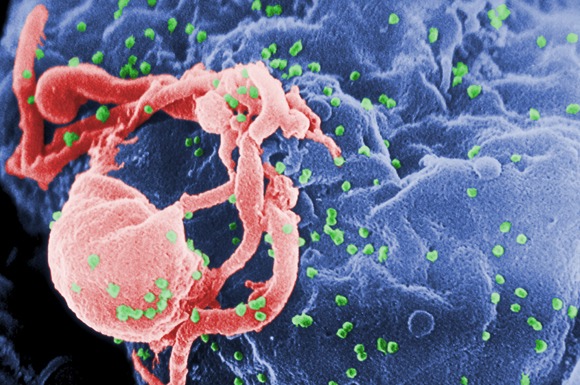
Among 1,200 HIV-negative men and women, aged 18-39 years, in Botswana participating in the Centers for Disease Control TDF2 trial, the overall risk of HIV infection was significantly reduced 63% among participants taking daily tenofovir and emtricitabine versus those taking placebo.
Protection was even greater, with a significant risk reduction of 78%, in a separate analysis among patients known to have a supply of study drugs. That analysis excluded any HIV infections that occurred more than 30 days after a patient reported their last drug dose.
"This news is a major milestone," Dr. Kevin Fenton, director of the CDC’s National Center for HIV/AIDS, viral hepatitis, STD, and TB prevention, said during a telebriefing where the preliminary data were presented. "Heterosexuals are hardest hit by HIV worldwide and these studies give us the first strong compelling evidence that PrEP can work in this population."
Last fall, the iPrEX study reported that pre-exposure prophylaxis reduced HIV transmission in men who have sex with men. However, earlier this year the FEM-PrEP trial demonstrated no protective effect of PrEP among heterosexual women.
Dr. Jonathan Mermin, director of HIV/AIDS Prevention at the CDC, said further efforts are needed both from a scientific and practical standpoint to clarify whether FEM-PrEP failed because of poor drug adherence, specific characteristics in women or other factors. He described the results of the two current trials as a breakthrough in prevention because they provide an additional mechanism to tackle an epidemic that is growing in the world and the United States. Roughly 34 million people are living with AIDS worldwide, with 1.2 million Americans living with HIV, of which 21% are unaware of their infection.
"Up to this point, we have not had the opportunity of taking a drug that would prevent acquisition of HIV among uninfected people, so combined with some of the other newer interventions, it adds to the tool kit," he said.
Dr. Jared Baeten, principal investigator of the Partners PrEP study and University of Washington, Seattle, professor of global health and medicine, remarked that just a few years ago the HIV tool kit was insufficient to reverse the HIV epidemic. "This is really a game changer and now what we need is to get these strategies out to populations at greatest risk," he said.
Questions still remain as to how PrEP will be used in the real world. The CDC is expected to release guidelines in the next few months on the use of PrEP among heterosexual men and women, but urges health care providers to wait for that guidance before implementing PrEP.
However, if providers have patients for whom they believe the initiation of PrEP is urgent, the CDC recommends following the cautions and procedures previously published for PrEP use in men who have sex with men (MSM).
Based on the Partners PrEP finding that tenofovir alone was as effective as tenofovir plus emtricitabine in preventing heterosexual transmission, providers may consider daily doses of either regimen in this population. For MSM patients, however, the interim guidance remains that only combination tenofovir/emtricitabine should be prescribed.
Dr. Michael Thigpen, principal investigator of the TDF2 study and also with the CDC, reiterated that it is a great day for HIV prevention, and pointed out that even after the initial male circumcision studies showed efficacy of more than 50%, there were still no effective means to prevent HIV in women, who comprise the largest proportion of infections in Africa annually. Topical vaginal gels are now available and a test-and-treat strategy for discordant couples was published earlier this year.
"The playing field for HIV prevention has really changed dramatically over the last three or four years, and therefore we are extremely excited about all these different potential tools that are part of our new tool kit," Dr. Thigpen said.
Both trials are ongoing, although due to the strong interim findings it was recommended that the placebo arms be halted and that patients be offered active treatment. Maximum follow-up in Partners is 36 months (average greater than 1 year) and 3.7 years in TDF2 (average 12 months).
The preliminary analyses did not find any significant safety concerns associated with daily use of combination tenofovir/emtricitabine. Patients receiving the study drugs were more likely to report nausea, vomiting and dizziness, but details on serious adverse events were not provided.
Further information on Partners PrEP can be obtained from the University of Washington. Full data from CDC TDF2 are scheduled to be presented next week at the International AIDS Society conference in Rome.
Gilead Sciences Inc., announced earlier this week that it had signed a licensing agreement with the Medicines Patent Pool Foundation that would expand the number of developing countries from 95 to 111 in which generic versions of Viread and Truvada can be produced and sold, even though the drugs remain under patent in the United States.
Partners PrEP is funded by the Bill and Melinda Gates Foundation and the National Institutes of Health. The TDF2 study is being conducted by the CDC in partnership with the Botswana Ministry of Health. Gilead Sciences donated the study drugs for both trials.
Two clinical trials have shown for the first time that daily oral antiretroviral drug prophylaxis can reduce the risk of HIV infection in heterosexual men and women by more than 60%.
The results are likely to fundamentally alter HIV prevention strategies, particularly in Africa where the trials were conducted.
Among 4,758 HIV serodiscordant couples in Kenya and Uganda participating in the Partners Pre-exposure Prophylaxis (PrEP) study, the risk of HIV infection was reduced 62% with tenofovir disoproxil fumarate (Viread) (P value .0003) and 73% with tenofovir in combination with emtricitabine (Truvada) (P less than .0001) compared with placebo. The difference between the two active treatment arms was not statistically significant.
Among 1,200 HIV-negative men and women, aged 18-39 years, in Botswana participating in the Centers for Disease Control TDF2 trial, the overall risk of HIV infection was significantly reduced 63% among participants taking daily tenofovir and emtricitabine versus those taking placebo.
Protection was even greater, with a significant risk reduction of 78%, in a separate analysis among patients known to have a supply of study drugs. That analysis excluded any HIV infections that occurred more than 30 days after a patient reported their last drug dose.
"This news is a major milestone," Dr. Kevin Fenton, director of the CDC’s National Center for HIV/AIDS, viral hepatitis, STD, and TB prevention, said during a telebriefing where the preliminary data were presented. "Heterosexuals are hardest hit by HIV worldwide and these studies give us the first strong compelling evidence that PrEP can work in this population."
Last fall, the iPrEX study reported that pre-exposure prophylaxis reduced HIV transmission in men who have sex with men. However, earlier this year the FEM-PrEP trial demonstrated no protective effect of PrEP among heterosexual women.
Dr. Jonathan Mermin, director of HIV/AIDS Prevention at the CDC, said further efforts are needed both from a scientific and practical standpoint to clarify whether FEM-PrEP failed because of poor drug adherence, specific characteristics in women or other factors. He described the results of the two current trials as a breakthrough in prevention because they provide an additional mechanism to tackle an epidemic that is growing in the world and the United States. Roughly 34 million people are living with AIDS worldwide, with 1.2 million Americans living with HIV, of which 21% are unaware of their infection.
"Up to this point, we have not had the opportunity of taking a drug that would prevent acquisition of HIV among uninfected people, so combined with some of the other newer interventions, it adds to the tool kit," he said.
Dr. Jared Baeten, principal investigator of the Partners PrEP study and University of Washington, Seattle, professor of global health and medicine, remarked that just a few years ago the HIV tool kit was insufficient to reverse the HIV epidemic. "This is really a game changer and now what we need is to get these strategies out to populations at greatest risk," he said.
Questions still remain as to how PrEP will be used in the real world. The CDC is expected to release guidelines in the next few months on the use of PrEP among heterosexual men and women, but urges health care providers to wait for that guidance before implementing PrEP.
However, if providers have patients for whom they believe the initiation of PrEP is urgent, the CDC recommends following the cautions and procedures previously published for PrEP use in men who have sex with men (MSM).
Based on the Partners PrEP finding that tenofovir alone was as effective as tenofovir plus emtricitabine in preventing heterosexual transmission, providers may consider daily doses of either regimen in this population. For MSM patients, however, the interim guidance remains that only combination tenofovir/emtricitabine should be prescribed.
Dr. Michael Thigpen, principal investigator of the TDF2 study and also with the CDC, reiterated that it is a great day for HIV prevention, and pointed out that even after the initial male circumcision studies showed efficacy of more than 50%, there were still no effective means to prevent HIV in women, who comprise the largest proportion of infections in Africa annually. Topical vaginal gels are now available and a test-and-treat strategy for discordant couples was published earlier this year.
"The playing field for HIV prevention has really changed dramatically over the last three or four years, and therefore we are extremely excited about all these different potential tools that are part of our new tool kit," Dr. Thigpen said.
Both trials are ongoing, although due to the strong interim findings it was recommended that the placebo arms be halted and that patients be offered active treatment. Maximum follow-up in Partners is 36 months (average greater than 1 year) and 3.7 years in TDF2 (average 12 months).
The preliminary analyses did not find any significant safety concerns associated with daily use of combination tenofovir/emtricitabine. Patients receiving the study drugs were more likely to report nausea, vomiting and dizziness, but details on serious adverse events were not provided.
Further information on Partners PrEP can be obtained from the University of Washington. Full data from CDC TDF2 are scheduled to be presented next week at the International AIDS Society conference in Rome.
Gilead Sciences Inc., announced earlier this week that it had signed a licensing agreement with the Medicines Patent Pool Foundation that would expand the number of developing countries from 95 to 111 in which generic versions of Viread and Truvada can be produced and sold, even though the drugs remain under patent in the United States.
Partners PrEP is funded by the Bill and Melinda Gates Foundation and the National Institutes of Health. The TDF2 study is being conducted by the CDC in partnership with the Botswana Ministry of Health. Gilead Sciences donated the study drugs for both trials.
Two clinical trials have shown for the first time that daily oral antiretroviral drug prophylaxis can reduce the risk of HIV infection in heterosexual men and women by more than 60%.
The results are likely to fundamentally alter HIV prevention strategies, particularly in Africa where the trials were conducted.
Among 4,758 HIV serodiscordant couples in Kenya and Uganda participating in the Partners Pre-exposure Prophylaxis (PrEP) study, the risk of HIV infection was reduced 62% with tenofovir disoproxil fumarate (Viread) (P value .0003) and 73% with tenofovir in combination with emtricitabine (Truvada) (P less than .0001) compared with placebo. The difference between the two active treatment arms was not statistically significant.
Among 1,200 HIV-negative men and women, aged 18-39 years, in Botswana participating in the Centers for Disease Control TDF2 trial, the overall risk of HIV infection was significantly reduced 63% among participants taking daily tenofovir and emtricitabine versus those taking placebo.
Protection was even greater, with a significant risk reduction of 78%, in a separate analysis among patients known to have a supply of study drugs. That analysis excluded any HIV infections that occurred more than 30 days after a patient reported their last drug dose.
"This news is a major milestone," Dr. Kevin Fenton, director of the CDC’s National Center for HIV/AIDS, viral hepatitis, STD, and TB prevention, said during a telebriefing where the preliminary data were presented. "Heterosexuals are hardest hit by HIV worldwide and these studies give us the first strong compelling evidence that PrEP can work in this population."
Last fall, the iPrEX study reported that pre-exposure prophylaxis reduced HIV transmission in men who have sex with men. However, earlier this year the FEM-PrEP trial demonstrated no protective effect of PrEP among heterosexual women.
Dr. Jonathan Mermin, director of HIV/AIDS Prevention at the CDC, said further efforts are needed both from a scientific and practical standpoint to clarify whether FEM-PrEP failed because of poor drug adherence, specific characteristics in women or other factors. He described the results of the two current trials as a breakthrough in prevention because they provide an additional mechanism to tackle an epidemic that is growing in the world and the United States. Roughly 34 million people are living with AIDS worldwide, with 1.2 million Americans living with HIV, of which 21% are unaware of their infection.
"Up to this point, we have not had the opportunity of taking a drug that would prevent acquisition of HIV among uninfected people, so combined with some of the other newer interventions, it adds to the tool kit," he said.
Dr. Jared Baeten, principal investigator of the Partners PrEP study and University of Washington, Seattle, professor of global health and medicine, remarked that just a few years ago the HIV tool kit was insufficient to reverse the HIV epidemic. "This is really a game changer and now what we need is to get these strategies out to populations at greatest risk," he said.
Questions still remain as to how PrEP will be used in the real world. The CDC is expected to release guidelines in the next few months on the use of PrEP among heterosexual men and women, but urges health care providers to wait for that guidance before implementing PrEP.
However, if providers have patients for whom they believe the initiation of PrEP is urgent, the CDC recommends following the cautions and procedures previously published for PrEP use in men who have sex with men (MSM).
Based on the Partners PrEP finding that tenofovir alone was as effective as tenofovir plus emtricitabine in preventing heterosexual transmission, providers may consider daily doses of either regimen in this population. For MSM patients, however, the interim guidance remains that only combination tenofovir/emtricitabine should be prescribed.
Dr. Michael Thigpen, principal investigator of the TDF2 study and also with the CDC, reiterated that it is a great day for HIV prevention, and pointed out that even after the initial male circumcision studies showed efficacy of more than 50%, there were still no effective means to prevent HIV in women, who comprise the largest proportion of infections in Africa annually. Topical vaginal gels are now available and a test-and-treat strategy for discordant couples was published earlier this year.
"The playing field for HIV prevention has really changed dramatically over the last three or four years, and therefore we are extremely excited about all these different potential tools that are part of our new tool kit," Dr. Thigpen said.
Both trials are ongoing, although due to the strong interim findings it was recommended that the placebo arms be halted and that patients be offered active treatment. Maximum follow-up in Partners is 36 months (average greater than 1 year) and 3.7 years in TDF2 (average 12 months).
The preliminary analyses did not find any significant safety concerns associated with daily use of combination tenofovir/emtricitabine. Patients receiving the study drugs were more likely to report nausea, vomiting and dizziness, but details on serious adverse events were not provided.
Further information on Partners PrEP can be obtained from the University of Washington. Full data from CDC TDF2 are scheduled to be presented next week at the International AIDS Society conference in Rome.
Gilead Sciences Inc., announced earlier this week that it had signed a licensing agreement with the Medicines Patent Pool Foundation that would expand the number of developing countries from 95 to 111 in which generic versions of Viread and Truvada can be produced and sold, even though the drugs remain under patent in the United States.
Partners PrEP is funded by the Bill and Melinda Gates Foundation and the National Institutes of Health. The TDF2 study is being conducted by the CDC in partnership with the Botswana Ministry of Health. Gilead Sciences donated the study drugs for both trials.
FROM A CENTERS FOR DISEASE CONTROL AND PREVENTION TELEBRIEFING
Major Finding: In the first study, the risk of HIV transmission was reduced 62% with tenofovir disoproxil fumarate (Viread) and 73% with tenofovir in combination with emtricitabine (Truvada) compared with placebo. The difference between the two active treatment arms was not statistically significant. In the second study involving HIV-negative men and women, the overall risk of infection was significantly reduced 63% among participants taking daily tenofovir and emtricitabine vs. those taking placebo.
Data Source: Two randomized clinical trials; one in 4,758 HIV serodiscordant couples and one in 1,200 HIV-negative men and women.
Disclosures: Partners PrEP is funded by the Bill and Melinda Gates Foundation and the National Institutes of Health. TDF2 study is being conducted by the CDC in partnership with the Botswana Ministry of Health. Gilead Sciences donated the study drugs for both trials.