User login
One-Third of Asthmatic Kids Don't Get Flu Vaccine
DENVER – At least 30% of asthmatic children do not get vaccinated against influenza, according to the results of a nationwide survey of parents.
Additionally, parents who choose not to have their children immunized against influenza are significantly less likely to perceive colds and flu as important triggers of their child's asthma than are parents who do have their children vaccinated, suggesting an educational opportunity for health care providers. “Changing vaccination behavior will require educational messages that help shift parental concerns from the impact of the vaccine to the impact of influenza itself,” Dr. Toby C. Lewis said.
The survey was part of the C.S. Mott Children's Hospital National Poll on Children's Health (NPCH), a Web-based survey of national public opinion and perceptions regarding major health care issues for U.S. children.
It is administered to approximately 2,000 households, with data weighted to reflect U.S. census demographic distribution. Among 1,621 parents who responded to the survey during Aug. 13–Sept. 7, 2010, 237 (15%) parents of children aged 2–17 years with diagnosed asthma were identified. The parents were 50% white, 24% black, 20% Hispanic, and 6% other, from a broad spectrum of economic backgrounds.
A total of 70% reported that their children had been vaccinated against seasonal or pandemic H1N1 influenza during the 2009–2010 winter season, and 65% indicated that they planned to have their child vaccinated against influenza in the upcoming (2010–2011) season.
There were no significant differences between the asthmatic children who were and were not vaccinated in 2009–2010 with respect to household income, race/ethnicity, parental education, child's age, child's sex, or proportion with public insurance, reported Dr. Lewis, a pediatric pulmonologist at C.S. Mott Children's Hospital, Ann Arbor, Mich.
However, parents who did not vaccinate their children against influenza were significantly less likely than those who did vaccinate to indicate that getting a viral infection was “a very important” trigger of their child's asthma (47% vs. 72%).
There were no significant differences in their views about other asthma triggers such as outdoor or indoor allergies, tobacco smoke, or exercise.
On the flip side, nonvaccinating parents were significantly more likely to be concerned about vaccine side effects (60% vs. 30%) and about getting the flu from the vaccine (44% vs. 13%). The survey did not ask parents specifically what “side effects” they were concerned about, Dr. Lewis noted.
Also significantly different was who influenced their decision to vaccinate, with the child's health care provider indicated by 84% of vaccinating parents, compared with just 22% of nonvaccinating parents. “Child's school” was endorsed by 45% vs. 11%, respectively.
Dr. Lewis sees that 22% as a somewhat positive sign, suggesting that even some parents who are hesitant to vaccinate still trust their child's health care provider.
“If we can help parents understand the risks of influenza better, we may be able to help drive behavior. I think it's also important to tailor educational messages to the parents' specific concern,” she said in an interview.
She advised physicians not to berate parents who have expressed hesitancy about vaccination, but rather to try to create an alliance and communicate the health message about the benefits of vaccination.
And, she added, even if the parent doesn't seem receptive at first, “Don't give up!”
'If we can help parents understand the risks of influenza better, we may be able to help drive behavior.'
DENVER – At least 30% of asthmatic children do not get vaccinated against influenza, according to the results of a nationwide survey of parents.
Additionally, parents who choose not to have their children immunized against influenza are significantly less likely to perceive colds and flu as important triggers of their child's asthma than are parents who do have their children vaccinated, suggesting an educational opportunity for health care providers. “Changing vaccination behavior will require educational messages that help shift parental concerns from the impact of the vaccine to the impact of influenza itself,” Dr. Toby C. Lewis said.
The survey was part of the C.S. Mott Children's Hospital National Poll on Children's Health (NPCH), a Web-based survey of national public opinion and perceptions regarding major health care issues for U.S. children.
It is administered to approximately 2,000 households, with data weighted to reflect U.S. census demographic distribution. Among 1,621 parents who responded to the survey during Aug. 13–Sept. 7, 2010, 237 (15%) parents of children aged 2–17 years with diagnosed asthma were identified. The parents were 50% white, 24% black, 20% Hispanic, and 6% other, from a broad spectrum of economic backgrounds.
A total of 70% reported that their children had been vaccinated against seasonal or pandemic H1N1 influenza during the 2009–2010 winter season, and 65% indicated that they planned to have their child vaccinated against influenza in the upcoming (2010–2011) season.
There were no significant differences between the asthmatic children who were and were not vaccinated in 2009–2010 with respect to household income, race/ethnicity, parental education, child's age, child's sex, or proportion with public insurance, reported Dr. Lewis, a pediatric pulmonologist at C.S. Mott Children's Hospital, Ann Arbor, Mich.
However, parents who did not vaccinate their children against influenza were significantly less likely than those who did vaccinate to indicate that getting a viral infection was “a very important” trigger of their child's asthma (47% vs. 72%).
There were no significant differences in their views about other asthma triggers such as outdoor or indoor allergies, tobacco smoke, or exercise.
On the flip side, nonvaccinating parents were significantly more likely to be concerned about vaccine side effects (60% vs. 30%) and about getting the flu from the vaccine (44% vs. 13%). The survey did not ask parents specifically what “side effects” they were concerned about, Dr. Lewis noted.
Also significantly different was who influenced their decision to vaccinate, with the child's health care provider indicated by 84% of vaccinating parents, compared with just 22% of nonvaccinating parents. “Child's school” was endorsed by 45% vs. 11%, respectively.
Dr. Lewis sees that 22% as a somewhat positive sign, suggesting that even some parents who are hesitant to vaccinate still trust their child's health care provider.
“If we can help parents understand the risks of influenza better, we may be able to help drive behavior. I think it's also important to tailor educational messages to the parents' specific concern,” she said in an interview.
She advised physicians not to berate parents who have expressed hesitancy about vaccination, but rather to try to create an alliance and communicate the health message about the benefits of vaccination.
And, she added, even if the parent doesn't seem receptive at first, “Don't give up!”
'If we can help parents understand the risks of influenza better, we may be able to help drive behavior.'
DENVER – At least 30% of asthmatic children do not get vaccinated against influenza, according to the results of a nationwide survey of parents.
Additionally, parents who choose not to have their children immunized against influenza are significantly less likely to perceive colds and flu as important triggers of their child's asthma than are parents who do have their children vaccinated, suggesting an educational opportunity for health care providers. “Changing vaccination behavior will require educational messages that help shift parental concerns from the impact of the vaccine to the impact of influenza itself,” Dr. Toby C. Lewis said.
The survey was part of the C.S. Mott Children's Hospital National Poll on Children's Health (NPCH), a Web-based survey of national public opinion and perceptions regarding major health care issues for U.S. children.
It is administered to approximately 2,000 households, with data weighted to reflect U.S. census demographic distribution. Among 1,621 parents who responded to the survey during Aug. 13–Sept. 7, 2010, 237 (15%) parents of children aged 2–17 years with diagnosed asthma were identified. The parents were 50% white, 24% black, 20% Hispanic, and 6% other, from a broad spectrum of economic backgrounds.
A total of 70% reported that their children had been vaccinated against seasonal or pandemic H1N1 influenza during the 2009–2010 winter season, and 65% indicated that they planned to have their child vaccinated against influenza in the upcoming (2010–2011) season.
There were no significant differences between the asthmatic children who were and were not vaccinated in 2009–2010 with respect to household income, race/ethnicity, parental education, child's age, child's sex, or proportion with public insurance, reported Dr. Lewis, a pediatric pulmonologist at C.S. Mott Children's Hospital, Ann Arbor, Mich.
However, parents who did not vaccinate their children against influenza were significantly less likely than those who did vaccinate to indicate that getting a viral infection was “a very important” trigger of their child's asthma (47% vs. 72%).
There were no significant differences in their views about other asthma triggers such as outdoor or indoor allergies, tobacco smoke, or exercise.
On the flip side, nonvaccinating parents were significantly more likely to be concerned about vaccine side effects (60% vs. 30%) and about getting the flu from the vaccine (44% vs. 13%). The survey did not ask parents specifically what “side effects” they were concerned about, Dr. Lewis noted.
Also significantly different was who influenced their decision to vaccinate, with the child's health care provider indicated by 84% of vaccinating parents, compared with just 22% of nonvaccinating parents. “Child's school” was endorsed by 45% vs. 11%, respectively.
Dr. Lewis sees that 22% as a somewhat positive sign, suggesting that even some parents who are hesitant to vaccinate still trust their child's health care provider.
“If we can help parents understand the risks of influenza better, we may be able to help drive behavior. I think it's also important to tailor educational messages to the parents' specific concern,” she said in an interview.
She advised physicians not to berate parents who have expressed hesitancy about vaccination, but rather to try to create an alliance and communicate the health message about the benefits of vaccination.
And, she added, even if the parent doesn't seem receptive at first, “Don't give up!”
'If we can help parents understand the risks of influenza better, we may be able to help drive behavior.'
Major Finding: Eighty-four percent of vaccinating parents
indicated the child's health care provider significantly influenced
their decision to vaccinate, compared with just 22% of nonvaccinating
parents.
Data Source: A 2010 survey of 237 parents whose
children were diagnosed with asthma. The survey was part of the C.S.
Mott Children's Hospital National Poll on Children's Health (NPCH).
Disclosures:
The NPCH is funded by the University of Michigan's department of
pediatrics and communicable diseases. Dr. Lewis said she has previously
received funding from the National Institutes of Health for unrelated
research.
Nonablative Fractional Laser Proves Effective for Actinic Cheilitis
GRAPEVINE, TEX. – The nonablative fractional thulium 1927-nm laser effectively treated actinic cheilitis in 15 patients, without subsequent downtime or significant side effects, Dr. Robert Anolik reported at the annual meeting of the American Society for Laser Medicine and Surgery.
Current treatments for actinic cheilitis – including surgery, carbon dioxide/erbium laser ablation, electrodesiccation, and 5-fluorouracil – typically involve significant pain, edema, and other adverse effects, including permanent scarring. The 1927-nm thulium laser, which is effective and well tolerated for superficial resurfacing, has been approved by the Food and Drug Administration for treating actinic keratoses, said Dr. Anolik of the Laser and Skin Surgery Center of New York.

Charts were reviewed for the 15 patients with actinic cheilitis who had been treated with the nonablative fractional 1,927-nm laser at two private laser and skin surgery centers. All were pretreated with topical anesthetic creams and given oral antiviral prophylaxis. Treatment parameters were 10-20 mJ per MTZ, 65%-70% coverage density, and total delivered energy of 0.08-0.1 kJ.
In blinded assessments of before and after photographs using a quartile improvement scale, all 15 patients had improvements of either 76%-100% (9 patients) or 51%-75% (6 patients) after 1-2 treatments. No adverse events occurred, and the only side effects were transient erythema for 1-4 days and edema for 1-3 days. "This is in stark contrast to the wounding, pain, and downtime expected with the other common treatment strategies," Dr. Anolik commented.
Planned next steps include increasing the patient pool, trial treatment of patients with a range of actinic cheilitis severity, assessment of before/after or left/right specimens for molecular features of actinic cheilitis such as p53, and an evaluation of long term benefit, he noted.
Dr. Anolik stated that he has no relevant relationships with industry.
GRAPEVINE, TEX. – The nonablative fractional thulium 1927-nm laser effectively treated actinic cheilitis in 15 patients, without subsequent downtime or significant side effects, Dr. Robert Anolik reported at the annual meeting of the American Society for Laser Medicine and Surgery.
Current treatments for actinic cheilitis – including surgery, carbon dioxide/erbium laser ablation, electrodesiccation, and 5-fluorouracil – typically involve significant pain, edema, and other adverse effects, including permanent scarring. The 1927-nm thulium laser, which is effective and well tolerated for superficial resurfacing, has been approved by the Food and Drug Administration for treating actinic keratoses, said Dr. Anolik of the Laser and Skin Surgery Center of New York.
Charts were reviewed for the 15 patients with actinic cheilitis who had been treated with the nonablative fractional 1,927-nm laser at two private laser and skin surgery centers. All were pretreated with topical anesthetic creams and given oral antiviral prophylaxis. Treatment parameters were 10-20 mJ per MTZ, 65%-70% coverage density, and total delivered energy of 0.08-0.1 kJ.
In blinded assessments of before and after photographs using a quartile improvement scale, all 15 patients had improvements of either 76%-100% (9 patients) or 51%-75% (6 patients) after 1-2 treatments. No adverse events occurred, and the only side effects were transient erythema for 1-4 days and edema for 1-3 days. "This is in stark contrast to the wounding, pain, and downtime expected with the other common treatment strategies," Dr. Anolik commented.
Planned next steps include increasing the patient pool, trial treatment of patients with a range of actinic cheilitis severity, assessment of before/after or left/right specimens for molecular features of actinic cheilitis such as p53, and an evaluation of long term benefit, he noted.
Dr. Anolik stated that he has no relevant relationships with industry.
GRAPEVINE, TEX. – The nonablative fractional thulium 1927-nm laser effectively treated actinic cheilitis in 15 patients, without subsequent downtime or significant side effects, Dr. Robert Anolik reported at the annual meeting of the American Society for Laser Medicine and Surgery.
Current treatments for actinic cheilitis – including surgery, carbon dioxide/erbium laser ablation, electrodesiccation, and 5-fluorouracil – typically involve significant pain, edema, and other adverse effects, including permanent scarring. The 1927-nm thulium laser, which is effective and well tolerated for superficial resurfacing, has been approved by the Food and Drug Administration for treating actinic keratoses, said Dr. Anolik of the Laser and Skin Surgery Center of New York.
Charts were reviewed for the 15 patients with actinic cheilitis who had been treated with the nonablative fractional 1,927-nm laser at two private laser and skin surgery centers. All were pretreated with topical anesthetic creams and given oral antiviral prophylaxis. Treatment parameters were 10-20 mJ per MTZ, 65%-70% coverage density, and total delivered energy of 0.08-0.1 kJ.
In blinded assessments of before and after photographs using a quartile improvement scale, all 15 patients had improvements of either 76%-100% (9 patients) or 51%-75% (6 patients) after 1-2 treatments. No adverse events occurred, and the only side effects were transient erythema for 1-4 days and edema for 1-3 days. "This is in stark contrast to the wounding, pain, and downtime expected with the other common treatment strategies," Dr. Anolik commented.
Planned next steps include increasing the patient pool, trial treatment of patients with a range of actinic cheilitis severity, assessment of before/after or left/right specimens for molecular features of actinic cheilitis such as p53, and an evaluation of long term benefit, he noted.
Dr. Anolik stated that he has no relevant relationships with industry.
FROM THE ANNUAL MEETING OF THE AMERICAN SOCIETY FOR LASER MEDICINE AND SURGERY
Major Finding: All 15 patients had improvements of either 76%-100% (9) or 51%-75% (6) after one or two treatments with a nonablative fractional thulium 1927-nm laser.
Data Source: Chart review of 15 patients with actinic cheilitis.
Disclosures: Dr. Anolik stated that he has no relevant relationships with industry.
Rosiglitazone to Be Available Only by Mail Order, FDA Says
The Food and Drug Administration has further restricted use of the diabetes drug rosiglitazone and all other medications containing rosiglitazone by requiring that health care providers and patients enroll in a special program, and by removing the drugs from all retail pharmacies by Nov. 18, 2011.
The new restrictions are part of the FDA’s REMS (Risk Evaluation and Mitigation Strategy), a program for managing serious risks of marketed drugs. The initial decision to restrict access to rosiglitazone was made on Sept. 23, 2010, based on data suggesting an elevated risk of heart attacks in patients who were treated with the glucose-lowering agent. Previously, the REMS consisted of a medication guide. Now, the FDA has modified the REMS to include a restricted access and distribution program, which applies to Avandia, Avandamet, and Avandaryl.
The officially titled Avandia-Rosiglitazone Medicines Access Program limits the use of all three drugs to patients who are already being successfully treated with them, or to those whose blood sugar cannot be controlled with any other medications and who do not wish to use pioglitazone-containing drugs (Actos, Actoplus Met, Actoplus Met XR, or Duetact).
Furthermore, health care providers and patients must now be enrolled in the Avandia-Rosiglitazone Medicines Access Program in order to prescribe and receive rosiglitazone medicines. Patients who are enrolled in that program will receive their medicine by mail order through specially certified participating pharmacies.
Heath care providers should determine whether their patients are appropriate candidates to receive treatment with rosiglitazone medicines, based on the risks and benefits compared with other therapies. Enrollment in the Avandia-Rosiglitazone Medicines Access Program is required for health care providers who wish to prescribe rosiglitazone medicines to outpatients or to patients in long-term care facilities.
To enroll, health care providers must review the prescriber overview and the full prescribing information, including the medication guide, and must complete and sign the prescriber enrollment form. A copy of the medication guide must be provided to and reviewed by the patient or caregiver, and the health care provider must enroll eligible patients into the program by completing and signing a patient enrollment form. If a patient who has been taking a rosiglitazone medicine is hospitalized, the patient must be enrolled in the Avandia-Rosiglitazone Medicines Access Program to continue receiving the medicine; however, the patient’s health care provider in the hospital is not required to be enrolled.
Any adverse events involving rosiglitazone medicines should be reported to the FDA MedWatch program.
The Food and Drug Administration has further restricted use of the diabetes drug rosiglitazone and all other medications containing rosiglitazone by requiring that health care providers and patients enroll in a special program, and by removing the drugs from all retail pharmacies by Nov. 18, 2011.
The new restrictions are part of the FDA’s REMS (Risk Evaluation and Mitigation Strategy), a program for managing serious risks of marketed drugs. The initial decision to restrict access to rosiglitazone was made on Sept. 23, 2010, based on data suggesting an elevated risk of heart attacks in patients who were treated with the glucose-lowering agent. Previously, the REMS consisted of a medication guide. Now, the FDA has modified the REMS to include a restricted access and distribution program, which applies to Avandia, Avandamet, and Avandaryl.
The officially titled Avandia-Rosiglitazone Medicines Access Program limits the use of all three drugs to patients who are already being successfully treated with them, or to those whose blood sugar cannot be controlled with any other medications and who do not wish to use pioglitazone-containing drugs (Actos, Actoplus Met, Actoplus Met XR, or Duetact).
Furthermore, health care providers and patients must now be enrolled in the Avandia-Rosiglitazone Medicines Access Program in order to prescribe and receive rosiglitazone medicines. Patients who are enrolled in that program will receive their medicine by mail order through specially certified participating pharmacies.
Heath care providers should determine whether their patients are appropriate candidates to receive treatment with rosiglitazone medicines, based on the risks and benefits compared with other therapies. Enrollment in the Avandia-Rosiglitazone Medicines Access Program is required for health care providers who wish to prescribe rosiglitazone medicines to outpatients or to patients in long-term care facilities.
To enroll, health care providers must review the prescriber overview and the full prescribing information, including the medication guide, and must complete and sign the prescriber enrollment form. A copy of the medication guide must be provided to and reviewed by the patient or caregiver, and the health care provider must enroll eligible patients into the program by completing and signing a patient enrollment form. If a patient who has been taking a rosiglitazone medicine is hospitalized, the patient must be enrolled in the Avandia-Rosiglitazone Medicines Access Program to continue receiving the medicine; however, the patient’s health care provider in the hospital is not required to be enrolled.
Any adverse events involving rosiglitazone medicines should be reported to the FDA MedWatch program.
The Food and Drug Administration has further restricted use of the diabetes drug rosiglitazone and all other medications containing rosiglitazone by requiring that health care providers and patients enroll in a special program, and by removing the drugs from all retail pharmacies by Nov. 18, 2011.
The new restrictions are part of the FDA’s REMS (Risk Evaluation and Mitigation Strategy), a program for managing serious risks of marketed drugs. The initial decision to restrict access to rosiglitazone was made on Sept. 23, 2010, based on data suggesting an elevated risk of heart attacks in patients who were treated with the glucose-lowering agent. Previously, the REMS consisted of a medication guide. Now, the FDA has modified the REMS to include a restricted access and distribution program, which applies to Avandia, Avandamet, and Avandaryl.
The officially titled Avandia-Rosiglitazone Medicines Access Program limits the use of all three drugs to patients who are already being successfully treated with them, or to those whose blood sugar cannot be controlled with any other medications and who do not wish to use pioglitazone-containing drugs (Actos, Actoplus Met, Actoplus Met XR, or Duetact).
Furthermore, health care providers and patients must now be enrolled in the Avandia-Rosiglitazone Medicines Access Program in order to prescribe and receive rosiglitazone medicines. Patients who are enrolled in that program will receive their medicine by mail order through specially certified participating pharmacies.
Heath care providers should determine whether their patients are appropriate candidates to receive treatment with rosiglitazone medicines, based on the risks and benefits compared with other therapies. Enrollment in the Avandia-Rosiglitazone Medicines Access Program is required for health care providers who wish to prescribe rosiglitazone medicines to outpatients or to patients in long-term care facilities.
To enroll, health care providers must review the prescriber overview and the full prescribing information, including the medication guide, and must complete and sign the prescriber enrollment form. A copy of the medication guide must be provided to and reviewed by the patient or caregiver, and the health care provider must enroll eligible patients into the program by completing and signing a patient enrollment form. If a patient who has been taking a rosiglitazone medicine is hospitalized, the patient must be enrolled in the Avandia-Rosiglitazone Medicines Access Program to continue receiving the medicine; however, the patient’s health care provider in the hospital is not required to be enrolled.
Any adverse events involving rosiglitazone medicines should be reported to the FDA MedWatch program.
FROM THE FDA
Rosiglitazone to Be Available Only by Mail Order, FDA Says
The Food and Drug Administration has further restricted use of the diabetes drug rosiglitazone and all other medications containing rosiglitazone by requiring that health care providers and patients enroll in a special program, and by removing the drugs from all retail pharmacies by Nov. 18, 2011.
The new restrictions are part of the FDA’s REMS (Risk Evaluation and Mitigation Strategy), a program for managing serious risks of marketed drugs. The initial decision to restrict access to rosiglitazone was made on Sept. 23, 2010, based on data suggesting an elevated risk of heart attacks in patients who were treated with the glucose-lowering agent. Previously, the REMS consisted of a medication guide. Now, the FDA has modified the REMS to include a restricted access and distribution program, which applies to Avandia, Avandamet, and Avandaryl.
The officially titled Avandia-Rosiglitazone Medicines Access Program limits the use of all three drugs to patients who are already being successfully treated with them, or to those whose blood sugar cannot be controlled with any other medications and who do not wish to use pioglitazone-containing drugs (Actos, Actoplus Met, Actoplus Met XR, or Duetact).
Furthermore, health care providers and patients must now be enrolled in the Avandia-Rosiglitazone Medicines Access Program in order to prescribe and receive rosiglitazone medicines. Patients who are enrolled in that program will receive their medicine by mail order through specially certified participating pharmacies.
Heath care providers should determine whether their patients are appropriate candidates to receive treatment with rosiglitazone medicines, based on the risks and benefits compared with other therapies. Enrollment in the Avandia-Rosiglitazone Medicines Access Program is required for health care providers who wish to prescribe rosiglitazone medicines to outpatients or to patients in long-term care facilities.
To enroll, health care providers must review the prescriber overview and the full prescribing information, including the medication guide, and must complete and sign the prescriber enrollment form. A copy of the medication guide must be provided to and reviewed by the patient or caregiver, and the health care provider must enroll eligible patients into the program by completing and signing a patient enrollment form. If a patient who has been taking a rosiglitazone medicine is hospitalized, the patient must be enrolled in the Avandia-Rosiglitazone Medicines Access Program to continue receiving the medicine; however, the patient’s health care provider in the hospital is not required to be enrolled.
Any adverse events involving rosiglitazone medicines should be reported to the FDA MedWatch program.
The Food and Drug Administration has further restricted use of the diabetes drug rosiglitazone and all other medications containing rosiglitazone by requiring that health care providers and patients enroll in a special program, and by removing the drugs from all retail pharmacies by Nov. 18, 2011.
The new restrictions are part of the FDA’s REMS (Risk Evaluation and Mitigation Strategy), a program for managing serious risks of marketed drugs. The initial decision to restrict access to rosiglitazone was made on Sept. 23, 2010, based on data suggesting an elevated risk of heart attacks in patients who were treated with the glucose-lowering agent. Previously, the REMS consisted of a medication guide. Now, the FDA has modified the REMS to include a restricted access and distribution program, which applies to Avandia, Avandamet, and Avandaryl.
The officially titled Avandia-Rosiglitazone Medicines Access Program limits the use of all three drugs to patients who are already being successfully treated with them, or to those whose blood sugar cannot be controlled with any other medications and who do not wish to use pioglitazone-containing drugs (Actos, Actoplus Met, Actoplus Met XR, or Duetact).
Furthermore, health care providers and patients must now be enrolled in the Avandia-Rosiglitazone Medicines Access Program in order to prescribe and receive rosiglitazone medicines. Patients who are enrolled in that program will receive their medicine by mail order through specially certified participating pharmacies.
Heath care providers should determine whether their patients are appropriate candidates to receive treatment with rosiglitazone medicines, based on the risks and benefits compared with other therapies. Enrollment in the Avandia-Rosiglitazone Medicines Access Program is required for health care providers who wish to prescribe rosiglitazone medicines to outpatients or to patients in long-term care facilities.
To enroll, health care providers must review the prescriber overview and the full prescribing information, including the medication guide, and must complete and sign the prescriber enrollment form. A copy of the medication guide must be provided to and reviewed by the patient or caregiver, and the health care provider must enroll eligible patients into the program by completing and signing a patient enrollment form. If a patient who has been taking a rosiglitazone medicine is hospitalized, the patient must be enrolled in the Avandia-Rosiglitazone Medicines Access Program to continue receiving the medicine; however, the patient’s health care provider in the hospital is not required to be enrolled.
Any adverse events involving rosiglitazone medicines should be reported to the FDA MedWatch program.
The Food and Drug Administration has further restricted use of the diabetes drug rosiglitazone and all other medications containing rosiglitazone by requiring that health care providers and patients enroll in a special program, and by removing the drugs from all retail pharmacies by Nov. 18, 2011.
The new restrictions are part of the FDA’s REMS (Risk Evaluation and Mitigation Strategy), a program for managing serious risks of marketed drugs. The initial decision to restrict access to rosiglitazone was made on Sept. 23, 2010, based on data suggesting an elevated risk of heart attacks in patients who were treated with the glucose-lowering agent. Previously, the REMS consisted of a medication guide. Now, the FDA has modified the REMS to include a restricted access and distribution program, which applies to Avandia, Avandamet, and Avandaryl.
The officially titled Avandia-Rosiglitazone Medicines Access Program limits the use of all three drugs to patients who are already being successfully treated with them, or to those whose blood sugar cannot be controlled with any other medications and who do not wish to use pioglitazone-containing drugs (Actos, Actoplus Met, Actoplus Met XR, or Duetact).
Furthermore, health care providers and patients must now be enrolled in the Avandia-Rosiglitazone Medicines Access Program in order to prescribe and receive rosiglitazone medicines. Patients who are enrolled in that program will receive their medicine by mail order through specially certified participating pharmacies.
Heath care providers should determine whether their patients are appropriate candidates to receive treatment with rosiglitazone medicines, based on the risks and benefits compared with other therapies. Enrollment in the Avandia-Rosiglitazone Medicines Access Program is required for health care providers who wish to prescribe rosiglitazone medicines to outpatients or to patients in long-term care facilities.
To enroll, health care providers must review the prescriber overview and the full prescribing information, including the medication guide, and must complete and sign the prescriber enrollment form. A copy of the medication guide must be provided to and reviewed by the patient or caregiver, and the health care provider must enroll eligible patients into the program by completing and signing a patient enrollment form. If a patient who has been taking a rosiglitazone medicine is hospitalized, the patient must be enrolled in the Avandia-Rosiglitazone Medicines Access Program to continue receiving the medicine; however, the patient’s health care provider in the hospital is not required to be enrolled.
Any adverse events involving rosiglitazone medicines should be reported to the FDA MedWatch program.
FROM THE FDA
Daily Azithromycin Cut Acute COPD Exacerbations in High-Risk Patients
DENVER – The addition of daily azithromycin to standard treatment reduced the frequency of chronic obstructive pulmonary disease exacerbations and improved quality of life at 1 year in a large, prospective, randomized, placebo-controlled clinical trial involving more than 1,100 high-risk COPD patients.
Use of the macrolide antibiotic was associated with a significantly greater incidence of hearing decrement, although the overall rate was low and tended to reverse when the drug was stopped, Dr. Richard K. Albert reported at an international conference of the American Thoracic Society.

Macrolide antibiotics have antimicrobial and immunomodulary effects, and chronic administration has been associated with improvements in other inflammatory lung conditions, such as cystic fibrosis. However, previous studies that examined the use of macrolides in COPD have produced conflicting results, with five showing improvements and two failing to demonstrate a benefit. These studies have all been small – the largest included only 109 patients – and all had study-design problems, according Dr. Albert, professor of medicine at the University of Colorado at Denver, and chief of medicine at Denver Health.
Dr. Albert and his colleagues enrolled 1,142 patients with moderate to severe COPD who were at increased risk for acute exacerbations based on having received supplemental oxygen within the previous year, a history of receiving systemic corticosteroids, and/or a history of hospitalization or an emergency department visit for a COPD exacerbation within the past year. Patients with asthma, bronchiectasis, hepatic or renal insufficiency, resting tachycardia, prolonged QTc intervals, or predefined audiometric abnormalities were excluded. The high-risk patient population enrolled in the study represents about a third of all patients with COPD, Dr. Albert noted.
The patients were randomized to receive azithromycin (250 mg/day) or placebo along with usual treatment for 1 year. At baseline, they had a mean age of 65 years, 41% were women, and 82% were white. They had postbudesonide FEV1 (forced expiratory volume in 1 second) of 1.1 mL, FEV1 about 40% of predicted, and an FEV1/FVC (forced vital capacity) ratio of 42%. All had a history of smoking, with an average of about 55 pack-years, and about one-fifth were current smokers. The majority (85%) had received systemic corticosteroids for an acute exacerbation of COPD (AECOPD) in the past year, three-quarters were taking long-acting beta-agonists (LABAs) and/or inhaled corticosteroids, and about two-thirds were on long-acting muscarinic antagonists (LAMAs).
In all, 1,117 patients (558 azithromycin and 559 placebo) were included in the intent-to-treat analysis, and 996 (494 azithromycin and 502 placebo) were actually evaluated at 1 year. The primary end point (the median time to first AECOPD) was 266 days for the azithromycin group, compared with 174 days for those taking placebo, a statistically significant difference (hazard ratio, 0.73). A secondary end point (rate of AECOPD) was 1.48 per patient-year for azithromycin vs. 1.83 per patient-year for placebo, again highly statistically significant, Dr. Albert said.
Improvements seen with azithromycin over placebo were significant, despite the fact that the majority of patients was taking inhaled corticosteroids, LAMAs, and/or LABAs, he noted.
There were trends for reductions in all-cause and COPD-related hospitalizations, as well as emergency department and urgent care visits with azithromycin, but these were not statistically significant. There was a slightly significant difference in frequency of unscheduled office visits favoring the azithromycin group. A reduction in intubation was also seen with azithromycin, but the numbers weren’t large enough to reach significance.
On the St. George’s Respiratory Questionnaire, a standardized self-completed questionnaire for measuring impaired health and perceived well-being in patients with airway diseases (Respir. Med. 1991;85[suppl. B]:25-31; discussion 33-7), the azithromycin group had a drop in its score by 2.8 units at 1 year, compared with just 0.6 units for placebo, also highly statistically significant.
The frequency of serious, nonfatal adverse events including pneumonia, neoplasm, gastrointestinal tract problems, QT prolongation, or other cardiovascular problems did not differ significantly between the two groups. Fatal serious adverse events also did not differ, although there were slightly more neoplasms in the placebo group. Adverse events leading to drug discontinuation did not differ, he said.
However, the measured hearing decrement was significantly more common in the azithromycin group, occurring in 142 (25%) vs. 110 (20%) of the placebo group. The mean change in hearing in decibels was small (0.7 dB), compared with no change in the placebo group at 3 months, with no significant difference seen at 12 months.
Data suggested that the audiometry that was used to assess hearing may have overestimated the degree of hearing decrement. Of 80 azithromycin patients who had hearing decrements detected prior to the 12-month study evaluation, investigators stopped the drug in 61. Of those, hearing returned to normal in 21 patients. Of the 19 patients for whom the azithromycin wasn’t stopped, hearing returned to normal in 6 patients. Similarly, of 45 placebo patients with hearing decrements that was detected prior to 12 months, placebo was stopped in 37 and returned to normal in 14. Of eight patients who continued taking the placebo, hearing returned in two.
"While we believe there are differences in the frequency with which azithromycin causes hearing disorders, we think we have overestimated that frequency in both groups," Dr. Albert said.
At enrollment, 14% of the azithromycin and 15% of the placebo group were colonized with selected respiratory pathogens. Excluding those patients, 12% of the azithromycin group became colonized with respiratory flora during the study, compared with 28% of the placebo group at the 12-month assessment, a highly significant difference. Colonization with macrolide-resistant pathogens did not differ between the groups at baseline. However, during the study, 47 (81% of those who had culture obtained) in the azithromycin group had become colonized with resistant pathogens, compared with 108 (47% of those cultured) in the placebo group. No association was found between colonization and pneumonia, he said.
The study was funded by the National Heart, Lung, and Blood Institute. Dr. Albert stated that he had no relevant disclosures.
DENVER – The addition of daily azithromycin to standard treatment reduced the frequency of chronic obstructive pulmonary disease exacerbations and improved quality of life at 1 year in a large, prospective, randomized, placebo-controlled clinical trial involving more than 1,100 high-risk COPD patients.
Use of the macrolide antibiotic was associated with a significantly greater incidence of hearing decrement, although the overall rate was low and tended to reverse when the drug was stopped, Dr. Richard K. Albert reported at an international conference of the American Thoracic Society.
Macrolide antibiotics have antimicrobial and immunomodulary effects, and chronic administration has been associated with improvements in other inflammatory lung conditions, such as cystic fibrosis. However, previous studies that examined the use of macrolides in COPD have produced conflicting results, with five showing improvements and two failing to demonstrate a benefit. These studies have all been small – the largest included only 109 patients – and all had study-design problems, according Dr. Albert, professor of medicine at the University of Colorado at Denver, and chief of medicine at Denver Health.
Dr. Albert and his colleagues enrolled 1,142 patients with moderate to severe COPD who were at increased risk for acute exacerbations based on having received supplemental oxygen within the previous year, a history of receiving systemic corticosteroids, and/or a history of hospitalization or an emergency department visit for a COPD exacerbation within the past year. Patients with asthma, bronchiectasis, hepatic or renal insufficiency, resting tachycardia, prolonged QTc intervals, or predefined audiometric abnormalities were excluded. The high-risk patient population enrolled in the study represents about a third of all patients with COPD, Dr. Albert noted.
The patients were randomized to receive azithromycin (250 mg/day) or placebo along with usual treatment for 1 year. At baseline, they had a mean age of 65 years, 41% were women, and 82% were white. They had postbudesonide FEV1 (forced expiratory volume in 1 second) of 1.1 mL, FEV1 about 40% of predicted, and an FEV1/FVC (forced vital capacity) ratio of 42%. All had a history of smoking, with an average of about 55 pack-years, and about one-fifth were current smokers. The majority (85%) had received systemic corticosteroids for an acute exacerbation of COPD (AECOPD) in the past year, three-quarters were taking long-acting beta-agonists (LABAs) and/or inhaled corticosteroids, and about two-thirds were on long-acting muscarinic antagonists (LAMAs).
In all, 1,117 patients (558 azithromycin and 559 placebo) were included in the intent-to-treat analysis, and 996 (494 azithromycin and 502 placebo) were actually evaluated at 1 year. The primary end point (the median time to first AECOPD) was 266 days for the azithromycin group, compared with 174 days for those taking placebo, a statistically significant difference (hazard ratio, 0.73). A secondary end point (rate of AECOPD) was 1.48 per patient-year for azithromycin vs. 1.83 per patient-year for placebo, again highly statistically significant, Dr. Albert said.
Improvements seen with azithromycin over placebo were significant, despite the fact that the majority of patients was taking inhaled corticosteroids, LAMAs, and/or LABAs, he noted.
There were trends for reductions in all-cause and COPD-related hospitalizations, as well as emergency department and urgent care visits with azithromycin, but these were not statistically significant. There was a slightly significant difference in frequency of unscheduled office visits favoring the azithromycin group. A reduction in intubation was also seen with azithromycin, but the numbers weren’t large enough to reach significance.
On the St. George’s Respiratory Questionnaire, a standardized self-completed questionnaire for measuring impaired health and perceived well-being in patients with airway diseases (Respir. Med. 1991;85[suppl. B]:25-31; discussion 33-7), the azithromycin group had a drop in its score by 2.8 units at 1 year, compared with just 0.6 units for placebo, also highly statistically significant.
The frequency of serious, nonfatal adverse events including pneumonia, neoplasm, gastrointestinal tract problems, QT prolongation, or other cardiovascular problems did not differ significantly between the two groups. Fatal serious adverse events also did not differ, although there were slightly more neoplasms in the placebo group. Adverse events leading to drug discontinuation did not differ, he said.
However, the measured hearing decrement was significantly more common in the azithromycin group, occurring in 142 (25%) vs. 110 (20%) of the placebo group. The mean change in hearing in decibels was small (0.7 dB), compared with no change in the placebo group at 3 months, with no significant difference seen at 12 months.
Data suggested that the audiometry that was used to assess hearing may have overestimated the degree of hearing decrement. Of 80 azithromycin patients who had hearing decrements detected prior to the 12-month study evaluation, investigators stopped the drug in 61. Of those, hearing returned to normal in 21 patients. Of the 19 patients for whom the azithromycin wasn’t stopped, hearing returned to normal in 6 patients. Similarly, of 45 placebo patients with hearing decrements that was detected prior to 12 months, placebo was stopped in 37 and returned to normal in 14. Of eight patients who continued taking the placebo, hearing returned in two.
"While we believe there are differences in the frequency with which azithromycin causes hearing disorders, we think we have overestimated that frequency in both groups," Dr. Albert said.
At enrollment, 14% of the azithromycin and 15% of the placebo group were colonized with selected respiratory pathogens. Excluding those patients, 12% of the azithromycin group became colonized with respiratory flora during the study, compared with 28% of the placebo group at the 12-month assessment, a highly significant difference. Colonization with macrolide-resistant pathogens did not differ between the groups at baseline. However, during the study, 47 (81% of those who had culture obtained) in the azithromycin group had become colonized with resistant pathogens, compared with 108 (47% of those cultured) in the placebo group. No association was found between colonization and pneumonia, he said.
The study was funded by the National Heart, Lung, and Blood Institute. Dr. Albert stated that he had no relevant disclosures.
DENVER – The addition of daily azithromycin to standard treatment reduced the frequency of chronic obstructive pulmonary disease exacerbations and improved quality of life at 1 year in a large, prospective, randomized, placebo-controlled clinical trial involving more than 1,100 high-risk COPD patients.
Use of the macrolide antibiotic was associated with a significantly greater incidence of hearing decrement, although the overall rate was low and tended to reverse when the drug was stopped, Dr. Richard K. Albert reported at an international conference of the American Thoracic Society.
Macrolide antibiotics have antimicrobial and immunomodulary effects, and chronic administration has been associated with improvements in other inflammatory lung conditions, such as cystic fibrosis. However, previous studies that examined the use of macrolides in COPD have produced conflicting results, with five showing improvements and two failing to demonstrate a benefit. These studies have all been small – the largest included only 109 patients – and all had study-design problems, according Dr. Albert, professor of medicine at the University of Colorado at Denver, and chief of medicine at Denver Health.
Dr. Albert and his colleagues enrolled 1,142 patients with moderate to severe COPD who were at increased risk for acute exacerbations based on having received supplemental oxygen within the previous year, a history of receiving systemic corticosteroids, and/or a history of hospitalization or an emergency department visit for a COPD exacerbation within the past year. Patients with asthma, bronchiectasis, hepatic or renal insufficiency, resting tachycardia, prolonged QTc intervals, or predefined audiometric abnormalities were excluded. The high-risk patient population enrolled in the study represents about a third of all patients with COPD, Dr. Albert noted.
The patients were randomized to receive azithromycin (250 mg/day) or placebo along with usual treatment for 1 year. At baseline, they had a mean age of 65 years, 41% were women, and 82% were white. They had postbudesonide FEV1 (forced expiratory volume in 1 second) of 1.1 mL, FEV1 about 40% of predicted, and an FEV1/FVC (forced vital capacity) ratio of 42%. All had a history of smoking, with an average of about 55 pack-years, and about one-fifth were current smokers. The majority (85%) had received systemic corticosteroids for an acute exacerbation of COPD (AECOPD) in the past year, three-quarters were taking long-acting beta-agonists (LABAs) and/or inhaled corticosteroids, and about two-thirds were on long-acting muscarinic antagonists (LAMAs).
In all, 1,117 patients (558 azithromycin and 559 placebo) were included in the intent-to-treat analysis, and 996 (494 azithromycin and 502 placebo) were actually evaluated at 1 year. The primary end point (the median time to first AECOPD) was 266 days for the azithromycin group, compared with 174 days for those taking placebo, a statistically significant difference (hazard ratio, 0.73). A secondary end point (rate of AECOPD) was 1.48 per patient-year for azithromycin vs. 1.83 per patient-year for placebo, again highly statistically significant, Dr. Albert said.
Improvements seen with azithromycin over placebo were significant, despite the fact that the majority of patients was taking inhaled corticosteroids, LAMAs, and/or LABAs, he noted.
There were trends for reductions in all-cause and COPD-related hospitalizations, as well as emergency department and urgent care visits with azithromycin, but these were not statistically significant. There was a slightly significant difference in frequency of unscheduled office visits favoring the azithromycin group. A reduction in intubation was also seen with azithromycin, but the numbers weren’t large enough to reach significance.
On the St. George’s Respiratory Questionnaire, a standardized self-completed questionnaire for measuring impaired health and perceived well-being in patients with airway diseases (Respir. Med. 1991;85[suppl. B]:25-31; discussion 33-7), the azithromycin group had a drop in its score by 2.8 units at 1 year, compared with just 0.6 units for placebo, also highly statistically significant.
The frequency of serious, nonfatal adverse events including pneumonia, neoplasm, gastrointestinal tract problems, QT prolongation, or other cardiovascular problems did not differ significantly between the two groups. Fatal serious adverse events also did not differ, although there were slightly more neoplasms in the placebo group. Adverse events leading to drug discontinuation did not differ, he said.
However, the measured hearing decrement was significantly more common in the azithromycin group, occurring in 142 (25%) vs. 110 (20%) of the placebo group. The mean change in hearing in decibels was small (0.7 dB), compared with no change in the placebo group at 3 months, with no significant difference seen at 12 months.
Data suggested that the audiometry that was used to assess hearing may have overestimated the degree of hearing decrement. Of 80 azithromycin patients who had hearing decrements detected prior to the 12-month study evaluation, investigators stopped the drug in 61. Of those, hearing returned to normal in 21 patients. Of the 19 patients for whom the azithromycin wasn’t stopped, hearing returned to normal in 6 patients. Similarly, of 45 placebo patients with hearing decrements that was detected prior to 12 months, placebo was stopped in 37 and returned to normal in 14. Of eight patients who continued taking the placebo, hearing returned in two.
"While we believe there are differences in the frequency with which azithromycin causes hearing disorders, we think we have overestimated that frequency in both groups," Dr. Albert said.
At enrollment, 14% of the azithromycin and 15% of the placebo group were colonized with selected respiratory pathogens. Excluding those patients, 12% of the azithromycin group became colonized with respiratory flora during the study, compared with 28% of the placebo group at the 12-month assessment, a highly significant difference. Colonization with macrolide-resistant pathogens did not differ between the groups at baseline. However, during the study, 47 (81% of those who had culture obtained) in the azithromycin group had become colonized with resistant pathogens, compared with 108 (47% of those cultured) in the placebo group. No association was found between colonization and pneumonia, he said.
The study was funded by the National Heart, Lung, and Blood Institute. Dr. Albert stated that he had no relevant disclosures.
FROM AN INTERNATIONAL CONFERENCE OF THE AMERICAN THORACIC SOCIETY
Major Finding: The median time to first acute exacerbation of COPD was 266 days for the azithromycin group, compared with 174 days for those taking placebo, a statistically significant difference (HR, 0.73).
Data Source: A large, prospective, randomized, placebo-controlled clinical trial involving over 1,100 high-risk COPD patients.
Disclosures: The study was funded by the National Heart, Lung, and Blood Institute. Dr. Albert stated that he had no relevant disclosures.
Daily Azithromycin Cut Acute COPD Exacerbations in High-Risk Patients
DENVER – The addition of daily azithromycin to standard treatment reduced the frequency of chronic obstructive pulmonary disease exacerbations and improved quality of life at 1 year in a large, prospective, randomized, placebo-controlled clinical trial involving more than 1,100 high-risk COPD patients.
Use of the macrolide antibiotic was associated with a significantly greater incidence of hearing decrement, although the overall rate was low and tended to reverse when the drug was stopped, Dr. Richard K. Albert reported at an international conference of the American Thoracic Society.
Macrolide antibiotics have antimicrobial and immunomodulary effects, and chronic administration has been associated with improvements in other inflammatory lung conditions, such as cystic fibrosis. However, previous studies that examined the use of macrolides in COPD have produced conflicting results, with five showing improvements and two failing to demonstrate a benefit. These studies have all been small – the largest included only 109 patients – and all had study-design problems, according Dr. Albert, professor of medicine at the University of Colorado at Denver, and chief of medicine at Denver Health.
Dr. Albert and his colleagues enrolled 1,142 patients with moderate to severe COPD who were at increased risk for acute exacerbations based on having received supplemental oxygen within the previous year, a history of receiving systemic corticosteroids, and/or a history of hospitalization or an emergency department visit for a COPD exacerbation within the past year. Patients with asthma, bronchiectasis, hepatic or renal insufficiency, resting tachycardia, prolonged QTc intervals, or predefined audiometric abnormalities were excluded. The high-risk patient population enrolled in the study represents about a third of all patients with COPD, Dr. Albert noted.
The patients were randomized to receive azithromycin (250 mg/day) or placebo along with usual treatment for 1 year. At baseline, they had a mean age of 65 years, 41% were women, and 82% were white. They had postbudesonide FEV1 (forced expiratory volume in 1 second) of 1.1 mL, FEV1 about 40% of predicted, and an FEV1/FVC (forced vital capacity) ratio of 42%. All had a history of smoking, with an average of about 55 pack-years, and about one-fifth were current smokers. The majority (85%) had received systemic corticosteroids for an acute exacerbation of COPD (AECOPD) in the past year, three-quarters were taking long-acting beta-agonists (LABAs) and/or inhaled corticosteroids, and about two-thirds were on long-acting muscarinic antagonists (LAMAs).
In all, 1,117 patients (558 azithromycin and 559 placebo) were included in the intent-to-treat analysis, and 996 (494 azithromycin and 502 placebo) were actually evaluated at 1 year. The primary end point (the median time to first AECOPD) was 266 days for the azithromycin group, compared with 174 days for those taking placebo, a statistically significant difference (hazard ratio, 0.73). A secondary end point (rate of AECOPD) was 1.48 per patient-year for azithromycin vs. 1.83 per patient-year for placebo, again highly statistically significant, Dr. Albert said.
Improvements seen with azithromycin over placebo were significant, despite the fact that the majority of patients was taking inhaled corticosteroids, LAMAs, and/or LABAs, he noted.
There were trends for reductions in all-cause and COPD-related hospitalizations, as well as emergency department and urgent care visits with azithromycin, but these were not statistically significant. There was a slightly significant difference in frequency of unscheduled office visits favoring the azithromycin group. A reduction in intubation was also seen with azithromycin, but the numbers weren’t large enough to reach significance.
On the St. George’s Respiratory Questionnaire, a standardized self-completed questionnaire for measuring impaired health and perceived well-being in patients with airway diseases (Respir. Med. 1991;85[suppl. B]:25-31; discussion 33-7), the azithromycin group had a drop in its score by 2.8 units at 1 year, compared with just 0.6 units for placebo, also highly statistically significant.
The frequency of serious, nonfatal adverse events including pneumonia, neoplasm, gastrointestinal tract problems, QT prolongation, or other cardiovascular problems did not differ significantly between the two groups. Fatal serious adverse events also did not differ, although there were slightly more neoplasms in the placebo group. Adverse events leading to drug discontinuation did not differ, he said.
However, the measured hearing decrement was significantly more common in the azithromycin group, occurring in 142 (25%) vs. 110 (20%) of the placebo group. The mean change in hearing in decibels was small (0.7 dB), compared with no change in the placebo group at 3 months, with no significant difference seen at 12 months.
Data suggested that the audiometry that was used to assess hearing may have overestimated the degree of hearing decrement. Of 80 azithromycin patients who had hearing decrements detected prior to the 12-month study evaluation, investigators stopped the drug in 61. Of those, hearing returned to normal in 21 patients. Of the 19 patients for whom the azithromycin wasn’t stopped, hearing returned to normal in 6 patients. Similarly, of 45 placebo patients with hearing decrements that was detected prior to 12 months, placebo was stopped in 37 and returned to normal in 14. Of eight patients who continued taking the placebo, hearing returned in two.
"While we believe there are differences in the frequency with which azithromycin causes hearing disorders, we think we have overestimated that frequency in both groups," Dr. Albert said.
At enrollment, 14% of the azithromycin and 15% of the placebo group were colonized with selected respiratory pathogens. Excluding those patients, 12% of the azithromycin group became colonized with respiratory flora during the study, compared with 28% of the placebo group at the 12-month assessment, a highly significant difference. Colonization with macrolide-resistant pathogens did not differ between the groups at baseline. However, during the study, 47 (81% of those who had culture obtained) in the azithromycin group had become colonized with resistant pathogens, compared with 108 (47% of those cultured) in the placebo group. No association was found between colonization and pneumonia, he said.
The study was funded by the National Heart, Lung, and Blood Institute. Dr. Albert stated that he had no relevant disclosures.
DENVER – The addition of daily azithromycin to standard treatment reduced the frequency of chronic obstructive pulmonary disease exacerbations and improved quality of life at 1 year in a large, prospective, randomized, placebo-controlled clinical trial involving more than 1,100 high-risk COPD patients.
Use of the macrolide antibiotic was associated with a significantly greater incidence of hearing decrement, although the overall rate was low and tended to reverse when the drug was stopped, Dr. Richard K. Albert reported at an international conference of the American Thoracic Society.
Macrolide antibiotics have antimicrobial and immunomodulary effects, and chronic administration has been associated with improvements in other inflammatory lung conditions, such as cystic fibrosis. However, previous studies that examined the use of macrolides in COPD have produced conflicting results, with five showing improvements and two failing to demonstrate a benefit. These studies have all been small – the largest included only 109 patients – and all had study-design problems, according Dr. Albert, professor of medicine at the University of Colorado at Denver, and chief of medicine at Denver Health.
Dr. Albert and his colleagues enrolled 1,142 patients with moderate to severe COPD who were at increased risk for acute exacerbations based on having received supplemental oxygen within the previous year, a history of receiving systemic corticosteroids, and/or a history of hospitalization or an emergency department visit for a COPD exacerbation within the past year. Patients with asthma, bronchiectasis, hepatic or renal insufficiency, resting tachycardia, prolonged QTc intervals, or predefined audiometric abnormalities were excluded. The high-risk patient population enrolled in the study represents about a third of all patients with COPD, Dr. Albert noted.
The patients were randomized to receive azithromycin (250 mg/day) or placebo along with usual treatment for 1 year. At baseline, they had a mean age of 65 years, 41% were women, and 82% were white. They had postbudesonide FEV1 (forced expiratory volume in 1 second) of 1.1 mL, FEV1 about 40% of predicted, and an FEV1/FVC (forced vital capacity) ratio of 42%. All had a history of smoking, with an average of about 55 pack-years, and about one-fifth were current smokers. The majority (85%) had received systemic corticosteroids for an acute exacerbation of COPD (AECOPD) in the past year, three-quarters were taking long-acting beta-agonists (LABAs) and/or inhaled corticosteroids, and about two-thirds were on long-acting muscarinic antagonists (LAMAs).
In all, 1,117 patients (558 azithromycin and 559 placebo) were included in the intent-to-treat analysis, and 996 (494 azithromycin and 502 placebo) were actually evaluated at 1 year. The primary end point (the median time to first AECOPD) was 266 days for the azithromycin group, compared with 174 days for those taking placebo, a statistically significant difference (hazard ratio, 0.73). A secondary end point (rate of AECOPD) was 1.48 per patient-year for azithromycin vs. 1.83 per patient-year for placebo, again highly statistically significant, Dr. Albert said.
Improvements seen with azithromycin over placebo were significant, despite the fact that the majority of patients was taking inhaled corticosteroids, LAMAs, and/or LABAs, he noted.
There were trends for reductions in all-cause and COPD-related hospitalizations, as well as emergency department and urgent care visits with azithromycin, but these were not statistically significant. There was a slightly significant difference in frequency of unscheduled office visits favoring the azithromycin group. A reduction in intubation was also seen with azithromycin, but the numbers weren’t large enough to reach significance.
On the St. George’s Respiratory Questionnaire, a standardized self-completed questionnaire for measuring impaired health and perceived well-being in patients with airway diseases (Respir. Med. 1991;85[suppl. B]:25-31; discussion 33-7), the azithromycin group had a drop in its score by 2.8 units at 1 year, compared with just 0.6 units for placebo, also highly statistically significant.
The frequency of serious, nonfatal adverse events including pneumonia, neoplasm, gastrointestinal tract problems, QT prolongation, or other cardiovascular problems did not differ significantly between the two groups. Fatal serious adverse events also did not differ, although there were slightly more neoplasms in the placebo group. Adverse events leading to drug discontinuation did not differ, he said.
However, the measured hearing decrement was significantly more common in the azithromycin group, occurring in 142 (25%) vs. 110 (20%) of the placebo group. The mean change in hearing in decibels was small (0.7 dB), compared with no change in the placebo group at 3 months, with no significant difference seen at 12 months.
Data suggested that the audiometry that was used to assess hearing may have overestimated the degree of hearing decrement. Of 80 azithromycin patients who had hearing decrements detected prior to the 12-month study evaluation, investigators stopped the drug in 61. Of those, hearing returned to normal in 21 patients. Of the 19 patients for whom the azithromycin wasn’t stopped, hearing returned to normal in 6 patients. Similarly, of 45 placebo patients with hearing decrements that was detected prior to 12 months, placebo was stopped in 37 and returned to normal in 14. Of eight patients who continued taking the placebo, hearing returned in two.
"While we believe there are differences in the frequency with which azithromycin causes hearing disorders, we think we have overestimated that frequency in both groups," Dr. Albert said.
At enrollment, 14% of the azithromycin and 15% of the placebo group were colonized with selected respiratory pathogens. Excluding those patients, 12% of the azithromycin group became colonized with respiratory flora during the study, compared with 28% of the placebo group at the 12-month assessment, a highly significant difference. Colonization with macrolide-resistant pathogens did not differ between the groups at baseline. However, during the study, 47 (81% of those who had culture obtained) in the azithromycin group had become colonized with resistant pathogens, compared with 108 (47% of those cultured) in the placebo group. No association was found between colonization and pneumonia, he said.
The study was funded by the National Heart, Lung, and Blood Institute. Dr. Albert stated that he had no relevant disclosures.
DENVER – The addition of daily azithromycin to standard treatment reduced the frequency of chronic obstructive pulmonary disease exacerbations and improved quality of life at 1 year in a large, prospective, randomized, placebo-controlled clinical trial involving more than 1,100 high-risk COPD patients.
Use of the macrolide antibiotic was associated with a significantly greater incidence of hearing decrement, although the overall rate was low and tended to reverse when the drug was stopped, Dr. Richard K. Albert reported at an international conference of the American Thoracic Society.
Macrolide antibiotics have antimicrobial and immunomodulary effects, and chronic administration has been associated with improvements in other inflammatory lung conditions, such as cystic fibrosis. However, previous studies that examined the use of macrolides in COPD have produced conflicting results, with five showing improvements and two failing to demonstrate a benefit. These studies have all been small – the largest included only 109 patients – and all had study-design problems, according Dr. Albert, professor of medicine at the University of Colorado at Denver, and chief of medicine at Denver Health.
Dr. Albert and his colleagues enrolled 1,142 patients with moderate to severe COPD who were at increased risk for acute exacerbations based on having received supplemental oxygen within the previous year, a history of receiving systemic corticosteroids, and/or a history of hospitalization or an emergency department visit for a COPD exacerbation within the past year. Patients with asthma, bronchiectasis, hepatic or renal insufficiency, resting tachycardia, prolonged QTc intervals, or predefined audiometric abnormalities were excluded. The high-risk patient population enrolled in the study represents about a third of all patients with COPD, Dr. Albert noted.
The patients were randomized to receive azithromycin (250 mg/day) or placebo along with usual treatment for 1 year. At baseline, they had a mean age of 65 years, 41% were women, and 82% were white. They had postbudesonide FEV1 (forced expiratory volume in 1 second) of 1.1 mL, FEV1 about 40% of predicted, and an FEV1/FVC (forced vital capacity) ratio of 42%. All had a history of smoking, with an average of about 55 pack-years, and about one-fifth were current smokers. The majority (85%) had received systemic corticosteroids for an acute exacerbation of COPD (AECOPD) in the past year, three-quarters were taking long-acting beta-agonists (LABAs) and/or inhaled corticosteroids, and about two-thirds were on long-acting muscarinic antagonists (LAMAs).
In all, 1,117 patients (558 azithromycin and 559 placebo) were included in the intent-to-treat analysis, and 996 (494 azithromycin and 502 placebo) were actually evaluated at 1 year. The primary end point (the median time to first AECOPD) was 266 days for the azithromycin group, compared with 174 days for those taking placebo, a statistically significant difference (hazard ratio, 0.73). A secondary end point (rate of AECOPD) was 1.48 per patient-year for azithromycin vs. 1.83 per patient-year for placebo, again highly statistically significant, Dr. Albert said.
Improvements seen with azithromycin over placebo were significant, despite the fact that the majority of patients was taking inhaled corticosteroids, LAMAs, and/or LABAs, he noted.
There were trends for reductions in all-cause and COPD-related hospitalizations, as well as emergency department and urgent care visits with azithromycin, but these were not statistically significant. There was a slightly significant difference in frequency of unscheduled office visits favoring the azithromycin group. A reduction in intubation was also seen with azithromycin, but the numbers weren’t large enough to reach significance.
On the St. George’s Respiratory Questionnaire, a standardized self-completed questionnaire for measuring impaired health and perceived well-being in patients with airway diseases (Respir. Med. 1991;85[suppl. B]:25-31; discussion 33-7), the azithromycin group had a drop in its score by 2.8 units at 1 year, compared with just 0.6 units for placebo, also highly statistically significant.
The frequency of serious, nonfatal adverse events including pneumonia, neoplasm, gastrointestinal tract problems, QT prolongation, or other cardiovascular problems did not differ significantly between the two groups. Fatal serious adverse events also did not differ, although there were slightly more neoplasms in the placebo group. Adverse events leading to drug discontinuation did not differ, he said.
However, the measured hearing decrement was significantly more common in the azithromycin group, occurring in 142 (25%) vs. 110 (20%) of the placebo group. The mean change in hearing in decibels was small (0.7 dB), compared with no change in the placebo group at 3 months, with no significant difference seen at 12 months.
Data suggested that the audiometry that was used to assess hearing may have overestimated the degree of hearing decrement. Of 80 azithromycin patients who had hearing decrements detected prior to the 12-month study evaluation, investigators stopped the drug in 61. Of those, hearing returned to normal in 21 patients. Of the 19 patients for whom the azithromycin wasn’t stopped, hearing returned to normal in 6 patients. Similarly, of 45 placebo patients with hearing decrements that was detected prior to 12 months, placebo was stopped in 37 and returned to normal in 14. Of eight patients who continued taking the placebo, hearing returned in two.
"While we believe there are differences in the frequency with which azithromycin causes hearing disorders, we think we have overestimated that frequency in both groups," Dr. Albert said.
At enrollment, 14% of the azithromycin and 15% of the placebo group were colonized with selected respiratory pathogens. Excluding those patients, 12% of the azithromycin group became colonized with respiratory flora during the study, compared with 28% of the placebo group at the 12-month assessment, a highly significant difference. Colonization with macrolide-resistant pathogens did not differ between the groups at baseline. However, during the study, 47 (81% of those who had culture obtained) in the azithromycin group had become colonized with resistant pathogens, compared with 108 (47% of those cultured) in the placebo group. No association was found between colonization and pneumonia, he said.
The study was funded by the National Heart, Lung, and Blood Institute. Dr. Albert stated that he had no relevant disclosures.
FROM AN INTERNATIONAL CONFERENCE OF THE AMERICAN THORACIC SOCIETY
Major Finding: The median time to first acute exacerbation of COPD was 266 days for the azithromycin group, compared with 174 days for those taking placebo, a statistically significant difference (HR, 0.73).
Data Source: A large, prospective, randomized, placebo-controlled clinical trial involving over 1,100 high-risk COPD patients.
Disclosures: The study was funded by the National Heart, Lung, and Blood Institute. Dr. Albert stated that he had no relevant disclosures.
Daily Azithromycin Cut Acute COPD Exacerbations in High-Risk Patients
DENVER – The addition of daily azithromycin to standard treatment reduced the frequency of chronic obstructive pulmonary disease exacerbations and improved quality of life at 1 year in a large, prospective, randomized, placebo-controlled clinical trial involving more than 1,100 high-risk COPD patients.
Use of the macrolide antibiotic was associated with a significantly greater incidence of hearing decrement, although the overall rate was low and tended to reverse when the drug was stopped, Dr. Richard K. Albert reported at an international conference of the American Thoracic Society.
Macrolide antibiotics have antimicrobial and immunomodulary effects, and chronic administration has been associated with improvements in other inflammatory lung conditions, such as cystic fibrosis. However, previous studies that examined the use of macrolides in COPD have produced conflicting results, with five showing improvements and two failing to demonstrate a benefit. These studies have all been small – the largest included only 109 patients – and all had study-design problems, according Dr. Albert, professor of medicine at the University of Colorado at Denver, and chief of medicine at Denver Health.
Dr. Albert and his colleagues enrolled 1,142 patients with moderate to severe COPD who were at increased risk for acute exacerbations based on having received supplemental oxygen within the previous year, a history of receiving systemic corticosteroids, and/or a history of hospitalization or an emergency department visit for a COPD exacerbation within the past year. Patients with asthma, bronchiectasis, hepatic or renal insufficiency, resting tachycardia, prolonged QTc intervals, or predefined audiometric abnormalities were excluded. The high-risk patient population enrolled in the study represents about a third of all patients with COPD, Dr. Albert noted.
The patients were randomized to receive azithromycin (250 mg/day) or placebo along with usual treatment for 1 year. At baseline, they had a mean age of 65 years, 41% were women, and 82% were white. They had postbudesonide FEV1 (forced expiratory volume in 1 second) of 1.1 mL, FEV1 about 40% of predicted, and an FEV1/FVC (forced vital capacity) ratio of 42%. All had a history of smoking, with an average of about 55 pack-years, and about one-fifth were current smokers. The majority (85%) had received systemic corticosteroids for an acute exacerbation of COPD (AECOPD) in the past year, three-quarters were taking long-acting beta-agonists (LABAs) and/or inhaled corticosteroids, and about two-thirds were on long-acting muscarinic antagonists (LAMAs).
In all, 1,117 patients (558 azithromycin and 559 placebo) were included in the intent-to-treat analysis, and 996 (494 azithromycin and 502 placebo) were actually evaluated at 1 year. The primary end point (the median time to first AECOPD) was 266 days for the azithromycin group, compared with 174 days for those taking placebo, a statistically significant difference (hazard ratio, 0.73). A secondary end point (rate of AECOPD) was 1.48 per patient-year for azithromycin vs. 1.83 per patient-year for placebo, again highly statistically significant, Dr. Albert said.
Improvements seen with azithromycin over placebo were significant, despite the fact that the majority of patients was taking inhaled corticosteroids, LAMAs, and/or LABAs, he noted.
There were trends for reductions in all-cause and COPD-related hospitalizations, as well as emergency department and urgent care visits with azithromycin, but these were not statistically significant. There was a slightly significant difference in frequency of unscheduled office visits favoring the azithromycin group. A reduction in intubation was also seen with azithromycin, but the numbers weren’t large enough to reach significance.
On the St. George’s Respiratory Questionnaire, a standardized self-completed questionnaire for measuring impaired health and perceived well-being in patients with airway diseases (Respir. Med. 1991;85[suppl. B]:25-31; discussion 33-7), the azithromycin group had a drop in its score by 2.8 units at 1 year, compared with just 0.6 units for placebo, also highly statistically significant.
The frequency of serious, nonfatal adverse events including pneumonia, neoplasm, gastrointestinal tract problems, QT prolongation, or other cardiovascular problems did not differ significantly between the two groups. Fatal serious adverse events also did not differ, although there were slightly more neoplasms in the placebo group. Adverse events leading to drug discontinuation did not differ, he said.
However, the measured hearing decrement was significantly more common in the azithromycin group, occurring in 142 (25%) vs. 110 (20%) of the placebo group. The mean change in hearing in decibels was small (0.7 dB), compared with no change in the placebo group at 3 months, with no significant difference seen at 12 months.
Data suggested that the audiometry that was used to assess hearing may have overestimated the degree of hearing decrement. Of 80 azithromycin patients who had hearing decrements detected prior to the 12-month study evaluation, investigators stopped the drug in 61. Of those, hearing returned to normal in 21 patients. Of the 19 patients for whom the azithromycin wasn’t stopped, hearing returned to normal in 6 patients. Similarly, of 45 placebo patients with hearing decrements that was detected prior to 12 months, placebo was stopped in 37 and returned to normal in 14. Of eight patients who continued taking the placebo, hearing returned in two.
"While we believe there are differences in the frequency with which azithromycin causes hearing disorders, we think we have overestimated that frequency in both groups," Dr. Albert said.
At enrollment, 14% of the azithromycin and 15% of the placebo group were colonized with selected respiratory pathogens. Excluding those patients, 12% of the azithromycin group became colonized with respiratory flora during the study, compared with 28% of the placebo group at the 12-month assessment, a highly significant difference. Colonization with macrolide-resistant pathogens did not differ between the groups at baseline. However, during the study, 47 (81% of those who had culture obtained) in the azithromycin group had become colonized with resistant pathogens, compared with 108 (47% of those cultured) in the placebo group. No association was found between colonization and pneumonia, he said.
The study was funded by the National Heart, Lung, and Blood Institute. Dr. Albert stated that he had no relevant disclosures.
DENVER – The addition of daily azithromycin to standard treatment reduced the frequency of chronic obstructive pulmonary disease exacerbations and improved quality of life at 1 year in a large, prospective, randomized, placebo-controlled clinical trial involving more than 1,100 high-risk COPD patients.
Use of the macrolide antibiotic was associated with a significantly greater incidence of hearing decrement, although the overall rate was low and tended to reverse when the drug was stopped, Dr. Richard K. Albert reported at an international conference of the American Thoracic Society.
Macrolide antibiotics have antimicrobial and immunomodulary effects, and chronic administration has been associated with improvements in other inflammatory lung conditions, such as cystic fibrosis. However, previous studies that examined the use of macrolides in COPD have produced conflicting results, with five showing improvements and two failing to demonstrate a benefit. These studies have all been small – the largest included only 109 patients – and all had study-design problems, according Dr. Albert, professor of medicine at the University of Colorado at Denver, and chief of medicine at Denver Health.
Dr. Albert and his colleagues enrolled 1,142 patients with moderate to severe COPD who were at increased risk for acute exacerbations based on having received supplemental oxygen within the previous year, a history of receiving systemic corticosteroids, and/or a history of hospitalization or an emergency department visit for a COPD exacerbation within the past year. Patients with asthma, bronchiectasis, hepatic or renal insufficiency, resting tachycardia, prolonged QTc intervals, or predefined audiometric abnormalities were excluded. The high-risk patient population enrolled in the study represents about a third of all patients with COPD, Dr. Albert noted.
The patients were randomized to receive azithromycin (250 mg/day) or placebo along with usual treatment for 1 year. At baseline, they had a mean age of 65 years, 41% were women, and 82% were white. They had postbudesonide FEV1 (forced expiratory volume in 1 second) of 1.1 mL, FEV1 about 40% of predicted, and an FEV1/FVC (forced vital capacity) ratio of 42%. All had a history of smoking, with an average of about 55 pack-years, and about one-fifth were current smokers. The majority (85%) had received systemic corticosteroids for an acute exacerbation of COPD (AECOPD) in the past year, three-quarters were taking long-acting beta-agonists (LABAs) and/or inhaled corticosteroids, and about two-thirds were on long-acting muscarinic antagonists (LAMAs).
In all, 1,117 patients (558 azithromycin and 559 placebo) were included in the intent-to-treat analysis, and 996 (494 azithromycin and 502 placebo) were actually evaluated at 1 year. The primary end point (the median time to first AECOPD) was 266 days for the azithromycin group, compared with 174 days for those taking placebo, a statistically significant difference (hazard ratio, 0.73). A secondary end point (rate of AECOPD) was 1.48 per patient-year for azithromycin vs. 1.83 per patient-year for placebo, again highly statistically significant, Dr. Albert said.
Improvements seen with azithromycin over placebo were significant, despite the fact that the majority of patients was taking inhaled corticosteroids, LAMAs, and/or LABAs, he noted.
There were trends for reductions in all-cause and COPD-related hospitalizations, as well as emergency department and urgent care visits with azithromycin, but these were not statistically significant. There was a slightly significant difference in frequency of unscheduled office visits favoring the azithromycin group. A reduction in intubation was also seen with azithromycin, but the numbers weren’t large enough to reach significance.
On the St. George’s Respiratory Questionnaire, a standardized self-completed questionnaire for measuring impaired health and perceived well-being in patients with airway diseases (Respir. Med. 1991;85[suppl. B]:25-31; discussion 33-7), the azithromycin group had a drop in its score by 2.8 units at 1 year, compared with just 0.6 units for placebo, also highly statistically significant.
The frequency of serious, nonfatal adverse events including pneumonia, neoplasm, gastrointestinal tract problems, QT prolongation, or other cardiovascular problems did not differ significantly between the two groups. Fatal serious adverse events also did not differ, although there were slightly more neoplasms in the placebo group. Adverse events leading to drug discontinuation did not differ, he said.
However, the measured hearing decrement was significantly more common in the azithromycin group, occurring in 142 (25%) vs. 110 (20%) of the placebo group. The mean change in hearing in decibels was small (0.7 dB), compared with no change in the placebo group at 3 months, with no significant difference seen at 12 months.
Data suggested that the audiometry that was used to assess hearing may have overestimated the degree of hearing decrement. Of 80 azithromycin patients who had hearing decrements detected prior to the 12-month study evaluation, investigators stopped the drug in 61. Of those, hearing returned to normal in 21 patients. Of the 19 patients for whom the azithromycin wasn’t stopped, hearing returned to normal in 6 patients. Similarly, of 45 placebo patients with hearing decrements that was detected prior to 12 months, placebo was stopped in 37 and returned to normal in 14. Of eight patients who continued taking the placebo, hearing returned in two.
"While we believe there are differences in the frequency with which azithromycin causes hearing disorders, we think we have overestimated that frequency in both groups," Dr. Albert said.
At enrollment, 14% of the azithromycin and 15% of the placebo group were colonized with selected respiratory pathogens. Excluding those patients, 12% of the azithromycin group became colonized with respiratory flora during the study, compared with 28% of the placebo group at the 12-month assessment, a highly significant difference. Colonization with macrolide-resistant pathogens did not differ between the groups at baseline. However, during the study, 47 (81% of those who had culture obtained) in the azithromycin group had become colonized with resistant pathogens, compared with 108 (47% of those cultured) in the placebo group. No association was found between colonization and pneumonia, he said.
The study was funded by the National Heart, Lung, and Blood Institute. Dr. Albert stated that he had no relevant disclosures.
DENVER – The addition of daily azithromycin to standard treatment reduced the frequency of chronic obstructive pulmonary disease exacerbations and improved quality of life at 1 year in a large, prospective, randomized, placebo-controlled clinical trial involving more than 1,100 high-risk COPD patients.
Use of the macrolide antibiotic was associated with a significantly greater incidence of hearing decrement, although the overall rate was low and tended to reverse when the drug was stopped, Dr. Richard K. Albert reported at an international conference of the American Thoracic Society.
Macrolide antibiotics have antimicrobial and immunomodulary effects, and chronic administration has been associated with improvements in other inflammatory lung conditions, such as cystic fibrosis. However, previous studies that examined the use of macrolides in COPD have produced conflicting results, with five showing improvements and two failing to demonstrate a benefit. These studies have all been small – the largest included only 109 patients – and all had study-design problems, according Dr. Albert, professor of medicine at the University of Colorado at Denver, and chief of medicine at Denver Health.
Dr. Albert and his colleagues enrolled 1,142 patients with moderate to severe COPD who were at increased risk for acute exacerbations based on having received supplemental oxygen within the previous year, a history of receiving systemic corticosteroids, and/or a history of hospitalization or an emergency department visit for a COPD exacerbation within the past year. Patients with asthma, bronchiectasis, hepatic or renal insufficiency, resting tachycardia, prolonged QTc intervals, or predefined audiometric abnormalities were excluded. The high-risk patient population enrolled in the study represents about a third of all patients with COPD, Dr. Albert noted.
The patients were randomized to receive azithromycin (250 mg/day) or placebo along with usual treatment for 1 year. At baseline, they had a mean age of 65 years, 41% were women, and 82% were white. They had postbudesonide FEV1 (forced expiratory volume in 1 second) of 1.1 mL, FEV1 about 40% of predicted, and an FEV1/FVC (forced vital capacity) ratio of 42%. All had a history of smoking, with an average of about 55 pack-years, and about one-fifth were current smokers. The majority (85%) had received systemic corticosteroids for an acute exacerbation of COPD (AECOPD) in the past year, three-quarters were taking long-acting beta-agonists (LABAs) and/or inhaled corticosteroids, and about two-thirds were on long-acting muscarinic antagonists (LAMAs).
In all, 1,117 patients (558 azithromycin and 559 placebo) were included in the intent-to-treat analysis, and 996 (494 azithromycin and 502 placebo) were actually evaluated at 1 year. The primary end point (the median time to first AECOPD) was 266 days for the azithromycin group, compared with 174 days for those taking placebo, a statistically significant difference (hazard ratio, 0.73). A secondary end point (rate of AECOPD) was 1.48 per patient-year for azithromycin vs. 1.83 per patient-year for placebo, again highly statistically significant, Dr. Albert said.
Improvements seen with azithromycin over placebo were significant, despite the fact that the majority of patients was taking inhaled corticosteroids, LAMAs, and/or LABAs, he noted.
There were trends for reductions in all-cause and COPD-related hospitalizations, as well as emergency department and urgent care visits with azithromycin, but these were not statistically significant. There was a slightly significant difference in frequency of unscheduled office visits favoring the azithromycin group. A reduction in intubation was also seen with azithromycin, but the numbers weren’t large enough to reach significance.
On the St. George’s Respiratory Questionnaire, a standardized self-completed questionnaire for measuring impaired health and perceived well-being in patients with airway diseases (Respir. Med. 1991;85[suppl. B]:25-31; discussion 33-7), the azithromycin group had a drop in its score by 2.8 units at 1 year, compared with just 0.6 units for placebo, also highly statistically significant.
The frequency of serious, nonfatal adverse events including pneumonia, neoplasm, gastrointestinal tract problems, QT prolongation, or other cardiovascular problems did not differ significantly between the two groups. Fatal serious adverse events also did not differ, although there were slightly more neoplasms in the placebo group. Adverse events leading to drug discontinuation did not differ, he said.
However, the measured hearing decrement was significantly more common in the azithromycin group, occurring in 142 (25%) vs. 110 (20%) of the placebo group. The mean change in hearing in decibels was small (0.7 dB), compared with no change in the placebo group at 3 months, with no significant difference seen at 12 months.
Data suggested that the audiometry that was used to assess hearing may have overestimated the degree of hearing decrement. Of 80 azithromycin patients who had hearing decrements detected prior to the 12-month study evaluation, investigators stopped the drug in 61. Of those, hearing returned to normal in 21 patients. Of the 19 patients for whom the azithromycin wasn’t stopped, hearing returned to normal in 6 patients. Similarly, of 45 placebo patients with hearing decrements that was detected prior to 12 months, placebo was stopped in 37 and returned to normal in 14. Of eight patients who continued taking the placebo, hearing returned in two.
"While we believe there are differences in the frequency with which azithromycin causes hearing disorders, we think we have overestimated that frequency in both groups," Dr. Albert said.
At enrollment, 14% of the azithromycin and 15% of the placebo group were colonized with selected respiratory pathogens. Excluding those patients, 12% of the azithromycin group became colonized with respiratory flora during the study, compared with 28% of the placebo group at the 12-month assessment, a highly significant difference. Colonization with macrolide-resistant pathogens did not differ between the groups at baseline. However, during the study, 47 (81% of those who had culture obtained) in the azithromycin group had become colonized with resistant pathogens, compared with 108 (47% of those cultured) in the placebo group. No association was found between colonization and pneumonia, he said.
The study was funded by the National Heart, Lung, and Blood Institute. Dr. Albert stated that he had no relevant disclosures.
FROM AN INTERNATIONAL CONFERENCE OF THE AMERICAN THORACIC SOCIETY
One-Third of Asthmatic Kids Don't Get Flu Vaccine
DENVER – At least 30% of asthmatic children do not get vaccinated against influenza, according to the results of a nationwide survey of parents.
Additionally, parents who choose not to have their children immunized against influenza are significantly less likely to perceive colds and flu as important triggers of their child’s asthma than are parents who do have their children vaccinated, suggesting an educational opportunity for health care providers. "Changing vaccination behavior will require educational messages that help shift parental concerns from the impact of the vaccine to the impact of influenza itself," Dr. Toby C. Lewis said at an international conference of the American Thoracic Society.
The survey was part of the C.S. Mott Children’s Hospital National Poll on Children’s Health (NPCH), a Web-based survey of national public opinion and perceptions regarding major health care issues for U.S. children. It is administered to approximately 2,000 households, with data weighted to reflect U.S. census demographic distribution. Among 1,621 parents who responded to the survey during Aug. 13-Sept. 7, 2010, 237 (15%) parents of children aged 2-17 years with diagnosed asthma were identified. The parents were 50% white, 24% black, 20% Hispanic, and 6% other, from a broad spectrum of economic backgrounds.
A total of 70% reported that their children had been vaccinated against seasonal or pandemic H1N1 influenza during the 2009-2010 winter season, and 65% indicated that they planned to have their child vaccinated against influenza in the upcoming (2010-2011) season. There were no significant differences between the asthmatic children who were and were not vaccinated in 2009-2010 with respect to household income, race/ethnicity, parental education, child’s age, child’s sex, or proportion with public insurance, reported Dr. Lewis, a pediatric pulmonologist at C.S. Mott Children’s Hospital, Ann Arbor, Mich.
However, parents who did not vaccinate their children against influenza were significantly less likely than those who did vaccinate to indicate that getting a viral infection was "a very important" trigger of their child’s asthma (47% vs. 72%). There were no significant differences in their views about other asthma triggers such as outdoor or indoor allergies, tobacco smoke, or exercise. On the flip side, nonvaccinating parents were significantly more likely to be concerned about vaccine side effects (60% vs. 30%) and about getting the flu from the vaccine (44% vs. 13%). The survey did not ask parents specifically what "side effects" they were concerned about, Dr. Lewis noted.
Also significantly different was who influenced their decision to vaccinate, with the child’s health care provider indicated by 84% of vaccinating parents, compared with just 22% of nonvaccinating parents. "Child’s school" was endorsed by 45% vs. 11%, respectively.
Dr. Lewis sees that 22% as a somewhat positive sign, suggesting that even some parents who are hesitant to vaccinate still trust their child’s health care provider. "If we can help parents understand the risks of influenza better, we may be able to help drive behavior. I think it’s also important to tailor educational messages to the parents’ specific concern," she said in an interview.
She advised physicians not to berate parents who have expressed hesitancy about vaccination, but rather to try to create an alliance and communicate the health message about the benefits of vaccination. And, she added, even if the parent doesn’t seem receptive at first, "Don’t give up!"
The NPCH is funded by the University of Michigan’s department of pediatrics and communicable diseases. Dr. Lewis said she has previously received funding from the National Institutes of Health for unrelated research.
DENVER – At least 30% of asthmatic children do not get vaccinated against influenza, according to the results of a nationwide survey of parents.
Additionally, parents who choose not to have their children immunized against influenza are significantly less likely to perceive colds and flu as important triggers of their child’s asthma than are parents who do have their children vaccinated, suggesting an educational opportunity for health care providers. "Changing vaccination behavior will require educational messages that help shift parental concerns from the impact of the vaccine to the impact of influenza itself," Dr. Toby C. Lewis said at an international conference of the American Thoracic Society.
The survey was part of the C.S. Mott Children’s Hospital National Poll on Children’s Health (NPCH), a Web-based survey of national public opinion and perceptions regarding major health care issues for U.S. children. It is administered to approximately 2,000 households, with data weighted to reflect U.S. census demographic distribution. Among 1,621 parents who responded to the survey during Aug. 13-Sept. 7, 2010, 237 (15%) parents of children aged 2-17 years with diagnosed asthma were identified. The parents were 50% white, 24% black, 20% Hispanic, and 6% other, from a broad spectrum of economic backgrounds.
A total of 70% reported that their children had been vaccinated against seasonal or pandemic H1N1 influenza during the 2009-2010 winter season, and 65% indicated that they planned to have their child vaccinated against influenza in the upcoming (2010-2011) season. There were no significant differences between the asthmatic children who were and were not vaccinated in 2009-2010 with respect to household income, race/ethnicity, parental education, child’s age, child’s sex, or proportion with public insurance, reported Dr. Lewis, a pediatric pulmonologist at C.S. Mott Children’s Hospital, Ann Arbor, Mich.
However, parents who did not vaccinate their children against influenza were significantly less likely than those who did vaccinate to indicate that getting a viral infection was "a very important" trigger of their child’s asthma (47% vs. 72%). There were no significant differences in their views about other asthma triggers such as outdoor or indoor allergies, tobacco smoke, or exercise. On the flip side, nonvaccinating parents were significantly more likely to be concerned about vaccine side effects (60% vs. 30%) and about getting the flu from the vaccine (44% vs. 13%). The survey did not ask parents specifically what "side effects" they were concerned about, Dr. Lewis noted.
Also significantly different was who influenced their decision to vaccinate, with the child’s health care provider indicated by 84% of vaccinating parents, compared with just 22% of nonvaccinating parents. "Child’s school" was endorsed by 45% vs. 11%, respectively.
Dr. Lewis sees that 22% as a somewhat positive sign, suggesting that even some parents who are hesitant to vaccinate still trust their child’s health care provider. "If we can help parents understand the risks of influenza better, we may be able to help drive behavior. I think it’s also important to tailor educational messages to the parents’ specific concern," she said in an interview.
She advised physicians not to berate parents who have expressed hesitancy about vaccination, but rather to try to create an alliance and communicate the health message about the benefits of vaccination. And, she added, even if the parent doesn’t seem receptive at first, "Don’t give up!"
The NPCH is funded by the University of Michigan’s department of pediatrics and communicable diseases. Dr. Lewis said she has previously received funding from the National Institutes of Health for unrelated research.
DENVER – At least 30% of asthmatic children do not get vaccinated against influenza, according to the results of a nationwide survey of parents.
Additionally, parents who choose not to have their children immunized against influenza are significantly less likely to perceive colds and flu as important triggers of their child’s asthma than are parents who do have their children vaccinated, suggesting an educational opportunity for health care providers. "Changing vaccination behavior will require educational messages that help shift parental concerns from the impact of the vaccine to the impact of influenza itself," Dr. Toby C. Lewis said at an international conference of the American Thoracic Society.
The survey was part of the C.S. Mott Children’s Hospital National Poll on Children’s Health (NPCH), a Web-based survey of national public opinion and perceptions regarding major health care issues for U.S. children. It is administered to approximately 2,000 households, with data weighted to reflect U.S. census demographic distribution. Among 1,621 parents who responded to the survey during Aug. 13-Sept. 7, 2010, 237 (15%) parents of children aged 2-17 years with diagnosed asthma were identified. The parents were 50% white, 24% black, 20% Hispanic, and 6% other, from a broad spectrum of economic backgrounds.
A total of 70% reported that their children had been vaccinated against seasonal or pandemic H1N1 influenza during the 2009-2010 winter season, and 65% indicated that they planned to have their child vaccinated against influenza in the upcoming (2010-2011) season. There were no significant differences between the asthmatic children who were and were not vaccinated in 2009-2010 with respect to household income, race/ethnicity, parental education, child’s age, child’s sex, or proportion with public insurance, reported Dr. Lewis, a pediatric pulmonologist at C.S. Mott Children’s Hospital, Ann Arbor, Mich.
However, parents who did not vaccinate their children against influenza were significantly less likely than those who did vaccinate to indicate that getting a viral infection was "a very important" trigger of their child’s asthma (47% vs. 72%). There were no significant differences in their views about other asthma triggers such as outdoor or indoor allergies, tobacco smoke, or exercise. On the flip side, nonvaccinating parents were significantly more likely to be concerned about vaccine side effects (60% vs. 30%) and about getting the flu from the vaccine (44% vs. 13%). The survey did not ask parents specifically what "side effects" they were concerned about, Dr. Lewis noted.
Also significantly different was who influenced their decision to vaccinate, with the child’s health care provider indicated by 84% of vaccinating parents, compared with just 22% of nonvaccinating parents. "Child’s school" was endorsed by 45% vs. 11%, respectively.
Dr. Lewis sees that 22% as a somewhat positive sign, suggesting that even some parents who are hesitant to vaccinate still trust their child’s health care provider. "If we can help parents understand the risks of influenza better, we may be able to help drive behavior. I think it’s also important to tailor educational messages to the parents’ specific concern," she said in an interview.
She advised physicians not to berate parents who have expressed hesitancy about vaccination, but rather to try to create an alliance and communicate the health message about the benefits of vaccination. And, she added, even if the parent doesn’t seem receptive at first, "Don’t give up!"
The NPCH is funded by the University of Michigan’s department of pediatrics and communicable diseases. Dr. Lewis said she has previously received funding from the National Institutes of Health for unrelated research.
FROM THE INTERNATIONAL CONFERENCE OF THE AMERICAN THORACIC SOCIETY
Major Finding: Eighty-four percent of vaccinating parents indicated the child’s health care provider significantly influenced their decision to vaccinate, compared with just 22% of nonvaccinating parents.
Data Source: A 2010 survey of 237 parents whose children were diagnosed with asthma. The survey was part of the C.S. Mott Children’s Hospital National Poll on Children’s Health (NPCH).
Disclosures: The NPCH is funded by the University of Michigan’s department of pediatrics and communicable diseases. Dr. Lewis said she has previously received funding from the National Institutes of Health for unrelated research.
Thrombolysis Reduced Survival in Acute PE
DENVER – Adding thrombolytic therapy to standard anticoagulation with heparin did not significantly improve overall survival at 3 months in patients with acute symptomatic pulmonary embolism – and reduced survival rates for some normotensive patients, according to a large international retrospective cohort study.
Thrombolytic therapy as initial treatment did produce a nonsignificant trend toward survival among patients who presented with systolic hypotension, according to a subanalysis of the study data, while significantly worsening survival among normotensive patients.
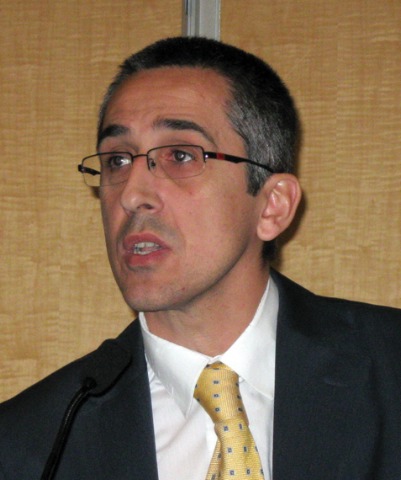
However, thrombolysis had no significant impact on survival among normotensive patients when researchers accounted for differences in troponin and the presence of right ventricular dysfunction.
"Based on these findings, we cannot recommend thrombolysis in normotensive patients without more data from randomized controlled trials. We need to better determine how to risk stratify these patients," said Dr. David Jimenez of the Ramon y Cajal Hospital and Alcala de Henares University, Madrid.
Current guidelines from the American College of Chest Physicians recommend thrombolytic therapy in addition to anticoagulation for patients with evidence of hemodynamic compromise (grade 1B evidence) and for "selected high-risk patients without hypotension who are judged to have a low risk of bleeding (grade 2B)." The guidelines advise physicians to base that decision on the severity of the pulmonary embolism (PE), the patient’s prognosis, and risk of bleeding (Chest 2008;133:454S-545S).
The current study was done to fill in the evidence gap for those recommendations, explained Dr. Jimenez, who presented the study results at an international meeting of the American Thoracic Society. He and his colleagues from Spain and the United States analyzed data from 15,944 patients with acute pulmonary embolism enrolled in the Spanish registry Registro Informatizado de la Enfermedad Tromboembólica. Thrombolytic therapy had been used in 2.7% (430) of the patients.
In general, those patients were younger, had fewer comorbid conditions, and more signs of clinical severity. In order to overcome that bias, a propensity analysis was conducted in order to match patients for those differences.
Patients were also grouped into those with systolic blood pressure less 100 mm Hg (hypotensive) and those with 100 mm Hg and higher (normotensive).
Comparing 94 propensity score–matched patients with systolic hypotension who received thrombolysis with 94 patients who did not, there was a nonsignificant trend in reduction in all-cause mortality with thrombolytic therapy, with an odds ratio of 0.72.
For two groups of 217 normotensive patients each who received or did not receive thrombolysis, there was a statistically significant increased risk of death for those receiving thrombolysis, with an odds ratio of 2.32. However, when missing troponin and echocardiogram data were added to the analysis, the effect of thrombolysis was no longer significant, with an odds ratio 1.67.
The reasons for the increased risks from thrombolysis for normotensive patients with PE aren’t entirely clear, the investigators said.
However, because the risk of dying from pulmonary embolism is low among normotensive, hemodynamically stable PE patients, those patients’ risk of dying from thrombolysis is therefore elevated by comparison and approaches that of hypotensive patients, Dr. Jimenez speculated. Only half of all patients with pulmonary embolism actually die of the embolism, he noted, while the rest die of other causes such as infections, cancer, and bleeding.
Indeed, there has only been one previous randomized clinical trial showing benefit from thrombolysis in patients with PE, Dr. Jimenez said, and that was in 10 patients with life-threatening PE (J. Thromb. Thrombolysis 1995;2:227-9).
"Thrombolysis is only useful for those who are at high risk for dying from PE," Dr. Jimenez said. "I think we have to test in a randomized, controlled trial whether thrombolysis is helpful in a subgroup of normotensive patients who have high risk due to right ventricular dysfunction and elevated troponin," Dr. Jimenez said.
Such a trial is now underway. The prospective, double-blind, placebo-controlled Pulmonary Embolism Thrombolysis Study (PEITHO) will examine the particular subgroup of normotensive patients with acute PE who have echocardiographic and laboratory evidence of right ventricular dysfunction.
The study investigators want to enroll 1,000 patients at 12 European centers, and they hope to have data by the end of 2012, said Dr. Jimenez, whose hospital is one of the study centers.
Dr. Jimenez stated that he has no financial disclosures.
DENVER – Adding thrombolytic therapy to standard anticoagulation with heparin did not significantly improve overall survival at 3 months in patients with acute symptomatic pulmonary embolism – and reduced survival rates for some normotensive patients, according to a large international retrospective cohort study.
Thrombolytic therapy as initial treatment did produce a nonsignificant trend toward survival among patients who presented with systolic hypotension, according to a subanalysis of the study data, while significantly worsening survival among normotensive patients.
However, thrombolysis had no significant impact on survival among normotensive patients when researchers accounted for differences in troponin and the presence of right ventricular dysfunction.
"Based on these findings, we cannot recommend thrombolysis in normotensive patients without more data from randomized controlled trials. We need to better determine how to risk stratify these patients," said Dr. David Jimenez of the Ramon y Cajal Hospital and Alcala de Henares University, Madrid.
Current guidelines from the American College of Chest Physicians recommend thrombolytic therapy in addition to anticoagulation for patients with evidence of hemodynamic compromise (grade 1B evidence) and for "selected high-risk patients without hypotension who are judged to have a low risk of bleeding (grade 2B)." The guidelines advise physicians to base that decision on the severity of the pulmonary embolism (PE), the patient’s prognosis, and risk of bleeding (Chest 2008;133:454S-545S).
The current study was done to fill in the evidence gap for those recommendations, explained Dr. Jimenez, who presented the study results at an international meeting of the American Thoracic Society. He and his colleagues from Spain and the United States analyzed data from 15,944 patients with acute pulmonary embolism enrolled in the Spanish registry Registro Informatizado de la Enfermedad Tromboembólica. Thrombolytic therapy had been used in 2.7% (430) of the patients.
In general, those patients were younger, had fewer comorbid conditions, and more signs of clinical severity. In order to overcome that bias, a propensity analysis was conducted in order to match patients for those differences.
Patients were also grouped into those with systolic blood pressure less 100 mm Hg (hypotensive) and those with 100 mm Hg and higher (normotensive).
Comparing 94 propensity score–matched patients with systolic hypotension who received thrombolysis with 94 patients who did not, there was a nonsignificant trend in reduction in all-cause mortality with thrombolytic therapy, with an odds ratio of 0.72.
For two groups of 217 normotensive patients each who received or did not receive thrombolysis, there was a statistically significant increased risk of death for those receiving thrombolysis, with an odds ratio of 2.32. However, when missing troponin and echocardiogram data were added to the analysis, the effect of thrombolysis was no longer significant, with an odds ratio 1.67.
The reasons for the increased risks from thrombolysis for normotensive patients with PE aren’t entirely clear, the investigators said.
However, because the risk of dying from pulmonary embolism is low among normotensive, hemodynamically stable PE patients, those patients’ risk of dying from thrombolysis is therefore elevated by comparison and approaches that of hypotensive patients, Dr. Jimenez speculated. Only half of all patients with pulmonary embolism actually die of the embolism, he noted, while the rest die of other causes such as infections, cancer, and bleeding.
Indeed, there has only been one previous randomized clinical trial showing benefit from thrombolysis in patients with PE, Dr. Jimenez said, and that was in 10 patients with life-threatening PE (J. Thromb. Thrombolysis 1995;2:227-9).
"Thrombolysis is only useful for those who are at high risk for dying from PE," Dr. Jimenez said. "I think we have to test in a randomized, controlled trial whether thrombolysis is helpful in a subgroup of normotensive patients who have high risk due to right ventricular dysfunction and elevated troponin," Dr. Jimenez said.
Such a trial is now underway. The prospective, double-blind, placebo-controlled Pulmonary Embolism Thrombolysis Study (PEITHO) will examine the particular subgroup of normotensive patients with acute PE who have echocardiographic and laboratory evidence of right ventricular dysfunction.
The study investigators want to enroll 1,000 patients at 12 European centers, and they hope to have data by the end of 2012, said Dr. Jimenez, whose hospital is one of the study centers.
Dr. Jimenez stated that he has no financial disclosures.
DENVER – Adding thrombolytic therapy to standard anticoagulation with heparin did not significantly improve overall survival at 3 months in patients with acute symptomatic pulmonary embolism – and reduced survival rates for some normotensive patients, according to a large international retrospective cohort study.
Thrombolytic therapy as initial treatment did produce a nonsignificant trend toward survival among patients who presented with systolic hypotension, according to a subanalysis of the study data, while significantly worsening survival among normotensive patients.
However, thrombolysis had no significant impact on survival among normotensive patients when researchers accounted for differences in troponin and the presence of right ventricular dysfunction.
"Based on these findings, we cannot recommend thrombolysis in normotensive patients without more data from randomized controlled trials. We need to better determine how to risk stratify these patients," said Dr. David Jimenez of the Ramon y Cajal Hospital and Alcala de Henares University, Madrid.
Current guidelines from the American College of Chest Physicians recommend thrombolytic therapy in addition to anticoagulation for patients with evidence of hemodynamic compromise (grade 1B evidence) and for "selected high-risk patients without hypotension who are judged to have a low risk of bleeding (grade 2B)." The guidelines advise physicians to base that decision on the severity of the pulmonary embolism (PE), the patient’s prognosis, and risk of bleeding (Chest 2008;133:454S-545S).
The current study was done to fill in the evidence gap for those recommendations, explained Dr. Jimenez, who presented the study results at an international meeting of the American Thoracic Society. He and his colleagues from Spain and the United States analyzed data from 15,944 patients with acute pulmonary embolism enrolled in the Spanish registry Registro Informatizado de la Enfermedad Tromboembólica. Thrombolytic therapy had been used in 2.7% (430) of the patients.
In general, those patients were younger, had fewer comorbid conditions, and more signs of clinical severity. In order to overcome that bias, a propensity analysis was conducted in order to match patients for those differences.
Patients were also grouped into those with systolic blood pressure less 100 mm Hg (hypotensive) and those with 100 mm Hg and higher (normotensive).
Comparing 94 propensity score–matched patients with systolic hypotension who received thrombolysis with 94 patients who did not, there was a nonsignificant trend in reduction in all-cause mortality with thrombolytic therapy, with an odds ratio of 0.72.
For two groups of 217 normotensive patients each who received or did not receive thrombolysis, there was a statistically significant increased risk of death for those receiving thrombolysis, with an odds ratio of 2.32. However, when missing troponin and echocardiogram data were added to the analysis, the effect of thrombolysis was no longer significant, with an odds ratio 1.67.
The reasons for the increased risks from thrombolysis for normotensive patients with PE aren’t entirely clear, the investigators said.
However, because the risk of dying from pulmonary embolism is low among normotensive, hemodynamically stable PE patients, those patients’ risk of dying from thrombolysis is therefore elevated by comparison and approaches that of hypotensive patients, Dr. Jimenez speculated. Only half of all patients with pulmonary embolism actually die of the embolism, he noted, while the rest die of other causes such as infections, cancer, and bleeding.
Indeed, there has only been one previous randomized clinical trial showing benefit from thrombolysis in patients with PE, Dr. Jimenez said, and that was in 10 patients with life-threatening PE (J. Thromb. Thrombolysis 1995;2:227-9).
"Thrombolysis is only useful for those who are at high risk for dying from PE," Dr. Jimenez said. "I think we have to test in a randomized, controlled trial whether thrombolysis is helpful in a subgroup of normotensive patients who have high risk due to right ventricular dysfunction and elevated troponin," Dr. Jimenez said.
Such a trial is now underway. The prospective, double-blind, placebo-controlled Pulmonary Embolism Thrombolysis Study (PEITHO) will examine the particular subgroup of normotensive patients with acute PE who have echocardiographic and laboratory evidence of right ventricular dysfunction.
The study investigators want to enroll 1,000 patients at 12 European centers, and they hope to have data by the end of 2012, said Dr. Jimenez, whose hospital is one of the study centers.
Dr. Jimenez stated that he has no financial disclosures.
FROM AN INTERNATIONAL CONFERENCE OF THE AMERICAN THORACIC SOCIETY
Major Finding: Among 434 normotensive patients with acute symptomatic pulmonary embolism, there was a statistically significant increased risk of death for those receiving thrombolysis, with an odds ratio of 2.32. However, when troponin and right ventricular dysfunction were added to the analysis, the effect of thrombolysis on survival was no longer significant, with an odds ratio 1.67.
Data Source: A retrospective cohort study of data from 15,944 patients with acute pulmonary embolism enrolled in a Spanish registry.
Disclosures: Dr. Jimenez stated that he has no financial disclosures.
Thrombolysis Reduced Survival in Acute PE
DENVER – Adding thrombolytic therapy to standard anticoagulation with heparin did not significantly improve overall survival at 3 months in patients with acute symptomatic pulmonary embolism – and reduced survival rates for some normotensive patients, according to a large international retrospective cohort study.
Thrombolytic therapy as initial treatment did produce a nonsignificant trend toward survival among patients who presented with systolic hypotension, according to a subanalysis of the study data, while significantly worsening survival among normotensive patients.
However, thrombolysis had no significant impact on survival among normotensive patients when researchers accounted for differences in troponin and the presence of right ventricular dysfunction.
"Based on these findings, we cannot recommend thrombolysis in normotensive patients without more data from randomized controlled trials. We need to better determine how to risk stratify these patients," said Dr. David Jimenez of the Ramon y Cajal Hospital and Alcala de Henares University, Madrid.
Current guidelines from the American College of Chest Physicians recommend thrombolytic therapy in addition to anticoagulation for patients with evidence of hemodynamic compromise (grade 1B evidence) and for "selected high-risk patients without hypotension who are judged to have a low risk of bleeding (grade 2B)." The guidelines advise physicians to base that decision on the severity of the pulmonary embolism (PE), the patient’s prognosis, and risk of bleeding (Chest 2008;133:454S-545S).
The current study was done to fill in the evidence gap for those recommendations, explained Dr. Jimenez, who presented the study results at an international meeting of the American Thoracic Society. He and his colleagues from Spain and the United States analyzed data from 15,944 patients with acute pulmonary embolism enrolled in the Spanish registry Registro Informatizado de la Enfermedad Tromboembólica. Thrombolytic therapy had been used in 2.7% (430) of the patients.
In general, those patients were younger, had fewer comorbid conditions, and more signs of clinical severity. In order to overcome that bias, a propensity analysis was conducted in order to match patients for those differences.
Patients were also grouped into those with systolic blood pressure less 100 mm Hg (hypotensive) and those with 100 mm Hg and higher (normotensive).
Comparing 94 propensity score–matched patients with systolic hypotension who received thrombolysis with 94 patients who did not, there was a nonsignificant trend in reduction in all-cause mortality with thrombolytic therapy, with an odds ratio of 0.72.
For two groups of 217 normotensive patients each who received or did not receive thrombolysis, there was a statistically significant increased risk of death for those receiving thrombolysis, with an odds ratio of 2.32. However, when missing troponin and echocardiogram data were added to the analysis, the effect of thrombolysis was no longer significant, with an odds ratio 1.67.
The reasons for the increased risks from thrombolysis for normotensive patients with PE aren’t entirely clear, the investigators said.
However, because the risk of dying from pulmonary embolism is low among normotensive, hemodynamically stable PE patients, those patients’ risk of dying from thrombolysis is therefore elevated by comparison and approaches that of hypotensive patients, Dr. Jimenez speculated. Only half of all patients with pulmonary embolism actually die of the embolism, he noted, while the rest die of other causes such as infections, cancer, and bleeding.
Indeed, there has only been one previous randomized clinical trial showing benefit from thrombolysis in patients with PE, Dr. Jimenez said, and that was in 10 patients with life-threatening PE (J. Thromb. Thrombolysis 1995;2:227-9).
"Thrombolysis is only useful for those who are at high risk for dying from PE," Dr. Jimenez said. "I think we have to test in a randomized, controlled trial whether thrombolysis is helpful in a subgroup of normotensive patients who have high risk due to right ventricular dysfunction and elevated troponin," Dr. Jimenez said.
Such a trial is now underway. The prospective, double-blind, placebo-controlled Pulmonary Embolism Thrombolysis Study (PEITHO) will examine the particular subgroup of normotensive patients with acute PE who have echocardiographic and laboratory evidence of right ventricular dysfunction.
The study investigators want to enroll 1,000 patients at 12 European centers, and they hope to have data by the end of 2012, said Dr. Jimenez, whose hospital is one of the study centers.
Dr. Jimenez stated that he has no financial disclosures.
DENVER – Adding thrombolytic therapy to standard anticoagulation with heparin did not significantly improve overall survival at 3 months in patients with acute symptomatic pulmonary embolism – and reduced survival rates for some normotensive patients, according to a large international retrospective cohort study.
Thrombolytic therapy as initial treatment did produce a nonsignificant trend toward survival among patients who presented with systolic hypotension, according to a subanalysis of the study data, while significantly worsening survival among normotensive patients.
However, thrombolysis had no significant impact on survival among normotensive patients when researchers accounted for differences in troponin and the presence of right ventricular dysfunction.
"Based on these findings, we cannot recommend thrombolysis in normotensive patients without more data from randomized controlled trials. We need to better determine how to risk stratify these patients," said Dr. David Jimenez of the Ramon y Cajal Hospital and Alcala de Henares University, Madrid.
Current guidelines from the American College of Chest Physicians recommend thrombolytic therapy in addition to anticoagulation for patients with evidence of hemodynamic compromise (grade 1B evidence) and for "selected high-risk patients without hypotension who are judged to have a low risk of bleeding (grade 2B)." The guidelines advise physicians to base that decision on the severity of the pulmonary embolism (PE), the patient’s prognosis, and risk of bleeding (Chest 2008;133:454S-545S).
The current study was done to fill in the evidence gap for those recommendations, explained Dr. Jimenez, who presented the study results at an international meeting of the American Thoracic Society. He and his colleagues from Spain and the United States analyzed data from 15,944 patients with acute pulmonary embolism enrolled in the Spanish registry Registro Informatizado de la Enfermedad Tromboembólica. Thrombolytic therapy had been used in 2.7% (430) of the patients.
In general, those patients were younger, had fewer comorbid conditions, and more signs of clinical severity. In order to overcome that bias, a propensity analysis was conducted in order to match patients for those differences.
Patients were also grouped into those with systolic blood pressure less 100 mm Hg (hypotensive) and those with 100 mm Hg and higher (normotensive).
Comparing 94 propensity score–matched patients with systolic hypotension who received thrombolysis with 94 patients who did not, there was a nonsignificant trend in reduction in all-cause mortality with thrombolytic therapy, with an odds ratio of 0.72.
For two groups of 217 normotensive patients each who received or did not receive thrombolysis, there was a statistically significant increased risk of death for those receiving thrombolysis, with an odds ratio of 2.32. However, when missing troponin and echocardiogram data were added to the analysis, the effect of thrombolysis was no longer significant, with an odds ratio 1.67.
The reasons for the increased risks from thrombolysis for normotensive patients with PE aren’t entirely clear, the investigators said.
However, because the risk of dying from pulmonary embolism is low among normotensive, hemodynamically stable PE patients, those patients’ risk of dying from thrombolysis is therefore elevated by comparison and approaches that of hypotensive patients, Dr. Jimenez speculated. Only half of all patients with pulmonary embolism actually die of the embolism, he noted, while the rest die of other causes such as infections, cancer, and bleeding.
Indeed, there has only been one previous randomized clinical trial showing benefit from thrombolysis in patients with PE, Dr. Jimenez said, and that was in 10 patients with life-threatening PE (J. Thromb. Thrombolysis 1995;2:227-9).
"Thrombolysis is only useful for those who are at high risk for dying from PE," Dr. Jimenez said. "I think we have to test in a randomized, controlled trial whether thrombolysis is helpful in a subgroup of normotensive patients who have high risk due to right ventricular dysfunction and elevated troponin," Dr. Jimenez said.
Such a trial is now underway. The prospective, double-blind, placebo-controlled Pulmonary Embolism Thrombolysis Study (PEITHO) will examine the particular subgroup of normotensive patients with acute PE who have echocardiographic and laboratory evidence of right ventricular dysfunction.
The study investigators want to enroll 1,000 patients at 12 European centers, and they hope to have data by the end of 2012, said Dr. Jimenez, whose hospital is one of the study centers.
Dr. Jimenez stated that he has no financial disclosures.
DENVER – Adding thrombolytic therapy to standard anticoagulation with heparin did not significantly improve overall survival at 3 months in patients with acute symptomatic pulmonary embolism – and reduced survival rates for some normotensive patients, according to a large international retrospective cohort study.
Thrombolytic therapy as initial treatment did produce a nonsignificant trend toward survival among patients who presented with systolic hypotension, according to a subanalysis of the study data, while significantly worsening survival among normotensive patients.
However, thrombolysis had no significant impact on survival among normotensive patients when researchers accounted for differences in troponin and the presence of right ventricular dysfunction.
"Based on these findings, we cannot recommend thrombolysis in normotensive patients without more data from randomized controlled trials. We need to better determine how to risk stratify these patients," said Dr. David Jimenez of the Ramon y Cajal Hospital and Alcala de Henares University, Madrid.
Current guidelines from the American College of Chest Physicians recommend thrombolytic therapy in addition to anticoagulation for patients with evidence of hemodynamic compromise (grade 1B evidence) and for "selected high-risk patients without hypotension who are judged to have a low risk of bleeding (grade 2B)." The guidelines advise physicians to base that decision on the severity of the pulmonary embolism (PE), the patient’s prognosis, and risk of bleeding (Chest 2008;133:454S-545S).
The current study was done to fill in the evidence gap for those recommendations, explained Dr. Jimenez, who presented the study results at an international meeting of the American Thoracic Society. He and his colleagues from Spain and the United States analyzed data from 15,944 patients with acute pulmonary embolism enrolled in the Spanish registry Registro Informatizado de la Enfermedad Tromboembólica. Thrombolytic therapy had been used in 2.7% (430) of the patients.
In general, those patients were younger, had fewer comorbid conditions, and more signs of clinical severity. In order to overcome that bias, a propensity analysis was conducted in order to match patients for those differences.
Patients were also grouped into those with systolic blood pressure less 100 mm Hg (hypotensive) and those with 100 mm Hg and higher (normotensive).
Comparing 94 propensity score–matched patients with systolic hypotension who received thrombolysis with 94 patients who did not, there was a nonsignificant trend in reduction in all-cause mortality with thrombolytic therapy, with an odds ratio of 0.72.
For two groups of 217 normotensive patients each who received or did not receive thrombolysis, there was a statistically significant increased risk of death for those receiving thrombolysis, with an odds ratio of 2.32. However, when missing troponin and echocardiogram data were added to the analysis, the effect of thrombolysis was no longer significant, with an odds ratio 1.67.
The reasons for the increased risks from thrombolysis for normotensive patients with PE aren’t entirely clear, the investigators said.
However, because the risk of dying from pulmonary embolism is low among normotensive, hemodynamically stable PE patients, those patients’ risk of dying from thrombolysis is therefore elevated by comparison and approaches that of hypotensive patients, Dr. Jimenez speculated. Only half of all patients with pulmonary embolism actually die of the embolism, he noted, while the rest die of other causes such as infections, cancer, and bleeding.
Indeed, there has only been one previous randomized clinical trial showing benefit from thrombolysis in patients with PE, Dr. Jimenez said, and that was in 10 patients with life-threatening PE (J. Thromb. Thrombolysis 1995;2:227-9).
"Thrombolysis is only useful for those who are at high risk for dying from PE," Dr. Jimenez said. "I think we have to test in a randomized, controlled trial whether thrombolysis is helpful in a subgroup of normotensive patients who have high risk due to right ventricular dysfunction and elevated troponin," Dr. Jimenez said.
Such a trial is now underway. The prospective, double-blind, placebo-controlled Pulmonary Embolism Thrombolysis Study (PEITHO) will examine the particular subgroup of normotensive patients with acute PE who have echocardiographic and laboratory evidence of right ventricular dysfunction.
The study investigators want to enroll 1,000 patients at 12 European centers, and they hope to have data by the end of 2012, said Dr. Jimenez, whose hospital is one of the study centers.
Dr. Jimenez stated that he has no financial disclosures.
FROM AN INTERNATIONAL CONFERENCE OF THE AMERICAN THORACIC SOCIETY