User login
Diet, Not Exercise Improves Diabetes Control in the Newly Diagnosed
SAN DIEGO – An intensive diet intervention soon after diagnosis improved glycemic control, but the addition of physical activity provided no additional benefit in a randomized, controlled trial of 593 adults with recently diagnosed type 2 diabetes.
"These findings suggest that intervention at this early stage should focus on improving diet, since the additional cost of training health care workers to promote activity might not be justified," Dr. Robert C. Andrews of the University of Bristol (England) and his associates said.

Previous meta-analyses of exercise and diet studies have demonstrated significant reductions in hemoglobin A1c levels (HbA1c) of 0.5 to 0.8 percentage points with aerobic and resistance exercise and by dietary intervention. However, most of the studies included were of short duration, involved small numbers of patients, and rarely included newly diagnosed type 2 diabetes patients, the investigators said.
The Early Activity in Diabetes (Early ACTID) trial randomized patients, aged 30-80 years, who had been diagnosed with type 2 diabetes in the prior 5-8 months to one of three groups: A control group of 99 patients who received usual care, including standard dietary and exercise advice after randomization and at the end of the study; an intervention group of 248 patients who received only an intensive dietary intervention aimed at achieving a 5%-10% body weight loss; another intervention group of 246 patients who received the same dietary intervention, along with a physical activity intervention.
Patients in both intervention groups saw dieticians at baseline (for 1 hour) and at 3, 6, and 9 months (for 30 minutes), along with reinforcement by nurses during 15-minute visits about once every 6 weeks. Patients in the intensive diet and physical activity group received the same dietary intervention as did those in the intensive diet group. Additionally, they were asked to do at least 30 minutes of brisk walking at least 5 days per week. Activity targets were gradually increased over 5 weeks and then were maintained for the rest of the study.
At baseline, glycemic control was good in most patients across all groups, with 68% having HbA1c below 7%, which is within the expected range in newly diagnosed patients, Dr. Andrews and his associates noted (Lancet 2011 [doi:10.1016/S0140-6736(11)60442-X]).
The primary end point was improvement in HbA1c and blood pressure at 6 months.
The intention-to-treat comparison showed no differences between the intensive diet intervention and the intensive diet intervention plus activity for any primary outcomes. Mean HbA1c concentrations were significantly lower at 6 and 12 months in patients who received either study intervention than in those who received usual care. At 12 months, HbA1c values were 6.8% for the usual care group, 6.6% for diet alone group, and 6.7% for the diet and activity group. Systolic blood pressures were nearly identical for the three groups, 133 mm Hg, 132 mm Hg, and 133 mm Hg, respectively, with no significant differences from baseline in any of the groups.
Both intervention groups had significantly greater improvements than did the control group on secondary end points such as weight, reduction in waist and hip circumference, bioimpedance, and insulin resistance. However, the difference between the intervention groups was not significant.
Improvements were also seen in both study intervention groups at 6 months in concentrations of HDL cholesterol and triglycerides, more so in the intensive diet and activity group than in the intensive diet alone group, although these values were similar between the groups at 12 months.
Use of diabetes medications did not differ between the three groups at 6 months, but participants in the usual care group were more likely to be taking a diabetes medication at 12 months. Use of antihypertensive or antihyperlipidemic drugs did not differ at 6 or 12 months among the three groups.
The intensive diet intervention plus activity seemed to yield better results for HbA1c concentration, body mass index, and insulin resistance in patients who had high baseline values than for those with low baseline values. For systolic blood pressure and, to a lesser degree, diastolic blood pressure, the diet and exercise intervention became less effective with increasing age at baseline, they said.
The exercise intervention may not have been effective because the activity undertaken might have been of insufficient intensity or been the incorrect type. The timing of the intervention may have been too early in the disease process to show additional response, as suggested by the fact that the diet plus exercise intervention worked best in patients who had high baseline HbA1c concentrations, insulin resistance, and BMI values.
The attempt to modify two behaviors simultaneously might have diluted the effect of both. "Qualitative interview results suggest that people use a trade-off system in which they reward themselves for additional exercise with increased food intake," Dr. Andrews and his associates commented.
"I found it a little surprising that there was no additional benefit of exercise, but perhaps it’s true that people didn’t adhere as well to the diet, or perhaps the diet is just so powerful in the beginning that exercise doesn’t add that much," observed Dr. Sue Kirkman, senior vice president of medical affairs and community information for the ADA.
Dr. Andrews added, "We’re not saying exercise isn’t useful. We’re saying exercise didn’t improve the parameters that we measured. There’s a lot of clear evidence that individuals who exercise have a reduced cancer rate, reduced mortality, and get other benefits from exercising like well-being. ... In this context if we want to get HbA1c better the first thing to do is concentrate on diet. We’re not saying don’t do exercise," he said in an interview.
"The Early ACTID trial shows clearly that intensive dietary support soon after the diagnosis of type 2 diabetes is beneficial. ... Our findings support the redesign of diabetes services to increase dietary management at an early stage. Because the intensive diet intervention was designed to be delivered by practice nurses with dietitian support, this approach could be translated into community-based services," they concluded.
The study was funded by Diabetes UK and the UK Department of Health. Two of the researchers reported financial relationships with companies including Bristol-Myers Squibb, GlaxoSmithKline, Medtronic, Novartis, Novo Nordisk, Sanofi-Aventis, and Eli Lilly.
Previous clinical trials have shown that increased physical activity, including brisk walking, significantly improves glycemic control among patients with preexisting diabetes. A combination of aerobic exercise and resistance training, in particular, is more beneficial than is aerobic exercise or resistance training alone.
The Early ACTID trial did not include a group assigned to physical activity only and, therefore, the results do not necessarily mean that an increase in physical activity is ineffective for diabetes management. It is possible that modification of two complex behaviors at the same time is no more effective than a change in one, that is, the need for effort in both aspects of life diminishes positive dietary changes by patients in the diet plus activity group.
Another question is whether the improvement in outcomes is clinically significant. At 6 months, diet alone improved hemoglobin A1c by 0.28% vs. 0.33% with diet and exercise, from a mean baseline value of 6.7%. The differences are slight but clinically meaningful; a decrease in HbA1c of 1% (about 11 mmol/mol) can reduce rates of major cardiovascular disease events by 12% to 16% and microvascular complications by 37%.
Moreover, diet and physical activity can exert long-term health benefits beyond improvement of metabolic markers. The reduction in HbA1c through diet and exercise in the Early ACTID study was comparable to the effect of sitagliptin and metformin among patients who had received no previous treatment for type 2 diabetes.
The long-term effects and cost-effectiveness of lifestyle-modification interventions need to be assessed. There is little doubt that improved nutrition and physical activity are beneficial for individuals with or without diabetes, and research into the most effective way to deliver these benefits, including individual behavioral changes and creation of a supportive food and social environment, deserves high priority.
Dr. Frank B Hu is with the department of nutrition and the department of epidemiology, Harvard School of Public Health, Boston. Dr. Hu disclosed that he has received grants from Merck and the California Walnut Commission, and has been paid for lectures from Nutrition Impact, Unilever, and the Institute of Food Technologists. His comments were taken from an editorial accompanying the study (Lancet 2011 [doi:10.1016/SO140-6736(11)60692-1]).
Previous clinical trials have shown that increased physical activity, including brisk walking, significantly improves glycemic control among patients with preexisting diabetes. A combination of aerobic exercise and resistance training, in particular, is more beneficial than is aerobic exercise or resistance training alone.
The Early ACTID trial did not include a group assigned to physical activity only and, therefore, the results do not necessarily mean that an increase in physical activity is ineffective for diabetes management. It is possible that modification of two complex behaviors at the same time is no more effective than a change in one, that is, the need for effort in both aspects of life diminishes positive dietary changes by patients in the diet plus activity group.
Another question is whether the improvement in outcomes is clinically significant. At 6 months, diet alone improved hemoglobin A1c by 0.28% vs. 0.33% with diet and exercise, from a mean baseline value of 6.7%. The differences are slight but clinically meaningful; a decrease in HbA1c of 1% (about 11 mmol/mol) can reduce rates of major cardiovascular disease events by 12% to 16% and microvascular complications by 37%.
Moreover, diet and physical activity can exert long-term health benefits beyond improvement of metabolic markers. The reduction in HbA1c through diet and exercise in the Early ACTID study was comparable to the effect of sitagliptin and metformin among patients who had received no previous treatment for type 2 diabetes.
The long-term effects and cost-effectiveness of lifestyle-modification interventions need to be assessed. There is little doubt that improved nutrition and physical activity are beneficial for individuals with or without diabetes, and research into the most effective way to deliver these benefits, including individual behavioral changes and creation of a supportive food and social environment, deserves high priority.
Dr. Frank B Hu is with the department of nutrition and the department of epidemiology, Harvard School of Public Health, Boston. Dr. Hu disclosed that he has received grants from Merck and the California Walnut Commission, and has been paid for lectures from Nutrition Impact, Unilever, and the Institute of Food Technologists. His comments were taken from an editorial accompanying the study (Lancet 2011 [doi:10.1016/SO140-6736(11)60692-1]).
Previous clinical trials have shown that increased physical activity, including brisk walking, significantly improves glycemic control among patients with preexisting diabetes. A combination of aerobic exercise and resistance training, in particular, is more beneficial than is aerobic exercise or resistance training alone.
The Early ACTID trial did not include a group assigned to physical activity only and, therefore, the results do not necessarily mean that an increase in physical activity is ineffective for diabetes management. It is possible that modification of two complex behaviors at the same time is no more effective than a change in one, that is, the need for effort in both aspects of life diminishes positive dietary changes by patients in the diet plus activity group.
Another question is whether the improvement in outcomes is clinically significant. At 6 months, diet alone improved hemoglobin A1c by 0.28% vs. 0.33% with diet and exercise, from a mean baseline value of 6.7%. The differences are slight but clinically meaningful; a decrease in HbA1c of 1% (about 11 mmol/mol) can reduce rates of major cardiovascular disease events by 12% to 16% and microvascular complications by 37%.
Moreover, diet and physical activity can exert long-term health benefits beyond improvement of metabolic markers. The reduction in HbA1c through diet and exercise in the Early ACTID study was comparable to the effect of sitagliptin and metformin among patients who had received no previous treatment for type 2 diabetes.
The long-term effects and cost-effectiveness of lifestyle-modification interventions need to be assessed. There is little doubt that improved nutrition and physical activity are beneficial for individuals with or without diabetes, and research into the most effective way to deliver these benefits, including individual behavioral changes and creation of a supportive food and social environment, deserves high priority.
Dr. Frank B Hu is with the department of nutrition and the department of epidemiology, Harvard School of Public Health, Boston. Dr. Hu disclosed that he has received grants from Merck and the California Walnut Commission, and has been paid for lectures from Nutrition Impact, Unilever, and the Institute of Food Technologists. His comments were taken from an editorial accompanying the study (Lancet 2011 [doi:10.1016/SO140-6736(11)60692-1]).
SAN DIEGO – An intensive diet intervention soon after diagnosis improved glycemic control, but the addition of physical activity provided no additional benefit in a randomized, controlled trial of 593 adults with recently diagnosed type 2 diabetes.
"These findings suggest that intervention at this early stage should focus on improving diet, since the additional cost of training health care workers to promote activity might not be justified," Dr. Robert C. Andrews of the University of Bristol (England) and his associates said.
Previous meta-analyses of exercise and diet studies have demonstrated significant reductions in hemoglobin A1c levels (HbA1c) of 0.5 to 0.8 percentage points with aerobic and resistance exercise and by dietary intervention. However, most of the studies included were of short duration, involved small numbers of patients, and rarely included newly diagnosed type 2 diabetes patients, the investigators said.
The Early Activity in Diabetes (Early ACTID) trial randomized patients, aged 30-80 years, who had been diagnosed with type 2 diabetes in the prior 5-8 months to one of three groups: A control group of 99 patients who received usual care, including standard dietary and exercise advice after randomization and at the end of the study; an intervention group of 248 patients who received only an intensive dietary intervention aimed at achieving a 5%-10% body weight loss; another intervention group of 246 patients who received the same dietary intervention, along with a physical activity intervention.
Patients in both intervention groups saw dieticians at baseline (for 1 hour) and at 3, 6, and 9 months (for 30 minutes), along with reinforcement by nurses during 15-minute visits about once every 6 weeks. Patients in the intensive diet and physical activity group received the same dietary intervention as did those in the intensive diet group. Additionally, they were asked to do at least 30 minutes of brisk walking at least 5 days per week. Activity targets were gradually increased over 5 weeks and then were maintained for the rest of the study.
At baseline, glycemic control was good in most patients across all groups, with 68% having HbA1c below 7%, which is within the expected range in newly diagnosed patients, Dr. Andrews and his associates noted (Lancet 2011 [doi:10.1016/S0140-6736(11)60442-X]).
The primary end point was improvement in HbA1c and blood pressure at 6 months.
The intention-to-treat comparison showed no differences between the intensive diet intervention and the intensive diet intervention plus activity for any primary outcomes. Mean HbA1c concentrations were significantly lower at 6 and 12 months in patients who received either study intervention than in those who received usual care. At 12 months, HbA1c values were 6.8% for the usual care group, 6.6% for diet alone group, and 6.7% for the diet and activity group. Systolic blood pressures were nearly identical for the three groups, 133 mm Hg, 132 mm Hg, and 133 mm Hg, respectively, with no significant differences from baseline in any of the groups.
Both intervention groups had significantly greater improvements than did the control group on secondary end points such as weight, reduction in waist and hip circumference, bioimpedance, and insulin resistance. However, the difference between the intervention groups was not significant.
Improvements were also seen in both study intervention groups at 6 months in concentrations of HDL cholesterol and triglycerides, more so in the intensive diet and activity group than in the intensive diet alone group, although these values were similar between the groups at 12 months.
Use of diabetes medications did not differ between the three groups at 6 months, but participants in the usual care group were more likely to be taking a diabetes medication at 12 months. Use of antihypertensive or antihyperlipidemic drugs did not differ at 6 or 12 months among the three groups.
The intensive diet intervention plus activity seemed to yield better results for HbA1c concentration, body mass index, and insulin resistance in patients who had high baseline values than for those with low baseline values. For systolic blood pressure and, to a lesser degree, diastolic blood pressure, the diet and exercise intervention became less effective with increasing age at baseline, they said.
The exercise intervention may not have been effective because the activity undertaken might have been of insufficient intensity or been the incorrect type. The timing of the intervention may have been too early in the disease process to show additional response, as suggested by the fact that the diet plus exercise intervention worked best in patients who had high baseline HbA1c concentrations, insulin resistance, and BMI values.
The attempt to modify two behaviors simultaneously might have diluted the effect of both. "Qualitative interview results suggest that people use a trade-off system in which they reward themselves for additional exercise with increased food intake," Dr. Andrews and his associates commented.
"I found it a little surprising that there was no additional benefit of exercise, but perhaps it’s true that people didn’t adhere as well to the diet, or perhaps the diet is just so powerful in the beginning that exercise doesn’t add that much," observed Dr. Sue Kirkman, senior vice president of medical affairs and community information for the ADA.
Dr. Andrews added, "We’re not saying exercise isn’t useful. We’re saying exercise didn’t improve the parameters that we measured. There’s a lot of clear evidence that individuals who exercise have a reduced cancer rate, reduced mortality, and get other benefits from exercising like well-being. ... In this context if we want to get HbA1c better the first thing to do is concentrate on diet. We’re not saying don’t do exercise," he said in an interview.
"The Early ACTID trial shows clearly that intensive dietary support soon after the diagnosis of type 2 diabetes is beneficial. ... Our findings support the redesign of diabetes services to increase dietary management at an early stage. Because the intensive diet intervention was designed to be delivered by practice nurses with dietitian support, this approach could be translated into community-based services," they concluded.
The study was funded by Diabetes UK and the UK Department of Health. Two of the researchers reported financial relationships with companies including Bristol-Myers Squibb, GlaxoSmithKline, Medtronic, Novartis, Novo Nordisk, Sanofi-Aventis, and Eli Lilly.
SAN DIEGO – An intensive diet intervention soon after diagnosis improved glycemic control, but the addition of physical activity provided no additional benefit in a randomized, controlled trial of 593 adults with recently diagnosed type 2 diabetes.
"These findings suggest that intervention at this early stage should focus on improving diet, since the additional cost of training health care workers to promote activity might not be justified," Dr. Robert C. Andrews of the University of Bristol (England) and his associates said.
Previous meta-analyses of exercise and diet studies have demonstrated significant reductions in hemoglobin A1c levels (HbA1c) of 0.5 to 0.8 percentage points with aerobic and resistance exercise and by dietary intervention. However, most of the studies included were of short duration, involved small numbers of patients, and rarely included newly diagnosed type 2 diabetes patients, the investigators said.
The Early Activity in Diabetes (Early ACTID) trial randomized patients, aged 30-80 years, who had been diagnosed with type 2 diabetes in the prior 5-8 months to one of three groups: A control group of 99 patients who received usual care, including standard dietary and exercise advice after randomization and at the end of the study; an intervention group of 248 patients who received only an intensive dietary intervention aimed at achieving a 5%-10% body weight loss; another intervention group of 246 patients who received the same dietary intervention, along with a physical activity intervention.
Patients in both intervention groups saw dieticians at baseline (for 1 hour) and at 3, 6, and 9 months (for 30 minutes), along with reinforcement by nurses during 15-minute visits about once every 6 weeks. Patients in the intensive diet and physical activity group received the same dietary intervention as did those in the intensive diet group. Additionally, they were asked to do at least 30 minutes of brisk walking at least 5 days per week. Activity targets were gradually increased over 5 weeks and then were maintained for the rest of the study.
At baseline, glycemic control was good in most patients across all groups, with 68% having HbA1c below 7%, which is within the expected range in newly diagnosed patients, Dr. Andrews and his associates noted (Lancet 2011 [doi:10.1016/S0140-6736(11)60442-X]).
The primary end point was improvement in HbA1c and blood pressure at 6 months.
The intention-to-treat comparison showed no differences between the intensive diet intervention and the intensive diet intervention plus activity for any primary outcomes. Mean HbA1c concentrations were significantly lower at 6 and 12 months in patients who received either study intervention than in those who received usual care. At 12 months, HbA1c values were 6.8% for the usual care group, 6.6% for diet alone group, and 6.7% for the diet and activity group. Systolic blood pressures were nearly identical for the three groups, 133 mm Hg, 132 mm Hg, and 133 mm Hg, respectively, with no significant differences from baseline in any of the groups.
Both intervention groups had significantly greater improvements than did the control group on secondary end points such as weight, reduction in waist and hip circumference, bioimpedance, and insulin resistance. However, the difference between the intervention groups was not significant.
Improvements were also seen in both study intervention groups at 6 months in concentrations of HDL cholesterol and triglycerides, more so in the intensive diet and activity group than in the intensive diet alone group, although these values were similar between the groups at 12 months.
Use of diabetes medications did not differ between the three groups at 6 months, but participants in the usual care group were more likely to be taking a diabetes medication at 12 months. Use of antihypertensive or antihyperlipidemic drugs did not differ at 6 or 12 months among the three groups.
The intensive diet intervention plus activity seemed to yield better results for HbA1c concentration, body mass index, and insulin resistance in patients who had high baseline values than for those with low baseline values. For systolic blood pressure and, to a lesser degree, diastolic blood pressure, the diet and exercise intervention became less effective with increasing age at baseline, they said.
The exercise intervention may not have been effective because the activity undertaken might have been of insufficient intensity or been the incorrect type. The timing of the intervention may have been too early in the disease process to show additional response, as suggested by the fact that the diet plus exercise intervention worked best in patients who had high baseline HbA1c concentrations, insulin resistance, and BMI values.
The attempt to modify two behaviors simultaneously might have diluted the effect of both. "Qualitative interview results suggest that people use a trade-off system in which they reward themselves for additional exercise with increased food intake," Dr. Andrews and his associates commented.
"I found it a little surprising that there was no additional benefit of exercise, but perhaps it’s true that people didn’t adhere as well to the diet, or perhaps the diet is just so powerful in the beginning that exercise doesn’t add that much," observed Dr. Sue Kirkman, senior vice president of medical affairs and community information for the ADA.
Dr. Andrews added, "We’re not saying exercise isn’t useful. We’re saying exercise didn’t improve the parameters that we measured. There’s a lot of clear evidence that individuals who exercise have a reduced cancer rate, reduced mortality, and get other benefits from exercising like well-being. ... In this context if we want to get HbA1c better the first thing to do is concentrate on diet. We’re not saying don’t do exercise," he said in an interview.
"The Early ACTID trial shows clearly that intensive dietary support soon after the diagnosis of type 2 diabetes is beneficial. ... Our findings support the redesign of diabetes services to increase dietary management at an early stage. Because the intensive diet intervention was designed to be delivered by practice nurses with dietitian support, this approach could be translated into community-based services," they concluded.
The study was funded by Diabetes UK and the UK Department of Health. Two of the researchers reported financial relationships with companies including Bristol-Myers Squibb, GlaxoSmithKline, Medtronic, Novartis, Novo Nordisk, Sanofi-Aventis, and Eli Lilly.
FROM THE ANNUAL SCIENTIFIC SESSIONS OF THE AMERICAN DIABETES ASSOCIATION
Major Finding: At 12 months, HbA1c values were 6.8% for the usual care group, 6.6% for diet alone, and 6.7% for the diet and activity group. Systolic blood pressures were nearly identical for the three groups, 133 mm Hg, 132 mm Hg, and 133 mm Hg, respectively, with no significant differences from baseline in any of the groups.
Data Source: A randomized, controlled trial of 593 adults with recently diagnosed type 2 diabetes.
Disclosures: This study was funded by Diabetes UK and the UK Department of Health. Two of the researchers reported financial relationships with companies including Bristol-Myers Squibb, GlaxoSmithKline, Medtronic, Novartis, Novo Nordisk, Sanofi-Aventis, and Lilly.
Rule Predicts Which ED Patients Need an Immediate ECG
BOSTON – A simple, validated rule based on age and presenting symptoms was highly sensitive at identifying which emergency department patients need an immediate triage 12-lead ECG to identify ST-segment elevation myocardial infarction in a study population of more than 3 million patients.
According to current guidelines from the American College of Cardiology and the American Heart Association, "ECG should be performed within 10 minutes of ED arrival for all patients with chest discomfort or other symptoms suggestive of STEMI" (Circulation 2004;110:588-636). "These are common-sense guidelines, but we often get caught up in the latter part," said Dr. Seth Glickman of the University of North Carolina at Chapel Hill, noting that about one-third of patients with STEMI do not have a complaint of chest pain.
The study data came from a statewide public health surveillance system in North Carolina comprising about 8.1 million ED visits from 2007-2008. The patients were divided into a derivation cohort in 2007 and a validation cohort in 2008. After the exclusion of those aged 18 years or younger, those with missing data, and all injury, bleeding, or pregnancy-related visits, the final data set included 1,685,633 visits in 2007 and 1,889,545 in 2008.
Of the 6,464 STEMI patients, 78% presented with chest pain. However, this varied dramatically by age. Although more than 90% of the 18- to 49-year-old group diagnosed with STEMI had chest pain, only 53% of those aged 80 years and older did. In contrast, the frequency of other chief complaints increased steadily with age, including dyspnea, syncope, weakness, abdominal pain, and altered mental status, Dr. Glickman said.
Using those factors, the investigators derived the following simplified rule: Immediate ECG is required for patients aged 30 years and older with chest pain; those aged 50 years and older with shortness of breath, altered mental status, upper extremity pain, weakness, or syncope; and patients aged 80 years and older. The rule is meant to identify those who should be prioritized for immediate ECG, not the total group of patients who may ultimately receive one, Dr. Glickman noted.
In the validation cohort, this rule was 92.7% sensitive (95% confidence interval, 91.8-93.5), was 74% specific (CI, 74.0-74.1), had a positive predictive value of 0.62% (CI, 0.60-0.64), and had a negative predictive value of 99.98% (CI, 99.98-99.98).
Regarding the 80-plus population, "clearly, there’s an opportunity to use clinical judgment in the rule. But on the flip side, I can say that the chief complaints of the advanced elderly who are diagnosed with STEMI are so across the map that it is challenging to develop a more specific rule," he said, adding that he and his associates are working on incorporating other elements into the model such as abdominal pain and nausea, which are also common complaints in very elderly patients.
In response to an audience member’s question about gender, Dr. Glickman said that they tried the rule with and without gender and it performed similarly, despite the fact that women are less likely to present with chest pain. "The real dominant factor in the model was age, which trumps gender across the entire spectrum. We thought it would be a lot easier to implement a rule that wasn’t gender-specific in the ambulance or the triage setting."
This study was funded by the American Heart Association Pharmaceutical Roundtable, the Robert Wood Johnson Foundation, the North Carolina Bio-Preparedness Collaborative, and Department of Homeland Security Office of Health Affairs. Dr. Glickman stated that he had no other personal disclosures.
The triage rule for who needs an ECG is long overdue. It addresses a question that plagues every emergency department in the country: Which of the millions of people flooding our emergency departments (EDs) need an immediate ECG? While it may appear simple to answer, to my knowledge no one has attempted to answer it scientifically. It’s easy to do one ECG, but consider the following everyday scenario: Eight people show up to your front door all at once, and an ECG takes about 3 minutes. There is a significant time pressure because of national guidelines mandating an ECG within 10 minutes. This is rigorously reviewed, and the ED is critiqued when a patient ends up having a ST-segment elevation myocardial infarction. So you really do need a rational way to decide. Furthermore, all of those ECGs must be immediately reviewed, causing frequent interruptions to the emergency physician and creating potential errors. This rule also is applicable to the many emergency medical service staff who perform prehospital ECGs. A paramedic has many actions to take and little time, so knowing who actually needs an ECG can be helpful.
Dr. Alexander T. Limkakeng Jr. is a director of acute care research, division of emergency medicine, Duke University, Durham, N.C. Dr. Limkakeng receives financial support from Roche to conduct a cardiac biomarker study and from the National Institutes of Health, for which he is a trial site investigator.
The triage rule for who needs an ECG is long overdue. It addresses a question that plagues every emergency department in the country: Which of the millions of people flooding our emergency departments (EDs) need an immediate ECG? While it may appear simple to answer, to my knowledge no one has attempted to answer it scientifically. It’s easy to do one ECG, but consider the following everyday scenario: Eight people show up to your front door all at once, and an ECG takes about 3 minutes. There is a significant time pressure because of national guidelines mandating an ECG within 10 minutes. This is rigorously reviewed, and the ED is critiqued when a patient ends up having a ST-segment elevation myocardial infarction. So you really do need a rational way to decide. Furthermore, all of those ECGs must be immediately reviewed, causing frequent interruptions to the emergency physician and creating potential errors. This rule also is applicable to the many emergency medical service staff who perform prehospital ECGs. A paramedic has many actions to take and little time, so knowing who actually needs an ECG can be helpful.
Dr. Alexander T. Limkakeng Jr. is a director of acute care research, division of emergency medicine, Duke University, Durham, N.C. Dr. Limkakeng receives financial support from Roche to conduct a cardiac biomarker study and from the National Institutes of Health, for which he is a trial site investigator.
The triage rule for who needs an ECG is long overdue. It addresses a question that plagues every emergency department in the country: Which of the millions of people flooding our emergency departments (EDs) need an immediate ECG? While it may appear simple to answer, to my knowledge no one has attempted to answer it scientifically. It’s easy to do one ECG, but consider the following everyday scenario: Eight people show up to your front door all at once, and an ECG takes about 3 minutes. There is a significant time pressure because of national guidelines mandating an ECG within 10 minutes. This is rigorously reviewed, and the ED is critiqued when a patient ends up having a ST-segment elevation myocardial infarction. So you really do need a rational way to decide. Furthermore, all of those ECGs must be immediately reviewed, causing frequent interruptions to the emergency physician and creating potential errors. This rule also is applicable to the many emergency medical service staff who perform prehospital ECGs. A paramedic has many actions to take and little time, so knowing who actually needs an ECG can be helpful.
Dr. Alexander T. Limkakeng Jr. is a director of acute care research, division of emergency medicine, Duke University, Durham, N.C. Dr. Limkakeng receives financial support from Roche to conduct a cardiac biomarker study and from the National Institutes of Health, for which he is a trial site investigator.
BOSTON – A simple, validated rule based on age and presenting symptoms was highly sensitive at identifying which emergency department patients need an immediate triage 12-lead ECG to identify ST-segment elevation myocardial infarction in a study population of more than 3 million patients.
According to current guidelines from the American College of Cardiology and the American Heart Association, "ECG should be performed within 10 minutes of ED arrival for all patients with chest discomfort or other symptoms suggestive of STEMI" (Circulation 2004;110:588-636). "These are common-sense guidelines, but we often get caught up in the latter part," said Dr. Seth Glickman of the University of North Carolina at Chapel Hill, noting that about one-third of patients with STEMI do not have a complaint of chest pain.
The study data came from a statewide public health surveillance system in North Carolina comprising about 8.1 million ED visits from 2007-2008. The patients were divided into a derivation cohort in 2007 and a validation cohort in 2008. After the exclusion of those aged 18 years or younger, those with missing data, and all injury, bleeding, or pregnancy-related visits, the final data set included 1,685,633 visits in 2007 and 1,889,545 in 2008.
Of the 6,464 STEMI patients, 78% presented with chest pain. However, this varied dramatically by age. Although more than 90% of the 18- to 49-year-old group diagnosed with STEMI had chest pain, only 53% of those aged 80 years and older did. In contrast, the frequency of other chief complaints increased steadily with age, including dyspnea, syncope, weakness, abdominal pain, and altered mental status, Dr. Glickman said.
Using those factors, the investigators derived the following simplified rule: Immediate ECG is required for patients aged 30 years and older with chest pain; those aged 50 years and older with shortness of breath, altered mental status, upper extremity pain, weakness, or syncope; and patients aged 80 years and older. The rule is meant to identify those who should be prioritized for immediate ECG, not the total group of patients who may ultimately receive one, Dr. Glickman noted.
In the validation cohort, this rule was 92.7% sensitive (95% confidence interval, 91.8-93.5), was 74% specific (CI, 74.0-74.1), had a positive predictive value of 0.62% (CI, 0.60-0.64), and had a negative predictive value of 99.98% (CI, 99.98-99.98).
Regarding the 80-plus population, "clearly, there’s an opportunity to use clinical judgment in the rule. But on the flip side, I can say that the chief complaints of the advanced elderly who are diagnosed with STEMI are so across the map that it is challenging to develop a more specific rule," he said, adding that he and his associates are working on incorporating other elements into the model such as abdominal pain and nausea, which are also common complaints in very elderly patients.
In response to an audience member’s question about gender, Dr. Glickman said that they tried the rule with and without gender and it performed similarly, despite the fact that women are less likely to present with chest pain. "The real dominant factor in the model was age, which trumps gender across the entire spectrum. We thought it would be a lot easier to implement a rule that wasn’t gender-specific in the ambulance or the triage setting."
This study was funded by the American Heart Association Pharmaceutical Roundtable, the Robert Wood Johnson Foundation, the North Carolina Bio-Preparedness Collaborative, and Department of Homeland Security Office of Health Affairs. Dr. Glickman stated that he had no other personal disclosures.
BOSTON – A simple, validated rule based on age and presenting symptoms was highly sensitive at identifying which emergency department patients need an immediate triage 12-lead ECG to identify ST-segment elevation myocardial infarction in a study population of more than 3 million patients.
According to current guidelines from the American College of Cardiology and the American Heart Association, "ECG should be performed within 10 minutes of ED arrival for all patients with chest discomfort or other symptoms suggestive of STEMI" (Circulation 2004;110:588-636). "These are common-sense guidelines, but we often get caught up in the latter part," said Dr. Seth Glickman of the University of North Carolina at Chapel Hill, noting that about one-third of patients with STEMI do not have a complaint of chest pain.
The study data came from a statewide public health surveillance system in North Carolina comprising about 8.1 million ED visits from 2007-2008. The patients were divided into a derivation cohort in 2007 and a validation cohort in 2008. After the exclusion of those aged 18 years or younger, those with missing data, and all injury, bleeding, or pregnancy-related visits, the final data set included 1,685,633 visits in 2007 and 1,889,545 in 2008.
Of the 6,464 STEMI patients, 78% presented with chest pain. However, this varied dramatically by age. Although more than 90% of the 18- to 49-year-old group diagnosed with STEMI had chest pain, only 53% of those aged 80 years and older did. In contrast, the frequency of other chief complaints increased steadily with age, including dyspnea, syncope, weakness, abdominal pain, and altered mental status, Dr. Glickman said.
Using those factors, the investigators derived the following simplified rule: Immediate ECG is required for patients aged 30 years and older with chest pain; those aged 50 years and older with shortness of breath, altered mental status, upper extremity pain, weakness, or syncope; and patients aged 80 years and older. The rule is meant to identify those who should be prioritized for immediate ECG, not the total group of patients who may ultimately receive one, Dr. Glickman noted.
In the validation cohort, this rule was 92.7% sensitive (95% confidence interval, 91.8-93.5), was 74% specific (CI, 74.0-74.1), had a positive predictive value of 0.62% (CI, 0.60-0.64), and had a negative predictive value of 99.98% (CI, 99.98-99.98).
Regarding the 80-plus population, "clearly, there’s an opportunity to use clinical judgment in the rule. But on the flip side, I can say that the chief complaints of the advanced elderly who are diagnosed with STEMI are so across the map that it is challenging to develop a more specific rule," he said, adding that he and his associates are working on incorporating other elements into the model such as abdominal pain and nausea, which are also common complaints in very elderly patients.
In response to an audience member’s question about gender, Dr. Glickman said that they tried the rule with and without gender and it performed similarly, despite the fact that women are less likely to present with chest pain. "The real dominant factor in the model was age, which trumps gender across the entire spectrum. We thought it would be a lot easier to implement a rule that wasn’t gender-specific in the ambulance or the triage setting."
This study was funded by the American Heart Association Pharmaceutical Roundtable, the Robert Wood Johnson Foundation, the North Carolina Bio-Preparedness Collaborative, and Department of Homeland Security Office of Health Affairs. Dr. Glickman stated that he had no other personal disclosures.
FROM THE ANNUAL MEETING OF THE SOCIETY FOR ACADEMIC EMERGENCY MEDICINE
Major Finding: In the validation cohort, this rule was 92.7% sensitive (95% confidence interval, 91.8-93.5), was 74% specific (CI, 74.0-74.1), had a positive predictive value of 0.62% (CI 0.60-0.64), and had a negative predictive value of 99.98% (CI, 99.98-99.98).
Data Source: A statewide public health surveillance system in North Carolina comprising about 8.1 million ED visits during 2007-2008.
Disclosures: This study was funded by the American Heart Association Pharmaceutical Roundtable, the Robert Wood Johnson Foundation, the North Carolina Bio-Preparedness Collaborative, and Department of Homeland Security Office of Health Affairs. Dr. Glickman has no other personal disclosures.
Rule Predicts Which ED Patients Need an Immediate ECG
BOSTON – A simple, validated rule based on age and presenting symptoms was highly sensitive at identifying which emergency department patients need an immediate triage 12-lead ECG to identify ST-segment elevation myocardial infarction in a study population of more than 3 million patients.
According to current guidelines from the American College of Cardiology and the American Heart Association, "ECG should be performed within 10 minutes of ED arrival for all patients with chest discomfort or other symptoms suggestive of STEMI" (Circulation 2004;110:588-636). "These are common-sense guidelines, but we often get caught up in the latter part," said Dr. Seth Glickman of the University of North Carolina at Chapel Hill, noting that about one-third of patients with STEMI do not have a complaint of chest pain.
The study data came from a statewide public health surveillance system in North Carolina comprising about 8.1 million ED visits from 2007-2008. The patients were divided into a derivation cohort in 2007 and a validation cohort in 2008. After the exclusion of those aged 18 years or younger, those with missing data, and all injury, bleeding, or pregnancy-related visits, the final data set included 1,685,633 visits in 2007 and 1,889,545 in 2008.
Of the 6,464 STEMI patients, 78% presented with chest pain. However, this varied dramatically by age. Although more than 90% of the 18- to 49-year-old group diagnosed with STEMI had chest pain, only 53% of those aged 80 years and older did. In contrast, the frequency of other chief complaints increased steadily with age, including dyspnea, syncope, weakness, abdominal pain, and altered mental status, Dr. Glickman said.
Using those factors, the investigators derived the following simplified rule: Immediate ECG is required for patients aged 30 years and older with chest pain; those aged 50 years and older with shortness of breath, altered mental status, upper extremity pain, weakness, or syncope; and patients aged 80 years and older. The rule is meant to identify those who should be prioritized for immediate ECG, not the total group of patients who may ultimately receive one, Dr. Glickman noted.
In the validation cohort, this rule was 92.7% sensitive (95% confidence interval, 91.8-93.5), was 74% specific (CI, 74.0-74.1), had a positive predictive value of 0.62% (CI, 0.60-0.64), and had a negative predictive value of 99.98% (CI, 99.98-99.98).
Regarding the 80-plus population, "clearly, there’s an opportunity to use clinical judgment in the rule. But on the flip side, I can say that the chief complaints of the advanced elderly who are diagnosed with STEMI are so across the map that it is challenging to develop a more specific rule," he said, adding that he and his associates are working on incorporating other elements into the model such as abdominal pain and nausea, which are also common complaints in very elderly patients.
In response to an audience member’s question about gender, Dr. Glickman said that they tried the rule with and without gender and it performed similarly, despite the fact that women are less likely to present with chest pain. "The real dominant factor in the model was age, which trumps gender across the entire spectrum. We thought it would be a lot easier to implement a rule that wasn’t gender-specific in the ambulance or the triage setting."
This study was funded by the American Heart Association Pharmaceutical Roundtable, the Robert Wood Johnson Foundation, the North Carolina Bio-Preparedness Collaborative, and Department of Homeland Security Office of Health Affairs. Dr. Glickman stated that he had no other personal disclosures.
The triage rule for who needs an ECG is long overdue. It addresses a question that plagues every emergency department in the country: Which of the millions of people flooding our emergency departments (EDs) need an immediate ECG? While it may appear simple to answer, to my knowledge no one has attempted to answer it scientifically. It’s easy to do one ECG, but consider the following everyday scenario: Eight people show up to your front door all at once, and an ECG takes about 3 minutes. There is a significant time pressure because of national guidelines mandating an ECG within 10 minutes. This is rigorously reviewed, and the ED is critiqued when a patient ends up having a ST-segment elevation myocardial infarction. So you really do need a rational way to decide. Furthermore, all of those ECGs must be immediately reviewed, causing frequent interruptions to the emergency physician and creating potential errors. This rule also is applicable to the many emergency medical service staff who perform prehospital ECGs. A paramedic has many actions to take and little time, so knowing who actually needs an ECG can be helpful.
Dr. Alexander T. Limkakeng Jr. is a director of acute care research, division of emergency medicine, Duke University, Durham, N.C. Dr. Limkakeng receives financial support from Roche to conduct a cardiac biomarker study and from the National Institutes of Health, for which he is a trial site investigator.
The triage rule for who needs an ECG is long overdue. It addresses a question that plagues every emergency department in the country: Which of the millions of people flooding our emergency departments (EDs) need an immediate ECG? While it may appear simple to answer, to my knowledge no one has attempted to answer it scientifically. It’s easy to do one ECG, but consider the following everyday scenario: Eight people show up to your front door all at once, and an ECG takes about 3 minutes. There is a significant time pressure because of national guidelines mandating an ECG within 10 minutes. This is rigorously reviewed, and the ED is critiqued when a patient ends up having a ST-segment elevation myocardial infarction. So you really do need a rational way to decide. Furthermore, all of those ECGs must be immediately reviewed, causing frequent interruptions to the emergency physician and creating potential errors. This rule also is applicable to the many emergency medical service staff who perform prehospital ECGs. A paramedic has many actions to take and little time, so knowing who actually needs an ECG can be helpful.
Dr. Alexander T. Limkakeng Jr. is a director of acute care research, division of emergency medicine, Duke University, Durham, N.C. Dr. Limkakeng receives financial support from Roche to conduct a cardiac biomarker study and from the National Institutes of Health, for which he is a trial site investigator.
The triage rule for who needs an ECG is long overdue. It addresses a question that plagues every emergency department in the country: Which of the millions of people flooding our emergency departments (EDs) need an immediate ECG? While it may appear simple to answer, to my knowledge no one has attempted to answer it scientifically. It’s easy to do one ECG, but consider the following everyday scenario: Eight people show up to your front door all at once, and an ECG takes about 3 minutes. There is a significant time pressure because of national guidelines mandating an ECG within 10 minutes. This is rigorously reviewed, and the ED is critiqued when a patient ends up having a ST-segment elevation myocardial infarction. So you really do need a rational way to decide. Furthermore, all of those ECGs must be immediately reviewed, causing frequent interruptions to the emergency physician and creating potential errors. This rule also is applicable to the many emergency medical service staff who perform prehospital ECGs. A paramedic has many actions to take and little time, so knowing who actually needs an ECG can be helpful.
Dr. Alexander T. Limkakeng Jr. is a director of acute care research, division of emergency medicine, Duke University, Durham, N.C. Dr. Limkakeng receives financial support from Roche to conduct a cardiac biomarker study and from the National Institutes of Health, for which he is a trial site investigator.
BOSTON – A simple, validated rule based on age and presenting symptoms was highly sensitive at identifying which emergency department patients need an immediate triage 12-lead ECG to identify ST-segment elevation myocardial infarction in a study population of more than 3 million patients.
According to current guidelines from the American College of Cardiology and the American Heart Association, "ECG should be performed within 10 minutes of ED arrival for all patients with chest discomfort or other symptoms suggestive of STEMI" (Circulation 2004;110:588-636). "These are common-sense guidelines, but we often get caught up in the latter part," said Dr. Seth Glickman of the University of North Carolina at Chapel Hill, noting that about one-third of patients with STEMI do not have a complaint of chest pain.
The study data came from a statewide public health surveillance system in North Carolina comprising about 8.1 million ED visits from 2007-2008. The patients were divided into a derivation cohort in 2007 and a validation cohort in 2008. After the exclusion of those aged 18 years or younger, those with missing data, and all injury, bleeding, or pregnancy-related visits, the final data set included 1,685,633 visits in 2007 and 1,889,545 in 2008.
Of the 6,464 STEMI patients, 78% presented with chest pain. However, this varied dramatically by age. Although more than 90% of the 18- to 49-year-old group diagnosed with STEMI had chest pain, only 53% of those aged 80 years and older did. In contrast, the frequency of other chief complaints increased steadily with age, including dyspnea, syncope, weakness, abdominal pain, and altered mental status, Dr. Glickman said.
Using those factors, the investigators derived the following simplified rule: Immediate ECG is required for patients aged 30 years and older with chest pain; those aged 50 years and older with shortness of breath, altered mental status, upper extremity pain, weakness, or syncope; and patients aged 80 years and older. The rule is meant to identify those who should be prioritized for immediate ECG, not the total group of patients who may ultimately receive one, Dr. Glickman noted.
In the validation cohort, this rule was 92.7% sensitive (95% confidence interval, 91.8-93.5), was 74% specific (CI, 74.0-74.1), had a positive predictive value of 0.62% (CI, 0.60-0.64), and had a negative predictive value of 99.98% (CI, 99.98-99.98).
Regarding the 80-plus population, "clearly, there’s an opportunity to use clinical judgment in the rule. But on the flip side, I can say that the chief complaints of the advanced elderly who are diagnosed with STEMI are so across the map that it is challenging to develop a more specific rule," he said, adding that he and his associates are working on incorporating other elements into the model such as abdominal pain and nausea, which are also common complaints in very elderly patients.
In response to an audience member’s question about gender, Dr. Glickman said that they tried the rule with and without gender and it performed similarly, despite the fact that women are less likely to present with chest pain. "The real dominant factor in the model was age, which trumps gender across the entire spectrum. We thought it would be a lot easier to implement a rule that wasn’t gender-specific in the ambulance or the triage setting."
This study was funded by the American Heart Association Pharmaceutical Roundtable, the Robert Wood Johnson Foundation, the North Carolina Bio-Preparedness Collaborative, and Department of Homeland Security Office of Health Affairs. Dr. Glickman stated that he had no other personal disclosures.
BOSTON – A simple, validated rule based on age and presenting symptoms was highly sensitive at identifying which emergency department patients need an immediate triage 12-lead ECG to identify ST-segment elevation myocardial infarction in a study population of more than 3 million patients.
According to current guidelines from the American College of Cardiology and the American Heart Association, "ECG should be performed within 10 minutes of ED arrival for all patients with chest discomfort or other symptoms suggestive of STEMI" (Circulation 2004;110:588-636). "These are common-sense guidelines, but we often get caught up in the latter part," said Dr. Seth Glickman of the University of North Carolina at Chapel Hill, noting that about one-third of patients with STEMI do not have a complaint of chest pain.
The study data came from a statewide public health surveillance system in North Carolina comprising about 8.1 million ED visits from 2007-2008. The patients were divided into a derivation cohort in 2007 and a validation cohort in 2008. After the exclusion of those aged 18 years or younger, those with missing data, and all injury, bleeding, or pregnancy-related visits, the final data set included 1,685,633 visits in 2007 and 1,889,545 in 2008.
Of the 6,464 STEMI patients, 78% presented with chest pain. However, this varied dramatically by age. Although more than 90% of the 18- to 49-year-old group diagnosed with STEMI had chest pain, only 53% of those aged 80 years and older did. In contrast, the frequency of other chief complaints increased steadily with age, including dyspnea, syncope, weakness, abdominal pain, and altered mental status, Dr. Glickman said.
Using those factors, the investigators derived the following simplified rule: Immediate ECG is required for patients aged 30 years and older with chest pain; those aged 50 years and older with shortness of breath, altered mental status, upper extremity pain, weakness, or syncope; and patients aged 80 years and older. The rule is meant to identify those who should be prioritized for immediate ECG, not the total group of patients who may ultimately receive one, Dr. Glickman noted.
In the validation cohort, this rule was 92.7% sensitive (95% confidence interval, 91.8-93.5), was 74% specific (CI, 74.0-74.1), had a positive predictive value of 0.62% (CI, 0.60-0.64), and had a negative predictive value of 99.98% (CI, 99.98-99.98).
Regarding the 80-plus population, "clearly, there’s an opportunity to use clinical judgment in the rule. But on the flip side, I can say that the chief complaints of the advanced elderly who are diagnosed with STEMI are so across the map that it is challenging to develop a more specific rule," he said, adding that he and his associates are working on incorporating other elements into the model such as abdominal pain and nausea, which are also common complaints in very elderly patients.
In response to an audience member’s question about gender, Dr. Glickman said that they tried the rule with and without gender and it performed similarly, despite the fact that women are less likely to present with chest pain. "The real dominant factor in the model was age, which trumps gender across the entire spectrum. We thought it would be a lot easier to implement a rule that wasn’t gender-specific in the ambulance or the triage setting."
This study was funded by the American Heart Association Pharmaceutical Roundtable, the Robert Wood Johnson Foundation, the North Carolina Bio-Preparedness Collaborative, and Department of Homeland Security Office of Health Affairs. Dr. Glickman stated that he had no other personal disclosures.
FROM THE ANNUAL MEETING OF THE SOCIETY FOR ACADEMIC EMERGENCY MEDICINE
Rules Identify Which Chest Pain Patients Can Be Sent Home
BOSTON – Two newly derived and validated clinical prediction rules have the potential for identifying a low-risk cohort of chest pain patients who could safely be discharged from the emergency department without extensive diagnostic evaluation.
The two different rules were both derived from prospective cohort studies of emergency department populations. One, presented at the annual meeting of the Society for Academic Emergency Medicine by Dr. Erik P. Hess of the Mayo Clinic, Rochester, Minn., enrolled 2,718 patients. The other, presented by Dr. Frank Scheuermeyer of the University of British Columbia, Vancouver, included 1,669 patients.
Dr. Hess’ study enrolled patients from two academic emergency departments in Canada and one in the United States. To be eligible, patients had to be aged 25 years or older with chest pain syndrome and cardiac troponin ordered to evaluate for acute coronary syndrome (ACS). Exclusion criteria included ST-segment elevation myocardial infarction (STEMI), hemodynamic instability, cocaine use, and unreliable clinical history. Investigators were blinded to predictor variables and patient outcomes.
The 2,718 patients had a mean age of 60 years, and 53% were men. Of this cohort, 23% had a history of MI and 33% had known coronary artery disease (CAD). A third (33%) had cardiac stress testing, 32% were admitted to the hospital, and 19% went on to have coronary angiography. At the Mayo Clinic, which has an observation unit in the ED, 48% of 1,205 patients were admitted through that unit.
The proportion with the primary adjudicated outcome – acute MI, revascularization, or death within 30 days – was 12%; 6% had acute MI, 10% underwent revascularization, and 0.2% (6 patients) died (some patients had more than one primary outcome).
On univariate analysis, factors significantly associated with 30-day cardiac events included mean age (66 years in those with events vs. 59 years for those without events), male gender (69% vs. 44%), acute MI (37% vs. 21%), known CAD (57% vs. 29%), and stroke or transient ischemic attack (8% vs. 4%). Significant univariate predictors pertaining to chest pain history included pleuritic pain (7% vs. 19%), pain similar to prior ischemia (47% vs. 21%), and pain "atypical for ACS" based on physician opinion (24% vs. 64%).
Of a total of 38 variables associated with the primary outcome and another 15 from the clinical history, a rule was derived on the basis of 5 predictive variables: age 50 years or less, known CAD, pain typical of ACS, absence of acute ischemic changes on ECG, and any cardiac troponin value greater than the 99th percentile. This rule was 100% sensitive (none of the 336 patients who went on to have events were missed; 95% confidence interval, 97.2-100) and 20.9% specific (the test was positive in 79% of the 2,382 patients who did not have an event; 95% CI, 16.9-24.9).
On the basis of these findings, the "North American Chest Pain Rule" states that patients who meet the four cardiac criteria and who are less than 40 years old can be safely discharged from the ED without urgent cardiac stress testing. Those aged 41-50 years can be dismissed if a repeat troponin test performed 6 hours from symptom onset is negative, Dr. Hess said.
In all, the prediction rule found that 18% of patients could be safely discharged: those younger than 41 years with no acute ischemia on ECG and a single negative troponin test (7%) and those aged 41-50 years with no acute ischemia and two negative troponin tests (11%). Further prospective validation is required, he said.
The other prediction rule was based on data from a single Canadian center. In a derivation cohort of 763 patients, the 30-day ACS rate (MI and unstoppable angina) was 22%, and in the validation cohort of 906 patients, 13% had ACS. The derived "Vancouver Chest Pain Rule" states that patients have a very low risk of ACS if initial ECG is nonischemic, both arrival and 2-hour troponin levels are normal, the patient has no prior ACS or nitrate use, the patient is younger than 50 years, and the patient experiences the same pain with palpation. This rule was 100% sensitive and 18% specific, Dr. Scheuermeyer reported. The validation cohort identified 118 of 119 patients with ACS, for a sensitivity of 99.2% (95% CI, 95.4-100), and 184 out of 787 patients who could be discharged, for a specificity of 23.4% (95% CI, 20.6-26.5).
Prior studies that have tried to develop ACS prediction rules have been hampered by selection bias, suboptimal methodology, and low sensitivity, he said. The Vancouver rule uses reliable clinical criteria and widely available minimally invasive tests, he added. "It preserves ED and hospital resources by rapidly discharging one-fifth of patients and does not jeopardize patient outcomes."
During the discussion period, an audience member mentioned another chest pain decision rule that was published earlier this year, based on observational data from 3,582 consecutive patients in 14 EDs in nine countries in the Asia-Pacific region. This rule uses a structured pretest probability scoring method involving the Thrombolysis in Myocardial Infarction score, electrocardiography, and a point-of-care biomarker panel of troponin, creatine kinase MB, and myoglobin (Lancet 2011;377:1077-84).
"It will be interesting to compare all these rules at some point," Dr. Scheuermeyer said.
The two SAEM conference papers were presented at a session titled "Defining the Low-Risk Cardiac Patients." In an interview, session moderator Dr. Alexander T. Limkakeng Jr. said that finding a reliable decision rule on low-risk chest pain has been called the Holy Grail of acute coronary research.
"It was exciting to see two high-quality studies done at different centers at the same session. It was especially so because both studies not merely derived but also validated rules," said Dr. Limkakeng, director of acute care research in the emergency medicine division at Duke University, Durham, N.C.
"It felt like the beginning of a paradigm shift. I sensed that for the first time, many researchers who were present now feel it really is possible to identify some chest pain patients in the ED who could be safely discharged using only history, ECG, and troponin data. Of course, further external validation is necessary, but it is exciting to see."
Dr. Hess’ study was jointly funded by an Emergency Medicine Fellow award from the American Heart Association and the Society for Academic and Emergency Medicine, the Ontario Innovation Fund, and the University of Ottawa. He had no other disclosures. Dr. Scheuermeyer had no disclosures. Dr. Limkakeng disclosed receiving financial support from Roche for a cardiac biomarker study and from the National Institutes of Health for the ProCESS trial.
BOSTON – Two newly derived and validated clinical prediction rules have the potential for identifying a low-risk cohort of chest pain patients who could safely be discharged from the emergency department without extensive diagnostic evaluation.
The two different rules were both derived from prospective cohort studies of emergency department populations. One, presented at the annual meeting of the Society for Academic Emergency Medicine by Dr. Erik P. Hess of the Mayo Clinic, Rochester, Minn., enrolled 2,718 patients. The other, presented by Dr. Frank Scheuermeyer of the University of British Columbia, Vancouver, included 1,669 patients.
Dr. Hess’ study enrolled patients from two academic emergency departments in Canada and one in the United States. To be eligible, patients had to be aged 25 years or older with chest pain syndrome and cardiac troponin ordered to evaluate for acute coronary syndrome (ACS). Exclusion criteria included ST-segment elevation myocardial infarction (STEMI), hemodynamic instability, cocaine use, and unreliable clinical history. Investigators were blinded to predictor variables and patient outcomes.
The 2,718 patients had a mean age of 60 years, and 53% were men. Of this cohort, 23% had a history of MI and 33% had known coronary artery disease (CAD). A third (33%) had cardiac stress testing, 32% were admitted to the hospital, and 19% went on to have coronary angiography. At the Mayo Clinic, which has an observation unit in the ED, 48% of 1,205 patients were admitted through that unit.
The proportion with the primary adjudicated outcome – acute MI, revascularization, or death within 30 days – was 12%; 6% had acute MI, 10% underwent revascularization, and 0.2% (6 patients) died (some patients had more than one primary outcome).
On univariate analysis, factors significantly associated with 30-day cardiac events included mean age (66 years in those with events vs. 59 years for those without events), male gender (69% vs. 44%), acute MI (37% vs. 21%), known CAD (57% vs. 29%), and stroke or transient ischemic attack (8% vs. 4%). Significant univariate predictors pertaining to chest pain history included pleuritic pain (7% vs. 19%), pain similar to prior ischemia (47% vs. 21%), and pain "atypical for ACS" based on physician opinion (24% vs. 64%).
Of a total of 38 variables associated with the primary outcome and another 15 from the clinical history, a rule was derived on the basis of 5 predictive variables: age 50 years or less, known CAD, pain typical of ACS, absence of acute ischemic changes on ECG, and any cardiac troponin value greater than the 99th percentile. This rule was 100% sensitive (none of the 336 patients who went on to have events were missed; 95% confidence interval, 97.2-100) and 20.9% specific (the test was positive in 79% of the 2,382 patients who did not have an event; 95% CI, 16.9-24.9).
On the basis of these findings, the "North American Chest Pain Rule" states that patients who meet the four cardiac criteria and who are less than 40 years old can be safely discharged from the ED without urgent cardiac stress testing. Those aged 41-50 years can be dismissed if a repeat troponin test performed 6 hours from symptom onset is negative, Dr. Hess said.
In all, the prediction rule found that 18% of patients could be safely discharged: those younger than 41 years with no acute ischemia on ECG and a single negative troponin test (7%) and those aged 41-50 years with no acute ischemia and two negative troponin tests (11%). Further prospective validation is required, he said.
The other prediction rule was based on data from a single Canadian center. In a derivation cohort of 763 patients, the 30-day ACS rate (MI and unstoppable angina) was 22%, and in the validation cohort of 906 patients, 13% had ACS. The derived "Vancouver Chest Pain Rule" states that patients have a very low risk of ACS if initial ECG is nonischemic, both arrival and 2-hour troponin levels are normal, the patient has no prior ACS or nitrate use, the patient is younger than 50 years, and the patient experiences the same pain with palpation. This rule was 100% sensitive and 18% specific, Dr. Scheuermeyer reported. The validation cohort identified 118 of 119 patients with ACS, for a sensitivity of 99.2% (95% CI, 95.4-100), and 184 out of 787 patients who could be discharged, for a specificity of 23.4% (95% CI, 20.6-26.5).
Prior studies that have tried to develop ACS prediction rules have been hampered by selection bias, suboptimal methodology, and low sensitivity, he said. The Vancouver rule uses reliable clinical criteria and widely available minimally invasive tests, he added. "It preserves ED and hospital resources by rapidly discharging one-fifth of patients and does not jeopardize patient outcomes."
During the discussion period, an audience member mentioned another chest pain decision rule that was published earlier this year, based on observational data from 3,582 consecutive patients in 14 EDs in nine countries in the Asia-Pacific region. This rule uses a structured pretest probability scoring method involving the Thrombolysis in Myocardial Infarction score, electrocardiography, and a point-of-care biomarker panel of troponin, creatine kinase MB, and myoglobin (Lancet 2011;377:1077-84).
"It will be interesting to compare all these rules at some point," Dr. Scheuermeyer said.
The two SAEM conference papers were presented at a session titled "Defining the Low-Risk Cardiac Patients." In an interview, session moderator Dr. Alexander T. Limkakeng Jr. said that finding a reliable decision rule on low-risk chest pain has been called the Holy Grail of acute coronary research.
"It was exciting to see two high-quality studies done at different centers at the same session. It was especially so because both studies not merely derived but also validated rules," said Dr. Limkakeng, director of acute care research in the emergency medicine division at Duke University, Durham, N.C.
"It felt like the beginning of a paradigm shift. I sensed that for the first time, many researchers who were present now feel it really is possible to identify some chest pain patients in the ED who could be safely discharged using only history, ECG, and troponin data. Of course, further external validation is necessary, but it is exciting to see."
Dr. Hess’ study was jointly funded by an Emergency Medicine Fellow award from the American Heart Association and the Society for Academic and Emergency Medicine, the Ontario Innovation Fund, and the University of Ottawa. He had no other disclosures. Dr. Scheuermeyer had no disclosures. Dr. Limkakeng disclosed receiving financial support from Roche for a cardiac biomarker study and from the National Institutes of Health for the ProCESS trial.
BOSTON – Two newly derived and validated clinical prediction rules have the potential for identifying a low-risk cohort of chest pain patients who could safely be discharged from the emergency department without extensive diagnostic evaluation.
The two different rules were both derived from prospective cohort studies of emergency department populations. One, presented at the annual meeting of the Society for Academic Emergency Medicine by Dr. Erik P. Hess of the Mayo Clinic, Rochester, Minn., enrolled 2,718 patients. The other, presented by Dr. Frank Scheuermeyer of the University of British Columbia, Vancouver, included 1,669 patients.
Dr. Hess’ study enrolled patients from two academic emergency departments in Canada and one in the United States. To be eligible, patients had to be aged 25 years or older with chest pain syndrome and cardiac troponin ordered to evaluate for acute coronary syndrome (ACS). Exclusion criteria included ST-segment elevation myocardial infarction (STEMI), hemodynamic instability, cocaine use, and unreliable clinical history. Investigators were blinded to predictor variables and patient outcomes.
The 2,718 patients had a mean age of 60 years, and 53% were men. Of this cohort, 23% had a history of MI and 33% had known coronary artery disease (CAD). A third (33%) had cardiac stress testing, 32% were admitted to the hospital, and 19% went on to have coronary angiography. At the Mayo Clinic, which has an observation unit in the ED, 48% of 1,205 patients were admitted through that unit.
The proportion with the primary adjudicated outcome – acute MI, revascularization, or death within 30 days – was 12%; 6% had acute MI, 10% underwent revascularization, and 0.2% (6 patients) died (some patients had more than one primary outcome).
On univariate analysis, factors significantly associated with 30-day cardiac events included mean age (66 years in those with events vs. 59 years for those without events), male gender (69% vs. 44%), acute MI (37% vs. 21%), known CAD (57% vs. 29%), and stroke or transient ischemic attack (8% vs. 4%). Significant univariate predictors pertaining to chest pain history included pleuritic pain (7% vs. 19%), pain similar to prior ischemia (47% vs. 21%), and pain "atypical for ACS" based on physician opinion (24% vs. 64%).
Of a total of 38 variables associated with the primary outcome and another 15 from the clinical history, a rule was derived on the basis of 5 predictive variables: age 50 years or less, known CAD, pain typical of ACS, absence of acute ischemic changes on ECG, and any cardiac troponin value greater than the 99th percentile. This rule was 100% sensitive (none of the 336 patients who went on to have events were missed; 95% confidence interval, 97.2-100) and 20.9% specific (the test was positive in 79% of the 2,382 patients who did not have an event; 95% CI, 16.9-24.9).
On the basis of these findings, the "North American Chest Pain Rule" states that patients who meet the four cardiac criteria and who are less than 40 years old can be safely discharged from the ED without urgent cardiac stress testing. Those aged 41-50 years can be dismissed if a repeat troponin test performed 6 hours from symptom onset is negative, Dr. Hess said.
In all, the prediction rule found that 18% of patients could be safely discharged: those younger than 41 years with no acute ischemia on ECG and a single negative troponin test (7%) and those aged 41-50 years with no acute ischemia and two negative troponin tests (11%). Further prospective validation is required, he said.
The other prediction rule was based on data from a single Canadian center. In a derivation cohort of 763 patients, the 30-day ACS rate (MI and unstoppable angina) was 22%, and in the validation cohort of 906 patients, 13% had ACS. The derived "Vancouver Chest Pain Rule" states that patients have a very low risk of ACS if initial ECG is nonischemic, both arrival and 2-hour troponin levels are normal, the patient has no prior ACS or nitrate use, the patient is younger than 50 years, and the patient experiences the same pain with palpation. This rule was 100% sensitive and 18% specific, Dr. Scheuermeyer reported. The validation cohort identified 118 of 119 patients with ACS, for a sensitivity of 99.2% (95% CI, 95.4-100), and 184 out of 787 patients who could be discharged, for a specificity of 23.4% (95% CI, 20.6-26.5).
Prior studies that have tried to develop ACS prediction rules have been hampered by selection bias, suboptimal methodology, and low sensitivity, he said. The Vancouver rule uses reliable clinical criteria and widely available minimally invasive tests, he added. "It preserves ED and hospital resources by rapidly discharging one-fifth of patients and does not jeopardize patient outcomes."
During the discussion period, an audience member mentioned another chest pain decision rule that was published earlier this year, based on observational data from 3,582 consecutive patients in 14 EDs in nine countries in the Asia-Pacific region. This rule uses a structured pretest probability scoring method involving the Thrombolysis in Myocardial Infarction score, electrocardiography, and a point-of-care biomarker panel of troponin, creatine kinase MB, and myoglobin (Lancet 2011;377:1077-84).
"It will be interesting to compare all these rules at some point," Dr. Scheuermeyer said.
The two SAEM conference papers were presented at a session titled "Defining the Low-Risk Cardiac Patients." In an interview, session moderator Dr. Alexander T. Limkakeng Jr. said that finding a reliable decision rule on low-risk chest pain has been called the Holy Grail of acute coronary research.
"It was exciting to see two high-quality studies done at different centers at the same session. It was especially so because both studies not merely derived but also validated rules," said Dr. Limkakeng, director of acute care research in the emergency medicine division at Duke University, Durham, N.C.
"It felt like the beginning of a paradigm shift. I sensed that for the first time, many researchers who were present now feel it really is possible to identify some chest pain patients in the ED who could be safely discharged using only history, ECG, and troponin data. Of course, further external validation is necessary, but it is exciting to see."
Dr. Hess’ study was jointly funded by an Emergency Medicine Fellow award from the American Heart Association and the Society for Academic and Emergency Medicine, the Ontario Innovation Fund, and the University of Ottawa. He had no other disclosures. Dr. Scheuermeyer had no disclosures. Dr. Limkakeng disclosed receiving financial support from Roche for a cardiac biomarker study and from the National Institutes of Health for the ProCESS trial.
FROM THE ANNUAL MEETING OF THE SOCIETY FOR ACADEMIC EMERGENCY MEDICINE
Rules Identify Which Chest Pain Patients Can Be Sent Home
BOSTON – Two newly derived and validated clinical prediction rules have the potential for identifying a low-risk cohort of chest pain patients who could safely be discharged from the emergency department without extensive diagnostic evaluation.
The two different rules were both derived from prospective cohort studies of emergency department populations. One, presented at the annual meeting of the Society for Academic Emergency Medicine by Dr. Erik P. Hess of the Mayo Clinic, Rochester, Minn., enrolled 2,718 patients. The other, presented by Dr. Frank Scheuermeyer of the University of British Columbia, Vancouver, included 1,669 patients.
Dr. Hess’ study enrolled patients from two academic emergency departments in Canada and one in the United States. To be eligible, patients had to be aged 25 years or older with chest pain syndrome and cardiac troponin ordered to evaluate for acute coronary syndrome (ACS). Exclusion criteria included ST-segment elevation myocardial infarction (STEMI), hemodynamic instability, cocaine use, and unreliable clinical history. Investigators were blinded to predictor variables and patient outcomes.
The 2,718 patients had a mean age of 60 years, and 53% were men. Of this cohort, 23% had a history of MI and 33% had known coronary artery disease (CAD). A third (33%) had cardiac stress testing, 32% were admitted to the hospital, and 19% went on to have coronary angiography. At the Mayo Clinic, which has an observation unit in the ED, 48% of 1,205 patients were admitted through that unit.
The proportion with the primary adjudicated outcome – acute MI, revascularization, or death within 30 days – was 12%; 6% had acute MI, 10% underwent revascularization, and 0.2% (6 patients) died (some patients had more than one primary outcome).
On univariate analysis, factors significantly associated with 30-day cardiac events included mean age (66 years in those with events vs. 59 years for those without events), male gender (69% vs. 44%), acute MI (37% vs. 21%), known CAD (57% vs. 29%), and stroke or transient ischemic attack (8% vs. 4%). Significant univariate predictors pertaining to chest pain history included pleuritic pain (7% vs. 19%), pain similar to prior ischemia (47% vs. 21%), and pain "atypical for ACS" based on physician opinion (24% vs. 64%).
Of a total of 38 variables associated with the primary outcome and another 15 from the clinical history, a rule was derived on the basis of 5 predictive variables: age 50 years or less, known CAD, pain typical of ACS, absence of acute ischemic changes on ECG, and any cardiac troponin value greater than the 99th percentile. This rule was 100% sensitive (none of the 336 patients who went on to have events were missed; 95% confidence interval, 97.2-100) and 20.9% specific (the test was positive in 79% of the 2,382 patients who did not have an event; 95% CI, 16.9-24.9).
On the basis of these findings, the "North American Chest Pain Rule" states that patients who meet the four cardiac criteria and who are less than 40 years old can be safely discharged from the ED without urgent cardiac stress testing. Those aged 41-50 years can be dismissed if a repeat troponin test performed 6 hours from symptom onset is negative, Dr. Hess said.
In all, the prediction rule found that 18% of patients could be safely discharged: those younger than 41 years with no acute ischemia on ECG and a single negative troponin test (7%) and those aged 41-50 years with no acute ischemia and two negative troponin tests (11%). Further prospective validation is required, he said.
The other prediction rule was based on data from a single Canadian center. In a derivation cohort of 763 patients, the 30-day ACS rate (MI and unstoppable angina) was 22%, and in the validation cohort of 906 patients, 13% had ACS. The derived "Vancouver Chest Pain Rule" states that patients have a very low risk of ACS if initial ECG is nonischemic, both arrival and 2-hour troponin levels are normal, the patient has no prior ACS or nitrate use, the patient is younger than 50 years, and the patient experiences the same pain with palpation. This rule was 100% sensitive and 18% specific, Dr. Scheuermeyer reported. The validation cohort identified 118 of 119 patients with ACS, for a sensitivity of 99.2% (95% CI, 95.4-100), and 184 out of 787 patients who could be discharged, for a specificity of 23.4% (95% CI, 20.6-26.5).
Prior studies that have tried to develop ACS prediction rules have been hampered by selection bias, suboptimal methodology, and low sensitivity, he said. The Vancouver rule uses reliable clinical criteria and widely available minimally invasive tests, he added. "It preserves ED and hospital resources by rapidly discharging one-fifth of patients and does not jeopardize patient outcomes."
During the discussion period, an audience member mentioned another chest pain decision rule that was published earlier this year, based on observational data from 3,582 consecutive patients in 14 EDs in nine countries in the Asia-Pacific region. This rule uses a structured pretest probability scoring method involving the Thrombolysis in Myocardial Infarction score, electrocardiography, and a point-of-care biomarker panel of troponin, creatine kinase MB, and myoglobin (Lancet 2011;377:1077-84).
"It will be interesting to compare all these rules at some point," Dr. Scheuermeyer said.
The two SAEM conference papers were presented at a session titled "Defining the Low-Risk Cardiac Patients." In an interview, session moderator Dr. Alexander T. Limkakeng Jr. said that finding a reliable decision rule on low-risk chest pain has been called the Holy Grail of acute coronary research.
"It was exciting to see two high-quality studies done at different centers at the same session. It was especially so because both studies not merely derived but also validated rules," said Dr. Limkakeng, director of acute care research in the emergency medicine division at Duke University, Durham, N.C.
"It felt like the beginning of a paradigm shift. I sensed that for the first time, many researchers who were present now feel it really is possible to identify some chest pain patients in the ED who could be safely discharged using only history, ECG, and troponin data. Of course, further external validation is necessary, but it is exciting to see."
Dr. Hess’ study was jointly funded by an Emergency Medicine Fellow award from the American Heart Association and the Society for Academic and Emergency Medicine, the Ontario Innovation Fund, and the University of Ottawa. He had no other disclosures. Dr. Scheuermeyer had no disclosures. Dr. Limkakeng disclosed receiving financial support from Roche for a cardiac biomarker study and from the National Institutes of Health for the ProCESS trial.
BOSTON – Two newly derived and validated clinical prediction rules have the potential for identifying a low-risk cohort of chest pain patients who could safely be discharged from the emergency department without extensive diagnostic evaluation.
The two different rules were both derived from prospective cohort studies of emergency department populations. One, presented at the annual meeting of the Society for Academic Emergency Medicine by Dr. Erik P. Hess of the Mayo Clinic, Rochester, Minn., enrolled 2,718 patients. The other, presented by Dr. Frank Scheuermeyer of the University of British Columbia, Vancouver, included 1,669 patients.
Dr. Hess’ study enrolled patients from two academic emergency departments in Canada and one in the United States. To be eligible, patients had to be aged 25 years or older with chest pain syndrome and cardiac troponin ordered to evaluate for acute coronary syndrome (ACS). Exclusion criteria included ST-segment elevation myocardial infarction (STEMI), hemodynamic instability, cocaine use, and unreliable clinical history. Investigators were blinded to predictor variables and patient outcomes.
The 2,718 patients had a mean age of 60 years, and 53% were men. Of this cohort, 23% had a history of MI and 33% had known coronary artery disease (CAD). A third (33%) had cardiac stress testing, 32% were admitted to the hospital, and 19% went on to have coronary angiography. At the Mayo Clinic, which has an observation unit in the ED, 48% of 1,205 patients were admitted through that unit.
The proportion with the primary adjudicated outcome – acute MI, revascularization, or death within 30 days – was 12%; 6% had acute MI, 10% underwent revascularization, and 0.2% (6 patients) died (some patients had more than one primary outcome).
On univariate analysis, factors significantly associated with 30-day cardiac events included mean age (66 years in those with events vs. 59 years for those without events), male gender (69% vs. 44%), acute MI (37% vs. 21%), known CAD (57% vs. 29%), and stroke or transient ischemic attack (8% vs. 4%). Significant univariate predictors pertaining to chest pain history included pleuritic pain (7% vs. 19%), pain similar to prior ischemia (47% vs. 21%), and pain "atypical for ACS" based on physician opinion (24% vs. 64%).
Of a total of 38 variables associated with the primary outcome and another 15 from the clinical history, a rule was derived on the basis of 5 predictive variables: age 50 years or less, known CAD, pain typical of ACS, absence of acute ischemic changes on ECG, and any cardiac troponin value greater than the 99th percentile. This rule was 100% sensitive (none of the 336 patients who went on to have events were missed; 95% confidence interval, 97.2-100) and 20.9% specific (the test was positive in 79% of the 2,382 patients who did not have an event; 95% CI, 16.9-24.9).
On the basis of these findings, the "North American Chest Pain Rule" states that patients who meet the four cardiac criteria and who are less than 40 years old can be safely discharged from the ED without urgent cardiac stress testing. Those aged 41-50 years can be dismissed if a repeat troponin test performed 6 hours from symptom onset is negative, Dr. Hess said.
In all, the prediction rule found that 18% of patients could be safely discharged: those younger than 41 years with no acute ischemia on ECG and a single negative troponin test (7%) and those aged 41-50 years with no acute ischemia and two negative troponin tests (11%). Further prospective validation is required, he said.
The other prediction rule was based on data from a single Canadian center. In a derivation cohort of 763 patients, the 30-day ACS rate (MI and unstoppable angina) was 22%, and in the validation cohort of 906 patients, 13% had ACS. The derived "Vancouver Chest Pain Rule" states that patients have a very low risk of ACS if initial ECG is nonischemic, both arrival and 2-hour troponin levels are normal, the patient has no prior ACS or nitrate use, the patient is younger than 50 years, and the patient experiences the same pain with palpation. This rule was 100% sensitive and 18% specific, Dr. Scheuermeyer reported. The validation cohort identified 118 of 119 patients with ACS, for a sensitivity of 99.2% (95% CI, 95.4-100), and 184 out of 787 patients who could be discharged, for a specificity of 23.4% (95% CI, 20.6-26.5).
Prior studies that have tried to develop ACS prediction rules have been hampered by selection bias, suboptimal methodology, and low sensitivity, he said. The Vancouver rule uses reliable clinical criteria and widely available minimally invasive tests, he added. "It preserves ED and hospital resources by rapidly discharging one-fifth of patients and does not jeopardize patient outcomes."
During the discussion period, an audience member mentioned another chest pain decision rule that was published earlier this year, based on observational data from 3,582 consecutive patients in 14 EDs in nine countries in the Asia-Pacific region. This rule uses a structured pretest probability scoring method involving the Thrombolysis in Myocardial Infarction score, electrocardiography, and a point-of-care biomarker panel of troponin, creatine kinase MB, and myoglobin (Lancet 2011;377:1077-84).
"It will be interesting to compare all these rules at some point," Dr. Scheuermeyer said.
The two SAEM conference papers were presented at a session titled "Defining the Low-Risk Cardiac Patients." In an interview, session moderator Dr. Alexander T. Limkakeng Jr. said that finding a reliable decision rule on low-risk chest pain has been called the Holy Grail of acute coronary research.
"It was exciting to see two high-quality studies done at different centers at the same session. It was especially so because both studies not merely derived but also validated rules," said Dr. Limkakeng, director of acute care research in the emergency medicine division at Duke University, Durham, N.C.
"It felt like the beginning of a paradigm shift. I sensed that for the first time, many researchers who were present now feel it really is possible to identify some chest pain patients in the ED who could be safely discharged using only history, ECG, and troponin data. Of course, further external validation is necessary, but it is exciting to see."
Dr. Hess’ study was jointly funded by an Emergency Medicine Fellow award from the American Heart Association and the Society for Academic and Emergency Medicine, the Ontario Innovation Fund, and the University of Ottawa. He had no other disclosures. Dr. Scheuermeyer had no disclosures. Dr. Limkakeng disclosed receiving financial support from Roche for a cardiac biomarker study and from the National Institutes of Health for the ProCESS trial.
BOSTON – Two newly derived and validated clinical prediction rules have the potential for identifying a low-risk cohort of chest pain patients who could safely be discharged from the emergency department without extensive diagnostic evaluation.
The two different rules were both derived from prospective cohort studies of emergency department populations. One, presented at the annual meeting of the Society for Academic Emergency Medicine by Dr. Erik P. Hess of the Mayo Clinic, Rochester, Minn., enrolled 2,718 patients. The other, presented by Dr. Frank Scheuermeyer of the University of British Columbia, Vancouver, included 1,669 patients.
Dr. Hess’ study enrolled patients from two academic emergency departments in Canada and one in the United States. To be eligible, patients had to be aged 25 years or older with chest pain syndrome and cardiac troponin ordered to evaluate for acute coronary syndrome (ACS). Exclusion criteria included ST-segment elevation myocardial infarction (STEMI), hemodynamic instability, cocaine use, and unreliable clinical history. Investigators were blinded to predictor variables and patient outcomes.
The 2,718 patients had a mean age of 60 years, and 53% were men. Of this cohort, 23% had a history of MI and 33% had known coronary artery disease (CAD). A third (33%) had cardiac stress testing, 32% were admitted to the hospital, and 19% went on to have coronary angiography. At the Mayo Clinic, which has an observation unit in the ED, 48% of 1,205 patients were admitted through that unit.
The proportion with the primary adjudicated outcome – acute MI, revascularization, or death within 30 days – was 12%; 6% had acute MI, 10% underwent revascularization, and 0.2% (6 patients) died (some patients had more than one primary outcome).
On univariate analysis, factors significantly associated with 30-day cardiac events included mean age (66 years in those with events vs. 59 years for those without events), male gender (69% vs. 44%), acute MI (37% vs. 21%), known CAD (57% vs. 29%), and stroke or transient ischemic attack (8% vs. 4%). Significant univariate predictors pertaining to chest pain history included pleuritic pain (7% vs. 19%), pain similar to prior ischemia (47% vs. 21%), and pain "atypical for ACS" based on physician opinion (24% vs. 64%).
Of a total of 38 variables associated with the primary outcome and another 15 from the clinical history, a rule was derived on the basis of 5 predictive variables: age 50 years or less, known CAD, pain typical of ACS, absence of acute ischemic changes on ECG, and any cardiac troponin value greater than the 99th percentile. This rule was 100% sensitive (none of the 336 patients who went on to have events were missed; 95% confidence interval, 97.2-100) and 20.9% specific (the test was positive in 79% of the 2,382 patients who did not have an event; 95% CI, 16.9-24.9).
On the basis of these findings, the "North American Chest Pain Rule" states that patients who meet the four cardiac criteria and who are less than 40 years old can be safely discharged from the ED without urgent cardiac stress testing. Those aged 41-50 years can be dismissed if a repeat troponin test performed 6 hours from symptom onset is negative, Dr. Hess said.
In all, the prediction rule found that 18% of patients could be safely discharged: those younger than 41 years with no acute ischemia on ECG and a single negative troponin test (7%) and those aged 41-50 years with no acute ischemia and two negative troponin tests (11%). Further prospective validation is required, he said.
The other prediction rule was based on data from a single Canadian center. In a derivation cohort of 763 patients, the 30-day ACS rate (MI and unstoppable angina) was 22%, and in the validation cohort of 906 patients, 13% had ACS. The derived "Vancouver Chest Pain Rule" states that patients have a very low risk of ACS if initial ECG is nonischemic, both arrival and 2-hour troponin levels are normal, the patient has no prior ACS or nitrate use, the patient is younger than 50 years, and the patient experiences the same pain with palpation. This rule was 100% sensitive and 18% specific, Dr. Scheuermeyer reported. The validation cohort identified 118 of 119 patients with ACS, for a sensitivity of 99.2% (95% CI, 95.4-100), and 184 out of 787 patients who could be discharged, for a specificity of 23.4% (95% CI, 20.6-26.5).
Prior studies that have tried to develop ACS prediction rules have been hampered by selection bias, suboptimal methodology, and low sensitivity, he said. The Vancouver rule uses reliable clinical criteria and widely available minimally invasive tests, he added. "It preserves ED and hospital resources by rapidly discharging one-fifth of patients and does not jeopardize patient outcomes."
During the discussion period, an audience member mentioned another chest pain decision rule that was published earlier this year, based on observational data from 3,582 consecutive patients in 14 EDs in nine countries in the Asia-Pacific region. This rule uses a structured pretest probability scoring method involving the Thrombolysis in Myocardial Infarction score, electrocardiography, and a point-of-care biomarker panel of troponin, creatine kinase MB, and myoglobin (Lancet 2011;377:1077-84).
"It will be interesting to compare all these rules at some point," Dr. Scheuermeyer said.
The two SAEM conference papers were presented at a session titled "Defining the Low-Risk Cardiac Patients." In an interview, session moderator Dr. Alexander T. Limkakeng Jr. said that finding a reliable decision rule on low-risk chest pain has been called the Holy Grail of acute coronary research.
"It was exciting to see two high-quality studies done at different centers at the same session. It was especially so because both studies not merely derived but also validated rules," said Dr. Limkakeng, director of acute care research in the emergency medicine division at Duke University, Durham, N.C.
"It felt like the beginning of a paradigm shift. I sensed that for the first time, many researchers who were present now feel it really is possible to identify some chest pain patients in the ED who could be safely discharged using only history, ECG, and troponin data. Of course, further external validation is necessary, but it is exciting to see."
Dr. Hess’ study was jointly funded by an Emergency Medicine Fellow award from the American Heart Association and the Society for Academic and Emergency Medicine, the Ontario Innovation Fund, and the University of Ottawa. He had no other disclosures. Dr. Scheuermeyer had no disclosures. Dr. Limkakeng disclosed receiving financial support from Roche for a cardiac biomarker study and from the National Institutes of Health for the ProCESS trial.
FROM THE ANNUAL MEETING OF THE SOCIETY FOR ACADEMIC EMERGENCY MEDICINE
Major Finding: The North American Chest Pain Rule was 100% sensitive and 20.9% specific. The Vancouver Chest Pain Rule was 99.2% sensitive and 23.4% specific.
Data Source: Two prospective cohort studies of emergency department populations, involving a total of 4,387 patients.
Disclosures: Dr. Hess’ study was jointly funded by an Emergency Medicine Fellow award from the American Heart Association and the Society for Academic and Emergency Medicine, the Ontario Innovation Fund, and the University of Ottawa. He had no other disclosures. Dr. Scheuermeyer had no disclosures. Dr. Limkakeng disclosed receiving financial support from Roche for a cardiac biomarker study and from the National Institutes of Health for the ProCESS trial.
FDA Issues Draft Guidance on Artificial Pancreas Component
The U.S. Food and Drug Administration issued draft guidance for manufacturers regarding the development of Low Glucose Suspend components of an artificial pancreas system on June 20.
An artificial pancreas system, under development, is an automated, closed-loop system that combines a continuous glucose monitor (CGM), an insulin infusion pump, and a glucose meter for calibrating the monitor. The devices would work together, monitoring blood glucose levels and automatically infusing appropriate doses of insulin as determined by a computer algorithm. The Low Glucose Suspend (LGS) system is the component that would respond to sensor readings of low or rapidly declining blood glucose levels by temporarily reducing or shutting down the delivery of insulin in order to avoid or mitigate hypoglycemia.
An LGS feature has been incorporated into Medtronic’s Paradigm Veo insulin pump/CGM system, which is currently available in about 45 countries around the world in Europe, Central and South America, Canada, South Africa, and Australia.
The draft guidance provides recommendations for companies planning to develop and submit an Investigational Devices Exemption or marketing application to the FDA for an LGS system intended for single patient use in the home environment. The guidance discusses critical elements regarding nonclinical testing and clinical studies needed to support such an application. The FDA is seeking input from industry, researchers, the clinical community, and other stakeholders on the document. Specifically, the FDA is seeking information on the types of clinical studies that should be conducted and what their target outcomes should be to demonstrate safety and effectiveness.
"Getting a safe and effective artificial pancreas system to Americans with type 1 diabetes is an FDA priority," Dr. Jeffrey Shuren, director of the FDA’s Center for Devices and Radiological Health, said in the announcement.
The FDA currently is working on a second draft guidance that will help manufacturers and researchers develop more autonomous artificial pancreas systems. That document is expected to be issued by the end of the year.
Comments and suggestions regarding the draft document should be submitted within 90 days of publication in the Federal Register of the notice announcing the availability of the draft guidance. Submit written comments to the Division of Dockets Management (HFA-305), Food and Drug Administration, 5630 Fishers Lane, Room 1061, Rockville, MD 20852. Alternatively, electronic comments may be submitted to http://www.regulations.gov. All comments should be identified with the docket number listed in the notice of availability that gets published in the Federal Register.
The U.S. Food and Drug Administration issued draft guidance for manufacturers regarding the development of Low Glucose Suspend components of an artificial pancreas system on June 20.
An artificial pancreas system, under development, is an automated, closed-loop system that combines a continuous glucose monitor (CGM), an insulin infusion pump, and a glucose meter for calibrating the monitor. The devices would work together, monitoring blood glucose levels and automatically infusing appropriate doses of insulin as determined by a computer algorithm. The Low Glucose Suspend (LGS) system is the component that would respond to sensor readings of low or rapidly declining blood glucose levels by temporarily reducing or shutting down the delivery of insulin in order to avoid or mitigate hypoglycemia.
An LGS feature has been incorporated into Medtronic’s Paradigm Veo insulin pump/CGM system, which is currently available in about 45 countries around the world in Europe, Central and South America, Canada, South Africa, and Australia.
The draft guidance provides recommendations for companies planning to develop and submit an Investigational Devices Exemption or marketing application to the FDA for an LGS system intended for single patient use in the home environment. The guidance discusses critical elements regarding nonclinical testing and clinical studies needed to support such an application. The FDA is seeking input from industry, researchers, the clinical community, and other stakeholders on the document. Specifically, the FDA is seeking information on the types of clinical studies that should be conducted and what their target outcomes should be to demonstrate safety and effectiveness.
"Getting a safe and effective artificial pancreas system to Americans with type 1 diabetes is an FDA priority," Dr. Jeffrey Shuren, director of the FDA’s Center for Devices and Radiological Health, said in the announcement.
The FDA currently is working on a second draft guidance that will help manufacturers and researchers develop more autonomous artificial pancreas systems. That document is expected to be issued by the end of the year.
Comments and suggestions regarding the draft document should be submitted within 90 days of publication in the Federal Register of the notice announcing the availability of the draft guidance. Submit written comments to the Division of Dockets Management (HFA-305), Food and Drug Administration, 5630 Fishers Lane, Room 1061, Rockville, MD 20852. Alternatively, electronic comments may be submitted to http://www.regulations.gov. All comments should be identified with the docket number listed in the notice of availability that gets published in the Federal Register.
The U.S. Food and Drug Administration issued draft guidance for manufacturers regarding the development of Low Glucose Suspend components of an artificial pancreas system on June 20.
An artificial pancreas system, under development, is an automated, closed-loop system that combines a continuous glucose monitor (CGM), an insulin infusion pump, and a glucose meter for calibrating the monitor. The devices would work together, monitoring blood glucose levels and automatically infusing appropriate doses of insulin as determined by a computer algorithm. The Low Glucose Suspend (LGS) system is the component that would respond to sensor readings of low or rapidly declining blood glucose levels by temporarily reducing or shutting down the delivery of insulin in order to avoid or mitigate hypoglycemia.
An LGS feature has been incorporated into Medtronic’s Paradigm Veo insulin pump/CGM system, which is currently available in about 45 countries around the world in Europe, Central and South America, Canada, South Africa, and Australia.
The draft guidance provides recommendations for companies planning to develop and submit an Investigational Devices Exemption or marketing application to the FDA for an LGS system intended for single patient use in the home environment. The guidance discusses critical elements regarding nonclinical testing and clinical studies needed to support such an application. The FDA is seeking input from industry, researchers, the clinical community, and other stakeholders on the document. Specifically, the FDA is seeking information on the types of clinical studies that should be conducted and what their target outcomes should be to demonstrate safety and effectiveness.
"Getting a safe and effective artificial pancreas system to Americans with type 1 diabetes is an FDA priority," Dr. Jeffrey Shuren, director of the FDA’s Center for Devices and Radiological Health, said in the announcement.
The FDA currently is working on a second draft guidance that will help manufacturers and researchers develop more autonomous artificial pancreas systems. That document is expected to be issued by the end of the year.
Comments and suggestions regarding the draft document should be submitted within 90 days of publication in the Federal Register of the notice announcing the availability of the draft guidance. Submit written comments to the Division of Dockets Management (HFA-305), Food and Drug Administration, 5630 Fishers Lane, Room 1061, Rockville, MD 20852. Alternatively, electronic comments may be submitted to http://www.regulations.gov. All comments should be identified with the docket number listed in the notice of availability that gets published in the Federal Register.
FDA Issues Draft Guidance on Artificial Pancreas Component
The U.S. Food and Drug Administration issued draft guidance for manufacturers regarding the development of Low Glucose Suspend components of an artificial pancreas system on June 20.
An artificial pancreas system, under development, is an automated, closed-loop system that combines a continuous glucose monitor (CGM), an insulin infusion pump, and a glucose meter for calibrating the monitor. The devices would work together, monitoring blood glucose levels and automatically infusing appropriate doses of insulin as determined by a computer algorithm. The Low Glucose Suspend (LGS) system is the component that would respond to sensor readings of low or rapidly declining blood glucose levels by temporarily reducing or shutting down the delivery of insulin in order to avoid or mitigate hypoglycemia.
An LGS feature has been incorporated into Medtronic’s Paradigm Veo insulin pump/CGM system, which is currently available in about 45 countries around the world in Europe, Central and South America, Canada, South Africa, and Australia.
The draft guidance provides recommendations for companies planning to develop and submit an Investigational Devices Exemption or marketing application to the FDA for an LGS system intended for single patient use in the home environment. The guidance discusses critical elements regarding nonclinical testing and clinical studies needed to support such an application. The FDA is seeking input from industry, researchers, the clinical community, and other stakeholders on the document. Specifically, the FDA is seeking information on the types of clinical studies that should be conducted and what their target outcomes should be to demonstrate safety and effectiveness.
"Getting a safe and effective artificial pancreas system to Americans with type 1 diabetes is an FDA priority," Dr. Jeffrey Shuren, director of the FDA’s Center for Devices and Radiological Health, said in the announcement.
The FDA currently is working on a second draft guidance that will help manufacturers and researchers develop more autonomous artificial pancreas systems. That document is expected to be issued by the end of the year.
Comments and suggestions regarding the draft document should be submitted within 90 days of publication in the Federal Register of the notice announcing the availability of the draft guidance. Submit written comments to the Division of Dockets Management (HFA-305), Food and Drug Administration, 5630 Fishers Lane, Room 1061, Rockville, MD 20852. Alternatively, electronic comments may be submitted to http://www.regulations.gov. All comments should be identified with the docket number listed in the notice of availability that gets published in the Federal Register.
The U.S. Food and Drug Administration issued draft guidance for manufacturers regarding the development of Low Glucose Suspend components of an artificial pancreas system on June 20.
An artificial pancreas system, under development, is an automated, closed-loop system that combines a continuous glucose monitor (CGM), an insulin infusion pump, and a glucose meter for calibrating the monitor. The devices would work together, monitoring blood glucose levels and automatically infusing appropriate doses of insulin as determined by a computer algorithm. The Low Glucose Suspend (LGS) system is the component that would respond to sensor readings of low or rapidly declining blood glucose levels by temporarily reducing or shutting down the delivery of insulin in order to avoid or mitigate hypoglycemia.
An LGS feature has been incorporated into Medtronic’s Paradigm Veo insulin pump/CGM system, which is currently available in about 45 countries around the world in Europe, Central and South America, Canada, South Africa, and Australia.
The draft guidance provides recommendations for companies planning to develop and submit an Investigational Devices Exemption or marketing application to the FDA for an LGS system intended for single patient use in the home environment. The guidance discusses critical elements regarding nonclinical testing and clinical studies needed to support such an application. The FDA is seeking input from industry, researchers, the clinical community, and other stakeholders on the document. Specifically, the FDA is seeking information on the types of clinical studies that should be conducted and what their target outcomes should be to demonstrate safety and effectiveness.
"Getting a safe and effective artificial pancreas system to Americans with type 1 diabetes is an FDA priority," Dr. Jeffrey Shuren, director of the FDA’s Center for Devices and Radiological Health, said in the announcement.
The FDA currently is working on a second draft guidance that will help manufacturers and researchers develop more autonomous artificial pancreas systems. That document is expected to be issued by the end of the year.
Comments and suggestions regarding the draft document should be submitted within 90 days of publication in the Federal Register of the notice announcing the availability of the draft guidance. Submit written comments to the Division of Dockets Management (HFA-305), Food and Drug Administration, 5630 Fishers Lane, Room 1061, Rockville, MD 20852. Alternatively, electronic comments may be submitted to http://www.regulations.gov. All comments should be identified with the docket number listed in the notice of availability that gets published in the Federal Register.
The U.S. Food and Drug Administration issued draft guidance for manufacturers regarding the development of Low Glucose Suspend components of an artificial pancreas system on June 20.
An artificial pancreas system, under development, is an automated, closed-loop system that combines a continuous glucose monitor (CGM), an insulin infusion pump, and a glucose meter for calibrating the monitor. The devices would work together, monitoring blood glucose levels and automatically infusing appropriate doses of insulin as determined by a computer algorithm. The Low Glucose Suspend (LGS) system is the component that would respond to sensor readings of low or rapidly declining blood glucose levels by temporarily reducing or shutting down the delivery of insulin in order to avoid or mitigate hypoglycemia.
An LGS feature has been incorporated into Medtronic’s Paradigm Veo insulin pump/CGM system, which is currently available in about 45 countries around the world in Europe, Central and South America, Canada, South Africa, and Australia.
The draft guidance provides recommendations for companies planning to develop and submit an Investigational Devices Exemption or marketing application to the FDA for an LGS system intended for single patient use in the home environment. The guidance discusses critical elements regarding nonclinical testing and clinical studies needed to support such an application. The FDA is seeking input from industry, researchers, the clinical community, and other stakeholders on the document. Specifically, the FDA is seeking information on the types of clinical studies that should be conducted and what their target outcomes should be to demonstrate safety and effectiveness.
"Getting a safe and effective artificial pancreas system to Americans with type 1 diabetes is an FDA priority," Dr. Jeffrey Shuren, director of the FDA’s Center for Devices and Radiological Health, said in the announcement.
The FDA currently is working on a second draft guidance that will help manufacturers and researchers develop more autonomous artificial pancreas systems. That document is expected to be issued by the end of the year.
Comments and suggestions regarding the draft document should be submitted within 90 days of publication in the Federal Register of the notice announcing the availability of the draft guidance. Submit written comments to the Division of Dockets Management (HFA-305), Food and Drug Administration, 5630 Fishers Lane, Room 1061, Rockville, MD 20852. Alternatively, electronic comments may be submitted to http://www.regulations.gov. All comments should be identified with the docket number listed in the notice of availability that gets published in the Federal Register.
Microdermabrasion Plus Nd:YAG Laser Improves Melasma
GRAPEVINE, TEX. – The combination of microdermabrasion and low-fluence Q-switched neodymium: YAG laser treatment in conjunction with pigment-reducing skin care produced consistent improvement in two or three treatments for 27 female patients with refractory facial melasma.
Previous attempts to treat melasma using various types of lasers have been associated with significant downtime, punctate hypopigmentation, melasma recurrence, and rebound hyperpigmentation.
Fractional lasers require four to six treatments and are associated with treatment pain, several days of recovery, and a high risk of rebound melasma. Higher-fluence Q-switched Nd:YAG laser therapy, performed with multiple laser passes during weekly treatments, is associated with pain, hair whitening, urticaria, punctuate hypopigmentation, and rebound melasma, said Dr. Arielle N.B. Kauvar at the annual meeting of the American Society for Laser Medicine and Surgery.
In this observational study, the 27 women had phototypes II-V with refractory mixed-type or dermal melasma. Their skin was first cleansed and then treated with diamond-chip microdermabrasion. Immediately after the microdermabrasion, 17 of the women received treatment with the Candela TriVantage (wavelength 1064 nm, nominal pulse width 50 ns, spot size 5 mm, fluence 1.6 J/cm2), while the other 10 women were treated with the Palomar Q-YAG (1064 nm, 5-7 ns, 6 mm, 1.8-2.0 J/cm2).
Patients began using a broad-spectrum sunscreen SPF 40 or higher immediately after treatment with the microdermabrasion and laser. For 2 days after each laser treatment, 4% hydroquinone twice daily plus 0.05% tretinoin at bedtime was applied until the day of the next microdermabrasion/laser treatment.
For patients with sensitive skin, 15% L-ascorbic acid was substituted for the tretinoin and used in the morning. Patients were maintained on skin care long term, said Dr. Kauvar, who is director of New York Laser & Skin Care.
The 27 women had a mean age of 37 years (range, 26-54 years). Four had skin type II, 11 type III, 7 type IV, and 5 type V. The mean number of treatments was 2.6. Mean clearance scores were 3.3 at 3 months, 3.2 at 6 months (25 patients), and 3.3 at 12 months (9); a score of 0 indicates less than 25% clearance, 1 = 25%-50% clearance, 2 = 51%-75%, 3 = 75%-95%, and 4 = greater than 95%.
Of the 27 patients, 22 had greater than 27% clearance of their melasma, while 11 had more than 95% clearance of pigmented patches. Most showed greater than 50% clearance at 1 month after the first treatment session, and only one patient had less than 25% clearance after one treatment, said Dr. Kauvar, who is in the department of dermatology at New York University.
The procedure was not associated with pain. All of the patients experienced very faint erythema that developed after the microdermabrasion, which lasted 30-60 minutes. Seven of the 27 had significant irritation from the skin care regimen, which resolved when the retinoid was discontinued. Another four had mild irritation from the skin care, which was successfully managed with reduction of the hydroquinone and retinoid applications. There was no incidence of hyperpigmentation or hypopigmentation.
Microdermabrasion decreases the scattering of laser light and increases epidermal cell turnover, while the low-fluence Q-switched YAG laser directly damages the melanocytes and melanosomes. The skin care regimen suppresses melanin production and protects against ultraviolet exposure, Dr. Kauvar explained.
"The combination of microdermabrasion and low-fluence Q-switched YAG laser treatment in conjunction with pigment-reducing skin care is a safe and effective treatment for melasma with minimal risks. This treatment offers substantial benefits over more invasive, higher-risk, costly procedures such as nonablative or ablative fractional laser treatment," she said.
Dr. Kauver stated that she has no disclosures.
GRAPEVINE, TEX. – The combination of microdermabrasion and low-fluence Q-switched neodymium: YAG laser treatment in conjunction with pigment-reducing skin care produced consistent improvement in two or three treatments for 27 female patients with refractory facial melasma.
Previous attempts to treat melasma using various types of lasers have been associated with significant downtime, punctate hypopigmentation, melasma recurrence, and rebound hyperpigmentation.
Fractional lasers require four to six treatments and are associated with treatment pain, several days of recovery, and a high risk of rebound melasma. Higher-fluence Q-switched Nd:YAG laser therapy, performed with multiple laser passes during weekly treatments, is associated with pain, hair whitening, urticaria, punctuate hypopigmentation, and rebound melasma, said Dr. Arielle N.B. Kauvar at the annual meeting of the American Society for Laser Medicine and Surgery.
In this observational study, the 27 women had phototypes II-V with refractory mixed-type or dermal melasma. Their skin was first cleansed and then treated with diamond-chip microdermabrasion. Immediately after the microdermabrasion, 17 of the women received treatment with the Candela TriVantage (wavelength 1064 nm, nominal pulse width 50 ns, spot size 5 mm, fluence 1.6 J/cm2), while the other 10 women were treated with the Palomar Q-YAG (1064 nm, 5-7 ns, 6 mm, 1.8-2.0 J/cm2).
Patients began using a broad-spectrum sunscreen SPF 40 or higher immediately after treatment with the microdermabrasion and laser. For 2 days after each laser treatment, 4% hydroquinone twice daily plus 0.05% tretinoin at bedtime was applied until the day of the next microdermabrasion/laser treatment.
For patients with sensitive skin, 15% L-ascorbic acid was substituted for the tretinoin and used in the morning. Patients were maintained on skin care long term, said Dr. Kauvar, who is director of New York Laser & Skin Care.
The 27 women had a mean age of 37 years (range, 26-54 years). Four had skin type II, 11 type III, 7 type IV, and 5 type V. The mean number of treatments was 2.6. Mean clearance scores were 3.3 at 3 months, 3.2 at 6 months (25 patients), and 3.3 at 12 months (9); a score of 0 indicates less than 25% clearance, 1 = 25%-50% clearance, 2 = 51%-75%, 3 = 75%-95%, and 4 = greater than 95%.
Of the 27 patients, 22 had greater than 27% clearance of their melasma, while 11 had more than 95% clearance of pigmented patches. Most showed greater than 50% clearance at 1 month after the first treatment session, and only one patient had less than 25% clearance after one treatment, said Dr. Kauvar, who is in the department of dermatology at New York University.
The procedure was not associated with pain. All of the patients experienced very faint erythema that developed after the microdermabrasion, which lasted 30-60 minutes. Seven of the 27 had significant irritation from the skin care regimen, which resolved when the retinoid was discontinued. Another four had mild irritation from the skin care, which was successfully managed with reduction of the hydroquinone and retinoid applications. There was no incidence of hyperpigmentation or hypopigmentation.
Microdermabrasion decreases the scattering of laser light and increases epidermal cell turnover, while the low-fluence Q-switched YAG laser directly damages the melanocytes and melanosomes. The skin care regimen suppresses melanin production and protects against ultraviolet exposure, Dr. Kauvar explained.
"The combination of microdermabrasion and low-fluence Q-switched YAG laser treatment in conjunction with pigment-reducing skin care is a safe and effective treatment for melasma with minimal risks. This treatment offers substantial benefits over more invasive, higher-risk, costly procedures such as nonablative or ablative fractional laser treatment," she said.
Dr. Kauver stated that she has no disclosures.
GRAPEVINE, TEX. – The combination of microdermabrasion and low-fluence Q-switched neodymium: YAG laser treatment in conjunction with pigment-reducing skin care produced consistent improvement in two or three treatments for 27 female patients with refractory facial melasma.
Previous attempts to treat melasma using various types of lasers have been associated with significant downtime, punctate hypopigmentation, melasma recurrence, and rebound hyperpigmentation.
Fractional lasers require four to six treatments and are associated with treatment pain, several days of recovery, and a high risk of rebound melasma. Higher-fluence Q-switched Nd:YAG laser therapy, performed with multiple laser passes during weekly treatments, is associated with pain, hair whitening, urticaria, punctuate hypopigmentation, and rebound melasma, said Dr. Arielle N.B. Kauvar at the annual meeting of the American Society for Laser Medicine and Surgery.
In this observational study, the 27 women had phototypes II-V with refractory mixed-type or dermal melasma. Their skin was first cleansed and then treated with diamond-chip microdermabrasion. Immediately after the microdermabrasion, 17 of the women received treatment with the Candela TriVantage (wavelength 1064 nm, nominal pulse width 50 ns, spot size 5 mm, fluence 1.6 J/cm2), while the other 10 women were treated with the Palomar Q-YAG (1064 nm, 5-7 ns, 6 mm, 1.8-2.0 J/cm2).
Patients began using a broad-spectrum sunscreen SPF 40 or higher immediately after treatment with the microdermabrasion and laser. For 2 days after each laser treatment, 4% hydroquinone twice daily plus 0.05% tretinoin at bedtime was applied until the day of the next microdermabrasion/laser treatment.
For patients with sensitive skin, 15% L-ascorbic acid was substituted for the tretinoin and used in the morning. Patients were maintained on skin care long term, said Dr. Kauvar, who is director of New York Laser & Skin Care.
The 27 women had a mean age of 37 years (range, 26-54 years). Four had skin type II, 11 type III, 7 type IV, and 5 type V. The mean number of treatments was 2.6. Mean clearance scores were 3.3 at 3 months, 3.2 at 6 months (25 patients), and 3.3 at 12 months (9); a score of 0 indicates less than 25% clearance, 1 = 25%-50% clearance, 2 = 51%-75%, 3 = 75%-95%, and 4 = greater than 95%.
Of the 27 patients, 22 had greater than 27% clearance of their melasma, while 11 had more than 95% clearance of pigmented patches. Most showed greater than 50% clearance at 1 month after the first treatment session, and only one patient had less than 25% clearance after one treatment, said Dr. Kauvar, who is in the department of dermatology at New York University.
The procedure was not associated with pain. All of the patients experienced very faint erythema that developed after the microdermabrasion, which lasted 30-60 minutes. Seven of the 27 had significant irritation from the skin care regimen, which resolved when the retinoid was discontinued. Another four had mild irritation from the skin care, which was successfully managed with reduction of the hydroquinone and retinoid applications. There was no incidence of hyperpigmentation or hypopigmentation.
Microdermabrasion decreases the scattering of laser light and increases epidermal cell turnover, while the low-fluence Q-switched YAG laser directly damages the melanocytes and melanosomes. The skin care regimen suppresses melanin production and protects against ultraviolet exposure, Dr. Kauvar explained.
"The combination of microdermabrasion and low-fluence Q-switched YAG laser treatment in conjunction with pigment-reducing skin care is a safe and effective treatment for melasma with minimal risks. This treatment offers substantial benefits over more invasive, higher-risk, costly procedures such as nonablative or ablative fractional laser treatment," she said.
Dr. Kauver stated that she has no disclosures.
FROM THE ANNUAL MEETING OF THE AMERICAN SOCIETY FOR LASER MEDICINE AND SURGERY
Major Finding: Of a total of 27 patients, 22 had greater than 27% clearance of their melasma while 11 had more than 95% clearance of pigmented patches.
Data Source: Observational study of 27 women with refractory mixed-type or dermal melasma.
Disclosures: Dr. Kauver stated that she had no disclosures.
308-nm Excimer Laser Effective for Treating Palmoplantar Psoriasis
GRAPEVINE, TEX. – The 308-nm excimer laser significantly reduced palmoplantar psoriasis severity in a study of 30 patients.
Multiple studies have demonstrated the efficacy of the excimer laser in the treatment of plaque psoriasis, but few have investigated its use for palmoplantar psoriasis. "Palmoplantar psoriasis is difficult to treat and often recalcitrant to traditional therapies such as corticosteroids. Since the excimer laser can selectively treat psoriatic plaque with higher fluences than is tolerated with traditional phototherapy, it could be a therapeutic modality for the thicker skin on the palms and soles," said Dr. David Goldberg, director of dermatologic laser research at Mount Sinai School of Medicine, New York.
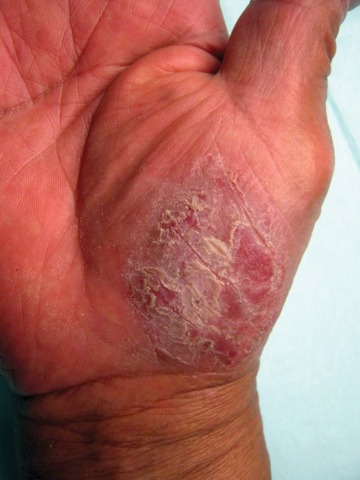
The 30 patients were aged 18-75 years, with mild to severe psoriasis on their hands and/or feet. All discontinued other treatments 4 weeks prior to starting the study. By study design, patients could receive up to 16 biweekly laser treatments over the course of 3 months with an excimer laser (PHAROS EX-308, RA Medical Systems). Fluences ranged from 400-600 mJ/cm2 depending on disease severity. Short pulses were delivered with a flexible handpiece, with a maximal output of 15 mJ/pulse (J. Cosmet. Laser Ther. 2011;13:47-9).
Each treatment was tailored to the individual patient’s response from the previous session. If there was no response or minimal erythema, the dose was increased by 30%. If there was moderate erythema, the dose was increased by 20%, and if significant erythema, the dose was increased by 10% until the patient could not tolerate further increases. For severe reactions or blistering, the dose was decreased by 20%. The number of sessions ranged from 7 to 14, with a mean of 11.

All of the subjects had some improvement by week 5, as measured by the Psoriasis Area and Severity Index (PASI). At the end of the treatments, all showed 50%-100% reductions in scaling, erythema, and flattened plaques. No patient had a relapse detected at the 3-month follow-up, but two-thirds of the patients had relapses by 6 months. There was no evidence of persistent pigmentary changes or scarring. Periodic retreatments will be required, Dr. Goldberg said.
"Although no treatment can be expected to ‘cure’ palmoplantar psoriasis, our data do support the use of the excimer laser to treat patients with hand and foot psoriasis. The excimer laser should be strongly considered for patients with palmoplantar psoriasis unresponsive to other treatments," he concluded.
The excimer laser study was provided on loan by the manufacturer during the course of the study. Dr. Goldberg stated that he had no other disclosures.
GRAPEVINE, TEX. – The 308-nm excimer laser significantly reduced palmoplantar psoriasis severity in a study of 30 patients.
Multiple studies have demonstrated the efficacy of the excimer laser in the treatment of plaque psoriasis, but few have investigated its use for palmoplantar psoriasis. "Palmoplantar psoriasis is difficult to treat and often recalcitrant to traditional therapies such as corticosteroids. Since the excimer laser can selectively treat psoriatic plaque with higher fluences than is tolerated with traditional phototherapy, it could be a therapeutic modality for the thicker skin on the palms and soles," said Dr. David Goldberg, director of dermatologic laser research at Mount Sinai School of Medicine, New York.
The 30 patients were aged 18-75 years, with mild to severe psoriasis on their hands and/or feet. All discontinued other treatments 4 weeks prior to starting the study. By study design, patients could receive up to 16 biweekly laser treatments over the course of 3 months with an excimer laser (PHAROS EX-308, RA Medical Systems). Fluences ranged from 400-600 mJ/cm2 depending on disease severity. Short pulses were delivered with a flexible handpiece, with a maximal output of 15 mJ/pulse (J. Cosmet. Laser Ther. 2011;13:47-9).
Each treatment was tailored to the individual patient’s response from the previous session. If there was no response or minimal erythema, the dose was increased by 30%. If there was moderate erythema, the dose was increased by 20%, and if significant erythema, the dose was increased by 10% until the patient could not tolerate further increases. For severe reactions or blistering, the dose was decreased by 20%. The number of sessions ranged from 7 to 14, with a mean of 11.
All of the subjects had some improvement by week 5, as measured by the Psoriasis Area and Severity Index (PASI). At the end of the treatments, all showed 50%-100% reductions in scaling, erythema, and flattened plaques. No patient had a relapse detected at the 3-month follow-up, but two-thirds of the patients had relapses by 6 months. There was no evidence of persistent pigmentary changes or scarring. Periodic retreatments will be required, Dr. Goldberg said.
"Although no treatment can be expected to ‘cure’ palmoplantar psoriasis, our data do support the use of the excimer laser to treat patients with hand and foot psoriasis. The excimer laser should be strongly considered for patients with palmoplantar psoriasis unresponsive to other treatments," he concluded.
The excimer laser study was provided on loan by the manufacturer during the course of the study. Dr. Goldberg stated that he had no other disclosures.
GRAPEVINE, TEX. – The 308-nm excimer laser significantly reduced palmoplantar psoriasis severity in a study of 30 patients.
Multiple studies have demonstrated the efficacy of the excimer laser in the treatment of plaque psoriasis, but few have investigated its use for palmoplantar psoriasis. "Palmoplantar psoriasis is difficult to treat and often recalcitrant to traditional therapies such as corticosteroids. Since the excimer laser can selectively treat psoriatic plaque with higher fluences than is tolerated with traditional phototherapy, it could be a therapeutic modality for the thicker skin on the palms and soles," said Dr. David Goldberg, director of dermatologic laser research at Mount Sinai School of Medicine, New York.
The 30 patients were aged 18-75 years, with mild to severe psoriasis on their hands and/or feet. All discontinued other treatments 4 weeks prior to starting the study. By study design, patients could receive up to 16 biweekly laser treatments over the course of 3 months with an excimer laser (PHAROS EX-308, RA Medical Systems). Fluences ranged from 400-600 mJ/cm2 depending on disease severity. Short pulses were delivered with a flexible handpiece, with a maximal output of 15 mJ/pulse (J. Cosmet. Laser Ther. 2011;13:47-9).
Each treatment was tailored to the individual patient’s response from the previous session. If there was no response or minimal erythema, the dose was increased by 30%. If there was moderate erythema, the dose was increased by 20%, and if significant erythema, the dose was increased by 10% until the patient could not tolerate further increases. For severe reactions or blistering, the dose was decreased by 20%. The number of sessions ranged from 7 to 14, with a mean of 11.
All of the subjects had some improvement by week 5, as measured by the Psoriasis Area and Severity Index (PASI). At the end of the treatments, all showed 50%-100% reductions in scaling, erythema, and flattened plaques. No patient had a relapse detected at the 3-month follow-up, but two-thirds of the patients had relapses by 6 months. There was no evidence of persistent pigmentary changes or scarring. Periodic retreatments will be required, Dr. Goldberg said.
"Although no treatment can be expected to ‘cure’ palmoplantar psoriasis, our data do support the use of the excimer laser to treat patients with hand and foot psoriasis. The excimer laser should be strongly considered for patients with palmoplantar psoriasis unresponsive to other treatments," he concluded.
The excimer laser study was provided on loan by the manufacturer during the course of the study. Dr. Goldberg stated that he had no other disclosures.
FROM THE ANNUAL MEETING OF THE AMERICAN SOCIETY FOR LASER MEDICINE AND SURGERY
Major Finding: At the end of the treatments, all patients showed 50%-100% reductions in scaling, erythema, and flattened plaques
Data Source: The 30 patients were aged 18-75 years, with mild to severe psoriasis on their hands and/or feet.
Disclosures: The excimer laser study was provided on-loan by the manufacturer during the course of the study. Dr. Goldberg stated that he had no other disclosures.
Denosumab Reduces Fracture Incidence at All Risk Levels
Denosumab reduced the incidence of new vertebral and hip fractures in postmenopausal women with osteoporosis at both higher and lower risk for fracture, in a post-hoc analysis of data from a 3-year, phase III randomized trial.
The monoclonal antibody denosumab (Prolia) was approved in June 2010 for treatment of postmenopausal women who have a high risk of osteoporotic fractures. In phase II and III trials, denosumab rapidly decreased bone resorption markers and increased bone mineral density at all skeletal sites, compared with placebo, said Dr. S. Boonen of Leuven (Belgium) University and his associates (J. Clin. Endocrinol. Metab. 2011;96 [doi:10.1210/jc.2010–2784]).
The Fracture Reduction Evaluation of Denosumab in Osteoporosis Every 6 Months (FREEDOM) trial enrolled 7,808 postmenopausal women aged 60-80 years with osteoporosis to receive either a subcutaneous injection of denosumab (60 mg) or placebo along with daily calcium and vitamin D supplements every 6 months. All subjects had bone mineral density (BMD) T scores of less than –2.5 but not less than –4.0 at the lumbar spine or total hip. At 36 months, denosumab was associated with reductions of 68% in vertebral fracture and 40% in hip fracture (N. Engl. J. Med. 2009;361:756–65).
The new analysis compared high-risk and low-risk groups within the FREEDOM population. High-risk groups included women with two or more preexisting vertebral fractures of any degree of deformity, or one or more vertebral fractures of moderate or severe deformity, or both; a femoral neck BMD T score of –2.5 or less; or both multiple and/or moderate or severe vertebral deformities and a femoral neck BMD T score of –2.5 or less.
For hip fractures, the higher-risk subgroups included women who were age 75 years or older; had a femoral neck BMD T score of –2.5 or less; or were 75 years or older with a femoral neck BMD T score of –2.5 or less. Women who did not have those specified risk factors were included in the lower-risk subgroups.
Over 3 years, denosumab treatment was equally effective at reducing the risk of new vertebral fractures in women at both higher and lower risk for those types of fractures, similar to the overall FREEDOM population. Compared with placebo, denosumab reduced the incidence of vertebral fracture in the subgroups at higher risk by prevalent vertebral fracture status by 9.2% (16.6% placebo vs. 7.5% denosumab) among those at risk via baseline femoral neck BMD T score of –2.5 by 6.8% (9.9% vs. 3.1%), and among those with both risk factors by 12.3% (20.1% vs. 8.1%).
The numbers needed to treat to prevent one vertebral fracture in each of these higher-risk subgroups were 11, 15, and 12, respectively, Dr. Boonen and his associates said.
Similar results were seen for the lower-risk groups, including a 4.4% absolute risk reduction in those without prevalent vertebral fracture, 3.7% for those with BMD T score greater than –2.5, and 4.5% for those with one or both risk factors.
Subgroup results for hip fractures were also consistent with the findings from the overall FREEDOM population, with the same efficacy of denosumab consistent across patients with different levels of risk. Compared with placebo, denosumab significantly reduced hip fracture incidence among those aged 75 years or older by 1.4% (2.3% placebo vs. 0.9% denosumab); those with a baseline femoral neck BMD T score of –2.5 or less by 1.4% (2.8% vs. 1.4%); and by 2.4% among those with both risk factors (4.1% vs. 1.7%).
Overall mortality was lower – but not significantly so – among all the subgroups with denosumab. However, there was a significantly lower incidence of fatal adverse events with denosumab vs. placebo in the higher-risk group with prevalent vertebral fracture (1.8% vs. 4.9%) and in those with both prevalent vertebral fracture and low femoral neck BMD (1.6% vs. 7.1%). The difference in mortality among the higher-risk subgroups was greater than that of the lower-risk groups, they noted.
“Our analyses highlight the consistency of the antifracture efficacy of denosumab across subjects with differences in a variety of major risk factors for fractures at baseline. Our analyses suggest that denosumab reduces both new vertebral and hip fractures, regardless of the underlying risk and that the higher absolute fracture risk observed in the higher-risk subgroups is associated with greater absolute risk reduction,” Dr. Boonen and his associates concluded.
The study was funded by Amgen. Dr. Boonen has received funding for serving as an investigator and as a member of the steering committee for Amgen, as well as consulting and lecture fees. He is also senior clinical investigator of the Fund for Scientific Research in Flanders, Belgium. Four of his coinvestigators are Amgen employees, and the others disclosed relationships with Amgen and several other pharmaceutical companies.
Denosumab reduced the incidence of new vertebral and hip fractures in postmenopausal women with osteoporosis at both higher and lower risk for fracture, in a post-hoc analysis of data from a 3-year, phase III randomized trial.
The monoclonal antibody denosumab (Prolia) was approved in June 2010 for treatment of postmenopausal women who have a high risk of osteoporotic fractures. In phase II and III trials, denosumab rapidly decreased bone resorption markers and increased bone mineral density at all skeletal sites, compared with placebo, said Dr. S. Boonen of Leuven (Belgium) University and his associates (J. Clin. Endocrinol. Metab. 2011;96 [doi:10.1210/jc.2010–2784]).
The Fracture Reduction Evaluation of Denosumab in Osteoporosis Every 6 Months (FREEDOM) trial enrolled 7,808 postmenopausal women aged 60-80 years with osteoporosis to receive either a subcutaneous injection of denosumab (60 mg) or placebo along with daily calcium and vitamin D supplements every 6 months. All subjects had bone mineral density (BMD) T scores of less than –2.5 but not less than –4.0 at the lumbar spine or total hip. At 36 months, denosumab was associated with reductions of 68% in vertebral fracture and 40% in hip fracture (N. Engl. J. Med. 2009;361:756–65).
The new analysis compared high-risk and low-risk groups within the FREEDOM population. High-risk groups included women with two or more preexisting vertebral fractures of any degree of deformity, or one or more vertebral fractures of moderate or severe deformity, or both; a femoral neck BMD T score of –2.5 or less; or both multiple and/or moderate or severe vertebral deformities and a femoral neck BMD T score of –2.5 or less.
For hip fractures, the higher-risk subgroups included women who were age 75 years or older; had a femoral neck BMD T score of –2.5 or less; or were 75 years or older with a femoral neck BMD T score of –2.5 or less. Women who did not have those specified risk factors were included in the lower-risk subgroups.
Over 3 years, denosumab treatment was equally effective at reducing the risk of new vertebral fractures in women at both higher and lower risk for those types of fractures, similar to the overall FREEDOM population. Compared with placebo, denosumab reduced the incidence of vertebral fracture in the subgroups at higher risk by prevalent vertebral fracture status by 9.2% (16.6% placebo vs. 7.5% denosumab) among those at risk via baseline femoral neck BMD T score of –2.5 by 6.8% (9.9% vs. 3.1%), and among those with both risk factors by 12.3% (20.1% vs. 8.1%).
The numbers needed to treat to prevent one vertebral fracture in each of these higher-risk subgroups were 11, 15, and 12, respectively, Dr. Boonen and his associates said.
Similar results were seen for the lower-risk groups, including a 4.4% absolute risk reduction in those without prevalent vertebral fracture, 3.7% for those with BMD T score greater than –2.5, and 4.5% for those with one or both risk factors.
Subgroup results for hip fractures were also consistent with the findings from the overall FREEDOM population, with the same efficacy of denosumab consistent across patients with different levels of risk. Compared with placebo, denosumab significantly reduced hip fracture incidence among those aged 75 years or older by 1.4% (2.3% placebo vs. 0.9% denosumab); those with a baseline femoral neck BMD T score of –2.5 or less by 1.4% (2.8% vs. 1.4%); and by 2.4% among those with both risk factors (4.1% vs. 1.7%).
Overall mortality was lower – but not significantly so – among all the subgroups with denosumab. However, there was a significantly lower incidence of fatal adverse events with denosumab vs. placebo in the higher-risk group with prevalent vertebral fracture (1.8% vs. 4.9%) and in those with both prevalent vertebral fracture and low femoral neck BMD (1.6% vs. 7.1%). The difference in mortality among the higher-risk subgroups was greater than that of the lower-risk groups, they noted.
“Our analyses highlight the consistency of the antifracture efficacy of denosumab across subjects with differences in a variety of major risk factors for fractures at baseline. Our analyses suggest that denosumab reduces both new vertebral and hip fractures, regardless of the underlying risk and that the higher absolute fracture risk observed in the higher-risk subgroups is associated with greater absolute risk reduction,” Dr. Boonen and his associates concluded.
The study was funded by Amgen. Dr. Boonen has received funding for serving as an investigator and as a member of the steering committee for Amgen, as well as consulting and lecture fees. He is also senior clinical investigator of the Fund for Scientific Research in Flanders, Belgium. Four of his coinvestigators are Amgen employees, and the others disclosed relationships with Amgen and several other pharmaceutical companies.
Denosumab reduced the incidence of new vertebral and hip fractures in postmenopausal women with osteoporosis at both higher and lower risk for fracture, in a post-hoc analysis of data from a 3-year, phase III randomized trial.
The monoclonal antibody denosumab (Prolia) was approved in June 2010 for treatment of postmenopausal women who have a high risk of osteoporotic fractures. In phase II and III trials, denosumab rapidly decreased bone resorption markers and increased bone mineral density at all skeletal sites, compared with placebo, said Dr. S. Boonen of Leuven (Belgium) University and his associates (J. Clin. Endocrinol. Metab. 2011;96 [doi:10.1210/jc.2010–2784]).
The Fracture Reduction Evaluation of Denosumab in Osteoporosis Every 6 Months (FREEDOM) trial enrolled 7,808 postmenopausal women aged 60-80 years with osteoporosis to receive either a subcutaneous injection of denosumab (60 mg) or placebo along with daily calcium and vitamin D supplements every 6 months. All subjects had bone mineral density (BMD) T scores of less than –2.5 but not less than –4.0 at the lumbar spine or total hip. At 36 months, denosumab was associated with reductions of 68% in vertebral fracture and 40% in hip fracture (N. Engl. J. Med. 2009;361:756–65).
The new analysis compared high-risk and low-risk groups within the FREEDOM population. High-risk groups included women with two or more preexisting vertebral fractures of any degree of deformity, or one or more vertebral fractures of moderate or severe deformity, or both; a femoral neck BMD T score of –2.5 or less; or both multiple and/or moderate or severe vertebral deformities and a femoral neck BMD T score of –2.5 or less.
For hip fractures, the higher-risk subgroups included women who were age 75 years or older; had a femoral neck BMD T score of –2.5 or less; or were 75 years or older with a femoral neck BMD T score of –2.5 or less. Women who did not have those specified risk factors were included in the lower-risk subgroups.
Over 3 years, denosumab treatment was equally effective at reducing the risk of new vertebral fractures in women at both higher and lower risk for those types of fractures, similar to the overall FREEDOM population. Compared with placebo, denosumab reduced the incidence of vertebral fracture in the subgroups at higher risk by prevalent vertebral fracture status by 9.2% (16.6% placebo vs. 7.5% denosumab) among those at risk via baseline femoral neck BMD T score of –2.5 by 6.8% (9.9% vs. 3.1%), and among those with both risk factors by 12.3% (20.1% vs. 8.1%).
The numbers needed to treat to prevent one vertebral fracture in each of these higher-risk subgroups were 11, 15, and 12, respectively, Dr. Boonen and his associates said.
Similar results were seen for the lower-risk groups, including a 4.4% absolute risk reduction in those without prevalent vertebral fracture, 3.7% for those with BMD T score greater than –2.5, and 4.5% for those with one or both risk factors.
Subgroup results for hip fractures were also consistent with the findings from the overall FREEDOM population, with the same efficacy of denosumab consistent across patients with different levels of risk. Compared with placebo, denosumab significantly reduced hip fracture incidence among those aged 75 years or older by 1.4% (2.3% placebo vs. 0.9% denosumab); those with a baseline femoral neck BMD T score of –2.5 or less by 1.4% (2.8% vs. 1.4%); and by 2.4% among those with both risk factors (4.1% vs. 1.7%).
Overall mortality was lower – but not significantly so – among all the subgroups with denosumab. However, there was a significantly lower incidence of fatal adverse events with denosumab vs. placebo in the higher-risk group with prevalent vertebral fracture (1.8% vs. 4.9%) and in those with both prevalent vertebral fracture and low femoral neck BMD (1.6% vs. 7.1%). The difference in mortality among the higher-risk subgroups was greater than that of the lower-risk groups, they noted.
“Our analyses highlight the consistency of the antifracture efficacy of denosumab across subjects with differences in a variety of major risk factors for fractures at baseline. Our analyses suggest that denosumab reduces both new vertebral and hip fractures, regardless of the underlying risk and that the higher absolute fracture risk observed in the higher-risk subgroups is associated with greater absolute risk reduction,” Dr. Boonen and his associates concluded.
The study was funded by Amgen. Dr. Boonen has received funding for serving as an investigator and as a member of the steering committee for Amgen, as well as consulting and lecture fees. He is also senior clinical investigator of the Fund for Scientific Research in Flanders, Belgium. Four of his coinvestigators are Amgen employees, and the others disclosed relationships with Amgen and several other pharmaceutical companies.