User login
States Prepare to Revamp Relicensing Requirements
State medical boards are eyeing ways to overhaul the relicensure process so that it better measures a physician’s efforts to stay abreast of clinical developments.
Currently, while the public assumes that state licensure means that a physician remains competent, that’s just not the case, according to Richard A. Whitehouse, the executive director of the State Medical Board of Ohio.
"There is really no measure once someone is initially licensed and has met the threshold requirements for licensure," he said. "Absent CME requirements, there’s really nothing you can point to, to say that this person is maintaining their competency."
Officials involved in the redesign process, however, emphasize that the new requirements won’t be a burden on practicing physicians and that most doctors are already doing enough to meet the standards under development.
The Federation of State Medical Boards (FSMB), which represents the nation’s state medical boards, has been promoting the need to make relicensure a more robust process for several years.
Last spring, the organization’s House of Delegates approved a framework that lays out what the maintenance of licensure process would look like in general. And over the past few months, an implementation group made up of physicians and medical board officials has been filling in the details.
The expectation is that new maintenance of licensure requirements will involve three major components: a reflective self-assessment that calls for physicians to complete a certain number of accredited continuing medical education courses; an assessment of knowledge and skills, which could be a formal exam; and some measurement of performance in practice, in which physicians would compare their practice data to those for peers and to national benchmarks.
Dr. Humayun Chaudhry, president and CEO of the FSMB, said that one of the goals in redesigning the relicensure process is to minimize the burden on practicing physicians. To that end, the FSMB implementation group’s draft report calls on state medical boards to accept participation in maintenance of certification through the American Board of Medical Specialties, or osteopathic continuous certification through the American Osteopathic Association, as substantially meeting the requirements for maintenance of licensure. "That’s a big advance because a significant plurality of physicians are involved in those programs," Dr. Chaudhry said.
More than 300,000 physicians are engaged in maintenance of certification through the various boards of the American Board of Medical Specialties, and that number increases by about 50,000 physicians each year, according to Dr. Kevin B. Weiss, ABMS president and CEO.
Officials at the ABMS have been working closely with states for years on the issue of maintenance of licensure and plan to continue to be involved as states begin to pilot the concept over the next several months to ensure that board-certified physicians aren’t asked to do any "double work," Dr. Weiss said.
"We’re going to be very active in trying to help our physician community on a state-by-state basis," he said.
Officials at the FSMB are being careful to point out that maintenance of licensure and maintenance of certification are not meant to be equivalent. While maintenance of certification and osteopathic continuous certification could comply with the more robust relicensure requirements, board certification goes "above and beyond" basic licensure, Dr. Chaudhry said.
For the hundreds of thousands of physicians who aren’t engaged in some type of maintenance of certification process, the FSMB is working with states to develop alternative pathways to demonstrate ongoing clinical competence.
The timeline for the new requirements is fairly long, Dr. Chaudhry said. The FSMB is recommending that state medical boards implement the new approach in phases that in total could take up to 10 years. The first step for any state medical board that plans to go forward with maintenance of licensure is to spend the first year educating physicians, the public, and lawmakers about what is planned and why. And each of the three components of the process should take another 2-3 years to implement, he said.
"The vast majority of physicians are already doing things to stay up to date," Dr. Chaudhry said. "In that sense, [maintenance of licensure] is simply a means by which those physicians can demonstrate what it is that they are doing."
Dr. Whitehouse, who also serves on the FSMB’s implementation group on maintenance of licensure, agrees that the process will not be onerous for physicians who are making an effort to keep their clinical skills current.
Ohio is one of a handful of state medical boards that already has plans to move forward with maintenance of licensure. Mr. Whitehouse said that the medical boards have a responsibility to the public to make relicensure more meaningful. But making the process more robust is also beneficial to physicians because the medical board then becomes a reliable resource where patients can get objective assessments based on practice data, he said, rather than relying on anecdotal reports.
Body text goes here
Doctor’s Bio
Body text goes here
Doctor’s Bio
Body text goes here
Doctor’s Bio
State medical boards are eyeing ways to overhaul the relicensure process so that it better measures a physician’s efforts to stay abreast of clinical developments.
Currently, while the public assumes that state licensure means that a physician remains competent, that’s just not the case, according to Richard A. Whitehouse, the executive director of the State Medical Board of Ohio.
"There is really no measure once someone is initially licensed and has met the threshold requirements for licensure," he said. "Absent CME requirements, there’s really nothing you can point to, to say that this person is maintaining their competency."
Officials involved in the redesign process, however, emphasize that the new requirements won’t be a burden on practicing physicians and that most doctors are already doing enough to meet the standards under development.
The Federation of State Medical Boards (FSMB), which represents the nation’s state medical boards, has been promoting the need to make relicensure a more robust process for several years.
Last spring, the organization’s House of Delegates approved a framework that lays out what the maintenance of licensure process would look like in general. And over the past few months, an implementation group made up of physicians and medical board officials has been filling in the details.
The expectation is that new maintenance of licensure requirements will involve three major components: a reflective self-assessment that calls for physicians to complete a certain number of accredited continuing medical education courses; an assessment of knowledge and skills, which could be a formal exam; and some measurement of performance in practice, in which physicians would compare their practice data to those for peers and to national benchmarks.
Dr. Humayun Chaudhry, president and CEO of the FSMB, said that one of the goals in redesigning the relicensure process is to minimize the burden on practicing physicians. To that end, the FSMB implementation group’s draft report calls on state medical boards to accept participation in maintenance of certification through the American Board of Medical Specialties, or osteopathic continuous certification through the American Osteopathic Association, as substantially meeting the requirements for maintenance of licensure. "That’s a big advance because a significant plurality of physicians are involved in those programs," Dr. Chaudhry said.
More than 300,000 physicians are engaged in maintenance of certification through the various boards of the American Board of Medical Specialties, and that number increases by about 50,000 physicians each year, according to Dr. Kevin B. Weiss, ABMS president and CEO.
Officials at the ABMS have been working closely with states for years on the issue of maintenance of licensure and plan to continue to be involved as states begin to pilot the concept over the next several months to ensure that board-certified physicians aren’t asked to do any "double work," Dr. Weiss said.
"We’re going to be very active in trying to help our physician community on a state-by-state basis," he said.
Officials at the FSMB are being careful to point out that maintenance of licensure and maintenance of certification are not meant to be equivalent. While maintenance of certification and osteopathic continuous certification could comply with the more robust relicensure requirements, board certification goes "above and beyond" basic licensure, Dr. Chaudhry said.
For the hundreds of thousands of physicians who aren’t engaged in some type of maintenance of certification process, the FSMB is working with states to develop alternative pathways to demonstrate ongoing clinical competence.
The timeline for the new requirements is fairly long, Dr. Chaudhry said. The FSMB is recommending that state medical boards implement the new approach in phases that in total could take up to 10 years. The first step for any state medical board that plans to go forward with maintenance of licensure is to spend the first year educating physicians, the public, and lawmakers about what is planned and why. And each of the three components of the process should take another 2-3 years to implement, he said.
"The vast majority of physicians are already doing things to stay up to date," Dr. Chaudhry said. "In that sense, [maintenance of licensure] is simply a means by which those physicians can demonstrate what it is that they are doing."
Dr. Whitehouse, who also serves on the FSMB’s implementation group on maintenance of licensure, agrees that the process will not be onerous for physicians who are making an effort to keep their clinical skills current.
Ohio is one of a handful of state medical boards that already has plans to move forward with maintenance of licensure. Mr. Whitehouse said that the medical boards have a responsibility to the public to make relicensure more meaningful. But making the process more robust is also beneficial to physicians because the medical board then becomes a reliable resource where patients can get objective assessments based on practice data, he said, rather than relying on anecdotal reports.
State medical boards are eyeing ways to overhaul the relicensure process so that it better measures a physician’s efforts to stay abreast of clinical developments.
Currently, while the public assumes that state licensure means that a physician remains competent, that’s just not the case, according to Richard A. Whitehouse, the executive director of the State Medical Board of Ohio.
"There is really no measure once someone is initially licensed and has met the threshold requirements for licensure," he said. "Absent CME requirements, there’s really nothing you can point to, to say that this person is maintaining their competency."
Officials involved in the redesign process, however, emphasize that the new requirements won’t be a burden on practicing physicians and that most doctors are already doing enough to meet the standards under development.
The Federation of State Medical Boards (FSMB), which represents the nation’s state medical boards, has been promoting the need to make relicensure a more robust process for several years.
Last spring, the organization’s House of Delegates approved a framework that lays out what the maintenance of licensure process would look like in general. And over the past few months, an implementation group made up of physicians and medical board officials has been filling in the details.
The expectation is that new maintenance of licensure requirements will involve three major components: a reflective self-assessment that calls for physicians to complete a certain number of accredited continuing medical education courses; an assessment of knowledge and skills, which could be a formal exam; and some measurement of performance in practice, in which physicians would compare their practice data to those for peers and to national benchmarks.
Dr. Humayun Chaudhry, president and CEO of the FSMB, said that one of the goals in redesigning the relicensure process is to minimize the burden on practicing physicians. To that end, the FSMB implementation group’s draft report calls on state medical boards to accept participation in maintenance of certification through the American Board of Medical Specialties, or osteopathic continuous certification through the American Osteopathic Association, as substantially meeting the requirements for maintenance of licensure. "That’s a big advance because a significant plurality of physicians are involved in those programs," Dr. Chaudhry said.
More than 300,000 physicians are engaged in maintenance of certification through the various boards of the American Board of Medical Specialties, and that number increases by about 50,000 physicians each year, according to Dr. Kevin B. Weiss, ABMS president and CEO.
Officials at the ABMS have been working closely with states for years on the issue of maintenance of licensure and plan to continue to be involved as states begin to pilot the concept over the next several months to ensure that board-certified physicians aren’t asked to do any "double work," Dr. Weiss said.
"We’re going to be very active in trying to help our physician community on a state-by-state basis," he said.
Officials at the FSMB are being careful to point out that maintenance of licensure and maintenance of certification are not meant to be equivalent. While maintenance of certification and osteopathic continuous certification could comply with the more robust relicensure requirements, board certification goes "above and beyond" basic licensure, Dr. Chaudhry said.
For the hundreds of thousands of physicians who aren’t engaged in some type of maintenance of certification process, the FSMB is working with states to develop alternative pathways to demonstrate ongoing clinical competence.
The timeline for the new requirements is fairly long, Dr. Chaudhry said. The FSMB is recommending that state medical boards implement the new approach in phases that in total could take up to 10 years. The first step for any state medical board that plans to go forward with maintenance of licensure is to spend the first year educating physicians, the public, and lawmakers about what is planned and why. And each of the three components of the process should take another 2-3 years to implement, he said.
"The vast majority of physicians are already doing things to stay up to date," Dr. Chaudhry said. "In that sense, [maintenance of licensure] is simply a means by which those physicians can demonstrate what it is that they are doing."
Dr. Whitehouse, who also serves on the FSMB’s implementation group on maintenance of licensure, agrees that the process will not be onerous for physicians who are making an effort to keep their clinical skills current.
Ohio is one of a handful of state medical boards that already has plans to move forward with maintenance of licensure. Mr. Whitehouse said that the medical boards have a responsibility to the public to make relicensure more meaningful. But making the process more robust is also beneficial to physicians because the medical board then becomes a reliable resource where patients can get objective assessments based on practice data, he said, rather than relying on anecdotal reports.
Major Finding: Text.
Data Source: Text.
Disclosures: Text.
Feds Spell Out Certification Criteria for EHRs
Federal officials have created a permanent pathway for health information technology developers to get their products certified under the new Medicare and Medicaid Electronic Health Record Incentive Programs.
In a final rule issued on Jan. 3, the Office of the National Coordinator for Health Information Technology spelled out the criteria that products must meet starting in 2012. EHR products are currently being certified through a temporary program that will sunset once the permanent program is up and running, likely in early 2012.
The new permanent certification program requires organizations to be accredited in order to test or certify health information technology products. The certification bodies, which will be authorized by the National Coordinator for Health Information Technology, are required to conduct post-certification surveillance.
The availability of certified EHR products will pave the way for physicians, hospitals, and other eligible providers to participate in the Medicare and Medicaid EHR Incentive programs. Physicians can earn up to $44,000 over 5 years under the Medicare program and about $63,000 over 6 years under the Medicaid program.
Registration for the new program began on Jan. 3.
Federal officials have created a permanent pathway for health information technology developers to get their products certified under the new Medicare and Medicaid Electronic Health Record Incentive Programs.
In a final rule issued on Jan. 3, the Office of the National Coordinator for Health Information Technology spelled out the criteria that products must meet starting in 2012. EHR products are currently being certified through a temporary program that will sunset once the permanent program is up and running, likely in early 2012.
The new permanent certification program requires organizations to be accredited in order to test or certify health information technology products. The certification bodies, which will be authorized by the National Coordinator for Health Information Technology, are required to conduct post-certification surveillance.
The availability of certified EHR products will pave the way for physicians, hospitals, and other eligible providers to participate in the Medicare and Medicaid EHR Incentive programs. Physicians can earn up to $44,000 over 5 years under the Medicare program and about $63,000 over 6 years under the Medicaid program.
Registration for the new program began on Jan. 3.
Federal officials have created a permanent pathway for health information technology developers to get their products certified under the new Medicare and Medicaid Electronic Health Record Incentive Programs.
In a final rule issued on Jan. 3, the Office of the National Coordinator for Health Information Technology spelled out the criteria that products must meet starting in 2012. EHR products are currently being certified through a temporary program that will sunset once the permanent program is up and running, likely in early 2012.
The new permanent certification program requires organizations to be accredited in order to test or certify health information technology products. The certification bodies, which will be authorized by the National Coordinator for Health Information Technology, are required to conduct post-certification surveillance.
The availability of certified EHR products will pave the way for physicians, hospitals, and other eligible providers to participate in the Medicare and Medicaid EHR Incentive programs. Physicians can earn up to $44,000 over 5 years under the Medicare program and about $63,000 over 6 years under the Medicaid program.
Registration for the new program began on Jan. 3.
FROM THE DEPARTMENT OF HEALTH AND HUMAN SERVICES
NCQA Medical Home Standards Focus on Patients, EHRs
The National Committee for Quality Assurance on Jan. 31 released new standards for practices seeking recognition as a medical home.
The standards now require practices to demonstrate continuity of care by allowing patients to select a personal physician, offering after-hour access to appointments and medical advice, and having interpreters available and making sure forms and other documents are in the patient’s preferred language. The standards also were redesigned to better echo the requirements of the new Medicare and Medicaid programs offering incentives for the implementation of electronic health records.
Most practices are still physician centric, said Dr. Xavier Sevilla, a pediatrician in Lakewood Ranch, Fla., and a member of the NCQA Patient-Centered Medical Home Advisory Committee. For example, practices typically open their doors when it’s convenient for physicians and offer standard 15-minute appointments for the same reason.
With some of the new standards, NCQA officials are looking to get physicians thinking about things from the patient’s point of view, he said.
"There is a big gap between where we want to go, which is that advanced primary care patient-centered medical home, and what we have right now," Dr. Sevilla said in an interview.
This is the first time the standards have been revamped since they were issued in January 2008. As with the earlier version of the recognition program, the NCQA offers practices three levels of recognition based on points earned for each element of the standards. However, all recognition levels require practices to comply with six "must-pass" elements: access during office hours, using data for population management, care management, supporting the self-care process, tracking referrals and follow-up, and implementing continuous quality improvement.
Starting in 2012, participating practices will receive extra credit if they report the results of a new, standardized patient experience survey. The survey is being developed in collaboration with the Agency for Healthcare Research and Quality and will be a medical home version of the Consumer Assessment of Healthcare Providers and Systems (CAHPS) Clinician & Group Survey. It is expected to be released later this year.
Practices will get credit for reporting in 2012, but the NCQA expects to evaluate practices on results in the future.
The updated standards also include more requirements for the use of health information technology and are closely modeled on the federal EHR incentive program that began earlier this year.
For example, the NCQA standards require practices to use an electronic prescribing system that generates and transmits at least 40% of eligible prescriptions to pharmacies. The NCQA also calls on practices to use an electronic system to record up-to-date problem lists, allergies and adverse reactions, smoking status, and a list of prescription medications.
The revised standards are a "paragon of 21st century primary care," NCQA President Margaret E. O’Kane said in a statement. "By emphasizing access, health information technology, and partnerships between clinicians and patients to improve health, these new standards raise the bar in defining high-quality care."
Officials at the NCQA rewrote the standards to be clearer and more specific, but also to be more challenging. Dr. Sevilla, who also serves as chair of the American Academy of Pediatrics Steering Committee of Quality Improvement and Management, advises practices to try to qualify for NCQA recognition in terms of where they are today as a medical home, then use the standards as a "road map" for continuing to improve. But earning 100 points from the start will be very difficult, he said.
The NCQA’s medical home recognition program is the organization’s fastest growing program. Since December 2008, the number of clinicians recognized through the program has climbed from 214 to 7,676 at the end of 2010. Over the same period, the number of practices recognized as medical homes has risen from 28 to 1,506.
The 2011 standards are available at https://inetshop01.pub.ncqa.org/publications/product.asp?dept_id=2&pf_id=30004-301-11.
documents, Medicare, Medicaid, electronic health records, Dr. Xavier Sevilla, NCQA Patient-Centered Medical Home Advisory Committee, the Agency for Healthcare Research and Quality, Consumer Assessment of Healthcare Providers and Systems Clinician & Group Survey
The National Committee for Quality Assurance on Jan. 31 released new standards for practices seeking recognition as a medical home.
The standards now require practices to demonstrate continuity of care by allowing patients to select a personal physician, offering after-hour access to appointments and medical advice, and having interpreters available and making sure forms and other documents are in the patient’s preferred language. The standards also were redesigned to better echo the requirements of the new Medicare and Medicaid programs offering incentives for the implementation of electronic health records.
Most practices are still physician centric, said Dr. Xavier Sevilla, a pediatrician in Lakewood Ranch, Fla., and a member of the NCQA Patient-Centered Medical Home Advisory Committee. For example, practices typically open their doors when it’s convenient for physicians and offer standard 15-minute appointments for the same reason.
With some of the new standards, NCQA officials are looking to get physicians thinking about things from the patient’s point of view, he said.
"There is a big gap between where we want to go, which is that advanced primary care patient-centered medical home, and what we have right now," Dr. Sevilla said in an interview.
This is the first time the standards have been revamped since they were issued in January 2008. As with the earlier version of the recognition program, the NCQA offers practices three levels of recognition based on points earned for each element of the standards. However, all recognition levels require practices to comply with six "must-pass" elements: access during office hours, using data for population management, care management, supporting the self-care process, tracking referrals and follow-up, and implementing continuous quality improvement.
Starting in 2012, participating practices will receive extra credit if they report the results of a new, standardized patient experience survey. The survey is being developed in collaboration with the Agency for Healthcare Research and Quality and will be a medical home version of the Consumer Assessment of Healthcare Providers and Systems (CAHPS) Clinician & Group Survey. It is expected to be released later this year.
Practices will get credit for reporting in 2012, but the NCQA expects to evaluate practices on results in the future.
The updated standards also include more requirements for the use of health information technology and are closely modeled on the federal EHR incentive program that began earlier this year.
For example, the NCQA standards require practices to use an electronic prescribing system that generates and transmits at least 40% of eligible prescriptions to pharmacies. The NCQA also calls on practices to use an electronic system to record up-to-date problem lists, allergies and adverse reactions, smoking status, and a list of prescription medications.
The revised standards are a "paragon of 21st century primary care," NCQA President Margaret E. O’Kane said in a statement. "By emphasizing access, health information technology, and partnerships between clinicians and patients to improve health, these new standards raise the bar in defining high-quality care."
Officials at the NCQA rewrote the standards to be clearer and more specific, but also to be more challenging. Dr. Sevilla, who also serves as chair of the American Academy of Pediatrics Steering Committee of Quality Improvement and Management, advises practices to try to qualify for NCQA recognition in terms of where they are today as a medical home, then use the standards as a "road map" for continuing to improve. But earning 100 points from the start will be very difficult, he said.
The NCQA’s medical home recognition program is the organization’s fastest growing program. Since December 2008, the number of clinicians recognized through the program has climbed from 214 to 7,676 at the end of 2010. Over the same period, the number of practices recognized as medical homes has risen from 28 to 1,506.
The 2011 standards are available at https://inetshop01.pub.ncqa.org/publications/product.asp?dept_id=2&pf_id=30004-301-11.
The National Committee for Quality Assurance on Jan. 31 released new standards for practices seeking recognition as a medical home.
The standards now require practices to demonstrate continuity of care by allowing patients to select a personal physician, offering after-hour access to appointments and medical advice, and having interpreters available and making sure forms and other documents are in the patient’s preferred language. The standards also were redesigned to better echo the requirements of the new Medicare and Medicaid programs offering incentives for the implementation of electronic health records.
Most practices are still physician centric, said Dr. Xavier Sevilla, a pediatrician in Lakewood Ranch, Fla., and a member of the NCQA Patient-Centered Medical Home Advisory Committee. For example, practices typically open their doors when it’s convenient for physicians and offer standard 15-minute appointments for the same reason.
With some of the new standards, NCQA officials are looking to get physicians thinking about things from the patient’s point of view, he said.
"There is a big gap between where we want to go, which is that advanced primary care patient-centered medical home, and what we have right now," Dr. Sevilla said in an interview.
This is the first time the standards have been revamped since they were issued in January 2008. As with the earlier version of the recognition program, the NCQA offers practices three levels of recognition based on points earned for each element of the standards. However, all recognition levels require practices to comply with six "must-pass" elements: access during office hours, using data for population management, care management, supporting the self-care process, tracking referrals and follow-up, and implementing continuous quality improvement.
Starting in 2012, participating practices will receive extra credit if they report the results of a new, standardized patient experience survey. The survey is being developed in collaboration with the Agency for Healthcare Research and Quality and will be a medical home version of the Consumer Assessment of Healthcare Providers and Systems (CAHPS) Clinician & Group Survey. It is expected to be released later this year.
Practices will get credit for reporting in 2012, but the NCQA expects to evaluate practices on results in the future.
The updated standards also include more requirements for the use of health information technology and are closely modeled on the federal EHR incentive program that began earlier this year.
For example, the NCQA standards require practices to use an electronic prescribing system that generates and transmits at least 40% of eligible prescriptions to pharmacies. The NCQA also calls on practices to use an electronic system to record up-to-date problem lists, allergies and adverse reactions, smoking status, and a list of prescription medications.
The revised standards are a "paragon of 21st century primary care," NCQA President Margaret E. O’Kane said in a statement. "By emphasizing access, health information technology, and partnerships between clinicians and patients to improve health, these new standards raise the bar in defining high-quality care."
Officials at the NCQA rewrote the standards to be clearer and more specific, but also to be more challenging. Dr. Sevilla, who also serves as chair of the American Academy of Pediatrics Steering Committee of Quality Improvement and Management, advises practices to try to qualify for NCQA recognition in terms of where they are today as a medical home, then use the standards as a "road map" for continuing to improve. But earning 100 points from the start will be very difficult, he said.
The NCQA’s medical home recognition program is the organization’s fastest growing program. Since December 2008, the number of clinicians recognized through the program has climbed from 214 to 7,676 at the end of 2010. Over the same period, the number of practices recognized as medical homes has risen from 28 to 1,506.
The 2011 standards are available at https://inetshop01.pub.ncqa.org/publications/product.asp?dept_id=2&pf_id=30004-301-11.
documents, Medicare, Medicaid, electronic health records, Dr. Xavier Sevilla, NCQA Patient-Centered Medical Home Advisory Committee, the Agency for Healthcare Research and Quality, Consumer Assessment of Healthcare Providers and Systems Clinician & Group Survey
documents, Medicare, Medicaid, electronic health records, Dr. Xavier Sevilla, NCQA Patient-Centered Medical Home Advisory Committee, the Agency for Healthcare Research and Quality, Consumer Assessment of Healthcare Providers and Systems Clinician & Group Survey
Physicians Reflect on Four Decades in Family Medicine
As family medicine was being formally recognized as a medical specialty in 1971, three young physicians were preparing to enter the field. Family Practice News, an Elsevier publication, sat down with the 2nd-year family practice residents at that time to find out what they thought of their training, their newly recognized specialty, and what their careers would hold.
Now, 40 years later, we invited them to look back on how their expectations stacked up to the reality of clinical practice.
Although the three physicians came into the specialty in much the same way, their subsequent career choices led them down different paths.
A Call to Geriatric Care: Dr. Alva S. Baker
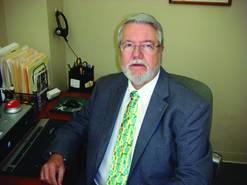
Dr. Alva S. "Buzz" Baker was a 2nd-year resident at the University of Maryland in 1971. He spent several years in general family practice before deciding that he wanted to concentrate on geriatric medicine. Today, Dr. Baker serves as director of the center for the study of aging at McDaniel College in Westminster, Md., and teaches in the gerontology program. "A major emphasis of my life in the last several years has been on education of physicians and health professionals," he said.
Question: In terms of your work in geriatrics, how do you feel your medicine training prepared you for that – or did it?
Dr. Baker: It absolutely did not. Forty years ago, medical schools had very little emphasis on geriatric medicine. I have been involved in the care of people in nursing homes since 1972. As it was structured then, the training for geriatrics was really not sufficient in many residency training programs. I know that residencies now have more emphasis on geriatric medicine and taking care of older patients. The doctors who are coming out of residency now are going to live their lives in large part taking care of older persons.
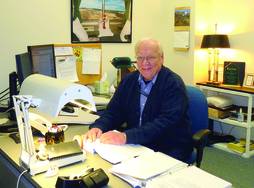
Question: When you look back to when you were a resident, are you surprised by the path your career has taken?
Dr. Baker: Absolutely. I grew up on a farm in a rural area. I went to college and to medical school with the goal of becoming a small-town physician, as my family physician had been when I was growing up. I was very comfortable with that into residency, because the folks who were faculty in the residency program and served as teaching mentors were basically physicians who were in small towns or had been in small towns.
When I went into practice in 1976, it was in what was then a relatively small town of 10,000 people. That town is now home to about 30,000 people, part of a bedroom community of Baltimore. So my goal to be the "country doctor" was never fully realized.
Even in that small-town environment, the writing was on the wall that family doctors as we had known them over the previous half century needed to evolve into a different kind of physician, one who was much more science based, one who was constantly interacting with other aspects of the medical community. Not that the country doctors over the previous half century didn’t do that – but it really became a necessity to do that.
Question: With that in mind and especially in light of some of the teaching activities that you still do, where do you see the specialty going as you talk to young physicians and as you look at how family medicine has changed over the past several decades?
Dr. Baker: Family medicine is still family medicine. So the physician who is going to practice broad-based family medicine still needs training in all the specialty disciplines in order to do that and to do that confidently. If somebody is going to take care of children and newborns and adolescents and young adults and middle-aged adults, as well as older persons, the different aspects of caring for certain age groups are constantly evolving and changing.
I think it is a lot harder, actually, than when I was in residency for somebody to be able to put together and achieve a sufficient level of education and skill level in the 3 years that the residency comprises.
Question: Do you have any advice for today’s residents – especially if they have an interest in geriatrics – about how to approach that and have a meaningful career?
Dr. Baker: If they are interested in geriatrics, they need to get a better understanding of what practicing geriatric medicine is all about. My advice to them would be to try to find a true geriatrician who is just doing geriatrics and try to spend time with that person and learn what his or her life as a geriatrician is all about. The second thing that they could do is to get involved with a nursing home.
Question: Looking back, what are some of the more rewarding things that have happened over the years in your career?
Dr. Baker: Overwhelmingly, No. 1 is the satisfaction of working with humans at whatever age, assisting them in their health care, and helping them to learn about themselves and their health issues and how to manage them. The second thing would be the period of practicing geriatrics for the frail elderly. I think the third significant concept of my practice life has been the joy of being a lifelong learner.
A Nonclinical Second Act: Dr. William D. Hakkarinen
Dr. William D. Hakkarinen was a 2nd-year family practice resident at Hershey Medical Center of Pennsylvania State University in 1971. Over the years, he has worked in rural and urban practices and served as director of the family practice residency at the Franklin Hospital Center in Baltimore. He is also a past president of the Maryland Academy of Family Medicine.
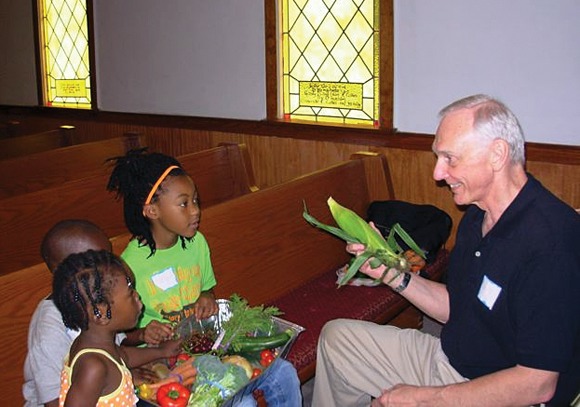
Starting in 2001, he switched to a nonclinical role, and currently works as a medical consultant in the Maryland Disability Determination Services, where he helps to review applicants for Social Security Disability.
Question: Did your family medicine training prepare you well, and were there any gaps that you noticed?
Dr. Hakkarinen: I wish I had had more ambulatory surgical training. There were surgical rotations, but I could have used even more. But that was then, and I think they have changed family practice residencies a lot since I went through. I could not say anything negative about family practice training. For me, it continues to be a wonderful career, and it was a great way to start.
Question: What were some of the biggest surprises for you in your family medicine clinical career?
Dr. Hakkarinen: From the clinical practice standpoint, I had no idea that psychiatric issues and depression were as common as they turned out to be. I think that’s well recognized now in residency programs, more so than when I first went through.
A sad surprise over time was how much of medicine became a business. I have to be frank. I was very naive as a resident. I looked at medicine as a calling, a profession – not a job. I was a residency director for 18 years, and my last year of residency directorship was in 2000. By then, the residents were talking about the jobs they were going to get after residency, rather than how to start their careers.
Question: Did you see interest in family medicine residencies decline?
Dr. Hakkarinen: As a residency director, we went from being at the peak of interest and being able to fill our residency slots three times over, to having to struggle and fight. That’s so sad, because the need is great – and the need is even greater as we talk about health care reform. It’s business. If you’re a medical student with $40,000, $60,000, $80,000, or $100,000 in debt, family practice incomes do not help you reduce your debt.
Question: Do you think the emphasis that’s being placed now on primary care through health reform will turn this around? Do policy makers need to address the financial pressures as well?
Dr. Hakkarinen: Oh, I think they need to do both. Yes, there has to be interest from health reform, but there has to be some way of coping with the cost.
One of the things that’s happening with health reform is that less-expensive ways of training to do primary care are becoming more evident. There are more people going into physician assistant programs and going into family nurse practitioner programs. It doesn’t cost as much to do that. I have been part of physician assistant and nurse practitioner training ever since the military. More and more, they are becoming not just physician adjuncts and expanders – they are becoming physician substitutes. I don’t know where it’s going to go, but if I were a young person today wanting to do primary care, I’d look long and hard at whether I want to spend what it takes to go to medical school.
Question: About 10 years ago, you left clinical practice for a nonclinical career as a medical consultant for the Maryland Disability Determination Services. Do you enjoy the work?
Dr. Hakkarinen: I absolutely love what I do. I come to work whistling, and I go home whistling. It’s a challenge; it’s satisfying; it’s helping people; it’s using the skills I learned as a family physician. This is an outstanding encore career.
Question: Do you recommend nonclinical careers for family physicians?
Dr. Hakkarinen: In general, I’d say do what you want and do what you can. If you’re happy and enjoying clinical medicine, I don’t think a nonclinical career is in any way by itself better than a clinical career. I think that your circumstances can change. I just think people need to recognize that you can be happy and satisfied doing either.
Question: Do you have any advice for today’s family medicine residents?
Dr. Hakkarinen: I would encourage today’s family physicians to keep the faith and look to find where they fit. There are plenty of places in the country that are crying for family physicians and will be eager for them. I don’t think there’s any dearth of opportunity anywhere.
Family practice has in some sense lived up to our expectation in that it is now an integral part of medicine. We’ve had surgeons general who are family physicians. We have medical school deans who are family physicians. With the exception of a very few medical schools, there’s full acceptance. But that means you’ve got to have continued standards and continued excellence.
Embracing Change: Dr. Daniel R. McCready
Dr. Daniel R. McCready was a 2nd-year family practice resident at Wilmington (Del.) Medical Center in 1971. He started out in solo practice in Virginia Beach in 1976, and over the years his practice grew to include several physicians and nurse practitioners.
In the early 1990s, the practice faced financial pressure. "The expenses were going up, and the reimbursements from the various third-party payers were going down," he said. "It was a bad situation." The solution came in the form of a partnership with the local hospital.
In 2009, Dr. McCready retired from clinical practice, at least for now. "On the very last day of work, I still enjoyed seeing patients the way I did when I was a family practice resident," he said. "It’s wonderful to be able to interact with people one on one."
Question: You were on the ground floor as family medicine got started as a specialty. Is it as relevant today?
Dr. McCready: I don’t see any real change. I think it’s good for people to have a primary doctor – the patient knows the doctor, and the doctor knows the patient and the patient’s family. There’s something very useful about that, because you then have this background of understanding that you can’t get when you just see a different doctor each time. The continuity is very useful in keeping things in context. I think maintaining that personal, quality, doctor-patient office visit is still as important now as it was then.
Question: When you look back, what were some of the biggest surprises for you?
Dr. McCready: I think a lot of things happened between 1971 and 2009 that I hadn’t expected. For example, when I first went into practice, it was the old idea that the doctor and the patient had this doctor-patient relationship. Also, for medical services rendered, the patient felt that it was between the patient and the doctor. As time went on, the third party became the one that started paying the bills, instead of the patient. Then we had the HMOs, then the managed care and gatekeeper idea.
With a lot of things that have happened, doctors initially have been surprised, shocked, concerned, and not sure what to do. But by our nature we have to be adaptable, because the landscape is constantly changing.
So urgent care centers came and went, and then we had diagnostic-related groups for hospitalized patients and that took awhile to get used to. Then you saw the advent of fewer and fewer doctors being in solo and small-group practices, and more and more doctors being affiliated with a hospital-based entity. I think that’s even truer now than ever. Then the electronic health record came in.
Question: What were the aspects of your career that you most enjoyed?
Dr. McCready: I always enjoy knocking on the door, going in, saying hello to the patient, and having that one-on-one interview. I was trained by my professor of medicine at the University of Maryland, Dr. Theodore Woodward, who said, "You just have to listen to the patient, and the patient will tell you what’s wrong most of the time." That ability to just go in and listen to people tell their story, I never got tired of that.
As family medicine was being formally recognized as a medical specialty in 1971, three young physicians were preparing to enter the field. Family Practice News, an Elsevier publication, sat down with the 2nd-year family practice residents at that time to find out what they thought of their training, their newly recognized specialty, and what their careers would hold.
Now, 40 years later, we invited them to look back on how their expectations stacked up to the reality of clinical practice.
Although the three physicians came into the specialty in much the same way, their subsequent career choices led them down different paths.
A Call to Geriatric Care: Dr. Alva S. Baker
Dr. Alva S. "Buzz" Baker was a 2nd-year resident at the University of Maryland in 1971. He spent several years in general family practice before deciding that he wanted to concentrate on geriatric medicine. Today, Dr. Baker serves as director of the center for the study of aging at McDaniel College in Westminster, Md., and teaches in the gerontology program. "A major emphasis of my life in the last several years has been on education of physicians and health professionals," he said.
Question: In terms of your work in geriatrics, how do you feel your medicine training prepared you for that – or did it?
Dr. Baker: It absolutely did not. Forty years ago, medical schools had very little emphasis on geriatric medicine. I have been involved in the care of people in nursing homes since 1972. As it was structured then, the training for geriatrics was really not sufficient in many residency training programs. I know that residencies now have more emphasis on geriatric medicine and taking care of older patients. The doctors who are coming out of residency now are going to live their lives in large part taking care of older persons.
Question: When you look back to when you were a resident, are you surprised by the path your career has taken?
Dr. Baker: Absolutely. I grew up on a farm in a rural area. I went to college and to medical school with the goal of becoming a small-town physician, as my family physician had been when I was growing up. I was very comfortable with that into residency, because the folks who were faculty in the residency program and served as teaching mentors were basically physicians who were in small towns or had been in small towns.
When I went into practice in 1976, it was in what was then a relatively small town of 10,000 people. That town is now home to about 30,000 people, part of a bedroom community of Baltimore. So my goal to be the "country doctor" was never fully realized.
Even in that small-town environment, the writing was on the wall that family doctors as we had known them over the previous half century needed to evolve into a different kind of physician, one who was much more science based, one who was constantly interacting with other aspects of the medical community. Not that the country doctors over the previous half century didn’t do that – but it really became a necessity to do that.
Question: With that in mind and especially in light of some of the teaching activities that you still do, where do you see the specialty going as you talk to young physicians and as you look at how family medicine has changed over the past several decades?
Dr. Baker: Family medicine is still family medicine. So the physician who is going to practice broad-based family medicine still needs training in all the specialty disciplines in order to do that and to do that confidently. If somebody is going to take care of children and newborns and adolescents and young adults and middle-aged adults, as well as older persons, the different aspects of caring for certain age groups are constantly evolving and changing.
I think it is a lot harder, actually, than when I was in residency for somebody to be able to put together and achieve a sufficient level of education and skill level in the 3 years that the residency comprises.
Question: Do you have any advice for today’s residents – especially if they have an interest in geriatrics – about how to approach that and have a meaningful career?
Dr. Baker: If they are interested in geriatrics, they need to get a better understanding of what practicing geriatric medicine is all about. My advice to them would be to try to find a true geriatrician who is just doing geriatrics and try to spend time with that person and learn what his or her life as a geriatrician is all about. The second thing that they could do is to get involved with a nursing home.
Question: Looking back, what are some of the more rewarding things that have happened over the years in your career?
Dr. Baker: Overwhelmingly, No. 1 is the satisfaction of working with humans at whatever age, assisting them in their health care, and helping them to learn about themselves and their health issues and how to manage them. The second thing would be the period of practicing geriatrics for the frail elderly. I think the third significant concept of my practice life has been the joy of being a lifelong learner.
A Nonclinical Second Act: Dr. William D. Hakkarinen
Dr. William D. Hakkarinen was a 2nd-year family practice resident at Hershey Medical Center of Pennsylvania State University in 1971. Over the years, he has worked in rural and urban practices and served as director of the family practice residency at the Franklin Hospital Center in Baltimore. He is also a past president of the Maryland Academy of Family Medicine.
Starting in 2001, he switched to a nonclinical role, and currently works as a medical consultant in the Maryland Disability Determination Services, where he helps to review applicants for Social Security Disability.
Question: Did your family medicine training prepare you well, and were there any gaps that you noticed?
Dr. Hakkarinen: I wish I had had more ambulatory surgical training. There were surgical rotations, but I could have used even more. But that was then, and I think they have changed family practice residencies a lot since I went through. I could not say anything negative about family practice training. For me, it continues to be a wonderful career, and it was a great way to start.
Question: What were some of the biggest surprises for you in your family medicine clinical career?
Dr. Hakkarinen: From the clinical practice standpoint, I had no idea that psychiatric issues and depression were as common as they turned out to be. I think that’s well recognized now in residency programs, more so than when I first went through.
A sad surprise over time was how much of medicine became a business. I have to be frank. I was very naive as a resident. I looked at medicine as a calling, a profession – not a job. I was a residency director for 18 years, and my last year of residency directorship was in 2000. By then, the residents were talking about the jobs they were going to get after residency, rather than how to start their careers.
Question: Did you see interest in family medicine residencies decline?
Dr. Hakkarinen: As a residency director, we went from being at the peak of interest and being able to fill our residency slots three times over, to having to struggle and fight. That’s so sad, because the need is great – and the need is even greater as we talk about health care reform. It’s business. If you’re a medical student with $40,000, $60,000, $80,000, or $100,000 in debt, family practice incomes do not help you reduce your debt.
Question: Do you think the emphasis that’s being placed now on primary care through health reform will turn this around? Do policy makers need to address the financial pressures as well?
Dr. Hakkarinen: Oh, I think they need to do both. Yes, there has to be interest from health reform, but there has to be some way of coping with the cost.
One of the things that’s happening with health reform is that less-expensive ways of training to do primary care are becoming more evident. There are more people going into physician assistant programs and going into family nurse practitioner programs. It doesn’t cost as much to do that. I have been part of physician assistant and nurse practitioner training ever since the military. More and more, they are becoming not just physician adjuncts and expanders – they are becoming physician substitutes. I don’t know where it’s going to go, but if I were a young person today wanting to do primary care, I’d look long and hard at whether I want to spend what it takes to go to medical school.
Question: About 10 years ago, you left clinical practice for a nonclinical career as a medical consultant for the Maryland Disability Determination Services. Do you enjoy the work?
Dr. Hakkarinen: I absolutely love what I do. I come to work whistling, and I go home whistling. It’s a challenge; it’s satisfying; it’s helping people; it’s using the skills I learned as a family physician. This is an outstanding encore career.
Question: Do you recommend nonclinical careers for family physicians?
Dr. Hakkarinen: In general, I’d say do what you want and do what you can. If you’re happy and enjoying clinical medicine, I don’t think a nonclinical career is in any way by itself better than a clinical career. I think that your circumstances can change. I just think people need to recognize that you can be happy and satisfied doing either.
Question: Do you have any advice for today’s family medicine residents?
Dr. Hakkarinen: I would encourage today’s family physicians to keep the faith and look to find where they fit. There are plenty of places in the country that are crying for family physicians and will be eager for them. I don’t think there’s any dearth of opportunity anywhere.
Family practice has in some sense lived up to our expectation in that it is now an integral part of medicine. We’ve had surgeons general who are family physicians. We have medical school deans who are family physicians. With the exception of a very few medical schools, there’s full acceptance. But that means you’ve got to have continued standards and continued excellence.
Embracing Change: Dr. Daniel R. McCready
Dr. Daniel R. McCready was a 2nd-year family practice resident at Wilmington (Del.) Medical Center in 1971. He started out in solo practice in Virginia Beach in 1976, and over the years his practice grew to include several physicians and nurse practitioners.
In the early 1990s, the practice faced financial pressure. "The expenses were going up, and the reimbursements from the various third-party payers were going down," he said. "It was a bad situation." The solution came in the form of a partnership with the local hospital.
In 2009, Dr. McCready retired from clinical practice, at least for now. "On the very last day of work, I still enjoyed seeing patients the way I did when I was a family practice resident," he said. "It’s wonderful to be able to interact with people one on one."
Question: You were on the ground floor as family medicine got started as a specialty. Is it as relevant today?
Dr. McCready: I don’t see any real change. I think it’s good for people to have a primary doctor – the patient knows the doctor, and the doctor knows the patient and the patient’s family. There’s something very useful about that, because you then have this background of understanding that you can’t get when you just see a different doctor each time. The continuity is very useful in keeping things in context. I think maintaining that personal, quality, doctor-patient office visit is still as important now as it was then.
Question: When you look back, what were some of the biggest surprises for you?
Dr. McCready: I think a lot of things happened between 1971 and 2009 that I hadn’t expected. For example, when I first went into practice, it was the old idea that the doctor and the patient had this doctor-patient relationship. Also, for medical services rendered, the patient felt that it was between the patient and the doctor. As time went on, the third party became the one that started paying the bills, instead of the patient. Then we had the HMOs, then the managed care and gatekeeper idea.
With a lot of things that have happened, doctors initially have been surprised, shocked, concerned, and not sure what to do. But by our nature we have to be adaptable, because the landscape is constantly changing.
So urgent care centers came and went, and then we had diagnostic-related groups for hospitalized patients and that took awhile to get used to. Then you saw the advent of fewer and fewer doctors being in solo and small-group practices, and more and more doctors being affiliated with a hospital-based entity. I think that’s even truer now than ever. Then the electronic health record came in.
Question: What were the aspects of your career that you most enjoyed?
Dr. McCready: I always enjoy knocking on the door, going in, saying hello to the patient, and having that one-on-one interview. I was trained by my professor of medicine at the University of Maryland, Dr. Theodore Woodward, who said, "You just have to listen to the patient, and the patient will tell you what’s wrong most of the time." That ability to just go in and listen to people tell their story, I never got tired of that.
As family medicine was being formally recognized as a medical specialty in 1971, three young physicians were preparing to enter the field. Family Practice News, an Elsevier publication, sat down with the 2nd-year family practice residents at that time to find out what they thought of their training, their newly recognized specialty, and what their careers would hold.
Now, 40 years later, we invited them to look back on how their expectations stacked up to the reality of clinical practice.
Although the three physicians came into the specialty in much the same way, their subsequent career choices led them down different paths.
A Call to Geriatric Care: Dr. Alva S. Baker
Dr. Alva S. "Buzz" Baker was a 2nd-year resident at the University of Maryland in 1971. He spent several years in general family practice before deciding that he wanted to concentrate on geriatric medicine. Today, Dr. Baker serves as director of the center for the study of aging at McDaniel College in Westminster, Md., and teaches in the gerontology program. "A major emphasis of my life in the last several years has been on education of physicians and health professionals," he said.
Question: In terms of your work in geriatrics, how do you feel your medicine training prepared you for that – or did it?
Dr. Baker: It absolutely did not. Forty years ago, medical schools had very little emphasis on geriatric medicine. I have been involved in the care of people in nursing homes since 1972. As it was structured then, the training for geriatrics was really not sufficient in many residency training programs. I know that residencies now have more emphasis on geriatric medicine and taking care of older patients. The doctors who are coming out of residency now are going to live their lives in large part taking care of older persons.
Question: When you look back to when you were a resident, are you surprised by the path your career has taken?
Dr. Baker: Absolutely. I grew up on a farm in a rural area. I went to college and to medical school with the goal of becoming a small-town physician, as my family physician had been when I was growing up. I was very comfortable with that into residency, because the folks who were faculty in the residency program and served as teaching mentors were basically physicians who were in small towns or had been in small towns.
When I went into practice in 1976, it was in what was then a relatively small town of 10,000 people. That town is now home to about 30,000 people, part of a bedroom community of Baltimore. So my goal to be the "country doctor" was never fully realized.
Even in that small-town environment, the writing was on the wall that family doctors as we had known them over the previous half century needed to evolve into a different kind of physician, one who was much more science based, one who was constantly interacting with other aspects of the medical community. Not that the country doctors over the previous half century didn’t do that – but it really became a necessity to do that.
Question: With that in mind and especially in light of some of the teaching activities that you still do, where do you see the specialty going as you talk to young physicians and as you look at how family medicine has changed over the past several decades?
Dr. Baker: Family medicine is still family medicine. So the physician who is going to practice broad-based family medicine still needs training in all the specialty disciplines in order to do that and to do that confidently. If somebody is going to take care of children and newborns and adolescents and young adults and middle-aged adults, as well as older persons, the different aspects of caring for certain age groups are constantly evolving and changing.
I think it is a lot harder, actually, than when I was in residency for somebody to be able to put together and achieve a sufficient level of education and skill level in the 3 years that the residency comprises.
Question: Do you have any advice for today’s residents – especially if they have an interest in geriatrics – about how to approach that and have a meaningful career?
Dr. Baker: If they are interested in geriatrics, they need to get a better understanding of what practicing geriatric medicine is all about. My advice to them would be to try to find a true geriatrician who is just doing geriatrics and try to spend time with that person and learn what his or her life as a geriatrician is all about. The second thing that they could do is to get involved with a nursing home.
Question: Looking back, what are some of the more rewarding things that have happened over the years in your career?
Dr. Baker: Overwhelmingly, No. 1 is the satisfaction of working with humans at whatever age, assisting them in their health care, and helping them to learn about themselves and their health issues and how to manage them. The second thing would be the period of practicing geriatrics for the frail elderly. I think the third significant concept of my practice life has been the joy of being a lifelong learner.
A Nonclinical Second Act: Dr. William D. Hakkarinen
Dr. William D. Hakkarinen was a 2nd-year family practice resident at Hershey Medical Center of Pennsylvania State University in 1971. Over the years, he has worked in rural and urban practices and served as director of the family practice residency at the Franklin Hospital Center in Baltimore. He is also a past president of the Maryland Academy of Family Medicine.
Starting in 2001, he switched to a nonclinical role, and currently works as a medical consultant in the Maryland Disability Determination Services, where he helps to review applicants for Social Security Disability.
Question: Did your family medicine training prepare you well, and were there any gaps that you noticed?
Dr. Hakkarinen: I wish I had had more ambulatory surgical training. There were surgical rotations, but I could have used even more. But that was then, and I think they have changed family practice residencies a lot since I went through. I could not say anything negative about family practice training. For me, it continues to be a wonderful career, and it was a great way to start.
Question: What were some of the biggest surprises for you in your family medicine clinical career?
Dr. Hakkarinen: From the clinical practice standpoint, I had no idea that psychiatric issues and depression were as common as they turned out to be. I think that’s well recognized now in residency programs, more so than when I first went through.
A sad surprise over time was how much of medicine became a business. I have to be frank. I was very naive as a resident. I looked at medicine as a calling, a profession – not a job. I was a residency director for 18 years, and my last year of residency directorship was in 2000. By then, the residents were talking about the jobs they were going to get after residency, rather than how to start their careers.
Question: Did you see interest in family medicine residencies decline?
Dr. Hakkarinen: As a residency director, we went from being at the peak of interest and being able to fill our residency slots three times over, to having to struggle and fight. That’s so sad, because the need is great – and the need is even greater as we talk about health care reform. It’s business. If you’re a medical student with $40,000, $60,000, $80,000, or $100,000 in debt, family practice incomes do not help you reduce your debt.
Question: Do you think the emphasis that’s being placed now on primary care through health reform will turn this around? Do policy makers need to address the financial pressures as well?
Dr. Hakkarinen: Oh, I think they need to do both. Yes, there has to be interest from health reform, but there has to be some way of coping with the cost.
One of the things that’s happening with health reform is that less-expensive ways of training to do primary care are becoming more evident. There are more people going into physician assistant programs and going into family nurse practitioner programs. It doesn’t cost as much to do that. I have been part of physician assistant and nurse practitioner training ever since the military. More and more, they are becoming not just physician adjuncts and expanders – they are becoming physician substitutes. I don’t know where it’s going to go, but if I were a young person today wanting to do primary care, I’d look long and hard at whether I want to spend what it takes to go to medical school.
Question: About 10 years ago, you left clinical practice for a nonclinical career as a medical consultant for the Maryland Disability Determination Services. Do you enjoy the work?
Dr. Hakkarinen: I absolutely love what I do. I come to work whistling, and I go home whistling. It’s a challenge; it’s satisfying; it’s helping people; it’s using the skills I learned as a family physician. This is an outstanding encore career.
Question: Do you recommend nonclinical careers for family physicians?
Dr. Hakkarinen: In general, I’d say do what you want and do what you can. If you’re happy and enjoying clinical medicine, I don’t think a nonclinical career is in any way by itself better than a clinical career. I think that your circumstances can change. I just think people need to recognize that you can be happy and satisfied doing either.
Question: Do you have any advice for today’s family medicine residents?
Dr. Hakkarinen: I would encourage today’s family physicians to keep the faith and look to find where they fit. There are plenty of places in the country that are crying for family physicians and will be eager for them. I don’t think there’s any dearth of opportunity anywhere.
Family practice has in some sense lived up to our expectation in that it is now an integral part of medicine. We’ve had surgeons general who are family physicians. We have medical school deans who are family physicians. With the exception of a very few medical schools, there’s full acceptance. But that means you’ve got to have continued standards and continued excellence.
Embracing Change: Dr. Daniel R. McCready
Dr. Daniel R. McCready was a 2nd-year family practice resident at Wilmington (Del.) Medical Center in 1971. He started out in solo practice in Virginia Beach in 1976, and over the years his practice grew to include several physicians and nurse practitioners.
In the early 1990s, the practice faced financial pressure. "The expenses were going up, and the reimbursements from the various third-party payers were going down," he said. "It was a bad situation." The solution came in the form of a partnership with the local hospital.
In 2009, Dr. McCready retired from clinical practice, at least for now. "On the very last day of work, I still enjoyed seeing patients the way I did when I was a family practice resident," he said. "It’s wonderful to be able to interact with people one on one."
Question: You were on the ground floor as family medicine got started as a specialty. Is it as relevant today?
Dr. McCready: I don’t see any real change. I think it’s good for people to have a primary doctor – the patient knows the doctor, and the doctor knows the patient and the patient’s family. There’s something very useful about that, because you then have this background of understanding that you can’t get when you just see a different doctor each time. The continuity is very useful in keeping things in context. I think maintaining that personal, quality, doctor-patient office visit is still as important now as it was then.
Question: When you look back, what were some of the biggest surprises for you?
Dr. McCready: I think a lot of things happened between 1971 and 2009 that I hadn’t expected. For example, when I first went into practice, it was the old idea that the doctor and the patient had this doctor-patient relationship. Also, for medical services rendered, the patient felt that it was between the patient and the doctor. As time went on, the third party became the one that started paying the bills, instead of the patient. Then we had the HMOs, then the managed care and gatekeeper idea.
With a lot of things that have happened, doctors initially have been surprised, shocked, concerned, and not sure what to do. But by our nature we have to be adaptable, because the landscape is constantly changing.
So urgent care centers came and went, and then we had diagnostic-related groups for hospitalized patients and that took awhile to get used to. Then you saw the advent of fewer and fewer doctors being in solo and small-group practices, and more and more doctors being affiliated with a hospital-based entity. I think that’s even truer now than ever. Then the electronic health record came in.
Question: What were the aspects of your career that you most enjoyed?
Dr. McCready: I always enjoy knocking on the door, going in, saying hello to the patient, and having that one-on-one interview. I was trained by my professor of medicine at the University of Maryland, Dr. Theodore Woodward, who said, "You just have to listen to the patient, and the patient will tell you what’s wrong most of the time." That ability to just go in and listen to people tell their story, I never got tired of that.
Physicians Reflect on Four Decades in Family Medicine
As family medicine was being formally recognized as a medical specialty in 1971, three young physicians were preparing to enter the field. Family Practice News, an Elsevier publication, sat down with the 2nd-year family practice residents at that time to find out what they thought of their training, their newly recognized specialty, and what their careers would hold.
Now, 40 years later, we invited them to look back on how their expectations stacked up to the reality of clinical practice.
Although the three physicians came into the specialty in much the same way, their subsequent career choices led them down different paths.
A Call to Geriatric Care: Dr. Alva S. Baker
Dr. Alva S. "Buzz" Baker was a 2nd-year resident at the University of Maryland in 1971. He spent several years in general family practice before deciding that he wanted to concentrate on geriatric medicine. Today, Dr. Baker serves as director of the center for the study of aging at McDaniel College in Westminster, Md., and teaches in the gerontology program. "A major emphasis of my life in the last several years has been on education of physicians and health professionals," he said.
Question: In terms of your work in geriatrics, how do you feel your medicine training prepared you for that – or did it?
Dr. Baker: It absolutely did not. Forty years ago, medical schools had very little emphasis on geriatric medicine. I have been involved in the care of people in nursing homes since 1972. As it was structured then, the training for geriatrics was really not sufficient in many residency training programs. I know that residencies now have more emphasis on geriatric medicine and taking care of older patients. The doctors who are coming out of residency now are going to live their lives in large part taking care of older persons.
Question: When you look back to when you were a resident, are you surprised by the path your career has taken?
Dr. Baker: Absolutely. I grew up on a farm in a rural area. I went to college and to medical school with the goal of becoming a small-town physician, as my family physician had been when I was growing up. I was very comfortable with that into residency, because the folks who were faculty in the residency program and served as teaching mentors were basically physicians who were in small towns or had been in small towns.
When I went into practice in 1976, it was in what was then a relatively small town of 10,000 people. That town is now home to about 30,000 people, part of a bedroom community of Baltimore. So my goal to be the "country doctor" was never fully realized.
Even in that small-town environment, the writing was on the wall that family doctors as we had known them over the previous half century needed to evolve into a different kind of physician, one who was much more science based, one who was constantly interacting with other aspects of the medical community. Not that the country doctors over the previous half century didn’t do that – but it really became a necessity to do that.
Question: With that in mind and especially in light of some of the teaching activities that you still do, where do you see the specialty going as you talk to young physicians and as you look at how family medicine has changed over the past several decades?
Dr. Baker: Family medicine is still family medicine. So the physician who is going to practice broad-based family medicine still needs training in all the specialty disciplines in order to do that and to do that confidently. If somebody is going to take care of children and newborns and adolescents and young adults and middle-aged adults, as well as older persons, the different aspects of caring for certain age groups are constantly evolving and changing.
I think it is a lot harder, actually, than when I was in residency for somebody to be able to put together and achieve a sufficient level of education and skill level in the 3 years that the residency comprises.
Question: Do you have any advice for today’s residents – especially if they have an interest in geriatrics – about how to approach that and have a meaningful career?
Dr. Baker: If they are interested in geriatrics, they need to get a better understanding of what practicing geriatric medicine is all about. My advice to them would be to try to find a true geriatrician who is just doing geriatrics and try to spend time with that person and learn what his or her life as a geriatrician is all about. The second thing that they could do is to get involved with a nursing home.
Question: Looking back, what are some of the more rewarding things that have happened over the years in your career?
Dr. Baker: Overwhelmingly, No. 1 is the satisfaction of working with humans at whatever age, assisting them in their health care, and helping them to learn about themselves and their health issues and how to manage them. The second thing would be the period of practicing geriatrics for the frail elderly. I think the third significant concept of my practice life has been the joy of being a lifelong learner.
A Nonclinical Second Act: Dr. William D. Hakkarinen
Dr. William D. Hakkarinen was a 2nd-year family practice resident at Hershey Medical Center of Pennsylvania State University in 1971. Over the years, he has worked in rural and urban practices and served as director of the family practice residency at the Franklin Hospital Center in Baltimore. He is also a past president of the Maryland Academy of Family Medicine.
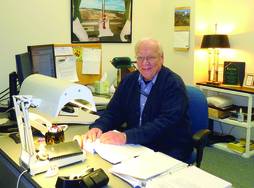
Starting in 2001, he switched to a nonclinical role, and currently works as a medical consultant in the Maryland Disability Determination Services, where he helps to review applicants for Social Security Disability.
Question: Did your family medicine training prepare you well, and were there any gaps that you noticed?
Dr. Hakkarinen: I wish I had had more ambulatory surgical training. There were surgical rotations, but I could have used even more. But that was then, and I think they have changed family practice residencies a lot since I went through. I could not say anything negative about family practice training. For me, it continues to be a wonderful career, and it was a great way to start.
Question: What were some of the biggest surprises for you in your family medicine clinical career?
Dr. Hakkarinen: From the clinical practice standpoint, I had no idea that psychiatric issues and depression were as common as they turned out to be. I think that’s well recognized now in residency programs, more so than when I first went through.
A sad surprise over time was how much of medicine became a business. I have to be frank. I was very naive as a resident. I looked at medicine as a calling, a profession – not a job. I was a residency director for 18 years, and my last year of residency directorship was in 2000. By then, the residents were talking about the jobs they were going to get after residency, rather than how to start their careers.
Question: Did you see interest in family medicine residencies decline?
Dr. Hakkarinen: As a residency director, we went from being at the peak of interest and being able to fill our residency slots three times over, to having to struggle and fight. That’s so sad, because the need is great – and the need is even greater as we talk about health care reform. It’s business. If you’re a medical student with $40,000, $60,000, $80,000, or $100,000 in debt, family practice incomes do not help you reduce your debt.
Question: Do you think the emphasis that’s being placed now on primary care through health reform will turn this around? Do policy makers need to address the financial pressures as well?
Dr. Hakkarinen: Oh, I think they need to do both. Yes, there has to be interest from health reform, but there has to be some way of coping with the cost.
One of the things that’s happening with health reform is that less-expensive ways of training to do primary care are becoming more evident. There are more people going into physician assistant programs and going into family nurse practitioner programs. It doesn’t cost as much to do that. I have been part of physician assistant and nurse practitioner training ever since the military. More and more, they are becoming not just physician adjuncts and expanders – they are becoming physician substitutes. I don’t know where it’s going to go, but if I were a young person today wanting to do primary care, I’d look long and hard at whether I want to spend what it takes to go to medical school.
Question: About 10 years ago, you left clinical practice for a nonclinical career as a medical consultant for the Maryland Disability Determination Services. Do you enjoy the work?
Dr. Hakkarinen: I absolutely love what I do. I come to work whistling, and I go home whistling. It’s a challenge; it’s satisfying; it’s helping people; it’s using the skills I learned as a family physician. This is an outstanding encore career.
Question: Do you recommend nonclinical careers for family physicians?
Dr. Hakkarinen: In general, I’d say do what you want and do what you can. If you’re happy and enjoying clinical medicine, I don’t think a nonclinical career is in any way by itself better than a clinical career. I think that your circumstances can change. I just think people need to recognize that you can be happy and satisfied doing either.
Question: Do you have any advice for today’s family medicine residents?
Dr. Hakkarinen: I would encourage today’s family physicians to keep the faith and look to find where they fit. There are plenty of places in the country that are crying for family physicians and will be eager for them. I don’t think there’s any dearth of opportunity anywhere.
Family practice has in some sense lived up to our expectation in that it is now an integral part of medicine. We’ve had surgeons general who are family physicians. We have medical school deans who are family physicians. With the exception of a very few medical schools, there’s full acceptance. But that means you’ve got to have continued standards and continued excellence.
Embracing Change: Dr. Daniel R. McCready
Dr. Daniel R. McCready was a 2nd-year family practice resident at Wilmington (Del.) Medical Center in 1971. He started out in solo practice in Virginia Beach in 1976, and over the years his practice grew to include several physicians and nurse practitioners.
In the early 1990s, the practice faced financial pressure. "The expenses were going up, and the reimbursements from the various third-party payers were going down," he said. "It was a bad situation." The solution came in the form of a partnership with the local hospital.
In 2009, Dr. McCready retired from clinical practice, at least for now. "On the very last day of work, I still enjoyed seeing patients the way I did when I was a family practice resident," he said. "It’s wonderful to be able to interact with people one on one."
Question: You were on the ground floor as family medicine got started as a specialty. Is it as relevant today?
Dr. McCready: I don’t see any real change. I think it’s good for people to have a primary doctor – the patient knows the doctor, and the doctor knows the patient and the patient’s family. There’s something very useful about that, because you then have this background of understanding that you can’t get when you just see a different doctor each time. The continuity is very useful in keeping things in context. I think maintaining that personal, quality, doctor-patient office visit is still as important now as it was then.
Question: When you look back, what were some of the biggest surprises for you?
Dr. McCready: I think a lot of things happened between 1971 and 2009 that I hadn’t expected. For example, when I first went into practice, it was the old idea that the doctor and the patient had this doctor-patient relationship. Also, for medical services rendered, the patient felt that it was between the patient and the doctor. As time went on, the third party became the one that started paying the bills, instead of the patient. Then we had the HMOs, then the managed care and gatekeeper idea.
With a lot of things that have happened, doctors initially have been surprised, shocked, concerned, and not sure what to do. But by our nature we have to be adaptable, because the landscape is constantly changing.
So urgent care centers came and went, and then we had diagnostic-related groups for hospitalized patients and that took awhile to get used to. Then you saw the advent of fewer and fewer doctors being in solo and small-group practices, and more and more doctors being affiliated with a hospital-based entity. I think that’s even truer now than ever. Then the electronic health record came in.
Question: What were the aspects of your career that you most enjoyed?
Dr. McCready: I always enjoy knocking on the door, going in, saying hello to the patient, and having that one-on-one interview. I was trained by my professor of medicine at the University of Maryland, Dr. Theodore Woodward, who said, "You just have to listen to the patient, and the patient will tell you what’s wrong most of the time." That ability to just go in and listen to people tell their story, I never got tired of that.
As family medicine was being formally recognized as a medical specialty in 1971, three young physicians were preparing to enter the field. Family Practice News, an Elsevier publication, sat down with the 2nd-year family practice residents at that time to find out what they thought of their training, their newly recognized specialty, and what their careers would hold.
Now, 40 years later, we invited them to look back on how their expectations stacked up to the reality of clinical practice.
Although the three physicians came into the specialty in much the same way, their subsequent career choices led them down different paths.
A Call to Geriatric Care: Dr. Alva S. Baker
Dr. Alva S. "Buzz" Baker was a 2nd-year resident at the University of Maryland in 1971. He spent several years in general family practice before deciding that he wanted to concentrate on geriatric medicine. Today, Dr. Baker serves as director of the center for the study of aging at McDaniel College in Westminster, Md., and teaches in the gerontology program. "A major emphasis of my life in the last several years has been on education of physicians and health professionals," he said.
Question: In terms of your work in geriatrics, how do you feel your medicine training prepared you for that – or did it?
Dr. Baker: It absolutely did not. Forty years ago, medical schools had very little emphasis on geriatric medicine. I have been involved in the care of people in nursing homes since 1972. As it was structured then, the training for geriatrics was really not sufficient in many residency training programs. I know that residencies now have more emphasis on geriatric medicine and taking care of older patients. The doctors who are coming out of residency now are going to live their lives in large part taking care of older persons.
Question: When you look back to when you were a resident, are you surprised by the path your career has taken?
Dr. Baker: Absolutely. I grew up on a farm in a rural area. I went to college and to medical school with the goal of becoming a small-town physician, as my family physician had been when I was growing up. I was very comfortable with that into residency, because the folks who were faculty in the residency program and served as teaching mentors were basically physicians who were in small towns or had been in small towns.
When I went into practice in 1976, it was in what was then a relatively small town of 10,000 people. That town is now home to about 30,000 people, part of a bedroom community of Baltimore. So my goal to be the "country doctor" was never fully realized.
Even in that small-town environment, the writing was on the wall that family doctors as we had known them over the previous half century needed to evolve into a different kind of physician, one who was much more science based, one who was constantly interacting with other aspects of the medical community. Not that the country doctors over the previous half century didn’t do that – but it really became a necessity to do that.
Question: With that in mind and especially in light of some of the teaching activities that you still do, where do you see the specialty going as you talk to young physicians and as you look at how family medicine has changed over the past several decades?
Dr. Baker: Family medicine is still family medicine. So the physician who is going to practice broad-based family medicine still needs training in all the specialty disciplines in order to do that and to do that confidently. If somebody is going to take care of children and newborns and adolescents and young adults and middle-aged adults, as well as older persons, the different aspects of caring for certain age groups are constantly evolving and changing.
I think it is a lot harder, actually, than when I was in residency for somebody to be able to put together and achieve a sufficient level of education and skill level in the 3 years that the residency comprises.
Question: Do you have any advice for today’s residents – especially if they have an interest in geriatrics – about how to approach that and have a meaningful career?
Dr. Baker: If they are interested in geriatrics, they need to get a better understanding of what practicing geriatric medicine is all about. My advice to them would be to try to find a true geriatrician who is just doing geriatrics and try to spend time with that person and learn what his or her life as a geriatrician is all about. The second thing that they could do is to get involved with a nursing home.
Question: Looking back, what are some of the more rewarding things that have happened over the years in your career?
Dr. Baker: Overwhelmingly, No. 1 is the satisfaction of working with humans at whatever age, assisting them in their health care, and helping them to learn about themselves and their health issues and how to manage them. The second thing would be the period of practicing geriatrics for the frail elderly. I think the third significant concept of my practice life has been the joy of being a lifelong learner.
A Nonclinical Second Act: Dr. William D. Hakkarinen
Dr. William D. Hakkarinen was a 2nd-year family practice resident at Hershey Medical Center of Pennsylvania State University in 1971. Over the years, he has worked in rural and urban practices and served as director of the family practice residency at the Franklin Hospital Center in Baltimore. He is also a past president of the Maryland Academy of Family Medicine.
Starting in 2001, he switched to a nonclinical role, and currently works as a medical consultant in the Maryland Disability Determination Services, where he helps to review applicants for Social Security Disability.
Question: Did your family medicine training prepare you well, and were there any gaps that you noticed?
Dr. Hakkarinen: I wish I had had more ambulatory surgical training. There were surgical rotations, but I could have used even more. But that was then, and I think they have changed family practice residencies a lot since I went through. I could not say anything negative about family practice training. For me, it continues to be a wonderful career, and it was a great way to start.
Question: What were some of the biggest surprises for you in your family medicine clinical career?
Dr. Hakkarinen: From the clinical practice standpoint, I had no idea that psychiatric issues and depression were as common as they turned out to be. I think that’s well recognized now in residency programs, more so than when I first went through.
A sad surprise over time was how much of medicine became a business. I have to be frank. I was very naive as a resident. I looked at medicine as a calling, a profession – not a job. I was a residency director for 18 years, and my last year of residency directorship was in 2000. By then, the residents were talking about the jobs they were going to get after residency, rather than how to start their careers.
Question: Did you see interest in family medicine residencies decline?
Dr. Hakkarinen: As a residency director, we went from being at the peak of interest and being able to fill our residency slots three times over, to having to struggle and fight. That’s so sad, because the need is great – and the need is even greater as we talk about health care reform. It’s business. If you’re a medical student with $40,000, $60,000, $80,000, or $100,000 in debt, family practice incomes do not help you reduce your debt.
Question: Do you think the emphasis that’s being placed now on primary care through health reform will turn this around? Do policy makers need to address the financial pressures as well?
Dr. Hakkarinen: Oh, I think they need to do both. Yes, there has to be interest from health reform, but there has to be some way of coping with the cost.
One of the things that’s happening with health reform is that less-expensive ways of training to do primary care are becoming more evident. There are more people going into physician assistant programs and going into family nurse practitioner programs. It doesn’t cost as much to do that. I have been part of physician assistant and nurse practitioner training ever since the military. More and more, they are becoming not just physician adjuncts and expanders – they are becoming physician substitutes. I don’t know where it’s going to go, but if I were a young person today wanting to do primary care, I’d look long and hard at whether I want to spend what it takes to go to medical school.
Question: About 10 years ago, you left clinical practice for a nonclinical career as a medical consultant for the Maryland Disability Determination Services. Do you enjoy the work?
Dr. Hakkarinen: I absolutely love what I do. I come to work whistling, and I go home whistling. It’s a challenge; it’s satisfying; it’s helping people; it’s using the skills I learned as a family physician. This is an outstanding encore career.
Question: Do you recommend nonclinical careers for family physicians?
Dr. Hakkarinen: In general, I’d say do what you want and do what you can. If you’re happy and enjoying clinical medicine, I don’t think a nonclinical career is in any way by itself better than a clinical career. I think that your circumstances can change. I just think people need to recognize that you can be happy and satisfied doing either.
Question: Do you have any advice for today’s family medicine residents?
Dr. Hakkarinen: I would encourage today’s family physicians to keep the faith and look to find where they fit. There are plenty of places in the country that are crying for family physicians and will be eager for them. I don’t think there’s any dearth of opportunity anywhere.
Family practice has in some sense lived up to our expectation in that it is now an integral part of medicine. We’ve had surgeons general who are family physicians. We have medical school deans who are family physicians. With the exception of a very few medical schools, there’s full acceptance. But that means you’ve got to have continued standards and continued excellence.
Embracing Change: Dr. Daniel R. McCready
Dr. Daniel R. McCready was a 2nd-year family practice resident at Wilmington (Del.) Medical Center in 1971. He started out in solo practice in Virginia Beach in 1976, and over the years his practice grew to include several physicians and nurse practitioners.
In the early 1990s, the practice faced financial pressure. "The expenses were going up, and the reimbursements from the various third-party payers were going down," he said. "It was a bad situation." The solution came in the form of a partnership with the local hospital.
In 2009, Dr. McCready retired from clinical practice, at least for now. "On the very last day of work, I still enjoyed seeing patients the way I did when I was a family practice resident," he said. "It’s wonderful to be able to interact with people one on one."
Question: You were on the ground floor as family medicine got started as a specialty. Is it as relevant today?
Dr. McCready: I don’t see any real change. I think it’s good for people to have a primary doctor – the patient knows the doctor, and the doctor knows the patient and the patient’s family. There’s something very useful about that, because you then have this background of understanding that you can’t get when you just see a different doctor each time. The continuity is very useful in keeping things in context. I think maintaining that personal, quality, doctor-patient office visit is still as important now as it was then.
Question: When you look back, what were some of the biggest surprises for you?
Dr. McCready: I think a lot of things happened between 1971 and 2009 that I hadn’t expected. For example, when I first went into practice, it was the old idea that the doctor and the patient had this doctor-patient relationship. Also, for medical services rendered, the patient felt that it was between the patient and the doctor. As time went on, the third party became the one that started paying the bills, instead of the patient. Then we had the HMOs, then the managed care and gatekeeper idea.
With a lot of things that have happened, doctors initially have been surprised, shocked, concerned, and not sure what to do. But by our nature we have to be adaptable, because the landscape is constantly changing.
So urgent care centers came and went, and then we had diagnostic-related groups for hospitalized patients and that took awhile to get used to. Then you saw the advent of fewer and fewer doctors being in solo and small-group practices, and more and more doctors being affiliated with a hospital-based entity. I think that’s even truer now than ever. Then the electronic health record came in.
Question: What were the aspects of your career that you most enjoyed?
Dr. McCready: I always enjoy knocking on the door, going in, saying hello to the patient, and having that one-on-one interview. I was trained by my professor of medicine at the University of Maryland, Dr. Theodore Woodward, who said, "You just have to listen to the patient, and the patient will tell you what’s wrong most of the time." That ability to just go in and listen to people tell their story, I never got tired of that.
As family medicine was being formally recognized as a medical specialty in 1971, three young physicians were preparing to enter the field. Family Practice News, an Elsevier publication, sat down with the 2nd-year family practice residents at that time to find out what they thought of their training, their newly recognized specialty, and what their careers would hold.
Now, 40 years later, we invited them to look back on how their expectations stacked up to the reality of clinical practice.
Although the three physicians came into the specialty in much the same way, their subsequent career choices led them down different paths.
A Call to Geriatric Care: Dr. Alva S. Baker
Dr. Alva S. "Buzz" Baker was a 2nd-year resident at the University of Maryland in 1971. He spent several years in general family practice before deciding that he wanted to concentrate on geriatric medicine. Today, Dr. Baker serves as director of the center for the study of aging at McDaniel College in Westminster, Md., and teaches in the gerontology program. "A major emphasis of my life in the last several years has been on education of physicians and health professionals," he said.
Question: In terms of your work in geriatrics, how do you feel your medicine training prepared you for that – or did it?
Dr. Baker: It absolutely did not. Forty years ago, medical schools had very little emphasis on geriatric medicine. I have been involved in the care of people in nursing homes since 1972. As it was structured then, the training for geriatrics was really not sufficient in many residency training programs. I know that residencies now have more emphasis on geriatric medicine and taking care of older patients. The doctors who are coming out of residency now are going to live their lives in large part taking care of older persons.
Question: When you look back to when you were a resident, are you surprised by the path your career has taken?
Dr. Baker: Absolutely. I grew up on a farm in a rural area. I went to college and to medical school with the goal of becoming a small-town physician, as my family physician had been when I was growing up. I was very comfortable with that into residency, because the folks who were faculty in the residency program and served as teaching mentors were basically physicians who were in small towns or had been in small towns.
When I went into practice in 1976, it was in what was then a relatively small town of 10,000 people. That town is now home to about 30,000 people, part of a bedroom community of Baltimore. So my goal to be the "country doctor" was never fully realized.
Even in that small-town environment, the writing was on the wall that family doctors as we had known them over the previous half century needed to evolve into a different kind of physician, one who was much more science based, one who was constantly interacting with other aspects of the medical community. Not that the country doctors over the previous half century didn’t do that – but it really became a necessity to do that.
Question: With that in mind and especially in light of some of the teaching activities that you still do, where do you see the specialty going as you talk to young physicians and as you look at how family medicine has changed over the past several decades?
Dr. Baker: Family medicine is still family medicine. So the physician who is going to practice broad-based family medicine still needs training in all the specialty disciplines in order to do that and to do that confidently. If somebody is going to take care of children and newborns and adolescents and young adults and middle-aged adults, as well as older persons, the different aspects of caring for certain age groups are constantly evolving and changing.
I think it is a lot harder, actually, than when I was in residency for somebody to be able to put together and achieve a sufficient level of education and skill level in the 3 years that the residency comprises.
Question: Do you have any advice for today’s residents – especially if they have an interest in geriatrics – about how to approach that and have a meaningful career?
Dr. Baker: If they are interested in geriatrics, they need to get a better understanding of what practicing geriatric medicine is all about. My advice to them would be to try to find a true geriatrician who is just doing geriatrics and try to spend time with that person and learn what his or her life as a geriatrician is all about. The second thing that they could do is to get involved with a nursing home.
Question: Looking back, what are some of the more rewarding things that have happened over the years in your career?
Dr. Baker: Overwhelmingly, No. 1 is the satisfaction of working with humans at whatever age, assisting them in their health care, and helping them to learn about themselves and their health issues and how to manage them. The second thing would be the period of practicing geriatrics for the frail elderly. I think the third significant concept of my practice life has been the joy of being a lifelong learner.
A Nonclinical Second Act: Dr. William D. Hakkarinen
Dr. William D. Hakkarinen was a 2nd-year family practice resident at Hershey Medical Center of Pennsylvania State University in 1971. Over the years, he has worked in rural and urban practices and served as director of the family practice residency at the Franklin Hospital Center in Baltimore. He is also a past president of the Maryland Academy of Family Medicine.
Starting in 2001, he switched to a nonclinical role, and currently works as a medical consultant in the Maryland Disability Determination Services, where he helps to review applicants for Social Security Disability.
Question: Did your family medicine training prepare you well, and were there any gaps that you noticed?
Dr. Hakkarinen: I wish I had had more ambulatory surgical training. There were surgical rotations, but I could have used even more. But that was then, and I think they have changed family practice residencies a lot since I went through. I could not say anything negative about family practice training. For me, it continues to be a wonderful career, and it was a great way to start.
Question: What were some of the biggest surprises for you in your family medicine clinical career?
Dr. Hakkarinen: From the clinical practice standpoint, I had no idea that psychiatric issues and depression were as common as they turned out to be. I think that’s well recognized now in residency programs, more so than when I first went through.
A sad surprise over time was how much of medicine became a business. I have to be frank. I was very naive as a resident. I looked at medicine as a calling, a profession – not a job. I was a residency director for 18 years, and my last year of residency directorship was in 2000. By then, the residents were talking about the jobs they were going to get after residency, rather than how to start their careers.
Question: Did you see interest in family medicine residencies decline?
Dr. Hakkarinen: As a residency director, we went from being at the peak of interest and being able to fill our residency slots three times over, to having to struggle and fight. That’s so sad, because the need is great – and the need is even greater as we talk about health care reform. It’s business. If you’re a medical student with $40,000, $60,000, $80,000, or $100,000 in debt, family practice incomes do not help you reduce your debt.
Question: Do you think the emphasis that’s being placed now on primary care through health reform will turn this around? Do policy makers need to address the financial pressures as well?
Dr. Hakkarinen: Oh, I think they need to do both. Yes, there has to be interest from health reform, but there has to be some way of coping with the cost.
One of the things that’s happening with health reform is that less-expensive ways of training to do primary care are becoming more evident. There are more people going into physician assistant programs and going into family nurse practitioner programs. It doesn’t cost as much to do that. I have been part of physician assistant and nurse practitioner training ever since the military. More and more, they are becoming not just physician adjuncts and expanders – they are becoming physician substitutes. I don’t know where it’s going to go, but if I were a young person today wanting to do primary care, I’d look long and hard at whether I want to spend what it takes to go to medical school.
Question: About 10 years ago, you left clinical practice for a nonclinical career as a medical consultant for the Maryland Disability Determination Services. Do you enjoy the work?
Dr. Hakkarinen: I absolutely love what I do. I come to work whistling, and I go home whistling. It’s a challenge; it’s satisfying; it’s helping people; it’s using the skills I learned as a family physician. This is an outstanding encore career.
Question: Do you recommend nonclinical careers for family physicians?
Dr. Hakkarinen: In general, I’d say do what you want and do what you can. If you’re happy and enjoying clinical medicine, I don’t think a nonclinical career is in any way by itself better than a clinical career. I think that your circumstances can change. I just think people need to recognize that you can be happy and satisfied doing either.
Question: Do you have any advice for today’s family medicine residents?
Dr. Hakkarinen: I would encourage today’s family physicians to keep the faith and look to find where they fit. There are plenty of places in the country that are crying for family physicians and will be eager for them. I don’t think there’s any dearth of opportunity anywhere.
Family practice has in some sense lived up to our expectation in that it is now an integral part of medicine. We’ve had surgeons general who are family physicians. We have medical school deans who are family physicians. With the exception of a very few medical schools, there’s full acceptance. But that means you’ve got to have continued standards and continued excellence.
Embracing Change: Dr. Daniel R. McCready
Dr. Daniel R. McCready was a 2nd-year family practice resident at Wilmington (Del.) Medical Center in 1971. He started out in solo practice in Virginia Beach in 1976, and over the years his practice grew to include several physicians and nurse practitioners.
In the early 1990s, the practice faced financial pressure. "The expenses were going up, and the reimbursements from the various third-party payers were going down," he said. "It was a bad situation." The solution came in the form of a partnership with the local hospital.
In 2009, Dr. McCready retired from clinical practice, at least for now. "On the very last day of work, I still enjoyed seeing patients the way I did when I was a family practice resident," he said. "It’s wonderful to be able to interact with people one on one."
Question: You were on the ground floor as family medicine got started as a specialty. Is it as relevant today?
Dr. McCready: I don’t see any real change. I think it’s good for people to have a primary doctor – the patient knows the doctor, and the doctor knows the patient and the patient’s family. There’s something very useful about that, because you then have this background of understanding that you can’t get when you just see a different doctor each time. The continuity is very useful in keeping things in context. I think maintaining that personal, quality, doctor-patient office visit is still as important now as it was then.
Question: When you look back, what were some of the biggest surprises for you?
Dr. McCready: I think a lot of things happened between 1971 and 2009 that I hadn’t expected. For example, when I first went into practice, it was the old idea that the doctor and the patient had this doctor-patient relationship. Also, for medical services rendered, the patient felt that it was between the patient and the doctor. As time went on, the third party became the one that started paying the bills, instead of the patient. Then we had the HMOs, then the managed care and gatekeeper idea.
With a lot of things that have happened, doctors initially have been surprised, shocked, concerned, and not sure what to do. But by our nature we have to be adaptable, because the landscape is constantly changing.
So urgent care centers came and went, and then we had diagnostic-related groups for hospitalized patients and that took awhile to get used to. Then you saw the advent of fewer and fewer doctors being in solo and small-group practices, and more and more doctors being affiliated with a hospital-based entity. I think that’s even truer now than ever. Then the electronic health record came in.
Question: What were the aspects of your career that you most enjoyed?
Dr. McCready: I always enjoy knocking on the door, going in, saying hello to the patient, and having that one-on-one interview. I was trained by my professor of medicine at the University of Maryland, Dr. Theodore Woodward, who said, "You just have to listen to the patient, and the patient will tell you what’s wrong most of the time." That ability to just go in and listen to people tell their story, I never got tired of that.
Minimally Invasive Cosmetic Surgery Continues to Rise
Interest in cosmetic surgery is increasing as consumers gain confidence in the economy, according to the American Society of Plastic Surgeons.
New statistics from the ASPS show that 13.1 million cosmetic plastic surgery procedures were performed in the United States last year, an increase of 5% over 2009. The increase reflects growth in both surgical procedures such as breast augmentation and minimally-invasive procedures such as injections of Botulinum toxin type A and soft-tissue fillers.

The ASPS statistics come from an annual survey of 747 physicians who perform cosmetic procedures, as well as an online national database for plastic surgery procedures.
"There's some pent up demand for cosmetic surgical procedures," Dr. Phillip Haeck, ASPS president, said in a statement. "People have waited a couple of years or more to have procedures, until their finances were at least somewhat back in order. But all indications are [that] more consumers are again willing to spend more to look better."
There are a number of factors potentially driving the increase in cosmetic surgery, Dr. Haeck said, from the improved economy to aging baby boomers seeking aesthetic procedures to stay competitive in the workplace.
Minimally-invasive cosmetic procedures showed the biggest increases in 2010 with nearly 11.6 million procedures performed, up from about 11 million the previous year. As in previous years, Botulinum toxin type A led the pack with 5.4 million procedures. Soft-tissue fillers were also popular with 1.8 million procedures. Rounding out the top five minimally-invasive procedures in 2010 were chemical peels, laser hair removal, and microdermabrasion.
"Injectables have remained robust despite the economy," Dr. Haeck said. "Botox and Dysport injections are up 12%, while, interestingly, fat injections are up 14%, which could reflect how a patient's own fat is being used in more creative ways to rejuvenate the face and body."
While the number of surgical procedures increased in 2010, the same types of procedures remained popular. The top five surgical procedures in 2010 were breast augmentation, rhinoplasty, eyelid surgery, liposuction, and abdominoplasty.
The ASPS also reported figures on reconstructive plastic surgery procedures. In 2010, more than 5.3 million reconstructive procedures were performed, up 2% from the previous year. Tumor removal led the list with 4 million procedures. Laceration repair, scar revision, hand surgery, and breast reconstruction were also in the top five.
Interest in cosmetic surgery is increasing as consumers gain confidence in the economy, according to the American Society of Plastic Surgeons.
New statistics from the ASPS show that 13.1 million cosmetic plastic surgery procedures were performed in the United States last year, an increase of 5% over 2009. The increase reflects growth in both surgical procedures such as breast augmentation and minimally-invasive procedures such as injections of Botulinum toxin type A and soft-tissue fillers.
The ASPS statistics come from an annual survey of 747 physicians who perform cosmetic procedures, as well as an online national database for plastic surgery procedures.
"There's some pent up demand for cosmetic surgical procedures," Dr. Phillip Haeck, ASPS president, said in a statement. "People have waited a couple of years or more to have procedures, until their finances were at least somewhat back in order. But all indications are [that] more consumers are again willing to spend more to look better."
There are a number of factors potentially driving the increase in cosmetic surgery, Dr. Haeck said, from the improved economy to aging baby boomers seeking aesthetic procedures to stay competitive in the workplace.
Minimally-invasive cosmetic procedures showed the biggest increases in 2010 with nearly 11.6 million procedures performed, up from about 11 million the previous year. As in previous years, Botulinum toxin type A led the pack with 5.4 million procedures. Soft-tissue fillers were also popular with 1.8 million procedures. Rounding out the top five minimally-invasive procedures in 2010 were chemical peels, laser hair removal, and microdermabrasion.
"Injectables have remained robust despite the economy," Dr. Haeck said. "Botox and Dysport injections are up 12%, while, interestingly, fat injections are up 14%, which could reflect how a patient's own fat is being used in more creative ways to rejuvenate the face and body."
While the number of surgical procedures increased in 2010, the same types of procedures remained popular. The top five surgical procedures in 2010 were breast augmentation, rhinoplasty, eyelid surgery, liposuction, and abdominoplasty.
The ASPS also reported figures on reconstructive plastic surgery procedures. In 2010, more than 5.3 million reconstructive procedures were performed, up 2% from the previous year. Tumor removal led the list with 4 million procedures. Laceration repair, scar revision, hand surgery, and breast reconstruction were also in the top five.
Interest in cosmetic surgery is increasing as consumers gain confidence in the economy, according to the American Society of Plastic Surgeons.
New statistics from the ASPS show that 13.1 million cosmetic plastic surgery procedures were performed in the United States last year, an increase of 5% over 2009. The increase reflects growth in both surgical procedures such as breast augmentation and minimally-invasive procedures such as injections of Botulinum toxin type A and soft-tissue fillers.
The ASPS statistics come from an annual survey of 747 physicians who perform cosmetic procedures, as well as an online national database for plastic surgery procedures.
"There's some pent up demand for cosmetic surgical procedures," Dr. Phillip Haeck, ASPS president, said in a statement. "People have waited a couple of years or more to have procedures, until their finances were at least somewhat back in order. But all indications are [that] more consumers are again willing to spend more to look better."
There are a number of factors potentially driving the increase in cosmetic surgery, Dr. Haeck said, from the improved economy to aging baby boomers seeking aesthetic procedures to stay competitive in the workplace.
Minimally-invasive cosmetic procedures showed the biggest increases in 2010 with nearly 11.6 million procedures performed, up from about 11 million the previous year. As in previous years, Botulinum toxin type A led the pack with 5.4 million procedures. Soft-tissue fillers were also popular with 1.8 million procedures. Rounding out the top five minimally-invasive procedures in 2010 were chemical peels, laser hair removal, and microdermabrasion.
"Injectables have remained robust despite the economy," Dr. Haeck said. "Botox and Dysport injections are up 12%, while, interestingly, fat injections are up 14%, which could reflect how a patient's own fat is being used in more creative ways to rejuvenate the face and body."
While the number of surgical procedures increased in 2010, the same types of procedures remained popular. The top five surgical procedures in 2010 were breast augmentation, rhinoplasty, eyelid surgery, liposuction, and abdominoplasty.
The ASPS also reported figures on reconstructive plastic surgery procedures. In 2010, more than 5.3 million reconstructive procedures were performed, up 2% from the previous year. Tumor removal led the list with 4 million procedures. Laceration repair, scar revision, hand surgery, and breast reconstruction were also in the top five.
Minimally Invasive Cosmetic Surgery Rises in 2010
Interest in cosmetic surgery is increasing as consumers gain confidence in the economy, according to the American Society of Plastic Surgeons.
New statistics from the ASPS show that 13.1 million cosmetic plastic surgery procedures were performed in the United States last year, an increase of 5% over 2009. The increase reflects growth in both surgical procedures such as breast augmentation and minimally-invasive procedures such as injections of Botulinum toxin type A and soft-tissue fillers. The ASPS statistics come from an annual survey of physicians who perform cosmetic procedures, as well as an online national database for plastic surgery procedures.
"There’s some pent up demand for cosmetic surgical procedures," Dr. Phillip Haeck, ASPS president, said in a statement. "People have waited a couple of years or more to have procedures, until their finances were at least somewhat back in order. But all indications are [that] more consumers are again willing to spend more to look better."
There are a number of factors potentially driving the increase in cosmetic surgery, Dr. Haeck said, from the improved economy to aging baby boomers seeking aesthetic procedures to stay competitive in the workplace.
Minimally-invasive cosmetic procedures showed the biggest increases in 2010 with nearly 11.6 million procedures performed, up from about 11 million the previous year. As in previous years, Botulinum toxin type A led the pack with 5.4 million procedures. Soft-tissue fillers were also popular with 1.8 million procedures. Rounding out the top five minimally-invasive procedures in 2010 were chemical peels, laser hair removal, and microdermabrasion.
"Injectables have remained robust despite the economy," Dr. Haeck said. "Botox and Dysport injections are up 12%, while, interestingly, fat injections are up 14%, which could reflect how a patient’s own fat is being used in more creative ways to rejuvenate the face and body."
While the number of surgical procedures increased in 2010, the same types of procedures remained popular. The top five surgical procedures in 2010 were breast augmentation, rhinoplasty, eyelid surgery, liposuction, and abdominoplasty.
The ASPS also reported figures on reconstructive plastic surgery procedures. In 2010, more than 5.3 million reconstructive procedures were performed, up 2% from the previous year. Tumor removal led the list with 4 million procedures. Laceration repair, scar revision, hand surgery, and breast reconstruction were also in the top five.
Interest in cosmetic surgery is increasing as consumers gain confidence in the economy, according to the American Society of Plastic Surgeons.
New statistics from the ASPS show that 13.1 million cosmetic plastic surgery procedures were performed in the United States last year, an increase of 5% over 2009. The increase reflects growth in both surgical procedures such as breast augmentation and minimally-invasive procedures such as injections of Botulinum toxin type A and soft-tissue fillers. The ASPS statistics come from an annual survey of physicians who perform cosmetic procedures, as well as an online national database for plastic surgery procedures.
"There’s some pent up demand for cosmetic surgical procedures," Dr. Phillip Haeck, ASPS president, said in a statement. "People have waited a couple of years or more to have procedures, until their finances were at least somewhat back in order. But all indications are [that] more consumers are again willing to spend more to look better."
There are a number of factors potentially driving the increase in cosmetic surgery, Dr. Haeck said, from the improved economy to aging baby boomers seeking aesthetic procedures to stay competitive in the workplace.
Minimally-invasive cosmetic procedures showed the biggest increases in 2010 with nearly 11.6 million procedures performed, up from about 11 million the previous year. As in previous years, Botulinum toxin type A led the pack with 5.4 million procedures. Soft-tissue fillers were also popular with 1.8 million procedures. Rounding out the top five minimally-invasive procedures in 2010 were chemical peels, laser hair removal, and microdermabrasion.
"Injectables have remained robust despite the economy," Dr. Haeck said. "Botox and Dysport injections are up 12%, while, interestingly, fat injections are up 14%, which could reflect how a patient’s own fat is being used in more creative ways to rejuvenate the face and body."
While the number of surgical procedures increased in 2010, the same types of procedures remained popular. The top five surgical procedures in 2010 were breast augmentation, rhinoplasty, eyelid surgery, liposuction, and abdominoplasty.
The ASPS also reported figures on reconstructive plastic surgery procedures. In 2010, more than 5.3 million reconstructive procedures were performed, up 2% from the previous year. Tumor removal led the list with 4 million procedures. Laceration repair, scar revision, hand surgery, and breast reconstruction were also in the top five.
Interest in cosmetic surgery is increasing as consumers gain confidence in the economy, according to the American Society of Plastic Surgeons.
New statistics from the ASPS show that 13.1 million cosmetic plastic surgery procedures were performed in the United States last year, an increase of 5% over 2009. The increase reflects growth in both surgical procedures such as breast augmentation and minimally-invasive procedures such as injections of Botulinum toxin type A and soft-tissue fillers. The ASPS statistics come from an annual survey of physicians who perform cosmetic procedures, as well as an online national database for plastic surgery procedures.
"There’s some pent up demand for cosmetic surgical procedures," Dr. Phillip Haeck, ASPS president, said in a statement. "People have waited a couple of years or more to have procedures, until their finances were at least somewhat back in order. But all indications are [that] more consumers are again willing to spend more to look better."
There are a number of factors potentially driving the increase in cosmetic surgery, Dr. Haeck said, from the improved economy to aging baby boomers seeking aesthetic procedures to stay competitive in the workplace.
Minimally-invasive cosmetic procedures showed the biggest increases in 2010 with nearly 11.6 million procedures performed, up from about 11 million the previous year. As in previous years, Botulinum toxin type A led the pack with 5.4 million procedures. Soft-tissue fillers were also popular with 1.8 million procedures. Rounding out the top five minimally-invasive procedures in 2010 were chemical peels, laser hair removal, and microdermabrasion.
"Injectables have remained robust despite the economy," Dr. Haeck said. "Botox and Dysport injections are up 12%, while, interestingly, fat injections are up 14%, which could reflect how a patient’s own fat is being used in more creative ways to rejuvenate the face and body."
While the number of surgical procedures increased in 2010, the same types of procedures remained popular. The top five surgical procedures in 2010 were breast augmentation, rhinoplasty, eyelid surgery, liposuction, and abdominoplasty.
The ASPS also reported figures on reconstructive plastic surgery procedures. In 2010, more than 5.3 million reconstructive procedures were performed, up 2% from the previous year. Tumor removal led the list with 4 million procedures. Laceration repair, scar revision, hand surgery, and breast reconstruction were also in the top five.
Senate Approves Repeal of Health Reform's 1099 Reporting Requirement
The Senate on Feb. 2 signaled its intention to repeal from the health reform law a tax-reporting requirement that has been labeled as overly burdensome by the medical and business communities.
The Affordable Care Act currently includes a provision requiring businesses – including physician practices – to file a 1099 tax form with the Internal Revenue Service for all vendor payments of more than $600 per year. The requirement is set to take effect in 2012.
Sen. Debbie Stabenow (D-Mich.) proposed repealing the 1099 requirement as an amendment to the FAA Air Transportation Modernization and Safety Improvement Act (S. 223). The amendment was passed by a vote of 81-17.
The American Medical Association has been lobbying against the 1099 requirement, noting that compliance would be expensive and would negatively impact physicians’ practices.
"It is estimated that paperwork already takes up as much as a third of a physician’s workday – time that could be better spent with patients – and this provision would only increase that burden," AMA President Cecil B. Wilson said in a statement.
The reporting requirement is one of the few potential changes to the Affordable Care Act on which Democrats and Republicans can agree. In the State of the Union address last week, President Obama singled out the repeal of the 1099 requirement as a change he would support. The mention drew a standing ovation from members of Congress.
The Senate on Feb. 2 signaled its intention to repeal from the health reform law a tax-reporting requirement that has been labeled as overly burdensome by the medical and business communities.
The Affordable Care Act currently includes a provision requiring businesses – including physician practices – to file a 1099 tax form with the Internal Revenue Service for all vendor payments of more than $600 per year. The requirement is set to take effect in 2012.
Sen. Debbie Stabenow (D-Mich.) proposed repealing the 1099 requirement as an amendment to the FAA Air Transportation Modernization and Safety Improvement Act (S. 223). The amendment was passed by a vote of 81-17.
The American Medical Association has been lobbying against the 1099 requirement, noting that compliance would be expensive and would negatively impact physicians’ practices.
"It is estimated that paperwork already takes up as much as a third of a physician’s workday – time that could be better spent with patients – and this provision would only increase that burden," AMA President Cecil B. Wilson said in a statement.
The reporting requirement is one of the few potential changes to the Affordable Care Act on which Democrats and Republicans can agree. In the State of the Union address last week, President Obama singled out the repeal of the 1099 requirement as a change he would support. The mention drew a standing ovation from members of Congress.
The Senate on Feb. 2 signaled its intention to repeal from the health reform law a tax-reporting requirement that has been labeled as overly burdensome by the medical and business communities.
The Affordable Care Act currently includes a provision requiring businesses – including physician practices – to file a 1099 tax form with the Internal Revenue Service for all vendor payments of more than $600 per year. The requirement is set to take effect in 2012.
Sen. Debbie Stabenow (D-Mich.) proposed repealing the 1099 requirement as an amendment to the FAA Air Transportation Modernization and Safety Improvement Act (S. 223). The amendment was passed by a vote of 81-17.
The American Medical Association has been lobbying against the 1099 requirement, noting that compliance would be expensive and would negatively impact physicians’ practices.
"It is estimated that paperwork already takes up as much as a third of a physician’s workday – time that could be better spent with patients – and this provision would only increase that burden," AMA President Cecil B. Wilson said in a statement.
The reporting requirement is one of the few potential changes to the Affordable Care Act on which Democrats and Republicans can agree. In the State of the Union address last week, President Obama singled out the repeal of the 1099 requirement as a change he would support. The mention drew a standing ovation from members of Congress.
Senate Approves Amendment to Strip 1099 from Health Reform
The Senate on Feb. 2 signaled its intention to repeal from the health reform law a tax-reporting requirement that has been labeled as overly burdensome by the medical and business communities.
The Affordable Care Act currently includes a provision requiring businesses – including physician practices – to file a 1099 tax form with the Internal Revenue Service for all vendor payments of more than $600 per year. The requirement is set to take effect in 2012.
Sen. Debbie Stabenow (D-Mich.) proposed repealing the 1099 requirement as an amendment to the FAA Air Transportation Modernization and Safety Improvement Act (S. 223). The amendment was passed by a vote of 81-17.
The American Medical Association has been lobbying against the 1099 requirement, noting that compliance would be expensive and would negatively impact physicians' practices.
"It is estimated that paperwork already takes up as much as a third of a physician's workday – time that could be better spent with patients – and this provision would only increase that burden," AMA President Cecil B. Wilson said in a statement.
The reporting requirement is one of the few potential changes to the Affordable Care Act on which Democrats and Republicans can agree. In the State of the Union address last week, President Obama singled out the repeal of the 1099 requirement as a change he would support. The mention drew a standing ovation from members of Congress.
The Senate on Feb. 2 signaled its intention to repeal from the health reform law a tax-reporting requirement that has been labeled as overly burdensome by the medical and business communities.
The Affordable Care Act currently includes a provision requiring businesses – including physician practices – to file a 1099 tax form with the Internal Revenue Service for all vendor payments of more than $600 per year. The requirement is set to take effect in 2012.
Sen. Debbie Stabenow (D-Mich.) proposed repealing the 1099 requirement as an amendment to the FAA Air Transportation Modernization and Safety Improvement Act (S. 223). The amendment was passed by a vote of 81-17.
The American Medical Association has been lobbying against the 1099 requirement, noting that compliance would be expensive and would negatively impact physicians' practices.
"It is estimated that paperwork already takes up as much as a third of a physician's workday – time that could be better spent with patients – and this provision would only increase that burden," AMA President Cecil B. Wilson said in a statement.
The reporting requirement is one of the few potential changes to the Affordable Care Act on which Democrats and Republicans can agree. In the State of the Union address last week, President Obama singled out the repeal of the 1099 requirement as a change he would support. The mention drew a standing ovation from members of Congress.
The Senate on Feb. 2 signaled its intention to repeal from the health reform law a tax-reporting requirement that has been labeled as overly burdensome by the medical and business communities.
The Affordable Care Act currently includes a provision requiring businesses – including physician practices – to file a 1099 tax form with the Internal Revenue Service for all vendor payments of more than $600 per year. The requirement is set to take effect in 2012.
Sen. Debbie Stabenow (D-Mich.) proposed repealing the 1099 requirement as an amendment to the FAA Air Transportation Modernization and Safety Improvement Act (S. 223). The amendment was passed by a vote of 81-17.
The American Medical Association has been lobbying against the 1099 requirement, noting that compliance would be expensive and would negatively impact physicians' practices.
"It is estimated that paperwork already takes up as much as a third of a physician's workday – time that could be better spent with patients – and this provision would only increase that burden," AMA President Cecil B. Wilson said in a statement.
The reporting requirement is one of the few potential changes to the Affordable Care Act on which Democrats and Republicans can agree. In the State of the Union address last week, President Obama singled out the repeal of the 1099 requirement as a change he would support. The mention drew a standing ovation from members of Congress.
Senate Approves Repeal of Health Reform's 1099 Reporting Requirement
The Senate on Feb. 2 signaled its intention to repeal from the health reform law a tax-reporting requirement that has been labeled as overly burdensome by the medical and business communities.
The Affordable Care Act currently includes a provision requiring businesses – including physician practices – to file a 1099 tax form with the Internal Revenue Service for all vendor payments of more than $600 per year. The requirement is set to take effect in 2012.
Sen. Debbie Stabenow (D-Mich.) proposed repealing the 1099 requirement as an amendment to the FAA Air Transportation Modernization and Safety Improvement Act (S. 223). The amendment was passed by a vote of 81-17.
The American Medical Association has been lobbying against the 1099 requirement, noting that compliance would be expensive and would negatively impact physicians’ practices.
"It is estimated that paperwork already takes up as much as a third of a physician’s workday – time that could be better spent with patients – and this provision would only increase that burden," AMA President Cecil B. Wilson said in a statement.
The reporting requirement is one of the few potential changes to the Affordable Care Act on which Democrats and Republicans can agree. In the State of the Union address last week, President Obama singled out the repeal of the 1099 requirement as a change he would support. The mention drew a standing ovation from members of Congress.
The Senate on Feb. 2 signaled its intention to repeal from the health reform law a tax-reporting requirement that has been labeled as overly burdensome by the medical and business communities.
The Affordable Care Act currently includes a provision requiring businesses – including physician practices – to file a 1099 tax form with the Internal Revenue Service for all vendor payments of more than $600 per year. The requirement is set to take effect in 2012.
Sen. Debbie Stabenow (D-Mich.) proposed repealing the 1099 requirement as an amendment to the FAA Air Transportation Modernization and Safety Improvement Act (S. 223). The amendment was passed by a vote of 81-17.
The American Medical Association has been lobbying against the 1099 requirement, noting that compliance would be expensive and would negatively impact physicians’ practices.
"It is estimated that paperwork already takes up as much as a third of a physician’s workday – time that could be better spent with patients – and this provision would only increase that burden," AMA President Cecil B. Wilson said in a statement.
The reporting requirement is one of the few potential changes to the Affordable Care Act on which Democrats and Republicans can agree. In the State of the Union address last week, President Obama singled out the repeal of the 1099 requirement as a change he would support. The mention drew a standing ovation from members of Congress.
The Senate on Feb. 2 signaled its intention to repeal from the health reform law a tax-reporting requirement that has been labeled as overly burdensome by the medical and business communities.
The Affordable Care Act currently includes a provision requiring businesses – including physician practices – to file a 1099 tax form with the Internal Revenue Service for all vendor payments of more than $600 per year. The requirement is set to take effect in 2012.
Sen. Debbie Stabenow (D-Mich.) proposed repealing the 1099 requirement as an amendment to the FAA Air Transportation Modernization and Safety Improvement Act (S. 223). The amendment was passed by a vote of 81-17.
The American Medical Association has been lobbying against the 1099 requirement, noting that compliance would be expensive and would negatively impact physicians’ practices.
"It is estimated that paperwork already takes up as much as a third of a physician’s workday – time that could be better spent with patients – and this provision would only increase that burden," AMA President Cecil B. Wilson said in a statement.
The reporting requirement is one of the few potential changes to the Affordable Care Act on which Democrats and Republicans can agree. In the State of the Union address last week, President Obama singled out the repeal of the 1099 requirement as a change he would support. The mention drew a standing ovation from members of Congress.