User login
Lucas Franki is an associate editor for MDedge News, and has been with the company since 2014. He has a BA in English from Penn State University and is an Eagle Scout.
Energy drinks can increase adolescent TBI risk more than alcohol
Consumption of energy drinks. alcohol, or the combination increased risk of traumatic brain injury in adolescents, according to Gabriela Ilie, Ph.D., at St. Michael’s Hospital, Toronto, and her associates.
Of the 10,272 adolescents aged 11-20 years included in the study, 22% reported a history of traumatic brain injury (TBI). For adolescents who drank alcohol infrequently, the odds ratio (OR) for TBI was 1.98, and increased to 3.65 for frequent drinkers. The OR for adolescents who consumed at least one energy drink in the previous year was 2.04, and increased to 6.78 for those who had consumed more than five energy drinks in the previous week. For those who mixed energy drinks and alcohol at least once in their life, the OR was 1.71, increasing to 7.7 if mixed drinks had been consumed more than six times in the previous year.

The most common cause of TBI was from sports injuries, accounting for 46% of all TBIs. Sports-related TBIs were more common in males, accounting for nearly 52% of TBIs, compared with only 35% in females. Students with a grade average lower than 70% were significantly more likely to have sustained a recent or former TBI than were those with a grade average above 90%.
“The magnitude of the prevalence estimates and the associated risks identified within this representative sample support suggestions to reduce media advertising that promotes the use of energy drinks in sports, and to highlight the need to improve understanding of how these measures are linked,” the investigators concluded.
Find the full study in PLOS One (doi: 10.1371/journal.pone.0135860).
Consumption of energy drinks. alcohol, or the combination increased risk of traumatic brain injury in adolescents, according to Gabriela Ilie, Ph.D., at St. Michael’s Hospital, Toronto, and her associates.
Of the 10,272 adolescents aged 11-20 years included in the study, 22% reported a history of traumatic brain injury (TBI). For adolescents who drank alcohol infrequently, the odds ratio (OR) for TBI was 1.98, and increased to 3.65 for frequent drinkers. The OR for adolescents who consumed at least one energy drink in the previous year was 2.04, and increased to 6.78 for those who had consumed more than five energy drinks in the previous week. For those who mixed energy drinks and alcohol at least once in their life, the OR was 1.71, increasing to 7.7 if mixed drinks had been consumed more than six times in the previous year.
The most common cause of TBI was from sports injuries, accounting for 46% of all TBIs. Sports-related TBIs were more common in males, accounting for nearly 52% of TBIs, compared with only 35% in females. Students with a grade average lower than 70% were significantly more likely to have sustained a recent or former TBI than were those with a grade average above 90%.
“The magnitude of the prevalence estimates and the associated risks identified within this representative sample support suggestions to reduce media advertising that promotes the use of energy drinks in sports, and to highlight the need to improve understanding of how these measures are linked,” the investigators concluded.
Find the full study in PLOS One (doi: 10.1371/journal.pone.0135860).
Consumption of energy drinks. alcohol, or the combination increased risk of traumatic brain injury in adolescents, according to Gabriela Ilie, Ph.D., at St. Michael’s Hospital, Toronto, and her associates.
Of the 10,272 adolescents aged 11-20 years included in the study, 22% reported a history of traumatic brain injury (TBI). For adolescents who drank alcohol infrequently, the odds ratio (OR) for TBI was 1.98, and increased to 3.65 for frequent drinkers. The OR for adolescents who consumed at least one energy drink in the previous year was 2.04, and increased to 6.78 for those who had consumed more than five energy drinks in the previous week. For those who mixed energy drinks and alcohol at least once in their life, the OR was 1.71, increasing to 7.7 if mixed drinks had been consumed more than six times in the previous year.
The most common cause of TBI was from sports injuries, accounting for 46% of all TBIs. Sports-related TBIs were more common in males, accounting for nearly 52% of TBIs, compared with only 35% in females. Students with a grade average lower than 70% were significantly more likely to have sustained a recent or former TBI than were those with a grade average above 90%.
“The magnitude of the prevalence estimates and the associated risks identified within this representative sample support suggestions to reduce media advertising that promotes the use of energy drinks in sports, and to highlight the need to improve understanding of how these measures are linked,” the investigators concluded.
Find the full study in PLOS One (doi: 10.1371/journal.pone.0135860).
Recall issued on U.S. Compounding sterile products
U.S. Compounding Inc. is issuing a recall on all sterile products distributed between March 14, 2015, and Sept. 9, 2015, according to a safety alert from the Food and Drug Administration.
The product recall applies to all aseptically compounded and packaged USC sterile products distributed to hospitals, patients, providers, and clinics because of FDA concerns over lack of sterility assurance. Because of the risk to any patients using a compromised product, USC is proceeding voluntarily with the recall.

Patients or providers who received sterile compounded products from USC within the recall date and have not expired should stop using the products immediately, quarantine the product until proper disposal is possible, and contact USC as soon as possible to coordinate a plan to return the product.
Patients should also contact their physicians if they have experienced any issues relating to the recalled product, and physicians should contact patients to inform them of the recall and to advise them to stop using the product.
The USC recall does not apply to any nonsterile compounded medication produced or distributed by USC, according to the FDA alert.
Find the full safety alert on the FDA website.
U.S. Compounding Inc. is issuing a recall on all sterile products distributed between March 14, 2015, and Sept. 9, 2015, according to a safety alert from the Food and Drug Administration.
The product recall applies to all aseptically compounded and packaged USC sterile products distributed to hospitals, patients, providers, and clinics because of FDA concerns over lack of sterility assurance. Because of the risk to any patients using a compromised product, USC is proceeding voluntarily with the recall.
Patients or providers who received sterile compounded products from USC within the recall date and have not expired should stop using the products immediately, quarantine the product until proper disposal is possible, and contact USC as soon as possible to coordinate a plan to return the product.
Patients should also contact their physicians if they have experienced any issues relating to the recalled product, and physicians should contact patients to inform them of the recall and to advise them to stop using the product.
The USC recall does not apply to any nonsterile compounded medication produced or distributed by USC, according to the FDA alert.
Find the full safety alert on the FDA website.
U.S. Compounding Inc. is issuing a recall on all sterile products distributed between March 14, 2015, and Sept. 9, 2015, according to a safety alert from the Food and Drug Administration.
The product recall applies to all aseptically compounded and packaged USC sterile products distributed to hospitals, patients, providers, and clinics because of FDA concerns over lack of sterility assurance. Because of the risk to any patients using a compromised product, USC is proceeding voluntarily with the recall.
Patients or providers who received sterile compounded products from USC within the recall date and have not expired should stop using the products immediately, quarantine the product until proper disposal is possible, and contact USC as soon as possible to coordinate a plan to return the product.
Patients should also contact their physicians if they have experienced any issues relating to the recalled product, and physicians should contact patients to inform them of the recall and to advise them to stop using the product.
The USC recall does not apply to any nonsterile compounded medication produced or distributed by USC, according to the FDA alert.
Find the full safety alert on the FDA website.

Ambition linked to increased creativity in bipolar patients
Heightened ambition seems to be an important aspect of increased creativity in people with bipolar disorder, according to results of two studies by Sheri L. Johnson, Ph.D., and her associates.
In Study One, 22 bipolar patients who identified as highly creative took the WASSUP (Willingly Approached Set of Statistically Unlikely Pursuits) test, an assessment to determine ambition. WASSUP scores were elevated in the group, and a higher score was related to lifetime creative accomplishment in artistic bipolar patients.
In Study Two, 221 undergraduates completed the WASSUP, the Hypomanic Personality Scale (to measure mania risk), and a measure to assess creativity in business projects. Both increased ambition and creativity were linked to increased mania risk, and ambition was related to creativity outside of a bipolar setting as well.
Find the study in the Journal of Affective Disorders (doi: 10.1016/j.jad.2015.02.021).
Heightened ambition seems to be an important aspect of increased creativity in people with bipolar disorder, according to results of two studies by Sheri L. Johnson, Ph.D., and her associates.
In Study One, 22 bipolar patients who identified as highly creative took the WASSUP (Willingly Approached Set of Statistically Unlikely Pursuits) test, an assessment to determine ambition. WASSUP scores were elevated in the group, and a higher score was related to lifetime creative accomplishment in artistic bipolar patients.
In Study Two, 221 undergraduates completed the WASSUP, the Hypomanic Personality Scale (to measure mania risk), and a measure to assess creativity in business projects. Both increased ambition and creativity were linked to increased mania risk, and ambition was related to creativity outside of a bipolar setting as well.
Find the study in the Journal of Affective Disorders (doi: 10.1016/j.jad.2015.02.021).
Heightened ambition seems to be an important aspect of increased creativity in people with bipolar disorder, according to results of two studies by Sheri L. Johnson, Ph.D., and her associates.
In Study One, 22 bipolar patients who identified as highly creative took the WASSUP (Willingly Approached Set of Statistically Unlikely Pursuits) test, an assessment to determine ambition. WASSUP scores were elevated in the group, and a higher score was related to lifetime creative accomplishment in artistic bipolar patients.
In Study Two, 221 undergraduates completed the WASSUP, the Hypomanic Personality Scale (to measure mania risk), and a measure to assess creativity in business projects. Both increased ambition and creativity were linked to increased mania risk, and ambition was related to creativity outside of a bipolar setting as well.
Find the study in the Journal of Affective Disorders (doi: 10.1016/j.jad.2015.02.021).
Greater long-term IFN exposure improves RRMS outcomes
Greater cumulative exposure to subcutaneous interferon beta-1a (IFN–beta-1a) may cause better outcomes in treatment of relapsing-remitting multiple sclerosis, according to Ludwig Kappos, Ph.D., of the departments of neurology, medicine, clinical research, biomedicine and biomedical engineering, University Hospital Basel, Switzerland, and his associates.
In the study, 290 patients received varying doses of subcutaneous IFN–beta-1a over a 15-year time period, and their MS progression was monitored. Patients in the maximum-dosage quartile had two fewer relapses on average: 5.8 versus 7.8 in the minimum-dosage quartile. About 57% of patients in the maximum-dosage group experienced five or fewer relapses, compared with only 40% in the minimum-dosage group.

Average progression on the Expanded Disability Status Scale was lower in the maximum-dosage group, which also had fewer patients experience progression than the minimum-dosage group. Conversion rate to secondary-progressive MS was also lower in the maximum-dosage group, with a hazard ratio of 0.31, compared with the minimum-dosage group.
In a related editorial, Dr. Fedor Heidenreich of the department of neurology and clinical neurophysiology, Diakoniekrankenhaus Henriettenstiftung in Hannover, Germany, said the study results “should prompt MS specialists to encourage patients to continue with IFN–beta-1a (or glatiramer acetate) treatment more resolutely instead of frequently switching their therapeutic regime.”
Find the full study and editorial online in the Sept. 16 Journal of Neurology, Neurosurgery, and Psychiatry.
Greater cumulative exposure to subcutaneous interferon beta-1a (IFN–beta-1a) may cause better outcomes in treatment of relapsing-remitting multiple sclerosis, according to Ludwig Kappos, Ph.D., of the departments of neurology, medicine, clinical research, biomedicine and biomedical engineering, University Hospital Basel, Switzerland, and his associates.
In the study, 290 patients received varying doses of subcutaneous IFN–beta-1a over a 15-year time period, and their MS progression was monitored. Patients in the maximum-dosage quartile had two fewer relapses on average: 5.8 versus 7.8 in the minimum-dosage quartile. About 57% of patients in the maximum-dosage group experienced five or fewer relapses, compared with only 40% in the minimum-dosage group.
Average progression on the Expanded Disability Status Scale was lower in the maximum-dosage group, which also had fewer patients experience progression than the minimum-dosage group. Conversion rate to secondary-progressive MS was also lower in the maximum-dosage group, with a hazard ratio of 0.31, compared with the minimum-dosage group.
In a related editorial, Dr. Fedor Heidenreich of the department of neurology and clinical neurophysiology, Diakoniekrankenhaus Henriettenstiftung in Hannover, Germany, said the study results “should prompt MS specialists to encourage patients to continue with IFN–beta-1a (or glatiramer acetate) treatment more resolutely instead of frequently switching their therapeutic regime.”
Find the full study and editorial online in the Sept. 16 Journal of Neurology, Neurosurgery, and Psychiatry.
Greater cumulative exposure to subcutaneous interferon beta-1a (IFN–beta-1a) may cause better outcomes in treatment of relapsing-remitting multiple sclerosis, according to Ludwig Kappos, Ph.D., of the departments of neurology, medicine, clinical research, biomedicine and biomedical engineering, University Hospital Basel, Switzerland, and his associates.
In the study, 290 patients received varying doses of subcutaneous IFN–beta-1a over a 15-year time period, and their MS progression was monitored. Patients in the maximum-dosage quartile had two fewer relapses on average: 5.8 versus 7.8 in the minimum-dosage quartile. About 57% of patients in the maximum-dosage group experienced five or fewer relapses, compared with only 40% in the minimum-dosage group.
Average progression on the Expanded Disability Status Scale was lower in the maximum-dosage group, which also had fewer patients experience progression than the minimum-dosage group. Conversion rate to secondary-progressive MS was also lower in the maximum-dosage group, with a hazard ratio of 0.31, compared with the minimum-dosage group.
In a related editorial, Dr. Fedor Heidenreich of the department of neurology and clinical neurophysiology, Diakoniekrankenhaus Henriettenstiftung in Hannover, Germany, said the study results “should prompt MS specialists to encourage patients to continue with IFN–beta-1a (or glatiramer acetate) treatment more resolutely instead of frequently switching their therapeutic regime.”
Find the full study and editorial online in the Sept. 16 Journal of Neurology, Neurosurgery, and Psychiatry.

Tactics for suicide intervention at hot spots are effective
The primary approaches used to intervene at suicide hot spots are effective at discouraging suicides, according to a systematic review by Jane Pirkis, Ph.D., of the center for mental health at the Melbourne School of Population and Global Health, and her associates.
Suicide hot spots are sites that are frequently used for suicides and gain reputations for such. They include bridges, tall buildings, railroad tracks, cliffs, and woodland areas, according to the investigators.
The review found 23 relevant articles containing 18 unique studies. All three primary means of suicide intervention measured a significantly reduced number of suicides, with an incidence rate ratio (IRR) of 0.09 for restricting access to suicide means, an IRR of 0.49 for interventions encouraging help seeking, and an IRR of 0.53 for interventions increasing the chances of third-party intervention.
When each means of intervention was assessed in isolation, both restricting access to suicide means and encouraging individuals to seek help remained effective. The IRR for restricting access to suicide means was 0.07 and was 0.39 for encouraging help seeking. No study measured increasing the chances of third-party intervention in isolation.
In a related comment, Eric Caine, Ph.D., of the injury control research center for suicide prevention at the University of Rochester (N.Y.) Medical Center, said, “Given the small numbers involved, blocking access to suicide hot spots should be part of an overall regional or national approach to suicide prevention.”
Find the full study in the Lancet Psychiatry (doi: 10.1016/S2215-0366[15]00266-7).
The primary approaches used to intervene at suicide hot spots are effective at discouraging suicides, according to a systematic review by Jane Pirkis, Ph.D., of the center for mental health at the Melbourne School of Population and Global Health, and her associates.
Suicide hot spots are sites that are frequently used for suicides and gain reputations for such. They include bridges, tall buildings, railroad tracks, cliffs, and woodland areas, according to the investigators.
The review found 23 relevant articles containing 18 unique studies. All three primary means of suicide intervention measured a significantly reduced number of suicides, with an incidence rate ratio (IRR) of 0.09 for restricting access to suicide means, an IRR of 0.49 for interventions encouraging help seeking, and an IRR of 0.53 for interventions increasing the chances of third-party intervention.
When each means of intervention was assessed in isolation, both restricting access to suicide means and encouraging individuals to seek help remained effective. The IRR for restricting access to suicide means was 0.07 and was 0.39 for encouraging help seeking. No study measured increasing the chances of third-party intervention in isolation.
In a related comment, Eric Caine, Ph.D., of the injury control research center for suicide prevention at the University of Rochester (N.Y.) Medical Center, said, “Given the small numbers involved, blocking access to suicide hot spots should be part of an overall regional or national approach to suicide prevention.”
Find the full study in the Lancet Psychiatry (doi: 10.1016/S2215-0366[15]00266-7).
The primary approaches used to intervene at suicide hot spots are effective at discouraging suicides, according to a systematic review by Jane Pirkis, Ph.D., of the center for mental health at the Melbourne School of Population and Global Health, and her associates.
Suicide hot spots are sites that are frequently used for suicides and gain reputations for such. They include bridges, tall buildings, railroad tracks, cliffs, and woodland areas, according to the investigators.
The review found 23 relevant articles containing 18 unique studies. All three primary means of suicide intervention measured a significantly reduced number of suicides, with an incidence rate ratio (IRR) of 0.09 for restricting access to suicide means, an IRR of 0.49 for interventions encouraging help seeking, and an IRR of 0.53 for interventions increasing the chances of third-party intervention.
When each means of intervention was assessed in isolation, both restricting access to suicide means and encouraging individuals to seek help remained effective. The IRR for restricting access to suicide means was 0.07 and was 0.39 for encouraging help seeking. No study measured increasing the chances of third-party intervention in isolation.
In a related comment, Eric Caine, Ph.D., of the injury control research center for suicide prevention at the University of Rochester (N.Y.) Medical Center, said, “Given the small numbers involved, blocking access to suicide hot spots should be part of an overall regional or national approach to suicide prevention.”
Find the full study in the Lancet Psychiatry (doi: 10.1016/S2215-0366[15]00266-7).
Noninvasive vagal stimulation effective for chronic cluster headaches
Adjunctive prophylactic noninvasive vagus nerve stimulation was more effective than was individualized standard of care alone for treatment of chronic cluster headaches in a multicenter, open-label, randomized, controlled trial, according to Dr. Charly Gaul and his associates.

In the PREVA (Prevention and Acute Treatment of Chronic Cluster Headache) trial, a group of 48 patients with chronic cluster headache (CH) received both noninvasive vagus nerve stimulation (nVNS) and standard of care consisting of individualized prophylactic medications such as verapamil, lithium, topiramate, or corticosteroids, and abortive medications such as subcutaneous sumatriptan or inhaled oxygen. A control group of 49 patients received only standard of care. Patients in the nVNS group took abortive medications only if a CH attack was not aborted within 15 minutes after stimulation. After 1 month of treatment, the nVNS group had experienced 5.9 fewer headaches per week, compared with their baseline, while the control group saw a reduction of 2.1 headaches per week from baseline.
The proportion of patients who achieved 50% or greater decline in CH attacks per week was also much higher in the nVNS group at 40%, compared with 8.3% of the control group. No serious adverse events related to treatment were reported.
“The inherent risks associated with currently available implanted neuromodulation devices and the side effects of prophylactic medications for chronic CH highlight the need for alternative therapies. To this end, nVNS serves as a safe and effective noninvasive therapy that could be easily incorporated into the existing treatment regimens of patients with chronic CH,” the investigators noted.
Find the study in Cephalalgia (doi: 10.1177/0333102415607070).
Adjunctive prophylactic noninvasive vagus nerve stimulation was more effective than was individualized standard of care alone for treatment of chronic cluster headaches in a multicenter, open-label, randomized, controlled trial, according to Dr. Charly Gaul and his associates.
In the PREVA (Prevention and Acute Treatment of Chronic Cluster Headache) trial, a group of 48 patients with chronic cluster headache (CH) received both noninvasive vagus nerve stimulation (nVNS) and standard of care consisting of individualized prophylactic medications such as verapamil, lithium, topiramate, or corticosteroids, and abortive medications such as subcutaneous sumatriptan or inhaled oxygen. A control group of 49 patients received only standard of care. Patients in the nVNS group took abortive medications only if a CH attack was not aborted within 15 minutes after stimulation. After 1 month of treatment, the nVNS group had experienced 5.9 fewer headaches per week, compared with their baseline, while the control group saw a reduction of 2.1 headaches per week from baseline.
The proportion of patients who achieved 50% or greater decline in CH attacks per week was also much higher in the nVNS group at 40%, compared with 8.3% of the control group. No serious adverse events related to treatment were reported.
“The inherent risks associated with currently available implanted neuromodulation devices and the side effects of prophylactic medications for chronic CH highlight the need for alternative therapies. To this end, nVNS serves as a safe and effective noninvasive therapy that could be easily incorporated into the existing treatment regimens of patients with chronic CH,” the investigators noted.
Find the study in Cephalalgia (doi: 10.1177/0333102415607070).
Adjunctive prophylactic noninvasive vagus nerve stimulation was more effective than was individualized standard of care alone for treatment of chronic cluster headaches in a multicenter, open-label, randomized, controlled trial, according to Dr. Charly Gaul and his associates.
In the PREVA (Prevention and Acute Treatment of Chronic Cluster Headache) trial, a group of 48 patients with chronic cluster headache (CH) received both noninvasive vagus nerve stimulation (nVNS) and standard of care consisting of individualized prophylactic medications such as verapamil, lithium, topiramate, or corticosteroids, and abortive medications such as subcutaneous sumatriptan or inhaled oxygen. A control group of 49 patients received only standard of care. Patients in the nVNS group took abortive medications only if a CH attack was not aborted within 15 minutes after stimulation. After 1 month of treatment, the nVNS group had experienced 5.9 fewer headaches per week, compared with their baseline, while the control group saw a reduction of 2.1 headaches per week from baseline.
The proportion of patients who achieved 50% or greater decline in CH attacks per week was also much higher in the nVNS group at 40%, compared with 8.3% of the control group. No serious adverse events related to treatment were reported.
“The inherent risks associated with currently available implanted neuromodulation devices and the side effects of prophylactic medications for chronic CH highlight the need for alternative therapies. To this end, nVNS serves as a safe and effective noninvasive therapy that could be easily incorporated into the existing treatment regimens of patients with chronic CH,” the investigators noted.
Find the study in Cephalalgia (doi: 10.1177/0333102415607070).

For adolescent bulimia patients, family-based treatment is more effective
Family-based treatment was generally more effective than cognitive-behavioral therapy was at treating adolescent bulimia nervosa, according to Daniel Le Grange, Ph.D., of the University of California, San Francisco, and his associates.
At the end of treatment, family-based treatment (FBT) had a significantly higher bulimia abstinence rate at 39% over cognitive-behavioral therapy (CBT) at only 20%. This gap was maintained at the 6-month follow-up, with abstinence rates of 44% and 25%, respectively. After 12 months, the difference in abstinence rates was 49% and 32%, respectively, and was no longer statistically significant, according to the investigators.
Hospitalizations were much more common in the CBT group at 21%, compared with only 2% in the FBT group.
“It appears that, similarly to their adolescent peers with anorexia nervosa, adolescents with bulimia nervosa can benefit from an approach that actively involves their families in the treatment process,” the investigators said.
Find the full study in the Journal of the American Academy of Child & Adolescent Psychiatry (doi: 10.1016/j.jaac.2015.08.008).
Family-based treatment was generally more effective than cognitive-behavioral therapy was at treating adolescent bulimia nervosa, according to Daniel Le Grange, Ph.D., of the University of California, San Francisco, and his associates.
At the end of treatment, family-based treatment (FBT) had a significantly higher bulimia abstinence rate at 39% over cognitive-behavioral therapy (CBT) at only 20%. This gap was maintained at the 6-month follow-up, with abstinence rates of 44% and 25%, respectively. After 12 months, the difference in abstinence rates was 49% and 32%, respectively, and was no longer statistically significant, according to the investigators.
Hospitalizations were much more common in the CBT group at 21%, compared with only 2% in the FBT group.
“It appears that, similarly to their adolescent peers with anorexia nervosa, adolescents with bulimia nervosa can benefit from an approach that actively involves their families in the treatment process,” the investigators said.
Find the full study in the Journal of the American Academy of Child & Adolescent Psychiatry (doi: 10.1016/j.jaac.2015.08.008).
Family-based treatment was generally more effective than cognitive-behavioral therapy was at treating adolescent bulimia nervosa, according to Daniel Le Grange, Ph.D., of the University of California, San Francisco, and his associates.
At the end of treatment, family-based treatment (FBT) had a significantly higher bulimia abstinence rate at 39% over cognitive-behavioral therapy (CBT) at only 20%. This gap was maintained at the 6-month follow-up, with abstinence rates of 44% and 25%, respectively. After 12 months, the difference in abstinence rates was 49% and 32%, respectively, and was no longer statistically significant, according to the investigators.
Hospitalizations were much more common in the CBT group at 21%, compared with only 2% in the FBT group.
“It appears that, similarly to their adolescent peers with anorexia nervosa, adolescents with bulimia nervosa can benefit from an approach that actively involves their families in the treatment process,” the investigators said.
Find the full study in the Journal of the American Academy of Child & Adolescent Psychiatry (doi: 10.1016/j.jaac.2015.08.008).
FDA changes clozapine requirements over neutropenia concerns
The Food and Drug Administration is changing requirements regarding the medication clozapine because of issues regarding severe neutropenia, a potentially life-threatening blood condition.
Used to treat schizophrenia and schizoaffective disorder, clozapine is an antipsychotic medication prescribed when standard antipsychotics are not effective at treating the patient. However, clozapine also can reduce the number of neutrophils, white blood cells that fight infections, in the blood, leading to severe neutropenia.

The FDA is conducting a two-part change to the clozapine treatment requirements. The prescribing information for clozapine has been changed to specify how to manage treatment and to monitor patients for neutropenia. Second, a new risk evaluation and mitigation strategy called the Clozapine REMS Program was created. All patients taking clozapine will be transferred to this program, and doctors and pharmacies must be certified in Clozapine REMS to prescribe and provide clozapine.
“The shared REMS is expected to reduce the burden and possible confusion related to having separate registries for individual clozapine medicines. The requirements to monitor, prescribe, dispense, and receive all clozapine medicines are now incorporated into the Clozapine REMS Program,” the FDA said in the press release.
Find the full press release on the FDA website.
The Food and Drug Administration is changing requirements regarding the medication clozapine because of issues regarding severe neutropenia, a potentially life-threatening blood condition.
Used to treat schizophrenia and schizoaffective disorder, clozapine is an antipsychotic medication prescribed when standard antipsychotics are not effective at treating the patient. However, clozapine also can reduce the number of neutrophils, white blood cells that fight infections, in the blood, leading to severe neutropenia.
The FDA is conducting a two-part change to the clozapine treatment requirements. The prescribing information for clozapine has been changed to specify how to manage treatment and to monitor patients for neutropenia. Second, a new risk evaluation and mitigation strategy called the Clozapine REMS Program was created. All patients taking clozapine will be transferred to this program, and doctors and pharmacies must be certified in Clozapine REMS to prescribe and provide clozapine.
“The shared REMS is expected to reduce the burden and possible confusion related to having separate registries for individual clozapine medicines. The requirements to monitor, prescribe, dispense, and receive all clozapine medicines are now incorporated into the Clozapine REMS Program,” the FDA said in the press release.
Find the full press release on the FDA website.
The Food and Drug Administration is changing requirements regarding the medication clozapine because of issues regarding severe neutropenia, a potentially life-threatening blood condition.
Used to treat schizophrenia and schizoaffective disorder, clozapine is an antipsychotic medication prescribed when standard antipsychotics are not effective at treating the patient. However, clozapine also can reduce the number of neutrophils, white blood cells that fight infections, in the blood, leading to severe neutropenia.
The FDA is conducting a two-part change to the clozapine treatment requirements. The prescribing information for clozapine has been changed to specify how to manage treatment and to monitor patients for neutropenia. Second, a new risk evaluation and mitigation strategy called the Clozapine REMS Program was created. All patients taking clozapine will be transferred to this program, and doctors and pharmacies must be certified in Clozapine REMS to prescribe and provide clozapine.
“The shared REMS is expected to reduce the burden and possible confusion related to having separate registries for individual clozapine medicines. The requirements to monitor, prescribe, dispense, and receive all clozapine medicines are now incorporated into the Clozapine REMS Program,” the FDA said in the press release.
Find the full press release on the FDA website.

Psoriasis patients more likely to have type D personalities
Incidence of type D personality was significantly more common in patients with moderate to severe psoriasis, compared with a healthy control group, according to Dr. Alejandro Molina-Leyva of Hospital Torrecardenas, Almeria, Spain, and his associates.
People with type D, or distressed, personality tend to be more worried and irritable, and tend to display more negative emotions than do others. Of the 90 patients with moderate to severe psoriasis included in the study, 39% had type D personality, compared with 24% of the 82 members of the control group. The odds ratio for psoriasis patients developing type D personality was 2.1.

Psoriasis patients with type D personalities had significantly worse general, sexual, and psoriasis-related health-related quality of life, compared with psoriasis patients without type D personality. In addition, type D personality psoriasis patients were much more likely to experience anxiety or depression than were healthy people with type D personality, with an OR of 3.2.
“It may be that the higher prevalence of type D personality in moderate to severe psoriasis is, at least in part, the result of accumulated psychic damage over years of evolution of the disease. It is important to conduct prospective studies with incident cases of psoriasis to clarify the relationship between type D personality and psoriasis,” the investigators noted.
Find the full study here in the Journal of the European Academy of Dermatology and Venereology (doi: 10.1111/jdv.12960).
Incidence of type D personality was significantly more common in patients with moderate to severe psoriasis, compared with a healthy control group, according to Dr. Alejandro Molina-Leyva of Hospital Torrecardenas, Almeria, Spain, and his associates.
People with type D, or distressed, personality tend to be more worried and irritable, and tend to display more negative emotions than do others. Of the 90 patients with moderate to severe psoriasis included in the study, 39% had type D personality, compared with 24% of the 82 members of the control group. The odds ratio for psoriasis patients developing type D personality was 2.1.
Psoriasis patients with type D personalities had significantly worse general, sexual, and psoriasis-related health-related quality of life, compared with psoriasis patients without type D personality. In addition, type D personality psoriasis patients were much more likely to experience anxiety or depression than were healthy people with type D personality, with an OR of 3.2.
“It may be that the higher prevalence of type D personality in moderate to severe psoriasis is, at least in part, the result of accumulated psychic damage over years of evolution of the disease. It is important to conduct prospective studies with incident cases of psoriasis to clarify the relationship between type D personality and psoriasis,” the investigators noted.
Find the full study here in the Journal of the European Academy of Dermatology and Venereology (doi: 10.1111/jdv.12960).
Incidence of type D personality was significantly more common in patients with moderate to severe psoriasis, compared with a healthy control group, according to Dr. Alejandro Molina-Leyva of Hospital Torrecardenas, Almeria, Spain, and his associates.
People with type D, or distressed, personality tend to be more worried and irritable, and tend to display more negative emotions than do others. Of the 90 patients with moderate to severe psoriasis included in the study, 39% had type D personality, compared with 24% of the 82 members of the control group. The odds ratio for psoriasis patients developing type D personality was 2.1.
Psoriasis patients with type D personalities had significantly worse general, sexual, and psoriasis-related health-related quality of life, compared with psoriasis patients without type D personality. In addition, type D personality psoriasis patients were much more likely to experience anxiety or depression than were healthy people with type D personality, with an OR of 3.2.
“It may be that the higher prevalence of type D personality in moderate to severe psoriasis is, at least in part, the result of accumulated psychic damage over years of evolution of the disease. It is important to conduct prospective studies with incident cases of psoriasis to clarify the relationship between type D personality and psoriasis,” the investigators noted.
Find the full study here in the Journal of the European Academy of Dermatology and Venereology (doi: 10.1111/jdv.12960).
FROM THE JOURNAL OF THE EUROPEAN ACADEMY OF DERMATOLOGY AND VENEREOLOGY

Knee OA patients see most benefit from small doses of fish oil
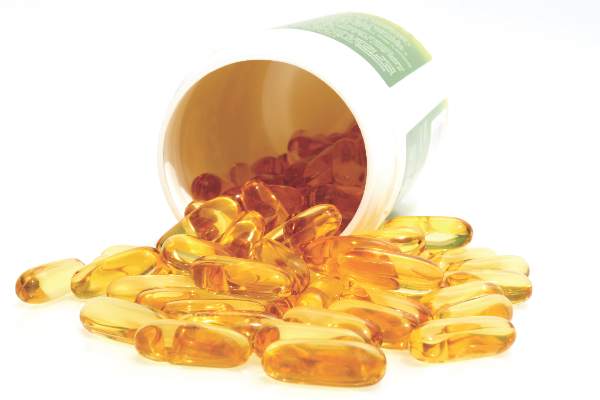
The anti-inflammatory properties of fish oil have been demonstrated, but for patients with knee osteoarthritis, high doses of fish oil were no more effective than was low-dose fish oil, according to Dr. Catherine L. Hill and her associates.
Just over 200 patients with knee OA were included in the study, with half receiving a full anti-inflammatory dose of 15 mL of fish oil/sunola oil per day containing 4.5 g of omega-3 fatty acids, and the other group receiving 15 mL of fish oil/sunola oil per day containing 0.45 g omega-3 fatty acids.
After 1 year, Western Ontario and McMaster Universities Arthritis Index scores were similar in both groups, but after 2 years, WOMAC pain and function scores were better in the low-dose fish oil group.
There was no difference in usage of analgesics or NSAIDs between the two groups during the 2-year study period. Cartilage volume loss was similar in both groups. Weight gain was greater in the high-dose fish oil group, but analysis showed this had no effect on pain scores in the high-dose group.
“One possible explanation could be that sunola oil with or without low-dose fish may confer a beneficial effect, but this unanticipated finding requires confirmation in further trials,” the investigators said.
Find the study here in Annals of the Rheumatic Diseases (doi: 10.1136/annrheumdis-2014-207169).
The anti-inflammatory properties of fish oil have been demonstrated, but for patients with knee osteoarthritis, high doses of fish oil were no more effective than was low-dose fish oil, according to Dr. Catherine L. Hill and her associates.
Just over 200 patients with knee OA were included in the study, with half receiving a full anti-inflammatory dose of 15 mL of fish oil/sunola oil per day containing 4.5 g of omega-3 fatty acids, and the other group receiving 15 mL of fish oil/sunola oil per day containing 0.45 g omega-3 fatty acids.
After 1 year, Western Ontario and McMaster Universities Arthritis Index scores were similar in both groups, but after 2 years, WOMAC pain and function scores were better in the low-dose fish oil group.
There was no difference in usage of analgesics or NSAIDs between the two groups during the 2-year study period. Cartilage volume loss was similar in both groups. Weight gain was greater in the high-dose fish oil group, but analysis showed this had no effect on pain scores in the high-dose group.
“One possible explanation could be that sunola oil with or without low-dose fish may confer a beneficial effect, but this unanticipated finding requires confirmation in further trials,” the investigators said.
Find the study here in Annals of the Rheumatic Diseases (doi: 10.1136/annrheumdis-2014-207169).
The anti-inflammatory properties of fish oil have been demonstrated, but for patients with knee osteoarthritis, high doses of fish oil were no more effective than was low-dose fish oil, according to Dr. Catherine L. Hill and her associates.
Just over 200 patients with knee OA were included in the study, with half receiving a full anti-inflammatory dose of 15 mL of fish oil/sunola oil per day containing 4.5 g of omega-3 fatty acids, and the other group receiving 15 mL of fish oil/sunola oil per day containing 0.45 g omega-3 fatty acids.
After 1 year, Western Ontario and McMaster Universities Arthritis Index scores were similar in both groups, but after 2 years, WOMAC pain and function scores were better in the low-dose fish oil group.
There was no difference in usage of analgesics or NSAIDs between the two groups during the 2-year study period. Cartilage volume loss was similar in both groups. Weight gain was greater in the high-dose fish oil group, but analysis showed this had no effect on pain scores in the high-dose group.
“One possible explanation could be that sunola oil with or without low-dose fish may confer a beneficial effect, but this unanticipated finding requires confirmation in further trials,” the investigators said.
Find the study here in Annals of the Rheumatic Diseases (doi: 10.1136/annrheumdis-2014-207169).